EP3306512B1 - Account theft risk identification method, identification apparatus, and prevention and control system - Google Patents
Account theft risk identification method, identification apparatus, and prevention and control system Download PDFInfo
- Publication number
- EP3306512B1 EP3306512B1 EP16802418.0A EP16802418A EP3306512B1 EP 3306512 B1 EP3306512 B1 EP 3306512B1 EP 16802418 A EP16802418 A EP 16802418A EP 3306512 B1 EP3306512 B1 EP 3306512B1
- Authority
- EP
- European Patent Office
- Prior art keywords
- user
- account
- user identity
- risk
- information
- Prior art date
- Legal status (The legal status is an assumption and is not a legal conclusion. Google has not performed a legal analysis and makes no representation as to the accuracy of the status listed.)
- Active
Links
Images
Classifications
-
- H—ELECTRICITY
- H04—ELECTRIC COMMUNICATION TECHNIQUE
- H04L—TRANSMISSION OF DIGITAL INFORMATION, e.g. TELEGRAPHIC COMMUNICATION
- H04L63/00—Network architectures or network communication protocols for network security
- H04L63/08—Network architectures or network communication protocols for network security for authentication of entities
- H04L63/0876—Network architectures or network communication protocols for network security for authentication of entities based on the identity of the terminal or configuration, e.g. MAC address, hardware or software configuration or device fingerprint
-
- G—PHYSICS
- G06—COMPUTING OR CALCULATING; COUNTING
- G06F—ELECTRIC DIGITAL DATA PROCESSING
- G06F21/00—Security arrangements for protecting computers, components thereof, programs or data against unauthorised activity
- G06F21/50—Monitoring users, programs or devices to maintain the integrity of platforms, e.g. of processors, firmware or operating systems
- G06F21/57—Certifying or maintaining trusted computer platforms, e.g. secure boots or power-downs, version controls, system software checks, secure updates or assessing vulnerabilities
- G06F21/577—Assessing vulnerabilities and evaluating computer system security
-
- H—ELECTRICITY
- H04—ELECTRIC COMMUNICATION TECHNIQUE
- H04L—TRANSMISSION OF DIGITAL INFORMATION, e.g. TELEGRAPHIC COMMUNICATION
- H04L63/00—Network architectures or network communication protocols for network security
- H04L63/14—Network architectures or network communication protocols for network security for detecting or protecting against malicious traffic
- H04L63/1433—Vulnerability analysis
-
- G—PHYSICS
- G06—COMPUTING OR CALCULATING; COUNTING
- G06F—ELECTRIC DIGITAL DATA PROCESSING
- G06F21/00—Security arrangements for protecting computers, components thereof, programs or data against unauthorised activity
- G06F21/30—Authentication, i.e. establishing the identity or authorisation of security principals
- G06F21/31—User authentication
-
- G—PHYSICS
- G06—COMPUTING OR CALCULATING; COUNTING
- G06F—ELECTRIC DIGITAL DATA PROCESSING
- G06F21/00—Security arrangements for protecting computers, components thereof, programs or data against unauthorised activity
- G06F21/50—Monitoring users, programs or devices to maintain the integrity of platforms, e.g. of processors, firmware or operating systems
- G06F21/57—Certifying or maintaining trusted computer platforms, e.g. secure boots or power-downs, version controls, system software checks, secure updates or assessing vulnerabilities
-
- H—ELECTRICITY
- H04—ELECTRIC COMMUNICATION TECHNIQUE
- H04L—TRANSMISSION OF DIGITAL INFORMATION, e.g. TELEGRAPHIC COMMUNICATION
- H04L63/00—Network architectures or network communication protocols for network security
- H04L63/08—Network architectures or network communication protocols for network security for authentication of entities
-
- H—ELECTRICITY
- H04—ELECTRIC COMMUNICATION TECHNIQUE
- H04L—TRANSMISSION OF DIGITAL INFORMATION, e.g. TELEGRAPHIC COMMUNICATION
- H04L63/00—Network architectures or network communication protocols for network security
- H04L63/10—Network architectures or network communication protocols for network security for controlling access to devices or network resources
- H04L63/107—Network architectures or network communication protocols for network security for controlling access to devices or network resources wherein the security policies are location-dependent, e.g. entities privileges depend on current location or allowing specific operations only from locally connected terminals
-
- H—ELECTRICITY
- H04—ELECTRIC COMMUNICATION TECHNIQUE
- H04W—WIRELESS COMMUNICATION NETWORKS
- H04W12/00—Security arrangements; Authentication; Protecting privacy or anonymity
- H04W12/06—Authentication
-
- H—ELECTRICITY
- H04—ELECTRIC COMMUNICATION TECHNIQUE
- H04W—WIRELESS COMMUNICATION NETWORKS
- H04W12/00—Security arrangements; Authentication; Protecting privacy or anonymity
- H04W12/12—Detection or prevention of fraud
- H04W12/126—Anti-theft arrangements, e.g. protection against subscriber identity module [SIM] cloning
-
- H—ELECTRICITY
- H04—ELECTRIC COMMUNICATION TECHNIQUE
- H04W—WIRELESS COMMUNICATION NETWORKS
- H04W12/00—Security arrangements; Authentication; Protecting privacy or anonymity
- H04W12/60—Context-dependent security
- H04W12/63—Location-dependent; Proximity-dependent
Definitions
- the present application relates to network security technologies, and in particular, to an account theft risk identification method, identification apparatus, and prevention and control system.
- One type of solutions is to identify an account theft risk by monitoring whether a transaction request of a transaction user is abnormal. For example, it is detected whether a user logs in to the account at a remote place, and the user needs to be verified if remote login occurs; if the verification is unsuccessful, the user account will be blocked.
- Remote login is a common manifestation of account theft. Therefore, monitoring remote login requests helps identify the account theft risk in time.
- a network operator may change its own IP address pool especially during IP address allocation between cities, a normal user may be identified as a risk user, which may result in a relatively high error rate in account theft identification.
- Another type of solutions is to identify an account theft risk by monitoring a key device. For example, the number of transaction users logging on to a transaction logon device is counted and used as an input variable of a scoring model for identifying an account theft risk, thereby evaluating an account theft risk level of this device. If there are relatively few transaction users on a device, the probability of the account theft risk is relatively low; otherwise, if there are lots of transaction users on the device, the probability of the account theft risk is significantly increased. Therefore, account theft events can be identified to some extent by mainly monitoring such a type of devices having lots of transaction users. However, the distinguishing capability and stability of the variable, i.e., the number of transaction users on the device, are relatively poor, and for a normal single-device multi-user transaction situation, this solution tends to cause an identification error.
- Account theft risk identification solutions for other network operation behaviors usually have problems of misjudgments and false negatives as well, and the account theft risk distinguishing capability thereof is not high enough, resulting in an unsatisfactory overall effect of these solutions. Therefore, it is necessary to design a new account theft risk identification solution.
- US 8,904,496 describes a method and system for use in authenticating an entity in connection with a computerized resource.
- An authentication request is received from entity for access to computerized resource.
- An input signal is received from a communications device associated with entity.
- the input signal comprises current location of communications device.
- the current location of communications device is derived from input signal.
- a location history in connection with communications device is captured.
- the location history comprises a record of discrete locations visited by communications device over a period of time.
- An analysis is performed between current location of the communications device and location history in connection with communications device.
- An authentication result is generated based on analysis between current location of communications device and location history in connection with communications device. The authentication result can be used for authenticating entity.
- an objective of the present application is to provide an account theft risk identification method, identification apparatus, and prevention and control system, to effectively improve the capability of distinguishing an account theft risk.
- an account theft risk identification method including:
- the user identity information includes credential information in user registration information; and the step of analyzing a user identity analysis location represented in each piece of user identity information, and counting the number of user identity analysis locations on the device in the time period specifically includes: acquiring the user identity analysis location such a type of devices having lots of transaction users.
- the distinguishing capability and stability of the variable i.e., the number of transaction users on the device, are relatively poor, and for a normal single-device multi-user transaction situation, this solution tends to cause an identification error.
- Account theft risk identification solutions for other network operation behaviors usually have problems of misjudgments and false negatives as well, and the account theft risk distinguishing capability thereof is not high enough, resulting in an unsatisfactory overall effect of these solutions. Therefore, it is necessary to design a new account theft risk identification solution.
- an objective of the present application is to provide an account theft risk identification method, identification apparatus, and prevention and control system, to effectively improve the capability of distinguishing an account theft risk.
- an account theft risk identification method including:
- the user identity information includes credential information in user registration information; and the step of analyzing a user identity analysis location represented in each piece of user identity information, and counting the number of user identity analysis locations on the device in the time period specifically includes: acquiring the user identity analysis location according to a credential type and a credential number in each piece of user registration information, and counting the number of user identity analysis locations on the device.
- the step of acquiring the user identity analysis location according to a credential type and a credential number in each piece of user registration information, and counting the number of user identity analysis locations on the device includes:
- the step of collecting device information of a device that bears an operation behavior according to information about the current operation behavior includes: acquiring corresponding device information of the device by collecting a device identification code of the device.
- the step of acquiring corresponding device information of the device by collecting a device identification code of the device includes:
- the step of acquiring corresponding device information of the device by collecting a device identification code of the device includes:
- the step of determining whether the current operation behavior has an account theft risk according to the number of user identity analysis locations on the device in the time period includes: evaluating an account theft risk level of a user of the current operation behavior in combination with the total number of users on the device, the number of mobile phone numbers bound to the user of the current operation behavior, the number of devices for historical operation behaviors of the current user, the number of IP addresses of the historical operation behaviors of the current user, a difference between the information about the current operation behavior and information about the historical operation behaviors of the current user, and/or whether routing characteristic information of the current operation behavior is the same as routing characteristic information of the historical operation behaviors.
- the step of determining whether the current operation behavior has an account theft risk according to the number of user identity analysis locations on the device in the time period further includes: calculating an account theft risk value in combination with the account theft risk level of the device and the account theft risk level of the user of the current operation behavior, and identifying an account theft when the risk value is greater than a preset threshold.
- an account theft risk identification apparatus including:
- the user identity information includes credential information in user registration information; and the user identity analysis module acquires the user identity analysis location according to a credential type and a credential number in each piece of user registration information, and counts the number of user identity analysis locations on the device.
- the user identity analysis module determines an analysis mode for the user identity analysis location according to a class of the credential type; and analyzes the first six digits of each credential number to acquire the user identity analysis location when the credential type is a Chinese domestic resident ID card, and counts the number of user identity analysis locations on the device accordingly; or presumes that each credential type or each credential number corresponds to one user identity analysis location when the credential type is a Chinese domestic non-resident ID card or a foreign credential, and counts the number of user identity analysis locations on the device accordingly.
- the device information collection module acquires corresponding device information of the device by collecting a device identification code of the device.
- the device information collection module determines content of the collected device information according to a type of the device, wherein the collected device information includes a MAC, an IP and/or a UMID when the device is a PC; and the collected device information includes a MAC, an IMEI, a TID and/or a mobile phone number when the device is a mobile terminal.
- the user identity analysis module determines a mode of counting the number of user identity analysis locations on the device according to a device quantity identified by the device information collection module from the device identification code; analyzes and counts, when a unique device is identified, the number of user identity analysis locations on the device; or analyzes and counts, when multiple devices are identified, the number of user identity analysis locations on each device; or sets the number of user identity analysis locations on the device as 0 when no device is identified; and uses the obtained number of user identity analysis locations on the device as an input variable of a preset scoring model of the account theft risk evaluation module, to evaluate an account theft risk level of the device.
- the account theft risk evaluation module evaluates an account theft risk level of a user of the current operation behavior in combination with the total number of users on the device, the number of mobile phone numbers bound to the user of the current operation behavior, the number of devices for historical operation behaviors of the current user, the number of IP addresses of the historical operation behaviors of the current user, a difference between the information about the current operation behavior and information about the historical operation behaviors of the current user, and/or whether routing characteristic information of the current operation behavior is the same as routing characteristic information of the historical operation behaviors.
- the account theft risk evaluation module calculates an account theft risk value in combination with the account theft risk level of the device and the account theft risk level of the user of the current operation behavior, and identifies an account theft when the risk value is greater than a preset threshold.
- the present application further provides an account theft risk prevention and control system, including the risk identification apparatus described above, an account theft reporting apparatus, and a risk processing apparatus, wherein the risk identification apparatus is configured to calculate an account theft risk value in an operation behavior platform, and identify an account theft when the risk value is greater than a preset threshold; the account theft reporting apparatus is configured to report an account theft message to the risk processing apparatus and a user receiving device when the risk identification apparatus identifies an account theft; and the risk processing apparatus is configured to block a stolen account of a user and intercept risk data associated with the stolen account when receiving the account theft message.
- the risk identification apparatus is configured to calculate an account theft risk value in an operation behavior platform, and identify an account theft when the risk value is greater than a preset threshold
- the account theft reporting apparatus is configured to report an account theft message to the risk processing apparatus and a user receiving device when the risk identification apparatus identifies an account theft
- the risk processing apparatus is configured to block a stolen account of a user and intercept risk data associated with the stolen account when receiving the account theft message.
- the system includes a case database configured to store the risk data intercepted by the risk processing apparatus, such that the risk processing apparatus examines the risk data and the risk identification apparatus verifies the scoring model.
- the present application provides a solution of identifying an account theft risk based on the number of user identity analysis locations on a device, which collects all user identity information on a logon device in a period of time prior to an operation behavior, to analyze and count the number of user identity analysis locations on the device, and uses the count as an input variable of a risk scoring model to evaluate an account theft risk level, thereby effectively improving the capability of distinguishing an account theft risk.
- This is because: different identity analysis locations of all operation behavior users on a logon device in a recent period of time is a more effective and stable variable. If the device has multiple different identity analysis locations in a recent period of time when an operation behavior occurs, an account of the operation behavior has a high risk of being stolen.
- the situation of operation behaviors of different users at a same location is more common than the situation of operation behaviors of different users at different locations, and therefore the variable can effectively eliminate some situations where operation behaviors are performed by multiple users but the risk is not high, thus helping improve the risk distinguishing capability and stability of the variable of the risk scoring model.
- such an input variable i.e., the number of user identity analysis locations on a device in a period of time prior to a current operation behavior
- a risk scoring model to improve the risk distinguishing capability of the variable of the model.
- This solution needs to establish a risk scoring model based on a data mining technology.
- Main modeling steps include determining a research object, determining a data source, taking samples, data exploration, model development, model verification, and so on.
- the present application focuses on constructing a suitable input variable for the scoring model. Because the scoring model is not the main focus of the present application, other details of modeling are not described; please refer to the conventional prior art for details.
- the inventor of the present application collects massive data of operation behaviors of users on a network platform, to conduct data analysis and data mining. For example, for the platform, device information may be collected when each operation behavior of a user occurs, and the number of users having operation behaviors on the platform on these devices in a recent period of time may further be counted. An account theft risk may be identified according to the number of users on the platform on the devices. However, the problem of misjudgment often occurs. Based on the data analysis, the inventor of the present application finds that: for operation behaviors on the platform, on the same device, the situation of operation behaviors performed by people at the same location is more common than the situation of operation behaviors performed by people at different locations.
- a more effective and stable variable is the number of different identity analysis locations of users conducting operation behaviors on the platform on the device in a recent period of time, and the analyzing granularity of the identity analysis location is preferably county (city). If the device has multiple different identity analysis locations in the recent period of time when an operation behavior occurs, such an operation behavior has an extremely high risk.
- the foregoing rule is very stable in the operation behaviors on the platform. It may be appreciated that, this rule also applies to operation behaviors in other network applications. Accordingly, the "operation behavior" in the present application is a generalized concept, which is not limited to business behaviors of fund and goods transfer existing in the foregoing platform. Data exchanges between a user and a service platform and between different users in various network applications also belong to the scope of the "operation behavior" in the present application. For example, a logon event of a social network belongs to the "operation behavior" in the present application.
- the inventor of the present application uses the number of user identity analysis locations on the device in a preset time period prior to an operation behavior as an input variable of a risk scoring model. Such a variable can eliminate some situations where operation behaviors are performed by multiple users but the risk is not high, thus improving the risk distinguishing capability and stability of the variable.
- the inventor of the present application proposes the following basic conception: with the number of user identity analysis locations on a device in a period of time prior to a current operation behavior as an input variable, an account theft risk level of the device is evaluated by using a preset scoring model, to identify an account theft risk of a user more timely and effectively.
- This technical conception mainly involves content in three aspects: variable construction, an identification process, and model verification, which are further described in detail below.
- the present application determines a specific variable as the number of different identity analysis locations of all users conducting operation behaviors on a device in a preset time interval prior to a current operation behavior.
- This statistical variable can increase the risk distinguishing capability of the model variable.
- the variable is highly associated with the account theft risk. If there are multiple different identity analysis locations on a device in a recent period of time prior to an operation behavior, the operation behavior on the device has a relatively high account theft risk.
- an account theft risk may be identified based on user identity analysis locations on different devices.
- the advantage lies in that the risk distinguishing capability and stability of the variable can be improved. Specifically, the following procedures need to be followed during account theft risk identification.
- An influence of the input variable "the number of user identity analysis locations on the device in the preset time period prior to the current operation behavior" on the prediction effect of the risk scoring model needs to be verified. If the variable is effective, an account theft risk of a user can be automatically identified according to the process in the second step above; otherwise, the scoring model and the related input variable need to be adjusted again.
- the Weight Of Evidence (WOE) is multiplied by a coefficient 100, and the meaning thereof is not essentially different from an index woe in data mining.
- the "transaction" in the foregoing formula may be interpreted as a generalized network operation behavior, but is not limited to actual business activities such as fund payment and commodity transfer.
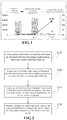
- Table 1 Account theft distinguishing capability of the number of user identity analysis locations on a MAC device in 7 days prior to an operation behavior Interval The number of interval The number of account theft Interval account theft operation Average account theft operation Lift Interval IV value IV value 0 578,007 1,934 0.3% 1.0% 0.33 32.07 171.74 [1,2] 704,478 4,602 0.7% 1.0% 0.65 7.9 171.74 (2,327] 48,887 6,756 13.8% 1.0% 13.82 131.77 171.74
- Table 1 may be presented in a graphical manner. Referring to FIG. 1 , it shows a relation between the number of user identity analysis locations on a MAC device of a payment platform in 7 days prior to a current operation behavior and an account theft risk. It can be learned from Table 1 and FIG. 1 that, the lift is 13.82 when the number of user identity analysis locations on the device is greater than 2, that is, the capability of distinguishing the account theft risk according to the number of user identity analysis locations of operation behaviors on the MAC device in 7 days is lifted by 13.82 times. This indicates that the account theft distinguishing capability of the variable is very effective.
- the quantitative indexes are relatively desirable, which indicates that, by introducing such an input variable, i.e., the number of user identity analysis locations on a device in a period of time prior to a current operation behavior, into the risk scoring model to evaluate the account theft risk level, the present application can improve the risk distinguishing capability of the model variable, such that the account theft risk identification effect is relatively desirable.
- the IV values in Table 1 and FIG. 1 are relatively large, and an "over-prediction" phenomenon may occur in some cases.
- the risk of whether the user account is stolen is further comprehensively evaluated in combination with the total number of users on the device, the number of mobile phone numbers bound to the user of the current operation behavior, the number of devices for historical operation behaviors of the current user, the number of IP addresses of the historical operation behaviors of the current user, a difference between information about the current operation behavior and information about the historical operation behaviors of the current user, and/or whether routing characteristic information of the current operation behavior is the same as routing characteristic information of the historical operation behaviors, to eliminate the adverse effect caused by the "over-prediction" of a single variable.
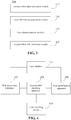
- the risk identification method includes the following main steps, such as step 210 to step 240, which are described in detail below.
- S210 Device information of a logon device of an operation behavior is collected according to information about the current operation behavior.
- This step responds to the information about the current operation behavior, and a corresponding device of a server terminal collects the device information of the logon device of the operation behavior, which is generally obtained by collecting a device identification code of the device.
- logon devices of client terminals are classified into multiple types.
- a PC device usually has a MAC, an IP and/or a UMID
- a mobile terminal usually has a MAC, an IMEI, a TID and/or a mobile phone number, and so on. Therefore, content of the collected device information needs to be determined according to the type of the device.
- a MAC, an IP and/or a UMID are/is collected;
- a mobile terminal a MAC, a TID and/or a mobile phone number are/is collected.
- specific information collection and identification methods please refer to the prior art. Details are not described herein.
- the current operation behavior in step S210 may be a login request for a user account, or may be a preset data operation request for a user account, and so on.
- the preset data operation request for a user account may include: a password modification request for the user account, a balance transfer request for the user account, and a goods transaction request for the user account.
- the preset data operation request may be set by a server in advance, or may be set by a user through a client terminal in advance, which is not limited herein.
- login information of the user When a user initiates a login request for a user account at a client terminal, login information of the user generally includes a user identifier, information about the client terminal at which the user initiates the login request, and information about a server receiving the login request. Therefore, a login routing path of the user is acquired according to the login information of the user, and current routing characteristic information is extracted from the login routing path of the user. By comparing whether the routing characteristic information of the current operation behavior is the same as routing characteristic information of historical operation behaviors, an account theft risk level of the user of the current operation behavior may also be evaluated.
- S220 All user identity information of historical operation behaviors on the device in a preset time period prior to the operation behavior is acquired.
- the account theft risk of the device is evacuated according to the number of user identity analysis locations on the device in the preset time period prior to the current operation behavior. This requires extraction of all user identity information of historical operation behaviors on the device in this time period, and the extraction of user identity analysis locations is particularly important.
- the time interval (such as 30 minutes, 2 hours, 12 hours, 1 day, 3 days, and 7 days) for users on the device may be generally determined according to factors such as an operation behavior platform, an operation behavior request, and an operation behavior nature.
- identity regions of the users may further be analyzed.
- the number of user identity analysis locations on the device in the time period can be used as a variable of the risk scoring model for scoring.
- a user identity analysis location represented in each piece of user identity information is analyzed, and the number of user identity analysis locations on the device in the time period is counted.
- the number of different identity analysis locations of users conducting operation behaviors on a payment platform of the device within a recent period of time prior to the current operation behavior is an effective and stable variable. Therefore, the statistic of the number of user identity analysis locations on the device in the time period may be input as a variable to the risk scoring model for scoring, to finally achieve the objective of identifying whether the user account is stolen.
- the distinguishing granularity of the user identity analyzing location is highly correlated to the output result of the scoring model.
- city is taken as the distinguishing granularity of the user identity analysis location in the present application, such that the account theft risk identification effect is relatively desirable.
- step S230 of acquiring the user identity analysis location according to a credential type and a credential number in each piece of user registration information, and counting the number of user identity analysis locations on the device is specifically determining an analysis mode for the user identity analysis location according to a class of the credential type: If the credential type is a Chinese domestic resident ID card, the first six digits thereof represents a county (city)-level administrative region, and therefore, the user identity analysis location may be acquired by simply analyzing the first six digits of each credential number, and the number of user identity analysis locations on the device is counted accordingly.
- the credential type is a Chinese domestic non-resident ID card (such as a certificate of officers) or a foreign credential (such as a passport)
- a foreign credential such as a passport
- an administrative region where the user identity is located cannot be directly identified.
- each credential type or each credential number corresponds to one user identity analysis location, and the number of user identity analysis locations on the device is counted accordingly.
- the user identity analysis location may be obtained according to a specific credential number. Details are not described herein.
- the device information acquired in step S210 may have different situations: in most cases, multiple types of device information may be collected at the same time, for example, a MAC, an IMEI, and so on.
- a MAC MAC
- IMEI IMEI
- the device information during the operation behavior cannot be collected in some scenarios or system constraints; or, the device information collected during the operation behavior is obviously a hotspot that needs to be eliminated, and so on.
- the modes of analyzing and counting the number of user identity analysis locations on the device need to be adjusted correspondingly.
- steps S220 to S230 it is necessary to determine the mode of counting the number of user identity analysis locations on the device according to a device quantity identified from the device identification code, which specifically includes:
- the number of user identity analysis locations on the device obtained in the foregoing manner is introduced as an input variable of the preset scoring model into the risk scoring model, to evaluate the account theft risk level of the device, such that the account theft risk distinguishing capability of the variable in the scoring model is measured by using historical operation behavior data.
- S240 Whether the current operation behavior has an account theft risk is determined according to the number of user identity analysis locations on the device in the time period.
- the number of user identity analysis locations on the device in the time period is used as an input variable of the preset scoring model to evaluate the account theft risk level of the device.
- the account theft risk level represents an account theft risk, and if the account theft risk level exceeds a specified threshold, it is identified that the account is stolen; otherwise, it is identified that the account is not stolen.
- the statistic may be introduced into the risk scoring model for scoring, to obtain the account theft risk level of the device, thus identifying an account theft risk, such that processing measures are taken in time to eliminate the risk.
- the present application further evaluates an account theft risk level of a user of the current operation behavior in combination with factors such as the total number of users on the device, the number of mobile phone numbers bound to the user of the current operation behavior, the number of devices for historical operation behaviors of the current user, the number of IP addresses of the historical operation behaviors of the current user, a difference between the information about the current operation behavior and information about the historical operation behaviors of the current user, and/or whether routing characteristic information of the current operation behavior is the same as routing characteristic information of the historical operation behaviors.
- factors such as the total number of users on the device, the number of mobile phone numbers bound to the user of the current operation behavior, the number of devices for historical operation behaviors of the current user, the number of IP addresses of the historical operation behaviors of the current user, a difference between the information about the current operation behavior and information about the historical operation behaviors of the current user, and/or whether routing characteristic information of the current operation behavior is the same as routing characteristic information of the historical operation behaviors.
- the present application calculates an account theft risk value in combination with the account theft risk level of the device and the account theft risk level of the user of the current operation behavior, identifies an account theft when the risk value is greater than a preset threshold, and outputs corresponding account theft prompt information when the account theft is identified, such that the operation behavior platform and the user perform processing in time, to eliminate the potential safety hazard of account theft, thus avoiding a property loss or other problems.
- the account theft risk identification method (hereinafter referred to as method) is described in detail above. Based on this, the present application further provides an account theft risk identification apparatus (hereinafter referred to as apparatus) correspondingly, which is described in detail below.
- apparatus an account theft risk identification apparatus
- the apparatus 300 includes parts such as a device information collection module 310, a user information acquisition module 320, a user identity analysis module 330, and an account theft risk evaluation module 340, which are described hereinafter.
- the device information collection module 310 may collect device information of a logon device of an operation behavior according to information about the current operation behavior.
- the device information collection module 310 acquires corresponding device information of the device by collecting a device identification code of the device, and specifically determines content of the collected device information according to a type of the device, that is, for a PC, a MAC, an IP and/or a UMID are/is collected; and for a mobile terminal, a MAC, an IMEI, a TID and/or a mobile phone number are/is collected.
- the user information acquisition module 320 may acquire all user identity information of historical operation behaviors on the device within a preset time period prior to the operation behavior. After acquiring user information of historical operation behaviors in the corresponding time period, the user information acquisition module 320 provides the user information for the user identity analysis module 330, to analyze and obtain an identity region of each user and count the number of user identity analysis locations on the device in the time period; after that, the number of user identity analysis locations on the device in the time period may be used as a variable of a risk scoring model for scoring.
- the user identity analysis module 330 may analyze a user identity analysis location represented in each piece of user identity information, and count the number of user identity analysis locations on the device in the time period. Particularly, the user identity analysis module 330 uses city as a distinguishing granularity of the user identity analysis location.
- the user identity information includes credential information in user registration information.
- the user identity analysis location is acquired according to a credential type and a credential number in each piece of user registration information, and the number of user identity analysis locations on the device is counted, which specifically includes: determining an analysis mode for the user identity analysis location according to a class of the credential type.
- the credential type is a Chinese domestic resident ID card
- the first six digits of each credential number are analyzed to acquire the user identity analysis location and the number of user identity analysis locations on the device is counted accordingly; and if the credential type is a Chinese domestic non-resident ID card or a foreign credential, it is presumed that each credential type or each credential number corresponds to one user identity analysis location, and the number of user identity analysis locations on the device is counted accordingly.
- the user identity analysis module 330 may determine a mode of counting the number of user identity analysis locations on the device according to a device quantity identified by the device information collection module 310 from a device identification code. That is, if a unique device is identified, analyzing is performed and the number of user identity analysis locations on the device is counted; if multiple devices are identified, analyzing is performed and the number of user identity analysis locations on each device is counted; and if no device is identified, the number of user identity analysis locations on the device is set as 0.
- the obtained number of user identity analysis locations on the device is used as an input variable of a preset scoring model of the account theft risk evaluation module 340, to evaluate an account theft risk level of the device.
- the account theft risk evaluation module 340 may use the number of user identity analysis locations on the device in the time period as an input variable of the preset scoring model, to evaluate the account theft risk level of the device.
- the account theft risk evaluation module 340 further evaluates an account theft risk level of a user of the current operation behavior in combination with the total number of users on the device, the number of mobile phone numbers bound to the user of the current operation behavior, the number of devices for historical operation behaviors of the current user, the number of IP addresses of the historical operation behaviors of the current user, a difference between the information about the current operation behavior and information about the historical operation behaviors of the current user, and/or whether routing characteristic information of the current operation behavior is the same as routing characteristic information of the historical operation behaviors.
- the account theft risk evaluation module 340 calculates an account theft risk value in combination with the account theft risk level of the device and the account theft risk level of the user of the current operation behavior, and identifies an account theft when the risk value is greater than a preset threshold.
- the account theft risk identification apparatus of the present application is described above, which has a desirable distinguishing capability in account theft risk identification, and has relatively good stability in risk identification. Based on this, an account theft risk prevention and control system is correspondingly established in the present application, and is described briefly hereinafter.
- FIG. 4 it shows an account theft risk prevention and control system according to an embodiment of the present application.
- the risk prevention and control system is applicable to prevention and control of operation behavior risks between a user (not shown in the figure) and an operation behavior platform (not shown in the figure).
- the system has a risk identification apparatus 300, an account theft reporting apparatus 200, a risk processing apparatus 100, and a case database 400.
- a connection relation among the parts of the risk prevention and control system is as shown in FIG. 4 , and a corresponding process for implementing functions is as follows: the risk identification apparatus 300 calculates an account theft risk value in an operation behavior platform, and identifies an account theft when the risk value is greater than a preset threshold; the account theft reporting apparatus 200 reports an account theft message to the risk processing apparatus 400 and a user receiving device (such as a mobile phone) 500 when the risk identification apparatus 100 identifies an account theft; the risk processing apparatus 100 blocks a stolen account of a user and intercepts risk data associated with the stolen account when receiving the account theft message; and the case database 400 stores the risk data intercepted by the risk processing apparatus 100, such that the risk processing apparatus 300 examines the risk data and the risk identification apparatus 300 verifies the scoring model.
- risk identification apparatus 300 in the foregoing risk prevention and control system please refer to the structure shown in FIG. 3 .
- Other apparatuses may be chosen from conventional devices or applications.
- Such a risk prevention and control system can identify a user account theft risk in time, and once it is confirmed that an account is stolen, processing can be carried out in time, so that a secure network operation behavior environment can be better provided, thus achieving a desirable application value.
- FIG. 5 it shows an embodiment of the present application.
- a computing device includes one or more processors (CPUs), an input/output interface, a network interface, and a memory.
- the memory may include a volatile memory, a random access memory (RAM) and/or a non-volatile memory or the like in a computer readable medium, for example, a read-only memory (ROM) or a flash RAM.
- RAM random access memory
- ROM read-only memory
- flash RAM flash RAM
Landscapes
- Engineering & Computer Science (AREA)
- Computer Security & Cryptography (AREA)
- General Engineering & Computer Science (AREA)
- Computer Hardware Design (AREA)
- Theoretical Computer Science (AREA)
- Computer Networks & Wireless Communication (AREA)
- Signal Processing (AREA)
- Software Systems (AREA)
- Computing Systems (AREA)
- Physics & Mathematics (AREA)
- General Physics & Mathematics (AREA)
- Power Engineering (AREA)
- Telephonic Communication Services (AREA)
- Alarm Systems (AREA)
- Financial Or Insurance-Related Operations Such As Payment And Settlement (AREA)
Priority Applications (1)
| Application Number | Priority Date | Filing Date | Title |
|---|---|---|---|
| PL16802418T PL3306512T3 (pl) | 2015-05-29 | 2016-04-28 | Sposób identyfikacji ryzyka kradzieży konta, urządzenie do identyfikacji oraz system zapobiegania i kontroli |
Applications Claiming Priority (2)
| Application Number | Priority Date | Filing Date | Title |
|---|---|---|---|
| CN201510289825.4A CN106295349B (zh) | 2015-05-29 | 2015-05-29 | 账号被盗的风险识别方法、识别装置及防控系统 |
| PCT/CN2016/080446 WO2016192495A1 (zh) | 2015-05-29 | 2016-04-28 | 账号被盗的风险识别方法、识别装置及防控系统 |
Publications (3)
| Publication Number | Publication Date |
|---|---|
| EP3306512A1 EP3306512A1 (en) | 2018-04-11 |
| EP3306512A4 EP3306512A4 (en) | 2018-12-12 |
| EP3306512B1 true EP3306512B1 (en) | 2020-06-03 |
Family
ID=57440281
Family Applications (1)
| Application Number | Title | Priority Date | Filing Date |
|---|---|---|---|
| EP16802418.0A Active EP3306512B1 (en) | 2015-05-29 | 2016-04-28 | Account theft risk identification method, identification apparatus, and prevention and control system |
Country Status (9)
| Country | Link |
|---|---|
| US (1) | US11233812B2 (enExample) |
| EP (1) | EP3306512B1 (enExample) |
| JP (1) | JP6732806B2 (enExample) |
| KR (1) | KR102138965B1 (enExample) |
| CN (1) | CN106295349B (enExample) |
| ES (1) | ES2808974T3 (enExample) |
| PL (1) | PL3306512T3 (enExample) |
| SG (1) | SG11201709594XA (enExample) |
| WO (1) | WO2016192495A1 (enExample) |
Families Citing this family (41)
| Publication number | Priority date | Publication date | Assignee | Title |
|---|---|---|---|---|
| US10917412B2 (en) * | 2016-05-05 | 2021-02-09 | Paypal, Inc. | Authentication and risk assessment through header injections |
| US20180174136A1 (en) * | 2016-12-15 | 2018-06-21 | Parveen Bansal | Alarm access override |
| CN108287855B (zh) * | 2017-01-10 | 2022-11-11 | 阿里巴巴集团控股有限公司 | 基于社工库的数据识别方法及装置、界面交互装置 |
| KR102369228B1 (ko) * | 2017-05-25 | 2022-02-28 | 삼성에스디에스 주식회사 | 리스크 기반 인증을 위한 리스크 분석 장치 및 방법 |
| US10764303B2 (en) * | 2018-04-25 | 2020-09-01 | Microsoft Technology Licensing, Llc | Detecting unauthorized cloud access by detecting malicious velocity incidents |
| CN110555451B (zh) * | 2018-05-31 | 2025-01-17 | 北京京东尚科信息技术有限公司 | 信息识别方法和装置 |
| CN108804640B (zh) * | 2018-06-05 | 2021-03-19 | 重庆小雨点小额贷款有限公司 | 基于最大化iv的数据分组方法、装置、储存介质及设备 |
| CN109064175B (zh) * | 2018-06-11 | 2022-08-12 | 创新先进技术有限公司 | 一种账户盗用风险防控方法及装置 |
| CN108833258A (zh) * | 2018-06-12 | 2018-11-16 | 广东睿江云计算股份有限公司 | 一种邮件服务主动发现异常的方法 |
| CN108694547B (zh) * | 2018-06-15 | 2021-10-29 | 顺丰科技有限公司 | 账号异常识别方法、装置、设备和储存介质 |
| CN112508568B (zh) * | 2018-08-15 | 2024-08-30 | 创新先进技术有限公司 | 核身产品推送及核身方法和系统 |
| CN110839003A (zh) * | 2018-08-16 | 2020-02-25 | 北京嘀嘀无限科技发展有限公司 | 盗号行为识别方法、装置、计算机设备和存储介质 |
| CN109257356B (zh) * | 2018-09-26 | 2020-12-25 | 杭州安恒信息技术股份有限公司 | 互联网账号风险评估方法及系统 |
| CN109165514B (zh) * | 2018-10-16 | 2019-08-09 | 北京芯盾时代科技有限公司 | 一种风险检测方法 |
| CN110033151B (zh) * | 2018-11-09 | 2024-01-19 | 创新先进技术有限公司 | 关系风险评价方法、装置、电子设备及计算机存储介质 |
| CN109753772A (zh) * | 2018-11-29 | 2019-05-14 | 武汉极意网络科技有限公司 | 一种账户安全验证方法及系统 |
| CN109660529B (zh) * | 2018-12-06 | 2021-10-26 | 深圳蓝贝科技有限公司 | 用于售卖机的安全风控方法、装置、售卖机和系统 |
| CN111292085B (zh) * | 2018-12-10 | 2023-06-30 | 北京嘀嘀无限科技发展有限公司 | 交易风险评估的方法、装置、设备及计算机可读存储介质 |
| CN111753266B (zh) * | 2019-03-29 | 2024-11-15 | 阿里巴巴(上海)有限公司 | 用户认证方法、多媒体内容的推送方法及装置 |
| CN111950829B (zh) * | 2019-05-17 | 2024-06-04 | 泰康保险集团股份有限公司 | 风险对象定位方法、装置、计算机存储介质和电子设备 |
| CN110276178B (zh) * | 2019-05-28 | 2023-04-28 | 创新先进技术有限公司 | 一种基于身份验证的风险控制方法、装置及设备 |
| CN110414985A (zh) * | 2019-06-12 | 2019-11-05 | 阿里巴巴集团控股有限公司 | 一种异常账户的检测方法及装置 |
| CN110335045A (zh) * | 2019-07-01 | 2019-10-15 | 阿里巴巴集团控股有限公司 | 异地风险判定方法和装置 |
| CN110351267B (zh) * | 2019-07-04 | 2021-12-03 | 微梦创科网络科技(中国)有限公司 | 一种社交媒体账号被盗的确定方法及装置 |
| CN110399925B (zh) * | 2019-07-26 | 2023-09-19 | 腾讯科技(武汉)有限公司 | 账号的风险识别方法、装置及存储介质 |
| CN110570188A (zh) * | 2019-08-15 | 2019-12-13 | 阿里巴巴集团控股有限公司 | 用于处理交易请求的方法和系统 |
| CN112449371B (zh) * | 2019-08-30 | 2023-08-15 | 中国移动通信集团广东有限公司 | 一种无线路由器的性能评测方法及电子设备 |
| CN110851881B (zh) * | 2019-10-31 | 2023-07-04 | 成都欧珀通信科技有限公司 | 终端设备的安全检测方法及装置、电子设备及存储介质 |
| CN111242770B (zh) * | 2020-01-08 | 2023-04-07 | 贵阳货车帮科技有限公司 | 风险设备识别方法、装置、电子设备及可读存储介质 |
| CN111343173B (zh) * | 2020-02-21 | 2022-08-26 | 腾讯云计算(北京)有限责任公司 | 数据访问的异常监测方法及装置 |
| CN111507377B (zh) * | 2020-03-24 | 2023-08-11 | 微梦创科网络科技(中国)有限公司 | 一种养号帐号批量识别方法及装置 |
| US20210397903A1 (en) * | 2020-06-18 | 2021-12-23 | Zoho Corporation Private Limited | Machine learning powered user and entity behavior analysis |
| CN111985769B (zh) * | 2020-07-07 | 2024-03-22 | 国网电动汽车服务有限公司 | 一种车桩身份快速识别风险控制方法和系统 |
| CN113938692B (zh) * | 2020-07-13 | 2024-02-09 | 广州壹点通网络科技有限公司 | 一种视频直播的风险控制方法及装置 |
| CN111861240A (zh) * | 2020-07-27 | 2020-10-30 | 深圳前海微众银行股份有限公司 | 可疑用户识别方法、装置、设备及可读存储介质 |
| CN112434214A (zh) * | 2020-11-03 | 2021-03-02 | 中国南方电网有限责任公司 | 一种基于Redis的操作事件的推送方法 |
| CN112566098A (zh) * | 2020-11-27 | 2021-03-26 | 中国联合网络通信集团有限公司 | 识别信息的验证方法和服务器 |
| WO2022133632A1 (en) * | 2020-12-21 | 2022-06-30 | Beijing Didi Infinity Technology And Development Co., Ltd. | Systems and methods for identity risk assessment |
| CN113239331B (zh) * | 2021-04-16 | 2021-12-07 | 广州趣米网络科技有限公司 | 一种基于大数据的风险账号防入侵识别方法及系统 |
| CN116701914B (zh) * | 2023-06-21 | 2024-07-05 | 广东星云开物科技股份有限公司 | 一种硬件设备异常使用识别方法、装置、存储装置及系统 |
| CN118382089B (zh) * | 2024-06-24 | 2024-09-06 | 济南杰睿信息科技有限公司 | 一种无线信号保密通讯的检查方法及系统 |
Family Cites Families (23)
| Publication number | Priority date | Publication date | Assignee | Title |
|---|---|---|---|---|
| US20040068518A1 (en) * | 2002-10-03 | 2004-04-08 | International Business Machines Corporation | Layered virtual identity system and method |
| US7272728B2 (en) * | 2004-06-14 | 2007-09-18 | Iovation, Inc. | Network security and fraud detection system and method |
| CN100428719C (zh) * | 2006-01-23 | 2008-10-22 | 北京交通大学 | 一种基于身份与位置分离的互联网接入方法 |
| CN100497450C (zh) * | 2006-06-11 | 2009-06-10 | 上海三泰橡胶制品有限公司 | 硅橡胶开孔海绵 |
| US8295898B2 (en) * | 2008-07-22 | 2012-10-23 | Bank Of America Corporation | Location based authentication of mobile device transactions |
| US8588744B2 (en) * | 2008-11-26 | 2013-11-19 | Ringcentral, Inc. | Fraud prevention techniques |
| CN102200987A (zh) * | 2011-01-27 | 2011-09-28 | 北京开心人信息技术有限公司 | 一种基于用户账号行为分析的查找马甲账号的方法及系统 |
| CN102325062A (zh) * | 2011-09-20 | 2012-01-18 | 北京神州绿盟信息安全科技股份有限公司 | 异常登录检测方法及装置 |
| CN103297444A (zh) * | 2012-02-23 | 2013-09-11 | 王正伟 | 身份解析方法和装置 |
| US9298890B2 (en) * | 2012-03-20 | 2016-03-29 | Facebook, Inc. | Preventing unauthorized account access using compromised login credentials |
| US8904496B1 (en) * | 2012-03-30 | 2014-12-02 | Emc Corporation | Authentication based on a current location of a communications device associated with an entity |
| CN103457923A (zh) | 2012-06-05 | 2013-12-18 | 阿里巴巴集团控股有限公司 | 异地登录的控制方法、装置及系统 |
| CN103581355A (zh) * | 2012-08-02 | 2014-02-12 | 北京千橡网景科技发展有限公司 | 用户行为异常处理方法和设备 |
| CN103023718B (zh) | 2012-11-29 | 2015-12-23 | 北京奇虎科技有限公司 | 一种用户登录监测设备和方法 |
| CN103001826B (zh) | 2012-11-29 | 2015-09-30 | 北京奇虎科技有限公司 | 用于监测用户登录的设备和方法 |
| CN103024744B (zh) * | 2012-12-24 | 2015-08-05 | 百度在线网络技术(北京)有限公司 | 移动终端的身份验证的方法和系统 |
| CN103532797B (zh) | 2013-11-06 | 2017-07-04 | 网之易信息技术(北京)有限公司 | 一种用户登录异常监测方法和装置 |
| CN104144419B (zh) * | 2014-01-24 | 2017-05-24 | 腾讯科技(深圳)有限公司 | 一种身份验证的方法、装置及系统 |
| US20150310434A1 (en) * | 2014-04-29 | 2015-10-29 | Dennis Takchi Cheung | Systems and methods for implementing authentication based on location history |
| US10142308B1 (en) * | 2014-06-30 | 2018-11-27 | EMC IP Holding Company LLC | User authentication |
| US9858575B2 (en) * | 2014-12-16 | 2018-01-02 | At&T Mobility Ii Llc | Fraud detection via mobile device location tracking |
| CN104601547A (zh) | 2014-12-22 | 2015-05-06 | 新浪网技术(中国)有限公司 | 一种非法操作的识别方法及装置 |
| CN104618919B (zh) * | 2015-01-05 | 2018-02-06 | 重庆邮电大学 | 传感器网络传感节点标识符解析一致性测试方法 |
-
2015
- 2015-05-29 CN CN201510289825.4A patent/CN106295349B/zh active Active
-
2016
- 2016-04-28 EP EP16802418.0A patent/EP3306512B1/en active Active
- 2016-04-28 JP JP2017562009A patent/JP6732806B2/ja active Active
- 2016-04-28 SG SG11201709594XA patent/SG11201709594XA/en unknown
- 2016-04-28 KR KR1020177037102A patent/KR102138965B1/ko active Active
- 2016-04-28 PL PL16802418T patent/PL3306512T3/pl unknown
- 2016-04-28 ES ES16802418T patent/ES2808974T3/es active Active
- 2016-04-28 WO PCT/CN2016/080446 patent/WO2016192495A1/zh not_active Ceased
-
2017
- 2017-11-17 US US15/816,207 patent/US11233812B2/en active Active
Non-Patent Citations (1)
| Title |
|---|
| None * |
Also Published As
| Publication number | Publication date |
|---|---|
| JP2018519586A (ja) | 2018-07-19 |
| EP3306512A1 (en) | 2018-04-11 |
| US20180077192A1 (en) | 2018-03-15 |
| KR102138965B1 (ko) | 2020-07-29 |
| SG11201709594XA (en) | 2017-12-28 |
| WO2016192495A1 (zh) | 2016-12-08 |
| CN106295349B (zh) | 2020-06-05 |
| JP6732806B2 (ja) | 2020-07-29 |
| PL3306512T3 (pl) | 2021-02-08 |
| ES2808974T3 (es) | 2021-03-02 |
| EP3306512A4 (en) | 2018-12-12 |
| KR20180013998A (ko) | 2018-02-07 |
| US11233812B2 (en) | 2022-01-25 |
| CN106295349A (zh) | 2017-01-04 |
Similar Documents
| Publication | Publication Date | Title |
|---|---|---|
| EP3306512B1 (en) | Account theft risk identification method, identification apparatus, and prevention and control system | |
| US12190327B1 (en) | Adjustment of knowledge-based authentication | |
| US20240037225A1 (en) | Systems and methods for detecting resources responsible for events | |
| CN112581259B (zh) | 账户风险识别方法及装置、存储介质、电子设备 | |
| US10965668B2 (en) | Systems and methods to authenticate users and/or control access made by users based on enhanced digital identity verification | |
| US10356099B2 (en) | Systems and methods to authenticate users and/or control access made by users on a computer network using identity services | |
| US10187369B2 (en) | Systems and methods to authenticate users and/or control access made by users on a computer network based on scanning elements for inspection according to changes made in a relation graph | |
| US10250583B2 (en) | Systems and methods to authenticate users and/or control access made by users on a computer network using a graph score | |
| US10630729B2 (en) | Detecting fraudulent logins | |
| WO2015043491A1 (zh) | 一种用于对互联网账号的登录进行安全验证的方法及系统 | |
| US20160196615A1 (en) | Cross-channel fraud detection | |
| US20160125522A1 (en) | Automatic account lockout | |
| CA2752089A1 (en) | System and method for authenticating a user of multiple computer applications, networks or devices using a wireless device | |
| US11368464B2 (en) | Monitoring resource utilization of an online system based on statistics describing browser attributes | |
| CN117544343A (zh) | 风险行为识别方法、装置、存储介质及计算机设备 | |
| CN118504002A (zh) | 一种用于身份安全的数据安全保护方法和装置 | |
| CN109242658B (zh) | 可疑交易报告生成方法、系统、计算机设备和存储介质 | |
| US20230353537A1 (en) | Cumulative sum model for ip deny lists | |
| CN116342276A (zh) | 异常对象的确定方法、装置和服务器 | |
| CN119496640B (zh) | 一种票务平台网络安全的数据检测处理方法及系统 | |
| EA048449B1 (ru) | Способ и система определения активности учетных записей в вычислительной среде | |
| CN118802318A (zh) | 帐号鉴权方法、装置、存储介质及电子设备 | |
| WO2024210767A1 (ru) | Определение активности учетных записей в вычислительной среде | |
| HK1235141A (en) | Trusted device determination method and device | |
| HK1235141A1 (en) | Trusted device determination method and device |
Legal Events
| Date | Code | Title | Description |
|---|---|---|---|
| STAA | Information on the status of an ep patent application or granted ep patent |
Free format text: STATUS: THE INTERNATIONAL PUBLICATION HAS BEEN MADE |
|
| PUAI | Public reference made under article 153(3) epc to a published international application that has entered the european phase |
Free format text: ORIGINAL CODE: 0009012 |
|
| STAA | Information on the status of an ep patent application or granted ep patent |
Free format text: STATUS: REQUEST FOR EXAMINATION WAS MADE |
|
| 17P | Request for examination filed |
Effective date: 20171222 |
|
| AK | Designated contracting states |
Kind code of ref document: A1 Designated state(s): AL AT BE BG CH CY CZ DE DK EE ES FI FR GB GR HR HU IE IS IT LI LT LU LV MC MK MT NL NO PL PT RO RS SE SI SK SM TR |
|
| AX | Request for extension of the european patent |
Extension state: BA ME |
|
| DAV | Request for validation of the european patent (deleted) | ||
| DAX | Request for extension of the european patent (deleted) | ||
| A4 | Supplementary search report drawn up and despatched |
Effective date: 20181114 |
|
| RIC1 | Information provided on ipc code assigned before grant |
Ipc: G06F 21/57 20130101AFI20181108BHEP Ipc: H04L 29/06 20060101ALI20181108BHEP Ipc: H04W 12/06 20090101ALI20181108BHEP |
|
| STAA | Information on the status of an ep patent application or granted ep patent |
Free format text: STATUS: EXAMINATION IS IN PROGRESS |
|
| 17Q | First examination report despatched |
Effective date: 20190722 |
|
| REG | Reference to a national code |
Ref country code: DE Ref legal event code: R079 Ref document number: 602016037620 Country of ref document: DE Free format text: PREVIOUS MAIN CLASS: G06F0021570000 Ipc: H04W0012120000 |
|
| GRAP | Despatch of communication of intention to grant a patent |
Free format text: ORIGINAL CODE: EPIDOSNIGR1 |
|
| STAA | Information on the status of an ep patent application or granted ep patent |
Free format text: STATUS: GRANT OF PATENT IS INTENDED |
|
| RIC1 | Information provided on ipc code assigned before grant |
Ipc: H04W 12/06 20090101ALI20200107BHEP Ipc: G06F 21/57 20130101ALI20200107BHEP Ipc: H04L 29/06 20060101ALI20200107BHEP Ipc: H04W 12/12 20090101AFI20200107BHEP |
|
| INTG | Intention to grant announced |
Effective date: 20200129 |
|
| GRAS | Grant fee paid |
Free format text: ORIGINAL CODE: EPIDOSNIGR3 |
|
| GRAA | (expected) grant |
Free format text: ORIGINAL CODE: 0009210 |
|
| STAA | Information on the status of an ep patent application or granted ep patent |
Free format text: STATUS: THE PATENT HAS BEEN GRANTED |
|
| AK | Designated contracting states |
Kind code of ref document: B1 Designated state(s): AL AT BE BG CH CY CZ DE DK EE ES FI FR GB GR HR HU IE IS IT LI LT LU LV MC MK MT NL NO PL PT RO RS SE SI SK SM TR |
|
| REG | Reference to a national code |
Ref country code: GB Ref legal event code: FG4D |
|
| REG | Reference to a national code |
Ref country code: CH Ref legal event code: EP Ref country code: AT Ref legal event code: REF Ref document number: 1278366 Country of ref document: AT Kind code of ref document: T Effective date: 20200615 |
|
| REG | Reference to a national code |
Ref country code: DE Ref legal event code: R096 Ref document number: 602016037620 Country of ref document: DE |
|
| REG | Reference to a national code |
Ref country code: FI Ref legal event code: FGE |
|
| REG | Reference to a national code |
Ref country code: NL Ref legal event code: FP |
|
| REG | Reference to a national code |
Ref country code: NO Ref legal event code: T2 Effective date: 20200603 |
|
| REG | Reference to a national code |
Ref country code: LT Ref legal event code: MG4D |
|
| PG25 | Lapsed in a contracting state [announced via postgrant information from national office to epo] |
Ref country code: GR Free format text: LAPSE BECAUSE OF FAILURE TO SUBMIT A TRANSLATION OF THE DESCRIPTION OR TO PAY THE FEE WITHIN THE PRESCRIBED TIME-LIMIT Effective date: 20200904 Ref country code: SE Free format text: LAPSE BECAUSE OF FAILURE TO SUBMIT A TRANSLATION OF THE DESCRIPTION OR TO PAY THE FEE WITHIN THE PRESCRIBED TIME-LIMIT Effective date: 20200603 Ref country code: LT Free format text: LAPSE BECAUSE OF FAILURE TO SUBMIT A TRANSLATION OF THE DESCRIPTION OR TO PAY THE FEE WITHIN THE PRESCRIBED TIME-LIMIT Effective date: 20200603 |
|
| PG25 | Lapsed in a contracting state [announced via postgrant information from national office to epo] |
Ref country code: BG Free format text: LAPSE BECAUSE OF FAILURE TO SUBMIT A TRANSLATION OF THE DESCRIPTION OR TO PAY THE FEE WITHIN THE PRESCRIBED TIME-LIMIT Effective date: 20200903 Ref country code: RS Free format text: LAPSE BECAUSE OF FAILURE TO SUBMIT A TRANSLATION OF THE DESCRIPTION OR TO PAY THE FEE WITHIN THE PRESCRIBED TIME-LIMIT Effective date: 20200603 Ref country code: LV Free format text: LAPSE BECAUSE OF FAILURE TO SUBMIT A TRANSLATION OF THE DESCRIPTION OR TO PAY THE FEE WITHIN THE PRESCRIBED TIME-LIMIT Effective date: 20200603 Ref country code: HR Free format text: LAPSE BECAUSE OF FAILURE TO SUBMIT A TRANSLATION OF THE DESCRIPTION OR TO PAY THE FEE WITHIN THE PRESCRIBED TIME-LIMIT Effective date: 20200603 |
|
| REG | Reference to a national code |
Ref country code: AT Ref legal event code: MK05 Ref document number: 1278366 Country of ref document: AT Kind code of ref document: T Effective date: 20200603 |
|
| PG25 | Lapsed in a contracting state [announced via postgrant information from national office to epo] |
Ref country code: AL Free format text: LAPSE BECAUSE OF FAILURE TO SUBMIT A TRANSLATION OF THE DESCRIPTION OR TO PAY THE FEE WITHIN THE PRESCRIBED TIME-LIMIT Effective date: 20200603 |
|
| RAP2 | Party data changed (patent owner data changed or rights of a patent transferred) |
Owner name: ADVANCED NEW TECHNOLOGIES CO., LTD. |
|
| REG | Reference to a national code |
Ref country code: NO Ref legal event code: CHAD Owner name: ADVANCED NEW TECHNOLOGIES CO., KY |
|
| PG25 | Lapsed in a contracting state [announced via postgrant information from national office to epo] |
Ref country code: AT Free format text: LAPSE BECAUSE OF FAILURE TO SUBMIT A TRANSLATION OF THE DESCRIPTION OR TO PAY THE FEE WITHIN THE PRESCRIBED TIME-LIMIT Effective date: 20200603 Ref country code: SM Free format text: LAPSE BECAUSE OF FAILURE TO SUBMIT A TRANSLATION OF THE DESCRIPTION OR TO PAY THE FEE WITHIN THE PRESCRIBED TIME-LIMIT Effective date: 20200603 Ref country code: EE Free format text: LAPSE BECAUSE OF FAILURE TO SUBMIT A TRANSLATION OF THE DESCRIPTION OR TO PAY THE FEE WITHIN THE PRESCRIBED TIME-LIMIT Effective date: 20200603 Ref country code: RO Free format text: LAPSE BECAUSE OF FAILURE TO SUBMIT A TRANSLATION OF THE DESCRIPTION OR TO PAY THE FEE WITHIN THE PRESCRIBED TIME-LIMIT Effective date: 20200603 Ref country code: CZ Free format text: LAPSE BECAUSE OF FAILURE TO SUBMIT A TRANSLATION OF THE DESCRIPTION OR TO PAY THE FEE WITHIN THE PRESCRIBED TIME-LIMIT Effective date: 20200603 Ref country code: PT Free format text: LAPSE BECAUSE OF FAILURE TO SUBMIT A TRANSLATION OF THE DESCRIPTION OR TO PAY THE FEE WITHIN THE PRESCRIBED TIME-LIMIT Effective date: 20201006 |
|
| REG | Reference to a national code |
Ref country code: DE Ref legal event code: R082 Ref document number: 602016037620 Country of ref document: DE Representative=s name: FISH & RICHARDSON P.C., DE Ref country code: DE Ref legal event code: R081 Ref document number: 602016037620 Country of ref document: DE Owner name: ADVANCED NEW TECHNOLOGIES CO., LTD., GEORGE TO, KY Free format text: FORMER OWNER: ALIBABA GROUP HOLDING LIMITED, GEORGE TOWN, GRAND CAYMAN, KY |
|
| REG | Reference to a national code |
Ref country code: NL Ref legal event code: PD Owner name: ADVANCED NEW TECHNOLOGIES CO., LTD.; KY Free format text: DETAILS ASSIGNMENT: CHANGE OF OWNER(S), ASSIGNMENT; FORMER OWNER NAME: ALIBABA GROUP HOLDING LIMITED Effective date: 20210129 |
|
| PG25 | Lapsed in a contracting state [announced via postgrant information from national office to epo] |
Ref country code: SK Free format text: LAPSE BECAUSE OF FAILURE TO SUBMIT A TRANSLATION OF THE DESCRIPTION OR TO PAY THE FEE WITHIN THE PRESCRIBED TIME-LIMIT Effective date: 20200603 Ref country code: IS Free format text: LAPSE BECAUSE OF FAILURE TO SUBMIT A TRANSLATION OF THE DESCRIPTION OR TO PAY THE FEE WITHIN THE PRESCRIBED TIME-LIMIT Effective date: 20201003 |
|
| REG | Reference to a national code |
Ref country code: ES Ref legal event code: FG2A Ref document number: 2808974 Country of ref document: ES Kind code of ref document: T3 Effective date: 20210302 |
|
| REG | Reference to a national code |
Ref country code: DE Ref legal event code: R097 Ref document number: 602016037620 Country of ref document: DE |
|
| REG | Reference to a national code |
Ref country code: GB Ref legal event code: 732E Free format text: REGISTERED BETWEEN 20210218 AND 20210224 |
|
| PLBE | No opposition filed within time limit |
Free format text: ORIGINAL CODE: 0009261 |
|
| STAA | Information on the status of an ep patent application or granted ep patent |
Free format text: STATUS: NO OPPOSITION FILED WITHIN TIME LIMIT |
|
| PG25 | Lapsed in a contracting state [announced via postgrant information from national office to epo] |
Ref country code: DK Free format text: LAPSE BECAUSE OF FAILURE TO SUBMIT A TRANSLATION OF THE DESCRIPTION OR TO PAY THE FEE WITHIN THE PRESCRIBED TIME-LIMIT Effective date: 20200603 |
|
| 26N | No opposition filed |
Effective date: 20210304 |
|
| PG25 | Lapsed in a contracting state [announced via postgrant information from national office to epo] |
Ref country code: SI Free format text: LAPSE BECAUSE OF FAILURE TO SUBMIT A TRANSLATION OF THE DESCRIPTION OR TO PAY THE FEE WITHIN THE PRESCRIBED TIME-LIMIT Effective date: 20200603 |
|
| PG25 | Lapsed in a contracting state [announced via postgrant information from national office to epo] |
Ref country code: MC Free format text: LAPSE BECAUSE OF FAILURE TO SUBMIT A TRANSLATION OF THE DESCRIPTION OR TO PAY THE FEE WITHIN THE PRESCRIBED TIME-LIMIT Effective date: 20200603 |
|
| PG25 | Lapsed in a contracting state [announced via postgrant information from national office to epo] |
Ref country code: LU Free format text: LAPSE BECAUSE OF NON-PAYMENT OF DUE FEES Effective date: 20210428 |
|
| REG | Reference to a national code |
Ref country code: BE Ref legal event code: MM Effective date: 20210430 |
|
| PG25 | Lapsed in a contracting state [announced via postgrant information from national office to epo] |
Ref country code: IE Free format text: LAPSE BECAUSE OF NON-PAYMENT OF DUE FEES Effective date: 20210428 |
|
| PG25 | Lapsed in a contracting state [announced via postgrant information from national office to epo] |
Ref country code: IS Free format text: LAPSE BECAUSE OF FAILURE TO SUBMIT A TRANSLATION OF THE DESCRIPTION OR TO PAY THE FEE WITHIN THE PRESCRIBED TIME-LIMIT Effective date: 20201003 |
|
| PG25 | Lapsed in a contracting state [announced via postgrant information from national office to epo] |
Ref country code: BE Free format text: LAPSE BECAUSE OF NON-PAYMENT OF DUE FEES Effective date: 20210430 |
|
| PGFP | Annual fee paid to national office [announced via postgrant information from national office to epo] |
Ref country code: TR Payment date: 20220413 Year of fee payment: 7 |
|
| P01 | Opt-out of the competence of the unified patent court (upc) registered |
Effective date: 20230521 |
|
| PG25 | Lapsed in a contracting state [announced via postgrant information from national office to epo] |
Ref country code: CY Free format text: LAPSE BECAUSE OF FAILURE TO SUBMIT A TRANSLATION OF THE DESCRIPTION OR TO PAY THE FEE WITHIN THE PRESCRIBED TIME-LIMIT Effective date: 20200603 |
|
| PG25 | Lapsed in a contracting state [announced via postgrant information from national office to epo] |
Ref country code: HU Free format text: LAPSE BECAUSE OF FAILURE TO SUBMIT A TRANSLATION OF THE DESCRIPTION OR TO PAY THE FEE WITHIN THE PRESCRIBED TIME-LIMIT; INVALID AB INITIO Effective date: 20160428 |
|
| PG25 | Lapsed in a contracting state [announced via postgrant information from national office to epo] |
Ref country code: MK Free format text: LAPSE BECAUSE OF FAILURE TO SUBMIT A TRANSLATION OF THE DESCRIPTION OR TO PAY THE FEE WITHIN THE PRESCRIBED TIME-LIMIT Effective date: 20200603 |
|
| PGFP | Annual fee paid to national office [announced via postgrant information from national office to epo] |
Ref country code: NO Payment date: 20240222 Year of fee payment: 9 Ref country code: IT Payment date: 20240313 Year of fee payment: 9 |
|
| PGFP | Annual fee paid to national office [announced via postgrant information from national office to epo] |
Ref country code: CH Payment date: 20240501 Year of fee payment: 9 |
|
| PGFP | Annual fee paid to national office [announced via postgrant information from national office to epo] |
Ref country code: ES Payment date: 20240507 Year of fee payment: 9 |
|
| PGFP | Annual fee paid to national office [announced via postgrant information from national office to epo] |
Ref country code: FI Payment date: 20240412 Year of fee payment: 9 |
|
| PG25 | Lapsed in a contracting state [announced via postgrant information from national office to epo] |
Ref country code: MT Free format text: LAPSE BECAUSE OF FAILURE TO SUBMIT A TRANSLATION OF THE DESCRIPTION OR TO PAY THE FEE WITHIN THE PRESCRIBED TIME-LIMIT Effective date: 20200603 |
|
| PGFP | Annual fee paid to national office [announced via postgrant information from national office to epo] |
Ref country code: PL Payment date: 20240429 Year of fee payment: 9 |
|
| PGFP | Annual fee paid to national office [announced via postgrant information from national office to epo] |
Ref country code: NL Payment date: 20250314 Year of fee payment: 10 |
|
| PGFP | Annual fee paid to national office [announced via postgrant information from national office to epo] |
Ref country code: FR Payment date: 20250310 Year of fee payment: 10 |
|
| PGFP | Annual fee paid to national office [announced via postgrant information from national office to epo] |
Ref country code: GB Payment date: 20250306 Year of fee payment: 10 |
|
| PGFP | Annual fee paid to national office [announced via postgrant information from national office to epo] |
Ref country code: DE Payment date: 20250305 Year of fee payment: 10 |
|
| REG | Reference to a national code |
Ref country code: CH Ref legal event code: H13 Free format text: ST27 STATUS EVENT CODE: U-0-0-H10-H13 (AS PROVIDED BY THE NATIONAL OFFICE) Effective date: 20251125 |