EP3305208B1 - Surgical drape - Google Patents
Surgical drape Download PDFInfo
- Publication number
- EP3305208B1 EP3305208B1 EP17204095.8A EP17204095A EP3305208B1 EP 3305208 B1 EP3305208 B1 EP 3305208B1 EP 17204095 A EP17204095 A EP 17204095A EP 3305208 B1 EP3305208 B1 EP 3305208B1
- Authority
- EP
- European Patent Office
- Prior art keywords
- surgical drape
- surgical
- retractor
- drape
- flap
- Prior art date
- Legal status (The legal status is an assumption and is not a legal conclusion. Google has not performed a legal analysis and makes no representation as to the accuracy of the status listed.)
- Active
Links
Images



Classifications
-
- A—HUMAN NECESSITIES
- A61—MEDICAL OR VETERINARY SCIENCE; HYGIENE
- A61B—DIAGNOSIS; SURGERY; IDENTIFICATION
- A61B17/00—Surgical instruments, devices or methods
- A61B17/02—Surgical instruments, devices or methods for holding wounds open, e.g. retractors; Tractors
-
- A—HUMAN NECESSITIES
- A61—MEDICAL OR VETERINARY SCIENCE; HYGIENE
- A61B—DIAGNOSIS; SURGERY; IDENTIFICATION
- A61B1/00—Instruments for performing medical examinations of the interior of cavities or tubes of the body by visual or photographical inspection, e.g. endoscopes; Illuminating arrangements therefor
- A61B1/32—Devices for opening or enlarging the visual field, e.g. of a tube of the body
-
- A—HUMAN NECESSITIES
- A61—MEDICAL OR VETERINARY SCIENCE; HYGIENE
- A61B—DIAGNOSIS; SURGERY; IDENTIFICATION
- A61B17/00—Surgical instruments, devices or methods
- A61B17/02—Surgical instruments, devices or methods for holding wounds open, e.g. retractors; Tractors
- A61B17/0293—Surgical instruments, devices or methods for holding wounds open, e.g. retractors; Tractors with ring member to support retractor elements
-
- A—HUMAN NECESSITIES
- A61—MEDICAL OR VETERINARY SCIENCE; HYGIENE
- A61B—DIAGNOSIS; SURGERY; IDENTIFICATION
- A61B46/00—Surgical drapes
-
- A—HUMAN NECESSITIES
- A61—MEDICAL OR VETERINARY SCIENCE; HYGIENE
- A61B—DIAGNOSIS; SURGERY; IDENTIFICATION
- A61B46/00—Surgical drapes
- A61B46/20—Surgical drapes specially adapted for patients
-
- A—HUMAN NECESSITIES
- A61—MEDICAL OR VETERINARY SCIENCE; HYGIENE
- A61B—DIAGNOSIS; SURGERY; IDENTIFICATION
- A61B46/00—Surgical drapes
- A61B46/20—Surgical drapes specially adapted for patients
- A61B46/27—Surgical drapes specially adapted for patients tubular, e.g. for arms or legs
-
- A—HUMAN NECESSITIES
- A61—MEDICAL OR VETERINARY SCIENCE; HYGIENE
- A61B—DIAGNOSIS; SURGERY; IDENTIFICATION
- A61B17/00—Surgical instruments, devices or methods
- A61B2017/0046—Surgical instruments, devices or methods with a releasable handle; with handle and operating part separable
- A61B2017/00473—Distal part, e.g. tip or head
-
- A—HUMAN NECESSITIES
- A61—MEDICAL OR VETERINARY SCIENCE; HYGIENE
- A61B—DIAGNOSIS; SURGERY; IDENTIFICATION
- A61B17/00—Surgical instruments, devices or methods
- A61B17/02—Surgical instruments, devices or methods for holding wounds open, e.g. retractors; Tractors
- A61B2017/0287—Surgical instruments, devices or methods for holding wounds open, e.g. retractors; Tractors with elastic retracting members connectable to a frame, e.g. hooked elastic wires
Definitions
- the present invention relates to systems for use with surgical procedures as well as to the use of such systems. More particularly, the present invention relates to a surgical drape and methods for using a surgical drape for preparing a patient for a surgical procedure as well as to devices and systems for assisting in opening a wound during surgery.
- the incision through which surgical procedures are to be performed needs to be expanded and kept open in order to provide to the surgeon sufficient access to the surgical site for performing the procedure.
- surgical retractors are used for this, i.e. elements for expanding the edges of the incision for keeping the wound open.
- such retractors are made of steel.
- typically supporting staff of the surgeon assist by handling the surgical retractors for expanding the incision to keep the wound open.
- Some surgical retracting systems are known wherein the surgical retractors need to be connected to supports such as specifically developed surgical tables, stands mounted to a surgical table, etc.
- US 5413118 A discloses a surgical drape for sterile covering of the legs and abdomen for a surgical procedure.
- the present invention relates to a surgical drape for sterile covering of the legs and abdomen for a surgical procedure, the surgical drape comprising a first part provided with two leg-shaped portions and a second portion provided with an incision window, such that the incision window covers at least partly the abdomen region and the inguinal region, when the legs - e.g. upper legs - of a patient that needs to undergo the surgery are positioned in the leg-shaped portions of the surgical drape.
- the surgical drape comprises integrated fixation points, integrated in the surgical drape, the fixation points being for fixating a retractor for keeping open a wound during a surgical procedure, the integrated fixation points being positioned near the leg-shaped portions so that retractors can be coupled to the leg-shaped portions and the retractors can be oriented by the movement of the legs of the patient.
- the drape may be equipped with an automated system for automatically unrolling the leg-shaped portions.
- the leg-shaped portions may be adapted for being unfolded telescopically.
- the incision window may, when the drape is in position, be in a region of the drape corresponding with the full abdomen.
- the incision window may, when the drape is in position, be in a region of the drape corresponding with both sides of the body.
- the surgical drape may comprise an upper abdomen flap adapted in size so that it can further be unfolded to cover the sides of the patient and the portion up to the thorax.
- the surgical drape may comprise a foot flap that can be unfolded towards or over the feet.
- the surgical drape may comprise an upper abdomen flap and a foot flap and furthermore comprises an additional flap for hermetically connecting the upper abdomen flap and the foot flap.
- the fixation points may be provided in an upper abdomen flap of the surgical drape.
- the present invention also relates to the use of a surgical drape as described above for preparing a patient for a surgical procedure.
- the surgical drape may comprise integrated fixation points for fixating a retractor and the use may be a use for keeping open a wound during a surgical procedure.
- a retractor reference is made to a surgical device that allows the surgeon to keep open a wound or to keep organs or tissue in a certain position, so that portions of the body that are beneath or behind these organs or tissues become or remain accessible.
- the present invention relates to a surgical drape for sterile covering of the abdomen and legs for a surgical procedure.
- the surgical drape can advantageously be used for hip surgery, surgery of the knees, surgery of the inguinal region, surgery of the abdomen or of the abdomen region.
- a specific example of surgery where the surgical drape can advantageously be applied is hip surgery according to the direct anterior approach (DAA), embodiments of this aspect of the present invention not being limited by this.
- DAA direct anterior approach
- the surgical drape comprises a first portion provided with two legs and a second portion provided with an incision window, wherein the second portion is arranged with respect to the first portion that the incision window covers at least partly, and advantageously completely, the abdomen region and the inguinal region, when the legs - e.g. upper legs - of a patient that needs to undergo the surgery are positioned in the leg-shaped portions of the surgical drape.
- the incision window covers at least partly, and advantageously completely, the abdomen region and the inguinal region, when the legs - e.g. upper legs - of a patient that needs to undergo the surgery are positioned in the leg-shaped portions of the surgical drape.
- a surgical drape 600 is shown provided with a first part 610, which includes two leg-shaped portions. In this way, with a single cloth, both legs of the patient can be covered.
- the leg-shaped portions can be manually unrolled, e.g. once the legs have been inserted in the leg-shaped portions.
- the surgical drape 600 can be fitted with an automated system, for example provided on the inside of the leg-shaped portions, so that the cloth can be automatically unrolled.
- the leg-shaped portions can e.g. be unfold telescopically.
- the surgical drape 600 also includes a second portion 620 comprising an incision window that covers, when in position, at least part of the inguinal region and abdomen.
- the incision window can be provided in a region of the drape corresponding with the full abdomen or corresponding with both sides of the body, so that drapes are provided that can be used for different sides of the body.
- incision windows can be provided such that the same drape can be used for surgery on different parts of the body. Because this incision window is provided in the surgical drape that also allows covering the legs, the action of covering legs and providing an incision window can be completed in the same step.
- the second part which is also sometimes referred to as the upper abdomen flap, may, in some embodiments, be adapted in size so that it can further be unfolded to cover the sides of the patient and the portion up to the thorax or even further.
- openings may be provided at the side of the second portion for providing fixation elements through it.
- Such openings may for example be telescopic windows wherein the fixation elements such as rods can be inserted, the fixation elements further also being connectable to the operating table.
- the surgical drape may, in certain embodiments, also comprise a third, optional, part that sometimes is referred to as the foot flap, and that, for example, initially is attached to the rear side of the leg-shaped portions.
- This flap can be partly detached so that it can be unfold towards or over the feet.
- This part can be used as a protection layer.
- An optional fourth part of the surgical drape may be provided to the upper abdomen flap or to the foot flap, which can be unfolded to the side so that the upper abdomen flap and the foot flap may be hermetically connected to each other.
- the surgical drape therefore is a drape with four parts, i.e. a part with leg-shaped portions (also referred to as pants), an abdomen flap with an incision window at the level of the abdomen and with a telescopic side portion for the provision of external fixation elements, and a foot part to which a part is connected for hermetically connecting the abdominal portion and the foot part.
- a part with leg-shaped portions also referred to as pants
- a foot part to which a part is connected for hermetically connecting the abdominal portion and the foot part.
- the patient is entirely covered on all sides and, in addition, the legs are integrated into the fabric so that the legs can freely be moved during the surgical procedure.
- the surgical drape comprises integrated fixation points 710, as shown in FIG. 7 .
- These integrated fixation points 710 allow the surgeon or the assisting personnel to fix one or more retractors or attributes to the drape. By linking the retractors or attributes to the integrated fixation points 710 in the drape, the incision or wound can be kept open.
- the integrated fixation points 710 in the surgical drape are position near the leg-shaped portions. This allows to couple one or more retractors to the leg-shaped portions, which retractors then can be oriented by the movement of the legs of the patient. Thus, both the surgical drape as well as the legs of the patient become part of or assist in the retracting system.
- the legs can be used for assisting for keeping the wound or incision open, as the legs of the patient can be moved freely and as the retractors are connected to these freely moveable legs. By moving the legs, also the retractors change their position and the wound in the patient is kept open in a specific way.
- the integration of a number of integrated fixation points 710 ensures that less handling is required to create fixation points for the retractors, but also that the retractors can easily be fixed to the surgical drape and the legs and that the surgical drape, the patient and the retractors form together a full system for keeping open wounds, e.g. a self-retracting system for keeping open wounds.
- integrated fixation points also are provided in the upper abdomen flap.
- the tensile stress caused by retractors attached to these fixation points can, for example, be compensated by coupling the upper abdomen part to fixation elements, such as rods which can be inserted through openings provided in the abdomen flap as described above.
- the retractors can also be directly attached to rods which pass through the upper abdominal flap and which are connected e.g. to the surgical table.
- an efficient system is obtained, whereby additional personnel costs can be avoided or the available personnel can be used for other actions than assisting in the wound retracting action.
- the number of retractors to be used also decreases, this also provides a possible reduction in transport costs, sterilization costs, logistics costs, etc.
- the integrated fixation points 710 in the surgical drape can be provided in such a way that relatively large forces can be tolerated.
- the latter can be obtained by integrating the fixation points at or near positions where the surgical drape is attached to an external reference point such as the leg-shaped portions that are connected to the legs of the patient or the surgical drape being fixed to external fixation elements such as support poles or tripods.
- embodiments of the present invention also concerns the use of a surgical drape as described above for preparing a patient for a surgical procedure.
- embodiments of the present invention also relate to the use of a surgical drape with an integrated fixation points for keeping open a wound during a surgical procedure.
- a medical device for keeping open a wound during surgery is also described.
- the technique of keeping open a wound during surgery is also often referred to as retracting edges of a wound.
- Embodiments can be used in various types of surgery, such as for example, in thoracic surgery, cardiovascular surgery, abdominal surgery, urological surgery, gynecological surgery, foot-hand-shoulder-back surgery, eye surgery, stomatological surgery, ENT surgery (nasal throat-ear), hip surgery, etc.
- hipsurgery is direct anterior approach hip surgery.
- the medical device may be provided as a single component, or may be provided from a variety of separate components which together form a kit of parts. By way of illustration standard and optional components of the medical device are illustrated in FIG. 1 .
- the medical device 100 comprises a retractor 110.
- a retractor 110 typically may comprise a hook-shaped, angle-shaped or curved element or member 112 to be positioned around an edge of the wound or around tissue, so that using the retractor 110, once positioned accurately, a wound can be kept open and/or tissue can be positioned to make underlying body portions accessible during surgery.
- the retractor also could have a ring shaped element e.g. for positioning in an incision made in the abdomen.
- the element comprises an engaging means for engaging with the edge of the wound or the tissue.
- Such an engaging means may e.g. be a clamping element or a sticking element.
- the retractor may be provided with an element for placing at an edge of a wound or tissue.
- the retractor 110 may be made from any suitable material. While at present frequently metals, such as steel, are used, and the retractor can also be made of a plastic, a polymer-based material, etc. The choice of material to be used can be made such that the cost of the retractor 110 is sufficiently low that the medical device 100 can be considered as consumable. Specific examples of plastic materials that can be used are Tecanyl MT, Tecaform AH MT or Tecapro MT, but it will be clear to the skilled person that embodiments are not limited thereby.
- the retractor can have different shapes and sizes. In some cases retractors can be provided that are more generally applicable for different types of wounds/incisions which must be kept open.
- the retractors also may have a specific shape so that the retractor is mainly or only applicable for surgical procedures through a specific type of wound or incision. Additional elements can be added for assisting during surgery. Examples of such additional elements can be suction elements for keeping the wound dry or assisting thereby, lighting elements for illuminating the wound or assisting therein, etc. (not shown in FIG. 1 ).
- the medical device 100 also comprises a mechanical retracting system 120 arranged for coupling to or forming part of the retractor 110, wherein the mechanical retracting system 120 comprises a force element 126 for automatically retracting an elongate wire-like element.
- the mechanical retracting system 120 may comprise an internal fixation point and an elongate wire-like element connected to the internal fixation point such as a telescopic, stretching or spring-like element, that can extend in length by providing a pulling force to it, and that automatically shortens, when no further force is applied.
- Mechanical equivalents, also allowing automatically retracting of a wire-like element are also envisaged.
- a retracting system comprising a winding system 120 is illustrated, whereby features and advantages can be mutates mutandis applied to mechanical retracting systems based on equivalent principles.
- a mechanical winding system 120 is embedded in the retractor 110, i.e. the retractor 110 and the mechanical winding system always form a single piece for the user.
- the mechanical winding system 120 may for example be embedded on that side of the retractor 110 that is positioned away from the hook-shaped, angle-shaped or curved element 112, i.e. that side of the retractor 110 that is furthest away from the wound.
- the mechanical winding system 120 can be hidden in the interior of the retractor 110, for example in a cavity 116.
- the winding system 120 is a separate element that can be coupled to the retractor 110, e.g. as shown in FIG. 2 .
- Such connection or coupling can be done in any suitable manner, such as using a click system, using a clip connection, using a fixation system, through a glue connection or using any other connection allowing connecting the retractor to the winding system.
- this coupling or connection can be a rigid coupling, i.e. a coupling so that - e.g.
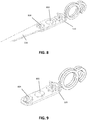
- FIG. 8 illustrates part of the winding system and part of the retractor in coupled arrangement.
- the coupling means on the retractor is a set of two holes and the coupling means on the winding system comprises a set of two protruding portions 802, 804 suitable for fitting the holes in the retractor.
- An additional clippable element can be provided for clipping the retractor and the winding system to more firmly couple to each other.
- FIG. 9 a system having a double spool for applying differential tension on the retractor is illustrated in FIG. 9 .
- the winding system is located in the immediate vicinity of the retractor 110, or even is embedded therein.
- the winding system 120 comprises at least one spool 122, which could also be referred to as a coil, forthe winding of a single elongated wire-like - also referred to as wire-shaped - element.
- This elongate element can be suitable for connecting the winding system with one or more external fixation points.
- another portion of the winding system may be adapted with a connection piece for connecting to one or more external fixation points.
- a connection piece may for example be part of a hook-eye connecting element, a clickable connection, a clippable connection, a connection based on winding of an elongated element, etc.
- the elongate wire-like element 124 may be for example, a rope, a wire, a chain or a ribbon. Such an elongate wire-like element 124 may be made of a suitable material that is sufficiently strong to keep the surgical retractor 110 under tension so that during the surgery, the surgical retractor 110 is positioned and oriented in the desired direction.
- unwound elongate wire-like element 124 may be based on rotation of the spool, although other mechanical equivalents also are envisaged within the scope of the claims.
- the spool may have a shifting system for shifting components of the core of the spool. By shifting components of the core of the spool, the perimeter of the spool can be changed, e.g. enlarged, and the amount of unwound wire-like element 124 can be reduced.
- the at least one spool 122 may advantageously be incorporated in a piece of the retractor 110, or in the winding system 120.
- the at least one spool 122 may be incorporated in a housing.
- the elongated wire-like element 124 may for example be guided through one or more special openings 130 in the housing for leaving the retractor or the winding system.
- the external fixation point 150 to which the elongate wire-like element or the winding system can be connected during operation may, for example, be a point in the environment, a point on the operating table, a point on a tripod or other element that is directly or indirectly connected to or in the vicinity of the operating table, a point on the patient, etc.
- the external fixation point is a point in a surgical drape that is used during the operation.
- the spool 122 comprises a force element 126 for the automatically winding of the elongated wire-like element 124 to apply or induce tension to this element.
- the force element 126 thus may be built into the spool, or may be connected to the spool 122. Alternatively the force element 126 may cooperate with the spool 122, so that a particular configuration is ensured wherein the elongate wire-like element 124 is kept under tension.
- a force element may be a torsion spring which ensures that there is an automatic mechanical winding of the elongated wire-shaped element 124, when it is not under tension.
- Alternative force elements can also be used, such as for example other types of springs, etc.
- Still another alternative force element may be a micro-electromechanical system (MEMS), such as e.g. a MEMS motor, for inducing a force on the elongate wire-like element.
- MEMS micro-electromechanical system
- the winding system also advantageously may comprise a control element 128 for activating and/or de-activating the automatically winding, i.e. for activating and/or de-activating the winding and thus inducing tension on the rope.
- a control element 128 for activating and/or de-activating the automatically winding, i.e. for activating and/or de-activating the winding and thus inducing tension on the rope.
- the control element 128 may for example be an element that controls the coupling between the force element and the spool and in this way controls the automatically winding, or may for example be an element that controls the movement of the elongate element and in this way controls the automatically winding.
- the control element 128 can be a coupling system for controlling the coupling between the spool and the force element.
- control element 128 can be a clamp for clamping the elongate element and thus blocking it.
- the control element 128 may alternatively be an additional blocking element that interferes with the spool 122 or the force element 126, and thereby prevents that automatically winding occurs.
- the control element 128 may include a manipulating point for activating and/or deactivating the automatically winding. It is an advantage of at least some embodiments that the automatically winding can be controlled at or close to the retractor 110, so that correct positioning of the retractor 110 can be performed by the surgeon at the location where the surgical procedure is performed so that additional staff is not or nearly not required.
- control element 128 When the control element 128 has activated automatically winding, this does not only imply that automatically winding occurs of the elongated wire-like element for bringing it to tension, but it also permits the elongated wire-like element 124 for unwinding from the spool 122 when a pulling force is applied to the elongated wire-like element 124.
- the winding system 120 may comprise more than one spool 122 and more than one corresponding elongated wire-shaped element 124.
- each of the more than one spools 120 comprises a force element 126.
- These spools and/ or force elements can be positioned on top of each other or next to each other.
- One control element 128 may be provided for activating and / or deactivating some or all of the spools 122.
- the one control element 128 may control two or more spools 122 of the winding system 120 so that the elongate wire-like elements 124 can adapt to a new position or orientation of the retractor 110.
- spools 122 can be provided with a control element 128 for controlling the automatically winding of each of the spools individually. This may for example be the case for spools that are oriented in different directions outside of one and the same plane, e.g. also referred to as oriented in 3D.
- embodiments are not limited to systems with only spools that are automatically winding, but can also contain at least some spools that are not automatically winding.
- the winding system 122 comprises two spools 120, each with an elongate wire-like element 124, a force element 126, and a control element 128.
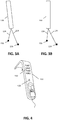
- FIG. 3A and FIG. 3B show a schematic representation of how selecting the appropriate length of the two elongated wire-like elements 124 can determine the orientation of the retractor 110. It is clear from the drawings that a difference in length of the two elongated wire-like elements induces a different orientation of the retractor. A similar effect is obtained when more than two elongate wire-like elements 124 are used (i.e. guidance in more than two directions).
- the winding system 120 thus can be a differential winding system, whereby different spools can be used so that differential forces are induced and different positions and orientations of the retractor 110 can be obtained.
- control element can be adapted for allowing the winding system 120 to adapt to a new position by free automatically winding, when the retractor 110 is positioned in the desired position, and to subsequently limit further automatic winding of the winding system thus making sure that the desired position of the retractor is maintained.
- the control element 128 can thus be adapted such that during surgery the force mechanism can be uncoupled, can be repositioned and can again be fixed for safeguarding another position with a certain traction direction. By using different spools, different traction directions can be used for obtaining the same resulting force on the retractor 110 so that it is kept in the desired position and orientation. It is an advantage of embodiments as described above, that a self-retracting medical device 100 can replace the need for a medical assistant.
- the assistant needed to ensure the fixation of the retractor 110 at certain specific positions, depending on the requirements of the operation, and the assistant needed to ensure an accurate displacement and fixation this can now, by means of embodiments, be done by the surgeon who can move the retractor 110 by hand after the activation of the winding system, and who can deactivate the winding system, once the retractor is positioned correctly. It is an advantage of at least some embodiments that an accurate and easy manipulation can be obtained by manipulating the retractor 110 and by manipulating one or more control elements of the retractor 110 so that the retractor 110 can be repositioned without the need for an assistant and while no significant additional effort or loss of flexibility occurs.
- the system is adaptable to different surgical situations, such as for example surgery on less muscular or more muscular patients, or surgery on fatter or skinnier patients.
- the retractor needs to keep open the wound in different directions or the retractor needs to retract different tissues, which is easily possible.
- the number of retractors to be used can be limited and that the retractors can be manufactured in disposable material so that for example there is a reduction in sterilization and logistics costs.
- the retractor can be fixed in different traction directions in a smooth manner by a single person.
- the person handling the retractor system can first fix the retractor to different external fixation points 150 (e.g. before or at the start of the operation), and can then, during the surgical procedure, bring the retractor in the desired position or sequential desired positions by activating and deactivating the traction on the retractor itself.
- the retractor can thus be fixed in the respective orientations envisaged by the surgeon.
- the system allows that a single person can manipulate different fixation systems during a single surgery, e.g. simultaneously.
- the medical device 100 comprises an indication system for indicating the specific use of the retractor 110 during the surgical procedure.
- a retractor 110 can contain an indication system for indicating, for a set of successive steps during a surgical procedure, information about the use of the retractor 110.
- the indicator system can, for example, for each of the steps of keeping open the wound during surgery, indicate whether the retractor is to be used, in combination with which other retractor(s) the retractor is to be used, in which orientation the retractor is to be used, which external fixation points are to be used, etc.
- the indicator system may for example be based on visual, auditive or audiovisual indication. This can be done via an indication system with color code, by an indication system with a symbol code, by an indication system where the use is auditory indicated for example, via a speaker, via an indication system where the use is indicated via a display, etc.
- the different retractors that need to be used during a surgical procedure can for example have a specific color or symbol code, for example, indicated on the handle.
- the indication system can display all the steps in a single list or show the different steps successively, making it easier for the surgeon to avoid mistakes. Sequentially indicating the different steps can be done in a manual mode, whereby the surgeon in each further step wherein a different retracting of the wound is required, adjusts the indication in the indication system.
- the indication system can also be semi-automatically or automatically, wherein, e.g. on the basis of an algorithm, the next step for the wound retracting process is indicated.
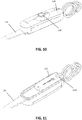
- FIG. 4 illustrates an example of an indication system in the form of a summary table 410 which is indicated on a retractor 100.
- such information can be indicated on the different retractors of a set of medical retractors for performing a particular type of surgery.
- an identification 420 of the retractor itself can be indicated.
- the various retractors are in the present example, identified by a code.
- FIG. 11 another example of a medical device is shown wherein an indication system 1110 for identifying the different uses of the retractor during a surgical procedure is embedded in the device.
- a medical device that does not include all of the features of the first aspect is also disclosed, but which is characterized by the indication system as described above.
- a medical device that does not include all of the features of the above aspect, such as for example, does not necessarily comprise a control element, but which is characterized by the presence of a winding system with at least two spools, each of the spools being adapted for winding of an elongated wire-shaped element, wherein the spools are provided with a force element for the automatic winding of the elongated wire-shaped elements in order to bring it under tension, so that a tensile force is induced from two different directions.
- This system allows to apply a differential force on the retractor.
- Further optional components and features, as well as alternative mechanical retracting systems, can be as described in the aspect described above.
- a method for keeping open a wound during surgery is also described.
- the method may advantageously be used when one or more medical devices are used as described above.
- a method will be described with reference to FIG. 5 .
- the method 500 for keeping open a wound during surgery, as shown in FIG. 5 includes standard and optional steps.
- a first step 510 the patient is prepared forthe surgical procedure. Although this step is essential forthe surgical procedure itself, this step is not essential forthe method for keeping open the wound, and this step can be carried out in advance. In a particular embodiment, this may be performed using a surgical drape for covering the patient. The surgical drape may, for example, be as described elsewhere in this description.
- a medical device comprising a retractor with winding system, e.g. as described in the first aspect, is selected.
- Such a medical device may take the form of an example, embodiment and/or a device according to the general principle of the first aspect. It may have or comprise a combination of elements from examples, embodiments and/or devices according to the general principles indicated above.
- the medical device is fixed to at least one external fixation point.
- This may be to the patient, to a drape with integrated fixation points, to external objects or fixing means such as brackets or mountings, to the operation table, etc.
- Fixing the medical device typically is done by fixing one end of the elongated wire-shaped element to attach to the external fixation point. If there is initially too little elongate wire-like element available, the available wire-like element can be prolonged by activating the control element, and by making available wire-shaped element by applying a pulling force on the elongated wire-shaped element.
- the medical device comprises more than one spool, and the medical device is fixed to more than one external fixation point.
- the method comprises the activation of the automatic winding and the positioning of the element, e.g. hook-shaped, angle-shaped or curved element, of the retractor to hold the edge of the wound or the surrounding tissue, so that the retractor is positioned in the appropriate orientation.
- the user thereby typically can grasp the medical device in the hand, control the control element so that the automatic winding is activated and the elongate wire-like elements are brought under tension by the automatic winding.
- the element e.g. hook-shaped, angle-shaped or curved element, is positioned around the edge of the wound or tissue. In this way, the medical device, more specifically, the retractor is correctly positioned.
- the method includes the deactivation of the automatic winding after the retractor is correctly positioned. In this manner, the elongate wire-like elements are fixed to the preferred length. The person handling the retractor can then put release the retractor.
- the method can comprise a sixth step 560 wherein the medical apparatus is again grasped, and the automatically winding is activated by the use of the control element.
- a seventh step the medical device 570 is then reoriented as required.
- an eighth step 580 after the correct reorientation of the medical device, the deactivation of the automatic winding takes place, and the retractor can again be released.
- an indication system can be used that provides information about the use of the one or more medical devices at a given step in the surgical process. Such indication can be adjusted manually or automatically, e.g. using a counter or an indication indicating the current step in the surgical process.
- the method may also comprise further optional steps, for example steps that partially or fully express the functionality of one or more elements described above.
- a mechanical retracting system e.g. a mechanical winding system, adapted for connecting to a medical retractor with an external fixation point for keeping open a wound or incision during surgery.
- the mechanical retracting system can be coupleable to or forming part of the medical retractor.
- the mechanical retracting system may comprises a force element for automatically retracting an elongate wire-like element to apply tension thereto.
- the mechanical retracting system may be a winding system that comprises at least one spool for winding an elongated wire-shaped element, wherein the at least one spool is provided with a force element for the automatic winding of the elongated wire-shaped element to apply tension to it.
- the mechanical retracting system advantageously is provided with at least one control element for activating / deactivating the automatic retracting.
- the mechanical retracting system e.g. winding system may further comprise one or more characteristics of the mechanical retracting system as described in embodiments above.
- a set of medical devices for keeping open a wound during surgery wherein at least one of the medical devices is a medical device according to an embodiment describe above.
- the other medical devices may for example be standard retractors.
- One of the medical devices can for example be a retractor with retracting system, e.g. winding system, whereby - in operation - the retractor and retracting system are typically configured so that the retracting system is closer to the external fixation point than to the retractor.
- the set of medical devices may also include a surgical drape, as described below. Further features and advantages of the set of medical devices may be the same or similar to those shown in the other aspects.
Landscapes
- Health & Medical Sciences (AREA)
- Life Sciences & Earth Sciences (AREA)
- Surgery (AREA)
- Molecular Biology (AREA)
- General Health & Medical Sciences (AREA)
- Biomedical Technology (AREA)
- Heart & Thoracic Surgery (AREA)
- Medical Informatics (AREA)
- Veterinary Medicine (AREA)
- Animal Behavior & Ethology (AREA)
- Engineering & Computer Science (AREA)
- Public Health (AREA)
- Nuclear Medicine, Radiotherapy & Molecular Imaging (AREA)
- Physics & Mathematics (AREA)
- Biophysics (AREA)
- Optics & Photonics (AREA)
- Pathology (AREA)
- Radiology & Medical Imaging (AREA)
- Surgical Instruments (AREA)
Applications Claiming Priority (3)
| Application Number | Priority Date | Filing Date | Title |
|---|---|---|---|
| BE2011/0746A BE1020338A3 (nl) | 2011-12-21 | 2011-12-21 | Apparaat en werkwijze voor het openhouden van een wonde. |
| EP12812973.1A EP2793711B1 (en) | 2011-12-21 | 2012-12-20 | Surgical retractor systems |
| PCT/EP2012/076528 WO2013092938A1 (en) | 2011-12-21 | 2012-12-20 | Surgical retractor systems |
Related Parent Applications (2)
| Application Number | Title | Priority Date | Filing Date |
|---|---|---|---|
| EP12812973.1A Division EP2793711B1 (en) | 2011-12-21 | 2012-12-20 | Surgical retractor systems |
| EP12812973.1A Division-Into EP2793711B1 (en) | 2011-12-21 | 2012-12-20 | Surgical retractor systems |
Publications (2)
| Publication Number | Publication Date |
|---|---|
| EP3305208A1 EP3305208A1 (en) | 2018-04-11 |
| EP3305208B1 true EP3305208B1 (en) | 2019-11-06 |
Family
ID=47522564
Family Applications (2)
| Application Number | Title | Priority Date | Filing Date |
|---|---|---|---|
| EP17204095.8A Active EP3305208B1 (en) | 2011-12-21 | 2012-12-20 | Surgical drape |
| EP12812973.1A Active EP2793711B1 (en) | 2011-12-21 | 2012-12-20 | Surgical retractor systems |
Family Applications After (1)
| Application Number | Title | Priority Date | Filing Date |
|---|---|---|---|
| EP12812973.1A Active EP2793711B1 (en) | 2011-12-21 | 2012-12-20 | Surgical retractor systems |
Country Status (18)
| Country | Link |
|---|---|
| US (1) | US9949729B2 (enExample) |
| EP (2) | EP3305208B1 (enExample) |
| JP (2) | JP6347748B2 (enExample) |
| KR (1) | KR102143253B1 (enExample) |
| CN (1) | CN104135947B (enExample) |
| AU (1) | AU2012356942B2 (enExample) |
| BE (1) | BE1020338A3 (enExample) |
| BR (1) | BR112014015218B1 (enExample) |
| CA (1) | CA2860141C (enExample) |
| CL (1) | CL2014001678A1 (enExample) |
| DK (1) | DK2793711T3 (enExample) |
| ES (1) | ES2668449T3 (enExample) |
| MY (1) | MY180139A (enExample) |
| NO (1) | NO2793711T3 (enExample) |
| PL (1) | PL2793711T3 (enExample) |
| PT (1) | PT2793711T (enExample) |
| WO (1) | WO2013092938A1 (enExample) |
| ZA (1) | ZA201404530B (enExample) |
Families Citing this family (8)
| Publication number | Priority date | Publication date | Assignee | Title |
|---|---|---|---|---|
| DE102014209995A1 (de) | 2014-04-10 | 2015-10-15 | Gereon Lill | Vorrichtung zur Verminderung der Retraktion einer Faszie bei geöffnetem Abdomen |
| TWI733703B (zh) | 2015-10-05 | 2021-07-21 | 瑞士商Bvw控股公司 | 包含微織構型表面之低法向力的退縮裝置 |
| DE102016210574A1 (de) * | 2016-06-14 | 2017-12-14 | Fasciotens Gmbh | Vorrichtung zur Verminderung der Retraktion einer Faszie oder eines Weichteilmantels bei einem offenen Weichteildefekt |
| CN110403789A (zh) * | 2019-08-01 | 2019-11-05 | 詹玮 | 一种消化科用胃部检查装置 |
| USD912813S1 (en) * | 2019-11-05 | 2021-03-09 | H&H Medical Corporation | Tissue hook for a cricothyrotomy |
| US20230293167A1 (en) * | 2021-11-12 | 2023-09-21 | Nicholas H. Mast, M.D., Inc., A California Medical Corporation | Self-retaining bone holding devices and methods |
| BE1031955B1 (nl) | 2023-09-13 | 2025-04-08 | Medenvision | Medisch fixatieapparaat om retractors te verbinden met een operatietafel |
| US20250082532A1 (en) | 2023-09-13 | 2025-03-13 | Medenvision | Medical fixation device for connecting surgical instruments to an operating table |
Family Cites Families (23)
| Publication number | Priority date | Publication date | Assignee | Title |
|---|---|---|---|---|
| US1724443A (en) * | 1928-05-24 | 1929-08-13 | Alice E Wheeler | Obstetrical sheet |
| US3693618A (en) * | 1970-07-31 | 1972-09-26 | Marilyn B Madden | Disposable unitary surgical drape |
| US4119093A (en) * | 1976-09-24 | 1978-10-10 | Goodman Floyd G | Integral patient-limb surgical drape system |
| US4349019A (en) * | 1981-07-14 | 1982-09-14 | Kimberly-Clark Corporation | Surgical leggings |
| US4730609A (en) * | 1985-02-27 | 1988-03-15 | Mcconnell Bernard E | Surgical drape with limb securing structure and method for securing a surgical site |
| US4622955A (en) * | 1985-09-05 | 1986-11-18 | Mehdi Fakhrai | Surgical retractor for dissection of internal mammary artery |
| GB8704784D0 (en) * | 1987-02-28 | 1987-04-01 | Jones D A | Surgical drape |
| US5413118A (en) * | 1990-08-20 | 1995-05-09 | Baxter International Inc. | Surgical drapes for covering appendages |
| SU1824723A1 (ru) * | 1991-04-11 | 1996-10-27 | Межотраслевой научно-технический комплекс "Микрохирургия глаза" | Векорасширитель |
| CN2230571Y (zh) * | 1995-02-23 | 1996-07-10 | 肖剑锋 | 强力机械牵引钩 |
| CN2220241Y (zh) * | 1995-04-05 | 1996-02-21 | 李泮泉 | 单向控制肋弓牵拉装置 |
| JP3141321B2 (ja) | 1996-03-25 | 2001-03-05 | 高砂医科工業株式会社 | 手術用腹壁牽引器 |
| US5938592A (en) * | 1997-01-31 | 1999-08-17 | Rultract, Inc. | Surgical support apparatus with adjustable rakes and rake plate and method of use |
| AU5273599A (en) * | 1998-08-10 | 2000-03-06 | Coroneo Inc. | Surgical suture and associated anchoring mechanism for tissue retraction |
| NO313265B1 (no) * | 1998-10-16 | 2002-09-09 | Polar Medica As | Operasjonsutstyr og bruksfremgangsmåte |
| WO2003013368A1 (en) * | 2001-08-08 | 2003-02-20 | Canica Design Inc. | Surgical retractor and tissue stabilization device |
| IL147322A0 (en) * | 2001-12-26 | 2002-08-14 | Disposable garment for chastely medical examination | |
| US20070235038A1 (en) * | 2006-04-11 | 2007-10-11 | Lone Star Medical Products, Inc. | Surgical system |
| US7691058B2 (en) * | 2006-06-15 | 2010-04-06 | Boston Scientific Scimed, Inc. | Surgical retractor device and method of use |
| US20080234551A1 (en) * | 2007-03-23 | 2008-09-25 | Ming-Tsan Lin | Gasless Laparoscopic Retractor Structure |
| US20100145155A1 (en) * | 2008-12-08 | 2010-06-10 | Mayo Foundation For Medical Education And Research | Abdominal retraction for medical/surgical procedures |
| CN201558133U (zh) * | 2009-12-18 | 2010-08-25 | 常州贺利氏微创医疗器械有限公司 | 手术用胸腹腔牵开器 |
| CN202161360U (zh) * | 2011-07-21 | 2012-03-14 | 中国人民解放军第三军医大学第三附属医院 | 用于隐睾术后睾丸的牵引装置 |
-
2011
- 2011-12-21 BE BE2011/0746A patent/BE1020338A3/nl active
-
2012
- 2012-12-20 EP EP17204095.8A patent/EP3305208B1/en active Active
- 2012-12-20 MY MYPI2014001624A patent/MY180139A/en unknown
- 2012-12-20 CA CA2860141A patent/CA2860141C/en active Active
- 2012-12-20 EP EP12812973.1A patent/EP2793711B1/en active Active
- 2012-12-20 ES ES12812973.1T patent/ES2668449T3/es active Active
- 2012-12-20 AU AU2012356942A patent/AU2012356942B2/en active Active
- 2012-12-20 WO PCT/EP2012/076528 patent/WO2013092938A1/en not_active Ceased
- 2012-12-20 PT PT128129731T patent/PT2793711T/pt unknown
- 2012-12-20 DK DK12812973.1T patent/DK2793711T3/en active
- 2012-12-20 JP JP2014548044A patent/JP6347748B2/ja active Active
- 2012-12-20 US US14/367,974 patent/US9949729B2/en active Active
- 2012-12-20 KR KR1020147019862A patent/KR102143253B1/ko active Active
- 2012-12-20 CN CN201280070240.8A patent/CN104135947B/zh active Active
- 2012-12-20 BR BR112014015218-7A patent/BR112014015218B1/pt active IP Right Grant
- 2012-12-20 PL PL12812973T patent/PL2793711T3/pl unknown
- 2012-12-20 NO NO12812973A patent/NO2793711T3/no unknown
-
2014
- 2014-06-20 CL CL2014001678A patent/CL2014001678A1/es unknown
- 2014-06-20 ZA ZA2014/04530A patent/ZA201404530B/en unknown
-
2018
- 2018-02-07 JP JP2018019972A patent/JP2018108386A/ja active Pending
Non-Patent Citations (1)
| Title |
|---|
| None * |
Also Published As
| Publication number | Publication date |
|---|---|
| PL2793711T3 (pl) | 2018-07-31 |
| JP6347748B2 (ja) | 2018-06-27 |
| CN104135947B (zh) | 2017-06-09 |
| JP2015503956A (ja) | 2015-02-05 |
| JP2018108386A (ja) | 2018-07-12 |
| NO2793711T3 (enExample) | 2018-07-07 |
| KR102143253B1 (ko) | 2020-08-11 |
| US20150011836A1 (en) | 2015-01-08 |
| AU2012356942B2 (en) | 2018-04-05 |
| EP2793711A1 (en) | 2014-10-29 |
| CA2860141A1 (en) | 2013-06-27 |
| BR112014015218B1 (pt) | 2021-01-19 |
| NZ625914A (en) | 2016-08-26 |
| US9949729B2 (en) | 2018-04-24 |
| CN104135947A (zh) | 2014-11-05 |
| AU2012356942A1 (en) | 2014-07-03 |
| EP3305208A1 (en) | 2018-04-11 |
| CA2860141C (en) | 2019-10-15 |
| KR20140105017A (ko) | 2014-08-29 |
| BR112014015218A2 (pt) | 2017-06-13 |
| DK2793711T3 (en) | 2018-05-22 |
| CL2014001678A1 (es) | 2014-12-26 |
| EP2793711B1 (en) | 2018-02-07 |
| PT2793711T (pt) | 2018-05-10 |
| BE1020338A3 (nl) | 2013-08-06 |
| WO2013092938A1 (en) | 2013-06-27 |
| MY180139A (en) | 2020-11-23 |
| BR112014015218A8 (pt) | 2017-07-04 |
| ES2668449T3 (es) | 2018-05-18 |
| ZA201404530B (en) | 2015-10-28 |
Similar Documents
| Publication | Publication Date | Title |
|---|---|---|
| EP3305208B1 (en) | Surgical drape | |
| JP5020936B2 (ja) | 外科手術用器具システム | |
| US20110184440A1 (en) | Magnetically manipulable surgical mesh and apparatus for the manipulation thereof | |
| CN113453643B (zh) | 机器人设备的手术布单 | |
| JP2011520481A (ja) | ヘルニア修復方法およびそのための装置 | |
| EP3157441B1 (en) | Soft retractors | |
| NZ625914B2 (en) | Surgical retractor systems | |
| EP4611863A2 (en) | Apparatuses and methods for intubation | |
| US20150047648A1 (en) | Sterile Drape | |
| US20200121408A1 (en) | Surgical Sheet | |
| US20240366066A1 (en) | Devices, systems, and methods for mounting a medical device with respect to another medical device | |
| WO2015171769A1 (en) | Improved wrap and related systems and methods |
Legal Events
| Date | Code | Title | Description |
|---|---|---|---|
| PUAI | Public reference made under article 153(3) epc to a published international application that has entered the european phase |
Free format text: ORIGINAL CODE: 0009012 |
|
| STAA | Information on the status of an ep patent application or granted ep patent |
Free format text: STATUS: THE APPLICATION HAS BEEN PUBLISHED |
|
| AC | Divisional application: reference to earlier application |
Ref document number: 2793711 Country of ref document: EP Kind code of ref document: P |
|
| AK | Designated contracting states |
Kind code of ref document: A1 Designated state(s): AL AT BE BG CH CY CZ DE DK EE ES FI FR GB GR HR HU IE IS IT LI LT LU LV MC MK MT NL NO PL PT RO RS SE SI SK SM TR |
|
| AX | Request for extension of the european patent |
Extension state: BA ME |
|
| STAA | Information on the status of an ep patent application or granted ep patent |
Free format text: STATUS: REQUEST FOR EXAMINATION WAS MADE |
|
| STAA | Information on the status of an ep patent application or granted ep patent |
Free format text: STATUS: EXAMINATION IS IN PROGRESS |
|
| 17P | Request for examination filed |
Effective date: 20181011 |
|
| RBV | Designated contracting states (corrected) |
Designated state(s): AL AT BE BG CH CY CZ DE DK EE ES FI FR GB GR HR HU IE IS IT LI LT LU LV MC MK MT NL NO PL PT RO RS SE SI SK SM TR |
|
| 17Q | First examination report despatched |
Effective date: 20181114 |
|
| REG | Reference to a national code |
Ref country code: DE Ref legal event code: R079 Ref document number: 602012065574 Country of ref document: DE Free format text: PREVIOUS MAIN CLASS: A61B0017020000 Ipc: A61B0046000000 |
|
| RIC1 | Information provided on ipc code assigned before grant |
Ipc: A61B 17/02 20060101ALI20190404BHEP Ipc: A61B 46/20 20160101ALI20190404BHEP Ipc: A61B 46/27 20160101ALI20190404BHEP Ipc: A61B 46/00 20160101AFI20190404BHEP |
|
| GRAP | Despatch of communication of intention to grant a patent |
Free format text: ORIGINAL CODE: EPIDOSNIGR1 |
|
| STAA | Information on the status of an ep patent application or granted ep patent |
Free format text: STATUS: GRANT OF PATENT IS INTENDED |
|
| INTG | Intention to grant announced |
Effective date: 20190517 |
|
| GRAS | Grant fee paid |
Free format text: ORIGINAL CODE: EPIDOSNIGR3 |
|
| GRAA | (expected) grant |
Free format text: ORIGINAL CODE: 0009210 |
|
| STAA | Information on the status of an ep patent application or granted ep patent |
Free format text: STATUS: THE PATENT HAS BEEN GRANTED |
|
| AC | Divisional application: reference to earlier application |
Ref document number: 2793711 Country of ref document: EP Kind code of ref document: P |
|
| AK | Designated contracting states |
Kind code of ref document: B1 Designated state(s): AL AT BE BG CH CY CZ DE DK EE ES FI FR GB GR HR HU IE IS IT LI LT LU LV MC MK MT NL NO PL PT RO RS SE SI SK SM TR |
|
| REG | Reference to a national code |
Ref country code: GB Ref legal event code: FG4D |
|
| REG | Reference to a national code |
Ref country code: CH Ref legal event code: EP Ref country code: AT Ref legal event code: REF Ref document number: 1197734 Country of ref document: AT Kind code of ref document: T Effective date: 20191115 |
|
| REG | Reference to a national code |
Ref country code: IE Ref legal event code: FG4D |
|
| REG | Reference to a national code |
Ref country code: DE Ref legal event code: R096 Ref document number: 602012065574 Country of ref document: DE |
|
| REG | Reference to a national code |
Ref country code: NL Ref legal event code: MP Effective date: 20191106 |
|
| REG | Reference to a national code |
Ref country code: LT Ref legal event code: MG4D |
|
| PG25 | Lapsed in a contracting state [announced via postgrant information from national office to epo] |
Ref country code: PT Free format text: LAPSE BECAUSE OF FAILURE TO SUBMIT A TRANSLATION OF THE DESCRIPTION OR TO PAY THE FEE WITHIN THE PRESCRIBED TIME-LIMIT Effective date: 20200306 Ref country code: NL Free format text: LAPSE BECAUSE OF FAILURE TO SUBMIT A TRANSLATION OF THE DESCRIPTION OR TO PAY THE FEE WITHIN THE PRESCRIBED TIME-LIMIT Effective date: 20191106 Ref country code: LT Free format text: LAPSE BECAUSE OF FAILURE TO SUBMIT A TRANSLATION OF THE DESCRIPTION OR TO PAY THE FEE WITHIN THE PRESCRIBED TIME-LIMIT Effective date: 20191106 Ref country code: PL Free format text: LAPSE BECAUSE OF FAILURE TO SUBMIT A TRANSLATION OF THE DESCRIPTION OR TO PAY THE FEE WITHIN THE PRESCRIBED TIME-LIMIT Effective date: 20191106 Ref country code: NO Free format text: LAPSE BECAUSE OF FAILURE TO SUBMIT A TRANSLATION OF THE DESCRIPTION OR TO PAY THE FEE WITHIN THE PRESCRIBED TIME-LIMIT Effective date: 20200206 Ref country code: GR Free format text: LAPSE BECAUSE OF FAILURE TO SUBMIT A TRANSLATION OF THE DESCRIPTION OR TO PAY THE FEE WITHIN THE PRESCRIBED TIME-LIMIT Effective date: 20200207 Ref country code: BG Free format text: LAPSE BECAUSE OF FAILURE TO SUBMIT A TRANSLATION OF THE DESCRIPTION OR TO PAY THE FEE WITHIN THE PRESCRIBED TIME-LIMIT Effective date: 20200206 Ref country code: FI Free format text: LAPSE BECAUSE OF FAILURE TO SUBMIT A TRANSLATION OF THE DESCRIPTION OR TO PAY THE FEE WITHIN THE PRESCRIBED TIME-LIMIT Effective date: 20191106 Ref country code: LV Free format text: LAPSE BECAUSE OF FAILURE TO SUBMIT A TRANSLATION OF THE DESCRIPTION OR TO PAY THE FEE WITHIN THE PRESCRIBED TIME-LIMIT Effective date: 20191106 Ref country code: SE Free format text: LAPSE BECAUSE OF FAILURE TO SUBMIT A TRANSLATION OF THE DESCRIPTION OR TO PAY THE FEE WITHIN THE PRESCRIBED TIME-LIMIT Effective date: 20191106 |
|
| PG25 | Lapsed in a contracting state [announced via postgrant information from national office to epo] |
Ref country code: RS Free format text: LAPSE BECAUSE OF FAILURE TO SUBMIT A TRANSLATION OF THE DESCRIPTION OR TO PAY THE FEE WITHIN THE PRESCRIBED TIME-LIMIT Effective date: 20191106 Ref country code: IS Free format text: LAPSE BECAUSE OF FAILURE TO SUBMIT A TRANSLATION OF THE DESCRIPTION OR TO PAY THE FEE WITHIN THE PRESCRIBED TIME-LIMIT Effective date: 20200306 Ref country code: HR Free format text: LAPSE BECAUSE OF FAILURE TO SUBMIT A TRANSLATION OF THE DESCRIPTION OR TO PAY THE FEE WITHIN THE PRESCRIBED TIME-LIMIT Effective date: 20191106 |
|
| PG25 | Lapsed in a contracting state [announced via postgrant information from national office to epo] |
Ref country code: AL Free format text: LAPSE BECAUSE OF FAILURE TO SUBMIT A TRANSLATION OF THE DESCRIPTION OR TO PAY THE FEE WITHIN THE PRESCRIBED TIME-LIMIT Effective date: 20191106 |
|
| PG25 | Lapsed in a contracting state [announced via postgrant information from national office to epo] |
Ref country code: ES Free format text: LAPSE BECAUSE OF FAILURE TO SUBMIT A TRANSLATION OF THE DESCRIPTION OR TO PAY THE FEE WITHIN THE PRESCRIBED TIME-LIMIT Effective date: 20191106 Ref country code: CZ Free format text: LAPSE BECAUSE OF FAILURE TO SUBMIT A TRANSLATION OF THE DESCRIPTION OR TO PAY THE FEE WITHIN THE PRESCRIBED TIME-LIMIT Effective date: 20191106 Ref country code: RO Free format text: LAPSE BECAUSE OF FAILURE TO SUBMIT A TRANSLATION OF THE DESCRIPTION OR TO PAY THE FEE WITHIN THE PRESCRIBED TIME-LIMIT Effective date: 20191106 Ref country code: DK Free format text: LAPSE BECAUSE OF FAILURE TO SUBMIT A TRANSLATION OF THE DESCRIPTION OR TO PAY THE FEE WITHIN THE PRESCRIBED TIME-LIMIT Effective date: 20191106 Ref country code: EE Free format text: LAPSE BECAUSE OF FAILURE TO SUBMIT A TRANSLATION OF THE DESCRIPTION OR TO PAY THE FEE WITHIN THE PRESCRIBED TIME-LIMIT Effective date: 20191106 |
|
| PGFP | Annual fee paid to national office [announced via postgrant information from national office to epo] |
Ref country code: DE Payment date: 20200520 Year of fee payment: 8 |
|
| REG | Reference to a national code |
Ref country code: CH Ref legal event code: PL |
|
| REG | Reference to a national code |
Ref country code: DE Ref legal event code: R097 Ref document number: 602012065574 Country of ref document: DE |
|
| REG | Reference to a national code |
Ref country code: AT Ref legal event code: MK05 Ref document number: 1197734 Country of ref document: AT Kind code of ref document: T Effective date: 20191106 |
|
| PG25 | Lapsed in a contracting state [announced via postgrant information from national office to epo] |
Ref country code: MC Free format text: LAPSE BECAUSE OF FAILURE TO SUBMIT A TRANSLATION OF THE DESCRIPTION OR TO PAY THE FEE WITHIN THE PRESCRIBED TIME-LIMIT Effective date: 20191106 Ref country code: SK Free format text: LAPSE BECAUSE OF FAILURE TO SUBMIT A TRANSLATION OF THE DESCRIPTION OR TO PAY THE FEE WITHIN THE PRESCRIBED TIME-LIMIT Effective date: 20191106 Ref country code: SM Free format text: LAPSE BECAUSE OF FAILURE TO SUBMIT A TRANSLATION OF THE DESCRIPTION OR TO PAY THE FEE WITHIN THE PRESCRIBED TIME-LIMIT Effective date: 20191106 |
|
| PLBE | No opposition filed within time limit |
Free format text: ORIGINAL CODE: 0009261 |
|
| STAA | Information on the status of an ep patent application or granted ep patent |
Free format text: STATUS: NO OPPOSITION FILED WITHIN TIME LIMIT |
|
| 26N | No opposition filed |
Effective date: 20200807 |
|
| GBPC | Gb: european patent ceased through non-payment of renewal fee |
Effective date: 20200206 |
|
| PG25 | Lapsed in a contracting state [announced via postgrant information from national office to epo] |
Ref country code: LU Free format text: LAPSE BECAUSE OF NON-PAYMENT OF DUE FEES Effective date: 20191220 Ref country code: FR Free format text: LAPSE BECAUSE OF NON-PAYMENT OF DUE FEES Effective date: 20200106 Ref country code: IE Free format text: LAPSE BECAUSE OF NON-PAYMENT OF DUE FEES Effective date: 20191220 |
|
| PG25 | Lapsed in a contracting state [announced via postgrant information from national office to epo] |
Ref country code: SI Free format text: LAPSE BECAUSE OF FAILURE TO SUBMIT A TRANSLATION OF THE DESCRIPTION OR TO PAY THE FEE WITHIN THE PRESCRIBED TIME-LIMIT Effective date: 20191106 Ref country code: CH Free format text: LAPSE BECAUSE OF NON-PAYMENT OF DUE FEES Effective date: 20191231 Ref country code: AT Free format text: LAPSE BECAUSE OF FAILURE TO SUBMIT A TRANSLATION OF THE DESCRIPTION OR TO PAY THE FEE WITHIN THE PRESCRIBED TIME-LIMIT Effective date: 20191106 Ref country code: LI Free format text: LAPSE BECAUSE OF NON-PAYMENT OF DUE FEES Effective date: 20191231 |
|
| PG25 | Lapsed in a contracting state [announced via postgrant information from national office to epo] |
Ref country code: GB Free format text: LAPSE BECAUSE OF NON-PAYMENT OF DUE FEES Effective date: 20200206 Ref country code: IT Free format text: LAPSE BECAUSE OF FAILURE TO SUBMIT A TRANSLATION OF THE DESCRIPTION OR TO PAY THE FEE WITHIN THE PRESCRIBED TIME-LIMIT Effective date: 20191106 |
|
| PG25 | Lapsed in a contracting state [announced via postgrant information from national office to epo] |
Ref country code: CY Free format text: LAPSE BECAUSE OF FAILURE TO SUBMIT A TRANSLATION OF THE DESCRIPTION OR TO PAY THE FEE WITHIN THE PRESCRIBED TIME-LIMIT Effective date: 20191106 |
|
| REG | Reference to a national code |
Ref country code: DE Ref legal event code: R119 Ref document number: 602012065574 Country of ref document: DE |
|
| PG25 | Lapsed in a contracting state [announced via postgrant information from national office to epo] |
Ref country code: HU Free format text: LAPSE BECAUSE OF FAILURE TO SUBMIT A TRANSLATION OF THE DESCRIPTION OR TO PAY THE FEE WITHIN THE PRESCRIBED TIME-LIMIT; INVALID AB INITIO Effective date: 20121220 Ref country code: MT Free format text: LAPSE BECAUSE OF FAILURE TO SUBMIT A TRANSLATION OF THE DESCRIPTION OR TO PAY THE FEE WITHIN THE PRESCRIBED TIME-LIMIT Effective date: 20191106 |
|
| PG25 | Lapsed in a contracting state [announced via postgrant information from national office to epo] |
Ref country code: DE Free format text: LAPSE BECAUSE OF NON-PAYMENT OF DUE FEES Effective date: 20210701 |
|
| PG25 | Lapsed in a contracting state [announced via postgrant information from national office to epo] |
Ref country code: TR Free format text: LAPSE BECAUSE OF FAILURE TO SUBMIT A TRANSLATION OF THE DESCRIPTION OR TO PAY THE FEE WITHIN THE PRESCRIBED TIME-LIMIT Effective date: 20191106 |
|
| PG25 | Lapsed in a contracting state [announced via postgrant information from national office to epo] |
Ref country code: MK Free format text: LAPSE BECAUSE OF FAILURE TO SUBMIT A TRANSLATION OF THE DESCRIPTION OR TO PAY THE FEE WITHIN THE PRESCRIBED TIME-LIMIT Effective date: 20191106 |
|
| PGFP | Annual fee paid to national office [announced via postgrant information from national office to epo] |
Ref country code: BE Payment date: 20241120 Year of fee payment: 13 |