EP3303369B1 - Chimäres viruspartikel des potato virus x und dessen verwendung für die in vitro diagnose von sjörgen syndrom - Google Patents
Chimäres viruspartikel des potato virus x und dessen verwendung für die in vitro diagnose von sjörgen syndrom Download PDFInfo
- Publication number
- EP3303369B1 EP3303369B1 EP16747629.0A EP16747629A EP3303369B1 EP 3303369 B1 EP3303369 B1 EP 3303369B1 EP 16747629 A EP16747629 A EP 16747629A EP 3303369 B1 EP3303369 B1 EP 3303369B1
- Authority
- EP
- European Patent Office
- Prior art keywords
- pvx
- virus
- chimeric
- fusion protein
- plant
- Prior art date
- Legal status (The legal status is an assumption and is not a legal conclusion. Google has not performed a legal analysis and makes no representation as to the accuracy of the status listed.)
- Active
Links
Images



Classifications
-
- C—CHEMISTRY; METALLURGY
- C07—ORGANIC CHEMISTRY
- C07K—PEPTIDES
- C07K14/00—Peptides having more than 20 amino acids; Gastrins; Somatostatins; Melanotropins; Derivatives thereof
- C07K14/005—Peptides having more than 20 amino acids; Gastrins; Somatostatins; Melanotropins; Derivatives thereof from viruses
- C07K14/08—RNA viruses
-
- C—CHEMISTRY; METALLURGY
- C07—ORGANIC CHEMISTRY
- C07K—PEPTIDES
- C07K14/00—Peptides having more than 20 amino acids; Gastrins; Somatostatins; Melanotropins; Derivatives thereof
- C07K14/005—Peptides having more than 20 amino acids; Gastrins; Somatostatins; Melanotropins; Derivatives thereof from viruses
-
- C—CHEMISTRY; METALLURGY
- C07—ORGANIC CHEMISTRY
- C07K—PEPTIDES
- C07K14/00—Peptides having more than 20 amino acids; Gastrins; Somatostatins; Melanotropins; Derivatives thereof
- C07K14/435—Peptides having more than 20 amino acids; Gastrins; Somatostatins; Melanotropins; Derivatives thereof from animals; from humans
- C07K14/46—Peptides having more than 20 amino acids; Gastrins; Somatostatins; Melanotropins; Derivatives thereof from animals; from humans from vertebrates
- C07K14/47—Peptides having more than 20 amino acids; Gastrins; Somatostatins; Melanotropins; Derivatives thereof from animals; from humans from vertebrates from mammals
-
- C—CHEMISTRY; METALLURGY
- C12—BIOCHEMISTRY; BEER; SPIRITS; WINE; VINEGAR; MICROBIOLOGY; ENZYMOLOGY; MUTATION OR GENETIC ENGINEERING
- C12N—MICROORGANISMS OR ENZYMES; COMPOSITIONS THEREOF; PROPAGATING, PRESERVING, OR MAINTAINING MICROORGANISMS; MUTATION OR GENETIC ENGINEERING; CULTURE MEDIA
- C12N7/00—Viruses; Bacteriophages; Compositions thereof; Preparation or purification thereof
-
- C—CHEMISTRY; METALLURGY
- C12—BIOCHEMISTRY; BEER; SPIRITS; WINE; VINEGAR; MICROBIOLOGY; ENZYMOLOGY; MUTATION OR GENETIC ENGINEERING
- C12N—MICROORGANISMS OR ENZYMES; COMPOSITIONS THEREOF; PROPAGATING, PRESERVING, OR MAINTAINING MICROORGANISMS; MUTATION OR GENETIC ENGINEERING; CULTURE MEDIA
- C12N7/00—Viruses; Bacteriophages; Compositions thereof; Preparation or purification thereof
- C12N7/04—Inactivation or attenuation; Producing viral sub-units
- C12N7/045—Pseudoviral particles; Non infectious pseudovirions, e.g. genetically engineered
-
- G—PHYSICS
- G01—MEASURING; TESTING
- G01N—INVESTIGATING OR ANALYSING MATERIALS BY DETERMINING THEIR CHEMICAL OR PHYSICAL PROPERTIES
- G01N33/00—Investigating or analysing materials by specific methods not covered by groups G01N1/00 - G01N31/00
- G01N33/48—Biological material, e.g. blood, urine; Haemocytometers
- G01N33/50—Chemical analysis of biological material, e.g. blood, urine; Testing involving biospecific ligand binding methods; Immunological testing
- G01N33/53—Immunoassay; Biospecific binding assay; Materials therefor
- G01N33/569—Immunoassay; Biospecific binding assay; Materials therefor for microorganisms, e.g. protozoa, bacteria, viruses
- G01N33/56983—Viruses
-
- C—CHEMISTRY; METALLURGY
- C07—ORGANIC CHEMISTRY
- C07K—PEPTIDES
- C07K2319/00—Fusion polypeptide
-
- C—CHEMISTRY; METALLURGY
- C12—BIOCHEMISTRY; BEER; SPIRITS; WINE; VINEGAR; MICROBIOLOGY; ENZYMOLOGY; MUTATION OR GENETIC ENGINEERING
- C12N—MICROORGANISMS OR ENZYMES; COMPOSITIONS THEREOF; PROPAGATING, PRESERVING, OR MAINTAINING MICROORGANISMS; MUTATION OR GENETIC ENGINEERING; CULTURE MEDIA
- C12N2770/00—MICROORGANISMS OR ENZYMES; COMPOSITIONS THEREOF; PROPAGATING, PRESERVING, OR MAINTAINING MICROORGANISMS; MUTATION OR GENETIC ENGINEERING; CULTURE MEDIA ssRNA viruses positive-sense
- C12N2770/00011—Details
- C12N2770/40011—Tymoviridae
- C12N2770/40022—New viral proteins or individual genes, new structural or functional aspects of known viral proteins or genes
Definitions
- the present invention relates to a chimeric virus particle of potato virus X and use thereof in the in vitro diagnosis of Sjögren's Syndrome.
- the invention relates to a chimeric virus particle of potato virus X, said particle having fused to its capsid protein a lipocalin-derived autoantigenic determinant associated with Sjögren's Syndrome, and the use thereof in the in vitro diagnosis of the Sjögren's Syndrome, for example using the ELISA method.
- Sjögren's Syndrome is an autoimmune disease with an incidence of 0.6% in the general population and a female:male ratio of 9:1.
- the disease manifests itself early with involvement of the exocrine glands, above all the salivary and lachrymal glands, resulting in xerostomia and xerophthalmia.
- the systemic manifestations characterized by organ involvement at a cutaneous, articular, pulmonary, renal, pancreatic and neurological level are generally less frequent and appear later, although in a percentage ranging between 25 and 92% of cases neurological involvement can represent the initial symptom.
- SS can manifest itself with extremely different symptoms, and with extremely heterogeneous involvement and degree of disability.
- Some patients can present with an isolated glandular involvement, with xerostomia and xerophthalmia ranging from mild to severe, when the gland insufficiency and loss of the saliva and/or tear secretion function lead to extreme consequences, such as swelling and parotid pain, extreme dryness of the mouth with aphthous ulcers, dysphagia variably associated with oral cavity infections, as well as a major alteration of the visus with photophobia, pain and a condition of blepharitis and/or keratitis which eventually leads to opacification and corneal ulceration.
- Systemic involvement can be characterized by cutaneous involvement, first of all Raynaud's phenomenon, but also purpura or urticarial vasculitis ; musculoskeletal involvement, characterized by arthromyalgia or arthritis, generally symmetrical and rarely of an erosive character; pulmonary involvement, with coughing and/or secondary dyspnea, dry tracheobronchitis or interstitiopathy ; or renal involvement ranging from an asymptomatic tubular dysfunction with tubular acidosis to kidney failure with a possible outcome also requiring dialysis treatment.
- the involvement of the gastrointestinal tract is also variable, with possible autoimmune pancreatitis, or association with autoimmune conditions such as atrophic gastritis, celiac disease, primitive biliary cirrhosis or autoimmune hepatitis, with the consequent associated set of symptoms, as well as neurological involvement, generally tied to sensory or more infrequently motor peripheral neuropathies, with allodynia or hyperalgesia, paresthesias and proprioceptive disorders, or less frequently to central forms, which are, however, associated with a greater degree of disability, as in the case of cerebral vasculitis, cerebellar syndromes, and memory lapses, or even manifest forms of dementia or transverse myelitis.
- autoimmune pancreatitis or association with autoimmune conditions such as atrophic gastritis, celiac disease, primitive biliary cirrhosis or autoimmune hepatitis, with the consequent associated set of symptoms, as well as neurological involvement, generally tied to sensory or more infrequently motor peripheral neuropathies, with
- Th1 cells release interferon gamma (IFNy), regulate cell-mediated immunity, and play a role in delaying cell maturation by influencing the organogenesis of salivary glands and the expression of cellular antigens, with a consequent loss of self-tolerance.
- IFNy interferon gamma
- Th2 cells release interleukin 4 (IL-4), which is fundamental in the early stage of the adaptive immune response, in particular, for isotype switching of immunoglobulin (Ig) and the consequent synthesis of pathogenetic IgG1 autoantibodies (Lee et al. 2009).
- Th17 cells make up a particular subset of memory CD4 cells, capable of secreting cytokines with a powerful pro-inflammatory activity belonging to the IL 17 family (Bettelli et al. 2008).
- IL-4 interleukin 4
- the first stage one observes a prevalent involvement of the Th1/IFN ⁇ system characterized by delayed organogenesis of the salivary glands, delayed expression of antigens on the surface of acinar cells, with a consequent loss of the clonal deletion of B and T cells, a loss of self-tolerance and an increased expression of aberrant proteins and cell apoptosis.
- This is followed, in the second preclinical stage (i.e.
- lipocalin being a protein that demonstrates a high sequence homology with ⁇ -fodrin as well as with the early protein D of EBV (Epstein-Barr Virus), which seems to confirm it to be a potential environmental agent triggering the disease in genetically predisposed subjects.
- EBV Epstein-Barr Virus
- autoimmune diseases due to the complex, variegated array of symptoms, as well as the presence of different laboratory and/or instrumental data, the diagnosis is often based on a global assessment of the situation and the criteria for classifying the disease are often used to support the diagnosis itself.
- Classification criteria in fact represent objective diagnostic parameters, which are fundamental to assure the standardization of patients who are included in clinical studies, facilitate the analysis and render the results of different clinical studies comparable, as well as enabling a comparison among patients referred to different clinical facilities.
- AECG American European Consensus Group
- ocular symptoms symptoms of dry eyes for over 3 months or use of artificial tears for over 3 months
- oral symptoms dry mouth for at least 3 months or recurrent or persistently swollen salivary glands or need for liquids to swallow solid foods
- III ocular signs (abnormal Shirmer's test or Rose Bengal/fluorescein staining)
- IV histopathological characteristics with a focus score ⁇ 1 on biopsy of the minor salivary glands
- VI presence of autoantibodies (anti-ENA SSA/Ro and/or SSB/La positivity).
- AECG criteria in order to formulate a diagnosis of SS it is necessary for at least 4 of the 6 criteria listed above to be met, including necessarily the histopathological criterion or presence of autoantibodies, and at least 3 of the 4 objective criteria.
- the two procedures biopsy and serological analysis
- a serological analysis is performed first and only in the event that the latter is negative will a salivary gland biopsy follow.
- the ACR criteria do not take into consideration either the subjective symptoms of the patient (presence of xerostomia/xerophthalmia) or functional assessments regarding the major salivary glands (salivary flow measurement, scialography or scintigraphy), but only an evaluation of ocular involvement with a test of a qualitative type and the presence of a broader spectrum of autoantibodies, in particular ANA, which is positive in a percentage of patients ranging from 60 to 85% of the cases (Nardi et al. 2006), as compared to what has been documented for anti-ENA SSA/Ro or anti-ENA SSB/La, equal, respectively, to 52-67% or 49% (Routsias et al.
- the diagnostic criteria as opposed to the classification criteria, also depend on information derived from the patient's medical history, a global assessment of the patient's laboratory and instrumental data, as well as the clinician's experience, it is worth noting the existence of a subgroup of patients who are negative for autoantibodies (i.e. ANA, anti-ENA SSA/Ro and anti-ENA SSB/La negative), but have strongly suggestive overall clinical, laboratory and instrumental data and a salivary gland histology which support the diagnosis of the pathology. In particular, for this subset of patients, it is essential to find new diagnostic markers which may serve to identify also the affected individuals in whom the diagnosis has been ruled out due to the absence of the currently available markers.
- autoantibodies i.e. ANA, anti-ENA SSA/Ro and anti-ENA SSB/La negative
- Tear lipocalin is the protein most largely represented in human tears, but it is also produced by von Ebner's glands, in the nasal mucosa, in the tracheobronchial mucosa and at the level of the prostate. It belongs to the family of lipocalins, low-molecular-weight proteins characterized by an ability to bind small hydrophobic molecules, complex with other soluble macromolecules to form macro complexes, and bind to specific receptors exposed on the cell surface to mediate the transduction and internalization of a signal.
- Tear lipocalin binds various ligands, including phospholipids, fatty acids, alcohols, glycolipids and cholesterol, and has a function that is closely associated with the role of its ligands. It prevents tear evaporation by binding fatty acids and phospholipids, maintains corneal integrity through a barrier function, again by virtue of the bond with the lipid components of tears, and performs an anti-microbial action, in particular an anti-fungal one (Gachon et al. 1998). Lipocalin also has the function of an enzyme and enzymatic inhibitor; it represents, in fact, the main tear endonuclease and has an inhibitory activity on cysteine-proteinase (Glasgow et al. 2011).
- tear lipocalin A reduction in tear lipocalin has been suggested in all diseases with reduced tear secretion; moreover, recent studies have demonstrated that the concentration thereof is significantly reduced during the course of SS, whereas in the case of dry-eye syndrome in the post-menopausal age, as well as in situations of keratoconjunctivitis sicca not associated with SS, the concentration of tear lipocalin shows to be substantially comparable to that present in the tears of control subjects (Caffery et al. 2008).
- lipocalin as a potential autoantigen for SS was based on the screening of a peptide library, with the use of random peptide sequences tested with the serum of patients suffering from the pathology of interest, SS in this specific case (Navone et al. 2005).
- This method served to reveal a synthetic dodecapeptide sequence, called Sjögren's peptide (GDRDAGSRGLVS (SEQ ID NO:1)), with a high sequence homology with tear lipocalin (FEKAAGARGLST (SEQ ID NO:2) and ⁇ -fodrin, as well as with the D protein antigen of EBV.
- ELISA Enzyme-Linked Immunosorbent Assay
- the lipocalin peptide (LIP peptide) obtained by chemical synthesis has already been used to test sera obtained from control subjects and subjects with autoimmune diseases, including SS, rheumatoid arthritis, LES and scleroderma, precisely with the aim of validating its diagnostic sensitivity and specificity, and it has demonstrated to be a potential autoantigen of significant diagnostic value.
- an ELISA based on the use solely of the peptide obtained by chemical synthesis is not completely reliable, as the small dimensions and physicochemical characteristics of the peptide itself cannot guarantee adhesion to the polystyrene of the plate used for the test, impairing its reproducibility and effectiveness.
- the result obtained with experiments in triplicate has not always proven to be reproducible and, in the case of some lots of plates, not usable, given that the data obtained from the reaction between the synthetic LIP peptide and the serum showed a lower value than the absorbance of the substrate alone, used as the internal experimental control of the system (the so-called reference blank).
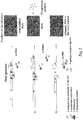
- the potato virus X belongs to the family Alphaflexiviridae and genus Potexvirus. It is a filamentous and flexible rod-like virus, with an average length of 500nm and a diameter of about 13nm. Its genome consists of a positive-sense single-stranded RNA molecule 6435 bases long (for the strain X3, which is the one of reference in this case; Accession Number D00344) and codes for 5 different proteins: an RNA-dependent RNA polymerase (RdRp, replicase), three viral movement proteins, identified as p8, p12 and p25 (or also proteins of the Triple Gene Block, TGBp1, TGBp2 and TGBp3, respectively) and the viral coat protein (CP) ( Figure 1 ).
- RdRp RNA-dependent RNA polymerase
- CP viral coat protein
- the expression of the open reading frames is regulated by the activity of several specific subgenomic promoters.
- the genome is 5' capped (i.e. it has a methylguanosine cap, m7GpppG) and 3' polyadenylated (it has a polyA tail).
- the completely assembled virion consists of a molecule of RNA totally surrounded by about 1300 identical copies of CP, which are associated to form a spiral around the viral nucleic acid with a progressive process. This is why in vivo, during replication inside the plant cell, virions of different lengths corresponding to the different stages of progress in the assembly can be identified.
- the protocol adopted makes it possible to obtain a preparation of particles that are homogeneous in length and have an expected size of 500nm.
- the virus travels from the inoculation site via a cell-to-cell movement; then it reaches the phloem vessels, through which it moves into the leaves of the phytomers above the ones where inoculation took place.
- the typical symptoms it produces are chlorotic and then necrotic spots corresponding to the individual loci of infection on inoculated leaves, and a diffuse chlorotic mosaic accompanied by leafroll in systemically infected leaves.
- samples of the symptomatic systemic tissue are taken and the CVPs are purified and used in the planned experiments.
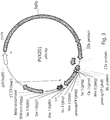
- PVX201 The entire PVX genome has been cloned, in the form of cDNA, in an expression vector for plant cells called plasmid pPVX201 (Baulcombe et al. 1995; figure 3 ; see SEQ ID NO:3 in the appended list of the sequences; see also http://www.plantsci.cam.ac.uk/research/davidbaulcombe/methods/pvx-expression-vectors/sequences).
- the vector consists of: the strong constitutive promoter 35S derived from the cauliflower mosaic virus, placed upstream of the PVX cDNA; and the NOS terminator derived from the nopaline synthase gene of Agrobacterium tumefaciens , placed downstream of the PVX cDNA. These two regions constitute the portions of the vector that regulate the expression of the viral genome inside the plant cell.
- the plasmid also has an origin of bacterial replication and the beta-lactamase gene, which lends it resistance to the antibiotic ampicillin; this is useful for the selection of correctly transformed bacterial clones.
- a single multi-cloning site is inserted upstream of the CP gene for the insertion of additional ORFs, along with a duplicated copy of the subgenomic promoter of the CP, which has the function of directing the expression of the additional ORF inserted by cloning in the MCS.
- PVX has been widely used as an expression vector, in plants, of heterologous proteins, mostly ones of pharmaceutical-biomedicinal interest, but not limited to these.
- the sequence coding for the protein of interest is inserted in the MCS and the recombinant plasmid thus obtained is used for direct inoculation into the leaves of the plant of interest.
- the 35S promoter will start replication of the viral genome with the production of a RNA copy of the viral cDNA and the translation of the first protein, RdRp.
- the viral RNA polymerase will guide the production of subgenomic RNAs and other viral proteins, together with the heterologous protein of interest, which will be produced free inside the cell cytoplasm.
- the sequence of interest can be fused to the coat protein of the virus.
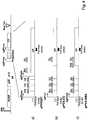
- the Nhel site useful for cloning also came to be eliminated, so the pPVX-CC plasmid was further modified to facilitate subsequent cloning by inserting the single Smal/Xmal restriction site, with a nucleotide sequence CCCGGG, corresponding to the amino acids proline and glycine ( Figure 4c ).
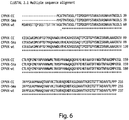
- the nucleotide and protein sequence of the new CP which originates a virus called PVX-Sma (Lico et al. 2006), was thus further modified compared to CP-CC, as is evident from the nucleotide ( Figure 7 ) and protein ( Figure 6 ) alignment.
- the new mutant is stable in subsequent generations and shows normal fitness and symptoms in vivo.
- the pPVX-Sma plasmid was used to insert, at the 5' end of the CP-Sma gene, the sequence coding for the LIP peptide.
- the plasmid thus obtained was then used to produce chimeric viral particles of PVX which expose, as the capsid protein, the fusion protein containing the capsid protein-Sma and LIP peptide.
- the chimeric virus particle of PVX according to the present invention can be advantageously used for the in vitro diagnosis of SS, in particular using the ELISA method.
- fusion protein comprising or consisting of:
- the PVX virus whose capsid protein is used can be selected in the group consisting of PVX X3, BS, EX, NL4, HB, WS2, ROTH1, XS, UK3, OS, NL1, Taiwan, X4, preferably X3.
- the capsid protein used in the fusion protein according to the present invention consists of the following sequence: PGTPATASGLFTIPDGDFFSTARAIVASNAVATNEDLSKIEAIWKDMKVPT DTMAQAAWDLVRHCADVGSSAQTEMIDTGPYSNGISRARLAAAIKEVCT LRQFCMKYAPVVWNWMLTNNSPPANWQAQGFKPEHKFAAFDFFNGVT NPAAIMPKEGLIRPPSEAEMNAAQTAAFVKITKARAQSNDFASLDAAVTR GRITGTTTAEAVVTLPPP (SEQ ID NO:6).
- This protein is obtained by deletion in the 5' portion of the CP gene corresponding to the nucleotides 1-63 coding for aa 1-21 of the CP.
- the fusion protein according to the present invention can have the following sequence:
- the present invention further relates to a polynucleotide which codes for the fusion protein as defined above.
- the polynucleotide can have the following sequence (SEQ ID NO:8):
- the subject matter of the present invention is further represented by an expression vector comprising the polynucleotide as defined above. Moreover, the present invention relates to a host cell comprising the expression vector as defined above.
- the present invention relates to a genome sequence of a PVX virus, said genome sequence comprising the polynucleotide as defined above.
- the present invention relates to a chimeric virus particle of potato virus X, said chimeric virus particle being characterized in that it comprises, as a capsid protein, the fusion protein of the present invention as defined above, said viral particle having exposed, on the outside thereof, the amino-terminal portion comprising or consisting of the antigenic determinant of lipocalin.
- the viral genome contained in the chimeric virus particle consists of the genome sequence as defined above.
- the present invention further relates to the use of the chimeric virus particle according to the present invention, or of the fusion protein as defined above, for the in vitro diagnosis of Sjögren's Syndrome, for example using the ELISA, dipstick or microchip method.
- the subject matter of the present invention further relates to a kit for the diagnosis in vitro of Sjögren's Syndrome, said kit comprising or consisting of the chimeric virus particle as defined above, or in the fusion protein as defined above, possibly in combination with suitable reagents for detection purposes.
- the kit can be a kit ELISA, dipstick or microchip.
- the present invention relates to moreover a plant, preferably belonging to the family of the Solanaceae, including Solanum lycopersicon , Solanum tuberosum , and the plants belonging to the genus Nicotiana, and in particular N. benthamiana, said plant being characterized in that it comprises within it the viral chimeric particle as defined above, or the expression vector as defined above.
- the present invention also relates to plant cells of the plant as defined above and which express the chimeric viral particle as defined above, or the expression vector as defined above.
- the subject matter of the present invention further relates to the use of a peptide sequence comprising or consisting of an antigenic determinant of lipocalin for the preparation of the fusion protein as defined above, the chimeric viral particle as defined above, the plant as defined above, and of plant cells as defined above.
- the present invention relates to the use of the plant as defined above or of the plant cells as defined above, for the production of the chimeric viral particle as defined above.
- the subject matter of the present invention further relates to a process for the preparation of the fusion protein according to the present invention, said process comprising or consisting of the following steps:
- the PVX virus that can be used according to the present invention can be selected in the group consisting of PVX X3, BS, EX, NL4, HB, WS2, ROTH1, XS, UK3, OS, NL1, Taiwan, X4, preferably X3.
- said capsid protein can consist of the following sequence: MPGTPATASGLFTIPDGDFFSTARAIVASNAVATNEDLSKIEAIWKDMKV PTDTMAQAAWDLVRHCADVGSSAQTEMIDTGPYSNGISRARLAAAIKEV CTLRQFCMKYAPVVWNWMLTNNSPPANWQAQGFKPEHKFAAFDFFNG VTNPAAIMPKEGLIRPPSEAEMNAAQTAAFVKITKARAQSNDFASLDAAV TRGRITGTTTAEAVVTLPPP (SEQ ID NO:6).
- the protein is obtained by deletion in the 5' portion of the CP gene corresponding to nucleotides 1-63 coding for the aa 1-21 of the CP.
- the present invention further relates to a process for the preparation of the chimeric viral particle according to the present invention, said process comprising or consisting of the step of replacing the capsid protein of a PVX virus, in said PVX virus, with the fusion protein defined above.
- the process for the production of the viral particle according to the present invention can comprise or consist of the following steps:
- EXAMPLE 1 Preparation of the chimeric viral particle PVX according to the present invention
- the pPVX-Sma plasmid was purified on a small scale and digested with the restriction enzymes Nhel and Xmal to insert the sequence coding for the LIP peptide at the 5' end of the CP-Sma gene.
- This sequence was obtained by in vitro pairing of two complementary synthetic oligonucleotides carrying suitable hemi-restriction sites at their ends, to enable cloning directly in the receiving viral vector, duly digested.
- the protocol provides for the dilution in water of equimolar amounts of the two strands (sense and antisense) and boiling of the solution for 5 minutes; after cooling at room temperature the complementary strands will pair.
- the designed oligonucleotides are the following:
- the sense and antisense oligonucleotides coding for the LIP peptide were designed in such a way as to have the codon usage of Nicotiana benthamiana , the 5' end compatible with the Nhel restriction hemisite and the 3' end compatible with the Xmal hemisite, so that once in vitro pairing had taken place they would be ready for direct cloning in the pPVX-Sma plasmid digested with Nhel-Xmal ( Figure 4c ). Moreover, a serine was inserted immediately after the initial methionine to improve the characteristics of stability of the chimera in vivo.
- the doubly digested pPVX-Sma plasmid was purified from the agarose gel using a commercial kit and the quantity and quality were re-verified in agarose gel and by spectrophotometric analysis.
- the recombinant plasmid obtained is inserted into bacterial cells of the XL1-Blue strain by electroporation and plated in selective LB-agar medium containing ampicillin. The plates are incubated at 37°C and the resulting colonies analysed by PCR with oligonucleotides specific for the nucleotide region of the PVX vector straddling the cloned region ( Figure 4 ):
- the expected band is 370 bases.
- the positive colonies were used for small-scale purification of the plasmid and analysis thereof via sequencing in order to verify the correct presence of the additional LIP sequence.
- the positive clone identified was purified on a large scale and used for a first cycle of infections of plants of N.benthamiama.
- the plants of N. benthamiana were grown in hothouses with a photoperiod of 16 hours of light and 8 hours of darkness, at a constant temperature of 24 °C.
- the light intensity in the hothouses is about 16000 lux.
- a solution containing 20 ⁇ g of plasmid diluted in 50 ⁇ l of water is prepared for the primary infection, whilst for the subsequent infections 50 ⁇ l of crude extract drawn from the infected tissue is used.
- the infection is carried out mechanically on the adaxial (upper) side of the leaf by lightly rubbing with the fingers in the presence both of the prepared solution and silicon carbide, or Carborundum (VWR International, Prolabo).
- the action of this powder causes microabrasions on the leaf surface, enabling the plasmid to enter effectively into the plant cells and express themselves.
- RNA was extracted from the systemically infected leaves by means of the RNeasy plant mini kit (Qiagen) (http://www1.qiagen.com/literature/render.aspx?id 352) and RT-PCR reactions were carried out using the GeneAmp RNA PCR Kit (Perkin Elmer).
- PVX-LIP chimeric PVX
- PVX-wt chimeric PVX
- the plant tissue frozen at -80 °C and mechanically pulverized in a mortar chilled in liquid nitrogen, is mixed in an equivalent volume of phosphate-buffered saline 1X (1X PBS) (10 mM Na2HPO4, 10 mM NaH2PO4, 150 mM NaCl, pH 7.2) and mechanically crushed using an Ultraturrax electric homogenizer brought up to maximum speed. The homogenate must then be centrifuged at about 20000g for 3 minutes.
- 1X PBS phosphate-buffered saline 1X
- the purified virus was dialyzed and concentrated by filtration through a membrane using Vivaspin 2 HS columns (Vivascience, http://teachline.ls.huji.ac.il/72682/Booklets/VIVASPIN_Ultrafiltration_produ cts_II.pdf).
- the purified virus was then analysed through silver-stained polyacrylamide gel to verify the degree of purity of the preparation and the presence of a band with a higher weight than the wt CP due to the presence of the LIP peptide and was quantified by reading with a spectrophotometer at a wavelength of 280 nm considering the molar extinction coefficient ⁇ equal to 1.25 ml/(mg*cm).
- the PVX-LIP and wt PVX viral particles were purified from the plant with a yield of 0.12 mg per gram of fresh tissue.
- the sequence encoding the LIP peptide was cloned in the vector by ligation of the vector itself digested with the enzymes Nhel and Aatll and the sequence encoding the peptide obtained by pairing the primer CPMV-for 5'-CTAGC ACT CCT CCT GCT TTT GAA AAG GCT GCT GGT GCT AGA GGT TTG TCT ACT CCA TTT TCA GACGT - 3' (SEQ ID NO:13) and the primer CPMV-rev 5'- C TGA AAA TGG AGT AGA CAA ACC TCT AGC ACC AGC AGC CTT TTC AAA AGC AGG AGG AGT G - 3'(SEQ ID NO:14).
- the vector thus obtained permits the exposure of the peptide in a BB-BC loop of the small subunit of the coat protein and in this manner the peptide is exposed on its outer surface.
- the vectors pEAQ-HT-VP60-LIP and pEAQ-HT-24K were electroporated in cells of Agrobacterium tumefaciens strain LBA4404 and both used to agroinfiltrate plants of N.benthamiana.
- the bacterial cultures transformed for the two vectors were made to grow separately in a liquid medium containing antibiotic agents, precipitated by centrifugation at 4000 g and resuspended in MMA (10 mM MES pH 5.6, 10 mM MgCl2 and 100 mM acetosyringone) until arriving at an O.D.600 equal to 0.8. Subsequently, after 4 h of incubation at room temperature, equal volumes of the two bacterial suspensions were mixed and used for infiltration, by means of a needleless syringe, of leaves of 4- to 5-week-old plants of N. benthamiana. Four leaves per plant were infiltrated. Samples were then taken of the infiltrated leaves 6 days after infiltration (dpi). For the expression of the empty CPMV the same procedure was carried out with the vectors pEAQ-HT-VP60 and pEAQ-HT-24K.
- the extract was clarified by filtration with two sheets of Miracloth paper (Merck Millipore, 475855-1R) and subsequent centrifugation (30000 g, 1 h, 4°C).
- the supernatant was loaded onto an anion-exchange resin (DEAE SephadexTM A-50, GE Healthcare, 17-0180-01), with a sample:resin ratio of 4:1.
- the flow-through was then concentrated at 4 ml, centrifuged (10000 g X 10 minutes) and loaded into a size-exclusion chromatography column (HiPrep 16/60 Sephacryl S-500 HR, GE Healthcare, 28-9356-06) in 0.1 M sodium phosphate pH 7.0 containing 0.15 M of NaCl at a flow velocity of 0.8 ml/min.
- the eluted fractions were analysed using 12% SDS-PAGE gel stained with silver nitrate.
- the fractions containing CPMV. LIP and CPMV were joined separately and filtered with a 100 kDa centrifugal filter system (Amicon® Ultra-15, Merck Millipore, UFC910024).
- the purified particles were analysed using 12% SDS-PAGE gel stained with silver nitrate and subsequently quantified by reading the absorbance with a spectrophotometer at 280 nm.
- EXAMPLE 2 ELISA diagnostic test using the chimeric viral particle of PVX according to the present invention
- ELISA assays In order to evaluate the bond of the antibodies present in the serum of the patients, ELISA assays (Immunolon II-Dynax and Maxisorp-NUNC) were set up with the LIP peptide produced by chemical synthesis and with PVX.LIP and wild-type CVP.
- the plates were coated with 50 ⁇ l of 40 ⁇ g/ml of synthetic peptide in 1X PBS (2 micrograms of peptide) and with 50 ⁇ l of a 50 ⁇ g/ml solution of wild-type PVX and purified PVX.LIP (2.5 micrograms of chimeric CP corresponding to about 131.6 ng of peptide), similarly diluted in 1X PBS.
- the reference scale was obtained using known concentrations of immunoglobulin pools from donors (Sandoglobulin 50 and 100 ⁇ g/mL).
- the plates were then blocked using 3% BSA in 1X PBS and subsequently incubated with the serum of the subjects belonging to the three above-described experimental groups diluted 1:50 in 1X PBS with 1% BSA for 4 hours at room temperature. After the incubation, a sequence of washes was carried out, once with a solution of 1X PBS and Tween-20 and 3 successive washes in 1X PBS. Subsequently, the plates were incubated at 4°C overnight with a human anti-IgG conjugated with alkaline phosphatase.
- the result of the ELISA test revealed several difficulties of a methodological type.
- the CPMV system was thus excluded from the analysis and considered unsuitable for performing a diagnostic test.
- the sensitivity of the ELISA test conducted using the peptide of the invention on the subgroup of patients with SS characterized by an ANA-negative antibody profile is equal to 98.7%, as compared to a value of 75% obtained with the use of the synthetic peptide.
Landscapes
- Health & Medical Sciences (AREA)
- Life Sciences & Earth Sciences (AREA)
- Chemical & Material Sciences (AREA)
- Organic Chemistry (AREA)
- Genetics & Genomics (AREA)
- Virology (AREA)
- Engineering & Computer Science (AREA)
- Biochemistry (AREA)
- General Health & Medical Sciences (AREA)
- Medicinal Chemistry (AREA)
- Zoology (AREA)
- Molecular Biology (AREA)
- Immunology (AREA)
- Wood Science & Technology (AREA)
- Bioinformatics & Cheminformatics (AREA)
- Biomedical Technology (AREA)
- Biophysics (AREA)
- Gastroenterology & Hepatology (AREA)
- Proteomics, Peptides & Aminoacids (AREA)
- Microbiology (AREA)
- Biotechnology (AREA)
- General Engineering & Computer Science (AREA)
- Urology & Nephrology (AREA)
- Hematology (AREA)
- Toxicology (AREA)
- Food Science & Technology (AREA)
- Physics & Mathematics (AREA)
- Analytical Chemistry (AREA)
- General Physics & Mathematics (AREA)
- Pathology (AREA)
- Cell Biology (AREA)
- Tropical Medicine & Parasitology (AREA)
- Peptides Or Proteins (AREA)
- Micro-Organisms Or Cultivation Processes Thereof (AREA)
Claims (22)
- Fusionsprotein, umfassend oder bestehend aus:- einem Amino-terminalen Abschnitt, bestehend aus einer Peptidsequenz, umfassend oder bestehend aus eine(r) antigene(n) Determinante von Lipocalin, wobei die antigene Determinante von Lipocalin ausgewählt ist aus der Gruppe, die aus FEKAAGARGLST (SEQ ID NR:2), MSFEKAAGARGLST (SEQ ID NR:5) besteht;- einem Carboxy-terminalen Abschnitt, bestehend aus einer Peptidsequenz, umfassend das oder bestehend aus dem Capsidprotein eines PVX-Virus, wobei das Capsidprotein intakt oder im 5'-Abschnitt des Gens deletiert ist, das für das Wildtyp-Capsidprotein kodiert, wobei der Amino-terminale Abschnitt an den Carboxy-terminalen Abschnitt so fusioniert ist, dass die antigene Determinante in-frame mit dem Capsidprotein ist.
- Fusionsprotein nach Anspruch 1, wobei das PVX-Virus ausgewählt ist aus der Gruppe, bestehend aus PVX X3, BS, EX, NL4, HB, WS2, ROTH1, XS, UK3, OS, NL1, Taiwan, X4, vorzugsweise X3.
- Fusionsprotein nach einem der Ansprüche 1-2, wobei das Capsidprotein aus der folgenden Sequenz besteht:

- Fusionsprotein nach einem der Ansprüche 1-3, wobei das Fusionsprotein die folgende Sequenz hat

- Polynukleotid, das für das Fusionsprotein wie in einem der Ansprüche 1-4 definiert kodiert.
- Polynukleotid nach Anspruch 5, wobei das Polynukleotid die folgende Sequenz (SEQ ID NR:8) hat:

- Expressionsvektor, umfassend das Polynukleotid wie in einem der Ansprüche 5-6 definiert.
- Wirtszelle, umfassend den Expressionsvektor wie in Anspruch 7 definiert.
- Genomsequenz eines PVX-Virus, wobei die Genomsequenz das Polynukleotid wie in einem der Ansprüche 5-6 definiert umfasst.
- Chimäres Viruspartikel von Kartoffelvirus X, wobei das chimäre Viruspartikel dadurch gekennzeichnet ist, dass es als ein Capsidprotein das Fusionsprotein wie in einem der Ansprüche 1-4 definiert umfasst, wobei das Viruspartikel an seiner Außenseite den Amino-terminalen Abschnitt exponiert hat, umfassend die oder bestehend aus der antigene(n) Determinante von Lipocalin.
- Chimäres Viruspartikel nach Anspruch 10, wobei das Virusgenom aus der Genomsequenz wie in Anspruch 9 definiert besteht.
- Verwendung des chimären Viruspartikels nach einem der Ansprüche 10-11 oder des Fusionsproteins nach einem der Ansprüche 1-4 für die In vitro-Diagnose von Sjögren-Syndrom, zum Beispiel unter Verwendung der ELISA-, Tauchstab- oder Mikrochipmethode.
- Kit für die In vitro-Diagnose von Sjögren-Syndrom, das Kit umfassend das oder bestehend aus dem chimäre(n) Viruspartikel nach einem der Ansprüche 10-11, oder in dem Fusionsprotein nach einem der Ansprüche 1-4, möglicherweise in Kombination mit geeigneten Reagenzien zu Nachweiszwecken.
- Pflanze, dadurch gekennzeichnet, dass sie in sich das chimäre Viruspartikel wie in einem der Ansprüche 10-11 definiert oder den Expressionsvektor wie in Anspruch 7 definiert umfasst.
- Pflanzenzellen der Pflanze nach Anspruch 14, die das chimäre Viruspartikel wie in einem der Ansprüche 10-11 definiert oder den Expressionsvektor wie in Anspruch 7 definiert exprimiert.
- Verwendung einer Peptidsequenz, umfassend oder bestehend aus eine(r) antigene(n) Determinante von Lipocalin für die Zubereitung des Fusionsproteins wie in einem der Ansprüche 1-4 definiert, des chimären Viruspartikels nach einem der Ansprüche 10-11, der Pflanze nach Anspruch 14 und der Pflanzenzellen nach Anspruch 15.
- Verwendung der Pflanze nach Anspruch 14 oder der Pflanzenzellen nach Anspruch 15 für die Produktion des chimären Viruspartikels nach einem der Ansprüche 10-11.
- Verfahren für die Zubereitung des Fusionsproteins nach einem der Ansprüche 1-4, das Verfahren umfassend die oder bestehend aus den folgenden Schritten:a) Klonieren, in einem Vektor, der Peptidsequenz, umfassend das oder bestehend aus dem Capsidprotein eines PVX-Virus, wobei das Capsidprotein intakt oder im 5'-Abschnitt des Gens deletiert ist, das für das Wildtyp-Capsidprotein kodiert; undb) Klonieren einer Peptidsequenz, umfassend oder bestehend aus eine(r) antigene(n) Determinante von Lipocalin, wobei die Peptidsequenz an die Peptidsequenz fusioniert ist, umfassend das oder bestehend aus dem Capsidprotein eines PVX-Virus im Vektor, der aus Schritt a) resultiert, wobei die antigene Determinante von Lipocalin ausgewählt ist aus der Gruppe, die aus FEKAAGARGLST (SEQ ID NR:2) und MSFEKAAGARGLST (SEQ ID NR:5) besteht.
- Verfahren nach Anspruch 18, wobei das PVX-Virus ausgewählt ist aus der Gruppe, bestehend aus PVX X3, BS, EX, NL4, HB, WS2, ROTH1, XS, UK3, OS, NL1, Taiwan, X4, vorzugsweise X3.
- Verfahren nach einem der Ansprüche 18-19, wobei das Capsidprotein aus der folgenden Sequenz besteht:

- Verfahren für die Zubereitung des chimären Viruspartikels nach Anspruch 10 oder 11, das Verfahren umfassend den oder bestehend aus dem Schritt zum Ersetzen des Capsidproteins eines PVX-Virus, in dem PVX-Virus, mit dem Fusionsprotein nach einem der Ansprüche 1-4.
- Verfahren für die Herstellung des Viruspartikels nach Anspruch 10 oder 11, umfassend die oder bestehend aus den folgenden Schritten:a1) Infizieren einer Pflanze mit dem Viruspartikel nach Anspruch 10 oder 11 oder dem Expressionsvektor wie in Anspruch 7 definiert;b1) Kultivieren der gemäß Schritt a1) erhaltenen Pflanze;c) Extrahieren des Viruspartikels aus der Pflanze.
Priority Applications (1)
| Application Number | Priority Date | Filing Date | Title |
|---|---|---|---|
| PL16747629T PL3303369T3 (pl) | 2015-06-03 | 2016-06-03 | Chimeryczna cząstka wirusowa wirusa x ziemniaka i jej zastosowanie do diagnozy in vitro zespołu sjögrena |
Applications Claiming Priority (2)
| Application Number | Priority Date | Filing Date | Title |
|---|---|---|---|
| ITUB20151199 | 2015-06-03 | ||
| PCT/IT2016/000146 WO2016194014A1 (en) | 2015-06-03 | 2016-06-03 | Viral chimeric particle of potato virus x and use thereof for in vitro diagnosis of sjögren syndrome |
Publications (2)
| Publication Number | Publication Date |
|---|---|
| EP3303369A1 EP3303369A1 (de) | 2018-04-11 |
| EP3303369B1 true EP3303369B1 (de) | 2019-08-07 |
Family
ID=54288887
Family Applications (1)
| Application Number | Title | Priority Date | Filing Date |
|---|---|---|---|
| EP16747629.0A Active EP3303369B1 (de) | 2015-06-03 | 2016-06-03 | Chimäres viruspartikel des potato virus x und dessen verwendung für die in vitro diagnose von sjörgen syndrom |
Country Status (6)
| Country | Link |
|---|---|
| US (1) | US10626149B2 (de) |
| EP (1) | EP3303369B1 (de) |
| CA (1) | CA2988072A1 (de) |
| ES (1) | ES2753170T3 (de) |
| PL (1) | PL3303369T3 (de) |
| WO (1) | WO2016194014A1 (de) |
Family Cites Families (1)
| Publication number | Priority date | Publication date | Assignee | Title |
|---|---|---|---|---|
| US9522940B2 (en) * | 2012-05-23 | 2016-12-20 | Pieris Pharmaceuticals Gmbh | Lipocalin muteins with binding-affinity for glypican-3 (GPC-3) and use of lipocalin muteins for target-specific delivery to cells expressing GPC-3 |
-
2016
- 2016-06-03 EP EP16747629.0A patent/EP3303369B1/de active Active
- 2016-06-03 PL PL16747629T patent/PL3303369T3/pl unknown
- 2016-06-03 ES ES16747629T patent/ES2753170T3/es active Active
- 2016-06-03 WO PCT/IT2016/000146 patent/WO2016194014A1/en not_active Ceased
- 2016-06-03 CA CA2988072A patent/CA2988072A1/en not_active Abandoned
- 2016-06-03 US US15/579,150 patent/US10626149B2/en not_active Expired - Fee Related
Non-Patent Citations (1)
| Title |
|---|
| None * |
Also Published As
| Publication number | Publication date |
|---|---|
| WO2016194014A1 (en) | 2016-12-08 |
| PL3303369T3 (pl) | 2020-03-31 |
| US20180170970A1 (en) | 2018-06-21 |
| US10626149B2 (en) | 2020-04-21 |
| ES2753170T3 (es) | 2020-04-07 |
| EP3303369A1 (de) | 2018-04-11 |
| CA2988072A1 (en) | 2016-12-08 |
Similar Documents
| Publication | Publication Date | Title |
|---|---|---|
| CN111218459B (zh) | 一种以人复制缺陷腺病毒为载体的重组新型冠状病毒疫苗 | |
| WO2021254327A1 (zh) | 一种包膜替换型病毒载体疫苗及其构建方法 | |
| CN110759973B (zh) | 一种表达非洲猪瘟病毒CD2v蛋白的细胞株及其应用 | |
| CN111234036B (zh) | 非洲猪瘟病毒p72融合蛋白及其制备方法和应用 | |
| CN111560354A (zh) | 重组新型冠状病毒及其制备方法和应用 | |
| Šroller et al. | Seroprevalence rates of HPyV6, HPyV7, TSPyV, HPyV9, MWPyV and KIPyV polyomaviruses among the healthy blood donors | |
| CN112574306B (zh) | 脂联素单克隆抗体、抗体对及其制备方法和用途 | |
| Tinazzi et al. | Plant-derived chimeric virus particles for the diagnosis of primary Sjögren syndrome | |
| CN114106157B (zh) | 犬细小病毒纳米抗体cpv-vhh-e3及其应用 | |
| CN117700537B (zh) | 一种与非洲马瘟病毒vp7蛋白具有良好亲和反应能力的单克隆抗体及用途 | |
| CN109111507B (zh) | 病毒重组糖蛋白及其真核细胞高效表达方法与应用 | |
| Liu et al. | Expression and Immunogenicity of Two Recombinant Fusion Proteins Comprising Foot‐and‐Mouth Disease Virus Structural Protein VP1 and DC‐SIGN‐Binding Glycoproteins | |
| US10626149B2 (en) | Viral chimeric particle of potato virus X and use thereof for in vitro diagnosis of Sjögren syndrome | |
| CN101481675B (zh) | 一种抗猪瘟多表位dna疫苗及构建方法和应用 | |
| CN103409377A (zh) | 犬细小病毒病毒样颗粒的制备及用途 | |
| CN101121748B (zh) | 抗传染性法氏囊病病毒vp4蛋白单克隆抗体 | |
| CN117007801A (zh) | 非洲猪瘟病毒膜蛋白e146l的制备方法及应用 | |
| CN115725613B (zh) | 针对新型冠状病毒delta突变株的mRNA疫苗及其制备方法和应用 | |
| CN105906694B (zh) | 基孔肯亚病毒特异性检测抗原及其应用 | |
| KR102657261B1 (ko) | Covid-19 진단을 위한 재조합 코로나-19 바이러스 스파이크 단백질의 생산 및 이의 용도 | |
| CN119039427B (zh) | 一株绵羊抗蓝舌病毒的重组单个b细胞抗体 | |
| CN115894718B (zh) | 一种非洲猪瘟病毒的抗原表位肽及其应用 | |
| CN118421572B (zh) | 缺失二十四个基因的减毒非洲猪瘟病毒株的构建及其作为疫苗的应用 | |
| CN116376977B (zh) | 风疹病毒重组病毒样颗粒表达载体及其用途 | |
| CN121471347B (zh) | 一种抗SARS-CoV和SARS-CoV-2的全人源单克隆抗体及其应用 |
Legal Events
| Date | Code | Title | Description |
|---|---|---|---|
| STAA | Information on the status of an ep patent application or granted ep patent |
Free format text: STATUS: THE INTERNATIONAL PUBLICATION HAS BEEN MADE |
|
| PUAI | Public reference made under article 153(3) epc to a published international application that has entered the european phase |
Free format text: ORIGINAL CODE: 0009012 |
|
| STAA | Information on the status of an ep patent application or granted ep patent |
Free format text: STATUS: REQUEST FOR EXAMINATION WAS MADE |
|
| 17P | Request for examination filed |
Effective date: 20171212 |
|
| AK | Designated contracting states |
Kind code of ref document: A1 Designated state(s): AL AT BE BG CH CY CZ DE DK EE ES FI FR GB GR HR HU IE IS IT LI LT LU LV MC MK MT NL NO PL PT RO RS SE SI SK SM TR |
|
| AX | Request for extension of the european patent |
Extension state: BA ME |
|
| GRAP | Despatch of communication of intention to grant a patent |
Free format text: ORIGINAL CODE: EPIDOSNIGR1 |
|
| STAA | Information on the status of an ep patent application or granted ep patent |
Free format text: STATUS: GRANT OF PATENT IS INTENDED |
|
| INTG | Intention to grant announced |
Effective date: 20190313 |
|
| GRAS | Grant fee paid |
Free format text: ORIGINAL CODE: EPIDOSNIGR3 |
|
| GRAA | (expected) grant |
Free format text: ORIGINAL CODE: 0009210 |
|
| STAA | Information on the status of an ep patent application or granted ep patent |
Free format text: STATUS: THE PATENT HAS BEEN GRANTED |
|
| AK | Designated contracting states |
Kind code of ref document: B1 Designated state(s): AL AT BE BG CH CY CZ DE DK EE ES FI FR GB GR HR HU IE IS IT LI LT LU LV MC MK MT NL NO PL PT RO RS SE SI SK SM TR |
|
| AX | Request for extension of the european patent |
Extension state: BA ME |
|
| REG | Reference to a national code |
Ref country code: GB Ref legal event code: FG4D |
|
| REG | Reference to a national code |
Ref country code: AT Ref legal event code: REF Ref document number: 1163702 Country of ref document: AT Kind code of ref document: T Effective date: 20190815 Ref country code: CH Ref legal event code: EP |
|
| REG | Reference to a national code |
Ref country code: DE Ref legal event code: R096 Ref document number: 602016018237 Country of ref document: DE |
|
| REG | Reference to a national code |
Ref country code: IE Ref legal event code: FG4D |
|
| REG | Reference to a national code |
Ref country code: SE Ref legal event code: TRGR |
|
| REG | Reference to a national code |
Ref country code: NL Ref legal event code: MP Effective date: 20190807 |
|
| REG | Reference to a national code |
Ref country code: LT Ref legal event code: MG4D |
|
| PG25 | Lapsed in a contracting state [announced via postgrant information from national office to epo] |
Ref country code: BG Free format text: LAPSE BECAUSE OF FAILURE TO SUBMIT A TRANSLATION OF THE DESCRIPTION OR TO PAY THE FEE WITHIN THE PRESCRIBED TIME-LIMIT Effective date: 20191107 Ref country code: NO Free format text: LAPSE BECAUSE OF FAILURE TO SUBMIT A TRANSLATION OF THE DESCRIPTION OR TO PAY THE FEE WITHIN THE PRESCRIBED TIME-LIMIT Effective date: 20191107 Ref country code: HR Free format text: LAPSE BECAUSE OF FAILURE TO SUBMIT A TRANSLATION OF THE DESCRIPTION OR TO PAY THE FEE WITHIN THE PRESCRIBED TIME-LIMIT Effective date: 20190807 Ref country code: LT Free format text: LAPSE BECAUSE OF FAILURE TO SUBMIT A TRANSLATION OF THE DESCRIPTION OR TO PAY THE FEE WITHIN THE PRESCRIBED TIME-LIMIT Effective date: 20190807 Ref country code: NL Free format text: LAPSE BECAUSE OF FAILURE TO SUBMIT A TRANSLATION OF THE DESCRIPTION OR TO PAY THE FEE WITHIN THE PRESCRIBED TIME-LIMIT Effective date: 20190807 Ref country code: FI Free format text: LAPSE BECAUSE OF FAILURE TO SUBMIT A TRANSLATION OF THE DESCRIPTION OR TO PAY THE FEE WITHIN THE PRESCRIBED TIME-LIMIT Effective date: 20190807 Ref country code: PT Free format text: LAPSE BECAUSE OF FAILURE TO SUBMIT A TRANSLATION OF THE DESCRIPTION OR TO PAY THE FEE WITHIN THE PRESCRIBED TIME-LIMIT Effective date: 20191209 |
|
| REG | Reference to a national code |
Ref country code: AT Ref legal event code: MK05 Ref document number: 1163702 Country of ref document: AT Kind code of ref document: T Effective date: 20190807 |
|
| PG25 | Lapsed in a contracting state [announced via postgrant information from national office to epo] |
Ref country code: IS Free format text: LAPSE BECAUSE OF FAILURE TO SUBMIT A TRANSLATION OF THE DESCRIPTION OR TO PAY THE FEE WITHIN THE PRESCRIBED TIME-LIMIT Effective date: 20191207 Ref country code: GR Free format text: LAPSE BECAUSE OF FAILURE TO SUBMIT A TRANSLATION OF THE DESCRIPTION OR TO PAY THE FEE WITHIN THE PRESCRIBED TIME-LIMIT Effective date: 20191108 Ref country code: LV Free format text: LAPSE BECAUSE OF FAILURE TO SUBMIT A TRANSLATION OF THE DESCRIPTION OR TO PAY THE FEE WITHIN THE PRESCRIBED TIME-LIMIT Effective date: 20190807 Ref country code: RS Free format text: LAPSE BECAUSE OF FAILURE TO SUBMIT A TRANSLATION OF THE DESCRIPTION OR TO PAY THE FEE WITHIN THE PRESCRIBED TIME-LIMIT Effective date: 20190807 Ref country code: AL Free format text: LAPSE BECAUSE OF FAILURE TO SUBMIT A TRANSLATION OF THE DESCRIPTION OR TO PAY THE FEE WITHIN THE PRESCRIBED TIME-LIMIT Effective date: 20190807 |
|
| REG | Reference to a national code |
Ref country code: CH Ref legal event code: NV Representative=s name: VALIPAT S.A. C/O BOVARD SA NEUCHATEL, CH |
|
| REG | Reference to a national code |
Ref country code: ES Ref legal event code: FG2A Ref document number: 2753170 Country of ref document: ES Kind code of ref document: T3 Effective date: 20200407 |
|
| PG25 | Lapsed in a contracting state [announced via postgrant information from national office to epo] |
Ref country code: DK Free format text: LAPSE BECAUSE OF FAILURE TO SUBMIT A TRANSLATION OF THE DESCRIPTION OR TO PAY THE FEE WITHIN THE PRESCRIBED TIME-LIMIT Effective date: 20190807 Ref country code: EE Free format text: LAPSE BECAUSE OF FAILURE TO SUBMIT A TRANSLATION OF THE DESCRIPTION OR TO PAY THE FEE WITHIN THE PRESCRIBED TIME-LIMIT Effective date: 20190807 Ref country code: AT Free format text: LAPSE BECAUSE OF FAILURE TO SUBMIT A TRANSLATION OF THE DESCRIPTION OR TO PAY THE FEE WITHIN THE PRESCRIBED TIME-LIMIT Effective date: 20190807 Ref country code: RO Free format text: LAPSE BECAUSE OF FAILURE TO SUBMIT A TRANSLATION OF THE DESCRIPTION OR TO PAY THE FEE WITHIN THE PRESCRIBED TIME-LIMIT Effective date: 20190807 Ref country code: IT Free format text: LAPSE BECAUSE OF FAILURE TO SUBMIT A TRANSLATION OF THE DESCRIPTION OR TO PAY THE FEE WITHIN THE PRESCRIBED TIME-LIMIT Effective date: 20190807 |
|
| VS25 | Lapsed in a validation state [announced via postgrant information from nat. office to epo] |
Ref country code: MD Free format text: LAPSE BECAUSE OF FAILURE TO SUBMIT A TRANSLATION OF THE DESCRIPTION OR TO PAY THE FEE WITHIN THE PRESCRIBED TIME-LIMIT Effective date: 20190807 |
|
| PG25 | Lapsed in a contracting state [announced via postgrant information from national office to epo] |
Ref country code: SM Free format text: LAPSE BECAUSE OF FAILURE TO SUBMIT A TRANSLATION OF THE DESCRIPTION OR TO PAY THE FEE WITHIN THE PRESCRIBED TIME-LIMIT Effective date: 20190807 Ref country code: IS Free format text: LAPSE BECAUSE OF FAILURE TO SUBMIT A TRANSLATION OF THE DESCRIPTION OR TO PAY THE FEE WITHIN THE PRESCRIBED TIME-LIMIT Effective date: 20200224 Ref country code: CZ Free format text: LAPSE BECAUSE OF FAILURE TO SUBMIT A TRANSLATION OF THE DESCRIPTION OR TO PAY THE FEE WITHIN THE PRESCRIBED TIME-LIMIT Effective date: 20190807 Ref country code: SK Free format text: LAPSE BECAUSE OF FAILURE TO SUBMIT A TRANSLATION OF THE DESCRIPTION OR TO PAY THE FEE WITHIN THE PRESCRIBED TIME-LIMIT Effective date: 20190807 |
|
| REG | Reference to a national code |
Ref country code: DE Ref legal event code: R097 Ref document number: 602016018237 Country of ref document: DE |
|
| PLBE | No opposition filed within time limit |
Free format text: ORIGINAL CODE: 0009261 |
|
| STAA | Information on the status of an ep patent application or granted ep patent |
Free format text: STATUS: NO OPPOSITION FILED WITHIN TIME LIMIT |
|
| PG2D | Information on lapse in contracting state deleted |
Ref country code: IS |
|
| 26N | No opposition filed |
Effective date: 20200603 |
|
| PG25 | Lapsed in a contracting state [announced via postgrant information from national office to epo] |
Ref country code: SI Free format text: LAPSE BECAUSE OF FAILURE TO SUBMIT A TRANSLATION OF THE DESCRIPTION OR TO PAY THE FEE WITHIN THE PRESCRIBED TIME-LIMIT Effective date: 20190807 |
|
| PG25 | Lapsed in a contracting state [announced via postgrant information from national office to epo] |
Ref country code: MC Free format text: LAPSE BECAUSE OF FAILURE TO SUBMIT A TRANSLATION OF THE DESCRIPTION OR TO PAY THE FEE WITHIN THE PRESCRIBED TIME-LIMIT Effective date: 20190807 |
|
| PG25 | Lapsed in a contracting state [announced via postgrant information from national office to epo] |
Ref country code: LU Free format text: LAPSE BECAUSE OF NON-PAYMENT OF DUE FEES Effective date: 20200603 |
|
| REG | Reference to a national code |
Ref country code: BE Ref legal event code: MM Effective date: 20200630 |
|
| PG25 | Lapsed in a contracting state [announced via postgrant information from national office to epo] |
Ref country code: IE Free format text: LAPSE BECAUSE OF NON-PAYMENT OF DUE FEES Effective date: 20200603 |
|
| PG25 | Lapsed in a contracting state [announced via postgrant information from national office to epo] |
Ref country code: BE Free format text: LAPSE BECAUSE OF NON-PAYMENT OF DUE FEES Effective date: 20200630 |
|
| PGFP | Annual fee paid to national office [announced via postgrant information from national office to epo] |
Ref country code: PL Payment date: 20210315 Year of fee payment: 6 |
|
| VS25 | Lapsed in a validation state [announced via postgrant information from nat. office to epo] |
Ref country code: MA Free format text: LAPSE BECAUSE OF FAILURE TO SUBMIT A TRANSLATION OF THE DESCRIPTION OR TO PAY THE FEE WITHIN THE PRESCRIBED TIME-LIMIT Effective date: 20190807 |
|
| PGFP | Annual fee paid to national office [announced via postgrant information from national office to epo] |
Ref country code: DE Payment date: 20210505 Year of fee payment: 6 Ref country code: FR Payment date: 20210412 Year of fee payment: 6 |
|
| PGFP | Annual fee paid to national office [announced via postgrant information from national office to epo] |
Ref country code: CH Payment date: 20210616 Year of fee payment: 6 Ref country code: TR Payment date: 20210527 Year of fee payment: 6 Ref country code: SE Payment date: 20210610 Year of fee payment: 6 Ref country code: GB Payment date: 20210513 Year of fee payment: 6 |
|
| PGFP | Annual fee paid to national office [announced via postgrant information from national office to epo] |
Ref country code: ES Payment date: 20210708 Year of fee payment: 6 |
|
| PG25 | Lapsed in a contracting state [announced via postgrant information from national office to epo] |
Ref country code: MT Free format text: LAPSE BECAUSE OF FAILURE TO SUBMIT A TRANSLATION OF THE DESCRIPTION OR TO PAY THE FEE WITHIN THE PRESCRIBED TIME-LIMIT Effective date: 20190807 Ref country code: CY Free format text: LAPSE BECAUSE OF FAILURE TO SUBMIT A TRANSLATION OF THE DESCRIPTION OR TO PAY THE FEE WITHIN THE PRESCRIBED TIME-LIMIT Effective date: 20190807 |
|
| PG25 | Lapsed in a contracting state [announced via postgrant information from national office to epo] |
Ref country code: MK Free format text: LAPSE BECAUSE OF FAILURE TO SUBMIT A TRANSLATION OF THE DESCRIPTION OR TO PAY THE FEE WITHIN THE PRESCRIBED TIME-LIMIT Effective date: 20190807 |
|
| REG | Reference to a national code |
Ref country code: DE Ref legal event code: R119 Ref document number: 602016018237 Country of ref document: DE |
|
| REG | Reference to a national code |
Ref country code: CH Ref legal event code: PL Ref country code: SE Ref legal event code: EUG |
|
| GBPC | Gb: european patent ceased through non-payment of renewal fee |
Effective date: 20220603 |
|
| PG25 | Lapsed in a contracting state [announced via postgrant information from national office to epo] |
Ref country code: SE Free format text: LAPSE BECAUSE OF NON-PAYMENT OF DUE FEES Effective date: 20220604 Ref country code: LI Free format text: LAPSE BECAUSE OF NON-PAYMENT OF DUE FEES Effective date: 20220630 Ref country code: FR Free format text: LAPSE BECAUSE OF NON-PAYMENT OF DUE FEES Effective date: 20220630 Ref country code: CH Free format text: LAPSE BECAUSE OF NON-PAYMENT OF DUE FEES Effective date: 20220630 |
|
| PG25 | Lapsed in a contracting state [announced via postgrant information from national office to epo] |
Ref country code: GB Free format text: LAPSE BECAUSE OF NON-PAYMENT OF DUE FEES Effective date: 20220603 Ref country code: DE Free format text: LAPSE BECAUSE OF NON-PAYMENT OF DUE FEES Effective date: 20230103 |
|
| REG | Reference to a national code |
Ref country code: ES Ref legal event code: FD2A Effective date: 20230727 |
|
| PG25 | Lapsed in a contracting state [announced via postgrant information from national office to epo] |
Ref country code: ES Free format text: LAPSE BECAUSE OF NON-PAYMENT OF DUE FEES Effective date: 20220604 |
|
| PG25 | Lapsed in a contracting state [announced via postgrant information from national office to epo] |
Ref country code: PL Free format text: LAPSE BECAUSE OF NON-PAYMENT OF DUE FEES Effective date: 20220603 |
|
| PG25 | Lapsed in a contracting state [announced via postgrant information from national office to epo] |
Ref country code: TR Free format text: LAPSE BECAUSE OF NON-PAYMENT OF DUE FEES Effective date: 20220603 |