EP3289799B1 - Method for managing in an adaptive and joint way the routing policy and the retransmission policy of a node in an underwater network - Google Patents
Method for managing in an adaptive and joint way the routing policy and the retransmission policy of a node in an underwater network Download PDFInfo
- Publication number
- EP3289799B1 EP3289799B1 EP16801572.5A EP16801572A EP3289799B1 EP 3289799 B1 EP3289799 B1 EP 3289799B1 EP 16801572 A EP16801572 A EP 16801572A EP 3289799 B1 EP3289799 B1 EP 3289799B1
- Authority
- EP
- European Patent Office
- Prior art keywords
- packet
- node
- nodes
- sent
- packets
- Prior art date
- Legal status (The legal status is an assumption and is not a legal conclusion. Google has not performed a legal analysis and makes no representation as to the accuracy of the status listed.)
- Active
Links
Images


Classifications
-
- H—ELECTRICITY
- H04—ELECTRIC COMMUNICATION TECHNIQUE
- H04B—TRANSMISSION
- H04B13/00—Transmission systems characterised by the medium used for transmission, not provided for in groups H04B3/00 - H04B11/00
- H04B13/02—Transmission systems in which the medium consists of the earth or a large mass of water thereon, e.g. earth telegraphy
-
- H—ELECTRICITY
- H04—ELECTRIC COMMUNICATION TECHNIQUE
- H04W—WIRELESS COMMUNICATION NETWORKS
- H04W40/00—Communication routing or communication path finding
- H04W40/02—Communication route or path selection, e.g. power-based or shortest path routing
- H04W40/12—Communication route or path selection, e.g. power-based or shortest path routing based on transmission quality or channel quality
- H04W40/125—Communication route or path selection, e.g. power-based or shortest path routing based on transmission quality or channel quality using a measured number of retransmissions as a link metric
-
- H—ELECTRICITY
- H04—ELECTRIC COMMUNICATION TECHNIQUE
- H04L—TRANSMISSION OF DIGITAL INFORMATION, e.g. TELEGRAPHIC COMMUNICATION
- H04L1/00—Arrangements for detecting or preventing errors in the information received
- H04L1/12—Arrangements for detecting or preventing errors in the information received by using return channel
- H04L1/16—Arrangements for detecting or preventing errors in the information received by using return channel in which the return channel carries supervisory signals, e.g. repetition request signals
- H04L1/1607—Details of the supervisory signal
- H04L1/1657—Implicit acknowledgement of correct or incorrect reception, e.g. with a moving window
-
- H—ELECTRICITY
- H04—ELECTRIC COMMUNICATION TECHNIQUE
- H04L—TRANSMISSION OF DIGITAL INFORMATION, e.g. TELEGRAPHIC COMMUNICATION
- H04L1/00—Arrangements for detecting or preventing errors in the information received
- H04L1/12—Arrangements for detecting or preventing errors in the information received by using return channel
- H04L1/16—Arrangements for detecting or preventing errors in the information received by using return channel in which the return channel carries supervisory signals, e.g. repetition request signals
- H04L1/18—Automatic repetition systems, e.g. Van Duuren systems
- H04L1/1825—Adaptation of specific ARQ protocol parameters according to transmission conditions
-
- H—ELECTRICITY
- H04—ELECTRIC COMMUNICATION TECHNIQUE
- H04L—TRANSMISSION OF DIGITAL INFORMATION, e.g. TELEGRAPHIC COMMUNICATION
- H04L1/00—Arrangements for detecting or preventing errors in the information received
- H04L1/12—Arrangements for detecting or preventing errors in the information received by using return channel
- H04L1/16—Arrangements for detecting or preventing errors in the information received by using return channel in which the return channel carries supervisory signals, e.g. repetition request signals
- H04L1/18—Automatic repetition systems, e.g. Van Duuren systems
- H04L1/1867—Arrangements specially adapted for the transmitter end
- H04L1/188—Time-out mechanisms
-
- H—ELECTRICITY
- H04—ELECTRIC COMMUNICATION TECHNIQUE
- H04L—TRANSMISSION OF DIGITAL INFORMATION, e.g. TELEGRAPHIC COMMUNICATION
- H04L45/00—Routing or path finding of packets in data switching networks
- H04L45/02—Topology update or discovery
- H04L45/08—Learning-based routing, e.g. using neural networks or artificial intelligence
-
- H—ELECTRICITY
- H04—ELECTRIC COMMUNICATION TECHNIQUE
- H04W—WIRELESS COMMUNICATION NETWORKS
- H04W28/00—Network traffic management; Network resource management
- H04W28/02—Traffic management, e.g. flow control or congestion control
- H04W28/0231—Traffic management, e.g. flow control or congestion control based on communication conditions
- H04W28/0236—Traffic management, e.g. flow control or congestion control based on communication conditions radio quality, e.g. interference, losses or delay
-
- H—ELECTRICITY
- H04—ELECTRIC COMMUNICATION TECHNIQUE
- H04W—WIRELESS COMMUNICATION NETWORKS
- H04W40/00—Communication routing or communication path finding
- H04W40/02—Communication route or path selection, e.g. power-based or shortest path routing
- H04W40/023—Limited or focused flooding to selected areas of a network
-
- H—ELECTRICITY
- H04—ELECTRIC COMMUNICATION TECHNIQUE
- H04L—TRANSMISSION OF DIGITAL INFORMATION, e.g. TELEGRAPHIC COMMUNICATION
- H04L1/00—Arrangements for detecting or preventing errors in the information received
- H04L2001/0092—Error control systems characterised by the topology of the transmission link
- H04L2001/0093—Point-to-multipoint
-
- H—ELECTRICITY
- H04—ELECTRIC COMMUNICATION TECHNIQUE
- H04L—TRANSMISSION OF DIGITAL INFORMATION, e.g. TELEGRAPHIC COMMUNICATION
- H04L1/00—Arrangements for detecting or preventing errors in the information received
- H04L2001/0092—Error control systems characterised by the topology of the transmission link
- H04L2001/0097—Relays
-
- Y—GENERAL TAGGING OF NEW TECHNOLOGICAL DEVELOPMENTS; GENERAL TAGGING OF CROSS-SECTIONAL TECHNOLOGIES SPANNING OVER SEVERAL SECTIONS OF THE IPC; TECHNICAL SUBJECTS COVERED BY FORMER USPC CROSS-REFERENCE ART COLLECTIONS [XRACs] AND DIGESTS
- Y02—TECHNOLOGIES OR APPLICATIONS FOR MITIGATION OR ADAPTATION AGAINST CLIMATE CHANGE
- Y02D—CLIMATE CHANGE MITIGATION TECHNOLOGIES IN INFORMATION AND COMMUNICATION TECHNOLOGIES [ICT], I.E. INFORMATION AND COMMUNICATION TECHNOLOGIES AIMING AT THE REDUCTION OF THEIR OWN ENERGY USE
- Y02D30/00—Reducing energy consumption in communication networks
- Y02D30/70—Reducing energy consumption in communication networks in wireless communication networks
Definitions
- the present invention relates to the sector of communications in underwater sensor networks and more specifically to a method for dynamic determination of the logic for retransmission of the packets by the nodes of a network in order to optimize the performance of the network itself.
- UWSNs Underwater Wireless Sensor Networks
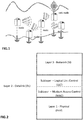
- An underwater sensor network ( Figure 1 ) is made up of a set of nodes, appropriately positioned to cover the area of interest and located at various depths, some of which may be mobile autonomous vehicles. Each node is equipped with sensors and one or more communication apparatuses. The nodes collect from the surrounding environment data, which, after a step of local processing, are sent to one or more data-collector or sink nodes that store / handle / transport the data elsewhere on the basis of the type of application. The exchange of data may also regard sending of commands or information on the state of the devices.
- one of the main challenges is a reliable communication, i.e., the capacity of guaranteeing that the packets generated by the various nodes will be delivered to the sink nodes (and this in a reasonable time).
- a first solution to increase reliability of communications is the flooding technique, which exploits the broadcast nature inherent in acoustic communication: each packet is addressed to all nodes, and each node that receives a packet sends it back again in broadcast mode.
- this solution maximizes the likelihood of the packets reaching the sink node, the cost, in terms of energy consumption, increase in network traffic with corresponding risk of network collapse as the number of collisions increase - with marked reduction of the throughput and consequent even uncontrolled increase of the delays - renders this solution unsatisfactory or rarely practicable.
- each node sends each packet to a restricted set of other nodes: if each node sends its own traffic to just one node we have a single path, i.e., classic unipath routing without any redundancy; if one or more nodes send their own traffic to a number of network nodes, there are a number of network paths - and hence redundancy - and routing is a multipath routing.
- Another solution to increase communication reliability consists in using retransmission techniques. For each packet transmitted, the transmitting node goes into a wait state where it waits for acknowledgement of receipt thereof by the addressee nodes.
- the transmitting node For each packet transmitted, the transmitting node goes into a wait state where it waits for acknowledgement of receipt thereof by the addressee nodes.
- implicit acknowledgments exploiting the broadcast communication means, a packet is considered as having been successfully sent if a node detects that at least one of the nodes to which it had sent the packet retransmits it. If instead, no copy of the packet is detected, it is assumed that none of the nodes has received it, and the packet is retransmitted after a backoff period.
- a packet is retransmitted a certain number of times, after which it is rejected.
- the maximum number of retransmissions plays an important role: a very high value of retransmissions increases the likelihood of delivery but at the same time increases the network latency, the energy consumption, and in turn increases the network traffic.
- the patent US2012/192026 A1 does not propose a routing strategy, but only a technique of retransmission of the packets.
- the patent US2004/071082 regards a routing protocol that is exclusively of a unipath type and does not offer any dynamicity as the number of retransmissions of a packet varies.
- WO 2015/012970 discloses the transmission of data from each underwater node of a network to other underwater nodes according to a time division multiple access (TDMA) scheme.
- TDMA time division multiple access
- the inventive idea underlying the present invention consists in combining the policy of choice of the relay nodes (routing function) with the retransmission policy in order to optimize the performance from the standpoint of reliability of the transmissions, of network latency, and of energy consumption.
- the choice is made in a dynamic and adaptive way, by applying an algorithm executed by each node (and hence distributed), which enables the nodes to learn and select dynamically the best number and set of neighbours to which to transmit each packet and the maximum number of times in which to retransmit each packet.
- optimization is made locally by each node on the basis of the local information exchanged and enables definition of the operating mode of the node.
- Different nodes may behave in different ways (i.e., part of the network can follow a unipath protocol, whilst another area of the network uses a multipath protocol, or even a flooding protocol).
- the proposal according to the present invention differs from the prior art because the present retransmission strategy does not envisage explicit exchange of feedback between the network nodes.
- the present invention enables definition of a procedure that introduces the local logic of a cross-layering "meta-protocol", enabling the net-work to operate in time according to different protocols, and different portions of the network to operate according to different protocol logics, this being an essential characteristic for optimizing performance, and being altogether absent in the prior-art solutions.
- the present invention consists in combining the policy of choice of the relay nodes (i.e., of the nodes to which to transmit the packet in order to route it towards the sink node) with the retransmission policy in order to obtain the best performance from the standpoint of reliability of transmissions, of network latency, and of energy consumption (and / or a combination thereof).
- the relay nodes i.e., of the nodes to which to transmit the packet in order to route it towards the sink node
- the retransmission policy in order to obtain the best performance from the standpoint of reliability of transmissions, of network latency, and of energy consumption (and / or a combination thereof).
- neighboring nodes nodes that have the capacity of receiving correctly the transmissions made by each other
- neighboring nodes nodes that have the capacity of receiving correctly the transmissions made by each other
- an underwater sensor network as that of Figure 1 , made up of a plurality of nodes appropriately positioned to cover the area of interest. Irrespective of whether the node is fixed or is represented by a mobile vehicle, each node is equipped with sensors and one or more communication apparatuses. The nodes collect from the surrounding environment data, which, after local processing, are sent to one or more sink nodes, which store / handle / transport the data elsewhere on the basis of the type of application.
- the present invention is a cross-layer solution that integrates the network layer (routing) with the LLC (Logical Link Control) sublayer of the datalink layer.
- the method proposed consists in determining autonomously, node by node, for each packet that is to be transmitted / retransmitted (LLC logic), to which subset of the nodes it is to be transmitted (routing logic) and the maximum number of retransmissions to be made.
- a module which governs the policy of transmission and retransmission of the LLC layer (top sublayer of the datalink layer of the ISO-OSI model), as well as a routing module, which, using a self-learning algorithm based upon Q-learning, determines, for each packet, also according to the number of times that this has already been transmitted, the optimal set of the nodes to which this packet is to be re-sent, as will be described in detail in what follows.
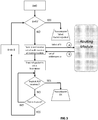
- the LLC sublayer governs the logic of retransmission of a node that is illustrated in Figure 2 .
- a node When a node has to send a packet (or re-send a packet, in the case of retransmission), it interfaces with the routing module (arrows A and B) to identify the nodes to which the packet is to be sent.
- the LLC sublayer sends to the routing module the number of times that the packet has already been (unsuccessfully) transmitted and receives from the latter the set of the nodes to which the packet is to be sent (a set that in general will be a function also of the number of retransmissions of that packet).
- the calculation of the set of the nodes could be carried out periodically instead of on a time-to-time basis.
- the solution proposed is, however, to be preferred given the frequently very long times between successive retransmissions.
- the node After a packet has been sent and a timer has been started, the node goes into a wait state where it waits for an implicit acknowledgement using the overhearing technique: the packet is considered as having been successfully sent if at least one of the nodes to which it had sent the packet retransmits it; if, instead, no transmission of a copy of the packet is detected, it is assumed that none of the nodes has received the packet. In the former case, the next packet is transmitted. In the latter case, the packet is retransmitted after a wait period referred to as backoff.
- Each packet is transmitted by each node at most a number K of times, after which the packet is rejected.
- the parameter K is set dynamically according to the estimate of the intensity of the network traffic as described hereinafter.
- the routing module governs the routing logic, determining, for each packet, also according to the number of times that this has already been transmitted, the optimal set of the nodes to which this is to be (re-)sent.
- the solution proposed is based upon a general mathematical reinforcement-learning technique known as Q-learning [SuBa98].
- Q-learning method is based upon the Q functions (Q-values), which represent the estimate of the cost associated to each possible action for each possible state of the system. Iteratively, the algorithm updates the various estimates and, on the basis of these, indicates as action to be executed the action of minimum cost.
- the routing module of each node i estimates the Q-function Q i (s,a), i.e., the cost associated to execution of the action a when it is in the state s, i.e., the cost of sending a packet that has already been transmitted s times to the nodes in the set a (lines 2-7).
- the probabilities P ⁇ i , ss a . for calculation of the values Q i (s,a) (line 5) are obtained starting from the probabilities P i,j of a packet sent by the node i being correctly received by the node j, as appears below:
- the core of the operation of the learning technique is the specification of the cost function associated to the various state / action pairs, which in effect determines the logic of selection of the set of the relays.
- e i ( s, a ) is equal to the cost of transmission of a packet to the set of nodes that corresponds to the action
- n i ( s, a ) is the cost for the nodes downstream to deliver the packet to destination (calculated on the basis of the information exchanged with the neighbours)
- l i ( s, a ) is the cost associated to the possible loss of the packet when this is rejected after the maximum number of retransmissions has been reached, w e and w l , where
- n i s , a ⁇ j ⁇ a c j P i , j
- L is a penalty associated to the loss of the packet when this is rejected after the maximum number of retransmissions has been reached, and the product is the probability of the packet having been lost.
- Each node keeps track of the number n i,j of the packets correctly received from the neighbouring nodes. This calculation is made on all the packets, irrespective of whether the node is addressee or not of the single packet.
- the values n i and n ij are calculated with respect to a sliding time window of appropriate dimensions.
- K is a fundamental parameter of the protocol. A low value contributes to limiting the network traffic, but may lead to a low probability of success of the transmissions. Instead, a high value of K increases the probability of a packet being received, but at the cost of an increase in the network traffic: an adequate value of K with low traffic may easily lead to conditions of network overloading in conditions of sustained traffic, thus leading to network crashing.
- the efficiency of an underwater communication network can be increased using simultaneously heterogeneous communication devices, which may differ as regards bitrate, operating frequency, transmission range, reliability in the communication, etc.
- This enables a greater adaptability to the changeable conditions of the underwater environment and to different types of networks.
- the present invention can be easily extended for selecting, autonomously, node by node, in addition to the subset of the nodes to which to send the packet, also the specific communication apparatus to be used from among the multiple ones that may be available. To do this, it is necessary to change the model discussed previously as follows.
- the cost of transmission of a packet e i m s , a takes into account also the specific communication device m chosen for transmitting the packet, given that associated to different devices are, for example, different levels of energy consumption or transmission capacity.
- Figures 5 , 6, and 7 show the performance of the three protocols in the simulation scenario described.
- the results refer to a size of the packet of 1000 B, which corresponds to the best performance for all three protocols considered (the performance for the other packet sizes are summed up in Table 1).
- the characteristic parameters of QELAR and of EFlood were set to the optimal values suggested by the respective authors.
- CARMA basically depends upon three factors: 1) the protocol minimizes the overall number of transmissions necessary for transmitting a packet from the source to the sink, and consequently is able to identify the routes with the highest probability of delivering the packet to destination; 2) forwarding of the packets in multipath as the retransmissions increase, increases the robustness of the protocol; 3) the maximum number of retransmissions K is calculated dynamically on the basis of the traffic, thus reducing the number of retransmissions when the traffic is higher and consequently reducing the collisions between the packets.
- EFlood shows the worst performance on account of the high number of transmissions, which, above all as the load increases, results in a high number of collisions.
- QELAR shows good performance as long as the traffic in the network is low, but its PDR decays rapidly when the traffic increases. This is because it does not have a dynamic control on the number of retransmissions and because it estimates less accurately than does CARMA the quality of the communication links. At high loads the difficulty of overhearing the packets, which is the main mechanism used by QELAR for estimating the link quality, results in a far from accurate estimate and, consequently, in non-optimal routing decisions.
- FIG. 6 shows the energy consumption for delivery of a databit to the sink.
- EFlood is the protocol that consumes most for delivery of a bit, above all in low-traffic conditions. It should be recalled that EFLood is a protocol based upon flooding, and hence for its very nature is characterized by a high number of transmissions and corresponding high energy consumption.
- CARMA and QELAR show good performance at low traffic intensities, with CARMA that is able to reduce considerably consumption in the case of smaller packet size (Table 1). However, as the level of traffic increases, the performance of the QELAR decays as a result of the higher number of retransmissions and of the lower number of data bits correctly delivered to the sink.
- Figure 8 shows how the energy per bit varies between the network nodes, considering two scenarios corresponding to a low and high load level.
- the energy efficiency is very uniform in CARMA, whereas it presents a greater variability in the other two protocols.
- FIG. 7 shows the mean latency for delivery of the packets to the sink node.
- CARMA delivers the packets in the shortest time in all the scenarios considered. By reducing the number of retransmissions necessary for delivery of a packet, CARMA acts effectively on the latency.
- EFlood presents, instead, longer latencies, which depend upon the delay introduced for desynchronizing the transmitting nodes, but that remain similar irrespective of the network traffic. In EFlood each packet is transmitted exactly just once by each node (there are no retransmissions), limiting the latency but at the expense of a lower PDR.
- QELAR presents a latency comparable to that of CARMA at low traffic levels, except that it then increases significantly as the level of traffic increases. This is because the QELAR protocol is characterized by a high retransmission rate (over 150% of the rate when the traffic is low) together with the difficulty in receiving the implicit acknowledgments, which jeopardizes the capacity of routing the packets correctly.
Landscapes
- Engineering & Computer Science (AREA)
- Computer Networks & Wireless Communication (AREA)
- Signal Processing (AREA)
- Artificial Intelligence (AREA)
- Evolutionary Computation (AREA)
- Medical Informatics (AREA)
- Mobile Radio Communication Systems (AREA)
- Data Exchanges In Wide-Area Networks (AREA)
- Communication Control (AREA)
- Detection And Prevention Of Errors In Transmission (AREA)
- Computer And Data Communications (AREA)
Priority Applications (1)
| Application Number | Priority Date | Filing Date | Title |
|---|---|---|---|
| PL16801572T PL3289799T3 (pl) | 2015-10-16 | 2016-10-14 | Metoda zarządzania w adaptacyjnym i wspólnym sposobie polityki drogowej i polityki retransmisji węzła w sieci podwodnej |
Applications Claiming Priority (2)
| Application Number | Priority Date | Filing Date | Title |
|---|---|---|---|
| ITUB2015A005144A ITUB20155144A1 (it) | 2015-10-16 | 2015-10-16 | ?metodo per gestire in modo adattivo e congiunto la politica di istradamento e la politica di ritrasmissione di un nodo in una rete sottomarina, ed i mezzi per la sua attuazione? |
| PCT/IB2016/056165 WO2017064661A1 (en) | 2015-10-16 | 2016-10-14 | Method for managing in an adaptive and joint way the routing policy and the retransmission policy of a node in an underwater network, and means for its implementation |
Publications (2)
| Publication Number | Publication Date |
|---|---|
| EP3289799A1 EP3289799A1 (en) | 2018-03-07 |
| EP3289799B1 true EP3289799B1 (en) | 2019-11-27 |
Family
ID=55858804
Family Applications (1)
| Application Number | Title | Priority Date | Filing Date |
|---|---|---|---|
| EP16801572.5A Active EP3289799B1 (en) | 2015-10-16 | 2016-10-14 | Method for managing in an adaptive and joint way the routing policy and the retransmission policy of a node in an underwater network |
Country Status (19)
| Country | Link |
|---|---|
| US (1) | US10581533B2 (pl) |
| EP (1) | EP3289799B1 (pl) |
| JP (1) | JP6928603B2 (pl) |
| KR (1) | KR102795611B1 (pl) |
| CN (1) | CN108464032B (pl) |
| AU (1) | AU2016337678B2 (pl) |
| CA (1) | CA3010110C (pl) |
| CL (1) | CL2018000951A1 (pl) |
| CY (1) | CY1123650T1 (pl) |
| DK (1) | DK3289799T3 (pl) |
| ES (1) | ES2770753T3 (pl) |
| IL (1) | IL258659B (pl) |
| IT (1) | ITUB20155144A1 (pl) |
| LT (1) | LT3289799T (pl) |
| PH (1) | PH12018501054A1 (pl) |
| PL (1) | PL3289799T3 (pl) |
| PT (1) | PT3289799T (pl) |
| RU (1) | RU2739973C2 (pl) |
| WO (1) | WO2017064661A1 (pl) |
Families Citing this family (29)
| Publication number | Priority date | Publication date | Assignee | Title |
|---|---|---|---|---|
| CN107168960B (zh) | 2016-03-07 | 2021-06-25 | 创新先进技术有限公司 | 一种业务执行方法及装置 |
| WO2018054171A1 (zh) * | 2016-09-22 | 2018-03-29 | 腾讯科技(深圳)有限公司 | 通话方法、装置、计算机存储介质及终端 |
| US11374658B2 (en) | 2016-10-21 | 2022-06-28 | Northeastern University | Method and apparatus for wireless communications |
| WO2018075984A1 (en) * | 2016-10-21 | 2018-04-26 | Northeastern University | Method and apparatus for wireless communications |
| CN110391850B (zh) * | 2018-04-20 | 2021-07-06 | 中国船舶重工集团公司第七一九研究所 | 一种水下传感器网络机会路由方法 |
| CN109362113B (zh) * | 2018-11-06 | 2022-03-18 | 哈尔滨工程大学 | 一种水声传感器网络合作探索强化学习路由方法 |
| CN109831344B (zh) * | 2019-03-25 | 2020-05-19 | 大连理工大学 | 一种基于SDN的UWSNs时空路由架构获取方法 |
| CN110336620B (zh) * | 2019-07-16 | 2021-05-07 | 沈阳理工大学 | 一种基于mac层公平接入的ql-uacw退避方法 |
| CN110501983B (zh) * | 2019-07-31 | 2021-03-26 | 农业农村部南京农业机械化研究所 | 基于批次式包衣机的专家控制系统及控制方法 |
| US11146479B2 (en) | 2019-10-10 | 2021-10-12 | United States Of America As Represented By The Secretary Of The Navy | Reinforcement learning-based intelligent control of packet transmissions within ad-hoc networks |
| CN110913452B (zh) * | 2019-11-20 | 2020-09-29 | 青海师范大学 | 一种基于深度与距离的单径路由方法 |
| CN111356197A (zh) * | 2019-12-11 | 2020-06-30 | 航天行云科技有限公司 | 一种多节点路由的路径切换方法及相关设备 |
| CN111083758A (zh) * | 2019-12-18 | 2020-04-28 | 华南理工大学 | 一种高能效声电协同传输网络路由系统及方法 |
| CN111132370B (zh) * | 2019-12-26 | 2022-03-29 | 华南理工大学 | 一种基于强化学习的动态概率退避水声媒介接入控制方法 |
| CN111278078B (zh) * | 2020-01-21 | 2022-06-10 | 桂林电子科技大学 | 一种移动稀疏水声传感器网络自适应路由协议的实现方法 |
| CN111800201B (zh) * | 2020-06-24 | 2021-06-15 | 西北工业大学 | 一种针对Sink节点水声传感器网络关键节点识别方法 |
| KR102308799B1 (ko) * | 2020-07-10 | 2021-10-01 | 영남대학교 산학협력단 | 사물 인터넷 네트워크 환경에서 mac 계층 충돌 학습을 기초로 전달 경로를 선택하는 방법, 이를 수행하기 위한 기록 매체 및 장치 |
| WO2022014916A1 (ko) * | 2020-07-15 | 2022-01-20 | 한양대학교 에리카산학협력단 | 패킷전송 결정 장치 및 패킷전송 스케줄 결정 방법 |
| CN112235139B (zh) * | 2020-10-13 | 2022-08-23 | 中国人民解放军66136部队 | 一种级联网络建模与瓦解方法 |
| CN112929900B (zh) * | 2021-01-21 | 2022-08-02 | 华侨大学 | 水声网络中基于深度强化学习实现时域干扰对齐的mac协议 |
| CN113141592B (zh) * | 2021-04-11 | 2022-08-19 | 西北工业大学 | 一种长生命周期的水声传感器网络自适应多路径路由方法 |
| CN113709035B (zh) * | 2021-07-18 | 2022-08-02 | 西北工业大学 | 一种水声网络渗透路由方法 |
| CN114584226B (zh) * | 2022-03-24 | 2024-04-19 | 王剑 | 低能耗高吞吐水声容断容迟网络通讯方法 |
| TWI810877B (zh) * | 2022-03-31 | 2023-08-01 | 黃蔚國 | 分散式水下通訊系統 |
| WO2023229190A1 (ko) * | 2022-05-27 | 2023-11-30 | 삼성전자주식회사 | 전송 경로 결정 방법 및 상기 방법을 수행하는 전자 장치 |
| CN116709461A (zh) * | 2023-06-29 | 2023-09-05 | 吉林大学 | 一种水下移动节点路由方法、装置、设备及存储介质 |
| CN118510047B (zh) * | 2024-07-17 | 2024-09-27 | 国网江西省电力有限公司信息通信分公司 | 一种具有时延保证的电力终端调度方法 |
| CN118827503B (zh) * | 2024-09-19 | 2024-11-15 | 浙江农林大学 | 一种水下传感器网络节点通信路径选择方法 |
| CN120454943B (zh) * | 2025-07-14 | 2025-09-09 | 陕西中路西建机械设备有限公司 | 一种砂浆搅拌机生产运行数据采集传输方法 |
Family Cites Families (11)
| Publication number | Priority date | Publication date | Assignee | Title |
|---|---|---|---|---|
| US6862502B2 (en) * | 2002-05-15 | 2005-03-01 | General Electric Company | Intelligent communications, command, and control system for a land-based vehicle |
| US7260064B2 (en) * | 2002-10-11 | 2007-08-21 | Lucent Technologies Inc. | Method and apparatus for performing network routing based on queue lengths |
| US7843834B2 (en) * | 2006-09-15 | 2010-11-30 | Itron, Inc. | Use of minimal propagation delay path to optimize a mesh network |
| US20110019693A1 (en) * | 2009-07-23 | 2011-01-27 | Sanyo North America Corporation | Adaptive network system with online learning and autonomous cross-layer optimization for delay-sensitive applications |
| US20120192026A1 (en) * | 2010-07-16 | 2012-07-26 | Industrial Technology Research Institute | Methods and Systems for Data Transmission Management Using HARQ Mechanism for Concatenated Coded System |
| US9113492B2 (en) * | 2011-11-07 | 2015-08-18 | Qualcomm Incorporated | Method and apparatus for transmit priority determination within a link |
| JP5939262B2 (ja) * | 2011-12-12 | 2016-06-22 | 富士通株式会社 | 送信制御方法、ノードおよび送信制御プログラム |
| JP6036841B2 (ja) * | 2012-10-31 | 2016-11-30 | 富士通株式会社 | 通信制御方法、ネットワークシステム、および通信装置 |
| US9992038B2 (en) * | 2013-06-14 | 2018-06-05 | Arizona Board Of Regents On Behalf Of Arizona State University | Underwater multi-hop communications network |
| US9191304B1 (en) * | 2013-08-12 | 2015-11-17 | The United States Of America As Represented By The Secretary Of The Navy | Reinforcement learning-based distributed network routing method utilizing integrated tracking and selective sweeping |
| US10142909B2 (en) * | 2015-10-13 | 2018-11-27 | The Board Of Trustees Of The University Of Alabama | Artificial intelligence-augmented, ripple-diamond-chain shaped rateless routing in wireless mesh networks with multi-beam directional antennas |
-
2015
- 2015-10-16 IT ITUB2015A005144A patent/ITUB20155144A1/it unknown
-
2016
- 2016-10-14 PT PT168015725T patent/PT3289799T/pt unknown
- 2016-10-14 RU RU2018117504A patent/RU2739973C2/ru active
- 2016-10-14 DK DK16801572.5T patent/DK3289799T3/da active
- 2016-10-14 CN CN201680074163.1A patent/CN108464032B/zh active Active
- 2016-10-14 JP JP2018518696A patent/JP6928603B2/ja active Active
- 2016-10-14 LT LTEP16801572.5T patent/LT3289799T/lt unknown
- 2016-10-14 PL PL16801572T patent/PL3289799T3/pl unknown
- 2016-10-14 CA CA3010110A patent/CA3010110C/en active Active
- 2016-10-14 ES ES16801572T patent/ES2770753T3/es active Active
- 2016-10-14 EP EP16801572.5A patent/EP3289799B1/en active Active
- 2016-10-14 US US15/768,312 patent/US10581533B2/en active Active
- 2016-10-14 KR KR1020187013607A patent/KR102795611B1/ko active Active
- 2016-10-14 AU AU2016337678A patent/AU2016337678B2/en active Active
- 2016-10-14 WO PCT/IB2016/056165 patent/WO2017064661A1/en not_active Ceased
-
2018
- 2018-04-12 CL CL2018000951A patent/CL2018000951A1/es unknown
- 2018-04-12 IL IL258659A patent/IL258659B/en active IP Right Grant
- 2018-05-16 PH PH12018501054A patent/PH12018501054A1/en unknown
-
2020
- 2020-02-17 CY CY20201100144T patent/CY1123650T1/el unknown
Non-Patent Citations (1)
| Title |
|---|
| None * |
Also Published As
| Publication number | Publication date |
|---|---|
| RU2018117504A3 (pl) | 2020-04-28 |
| KR102795611B1 (ko) | 2025-04-15 |
| US10581533B2 (en) | 2020-03-03 |
| LT3289799T (lt) | 2020-02-25 |
| JP2019502282A (ja) | 2019-01-24 |
| EP3289799A1 (en) | 2018-03-07 |
| WO2017064661A1 (en) | 2017-04-20 |
| CN108464032A (zh) | 2018-08-28 |
| ITUB20155144A1 (it) | 2017-04-16 |
| RU2739973C2 (ru) | 2020-12-30 |
| IL258659A (en) | 2018-06-28 |
| IL258659B (en) | 2020-04-30 |
| RU2018117504A (ru) | 2019-11-19 |
| AU2016337678A1 (en) | 2018-05-31 |
| AU2016337678B2 (en) | 2020-11-05 |
| US20180302172A1 (en) | 2018-10-18 |
| DK3289799T3 (da) | 2020-03-02 |
| CA3010110A1 (en) | 2017-04-20 |
| CL2018000951A1 (es) | 2018-11-09 |
| KR20180089399A (ko) | 2018-08-08 |
| JP6928603B2 (ja) | 2021-09-01 |
| CA3010110C (en) | 2024-04-02 |
| ES2770753T3 (es) | 2020-07-03 |
| PT3289799T (pt) | 2020-02-20 |
| PH12018501054A1 (en) | 2018-12-17 |
| PL3289799T3 (pl) | 2020-07-13 |
| CY1123650T1 (el) | 2022-03-24 |
| CN108464032B (zh) | 2022-02-11 |
Similar Documents
| Publication | Publication Date | Title |
|---|---|---|
| EP3289799B1 (en) | Method for managing in an adaptive and joint way the routing policy and the retransmission policy of a node in an underwater network | |
| Song | Underwater acoustic sensor networks with cost efficiency for internet of underwater things | |
| Wang et al. | Network coding aware cooperative MAC protocol for wireless ad hoc networks | |
| Basagni et al. | Finding MARLIN: Exploiting multi-modal communications for reliable and low-latency underwater networking | |
| Tho et al. | GPSR-CB: A novel routing algorithm for FANET using cross-layer models in combination with multi-level backbone UAV | |
| Deldouzi et al. | A novel harvesting-aware RL-based opportunistic routing protocol for underwater sensor networks | |
| EP3468262B1 (en) | Energy efficient scheduling method and algorithm for the non-deterministic traffic in ieee 802.15.4e time slotted channel hopping (tsch) medium access control | |
| CN102413540B (zh) | 基于认知的网络编码与路由相结合的自组织网络单播方法 | |
| Cherif et al. | Link quality and MAC-overhead aware predictive preemptive multipath routing protocol for mobile ad hoc networks | |
| Ni et al. | A new trellis model for MAC layer cooperative retransmission protocols | |
| KR101557588B1 (ko) | 무선센서 네트워크에서의 패킷 재전송 장치 | |
| JP4767062B2 (ja) | 無線アクセスポイント及びこの無線アクセスポイントを管理する制御装置 | |
| Chowdhury et al. | XCHARM: A routing protocol for multi-channel wireless mesh networks | |
| Paulus et al. | MEACSRA: Mobility and energy-aware cross-layer searching routing algorithm for wireless sensor network | |
| Bisnik | Protocol design for wireless ad hoc networks: the cross-layer paradigm | |
| Lou et al. | Source-based disjoint multi-path routing protocol for underwater acoustic networks | |
| Do-Duy et al. | Interference-aware relay assignment scheme for multi-hop wireless networks | |
| Zhang et al. | Performance evaluation of reliable and unreliable opportunistic flooding in wireless sensor network | |
| Xiao et al. | A Novel Routing Control Technique for the Energy Hole in the Underwater Acoustic Distributed Network | |
| Song et al. | Cost-efficient underwater acoustic sensor networks for internet of underwater things | |
| Sivajayaprakash et al. | Maximizing underwater acoustic network efficiency with enhanced cooperative HARQ | |
| Wei et al. | Cross-layer design for TCP throughput optimization in cooperative relaying networks | |
| Lou et al. | A new anti-jamming reliable routing protocol for tactical MANETs | |
| Rathinavel et al. | On the exploration of adaptive mechanisms providing reliability in clustered WSNs for power plant monitoring | |
| Kumar et al. | Optimizing Power Control and Link Availability Prediction in Software Defined Mobile Ad-hoc Networks |
Legal Events
| Date | Code | Title | Description |
|---|---|---|---|
| STAA | Information on the status of an ep patent application or granted ep patent |
Free format text: STATUS: UNKNOWN |
|
| STAA | Information on the status of an ep patent application or granted ep patent |
Free format text: STATUS: THE INTERNATIONAL PUBLICATION HAS BEEN MADE |
|
| PUAI | Public reference made under article 153(3) epc to a published international application that has entered the european phase |
Free format text: ORIGINAL CODE: 0009012 |
|
| STAA | Information on the status of an ep patent application or granted ep patent |
Free format text: STATUS: REQUEST FOR EXAMINATION WAS MADE |
|
| 17P | Request for examination filed |
Effective date: 20171130 |
|
| AK | Designated contracting states |
Kind code of ref document: A1 Designated state(s): AL AT BE BG CH CY CZ DE DK EE ES FI FR GB GR HR HU IE IS IT LI LT LU LV MC MK MT NL NO PL PT RO RS SE SI SK SM TR |
|
| AX | Request for extension of the european patent |
Extension state: BA ME |
|
| STAA | Information on the status of an ep patent application or granted ep patent |
Free format text: STATUS: EXAMINATION IS IN PROGRESS |
|
| 17Q | First examination report despatched |
Effective date: 20180924 |
|
| DAV | Request for validation of the european patent (deleted) | ||
| RAX | Requested extension states of the european patent have changed |
Extension state: ME Payment date: 20171130 |
|
| REG | Reference to a national code |
Ref country code: DE Ref legal event code: R079 Ref document number: 602016025227 Country of ref document: DE Free format text: PREVIOUS MAIN CLASS: H04W0028020000 Ipc: H04W0040020000 |
|
| GRAP | Despatch of communication of intention to grant a patent |
Free format text: ORIGINAL CODE: EPIDOSNIGR1 |
|
| STAA | Information on the status of an ep patent application or granted ep patent |
Free format text: STATUS: GRANT OF PATENT IS INTENDED |
|
| RIC1 | Information provided on ipc code assigned before grant |
Ipc: H04W 28/02 20090101ALI20190412BHEP Ipc: H04L 1/18 20060101ALI20190412BHEP Ipc: H04B 13/02 20060101ALI20190412BHEP Ipc: H04L 1/00 20060101ALI20190412BHEP Ipc: H04L 12/751 20130101ALI20190412BHEP Ipc: H04W 40/12 20090101ALI20190412BHEP Ipc: H04L 1/16 20060101ALI20190412BHEP Ipc: H04W 40/02 20090101AFI20190412BHEP |
|
| INTG | Intention to grant announced |
Effective date: 20190502 |
|
| GRAS | Grant fee paid |
Free format text: ORIGINAL CODE: EPIDOSNIGR3 |
|
| RAP1 | Party data changed (applicant data changed or rights of an application transferred) |
Owner name: WSENSE S.R.L. |
|
| GRAA | (expected) grant |
Free format text: ORIGINAL CODE: 0009210 |
|
| STAA | Information on the status of an ep patent application or granted ep patent |
Free format text: STATUS: THE PATENT HAS BEEN GRANTED |
|
| AK | Designated contracting states |
Kind code of ref document: B1 Designated state(s): AL AT BE BG CH CY CZ DE DK EE ES FI FR GB GR HR HU IE IS IT LI LT LU LV MC MK MT NL NO PL PT RO RS SE SI SK SM TR |
|
| AX | Request for extension of the european patent |
Extension state: ME |
|
| REG | Reference to a national code |
Ref country code: GB Ref legal event code: FG4D |
|
| REG | Reference to a national code |
Ref country code: CH Ref legal event code: EP |
|
| REG | Reference to a national code |
Ref country code: AT Ref legal event code: REF Ref document number: 1208142 Country of ref document: AT Kind code of ref document: T Effective date: 20191215 |
|
| REG | Reference to a national code |
Ref country code: DE Ref legal event code: R096 Ref document number: 602016025227 Country of ref document: DE |
|
| REG | Reference to a national code |
Ref country code: IE Ref legal event code: FG4D |
|
| REG | Reference to a national code |
Ref country code: FI Ref legal event code: FGE |
|
| REG | Reference to a national code |
Ref country code: PT Ref legal event code: SC4A Ref document number: 3289799 Country of ref document: PT Date of ref document: 20200220 Kind code of ref document: T Free format text: AVAILABILITY OF NATIONAL TRANSLATION Effective date: 20200210 |
|
| REG | Reference to a national code |
Ref country code: DK Ref legal event code: T3 Effective date: 20200226 |
|
| REG | Reference to a national code |
Ref country code: NL Ref legal event code: FP |
|
| REG | Reference to a national code |
Ref country code: SE Ref legal event code: TRGR |
|
| REG | Reference to a national code |
Ref country code: NO Ref legal event code: T2 Effective date: 20191127 |
|
| PG25 | Lapsed in a contracting state [announced via postgrant information from national office to epo] |
Ref country code: BG Free format text: LAPSE BECAUSE OF FAILURE TO SUBMIT A TRANSLATION OF THE DESCRIPTION OR TO PAY THE FEE WITHIN THE PRESCRIBED TIME-LIMIT Effective date: 20200227 Ref country code: LV Free format text: LAPSE BECAUSE OF FAILURE TO SUBMIT A TRANSLATION OF THE DESCRIPTION OR TO PAY THE FEE WITHIN THE PRESCRIBED TIME-LIMIT Effective date: 20191127 |
|
| REG | Reference to a national code |
Ref country code: EE Ref legal event code: FG4A Ref document number: E018869 Country of ref document: EE Effective date: 20200203 |
|
| REG | Reference to a national code |
Ref country code: GR Ref legal event code: EP Ref document number: 20200400369 Country of ref document: GR Effective date: 20200511 |
|
| PG25 | Lapsed in a contracting state [announced via postgrant information from national office to epo] |
Ref country code: RS Free format text: LAPSE BECAUSE OF FAILURE TO SUBMIT A TRANSLATION OF THE DESCRIPTION OR TO PAY THE FEE WITHIN THE PRESCRIBED TIME-LIMIT Effective date: 20191127 Ref country code: HR Free format text: LAPSE BECAUSE OF FAILURE TO SUBMIT A TRANSLATION OF THE DESCRIPTION OR TO PAY THE FEE WITHIN THE PRESCRIBED TIME-LIMIT Effective date: 20191127 |
|
| PG25 | Lapsed in a contracting state [announced via postgrant information from national office to epo] |
Ref country code: AL Free format text: LAPSE BECAUSE OF FAILURE TO SUBMIT A TRANSLATION OF THE DESCRIPTION OR TO PAY THE FEE WITHIN THE PRESCRIBED TIME-LIMIT Effective date: 20191127 |
|
| REG | Reference to a national code |
Ref country code: ES Ref legal event code: FG2A Ref document number: 2770753 Country of ref document: ES Kind code of ref document: T3 Effective date: 20200703 |
|
| PG25 | Lapsed in a contracting state [announced via postgrant information from national office to epo] |
Ref country code: RO Free format text: LAPSE BECAUSE OF FAILURE TO SUBMIT A TRANSLATION OF THE DESCRIPTION OR TO PAY THE FEE WITHIN THE PRESCRIBED TIME-LIMIT Effective date: 20191127 Ref country code: CZ Free format text: LAPSE BECAUSE OF FAILURE TO SUBMIT A TRANSLATION OF THE DESCRIPTION OR TO PAY THE FEE WITHIN THE PRESCRIBED TIME-LIMIT Effective date: 20191127 |
|
| REG | Reference to a national code |
Ref country code: DE Ref legal event code: R097 Ref document number: 602016025227 Country of ref document: DE |
|
| PG25 | Lapsed in a contracting state [announced via postgrant information from national office to epo] |
Ref country code: SK Free format text: LAPSE BECAUSE OF FAILURE TO SUBMIT A TRANSLATION OF THE DESCRIPTION OR TO PAY THE FEE WITHIN THE PRESCRIBED TIME-LIMIT Effective date: 20191127 Ref country code: SM Free format text: LAPSE BECAUSE OF FAILURE TO SUBMIT A TRANSLATION OF THE DESCRIPTION OR TO PAY THE FEE WITHIN THE PRESCRIBED TIME-LIMIT Effective date: 20191127 |
|
| REG | Reference to a national code |
Ref country code: AT Ref legal event code: MK05 Ref document number: 1208142 Country of ref document: AT Kind code of ref document: T Effective date: 20191127 |
|
| PLBE | No opposition filed within time limit |
Free format text: ORIGINAL CODE: 0009261 |
|
| STAA | Information on the status of an ep patent application or granted ep patent |
Free format text: STATUS: NO OPPOSITION FILED WITHIN TIME LIMIT |
|
| 26N | No opposition filed |
Effective date: 20200828 |
|
| PG25 | Lapsed in a contracting state [announced via postgrant information from national office to epo] |
Ref country code: SI Free format text: LAPSE BECAUSE OF FAILURE TO SUBMIT A TRANSLATION OF THE DESCRIPTION OR TO PAY THE FEE WITHIN THE PRESCRIBED TIME-LIMIT Effective date: 20191127 Ref country code: AT Free format text: LAPSE BECAUSE OF FAILURE TO SUBMIT A TRANSLATION OF THE DESCRIPTION OR TO PAY THE FEE WITHIN THE PRESCRIBED TIME-LIMIT Effective date: 20191127 |
|
| REG | Reference to a national code |
Ref country code: CH Ref legal event code: PL |
|
| PG25 | Lapsed in a contracting state [announced via postgrant information from national office to epo] |
Ref country code: MC Free format text: LAPSE BECAUSE OF FAILURE TO SUBMIT A TRANSLATION OF THE DESCRIPTION OR TO PAY THE FEE WITHIN THE PRESCRIBED TIME-LIMIT Effective date: 20191127 Ref country code: LU Free format text: LAPSE BECAUSE OF NON-PAYMENT OF DUE FEES Effective date: 20201014 |
|
| PG25 | Lapsed in a contracting state [announced via postgrant information from national office to epo] |
Ref country code: LI Free format text: LAPSE BECAUSE OF NON-PAYMENT OF DUE FEES Effective date: 20201031 Ref country code: CH Free format text: LAPSE BECAUSE OF NON-PAYMENT OF DUE FEES Effective date: 20201031 |
|
| PG25 | Lapsed in a contracting state [announced via postgrant information from national office to epo] |
Ref country code: MT Free format text: LAPSE BECAUSE OF FAILURE TO SUBMIT A TRANSLATION OF THE DESCRIPTION OR TO PAY THE FEE WITHIN THE PRESCRIBED TIME-LIMIT Effective date: 20191127 |
|
| PG25 | Lapsed in a contracting state [announced via postgrant information from national office to epo] |
Ref country code: MK Free format text: LAPSE BECAUSE OF FAILURE TO SUBMIT A TRANSLATION OF THE DESCRIPTION OR TO PAY THE FEE WITHIN THE PRESCRIBED TIME-LIMIT Effective date: 20191127 |
|
| PGFP | Annual fee paid to national office [announced via postgrant information from national office to epo] |
Ref country code: NL Payment date: 20251022 Year of fee payment: 10 |
|
| PGFP | Annual fee paid to national office [announced via postgrant information from national office to epo] |
Ref country code: PT Payment date: 20251001 Year of fee payment: 10 |
|
| PGFP | Annual fee paid to national office [announced via postgrant information from national office to epo] |
Ref country code: DE Payment date: 20251022 Year of fee payment: 10 Ref country code: IS Payment date: 20251027 Year of fee payment: 10 |
|
| PGFP | Annual fee paid to national office [announced via postgrant information from national office to epo] |
Ref country code: LT Payment date: 20251014 Year of fee payment: 10 Ref country code: GB Payment date: 20251022 Year of fee payment: 10 |
|
| PGFP | Annual fee paid to national office [announced via postgrant information from national office to epo] |
Ref country code: NO Payment date: 20251013 Year of fee payment: 10 |
|
| PGFP | Annual fee paid to national office [announced via postgrant information from national office to epo] |
Ref country code: FI Payment date: 20251002 Year of fee payment: 10 Ref country code: DK Payment date: 20251022 Year of fee payment: 10 Ref country code: IT Payment date: 20250930 Year of fee payment: 10 |
|
| PGFP | Annual fee paid to national office [announced via postgrant information from national office to epo] |
Ref country code: FR Payment date: 20251022 Year of fee payment: 10 |
|
| PGFP | Annual fee paid to national office [announced via postgrant information from national office to epo] |
Ref country code: GR Payment date: 20251009 Year of fee payment: 10 Ref country code: TR Payment date: 20251003 Year of fee payment: 10 Ref country code: BE Payment date: 20251017 Year of fee payment: 10 |
|
| PGFP | Annual fee paid to national office [announced via postgrant information from national office to epo] |
Ref country code: SE Payment date: 20251022 Year of fee payment: 10 |
|
| PGFP | Annual fee paid to national office [announced via postgrant information from national office to epo] |
Ref country code: CY Payment date: 20251007 Year of fee payment: 10 Ref country code: IE Payment date: 20251022 Year of fee payment: 10 |
|
| PGFP | Annual fee paid to national office [announced via postgrant information from national office to epo] |
Ref country code: PL Payment date: 20251001 Year of fee payment: 10 |
|
| PGFP | Annual fee paid to national office [announced via postgrant information from national office to epo] |
Ref country code: EE Payment date: 20251006 Year of fee payment: 10 |
|
| PGFP | Annual fee paid to national office [announced via postgrant information from national office to epo] |
Ref country code: ES Payment date: 20251103 Year of fee payment: 10 |