EP3288317B1 - Procédé et dispositif de surveillance et de transmission de données de programmation de liaison descendante - Google Patents
Procédé et dispositif de surveillance et de transmission de données de programmation de liaison descendante Download PDFInfo
- Publication number
- EP3288317B1 EP3288317B1 EP16795711.7A EP16795711A EP3288317B1 EP 3288317 B1 EP3288317 B1 EP 3288317B1 EP 16795711 A EP16795711 A EP 16795711A EP 3288317 B1 EP3288317 B1 EP 3288317B1
- Authority
- EP
- European Patent Office
- Prior art keywords
- terminal
- sending
- monitoring cycle
- base station
- drx monitoring
- Prior art date
- Legal status (The legal status is an assumption and is not a legal conclusion. Google has not performed a legal analysis and makes no representation as to the accuracy of the status listed.)
- Active
Links
Images


Classifications
-
- H—ELECTRICITY
- H04—ELECTRIC COMMUNICATION TECHNIQUE
- H04W—WIRELESS COMMUNICATION NETWORKS
- H04W24/00—Supervisory, monitoring or testing arrangements
- H04W24/02—Arrangements for optimising operational condition
-
- H—ELECTRICITY
- H04—ELECTRIC COMMUNICATION TECHNIQUE
- H04W—WIRELESS COMMUNICATION NETWORKS
- H04W52/00—Power management, e.g. Transmission Power Control [TPC] or power classes
- H04W52/02—Power saving arrangements
- H04W52/0209—Power saving arrangements in terminal devices
- H04W52/0225—Power saving arrangements in terminal devices using monitoring of external events, e.g. the presence of a signal
-
- H—ELECTRICITY
- H04—ELECTRIC COMMUNICATION TECHNIQUE
- H04W—WIRELESS COMMUNICATION NETWORKS
- H04W52/00—Power management, e.g. Transmission Power Control [TPC] or power classes
- H04W52/02—Power saving arrangements
- H04W52/0203—Power saving arrangements in the radio access network or backbone network of wireless communication networks
- H04W52/0206—Power saving arrangements in the radio access network or backbone network of wireless communication networks in access points, e.g. base stations
-
- H—ELECTRICITY
- H04—ELECTRIC COMMUNICATION TECHNIQUE
- H04W—WIRELESS COMMUNICATION NETWORKS
- H04W52/00—Power management, e.g. Transmission Power Control [TPC] or power classes
- H04W52/02—Power saving arrangements
- H04W52/0209—Power saving arrangements in terminal devices
- H04W52/0212—Power saving arrangements in terminal devices managed by the network, e.g. network or access point is leader and terminal is follower
- H04W52/0216—Power saving arrangements in terminal devices managed by the network, e.g. network or access point is leader and terminal is follower using a pre-established activity schedule, e.g. traffic indication frame
-
- H—ELECTRICITY
- H04—ELECTRIC COMMUNICATION TECHNIQUE
- H04W—WIRELESS COMMUNICATION NETWORKS
- H04W52/00—Power management, e.g. Transmission Power Control [TPC] or power classes
- H04W52/02—Power saving arrangements
- H04W52/0209—Power saving arrangements in terminal devices
- H04W52/0225—Power saving arrangements in terminal devices using monitoring of external events, e.g. the presence of a signal
- H04W52/0248—Power saving arrangements in terminal devices using monitoring of external events, e.g. the presence of a signal dependent on the time of the day, e.g. according to expected transmission activity
-
- H—ELECTRICITY
- H04—ELECTRIC COMMUNICATION TECHNIQUE
- H04W—WIRELESS COMMUNICATION NETWORKS
- H04W72/00—Local resource management
- H04W72/12—Wireless traffic scheduling
-
- H—ELECTRICITY
- H04—ELECTRIC COMMUNICATION TECHNIQUE
- H04W—WIRELESS COMMUNICATION NETWORKS
- H04W76/00—Connection management
- H04W76/20—Manipulation of established connections
- H04W76/28—Discontinuous transmission [DTX]; Discontinuous reception [DRX]
-
- Y—GENERAL TAGGING OF NEW TECHNOLOGICAL DEVELOPMENTS; GENERAL TAGGING OF CROSS-SECTIONAL TECHNOLOGIES SPANNING OVER SEVERAL SECTIONS OF THE IPC; TECHNICAL SUBJECTS COVERED BY FORMER USPC CROSS-REFERENCE ART COLLECTIONS [XRACs] AND DIGESTS
- Y02—TECHNOLOGIES OR APPLICATIONS FOR MITIGATION OR ADAPTATION AGAINST CLIMATE CHANGE
- Y02D—CLIMATE CHANGE MITIGATION TECHNOLOGIES IN INFORMATION AND COMMUNICATION TECHNOLOGIES [ICT], I.E. INFORMATION AND COMMUNICATION TECHNOLOGIES AIMING AT THE REDUCTION OF THEIR OWN ENERGY USE
- Y02D30/00—Reducing energy consumption in communication networks
- Y02D30/70—Reducing energy consumption in communication networks in wireless communication networks
Definitions
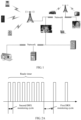
- the present invention relates to the field of communications technologies, and in particular, to a downlink scheduling data monitoring method, a downlink scheduling data sending method, and an apparatus.
- the M2M communications system is a network-based system architecture focusing on intelligent interaction between devices.
- An M2M technology provides a means of real-time data transmission between systems, remote devices, and/or individuals, and a wireless communications module is built inside a device in the M2M communications system, to implement functions such as performing monitoring, commanding and dispatching, data collection, and measurement on the device.
- US 2011/039536 A1 describes systems and methods for receiving data from a radio network by a terminal.
- the therein described methods include: receiving downlink data while the terminal operates according to a first discontinuous period; transmitting a response message with respect to the downlink data; and operating according to a second discontinuous period after transmitting the response message.
- US 2014/307606 A1 describes methods and apparatus for controlling discontinuous reception on a mobile device and in particular to control a short discontinuous reception timer in response to receipt of a medium access control control element. The therein described methods and apparatus include stopping, restarting or maintaining the short discontinuous reception timer.
- US 2013/223307 A1 describes systems and methods for operating a base station node of a radio access network.
- the therein described method comprises communicating information over a radio interface between the base station node and a wireless terminal which operates with discontinuous reception.
- the M2M communications system is widely applied to many scenarios, such as smart metering, environment monitoring, and remote monitoring.
- a device in the M2M communications system needs to periodically monitor and report use of water, electricity, and gas.
- the device remotely cuts off energy supply, and may update subscription information after a house tenant changes.
- the device in the M2M communications system needs to monitor downlink scheduling data, and the device in the M2M communications system is powered by a battery. If the device is always in a state of monitoring the downlink scheduling data, power consumption of the device is relatively large; or if the device is always in a state of not monitoring the downlink scheduling data, the downlink scheduling data cannot be received in a timely manner.
- monitoring of downlink scheduling data it is apparently inappropriate to consider only timely receiving of the downlink scheduling data without considering power consumption of a device. Likewise, it is also apparently inappropriate to consider only power consumption of a device without considering timely receiving of the downlink scheduling data.
- aspects of the present invention provide a downlink scheduling data sending method, and an apparatus as defined by the independent claims, so as to reduce power consumption of a device in an M2M communications system without affecting timely receiving of downlink scheduling data by the device, and better balance a relationship between
- a downlink scheduling data monitoring method according to claim 1 is provided.
- a base station according to independent claim 4 is provided.
- a computer-readable storage medium according to claim 8 is provided.
- a computer program according to claim 9 is provided.
- the downlink scheduling data is monitored by using a DRX monitoring cycle whose duration is in a unit of second or millisecond, and consequently, power consumption is relatively large, and a relationship between power saving of a device and timely receiving of the downlink scheduling data cannot be balanced.
- the downlink scheduling data is monitored by using the first DRX monitoring cycle whose duration is in a unit of minute or hour, and in this way, not only power consumption is reduced, but also the downlink scheduling data can be monitored.
- a GSM Global System for Mobile communications, Global System for Mobile Communications
- CDMA Code Division Multiple Access, Code Division Multiple Access
- TDMA Time Division Multiple Access
- WCDMA Wideband Code Division Multiple Access Wireless, Wideband Code Division Multiple Access
- FDMA Frequency Division Multiple Addressing, Frequency Division Multiple Access
- OFDMA Orthogonal Frequency Division Multiple Access
- SC-FDMA single-carrier FDMA
- GPRS General Packet Radio Service, general packet radio service
- the present invention may be applied to a Gb architecture, and only a ready timer may be used in the Gb architecture.
- a ready timer may be used in the Gb architecture.
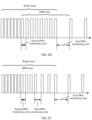
- FIG. 2A in a scenario in which only the ready timer is used, within a time period in which the ready timer does not expire, downlink scheduling data is monitored by using a second DRX (Discontinuous Reception, discontinuous reception) monitoring cycle, and within a time period after the ready timer expires, the downlink scheduling data is monitored by using a first DRX monitoring cycle. Further, an RDR timer may be used. As shown in FIG.
- the downlink scheduling data is monitored by using the second DRX monitoring cycle, and within a time period after the ready timer expires, the downlink scheduling data is monitored by using the first DRX monitoring cycle.
- the RDR timer needs to stop even though the RDR timer does not expire.
- FIG. 2B a case in which the ready timer expires, but the RDR timer does not expire is described. Certainly, when the ready timer expires, the RDR timer may have expired. As shown in FIG.
- the downlink scheduling data is monitored by using the second DRX monitoring cycle; within a time period in which the ready timer does not expire, but the RDR timer expires, the downlink scheduling data is monitored by using a third DRX monitoring cycle; and within a time period after the ready timer expires, the downlink scheduling data is monitored by using the first DRX monitoring cycle.
- the first DRX monitoring cycle is in a unit of minute or hour, and both the second DRX monitoring cycle and the third DRX monitoring cycle are in a unit of millisecond or second.
- the second DRX monitoring cycle may be the same as or different from the third DRX monitoring cycle.
- the present invention may be applied to an S1 architecture, and only an RDR timer may be used in the S1 architecture.
- RDR timer within a time period in which the RDR timer does not expire, downlink scheduling data is monitored by using a second DRX monitoring cycle, and within a time period after the RDR timer expires, the downlink scheduling data is monitored by using a first DRX monitoring cycle.
- a ready timer is a timer that is maintained by both a terminal and a core network.
- the core network herein may refer to an SGSN (Serving GPRS Support Node, serving support node, GPRS (General Packet Radio service, general packet radio service)).
- the terminal starts the ready timer after sending a last uplink LLC data packet, and the core network starts the ready timer after receiving the last uplink LLC data packet.
- An RDR timer is a timer that is set by both a terminal and a base station. On a terminal side, the terminal starts the RDR timer after sending a last uplink MAC layer data packet and receiving positive feedback information for the MAC layer data packet from the base station.
- the terminal After a ready timer on the terminal side expires, if the RDR timer does not expire, the terminal stops the RDR timer, and releases a connection on the terminal side.
- the base station starts the RDR timer after receiving the last uplink MAC layer data packet sent by the terminal and sending the positive feedback information for the MAC layer data packet to the terminal.
- the Gb architecture after a base station receives a paging message delivered by a core network, if an RDR timer does not expire, the RDR timer stops, and a connection to a terminal is released. If the timer expires, the base station releases a connection to the terminal.
- the S1 architecture after an RDR timer expires, a base station initiates a connection release request to a core network, and the core network releases an S1 connection to the terminal, and the base station releases an air interface connection to the terminal.
- a procedure of monitoring downlink scheduling data is as follows:
- Duration of the first DRX monitoring cycle is in a unit of minute or hour.
- downlink scheduling data is monitored by using a DRX monitoring cycle whose duration is in a unit of second or millisecond, and consequently, power consumption is relatively large, and a relationship between power saving of a device and timely receiving of the downlink scheduling data cannot be balanced.
- the downlink scheduling data is monitored by using the first DRX monitoring cycle whose duration is in a unit of minute or hour, and in this way, not only power consumption is reduced, but also the downlink scheduling data can be monitored.
- the following several manners may be used: monitoring, by using the first DRX monitoring cycle according to a scheduling identifier in an idle state or a scheduling identifier in a connected state, the downlink scheduling data sent by the base station.
- the monitoring, by using a first DRX monitoring cycle, downlink scheduling data sent by a base station may include: monitoring, by using the first DRX monitoring cycle according to the scheduling identifier in an idle state, the downlink scheduling data sent by the base station.
- a terminal may return to a long sleep state in an idle state, or may be still in a long sleep state in a connected state.
- the monitoring, by using a first DRX monitoring cycle, downlink scheduling data sent by a base station may include: monitoring, by using the first DRX monitoring cycle according to the scheduling identifier in an idle state, the downlink scheduling data sent by the base station.
- the monitoring, by using a first DRX monitoring cycle, downlink scheduling data sent by a base station may include: monitoring, by using the first DRX monitoring cycle according to the scheduling identifier in a connected state, the downlink scheduling data sent by the base station.
- the method before the downlink scheduling data sent by the base station is monitored by using the first DRX monitoring cycle, the method further includes the following operation:
- the terminal may send the supported first DRX monitoring cycle to a core network device.
- the timer described in step 300 may include only a ready timer (Ready Timer).
- the ready timer is configured to determine that the terminal is switched from a ready state to a standby state. That is, before the ready timer expires, the terminal is in a ready state, and after the ready timer expires, the terminal is in a standby state.
- the starting a timer may include:
- an RDR timer (Timer) may be further included.
- the RDR timer is configured to determine that the terminal is switched from a connected state to a long sleep state. That is, when the RDR timer does not expire, the terminal is in a connected state, and after the RDR timer expires, the terminal is in a long sleep state.
- the long sleep state includes a long sleep state in an idle state or a long sleep state in a connected state.
- the starting a timer may include: starting the ready timer and the RDR timer, where a time of starting the ready timer is earlier than a time of starting the RDR timer.
- the determining that the timer expires may include: determining that the ready timer expires.
- the downlink scheduling data sent by the base station may be monitored by using the first DRX monitoring cycle provided that the ready timer expires. In this case, if the ready timer expires, but the RDR timer does not expire, the RDR timer needs to stop, and a connection is released.
- the timer includes only a ready timer, or includes both a ready timer and an RDR timer.
- the timer may include only an RDR timer.
- the starting a timer may include:
- the method further includes the following operations:
- the following manner may be used: monitoring, at the DRX monitoring moment, the downlink scheduling data sent by the base station.
- the method further includes the following operation: when it is determined that the timer does not expire, monitoring, by using a second DRX monitoring cycle, the downlink scheduling data sent by the base station.
- Duration of the second DRX monitoring cycle is in a unit of millisecond or second.
- the downlink scheduling data sent by the base station is monitored by using the first DRX monitoring cycle, and before the timer expires, the downlink scheduling data sent by the base station is monitored by using the second DRX monitoring cycle.
- the method further includes the following operation:
- the timer includes only a ready timer, or includes only an RDR timer, or includes both a ready timer and an RDR timer.
- the timer includes only a ready timer, or includes only an RDR timer, or includes both a ready timer and an RDR timer. The following separately gives description.
- the determining that the timer does not expire may include:
- the determining that the timer does not expire may include:
- the starting a timer may include:
- the RDR timer may expire, or may not expire.
- the monitoring by using a second DRX monitoring cycle, the downlink scheduling data sent by the base station may include: monitoring, by using the second DRX monitoring cycle according to a scheduling identifier in a connected state, the downlink scheduling data sent by the base station.
- the downlink scheduling data sent by the base station needs to be monitored by using a third DRX monitoring cycle according to a scheduling identifier in an idle state.
- Duration of the third DRX monitoring cycle is in a unit of millisecond or second.
- the second DRX monitoring cycle may be the same as or different from the third DRX monitoring cycle. This is not specifically limited herein.
- the method before the downlink scheduling data sent by the base station is monitored by using the third DRX monitoring cycle, the method further includes the following operation:
- the following manner may be used: starting the ready timer and/or the RDR timer, where the ready timer is configured to determine that the terminal is switched from a ready state to a standby state, and the RDR timer is configured to determine that the terminal is switched from a connected state to a long sleep state.
- the following manner may be used: starting the ready timer when a last uplink LLC (Logical Link Control, logical link control) data packet is sent.
- uplink LLC Logical Link Control, logical link control
- starting the RDR timer There are multiple manners of starting the RDR timer. Optionally, the following manner may be used: starting the RDR timer when positive feedback information for a last uplink MAC (Medium Access Control, Media Access Control) layer data packet is received.
- MAC Medium Access Control, Media Access Control
- the terminal When monitoring the downlink scheduling data, for example, after obtaining a P-RNTI (Paging Radio Network Temporary Identifier, paging radio network temporary identifier) by means of monitoring, the terminal reads a paging record on a paging resource indicated by the P-RNTI. If there is a paging record that includes the identifier of the terminal, it indicates that the terminal is paged. If there is no paging record that includes the identifier of the terminal, it indicates that the terminal is not paged.
- P-RNTI Paging Radio Network Temporary Identifier, paging radio network temporary identifier
- the downlink scheduling data is downlink data, or may be a paging message, and certainly, may be in another form. This is not specifically limited herein.
- the method before the downlink scheduling data sent by the base station is monitored by using the first DRX monitoring cycle, the method further includes the following operations:
- the scheduling identifier in a connected state is in many forms, and optionally, may be a TBF (Temporary Block Flow, temporary block flow), or may be a C-RNTI (Cell Radio Network Temporary Identifier, cell radio network temporary identifier).
- TBF Temporary Block Flow, temporary block flow
- C-RNTI Cell Radio Network Temporary Identifier, cell radio network temporary identifier
- the scheduling identifier in an idle state is also in many forms, and optionally, may be a UE-dedicated scheduling identifier in an idle state, for example, a TLLI (Temporary Logical Link Identifier, temporary logical link identifier), an S-TMSI (SAE Temporary Mobile Subscriber Identity, SAE temporary mobile subscriber identity, SAE (System Architecture Evolution, system architecture evolution)), a P-TMSI (PS Temporary Mobile Subscriber Identity, PS temporary mobile subscriber identity, PS (Packet Switched, packet switched)), an IMSI (International Mobile Subscriber Identification Number, international mobile subscriber identity), or an IMSI mod N, or may be a common scheduling identifier in an idle state, for example, a P-RNTI (Paging Radio Network Temporary Identifier, paging radio network temporary identifier).
- TLLI Temporary Logical Link Identifier, temporary logical link identifier
- S-TMSI SAE Temporary Mobile Subscriber Identity, SAE temporary mobile
- a procedure of sending downlink scheduling data is as follows:
- Duration of the first sending cycle is in a unit of minute or hour.
- the downlink scheduling data directly carries the first DRX monitoring cycle, it may be directly determined, according to the first DRX monitoring cycle, that the terminal monitors the downlink scheduling data by using the first DRX monitoring cycle. If the downlink scheduling data does not carry the first DRX monitoring cycle, a type of the downlink scheduling data may be determined. If the type of the downlink scheduling data is a paging message, it is determined that the terminal monitors the downlink scheduling data by using the first DRX monitoring cycle.
- the terminal monitors the downlink scheduling data by using the first DRX monitoring cycle.
- an RDR timer in an S1 architecture expires, when the terminal is in a long sleep state in a connected state, it may be determined, by adding the first DRX monitoring cycle to the downlink scheduling data, that the terminal monitors the downlink scheduling data by using the first DRX monitoring cycle; or it may be determined, by determining that the RDR expires, that the terminal monitors the downlink scheduling data by using the first DRX monitoring cycle.
- the method before the downlink scheduling data is sent to the terminal by using the first sending cycle, the method further includes the following operations:
- the following manner may be used to determine that the terminal monitors the downlink scheduling data by using the first discontinuous reception DRX monitoring cycle: when it is determined that the RDR timer expires, determining that the terminal monitors the downlink scheduling data by using the first DRX monitoring cycle.
- the method before the downlink scheduling data is sent to the terminal by using the first sending cycle, the method further includes the following operations:
- the method before the downlink scheduling data is sent to the terminal by using the first sending cycle, the method further includes:
- the foregoing manner of determining the DRX sending moment is applied to a case in which when an RDR timer expires in the S1 architecture, the terminal is still in a long sleep state in a connected state.
- the terminal monitors the downlink scheduling data by using the first DRX monitoring cycle.
- the terminal may monitor the downlink scheduling data by using a second DRX monitoring cycle.
- the base station needs to send the downlink scheduling data by using a second sending cycle corresponding to the second DRX monitoring cycle. Therefore, in this embodiment of the present invention, before it is determined that the terminal monitors the downlink scheduling data by using the first discontinuous reception DRX monitoring cycle, the method further includes the following operation: determining that the terminal monitors the downlink scheduling data by using a second DRX monitoring cycle, and sending the downlink scheduling data to the terminal by using a second sending cycle.
- Duration of the second sending cycle is in a unit of millisecond or second.
- the terminal may not monitor the downlink scheduling data by using the second DRX monitoring cycle. Further, when an RDR timer starts and does not expire, it is determined that the terminal monitors the downlink scheduling data by using the second DRX monitoring cycle. Therefore, in this embodiment of the present invention, before the downlink scheduling data is sent to the terminal by using the second sending cycle, the method further includes the following operations:
- the method before the downlink scheduling data is sent to the terminal by using the second sending cycle, the method further includes the following operations:
- the terminal monitors the downlink scheduling data by using a third DRX monitoring cycle. Therefore, in this embodiment of the present invention, before the downlink scheduling data is sent to the terminal by using the first sending cycle, the method further includes the following operation: when it is determined that the terminal monitors the downlink scheduling data by using a third DRX monitoring cycle, sending the downlink scheduling data to the terminal by using a third sending cycle.
- Duration of the third sending cycle is from a millisecond range to a second range.
- the method before it is determined that the terminal monitors the downlink scheduling data by using the third DRX monitoring cycle, the method further includes the following operations:
- the method before it is determined that the terminal monitors the downlink scheduling data by using the third DRX monitoring cycle, the method further includes the following operations:
- the third sending cycle may be the same as or different from the second sending cycle. This is not specifically limited herein.
- the first DRX monitoring cycle, the second DRX monitoring cycle, and the third DRX monitoring cycle that are sent by the base station to the terminal may be determined by the base station, or may be sent by a core network.
- the base station may be determined by the base station, or may be sent by a core network.
- another manner may be used, and this is not specifically limited herein.
- the terminal includes a starting unit 50, a determining unit 51, and a monitoring unit 52.
- the starting unit 50 is configured to start a timer.
- the determining unit 51 is configured to determine that the timer expires.
- the monitoring unit 52 is configured to: after the determining unit 51 determines that the timer expires, monitor, by using a first discontinuous reception DRX monitoring cycle, downlink scheduling data sent by a base station.
- Duration of the first DRX monitoring cycle is in a unit of minute or hour.
- the monitoring unit 52 is configured to: monitor, by using the first DRX monitoring cycle according to a scheduling identifier in an idle state or a scheduling identifier in a connected state, the downlink scheduling data sent by the base station.
- the terminal further includes a receiving unit 53.
- the receiving unit 53 is configured to receive a first DRX monitoring cycle that is sent by the base station in a broadcast manner or a dedicated signaling manner and that is supported by the base station, and the determining unit 51 is further configured to use the first DRX monitoring cycle supported by the base station as the first DRX monitoring cycle; or
- the timer includes a ready timer (Ready Timer), and the ready timer is configured to determine that the terminal is switched from a ready state to a standby state.
- Ready Timer Ready Timer
- the timer further includes a reduced downlink control signal reception RDR timer (RDR Timer), and the RDR timer is configured to determine that the terminal is switched from a connected state to a long sleep state.
- RDR Timer reduced downlink control signal reception RDR timer
- the starting unit 50 is configured to start the ready timer and the RDR timer, where a time of starting the ready timer is earlier than a time of starting the RDR timer.
- the determining unit 51 is configured to determine that the ready timer expires.
- the timer includes an RDR timer (RDR Timer), and the RDR timer is configured to determine that the terminal is switched from a connected state to a long sleep state.
- RDR Timer RDR Timer
- the determining unit 51 is further configured to: determine an initial monitoring moment; and determine a DRX monitoring moment according to the initial monitoring moment, where the DRX monitoring moment is a moment at a distance of N first DRX monitoring cycles from the initial monitoring moment, and N is a positive integer greater than or equal to 0.
- the monitoring unit 52 is configured to monitor, at the DRX monitoring moment, the downlink scheduling data sent by the base station.
- determining unit 51 determines an initial monitoring moment is specifically:
- the determining unit 51 is further configured to determine that the timer does not expire.
- the monitoring unit 52 is further configured to: when the determining unit 51 determines that the timer does not expire, monitor, by using a second DRX monitoring cycle, the downlink scheduling data sent by the base station.
- Duration of the second DRX monitoring cycle is in a unit of millisecond or second.
- the terminal further includes a receiving unit 53.
- the receiving unit 53 is configured to receive a second DRX monitoring cycle that is sent by the base station in a broadcast manner or a dedicated signaling manner and that is supported by the base station, and the determining unit 51 is further configured to use the second DRX monitoring cycle supported by the base station as the second DRX monitoring cycle; or
- the timer includes a ready timer, and the ready timer is configured to determine that the terminal is switched from a ready state to a standby state.
- the monitoring unit 52 is configured to monitor, by using the second DRX monitoring cycle according to a scheduling identifier in an idle state, the downlink scheduling data sent by the base station.
- the timer includes an RDR timer, and the RDR timer is configured to determine that the terminal is switched from a connected state to a long sleep state.
- the monitoring unit 52 is configured to monitor, by using the second DRX monitoring cycle according to a scheduling identifier in a connected state, the downlink scheduling data sent by the base station.
- the timer includes a ready timer and an RDR timer
- the ready timer is configured to determine that the terminal is switched from a ready state to a standby state
- the RDR timer is configured to determine that the terminal is switched from a connected state to a long sleep state.
- the starting unit 50 is configured to start the ready timer and the RDR timer, where a time of starting the ready timer is earlier than a time of starting the RDR timer.
- That the determining unit 51 determines that the timer does not expire is specifically: determining that the ready timer does not expire.
- the determining unit 51 is further configured to determine that the RDR timer does not expire.
- the monitoring unit 52 is configured to monitor, by using the second DRX monitoring cycle according to a scheduling identifier in a connected state, the downlink scheduling data sent by the base station.
- the determining unit 51 is further configured to determine that the RDR timer expires.
- the monitoring unit 52 is further configured to monitor, by using a third DRX monitoring cycle according to a scheduling identifier in an idle state, the downlink scheduling data sent by the base station.
- Duration of the third DRX monitoring cycle is in a unit of millisecond or second.
- the terminal further includes a receiving unit 53.
- the receiving unit 53 is configured to receive a third DRX monitoring cycle that is sent by the base station in a broadcast manner or a dedicated signaling manner and that is supported by the base station, and the determining unit 51 is further configured to use the third DRX monitoring cycle supported by the base station as the third DRX monitoring cycle; or
- the starting unit 50 is configured to start the ready timer and/or the RDR timer, the ready timer is configured to determine that the terminal is switched from a ready state to a standby state, and the RDR timer is configured to determine that the terminal is switched from a connected state to a long sleep state.
- the starting unit 50 starts the ready timer is specifically:
- the terminal includes a processor 500 and a receiver 510.
- the processor 500 is configured to start a timer.
- the processor 500 is further configured to determine that the timer expires.
- the receiver 510 is configured to: after the processor 500 determines that the timer expires, monitor, by using a first discontinuous reception DRX monitoring cycle, downlink scheduling data sent by a base station.
- Duration of the first DRX monitoring cycle is in a unit of minute or hour.
- the processor 500 may further perform other operations performed by the starting unit 50 and the determining unit 51 that are shown in FIG. 5A
- the receiver 510 may further perform other operations performed by the monitoring unit 52 and the receiving unit 53 that are shown in FIG. 5A .
- the base station includes a receiving unit 60, a determining unit 61, and a sending unit 62.
- the receiving unit 60 is configured to receive downlink scheduling data sent by a core network device to a terminal.
- the determining unit 61 is configured to determine that the terminal monitors the downlink scheduling data by using a first discontinuous reception DRX monitoring cycle.
- the sending unit 62 is configured to: when the determining unit 61 determines that the terminal monitors the downlink scheduling data by using the first discontinuous reception DRX monitoring cycle, send the downlink scheduling data to the terminal by using a first sending cycle.
- Duration of the first sending cycle is in a unit of minute or hour.
- the determining unit 61 is configured to: determine, according to the first DRX monitoring cycle carried in the downlink scheduling data, that the terminal monitors the downlink scheduling data by using the first DRX monitoring cycle; or when determining that the downlink scheduling data is a paging message, determine that the terminal monitors the downlink scheduling data by using the first DRX monitoring cycle.
- the receiving unit 60 is further configured to receive a last uplink Media Access Control MAC layer data packet sent by the terminal.
- the sending unit 62 is further configured to send positive feedback information for the last uplink MAC layer data packet to the terminal.
- the base station further includes a starting unit 63, configured to start a reduced downlink control signal reception RDR timer when the sending unit 62 sends the positive feedback information for the last uplink MAC layer data packet to the terminal, where the RDR timer is configured to determine that the terminal is switched from a connected state to a long sleep state.
- a starting unit 63 configured to start a reduced downlink control signal reception RDR timer when the sending unit 62 sends the positive feedback information for the last uplink MAC layer data packet to the terminal, where the RDR timer is configured to determine that the terminal is switched from a connected state to a long sleep state.
- the determining unit 61 is configured to: when determining that the RDR timer expires, determine that the terminal monitors the downlink scheduling data by using the first DRX monitoring cycle.
- the sending unit 62 is further configured to: send the first DRX monitoring cycle to the terminal in a broadcast manner or a dedicated signaling manner; or send, in a broadcast manner or a dedicated signaling manner, a first DRX monitoring cycle supported by the base station to the terminal; and/or send, in a form of uplink data at a logical link control layer, the first DRX monitoring cycle supported by the base station to the core network device.
- the determining unit 61 is further configured to: determine an initial sending moment; and determine a DRX sending moment according to the initial sending moment, where the DRX sending moment is a moment at a distance of N first sending cycles from the initial sending moment, and N is a positive integer greater than or equal to 0.
- the sending unit 62 is configured to send the downlink scheduling data at the DRX sending moment.
- determining unit 61 determines an initial sending moment is specifically:
- the determining unit 61 is further configured to determine that the terminal monitors the downlink scheduling data by using a second DRX monitoring cycle.
- the sending unit 62 is further configured to send the downlink scheduling data to the terminal by using a second sending cycle.
- Duration of the second sending cycle is in a unit of millisecond or second.
- the determining unit 61 determines that the terminal monitors the downlink scheduling data by using a second DRX monitoring cycle is specifically:
- the receiving unit 60 is further configured to receive a last uplink Media Access Control MAC layer data packet sent by the terminal.
- the sending unit 62 is further configured to send positive feedback information for the last uplink MAC layer data packet to the terminal.
- the base station further includes a starting unit 63, configured to start an RDR timer when the sending unit 62 sends the positive feedback information for the last uplink MAC layer data packet to the terminal, where the RDR timer is configured to determine that the terminal is switched from a connected state to a long sleep state.
- That the determining unit 61 determines that the terminal monitors the downlink scheduling data by using a second DRX monitoring cycle is specifically: when determining that the downlink scheduling data is downlink data, and the RDR timer does not expire, determining that the terminal monitors the downlink scheduling data by using the second DRX monitoring cycle.
- the sending unit 62 is further configured to: send the second DRX monitoring cycle to the terminal in a broadcast manner or a dedicated signaling manner; or send, in a broadcast manner or a dedicated signaling manner, a second DRX monitoring cycle supported by the base station to the terminal; and/or send, in a form of uplink data at a logical link control layer, the second DRX monitoring cycle supported by the base station to the core network device.
- the determining unit 61 is further configured to determine that the terminal monitors the downlink scheduling data by using a third DRX monitoring cycle.
- the sending unit 62 is further configured to: when the determining unit 61 determines that the terminal monitors the downlink scheduling data by using the third DRX monitoring cycle, send the downlink scheduling data to the terminal by using a third sending cycle.
- Duration of the third sending cycle is from a millisecond range to a second range.
- the receiving unit 60 is further configured to receive a last uplink Media Access Control MAC layer data packet sent by the terminal.
- the sending unit 62 is further configured to send positive feedback information for the last uplink MAC layer data packet to the terminal.
- the base station further includes a starting unit 63, configured to start an RDR timer when the sending unit 62 sends the positive feedback information for the last uplink MAC layer data packet to the terminal, where the RDR timer is configured to determine that the terminal is switched from a connected state to a long sleep state.
- That the determining unit 61 determines that the terminal monitors the downlink scheduling data by using a third DRX monitoring cycle is specifically: when determining that the downlink scheduling data is downlink data, and the RDR timer expires, determining that the terminal monitors the downlink scheduling data by using the third DRX monitoring cycle.
- the sending unit 62 is further configured to: send the third DRX monitoring cycle to the terminal in a broadcast manner or a dedicated signaling manner; and/or send the third DRX monitoring cycle to the core network device in a form of uplink data at a logical link control layer.
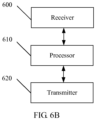
- the terminal includes a receiver 600, a processor 610, and a transmitter 620.
- the receiver 600 is configured to receive downlink scheduling data sent by a core network device to the terminal.
- the processor 610 is configured to determine that the terminal monitors the downlink scheduling data by using a first discontinuous reception DRX monitoring cycle.
- the transmitter 620 is configured to: when the processor 610 determines that the terminal monitors the downlink scheduling data by using the first discontinuous reception DRX monitoring cycle, send the downlink scheduling data to the terminal by using a first sending cycle.
- Duration of the first sending cycle is in a unit of minute or hour.
- the receiver 600 may further perform other operations performed by the receiving unit 60 shown in FIG. 6A
- the processor 610 may further perform other operations performed by the determining unit 61 and the starting unit 63 that are shown in FIG. 6A
- the transmitter 620 may further perform other operations performed by the sending unit 62 shown in FIG. 6A .
- These computer program instructions may be provided for a general-purpose computer, a dedicated computer, an embedded processor, or a processor of any other programmable data processing device to generate a machine, so that the instructions executed by a computer or a processor of any other programmable data processing device generate an apparatus for implementing a specific function in one or more processes in the flowcharts and/or in one or more blocks in the block diagrams.
- These computer program instructions may also be stored in a computer readable memory that can instruct the computer or any other programmable data processing device to work in a specific manner, so that the instructions stored in the computer readable memory generate an artifact that includes an instruction apparatus.
- the instruction apparatus implements a specific function in one or more processes in the flowcharts and/or in one or more blocks in the block diagrams.
- These computer program instructions may also be loaded onto a computer or another programmable data processing device, so that a series of operations and steps are performed on the computer or the another programmable device, thereby generating computer-implemented processing. Therefore, the instructions executed on the computer or the another programmable device provide steps for implementing a specific function in one or more processes in the flowcharts and/or in one or more blocks in the block diagrams.
Landscapes
- Engineering & Computer Science (AREA)
- Computer Networks & Wireless Communication (AREA)
- Signal Processing (AREA)
- Mobile Radio Communication Systems (AREA)
- Transceivers (AREA)
- Circuits Of Receivers In General (AREA)
Claims (9)
- Procédé d'envoi de données de programmation de liaison descendante, comprenant :la réception (400), par une station de base, des données de programmation de liaison descendante envoyées par un dispositif de réseau central à un terminal ; etlorsqu'il est déterminé par la station de base que les données de programmation de liaison descendante sont un message de radiomessagerie,la détermination, par la station de base, du fait que le terminal surveille le message de radiomessagerie à l'aide d'un premier cycle de surveillance de réception discontinue, DRX, selon un identifiant de programmation dans l'état de repos,l'envoi (410), par la station de base, du message de radiomessagerie au terminal à l'aide d'un premier cycle d'envoi, dans lequel une durée du premier cycle d'envoi est exprimée en unité de minute ou d'heure,lorsqu'il est déterminé par la station de base que les données de programmation de liaison descendante sont des données de liaison descendante,la détermination, par la station de base, du fait que le terminal surveille les données de liaison descendante à l'aide d'un second cycle de surveillance DRX selon un identifiant de programmation dans l'état connecté, etl'envoi, par la station de base, des données de liaison descendante au terminal à l'aide d'un second cycle d'envoi, dans lequelune durée du second cycle d'envoi est plus courte que la durée du premier cycle d'envoi et en unité de milliseconde ou de seconde ;dans lequel, avant l'envoi de données de liaison descendante au terminal à l'aide du second cycle d'envoi, le procédé comprend également :
l'envoi, par la station de base, du second cycle de surveillance DRX au terminal par signalisation dédiée. - Procédé selon la revendication 1, dans lequel avant l'envoi du message de radiomessagerie au terminal à l'aide du premier cycle d'envoi, le procédé comprend également :l'envoi du premier cycle de surveillance DRX au terminal par diffusion ou par signalisation dédiée ; ou l'envoi, par diffusion ou par signalisation dédiée, du premier cycle de surveillance DRX pris en charge par une station de base au terminal ; et/oul'envoi, sous forme de données de liaison montante au niveau d'une couche de commande de liaison logique, du premier cycle de surveillance DRX pris en charge par la station de base au dispositif de réseau central.
- Procédé selon la revendication 1, dans lequel la détermination du fait que le terminal surveille les données de liaison descendante à l'aide du second cycle de surveillance DRX comprend :
la détermination, selon le second cycle de surveillance DRX transporté dans les données de liaison descendante, du fait que le terminal surveille les données de liaison descendante à l'aide du second cycle de surveillance DRX. - Station de base, comprenant :une unité de réception (60) configurée pour recevoir des données de programmation de liaison descendante envoyées par un dispositif de réseau central à un terminal ;une unité de détermination (61), configurée pour déterminer le fait que le terminal surveille les données de programmation de liaison descendante à l'aide d'un cycle de surveillance de réception discontinue, DRX ; etune unité d'envoi (62), configurée pour :lorsqu'il est déterminé par l'unité de détermination (61) que les données de programmation de liaison descendante sont un message de radiomessagerie et lorsque l'unité de détermination (61) détermine le fait que le terminal surveille le message de radiomessagerie à l'aide d'un premier cycle de surveillance DRX selon un identifiant de programmation dans l'état de repos, envoyer les données du message de radiomessagerie au terminal à l'aide d'un premier cycle d'envoi, dans lequel la durée du premier cycle d'envoi est exprimée en unité de minute ou d'heure,lorsqu'il est déterminé par l'unité de détermination (61) que les données de programmation de liaison descendante sont des données de liaison descendante et lorsque l'unité de détermination (61) détermine le fait que le terminal surveille les données de liaison descendante à l'aide d'un second cycle de surveillance DRX selon l'identifiant de programmation dans l'état connecté, envoyer les données de liaison descendante au terminal à l'aide d'un second cycle d'envoi, dans lequel une durée du second cycle d'envoi est plus courte que la durée du premier cycle d'envoi et dans une unité de milliseconde ou de seconde ;dans lequel l'unité d'envoi (62) est également configurée pour envoyer le second cycle de surveillance DRX au terminal par signalisation dédiée avant que l'unité d'envoi (62) n'envoie les données de liaison descendante au terminal à l'aide du second cycle d'envoi.
- Station de base selon la revendication 4, dans laquelle l'unité de réception est également configurée pour recevoir un dernier paquet de données de couche de commande d'accès au support, MAC, de liaison montante envoyé par le terminal ;l'unité d'envoi est également configurée pour envoyer des informations de rétroaction positive pour le dernier paquet de données de couche MAC de liaison montante au terminal ;la station de base comprend également une unité de démarrage, configurée pour démarrer un temporisateur RDR de réception de signal de commande de liaison descendante réduit lorsque l'unité d'envoi envoie les informations de rétroaction positive pour le dernier paquet de données de couche MAC de liaison montante au terminal, dans lequel le temporisateur RDR est configuré pour déterminer le fait que le terminal est passé d'un état connecté à un état de veille longue ; etl'unité de détermination est configurée pour : lors de la détermination du fait que le temporisateur RDR expire, déterminer le fait que le terminal surveille les données de programmation de liaison descendante à l'aide du premier cycle de surveillance DRX.
- Station de base selon l'une quelconque des revendications 4 à 5, dans laquelle l'unité d'envoi est également configurée pour :envoyer le premier cycle de surveillance DRX au terminal par diffusion ou par signalisation dédiée ; ou envoyer, par diffusion ou par signalisation dédiée, le premier cycle de surveillance DRX pris en charge par la station de base au terminal ; et/ouenvoyer, sous forme de données de liaison montante au niveau d'une couche de commande de liaison logique, du premier cycle de surveillance DRX pris en charge par la station de base au dispositif de réseau central.
- Station de base selon la revendication 4, dans laquelle l'unité de détermination détermine le fait que le terminal surveille les données de programmation de liaison descendante à l'aide du second cycle de surveillance DRX est spécifiquement :la détermination, selon le second cycle de surveillance DRX transporté dans les données de programmation de liaison descendante, du fait que le terminal surveille les données de programmation de liaison descendante à l'aide du second cycle de surveillance DRX ; oulors de la détermination du fait que les données de programmation de liaison descendante sont des données de liaison descendante, la détermination du fait que le terminal surveille les données de programmation de liaison descendante à l'aide du second cycle de surveillance DRX.
- Support de stockage lisible par ordinateur comprenant des instructions qui, lorsqu'elles sont exécutées par un ordinateur, amènent l'ordinateur à réaliser le procédé selon l'une quelconque des revendications 1 à 3.
- Programme informatique comprenant des instructions qui, lorsqu'elles sont exécutées par un ordinateur, amènent l'ordinateur à réaliser le procédé selon l'une quelconque des revendications 1 à 3.
Priority Applications (1)
| Application Number | Priority Date | Filing Date | Title |
|---|---|---|---|
| EP25173530.4A EP4615115A3 (fr) | 2015-05-19 | 2016-03-07 | Procédé de surveillance de données de planification de liaison descendante, procédé d'envoi de données de planification de liaison descendante et appareil |
Applications Claiming Priority (2)
| Application Number | Priority Date | Filing Date | Title |
|---|---|---|---|
| CN201510257300.2A CN106304129B (zh) | 2015-05-19 | 2015-05-19 | 一种监听及发送下行调度数据的方法及装置 |
| PCT/CN2016/075805 WO2016184224A1 (fr) | 2015-05-19 | 2016-03-07 | Procédé et dispositif de surveillance et de transmission de données de programmation de liaison descendante |
Related Child Applications (1)
| Application Number | Title | Priority Date | Filing Date |
|---|---|---|---|
| EP25173530.4A Division EP4615115A3 (fr) | 2015-05-19 | 2016-03-07 | Procédé de surveillance de données de planification de liaison descendante, procédé d'envoi de données de planification de liaison descendante et appareil |
Publications (3)
| Publication Number | Publication Date |
|---|---|
| EP3288317A1 EP3288317A1 (fr) | 2018-02-28 |
| EP3288317A4 EP3288317A4 (fr) | 2018-08-29 |
| EP3288317B1 true EP3288317B1 (fr) | 2025-05-21 |
Family
ID=57319287
Family Applications (2)
| Application Number | Title | Priority Date | Filing Date |
|---|---|---|---|
| EP16795711.7A Active EP3288317B1 (fr) | 2015-05-19 | 2016-03-07 | Procédé et dispositif de surveillance et de transmission de données de programmation de liaison descendante |
| EP25173530.4A Pending EP4615115A3 (fr) | 2015-05-19 | 2016-03-07 | Procédé de surveillance de données de planification de liaison descendante, procédé d'envoi de données de planification de liaison descendante et appareil |
Family Applications After (1)
| Application Number | Title | Priority Date | Filing Date |
|---|---|---|---|
| EP25173530.4A Pending EP4615115A3 (fr) | 2015-05-19 | 2016-03-07 | Procédé de surveillance de données de planification de liaison descendante, procédé d'envoi de données de planification de liaison descendante et appareil |
Country Status (6)
| Country | Link |
|---|---|
| US (3) | US10694462B2 (fr) |
| EP (2) | EP3288317B1 (fr) |
| JP (2) | JP6510076B2 (fr) |
| CN (2) | CN111263336A (fr) |
| MX (1) | MX381656B (fr) |
| WO (1) | WO2016184224A1 (fr) |
Families Citing this family (10)
| Publication number | Priority date | Publication date | Assignee | Title |
|---|---|---|---|---|
| CN111263336A (zh) * | 2015-05-19 | 2020-06-09 | 华为技术有限公司 | 一种监听及发送下行调度数据的方法及装置 |
| CN109246801B (zh) * | 2017-05-04 | 2022-01-25 | 成都鼎桥通信技术有限公司 | 空闲监听态终端实现非连续接收的方法及装置 |
| CN109246625B (zh) * | 2017-06-07 | 2022-04-26 | 成都鼎桥通信技术有限公司 | 集群非连续接收调度方法和系统 |
| JP2020522923A (ja) * | 2017-08-10 | 2020-07-30 | 富士通株式会社 | リソース指示と受信方法、装置及び通信システム |
| CN109982416B (zh) * | 2017-12-27 | 2022-04-12 | 珠海市魅族科技有限公司 | 一种数据接收及发送的方法及装置 |
| WO2019213743A1 (fr) * | 2018-05-07 | 2019-11-14 | Dalhousie University | Systèmes et procédés de planification, de commande et/ou de délivrance de radiothérapie et de radiochirurgie au moyen d'une optimisation combinée d'axes dynamiques (coda) |
| CN112789937B (zh) * | 2018-09-28 | 2024-08-16 | 索尼公司 | 方法、通信设备和基础设施装备 |
| CN113993192B (zh) * | 2018-10-31 | 2023-12-08 | 华为技术有限公司 | 无线通信方法及终端设备 |
| US11690123B2 (en) * | 2020-02-12 | 2023-06-27 | Qualcomm Incorporated | Data inactivity indication and expedited recovery action |
| CN113905406B (zh) * | 2020-06-22 | 2024-10-22 | 大唐移动通信设备有限公司 | 一种信号传输方法及设备 |
Family Cites Families (31)
| Publication number | Priority date | Publication date | Assignee | Title |
|---|---|---|---|---|
| US9265063B2 (en) * | 2006-06-21 | 2016-02-16 | Electronics And Telecommunications Research Institute | Method to transmit downlink signaling message on cellular systems for packet transmission and method for receiving the message |
| KR20080097338A (ko) * | 2007-05-01 | 2008-11-05 | 엘지전자 주식회사 | 불연속 데이터 송수신 방법 |
| ES2712916T3 (es) * | 2008-04-25 | 2019-05-16 | Blackberry Ltd | Método y sistema para el control de recepción discontinua en una red inalámbrica |
| US8311593B2 (en) * | 2008-08-11 | 2012-11-13 | Motorola Mobility Llc | Method and apparatus for adjusting an on duration in a discontinuous receive transmission mode |
| EP2369890A1 (fr) | 2010-03-26 | 2011-09-28 | Panasonic Corporation | Évitement de pic de connexion pour dispositifs de communication de type machine |
| US8688119B2 (en) * | 2010-04-30 | 2014-04-01 | Telefonaktiebolaget Lm Ericsson (Publ) | Method, apparatus and system for mobility enhancement in DRX |
| JP5720215B2 (ja) | 2010-12-06 | 2015-05-20 | ソニー株式会社 | ゲートウェイ装置および通信方法 |
| WO2013006194A1 (fr) * | 2011-07-01 | 2013-01-10 | Intel Corporation | Livre de codes structuré pour réseau circulaire uniforme (uca) |
| JP5763274B2 (ja) * | 2011-08-01 | 2015-08-12 | インテル コーポレイション | ネットワーク・アクセス制御のための方法及びシステム |
| US9042286B2 (en) | 2011-11-04 | 2015-05-26 | Intel Corporation | Reducing wireless power consumption and signaling overhead for internet application background messages |
| CA2851075A1 (fr) | 2011-12-02 | 2013-06-06 | Sony Corporation | Terminal de communication, procede de communication, station de base et systeme de communications |
| US20130223307A1 (en) * | 2012-02-24 | 2013-08-29 | Telefonaktiebolaget Lm Ericsson (Publ) | Combating drx deadlock in telecommunications |
| WO2013164025A1 (fr) * | 2012-05-03 | 2013-11-07 | Telefonaktiebolaget L M Ericsson (Publ) | Systèmes de télécommunication à réception discontinue |
| EP3735007B1 (fr) * | 2012-05-09 | 2024-09-25 | InterDigital Patent Holdings, Inc. | Prise en charge de longs cycles de drx/de grandes longueurs de sommeil en mtc |
| US9374845B2 (en) * | 2012-05-18 | 2016-06-21 | Qualcomm Incorporated | Method and apparatus for joint HARQ and DRX optimization for low cost MTC devices |
| US10051565B2 (en) * | 2012-10-29 | 2018-08-14 | Telefonaktiebolaget L M Ericsson (Publ) | Wake-up for measurements during DRX cycles |
| WO2014070321A1 (fr) * | 2012-11-01 | 2014-05-08 | Maruti Gupta | Signalisation d'exigences de qos et de préférence de puissance d'ue dans des réseaux lte-a |
| GB2508241A (en) * | 2012-11-27 | 2014-05-28 | Nec Corp | Scheduled Discontinuous Reception in a Mobile Device |
| EP2929751B1 (fr) * | 2012-12-10 | 2016-11-02 | Telefonaktiebolaget LM Ericsson (publ) | Dispositif sans fil, noeud de réseau radio et procédés de réception discontinue dans des communications de dispositif à dispositif |
| WO2014181981A1 (fr) * | 2013-05-09 | 2014-11-13 | Lg Electronics Inc. | Méthode de surveillance d'occasions de radiomessagerie dans un système de communication sans fil et dispositif associé |
| US9398634B2 (en) * | 2013-08-22 | 2016-07-19 | Telefonaktiebolaget Lm Ericsson (Publ) | Mobile station, core network node, base station subsystem, and methods for implementing longer paging cycles in a cellular network |
| CN105706507A (zh) | 2013-11-01 | 2016-06-22 | Lg电子株式会社 | 在无线通信系统中发送寻呼消息的方法和设备 |
| CN103889039B (zh) * | 2014-04-18 | 2017-05-10 | 大唐移动通信设备有限公司 | 基于非连续接收功能的省电方法及设备 |
| US10051570B2 (en) * | 2014-11-06 | 2018-08-14 | Sierra Wireless, Inc. | Method and apparatus for communication of system information in a wireless system |
| WO2016097978A1 (fr) * | 2014-12-17 | 2016-06-23 | Telefonaktiebolaget Lm Ericsson (Publ) | Gestion d'interruptions pendant des durées d'activité drx |
| EP3253131B1 (fr) * | 2015-03-03 | 2019-09-18 | Kyocera Corporation | Terminal sans fil, et station de base |
| US9883482B2 (en) * | 2015-03-05 | 2018-01-30 | Telefonaktiebolaget Lm Ericsson (Publ) | Signaling of core network restart to wireless devices |
| US9668236B2 (en) * | 2015-03-25 | 2017-05-30 | Lg Electronics Inc. | Method and apparatus for monitoring user equipment reachability in wireless communication system |
| EP3281490B1 (fr) * | 2015-04-10 | 2019-10-23 | INTEL Corporation | Drx dans un appareil en état prêt |
| CN111263336A (zh) * | 2015-05-19 | 2020-06-09 | 华为技术有限公司 | 一种监听及发送下行调度数据的方法及装置 |
| US10172183B2 (en) * | 2015-05-19 | 2019-01-01 | Telefonaktiebolaget Lm Ericsson (Publ) | Radio access network node and method—time coordinated cells for extended discontinuous receive (eDRX) |
-
2015
- 2015-05-19 CN CN202010071996.0A patent/CN111263336A/zh active Pending
- 2015-05-19 CN CN201510257300.2A patent/CN106304129B/zh active Active
-
2016
- 2016-03-07 EP EP16795711.7A patent/EP3288317B1/fr active Active
- 2016-03-07 MX MX2017014836A patent/MX381656B/es unknown
- 2016-03-07 JP JP2017560225A patent/JP6510076B2/ja active Active
- 2016-03-07 WO PCT/CN2016/075805 patent/WO2016184224A1/fr not_active Ceased
- 2016-03-07 EP EP25173530.4A patent/EP4615115A3/fr active Pending
-
2017
- 2017-11-19 US US15/817,266 patent/US10694462B2/en active Active
-
2019
- 2019-04-03 JP JP2019071505A patent/JP7150657B2/ja active Active
-
2020
- 2020-05-28 US US16/885,306 patent/US11350362B2/en active Active
-
2022
- 2022-05-05 US US17/737,671 patent/US11785542B2/en active Active
Also Published As
| Publication number | Publication date |
|---|---|
| US20220264457A1 (en) | 2022-08-18 |
| EP4615115A3 (fr) | 2025-12-10 |
| WO2016184224A1 (fr) | 2016-11-24 |
| US11350362B2 (en) | 2022-05-31 |
| US11785542B2 (en) | 2023-10-10 |
| MX2017014836A (es) | 2018-03-14 |
| EP3288317A1 (fr) | 2018-02-28 |
| JP2019118147A (ja) | 2019-07-18 |
| JP7150657B2 (ja) | 2022-10-11 |
| US20180110005A1 (en) | 2018-04-19 |
| JP6510076B2 (ja) | 2019-05-08 |
| CN111263336A (zh) | 2020-06-09 |
| US20200367162A1 (en) | 2020-11-19 |
| JP2018516012A (ja) | 2018-06-14 |
| EP3288317A4 (fr) | 2018-08-29 |
| CN106304129A (zh) | 2017-01-04 |
| EP4615115A2 (fr) | 2025-09-10 |
| CN106304129B (zh) | 2020-02-14 |
| US10694462B2 (en) | 2020-06-23 |
| MX381656B (es) | 2025-03-13 |
Similar Documents
| Publication | Publication Date | Title |
|---|---|---|
| US11785542B2 (en) | Downlink scheduling data monitoring method, downlink scheduling data sending method, and apparatus | |
| US12256459B2 (en) | Pre-configured dedicated resource for idle mode transmissions | |
| EP3152963B1 (fr) | Équipement utilisateur, noeud de réseau de communication cellulaire et procédé de commande de fonctionnement d'équipement utilisateur | |
| EP2575382A1 (fr) | Procédé d'attribution de ressources dans un système d'accès sans fil à large bande | |
| EP2632213B1 (fr) | Procédé et appareil pour exécuter une entrée/rentrée sur le réseau dans un système de communication sans fil | |
| US10187871B2 (en) | Paging method and device for network and terminal | |
| US9344859B2 (en) | Method of receiving multicast data in a wireless communication system, and device for same | |
| US9125026B2 (en) | Method for receiving multicast data in wireless communication system and M2M device therefor | |
| JP6206600B2 (ja) | 移動体無線通信装置、ネットワーク装置及び方法 | |
| JP2014502075A (ja) | マルチキャストトラフィック送受信のためのm2m機器及び基地局、及びその実行方法 | |
| KR102240644B1 (ko) | 데이터 전송/수신 장치 및 방법, 및 통신 시스템 | |
| CN109246801B (zh) | 空闲监听态终端实现非连续接收的方法及装置 | |
| US10237825B2 (en) | Data processing apparatus and method | |
| US20230209645A1 (en) | Drx packet wake-up method and apparatus, communication device, and storage medium | |
| US10142930B2 (en) | Terminal, wireless network and communication methods with low power consumption | |
| CN116671189B (zh) | 定时器状态更改方法、装置、终端及存储介质 | |
| WO2016165079A1 (fr) | Procédé, appareil et système de surveillance d'informations de commande de liaison descendante |
Legal Events
| Date | Code | Title | Description |
|---|---|---|---|
| STAA | Information on the status of an ep patent application or granted ep patent |
Free format text: STATUS: THE INTERNATIONAL PUBLICATION HAS BEEN MADE |
|
| PUAI | Public reference made under article 153(3) epc to a published international application that has entered the european phase |
Free format text: ORIGINAL CODE: 0009012 |
|
| STAA | Information on the status of an ep patent application or granted ep patent |
Free format text: STATUS: REQUEST FOR EXAMINATION WAS MADE |
|
| 17P | Request for examination filed |
Effective date: 20171122 |
|
| AK | Designated contracting states |
Kind code of ref document: A1 Designated state(s): AL AT BE BG CH CY CZ DE DK EE ES FI FR GB GR HR HU IE IS IT LI LT LU LV MC MK MT NL NO PL PT RO RS SE SI SK SM TR |
|
| AX | Request for extension of the european patent |
Extension state: BA ME |
|
| DAV | Request for validation of the european patent (deleted) | ||
| DAX | Request for extension of the european patent (deleted) | ||
| A4 | Supplementary search report drawn up and despatched |
Effective date: 20180731 |
|
| RIC1 | Information provided on ipc code assigned before grant |
Ipc: H04W 76/28 20180101ALI20180725BHEP Ipc: H04W 52/02 20090101AFI20180725BHEP Ipc: H04W 72/12 20090101ALI20180725BHEP |
|
| STAA | Information on the status of an ep patent application or granted ep patent |
Free format text: STATUS: EXAMINATION IS IN PROGRESS |
|
| 17Q | First examination report despatched |
Effective date: 20190909 |
|
| GRAP | Despatch of communication of intention to grant a patent |
Free format text: ORIGINAL CODE: EPIDOSNIGR1 |
|
| STAA | Information on the status of an ep patent application or granted ep patent |
Free format text: STATUS: GRANT OF PATENT IS INTENDED |
|
| INTG | Intention to grant announced |
Effective date: 20250128 |
|
| GRAS | Grant fee paid |
Free format text: ORIGINAL CODE: EPIDOSNIGR3 |
|
| GRAA | (expected) grant |
Free format text: ORIGINAL CODE: 0009210 |
|
| STAA | Information on the status of an ep patent application or granted ep patent |
Free format text: STATUS: THE PATENT HAS BEEN GRANTED |
|
| AK | Designated contracting states |
Kind code of ref document: B1 Designated state(s): AL AT BE BG CH CY CZ DE DK EE ES FI FR GB GR HR HU IE IS IT LI LT LU LV MC MK MT NL NO PL PT RO RS SE SI SK SM TR |
|
| REG | Reference to a national code |
Ref country code: GB Ref legal event code: FG4D |
|
| REG | Reference to a national code |
Ref country code: CH Ref legal event code: EP |
|
| REG | Reference to a national code |
Ref country code: DE Ref legal event code: R096 Ref document number: 602016092316 Country of ref document: DE |
|
| REG | Reference to a national code |
Ref country code: IE Ref legal event code: FG4D |
|
| REG | Reference to a national code |
Ref country code: NL Ref legal event code: MP Effective date: 20250521 |
|
| PG25 | Lapsed in a contracting state [announced via postgrant information from national office to epo] |
Ref country code: PT Free format text: LAPSE BECAUSE OF FAILURE TO SUBMIT A TRANSLATION OF THE DESCRIPTION OR TO PAY THE FEE WITHIN THE PRESCRIBED TIME-LIMIT Effective date: 20250922 Ref country code: ES Free format text: LAPSE BECAUSE OF FAILURE TO SUBMIT A TRANSLATION OF THE DESCRIPTION OR TO PAY THE FEE WITHIN THE PRESCRIBED TIME-LIMIT Effective date: 20250521 Ref country code: FI Free format text: LAPSE BECAUSE OF FAILURE TO SUBMIT A TRANSLATION OF THE DESCRIPTION OR TO PAY THE FEE WITHIN THE PRESCRIBED TIME-LIMIT Effective date: 20250521 |
|
| REG | Reference to a national code |
Ref country code: LT Ref legal event code: MG9D |
|
| PG25 | Lapsed in a contracting state [announced via postgrant information from national office to epo] |
Ref country code: NO Free format text: LAPSE BECAUSE OF FAILURE TO SUBMIT A TRANSLATION OF THE DESCRIPTION OR TO PAY THE FEE WITHIN THE PRESCRIBED TIME-LIMIT Effective date: 20250821 Ref country code: GR Free format text: LAPSE BECAUSE OF FAILURE TO SUBMIT A TRANSLATION OF THE DESCRIPTION OR TO PAY THE FEE WITHIN THE PRESCRIBED TIME-LIMIT Effective date: 20250822 |
|
| PG25 | Lapsed in a contracting state [announced via postgrant information from national office to epo] |
Ref country code: NL Free format text: LAPSE BECAUSE OF FAILURE TO SUBMIT A TRANSLATION OF THE DESCRIPTION OR TO PAY THE FEE WITHIN THE PRESCRIBED TIME-LIMIT Effective date: 20250521 Ref country code: PL Free format text: LAPSE BECAUSE OF FAILURE TO SUBMIT A TRANSLATION OF THE DESCRIPTION OR TO PAY THE FEE WITHIN THE PRESCRIBED TIME-LIMIT Effective date: 20250521 |
|
| PG25 | Lapsed in a contracting state [announced via postgrant information from national office to epo] |
Ref country code: BG Free format text: LAPSE BECAUSE OF FAILURE TO SUBMIT A TRANSLATION OF THE DESCRIPTION OR TO PAY THE FEE WITHIN THE PRESCRIBED TIME-LIMIT Effective date: 20250521 |
|
| PG25 | Lapsed in a contracting state [announced via postgrant information from national office to epo] |
Ref country code: HR Free format text: LAPSE BECAUSE OF FAILURE TO SUBMIT A TRANSLATION OF THE DESCRIPTION OR TO PAY THE FEE WITHIN THE PRESCRIBED TIME-LIMIT Effective date: 20250521 |
|
| PG25 | Lapsed in a contracting state [announced via postgrant information from national office to epo] |
Ref country code: RS Free format text: LAPSE BECAUSE OF FAILURE TO SUBMIT A TRANSLATION OF THE DESCRIPTION OR TO PAY THE FEE WITHIN THE PRESCRIBED TIME-LIMIT Effective date: 20250821 |
|
| PG25 | Lapsed in a contracting state [announced via postgrant information from national office to epo] |
Ref country code: IS Free format text: LAPSE BECAUSE OF FAILURE TO SUBMIT A TRANSLATION OF THE DESCRIPTION OR TO PAY THE FEE WITHIN THE PRESCRIBED TIME-LIMIT Effective date: 20250921 |
|
| PG25 | Lapsed in a contracting state [announced via postgrant information from national office to epo] |
Ref country code: LV Free format text: LAPSE BECAUSE OF FAILURE TO SUBMIT A TRANSLATION OF THE DESCRIPTION OR TO PAY THE FEE WITHIN THE PRESCRIBED TIME-LIMIT Effective date: 20250521 |
|
| REG | Reference to a national code |
Ref country code: AT Ref legal event code: MK05 Ref document number: 1797963 Country of ref document: AT Kind code of ref document: T Effective date: 20250521 |
|
| PG25 | Lapsed in a contracting state [announced via postgrant information from national office to epo] |
Ref country code: AT Free format text: LAPSE BECAUSE OF FAILURE TO SUBMIT A TRANSLATION OF THE DESCRIPTION OR TO PAY THE FEE WITHIN THE PRESCRIBED TIME-LIMIT Effective date: 20250521 Ref country code: DK Free format text: LAPSE BECAUSE OF FAILURE TO SUBMIT A TRANSLATION OF THE DESCRIPTION OR TO PAY THE FEE WITHIN THE PRESCRIBED TIME-LIMIT Effective date: 20250521 Ref country code: SM Free format text: LAPSE BECAUSE OF FAILURE TO SUBMIT A TRANSLATION OF THE DESCRIPTION OR TO PAY THE FEE WITHIN THE PRESCRIBED TIME-LIMIT Effective date: 20250521 |
|
| PG25 | Lapsed in a contracting state [announced via postgrant information from national office to epo] |
Ref country code: CZ Free format text: LAPSE BECAUSE OF FAILURE TO SUBMIT A TRANSLATION OF THE DESCRIPTION OR TO PAY THE FEE WITHIN THE PRESCRIBED TIME-LIMIT Effective date: 20250521 |
|
| PG25 | Lapsed in a contracting state [announced via postgrant information from national office to epo] |
Ref country code: EE Free format text: LAPSE BECAUSE OF FAILURE TO SUBMIT A TRANSLATION OF THE DESCRIPTION OR TO PAY THE FEE WITHIN THE PRESCRIBED TIME-LIMIT Effective date: 20250521 |
|
| PG25 | Lapsed in a contracting state [announced via postgrant information from national office to epo] |
Ref country code: SK Free format text: LAPSE BECAUSE OF FAILURE TO SUBMIT A TRANSLATION OF THE DESCRIPTION OR TO PAY THE FEE WITHIN THE PRESCRIBED TIME-LIMIT Effective date: 20250521 Ref country code: RO Free format text: LAPSE BECAUSE OF FAILURE TO SUBMIT A TRANSLATION OF THE DESCRIPTION OR TO PAY THE FEE WITHIN THE PRESCRIBED TIME-LIMIT Effective date: 20250521 |
|
| PG25 | Lapsed in a contracting state [announced via postgrant information from national office to epo] |
Ref country code: IT Free format text: LAPSE BECAUSE OF FAILURE TO SUBMIT A TRANSLATION OF THE DESCRIPTION OR TO PAY THE FEE WITHIN THE PRESCRIBED TIME-LIMIT Effective date: 20250521 |
|
| REG | Reference to a national code |
Ref country code: DE Ref legal event code: R097 Ref document number: 602016092316 Country of ref document: DE |
|
| PLBE | No opposition filed within time limit |
Free format text: ORIGINAL CODE: 0009261 |
|
| STAA | Information on the status of an ep patent application or granted ep patent |
Free format text: STATUS: NO OPPOSITION FILED WITHIN TIME LIMIT |
|
| REG | Reference to a national code |
Ref country code: CH Ref legal event code: L10 Free format text: ST27 STATUS EVENT CODE: U-0-0-L10-L00 (AS PROVIDED BY THE NATIONAL OFFICE) Effective date: 20260402 |
|
| PGFP | Annual fee paid to national office [announced via postgrant information from national office to epo] |
Ref country code: GB Payment date: 20260202 Year of fee payment: 11 |
|
| PGFP | Annual fee paid to national office [announced via postgrant information from national office to epo] |
Ref country code: DE Payment date: 20260204 Year of fee payment: 11 |
|
| 26N | No opposition filed |
Effective date: 20260224 |
|
| PG25 | Lapsed in a contracting state [announced via postgrant information from national office to epo] |
Ref country code: LT Free format text: LAPSE BECAUSE OF FAILURE TO SUBMIT A TRANSLATION OF THE DESCRIPTION OR TO PAY THE FEE WITHIN THE PRESCRIBED TIME-LIMIT Effective date: 20250521 |
|
| PG25 | Lapsed in a contracting state [announced via postgrant information from national office to epo] |
Ref country code: SE Free format text: LAPSE BECAUSE OF FAILURE TO SUBMIT A TRANSLATION OF THE DESCRIPTION OR TO PAY THE FEE WITHIN THE PRESCRIBED TIME-LIMIT Effective date: 20250521 |