EP3286331B1 - Verfahren zur hybridisierung eines nukleinsäuremoleküls - Google Patents
Verfahren zur hybridisierung eines nukleinsäuremoleküls Download PDFInfo
- Publication number
- EP3286331B1 EP3286331B1 EP16722806.3A EP16722806A EP3286331B1 EP 3286331 B1 EP3286331 B1 EP 3286331B1 EP 16722806 A EP16722806 A EP 16722806A EP 3286331 B1 EP3286331 B1 EP 3286331B1
- Authority
- EP
- European Patent Office
- Prior art keywords
- nucleic acid
- nucleotide sequence
- acid molecule
- strand
- hybridization
- Prior art date
- Legal status (The legal status is an assumption and is not a legal conclusion. Google has not performed a legal analysis and makes no representation as to the accuracy of the status listed.)
- Active
Links
Images


Classifications
-
- C—CHEMISTRY; METALLURGY
- C12—BIOCHEMISTRY; BEER; SPIRITS; WINE; VINEGAR; MICROBIOLOGY; ENZYMOLOGY; MUTATION OR GENETIC ENGINEERING
- C12Q—MEASURING OR TESTING PROCESSES INVOLVING ENZYMES, NUCLEIC ACIDS OR MICROORGANISMS; COMPOSITIONS OR TEST PAPERS THEREFOR; PROCESSES OF PREPARING SUCH COMPOSITIONS; CONDITION-RESPONSIVE CONTROL IN MICROBIOLOGICAL OR ENZYMOLOGICAL PROCESSES
- C12Q1/00—Measuring or testing processes involving enzymes, nucleic acids or microorganisms; Compositions therefor; Processes of preparing such compositions
- C12Q1/68—Measuring or testing processes involving enzymes, nucleic acids or microorganisms; Compositions therefor; Processes of preparing such compositions involving nucleic acids
- C12Q1/6813—Hybridisation assays
- C12Q1/6834—Enzymatic or biochemical coupling of nucleic acids to a solid phase
-
- C—CHEMISTRY; METALLURGY
- C12—BIOCHEMISTRY; BEER; SPIRITS; WINE; VINEGAR; MICROBIOLOGY; ENZYMOLOGY; MUTATION OR GENETIC ENGINEERING
- C12Q—MEASURING OR TESTING PROCESSES INVOLVING ENZYMES, NUCLEIC ACIDS OR MICROORGANISMS; COMPOSITIONS OR TEST PAPERS THEREFOR; PROCESSES OF PREPARING SUCH COMPOSITIONS; CONDITION-RESPONSIVE CONTROL IN MICROBIOLOGICAL OR ENZYMOLOGICAL PROCESSES
- C12Q1/00—Measuring or testing processes involving enzymes, nucleic acids or microorganisms; Compositions therefor; Processes of preparing such compositions
- C12Q1/68—Measuring or testing processes involving enzymes, nucleic acids or microorganisms; Compositions therefor; Processes of preparing such compositions involving nucleic acids
- C12Q1/6813—Hybridisation assays
- C12Q1/6832—Enhancement of hybridisation reaction
Definitions
- the present invention is directed to a method for hybridizing a nucleic acid molecule to another nucleic acid molecule and to a use of a nucleic acid molecule to reduce and/or avoid the formation of hairpin structures of a nucleic acid target molecule.
- the present invention relates to the field of molecular biology, more particularly to the hybridization of nucleic acid molecules.
- Nucleotide hybridization is a bimolecular reaction where single-stranded deoxyribonucleic acid (DNA) or ribonucleic acid (RNA) molecules of complementary or at least partially complementary nucleotide sequences anneal to each other.
- DNA deoxyribonucleic acid
- RNA ribonucleic acid
- DNA replication and transcription of DNA into RNA both rely upon hybridization, as do molecular biology techniques including Southern blots and Northern blots, the polymerase chain reaction (PCR), and most approaches to DNA sequencing. In other techniques, short DNA sequences are hybridized to cellular mRNAs to identify expressed genes.
- Antisense RNA is also used to bind to undesired mRNA, preventing the ribosome from translating the mRNA into protein.
- each of the single-stranded nucleic acid molecules involved in the hybridization reaction may form secondary structures such as stem-loops or hairpins, respectively, by intramolecular base pairing. It occurs when two regions of the same strand, usually complementary in nucleotide sequence when read in opposite directions, base-pair to form a double helix that ends in an unpaired loop.
- the resulting structure is a key building block of many RNA secondary structures.
- a hairpin structure depends on the stability of the resulting helix and loop regions.
- the first prerequisite for the formation of a hairpin structure is the presence of a sequence that can fold back on itself resulting in a paired doubled helix.
- the stability of this helix is determined by its length, the number of mismatches or bulges it contains and the base composition of the paired region. Pairings between guanine and cytosine have three hydrogen bonds and are more stable compared to adenine-uracil pairings, which have only two. In RNA, adenine-uracil pairings featuring two hydrogen bonds are equal to an adenine-thymine bond of the DNA.
- Supercoiling refers to the over- or under-winding of a nucleic acid strand and is an expression of the strain on that strand.
- intramolecular secondary structures such as hairpin structures
- the more and stable hairpin structures are formed in a nucleic acid molecule the slower the formation of hybrids occurs between such a nucleic acid molecule and another nucleic acid molecule.
- the hybridization region is short because of the shortness of the oligonucleotides which were immobilized to the solid support.
- a frequently used length of the hybridizing part of the immobilized oligonucleotide molecules is about 15 to 35 nucleotides.
- long nucleic acid single strands are in solution.
- a frequently used length of such nucleic acid single strands is 200 to 500 nucleotides.
- nucleic acid single strands have a higher tendency to form hairpin structures than short nucleic acid single strands.
- the nucleic acid single strands which form hairpin structures slow the hybridization speed and reduce the number of hybridized double strands. If long nucleic acid molecules are immobilized on the surface of the solid support, for example in a BAC array, also the immobilized single strand will form hairpin structures resulting in similar conflicts of reducing the hybridization effectivity.
- the present invention satisfies these and other needs.
- the present invention provides a method for hybridizing a nucleic acid molecule, comprising
- the inventors have developed a method for hybridizing a nucleic acid molecule to another nucleic acid molecule where surprisingly the formation of secondary structures such as hairpin structures of the nucleic acid molecules to be hybridized is significantly reduced. This results in considerable high hybridization efficiency.
- hybridizing or “hybridization” refers to the phenomenon in which single-stranded nucleic acid molecules such as deoxyribonucleic acid (DNA) or ribonucleic acid (RNA) molecules of a particular nucleotide sequence anneal to DNA or RNA molecules comprising complementary or partially complementary nucleotide sequences, thereby forming a hybrid of the two single-stranded nucleic acid sequences resulting in a double-stranded nucleic acid molecule.
- the hybridization process is based on the formation of hydrogen bonds between complementary bases of the nucleotides. Nucleic acid molecules can be perfectly hybridized against each other in case of perfect or full complementarity, i.e.
- each and every nucleotide or base in the first molecule is opposed by the complementary nucleotide in the second molecule.
- Nucleic acid molecules can be partially hybridized against each other in case of imperfect or partial complementarity, i.e. not each and every nucleotide or base in the first molecule is opposed by the complementary nucleotide or base in the second molecule, however a sufficient number of nucleotides or bases are opposed by the respective complementary partners still allowing the formation of a nucleic acid hybrid.
- a hybridization reaction requires additional specific conditions to be fulfilled determined by the pH value, ion strength, temperature, time, etc.
- nucleic acid or “nucleic acid molecule” may be generally either DNA or RNA, single- or double-stranded, linear or circular, unless specified otherwise.
- nucleotide refers to the monomers or subunits of nucleic acids like DNA and RNA. Nucleotide may be synonymously used for nucleoside or nucleoside (mono-, di-, tri-) phosphate, and includes the deoxyribose derivatives, i.e. the dNTPs.
- nucleotide sequence refers to a catenation of nucleotides by phosphodiester bridges.
- partially complementary means a nucleotide sequence which is sufficiently complementary to the referring sequence, thereby allowing a hybridization reaction between such sequences.
- Such partially complementary nucleotide sequences can be ⁇ 50 %, preferably ⁇ 60 %, more preferably ⁇ 70 %, more preferably ⁇ 80 %, more preferably ⁇ 90 %, more preferably ⁇ 95 %, more preferably ⁇ 99 %, or 100 % complementary to each other.
- At least "partially non-complementary” means a nucleotide sequence which is sufficiently non-complementary to the referring sequence, thereby not allowing a hybridization reaction between such sequences.
- such partially non-complementary nucleotide sequences can be ⁇ 50 %, preferably ⁇ 60 %, more preferably ⁇ 70 %, more preferably ⁇ 80 %, more preferably ⁇ 90 %, more preferably ⁇ 95 %, more preferably ⁇ 99 %, or 100 % non-complementary to each other.
- said "first nucleic acid molecule” is a partially double-stranded and partially single-stranded nucleic acid molecule. This is because the third nucleotide sequence of the antisense strand is not complementary or at least not sufficiently complementary to hybridize to the first nucleotide sequence of the sense strand. Said first nucleic acid molecule is - at least partially - single-stranded in regions of the sense strand comprising or consisting of the first nucleotide sequence.
- Said first nucleic acid molecule is - at least partially - double-stranded in regions where said second nucleotide sequence of the sense nucleic acid strand and the third nucleotide sequence of the antisense strand are complementary and hybridized against each other.
- the single-stranded region determined by the first nucleotide sequence is provided for the hybridization of the first nucleic acid molecule to the second nucleic acid molecule due to the at least partial complementarity of the first and the fourth nucleotide sequence.
- the third nucleotide sequence is at least partially complementary to said at least second nucleotide sequence. However, at the same time the third nucleotide sequence is not complementary or at least not sufficiently complementary to hybridize to the first nucleotide sequence.
- the sense and/or antisense strand of the first nucleic acid molecule may comprise additional nucleotide sequences besides the first and the second nucleotide sequences.
- the first nucleic acid molecule has preferably, but not exclusively, a circular configuration.
- "at least partially hybridized against each other” means that ⁇ 10 %, or ⁇ 20 %, or ⁇ 30 %, or ⁇ 40 %, or ⁇ 50 %, or ⁇ 60 %, or ⁇ 70 %, or ⁇ 80 %, or ⁇ 90 %, or 100 % of a nucleotide sequence, in particular the second nucleotide sequence of the sense strand of the first nucleic acid molecule, is covered by another nucleotide sequence, in particular the third nucleotide sequence of the antisense strand of the first nucleic acid molecule.
- the "second nucleic acid molecule” may be single- or at least partially double-stranded, DNA or RNA, free in solution or immobilized by linkage to a surface of a solid support.
- the second nucleic acid molecule comprises a fourth nucleotide sequence that is at least partially complementary to said first nucleotide sequence of the sense strand of the first nucleic acid molecule.
- the second nucleic acid molecule may comprise other nucleotide sequences besides the fourth nucleotide sequence.
- the second nucleic acid molecule has preferably, but not exclusively, a linear configuration.
- the sense strand of the first nucleic acid molecule i.e. the sum of the first and second nucleotide sequence
- any of the strands of the second nucleic acid molecule i.e. the sum of the fourth nucleotide sequence and any additional nucleotide sequence the second nucleic acid may comprise
- the first nucleotide sequence of the first nucleic acid molecule and/or the fourth nucleotide sequence of the second nucleic acid molecule can have lengths of preferably ⁇ 5, preferably ⁇ 10, more preferably ⁇ 15, more preferably ⁇ 20, more preferably ⁇ 25, more preferably ⁇ 30, or ⁇ 35, or ⁇ 40, or ⁇ 50, or ⁇ 100, or ⁇ 200, or ⁇ 300, or ⁇ 400 nucleotides.
- the first and the fourth nucleotide sequences can hybridize with each other over their entire length or only over a length of ⁇ 5, or ⁇ 10, or ⁇ 15, or ⁇ 20, or ⁇ 25, or ⁇ 30, or ⁇ 35, or ⁇ 40, or ⁇ 50, or ⁇ 100, or ⁇ 200, or ⁇ 300, or ⁇ 400 nucleotides.
- the first, second, third, and fourth and any other nucleotide sequences of the invention may comprise mononucleotide sequences, such as polyA, polyT, polyC, polyG, polyU, polyl etc., or complex nucleotide sequences comprising two, three, four, or more different types of nucleotides.
- the sense strand of the first nucleic acid molecule and/or any of the strands of the second nucleic acid molecule can have the function of probes or targets in any molecular arrangement to be established via the hybridization reaction of the method according to the invention.
- a suitable molecular arrangement is an array. Examples are two-color arrays, NGS, microarray, BAC arrays etc.
- the first and/or second nucleic acid molecule can be provided in purified form, partially purified form or contained in a raw lysate.
- hybridization buffer refers to a solution providing conditions, in particular salts and any other compounds, in an appropriate composition and concentration, allowing the hybridization of complementary or at least partially complementary nucleotide sequences, such as the first with the fourth nucleotide sequences, and the second with the third nucleotide sequences.
- At least one refers to one entity at the minimum, e.g. one nucleic acid molecule, one nucleotide sequence etc. However, there can be more than one entity, e.g. two, three, four, five, six, seven, eight, nine, ten, one hundred, one thousand, ten thousand etc. entities.
- said individual steps of the method according to the invention may be carried out sequentially or in another embodiment simultaneously/in parallel, respectively.
- said at least one first nucleic acid molecule is a circular nucleic acid molecule.
- the inventors have realized that the method according to the invention results in a higher efficiency of hybridizing a first nucleic acid molecule to a second nucleic acid molecule via the at least partial complementarity of their nucleotide sequences than this is the case in prior art hybridization methods.
- the antisense nucleic acid strand of the first nucleic acid molecule covers or masks the regions of the sense nucleic acid strand not involved or necessary for the hybridization to the second nucleic acid molecule.
- said at least one first nucleic acid molecule is a circular nucleic acid molecule.
- Circular nucleic acid molecules are particularly vulnerable to secondary structures such as hairpin structures as they are stabilized by a supercoiling process. Therefore, in the art hybridizing of circular nucleic acid molecules is particularly difficult. However, the method according to the invention comes to the rescue. With this embodiment, even a circular first nucleic acid molecule can be hybridized to the second nucleic acid molecule with high efficiency.
- circular nucleic acid molecule refers to a nucleic acid molecule without any free 3' and/or 5' termini or to a nucleic acid molecule where the 3' and 5' intramolecular termini were previously covalently linked to each other, thereby conferring the nucleic acid template a ring- or loop-like or similar structure.
- said at least one second nucleic acid molecule is linked to a solid support.
- a "solid support” refers to any support comprising a surface which may be planar or curved and being capable of receiving and linking nucleic acid molecules.
- Solid supports of all kinds typically used in the field of immobilization of nucleic acid molecules are encompassed, such as planar chips, beads, capillaries etc.
- the support may be made of metal, glass, silica, plastics etc. It may also comprise a coated surface.
- the solid support may also comprise a soft and/or flexible surface.
- a blocking oligonucleotide is hybridized to at least a second segment of said second nucleotide sequence, said second segment is located downstream to said first segment, preferably adjacent to the latter, and preferably said polymerase exhibits no strand displacement activity and no 5'-3' exonuclease activity.
- first nucleic acid molecule is a circular nucleic acid molecule.
- the blocking oligonucleotide is located downstream of the first nucleotide sequence, preferably directly adjacent to the latter.
- the 3' terminus of the blocking oligonucleotide is facing the 3' terminus of the first nucleotide sequence. Because of the terminal blockage, the blocking oligonucleotide cannot be extended by the polymerase. Because of the use of a polymerase without strand displacement activity and without 5'-3' exonuclease activity, the primer extension reaction stops as soon as the polymerase has reached the 5' terminus of the 3' terminally blocked oligonucleotide.
- said fourth nucleotide sequence is longer than said first nucleotide sequence.
- This measure has the advantage that the hybridization reaction between the fourth nucleotide sequence and the first nucleotide sequence is energetically favored over an intramolecular hybridization reaction within the first nucleotide sequence and the formation of hairpin structures.
- the effectivity of the hybridization reaction between the fourth nucleotide sequence and the first nucleotide sequence is herewith again increased.
- Longer in this context means that the fourth nucleotide sequence is composed of more nucleotides than the first nucleotide sequence.
- said at least one first nucleic acid molecule and said at least one second nucleic acid molecule are DNA, preferably said at least one second nucleic acid molecule is a single-stranded nucleic acid molecule.
- This measure has the advantage that the method according to the invention is adapted to such kind of nucleic acid molecules which are of highest significance in hybridization reactions.
- first nucleic acid molecule is a circular nucleic acid molecule.
- the blocking oligonucleotide is located downstream of the first nucleotide sequence, preferably directly adjacent to the latter.
- the 3' terminus of the blocking oligonucleotide is facing the 3' terminus of the first nucleotide sequence. Because of the terminal blockage, the blocking oligonucleotide cannot be extended by the polymerase. Because of the use of a polymerase without strand displacement activity and without 5'-3' exonuclease activity, the primer extension reaction stops as soon as the polymerase has reached the 5' terminus of the 3' terminally blocked oligonucleotide.
- said at least first nucleic acid molecule is provided as follows:
- the interposed antisense strand can be covalently linked to the antisense strand by means of ordinary phosphodiester bonds so that the antisense and the interposed antisense strands are seamlessly connected to each other.
- the nucleotide sequence of the interposed antisense strand may then be complementary or at least partially complementary to the first nucleotide sequence.
- the interposed antisense strand is then removed from the first nucleic acid molecule by the nuclease activity, such as an exonuclease, endonuclease and/or glycosylase activity, e.g. exerted by an N-uracilglycosylase.
- said fourth nucleotide sequence is longer than said first nucleotide sequence.
- This measure has the advantage that the hybridization reaction between the fourth nucleotide sequence and the first nucleotide sequence is energetically favored over an intramolecular hybridization reaction within the first nucleotide sequence and the formation of hairpin structures.
- the effectivity of the hybridization reaction between the fourth nucleotide sequence and the first nucleotide sequence is herewith again increased.
- Longer in this context means that the fourth nucleotide sequence is composed of more nucleotides than the first nucleotide sequence.
- said at least one first nucleic acid molecule and said at least one second nucleic acid molecule are DNA, preferably said at least one second nucleic acid molecule is a single-stranded nucleic acid molecule.
- This measure has the advantage that the method according to the invention is adapted to such kind of nucleic acid molecules which are of highest significance in hybridization reactions.
- the method according to the invention comprises the following further step: iii) removing said antisense strand, preferably by denaturation, further preferably by using a polymerase with strand displacement activity.
- the formation of intramolecular secondary structures within the second nucleotide sequence is energetically no longer favored. Therefore, the antisense strand is no longer necessary and became inoperable.
- This measure has therefore the advantage that the second nucleotide sequence of the sense strand becomes accessible and, therefore, available for any specific functions such as amplification reactions, subsequent hybridization reactions with other nucleic acid molecules such as probes or primers, or for other reactions, e.g. with capture molecules, antibodies, dyes, markers etc.
- the antisense strand can be removed by denaturation or via a strand displacement by using a polymerase with strand displacement activity.
- a polymerase with strand displacement activity is preferably used if the first nucleic acid molecule is a circular nucleic acid molecule. After the polymerase has synthesized the antisense strand and - because of the circular configuration of the first nucleic acid molecule - abuts the 5' terminus of the primer oligonucleotide the stranded displacement activity peals-off and thereby removes the antisense strand.
- said solid support comprises a material selected from the group consisting of: metal, glass, silica, plastics, and/or preferably is selected from the group consisting of: chips, beads, capillaries.
- This measure has the advantage that the method according to the invention is adapted to any kind of material which is commonly used in molecular immobilization tasks.
- nucleic acid antisense strand having a third nucleotide sequence being at least partially complementary to a second nucleotide sequence and being at least partially non-complementary to a first nucleotide sequence, to reduce and/or avoid the formation of hairpin structures of a nucleic acid target molecule comprising said first nucleotide sequence and said second nucleotide sequence, said nucleic acid target molecule intended to be hybridized to a nucleic acid probe molecule having a fourth nucleotide sequence being at least partially complementary to said first nucleotide sequence via a hybridization reaction between said at least first nucleotide sequence and said at least fourth nucleotide sequence, wherein said nucleic acid antisense strand is provided as follows:
- Hybridization of nucleic acid molecules only occurs if a number of preconditions are fulfilled, such as (1) the hybridizing regions are sufficiently complementary to each other, (2) the length of the hybridizing regions is sufficiently large enough at the given reaction conditions, such as pH, ion strength, temperature etc., (3) the concentration of the nucleic acid molecules is sufficiently high enough at the given reaction conditions, (4) there is enough time available.
- preconditions such as (1) the hybridizing regions are sufficiently complementary to each other, (2) the length of the hybridizing regions is sufficiently large enough at the given reaction conditions, such as pH, ion strength, temperature etc., (3) the concentration of the nucleic acid molecules is sufficiently high enough at the given reaction conditions, (4) there is enough time available.
- preconditions are known to the skilled person.
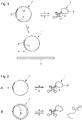
- Hybridization is a bimolecular reaction of two complementary nucleic acid single strands. Nucleic acid single strands can, however, also hybridize to hairpin structures ( Fig. 1 ). Hairpin structures are structure which can form within a nucleic acid single strand via hybridization of two complementary regions ( Fig. 1 , reaction a).
- Hairpin structures are stabilized by supercoiling of DNA; see Brazda et al. (2011), Cruciform structures are a common DNA feature important for regulating biological processes, BMC Molecular Biology 12:33. Supercoiling of short DNA molecules can occur only in circular DNA so that hairpin structures are particularly favored in circular DNA.
- the concentration of the nucleic acid single strand is of no or only minor importance since in a nucleic acid single strand both the target sequence and the complementary sequence are contained (monomolecular reaction).
- Hairpin structures consist of a hybridizing stem ( Fig. 1 , (9)) and a nonhybridizing loop ( Fig. 1 , (8)). If the stem structure in the hairpin is short and the hybridization of the two single-stranded molecules results in a long nucleic acid double-strand molecule as shown in Fig. 2B it results in a significantly higher energy gain (Gibbs energy or ⁇ G) because of the hybridization of the two long nucleic acid single strands than with the hybridization of the complementary regions on a single strand (thermodynamic balance model). In other words, in spite of the fast formation of the hairpin structure, in the long term the balance shifts to the long bimolecular nucleic acid double strands, i.e. reaction b is favored over reaction a in Fig. 2B .
- nucleic acid single strands to form hairpin structures has consequences for the formation of bimolecular nucleic acid double strands: (1.) the more and stabile hairpin structures can be formed, the slower nucleic acid single strands form bimolecular hybrids. (2.) The smaller the difference between ⁇ G resulting from the formation of the hairpin structure and the formation of the bimolecular nucleic acid double strand, the more inefficient and slower is the formation of the bimolecular double strand. This means, if the hybridizing region in the double strand has the similar length like in the hairpin structure only few bimolecular double strands are formed.
- the hybridizing region is short because of the shortness of the oligonucleotides which were immobilized on the carrier. Frequently, the hybridizing part of the immobilized oligonucleotides has a length of 15 to 35 nucleotides.
- arrays are used on which long nucleic acid molecules are immobilized, e.g. BAC arrays, also the immobilized single strand is affected by the formation of hairpin structures.
- nucleic acid single strands are used in a hybridization reaction. This has the consequence that the hybridizing region can only be as long as the respective shorter reaction partner.
- the respective longer strand can - in view of the capability to form hairpin structures - be described as follows: (1.) The longer a nucleic acid strand (excluded are mononucleotide single strands such as polyA, polyC, polyT, polyU, polyG, Polyl etc.), the higher the likelihood to form hairpin structures. (2.) The higher the percentage of bases which are complementary against each other (e.g. GC content > 50 % or AT content > 50 %), the higher the likelihood to form hairpin structures.
- the present invention solves this problem by preventing or reducing the formation of hairpin structures on at least one of the nucleic acid single strand molecules involved in the hybridization.
- the method according to the invention results in a higher hybridization efficiency.
- the higher hybridization efficiency allows the use of a fewer amount of the hybridizing nucleic acid molecules and a shortening of the hybridization time.
- the method according to the invention is of particular advantage for circular nucleic acid molecules which tend to form hairpin structures which are stabilized by supercoiling.
- small nucleic acid molecules size for example ⁇ 5000 nucleotides
- a stable supercoiling basically only occurs in circular nucleic acid molecules. For this reason, the risk of stable hairpin structures is very high in circular nucleic acids where the method according to the invention is of particular advantage.
- a circular first nucleic acid molecule (1) is shown consisting of a sense strand (2) that comprises a first nucleotide sequence (3) and a second nucleotide sequence (4).
- the first nucleotide sequence (3) can hybridize with a fourth nucleotide sequence (5) of a linear second nucleic acid molecule (6) immobilized on a solid support (7).
- the circular first nucleic acid molecule (1) forms hairpin structures with a loop (8) and a stem (9).
- the circular first nucleic acid molecule (1) is in equilibrium with the open, circular form (left) and the hairpin structure form (right). The equilibrium is shifted to the hairpin structure (right).
- reaction a resulting in the hairpin structure is favored over the reaction b resulting in the open, circular form.
- concentration of the open form of the circular first nucleic acid molecule (1) is reduced and the bimolecular hybridization to the linear second nucleic acid molecule (6) via the reaction c occurs in significantly reduced reaction speed.
- the circular first nucleic acid molecule (1) with the first nucleotide sequence (3) which can hybridize to the linear second nucleic acid molecule (6) forms hairpin structures with a loop (8) and a stem (9).
- the equilibrium is then strongly shifted to the of the hairpin structure (right) if good hybridization conditions are given, e.g. sufficiently length of the hybridizing region, appropriate salt, pH and temperature conditions.
- the circular first nucleic acid molecule (1) hybridizes with an antisense nucleic acid strand (10) having a third nucleotide sequence (11) so that no hairpin structure can form or the formation of the hairpin structure is significantly reduced.
- the hairpin structure and reaction a is no longer the preferred structure.
- reaction b is now favored.
- the circular first nucleic acid molecule (1) is in equilibrium with a hairpin structure consisting of a loop (8) and a stem (9).
- the efficiency of the hybridization of the circular first nucleic acid molecule (1) via the first nucleotide sequence (3) to the linear second nucleic acid molecule (6) via the fourth nucleotide sequence (5) is reduced.
- the sense strand (2) of the circular first nucleic acid molecule (1) hybridizes to an antisense nucleic acid strand (10).
- the first nucleotide sequence (3) is still accessible since no hairpin structure is formed.
- the circular first nucleic acid molecule (1) can hybridize to the linear second nucleic acid molecule (6) in a more efficient manner.
- Fig. 3B also the nucleotide sequences of the individual nucleic acid molecules and the respective strands are exemplarily illustrated.
- the second nucleotide sequence (4) of the sense strand (2) of the circular first nucleic acid molecule (1) is at least partially complementary to the third nucleotide sequence (11) of the antisense nucleic acid strand (10) of the circular first nucleic acid molecule (1).
- the fourth nucleotide sequence (5) of the linear second nucleic acid molecule (6) is at least partially complementary to the first nucleotide sequence (3) of the circular first nucleic acid molecule (1).
- the antisense nucleic acid (10) is synthesized via oligonucleotide synthesis and hybridizes to the circular first nucleic acid molecule (1).
- An oligonucleotide is synthesized in a manner that the first nucleotide sequence (3) serving for the hybridization to the linear second nucleic acid molecule (6) remains free.
- oligonucleotides (12, 13) are hybridized to the circular first nucleic acid molecule (1), framing the region of the subsequent antisense nucleic acid (11).
- the 5' or upstream located oligonucleotide (12) serves as primer for a primer extension.
- the 3' or downstream located oligonucleotide (13) is blocked at its 3' terminus and cannot be extended by a polymerase.
- the primer extension reaction blocks as soon as the polymerase during the synthesis has reached the 5' terminus of the 3' terminally-blocked oligonucleotide of the downstream located oligonucleotide (13).
- a circular nucleic acid double strand sample is provided.
- An exo-, endonuclease or glycosylase (14) is used to remove the part of the antisense strand that is hybridized to the first nucleotide sequence (3).
- a circular DNA (circle) can hybridize to oligonucleotides which were immobilized to a solid carrier material, in a more efficient manner.
- a hybridization without antisense nucleic acid is used.
- a rolling circle amplification (RCA) and a real-time PCR is performed to quantify the hybridization events.
- Streptavidin plates Streptavidin plates (StreptaWell strips, Roche) coated with primer 1 for (biotin - aaaaaaattcgacctatccttgcgcagctcgag; SEQ ID NO:1) and primer 1 rev (biotin - aaaaaaaccatgaacaaatgtgactcatatc; SEQ ID NO:2) were incubated with 0 or 50 pg of a circular DNA (sequence: atgacgatatgagtcacattttgttcatgggcatgacattgatacacagttagacga-taggacagtacattcgacctatccttgcgcagctcgagatgacg; SEQ ID NO:3) and 0 to 200 pg antisense nucleic acid (gtcatcgtcatctcgagctgcgcaaggataggtcgaatgtact
- the supernatant was removed, washed and dissolved in 49 ⁇ l RCA reaction buffer (37 mM Tris pH 7,5; 50 mM KCI; 10 mM MgCl 2 , 20 mM (NH 4 ) 2 SO 4 , 1 mM dNTP Mix, ⁇ 29 polymerase). The reaction was carried out for 2 hours at 38°C. Then the supernatant was removed and the surface was washed. The reaction was stopped after 1 h at 37°C with 50 ⁇ l of stop solution (von REPLI-g mini kit). The supernatant contains DNA previously immobilized on the surface.
- This DNA can now be detected by a real-time PCR (QuantiFast green kit) with appropriate primers [primer 2 forward: 5' ctg tgt atc aat gtc atg cc 3' (SEQ ID NO:5) and primer 2 reverse: 5' gtt aga cga tag gac agt aca 3' (SEQ ID NO:6)].
- the table shows significantly reduced CT values for the mixtures in presence of circular DNA and antisense nucleic acid.
- a CT value is obtained that is 4.2 cycles lower than in the mixture without antisense nucleic acid. This indicates an 18 fold increased hybridization efficiency.
- a CT value is obtained which is 13.4 cycles higher than in a mixture with present circular DNA. This indicates that the antisense nucleic acid itself does not contribute to the real-time PCR signal.
- a circular DNA (circle) can hybridize to oligonucleotides which were immobilized to a solid carrier material in a more efficient manner.
- a hybridization without antisense nucleic acid is used.
- a rolling circle amplification (RCA) and then a staining of the amplified DNA with YOYO1 is carried out. A subsequent scanning of the amplified DNA results in a visual evaluation of the hybridization events.
- Streptavidin-covered glass carriers coated with primer 1 for (biotin - SEQ ID NO:1), primer 1 ref (biotin - SEQ ID NO:2) and primer poly A (biotin - aaaaaaa; SEQ ID NO:7) were incubated for 15 min at room temperature with 0 or 50 pg of a circular CNA (SEQ ID NO:3) and 0 to 200 pg antisense nucleic acid (SEQ ID NO:4) in 50 ⁇ l of an appropriate buffer (50 mM Tris, pH 7,5; 10 mM MgCl 2 , 100 mM NaCl, 0,0012% Tween 20).
- an appropriate buffer 50 mM Tris, pH 7,5; 10 mM MgCl 2 , 100 mM NaCl, 0,0012% Tween 20.
- the supernatant was removed, washed and dissolved in 49 ⁇ l of RCA reaction buffer (37 mM Tris pH 7,5; 50 mM KCI; 10 mM MgCI2, 20 mM (NH 4 ) 2 SO 4 , 1 mM dNTP Mix, ⁇ 29 polymerase).
- the reaction was carried out for 2 h at 38°C.
- the supernatant was removed and the surface was washed.
- the surface was covered with a 1:10,000 YOYO ® -1 iodide solution and incubated for 30 min. After washing the surface, the glass slide was scanned.
- the DNA was treated with 50 ⁇ l of DLB (from REPLI-g mini kit). The treatment was stopped after 1 h at 37°C with 50 ⁇ l of stop solution (from REPLI-g mini kit). The supernatant now contains DNA previously immobilized on the surface. This DNA can now be detected in a real-time PCR (QuantiFast SYBR green kit) with appropriate primers [primer 2 forward: (SEQ ID NO:5) und primer 2 reverse (SEQ ID NO:6)].
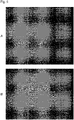
- Fig. 5 depicting sections of the scanned glass slides.
- the hybridization events are shown as small spots. It can be clearly seen that with increasing amounts of antisense nucleic acid, while remaining the amount of the circular DNA constant, the number of spots (hybridization events) increases. The sole presence of circular nucleic acid without presence of the antisense nucleic acid results in the lowest number of spots (hybridization events). Without the presence of the circular nucleic acid in the presence of antisense nucleic acid, no spots (hybridization events) can be seen.
- Tab. 4 Result from the real-time PCR No. CT Stabw 1 14.93 0.01 2 14.17 0.08 3 11.69 0.26 4 23.47 0.24
- the table clearly shows lower CT values for the mixtures in presence of circular DNA and antisense nucleic acid. This indicates higher hybridization efficiency. Without circular nucleic acid and with 200 pg of antisense nucleic acid, a significantly higher CT value is obtained than in presence of circular DNA. This indicates that the antisense nucleic acid does not contribute to the real-time PCR signal.
- a circular DNA (circle) can be hybridized to oligonucleotides, which were immobilized on a solid carrier material, in a more efficient manner.
- a control hybridization with antisense nucleic acid was used.
- rolling circle amplification (RCA) and a real-time PCR was carried out to quantify the hybridization events.
- the already hybridized nucleic acid mixture consisting of 50 pg of circular DNA (circle) and 200 pg of antisense nucleic acid was hybridized to streptavidin plates (StreptaWell strips, Roche) which were coated with primer 1 for (biotin - SEQ ID NO:1) and primer 1 rev (biotin - SEQ ID NO:2) by using 50 ⁇ l of an appropriate buffer (50 mM Tris, pH 7,5; 10 mM MgCl 2 , 100 mM NaCl, 0,0012% Tween 20).
- an appropriate buffer 50 mM Tris, pH 7,5; 10 mM MgCl 2 , 100 mM NaCl, 0,0012% Tween 20.
- the supernatant was removed and dissolved in 50 ⁇ l of RCA reaction buffer (37 mM Tris pH 7,5; 50 mM KCI; 10 mM MgCI2, 20 mM (NH) 2 SO 4 , 1 mM dNTP Mix, ⁇ 29 polymerase). The reaction was carried out for 2 h at 38°C. Then the supernatant was removed and the surface was washed. Then, the DNA was treated with 50 ⁇ l of DLB (from REPLI-g mini kit) on the surface.
- DLB from REPLI-g mini kit
- the treatment was stopped after 1 h at 37°C with 50 ⁇ l of stop solution (from REPLI-g mini kit).
- the supernatant now contains DNA that was previously immobilized on the surface.
- This DNA can now be detected in a real-time PCR (QuantiFast SYBR green kit) with appropriate primers [primer 2 forward (SEQ ID NO:5) und Primer 2 reverse (SEQ ID NO:6)].
- the table clearly shows lower CT values for the mixtures with presence of circular DNA and antisense nucleic acids of different lengths.
- the antisense nucleic acids with different lengths cover the circular nucleic acid to different extents.
- the percentage indicates the extent of coverage of the circular nucleic acid by the antisense nucleic acid.
- the percentage in parentheses indicates the coverage of the circular nucleic acid by the antisense nucleic acid and the immobilized primer 1 rev which must hybridize to the circle.
Landscapes
- Chemical & Material Sciences (AREA)
- Organic Chemistry (AREA)
- Life Sciences & Earth Sciences (AREA)
- Zoology (AREA)
- Wood Science & Technology (AREA)
- Proteomics, Peptides & Aminoacids (AREA)
- Health & Medical Sciences (AREA)
- Engineering & Computer Science (AREA)
- Microbiology (AREA)
- Biochemistry (AREA)
- Physics & Mathematics (AREA)
- Molecular Biology (AREA)
- Biotechnology (AREA)
- Biophysics (AREA)
- Analytical Chemistry (AREA)
- Immunology (AREA)
- Bioinformatics & Cheminformatics (AREA)
- General Engineering & Computer Science (AREA)
- General Health & Medical Sciences (AREA)
- Genetics & Genomics (AREA)
- Chemical Kinetics & Catalysis (AREA)
- Measuring Or Testing Involving Enzymes Or Micro-Organisms (AREA)
- Saccharide Compounds (AREA)
Claims (10)
- Verfahren zur Hybridisierung eines Nukleinsäuremoleküls, das Folgendes aufweist:i) Bereitstellen eines Reaktionsgemisches, das Folgendes aufweist:- zumindest ein erstes Nukleinsäuremolekül, das Folgendes, zumindest teilweise gegeneinander hybridisiert, aufweist:- einen Sinn-Nukleinsäurestrang mit- zumindest einer ersten Nukleotidsequenz, und- zumindest einer zweiten Nukleotidsequenz;- einen Gegensinn-Nukleinsäurestrang mit zumindest einer dritten Nukleotidsequenz, die zumindest teilweise komplementär zu der zumindest zweiten Nukleotidsequenz ist und zumindest teilweise nicht komplementär zu der zumindest ersten Nukleotidsequenz ist;- zumindest ein zweites Nukleinsäuremolekül mit einer vierten Nukleotidsequenz, die zumindest teilweise komplementär zu der ersten Nukleotidsequenz ist;- Hybridisierungspuffer;ii) Inkubieren des Reaktionsgemischs unter Bedingungen, die es dem zumindest einen ersten Nukleinsäuremolekül erlauben, an das zumindest eine zweite Nukleinsäuremolekül über eine Hybridisierungsreaktion zwischen der zumindest ersten Nukleotidsequenz und der zumindest vierten Nukleotidsequenz zu hybridisieren,
dadurch gekennzeichnet, dass das zumindest eine erste Nukleinsäuremolekül wie folgt bereitgestellt wird:- Bereitstellen des Sinn-Nukleinsäurestrangs,- Hybridisieren von zumindest einem Primer-Oligonukleotid mit zumindest einem ersten Segment der zweiten Nukleotidsequenz, wobei das zumindestens erste Segment stromaufwärts und/oder stromabwärts der ersten Nukleotidsequenz lokalisiert ist,- Verlängern des Primer-Oligonukleotids durch eine Nukleotidpolymerase, um den Gegensinn-Nukleinsäurestrang zu erzeugen, undwobei das zumindest eine zweite Nukleinsäuremolekül an einen festen Träger gebunden ist. - Verfahren nach Anspruch 1, dadurch gekennzeichnet, dass das zumindest eine erste Nukleinsäuremolekül ein zirkuläres Nukleinsäuremolekül ist.
- Verfahren nach Anspruch 1 oder 2, dadurch gekennzeichnet, dass vor und/oder während der Verlängerung ein blockierendes Oligonukleotid an zumindest ein zweites Segment der zweiten Nukleotidsequenz hybridisiert wird, wobei das zweite Segment stromabwärts der ersten Nukleotidsequenz lokalisiert ist, wobei die Polymerase vorzugsweise keine Strangverdrängungsaktivität und keine 5'-3'-Exonukleaseaktivität aufweist.
- Verfahren nach einem der vorhergehenden Ansprüche, dadurch gekennzeichnet, dass die vierte Nukleotidsequenz länger ist als die erste Nukleotidsequenz.
- Verfahren nach einem der vorhergehenden Ansprüche, dadurch gekennzeichnet, dass das zumindest eine erste Nukleinsäuremolekül und das zumindest eine zweite Nukleinsäuremolekül DNA sind.
- Verfahren nach einem der vorhergehenden Ansprüche, dadurch gekennzeichnet, dass das zumindest eine zweite Nukleinsäuremolekül ein einzelsträngiges Nukleinsäuremolekül ist.
- Verfahren nach einem der vorhergehenden Ansprüche, das den folgenden weiteren Schritt aufweist:
iii) Entfernen des Gegensinn-Strangs. - Verfahren nach Anspruch 7, dadurch gekennzeichnet, dass die Entfernung des Gegensinn-Strangs durch Denaturierung und/oder über eine Strangverdrängung unter Verwendung einer Polymerase mit Strangverdrängungsaktivität erfolgt.
- Verfahren nach einem der vorhergehenden Ansprüche, dadurch gekennzeichnet, dass der feste Träger ein Material aufweist, das ausgewählt ist aus der Gruppe bestehend aus: Metall, Glas, Siliziumdioxid, Kunststoff, und/oder vorzugsweise ausgewählt ist aus der Gruppe bestehend aus: Chips, Beads, Kapillaren.
- Verwendung eines Nukleinsäure-Gegensinn-Strangs mit einer dritten Nukleotidsequenz, die zumindest teilweise komplementär ist zu einer zweiten Nukleotidsequenz und zumindest teilweise nicht komplementär ist zu einer ersten Nukleotidsequenz, zur Verringerung und/oder Vermeidung der Bildung von Haarnadelstrukturen eines Nukleinsäure-Zielmoleküls, das die erste Nukleotidsequenz und die zweite Nukleotidsequenz aufweist, wobei das Nukleinsäure-Zielmolekül dazu bestimmt ist, an ein Nukleinsäure-Sondenmolekül mit einer vierten Nukleotidsequenz, die zumindest teilweise komplementär zu der ersten Nukleotidsequenz ist, über eine Hybridisierungsreaktion zwischen der zumindest ersten Nukleotidsequenz und der zumindest vierten Nukleotidsequenz hybridisiert zu werden, dadurch gekennzeichnet, dass der Nukleinsäure-Gegensinn-Strang wie folgt bereitgestellt wird:- Bereitstellen des Nukleinsäure-Zielmoleküls,- Hybridisieren von zumindest einem Primer-Oligonukleotid an zumindest ein erstes Segment der zweiten Nukleotidsequenz, wobei das zumindest erste Segment stromaufwärts und/oder stromabwärts der ersten Nukleotidsequenz lokalisiert ist,- Verlängern des Primer-Oligonukleotids durch eine Nukleotidpolymerase, um den Gegensinn-Nukleinsäurestrang zu erzeugen, und dassdas Nukleinsäure-Zielmolekül ein zirkuläres Nukleinsäuremolekül ist.
Applications Claiming Priority (2)
| Application Number | Priority Date | Filing Date | Title |
|---|---|---|---|
| EP15164962 | 2015-04-24 | ||
| PCT/EP2016/059167 WO2016170181A1 (en) | 2015-04-24 | 2016-04-25 | Method for hybridizing a nucleic acid molecule |
Publications (2)
| Publication Number | Publication Date |
|---|---|
| EP3286331A1 EP3286331A1 (de) | 2018-02-28 |
| EP3286331B1 true EP3286331B1 (de) | 2022-12-14 |
Family
ID=53015560
Family Applications (1)
| Application Number | Title | Priority Date | Filing Date |
|---|---|---|---|
| EP16722806.3A Active EP3286331B1 (de) | 2015-04-24 | 2016-04-25 | Verfahren zur hybridisierung eines nukleinsäuremoleküls |
Country Status (4)
| Country | Link |
|---|---|
| US (1) | US20180087099A1 (de) |
| EP (1) | EP3286331B1 (de) |
| ES (1) | ES2940189T3 (de) |
| WO (1) | WO2016170181A1 (de) |
Families Citing this family (3)
| Publication number | Priority date | Publication date | Assignee | Title |
|---|---|---|---|---|
| GB202110479D0 (en) | 2021-07-21 | 2021-09-01 | Dnae Diagnostics Ltd | Compositions, kits and methods for sequencing target polynucleotides |
| GB202110485D0 (en) | 2021-07-21 | 2021-09-01 | Dnae Diagnostics Ltd | Compositions, kits and methods for sequencing target polynucleotides |
| EP4373965A1 (de) | 2021-07-21 | 2024-05-29 | DNAe Diagnostics Limited | Verfahren und system mit einer kartusche zur sequenzierung von zielpolynukleotiden |
Family Cites Families (4)
| Publication number | Priority date | Publication date | Assignee | Title |
|---|---|---|---|---|
| GB0016814D0 (en) * | 2000-07-07 | 2000-08-30 | Lee Helen | Improved dipstick assays (3) |
| US8394944B2 (en) * | 2002-09-20 | 2013-03-12 | Siemens Healthcare Diagnostics Inc. | Dual-purpose primers and probes for providing enhanced hybridization assays by disruption of secondary structure formation |
| US8481264B2 (en) * | 2008-09-19 | 2013-07-09 | Pacific Biosciences Of California, Inc. | Immobilized nucleic acid complexes for sequence analysis |
| WO2015019194A2 (en) * | 2013-08-07 | 2015-02-12 | Xagenic Inc. | Systems, methods and devices for electrochemical detection using helper oligonucleotides |
-
2016
- 2016-04-25 EP EP16722806.3A patent/EP3286331B1/de active Active
- 2016-04-25 US US15/567,560 patent/US20180087099A1/en not_active Abandoned
- 2016-04-25 ES ES16722806T patent/ES2940189T3/es active Active
- 2016-04-25 WO PCT/EP2016/059167 patent/WO2016170181A1/en not_active Ceased
Non-Patent Citations (1)
| Title |
|---|
| MALHOTRA S SHARMA S ET AL: "Molecular Methods in Microbiology and their Clinical Application", JOURNAL OF MOLECULAR AND GENETIC MEDICINE, vol. 08, no. 04, 1 January 2014 (2014-01-01), XP055608714, DOI: 10.4172/1747-0862.1000142 * |
Also Published As
| Publication number | Publication date |
|---|---|
| EP3286331A1 (de) | 2018-02-28 |
| ES2940189T3 (es) | 2023-05-04 |
| US20180087099A1 (en) | 2018-03-29 |
| WO2016170181A1 (en) | 2016-10-27 |
Similar Documents
| Publication | Publication Date | Title |
|---|---|---|
| US9416402B2 (en) | Methods and compositions for detection of small RNAs | |
| EP2794926B1 (de) | Verfahren zur herstellung kleiner rna-bibliotheken und ihre verwendung zur expressionsprofilierung von ziel-rnas | |
| US20180142290A1 (en) | Blocking oligonucleotides | |
| KR102087062B1 (ko) | 핵산 전사 방법 | |
| JP3867926B2 (ja) | 核酸の増幅法 | |
| US20100297643A1 (en) | Terminus-Specific DNA Modification Using Random-Sequence Template Oligonucleotides | |
| EP2365078A1 (de) | Verfahren mit dualspezifischem Oligonukleotid sowie dualspezifisches Oligonukleotid | |
| JP2006528482A (ja) | 核酸の逆転写及び/または増幅方法 | |
| EP2733221B1 (de) | "Dual-Hybridization" Polynucleotide und Verwendung davon | |
| EP3143139A1 (de) | Synthese von doppelsträngigen nukleinsäuren | |
| KR20160138168A (ko) | 카피수 보존 rna 분석 방법 | |
| US6489455B2 (en) | Methods of assaying differential expression | |
| JP2008029333A (ja) | 新規遺伝子増幅法に用いられるプライマー | |
| US10801056B2 (en) | Kit and method for detection of microRNA | |
| US6352829B1 (en) | Methods of assaying differential expression | |
| US20180087099A1 (en) | Method for hybridizing a nucleic acid molecule | |
| EP4010493B1 (de) | Verfahren zur multiplexierten isothermen amplifikation von nukleinsäuresequenzen | |
| ES2985378T3 (es) | Métodos y composiciones para preparar bibliotecas de ácidos nucleicos | |
| US20020072061A1 (en) | Methods and compositions for use in synthesizing nucleic acids | |
| EP3093342A1 (de) | Rna-mikroarray für den nachweis einer wechselwirkung zwischen proteinen und konformationshaltiger rna | |
| JP2008029335A (ja) | 新規遺伝子増幅法に用いられるプライマーセットおよびキット | |
| KR20190092883A (ko) | 삼중접합구조 기반 등온 핵산 증폭 기술을 이용한 표적핵산 검출 방법 | |
| WO2024101294A1 (ja) | 非環状型人工核酸の配列取得法 | |
| KR100844010B1 (ko) | 다중 유전자 동시 증폭방법 | |
| HK40087449B (en) | Methods and compositions for preparing nucleic acid libraries |
Legal Events
| Date | Code | Title | Description |
|---|---|---|---|
| STAA | Information on the status of an ep patent application or granted ep patent |
Free format text: STATUS: THE INTERNATIONAL PUBLICATION HAS BEEN MADE |
|
| PUAI | Public reference made under article 153(3) epc to a published international application that has entered the european phase |
Free format text: ORIGINAL CODE: 0009012 |
|
| STAA | Information on the status of an ep patent application or granted ep patent |
Free format text: STATUS: REQUEST FOR EXAMINATION WAS MADE |
|
| 17P | Request for examination filed |
Effective date: 20171107 |
|
| AK | Designated contracting states |
Kind code of ref document: A1 Designated state(s): AL AT BE BG CH CY CZ DE DK EE ES FI FR GB GR HR HU IE IS IT LI LT LU LV MC MK MT NL NO PL PT RO RS SE SI SK SM TR |
|
| AX | Request for extension of the european patent |
Extension state: BA ME |
|
| DAV | Request for validation of the european patent (deleted) | ||
| DAX | Request for extension of the european patent (deleted) | ||
| STAA | Information on the status of an ep patent application or granted ep patent |
Free format text: STATUS: EXAMINATION IS IN PROGRESS |
|
| 17Q | First examination report despatched |
Effective date: 20181012 |
|
| REG | Reference to a national code |
Ref country code: DE Ref legal event code: R079 Ref document number: 602016076876 Country of ref document: DE Free format text: PREVIOUS MAIN CLASS: C12Q0001680000 Ipc: C12Q0001683200 |
|
| GRAP | Despatch of communication of intention to grant a patent |
Free format text: ORIGINAL CODE: EPIDOSNIGR1 |
|
| STAA | Information on the status of an ep patent application or granted ep patent |
Free format text: STATUS: GRANT OF PATENT IS INTENDED |
|
| RIC1 | Information provided on ipc code assigned before grant |
Ipc: C12Q 1/6832 20180101AFI20220204BHEP |
|
| INTG | Intention to grant announced |
Effective date: 20220224 |
|
| GRAS | Grant fee paid |
Free format text: ORIGINAL CODE: EPIDOSNIGR3 |
|
| GRAA | (expected) grant |
Free format text: ORIGINAL CODE: 0009210 |
|
| STAA | Information on the status of an ep patent application or granted ep patent |
Free format text: STATUS: THE PATENT HAS BEEN GRANTED |
|
| AK | Designated contracting states |
Kind code of ref document: B1 Designated state(s): AL AT BE BG CH CY CZ DE DK EE ES FI FR GB GR HR HU IE IS IT LI LT LU LV MC MK MT NL NO PL PT RO RS SE SI SK SM TR |
|
| REG | Reference to a national code |
Ref country code: GB Ref legal event code: FG4D |
|
| REG | Reference to a national code |
Ref country code: CH Ref legal event code: EP |
|
| REG | Reference to a national code |
Ref country code: DE Ref legal event code: R096 Ref document number: 602016076876 Country of ref document: DE |
|
| REG | Reference to a national code |
Ref country code: IE Ref legal event code: FG4D |
|
| REG | Reference to a national code |
Ref country code: AT Ref legal event code: REF Ref document number: 1537687 Country of ref document: AT Kind code of ref document: T Effective date: 20230115 |
|
| REG | Reference to a national code |
Ref country code: LT Ref legal event code: MG9D |
|
| RAP2 | Party data changed (patent owner data changed or rights of a patent transferred) |
Owner name: MILTENYI BIOTEC B.V. & CO. KG |
|
| REG | Reference to a national code |
Ref country code: NL Ref legal event code: MP Effective date: 20221214 |
|
| PG25 | Lapsed in a contracting state [announced via postgrant information from national office to epo] |
Ref country code: SE Free format text: LAPSE BECAUSE OF FAILURE TO SUBMIT A TRANSLATION OF THE DESCRIPTION OR TO PAY THE FEE WITHIN THE PRESCRIBED TIME-LIMIT Effective date: 20221214 Ref country code: NO Free format text: LAPSE BECAUSE OF FAILURE TO SUBMIT A TRANSLATION OF THE DESCRIPTION OR TO PAY THE FEE WITHIN THE PRESCRIBED TIME-LIMIT Effective date: 20230314 Ref country code: LT Free format text: LAPSE BECAUSE OF FAILURE TO SUBMIT A TRANSLATION OF THE DESCRIPTION OR TO PAY THE FEE WITHIN THE PRESCRIBED TIME-LIMIT Effective date: 20221214 Ref country code: FI Free format text: LAPSE BECAUSE OF FAILURE TO SUBMIT A TRANSLATION OF THE DESCRIPTION OR TO PAY THE FEE WITHIN THE PRESCRIBED TIME-LIMIT Effective date: 20221214 |
|
| REG | Reference to a national code |
Ref country code: ES Ref legal event code: FG2A Ref document number: 2940189 Country of ref document: ES Kind code of ref document: T3 Effective date: 20230504 |
|
| REG | Reference to a national code |
Ref country code: AT Ref legal event code: MK05 Ref document number: 1537687 Country of ref document: AT Kind code of ref document: T Effective date: 20221214 |
|
| REG | Reference to a national code |
Ref country code: GB Ref legal event code: 732E Free format text: REGISTERED BETWEEN 20230420 AND 20230426 |
|
| REG | Reference to a national code |
Ref country code: DE Ref legal event code: R081 Ref document number: 602016076876 Country of ref document: DE Owner name: MILTENYI BIOTEC B.V. & CO. KG, DE Free format text: FORMER OWNER: QIAGEN GMBH, 40724 HILDEN, DE |
|
| PG25 | Lapsed in a contracting state [announced via postgrant information from national office to epo] |
Ref country code: RS Free format text: LAPSE BECAUSE OF FAILURE TO SUBMIT A TRANSLATION OF THE DESCRIPTION OR TO PAY THE FEE WITHIN THE PRESCRIBED TIME-LIMIT Effective date: 20221214 Ref country code: LV Free format text: LAPSE BECAUSE OF FAILURE TO SUBMIT A TRANSLATION OF THE DESCRIPTION OR TO PAY THE FEE WITHIN THE PRESCRIBED TIME-LIMIT Effective date: 20221214 Ref country code: HR Free format text: LAPSE BECAUSE OF FAILURE TO SUBMIT A TRANSLATION OF THE DESCRIPTION OR TO PAY THE FEE WITHIN THE PRESCRIBED TIME-LIMIT Effective date: 20221214 Ref country code: GR Free format text: LAPSE BECAUSE OF FAILURE TO SUBMIT A TRANSLATION OF THE DESCRIPTION OR TO PAY THE FEE WITHIN THE PRESCRIBED TIME-LIMIT Effective date: 20230315 |
|
| PG25 | Lapsed in a contracting state [announced via postgrant information from national office to epo] |
Ref country code: NL Free format text: LAPSE BECAUSE OF FAILURE TO SUBMIT A TRANSLATION OF THE DESCRIPTION OR TO PAY THE FEE WITHIN THE PRESCRIBED TIME-LIMIT Effective date: 20221214 |
|
| PG25 | Lapsed in a contracting state [announced via postgrant information from national office to epo] |
Ref country code: SM Free format text: LAPSE BECAUSE OF FAILURE TO SUBMIT A TRANSLATION OF THE DESCRIPTION OR TO PAY THE FEE WITHIN THE PRESCRIBED TIME-LIMIT Effective date: 20221214 Ref country code: RO Free format text: LAPSE BECAUSE OF FAILURE TO SUBMIT A TRANSLATION OF THE DESCRIPTION OR TO PAY THE FEE WITHIN THE PRESCRIBED TIME-LIMIT Effective date: 20221214 Ref country code: PT Free format text: LAPSE BECAUSE OF FAILURE TO SUBMIT A TRANSLATION OF THE DESCRIPTION OR TO PAY THE FEE WITHIN THE PRESCRIBED TIME-LIMIT Effective date: 20230414 Ref country code: EE Free format text: LAPSE BECAUSE OF FAILURE TO SUBMIT A TRANSLATION OF THE DESCRIPTION OR TO PAY THE FEE WITHIN THE PRESCRIBED TIME-LIMIT Effective date: 20221214 Ref country code: CZ Free format text: LAPSE BECAUSE OF FAILURE TO SUBMIT A TRANSLATION OF THE DESCRIPTION OR TO PAY THE FEE WITHIN THE PRESCRIBED TIME-LIMIT Effective date: 20221214 Ref country code: AT Free format text: LAPSE BECAUSE OF FAILURE TO SUBMIT A TRANSLATION OF THE DESCRIPTION OR TO PAY THE FEE WITHIN THE PRESCRIBED TIME-LIMIT Effective date: 20221214 |
|
| PG25 | Lapsed in a contracting state [announced via postgrant information from national office to epo] |
Ref country code: SK Free format text: LAPSE BECAUSE OF FAILURE TO SUBMIT A TRANSLATION OF THE DESCRIPTION OR TO PAY THE FEE WITHIN THE PRESCRIBED TIME-LIMIT Effective date: 20221214 Ref country code: PL Free format text: LAPSE BECAUSE OF FAILURE TO SUBMIT A TRANSLATION OF THE DESCRIPTION OR TO PAY THE FEE WITHIN THE PRESCRIBED TIME-LIMIT Effective date: 20221214 Ref country code: IS Free format text: LAPSE BECAUSE OF FAILURE TO SUBMIT A TRANSLATION OF THE DESCRIPTION OR TO PAY THE FEE WITHIN THE PRESCRIBED TIME-LIMIT Effective date: 20230414 Ref country code: AL Free format text: LAPSE BECAUSE OF FAILURE TO SUBMIT A TRANSLATION OF THE DESCRIPTION OR TO PAY THE FEE WITHIN THE PRESCRIBED TIME-LIMIT Effective date: 20221214 |
|
| REG | Reference to a national code |
Ref country code: DE Ref legal event code: R097 Ref document number: 602016076876 Country of ref document: DE |
|
| PLBE | No opposition filed within time limit |
Free format text: ORIGINAL CODE: 0009261 |
|
| STAA | Information on the status of an ep patent application or granted ep patent |
Free format text: STATUS: NO OPPOSITION FILED WITHIN TIME LIMIT |
|
| PG25 | Lapsed in a contracting state [announced via postgrant information from national office to epo] |
Ref country code: DK Free format text: LAPSE BECAUSE OF FAILURE TO SUBMIT A TRANSLATION OF THE DESCRIPTION OR TO PAY THE FEE WITHIN THE PRESCRIBED TIME-LIMIT Effective date: 20221214 |
|
| 26N | No opposition filed |
Effective date: 20230915 |
|
| PG25 | Lapsed in a contracting state [announced via postgrant information from national office to epo] |
Ref country code: SI Free format text: LAPSE BECAUSE OF FAILURE TO SUBMIT A TRANSLATION OF THE DESCRIPTION OR TO PAY THE FEE WITHIN THE PRESCRIBED TIME-LIMIT Effective date: 20221214 |
|
| PG25 | Lapsed in a contracting state [announced via postgrant information from national office to epo] |
Ref country code: LU Free format text: LAPSE BECAUSE OF NON-PAYMENT OF DUE FEES Effective date: 20230425 |
|
| REG | Reference to a national code |
Ref country code: BE Ref legal event code: MM Effective date: 20230430 |
|
| PG25 | Lapsed in a contracting state [announced via postgrant information from national office to epo] |
Ref country code: MC Free format text: LAPSE BECAUSE OF FAILURE TO SUBMIT A TRANSLATION OF THE DESCRIPTION OR TO PAY THE FEE WITHIN THE PRESCRIBED TIME-LIMIT Effective date: 20221214 |
|
| PG25 | Lapsed in a contracting state [announced via postgrant information from national office to epo] |
Ref country code: MC Free format text: LAPSE BECAUSE OF FAILURE TO SUBMIT A TRANSLATION OF THE DESCRIPTION OR TO PAY THE FEE WITHIN THE PRESCRIBED TIME-LIMIT Effective date: 20221214 |
|
| REG | Reference to a national code |
Ref country code: IE Ref legal event code: MM4A |
|
| PG25 | Lapsed in a contracting state [announced via postgrant information from national office to epo] |
Ref country code: BE Free format text: LAPSE BECAUSE OF NON-PAYMENT OF DUE FEES Effective date: 20230430 |
|
| PG25 | Lapsed in a contracting state [announced via postgrant information from national office to epo] |
Ref country code: IE Free format text: LAPSE BECAUSE OF NON-PAYMENT OF DUE FEES Effective date: 20230425 |
|
| PG25 | Lapsed in a contracting state [announced via postgrant information from national office to epo] |
Ref country code: IE Free format text: LAPSE BECAUSE OF NON-PAYMENT OF DUE FEES Effective date: 20230425 |
|
| PG25 | Lapsed in a contracting state [announced via postgrant information from national office to epo] |
Ref country code: BG Free format text: LAPSE BECAUSE OF FAILURE TO SUBMIT A TRANSLATION OF THE DESCRIPTION OR TO PAY THE FEE WITHIN THE PRESCRIBED TIME-LIMIT Effective date: 20221214 |
|
| PG25 | Lapsed in a contracting state [announced via postgrant information from national office to epo] |
Ref country code: BG Free format text: LAPSE BECAUSE OF FAILURE TO SUBMIT A TRANSLATION OF THE DESCRIPTION OR TO PAY THE FEE WITHIN THE PRESCRIBED TIME-LIMIT Effective date: 20221214 |
|
| PGFP | Annual fee paid to national office [announced via postgrant information from national office to epo] |
Ref country code: DE Payment date: 20250422 Year of fee payment: 10 |
|
| PGFP | Annual fee paid to national office [announced via postgrant information from national office to epo] |
Ref country code: GB Payment date: 20250423 Year of fee payment: 10 Ref country code: ES Payment date: 20250530 Year of fee payment: 10 |
|
| PGFP | Annual fee paid to national office [announced via postgrant information from national office to epo] |
Ref country code: IT Payment date: 20250424 Year of fee payment: 10 |
|
| PGFP | Annual fee paid to national office [announced via postgrant information from national office to epo] |
Ref country code: FR Payment date: 20250425 Year of fee payment: 10 |
|
| PGFP | Annual fee paid to national office [announced via postgrant information from national office to epo] |
Ref country code: CH Payment date: 20250501 Year of fee payment: 10 |
|
| PG25 | Lapsed in a contracting state [announced via postgrant information from national office to epo] |
Ref country code: CY Free format text: LAPSE BECAUSE OF FAILURE TO SUBMIT A TRANSLATION OF THE DESCRIPTION OR TO PAY THE FEE WITHIN THE PRESCRIBED TIME-LIMIT; INVALID AB INITIO Effective date: 20160425 |
|
| PG25 | Lapsed in a contracting state [announced via postgrant information from national office to epo] |
Ref country code: HU Free format text: LAPSE BECAUSE OF FAILURE TO SUBMIT A TRANSLATION OF THE DESCRIPTION OR TO PAY THE FEE WITHIN THE PRESCRIBED TIME-LIMIT; INVALID AB INITIO Effective date: 20160425 |
|
| PG25 | Lapsed in a contracting state [announced via postgrant information from national office to epo] |
Ref country code: TR Free format text: LAPSE BECAUSE OF FAILURE TO SUBMIT A TRANSLATION OF THE DESCRIPTION OR TO PAY THE FEE WITHIN THE PRESCRIBED TIME-LIMIT Effective date: 20221214 |
|
| REG | Reference to a national code |
Ref country code: CH Ref legal event code: U11 Free format text: ST27 STATUS EVENT CODE: U-0-0-U10-U11 (AS PROVIDED BY THE NATIONAL OFFICE) Effective date: 20260501 |