EP3284397B1 - Vitaldatenmonitor - Google Patents
Vitaldatenmonitor Download PDFInfo
- Publication number
- EP3284397B1 EP3284397B1 EP16779983.2A EP16779983A EP3284397B1 EP 3284397 B1 EP3284397 B1 EP 3284397B1 EP 16779983 A EP16779983 A EP 16779983A EP 3284397 B1 EP3284397 B1 EP 3284397B1
- Authority
- EP
- European Patent Office
- Prior art keywords
- determination
- section
- vital
- displayed
- patient
- Prior art date
- Legal status (The legal status is an assumption and is not a legal conclusion. Google has not performed a legal analysis and makes no representation as to the accuracy of the status listed.)
- Active
Links
Images











Classifications
-
- A—HUMAN NECESSITIES
- A61—MEDICAL OR VETERINARY SCIENCE; HYGIENE
- A61B—DIAGNOSIS; SURGERY; IDENTIFICATION
- A61B5/00—Measuring for diagnostic purposes; Identification of persons
- A61B5/74—Details of notification to user or communication with user or patient; User input means
- A61B5/742—Details of notification to user or communication with user or patient; User input means using visual displays
-
- A—HUMAN NECESSITIES
- A61—MEDICAL OR VETERINARY SCIENCE; HYGIENE
- A61B—DIAGNOSIS; SURGERY; IDENTIFICATION
- A61B5/00—Measuring for diagnostic purposes; Identification of persons
-
- A—HUMAN NECESSITIES
- A61—MEDICAL OR VETERINARY SCIENCE; HYGIENE
- A61B—DIAGNOSIS; SURGERY; IDENTIFICATION
- A61B5/00—Measuring for diagnostic purposes; Identification of persons
- A61B5/02—Detecting, measuring or recording for evaluating the cardiovascular system, e.g. pulse, heart rate, blood pressure or blood flow
- A61B5/024—Measuring pulse rate or heart rate
-
- A—HUMAN NECESSITIES
- A61—MEDICAL OR VETERINARY SCIENCE; HYGIENE
- A61B—DIAGNOSIS; SURGERY; IDENTIFICATION
- A61B5/00—Measuring for diagnostic purposes; Identification of persons
- A61B5/08—Measuring devices for evaluating the respiratory organs
- A61B5/0816—Measuring devices for examining respiratory frequency
-
- A—HUMAN NECESSITIES
- A61—MEDICAL OR VETERINARY SCIENCE; HYGIENE
- A61B—DIAGNOSIS; SURGERY; IDENTIFICATION
- A61B5/00—Measuring for diagnostic purposes; Identification of persons
- A61B5/48—Other medical applications
- A61B5/4836—Diagnosis combined with treatment in closed-loop systems or methods
-
- A—HUMAN NECESSITIES
- A61—MEDICAL OR VETERINARY SCIENCE; HYGIENE
- A61B—DIAGNOSIS; SURGERY; IDENTIFICATION
- A61B5/00—Measuring for diagnostic purposes; Identification of persons
- A61B5/72—Signal processing specially adapted for physiological signals or for diagnostic purposes
- A61B5/7271—Specific aspects of physiological measurement analysis
- A61B5/7275—Determining trends in physiological measurement data; Predicting development of a medical condition based on physiological measurements, e.g. determining a risk factor
-
- A—HUMAN NECESSITIES
- A61—MEDICAL OR VETERINARY SCIENCE; HYGIENE
- A61M—DEVICES FOR INTRODUCING MEDIA INTO, OR ONTO, THE BODY; DEVICES FOR TRANSDUCING BODY MEDIA OR FOR TAKING MEDIA FROM THE BODY; DEVICES FOR PRODUCING OR ENDING SLEEP OR STUPOR
- A61M16/00—Devices for influencing the respiratory system of patients by gas treatment, e.g. ventilators; Tracheal tubes
- A61M16/0051—Devices for influencing the respiratory system of patients by gas treatment, e.g. ventilators; Tracheal tubes with alarm devices
-
- A—HUMAN NECESSITIES
- A61—MEDICAL OR VETERINARY SCIENCE; HYGIENE
- A61M—DEVICES FOR INTRODUCING MEDIA INTO, OR ONTO, THE BODY; DEVICES FOR TRANSDUCING BODY MEDIA OR FOR TAKING MEDIA FROM THE BODY; DEVICES FOR PRODUCING OR ENDING SLEEP OR STUPOR
- A61M16/00—Devices for influencing the respiratory system of patients by gas treatment, e.g. ventilators; Tracheal tubes
- A61M16/04—Tracheal tubes
-
- G—PHYSICS
- G16—INFORMATION AND COMMUNICATION TECHNOLOGY [ICT] SPECIALLY ADAPTED FOR SPECIFIC APPLICATION FIELDS
- G16H—HEALTHCARE INFORMATICS, i.e. INFORMATION AND COMMUNICATION TECHNOLOGY [ICT] SPECIALLY ADAPTED FOR THE HANDLING OR PROCESSING OF MEDICAL OR HEALTHCARE DATA
- G16H50/00—ICT specially adapted for medical diagnosis, medical simulation or medical data mining; ICT specially adapted for detecting, monitoring or modelling epidemics or pandemics
- G16H50/30—ICT specially adapted for medical diagnosis, medical simulation or medical data mining; ICT specially adapted for detecting, monitoring or modelling epidemics or pandemics for calculating health indices; for individual health risk assessment
-
- A—HUMAN NECESSITIES
- A61—MEDICAL OR VETERINARY SCIENCE; HYGIENE
- A61B—DIAGNOSIS; SURGERY; IDENTIFICATION
- A61B5/00—Measuring for diagnostic purposes; Identification of persons
- A61B5/48—Other medical applications
- A61B5/4821—Determining level or depth of anaesthesia
-
- A—HUMAN NECESSITIES
- A61—MEDICAL OR VETERINARY SCIENCE; HYGIENE
- A61M—DEVICES FOR INTRODUCING MEDIA INTO, OR ONTO, THE BODY; DEVICES FOR TRANSDUCING BODY MEDIA OR FOR TAKING MEDIA FROM THE BODY; DEVICES FOR PRODUCING OR ENDING SLEEP OR STUPOR
- A61M2205/00—General characteristics of the apparatus
- A61M2205/35—Communication
- A61M2205/3546—Range
- A61M2205/3553—Range remote, e.g. between patient's home and doctor's office
-
- A—HUMAN NECESSITIES
- A61—MEDICAL OR VETERINARY SCIENCE; HYGIENE
- A61M—DEVICES FOR INTRODUCING MEDIA INTO, OR ONTO, THE BODY; DEVICES FOR TRANSDUCING BODY MEDIA OR FOR TAKING MEDIA FROM THE BODY; DEVICES FOR PRODUCING OR ENDING SLEEP OR STUPOR
- A61M2205/00—General characteristics of the apparatus
- A61M2205/35—Communication
- A61M2205/3546—Range
- A61M2205/3561—Range local, e.g. within room or hospital
-
- A—HUMAN NECESSITIES
- A61—MEDICAL OR VETERINARY SCIENCE; HYGIENE
- A61M—DEVICES FOR INTRODUCING MEDIA INTO, OR ONTO, THE BODY; DEVICES FOR TRANSDUCING BODY MEDIA OR FOR TAKING MEDIA FROM THE BODY; DEVICES FOR PRODUCING OR ENDING SLEEP OR STUPOR
- A61M2205/00—General characteristics of the apparatus
- A61M2205/35—Communication
- A61M2205/3576—Communication with non implanted data transmission devices, e.g. using external transmitter or receiver
- A61M2205/3584—Communication with non implanted data transmission devices, e.g. using external transmitter or receiver using modem, internet or Bluetooth®
-
- A—HUMAN NECESSITIES
- A61—MEDICAL OR VETERINARY SCIENCE; HYGIENE
- A61M—DEVICES FOR INTRODUCING MEDIA INTO, OR ONTO, THE BODY; DEVICES FOR TRANSDUCING BODY MEDIA OR FOR TAKING MEDIA FROM THE BODY; DEVICES FOR PRODUCING OR ENDING SLEEP OR STUPOR
- A61M2205/00—General characteristics of the apparatus
- A61M2205/35—Communication
- A61M2205/3576—Communication with non implanted data transmission devices, e.g. using external transmitter or receiver
- A61M2205/3592—Communication with non implanted data transmission devices, e.g. using external transmitter or receiver using telemetric means, e.g. radio or optical transmission
-
- A—HUMAN NECESSITIES
- A61—MEDICAL OR VETERINARY SCIENCE; HYGIENE
- A61M—DEVICES FOR INTRODUCING MEDIA INTO, OR ONTO, THE BODY; DEVICES FOR TRANSDUCING BODY MEDIA OR FOR TAKING MEDIA FROM THE BODY; DEVICES FOR PRODUCING OR ENDING SLEEP OR STUPOR
- A61M2205/00—General characteristics of the apparatus
- A61M2205/50—General characteristics of the apparatus with microprocessors or computers
- A61M2205/52—General characteristics of the apparatus with microprocessors or computers with memories providing a history of measured variating parameters of apparatus or patient
-
- A—HUMAN NECESSITIES
- A61—MEDICAL OR VETERINARY SCIENCE; HYGIENE
- A61M—DEVICES FOR INTRODUCING MEDIA INTO, OR ONTO, THE BODY; DEVICES FOR TRANSDUCING BODY MEDIA OR FOR TAKING MEDIA FROM THE BODY; DEVICES FOR PRODUCING OR ENDING SLEEP OR STUPOR
- A61M2205/00—General characteristics of the apparatus
- A61M2205/58—Means for facilitating use, e.g. by people with impaired vision
- A61M2205/583—Means for facilitating use, e.g. by people with impaired vision by visual feedback
- A61M2205/584—Means for facilitating use, e.g. by people with impaired vision by visual feedback having a color code
-
- A—HUMAN NECESSITIES
- A61—MEDICAL OR VETERINARY SCIENCE; HYGIENE
- A61M—DEVICES FOR INTRODUCING MEDIA INTO, OR ONTO, THE BODY; DEVICES FOR TRANSDUCING BODY MEDIA OR FOR TAKING MEDIA FROM THE BODY; DEVICES FOR PRODUCING OR ENDING SLEEP OR STUPOR
- A61M2230/00—Measuring parameters of the user
- A61M2230/04—Heartbeat characteristics, e.g. ECG, blood pressure modulation
- A61M2230/06—Heartbeat rate only
-
- A—HUMAN NECESSITIES
- A61—MEDICAL OR VETERINARY SCIENCE; HYGIENE
- A61M—DEVICES FOR INTRODUCING MEDIA INTO, OR ONTO, THE BODY; DEVICES FOR TRANSDUCING BODY MEDIA OR FOR TAKING MEDIA FROM THE BODY; DEVICES FOR PRODUCING OR ENDING SLEEP OR STUPOR
- A61M2230/00—Measuring parameters of the user
- A61M2230/30—Blood pressure
-
- A—HUMAN NECESSITIES
- A61—MEDICAL OR VETERINARY SCIENCE; HYGIENE
- A61M—DEVICES FOR INTRODUCING MEDIA INTO, OR ONTO, THE BODY; DEVICES FOR TRANSDUCING BODY MEDIA OR FOR TAKING MEDIA FROM THE BODY; DEVICES FOR PRODUCING OR ENDING SLEEP OR STUPOR
- A61M2230/00—Measuring parameters of the user
- A61M2230/40—Respiratory characteristics
- A61M2230/42—Rate
Definitions
- the present invention relates to a vital information monitor.
- a series of processes for removing a tracheal tube, connected to a respirator, from the patient (hereinafter, referred to as an extubation process) are performed according to a subjective determination based on an experience of a doctor.
- determination criteria for the extubation process varies depending each doctor, and hence there occurs a situation where, after the extubation process, the tracheal tube of the respirator is again intubated into the patient.
- extubation protocols defining determination criteria and sequences of an extubation process are stipulated in an academic society and in each hospital.
- Patent Document 1 discloses a respirator in which a weaning operation (extubation process) is automated in accordance with certain determination criteria. Patent Document 1 discloses performing a certain processing based on vital signs (vital information) obtained from the respirator and fuzzy logic, thereby automating the weaning operation.
- Patent Document 2 discloses to a method and a system for acquiring patient parameters and indicating the status of patient parameter relationship expressions for a selected breathing stage from a plurality of breathing stages, each representing a certain level of readiness of a patient to breathe unassisted.
- a vital information monitor which can reduce a burden on a medical person who performs an extubation process based on the determination items.
- Fig. 1 is a hardware configuration diagram of a vital information monitor 1 of the example.
- a tracheal tube 14 connected to a respirator 13 is intubated into the patient.
- the breathing of the patient is assisted by the respirator 13 through the tracheal tube 14.
- a sensor 12 is attached to the patient, and configured so as to acquire a vital sign signal of the patient.
- the vital information monitor 1 is connected to the respirator 13 and the sensor 12.
- the vital information monitor 1 is a bedside monitor, and includes a vital sign signal receiver 2, a processor 3, a memory 4, a recording section 5, a network interface section 6, a displaying section 7, a time counter 8, and an input interface section 9. These components are communicably connected to one another through a bus 10.
- the vital sign signal receiver 2 is communicably connected to the respirator 13 and the sensor 12, and configured so as to receive vital sign signals acquired by the respirator 13 and the sensor 12, respectively.
- the memory 4 includes a nonvolatile memory such as a ROM (Read Only Memory) which stores various programs and the like, and a volatile memory such as a RAM (Random Access Memory) having a plurality of work areas in which various programs and the like to be executed by the processor 3 are to be stored.
- the processor 3 is configured so as to expand designated one of the various programs stored in the ROM, on the RAM, and cooperate with the RAM to execute various processes.
- the recording section 5 is configured so as to record history information such as determination items, determination results, and patient information which will be described later.
- the recording section 5 is a memory card, a hard disk drive, or a flash memory.
- the network interface section 6 is configured so as to enable the vital information monitor 1 to be connectable to a communication network such as a LAN (Local Area Network) or the Internet.
- a communication network such as a LAN (Local Area Network) or the Internet.
- the history information is transmitted to a host computer which is placed on the LAN through the network interface section 6.
- the displaying section 7 is a display device which is configured so as to display a vital sign screen and extubation process display screen that will be described later, and which is incorporated in the housing of the vital information monitor 1, or disposed separately from the housing.
- the input interface section 9 is configured so as to receive an input operation of the operator who operates the vital information monitor 1, and is a touch display which is placed on, for example, the displaying section 7, a keyboard, a mouse, or the like.
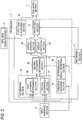
- Fig. 2 is a functional block diagram of the vital information monitor 1 of the example.
- the processor 3 includes a determining section 30, a producing section 31, a display changing section 32, a display switching section 33, a condition changing section 34, a determination result rewriting section 35, a second automatic determining section 38, and a vital sign acquiring section 39.
- the determining section 30 includes a first automatic determining section 36 and a manual determining section 37.
- the processor 3 reads out various programs from the memory 4, and temporarily stores calculation results in the memory 4 or a register of the processor, and therefore functions as the above-described components. The components will be described later in detail.
- Fig. 3 is a flowchart illustrating the extubation process which is a series of processes of removing the tracheal tube connected to the respirator, from the patient.
- the extubation process is configured by a plurality of steps, and mainly includes an SAT (Spontaneous Awakening Trial) execution determination step (S1), an SAT execution step (S3), an SBT (Spontaneous Breathing Trial) execution determination step (S5), and an SBT execution step (S7).
- S1 Simultaneous Awakening Trial
- S3 SAT execution step
- SBT Spontaneous Breathing Trial
- S7 SBT execution step
- the SAT execution determination step is a step of determining whether administration of a sedative in the patient can be discontinued or not, or whether the amount of a sedative to be administered to the patient can be reduced or not.
- the SAT execution step is a step of evaluating whether or not the awakening of the patient is attained in the state where administration of the sedative in the patient is discontinued, or where the amount of the sedative to be administered to the patient is reduced.
- the SBT execution determination step is a step of determining whether or not the state can be transferred to a support minimum state where at least support by the respirator for breathing of the patient is minimum, or an unsupported state where support by the respirator for breathing of the patient is not performed.
- the SBT execution step is a step of evaluating spontaneous breathing of the patient in the support minimum state or the unsupported state.
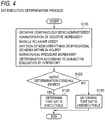
- the SAT execution determination step (S1) will be described with reference to Fig. 4 .
- the SAT execution determination step has, for example, the following determination items.
- These determination items may contain an automatic determination item which is automatically determined by the vital information monitor 1, and a manual determination item which is determined in accordance with an input operation of the operator.
- the automatic determination item and the manual determination item will be described later.
- the pre-extubation risk evaluation step (S9) before the tracheal tube 14 is pulled out from the patient, a risk associated with extubation is evaluated based on various items.
- the tracheal tube 14 is extubated out from the patient (S10).
- the extubated patient is monitored (SI 1), whereby the series of extubation processes is ended.
- the step of monitoring the extubated patient (S11) for example, vital signs of the extubated patient are monitored.
- a step of evaluating the possibility of an airway obstruction in the extubated patient, and that of evaluating the possibility of reintubation of the tracheal tube 14 into the patient may be disposed prior to the monitoring step.
- the extubation process shown in Fig. 3 is a mere example, and various extubation processes may be set depending on hospitals.
- a vital sign screen 71 and extubation process display screen 72 which are displayed on the displaying section 7 of the vital information monitor 1 of the example will be described with reference to Figs. 2 and 5 .
- the configurations shown in Fig. 2 will be appropriately mentioned.
- the vital sign screen 71 and the extubation process display screen 72 are displayed on the displaying section 7.
- the extubation process display screen 72 is displayed in the right side of the displaying section 7 so as not to completely cover the vital sign screen 71.
- the plurality of determination items contained in the extubation process are displayed on the extubation process display screen 72. While the extubation process display screen 72 is displayed in the right side of the displaying section 7 in Fig.
- the extubation process display screen 72 may be displayed in the lower side of the displaying section 7, and its display position can be arbitrarily changed. Moreover, the extubation process display screen 72 can be adequately minimized in accordance with an input operation of the operator.
- the extubation process display screen 72 may be displayed while partly overlapping with a display region where the vital sign screen 71 is displayed, or while completely not overlapping with the display region where the vital sign screen 71 is displayed. In the case where there are, for example, two displaying sections 7, the vital sign screen 71 may be displayed on one of the displaying sections 7, and the extubation process display screen 72 may be displayed on the other displaying section 7.
- the vital sign acquiring section 39 receives the vital sign signals of the patient which are supplied from the vital sign signal receiver 2, and performs a predetermined calculation process on the received vital sign signals, thereby acquiring the vital signs of the patient.
- the vital signs acquired by the vital sign acquiring section 39 are output to the displaying section 7.
- the vital signs of the patient contain real-time waveforms, real-time data values, trend waveforms, and the like of the respiration rate, heart rate, mean arterial blood pressure, and the like of the patient.
- real-time data values of the vital signs are displayed in the left end, and real-time waveforms of the vital signs are displayed in a middle portion.
- the producing section 31 produces the extubation process display screen 72 based on information of the determination items and the like recorded in the recording section 5.
- the extubation process display screen 72 has: a step display region 73 where a plurality of steps included in the extubation process are to be displayed in juxtaposition; a determination item display region 74 where a plurality of determination items contained in each step are to be displayed in juxtaposition; a step determination result display region 75 where a determination result of the current step is to be displayed; and a vital sign display region 78.
- extubation process display screen 72 will be described in detail with reference to Figs. 2 and 6 . In the subsequent drawings, unless required in description, only the extubation process display screen 72 is illustrated, and the illustration of the vital sign screen 71 is omitted.
- Fig. 6 shows the extubation process display screen 72 for the SAT execution determination step.
- parts (the SAT execution determination step, the SAT execution step, the SBT execution determination step, the SBT execution step, and a post-extubation vital step (a part of a post-extubation monitoring step)) of the plurality of steps of the extubation process shown in Fig. 3 are displayed in juxtaposition in the step display region 73.
- the mode of displaying the currently performed step may be differentiated from that of of displaying steps which are not currently performed.
- the SAT execution determination step is currently performed. In the figure, therefore, the SAT execution determination step may be displayed in a color which is different from the color of the other steps.
- determination item display region 74 In the determination item display region 74, six determination items (see Fig. 4 ) contained in the SAT execution determination step are displayed in juxtaposition. The determination items of the respective steps are displayed in the determination item display region 74. In the case where the currently performed step is the SAT execution step, for example, determination items contained in the SAT execution step are displayed in juxtaposition in the determination item display region 74.
- trend waveforms (trend waveforms and the like of the mean arterial blood pressure (ART MEAN) and the heart rate (HR)) of partial vital signs which are acquired by the vital sign acquiring section 39, are displayed.
- ART MEAN mean arterial blood pressure
- HR heart rate
- an allowable range region may be displayed in the display region of trend waveforms displayed in the vital sign display region 78.
- an allowable range region 79e indicating an allowable range from 80 to 140 of the heart rate is displayed in an allowable range region 79d of the trend waveform of the heart rate (HR).
- the display mode for example, the display color
- the operator can easily know the trend of the heart rate.
- the operator such as a medical person can perform determination of the items displayed in the determination item display region 74 of the extubation process display screen 72. In this way, the operability of the vital information monitor 1 is improved.
- the determining section 30 is configured so as to determine whether each determination item satisfies predetermined conditions.
- the display changing section 32 changes the display mode of the determined determination item.
- the display changing section 32 changes the display color of the determination item in accordance with the determination result of the determination item.
- display color of the determination item means the display color in the frame where the determination item is displayed.
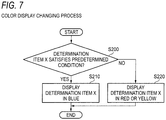
- Fig. 7 is a flowchart illustrating the color display changing process.
- the display color of a determination item on which determination has not yet been performed is set to, for example, gray.
- the determining section 30 determines whether a determination item X satisfies predetermined conditions or not (S200). The kind of the determination item is not specified, and here the determination item is therefore designated as X. If the determining section 30 determines that the determination item X satisfies the predetermined conditions (Yes in S200), the display changing section 32 changes the display color of the determination item X from gray to blue (S210).
- the display changing section 32 changes the display color of the determination item X from gray to red or yellow (S220).
- the display changing section 32 changes the display color of the determination item X from gray to yellow.
- the display changing section 32 changes the display color of the determination item X from gray to red.
- the determination item “SIGN OF NEW ARRHYTHMIA OR MYOCARDIAL ISCHEMIA WITHIN 24HRS” is displayed in yellow in accordance with the determination result.
- each of the determination items of "CONTINUOUS SEDATIVE ADMINISTRATION”, “INCREASE OF SEDATIVE ADMINISTRATION”, “MUSCLE RELAXANT ADMINISTERED” and “SUBJECTIVE EVALUATION” is displayed in blue in accordance with the determination results, the determination item “INTRACRANIAL PRESSURE INCREASE” is displayed in red, and the determination item “SIGN OF NEW ARRHYTHMIA OR MYOCARDIAL ISCHEMIA WITHIN 24HRS” is displayed in yellow.
- the operator can visually recognize determination items which have been already determined. Since the display colors of the determination items are changed in accordance with determination results, moreover, the operator can visually recognize which determination items satisfy the predetermined conditions or not. Therefore, it is possible to prevent an erroneous extubation process from being performed, and the operability of the vital information monitor 1 is improved.
- Fig. 8 is a flowchart illustrating an automatic determination process of determining "SIGN OF NEW ARRHYTHMIA OR MYOCARDIAL ISCHEMIA WITHIN 24HRS" which is an example of the automatic determination item.
- the determination item has two kinds of determination items. Namely, the determination item has an automatic determination item which is to be automatically determined by the vital information monitor 1, and a manual determination item which is to be determined in response to an input operation of the operator. Among the six determination items shown in Fig. 6 , for example, "SIGN OF NEW ARRHYTHMIA OR MYOCARDIAL ISCHEMIA WITHIN 24HRS" may be set as an automatic determination item.
- the determination item which is set as an automatic determination item can be adequately changed, and, for example, the determination item "INTRACRANIAL PRESSURE INCREASE" may be set as an automatic determination item.
- the determining section 30 includes the first automatic determining section 36 and the manual determining section 37.
- the first automatic determining section 36 is configured so as to automatically determine whether an automatic determination item satisfies predetermined conditions or not, based on the vital signs acquired by the vital sign acquiring section 39.
- the manual determining section 37 is configured so as to determine whether a manual determination item satisfies predetermined conditions or not, in accordance with an input operation (a touch operation, a mouse operation, or the like) of the operator on the input interface section 9.
- the vital sign acquiring section 39 acquires vital signs of the patient (S400).
- the first automatic determining section 36 reads out the automatic determination item "SIGN OF NEW ARRHYTHMIA OR MYOCARDIAL ISCHEMIA WITHIN 24HRS" from the recording section 5, and determines whether a sign of new arrhythmia or myocardial ischemia within 24 hours was observed in the patient or not, based on the vital signs acquired by the vital sign acquiring section 39 (S410). If such a sign was observed based on the vital signs (Yes in S410), the first automatic determining section 36 determines that the automatic determination item is not satisfied (S430).
- the first automatic determining section 36 determines that the automatic determination item is satisfied (S420). As described above, the automatic determination process is executed by the first automatic determining section 36. Also other automatic determination items are determined by the first automatic determining section 36 with a technique similar to that of the flowchart shown in Fig. 8 .
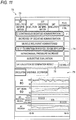
- Fig. 9 shows the extubation process display screen 72 for the SAT execution determination step on which an operation input screen 76 for the manual determination item "CONTINUOUS SEDATIVE ADMINISTRATION" is displayed.
- An "INPUT COMMENT” button 76a, a "YES” button 76b, and a “NO” button 76c are displayed on the operation input screen 76.
- a comment input column is displayed, and the operator can input information relating to the manual determination item in the comment input column.
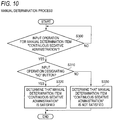
- Fig. 10 is a flowchart illustrating a manual determination process of determining the manual determination item "CONTINUOUS SEDATIVE ADMINISTRATION".
- the manual determining section 37 reads out the manual determination item "CONTINUOUS SEDATIVE ADMINISTRATION" from the recording section 5, and detects an input operation of the operator relating to the manual determination item through the input interface section 9 (S300). If the manual determining section 37 detects an input operation of the operator relating to the manual determination item (Yes in S300), the manual determining section 37 determines whether the input operation of the operator is an input operation of designating the "NO" button 76c, or that of designating the "YES” button 76b (S310). If the input operation is an input operation of designating the "NO” button 76c (Yes in S310), the manual determining section 37 determines that the manual determination item is satisfied (S320).
- the manual determining section 37 determines that the manual determination item is not satisfied (S330). In this way, the manual determination process is executed by the manual determining section 37. Also other manual determination items are determined by the manual determining section 37 with a technique similar to that of the flowchart shown in Fig. 10 .
- the display changing section 32 displays the automatic determination item "SIGN OF NEW ARRHYTHMIA OR MYOCARDIAL ISCHEMIA WITHIN 24HRS” in yellow, and the manual determination item "CONTINUOUS SEDATIVE ADMINISTRATION” in blue.
- the vital information monitor 1 which can compatible with an extubation process containing a manual determination item that is to be manually determined based on the subjective view of the operator such as a medical person, and an automatic determination item that is to be automatically determined based on vital signs.
- the operator can change the conditions of the determination items.
- the condition changing section 34 is configured so as to change the conditions of the determination items in accordance with an input operation which is performed by the operator on the input interface section 9.
- the condition changing section 34 changes various numerical conditions of vital signs for determining the automatic determination item "SIGN OF NEW ARRHYTHMIA OR MYOCARDIAL ISCHEMIA WITHIN 24HRS" in accordance with an input operation which is performed by the operator on the input interface section 9. Since the conditions of the determination items can be changed by the medical person as described above, optimum determination items can be set according to the condition of the patient. Moreover, optimum determination items can be set according to the operational practice which is defined in each hospital.
- Fig. 12 shows the extubation process display screen 72 for the SAT execution determination step on which determination results of the SAT execution determination step are displayed.
- Fig. 4 when all of the determination items of the SAT execution determination step are satisfied, it is determined that SAT is executable. By contrast, when even one of the determination items is not satisfied, it is determined that SAT is unexecutable.
- the second automatic determining section 38 determines that SAT is unexecutable. Thereafter, the determination result of "SAT UNEXECUTABLE" which is determined by the second automatic determining section 38 is displayed in the step determination result display region 75.
- the second automatic determining section 38 is configured so as to automatically determine the success or failure of each step (the SAT execution determination step or the like) in accordance with determination results of a plurality of determination results of each step.
- the operator can determine whether the process may proceed to the next step or not, based on the automatic determination. In this way, it is possible to surely prevent an erroneous extubation process from being executed by the operator.
- Fig. 13 shows a flowchart illustrating a process of rewriting determination results of the SAT execution determination step.
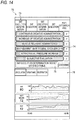
- Fig. 14 shows the extubation process display screen 72 for the SAT execution determination step on which determination results of the SAT execution determination step in which rewriting is performed by an input operation are displayed.
- the second automatic determining section 38 automatically determines whether the SAT execution determination step (S500) succeeds or fails, based on the result of the SAT execution determination step (S510). If the second automatic determining section 38 determines that SAT is executable (Yes in S510), the determination result of "SAT EXECUTABLE" of the SAT execution determination step is displayed in the step determination result display region 75. Thereafter, the display switching section 33 switches the extubation process display screen 72 for the SAT execution determination step, to the extubation process display screen 72 for an SAT step (see Fig. 15 ) (S520).
- the determination result of "SAT UNEXECUTABLE" of the SAT execution determination step is displayed in the step determination result display region 75. Thereafter, if the determination result rewriting section 35 receives the writing input of the operator with respect to the determination result of the SAT execution determination step (Yes in S530), the determination result rewriting section 35 rewrites the determination result of the SAT execution determination step from "SAT UNEXECUTABLE" to "SAT EXECUTABLE” (see Fig. 14 ).
- the display switching section 33 switches the extubation process display screen 72 for the SAT execution determination step, to the extubation process display screen 72 for the SAT step (S520).
- the determination result rewriting section 35 does not receive the writing input of the operator with respect to the determination result of the SAT execution determination step (No in S530)
- the process returns to the SAT execution determination step (S1), or the extubation process is discontinued (S512).
- the determination result rewriting section 35 is configured so as to rewrite the determination results of the respective steps (the SAT execution determination step and the like) which are determined by the second automatic determining section 38, in accordance with an input operation of the operator on the input interface section 9. Therefore, the operator can rewrite the determination results of the respective steps in accordance with the situation, and hence the flexibility of the operation of the vital information monitor 1 is improved.
- the determination result rewriting section 35 may be further configured so as to rewrite the determination results which are determined by the first automatic determining section 36.
- the display switching section 33 is configured so as to switch the extubation process display screen 72 displayed on the displaying section 7, every steps (the SAT execution determination step and the like). Since the extubation process display screen 72 is switched every steps, the operator can easily know the currently executed step. In this way, the operability of the vital information monitor 1 is improved.
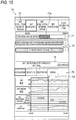
- Fig. 15 shows the extubation process display screen 72 for the SAT execution step.
- the determination items for the SAT execution step have been already determined by the determining section 30, and the success or failure of the SAT execution step (here, the failure of SAT) has been already determined by the second automatic determining section 38.
- a timer display region 77 is displayed on the extubation process display screen 72.
- a time scale of an indicator 77a displayed in the timer display region 77 is increased.
- a pointer 79f indicating the timing when the time counter 8 starts the counting of the elapsed time period may be displayed in the vital sign display region 78.
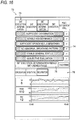
- Fig. 16 shows the extubation process display screen 72 for the SBT execution determination step.
- the determination items for the SBT execution determination step have been already determined, and the success or failure (here, SBT is unexecutable) of the SBT execution determination step has been already determined by the second automatic determining section 38.
- Fig. 17 shows the extubation process display screen 72 for the SBT execution step.
- an "INPUT COMMENT" button 176a, a red determination button 176b, a yellow determination button 176c, a blue determination button 176d, and a condition list 176e for a manual determination item "NO SIGN OF TACHYPNEA" are displayed on an operation input screen 176 on which the operation input screen 176 of this manual determination item is displayed.
- the manual determining section 37 determines whether the manual determination item "NO SIGN OF TACHYPNEA" satisfies conditions described in the condition list 176e or not. In the case where the blue determination button 176b is designated by the operator, for example, the manual determining section 37 determines that the manual determination item satisfies the conditions.
- the timer display region 77 is displayed on the extubation process display screen 72.
- Fig. 18 shows the extubation process display screen 72 for the SBT execution step on which determination results of the SBT execution determination step are displayed.
- the determination items for the SBT execution step have been already determined by the determining section 30, and the success or failure of the SBT execution step (here, the failure of SBT) has been already determined by the second automatic determining section 38.
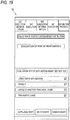
- Fig. 19 shows the extubation process display screen 72 for the post-extubation monitoring step on which evaluation items of post-extubation airway obstruction are displayed.
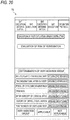
- Fig. 20 shows the extubation process display screen 72 for the post-extubation monitoring step on which very high-risk group determination items are displayed.
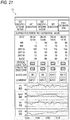
- Fig. 21 shows the extubation process display screen 72 for the post-extubation monitoring step on which vital signs of a post-extubation patient are displayed.
- various values of vital signs of the post-extubation patient are displayed at intervals of 15 minutes in the upper stage, and various trend waveforms of the vital signs are displayed in the lower stage.
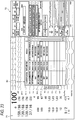
- Fig. 22 shows the vital sign screen 71 and extubation process history information screen 80 which are displayed on the displaying section 7 of the vital information monitor 1.
- the extubation process history information screen 80 has a history information region 81, a display item selection region 82, and a deletion button 83.
- a detailed screen of the history information of the SBT execution step is displayed on the displaying section 7 as shown in Fig. 23 .
- the detailed screen of the history information corresponds to the extubation process display screen 72 for the SBT execution step shown in Fig. 18 .
- the history information of the extubation process is recorded in the recording section 5. Therefore, the operator is not required to separately input the history information of the extubation process in a computer or the like in each case, and the burden on the operator is reduced. Furthermore, the recorded history information can be used later.
- the vital signs acquired by the vital sign acquiring section 39, and the extubation process display screen 72 are displayed on the vital information monitor 1, and therefore the medical person can perform the extubation process in accordance with the extubation process display screen 72 while checking the vital signs.
- the vital information monitor 1 which can reduce the burden on a medical person who performs the extubation process based on determination items.
- the vital information monitor 1 which can compatible with the extubation process consisting of the SAT execution determination step, the SAT step, the SBT execution determination step, and the SBT step.
- the extubation process which has been described is a mere example, and the contents of the extubation process can be adequately changed.
- the extubation process consisting of the SAT execution determination step, the SAT step, the SBT execution determination step, and the SBT step has been described, particularly, an extubation process consisting of only the SBT execution determination step and the SBT step may be used. It is a matter of course that the technical concept of the invention can be applied also to an extubation process which is entirely different from the extubation process that has been described in the example.
- the technical concept of the claimed invention concerns displaying the extubation process display screen on which the determination items contained in the extubation process are displayed in the vital information monitor 1 of the example.
- the technical concept can be applied also to a vital information monitor for displaying a diagnosis process display screen on which determination items contained in a diagnosis process for diagnosing the patient are displayed. Also in this case, while observing vital signs, the medical person can diagnose the patient in accordance with the diagnosis process display screen. In this way, it is possible to provide a vital information monitor which can reduce the burden on a medical person who performs a diagnosis based on determination items.
- the diagnosis process which is referred here includes all diagnosis processes for diagnosing the patient.
- a vital information monitor includes a vital sign acquiring section which acquires vital signs of a patient into whom a tracheal tube connected to a respirator is intubated, a producing section which produces an extubation process display screen on which determination items contained in an extubation process for removing the tracheal tube from the patient are displayed, a displaying section on which the vital signs acquired by the vital sign acquiring section and the extubation process display screen are displayed, and a determining section which determines whether the determination items satisfy predetermined conditions.
- the vital signs acquired by the vital sign acquiring section and the extubation process display screen are displayed on the vital information monitor, and therefore a medical person can perform the extubation process in accordance with the extubation process display screen, while observing the vital signs. Therefore, it is possible to provide a vital information monitor which can reduce a burden on the medical person performing the extubation process based on the determination items.
- the vital information monitor may further include a display changing section which, after the determination has been carried out on the determination items, changes display modes of the determination items.
- the display changing section may change the display modes of the determination items in accordance with determination results of the determination items.
- the display modes of the determination items are changed in accordance with the determination results, and therefore the medical person can visually recognize which determination items satisfy the predetermined conditions. Consequently, it is possible to prevent an erroneous extubation process from being executed, and the operability of the vital information monitor is improved.
- the display changing section may change display colors of the determination items in accordance with the determination results of the determination items.
- the display colors of the determination items are changed in accordance with the determination results, and therefore the medical person can visually recognize which determination items satisfy the predetermined conditions or not. Consequently, it is possible to prevent an erroneous extubation process from being executed, and the operability of the vital information monitor is improved.
- the vital information monitor may further include an input interface section which receives an input operation of an operator, and a condition changing section which changes the predetermined conditions in accordance with an input operation that is performed by the operator on the input interface section.
- the medical person can change the conditions of the determination items, and therefore optimum determination items can be set according to the condition of the patient.
- the vital information monitor may further include a recording section which records the determination items and determination results of the determination items.
- history information of the extubation process such as determination results is recorded. Therefore, the medical person is not required to separately input the history information of the extubation process in a computer or the like in each case, and the burden on the medical person is further reduced. Moreover, the recorded history information can be used later.
- the extubation process display screen may include a determination item display region where the determination items are displayed, and a vital sign display region where a part of the vital signs acquired by the vital sign acquiring section is displayed.
- the medical person can perform the extubation process in accordance with the determination item display region of the extubation process display screen. In this way, the operability of the vital information monitor is improved.
- the vital information monitor may further include an input interface section which receives an input operation of an operator.
- the determination items may have an automatic determination item and a manual determination item.
- the determining section may include a first automatic determining section which automatically determines whether the automatic determination item satisfies predetermined conditions, based on the vital signs, and a manual determining section which determines whether the manual determination item satisfies predetermined conditions, in accordance with an input operation of the operator on the input interface section.
- a vital information monitor which includes a manual determination item that is manually determined based on a subjective view of the medical person, and an automatic determination item that is automatically determined based on vital signs.
- the extubation process may have a plurality of steps.
- the vital information monitor may further include a display switching section which switches the extubation process display screen that is displayed on the displaying section, in each of the steps.
- the extubation process display screen is switched in each step, and therefore the medical person can easily know which step is currently performed. In this way, the operability of the vital information monitor is improved.
- Each of the steps may have a plurality of determination items.
- the vital information monitor may further include a second automatic determining section which automatically determines a success or failure of each of the steps in accordance with determination results of the plurality of determination results of each step.
- the vital information monitor may further include a determination result rewriting section which rewrites the determination results that are determined by the second automatic determining section, in accordance with an input operation of the operator on the input interface section.
- the determination results that are determined by the second automatic determining section can be rewritten by an input operation of the operator.
- the automatic determination results can be rewritten in accordance with the situation, and therefore the flexibility of the operation of the vital information monitor is improved.
- the extubation process may include a step of determining whether a transfer can be made to a support minimum state where at least support by the respirator for breathing of the patient is minimum, or an unsupported state where support by the respirator for breathing of the patient is not performed (hereinafter, SBT execution determination step), and a step of evaluating spontaneous breathing of the patient in the support minimum state or the unsupported state (hereinafter, SBT execution step).
- the extubation process may further include a step of determining whether administration of a sedative in the patient can be discontinued, or whether an amount of a sedative to be administered to the patient can be reduced (hereinafter, SAT execution determination step), and a step of evaluating whether awakening of the patient is attained in a state where administration of the sedative in the patient is discontinued or where the amount of the sedative to be administered to the patient is reduced (hereinafter, SAT execution step).
- a vital information monitor includes a vital sign acquiring section which acquires vital signs of a patient, an input interface section which receives an input of an operator, a producing section which produces a diagnosis process display screen on which determination items contained in a diagnosis process for diagnosing the patient are displayed, a displaying section on which the vital signs acquired by the vital sign acquiring section and the diagnosis process display screen are displayed, a determining section which determines whether the determination items satisfy predetermined conditions, a recording section which records the determination items and determination results of the determination items, and a display changing section which, after the determination has been made on the determination items, changes display modes of the determination items.
- vital signs acquired by the vital sign acquiring section, and the diagnosis process display screen are displayed on the vital information monitor, and therefore the medical person can perform diagnosis in accordance with the diagnosis process display screen, while observing the vital signs. Therefore, it is possible to provide a vital information monitor which can reduce the burden on a medical person who performs diagnosis based on determination items.
Landscapes
- Health & Medical Sciences (AREA)
- Life Sciences & Earth Sciences (AREA)
- Engineering & Computer Science (AREA)
- Public Health (AREA)
- Biomedical Technology (AREA)
- General Health & Medical Sciences (AREA)
- Heart & Thoracic Surgery (AREA)
- Veterinary Medicine (AREA)
- Animal Behavior & Ethology (AREA)
- Medical Informatics (AREA)
- Pathology (AREA)
- Physics & Mathematics (AREA)
- Biophysics (AREA)
- Molecular Biology (AREA)
- Surgery (AREA)
- Pulmonology (AREA)
- Physiology (AREA)
- Anesthesiology (AREA)
- Emergency Medicine (AREA)
- Cardiology (AREA)
- Hematology (AREA)
- Artificial Intelligence (AREA)
- Computer Vision & Pattern Recognition (AREA)
- Psychiatry (AREA)
- Signal Processing (AREA)
- Data Mining & Analysis (AREA)
- Databases & Information Systems (AREA)
- Primary Health Care (AREA)
- Epidemiology (AREA)
- Measuring And Recording Apparatus For Diagnosis (AREA)
Claims (11)
- Vitalinformationsmonitor (1), umfassend:einen Vitalzeichenerfassungsmonitor (39), der konfiguriert ist, um Vitalzeichen eines Patienten zu erfassen, der mit einer Trachealkanüle (14), die mit einem Atmungsapparat (13) verbunden ist, intubiert ist;einen Produktionsabschnitt (31), der konfiguriert ist, um einen Extubationsprozess-Anzeigebildschirm (72) zu produzieren, auf dem Bestimmungspunkte angezeigt werden, die in einem Extubationsprozess zum Entfernen der Trachealkanüle (14) von dem Patienten enthalten sind, wobei der Extubationsprozess eine Vielzahl von Schritten beinhaltet;einen Anzeigeabschnitt (7), der konfiguriert ist, um die Vitalzeichen, die von dem Vitalzeichenerfassungsmonitor (39) erfasst werden, und den Extubationsprozess-Anzeigebildschirm (72) anzuzeigen;einen Anzeige-Schaltabschnitt (33), der konfiguriert ist, um den Extubationsprozess-Anzeigebildschirm (72), der an dem Anzeigeabschnitt (7) angezeigt wird, auf den nächsten Schritt in dem Extubationsprozess zu schalten;einen Bestimmungsabschnitt (30), der konfiguriert ist, um zu bestimmen, ob die Bestimmungspunkte vorbestimmte Bedingungen erfüllen;einen Eingabeschnittstellenabschnitt (9), der konfiguriert ist, um einen Eingabebetrieb eines Anwenders zu empfangen,wobei die Bestimmungspunkte einen automatischen Bestimmungspunkt und einen manuellen Bestimmungspunkt beinhalten undwobei der Bestimmungsabschnitt (30) umfasst:einen ersten automatischen Bestimmungsabschnitt (36), der konfiguriert ist, um basierend auf den Vitalzeichen automatisch zu bestimmen, ob der automatische Bestimmungspunkt vorbestimmte Bedingungen erfüllt; undeinen manuellen Bestimmungsabschnitt (37), der konfiguriert ist, um gemäß einem Eingabebetrieb des Anwenders an dem Eingabeschnittstellenabschnitt (9) zu bestimmen, ob der manuelle Bestimmungspunkt vorbestimmte Bedingungen erfüllt; undeinen zweiten automatischen Bestimmungsabschnitt (38), der konfiguriert ist, um automatisch einen Erfolg oder Misserfolg jedes der Schritte gemäß Bestimmungsergebnissen der Vielzahl von Bestimmungspunkten jedes Schritts zu bestimmen,dadurch gekennzeichnet, dasseine "JA"-Taste (76b) und eine "NEIN"-Taste (76c) auf einem Betriebseingabebildschirm (76) für den auf dem Extubationsprozess-Anzeigebildschirm (72) angezeigten manuellen Bestimmungspunkt angezeigt werden,der manuelle Bestimmungsabschnitt (37) konfiguriert ist, um zu bestimmen, ob der Eingabebetrieb des Anwenders ein Eingabebetrieb mit der Designation der "NEIN"-Taste (76c) oder derjenige mit der Designation der "JA"-Taste (76b) ist, undder Anzeige-Schaltabschnitt (33) konfiguriert ist, um den Extubationsprozess-Anzeigebildschirm (72) auf den nächsten Schritt in dem Extubationsprozess zu schalten, falls der zweite automatische Bestimmungsabschnitt (38) bestimmt hat, dass der aktuell angezeigte Schritt erfolgreich ausführbar ist.
- Vitalinformationsmonitor (1) nach Anspruch 1, weiter umfassend einen Anzeige-Änderungsabschnitt (32), der konfiguriert ist, um, nachdem die Bestimmung an den Bestimmungspunkten durchgeführt worden ist, Anzeigemoden der Bestimmungspunkte zu ändern.
- Vitalinformationsmonitor (1) nach Anspruch 2, wobei der Anzeige-Änderungsabschnitt (32) konfiguriert ist, um die Anzeigemoden der Bestimmungspunkte gemäß Bestimmungsergebnissen der Bestimmungspunkte zu ändern.
- Vitalinformationsmonitor (1) nach Anspruch 3, wobei der Anzeige-Änderungsabschnitt (32) konfiguriert ist, um Anzeigefarben der Bestimmungspunkte gemäß den Bestimmungsergebnissen der Bestimmungspunkte zu ändern.
- Vitalinformationsmonitor (1) nach einem der Ansprüche 1 bis 3, weiter umfassend:
einen Bedingungs-Änderungsabschnitt (34), der konfiguriert ist, um die vorbestimmten Bedingungen gemäß einem Eingabebetrieb, der von dem Anwender an dem Eingabeschnittstellenabschnitt (9) durchgeführt wurde, zu ändern. - Vitalinformationsmonitor (1) nach einem der Ansprüche 1 bis 5, weiter umfassend einen Aufzeichnungsabschnitt (5), der konfiguriert ist, um die Bestimmungspunkte und Bestimmungsergebnisse der Bestimmungspunkte aufzuzeichnen.
- Vitalinformationsmonitor (1) nach einem der Ansprüche 1 bis 6, wobei der Extubationsprozess-Anzeigebildschirm (72) eine Bestimmungspunkt-Anzeigeregion (74), in welcher die Bestimmungspunkte angezeigt werden, und eine Vitalzeichen-Anzeigeregion (78), in welcher ein Teil der Vitalzeichen, die von dem Vitalzeichenerfassungsmonitor (39) erfasst werden, angezeigt wird, beinhaltet.
- Vitalinformationsmonitor (1) nach Anspruch 1, weiter umfassend einen Bestimmungsergebnis-Umschreibungsabschnitt (35), der konfiguriert ist, um die Bestimmungsergebnisse, die von dem zweiten automatischen Bestimmungsabschnitt bestimmt werden, gemäß einem Eingabebetrieb des Anwenders an dem Eingabeschnittstellenabschnitt umzuschreiben.
- Vitalinformationsmonitor (1) nach einem der Ansprüche 1 bis 8, wobei der Extubationsprozess einen Schritt des Bestimmens, ob eine Umsetzung in einen Mindestunterstützungszustand, bei dem zumindest eine Unterstützung durch den Atmungsapparat für das Atmen des Patienten ein Mindestmaß erfüllt, oder in einen nicht unterstützten Zustand, bei dem eine Unterstützung durch den Atmungsapparat für das Atmen des Patienten nicht durchgeführt wird, durchgeführt werden kann, und einen Schritt des Bewertens des spontanen Atmens des Patienten in dem Mindestunterstützungszustand oder dem nicht unterstützten Zustand beinhaltet.
- Vitalinformationsmonitor (1) nach Anspruch 9, wobei der Extubationsprozess weiter einen Schritt des Bestimmens, ob eine Verabreichung eines Beruhigungsmittels an den Patienten abgesetzt werden kann oder ob eine Menge eines Beruhigungsmittels, das an den Patienten verabreicht werden soll, reduziert werden kann, und einen Schritt des Bewertens, ob ein Aufwachen des Patienten in einem Zustand erreicht wird, bei dem eine Verabreichung des Beruhigungsmittels an den Patienten abgesetzt wird oder bei dem die Menge des Beruhigungsmittels, das an den Patienten verabreicht werden soll, reduziert wird, beinhaltet.
- Vitalinformationsmonitor (1) nach Anspruch 1, umfassend:einen Aufzeichnungsabschnitt (5) undeinen Anzeige-Änderungsabschnitt (32),wobei der Aufzeichnungsabschnitt (5) konfiguriert ist, um die Bestimmungspunkte und Bestimmungsergebnisse der Bestimmungspunkte aufzuzeichnen; undwobei der Anzeige-Änderungsabschnitt (32) konfiguriert ist, um Anzeigemoden der Bestimmungspunkte zu ändern, nachdem die Bestimmung an den Bestimmungspunkten durchgeführt worden ist.
Applications Claiming Priority (2)
| Application Number | Priority Date | Filing Date | Title |
|---|---|---|---|
| JP2015085133A JP6465726B2 (ja) | 2015-04-17 | 2015-04-17 | 生体情報モニタ |
| PCT/JP2016/061530 WO2016167192A1 (ja) | 2015-04-17 | 2016-04-08 | 生体情報モニタ |
Publications (3)
| Publication Number | Publication Date |
|---|---|
| EP3284397A1 EP3284397A1 (de) | 2018-02-21 |
| EP3284397A4 EP3284397A4 (de) | 2018-12-12 |
| EP3284397B1 true EP3284397B1 (de) | 2021-10-20 |
Family
ID=57125773
Family Applications (1)
| Application Number | Title | Priority Date | Filing Date |
|---|---|---|---|
| EP16779983.2A Active EP3284397B1 (de) | 2015-04-17 | 2016-04-08 | Vitaldatenmonitor |
Country Status (5)
| Country | Link |
|---|---|
| US (1) | US10751005B2 (de) |
| EP (1) | EP3284397B1 (de) |
| JP (1) | JP6465726B2 (de) |
| CN (1) | CN107529993A (de) |
| WO (1) | WO2016167192A1 (de) |
Families Citing this family (3)
| Publication number | Priority date | Publication date | Assignee | Title |
|---|---|---|---|---|
| JP6962188B2 (ja) | 2017-12-28 | 2021-11-05 | 株式会社リコー | 情報処理装置、生体信号計測システム、及びプログラム |
| TWI777611B (zh) | 2021-06-11 | 2022-09-11 | 彰化基督教醫療財團法人彰化基督教醫院 | 呼吸拔管評估系統 |
| CN115429997A (zh) * | 2022-08-17 | 2022-12-06 | 首都医科大学附属北京朝阳医院 | 一种用于有创机械通气的装置及其撤机的方法 |
Citations (1)
| Publication number | Priority date | Publication date | Assignee | Title |
|---|---|---|---|---|
| WO2003073354A2 (en) * | 2002-02-25 | 2003-09-04 | Scott Laboratories, Inc. | Remote monitoring and control of sedation and analgesia systems |
Family Cites Families (19)
| Publication number | Priority date | Publication date | Assignee | Title |
|---|---|---|---|---|
| JPH11206884A (ja) | 1998-01-21 | 1999-08-03 | Tadashi Nemoto | ファジー理論制御を用いた人工呼吸器の自動ウィニングシステムおよび自動ウィニングプログラムを記録した記録媒体 |
| US8175895B2 (en) * | 1999-06-23 | 2012-05-08 | Koninklijke Philips Electronics N.V. | Remote command center for patient monitoring |
| JP4864212B2 (ja) * | 2001-01-10 | 2012-02-01 | 株式会社東芝 | 医療業務管理システム |
| CN100563547C (zh) * | 2001-11-01 | 2009-12-02 | 斯科特实验室公司 | 用于镇静剂与镇痛剂输送系统与方法的用户界面 |
| JP4179510B2 (ja) | 2004-05-31 | 2008-11-12 | 株式会社産学連携機構九州 | 検査支援装置および検査支援プログラム |
| US8789529B2 (en) | 2009-08-20 | 2014-07-29 | Covidien Lp | Method for ventilation |
| AU2011289159C1 (en) * | 2010-08-13 | 2015-12-10 | Respiratory Motion, Inc. | Devices and methods for respiratory variation monitoring by measurement of respiratory volumes, motion and variability |
| US20120192867A1 (en) | 2011-01-31 | 2012-08-02 | Carefusion 303, Inc. | Patient-controlled ventilation |
| US8801619B2 (en) * | 2011-06-30 | 2014-08-12 | Covidien Lp | Photoplethysmography for determining ventilation weaning readiness |
| WO2013013153A1 (en) | 2011-07-20 | 2013-01-24 | Respiratory Motion, Inc. | Impedance measuring devices and methods for emergency cardiovascular care |
| US9737676B2 (en) | 2011-11-02 | 2017-08-22 | Vyaire Medical Capital Llc | Ventilation system |
| US20140060541A1 (en) | 2012-09-06 | 2014-03-06 | Nellcor Puritan Bennett Llc | Method and system for evaluation of patient breathing stages |
| CA2927807C (en) | 2012-10-26 | 2021-02-16 | Ottawa Hospital Research Institute | System and method for providing multi-organ variability decision support for extubation management |
| US20140150796A1 (en) * | 2012-11-30 | 2014-06-05 | Covidien Lp | System and method for detecting minimal ventilation support with proportional assist ventilation plus software and remote monitoring |
| CN103893866B (zh) | 2012-12-27 | 2016-06-15 | 北京谊安医疗系统股份有限公司 | 一种智能呼吸机撤机方法及装置 |
| US10165966B2 (en) * | 2013-03-14 | 2019-01-01 | University Of Florida Research Foundation, Incorporated | Methods and systems for monitoring resistance and work of breathing for ventilator-dependent patients |
| US10777313B2 (en) * | 2013-06-13 | 2020-09-15 | Carefusion 303, Inc. | Analytics regarding ventilated patients |
| US11183287B2 (en) | 2013-06-13 | 2021-11-23 | Carefusion 303, Inc. | Analytics regarding patient care |
| CN104399164A (zh) | 2014-12-01 | 2015-03-11 | 北京神鹿腾飞医疗科技有限公司 | 智能呼吸机及使用该呼吸机的通气方法 |
-
2015
- 2015-04-17 JP JP2015085133A patent/JP6465726B2/ja active Active
-
2016
- 2016-04-08 WO PCT/JP2016/061530 patent/WO2016167192A1/ja not_active Ceased
- 2016-04-08 US US15/566,871 patent/US10751005B2/en active Active
- 2016-04-08 EP EP16779983.2A patent/EP3284397B1/de active Active
- 2016-04-08 CN CN201680022430.0A patent/CN107529993A/zh active Pending
Patent Citations (1)
| Publication number | Priority date | Publication date | Assignee | Title |
|---|---|---|---|---|
| WO2003073354A2 (en) * | 2002-02-25 | 2003-09-04 | Scott Laboratories, Inc. | Remote monitoring and control of sedation and analgesia systems |
Also Published As
| Publication number | Publication date |
|---|---|
| US10751005B2 (en) | 2020-08-25 |
| EP3284397A1 (de) | 2018-02-21 |
| WO2016167192A1 (ja) | 2016-10-20 |
| EP3284397A4 (de) | 2018-12-12 |
| CN107529993A (zh) | 2018-01-02 |
| JP6465726B2 (ja) | 2019-02-06 |
| JP2016202382A (ja) | 2016-12-08 |
| US20180132798A1 (en) | 2018-05-17 |
Similar Documents
| Publication | Publication Date | Title |
|---|---|---|
| US10248762B2 (en) | System and method of medical device alarm management | |
| JP5238507B2 (ja) | 臨床ワークフロー管理及び意思決定システム及び方法 | |
| CN100502773C (zh) | 心电图分析装置 | |
| US9554756B2 (en) | Systems and methods for customizing a multiple alarm system in a portable patient monitor | |
| AU2010295856B2 (en) | Physiological parameter measuring platform device supporting multiple workflows | |
| CN101310677B (zh) | 生物体信息趋势显示装置及方法 | |
| EP2028999B1 (de) | Anzeige von verläufen und erwarteten verläufen von mitigation | |
| EP1238626A2 (de) | Lebenszeichendisplay | |
| EP2422695A2 (de) | Überwachung von Patienten unter Betreuung | |
| WO2013151730A1 (en) | Physiological parameter measuring platform device supporting multiple workflows | |
| JP5110270B2 (ja) | 生体情報表示システム、生体情報表示モニタ及び生体情報表示モニタ用プログラム | |
| EP3304371A1 (de) | Vorrichtung, system und verfahren zur visualisierung von patientenbezogenen daten | |
| JP7550178B2 (ja) | 医療処置中のガイダンスの提供 | |
| EP3189774B1 (de) | Medizinischer sensor sowie verwendungsverfahren dafür und betriebsvorrichtung dafür | |
| US20070188495A1 (en) | Virtual display | |
| US20170004258A1 (en) | Medical intervention data display for patient monitoring systems | |
| US10751005B2 (en) | Vital information monitor | |
| CN115867190A (zh) | 用于显示心率变异性的方法和系统 | |
| CN112911992A (zh) | 监护方法、监护仪及计算机存储介质 | |
| JP6868338B2 (ja) | 生体情報表示装置 | |
| CN112912965A (zh) | 一种对患者的监护方法及装置 | |
| JP6974012B2 (ja) | 生体情報記録システム、生体情報表示装置、生体情報表示方法および生体情報表示プログラム | |
| JP2020089595A (ja) | 容態変化判別方法、容態変化判別装置、当該装置又は方法に用いられるプログラム及びコンピュータ可読媒体 | |
| JP6516530B2 (ja) | 生体情報モニター | |
| CN112996435A (zh) | 基于生理参数的监护方法、监护设备及计算机存储介质 |
Legal Events
| Date | Code | Title | Description |
|---|---|---|---|
| STAA | Information on the status of an ep patent application or granted ep patent |
Free format text: STATUS: THE INTERNATIONAL PUBLICATION HAS BEEN MADE |
|
| PUAI | Public reference made under article 153(3) epc to a published international application that has entered the european phase |
Free format text: ORIGINAL CODE: 0009012 |
|
| STAA | Information on the status of an ep patent application or granted ep patent |
Free format text: STATUS: REQUEST FOR EXAMINATION WAS MADE |
|
| 17P | Request for examination filed |
Effective date: 20171017 |
|
| AK | Designated contracting states |
Kind code of ref document: A1 Designated state(s): AL AT BE BG CH CY CZ DE DK EE ES FI FR GB GR HR HU IE IS IT LI LT LU LV MC MK MT NL NO PL PT RO RS SE SI SK SM TR |
|
| AX | Request for extension of the european patent |
Extension state: BA ME |
|
| DAV | Request for validation of the european patent (deleted) | ||
| DAX | Request for extension of the european patent (deleted) | ||
| A4 | Supplementary search report drawn up and despatched |
Effective date: 20181114 |
|
| RIC1 | Information provided on ipc code assigned before grant |
Ipc: A61M 16/04 20060101ALI20181108BHEP Ipc: A61M 16/00 20060101ALI20181108BHEP Ipc: A61B 5/00 20060101AFI20181108BHEP |
|
| STAA | Information on the status of an ep patent application or granted ep patent |
Free format text: STATUS: EXAMINATION IS IN PROGRESS |
|
| 17Q | First examination report despatched |
Effective date: 20200414 |
|
| GRAP | Despatch of communication of intention to grant a patent |
Free format text: ORIGINAL CODE: EPIDOSNIGR1 |
|
| STAA | Information on the status of an ep patent application or granted ep patent |
Free format text: STATUS: GRANT OF PATENT IS INTENDED |
|
| INTG | Intention to grant announced |
Effective date: 20210722 |
|
| GRAS | Grant fee paid |
Free format text: ORIGINAL CODE: EPIDOSNIGR3 |
|
| GRAA | (expected) grant |
Free format text: ORIGINAL CODE: 0009210 |
|
| STAA | Information on the status of an ep patent application or granted ep patent |
Free format text: STATUS: THE PATENT HAS BEEN GRANTED |
|
| AK | Designated contracting states |
Kind code of ref document: B1 Designated state(s): AL AT BE BG CH CY CZ DE DK EE ES FI FR GB GR HR HU IE IS IT LI LT LU LV MC MK MT NL NO PL PT RO RS SE SI SK SM TR |
|
| REG | Reference to a national code |
Ref country code: GB Ref legal event code: FG4D |
|
| REG | Reference to a national code |
Ref country code: CH Ref legal event code: EP |
|
| REG | Reference to a national code |
Ref country code: IE Ref legal event code: FG4D |
|
| REG | Reference to a national code |
Ref country code: DE Ref legal event code: R096 Ref document number: 602016065171 Country of ref document: DE |
|
| REG | Reference to a national code |
Ref country code: AT Ref legal event code: REF Ref document number: 1439233 Country of ref document: AT Kind code of ref document: T Effective date: 20211115 |
|
| REG | Reference to a national code |
Ref country code: LT Ref legal event code: MG9D |
|
| REG | Reference to a national code |
Ref country code: NL Ref legal event code: MP Effective date: 20211020 |
|
| REG | Reference to a national code |
Ref country code: AT Ref legal event code: MK05 Ref document number: 1439233 Country of ref document: AT Kind code of ref document: T Effective date: 20211020 |
|
| PG25 | Lapsed in a contracting state [announced via postgrant information from national office to epo] |
Ref country code: RS Free format text: LAPSE BECAUSE OF FAILURE TO SUBMIT A TRANSLATION OF THE DESCRIPTION OR TO PAY THE FEE WITHIN THE PRESCRIBED TIME-LIMIT Effective date: 20211020 Ref country code: LT Free format text: LAPSE BECAUSE OF FAILURE TO SUBMIT A TRANSLATION OF THE DESCRIPTION OR TO PAY THE FEE WITHIN THE PRESCRIBED TIME-LIMIT Effective date: 20211020 Ref country code: FI Free format text: LAPSE BECAUSE OF FAILURE TO SUBMIT A TRANSLATION OF THE DESCRIPTION OR TO PAY THE FEE WITHIN THE PRESCRIBED TIME-LIMIT Effective date: 20211020 Ref country code: BG Free format text: LAPSE BECAUSE OF FAILURE TO SUBMIT A TRANSLATION OF THE DESCRIPTION OR TO PAY THE FEE WITHIN THE PRESCRIBED TIME-LIMIT Effective date: 20220120 Ref country code: AT Free format text: LAPSE BECAUSE OF FAILURE TO SUBMIT A TRANSLATION OF THE DESCRIPTION OR TO PAY THE FEE WITHIN THE PRESCRIBED TIME-LIMIT Effective date: 20211020 |
|
| PG25 | Lapsed in a contracting state [announced via postgrant information from national office to epo] |
Ref country code: IS Free format text: LAPSE BECAUSE OF FAILURE TO SUBMIT A TRANSLATION OF THE DESCRIPTION OR TO PAY THE FEE WITHIN THE PRESCRIBED TIME-LIMIT Effective date: 20220220 Ref country code: SE Free format text: LAPSE BECAUSE OF FAILURE TO SUBMIT A TRANSLATION OF THE DESCRIPTION OR TO PAY THE FEE WITHIN THE PRESCRIBED TIME-LIMIT Effective date: 20211020 Ref country code: PT Free format text: LAPSE BECAUSE OF FAILURE TO SUBMIT A TRANSLATION OF THE DESCRIPTION OR TO PAY THE FEE WITHIN THE PRESCRIBED TIME-LIMIT Effective date: 20220221 Ref country code: PL Free format text: LAPSE BECAUSE OF FAILURE TO SUBMIT A TRANSLATION OF THE DESCRIPTION OR TO PAY THE FEE WITHIN THE PRESCRIBED TIME-LIMIT Effective date: 20211020 Ref country code: NO Free format text: LAPSE BECAUSE OF FAILURE TO SUBMIT A TRANSLATION OF THE DESCRIPTION OR TO PAY THE FEE WITHIN THE PRESCRIBED TIME-LIMIT Effective date: 20220120 Ref country code: NL Free format text: LAPSE BECAUSE OF FAILURE TO SUBMIT A TRANSLATION OF THE DESCRIPTION OR TO PAY THE FEE WITHIN THE PRESCRIBED TIME-LIMIT Effective date: 20211020 Ref country code: LV Free format text: LAPSE BECAUSE OF FAILURE TO SUBMIT A TRANSLATION OF THE DESCRIPTION OR TO PAY THE FEE WITHIN THE PRESCRIBED TIME-LIMIT Effective date: 20211020 Ref country code: HR Free format text: LAPSE BECAUSE OF FAILURE TO SUBMIT A TRANSLATION OF THE DESCRIPTION OR TO PAY THE FEE WITHIN THE PRESCRIBED TIME-LIMIT Effective date: 20211020 Ref country code: GR Free format text: LAPSE BECAUSE OF FAILURE TO SUBMIT A TRANSLATION OF THE DESCRIPTION OR TO PAY THE FEE WITHIN THE PRESCRIBED TIME-LIMIT Effective date: 20220121 Ref country code: ES Free format text: LAPSE BECAUSE OF FAILURE TO SUBMIT A TRANSLATION OF THE DESCRIPTION OR TO PAY THE FEE WITHIN THE PRESCRIBED TIME-LIMIT Effective date: 20211020 |
|
| REG | Reference to a national code |
Ref country code: DE Ref legal event code: R097 Ref document number: 602016065171 Country of ref document: DE |
|
| PG25 | Lapsed in a contracting state [announced via postgrant information from national office to epo] |
Ref country code: SM Free format text: LAPSE BECAUSE OF FAILURE TO SUBMIT A TRANSLATION OF THE DESCRIPTION OR TO PAY THE FEE WITHIN THE PRESCRIBED TIME-LIMIT Effective date: 20211020 Ref country code: SK Free format text: LAPSE BECAUSE OF FAILURE TO SUBMIT A TRANSLATION OF THE DESCRIPTION OR TO PAY THE FEE WITHIN THE PRESCRIBED TIME-LIMIT Effective date: 20211020 Ref country code: RO Free format text: LAPSE BECAUSE OF FAILURE TO SUBMIT A TRANSLATION OF THE DESCRIPTION OR TO PAY THE FEE WITHIN THE PRESCRIBED TIME-LIMIT Effective date: 20211020 Ref country code: EE Free format text: LAPSE BECAUSE OF FAILURE TO SUBMIT A TRANSLATION OF THE DESCRIPTION OR TO PAY THE FEE WITHIN THE PRESCRIBED TIME-LIMIT Effective date: 20211020 Ref country code: DK Free format text: LAPSE BECAUSE OF FAILURE TO SUBMIT A TRANSLATION OF THE DESCRIPTION OR TO PAY THE FEE WITHIN THE PRESCRIBED TIME-LIMIT Effective date: 20211020 Ref country code: CZ Free format text: LAPSE BECAUSE OF FAILURE TO SUBMIT A TRANSLATION OF THE DESCRIPTION OR TO PAY THE FEE WITHIN THE PRESCRIBED TIME-LIMIT Effective date: 20211020 |
|
| PLBE | No opposition filed within time limit |
Free format text: ORIGINAL CODE: 0009261 |
|
| STAA | Information on the status of an ep patent application or granted ep patent |
Free format text: STATUS: NO OPPOSITION FILED WITHIN TIME LIMIT |
|
| 26N | No opposition filed |
Effective date: 20220721 |
|
| PG25 | Lapsed in a contracting state [announced via postgrant information from national office to epo] |
Ref country code: AL Free format text: LAPSE BECAUSE OF FAILURE TO SUBMIT A TRANSLATION OF THE DESCRIPTION OR TO PAY THE FEE WITHIN THE PRESCRIBED TIME-LIMIT Effective date: 20211020 |
|
| PG25 | Lapsed in a contracting state [announced via postgrant information from national office to epo] |
Ref country code: SI Free format text: LAPSE BECAUSE OF FAILURE TO SUBMIT A TRANSLATION OF THE DESCRIPTION OR TO PAY THE FEE WITHIN THE PRESCRIBED TIME-LIMIT Effective date: 20211020 |
|
| REG | Reference to a national code |
Ref country code: CH Ref legal event code: PL |
|
| GBPC | Gb: european patent ceased through non-payment of renewal fee |
Effective date: 20220408 |
|
| REG | Reference to a national code |
Ref country code: BE Ref legal event code: MM Effective date: 20220430 |
|
| PG25 | Lapsed in a contracting state [announced via postgrant information from national office to epo] |
Ref country code: MC Free format text: LAPSE BECAUSE OF FAILURE TO SUBMIT A TRANSLATION OF THE DESCRIPTION OR TO PAY THE FEE WITHIN THE PRESCRIBED TIME-LIMIT Effective date: 20211020 Ref country code: LU Free format text: LAPSE BECAUSE OF NON-PAYMENT OF DUE FEES Effective date: 20220408 Ref country code: LI Free format text: LAPSE BECAUSE OF NON-PAYMENT OF DUE FEES Effective date: 20220430 Ref country code: GB Free format text: LAPSE BECAUSE OF NON-PAYMENT OF DUE FEES Effective date: 20220408 Ref country code: FR Free format text: LAPSE BECAUSE OF NON-PAYMENT OF DUE FEES Effective date: 20220430 Ref country code: CH Free format text: LAPSE BECAUSE OF NON-PAYMENT OF DUE FEES Effective date: 20220430 |
|
| PG25 | Lapsed in a contracting state [announced via postgrant information from national office to epo] |
Ref country code: BE Free format text: LAPSE BECAUSE OF NON-PAYMENT OF DUE FEES Effective date: 20220430 |
|
| PG25 | Lapsed in a contracting state [announced via postgrant information from national office to epo] |
Ref country code: IE Free format text: LAPSE BECAUSE OF NON-PAYMENT OF DUE FEES Effective date: 20220408 |
|
| PG25 | Lapsed in a contracting state [announced via postgrant information from national office to epo] |
Ref country code: IT Free format text: LAPSE BECAUSE OF FAILURE TO SUBMIT A TRANSLATION OF THE DESCRIPTION OR TO PAY THE FEE WITHIN THE PRESCRIBED TIME-LIMIT Effective date: 20211020 |
|
| PG25 | Lapsed in a contracting state [announced via postgrant information from national office to epo] |
Ref country code: HU Free format text: LAPSE BECAUSE OF FAILURE TO SUBMIT A TRANSLATION OF THE DESCRIPTION OR TO PAY THE FEE WITHIN THE PRESCRIBED TIME-LIMIT; INVALID AB INITIO Effective date: 20160408 |
|
| PG25 | Lapsed in a contracting state [announced via postgrant information from national office to epo] |
Ref country code: MK Free format text: LAPSE BECAUSE OF FAILURE TO SUBMIT A TRANSLATION OF THE DESCRIPTION OR TO PAY THE FEE WITHIN THE PRESCRIBED TIME-LIMIT Effective date: 20211020 Ref country code: CY Free format text: LAPSE BECAUSE OF FAILURE TO SUBMIT A TRANSLATION OF THE DESCRIPTION OR TO PAY THE FEE WITHIN THE PRESCRIBED TIME-LIMIT Effective date: 20211020 |
|
| PG25 | Lapsed in a contracting state [announced via postgrant information from national office to epo] |
Ref country code: TR Free format text: LAPSE BECAUSE OF FAILURE TO SUBMIT A TRANSLATION OF THE DESCRIPTION OR TO PAY THE FEE WITHIN THE PRESCRIBED TIME-LIMIT Effective date: 20211020 |
|
| PG25 | Lapsed in a contracting state [announced via postgrant information from national office to epo] |
Ref country code: MT Free format text: LAPSE BECAUSE OF FAILURE TO SUBMIT A TRANSLATION OF THE DESCRIPTION OR TO PAY THE FEE WITHIN THE PRESCRIBED TIME-LIMIT Effective date: 20211020 |
|
| PGFP | Annual fee paid to national office [announced via postgrant information from national office to epo] |
Ref country code: DE Payment date: 20250305 Year of fee payment: 10 |