EP3283441B1 - Verfahren und system zur anaerober behandlung von organisch belastetem abwasser - Google Patents
Verfahren und system zur anaerober behandlung von organisch belastetem abwasser Download PDFInfo
- Publication number
- EP3283441B1 EP3283441B1 EP16735725.0A EP16735725A EP3283441B1 EP 3283441 B1 EP3283441 B1 EP 3283441B1 EP 16735725 A EP16735725 A EP 16735725A EP 3283441 B1 EP3283441 B1 EP 3283441B1
- Authority
- EP
- European Patent Office
- Prior art keywords
- unit
- fraction
- outlet
- reactor
- separating
- Prior art date
- Legal status (The legal status is an assumption and is not a legal conclusion. Google has not performed a legal analysis and makes no representation as to the accuracy of the status listed.)
- Active
Links
Images
Classifications
-
- C—CHEMISTRY; METALLURGY
- C02—TREATMENT OF WATER, WASTE WATER, SEWAGE, OR SLUDGE
- C02F—TREATMENT OF WATER, WASTE WATER, SEWAGE, OR SLUDGE
- C02F3/00—Biological treatment of water, waste water, or sewage
- C02F3/28—Anaerobic digestion processes
- C02F3/2813—Anaerobic digestion processes using anaerobic contact processes
-
- C—CHEMISTRY; METALLURGY
- C02—TREATMENT OF WATER, WASTE WATER, SEWAGE, OR SLUDGE
- C02F—TREATMENT OF WATER, WASTE WATER, SEWAGE, OR SLUDGE
- C02F1/00—Treatment of water, waste water, or sewage
- C02F1/24—Treatment of water, waste water, or sewage by flotation
-
- C—CHEMISTRY; METALLURGY
- C02—TREATMENT OF WATER, WASTE WATER, SEWAGE, OR SLUDGE
- C02F—TREATMENT OF WATER, WASTE WATER, SEWAGE, OR SLUDGE
- C02F3/00—Biological treatment of water, waste water, or sewage
- C02F3/02—Aerobic processes
- C02F3/12—Activated sludge processes
- C02F3/1205—Particular type of activated sludge processes
- C02F3/1215—Combinations of activated sludge treatment with precipitation, flocculation, coagulation and separation of phosphates
-
- C—CHEMISTRY; METALLURGY
- C02—TREATMENT OF WATER, WASTE WATER, SEWAGE, OR SLUDGE
- C02F—TREATMENT OF WATER, WASTE WATER, SEWAGE, OR SLUDGE
- C02F3/00—Biological treatment of water, waste water, or sewage
- C02F3/28—Anaerobic digestion processes
- C02F3/286—Anaerobic digestion processes including two or more steps
-
- C—CHEMISTRY; METALLURGY
- C02—TREATMENT OF WATER, WASTE WATER, SEWAGE, OR SLUDGE
- C02F—TREATMENT OF WATER, WASTE WATER, SEWAGE, OR SLUDGE
- C02F3/00—Biological treatment of water, waste water, or sewage
- C02F3/28—Anaerobic digestion processes
- C02F3/2866—Particular arrangements for anaerobic reactors
-
- C—CHEMISTRY; METALLURGY
- C02—TREATMENT OF WATER, WASTE WATER, SEWAGE, OR SLUDGE
- C02F—TREATMENT OF WATER, WASTE WATER, SEWAGE, OR SLUDGE
- C02F2103/00—Nature of the water, waste water, sewage or sludge to be treated
- C02F2103/32—Nature of the water, waste water, sewage or sludge to be treated from the food or foodstuff industry, e.g. brewery waste waters
-
- C—CHEMISTRY; METALLURGY
- C02—TREATMENT OF WATER, WASTE WATER, SEWAGE, OR SLUDGE
- C02F—TREATMENT OF WATER, WASTE WATER, SEWAGE, OR SLUDGE
- C02F2103/00—Nature of the water, waste water, sewage or sludge to be treated
- C02F2103/32—Nature of the water, waste water, sewage or sludge to be treated from the food or foodstuff industry, e.g. brewery waste waters
- C02F2103/322—Nature of the water, waste water, sewage or sludge to be treated from the food or foodstuff industry, e.g. brewery waste waters from vegetable oil production, e.g. olive oil production
-
- C—CHEMISTRY; METALLURGY
- C02—TREATMENT OF WATER, WASTE WATER, SEWAGE, OR SLUDGE
- C02F—TREATMENT OF WATER, WASTE WATER, SEWAGE, OR SLUDGE
- C02F2103/00—Nature of the water, waste water, sewage or sludge to be treated
- C02F2103/32—Nature of the water, waste water, sewage or sludge to be treated from the food or foodstuff industry, e.g. brewery waste waters
- C02F2103/327—Nature of the water, waste water, sewage or sludge to be treated from the food or foodstuff industry, e.g. brewery waste waters from processes relating to the production of dairy products
-
- C—CHEMISTRY; METALLURGY
- C02—TREATMENT OF WATER, WASTE WATER, SEWAGE, OR SLUDGE
- C02F—TREATMENT OF WATER, WASTE WATER, SEWAGE, OR SLUDGE
- C02F2203/00—Apparatus and plants for the biological treatment of water, waste water or sewage
- C02F2203/002—Apparatus and plants for the biological treatment of water, waste water or sewage comprising an initial buffer container
-
- Y—GENERAL TAGGING OF NEW TECHNOLOGICAL DEVELOPMENTS; GENERAL TAGGING OF CROSS-SECTIONAL TECHNOLOGIES SPANNING OVER SEVERAL SECTIONS OF THE IPC; TECHNICAL SUBJECTS COVERED BY FORMER USPC CROSS-REFERENCE ART COLLECTIONS [XRACs] AND DIGESTS
- Y02—TECHNOLOGIES OR APPLICATIONS FOR MITIGATION OR ADAPTATION AGAINST CLIMATE CHANGE
- Y02E—REDUCTION OF GREENHOUSE GAS [GHG] EMISSIONS, RELATED TO ENERGY GENERATION, TRANSMISSION OR DISTRIBUTION
- Y02E50/00—Technologies for the production of fuel of non-fossil origin
- Y02E50/30—Fuel from waste, e.g. synthetic alcohol or diesel
-
- Y—GENERAL TAGGING OF NEW TECHNOLOGICAL DEVELOPMENTS; GENERAL TAGGING OF CROSS-SECTIONAL TECHNOLOGIES SPANNING OVER SEVERAL SECTIONS OF THE IPC; TECHNICAL SUBJECTS COVERED BY FORMER USPC CROSS-REFERENCE ART COLLECTIONS [XRACs] AND DIGESTS
- Y02—TECHNOLOGIES OR APPLICATIONS FOR MITIGATION OR ADAPTATION AGAINST CLIMATE CHANGE
- Y02W—CLIMATE CHANGE MITIGATION TECHNOLOGIES RELATED TO WASTEWATER TREATMENT OR WASTE MANAGEMENT
- Y02W10/00—Technologies for wastewater treatment
- Y02W10/10—Biological treatment of water, waste water, or sewage
Definitions
- the present invention relates to a method for anaerobic treatment of an organic wastewater and organic waste streams.
- the invention relates to a system for anaerobic treatment of such an organic wastewater and organic waste streams.
- TSS total suspended solids
- FOG fats, oils and greases
- Wastewater with high levels of COD (Chemical Oxygen Demand), TSS and FOG can be found in many parts of the food and beverage industry, such as ice cream, chocolate, candy, vegetable, dairy and cheese factories. Also Palm Oil Mill Effluent (POME) falls into this category.
- COD Chemical Oxygen Demand
- TSS and FOG can be found in many parts of the food and beverage industry, such as ice cream, chocolate, candy, vegetable, dairy and cheese factories.
- Palm Oil Mill Effluent (POME) falls into this category.
- the treatment process for such factories consists of a pre-treatment step, typically a physical-chemical treatment, to remove the free fats and solids, sometimes followed by high-rate anaerobic treatment, then generally followed by an aerobic biological treatment plant to achieve the discharge requirements.
- the pre-treatment step is essential for producing a wastewater which is suitable for the aerobic micro-organisms.
- Known issues with not properly pre-treated wastewaters are: foaming, sludge bulking, grease layers on aeration tanks, and poor settling characteristics.
- the result of a process with chemical pre-treatment is a good quality wastewater, but it also produces a chemically treated sludge from the pre-treatment and excess aerobic biological sludge.
- an anaerobic digester for treatment of industrial wastewater in which the influent stream may be a single stream or a composite stream of two or more waste streams.
- a solid-liquid separation device which may be a sludge screw thickener, treats a stream from the digester in a recirculation loop. The solids portion is returned to the digester to increase the solids retention time and the TSS in the digester. This allows the SRT to be controlled separately from the hydraulic retention time HRT. A liquid portion with less than 5% solids in the stream is removed and treated further in a polishing unit.
- Another object is to provide a relatively low cost separator downstream from the anaerobic reactor.
- a further object is to provide downstream from the anaerobic reactor a separator that can be operated with a gas that is derived from the ambient.
- a method of anaerobic treatment of an organic waste stream is provided in accordance with claim 1.
- the output stream of the anaerobic reactor can be concentrated and the solids can for the largest part be fed back into the reactor.
- the liquid fraction from the first separating unit contains reduced amounts of TSS and can be effectively treated in a dissolved gas flotation (DGF) unit of relatively small size (decrease in size between 50-80%).
- DGF dissolved gas flotation
- the method according to the invention provides a very good solution to treat both an organic waste wastewater and organic waste solids in a single process, with a high efficiency and allowing for a rather compact system design.
- the Solids Retention Time SRT
- HRT Hydraulic Retention Time
- the solids-liquid separation is a Dissolved Biogas Flotation (DBF) system.
- DBF Dissolved Biogas Flotation
- the pre-separator upstream of the DBF/DGF is a vacuum filter press or a cloth filter,a dynamic filter based on centrifugal forces, like a cyclone or a centrifuge or a DGF without or relative little the addition of flocculants and/or coagulants.
- the method according to the invention is beneficial for those fluids for which the SRT needs to be substantially higher than the HRT to obtain a stable and good process.
- one or more waste streams can be dealt with in one system and a high level of conversion to biogas can be achieved.
- a post-aerobic biological treatment may be required.
- the excess sludge from this aerobic system can be returned to the anaerobic reactor, which is another advantage over high rate (UASB-type) reactors.
- the method according to the invention provides approximately 20% lower operational costs compared to a method wherein a chemical treatment step is followed by a step involving a UASB-type reactor.
- a flocculant and/or coagulant is added to the second fraction in a dosage of between 1-12 g flocculant/kg dry solids , preferably between 3-9 g flocculant/kg dry solids, more preferably between 3-6 kg flocculant/g dry solids.
- the relatively low amounts of flocculant polymer allow effective operation of the Dissolved Gas Flotation unit.
- the flocculant and/or coagulant may comprise relatively cheap compounds such as metal complexes, for instance Al or Fe in a dosage of between 50-1000 ppm, preferably between 100-400, so that it is more cost-effective.
- the DGF unit may be operated using biogas from the anaerobic reactor to minimise the oxygen level is in the feedback stream to the anaerobic reactor. Instead of biogas air can be used after removing the majority of the oxygen.
- DAF Dissolved Air Flotation
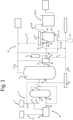
- FIG. 1 shows a system 22 for anaerobic treatment of an organic wastewater and organic waste streams 1.
- the system 22 comprises an equalization buffer 3, for instance in the form of a pump sump or a mixing tank, provided with a primary inlet 23 arranged to receive a primary stream 2 of organic wastewater.
- the organic wastewater 1 may for instance comprise wastewater from a dairy, chocolate or cheese factory, comprising slurries, liquids (such as in the case of chocolate factories).
- An anaerobic reactor 5 is connected to an outlet 24 of the equalization buffer 3.
- An outlet 40 of the reactor 5 is connected to a pre-separating unit 33.
- a first outlet 35 of the pre-separating unit 33 is connected to a feedback inlet 41 of the reactor 5 for feeding back a stream 7" containing between 50 % and 80 % of the solids by weight into the reactor 5.
- a second outlet 36 of the pre-separating unit 33 is connected to an input 42 of a separator 16 for supplying a low solids stream 7 into the separator 16.
- the separator 16 which may be DGF unitor a DAF unit as described in EP 1 735 070 in the name of the applicant, the reactor mixture 7 is separated into a liquid fraction 8 and a sludge fraction 9. The sludge fraction 9 is fed back to the feedback inlet 41 of the reactor 5.
- the anaerobic reactor 5 may be cylindrical with a double membrane roof. If desired, multiple subsequent anaerobic reactors 5 may be used, wherein the first reactor is a relatively large reactor and the second reactor is fitted with a membrane roof for gas storage (not shown). Preferably, mixing devices (not shown) are installed in the reactor 5 to enhance mixing and avoid stratification.
- the temperature in the reactor 5 may be controlled by steel tubing in the wall of the reactor 5, which act as a heat exchanger.
- the hydraulic retention time may vary between 1-14 days.
- the organic loading will typically depend on substrates and solids and will typically be between 2-20, preferably 3-7 kg COD/m 3 /day. Recycling of solids is required to achieve the desired organic loading and to attain a sufficiently long solids retention time (SRT).
- the equalization buffer 3 can be left out, such that the primary 2 and secondary 11 streams flow directly to the reactor 5 (as indicated by the dashed lines).
- a flocculant and/or coagulant feeder 6 is provided and is connected to the inlet 42 of the separator 16, wherein the feeder is arranged for dosing the flocculant and/or coagulant at 1-12, preferably 3-9, more preferably 3-6, g flocculant/kg dry solids.
- the separator 16 of figure 1 can be a dissolved biogas flotation (DBF) separator 16, comprising a liquid fraction outlet 25, a sludge fraction outlet 26 connected to the feedback inlet 41 of the anaerobic reactor 5, and a secondary inlet 27 that is arranged to receive biogas from the anaerobic reactor 5.
- DPF dissolved biogas flotation
- treated air containing less oxygen or untreated air may be introduced into secondary inlet 43, so that the reactor is a Dissolved Air Flotation unit.
- the air may be supplied by a compressor 37 that draws in air from the ambient.
- the air supply has been indicated in a dashed line and may be used in combination with or instead of supplying biogas via the inlet 27.
- a further separator unit 44 is comprised upstream of the inlet 41 of the anaerobic reactor to further remove liquid from the stream returned to the anaerobic reactor to 4-30% TSS
- the equalization buffer 3 further comprises a secondary inlet 28 arranged to receive a secondary stream 11 comprising organic waste solids.
- the separator 16 may be gastight to prevent biogas from escaping and/or exposing the anaerobic bacteria to outside air, which, depending on the type of bacteria, could kill them. It was found however, that the use of the pre-separating unit 33 allows supply of air into the separator 16 without adversely affecting the anaerobic reactions in the reactor 5.
- the system 22 may further comprise a pre-treatment unit 12 comprising a main inlet 29 and an outlet 30 connected to the secondary inlet 28 of the equalization buffer 3.
- the pre-treatment unit 12 can be a de-packing unit, cutting unit, shredding unit, pasteurisation unit, sterilisation unit, oxidation unit, solubilisation unit, hydrolysis unit or any combination thereof.
- the type of pre-treatment depends on the type of product, country (regulations) and process requirements.
- a screen may be used to remove larger debris, like cloth, wood or paper.
- a pre-separator (indicated by the frustoconical shape, with reference numeral 33) may be installed before the DGF 16, to be able to dose a flocculant to reduce tank volume even further.
- Such a pre-separator 33 is a vacuum filter press or a cloth filter, a dynamic filter based on centrifugal forces, like a cyclone or a centrifuge or a DGF, without or with little addition
- the system 22 is used with two anaerobic reactors 5, with a volume of 600-900, such as 750 m3, each.
- a pipe reactor with flocculant dosing is used. This system can for instance be used with a chocolate factory.
- a typical wastewater volume then is 100 m 3 /d with a COD concentration varying between 10-60 g/l at an average of 37 g/l.
- the separator/flotation device 16 is operated at 5 m 3 /h. Applicant has been able to achieve consistently stable results with the above parameters and flocculant dose used. TSS and COD removal percentages of more than 95% were achieved for the wastewater from the DBF 16.
- the method of anaerobic treatment of an organic wastewater and organic waste streams comprises the steps of
- the method is carried out in mesophilic conditions (25-42° C), although thermophilic conditions (43-60° C) can also be used.
- the method step of (a) feeding the primary stream 2 of organic wastewater and organic waste streams 1 further may comprise the step of feeding the secondary stream 11 of the organic waste solids to the equalization buffer 3.
- Feeding the secondary stream 11 of organic waste solids may comprise proportionally feeding the second stream 11 to the equalization buffer 3 to obtain a more consistent mixture.
- feeding the secondary stream of organic waste solids may comprise a pre-treatment 12 thereof comprising de-packing, cutting, shredding, pasteurisation, sterilisation, solubilisation or hydrolysis, or any combination thereof.
- the method step of (a) feeding the primary stream 2 of organic wastewater further may comprise separating the primary stream 2 of organic wastewater into a first fraction 13 and a second fraction 14, and feeding the first fraction 13 to the equalization buffer 3 and the second fraction 14 to the pre-treatment 12.
- the method step of feeding the buffer mixture 4 further comprises preheating the buffer mixture 4 from the equalization buffer 3 by a heating unit (not shown).
- the heating unit can also be used to heat raw waste water entering the equalization buffer 3.
- a heat recovery system is used, wherein heat from wastewater is used to heat further wastewater, for instance via a heat exchanger.
- the method step of separating the reactor mixture 7 may comprise feeding biogas 15 from the anaerobic reactor to a dissolved biogas flotation separator (DGF) 16. Therein, 5-30, preferably 5-20, more preferably around 10-15 1 biogas/kg solids, is fed to the dissolved biogas flotation separator (DBF) 16.
- the method further may comprise the step of collecting biogas 17 from the dissolved biogas flotation separator (DBF) 16 for further use, such as for heating or generation of energy.
- the method step of feeding, at least in part, the sludge fraction 9 back to the anaerobic reactor 5 further comprises collecting, at least in part, the sludge fraction 18 for further use.
- wastewater 19 from the separator 16 is subsequently subjected to a polishing step 20.
- the polishing step 20 preferably comprises aerobic treatment 21. Excess sludge originating from the polishing step 20 can be fed back to the anaerobic reactor 5.
Landscapes
- Life Sciences & Earth Sciences (AREA)
- Microbiology (AREA)
- Chemical & Material Sciences (AREA)
- Water Supply & Treatment (AREA)
- Engineering & Computer Science (AREA)
- Environmental & Geological Engineering (AREA)
- Hydrology & Water Resources (AREA)
- Organic Chemistry (AREA)
- Biodiversity & Conservation Biology (AREA)
- Analytical Chemistry (AREA)
- Physical Water Treatments (AREA)
- Purification Treatments By Anaerobic Or Anaerobic And Aerobic Bacteria Or Animals (AREA)
- Separation Of Suspended Particles By Flocculating Agents (AREA)
Claims (10)
- Verfahren zur anaeroben Behandlung eines organischen Abfallstroms (1), umfassend die Schritte:- Zuführen des organischen Abfallstroms zu einem anaeroben Reaktor (5),- Trennen eines Reaktorgemischs (7′), das aus dem anaeroben Reaktor (5) stammt, in einer ersten Trenneinheit (33), die einen ersten Auslass (35) und einen zweiten Auslass (36) aufweist, wobei die erste Trenneinheit das Gemisch (7′) in eine erste Fraktion (7ʺ), die zwischen 50 Gew.-% und 80 Gew.-% der Feststoffe enthält, und eine zweite Fraktion (7) trennt, wobei die erste Fraktion (7ʺ) die erste Trenneinheit durch den ersten Auslass (35) verlässt und die zweite Fraktion (7) die erste Trenneinheit durch den zweiten Auslass (36) verlässt, wobei die erste Trenneinheit (33) eine Vortrenneinheit ist, die ein dynamischer Filter auf der Basis von Zentrifugalkräften oder eine Flotationsseinheit für gelöstes Gas ohne die Zugabe von Flockungsmitteln und/oder Koagulationsmitteln ist,- Zuführen der zweiten Fraktion (7) von der ersten Trenneinheit in eine Flotationsseinheit (16) für gelöstes Gas (Dissolved Gas Flotation, DGF), wobei am zweiten Auslass (36) der ersten Trenneinheit (33) ein Flockungsmittel und/oder Koagulationsmittel (6) zu der zweiten Fraktion (7) in einer Dosierung von zwischen 1-12 g Flockungsmittel/kg trockene Feststoffe zugegeben wird,- Trennen der zweiten Fraktion (7) in der DGF-Einheit (16) in eine Schlammfraktion (9) und eine flüssige Fraktion (8),- Zuführen der ersten Fraktion (7ʺ), die aus der ersten Trenneinheit (33) stammt, und der Schlammfraktion (9), die aus der DGF-Einheit (16) stammt, über eine weitere Trenneinheit (44) zurück in den anaeroben Reaktor (5), wobei die weitere Trenneinheit Flüssigkeit aus dem Strom, der zum anaeroben Reaktor (5) zurückgeführt wird, zu 4-30% gesamte suspendierte Feststoffe entfernt.
- Verfahren nach Anspruch 1, bei dem am zweiten Auslass (36) der ersten Trenneinheit (33) das Flockungsmittel und/oder Koagulationsmittel (6) zu der zweiten Fraktion (7) in einer Dosierung im Bereich von 3-6 g Flockungsmittel/kg trockene Feststoffe zugegeben wird.
- Verfahren nach Anspruch 2, bei dem das Flockungsmittel und/oder Koagulationsmittel (6) einen Metallkomplex, vorzugsweise einen Fe- oder Al-Komplex, umfasst.
- Verfahren nach Anspruch 1, 2 oder 3, bei dem Luft in die DGF-Einheit (16) eingeleitet wird.
- Verfahren nach Anspruch 1, 2 oder 3, bei dem Biogas aus dem anaeroben Reaktor (5) in die DGF-Einheit (16) eingeleitet wird.
- Verfahren nach Anspruch 1, bei dem das DGF-Einheit-Abwasser aus der DGF-Einheit (16) einem Verfeinerungsschritt (20) direkt stromabwärts der DGF-Einheit (16) unterzogen wird.
- System zur anaeroben Behandlung eines organischen Abfallstroms (1), umfassend:- einen anaeroben Reaktor (5),- eine erste Trenneinheit (33), die mit einem Auslass (40) des Reaktors (5) verbunden ist, zum Trennen eines Reaktorgemischs (7′) am Auslass des anaeroben Reaktors (5) in eine erste Fraktion (7ʺ) an einem ersten Auslass (35), die zwischen 50 Gew.-% und 80 Gew.-% der Feststoffe enthält, und eine zweite Fraktion (7) an einem zweiten Auslass (36), wobei der erste Auslass (35) mit einem Einlass (41) des Reaktors (5) verbunden ist, und wobei die erste Trenneinheit (33) eine Vortrenneinheit ist, die ein dynamischer Filter auf der Basis von Zentrifugalkräften oder eine Flotationsseinheit für gelöstes Gas ohne die Zugabe von Flockungsmitteln und/oder Koagulationsmitteln ist,- eine Flotationsseinheit für gelöstest Gas (DGF) (16), die mit einem Eingang (42) zum zweiten Auslass (36) der ersten Trenneinheit (33) verbunden ist, zum Aufnehmen der zweiten Fraktion (7), wobei ein Schlammauslass (26) der Flotationsseinheit für gelöstest Gas (16) und der erste Auslass (35) der ersten Trenneinheit (33) mit dem Einlass (41) des Reaktors (5) über eine weitere Trenneinheit (44) verbunden sind, die stromaufwärts vom Reaktor (5) angeordnet ist, wobei die weitere Trenneinheit (44) zum Entfernen von Flüssigkeit aus dem Strom, der zum anaeroben Reaktor (5) zurückgeführt wird, zu 4-30% gesamte suspendierte Feststoffe angepasst ist,- eine Gasinjektionsvorrichtung (27, 37), die mit der Flotationsseinheit für gelöstes Gas (16) verbunden ist, zum Injizieren eines gelösten Gases in die Flotationsseinheit für gelöstes Gas (16), und- eine Dosiereinheit (6), die am zweiten Auslass (36) mit der Flotationsseinheit für gelöstes Gas (16) verbunden ist, zum Dosieren eines Flockungsmittels und/oder Koagulationsmittels zu der Flotationsseinheit für gelöstes Gas (16).
- System nach Anspruch 7, bei dem die Dosiereinheit (6) angepasst ist, um zwischen 1-12 g, vorzugsweise zwischen 3-9 g, bevorzugter zwischen 3-6 g Flockungsmittel/kg trockene Feststoffe zu der Flotationsseinheit für gelöstes Gas (16) zu dosieren.
- System nach Anspruch 7 oder 8, bei dem eine Luftzufuhr (37) mit einem Gaseinlass (43) der DGF-Einheit (16) verbunden ist.
- System nach Anspruch 7, bei dem die DGF-Einheit (16) einen sekundären Einlass (27) umfasst, der zum Aufnehmen von Biogas aus dem anaeroben Reaktor (5) angeordnet ist.
Priority Applications (1)
| Application Number | Priority Date | Filing Date | Title |
|---|---|---|---|
| PL16735725T PL3283441T3 (pl) | 2015-04-17 | 2016-04-15 | Sposób i układ do beztlenowego oczyszczania organicznie obciążonych ścieków |
Applications Claiming Priority (2)
| Application Number | Priority Date | Filing Date | Title |
|---|---|---|---|
| NL2015050261 | 2015-04-17 | ||
| PCT/NL2016/050269 WO2016167663A1 (en) | 2015-04-17 | 2016-04-15 | Method and system for anaerobic treatment of organically loaded wastewater |
Publications (2)
| Publication Number | Publication Date |
|---|---|
| EP3283441A1 EP3283441A1 (de) | 2018-02-21 |
| EP3283441B1 true EP3283441B1 (de) | 2022-03-02 |
Family
ID=53181322
Family Applications (1)
| Application Number | Title | Priority Date | Filing Date |
|---|---|---|---|
| EP16735725.0A Active EP3283441B1 (de) | 2015-04-17 | 2016-04-15 | Verfahren und system zur anaerober behandlung von organisch belastetem abwasser |
Country Status (6)
| Country | Link |
|---|---|
| US (1) | US20180093910A1 (de) |
| EP (1) | EP3283441B1 (de) |
| CA (1) | CA2982728C (de) |
| ES (1) | ES2912572T3 (de) |
| PL (1) | PL3283441T3 (de) |
| WO (1) | WO2016167663A1 (de) |
Families Citing this family (3)
| Publication number | Priority date | Publication date | Assignee | Title |
|---|---|---|---|---|
| CN108328881A (zh) * | 2018-04-11 | 2018-07-27 | 林丽敏 | 一种环氧树脂生产中废水净化装置 |
| CN109160702B (zh) * | 2018-10-22 | 2021-11-26 | 安徽师范大学 | 一种适用于中小型牲畜养殖场粪污综合处理的方法 |
| EP4107130A1 (de) * | 2020-02-21 | 2022-12-28 | Veolia Water Solutions & Technologies Support | Granulares schlammreaktorsystem mit einem externen abscheider |
Family Cites Families (6)
| Publication number | Priority date | Publication date | Assignee | Title |
|---|---|---|---|---|
| US5015384A (en) | 1988-05-25 | 1991-05-14 | Burke Dennis A | Anaerobic digestion process |
| ES2434844T3 (es) | 2004-04-16 | 2013-12-17 | Nijhuis Water Technology B.V. | Dispositivo separador |
| US8404121B2 (en) * | 2009-08-11 | 2013-03-26 | Anaergia Inc. | Method for separating suspended solids from a waste fluid |
| US9359236B2 (en) * | 2010-08-18 | 2016-06-07 | Evoqua Water Technologies Llc | Enhanced biosorption of wastewater organics using dissolved air flotation with solids recycle |
| US9540270B2 (en) | 2012-04-20 | 2017-01-10 | Anaergia Inc. | Anaerobic treatment of industrial wastewater |
| US20150144554A1 (en) * | 2012-05-30 | 2015-05-28 | Anaergia Inc. | Wastewater treatment process with moving bed bioreactor (mbbr) |
-
2016
- 2016-04-15 EP EP16735725.0A patent/EP3283441B1/de active Active
- 2016-04-15 PL PL16735725T patent/PL3283441T3/pl unknown
- 2016-04-15 WO PCT/NL2016/050269 patent/WO2016167663A1/en not_active Ceased
- 2016-04-15 ES ES16735725T patent/ES2912572T3/es active Active
- 2016-04-15 CA CA2982728A patent/CA2982728C/en active Active
- 2016-04-15 US US15/566,727 patent/US20180093910A1/en not_active Abandoned
Also Published As
| Publication number | Publication date |
|---|---|
| PL3283441T3 (pl) | 2022-06-20 |
| CA2982728C (en) | 2023-10-10 |
| US20180093910A1 (en) | 2018-04-05 |
| WO2016167663A1 (en) | 2016-10-20 |
| WO2016167663A9 (en) | 2017-01-05 |
| CA2982728A1 (en) | 2016-10-20 |
| EP3283441A1 (de) | 2018-02-21 |
| ES2912572T3 (es) | 2022-05-26 |
Similar Documents
| Publication | Publication Date | Title |
|---|---|---|
| US9771292B2 (en) | Treatment of waste products with anaerobic digestion | |
| Siciliano et al. | Biogas production from wet olive mill wastes pretreated with hydrogen peroxide in alkaline conditions | |
| US9540270B2 (en) | Anaerobic treatment of industrial wastewater | |
| CA3137859C (en) | Treatment of waste products with anaerobic digestion | |
| EP3472106B1 (de) | Verfahren zum kombinieren von rekuperativer faulung mit einem kontakttank und der flotation von gelöster luft | |
| CN102603117A (zh) | 一种餐厨垃圾二次废水的处理方法 | |
| CN111992566A (zh) | 一种餐厨垃圾的处理方法 | |
| CN112573781A (zh) | 利用餐厨垃圾水解酸化液进行低c/n污水脱氮除磷的协同处置系统及处理方法 | |
| HK1218644A1 (zh) | 废水处理方法和系统 | |
| EP3283441B1 (de) | Verfahren und system zur anaerober behandlung von organisch belastetem abwasser | |
| WO2018237151A1 (en) | System and method for continuous processing of organic waste with undigested solids recirculation | |
| WO2018207927A1 (ja) | 廃水の処理方法及びその廃水処理装置 | |
| US20140027373A1 (en) | Partially divided anaerobic treatment system | |
| JP7015893B2 (ja) | 生ごみのメタン発酵処理システム | |
| Driessen et al. | Combined anaerobic/aerobic treatment of peroxide bleached TMP mill effluent | |
| Menkveld et al. | AecomixTM for efficient energy recovery from wastewater and waste streams | |
| CN212655638U (zh) | 一种发酵废水处理中水回用除菌装置 | |
| Neamt et al. | The mass balance of sewage sludge digestion process | |
| Mi et al. | Anaerobic Digestion of Dairy and Cheese Wastewater--How Dairygold Found Success with Low-rate Technology |
Legal Events
| Date | Code | Title | Description |
|---|---|---|---|
| STAA | Information on the status of an ep patent application or granted ep patent |
Free format text: STATUS: THE INTERNATIONAL PUBLICATION HAS BEEN MADE |
|
| PUAI | Public reference made under article 153(3) epc to a published international application that has entered the european phase |
Free format text: ORIGINAL CODE: 0009012 |
|
| STAA | Information on the status of an ep patent application or granted ep patent |
Free format text: STATUS: REQUEST FOR EXAMINATION WAS MADE |
|
| 17P | Request for examination filed |
Effective date: 20171017 |
|
| AK | Designated contracting states |
Kind code of ref document: A1 Designated state(s): AL AT BE BG CH CY CZ DE DK EE ES FI FR GB GR HR HU IE IS IT LI LT LU LV MC MK MT NL NO PL PT RO RS SE SI SK SM TR |
|
| AX | Request for extension of the european patent |
Extension state: BA ME |
|
| DAV | Request for validation of the european patent (deleted) | ||
| DAX | Request for extension of the european patent (deleted) | ||
| STAA | Information on the status of an ep patent application or granted ep patent |
Free format text: STATUS: EXAMINATION IS IN PROGRESS |
|
| 17Q | First examination report despatched |
Effective date: 20181008 |
|
| REG | Reference to a national code |
Ref country code: DE Ref legal event code: R079 Ref document number: 602016069578 Country of ref document: DE Free format text: PREVIOUS MAIN CLASS: C02F0003280000 Ipc: C02F0001240000 |
|
| GRAP | Despatch of communication of intention to grant a patent |
Free format text: ORIGINAL CODE: EPIDOSNIGR1 |
|
| STAA | Information on the status of an ep patent application or granted ep patent |
Free format text: STATUS: GRANT OF PATENT IS INTENDED |
|
| RIC1 | Information provided on ipc code assigned before grant |
Ipc: C02F 1/24 20060101AFI20210927BHEP |
|
| INTG | Intention to grant announced |
Effective date: 20211025 |
|
| GRAS | Grant fee paid |
Free format text: ORIGINAL CODE: EPIDOSNIGR3 |
|
| GRAA | (expected) grant |
Free format text: ORIGINAL CODE: 0009210 |
|
| STAA | Information on the status of an ep patent application or granted ep patent |
Free format text: STATUS: THE PATENT HAS BEEN GRANTED |
|
| AK | Designated contracting states |
Kind code of ref document: B1 Designated state(s): AL AT BE BG CH CY CZ DE DK EE ES FI FR GB GR HR HU IE IS IT LI LT LU LV MC MK MT NL NO PL PT RO RS SE SI SK SM TR |
|
| REG | Reference to a national code |
Ref country code: GB Ref legal event code: FG4D |
|
| REG | Reference to a national code |
Ref country code: CH Ref legal event code: EP Ref country code: AT Ref legal event code: REF Ref document number: 1472134 Country of ref document: AT Kind code of ref document: T Effective date: 20220315 |
|
| REG | Reference to a national code |
Ref country code: DE Ref legal event code: R096 Ref document number: 602016069578 Country of ref document: DE |
|
| REG | Reference to a national code |
Ref country code: IE Ref legal event code: FG4D |
|
| REG | Reference to a national code |
Ref country code: NL Ref legal event code: FP |
|
| REG | Reference to a national code |
Ref country code: ES Ref legal event code: FG2A Ref document number: 2912572 Country of ref document: ES Kind code of ref document: T3 Effective date: 20220526 |
|
| REG | Reference to a national code |
Ref country code: LT Ref legal event code: MG9D |
|
| PG25 | Lapsed in a contracting state [announced via postgrant information from national office to epo] |
Ref country code: SE Free format text: LAPSE BECAUSE OF FAILURE TO SUBMIT A TRANSLATION OF THE DESCRIPTION OR TO PAY THE FEE WITHIN THE PRESCRIBED TIME-LIMIT Effective date: 20220302 Ref country code: RS Free format text: LAPSE BECAUSE OF FAILURE TO SUBMIT A TRANSLATION OF THE DESCRIPTION OR TO PAY THE FEE WITHIN THE PRESCRIBED TIME-LIMIT Effective date: 20220302 Ref country code: NO Free format text: LAPSE BECAUSE OF FAILURE TO SUBMIT A TRANSLATION OF THE DESCRIPTION OR TO PAY THE FEE WITHIN THE PRESCRIBED TIME-LIMIT Effective date: 20220602 Ref country code: LT Free format text: LAPSE BECAUSE OF FAILURE TO SUBMIT A TRANSLATION OF THE DESCRIPTION OR TO PAY THE FEE WITHIN THE PRESCRIBED TIME-LIMIT Effective date: 20220302 Ref country code: HR Free format text: LAPSE BECAUSE OF FAILURE TO SUBMIT A TRANSLATION OF THE DESCRIPTION OR TO PAY THE FEE WITHIN THE PRESCRIBED TIME-LIMIT Effective date: 20220302 Ref country code: BG Free format text: LAPSE BECAUSE OF FAILURE TO SUBMIT A TRANSLATION OF THE DESCRIPTION OR TO PAY THE FEE WITHIN THE PRESCRIBED TIME-LIMIT Effective date: 20220602 |
|
| REG | Reference to a national code |
Ref country code: AT Ref legal event code: MK05 Ref document number: 1472134 Country of ref document: AT Kind code of ref document: T Effective date: 20220302 |
|
| PG25 | Lapsed in a contracting state [announced via postgrant information from national office to epo] |
Ref country code: LV Free format text: LAPSE BECAUSE OF FAILURE TO SUBMIT A TRANSLATION OF THE DESCRIPTION OR TO PAY THE FEE WITHIN THE PRESCRIBED TIME-LIMIT Effective date: 20220302 Ref country code: GR Free format text: LAPSE BECAUSE OF FAILURE TO SUBMIT A TRANSLATION OF THE DESCRIPTION OR TO PAY THE FEE WITHIN THE PRESCRIBED TIME-LIMIT Effective date: 20220603 Ref country code: FI Free format text: LAPSE BECAUSE OF FAILURE TO SUBMIT A TRANSLATION OF THE DESCRIPTION OR TO PAY THE FEE WITHIN THE PRESCRIBED TIME-LIMIT Effective date: 20220302 |
|
| PG25 | Lapsed in a contracting state [announced via postgrant information from national office to epo] |
Ref country code: SM Free format text: LAPSE BECAUSE OF FAILURE TO SUBMIT A TRANSLATION OF THE DESCRIPTION OR TO PAY THE FEE WITHIN THE PRESCRIBED TIME-LIMIT Effective date: 20220302 Ref country code: SK Free format text: LAPSE BECAUSE OF FAILURE TO SUBMIT A TRANSLATION OF THE DESCRIPTION OR TO PAY THE FEE WITHIN THE PRESCRIBED TIME-LIMIT Effective date: 20220302 Ref country code: RO Free format text: LAPSE BECAUSE OF FAILURE TO SUBMIT A TRANSLATION OF THE DESCRIPTION OR TO PAY THE FEE WITHIN THE PRESCRIBED TIME-LIMIT Effective date: 20220302 Ref country code: PT Free format text: LAPSE BECAUSE OF FAILURE TO SUBMIT A TRANSLATION OF THE DESCRIPTION OR TO PAY THE FEE WITHIN THE PRESCRIBED TIME-LIMIT Effective date: 20220704 Ref country code: EE Free format text: LAPSE BECAUSE OF FAILURE TO SUBMIT A TRANSLATION OF THE DESCRIPTION OR TO PAY THE FEE WITHIN THE PRESCRIBED TIME-LIMIT Effective date: 20220302 Ref country code: CZ Free format text: LAPSE BECAUSE OF FAILURE TO SUBMIT A TRANSLATION OF THE DESCRIPTION OR TO PAY THE FEE WITHIN THE PRESCRIBED TIME-LIMIT Effective date: 20220302 Ref country code: AT Free format text: LAPSE BECAUSE OF FAILURE TO SUBMIT A TRANSLATION OF THE DESCRIPTION OR TO PAY THE FEE WITHIN THE PRESCRIBED TIME-LIMIT Effective date: 20220302 |
|
| PG25 | Lapsed in a contracting state [announced via postgrant information from national office to epo] |
Ref country code: IS Free format text: LAPSE BECAUSE OF FAILURE TO SUBMIT A TRANSLATION OF THE DESCRIPTION OR TO PAY THE FEE WITHIN THE PRESCRIBED TIME-LIMIT Effective date: 20220702 Ref country code: AL Free format text: LAPSE BECAUSE OF FAILURE TO SUBMIT A TRANSLATION OF THE DESCRIPTION OR TO PAY THE FEE WITHIN THE PRESCRIBED TIME-LIMIT Effective date: 20220302 |
|
| REG | Reference to a national code |
Ref country code: DE Ref legal event code: R097 Ref document number: 602016069578 Country of ref document: DE |
|
| PLBE | No opposition filed within time limit |
Free format text: ORIGINAL CODE: 0009261 |
|
| STAA | Information on the status of an ep patent application or granted ep patent |
Free format text: STATUS: NO OPPOSITION FILED WITHIN TIME LIMIT |
|
| PG25 | Lapsed in a contracting state [announced via postgrant information from national office to epo] |
Ref country code: MC Free format text: LAPSE BECAUSE OF FAILURE TO SUBMIT A TRANSLATION OF THE DESCRIPTION OR TO PAY THE FEE WITHIN THE PRESCRIBED TIME-LIMIT Effective date: 20220302 Ref country code: LU Free format text: LAPSE BECAUSE OF NON-PAYMENT OF DUE FEES Effective date: 20220415 Ref country code: DK Free format text: LAPSE BECAUSE OF FAILURE TO SUBMIT A TRANSLATION OF THE DESCRIPTION OR TO PAY THE FEE WITHIN THE PRESCRIBED TIME-LIMIT Effective date: 20220302 |
|
| 26N | No opposition filed |
Effective date: 20221205 |
|
| PG25 | Lapsed in a contracting state [announced via postgrant information from national office to epo] |
Ref country code: SI Free format text: LAPSE BECAUSE OF FAILURE TO SUBMIT A TRANSLATION OF THE DESCRIPTION OR TO PAY THE FEE WITHIN THE PRESCRIBED TIME-LIMIT Effective date: 20220302 |
|
| PG25 | Lapsed in a contracting state [announced via postgrant information from national office to epo] |
Ref country code: IE Free format text: LAPSE BECAUSE OF NON-PAYMENT OF DUE FEES Effective date: 20220415 |
|
| P01 | Opt-out of the competence of the unified patent court (upc) registered |
Effective date: 20230623 |
|
| PG25 | Lapsed in a contracting state [announced via postgrant information from national office to epo] |
Ref country code: HU Free format text: LAPSE BECAUSE OF FAILURE TO SUBMIT A TRANSLATION OF THE DESCRIPTION OR TO PAY THE FEE WITHIN THE PRESCRIBED TIME-LIMIT; INVALID AB INITIO Effective date: 20160415 |
|
| PG25 | Lapsed in a contracting state [announced via postgrant information from national office to epo] |
Ref country code: MK Free format text: LAPSE BECAUSE OF FAILURE TO SUBMIT A TRANSLATION OF THE DESCRIPTION OR TO PAY THE FEE WITHIN THE PRESCRIBED TIME-LIMIT Effective date: 20220302 Ref country code: CY Free format text: LAPSE BECAUSE OF FAILURE TO SUBMIT A TRANSLATION OF THE DESCRIPTION OR TO PAY THE FEE WITHIN THE PRESCRIBED TIME-LIMIT Effective date: 20220302 |
|
| PG25 | Lapsed in a contracting state [announced via postgrant information from national office to epo] |
Ref country code: MT Free format text: LAPSE BECAUSE OF FAILURE TO SUBMIT A TRANSLATION OF THE DESCRIPTION OR TO PAY THE FEE WITHIN THE PRESCRIBED TIME-LIMIT Effective date: 20220302 |
|
| PGFP | Annual fee paid to national office [announced via postgrant information from national office to epo] |
Ref country code: NL Payment date: 20250409 Year of fee payment: 10 |
|
| PGFP | Annual fee paid to national office [announced via postgrant information from national office to epo] |
Ref country code: PL Payment date: 20250410 Year of fee payment: 10 Ref country code: DE Payment date: 20250428 Year of fee payment: 10 |
|
| PGFP | Annual fee paid to national office [announced via postgrant information from national office to epo] |
Ref country code: GB Payment date: 20250422 Year of fee payment: 10 Ref country code: ES Payment date: 20250513 Year of fee payment: 10 |
|
| PGFP | Annual fee paid to national office [announced via postgrant information from national office to epo] |
Ref country code: BE Payment date: 20250424 Year of fee payment: 10 Ref country code: IT Payment date: 20250422 Year of fee payment: 10 |
|
| PGFP | Annual fee paid to national office [announced via postgrant information from national office to epo] |
Ref country code: FR Payment date: 20250424 Year of fee payment: 10 |
|
| PGFP | Annual fee paid to national office [announced via postgrant information from national office to epo] |
Ref country code: CH Payment date: 20250501 Year of fee payment: 10 |
|
| PG25 | Lapsed in a contracting state [announced via postgrant information from national office to epo] |
Ref country code: TR Free format text: LAPSE BECAUSE OF FAILURE TO SUBMIT A TRANSLATION OF THE DESCRIPTION OR TO PAY THE FEE WITHIN THE PRESCRIBED TIME-LIMIT Effective date: 20220302 |