EP3281914A1 - Verfahren zur herstellung von hochdispersem oberflächenreichem siliziumdioxid aus pflanzen - Google Patents
Verfahren zur herstellung von hochdispersem oberflächenreichem siliziumdioxid aus pflanzen Download PDFInfo
- Publication number
- EP3281914A1 EP3281914A1 EP16183742.2A EP16183742A EP3281914A1 EP 3281914 A1 EP3281914 A1 EP 3281914A1 EP 16183742 A EP16183742 A EP 16183742A EP 3281914 A1 EP3281914 A1 EP 3281914A1
- Authority
- EP
- European Patent Office
- Prior art keywords
- equisetum
- plant material
- plants
- heating
- temperature
- Prior art date
- Legal status (The legal status is an assumption and is not a legal conclusion. Google has not performed a legal analysis and makes no representation as to the accuracy of the status listed.)
- Granted
Links
Images

Classifications
-
- C—CHEMISTRY; METALLURGY
- C01—INORGANIC CHEMISTRY
- C01B—NON-METALLIC ELEMENTS; COMPOUNDS THEREOF; METALLOIDS OR COMPOUNDS THEREOF NOT COVERED BY SUBCLASS C01C
- C01B33/00—Silicon; Compounds thereof
- C01B33/113—Silicon oxides; Hydrates thereof
- C01B33/12—Silica; Hydrates thereof, e.g. lepidoic silicic acid
-
- C—CHEMISTRY; METALLURGY
- C01—INORGANIC CHEMISTRY
- C01B—NON-METALLIC ELEMENTS; COMPOUNDS THEREOF; METALLOIDS OR COMPOUNDS THEREOF NOT COVERED BY SUBCLASS C01C
- C01B33/00—Silicon; Compounds thereof
- C01B33/113—Silicon oxides; Hydrates thereof
- C01B33/12—Silica; Hydrates thereof, e.g. lepidoic silicic acid
- C01B33/18—Preparation of finely divided silica neither in sol nor in gel form; After-treatment thereof
-
- C—CHEMISTRY; METALLURGY
- C01—INORGANIC CHEMISTRY
- C01P—INDEXING SCHEME RELATING TO STRUCTURAL AND PHYSICAL ASPECTS OF SOLID INORGANIC COMPOUNDS
- C01P2004/00—Particle morphology
- C01P2004/60—Particles characterised by their size
- C01P2004/64—Nanometer sized, i.e. from 1-100 nanometer
-
- C—CHEMISTRY; METALLURGY
- C01—INORGANIC CHEMISTRY
- C01P—INDEXING SCHEME RELATING TO STRUCTURAL AND PHYSICAL ASPECTS OF SOLID INORGANIC COMPOUNDS
- C01P2006/00—Physical properties of inorganic compounds
- C01P2006/12—Surface area
Definitions
- the present invention relates to a process for the preparation of finely divided high-surface silicon dioxide from plants as renewable raw materials, in particular plants having a silicon content in the dry matter of greater than 2%, for example ferns, horsetails and numerous representatives of monocots (monocotyledons).
- the active ingredients are applied in most tablet-shaped drugs on this physiologically harmless carrier material, this happens to the human organism and is excreted again.
- the carrier material In order for the active ingredients of the actual preparation to be able to develop their optimum effect in the human body, the carrier material must have a sufficiently large surface area. The same applies to corresponding products in the field of the cosmetic industry.
- the manufacturing process was developed in 1940 by Harry Kloepfer at Degussa, see quote in Dittrich, G., Offermanns, H., Schlosser, H. Jr .: Chem. Exp. Technol. 3 (1977) 151-162 and has been further developed and modified by DEGUSSA (today EVONIK DEGUSSA GmbH).
- the silica thus prepared is composed of amorphous spherical particles. These have a diameter of 10-20 nm, at a volume of about 15 ml per g, the silica has a surface area of 100-400 m 2 per g.
- a biogenic silica from siliceous plant material such as rice hulls is known.
- the invention is based inter alia on the object of obtaining biogenic silicon dioxide with larger surface areas per unit weight, in particular of over 600 m 2 per g, from renewable raw materials.
- the invention relates to a process for the production of fumed silica from renewable raw materials, wherein the silicon dioxide obtained by this process is characterized by a larger surface than in commercial qualities known and unique biogenic structuring.
- An advantage of the invention is that it is possible with this method, without considerable technical effort and at significantly lower energy consumption fumed and high surface area silica with appropriate chemical purity while retaining the biogenic structuring of renewable resources to win.
- vegetable raw materials here all plant materials, whole plants or parts of plants in question, the silicon dioxide content in the dry matter exceeds 2%, which affects all species in the genus of horsetails, especially Equisetales and ferns in general, the European larch and the common spruce the order of the pine-like and from the family of sweet grasses all reed, oat, barley, rye, wheat, rice and bamboo species.
- a significant advantage of the method according to the invention is moreover that 100% of the biogenic silicon dioxide can be obtained with this method from renewable raw materials; in other words, there are no losses.
- a method step of comminuting the plant material to a particle size of less than 1 millimeter, preferably less than 0.5 millimeter, may be provided.
- the acidic solution may comprise between 20 and 50 volume percent azeotropic hydrochloric acid and between 80 and 50 volume percent water.
- the service life of the wet-chemical treatment may be between 1 minute and 10 hours, preferably between 15 minutes and 1 hour, preferably 30 minutes, depending on the temperature.
- hydrochloric acid instead of using hydrochloric acid as described herein, other dilute acids may be used which are not themselves oxidizing and do not react with silica or silicates. On the other hand, they should preferably have a high acid strength. For economic reasons, therefore, today hydrochloric acid is a preferred choice.
- the rapid heating can be carried out between 2 and 5 times as fast in Kelvin / minute as the medium-fast heating and the slow heating can be twice to five times slower than the medium-fast heating, in particular, the heating rates with 10 K / min, 2 to 5 K / min, or with 1 K / min be specified.
- the first temperature threshold can be 100 ° C and the second temperature threshold 250 ° C.
- the selected end temperature is directly related to the hold time.
- the final temperature and the holding time it is also possible to obtain powders in which surfaces of 560 m 2 / g to 622 m 2 / g were determined.
- Variation of the end temperature and the holding time form an interplay of the two variables: If a low temperature (eg between 300 ° C and 310 ° C) is selected, a reaction time of several hundred hours is necessary, a high temperature (eg between 540 ° C and 550 ° C), a reaction time of only a few minutes is required. Higher temperatures, in particular beyond 700 ° C, or even higher temperatures (e.g., 1000 ° C) cause the amorphous to convert to crystalline silica, thus losing essential characteristics of the final product.
- a low temperature eg between 300 ° C and 310 ° C
- a reaction time of several hundred hours is necessary
- a high temperature eg between 540 ° C and 550 ° C
- Higher temperatures in particular beyond 700 ° C, or even higher temperatures (e.g., 1000 ° C) cause the amorphous to convert to crystalline silica, thus losing essential characteristics of the final product.
- the solid agglomerates initially present after this thermal process which have a d 50 value of 20-25 ⁇ m, are mechanically unstable and disintegrate, completely surprisingly, during any further processing.
- the primary silicon dioxide particles present in this further processing have a size of 10 nm and have a spherical shape that follows in the scanning electron micrograph of the biogenic silicon dioxide Fig. 1 is shown.
- the silicon dioxide content in the final product is 99.6%.
- Some of the inorganic components contained in the starting material are depleted by one to two powers of ten in this process.
- Trace analysis on the isolated biogenic silica yielded the following data: 0.61% hydrogen, 0.04% nitrogen, 0.04% sulfur, 0.077% magnesium, 0.022% aluminum, 004% calcium, 0.020% iron, 0.0004% Strontium, 0.11% potassium, 0.0009% Mn, 0.012% titanium, 0.0057% phosphorus and 0.0006% chlorine.
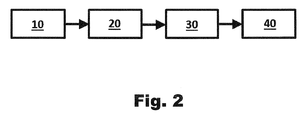
- the Fig. 2 schematically shows a process flow according to an embodiment of the invention for the recovery of silica from renewable resources.
- Reference numeral 10 denotes the first process step of preparing the starting material. These may be Equisetum telmateia leaves that are air-dried.
- this starting material advantageously in the crushed state, subjected to a wet-chemical treatment with hydrochloric acid, provided with the reference numeral 20.
- the mixture of biomaterial and acid leads to a depletion of the inorganic constituents according to the process steps specified above.
- the intermediate product is placed in a thermal treatment, designated by reference numeral 30, to achieve depletion of organic constituents, the above-mentioned lower temperatures being used in comparison to known processes.
Landscapes
- Chemical & Material Sciences (AREA)
- Organic Chemistry (AREA)
- Inorganic Chemistry (AREA)
- Silicon Compounds (AREA)
Abstract
Description
- Die vorliegende Erfindung betrifft ein Verfahren zur Herstellung von hochdispersem oberflächenreichem Siliziumdioxid aus Pflanzen als nachwachsende Rohstoffen, insbesondere Pflanzen mit einem Siliziumanteil in der Trockensubstanz von grösser als 2 %, beispielsweise Farne, Schachtelhalme und zahlreiche Vertreter der Monokotylen (Einkeimblättrigen).
- In verschiedenen Bereichen der industriellen Produktion und unseres Alltages spielen hochdisperse, nanoskalige Materialien auf Basis von Siliziumdioxid eine unverzichtbare Rolle. So sind die Wirkstoffe in den meisten tablettenförmigen Medikamenten auf diesem physiologisch unbedenklichen Trägermaterial aufgetragen, dieses passiert den menschlichen Organismus und wird wieder ausgeschieden. Damit die Wirkstoffe des eigentlichen Präparats ihre optimale Wirkung im menschlichen Körper entfalten können, muss das Trägermaterial eine ausreichend große Oberfläche aufweisen. Gleiches gilt auch für entsprechende Produkte aus dem Bereich der kosmetischen Industrie.
- Ähnliche Forderungen an eine große Oberfläche stellen auch die Produzenten von Katalysatoren, bei welchen die eigentlich katalytisch wirksame Komponente meist auf einem chemisch inerten oberflächenreichen Trägermaterial aufgebracht ist.
- In den Bereichen der Lack- und Farbmittelindustrie sowie bei den Herstellern von Folien sind die Anforderungen sehr ähnlich. Hier kommt es nicht nur auf die große Oberfläche alleine an, sondern vor allem auf die Feinheit der eingesetzten Siliziumdioxidqualitäten. In transparenten Lacken und Folien wird über das geeignete Siliziumdioxid eine Stabilisierung durch Vernetzung der Pigment- / Füllstoffpartikel erreicht.
- Die Industrie fertigt nach verschiedenen hydrolytischen, hydrothermalen und plasmachemischen Verfahren eine Vielzahl einzelner Qualitäten von Siliziumdioxid. Diese werden von den Herstellern gut charakterisiert und mit den entsprechenden Zertifikaten auf dem Markt, beispielsweise unter den Handelsnamen AEROSIL®, Cabosil®, HDK®, ACEMATT® oder SIDENT® angeboten.
- Hierbei wird häufig durch Hydrolyse von Siliziumtetrachlorid oder entsprechenden Analoga in einer Knallgasflamme (Flammenhydrolyse) hochdisperse "pyrogene" Kieselsäure von über 99,8 % Siliziumdioxid - Gehalt hergestellt, wie aus Klein, K.: Chemisch-technische Industrie 64 (1968) 849-858, Winkeler, H.: Kautschuk Gummi Kunststoffe 30 (1977) 381-388, Ferch, H.: Farbe + Lack 85 (1979) 651-657, oder auch Ferch, H., Seibold, K.: Farbe & Lack 90 (1984) 88-98 bekannt. Das Herstellungsverfahren wurde 1940 von Harry Kloepfer bei der Degussa entwickelt worden, siehe Zitat in Dittrich, G., Offermanns, H., Schlosser, H. Jr.: Chem. Exp. Technol. 3 (1977) 151-162 und ist bis in die Gegenwart von der DEGUSSA (heute EVONIK DEGUSSA GmbH) weiterentwickelt und modifiziert worden. Das so hergestellte Siliziumdioxid ist aus amorphen, kugelförmigen Teilchen aufgebaut. Diese besitzen einen Durchmesser von 10-20 nm, bei einem Volumen von ca. 15 ml je g hat das Siliziumdioxid eine Oberfläche von 100-400 m2 je g.
- Von erheblichem Nachteil sind bei dieser bekannten technischen Lösung, dass die eingesetzten Ausgangschemikalien selber hergestellt werden müssen (das ist je nach Ausgangschemikalie mit nicht unerheblichen Kosten verbunden), die exakte Beherrschbarkeit des Prozesses einen erheblichen technologischen Aufwand erfordert und das sich aus den Verfahrensabläufen die Bildung von Chlor / Chlorwasserstoff als Nebenprodukt ergibt (abhängig vom gewählten Verfahren).
- Aus der Literatur, siehe Voronkov, M.G., Zelcan, G.I., Lukevits, E.: Silizium und Leben, Akademie-Verlag, Berlin, 1975, S. 55-99, Mengel, K., Kirby, E. A.: Principles of plant nutrition, Kluwer Academic Publishers, Dordrecht, 2001, S. 643-649, und Ma, F.A., Miyake, Y., Takahashi, E: Silicon in Agriculture, Studies in Plant Science 8 (Eds. L. E. Datnoff, G. H. Synder, G. H. Korndörfer), Elsevier, Amsterdam, Oxford, 2001, chapter 2, S. 17-39 ist bekannt, dass ausgewählte Pflanzen vermehrt Silizium aus der Bodenlösung aufnehmen und als amorphe Kieselsäure in die Zellwände einlagern. Eigene wissenschaftliche Untersuchungen hierzu führten bislang zu einer Labormethode zur Isolation des reinen Siliziumdioxds mit maximalen Oberflächen von z. T. weit unter 500 m2 je g, wie es in Sapei, L., Gierlinger, N., Hartmann, J., Nöske, R., Strauch, P., Paris, O.: Bioanal. Chem. 289 (2007) 1249-1257, Sapei, L., Nöske, R., Strauch, P:, Paris, O.: Chem. Mater. 20 (2008) 2020-2025, und Neumann, M., Wagner, S., Nöske, R., Tiersch, B., Strauch, P.: Z. Naturforsch. 65b (2010) 1113 - 1120 beschrieben ist.
- Aus der
EP 1 452 637 A1 ist eine funktionelle Pflanzenfaser, ein wasserverbesserndes Material und ein bodenschützendes Material bekannt. - Aus der
WO 2008/016701 ist eine biogene Kieselsäure aus kieselsäurehaltigem Pflanzenmaterial wie etwa Reishülsen bekannt. - Ausgehend von diesem Stand der Technik liegt der Erfindung unter anderem die Aufgabe zu Grunde, biogenes Siliziumdioxid mit grösseren Oberflächen je Gewichtseinheit, insbesondere von über 600 m2 je g, aus nachwachsenden Rohstoffen zu gewinnen.
- Die Erfindung betrifft ein Verfahren zur Gewinnung von hochdispersem Siliziumdioxid aus nachwachsenden Rohstoffen, wobei sich das nach diesem Verfahren gewonnene Siliziumdioxid durch eine größere Oberfläche als bei kommerziellen Qualitäten bekannt und einzigartige biogene Strukturierung auszeichnet.
- Das Verfahren zur Herstellung von hochdispersem oberflächenreichem Siliziumdioxid aus Pflanzen als nachwachsende Rohstoffen ist durch die Verfahrensschritte gekennzeichnet:
- a) Bereitstellen von getrockneten Pflanzen mit einem Siliziumanteil von grösser 2 Gewichtsprozent als Pflanzenmaterial,
- b) Nasschemische Behandlung des getrockneten Pflanzenmaterials mit einer sauren Lösung über eine vorbestimmte Standzeit in der Siedehitze,
- c) Abtrennen und Trocknen des nasschemisch behandelten Pflanzenmaterials zu einem Feststoffrückstand, und
- d) Tempern des Feststoffrückstandes bei einer Tempertemperatur zwischen 300 und 550 °C über eine Haltezeit von 30 Minuten bis 1000 Stunden zu einem Feststoffagglomerat, das im wesentlichen spontan zu Siliziumdioxidnanopartikeln zerfällt.
- Es wird somit ein Verfahren vorgestellt, welches ohne großen technischen Aufwand in wenigen Arbeitsschritten die Gewinnung von hochdispersem oberflächenreichen Siliziumdioxid aus nachwachsenden Rohstoffen zulässt. Dabei wird aus leicht verfügbaren Siliziumhaltigen nachwachsenden Rohstoffen die enthaltene Kieselsäure isoliert, während die einzigartige primäre biogene Strukturierung erhalten bleibt. Im Vergleich zu pyrolytischen und plasmachemischen Verfahren (Temperaturen zwischen 1000 °C und 8000 °C) erfolgt die notwendige thermische Nachbehandlung bei relativ niedrigen Temperaturen von nur wenigen hundert °C. Da auch in diesem Verfahren Chlorwasserstoff - hier die wässrige Lösung - eingesetzt werden muss, wurde eine Variante gefunden, bei welcher die effektive Konzentration der Säure deutlich herabgesetzt werden konnte und diese bei geschickter Prozessführung im Kreislauf geführt und wieder verwendet werden kann.
- Ein Vorteil der Erfindung besteht darin, dass es mit diesem Verfahren möglich ist, ohne erheblichen technischen Aufwand und bei deutlich niedrigerem Energiebedarf hochdisperses und oberflächenreiches Siliziumdioxid mit entsprechender chemischer Reinheit unter Beibehaltung der biogenen Strukturierung aus nachwachsenden Rohstoffen zu gewinnen. Als pflanzliche Rohstoffe kommen hierbei alle Pflanzenmaterialien, ganze Pflanzen oder Teile von Pflanzen in Frage, deren Siliziumdioxidgehalt in der Trockensubstanz 2 % übersteigt, das betrifft alle Arten in der Gattung der Schachtelhalmgewächse, insbesondere Equisetales und Farne allgemein, die europäische Lärche sowie die gemeine Fichte aus der Ordnung der Kiefernartigen und aus der Familie der Süßgräser alle Schilf-, Hafer-, Gerste-, Roggen-, Weizen- Reis- und Bambusarten.
- Ein wesentlicher Vorteil des Verfahrens nach der Erfindung ist darüber hinaus, dass 100 % des biogenen Siliziumdioxids mit diesem Verfahren aus nachwachsenden Rohstoffen gewonnen werden kann; mit anderen Worten: es treten keine Verluste auf.
- Bei dem Verfahren kann nach dem Bereitstellen des getrockneten Pflanzenmaterials ein Verfahrensschritt des Zerkleinerns des Pflanzenmaterials auf eine Korngrösse von kleiner als 1 Millimeter, bevorzugt kleiner als 0,5 Millimeter, vorgesehen sein.
- Die saure Lösung kann zwischen 20 und 50 Volumenprozent azeotroper Salzsäure und zwischen 80 und 50 Volumenprozent Wasser umfassen. Die Standzeit der nasschemischen Behandlung kann dabei abhängig von der Temperatur zwischen 1 Minute und 10 Stunden betragen, vorzugsweise zwischen 15 Minuten und 1 Stunde, bevorzugt 30 Minuten.
- Anstelle eines Einsatzes von Salzsäure wie hier beschrieben, können auch andere verdünnte Säuren eingesetzt werden, welche selber nicht oxidierend sind und nicht mit Siliziumdioxid oder Silikaten Reaktionen eingehen. Sie sollten vorzugsweise andererseits eine hohe Säurestärke aufweisen. Aus wirtschaftlichen Erwägungen ist daher heute Salzsäure eine bevorzugte Wahl.
- Das Tempern kann vorteilhafterweise in vier Unterschritte unterteilt werden, die ein schrittweises Aufheizen beinhalten, insbesondere:
- d1) Rasches Erwärmen des Feststoffrückstandes auf einen ersten Temperaturschwellwert,
- d2) Mittelschnelles Erwärmen des Feststoffrückstandes von dem ersten auf einen zweiten Temperaturschwellwert,
- d3) Langsames Erwärmen des Feststoffrückstandes von dem zweiten auf die Tempertemperatur, und
- d4) Halten der Tempertemperatur des Feststoffrückstandes für die besagte Haltezeit.
- Dabei kann dann das rasche Erwärmen zwischen 2 und 5 mal so schnell in Kelvin/Minute durchgeführt werden wie das mittelschnelle Erwärmen und das langsame Erwärmen kann zweimal bis fünfmal langsamer sein wie das mittelschnelle Erwärmen, insbesondere können die Erwärmungsraten mit 10 K/min, 2 bis 5 K/min, beziehungsweise mit 1 K/min angegeben werden. Dabei kann der erste Temperaturschwellwert 100 °C betragen und der zweite Temperaturschwellwert 250 °C.
- Weitere Ausführungsformen sind in den abhängigen Ansprüchen angegeben.
- Das gesamte, im Ausgangsbiomaterial enthaltene Siliziumdioxid konnte nach diesem Verfahren gewonnen werden, die Ausbeute bzw. der Umsatzgrad ist mit nahezu 100 % anzugeben.
- Bevorzugte Ausführungsformen der Erfindung werden im Folgenden anhand der Zeichnungen beschrieben, die lediglich zur Erläuterung dienen und nicht einschränkend auszulegen sind. In den Zeichnungen zeigen:
- Fig. 1
- ein rasterelektronenmikroskopisches Bild von biogenem Siliziumdioxid nach einem Ausführungsbeispiel der Erfindung; und
- Fig. 2
- einen Verfahrensablauf gemäss einem Ausführungsbeispiel der Erfindung.
- Bei dem Verfahren nach der Erfindung sind als Ausgangsmaterial unter anderem luftgetrocknete Blätter des Riesenschachtelhalms (Equisetum telmateia) eingesetzt worden, für welche ein Ascheanteil (anorganischer oder mineralischer Anteil) von 33,37 % ermittelt wurde. Die chemische Analyse dieses Biomaterials ergab folgende Zusammensetzung: 29,33 % Kohlenstoff, 31,57 % Sauerstoff, 12,67 % Silizium, 4,02 % Wasserstoff, 1,37 % Stickstoff, 1,12% Schwefel, 0,18 % Magnesium, 0,013 % Aluminium, 2,60 % Calcium, 0,039 % Eisen, 0,012 % Strontium, 0,63 % Kalium, 0,0085 % Mn, 0,0032 % Titan, 0,10 % Phosphor und 0,32 % Chlor. Eine Restfeuchte von 4,60 % wurde in dem Biomaterial bestimmt. Nach Trocknung bei 105 °C kann der Siliziumdioxidanteil im Pflanzenmaterial mit 27,15 % festgestellt werden.
- Das getrocknete Pflanzenmaterial wurde in einer Mühle auf eine Korngröße von d < 0,5 mm aufgemahlen. Hierbei ist es unerheblich, ob die Zerkleinerung in einer Kugelmühle, Vibrationsmühle, Planetenmühle, Schneidmühle oder Schwingmühle erfolgt. Das so erhaltene Pflanzenpulver wurde zunächst mit einer verdünnten Salzsäure, bestehend aus 50 Volumenprozent aceotroper Salzsäure und 50 Volumenprozent Wasser für mindestens 15 min bis 10 h, vorzugsweise 30 min, in der Siedehitze behandelt und anschließend von der Flüssigkeit abgetrennt und getrocknet. Der Feststoffrückstand wird nun nach nachfolgend beschriebenem Temperaturregime unter normalen atmosphärischen Bedingungen getempert:
- 1. Schritt:
- Das Probematerial wird mit ca. 10 K/min auf 100 °C aufgeheizt.
- 2. Schritt:
- Die erwärmte Probe wird nun mit 2 bis 5 K/min, vorzugsweise mit 2 K/min, auf eine Temperatur von 250 °C gebracht.
- 3. Schritt
- Das Probematerial wird nun mit 1 K/min auf eine Temperatur von 300 bis 550 °C aufgeheizt und verbleibt bei der gewählten Zieltemperatur (Endtemperatur) für 30 min bis 1000 h (Haltezeit).
- Die gewählte Endtemperatur steht mit der Haltezeit in direktem Zusammenhang. In dem hier ausgewählten Ausführungsbeispiel wird auf eine Probe, die 48 Stunden bei 425 °C getempert wurde, Bezug genommen. Am Ende dieses thermischen Vorganges bleibt ein rein weißes Pulver übrig, welches eine Oberfläche von 514 m2/g aufweist. Durch Variation der Endtemperatur und der Haltezeit lassen sich jedoch auch Pulver erhalten, bei denen Oberflächen von 560 m2/g bis 622 m2/g bestimmt wurden.
- Variation der Endtemperatur und der Haltezeit bilden ein Zusammenspiel der beiden Größen: wird eine tiefe Temperatur (z.B. zwischen 300 °C und 310 °C) gewählt, so ist eine Reaktionszeit von mehreren hundert Stunden notwendig, wird eine hohe Temperatur (z.B. zwischen 540 °C und 550 °C) gewählt, so ist eine Reaktionszeit von nur einigen Minuten erforderlich. Höhere Temperaturen, insbesondere jenseits von 700° Celsius, oder noch höhere Temperaturen (z.B. 1000 °C) führen dazu, dass sich das amorphe in kristallines Siliziumdioxid umwandelt, so dass wesentliche Merkmale des Endprodukts verloren gehen.
- Statt einer Reaktion bei Siedehitze ist es möglich, die Reaktion bei einer tieferen Temperatur ablaufen zu lassen, wobei sich aber die notwendige Reaktionszeit verlängern, was nicht bevorzugt ist.
- Die zunächst nach diesem thermischen Prozess vorliegenden Feststoffagglomerate, die einen d50-Wert von 20-25 µm aufweisen sind mechanisch instabil und zerfallen, völlig überraschend, bei jeglicher weiteren Verarbeitung. Die bei dieser weiteren Verarbeitung dann vorliegenden primären Siliziumdioxidpartikel haben eine Größe von 10 nm und weisen eine kugelförmige Gestalt auf, die in dem rasterelektronenmikroskopischen Bild des biogenen Siliziumdioxids nach
Fig. 1 dargestellt ist. - Der Siliziumdioxidanteil im Endprodukt liegt bei 99,6 %. Einige der im Ausgangsmaterial enthaltenen Begleitbestandteile anorganischer Natur werden bei diesem Verfahren um ein bis zwei Zehnerpotenzen abgereichert. Eine Spurenanalyse an dem isolierten biogenen Siliziumdioxid führte zu nachfolgenden Daten: 0,61 % Wasserstoff, 0,04 % Stickstoff, 0,04 % Schwefel, 0,077 % Magnesium, 0,022 % Aluminium, 004 % Calcium, 0,020 % Eisen, 0,0004 % Strontium, 0,11 % Kalium, 0,0009 % Mn, 0,012 % Titan, 0,0057 % Phosphor und 0,0006 % Chlor.
- Das Verfahren wurde ebenfalls an mehr als 450 verschiedenen Proben von unterschiedlichen Pflanzenmaterialien getestet, hierzu gehören:
Name Probenzahl Winterschachtelhalm Equisetum hyemale 133 Riesenschachtelhalm Equisetum telmateia 160 Ackerschchtelhalm Equisetum arvense 13 Teichschachtelhalm Equisetum fluviatili 2 Waldschachtelhalm Equisetum sylvaticum 2 Wiesenschachtelhalm Equisetum prtense 3 bunter Schachtelhalm Equisetum variegatum 1 subtropischer Riesenschachtelhalm Equisetum giganteum 5 Sumpfschachtelhalm Equisetum palustre 12 Gemeines Schilf Arundo phragmites 45 Pfahlrohr Arundo donax 5 Chinaschilf Miscanthus sinensis 45 Pampasgras Cotaderia selloana 1 Brennnessel Urtica dioica 3 Cannabis Cannabis sativa 10 Wegwarte Cichorium Intybus 1 Topinambur Helianthus tuberosus 3 Vogelköterich Polygonum aviculáre 5 Ricinus Ricinus communis 3 Sesam Sesamum indicum 3 Vogelmiere Stellaria media 1 Nordmanntanne Abies nordmanniana 1 Weichweizen Triticum aestivum 6 Saathafer Avena sativa 16 Gerste Hordeum vulgare 2 Strandroggen Leymus arenarius 2 Salzschlickgras Spartina anglica 2 Wasserhyazinthe Eichornia crassipes 1 Kakao Theobroma cacao 1 Reis Oryza sativa 14 Schneeflechte Cetraria nivalis 1 Strauchflechte Stereocaulon pascale 1 - Exemplarisch ist oben im dargestellten Ausführungsbeispiel mit dem Ausgangsmaterial des Riesenschachtelhalms verwiesen und beschrieben worden; in vergleichbarer Art kann das Verfahren mit analogen Ergebnissen mit z.B. dem Winterschachtelhalm, verschiedenen Reisspelzen aus Asien, Europa und Südamerika, Brennnessel, gemeinem Schilf, Chinaschilf, Weizen, Hafer, Gerste u. a .m. durchgeführt werden. Die Beschreibung des Verfahrens und die Ergebnisse sind redundant zu dem dargestellten Ausführungsbeispiel.
- Die
Fig. 2 zeigt in schematischer Weise einen Verfahrensablauf gemäss einem Ausführungsbeispiel der Erfindung zur Gewinnung von Siliziumdioxid aus nachwachsenden Rohstoffen. - Mit dem Bezugszeichen 10 ist der erste Verfahrensschritt der Vorbereitung des Ausgangsmaterials bezeichnet. Dabei kann es sich um Equisetum telmateia Blätter handeln, die luftgetrocknet werden.
- Dann wird dieses Ausgangsmaterial, vorteilhafterweise in zerstossenem Zustand, einer nasschemischen Behandlung mit Salzsäure unterzogen, mit dem Bezugszeichen 20 versehen. Die Mischung aus Biomaterial und Säure führt zu einer Abreicherung der anorganischen Bestandteile gemäss den oben spezifizierten Verfahrensschritten.
- Danach wird das Zwischenprodukt in eine thermische Behandlung, mit dem Bezugszeichen 30 versehen, gegeben, um eine Abreicherung von organischen Bestandteilen zu erreichen, wobei die oben genannten niedrigeren Temperaturen gegenüber bekannten Verfahren Verwendung finden.
- Schliesslich ergibt sich nach Bezugszeichen 40 ein Siliziumoxidendprodukt, welches spontan in die gewünschten nanoskaligen Phase zerfällt und damit die erwünschten Oberflächeneigenschaften aufweist.
BEZUGSZEICHENLISTE 10 Vorbereitung des 30 thermische Behandlung Ausgangsmaterials 40 Aggregatzerfall zum 20 nasschemische Behandlung Endprodukt
Claims (12)
- Verfahren zur Herstellung von hochdispersem oberflächenreichem Siliziumdioxid aus Pflanzen als nachwachsende Rohstoffe mit den Verfahrensschritten:a) Bereitstellen (10) von getrockneten Pflanzen mit einem Siliziumanteil von grösser 2 Gewichtsprozent als Pflanzenmaterial,b) Nasschemische Behandlung (20) des getrockneten Pflanzenmaterials mit einer sauren Lösung über eine vorbestimmte Standzeit,c) Abtrennen und Trocknen des nasschemisch behandelten Pflanzenmaterials zu einem Feststoffrückstand, undd) Tempern (30) des Feststoffrückstandes bei einer Tempertemperatur zwischen 300 und 700 °C, insbesondere bis 550 °C, über eine Haltezeit von 30 Minuten bis 1000 Stunden zu einem Feststoffagglomerat, das im wesentlichen spontan zu Siliziumdioxidnanopartikeln zerfällt (40).
- Verfahren nach Anspruch 1, dadurch gekennzeichnet, dass nach dem Bereitstellen des getrockneten Pflanzenmaterials ein Verfahrensschritt des Zerkleinerns des Pflanzenmaterials auf eine Korngrösse von kleiner als 1 Millimeter, bevorzugt kleiner als 0,5 Millimeter, vorgesehen ist.
- Verfahren nach Anspruch 1 oder 2, dadurch gekennzeichnet, dass die saure Lösung eine insbesondere verdünnte Säure umfasst, welche selber nicht oxidierend ist und nicht mit Siliziumdioxid oder Silikaten Reaktionen eingeht.
- Verfahren nach Anspruch 3, dadurch gekennzeichnet, dass die saure Lösung zwischen 20 und 50 Volumenprozent azeotroper Salzsäure und zwischen 80 und 50 Volumenprozent Wasser umfasst.
- Verfahren nach einem der Ansprüche 1 bis 4, dadurch gekennzeichnet, dass die nasschemische Behandlung in der Siedehitze stattfindet.
- Verfahren nach einem der Ansprüche 1 bis 5, dadurch gekennzeichnet, dass die Standzeit zwischen 1 Minute und 10 Stunden beträgt, vorzugsweise zwischen 15 Minuten und 1 Stunde, bevorzugt 30 Minuten.
- Verfahren nach einem der Ansprüche 1 bis 6, dadurch gekennzeichnet, dass bei einer Tempertemperatur zwischen 300 °C und 310 °C eine Haltezeit von 10 Stunden bis zu mehreren hundert Stunden vorgesehen wird, und dass bei einer Tempertemperatur zwischen 540 °C und 550 °C eine Haltezeit zwischen 1 Minute und 15 Minuten vorgesehen wird.
- Verfahren nach einem der Ansprüche 1 bis 7, dadurch gekennzeichnet, dass das Tempern aus vier Unterschritten besteht:d1) Rasches Erwärmen des Feststoffrückstandes auf einen ersten Temperaturschwellwert,d2) Mittelschnelles Erwärmen des Feststoffrückstandes von dem ersten auf einen zweiten Temperaturschwellwert,d3) Langsames Erwärmen des Feststoffrückstandes von dem zweiten auf die Tempertemperatur, undd4) Halten der Tempertemperatur des Feststoffrückstandes für die besagte Haltezeit.
- Verfahren nach Anspruch 8, dadurch gekennzeichnet, dass das rasche Erwärmen zwischen 2 und 5 mal so schnell in Kelvin/Minute durchgeführt wird wie das mittelschnelle Erwärmen und dass das langsame Erwärmen zweimal bis fünfmal langsamer wie das mittelschnelle Erwärmen vorgenommen wird, insbesondere mit 10 K/min, 2 bis 5 K/min, beziehungsweise mit 1 K/min.
- Verfahren nach Anspruch 8 oder 9, dadurch gekennzeichnet, dass der erste Temperaturschwellwert 100 °C ist und dass der zweite Temperaturschwellwert 250 °C ist.
- Verfahren nach einem der Ansprüche 1 bis 10, dadurch gekennzeichnet, dass das Pflanzenmaterial ausgewählt ist aus der Gruppe aller Arten in der Gattung der Schachtelhalmgewächse, insbesondere Equisetales und Farne allgemein, der europäischen Lärche sowie der gemeinen Fichte aus der Ordnung der Kiefernartigen und aus der Familie der Süßgräser alle Schilf-, Hafer-, Gerste-, Roggen-, Weizen- Reis- und Bambusarten.
- Verfahren nach einem der Ansprüche 1 bis 10, dadurch gekennzeichnet, dass das Pflanzenmaterial ausgewählt ist aus der Gruppe, umfassend: Equisetum hyemale, Equisetum telmateia, Equisetum arvense, Equisetum fluviatili, Equisetum sylvaticum, Equisetum prtense, Equisetum variegatum, Equisetum giganteum, Equisetum palustre, Arundo phragmites, Arundo donax, Miscanthus sinensis, Cotaderia selloana, Urtica dioica, Cannabis sativa, Cichorium Intybus, Helianthus tuberosus, Polygonum aviculäre, Ricinus communis, Sesamum indicum, Stellaria media, Abies nordmanniana, Triticum aestivum, Avena sativa, Hordeum vulgare, Leymus arenarius, Spartina anglica, Eichornia crassipes, Theobroma cacao, Oryza sativa, Cetraria nivalis, und Stereocaulon pascale.
Priority Applications (2)
| Application Number | Priority Date | Filing Date | Title |
|---|---|---|---|
| ES16183742T ES2945357T3 (es) | 2016-08-11 | 2016-08-11 | Procedimiento para la producción de dióxido de silicio altamente disperso de gran superficie a partir de plantas |
| EP16183742.2A EP3281914B1 (de) | 2016-08-11 | 2016-08-11 | Verfahren zur herstellung von hochdispersem oberflächenreichem siliziumdioxid aus pflanzen |
Applications Claiming Priority (1)
| Application Number | Priority Date | Filing Date | Title |
|---|---|---|---|
| EP16183742.2A EP3281914B1 (de) | 2016-08-11 | 2016-08-11 | Verfahren zur herstellung von hochdispersem oberflächenreichem siliziumdioxid aus pflanzen |
Publications (2)
| Publication Number | Publication Date |
|---|---|
| EP3281914A1 true EP3281914A1 (de) | 2018-02-14 |
| EP3281914B1 EP3281914B1 (de) | 2023-03-01 |
Family
ID=56686678
Family Applications (1)
| Application Number | Title | Priority Date | Filing Date |
|---|---|---|---|
| EP16183742.2A Active EP3281914B1 (de) | 2016-08-11 | 2016-08-11 | Verfahren zur herstellung von hochdispersem oberflächenreichem siliziumdioxid aus pflanzen |
Country Status (2)
| Country | Link |
|---|---|
| EP (1) | EP3281914B1 (de) |
| ES (1) | ES2945357T3 (de) |
Cited By (1)
| Publication number | Priority date | Publication date | Assignee | Title |
|---|---|---|---|---|
| CN113501528A (zh) * | 2021-08-10 | 2021-10-15 | 无锡恒诚硅业有限公司 | 一种沉淀法制备高分散白炭黑的方法 |
Citations (4)
| Publication number | Priority date | Publication date | Assignee | Title |
|---|---|---|---|---|
| WO2002066372A1 (en) * | 2001-02-19 | 2002-08-29 | Fundação De Amparo Á Pesquisa Do Estado De São Paulo | Oxides extracted from vegetal matter and process therefor |
| EP1452637A1 (de) | 2003-02-18 | 2004-09-01 | Daisuke Seita | Funktionelle Pflanzenfaser, ein wasserverbesserndes Material und ein bodenschützendes Material |
| WO2008016701A2 (en) | 2006-08-02 | 2008-02-07 | Hammond Neal A | Biogenic silica from silica-containing plant material such as rice hulls |
| US9403688B1 (en) * | 2015-02-09 | 2016-08-02 | King Saud University | Method of producing biogenic silica nanoparticles |
-
2016
- 2016-08-11 EP EP16183742.2A patent/EP3281914B1/de active Active
- 2016-08-11 ES ES16183742T patent/ES2945357T3/es active Active
Patent Citations (4)
| Publication number | Priority date | Publication date | Assignee | Title |
|---|---|---|---|---|
| WO2002066372A1 (en) * | 2001-02-19 | 2002-08-29 | Fundação De Amparo Á Pesquisa Do Estado De São Paulo | Oxides extracted from vegetal matter and process therefor |
| EP1452637A1 (de) | 2003-02-18 | 2004-09-01 | Daisuke Seita | Funktionelle Pflanzenfaser, ein wasserverbesserndes Material und ein bodenschützendes Material |
| WO2008016701A2 (en) | 2006-08-02 | 2008-02-07 | Hammond Neal A | Biogenic silica from silica-containing plant material such as rice hulls |
| US9403688B1 (en) * | 2015-02-09 | 2016-08-02 | King Saud University | Method of producing biogenic silica nanoparticles |
Non-Patent Citations (13)
| Title |
|---|
| DITTRICH, G.; OFFERMANNS, H.; SCHLOSSER, H. JR., CHEM. EXP. TECHNOL., vol. 3, 1977, pages 151 - 162 |
| FERCH, H., FARBE + LACK, vol. 85, 1979, pages 651 - 657 |
| FERCH, H.; SEIBOLD, K., FARBE & LACK, vol. 90, 1984, pages 88 - 98 |
| KLEIN, K., CHEMISCH-TECHNISCHE INDUSTRIE, vol. 64, 1968, pages 849 - 858 |
| MA, F.A.; MIYAKE, Y.; TAKAHASHI, E: "Silicon in Agriculture, Studies in Plant Science", 2001, ELSEVIER, pages: 17 - 39 |
| MENGEL, K.; KIRBY, E. A.: "Principles of plant nutrition", 2001, KLUWER ACADEMIC PUBLISHERS, pages: 643 - 649 |
| NEUMANN, M.; WAGNER, S.; NÖSKE, R.; TIERSCH, B.; STRAUCH, P., Z. NATURFORSCH., vol. 65B, 2010, pages 1113 - 1120 |
| NEUMANN, M.; WAGNER, S.; NÖSKE, R.; TIERSCH, B.; STRAUCH, P.: "Morphology and Structure of Biomorphous Silica Isolated fromEquisetum hyemale and Equisetum telmateia", Z. NATURFORSCH., vol. 65B, 2010, pages 1113 - 1120, XP002767290 * |
| SAPEI, L.; GIERLINGER, N.; HARTMANN, J.; NÖSKE, R.; STRAUCH, P.; PARIS, O., BIOANAL. CHEM., vol. 289, 2007, pages 1249 - 1257 |
| SAPEI, L.; NÖSKE, R.; STRAUCH, P; PARIS, O., CHEM. MATER., vol. 20, 2008, pages 2020 - 2025 |
| SAPEI, L.; NÖSKE, R.; STRAUCH, P; PARIS, O.: "Isolation of Mesoporous Biogenic Silica from the Perennial Plant Equisetum hyemale", CHEM. MATER., vol. 20, 2008, pages 2020 - 2025, XP002767289, DOI: 10.1021/cm702991f * |
| VORONKOV, M.G.; ZELCAN, G.I.; LUKEVITS, E.: "Silizium und Leben", 1975, AKADEMIE-VERLAG, pages: 55 - 99 |
| WINKELER, H., KAUTSCHUK GUMMI KUNSTSTOFFE, vol. 30, 1977, pages 381 - 388 |
Cited By (1)
| Publication number | Priority date | Publication date | Assignee | Title |
|---|---|---|---|---|
| CN113501528A (zh) * | 2021-08-10 | 2021-10-15 | 无锡恒诚硅业有限公司 | 一种沉淀法制备高分散白炭黑的方法 |
Also Published As
| Publication number | Publication date |
|---|---|
| EP3281914B1 (de) | 2023-03-01 |
| ES2945357T3 (es) | 2023-06-30 |
Similar Documents
| Publication | Publication Date | Title |
|---|---|---|
| EP0499863B1 (de) | Verfahren zur Herstellung von feinteiligem Titandioxid und feinteiliges Titandioxid | |
| DE69232584T2 (de) | Verfahren zur Umwandlung von Cellulosematerial in Kristalline Cellulose | |
| DE69819341T2 (de) | Isolierung von hemicellulose aus maisfasern | |
| DE68910830T2 (de) | Verfahren zur herstellung von an pflanzlicher substanz reicher produkte, insbesondere an pektinen, extraktionsrückständen von diesen, ihre verwendung und extraktionsrückständen. | |
| EP0492124B1 (de) | Fällungskieselsäurepaste | |
| EP2920248B1 (de) | Oberflächenmodifiziertes kalziumoxid und verfahren zu dessen herstellung | |
| Firdaus et al. | Preparation and characterization of active SiO2 from Cymbopogon citratus ash calcined at different temperature | |
| DE2650225C2 (de) | Verfahren zur Herstellung von granulatförmigem Natriumperborat-monohydrat | |
| EP3281914B1 (de) | Verfahren zur herstellung von hochdispersem oberflächenreichem siliziumdioxid aus pflanzen | |
| DE3217751A1 (de) | Presslinge aus pyrogen hergestelltem titandioxid, verfahren zu ihrer herstellung sowie ihre verwendung | |
| DE2344805A1 (de) | Verfahren zum herstellen von gefaellten kieselsaeuren | |
| DE102020121404A1 (de) | Pektinhaltige Pflanzenfaserzusammensetzung zur Verwendung bei Milchprodukten und Milchsubstitutprodukten | |
| DE19900156A1 (de) | Verfahren zur Herstellung eines qualitativ hochwertigen Pulvers aus amorpher Kieselsäure | |
| DE69000790T2 (de) | Verfahren zur herstellung von blanchiertem pflanzlichen fruchtfleisch. | |
| AT407871B (de) | Verfahren zur herstellung von aktivkohle aus pflanzlichem material | |
| EP1399486A1 (de) | Verfahren zur herstellung von stärke oder stärkehaltigen produkten aus stärkehaltigen pflanzlichen rohstoffen | |
| DE10020626B4 (de) | Verfahren zur Herstellung von Siliciumcarbid aus nachwachsenden Rohstoffen | |
| DE102019003790B4 (de) | Verfahren zur Herstellung von amporphem Siliciumdioxid | |
| US9144544B1 (en) | Synthesis of silver nanoparticles from Pimpinella anisum seeds | |
| EP3503739B1 (de) | Wertprodukt und verfahren zur gewinnung einer wertstoffphase | |
| EP3854221A1 (de) | Verfahren zur bereitstellung von phosphat aus einer phytat-haltigen biomas-se, phytat- und phosphat-reduzierte biomasse und verwendungen hiervon | |
| Al Rashdi et al. | Isolation and Characterization of Cellulose Nanofiber Obtained From Agriculture Waste | |
| EP0860398B1 (de) | Verfahren zur Herstellung von kristallinen Natriumsilikaten | |
| EP1952692A1 (de) | Verfahren zur Herstellung eines antibakteriell bzw. antimikrobiell wirkenden keramsichen Werstoffes sowie dessen Verwendung | |
| KR102351527B1 (ko) | 오일의 유효성분의 우점비율 조절 기술 기반 바이오차 기능성 화장료 조성물 및 화장료용 바이오차 제조방법 |
Legal Events
| Date | Code | Title | Description |
|---|---|---|---|
| PUAI | Public reference made under article 153(3) epc to a published international application that has entered the european phase |
Free format text: ORIGINAL CODE: 0009012 |
|
| STAA | Information on the status of an ep patent application or granted ep patent |
Free format text: STATUS: THE APPLICATION HAS BEEN PUBLISHED |
|
| AK | Designated contracting states |
Kind code of ref document: A1 Designated state(s): AL AT BE BG CH CY CZ DE DK EE ES FI FR GB GR HR HU IE IS IT LI LT LU LV MC MK MT NL NO PL PT RO RS SE SI SK SM TR |
|
| AX | Request for extension of the european patent |
Extension state: BA ME |
|
| STAA | Information on the status of an ep patent application or granted ep patent |
Free format text: STATUS: REQUEST FOR EXAMINATION WAS MADE |
|
| 17P | Request for examination filed |
Effective date: 20180515 |
|
| RBV | Designated contracting states (corrected) |
Designated state(s): AL AT BE BG CH CY CZ DE DK EE ES FI FR GB GR HR HU IE IS IT LI LT LU LV MC MK MT NL NO PL PT RO RS SE SI SK SM TR |
|
| RAP1 | Party data changed (applicant data changed or rights of an application transferred) |
Owner name: PARTCHEM AG |
|
| STAA | Information on the status of an ep patent application or granted ep patent |
Free format text: STATUS: EXAMINATION IS IN PROGRESS |
|
| RIC1 | Information provided on ipc code assigned before grant |
Ipc: C01B 33/12 20060101AFI20201127BHEP Ipc: C01B 33/18 20060101ALI20201127BHEP |
|
| 17Q | First examination report despatched |
Effective date: 20210113 |
|
| RAP1 | Party data changed (applicant data changed or rights of an application transferred) |
Owner name: PARTCHEM GMBH |
|
| GRAP | Despatch of communication of intention to grant a patent |
Free format text: ORIGINAL CODE: EPIDOSNIGR1 |
|
| STAA | Information on the status of an ep patent application or granted ep patent |
Free format text: STATUS: GRANT OF PATENT IS INTENDED |
|
| INTG | Intention to grant announced |
Effective date: 20221115 |
|
| GRAS | Grant fee paid |
Free format text: ORIGINAL CODE: EPIDOSNIGR3 |
|
| GRAA | (expected) grant |
Free format text: ORIGINAL CODE: 0009210 |
|
| STAA | Information on the status of an ep patent application or granted ep patent |
Free format text: STATUS: THE PATENT HAS BEEN GRANTED |
|
| AK | Designated contracting states |
Kind code of ref document: B1 Designated state(s): AL AT BE BG CH CY CZ DE DK EE ES FI FR GB GR HR HU IE IS IT LI LT LU LV MC MK MT NL NO PL PT RO RS SE SI SK SM TR |
|
| REG | Reference to a national code |
Ref country code: GB Ref legal event code: FG4D Free format text: NOT ENGLISH |
|
| REG | Reference to a national code |
Ref country code: CH Ref legal event code: EP Ref country code: AT Ref legal event code: REF Ref document number: 1550866 Country of ref document: AT Kind code of ref document: T Effective date: 20230315 |
|
| REG | Reference to a national code |
Ref country code: DE Ref legal event code: R096 Ref document number: 502016015613 Country of ref document: DE |
|
| REG | Reference to a national code |
Ref country code: IE Ref legal event code: FG4D Free format text: LANGUAGE OF EP DOCUMENT: GERMAN |
|
| P01 | Opt-out of the competence of the unified patent court (upc) registered |
Effective date: 20230507 |
|
| REG | Reference to a national code |
Ref country code: LT Ref legal event code: MG9D |
|
| REG | Reference to a national code |
Ref country code: ES Ref legal event code: FG2A Ref document number: 2945357 Country of ref document: ES Kind code of ref document: T3 Effective date: 20230630 |
|
| REG | Reference to a national code |
Ref country code: NL Ref legal event code: MP Effective date: 20230301 |
|
| PG25 | Lapsed in a contracting state [announced via postgrant information from national office to epo] |
Ref country code: RS Free format text: LAPSE BECAUSE OF FAILURE TO SUBMIT A TRANSLATION OF THE DESCRIPTION OR TO PAY THE FEE WITHIN THE PRESCRIBED TIME-LIMIT Effective date: 20230301 Ref country code: NO Free format text: LAPSE BECAUSE OF FAILURE TO SUBMIT A TRANSLATION OF THE DESCRIPTION OR TO PAY THE FEE WITHIN THE PRESCRIBED TIME-LIMIT Effective date: 20230601 Ref country code: LV Free format text: LAPSE BECAUSE OF FAILURE TO SUBMIT A TRANSLATION OF THE DESCRIPTION OR TO PAY THE FEE WITHIN THE PRESCRIBED TIME-LIMIT Effective date: 20230301 Ref country code: LT Free format text: LAPSE BECAUSE OF FAILURE TO SUBMIT A TRANSLATION OF THE DESCRIPTION OR TO PAY THE FEE WITHIN THE PRESCRIBED TIME-LIMIT Effective date: 20230301 Ref country code: HR Free format text: LAPSE BECAUSE OF FAILURE TO SUBMIT A TRANSLATION OF THE DESCRIPTION OR TO PAY THE FEE WITHIN THE PRESCRIBED TIME-LIMIT Effective date: 20230301 |
|
| PG25 | Lapsed in a contracting state [announced via postgrant information from national office to epo] |
Ref country code: SE Free format text: LAPSE BECAUSE OF FAILURE TO SUBMIT A TRANSLATION OF THE DESCRIPTION OR TO PAY THE FEE WITHIN THE PRESCRIBED TIME-LIMIT Effective date: 20230301 Ref country code: PL Free format text: LAPSE BECAUSE OF FAILURE TO SUBMIT A TRANSLATION OF THE DESCRIPTION OR TO PAY THE FEE WITHIN THE PRESCRIBED TIME-LIMIT Effective date: 20230301 Ref country code: NL Free format text: LAPSE BECAUSE OF FAILURE TO SUBMIT A TRANSLATION OF THE DESCRIPTION OR TO PAY THE FEE WITHIN THE PRESCRIBED TIME-LIMIT Effective date: 20230301 Ref country code: GR Free format text: LAPSE BECAUSE OF FAILURE TO SUBMIT A TRANSLATION OF THE DESCRIPTION OR TO PAY THE FEE WITHIN THE PRESCRIBED TIME-LIMIT Effective date: 20230602 Ref country code: FI Free format text: LAPSE BECAUSE OF FAILURE TO SUBMIT A TRANSLATION OF THE DESCRIPTION OR TO PAY THE FEE WITHIN THE PRESCRIBED TIME-LIMIT Effective date: 20230301 |
|
| PG25 | Lapsed in a contracting state [announced via postgrant information from national office to epo] |
Ref country code: SM Free format text: LAPSE BECAUSE OF FAILURE TO SUBMIT A TRANSLATION OF THE DESCRIPTION OR TO PAY THE FEE WITHIN THE PRESCRIBED TIME-LIMIT Effective date: 20230301 Ref country code: RO Free format text: LAPSE BECAUSE OF FAILURE TO SUBMIT A TRANSLATION OF THE DESCRIPTION OR TO PAY THE FEE WITHIN THE PRESCRIBED TIME-LIMIT Effective date: 20230301 Ref country code: PT Free format text: LAPSE BECAUSE OF FAILURE TO SUBMIT A TRANSLATION OF THE DESCRIPTION OR TO PAY THE FEE WITHIN THE PRESCRIBED TIME-LIMIT Effective date: 20230703 Ref country code: EE Free format text: LAPSE BECAUSE OF FAILURE TO SUBMIT A TRANSLATION OF THE DESCRIPTION OR TO PAY THE FEE WITHIN THE PRESCRIBED TIME-LIMIT Effective date: 20230301 Ref country code: CZ Free format text: LAPSE BECAUSE OF FAILURE TO SUBMIT A TRANSLATION OF THE DESCRIPTION OR TO PAY THE FEE WITHIN THE PRESCRIBED TIME-LIMIT Effective date: 20230301 |
|
| PGFP | Annual fee paid to national office [announced via postgrant information from national office to epo] |
Ref country code: IT Payment date: 20230831 Year of fee payment: 8 Ref country code: ES Payment date: 20230918 Year of fee payment: 8 Ref country code: CH Payment date: 20230902 Year of fee payment: 8 Ref country code: AT Payment date: 20230818 Year of fee payment: 8 |
|
| PG25 | Lapsed in a contracting state [announced via postgrant information from national office to epo] |
Ref country code: SK Free format text: LAPSE BECAUSE OF FAILURE TO SUBMIT A TRANSLATION OF THE DESCRIPTION OR TO PAY THE FEE WITHIN THE PRESCRIBED TIME-LIMIT Effective date: 20230301 Ref country code: IS Free format text: LAPSE BECAUSE OF FAILURE TO SUBMIT A TRANSLATION OF THE DESCRIPTION OR TO PAY THE FEE WITHIN THE PRESCRIBED TIME-LIMIT Effective date: 20230701 |
|
| PGFP | Annual fee paid to national office [announced via postgrant information from national office to epo] |
Ref country code: FR Payment date: 20230821 Year of fee payment: 8 |
|
| REG | Reference to a national code |
Ref country code: DE Ref legal event code: R097 Ref document number: 502016015613 Country of ref document: DE |
|
| RAP2 | Party data changed (patent owner data changed or rights of a patent transferred) |
Owner name: AL KHOORI, MOHAMED S. |
|
| REG | Reference to a national code |
Ref country code: DE Ref legal event code: R081 Ref document number: 502016015613 Country of ref document: DE Owner name: AI KHOORI, MOHAMED S., AE Free format text: FORMER OWNER: PARTCHEM GMBH, 02763 BERTSDORF-HOERNITZ, DE |
|
| PLBE | No opposition filed within time limit |
Free format text: ORIGINAL CODE: 0009261 |
|
| STAA | Information on the status of an ep patent application or granted ep patent |
Free format text: STATUS: NO OPPOSITION FILED WITHIN TIME LIMIT |
|
| PG25 | Lapsed in a contracting state [announced via postgrant information from national office to epo] |
Ref country code: SI Free format text: LAPSE BECAUSE OF FAILURE TO SUBMIT A TRANSLATION OF THE DESCRIPTION OR TO PAY THE FEE WITHIN THE PRESCRIBED TIME-LIMIT Effective date: 20230301 Ref country code: DK Free format text: LAPSE BECAUSE OF FAILURE TO SUBMIT A TRANSLATION OF THE DESCRIPTION OR TO PAY THE FEE WITHIN THE PRESCRIBED TIME-LIMIT Effective date: 20230301 |
|
| 26N | No opposition filed |
Effective date: 20231204 |
|
| PG25 | Lapsed in a contracting state [announced via postgrant information from national office to epo] |
Ref country code: MC Free format text: LAPSE BECAUSE OF FAILURE TO SUBMIT A TRANSLATION OF THE DESCRIPTION OR TO PAY THE FEE WITHIN THE PRESCRIBED TIME-LIMIT Effective date: 20230301 |
|
| REG | Reference to a national code |
Ref country code: AT Ref legal event code: PC Ref document number: 1550866 Country of ref document: AT Kind code of ref document: T Owner name: AL KHOORI MOHAMED S., AE Effective date: 20240205 |
|
| PG25 | Lapsed in a contracting state [announced via postgrant information from national office to epo] |
Ref country code: MC Free format text: LAPSE BECAUSE OF FAILURE TO SUBMIT A TRANSLATION OF THE DESCRIPTION OR TO PAY THE FEE WITHIN THE PRESCRIBED TIME-LIMIT Effective date: 20230301 |
|
| PG25 | Lapsed in a contracting state [announced via postgrant information from national office to epo] |
Ref country code: LU Free format text: LAPSE BECAUSE OF NON-PAYMENT OF DUE FEES Effective date: 20230811 |
|
| GBPC | Gb: european patent ceased through non-payment of renewal fee |
Effective date: 20230811 |
|
| PG25 | Lapsed in a contracting state [announced via postgrant information from national office to epo] |
Ref country code: LU Free format text: LAPSE BECAUSE OF NON-PAYMENT OF DUE FEES Effective date: 20230811 |
|
| REG | Reference to a national code |
Ref country code: BE Ref legal event code: MM Effective date: 20230831 |
|
| REG | Reference to a national code |
Ref country code: IE Ref legal event code: MM4A |
|
| PG25 | Lapsed in a contracting state [announced via postgrant information from national office to epo] |
Ref country code: IE Free format text: LAPSE BECAUSE OF NON-PAYMENT OF DUE FEES Effective date: 20230811 |
|
| PG25 | Lapsed in a contracting state [announced via postgrant information from national office to epo] |
Ref country code: GB Free format text: LAPSE BECAUSE OF NON-PAYMENT OF DUE FEES Effective date: 20230811 |
|
| PG25 | Lapsed in a contracting state [announced via postgrant information from national office to epo] |
Ref country code: IE Free format text: LAPSE BECAUSE OF NON-PAYMENT OF DUE FEES Effective date: 20230811 Ref country code: GB Free format text: LAPSE BECAUSE OF NON-PAYMENT OF DUE FEES Effective date: 20230811 |
|
| PG25 | Lapsed in a contracting state [announced via postgrant information from national office to epo] |
Ref country code: BE Free format text: LAPSE BECAUSE OF NON-PAYMENT OF DUE FEES Effective date: 20230831 |
|
| PG25 | Lapsed in a contracting state [announced via postgrant information from national office to epo] |
Ref country code: BG Free format text: LAPSE BECAUSE OF FAILURE TO SUBMIT A TRANSLATION OF THE DESCRIPTION OR TO PAY THE FEE WITHIN THE PRESCRIBED TIME-LIMIT Effective date: 20230301 |
|
| PG25 | Lapsed in a contracting state [announced via postgrant information from national office to epo] |
Ref country code: BG Free format text: LAPSE BECAUSE OF FAILURE TO SUBMIT A TRANSLATION OF THE DESCRIPTION OR TO PAY THE FEE WITHIN THE PRESCRIBED TIME-LIMIT Effective date: 20230301 |
|
| REG | Reference to a national code |
Ref country code: CH Ref legal event code: PL |
|
| REG | Reference to a national code |
Ref country code: AT Ref legal event code: MM01 Ref document number: 1550866 Country of ref document: AT Kind code of ref document: T Effective date: 20240811 |
|
| PG25 | Lapsed in a contracting state [announced via postgrant information from national office to epo] |
Ref country code: CH Free format text: LAPSE BECAUSE OF NON-PAYMENT OF DUE FEES Effective date: 20240831 Ref country code: AT Free format text: LAPSE BECAUSE OF NON-PAYMENT OF DUE FEES Effective date: 20240811 |
|
| PG25 | Lapsed in a contracting state [announced via postgrant information from national office to epo] |
Ref country code: IT Free format text: LAPSE BECAUSE OF NON-PAYMENT OF DUE FEES Effective date: 20240811 |
|
| PG25 | Lapsed in a contracting state [announced via postgrant information from national office to epo] |
Ref country code: FR Free format text: LAPSE BECAUSE OF NON-PAYMENT OF DUE FEES Effective date: 20240831 |
|
| PG25 | Lapsed in a contracting state [announced via postgrant information from national office to epo] |
Ref country code: CY Free format text: LAPSE BECAUSE OF FAILURE TO SUBMIT A TRANSLATION OF THE DESCRIPTION OR TO PAY THE FEE WITHIN THE PRESCRIBED TIME-LIMIT; INVALID AB INITIO Effective date: 20160811 |
|
| PG25 | Lapsed in a contracting state [announced via postgrant information from national office to epo] |
Ref country code: HU Free format text: LAPSE BECAUSE OF FAILURE TO SUBMIT A TRANSLATION OF THE DESCRIPTION OR TO PAY THE FEE WITHIN THE PRESCRIBED TIME-LIMIT; INVALID AB INITIO Effective date: 20160811 |
|
| REG | Reference to a national code |
Ref country code: ES Ref legal event code: FD2A Effective date: 20250930 |
|
| PG25 | Lapsed in a contracting state [announced via postgrant information from national office to epo] |
Ref country code: ES Free format text: LAPSE BECAUSE OF NON-PAYMENT OF DUE FEES Effective date: 20240812 |
|
| PGFP | Annual fee paid to national office [announced via postgrant information from national office to epo] |
Ref country code: DE Payment date: 20250831 Year of fee payment: 10 |
|
| PG25 | Lapsed in a contracting state [announced via postgrant information from national office to epo] |
Ref country code: TR Free format text: LAPSE BECAUSE OF FAILURE TO SUBMIT A TRANSLATION OF THE DESCRIPTION OR TO PAY THE FEE WITHIN THE PRESCRIBED TIME-LIMIT Effective date: 20230301 |