EP3277286B1 - Bile acid derivatives as fxr/tgr5 agonists and methods of use thereof - Google Patents
Bile acid derivatives as fxr/tgr5 agonists and methods of use thereof Download PDFInfo
- Publication number
- EP3277286B1 EP3277286B1 EP16774118.0A EP16774118A EP3277286B1 EP 3277286 B1 EP3277286 B1 EP 3277286B1 EP 16774118 A EP16774118 A EP 16774118A EP 3277286 B1 EP3277286 B1 EP 3277286B1
- Authority
- EP
- European Patent Office
- Prior art keywords
- substituted
- compound
- unsubstituted
- butyl
- disease
- Prior art date
- Legal status (The legal status is an assumption and is not a legal conclusion. Google has not performed a legal analysis and makes no representation as to the accuracy of the status listed.)
- Active
Links
- 0 C*(CC(C)(C(*)(*)OC(N(*)*)=O)N)[C@@](C)[C@@](CCC1C23)[C@@]1(C)C(*)CC2[C@@](C)(CC[C@@](C1)O)[C@]1C[C@]3O Chemical compound C*(CC(C)(C(*)(*)OC(N(*)*)=O)N)[C@@](C)[C@@](CCC1C23)[C@@]1(C)C(*)CC2[C@@](C)(CC[C@@](C1)O)[C@]1C[C@]3O 0.000 description 33
- IDRJUUORBJSOIS-XFXNECAKSA-N CC[C@H]([C@H](C[C@@H](CC1)O)[C@@]1(C)[C@@H](CC1)[C@@H]2[C@H](CC3)[C@@]1(C)[C@H]3[C@H](C)CCOC(NC1CCCC1)=O)[C@H]2O Chemical compound CC[C@H]([C@H](C[C@@H](CC1)O)[C@@]1(C)[C@@H](CC1)[C@@H]2[C@H](CC3)[C@@]1(C)[C@H]3[C@H](C)CCOC(NC1CCCC1)=O)[C@H]2O IDRJUUORBJSOIS-XFXNECAKSA-N 0.000 description 2
- NZVDZXCEVQWVRA-QLFGCRJSSA-N CC[C@H](C(CC(CC1)=O)[C@@]1(C)C(CC1)C2C(CC3)[C@@]1(C)[C@H]3[C@H](C)CCC(OC)=O)[C@H]2O Chemical compound CC[C@H](C(CC(CC1)=O)[C@@]1(C)C(CC1)C2C(CC3)[C@@]1(C)[C@H]3[C@H](C)CCC(OC)=O)[C@H]2O NZVDZXCEVQWVRA-QLFGCRJSSA-N 0.000 description 1
- XDFISBFARNTDGY-WFIAYZJVSA-N CC[C@H](C(CCCC1)[C@@]1(C)[C@H]1C=C[C@](C)([C@H](CC2)[C@H](C)CCOC(NS(c(cccc3)c3Cl)(=O)=O)O)[C@@H]2C11)[C@H]1O Chemical compound CC[C@H](C(CCCC1)[C@@]1(C)[C@H]1C=C[C@](C)([C@H](CC2)[C@H](C)CCOC(NS(c(cccc3)c3Cl)(=O)=O)O)[C@@H]2C11)[C@H]1O XDFISBFARNTDGY-WFIAYZJVSA-N 0.000 description 1
- VYIJZSMEBFDHAD-OJLLMXEXSA-N CC[C@H](C(C[C@@H](CC1)O)C1(C)C(CC1)C2C(CC3)C1(C)C3(C)[C@H](C)COC(NS(c1ccc(N3CCOCC3)nc1)(=O)=O)=O)[C@H]2O Chemical compound CC[C@H](C(C[C@@H](CC1)O)C1(C)C(CC1)C2C(CC3)C1(C)C3(C)[C@H](C)COC(NS(c1ccc(N3CCOCC3)nc1)(=O)=O)=O)[C@H]2O VYIJZSMEBFDHAD-OJLLMXEXSA-N 0.000 description 1
- SKQMGFSWWJQDAP-QLOIXJTESA-N CC[C@H](C(C[C@@H](CC1)O)C1(C)C(CC1)C2C(CC3)[C@@]1(C)C3[C@H](C)CCCOC(NS(C)(=O)=O)=O)[C@H]2O Chemical compound CC[C@H](C(C[C@@H](CC1)O)C1(C)C(CC1)C2C(CC3)[C@@]1(C)C3[C@H](C)CCCOC(NS(C)(=O)=O)=O)[C@H]2O SKQMGFSWWJQDAP-QLOIXJTESA-N 0.000 description 1
- YBPKDHUAARBUPV-XUJNLFELSA-N CC[C@H](C(C[C@@H](CC1)O)[C@@]1(C)C(CC1)C2C(CC3)[C@@]1(C)C3[C@H](C)COC(NS(c(cc1)ccc1OC(F)(F)F)(=O)=O)=O)[C@H]2O Chemical compound CC[C@H](C(C[C@@H](CC1)O)[C@@]1(C)C(CC1)C2C(CC3)[C@@]1(C)C3[C@H](C)COC(NS(c(cc1)ccc1OC(F)(F)F)(=O)=O)=O)[C@H]2O YBPKDHUAARBUPV-XUJNLFELSA-N 0.000 description 1
- NUCGJUMLRNRHDU-GRPXLQHNSA-N CC[C@H](C(C[C@@H](CC1)O)[C@@]1(C)C(CC1)[C@@H]2[C@H](CC3)[C@@]1(C)C3[C@H](C)COC(NS(C1CCCCC1)(=O)=O)=O)[C@H]2O Chemical compound CC[C@H](C(C[C@@H](CC1)O)[C@@]1(C)C(CC1)[C@@H]2[C@H](CC3)[C@@]1(C)C3[C@H](C)COC(NS(C1CCCCC1)(=O)=O)=O)[C@H]2O NUCGJUMLRNRHDU-GRPXLQHNSA-N 0.000 description 1
- ANWHDXDCLNQILD-OIVYARNRSA-N CC[C@H](C(C[C@@H](CC1)O)[C@@]1(C)[C@@H](CC1)C2(C)C(CC3)[C@@]1(C)C3[C@H](C)COC(NS(c(cc1)cnc1-[n]1cncc1)=O)=O)[C@H]2O Chemical compound CC[C@H](C(C[C@@H](CC1)O)[C@@]1(C)[C@@H](CC1)C2(C)C(CC3)[C@@]1(C)C3[C@H](C)COC(NS(c(cc1)cnc1-[n]1cncc1)=O)=O)[C@H]2O ANWHDXDCLNQILD-OIVYARNRSA-N 0.000 description 1
- HWEXMZATRQZRJQ-ZOFDMFEKSA-N CC[C@H](C(C[C@@H](CC1)O)[C@@]1(C)[C@@H](CC1)[C@@H]2[C@H](CC3)[C@@]1(C)[C@H]3[C@H](C)CCCOC(NS(N1CCCC1)(=O)=O)=O)[C@H]2O Chemical compound CC[C@H](C(C[C@@H](CC1)O)[C@@]1(C)[C@@H](CC1)[C@@H]2[C@H](CC3)[C@@]1(C)[C@H]3[C@H](C)CCCOC(NS(N1CCCC1)(=O)=O)=O)[C@H]2O HWEXMZATRQZRJQ-ZOFDMFEKSA-N 0.000 description 1
- KAQNDACPFDSPFJ-RGQGOEQASA-N CC[C@H](C(C[C@@H](CC1)O)[C@@]1(C)[C@@H](CC1)[C@@H]2[C@H](CC3)[C@@]1(C)[C@H]3[C@H](C)CCOC(NC(C(C)C)C(C)C)=O)[C@H]2O Chemical compound CC[C@H](C(C[C@@H](CC1)O)[C@@]1(C)[C@@H](CC1)[C@@H]2[C@H](CC3)[C@@]1(C)[C@H]3[C@H](C)CCOC(NC(C(C)C)C(C)C)=O)[C@H]2O KAQNDACPFDSPFJ-RGQGOEQASA-N 0.000 description 1
- KONVENJHOYSXMF-IFEWKMIOSA-M CC[C@H]([C@H](C[C@@H](CC1)O)[C@@]1(C)C(CC1)C2C(CC3)[C@@]1(C)C3([C@H](C)CCOC(NCC(C)(C)c(cccc1)c1[S-])=O)N=C)[C@H]2O Chemical compound CC[C@H]([C@H](C[C@@H](CC1)O)[C@@]1(C)C(CC1)C2C(CC3)[C@@]1(C)C3([C@H](C)CCOC(NCC(C)(C)c(cccc1)c1[S-])=O)N=C)[C@H]2O KONVENJHOYSXMF-IFEWKMIOSA-M 0.000 description 1
- LMLSNLIAKSISJU-CLQPSORDSA-N CC[C@H]([C@H](C[C@@H](CC1)O)[C@@]1(C)C(CC1)C2C(CC3)[C@@]1(C)[C@H]3[C@H](C)COC(NS(c1ccc(C)cc1)(=O)=O)=O)[C@H]2O Chemical compound CC[C@H]([C@H](C[C@@H](CC1)O)[C@@]1(C)C(CC1)C2C(CC3)[C@@]1(C)[C@H]3[C@H](C)COC(NS(c1ccc(C)cc1)(=O)=O)=O)[C@H]2O LMLSNLIAKSISJU-CLQPSORDSA-N 0.000 description 1
- WUCPSLJNAPMLDF-NGWJEQPMSA-N CC[C@H]([C@H](C[C@@H](CC1)O)[C@@]1(C)C(CC1)C2[C@H](CC3)[C@@]1(C)C3[C@H](C)CCOC(N(CC1)CCN1c(cccc1)c1OC)=O)[C@H]2O Chemical compound CC[C@H]([C@H](C[C@@H](CC1)O)[C@@]1(C)C(CC1)C2[C@H](CC3)[C@@]1(C)C3[C@H](C)CCOC(N(CC1)CCN1c(cccc1)c1OC)=O)[C@H]2O WUCPSLJNAPMLDF-NGWJEQPMSA-N 0.000 description 1
- IXUMXMYSAIGMDA-HSJDWMFWSA-N CC[C@H]([C@H](C[C@@H](CC1)O)[C@@]1(C)C(CC1)[C@@H]2C(CC3)[C@@]1(C)[C@H]3[C@H](C)CCOC(N(CC1)CCC1N1CCCCC1)=O)[C@H]2O Chemical compound CC[C@H]([C@H](C[C@@H](CC1)O)[C@@]1(C)C(CC1)[C@@H]2C(CC3)[C@@]1(C)[C@H]3[C@H](C)CCOC(N(CC1)CCC1N1CCCCC1)=O)[C@H]2O IXUMXMYSAIGMDA-HSJDWMFWSA-N 0.000 description 1
- YWVASQKZTKGXGC-FDBQJFGHSA-N CC[C@H]([C@H](C[C@@H](CC1)O)[C@@]1(C)C(CC1)[C@@H]2[C@H](CC3)[C@@]1(C)[C@H]3[C@H](C)CCOC(NCCc1ccc[s]1)=O)[C@H]2O Chemical compound CC[C@H]([C@H](C[C@@H](CC1)O)[C@@]1(C)C(CC1)[C@@H]2[C@H](CC3)[C@@]1(C)[C@H]3[C@H](C)CCOC(NCCc1ccc[s]1)=O)[C@H]2O YWVASQKZTKGXGC-FDBQJFGHSA-N 0.000 description 1
- UUHBDXRSMOXOBY-WHCKVNJSSA-N CC[C@H]([C@H](C[C@@H](CC1)O)[C@@]1(C)[C@@H](CC1)[C@@H]2[C@H](CC3)[C@@]1(C)C3[C@H](C)CCOC(NCCCCCO)=O)[C@H]2O Chemical compound CC[C@H]([C@H](C[C@@H](CC1)O)[C@@]1(C)[C@@H](CC1)[C@@H]2[C@H](CC3)[C@@]1(C)C3[C@H](C)CCOC(NCCCCCO)=O)[C@H]2O UUHBDXRSMOXOBY-WHCKVNJSSA-N 0.000 description 1
- VXXYEQSWKMGILY-ZURGPCDBSA-N CC[C@H]([C@H](C[C@@H](CC1)O)[C@@]1(C)[C@@H](CC1)[C@@H]2[C@H](CC3)[C@@]1(C)C3[C@H](C)CCOC(N[C@@H](C(C)C)C(O)=O)=O)[C@H]2O Chemical compound CC[C@H]([C@H](C[C@@H](CC1)O)[C@@]1(C)[C@@H](CC1)[C@@H]2[C@H](CC3)[C@@]1(C)C3[C@H](C)CCOC(N[C@@H](C(C)C)C(O)=O)=O)[C@H]2O VXXYEQSWKMGILY-ZURGPCDBSA-N 0.000 description 1
- JYYSWPKPQCGPCH-BJLQLBCPSA-N CC[C@H]([C@H](C[C@@H](CC1)O)[C@@]1(C)[C@@H](CC1)[C@@H]2[C@H](CC3)[C@@]1(C)[C@H]3[C@H](C)CCOC(N1CCCCC1)=O)[C@H]2O Chemical compound CC[C@H]([C@H](C[C@@H](CC1)O)[C@@]1(C)[C@@H](CC1)[C@@H]2[C@H](CC3)[C@@]1(C)[C@H]3[C@H](C)CCOC(N1CCCCC1)=O)[C@H]2O JYYSWPKPQCGPCH-BJLQLBCPSA-N 0.000 description 1
- UPZFKEISELXVGP-AKVGLIEFSA-N CC[C@H]([C@H](C[C@@H](CC1)O)[C@@]1(C)[C@@H](CC1)[C@@H]2[C@H](CC3)[C@@]1(C)[C@H]3[C@H](C)CCOC(N1C[C@H](C)O[C@H](C)C1)=O)[C@H]2O Chemical compound CC[C@H]([C@H](C[C@@H](CC1)O)[C@@]1(C)[C@@H](CC1)[C@@H]2[C@H](CC3)[C@@]1(C)[C@H]3[C@H](C)CCOC(N1C[C@H](C)O[C@H](C)C1)=O)[C@H]2O UPZFKEISELXVGP-AKVGLIEFSA-N 0.000 description 1
- FYANNSNROLCVIC-FNOTYCJASA-N CC[C@H]([C@H](C[C@@H](CC1)O)[C@@]1(C)[C@@H](CC1)[C@@H]2[C@H](CC3)[C@@]1(C)[C@H]3[C@H](C)CCOC(N[C@H](CCC1)[C@H]1O)=O)[C@H]2O Chemical compound CC[C@H]([C@H](C[C@@H](CC1)O)[C@@]1(C)[C@@H](CC1)[C@@H]2[C@H](CC3)[C@@]1(C)[C@H]3[C@H](C)CCOC(N[C@H](CCC1)[C@H]1O)=O)[C@H]2O FYANNSNROLCVIC-FNOTYCJASA-N 0.000 description 1
- MTQQMDZGHZOSSV-WPOMXTHHSA-N CC[C@H]([C@H](C[C@@H](CC1)O)[C@@]1(C)[C@@H](CC1)[C@@H]2[C@H](CC3)[C@@]1(C)[C@H]3[C@H](C)COC(NS(c(cc1)ccc1N1CC(CC3)OC3C1)(=O)=O)=O)[C@H]2O Chemical compound CC[C@H]([C@H](C[C@@H](CC1)O)[C@@]1(C)[C@@H](CC1)[C@@H]2[C@H](CC3)[C@@]1(C)[C@H]3[C@H](C)COC(NS(c(cc1)ccc1N1CC(CC3)OC3C1)(=O)=O)=O)[C@H]2O MTQQMDZGHZOSSV-WPOMXTHHSA-N 0.000 description 1
- ZWRZKLAQPNUDEU-WODNCKCPSA-N CC[C@H]([C@H](C[C@@H](CC1)O)[C@@]1(C)[C@@H](CC1)[C@@H]2[C@H](CC3)[C@@]1(C)[C@H]3[C@H](C)COC(NS(c1ccc(-c(cc3)ccc3F)[s]1)(=O)=O)=O)[C@H]2O Chemical compound CC[C@H]([C@H](C[C@@H](CC1)O)[C@@]1(C)[C@@H](CC1)[C@@H]2[C@H](CC3)[C@@]1(C)[C@H]3[C@H](C)COC(NS(c1ccc(-c(cc3)ccc3F)[s]1)(=O)=O)=O)[C@H]2O ZWRZKLAQPNUDEU-WODNCKCPSA-N 0.000 description 1
- BDKAWLKRBJQJMF-VPWDKUPFSA-N CC[C@H]([C@H](C[C@@H](CC1)O)[C@@]1(C)[C@@H](CC1)[C@@H]2[C@H](CC3)[C@@]1(C)[C@H]3[C@H](C)COC(NS(c1ccc(C(C)(C)C)cc1)(=O)=O)=O)[C@H]2O Chemical compound CC[C@H]([C@H](C[C@@H](CC1)O)[C@@]1(C)[C@@H](CC1)[C@@H]2[C@H](CC3)[C@@]1(C)[C@H]3[C@H](C)COC(NS(c1ccc(C(C)(C)C)cc1)(=O)=O)=O)[C@H]2O BDKAWLKRBJQJMF-VPWDKUPFSA-N 0.000 description 1
- RGXONIDCTQNTKW-UHFFFAOYSA-N NS(c(cc1)ccc1-[n]1ncnc1)(=O)=O Chemical compound NS(c(cc1)ccc1-[n]1ncnc1)(=O)=O RGXONIDCTQNTKW-UHFFFAOYSA-N 0.000 description 1
- RKSLYCSPKWONKV-UHFFFAOYSA-N NS(c(cc1)ccc1-c1ncccn1)(=O)=O Chemical compound NS(c(cc1)ccc1-c1ncccn1)(=O)=O RKSLYCSPKWONKV-UHFFFAOYSA-N 0.000 description 1
- STYQHICBPYRHQK-UHFFFAOYSA-N NS(c(cc1)ccc1Br)(=O)=O Chemical compound NS(c(cc1)ccc1Br)(=O)=O STYQHICBPYRHQK-UHFFFAOYSA-N 0.000 description 1
- LFLSATHZMYYIAQ-UHFFFAOYSA-N NS(c(cc1)ccc1F)(=O)=O Chemical compound NS(c(cc1)ccc1F)(=O)=O LFLSATHZMYYIAQ-UHFFFAOYSA-N 0.000 description 1
- WEISPPIDOXNIKE-UHFFFAOYSA-N NS(c(cc1)cnc1N1CCC1)(=O)=O Chemical compound NS(c(cc1)cnc1N1CCC1)(=O)=O WEISPPIDOXNIKE-UHFFFAOYSA-N 0.000 description 1
Classifications
-
- C—CHEMISTRY; METALLURGY
- C07—ORGANIC CHEMISTRY
- C07J—STEROIDS
- C07J41/00—Normal steroids containing one or more nitrogen atoms not belonging to a hetero ring
- C07J41/0033—Normal steroids containing one or more nitrogen atoms not belonging to a hetero ring not covered by C07J41/0005
- C07J41/005—Normal steroids containing one or more nitrogen atoms not belonging to a hetero ring not covered by C07J41/0005 the 17-beta position being substituted by an uninterrupted chain of only two carbon atoms, e.g. pregnane derivatives
-
- A—HUMAN NECESSITIES
- A61—MEDICAL OR VETERINARY SCIENCE; HYGIENE
- A61K—PREPARATIONS FOR MEDICAL, DENTAL OR TOILETRY PURPOSES
- A61K31/00—Medicinal preparations containing organic active ingredients
- A61K31/56—Compounds containing cyclopenta[a]hydrophenanthrene ring systems; Derivatives thereof, e.g. steroids
- A61K31/57—Compounds containing cyclopenta[a]hydrophenanthrene ring systems; Derivatives thereof, e.g. steroids substituted in position 17 beta by a chain of two carbon atoms, e.g. pregnane or progesterone
-
- A—HUMAN NECESSITIES
- A61—MEDICAL OR VETERINARY SCIENCE; HYGIENE
- A61K—PREPARATIONS FOR MEDICAL, DENTAL OR TOILETRY PURPOSES
- A61K31/00—Medicinal preparations containing organic active ingredients
- A61K31/56—Compounds containing cyclopenta[a]hydrophenanthrene ring systems; Derivatives thereof, e.g. steroids
- A61K31/575—Compounds containing cyclopenta[a]hydrophenanthrene ring systems; Derivatives thereof, e.g. steroids substituted in position 17 beta by a chain of three or more carbon atoms, e.g. cholane, cholestane, ergosterol, sitosterol
-
- A—HUMAN NECESSITIES
- A61—MEDICAL OR VETERINARY SCIENCE; HYGIENE
- A61K—PREPARATIONS FOR MEDICAL, DENTAL OR TOILETRY PURPOSES
- A61K31/00—Medicinal preparations containing organic active ingredients
- A61K31/56—Compounds containing cyclopenta[a]hydrophenanthrene ring systems; Derivatives thereof, e.g. steroids
- A61K31/58—Compounds containing cyclopenta[a]hydrophenanthrene ring systems; Derivatives thereof, e.g. steroids containing heterocyclic rings, e.g. danazol, stanozolol, pancuronium or digitogenin
-
- A—HUMAN NECESSITIES
- A61—MEDICAL OR VETERINARY SCIENCE; HYGIENE
- A61P—SPECIFIC THERAPEUTIC ACTIVITY OF CHEMICAL COMPOUNDS OR MEDICINAL PREPARATIONS
- A61P1/00—Drugs for disorders of the alimentary tract or the digestive system
-
- A—HUMAN NECESSITIES
- A61—MEDICAL OR VETERINARY SCIENCE; HYGIENE
- A61P—SPECIFIC THERAPEUTIC ACTIVITY OF CHEMICAL COMPOUNDS OR MEDICINAL PREPARATIONS
- A61P1/00—Drugs for disorders of the alimentary tract or the digestive system
- A61P1/16—Drugs for disorders of the alimentary tract or the digestive system for liver or gallbladder disorders, e.g. hepatoprotective agents, cholagogues, litholytics
-
- A—HUMAN NECESSITIES
- A61—MEDICAL OR VETERINARY SCIENCE; HYGIENE
- A61P—SPECIFIC THERAPEUTIC ACTIVITY OF CHEMICAL COMPOUNDS OR MEDICINAL PREPARATIONS
- A61P13/00—Drugs for disorders of the urinary system
- A61P13/12—Drugs for disorders of the urinary system of the kidneys
-
- A—HUMAN NECESSITIES
- A61—MEDICAL OR VETERINARY SCIENCE; HYGIENE
- A61P—SPECIFIC THERAPEUTIC ACTIVITY OF CHEMICAL COMPOUNDS OR MEDICINAL PREPARATIONS
- A61P3/00—Drugs for disorders of the metabolism
-
- A—HUMAN NECESSITIES
- A61—MEDICAL OR VETERINARY SCIENCE; HYGIENE
- A61P—SPECIFIC THERAPEUTIC ACTIVITY OF CHEMICAL COMPOUNDS OR MEDICINAL PREPARATIONS
- A61P3/00—Drugs for disorders of the metabolism
- A61P3/06—Antihyperlipidemics
-
- A—HUMAN NECESSITIES
- A61—MEDICAL OR VETERINARY SCIENCE; HYGIENE
- A61P—SPECIFIC THERAPEUTIC ACTIVITY OF CHEMICAL COMPOUNDS OR MEDICINAL PREPARATIONS
- A61P3/00—Drugs for disorders of the metabolism
- A61P3/08—Drugs for disorders of the metabolism for glucose homeostasis
- A61P3/10—Drugs for disorders of the metabolism for glucose homeostasis for hyperglycaemia, e.g. antidiabetics
-
- A—HUMAN NECESSITIES
- A61—MEDICAL OR VETERINARY SCIENCE; HYGIENE
- A61P—SPECIFIC THERAPEUTIC ACTIVITY OF CHEMICAL COMPOUNDS OR MEDICINAL PREPARATIONS
- A61P31/00—Antiinfectives, i.e. antibiotics, antiseptics, chemotherapeutics
- A61P31/12—Antivirals
-
- A—HUMAN NECESSITIES
- A61—MEDICAL OR VETERINARY SCIENCE; HYGIENE
- A61P—SPECIFIC THERAPEUTIC ACTIVITY OF CHEMICAL COMPOUNDS OR MEDICINAL PREPARATIONS
- A61P35/00—Antineoplastic agents
-
- A—HUMAN NECESSITIES
- A61—MEDICAL OR VETERINARY SCIENCE; HYGIENE
- A61P—SPECIFIC THERAPEUTIC ACTIVITY OF CHEMICAL COMPOUNDS OR MEDICINAL PREPARATIONS
- A61P37/00—Drugs for immunological or allergic disorders
- A61P37/02—Immunomodulators
-
- A—HUMAN NECESSITIES
- A61—MEDICAL OR VETERINARY SCIENCE; HYGIENE
- A61P—SPECIFIC THERAPEUTIC ACTIVITY OF CHEMICAL COMPOUNDS OR MEDICINAL PREPARATIONS
- A61P37/00—Drugs for immunological or allergic disorders
- A61P37/02—Immunomodulators
- A61P37/06—Immunosuppressants, e.g. drugs for graft rejection
-
- A—HUMAN NECESSITIES
- A61—MEDICAL OR VETERINARY SCIENCE; HYGIENE
- A61P—SPECIFIC THERAPEUTIC ACTIVITY OF CHEMICAL COMPOUNDS OR MEDICINAL PREPARATIONS
- A61P43/00—Drugs for specific purposes, not provided for in groups A61P1/00-A61P41/00
-
- A—HUMAN NECESSITIES
- A61—MEDICAL OR VETERINARY SCIENCE; HYGIENE
- A61P—SPECIFIC THERAPEUTIC ACTIVITY OF CHEMICAL COMPOUNDS OR MEDICINAL PREPARATIONS
- A61P5/00—Drugs for disorders of the endocrine system
- A61P5/48—Drugs for disorders of the endocrine system of the pancreatic hormones
- A61P5/50—Drugs for disorders of the endocrine system of the pancreatic hormones for increasing or potentiating the activity of insulin
-
- A—HUMAN NECESSITIES
- A61—MEDICAL OR VETERINARY SCIENCE; HYGIENE
- A61P—SPECIFIC THERAPEUTIC ACTIVITY OF CHEMICAL COMPOUNDS OR MEDICINAL PREPARATIONS
- A61P9/00—Drugs for disorders of the cardiovascular system
-
- A—HUMAN NECESSITIES
- A61—MEDICAL OR VETERINARY SCIENCE; HYGIENE
- A61P—SPECIFIC THERAPEUTIC ACTIVITY OF CHEMICAL COMPOUNDS OR MEDICINAL PREPARATIONS
- A61P9/00—Drugs for disorders of the cardiovascular system
- A61P9/10—Drugs for disorders of the cardiovascular system for treating ischaemic or atherosclerotic diseases, e.g. antianginal drugs, coronary vasodilators, drugs for myocardial infarction, retinopathy, cerebrovascula insufficiency, renal arteriosclerosis
-
- A—HUMAN NECESSITIES
- A61—MEDICAL OR VETERINARY SCIENCE; HYGIENE
- A61P—SPECIFIC THERAPEUTIC ACTIVITY OF CHEMICAL COMPOUNDS OR MEDICINAL PREPARATIONS
- A61P9/00—Drugs for disorders of the cardiovascular system
- A61P9/12—Antihypertensives
-
- C—CHEMISTRY; METALLURGY
- C07—ORGANIC CHEMISTRY
- C07J—STEROIDS
- C07J41/00—Normal steroids containing one or more nitrogen atoms not belonging to a hetero ring
- C07J41/0033—Normal steroids containing one or more nitrogen atoms not belonging to a hetero ring not covered by C07J41/0005
- C07J41/0055—Normal steroids containing one or more nitrogen atoms not belonging to a hetero ring not covered by C07J41/0005 the 17-beta position being substituted by an uninterrupted chain of at least three carbon atoms which may or may not be branched, e.g. cholane or cholestane derivatives, optionally cyclised, e.g. 17-beta-phenyl or 17-beta-furyl derivatives
-
- C—CHEMISTRY; METALLURGY
- C07—ORGANIC CHEMISTRY
- C07J—STEROIDS
- C07J41/00—Normal steroids containing one or more nitrogen atoms not belonging to a hetero ring
- C07J41/0033—Normal steroids containing one or more nitrogen atoms not belonging to a hetero ring not covered by C07J41/0005
- C07J41/0088—Normal steroids containing one or more nitrogen atoms not belonging to a hetero ring not covered by C07J41/0005 containing unsubstituted amino radicals
-
- C—CHEMISTRY; METALLURGY
- C07—ORGANIC CHEMISTRY
- C07J—STEROIDS
- C07J43/00—Normal steroids having a nitrogen-containing hetero ring spiro-condensed or not condensed with the cyclopenta(a)hydrophenanthrene skeleton
- C07J43/003—Normal steroids having a nitrogen-containing hetero ring spiro-condensed or not condensed with the cyclopenta(a)hydrophenanthrene skeleton not condensed
-
- C—CHEMISTRY; METALLURGY
- C07—ORGANIC CHEMISTRY
- C07J—STEROIDS
- C07J51/00—Normal steroids with unmodified cyclopenta(a)hydrophenanthrene skeleton not provided for in groups C07J1/00 - C07J43/00
-
- C—CHEMISTRY; METALLURGY
- C07—ORGANIC CHEMISTRY
- C07J—STEROIDS
- C07J9/00—Normal steroids containing carbon, hydrogen, halogen or oxygen substituted in position 17 beta by a chain of more than two carbon atoms, e.g. cholane, cholestane, coprostane
-
- C—CHEMISTRY; METALLURGY
- C07—ORGANIC CHEMISTRY
- C07J—STEROIDS
- C07J9/00—Normal steroids containing carbon, hydrogen, halogen or oxygen substituted in position 17 beta by a chain of more than two carbon atoms, e.g. cholane, cholestane, coprostane
- C07J9/005—Normal steroids containing carbon, hydrogen, halogen or oxygen substituted in position 17 beta by a chain of more than two carbon atoms, e.g. cholane, cholestane, coprostane containing a carboxylic function directly attached or attached by a chain containing only carbon atoms to the cyclopenta[a]hydrophenanthrene skeleton
Definitions
- the present invention relates generally to compounds useful as FXR/TGR5 modulators and pharmaceutical compositions thereof. Specifically, the present invention relates to bile acid derivatives and methods for their preparation and use.
- Farnesoid X Receptor is an orphan nuclear receptor initially identified from a rat liver cDNA library ( BM. Forman, et al., Cell, 1995, 81(5), 687-693 ) that is most closely related to the insect ecdysone receptor.
- FXR is a member of the nuclear receptor family of ligand-activated transcription factors that includes receptors for the steroid, retinoid, and thyroid hormones ( DJ. Mangelsdorf, et al., Cell, 1995, 83(6), 841-850 ).
- the relevant physiological ligands of FXR are bile acids ( D. Parks et al., Science, 1999, 284(5418), 1362-1365 ).
- chenodeoxycholic acid (CDCA), which regulates the expression of several genes that participate in bile acid homeostasis.
- Farnesol and derivatives, together called farnesoids, are originally described to activate the rat orthologue at high concentration but they do not activate the human or mouse receptor.
- FXR is expressed in the liver, throughout the entire gastrointestinal tract including the esophagus, stomach, duodenum, small intestine, colon, ovary, adrenal gland and kidney. Beyond controlling intracellular gene expression, FXR seems to be also involved in paracrine and endocrine signaling by upregulating the expression of the cytokine Fibroblast Growth Factor ( J. Holt et al., Genes Dev., 2003, 17(13), 1581-1591 ; T. Inagaki et al., Cell Metab., 2005, 2(4), 217-225 ).
- Small molecule compounds which act as FXR modulators have been disclosed in the following publications: WO 2000/037077 , WO 2003/015771 , WO 2004/048349 , WO 2007/076260 , WO 2007/092751 , WO 2007/140174 , WO 2007/140183 , WO 2008/051942 , WO 2008/157270 , WO 2009/005998 , WO 2009/012125 , WO 2008/025539 , and WO 2008/025540 . Further small molecule FXR modulators have been recently reviewed ( R. C. Buijsman et al. Curr. Med. Chem. 2005, 12, 1017-1075 ).
- TGR5 receptor is a G-protein-coupled receptor that has been identified as a cell-surface receptor that is responsive to bile acids (BAs).
- BAs bile acids
- the primary structure of TGR5 and its responsiveness to bile acids has been found to be highly conserved in TGR5 among human, bovine, rabbit, rat, and mouse, and thus suggests that TGR5 has important physiological functions.
- TGR5 has been found to be widely distributed in not only lymphoid tissues but also in other tissues. High levels of TGR5 mRNA have been detected in placenta, spleen, and monocytes/macrophages.
- Bile acids have been shown to induce internalization of the TGR5 fusion protein from the cell membrane to the cytoplasm ( Kawamata et al., J. Bio. Chem., 2003, 278, 9435 ).
- TGR5 has been found to be identical to hGPCR19 reported by Takeda et al., FEBSLett. 2002,
- TGR5 is associated with the intracellular accumulation of cAMP, which is widely expressed in diverse cell types. While the activation of this membrane receptor in macrophages decreases pro-inflammatory cytokine production, ( Kawamata, Y., et al., J. Biol. Chem. 2003, 278, 9435-9440 ) the stimulation of TGR5 by BAs in adipocytes and myocytes enhances energy expenditure ( Watanabe, M., et al. Nature. 2006, 439, 484-489 ). This latter effect involves the cAMP-dependent induction of type 2 iodothyronine deiodinase (D2), which by, locally converting T4 into T3, gives rise to increased thyroid hormone activity.
- D2 type 2 iodothyronine deiodinase
- TGR5 knock-out mice show a significant fat accumulation with body weight gain when challenged with a high fat diet, indicating that the lack of TGR5 decreases energy expenditure and elicits obesity ( Maruyama, T., et al., J. Endocrinol. 2006, 191, 197-205 ).
- bile acid activation of the membrane receptor has also been reported to promote the production of glucagon-like peptide 1 (GLP-1) in murine enteroendocrine cell lines ( Katsuma, S., Biochem. Biophys. Res. Commun., 2005, 329, 386-390 ).
- GLP-1 glucagon-like peptide 1
- TGR5 modulators are also useful for the treatment of other diseases e.g., central nervous diseases as well as inflammatory diseases ( WO 01/77325 and WO 02/84286 ).
- Modulators of TGR5 also provide methods of regulating bile acid and cholesterol homeostasis, fatty acid absorption, and protein and carbohydrate digestion.
- the present invention has identified compounds, which contain an amino, urea, sulfonyurea or sulfonamide moieties, which modulate FXR and/or TGR as well as methods of using these compounds to treat disease.
- the invention provides compounds represented by Formula I, or pharmaceutically acceptable salts thereof: wherein:
- Rio and R 11 are each independently selected from hydrogen, substituted or unsubstituted -C 1 -C 8 alkyl, substituted or unsubstituted -C 2 -C 8 alkenyl, substituted or unsubstituted -C 2 -C 8 alkynyl, and substituted or unsubstituted -C 3 -C 8 cycloalkyl, or Rio and R 11 are taken together with the nitrogen atom to which they are attached to form a heterocyclic ring.
- the present invention provides a pharmaceutical composition
- a pharmaceutical composition comprising a therapeutically effective amount of a compound or combination of compounds of the present invention, or a pharmaceutically acceptable salt form, in combination with a pharmaceutically acceptable carrier or excipient.
- the present invention provides compounds of the invention for use in the prevention or treatment of an FXR mediated disease or condition.
- the use comprises administering a therapeutically effective amount of a compound of formula (I).
- the present invention also provides the use of a compound of formula (I) for the preparation of a medicament for the prevention or treatment of an FXR mediated disease or condition.
- a method for the prevention or treatment of a TGR5 mediated disease or condition comprises administering a therapeutically effective amount of a compound of formula (I).
- the present invention also provides the use of a compound of formula (I) for the preparation of a medicament for the prevention or treatment of a TGR5 mediated disease or condition.
- a disease that involves modulation of the TGR5 receptor can be is selected from metabolic disease, inflammatory disease, liver disease, autoimmune disease, cardiac disease, kidney disease, cancer, and gastrointestinal disease.
- a first embodiment of the invention is a compound represented by Formula I as described above, or a pharmaceutically acceptable salt, thereof.
- R 2 , R c , R 3 , R 4 , R 5 , and R 6 are each hydrogen and R 7 is ethyl.
- the compounds of the invention have the stereochemistry set forth in Formula IA:
- Ra is C 1 -C 4 -alkyl; halogenated C 1 -C 4 -alkyl; C 1 -C 4 -alkenyl; phenyl-C 1 -C 4 -alkyl; substituted or unsubstituted C 3 -C 6 -cycloalkyl; C 1 -C 6 -cycloalkyl-C 1 -C 4 -alkyl; heteroaryl, such as 5- or 6-membered heteroaryl; or substituted or unsubstituted aryl, such as substituted or unsubstituted phenyl or naphthyl.
- R b is preferably hydrogen or C 1 -C 4 -alkyl, more preferably hydrogen or methyl.
- Ra is selected from the group consisting of methyl, ethyl, isopropyl, butyl, t-butyl, propyl, benzyl, vinyl, allyl, CF 3 ,
- R a , R b and the nitrogen atom to which they are attached form a heterocycloalkyl or heterocycloalkenyl ring, preferably a 3 to 8-membered heterocycloalkyl or 3 to 8-membered heterocycloalkenyl and more preferably, a 3 to 6-membered heterocycloalkyl or a 3 to 6-membered heterocycloalkenyl.
- R a , R b and the nitrogen atom to which they are attached form a C 3 -C 8 -heterocycloalkyl or C 3 -C 8 -heterocycloalkenyl ring, more preferably a C 3 -C 6 -heterocycloalkyl or C 3 -C 6 -heterocycloalkenyl ring.
- R a , R b and the nitrogen atom to which they are attached form a ring selected from:
- R b is -C(O)NHSO 2 R 1 , -SO 2 R 1 or -C(O)R 1 .
- R 1 is preferably amino, alkylamino, dialkylamino, halogen, C 1 -C 4 -alkyl; halogenated C 1 -C 4 -alkyl; C 1 -C 4 -alkenyl; phenyl-C 1 -C 4 -alkyl; substituted or unsubstituted C 3 -C 6 -cycloalkyl; C 3 -C 6 -cycloalkyl-C 1 -C 4 -alkyl; C 3 -C 6 -heterocycloalkyl; C 3 -C 6 -heterocycloalkyl-C 1 -C 4 -alkyl; heteroaryl, such as 5- or 6-membered heteroaryl; or substituted or unsubstituted aryl, such as substituted
- R 1 is selected from the group consisting of fluoro, amino, methyl, ethyl, isopropyl, butyl, t-butyl, propyl, benzyl, allyl, vinyl, CF 3 , cyclohexyl, cyclopentyl, and the groups listed below:
- a second embodiment of the invention is a compound represented by Formula II or a pharmaceutically acceptable salt, thereof, wherein, R a , R b , R c , R 2 , R 3 , R 4 , R 7 and m are as previously defined.
- R a , R b , R c , R 2 , R 3 , R 7 and m are as previously defined.
- a third embodiment of the invention is compounds represented by one of formula (III-1 ⁇ III-18), where R a , R b , R c , R 1 , R 2 , R 7 and m are as previously defined:
- a fourth embodiment of the invention is a compound represented by Formula IV or a pharmaceutically acceptable salt, thereof, wherein R a , R b , and m are as previously defined.
- Representative compounds of the invention include, but are not limited to, the following compounds (compound 1 to compound 99 in Table 1) according to Formula IV, wherein, R a , R b and m are delineated for each compound in Table 1.
- Table 1 Compound m R a R b Compound m R a R b Compound m R a R b 1 0 Methyl H 34 1 Methyl H 67 2 Methyl H 2 0 Ethyl H 35 1 Ethyl H 68 2 Ethyl H 3 0 Isopropyl H 36 1 Isopropyl H 69 2 Isopropyl H 4 0 Butyl H 37 1 Butyl H 70 2 Butyl H 5 0 t-Butyl H 38 1 t-Butyl H 71 2 t-Butyl H 6 0 Propyl H 39 1 Propyl H 72 2 Propyl H 7 0 Benzyl H 40 1 Benzyl H 73 2 Benzyl H
- a fifth embodiment of the invention is a compound represented by Formula V or a pharmaceutically acceptable salt, thereof, wherein R 1 and m are as previously defined.
- Representative compounds of the invention include, but are not limited to, the following compounds (compound 100 to compound 180 in Table 2) according to Formula V, wherein, R 1 and m are delineated for each compound in Table 2.
- Table 2 Compound m R 1 Compound m R 1 Compound m R 1 100 0 Methyl 127 1 Methyl 154 2 Methyl 101 0 Ethyl 128 1 Ethyl 155 2 Ethyl 102 0 Isopropyl 129 1 Isopropyl 156 2 Isopropyl 103 0 Butyl 130 1 Butyl 157 2 Butyl 104 0 t-Butyl 131 1 t-Butyl 158 2 t-Butyl 105 0 Propyl 132 1 Propyl 159 2 Propyl 106 0 Benzyl 133 1 Benzyl 160 2 Benzyl 107 0 Vinyl 134 1 Vinyl 161 2 Vinyl 108 0 Allyl 135 1 Allyl 16
- a sixth embodiment of the invention is a compound represented by Formula VI or a pharmaceutically acceptable salt, thereof, wherein R 1 and m are as previously defined.
- Representative compounds of the invention include, but are not limited to, the following compounds (compound 181 to compound 261 in Table 3) according to Formula VI, wherein R 1 and m are delineated for each compound in Table 3.
- Table 3 Compound m R 1 Compound m R 1 Compound m R 1 Compound m R 1 181 0 Methyl 208 1 Methyl 235 2 Methyl 182 0 Ethyl 209 1 Ethyl 236 2 Ethyl 183 0 Isopropyl 210 1 Isopropyl 237 2 Isopropyl 184 0 Butyl 211 1 Butyl 238 2 Butyl 185 0 t-Butyl 212 1 t-Butyl 239 2 t-Butyl 186 0 Propyl 213 1 Propyl 240 2 Propyl 187 0 Benzyl 214 1 Benzyl 241 2 Benzyl 188 0 Vinyl 215 1 Vinyl 242 2 Vinyl 189
- the compounds of the present invention may contain one or more asymmetric carbon atoms and may exist in racemic, diastereoisomeric, and optically active forms. It will still be appreciated that certain compounds of the present invention may exist in different tautomeric forms. All tautomers are contemplated to be within the scope of the present invention.
- the present invention provides a compound for use in the prevention or treatment of an FXR mediated disease or condition. The use comprises administering a therapeutically effective amount of a compound of formula (I). The present invention also provides the use of a compound of formula (I) for the preparation of a medicament for the prevention or treatment of an FXR mediated disease or condition.
- the FXR-mediated disease or condition is cardiovascular disease, atherosclerosis, arteriosclerosis, hypercholesteremia, or hyperlipidemia chronic liver disease, gastrointestinal disease, renal disease, metabolic disease, cancer (i.e., colorectal cancer), or neurological indications such as stroke.
- the chronic liver disease is primary biliary cirrhosis (PBC), cerebrotendinous xanthomatosis (CTX), primary sclerosing cholangitis (PSC), drug induced cholestasis, intrahepatic cholestasis of pregnancy, parenteral nutrition associated cholestasis (PNAC), bacterial overgrowth or sepsis associated cholestasis, autoimmune hepatitis, chronic viral hepatitis, alcoholic liver disease, nonalcoholic fatty liver disease (NAFLD), nonalcoholic steatohepatitis (NASH), liver transplant associated graft versus host disease, living donor transplant liver regeneration, congenital hepatic fibrosis, choledocholithiasis, granulomatous liver disease, intra- or extrahepatic malignancy, Sjogren's syndrome, Sarcoidosis, Wilson's disease, Gaucher's disease, hemochromatosis, or alpha 1-antitrypsin defici
- PBC
- the gastrointestinal disease is inflammatory bowel disease (IBD) (including Crohn's disease and ulcerative colitis), irritable bowel syndrome (IBS), bacterial overgrowth, malabsorption, post-radiation colitis, or microscopic colitis.
- IBD inflammatory bowel disease
- IBS irritable bowel syndrome
- bacterial overgrowth malabsorption, post-radiation colitis, or microscopic colitis.
- the renal disease is diabetic nephropathy, focal segmental glomerulosclerosis (FSGS), hypertensive nephrosclerosis, chronic glomerulonephritis, chronic transplant glomerulopathy, chronic interstitial nephritis, or polycystic kidney disease.
- FSGS focal segmental glomerulosclerosis
- hypertensive nephrosclerosis chronic glomerulonephritis
- chronic transplant glomerulopathy chronic interstitial nephritis
- chronic interstitial nephritis chronic interstitial nephritis
- polycystic kidney disease polycystic kidney disease
- the cardiovascular disease is atherosclerosis, arteriosclerosis, dyslipidemia, hypercholesterolemia, or hypertriglyceridemia.
- the metabolic disease is insulin resistance, Type I and Type II diabetes, or obesity.
- a disease that involves modulation of the TGR5 receptor is selected from metabolic disease, inflammatory disease, liver disease, autoimmune disease, cardiac disease, kidney disease, cancer, and gastrointestinal disease.
- the disease is an inflammatory disease selected from allergy, osteoarthritis, appendicitis, bronchial asthma, pancreatitis, allergic rash, and psoriasis. Also disclosed is a method of treating or preventing an inflammatory disease selected from allergy, osteoarthritis, appendicitis, bronchial asthma, pancreatitis, allergic rash, and psoriasis.
- the disease is an autoimmune disease selected from rheumatoid arthritis, multiple sclerosis, and type I diabetes. Also disclosed is a method of treating or preventing an autoimmune disease selected from rheumatoid arthritis, multiple sclerosis, and type I diabetes.
- the disease is a gastrointestinal disease selected from inflammatory bowel disease (Crohn's disease, ulcerative colitis), short bowel syndrome (post-radiation colitis), microscopic colitis, irritable bowel syndrome (malabsorption), and bacterial overgrowth.
- a gastrointestinal disease selected from inflammatory bowel disease (Crohn's disease, ulcerative colitis), short bowel syndrome (post-radiation colitis), microscopic colitis, irritable bowel syndrome (malabsorption), and bacterial overgrowth.
- kidney disease selected from diabetic nephropathy, chronic renal failure, hypertensive nephrosclerosis, chronic glomerulonephritis, chronic transplant glomerulopathy, chronic interstitial nephritis, and polycystic kidney disease. Also disclosed is a method of treating or preventing kidney disease selected from diabetic nephropathy, chronic renal failure, hypertensive nephrosclerosis, chronic glomerulonephritis, chronic transplant glomerulopathy, chronic interstitial nephritis, and polycystic kidney disease.
- the disease is cancer selected from colorectal cancer, liver cancer, hepatocellular carcinoma, cholangio carcinoma, renal cancer, gastric cancer, pancreatic cancer, prostate cancer, and insulanoma. Also disclosed is a method of treating or preventing cancer selected from colorectal cancer, liver cancer, hepatocellular carcinoma, cholangio carcinoma, renal cancer, gastric cancer, pancreatic cancer, prostate cancer, and insulanoma.
- the compound is a selective FXR agonist over TGR5 activator.
- the compound is a selective TGR5 agonist over FXR activator.
- Yet a further aspect of the present invention is a process of making any of the compounds delineated herein employing any of the synthetic means delineated herein.
- alkyl refers to a saturated, monovalent straight- or branched-chain hydrocarbon group
- Preferred alkyl radicals include C 1 -C 6 alkyl and Ci-Cs alkyl radicals.
- Examples of C 1 -C 6 alkyl groups include, but are not limited to, methyl, ethyl, propyl, isopropyl, n -butyl, tert -butyl, neopentyl, n-hexyl groups; and examples of C 1 -C 8 alkyl groups include, but are not limited to, methyl, ethyl, propyl, isopropyl, n- butyl, tert -butyl, neopentyl, n-hexyl, heptyl, and octyl groups.
- alkenyl denote a monovalent group derived from a hydrocarbon moiety by the removal of a single hydrogen atom wherein the hydrocarbon moiety has at least one carbon-carbon double bond.
- Preferred alkenyl groups include C 2 -C 6 alkenyl and C 2 -C 8 alkenyl groups.
- Alkenyl groups include, but are not limited to, for example, ethenyl, propenyl, butenyl, 1-methyl-2-buten-1-yl, heptenyl, octenyl and the like.
- alkynyl denotes a monovalent group derived from a hydrocarbon moiety by the removal of a single hydrogen atom wherein the hydrocarbon moiety has at least one carbon-carbon triple bond.
- Preferred alkynyl groups include C 2 -C 6 alkynyl and C 2 -C 8 alkynyl groups.
- Representative alkynyl groups include, but are not limited to, for example, ethynyl, 1-propynyl, 1-butynyl, heptynyl, octynyl and the like.
- carbocycle refers to a saturated (e.g., “cycloalkyl”), partially saturated (e.g., “cycloalkenyl” or “cycloalkynyl”) or completely unsaturated (e.g., "aryl”) ring system containing zero heteroatom ring atom.
- Ring atoms or “ring members” are the atoms bound together to form the ring or rings.
- a carbocycle group is a divalent moiety linking two other elements in a depicted chemical structure (such as Z in Formula I A )
- the carbocycle group can be attached to the two other elements through any two substitutable ring atoms.
- a C 4 -C 6 carbocycle has 4-6 ring atoms.
- cycloalkyl denotes a monovalent group derived from a monocyclic or polycyclic saturated carbocyclic ring compound by the removal of a single hydrogen atom.
- Preferred cycloalkyl groups include C 3 -C 8 cycloalkyl and C 3 -C 12 cycloalkyl groups.
- C 3 -C 8 -Cycloalkyl examples include, but are not limited to, cyclopropyl, cyclobutyl, cyclopentyl, cyclohexyl, cyclopentyl and cyclooctyl; and examples of C 3 -C 12 -cycloalkyl include, but are not limited to, cyclopropyl, cyclobutyl, cyclopentyl, cyclohexyl, bicyclo [2.2.1] heptyl, and bicyclo [2.2.2] octyl.
- cycloalkenyl denote a monovalent group derived from a monocyclic or polycyclic carbocyclic ring compound having at least one carbon-carbon double bond by the removal of a single hydrogen atom.
- Preferred cycloalkenyl groups include C 3 -C 8 cycloalkenyl and C 3 -C 12 cycloalkenyl groups.
- C 3 -C 8 -cycloalkenyl examples include, but are not limited to, cyclopropenyl, cyclobutenyl, cyclopentenyl, cyclohexenyl, cycloheptenyl, cyclooctenyl, and the like; and examples of C 3 -C 12 -cycloalkenyl include, but are not limited to, cyclopropenyl, cyclobutenyl, cyclopentenyl, cyclohexenyl, cycloheptenyl, cyclooctenyl, and the like.
- aryl refers to a mono- or bicyclic carbocyclic ring system radical having one or two aromatic rings including, but not limited to, phenyl, naphthyl, tetrahydronaphthyl, indanyl, indenyl and the like.
- arylalkyl refers to a C 1 -C 3 alkyl or C 1 -C 6 alkyl radical attached to an aryl ring. Examples include, but are not limited to, benzyl, phenethyl and the like.
- substituted arylalkyl means an arylalkyl functional group in which the aryl group is substituted.
- heteroaryl refers to a mono-, bi-, or tri-cyclic aromatic radical or ring having from five to ten ring atoms of which at least one ring atom is selected from S, O and N; wherein any N or S contained within the ring may be optionally oxidized.
- Preferred heteroaryl groups are monocyclic or bicyclic.
- Heteroaryl groups include, but are not limited to, pyridinyl, pyrazinyl, pyrimidinyl, pyrrolyl, pyrazolyl, imidazolyl, thiazolyl, oxazolyl, isooxazolyl, thiadiazolyl, oxadiazolyl, thiophenyl, furanyl, quinolinyl, isoquinolinyl, benzimidazolyl, benzooxazolyl, quinoxalinyl, and the like.
- heteroarylalkyl refers to a C 1 -C 3 alkyl or C 1 -C 6 alkyl radical attached to a heteroaryl ring. Examples include, but are not limited to, pyridinylmethyl, pyrimidinylethyl and the like.
- substituted heteroarylalkyl means a heteroarylalkyl functional group in which the heteroaryl group is substituted.
- alkoxy employed alone or in combination with other terms means, unless otherwise stated, an alkyl group having the designated number of carbon atoms connected to the rest of the molecule via an oxygen atom, such as, for example, methoxy, ethoxy, 1-propoxy, 2-propoxy (isopropoxy) and the higher homologs and isomers.
- Preferred alkoxy are (C 1 -C 3 ) alkoxy.
- substituted refers to independent replacement of one, two, or three or more of the hydrogen atoms thereon with substituents including, but not limited to, deuterium, -F, -Cl, -Br, -I, -OH, protected hydroxy, -NO 2 , -CN, -NH 2 , N 3 , protected amino, alkoxy, thioalkoxy, oxo, C 1 -C 12 -akl, C 2 -C 12 -alkenyl, C 2 -C 12 -alkynyl, C 3 -C 12 -cycloalkyl -halo- C 1 -C 12 -akl, -halo- C 2 -C 12 -alkenyl, -halo- C 2 -C 12 -alkynyl, -halo-C 3 -C 12 -cycloalkyl, -NH -C 1 -C 12 -alkyl
- each substituent in a substituted moiety is additionally optionally substituted with one or more groups, each group being independently selected from -F, -Cl, -Br, -I, -OH, -NO 2 , -CN, or -NH2.
- any of the aryls, substituted aryls, heteroaryls and substituted heteroaryls described herein, can be any aromatic group.
- Aromatic groups can be substituted or unsubstituted.
- an "aliphatic group” is non-aromatic moiety that may contain any combination of carbon atoms, hydrogen atoms, halogen atoms, oxygen, nitrogen or other atoms, and optionally contain one or more units of unsaturation, e.g., double and/or triple bonds.
- An aliphatic group may be straight chained, branched or cyclic and preferably contains between about 1 and about 24 carbon atoms, more typically between about 1 and about 12 carbon atoms.
- aliphatic groups include, for example, polyalkoxyalkyls, such as polyalkylene glycols, polyamines, and polyimines, for example. Such aliphatic groups may be further substituted. It is understood that aliphatic groups may be used in place of the alkyl, alkenyl, alkynyl, alkylene, alkenylene, and alkynylene groups described herein.
- alicyclic denotes a monovalent group derived from a monocyclic or polycyclic saturated carbocyclic ring compound by the removal of a single hydrogen atom. Examples include, but are not limited to, cyclopropyl, cyclobutyl, cyclopentyl, cyclohexyl, bicyclo [2.2.1] heptyl, and bicyclo [2.2.2] octyl. Such alicyclic groups may be further substituted.
- heterocyclic and “heterocycloalkyl” can be used interchangeably and refer to a non-aromatic ring or a bi- or tri-cyclic group fused, bridge or spiro system, where (i) each ring system contains at least one heteroatom independently selected from oxygen, sulfur and nitrogen, (ii) each ring system can be saturated or unsaturated, (iii) the nitrogen and sulfur heteroatoms may optionally be oxidized, (iv) the nitrogen heteroatom may optionally be quatemized, (v) any of the above rings may be fused to an aromatic ring, and (vi) the remaining ring atoms are carbon atoms which may be optionally oxo-substituted.
- heterocycloalkyl groups include, but are not limited to, 1,3-dioxolane, pyrrolidinyl, pyrazolinyl, pyrazolidinyl, imidazolinyl, imidazolidinyl, piperidinyl, piperazinyl, oxazolidinyl, isoxazolidinyl, morpholinyl, thiazolidinyl, isothiazolidinyl, quinoxalinyl, pyridazinonyl, and tetrahydrofuryl. Such heterocyclic groups may be further substituted.
- Heteroaryl or heterocyclic groups can be C-attached or N-attached (where possible). Examples include, but are not limited to, 3-azabicyclo[3.3.1]nonanyl, 2-oxa-7-azasprio[4.4]nonanyl, and the like.
- alkyl, alkenyl, alkynyl, cycloalkyl, cycloalkenyl, cycloalkynyl, arylalkyl, heteroarylalkyl, and heterocycloalkyl are intended to be monovalent or divalent.
- alkylene, alkenylene, and alkynylene, cycloaklylene, cycloalkenylene, cycloalkynylene, arylalkylene, hetoerarylalkylene and heterocycloalkylene groups are to be included in the above definitions, and are applicable to provide the formulas herein with proper valency.
- hydroxy activating group refers to a labile chemical moiety which is known in the art to activate a hydroxy group so that it will depart during synthetic procedures such as in a substitution or elimination reactions.
- hydroxy activating group include, but not limited to, mesylate, tosylate, triflate, p- nitrobenzoate, phosphonate and the like.
- activated hydroxy refers to a hydroxy group activated with a hydroxy activating group, as defined above, including mesylate, tosylate, triflate, p-nitrobenzoate, phosphonate groups, for example.
- protected hydroxy refers to a hydroxy group protected with a hydroxy protecting group, as defined above, including benzoyl, acetyl, trimethylsilyl, triethylsilyl, and methoxymethyl groups.
- hydroxy protecting group refers to a labile chemical moiety which is known in the art to protect a hydroxy group against undesired reactions during synthetic procedures. After said synthetic procedure(s) the hydroxy protecting group as described herein may be selectively removed. Hydroxy protecting groups as known in the are described generally in T.H. Greene and P.G., S. M. Wuts, Protective Groups in Organic Synthesis, 3rd edition, John Wiley & Sons, New York (1999 ).
- hydroxy protecting groups include benzyloxycarbonyl, 4-nitrobenzyloxycarbonyl, 4-bromobenzyloxycarbonyl, 4-methoxybenzyloxycarbonyl, methoxycarbonyl, tert-butoxycarbonyl, isopropoxycarbonyl, diphenylmethoxycarbonyl, 2,2,2-trichloroethoxycarbonyl, 2-(trimethylsilyl)ethoxycarbonyl, 2-furfuryloxycarbonyl, allyloxycarbonyl, acetyl, formyl, chloroacetyl, trifluoroacetyl, methoxyacetyl, phenoxyacetyl, benzoyl, methyl, t-butyl, 2,2,2-trichloroethyl, 2-trimethylsilyl ethyl, 1,1-dimethyl-2-propenyl, 3-methyl- 3 -butenyl, allyl, benzyl, para-methoxybenzyl
- Preferred hydroxy protecting groups for the present invention are acetyl (Ac or -C(O)CH 3 ), benzoyl (Bz or -C(O)C 6 H 5 ), and trimethylsilyl (TMS or-Si(CH 3 ) 3 ).
- halo and halogen, as used herein, refer to an atom selected from fluorine, chlorine, bromine and iodine.
- hydrox includes hydrogen and deuterium.
- recitation of an atom of an element includes all isotopes of that element so long as the resulting compound is pharmaceutically acceptable.
- the compounds of each formula herein include isotopically labelled compounds.
- An "isotopically labelled compound” is a compound in which at least one atomic position is enriched in a specific isotope of the designated element to a level which is significantly greater than the natural abundance of that isotope.
- one or more hydrogen atom positions in a compound can be enriched with deuterium to a level which is significantly greater than the natural abundance of deuterium, for example, enrichment to a level of at least 1%, preferably at least 20% or at least 50%.
- Such a deuterated compound may, for example, be metabolized more slowly than its non-deuterated analog, and therefore exhibit a longer half-life when administered to a subject.
- Such compounds can synthesize using methods known in the art, for example by employing deuterated starting materials.
- isotopically labelled compounds are pharmaceutically acceptable.
- leaving group means a functional group or atom which can be displaced by another functional group or atom in a substitution reaction, such as a nucleophilic substitution reaction.
- representative leaving groups include chloro, bromo and iodo groups; sulfonic ester groups, such as mesylate, tosylate, brosylate, nosylate and the like; and acyloxy groups, such as acetoxy, trifluoroacetoxy and the like.
- subject refers to a mammal.
- a subject therefore refers to, for example, dogs, cats, horses, cows, pigs, guinea pigs, and the like.
- the subject is a human.
- the subject may be referred to herein as a patient.
- the term "pharmaceutically acceptable salt” refers to those salts of the compounds formed by the process of the present invention which are, within the scope of sound medical judgment, suitable for use in contact with the tissues of humans and lower animals without undue toxicity, irritation, allergic response and the like, and are commensurate with a reasonable benefit/risk ratio.
- Pharmaceutically acceptable salts are well known in the art.
- salts in detail in J. Pharmaceutical Sciences, 66: 1-19 (1977 ).
- the salts can be prepared in situ during the final isolation and purification of the compounds of the invention, or separately by reacting the free base function with a suitable organic acid.
- suitable organic acid examples include, but are not limited to, nontoxic acid addition salts e.g., salts of an amino group formed with inorganic acids such as hydrochloric acid, hydrobromic acid, phosphoric acid, sulfuric acid and perchloric acid or with organic acids such as acetic acid, maleic acid, tartaric acid, citric acid, succinic acid or malonic acid or by using other methods used in the art such as ion exchange.
- salts include, but are not limited to, adipate, alginate, ascorbate, aspartate, benzenesulfonate, benzoate, bisulfate, borate, butyrate, camphorate, camphorsulfonate, citrate, cyclopentanepropionate, digluconate, dodecylsulfate, ethanesulfonate, formate, fumarate, glucoheptonate, glycerophosphate, gluconate, hemisulfate, heptanoate, hexanoate, hydroiodide, 2-hydroxy-ethanesulfonate, lactobionate, lactate, laurate, lauryl sulfate, malate, maleate, malonate, methanesulfonate, 2-naphthalenesulfonate, nicotinate, nitrate, oleate, oxalate, palmitate, pamo
- alkali or alkaline earth metal salts include sodium, lithium, potassium, calcium, magnesium, and the like.
- Further pharmaceutically acceptable salts include, when appropriate, nontoxic ammonium, quaternary ammonium, and amine cations formed using counterions such as halide, hydroxide, carboxylate, sulfate, phosphate, nitrate, alkyl having from 1 to 6 carbon atoms, sulfonate and aryl sulfonate.
- salts can also be prepared by deprotonation of the parent compound with a suitable base, thereby forming the anionic conjugate base of the parent compound.
- the counter ion is a cation.
- Suitable cations include ammonium and metal cations, such as alkali metal cations, including Li + , Na + , K + and Cs + , and alkaline earth metal cations, such as Mg 2+ and Ca 2+ .
- amino protecting group refers to a labile chemical moiety which is known in the art to protect an amino group against undesired reactions during synthetic procedures. After said synthetic procedure(s) the amino protecting group as described herein may be selectively removed.
- Amino protecting groups as known in the are described generally in T.H. Greene and P.G. M. Wuts, Protective Groups in Organic Synthesis, 3rd edition, John Wiley & Sons, New York (1999 ). Examples of amino protecting groups include, but are not limited to, t-butoxycarbonyl, 9-fluorenylmethoxycarbonyl, benzyloxycarbonyl, and the like.
- ester refers to esters of the compounds formed by the process of the present invention which hydrolyze in vivo and include those that break down readily in the human body to leave the parent compound or a salt thereof.
- Suitable ester groups include, for example, those derived from pharmaceutically acceptable aliphatic carboxylic acids, particularly alkanoic, alkenoic, cycloalkanoic and alkanedioic acids, in which each alkyl or alkenyl moiety advantageously has not more than 6 carbon atoms.
- esters include, but are not limited to, formates, acetates, propionates, butyrates, acrylates and ethylsuccinates.
- treating means relieving, lessening, reducing, eliminating, modulating, or ameliorating, i.e. causing regression of the disease state or condition. Treating can also include inhibiting, i.e. arresting the development, of a existing disease state or condition, and relieving or ameliorating, i.e. causing regression of an existing disease state or condition, for example when the disease state or condition may already be present.
- preventing means, to completely or almost completely stop a disease state or condition, from occurring in a patient or subject, especially when the patient or subject is predisposed to such or at risk of contracting a disease state or condition.
- the compounds of the present invention can exist in either hydrated or unhydrated (the anhydrous) form or as solvates with other solvent molecules.
- hydrates include monohydrates, dihydrates, etc.
- solvates include ethanol solvates, acetone solvates, etc.
- Solidvates means solvent addition forms that contain either stoichiometric or non stoichiometric amounts of solvent. Some compounds have a tendency to trap a fixed molar ratio of solvent molecules in the crystalline solid state, thus forming a solvate. If the solvent is water the solvate formed is a hydrate, when the solvent is alcohol, the solvate formed is an alcoholate. Hydrates are formed by the combination of one or more molecules of water with one of the substances in which the water retains its molecular state as H 2 O, such combination being able to form one or more hydrate.
- analog refers to a chemical compound that is structurally similar to another but differs slightly in composition (as in the replacement of one atom by an atom of a different element or in the presence of a particular functional group, or the replacement of one functional group by another functional group).
- an analog is a compound that is similar to or comparable in function and appearance to the reference compound.
- aprotic solvent refers to a solvent that is relatively inert to proton activity, i.e., not acting as a proton-donor.
- examples include, but are not limited to, hydrocarbons, such as hexane and toluene, for example, halogenated hydrocarbons, such as, for example, methylene chloride, ethylene chloride, chloroform, and the like, heterocyclic compounds, such as, for example, tetrahydrofuran and N-methylpyrrolidinone, and ethers such as diethyl ether, bis-methoxymethyl ether.
- solvents are well known to those skilled in the art, and individual solvents or mixtures thereof may be preferred for specific compounds and reaction conditions, depending upon such factors as the solubility of reagents, reactivity of reagents and preferred temperature ranges, for example. Further discussions of aprotic solvents may be found in organic chemistry textbooks or in specialized monographs, for example: Organic Solvents Physical Properties and Methods of Purification, 4th ed., edited by John A. Riddick et al., Vol. II, in the Techniques of Chemistry Series, John Wiley & Sons, NY, 1986 .
- protogenic organic solvent or “protic solvent” as used herein, refer to a solvent that tends to provide protons, such as an alcohol, for example, methanol, ethanol, propanol, isopropanol, butanol, t-butanol, and the like.
- solvents are well known to those skilled in the art, and individual solvents or mixtures thereof may be preferred for specific compounds and reaction conditions, depending upon such factors as the solubility of reagents, reactivity of reagents and preferred temperature ranges, for example. Further discussions of protogenic solvents may be found in organic chemistry textbooks or in specialized monographs, for example: Organic Solvents Physical Properties and Methods of Purification, 4th ed., edited by John A. Riddick et al., Vol. II, in the Techniques of Chemistry Series, John Wiley & Sons, NY, 1986 .
- stable refers to compounds which possess stability sufficient to allow manufacture and which maintains the integrity of the compound for a sufficient period of time to be useful for the purposes detailed herein (e.g., therapeutic or prophylactic administration to a subject).
- the synthesized compounds can be separated from a reaction mixture and further purified by a method such as column chromatography, high pressure liquid chromatography, or recrystallization. Additionally, the various synthetic steps may be performed in an alternate sequence or order to give the desired compounds.
- the solvents, temperatures, reaction durations, etc. delineated herein are for purposes of illustration only and variation of the reaction conditions can produce the desired bridged macrocyclic products of the present invention.
- Synthetic chemistry transformations and protecting group methodologies (protection and deprotection) useful in synthesizing the compounds described herein include, for example, those described in R. Larock, Comprehensive Organic Transformations, VCH Publishers (1989 ); T.W. Greene and P.G.M.
- the compounds of this invention may be modified by appending various functionalities via synthetic means delineated herein to enhance selective biological properties.
- modifications include those which increase biological penetration into a given biological system (e.g., blood, lymphatic system, central nervous system), increase oral availability, increase solubility to allow administration by injection, alter metabolism and alter rate of excretion.
- compositions of the present invention comprise a therapeutically effective amount of a compound of the present invention formulated together with one or more pharmaceutically acceptable carriers.
- pharmaceutically acceptable carrier means a non-toxic, inert solid, semi-solid or liquid filler, diluent, encapsulating material or formulation auxiliary of any type.
- materials which can serve as pharmaceutically acceptable carriers are sugars such as lactose, glucose and sucrose; starches such as corn starch and potato starch; cellulose and its derivatives such as sodium carboxymethyl cellulose, ethyl cellulose and cellulose acetate; powdered tragacanth; malt; gelatin; talc; excipients such as cocoa butter and suppository waxes; oils such as peanut oil, cottonseed oil; safflower oil; sesame oil; olive oil; corn oil and soybean oil; glycols; such a propylene glycol; esters such as ethyl oleate and ethyl laurate; agar; buffering agents such as magnesium hydroxide and aluminum hydroxide; alginic acid; pyrogen-free water; isotonic saline; Ringer's solution; ethyl alcohol, and phosphate buffer solutions, as well as other non-toxic compatible lubricants such as sodium lauryl sulf
- compositions of this invention can be administered to humans and other animals orally, rectally, parenterally, intracistemally, intravaginally, intraperitoneally, topically (as by powders, ointments, or drops), buccally, or as an oral or nasal spray.
- compositions of this invention may be administered orally, parenterally, by inhalation spray, topically, rectally, nasally, buccally, vaginally or via an implanted reservoir, preferably by oral administration or administration by injection.
- the pharmaceutical compositions of this invention may contain any conventional non-toxic pharmaceutically-acceptable carriers, adjuvants or vehicles.
- the pH of the formulation may be adjusted with pharmaceutically acceptable acids, bases or buffers to enhance the stability of the formulated compound or its delivery form.
- parenteral as used herein includes subcutaneous, intracutaneous, intravenous, intramuscular, intra-articular, intraarterial, intrasynovial, intrastemal, intrathecal, intralesional and intracranial injection or infusion techniques.
- Liquid dosage forms for oral administration include pharmaceutically acceptable emulsions, microemulsions, solutions, suspensions, syrups and elixirs.
- the liquid dosage forms may contain inert diluents commonly used in the art such as, for example, water or other solvents, solubilizing agents and emulsifiers such as ethyl alcohol, isopropyl alcohol, ethyl carbonate, ethyl acetate, benzyl alcohol, benzyl benzoate, propylene glycol, 1,3-butylene glycol, dimethylformamide, oils (in particular, cottonseed, groundnut, corn, germ, olive, castor, and sesame oils), glycerol, tetrahydrofurfuryl alcohol, polyethylene glycols and fatty acid esters of sorbitan, and mixtures thereof.
- the oral compositions can also include adjuvants such as wetting agents, e
- sterile injectable aqueous or oleaginous suspensions may be formulated according to the known art using suitable dispersing or wetting agents and suspending agents.
- the sterile injectable preparation may also be a sterile injectable solution, suspension or emulsion in a nontoxic parenterally acceptable diluent or solvent, for example, as a solution in 1, 3-butanediol.
- acceptable vehicles and solvents that may be employed are water, Ringer's solution, U.S.P. and isotonic sodium chloride solution.
- sterile, fixed oils are conventionally employed as a solvent or suspending medium.
- any bland fixed oil can be employed including synthetic mono- or diglycerides.
- fatty acids such as oleic acid are used in the preparation of injectables.
- the injectable formulations can be sterilized, for example, by filtration through a bacterial-retaining filter, or by incorporating sterilizing agents in the form of sterile solid compositions which can be dissolved or dispersed in sterile water or other sterile injectable medium prior to use.
- the rate of drug release can be controlled.
- biodegradable polymers include poly(orthoesters) and poly(anhydrides).
- Depot injectable formulations are also prepared by entrapping the drug in liposomes or microemulsions which are compatible with body tissues.
- compositions for rectal or vaginal administration are preferably suppositories which can be prepared by mixing the compounds of this invention with suitable nonirritating excipients or carriers such as cocoa butter, polyethylene glycol or a suppository wax which are solid at ambient temperature but liquid at body temperature and therefore melt in the rectum or vaginal cavity and release the active compound.
- suitable nonirritating excipients or carriers such as cocoa butter, polyethylene glycol or a suppository wax which are solid at ambient temperature but liquid at body temperature and therefore melt in the rectum or vaginal cavity and release the active compound.
- Solid dosage forms for oral administration include capsules, tablets, pills, powders, and granules.
- the active compound is mixed with at least one inert, pharmaceutically acceptable excipient or carrier such as sodium citrate or dicalcium phosphate and/or: a) fillers or extenders such as starches, lactose, sucrose, glucose, mannitol, and silicic acid, b) binders such as, for example, carboxymethylcellulose, alginates, gelatin, polyvinylpyrrolidinone, sucrose, and acacia, c) humectants such as glycerol, d) disintegrating agents such as agar-agar, calcium carbonate, potato or tapioca starch, alginic acid, certain silicates, and sodium carbonate, e) solution retarding agents such as paraffin, f) absorption accelerators such as quaternary ammonium compounds, g) wetting agents such as, for example, cetyl alcohol and g
- compositions of a similar type may also be employed as fillers in soft and hard-filled gelatin capsules using such excipients as lactose or milk sugar as well as high molecular weight polyethylene glycols and the like.
- the active compounds can also be in micro-encapsulated form with one or more excipients as noted above.
- the solid dosage forms of tablets, dragees, capsules, pills, and granules can be prepared with coatings and shells such as enteric coatings, release controlling coatings and other coatings well known in the pharmaceutical formulating art.
- the active compound may be admixed with at least one inert diluent such as sucrose, lactose or starch.
- Such dosage forms may also comprise, as is normal practice, additional substances other than inert diluents, e.g., tableting lubricants and other tableting aids such a magnesium stearate and microcrystalline cellulose.
- the dosage forms may also comprise buffering agents. They may optionally contain opacifying agents and can also be of a composition that they release the active ingredient(s) only, or preferentially, in a certain part of the intestinal tract, optionally, in a delayed manner.
- buffering agents include polymeric substances and waxes.
- Dosage forms for topical or transdermal administration of a compound of this invention include ointments, pastes, creams, lotions, gels, powders, solutions, sprays, inhalants or patches.
- the active component is admixed under sterile conditions with a pharmaceutically acceptable carrier and any needed preservatives or buffers as may be required.
- Ophthalmic formulation, ear drops, eye ointments, powders and solutions are also contemplated as being within the scope of this invention.
- the ointments, pastes, creams and gels may contain, in addition to an active compound of this invention, excipients such as animal and vegetable fats, oils, waxes, paraffins, starch, tragacanth, cellulose derivatives, polyethylene glycols, silicones, bentonites, silicic acid, talc and zinc oxide, or mixtures thereof.
- excipients such as animal and vegetable fats, oils, waxes, paraffins, starch, tragacanth, cellulose derivatives, polyethylene glycols, silicones, bentonites, silicic acid, talc and zinc oxide, or mixtures thereof.
- Powders and sprays can contain, in addition to the compounds of this invention, excipients such as lactose, talc, silicic acid, aluminum hydroxide, calcium silicates and polyamide powder, or mixtures of these substances.
- Sprays can additionally contain customary propellants such as chlorofluorohydrocarbons.
- Transdermal patches have the added advantage of providing controlled delivery of a compound to the body.
- dosage forms can be made by dissolving or dispensing the compound in the proper medium.
- Absorption enhancers can also be used to increase the flux of the compound across the skin.
- the rate can be controlled by either providing a rate controlling membrane or by dispersing the compound in a polymer matrix or gel.
- novel bile acid analogs of the compound of formula (1-7) are prepared from the compound of formula (1-1), wherein R 1 , R 2 , R c , m, and R 7 are defined as previously, R 8 is substituted or unsubstituted -C 1 -C 8 alkyl; substituted or unsubstituted -C 2 -C 8 alkenyl; substituted or unsubstituted -C 2 -C 8 alkynyl; substituted or unsubstituted arylalkyl; or substituted or unsubstituted aryl; and Pi and P 2 are hydroxyl protecting groups.
- P 1 and P 2 can be the same or different.
- P 1 and P 2 can be any hydroxyl protecting group such as, but not limited to Ac, Bz, chloroacetyl, TES, TBS, MOM and Bn.
- the compound of formula (1-2) reacts with N,O -dimethylhydroxyamine hydrochloride to give the compound of formula (1-3) in the presence of a coupling reagent such as, but not limited to, HATU, EDCI, DCC, HBTU, etc. and a base such as, but not limited to, TEA, DIPEA, DMAP, etc..
- the compound of formula (1-3) is converted to a ketone of formula (1-4) by reacting with a Grignard reagent R 2 MgX or a lithium reagent R 2 Li.
- the reaction solvent can be, but not limited to, THF, ether and toluene.
- the preferred solvent is THF.
- the reaction temperature is from -78°C ⁇ 40°C.
- the compound of formula (1-4) is converted to an alcohol of formula (1-5) by reacting with a Grignard reagent RcMgX or a lithium reagent RcLi.
- the reaction solvent can be, but not limited to, THF, ether and toluene.
- the preferred solvent is THF.
- the reaction temperature is from -78°C ⁇ 40°C. Reacting with sulfonyl isocyanates or sulfonyl carbamates afford the compound of formula (1-6). Then deprotection of P 1 and P 2 groups afford the sulfonylurea compound of formula (1-7).
- the compound of formula (2-3) is prepared from the compound of formula (1-2).
- P 1 and P 2 can be same or different.
- P 1 and P 2 can be any hydroxyl protecting group such as, but not limited to Ac, Bz, chloroacetyl, TES, TBS, MOM and Bn.
- hydroxyl protecting group such as, but not limited to Ac, Bz, chloroacetyl, TES, TBS, MOM and Bn.
- the compound of formula (1-2) is converted to the alcohol of formula (2-1) using suitable reducing reagent such as, but not limited to, LiAlH 4 , BH 3 , etc.
- suitable reducing reagent such as, but not limited to, LiAlH 4 , BH 3 , etc.
- the reaction solvent can be, but not limited to, THF, ether and toluene.
- the preferred solvent is THF.
- the reaction temperature is from -20°C ⁇ 40°C.
- Reacting with sulfonyl isocyanates or sulfonyl carbamates afford the compound of formula (2-2).
- deprotection of P 1 and P 2 groups afford the sulfonylurea compound of formula (2-3).
- Scheme 3 illustrates the preparation of the carbamate compound of formula (3-2) from the compound of formula (1-5), wherein R 2 , R a , R c , m, R 7 and R 8 are defined as previously, Pi and P 2 are hydroxyl protecting groups.
- the compound of formula (1-5) reacts with isocyanates or carbamates to afford the compound of formula (3-1) in the presence of base such as, but not limited to, DBU, TEA, DIPEA, DMAP, etc...
- base such as, but not limited to, DBU, TEA, DIPEA, DMAP, etc.
- deprotection of P 1 and P 2 groups afford the urea compound of formula (3-2).
- Scheme 4 illustrates an alternative method to prepare the carbamate compounds of formula (4-3) and (1-7) from the compound of formula (1-5), wherein R 1 , R 2 , R a , R b , R c , m and R 7 are defined as previously, P 1 and P 2 are hydroxyl protecting groups.
- the compound of formula (1-5) is converted to the compound of formula (4-1) by reacting with CDI in the presence of base such as, but not limited to, DBU, TEA, DIPEA, and DMAP.
- base such as, but not limited to, DBU, TEA, DIPEA, and DMAP.
- the compound of formula (4-1) react with amine RaNHRb or sulfonamide R 1 SO 2 NH 2 in a one pot fashion to give the the carbamate compounds of formula (4-2) and (1-6).
- the reaction temperature can vary from 0°C to about 50°C.
- the compound of formula (5-1) react with amine RaNHRb or sulfonamide R 1 SO 2 NH 2 in a one pot fashion to give the the carbamate compounds of formula (4-2) and (1-6). Further deprotection of hydroxyl protecting group P 1 and P 2 give the compounds of formula (4-3) and (1-7).
- N , N -bis(4-methoxybenzyl)-4-(1 H -pyrazol-1-yl)benzenesulfonamide (compound M1-3; 150 mg, 0.32 mmol) was dissolved in TFA (3 mL) and stirred at 40 °C for 3 hours. The reaction mixture was concentrated, water (10 mL) was added, adjusted to pH 8 with sat. NaHCO 3 and extracted with EtOAc (10 mL x 2). The combined organic phase was dried over anhydrous Na 2 SO 4 , filtered and evaporated to afford the desired compound (63 mg, 82 %) as a white solid.
- EtONa (5.1 g, 75 mmol) was added to methyl 2-( N- benzylsulfamoylamino)acetate (compound M3-4; 3.9 g, 15 mmol) in EtOH (50 mL) at rt. The mixture was stirred at 50 °C for 5 hours. Then the mixture was concentrated and purified by flash silica chromatography, elution gradient 30 to 70% EtOAc in petroleum ether. Pure fractions were evaporated to dryness to afford the desired compound (1.2 g, 35 %) as a yellow solid.
- 6-Chloropyridine-3-sulfonamide 200 mg, 1.04 mmol was added to a mixture of 1 H -1,2,4-triazole (72 mg, 1.04 mmol) and K 2 CO 3 (287 mg, 2.08 mmol) in DMSO (2 mL) at 100 °C. Then was stirred for 16 hours at 100°C. The reaction mixture was diluted with EtOAc (20 mL) after cooling to rt, then washed with saturated NaCl (10 mL ⁇ 2). The organic phase was dried over Na 2 SO 4 , filtered and evaporated. The residue was purified by flash silica chromatography, elution gradient 0 to 10% MeOH in DCM.
- Step 4-6
- CDI (2.03 g, 12.2 mmol) was added to compound 45-2 (5.3 g, 10.5 mmol), and DIEA (2.03 g, 15.7 mmol) in DCM (30 mL), the mixture was stirred at rt for 2 hours. The residue was evaporated and diluted with EtOAc (50 mL), washed sequentially with saturated NaHCO 3 (20 mL x 2), and water (20 mL x 1). Then the organic layer was dried over Na 2 SO 4 , filtered and evaporated. The residue was purified by silica gel column (0 to 50% EtOAc in petroleum ether) to give compound 45-3 (4.6 g, 73.2%) as a white solid.
- Compund 45-3 (100 mg, 0.17 mmol) was added to p- t BuPhSO 2 NH 2 (0.25 mmol), and K 2 CO 3 (70.5 mg, 0.51 mmol) in DMF (2 mL) at rt, then the mixture was stirred at 50 ⁇ 80 °C for 4 hours. Water (10 mL) was added after colling to rt, extracted by EtOAc (10 mL x 2), dried over Na 2 SO 4 , filtered and evaporated. The residue was dissolved in MeOH (2 mL), Then 1 drop of 37% HCl was added.
- Step 105-1
- Step 111-1
- Step 111-5
- FXR Reporter Assay kit purchased from Indigo Bioscience (Catalogue number: IB00601) to determine the potency and efficacy of compound developed by Enanta that can induce FXR activation.
- the principle application of this reporter assay system is to quantify functional activity of human FXR.
- the assay utilizes non-human mammalian cells, CHO (Chinese hamster ovary) cells engineered to express human NR1H4 protein (referred to as FXR). Reporter cells also incorporate the cDNA encoding beetle luciferase which catalyzes the substrates and yields photon emission.
- Luminescence intensity of the reaction is quantified using a plate-reading luminometer, Envision.
- Reporter Cells include the luciferase reporter gene functionally linked to an FXR responsive promoter. Thus, quantifying changes in luciferase expression in the treated reporter cells provides a sensitive surrogate measure of the changes in FXR activity.
- EC 50 and efficacy (normalize to CDCA set as 100%) is determined by XLFit.
- the assay is according to the manufacturer's instructions. In brief, the assay was performed in white, 96 well plates using final volume of 100uL containing cells with different doses of compounds. Retrieve Reporter Cells from -80°C storage.
- DMSO content of the samples was kept at 0.2%.
- Cells were incubated for additional 22 hours before luciferase activities were measured. Thirty minutes before intending to quantify FXR activity, remove Detection Substrate and Detection Buffer from the refrigerator and place them in a low-light area so that they may equilibrate to room temperature. Remove the plate's lid and discard all media contents by ejecting it into an appropriate waste container. Gently tap the inverted plate onto a clean absorbent paper towel to remove residual droplets. Cells will remain tightly adhered to well bottoms. Add 100 ⁇ l of luciferase detection reagent to each well of the assay plate.
- EC 50 and Efficacy (normalize to CDCA set as 100%) is determined by XLFit.
- the potency and efficacy of the compounds of the invention on TGR5 receptor was evaluated using in vitro assays which carried out using the express kit from DiscoverX (CAMP HUNTERTM eXpress GPBAR1 CHO-K1 GPCR Assay; Cataloguer number: 95-0049E2CP2S)GPBAR1 (G protein-coupled bile acid receptor 1) encodes a member of the G protein-coupled receptor (GPCR) superfamily. GPBAR1 activation following ligand binding initiates a series of second messenger cascades that result in a cellular response. Treatment of CHO cells expressing GPBAR1 with bile acids induces the production of intracellular cAMP and internalization of the receptor.
- DiscoverX CAMP HUNTERTM eXpress GPBAR1 CHO-K1 GPCR Assay; Cataloguer number: 95-0049E2CP2S)GPBAR1 (G protein-coupled bile acid receptor 1) encodes a member of the G protein-coupled receptor (GPCR) superfamily.
Landscapes
- Health & Medical Sciences (AREA)
- Chemical & Material Sciences (AREA)
- Organic Chemistry (AREA)
- General Health & Medical Sciences (AREA)
- Life Sciences & Earth Sciences (AREA)
- Veterinary Medicine (AREA)
- Animal Behavior & Ethology (AREA)
- Medicinal Chemistry (AREA)
- Public Health (AREA)
- Pharmacology & Pharmacy (AREA)
- Engineering & Computer Science (AREA)
- Bioinformatics & Cheminformatics (AREA)
- Nuclear Medicine, Radiotherapy & Molecular Imaging (AREA)
- Chemical Kinetics & Catalysis (AREA)
- General Chemical & Material Sciences (AREA)
- Diabetes (AREA)
- Immunology (AREA)
- Obesity (AREA)
- Hematology (AREA)
- Cardiology (AREA)
- Heart & Thoracic Surgery (AREA)
- Urology & Nephrology (AREA)
- Endocrinology (AREA)
- Epidemiology (AREA)
- Gastroenterology & Hepatology (AREA)
- Vascular Medicine (AREA)
- Emergency Medicine (AREA)
- Transplantation (AREA)
- Virology (AREA)
- Communicable Diseases (AREA)
- Oncology (AREA)
- Pharmaceuticals Containing Other Organic And Inorganic Compounds (AREA)
- Steroid Compounds (AREA)
Description
- The present invention relates generally to compounds useful as FXR/TGR5 modulators and pharmaceutical compositions thereof. Specifically, the present invention relates to bile acid derivatives and methods for their preparation and use.
- Farnesoid X Receptor (FXR) is an orphan nuclear receptor initially identified from a rat liver cDNA library (BM. Forman, et al., Cell, 1995, 81(5), 687-693) that is most closely related to the insect ecdysone receptor. FXR is a member of the nuclear receptor family of ligand-activated transcription factors that includes receptors for the steroid, retinoid, and thyroid hormones (DJ. Mangelsdorf, et al., Cell, 1995, 83(6), 841-850). The relevant physiological ligands of FXR are bile acids (D. Parks et al., Science, 1999, 284(5418), 1362-1365). The most potent one is chenodeoxycholic acid (CDCA), which regulates the expression of several genes that participate in bile acid homeostasis. Farnesol and derivatives, together called farnesoids, are originally described to activate the rat orthologue at high concentration but they do not activate the human or mouse receptor. FXR is expressed in the liver, throughout the entire gastrointestinal tract including the esophagus, stomach, duodenum, small intestine, colon, ovary, adrenal gland and kidney. Beyond controlling intracellular gene expression, FXR seems to be also involved in paracrine and endocrine signaling by upregulating the expression of the cytokine Fibroblast Growth Factor (J. Holt et al., Genes Dev., 2003, 17(13), 1581-1591; T. Inagaki et al., Cell Metab., 2005, 2(4), 217-225).
- Small molecule compounds which act as FXR modulators have been disclosed in the following publications:
WO 2000/037077 ,WO 2003/015771 ,WO 2004/048349 ,WO 2007/076260 ,WO 2007/092751 ,WO 2007/140174 ,WO 2007/140183 ,WO 2008/051942 ,WO 2008/157270 ,WO 2009/005998 ,WO 2009/012125 ,WO 2008/025539 , andWO 2008/025540 . Further small molecule FXR modulators have been recently reviewed (R. C. Buijsman et al. Curr. Med. Chem. 2005, 12, 1017-1075). - TGR5 receptor is a G-protein-coupled receptor that has been identified as a cell-surface receptor that is responsive to bile acids (BAs). The primary structure of TGR5 and its responsiveness to bile acids has been found to be highly conserved in TGR5 among human, bovine, rabbit, rat, and mouse, and thus suggests that TGR5 has important physiological functions. TGR5 has been found to be widely distributed in not only lymphoid tissues but also in other tissues. High levels of TGR5 mRNA have been detected in placenta, spleen, and monocytes/macrophages. Bile acids have been shown to induce internalization of the TGR5 fusion protein from the cell membrane to the cytoplasm (Kawamata et al., J. Bio. Chem., 2003, 278, 9435). TGR5 has been found to be identical to hGPCR19 reported by Takeda et al., FEBSLett. 2002, 520, 97-101.
- TGR5 is associated with the intracellular accumulation of cAMP, which is widely expressed in diverse cell types. While the activation of this membrane receptor in macrophages decreases pro-inflammatory cytokine production, (Kawamata, Y., et al., J. Biol. Chem. 2003, 278, 9435-9440) the stimulation of TGR5 by BAs in adipocytes and myocytes enhances energy expenditure (Watanabe, M., et al. Nature. 2006, 439, 484-489). This latter effect involves the cAMP-dependent induction of type 2 iodothyronine deiodinase (D2), which by, locally converting T4 into T3, gives rise to increased thyroid hormone activity. Consistent with the role of TGR5 in the control of energy metabolism, female TGR5 knock-out mice show a significant fat accumulation with body weight gain when challenged with a high fat diet, indicating that the lack of TGR5 decreases energy expenditure and elicits obesity (Maruyama, T., et al., J. Endocrinol. 2006, 191, 197-205). In addition and in line with the involvement of TGR5 in energy homeostasis, bile acid activation of the membrane receptor has also been reported to promote the production of glucagon-like peptide 1 (GLP-1) in murine enteroendocrine cell lines (Katsuma, S., Biochem. Biophys. Res. Commun., 2005, 329, 386-390). On the basis of all the above observations, TGR5 is an attractive target for the treatment of disease e.g., obesity, diabetes and metabolic syndrome.
- In addition to the use of TGR5 agonists for the treatment and prevention of metabolic diseases, compounds that modulate TGR5 modulators are also useful for the treatment of other diseases e.g., central nervous diseases as well as inflammatory diseases (
WO 01/77325 WO 02/84286 - There is a need for the development of FXR and/or TGR5 modulators for the treatment and prevention of disease. The present invention has identified compounds, which contain an amino, urea, sulfonyurea or sulfonamide moieties, which modulate FXR and/or TGR as well as methods of using these compounds to treat disease.
- In one aspect, the invention provides compounds represented by Formula I, or pharmaceutically acceptable salts thereof:
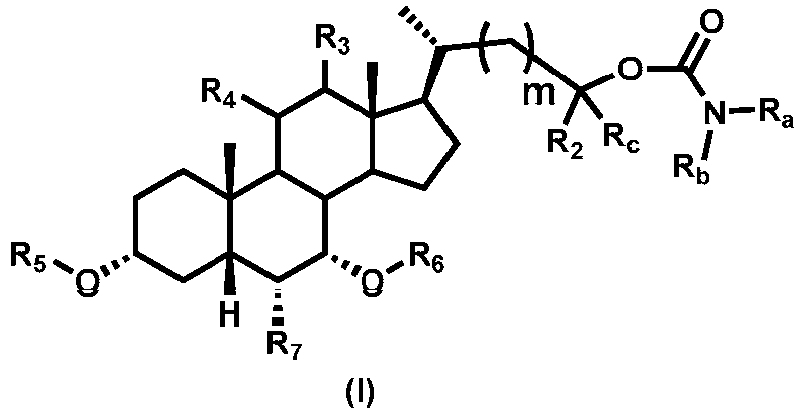
- Ra is selected from the group consisting of:
- 1) Hydrogen;
- 2) Substituted or unsubstituted -C1-C6 alkoxy;
- 3) Substituted or unsubstituted -C1-C8 alkyl;
- 4) Substituted or unsubstituted -C2-C8 alkenyl;
- 5) Substituted or unsubstituted -C2-C8 alkynyl;
- 6) Substituted or unsubstituted C3-C6-cycloalkyl;
- 7) 6) Substituted or unsubstituted arylalkyl;
- 8) 7) Substituted or unsubstituted aryl. and
- 9) Heteroaryl;
- Rb is selected from the group consisting of:
- 1) Hydrogen;
- 2) Substituted or unsubstituted -C1-C8 alkyl;
- 3) Substituted or unsubstituted -C2-C8 alkenyl;
- 4) Substituted or unsubstituted -C2-C8 alkynyl;
- 5) Substituted or unsubstituted arylalkyl;
- 6) Substituted or unsubstituted aryl;
- 7) -C(O)NR10R11;
- 8) -C(O)NHSO2R1;
- 9) -SO2R1; and
- 10) -C(O)R1;
- R1 is selected from the group consisting of:
- 1) Halogen;
- 2) Hydroxyl;
- 3) Substituted or unsubstituted -C1-C8 alkyl;
- 4) Substituted or unsubstituted -C2-C8 alkenyl;
- 5) Substituted or unsubstituted -C2-C8 alkynyl;
- 6) Substituted or unsubstituted -C3-C8 cycloalkyl;
- 7) Substituted or unsubstituted aryl;
- 8) Substituted or unsubstituted arylalkyl;
- 9) Substituted or unsubstituted heterocycloalkyl;
- 10) Substituted or unsubstituted heteroaryl;
- 11) Substituted or unsubstituted heteroarylalkyl; and
- 12) -NR10R11.
- R2 is selected from the group consisting of:
- 1) Hydrogen;
- 2) Substituted or unsubstituted -C1-C8 alkyl;
- 3) Substituted or unsubstituted -C2-C8 alkenyl;
- 4) Substituted or unsubstituted -C2-C8 alkynyl;
- 5) Substituted or unsubstituted arylalkyl; and
- 6) Substituted or unsubstituted aryl.
- Rc is selected from the group consisting of:
- 1) Hydrogen;
- 2) Substituted or unsubstituted -C1-C8 alkyl;
- 3) Substituted or unsubstituted -C2-C8 alkenyl;
- 4) Substituted or unsubstituted -C2-C8 alkynyl;
- 5) Substituted or unsubstituted arylalkyl;
- 6) Substituted or unsubstituted aryl.
- R3 is hydrogen, hydroxyl, -OSO3H, -OSO3 -, -OAc, -OPO3H2 or -OPO3 2-; preferably R3 is hydrogen.
- R4 is hydrogen, halogen, CN, N3, hydroxyl, -OSO3H, -OSO3 -, -OAc, -OPO3H2, -OPO3 2-, - SR2 or -NHR2, wherein, R2 is as defined previously; preferably R4 is hydrogen. or R3 and R4 are taken together with the carbon atoms to which they are attached to form -CH=CH- or cycloalkyl ring or heterocycloalkyl ring, such as, but not limited to cyclopropyl, or epoxide.
- R5 and R6 are independently selected from hydrogen or hydroxyl protecting group such as, but not limited to, acetyl, trimethyl silyl, or benzyl; preferably R5 and R6 are hydrogen.
- R7 is selected from the group consisting of:
- 2) Halogen;
- 3) Substituted or unsubstituted -C1-C8 alkyl;
- 4) Substituted or unsubstituted -C2-C8 alkenyl;
- 5) Substituted or unsubstituted -C2-C8 alkynyl; and
- 6) Substituted or unsubstituted -C3-C8 cycloalkyl; preferably R7 is C1-C4-alkyl, more preferably R7 is ethyl.
- Rio and R11 are each independently selected from hydrogen, substituted or unsubstituted -C1-C8 alkyl, substituted or unsubstituted -C2-C8 alkenyl, substituted or unsubstituted -C2-C8 alkynyl, and substituted or unsubstituted -C3-C8 cycloalkyl, or Rio and R11 are taken together with the nitrogen atom to which they are attached to form a heterocyclic ring.
- Each preferred group stated above can be taken in combination with one, any or all other preferred groups.
- In another embodiment, the present invention provides a pharmaceutical composition comprising a therapeutically effective amount of a compound or combination of compounds of the present invention, or a pharmaceutically acceptable salt form, in combination with a pharmaceutically acceptable carrier or excipient.
- In another embodiment, the present invention provides compounds of the invention for use in the prevention or treatment of an FXR mediated disease or condition. The use comprises administering a therapeutically effective amount of a compound of formula (I). The present invention also provides the use of a compound of formula (I) for the preparation of a medicament for the prevention or treatment of an FXR mediated disease or condition. Also disclosed is a method for the prevention or treatment of a TGR5 mediated disease or condition. The method comprises administering a therapeutically effective amount of a compound of formula (I). The present invention also provides the use of a compound of formula (I) for the preparation of a medicament for the prevention or treatment of a TGR5 mediated disease or condition.
- A disease that involves modulation of the TGR5 receptor can be is selected from metabolic disease, inflammatory disease, liver disease, autoimmune disease, cardiac disease, kidney disease, cancer, and gastrointestinal disease.
- A first embodiment of the invention is a compound represented by Formula I as described above, or a pharmaceutically acceptable salt, thereof. In preferred compounds of Formula I, R2, Rc, R3, R4, R5, and R6 are each hydrogen and R7 is ethyl.
- In preferred embodiments, the compounds of the invention have the stereochemistry set forth in Formula IA:

- In certain embodiments of the compounds of the invention, Ra is C1-C4-alkyl; halogenated C1-C4-alkyl; C1-C4-alkenyl; phenyl-C1-C4-alkyl; substituted or unsubstituted C3-C6-cycloalkyl; C1-C6-cycloalkyl-C1-C4-alkyl; heteroaryl, such as 5- or 6-membered heteroaryl; or substituted or unsubstituted aryl, such as substituted or unsubstituted phenyl or naphthyl. In this embodiment, Rb is preferably hydrogen or C1-C4-alkyl, more preferably hydrogen or methyl.
- In certain embodiments of the compounds of the invention, Ra is selected from the group consisting of methyl, ethyl, isopropyl, butyl, t-butyl, propyl, benzyl, vinyl, allyl, CF3,

- In other embodiments of the compounds of the invention, Ra, Rb and the nitrogen atom to which they are attached form a heterocycloalkyl or heterocycloalkenyl ring, preferably a 3 to 8-membered heterocycloalkyl or 3 to 8-membered heterocycloalkenyl and more preferably, a 3 to 6-membered heterocycloalkyl or a 3 to 6-membered heterocycloalkenyl. In certain embodiments, Ra, Rb and the nitrogen atom to which they are attached form a C3-C8-heterocycloalkyl or C3-C8-heterocycloalkenyl ring, more preferably a C3-C6-heterocycloalkyl or C3-C6-heterocycloalkenyl ring. In certain embodiments, Ra, Rb and the nitrogen atom to which they are attached form a ring selected from:

- In certain embodiments of the compounds of the invention, Rb is -C(O)NHSO2R1, -SO2R1 or -C(O)R1. R1 is preferably amino, alkylamino, dialkylamino, halogen, C1-C4-alkyl; halogenated C1-C4-alkyl; C1-C4-alkenyl; phenyl-C1-C4-alkyl; substituted or unsubstituted C3-C6-cycloalkyl; C3-C6-cycloalkyl-C1-C4-alkyl; C3-C6-heterocycloalkyl; C3-C6-heterocycloalkyl-C1-C4-alkyl; heteroaryl, such as 5- or 6-membered heteroaryl; or substituted or unsubstituted aryl, such as substituted or unsubstituted phenyl or naphthyl, including 4-t-butylphenyl. Ra is preferably hydrogen or C1-C4-alkyl, more preferably hydrogen or methyl and most preferably hydrogen.
- In certain embodiments of the compounds of the invention, R1 is selected from the group consisting of fluoro, amino, methyl, ethyl, isopropyl, butyl, t-butyl, propyl, benzyl, allyl, vinyl, CF3, cyclohexyl, cyclopentyl, and the groups listed below:




- A second embodiment of the invention is a compound represented by Formula II or a pharmaceutically acceptable salt, thereof,

- Also disclosed is a compound represented by Formula III or a pharmaceutically acceptable salt, thereof,

- A third embodiment of the invention is compounds represented by one of formula (III-1∼III-18), where Ra, Rb, Rc, R1, R2, R7 and m are as previously defined:


- A fourth embodiment of the invention is a compound represented by Formula IV or a pharmaceutically acceptable salt, thereof,

- Representative compounds of the invention include, but are not limited to, the following compounds (compound 1 to compound 99 in Table 1) according to Formula IV, wherein, Ra, Rb and m are delineated for each compound in Table 1.

Table 1 Compound m Ra Rb Compound m Ra Rb Compound m Ra Rb 1 0 Methyl H 34 1 Methyl H 67 2 Methyl H 2 0 Ethyl H 35 1 Ethyl H 68 2 Ethyl H 3 0 Isopropyl H 36 1 Isopropyl H 69 2 Isopropyl H 4 0 Butyl H 37 1 Butyl H 70 2 Butyl H 5 0 t-Butyl H 38 1 t-Butyl H 71 2 t-Butyl H 6 0 Propyl H 39 1 Propyl H 72 2 Propyl H 7 0 Benzyl H 40 1 Benzyl H 73 2 Benzyl H 8 0 Vinyl H 41 1 Vinyl H 74 2 Vinyl H 9 0 Allyl H 42 1 Allyl H 75 2 Allyl H 10 0 CF3 H 43 1 CF3 H 76 2 CF3 H 11 0 
H 44 1 
H 77 2 
H 12 0 
H 45 1 
H 78 2 
H 13 0 
H 46 1 
H 79 2 
H 14 0 
H 47 1 
H 80 2 
H 15 0 Methyl Me 48 1 Methyl Me 81 2 Methyl Me 16 0 Ethyl Me 49 1 Ethyl Me 82 2 Ethyl Me 17 0 Isopropyl Me 50 1 Isopropyl Me 83 2 Isopropyl Me 18 0 t-Butyl Me 51 1 t-Butyl Me 84 2 t-Butyl Me 19 0 Propyl Me 52 1 Propyl Me 85 2 Propyl Me 20 0 Benzyl Me 53 1 Benzyl Me 86 2 Benzyl Me 21 0 Vinyl Me 54 1 Vinyl Me 87 2 Vinyl Me 22 0 Allyl Me 55 1 Allyl Me 88 2 Allyl Me 23 0 CF3 Me 56 1 CF3 Me 89 2 CF3 Me 24 0 
Me 57 1 
Me 90 2 
Me 25 0 
Me 58 1 
Me 91 2 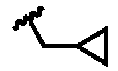
Me 26 0 
Me 59 1 
Me 92 2 
Me 27 0 
60 1 
93 2 
28 0 
61 1 
94 2 
29 0 
62 1 
95 2 
30 0 
63 1 
96 2 
31 0 
64 1 
97 2 
32 0 
65 1 
98 2 
33 0 
66 1 
99 2 
- A fifth embodiment of the invention is a compound represented by Formula V or a pharmaceutically acceptable salt, thereof,

- Representative compounds of the invention include, but are not limited to, the following compounds (compound 100 to compound 180 in Table 2) according to Formula V, wherein, R1 and m are delineated for each compound in Table 2.
Table 2 Compound m R1 Compound m R1 Compound m R1 100 0 Methyl 127 1 Methyl 154 2 Methyl 101 0 Ethyl 128 1 Ethyl 155 2 Ethyl 102 0 Isopropyl 129 1 Isopropyl 156 2 Isopropyl 103 0 Butyl 130 1 Butyl 157 2 Butyl 104 0 t-Butyl 131 1 t-Butyl 158 2 t-Butyl 105 0 Propyl 132 1 Propyl 159 2 Propyl 106 0 Benzyl 133 1 Benzyl 160 2 Benzyl 107 0 Vinyl 134 1 Vinyl 161 2 Vinyl 108 0 Allyl 135 1 Allyl 162 2 Allyl 109 0 CF3 136 1 CF3 163 2 CF3 110 0 
137 1 
164 2 
111 0 
138 1 
165 2 
112 0 
139 1 
166 2 
113 0 
140 1 
167 2 
114 0 
141 1 
168 2 
115 0 
142 1 
169 2 
116 0 
143 1 
170 2 
117 0 
144 1 
171 2 
118 0 NH2 145 1 NH2 172 2 NH2 119 0 
146 1 
173 2 
120 0 
147 1 
174 2 
121 0 
148 1 
175 2 
122 0 
149 1 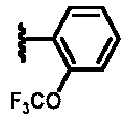
176 2 
123 0 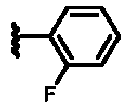
150 1 
177 2 
124 0 
151 1 
178 2 
125 0 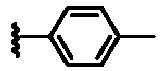
152 1 
179 2 
126 0 F 153 1 F 180 2 F - A sixth embodiment of the invention is a compound represented by Formula VI or a pharmaceutically acceptable salt, thereof,

- Representative compounds of the invention include, but are not limited to, the following compounds (compound 181 to compound 261 in Table 3) according to Formula VI, wherein R1 and m are delineated for each compound in Table 3.
Table 3 Compound m R1 Compound m R1 Compound m R1 181 0 Methyl 208 1 Methyl 235 2 Methyl 182 0 Ethyl 209 1 Ethyl 236 2 Ethyl 183 0 Isopropyl 210 1 Isopropyl 237 2 Isopropyl 184 0 Butyl 211 1 Butyl 238 2 Butyl 185 0 t-Butyl 212 1 t-Butyl 239 2 t-Butyl 186 0 Propyl 213 1 Propyl 240 2 Propyl 187 0 Benzyl 214 1 Benzyl 241 2 Benzyl 188 0 Vinyl 215 1 Vinyl 242 2 Vinyl 189 0 Allyl 216 1 Allyl 243 2 Allyl 190 0 CF3 217 1 CF3 244 2 CF3 191 0 
218 1 
245 2 
192 0 
219 1 
246 2 
193 0 
220 1 
247 2 
194 0 
221 1 
248 2 
195 0 
222 1 
249 2 
196 0 
223 1 
250 2 
197 0 
224 1 
251 2 
198 0 
225 1 
252 2 
199 0 NH2 226 1 NH2 253 2 NH2 200 0 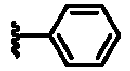
227 1 
254 2 
201 0 
228 1 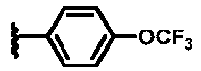
255 2 
202 0 
229 1 
256 2 
203 0 
230 1 
257 2 
204 0 
231 1 
258 2 
205 0 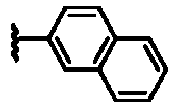
232 1 
259 2 
206 0 
233 1 
260 2 
207 0 F 234 1 F 261 2 F - It will be appreciated that the description of the present invention herein should be construed in congruity with the laws and principles of chemical bonding. In some instances it may be necessary to remove a hydrogen atom in order to accommodate a substituent at any given location.
- It will be yet appreciated that the compounds of the present invention may contain one or more asymmetric carbon atoms and may exist in racemic, diastereoisomeric, and optically active forms. It will still be appreciated that certain compounds of the present invention may exist in different tautomeric forms. All tautomers are contemplated to be within the scope of the present invention. In certain embodiments, the present invention provides a compound for use in the prevention or treatment of an FXR mediated disease or condition. The use comprises administering a therapeutically effective amount of a compound of formula (I). The present invention also provides the use of a compound of formula (I) for the preparation of a medicament for the prevention or treatment of an FXR mediated disease or condition.
- In certain embodiments, the FXR-mediated disease or condition is cardiovascular disease, atherosclerosis, arteriosclerosis, hypercholesteremia, or hyperlipidemia chronic liver disease, gastrointestinal disease, renal disease, metabolic disease, cancer (i.e., colorectal cancer), or neurological indications such as stroke.
- In certain embodiments, the chronic liver disease is primary biliary cirrhosis (PBC), cerebrotendinous xanthomatosis (CTX), primary sclerosing cholangitis (PSC), drug induced cholestasis, intrahepatic cholestasis of pregnancy, parenteral nutrition associated cholestasis (PNAC), bacterial overgrowth or sepsis associated cholestasis, autoimmune hepatitis, chronic viral hepatitis, alcoholic liver disease, nonalcoholic fatty liver disease (NAFLD), nonalcoholic steatohepatitis (NASH), liver transplant associated graft versus host disease, living donor transplant liver regeneration, congenital hepatic fibrosis, choledocholithiasis, granulomatous liver disease, intra- or extrahepatic malignancy, Sjogren's syndrome, Sarcoidosis, Wilson's disease, Gaucher's disease, hemochromatosis, or alpha 1-antitrypsin deficiency. In certain embodiments, the gastrointestinal disease is inflammatory bowel disease (IBD) (including Crohn's disease and ulcerative colitis), irritable bowel syndrome (IBS), bacterial overgrowth, malabsorption, post-radiation colitis, or microscopic colitis.
- In certain embodiments, the renal disease is diabetic nephropathy, focal segmental glomerulosclerosis (FSGS), hypertensive nephrosclerosis, chronic glomerulonephritis, chronic transplant glomerulopathy, chronic interstitial nephritis, or polycystic kidney disease.
- In certain embodiments, the cardiovascular disease is atherosclerosis, arteriosclerosis, dyslipidemia, hypercholesterolemia, or hypertriglyceridemia.
- In certain embodiments, the metabolic disease is insulin resistance, Type I and Type II diabetes, or obesity.
- Also disclosed is the use of the compound or pharmaceutical composition of the invention, in the manufacture of a medicament for a treating or preventing a disease in a subject that involves modulation of the TGR5 receptor. Also disclosed is a method of treating or preventing a disease that involves modulation of the TGR5 receptor in a subject by administering a compound or pharmaceutical composition of the invention.
- A disease that involves modulation of the TGR5 receptor is selected from metabolic disease, inflammatory disease, liver disease, autoimmune disease, cardiac disease, kidney disease, cancer, and gastrointestinal disease.
- Also disclosed is use, wherein the disease is an inflammatory disease selected from allergy, osteoarthritis, appendicitis, bronchial asthma, pancreatitis, allergic rash, and psoriasis. Also disclosed is a method of treating or preventing an inflammatory disease selected from allergy, osteoarthritis, appendicitis, bronchial asthma, pancreatitis, allergic rash, and psoriasis.
- Also disclosed is use, wherein the disease is an autoimmune disease selected from rheumatoid arthritis, multiple sclerosis, and type I diabetes. Also disclosed is a method of treating or preventing an autoimmune disease selected from rheumatoid arthritis, multiple sclerosis, and type I diabetes.
- Also disclosed is use, wherein the disease is a gastrointestinal disease selected from inflammatory bowel disease (Crohn's disease, ulcerative colitis), short bowel syndrome (post-radiation colitis), microscopic colitis, irritable bowel syndrome (malabsorption), and bacterial overgrowth. Also disclosed is a method of treating or preventing a gastrointestinal disease selected from inflammatory bowel disease (Crohn's disease, ulcerative colitis), short bowel syndrome (post-radiation colitis), microscopic colitis, irritable bowel syndrome (malabsorption), and bacterial overgrowth.
- Also disclosed is use, wherein the disease is kidney disease selected from diabetic nephropathy, chronic renal failure, hypertensive nephrosclerosis, chronic glomerulonephritis, chronic transplant glomerulopathy, chronic interstitial nephritis, and polycystic kidney disease. Also disclosed is a method of treating or preventing kidney disease selected from diabetic nephropathy, chronic renal failure, hypertensive nephrosclerosis, chronic glomerulonephritis, chronic transplant glomerulopathy, chronic interstitial nephritis, and polycystic kidney disease.
- Also disclosed is use, wherein the disease is cancer selected from colorectal cancer, liver cancer, hepatocellular carcinoma, cholangio carcinoma, renal cancer, gastric cancer, pancreatic cancer, prostate cancer, and insulanoma. Also disclosed is a method of treating or preventing cancer selected from colorectal cancer, liver cancer, hepatocellular carcinoma, cholangio carcinoma, renal cancer, gastric cancer, pancreatic cancer, prostate cancer, and insulanoma.
- In one aspect, the compound is a selective FXR agonist over TGR5 activator.
- In one aspect, the compound is a selective TGR5 agonist over FXR activator.
- Also disclosed is a compound that is a dual agonist for both FXR and TGR5.
- Yet a further aspect of the present invention is a process of making any of the compounds delineated herein employing any of the synthetic means delineated herein.
- Listed below are definitions of various terms used to describe this invention. These definitions apply to the terms as they are used throughout this specification and claims, unless otherwise limited in specific instances, either individually or as part of a larger group.
- The term "alkyl", as used herein, refers to a saturated, monovalent straight- or branched-chain hydrocarbon group Preferred alkyl radicals include C1-C6 alkyl and Ci-Cs alkyl radicals. Examples of C1-C6 alkyl groups include, but are not limited to, methyl, ethyl, propyl, isopropyl, n-butyl, tert-butyl, neopentyl, n-hexyl groups; and examples of C1-C8 alkyl groups include, but are not limited to, methyl, ethyl, propyl, isopropyl, n-butyl, tert-butyl, neopentyl, n-hexyl, heptyl, and octyl groups.
- The term "alkenyl", as used herein, denote a monovalent group derived from a hydrocarbon moiety by the removal of a single hydrogen atom wherein the hydrocarbon moiety has at least one carbon-carbon double bond. Preferred alkenyl groups include C2-C6 alkenyl and C2-C8 alkenyl groups. Alkenyl groups include, but are not limited to, for example, ethenyl, propenyl, butenyl, 1-methyl-2-buten-1-yl, heptenyl, octenyl and the like.
- The term "alkynyl", as used herein, denotes a monovalent group derived from a hydrocarbon moiety by the removal of a single hydrogen atom wherein the hydrocarbon moiety has at least one carbon-carbon triple bond. Preferred alkynyl groups include C2-C6 alkynyl and C2-C8 alkynyl groups. Representative alkynyl groups include, but are not limited to, for example, ethynyl, 1-propynyl, 1-butynyl, heptynyl, octynyl and the like.
- The term "carbocycle" refers to a saturated (e.g., "cycloalkyl"), partially saturated (e.g., "cycloalkenyl" or "cycloalkynyl") or completely unsaturated (e.g., "aryl") ring system containing zero heteroatom ring atom. "Ring atoms" or "ring members" are the atoms bound together to form the ring or rings. Where a carbocycle group is a divalent moiety linking two other elements in a depicted chemical structure (such as Z in Formula IA), the carbocycle group can be attached to the two other elements through any two substitutable ring atoms. A C4-C6 carbocycle has 4-6 ring atoms.
- The term "cycloalkyl", as used herein, denotes a monovalent group derived from a monocyclic or polycyclic saturated carbocyclic ring compound by the removal of a single hydrogen atom. Preferred cycloalkyl groups include C3-C8 cycloalkyl and C3-C12 cycloalkyl groups. Examples of C3-C8-Cycloalkyl include, but are not limited to, cyclopropyl, cyclobutyl, cyclopentyl, cyclohexyl, cyclopentyl and cyclooctyl; and examples of C3-C12-cycloalkyl include, but are not limited to, cyclopropyl, cyclobutyl, cyclopentyl, cyclohexyl, bicyclo [2.2.1] heptyl, and bicyclo [2.2.2] octyl.
- The term "cycloalkenyl" as used herein, denote a monovalent group derived from a monocyclic or polycyclic carbocyclic ring compound having at least one carbon-carbon double bond by the removal of a single hydrogen atom. Preferred cycloalkenyl groups include C3-C8 cycloalkenyl and C3-C12 cycloalkenyl groups. Examples of C3-C8-cycloalkenyl include, but are not limited to, cyclopropenyl, cyclobutenyl, cyclopentenyl, cyclohexenyl, cycloheptenyl, cyclooctenyl, and the like; and examples of C3-C12-cycloalkenyl include, but are not limited to, cyclopropenyl, cyclobutenyl, cyclopentenyl, cyclohexenyl, cycloheptenyl, cyclooctenyl, and the like.
- The term "aryl," as used herein, refers to a mono- or bicyclic carbocyclic ring system radical having one or two aromatic rings including, but not limited to, phenyl, naphthyl, tetrahydronaphthyl, indanyl, indenyl and the like.
- The term "arylalkyl," as used herein, refers to a C1-C3 alkyl or C1-C6 alkyl radical attached to an aryl ring. Examples include, but are not limited to, benzyl, phenethyl and the like. The term "substituted arylalkyl" means an arylalkyl functional group in which the aryl group is substituted.
- The term "heteroaryl," as used herein, refers to a mono-, bi-, or tri-cyclic aromatic radical or ring having from five to ten ring atoms of which at least one ring atom is selected from S, O and N; wherein any N or S contained within the ring may be optionally oxidized. Preferred heteroaryl groups are monocyclic or bicyclic. Heteroaryl groups include, but are not limited to, pyridinyl, pyrazinyl, pyrimidinyl, pyrrolyl, pyrazolyl, imidazolyl, thiazolyl, oxazolyl, isooxazolyl, thiadiazolyl, oxadiazolyl, thiophenyl, furanyl, quinolinyl, isoquinolinyl, benzimidazolyl, benzooxazolyl, quinoxalinyl, and the like.
- The term "heteroarylalkyl," as used herein, refers to a C1-C3 alkyl or C1-C6 alkyl radical attached to a heteroaryl ring. Examples include, but are not limited to, pyridinylmethyl, pyrimidinylethyl and the like. The term "substituted heteroarylalkyl" means a heteroarylalkyl functional group in which the heteroaryl group is substituted.
- As used herein, the term "alkoxy" employed alone or in combination with other terms means, unless otherwise stated, an alkyl group having the designated number of carbon atoms connected to the rest of the molecule via an oxygen atom, such as, for example, methoxy, ethoxy, 1-propoxy, 2-propoxy (isopropoxy) and the higher homologs and isomers. Preferred alkoxy are (C1-C3) alkoxy.
- The term "substituted" as used herein, refers to independent replacement of one, two, or three or more of the hydrogen atoms thereon with substituents including, but not limited to, deuterium, -F, -Cl, -Br, -I, -OH, protected hydroxy, -NO2, -CN, -NH2, N3, protected amino, alkoxy, thioalkoxy, oxo, C1-C12-akl, C2-C12-alkenyl, C2-C12-alkynyl, C3-C12-cycloalkyl -halo- C1-C12-akl, -halo- C2-C12-alkenyl, -halo- C2-C12-alkynyl, -halo-C3-C12-cycloalkyl, -NH -C1-C12-alkyl, -NH -C2-C12-alkenyl, -NH -C2-C12-alkynyl, -NH - C3-C12-cycloalkyl, -NH -aryl, -NH -heteroaryl, -NH -heterocycloalkyl, -dialkylamino, - diarylamino, -diheteroarylamino, -O-C1-C12-alkyl, -O-C2-C12-alkenyl, -O-C2-C12-alkynyl, -O-C3-C12-cycloalkyl, -O-aryl, -O-heteroaryl, -O-heterocycloalkyl, -C(O)-C1-C12-akl, - C(O)-C2-C12-alkenyl, -C(O)-C2-C12-alkynyl, -C(O)-C3-C12-cycloalkyl, -C(O)-aryl, - C(O)-heteroaryl, -C(O)-heterocycloalkyl, -CONH2, -CONH-C1-C12-alkyl, -CONH- C2-C12-alkenyl, -CONH- C2-C12-alkynyl, -CONH-C3-C12-cycloalkyl, -CONH-aryl, -CONH-heteroaryl, -CONH-heterocycloalkyl, -OCO2-C1-C12-alkyl, -OCO2-C2-C12-alkenyl, - OCO2-C2-C12-alkynyl, -OCO2-C3-C12-cycloalkyl, -OCO2-aryl, -OCO2-heteroaryl, -OCO2-heterocycloalkyl, -OCONH2, -OCONH- C1-C12-alkyl, -OCONH- C2-C12-alkenyl, - OCONH- C2-C12-alkynyl, -OCONH- C3-C12-cycloalkyl, -OCONH- aryl, -OCONH-heteroaryl, -OCONH- heterocycloalkyl, -NHC(O)- C1-C12-alkyl, -NHC(O)-C2-C12-alkenyl, -NHC(O)-C2-C12-alkynyl, -NHC(O)-C3-C12-cycloalkyl, -NHC(O)-aryl, -NHC(O)-heteroaryl, -NHC(O)-heterocycloalkyl, -NHCO2-C1-C12-alkyl, -NHCO2-C2-C12-alkenyl, - NHCO2-C2-C12-alkynyl, -NHCO2-C3-C12-cycloalkyl, -NHCO2- aryl, -NHCO2-heteroaryl, -NHCO2- heterocycloalkyl, -NHC(O)NH2, -NHC(O)NH- C1-C12-alkyl, - NHC(O)NH-C2-C12-alkenyl, -NHC(O)NH-C2-C12-alkynyl, -NHC(O)NH-C3-C12-cycloalkyl, -NHC(O)NH-aryl, -NHC(O)NH-heteroaryl, -NHC(O)NH-heterocycloalkyl, NHC(S)NH2, -NHC(S)NH- C1-C12-akl, -NHC(S)NH-C2-C12-alkenyl, -NHC(S)NH-C2-C12-alkynyl, -NHC(S)NH-C3-C12-cycloalkyl, -NHC(S)NH-aryl, -NHC(S)NH-heteroaryl, - NHC(S)NH-heterocycloalkyl, -NHC(NH)NH2, -NHC(NH)NH- C1-C12-alkyl, - NHC(NH)NH-C2-C12-alkenyl, -NHC(NH)NH-C2-C12-alkynyl, -NHC(NH)NH-C3-C12-cycloalkyl, -NHC(NH)NH-aryl, -NHC(NH)NH-heteroaryl, -NHC(NH)NH-heterocycloalkyl, -NHC(NH)-C1-C12-alkyl, -NHC(NH)-C2-C12-alkenyl, -NHC(NH)-C2-C12-alkynyl, -NHC(NH)-C3-C12-cycloalkyl, -NHC(NH)-aryl, -NHC(NH)-heteroaryl, - NHC(NH)-heterocycloalkyl, -C(NH)NH-C1-C12-alkyl, -C(NH)NH-C2-C12-alkenyl, - C(NH)NH-C2-C12-alkynyl, -C(NH)NH-C3-C12-cycloalkyl, -C(NH)NH-aryl, -C(NH)NH-heteroaryl, -C(NH)NH-heterocycloalkyl, -S(O)-C1-C12-alkyl, - S(O)-C2-C12-alkenyl, - S(O)-C2-C12-alkynyl, - S(O)-C3-C12-cycloalkyl, - S(O)-aryl, - S(O)-heteroaryl, - S(O)-heterocycloalkyl -SO2NH2, -SO2NH-C1-C12-alkyl, -SO2NH- C2-C12-alkenyl, -SO2NH- C2-C12-alkynyl, -SO2NH-C3-C12-cycloalkyl, -SO2NH-aryl, -SO2NH-heteroaryl, -SO2NH-heterocycloalkyl, -NHSO2-C1-C12-alkyl, -NHSO2-C2-C12-alkenyl, - NHSO2-C2-C12-alkynyl, -NHSO2-C3-C12-cycloalkyl, -NHSO2-aryl, -NHSO2-heteroaryl, -NHSO2-heterocycloalkyl, -CH2NH2, -CH2SO2CH3, -aryl, -arylalkyl, -heteroaryl, -heteroarylalkyl, - heterocycloalkyl, -C3-C12-cycloalkyl, polyalkoxyalkyl, polyalkoxy, -methoxymethoxy, - methoxyethoxy, -SH, -S-C1-C12-alkyl, -S-C2-C12-alkenyl, -S-C2-C12-alkynyl, -S-C3-C12-cycloalkyl, -S-aryl, -S-heteroaryl, -S-heterocycloalkyl, methylthiomethyl, or -L'-R', wherein L' is C1-C6alkylene, C2-C6alkenylene or C2-C6alkynylene, and R' is aryl, heteroaryl, heterocyclic, C3-C12cycloalkyl or C3-C12cycloalkenyl. It is understood that the aryls, heteroaryls, alkyls, and the like can be further substituted. In some cases, each substituent in a substituted moiety is additionally optionally substituted with one or more groups, each group being independently selected from -F, -Cl, -Br, -I, -OH, -NO2, -CN, or -NH2.
- In accordance with the invention, any of the aryls, substituted aryls, heteroaryls and substituted heteroaryls described herein, can be any aromatic group. Aromatic groups can be substituted or unsubstituted.
- An "aliphatic group" is non-aromatic moiety that may contain any combination of carbon atoms, hydrogen atoms, halogen atoms, oxygen, nitrogen or other atoms, and optionally contain one or more units of unsaturation, e.g., double and/or triple bonds. An aliphatic group may be straight chained, branched or cyclic and preferably contains between about 1 and about 24 carbon atoms, more typically between about 1 and about 12 carbon atoms. In addition to aliphatic hydrocarbon groups, aliphatic groups include, for example, polyalkoxyalkyls, such as polyalkylene glycols, polyamines, and polyimines, for example. Such aliphatic groups may be further substituted. It is understood that aliphatic groups may be used in place of the alkyl, alkenyl, alkynyl, alkylene, alkenylene, and alkynylene groups described herein.
- The term "alicyclic," as used herein, denotes a monovalent group derived from a monocyclic or polycyclic saturated carbocyclic ring compound by the removal of a single hydrogen atom. Examples include, but are not limited to, cyclopropyl, cyclobutyl, cyclopentyl, cyclohexyl, bicyclo [2.2.1] heptyl, and bicyclo [2.2.2] octyl. Such alicyclic groups may be further substituted.
- The terms "heterocyclic" and "heterocycloalkyl" can be used interchangeably and refer to a non-aromatic ring or a bi- or tri-cyclic group fused, bridge or spiro system, where (i) each ring system contains at least one heteroatom independently selected from oxygen, sulfur and nitrogen, (ii) each ring system can be saturated or unsaturated, (iii) the nitrogen and sulfur heteroatoms may optionally be oxidized, (iv) the nitrogen heteroatom may optionally be quatemized, (v) any of the above rings may be fused to an aromatic ring, and (vi) the remaining ring atoms are carbon atoms which may be optionally oxo-substituted. Representative heterocycloalkyl groups include, but are not limited to, 1,3-dioxolane, pyrrolidinyl, pyrazolinyl, pyrazolidinyl, imidazolinyl, imidazolidinyl, piperidinyl, piperazinyl, oxazolidinyl, isoxazolidinyl, morpholinyl, thiazolidinyl, isothiazolidinyl, quinoxalinyl, pyridazinonyl, and tetrahydrofuryl. Such heterocyclic groups may be further substituted. Heteroaryl or heterocyclic groups can be C-attached or N-attached (where possible). Examples include, but are not limited to, 3-azabicyclo[3.3.1]nonanyl, 2-oxa-7-azasprio[4.4]nonanyl, and the like.
- It will be apparent that in various embodiments of the invention, the substituted or unsubstituted alkyl, alkenyl, alkynyl, cycloalkyl, cycloalkenyl, cycloalkynyl, arylalkyl, heteroarylalkyl, and heterocycloalkyl are intended to be monovalent or divalent. Thus, alkylene, alkenylene, and alkynylene, cycloaklylene, cycloalkenylene, cycloalkynylene, arylalkylene, hetoerarylalkylene and heterocycloalkylene groups are to be included in the above definitions, and are applicable to provide the formulas herein with proper valency.
- The term "hydroxy activating group", as used herein, refers to a labile chemical moiety which is known in the art to activate a hydroxy group so that it will depart during synthetic procedures such as in a substitution or elimination reactions. Examples of hydroxy activating group include, but not limited to, mesylate, tosylate, triflate, p-nitrobenzoate, phosphonate and the like.
- The term "activated hydroxy", as used herein, refers to a hydroxy group activated with a hydroxy activating group, as defined above, including mesylate, tosylate, triflate, p-nitrobenzoate, phosphonate groups, for example.
- The term "protected hydroxy," as used herein, refers to a hydroxy group protected with a hydroxy protecting group, as defined above, including benzoyl, acetyl, trimethylsilyl, triethylsilyl, and methoxymethyl groups.
- The term "hydroxy protecting group," as used herein, refers to a labile chemical moiety which is known in the art to protect a hydroxy group against undesired reactions during synthetic procedures. After said synthetic procedure(s) the hydroxy protecting group as described herein may be selectively removed. Hydroxy protecting groups as known in the are described generally in T.H. Greene and P.G., S. M. Wuts, Protective Groups in Organic Synthesis, 3rd edition, John Wiley & Sons, New York (1999). Examples of hydroxy protecting groups include benzyloxycarbonyl, 4-nitrobenzyloxycarbonyl, 4-bromobenzyloxycarbonyl, 4-methoxybenzyloxycarbonyl, methoxycarbonyl, tert-butoxycarbonyl, isopropoxycarbonyl, diphenylmethoxycarbonyl, 2,2,2-trichloroethoxycarbonyl, 2-(trimethylsilyl)ethoxycarbonyl, 2-furfuryloxycarbonyl, allyloxycarbonyl, acetyl, formyl, chloroacetyl, trifluoroacetyl, methoxyacetyl, phenoxyacetyl, benzoyl, methyl, t-butyl, 2,2,2-trichloroethyl, 2-trimethylsilyl ethyl, 1,1-dimethyl-2-propenyl, 3-methyl- 3 -butenyl, allyl, benzyl, para-methoxybenzyldiphenylmethyl, triphenylmethyl (trityl), tetrahydrofuryl, methoxymethyl, methylthiomethyl, benzyloxymethyl, 2,2,2-triehloroethoxymethyl, 2-(trimethylsilyl)ethoxymethyl, methanesulfonyl, para-toluenesulfonyl, trimethylsilyl, triethylsilyl, triisopropylsilyl, and the like. Preferred hydroxy protecting groups for the present invention are acetyl (Ac or -C(O)CH3), benzoyl (Bz or -C(O)C6H5), and trimethylsilyl (TMS or-Si(CH3)3).
- The terms "halo" and "halogen," as used herein, refer to an atom selected from fluorine, chlorine, bromine and iodine.
- The term "hydrogen" includes hydrogen and deuterium. In addition, the recitation of an atom of an element includes all isotopes of that element so long as the resulting compound is pharmaceutically acceptable.
- In certain embodiments, the compounds of each formula herein include isotopically labelled compounds. An "isotopically labelled compound" is a compound in which at least one atomic position is enriched in a specific isotope of the designated element to a level which is significantly greater than the natural abundance of that isotope. For example, one or more hydrogen atom positions in a compound can be enriched with deuterium to a level which is significantly greater than the natural abundance of deuterium, for example, enrichment to a level of at least 1%, preferably at least 20% or at least 50%. Such a deuterated compound may, for example, be metabolized more slowly than its non-deuterated analog, and therefore exhibit a longer half-life when administered to a subject. Such compounds can synthesize using methods known in the art, for example by employing deuterated starting materials. Unless stated to the contrary, isotopically labelled compounds are pharmaceutically acceptable.
- The term "leaving group" means a functional group or atom which can be displaced by another functional group or atom in a substitution reaction, such as a nucleophilic substitution reaction. By way of example, representative leaving groups include chloro, bromo and iodo groups; sulfonic ester groups, such as mesylate, tosylate, brosylate, nosylate and the like; and acyloxy groups, such as acetoxy, trifluoroacetoxy and the like.
- The term "subject" as used herein refers to a mammal. A subject therefore refers to, for example, dogs, cats, horses, cows, pigs, guinea pigs, and the like. Preferably the subject is a human. When the subject is a human, the subject may be referred to herein as a patient.
- As used herein, the term "pharmaceutically acceptable salt" refers to those salts of the compounds formed by the process of the present invention which are, within the scope of sound medical judgment, suitable for use in contact with the tissues of humans and lower animals without undue toxicity, irritation, allergic response and the like, and are commensurate with a reasonable benefit/risk ratio. Pharmaceutically acceptable salts are well known in the art.
- Berge, et al. describes pharmaceutically acceptable salts in detail in J. Pharmaceutical Sciences, 66: 1-19 (1977). The salts can be prepared in situ during the final isolation and purification of the compounds of the invention, or separately by reacting the free base function with a suitable organic acid. Examples of pharmaceutically acceptable salts include, but are not limited to, nontoxic acid addition salts e.g., salts of an amino group formed with inorganic acids such as hydrochloric acid, hydrobromic acid, phosphoric acid, sulfuric acid and perchloric acid or with organic acids such as acetic acid, maleic acid, tartaric acid, citric acid, succinic acid or malonic acid or by using other methods used in the art such as ion exchange. Other pharmaceutically acceptable salts include, but are not limited to, adipate, alginate, ascorbate, aspartate, benzenesulfonate, benzoate, bisulfate, borate, butyrate, camphorate, camphorsulfonate, citrate, cyclopentanepropionate, digluconate, dodecylsulfate, ethanesulfonate, formate, fumarate, glucoheptonate, glycerophosphate, gluconate, hemisulfate, heptanoate, hexanoate, hydroiodide, 2-hydroxy-ethanesulfonate, lactobionate, lactate, laurate, lauryl sulfate, malate, maleate, malonate, methanesulfonate, 2-naphthalenesulfonate, nicotinate, nitrate, oleate, oxalate, palmitate, pamoate, pectinate, persulfate, 3-phenylpropionate, phosphate, picrate, pivalate, propionate, stearate, succinate, sulfate, tartrate, thiocyanate, p-toluenesulfonate, undecanoate, valerate salts, and the like. Representative alkali or alkaline earth metal salts include sodium, lithium, potassium, calcium, magnesium, and the like. Further pharmaceutically acceptable salts include, when appropriate, nontoxic ammonium, quaternary ammonium, and amine cations formed using counterions such as halide, hydroxide, carboxylate, sulfate, phosphate, nitrate, alkyl having from 1 to 6 carbon atoms, sulfonate and aryl sulfonate.
- Pharmaceutically acceptable salts can also be prepared by deprotonation of the parent compound with a suitable base, thereby forming the anionic conjugate base of the parent compound. In such salts the counter ion is a cation. Suitable cations include ammonium and metal cations, such as alkali metal cations, including Li+, Na+, K+ and Cs+, and alkaline earth metal cations, such as Mg2+ and Ca2+.
- The term "amino protecting group," as used herein, refers to a labile chemical moiety which is known in the art to protect an amino group against undesired reactions during synthetic procedures. After said synthetic procedure(s) the amino protecting group as described herein may be selectively removed. Amino protecting groups as known in the are described generally in T.H. Greene and P.G. M. Wuts, Protective Groups in Organic Synthesis, 3rd edition, John Wiley & Sons, New York (1999). Examples of amino protecting groups include, but are not limited to, t-butoxycarbonyl, 9-fluorenylmethoxycarbonyl, benzyloxycarbonyl, and the like.
- As used herein, the term "pharmaceutically acceptable ester" refers to esters of the compounds formed by the process of the present invention which hydrolyze in vivo and include those that break down readily in the human body to leave the parent compound or a salt thereof. Suitable ester groups include, for example, those derived from pharmaceutically acceptable aliphatic carboxylic acids, particularly alkanoic, alkenoic, cycloalkanoic and alkanedioic acids, in which each alkyl or alkenyl moiety advantageously has not more than 6 carbon atoms. Examples of particular esters include, but are not limited to, formates, acetates, propionates, butyrates, acrylates and ethylsuccinates.
- The term "treating", as used herein, means relieving, lessening, reducing, eliminating, modulating, or ameliorating, i.e. causing regression of the disease state or condition. Treating can also include inhibiting, i.e. arresting the development, of a existing disease state or condition, and relieving or ameliorating, i.e. causing regression of an existing disease state or condition, for example when the disease state or condition may already be present.
- The term "preventing", as used herein means, to completely or almost completely stop a disease state or condition, from occurring in a patient or subject, especially when the patient or subject is predisposed to such or at risk of contracting a disease state or condition.
- Additionally, the compounds of the present invention, for example, the salts of the compounds, can exist in either hydrated or unhydrated (the anhydrous) form or as solvates with other solvent molecules. Nonlimiting examples of hydrates include monohydrates, dihydrates, etc. Nonlimiting examples of solvates include ethanol solvates, acetone solvates, etc.
- "Solvates" means solvent addition forms that contain either stoichiometric or non stoichiometric amounts of solvent. Some compounds have a tendency to trap a fixed molar ratio of solvent molecules in the crystalline solid state, thus forming a solvate. If the solvent is water the solvate formed is a hydrate, when the solvent is alcohol, the solvate formed is an alcoholate. Hydrates are formed by the combination of one or more molecules of water with one of the substances in which the water retains its molecular state as H2O, such combination being able to form one or more hydrate.
- As used herein, the term "analog" refers to a chemical compound that is structurally similar to another but differs slightly in composition (as in the replacement of one atom by an atom of a different element or in the presence of a particular functional group, or the replacement of one functional group by another functional group). Thus, an analog is a compound that is similar to or comparable in function and appearance to the reference compound.
- The term "aprotic solvent," as used herein, refers to a solvent that is relatively inert to proton activity, i.e., not acting as a proton-donor. Examples include, but are not limited to, hydrocarbons, such as hexane and toluene, for example, halogenated hydrocarbons, such as, for example, methylene chloride, ethylene chloride, chloroform, and the like, heterocyclic compounds, such as, for example, tetrahydrofuran and N-methylpyrrolidinone, and ethers such as diethyl ether, bis-methoxymethyl ether. Such solvents are well known to those skilled in the art, and individual solvents or mixtures thereof may be preferred for specific compounds and reaction conditions, depending upon such factors as the solubility of reagents, reactivity of reagents and preferred temperature ranges, for example. Further discussions of aprotic solvents may be found in organic chemistry textbooks or in specialized monographs, for example: Organic Solvents Physical Properties and Methods of Purification, 4th ed., edited by John A. Riddick et al., Vol. II, in the Techniques of Chemistry Series, John Wiley & Sons, NY, 1986.
- The terms "protogenic organic solvent" or "protic solvent" as used herein, refer to a solvent that tends to provide protons, such as an alcohol, for example, methanol, ethanol, propanol, isopropanol, butanol, t-butanol, and the like. Such solvents are well known to those skilled in the art, and individual solvents or mixtures thereof may be preferred for specific compounds and reaction conditions, depending upon such factors as the solubility of reagents, reactivity of reagents and preferred temperature ranges, for example. Further discussions of protogenic solvents may be found in organic chemistry textbooks or in specialized monographs, for example: Organic Solvents Physical Properties and Methods of Purification, 4th ed., edited by John A. Riddick et al., Vol. II, in the Techniques of Chemistry Series, John Wiley & Sons, NY, 1986.
- Combinations of substituents and variables envisioned by this invention are only those that result in the formation of stable compounds. The term "stable", as used herein, refers to compounds which possess stability sufficient to allow manufacture and which maintains the integrity of the compound for a sufficient period of time to be useful for the purposes detailed herein (e.g., therapeutic or prophylactic administration to a subject).
- The synthesized compounds can be separated from a reaction mixture and further purified by a method such as column chromatography, high pressure liquid chromatography, or recrystallization. Additionally, the various synthetic steps may be performed in an alternate sequence or order to give the desired compounds. In addition, the solvents, temperatures, reaction durations, etc. delineated herein are for purposes of illustration only and variation of the reaction conditions can produce the desired bridged macrocyclic products of the present invention. Synthetic chemistry transformations and protecting group methodologies (protection and deprotection) useful in synthesizing the compounds described herein include, for example, those described in R. Larock, Comprehensive Organic Transformations, VCH Publishers (1989); T.W. Greene and P.G.M. Wuts, Protective Groups in Organic Synthesis, 2d. Ed., John Wiley and Sons (1991); L. Fieser and M. Fieser, Fieser and Fieser's Reagents for Organic Synthesis, John Wiley and Sons (1994); and L. Paquette, ed., Encyclopedia of Reagents for Organic Synthesis, John Wiley and Sons (1995).
- The compounds of this invention may be modified by appending various functionalities via synthetic means delineated herein to enhance selective biological properties. Such modifications include those which increase biological penetration into a given biological system (e.g., blood, lymphatic system, central nervous system), increase oral availability, increase solubility to allow administration by injection, alter metabolism and alter rate of excretion.
- The pharmaceutical compositions of the present invention comprise a therapeutically effective amount of a compound of the present invention formulated together with one or more pharmaceutically acceptable carriers. As used herein, the term "pharmaceutically acceptable carrier" means a non-toxic, inert solid, semi-solid or liquid filler, diluent, encapsulating material or formulation auxiliary of any type. Some examples of materials which can serve as pharmaceutically acceptable carriers are sugars such as lactose, glucose and sucrose; starches such as corn starch and potato starch; cellulose and its derivatives such as sodium carboxymethyl cellulose, ethyl cellulose and cellulose acetate; powdered tragacanth; malt; gelatin; talc; excipients such as cocoa butter and suppository waxes; oils such as peanut oil, cottonseed oil; safflower oil; sesame oil; olive oil; corn oil and soybean oil; glycols; such a propylene glycol; esters such as ethyl oleate and ethyl laurate; agar; buffering agents such as magnesium hydroxide and aluminum hydroxide; alginic acid; pyrogen-free water; isotonic saline; Ringer's solution; ethyl alcohol, and phosphate buffer solutions, as well as other non-toxic compatible lubricants such as sodium lauryl sulfate and magnesium stearate, as well as coloring agents, releasing agents, coating agents, sweetening, flavoring and perfuming agents, preservatives and antioxidants can also be present in the composition, according to the judgment of the formulator. The pharmaceutical compositions of this invention can be administered to humans and other animals orally, rectally, parenterally, intracistemally, intravaginally, intraperitoneally, topically (as by powders, ointments, or drops), buccally, or as an oral or nasal spray.
- The pharmaceutical compositions of this invention may be administered orally, parenterally, by inhalation spray, topically, rectally, nasally, buccally, vaginally or via an implanted reservoir, preferably by oral administration or administration by injection. The pharmaceutical compositions of this invention may contain any conventional non-toxic pharmaceutically-acceptable carriers, adjuvants or vehicles. In some cases, the pH of the formulation may be adjusted with pharmaceutically acceptable acids, bases or buffers to enhance the stability of the formulated compound or its delivery form. The term parenteral as used herein includes subcutaneous, intracutaneous, intravenous, intramuscular, intra-articular, intraarterial, intrasynovial, intrastemal, intrathecal, intralesional and intracranial injection or infusion techniques.
- Liquid dosage forms for oral administration include pharmaceutically acceptable emulsions, microemulsions, solutions, suspensions, syrups and elixirs. In addition to the active compounds, the liquid dosage forms may contain inert diluents commonly used in the art such as, for example, water or other solvents, solubilizing agents and emulsifiers such as ethyl alcohol, isopropyl alcohol, ethyl carbonate, ethyl acetate, benzyl alcohol, benzyl benzoate, propylene glycol, 1,3-butylene glycol, dimethylformamide, oils (in particular, cottonseed, groundnut, corn, germ, olive, castor, and sesame oils), glycerol, tetrahydrofurfuryl alcohol, polyethylene glycols and fatty acid esters of sorbitan, and mixtures thereof. Besides inert diluents, the oral compositions can also include adjuvants such as wetting agents, emulsifying and suspending agents, sweetening, flavoring, and perfuming agents.
- Injectable preparations, for example, sterile injectable aqueous or oleaginous suspensions may be formulated according to the known art using suitable dispersing or wetting agents and suspending agents. The sterile injectable preparation may also be a sterile injectable solution, suspension or emulsion in a nontoxic parenterally acceptable diluent or solvent, for example, as a solution in 1, 3-butanediol. Among the acceptable vehicles and solvents that may be employed are water, Ringer's solution, U.S.P. and isotonic sodium chloride solution. In addition, sterile, fixed oils are conventionally employed as a solvent or suspending medium. For this purpose, any bland fixed oil can be employed including synthetic mono- or diglycerides. In addition, fatty acids such as oleic acid are used in the preparation of injectables.
- The injectable formulations can be sterilized, for example, by filtration through a bacterial-retaining filter, or by incorporating sterilizing agents in the form of sterile solid compositions which can be dissolved or dispersed in sterile water or other sterile injectable medium prior to use.
- In order to prolong the effect of a drug, it is often desirable to slow the absorption of the drug from subcutaneous or intramuscular injection. This may be accomplished by the use of a liquid suspension of crystalline or amorphous material with poor water solubility. The rate of absorption of the drug then depends upon its rate of dissolution, which, in turn, may depend upon crystal size and crystalline form. Alternatively, delayed absorption of a parenterally administered drug form is accomplished by dissolving or suspending the drug in an oil vehicle. Injectable depot forms are made by forming microencapsule matrices of the drug in biodegradable polymers such as polylactide-polyglycolide. Depending upon the ratio of drug to polymer and the nature of the particular polymer employed, the rate of drug release can be controlled. Examples of other biodegradable polymers include poly(orthoesters) and poly(anhydrides). Depot injectable formulations are also prepared by entrapping the drug in liposomes or microemulsions which are compatible with body tissues.
- Compositions for rectal or vaginal administration are preferably suppositories which can be prepared by mixing the compounds of this invention with suitable nonirritating excipients or carriers such as cocoa butter, polyethylene glycol or a suppository wax which are solid at ambient temperature but liquid at body temperature and therefore melt in the rectum or vaginal cavity and release the active compound.
- Solid dosage forms for oral administration include capsules, tablets, pills, powders, and granules. In such solid dosage forms, the active compound is mixed with at least one inert, pharmaceutically acceptable excipient or carrier such as sodium citrate or dicalcium phosphate and/or: a) fillers or extenders such as starches, lactose, sucrose, glucose, mannitol, and silicic acid, b) binders such as, for example, carboxymethylcellulose, alginates, gelatin, polyvinylpyrrolidinone, sucrose, and acacia, c) humectants such as glycerol, d) disintegrating agents such as agar-agar, calcium carbonate, potato or tapioca starch, alginic acid, certain silicates, and sodium carbonate, e) solution retarding agents such as paraffin, f) absorption accelerators such as quaternary ammonium compounds, g) wetting agents such as, for example, cetyl alcohol and glycerol monostearate, h) absorbents such as kaolin and bentonite clay, and i) lubricants such as talc, calcium stearate, magnesium stearate, solid polyethylene glycols, sodium lauryl sulfate, and mixtures thereof. In the case of capsules, tablets and pills, the dosage form may also comprise buffering agents.
- Solid compositions of a similar type may also be employed as fillers in soft and hard-filled gelatin capsules using such excipients as lactose or milk sugar as well as high molecular weight polyethylene glycols and the like.
- The active compounds can also be in micro-encapsulated form with one or more excipients as noted above. The solid dosage forms of tablets, dragees, capsules, pills, and granules can be prepared with coatings and shells such as enteric coatings, release controlling coatings and other coatings well known in the pharmaceutical formulating art. In such solid dosage forms the active compound may be admixed with at least one inert diluent such as sucrose, lactose or starch. Such dosage forms may also comprise, as is normal practice, additional substances other than inert diluents, e.g., tableting lubricants and other tableting aids such a magnesium stearate and microcrystalline cellulose. In the case of capsules, tablets and pills, the dosage forms may also comprise buffering agents. They may optionally contain opacifying agents and can also be of a composition that they release the active ingredient(s) only, or preferentially, in a certain part of the intestinal tract, optionally, in a delayed manner. Examples of embedding compositions which can be used include polymeric substances and waxes.
- Dosage forms for topical or transdermal administration of a compound of this invention include ointments, pastes, creams, lotions, gels, powders, solutions, sprays, inhalants or patches. The active component is admixed under sterile conditions with a pharmaceutically acceptable carrier and any needed preservatives or buffers as may be required. Ophthalmic formulation, ear drops, eye ointments, powders and solutions are also contemplated as being within the scope of this invention.
- The ointments, pastes, creams and gels may contain, in addition to an active compound of this invention, excipients such as animal and vegetable fats, oils, waxes, paraffins, starch, tragacanth, cellulose derivatives, polyethylene glycols, silicones, bentonites, silicic acid, talc and zinc oxide, or mixtures thereof.
- Powders and sprays can contain, in addition to the compounds of this invention, excipients such as lactose, talc, silicic acid, aluminum hydroxide, calcium silicates and polyamide powder, or mixtures of these substances. Sprays can additionally contain customary propellants such as chlorofluorohydrocarbons.
- Transdermal patches have the added advantage of providing controlled delivery of a compound to the body. Such dosage forms can be made by dissolving or dispensing the compound in the proper medium. Absorption enhancers can also be used to increase the flux of the compound across the skin. The rate can be controlled by either providing a rate controlling membrane or by dispersing the compound in a polymer matrix or gel.
- Abbreviations which have been used in the descriptions of the schemes and the examples that follow are:
- ACN for acetonitrile;
- BME for 2-mercaptoethanol;
- BOP for benzotriazol-1-yloxy-tris(dimethylamino)phosphonium hexafluorophosphate;
- BzCl for benzoyl chloride;
- CDI for carbonyldiimidazole;
- COD for cyclooctadiene;
- DABCO for 1,4-diazabicyclo[2.2.2]octane;
- DAST for diethylaminosulfur trifluoride;
- DABCYL for 6-(N-4'-carboxy-4-(dimethylamino)azobenzene)- aminohexyl-1-O-(2-cyanoethyl)-(N,N-diisopropyl)-phosphoramidite;
- DBU for 1, 8-Diazabicycloundec-7-ene;
- DCC for N, N'-dicyclohexylcarbodiimide;
- DCM for dichloromethane;
- DIAD for diisopropyl azodicarboxylate;
- DIBAL-H for diisobutylaluminum hydride;
- DIPEA for diisopropyl ethylamine;
- DMAP for N,N-dimethylaminopyridine;
- DME for ethylene glycol dimethyl ether;
- DMEM for Dulbecco's Modified Eagles Media;
- DMF for N,N-dimethyl formamide;
- DMSO for dimethylsulfoxide;
- DSC for N, N'-disuccinimidyl carbonate;
- DPPA for diphenylphosphoryl azide;
- DUPHOS for

- EDANS for 5-(2-Amino-ethylamino)-naphthalene-1-sulfonic acid;
- EDCI or EDC for 1-(3-diethylaminopropyl)-3-ethylcarbodiimide hydrochloride;
- EtOAc for ethyl acetate;
- EtOH for ethyl alcohol;
- HATU for O (7-Azabenzotriazole-1-yl)-N,N,N',N'-tetramethyluronium hexafluorophosphate;
- HCl for hydrochloric acid;
- Hoveyda's Cat. for Dichloro(o-isopropoxyphenylmethylene) (tricyclohexylphosphine)ruthenium(II);
- In for indium;
- KHMDS is potassium bis(trimethylsilyl) amide;
- Ms for mesyl;
- NMM for N-4-methylmorpholine;
- NMI for N-methylimidazole;
- NMO for N-4-methylmorpholine-N-Oxide;
- PyBrOP for Bromo-tri-pyrolidino-phosphonium hexafluorophosphate;
- Ph for phenyl;
- RCM for ring-closing metathesis;
- RT for reverse transcription;
- RT-PCR for reverse transcription-polymerase chain reaction;
- TBME for tert-butyl methyl ether;
- TEA for triethyl amine;
- Tf2O for trifluoromethanesulfonic anhydride;
- TFA for trifluoroacetic acid;
- THF for tetrahydrofuran;
- TLC for thin layer chromatography;
- (TMS)2NH for hexamethyldisilazane;
- TMSOTf for trimethylsilyl trifluoromethanesulfonate;
- TBS for t-Butyldimethylsilyl;
- TMS for trimethylsilyl;
- TPAP tetrapropylammonium perruthenate;
- TPP or PPh3 for triphenylphosphine;
- TrCl for trityl chloride;
- DMTrCl for 4,4'-dimethoxytrityl chloride;
- tBOC or Boc for tert-butyloxy carbonyl.
- The compounds and processes of the present invention will be better understood in connection with the following synthetic schemes that illustrate the methods by which the compounds of the invention may be prepared, which are intended as an illustration only and not to limit the scope of the invention. Various changes and modifications to the disclosed embodiments will be apparent to those skilled in the art and such changes and modifications including, without limitation, those relating to the chemical structures, substituents, derivatives, and/or methods of the invention may be made within the scope of the appended claims.
- As shown in Scheme 1, novel bile acid analogs of the compound of formula (1-7) are prepared from the compound of formula (1-1), wherein R1, R2, Rc, m, and R7 are defined as previously, R8 is substituted or unsubstituted -C1-C8 alkyl; substituted or unsubstituted -C2-C8 alkenyl; substituted or unsubstituted -C2-C8 alkynyl; substituted or unsubstituted arylalkyl; or substituted or unsubstituted aryl; and Pi and P2 are hydroxyl protecting groups. Thus, the two hydroxyl groups of the compound of formula (1-1) are protected with P1 and P2 groups to afford the compound of formula (1-2). P1 and P2 can be the same or different. P1 and P2 can be any hydroxyl protecting group such as, but not limited to Ac, Bz, chloroacetyl, TES, TBS, MOM and Bn. A more detailed discussion of the procedures, reagents and conditions for protection of hydroxyl group is described in literature, for example, by T.W. Greene and P.G.M. Wuts in "Protective Groups in Organic Synthesis " 3rd ed., John Wiley & Son, Inc., 1999. Then, the compound of formula (1-2) reacts with N,O-dimethylhydroxyamine hydrochloride to give the compound of formula (1-3) in the presence of a coupling reagent such as, but not limited to, HATU, EDCI, DCC, HBTU, etc. and a base such as, but not limited to, TEA, DIPEA, DMAP, etc.. The compound of formula (1-3) is converted to a ketone of formula (1-4) by reacting with a Grignard reagent R2MgX or a lithium reagent R2Li. The reaction solvent can be, but not limited to, THF, ether and toluene. The preferred solvent is THF. The reaction temperature is from -78°C∼40°C. The compound of formula (1-4) is converted to an alcohol of formula (1-5) by reacting with a Grignard reagent RcMgX or a lithium reagent RcLi. The reaction solvent can be, but not limited to, THF, ether and toluene. The preferred solvent is THF. The reaction temperature is from -78°C∼40°C. Reacting with sulfonyl isocyanates or sulfonyl carbamates afford the compound of formula (1-6). Then deprotection of P1 and P2 groups afford the sulfonylurea compound of formula (1-7). A more detailed discussion of the procedures, reagents and conditions for deprotection of hydroxyl pretecting groups is described in literature, for example, by T.W. Greene and P.G.M. Wuts in "Protective Groups in Organic Synthesis" 3rd ed., John Wiley & Son, Inc., 1999.
Alternatively, if Rc = R2, the intermediate of formula (1-5) can be obtained from an ester of compound of formula (1-2) by reacting with excess amount of a Grignard reagent RcMgX or a lithium reagent RcLi.
- As shown in Scheme 2, alternatively the compound of formula (2-3) is prepared from the compound of formula (1-2). P1 and P2 can be same or different. P1 and P2 can be any hydroxyl protecting group such as, but not limited to Ac, Bz, chloroacetyl, TES, TBS, MOM and Bn. A more detailed discussion of the procedures, reagents and conditions for protection of hydroxyl group is described in literature, for example, by T.W. Greene and P.G.M. Wuts in "Protective Groups in Organic Synthesis" 3rd ed., John Wiley & Son, Inc., 1999.
- Then, the compound of formula (1-2) is converted to the alcohol of formula (2-1) using suitable reducing reagent such as, but not limited to, LiAlH4, BH3, etc. The reaction solvent can be, but not limited to, THF, ether and toluene. The preferred solvent is THF. The reaction temperature is from -20°C∼40°C. Reacting with sulfonyl isocyanates or sulfonyl carbamates afford the compound of formula (2-2). Then deprotection of P1 and P2 groups afford the sulfonylurea compound of formula (2-3). A more detailed discussion of the procedures, reagents and conditions for deprotection of hydroxyl pretecting groups is described in literature, for example, by T.W. Greene and P.G.M. Wuts in "Protective Groups in Organic Synthesis" 3rd ed., John Wiley & Son, Inc., 1999.

- Scheme 3 illustrates the preparation of the carbamate compound of formula (3-2) from the compound of formula (1-5), wherein R2, Ra, Rc, m, R7 and R8 are defined as previously, Pi and P2 are hydroxyl protecting groups. Thus, the compound of formula (1-5) reacts with isocyanates or carbamates to afford the compound of formula (3-1) in the presence of base such as, but not limited to, DBU, TEA, DIPEA, DMAP, etc... Then deprotection of P1 and P2 groups afford the urea compound of formula (3-2). A more detailed discussion of the procedures, reagents and conditions for deprotection of hydroxyl pretecting groups is described in literature, for example, by T.W. Greene and P.G.M. Wuts in "Protective Groups in Organic Synthesis" 3rd ed., John Wiley & Son, Inc., 1999.

- Scheme 4 illustrates an alternative method to prepare the carbamate compounds of formula (4-3) and (1-7) from the compound of formula (1-5), wherein R1, R2, Ra, Rb, Rc, m and R7 are defined as previously, P1 and P2 are hydroxyl protecting groups. Thus, the compound of formula (1-5) is converted to the compound of formula (4-1) by reacting with CDI in the presence of base such as, but not limited to, DBU, TEA, DIPEA, and DMAP. Then the compound of formula (4-1) react with amine RaNHRb or sulfonamide R1SO2NH2 in a one pot fashion to give the the carbamate compounds of formula (4-2) and (1-6). Further deprotection of hydroxyl protecting group P1 and P2 give the compounds of formula (4-3) and (1-7). A more detailed discussion of the procedures, reagents and conditions for protection and deprotection of hydroxyl pretecting groups and amino protecting group are described in literature, for example, by T.W. Greene and P.G.M. Wuts in "Protective Groups in Organic Synthesis" 3rd ed., John Wiley & Son, Inc., 1999.
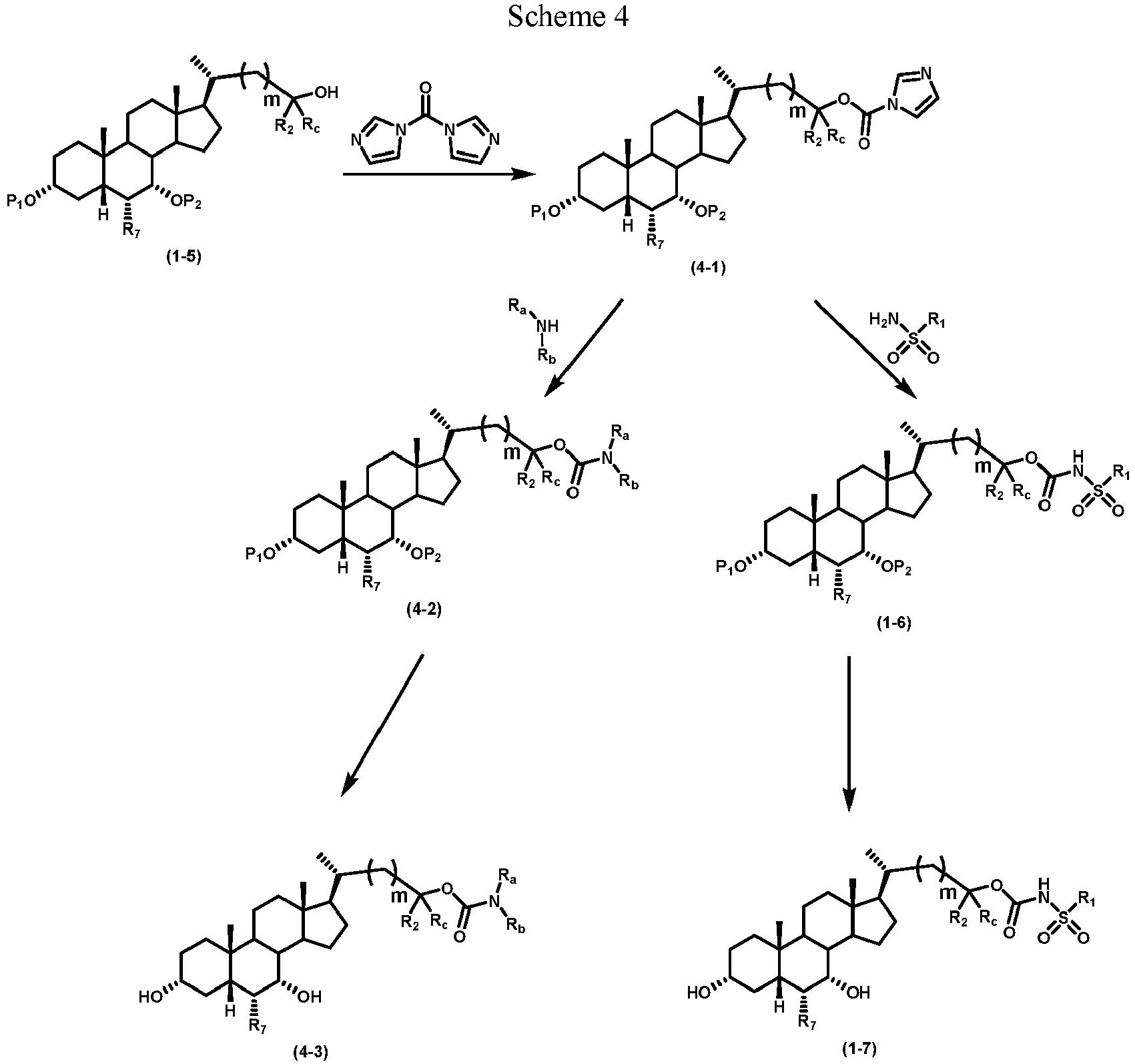
- An alternative procedure to prepare carbamate compounds of formula (4-2) and (1-7) is illustrated in scheme 5, wherein R1, R2, Ra, Rb, Rc, m and R7 are defined as previously, P1 and P2 are hydroxyl protecting groups. The compound of formula (1-3) reacts with p-nitrophenyl chloroformate to give the carbonate compound of formula (5-1) in the presence of base. Suitable bases include, but are not limited to, triethylamine, diisopropylethylamine, DBU, N-methylmorpholine and DMAP. The reaction is carried out in an aprotic solvent such as, but not limited to, CH2Cl2, DMF or THF. The reaction temperature can vary from 0°C to about 50°C. The compound of formula (5-1) react with amine RaNHRb or sulfonamide R1SO2NH2 in a one pot fashion to give the the carbamate compounds of formula (4-2) and (1-6). Further deprotection of hydroxyl protecting group P1 and P2 give the compounds of formula (4-3) and (1-7). A more detailed discussion of the procedures, reagents and conditions for protection and deprotection of hydroxyl pretecting groups and amino protecting group are described in literature, for example, by T.W. Greene and P.G.M. Wuts in "Protective Groups in Organic Synthesis" 3rd ed., John Wiley & Son, Inc., 1999.

- The R1S(O)2NH2 in Scheme 4 and Scheme 5 can be synthesized but not limited by the following methods.
-

- A mixture of CuI (230 mg, 1.2 mmol) and 1,10-phenanthroline (220 mg, 1.2 mmol) in 1,4-dioxane (15 mL) was stirred at rt for 10 min under N2. Then 4-bromo-N,N-bis(4-methoxybenzyl)benzenesulfonamide (compound M1-1, 480 mg, 1 mmol), 1H-pyrazole (210 mg, 3 mmol) and t-BuONa (300 mg, 3 mmol) were added to the mixture. After addition, this mixture was stirred at 120 °C for 15 hours under N2. The resulting mixture was poured into water (200 mL) and extracted with EtOAc (100 mL x 2). The combined organic layer was dried over Na2SO4, filtered and evaporated. The residue was purified by flash silica chromatography, elution gradient 20 to 50% EtOAc in petroleum ether. Pure fractions were evaporated to dryness to afford the desired compound M1-3 (150 mg, 32 %) as a yellow solid.
- N,N-bis(4-methoxybenzyl)-4-(1H-pyrazol-1-yl)benzenesulfonamide (compound M1-3; 150 mg, 0.32 mmol) was dissolved in TFA (3 mL) and stirred at 40 °C for 3 hours. The reaction mixture was concentrated, water (10 mL) was added, adjusted to pH 8 with sat. NaHCO3 and extracted with EtOAc (10 mL x 2). The combined organic phase was dried over anhydrous Na2SO4, filtered and evaporated to afford the desired compound (63 mg, 82 %) as a white solid.
- The following sulfonamides were synthesized employing the above method 1.
Sulfonamide 1-2 Sulfonamide 1-3 

m/z(ES+)[M+Hl+= 254.95; m/z(ES+)fM+H]+= 240.90; -

- A mixture of 4-bromo-N,N-bis(4-methoxybenzyl)benzenesulfonamide (compound M1-1; 192 mg, 0.4 mmol), azetidine (96 mg, 1.6 mmol), t-BuONa (80 mg, 0.8 mmol), Pd2(dba)3CHCl3 (40 mg, 0.04 mmol) and X-Phos (76 mg, 0.16 mmol) in toluene (10 mL) was stirred at 120 °C for 15 hours under N2. The resulting mixture was poured into water (50 mL) and extracted with EtOAc (30 mL x 2). The organic layer was dried over Na2SO4, filtered and evaporated. The residue was purified by flash silica chromatography, elution gradient 20 to 50% EtOAc in petroleum ether. Pure fractions were evaporated to dryness to afford the desired compound (100 mg, 55 %) as a yellow solid.
- 4-(Azetidin-1-yl)-N,N-bis(4-methoxybenzyl)benzenesulfonamide (compound M2-1; 90 mg, 0.2 mmol) was dissolved in TFA (5 mL). The resulting solution was stirred at 40 °C for 3 hours. The reaction mixture was concentrated, water (100 mL) was added, then adjusted pH 8 with sat. NaHCO3 and extracted with EtOAc (100 mL x 2). The organic layer was dried over Na2SO4, filtered and evaporated. The residue was purified by flash silica chromatography, elution gradient 40 to 60% EtOAc in petroleum ether. Pure fractions were evaporated to dryness to afford the desired compound (35 mg, 83%) as a yellow solid. m/z(ES+)[M∗2+H]+= 424.95.
- The following sulfonamides were synthesized employing the general procedure of method 2.
Sulfonamide 2-2 Sulfonamide 2-3 Sulfonamide 2-4 Sulfonamide 2-6 
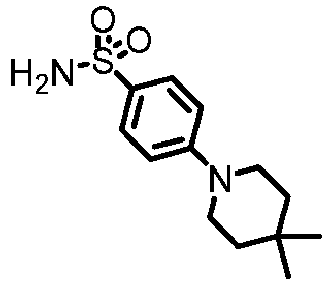

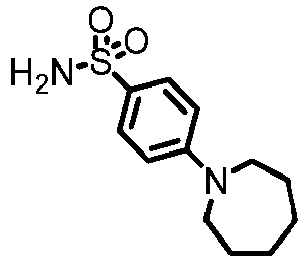
Yield = 27%. m/z(ES+)[M+H]+= 242.95; Yield = 20%. m/z(ES-)[M-H]-= 267.10; Yield = 32%. m/z(ES+)[M+H+41]+= 317.55; Yield = 35%. m/z(ES+)[M+H]+= 254.95; -

- 2-Bromoethanol (14.2 g, 100 mmol) was added dropwise to sulfurisocyanatidic chloride (compound M3-1; 12.5 g, 100 mmol) in DCM (50 mL) at 0 °C over a period of 10 minutes under nitrogen. The resulting mixture was stirred at 0 °C for 0.5 hour. The reaction mixture was used directly in the next step.
- To a solution of the methyl 2-aminoacetate (8.9 g, 100 mmol) and Et3N (20.2 g, 200 mmol) in DMF (100 mL) was added 2-bromoethyl chlorosulfonylcarbamate (compound M3-2; 26.6 g, 100 mmol) over a period of 40 minutes with ice-bath cooling under nitrogen. The mixture was stirred at 0 °C for 5 hours, then for 12 hours at RT. DCM (500 mL) was added and washed sequentially with IN HCl (200mL x 2) and brine (200 mL x 2). The organic layer was dried over Na2SO4, filtered and evaporated. The residue was purified by flash silica chromatography, elution gradient 20 to 40% EtOAc in petroleum ether. Pure fractions were evaporated to dryness to afford the desired compound (8.9 g, 37%) as a yellow solid.
- Methyl 2-(2-oxooxazolidine-3-sulfonamido)acetate (compound M3-3; 2.38g, 10mmol) was added to phenylmethanamine (1.28 g, 12 mmol) and Et3N (3.1 g, 30 mmol) in CH3CN (50 mL). The resulting solution was stirred at reflux for 2 hours. The reaction mixture was concentrated and purified by flash silica chromatography, elution gradient 20 to 50% EtOAc in petroleum ether. Pure fractions were evaporated to dryness to afford the desired compound (1.5 g, 58 %) as a yellow solid.
- EtONa (5.1 g, 75 mmol) was added to methyl 2-(N-benzylsulfamoylamino)acetate (compound M3-4; 3.9 g, 15 mmol) in EtOH (50 mL) at rt. The mixture was stirred at 50 °C for 5 hours. Then the mixture was concentrated and purified by flash silica chromatography, elution gradient 30 to 70% EtOAc in petroleum ether. Pure fractions were evaporated to dryness to afford the desired compound (1.2 g, 35 %) as a yellow solid.
-

- Ammonia (20 mL) was added to 6-chloropyridine-3-sulfonyl chloride (compound M4-1; 2.0 g, 9.48 mmol) in MeCN (5 mL). The mixture was stirred at RT for 30 min. The mixture was diluted with EtOAc (100 mL), and washed with brine. The organic layer was dried over Na2SO4, filtered and concentrated. The residue was purified by Flash-Prep-HPLC ((IntelFlash-1): Column, C18; mobile phase MeCN/H2O=0/100 increasing to MeCN/H2O=10/90 within 20 min, Detector, UV 254 nm) to give PH-ETA-C-330-1 (1.45 g, 79.6%) as a white solid. m/z(ES+) [M+H]+= 192.70; HPLC tR = 0.403 min.
- A solution of 6-chloropyridine-3-sulfonamide (compound M4-2; 400mg, 2.08 mmol) in ethanol (5 mL) was added to piperidine (4 mL). The mixture was stirred at 90 °C for overnight. The mixture was diluted with EtOAc (100 mL), and washed with brine. The organic layer was dried over Na2SO4, filtered and concentrated. The residue was purified by Flash-Prep-HPLC ((IntelFlash-1): Column, C18; mobile phase MeCN/H2O=0/100 increasing to MeCN/H2O = 20/80 within 20 min, Detector, UV 254 nm) to give PH-ETA-C-330-2 (280mg, 55.8%) as a yellow solid. m/z(ES+) [M+H]+ = 241.95; HPLC tR = 0.787 min.
-

- A solution of M4-2 (400mg, 2.08 mmol) in ethanol (5 mL) was added to Morpholine (4 mL). The mixture was stirred at 90°C for overnight. The mixture was diluted with EtOAc (100 mL), and washed with saturated brine. The organic layer was dried over Na2SO4, filtered and concentrated. The residue was purified by Flash-Prep-HPLC ((IntelFlash-1): Column, C18; mobile phase MeCN/H2O = 0/100 increasing to MeCN/H2O = 20/80 within 20 min, Detector, UV 254 nm) to give PH-ETA-C-331-1 (290 mg, 57.4%) as a yellow solid. m/z(ES-) [M-H]- = 242.00; HPLC tR = 0.496 min.
- The following sulfonamides were synthesized employing the general procedure of method 4.
Sulfonamide 4-3 Sulfonamide 4-4 

Yield = 67.8% m/z(ES+)[M+H]+ = 228.15 Yield = 63.2% m/z(ES+)[M+H]+ = 213.85; -

- Pd(PPh3)4 (115 mg, 0.05 mmol) was added into phenylboronic acid (300 mg, 2.4 mmol), 5-bromothiophene-2-sulfonamide (500 mg, 2 mmol) and K2CO3 (1.2 g, 10 mmol) in THF (10 mL) and H2O (2 mL). The mixture was stirred at 90 °C for 1 hour. The mixture was quenched with water, extracted with ethyl acetate (50 mL), dried over Na2SO4, filtered and concentrated. The residue was purified by flash silica chromatography, elution gradient 50 to 100% EtOAc in petroleum ether. Pure fractions were evaporated to dryness to afford the title compound (310 mg, 62.8%) as a yellow solid. m/z(ES-)[M-H]- = 237.95, tR = 0.892 min.
- The following sulfonamides were synthesized employing the general procedure of method 5.
Sulfonamide 5-2 Sulfonamide 5-3 Sulfonamide 5-4 Sulfonamide 5-5 


Yield = 42.8% m/z(ES-)[M-H]-= 255.90; Yield = 50.8% m/z(ES+)[M+H]+= 296.00; Yield = 61.9% m/z(ES-)[M-H]-= 321.75; Yield = 26.1 % m/z(ES-)[M-H]-= 305.70; Sulfonamide 5-6 Sulfonamide 5-7 Sulfonamide 5-8 Sulfonamide 5-9 


Yield = 79.9% m/z(ES-)[M-H]-= 250.00; Yield = 81.7% m/z(ES-)[M-H]-= 315.90; Yield = 81.6% m/z(ES-)[M-H]-= 288.00; Yield = 80.6% m/z(ES-)[M+H]+= 234.85; -

- Pd(PPh3)4 (98 mg, 0.08 mmol) was added into 2-(tributylstannyl)pyrimidine (375 mg, 1.02 mmol), 4-bromobenzenesulfonamide (200 mg, 0.85 mmol), and Cu2O (12 mg, 0.08 mmol) in 1,4-dioxane (5 mL). The mixture was stirred at 100 °C for overnight under N2. The reaction mixture was diluted with petroleum, saturated KF solution added and the precipitated stannyl fluoride filtered off and the filtrate extracted with EtOAc (20 mL), washed with water (10 mL), dried over Na2SO4, filtered and evaporated. The residue was purified by flash silica chromatography, elution gradient 50 to 100% EtOAc in petroleum ether. Pure fractions were evaporated to dryness to afford the desired Sulfonamide 6-1 (120 mg, 60 %) as a white solid. m/z (ES+)[M∗2+H]+= 470.85, tR = 0.602 min.
-

- A solution of biphenyl-4-sulfanyl chloride (200 mg, 0.79 mmol) in NH3/MeOH (3 mL, 7 M) was stirred overnight at rt. The methanol was removed under reduced pressure and EtOAc (10 mL) was added. Then was washed sequentially with water (10 mL), and saturated NaCl (10 mL). The organic phase was dried over Na2SO4, then filtered and evaporated to afford of biphenyl-4-sulfonamide 7-1 (170 mg, 93%) as a white solid. m/z(ES-) [M-H]-=232.10, HPLC tR= 0.650 min.
- The following sulfonamides were synthesized employing the general procedure of method 7.
Sulfonamide 7-2 Sulfonamide 7-3 Sulfonamide 7-4 Sulfonamide 7-5 


Yield = 78%. m/z(ES+)[M+H]+ = 166.95; Yield = 76%. m/z(ES+) [M+H]+ = 165.20; Yield = 71%. m/z(ES+)[M+H]+ = 151.20; Yield = 84%. m/z(ES+)[M+H]+ = 201.80; Sulfonamide 7-6 Sulfonamide 7-7 Sulfonamide 7-8 Sulfonamide 7-9 


Yield = 89%. m/z(ES-)[M-H]-= 203.55; Yield = 70%. m/z(ES+)[M+H]+ = 158.85; Yield = 79% m/z (ES-) [M--H]-= 237.65; Yield = 81% m/z (ES-) [M∗2-H]- = 384.90; Sulfonamide 7-10 Sulfonamide 7-11 Sulfonamide 7-12 

Yield = 75% m/z (ES-) [M--H]-= 214.05; Yield = 69%. m/z (ES-) [M-H]-= 207.05; Yield = 88 % m/z (ES-) [M-H]-= 247.65; -

- 4-Hydroxybenzenesulfonamide (500 mg, 2.89 mmol) was dissolved in DMA (5 mL). The solution obtained was heated to 50 °C, then 50% KOH (0.5 mL) was added slowly. The mixture was kept at 60 °C for about 30 minutes. The water formed was evaporated off under reduced pressure. 2,2,2-Trifluoroethyl 4-methylbenzenesulfonate was slowly added, keeping the temperature of the reaction mixture between 120 °C and 140 °C. Then the reaction mixture was stirred at 130 °C for 3 hours. The residue was taken up in water and extracted with EtOAc (20 mL∗3). The combined organic layer was dried over Na2SO4, filtered and concentrated in vacuo. The residue was purified by Flash-Prep-HPLC: Column, C18; mobile phase, MeCN/H2O = 0/100 increasing to MeCN/H2O = 55/45 within 30 min; Detector, UV 254 nm to give the desired sulfonamide 8-1, 4-(2,2,2-trifluoroethoxy)benzenesulfonamide, (300 mg, 40%) as a yellow solid. m/z(ES-) [M-H]- = 253.95; HPLC tR= 1.172 min.
-

- A mixture of 4-(1H-tetrazol-1-yl)benzoic acid (compound M9-1; 500 mg, 2.64 mmol), DPPA (868 mg, 3.16 mmol), Et3N (800 mg, 7.92 mmol) and BnOH (5.7 g, 53 mmol) in 1,4-dioxane/DMSO (15 mL/10 mL) was stirred at 100 °C for 5 hours under N2. The resulting mixture was poured into water (200 mL) and extracted by EtOAc (100 mL x 2). The organic layer was dried over Na2SO4, filtered and evaporated. The residue was purified by flash silica chromatography, elution gradient 30 to 50% EtOAc in petroleum ether. Pure fractions were evaporated to dryness to afford the desired compound (600 mg, 72 %) as a white solid.
- To a solution of benzyl 4-(1H-tetrazol-1-yl)phenylcarbamate (compound M9-2; 295 mg, 1 mmol) in MeOH (20 mL) was added Pd/C (100 mg, 10%) under N2. The suspension was degassed under vacuum and purged with H2 several times. The mixture was stirred under a H2 balloon at RT for 2 hours. Then Pd/C was filtered out and the filtrate was concentrated to give the desired compound (152 mg, 93%) as a white solid.
- To a solution of 4-(1H-tetrazol-1-yl)benzenamine (compound M9-3; 113 mg, 0.7 mmol) and con.HCl (2.8 mL) in CH3CN/CH3COOH (8 mL/1mL) was added NaNO2 (58 mg, 0.875 mmol) in water (1 mL) at -10 °C. The mixture was stirred at 0 °C for 0.5 hour, then saturated SO2 in AcOH (5 mL, 1.4 mmol) was added dropwise at a rate keeping the reaction temperature below 5 °C. A solution of copper(I) chloride dihydrate (148 mg, 0.875 mmol) in water (1 mL) was added dropwise. The reaction mixture was stirred at 0 °C for 30 minutes and then at room temperature for 3 hours. The mixture was poured into ice-water (100 mL) and extracted by EtOAc (20 mL x 2). The organic layer was concentrated to give the crude compound as a yellow solid which was used in the next step directly.
- To a solution of 4-(1H-tetrazol-1-yl)benzene-1-sulfonyl chloride (compound M9-4; 122 mg, 0.5 mmol) in CH3CN (5 mL) was added ammonium hydroxide (2mL). The mixture was stirred at RT for 30 min. Then water (20 mL) was added and extracted by EtOAc (20 mL x2). The organic layer was dried over Na2SO4 and concentrated to give the desired 4-(1H-tetrazol-1-yl)benzenesulfonamide, sulfonamide 9-1, (80 mg, 71%) as a yellow solid.
-

- To a solution of 4-fluorobenzenesulfonamide (175 mg, 1 mmol) and 1H-1,2,4-triazole/1H-1,2,3-triazole (140 mg, 2 mmol) in DMSO (10 mL) was added t-BuONa (200 mg, 2 mmol) under nitrogen. The mixture was stirred at 100 °C for 48 hours. Then water (100 mL) was added and extracted by EtOAc (20 mL x 2). The organic layer was dried over Na2SO4, filtered and evaporated. The residue was purified by flash silica chromatography, elution gradient 20 to 40% EtOAc in petroleum ether. Pure fractions were evaporated to dryness to afford Sulfonamide 10-1, 4-(1H-1,2,4-triazol-1-yl)benzenesulfonamide, (95 mg, Y = 42%) as a yellow solid. HPLC tR=0.482 min. or Sulfonamide 10-2, 4-(1H-1,2,3-triazol-1-yl)benzenesulfonamide, Y = 49%, HPLC tR=0.492 min.
-

- A mixture of 4-bromo-N,N-bis(4-methoxybenzyl)benzenesulfonamide (compound M1-1; 200 mg, 0.42 mmol), 1H-imidazole (86 mg, 1.26 mmol), CuI (96 mg, 0.51 mmol), t-BuONa (121 mg, 1.26 mmol), and 1,10-phenanthroline (91 mg, 0.50 mmol) in 1,4-dioxane (4 mL) was stirred at 120 °C for 16 hours under N2. The reaction mixture was concentrated and purified by flash silica chromatography, elution gradient 0 to 10% MeOH in DCM. Pure fractions were evaporated to dryness to afford the desired sulphonamide 11-1, (120 mg, Y = 61.5%) as a yellow solid. m/z(ES+) [M+H]+= 464.10; HPLC tR= 0.780 min.
- 4-(1H-imidazol-1-yl)-N,N-bis(4-methoxybenzyl)benzenesulfonamide (compound M11-1; 120 mg, 0.26 mmol) was dissolved in TFA (2 mL). The resulting solution was stirred at 40 °C for 2 hours. The reaction mixture was concentrated, water (100 mL) was added, then adjusted pH 8 with sat. NaHCO3 and extracted with EtOAc (20 mL x 2). The organic layer was dried over Na2SO4, filtered and evaporated to give the desired sulphonamide 11-1 (50 mg, Y=86%) as a yellow solid which was used in the next step without further purification. m/z(ES+) [M+H]+ = 223.90; HPLC tR= 0.187 min.
-
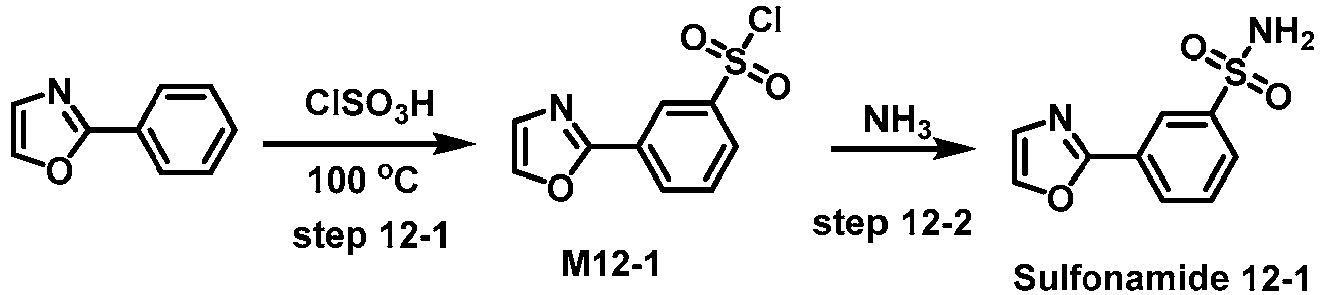
- A solution of 2-phenyloxazole (200 mg, 1.4 mmol) in sulfurochloridic acid (5 mL) was stirred for 15 hours at 100 °C under N2. The resulting mixture was poured into ice-water (50 mL) and extracted by EtOAc (20 mL x2). The organic layer was dried over Na2SO4 and concentrated to give the crude compound M12-1 (180 mg, 52%) as a yellow oil.
- To a solution of the 4-(oxazol-2-yl)benzene-1-sulfonyl chloride (compound M12-1; 121 mg, 0.5 mmol) in CH3CN (5 mL) was added ammonium hydroxide (2mL) at 0 °C. The mixture was stirred at RT for 30 min. Then water (20 mL) was added and extracted by EtOAc (20 mL x2). The organic layer was dried over Na2SO4 and concentrated to give the desired sulfonamide 12-1, 3-(Oxazol-2-yl)benzenesulfonamide (98 mg, 87%) as a yellow solid.
-

- 6-Chloropyridine-3-sulfonamide (200 mg, 1.04 mmol) was added to a mixture of 1H-1,2,4-triazole (72 mg, 1.04 mmol) and K2CO3 (287 mg, 2.08 mmol) in DMSO (2 mL) at 100 °C. Then was stirred for 16 hours at 100°C. The reaction mixture was diluted with EtOAc (20 mL) after cooling to rt, then washed with saturated NaCl (10 mL∗2). The organic phase was dried over Na2SO4, filtered and evaporated. The residue was purified by flash silica chromatography, elution gradient 0 to 10% MeOH in DCM. Pure fractions were evaporated to dryness to afford the desired sulphonamide 13-1, 6-(1H-1,2,4-triazol-1-yl)pyridine-3-sulfonamide (70 mg, Y=61.5%) as a yellow solid. m/z(ES+) [M+H]+ = 225.85; HPLC tR= 0.417 min.
- The following sulfonamides were synthesized employing the general procedure of method 13.
Sulfonamide 13-2 Sulfonamide 13-3 Sulfonamide 13-4 


m/z(ES+) [M-H]- = 224.55; m/z(ES+) [M+H]+ = 226.1; m/z(ES+) [M+H]+ = 224.80; -

- Into a 10 mL microwave tube maintained with nitrogen was placed 2-(tributylstannyl)oxazole (compound M14-1; 358 mg, 1 mmol), 6-chloropyridine-3-sulfonamide (compound M4-1; 174 mg, 0.9 mmol), Cu2O (143 mg, 1 mmol), Pd(PPh3)4 (115.5 mg, 0.1 mmol), and dioxane (5 mL). The resulting mixture was stirred at microwave heating 100 °C for 4 hours. After being cooled to rt, the solution was concentrated and the residue was dissolved in ethyl acetate (20 mL), then was washed with water (10 mL∗2), saturated NaCl (10 mL∗2). The organic layer was dried over Na2SO4, filtered and concentrated. The residue was purified by flash silica chromatography, elution gradient 0 to 10 % MeOH in DCM to give the desired sulfonamide 14-1, 6-(Oxazol-2-yl)pyridine-3-sulfonamide as a yellow solid (60 mg, 26.7%). m/z(ES+)[M+H]+= 225.80.
-

- A mixture of 2-(tributylstannyl)oxazole (310 mg, 0.867 mmol) 4-bromo-N,N-bis(4-methoxybenzyl) benzenesulfonamide (282 mg, 0.788 mmol), Cu2O (75 mg, 0.525 mmol), and Pd(PPh3)4 (61 mg, 0.053 mmol) in dioxane (10mL) was heated to 100°C for 1h under N2. The mixture was cooled to rt and concentrated under vacuum. The residue was purified by silica gel column with PE/EA=3/1 to give 200 mg (Y = 82%) of N,N-bis(4-methoxybenzyl)-4-(oxazol-2-yl)benzenesulfonamide as a white solid. m/z(ES+) [M+H]+ = 465.20.
- A mixture of N,N-bis(4-methoxybenzyl)-4-(oxazol-2-yl)benzenesulfonamide (200 mg, 0.43 mmol) in TFA (5 mL) was stirred at 40 °C for 3 h and then concentrated. The residue was dissolved in EtOAc (10 mL), washed sequentially with sat.NaHCO3 (10 mL∗1) and brine (10 mL∗1), the organic phase was dried over Na2SO4, filtered and concentrared to give 90 mg (y=93%) of sulfonamide 15-1, 4-(oxazol-2-yl)benzenesulfonamide as a yellow solid which was used in the next step without further purification. m/z(ES+) [M+H]+ = 224.90.
-

- t-BuOK (176mg, 1.57 mmol) was added to M4-1 (200 mg, 1.04 mmol), and pyrazole (142 mg, 2.08 mmol) in DMSO (5 mL). The mixture was heated in a microwave apparatus at 120 °C for 120 minutes. The mixture was diluted with water (20 mL), and adjusted to pH 7 with IN HCl. The mixture was extracted with EtOAc (30 mL∗3). The combined organic layers was dried over Na2SO4, filtered and concentrated in vacuo. The residue was purified by Flash-Prep-HPLC: Column, C18; mobile phase, MeCN/H2O=0/100 increasing to MeCN/H2O=25/75 within 30 min; Detector, UV 254 nm to give PH-ETA-C-332-1 (150 mg, 42.7%) as a yellow solid, Sulfonamide 16-1. m/z(ES+) [M+H]+=224.80; HPLC tR= 0.395 min.
- The compounds and processes of the present invention will be better understood in connection with the following examples, which are intended as an illustration only and not limiting of the scope of the invention. Various changes and modifications to the disclosed embodiments will be apparent to those skilled in the art and such changes and modifications including, without limitation, those relating to the chemical structures, substituents, derivatives, formulations and/or methods of the invention may be made within the scope of the appended claims.
-

-

- MEMCl was added to a stirred solution of (1-1) (4.35 g, 10.0 mmol) and DIPEA (10.3 mL, 30 mmol) in DCM (100 mL) at 0°C under N2. The resulting reaction mixture was allowed to warm up to RT and stirred overnight, then quenched with water (50 mL) and 1 N HCl (50 mL). The organic layer was dried over anhydrous sodium sulfate, filtered, and concentrated to give 6.5 g of crude product (1-2), which was used directly for next step. LC-MS observed 2M+NH4 = 1062.83 (Calcd. 1062.81).
-

- The above mentioned crude product (1-2) (4.18 g, 8.0 mmol) was first dissolved in THF (30 mL) at 0°C under N2, dry MeOH (1.28 ml, 32 mmol) was added, followed by slow addition of LiBH4 (697 mg, 32 mmol). The mixture was stirred at 0°C for 6h, TLC and LC-MS analysis showed partial conversion of the starting material, more LiBH4 (348 mg, 16 mmol) was then added. The mixture was allowed to warm up to RT and stirred overnight, quenched with 1 M aq. NaOH (20 mL), and extracted with ethyl acetate. The combined organic layers were washed with brine and concentrated. The residue was purified by chromatography on silica gel using hexane/acetone (100/0 to 60/40, 10 min) to afford alcohol product (1-3) (3.2 g, 94% yield based on 86% conversion) as a white foam. LC-MS observed 2M+NH4 = 1006.83 (Calcd. 1006.83).
-

- To a stirred solution of alcohol (1-3) (99 mg, 0.2 mmol) and DIPEA (35 µL, 0.2 mmol) in THF (3 mL) at RT was added dropwise p-toluenesulfonyl isocanate (31 µL, 0.2 mmol). The resulting mixture was stirred at RT for 30 min, then quenched with brine (10 mL), and extracted with ethyl acetate (40 mL). The organic layer was washed with brine and concentrated. The residue was purified by chromatography on silica gel using hexane/acetone (100/0 to 60/40, 10 min) to give the sulfonyl carbamate (1-4) as a colorless oil (69 mg, 50%).
LC-MS observed M-1 = 690.33 (Calcd. 690.41). -

- Carbamate (1-4) (69 mg, 0.1 mmol) was first dissolved in THF (2 mL) at RT. 37% HCl (0.1 mL, 1.2 mmol) was then added. The mixture was stirred at RT for 2 h, quenched with sat. NaHCO3, and extracted with ethyl acetate. The organic layer was washed with brine and concentrated. The residue was purified by chromatography on silica gel using hexane/acetone (100/0 to 60/40, 10 min) to provide the desired carbamate example 1 (30 mg, 50%) as a white solid after lyophilization overnight from MeCN/H2O (1/1, 2 mL). LC-MS observed M-1 = 602.29 (Calcd. 602.33).
-

-
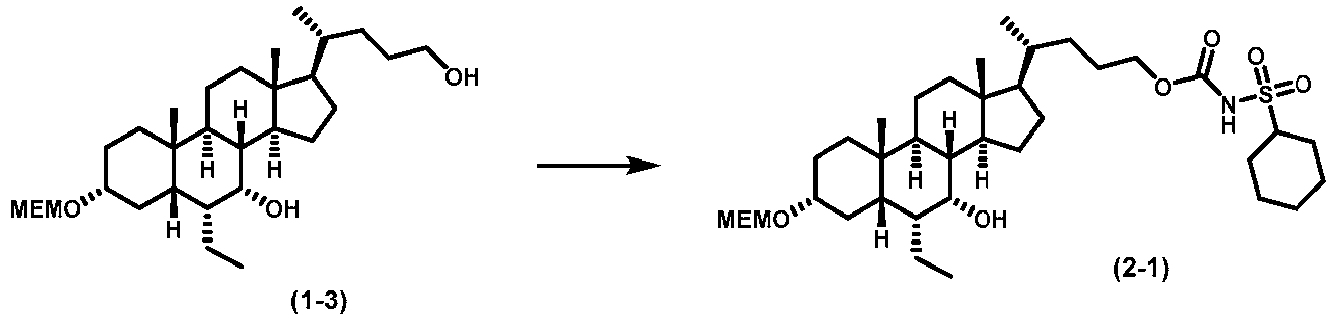
- A solution of alcohol (1-3) (99 mg, 0.2 mmol) and CDI (65 mg, 0.4 mmol) in MeCN/THF (1/1, 1 mL) was stirred at RT for 1.5 h, cyclohexanesulfonamide (98 mg, 0.6 mmol) and DBU (89 µL, 0.6 mmol) were then added. The resulting reaction mixture was stirred at RT for 1 h, then quenched with brine, and extracted with ethyl acetate. The combined organic layers were washed with brine and concentrated. The residue was purified by chromatography on silica gel using hexane/acetone (100/0 to 60/40, 10 min) to afford the sulfonyl carbamate (2-1) (100 mg, 73%) as a colorless oil.
LC-MS observed M-1 = 682.36 (Calcd. 682.44). -
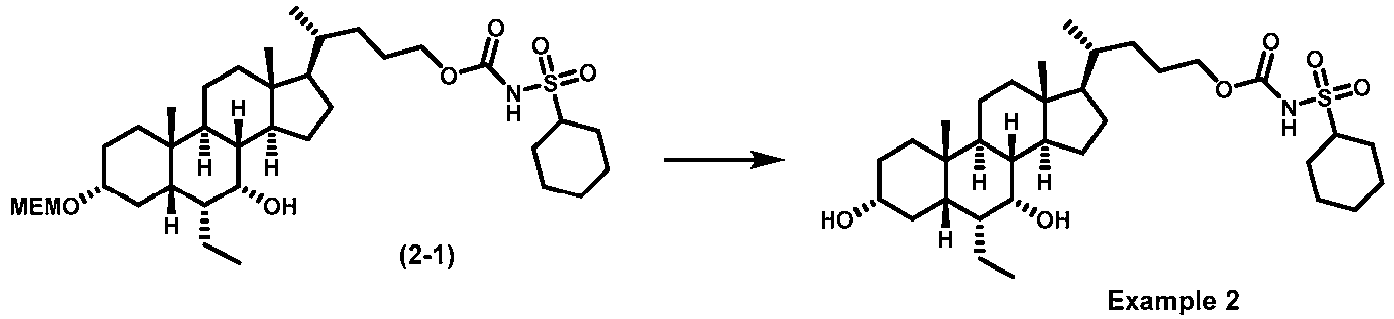
- Carbamate (2-1) (100 mg, 0.15 mmol) was first dissolved in THF (3 mL) at RT. 37% HCl (0.1 mL, 1.2 mmol) was then added. The mixture was stirred at RT for 1 h, quenched with sat. NaHCO3, and extracted with ethyl acetate. The organic layer was washed with brine and concentrated. The residue was purified by chromatography on silica gel using hexane/acetone (100/0 to 60/40, 10 min) to provide the desired carbamate example 2 (45 mg, 45%) as a white solid after lyophilization overnight from MeCN/H2O (1/1, 2 mL). LC-MS observed M-1 = 594.31 (Calcd. 594.39).
-

-

- A solution of alcohol (1-3) (99 mg, 0.2 mmol) and CDI (65 mg, 0.4 mmol) in MeCN/THF (1/1, 1 mL) was stirred at RT for 1.5 h, 4-tert-butylaniline (90 mg, 0.6 mmol) and DBU (89 µL, 0.6 mmol) were then added. The resulting reaction mixture was stirred at RT for 18 h, then quenched with brine, and extracted with ethyl acetate. The combined organic layers were washed with brine and concentrated. The residue was purified by chromatography on silica gel using hexane/acetone (100/0 to 60/20, 10 min) to afford the carbamate (3-1) (87 mg, 65%) as a colorless oil.
LC-MS observed M+NH4 = 687.64 (Calcd. 687.53). -

- Carbamate (3-1) (87 mg, 0.13 mmol) was first dissolved in THF (3 mL) at RT. 37% HCl (0.1 mL, 1.2 mmol) was then added. The mixture was stirred at RT for 1 h, quenched with sat. NaHCO3, and extracted with ethyl acetate. The organic layer was washed with brine and concentrated. The residue was purified by chromatography on silica gel using hexane/acetone (100/0 to 60/30, 10 min) to provide the desired carbamate example 3 (65 mg, 87%) as a white solid after lyophilization overnight from MeCN/H2O (1/1, 2 mL). LC-MS observed M+NH4 = 599.48 (Calcd. 599.47).
-

-

- HCl (10 mL, 37%) was added into compound 4-1 (15.0 g) in MeOH (100 mL) at 0 °C. The solution was stirred at RT for 1 h. The solution was evaporated to dryness, then the residue was diluted with EtOAc (200 mL), washed sequentially with sat. NaHCO3 (30 mLx 2) and sat. NaCl (30 mL x 1). The organic layer was dried over Na2SO4, filtered, and evaporated to give compound 4-2 (15.6g, 95.7%) as a white solid which was used directly in the next step.
-

- TBSCl (10.9 g, 72 mmol) was added to compound 4-2 (15.6 g, 36 mmol), TEA (10.9 g, 108 mmol), and DMAP (0.22g, 1.8 mmol) in DMF (50 mL) at 0 °C. The mixture was stirred at RT for 3 h. 200 mL water was added to the mixture and extracted with EtOAc (100 mL x 3). The combined organic phase was washed with sat. NaCl (100 mL x 3), then dried over Na2SO4, filtered, and evaporated. The residue was purified by silica gel (20 to 40% EtOAc in petroleum ether) to give compound 4-3 (15.8 g, 82%) as a yellow solid.
-

- NaHMDS (2.0 M in THF, 30 mL, 60.54 mmol) was added dropwise to compound 4-3 (15.8g, 28.83mmol) in THF (100 mL) at -78 °C over 1 h. The mixture was stirred at - 78 °C over 1.5 h, then PhSeBr (8.16 g, 34.6 mmol) in THF(40 mL) was added dropwise to the reaction mixture. The mixture was stirred at -78 °C over 2.5 h and at rt 30 min. Sat. NH4Cl (30 mL) was added at 0 °C, extracted with EtOAc (100 mL x 2), the combined organic phase was washed with sat. NaCl (30 mLxl), dried over Na2SO4, filtered. The solution in EtOAc was treated with 30% H2O2 (10 mL) at 0 °C, then the solution was stirred at rt over 40min. The solution was washed sequentially with sat. NaHCO3 (30 mL), and sat. NaCl (30 mL). The organic phase was dried over Na2SO4, filtered and evaporated. The residue was purified by silica gel (10 to 20% EtOAc in petroleum ether) to give compound 4-4 (10.6 g, 67.9%) as a yellow oil.
-

- DIBALH (1.0 M in PhMe, 85 mL, 85 mmol) was added dropwise to compound 4-4 (10.6 g, 19.4 mmol) in DCM (100 mL) at -78 °C over 1 h. The solution was warmed to 0 °C over 30 min, then MeOH (100 mL) was added to quench the reaction. Rochelle's salt (aq, 100 mL) was added to the cloudy mixture, and the reaction was vigorously stirred for 12 h. The mixture was extracted with EtOAc (100 mL x 3), washed sequentially with water and brine (100 mL x 3), dried, filtered. The residue was purified by silica gel (20 to 40% EtOAc in petroleum ether) to give compound 4-5 (7.5 g, 74.6%) as a white solid. Step 4-5:

- NaIO4 (13.5 g, 59.37 mmol) was added to compound 4-5 (7.5 g, 14.48 mmol) and RuCl3 (0.155 g, 0.72 mmol) in CCl4 (30 mL), MeCN (30 mL) and H2O (50 mL) at 0 °C. The mixture was stirred at RT for 3 h. The mixture was quenched with water, extracted with EtOAc (100 mL), washed with water and brine (100 mL x 3), dried, filtered to give the compound 4-6 (6.6 g, crude) as a black solid and used directly in the next step.
-

- LiAlH4 (1.48 g, 39 mmol) was added to compound 4-6 (6.6 g, 13 mmol) in THF(60 mL) at 0 °C. The resulting mixture was stirred at RT for 3h. The mixture was quenched with water at 0°C, extracted with EA (100 mL x 3), the combined organic phase was washed with brine (100 mL∗3), dried, filtered. The residue was purified by silica gel (50 to 100% EtOAc in petroleum ether) to give the compound 4-7 (3.5g, 49.3% of 2 steps) as a white solid.
-

- CDI (0.95 g, 5.9 mmol) was added to alcohol 4-7 (2.40 g, 4.9 mmol), and DIEA (0.95 g, 7.3 mmol) in DCM (30 mL), the mixture was stirred at rt for 2 hours. The residue was evaporated and diluted with EtOAc (50 mL), washed sequentially with saturated NaHCO3 (20 mL x 2), and water (20 mL x 1). Then the organic layer was dried over Na2SO4, filtered and evaporated. The residue was purified by silica gel column (0 to 50% EtOAc in petroleum ether) to give compound 4-8 (2.40 g, 84.0%) as a white solid.
-

- Compound 4-8 (100 mg, 0.17 mmol) was added to p-tBuPhSO2NH2(0.26 mmol), and K2CO3 (70.5 mg, 0.51 mmol) in DMF (2 mL) at rt, then the mixture was stirred at 50∼80 °C for 4 hours. Water (10 mL) was added after cooling to rt, extracted by EtOAc (10 mL x 2), dried over Na2SO4, filtered and evaporated. The residue was dissolved in MeOH (2 mL), Then 1 drop of 37% HCl was added. The mixture was stirred at rt for 10 minutes, then was diluted with EtOAc (50 mL) and washed sequentially with saturated NaHCO3 (10 mL x 2) and brine (10 mL x 1). The organic layer was dried over Na2SO4, filtered and concentrated. The residue was purified by Flash-Prep-HPLC ((IntelFlash-1): Column, C18; mobile phase, MeCN/H2O, Detector, UV 254) to give the example 4, ESIMS m/z = 616.40 [M+H]+.
- The below examples 5-44 and examples 44a-44p in table 4 were prepared by following procedures similar to that described in Example 4.
Table 4 Example # Structure MS data [M-1]- 5 
574.15 6 
644.00 7 
527.15 8 
566.20 9 
643.20 10 
642.10 11 
642.20 12 
610.15 13 
553.15 14 
[M+H]+ 646.20 15 
[M+H]+ 648.35 16 
627.10 17 
615.15 18 
657.45 19 
645.15 20 
671.15 21 
679.10 22 
657.15 23 
611.10 24 
611.10 25 
698.10 26 
726.40 27 
710.00 28 
654.10 29 
632.15 30 
632.45 31 
652.15 32 
636.10 33 
720.05 34 
692.20 35 
637.15 36 
638.10 37 
626.10 38 
576.10 39 
576.10 40 
629.15 41 
643.15 42 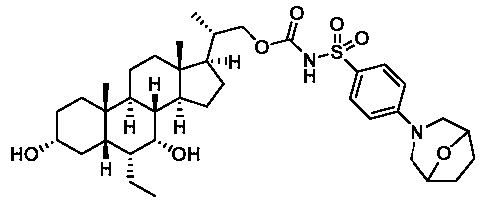
671.15 43 
[M+NH4]+ 679.10 44 
610.10 44-a 
655.15 44-b 
630.10 44-c 
616.10 44-d 
629.45 44-e 
628.10 44-f 
627.10 44-g 
627.10 44-h 
626.10 44-i 
627.10 44-j 
622.10 44-k 
590.10 44-1 
628.10 44-m 
627.10 44-n 
628.15 44-o 
628.10 44-p 
627.10 -

-

- LiAH4 (2.6 g, 0.067 mol) was added to compound 45-1 (7 g, 0.014 mol) in THF (150 mL) at 0 °C under N2, the resulting mixture was stirred at RT for 1 hour. Then 300 mL water was added at 0 °C, extracted with EtOAc (100 mL x 3), the combined organic phase was dried with Na2SO4, filtered and concentrated, the residue was purified by silica gel (20 to 40% EtOAc in petroleum ether) to give target compound 45-2 (5.4 g, 79.3%) as a white solid.
-

- CDI (2.03 g, 12.2 mmol) was added to compound 45-2 (5.3 g, 10.5 mmol), and DIEA (2.03 g, 15.7 mmol) in DCM (30 mL), the mixture was stirred at rt for 2 hours. The residue was evaporated and diluted with EtOAc (50 mL), washed sequentially with saturated NaHCO3 (20 mL x 2), and water (20 mL x 1). Then the organic layer was dried over Na2SO4, filtered and evaporated. The residue was purified by silica gel column (0 to 50% EtOAc in petroleum ether) to give compound 45-3 (4.6 g, 73.2%) as a white solid.
-

- Compund 45-3 (100 mg, 0.17 mmol) was added to p-tBuPhSO2NH2 (0.25 mmol), and K2CO3 (70.5 mg, 0.51 mmol) in DMF (2 mL) at rt, then the mixture was stirred at 50∼80 °C for 4 hours. Water (10 mL) was added after colling to rt, extracted by EtOAc (10 mL x 2), dried over Na2SO4, filtered and evaporated. The residue was dissolved in MeOH (2 mL), Then 1 drop of 37% HCl was added. The mixture was stirred at rt for 10 minutes, then was diluted with EtOAc (50 mL) and washed sequentially with saturated NaHCO3 (10 mL x 2) and brine (10 mL x 1). The organic layer was dried over Na2SO4, filtered and concentrated. The residue was purified by Flash-Prep-HPLC ((IntelFlash-1): Column, C18; mobile phase, MeCN/H2O, Detector, UV 254 nm) to give the target example 45, ESIMS m/z = 596.60 [M+1-2H2O]+.
- The below examples 46-104 and examples 104a-104k in table 5 were prepared by following procedures similar to that described in Example 45.
Table 5 Example # Structure MS data [M-1]- 46 
[M+1-2H2O]+, 558.25 47 
566.35 48 
[M+1-2H2O]+, 520.30 49 
[M+1-2H2O]+, 518.40 50 
[M+1-2H2O]+, 507.30 51 
[M+1-2H2O]+, 533.30 52 
604.35 53 
658.35 54 
630.40 55 
674.60 56 
588.35 57 
554.35 58 
648.40 59 
583.35 60 
[M+1-2H2O]+, 540.30 61 
[M+1-2H2O]+, 574.45 62 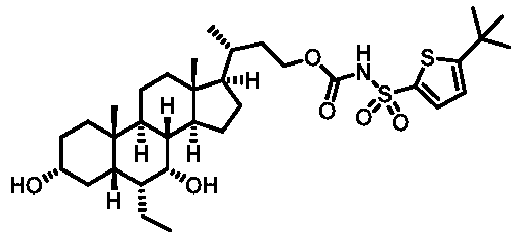
[M+1-2H2O]+, 602.50 63 
[M+1-2H2O]+, 624.50 64 
[M+1-22O]+, 622.50 65 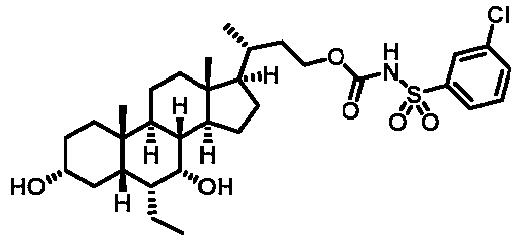
[M+1-2H2O]+, 574.45 66 
[M+1-2H2O]+, 558.50 67 
614.35 68 
650.35 69 
581.50 70 
646.55 71 
592.10 72 
575.15 73 
575.15 74 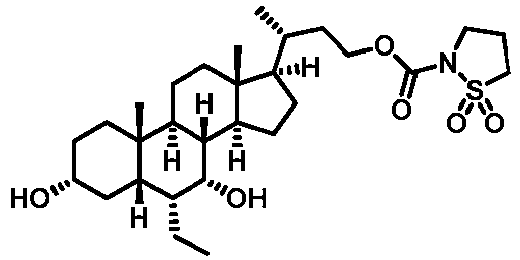
538.15 75 
540.15 76 
608.10 77 
658.60 78 
642.60 79 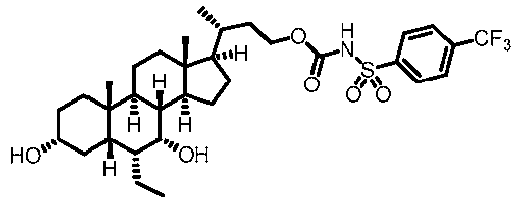
642.60 80 
642.60 81 
624.10 82 
578.15 83 
556.15 84 
604.10 85 
630.20 86 
604.15 87 
634.10 88 
624.15 89 
628.20 90 
632.10 91 
636.10 92 
584.15 93 
618.10 94 
622.15 95 
575.15 96 
568.25 97 
512.15 98 
526.55 99 
576.10 100 
632.15 101 
672.10 102 
610.15 103 
568.25 104 
606.15 104-a 
[M-2H2O+1]+, 546.60 104-b 
588.30 104-c 
581.10 104-d 
576.15 104-e 
552.15 104-f 
630.10 104-g 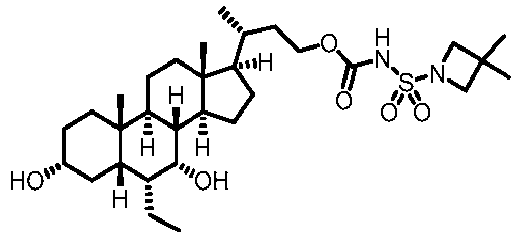
581.20 104-h 
710.00 104-i 
552.15 104-j 
589.15 104-k 
676.05 -

-

- TfOMe (164 mg, 1.00 mmol) was added to intermediate 45-3 (400 mg, 0.67 mmol) in Et2O (2 mL) at 0 °C, then the mixture was stirred at rt for 1 hour. The mixture was filtered and compound 105-2 was obtained as a white solid (430 mg, 84.4 %).
-

- NaH (30 mg, 0.5 mmol, 60%) was added to thiazole-2-sulfonamide (0.32 mmol) in THF at 0 °C and stirred at 0 °C for 1 hour. Then compound 105-3 (190 mg, 0.25 mmol) was added to the mixture above at 0 °C and stirred at r.t. for 1 hour. The mixture was quenched with saturated NH4Cl (10 mL), extracted with EtOAc (20 mL x 2), dried over Na2SO4, filtered and evaporated. The residue was dissolved in MeOH (2 mL), Then 1 drop of 37% HCl was added. The mixture was stirred at rt for 10 minutes, then was diluted with EtOAc (50 mL) and washed sequentially with saturated NaHCO3 (10 mL x 2) and brine (10 mL x 1). The organic layer was dried over Na2SO4, filtered and concentrated. The residue was purified by Flash-Prep-HPLC ((IntelFlash-1): Column, C18; mobile phase, MeCN/H2O, Detector, UV 254 nm) to give the target example 105, ESIMS m/z = 581.10 [M-1]-.
- The below examples 106-109 in Table 6 were prepared by following procedures similar to that described in Example 105.
Table 6 Example # Structure MS data [M-1]- 106 
576.15 107 
552.15 108 
566.10 109 
[M+NH4]+, 662.38 -

- To a solution of 109 (30 mg) in MeOH (2 mL) was added Pd-C (3 mg, 10%) under N2. The suspension was degassed under vacuum and purged with H2 several times. The mixture was stirred under H2 balloon at rt for 1 hour. Then filtered, the filtrate was evaporated to dryness to afford 110 (23 mg, 91.9%) as a white solid, ESIMS m/z = 553.10 [M-1]-.
-
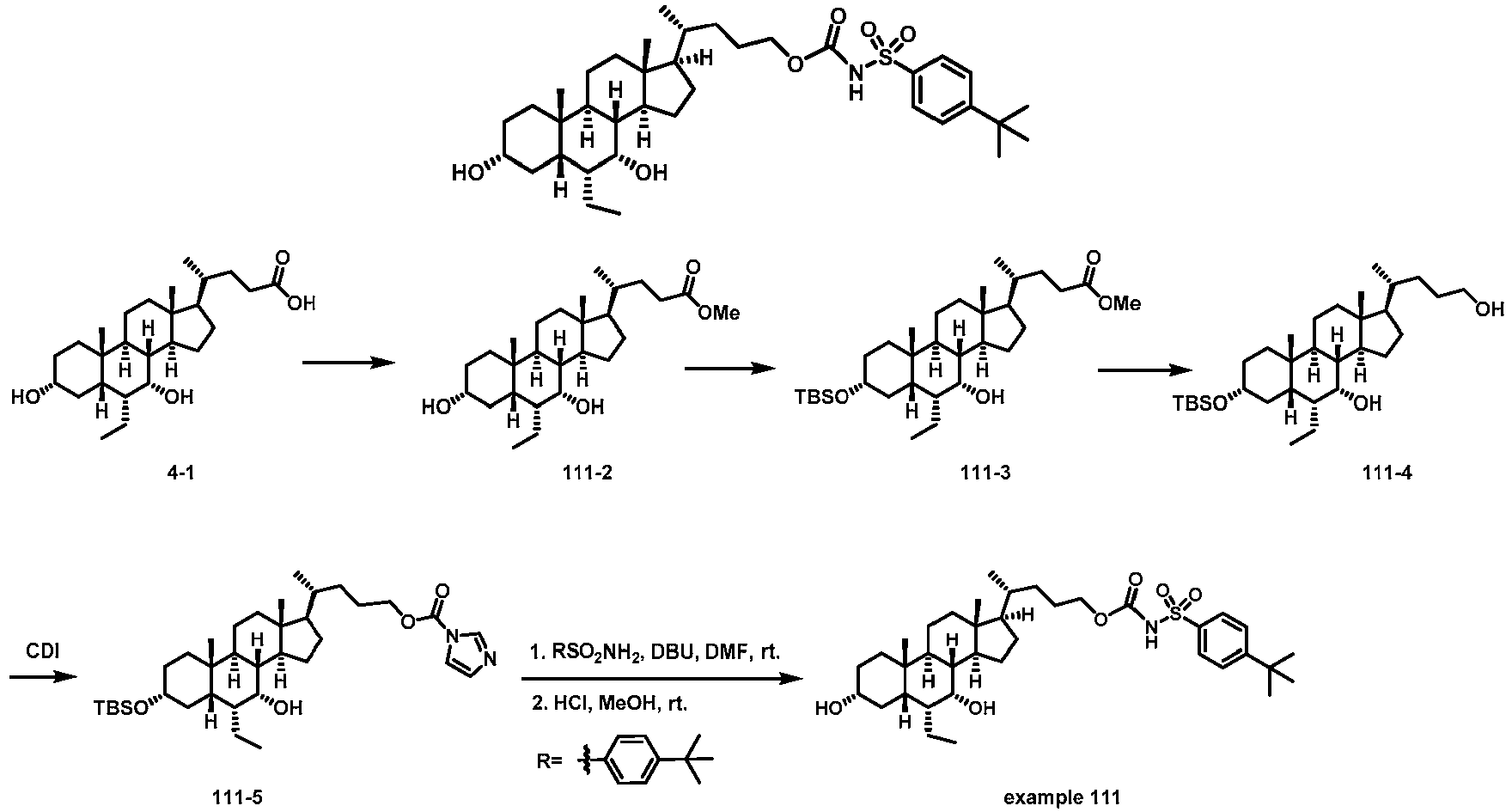
-
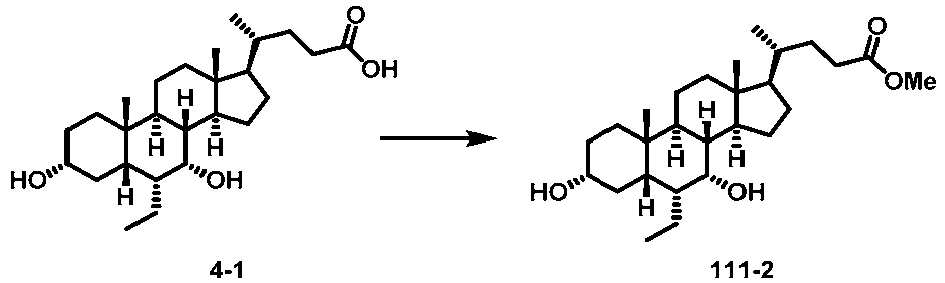
- To a solution of compound 4-1 (6.5 g, 15.5 mmol) in MeOH (130 mL) was added sulfuric acid (98%, 0.13 mL). The solution was stirred at 23°C for 24 h, and concentrated by vacuum. Purification of the residue on silica gel (105 g) with 0 - 30% acetone in hexane provided compound 111-2 (6.6 g, 98% yield).
-

- To a solution of compound 111-2 (6.39 g, 14.7 mmol) in DMF (30 mL) was added imidazole (2.20 g, 32.3 mmol) and TBSCl (2.33 g, 15.5 mmol). The mixture was stirred at 23°C for 20 h, quenched with pH 7 buffer, and extracted with MTBE. The organic layer was washed with sat. NaCl solution, dried over Na2SO4, and concentrated by vacuum. Purification of the residue on silic gel (105 g) with 0 - 50% EtOAc / hexane provided compound 111-3 (7.59 g, 94% yield).
-

- To a solution of 111-3 (7.59 g, 13.85 mmol) in THF was added LiBH4 (2.0 M in THF, 41.6 mmol, 20.8 mL) and anhydrous MeOH (1.7 mL, 41.6 mmol) dropwise. The mixture was stirred at 23°C for 15 h, slowly quenched with water (100 mL), and extracted with EtOAc. The aqueous layer was acidified with 1 M HCl to pH 5 and extracted with EtOAc (2 x). The organic layers were combined, washed with 1 M HCl solution, sat. NaCl, dried over Na2SO4, and concentrated by vacuum. Purification of the residue on silic gel (105 g) with 0 - 30% EtOAc /hexane provided compound 111-4 (6.5 g) in 90% yield.
-

- CDI (0.37 g, 2.3 mmol) was added to alcohol 111-4 (1.00 g, 1.9 mmol), and DIEA (0.37 g, 2.9 mmol) in DCM (20 mL), the mixture was stirred at rt for 2 hours. The solution of intermediate 111-5 was obtained and used directly.
-

- The mixture of p-tBuPhSO2NH2 (0.3 mmol), DBU (92.6 mg, 0.61 mmol) in DMF (2 mL) was added to one copy of intermediate 111-5 above, the mixture was stirred at rt for overnight. Water (10 mL) was added after colling to rt, extracted by EtOAc (10 mL x 2), dried over Na2SO4, filtered and evaporated. The residue was dissolved in MeOH (2 mL), Then 1 drop of 37% HCl was added. The mixture was stirred at rt for 10 minutes, then was diluted with EtOAc (50 mL) and washed sequentially with saturated NaHCO3 (10 mL x 2) and brine (10 mL x 1). The organic layer was dried over Na2SO4, filtered and concentrated. The residue was purified by Flash-Prep-HPLC ((IntelFlash-1): Column, C18; mobile phase, MeCN/H2O, Detector, UV 254 nm) to give the target example 111 ESIMS m/z = 644.40 [M-1]-.
- The below examples 112-120 in table 7 were prepared by following procedures similar to that described in Examples 111.
Table 7 Example # Structure MS data [M-1]- 112 
644.40 113 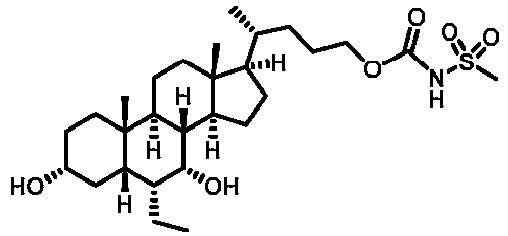
526.30 114 
554.35 115 
638.40 116 
664.40 117 
568.40 118 
555.30 119 
581.35 120 
580.20 -

- To a solution of (R)-pyrrolidin-2-ylmethanol (51 mg, 0.501 mmol) and DBU (127 mg, 0.833 mmol) in DCM (5 mL) was added compound 45-3 (100 mg, 0.167 mmol). The resulting mixture was stirred at RT overnight. The reaction was quenched with H2O (10 mL), and extracted with EtOAc (10 mL x 3). The combined organic phase was dried over Na2SO4, filtered, and concentrated.
- The residue was dissolved in MeOH (2 mL). To the solution was added 5 µL of 37% HCl and the mixture was stirred at RT for 10 minutes, diluted with EtOAc (20 mL), and washed sequentially with saturated sodium bicarbonate (10 mL) and brine (10 mL). The organic layer was dried over Na2SO4, filtered and concentrated. The residue was purified by Flash-Prep-HPLC ((IntelFlash-1): Column, C18; mobile layer, MeCN/H2O, Detector, UV 254 nm) to give 16.6 mg of Example 209 as a white solid. [M-1]-, 518.20.
- The below examples 121-208 and examples 210-218 in table 8 were prepared by following procedures similar to that described in Examples 209 starting from compound 4-8, 111-5 or 45-3.
Table 8 Example # Structure MS data [M-1]- 121 
[M+NH4]+ = 599.48 122 
[M-2H2O+1]+, 454.35 123 
[M-1]-, 474.4 124 
[M-2H2O+1]+, 504.40 125 
[M-1]-, 524.4 126 
[M-H2O+1|+, 514.45 127 
[M+HCOOH-1]-, 562.41 128 
[M-H2O+1|+, 460.35 129 
[M-H2O+1|+, 446.50 130 
[M-2H2O+1]+, 484.55 131 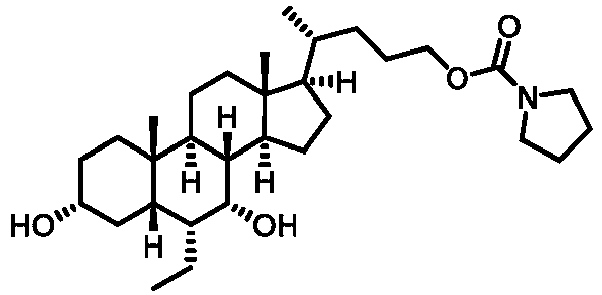
[M-H2O+1|+, 486.55 132 
[M-H2O+1|+, 488.55 133 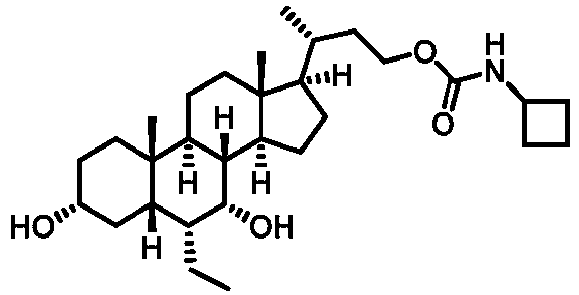
[M-1]-, 488.35 134 
[M-1]-, 502.40 135 
[M-1]-, 488.35 136 
[M-1]-, 476.35 137 
[M-1]-, 490.40 138 
[M+HCOOH-1]-, 576.55 139 
[M+Na]+, 516.40 140 
[M+Na]+, 532.35 141 
[M+1]+, 579.45 142 
[M+Na]+, 530.40 143 
[M-2H2O+1]+, 510.55 144 
[M-2H2O+1]+, 564.60 145 
[M-2H2O+1]+, 540.60 146 
[M-H2O+1|+, 486.55 147 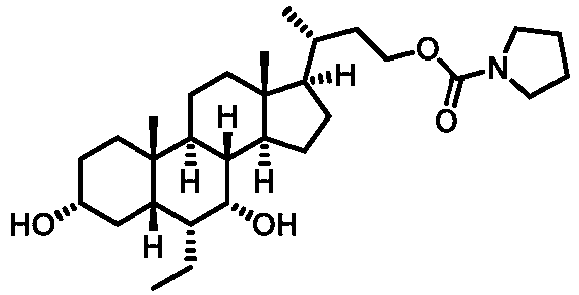
[M-H2O+1|+, 472.55 148 
[M+1]+, 601.70 149 
[M+Na]+, 516.50 150 
[M+HCOOH-1]-, 550.50 151 
[M+1]+, 549.45 152 
[M+1]+, 563.50 153 
[M+Na]+, 502.35 154 
[M+NH4]+, 567.50 155 
[M-2H2O+1]+, 500.45 156 
[M+NH4]+, 539.45 157 
[M-1]-, 492.35 158 
[M+Na]+, 564.35 159 
[M-2H2O+1]+, 534.35 160 
[M-2H2O+1]+, 470.55 161 
[M+1]+, 594.70 162 
[M-H2O+1]+, 458.55 163 
[M-H2O+1|+, 474.55 164 
[M-1]-, 478.30 165 
[M-H2O+1|+, 500.50 166 
[M-2H2O+1]+, 532.60 167 
[M-2H2O+1]+, 532.55 168 
[M-H2O+1]+, 516.50 169 
[M-H2O+1|+, 502.60 170 
[M+1]+, 611.65 171 
[M-H2O+1]+, 529.40 172 
[M+1]+, 508.40 173 
[M-H2O+1]+, 540.35 174 
[M-H2O+1]+, 540.40 175 
[M-H2O+1]+, 486.35 176 
[M+Na]+, 556.45 177 
[M+HCOOH-1]-, 548.50 178 
[M+1]+, 587.70 179 
[M-H2O+1]+, 506.60 180 
[M-H2O+1]+, 516.60 181 
[M-H2O+1]+, 485.55 182 
[M+Na]+, 556.40 183 
[M-H2O+1]+, 564.35 184 
[M+Na]+, 622.40 185 
[M+Na]+, 556.40 186 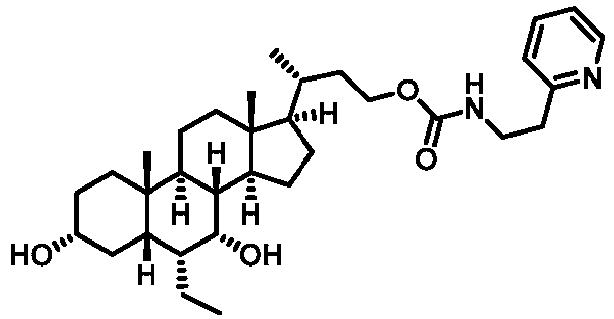
[M+1]+, 541.45 187 
[M-H2O+1]+, 518.35 188 
[M-2H2O+1]+, 496.45 189 
[M+NH4]+, 599.55 190 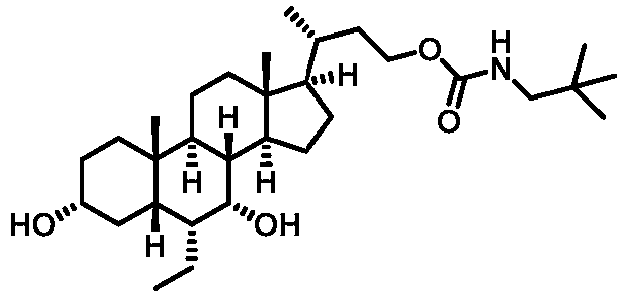
[M-2H2O+1]+, 470.45 191 
[M+NH4]+, 529.45 192 
[M-1]-, 490.35 193 
[M-2H2O+1]+, 528.50 194 
[M+1]+, 547.40 195 
[M-H2O+1]+, 502.55 196 
[M+1]+, 546.40 197 
[M+NH4]+, 579.5 198 
[M-2H2O+1]+, 426.40 199 
[M+Na]+, 526.40 200 
[M+1]+, 462.4 201 
[M+1]+, 490.4 202 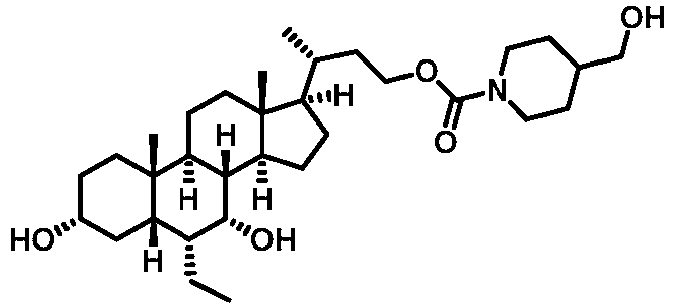
[M-2H2O+1]+, 498.55 203 
[M-H2O+1]+, 516.55 204 
[M-H2O+1]+, 516.60 205 
[M-H2O+1]+, 494.40 206 
[M-H2O+1]+, 502.20 207 
[M+Na]+, 542.45 208 
[M+Na]+, 542.30 210 
[M-1]-, 518.20 211 
[M+Na]+, 542.30 212 
[M+Na]+, 542.30 213 
[M-H2O+1]+, 530.50 214 
[M+Na]+, 528.30 215 
[M+Na]+, 528.30 216 
[M-1]-, 518.15 217 
[M-1]-, 560.30 218 
[M-1]-, 562.25 - Determination of a ligand mediated Gal4 promoter driven transactivation to quantify ligand binding mediated activation of FXR. FXR Reporter Assay kit purchased from Indigo Bioscience (Catalogue number: IB00601) to determine the potency and efficacy of compound developed by Enanta that can induce FXR activation. The principle application of this reporter assay system is to quantify functional activity of human FXR. The assay utilizes non-human mammalian cells, CHO (Chinese hamster ovary) cells engineered to express human NR1H4 protein (referred to as FXR). Reporter cells also incorporate the cDNA encoding beetle luciferase which catalyzes the substrates and yields photon emission. Luminescence intensity of the reaction is quantified using a plate-reading luminometer, Envision. Reporter Cells include the luciferase reporter gene functionally linked to an FXR responsive promoter. Thus, quantifying changes in luciferase expression in the treated reporter cells provides a sensitive surrogate measure of the changes in FXR activity. EC50 and efficacy (normalize to CDCA set as 100%) is determined by XLFit. The assay is according to the manufacturer's instructions. In brief, the assay was performed in white, 96 well plates using final volume of 100uL containing cells with different doses of compounds. Retrieve Reporter Cells from -80°C storage. Perform a rapid thaw of the frozen cells by transferring a 10 ml volume of 37°C cell recovery medium into the tube of frozen cells. Recap the tube of Reporter Cells and immediately place it in a 37°C water bath for 5 - 10 minutes. Retrieve the tube of Reporter Cell Suspension from the water bath. Sanitize the outside surface of the tube with a 70% alcohol swab, and then transfer it into the cell culture hood. Dispense 90 µl of cell suspension into each well of the 96-well Assay Plate. Transfer the plate into 37°C incubator, allowing the cells adherent to the bottom of the well. Dilute compounds in Dilution Plate (DP), and administrate to cells at Assay Plate (AP). DMSO content of the samples was kept at 0.2%. Cells were incubated for additional 22 hours before luciferase activities were measured. Thirty minutes before intending to quantify FXR activity, remove Detection Substrate and Detection Buffer from the refrigerator and place them in a low-light area so that they may equilibrate to room temperature. Remove the plate's lid and discard all media contents by ejecting it into an appropriate waste container. Gently tap the inverted plate onto a clean absorbent paper towel to remove residual droplets. Cells will remain tightly adhered to well bottoms. Add 100 µl of luciferase detection reagent to each well of the assay plate. Allow the assay plate to rest at room temperature for at least 5 minutes following the addition of LDR. Set the instrument (Envision) to perform a single 5 second "plate shake" prior to reading the first assay well. Read time may be 0.5 second (500mSec) per well. EC50 and Efficacy (normalize to CDCA set as 100%) is determined by XLFit.
- The potency and efficacy of the compounds of the invention on TGR5 receptor was evaluated using in vitro assays which carried out using the express kit from DiscoverX (CAMP HUNTER™ eXpress GPBAR1 CHO-K1 GPCR Assay; Cataloguer number: 95-0049E2CP2S)GPBAR1 (G protein-coupled bile acid receptor 1) encodes a member of the G protein-coupled receptor (GPCR) superfamily. GPBAR1 activation following ligand binding initiates a series of second messenger cascades that result in a cellular response. Treatment of CHO cells expressing GPBAR1 with bile acids induces the production of intracellular cAMP and internalization of the receptor. The potency and efficacy of compound for GPBAR1 activation by measuring cyclic adenosine monophosphate (cyclic AMP or cAMP) levels in live cells using a competitive immunoassay based on Enzyme Fragment Complementation (EFC).
- In brief, following seeding the cells into the white, 96 well microplate, place it in a 37°C, 5% CO2 in a humidified incubator for 18-24 hours prior to testing. On the second day, proceed to the appropriate cAMP Hunter eXpress Protocol according to the manufacturer's instructions. Dissolve agonist compound in DMSO at the desired stock concentration, and prepare 3-fold serial dilutions of agonist compound in Cell Assay Buffer. The concentration of each dilution should be prepared at 4X of the final screening concentration (i.e. 15 µL compound + 45 µL Cell Assay Buffer/cAMP Antibody Reagent). For each dilution, the final concentration of solvent should remain constant. Transfer 15 µL diluted compound the assay plate and incubate the plate for 30 minutes at 37°C. Following agonist incubation, add 60 µL of working cAMP detection reagents/cAMP Solution mixture (cAMP Lysis Buffer, Substrate Reagent 1, cAMP Solution D) to the appropriate wells. Incubate for 1 hour at room temperature (23°C), protected from light. Add 60 µl of cAMP Solution A to the appropriate wells. Incubate for 3 hours at room temperature (23°C), protected from light. Read samples on Envision standard luminescence plate reader. Calculate of average EC50 after logarithm transformation.
- To assess the FXR agonistic potency of the example compounds as well as for reference compound, potency ranges were determined in the Human FXR (NR1H4) Assay as listed below in Table 9. The efficacy was normalized to CDCA set as 100%. (A=EC50 < 0.1 µM; B= 0.1µM < EC50 < 1.0 µM; C=1.0µM < EC50 < 10 µM; D= EC50 > 10 µM).
Table 9 Example EC50 (µM) Efficacy (%) CDCA D 100 6-ECDCA B 223 1 B 422 2 B 247 4 A 319 5 B 85 6 B 298 7 C 168 8 B 327 9 A 208 10 A 259 11 A 224 12 A 217 13 B 324 14 A 270 15 A 197 16 A 187 17 A 211 18 A 221 19 A 219 20 A 203 21 A 225 22 A 262 23 A 182 24 A 193 25 B 182 26 B 206 27 B 173 28 A 194 29 B 186 30 A 261 31 B 207 32 A 164 33 A 266 34 B 186 35 B 152 36 A 205 37 A 207 38 B 203 39 B 182 44-a A 182 44-b A 216 44-c A 183 44-d B 195 44-e B 204 44-f A 216 44-g A 209 44-h B 194 44-i B 210 44-j A 170 44-k A 158 44-1 B 165 44-m A 206 44-n B 307 44-o B 292 44-p A 218 45 A 235 46 A 267 47 A 321 48 A 282 49 A 269 50 A 291 51 A 218 52 A 226 53 A 411 54 B 290 55 A 258 56 A 326 57 A 392 58 A 366 59 A 428 60 A 309 61 A 270 62 A 299 63 A 396 64 B 281 65 A 322 66 B 320 67 A 290 68 B 286 69 A 368 70 A 333 71 B 317 72 C 305 73 C 352 74 B 358 75 A 386 76 B 234 77 B 383 78 B 365 79 A 376 80 B 363 81 A 372 82 C 294 83 B 275 84 A 270 85 A 240 86 B 288 87 B 274 88 A 236 89 A 278 90 A 225 91 B 313 92 C 218 93 A 288 94 A 268 95 C 420 96 A 388 97 B 245 98 B 279 99 C 51 100 A 316 101 B 289 102 A 235 103 A 294 104-a A 242 104-b A 363 104-c C 34 104-d C 35 104-e B 239 104-f A 213 104-g A 289 104-h C 208 104-i A 314 104-i A 327 104-k B 180 105 C 34 106 C 35 107 B 239 108 C 309 109 C 142 110 C 28 111 B 208 112 B 123 113 C 130 114 B 345 115 B 376 116 C 294 117 B 365 118 B 367 119 C 370 120 B 485 121 C 8 122 B 204 123 A 379 124 B 225 125 B 305 126 C 187 127 B 308 128 C 138 129 B 323 130 C 256 131 B 202 132 C 205 133 A 283 134 B 267 135 B 224 136 B 185 137 B 270 138 B 297 139 B 310 140 B 246 141 B 293 142 B 247 143 B 202 144 B 229 145 C 247 146 A 223 147 A 228 148 C 37 149 C 232 150 B 303 151 B 253 152 B 276 153 B 230 154 B 138 155 B 278 156 B 193 157 C 178 158 B 240 159 B 221 160 B 142 161 B 226 162 B 277 163 B 266 164 B 191 165 C 158 166 C 30 167 B 321 168 B 302 169 B 257 170 A 283 171 B 179 172 B 201 173 B 209 174 A 228 175 B 210 176 C 368 177 B 460 178 B 196 179 B 333 180 B 390 181 A 382 182 B 419 183 A 451 184 C 213 185 B 392 186 B 373 187 B 421 188 B 459 189 C 215 190 B 410 191 C 330 192 C 186 193 C 179 194 C 170 195 A 288 196 A 299 197 C 101 198 C 139 199 C 14 200 C 7 201 B 1 202 B 393 203 B 380 204 A 310 205 C 5 206 A 174 207 B 188 208 B 205 209 A 199 210 A 156 211 A 198 212 A 479 213 A 460 214 A 194 215 A 143 216 B 478 217 A 337 218 A 356 - While this invention has been particularly shown and described with references to preferred embodiments thereof, it will be understood by those skilled in the art that various changes in form and details may be made therein within the scope of the appended claims.
Claims (21)
- A compound represented by Formula I or a pharmaceutically acceptable salt thereof:
 Ra is selected from the group consisting of:1) Hydrogen;2) Substituted or unsubstituted -C1-C6 alkoxy;3) Substituted or unsubstituted -C1-C8 alkyl;4) Substituted or unsubstituted -C2-C8 alkenyl;5) Substituted or unsubstituted -C2-C8 alkynyl;6) Substituted or unsubstituted C3-C6-cycloalkyl;7) Substituted or unsubstituted arylalkyl;8) Substituted or unsubstituted aryl; and9) Heteroaryl;Rb is selected from the group consisting of:1) -SO2R1;2) -C(O)R1;3) -C(O)NHSO2R1;4) -C(O)NR10R11;5) Hydrogen;6) Substituted or unsubstituted -C1-C8 alkyl;7) Substituted or unsubstituted -C2-C8 alkenyl;8) Substituted or unsubstituted -C2-C8 alkynyl;9) Substituted or unsubstituted arylalkyl; and10) Substituted or unsubstituted aryl;or Ra and Rb are taken together with the nitrogen atom to which they are attached to form a heterocyclic;R1 is selected from the group consisting of:1) Halogen;2) Hydroxyl;3) Substituted or unsubstituted -C1-C8 alkyl;4) Substituted or unsubstituted -C2-C8 alkenyl;5) Substituted or unsubstituted -C2-C8 alkynyl;6) Substituted or unsubstituted -C3-C8 cycloalkyl;7) Substituted or unsubstituted aryl;8) Substituted or unsubstituted arylalkyl;9) Substituted or unsubstituted heterocycloalkyl;10) Substituted or unsubstituted heteroaryl;11) Substituted or unsubstituted heteroarylalkyl; and12) -NR10R11;R2 is selected from the group consisting of:1) Hydrogen;2) Substituted or unsubstituted -C1-C8 alkyl;3) Substituted or unsubstituted -C2-C8 alkenyl;4) Substituted or unsubstituted -C2-C8 alkynyl;5) Substituted or unsubstituted arylalkyl; and6) Substituted or unsubstituted aryl;Rc is selected from the group consisting of:1) Hydrogen;2) Substituted or unsubstituted -C1-C8 alkyl;3) Substituted or unsubstituted -C2-C8 alkenyl;4) Substituted or unsubstituted -C2-C8 alkynyl;5) Substituted or unsubstituted arylalkyl; and6) Substituted or unsubstituted aryl;or R2 and Rc are taken together with the carbon atom to which they are attached to form a cyclic ring;m is selected from 0, 1, 2 and 3;R3 is hydrogen, hydroxyl, -OSO3H, -OSO3 -, -OAc, -OPO3H2 or -OPO3 2-;R4 is hydrogen, halogen, CN, N3, hydroxyl, -OSO3H, -OSO3 -, -OAc, -OPO3H2, -OPO3 2-, - SR2 or -NHR2;or R3 and R4 are taken together with the carbons they attached form -CH=CH- or cycloalkyl ring or heterocycloalkyl ring;R5 and R6 are independently hydrogen or hydroxyl protecting group;R7 is selected from the group consisting of:1) Halogen;2) Substituted or unsubstituted -C1-C8 alkyl;3) Substituted or unsubstituted -C2-C8 alkenyl;4) Substituted or unsubstituted -C2-C8 alkynyl; and5) Substituted or unsubstituted -C3-C8 cycloalkyl; andR10 and R11 are each independently selected from hydrogen, substituted or unsubstituted -C1-C8 alkyl, substituted or unsubstituted -C2-C8 alkenyl, substituted or unsubstituted -C2-Cs alkynyl, substituted or unsubstituted -C3-C8 cycloalkyl, or R10 and R11 are taken together with the nitrogen atom to which they are attached to form a heterocyclic ring.
 - The compound of claim 1, represented by Formula II or a pharmaceutically acceptable salt thereof:

- The compound of claim 1, represented by one of formulas (III-1∼III-18), or a pharmaceutically acceptable salt thereof:


- The compound of claim 1, represented by Formula IV or a pharmaceutically acceptable salt thereof:

- The compound of claim 4, selected from compounds of Formula IV wherein, Ra, Rb, and m are delineated for each compound in Table 1, or a pharmaceutically acceptable salt thereof:
Table 1 Example m Ra Rb Example m Ra Rb Example m Ra Rb 1 0 Methyl H 34 1 Methyl H 67 2 Methyl H 2 0 Ethyl H 35 1 Ethyl H 68 2 Ethyl H 3 0 Isopropyl H 36 1 Isopropyl H 69 2 Isopropyl H 4 0 Butyl H 37 1 Butyl H 70 2 Butyl H 5 0 t-Butyl H 38 1 t-Butyl H 71 2 t-Butyl H 6 0 Propyl H 39 1 Propyl H 72 2 Propyl H 7 0 Benzyl H 40 1 Benzyl H 73 2 Benzyl H 8 0 Vinyl H 41 1 Vinyl H 74 2 Vinyl H 9 0 Allyl H 42 1 Allyl H 75 2 Allyl H 10 0 CF3 H 43 1 CF3 H 76 2 CF3 H 11 0 
H 44 1 
H 77 2 
H 12 0 
H 45 1 
H 78 2 
H 13 0 
H 46 1 
H 79 2 
H 14 0 
H 47 1 
H 80 2 
H 15 0 Methyl Me 48 1 Methyl Me 81 2 Methyl Me 16 0 Ethyl Me 49 1 Ethyl Me 82 2 Ethyl Me 17 0 Isopropyl Me 50 1 Isopropyl Me 83 2 Isopropyl Me 18 0 t-Butyl Me 51 1 t-Butyl Me 84 2 t-Butyl Me 19 0 Propyl Me 52 1 Propyl Me 85 2 Propyl Me 20 0 Benzyl Me 53 1 Benzyl Me 86 2 Benzyl Me 21 0 Vinyl Me 54 1 Vinyl Me 87 2 Vinyl Me 22 0 Allyl Me 55 1 Allyl Me 88 2 Allyl Me 23 0 CF3 Me 56 1 CF3 Me 89 2 CF3 Me 24 0 
Me 57 1 
Me 90 2 
Me 25 0 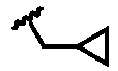
Me 58 1 
Me 91 2 
Me 26 0 
Me 59 1 
Me 92 2 
Me 27 0 
60 1 
93 2 
28 0 
61 1 
94 2 
29 0 
62 1 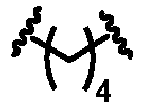
95 2 
30 0 
63 1 
96 2 
31 0 
64 1 
97 2 
32 0 
65 1 
98 2 
33 0 
66 1 
99 2 
- The compound of claim 1 represented by Formula V,

- The compound according to claim 6, which is selected from compounds of Formula V, or a pharmaceutically acceptable salt thereof, wherein R1 and m are delineated for each compound in Table 2:
Table 2 Example m R1 Example m R1 Example m R1 100 0 Methyl 127 1 Methyl 154 2 Methyl 101 0 Ethyl 128 1 Ethyl 155 2 Ethyl 102 0 Isopropyl 129 1 Isopropyl 156 2 Isopropyl 103 0 Butyl 130 1 Butyl 157 2 Butyl 104 0 t-Butyl 131 1 t-Butyl 158 2 t-Butyl 105 0 Propyl 132 1 Propyl 159 2 Propyl 106 0 Benzyl 133 1 Benzyl 160 2 Benzyl 107 0 Vinyl 134 1 Vinyl 161 2 Vinyl 108 0 Allyl 135 1 Allyl 162 2 Allyl 109 0 CF3 136 1 CF3 163 2 CF3 110 0 
137 1 
164 2 
111 0 
138 1 
165 2 
112 0 
139 1 
166 2 
113 0 
140 1 
167 2 
114 0 
141 1 
168 2 
115 0 
142 1 
169 2 
116 0 
143 1 
170 2 
117 0 
144 1 
171 2 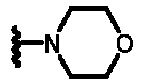
118 0 NH2 145 1 NH2 172 2 NH2 119 0 
146 1 
173 2 
120 0 
147 1 
174 2 
121 0 
148 1 
175 2 
122 0 
149 1 
176 2 
123 0 
150 1 
177 2 
124 0 
151 1 
178 2 
125 0 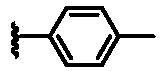
152 1 
179 2 
126 0 F 153 1 F 180 2 F - A compound according to claim 1, selected from compounds of Formula VI:

Table 3 Compound m R1 Compound m R1 Compound m R1 181 0 Methyl 208 1 Methyl 235 2 Methyl 182 0 Ethyl 209 1 Ethyl 236 2 Ethyl 183 0 Isopropyl 210 1 Isopropyl 237 2 Isopropyl 184 0 Butyl 211 1 Butyl 238 2 Butyl 185 0 t-Butyl 212 1 t-Butyl 239 2 t-Butyl 186 0 Propyl 213 1 Propyl 240 2 Propyl 187 0 Benzyl 214 1 Benzyl 241 2 Benzyl 188 0 Vinyl 215 1 Vinyl 242 2 Vinyl 189 0 Allyl 216 1 Allyl 243 2 Allyl 190 0 CF3 217 1 CF3 244 2 CF3 191 0 
218 1 
245 2 
192 0 
219 1 
246 2 
193 0 
220 1 
247 2 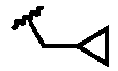
194 0 
221 1 
248 2 
195 0 
222 1 
249 2 
196 0 
223 1 
250 2 
197 0 
224 1 
251 2 
198 0 
225 1 
252 2 
199 0 NH2 226 1 NH2 253 2 NH2 200 0 
227 1 
254 2 
201 0 
228 1 
255 2 
202 0 
229 1 
256 2 
203 0 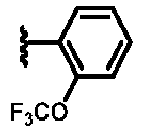
230 1 
257 2 
204 0 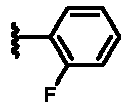
231 1 
258 2 
205 0 
232 1 
259 2 
206 0 
233 1 
260 2 
207 0 F 234 1 F 261 2 F - A compound according to claim 1 selected from the compounds set forth below, or a pharmaceutically acceptable salt thereof:
Example # Structure 1 
2 
3 
4 
5 
6 
7 
8 
9 
10 
11 
12 
13 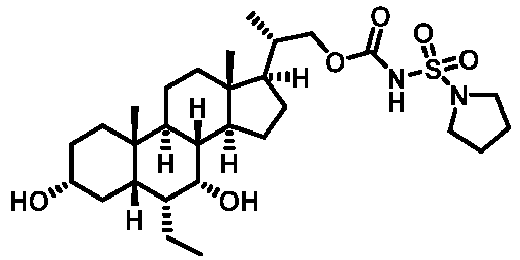
14 
15 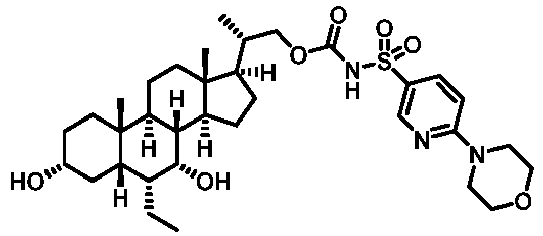
16 
17 
18 
19 
20 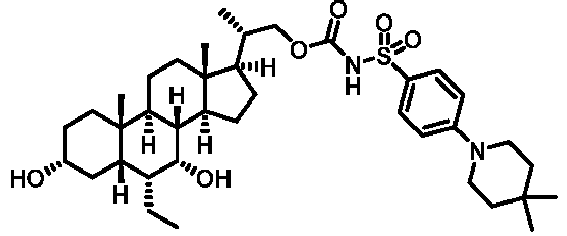
21 
22 
23 
24 
25 
26 
27 
28 
29 
30 
31 
32 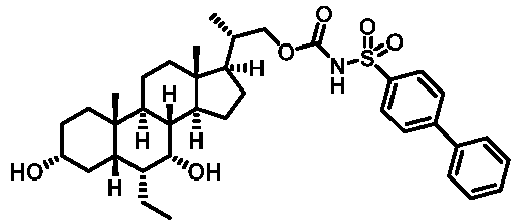
33 
34 
35 
36 
37 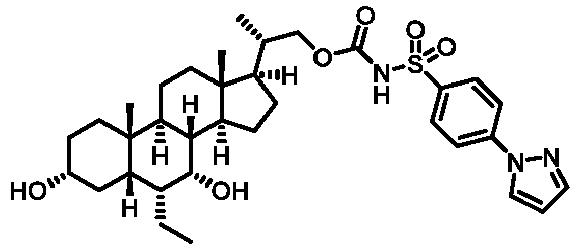
38 
39 
40 
41 
42 
43 
44 
44-a 
44-b 
44-c 
44-d 
44-e 
44-f 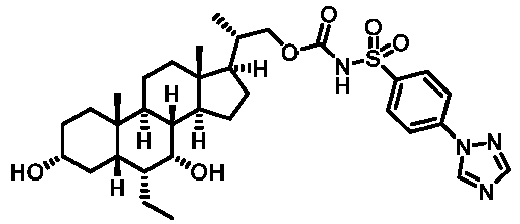
44-g 
44-h 
44-i 
44-j 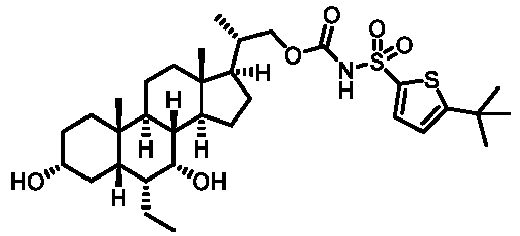
44-k 
44-l 
44-m 
44-n 
44-o 
44-p 
45 
46 
47 
48 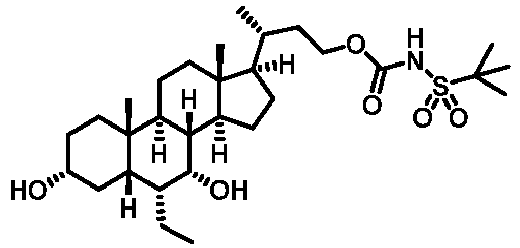
49 
50 
51 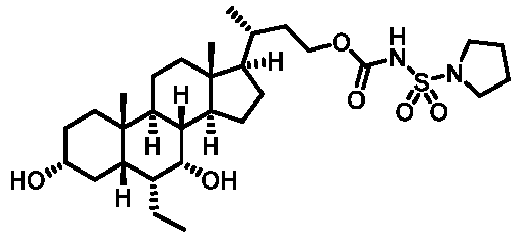
52 
53 
54 
55 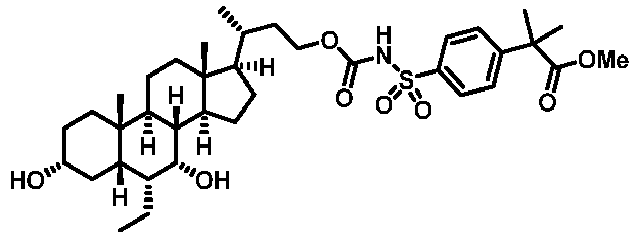
56 
57 
58 
59 
60 
61 
62 
63 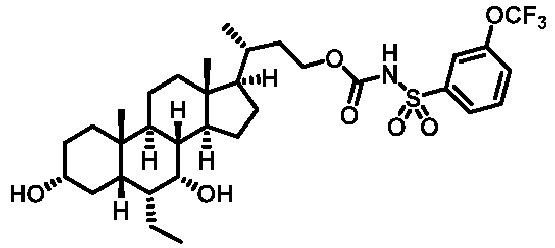
64 
65 
66 
67 
68 
69 
70 
71 
72 
73 
74 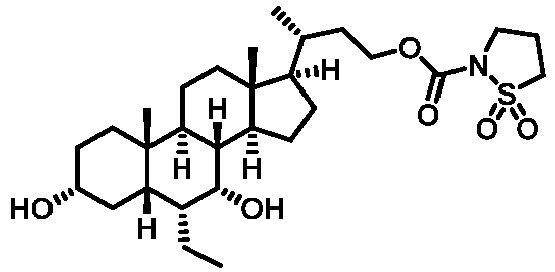
75 
76 
77 
78 
79 
80 
81 
82 
83 
84 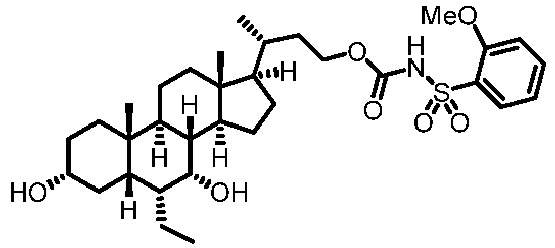
85 
86 
87 
88 
89 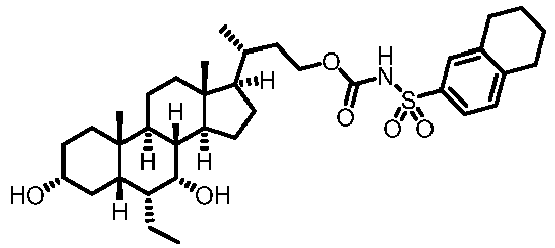
90 
91 
92 
93 
94 
95 
96 
97 
98 
99 
100 
101 
102 
103 
104 
104-a 
104-b 
104-c 
104-d 
104-e 
104-f 
104-g 
104-h 
104-i 
104-j 
104-k 
105 
106 
107 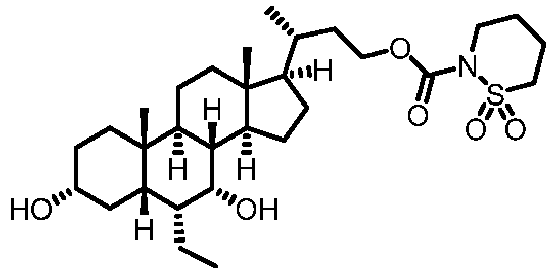
108 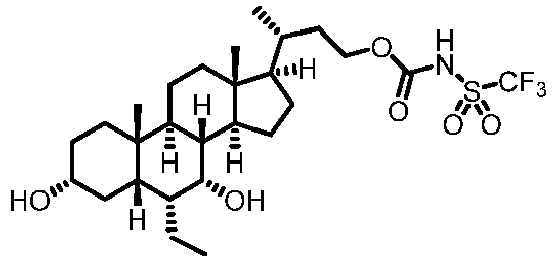
109 
110 
111 
112 
113 
114 
115 
116 
117 
118 
119 
120 
121 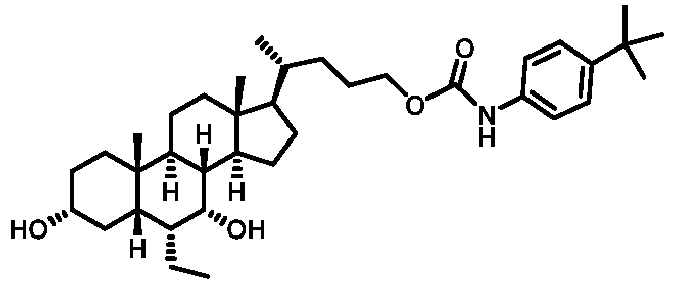
122 
123 
124 
125 
126 
127 
128 
129 
130 
131 
132 
133 
134 
135 
136 
137 
138 
139 
140 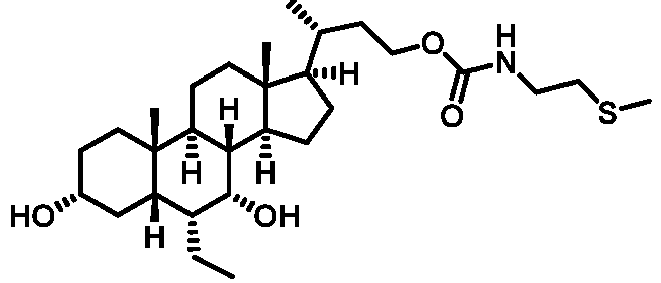
141 
142 
143 
144 
145 
146 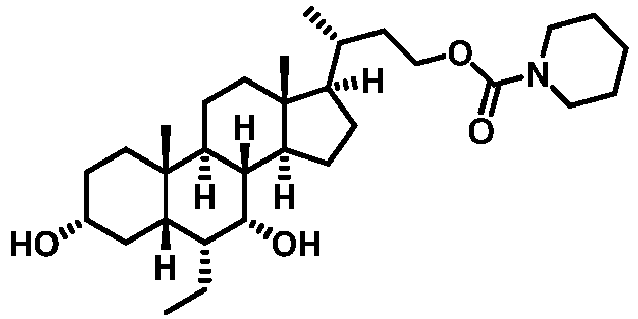
147 
148 
149 
150 
151 
152 
153 
154 
155 
156 
157 
158 
159 
160 
161 
162 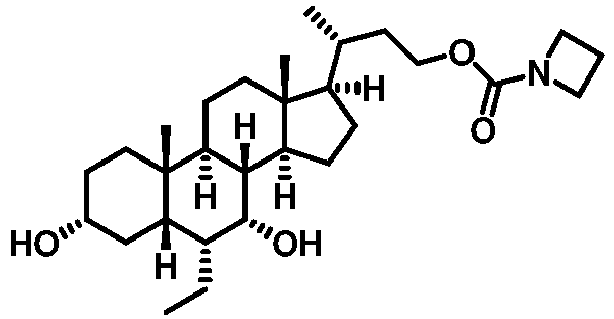
163 
164 
165 
166 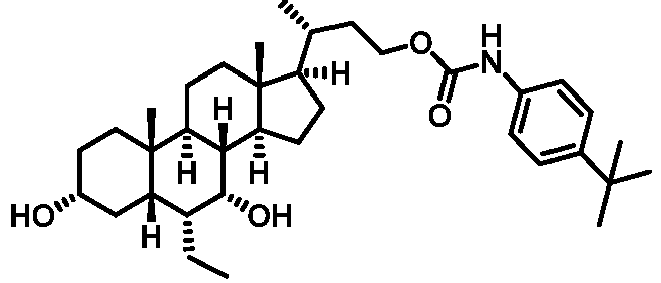
167 
168 
169 
170 
171 
172 
173 
174 
175 
176 
177 
178 
179 
180 
181 
182 
183 
184 
185 
186 
187 
188 
189 
190 
191 
192 
193 
194 
195 
196 
197 
198 
199 
200 
201 
202 
203 
204 
205 
206 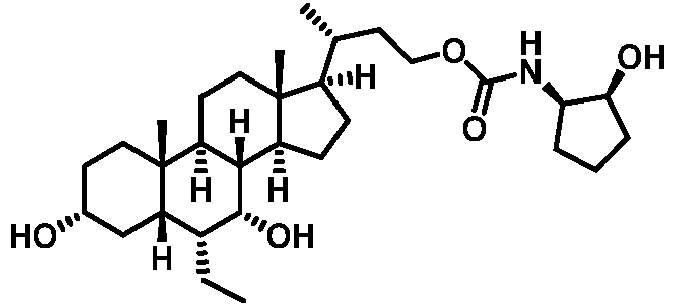
207 
208 
209 
210 
211 
212 
213 
214 
215 
216 
217 
218 
- The compound of claim 9 having the structure

- The compound of claim 9 having the structure

- The compound of claim 9 having the structure

- The compound of claim 9 having the structure

- The compound of claim 9 having the structure

- The compound of claim 9 having the structure

- The compound of any one of claims 1-15, for use in preventing or treating an FXR-mediated disease or condition.
- The compound for use of claim 16, wherein the FXR-mediated disease or condition is selected from the group consisting of chronic liver disease, gastrointestinal disease, renal disease, cardiovascular disease, and metabolic disease.
- The compound for use of claim 17, wherein the FXR-mediated disease or condition is a chronic liver disease selected from the group consisting of primary biliary cirrhosis, cerebrotendinous xanthomatosis, primary sclerosing cholangitis, drug induced cholestasis, intrahepatic cholestasis of pregnancy, parenteral nutrition associate cholestasis, bacterial overgrowth or sepsis associated cholestasis, autoimmune hepatitis, chronic viral hepatitis, alcoholic liver disease, nonalcoholic fatty liver disease, nonalcoholic steatohepatitis, liver transplant associated graft versus host disease, living donor transplant liver regeneration, congenital hepatic fibrosis, choledocholithiasis, granulomatous liver disease, intra- or extrahepatic malignancy, Sjogren's syndrome, Sarcoidosis, Wilson's disease, Gaucher's disease, hemochromatosis, and alpha 1-antitrypsin deficiency.
- The compound for use of claim 17, wherein the FXR-mediated disease or condition is a renal disease selected from the group consisting of diabetic nephropathy, focal segmental glomerulosclerosis, hypertensive nephrosclerosis, chronic glomerulonephritis, chronic transplant glomerulopathy, chronic interstitial nephritis, and polycystic kidney disease.
- The compound for use of claim 17, wherein the FXR-mediated disease or condition is a cardiovascular disease selected from the group consisting of (a) atherosclerosis, arteriosclerosis, dyslipidemia, hypercholesterolemia, and hypertriglyceridemia; or (b) a metabolic disease selected from the group consisting of insulin resistance, Type I and Type II diabetes, and obesity.
- A pharmaceutical composition comprising a compound according to any one of claims 1-15 and a pharmaceutically acceptable carrier.
Priority Applications (5)
| Application Number | Priority Date | Filing Date | Title |
|---|---|---|---|
| SM20210593T SMT202100593T1 (en) | 2015-03-31 | 2016-03-30 | Bile acid derivatives as fxr/tgr5 agonists and methods of use thereof |
| HRP20211066TT HRP20211066T1 (en) | 2015-03-31 | 2016-03-30 | BILE ACID DERIVATIVES AS FXR / TGR5 AGONISTS AND PROCEDURES FOR THEIR USE |
| RS20210895A RS62110B1 (en) | 2015-03-31 | 2016-03-30 | Bile acid derivatives as fxr/tgr5 agonists and methods of use thereof |
| SI201631279T SI3277286T1 (en) | 2015-03-31 | 2016-03-30 | Bile acid derivatives as fxr/tgr5 agonists and methods of use thereof |
| PL16774118T PL3277286T3 (en) | 2015-03-31 | 2016-03-30 | Bile acid derivatives as fxr/tgr5 agonists and methods of use thereof |
Applications Claiming Priority (3)
| Application Number | Priority Date | Filing Date | Title |
|---|---|---|---|
| US201562140927P | 2015-03-31 | 2015-03-31 | |
| US201662287267P | 2016-01-26 | 2016-01-26 | |
| PCT/US2016/025035 WO2016161003A1 (en) | 2015-03-31 | 2016-03-30 | Bile acid derivatives as fxr/tgr5 agonists and methods of use thereof |
Publications (3)
| Publication Number | Publication Date |
|---|---|
| EP3277286A1 EP3277286A1 (en) | 2018-02-07 |
| EP3277286A4 EP3277286A4 (en) | 2018-10-24 |
| EP3277286B1 true EP3277286B1 (en) | 2021-04-21 |
Family
ID=57007583
Family Applications (1)
| Application Number | Title | Priority Date | Filing Date |
|---|---|---|---|
| EP16774118.0A Active EP3277286B1 (en) | 2015-03-31 | 2016-03-30 | Bile acid derivatives as fxr/tgr5 agonists and methods of use thereof |
Country Status (27)
| Country | Link |
|---|---|
| US (4) | US10457703B2 (en) |
| EP (1) | EP3277286B1 (en) |
| JP (1) | JP6785788B2 (en) |
| KR (1) | KR102681304B1 (en) |
| CN (1) | CN107427527B (en) |
| AU (1) | AU2016242861B2 (en) |
| CA (1) | CA2981503C (en) |
| CY (1) | CY1124404T1 (en) |
| DK (1) | DK3277286T3 (en) |
| ES (1) | ES2886766T3 (en) |
| HR (1) | HRP20211066T1 (en) |
| HU (1) | HUE054960T2 (en) |
| IL (1) | IL254288B (en) |
| LT (1) | LT3277286T (en) |
| MX (1) | MX379579B (en) |
| MY (1) | MY192135A (en) |
| NZ (1) | NZ735126A (en) |
| PH (1) | PH12017501586A1 (en) |
| PL (1) | PL3277286T3 (en) |
| PT (1) | PT3277286T (en) |
| RS (1) | RS62110B1 (en) |
| RU (1) | RU2712099C2 (en) |
| SG (2) | SG10201910670RA (en) |
| SI (1) | SI3277286T1 (en) |
| SM (1) | SMT202100593T1 (en) |
| WO (1) | WO2016161003A1 (en) |
| ZA (2) | ZA201707212B (en) |
Families Citing this family (31)
| Publication number | Priority date | Publication date | Assignee | Title |
|---|---|---|---|---|
| EP3871693A1 (en) | 2005-09-27 | 2021-09-01 | Special Water Patents B.V. | Compositions for oral care |
| HK1243930A1 (en) | 2014-11-06 | 2018-07-27 | 英安塔制药有限公司 | Bile acid analogs an fxr/tgr5 agonists and methods of use thereof |
| WO2016086115A1 (en) | 2014-11-26 | 2016-06-02 | Enanta Pharmaceuticals, Inc. | Tetrazole derivatives of bile acids as fxr/tgr5 agonists and methods of use thereof |
| US10208081B2 (en) | 2014-11-26 | 2019-02-19 | Enanta Pharmaceuticals, Inc. | Bile acid derivatives as FXR/TGR5 agonists and methods of use thereof |
| HK1244708A1 (en) | 2014-11-26 | 2018-08-17 | 英安塔制药有限公司 | Bile acid analogs as fxr/tgr5 agonists and methods of use thereof |
| WO2016161003A1 (en) | 2015-03-31 | 2016-10-06 | Enanta Phamraceuticals, Inc. | Bile acid derivatives as fxr/tgr5 agonists and methods of use thereof |
| EP3409684B1 (en) * | 2016-01-28 | 2024-01-03 | Chia Tai Tianqing Pharmaceutical Group Co., Ltd. | Steroid derivative fxr agonist |
| WO2017147137A1 (en) | 2016-02-23 | 2017-08-31 | Enanta Pharmaceuticals, Inc. | Benzoic acid derivatives of bile acid as fxr/tgr5 agonists and methods of use thereof |
| US10323061B2 (en) | 2016-02-23 | 2019-06-18 | Enanta Pharmaceuticals, Inc. | Heteroaryl containing bile acid analogs as FXR/TGR5 agonists and methods of use thereof |
| WO2017147159A1 (en) | 2016-02-23 | 2017-08-31 | Enanta Pharmaceuticals, Inc. | Deuterated bile acid derivatives as fxr/tgr5 agonists and methods of use thereof |
| EA038580B9 (en) * | 2016-05-18 | 2021-10-05 | Чиа Тай Тяньцин Фармасьютикал Груп Ко., Лтд. | Steroid derivative fxr agonist |
| CN110121347A (en) | 2016-11-29 | 2019-08-13 | 英安塔制药有限公司 | The method for preparing sulfonylureas bile acid derivative |
| CN108218945B (en) * | 2016-12-15 | 2021-05-28 | 宁波百纳西药业有限公司 | Deoxycholic acid derivative, its preparation method, pharmaceutical composition and use |
| CN108218946B (en) * | 2016-12-15 | 2021-04-16 | 宁波百纳西药业有限公司 | A kind of deoxycholic acid compound, its preparation method and application |
| US10472386B2 (en) | 2017-02-14 | 2019-11-12 | Enanta Pharmaceuticals, Inc. | Bile acid derivatives as FXR agonists and methods of use thereof |
| BR112019020780A2 (en) * | 2017-04-07 | 2020-04-28 | Enanta Pharm Inc | process for preparing sulfonyl carbamate bile acid derivatives |
| KR20250109791A (en) | 2017-06-23 | 2025-07-17 | 인터셉트 파마슈티컬즈, 인크. | Methods and intermediates for the preparation of bile acid derivatives |
| WO2019020067A1 (en) * | 2017-07-26 | 2019-01-31 | 正大天晴药业集团股份有限公司 | Method for preparing steroid derivative fxr agonist |
| GB201812382D0 (en) | 2018-07-30 | 2018-09-12 | Nzp Uk Ltd | Compounds |
| AU2020312735A1 (en) | 2019-07-18 | 2021-12-16 | Enyo Pharma | Method for decreasing adverse-effects of interferon |
| BR112022006546A2 (en) | 2019-10-07 | 2022-08-30 | Kallyope Inc | GPR119 AGONISTS |
| US20230060715A1 (en) | 2020-01-15 | 2023-03-02 | INSERM (Institut National de la Santé et de la Recherche Médicale) | Use of fxr agonists for treating an infection by hepatitis d virus |
| CA3173731A1 (en) | 2020-02-28 | 2021-09-02 | Kallyope, Inc. | Gpr40 agonists |
| US12215127B2 (en) | 2020-04-17 | 2025-02-04 | Cornell University | Compositions and methods for profiling of gut microbiota-associated bile salt hydrolase (BSH) activity |
| US12030912B2 (en) * | 2020-05-15 | 2024-07-09 | Brigham Young University | Cationic steroidal antimicrobial compounds with urethane linkages |
| CN116323608A (en) | 2020-05-19 | 2023-06-23 | 卡尔优普公司 | AMPK activator |
| EP4172162A4 (en) | 2020-06-26 | 2024-08-07 | Kallyope, Inc. | AMPK ACTIVATORS |
| US20240100125A1 (en) | 2021-01-14 | 2024-03-28 | Enyo Pharma | Synergistic effect of a fxr agonist and ifn for the treatment of hbv infection |
| CN117320722A (en) | 2021-04-28 | 2023-12-29 | 埃尼奥制药公司 | Use of FXR agonists as combination therapy strongly potentiates the effects of TLR3 agonists |
| WO2023288123A1 (en) | 2021-07-16 | 2023-01-19 | Interecept Pharmaceuticals, Inc. | Methods and intermediates for the preparation of 3.alpha.,7.alpha.,11.beta.-trihydroxy-6.alpha.-ethyl-5.beta.-cholan-24-oic acid |
| GB202416085D0 (en) | 2024-10-31 | 2024-12-18 | Nzp Uk Ltd | Reduction process |
Family Cites Families (144)
| Publication number | Priority date | Publication date | Assignee | Title |
|---|---|---|---|---|
| GB1592791A (en) | 1977-01-07 | 1981-07-08 | Radiochemical Centre Ltd | Selenium- or tellurium-containing bile acids and derivatives thereof |
| US4917826A (en) | 1985-10-18 | 1990-04-17 | The Upjohn Company | Cyclic hydrocarbons with an aminoalkyl sidechain |
| US5571809A (en) | 1989-04-20 | 1996-11-05 | Boehringer Ingelheim Pharmaceuticals, Inc. | The treatment of HIV-1 infection using certain pyridodiazepines |
| IT1255449B (en) | 1992-06-30 | 1995-10-31 | Fabio Berlati | USE OF NOR- AND HOMO-DERIVATIVES OF BILE ACIDS AS DRUGS ABSORPTION PROMOTERS. |
| IT1255485B (en) | 1992-08-04 | 1995-11-06 | Erregierre Ind Chim | PROCESS TO PREPARE GLYCINE CONJUGATED BILIARY ACIDS AND RELATED THERAPEUTIC COMPOSITIONS FOR THE TREATMENT OF HEPATIC INSUFFICIENCY |
| TW289757B (en) | 1993-05-08 | 1996-11-01 | Hoechst Ag | |
| TW289020B (en) | 1993-05-08 | 1996-10-21 | Hoechst Sktiengesellschaft | |
| US5541348A (en) * | 1994-03-10 | 1996-07-30 | National Research Council Of Canada | Bile acids for biological and chemical applications and processes for the production thereof |
| CN1087725C (en) | 1994-03-25 | 2002-07-17 | 同位素技术有限公司 | Enhancement of the effect of drugs by deuteration |
| US5646316A (en) | 1994-04-08 | 1997-07-08 | Osteoarthritis Sciences, Inc. | Bile acid inhibitors of metalloproteinase enzymes |
| JPH1160594A (en) | 1997-08-25 | 1999-03-02 | Sankyo Co Ltd | Bile acid derivative |
| JP3865890B2 (en) * | 1997-09-30 | 2007-01-10 | 富士フイルムホールディングス株式会社 | Positive photosensitive composition |
| ES2326850T3 (en) | 1998-12-23 | 2009-10-20 | Glaxo Group Limited | TESTS FOR NUCLEAR RECEPTORS LIGANDOS. |
| US20020132223A1 (en) | 1999-03-26 | 2002-09-19 | City Of Hope | Methods for modulating activity of the FXR nuclear receptor |
| ATE433752T1 (en) | 1999-04-30 | 2009-07-15 | Univ Michigan | USE OF BENZODIAZEPINES TO TREAT AUTOIMMUNE DISEASES, INFLAMMATION, NEOPLASIA, VIRAL INFECTIONS AND ATHEROSCLEROSIS |
| AU2002211863A1 (en) | 2000-10-06 | 2002-04-15 | Xenoport, Inc. | Bile-acid derived compounds for providing sustained systemic concentrations of drugs after oral administration |
| US20020098999A1 (en) * | 2000-10-06 | 2002-07-25 | Gallop Mark A. | Compounds for sustained release of orally delivered drugs |
| ATE303399T1 (en) | 2001-03-12 | 2005-09-15 | Intercept Pharmaceuticals Inc | STEROIDS AS AGONISTS FOR FXR |
| EP1285914B1 (en) | 2001-08-13 | 2007-12-19 | PheneX Pharmaceuticals AG | Nr1h4 nuclear receptor binding compounds |
| CA2482195A1 (en) | 2002-04-12 | 2003-10-23 | The University Of Chicago | Farnesoid x-activated receptor agonists |
| ITMI20021080A1 (en) | 2002-05-21 | 2003-11-21 | Marcello Izzo | PHARMACEUTICAL ASSOCIATIONS FOR TOPICAL USE BASED ON CHELATES OF THE METAL PROTEASIS FERROINHIBITORS AND FACTOR XIII FOR THE TREATMENT OF |
| WO2004046162A2 (en) | 2002-11-14 | 2004-06-03 | The Scripps Research Institute | Non-steroidal fxr agonists |
| JP2006515838A (en) | 2002-11-22 | 2006-06-08 | スミスクライン ビーチャム コーポレーション | Farnesoid X receptor agonist |
| US20070054902A1 (en) | 2003-12-02 | 2007-03-08 | Shionogi & Co., Ltd. | Isoxazole derivatives as peroxisome proliferator-activated receptors agonists |
| EP1568706A1 (en) | 2004-02-26 | 2005-08-31 | Intercept Pharmaceuticals, Inc. | Novel steroid agonist for FXR |
| PL1734970T3 (en) | 2004-03-12 | 2015-05-29 | Intercept Pharmaceuticals Inc | Treatment of fibrosis using fxr ligands |
| ITMI20050912A1 (en) | 2005-05-19 | 2006-11-20 | Erregierre Spa | PROCESS OF PREPARATION OF ACIDS 3-A-YA (B) -DIDROSSI-6-A (B) -ALCHIL-5B-COLANICI |
| WO2007076260A2 (en) | 2005-12-19 | 2007-07-05 | Smithkline Beecham Corporation | Farnesoid x receptor agonists |
| KR20080110998A (en) | 2006-01-30 | 2008-12-22 | 엑셀리시스, 인코포레이티드 | As the BAX2 modulator, the aryl may be selected from the group consisting of ivaryl arylaminoaminopyrimidine or phenylarylaminoalkylpyrimidine and pharmaceutical compositions comprising the same. |
| EP1978968A2 (en) | 2006-02-01 | 2008-10-15 | Brigham Young University | Cationic steroid antimicrobial compositions for treating or preventing hiv infections |
| JP5301286B2 (en) | 2006-02-03 | 2013-09-25 | イーライ リリー アンド カンパニー | Compounds and methods for modulating FX receptors |
| WO2007095174A2 (en) | 2006-02-14 | 2007-08-23 | Intercept Pharmaceuticals, Inc. | Bile acid derivatives as fxr ligands for the prevention or treatment of fxr-mediated diseases or conditions |
| US20090131384A1 (en) | 2006-03-22 | 2009-05-21 | Syndexa Pharmaceuticals Corporation | Compounds and methods for treatment of disorders associated with er stress |
| DK2029547T3 (en) | 2006-05-24 | 2010-07-26 | Lilly Co Eli | FXR agonists |
| PE20080344A1 (en) | 2006-06-27 | 2008-06-09 | Sanofi Aventis | 8-AZABICYCLE COMPOUNDS [3.2.1] OCT-8-IL-1,2,3,4-TETRAHYDROQUINOLINE SUBSTITUTED AS INHIBITORS 11B-HSD1 |
| CN101522703B (en) | 2006-06-27 | 2013-04-17 | 英特塞普特医药品公司 | Bile acid derivatives and its uses in the prevention or treatment of fxr-mediated diseases or conditions |
| RU2009105179A (en) | 2006-07-17 | 2010-08-27 | Новартис АГ (CH) | SULFONILAMINOCARBONYL DERIVATIVES OF CHOLIC ACID AMIDES FOR APPLICATION AS IMMUNOMODULATORS |
| WO2008127349A2 (en) | 2006-08-15 | 2008-10-23 | Novartis Ag | Heterocyclic compounds suitable for the treatment of diseases related to elevated lipid level |
| EP1894928A1 (en) | 2006-08-29 | 2008-03-05 | PheneX Pharmaceuticals AG | Heterocyclic fxr binding compounds |
| EP1894924A1 (en) | 2006-08-29 | 2008-03-05 | Phenex Pharmaceuticals AG | Heterocyclic FXR binding compounds |
| BRPI0716777A2 (en) | 2006-09-15 | 2017-04-25 | Volvo Lastvagnar Ab | method for adapting an automatic mechanical transmission in a heavy vehicle |
| CL2007003035A1 (en) | 2006-10-24 | 2008-05-16 | Smithkline Beechman Corp | COMPOUNDS DERIVED FROM ISOXAZOL REPLACED, FARNESOID X RECEIVER AGONISTS; PREPARATION PROCEDURE; PHARMACEUTICAL COMPOSITION THAT UNDERSTANDS IT; AND USE OF THE COMPOUND IN THE TREATMENT OF OBESITY, DIABETES MELLITUS, FIBROSIS IN ORGANS, |
| EP1918281A1 (en) | 2006-11-02 | 2008-05-07 | Laboratorios del Dr. Esteve S.A. | Phenylamino-substituted piperidine compounds, their preparation and use as medicaments |
| JP2010513458A (en) | 2006-12-19 | 2010-04-30 | ファイザー・プロダクツ・インク | Nicotinamide derivatives as inhibitors of H-PGDS and their use to treat prostaglandin D2-mediated diseases |
| JP5292310B2 (en) * | 2007-01-19 | 2013-09-18 | インターセプト ファーマシューティカルズ, インコーポレイテッド | 23-substituted bile acids as TGR5 modulators and methods of use thereof |
| EP1947108A1 (en) | 2007-01-19 | 2008-07-23 | Intercept Pharmaceuticals, Inc. | TGR5 modulators and methods of use thereof |
| JP2010521463A (en) | 2007-03-15 | 2010-06-24 | シェーリング コーポレイション | Piperazine substituted viridazinone derivatives useful as inhibitors of glucan synthase |
| EA200901512A1 (en) | 2007-06-13 | 2010-06-30 | ГЛАКСОСМИТКЛАЙН ЭлЭлСи | PHARNESIDE X-RECEPTORS AGONISTS |
| AU2008270784A1 (en) | 2007-07-02 | 2009-01-08 | Glaxosmithkline Llc | Farnesoid X receptor agonists |
| TW200906823A (en) | 2007-07-16 | 2009-02-16 | Lilly Co Eli | Compounds and methods for modulating FXR |
| US8338628B2 (en) | 2007-08-28 | 2012-12-25 | City Of Hope | Method of synthesizing alkylated bile acid derivatives |
| WO2009032321A2 (en) | 2007-09-06 | 2009-03-12 | Genaera Corporation | A method for treating diabetes |
| US20090163474A1 (en) | 2007-10-19 | 2009-06-25 | Wyeth | FXR Agonists for the Treatment of Nonalcoholic Fatty Liver and Cholesterol Gallstone Diseases |
| KR101239008B1 (en) * | 2008-03-31 | 2013-03-04 | 한양대학교 산학협력단 | Bilic acid derivatives and their applications |
| EP2110374A1 (en) | 2008-04-18 | 2009-10-21 | Merck Sante | Benzofurane, benzothiophene, benzothiazol derivatives as FXR modulators |
| EP2128158A1 (en) | 2008-05-26 | 2009-12-02 | Phenex Pharmaceuticals AG | Heterocyclic cyclopropyl-substituted FXR binding compounds |
| EA020310B1 (en) | 2008-07-30 | 2014-10-30 | Интерсепт Фармасьютикалз, Инк. | Tgr5 modulators and use thereof |
| EP2350068B1 (en) | 2008-10-23 | 2017-08-30 | Boehringer Ingelheim International GmbH | Urea derivatives of substituted nortropanes, medicaments containing such compounds and their use |
| US8785488B2 (en) | 2009-02-12 | 2014-07-22 | Exelixis Patent Company Llc | Triazole and imidazole derivatives for use as TGR5 agonists in the treatment of diabetes and obesity |
| US8329904B2 (en) | 2009-05-12 | 2012-12-11 | Hoffmann-La Roche Inc. | Azacyclic derivatives |
| EP2289883A1 (en) | 2009-08-19 | 2011-03-02 | Phenex Pharmaceuticals AG | Novel FXR (NR1H4) binding and activity modulating compounds |
| WO2011021645A1 (en) | 2009-08-19 | 2011-02-24 | 大日本住友製薬株式会社 | Bicyclic urea derivative or pharmacologically permitted salt thereof |
| SI2496582T1 (en) | 2009-11-05 | 2016-04-29 | Glaxosmithkline Llc Corporation Service Company | Benzodiazepine bromodomain inhibitor |
| CU24152B1 (en) | 2010-12-20 | 2016-02-29 | Irm Llc | 1,2 OXAZOL-8-AZABICICLO [3,2,1] OCTANO 8 IL AS FXR MODULATORS |
| EP2655368A1 (en) | 2010-12-20 | 2013-10-30 | Irm Llc | Compositions and methods for modulating farnesoid x receptors |
| US20140039007A1 (en) | 2010-12-20 | 2014-02-06 | David C. Tully | Compositions and methods for modulating farnesoid x receptors |
| EP2545964A1 (en) | 2011-07-13 | 2013-01-16 | Phenex Pharmaceuticals AG | Novel FXR (NR1H4) binding and activity modulating compounds |
| CA2842707A1 (en) | 2011-08-04 | 2013-02-07 | Lumena Pharmaceuticals, Inc. | Bile acid recycling inhibitors for treatment of pancreatitis |
| WO2013037482A1 (en) | 2011-09-15 | 2013-03-21 | Phenex Pharmaceuticals Ag | Farnesoid x receptor agonists for cancer treatment and prevention |
| US11154559B2 (en) | 2011-09-29 | 2021-10-26 | Ethicon Endo-Surgery, Inc. | Methods and compositions of bile acids |
| KR20150004894A (en) | 2012-05-01 | 2015-01-13 | 카타베이시스 파마슈티칼즈, 인코포레이티드 | Fatty acid conjugates of statins and FXR agonists; compositions and methods of use |
| PT3336097T (en) | 2012-06-19 | 2020-10-29 | Intercept Pharmaceuticals Inc | Preparation of the non-crystalline form of obeticholic acid |
| US9079935B2 (en) | 2012-08-13 | 2015-07-14 | The Board Of Regents Of The Nevada System Of Higher Education On Behalf Of The University Of Nevada, Las Vegas | Reducing risk of contracting Clostridium-difficile associated disease |
| WO2014036379A2 (en) * | 2012-08-31 | 2014-03-06 | Metselex | Bile acids prevent or abolish progression of parkinson's and related neurodegenerative diseases |
| US20140187633A1 (en) | 2012-12-31 | 2014-07-03 | Amarin Pharmaceuticals Ireland Limited | Methods of treating or preventing nonalcoholic steatohepatitis and/or primary biliary cirrhosis |
| US9814733B2 (en) | 2012-12-31 | 2017-11-14 | A,arin Pharmaceuticals Ireland Limited | Compositions comprising EPA and obeticholic acid and methods of use thereof |
| US20140206657A1 (en) | 2013-01-18 | 2014-07-24 | City Of Hope | Bile acid analog tgr5 agonists |
| CA2912139C (en) | 2013-05-14 | 2021-04-20 | Roberto Pellicciari | 11-hydroxyl-derivatives of bile acids and amino acid conjugates thereof as farnesoid x receptor modulators |
| EP3027637B1 (en) | 2013-08-01 | 2019-10-09 | The U.S.A. As Represented By The Secretary, Department Of Health And Human Services | The glycine conjugate of beta-muricholic acid as an inhibitor of the farnesoid x receptor for the treatment of obesity, insulin resistance or non-alcoholic fatty liver disease |
| PL3043865T3 (en) | 2013-09-11 | 2021-07-05 | Institut National De La Santé Et De La Recherche Médicale (Inserm) | Methods and pharmaceutical compositions for the treatment of hepatitis b virus infection |
| US20150112089A1 (en) | 2013-10-22 | 2015-04-23 | Metselex, Inc. | Deuterated bile acids |
| EP3626725B1 (en) | 2014-05-29 | 2022-11-30 | Bar Pharmaceuticals S.r.l. | Cholane derivatives for use in the treatment and/or prevention of fxr and tgr5/gpbar1 mediated diseases |
| HK1243930A1 (en) | 2014-11-06 | 2018-07-27 | 英安塔制药有限公司 | Bile acid analogs an fxr/tgr5 agonists and methods of use thereof |
| CN105669811B (en) | 2014-11-17 | 2020-09-04 | 正大天晴药业集团股份有限公司 | Novel 7-keto-6β-alkylcholanoic acid derivatives in the preparation of obeticholic acid and its use in the field of medicine |
| US10208081B2 (en) | 2014-11-26 | 2019-02-19 | Enanta Pharmaceuticals, Inc. | Bile acid derivatives as FXR/TGR5 agonists and methods of use thereof |
| US20160176917A1 (en) | 2014-11-26 | 2016-06-23 | Enanta Pharmaceuticals, Inc. | Bile Acid Derivatives as FXR/TGR5 Agonists and Methods of Use Thereof |
| HK1244708A1 (en) | 2014-11-26 | 2018-08-17 | 英安塔制药有限公司 | Bile acid analogs as fxr/tgr5 agonists and methods of use thereof |
| WO2016086115A1 (en) | 2014-11-26 | 2016-06-02 | Enanta Pharmaceuticals, Inc. | Tetrazole derivatives of bile acids as fxr/tgr5 agonists and methods of use thereof |
| EP3034499A1 (en) | 2014-12-17 | 2016-06-22 | Gilead Sciences, Inc. | Novel FXR (NR1H4) modulating compounds |
| EP3034501A1 (en) | 2014-12-17 | 2016-06-22 | Gilead Sciences, Inc. | Hydroxy containing FXR (NR1H4) modulating compounds |
| KR20170095965A (en) | 2014-12-18 | 2017-08-23 | 노파르티스 아게 | Azabicyclooctane derivatives as fxr agonists for use in the treatment of liver and gastrointestinal diseases |
| MX2017010376A (en) | 2015-02-11 | 2017-12-20 | Enanta Pharm Inc | Bile acid analogs as fxr/tgr5 agonists and methods of use thereof. |
| TWI698430B (en) | 2015-02-13 | 2020-07-11 | 南北兄弟藥業投資有限公司 | Tricyclic compounds and uses thereof in medicine |
| WO2016161003A1 (en) | 2015-03-31 | 2016-10-06 | Enanta Phamraceuticals, Inc. | Bile acid derivatives as fxr/tgr5 agonists and methods of use thereof |
| WO2016173493A1 (en) | 2015-04-28 | 2016-11-03 | Shanghai De Novo Pharmatech Co. Ltd. | Sulfonylaminocarbonyl derivative, pharmaceutical composition and uses thereof |
| US20180148470A1 (en) | 2015-04-28 | 2018-05-31 | Jiangsu Hansoh Pharmaceutical Group Co., Ltd. | Cholic acid derivative, and preparation method and medical use thereof |
| TW201704251A (en) | 2015-04-29 | 2017-02-01 | 正大天晴藥業集團股份有限公司 | Chenodeoxycholic acid derivative |
| AU2016280806B2 (en) | 2015-06-19 | 2021-01-28 | Intercept Pharmaceuticals, Inc. | TGR5 modulators and methods of use thereof |
| JP2018522054A (en) | 2015-08-07 | 2018-08-09 | インターセプト ファーマシューティカルズ, インコーポレイテッド | Process for the preparation of bile acids and their derivatives |
| CN105175473B (en) | 2015-08-19 | 2018-12-21 | 丽珠医药集团股份有限公司 | A kind of Austria shellfish cholic acid crystal form I and preparation method thereof, pharmaceutical composition and purposes |
| CN106478759A (en) | 2015-08-31 | 2017-03-08 | 陕西合成药业股份有限公司 | Shellfish chlolic acid derivatives difficult to understand and its production and use |
| CN106518946A (en) | 2015-09-10 | 2017-03-22 | 上海迪诺医药科技有限公司 | Sulfonylurea derivative and pharmaceutical composition and application thereof |
| CN108350020A (en) | 2015-09-24 | 2018-07-31 | 英特塞普特医药品公司 | It is used to prepare the method and intermediate of bile acid derivative |
| KR20180061351A (en) | 2015-10-07 | 2018-06-07 | 인터셉트 파마슈티컬즈, 인크. | Fenezoid X receptor modulator |
| CN106946867B (en) | 2016-01-06 | 2019-11-12 | 广州市恒诺康医药科技有限公司 | FXR receptor modulator and its preparation method and use |
| CN106995416A (en) | 2016-01-26 | 2017-08-01 | 上海翰森生物医药科技有限公司 | FXR activators and its preparation method and application |
| WO2017128896A1 (en) | 2016-01-26 | 2017-08-03 | 江苏豪森药业集团有限公司 | Fxr agonist and preparation method and use thereof |
| EP3409684B1 (en) | 2016-01-28 | 2024-01-03 | Chia Tai Tianqing Pharmaceutical Group Co., Ltd. | Steroid derivative fxr agonist |
| CN107021957A (en) | 2016-02-01 | 2017-08-08 | 山东轩竹医药科技有限公司 | FXR receptor stimulating agents |
| WO2017133521A1 (en) | 2016-02-01 | 2017-08-10 | 山东轩竹医药科技有限公司 | Fxr receptor agonist |
| ES2878575T3 (en) | 2016-02-22 | 2021-11-19 | Novartis Ag | Methods for using FXR agonists |
| US10323061B2 (en) | 2016-02-23 | 2019-06-18 | Enanta Pharmaceuticals, Inc. | Heteroaryl containing bile acid analogs as FXR/TGR5 agonists and methods of use thereof |
| WO2017147159A1 (en) | 2016-02-23 | 2017-08-31 | Enanta Pharmaceuticals, Inc. | Deuterated bile acid derivatives as fxr/tgr5 agonists and methods of use thereof |
| WO2017147137A1 (en) | 2016-02-23 | 2017-08-31 | Enanta Pharmaceuticals, Inc. | Benzoic acid derivatives of bile acid as fxr/tgr5 agonists and methods of use thereof |
| EA038632B1 (en) | 2016-03-11 | 2021-09-27 | Интерсепт Фармасьютикалз, Инк. | 7,11-dihydroxy-6-ethyl-5-cholan-24-oic acid and pharmaceutical compositions thereof for treating or preventing a disease or condition mediated by the farnesoid x receptor (fxr) |
| WO2017189652A1 (en) | 2016-04-26 | 2017-11-02 | Enanta Pharmaceuticals, Inc. | Isoxazole derivatives as fxr agonists and methods of use thereof |
| WO2017189663A1 (en) | 2016-04-26 | 2017-11-02 | Enanta Pharmaceuticals, Inc. | Isoxazole derivatives as fxr agonists and methods of use thereof |
| US10080742B2 (en) | 2016-04-26 | 2018-09-25 | Enanta Pharmaceuticals, Inc. | Isoxazole derivatives as FXR agonists and methods of use thereof |
| US10144729B2 (en) | 2016-05-18 | 2018-12-04 | Enanta Pharmaceuticals, Inc. | Isoxazole analogs as FXR agonists and methods of use thereof |
| WO2017201155A1 (en) | 2016-05-18 | 2017-11-23 | Enanta Pharmaceuticals, Inc. | lSOXAZOLE DERIVATIVES AS FXR AGONISTS AND METHODS OF USE THEREOF |
| WO2017201152A1 (en) | 2016-05-18 | 2017-11-23 | Enanta Pharmaceuticals, Inc. | Isoxazole derivatives as fxr agonists and methods of use thereof |
| CA3252823A1 (en) | 2016-06-13 | 2025-02-25 | Gilead Sciences, Inc. | Substituted tert-butyl-3-(2-chloro-phenyl)-3-hydroxyazetidine-1-carboxylate compounds |
| BR112018075734A2 (en) | 2016-06-13 | 2019-04-02 | Gilead Sciences, Inc. | compound, pharmaceutical composition, method of treating a patient with a disease or condition mediated at least in part by fxr, and use of a compound. |
| AR108711A1 (en) | 2016-06-13 | 2018-09-19 | Gilead Sciences Inc | FXR MODULATING COMPOUNDS (NR1H4) |
| TW201808283A (en) | 2016-08-05 | 2018-03-16 | 廣東東陽光藥業有限公司 | Nitrogen-containing tricyclic compounds and uses thereof in medicine |
| EP3504205B1 (en) | 2016-08-23 | 2021-08-04 | Ardelyx, Inc. | Hormone receptor modulators for treating metabolic conditions and disorders |
| WO2018067704A1 (en) | 2016-10-04 | 2018-04-12 | Enanta Pharmaceuticals, Inc. | Isoxazole analogs as fxr agonists and methods of use thereof |
| CN107973790A (en) | 2016-10-22 | 2018-05-01 | 合帕吉恩治疗公司 | Heterocyclic FXR conditioning agent |
| US10597391B2 (en) | 2016-10-26 | 2020-03-24 | Enanta Pharmaceuticals, Inc. | Urea-containing isoxazole derivatives as FXR agonists and methods of use thereof |
| CN108017636A (en) | 2016-11-04 | 2018-05-11 | 合帕吉恩治疗公司 | Nitrogen-containing heterocycle compound as FXR conditioning agents |
| BE1025121B1 (en) | 2016-11-17 | 2018-11-05 | Glaxosmithkline Biologicals Sa | ANTIGENIC CONSTRUCTS OF ZIKA VIRUS |
| CN110121347A (en) | 2016-11-29 | 2019-08-13 | 英安塔制药有限公司 | The method for preparing sulfonylureas bile acid derivative |
| CN106588804B (en) | 2016-12-09 | 2018-11-09 | 都创(上海)医药科技有限公司 | A kind of preparation method of compound as Farnesoid X receptor (FXR) |
| CN106632294A (en) | 2016-12-15 | 2017-05-10 | 宁波百纳西药业有限公司 | Spiro compound and medicinal use thereof |
| WO2018133730A1 (en) | 2017-01-20 | 2018-07-26 | 四川科伦博泰生物医药股份有限公司 | Heterocyclic compound, preparation method and use therefor |
| CN108341822B (en) | 2017-01-23 | 2021-04-16 | 广州市恒诺康医药科技有限公司 | FXR receptor modulator and preparation method and application thereof |
| US10472386B2 (en) | 2017-02-14 | 2019-11-12 | Enanta Pharmaceuticals, Inc. | Bile acid derivatives as FXR agonists and methods of use thereof |
| US20200131129A1 (en) | 2017-03-15 | 2020-04-30 | Metacrine, Inc. | Farnesoid x receptor agonists and uses thereof |
| BR112019020780A2 (en) | 2017-04-07 | 2020-04-28 | Enanta Pharm Inc | process for preparing sulfonyl carbamate bile acid derivatives |
| WO2018190643A1 (en) | 2017-04-12 | 2018-10-18 | Il Dong Pharmaceutical Co., Ltd. | An isoxazole derivatives as nuclear receptor agonists and used thereof |
| KR102725185B1 (en) | 2017-05-26 | 2024-11-01 | 씨에스피씨 종콰이 팔마씨우티컬 테크놀로지 (스자좡) 컴퍼니 리미티드 | Lactam compounds as FXR receptor agonists |
| US11352358B2 (en) | 2017-07-06 | 2022-06-07 | Xuanzhu Biopharmaceutical Co., Ltd. | FXR agonist |
| US10829486B2 (en) | 2018-02-14 | 2020-11-10 | Enanta Pharmacueticals, Inc. | Isoxazole derivatives as FXR agonists and methods of use thereof |
| CN109053751A (en) | 2018-08-30 | 2018-12-21 | 成都海博锐药业有限公司 | FXR regulator with spirane structure |
-
2016
- 2016-03-30 WO PCT/US2016/025035 patent/WO2016161003A1/en not_active Ceased
- 2016-03-30 PT PT167741180T patent/PT3277286T/en unknown
- 2016-03-30 SM SM20210593T patent/SMT202100593T1/en unknown
- 2016-03-30 RS RS20210895A patent/RS62110B1/en unknown
- 2016-03-30 SG SG10201910670RA patent/SG10201910670RA/en unknown
- 2016-03-30 NZ NZ735126A patent/NZ735126A/en unknown
- 2016-03-30 SI SI201631279T patent/SI3277286T1/en unknown
- 2016-03-30 LT LTEP16774118.0T patent/LT3277286T/en unknown
- 2016-03-30 ES ES16774118T patent/ES2886766T3/en active Active
- 2016-03-30 PL PL16774118T patent/PL3277286T3/en unknown
- 2016-03-30 SG SG11201707263XA patent/SG11201707263XA/en unknown
- 2016-03-30 KR KR1020177030546A patent/KR102681304B1/en active Active
- 2016-03-30 EP EP16774118.0A patent/EP3277286B1/en active Active
- 2016-03-30 RU RU2017134013A patent/RU2712099C2/en active
- 2016-03-30 DK DK16774118.0T patent/DK3277286T3/en active
- 2016-03-30 JP JP2017550939A patent/JP6785788B2/en active Active
- 2016-03-30 MX MX2017012558A patent/MX379579B/en unknown
- 2016-03-30 US US15/085,800 patent/US10457703B2/en active Active
- 2016-03-30 CN CN201680020045.2A patent/CN107427527B/en active Active
- 2016-03-30 HR HRP20211066TT patent/HRP20211066T1/en unknown
- 2016-03-30 CA CA2981503A patent/CA2981503C/en active Active
- 2016-03-30 MY MYPI2017703433A patent/MY192135A/en unknown
- 2016-03-30 HU HUE16774118A patent/HUE054960T2/en unknown
- 2016-03-30 AU AU2016242861A patent/AU2016242861B2/en active Active
-
2017
- 2017-09-03 IL IL254288A patent/IL254288B/en active IP Right Grant
- 2017-09-04 PH PH12017501586A patent/PH12017501586A1/en unknown
- 2017-10-24 ZA ZA2017/07212A patent/ZA201707212B/en unknown
-
2019
- 2019-10-04 US US16/593,262 patent/US11040998B2/en active Active
-
2021
- 2021-04-26 ZA ZA2021/02769A patent/ZA202102769B/en unknown
- 2021-05-19 US US17/324,464 patent/US11958879B2/en active Active
- 2021-07-20 CY CY20211100660T patent/CY1124404T1/en unknown
-
2024
- 2024-03-05 US US18/595,487 patent/US20240327452A1/en active Pending
Non-Patent Citations (1)
| Title |
|---|
| None * |
Also Published As
Similar Documents
| Publication | Publication Date | Title |
|---|---|---|
| US11958879B2 (en) | Bile acid derivatives as FXR/TGR5 agonists and methods of use thereof | |
| EP3223822B1 (en) | Bile acid derivatives as fxr/tgr5 agonists | |
| US10246483B2 (en) | Bile acid analogs as FXR/TGR5 agonists and methods of use thereof | |
| US10323060B2 (en) | Benzoic acid derivatives of bile acid as FXR/TGR5 agonists and methods of use thereof | |
| WO2017147159A1 (en) | Deuterated bile acid derivatives as fxr/tgr5 agonists and methods of use thereof | |
| WO2016086134A1 (en) | Bile acid derivatives as fxr/tgr5 agonists and methods of use thereof | |
| WO2016073767A1 (en) | Bile acid analogs an fxr/tgr5 agonists and methods of use thereof | |
| WO2016086115A1 (en) | Tetrazole derivatives of bile acids as fxr/tgr5 agonists and methods of use thereof | |
| EP3223823A1 (en) | Bile acid analogs as fxr/tgr5 agonists and methods of use thereof | |
| WO2017147174A1 (en) | Heteroaryl containing bile acid analogs as fxr/tgr5 agonists and methods of use thereof | |
| WO2018152171A1 (en) | Bile acid derivatives as fxr agonists and methods of use thereof | |
| HK1250622B (en) | Bile acid derivatives as fxr/tgr5 agonists and methods of use thereof |
Legal Events
| Date | Code | Title | Description |
|---|---|---|---|
| STAA | Information on the status of an ep patent application or granted ep patent |
Free format text: STATUS: THE INTERNATIONAL PUBLICATION HAS BEEN MADE |
|
| PUAI | Public reference made under article 153(3) epc to a published international application that has entered the european phase |
Free format text: ORIGINAL CODE: 0009012 |
|
| STAA | Information on the status of an ep patent application or granted ep patent |
Free format text: STATUS: REQUEST FOR EXAMINATION WAS MADE |
|
| 17P | Request for examination filed |
Effective date: 20170920 |
|
| AK | Designated contracting states |
Kind code of ref document: A1 Designated state(s): AL AT BE BG CH CY CZ DE DK EE ES FI FR GB GR HR HU IE IS IT LI LT LU LV MC MK MT NL NO PL PT RO RS SE SI SK SM TR |
|
| AX | Request for extension of the european patent |
Extension state: BA ME |
|
| RIN1 | Information on inventor provided before grant (corrected) |
Inventor name: GRANGER, BRETT Inventor name: WANG, GUOQIANG Inventor name: XING, XUECHAO Inventor name: SHEN, RUICHAO Inventor name: DAI, PENG Inventor name: OR, YAT SUN Inventor name: LONG, JIANG Inventor name: HE, JING |
|
| DAV | Request for validation of the european patent (deleted) | ||
| DAX | Request for extension of the european patent (deleted) | ||
| RIC1 | Information provided on ipc code assigned before grant |
Ipc: A61K 31/575 20060101ALI20180912BHEP Ipc: C07J 51/00 20060101ALN20180912BHEP Ipc: A61P 1/16 20060101ALI20180912BHEP Ipc: C07J 41/00 20060101AFI20180912BHEP Ipc: C07J 9/00 20060101ALN20180912BHEP Ipc: C07J 43/00 20060101ALI20180912BHEP |
|
| A4 | Supplementary search report drawn up and despatched |
Effective date: 20180921 |
|
| REG | Reference to a national code |
Ref country code: HK Ref legal event code: DE Ref document number: 1250622 Country of ref document: HK |
|
| RIC1 | Information provided on ipc code assigned before grant |
Ipc: C07J 43/00 20060101ALI20200130BHEP Ipc: C07J 9/00 20060101ALN20200130BHEP Ipc: C07J 41/00 20060101AFI20200130BHEP Ipc: A61P 1/16 20060101ALI20200130BHEP Ipc: C07J 51/00 20060101ALN20200130BHEP Ipc: A61K 31/575 20060101ALI20200130BHEP |
|
| GRAP | Despatch of communication of intention to grant a patent |
Free format text: ORIGINAL CODE: EPIDOSNIGR1 |
|
| STAA | Information on the status of an ep patent application or granted ep patent |
Free format text: STATUS: GRANT OF PATENT IS INTENDED |
|
| RIC1 | Information provided on ipc code assigned before grant |
Ipc: C07J 51/00 20060101ALN20200210BHEP Ipc: C07J 41/00 20060101AFI20200210BHEP Ipc: A61K 31/575 20060101ALI20200210BHEP Ipc: C07J 9/00 20060101ALN20200210BHEP Ipc: C07J 43/00 20060101ALI20200210BHEP Ipc: A61P 1/16 20060101ALI20200210BHEP |
|
| INTG | Intention to grant announced |
Effective date: 20200310 |
|
| GRAJ | Information related to disapproval of communication of intention to grant by the applicant or resumption of examination proceedings by the epo deleted |
Free format text: ORIGINAL CODE: EPIDOSDIGR1 |
|
| STAA | Information on the status of an ep patent application or granted ep patent |
Free format text: STATUS: REQUEST FOR EXAMINATION WAS MADE |
|
| REG | Reference to a national code |
Ref country code: DE Ref legal event code: R079 Ref document number: 602016056525 Country of ref document: DE Free format text: PREVIOUS MAIN CLASS: A61K0031575000 Ipc: C07J0041000000 |
|
| GRAP | Despatch of communication of intention to grant a patent |
Free format text: ORIGINAL CODE: EPIDOSNIGR1 |
|
| STAA | Information on the status of an ep patent application or granted ep patent |
Free format text: STATUS: GRANT OF PATENT IS INTENDED |
|
| INTC | Intention to grant announced (deleted) | ||
| RIC1 | Information provided on ipc code assigned before grant |
Ipc: C07J 43/00 20060101ALI20200630BHEP Ipc: C07J 41/00 20060101AFI20200630BHEP Ipc: C07J 51/00 20060101ALN20200630BHEP Ipc: A61K 31/575 20060101ALI20200630BHEP Ipc: A61P 1/16 20060101ALI20200630BHEP Ipc: C07J 9/00 20060101ALN20200630BHEP |
|
| INTG | Intention to grant announced |
Effective date: 20200720 |
|
| GRAS | Grant fee paid |
Free format text: ORIGINAL CODE: EPIDOSNIGR3 |
|
| GRAA | (expected) grant |
Free format text: ORIGINAL CODE: 0009210 |
|
| STAA | Information on the status of an ep patent application or granted ep patent |
Free format text: STATUS: THE PATENT HAS BEEN GRANTED |
|
| AK | Designated contracting states |
Kind code of ref document: B1 Designated state(s): AL AT BE BG CH CY CZ DE DK EE ES FI FR GB GR HR HU IE IS IT LI LT LU LV MC MK MT NL NO PL PT RO RS SE SI SK SM TR |
|
| REG | Reference to a national code |
Ref country code: GB Ref legal event code: FG4D |
|
| REG | Reference to a national code |
Ref country code: CH Ref legal event code: EP |
|
| REG | Reference to a national code |
Ref country code: DE Ref legal event code: R096 Ref document number: 602016056525 Country of ref document: DE |
|
| REG | Reference to a national code |
Ref country code: IE Ref legal event code: FG4D |
|
| REG | Reference to a national code |
Ref country code: AT Ref legal event code: REF Ref document number: 1384534 Country of ref document: AT Kind code of ref document: T Effective date: 20210515 |
|
| REG | Reference to a national code |
Ref country code: PT Ref legal event code: SC4A Ref document number: 3277286 Country of ref document: PT Date of ref document: 20210701 Kind code of ref document: T Free format text: AVAILABILITY OF NATIONAL TRANSLATION Effective date: 20210624 |
|
| REG | Reference to a national code |
Ref country code: HR Ref legal event code: TUEP Ref document number: P20211066T Country of ref document: HR |
|
| REG | Reference to a national code |
Ref country code: DK Ref legal event code: T3 Effective date: 20210629 |
|
| REG | Reference to a national code |
Ref country code: FI Ref legal event code: FGE |
|
| REG | Reference to a national code |
Ref country code: RO Ref legal event code: EPE |
|
| REG | Reference to a national code |
Ref country code: NO Ref legal event code: T2 Effective date: 20210421 |
|
| REG | Reference to a national code |
Ref country code: SE Ref legal event code: TRGR |
|
| REG | Reference to a national code |
Ref country code: EE Ref legal event code: FG4A Ref document number: E021002 Country of ref document: EE Effective date: 20210617 |
|
| REG | Reference to a national code |
Ref country code: NL Ref legal event code: FP |
|
| REG | Reference to a national code |
Ref country code: GR Ref legal event code: EP Ref document number: 20210401857 Country of ref document: GR Effective date: 20210813 |
|
| REG | Reference to a national code |
Ref country code: SK Ref legal event code: T3 Ref document number: E 37617 Country of ref document: SK |
|
| REG | Reference to a national code |
Ref country code: HU Ref legal event code: AG4A Ref document number: E054960 Country of ref document: HU |
|
| REG | Reference to a national code |
Ref country code: HR Ref legal event code: T1PR Ref document number: P20211066 Country of ref document: HR |
|
| REG | Reference to a national code |
Ref country code: ES Ref legal event code: FG2A Ref document number: 2886766 Country of ref document: ES Kind code of ref document: T3 Effective date: 20211220 |
|
| REG | Reference to a national code |
Ref country code: DE Ref legal event code: R097 Ref document number: 602016056525 Country of ref document: DE |
|
| PLBE | No opposition filed within time limit |
Free format text: ORIGINAL CODE: 0009261 |
|
| STAA | Information on the status of an ep patent application or granted ep patent |
Free format text: STATUS: NO OPPOSITION FILED WITHIN TIME LIMIT |
|
| 26N | No opposition filed |
Effective date: 20220124 |
|
| REG | Reference to a national code |
Ref country code: HR Ref legal event code: ODRP Ref document number: P20211066 Country of ref document: HR Payment date: 20220330 Year of fee payment: 7 |
|
| REG | Reference to a national code |
Ref country code: HR Ref legal event code: ODRP Ref document number: P20211066 Country of ref document: HR Payment date: 20230309 Year of fee payment: 8 |
|
| PGFP | Annual fee paid to national office [announced via postgrant information from national office to epo] |
Ref country code: SM Payment date: 20230331 Year of fee payment: 8 Ref country code: RO Payment date: 20230308 Year of fee payment: 8 Ref country code: NO Payment date: 20230309 Year of fee payment: 8 Ref country code: MC Payment date: 20230310 Year of fee payment: 8 Ref country code: LU Payment date: 20230314 Year of fee payment: 8 Ref country code: LT Payment date: 20230302 Year of fee payment: 8 Ref country code: IE Payment date: 20230310 Year of fee payment: 8 Ref country code: FI Payment date: 20230315 Year of fee payment: 8 Ref country code: DK Payment date: 20230314 Year of fee payment: 8 Ref country code: CZ Payment date: 20230316 Year of fee payment: 8 Ref country code: BG Payment date: 20230317 Year of fee payment: 8 Ref country code: AT Payment date: 20230309 Year of fee payment: 8 |
|
| PGFP | Annual fee paid to national office [announced via postgrant information from national office to epo] |
Ref country code: TR Payment date: 20230320 Year of fee payment: 8 Ref country code: SK Payment date: 20230313 Year of fee payment: 8 Ref country code: SI Payment date: 20230315 Year of fee payment: 8 Ref country code: SE Payment date: 20230310 Year of fee payment: 8 Ref country code: RS Payment date: 20230307 Year of fee payment: 8 Ref country code: PT Payment date: 20230327 Year of fee payment: 8 Ref country code: LV Payment date: 20230303 Year of fee payment: 8 Ref country code: IS Payment date: 20230308 Year of fee payment: 8 Ref country code: HU Payment date: 20230320 Year of fee payment: 8 Ref country code: HR Payment date: 20230309 Year of fee payment: 8 Ref country code: GR Payment date: 20230315 Year of fee payment: 8 Ref country code: EE Payment date: 20230306 Year of fee payment: 8 Ref country code: BE Payment date: 20230315 Year of fee payment: 8 |
|
| P01 | Opt-out of the competence of the unified patent court (upc) registered |
Effective date: 20230510 |
|
| REG | Reference to a national code |
Ref country code: AT Ref legal event code: UEP Ref document number: 1384534 Country of ref document: AT Kind code of ref document: T Effective date: 20210421 |
|
| PGFP | Annual fee paid to national office [announced via postgrant information from national office to epo] |
Ref country code: MT Payment date: 20230317 Year of fee payment: 8 |
|
| PGFP | Annual fee paid to national office [announced via postgrant information from national office to epo] |
Ref country code: AL Payment date: 20230330 Year of fee payment: 8 |
|
| PGFP | Annual fee paid to national office [announced via postgrant information from national office to epo] |
Ref country code: CY Payment date: 20230314 Year of fee payment: 8 |
|
| PGFP | Annual fee paid to national office [announced via postgrant information from national office to epo] |
Ref country code: MK Payment date: 20230307 Year of fee payment: 8 |
|
| PG25 | Lapsed in a contracting state [announced via postgrant information from national office to epo] |
Ref country code: BG Free format text: LAPSE BECAUSE OF NON-PAYMENT OF DUE FEES Effective date: 20240330 |
|
| PG25 | Lapsed in a contracting state [announced via postgrant information from national office to epo] |
Ref country code: FI Free format text: LAPSE BECAUSE OF NON-PAYMENT OF DUE FEES Effective date: 20240330 |
|
| REG | Reference to a national code |
Ref country code: HR Ref legal event code: PBON Ref document number: P20211066 Country of ref document: HR Effective date: 20240330 |
|
| REG | Reference to a national code |
Ref country code: EE Ref legal event code: MM4A Ref document number: E021002 Country of ref document: EE Effective date: 20240331 |
|
| PG25 | Lapsed in a contracting state [announced via postgrant information from national office to epo] |
Ref country code: CZ Free format text: LAPSE BECAUSE OF NON-PAYMENT OF DUE FEES Effective date: 20240330 |
|
| PG25 | Lapsed in a contracting state [announced via postgrant information from national office to epo] |
Ref country code: CY Free format text: LAPSE BECAUSE OF NON-PAYMENT OF DUE FEES Effective date: 20240330 |
|
| REG | Reference to a national code |
Ref country code: LT Ref legal event code: MM4D Effective date: 20240330 |
|
| REG | Reference to a national code |
Ref country code: DK Ref legal event code: EBP Effective date: 20240331 |
|
| REG | Reference to a national code |
Ref country code: SE Ref legal event code: EUG |
|
| PG25 | Lapsed in a contracting state [announced via postgrant information from national office to epo] |
Ref country code: LV Free format text: LAPSE BECAUSE OF NON-PAYMENT OF DUE FEES Effective date: 20240330 |
|
| PG25 | Lapsed in a contracting state [announced via postgrant information from national office to epo] |
Ref country code: RO Free format text: LAPSE BECAUSE OF NON-PAYMENT OF DUE FEES Effective date: 20240330 Ref country code: LV Free format text: LAPSE BECAUSE OF NON-PAYMENT OF DUE FEES Effective date: 20240330 Ref country code: FI Free format text: LAPSE BECAUSE OF NON-PAYMENT OF DUE FEES Effective date: 20240330 Ref country code: CZ Free format text: LAPSE BECAUSE OF NON-PAYMENT OF DUE FEES Effective date: 20240330 Ref country code: CY Free format text: LAPSE BECAUSE OF NON-PAYMENT OF DUE FEES Effective date: 20240330 Ref country code: BG Free format text: LAPSE BECAUSE OF NON-PAYMENT OF DUE FEES Effective date: 20240330 |
|
| REG | Reference to a national code |
Ref country code: AT Ref legal event code: MM01 Ref document number: 1384534 Country of ref document: AT Kind code of ref document: T Effective date: 20240330 |
|
| PG25 | Lapsed in a contracting state [announced via postgrant information from national office to epo] |
Ref country code: LU Free format text: LAPSE BECAUSE OF NON-PAYMENT OF DUE FEES Effective date: 20240330 |
|
| PG25 | Lapsed in a contracting state [announced via postgrant information from national office to epo] |
Ref country code: MC Free format text: LAPSE BECAUSE OF NON-PAYMENT OF DUE FEES Effective date: 20240402 |
|
| REG | Reference to a national code |
Ref country code: SK Ref legal event code: MM4A Ref document number: E 37617 Country of ref document: SK Effective date: 20240330 |
|
| PG25 | Lapsed in a contracting state [announced via postgrant information from national office to epo] |
Ref country code: HU Free format text: LAPSE BECAUSE OF NON-PAYMENT OF DUE FEES Effective date: 20240331 |
|
| PG25 | Lapsed in a contracting state [announced via postgrant information from national office to epo] |
Ref country code: MC Free format text: LAPSE BECAUSE OF NON-PAYMENT OF DUE FEES Effective date: 20240402 Ref country code: LU Free format text: LAPSE BECAUSE OF NON-PAYMENT OF DUE FEES Effective date: 20240330 Ref country code: HU Free format text: LAPSE BECAUSE OF NON-PAYMENT OF DUE FEES Effective date: 20240331 |
|
| REG | Reference to a national code |
Ref country code: BE Ref legal event code: MM Effective date: 20240331 |
|
| PG25 | Lapsed in a contracting state [announced via postgrant information from national office to epo] |
Ref country code: LT Free format text: LAPSE BECAUSE OF NON-PAYMENT OF DUE FEES Effective date: 20240330 |
|
| PG25 | Lapsed in a contracting state [announced via postgrant information from national office to epo] |
Ref country code: NO Free format text: LAPSE BECAUSE OF NON-PAYMENT OF DUE FEES Effective date: 20240331 |
|
| PG25 | Lapsed in a contracting state [announced via postgrant information from national office to epo] |
Ref country code: BE Free format text: LAPSE BECAUSE OF NON-PAYMENT OF DUE FEES Effective date: 20240331 Ref country code: GR Free format text: LAPSE BECAUSE OF NON-PAYMENT OF DUE FEES Effective date: 20241004 |
|
| PG25 | Lapsed in a contracting state [announced via postgrant information from national office to epo] |
Ref country code: EE Free format text: LAPSE BECAUSE OF NON-PAYMENT OF DUE FEES Effective date: 20240331 |
|
| PG25 | Lapsed in a contracting state [announced via postgrant information from national office to epo] |
Ref country code: AT Free format text: LAPSE BECAUSE OF NON-PAYMENT OF DUE FEES Effective date: 20240330 |
|
| PG25 | Lapsed in a contracting state [announced via postgrant information from national office to epo] |
Ref country code: HR Free format text: LAPSE BECAUSE OF NON-PAYMENT OF DUE FEES Effective date: 20240330 Ref country code: IE Free format text: LAPSE BECAUSE OF NON-PAYMENT OF DUE FEES Effective date: 20240330 |
|
| PG25 | Lapsed in a contracting state [announced via postgrant information from national office to epo] |
Ref country code: SK Free format text: LAPSE BECAUSE OF NON-PAYMENT OF DUE FEES Effective date: 20240330 |
|
| PG25 | Lapsed in a contracting state [announced via postgrant information from national office to epo] |
Ref country code: SM Free format text: LAPSE BECAUSE OF NON-PAYMENT OF DUE FEES Effective date: 20241007 Ref country code: RS Free format text: LAPSE BECAUSE OF NON-PAYMENT OF DUE FEES Effective date: 20240330 |
|
| PG25 | Lapsed in a contracting state [announced via postgrant information from national office to epo] |
Ref country code: SM Free format text: LAPSE BECAUSE OF NON-PAYMENT OF DUE FEES Effective date: 20241007 Ref country code: SK Free format text: LAPSE BECAUSE OF NON-PAYMENT OF DUE FEES Effective date: 20240330 Ref country code: RS Free format text: LAPSE BECAUSE OF NON-PAYMENT OF DUE FEES Effective date: 20240330 Ref country code: NO Free format text: LAPSE BECAUSE OF NON-PAYMENT OF DUE FEES Effective date: 20240331 Ref country code: LT Free format text: LAPSE BECAUSE OF NON-PAYMENT OF DUE FEES Effective date: 20240330 Ref country code: IE Free format text: LAPSE BECAUSE OF NON-PAYMENT OF DUE FEES Effective date: 20240330 Ref country code: HR Free format text: LAPSE BECAUSE OF NON-PAYMENT OF DUE FEES Effective date: 20240330 Ref country code: GR Free format text: LAPSE BECAUSE OF NON-PAYMENT OF DUE FEES Effective date: 20241004 Ref country code: EE Free format text: LAPSE BECAUSE OF NON-PAYMENT OF DUE FEES Effective date: 20240331 Ref country code: BE Free format text: LAPSE BECAUSE OF NON-PAYMENT OF DUE FEES Effective date: 20240331 Ref country code: AT Free format text: LAPSE BECAUSE OF NON-PAYMENT OF DUE FEES Effective date: 20240330 |
|
| PG25 | Lapsed in a contracting state [announced via postgrant information from national office to epo] |
Ref country code: DK Free format text: LAPSE BECAUSE OF NON-PAYMENT OF DUE FEES Effective date: 20240331 |
|
| PGFP | Annual fee paid to national office [announced via postgrant information from national office to epo] |
Ref country code: NL Payment date: 20250326 Year of fee payment: 10 |
|
| PGFP | Annual fee paid to national office [announced via postgrant information from national office to epo] |
Ref country code: PL Payment date: 20250314 Year of fee payment: 10 |
|
| PGFP | Annual fee paid to national office [announced via postgrant information from national office to epo] |
Ref country code: ES Payment date: 20250411 Year of fee payment: 10 |
|
| PGFP | Annual fee paid to national office [announced via postgrant information from national office to epo] |
Ref country code: CH Payment date: 20250402 Year of fee payment: 10 |
|
| REG | Reference to a national code |
Ref country code: SI Ref legal event code: KO00 Effective date: 20240331 |
|
| PG25 | Lapsed in a contracting state [announced via postgrant information from national office to epo] |
Ref country code: PT Free format text: LAPSE BECAUSE OF NON-PAYMENT OF DUE FEES Effective date: 20240330 |
|
| PG25 | Lapsed in a contracting state [announced via postgrant information from national office to epo] |
Ref country code: SE Free format text: LAPSE BECAUSE OF NON-PAYMENT OF DUE FEES Effective date: 20240331 |
|
| PGFP | Annual fee paid to national office [announced via postgrant information from national office to epo] |
Ref country code: GB Payment date: 20260324 Year of fee payment: 11 |
|
| PGFP | Annual fee paid to national office [announced via postgrant information from national office to epo] |
Ref country code: DE Payment date: 20260310 Year of fee payment: 11 |
|
| PGFP | Annual fee paid to national office [announced via postgrant information from national office to epo] |
Ref country code: IT Payment date: 20260320 Year of fee payment: 11 |
|
| PGFP | Annual fee paid to national office [announced via postgrant information from national office to epo] |
Ref country code: FR Payment date: 20260309 Year of fee payment: 11 |