EP3252057A2 - Multicyclic compounds and methods of use thereof - Google Patents
Multicyclic compounds and methods of use thereof Download PDFInfo
- Publication number
- EP3252057A2 EP3252057A2 EP17160203.0A EP17160203A EP3252057A2 EP 3252057 A2 EP3252057 A2 EP 3252057A2 EP 17160203 A EP17160203 A EP 17160203A EP 3252057 A2 EP3252057 A2 EP 3252057A2
- Authority
- EP
- European Patent Office
- Prior art keywords
- optionally substituted
- disorder
- compound
- attached form
- alkyl
- Prior art date
- Legal status (The legal status is an assumption and is not a legal conclusion. Google has not performed a legal analysis and makes no representation as to the accuracy of the status listed.)
- Granted
Links
- 0 Cc1c[s]c2c1[C@](CNC)*CC2 Chemical compound Cc1c[s]c2c1[C@](CNC)*CC2 0.000 description 21
- YTDUWYITJVGUBO-UHFFFAOYSA-N CCc1c[s]c2c1C(CNC)OCC2 Chemical compound CCc1c[s]c2c1C(CNC)OCC2 YTDUWYITJVGUBO-UHFFFAOYSA-N 0.000 description 2
- OSZVCAAHYJXXAJ-UHFFFAOYSA-N Cc1c[s]c2c1C(CNC)CCC2 Chemical compound Cc1c[s]c2c1C(CNC)CCC2 OSZVCAAHYJXXAJ-UHFFFAOYSA-N 0.000 description 2
- JYNOXEBITOGCMQ-UHFFFAOYSA-N Brc([s]1)cc(-c2ccccc2)c1Br Chemical compound Brc([s]1)cc(-c2ccccc2)c1Br JYNOXEBITOGCMQ-UHFFFAOYSA-N 0.000 description 1
- XCMISAPCWHTVNG-UHFFFAOYSA-N Brc1c[s]cc1 Chemical compound Brc1c[s]cc1 XCMISAPCWHTVNG-UHFFFAOYSA-N 0.000 description 1
- SJWIONFDUXLPLT-UHFFFAOYSA-N C(C(CCC1)c2c1[s]cc2)N1CCCCC1 Chemical compound C(C(CCC1)c2c1[s]cc2)N1CCCCC1 SJWIONFDUXLPLT-UHFFFAOYSA-N 0.000 description 1
- ZZLLKDKTCXIUNN-UHFFFAOYSA-N C(C(CCC1)c2c1cc[s]2)N1CCCCC1 Chemical compound C(C(CCC1)c2c1cc[s]2)N1CCCCC1 ZZLLKDKTCXIUNN-UHFFFAOYSA-N 0.000 description 1
- OFGJXVKWJSFOPM-GXSJLCMTSA-N C(C1)CN[C@@H]1[C@@H]1OCCc2c1cc[s]2 Chemical compound C(C1)CN[C@@H]1[C@@H]1OCCc2c1cc[s]2 OFGJXVKWJSFOPM-GXSJLCMTSA-N 0.000 description 1
- XXGOWWQYQBPPPW-VHSXEESVSA-N C(C1)CN[C@@H]1[C@H]1OCCc2c1[s]cc2 Chemical compound C(C1)CN[C@@H]1[C@H]1OCCc2c1[s]cc2 XXGOWWQYQBPPPW-VHSXEESVSA-N 0.000 description 1
- OFGJXVKWJSFOPM-ONGXEEELSA-N C(C1)CN[C@@H]1[C@H]1OCCc2c1cc[s]2 Chemical compound C(C1)CN[C@@H]1[C@H]1OCCc2c1cc[s]2 OFGJXVKWJSFOPM-ONGXEEELSA-N 0.000 description 1
- OFGJXVKWJSFOPM-MWLCHTKSSA-N C(C1)CN[C@H]1[C@@H]1OCCc2c1cc[s]2 Chemical compound C(C1)CN[C@H]1[C@@H]1OCCc2c1cc[s]2 OFGJXVKWJSFOPM-MWLCHTKSSA-N 0.000 description 1
- OFGJXVKWJSFOPM-KOLCDFICSA-N C(C1)CN[C@H]1[C@H]1OCCc2c1cc[s]2 Chemical compound C(C1)CN[C@H]1[C@H]1OCCc2c1cc[s]2 OFGJXVKWJSFOPM-KOLCDFICSA-N 0.000 description 1
- ZZNKKFZNSADVPM-UHFFFAOYSA-N C(C1OCCc2c1cc[s]2)N1CCNCC1 Chemical compound C(C1OCCc2c1cc[s]2)N1CCNCC1 ZZNKKFZNSADVPM-UHFFFAOYSA-N 0.000 description 1
- ARVIBMQBZQVIHJ-UHFFFAOYSA-N C(C1OCCc2c1cc[s]2)NC1CC1 Chemical compound C(C1OCCc2c1cc[s]2)NC1CC1 ARVIBMQBZQVIHJ-UHFFFAOYSA-N 0.000 description 1
- NEXBOYYNUNSLIU-UHFFFAOYSA-N C(C1OCCc2c1cc[s]2)[n]1cncc1 Chemical compound C(C1OCCc2c1cc[s]2)[n]1cncc1 NEXBOYYNUNSLIU-UHFFFAOYSA-N 0.000 description 1
- VXNMJJONTGUSNN-UHFFFAOYSA-N C(CNC1)C11OCCc2c1[s]c1ccccc21 Chemical compound C(CNC1)C11OCCc2c1[s]c1ccccc21 VXNMJJONTGUSNN-UHFFFAOYSA-N 0.000 description 1
- SVNRWYCREYZKCH-UHFFFAOYSA-N C(CNC1)C11OCCc2c1cc[s]2 Chemical compound C(CNC1)C11OCCc2c1cc[s]2 SVNRWYCREYZKCH-UHFFFAOYSA-N 0.000 description 1
- GFOKNGXIDIRXKL-LBPRGKRZSA-N C([C@@H]1OCCc2c1cc[s]2)N1CCCCC1 Chemical compound C([C@@H]1OCCc2c1cc[s]2)N1CCCCC1 GFOKNGXIDIRXKL-LBPRGKRZSA-N 0.000 description 1
- GFOKNGXIDIRXKL-GFCCVEGCSA-N C([C@H]1OCCc2c1cc[s]2)N1CCCCC1 Chemical compound C([C@H]1OCCc2c1cc[s]2)N1CCCCC1 GFOKNGXIDIRXKL-GFCCVEGCSA-N 0.000 description 1
- CRAAAIKNTOPMPV-UHFFFAOYSA-N CC(C)(C1OCCc2c1cc[s]2)N Chemical compound CC(C)(C1OCCc2c1cc[s]2)N CRAAAIKNTOPMPV-UHFFFAOYSA-N 0.000 description 1
- SKJVDYXOWDFIKE-WDEREUQCSA-N CC(C)[C@@H]([C@@H]1OCCc2c1cc[s]2)N Chemical compound CC(C)[C@@H]([C@@H]1OCCc2c1cc[s]2)N SKJVDYXOWDFIKE-WDEREUQCSA-N 0.000 description 1
- SKJVDYXOWDFIKE-QWRGUYRKSA-N CC(C)[C@@H]([C@H]1OCCc2c1cc[s]2)N Chemical compound CC(C)[C@@H]([C@H]1OCCc2c1cc[s]2)N SKJVDYXOWDFIKE-QWRGUYRKSA-N 0.000 description 1
- VGJNJHOJZDKKLT-RZZZFEHKSA-N CCC1(C)C([C@@H](C)OCC2)=C2SC1 Chemical compound CCC1(C)C([C@@H](C)OCC2)=C2SC1 VGJNJHOJZDKKLT-RZZZFEHKSA-N 0.000 description 1
- HARCZXMELMWCPR-UHFFFAOYSA-N CCc(cc1)ccc1-c1cc(C(CN)OCC2)c2[s]1 Chemical compound CCc(cc1)ccc1-c1cc(C(CN)OCC2)c2[s]1 HARCZXMELMWCPR-UHFFFAOYSA-N 0.000 description 1
- UWDHEQXSRSFMAV-UHFFFAOYSA-N CCc1c(F)[s]c2c1C(CN)OCC2 Chemical compound CCc1c(F)[s]c2c1C(CN)OCC2 UWDHEQXSRSFMAV-UHFFFAOYSA-N 0.000 description 1
- HESRRSSBZRLJSE-UHFFFAOYSA-N CCc1c(F)[s]c2c1C(CNC)OCC2 Chemical compound CCc1c(F)[s]c2c1C(CNC)OCC2 HESRRSSBZRLJSE-UHFFFAOYSA-N 0.000 description 1
- GYZYUNNQMFQLPZ-UHFFFAOYSA-N CCc1c[s]c2c1CCOC2CN Chemical compound CCc1c[s]c2c1CCOC2CN GYZYUNNQMFQLPZ-UHFFFAOYSA-N 0.000 description 1
- KCGSBYORPAIJFD-UHFFFAOYSA-N CCc1c[s]c2c1CCOC2CNC Chemical compound CCc1c[s]c2c1CCOC2CNC KCGSBYORPAIJFD-UHFFFAOYSA-N 0.000 description 1
- YTDUWYITJVGUBO-SECBINFHSA-N CCc1c[s]c2c1[C@@H](CNC)OCC2 Chemical compound CCc1c[s]c2c1[C@@H](CNC)OCC2 YTDUWYITJVGUBO-SECBINFHSA-N 0.000 description 1
- JTHSFYRGFODORN-QMMMGPOBSA-N CCc1c[s]c2c1[C@H](CN)OCC2 Chemical compound CCc1c[s]c2c1[C@H](CN)OCC2 JTHSFYRGFODORN-QMMMGPOBSA-N 0.000 description 1
- LGGYQZUWVSDIPV-UHFFFAOYSA-N CCc1cc(C(CNCC)OCC2)c2[s]1 Chemical compound CCc1cc(C(CNCC)OCC2)c2[s]1 LGGYQZUWVSDIPV-UHFFFAOYSA-N 0.000 description 1
- IKJQXWGIWAQSOD-UHFFFAOYSA-N CCc1cc(C(C[n]2cncc2)OC)c(CC)[s]1 Chemical compound CCc1cc(C(C[n]2cncc2)OC)c(CC)[s]1 IKJQXWGIWAQSOD-UHFFFAOYSA-N 0.000 description 1
- OFACOTXXFUUOLU-SNVBAGLBSA-N CCc1cc([C@@H](CNC)OCC2)c2[s]1 Chemical compound CCc1cc([C@@H](CNC)OCC2)c2[s]1 OFACOTXXFUUOLU-SNVBAGLBSA-N 0.000 description 1
- OFACOTXXFUUOLU-JTQLQIEISA-N CCc1cc([C@H](CNC)OCC2)c2[s]1 Chemical compound CCc1cc([C@H](CNC)OCC2)c2[s]1 OFACOTXXFUUOLU-JTQLQIEISA-N 0.000 description 1
- OHAQODHIHFPCGR-UHFFFAOYSA-N CN1CCN(CC2OCCc3c2cc[s]3)CC1 Chemical compound CN1CCN(CC2OCCc3c2cc[s]3)CC1 OHAQODHIHFPCGR-UHFFFAOYSA-N 0.000 description 1
- LEIJIFSKDBIFJW-UHFFFAOYSA-N CNCC(CCC1)c2c1[s]cc2 Chemical compound CNCC(CCC1)c2c1[s]cc2 LEIJIFSKDBIFJW-UHFFFAOYSA-N 0.000 description 1
- QFMGONGWMDRQGW-UHFFFAOYSA-N CNCC(CCC1)c2c1cc[s]2 Chemical compound CNCC(CCC1)c2c1cc[s]2 QFMGONGWMDRQGW-UHFFFAOYSA-N 0.000 description 1
- APIGZRUGKPZFFI-UHFFFAOYSA-N CNCC1OCCCc2c1cc[s]2 Chemical compound CNCC1OCCCc2c1cc[s]2 APIGZRUGKPZFFI-UHFFFAOYSA-N 0.000 description 1
- KFYZEICIPJJAAF-UHFFFAOYSA-N CNCC1OCCc2c1[s]c(cc1)c2cc1-c1ccccc1 Chemical compound CNCC1OCCc2c1[s]c(cc1)c2cc1-c1ccccc1 KFYZEICIPJJAAF-UHFFFAOYSA-N 0.000 description 1
- NGQJHMROWALDAJ-UHFFFAOYSA-N CNCC1OCCc2c1[s]c(cc1)c2cc1Cl Chemical compound CNCC1OCCc2c1[s]c(cc1)c2cc1Cl NGQJHMROWALDAJ-UHFFFAOYSA-N 0.000 description 1
- ABDDQTDRAHXHOC-UHFFFAOYSA-N CNCC1OCCc2c1[s]cc2 Chemical compound CNCC1OCCc2c1[s]cc2 ABDDQTDRAHXHOC-UHFFFAOYSA-N 0.000 description 1
- JBINQTBOBCUXJZ-UHFFFAOYSA-N CNCC1OCCc2c1cc(C(F)(F)F)[s]2 Chemical compound CNCC1OCCc2c1cc(C(F)(F)F)[s]2 JBINQTBOBCUXJZ-UHFFFAOYSA-N 0.000 description 1
- CXFQMYCMJSEPEX-UHFFFAOYSA-N CNCC1OCCc2c1cc(F)[s]2 Chemical compound CNCC1OCCc2c1cc(F)[s]2 CXFQMYCMJSEPEX-UHFFFAOYSA-N 0.000 description 1
- CXFQMYCMJSEPEX-ZETCQYMHSA-N CNC[C@@H]1OCCc2c1cc(F)[s]2 Chemical compound CNC[C@@H]1OCCc2c1cc(F)[s]2 CXFQMYCMJSEPEX-ZETCQYMHSA-N 0.000 description 1
- CXFQMYCMJSEPEX-SSDOTTSWSA-N CNC[C@H]1OCCc2c1cc(F)[s]2 Chemical compound CNC[C@H]1OCCc2c1cc(F)[s]2 CXFQMYCMJSEPEX-SSDOTTSWSA-N 0.000 description 1
- QKWWDTYDYOFRJL-UHFFFAOYSA-N COC(CN)OC Chemical compound COC(CN)OC QKWWDTYDYOFRJL-UHFFFAOYSA-N 0.000 description 1
- ILJWBHAZXYEMMM-UHFFFAOYSA-N COC(NCC1Oc(cccc2)c2-c2c1cc[s]2)=O Chemical compound COC(NCC1Oc(cccc2)c2-c2c1cc[s]2)=O ILJWBHAZXYEMMM-UHFFFAOYSA-N 0.000 description 1
- CJXBGHVVRHSHPH-UHFFFAOYSA-N CS(OCC(CCC1)c2c1[s]c(N)n2)(=O)=O Chemical compound CS(OCC(CCC1)c2c1[s]c(N)n2)(=O)=O CJXBGHVVRHSHPH-UHFFFAOYSA-N 0.000 description 1
- LVPYWMBNEWEIQH-RCOVLWMOSA-N C[C@@H]([C@@H]1OCCc2c1cc[s]2)N Chemical compound C[C@@H]([C@@H]1OCCc2c1cc[s]2)N LVPYWMBNEWEIQH-RCOVLWMOSA-N 0.000 description 1
- LVPYWMBNEWEIQH-IMTBSYHQSA-N C[C@@H]([C@H]1OCCc2c1cc[s]2)N Chemical compound C[C@@H]([C@H]1OCCc2c1cc[s]2)N LVPYWMBNEWEIQH-IMTBSYHQSA-N 0.000 description 1
- KHZWAHOZGFRRNO-APPZFPTMSA-N C[C@H]([C@@H]1OCCc2c1[s]cc2)NC Chemical compound C[C@H]([C@@H]1OCCc2c1[s]cc2)NC KHZWAHOZGFRRNO-APPZFPTMSA-N 0.000 description 1
- HWNPTXNCWWHZEW-UHFFFAOYSA-N Cc1c(F)[s]c2c1C(CN)OCC2 Chemical compound Cc1c(F)[s]c2c1C(CN)OCC2 HWNPTXNCWWHZEW-UHFFFAOYSA-N 0.000 description 1
- SATXXQMPFXWHOU-UHFFFAOYSA-N Cc1c(F)[s]c2c1C(CNC)OCC2 Chemical compound Cc1c(F)[s]c2c1C(CNC)OCC2 SATXXQMPFXWHOU-UHFFFAOYSA-N 0.000 description 1
- SSJZHZQJKGFVHY-UHFFFAOYSA-N Cc1c[s]c2c1C(CN)CCC2 Chemical compound Cc1c[s]c2c1C(CN)CCC2 SSJZHZQJKGFVHY-UHFFFAOYSA-N 0.000 description 1
- KSYVQPIMADRGGD-UHFFFAOYSA-N Cc1c[s]c2c1C(CNC)OCC2 Chemical compound Cc1c[s]c2c1C(CNC)OCC2 KSYVQPIMADRGGD-UHFFFAOYSA-N 0.000 description 1
- ZMHCXWXSVCESEW-QMMMGPOBSA-N Cc1c[s]c2c1CCO[C@H]2CN Chemical compound Cc1c[s]c2c1CCO[C@H]2CN ZMHCXWXSVCESEW-QMMMGPOBSA-N 0.000 description 1
- RUFPLQIAUJXMEK-UHFFFAOYSA-N Cc1cc(C(CN)OCCC2)c2[s]1 Chemical compound Cc1cc(C(CN)OCCC2)c2[s]1 RUFPLQIAUJXMEK-UHFFFAOYSA-N 0.000 description 1
- XNCNUFAJMUIZJT-UHFFFAOYSA-N Cc1cc(C(CNC)OCCC2)c2[s]1 Chemical compound Cc1cc(C(CNC)OCCC2)c2[s]1 XNCNUFAJMUIZJT-UHFFFAOYSA-N 0.000 description 1
- QIYXYAMCUYLUCT-MRVPVSSYSA-N Cc1cc([C@@H](CN)OCC2)c2[s]1 Chemical compound Cc1cc([C@@H](CN)OCC2)c2[s]1 QIYXYAMCUYLUCT-MRVPVSSYSA-N 0.000 description 1
- QIYXYAMCUYLUCT-QMMMGPOBSA-N Cc1cc([C@H](CN)OCC2)c2[s]1 Chemical compound Cc1cc([C@H](CN)OCC2)c2[s]1 QIYXYAMCUYLUCT-QMMMGPOBSA-N 0.000 description 1
- MUMCMYYMLIPEGV-UHFFFAOYSA-N Cc1nc(C(CN)CCC2)c2[s]1 Chemical compound Cc1nc(C(CN)CCC2)c2[s]1 MUMCMYYMLIPEGV-UHFFFAOYSA-N 0.000 description 1
- GDGREFAMRJKVLP-UHFFFAOYSA-N Cc1nc(CCCC2CNC)c2[s]1 Chemical compound Cc1nc(CCCC2CNC)c2[s]1 GDGREFAMRJKVLP-UHFFFAOYSA-N 0.000 description 1
- NAEABLQWNLNRLH-UHFFFAOYSA-N N#CC(CCC1)c2c1cc[s]2 Chemical compound N#CC(CCC1)c2c1cc[s]2 NAEABLQWNLNRLH-UHFFFAOYSA-N 0.000 description 1
- FWCSOCBPWQSABN-UHFFFAOYSA-N NCC(C(C1)=C1CC1)c2c1[s]c(cc1)c2c(Cl)c1Cl Chemical compound NCC(C(C1)=C1CC1)c2c1[s]c(cc1)c2c(Cl)c1Cl FWCSOCBPWQSABN-UHFFFAOYSA-N 0.000 description 1
- AYTKKMCQQCDLET-UHFFFAOYSA-N NCC(CCC1)(c2c1[s]cc2)O Chemical compound NCC(CCC1)(c2c1[s]cc2)O AYTKKMCQQCDLET-UHFFFAOYSA-N 0.000 description 1
- ZBQGJRGOKSUHEI-UHFFFAOYSA-N NCC(CCC1)c2c1cc[s]2 Chemical compound NCC(CCC1)c2c1cc[s]2 ZBQGJRGOKSUHEI-UHFFFAOYSA-N 0.000 description 1
- BFMXFQSTKMBLJN-UHFFFAOYSA-N NCC(CCCC1)c2c1[s]cc2 Chemical compound NCC(CCCC1)c2c1[s]cc2 BFMXFQSTKMBLJN-UHFFFAOYSA-N 0.000 description 1
- QQOWRIKJVPBZMG-UHFFFAOYSA-N NCC1OCCc2c1[s]cc2-c1ccccc1 Chemical compound NCC1OCCc2c1[s]cc2-c1ccccc1 QQOWRIKJVPBZMG-UHFFFAOYSA-N 0.000 description 1
- NQSCGFNDMBODNB-UHFFFAOYSA-N NCC1OCCc2c1c(Br)c[s]2 Chemical compound NCC1OCCc2c1c(Br)c[s]2 NQSCGFNDMBODNB-UHFFFAOYSA-N 0.000 description 1
- JCHNGVAWENHYNF-UHFFFAOYSA-N NCC1OCCc2c1c(C=[ClH])c[s]2 Chemical compound NCC1OCCc2c1c(C=[ClH])c[s]2 JCHNGVAWENHYNF-UHFFFAOYSA-N 0.000 description 1
- UBNJQUIGUPILER-UHFFFAOYSA-N NCC1OCCc2c1c(cc(cc1)Cl)c1[s]2 Chemical compound NCC1OCCc2c1c(cc(cc1)Cl)c1[s]2 UBNJQUIGUPILER-UHFFFAOYSA-N 0.000 description 1
- SAADYZLXEVGUKG-UHFFFAOYSA-N NCC1OCCc2c1cc(F)[s]2 Chemical compound NCC1OCCc2c1cc(F)[s]2 SAADYZLXEVGUKG-UHFFFAOYSA-N 0.000 description 1
- RUVLCKYDYIYWBH-ZETCQYMHSA-N NC[C@@H]1OCCc2c1[s]cc2 Chemical compound NC[C@@H]1OCCc2c1[s]cc2 RUVLCKYDYIYWBH-ZETCQYMHSA-N 0.000 description 1
- NMVKUIFBCHQTHO-SSDOTTSWSA-N NC[C@H]1OCCc2c1cc[s]2 Chemical compound NC[C@H]1OCCc2c1cc[s]2 NMVKUIFBCHQTHO-SSDOTTSWSA-N 0.000 description 1
- JEJQJCKVMQVOHZ-UHFFFAOYSA-N O=C(CCC1)c2c1cc[s]2 Chemical compound O=C(CCC1)c2c1cc[s]2 JEJQJCKVMQVOHZ-UHFFFAOYSA-N 0.000 description 1
- MMEGVQIGIBCTHI-UHFFFAOYSA-N O=Cc(cc[s]1)c1Br Chemical compound O=Cc(cc[s]1)c1Br MMEGVQIGIBCTHI-UHFFFAOYSA-N 0.000 description 1
- QICKSFILIHOSPO-UHFFFAOYSA-N OC(CCCc1c[s]cc1)=O Chemical compound OC(CCCc1c[s]cc1)=O QICKSFILIHOSPO-UHFFFAOYSA-N 0.000 description 1
- CESNEGZNYMHEOJ-UHFFFAOYSA-N OCCc(c(-c1ccccc1)c([s]1)Br)c1Br Chemical compound OCCc(c(-c1ccccc1)c([s]1)Br)c1Br CESNEGZNYMHEOJ-UHFFFAOYSA-N 0.000 description 1
- LCZBURNPKZNQFE-UHFFFAOYSA-N OCCc1c[s]cc1-c1ccccc1 Chemical compound OCCc1c[s]cc1-c1ccccc1 LCZBURNPKZNQFE-UHFFFAOYSA-N 0.000 description 1
- BOWIFWCBNWWZOG-UHFFFAOYSA-N OCc1c[s]cc1 Chemical compound OCc1c[s]cc1 BOWIFWCBNWWZOG-UHFFFAOYSA-N 0.000 description 1
Classifications
-
- A—HUMAN NECESSITIES
- A61—MEDICAL OR VETERINARY SCIENCE; HYGIENE
- A61K—PREPARATIONS FOR MEDICAL, DENTAL OR TOILETRY PURPOSES
- A61K31/00—Medicinal preparations containing organic active ingredients
- A61K31/33—Heterocyclic compounds
- A61K31/38—Heterocyclic compounds having sulfur as a ring hetero atom
- A61K31/381—Heterocyclic compounds having sulfur as a ring hetero atom having five-membered rings
-
- C—CHEMISTRY; METALLURGY
- C07—ORGANIC CHEMISTRY
- C07D—HETEROCYCLIC COMPOUNDS
- C07D495/00—Heterocyclic compounds containing in the condensed system at least one hetero ring having sulfur atoms as the only ring hetero atoms
- C07D495/02—Heterocyclic compounds containing in the condensed system at least one hetero ring having sulfur atoms as the only ring hetero atoms in which the condensed system contains two hetero rings
- C07D495/04—Ortho-condensed systems
-
- A—HUMAN NECESSITIES
- A61—MEDICAL OR VETERINARY SCIENCE; HYGIENE
- A61K—PREPARATIONS FOR MEDICAL, DENTAL OR TOILETRY PURPOSES
- A61K31/00—Medicinal preparations containing organic active ingredients
- A61K31/33—Heterocyclic compounds
- A61K31/335—Heterocyclic compounds having oxygen as the only ring hetero atom, e.g. fungichromin
- A61K31/35—Heterocyclic compounds having oxygen as the only ring hetero atom, e.g. fungichromin having six-membered rings with one oxygen as the only ring hetero atom
-
- A—HUMAN NECESSITIES
- A61—MEDICAL OR VETERINARY SCIENCE; HYGIENE
- A61K—PREPARATIONS FOR MEDICAL, DENTAL OR TOILETRY PURPOSES
- A61K31/00—Medicinal preparations containing organic active ingredients
- A61K31/33—Heterocyclic compounds
- A61K31/395—Heterocyclic compounds having nitrogen as a ring hetero atom, e.g. guanethidine or rifamycins
- A61K31/435—Heterocyclic compounds having nitrogen as a ring hetero atom, e.g. guanethidine or rifamycins having six-membered rings with one nitrogen as the only ring hetero atom
-
- A—HUMAN NECESSITIES
- A61—MEDICAL OR VETERINARY SCIENCE; HYGIENE
- A61K—PREPARATIONS FOR MEDICAL, DENTAL OR TOILETRY PURPOSES
- A61K31/00—Medicinal preparations containing organic active ingredients
- A61K31/33—Heterocyclic compounds
- A61K31/395—Heterocyclic compounds having nitrogen as a ring hetero atom, e.g. guanethidine or rifamycins
- A61K31/55—Heterocyclic compounds having nitrogen as a ring hetero atom, e.g. guanethidine or rifamycins having seven-membered rings, e.g. azelastine, pentylenetetrazole
-
- A—HUMAN NECESSITIES
- A61—MEDICAL OR VETERINARY SCIENCE; HYGIENE
- A61K—PREPARATIONS FOR MEDICAL, DENTAL OR TOILETRY PURPOSES
- A61K45/00—Medicinal preparations containing active ingredients not provided for in groups A61K31/00 - A61K41/00
- A61K45/06—Mixtures of active ingredients without chemical characterisation, e.g. antiphlogistics and cardiaca
-
- A—HUMAN NECESSITIES
- A61—MEDICAL OR VETERINARY SCIENCE; HYGIENE
- A61P—SPECIFIC THERAPEUTIC ACTIVITY OF CHEMICAL COMPOUNDS OR MEDICINAL PREPARATIONS
- A61P1/00—Drugs for disorders of the alimentary tract or the digestive system
- A61P1/08—Drugs for disorders of the alimentary tract or the digestive system for nausea, cinetosis or vertigo; Antiemetics
-
- A—HUMAN NECESSITIES
- A61—MEDICAL OR VETERINARY SCIENCE; HYGIENE
- A61P—SPECIFIC THERAPEUTIC ACTIVITY OF CHEMICAL COMPOUNDS OR MEDICINAL PREPARATIONS
- A61P15/00—Drugs for genital or sexual disorders; Contraceptives
-
- A—HUMAN NECESSITIES
- A61—MEDICAL OR VETERINARY SCIENCE; HYGIENE
- A61P—SPECIFIC THERAPEUTIC ACTIVITY OF CHEMICAL COMPOUNDS OR MEDICINAL PREPARATIONS
- A61P15/00—Drugs for genital or sexual disorders; Contraceptives
- A61P15/08—Drugs for genital or sexual disorders; Contraceptives for gonadal disorders or for enhancing fertility, e.g. inducers of ovulation or of spermatogenesis
-
- A—HUMAN NECESSITIES
- A61—MEDICAL OR VETERINARY SCIENCE; HYGIENE
- A61P—SPECIFIC THERAPEUTIC ACTIVITY OF CHEMICAL COMPOUNDS OR MEDICINAL PREPARATIONS
- A61P15/00—Drugs for genital or sexual disorders; Contraceptives
- A61P15/10—Drugs for genital or sexual disorders; Contraceptives for impotence
-
- A—HUMAN NECESSITIES
- A61—MEDICAL OR VETERINARY SCIENCE; HYGIENE
- A61P—SPECIFIC THERAPEUTIC ACTIVITY OF CHEMICAL COMPOUNDS OR MEDICINAL PREPARATIONS
- A61P25/00—Drugs for disorders of the nervous system
-
- A—HUMAN NECESSITIES
- A61—MEDICAL OR VETERINARY SCIENCE; HYGIENE
- A61P—SPECIFIC THERAPEUTIC ACTIVITY OF CHEMICAL COMPOUNDS OR MEDICINAL PREPARATIONS
- A61P25/00—Drugs for disorders of the nervous system
- A61P25/04—Centrally acting analgesics, e.g. opioids
-
- A—HUMAN NECESSITIES
- A61—MEDICAL OR VETERINARY SCIENCE; HYGIENE
- A61P—SPECIFIC THERAPEUTIC ACTIVITY OF CHEMICAL COMPOUNDS OR MEDICINAL PREPARATIONS
- A61P25/00—Drugs for disorders of the nervous system
- A61P25/06—Antimigraine agents
-
- A—HUMAN NECESSITIES
- A61—MEDICAL OR VETERINARY SCIENCE; HYGIENE
- A61P—SPECIFIC THERAPEUTIC ACTIVITY OF CHEMICAL COMPOUNDS OR MEDICINAL PREPARATIONS
- A61P25/00—Drugs for disorders of the nervous system
- A61P25/08—Antiepileptics; Anticonvulsants
-
- A—HUMAN NECESSITIES
- A61—MEDICAL OR VETERINARY SCIENCE; HYGIENE
- A61P—SPECIFIC THERAPEUTIC ACTIVITY OF CHEMICAL COMPOUNDS OR MEDICINAL PREPARATIONS
- A61P25/00—Drugs for disorders of the nervous system
- A61P25/14—Drugs for disorders of the nervous system for treating abnormal movements, e.g. chorea, dyskinesia
-
- A—HUMAN NECESSITIES
- A61—MEDICAL OR VETERINARY SCIENCE; HYGIENE
- A61P—SPECIFIC THERAPEUTIC ACTIVITY OF CHEMICAL COMPOUNDS OR MEDICINAL PREPARATIONS
- A61P25/00—Drugs for disorders of the nervous system
- A61P25/14—Drugs for disorders of the nervous system for treating abnormal movements, e.g. chorea, dyskinesia
- A61P25/16—Anti-Parkinson drugs
-
- A—HUMAN NECESSITIES
- A61—MEDICAL OR VETERINARY SCIENCE; HYGIENE
- A61P—SPECIFIC THERAPEUTIC ACTIVITY OF CHEMICAL COMPOUNDS OR MEDICINAL PREPARATIONS
- A61P25/00—Drugs for disorders of the nervous system
- A61P25/18—Antipsychotics, i.e. neuroleptics; Drugs for mania or schizophrenia
-
- A—HUMAN NECESSITIES
- A61—MEDICAL OR VETERINARY SCIENCE; HYGIENE
- A61P—SPECIFIC THERAPEUTIC ACTIVITY OF CHEMICAL COMPOUNDS OR MEDICINAL PREPARATIONS
- A61P25/00—Drugs for disorders of the nervous system
- A61P25/20—Hypnotics; Sedatives
-
- A—HUMAN NECESSITIES
- A61—MEDICAL OR VETERINARY SCIENCE; HYGIENE
- A61P—SPECIFIC THERAPEUTIC ACTIVITY OF CHEMICAL COMPOUNDS OR MEDICINAL PREPARATIONS
- A61P25/00—Drugs for disorders of the nervous system
- A61P25/22—Anxiolytics
-
- A—HUMAN NECESSITIES
- A61—MEDICAL OR VETERINARY SCIENCE; HYGIENE
- A61P—SPECIFIC THERAPEUTIC ACTIVITY OF CHEMICAL COMPOUNDS OR MEDICINAL PREPARATIONS
- A61P25/00—Drugs for disorders of the nervous system
- A61P25/24—Antidepressants
-
- A—HUMAN NECESSITIES
- A61—MEDICAL OR VETERINARY SCIENCE; HYGIENE
- A61P—SPECIFIC THERAPEUTIC ACTIVITY OF CHEMICAL COMPOUNDS OR MEDICINAL PREPARATIONS
- A61P25/00—Drugs for disorders of the nervous system
- A61P25/26—Psychostimulants, e.g. nicotine, cocaine
-
- A—HUMAN NECESSITIES
- A61—MEDICAL OR VETERINARY SCIENCE; HYGIENE
- A61P—SPECIFIC THERAPEUTIC ACTIVITY OF CHEMICAL COMPOUNDS OR MEDICINAL PREPARATIONS
- A61P25/00—Drugs for disorders of the nervous system
- A61P25/28—Drugs for disorders of the nervous system for treating neurodegenerative disorders of the central nervous system, e.g. nootropic agents, cognition enhancers, drugs for treating Alzheimer's disease or other forms of dementia
-
- A—HUMAN NECESSITIES
- A61—MEDICAL OR VETERINARY SCIENCE; HYGIENE
- A61P—SPECIFIC THERAPEUTIC ACTIVITY OF CHEMICAL COMPOUNDS OR MEDICINAL PREPARATIONS
- A61P25/00—Drugs for disorders of the nervous system
- A61P25/30—Drugs for disorders of the nervous system for treating abuse or dependence
-
- A—HUMAN NECESSITIES
- A61—MEDICAL OR VETERINARY SCIENCE; HYGIENE
- A61P—SPECIFIC THERAPEUTIC ACTIVITY OF CHEMICAL COMPOUNDS OR MEDICINAL PREPARATIONS
- A61P25/00—Drugs for disorders of the nervous system
- A61P25/30—Drugs for disorders of the nervous system for treating abuse or dependence
- A61P25/36—Opioid-abuse
-
- A—HUMAN NECESSITIES
- A61—MEDICAL OR VETERINARY SCIENCE; HYGIENE
- A61P—SPECIFIC THERAPEUTIC ACTIVITY OF CHEMICAL COMPOUNDS OR MEDICINAL PREPARATIONS
- A61P29/00—Non-central analgesic, antipyretic or antiinflammatory agents, e.g. antirheumatic agents; Non-steroidal antiinflammatory drugs [NSAID]
-
- A—HUMAN NECESSITIES
- A61—MEDICAL OR VETERINARY SCIENCE; HYGIENE
- A61P—SPECIFIC THERAPEUTIC ACTIVITY OF CHEMICAL COMPOUNDS OR MEDICINAL PREPARATIONS
- A61P43/00—Drugs for specific purposes, not provided for in groups A61P1/00-A61P41/00
-
- A—HUMAN NECESSITIES
- A61—MEDICAL OR VETERINARY SCIENCE; HYGIENE
- A61P—SPECIFIC THERAPEUTIC ACTIVITY OF CHEMICAL COMPOUNDS OR MEDICINAL PREPARATIONS
- A61P9/00—Drugs for disorders of the cardiovascular system
- A61P9/10—Drugs for disorders of the cardiovascular system for treating ischaemic or atherosclerotic diseases, e.g. antianginal drugs, coronary vasodilators, drugs for myocardial infarction, retinopathy, cerebrovascula insufficiency, renal arteriosclerosis
-
- A—HUMAN NECESSITIES
- A61—MEDICAL OR VETERINARY SCIENCE; HYGIENE
- A61P—SPECIFIC THERAPEUTIC ACTIVITY OF CHEMICAL COMPOUNDS OR MEDICINAL PREPARATIONS
- A61P9/00—Drugs for disorders of the cardiovascular system
- A61P9/12—Antihypertensives
-
- C—CHEMISTRY; METALLURGY
- C07—ORGANIC CHEMISTRY
- C07D—HETEROCYCLIC COMPOUNDS
- C07D277/00—Heterocyclic compounds containing 1,3-thiazole or hydrogenated 1,3-thiazole rings
- C07D277/60—Heterocyclic compounds containing 1,3-thiazole or hydrogenated 1,3-thiazole rings condensed with carbocyclic rings or ring systems
-
- C—CHEMISTRY; METALLURGY
- C07—ORGANIC CHEMISTRY
- C07D—HETEROCYCLIC COMPOUNDS
- C07D277/00—Heterocyclic compounds containing 1,3-thiazole or hydrogenated 1,3-thiazole rings
- C07D277/60—Heterocyclic compounds containing 1,3-thiazole or hydrogenated 1,3-thiazole rings condensed with carbocyclic rings or ring systems
- C07D277/62—Benzothiazoles
- C07D277/64—Benzothiazoles with only hydrocarbon or substituted hydrocarbon radicals attached in position 2
-
- C—CHEMISTRY; METALLURGY
- C07—ORGANIC CHEMISTRY
- C07D—HETEROCYCLIC COMPOUNDS
- C07D277/00—Heterocyclic compounds containing 1,3-thiazole or hydrogenated 1,3-thiazole rings
- C07D277/60—Heterocyclic compounds containing 1,3-thiazole or hydrogenated 1,3-thiazole rings condensed with carbocyclic rings or ring systems
- C07D277/62—Benzothiazoles
- C07D277/68—Benzothiazoles with hetero atoms or with carbon atoms having three bonds to hetero atoms with at the most one bond to halogen, e.g. ester or nitrile radicals, directly attached in position 2
- C07D277/82—Nitrogen atoms
-
- C—CHEMISTRY; METALLURGY
- C07—ORGANIC CHEMISTRY
- C07D—HETEROCYCLIC COMPOUNDS
- C07D333/00—Heterocyclic compounds containing five-membered rings having one sulfur atom as the only ring hetero atom
- C07D333/50—Heterocyclic compounds containing five-membered rings having one sulfur atom as the only ring hetero atom condensed with carbocyclic rings or ring systems
-
- C—CHEMISTRY; METALLURGY
- C07—ORGANIC CHEMISTRY
- C07D—HETEROCYCLIC COMPOUNDS
- C07D333/00—Heterocyclic compounds containing five-membered rings having one sulfur atom as the only ring hetero atom
- C07D333/50—Heterocyclic compounds containing five-membered rings having one sulfur atom as the only ring hetero atom condensed with carbocyclic rings or ring systems
- C07D333/52—Benzo[b]thiophenes; Hydrogenated benzo[b]thiophenes
- C07D333/54—Benzo[b]thiophenes; Hydrogenated benzo[b]thiophenes with only hydrogen atoms, hydrocarbon or substituted hydrocarbon radicals, directly attached to carbon atoms of the hetero ring
-
- C—CHEMISTRY; METALLURGY
- C07—ORGANIC CHEMISTRY
- C07D—HETEROCYCLIC COMPOUNDS
- C07D333/00—Heterocyclic compounds containing five-membered rings having one sulfur atom as the only ring hetero atom
- C07D333/50—Heterocyclic compounds containing five-membered rings having one sulfur atom as the only ring hetero atom condensed with carbocyclic rings or ring systems
- C07D333/76—Dibenzothiophenes
-
- C—CHEMISTRY; METALLURGY
- C07—ORGANIC CHEMISTRY
- C07D—HETEROCYCLIC COMPOUNDS
- C07D333/00—Heterocyclic compounds containing five-membered rings having one sulfur atom as the only ring hetero atom
- C07D333/50—Heterocyclic compounds containing five-membered rings having one sulfur atom as the only ring hetero atom condensed with carbocyclic rings or ring systems
- C07D333/78—Heterocyclic compounds containing five-membered rings having one sulfur atom as the only ring hetero atom condensed with carbocyclic rings or ring systems condensed with rings other than six-membered or with ring systems containing such rings
-
- C—CHEMISTRY; METALLURGY
- C07—ORGANIC CHEMISTRY
- C07D—HETEROCYCLIC COMPOUNDS
- C07D405/00—Heterocyclic compounds containing both one or more hetero rings having oxygen atoms as the only ring hetero atoms, and one or more rings having nitrogen as the only ring hetero atom
- C07D405/02—Heterocyclic compounds containing both one or more hetero rings having oxygen atoms as the only ring hetero atoms, and one or more rings having nitrogen as the only ring hetero atom containing two hetero rings
- C07D405/06—Heterocyclic compounds containing both one or more hetero rings having oxygen atoms as the only ring hetero atoms, and one or more rings having nitrogen as the only ring hetero atom containing two hetero rings linked by a carbon chain containing only aliphatic carbon atoms
-
- C—CHEMISTRY; METALLURGY
- C07—ORGANIC CHEMISTRY
- C07D—HETEROCYCLIC COMPOUNDS
- C07D495/00—Heterocyclic compounds containing in the condensed system at least one hetero ring having sulfur atoms as the only ring hetero atoms
- C07D495/12—Heterocyclic compounds containing in the condensed system at least one hetero ring having sulfur atoms as the only ring hetero atoms in which the condensed system contains three hetero rings
- C07D495/20—Spiro-condensed systems
Definitions
- multicyclic compounds useful for treating various neurological disorders including but not limited to, psychosis and schizophrenia, compositions comprising the compounds, and methods of use thereof.
- Central nervous system disorders affect a wide range of the population with differing severity. Generally, the major feature of this class of disorders includes the significant impairment of cognition or memory that represents a marked deterioration from a previous level of functioning.
- Schizophrenia is a psychopathic disorder of unknown origin, which usually appears for the first time in early adulthood and is marked by characteristics such as, psychotic symptoms, phasic progression and development, and/or deterioration in social behavior and professional capability.
- Characteristic psychotic symptoms are disorders of thought content (e.g ., multiple, fragmentary, incoherent, implausible or simply delusional contents, or ideas of doctrine) and of mentality ( e.g ., loss of association, flight of imagination, incoherence up to incomprehensibility), as well as disorders of perceptibility ( e.g., hallucinations), emotions ( e.g., superficial or inadequate emotions), self-perceptions, intentions, impulses, and/or inter-human relationships, and psychomotoric disorders (e.g., catatonia). Other symptoms are also associated with this disorder. See, e.g., Diagnostic and Statistical Manual of Mental Disorders, 4th Ed., American Psychiatric Association (1997) (DSM-IVTM ).
- Schizophrenia is classified into subgroups.
- the paranoid type is characterized by delusions and hallucinations and absence of thought disorder, disorganized behavior, and affective flattening.
- the disorganized type which is also named "hebephrenic schizophrenia," in which thought disorder and flat affect are present together.
- the cataconic type in which prominent psychomotor disturbances are evident, and symptoms may include catatonic stupor and waxy flexibility.
- the undifferentiated type in which psychotic symptoms are present but the criteria for paranoid, disorganized, or catatonic types have not been met.
- the symptoms of schizophrenia normally manifest themselves in three broad categories, i.e ., positive, negative and cognitive symptoms.
- Positive symptoms are those, which represent an "excess" of normal experiences, such as hallucinations and delusions.
- Negative symptoms are those where the patient suffers from a lack of normal experiences, such as anhedonia and lack of social interaction.
- the cognitive symptoms relate to cognitive impairment in schizophrenics, such as lack of sustained attention and deficits in decision making.
- the current antipsychotics may be successful in treating the positive symptoms but fare less well for the negative and cognitive symptoms.
- Cognitive impairment includes a decline in cognitive functions or cognitive domains, e.g., working memory, attention and vigilance, verbal learning and memory, visual learning and memory, reasoning and problem solving (e.g ., executive function, speed of processing and/or social cognition).
- cognitive impairment may indicate deficits in attention, disorganized thinking, slow thinking, difficulty in understanding, poor concentration, impairment of problem solving, poor memory, difficulties in expressing thoughts, and/or difficulties in integrating thoughts, feelings and behavior, or difficulties in extinction of irrelevant thoughts.
- Agitation is a well-recognized behavioral disorder with a range of symptoms, including hostility, extreme excitement, poor impulse control, tension and/or uncooperativeness.
- Agitation is common in the elderly and often associated with dementia such as those caused by Alzheimer's disease, Parkinson's disease, and Huntington's disease, and by diseases that affect blood vessels, such as stroke or multi-infarct dementia, which is caused by multiple strokes in the brain.
- dementia An estimated five percent of people aged 65 and older and up to 20 percent of those aged 80 and older are affected by dementia; of these sufferers, nearly half exhibit behavioral disturbances, such as agitation, wandering, and violent outbursts.
- Agitated behaviors can also be manifested in cognitively intact elderly people and by those with psychiatric disorders other than dementia.
- Dementia is characterized by several cognitive impairments including significant memory deficit and can stand alone, or be an underlying characteristic feature of a variety of diseases, including but not limited to, Alzheimer's disease, Parkinson's disease, Huntington's disease, and multiple sclerosis.
- compounds of formula (I), or pharmaceutically acceptable salts or stereoisomers thereof wherein R 1 , R 2 , R 3 , R 4 , R 5 , R 6 , R 7 , X, Y, Z 1 , Z 2 , Z 3 , m, and n are defined herein elsewhere.
- the compounds are useful for treating various disorders, such as neurological disorders including, but not limited to, psychosis and schizophrenia.
- compositions and dosage forms comprising a compound provided herein, and one or more pharmaceutically acceptable excipients.
- Compositions and dosage forms provided herein may further comprise one or more additional active ingredients.
- CNS central nervous system
- Such neurological disorders include, but are not limited to, schizophrenia, schizophrenia spectrum disorder, acute schizophrenia, chronic schizophrenia, NOS schizophrenia, schizoid personality disorder, schizotypal personality disorder, delusional disorder, psychosis, psychotic disorder, brief psychotic disorder, shared psychotic disorder, psychotic disorder due to a general medical condition, drug-induced psychosis (e.g ., cocaine, alcohol, amphetamine), psychoaffective disorder, aggression, delirium, Parkinson's psychosis, excitative psychosis, Tourette's syndrome, organic or NOS psychosis, seizure, agitation, post-traumatic stress disorder, behavior disorder, neurodegenerative disease, Alzheimer's disease, Parkinson's disease, dyskinesias, Huntington's disease, dementia, mood disorder, anxiety, affective disorders (e.g ., depression, e.g., major depressive disorder and dysthymia; bipolar disorder, e.g., bipolar depressive disorder; manic disorder; seasonal affective disorder; and attention deficit disorder (ADD)
- provided herein is a method of treating, preventing, and/or managing psychosis or schizophrenia. In one embodiment, provided herein is a method of treating or managing one or more symptoms of psychosis or schizophrenia. In one embodiment, provided herein is a method of treating, preventing, and/or managing psychosis or schizophrenia in a subject, such as a mammal, such as, e.g., human, rodent (such as, e.g., mice and rats), cat, dog, non-human primate, among others. In one embodiment, the method comprises contacting a compound provided herein with one or more receptors of the central nervous system. In one embodiment, the method comprises contacting a cell with a compound provided herein. In an exemplary embodiment, the cell is a brain cell, such as, e.g., a neuronal cell or a glial cell.
- alkyl refers to a linear or branched saturated monovalent hydrocarbon radical, wherein the alkyl may optionally be substituted with one or more substituents.
- the alkyl is a linear saturated monovalent hydrocarbon radical that has 1 to 20 (C 1-20 ), 1 to 15 (C 1-15 ), 1 to 12 (C 1-12 ), 1 to 10 (C 1-10 ), or 1 to 6 (C 1-6 ) carbon atoms, or branched saturated monovalent hydrocarbon radical of 3 to 20 (C 3-20 ), 3 to 15 (C 3-15 ), 3 to 12 (C 3-12 ), 3 to 10 (C 3-10 ), or 3 to 6 (C 3-6 ) carbon atoms.
- linear C 1-6 and branched C 3-6 alkyl groups are also referred as "lower alkyl.”
- alkyl groups include, but are not limited to, methyl, ethyl, propyl (including all isomeric forms, e.g., n -propyl and isopropyl), butyl (including all isomeric forms, e.g, n- butyl , isobutyl, and t-butyl), pentyl (including all isomeric forms), and hexyl (including all isomeric forms).
- C 1-6 alkyl refers to a linear saturated monovalent hydrocarbon radical of 1 to 6 carbon atoms or a branched saturated monovalent hydrocarbon radical of 3 to 6 carbon atoms.
- the alkyl is optionally substituted as described herein elsewhere.
- alkenyl refers to a linear or branched monovalent hydrocarbon radical, which contains one or more, in one embodiment, one to five, carbon-carbon double bonds. The alkenyl may be optionally substituted with one or more substituents.
- alkenyl also encompasses radicals having "cis” and “trans” configurations, or alternatively, “ E “ and “Z” configurations, as appreciated by those of ordinary skill in the art.
- C 2-6 alkenyl refers to a linear unsaturated monovalent hydrocarbon radical of 2 to 6 carbon atoms or a branched unsaturated monovalent hydrocarbon radical of 3 to 6 carbon atoms.
- the alkenyl is a linear monovalent hydrocarbon radical of 2 to 20 (C 2-20 ), 2 to 15 (C 2-15 ), 2 to 12 (C 2-12 ), 2 to 10 (C 2-10 ), or 2 to 6 (C 2-6 ) carbon atoms, or a branched monovalent hydrocarbon radical of 3 to 20 (C 3-20 ), 3 to 15 (C 3-15 ), 3 to 12 (C 3-12 ), 3 to 10 (C 3-10 ), or 3 to 6 (C 3-6 ) carbon atoms.
- alkenyl groups include, but are not limited to, ethenyl, propen-1-yl, propen-2-yl, allyl, butenyl, and 4-methylbutenyl.
- the alkenyl is optionally substituted as described herein elsewhere.
- alkynyl refers to a linear or branched monovalent hydrocarbon radical, which contains one or more, in one embodiment, one to five, carbon-carbon triple bonds.
- the alkynyl may be optionally substituted with one or more substituents.
- the alkynyl is a linear monovalent hydrocarbon radical of 2 to 20 (C 2-20 ), 2 to 15 (C 2-15 ), 2 to 12 (C 2-12 ), 2 to 10 (C 2-10 ), or 2 to 6 (C 2-6 ) carbon atoms, or a branched monovalent hydrocarbon radical of 3 to 20 (C 3-20 ), 3 to 15 (C 3-15 ), 3 to 12 (C 3-12 ), 3 to 10 (C 3-10 ), or 3 to 6 (C 3-6 ) carbon atoms.
- C 2-6 alkynyl refers to a linear unsaturated monovalent hydrocarbon radical of 2 to 6 carbon atoms or a branched unsaturated monovalent hydrocarbon radical of 3 to 6 carbon atoms.
- the alkynyl is optionally substituted as described herein elsewhere.
- cycloalkyl refers to a cyclic fully or partially saturated bridged and/or non-bridged hydrocarbon radical or ring system, which may be optionally substituted with one or more substituents.
- the cycloalkyl has from 3 to 20 (C 3-20 ), from 3 to 15 (C 3-15 ), from 3 to 12 (C 3-12 ), from 3 to 10 (C 3-10 ), or from 3 to 7 (C 3-7 ) carbon atoms.
- cycloalkyl groups include, but are not limited to, cyclopropyl, cyclobutyl, cyclopentyl, cyclohexyl, cycloheptyl, decalinyl, and adamantyl.
- the cycloalkyl is optionally substituted as described herein elsewhere.
- heteroalkyl refers to a stable straight or branched chain, or cyclic hydrocarbon radical, or combinations thereof, consisting of the stated number of carbon atoms and from one or more, in one embodiment, one to three, heteroatoms selected from the group consisting of O, N, Si, and S, and wherein the nitrogen and sulfur atoms are optionally oxidized and the nitrogen heteroatom can optionally be quaternized.
- the heteroatom(s) O, N and S can be placed at any interior position of the heteroalkyl group.
- the heteroatom Si can be placed at any position of the heteroalkyl group (e.g., interior or terminal position), including the position at which the alkyl group is attached to the remainder of the molecule.
- heteroalkyl is optionally substituted as described herein elsewhere.
- alkoxyl refers to a stable straight or branched chain, or cyclic hydrocarbon radical, or combinations thereof, consisting of the stated number of carbon atoms and from one or more, in one embodiment, one to three, O atoms.
- alkoxyl include, but are not limited to, -O-CH 3 , -O-CF 3 , -O-CHz-CH 3 , -O-CH 2 -CH 2 -CH 3 , -O-CH-(CH 3 ) 2 , and -O-CH 2 -CH 2 -O-CH 3 .
- the alkoxyl is optionally substituted as described herein elsewhere.
- aminoalkyl refers to a stable straight or branched chain, or cyclic hydrocarbon radical, or combinations thereof, consisting of the stated number of carbon atoms and from one or more, in one embodiment, one to three, N atoms.
- aminoalkyl include, but are not limited to, -NH-CH 3 , -N(CH 3 ) 2 , -NH-CH 2 -CH 3 , -N(CH 3 )-CH 2- CH 3 , -NH-CH-(CH 3 ) 2 , -CH 2 -CH 2 -NH-CH 3 , and -CH 2 -CH 2 -N(CH 3 ) 2 .
- the aminoalkyl is optionally substituted as described herein elsewhere. In some embodiments, the aminoalkyl is optionally substituted with one or more halo.
- aryl refers to an optionally substituted monocyclic or multicyclic radical or ring system that contains at least one aromatic hydrocarbon ring. In certain embodiments, the aryl has from 6 to 20, from 6 to 15, or from 6 to 10 ring atoms. Examples of aryl groups include, but are not limited to, phenyl, naphthyl, fluorenyl, azulenyl, anthryl, phenanthryl, pyrenyl, biphenyl, and terphenyl.
- aryl also refers to bicyclic, tricyclic, or tetracyclic carbon rings, where one of the rings is aromatic and the other(s) of the rings may be saturated, partially unsaturated, or aromatic, for example, dihydronaphthyl, indenyl, indanyl, or tetrahydronaphthyl (tetralinyl).
- aryl may be a bicyclic, tricyclic, or tetracyclic ring system, where at least one of the rings is aromatic and one or more of the ring(s) is/are saturated or partially unsaturated containing one or more heteroatoms independently selected from O, S, and N.
- the aryl is optionally substituted with one or more substituents as described herein elsewhere.
- arylalkyl or “aralkyl” refers to a monovalent alkyl group substituted with aryl.
- Example of aralkyl includes, but is not limited to, benzyl.
- both alkyl and aryl may be optionally substituted with one or more substituents as described herein elsewhere.
- cycloalkylalkyl refers to a monovalent alkyl group substituted with cycloalkyl. In certain embodiments, both the alkyl and cycloalkyl may be optionally substituted with one or more substituents as described herein elsewhere.
- heteroaryl refers to an optionally substituted monocyclic or multicyclic radical or ring system which contains at least one aromatic ring having one or more heteroatoms independently selected from O, S, and N.
- each ring of a heteroaryl group can contain one or two O atoms, one or two S atoms, and/or one to four N atoms, provided that the total number of heteroatoms in each ring is four or less and each ring contains at least one carbon atom.
- the heteroaryl has from 5 to 20, from 5 to 15, or from 5 to 10 ring atoms.
- heteroaryl also refers to bicyclic, tricyclic, or tetracyclic rings, where one of the rings is aromatic having one or more heteroatoms independently selected from O, S, and N, and the other(s) of the rings may be saturated, partially unsaturated, or aromatic and may be carbocyclic or contain one or more heteroatoms independently selected from O, S, and N.
- monocyclic heteroaryl groups include, but are not limited to, furanyl, imidazolyl, isothiazolyl, isoxazolyl, oxadiazolyl, oxazolyl, pyrazinyl, pyrazolyl, pyridazinyl, pyridyl, pyrimidinyl, pyrrolyl, thiadiazolyl, thiazolyl, thienyl, tetrazolyl, triazinyl, and triazolyl.
- bicyclic heteroaryl groups include, but are not limited to, benzofuranyl, benzimidazolyl, benzoisoxazolyl, benzopyranyl, benzothiadiazolyl, benzothiazolyl, benzothienyl, benzotriazolyl, benzoxazolyl, furopyridyl, imidazopyridinyl, imidazothiazolyl, indolizinyl, indolyl, indazolyl, isobenzofuranyl, isobenzothienyl, isoindolyl, isoquinolinyl, isothiazolyl, naphthyridinyl, oxazolopyridinyl, phthalazinyl, pteridinyl, purinyl, pyridopyridyl, pyrrolopyridyl, quinolinyl, quinoxalinyl, quinazolinyl, thiadiazolopyrimi
- tricyclic heteroaryl groups include, but are not limited to, acridinyl, benzindolyl, carbazolyl, dibenzofuranyl, perimidinyl, phenanthrolinyl, phenanthridinyl, phenarsazinyl, phenazinyl, phenothiazinyl, phenoxazinyl, and xanthenyl.
- the heteroaryl is optionally substituted with one or more substituents as described herein elsewhere.
- heterocycloalkyl refers to an optionally substituted monocyclic or multicyclic radical or ring system which contains at least one non-aromatic ring having one or more heteroatoms independently selected from O, S, and N, and the remaining ring atoms are carbon atoms.
- the heterocyclyl or heterocycloalkyl group has from 3 to 20, from 3 to 15, from 3 to 10, from 3 to 8, from 4 to 7, or from 5 to 6 ring atoms.
- the heterocyclyl or heterocycloalkyl is a monocyclic, bicyclic, tricyclic, or tetracyclic ring system, which may include a fused or bridged ring system, and in which the nitrogen or sulfur atoms may be optionally oxidized, the nitrogen atoms may be optionally quaternized, the ring carbon atoms may be optionally substituted with oxo, and some rings may be partially or fully saturated, or aromatic.
- the heterocycloalkyl or heterocyclyl may be attached to the main structure at a heteroatom or a carbon atom which results in the creation of a stable compound.
- Examples include, but are not limited to, azepinyl, benzodioxanyl, benzodioxolyl, benzofuranonyl, benzopyranonyl, benzopyranyl, benzotetrahydrofuranyl, benzotetrahydrothienyl, benzothiopyranyl, benzoxazinyl, ⁇ -carbolinyl, chromanyl, chromonyl, cinnolinyl, coumarinyl, decahydroisoquinolinyl, dihydrobenzisothiazinyl, dihydrobenzisoxazinyl, dihydrofuryl, dihydroisoindolyl, dihydropyranyl, dihydropyrazolyl, dihydropyrazinyl, dihydropyridinyl, dihydropyrimidinyl, dihydropyrrolyl, dioxolanyl, 1,4-dithianyl, furanony
- the heterocyclyl or heterocycloalkyl ring contains one or more O
- the heterocyclyl or heterocycloalkyl may also be referred to as "cycloalkoxyl.”
- the heterocyclyl or heterocycloalkyl is optionally substituted with one or more substituents as described herein elsewhere.
- halogen refers to fluorine, chlorine, bromine, and iodine.
- hydrogen encompasses proton ( 1 H), deuterium ( 2 H), tritium ( 3 H), and/or mixtures thereof.
- one or more positions occupied by hydrogen may be enriched with deuterium and/or tritium.
- isotopically enriched analogs may be prepared from suitable isotopically labeled starting material obtained from a commercial source or prepared using known literature procedures.
- the term "optionally substituted” is intended to mean that a group, such as an alkyl, alkenyl, alkynyl, cycloalkyl, heteroalkyl, aryl, aralkyl, cycloalkylalkyl, heteroaryl, or heterocyclyl, may be substituted with one or more substituents independently selected from, e.g., (a) C 1-6 alkyl, C 2-6 alkenyl, C 2-6 alkynyl, C 3-7 cycloalkyl, C 6-14 aryl, C 7-15 aralkyl, heteroaryl, and heterocyclyl, each optionally substituted with one or more, in one embodiment, one, two, three, or four, substituents Q 1 ; and (b) halo, cyano (-CN), nitro (-NO 2 ), -C(O)R a , -C(O)OR a , -C(0)NR b R
- the term "pharmaceutically acceptable salts” refers to salts prepared from pharmaceutically acceptable non-toxic acids, including inorganic acids and organic acids.
- suitable non-toxic acids include inorganic and organic acids, such as, including but not limited to, acetic, alginic, anthranilic, benzenesulfonic, benzoic, camphorsulfonic, citric, ethenesulfonic, formic, fumaric, furoic, gluconic, glutamic, glucorenic, galacturonic, glycidic, hydrobromic, hydrochloric, isethionic, lactic, maleic, malic, mandelic, methanesulfonic, mucic, nitric, pamoic, pantothenic, phenylacetic, propionic, phosphoric, salicylic, stearic, succinic, sulfanilic, sulfuric, tartaric acid, and p -toluene
- solvate refers to a compound provided herein or a salt thereof, which further includes a stoichiometric or non-stoichiometric amount of solvent bound by non-covalent intermolecular forces. Where the solvent is water, the solvate is a hydrate.
- stereoisomer encompasses all enantiomerically/diastereomerically/stereomerically pure and enantiomerically/ diastereomerically/stereomerically enriched compounds provided herein.
- stereomerically pure means a composition that comprises one stereoisomer of a compound and is substantially free of other stereoisomers of that compound.
- a stereomerically pure composition of a compound having one chiral center will be substantially free of the opposite enantiomer of the compound.
- a stereomerically pure composition of a compound having two chiral centers will be substantially free of other diastereomers of the compound.
- a typical stereomerically pure compound comprises greater than about 80% by weight of one stereoisomer of the compound and less than about 20% by weight of other stereoisomers of the compound, greater than about 90% by weight of one stereoisomer of the compound and less than about 10% by weight of the other stereoisomers of the compound, greater than about 95% by weight of one stereoisomer of the compound and less than about 5% by weight of the other stereoisomers of the compound, greater than about 97% by weight of one stereoisomer of the compound and less than about 3% by weight of the other stereoisomers of the compound, or greater than about 99% by weight of one stereoisomer of the compound and less than about 1% by weight of the other stereoisomers of the compound.
- stereomerically enriched means a composition that comprises greater than about 55% by weight of one stereoisomer of a compound, greater than about 60% by weight of one stereoisomer of a compound, greater than about 70% by weight, or greater than about 80% by weight of one stereoisomer of a compound.
- enantiomerically pure means a stereomerically pure composition of a compound having one chiral center.
- enantiomerically enriched means a stereomerically enriched composition of a compound having one chiral center.
- optically active and “enantiomerically active” refer to a collection of molecules, which has an enantiomeric excess or diastereomeric excess of no less than about 50%, no less than about 70%, no less than about 80%, no less than about 90%, no less than about 91%, no less than about 92%, no less than about 93%, no less than about 94%, no less than about 95%, no less than about 96%, no less than about 97%, no less than about 98%, no less than about 99%, no less than about 99.5%, or no less than about 99.8%.
- the compound comprises about 95% or more of the desired enantiomer or diastereomer and about 5% or less of the less preferred enantiomer or diastereomer based on the total weight of the racemate in question..
- the prefixes R and S are used to denote the absolute configuration of the molecule about its chiral center(s).
- the (+) and (-) are used to denote the optical rotation of the compound, that is, the direction in which a plane of polarized light is rotated by the optically active compound.
- the (-) prefix indicates that the compound is levorotatory, that is, the compound rotates the plane of polarized light to the left or counterclockwise.
- the (+) prefix indicates that the compound is dextrorotatory, that is, the compound rotates the plane of polarized light to the right or clockwise.
- the sign of optical rotation, (+) and (-) is not related to the absolute configuration of the molecule, R and S.
- the term “about” or “approximately” means an acceptable error for a particular value as determined by one of ordinary skill in the art, which depends in part on how the value is measured or determined. In certain embodiments, the term “about” or “approximately” means within 1, 2, 3, or 4 standard deviations. In certain embodiments, the term “about” or “approximately” means within 50%, 30%, 25%, 20%, 15%, 10% 9%, 8%, 7%, 6%, 5%, 4%, 3%, 2%, 1%, 0.5%, 0.1%, or 0.05% of a given value or range.
- the term "pharmaceutically acceptable carrier,” “pharmaceutically acceptable excipient,” “physiologically acceptable carrier,” or “physiologically acceptable excipient” refers to a pharmaceutically-acceptable material, composition, or vehicle, such as a liquid or solid filler, diluent, solvent, or encapsulating material.
- each component is “pharmaceutically acceptable” in the sense of being compatible with the other ingredients of a pharmaceutical formulation, and suitable for use in contact with the tissue or organ of humans and animals without excessive toxicity, irritation, allergic response, immunogenicity, or other problems or complications, commensurate with a reasonable benefit/risk ratio.
- active ingredient and active substance refer to a compound, which is administered, alone or in combination with one or more pharmaceutically acceptable excipients, to a subject for treating, preventing, or ameliorating one or more symptoms of a condition, disorder, or disease.
- active ingredient and active substance may be an optically active isomer of a compound described herein.
- drug and “therapeutic agent” refer to a compound, or a pharmaceutical composition thereof, which is administered to a subject for treating, preventing, managing, or ameliorating one or more symptoms of a condition, disorder, or disease.
- the terms “treat,” “treating” and “treatment” refer to the eradication or amelioration of a disease or disorder, or of one or more symptoms associated with the disease or disorder. In one embodiment, such symptoms are those known to a person of skill in the art to be associated with the disease or disorder being treated. In certain embodiments, the terms refer to minimizing the spread or worsening of the disease or disorder resulting from the administration of one or more prophylactic or therapeutic agents to a subject with such a disease or disorder. In some embodiments, the terms refer to the administration of a compound provided herein, with or without other additional active agent, after the onset of symptoms of the particular disease.
- the terms “prevent,” “preventing” and “prevention” refer to the prevention of the onset, recurrence or spread of a disease or disorder, or of one or more symptoms associated with the disease or disorder. In one embodiment, such symptoms are those known to a person of skill in the art to be associated with the disease or disorder being prevented. In certain embodiments, the terms refer to the treatment with or administration of a compound provided herein, with or without other additional active compound, prior to the onset of symptoms, particularly to patients at risk of disease or disorders provided herein. The terms encompass the inhibition or reduction of a symptom of the particular disease. Patients with familial history of a disease in particular are candidates for preventive regimens in certain embodiments. In addition, patients who have a history of recurring symptoms are also potential candidates for the prevention. In this regard, the term “prevention” may be interchangeably used with the term “prophylactic treatment.”
- the terms “manage,” “managing,” and “management” refer to preventing or slowing the progression, spread or worsening of a disease or disorder, or of one or more symptoms associated with the disease or disorder. In one embodiment, such symptoms are those known to a person of skill in the art to be associated with the disease or disorder being managed. Often, the beneficial effects that a subject derives from a prophylactic and/or therapeutic agent do not result in a cure of the disease or disorder. In this regard, the term “managing” encompasses treating a patient who had suffered from the particular disease in an attempt to prevent or minimize the recurrence of the disease.
- a "therapeutically effective amount" of a compound is an amount sufficient to provide a therapeutic benefit in the treatment or management of a disease or disorder, or to delay or minimize one or more symptoms associated with the disease or disorder.
- a therapeutically effective amount of a compound means an amount of therapeutic agent, alone or in combination with other therapies, which provides a therapeutic benefit in the treatment or management of the disease or disorder.
- the term "therapeutically effective amount” can encompass an amount that improves overall therapy, reduces or avoids symptoms or causes of disease or disorder, or enhances the therapeutic efficacy of another therapeutic agent.
- a prophylactically effective amount of a compound is an amount sufficient to prevent a disease or disorder, or prevent its recurrence.
- a prophylactically effective amount of a compound means an amount of therapeutic agent, alone or in combination with other agents, which provides a prophylactic benefit in the prevention of the disease.
- the term “prophylactically effective amount” can encompass an amount that improves overall prophylaxis or enhances the prophylactic efficacy of another prophylactic agent.
- the term "subject” is defined herein to include animals such as mammals, including, but not limited to, primates (e.g. , humans), cows, sheep, goats, horses, dogs, cats, rabbits, rats, mice and the like. In specific embodiments, the subject is a human.
- neurodegenerative diseases e.g ., Alzheimer's disease, Parkinson's disease and amyotrophic lateral sclerosis
- neuropsychiatric diseases e.g ., schizophrenia and anxieties, such as general anxiety disorder
- affective disorders e.g. , depression, bipolar disorder, manic conditions, and attention deficit disorder.
- Exemplary neurological disorders include, but are not limited to, MLS (cerebellar ataxia), Huntington's disease, Down syndrome, multi-infarct dementia, status epilecticus, contusive injuries (e.g. , spinal cord injury and head injury), viral infection induced neurodegeneration, (e.g., AIDS, encephalopathies), epilepsy, benign forgetfulness, closed head injury, sleep disorders, major depressive disorder, dysthymia, seasonal affective disorder, dementias, movement disorders, psychosis, alcoholism, post-traumatic stress disorder, and the like.
- Neuroological disorder also includes any condition associated with the disorder.
- a method of treating a neurodegenerative disorder includes methods of treating loss of memory and/or loss of cognition associated with a neurodegenerative disorder.
- An exemplary method would also include treating or preventing loss of neuronal function characteristic of neurodegenerative disorder.
- Neurological disorder also includes any disease or condition that is implicated, at least in part, in monoamine (e.g., norepinephrine) signaling pathways (e.g., cardiovascular disease).
- the terms “psychosis,” “schizophrenia,” “obsessive-compulsive disorder,” “substance abuse,” “anxiety,” “eating disorders,” “migraine,” and other CNS or neurological disorders described herein elsewhere are used herein in a manner consistent with their accepted meanings in the art. See, e.g., Diagnostic and Statistical Manual of Mental Disorders, 4th Ed., American Psychiatric Association (1997) (DSM-IVTM ).
- seizure refers to a neurological disorder and may be used interchangeably with “convulsion,” although there are many types of seizure, some of which have subtle or mild symptoms instead of convulsions.
- seizure as used herein is intended to encompass “convulsion.”
- seizures may be caused by disorganized and sudden electrical activity in the brain.
- convulsions are a rapid and uncontrollable shaking during which the muscles contract and relax repeatedly.
- the term "affective disorder” includes depression, attention deficit disorder, attention deficit disorder with hyperactivity, bipolar disorder, and manic disorder, and the like.
- depression includes all forms of depression, including, but not limited to, major depressive disorder (MDD) or unipolar depressive disorder, dysthymia, seasonal affective disorder (SAD), and bipolar depressive disorder.
- MDD major depressive disorder
- SAD seasonal affective disorder
- bipolar depressive disorder is used herein interchangeably with “unipolar depression”, “unipolar depressive disorder”, and “major depression.”
- Depression may also include any condition commonly associated with depression, such as all forms of fatigue (e.g ., chronic fatigue syndrome) and cognitive deficits.
- bipolar disorder and "manic disorder” are used herein in accordance with the accepted meanings as found in the Diagnostic and Statistical Manual of Mental Disorders, 4th Ed., American Psychiatric Association (1997) (DSM-IVTM ).
- AD attention deficit disorder
- ADH attention deficit disorder with hyperactivity disorder
- ADHD attention deficit hyperactivity disorder
- pain refers to an unpleasant sensory and emotional experience.
- pain refers to all categories of pain, including pain that is described in terms of stimulus or nerve response, e.g ., somatic pain (normal nerve response to a noxious stimulus) and neuropathic pain (abnormal response of a injured or altered sensory pathway, often without clear noxious input); pain that is categorized temporally, e.g ., chronic pain and acute pain; pain that is categorized in terms of its severity, e.g ., mild, moderate, or severe; and pain that is a symptom or a result of a disease state or syndrome, e.g ., inflammatory pain, cancer pain, AIDS pain, arthropathy, migraine, trigeminal neuralgia, cardiac ischaemia, and diabetic peripheral neuropathic pain ( See, e.g., Harrison's Principles of Internal Medicine, pp.
- Pain is also meant to include mixed etiology pain, dual mechanism pain, allodynia, causalgia, central pain, hyperesthesia, hyperpathia, dysesthesia, and hyperalgesia.
- pain includes pain resulting from dysfunction of the nervous system: organic pain states that share clinical features of neuropathic pain and possible common pathophysiology mechanisms, but are not initiated by an identifiable lesion in any part of the nervous system.
- the term "somatic pain,” as used herein, refers to a normal nerve response to a noxious stimulus such as injury or illness, e.g ., trauma, burn, infection, inflammation, or disease process such as cancer, and includes both cutaneous pain (e.g., skin, muscle or joint derived) and visceral pain ( e.g., organ derived).
- neuropathic pain refers to a heterogeneous group of neurological conditions that result from damage to the nervous system.
- the term also refers to pain resulting from injury to or dysfunctions of peripheral and/or central sensory pathways, and from dysfunctions of the nervous system, where the pain often occurs or persists without an obvious noxious input. This includes pain related to peripheral neuropathies as well as central neuropathic pain.
- diabetic neuropathy also called diabetic peripheral neuropathic pain, or DN, DPN, or DPNP
- PPN post-herpetic neuralgia
- TGN trigeminal neuralgia
- neuropathic pain involving damage to the brain or spinal cord, can occur following stroke, spinal cord injury, and as a result of multiple sclerosis, and is also encompassed by the term.
- Other types of pain that are meant to be included in the definition of neuropathic pain include, but are not limited to, neuropathic cancer pain, HIV/AIDS induced pain, phantom limb pain, and complex regional pain syndrome. Unless otherwise specified, the term also encompasses the common clinical features of neuropathic pain including, but not limited to, sensory loss, allodynia (non-noxious stimuli produce pain), hyperalgesia and hyperpathia (delayed perception, summation, and painful after sensation). Pain is often a combination of nociceptive and neuropathic types, for example, mechanical spinal pain and radiculopathy or myelopathy.
- acute pain refers to the normal, predicted physiological response to a noxious chemical, thermal or mechanical stimulus typically associated with invasive procedures, trauma and disease. It is generally time-limited, and may be viewed as an appropriate response to a stimulus that threatens and/or produces tissue injury. The term also refers to pain which is marked by short duration or sudden onset.
- chronic pain encompasses the pain occurring in a wide range of disorders, for example, trauma, malignancies and chronic inflammatory diseases such as rheumatoid arthritis. Chronic pain may last more than about six months. In addition, the intensity of chronic pain may be disproportionate to the intensity of the noxious stimulus or underlying process. The term also refers to pain associated with a chronic disorder, or pain that persists beyond resolution of an underlying disorder or healing of an injury, and that is often more intense than the underlying process would predict. It may be subject to frequent recurrence.
- inflammatory pain is pain in response to tissue injury and the resulting inflammatory process. Inflammatory pain is adaptive in that it elicits physiologic responses that promote healing. However, inflammation may also affect neuronal function. Inflammatory mediators, including PGE 2 induced by the COX2 enzyme, bradykinins, and other substances, bind to receptors on pain-transmitting neurons and alter their function, increasing their excitability and thus increasing pain sensation. Much chronic pain has an inflammatory component. The term also refers to pain which is produced as a symptom or a result of inflammation or an immune system disorder.
- visceral pain refers to pain which is located in an internal organ.
- mixed etiology pain refers to pain that contains both inflammatory and neuropathic components.
- the term “dual mechanism pain” refers to pain that is amplified and maintained by both peripheral and central sensitization.
- central pain refers to pain initiated by a primary lesion or dysfunction in the central nervous system.
- hypoesthesia refers to increased sensitivity to stimulation, excluding the special senses.
- hypopathia refers to a painful syndrome characterized by an abnormally painful reaction to a stimulus, especially a repetitive stimulus, as well as an increased threshold. It may occur with allodynia, hyperesthesia, hyperalgesia, or dysesthesia.
- dysesthesia refers to an unpleasant abnormal sensation, whether spontaneous or evoked.
- dysesthesia include hyperalgesia and allodynia.
- hypoalgesia refers to an increased response to a stimulus that is normally painful. It reflects increased pain on suprathreshold stimulation.
- allodynia refers to pain due to a stimulus that does not normally provoke pain.
- DPNP diabetic peripheral neuropathic pain
- DN diabetic peripheral neuropathy
- DN diabetic peripheral neuropathy
- DPNP diabetic peripheral neuropathic pain
- the classic presentation of DPNP is pain or tingling in the feet that can be described not only as “burning” or “shooting” but also as severe aching pain. Less commonly, patients may describe the pain as itching, tearing, or like a toothache. The pain may be accompanied by allodynia and hyperalgesia and an absence of symptoms, such as numbness.
- post-herpetic neuralgia also called “postherpetic neuralgia” (PHN)
- PPN postherpetic neuralgia
- VZV varicella zoster virus
- neurodegeneration pain refers to peripheral neuropathic pain as a result of cancer, and can be caused directly by infiltration or compression of a nerve by a tumor, or indirectly by cancer treatments such as radiation therapy and chemotherapy (chemotherapy-induced neuropathy).
- HIV/AIDS peripheral neuropathy or "HIV/AIDS related neuropathy” refers to peripheral neuropathy caused by HIV/AIDS, such as acute or chronic inflammatory demyelinating neuropathy (AIDP and CIDP, respectively), as well as peripheral neuropathy resulting as a side effect of drugs used to treat HIV/AIDS.
- HIV/AIDS peripheral neuropathy or "HIV/AIDS related neuropathy” refers to peripheral neuropathy caused by HIV/AIDS, such as acute or chronic inflammatory demyelinating neuropathy (AIDP and CIDP, respectively), as well as peripheral neuropathy resulting as a side effect of drugs used to treat HIV/AIDS.
- Phantom limb pain refers to pain appearing to come from where an amputated limb used to be. Phantom limb pain can also occur in limbs following paralysis ( e.g ., following spinal cord injury). "Phantom limb pain” is usually chronic in nature.
- TN trigeminal neuralgia
- TN a disorder of the fifth cranial (trigeminal) nerve that causes episodes of intense, stabbing, electric-shock-like pain in the areas of the face where the branches of the nerve are distributed (lips, eyes, nose, scalp, forehead, upper jaw, and lower jaw). It is also known as the "suicide disease”.
- CRPS complex regional pain syndrome
- RSD reflex sympathetic dystrophy
- fibromyalgia refers to a chronic condition characterized by diffuse or specific muscle, joint, or bone pain, along with fatigue and a range of other symptoms. Previously, fibromyalgia was known by other names such as fibrositis, chronic muscle pain syndrome, psychogenic rheumatism and tension myalgias.
- X is O and Y is CH 2 . In one embodiment, X is CH 2 and Y is O. In one embodiment, both X and Y are CH 2 .
- Z 1 is S. In one embodiment, Z 2 is S. In one embodiment, Z 3 is S. In one embodiment, Z 1 and Z 2 are C, and Z 3 is S. In one embodiment, Z 1 and Z 3 are C, and Z 2 is S. In one embodiment, Z 2 and Z 3 are C, and Z 1 is S. In one embodiment, Z 1 is N, Z 2 is C, and Z 3 is S. In one embodiment, Z 1 is C, Z 2 is N, and Z 3 is S. In one embodiment, Z 1 is N, Z 2 is S, and Z 3 is C. In one embodiment, Z 1 is C, Z 2 is S, and Z 3 is N. In one embodiment, Z 1 is S, Z 2 is N, and Z 3 is C. In one embodiment, Z 1 is S, Z 2 is C, and Z 3 is N. In one embodiment, Z 1 is S, Z 2 is C, and Z 3 is N. In one embodiment, when one of Z 1 , Z 2 , and Z 3 is N, R 7 is absent and R 6 substitutes a carbon ring atom
- R 1 is hydrogen. In one embodiment, R 1 is optionally substituted alkyl. In one embodiment, R 1 is alkyl. In one embodiment, R 1 is optionally substituted alkoxyl. In one embodiment, R 1 is alkoxyl. In one embodiment, R 1 is optionally substituted aminoalkyl. In one embodiment, R 1 is aminoalkyl. In one embodiment, R 1 is optionally substituted alkenyl. In one embodiment, R 1 is alkenyl. In one embodiment, R 1 is optionally substituted alkynyl. In one embodiment, R 1 is alkynyl. In one embodiment, R 1 is optionally substituted cycloalkyl. In one embodiment, R 1 is cycloalkyl. In one embodiment, R 1 is cycloalkyl. In one embodiment, R 1 is cycloalkyl. In one embodiment, R 1 is cycloalkyl.
- R 1 is optionally substituted cycloalkylalkyl. In one embodiment, R 1 is cycloalkylalkyl. In one embodiment, R 1 is optionally substituted aryl. In one embodiment, R 1 is aryl. In one embodiment, R 1 is optionally substituted aralkyl. In one embodiment, R 1 is aralkyl. In one embodiment, R 1 is -(CH 2 )p-SO 2 alkyl, wherein the alkyl is optionally substituted. In one embodiment, R 1 is -(CH 2 )p-SO 2 alkyl. In one embodiment, R 1 is -(CH 2 ) p -SO 2 aryl, wherein the aryl is optionally substituted.
- R 1 is -(CH 2 ) p -SO 2 aryl. In one embodiment, R 1 is C 1 -C 4 alkyl optionally substituted with -SO 2 alkyl or -SO 2 aryl, each of which is further optionally substituted. In one embodiment, R 1 is C 1 -C 4 alkyl optionally substituted with -SO 2 alkyl or -SO 2 aryl. In one embodiment, the alkyl, alkoxyl, aminoalkyl, alkenyl, alkynyl, and cycloalkyl are optionally substituted with one or more halo.
- R 2 is hydrogen. In one embodiment, R 2 is optionally substituted alkyl. In one embodiment, R 2 is alkyl. In one embodiment, R 2 is optionally substituted alkoxyl. In one embodiment, R 2 is alkoxyl. In one embodiment, R 2 is optionally substituted aminoalkyl. In one embodiment, R 2 is aminoalkyl. In one embodiment, R 2 is optionally substituted alkenyl. In one embodiment, R 2 is alkenyl. In one embodiment, R 2 is optionally substituted alkynyl. In one embodiment, R 2 is alkynyl. In one embodiment, R 2 is optionally substituted cycloalkyl. In one embodiment, R 2 is cycloalkyl. In one embodiment, R 2 is cycloalkyl. In one embodiment, R 2 is cycloalkyl. In one embodiment, R 2 is cycloalkyl.
- R 2 is optionally substituted cycloalkylalkyl. In one embodiment, R 2 is cycloalkylalkyl. In one embodiment, R 2 is optionally substituted aryl. In one embodiment, R 2 is aryl. In one embodiment, R 2 is optionally substituted aralkyl. In one embodiment, R 2 is aralkyl. In one embodiment, R 2 is -(CH 2 ) p -SO 2 alkyl, wherein the alkyl is optionally substituted. In one embodiment, R 2 is -(CH 2 ) p -SO 2 alkyl. In one embodiment, R 2 is -(CH 2 ) p -SO 2 aryl, wherein the aryl is optionally substituted.
- R 2 is -(CH 2 ) p -SO 2 aryl. In one embodiment, R 2 is C 1 -C 4 alkyl optionally substituted with -SO 2 alkyl or -SO 2 aryl, each of which is further optionally substituted. In one embodiment, R 2 is C 1 -C 4 alkyl optionally substituted with -SO 2 alkyl or -SO 2 aryl. In one embodiment, the alkyl, alkoxyl, aminoalkyl, alkenyl, alkynyl, and cycloalkyl are optionally substituted with one or more halo.
- R 1 and R 2 together with the nitrogen atom to which they are attached form an optionally substituted heterocyclyl. In one embodiment, R 1 and R 2 together with the nitrogen atom to which they are attached form a heterocyclyl. In one embodiment, R 1 and R 2 together with the nitrogen atom to which they are attached form an optionally substituted heteroaryl. In one embodiment, R 1 and R 2 together with the nitrogen atom to which they are attached form a heteroaryl.
- R 3 and R 4 are each independently (i) hydrogen, alkyl, alkoxyl, aminoalkyl, alkenyl, alkynyl, cycloalkyl, cycloalkylalkyl, aryl, or aralkyl, each of which is optionally substituted; or (ii) -(CH 2 ) p -R 9 , wherein R 9 is CF 3 , CN, nitro, amino, hydroxyl, or cycloalkoxyl, each of which is optionally substituted; or (iii) R 3 and R 4 together with the carbon atom to which they are attached form an optionally substituted cycloalkyl or heterocyclyl; or (iv) R 3 and R 1 together with the atoms to which they are attached form an optionally substituted heterocyclyl, and R 4 is (i) or (ii); or (v) R 3 and R 4 are combined together to form a double bond and together with R 1 and the atoms to which they are are each other
- R 3 is hydrogen. In one embodiment, R 3 is optionally substituted alkyl. In one embodiment, R 3 is alkyl. In one embodiment, R 3 is optionally substituted alkoxyl. In one embodiment, R 3 is alkoxyl. In one embodiment, R 3 is optionally substituted aminoalkyl. In one embodiment, R 3 is aminoalkyl. In one embodiment, R 3 is optionally substituted alkenyl. In one embodiment, R 3 is alkenyl. In one embodiment, R 3 is optionally substituted alkynyl. In one embodiment, R 3 is alkynyl. In one embodiment, R 3 is optionally substituted cycloalkyl. In one embodiment, R 3 is cycloalkyl. In one embodiment, R 3 is cycloalkyl. In one embodiment, R 3 is cycloalkyl. In one embodiment, R 3 is cycloalkyl.
- R 3 is optionally substituted cycloalkylalkyl. In one embodiment, R 3 is cycloalkylalkyl. In one embodiment, R 3 is optionally substituted aryl. In one embodiment, R 3 is aryl. In one embodiment, R 3 is optionally substituted aralkyl. In one embodiment, R 3 is aralkyl. In one embodiment, R 3 is -(CH 2 ) p -CF 3 . In one embodiment, R 3 is -(CH 2 ) p -CN. In one embodiment, R 3 is -(CH 2 )p-nitro. In one embodiment, R 3 is -(CH 2 ) p -amino, wherein the amino is optionally substituted.
- R 3 is -(CH 2 ) p -amino. In one embodiment, R 3 is -(CH 2 ) p -hydroxyl, wherein the hydroxyl is optionally substituted. In one embodiment, R 3 is -(CH 2 ) p -hydroxyl. In one embodiment, R 3 is -(CH 2 ) p -cycloalkoxyl, wherein the cycloalkoxyl is optionally substituted. In one embodiment, R 3 is -(CH 2 ) p -cycloalkoxyl.
- R 3 is C 1 -C 4 alkyl optionally substituted with CF 3 , CN, nitro, amino, hydroxyl, or cycloalkoxyl, each of which is further optionally substituted. In one embodiment, R 3 is C 1 -C 4 alkyl optionally substituted with CF 3 , CN, nitro, amino, hydroxyl, or cycloalkoxyl. In one embodiment, the alkyl, alkoxyl, aminoalkyl, alkenyl, alkynyl, and cycloalkyl are optionally substituted with one or more halo.
- R 4 is hydrogen. In one embodiment, R 4 is optionally substituted alkyl. In one embodiment, R 4 is alkyl. In one embodiment, R 4 is optionally substituted alkoxyl. In one embodiment, R 4 is alkoxyl. In one embodiment, R 4 is optionally substituted aminoalkyl. In one embodiment, R 4 is aminoalkyl. In one embodiment, R 4 is optionally substituted alkenyl. In one embodiment, R 4 is alkenyl. In one embodiment, R 4 is optionally substituted alkynyl. In one embodiment, R 4 is alkynyl. In one embodiment, R 4 is optionally substituted cycloalkyl. In one embodiment, R 4 is cycloalkyl. In one embodiment, R 4 is cycloalkyl. In one embodiment, R 4 is cycloalkyl. In one embodiment, R 4 is cycloalkyl. In one embodiment, R 4 is cycloalkyl.
- R 4 is optionally substituted cycloalkylalkyl. In one embodiment, R 4 is cycloalkylalkyl. In one embodiment, R 4 is optionally substituted aryl. In one embodiment, R 4 is aryl. In one embodiment, R 4 is optionally substituted aralkyl. In one embodiment, R 4 is aralkyl. In one embodiment, R 4 is -(CH 2 ) p -CF 3 . In one embodiment, R 4 is -(CH 2 ) p -CN. In one embodiment, R 4 is -(CH 2 )p-nitro. In one embodiment, R 4 is -(CH 2 ) p -amino, wherein the amino is optionally substituted.
- R 4 is -(CH 2 ) p -amino. In one embodiment, R 4 is -(CH 2 ) p -hydroxyl, wherein the hydroxyl is optionally substituted. In one embodiment, R 4 is -(CH 2 ) p -hydroxyl. In one embodiment, R 4 is -(CH 2 ) p -cycloalkoxyl, wherein the cycloalkoxyl is optionally substituted. In one embodiment, R 4 is -(CH 2 ) p -cycloalkoxyl.
- R 4 is C 1 -C 4 alkyl optionally substituted with CF 3 , CN, nitro, amino, hydroxyl, or cycloalkoxyl, each of which is further optionally substituted. In one embodiment, R 4 is C 1 -C 4 alkyl optionally substituted with CF 3 , CN, nitro, amino, hydroxyl, or cycloalkoxyl. In one embodiment, the alkyl, alkoxyl, aminoalkyl, alkenyl, alkynyl, and cycloalkyl are optionally substituted with one or more halo.
- R 3 and R 4 together with the carbon atom to which they are attached form an optionally substituted cycloalkyl. In one embodiment, R 3 and R 4 together with the carbon atom to which they are attached form a cycloalkyl. In one embodiment, R 3 and R 4 together with the carbon atom to which they are attached form an optionally substituted heterocyclyl. In one embodiment, R 3 and R 4 together with the carbon atom to which they are attached form a heterocyclyl.
- R 3 and R 1 together with the atoms to which they are attached form an optionally substituted heterocyclyl
- R 4 is (i) hydrogen, alkyl, alkoxyl, aminoalkyl, alkenyl, alkynyl, cycloalkyl, cycloalkylalkyl, aryl, or aralkyl, each of which is optionally substituted; or (ii) -(CH 2 ) p -R 9 , wherein R 9 is CF 3 , CN, nitro, amino, hydroxyl, or cycloalkoxyl, each of which is optionally substituted.
- R 3 and R 1 together with the atoms to which they are attached form a heterocyclyl
- R 4 is (i) hydrogen, alkyl, alkoxyl, aminoalkyl, alkenyl, alkynyl, cycloalkyl, cycloalkylalkyl, aryl, or aralkyl; or (ii) -(CH 2 ) p -R 9 , wherein R 9 is CF 3 , CN, nitro, amino, hydroxyl, or cycloalkoxyl.
- R 3 and R 4 are combined together to form a double bond and together with R 1 and the atoms to which they are attached form an optionally substituted heteroaryl (e.g., imidazole).
- an optionally substituted heteroaryl e.g., imidazole
- R 3 and R 4 are combined together to form a double bond and together with R 1 and the atoms to which they are attached form an optionally substituted heteroaryl
- this embodiment could also be described as: one of R 3 and R 4 is absent and the other of R 3 and R 4 together with R 1 and the atoms to which they are attached form an optionally substituted heteroaryl ( e.g ., imidazole), which is substituted by R 2 ( e.g ., substituent on ring nitrogen atom).
- R 3 and R 4 are combined together to form a double bond and together with R 1 and the atoms to which they are attached form a heteroaryl.
- the heteroaryl include, but are not limited to, imidazolyl, pyrrolyl, benzimidazolyl, or indazolyl.
- R 1 and R 2 are also combined to form a double bond and together with R 3 and R 4 and the atoms to which they are attached form an optionally substituted heteroaryl (e.g., thiazole).
- R 1 and R 2 are also combined together to form a double bond and together with R 3 and R 4 and the atoms to which they are attached form an optionally substituted heteroaryl
- this embodiment could also be described as: one of R 3 and R 4 is absent and one of R 1 and R 2 is absent, and the other of R 3 and R 4 together with the other of R 1 and R 2 and the atoms to which they are attached form an optionally substituted heteroaryl ( e.g ., thiazole).
- R 1 and R 2 are also combined to form a double bond and together with R 3 and R 4 and the atoms to which they are attached form a heteroaryl.
- heteroaryl examples include, but are not limited to, oxazolyl, isoxazolyl, thiazolyl, pyridyl, or benzoxazolyl.
- R 1 , R 2 , R 3 , and R 4 are combined together with the atoms to which they are attached form an optionally substituted heteroaryl (e.g. , imidazole or thiazole).
- R 5 is hydrogen. In one embodiment, R 5 is optionally substituted alkyl. In one embodiment, R 5 is alkyl. In one embodiment, R 5 is optionally substituted alkoxyl. In one embodiment, R 5 is alkoxyl. In one embodiment, R 5 is optionally substituted aminoalkyl. In one embodiment, R 5 is aminoalkyl. In one embodiment, R 5 is optionally substituted alkenyl. In one embodiment, R 5 is alkenyl. In one embodiment, R 5 is optionally substituted alkynyl. In one embodiment, R 5 is alkynyl. In one embodiment, R 5 is optionally substituted cycloalkyl. In one embodiment, R 5 is cycloalkyl. In one embodiment, R 5 is cycloalkyl. In one embodiment, R 5 is cycloalkyl. In one embodiment, R 5 is cycloalkyl.
- R 5 is optionally substituted cycloalkylalkyl. In one embodiment, R 5 is cycloalkylalkyl. In one embodiment, R 5 is optionally substituted aryl. In one embodiment, R 5 is aryl. In one embodiment, R 5 is optionally substituted aralkyl. In one embodiment, R 5 is aralkyl. In one embodiment, R 5 is -(CH2) p -CF 3. In one embodiment, R 5 is -(CH 2 ) p -CN. In one embodiment, R 5 is -(CH 2 )p-nitro. In one embodiment, R 5 is -(CH 2 ) p -amino, wherein the amino is optionally substituted.
- R 5 is -(CH 2 ) p -amino. In one embodiment, R 5 is -(CH 2 ) p -hydroxyl, wherein the hydroxyl is optionally substituted. In one embodiment, R 5 is -(CH 2 ) p -hydroxyl. In one embodiment, R 5 is -(CH 2 ) p -cycloalkoxyl, wherein the cycloalkoxyl is optionally substituted. In one embodiment, R 5 is -(CH 2 ) p -cycloalkoxyl.
- R 5 is C 1 -C 4 alkyl optionally substituted with CF 3 , CN, nitro, amino, hydroxyl, or cycloalkoxyl, each of which is further optionally substituted. In one embodiment, R 5 is C 1 -C 4 alkyl optionally substituted with CF 3 , CN, nitro, amino, hydroxyl, or cycloalkoxyl. In one embodiment, the alkyl, alkoxyl, aminoalkyl, alkenyl, alkynyl, and cycloalkyl are optionally substituted with one or more halo.
- R 5 and R 1 together with the atoms to which they are attached form an optionally substituted heterocyclyl. In one embodiment, R 5 and R 1 together with the atoms to which they are attached form a heterocyclyl.
- R 6 is hydrogen. In one embodiment, R 6 is halo. In one embodiment, R 6 is optionally substituted alkyl. In one embodiment, R 6 is alkyl. In one embodiment, R 6 is optionally substituted alkoxyl. In one embodiment, R 6 is alkoxyl. In one embodiment, R 6 is optionally substituted aminoalkyl. In one embodiment, R 6 is aminoalkyl. In one embodiment, R 6 is optionally substituted alkenyl. In one embodiment, R 6 is alkenyl. In one embodiment, R 6 is optionally substituted alkynyl. In one embodiment, R 6 is alkynyl. In one embodiment, R 6 is optionally substituted cycloalkyl. In one embodiment, R 6 is cycloalkyl. In one embodiment, R 6 is cycloalkyl. In one embodiment, R 6 is cycloalkyl. In one embodiment, R 6 is cycloalkyl. In one embodiment, R 6 is cycloalkyl. In one embodiment, R 6 is cyclo
- R 6 is optionally substituted cycloalkylalkyl. In one embodiment, R 6 is cycloalkylalkyl. In one embodiment, R 6 is optionally substituted aryl. In one embodiment, R 6 is aryl. In one embodiment, R 6 is optionally substituted aralkyl. In one embodiment, R 6 is aralkyl. In one embodiment, R 6 is -(CH 2 ) p -CF 3 . In one embodiment, R 6 is -(CH 2 ) p -CN. In one embodiment, R 6 is -(CH 2 )p-nitro. In one embodiment, R 6 is -(CH 2 ) p -amino, wherein the amino is optionally substituted.
- R 6 is -(CH 2 ) p -amino. In one embodiment, R 6 is -(CH 2 ) p -hydroxyl, wherein the hydroxyl is optionally substituted. In one embodiment, R 6 is -(CH 2 ) p -hydroxyl. In one embodiment, R 6 is -(CH 2 ) p -cycloalkoxyl, wherein the cycloalkoxyl is optionally substituted. In one embodiment, R 6 is -(CH 2 ) p -cycloalkoxyl. In one embodiment, R 6 is -(CH 2 ) p -heteroaryl, wherein the heteroaryl is optionally substituted.
- R 6 is -(CH 2 ) p -heteroaryl. In one embodiment, R 6 is -(CH 2 ) p -heterocyclyl, wherein the heterocyclyl is optionally substituted. In one embodiment, R 6 is -(CH 2 ) p -heterocyclyl. In one embodiment, the alkyl, alkoxyl, aminoalkyl, alkenyl, alkynyl, and cycloalkyl are optionally substituted with one or more halo.
- R 7 is hydrogen. In one embodiment, R 7 is halo. In one embodiment, R 7 is optionally substituted alkyl. In one embodiment, R 7 is alkyl. In one embodiment, R 7 is optionally substituted alkoxyl. In one embodiment, R 7 is alkoxyl. In one embodiment, R 7 is optionally substituted aminoalkyl. In one embodiment, R 7 is aminoalkyl. In one embodiment, R 7 is optionally substituted alkenyl. In one embodiment, R 7 is alkenyl. In one embodiment, R 7 is optionally substituted alkynyl. In one embodiment, R 7 is alkynyl. In one embodiment, R 7 is optionally substituted cycloalkyl. In one embodiment, R 7 is cycloalkyl. In one embodiment, R 7 is cycloalkyl. In one embodiment, R 7 is cycloalkyl. In one embodiment, R 7 is cycloalkyl. In one embodiment, R 7 is cycloalkyl. In one embodiment, R 7 is cyclo
- R 7 is optionally substituted cycloalkylalkyl. In one embodiment, R 7 is cycloalkylalkyl. In one embodiment, R 7 is optionally substituted aryl. In one embodiment, R 7 is aryl. In one embodiment, R 7 is optionally substituted aralkyl. In one embodiment, R 7 is aralkyl. In one embodiment, R 7 is -(CH 2 ) p -CF 3 . In one embodiment, R 7 is -(CH 2 ) p -CN. In one embodiment, R 7 is -(CH 2 )p-nitro. In one embodiment, R 7 is -(CH 2 ) p -amino, wherein the amino is optionally substituted.
- R 7 is -(CH 2 ) p -amino. In one embodiment, R 7 is -(CH 2 ) p -hydroxyl, wherein the hydroxyl is optionally substituted. In one embodiment, R 7 is -(CH 2 ) p -hydroxyl. In one embodiment, R 7 is -(CH 2 ) p -cycloalkoxyl, wherein the cycloalkoxyl is optionally substituted. In one embodiment, R 7 is -(CH 2 ) p -cycloalkoxyl. In one embodiment, R 7 is -(CH 2 ) p -heteroaryl, wherein the heteroaryl is optionally substituted.
- R 7 is -(CH 2 ) p -heteroaryl. In one embodiment, R 7 is -(CH 2 ) p -heterocyclyl, wherein the heterocyclyl is optionally substituted. In one embodiment, R 7 is -(CH 2 ) p -heterocyclyl. In one embodiment, the alkyl, alkoxyl, aminoalkyl, alkenyl, alkynyl, and cycloalkyl are optionally substituted with one or more halo.
- R 6 and R 7 together with the atoms to which they are attached form an optionally substituted aryl. In one embodiment, R 6 and R 7 together with the atoms to which they are attached form an aryl. In one embodiment, R 6 and R 7 together with the atoms to which they are attached form an optionally substituted heteroaryl. In one embodiment, R 6 and R 7 together with the atoms to which they are attached form a heteroaryl. In one embodiment, R 6 and R 7 together with the atoms to which they are attached form a partially saturated optionally substituted cycloalkyl. In one embodiment, R 6 and R 7 together with the atoms to which they are attached form a partially saturated cycloalkyl. In one embodiment, R 6 and R 7 together with the atoms to which they are attached form an optionally substituted heterocyclyl. In one embodiment, R 6 and R 7 together with the atoms to which they are attached form a heterocyclyl.
- m is 0. In one embodiment, m is 1. In one embodiment, m is 2.
- n is 0. In one embodiment, n is 1. In one embodiment, n is 2.
- p is 0. In one embodiment, p is 1. In one embodiment, p is 2.
- At least one of R 1 , R 2 , R 3 , R 4 , R 5 , R 6 , and R 7 is not hydrogen. In one embodiment, at least one of R 1 , R 2 , R 3 , R 4 , R 5 , and R 6 is not hydrogen ( e.g ., when R 7 is absent). In one embodiment, at least one of R 1 , R 2 , R 3 , R 4 , R 6 , and R 7 is not hydrogen. In one embodiment, at least one of R 1 , R 2 , R 3 , R 4 , and R 6 is not hydrogen ( e.g. , when R 7 is absent). In one embodiment, at least one of R 1 and R 2 is not hydrogen.
- At least one of R 3 and R 4 is not hydrogen. In one embodiment, at least one of R 6 and R 7 is not hydrogen. In one embodiment, when R 5 is not hydrogen, at least one of R 1 , R 2 , R 3 , R 4 , R 6 , and R 7 is not hydrogen. In one embodiment, when R 5 is not hydrogen, at least one of R 1 , R 2 , R 3 , R 4 , and R 6 is not hydrogen ( e.g. , when R 7 is absent). In one embodiment, R 5 is not hydroxyl. In one embodiment, R 5 is not substituted hydroxyl ( e.g., alkoxyl). In one embodiment, R 5 is not alkyl. In one embodiment, R 5 is not methyl.
- R 1 and R 2 are not optionally substituted acyl. In one embodiment, R 6 and R 7 are not optionally substituted amide. In one embodiment, R 11 is not optionally substituted amide. In one embodiment, R 6 and R 7 are not optionally substituted acyl. In one embodiment, R 11 is not optionally substituted acyl.
- R 3 and R 4 are not combined together with R 1 or R 2 and the atoms to which they are attached to form a ring (e.g. , imidazole or imidazoline). In one embodiment, when X and Y are CH 2 , R 3 and R 4 are not combined together with R 1 and R 2 and the atoms to which they are attached to form a ring ( e.g ., thiazole).
- R 1 (or R 2 ) and R 5 are not combined together with the atoms to which they are attached form a ring (e.g. , pyrrolidine or azetidine).
- R 1 , R 2 , R 3 , R 4 , R 5 , R 6 , or R 7 is alkyl or cycloalkyl
- the alkyl or cycloalkyl is optionally substituted with one or more halo (e.g., fluoro).
- n is 0 or 1. In one embodiment, n is 1 or 2. In one embodiment, m is 0 and n is 1. In one embodiment, n is 0 or 1. In one embodiment, n is 0.
- R 5 is hydrogen
- R 1 and R 2 are each independently hydrogen, C 1 -C 4 alkyl ( e.g., methyl, ethyl, or propyl (e.g., n-propyl or i-propyl)), or C 3 -C 6 cycloalkyl (e.g., cyclopropyl).
- R 1 and R 2 are each independently hydrogen or C 1 -C 4 alkyl ( e.g. , methyl, ethyl, or propyl ( e.g., n -propyl or i -propyl)).
- R 1 and R 2 are each independently C 1 -C 4 alkyl, wherein one or more hydrogen(s) in the alkyl are replaced with deuterium ( e.g ., CD 3 ).
- R 3 and R 4 are hydrogen or C 1 -C 4 alkyl ( e.g ., methyl, ethyl, or propyl ( e.g., n -propyl or i -propyl)). In one embodiment, R 3 and R 4 are hydrogen.
- R 6 and R 7 are each independently hydrogen, halo (e.g., F or Cl), C 1 -C 4 alkyl (e.g., methyl, ethyl, propyl, or CF 3 ), aryl (e.g., phenyl), heteroaryl (e.g., pyridyl), heterocyclyl (e.g., pyrrolidinyl, piperidinyl, or morpholinyl), alkoxyl (e.g., OMe), or aminoalkyl (e.g., NMe 2 ), each of which is optionally substituted.
- halo e.g., F or Cl
- C 1 -C 4 alkyl e.g., methyl, ethyl, propyl, or CF 3
- aryl e.g., phenyl
- heteroaryl e.g., pyridyl
- heterocyclyl e.g., pyrroli
- R 6 and R 7 are each independently hydrogen, halo, C 1 -C 4 alkyl, aryl, heteroaryl, heterocyclyl, alkoxyl, or aminoalkyl. In one embodiment, the C 1 -C 4 alkyl is optionally substituted with one or more fluoro. In one embodiment, R 6 and R 7 are each independently hydrogen, fluoro, chloro, methyl, CF 3 , ethyl, propyl, isopropyl, phenyl, pyridyl, pyrrolidinyl, piperidinyl, morpholinyl, methoxyl, or dimethylamino.
- R 1 and R 2 together with the nitrogen atom to which they are attached form a heteroaryl or heterocyclyl, each of which is optionally substituted. In one embodiment, R 1 and R 2 together with the nitrogen atom to which they are attached form an optionally substituted heterocyclyl. In one embodiment, R 1 and R 2 together with the nitrogen atom to which they are attached form a heteroaryl or heterocyclyl. Examples include, but are not limited to, azetidinyl, pyrrolidinyl, piperidinyl, azepanyl, morpholinyl, imidazolyl, piperazinyl, and N -methyl-piperazinyl. Specific examples include, but are not limited to, the following compounds:
- R 1 and R 3 together with the atoms to which they are attached form an optionally substituted heterocyclyl ring (e.g., pyrrolidine, including, e.g., unsubstituted pyrrolidine and N -methyl-pyrrolidine).
- pyrrolidine including, e.g., unsubstituted pyrrolidine and N -methyl-pyrrolidine.
- Specific examples include, but are not limited to, the following compounds:
- R 3 and R 4 together with the atom to which they are attached form a cycloalkyl (e.g., cyclopropyl, cyclobutyl, cyclopentyl, or cyclohexyl) or heterocyclyl (e.g. , tetrahydrofuranyl) ring, each of which is optionally substituted.
- cycloalkyl e.g., cyclopropyl, cyclobutyl, cyclopentyl, or cyclohexyl
- heterocyclyl e.g. , tetrahydrofuranyl
- R 6 and R 7 together with the atoms to which they are attached form an aryl (e.g., phenyl) or cycloalkyl (e.g., 5-, 6-, or 7-membered) ring, each of which is optionally substituted ( e.g ., by one or more halo or phenyl).
- R 6 and R 7 together with the atoms to which they are attached form an optionally substituted aryl.
- R 6 and R 7 together with the atoms to which they are attached form an aryl. Examples include, but are not limited to, phenyl, cyclopentenyl, cyclohexenyl, and cycloheptenyl. Specific examples include, but are not limited to, the following compounds:
- R 1 and R 5 together with the atoms to which they are attached form an optionally substituted heterocyclyl. In one embodiment, R 1 and R 5 together with the atoms to which they are attached form a heterocyclyl. Examples include, but are not limited to, pyrrolidinyl and piperidinyl. Specific examples include, but are not limited to, the following compounds:
- R 1 and R 5 together with the atoms to which they are attached form an optionally substituted heterocyclyl (e.g., piperidinyl) and R 6 and R 7 together with the atoms to which they are attached form an optionally substituted aryl (e.g., phenyl).
- R 1 and R 5 together with the atoms to which they are attached form a heterocyclyl and R 6 and R 7 together with the atoms to which they are attached form an aryl.
- Specific examples include, but are not limited to, the following compound:
- m is 0 and R 3 and R 4 are combined together to form a double bond and together with R 1 and/or R 2 and the atoms to which they are attached form an optionally substituted heteroaryl.
- the heteroaryl contains one or more heteroatoms selected from N, O, and S. Examples include, but are not limited to, imidazolyl, pyrazolyl, or thiazolyl. Specific examples include, but are not limited to, the following compounds:
- n 1
- Specific examples include, but are not limited to, the following compound:
- n is 2.
- R 1 , R 2 , R 6 , and R 7 are each independently hydrogen or optionally substituted C 1 -C 4 alkyl ( e.g ,, methyl or ethyl). Specific examples include, but are not limited to, the following compounds:
- R 5 is alkyl. In one embodiment, R 5 is C 1 -C 4 alkyl. In one embodiment, R 5 is methyl. Specific examples include, but are not limited to, the following compound:
- R 5 is OH. Specific examples include, but are not limited to, the following compound:
- R 5 is hydrogen
- n is 0.
- R 1 and R 2 are each independently hydrogen or optionally substituted C 1 -C 4 alkyl ( e.g ,, methyl or ethyl).
- R 6 and R 7 are each independently hydrogen, halo (e.g., F or Cl), or optionally substituted C 1 -C 4 alkyl ( e.g,, methyl or ethyl). Specific examples include, but are not limited to, the following compounds: or
- n is 1.
- R 1 and R 2 are each independently hydrogen or optionally substituted C 1 -C 4 alkyl ( e.g ,, methyl or ethyl).
- R 1 and R 2 together with the atom to which they are attached form an optionally substituted heterocyclyl (e.g., piperidinyl).
- R 6 and R 7 are each independently hydrogen or optionally substituted C 1 -C 4 alkyl ( e.g ,, methyl or ethyl). Specific examples include, but are not limited to, the following compounds:
- R 1 , R 2 , R 6 , and R 7 are each independently hydrogen or optionally substituted C 1 -C 4 alkyl ( e.g ,, methyl or ethyl). Specific examples include, but are not limited to, the following compounds:
- n is 0 or 1. In one embodiment, n is 1 or 2. In one embodiment, m is 0 and n is 1. In one embodiment, n is 0 or 1. In one embodiment, n is 0.
- R 5 is hydrogen
- R 1 and R 2 are each independently hydrogen, C 1 -C 4 alkyl (e.g., methyl, ethyl, or propyl (e.g., n-propyl or i-propyl)), or C 3 -C 6 cycloalkyl (e.g., cyclopropyl).
- R 1 and R 2 are each independently hydrogen or C 1 -C 4 alkyl ( e.g., methyl, ethyl, or propyl ( e.g., n -propyl or i -propyl)).
- R 1 and R 2 are each independently C 1 -C 4 alkyl, wherein one or more hydrogen(s) in the alkyl are replaced with deuterium ( e.g., CD 3 ).
- R 3 and R 4 are hydrogen or C 1 -C 4 alkyl (e.g., methyl, ethyl, or propyl ( e.g., n -propyl or i -propyl)). In one embodiment, R 3 and R 4 are hydrogen.
- R 6 and R 7 are each independently hydrogen, halo (e.g., F or Cl), C 1 -C 4 alkyl (e.g., methyl, ethyl, propyl, or CF 3 ), aryl (e.g., phenyl), heteroaryl (e.g., pyridyl), heterocyclyl (e.g., pyrrolidinyl, piperidinyl, or morpholinyl), alkoxyl (e.g., OMe), or aminoalkyl (e.g., NMe 2 ), each of which is optionally substituted.
- halo e.g., F or Cl
- C 1 -C 4 alkyl e.g., methyl, ethyl, propyl, or CF 3
- aryl e.g., phenyl
- heteroaryl e.g., pyridyl
- heterocyclyl e.g., pyrroli
- R 6 and R 7 are each independently hydrogen, halo, C 1 -C 4 alkyl, aryl, heteroaryl, heterocyclyl, alkoxyl, or aminoalkyl. In one embodiment, the C 1 -C 4 alkyl is optionally substituted with one or more fluoro. In one embodiment, R 6 and R 7 are each independently hydrogen, fluoro, chloro, methyl, CF 3 , ethyl, propyl, isopropyl, phenyl, pyridyl, pyrrolidinyl, piperidinyl, morpholinyl, methoxyl, or dimethylamino.
- n 1
- Specific examples include, but are not limited to, the following compounds:
- R 1 and R 2 together with the nitrogen atom to which they are attached form a heteroaryl or heterocyclyl, each of which is optionally substituted.
- R 1 and R 2 together with the nitrogen atom to which they are attached form an optionally substituted heterocyclyl (e.g., pyrrolidinyl or piperidinyl).
- heterocyclyl e.g., pyrrolidinyl or piperidinyl
- examples include, but are not limited to, azetidinyl, pyrrolidinyl, piperidinyl, azepanyl, morpholinyl, imidazolyl, piperazinyl, and N -methyl-piperazinyl. Specific examples include, but are not limited to, the following compounds:
- R 1 and R 3 together with the atoms to which they are attached form an optionally substituted heterocyclyl ring (e.g., pyrrolidine, including, e.g., unsubstituted pyrrolidine and N -methyl-pyrrolidine).
- pyrrolidine including, e.g., unsubstituted pyrrolidine and N -methyl-pyrrolidine.
- Specific examples include, but are not limited to, the following compounds:
- R 1 and R 5 together with the atoms to which they are attached form an optionally substituted heterocyclyl.
- examples include, but are not limited to, pyrrolidinyl and piperidinyl. Specific examples include, but are not limited to, the following compounds:
- R 6 and R 7 together with the atoms to which they are attached form an aryl (e.g., phenyl) or cycloalkyl (e.g., 5-, 6-, or 7-membered) ring, each of which is optionally substituted ( e.g ., by one or more halo or phenyl).
- R 6 and R 7 together with the atoms to which they are attached form an optionally substituted aryl. Examples include, but are not limited to, phenyl, cyclopentenyl, cyclohexenyl, and cycloheptenyl. Specific examples include, but are not limited to, the following compounds: or
- R 1 and R 5 together with the atoms to which they are attached form an optionally substituted heterocyclyl (e.g., pyrrolidinyl) and R 6 and R 7 together with the atoms to which they are attached form an optionally substituted aryl (e.g., phenyl).
- an optionally substituted heterocyclyl e.g., pyrrolidinyl
- R 6 and R 7 together with the atoms to which they are attached form an optionally substituted aryl (e.g., phenyl).
- aryl e.g., phenyl
- m is 0 and R 3 and R 4 are combined together to form a double bond and together with R 1 and/or R 2 and the atoms to which they are attached form an optionally substituted heteroaryl.
- the heteroaryl contains one or more heteroatoms selected from N, O, and S. Examples include, but are not limited to, imidazolyl, pyrazolyl, or thiazolyl. Specific examples include, but are not limited to, the following compounds:
- n is 0.
- R 1 and R 2 are each independently hydrogen or optionally substituted C 1 -C 4 alkyl ( e.g ,, methyl or ethyl).
- R 6 and R 7 are each independently hydrogen, halo (e.g., F or Cl), or optionally substituted C 1 -C 4 alkyl ( e.g,, methyl or ethyl). Specific examples include, but are not limited to, the following compounds:
- n is 1.
- R 1 and R 2 are each independently hydrogen or optionally substituted C 1 -C 4 alkyl ( e.g ,, methyl or ethyl).
- R 1 and R 2 together with the atom to which they are attached form an optionally substituted heterocyclyl (e.g., piperidinyl).
- R 6 and R 7 are each independently hydrogen or optionally substituted C 1 -C 4 alkyl ( e.g ,, methyl or ethyl). Specific examples include, but are not limited to, the following compounds:
- R 6 and R 7 together with the atoms to which they are attached form an aryl (e.g., phenyl) or cycloalkyl (e.g., 5-, 6-, or 7-membered) ring, each of which is optionally substituted ( e.g ., by one or more halo or phenyl).
- R 6 and R 7 together with the atoms to which they are attached form an optionally substituted aryl. Examples include, but are not limited to, phenyl, cyclopentenyl, cyclohexenyl, and cycloheptenyl. Specific examples include, but are not limited to, the following compounds:
- Z 1 is N and Z 3 is S.
- Z 1 is S and Z 3 is N.
- X and Y is CH 2 .
- m is 0 and n is 1.
- R 1 and R 2 are each independently hydrogen or optionally substituted C 1 -C 4 alkyl ( e.g ,, methyl or ethyl).
- R 3 , R 4 , and R 5 are hydrogen.
- R 6 is hydrogen, halo (e.g., F or Cl), optionally substituted C 1 -C 4 alkyl ( e.g,, methyl or ethyl), or optionally substituted amino ( e.g., aminoalkyl, such as methylamino). Specific examples include, but are not limited to, the following compounds:
- R 1 , R 2 , R 3 , R 4 , R 5 , R 6 , R 7 , Z 1 , Z 2 , Z 3 , and m are as defined herein elsewhere.
- Z 1 and Z 2 are C
- Z 3 is S.
- Z 1 is S
- Z 2 and Z 3 are C.
- m is 0.
- R 1 and R 2 are each independently hydrogen or optionally substituted C 1 -C 4 alkyl ( e.g,, methyl or ethyl).
- R 3 and R 4 are hydrogen.
- R 5 is hydrogen.
- R 1 and R 5 together with the atoms to which they are attached form an optionally substituted heterocyclyl (e.g., pyrrolidinyl).
- R 6 and R 7 are each independently hydrogen, halo (e.g., F or Cl), or optionally substituted C 1 -C 4 alkyl ( e.g,, methyl or ethyl). Specific examples include, but are not limited to, the following compounds:
- the depicted structure is to be accorded more weight.
- the stereochemistry of a structure or a portion of a structure is not indicated with, for example, bold or dashed lines, the structure or portion of the structure is to be interpreted as encompassing all stereoisomers of it or mixtures thereof.
- the compound provided herein contains an alkenyl or alkenylene group
- the compound may exist as one of or a mixture of geometric cis / trans (or Z / E ) isomers.
- structural isomers are inter-convertible, the compound may exist as a single tautomer or a mixture of tautomers.
- the compounds provided herein may be enantiomerically pure or diastereomerically pure, such as a single enantiomer or a single diastereomer, or be stereoisomeric mixtures, such as a mixture of enantiomers and/or diastereomers, e.g ., a racemic or enantioenriched mixture of two enantiomers; or a mixture of two or more diastereomers.
- a compound in its ( R ) form is equivalent to administration of the compound in its ( S ) form, and vice versa.
- Conventional techniques for the preparation/isolation of individual enantiomers or diastereomers include synthesis from a suitable optically pure precursor, asymmetric synthesis from achiral starting materials, or resolution of a stereomeric mixture, for example, by chiral chromatography, recrystallization, resolution, diastereomeric salt formation, or derivatization into diastereomeric adducts followed by separation.
- the compound provided herein may also be provided as a pharmaceutically acceptable salt ( See, Berge et al., J. Pharm. Sci. 1977, 66, 1-19 ; and " Handbook of Pharmaceutical Salts, Properties, and Use,” Stahl and Wermuth, Ed.; Wiley-VCH and VHCA, Zurich, 2002 ).
- Suitable acids for use in the preparation of pharmaceutically acceptable salts include, but are not limited to, acetic acid, 2,2-dichloroacetic acid, acylated amino acids, adipic acid, alginic acid, ascorbic acid, aspartic acid, L-aspartic acid, benzenesulfonic acid, benzoic acid, 4-acetamidobenzoic acid, boric acid, camphoric acid, (+)-camphoric acid, camphorsulfonic acid, (+)-(1 S )-camphor-10-sulfonic acid, capric acid, caproic acid, caprylic acid, cinnamic acid, citric acid, cyclamic acid, cyclohexanesulfamic acid, dodecylsulfuric acid, ethane-1,2-disulfonic acid, ethanesulfonic acid, 2-hydroxy-ethanesulfonic acid, formic acid, fumaric acid, galactaric acid, gentis
- Suitable bases for use in the preparation of pharmaceutically acceptable salts including, but not limited to, inorganic bases, such as magnesium hydroxide, calcium hydroxide, potassium hydroxide, potassium carbonate, zinc hydroxide, sodium hydroxide, or ammonia; and organic bases, such as primary, secondary, tertiary, and quaternary, aliphatic and aromatic amines, including L-arginine, benethamine, benzathine, choline, deanol, diethanolamine, diethylamine, dimethylamine, dipropylamine, diisopropylamine, 2-(diethylamino)-ethanol, ethanolamine, ethylamine, ethylenediamine, isopropylamine, N -methyl-glucamine, hydrabamine, 1 H -imidazole, L-lysine, morpholine, 4-(2-hydroxyethyl)-morpholine, methylamine, piperidine, piperazine, propylamine, pyrrol
- the term "compound” referred to herein, such as, e.g., a compound of formula (I), (IIa), (IIb), (IIc), (IIIa), (IIIb), (IIIc), (IVa), (IVb), (IVc), (V), or (VI) is intended to encompass one or more of the following: a free base of the compound or a salt thereof, a stereoisomer or a mixture of two or more stereoisomers, a solid form (e.g., a crystal form or an amorphous form) or a mixture of two or more solid forms thereof, or a solvate ( e.g., a hydrate) thereof.
- the term "compound” referred to herein is intended to encompass a pharmaceutical acceptable form of the compound, including but not limited to, a free base, a pharmaceutically acceptable salt, a stereoisomer or a mixture of two or more stereoisomers, a solid form (e.g., a crystal form or an amorphous form) or a mixture of two or more solid forms, a solvate ( e.g., a hydrate), or a cocrystal thereof.
- the term "compound” referred to herein, such as, e.g., a compound of formula (I), (IIa), (IIb), (IIc), (IIIa), (IIIb), (IIIc), (IVa), (IVb), (IVc), (V), or (VI) is intended to encompass a solvate ( e.g., a hydrate) thereof.
- the compound provided herein may also be provided as a prodrug, which is a functional derivative of the compound, for example, of Formula (I) and is readily convertible into the parent compound in vivo.
- Prodrugs are often useful because, in some situations, they may be easier to administer than the parent compound. They may, for instance, be bioavailable by oral administration whereas the parent compound is not.
- the prodrug may also have enhanced solubility in pharmaceutical compositions over the parent compound.
- a prodrug may be converted into the parent drug by various mechanisms, including enzymatic processes and metabolic hydrolysis. See Harper, Progress in Drug Research 1962, 4, 221-294 ; Morozowich et al. in "Design of Biopharmaceutical Properties through Prodrugs and Analogs," Roche Ed., APHA Acad.
- the compound of formula (I) may be prepared following Schemes 1-3, using suitable starting materials known in the art and/or available from a commercial source.
- the hydroxyalkyl thiophene starting material of Schemes 1-3 is known or may be prepared using known methods starting from commercially available compounds.
- the amino-aldehyde dimethyl acetal starting material of Schemes 1-3 is known or may be prepared using known methods starting from commercially available compounds. It is understood that other acetals, such as, e.g ., diethyl acetals, may also be used as the starting material of the reaction of Schemes 1-3.
- the reaction is carried out in an ether solvent, such as, e.g ., 1,4-dioxane.
- an ether solvent such as, e.g ., 1,4-dioxane.
- other acids than trifluoromethyl sulfonic acid may be used to facilitate the reaction.
- R 1 , R 2 , R 3 , R 4 , R 5 , R 6 , or R 7 may be further transformed to suitable functional groups, as described for formula (I), after the ring formation step of Schemes 1-3, using methods known in the art. Specific and non-limiting examples of such transformations are described in the General Procedures in the Examples.
- the compound of formula (I) may be prepared following Schemes 4-6, using suitable nucleophilic starting materials known in the art and/or available from a commercial source.
- R 12 may be cyano, or a suitable alkyl, alkenyl, alkynyl, heteroalkyl, aryl, heteroaryl, cycloalkyl, or heterocyclyl, among others.
- the thiophene ketone starting material of Schemes 4-6 is known or may be prepared using known methods starting from commercially available compounds.
- the hydroxyl compound of Schemes 4-6 may be transformed to a compound of formula (I) using methods known in the art.
- R 1 , R 2 , R 3 , R 4 , R 5 , R 6 , or R 7 may be further transformed to suitable functional groups, as described for formula (I) using methods known in the art. Specific and non-limiting examples of such transformations are described in the General Procedures in the Examples.
- the compound of formula (I) may be prepared following Schemes 7-9, using suitable starting materials known in the art and/or available from a commercial source.
- R 13 is a suitable leaving group, such as, e.g., halo, such as chloro, or R 13 may be a group, such as hydroxyl, that can be transformed to a suitable leaving group, such as, e.g ., tosylate, triflate, mesylate, or nosylate, or R 13 itself may be such hydroxyl-derived leaving group.
- the hydroxyalkyl thiophene starting material of Schemes 7-9 is known or may be prepared using known methods starting from commercially available compounds.
- the dimethyl acetal starting material of Schemes 7-9 is known or may be prepared using known methods starting from commercially available compounds. It is understood that other acetals, such as, e.g ., diethyl acetals, may also be used as the starting material of the reaction of Schemes 7-9.
- the reaction is carried out in an ether solvent, such as, e.g ., 1,4-dioxane.
- other acids than trifluoromethyl sulfonic acid may be used to facilitate the reaction.
- R 1 , R 2 , R 3 , R 4 , R 5 , R 6 , or R 7 may be further transformed to suitable functional groups, as described for formula (I) using methods known in the art. Specific and non-limiting examples of such transformations are described in the General Procedures in the Examples.
- the compound of formula (I) is prepared as a mixture of two or more stereoisomers or diastereoisomers.
- the stereoisomers or diastereoisomers are separated using techniques known to those skilled in the art, including but not limited to, chiral column chromatography and chiral resolution by forming a salt with a suitable chiral counterion.
- the compound of formula (I) is prepared following one or more stereoselective reaction(s).
- the compound of formula (I) is prepared as a substantially pure stereoisomer.
- provided herein is a method of administering a compound provided herein, or a pharmaceutically acceptable salt or stereoisomer thereof, in a disease model that is known in the art.
- the disease model is an animal model.
- provided herein is a method of administering a compound provided herein, or a pharmaceutically acceptable salt or stereoisomer thereof, in an animal model that is predictive of efficacy in the treatment of certain diseases in human.
- the method comprises administering a compound provided herein, or a pharmaceutically acceptable salt or stereoisomer thereof, in a subject.
- the method comprises administering a therapeutically effective amount of a compound provided herein, or a pharmaceutically acceptable salt or stereoisomer thereof, in a subject.
- the method comprises treatment of a test subject (e.g., a mouse or rat) with a compound provided herein, or a pharmaceutically acceptable salt or stereoisomer thereof.
- the method comprises treatment of a test subject (e.g., a mouse or rat) with a compound provided herein, or a pharmaceutically acceptable salt or stereoisomer thereof, as well as a reference compound, either in separate animal groups (e.g., administer a reference compound in a control group and administer a compound provided herein in a test group) or in the same animal group (e.g., as combination therapy).
- the in vivo activity of the compound provided herein is dose dependent.
- the compounds provided herein are active in animal models of psychosis such as Pre-Pulse Inhibition (PPI) and PCP-induced hyperlocomotion. These two models have been used in the development of several antipsychotics, including olanzapine (ZYPREXA) ( Bakshi and Geyer, Psychopharmacology 1995, 122, 198-201 ) and quetapine (SEROQUEL) ( Swedlow et al., J. Pharm. Exp. Ther., 1996, 279, 1290-99 ), and are predictive of efficacy in human psychotic patients.
- PPI Pre-Pulse Inhibition
- PCP-induced hyperlocomotion PCP-induced hyperlocomotion.
- ZYPREXA olanzapine
- SESOQUEL quetapine
- compounds that are active in in vivo models of psychosis are further optimized to improve the potency in the in vivo assays and drug-like properties such as, e.g ., solubility and lipophilicity.
- drug-like properties such as, e.g ., solubility and lipophilicity.
- provided herein is a method of treating, preventing, and/or managing various disorders, including, but not limited to, neurological disorders.
- a method of treating, preventing, and/or managing one or more symptoms of a neurological disorder comprises administering to a subject (e.g., human) a therapeutically or prophylactically effective amount of a composition or a compound provided herein or a pharmaceutically acceptable salt or stereoisomer thereof.
- the subject is a human.
- the subject is an animal.
- the compounds provided herein are highly brain penetrable in the subject.
- the efficacious concentration of a compound provided herein is less than 10 nM, less than 100 nM, less than 1 ⁇ M, less than 10 ⁇ M, less than 100 ⁇ M, or less than 1 mM.
- a compound's activity may be assessed in various art-recognized animal models as described herein elsewhere or known in the literature.
- the treatment, prevention, and/or management is done by administering a compound provided herein that has shown in vivo efficacy in an animal model predictive of antipsychotic activity in humans.
- the phenotypic approach to develop antipsychotics has been used in psychopharmacology, with the antipsychotic chlorpromazine developed in this way.
- the phenotypic approach may also offer advantages over compounds developed by traditional in vitro based drug discovery approach, because the compounds developed using the phenotypic approach have established pharmaceutical properties and in vivo activity, rather than activity toward a given molecular target, which may be less predictive and lead to attrition at later stages of, for example, clinical development.
- a method of treating, preventing, and/or managing a neurological disorder including schizophrenia, schizophrenia spectrum disorder, acute schizophrenia, chronic schizophrenia, NOS schizophrenia, schizoid personality disorder, schizotypal personality disorder, delusional disorder, psychosis, psychotic disorder, brief psychotic disorder, shared psychotic disorder, psychotic disorder due to a general medical condition, drug-induced psychosis (e.g., cocaine, alcohol, amphetamine), psychoaffective disorder, aggression, delirium, Parkinson's psychosis, excitative psychosis, Tourette's syndrome, organic or NOS psychosis, seizure, agitation, post-traumatic stress disorder, behavior disorder, neurodegenerative disease, Alzheimer's disease, Parkinson's disease, dyskinesias, Huntington's disease, dementia, mood disorder, anxiety, affective disorders (e.g., depression, e.g., major depressive disorder and dysthymia; bipolar disorder, e.g., biopolar depressive disorder; manic
- provided herein is a method of treating, preventing, and/or managing a disorder related to psychosis, schizophrenia, ADHD, mood disorder or affective disorder such as depression and anxiety, comprising administering to a subject an effective amount of a compound provided herein.
- the compounds provided herein may improve the gating deficits of DBA/2 mice seen in the pre-pulse inhibition (PPI) test and reverse the methamphe-tamine-induced hyperlocomotor activity.
- the compounds provided herein may: 1) reverse the amphetamine-induced hyper-locomotor activity; 2) be useful as antipsychotic agents and dosed sparing; 3) improve attention and modulate impulsivity; 4) improve learning parameters in ADHD; 5) enhance learning ability and reduce anxiety in behavioral tests; and/or 6) have an anti-depressant effect.
- a method of treating, preventing, and/or managing a disorder related to cognitive impairments comprising administering to a subject an effective amount of a compound provided herein.
- a disorder related to cognitive impairments such as Alzheimer's disease, Parkinson's disease, schizophrenia, and attention deficit hyperactivity disorder (ADHD), and the like
- the compounds provided herein may have pro-cognitive effects, such as passive avoidance, novel object recognition, social recognition, and attention-set shifting.
- the compounds provided herein may improve social memory, increase the acquisition of an environment, and reverse scopolamine-induced deficits.
- the compounds provided herein may also reverse scopolamine-induced deficits in a passive avoidance memory test.
- provided herein is a method of treating, preventing, and/or managing a disorder associated with excessive daytime sleepiness, such as, narcolepsy, Parkinson's disease, multiple sclerosis, shift workers, jet lag, relief of side effects of other medications, and the like, comprising administering to a subject an effective amount of a compound provided herein.
- a disorder associated with excessive daytime sleepiness such as, narcolepsy, Parkinson's disease, multiple sclerosis, shift workers, jet lag, relief of side effects of other medications, and the like.
- the compounds provided herein may have wake promoting effects.
- provided herein is a method of treating, preventing, and/or managing a sleeping disorder, such as insomnia, comprising administering to a subject an effective amount of a compound provided herein.
- a sleeping disorder such as insomnia
- the compounds provided herein may improve wakefulness and lead to an improved sleep pattern, and therefore the compounds provided herein may be useful in treating insomnia.
- provided herein is a method of treating, preventing, and/or managing substance abuse, comprising administering to a subject an effective amount of a compound provided herein.
- the compounds provided herein may alter methamphetamine self-administration in rats, and therefore the compounds provided herein may ameliorate the craving for addictive drugs.
- provided herein is a method of using the compounds provided herein as psycho-stimulants, which may lack the abuse liabilities generally associated with other classes of psycho-stimulants.
- the compounds provided herein may increase the levels of histamine, dopamine, norepinephrine, and/or acetylcholine in the prefrontal cortical area, which is consistent with their pro-cognitive effects and their wake promoting effects seen in animal models.
- the compounds provided herein may increase dopamine in the frontal cortex but not the striatum.
- the compounds provided herein may not induce increased locomotor activity or sensitization that is associated with other psycho-stimulus.
- provided herein is a method of treating, preventing, and/or managing a disorder such as seizure, epilepsy, vertigo, and pain, comprising administering to a subject an effective amount of a compound provided herein.
- a disorder such as seizure, epilepsy, vertigo, and pain
- the compounds provided herein may be protective against pentylenetetrazole (PTZ) and electrical-induced seizures.
- PTZ pentylenetetrazole
- the compounds provided herein may increase the seizure threshold in humans.
- the compounds provided herein may decrease electrical discharge from afferent neurons in an inner ear preparation.
- the compounds provided herein may increase the threshold for neuropathic pain, which is shown in models such as the chronic constriction injure (CCI) model, herpes virus-induced model, and capsaicin-induced allodynia model. Therefore, in some embodiments, the compounds provided herein are employed for their analgesic effects to treat, prevent, and/or manage disorders involving pain and the sensitization that accompanies many neuropathic pain disorders.
- CCI chronic constriction injure
- capsaicin-induced allodynia model capsaicin-induced allodynia model. Therefore, in some embodiments, the compounds provided herein are employed for their analgesic effects to treat, prevent, and/or manage disorders involving pain and the sensitization that accompanies many neuropathic pain disorders.
- provided herein is a method of treating, preventing, and/or managing a movement disorder, such as Parkinson's disease, restless leg syndrome (RLS), and Huntington's disease, comprising administering to a subject an effective amount of a compound provided herein.
- a movement disorder such as Parkinson's disease, restless leg syndrome (RLS), and Huntington's disease
- a compound provided herein is active in at least one model, which can be used to measure the activity of the compound and estimate the efficacy in treating a neurological disorder.
- the model is for psychosis (e.g., PCP Hyperactivity Model or Prepulse Inhibition of Startle Model)
- a compound is active when the compound reduces PCP induced hyperactivity in mice by a statistically signicant amount compared to a vehicle, or when the compound reverses the disruption of prepulse inhibition (PPI) induced by PCP in mice.
- PPI prepulse inhibition
- a method of effecting a therapeutic effect as described herein elsewhere comprises administering to a subject (e.g., a mammal) a therapeutically effective amount of a compound or composition provided herein.
- a subject e.g., a mammal
- the particular therapeutic effects may be measured using any model system known in the art and described herein, such as those involving an animal model of a disease.
- the neurological disorder is: depression (e.g., major depressive disorder or dysthymia); bipolar disorder, seasonal affective disorder; cognitive deficit; fibromyalgia; pain (e.g., neuropathic pain); sleep related disorder (e.g., sleep apnea, insomnia, narcolepsy, cataplexy) including those sleep disorders which are produced by psychiatric conditions; chronic fatigue syndrome; attention deficit disorder (ADD); attention deficit hyperactivity disorder (ADHD); restless leg syndrome; schizophrenia;
- anxiety disorders e.g., general anxiety disorder, social anxiety disorder, panic disorder); obsessive compulsive disorder; post-traumatic stress disorder; seasonal affective disorder (SAD); premenstrual dysphoria; postmenopausal vasomotor symptoms ( e.g., hot flashes, night sweats); neurodegenerative disease (e.g., Parkinson's disease, Alzheimer's disease and amyotrophic lateral sclerosis); manic disorder; dysthy
- Neurological disorders may also include cerebral function disorders, including without limitation, senile dementia, Alzheimer's type dementia, cognition, memory loss, amnesia/amnestic syndrome, epilepsy, disturbances of consciousness, coma, lowering of attention, speech disorder, Lennox syndrome, autism, and hyperkinetic syndrome.
- cerebral function disorders including without limitation, senile dementia, Alzheimer's type dementia, cognition, memory loss, amnesia/amnestic syndrome, epilepsy, disturbances of consciousness, coma, lowering of attention, speech disorder, Lennox syndrome, autism, and hyperkinetic syndrome.
- Neuropathic pain includes, without limitation, post herpetic (or post-shingles) neuralgia, reflex sympathetic dystrophy/causalgia or nerve trauma, phantom limb pain, carpal tunnel syndrome, and peripheral neuropathy (such as diabetic neuropathy or neuropathy arising from chronic alcohol use).
- exemplary diseases and conditions that may be treated, prevented, and/or managed using the methods, compounds, and/or compositions provided herein include, but are not limited to: obesity; migraine or migraine headache; and sexual dysfunction, in men or women, including without limitation sexual dysfunction caused by psychological and/or physiological factors, erectile dysfunction, premature ejaculation, vaginal dryness, lack of sexual excitement, inability to obtain orgasm, and psycho-sexual dysfunction, including without limitation, inhibited sexual desire, inhibited sexual excitement, inhibited female orgasm, inhibited male orgasm, functional dyspareunia, functional vaginismus, and atypical psychosexual dysfunction.
- the neurological disorder is excessive daytime sleepiness. In another embodiment, the neurological disorder is a cognitive impairment. In another embodiment, the neurological disorder is a mood disorder. In another embodiment, the neurological disorder is an affective disorder. In another embodiment, the neurological disorder is a movement disorder. In another embodiment, the neurological disorder is schizophrenia. In another embodiment, the neurological disorder is an attention disorder. In another embodiment, the neurological disorder is an anxiety disorder. In another embodiment, the neurological disorder is seizure. In another embodiment, the neurological disorder is psychosis. In another embodiment, the neurological disorder is epilepsy. In another embodiment, the neurological disorder is vertigo. In another embodiment, the neurological disorder is pain. In another embodiment, the neurological disorder is neuropathic pain. In another embodiment, the neuropathic pain is diabetic neuropathy.
- the neurological disorder is a neurodegenerative disease.
- the neurodegenerative disease is Parkinson's disease.
- the neurodegenerative disorder is Alzheimer's disease.
- the compounds described herein treat, prevent, and/or manage a neurological disorder of the central nervous system, without causing addiction to said compounds.
- Any suitable route of administration can be employed for providing the patient with a therapeutically or prophylactically effective dose of an active ingredient.
- oral, mucosal e.g., nasal, sublingual, buccal, rectal, vaginal
- parenteral e.g., intravenous, intramuscular
- transdermal e.g., transdermal, and subcutaneous routes
- routes of administration include oral, transdermal, and mucosal.
- Suitable dosage forms for such routes include, but are not limited to, transdermal patches, ophthalmic solutions, sprays, and aerosols.
- Transdermal compositions can also take the form of creams, lotions, and/or emulsions, which can be included in an appropriate adhesive for application to the skin or can be included in a transdermal patch of the matrix or reservoir type as are conventional in the art for this purpose.
- An exemplary transdermal dosage form is a "reservoir type” or “matrix type” patch, which is applied to the skin and worn for a specific period of time to permit the penetration of a desired amount of active ingredient.
- the patch can be replaced with a fresh patch when necessary to provide constant administration of the active ingredient to the patient.
- the amount to be administered to a patient to treat, prevent, and/or manage the disorders described herein will depend upon a variety of factors including the activity of the particular compound employed, or the ester, salt or amide thereof, the route of administration, the time of administration, the rate of excretion or metabolism of the particular compound being employed, the duration of the treatment, other drugs, compounds and/or materials used in combination with the particular compound employed, the age, sex, weight, condition, general health and prior medical history of the patient being treated, and like factors well known in the medical arts.
- a physician or veterinarian having ordinary skill in the art can readily determine and prescribe the effective amount required.
- the physician or veterinarian could start doses of the compounds employed at levels lower than that required in order to achieve the desired therapeutic effect and gradually increase the dosage until the desired effect is achieved.
- a suitable daily dose of a compound provided herein will be that amount of the compound which is the lowest dose effective to produce a therapeutic or prophylactic effect. Such an effective dose will generally depend upon the factors described above.
- oral, intravenous, intracerebroventricular and subcutaneous doses of the compounds provided herein for a patient will range from about 0.005 mg per kilogram to about 5 mg per kilogram of body weight per day.
- the oral dose of a compound provided herein will range from about 10 mg to about 300 mg per day.
- the oral dose of a compound provided herein will range from about 20 mg to about 250 mg per day.
- the oral dose of a compound provided herein will range from about 100 mg to about 300 mg per day.
- the oral dose of a compound provided herein will range from about 10 mg to about 100 mg per day. In another embodiment, the oral dose of a compound provided herein will range from about 25 mg to about 50 mg per day. In another embodiment, the oral dose of a compound provided herein will range from about 50 mg to about 200 mg per day.
- Each of the above-recited dosage ranges may be formulated as a single or multiple unit dosage formulations.
- the compounds disclosed herein may be used in combination with one or more second active agents to treat, prevent, and/or manage disorders described herein.
- compositions can be used in the preparation of individual, single unit dosage forms.
- Pharmaceutical compositions and dosage forms provided herein comprise a compound provided herein, or a pharmaceutically acceptable salt, stereoisomer, clathrate, or prodrug thereof.
- Pharmaceutical compositions and dosage forms can further comprise one or more excipients.
- compositions and dosage forms provided herein can also comprise one or more additional active ingredients.
- additional active ingredients examples of optional second, or additional, active ingredients are also disclosed herein.
- Single unit dosage forms provided herein are suitable for oral, mucosal (e.g., nasal, sublingual, vaginal, buccal, or rectal), parenteral (e.g., subcutaneous, intravenous, bolus injection, intramuscular, or intra-arterial), topical (e.g., eye drops or other ophthalmic preparations), transdermal or transcutaneous administration to a patient.
- mucosal e.g., nasal, sublingual, vaginal, buccal, or rectal
- parenteral e.g., subcutaneous, intravenous, bolus injection, intramuscular, or intra-arterial
- topical e.g., eye drops or other ophthalmic preparations
- transdermal or transcutaneous administration e.g., transcutaneous administration to a patient.
- dosage forms include, but are not limited to: tablets; caplets; capsules, such as soft elastic gelatin capsules; cachets; troches; lozenges; dispersions; suppositories; powders; aerosols (e.g., nasal sprays or inhalers); gels; liquid dosage forms suitable for oral or mucosal administration to a patient, including suspensions ( e.g., aqueous or non-aqueous liquid suspensions, oil-in-water emulsions, or a water-in-oil liquid emulsions), solutions, and elixirs; liquid dosage forms suitable for parenteral administration to a patient; eye drops or other ophthalmic preparations suitable for topical administration; and sterile solids (e.g., crystalline or amorphous solids) that can be reconstituted to provide liquid dosage forms suitable for parenteral administration to a patient.
- suspensions e.g., aqueous or non-aqueous liquid suspensions, oil-in-water
- compositions, shape, and type of dosage forms will typically vary depending on their use.
- a dosage form used in the acute treatment of a disease may contain larger amounts of one or more of the active ingredients it comprises than a dosage form used in the chronic treatment of the same disease.
- a parenteral dosage form may contain smaller amounts of one or more of the active ingredients it comprises than an oral dosage form used to treat the same disease.
- compositions and dosage forms comprise one or more excipients.
- Suitable excipients are well known to those skilled in the art of pharmacy, and non-limiting examples of suitable excipients are provided herein. Whether a particular excipient is suitable for incorporation into a pharmaceutical composition or dosage form depends on a variety of factors well known in the art including, but not limited to, the way in which the dosage form will be administered to a patient.
- oral dosage forms such as tablets may contain excipients not suited for use in parenteral dosage forms.
- the suitability of a particular excipient may also depend on the specific active ingredients in the dosage form. For example, the decomposition of some active ingredients may be accelerated by some excipients such as lactose, or when exposed to water.
- lactose-free means that the amount of lactose present, if any, is insufficient to substantially increase the degradation rate of an active ingredient.
- Lactose-free compositions can comprise excipients that are well known in the art and are listed, for example, in the U.S. Pharmacopeia (USP) 25-NF20 (2002).
- lactose-free compositions comprise active ingredients, a binder/filler, and a lubricant in pharmaceutically compatible and pharmaceutically acceptable amounts.
- lactose-free dosage forms comprise active ingredients, microcrystalline cellulose, pre-gelatinized starch, and/or magnesium stearate.
- anhydrous pharmaceutical compositions and dosage forms comprising active ingredients, since water can facilitate the degradation of some compounds.
- water e.g., 5%
- water is widely accepted in the pharmaceutical arts as a means of simulating long-term storage in order to determine characteristics such as shelf-life or the stability of formulations over time. See, e.g., Jens T. Carstensen, Drug Stability: Principles & Practice, 2d. Ed., Marcel Dekker, NY, NY, 1995, pp. 379-80 .
- water and heat accelerate the decomposition of some compounds.
- the effect of water on a formulation can be of great significance since moisture and/or humidity are commonly encountered during manufacture, handling, packaging, storage, shipment, and use of formulations.
- Anhydrous pharmaceutical compositions and dosage forms can be prepared using anhydrous or low moisture containing ingredients and low moisture or low humidity conditions.
- Pharmaceutical compositions and dosage forms that comprise lactose and at least one active ingredient that comprises a primary or secondary amine are preferably anhydrous if substantial contact with moisture and/or humidity during manufacturing, packaging, and/or storage is expected.
- anhydrous pharmaceutical composition should be prepared and stored such that its anhydrous nature is maintained. Accordingly, anhydrous compositions are, in one embodiment, packaged using materials known to prevent exposure to water such that they can be included in suitable formulary kits. Examples of suitable packaging include, but are not limited to, hermetically sealed foils, plastics, unit dose containers (e.g., vials), blister packs, and strip packs.
- compositions and dosage forms that comprise one or more compounds that reduce the rate by which an active ingredient will decompose.
- compounds which are referred to herein as “stabilizers,” include, but are not limited to, antioxidants such as ascorbic acid, pH buffers, or salt buffers.
- dosage forms comprise a compound provided herein in an amount of from about 0.10 to about 500 mg. In other embodiments, dosage forms comprise a compound provided herein in an amount of about 0.1, 1, 2, 5, 7.5, 10, 12.5, 15, 17.5, 20, 25, 50, 100, 150, 200, 250, 300, 350, 400, 450, or 500 mg.
- dosage forms comprise a second active ingredient in an amount of 1 to about 1000 mg, from about 5 to about 500 mg, from about 10 to about 350 mg, or from about 50 to about 200 mg.
- the specific amount of the second active agent will depend on the specific agent used, the diseases or disorders being treated or managed, and the amount(s) of a compound provided herein, and any optional additional active agents concurrently administered to the patient.
- compositions that are suitable for oral administration can be provided as discrete dosage forms, such as, but not limited to, tablets (e.g., chewable tablets), caplets, capsules, and liquids (e.g., flavored syrups).
- dosage forms contain predetermined amounts of active ingredients, and may be prepared by methods of pharmacy well known to those skilled in the art. See generally, Remington's The Science and Practice of Pharmacy, 21 st Ed., Lippincott Williams & Wilkins (2005 ).
- Oral dosage forms provided herein are prepared by combining the active ingredients in an intimate admixture with at least one excipient according to conventional pharmaceutical compounding techniques.
- Excipients can take a wide variety of forms depending on the form of preparation desired for administration.
- excipients suitable for use in oral liquid or aerosol dosage forms include, but are not limited to, water, glycols, oils, alcohols, flavoring agents, preservatives, and coloring agents.
- excipients suitable for use in solid oral dosage forms e.g., powders, tablets, capsules, and caplets
- oral dosage forms are tablets or capsules, in which case solid excipients are employed.
- tablets can be coated by standard aqueous or non-aqueous techniques.
- Such dosage forms can be prepared by any of the methods of pharmacy.
- pharmaceutical compositions and dosage forms are prepared by uniformly and intimately admixing the active ingredients with liquid carriers, finely divided solid carriers, or both, and then shaping the product into the desired presentation if necessary.
- a tablet can be prepared by compression or molding.
- Compressed tablets can be prepared by compressing in a suitable machine the active ingredients in a free-flowing form such as powder or granules, optionally mixed with an excipient.
- Molded tablets can be made by molding in a suitable machine a mixture of the powdered compound moistened with an inert liquid diluent.
- excipients that can be used in oral dosage forms provided herein include, but are not limited to, binders, fillers, disintegrants, and lubricants.
- Binders suitable for use in pharmaceutical compositions and dosage forms include, but are not limited to, corn starch, potato starch, or other starches, gelatin, natural and synthetic gums such as acacia, sodium alginate, alginic acid, other alginates, powdered tragacanth, guar gum, cellulose and its derivatives ( e.g., ethyl cellulose, cellulose acetate, carboxymethyl cellulose calcium, sodium carboxymethyl cellulose), polyvinyl pyrrolidone, methyl cellulose, pre-gelatinized starch, hydroxypropyl methyl cellulose, ( e.g., Nos. 2208, 2906, 2910), microcrystalline cellulose, and mixtures thereof.
- Suitable forms of microcrystalline cellulose include, but are not limited to, the materials sold as AVICEL-PH-101, AVICEL-PH-103 AVICEL RC-581, AVICEL-PH-105 (available from FMC Corporation, American Viscose Division, Avicel Sales, Marcus Hook, PA), and mixtures thereof.
- a specific example of a binder is a mixture of microcrystalline cellulose and sodium carboxymethyl cellulose sold as AVICEL RC-581.
- Suitable anhydrous or low moisture excipients or additives include AVICEL-PH-103TM and Starch 1500 LM.
- fillers suitable for use in the pharmaceutical compositions and dosage forms provided herein include, but are not limited to, talc, calcium carbonate (e.g., granules or powder), microcrystalline cellulose, powdered cellulose, dextrates, kaolin, mannitol, silicic acid, sorbitol, starch, pre-gelatinized starch, and mixtures thereof.
- the binder or filler in pharmaceutical compositions is, in one embodiment, present in from about 50 to about 99 weight percent of the pharmaceutical composition or dosage form.
- Disintegrants may be used in the compositions to provide tablets that disintegrate when exposed to an aqueous environment. Tablets that contain too much disintegrant may disintegrate in storage, while those that contain too little may not disintegrate at a desired rate or under the desired conditions. Thus, a sufficient amount of disintegrant that is neither too much nor too little to detrimentally alter the release of the active ingredients may be used to form solid oral dosage forms. The amount of disintegrant used varies based upon the type of formulation, and is readily discernible to those of ordinary skill in the art. In one embodiment, pharmaceutical compositions comprise from about 0.5 to about 15 weight percent of disintegrant, or from about 1 to about 5 weight percent of disintegrant.
- Disintegrants that can be used in pharmaceutical compositions and dosage forms include, but are not limited to, agar-agar, alginic acid, calcium carbonate, microcrystalline cellulose, croscarmellose sodium, crospovidone, polacrilin potassium, sodium starch glycolate, potato or tapioca starch, other starches, pre-gelatinized starch, other starches, clays, other algins, other celluloses, gums, and mixtures thereof.
- Lubricants that can be used in pharmaceutical compositions and dosage forms include, but are not limited to, calcium stearate, magnesium stearate, mineral oil, light mineral oil, glycerin, sorbitol, mannitol, polyethylene glycol, other glycols, stearic acid, sodium lauryl sulfate, talc, hydrogenated vegetable oil (e.g., peanut oil, cottonseed oil, sunflower oil, sesame oil, olive oil, corn oil, and soybean oil), zinc stearate, ethyl oleate, ethyl laureate, agar, and mixtures thereof.
- Additional lubricants include, for example, a syloid silica gel (AEROSIL200, manufactured by W.R.
- lubricants may be used in an amount of less than about 1 weight percent of the pharmaceutical compositions or dosage forms into which they are incorporated.
- a solid oral dosage form comprises a compound provided herein, and optional excipients, such as anhydrous lactose, microcrystalline cellulose, polyvinylpyrrolidone, stearic acid, colloidal anhydrous silica, and gelatin.
- excipients such as anhydrous lactose, microcrystalline cellulose, polyvinylpyrrolidone, stearic acid, colloidal anhydrous silica, and gelatin.
- Active ingredients provided herein can be administered by controlled release means or by delivery devices that are well known to those of ordinary skill in the art. Examples include, but are not limited to, those described in U.S. Patent Nos.: 3,845,770 ; 3,916,899 ; 3,536,809 ; 3,598,123 ; and 4,008,719 , 5,674,533 , 5,059,595 , 5,591,767 , 5,120,548 , 5,073,543 , 5,639,476 , 5,354,556 , and 5,733,566 , each of which is incorporated herein by reference.
- Such dosage forms can be used to provide slow or controlled-release of one or more active ingredients using, for example, hydropropylmethyl cellulose, other polymer matrices, gels, permeable membranes, osmotic systems, multilayer coatings, microparticles, liposomes, microspheres, or a combination thereof to provide the desired release profile in varying proportions.
- Suitable controlled-release formulations known to those of ordinary skill in the art, including those described herein, can be readily selected for use with the active agents provided herein.
- provided are single unit dosage forms suitable for oral administration such as, but not limited to, tablets, capsules, gelcaps, and caplets that are adapted for controlled-release.
- controlled-release pharmaceutical products improve drug therapy over that achieved by their non-controlled counterparts.
- use of a controlled-release preparation in medical treatment is characterized by a minimum of drug substance being employed to cure or control the condition in a minimum amount of time.
- Advantages of controlled-release formulations include extended activity of the drug, reduced dosage frequency, and increased patient compliance.
- controlled-release formulations can be used to affect the time of onset of action or other characteristics, such as blood levels of the drug, and can thus affect the occurrence of side ( e.g., adverse) effects.
- the controlled-release formulations are designed to initially release an amount of drug (active ingredient) that promptly produces the desired therapeutic or prophylactic effect, and gradually and continually release of other amounts of drug to maintain this level of therapeutic or prophylactic effect over an extended period of time.
- the drug in order to maintain a constant level of drug in the body, the drug can be released from the dosage form at a rate that will replace the amount of drug being metabolized and excreted from the body.
- Controlled-release of an active ingredient can be stimulated by various conditions including, but not limited to, pH, temperature, enzymes, water, or other physiological conditions or compounds.
- Parenteral dosage forms can be administered to patients by various routes including, but not limited to, subcutaneous, intravenous (including bolus injection), intramuscular, and intra-arterial.
- administration of a parenteral dosage form bypasses patients' natural defenses against contaminants, and thus, in these embodiments, parenteral dosage forms are sterile or capable of being sterilized prior to administration to a patient.
- parenteral dosage forms include, but are not limited to, solutions ready for injection, dry products ready to be dissolved or suspended in a pharmaceutically acceptable vehicle for injection, suspensions ready for injection, and emulsions.
- Suitable vehicles that can be used to provide parenteral dosage forms are well known to those skilled in the art. Examples include, but are not limited to: Water for Injection USP; aqueous vehicles such as, but not limited to, Sodium Chloride Injection, Ringer's Injection, Dextrose Injection, Dextrose and Sodium Chloride Injection, and Lactated Ringer's Injection; water-miscible vehicles such as, but not limited to, ethyl alcohol, polyethylene glycol, and polypropylene glycol; and non-aqueous vehicles such as, but not limited to, corn oil, cottonseed oil, peanut oil, sesame oil, ethyl oleate, isopropyl myristate, and benzyl benzoate.
- aqueous vehicles such as, but not limited to, Sodium Chloride Injection, Ringer's Injection, Dextrose Injection, Dextrose and Sodium Chloride Injection, and Lactated Ringer's Injection
- cyclodextrin and its derivatives can be used to increase the solubility of a compound provided herein. See, e.g., U.S. Patent No. 5,134,127 , which is incorporated herein by reference.
- Topical and mucosal dosage forms provided herein include, but are not limited to, sprays, aerosols, solutions, emulsions, suspensions, eye drops or other ophthalmic preparations, or other forms known to one of skill in the art. See, e.g., Remington's The Science and Practice of Pharmacy, 21 st Ed., Lippincott Williams & Wilkins (2005 ); and Introduction to Pharmaceutical Dosage Forms, 4th ed., Lea & Febiger, Philadelphia (1985 ). Dosage forms suitable for treating mucosal tissues within the oral cavity can be formulated as mouthwashes or as oral gels.
- excipients e.g., carriers and diluents
- excipients include, but are not limited to, water, acetone, ethanol, ethylene glycol, propylene glycol, butane-1,3-diol, isopropyl myristate, isopropyl palmitate, mineral oil, and mixtures thereof to form solutions, emulsions or gels, which are non-toxic and pharmaceutically acceptable.
- Moisturizers or humectants can also be added to pharmaceutical compositions and dosage forms. Examples of additional ingredients are well known in the art. See, e.g., Remington's The Science and Practice of Pharmacy, 21 st Ed., Lippincott Williams & Wilkins (2005 ).
- the pH of a pharmaceutical composition or dosage form may also be adjusted to improve delivery of one or more active ingredients.
- the polarity of a solvent carrier, its ionic strength, or tonicity can be adjusted to improve delivery.
- Compounds such as stearates can also be added to pharmaceutical compositions or dosage forms to alter the hydrophilicity or lipophilicity of one or more active ingredients so as to improve delivery.
- stearates can serve as a lipid vehicle for the formulation, as an emulsifying agent or surfactant, or as a delivery-enhancing or penetration-enhancing agent.
- salts, solvates, prodrugs, clathrates, or stereoisomers of the active ingredients can be used to further adjust the properties of the resulting composition.
- active ingredients provided herein are not administered to a patient at the same time or by the same route of administration.
- kits which can simplify the administration of appropriate amounts of active ingredients.
- kits comprises a dosage form of a compound provided herein.
- Kits can further comprise one or more second active ingredients as described herein, or a pharmacologically active mutant or derivative thereof, or a combination thereof.
- kits can further comprise devices that are used to administer the active ingredients.
- devices include, but are not limited to, syringes, drip bags, patches, and inhalers.
- Kits can further comprise cells or blood for transplantation as well as pharmaceutically acceptable vehicles that can be used to administer one or more active ingredients.
- the kit can comprise a sealed container of a suitable vehicle in which the active ingredient can be dissolved to form a particulate-free sterile solution that is suitable for parenteral administration.
- Examples of pharmaceutically acceptable vehicles include, but are not limited to: Water for Injection USP; aqueous vehicles such as, but not limited to, Sodium Chloride Injection, Ringer's Injection, Dextrose Injection, Dextrose and Sodium Chloride Injection, and Lactated Ringer's Injection; water-miscible vehicles such as, but not limited to, ethyl alcohol, polyethylene glycol, and polypropylene glycol; and non-aqueous vehicles such as, but not limited to, corn oil, cottonseed oil, peanut oil, sesame oil, ethyl oleate, isopropyl myristate, and benzyl benzoate.
- aqueous vehicles such as, but not limited to, Sodium Chloride Injection, Ringer's Injection, Dextrose Injection, Dextrose and Sodium Chloride Injection, and Lactated Ringer's Injection
- water-miscible vehicles such as, but not limited to, ethyl alcohol
- Peak multiplicities are designated, for example, as follows: s, singlet; d, doublet; dd, doublet of doublets; t, triplet; dt, doublet of triplets; q, quartet; br, broadened; and m, multiplet. Coupling constants are given in Hertz (Hz). Mass spectra (MS) data were obtained using a mass spectrometer with APCI or ESI ionization.
- the combined brown liquid was Boc-protected following standard protocols and purified by flash column chromatography (0-50% EtOAc in hexanes) to afford a mixture of uncyclized and cyclized product.
- the desired 7-membered ring compound was isolated by RP-HPLC (0.1 % aqueous NH 4 HCO 3 in acetonitrile).
- NBS (0.58 g, 3.3 mmol) was added to 2-(thiophen-3-yl)ethanol (0.4 g, 3.1 mmol) in CHCl 3 :AcOH (1:1 v/v; 9 mL) at 0 °C and the resulting mixture was stirred at 0 °C for 1 hr at which time the reaction mixture was diluted with NaHCO 3 (sat. aq.) and extracted with EtOAc (3 x 50 mL). The combined organic fractions were washed with brine, dried over Na 2 SO 4 , filtered, and the solvent was removed in vacuo. The residue was purified by flash column chromatography (0-50% EtOAc in hexanes) to afford regiopure bromothiophene.
- Boc-protected material was then deprotected using HCl (4.0 M in 1,4-dioxane, 5 mL) and the resulting HCl salt was precipitated with MTBE (50 mL) filtered and isolated as a white powder.
- the title compound was synthesized from 2-(thiophen-2-yl) ethanol and chloroacetaldehyde diethyl acetal according to General Procedure A.
- the resulting crude product was purified by preparative HPLC. After removal of organic volatiles of the collected HPLC fractions, the pH of remaining aqueous phase was adjusted to ⁇ 8 with saturated Na 2 CO 3 solution. The aqueous solution was extracted with EtOAc (3 times). The combined EtOAc extract was washed with brine, dried with Na 2 SO 4 , and concentrated to give the desired product.
- the title compound was synthesized from 2-(4-bromothiophen-2-yl)ethanol and amino-acetaldehyde dimethylacetal according to General Procedure A.
- the title compound was synthesized from 2-(5-bromothiophen-2-yl)ethanol and aminoacetaldehyde dimethylacetal according to General Procedure A.
- tert -Butyl(6,7-dihydro-4H-thieno[3,2-c]pyran-4-yl)methylcarbamate (1.96 mmol) was dissolved in anhydrous DMF (20 mL) and cooled to 0°C. NaH (60% dispersion in mineral oil, 86 mg, 2.15 mmol) was added in one portion and the resulting orange suspension was stirred for 30 min. Deuterated methyl iodide (133 ⁇ L, 2.15 mmol) was added and the resulting mixture was stirred over the two to three days. After about 65 hr, the mixture was poured into H 2 O (30 mL) and washed with Et 2 O (2 x 30 mL).
- the aqueous phase was extracted with EtOAc (1 x 20 mL) and the organic phases were combined, washed with brine, dried (Na 2 SO 4 ), filtered, and concentrated.
- the crude material was purified by flash column chromatography on a Biotage system (eluting with 0 to 50 % EtOAc in hexanes gradient) to give the desired Boc-protected material.
- the BOC protected material (340 mg, 1.04 mmol) was dissolved in MTBE (10 mL) and HCl in dioxane was added (4 M, 1.5 mL). The resulting solution was stirred for 2 days, then poured into saturated aqueous Na 2 CO 3 (30 mL) and washed with EtOAc (3 x 40 mL). The combined organic phases were washed with brine, dried (Na 2 SO 4 ), filtered, and concentrated. The crude N-deutero methyl compound was dissolved in MTBE (10 mL) and HCl in dioxane (4 M, 454 ⁇ L, 1.04 eq) was added. The resulting off-white precipitate was collected by filtration, and washed with MTBE, then dried in vacuo to give the pure HCl salt of the deuterated product.
- the resulting nitrile (0.3 g, 1.8 mmol) was reduced to the primary amine using excess BH 3 •THF (10 mL, 10 mmol) diluted to 20 mL with 10 mL additional THF.
- the reaction mixture was stirred at 25 °C for 1 hr at which time careful addition of K 2 CO 3 (sat. aq.) was used to quench the reaction.
- EtOAc was added and the organic layer was washed with NaHCO 3 and brine, dried over Na 2 SO 4 , and filtered.
- the resulting yellow oil was further purified by RP-HPLC to afford the primary amine compound.
- the primary amine was protected with excess BOC 2 O in a solution of 10% NEt 3 in MeOH.
- the reaction mixture was stirred at 25 °C for 1 hr at which time all volatiles were removed in vacuo.
- the crude material was taken up in 10 mL THF. 20 mL 1M LAH in THF was added dropwise, and the reaction mixture was stirred at 25 °C for 2 hr at which time careful addition of K 2 CO 3 (sat. aq.) was used to quench the reaction.
- EtOAc was added and the organic layer was washed with NaHCO 3 , dried with brine, dried over Na 2 SO 4 , and filtered.
- the resulting yellow oil was further purified by RP-HPLC to afford the secondary amine compound.
- the Faster Moving Enantiomer (FME) was the earlier eluting enantiomer and the Slower Moving Enantiomer (SME) was the later eluting enantiomer.
- FME Faster Moving Enantiomer
- SME Slower Moving Enantiomer
- the free primary or secondary amines disclosed herein were not separable by column chromatography, they were N-BOC or N-TROC protected using standard methods and then separated by column chromatography, which typically improved the separation. Following separation of the protected amines, the protecting groups were removed using standard methods (e.g., HCl for BOC, Zn dust/NH 4 Cl for TROC).
Landscapes
- Health & Medical Sciences (AREA)
- Chemical & Material Sciences (AREA)
- Organic Chemistry (AREA)
- Public Health (AREA)
- Animal Behavior & Ethology (AREA)
- Veterinary Medicine (AREA)
- Life Sciences & Earth Sciences (AREA)
- General Health & Medical Sciences (AREA)
- Medicinal Chemistry (AREA)
- Pharmacology & Pharmacy (AREA)
- Bioinformatics & Cheminformatics (AREA)
- Engineering & Computer Science (AREA)
- Nuclear Medicine, Radiotherapy & Molecular Imaging (AREA)
- Chemical Kinetics & Catalysis (AREA)
- General Chemical & Material Sciences (AREA)
- Neurosurgery (AREA)
- Biomedical Technology (AREA)
- Neurology (AREA)
- Epidemiology (AREA)
- Psychiatry (AREA)
- Pain & Pain Management (AREA)
- Reproductive Health (AREA)
- Addiction (AREA)
- Endocrinology (AREA)
- Gynecology & Obstetrics (AREA)
- Hospice & Palliative Care (AREA)
- Cardiology (AREA)
- Heart & Thoracic Surgery (AREA)
- Psychology (AREA)
- Pregnancy & Childbirth (AREA)
- Otolaryngology (AREA)
- Rheumatology (AREA)
- Urology & Nephrology (AREA)
- Vascular Medicine (AREA)
- Anesthesiology (AREA)
- Pharmaceuticals Containing Other Organic And Inorganic Compounds (AREA)
- Heterocyclic Carbon Compounds Containing A Hetero Ring Having Oxygen Or Sulfur (AREA)
- Medicines That Contain Protein Lipid Enzymes And Other Medicines (AREA)
- Thiazole And Isothizaole Compounds (AREA)
Abstract
Description
- This application claims priority to
U.S. Provisional Patent Application No. 61/266,880, filed December 4, 2009 - Provided herein are multicyclic compounds useful for treating various neurological disorders, including but not limited to, psychosis and schizophrenia, compositions comprising the compounds, and methods of use thereof.
- Central nervous system disorders affect a wide range of the population with differing severity. Generally, the major feature of this class of disorders includes the significant impairment of cognition or memory that represents a marked deterioration from a previous level of functioning.
- Schizophrenia is a psychopathic disorder of unknown origin, which usually appears for the first time in early adulthood and is marked by characteristics such as, psychotic symptoms, phasic progression and development, and/or deterioration in social behavior and professional capability. Characteristic psychotic symptoms are disorders of thought content (e.g., multiple, fragmentary, incoherent, implausible or simply delusional contents, or ideas of persecution) and of mentality (e.g., loss of association, flight of imagination, incoherence up to incomprehensibility), as well as disorders of perceptibility (e.g., hallucinations), emotions (e.g., superficial or inadequate emotions), self-perceptions, intentions, impulses, and/or inter-human relationships, and psychomotoric disorders (e.g., catatonia). Other symptoms are also associated with this disorder. See, e.g., Diagnostic and Statistical Manual of Mental Disorders, 4th Ed., American Psychiatric Association (1997) (DSM-IV™).
- Schizophrenia is classified into subgroups. The paranoid type is characterized by delusions and hallucinations and absence of thought disorder, disorganized behavior, and affective flattening. The disorganized type, which is also named "hebephrenic schizophrenia," in which thought disorder and flat affect are present together. The cataconic type, in which prominent psychomotor disturbances are evident, and symptoms may include catatonic stupor and waxy flexibility. The undifferentiated type in which psychotic symptoms are present but the criteria for paranoid, disorganized, or catatonic types have not been met. The symptoms of schizophrenia normally manifest themselves in three broad categories, i.e., positive, negative and cognitive symptoms. Positive symptoms are those, which represent an "excess" of normal experiences, such as hallucinations and delusions. Negative symptoms are those where the patient suffers from a lack of normal experiences, such as anhedonia and lack of social interaction. The cognitive symptoms relate to cognitive impairment in schizophrenics, such as lack of sustained attention and deficits in decision making. The current antipsychotics may be successful in treating the positive symptoms but fare less well for the negative and cognitive symptoms.
- Cognitive impairment includes a decline in cognitive functions or cognitive domains, e.g., working memory, attention and vigilance, verbal learning and memory, visual learning and memory, reasoning and problem solving (e.g., executive function, speed of processing and/or social cognition). In particular, cognitive impairment may indicate deficits in attention, disorganized thinking, slow thinking, difficulty in understanding, poor concentration, impairment of problem solving, poor memory, difficulties in expressing thoughts, and/or difficulties in integrating thoughts, feelings and behavior, or difficulties in extinction of irrelevant thoughts.
- Agitation is a well-recognized behavioral disorder with a range of symptoms, including hostility, extreme excitement, poor impulse control, tension and/or uncooperativeness. Agitation is common in the elderly and often associated with dementia such as those caused by Alzheimer's disease, Parkinson's disease, and Huntington's disease, and by diseases that affect blood vessels, such as stroke or multi-infarct dementia, which is caused by multiple strokes in the brain. An estimated five percent of people aged 65 and older and up to 20 percent of those aged 80 and older are affected by dementia; of these sufferers, nearly half exhibit behavioral disturbances, such as agitation, wandering, and violent outbursts. Agitated behaviors can also be manifested in cognitively intact elderly people and by those with psychiatric disorders other than dementia.
- Dementia is characterized by several cognitive impairments including significant memory deficit and can stand alone, or be an underlying characteristic feature of a variety of diseases, including but not limited to, Alzheimer's disease, Parkinson's disease, Huntington's disease, and multiple sclerosis.
- Therefore, there is a great need for effective treatments of various neurological disorders, including but not limited to, psychosis and schizophrenia.
- Provided herein are compounds of formula (I), or pharmaceutically acceptable salts or stereoisomers thereof:

- Also provided herein are compositions and dosage forms, comprising a compound provided herein, and one or more pharmaceutically acceptable excipients. Compositions and dosage forms provided herein may further comprise one or more additional active ingredients.
- Also provided herein are methods for the treatment, prevention, and/or management of various neurological disorders, including those of the central nervous system (CNS) using the compounds and compositions provided herein. In one embodiment, provided herein is a method of treating or managing one or more symptoms of a neurological disorder provided herein. Such neurological disorders include, but are not limited to, schizophrenia, schizophrenia spectrum disorder, acute schizophrenia, chronic schizophrenia, NOS schizophrenia, schizoid personality disorder, schizotypal personality disorder, delusional disorder, psychosis, psychotic disorder, brief psychotic disorder, shared psychotic disorder, psychotic disorder due to a general medical condition, drug-induced psychosis (e.g., cocaine, alcohol, amphetamine), psychoaffective disorder, aggression, delirium, Parkinson's psychosis, excitative psychosis, Tourette's syndrome, organic or NOS psychosis, seizure, agitation, post-traumatic stress disorder, behavior disorder, neurodegenerative disease, Alzheimer's disease, Parkinson's disease, dyskinesias, Huntington's disease, dementia, mood disorder, anxiety, affective disorders (e.g., depression, e.g., major depressive disorder and dysthymia; bipolar disorder, e.g., bipolar depressive disorder; manic disorder; seasonal affective disorder; and attention deficit disorder (ADD) and attention deficit hyperactivity disorder (ADHD)), obsessive-compulsive disorder, vertigo, epilepsy, pain (e.g., neuropathic pain, sensitization accompanying neuropathic pain, and inflammatory pain), fibromyalgia, migraine, cognitive impairment, movement disorder, restless leg syndrome (RLS), multiple sclerosis, sleep disorder, sleep apnea, narcolepsy, excessive daytime sleepiness, jet lag, drowsy side effect of medications, insomnia, substance abuse or dependency (e.g., nicotine, cocaine), addiction, eating disorder, sexual dysfunction, hypertension, emesis, Lesche-Nyhane disease, Wilson's disease, autism, Huntington's chorea, and premenstrual dysphoria.
- In one embodiment, provided herein is a method of treating, preventing, and/or managing psychosis or schizophrenia. In one embodiment, provided herein is a method of treating or managing one or more symptoms of psychosis or schizophrenia. In one embodiment, provided herein is a method of treating, preventing, and/or managing psychosis or schizophrenia in a subject, such as a mammal, such as, e.g., human, rodent (such as, e.g., mice and rats), cat, dog, non-human primate, among others. In one embodiment, the method comprises contacting a compound provided herein with one or more receptors of the central nervous system. In one embodiment, the method comprises contacting a cell with a compound provided herein. In an exemplary embodiment, the cell is a brain cell, such as, e.g., a neuronal cell or a glial cell.
- Unless defined otherwise, all technical and scientific terms used herein have the same meaning as those commonly understood by one of ordinary skill in the art. In certain embodiments, abbreviations are as defined in J. Org. Chem. 2007, 72, 23A. All publications and patents referred to herein are incorporated by reference herein in their entireties.
- As used in the specification and the accompanying claims, the indefinite articles "a" and "an" and the definite article "the" include plural as well as singular referents, unless the context clearly dictates otherwise.
- As used herein, and unless otherwise indicated, the term "alkyl" refers to a linear or branched saturated monovalent hydrocarbon radical, wherein the alkyl may optionally be substituted with one or more substituents. In certain embodiments, the alkyl is a linear saturated monovalent hydrocarbon radical that has 1 to 20 (C1-20), 1 to 15 (C1-15), 1 to 12 (C1-12), 1 to 10 (C1-10), or 1 to 6 (C1-6) carbon atoms, or branched saturated monovalent hydrocarbon radical of 3 to 20 (C3-20), 3 to 15 (C3-15), 3 to 12 (C3-12), 3 to 10 (C3-10), or 3 to 6 (C3-6) carbon atoms. As used herein, linear C1-6 and branched C3-6 alkyl groups are also referred as "lower alkyl." Examples of alkyl groups include, but are not limited to, methyl, ethyl, propyl (including all isomeric forms, e.g., n-propyl and isopropyl), butyl (including all isomeric forms, e.g, n-butyl, isobutyl, and t-butyl), pentyl (including all isomeric forms), and hexyl (including all isomeric forms). For example, C1-6 alkyl refers to a linear saturated monovalent hydrocarbon radical of 1 to 6 carbon atoms or a branched saturated monovalent hydrocarbon radical of 3 to 6 carbon atoms. In certain embodiments, the alkyl is optionally substituted as described herein elsewhere.
- As used herein, and unless otherwise specified, the term "alkenyl" refers to a linear or branched monovalent hydrocarbon radical, which contains one or more, in one embodiment, one to five, carbon-carbon double bonds. The alkenyl may be optionally substituted with one or more substituents. The term "alkenyl" also encompasses radicals having "cis" and "trans" configurations, or alternatively, "E" and "Z" configurations, as appreciated by those of ordinary skill in the art. For example, C2-6 alkenyl refers to a linear unsaturated monovalent hydrocarbon radical of 2 to 6 carbon atoms or a branched unsaturated monovalent hydrocarbon radical of 3 to 6 carbon atoms. In certain embodiments, the alkenyl is a linear monovalent hydrocarbon radical of 2 to 20 (C2-20), 2 to 15 (C2-15), 2 to 12 (C2-12), 2 to 10 (C2-10), or 2 to 6 (C2-6) carbon atoms, or a branched monovalent hydrocarbon radical of 3 to 20 (C3-20), 3 to 15 (C3-15), 3 to 12 (C3-12), 3 to 10 (C3-10), or 3 to 6 (C3-6) carbon atoms. Examples of alkenyl groups include, but are not limited to, ethenyl, propen-1-yl, propen-2-yl, allyl, butenyl, and 4-methylbutenyl. In certain embodiments, the alkenyl is optionally substituted as described herein elsewhere.
- As used herein, and unless otherwise specified, the term "alkynyl" refers to a linear or branched monovalent hydrocarbon radical, which contains one or more, in one embodiment, one to five, carbon-carbon triple bonds. The alkynyl may be optionally substituted with one or more substituents. In certain embodiments, the alkynyl is a linear monovalent hydrocarbon radical of 2 to 20 (C2-20), 2 to 15 (C2-15), 2 to 12 (C2-12), 2 to 10 (C2-10), or 2 to 6 (C2-6) carbon atoms, or a branched monovalent hydrocarbon radical of 3 to 20 (C3-20), 3 to 15 (C3-15), 3 to 12 (C3-12), 3 to 10 (C3-10), or 3 to 6 (C3-6) carbon atoms. Examples of alkynyl groups include, but are not limited to, ethynyl (-C=CH) and propargyl (-CH2C=CH). For example, C2-6 alkynyl refers to a linear unsaturated monovalent hydrocarbon radical of 2 to 6 carbon atoms or a branched unsaturated monovalent hydrocarbon radical of 3 to 6 carbon atoms. In certain embodiments, the alkynyl is optionally substituted as described herein elsewhere.
- As used herein, and unless otherwise specified, the term "cycloalkyl" refers to a cyclic fully or partially saturated bridged and/or non-bridged hydrocarbon radical or ring system, which may be optionally substituted with one or more substituents. In certain embodiments, the cycloalkyl has from 3 to 20 (C3-20), from 3 to 15 (C3-15), from 3 to 12 (C3-12), from 3 to 10 (C3-10), or from 3 to 7 (C3-7) carbon atoms. Examples of cycloalkyl groups include, but are not limited to, cyclopropyl, cyclobutyl, cyclopentyl, cyclohexyl, cycloheptyl, decalinyl, and adamantyl. In certain embodiments, the cycloalkyl is optionally substituted as described herein elsewhere.
- As used herein, and unless otherwise specified, the term "heteroalkyl" refers to a stable straight or branched chain, or cyclic hydrocarbon radical, or combinations thereof, consisting of the stated number of carbon atoms and from one or more, in one embodiment, one to three, heteroatoms selected from the group consisting of O, N, Si, and S, and wherein the nitrogen and sulfur atoms are optionally oxidized and the nitrogen heteroatom can optionally be quaternized. In one embodiment, the heteroatom(s) O, N and S can be placed at any interior position of the heteroalkyl group. In one embodiment, the heteroatom Si can be placed at any position of the heteroalkyl group (e.g., interior or terminal position), including the position at which the alkyl group is attached to the remainder of the molecule. Examples include, but are not limited to, -CH2-CH2-O-CH3, -CH2-CH2-NH-CH3, -CH2-CH2-N(CH3)-CH3, -CH2-S-CH2-CH3, -CH2-CH2-S(O)-CH3, -CH2-CH2-S(O)2-CH3, -CH=CH-O-CH3, -Si(CH3)3, -CH2-CH=N-OCH3, and -CH=CH-N(CH3)-CH3. Up to two heteroatoms can be consecutive, such as, for example, -CH2-NH-O-CH3 and -CH2-O-Si(CH3)3. In certain embodiments, the heteroalkyl is optionally substituted as described herein elsewhere.
- As used herein, and unless otherwise specified, the term "alkoxyl" refers to a stable straight or branched chain, or cyclic hydrocarbon radical, or combinations thereof, consisting of the stated number of carbon atoms and from one or more, in one embodiment, one to three, O atoms. Examples of alkoxyl include, but are not limited to, -O-CH3, -O-CF3, -O-CHz-CH3, -O-CH2-CH2-CH3, -O-CH-(CH3)2, and -O-CH2-CH2-O-CH3. In one embodiment, the alkoxyl is optionally substituted as described herein elsewhere.
- As used herein, and unless otherwise specified, the term "aminoalkyl" refers to a stable straight or branched chain, or cyclic hydrocarbon radical, or combinations thereof, consisting of the stated number of carbon atoms and from one or more, in one embodiment, one to three, N atoms. Examples of aminoalkyl include, but are not limited to, -NH-CH3, -N(CH3)2, -NH-CH2-CH3, -N(CH3)-CH2-CH3, -NH-CH-(CH3)2, -CH2-CH2-NH-CH3, and -CH2-CH2-N(CH3)2. In one embodiment, the aminoalkyl is optionally substituted as described herein elsewhere. In some embodiments, the aminoalkyl is optionally substituted with one or more halo.
- As used herein, and unless otherwise specified, the term "aryl" refers to an optionally substituted monocyclic or multicyclic radical or ring system that contains at least one aromatic hydrocarbon ring. In certain embodiments, the aryl has from 6 to 20, from 6 to 15, or from 6 to 10 ring atoms. Examples of aryl groups include, but are not limited to, phenyl, naphthyl, fluorenyl, azulenyl, anthryl, phenanthryl, pyrenyl, biphenyl, and terphenyl. In certain embodiments, aryl also refers to bicyclic, tricyclic, or tetracyclic carbon rings, where one of the rings is aromatic and the other(s) of the rings may be saturated, partially unsaturated, or aromatic, for example, dihydronaphthyl, indenyl, indanyl, or tetrahydronaphthyl (tetralinyl). In certain embodiments, aryl may be a bicyclic, tricyclic, or tetracyclic ring system, where at least one of the rings is aromatic and one or more of the ring(s) is/are saturated or partially unsaturated containing one or more heteroatoms independently selected from O, S, and N. In certain embodiments, the aryl is optionally substituted with one or more substituents as described herein elsewhere.
- As used herein, and unless otherwise specified, the term "arylalkyl" or "aralkyl" refers to a monovalent alkyl group substituted with aryl. Example of aralkyl includes, but is not limited to, benzyl. In certain embodiments, both alkyl and aryl may be optionally substituted with one or more substituents as described herein elsewhere.
- As used herein, and unless otherwise specified, the term "cycloalkylalkyl" refers to a monovalent alkyl group substituted with cycloalkyl. In certain embodiments, both the alkyl and cycloalkyl may be optionally substituted with one or more substituents as described herein elsewhere.
- As used herein, and unless otherwise specified, the term "heteroaryl" refers to an optionally substituted monocyclic or multicyclic radical or ring system which contains at least one aromatic ring having one or more heteroatoms independently selected from O, S, and N. In one embodiment, each ring of a heteroaryl group can contain one or two O atoms, one or two S atoms, and/or one to four N atoms, provided that the total number of heteroatoms in each ring is four or less and each ring contains at least one carbon atom. In certain embodiments, the heteroaryl has from 5 to 20, from 5 to 15, or from 5 to 10 ring atoms. In certain embodiments, heteroaryl also refers to bicyclic, tricyclic, or tetracyclic rings, where one of the rings is aromatic having one or more heteroatoms independently selected from O, S, and N, and the other(s) of the rings may be saturated, partially unsaturated, or aromatic and may be carbocyclic or contain one or more heteroatoms independently selected from O, S, and N. Examples of monocyclic heteroaryl groups include, but are not limited to, furanyl, imidazolyl, isothiazolyl, isoxazolyl, oxadiazolyl, oxazolyl, pyrazinyl, pyrazolyl, pyridazinyl, pyridyl, pyrimidinyl, pyrrolyl, thiadiazolyl, thiazolyl, thienyl, tetrazolyl, triazinyl, and triazolyl. Examples of bicyclic heteroaryl groups include, but are not limited to, benzofuranyl, benzimidazolyl, benzoisoxazolyl, benzopyranyl, benzothiadiazolyl, benzothiazolyl, benzothienyl, benzotriazolyl, benzoxazolyl, furopyridyl, imidazopyridinyl, imidazothiazolyl, indolizinyl, indolyl, indazolyl, isobenzofuranyl, isobenzothienyl, isoindolyl, isoquinolinyl, isothiazolyl, naphthyridinyl, oxazolopyridinyl, phthalazinyl, pteridinyl, purinyl, pyridopyridyl, pyrrolopyridyl, quinolinyl, quinoxalinyl, quinazolinyl, thiadiazolopyrimidyl, and thienopyridyl. Examples of tricyclic heteroaryl groups include, but are not limited to, acridinyl, benzindolyl, carbazolyl, dibenzofuranyl, perimidinyl, phenanthrolinyl, phenanthridinyl, phenarsazinyl, phenazinyl, phenothiazinyl, phenoxazinyl, and xanthenyl. In certain embodiments, the heteroaryl is optionally substituted with one or more substituents as described herein elsewhere.
- As used herein, and unless otherwise specified, the term "heterocycloalkyl" or "heterocyclyl" refers to an optionally substituted monocyclic or multicyclic radical or ring system which contains at least one non-aromatic ring having one or more heteroatoms independently selected from O, S, and N, and the remaining ring atoms are carbon atoms. In certain embodiments, the heterocyclyl or heterocycloalkyl group has from 3 to 20, from 3 to 15, from 3 to 10, from 3 to 8, from 4 to 7, or from 5 to 6 ring atoms. In certain embodiments, the heterocyclyl or heterocycloalkyl is a monocyclic, bicyclic, tricyclic, or tetracyclic ring system, which may include a fused or bridged ring system, and in which the nitrogen or sulfur atoms may be optionally oxidized, the nitrogen atoms may be optionally quaternized, the ring carbon atoms may be optionally substituted with oxo, and some rings may be partially or fully saturated, or aromatic. The heterocycloalkyl or heterocyclyl may be attached to the main structure at a heteroatom or a carbon atom which results in the creation of a stable compound. Examples include, but are not limited to, azepinyl, benzodioxanyl, benzodioxolyl, benzofuranonyl, benzopyranonyl, benzopyranyl, benzotetrahydrofuranyl, benzotetrahydrothienyl, benzothiopyranyl, benzoxazinyl, β-carbolinyl, chromanyl, chromonyl, cinnolinyl, coumarinyl, decahydroisoquinolinyl, dihydrobenzisothiazinyl, dihydrobenzisoxazinyl, dihydrofuryl, dihydroisoindolyl, dihydropyranyl, dihydropyrazolyl, dihydropyrazinyl, dihydropyridinyl, dihydropyrimidinyl, dihydropyrrolyl, dioxolanyl, 1,4-dithianyl, furanonyl, imidazolidinyl, imidazolinyl, indolinyl, isobenzotetrahydrofuranyl, isobenzotetrahydrothienyl, isochromanyl, isocoumarinyl, isoindolinyl, isothiazolidinyl, isoxazolidinyl, morpholinyl, octahydroindolyl, octahydroisoindolyl, oxazolidinonyl, oxazolidinyl, oxiranyl, piperazinyl, piperidinyl, 4-piperidonyl, pyrazolidinyl, pyrazolinyl, pyrrolidinyl, pyrrolinyl, quinuclidinyl, tetrahydrofuryl, tetrahydroisoquinolinyl, tetrahydropyranyl, tetrahydrothienyl, thiamorpholinyl, thiazolidinyl, tetrahydroquinolinyl, and 1,3,5-trithianyl. In certain embodiments, when the heterocyclyl or heterocycloalkyl ring contains one or more O, the heterocyclyl or heterocycloalkyl may also be referred to as "cycloalkoxyl." In certain embodiments, the heterocyclyl or heterocycloalkyl is optionally substituted with one or more substituents as described herein elsewhere.
- As used herein, and unless otherwise specified, the term "halogen", "halide" or "halo" refers to fluorine, chlorine, bromine, and iodine.
- As used herein, and unless otherwise specified, the term "hydrogen" encompasses proton (1H), deuterium (2H), tritium (3H), and/or mixtures thereof. In a compound described herein, one or more positions occupied by hydrogen may be enriched with deuterium and/or tritium. Such isotopically enriched analogs may be prepared from suitable isotopically labeled starting material obtained from a commercial source or prepared using known literature procedures.
- As used herein, and unless otherwise specified, the term "optionally substituted" is intended to mean that a group, such as an alkyl, alkenyl, alkynyl, cycloalkyl, heteroalkyl, aryl, aralkyl, cycloalkylalkyl, heteroaryl, or heterocyclyl, may be substituted with one or more substituents independently selected from, e.g., (a) C1-6 alkyl, C2-6 alkenyl, C2-6 alkynyl, C3-7 cycloalkyl, C6-14 aryl, C7-15 aralkyl, heteroaryl, and heterocyclyl, each optionally substituted with one or more, in one embodiment, one, two, three, or four, substituents Q1; and (b) halo, cyano (-CN), nitro (-NO2), -C(O)Ra, -C(O)ORa, -C(0)NRbRc, -C(NRa)NRbRc, -ORa, -OC(O)Ra, -OC(O)ORa, -OC(O)NRbRc, -OC(=NRa)NRbRc, -OS(O)Ra, -OS(O)2Ra, -OS(O)NRbRc, -OS(O)2NRbRc, -NRbRc, -NRaC(O)Rd, -NRaC(O)ORd, -NRaC(O)NRbRc, -NRaC(=NRd)NRbRc, -NRaS(O)Rd, -NRaS(O)2Rd, -NRaS(O)NRbRc, -NRaS(O)2NRbRC, -SRa, -S(O)Ra, -S(O)2Ra, -S(O)NRbRc, and -S(O)2NRbRc, wherein each Ra, Rb, Rc, and Rd is independently (i) hydrogen; (ii) C1-6 alkyl, C2-6 alkenyl, C2-6 alkynyl, C3-7 cycloalkyl, C6-14 aryl, C7-15 aralkyl, heteroaryl, or heterocyclyl, each optionally substituted with one or more, in one embodiment, one, two, three, or four, substituents Q1; or (iii) Rb and Rc together with the N atom to which they are attached form heteroaryl or heterocyclyl, optionally substituted with one or more, in one embodiment, one, two, three, or four, substituents Q1. As used herein, all groups that can be substituted are "optionally substituted," unless otherwise specified.
- In one embodiment, each Q1 is independently selected from the group consisting of (a) cyano, halo, and nitro; and (b) C1-6 alkyl, C2-6 alkenyl, C2-6 alkynyl, C3-7 cycloalkyl, C6-14 aryl, C7-15 aralkyl, heteroaryl, and heterocyclyl; and (c) -C(O)Re, -C(O)ORe, -C(O)NRfRg, -C(NRe)NRfRg, -ORe, -OC(O)Re, -OC(O)ORe, -OC(O)NRfRg, -OC(=NRe)NRfRg, -OS(O)Re, -OS(O)2Re, -OS(O)NRfRg, -OS(O)2NRfRg, -NRfRg, -NReC(O)Rh, -NReC(O)ORh, -NReC(O)NRfRg, -NReC(=NRh)NRfRg, -NReS(O)Rh, NReS(O)2Rh, -NReS(O)NRfRg, -NReS(O)2NRfRg, -SRe, -S(O)Re, -S(O)2Re, -S(O)NRfRg, and -S(O)2NRfRg; wherein each Re, Rf, Rg, and Rh is independently (i) hydrogen; (ii) C1-6 alkyl, C2-6 alkenyl, C2-6 alkynyl, C3-7 cycloalkyl, C6-14 aryl, C7-15 aralkyl, heteroaryl, or heterocyclyl; or (iii) Rf and Rg together with the N atom to which they are attached form heteroaryl or heterocyclyl.
- As used herein, and unless otherwise specified, the term "pharmaceutically acceptable salts" refers to salts prepared from pharmaceutically acceptable non-toxic acids, including inorganic acids and organic acids. Suitable non-toxic acids include inorganic and organic acids, such as, including but not limited to, acetic, alginic, anthranilic, benzenesulfonic, benzoic, camphorsulfonic, citric, ethenesulfonic, formic, fumaric, furoic, gluconic, glutamic, glucorenic, galacturonic, glycidic, hydrobromic, hydrochloric, isethionic, lactic, maleic, malic, mandelic, methanesulfonic, mucic, nitric, pamoic, pantothenic, phenylacetic, propionic, phosphoric, salicylic, stearic, succinic, sulfanilic, sulfuric, tartaric acid, and p-toluenesulfonic.
- As used herein, and unless otherwise specified, the term "solvate" refers to a compound provided herein or a salt thereof, which further includes a stoichiometric or non-stoichiometric amount of solvent bound by non-covalent intermolecular forces. Where the solvent is water, the solvate is a hydrate.
- As used herein, and unless otherwise specified, the term "stereoisomer" encompasses all enantiomerically/diastereomerically/stereomerically pure and enantiomerically/ diastereomerically/stereomerically enriched compounds provided herein.
- As used herein and unless otherwise specified, the term "stereomerically pure" means a composition that comprises one stereoisomer of a compound and is substantially free of other stereoisomers of that compound. For example, a stereomerically pure composition of a compound having one chiral center will be substantially free of the opposite enantiomer of the compound. A stereomerically pure composition of a compound having two chiral centers will be substantially free of other diastereomers of the compound. A typical stereomerically pure compound comprises greater than about 80% by weight of one stereoisomer of the compound and less than about 20% by weight of other stereoisomers of the compound, greater than about 90% by weight of one stereoisomer of the compound and less than about 10% by weight of the other stereoisomers of the compound, greater than about 95% by weight of one stereoisomer of the compound and less than about 5% by weight of the other stereoisomers of the compound, greater than about 97% by weight of one stereoisomer of the compound and less than about 3% by weight of the other stereoisomers of the compound, or greater than about 99% by weight of one stereoisomer of the compound and less than about 1% by weight of the other stereoisomers of the compound.
- As used herein and unless otherwise indicated, the term "stereomerically enriched" means a composition that comprises greater than about 55% by weight of one stereoisomer of a compound, greater than about 60% by weight of one stereoisomer of a compound, greater than about 70% by weight, or greater than about 80% by weight of one stereoisomer of a compound.
- As used herein, and unless otherwise indicated, the term "enantiomerically pure" means a stereomerically pure composition of a compound having one chiral center. Similarly, the term "enantiomerically enriched" means a stereomerically enriched composition of a compound having one chiral center.
- In certain embodiments, as used herein, and unless otherwise specified, "optically active" and "enantiomerically active" refer to a collection of molecules, which has an enantiomeric excess or diastereomeric excess of no less than about 50%, no less than about 70%, no less than about 80%, no less than about 90%, no less than about 91%, no less than about 92%, no less than about 93%, no less than about 94%, no less than about 95%, no less than about 96%, no less than about 97%, no less than about 98%, no less than about 99%, no less than about 99.5%, or no less than about 99.8%. In certain embodiments, the compound comprises about 95% or more of the desired enantiomer or diastereomer and about 5% or less of the less preferred enantiomer or diastereomer based on the total weight of the racemate in question..
- In describing an optically active compound, the prefixes R and S are used to denote the absolute configuration of the molecule about its chiral center(s). The (+) and (-) are used to denote the optical rotation of the compound, that is, the direction in which a plane of polarized light is rotated by the optically active compound. The (-) prefix indicates that the compound is levorotatory, that is, the compound rotates the plane of polarized light to the left or counterclockwise. The (+) prefix indicates that the compound is dextrorotatory, that is, the compound rotates the plane of polarized light to the right or clockwise. However, the sign of optical rotation, (+) and (-), is not related to the absolute configuration of the molecule, R and S.
- As used herein, and unless otherwise specified, the term "about" or "approximately" means an acceptable error for a particular value as determined by one of ordinary skill in the art, which depends in part on how the value is measured or determined. In certain embodiments, the term "about" or "approximately" means within 1, 2, 3, or 4 standard deviations. In certain embodiments, the term "about" or "approximately" means within 50%, 30%, 25%, 20%, 15%, 10% 9%, 8%, 7%, 6%, 5%, 4%, 3%, 2%, 1%, 0.5%, 0.1%, or 0.05% of a given value or range.
- As used herein, and unless otherwise specified, the term "pharmaceutically acceptable carrier," "pharmaceutically acceptable excipient," "physiologically acceptable carrier," or "physiologically acceptable excipient" refers to a pharmaceutically-acceptable material, composition, or vehicle, such as a liquid or solid filler, diluent, solvent, or encapsulating material. In one embodiment, each component is "pharmaceutically acceptable" in the sense of being compatible with the other ingredients of a pharmaceutical formulation, and suitable for use in contact with the tissue or organ of humans and animals without excessive toxicity, irritation, allergic response, immunogenicity, or other problems or complications, commensurate with a reasonable benefit/risk ratio. See, Remington: The Science and Practice of Pharmacy, 21 st Edition, Lippincott Williams & Wilkins: Philadelphia, PA, 2005; Handbook of Pharmaceutical Excipients, 5th Edition, Rowe et al., Eds., The Pharmaceutical Press and the American Pharmaceutical Association: 2005; and Handbook of Pharmaceutical Additives, 3rd Edition, Ash and Ash Eds., Gower Publishing Company: 2007; Pharmaceutical Preformulation and Formulation, 2nd Edition, Gibson Ed., CRC Press LLC: Boca Raton, FL, 2009.
- As used herein, and unless otherwise specified, the terms "active ingredient" and "active substance" refer to a compound, which is administered, alone or in combination with one or more pharmaceutically acceptable excipients, to a subject for treating, preventing, or ameliorating one or more symptoms of a condition, disorder, or disease. As used herein, "active ingredient" and "active substance" may be an optically active isomer of a compound described herein.
- As used herein, and unless otherwise specified, the terms "drug" and "therapeutic agent" refer to a compound, or a pharmaceutical composition thereof, which is administered to a subject for treating, preventing, managing, or ameliorating one or more symptoms of a condition, disorder, or disease.
- As used herein, and unless otherwise indicated, the terms "treat," "treating" and "treatment" refer to the eradication or amelioration of a disease or disorder, or of one or more symptoms associated with the disease or disorder. In one embodiment, such symptoms are those known to a person of skill in the art to be associated with the disease or disorder being treated. In certain embodiments, the terms refer to minimizing the spread or worsening of the disease or disorder resulting from the administration of one or more prophylactic or therapeutic agents to a subject with such a disease or disorder. In some embodiments, the terms refer to the administration of a compound provided herein, with or without other additional active agent, after the onset of symptoms of the particular disease.
- As used herein, and unless otherwise indicated, the terms "prevent," "preventing" and "prevention" refer to the prevention of the onset, recurrence or spread of a disease or disorder, or of one or more symptoms associated with the disease or disorder. In one embodiment, such symptoms are those known to a person of skill in the art to be associated with the disease or disorder being prevented. In certain embodiments, the terms refer to the treatment with or administration of a compound provided herein, with or without other additional active compound, prior to the onset of symptoms, particularly to patients at risk of disease or disorders provided herein. The terms encompass the inhibition or reduction of a symptom of the particular disease. Patients with familial history of a disease in particular are candidates for preventive regimens in certain embodiments. In addition, patients who have a history of recurring symptoms are also potential candidates for the prevention. In this regard, the term "prevention" may be interchangeably used with the term "prophylactic treatment."
- As used herein, and unless otherwise specified, the terms "manage," "managing," and "management" refer to preventing or slowing the progression, spread or worsening of a disease or disorder, or of one or more symptoms associated with the disease or disorder. In one embodiment, such symptoms are those known to a person of skill in the art to be associated with the disease or disorder being managed. Often, the beneficial effects that a subject derives from a prophylactic and/or therapeutic agent do not result in a cure of the disease or disorder. In this regard, the term "managing" encompasses treating a patient who had suffered from the particular disease in an attempt to prevent or minimize the recurrence of the disease.
- As used herein, and unless otherwise specified, a "therapeutically effective amount" of a compound is an amount sufficient to provide a therapeutic benefit in the treatment or management of a disease or disorder, or to delay or minimize one or more symptoms associated with the disease or disorder. A therapeutically effective amount of a compound means an amount of therapeutic agent, alone or in combination with other therapies, which provides a therapeutic benefit in the treatment or management of the disease or disorder. The term "therapeutically effective amount" can encompass an amount that improves overall therapy, reduces or avoids symptoms or causes of disease or disorder, or enhances the therapeutic efficacy of another therapeutic agent.
- As used herein, and unless otherwise specified, a "prophylactically effective amount" of a compound is an amount sufficient to prevent a disease or disorder, or prevent its recurrence. A prophylactically effective amount of a compound means an amount of therapeutic agent, alone or in combination with other agents, which provides a prophylactic benefit in the prevention of the disease. The term "prophylactically effective amount" can encompass an amount that improves overall prophylaxis or enhances the prophylactic efficacy of another prophylactic agent.
- As used herein, and unless otherwise specified, the term "subject" is defined herein to include animals such as mammals, including, but not limited to, primates (e.g., humans), cows, sheep, goats, horses, dogs, cats, rabbits, rats, mice and the like. In specific embodiments, the subject is a human.
- As used herein, and unless otherwise specified, the term "neurological disorder" refers to any condition of the central or peripheral nervous system of a mammal. The term "neurological disorder" includes, but is not limited to, neurodegenerative diseases (e.g., Alzheimer's disease, Parkinson's disease and amyotrophic lateral sclerosis), neuropsychiatric diseases (e.g., schizophrenia and anxieties, such as general anxiety disorder), and affective disorders (e.g., depression, bipolar disorder, manic conditions, and attention deficit disorder). Exemplary neurological disorders include, but are not limited to, MLS (cerebellar ataxia), Huntington's disease, Down syndrome, multi-infarct dementia, status epilecticus, contusive injuries (e.g., spinal cord injury and head injury), viral infection induced neurodegeneration, (e.g., AIDS, encephalopathies), epilepsy, benign forgetfulness, closed head injury, sleep disorders, major depressive disorder, dysthymia, seasonal affective disorder, dementias, movement disorders, psychosis, alcoholism, post-traumatic stress disorder, and the like. "Neurological disorder" also includes any condition associated with the disorder. For instance, a method of treating a neurodegenerative disorder includes methods of treating loss of memory and/or loss of cognition associated with a neurodegenerative disorder. An exemplary method would also include treating or preventing loss of neuronal function characteristic of neurodegenerative disorder. "Neurological disorder" also includes any disease or condition that is implicated, at least in part, in monoamine (e.g., norepinephrine) signaling pathways (e.g., cardiovascular disease).
- As used herein, and unless otherwise specified, the terms "psychosis," "schizophrenia," "obsessive-compulsive disorder," "substance abuse," "anxiety," "eating disorders," "migraine," and other CNS or neurological disorders described herein elsewhere are used herein in a manner consistent with their accepted meanings in the art. See, e.g., Diagnostic and Statistical Manual of Mental Disorders, 4th Ed., American Psychiatric Association (1997) (DSM-IV™).
- As used herein, and unless otherwise specified, the term "seizure" refers to a neurological disorder and may be used interchangeably with "convulsion," although there are many types of seizure, some of which have subtle or mild symptoms instead of convulsions. In one embodiment, the term "seizure" as used herein is intended to encompass "convulsion." In some embodiments, seizures may be caused by disorganized and sudden electrical activity in the brain. In some embodiments, convulsions are a rapid and uncontrollable shaking during which the muscles contract and relax repeatedly. Unless otherwise specified, the terms "convulsion" and "seizure" are used herein in accordance with the accepted meanings as found in the Diagnostic and Statistical Manual of Mental Disorders, 4th Ed., American Psychiatric Association (1997) (DSM-IV™).
- As used herein, and unless otherwise specified, the term "affective disorder" includes depression, attention deficit disorder, attention deficit disorder with hyperactivity, bipolar disorder, and manic disorder, and the like.
- As used herein, and unless otherwise specified, the term "depression" includes all forms of depression, including, but not limited to, major depressive disorder (MDD) or unipolar depressive disorder, dysthymia, seasonal affective disorder (SAD), and bipolar depressive disorder. "Major depressive disorder" is used herein interchangeably with "unipolar depression", "unipolar depressive disorder", and "major depression." "Depression" may also include any condition commonly associated with depression, such as all forms of fatigue (e.g., chronic fatigue syndrome) and cognitive deficits.
- Unless otherwise specified, the terms "bipolar disorder" and "manic disorder" are used herein in accordance with the accepted meanings as found in the Diagnostic and Statistical Manual of Mental Disorders, 4th Ed., American Psychiatric Association (1997) (DSM-IV™).
- Unless otherwise specified, the terms "attention deficit disorder" (ADD), and "attention deficit disorder with hyperactivity" (ADDH) or "attention deficit hyperactivity disorder" (ADHD), are used herein in accordance with the accepted meanings as found in the Diagnostic and Statistical Manual of Mental Disorders, 4th Ed., American Psychiatric Association (1997) (DSM-IV™).
- As used herein, and unless otherwise specified, the term "pain" refers to an unpleasant sensory and emotional experience. Unless otherwise specified, the term "pain," as used herein, refers to all categories of pain, including pain that is described in terms of stimulus or nerve response, e.g., somatic pain (normal nerve response to a noxious stimulus) and neuropathic pain (abnormal response of a injured or altered sensory pathway, often without clear noxious input); pain that is categorized temporally, e.g., chronic pain and acute pain; pain that is categorized in terms of its severity, e.g., mild, moderate, or severe; and pain that is a symptom or a result of a disease state or syndrome, e.g., inflammatory pain, cancer pain, AIDS pain, arthropathy, migraine, trigeminal neuralgia, cardiac ischaemia, and diabetic peripheral neuropathic pain (See, e.g., Harrison's Principles of Internal Medicine, pp. 93-98 (Wilson et al., eds., 12th ed. 1991); Williams et al., J. of Med. Chem. 42: 1481-1485 (1999), herein each incorporated by reference in their entirety). "Pain" is also meant to include mixed etiology pain, dual mechanism pain, allodynia, causalgia, central pain, hyperesthesia, hyperpathia, dysesthesia, and hyperalgesia. In one embodiment, the term "pain" includes pain resulting from dysfunction of the nervous system: organic pain states that share clinical features of neuropathic pain and possible common pathophysiology mechanisms, but are not initiated by an identifiable lesion in any part of the nervous system.
- Unless otherwise specified, the term "somatic pain," as used herein, refers to a normal nerve response to a noxious stimulus such as injury or illness, e.g., trauma, burn, infection, inflammation, or disease process such as cancer, and includes both cutaneous pain (e.g., skin, muscle or joint derived) and visceral pain (e.g., organ derived).
- Unless otherwise specified, the term "neuropathic pain," as used herein, refers to a heterogeneous group of neurological conditions that result from damage to the nervous system. The term also refers to pain resulting from injury to or dysfunctions of peripheral and/or central sensory pathways, and from dysfunctions of the nervous system, where the pain often occurs or persists without an obvious noxious input. This includes pain related to peripheral neuropathies as well as central neuropathic pain. Common types of peripheral neuropathic pain include diabetic neuropathy (also called diabetic peripheral neuropathic pain, or DN, DPN, or DPNP), post-herpetic neuralgia (PHN), and trigeminal neuralgia (TGN). Central neuropathic pain, involving damage to the brain or spinal cord, can occur following stroke, spinal cord injury, and as a result of multiple sclerosis, and is also encompassed by the term. Other types of pain that are meant to be included in the definition of neuropathic pain include, but are not limited to, neuropathic cancer pain, HIV/AIDS induced pain, phantom limb pain, and complex regional pain syndrome. Unless otherwise specified, the term also encompasses the common clinical features of neuropathic pain including, but not limited to, sensory loss, allodynia (non-noxious stimuli produce pain), hyperalgesia and hyperpathia (delayed perception, summation, and painful after sensation). Pain is often a combination of nociceptive and neuropathic types, for example, mechanical spinal pain and radiculopathy or myelopathy.
- As used herein, and unless otherwise specified, the term "acute pain" refers to the normal, predicted physiological response to a noxious chemical, thermal or mechanical stimulus typically associated with invasive procedures, trauma and disease. It is generally time-limited, and may be viewed as an appropriate response to a stimulus that threatens and/or produces tissue injury. The term also refers to pain which is marked by short duration or sudden onset.
- As used herein, and unless otherwise specified, the term "chronic pain" encompasses the pain occurring in a wide range of disorders, for example, trauma, malignancies and chronic inflammatory diseases such as rheumatoid arthritis. Chronic pain may last more than about six months. In addition, the intensity of chronic pain may be disproportionate to the intensity of the noxious stimulus or underlying process. The term also refers to pain associated with a chronic disorder, or pain that persists beyond resolution of an underlying disorder or healing of an injury, and that is often more intense than the underlying process would predict. It may be subject to frequent recurrence.
- As used herein, and unless otherwise specified, the term "inflammatory pain" is pain in response to tissue injury and the resulting inflammatory process. Inflammatory pain is adaptive in that it elicits physiologic responses that promote healing. However, inflammation may also affect neuronal function. Inflammatory mediators, including PGE2 induced by the COX2 enzyme, bradykinins, and other substances, bind to receptors on pain-transmitting neurons and alter their function, increasing their excitability and thus increasing pain sensation. Much chronic pain has an inflammatory component. The term also refers to pain which is produced as a symptom or a result of inflammation or an immune system disorder.
- As used herein, and unless otherwise specified, the term "visceral pain" refers to pain which is located in an internal organ.
- As used herein, and unless otherwise specified, the term "mixed etiology pain" refers to pain that contains both inflammatory and neuropathic components.
- As used herein, and unless otherwise specified, the term "dual mechanism pain" refers to pain that is amplified and maintained by both peripheral and central sensitization.
- As used herein, and unless otherwise specified, the term "causalgia" refers to a syndrome of sustained burning, allodynia, and hyperpathia after a traumatic nerve lesion, often combined with vasomotor and sudomotor dysfunction and later trophic changes. As used herein, and unless otherwise specified, the term "central pain" refers to pain initiated by a primary lesion or dysfunction in the central nervous system.
- As used herein, and unless otherwise specified, the term "hyperesthesia" refers to increased sensitivity to stimulation, excluding the special senses.
- As used herein, and unless otherwise specified, the term "hyperpathia" refers to a painful syndrome characterized by an abnormally painful reaction to a stimulus, especially a repetitive stimulus, as well as an increased threshold. It may occur with allodynia, hyperesthesia, hyperalgesia, or dysesthesia.
- As used herein, and unless otherwise specified, the term "dysesthesia" refers to an unpleasant abnormal sensation, whether spontaneous or evoked. In certain embodiments, dysesthesia include hyperalgesia and allodynia.
- As used herein, and unless otherwise specified, the term "hyperalgesia" refers to an increased response to a stimulus that is normally painful. It reflects increased pain on suprathreshold stimulation.
- As used herein, and unless otherwise specified, the term "allodynia" refers to pain due to a stimulus that does not normally provoke pain.
- As used herein, and unless otherwise specified, the term "diabetic peripheral neuropathic pain" (DPNP), also called diabetic neuropathy, DN or diabetic peripheral neuropathy), refers to chronic pain caused by neuropathy associated with diabetes mellitus. The classic presentation of DPNP is pain or tingling in the feet that can be described not only as "burning" or "shooting" but also as severe aching pain. Less commonly, patients may describe the pain as itching, tearing, or like a toothache. The pain may be accompanied by allodynia and hyperalgesia and an absence of symptoms, such as numbness.
- As used herein, and unless otherwise specified, the term "post-herpetic neuralgia", also called "postherpetic neuralgia" (PHN), refers to a painful condition affecting nerve fibers and skin. Without being limited by a particular theory, it is a complication of shingles, a second outbreak of the varicella zoster virus (VZV), which initially causes chickenpox.
- As used herein, and unless otherwise specified, the term "neuropathic cancer pain" refers to peripheral neuropathic pain as a result of cancer, and can be caused directly by infiltration or compression of a nerve by a tumor, or indirectly by cancer treatments such as radiation therapy and chemotherapy (chemotherapy-induced neuropathy).
- As used herein, and unless otherwise specified, the term "HIV/AIDS peripheral neuropathy" or "HIV/AIDS related neuropathy" refers to peripheral neuropathy caused by HIV/AIDS, such as acute or chronic inflammatory demyelinating neuropathy (AIDP and CIDP, respectively), as well as peripheral neuropathy resulting as a side effect of drugs used to treat HIV/AIDS.
- As used herein, and unless otherwise specified, the term "phantom limb pain" refers to pain appearing to come from where an amputated limb used to be. Phantom limb pain can also occur in limbs following paralysis (e.g., following spinal cord injury). "Phantom limb pain" is usually chronic in nature.
- As used herein, and unless otherwise specified, the term "trigeminal neuralgia" (TN) refers to a disorder of the fifth cranial (trigeminal) nerve that causes episodes of intense, stabbing, electric-shock-like pain in the areas of the face where the branches of the nerve are distributed (lips, eyes, nose, scalp, forehead, upper jaw, and lower jaw). It is also known as the "suicide disease".
- As used herein, and unless otherwise specified, the term "complex regional pain syndrome" (CRPS), formerly known as "reflex sympathetic dystrophy" (RSD), refers to a chronic pain condition whose key symptom is continuous, intense pain out of proportion to the severity of the injury, which gets worse rather than better over time. The term encompasses type 1 CRPS, which includes conditions caused by tissue injury other than peripheral nerve, and type 2 CRPS, in which the syndrome is provoked by major nerve injury, and is sometimes called causalgia.
- As used herein, and unless otherwise specified, the term "fibromyalgia" refers to a chronic condition characterized by diffuse or specific muscle, joint, or bone pain, along with fatigue and a range of other symptoms. Previously, fibromyalgia was known by other names such as fibrositis, chronic muscle pain syndrome, psychogenic rheumatism and tension myalgias.
- In one embodiment, provided herein is a compound of formula (I):

- one of X and Y is O, and the other is CH2; or both X and Y are CH2;
- one of Z1, Z2, and Z3 is S; and (i) two of Z1, Z2, and Z3 are C; or (ii) one of Z1, Z2, and Z3 is C and one of Z1, Z2, and Z3 is N;
- R1 and R2 are each independently (i) hydrogen, alkyl, alkoxyl, aminoalkyl, alkenyl, alkynyl, cycloalkyl, cycloalkylalkyl, aryl, or aralkyl, each of which is optionally substituted; or (ii) -(CH2)p-R8, wherein R8 is SO2alky or SO2aryl, each of which is optionally substituted; or (iii) R1 and R2 together with the nitrogen atom to which they are attached form an optionally substituted heterocyclyl or heteroaryl;
- R3 and R4 are each independently (i) hydrogen, alkyl, alkoxyl, aminoalkyl, alkenyl, alkynyl, cycloalkyl, cycloalkylalkyl, aryl, or aralkyl, each of which is optionally substituted; or (ii) -(CH2)p-R8, wherein R9 is CF3, CN, nitro, amino, hydroxyl, or cycloalkoxyl, each of which is optionally substituted; or (iii) R3 and R4 together with the carbon atom to which they are attached form an optionally substituted cycloalkyl or heterocyclyl; or (iv) R3 and R1 together with the atoms to which they are attached form an optionally substituted heterocyclyl, and R4 is (i) or (ii); or (v) R3 and R4 are combined together to form a double bond and together with R1 and/or R2 and the atoms to which they are attached form an optionally substituted heteroaryl (e.g., imidazolyl or thiazolyl);
- R5 is (i) hydrogen, alkyl, alkoxyl, aminoalkyl, alkenyl, alkynyl, cycloalkyl, cycloalkylalkyl, aryl, or aralkyl, each of which is optionally substituted; or (ii) -(CH2)p-R8, wherein R10 is CF3, CN, nitro, amino, hydroxyl, or cycloalkoxyl, each of which is optionally substituted; or (iii) R5 and R1 together with the atoms to which they are attached form an optionally substituted heterocyclyl;
- R6 and R7 are each independently (i) hydrogen, halo, alkyl, alkoxyl, aminoalkyl, alkenyl, alkynyl, cycloalkyl, cycloalkylalkyl, aryl, or aralkyl, each of which is optionally substituted; or (ii) -(CH2)p-R11, wherein R11 is CF3, CN, nitro, amino, hydroxyl, cycloalkoxyl, heteroaryl, or heterocyclyl, each of which is optionally substituted; or (iii) R6 and R7 together with the atoms to which they are attached form an optionally substituted aryl, heteroaryl, cycloalkyl or heterocyclyl ring; with the proviso that when one of Z1, Z2, and Z3 is N, R7 is absent;
- m is 0, 1, or 2;
- n is 0, 1, or 2; and
- each occurrence of p is independently 0, 1, or 2.
- In one embodiment, provided herein is a compound of formula (I), as defined herein elsewhere, or a pharmaceutically acceptable salt or stereoisomer thereof, wherein:
- one of X and Y is O, and the other is CH2; or both X and Y are CH2;
- two of Z1, Z2, and Z3 are C, and one of Z1, Z2, and Z3 is S;
- R1 and R2 are each independently (i) hydrogen, alkyl, alkoxyl, aminoalkyl, alkenyl, alkynyl, cycloalkyl, cycloalkylalkyl, aryl, or aralkyl, each of which is optionally substituted; or (ii) -(CH2)p-R8, wherein R8 is SO2alky or SO2aryl, each of which is optionally substituted; or (iii) R1 and R2 together with the nitrogen atom to which they are attached form an optionally substituted heterocyclyl or heteroaryl;
- R3 and R4 are each independently (i) hydrogen, alkyl, alkoxyl, aminoalkyl, alkenyl, alkynyl, cycloalkyl, cycloalkylalkyl, aryl, or aralkyl, each of which is optionally substituted; or (ii) -(CH2)p-R9, wherein R9 is CF3, CN, nitro, amino, hydroxyl, or cycloalkoxyl, each of which is optionally substituted; or (iii) R3 and R4 together with the carbon atom to which they are attached form an optionally substituted cycloalkyl or heterocyclyl; or (iv) R3 and R1 together with the atoms to which they are attached form an optionally substituted heterocyclyl, and R4 is (i) or (ii); or (v) R3 and R4 are combined together to form a double bond and together with R1 and/or R2 and the atoms to which they are attached form an optionally substituted heteroaryl (e.g., imidazolyl or thiazolyl);
- R5 is (i) hydrogen, alkyl, alkoxyl, aminoalkyl, alkenyl, alkynyl, cycloalkyl, cycloalkylalkyl, aryl, or aralkyl, each of which is optionally substituted; or (ii) -(CH2)p-R8, wherein R10 is CF3, CN, nitro, amino, hydroxyl, or cycloalkoxyl, each of which is optionally substituted; or (iii) R5 and R1 together with the atoms to which they are attached form an optionally substituted heterocyclyl;
- R6 and R7 are each independently (i) hydrogen, halo, alkyl, alkoxyl, aminoalkyl, alkenyl, alkynyl, cycloalkyl, cycloalkylalkyl, aryl, or aralkyl, each of which is optionally substituted; or (ii) -(CH2)p-R11, wherein R11 is CF3, CN, nitro, amino, hydroxyl, cycloalkoxyl, heteroaryl, or heterocyclyl, each of which is optionally substituted; or (iii) R6 and R7 together with the atoms to which they are attached form an optionally substituted aryl, heteroaryl, cycloalkyl or heterocyclyl ring;
- m is 0, 1, or 2;
- n is 0, 1, or 2; and
- each occurrence of p is independently 0, 1, or 2.
- In one embodiment, X is O and Y is CH2. In one embodiment, X is CH2 and Y is O. In one embodiment, both X and Y are CH2.
- In one embodiment, Z1 is S. In one embodiment, Z2 is S. In one embodiment, Z3 is S. In one embodiment, Z1 and Z2 are C, and Z3 is S. In one embodiment, Z1 and Z3 are C, and Z2 is S. In one embodiment, Z2 and Z3 are C, and Z1 is S. In one embodiment, Z1 is N, Z2 is C, and Z3 is S. In one embodiment, Z1 is C, Z2 is N, and Z3 is S. In one embodiment, Z1 is N, Z2 is S, and Z3 is C. In one embodiment, Z1 is C, Z2 is S, and Z3 is N. In one embodiment, Z1 is S, Z2 is N, and Z3 is C. In one embodiment, Z1 is S, Z2 is C, and Z3 is N. In one embodiment, when one of Z1, Z2, and Z3 is N, R7 is absent and R6 substitutes a carbon ring atom.
- In one embodiment, R1 is hydrogen. In one embodiment, R1 is optionally substituted alkyl. In one embodiment, R1 is alkyl. In one embodiment, R1 is optionally substituted alkoxyl. In one embodiment, R1 is alkoxyl. In one embodiment, R1 is optionally substituted aminoalkyl. In one embodiment, R1 is aminoalkyl. In one embodiment, R1 is optionally substituted alkenyl. In one embodiment, R1 is alkenyl. In one embodiment, R1 is optionally substituted alkynyl. In one embodiment, R1 is alkynyl. In one embodiment, R1 is optionally substituted cycloalkyl. In one embodiment, R1 is cycloalkyl. In one embodiment, R1 is optionally substituted cycloalkylalkyl. In one embodiment, R1 is cycloalkylalkyl. In one embodiment, R1 is optionally substituted aryl. In one embodiment, R1 is aryl. In one embodiment, R1 is optionally substituted aralkyl. In one embodiment, R1 is aralkyl. In one embodiment, R1 is -(CH2)p-SO2alkyl, wherein the alkyl is optionally substituted. In one embodiment, R1 is -(CH2)p-SO2alkyl. In one embodiment, R1 is -(CH2)p-SO2aryl, wherein the aryl is optionally substituted. In one embodiment, R1 is -(CH2)p-SO2aryl. In one embodiment, R1 is C1-C4 alkyl optionally substituted with -SO2alkyl or -SO2aryl, each of which is further optionally substituted. In one embodiment, R1 is C1-C4 alkyl optionally substituted with -SO2alkyl or -SO2aryl. In one embodiment, the alkyl, alkoxyl, aminoalkyl, alkenyl, alkynyl, and cycloalkyl are optionally substituted with one or more halo.
- In one embodiment, R2 is hydrogen. In one embodiment, R2 is optionally substituted alkyl. In one embodiment, R2 is alkyl. In one embodiment, R2 is optionally substituted alkoxyl. In one embodiment, R2 is alkoxyl. In one embodiment, R2 is optionally substituted aminoalkyl. In one embodiment, R2 is aminoalkyl. In one embodiment, R2 is optionally substituted alkenyl. In one embodiment, R2 is alkenyl. In one embodiment, R2 is optionally substituted alkynyl. In one embodiment, R2 is alkynyl. In one embodiment, R2 is optionally substituted cycloalkyl. In one embodiment, R2 is cycloalkyl. In one embodiment, R2 is optionally substituted cycloalkylalkyl. In one embodiment, R2 is cycloalkylalkyl. In one embodiment, R2 is optionally substituted aryl. In one embodiment, R2 is aryl. In one embodiment, R2 is optionally substituted aralkyl. In one embodiment, R2 is aralkyl. In one embodiment, R2 is -(CH2)p-SO2alkyl, wherein the alkyl is optionally substituted. In one embodiment, R2 is -(CH2)p-SO2alkyl. In one embodiment, R2 is -(CH2)p-SO2aryl, wherein the aryl is optionally substituted. In one embodiment, R2 is -(CH2)p-SO2aryl. In one embodiment, R2 is C1-C4 alkyl optionally substituted with -SO2alkyl or -SO2aryl, each of which is further optionally substituted. In one embodiment, R2 is C1-C4 alkyl optionally substituted with -SO2alkyl or -SO2aryl. In one embodiment, the alkyl, alkoxyl, aminoalkyl, alkenyl, alkynyl, and cycloalkyl are optionally substituted with one or more halo.
- In one embodiment, R1 and R2 together with the nitrogen atom to which they are attached form an optionally substituted heterocyclyl. In one embodiment, R1 and R2 together with the nitrogen atom to which they are attached form a heterocyclyl. In one embodiment, R1 and R2 together with the nitrogen atom to which they are attached form an optionally substituted heteroaryl. In one embodiment, R1 and R2 together with the nitrogen atom to which they are attached form a heteroaryl.
- In one embodiment, R3 and R4 are each independently (i) hydrogen, alkyl, alkoxyl, aminoalkyl, alkenyl, alkynyl, cycloalkyl, cycloalkylalkyl, aryl, or aralkyl, each of which is optionally substituted; or (ii) -(CH2)p-R9, wherein R9 is CF3, CN, nitro, amino, hydroxyl, or cycloalkoxyl, each of which is optionally substituted; or (iii) R3 and R4 together with the carbon atom to which they are attached form an optionally substituted cycloalkyl or heterocyclyl; or (iv) R3 and R1 together with the atoms to which they are attached form an optionally substituted heterocyclyl, and R4 is (i) or (ii); or (v) R3 and R4 are combined together to form a double bond and together with R1 and the atoms to which they are attached form an optionally substituted heteroaryl (e.g., imidazolyl).
- In one embodiment, R3 is hydrogen. In one embodiment, R3 is optionally substituted alkyl. In one embodiment, R3 is alkyl. In one embodiment, R3 is optionally substituted alkoxyl. In one embodiment, R3 is alkoxyl. In one embodiment, R3 is optionally substituted aminoalkyl. In one embodiment, R3 is aminoalkyl. In one embodiment, R3 is optionally substituted alkenyl. In one embodiment, R3 is alkenyl. In one embodiment, R3 is optionally substituted alkynyl. In one embodiment, R3 is alkynyl. In one embodiment, R3 is optionally substituted cycloalkyl. In one embodiment, R3 is cycloalkyl. In one embodiment, R3 is optionally substituted cycloalkylalkyl. In one embodiment, R3 is cycloalkylalkyl. In one embodiment, R3 is optionally substituted aryl. In one embodiment, R3 is aryl. In one embodiment, R3 is optionally substituted aralkyl. In one embodiment, R3 is aralkyl. In one embodiment, R3 is -(CH2)p-CF3. In one embodiment, R3 is -(CH2)p-CN. In one embodiment, R3 is -(CH2)p-nitro. In one embodiment, R3 is -(CH2)p-amino, wherein the amino is optionally substituted. In one embodiment, R3 is -(CH2)p-amino. In one embodiment, R3 is -(CH2)p-hydroxyl, wherein the hydroxyl is optionally substituted. In one embodiment, R3 is -(CH2)p-hydroxyl. In one embodiment, R3 is -(CH2)p-cycloalkoxyl, wherein the cycloalkoxyl is optionally substituted. In one embodiment, R3 is -(CH2)p-cycloalkoxyl. In one embodiment, R3 is C1-C4 alkyl optionally substituted with CF3, CN, nitro, amino, hydroxyl, or cycloalkoxyl, each of which is further optionally substituted. In one embodiment, R3 is C1-C4 alkyl optionally substituted with CF3, CN, nitro, amino, hydroxyl, or cycloalkoxyl. In one embodiment, the alkyl, alkoxyl, aminoalkyl, alkenyl, alkynyl, and cycloalkyl are optionally substituted with one or more halo.
- In one embodiment, R4 is hydrogen. In one embodiment, R4 is optionally substituted alkyl. In one embodiment, R4 is alkyl. In one embodiment, R4 is optionally substituted alkoxyl. In one embodiment, R4 is alkoxyl. In one embodiment, R4 is optionally substituted aminoalkyl. In one embodiment, R4 is aminoalkyl. In one embodiment, R4 is optionally substituted alkenyl. In one embodiment, R4 is alkenyl. In one embodiment, R4 is optionally substituted alkynyl. In one embodiment, R4 is alkynyl. In one embodiment, R4 is optionally substituted cycloalkyl. In one embodiment, R4 is cycloalkyl. In one embodiment, R4 is optionally substituted cycloalkylalkyl. In one embodiment, R4 is cycloalkylalkyl. In one embodiment, R4 is optionally substituted aryl. In one embodiment, R4 is aryl. In one embodiment, R4 is optionally substituted aralkyl. In one embodiment, R4 is aralkyl. In one embodiment, R4 is -(CH2)p-CF3. In one embodiment, R4 is -(CH2)p-CN. In one embodiment, R4 is -(CH2)p-nitro. In one embodiment, R4 is -(CH2)p-amino, wherein the amino is optionally substituted. In one embodiment, R4 is -(CH2)p-amino. In one embodiment, R4 is -(CH2)p-hydroxyl, wherein the hydroxyl is optionally substituted. In one embodiment, R4 is -(CH2)p-hydroxyl. In one embodiment, R4 is -(CH2)p-cycloalkoxyl, wherein the cycloalkoxyl is optionally substituted. In one embodiment, R4 is -(CH2)p-cycloalkoxyl. In one embodiment, R4 is C1-C4 alkyl optionally substituted with CF3, CN, nitro, amino, hydroxyl, or cycloalkoxyl, each of which is further optionally substituted. In one embodiment, R4 is C1-C4 alkyl optionally substituted with CF3, CN, nitro, amino, hydroxyl, or cycloalkoxyl. In one embodiment, the alkyl, alkoxyl, aminoalkyl, alkenyl, alkynyl, and cycloalkyl are optionally substituted with one or more halo.
- In one embodiment, R3 and R4 together with the carbon atom to which they are attached form an optionally substituted cycloalkyl. In one embodiment, R3 and R4 together with the carbon atom to which they are attached form a cycloalkyl. In one embodiment, R3 and R4 together with the carbon atom to which they are attached form an optionally substituted heterocyclyl. In one embodiment, R3 and R4 together with the carbon atom to which they are attached form a heterocyclyl.
- In one embodiment, R3 and R1 together with the atoms to which they are attached form an optionally substituted heterocyclyl, and R4 is (i) hydrogen, alkyl, alkoxyl, aminoalkyl, alkenyl, alkynyl, cycloalkyl, cycloalkylalkyl, aryl, or aralkyl, each of which is optionally substituted; or (ii) -(CH2)p-R9, wherein R9 is CF3, CN, nitro, amino, hydroxyl, or cycloalkoxyl, each of which is optionally substituted. In one embodiment, R3 and R1 together with the atoms to which they are attached form a heterocyclyl, and R4 is (i) hydrogen, alkyl, alkoxyl, aminoalkyl, alkenyl, alkynyl, cycloalkyl, cycloalkylalkyl, aryl, or aralkyl; or (ii) -(CH2)p-R9, wherein R9 is CF3, CN, nitro, amino, hydroxyl, or cycloalkoxyl.
- In one embodiment, R3 and R4 are combined together to form a double bond and together with R1 and the atoms to which they are attached form an optionally substituted heteroaryl (e.g., imidazole). A skilled person will understand that when R3 and R4 are combined together to form a double bond and together with R1 and the atoms to which they are attached form an optionally substituted heteroaryl, this embodiment could also be described as: one of R3 and R4 is absent and the other of R3 and R4 together with R1 and the atoms to which they are attached form an optionally substituted heteroaryl (e.g., imidazole), which is substituted by R2 (e.g., substituent on ring nitrogen atom). In one embodiment, R3 and R4 are combined together to form a double bond and together with R1 and the atoms to which they are attached form a heteroaryl. Examples of the heteroaryl include, but are not limited to, imidazolyl, pyrrolyl, benzimidazolyl, or indazolyl. In some embodiments, R1 and R2 are also combined to form a double bond and together with R3 and R4 and the atoms to which they are attached form an optionally substituted heteroaryl (e.g., thiazole). A skilled person will understand that when R1 and R2 are also combined together to form a double bond and together with R3 and R4 and the atoms to which they are attached form an optionally substituted heteroaryl, this embodiment could also be described as: one of R3 and R4 is absent and one of R1 and R2 is absent, and the other of R3 and R4 together with the other of R1 and R2 and the atoms to which they are attached form an optionally substituted heteroaryl (e.g., thiazole). In some embodiments, R1 and R2 are also combined to form a double bond and together with R3 and R4 and the atoms to which they are attached form a heteroaryl. Examples of the heteroaryl include, but are not limited to, oxazolyl, isoxazolyl, thiazolyl, pyridyl, or benzoxazolyl. In one embodiment, R1, R2, R3, and R4 are combined together with the atoms to which they are attached form an optionally substituted heteroaryl (e.g., imidazole or thiazole).
- In one embodiment, R5 is hydrogen. In one embodiment, R5 is optionally substituted alkyl. In one embodiment, R5 is alkyl. In one embodiment, R5 is optionally substituted alkoxyl. In one embodiment, R5 is alkoxyl. In one embodiment, R5 is optionally substituted aminoalkyl. In one embodiment, R5 is aminoalkyl. In one embodiment, R5 is optionally substituted alkenyl. In one embodiment, R5 is alkenyl. In one embodiment, R5 is optionally substituted alkynyl. In one embodiment, R5 is alkynyl. In one embodiment, R5 is optionally substituted cycloalkyl. In one embodiment, R5 is cycloalkyl. In one embodiment, R5 is optionally substituted cycloalkylalkyl. In one embodiment, R5 is cycloalkylalkyl. In one embodiment, R5 is optionally substituted aryl. In one embodiment, R5 is aryl. In one embodiment, R5 is optionally substituted aralkyl. In one embodiment, R5 is aralkyl. In one embodiment, R5 is -(CH2)p-CF3. In one embodiment, R5 is -(CH2)p-CN. In one embodiment, R5 is -(CH2)p-nitro. In one embodiment, R5 is -(CH2)p-amino, wherein the amino is optionally substituted. In one embodiment, R5 is -(CH2)p-amino. In one embodiment, R5 is -(CH2)p-hydroxyl, wherein the hydroxyl is optionally substituted. In one embodiment, R5 is -(CH2)p-hydroxyl. In one embodiment, R5 is -(CH2)p-cycloalkoxyl, wherein the cycloalkoxyl is optionally substituted. In one embodiment, R5 is -(CH2)p-cycloalkoxyl. In one embodiment, R5 is C1-C4 alkyl optionally substituted with CF3, CN, nitro, amino, hydroxyl, or cycloalkoxyl, each of which is further optionally substituted. In one embodiment, R5 is C1-C4 alkyl optionally substituted with CF3, CN, nitro, amino, hydroxyl, or cycloalkoxyl. In one embodiment, the alkyl, alkoxyl, aminoalkyl, alkenyl, alkynyl, and cycloalkyl are optionally substituted with one or more halo.
- In one embodiment, R5 and R1 together with the atoms to which they are attached form an optionally substituted heterocyclyl. In one embodiment, R5 and R1 together with the atoms to which they are attached form a heterocyclyl.
- In one embodiment, R6 is hydrogen. In one embodiment, R6 is halo. In one embodiment, R6 is optionally substituted alkyl. In one embodiment, R6 is alkyl. In one embodiment, R6 is optionally substituted alkoxyl. In one embodiment, R6 is alkoxyl. In one embodiment, R6 is optionally substituted aminoalkyl. In one embodiment, R6 is aminoalkyl. In one embodiment, R6 is optionally substituted alkenyl. In one embodiment, R6 is alkenyl. In one embodiment, R6 is optionally substituted alkynyl. In one embodiment, R6 is alkynyl. In one embodiment, R6 is optionally substituted cycloalkyl. In one embodiment, R6 is cycloalkyl. In one embodiment, R6 is optionally substituted cycloalkylalkyl. In one embodiment, R6 is cycloalkylalkyl. In one embodiment, R6 is optionally substituted aryl. In one embodiment, R6 is aryl. In one embodiment, R6 is optionally substituted aralkyl. In one embodiment, R6 is aralkyl. In one embodiment, R6 is -(CH2)p-CF3. In one embodiment, R6 is -(CH2)p-CN. In one embodiment, R6 is -(CH2)p-nitro. In one embodiment, R6 is -(CH2)p-amino, wherein the amino is optionally substituted. In one embodiment, R6 is -(CH2)p-amino. In one embodiment, R6 is -(CH2)p-hydroxyl, wherein the hydroxyl is optionally substituted. In one embodiment, R6 is -(CH2)p-hydroxyl. In one embodiment, R6 is -(CH2)p-cycloalkoxyl, wherein the cycloalkoxyl is optionally substituted. In one embodiment, R6 is -(CH2)p-cycloalkoxyl. In one embodiment, R6 is -(CH2)p-heteroaryl, wherein the heteroaryl is optionally substituted. In one embodiment, R6 is -(CH2)p-heteroaryl. In one embodiment, R6 is -(CH2)p-heterocyclyl, wherein the heterocyclyl is optionally substituted. In one embodiment, R6 is -(CH2)p-heterocyclyl. In one embodiment, the alkyl, alkoxyl, aminoalkyl, alkenyl, alkynyl, and cycloalkyl are optionally substituted with one or more halo.
- In one embodiment, R7 is hydrogen. In one embodiment, R7 is halo. In one embodiment, R7 is optionally substituted alkyl. In one embodiment, R7 is alkyl. In one embodiment, R7 is optionally substituted alkoxyl. In one embodiment, R7 is alkoxyl. In one embodiment, R7 is optionally substituted aminoalkyl. In one embodiment, R7 is aminoalkyl. In one embodiment, R7 is optionally substituted alkenyl. In one embodiment, R7 is alkenyl. In one embodiment, R7 is optionally substituted alkynyl. In one embodiment, R7 is alkynyl. In one embodiment, R7 is optionally substituted cycloalkyl. In one embodiment, R7 is cycloalkyl. In one embodiment, R7 is optionally substituted cycloalkylalkyl. In one embodiment, R7 is cycloalkylalkyl. In one embodiment, R7 is optionally substituted aryl. In one embodiment, R7 is aryl. In one embodiment, R7 is optionally substituted aralkyl. In one embodiment, R7 is aralkyl. In one embodiment, R7 is -(CH2)p-CF3. In one embodiment, R7 is -(CH2)p-CN. In one embodiment, R7 is -(CH2)p-nitro. In one embodiment, R7 is -(CH2)p-amino, wherein the amino is optionally substituted. In one embodiment, R7 is -(CH2)p-amino. In one embodiment, R7 is -(CH2)p-hydroxyl, wherein the hydroxyl is optionally substituted. In one embodiment, R7 is -(CH2)p-hydroxyl. In one embodiment, R7 is -(CH2)p-cycloalkoxyl, wherein the cycloalkoxyl is optionally substituted. In one embodiment, R7 is -(CH2)p-cycloalkoxyl. In one embodiment, R7 is -(CH2)p-heteroaryl, wherein the heteroaryl is optionally substituted. In one embodiment, R7 is -(CH2)p-heteroaryl. In one embodiment, R7 is -(CH2)p-heterocyclyl, wherein the heterocyclyl is optionally substituted. In one embodiment, R7 is -(CH2)p-heterocyclyl. In one embodiment, the alkyl, alkoxyl, aminoalkyl, alkenyl, alkynyl, and cycloalkyl are optionally substituted with one or more halo.
- In one embodiment, R6 and R7 together with the atoms to which they are attached form an optionally substituted aryl. In one embodiment, R6 and R7 together with the atoms to which they are attached form an aryl. In one embodiment, R6 and R7 together with the atoms to which they are attached form an optionally substituted heteroaryl. In one embodiment, R6 and R7 together with the atoms to which they are attached form a heteroaryl. In one embodiment, R6 and R7 together with the atoms to which they are attached form a partially saturated optionally substituted cycloalkyl. In one embodiment, R6 and R7 together with the atoms to which they are attached form a partially saturated cycloalkyl. In one embodiment, R6 and R7 together with the atoms to which they are attached form an optionally substituted heterocyclyl. In one embodiment, R6 and R7 together with the atoms to which they are attached form a heterocyclyl.
- In one embodiment, m is 0. In one embodiment, m is 1. In one embodiment, m is 2.
- In one embodiment, n is 0. In one embodiment, n is 1. In one embodiment, n is 2.
- In one embodiment, p is 0. In one embodiment, p is 1. In one embodiment, p is 2.
- In one embodiment, at least one of R1, R2, R3, R4, R5, R6, and R7 is not hydrogen. In one embodiment, at least one of R1, R2, R3, R4, R5, and R6 is not hydrogen (e.g., when R7 is absent). In one embodiment, at least one of R1, R2, R3, R4, R6, and R7 is not hydrogen. In one embodiment, at least one of R1, R2, R3, R4, and R6 is not hydrogen (e.g., when R7 is absent). In one embodiment, at least one of R1 and R2 is not hydrogen. In one embodiment, at least one of R3 and R4 is not hydrogen. In one embodiment, at least one of R6 and R7 is not hydrogen. In one embodiment, when R5 is not hydrogen, at least one of R1, R2, R3, R4, R6, and R7 is not hydrogen. In one embodiment, when R5 is not hydrogen, at least one of R1, R2, R3, R4, and R6 is not hydrogen (e.g., when R7 is absent). In one embodiment, R5 is not hydroxyl. In one embodiment, R5 is not substituted hydroxyl (e.g., alkoxyl). In one embodiment, R5 is not alkyl. In one embodiment, R5 is not methyl.
- In one embodiment, R1 and R2 are not optionally substituted acyl. In one embodiment, R6 and R7 are not optionally substituted amide. In one embodiment, R11 is not optionally substituted amide. In one embodiment, R6 and R7 are not optionally substituted acyl. In one embodiment, R11 is not optionally substituted acyl.
- In one embodiment, when X and Y are CH2, R3 and R4 are not combined together with R1 or R2 and the atoms to which they are attached to form a ring (e.g., imidazole or imidazoline). In one embodiment, when X and Y are CH2, R3 and R4 are not combined together with R1 and R2 and the atoms to which they are attached to form a ring (e.g., thiazole).
- In one embodiment, when X and Y are CH2, R1 (or R2) and R5 are not combined together with the atoms to which they are attached form a ring (e.g., pyrrolidine or azetidine).
- In one embodiment, when any one of R1, R2, R3, R4, R5, R6, or R7 is alkyl or cycloalkyl, the alkyl or cycloalkyl is optionally substituted with one or more halo (e.g., fluoro).
- Any of the combinations of X, Y, Z1, Z2, Z3, R1, R2, R3, R4, R5, R6, R7, m, n, and p are encompassed by this disclosure and specifically provided herein.
- In one embodiment, provided herein is a compound of formula (IIa):

- In one embodiment, m is 0 or 1. In one embodiment, n is 1 or 2. In one embodiment, m is 0 and n is 1. In one embodiment, n is 0 or 1. In one embodiment, n is 0.
- In one embodiment, R5 is hydrogen.
- In one embodiment, R1 and R2 are each independently hydrogen, C1-C4 alkyl (e.g., methyl, ethyl, or propyl (e.g., n-propyl or i-propyl)), or C3-C6 cycloalkyl (e.g., cyclopropyl). In one embodiment, R1 and R2 are each independently hydrogen or C1-C4 alkyl (e.g., methyl, ethyl, or propyl (e.g., n-propyl or i-propyl)). In one embodiment, R1 and R2 are each independently C1-C4 alkyl, wherein one or more hydrogen(s) in the alkyl are replaced with deuterium (e.g., CD3).
- In one embodiment, R3 and R4 are hydrogen or C1-C4 alkyl (e.g., methyl, ethyl, or propyl (e.g., n-propyl or i-propyl)). In one embodiment, R3 and R4 are hydrogen.
- In one embodiment, R6 and R7 are each independently hydrogen, halo (e.g., F or Cl), C1-C4 alkyl (e.g., methyl, ethyl, propyl, or CF3), aryl (e.g., phenyl), heteroaryl (e.g., pyridyl), heterocyclyl (e.g., pyrrolidinyl, piperidinyl, or morpholinyl), alkoxyl (e.g., OMe), or aminoalkyl (e.g., NMe2), each of which is optionally substituted. In one embodiment, R6 and R7 are each independently hydrogen, halo, C1-C4 alkyl, aryl, heteroaryl, heterocyclyl, alkoxyl, or aminoalkyl. In one embodiment, the C1-C4 alkyl is optionally substituted with one or more fluoro. In one embodiment, R6 and R7 are each independently hydrogen, fluoro, chloro, methyl, CF3, ethyl, propyl, isopropyl, phenyl, pyridyl, pyrrolidinyl, piperidinyl, morpholinyl, methoxyl, or dimethylamino.
- Specific examples include, but are not limited to, the following compounds:


- In one embodiment, R1 and R2 together with the nitrogen atom to which they are attached form a heteroaryl or heterocyclyl, each of which is optionally substituted. In one embodiment, R1 and R2 together with the nitrogen atom to which they are attached form an optionally substituted heterocyclyl. In one embodiment, R1 and R2 together with the nitrogen atom to which they are attached form a heteroaryl or heterocyclyl. Examples include, but are not limited to, azetidinyl, pyrrolidinyl, piperidinyl, azepanyl, morpholinyl, imidazolyl, piperazinyl, and N-methyl-piperazinyl. Specific examples include, but are not limited to, the following compounds:


- In one embodiment, R1 and R3 together with the atoms to which they are attached form an optionally substituted heterocyclyl ring (e.g., pyrrolidine, including, e.g., unsubstituted pyrrolidine and N-methyl-pyrrolidine). Specific examples include, but are not limited to, the following compounds:

- In one embodiment, R3 and R4 together with the atom to which they are attached form a cycloalkyl (e.g., cyclopropyl, cyclobutyl, cyclopentyl, or cyclohexyl) or heterocyclyl (e.g., tetrahydrofuranyl) ring, each of which is optionally substituted. Specific examples include, but are not limited to, the following compounds:


- In one embodiment, R6 and R7 together with the atoms to which they are attached form an aryl (e.g., phenyl) or cycloalkyl (e.g., 5-, 6-, or 7-membered) ring, each of which is optionally substituted (e.g., by one or more halo or phenyl). In one embodiment, R6 and R7 together with the atoms to which they are attached form an optionally substituted aryl. In one embodiment, R6 and R7 together with the atoms to which they are attached form an aryl. Examples include, but are not limited to, phenyl, cyclopentenyl, cyclohexenyl, and cycloheptenyl. Specific examples include, but are not limited to, the following compounds:


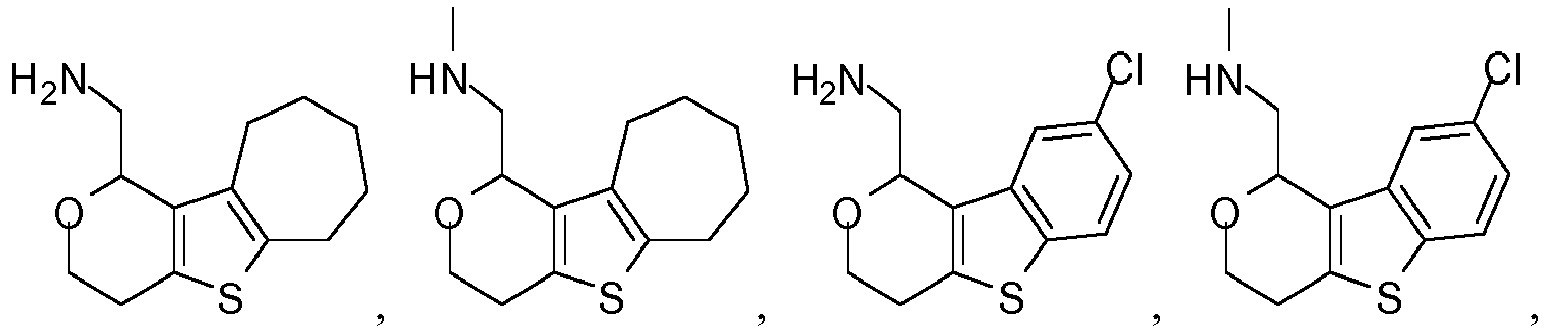


- In one embodiment, R1 and R5 together with the atoms to which they are attached form an optionally substituted heterocyclyl. In one embodiment, R1 and R5 together with the atoms to which they are attached form a heterocyclyl. Examples include, but are not limited to, pyrrolidinyl and piperidinyl. Specific examples include, but are not limited to, the following compounds:


- In one embodiment, R1 and R5 together with the atoms to which they are attached form an optionally substituted heterocyclyl (e.g., piperidinyl) and R6 and R7 together with the atoms to which they are attached form an optionally substituted aryl (e.g., phenyl). In one embodiment, R1 and R5 together with the atoms to which they are attached form a heterocyclyl and R6 and R7 together with the atoms to which they are attached form an aryl. Specific examples include, but are not limited to, the following compound:

- In one embodiment, m is 0 and R3 and R4 are combined together to form a double bond and together with R1 and/or R2 and the atoms to which they are attached form an optionally substituted heteroaryl. In one embodiment, the heteroaryl contains one or more heteroatoms selected from N, O, and S. Examples include, but are not limited to, imidazolyl, pyrazolyl, or thiazolyl. Specific examples include, but are not limited to, the following compounds:


- In one embodiment, m is 1. Specific examples include, but are not limited to, the following compound:

- In one embodiment, n is 2. In one embodiment, R1, R2, R6, and R7 are each independently hydrogen or optionally substituted C1-C4 alkyl (e.g,, methyl or ethyl). Specific examples include, but are not limited to, the following compounds:


- In one embodiment, R5 is alkyl. In one embodiment, R5 is C1-C4 alkyl. In one embodiment, R5 is methyl. Specific examples include, but are not limited to, the following compound:

- In one embodiment, provided herein is a compound of formula (IIb):

- In one embodiment, provided herein is a compound of formula (IIc):

- In one embodiment, R5 is OH. Specific examples include, but are not limited to, the following compound:

- In one embodiment, R5 is hydrogen.
- In one embodiment, n is 0. In one embodiment, R1 and R2 are each independently hydrogen or optionally substituted C1-C4 alkyl (e.g,, methyl or ethyl). In one embodiment, R6 and R7 are each independently hydrogen, halo (e.g., F or Cl), or optionally substituted C1-C4 alkyl (e.g,, methyl or ethyl). Specific examples include, but are not limited to, the following compounds:


- In one embodiment, n is 1. In one embodiment, R1 and R2 are each independently hydrogen or optionally substituted C1-C4 alkyl (e.g,, methyl or ethyl). In one embodiment, R1 and R2 together with the atom to which they are attached form an optionally substituted heterocyclyl (e.g., piperidinyl). In one embodiment, R6 and R7 are each independently hydrogen or optionally substituted C1-C4 alkyl (e.g,, methyl or ethyl). Specific examples include, but are not limited to, the following compounds:


- In one embodiment, provided herein is a compound of formula (IIIa):

- In one embodiment, R1, R2, R6, and R7 are each independently hydrogen or optionally substituted C1-C4 alkyl (e.g,, methyl or ethyl). Specific examples include, but are not limited to, the following compounds:

- In one embodiment, provided herein is a compound of formula (IIIb):

- In one embodiment, provided herein is a compound of formula (IIIc):

- In one embodiment, provided herein is a compound of formula (IVa):

- In one embodiment, m is 0 or 1. In one embodiment, n is 1 or 2. In one embodiment, m is 0 and n is 1. In one embodiment, n is 0 or 1. In one embodiment, n is 0.
- In one embodiment, R5 is hydrogen.
- In one embodiment, R1 and R2 are each independently hydrogen, C1-C4 alkyl (e.g., methyl, ethyl, or propyl (e.g., n-propyl or i-propyl)), or C3-C6 cycloalkyl (e.g., cyclopropyl). In one embodiment, R1 and R2 are each independently hydrogen or C1-C4 alkyl (e.g., methyl, ethyl, or propyl (e.g., n-propyl or i-propyl)). In one embodiment, R1 and R2 are each independently C1-C4 alkyl, wherein one or more hydrogen(s) in the alkyl are replaced with deuterium (e.g., CD3).
- In one embodiment, R3 and R4 are hydrogen or C1-C4 alkyl (e.g., methyl, ethyl, or propyl (e.g., n-propyl or i-propyl)). In one embodiment, R3 and R4 are hydrogen.
- In one embodiment, R6 and R7 are each independently hydrogen, halo (e.g., F or Cl), C1-C4 alkyl (e.g., methyl, ethyl, propyl, or CF3), aryl (e.g., phenyl), heteroaryl (e.g., pyridyl), heterocyclyl (e.g., pyrrolidinyl, piperidinyl, or morpholinyl), alkoxyl (e.g., OMe), or aminoalkyl (e.g., NMe2), each of which is optionally substituted. In one embodiment, R6 and R7 are each independently hydrogen, halo, C1-C4 alkyl, aryl, heteroaryl, heterocyclyl, alkoxyl, or aminoalkyl. In one embodiment, the C1-C4 alkyl is optionally substituted with one or more fluoro. In one embodiment, R6 and R7 are each independently hydrogen, fluoro, chloro, methyl, CF3, ethyl, propyl, isopropyl, phenyl, pyridyl, pyrrolidinyl, piperidinyl, morpholinyl, methoxyl, or dimethylamino.
- Specific examples include, but are not limited to, the following compounds:


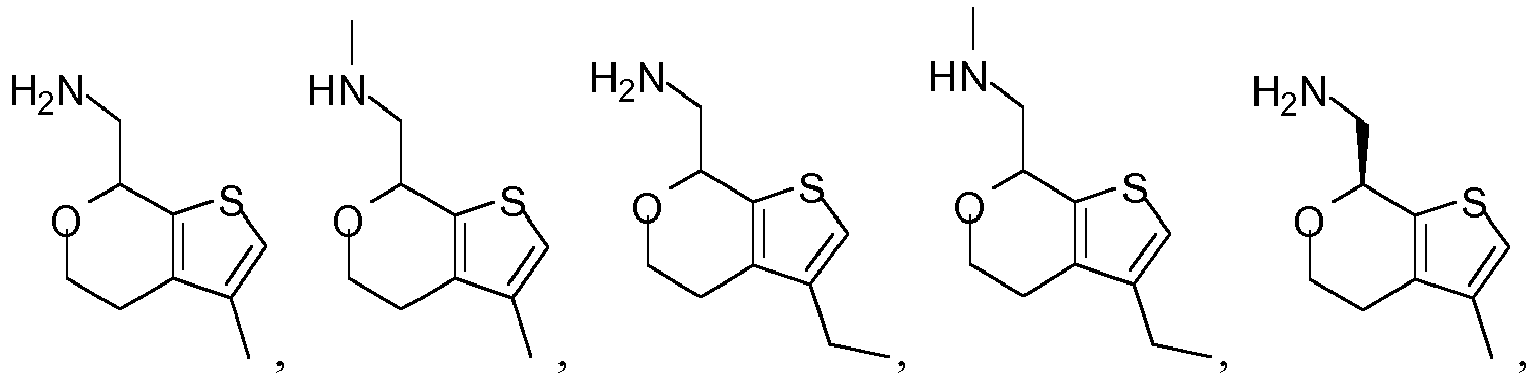


- In one embodiment, m is 1. Specific examples include, but are not limited to, the following compounds:

- In one embodiment, R1 and R2 together with the nitrogen atom to which they are attached form a heteroaryl or heterocyclyl, each of which is optionally substituted. In one embodiment, R1 and R2 together with the nitrogen atom to which they are attached form an optionally substituted heterocyclyl (e.g., pyrrolidinyl or piperidinyl). Examples include, but are not limited to, azetidinyl, pyrrolidinyl, piperidinyl, azepanyl, morpholinyl, imidazolyl, piperazinyl, and N-methyl-piperazinyl. Specific examples include, but are not limited to, the following compounds:

- In one embodiment, R1 and R3 together with the atoms to which they are attached form an optionally substituted heterocyclyl ring (e.g., pyrrolidine, including, e.g., unsubstituted pyrrolidine and N-methyl-pyrrolidine). Specific examples include, but are not limited to, the following compounds:

- In one embodiment, R1 and R5 together with the atoms to which they are attached form an optionally substituted heterocyclyl. Examples include, but are not limited to, pyrrolidinyl and piperidinyl. Specific examples include, but are not limited to, the following compounds:

- In one embodiment, R6 and R7 together with the atoms to which they are attached form an aryl (e.g., phenyl) or cycloalkyl (e.g., 5-, 6-, or 7-membered) ring, each of which is optionally substituted (e.g., by one or more halo or phenyl). In one embodiment, R6 and R7 together with the atoms to which they are attached form an optionally substituted aryl. Examples include, but are not limited to, phenyl, cyclopentenyl, cyclohexenyl, and cycloheptenyl. Specific examples include, but are not limited to, the following compounds:


- In one embodiment, R1 and R5 together with the atoms to which they are attached form an optionally substituted heterocyclyl (e.g., pyrrolidinyl) and R6 and R7 together with the atoms to which they are attached form an optionally substituted aryl (e.g., phenyl). Specific examples include, but are not limited to, the following compound:
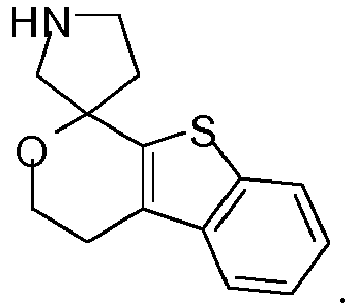
- In one embodiment, m is 0 and R3 and R4 are combined together to form a double bond and together with R1 and/or R2 and the atoms to which they are attached form an optionally substituted heteroaryl. In one embodiment, the heteroaryl contains one or more heteroatoms selected from N, O, and S. Examples include, but are not limited to, imidazolyl, pyrazolyl, or thiazolyl. Specific examples include, but are not limited to, the following compounds:


- In one embodiment, provided herein is a compound of formula (IVb):

- In one embodiment, provided herein is a compound of formula (IVc):

- In one embodiment, n is 0. In one embodiment, R1 and R2 are each independently hydrogen or optionally substituted C1-C4 alkyl (e.g,, methyl or ethyl). In one embodiment, R6 and R7 are each independently hydrogen, halo (e.g., F or Cl), or optionally substituted C1-C4 alkyl (e.g,, methyl or ethyl). Specific examples include, but are not limited to, the following compounds:

- In one embodiment, n is 1. In one embodiment, R1 and R2 are each independently hydrogen or optionally substituted C1-C4 alkyl (e.g,, methyl or ethyl). In one embodiment, R1 and R2 together with the atom to which they are attached form an optionally substituted heterocyclyl (e.g., piperidinyl). In one embodiment, R6 and R7 are each independently hydrogen or optionally substituted C1-C4 alkyl (e.g,, methyl or ethyl). Specific examples include, but are not limited to, the following compounds:

- In one embodiment, R6 and R7 together with the atoms to which they are attached form an aryl (e.g., phenyl) or cycloalkyl (e.g., 5-, 6-, or 7-membered) ring, each of which is optionally substituted (e.g., by one or more halo or phenyl). In one embodiment, R6 and R7 together with the atoms to which they are attached form an optionally substituted aryl. Examples include, but are not limited to, phenyl, cyclopentenyl, cyclohexenyl, and cycloheptenyl. Specific examples include, but are not limited to, the following compounds:

- In one embodiment, provided herein is a compound of formula (V):


- In one embodiment, provided herein is a compound of formula (VI):

- two of Z1, Z2 , and Z3 are C, and one of Z1, Z2 , and Z3 is S;
- R1 and R2 are each independently (i) hydrogen, alkyl, alkoxyl, aminoalkyl, alkenyl, alkynyl, cycloalkyl, cycloalkylalkyl, aryl, or aralkyl, each of which is optionally substituted; or (ii) -(CH2)p-R8, wherein R8 is SO2alkyl or SO2aryl, each of which is optionally substituted; or (iii) R1 and R2 together with the nitrogen atom to which they are attached form an optionally substituted heterocyclyl or heteroaryl;
- R3 and R4 are each independently (i) hydrogen, alkyl, alkoxyl, aminoalkyl, alkenyl, alkynyl, cycloalkyl, cycloalkylalkyl, aryl, or aralkyl, each of which is optionally substituted; or (ii) -(CH2)p-R9, wherein R9 is CF3, CN, nitro, amino, hydroxyl, or cycloalkoxyl, each of which is optionally substituted; or (iii) R3 and R4 together with the carbon atom to which they are attached form an optionally substituted cycloalkyl or heterocyclyl; or (iv) R3 and R1 together with the atoms to which they are attached form an optionally substituted heterocyclyl, and R4 is (i) or (ii); or (v) R3 and R4 are combined together to form a double bond and together with R1 and/or R2 and the atoms to which they are attached form an optionally substituted heteroaryl;
- R5 is (i) hydrogen, alkyl, alkoxyl, aminoalkyl, alkenyl, alkynyl, cycloalkyl, cycloalkylalkyl, aryl, or aralkyl, each of which is optionally substituted; or (ii) -(CH2)p-R10, wherein R10 is CF3, CN, nitro, amino, hydroxyl, or cycloalkoxyl, each of which is optionally substituted; or (iii) R5 and R1 together with the atoms to which they are attached form an optionally substituted heterocyclyl;
- R6 and R7 are each independently (i) hydrogen, halo, alkyl, alkoxyl, aminoalkyl, alkenyl, alkynyl, cycloalkyl, cycloalkylalkyl, aryl, or aralkyl, each of which is optionally substituted; or (ii) -(CH2)p-R11, wherein R11 is CF3, CN, nitro, amino, hydroxyl, cycloalkoxyl, heteroaryl, or heterocyclyl, each of which is optionally substituted; or (iii) R6 and R7 together with the atoms to which they are attached form an optionally substituted aryl, heteroaryl, cycloalkyl or heterocyclyl ring; and
- m is 0, 1, or 2;
- each occurrence of p is independently 0, 1, or 2.
- In one embodiment, R1, R2, R3, R4, R5, R6, R7, Z1, Z2, Z3, and m are as defined herein elsewhere. In one embodiment, Z1 and Z2 are C, and Z3 is S. In one embodiment, Z1 is S, and Z2 and Z3 are C. In one embodiment, m is 0. In one embodiment, R1 and R2 are each independently hydrogen or optionally substituted C1-C4 alkyl (e.g,, methyl or ethyl). In one embodiment, R3 and R4 are hydrogen. In one embodiment, R5 is hydrogen. In one embodiment, R1 and R5 together with the atoms to which they are attached form an optionally substituted heterocyclyl (e.g., pyrrolidinyl). In one embodiment, R6 and R7 are each independently hydrogen, halo (e.g., F or Cl), or optionally substituted C1-C4 alkyl (e.g,, methyl or ethyl). Specific examples include, but are not limited to, the following compounds:


- It should be noted that if there is a discrepancy between a depicted structure and a chemical name given that structure, the depicted structure is to be accorded more weight. In addition, if the stereochemistry of a structure or a portion of a structure is not indicated with, for example, bold or dashed lines, the structure or portion of the structure is to be interpreted as encompassing all stereoisomers of it or mixtures thereof. Where the compound provided herein contains an alkenyl or alkenylene group, the compound may exist as one of or a mixture of geometric cis/trans (or Z/E) isomers. Where structural isomers are inter-convertible, the compound may exist as a single tautomer or a mixture of tautomers. This can take the form of proton tautomerism in the compound that contains, for example, an imino, keto, or oxime group; or so-called valence tautomerism in the compound that contains, for example, an aromatic moiety. It follows that a single compound may exhibit more than one type of isomerism.
- The compounds provided herein may be enantiomerically pure or diastereomerically pure, such as a single enantiomer or a single diastereomer, or be stereoisomeric mixtures, such as a mixture of enantiomers and/or diastereomers, e.g., a racemic or enantioenriched mixture of two enantiomers; or a mixture of two or more diastereomers. In some instances, for compounds that undergo epimerization in vivo, one of skill in the art will recognize that administration of a compound in its (R) form is equivalent to administration of the compound in its (S) form, and vice versa. Conventional techniques for the preparation/isolation of individual enantiomers or diastereomers include synthesis from a suitable optically pure precursor, asymmetric synthesis from achiral starting materials, or resolution of a stereomeric mixture, for example, by chiral chromatography, recrystallization, resolution, diastereomeric salt formation, or derivatization into diastereomeric adducts followed by separation.
- When the compound provided herein contains an acidic or basic moiety, it may also be provided as a pharmaceutically acceptable salt (See, Berge et al., J. Pharm. Sci. 1977, 66, 1-19; and "Handbook of Pharmaceutical Salts, Properties, and Use," Stahl and Wermuth, Ed.; Wiley-VCH and VHCA, Zurich, 2002).
- Suitable acids for use in the preparation of pharmaceutically acceptable salts include, but are not limited to, acetic acid, 2,2-dichloroacetic acid, acylated amino acids, adipic acid, alginic acid, ascorbic acid, aspartic acid, L-aspartic acid, benzenesulfonic acid, benzoic acid, 4-acetamidobenzoic acid, boric acid, camphoric acid, (+)-camphoric acid, camphorsulfonic acid, (+)-(1S)-camphor-10-sulfonic acid, capric acid, caproic acid, caprylic acid, cinnamic acid, citric acid, cyclamic acid, cyclohexanesulfamic acid, dodecylsulfuric acid, ethane-1,2-disulfonic acid, ethanesulfonic acid, 2-hydroxy-ethanesulfonic acid, formic acid, fumaric acid, galactaric acid, gentisic acid, glucoheptonic acid, gluconic acid, D-gluconic acid, glucuronic acid, D-glucuronic acid, glutamic acid, L-glutamic acid, α-oxoglutaric acid, glycolic acid, hippuric acid, hydrobromic acid, hydrochloric acid, hydroiodic acid, isoethonic acid; (+)-L-lactic acid, (±)-DL-lactic acid, lactobionic acid, lauric acid, maleic acid, malic acid, (-)-L-malic acid, malonic acid, (±)-DL-mandelic acid, methanesulfonic acid, naphthalene-2-sulfonic acid, naphthalene-1,5-disulfonic acid, 1-hydroxy-2-naphthoic acid, nicotinic acid, nitric acid, oleic acid, orotic acid, oxalic acid, palmitic acid, pamoic acid, perchloric acid, phosphoric acid, pyroglutamic acid, pyroglutamic acid, L-pyroglutamic acid, saccharic acid, salicylic acid, 4-amino-salicylic acid, sebacic acid, stearic acid, succinic acid, sulfuric acid, tannic acid, tartaric acid, (+)-L-tartaric acid, thiocyanic acid, p-toluenesulfonic acid, undecylenic acid, and valeric acid.
- Suitable bases for use in the preparation of pharmaceutically acceptable salts, including, but not limited to, inorganic bases, such as magnesium hydroxide, calcium hydroxide, potassium hydroxide, potassium carbonate, zinc hydroxide, sodium hydroxide, or ammonia; and organic bases, such as primary, secondary, tertiary, and quaternary, aliphatic and aromatic amines, including L-arginine, benethamine, benzathine, choline, deanol, diethanolamine, diethylamine, dimethylamine, dipropylamine, diisopropylamine, 2-(diethylamino)-ethanol, ethanolamine, ethylamine, ethylenediamine, isopropylamine, N-methyl-glucamine, hydrabamine, 1H-imidazole, L-lysine, morpholine, 4-(2-hydroxyethyl)-morpholine, methylamine, piperidine, piperazine, propylamine, pyrrolidine, 1-(2-hydroxyethyl)-pyrrolidine, pyridine, quinuclidine, quinoline, isoquinoline, secondary amines, triethanolamine, trimethylamine, triethylamine, N-methyl-D-glucamine, 2-amino-2-(hydroxymethyl)-1,3-propanediol, and tromethamine.
- Unless otherwise specified, the term "compound" referred to herein, such as, e.g., a compound of formula (I), (IIa), (IIb), (IIc), (IIIa), (IIIb), (IIIc), (IVa), (IVb), (IVc), (V), or (VI) is intended to encompass one or more of the following: a free base of the compound or a salt thereof, a stereoisomer or a mixture of two or more stereoisomers, a solid form (e.g., a crystal form or an amorphous form) or a mixture of two or more solid forms thereof, or a solvate (e.g., a hydrate) thereof. In certain embodiments, the term "compound" referred to herein is intended to encompass a pharmaceutical acceptable form of the compound, including but not limited to, a free base, a pharmaceutically acceptable salt, a stereoisomer or a mixture of two or more stereoisomers, a solid form (e.g., a crystal form or an amorphous form) or a mixture of two or more solid forms, a solvate (e.g., a hydrate), or a cocrystal thereof. In one embodiment, the term "compound" referred to herein, such as, e.g., a compound of formula (I), (IIa), (IIb), (IIc), (IIIa), (IIIb), (IIIc), (IVa), (IVb), (IVc), (V), or (VI) is intended to encompass a solvate (e.g., a hydrate) thereof.
- The compound provided herein may also be provided as a prodrug, which is a functional derivative of the compound, for example, of Formula (I) and is readily convertible into the parent compound in vivo. Prodrugs are often useful because, in some situations, they may be easier to administer than the parent compound. They may, for instance, be bioavailable by oral administration whereas the parent compound is not. The prodrug may also have enhanced solubility in pharmaceutical compositions over the parent compound. A prodrug may be converted into the parent drug by various mechanisms, including enzymatic processes and metabolic hydrolysis. See Harper, Progress in Drug Research 1962, 4, 221-294; Morozowich et al. in "Design of Biopharmaceutical Properties through Prodrugs and Analogs," Roche Ed., APHA Acad. Pharm. Sci. 1977; "Bioreversible Carriers in Drug in Drug Design, Theory and Application," Roche Ed., APHA Acad. Pharm. Sci. 1987; "Design of Prodrugs," Bundgaard, Elsevier, 1985; Wang et al., Curr. Pharm. Design 1999, 5, 265-287; Pauletti et al., Adv. Drug. Delivery Rev. 1997, 27, 235-256; Mizen et al., Pharm. Biotech. 1998, 11, 345-365; Gaignault et al., Pract. Med. Chem. 1996, 671-696; Asgharnejad in "Transport Processes in Pharmaceutical Systems," Amidon et al., Ed., Marcell Dekker, 185-218, 2000; Balant et al., Eur. J. Drug Metab. Pharmacokinet. 1990, 15, 143-53; Balimane and Sinko, Adv. Drug Delivery Rev. 1999, 39, 183-209; Browne, Clin. Neuropharmacol. 1997, 20, 1-12 ; Bundgaard, Arch. Pharm. Chem. 1979, 86, 1-39; Bundgaard, Controlled Drug Delivery 1987, 17, 179-96; Bundgaard, Adv. Drug Delivery Rev. 1992, 8, 1-38; Fleisher et al., Adv. Drug Delivery Rev. 1996, 19, 115-130; Fleisher et al., Methods Enzymol. 1985, 112, 360-381; Farquhar et al., J. Pharm. Sci. 1983, 72, 324-325; Freeman et al., J. Chem. Soc., Chem. Commun. 1991, 875-877; Friis and Bundgaard, Eur. J. Pharm. Sci. 1996, 4, 49-59; Gangwar et al., Des. Biopharm. Prop. Prodrugs Analogs, 1977, 409-421; Nathwani and Wood, Drugs 1993, 45, 866-94; Sinhababu and Thakker, Adv. Drug Delivery Rev. 1996, 19, 241-273; Stella et al., Drugs 1985, 29, 455-73; Tan et al., Adv. Drug Delivery Rev. 1999, 39, 117-151; Taylor, Adv. Drug Delivery Rev. 1996, 19, 131-148; Valentino and Borchardt, Dr ug Discovery Today 1997, 2, 148-155; Wiebe and Knaus, Adv. Dr ug Delivery Rev. 1999, 39, 63-80; and Waller et al., Br. J. Clin. Pharmac. 1989, 28, 497-507.
- Schemes below provide exemplary synthetic methods for the preparation of the compounds provided herein. One of ordinary skills in the art will understand that similar methods may be employed to prepare the compounds provided herein. In other words, one of ordinary skills in the art will recognize that suitable adjustments to reagents, protecting groups, reaction conditions, and reaction sequences may be employed to prepare a desired embodiment. The reactions may be scaled upwards or downwards to suit the amount of material to be prepared.
- In one embodiment, the compound of formula (I) may be prepared following Schemes 1-3, using suitable starting materials known in the art and/or available from a commercial source. In one embodiment, the hydroxyalkyl thiophene starting material of Schemes 1-3 is known or may be prepared using known methods starting from commercially available compounds. In one embodiment, the amino-aldehyde dimethyl acetal starting material of Schemes 1-3 is known or may be prepared using known methods starting from commercially available compounds. It is understood that other acetals, such as, e.g., diethyl acetals, may also be used as the starting material of the reaction of Schemes 1-3. In one embodiment, the reaction is carried out in an ether solvent, such as, e.g., 1,4-dioxane. In one embodiment, other acids than trifluoromethyl sulfonic acid may be used to facilitate the reaction. In some embodiments, R1, R2, R3, R4, R5, R6, or R7 may be further transformed to suitable functional groups, as described for formula (I), after the ring formation step of Schemes 1-3, using methods known in the art. Specific and non-limiting examples of such transformations are described in the General Procedures in the Examples.

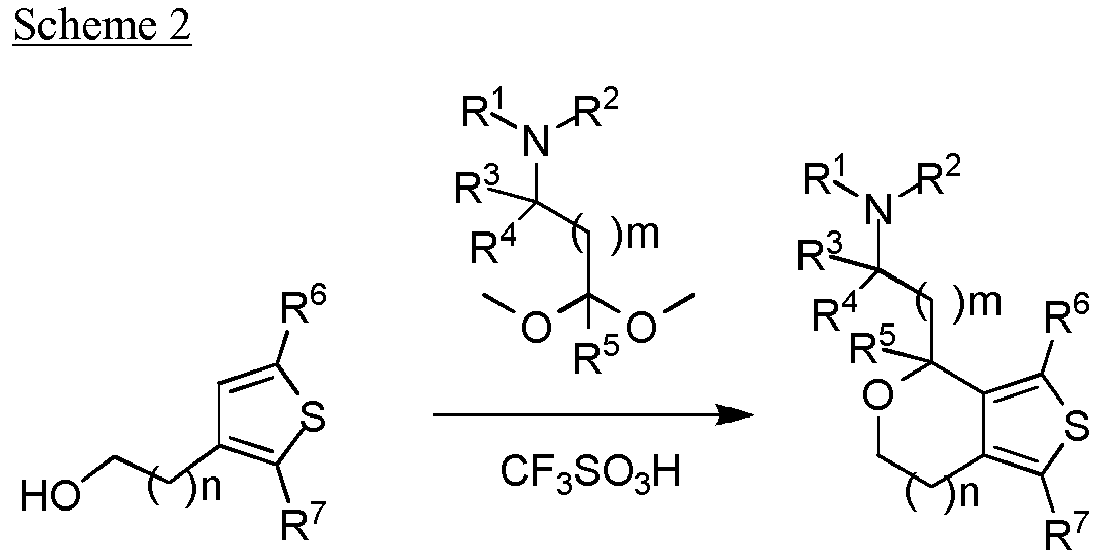

- In one embodiment, the compound of formula (I) may be prepared following Schemes 4-6, using suitable nucleophilic starting materials known in the art and/or available from a commercial source. In one embodiment, R12 may be cyano, or a suitable alkyl, alkenyl, alkynyl, heteroalkyl, aryl, heteroaryl, cycloalkyl, or heterocyclyl, among others. In one embodiment, the thiophene ketone starting material of Schemes
4-6 is known or may be prepared using known methods starting from commercially available compounds. The hydroxyl compound of Schemes 4-6 may be transformed to a compound of formula (I) using methods known in the art. In some embodiments, R1, R2, R3, R4, R5, R6, or R7 may be further transformed to suitable functional groups, as described for formula (I) using methods known in the art. Specific and non-limiting examples of such transformations are described in the General Procedures in the Examples.

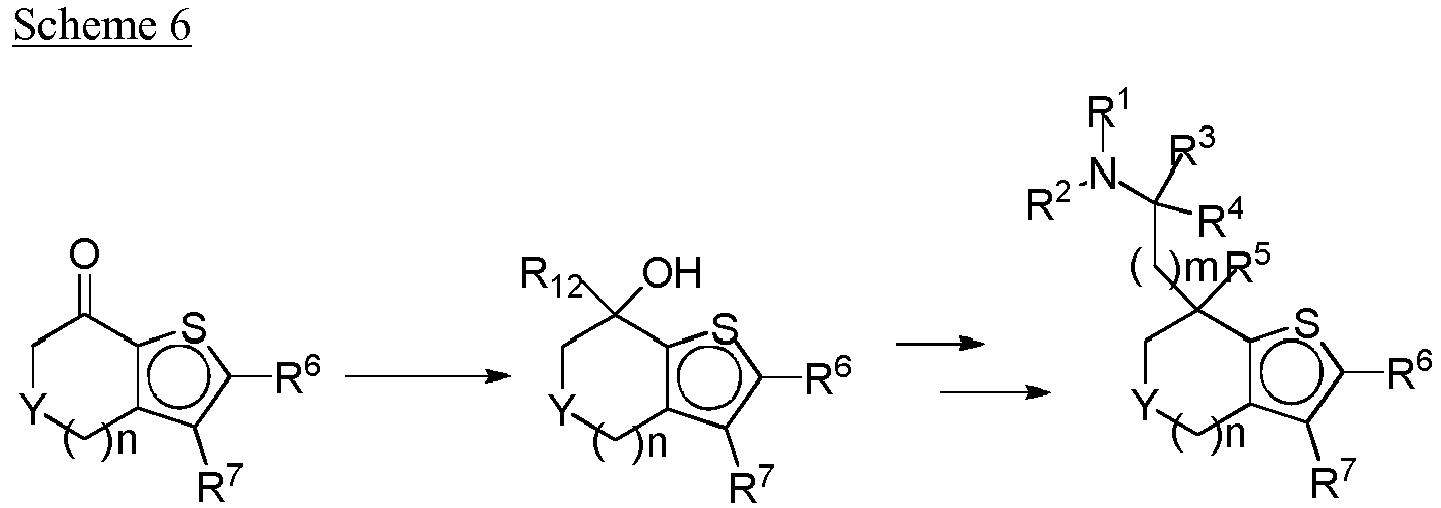
- In one embodiment, the compound of formula (I) may be prepared following Schemes 7-9, using suitable starting materials known in the art and/or available from a commercial source. In one embodiment, R13 is a suitable leaving group, such as, e.g., halo, such as chloro, or R13 may be a group, such as hydroxyl, that can be transformed to a suitable leaving group, such as, e.g., tosylate, triflate, mesylate, or nosylate, or R13 itself may be such hydroxyl-derived leaving group. In one embodiment, the hydroxyalkyl thiophene starting material of Schemes 7-9 is known or may be prepared using known methods starting from commercially available compounds. In one embodiment, the dimethyl acetal starting material of Schemes 7-9 is known or may be prepared using known methods starting from commercially available compounds. It is understood that other acetals, such as, e.g., diethyl acetals, may also be used as the starting material of the reaction of Schemes 7-9. In one embodiment, the reaction is carried out in an ether solvent, such as, e.g., 1,4-dioxane. In one embodiment, other acids than trifluoromethyl sulfonic acid may be used to facilitate the reaction. In some embodiments, R1, R2, R3, R4, R5, R6, or R7 may be further transformed to suitable functional groups, as described for formula (I) using methods known in the art. Specific and non-limiting examples of such transformations are described in the General Procedures in the Examples.


- In certain embodiments, the compound of formula (I) is prepared as a mixture of two or more stereoisomers or diastereoisomers. In one embodiment, the stereoisomers or diastereoisomers are separated using techniques known to those skilled in the art, including but not limited to, chiral column chromatography and chiral resolution by forming a salt with a suitable chiral counterion. In certain embodiments, the compound of formula (I) is prepared following one or more stereoselective reaction(s). In some embodiment, the compound of formula (I) is prepared as a substantially pure stereoisomer.
- In one embodiment, provided herein is a method of administering a compound provided herein, or a pharmaceutically acceptable salt or stereoisomer thereof, in a disease model that is known in the art. In one embodiment, the disease model is an animal model. In one embodiment, provided herein is a method of administering a compound provided herein, or a pharmaceutically acceptable salt or stereoisomer thereof, in an animal model that is predictive of efficacy in the treatment of certain diseases in human. The method comprises administering a compound provided herein, or a pharmaceutically acceptable salt or stereoisomer thereof, in a subject. In one embodiment, the method comprises administering a therapeutically effective amount of a compound provided herein, or a pharmaceutically acceptable salt or stereoisomer thereof, in a subject. In one embodiment, the method comprises treatment of a test subject (e.g., a mouse or rat) with a compound provided herein, or a pharmaceutically acceptable salt or stereoisomer thereof. In one embodiment, the method comprises treatment of a test subject (e.g., a mouse or rat) with a compound provided herein, or a pharmaceutically acceptable salt or stereoisomer thereof, as well as a reference compound, either in separate animal groups (e.g., administer a reference compound in a control group and administer a compound provided herein in a test group) or in the same animal group (e.g., as combination therapy). In one embodiment, the in vivo activity of the compound provided herein is dose dependent.
- In one embodiment, the compounds provided herein are active in animal models of psychosis such as Pre-Pulse Inhibition (PPI) and PCP-induced hyperlocomotion. These two models have been used in the development of several antipsychotics, including olanzapine (ZYPREXA) (Bakshi and Geyer, Psychopharmacology 1995, 122, 198-201) and quetapine (SEROQUEL) (Swedlow et al., J. Pharm. Exp. Ther., 1996, 279, 1290-99), and are predictive of efficacy in human psychotic patients. In one embodiment, compounds that are active in in vivo models of psychosis are further optimized to improve the potency in the in vivo assays and drug-like properties such as, e.g., solubility and lipophilicity. Given the exact molecular basis of certain diseases such as schizophrenia are poorly understood, this approach allows the use of predictive and well-validated animial models to develop compounds with established efficacy without focusing on specific molecular targets that may or may not translate to human efficacy in the clinic.
- In one embodiment, provided herein is a method of treating, preventing, and/or managing various disorders, including, but not limited to, neurological disorders. In one embodiment, provided herein is a method of treating, preventing, and/or managing one or more symptoms of a neurological disorder. In one embodiment, the method comprises administering to a subject (e.g., human) a therapeutically or prophylactically effective amount of a composition or a compound provided herein or a pharmaceutically acceptable salt or stereoisomer thereof. In one embodiment, the subject is a human. In one embodiment, the subject is an animal. In one embodiment, the compounds provided herein are highly brain penetrable in the subject. In certain embodiments, the efficacious concentration of a compound provided herein is less than 10 nM, less than 100 nM, less than 1 µM, less than 10 µM, less than 100 µM, or less than 1 mM. In one embodiment, a compound's activity may be assessed in various art-recognized animal models as described herein elsewhere or known in the literature.
- In one embodiment, without being limited by a particular theory, the treatment, prevention, and/or management is done by administering a compound provided herein that has shown in vivo efficacy in an animal model predictive of antipsychotic activity in humans. The phenotypic approach to develop antipsychotics has been used in psychopharmacology, with the antipsychotic chlorpromazine developed in this way. The phenotypic approach may also offer advantages over compounds developed by traditional in vitro based drug discovery approach, because the compounds developed using the phenotypic approach have established pharmaceutical properties and in vivo activity, rather than activity toward a given molecular target, which may be less predictive and lead to attrition at later stages of, for example, clinical development.
- In one embodiment, provided herein is a method of treating, preventing, and/or managing a neurological disorder, including schizophrenia, schizophrenia spectrum disorder, acute schizophrenia, chronic schizophrenia, NOS schizophrenia, schizoid personality disorder, schizotypal personality disorder, delusional disorder, psychosis, psychotic disorder, brief psychotic disorder, shared psychotic disorder, psychotic disorder due to a general medical condition, drug-induced psychosis (e.g., cocaine, alcohol, amphetamine), psychoaffective disorder, aggression, delirium, Parkinson's psychosis, excitative psychosis, Tourette's syndrome, organic or NOS psychosis, seizure, agitation, post-traumatic stress disorder, behavior disorder, neurodegenerative disease, Alzheimer's disease, Parkinson's disease, dyskinesias, Huntington's disease, dementia, mood disorder, anxiety, affective disorders (e.g., depression, e.g., major depressive disorder and dysthymia; bipolar disorder, e.g., biopolar depressive disorder; manic disorder; seasonal affective disorder; and attention deficit disorder (ADD) and attention deficit hyperactivity disorder (ADHD)), obsessive-compulsive disorder, vertigo, epilepsy, pain (e.g., neuropathic pain, sensitization accompanying neuropathic pain, and inflammatory pain), fibromyalgia, migraine, cognitive impairment, movement disorder, restless leg syndrome (RLS), multiple sclerosis, sleep disorder, sleep apnea, narcolepsy, excessive daytime sleepiness, jet lag, drowsy side effect of medications, insomnia, substance abuse or dependency (e.g., nicotine, cocaine), addiction, eating disorder, sexual dysfunction, hypertension, emesis, Lesche-Nyhane disease, Wilson's disease, autism, Huntington's chorea, and premenstrual dysphoria, comprising administering to a subject an effective amount of a compound provided herein, or a pharmaceutically acceptable salt or stereoisomer thereof.
- In one embodiment, provided herein is a method of treating, preventing, and/or managing a disorder related to psychosis, schizophrenia, ADHD, mood disorder or affective disorder such as depression and anxiety, comprising administering to a subject an effective amount of a compound provided herein. For example, without being limited by a particular theory, the compounds provided herein may improve the gating deficits of DBA/2 mice seen in the pre-pulse inhibition (PPI) test and reverse the methamphe-tamine-induced hyperlocomotor activity. Without being limited to a particular theory, the compounds provided herein may: 1) reverse the amphetamine-induced hyper-locomotor activity; 2) be useful as antipsychotic agents and dosed sparing; 3) improve attention and modulate impulsivity; 4) improve learning parameters in ADHD; 5) enhance learning ability and reduce anxiety in behavioral tests; and/or 6) have an anti-depressant effect.
- In another embodiment, provided herein is a method of treating, preventing, and/or managing a disorder related to cognitive impairments, such as Alzheimer's disease, Parkinson's disease, schizophrenia, and attention deficit hyperactivity disorder (ADHD), and the like, comprising administering to a subject an effective amount of a compound provided herein. For example, without being limited by a particular theory, the compounds provided herein may have pro-cognitive effects, such as passive avoidance, novel object recognition, social recognition, and attention-set shifting. Further, without being limited by a particular theory, the compounds provided herein may improve social memory, increase the acquisition of an environment, and reverse scopolamine-induced deficits. The compounds provided herein may also reverse scopolamine-induced deficits in a passive avoidance memory test.
- In another embodiment, provided herein is a method of treating, preventing, and/or managing a disorder associated with excessive daytime sleepiness, such as, narcolepsy, Parkinson's disease, multiple sclerosis, shift workers, jet lag, relief of side effects of other medications, and the like, comprising administering to a subject an effective amount of a compound provided herein. For example, without being limited by a particular theory, the compounds provided herein may have wake promoting effects.
- In another embodiment, provided herein is a method of treating, preventing, and/or managing a sleeping disorder, such as insomnia, comprising administering to a subject an effective amount of a compound provided herein. For example, without being limited by a particular theory, the compounds provided herein may improve wakefulness and lead to an improved sleep pattern, and therefore the compounds provided herein may be useful in treating insomnia.
- In another embodiment, provided herein is a method of treating, preventing, and/or managing substance abuse, comprising administering to a subject an effective amount of a compound provided herein. For example, without being limited by a particular theory, the compounds provided herein may alter methamphetamine self-administration in rats, and therefore the compounds provided herein may ameliorate the craving for addictive drugs.
- In another embodiment, provided herein is a method of using the compounds provided herein as psycho-stimulants, which may lack the abuse liabilities generally associated with other classes of psycho-stimulants. Without being limited by a particular theory, the compounds provided herein may increase the levels of histamine, dopamine, norepinephrine, and/or acetylcholine in the prefrontal cortical area, which is consistent with their pro-cognitive effects and their wake promoting effects seen in animal models. For example, the compounds provided herein may increase dopamine in the frontal cortex but not the striatum. The compounds provided herein may not induce increased locomotor activity or sensitization that is associated with other psycho-stimulus.
- In another embodiment, provided herein is a method of treating, preventing, and/or managing a disorder such as seizure, epilepsy, vertigo, and pain, comprising administering to a subject an effective amount of a compound provided herein. For example, without being limited by a particular theory, the compounds provided herein may be protective against pentylenetetrazole (PTZ) and electrical-induced seizures. The compounds provided herein may increase the seizure threshold in humans. The compounds provided herein may decrease electrical discharge from afferent neurons in an inner ear preparation. Further, without being limited by a particular theory, the compounds provided herein may increase the threshold for neuropathic pain, which is shown in models such as the chronic constriction injure (CCI) model, herpes virus-induced model, and capsaicin-induced allodynia model. Therefore, in some embodiments, the compounds provided herein are employed for their analgesic effects to treat, prevent, and/or manage disorders involving pain and the sensitization that accompanies many neuropathic pain disorders.
- In another embodiment, provided herein is a method of treating, preventing, and/or managing a movement disorder, such as Parkinson's disease, restless leg syndrome (RLS), and Huntington's disease, comprising administering to a subject an effective amount of a compound provided herein.
- In some embodiments, a compound provided herein is active in at least one model, which can be used to measure the activity of the compound and estimate the efficacy in treating a neurological disorder. For example, when the model is for psychosis (e.g., PCP Hyperactivity Model or Prepulse Inhibition of Startle Model), a compound is active when the compound reduces PCP induced hyperactivity in mice by a statistically signicant amount compared to a vehicle, or when the compound reverses the disruption of prepulse inhibition (PPI) induced by PCP in mice.
- In other embodiments, provided herein is a method of effecting a therapeutic effect as described herein elsewhere. The method comprises administering to a subject (e.g., a mammal) a therapeutically effective amount of a compound or composition provided herein. The particular therapeutic effects may be measured using any model system known in the art and described herein, such as those involving an animal model of a disease.
- In some embodiments, the neurological disorder is: depression (e.g., major depressive disorder or dysthymia); bipolar disorder, seasonal affective disorder; cognitive deficit; fibromyalgia; pain (e.g., neuropathic pain); sleep related disorder (e.g., sleep apnea, insomnia, narcolepsy, cataplexy) including those sleep disorders which are produced by psychiatric conditions; chronic fatigue syndrome; attention deficit disorder (ADD); attention deficit hyperactivity disorder (ADHD); restless leg syndrome; schizophrenia; anxieties (e.g., general anxiety disorder, social anxiety disorder, panic disorder); obsessive compulsive disorder; post-traumatic stress disorder; seasonal affective disorder (SAD); premenstrual dysphoria; postmenopausal vasomotor symptoms (e.g., hot flashes, night sweats); neurodegenerative disease (e.g., Parkinson's disease, Alzheimer's disease and amyotrophic lateral sclerosis); manic disorder; dysthymic disorder; cyclothymic disorder; obesity; and substance abuse or dependency (e.g., cocaine addiction, nicotine addiction). In another embodiment, the compounds provided herein are useful to treat, prevent, and/or manage two or more conditions/disorders, which are co-morbid, such as psychosis and depression.
- Neurological disorders may also include cerebral function disorders, including without limitation, senile dementia, Alzheimer's type dementia, cognition, memory loss, amnesia/amnestic syndrome, epilepsy, disturbances of consciousness, coma, lowering of attention, speech disorder, Lennox syndrome, autism, and hyperkinetic syndrome.
- Neuropathic pain includes, without limitation, post herpetic (or post-shingles) neuralgia, reflex sympathetic dystrophy/causalgia or nerve trauma, phantom limb pain, carpal tunnel syndrome, and peripheral neuropathy (such as diabetic neuropathy or neuropathy arising from chronic alcohol use).
- Other exemplary diseases and conditions that may be treated, prevented, and/or managed using the methods, compounds, and/or compositions provided herein include, but are not limited to: obesity; migraine or migraine headache; and sexual dysfunction, in men or women, including without limitation sexual dysfunction caused by psychological and/or physiological factors, erectile dysfunction, premature ejaculation, vaginal dryness, lack of sexual excitement, inability to obtain orgasm, and psycho-sexual dysfunction, including without limitation, inhibited sexual desire, inhibited sexual excitement, inhibited female orgasm, inhibited male orgasm, functional dyspareunia, functional vaginismus, and atypical psychosexual dysfunction.
- In one embodiment, the neurological disorder is excessive daytime sleepiness. In another embodiment, the neurological disorder is a cognitive impairment. In another embodiment, the neurological disorder is a mood disorder. In another embodiment, the neurological disorder is an affective disorder. In another embodiment, the neurological disorder is a movement disorder. In another embodiment, the neurological disorder is schizophrenia. In another embodiment, the neurological disorder is an attention disorder. In another embodiment, the neurological disorder is an anxiety disorder. In another embodiment, the neurological disorder is seizure. In another embodiment, the neurological disorder is psychosis. In another embodiment, the neurological disorder is epilepsy. In another embodiment, the neurological disorder is vertigo. In another embodiment, the neurological disorder is pain. In another embodiment, the neurological disorder is neuropathic pain. In another embodiment, the neuropathic pain is diabetic neuropathy.
- In one embodiment, the neurological disorder is a neurodegenerative disease. In one embodiment, the neurodegenerative disease is Parkinson's disease. In another embodiment, the neurodegenerative disorder is Alzheimer's disease.
- In one embodiment, the compounds described herein treat, prevent, and/or manage a neurological disorder of the central nervous system, without causing addiction to said compounds.
- Any suitable route of administration can be employed for providing the patient with a therapeutically or prophylactically effective dose of an active ingredient. For example, oral, mucosal (e.g., nasal, sublingual, buccal, rectal, vaginal), parenteral (e.g., intravenous, intramuscular), transdermal, and subcutaneous routes can be employed. Exemplary routes of administration include oral, transdermal, and mucosal. Suitable dosage forms for such routes include, but are not limited to, transdermal patches, ophthalmic solutions, sprays, and aerosols. Transdermal compositions can also take the form of creams, lotions, and/or emulsions, which can be included in an appropriate adhesive for application to the skin or can be included in a transdermal patch of the matrix or reservoir type as are conventional in the art for this purpose. An exemplary transdermal dosage form is a "reservoir type" or "matrix type" patch, which is applied to the skin and worn for a specific period of time to permit the penetration of a desired amount of active ingredient. The patch can be replaced with a fresh patch when necessary to provide constant administration of the active ingredient to the patient.
- The amount to be administered to a patient to treat, prevent, and/or manage the disorders described herein will depend upon a variety of factors including the activity of the particular compound employed, or the ester, salt or amide thereof, the route of administration, the time of administration, the rate of excretion or metabolism of the particular compound being employed, the duration of the treatment, other drugs, compounds and/or materials used in combination with the particular compound employed, the age, sex, weight, condition, general health and prior medical history of the patient being treated, and like factors well known in the medical arts.
- A physician or veterinarian having ordinary skill in the art can readily determine and prescribe the effective amount required. For example, the physician or veterinarian could start doses of the compounds employed at levels lower than that required in order to achieve the desired therapeutic effect and gradually increase the dosage until the desired effect is achieved.
- In general, a suitable daily dose of a compound provided herein will be that amount of the compound which is the lowest dose effective to produce a therapeutic or prophylactic effect. Such an effective dose will generally depend upon the factors described above. Generally, oral, intravenous, intracerebroventricular and subcutaneous doses of the compounds provided herein for a patient will range from about 0.005 mg per kilogram to about 5 mg per kilogram of body weight per day. In one embodiment, the oral dose of a compound provided herein will range from about 10 mg to about 300 mg per day. In another embodiment, the oral dose of a compound provided herein will range from about 20 mg to about 250 mg per day. In another embodiment, the oral dose of a compound provided herein will range from about 100 mg to about 300 mg per day. In another embodiment, the oral dose of a compound provided herein will range from about 10 mg to about 100 mg per day. In another embodiment, the oral dose of a compound provided herein will range from about 25 mg to about 50 mg per day. In another embodiment, the oral dose of a compound provided herein will range from about 50 mg to about 200 mg per day. Each of the above-recited dosage ranges may be formulated as a single or multiple unit dosage formulations.
- In some embodiments, the compounds disclosed herein may be used in combination with one or more second active agents to treat, prevent, and/or manage disorders described herein.
- Pharmaceutical compositions can be used in the preparation of individual, single unit dosage forms. Pharmaceutical compositions and dosage forms provided herein comprise a compound provided herein, or a pharmaceutically acceptable salt, stereoisomer, clathrate, or prodrug thereof. Pharmaceutical compositions and dosage forms can further comprise one or more excipients.
- Pharmaceutical compositions and dosage forms provided herein can also comprise one or more additional active ingredients. Examples of optional second, or additional, active ingredients are also disclosed herein.
- Single unit dosage forms provided herein are suitable for oral, mucosal (e.g., nasal, sublingual, vaginal, buccal, or rectal), parenteral (e.g., subcutaneous, intravenous, bolus injection, intramuscular, or intra-arterial), topical (e.g., eye drops or other ophthalmic preparations), transdermal or transcutaneous administration to a patient. Examples of dosage forms include, but are not limited to: tablets; caplets; capsules, such as soft elastic gelatin capsules; cachets; troches; lozenges; dispersions; suppositories; powders; aerosols (e.g., nasal sprays or inhalers); gels; liquid dosage forms suitable for oral or mucosal administration to a patient, including suspensions (e.g., aqueous or non-aqueous liquid suspensions, oil-in-water emulsions, or a water-in-oil liquid emulsions), solutions, and elixirs; liquid dosage forms suitable for parenteral administration to a patient; eye drops or other ophthalmic preparations suitable for topical administration; and sterile solids (e.g., crystalline or amorphous solids) that can be reconstituted to provide liquid dosage forms suitable for parenteral administration to a patient.
- The composition, shape, and type of dosage forms will typically vary depending on their use. For example, a dosage form used in the acute treatment of a disease may contain larger amounts of one or more of the active ingredients it comprises than a dosage form used in the chronic treatment of the same disease. Similarly, a parenteral dosage form may contain smaller amounts of one or more of the active ingredients it comprises than an oral dosage form used to treat the same disease. These and other ways in which specific dosage forms are used will vary from one another and will be readily apparent to those skilled in the art. See, e.g., Remington's Pharmaceutical Sciences, 18th Ed., Mack Publishing, Easton PA (1990).
- In one embodiment, pharmaceutical compositions and dosage forms comprise one or more excipients. Suitable excipients are well known to those skilled in the art of pharmacy, and non-limiting examples of suitable excipients are provided herein. Whether a particular excipient is suitable for incorporation into a pharmaceutical composition or dosage form depends on a variety of factors well known in the art including, but not limited to, the way in which the dosage form will be administered to a patient. For example, oral dosage forms such as tablets may contain excipients not suited for use in parenteral dosage forms. The suitability of a particular excipient may also depend on the specific active ingredients in the dosage form. For example, the decomposition of some active ingredients may be accelerated by some excipients such as lactose, or when exposed to water. Active ingredients that comprise primary or secondary amines are particularly susceptible to such accelerated decomposition. Consequently, provided are pharmaceutical compositions and dosage forms that contain little, if any, lactose other mono- or disaccharides. As used herein, the term "lactose-free" means that the amount of lactose present, if any, is insufficient to substantially increase the degradation rate of an active ingredient.
- Lactose-free compositions can comprise excipients that are well known in the art and are listed, for example, in the U.S. Pharmacopeia (USP) 25-NF20 (2002). In general, lactose-free compositions comprise active ingredients, a binder/filler, and a lubricant in pharmaceutically compatible and pharmaceutically acceptable amounts. In one embodiment, lactose-free dosage forms comprise active ingredients, microcrystalline cellulose, pre-gelatinized starch, and/or magnesium stearate.
- Also provided are anhydrous pharmaceutical compositions and dosage forms comprising active ingredients, since water can facilitate the degradation of some compounds. For example, the addition of water (e.g., 5%) is widely accepted in the pharmaceutical arts as a means of simulating long-term storage in order to determine characteristics such as shelf-life or the stability of formulations over time. See, e.g., Jens T. Carstensen, Drug Stability: Principles & Practice, 2d. Ed., Marcel Dekker, NY, NY, 1995, pp. 379-80. In effect, water and heat accelerate the decomposition of some compounds. Thus, the effect of water on a formulation can be of great significance since moisture and/or humidity are commonly encountered during manufacture, handling, packaging, storage, shipment, and use of formulations.
- Anhydrous pharmaceutical compositions and dosage forms can be prepared using anhydrous or low moisture containing ingredients and low moisture or low humidity conditions. Pharmaceutical compositions and dosage forms that comprise lactose and at least one active ingredient that comprises a primary or secondary amine are preferably anhydrous if substantial contact with moisture and/or humidity during manufacturing, packaging, and/or storage is expected.
- An anhydrous pharmaceutical composition should be prepared and stored such that its anhydrous nature is maintained. Accordingly, anhydrous compositions are, in one embodiment, packaged using materials known to prevent exposure to water such that they can be included in suitable formulary kits. Examples of suitable packaging include, but are not limited to, hermetically sealed foils, plastics, unit dose containers (e.g., vials), blister packs, and strip packs.
- Also provided are pharmaceutical compositions and dosage forms that comprise one or more compounds that reduce the rate by which an active ingredient will decompose. Such compounds, which are referred to herein as "stabilizers," include, but are not limited to, antioxidants such as ascorbic acid, pH buffers, or salt buffers.
- Like the amounts and types of excipients, the amounts and specific types of active ingredients in a dosage form may differ depending on factors such as, but not limited to, the route by which it is to be administered to patients. In one embodiment, dosage forms comprise a compound provided herein in an amount of from about 0.10 to about 500 mg. In other embodiments, dosage forms comprise a compound provided herein in an amount of about 0.1, 1, 2, 5, 7.5, 10, 12.5, 15, 17.5, 20, 25, 50, 100, 150, 200, 250, 300, 350, 400, 450, or 500 mg.
- In other embodiments, dosage forms comprise a second active ingredient in an amount of 1 to about 1000 mg, from about 5 to about 500 mg, from about 10 to about 350 mg, or from about 50 to about 200 mg. Of course, the specific amount of the second active agent will depend on the specific agent used, the diseases or disorders being treated or managed, and the amount(s) of a compound provided herein, and any optional additional active agents concurrently administered to the patient.
- Pharmaceutical compositions that are suitable for oral administration can be provided as discrete dosage forms, such as, but not limited to, tablets (e.g., chewable tablets), caplets, capsules, and liquids (e.g., flavored syrups). Such dosage forms contain predetermined amounts of active ingredients, and may be prepared by methods of pharmacy well known to those skilled in the art. See generally, Remington's The Science and Practice of Pharmacy, 21 st Ed., Lippincott Williams & Wilkins (2005).
- Oral dosage forms provided herein are prepared by combining the active ingredients in an intimate admixture with at least one excipient according to conventional pharmaceutical compounding techniques. Excipients can take a wide variety of forms depending on the form of preparation desired for administration. For example, excipients suitable for use in oral liquid or aerosol dosage forms include, but are not limited to, water, glycols, oils, alcohols, flavoring agents, preservatives, and coloring agents. Examples of excipients suitable for use in solid oral dosage forms (e.g., powders, tablets, capsules, and caplets) include, but are not limited to, starches, sugars, micro-crystalline cellulose, diluents, granulating agents, lubricants, binders, and disintegrating agents.
- In one embodiment, oral dosage forms are tablets or capsules, in which case solid excipients are employed. In another embodiment, tablets can be coated by standard aqueous or non-aqueous techniques. Such dosage forms can be prepared by any of the methods of pharmacy. In general, pharmaceutical compositions and dosage forms are prepared by uniformly and intimately admixing the active ingredients with liquid carriers, finely divided solid carriers, or both, and then shaping the product into the desired presentation if necessary.
- For example, a tablet can be prepared by compression or molding. Compressed tablets can be prepared by compressing in a suitable machine the active ingredients in a free-flowing form such as powder or granules, optionally mixed with an excipient. Molded tablets can be made by molding in a suitable machine a mixture of the powdered compound moistened with an inert liquid diluent.
- Examples of excipients that can be used in oral dosage forms provided herein include, but are not limited to, binders, fillers, disintegrants, and lubricants. Binders suitable for use in pharmaceutical compositions and dosage forms include, but are not limited to, corn starch, potato starch, or other starches, gelatin, natural and synthetic gums such as acacia, sodium alginate, alginic acid, other alginates, powdered tragacanth, guar gum, cellulose and its derivatives (e.g., ethyl cellulose, cellulose acetate, carboxymethyl cellulose calcium, sodium carboxymethyl cellulose), polyvinyl pyrrolidone, methyl cellulose, pre-gelatinized starch, hydroxypropyl methyl cellulose, (e.g., Nos. 2208, 2906, 2910), microcrystalline cellulose, and mixtures thereof.
- Suitable forms of microcrystalline cellulose include, but are not limited to, the materials sold as AVICEL-PH-101, AVICEL-PH-103 AVICEL RC-581, AVICEL-PH-105 (available from FMC Corporation, American Viscose Division, Avicel Sales, Marcus Hook, PA), and mixtures thereof. A specific example of a binder is a mixture of microcrystalline cellulose and sodium carboxymethyl cellulose sold as AVICEL RC-581. Suitable anhydrous or low moisture excipients or additives include AVICEL-PH-103™ and Starch 1500 LM.
- Examples of fillers suitable for use in the pharmaceutical compositions and dosage forms provided herein include, but are not limited to, talc, calcium carbonate (e.g., granules or powder), microcrystalline cellulose, powdered cellulose, dextrates, kaolin, mannitol, silicic acid, sorbitol, starch, pre-gelatinized starch, and mixtures thereof. The binder or filler in pharmaceutical compositions is, in one embodiment, present in from about 50 to about 99 weight percent of the pharmaceutical composition or dosage form.
- Disintegrants may be used in the compositions to provide tablets that disintegrate when exposed to an aqueous environment. Tablets that contain too much disintegrant may disintegrate in storage, while those that contain too little may not disintegrate at a desired rate or under the desired conditions. Thus, a sufficient amount of disintegrant that is neither too much nor too little to detrimentally alter the release of the active ingredients may be used to form solid oral dosage forms. The amount of disintegrant used varies based upon the type of formulation, and is readily discernible to those of ordinary skill in the art. In one embodiment, pharmaceutical compositions comprise from about 0.5 to about 15 weight percent of disintegrant, or from about 1 to about 5 weight percent of disintegrant.
- Disintegrants that can be used in pharmaceutical compositions and dosage forms include, but are not limited to, agar-agar, alginic acid, calcium carbonate, microcrystalline cellulose, croscarmellose sodium, crospovidone, polacrilin potassium, sodium starch glycolate, potato or tapioca starch, other starches, pre-gelatinized starch, other starches, clays, other algins, other celluloses, gums, and mixtures thereof.
- Lubricants that can be used in pharmaceutical compositions and dosage forms include, but are not limited to, calcium stearate, magnesium stearate, mineral oil, light mineral oil, glycerin, sorbitol, mannitol, polyethylene glycol, other glycols, stearic acid, sodium lauryl sulfate, talc, hydrogenated vegetable oil (e.g., peanut oil, cottonseed oil, sunflower oil, sesame oil, olive oil, corn oil, and soybean oil), zinc stearate, ethyl oleate, ethyl laureate, agar, and mixtures thereof. Additional lubricants include, for example, a syloid silica gel (AEROSIL200, manufactured by W.R. Grace Co. of Baltimore, MD), a coagulated aerosol of synthetic silica (marketed by Degussa Co. of Plano, TX), CAB-O-SIL (a pyrogenic silicon dioxide product sold by Cabot Co. of Boston, MA), and mixtures thereof. If used at all, lubricants may be used in an amount of less than about 1 weight percent of the pharmaceutical compositions or dosage forms into which they are incorporated.
- In one embodiment, a solid oral dosage form comprises a compound provided herein, and optional excipients, such as anhydrous lactose, microcrystalline cellulose, polyvinylpyrrolidone, stearic acid, colloidal anhydrous silica, and gelatin.
- Active ingredients provided herein can be administered by controlled release means or by delivery devices that are well known to those of ordinary skill in the art. Examples include, but are not limited to, those described in
U.S. Patent Nos.: 3,845,770 ;3,916,899 ;3,536,809 ;3,598,123 ; and4,008,719 ,5,674,533 ,5,059,595 ,5,591,767 ,5,120,548 ,5,073,543 ,5,639,476 ,5,354,556 , and5,733,566 , each of which is incorporated herein by reference. Such dosage forms can be used to provide slow or controlled-release of one or more active ingredients using, for example, hydropropylmethyl cellulose, other polymer matrices, gels, permeable membranes, osmotic systems, multilayer coatings, microparticles, liposomes, microspheres, or a combination thereof to provide the desired release profile in varying proportions. Suitable controlled-release formulations known to those of ordinary skill in the art, including those described herein, can be readily selected for use with the active agents provided herein. In one embodiment, provided are single unit dosage forms suitable for oral administration such as, but not limited to, tablets, capsules, gelcaps, and caplets that are adapted for controlled-release. - In one embodiment, controlled-release pharmaceutical products improve drug therapy over that achieved by their non-controlled counterparts. In another embodiment, the use of a controlled-release preparation in medical treatment is characterized by a minimum of drug substance being employed to cure or control the condition in a minimum amount of time. Advantages of controlled-release formulations include extended activity of the drug, reduced dosage frequency, and increased patient compliance. In addition, controlled-release formulations can be used to affect the time of onset of action or other characteristics, such as blood levels of the drug, and can thus affect the occurrence of side (e.g., adverse) effects.
- In another embodiment, the controlled-release formulations are designed to initially release an amount of drug (active ingredient) that promptly produces the desired therapeutic or prophylactic effect, and gradually and continually release of other amounts of drug to maintain this level of therapeutic or prophylactic effect over an extended period of time. In one embodiment, in order to maintain a constant level of drug in the body, the drug can be released from the dosage form at a rate that will replace the amount of drug being metabolized and excreted from the body. Controlled-release of an active ingredient can be stimulated by various conditions including, but not limited to, pH, temperature, enzymes, water, or other physiological conditions or compounds.
- Parenteral dosage forms can be administered to patients by various routes including, but not limited to, subcutaneous, intravenous (including bolus injection), intramuscular, and intra-arterial. In some embodiments, administration of a parenteral dosage form bypasses patients' natural defenses against contaminants, and thus, in these embodiments, parenteral dosage forms are sterile or capable of being sterilized prior to administration to a patient. Examples of parenteral dosage forms include, but are not limited to, solutions ready for injection, dry products ready to be dissolved or suspended in a pharmaceutically acceptable vehicle for injection, suspensions ready for injection, and emulsions.
- Suitable vehicles that can be used to provide parenteral dosage forms are well known to those skilled in the art. Examples include, but are not limited to: Water for Injection USP; aqueous vehicles such as, but not limited to, Sodium Chloride Injection, Ringer's Injection, Dextrose Injection, Dextrose and Sodium Chloride Injection, and Lactated Ringer's Injection; water-miscible vehicles such as, but not limited to, ethyl alcohol, polyethylene glycol, and polypropylene glycol; and non-aqueous vehicles such as, but not limited to, corn oil, cottonseed oil, peanut oil, sesame oil, ethyl oleate, isopropyl myristate, and benzyl benzoate.
- Compounds that increase the solubility of one or more of the active ingredients disclosed herein can also be incorporated into the parenteral dosage forms. For example, cyclodextrin and its derivatives can be used to increase the solubility of a compound provided herein. See, e.g.,
U.S. Patent No. 5,134,127 , which is incorporated herein by reference. - Topical and mucosal dosage forms provided herein include, but are not limited to, sprays, aerosols, solutions, emulsions, suspensions, eye drops or other ophthalmic preparations, or other forms known to one of skill in the art. See, e.g., Remington's The Science and Practice of Pharmacy, 21 st Ed., Lippincott Williams & Wilkins (2005); and Introduction to Pharmaceutical Dosage Forms, 4th ed., Lea & Febiger, Philadelphia (1985). Dosage forms suitable for treating mucosal tissues within the oral cavity can be formulated as mouthwashes or as oral gels.
- Suitable excipients (e.g., carriers and diluents) and other materials that can be used to provide topical and mucosal dosage forms encompassed herein are well known to those skilled in the pharmaceutical arts, and depend on the particular tissue to which a given pharmaceutical composition or dosage form will be applied. In one embodiment, excipients include, but are not limited to, water, acetone, ethanol, ethylene glycol, propylene glycol, butane-1,3-diol, isopropyl myristate, isopropyl palmitate, mineral oil, and mixtures thereof to form solutions, emulsions or gels, which are non-toxic and pharmaceutically acceptable. Moisturizers or humectants can also be added to pharmaceutical compositions and dosage forms. Examples of additional ingredients are well known in the art. See, e.g., Remington's The Science and Practice of Pharmacy, 21 st Ed., Lippincott Williams & Wilkins (2005).
- The pH of a pharmaceutical composition or dosage form may also be adjusted to improve delivery of one or more active ingredients. Also, the polarity of a solvent carrier, its ionic strength, or tonicity can be adjusted to improve delivery. Compounds such as stearates can also be added to pharmaceutical compositions or dosage forms to alter the hydrophilicity or lipophilicity of one or more active ingredients so as to improve delivery. In other embodiments, stearates can serve as a lipid vehicle for the formulation, as an emulsifying agent or surfactant, or as a delivery-enhancing or penetration-enhancing agent. In other embodiments, salts, solvates, prodrugs, clathrates, or stereoisomers of the active ingredients can be used to further adjust the properties of the resulting composition.
- In one embodiment, active ingredients provided herein are not administered to a patient at the same time or by the same route of administration. In another embodiment, provided are kits which can simplify the administration of appropriate amounts of active ingredients.
- In one embodiment, a kit comprises a dosage form of a compound provided herein. Kits can further comprise one or more second active ingredients as described herein, or a pharmacologically active mutant or derivative thereof, or a combination thereof.
- In other embodiments, kits can further comprise devices that are used to administer the active ingredients. Examples of such devices include, but are not limited to, syringes, drip bags, patches, and inhalers.
- Kits can further comprise cells or blood for transplantation as well as pharmaceutically acceptable vehicles that can be used to administer one or more active ingredients. For example, if an active ingredient is provided in a solid form that must be reconstituted for parenteral administration, the kit can comprise a sealed container of a suitable vehicle in which the active ingredient can be dissolved to form a particulate-free sterile solution that is suitable for parenteral administration. Examples of pharmaceutically acceptable vehicles include, but are not limited to: Water for Injection USP; aqueous vehicles such as, but not limited to, Sodium Chloride Injection, Ringer's Injection, Dextrose Injection, Dextrose and Sodium Chloride Injection, and Lactated Ringer's Injection; water-miscible vehicles such as, but not limited to, ethyl alcohol, polyethylene glycol, and polypropylene glycol; and non-aqueous vehicles such as, but not limited to, corn oil, cottonseed oil, peanut oil, sesame oil, ethyl oleate, isopropyl myristate, and benzyl benzoate.
- Certain embodiments are illustrated by the following non-limiting examples.
- In the examples below, unless otherwise indicated, all temperatures are set forth in degrees Celsius and all parts and percentages are by weight. Reagents may be purchased from commercial suppliers, such as Sigma-Aldrich® Chemical Company, and may be used without further purification unless otherwise indicated. Reagents may also be prepared following standard literature procedures known to those skilled in the art. Solvents may be purchased from Sigma-Aldrich® in Sure-Seal® bottles and used as received. All solvents may be purified using standard methods known to those skilled in the art, unless otherwise indicated.
- The reactions set forth below were done generally at ambient temperature, unless otherwise indicated. Unless otherwise specified, generally the reaction flasks were fitted with rubber septa for introduction of substrates and reagents via syringe. Analytical thin layer chromatography (TLC) was performed using glass-backed silica gel pre-coated plates and eluted with appropriate solvent ratios (v/v). Reactions were assayed by TLC or LCMS, and terminated as judged by the consumption of starting material. Visualization of the TLC plates was done with UV light (254 wavelength) or with an appropriate TLC visualizing solvent, such as basic aqueous KMnO4 solution activated with heat. Flash column chromatography (see, e.g., Still et al., J. Org. Chem., 43: 2923 (1978)) was performed using, for example, silica gel 60 or various MPLC systems (such as Biotage® or ISCO® separation systems).
- The compound structures in the examples below were confirmed by one or more of the following methods: proton nuclear magnetic resonance spectroscopy, mass spectroscopy, elemental microanalysis, and melting point. Proton nuclear magnetic resonance (1H NMR) spectra were determined using a NMR spectrometer operating at a certain field strength. Chemical shifts are reported in parts per million (ppm, δ) downfield from an internal standard, such as TMS. Alternatively, 1H NMR spectra were referenced to signals from residual protons in deuterated solvents, for example, as follows: CDCl3 = 7.25 ppm; DMSO-d6 = 2.49 ppm; C6D6 = 7.16 ppm; CD3OD = 3.30 ppm. Peak multiplicities are designated, for example, as follows: s, singlet; d, doublet; dd, doublet of doublets; t, triplet; dt, doublet of triplets; q, quartet; br, broadened; and m, multiplet. Coupling constants are given in Hertz (Hz). Mass spectra (MS) data were obtained using a mass spectrometer with APCI or ESI ionization.
-

-

- To a solution of 2-ethylthiophene (2 g, 17.85 mmol, 1 eq) in anhydrous diethyl ether at 0 °C was added n-BuLi (8.6 mL, 21.4 mmol, 2.5 M in hexanes, 1.2 eq) over 15 minutes. The mixture was stirred at room temperature for 30 minutes. After cooling to 0 °C, a solution of ethylene oxide (1.1 mL, 21.4 mmol, 1.2 eq) in anhydrous ether was added. After stirring at 0 °C for 3 hr, the reaction mixture was quenched with water and extracted with diethyl ether. The organic layer was dried over Na2SO4 and concentrated to give a crude product. The crude product was purified by column chromatography.
-
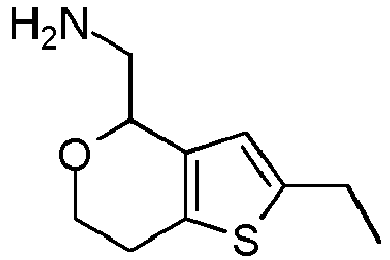
- To a solution of 2-(5-ethylthiophen-2-yl)ethanol (1 g, 6.4 mmol, 1.1 eq) and aminoacetaldehyde dimethylacetal (612 mg, 5.83 mmol, 1 eq) was added CF3SO3H (2.7 g, 17.5 mmol, 3 eq) dropwise at 0 °C. After stirring at room temperature overnight, the reaction mixture was diluted with water, adjusted pH to ∼8 with Na2CO3, and extracted with EtOAc. The organic layer was dried over Na2SO4, and concentrated. The crude product was purified by column chromatography.
-
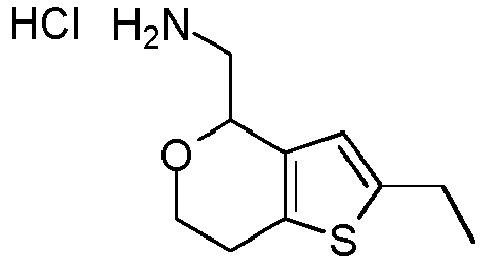
- A solution of (2-ethyl-6,7-dihydro-4H-thieno[3,2-c]pyran-4-yl)methanamine in MTBE was treated with gaseous HCl at 0 °C for 10 minutes. The precipitated product was collected by vacuum filtration and dried to give the desired product.
-

- 2-(Thiophen-3-yl)ethanol (7.5 mmol), amino acetal (11.25 mmol) and triflic acid (1.70 mL, 15 mmol) were combined in 7.5 mL 1,4-dioxane (anhydrous). The blackish solution was stirred at room temperature for 2 hr, and then poured slowly into saturated aqueous K2CO3 solution. The solution was washed with EtOAc (3 x 50 mL) and the combined EtOAc washes were washed with brine, dried (Na2SO4), filtered and concentrated. The crude product was dissolved in MeOH and 4M HCl in dioxane (10 mL) was added. The solution was concentrated to ∼ 4 mL and MTBE was added (30 mL). The solution was sonicated and the tan precipitate was filtered, washed with MTBE and dried in vacuo.
-

- To 3-(thiophen-2-yl)propan-1-ol (1 g, 7.0 mmol) and amino acetal (0.84 g, 7.0 mmol) in 1,4-dioxane in a microwave vial was added CF3SO3H (0.8 mL, 7.0 mmol). The reaction vessel was sealed and heated in a microwave reactor at 110 °C for 15 min at which time the mixture was cooled, made basic with 10% KOH (aq.) and the aqueous layer was extracted with EtOAc (3 x 50 mL). The combined organic layers were washed with brine, dried over Na2SO4, filtered and the solvent removed in vacuo to afford the crude product mixed with uncyclized side-product. The combined brown liquid was Boc-protected following standard protocols and purified by flash column chromatography (0-50% EtOAc in hexanes) to afford a mixture of uncyclized and cyclized product. The desired 7-membered ring compound was isolated by RP-HPLC (0.1 % aqueous NH4HCO3 in acetonitrile).
-

-

- NBS (0.58 g, 3.3 mmol) was added to 2-(thiophen-3-yl)ethanol (0.4 g, 3.1 mmol) in CHCl3:AcOH (1:1 v/v; 9 mL) at 0 °C and the resulting mixture was stirred at 0 °C for 1 hr at which time the reaction mixture was diluted with NaHCO3 (sat. aq.) and extracted with EtOAc (3 x 50 mL). The combined organic fractions were washed with brine, dried over Na2SO4, filtered, and the solvent was removed in vacuo. The residue was purified by flash column chromatography (0-50% EtOAc in hexanes) to afford regiopure bromothiophene.
-

- Bromothiophene (0.31 g, 1.5 mmol) and aminoacetaldehyde diethyl acetal (0.3 g, 2.25 mmol) were combined with 1,4-dioxane (2 mL). CF3SO3H (0.45 g, 3.0 mmol) was added and the reaction mixture was stirred at 22 °C for 2 hr at which time the mixture was made basic with 10% KOH (aq.) and the aqueous layer was extracted with EtOAc (3 x 50 mL). The combined organic layers were washed with brine, dried over Na2SO4, filtered and the solvent removed in vacuo to afford the crude amine product.
- Boc-protection was performed following standard protocols.
-

- To the purified Boc-protected bromothiophene (0.16 g, 0.45 mmol) in THF (16 mL) at -78 °C was added n-BuLi (2.5 M in hexanes, 0.4 mL, 1.0 mmol) and the resulting mixture was stirred at -78 °C for 2 hr at which time MeOH (2 mL) was added and the reaction was allowed to warm to about 22 °C. The solvent was removed and then the residue was redissolved in MeOH for purification by RP-HPLC (0.1 % aqueous NH4HCO3 in acetonitrile). The Boc-protected material was then deprotected using HCl (4.0 M in 1,4-dioxane, 5 mL) and the resulting HCl salt was precipitated with MTBE (50 mL) filtered and isolated as a white powder.
-

-

- To 6,7-dihydrobenzo[b]thiophen-4(5H)-one (0.5 g, 3.3 mmol) and trimethylamine N-oxide (0.074 g, 0.99 mmol) in CH2Cl2 (4 mL) was added TMSCN dropwise. The resulting mixture was stirred at 22 °C for 16 hr at which time the entire mixture was deposited on a silica gel column. Purification with flash column chromatography (0-50% EtOAc in hexanes) afforded the desired cyanohydrin compound.
-

- To the cyanohydrin compound (0.59 g, 3.3 mmol) in THF (6.5 mL) at 0 °C was added LAH (1.0 M THF, 6.5 mL). The resulting mixture was stirred at 0 °C for 2 hr at which time the reaction mixture was poured into a saturated aqueous solution of K2CO3 and extracted with EtOAc (3 x 50 mL). The combined organic layers were washed with brine, dried over Na2SO4, filtered and the solvent removed in vacuo to afford the desired amino alcohol which was further purified by RP-HPLC (0.1 % aqueous formic acid in acetonitrile). The solvent was removed in vacuo to afford the formic acid salt.
-

-

- The title compound was synthesized from 2-(thiophen-2-yl) ethanol and chloroacetaldehyde diethyl acetal according to General Procedure A.
-

- A mixture of 4-(chloromethyl)-6,7-dihydro-4H-thieno[3,2-c]pyran (1 g, 5.305 mmol, 1 eq), pyrrolidine (11.3 g, 159.1 mmol, 30 eq) and NaI (50 mg) in DMF (50 mL) in a sealed tube was stirred at 130 °C for 6 hr. The reaction mixture was cooled and poured into H2O and the pH was adjusted to ∼2 with 2N HCl. The resulting solution was washed with EtOAc. The aqueous layer was then adjusted to pH 9-10 and extracted with EtOAc. The EtOAc layers were washed with brine, dried over Na2SO4, filtered, and concentrated. The resulting crude product was purified by preparative HPLC. After removal of organic volatiles of the collected HPLC fractions, the pH of remaining aqueous phase was adjusted to ∼8 with saturated Na2CO3 solution. The aqueous solution was extracted with EtOAc (3 times). The combined EtOAc extract was washed with brine, dried with Na2SO4, and concentrated to give the desired product.
-

-

- To 2-thiophene-2-ethanol (1.28 g, 10 mmol) in CH2Cl2 (12 mL) was added TBSC1 (1.66 g, 11 mmol) followed by imidazole (1.36 g, 20 mmol) and the resulting cloudy mixture was stirred for 1 hr at 22 °C. Upon reaction completion, the mixture was diluted with NH4Cl (sat. aq.) and the aqueous phase was extracted with EtOAc (3 x 50 mL). The combined organic layers were washed with NaHCO3 (sat. aq.), brine, dried over Na2SO4, filtered and the solvent removed in vacuo to afford the crude protected alcohol which was used in the next step without further purification.
-

- To the silyl protected 2-(thiophen-2-yl)ethanol (0.96 g, 4.0 mmol) in dry Et2O (20 mL) at -78 °C was added n-BuLi (2.5 M in hexanes, 2.38 mL) and the resulting yellow solution was stirred at -78 °C for 3 hr at which time NFSI (2.5 g, 7.9 mmol) was added and the mixture was allowed to warm to 22 °C over 3 hr. The product formation was monitored by GC-MS. When no more product was formed, the reaction was quenched with MeOH and the solvent removed in vacuo. Purification by flash column chromatography (0 to 50% EtOAc in hexanes) afforded a mixture of the fluorinated and non-fluorinated TBS-protected ethanols which were taken on to the next step without further purification.
- Cyclization in the presence of CF3SO3H was performed following the General Procedure A. Upon isolation of the fluorinated and non-fluorinated mixture of amino pyrans, the amine functionality was protected with Boc2O in the presence of 10% NEt3 in methanol. Purification by flash column chromatography (0 to 30% EtOAc in hexanes) afforded a mixture of the fluorinated and non-fluorinated products which were submitted to further purification by RP-HPLC (0.1% aqueous formic acid in acetonitrile) to provide the pure fluorinated analog. The Boc-protecting group on the purified fluorinated analog was removed using standard procedure to give the corresponding amine.
-

-

- A solution of (6,7-dihydro-4H-thieno[3,2-c]pyran-4-yl)methanamine (6.3 g, 37.3 mmol, 1 eq), Boc2O (8.9 g, 40.8 mmol, 1.1 eq), and DMAP (10 mg) in THF (50 mL) was stirred at room temperature for 1 hr. The mixture was concentrated and purified by column chromatography to give the desired product.
-

- A solution of tert-butyl (6,7-dihydro-4H-thieno[3,2-c]pyran-4-yl)methylcarbamate (2.9 g, 1.3 mmol, 1 eq), NIS (5.2 g, 2.2 mmol, 2 eq), and AcOH (3 mL) in CHCl3 (50 mL) was stirred at room temperature for 7 hr. The reaction mixture was neutralized with triethyl amine, concentrated, and diluted with water. The mixture was extracted with n-hexane. The organic phase was dried over Na2SO4, concentrated, and purified by column chromatography to give the desired product (3 g).
-

- A mixture of tert-butyl (2-iodo-6,7-dihydro-4H-thieno[3,2-c]pyran-4-yl)-methylcarbamate (400 mg, 1.0 mmol, 1 eq), piperidine (2 mL), Cu metal (6.4 mg, 1 mmol, 0.1 eq), and K3PO4•3H2O (539.3 mg, 2.34 mmol, 2.3 eq) in 2-dimethylamino-ethanol (deanol) (5 mL) was stirred at 85 °C in a sealed tube for 28 hr. After cooling to room temperature, the reaction mixture was diluted with water, extracted with ethyl acetate, washed with brine, dried over Na2SO4, concentrated and purified by Al2O3 column chromatography. The Boc protecting group was removed with HCl under standard conditions to give the product (2-(piperidin-1-yl)-6,7-dihydro-4H-thieno[3,2-c]pyran-4-yl)methanamine.
-

-
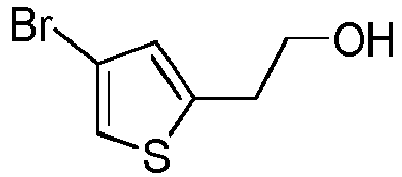
- To a solution of 2,4-dibromothiophene (1 g, 4.13 mmol) in anhydrous ether was added n-BuLi (1.66 mL, 4.13 mmol) at -78 °C dropwise. After stirring at -78 °C for 0.5 hr, oxirane (0.32 mL, 19.28 mmol/mL in ether) was added to the reaction mixture quickly. After stirring at 0 °C for 1.5 hr, the reaction mixture was quenched with aqueous NH4Cl solution, extracted with EtOAc, concentrated and purified to give the desired product.
-
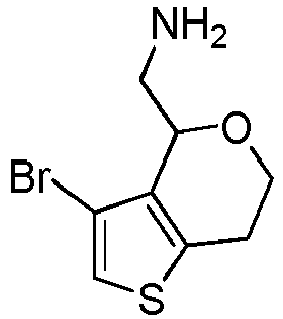
- The title compound was synthesized from 2-(4-bromothiophen-2-yl)ethanol and amino-acetaldehyde dimethylacetal according to General Procedure A.
-

- The title compound was synthesized from (3-bromo-6,7-dihydro-4H-thieno[3,2-c]pyran-4-yl)methanamine according to General Procedure H.
-

- The title compound was synthesized from tert-butyl (3-bromo-6,7-dihydro-4H-thieno[3,2-c]pyran-4-yl)methylcarbamate according to General Procedure J.
-

- The title compound was synthesized from tert-butyl (3-(pyridin-3-yl)-6,7-dihydro-4H-thieno[3,2-c]pyran-4-yl) methylcarbamate according to General Procedure J(e).
-

-

- To a solution of 2-(thiophen-2-yl)ethanol (3 g, 23.4 mmol, 1 eq) and HOAc (5 mL) in CHCl3 was added NBS in portions at room temperature. After stirring at room temperature overnight, the reaction mixture was poured into water and extracted with CHCl3 twice. The combined organic layer was dried over Na2SO4, concentrated and purified by column chromatography to give the desired product.
-

- The title compound was synthesized from 2-(5-bromothiophen-2-yl)ethanol and aminoacetaldehyde dimethylacetal according to General Procedure A.
-
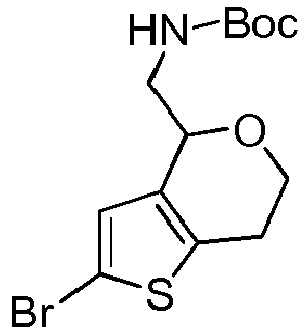
- The title compound was synthesized from (2-bromo-6,7-dihydro-4H-thieno[3,2-c]pyran-4-yl)methanamine according to General Procedure H.
-

- A mixture of tert-butyl (2-bromo-6,7-dihydro-4H-thieno[3,2-c]pyran-4-yl)methylcarbamate (500 mg, 1.44 mmol), pyridine-3-boronic acid (351 mg, 2.88 mmol), Pd(OAc)2 (33 mg), PPh3 (170 mg, 0.65 mmol) in 1,4-dioxane was purged with nitrogen. After stirring at room temperature for 0.5 hr, 457 mg of Na2CO3 in 3 mL of H2O was added. The reaction mixture was stirred at 100 °C for 2 hr. After cooling to room temperature, the reaction mixture was poured into 100 mL of water and extracted with EtOAc twice. The combined organic layers were washed with brine, dried over Na2SO4, concentrated and purified by column chromatography to give the desired product.
-

- To a solution of tert-butyl (2-(pyridin-3-yl)-6,7-dihydro-4H-thieno[3,2-c]pyran-4-yl)methylcarbamate in MeOH was added an HCl solution (10 mL, 5 N in MeOH). The mixture was stirred at room temperature for 0.5 h, and a solid precipitated. The solid was collected by vacuum filtration and washed with EtOAc to give the desired product.
-

- tert-Butyl(6,7-dihydro-4H-thieno[3,2-c]pyran-4-yl)methylcarbamate (1.96 mmol) was dissolved in anhydrous DMF (20 mL) and cooled to 0°C. NaH (60% dispersion in mineral oil, 86 mg, 2.15 mmol) was added in one portion and the resulting orange suspension was stirred for 30 min. Deuterated methyl iodide (133 µL, 2.15 mmol) was added and the resulting mixture was stirred over the two to three days. After about 65 hr, the mixture was poured into H2O (30 mL) and washed with Et2O (2 x 30 mL). The aqueous phase was extracted with EtOAc (1 x 20 mL) and the organic phases were combined, washed with brine, dried (Na2SO4), filtered, and concentrated. The crude material was purified by flash column chromatography on a Biotage system (eluting with 0 to 50 % EtOAc in hexanes gradient) to give the desired Boc-protected material.
- The BOC protected material (340 mg, 1.04 mmol) was dissolved in MTBE (10 mL) and HCl in dioxane was added (4 M, 1.5 mL). The resulting solution was stirred for 2 days, then poured into saturated aqueous Na2CO3 (30 mL) and washed with EtOAc (3 x 40 mL). The combined organic phases were washed with brine, dried (Na2SO4), filtered, and concentrated. The crude N-deutero methyl compound was dissolved in MTBE (10 mL) and HCl in dioxane (4 M, 454 µL, 1.04 eq) was added. The resulting off-white precipitate was collected by filtration, and washed with MTBE, then dried in vacuo to give the pure HCl salt of the deuterated product.
-

- The above iodothienyl compound (0.22 g, 0.55 mmol, prepared using General Procedure H), methyl-2,2-difluoro-2-(fluorosulfonyl)acetate (0.21 g, 1.1 mmol) and CuBr•Me2S (0.023 g, 0.11 mmol) were combined with anhydrous DMF (5 mL) in a sealed microwave vial. The resulting mixture was heated in a microwave reactor for 10 min at 90 °C. The reaction was determined by LC-MS to be 5% complete. The reaction mixture was re-subjected to the microwave reactor at 100 °C for 40 min at which time the reaction was determined by LC-MS to be 95% complete. The reaction mixture was diluted with Et2O (50 mL) and the organic layer was washed with NaHCO3 (sat. aq.) and then brine, dried with Na2SO4, filtered, and concentrated in vacuo to afford the crude trifluoromethyl product. Purification with flash column chromatography (0-50% EtOAc in hexanes) afforded pure trifluoromethyl product which was then deprotected using HCl (4 M in 1,4-dioxane, 5 mL), and the resulting HCl salt was precipitated with MTBE (50 mL), filtered, and isolated as a white powder.
-

- To a solution of the above cyclic ketone (1.0 g, 6.6 mmol) in MeOH (330 mL) and DMSO (10 mL) was added Tosmic (1.7 g, 8.7 mmol) followed by KOtBu (2.5 g, 26.3 mmol) in small portions. The resulting mixture was stirred at 25 °C for 36 hr at which time the bulk of the volatiles were removed in vacuo. The reaction mixture was diluted with EtOAc and H2O. The organics were washed with NH4Cl (sat. aq.), brine, dried over Na2SO4, concentrated and purified by column chromatography (0 to 30% EtOAc in hexanes) to give the desired nitrile compound.
- The resulting nitrile (0.3 g, 1.8 mmol) was reduced to the primary amine using excess BH3•THF (10 mL, 10 mmol) diluted to 20 mL with 10 mL additional THF. The reaction mixture was stirred at 25 °C for 1 hr at which time careful addition of K2CO3 (sat. aq.) was used to quench the reaction. EtOAc was added and the organic layer was washed with NaHCO3 and brine, dried over Na2SO4, and filtered. The resulting yellow oil was further purified by RP-HPLC to afford the primary amine compound.
- The primary amine was protected with excess BOC2O in a solution of 10% NEt3 in MeOH. The reaction mixture was stirred at 25 °C for 1 hr at which time all volatiles were removed in vacuo. The crude material was taken up in 10 mL THF. 20 mL 1M LAH in THF was added dropwise, and the reaction mixture was stirred at 25 °C for 2 hr at which time careful addition of K2CO3 (sat. aq.) was used to quench the reaction. EtOAc was added and the organic layer was washed with NaHCO3, dried with brine, dried over Na2SO4, and filtered. The resulting yellow oil was further purified by RP-HPLC to afford the secondary amine compound.
-

-

- To a mixture of (S)-2-aminopropan-1-ol (2 g, 26.6 mmol) and Na2CO3 (5.6 g, 53.2 mmol) in 1,4-dioxane and water (25 mL / 25 mL) at 0 °C was added FmocCl (10.2 g, 39.9 mmol) and the resulting mixture was then warmed to room temperature gradually. After the amine was consumed completely as indicated by TLC, water (25 mL) was added. The mixture was extracted with DCM (3 × 50 mL). The organic phase was washed with brine (50 mL), and dried over anhydrous Na2SO4. After filtration and concentration, the crude product was purified by column chromatography to give the title compound (7.1 g, 90%).
-

- To a solution of oxalyl chloride (1.89 g, 15.0 mmol) in dry DCM (10 mL) at -65 °C was added DMSO (1.2 g, 15.0 mmol) in dry DCM (10 mL) dropwise. After stirring for 30 min, N-Fmoc (S)-2-aminopropan-1-ol (3.0 g, 10.0 mmol) in dry DCM (20 mL) was added dropwise. After stirring for 2 hr, Et3N (3.0 g, 30 mmol) was added dropwise and the mixture was then warmed to room temperature gradually. The reaction mixture was treated with water, extracted with DCM (3 × 100 mL). The organic extract was washed with brine, and dried over anhydrous Na2SO4. After filtration, the solvent was removed under reduced pressure to give the title compound (2.8 g, 94.9%).
-

- The title compound was synthesized from (S)-(9H-fluoren-9-yl)methyl methyl(3-methyl-1-oxobutan-2-yl)carbamate according to General Procedure A. Diastereomeric products were separated by RP-HPLC at this stage.
-
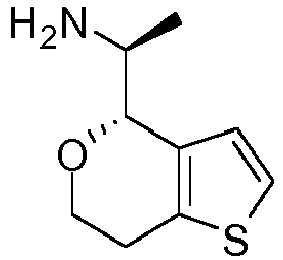
- To a solution of (9H-fluoren-9-yl)methyl (S)-1-((S)-6,7-dihydro-4H-thieno[3,2-c]pyran-4-yl)ethylcarbamate (885 mg, 3.0 mmol) in CH3CN (10 mL) at 0 °C was added piperidine (382 mg, 4.5 mmol) dropwise. After stirring overnight, the reaction solution was concentrated under reduced pressure and the residue was purified by column chromatography to give the title compound (450 mg, 82%).
-

- A solution of (S)-1-((S)-6,7-dihydro-4H-thieno[3,2-c]pyran-4-yl)ethanamine (450 mg, 2.5 mmol) in ether (50 mL) was treated with gaseous HCl at 0 °C for 10 minutes. The precipitated solid was collected by vacuum filtration and dried to give the title product (460 mg, 84%).
-

-

- To MeOH (50 mL) was added SOCl2 (8.8 g, 75.1 mmol) dropwise at 0 °C, followed by the addition of 1-aminocyclopropanecarboxylic acid (5.0 g, 49.8 mmol) in one portion. The resulting mixture was refluxed for 1 to 3 h. The reaction solution was concentrated under reduced pressure to give a salt of the title compound (5.8 g, 100%).
-

- To a mixture of methyl 1-aminocyclopropanecarboxylate (5.8 g, 50.4 mmol) and Na2CO3 (8.0 g, 74.6 mmol) in 1, 4-dioxane (50 mL) and water (50 mL) at 0 °C was added FmocCl (19.4 g, 75.2 mmol). The resulting mixture was warmed gradually to room temperature. After the amine was consumed completely as indicated by TLC, water (50 mL) was added and the mixture was extracted with DCM (3 × 60 mL). The DCM extract was washed with brine, and dried over anhydrous Na2SO4. After filtration and concentration, the crude product was purified by column chromatography to give the title compound (15 g, 88%).
-

- To a solution of (9H-fluoren-9-yl)methyl 1-(methoxycarbonyl)-cyclopropylcarbamate (15 g, 44.5 mmol) in THF (100 mL) at -5 °C was added LiAlH4 (1.0 g, 26.3 mmol) in portions. After stirring at room temperature for 3 h, water (10 mL) was added to quench the reaction. The mixture was filtered and the filtrate was extracted with EtOAc (3 × 100 mL). The organic extract was washed with brine, and dried over anhydrous Na2SO4. After filtration and concentration, the crude product was purified by column chromatography to give the title compound (12.3 g, 90%).
-

- The title compound was synthesized according to General Procedure N.
-

- The title compound was synthesized according to General Procedure A(b).
-

- The title compound was synthesized according to General Procedure N(d).
-

- To a solution of 1-(6,7-dihydro-4H-thieno[3,2-c]pyran-4-yl)-cyclopropanamine (1 g, 5.1 mmol) and Et3N (0.8 g, 7.5 mmol) in dry DCM (20 mL) at 0 °C was added ethyl chloroformate (0.8 g , 7.5 mmol) dropwise. After stirring at 0 °C for 4 h, water (20 mL) was added to quench the reaction. The mixture was extracted with DCM (3 × 50 mL) and the organic extract was dried over anhydrous Na2SO4. After filtration and concentration, the crude product was purified by column chromatography to give the title compound (1.1 g, 83%).
-

- To a solution of ethyl 1-(6,7-dihydro-4H-thieno[3,2-c]pyran-4-yl)cyclopropylcarbamate (1.1 g, 4.1 mmol) in dry THF (20 mL) at 0 °C under N2 was added LiAlH4 (152 mg, 4.0 mmol) in one portion. The resulting mixture was refluxed for 2 h and then cooled to room temperature. Water (5 mL) was added to quench the reaction. The reaction mixture was filtered and the filtrate was extracted with EtOAc (3 × 75 mL). The combined extract was washed with brine, and dried over anhydrous Na2SO4. After filtration and concentration, the crude product was purified by column chromatography to give the title compound (700 mg, 84%).
-

- The title compound was synthesized according to General Procedure N.
-

-

- To a solution of 3-methylthiophene (5 g, 51.0 mmol) in dry ether (250 mL) at -65 °C was added n-BuLi (25 mL, 2.5 N in THF) dropwise. After stirring for 1 h, oxirane (2.7 g, 61.3 mmol) was added in one portion. The resulting reaction mixture was warmed to room temperature and stirred overnight. The reaction was then quenched with water. After separation of layers, the organic layer was washed with brine, and dried over anhydrous Na2SO4. After filtration and concentration, the crude product was purified by column chromatography to give the title compound (6.2 g, 86 %).
-

- To a solution of 2-(4-methylthiophen-2-yl)ethanol (3.0 g, 21.1 mmol) and diisopropylethylamine (4.1 g, 31.7 mmol) in dry DCM (50 mL) at 0 °C was added TBSC1 (4.8 g, 32.0 mmol) in dry DCM (20 mL) dropwise and the mixture was then warmed to room temperature gradually. After the alcohol was consumed completely, water (10 mL) was added. The resulting mixture was extracted with DCM (3 × 100 mL), washed with brine, and dried over anhydrous Na2SO4. After filtration and concentration, the crude product was purified by column chromatography to give the title compound (5.1 g, 94%).
-

- To a solution of (2-(4-methylthiophen-2-yl)ethoxy)(tert-butyl)dimethylsilane (5.1 g, 19.9 mmol) in dry THF (30 mL) at -5 °C was added LDA (20 mL in THF, 30 mmol) dropwise. After stirring for 1 h, NFSI (9.4 g, 29.8 mmol) in dry THF (10 mL) was added dropwise and the resulting mixture was stirred for another 2 h. The reaction was quenched with water (15 mL) and the resulting mixture was extracted with EtOAc (3 × 100 mL), washed with brine, and dried over anhydrous Na2SO4. After filtration and concentration, the crude product was purified by column chromatography to give the title compound (3.7 g, 68%).
-

- The title compound was synthesized according to General Procedure A.
-

- The title compound was synthesized according to General Procedure N.
-

-

- To a solution of 3-bromothiophene (0.65 g, 4.0 mmol) in anhydrous THF (20 mL) at -65 °C was added t-BuLi (3.5 mL, 8.8 mmol, 2.5 M in hexane) over 15 minutes. After stirring at -65 °C for 30 minutes, DMF (0.32 g, 4.4 mmol) was added dropwise and the reaction was stirred at -65 °C for 2 h. The reaction mixture was quenched with water and the mixture was extracted with diethyl ether. The organic layer was dried over Na2SO4 and concentrated to give a crude product. The crude product was purified by column chromatography to provide the title compound.
-

- To a solution of thiophene-3-carbaldehyde (10 g, 89.3 mmol) in THF (500 mL) at 0 °C was added ethyl (triphenylphosphoranylidene)acetate (35 g, 100.5 mmol) in portions. After stirring overnight, the reaction mixture was concentrated and purified by column chromatography to give the title compound (13.6 g, 83%).
-

- To a solution of ethyl 3-(thiophen-3-yl)acrylate (5 g, 27.5 mmol) in CH3NO2 (20 mL) was added Triton B (5 mL) under N2 and the resulting reaction mixture was refluxed overnight. The reaction mixture was concentrated and then diluted with water. The mixture was extracted with EtOAc, washed with brine, and dried over anhydrous Na2SO4. After filtration and concentration, the crude product was purified by column chromatography to give the title compound (4.3 g, 65%).
-

- To a solution of ethyl 4-nitro-3-(thiophen-3-yl)butanoate (4.3 g, 18.2 mmol) in MeOH (40 mL) at 0 °C was added 3 N aqueous NaOH (10 mL). The resulting mixture was stirred at room temperature overnight. 2 N HCl was then added to adjust pH to 3 ∼ 4 followed by extraction with DCM. The organic extract was washed with brine and dried over anhydrous Na2SO4. After filtration, the solution was concentrated to give the title compound (3.4 g, 87%).
-
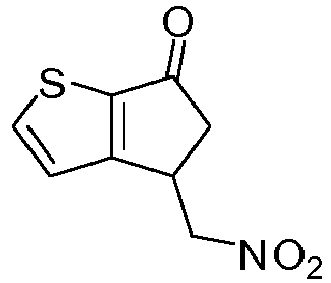
- To a solution of 4-nitro-3-(thiophen-3-yl)butanoic acid (3.4 g, 15.9 mmol) in DCE (20 mL) was added PPA (20 g) and the resulting mixture was refluxed overnight. After concentration, the reaction mixture was treated with solid NaOH, followed by addition of water. After stirring for 30 minutes, the mixture was extracted with DCM. TheDCM extract was washed with brine and dried over anhydrous Na2SO4. After filtration and concentration, the crude product was purified by column chromatography to give the title compound (2.3 g, 74%).
-

- To a solution of 4,5-dihydro-4-(nitromethyl)cyclopenta[b]thiophen-6-one (2.3 g, 11.7 mmol) in dry THF (30 mL) at 0 °C was added LiAlH4 (0.5 g 13.1 mmol) in one portion. The resulting mixture was then refluxed for 4 h. After cooling to room temperature, the reaction was quenched with water and filtered. The filtrate was extracted with EtOAc, washed with brine, and dried over anhydrous Na2SO4. After filtration and concentration, the crude product was purified by column chromatography to give the title compound (1.3 g, 72%).
-
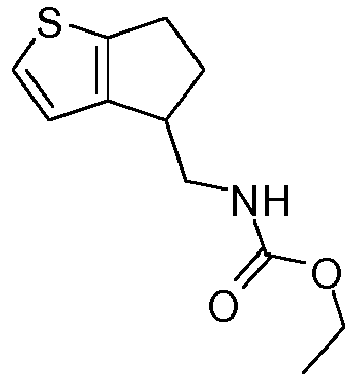
- The title compound was synthesized according to General Procedure O(g).
-

- The title compound was synthesized according to General Procedure O(h).
-

- The title compound was synthesized according to General Procedure N(e).
-

-

- The title compound was synthesized according to General Procedure P.
-

- The title compound was synthesized according to General Procedure P.
-

- The title compound was synthesized according to General Procedure A.
-

- The title compound was synthesized according to General Procedure N.
-

-

- To a solution of 3-bromothiophene (10 g, 61.8 mmol) in dry ether (200 mL) at -65 °C under N2 was added n-BiLi dropwise. After stirring at -65 °C for 1 h, tert-butyl 3-oxopyrrolidine-1-carboxylate (13.7 g, 74.2 mmol) in dry ether (80 mL) was added dropwise. After addition, the reaction mixture was warmed to 0 °C and stirred for 3 h. The reacton was quenched with water and extracted with ether. The combined organic layer was washed with brine, and dried over anhydrous Na2SO4. After filtration and concentration, the crude product was purified by column chromatography to give the title compound (9.8 g, 59%).
-

- To a solution of tert-butyl 3-hydroxy-3-(thiophen-3-yl)pyrrolidine-1-carboxylate (5 g, 18.6 mmol) in AcOH (10 mL) and CHCl3 (10 mL) at 0 °C was added NBS (5.0 g, 27.9 mmol) in portions. After stirring for 3 h, the reaction mixture was treated with Na2SO3 and water, followed by extraction with EtOAc. The combined organic layer was washed with brine, and dried over anhydrous Na2SO4. After filtration and concentration, the crude product was purified by column chromatography to give the title compound (5.4 g, 84%).
-

- A mixture of tert-butyl 3-(2-bromothiophen-3-yl)-3-hydroxypyrrolidine-1-carboxylate (5 g, 13.8 mmol), Pd(OAc)2 (31 mg, 0.14 mmol), Ph3P (147 mg, 0.42 mmol), 2-hydroxyphenylboronic acid (1.74 g, 27.6 mmol) and Na2CO3 (2.9 g, 27.6 mmol) in dioxane (10 mL) and water (10 mL) was refluxed under N2 for 3 h. After the reaction was cooled to room temperature, the reaction mixture was extracted with EtOAc several times. The combined organic layers were washed with brine, and dried over anhydrous Na2SO4. After filtration and concentration, the crude product was purified by column chromatography to give the title compound (4.4 g, 88%).
-

- To a solution of tert-butyl 3-hydroxy-3-(2-(2-hydroxyphenyl)thiophen-3-yl)pyrrolidine-1-carboxylate (4.4 g, 12.1 mmol) in DCM (25 mL) at 0 °C was added BF3 (1.6 g, 24.2 mmol) dropwise. After stirring overnight, the reacton mixture was treated with water and extracted with EtOAc several times. The combined organic layer was washed with brine, and dried over anhydrous Na2SO4. After filtration and concentration, the crude product was purified by column chromatography to give the title compound (3.8 g, 92%).
-

- The title compound was synthesized according to General Procedure N.
-

-
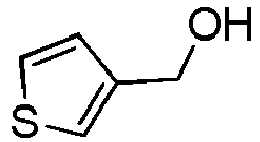
- To a solution of thiophene-3-carbaldehyde (10 g, 89.3 mmol) in THF (200 mL) at 0 °C was added NaBH4 (1.7 g, 45.0 mmol) in portions. After stirring at 0 °C for 3 h, The reaction was quenched with water and extracted with EtOAc. The combined organic layer was washed with brine, and dried over anhydrous Na2SO4. After filtration and concentration, the crude product was purified by column chromatography to give the title compound (9.7 g, 95%).
-

- The title compound was synthesized according to General Procedure S.
-

- To a solution of (2-bromothiophen-3-yl)methanol (5 g, 26.3 mmol) in THF (60 mL) at 0 °C was added Dess-Martin periodinane (13.4 g, 31.6 mmol) in portions. After stirring at 0 °C for 3 h, water and Na2SO3 were added. The mixture was extracted with DCM, and the combined organic layers were washed with brine and dried over anhydrous Na2SO4. After filtration and concentration, the crude product was purified by column chromatography to give the title compound (4.1 g, 83%).
-

- The title compound was synthesized according to General Procedure Q.
-

- To a solution of 1-(2-bromothiophen-3-yl)-2-nitroethanol (3 g, 12.0 mmol), DMAP (146 mg, 1.2 mmol) and Et3N (2.4 g, 24.0 mmol) in DCM (30 mL) was added MsCl (2.4 g, 24.0 mmol) dropwise. The resulting mixture was then refluxed for 3 h. After cooling, the reaction mixture was diluted with water and extracted with DCM. The combined organic layers were washed with brine and dried over anhydrous Na2SO4. After filtration and concentration, the crude product was purified by column chromatography to give the title compound (2.5 g, 88%).
-

- The title compound was synthesized according to General Procedure S(c).
-
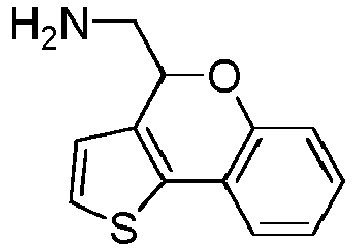
- To a solution of 4-(nitromethyl)-4H-thieno[3,2-c]chromene (2.5 g, 10.7 mmol) in AcOH (20 mL) was added NH4Cl (5.4 g, 100 mmol) and Fe (2.8 g, 50 mmol). After stirring overnight, the reaction mixture was filtered. The filtrate was concentrated under reduced pressure and the residue was purified by column chromatography to give the title compound (2.2 g, 96%).
-

- The title compound was synthesized according to General Procedure O.
-

- The title compound was synthesized according to General Procedure O.
-

- The title compound was synthesized according to General Procedure N.
-

-

- The title compound was synthesized according to General Procedure S(c).
-

- The title compound was synthesized according to General Procedure A.
-

- The title compound was synthesized according to General Procedure O.
-

- The title compound was synthesized according to General Procedure N.
-

-

- The title compound was synthesized according to General Procedure S.
-

- To a solution of (2-(5-bromothiophen-2-yl)ethoxy)triisopropylsilane (7.24 g, 20 mmol) in dry THF (80 mL) at -5 °C was added LDA (20 mL in THF, 30 mmol) dropwise. After stirred for 1 h, NIS (6.75 g, 30 mmol) in dry THF (20 mL) was added dropwise and the resulting mixture was stirred for another 2 h. The reaction was quenched with water (30 mL) and the resulting mixture was extracted with EtOAc (3 × 150 mL), washed with brine, dried over anhydrous Na2SO4. After filtration and concentration, the crude product was purified by column chromatography to give the title compound (5.9 g, 61%).
-

- A solution of CuBr (20 mg, 0.15 mmol) and Me2S (10 mg, 0.15 mmol) in DMF (10 mL) was stirred at 80 °C for 0.5 h. (2-(5-bromo-4-iodothiophen-2-yl)ethoxy)triisopropylsilane (0.35 g, 0.71 mmol) and methyl 3,3-difluoro-3-(fluorosulfonyl)propanoate (0.27 g, 1.42 mmol) were added to the reaction mixture. The reaction mixture was heated to 160 °C for 4 h. After that, the mixture was cooled and extracted with hexanes (3 x 20 mL). The combined organic layers were washed with brine and dried over anhydrous Na2SO4. After filtration and concentration, the crude product was purified by column chromatography to give the title compound.
-

- The title compound was synthesized according to General Procedure P.
-

- To a solution of 1-(2-bromo-3-(trifluoromethyl)-6,7-dihydro-4H-thieno[3,2-c]pyran-4-yl)-N-methylmethanamine (5 mmol) in MeOH (5 mL) was added a catalytic amount of Pd/C. A vacuum was applied and the reaction vessel was back filled with hydrogen gas three times. The resulting mixture was stirred under atmospheric H2. After the reduction was completed, the reaction mixture was filtered and the filter cake was washed with methanol. The combined filtrate was concentrated and purified by column chromatography to give the desired product.
-

- The title compound was synthesized according to General Procedure N.
-

-

- Cyclohexane-1,3-dione (11.2 g, 0.1 mol) was suspended in ice water (70 mL) and bromine (5.16 mL, 0.1 mol) was added dropwise over 5 minutes. The resulting suspension was stirred at room temperature for 3 hours. The suspension was filtered and the solid was stirred in water (200 mL) for 30 minutes. The solid was collected by vacuum filtration, rinsed with water, and dried to render crude product. The crude product was recrystallized from ethanol to produce the title compound.
-

- To a solution of ethanethioamide (0.75 g, 10 mmol) in ethanol (20 mL) at room temperature was added 2-bromocyclohexane-1,3-dione (1.9 g, 10 mmol) in portions. The reaction solution was refluxed for 2 hours while stirring. After removal of solvents, the residue was diluted with water and washed with diethyl ether. The separated aqueous layer was basified with sodium carbonate solution. The resulting solid was collected by vacuum filtration, rinsed with water. The solid was suspended in methanol and followed by evaporation to dryness to produce the title compound.
-

- To a stirred and cooled solution of 5,6-dihydro-2-methylbenzo[d]thiazol-7(4H)-one (1.67 g, 10 mmol) and TOSMIC (2.5 g, 13 mmol) in a mixture of DME (25 mL) and absolute ethanol (25 mL) was added solid t-BuOK (2.8 g, 24 mmol) portionwise while keeping the reaction temperature between 5 and 10 °C. The resulting mixture was stirred at room temperature for 30 minutes and at 30-45 °C for 30 minutes. The resulting suspension was cooled to room temperature. The precipitate (TosK) was removed by filtration and rinsed with DME. The combined DME solutions were concentrated under reduced pressure to give the crude product, which was purified by column chromatography.
-

- The title compound was synthesized according to General Procedure O(h).
-

- The title compound was synthesized according to General Procedure O.
-

- The title compound was synthesized according to General Procedure N.
-

-

- The title compound was synthesized according to General Procedure W.
-

- The title compound was synthesized according to General Procedure W.
-

- The title compound was synthesized according to General Procedure O(h).
-

- To a solution of (2-amino-4,5,6,7-tetrahydrobenzo[d]thiazol-4-yl)methanol (3.3 mmol) and Et3N (1.4 mL, 10 mmol) in THF (10 mL) was added MsCl (0.3 mL, 3.6 mmol) dropwise at room temperature. The resulting mixture was stirred at room temperature for 1 hr. The reaction mixture was diluted with water (200 mL), filtered, and dried to give the crude product, which was used directly in the next step without further purification.
-

- To a solution of (2-amino-4,5,6,7-tetrahydrobenzo[d]thiazol-4-yl)methyl methanesulfonate (3.3 mmol) in DMF (10 mL) was added NaN3 (0.21 g, 3.3 mmol). The resulting mixture was stirred at 85 °C for 30 minutes. The mixture was poured into water (100 mL) and extracted with EtOAc. The organic extract was dried over anhydrous sodium sulfate. After filtration and concentration, the crude product was dissolved in THF (20 mL) and H2O (10 mL), Na2CO3 (0.35 g, 3.3 mmol) and PPh3 (0.8 g, 3 mmol) was added. After stirring overnight, the reaction mixture was diluted with water (100 mL) and then filtered. The filtrate was extracted with EtOAc, and the organic layer was washed with brine and dried over anhydrous sodium sulfate. After filtration and concentration, the crude product was obtained and used directly in the next step without further purification.
-

- The title compound was synthesized according to General Procedure O.
-

- The title compound was synthesized according to General Procedure N.
-

-

- To a solution of 3-methylthiophene (1.89 g, 15.0 mmol) in dry THF (10 mL) at -65 °C was added n-BuLi (15.0 mmol) dropwise. After stirring for 30 min, DMF (3.0 g, 10.0 mmol) in dry THF (3 mL) was added dropwise and the reaction mixture was stirred at -65 °C for 2 h. The reaction was warmed to room temperature and water was added. The resulting mixture was extracted with EtOAc (3 × 100 mL). The combined extract was washed with brine and dried over anhydrous Na2SO4. After filtration and concentration, the crude product was purified by column chromatography to give the title compound (7.1 g, 90%).
-
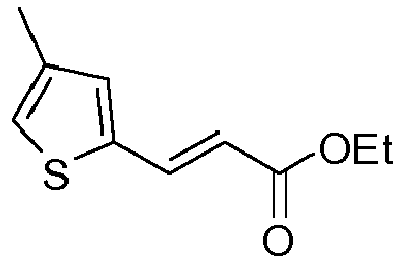
- The title compound was synthesized according to General Procedure Q.
-

- The title compound was synthesized according to General Procedure Q.
-

- The title compound was synthesized according to General Procedure Q.
-

- The title compound was synthesized according to General Procedure Q.
-

- A solution of 3-methyl-6-(nitromethyl)-5,6-dihydro-4H-cyclopenta[b]thiophen-4-one (9.5 g) in BH3·THF (400 mL) was stirred at room temperature overnight. TLC analysis indicated the consumption of starting material. The reaction mixture was acidified to pH 2 with 10% HCl and stirred for 2 h. The mixture was extracted with EtOAc (100 mL x 3). The combined organic phase was dried with Na2SO4, and concentrated in vacuo. The crude product was purified by flash column chromatography to afford 5 g of title compound (yield: 56.4%).
-
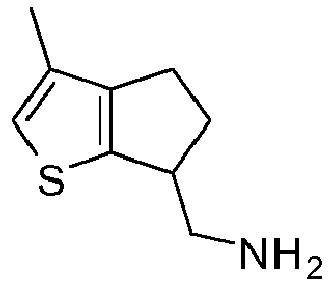
- To a solution of 3-methyl-6-(nitromethyl)-5,6-dihydro-4H-cyclopenta[b]thiophene (5 g) in MeOH (100 mL) was added 10% Pd/C and the reaction was placed under a hydrogen atmosphere using a balloon. The mixture was stirred at room temperature overnight. TLC analysis indicated the consumption of starting material and the reaction mixture was filtered through a pad of Celite. The filtrate was concentrated in vacuo. The residue was resolved in Et2O and treated with gaseous HCl at 0 °C for 10 minutes. The precipitated product was collected by vacuum filtration and dried to give 4.0 g of HCl salt of the title compound.
-

- The title compound was synthesized according to General Procedure O.
-

- The title compound was synthesized according to General Procedure N(e).
-
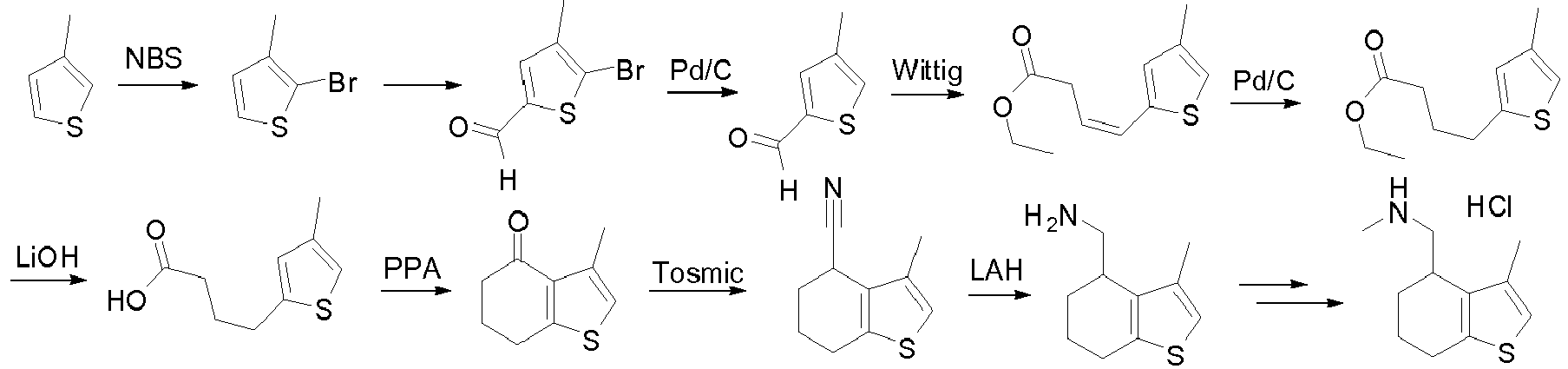
-

- The title compound was synthesized according to General Procedure S.
-

- To a solution of 2-bromo-3-methylthiophene (2.66 g, 15.0 mmol) in dry THF (10 mL) at -65 °C was added LDA solution (15.0 mmol) dropwise. After stirring for 30 min, DMF (3.0 g, 10.0 mmol) in dry THF (3 mL) was added dropwise and the reaction was stirred at -65 °C for 2 h. The reaction was warmed to room temperature and water was added. The quenched mixture was extracted with EtOAc (3 × 100 mL). The combined extract was washed with brine and dried over anhydrous Na2SO4. After filtration and concentration, the crude product was purified by column chromatography to give the title compound.
-

- The title compound was synthesized according to General Procedure V(e).
-

- The title compound was synthesized according to General Procedure Q.
-

- The title compound was synthesized according to General Procedure V(e).
-

- The title compound was synthesized according to General Procedure Q.
-

- The title compound was synthesized according to General Procedure Q.
-

- The title compound was synthesized according to General Procedure W.
-

- The title compound was synthesized according to General Procedure W.
-

- The title compound was synthesized according to General Procedure O.
-

- The title compound was synthesized according to General Procedure N.
-

- The above compounds, 4-(thiophen-3-yl)butanoic acid, 5,6-dihydrobenzo[b]thiophen-7(4H)-one, 4,5,6,7-tetrahydrobenzo[b]thiophene-7-carbonitrile, (4,5,6,7-tetrahydrobenzo[b]thiophen-7-yl)methanamine, and N-methyl-1-(4,5,6,7-tetrahydrobenzo[b]thiophen-7-yl)methanamine, were synthesized according to General Procedure Z. The HCl salt of N-methyl-1-(4,5,6,7-tetrahydrobenzo[b]thiophen-7-yl)methanamine was synthesized according to General Procedure N.
-

-

- The title compound was synthesized according to General Procedures Q and Z.
-

- A mixture of the starting material (4.93 mmol), ethylene glycol (3.6 mL), 88% KOH (0.55 g, 9.8 mol), and 85% hydrazine hydrate (0.62 mL) was refluxed for about half an hour. The condenser was then removed to allow the aqueous liquor to evaporate. The temperature of the reaction mixture reached about 200 °C. After the reaction mixture refluxed overnight, it was cooled, diluted with water and extracted with ether. The combined ether solution was concentrated under reduced pressure to give the crude product, which was purified by column chromatography.
-

- The title compound was synthesized according to General Procedure T.
-

- The title compound was synthesized according to General Procedure P.
-

- The title compound was synthesized according to General Procedure B.
-

- The title compound was synthesized according to General Procedure O(g, h).
-

- The title compound was synthesized according to General Procedure N(e).
-

-

- The title compound was synthesized according to General Procedure O using pyrrolidin-2-ylmethanol as starting material.
-
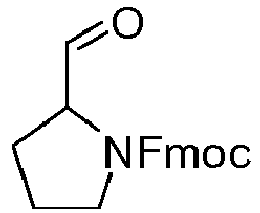
- The title compound was synthesized according to General Procedure O.
-

- The title compound was synthesized according to General Procedure B. Diasteromeric products were separated at this stage by RP-HPLC.
-

- The title compound was synthesized according to General Procedure N(d).
-

- The title compound was synthesized according to General Procedure N(d).
-
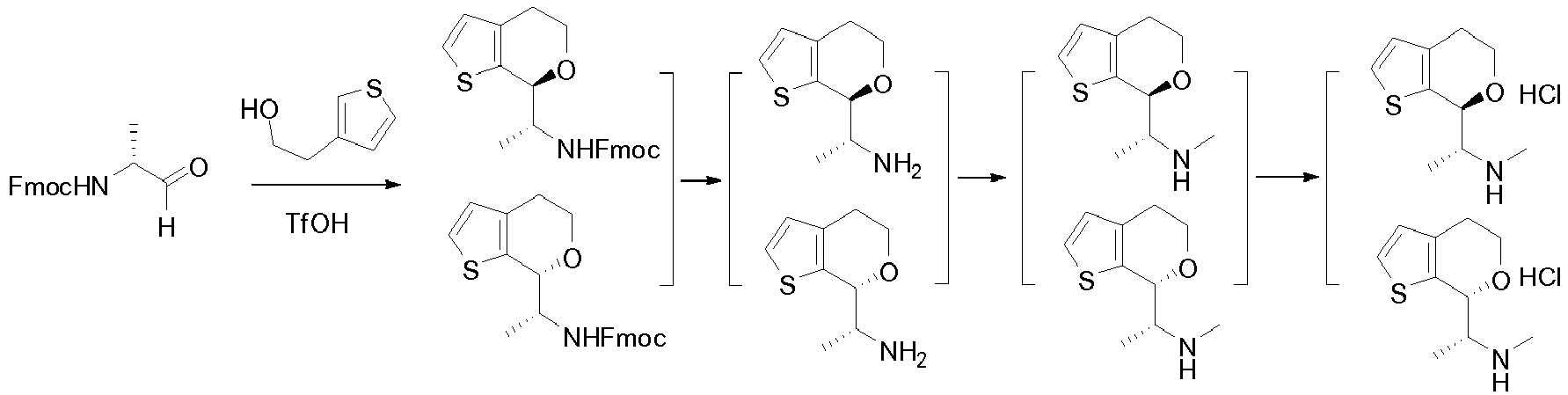
-

- The title compound was synthesized according to General Procedure O.
-

- The title compound was synthesized according to General Procedure O.
-

- The title compound was synthesized according to General Procedure O.
-

- The title compound was synthesized according to General Procedure O.
-

-

- The title compound was synthesized according to J. Org. Chem. 1989, 54, 1256.
-

- The title compound was synthesized according to General Procedure Y.
-

- The title compound was synthesized according to General Procedure A and B.
-

- The title compound was synthesized according to General Procedure J(e).
-

-

- To a solution of 4-chlorobenzenethiol (13 mmol) and Et3N (1.4 g, 13 mmol) in THF (25 mL) at room temperature was added 2-bromo-1,1-dimethoxyethane (2.36 g, 13 mmol) in THF (5 mL). After stirring at room temperature for 30 minutes, the reaction mixture was poured into water (200 mL) and extracted with diethyl ether (3 xl50 mL). The combined organic layer was dried over Na2SO4. After filtration and concentration, the crude product was purified by column chromatography to give the title compound.
-

- The title compound was synthesized in the presence of PPA according to General Procedure Q(e).
-

- The title compound was synthesized according to General Procedure S.
-

- The title compound was synthesized according to General Procedure A(a).
-

- The title compound was synthesized according to General Procedure A(b).
-

- The title compound was synthesized according to General Procedure N.
-

-
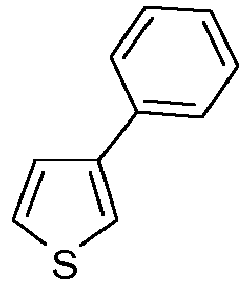
- The title compound was synthesized according to General Procedure U.
-

- The title compound was synthesized according to General Procedure S.
-

- To a solution of 2,5-dibromo-3-phenylthiophene (2.54 g, 8.0 mmol) in dry THF (30 mL) at -65 °C was added LDA (8.8 mmol) dropwise. After stirring for 30 min at -65 °C, oxirane (20.0 mmol) was added and the reaction was stirred for 2 h. The reaction mixture was then warmed to room temperature and water was added. The resulting mixture was extracted with EtOAc (3 × 100 mL), washed with brine, and dried over anhydrous Na2SO4. After filtration and concentration, the crude product was purified by column chromatography to give the title compound.
-

- The title compound was synthesized according to General Procedure V.
-

- The title compound was synthesized according to General Procedure B.
-

- The title compound was synthesized according to General Procedure N.
-

-

- The title compound was Boc-protected from the appropriate secondary amine according to General Procedure M.
-

- The title compound was synthesized according to General Procedure V.
-

- The title compound was synthesized according to General Procedure V.
-

- The title compound was synthesized according to General Procedure J.
-

- The title compound was synthesized according to General Procedure V.
-

- The title compound was synthesized according to General Procedure N.
-

-

- The title compound was synthesized according to General Procedure S(c).
-
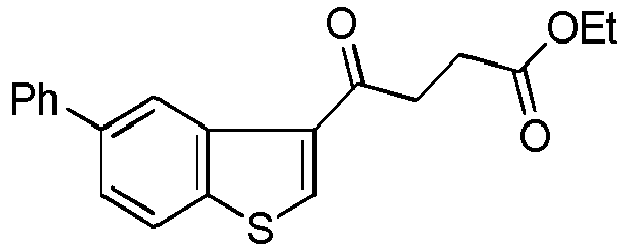
- To a solution of 5-phenylbenzo[b]thiophene (1.05 g, 5.0 mmol, 1 eq) in DCM (100 mL) at 0 °C was added ethyl 4-chloro-4-oxobutanoate (0.9 g, 21.4 mmol). The resulting mixture was stirred at 0 °C for 30 minutes. SnCl4 (2.3 mL, 6.0 mmol, 1.2 eq) was added and the mixture was stirred at room temperature overnight. The reaction mixture was quenched with aqueous HCl solution (50 mL, 3 M) and extracted with diethyl ether. The combined organic layers were dried over Na2SO4. After filtration and concentration, the crude product was purified by column chromatography to give the title compound.
-

- The title compound was synthesized according to General Procedure Q.
-

- The title compound was synthesized according to General Procedure BB.
-

- The title compound was synthesized according to General Procedure BB.
-

- To a solution of 8-phenyl-2,3-dihydrodibenzo[b,d]thiophen-4(1H)-one (0.28 g, 1.0 mmol, 1 eq), ammonium acetate (0.77 g, 10 eq) in MeOH (20 mL) was added NaBH3CN (160 mg, 2.5 eq) in one portion. The reaction mixture was heated to 50 °C and stirred for 20 h, After that the solvent was removed, diluted with saturated NaHCO3 and extracted with ethyl acetate (3 x 50 mL). The combined organic layers were dried over Na2SO4. After filtration and concentration, the residue was purified by silica gel chromatography to give the title compound (64 mg, 23%).
-

- The title compound was synthesized according to General Procedure O.
-

- The title compound was synthesized according to General Procedure N.
-

-

- The title compound was synthesized according to General Procedure S.
-

- The title compound was Boc-protected according to General Procedure M.
-

- The title compound was synthesized according to General Procedure HH.
-

- The title compound was synthesized according to General Procedure J(e).
-

- The title compound was synthesized according to General Procedure V(e).
-

- The title compound was synthesized according to General Procedure N.
-

-

- To a solution of AlCl3 (29.5 g, 221 mmol) in CH2Cl2 (150 mL) was added 2,5-dimethyl thiophene (6.2 g, 55 mmol) followed by ethyl 2-chloro-2-oxoacetate (15.1 g, 110 mmol). The resulting mixture was stirred at room temperature for 12 h at which time the reaction mixture was filtered, diluted carefully with H2O and extracted with EtOAc. Removal of volatiles afforded mostly pure crude material, which was used in the next step without further purification.
-

- Ethyl 2-(2,5-dimethylthiophen-3-yl)-2-oxoacetate was reduced at ambient temperature using excess BH3-DMS in THF over 18 h. Standard work-up protocols and purification by column chromatography on silica afforded the desired alcohol product.
-

- The title compound was synthesized according to General Procedure D.
- Normal phase chiral separation of the racemic compounds disclosed herein was carried out using Chiral Technologies AS, AD, OJ and OD columns and the specified solvent system.
- The following abbreviations were used:
- IHD 5 = 5% isopropanol/95% hexanes/0.1% diethylamine;
- IHD 10 = 10% isopropanol/90% hexanes/0.1% diethyl amine;
- MEHD 5 = 2.5% Methanol/2.5% ethanol/95% hexanes/0.1% diethylamine; and
- MEHD 2.5 = 1.25% ethanol/1.25% methanol/97.5% hexanes/0.1% diethylamine.
- The Faster Moving Enantiomer (FME) was the earlier eluting enantiomer and the Slower Moving Enantiomer (SME) was the later eluting enantiomer. When the free primary or secondary amines disclosed herein were not separable by column chromatography, they were N-BOC or N-TROC protected using standard methods and then separated by column chromatography, which typically improved the separation. Following separation of the protected amines, the protecting groups were removed using standard methods (e.g., HCl for BOC, Zn dust/NH4Cl for TROC).
- SFC (supercritical CO2 fluid chromatography) chiral separation was done using the specified column and co-solvent and CO2 total flows were between 60 to 80 g/minute.
- The following compounds were prepared using the above general procedures.
Compd. No. Structure Salt or FB* Method of Preparation Analytical Data 1 
HCl A 1H NMR (CD3OD): 7.29 (d, J = 5.0 Hz, 1H), 6.89 (d, J = 5.0 Hz, 1H), 4.94 (d, J = 8.0 Hz, 1H), 4.29-4.23 (m, 1H), 3.85-3.78 (m, 1H), 3.46 (d, J = 13.0 Hz, 1H), 3.14 (dd, J = 9.5, 11.5 Hz, 1H), 3.05-2.97 (m, 1H), 2.80 (d, J = 16.0 Hz, 1H). 2 
HCl CS; BOC deriv of compound 1 was FME with OD and IHD 5 1H NMR (CD3OD): 7.29 (d, J = 5.0 Hz, 1H), 6.89 (d, J = 5.0 Hz, 1H), 4.94 (d, J = 8.0 Hz, 1H), 4.29-4.23 (m, 1H), 3.85-3.78 (m, 1H), 3.46 (d, J = 13.0 Hz, 1H), 3.14 (dd, J = 9.5, 11.5 Hz, 1H), 3.05-2.97 (m, 1H), 2.80 (d. J = 16.0 Hz. 1H). 3 
HCl CS;BOC deriv of compound 1 was SME with OD and IHD 5 1H NMR (CD3OD): 7.29 (d, J = 5.0 Hz, 1H), 6.89 (d, J = 5.0 Hz, 1H), 4.94 (d, J = 8.0 Hz, 1H), 4.29-4.23 (m, 1H), 3.85-3.78 (m, 1H), 3.46 (d, J = 13.0 Hz, 1H), 3.14 (dd, J = 9.5, 11.5 Hz, 1H), 3.05-2.97 (m, 1H), 2.80 (d, J = 16.0 Hz, 1H). 4 
HCl A LC-MS (6 min method): 0.24 minute, M+ 184 @ 0.26 min.; 1H NMR (CD3OD): 7.30 (d, J = 5.50 Hz, 1H), 6.90 (d, J = 5.50 Hz, 1H), 5.00 (dd, J = 2.57, 8.80 Hz, 1H), 4.30-4.26 (m, 1H), 3.89-3.80 (m, 1H), 3.57-3.53 (m, 1H), 3.28-3.21 (m, 1H), 3.05-3.01 (m, 1H), 2.84-2.79 (m, 1H), 2.74 (s, 3H). 5 
HCl A 1H NMR (CD3OD): δ 6.54 (s, 1H), 4.91-4.85 (m, 1H), 4.26-4.21 (m, 1H), 3.80 (td, J = 3.5, 10.0 Hz, 1H), 3.47 (dd, J = 3.0, 13.0 Hz, 1H), 3.20 (dd, J = 8.5, 13.0 Hz, 1H), 2.93-2.88 (m, 1H), 2.72 (s, 3H), 2.71-2.66 (m, 1H), 2.42 (s, 3H). 6 
HCl A 1H NMR (CD3OD): δ 7.22 (d, J = 5.10 Hz, 1H), 6.87 (d, J = 5.10 Hz, 1H), 3.97 (t, J = 5.50 Hz, 2H), 3.40-3.25 (m, 4H), 2.84 (t, J = 5.5 Hz, 2H), 2.22-2.14 (m, 2H), 2.06-2.02 (m, 2H). 7 
HCl A LC-MS ( 3.0 min method): 0.98 minute, M+ 220 ; 1H-NMR (400 MHz, CD3OD) δ 7.86 (d, J = 7.6 Hz, 1H), 7.68 (d, J = 8.0 Hz, 1H), 7.40 (td, J = 7.2, 0.8 Hz, 1H), 7.34 (t, J = 7.2 Hz, 1H), 5.27 (dd, J = 8.4, 2.0 Hz, 1H ), 4.25 (m, 1H ), 3.94 (m, 1H), 3.62 (dd, J = 13.2, 2.0 Hz, 1H), 3.35 (m, 1H), 3.00 (m, 2H). 8 
HCl A LC-MS (3.0 min method): 1.00 minute, M+ 234 ; 1H-NMR (400 MHz, CD3OD) δ 7.85 (d, J = 8.0 Hz, 1H), 7.20 (d, J = 8.0 Hz, 1H), 7.40 (t, J = 7.6 Hz, 1H), 7.33 (t, J = 7.6 Hz, 1H), 5.34 (d, J = 8.8 Hz, 1H), 4.26 (m, 1H), 3.94 (m, 1H), 3.68 (dd , J = 13.2, 2.0 Hz, 1H), 3.42 (m, 1H), 2.98 (m, 2H), 2.77 (s, 3H). 9 
HCl A 1H NMR (DMSO-d 6): δ 8.22 (br s, 3H), 6.70 (s, 1H), 4.85-4.83 (d, J = 8.01 Hz, 1H), 4.13-4.07 (m, 1H), 3.78-3.70 (m, 1H), 3.29 (s, 1H), 2.91-2.67 (m, 5H), 1.22-1.18 (t, J = 7.50 Hz, 3H). 10 
HCl A 1H NMR (DMSO-d 6: δ 9.07 (br s, 1H), 8.67 (br s, 1H), 6.60 (s, 1H), 4.94-4.92 (d, J = 8.0 Hz, 1H), 4.15-4.08 (m, 1H), 3.80-3.72 (m, 1H), 3.46-3.42 (d, J = 12.3 Hz, 1H), 3.13-3.09 (m, 1H), 2.87-2.68 (m, 4H), 2.57 (s, 3H), 1.24-1.19 (t, J = 7.5 Hz, 3H). 11 
HCl A 1H NMR (DMSO-d 6+ D2O): δ 7.02 (s, 1H), 4.81-4.78 (dd, J1 = 2.1 Hz, J2 = 6.5 Hz, 1H), 4.15-4.08 (m, 1H), 3.80-3.72 (m, 1H), 3.35-3.29 (dd, J1 = 2.9 Hz, J2 = 13.3 Hz, 1H), 3.02-2.95 (m, 1H), 2.81-2.72 (m, 2H). 12 
HCl A 1H NMR (DMSO-d 6): δ 9.26 (br s, 1H), 8.80 (br s, 1H), 7.04 (s, 1H), 4.98-4.94 (dd, J1 = 1.8 Hz, J2 = 9.2 Hz, 1H), 4.16-4.09 (m, 1H), 3.82-3.74 (m, 1H), 3.47-3.36 (d, J = 29.1 Hz, 1H), 3.13 (m, 1H), 2.87-2.69 (m, 2H), 2.56 (s, 3H). 13 
HCl F GC-MS m/z 139 (M+); 1H NMR (DMSO-d 6): δ 9.02 (s, 1H), 8.65 (s, 1H), 7.41-7.40 (d, J = 5.19 Hz, 1H), 6.99-6.97 (d, J = 5.19 Hz, 1H), 5.03-5.00 (d, J = 8.13 Hz, 1H), 4.21-4.12 (m, 1H), 3.83-3.75 (m, 1H), 3.52-3.48 (d, J = 12.43 Hz, 1H), 3.13-2.72 (m, 5H), 1.25-1.20 (t, J = 7.26 Hz, 3H). 14 
FB F GC-MS m/z 211 (M+); 1H NMR (CDCl3): δ 7.12-7.11 (d, J = 5.13 Hz, 1H), 6.79-6.78 (d, J = 5.13 Hz, 1H), 4.85-4.82 (dd, J1 = 2.04 Hz, J2 = 8.82 Hz, 1H), 4.26-4.20 (m, 1H), 3.84-3.75 (m, 1H), 3.06-2.95 (m, 2H), 2.90-2.83 (m, 1H), 2.79-2.72 (m, 1H), 2.69-2.58 (m, 2H), 1.61-1.50 (m, 2H), 0.97-0.92 (t, J = 14.80 Hz, 3H). 15 
FB F 1H NMR (CDCl3): δ 7.12-7.10 (d, J = 5.16 Hz, 1H), 6.79-6.78 (d, J = 5.16 Hz, 1H), 4.82-4.79 (dd, J1 = 2.34 Hz, J2 = 9.18 Hz, 1H), 4.25-4.19 (m, 1H), 3.83-3.75 (m, 1H), 3.08-2.99 (m, 2H), 2.87-2.73 (m, 3H), 1.11 (s, 3H), 1.09 (s, 3H). 16 
HCl F GC-MS m/z 209 (M+); 1H NMR (DMSO-d 6): δ 9.35 (br s, 1H), 9.03 (br s, 9.03, 1H), 7.41-7.40 (d, J = 5.20 Hz, 1H), 7.04-7.02 (d, J = 5.20 Hz, 1H), 5.08-5.05 (d, J = 8.49 Hz, 1H), 4.18-4.12 (m, 1H), 3.82-3.74 (m, 1H), 3.62-3.58 (d, J = 12.82 Hz, 1H), 3.22-3.14 (t, J = 11.65 Hz, 1H), 2.96-2.72 (m, 3H), 0.99-0.82 (m, 2H), 0.79-0.72 (m, 2H). 17 
FB F GC-MS m/z 223 (M+); 1H NMR (CDCl3): δ 7.10-7.08 (d, J = 4.95 Hz, 1H), 6.86-6.84 (d, J = 4.95 Hz, 1H), 4.87-4.82 (m, 1H), 4.28-4.22 (m, 1H), 3.82-3.74 (m, 1H), 3.04-2.94 (m, 1H), 2.85-2.70 (m, 3H), 2.67-2.56 (m, 4H), 1.89-1.76 (m, 4H). 18 
FB F 1H NMR (CDCl3): δ 7.10-7.09 (d, J = 5.1 Hz, 1H), 6.91-6.89 (d, J = 5.1 Hz, 1H), 4.90-4.84 (m, 1H), 4.27-4.21 (m, 1H), 3.81-3.73 (m, 1H), 3.04-2.94 (m, 1H), 2.78-2.70 (m, 1H), 2.67-2.62 (m, 2H), 2.55-2.52 (m, 4H), 1.69-1.59 (m, 4H), 1.50-1.43 (m, 2H). 19 
FB F GC-MS m/z 251 (M+); 1H NMR (DMSO-d 6): δ 7.28-7.27 (d, J = 5.16 Hz, 1H), 7.03-7.02 (d, J = 5.16 Hz, 1H), 4.68-4.64 (t, J = 5.82 Hz, 1H), 4.11-4.04 (m, 1H), 3.70-3.61 (m, 1H), 2.83-2.64 (m, 8H), 1.55 (s, 8H). 20 
HCl A 1H NMR (CD3OD): δ 7.26 (d, J = 5.1, Hz, 1H), 6.96 (d, J = 5.1 Hz, 1H), 4.01-3.97 (m, 2H), 3.59-3.53 (m, 3H), 3.38 (d, J = 6.8 Hz, 1H), 2.89 (brs, 2H), 2.38-2.36 (m, 2H). 21 
HCl A 1H NMR (CD3OD): δ 7.26 (d, J = 5.0 Hz, 1H), 6.94 (d, J = 5.0 Hz, 1H), 4.00 (t, J = 5.1 Hz, 2H), 3.33-3.21 (m, 3H), 3.08 (apt, J = 2.8 Hz, 1H), 2.87 (t, J = 5.1 Hz, 2H), 2.18-2.11 (m, 1H), 2.04-1.97 (m, 2H), 1.84-1.80 (m, 1H). 22 
forma te A 1H NMR (CD3OD): δ 7.29 (d, J = 5.0 Hz, 1H), 6.88 (d, J = 5.0 Hz, 1H), 5.14 (apd, J = 6.0 Hz, 1H), 4.27 (m, 1H), 3.85 (dr, J = 11.0, 3.0 Hz, 1H), 3.67 (m, 1H), 3.38-3.25 (m, 1H), 3.04-2.77 (m, 2H), 3.00 (s, 3H), 2.92 (s, 3H). 23 
HCl A 1H NMR (DMSO-d 6): δ 8.18 (br s, 3H), 6.69 (s, 1H), 4.84-4.82 (d, J = 7.5 Hz, 1H), 4.14-4.07 (m, 1H), 3.78-3.70 (m, 1H), 3.29 (s, 1H), 2.95-2.66 (m, 5H), 1.65-1.53 (m, 2H), 1.04-0.92 (t, J = 7.32 Hz, 3H). 24 
HCl A 1H NMR (DMSO-d 6): δ 9.11 (br s, 1H), 9.69 (br, s, 1H), 6.65 (s, 1H), 4.95-4.92 (d, J = 7.9 Hz, 1H), 4.15-4.08 (m, 1H), 3.80-3.72 (m, 1H), 3.4 (m, 1H), 3.1 (m, 1H), 2.87-2.78 (m, 1H), 2.73-2.67 (m, 3H), 2.57 (s, 3H), 1.66-1.53 (m, 2H), 0.94-0.89 (m, 3H). 25 
HCl A 1H NMR (DMSO-d 6 + D2O): δ 7.59-7.57 (d, J = 7.5 Hz, 2H), 7.43-7.38 (t, 3H), 7.32-7.27 (t, 1H), 4.90-4.87 (d, J = 7.1 Hz, 1H), 4.19-4.15 (m, 1H), 3.82-3.79 (m, 1H), 3.45-3.40 (dd, J1 = 2.8 Hz, J2 = 13.3 Hz, 1H), 3.09-3.02 (m, 1H), 2.92-2.82 (m, 2H). 26 
HCl A 1H NMR (DMSO-d 6): δ 9.01 (br s, 1H), 8.69 (br, s, 1H), 7.60-7.58 (d, J = 7.2 Hz, 2H), 7.45-7.38 (m, 3H), 7.33-7.28 (t, J = 7.20 Hz, 1H), 5.03-5.00 (d, J = 7.7 Hz, 1H), 4.22-4.09 (m, 1H), 3.86-3.78 (m, 1H), 3.59-3.52 (m, 1H), 3.29-3.17 (m, 1H), 2.93-2.79 (m, 2H), 2.53-2.48 (t, J = 5.31 Hz, 3H). 27 
HCl CS; FME of SFC separation ofBOC protected Compound 4, using isocratic 10% [(1:1:2 MeOH:EtOH:H exanes (1% isopropylamine ))] in CO2 on a LUX-2 5 µ in and flow of 60 g/min LC-MS (6 minute method on lab 209 instrument): 0.24 minute, M+ 184 @ 0.26 min.; 1H NMR (CD3OD): δ 7.30 (d, J = 5.50 Hz, 1H), 6.90 (d, J = 5.50 Hz, 1H), 5.00 (dd, J = 2.57, 8.80 Hz, 1H), 4.30-4.26 (m, 1H), 3.89-3.80 (m, 1H), 3.57-3.53 (m, 1H), 3.28-3.21 (m, 1H), 3.05-3.01 (m, 1H), 2.84-2.79 (m, 1H), 2.74 (s, 3H). 28 
HCl CS; SME of SFC separation ofBOC protected Compound 4, using isocratic 10% [(1:1:2 MeOH:EtOH:H exanes (1% isopropylamine ))] in CO2 on a LUX-2 5 µ in and flow of 60 g/min LC-MS (6 min method): 0.24 minute, M+ 184 @ 0.26 min.; 1H NMR (CD3OD): δ 7.30 (d, J = 5.50 Hz, 1H), 6.90 (d, J = 5.50 Hz, 1H), 5.00 (dd, J = 2.57, 8.80 Hz, 1H), 4.30-4.26 (m, 1H), 3.89-3.80 (m, 1H), 3.57-3.53 (m, 1H), 3.28-3.21 (m, 1H), 3.05-3.01 (m, 1H), 2.84-2.79 (m, 1H), 2.74 (s, 3H). 29 
HCl A 1H NMR (DMSO-d 6): δ 8.14 (br s, 3H), 7.00 (s, 1H), 4.97-4.90 (m, 1H), 4.02-3.94 (m, 1H), 3.85-3.78 (m, 1H), 3.11-3.08 (t, J = 10.66 Hz, 2H), 2.88-2.73 (m, 2H), 2.13-2.12 (d, J = 0.8 Hz, 3H). 30 
HCl A 1H NMR (DMSO-d 6): δ 8.06 (br s, 3H), 7.02 (s, 1H), 4.97-4.93 (dd, J1 = 3.5 Hz, J2=9.1 Hz, 1H), 4.03-3.95 (m, 1H), 3.86-3.79 (m, 1H), 3.09 (br s, 2H), 2.84-2.73 (m, 2H), 2.47-2.37 (m, 2H), 1.21-1.17 (t, J = 7.41 Hz, 3H). 31 
HCl A 1H NMR (DMSO-d 6): δ 7.96 (br s, 3H), 7.02 (s, 1H), 4.92-4.90 (d, J = 6.75 Hz, 1H), 4.03-3.95 (m, 1H), 3.86-3.79 (m, 1H), 3.09-3.08 (d, J = 3.96 Hz, 2H), 2.89-2.78 (m, 2H), 2.43-2.38 (t, J = 6.84 Hz, 2H), 1.70-1.54 (m, 2H), 0.97-0.92 (t, J = 7.31 Hz, 3H). 32 
HCl A 1H NMR (DMSO-d 6+ D2O): δ 7.46-7.35 (m, 5H), 7.30 (s, 1H), 5.27-5.24 (d, J = 8.49 Hz, 1H), 4.05-3.98 (m, 1H), 3.88-3.82 (m, 1H), 2.88 (s, 2H), 2.71-2.64 (m, 1H), 2.47-2.46 (d, J = 2.85 Hz, 1H). 33 
HCl A GC-MS m/z 197 (M+); 1H NMR (D2O) δ 4.95-4.91 (t, J = 5.1 Hz, 1H), 4.04-3.97 (m, 1H), 3.85-3.78 (m, 1H), 3.30-3.28 (d, J = 5.01 Hz, 2H), 2.76-2.72 (t, J = 5.33 Hz, 2H), 2.21 (s, 3H), 1.92 (s, 3H). 34 
HCl A LC-MS (6 min method): 0.48 minute, M+ 184 @ 0.48 min.; 1H NMR (CD3OD): δ 7.28 (d, J = 5.0 Hz, 1H), 6.90 (d, J = 5.0 Hz, 1H), 4.11-4.07 (m, 1H), 3.97-3.91 (m, 1H), 3.33-3.00 (m, 1H), 3.16 (d, J = 13.0 Hz, 1H), 3.02-2.94 (m, 1H), 2.76 (d, J = 6.1 Hz, 1H), 1.50 (s, 3H). 35 
HCl A 1H NMR (CD3OD): δ 7.23 (d, J = 5.0 Hz, 1H), 6.84 (d, J = 5.0 Hz, 1H), 3.97 (t, J = 5.0 Hz, 2H), 3.39 (brs, 4H), 2.92 (s, 3H), 2.84 (t, J = 5.0 Hz, 2H), 2.17-1.18 (m, 4H). 36 
HCl B 1H NMR (CD3OD): δ 7.36 (d, J = 4.4 Hz, 1H), 6.91 (d, J = 4.77 Hz. 1H), 5.08 (d, J = 7.7 Hz, 1H), 4.27-4.23 (m, 1H), 3.84-3.78 (m, 1H), 3.42-3.38 (m, 1H), 3.17-3.12 (m, 1H), 2.91-2.83 (m, 1H), 2.70-2.65 (m, 1H). 37 
forma te E 1H NMR (CD3OD): δ 7.20 (d, J = 5.1 Hz, 1H), 7.08 (d, J = 5.1 Hz, 1H), 3.25 (d, J = 13.0 Hz, 1H), 3.07 (d, J = 13.0 Hz, 1H), 2.83-2.79 (m, 2H), 2.04-1.88 (m, 4H). 38 
HCl L 1H NMR (CD3OD): δ 7.44 (s, 1H), 4.96-4.92 (m, 1H), 4.32-4.28 (m, 1H), 3.86 (dt, J = 13.0, 3.5 Hz, 1H), 3.51 (d, J = 13.0 Hz, 1H), 3.20-3.15 (m, 1H), 3.10-3.04 (m, 1H), 2.90-2.86 (m, 1H). 39 
HCl L 1H NMR (CD3OD): δ 7.42 (s, 1H), 5.00-4.98 (m, 1H), 4.32-4.28 (m, 1H), 3.84 (t, J = 13.0, 1H), 3.57 (d, J = 13.0 Hz, 1H), 3.30-3.20 (m, 1H), 3.09-3.02 (m, 1H), 2.91-2.86 (m, 1H), 2.74 (s, 3H). 40 
HCl A 1H NMR (CD3OD): δ 7.91 (d, J = 8.0 Hz, 1H), 7.85 (d, J = 8.0 Hz, 1H), 7.41 (dt, J = 1.0, 7.5 Hz, 1H), 7.33 (dt, J = 1.0 , 7.5 Hz, 1H), 4.08 (dt, J = 1.5, 5.5 Hz, 2H), 3.74 (d, J = 13.0 Hz, 1H), 3.42-3.30 (m, 3H), 3.00 (dt, J = 1.5, 5.5 Hz, 2H), 2.52-2.44 (m, 1H), 2.27 (tq, J = 4.0, 14.0 Hz, 1H), 2.08 (dd, J = 2.0, 14.0 Hz, 1H), 1.89 (d, J = 14.0 Hz, 1H). 41 
HCl CS: FME of separation of Compound 7, on AD with IHD 10 1H NMR (CD3OD): δ 7.86 (d, J = 7.5 Hz, 1H), 7.67 (d, J = 7.5 Hz, 1H), 7.40 (dt, J = 1.0, 7.5 Hz, 1H), 7.34 (dt, J = 1.0, 7.5 Hz, 1H), 5.29-5.25 (m, 1H), 4.28-4.22 (m, 1H), 3.96-3.90 (m, 1H), 3.61 (dd, J = 1.5, 13.5 Hz, 1H), 3.37-3.30 (m, 1H), 3.09-2.91 (m, 2H). 42 
HCl CS: SME of separation of Compound 7, on AD with IHD 10 1H NMR (CD3OD): δ 7.86 (d, J = 7.5 Hz, 1H), 7.67 (d, J = 7.5 Hz, 1H), 7.40 (dt, J = 1.0, 7.5 Hz, 1H), 7.34 (dt, J = 1.0, 7.5 Hz, 1H), 5.29-5.25 (m, 1H), 4.28-4.22 (m, 1H), 3.96-3.90 (m, 1H), 3.61 (dd, J = 1.5, 13.5 Hz, 1H), 3.37-3.30 (m, 1H), 3.09-2.91 (m, 2H). 43 
HCl CS; FME of Compound 20 on AD with MEHD 5 1H NMR (CD3OD): δ 7.26 (d, J = 5.1, Hz, 1H), 6.96 (d, J = 5.1 Hz, 1H), 4.01-3.97 (m, 2H), 3.59-3.53 (m, 3H), 3.38 (d, J = =6.8 Hz, 1H), 2.89 (brs, 2H), 2.38-2.36 (m, 2H). 44 
HCl CS: FME of N-Troc deriv. on OD with IHD 5 1H NMR (CD3OD): δ 6.53 (s, 1H), 4.86 (s, 1H), 4.25-4.20 (m, 1H), 3.82-3.76 (m, 1H), 3.39 (dd, J = 2.93, 13.2 Hz, 1H), 3.08 (dd, J = 8.06, 13.2 Hz, 1H), 2.96-2.88 (m, 1H), 2.70-2.66 (m, 1H), 2.42 (s, 3H). 45 
HCl CS: SME of N-Troc deriv. on OD with IHD 5 1H NMR (CD3OD): δ 6.53 (s, 1H), 4.86 (s, 1H), 4.25-4.20 (m, 1H), 3.82-3.76 (m, 1H), 3.39 (dd, J = 2.93, 13.2 Hz, 1H), 3.08 (dd, J = 8.06, 13.2 Hz, 1H), 2.96-2.88 (m, 1H), 2.70-2.66 (m, 1H), 2.42 (s, 3H). 46 
HCl CS; SME of Compound 20 on AD with MEHD 5 1H NMR (CD3OD): δ 7.26 (d, J = 5.1, Hz, 1H), 6.96 (d, J = 5.1 Hz, 1H), 4.01-3.97 (m, 2H), 3.59-3.53 (m, 3H), 3.38 (d, J = =6. 8 Hz, 1H), 2.89 (brs, 2H), 2.38-2.36 (m, 2H). 47 
HCl J LC-MS m/z 247.2 (MH+); 1H NMR (DMSO-d 6): δ 8.83-8.81 (d, J = 6.78 Hz, 2H), 8.38 (s, 3H), 8.25 (s, 1H), 8.17-8.14 (d, J = 6.78 Hz, 2H), 5.02-5.00 (d, J = 7.65 Hz, 1H), 4.23-4.17 (m, 1H), 3.94-3.78 (m, 1H), 3.47-3.46 (m, 1H), 3.11-2.90 (m, 3H). 48 
HCl J LC-MS m/z 261.3 (MH+); 1H NMR (DMSO-d 6): δ 9.61 (br s, 1H), 8.00 (br s, 1H), 8.84-8.82 (d, J = 6.75 Hz, 1H), 8.23 (s, 1H), 8.16-8.13 (d, J = 6.75 Hz, 1H), 5.16-5.13 (d, J = 8.25 Hz, 1H), 4.30-4.17 (m, 1H), 3.88-3.80 (m, 1H), 3.59-3.53 (m, 1H), 3.27-3.16 (m, 1H), 3.08-2.88 (m, 2H), 2.61-2.58 (t, J = 5.19 Hz, 3H). 49 
HCl J LC-MS m/z 247.2 (MH+); 1H NMR (DMSO-d 6): δ 9.11 (br s, 1H), 8.98-8.95 (d, J = 4.83 Hz, 1H), 8.51-8.48 (d, J = 8.25 Hz, 1H), 8.35 (br s, 3H), 7.94-7.86 (m, 2H), 4.99-4.97 (d, J = 7.74 Hz, 1H), 4.22-4.15 (m, 1H), 3.85-3.77 (m, 1H), 3.42-3.39 (m, 1H), 3.08-2.89 (m, 3H). 50 
HCl J LC-MS m/z 261.2 (MH+); 1H NMR (DMSO-d 6): δ 9.37 (br s, 1H), 9.03 (s, 1H), 8.85 (s, 1H), 8.67-8.65 (d, J = 5.01 Hz, 1H), 8.38-8.36 (d, J = 7.86 Hz, 1H), 7.81-7.77 (m, 2H), 5.10-5.08 (d, J = 7.98 Hz, 1H), 4.23-4.16 (m, 1H), 3.87-3.79 (m, 1H), 3.55-3.48 (m, 1H), 3.26-3.17 (m, 1H), 3.03-2.85 (m, 2H), 2.61-2.58 (t, J = 5.31 Hz, 3H). 51 
HCl I LC-MS m/z 247.2 (MH+); 1H NMR (DMSO-d 6): δ 8.87-8.85 (d, J = 6.69 Hz, 2H), 8.22 (br s, 3H), 8.09-8.07 (d, J = 6.69 Hz, 2H), 8.05 (s, 1H), 5.62-5.60 (d, J = 8.64 Hz, 1H), 4.10-4.02 (m, 1H), 3.93-3.86 (m, 1H), 3.00-2.92 (m, 2H), 2.89-2.77 (m, 1H), 2.57-2.51 (m, 1H). 52 
HCl I LC-MS m/z 261.3 (MH+); 1H NMR (DMSO-d 6): δ 9.72 (br s, 1H), 8.88-8.86 (d, J = 6.75 Hz, 2H), 8.69 (br s, 1H), 8.17-8.15 (d, J = 6.75 Hz, 2H), 8.11 (s, 1H), 5.77-5.73 (d, J = 9.24 Hz, 1H), 4.14-4.04 (m, 1H), 3.94-3.87 (m, 1H), 3.06-2.94 (m, 3H), 2.66-2.60 (m, 1H), 2.42-2.41 (t, J = 5.28 Hz, 3H). 53 
HCl I LC-MS m/z 247.2 (MH+); 1H NMR (DMSO-d 6): δ 8.97-8.96 (d, J = 1.77 Hz, 1H), 8.84-8.83 (d, J = 4.53 Hz, 1H), 8.54-8.51 (d, J = 8.22 Hz, 1H), 8.17 (s, 3H), 8.07-7.95 (dd, J1 = 5.49 Hz, J2= 8.01 Hz, 1H), 7.76 (s, 1H), 5.50-5.47 (d, J = 8.85 Hz, 1H), 4.07-4.01 (m, 1H), 3.91-3.84 (m, 1H), 2.95-2.93 (m, 2H), 2.83-2.74 (m, 1H), 2.45-2.35 (m, 1H). 54 
HCl I LC-MS m/z 261.3 (MH+); 1H NMR (DMSO-d 6): δ 9.26 (br s, 1H), 8.90-8.89 (d, J = 1.92 Hz, 1H), 8.79-8.77 (dd, J1= 1.22 Hz, J2= 5.27 Hz, 1H), 8.59 (br s, 1H), 8.39-8.36 (d, J =7.62 Hz, 1H), 7.87-7.83 (dd, J1 = 5.43 Hz, J2= 7.83 Hz, 1H), 7.71 (s, 1H), 5.59-5.56 (d, J = 9.48 Hz, 1H), 4.13-4.08 (m, 1H), 3.94-3.85 (m, 1H), 3.05-2.93 (m, 3H), 2.65-2.60 (m, 1H), 2.39-2.35 (t, J = 5.28 Hz, 3H). 55 
HCl H LC-MS m/z 253.3 (MH+); 1H NMR (DMSO-d 6+ D2O): δ 4.69-4.67 (d, J = 7.68 Hz, 1H), 4.09-4.06 (m, 1H), 3.73-3.71 (m, 2H), 3.28-3.22 (dd, J1 =2.52Hz,J2= 13.30 Hz, 1H), 2.99-2.90 (m, 4H), 2.78-2.68 (m, 1H), 2.56 (s, 1H), 1.56 (s, 5H), 1.47-1.46 (m, 2H). 56 
HCl H LC-MS m/z 277.3 (M+ Na+); 1H NMR (DMSO-d 6): 8.01 (s, 3H), 6.05 (s, 1H), 4.74-4.72 (d, J = 7.44 Hz, 1H), 4.14-4.08 (m, 1H), 3.78-3.69 (m, 5H), 3.35-3.29 (m, 1H), 3.00-2.97 (m, 5H), 2.77-2.70 (m, 1H), 2.62-2.56 (m, 1H). 57 
HCl CS; FME of SFC separation of Compound 5, using isocratic 25% [(75:25 MeOH:iPrOH (2% isopropylamine ))] in CO2 on a ChiralPak AD-H and flow of 60 g/min 1H NMR (CD3OD): δ 6.54 (s, 1H), 4.91-4.85 (m, 1H), 4.26-4.21 (m, 1H), 3.80 (td, J = 3.5, 10.0 Hz, 1H), 3.47 (dd, J = 3.0, 13.0 Hz, 1H), 3.20 (dd, J = 8.5, 13.0 Hz, 1H), 2.93-2.88 (m, 1H), 2.72 (s, 3H), 2.71-2.66 (m, 1H), 2.42 (s, 3H). 58 
HCl CS; SME of SFC separation of Compound 5, using isocratic 25% [(75:25 MeOH:iPrOH (2% isopropylamine ))] in CO2 on a ChiralPak AD-H and flow of 60 g/min 1H NMR (CD3OD): δ 6.54 (s, 1H), 4.91-4.85 (m, 1H), 4.26-4.21 (m, 1H), 3.80 (td, J = 3.5, 10.0 Hz, 1H), 3.47 (dd, J = 3.0, 13.0 Hz, 1H), 3.20 (dd, J = 8.5, 13.0 Hz, 1H), 2.93-2.88 (m, 1H), 2.72 (s, 3H), 2.71-2.66 (m, 1H), 2.42 (s, 3H). 59 
HCl H LC-MS m/z 200.3 (MH+); 1H NMR (DMSO-d 6): δ 8.11 (s, 3H), 6.21 (s, 1H), 4.76-4.73 (d, J = 7.14 Hz, 1H), 4.15-4.08 (m, 1H), 3.79-3.72 (m, 4H), 3.31-3.26 (m, 1H), 2.98-2.89 (m, 1H), 2.78-2.68 (m, 1H), 2.60-2.54 (m, 1H). 60 
HCl H LC-MS m/z 214.3 (MH+); 1H NMR (DMSO-d 6): δ 9.09 (br s, 1H), 8.67 (br s, 1H), 6.15 (s, 1H), 4.87-4.85 (d, J = 7.7 Hz, 1H), 4.15-4.08 (m, 1H), 3.80-3.73 (m, 4H), 3.34 (s, 1H), 3.15-3.05 (m, 1H), 2.77-2.68 (m, 1H), 2.61-2.55 (m, 4H). 61 
HCl H LC-MS m/z 213.3 (MH+); 1H NMR (DMSO-d 6 + D2O): δ 5.74 (s, 1H), 4.71-4.68 (d, J = 7.03 Hz, 1H), 4.12-4.05 (m, 1H), 3.79-3.68 (m, 1H), 3.33-3.25 (m, 1H), 2.95-2.88 (m, 1H), 2.78 (s, 6H), 2.71-2.67 (m, 1H), 2.59-2.58 (m, 1H). 62 
HCl H LC-MS m/z 227.3 (MH+); 1H NMR (DMSO-d 6): δ 9.11 (br s, 1H), 8.65 (br s, 1H), 5.73 (s, 1H), 4.87-4.83 (d, J = 9.54 Hz, 1H), 4.13-4.07 (m, 1H), 3.78-3.72 (m, 1H), 3.43-3.39 (m, 1H), 3.16-3.06 (m, 1H), 2.79-2.71 (m, 7H), 2.58-2.55 (m, 4H). 63 
HCl A 1H NMR (CD3OD): δ 6.59 (s, 1H), 3.97 (t, J = 5.0 Hz, 2H), 3.33-3.24 (m, 3H), 3.05 (dt, J = 3.0, 13.0 Hz, 1H), 2.77 (t, J = 5.0 Hz, 2H), 2.41 (s, 3H), 2.16-2.08 (m, 1H), 2.00-1.88 (m, 2H), 1.80 (d, J = 14.0 Hz, 1H). 64 
HCl A LC-MS m/z 184.3 (MH+); 1H NMR (DMSO-d 6): δ 8.04 (s, 3H), 7.36-7.34 (d, J = 5.07 Hz, 1H), 6.85-6.84 (d, J = 5.07 Hz, 1H), 4.76-4.74 (d, J = 7.38 Hz, 1H), 4.14-4.09 (m, 1H), 3.71-3.64 (m, 1H), 2.87-2.69 (m, 4H), 2.24-2.15 (m, 1H), 2.00-1.88 (m, 1H). 65 
HCl HCl A LC-MS m/z 207.3 (MH+); 1H NMR (DMSO-d 6): δ 14.65 (s, 2H), 9.12 (s, 1H), 7.50 (s, 1H), 7.40-7.38 (d, J = 5.20 Hz, 1H), 6.74-6.72 (d, J = 5.20 Hz, 1H), 5.95 (s, 1H), 4.03-3.85 (m, 2H), 2.98-2.84 (m, 2H). 66 
HCl CS; FME of separation of Compound 21 on OJ with 2.5% MEHD 1H NMR (CD3OD): δ 7.26 (d, J = 5.0 Hz, 1H), 6.94 (d, J = 5.0 Hz, 1H), 4.00 (t, J = 5.1 Hz, 2H), 3.33-3.21 (m, 3H), 3.08 (apt, J = 2.8 Hz, 1H), 2.87 (t, J = 5.1 Hz, 2H), 2.18-2.11 (m, 1H), 2.04-1.97 (m, 2H), 1.84-1.80 (m, 1H). 67 
HCl CS; SME of separation of Compound 21 on OJ with 2.5% MEHD 1H NMR (CD3OD): δ 7.26 (d, J = 5.0 Hz, 1H), 6.94 (d, J = 5.0 Hz, 1H), 4.00 (t, J = 5.1 Hz, 2H), 3.33-3.21 (m, 3H), 3.08 (apt, J = 2.8 Hz, 1H), 2.87 (t, J = 5.1 Hz, 2H), 2.18-2.11 (m, 1H), 2.04-1.97 (m, 2H), 1.84-1.80 (m, 1H). 68 
HCl G 1H NMR (CD3OD): δ 6.40 (d, J = 2.0 Hz, 1H), 4.80 (dd, J = 3.0, 5.5 Hz, 1H), 4.27-4.22 (m, 1H), 3.89-3.83 (m, 1H), 3.37 (dd, J = 3.0, 13.0 Hz, 1H), 3.11 (dd, J = 8.0, 13.0 Hz, 1H), 2.93-2.85 (m, 1H), 2.61 (dd, J = 2.0 16.0 Hz, 1H). 69 
HCl G 1H NMR (CD3OD): δ 6.40 (d, J = 2.0 Hz, 1H), 4.86 (m, 1H), 4.28-4.23 (m, 1H), 3.90-3.84 (m, 1H), 3.45 (dd, J = 2.5, 13.0 Hz, 1H), 3.23 (dd, J = 8.5, 13.0 Hz, 1H), 2.93-2.85 (m, 1H), 2.73 (s, 3H), 2.63 (dd, J = 2.0, 6.0 Hz, 1H). 70 
HCl F LC-MS m/z 238.3 (MH+); 1H NMR (CD3OD): δ 6.57 (s, 1H), 5.03-5.00 (d, J = 9.62 Hz, 1H), 4.30-4.23 (m, 1H), 3.89-3.55 (m, 4H), 3.46-3.38 (m, 1H), 3.28-3.08 (m, 2H), 2.99-2.89 (m, 1H), 2.75-2.70 (d, J = 16.44 Hz, 1H), 2.43 (s, 3H), 2.25-2.01 (m, 4H). 71 
HCl F LC-MS m/z 252.3 (MH+); 1H NMR (DMSO-d 6): δ 10.36 (s, 1H), 6.68 (s, 1H), 5.07-5.04 (d, J = 8.61 Hz, 1H), 4.15-4.08 (m, 1H), 3.82-3.66 (m, 2H), 3.57-3.55 (m, 2H), 3.40-3.30 (m, 1H), 3.17-3.01 (m, 2H), 2.86-2.68 (m, 4H), 2.00-1.88 (m, 4H), 1.23-1.18 (t, J = 7.49 Hz, 3H). 72 
HCl CS: FME of separation of Compound 17, on OJ with IHD 5 LC-MS (6 min method): broad peak at 0.23-0.67 minute, M+ 224 @ 0.56 min.; 1H NMR (CD3OD): δ 7.28 (d, J = 5.13 Hz, 1H), 6.94 (d, J = 5.13 Hz, 1H), 5.15-5.12 (m, 1H), 4.30-4.26 (m, 1H), 3.89-3.74 (m, 3H), 3.68-3.63 (m, 1H), 3.44 (dd, J = 9.90, 12.8 Hz, 1H), 3.34-3.29 (m, 1H), 3.19-3.12 (m, 1H), 3.04-2.99 (m, 1H), 2.84-2.79 (m, 1H), 2.24-2.03 (m, 4H). 73 
HCl CS: SME of separation of Compound 17, on OJ with IHD 5 LC-MS (6 minute method on lab 209 instrument): broad peak at 0.23-0.67 minute, M+ 224 @ 0.56 min.; 1H NMR (CD3OD): δ 7.28 (d, J = 5.13 Hz, 1H), 6.94 (d, J = 5.13 Hz, 1H), 5.15-5.12 (m, 1H), 4.30-4.26 (m, 1H), 3.89-3.74 (m, 3H), 3.68-3.63 (m, 1H), 3.44 (dd, J = 9.90, 12.8 Hz, 1H), 3.34-3.29 (m, 1H), 3.19-3.12 (m, 1H), 3.04-2.99 (m, 1H), 2.84-2.79 (m, 1H), 2.24-2.03 (m, 4H). 74 
HCl F LC-MS (6 min method): 2.24 minute, M+ 240 @ 2.25 min.; 1H NMR (CD3OD): δ 7.30 (d, J = 5.13 Hz, 1H), 6.90 (d, J = 5.13 Hz, 1H), 5.24 (dd, J = 2.57, 10.3 Hz, 1H), 4.31-4.27 (m, 1H), 4.12-4.03 (m, 2H), 3.89-3.81 (m, 4H), 3.75 (dd, J = 2.93, 13.2 Hz, 1H), 3.70-3.66 (d, J = 13.2 Hz, 1H), 3.55 (d, J = 12.5 Hz, 1H), 3.41-3.35 (m, 1H), 3.26-3.22 (m, 1H), 3.06-2.98 (m, 1H), 2.86-2.82 (m, 1H). 75 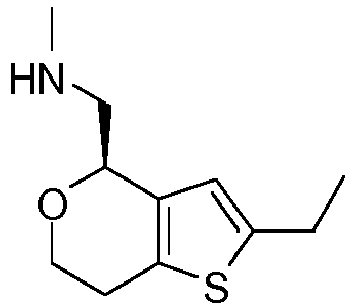
HCl CS; FME of SFC separation of Compound 10, using isocratic 18% [(25:75 MeOH:iPrOH (0.5% isopropylamine ))] in CO2 on a RegisPack 5 µ and flow of 80 g/min LC-MS (6 minute method): 1.6 min, M+ 212 @ 1.71 min; 1H NMR (CD3OD): δ 6.59 (s, 1H), 4.91 (d, J = 8.43 Hz, 1H), 4.27-4.22 (m, 1H), 3.84-3.78 (m, 1H), 3.50 (dd, J = 2.93, 12.8 Hz, 1H), 3.24-3.19 (m, 1H), 2.98-2.92 (m, 1H), 2.79 (q, 2H), 2.80-2.68 (m, 1H), 2.73 (s, 3H), 1.27 (t, 3H). 76 
HCl CS; SME of SFC separation of Compound 10, using isocratic 18% [(25:75 MeOH:iPrOH (0.5% isopropylamine ))] in CO2 on a RegisPack 5 µ and flow of 80 g/min LC-MS (6 minute method): 1.6 min, M+ 212 @ 1.71 min; 1H NMR (CD3OD): δ 6.59 (s, 1H), 4.91 (d, J = 8.43 Hz, 1H), 4.27-4.22 (m, 1H), 3.84-3.78 (m, 1H), 3.50 (dd, J = 2.93, 12.8 Hz, 1H), 3.24-3.19 (m, 1H), 2.98-2.92 (m, 1H), 2.79 (q, 2H), 2.80-2.68 (m, 1H), 2.73 (s, 3H), 1.27 (t, 3H). 77 
HCl C 1H NMR (CD3OD): δ 7.10 (d, J = 5.5 Hz, 1H), 6.83 (d, J = 5.5 Hz, 1H), 4.73 (dd, J = 3.5, 10.0 Hz, 1H), 4.33 (dt, J = 5.0, 12. 5 Hz, 1H), 3.92-3.85 (m, 1H), 3.52 (dd, J = 3.0, 13.0 Hz, 1H), 3.25-3.19 (m, 1H), 3.15-3.08 (m, 1H), 3.00-2.93 (m, 1H), 1.99-1.88 (m, 2H). 78 
HCl A LC-MS m/z 198.3 (MH+); 1H NMR (DMSO-d 6): δ 9.11 (br s, 1H), 8.59 (br s, 1H), 7.00 (s, 1H), 5.05-5.03 (d, J = 6.63 Hz, 1H), 4.04-3.96 (m, 1H), 3.87-3.80 (m, 1H), 3.28-3.21 (m, 2H), 2.83-2.74 (m, 2H), 2.61-2.59 (d, J = 1.68 Hz, 3H), 2.13 (s, 3H). 79 
HCl A LC-MS m/z 212.3 (MH+); 1H NMR (DMSO-d 6): δ 9.16 (br s, 1H), 8.58 (s, 1H), 7.02 (s, 1H), 5.07-5.05 (d, J = 8.07 Hz, 1H), 4.05-3.97 (m, 1H), 3.87-3.80 (m, 1H), 3.27-3.15 (m, 2H), 2.90-2.73 (m, 2H), 2.60 (s, 3H), 2.47-2.41 (m, 2H), 1.22-1.17 (t, J = 7.40 Hz, 3H). 80 
HCl A LC-MS m/z 226.0 (MH+); 1H NMR (DMSO-d 6): δ 8.99 (br s, 1H), 8.54 (br s, 1H), 7.02 (s, 1H), 5.04-5.01 (d, J = 8.85 Hz, 1H), 4.05-3.97 (m, 1H), 3.87-3.80 (m, 1H), 3.18 (s, 2H), 2.90-2.72 (m, 2H), 2.61 (s, 3H), 2.46-2.40 (t, J = 7.80 Hz, 2H), 1.67-1.55 (m, 2H), 0.97-0.92 (t, J = 7.31 Hz, 3H). 81 
HCl A LC-MS m/z 260.3 (MH+); 1H NMR (CD3OD): δ 7.55-7.39 (m, 5H), 7.23 (s, 1H), 5.41-5.38 (m, 1H), 4.28-4.21 (m, 1H), 3.98-3.90 (m, 1H), 3.11-3.01 (m, 1H), 2.96-2.92 (m, 2H), 2.80-2.75 (dd, J1 = 3.3 Hz, J2 = 12.9 Hz, 1H), 2.47 (s, 3H). 82 
HCl A LC-MS m/z 212.3 (MH+); 1H NMR (DMSO-d 6): δ 9.10 (br s, 1H), 8.57 (br s, 1H), 4.98-4.95 (d, J = 8.28 Hz, 1H), 4.03-3.95 (m, 1H), 3.85-3.78 (m, 1H), 3.21-3.17 (m, 2H), 2.79-2.65 (m, 2H), 2.60 (s, 3H), 2.25 (s,3H), 1.99(s,3H). 83 
HCl C 1H NMR (CD3OD): δ 7.10 (d, J = 5.0 Hz, 1H), 6.84 (d, J = 5.0 Hz, 1H), 4.82 (dd, J = 3.0, 10.5 Hz, 1H), 4.33 (dt, J = 4.5, 12.5 Hz, 1H), 3.93-3.86 (m, 1H), 3.59 (dd, J = 2.5, 12.5 Hz, 1H), 3.39-3.33 (m, 1H), 3.15-3.08 (m, 1H), 3.01-2.80 (m, 1H), 2.78 (s, 3H), 1.99-1.88 (m, 2H). 84 
HCl CS; FME of separation of Compound 63 on AS with IHD 10 1H NMR (CD3OD): δ 6.59 (s, 1H), 3.97 (t, J = 5.0 Hz, 2H), 3.33-3.24 (m, 3H), 3.05 (dt, J = 3.0, 13.0 Hz, 1H), 2.77 (t, J = 5.0 Hz, 2H), 2.41 (s, 3H), 2.16-2.08 (m, 1H), 2.00-1.88 (m, 2H), 1.80 (d, J = 14.0 Hz, 1H). 85 
HCl CS; SME of separation of Compound 63 on AS with IHD 10 1H NMR (CD3OD): δ 6.59 (s, 1H), 3.97 (t, J = 5.0 Hz, 2H), 3.33-3.24 (m, 3H), 3.05 (dt, J = 3.0, 13.0 Hz, 1H), 2.77 (t, J = 5.0 Hz, 2H), 2.41 (s, 3H), 2.16-2.08 (m, 1H), 2.00-1.88 (m, 2H), 1.80 (d, J = 14.0 Hz, 1H). 86 
HCl F LC-MS (6 minute method): 1.85 min, M+ 221 @ 1.83 min; 1H NMR (CD3OD): δ 8.91 (s, 1H), 7.57 (s, 1H), 7.49 (s, 1H), 7.29 (d, J = 5.13 Hz, 1H), 7.09 (d, J = 5.50 Hz, 1H), 5.13-5.10 (m, 1H), 4.80 (dd, J = 2.57, 14.3 Hz, 1H), 4.60 (dd, J = 6.60, 14.3 Hz, 1H), 4.26-4.22 (m, 1H), 3.79-3.73 (m, 1H), 2.87-2.79 (m, 1H), 2.74-2.70 (m, 1H). 87 
HCl H 1H NMR (CD3OD): δ 4.64 (dd, J = 3.0. 9.5 Hz, 1H), 4.23 (dd, J = 3.5, 11.5 Hz, 1H), 4.16-4.08 (m, 2H), 3.87 (td, J = 1.5, 12.0 Hz, 1H), 3.82-3.78 (m, 2H), 3.68 (dd, J = 2.5, 13.0 Hz, 1H), 3.40 (dd, J = 9.5, 13.0 Hz, 1H), 3.30 (bs, 1H), 2.74 (d, J = 13.0 Hz, 1H), 2.29-2.20 (m, 4H), 1.96-1.89 (td, J = 5.0, 12.5 Hz, 1H). 88 
HCl H LC-MS (6 min method): 0.28 minute, M+ 213 @ 0.33 min.; 1H NMR (CD3OD): δ 4.61 (dd, J = 3.0 ,10.0 Hz, 1H), 4.26-4.20 (m, 1H), 3.86 (td, J = 2.0, 12.5 Hz, 1H), 3.69 (s, 3H), 3.66 (d, J = 2.0 Hz, 1H), 3.57 (s, 3H), 3.45-3.35 (m, 1H), 3.13-2.97 (m, 1H), 2.74 (d, J = 13.0 Hz, 1H), 1.92 (td, J = 4.0, 13.0 Hz, 1H). 89 
HCl B LC-MS (6 min method): 0.27-0.45 min, M+ 184 @ 0.38 min; 1H NMR (CD3OD): δ 7.36 (d, J = 4.76 Hz, 1H), 6.90 (d, J = 5.13 Hz, 1H), 5.16 (d, J = 8.06 Hz, 1H), 4.28-4.23 (m, 1H), 3.85-3.79 (m, 1H), 3.51-3.47 (m, 1H), 3.26-3.23 (m, 1H), 2.86-2.82 (m, 1H), 2.75 (s, 3H), 2.71-2.66 (m, 1H). 90 
HCl F LC-MS (6 min method): 1.37 min, M+ 226 @ 1.44 min; 1H NMR (CD3OD): δ 6.60 (s, 1H), 4.94-4.91 (m, 1H), 4.26-4.21 (m, 1H), 3.84-3.78 (m, 1H), 3.50 (dd, J = 2.2, 12.8 Hz, 1H), 3.19-3.09 (m, 3H), 2.93-2.89 (m, 1H), 2.81-2.69 (m, 3H), 1.33 (t, 3H), 1.27 (t, 3H). 91 
HCl A LC-MS m/z 224.3 (MH+); 1H NMR (DMSO-d 6 + D2O): δ 6.75 (s, 1H), 3.90-3.85 (m, 2H), 3.45-3.41 (m, 2H), 3.26-3.22 (m, 2H), 2.77-2.69 (m, 4H), 2.23-2.18 (m, 2H), 1.22-1.17(t,J=7.52Hz,3H). 92 
HCl A LC-MS m/z 238.3 (MH+); 1H NMR (DMSO-d 6): δ 9.04 (br s, 1H), 8.31 (s, 1H), 6.76 (s, 1H), 3.93-3.89 (t, J = 5.10 Hz, 2H), 3.25-3.15 (m, 3H), 2.93-2.90 (m, 1H), 2.81-2.70 (m, 4H), 1.94-1.80 (m, 3H), 1.69-1.67 (m, 1H), 1.24-1.19 (t, J = 7.52 Hz, 3H). 93 
HCl D 1H NMR (CD3OD): δ 7.23 (d, J = 2.0 Hz, 1H), 7.14 (d, J = 2.5 Hz, 1H), 4.93 (d, J = 7.0 Hz, 1H), 4.24-4.19 (m, 1H), 3.71 (td, J = 4.0, 11.0 Hz, 1H), 3.52 (dd, J = 2.5, 13.0 Hz, 1H), 3.19 (dd, J = 7.5, 13.0 Hz, 1H), 2.96-2.87 (m, 1H), 2.81-2.75 (m, 1H). 94 
HCl CS; FME of separation of Compound 30, on AD column with MEHD 5 LC-MS (6 min method): 0.49-1.01 min, M+ 198 @ 0.73 min; 1H NMR (DMSO-d 6): δ 8.06 (br s, 1H), 7.02 (s, 1H), 4.97-4.93 (dd, J1 = 3.5 Hz, J2=9.1 Hz, 1H), 4.03-3.95 (m, 1H), 3.86-3.79 (m, 1H), 3.09 (br s, 2H), 2.84-2.73 (m, 2H), 2.47-2.37 (m, 2H), 1.21-1.17 (t, J = 7.41 Hz, 3H). 95 
HCl CS; SME of separation of Compound 30, on AD column with MEHD 5 LC-MS (6 min method): 0.49-1.01 min, M+ 198 @ 0.73 min; 1H NMR (DMSO-d 6): δ 8.06 (br s, 1H), 7.02 (s, 1H), 4.97-4.93 (dd, J1 = 3.5 Hz, J2=9.1 Hz, 1H), 4.03-3.95 (m, 1H), 3.86-3.79 (m, 1H), 3.09 (br s, 2H), 2.84-2.73 (m, 2H), 2.47-2.37 (m, 2H), 1.21-1.17 (t, J = 7.41 Hz, 3H). 96 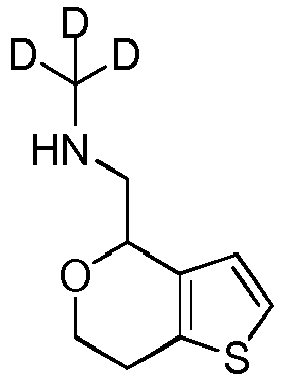
HCl K LC-MS (6 min method): 0.37 min, M+ 187 @ 0.35 min.; 1H NMR (CD3OD): δ 7.27 (d, J = 5.13 Hz, 1H), 6.87 (d, J = 5.13 Hz, 1H), 4.98 (d, J = 8.43 Hz, 1H), 4.28-4.23 (m, 1H), 3.84-3.78 (m, 1H), 3.54-3.51 (m, 1H), 3.22 (dd, J = 8.43, 12.8 Hz, 1H), 3.03-2.95 (m, 1H), 2.80 (d, J = 16.1 Hz, 1H). 97 
HCl D 1H NMR (CD3OD): δ 7.20 (d, J = 2.0 Hz, 1H), 7.13 (d, J = 2.5 Hz, 1H), 4.96 (d, J = 7.0 Hz, 1H), 4.23-4.19 (m, 1H), 3.70 (td, J = 4.0, 11.0 Hz, 1H), 3.49 (dd, J = 3.0, 13.0 Hz, 1H), 3.22 (dd, J = 8.5, 13.0 Hz, 1H), 2.936-2.86 (m, 1H), 2.81-2.75 (m, 1H), 2.69 (s, 3H). 98 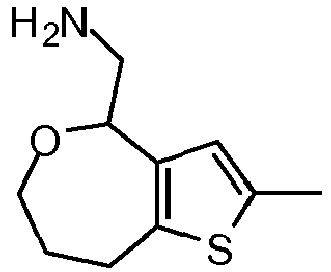
HCl C 1H NMR (CD3OD): δ 6.50 (s, 1H), 4.66 (dd, J = 2.5, 0.7 Hz, 1H), 4.30 (dt, J = 2.5, 1.2 Hz, 1H), 3.85 (ddd, J = 3.0, 2.5, 1.2 Hz, 1H), 3.46 (dd, J = 3.0 ,0.7 Hz, 1H), 3.33-3.29 (m, 1H), 3.17 (dd, J = 3.0, 2.5 Hz, 1H), 3.00 (ddd, J = 4.0, 2.0, 0.7 Hz, 1H), 2.86 (ddd, J = 4.0, 2.0, 0.7 Hz, 1H), 2.37 (s, 3H), 1.96-1.86 (m, 2H). 99 
HCl C 1H NMR (CD3OD): δ 6.51 (s, 1H), 4.74 (dd, J = 2.5, 0.8 Hz, 1H), 4.30 (dt, J = 3.0, 1.5 Hz, 1H), 3.86 (ddd, J = 3.0, 2.0, 1.0 Hz, 1H), 3.53 (dd, J = 3.0, 1.0 Hz, 1H), 3.01 (ddd, J = 4.0, 2.0, 1.0 Hz, 1H), 2.87 (ddd, J = 4.0, 2.0, 1.0 Hz, 1H), 2.76 (s, 3H), 2.37 (s, 3H), 1.98-1.85 (m, 2H). 100 
HCl C 1H NMR (CD3OD): δ 6.53 (s, 1H), 4.66 (dd, J = 2.5, 0.7 Hz, 1H), 4.30 (dt, J = 3.0, 1.2 Hz, 1H), 3.85 (ddd, J = 3.2, 2.7, 1.2 Hz, 1H), 3.48 (dd, J = 3.2, 0.7 Hz, 1H), 3.17 (dd, J = 3.2, 2.7 Hz, 1H), 3.03 (ddd, J = 4.0, 2.0, 1.0 Hz, 1H), 2.88 (ddd, J = 4.0, 2.0, 1.0 Hz, 1H), 2.74 (q, J = 1.9 Hz, 2H), 1.96-1.88 (m, 2H), 1.24 (t, J = 3H). 101 
HCl C 1H NMR (CD3OD): δ 6.54 (s, 1H), 4.75 (dd, J = 2.5, 0.7 Hz, 1H), 4.31 (dt, J = 3.0, 1.2 Hz, 1H), 3.86 (ddd, J = 3.2, 2.2, 1.0 Hz, 1H), 3.55 (dd, J = 3.0, 0.7 Hz, 1H), 3.34-3.28 (m, 1H), 3.02 (ddd, J = 4.0, 2.0, 1.0 Hz, 1H), 2.89 (ddd, J = 4.0, 2.0, 1.0 Hz, 1H), 2.77 (s, 3H), 2.74 (q, J = 1.9 Hz, 2H), 1.98-1.86 (m, 2H), 1.25 (t, J = 1.9 Hz, 3H). 102 
HCl N LC-MS: m/z 210 (MH+); 1H NMR (DMSO-d 6):□ □ δ 10.05 (s, 1H), 8.79 (s, 1H), 7.41-7.39 (d, J = 5.19 Hz, 1H), 6.99-6.98 (d, J = 5.22 Hz, 1H), 5.06-5.05 (d, J = 2.10 Hz, 1H), 4.28-4.17 (m, 2H), 3.75-3.67 (m, 1H), 3.22-3.05 (m, 2H), 2.96-2.90 (m, 1H), 2.79-2.73 (m, 1H), 1.91-1.74 (m, 2H), 1.65-1.55 (m, 2H). 103 
HCl N LC-MS: m/z 210 (MH+); 1H NMR (DMSO-d 6):□ □□ δ 9.69 (s, 1H), 8.51 (s, 1H), 7.41-7.40 (d, J = 4.50 Hz, 1H), 6.97-6.96 (d, J = 4.20 Hz, 1H), 4.89-4.88 (d, J = 4.20 Hz, 1H), 4.19-4.15 (m, 1H), 3.92-3.90 (m, 1H), 3.76 (s, 1H), 3.10-2.95 (m, 3H), 2.80-2.75 (m, 1H), 2.14-1.84 (m, 4H). 104 
HCl N LC-MS: m/z 184 (MH+); 1H NMR (DMSO-d 6): □ δ 8.39 (s, 3H), 7.40-7.38 (d, J= 5.16 Hz, 1H), 6.99-6.98 (d, J = 5.22 Hz, 1H), 4.99-4.98 (d, J = 1.78 Hz, 1H), 4.27-4.22 (dd, J = 11.24 Hz, 5.12 Hz, 1H), 3.82 (s, 1H), 3.70-3.62 (m, 1H), 2.98-2.87 (m, 1H), 2.77-2.71 (m, 1H), 0.91-0.89 (d, J = 6.69 Hz, 3H). 105 
HCl N LC-MS: m/z 184 (MH+); 1H NMR (DMSO-d 6): □ δ 7.84 (s, 3H), 7.41-7.40 (d, J = 5.10 Hz, 1H), 7.00-6.98 (d, J = 5.10 Hz, 1H), 4.71-4.70 (d, J = 2.11 Hz, 1H), 4.20-4.13 (m, 1H), 3.77-3.69 (m, 2H), 2.95-2.76 (m, 2H), 1.36-1.34 (d, J= 6.6 Hz, 3H). 106 
HCl N LC-MS: m/z 212 (MH+); 1H NMR (DMSO-d 6):□ □ δ 7.59 (s, 3H), 7.43-7.41 (d, J = 5.40 Hz, 1H), 7.01-6.99 (d, J = 5.10 Hz, 1H), 4.95 (s, 1H), 4.24-4.18 (m, 1H), 3.77-3.68 (m, 1H), 2.95-2.91 (m, 1H), 2.77-2.72 (m, 1H), 2.12-2.05 (m, 1H), 1.06-1.03 (m, 6H). 107 
HCl N LC-MS: m/z 212 (MH+); 1H NMR (CD3OD):□ □ δ 7.33-7.31 (d, J = 5.40 Hz, 1H), 6.93-6.91 (d, J = 7.56 Hz, 1H), 5.08-5.06 (m, 1H), 4.39-4.33 (m, 1H), 3.76-3.67 (m, 1H), 3.53-3.51 (m, 1H), 3.10-3.07 (m, 1H), 2.81-2.75 (m, 1H), 2.08-2.01 (m, 1H), 1.04-0.97 (m, 6H). 108 
HCl O LC-MS: m/z 198 (MH+); 1H NMR (DMSO-d 6): □ δ 8.16 (s, 3H), 7.41-7.40 (d, J = 5.28 Hz, 1H), 6.98-6.97 (d, J = 5.22 Hz, 1H), 4.80 (s, 1H), 4.25-4.20 (m, 1H), 3.58-3.50 (dd, J = 10.85 Hz, 3.20 Hz, 1H), 2.96-2.74 (m, 2H), 1.48 (s, 3H), 1.01 (s, 3H). 109 
HCl O LC-MS: m/z 212 (MH+); 1H NMR (CD3OD):□ □ δ 7.34-7.32 (dd, J = 5.03 Hz, 5.03 Hz, 1H), 6.98-6.96 (d, J = 5.34 Hz, 1H), 4.98-4.97 (m, 1H), 4.38-4.32 (m, 1H), 3.71-3.62 (td, J = 11.13 Hz, 2.94 Hz, 1H), 3.03-2.97 (m, 1H), 2.84-2.78 (m, 1H), 2.69 (s, 3H), 1.59 (s, 3H), 1.14 (s, 3H). 110 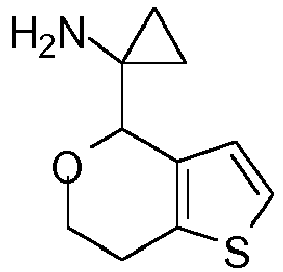
HCl O LC-MS: m/z 196 (MH+); 1H NMR (DMSO-d 6): □ δ 8.25-8.21 (brs, 3H), 7.40-7.39 (d, J = 5.10 Hz, 1H), 7.25-7.23 (d, J = 5.40 Hz, 1H), 4.10-4.03 (m, 2H), 3.90-3.82 (m, 1H), 2.93-2.73 (m, 2H), 2.29-2.21 (m, 2H), 2.18-2.02 (m, 2H). 111 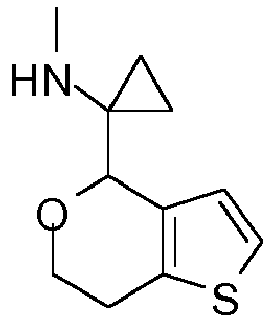
HCl O LC-MS: m/z 210 (MH+); 1H NMR (DMSO-d 6):□ □ δ 9.03 (s, 2H), 7.41-7.40 (d, J = 4.51 Hz, 1H), 7.22-7.20 (d, J = 3.92 Hz, 1H), 4.13-4.04 (m, 2H), 3.86-3.79 (m, 1H), 2.96-2.91 (m, 1H), 2.78-2.73 (m, 1H), 2.31 (s, 3H), 2.26-2.01 (m, 4H). 112 
HCl O LC-MS: m/z 210 (MH+); 1H NMR (DMSO-d 6): □ δ 7.86 (s, 3H), 7.37-7.36 (d, J = 5.10 Hz, 1H), 7.05-7.04 (d, J = 5.31 Hz, 1H), 4.10-4.05 (dd, J = 11.49 Hz, 4.71 Hz, 1H), 3.81-3.71 (m, 2H), 2.98-2.87 (m, 1H), 2.89-2.87 (m, 1H), 2.17-2.10 (m, 2H), 1.88-1.82 (m, 4H). 113 
HCl O LC-MS: m/z 224 (MH+); 1H NMR (DMSO-d 6):□ □ δ 9.20(s, 1H), 8.17(s, 1H), 7.40-7.38 (d, J = 5.1 Hz, 1H), 7.06-7.05 (d, J = 5.4 Hz, 1H), 4.13-4.07 (m, 1H), 3.84-3.70 (m, 2H), 3.02-2.89 (m, 1H), 2.77-2.71 (m, 1H), 2.26-2.16 (m, 5H), 1.89-1.80 (m, 4H). 114 
HCl O LC-MS: m/z 224 (MH+); 1H NMR (DMSO-d 6): δ 7.85 (s, 3H), 7.41-7.39 (d, J = 4.82 Hz, 1H), 7.00-6.98 (d, J = 4.83 Hz, 1H), 4.85 (s, 1H), 4.23-4.17 (m, 1H), 3.61-3.54 (t, J = 10.24 Hz, 1H), 3.01-2.92 (m, 1H), 2.79-2.74 (m, 1H), 2.17-2.12 (m, 1H), 1.87-1.77 (m, 5H), 1.54 (s, 2H). 115 
HCl O LC-MS: m/z 238 (MH+); 1H NMR (DMSO-d 6): □ δ 8.66 (s, 2H), 7.41-7.40 (d, J = 3.95 Hz, 1H), 7.00-9.99 (d, J = 3.96 Hz, 1H), 5.03 (s, 1H), 4.20-4.17 (m, 1H), 3.62-3.55 (m, 1H), 2.93-2.82 (m, 1H), 2.76-2.74 (m, 1H), 2.50 (s, 3H), 2.20-2.15 (m, 1H), 1.96-1.89 (m, 1H), 1.74-1.61 (m, 4H), 1.49-1.38 (m, 2H). 116 
HCl O LC-MS: m/z 238 (MH+); 1H NMR (DMSO-d 6):□ δ 7.73 (s, 3H), 7.43-7.41 (d, J = 4.84 Hz, 1H), 6.97-6.95 (d, J = 4.85 Hz, 1H), 4.94 (s, 1H), 4.22-4.19 (m, 1H), 3.57-3.51 (m, 1H), 2.98-2.90 (m, 1H), 2.78-2.74 (m, 1H), 1.94-1.91 (m, 1H), 1.77-1.42 (m,8H), 1.26 (s, 1H). 117 
HCl O LC-MS: m/z 252 (MH+); 1H NMR (DMSO-d 6): □ δ 8.47 (s, 1H), 8.36 (s, 1H), 7.45-7.44 (d, J = 4.88 Hz, 1H), 6.99-6.97 (d, J = 1.86 Hz, 1H), 5.05 (s, 1H), 4.24-4.19 (m, 1H), 3.58-3.51 (m, 1H), 2.97-2.90 (m, 1H), 2.80-2.75 (m, 1H), 2.34 (s, 3H), 1.95-1.32 (m, 10H). 118 
HCl N LC-MS: m/z 210 (MH+); 1H NMR (DMSO-d 6): δ □□9.48-9.47 (d, J = 2.07 Hz, 1H), 8.40-8.39 (d, J = 3.54 Hz, 1H), 7.42-7.40 (d, J = 3.54 Hz, 1H), 6.98-6.96 (d, J = 5.22 Hz, 1H), 4.89-4.87 (d, J = 5.31 Hz, 1H), 4.22-4.15 (m, 1H), 3.95-3.89 (m, 1H), 3.80-3.72 (m, 1H), 3.13-3.06 (m, 2H), 2.97-2.75 (m, 1H), 2.50-2.49 (m, 1H), 2.13-1.84 (m, 4H). 119 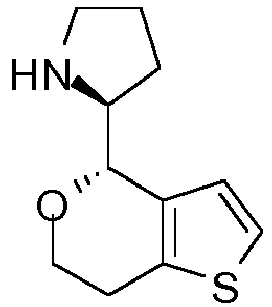
HCl N LC-MS: m/z 210 (MH+); 1H NMR (DMSO-d 6):□□ □ δ 9.94 (s, 1H), 8.76-8.75 (d, J = 4.20 Hz, 1H), 7.41-7.39 (d, J = 5.19 Hz, 1H), 6.99-6.98 (d, J = 5.22 Hz, 1H), 5.05-5.04 (d, J = 2.07 Hz, 1H), 4.28-4.15 (m, 2H), 3.75-3.70 (m, 1H), 3.20-3.10 (m, 2H), 2.96-2.92 (m, 1H), 2.79-2.73 (m, 1H), 1.90-1.56 (m, 4H). 120 
HCl P LC-MS: m/z 202 (MH+); 1H NMR (DMSO-d 6): δ 8.19 (s, 3H), 4.89-4.86 (d, J = 7.25 Hz, 1H), 4.06-4.00 (m, 1H), 3.98-3.79 (m, 1H), 3.16-3.06 (m, 2H), 2.76-2.62 (m, 2H), 1.99-1.98 (d, J = 2.14 Hz, 3H). 121 
HCl P LC-MS: m/z 216 (MH+); 1H NMR (DMSO-d 6): □ δ 9.25 (s, 1H), 8.67 (s, 1H), 5.00-4.97 (d, J = 8.10 Hz, 1H), 4.08-4.00 (m, 1H), 3.88-3.79 (m, 1H), 3.41-3.14 (m, 2H), 2.77-2.65 (m, 5H), 2.01-2.00 (d, J= 2.10 Hz, 3H). 122 
HCl P LC-MS: m/z 216 (MH+); 1H NMR (CD3OD):□ □ δ 4.91-4.85 (m, 1H), 4.20-4.12 (m, 1H), 3.91-3.84 (m, 1H), 3.29-3.17 (m, 2H), 2.79-2.72 (m, 2H), 2.57-2.43 (m, 2H), 1.22-1.15 (m, 3H). 123 
HCl P LC-MS: m/z 230 (MH+); 1H NMR (CD3OD):□ □ δ 4.98-4.94 (m, 1H), 4.22-4.14 (m, 1H), 3.92-3.84 (m, 1H), 3.36-3.33 (m, 2H), 2.80-2.69 (m, 5H), 2.62-2.51 (m, 1H), 2.50-2.35 (m, 1H), 1.22-1.17 (t, J = 7.55 Hz, 3H). 124 
HCl D 1H NMR (CD3OD): δ 7.20 (d, J = 2.0 Hz, 1H), 7.13 (d, J = 2.5 Hz, 1H), 4.96 (d, J = 7.0 Hz, 1H), 4.23-4.19 (m, 1H), 3.70 (td, J = 4.0, 11.0 Hz, 1H), 3.49 (dd, J = 3.0, 13.0 Hz, 1H), 3.22 (dd, J = 8.5, 13.0 Hz, 1H), 2.94-2.86 (m, 1H), 2.81-2.75 (m, 1H) 2.69 (s, 3H). 125 
HCl A LC-MS (6 minute method): 1.17 min, M+ 207 @ 1.1 min; 1H NMR (CD3OD-d4): δ 7.61 (s, 1H), 7.16 (d, J = 4.76 Hz, 1H), 7.03 (s, 1H), 6.81 (d, J = 5.13 Hz, 1H), 5.94 (s, 1H), 4.16-4.12 (m, 1H), 3.93-3.86 (m, 1H), 2.87-2.80 (m, 1H), 2.74-2.68 (m, 1H). 126 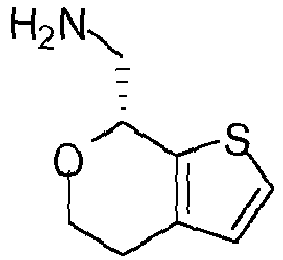
HCl CS; FME from SFC separation of Compound 36, using isocratic 15% Methanol in CO2 on a 4.6x 100 mm LUX Cellulose 2 from Phenomenex and flow of 4 mL/min 1H NMR (CD3OD): δ 7.34 (d, J = 5.13 Hz, 1H), 6.89 (d, J = 5.13 Hz, 1H), 5.06 (s, 1H), 4.25-4.22 (m, 1H), 3.83-3.77 (m, 1H), 3.38 (d, J = 13.2 Hz, 1H), 3.16-3.12 (m, 1H), 2.85-2.83 (m, 1H), 2.68-2.65 (m, 1H). 127 
HCl CS; SME from SFC separation of Compound 36, using isocratic 15% Methanol in CO2 on a 4.6 x 100 mm LUX Cellulose 2 from Phenomenex and flow of 4 mL/min 1H NMR (CD3OD): δ 7.34 (d, J = 5.13 Hz, 1H), 6.89 (d, J = 5.13 Hz, 1H), 5.06 (s, 1H), 4.25-4.22 (m, 1H), 3.83-3.77 (m, 1H), 3.38 (d, J = 13.2 Hz, 1H), 3.16-3.12 (m, 1H), 2.85-2.83 (m, 1H), 2.68-2.65 (m, 1H). 128 
HCl CS; FME from SFC separation of Boc-protected Compound 89, using isocratic 15% isopropanol in CO2 on a 4.6 x 100 mm LUX Cellulose 2 from Phenomenex and flow of 80 g/min 1H NMR (CD3OD): δ 7.36 (d, J = 5.13 Hz, 1H), 6.89 (d, J = 4.76 Hz, 1H), 5.14-5.11 (m, 1H), 4.27-4.22 (m, 1H), 3.84-3.77 (m, 1H), 3.49-3.45 (m, 1H), 3.26-3.23 (m, 1H), 2.89-2.81 (m, 1H), 2.73 (s, 3H), 2.70-2.64 (m, 1H). 129 
HCl CS; SME from SFC separation of Boc-protected Compound 89, using isocratic 15% isopropanol in CO2 on a 4.6 x 100 mm LUX Cellulose 2 from Phenomenex and flow of 80 g/min 1H NMR (CD3OD): δ 7.36 (d, J = 5.13 Hz, 1H), 6.89 (d, J = 4.76 Hz, 1H), 5.14-5.11 (m, 1H), 4.27-4.22 (m, 1H), 3.84-3.77 (m, 1H), 3.49-3.45 (m, 1H), 3.26-3.23 (m, 1H), 2.89-2.81 (m, 1H), 2.73 (s, 3H), 2.70-2.64 (m, 1H). 130 
HCl CS; FME from SFC separation of Boc-protected Compound 78, using isocratic 43% (hexane: isopropanol 99:1) in CO2 on a 4.6 x 100 mm Whelk-O1 from Regis and flow of 80 g/min 1H NMR (DMSO-d 6): δ 9.11 (br s, 1H), 8.59 (br s, 1H), 7.00 (s, 1H), 5.05-5.03 (d, J = 6.63 Hz, 1H), 4.04-3.96 (m, 1H), 3.87-3.80 (m, 1H), 3.28-3.21 (m, 2H), 2.83-2.74 (m, 2H), 2.61-2.59 (d, J = 1.68 Hz, 3H), 2.13 (s, 3H). 131 
HCl CS; SME from SFC separation of Boc-protected Compound 78, using isocratic 43% (hexane: isopropanol 99:1) in CO2 on a 4.6 x 100 mm Whelk-O1 from Regis and flow of 80 g/min 1H NMR (DMSO-d 6): δ 9.11 (br s, 1H), 8.59 (br s, 1H), 7.00 (s, 1H), 5.05-5.03 (d, J = 6.63 Hz, 1H), 4.04-3.96 (m, 1H), 3.87-3.80 (m, 1H), 3.28-3.21 (m, 2H), 2.83-2.74 (m, 2H), 2.61-2.59 (d, J = 1.68 Hz, 3H), 2.13 (s, 3H). 132 
HCl CS; FME from SFC separation of Compound 79, using isocratic 10% Hexane: Isopropanol (1:1) in CO2 on a 4.6 x 100 mm LUX Cellulose 2 from Phenomenex and flow of 4 mL/min 1H NMR (DMSO-d 6): δ 9.16 (br s, 1H), 8.58 (s, 1H), 7.02 (s, 1H), 5.07-5.05 (d, J = 8.07 Hz, 1H), 4.05-3.97 (m, 1H), 3.87-3.80 (m, 1H), 3.27-3.15 (m, 2H), 2.90-2.73 (m, 2H), 2.60 (s, 3H), 2.47-2.41 (m, 2H), 1.22-1.17 (t, J = 7.40 Hz, 3H). 133 
HCl CS; SME from SFC separation of Compound 79, using isocratic 10% Hexane: Isopropanol (1:1) in CO2 on a 4.6 x 100 mm LUX Cellulose 2 from Phenomenex and flow of 4 mL/min 1H NMR (DMSO-d 6): δ 9.16 (br s, 1H), 8.58 (s, 1H), 7.02 (s, 1H), 5.07-5.05 (d, J = 8.07 Hz, 1H), 4.05-3.97 (m, 1H), 3.87-3.80 (m, 1H), 3.27-3.15 (m, 2H), 2.90-2.73 (m, 2H), 2.60 (s, 3H), 2.47-2.41 (m, 2H), 1.22-1.17 (t, J = 7.40 Hz, 3H). 134 
HCl B LC-MS: m/z 184 (MH+); 1H NMR (DMSO-d 6): δ 8.15 (s, 3H), 6.61 (s, 1H), 4.98-4.96 (d, J = 8.10 Hz, 1H), 4.12-4.03 (m, 1H), 3.77-3.66 (m, 1H), 3.23-3.14 (m, 1H), 2.98 (s, 1H), 2.85-2.62 (m, 2H), 2.40 (s, 3H). 135 
HCl B LC-MS: m/z 198 (MH+); 1H NMR (DMSO-d 6): δ 9.17 (s, 1H), 8.75 (s, 1H), 6.62-6.61 (s, J = 0.95 Hz, 1H), 4.13-4.06 (m, 1H), 5.09-5.06 (d, J = 9.06 Hz, 1H), 3.78-3.70 (m, 1H), 3.30-3.08 (m, 2H), 2.69-2.52 (m, 5H), 2.40 (s, 3H). 136 
HCl B LC-MS: m/z 198 (MH+); 1H NMR (DMSO-d 6): δ 8.23 (s, 3H), 6.65 (s, 1H), 5.00-4.97 (d, J = 7.85 Hz, 1H), 4.13-4.06 (m, 1H), 3.77-3.69 (m, 1H), 3.16-3.11 (m, 1H), 3.03-2.93 (m, 1H), 2.79-2.70 (m, 2H), 2.67-2.58 (m, 2H), 1.23-1.18 (t, J = 7.50 Hz, 3H). 137 
HCl B LC-MS: m/z 212 (MH+); 1H NMR (DMSO-d 6+D2O): δ 6.64 (s, 1H), 5.02-5.00 (d, J = 7.82 Hz, 1H), 4.10-4.05 (m, 1H), 3.77-3.69 (m, 1H), 3.31-3.26 (m, 1H), 3.18-3.11 (m, 1H), 2.78-2.70 (m, 2H), 2.66-2.63 (m, 5H), 1.21-1.16 (t, J = 7.56 Hz, 3H). 138 
HCl B LC-MS: m/z 202 (MH+); 1H NMR (DMSO-d 6): δ 9.31-9.29 (d, J = 6.24 Hz, 1H), 8.85 (s, 1H), 6.59 (s, 1H), 5.06-5.03 (d, J = 8.79 Hz, 1H), 4.13-4.09 (m, 1H), 3.81-3.79 (m, 1H), 3.25-3.20 (m, 2H), 2.72-2.57 (m, 5H). 139 
HCl B LC-MS: m/z 184 (MH+); 1H NMR (DMSO-d 6): δ 8.06 (s, 3H), 7.10 (s, 1H), 5.02-4.99 (d, J = 8.93 Hz, 1H), 4.19-1.13 (m, 1H), 3.80-3.72 (m, 1H), 3.22-3.14 (m, 1H), 2.99-2.89 (m, 1H), 2.65-2.60 (m, 2H), 2.05 (s, 3H). 140 
HCl B LC-MS: m/z 198 (MH+); 1H NMR (DMSO-d 6): δ 8.87 (s, 2H), 7.11 (s, 1H), 5.11-5.08 (d, J = 9.64 Hz, 1H), 4.02-4.13 (m, 1H), 3.82-3.74 (m, 1H), 3.35 (s, 1H), 3.20-3.12 (m, 1H), 2.60-2.50 (m, 5H), 2.09 (s, 3H). 141 
HCl B LC-MS: m/z 198 (MH+); 1H NMR (DMSO-d 6): δ 8.21 (s, 3H), 7.10 (s, 1H), 5.03-5.00 (d, J = 8.15 Hz, 1H), 4.18-4.12 (m, 1H), 3.80-3.72 (m, 1H), 3.20-3.18 (m, 1H), 2.99 (s, 1H), 2.68-2.60 (m, 3H), 2.45-2.43 (m, 1H), 1.18-1.14 (t, J = 7.59 Hz, 3H). 142 
HCl B LC-MS: m/z 212 (MH+); 1H NMR (DMSO-d 6+D2O): δ 7.08 (s, 1H), 5.05 (d, J = 10 Hz, 1H), 4.21-4.11 (m, 1H), 3.80-3.65 (m, 2H), 3.35-3.12 (m, 2H), 2.67-2.35 (m, 6H), 1.19-1.14 (t, J = 7.49 Hz, 3H). 143 
HCl Z 1H NMR (CD3OD): δ 7.20 (d, J = 1.5 Hz, 1H), 6.90 (d, J = 1.5 Hz, 1H), 3.33-3.30 (m, 1H), 3.08 (m, 1H), 2.99 (dd, J = 2.5, 3.0 Hz, 1H), 2.80 (apt, J = 1.5 Hz, 2H), 2.02-1.87 (m, 2H), 1.85-1.81 (m, 1H), 1.71-1.64 (m, 1H). 144 
HCl Z 1H NMR (CD3OD): δ 7.21 (d, J = 1.5 Hz, 1H), 6.92 (d, J = 1.5 Hz, 1H), 3.36 (dd, J = 3.0, 1.0 Hz, 1H), 3.14 (m, 1H), 3.09 (dd, J = 3.0, 2.5 Hz, 1H), 2.80 (apt, J = 1.5 Hz, 2H), 2.75 (s, 3H), 2.03-1.95 (m, 2H), 1.88-1.81 (m, 1H), 1.72-1.65 (m, 1H). 145 
HCl Q LC-MS: m/z 154 (MH+); 1H NMR (DMSO-d 6):□ δ 8.10-7.98 (d, J = 9.68 Hz, 2H), 7.39-7.38 (d, J = 3.95 Hz, 1H), 6.98-6.96 (d, J = 5.10 Hz, 1H), 3.35-3.30 (m, 1H), 3.16-3.11 (m, 1H), 2.97-2.79 (m, 3H), 2.70-2.61 (m, 1H), 2.27-2.22 (m, 1H). 146 
HCl Q LC-MS: m/z 168 (MH+); 1H NMR (CD3OD):□ δ 7.33-7.31 (d, J = 4.20 Hz, 1H), 6.91-6.90 (d, J = 4.52 Hz, 1H), 3.49-3.32 (m, 2H), 3.11-2.80 (m, 4H), 2.76 (s, 3H), 2.35-2.24 (m, 1H). 147 
HCl R LC-MS: m/z 228 (MH+); 1H NMR (DMSO-d 6):□ □ δ 9.56-9.53 (d, J = 7.21 Hz, 1H), 8.38-8.29 (m, 1H), 6.76-6.75 (d, J = 2.46 Hz, 1H), 3.96-3.92 (t, J = 5.45 Hz, 2H), 3.33-3.13 (m, 3H), 2.87-2.81 (m, 1H), 2.74-2.62 (m, 2H), 1.93-1.83 (m, 3H), 1.72-1.67 (m, 1H). 148 
HCl R LC-MS: m/z 214 (MH+); 1H NMR (CD3OD):□ δ 9.90 (s, 1H), 9.40 (s, 1H), 6.80-6.79 (d, J = 2.42 Hz, 1H), 3.98-3.86 (t, J = 5.51 Hz, 2H), 3.44-3.39 (m, 2H), 2.30-3.21 (m, 2H), 2.71-2.67 (t, J = 5.01 Hz, 2H), 2.26-2.21 (m, 2H). 149 
HCl T LC-MS: m/z 218 (MH+); 1H NMR (D2O): □ δ 7.35-7.30 (m, 2H), 7.16-7.11 (m, 1H), 6.97-6.87 (m, 3H), 5.65-5.63 (m, 1H), 3.33-3.31 (m, 3H). 150 
HCl T LC-MS: m/z 232 (MH+); 1H NMR (DMSO-d 6): □ δ 9.25 (s, 1H), 8.99 (s, 1H), 7.70-7.62 (d, J = 5.10 Hz, 1H), 7.12-7.33 (dd, J = 7.47 Hz, 1.50 Hz, 1H), 7.22-7.17 (m, 1H), 7.13-7.10 (d, J = 5.07 Hz, 1H), 7.07-7.00 (m, 2H), 5.85-5.81 (dd, J = 9.36 Hz, 2.75 Hz, 1H), 3.50-3.39 (m, 2H), 2.80 (s, 3H). 151 
HCl S LC-MS: m/z 244 (MH+); 1H NMR (DMSO-d 6): □ δ 10.16-10.14 (d, J = 3.60 Hz, 1H), 9.97 (s, 1H), 7.66-7.64 (d, J = 5.13 Hz, 1H), 7.41-7.38 (m, 1H), 7.25-7.20 (m, 1H), 7.05-7.01 (m, 2H), 3.67-3.63 (m, 1H), 3.59-3.43 (m, 3H), 2.44-2.33 (m, 2H). 152 
HCl CS; FME from SFC separation of Compound 18 LC-MS (6 minute method): 1.17 min, M+ 238 @ 1.21 min; 1H NMR (CDCl3): δ 7.10-7.09 (d, J = 5.1 Hz, 1H), 6.91-6.89 (d, J = 5.1 Hz, 1H), 4.90-4.84 (m, 1H), 4.27-4.21 (m, 1H), 3.81-3.73 (m, 1H), 3.04-2.94 (m, 1H), 2.78-2.70 (m, 1H), 2.67-2.62 (m, 2H), 2.55-2.52 (m, 4H), 1.69-1.59 (m, 4H), 1.50-1.43 (m, 2H). 153 
HCl CS; SME from SFC separation of Compound 18 LC-MS (6 minute method): 1.17 min, M+ 238 @ 1.21 min; 1H NMR (CDCl3): δ 7.10-7.09 (d, J = 5.1 Hz, 1H), 6.91-6.89 (d, J = 5.1 Hz, 1H), 4.90-4.84 (m, 1H), 4.27-4.21 (m, 1H), 3.81-3.73 (m, 1H), 3.04-2.94 (m, 1H), 2.78-2.70 (m, 1H), 2.67-2.62 (m, 2H), 2.55-2.52 (m, 4H), 1.69-1.59 (m, 4H), 1.50-1.43 (m, 2H). 154 
HCl CS; FME from SFC separation of Compound 69, using isocratic 10% Methanol in CO2 on a 4.6 x 100 mm ChiralPak AD-H from Chiral Technologies and flow of 4 mL/min 1H NMR (CD3OD): δ 6.40 (d, J = 2.0 Hz, 1H), 4.86 (m, 1H), 4.28-4.23 (m, 1H), 3.90-3.84 (m, 1H), 3.45 (dd, J = 2.5, 13.0 Hz, 1H), 3.23 (dd, J = 8.5, 13.0 Hz, 1H), 2.93-2.85 (m, 1H), 2.73 (s, 3H), 2.63 (dd, J = 2.0, 6.0 Hz, 1H). 155 
HCl CS; SME from SFC separation of Compound 69, using isocratic 10% Methanol in CO2 on a 4.6 x 100 mm ChiralPak AD-H from Chiral Technologies and flow of 4 mL/min 1H NMR (CD3OD): δ 6.40 (d, J = 2.0 Hz, 1H), 4.86 (m, 1H), 4.28-4.23 (m, 1H), 3.90-3.84 (m, 1H), 3.45 (dd, J = 2.5, 13.0 Hz, 1H), 3.23 (dd, J = 8.5, 13.0 Hz, 1H), 2.93-2.85 (m, 1H), 2.73 (s, 3H), 2.63 (dd, J = 2.0, 6.0 Hz, 1H). 156 
HCl CS; FME from SFC separation of Compound 83 1H NMR (CD3OD): δ 7.10 (d, J = 5.0 Hz, 1H), 6.84 (d, J = 5.0 Hz, 1H), 4.82 (dd, J = 3.0, 10.5 Hz, 1H), 4.33 (dt, J = 4.5, 12.5 Hz, 1H), 3.93-3.86 (m, 1H), 3.59 (dd, J = 2.5, 12.5 Hz, 1H), 3.39-3.33 (m, 1H), 3.15-3.08 (m, 1H), 3.01-2.80 (m, 1H), 2.78 (s, 3H), 1.99-1.88 (m, 2H). 157 
HCl CS; SME from SFC separation of Compound 83 1H NMR (CD3OD): δ 7.10 (d, J = 5.0 Hz, 1H), 6.84 (d, J = 5.0 Hz, 1H), 4.82 (dd, J = 3.0, 10.5 Hz, 1H), 4.33 (dt, J = 4.5, 12.5 Hz, 1H), 3.93-3.86 (m, 1H), 3.59 (dd, J = 2.5, 12.5 Hz, 1H), 3.39-3.33 (m, 1H), 3.15-3.08 (m, 1H), 3.01-2.80 (m, 1H), 2.78 (s, 3H), 1.99-1.88 (m, 2H). 158 
HCl K LC-MS (6 minute method): 0.19 min, M+ 187 @ 0.38 min; 1H NMR (CD3OD): δ 7.28 (d, J = 5.13 Hz, 1H), 6.90 (d, J = 5.13 Hz, 1H), 5.04-5.00 (m, 1H), 4.29-4.24 (m, 1H), 3.85-3.79 (m, 1H), 3.56 (dd, J = 2.57, 12.8 Hz, 1H), 3.31-3.21 (m, 1H), 3.04-2.96 (m, 1H), 2.84-2.78 (m, 1H). 159 
HCl CS; FME from SFC separation of Compound 91 LC-MS (6 minute method): 2.03 min, M+ 224 @ 2.13 min; 1H NMR (CD3OD): δ 6.65 (s, 1H), 3.97-3.89 (m, 2H), 3.57-3.47 (m, 3H), 3.34 (d, J = 12.1 Hz, 1H), 2.78-2.73 (m, 4H), 2.32-2.28 (m, 2H), 1.24 (t, J = 7.70 Hz, 3H). 160 
HCl CS; SME from SFC separation of Compound 91 LC-MS (6 minute method): 2.03 min, M+ 224 @ 2.13 min; 1H NMR (CD3OD): δ 6.65 (s, 1H), 3.97-3.89 (m, 2H), 3.57-3.47 (m, 3H), 3.34 (d, J = 12.1 Hz, 1H), 2.78-2.73 (m, 4H), 2.32-2.28 (m, 2H), 1.24 (t, J = 7.70 Hz, 3H). 161 
HCl CS; FME from SFC separation of Compound 125 LC-MS (6 minute method): 1.42 min, M+ 207 @ 1.41 min; 1H NMR (CD3OD): δ 7.61 (s, 1H), 7.16 (d, J = 4.76 Hz, 1H), 7.03 (s, 1H), 6.81 (d, J = 5.13 Hz, 1H), 5.94 (s, 1H), 4.16-4.12 (m, 1H), 3.93-3.86 (m, 1H), 2.87-2.80 (m, 1H), 2.74-2.68 (m, 1H). 162 
HCl CS; SME from SFC separation of Compound 125 LC-MS (6 minute method): 1.42 min, M+ 207 @ 1.41 min; 1H NMR (CD3OD): δ 7.61 (s, 1H), 7.16 (d, J = 4.76 Hz, 1H), 7.03 (s, 1H), 6.81 (d, J = 5.13 Hz, 1H), 5.94 (s, 1H), 4.16-4.12 (m, 1H), 3.93-3.86 (m, 1H), 2.87-2.80 (m, 1H), 2.74-2.68 (m, 1H). 163 
HCl V LC-MS: m/z 204 (MH+); 1H NMR (DMSO-d 6): δ 8.06 (s, 3H), 7.08 (s, 1H), 4.82-4.80 (d, J = 6.95 Hz, 1H), 4.15-4.11 (m, 1H), 3.80-3.77 (m, 1H), 3.03-2.96 (m, 1H), 2.88-2.68 (m, 3H). 164 
HCl V LC-MS: m/z 218 (MH+); 1H NMR (CD3OD):□ δ 6.84 (s, 1H), 4.94-4.91 (m, 1H), 4.31-4.24 (m, 1H), 3.91-3.82 (m, 1H), 3.52-3.48 (m, 1H), 3.29-3.22 (m, 2H), 3.00-2.89 (m, 1H), 2.75 (s, 3H) 165 
HCl V LC-MS: m/z 238 (MH+); 1H NMR (CD3OD): δ 7.45 (s, 1H), 4.97-4.94 (m, 1H), 4.35-4.28 (m, 1H), 3.92-3.83 (m, 1H), 3.56-3.51 (dd, J = 13.12 Hz, 2.68 Hz, 1H), 3.23-3.02 (dd, J = 13.10 Hz, 18.16 Hz, 1H), 3.07-3.04 (m, 1H), 2.92-2.86 (m, 1H). 166 
HCl V LC-MS: m/z 252 (MH+); 1H NMR (CDCl3): □ δ 9.43 (s, 1H), 8.89 (s, 1H), 5.35-5.33 (d, J = 8.46 Hz, 1H), 4.27-4.23 (m, 1H), 3.94-3.86 (m, 1H), 3.55-3.52 (d, J = 9.27 Hz, 1H), 3.17-3.12 (m, 2H), 3.09-3.03 (m, 1H), 2.85 (s, 3H), 2.80 (s, 1H). 167 
HCl V LC-MS: m/z 188 (MH+); 1H NMR (D2O): □ □ δ 6.27-6.26 (d, J = 2.15Hz, 1H), 4.85-4.84 (m, 1H), 4.15-4.09 (m, 1H), 3.84-3.76 (m, 1H), 3.34-3.18 (m, 2H), 2.82-2.72 (m, 1H), 2.64-2.50 (m, 1H). 168 
HCl V LC-MS: m/z 202 (MH+); 1H NMR (DMSO-d 6):□ δ 9.28 (brs, 1H), 8.73 (brs, 1H), 6.64-6.63 (d, J = 2.11 Hz, 1H), 4.93-4.90 (m, 1H), 4.17-4.10 (m, 1H), 3.85-3.77 (m, 1H), 3.17-3.06 (m, 1H), 2.83-2.73 (m, 3H), 2.62-2.51 (m, 3H). 169 
HCl CS; FME from SFC separation of Compound 139 LC-MS: m/z 184 (MH+); 1H NMR (DMSO-d 6): δ 8.06 (s, 3H), 7.10 (s, 1H), 5.02-4.99 (d, J = 8.93 Hz, 1H), 4.19-1.13 (m, 1H), 3.80-3.72 (m, 1H), 3.22-3.14 (m, 1H), 2.99-2.89 (m, 1H), 2.65-2.60 (m, 2H), 2.05 (s, 3H). 170 
HCl CS; SME from SFC separation of Compound 139 LC-MS: m/z 184 (MH+); 1H NMR (DMSO-d 6): δ 8.06 (s, 3H), 7.10 (s, 1H), 5.02-4.99 (d, J = 8.93 Hz, 1H), 4.19-1.13 (m, 1H), 3.80-3.72 (m, 1H), 3.22-3.14 (m, 1H), 2.99-2.89 (m, 1H), 2.65-2.60 (m, 2H), 2.05 (s, 3H). 171 
HCl CS; FME from SFC separation of Compound 140, using isocratic 10% Methanol: Isopropanol (1:1) w/0.1% Diethylamine in CO2 on a 4.6 x 100 mm Lux Cellulose-2, Phenomenex and flow of 4 mL/min LC-MS (6 minute method): 0.46 min, M+ 198 @ 0.48 min; 1H NMR (CD3OD): δ 6.99 (s, 1H), 5.12-5.09 (m, 1H), 4.32-4.27 (m, 1H), 3.86-3.80 (m, 1H), 3.49-3.45 (m, 1H), 3.25 (dd, J = 8.43, 12.83 Hz, 1H), 2.74 (s, 3H), 2.73-2.68 (m, 1H), 2.58-2.52 (m, 1H), 2.15 (s, 3H). 172 
HCl CS; SME from SFC separation of Compound 140, using isocratic 10% Methanol: Isopropanol (1:1) w/0.1% Diethylamine in CO2 on a 4.6 x 100 mm Lux Cellulose-2, Phenomenex and flow of 4 mL/min LC-MS (6 minute method): 0.46 min, M+ 198 @ 0.48 min; 1H NMR (CD3OD): δ 6.99 (s, 1H), 5.12-5.09 (m, 1H), 4.32-4.27 (m, 1H), 3.86-3.80 (m, 1H), 3.49-3.45 (m, 1H), 3.25 (dd, J = 8.43, 12.83 Hz, 1H), 2.74 (s, 3H), 2.73-2.68 (m, 1H), 2.58-2.52 (m, 1H), 2.15 (s, 3H). 173 
HCl CS; FME from SFC separation of Compound 121, using isocratic 3% Hexane :Ethanol (1:1) in CO2 on a 4.6 x 100 mm (S,S) Whelk0-1 from Regisand flow of 4 mL/min LC-MS: m/z 216 (MH+); 1H NMR (DMSO-d 6): δ 9.25 (s, 1H), 8.67 (s, 1H), 5.00-4.97 (d, J = 8.10 Hz, 1H), 4.08-4.00 (m, 1H), 3.88-3.79 (m, 1H), 3.41-3.14 (m, 2H), 2.77-2.65 (m, 5H), 2.01-2.00 (d, J = 2.10 Hz, 3H). 174 
HCl CS; SME from SFC separation of Compound 121, using isocratic 3% Hexane :Ethanol (1:1) in CO2 on a 4.6 x 100 mm (S,S) Whelk0-1 from Regisand flow of 4 mL/min LC-MS: m/z 216 (MH+); 1H NMR (DMSO-d 6): □ δ 9.25 (s, 1H), 8.67 (s, 1H), 5.00-4.97 (d, J = 8.10 Hz, 1H), 4.08-4.00 (m, 1H), 3.88-3.79 (m, 1H), 3.41-3.14 (m, 2H), 2.77-2.65 (m, 5H), 2.01-2.00 (d, J = 2.10 Hz, 3H). 175 
HCl Q LC-MS: m/z 168 (MH+); 1H NMR (DMSO-d 6): δ 8.11 (s, 3H), 6.96 (s, 1H), 3.31-3.25 (m, 1H), 3.08-3.02 (m, 1H), 2.97-2.94 (m, 1H), 2.80-2.65 (m, 2H), 2.61-2.53 (m, 1H), 2.43-2.34 (m, 1H), 2.13-2.13 (d, J = 0.84 Hz, 3H). 176 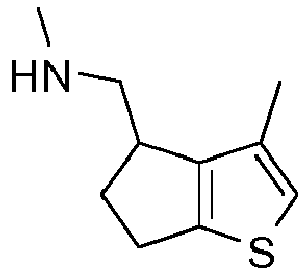
HCl Q LC-MS: m/z 182 (MH+); 1H NMR (CD3OD): δ 6.89 (s, 1H), 3.33-3.32 (m, 1H), 3.31-3.28 (m, 1H), 3.09-2.97 (m, 2H), 2.93-2.83 (m, 1H), 2.81-2.68 (m, 4H), 2.44-2.22 (m, 1H), 2.22 (s, 3H). 177 
HCl Y LC-MS: m/z 154 (MH+); 1H NMR (DMSO-d 6):□ δ 8.23 (s, 3H), 7.44-7.43 (d, J = 4.50 Hz, 1H), 6.87-6.86 (d, J = 4.85 Hz, 1H), 3.51 (s, 1H), 3.05 (s, 1H), 2.79-2.56 (m, 4H), 2.35-2.24 (m, 1H). 178 
HCl Y LC-MS: m/z 168 (MH+); 1H NMR (DMSO-d 6):□ δ 9.07-9.06 (m, 2H), 7.45-7.44 (d, J = 4.88 Hz, 1H), 6.88-6.86 (d, J = 4.86 Hz, 1H), 3.60-3.58 (d, J = 3.39 Hz, 1H), 3.20-3.13 (m, 1H), 2.97-2.86 (m, 1H), 2.81-2.60 (m, 3H), 2.57-2.53 (m, 3H), 2.43-2.31 (m, 1H). 179 
HCl Y LC-MS: m/z 168 (MH+); 1H NMR (DMSO-d 6): δ 8.10 (s, 3H), 7.02 (s, 1H), 3.09-3.01 (m, 2H), 2.84-2.75 (m, 2H), 2.69-2.54 (m, 3H), 2.33-2.21 (m, 1H), 2.09-2.08 (d, J = 0.93 Hz, 3H). 180 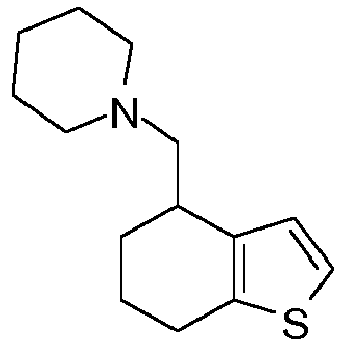
HCl Z LC-MS: m/z 236 (MH+); 1H NMR (DMSO-d 6): □ δ 7.27-7.26 (d, J = 3.99 Hz, 1H), 6.97-6.96 (d, J = 4.23 Hz, 1H), 3.62-3.57 (m, 1H), 3.34-3.21 (m, 3H), 3.10-3.02 (m, 1H), 2.91 (s, 2H), 2.68 (s, 2H), 1.77-1.72 (m, 9H), 1.38 (s, 1H). 181 
HCl AA LC-MS: m/z 168 (MH+); 1H NMR (CDCl3): □ δ 7.11-7.10 (d, J = 5.07 Hz, 1H), 6.80-6.78 (d, J = 5.10 Hz, 1H), 2.99-2.89 (m, 3H), 2.70-2.60 (m, 2H), 2.05-1.71 (m, 1H), 1.77-1.59 (m, 1H), 1.44(s,2H). 182 
HCl AA LC-MS: m/z 182 (MH+); 1H NMR (CD3OD):□ δ 7.26-7.24 (d, J = 5.10 Hz, 1H), 6.82-6.81 (d, J = 5.10 Hz, 1H), 3.42-3.23 (m, 2H), 3.14-3.06 (m, 1H), 2.74 (s, 3H), 2.69-2.65 (m, 2H), 2.320-2.07 (m, 1H), 2.03-1.96 (m, 1H), 1.82-1.67 (m, 2H). 183 
HCl AA LC-MS: m/z 236 (MH+); 1H NMR (CD3OD):□ δ 7.15-7.14 (d, J = 5.15 Hz, 1H), 6.76-6.74 (d, J = 5.17 Hz, 1H), 4.09-4.05 (t, J = 12.90 Hz, 2H), 3.59-3.55 (t, J = 12.90 Hz, 2H), 3.43-3.36 (m, 1H), 3.19-3.17 (m, 1H), 3.12-3.01 (m, 1H), 2.64-2.61 (m, 2H), 1.96-1.90 (m, 2H), 1.72-1.51 (m, 6H), 1.50-1.43 (m, 2H). 184 
HCl Z LC-MS: m/z 182 (MH+); 1H NMR (CD3OD): δ 6.84 (s, 1H), 3.09-2.96 (m, 2H), 2.80-2.73 (m, 2H), 2.18 (s, 3H), 2.05-2.02 (m, 1H), 2.00-1.85 (m, 4H). 185 
HCl Z LC-MS: m/z196 (MH+); 1H NMR (CD3OD): δ 6.74 (s, 1H), 2.95 (d, J = 11.86 Hz, 1H), 2.83-2.76 (m, 1H), 2.74-2.68 (m, 2H), 2.65-2.60 (m, 1H), 2.52-2.45 (dd, J = 12.55 Hz, 6.96 Hz, 1H), 2.41 (s, 1H), 2.30-2.26 (d, J = 13.27Hz, 1H), 2.21-2.20 (m, 1H), 2.182-2.179 (m, 3H), 1.89-1.81 (m, 2H), 1.67-1.58 (m, 1H). 186 
HCl Z LC-MS: m/z 250 (MH+); 1H NMR (CD3OD): δ 6.72 (s, 1H), 3.01-2.97 (d, J = 10.96 Hz, 1H), 2.82-2.62 (m, 3H), 2.52-2.45 (m, 3H), 2.30-2.20 (m, 2H), 2.17 (s, 3H), 1.91-1.81 (m, 2H), 1.72-1.49 (m, 8H). 187 
HCl B LC-MS: m/z 195 (MH+); 1H NMR (CD3OD):□□ δ 7.42-7.40 (d, J = 5.1 Hz, 1H), 6.90-6.89 (d, J = 5.1 Hz, 1H), 4.05-3.95 (m, 2H), 3.71-3.70 (m, 1H), 3.67-3.55 (m, 2H), 3.39-3.35 (m, 1H), 2.80-2.79 (m, 2H), 2.55-2.48 (m, 1H), 2.39-2.84 (m, 1H). 188 
HCl B LC-MS: m/z 209 (MH+); 1H NMR (DMSO-d 6): δ 9.26-9.23 (d, J = 8.75 Hz, 1H), 8.41-8.32 (m, 1H), 7.49-7.44 (dd, J = 8.75 Hz, 5.10 Hz, 1H), 6.91-6.88 (m, 1H), 3.94-3.90 (m, 2H), 3.94-3.92 (m, 1H), 3.19-3.15 (m, 2H), 3.07-2.99 (m, 1H), 2.73-2.61 (m, 2H), 2.01-1.80 (m, 3H), 1.71-1.67 (m, 1H). 189 
HCl B LC-MS: m/z 209 (MH+); 1H NMR (D2O): δ 6.94 (s, 1H), 3.99-3.92 (m, 1H), 3.88-3.79 (m, 1H), 3.63-3.58 (m, 1H), 3.55-3.38 (m, 2H), 3.30-3.26 (m, 1H), 2.57-2.44 (m, 2H), 2.38-2.20 (m, 2H), 1.98 (s, 3H). 190 
HCl B LC-MS: m/z 223 (MH+); 1H NMR (D2O):□□ δ 6.89 (s, 1H), 3.96-3.92 (m, 1H), 3.87-3.83 (m, 1H), 3.44-3.39 (d, J = 13.56 Hz, 1H), 3.24-3.20 (d, J = 12.30 Hz, 1H), 3.07-3.03 (d, J = 13.44 Hz, 1H), 2.89-2.81 (m, 1H), 2.48-2.47 (m, 2H), 1.96 (s, 3H), 1.90-1.78 (m, 3H), 1.72-1.67 (m, 1H). 191 
HCl BB LC-MS: m/z 224 (MH+); 1H NMR (DMSO-d 6): □ □ □ □ □ □ δ 8.22-8.16 (d, J = 13.20 Hz, 3H), 4.90-4.86 (t, J = 12.15 Hz, 1H), 4.01-3.94 (m, 1H), 3.82-3.75 (m, 1H), 3.05 (s, 2H), 2.72-2.66 (m, 4H), 2.41-2.32 (m, 2H), 1.86-1.83 (m, 2H), 1.71-1.53 (m, 2H). 192 
HCl BB LC-MS: m/z 238 (MH+); 1H NMR (DMSO-d6):□□□□□□ δ 9.39-9.36 (d, J = 11.15 Hz, 1H), 8.70-8.64 (m, 1H), 5.01-4.98 (m, 1H), 4.03-3.95 (m, 1H), 3.83-3.76 (m, 1H), 3.17-3.02 (m, 2H), 2.79-2.57 (m, 7H), 2.50-2.42 (m, 2H), 1.85-1.82 (m, 2H), 1.70-1.51 (m, 2H). 193 
HCl BB LC-MS: m/z 210 (MH+); 1H NMR (DMSO-d 6):□□□□□□□ □ δ 8.23 (s, 3H), 4.91-4.88 (d, J = 7.80 Hz, 1H), 4.10-4.03 (m, 1H), 3.79-3.71 (m, 1H), 3.15-3.10 (m, 1H), 3.01-2.92 (m, 1H), 2.88-2.70 (m, 4H), 2.62-2.58 (m, 2H), 2.39-2.31 (m, 2H). 194 
HCl BB LC-MS: m/z 224 (MH+); 1H NMR (DMSO-d 6):□□□□□□□ □ δ 9.40 (s, 1H), 8.75 (s, 1H), 5.02-4.99 (d, J = 9.05 Hz, 1H), 4.10-4.03 (m, 1H), 3.81-3.73 (m, 1H), 3.24-3.01 (m, 2H), 2.86-2.71 (m, 4H), 2.68-2.50 (m,5H), 2.42-2.35 (m, 2H). 195 
HCl BB LC-MS: m/z 238 (MH+); 1H NMR (DMSO-d6): □ □ δ 8.09 (s, 3H), 4.88-4.85 (d, J = 9.81 Hz, 1H), 3.97-3.78 (m, 2H), 3.55 (s, 2H), 3.12-3.06 (m, 1H), 2.91-2.70 (m, 1H), 2.68-2.56 (m, 4H), 1.91-1.73 (m, 2H), 1.56-1.47 (m, 4H). 196 
HCl BB LC-MS: m/z 252 (MH+); 1H NMR (D2O):□ □ δ 4.91-4.89 (d, J = 7.82 Hz, 1H), 3.88-3.87 (d, J = 4.74 Hz, 1H), 3.74-3.70 (m, 1H), 3.28-3.21 (m, 1H), 3.13-3.08 (m, 1H), 2.63-2.52 (m, 7H), 2.33 (s, 2H), 1.68 (s, 2H), 1.43 (s, 4H). 197 
HCl BB LC-MS: m/z 224 (MH+); 1H NMR (D2O): □ δ 5.02-5.00 (d, J = 5.72 Hz, 1H), 4.13-4.06 (m, 1H), 3.77-3.69 (m, 1H), 3.36-3.30 (m, 1H), 3.19-3.12 (m, 1H), 2.65-2.42 (m, 3H), 2.36-1.68 (m, 3H), 1.66 (s, 4H). 198 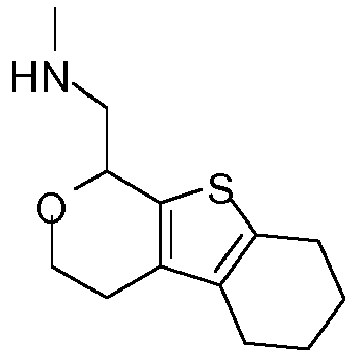
HCl BB LC-MS: m/z 238 (MH+); 1H NMR (D2O):□ □ δ 5.06 (s, 1H), 4.12-4.09 (m, 1H), 3.74 (s, 1H), 3.40-3.36 (m, 1H), 3.27-3.21 (m, 1H), 2.67 (s, 3H), 2.61-2.51 (m, 3H), 2.43-2.33 (m, 3H), 1.68 (m, 4H). 199 
HCl BB LC-MS: m/z 210 (MH+); 1H NMR (DMSO-d 6):□ □ □ δ 8.14 (s, 3H), 4.98-4.95 (d, J = 8.71 Hz, 1H), 4.15-4.08 (m, 1H), 3.77-3.69 (m, 1H), 3.16-3.12 (m, 1H), 3.03-2.93 (m, 1H), 2.84-2.79 (m, 2H), 2.67-2.52 (m, 4H), 2.42-2.33 (m, 2H). 200 
HCl BB LC-MS: m/z 224 (MH+); 1H NMR (DMSO-d 6):□ □ □ δ 9.13 (s, 1H), 8.74-8.72 (d, J = 6.00 Hz, 1H), 5.09-5.05 (d, J = 9.20 Hz, 1H), 4.15-4.03 (m, 4H), 3.79-3.70 (m, 1H), 3.39-3.10 (m, 2H), 2.84-2.79 (m, 2H), 2.60-2.57 (t, J = 2.57 Hz, 4H), 2.42-2.33 (m, 2H). 201 
HCl BB LC-MS: m/z 238 (MH+); 1H NMR (DMSO-d 6): □ □ δ 8.30 (s, 3H), 4.96-4.93 (d, J = 7.92 Hz, 1H), 4.16-4.09 (m, 1H), 3.78-3.70 (m, 1H), 3.10-3.08 (m, 1H), 3.00-2.91 (m, 1H), 2.76-2.69(m, 2H), 2.60-2.52 (m, 2H), 2.47-2.42 (m, 2H), 1.83-1.74 (m, 2H), 1.67-1.47 (m, 4H). 202 
HCl CC LC-MS: m/z 210 (MH+); 1H NMR (DMSO-d 6): □ □ δ 9.82-9.80 (d, J = 4.11 Hz, 1H), 8.86 (s, 1H), 7.51-7.49 (d, J = 5.04 Hz, 1H), 6.96-6.74 (d, J = 5.04 Hz, 1H), 5.03-5.00 (d, J = 7.17 Hz, 1H), 4.19-4.12 (m, 1H), 3.79-3.71 (m, 2H), 3.13 (s, 2H), 2.86-2.76 (m, 1H), 2.67-2.61 (m, 1H), 2.26-2.22 (m, 1H), 2.04-1.87 (m, 3H). 203 
HCl CC LC-MS: m/z 210 (MH+); 1H NMR (DMSO-d 6): □ □ δ 10.19 (s, 1H), 8.90 (brs, 1H), 7.51-7.49 (dd, J = 5.01 Hz, 0.69 Hz, 1H), 6.94-6.93 (d, J = 5.01 Hz, 1H), 5.22-5.21 (d, J = 1.83 Hz, 1H), 4.25-4.20 (dd, J = 11.34 Hz, 5.31 Hz, 1H), 3.95(s, 1H), 3.75-3.66 (td, J = 11.34 Hz, 3.60 Hz, 1H), 3.19-3.04 (m, 2H), 2.86-2.74 (m, 1H), 2.64-2.59 (m, 1H), 1.90-1.66 (m, 4H). 204 
HCl CC LC-MS: m/z 210 (MH+); 1H NMR (DMSO-d 6): □ δ 9.82 (s, 1H), 8.87 (s, 1H), 4.51-7.49 (d, J = 5.01 Hz, 1H), 6.96-6.94 (d, J = 5.04 Hz, 1H), 5.03-5.01 (d, J = 7.32 Hz, 1H), 4.19-4.12 (m, 1H), 3.79-3.70 (m, 2H), 3.13 (s, 2H), 2.86-2.76 (m, 1H), 2.67-2.61 (m, 1H), 2.26-2.22 (m, 1H), 2.04-1.87 (m, 3H). 205 
HCl CC LC-MS: m/z 210(MH+); 1H NMR (DMSO-d 6): □ □ δ 10.23 (s, 1H), 8.90 (s, 1H), 7.51-7.49 (d, J = 5.78 Hz, 1H), 6.94-6.92 (s, J = 5.16 Hz, 1H), 5.22 (s, 1H), 4.25-4.19 (dd, J = 11.24 Hz, 5.45 Hz, 1H), 3.94 (s, 1H), 3.74-3.66 (td, J = 11.31 Hz, 3.57 Hz, 1H), 3.19-3.08 (m, 2H), 2.80-2.75 (m, 1H), 2.64-2.58 (m, 1H), 1.91-1.63 (m, 4H). 206 
HCl N LC-MS: m/z 198 (MH+); 1H NMR (DMSO-d 6): □ δ 9.02-9.00 (d, J = 5.10 Hz, 1H), 8.14 (s, 1H), 7.43-7.41 (d, J = 5.10 Hz, 1H), 7.04-7.02 (d, J = 5.12 Hz, 1H), 4.82-4.81 (d, J = 2.15 Hz, 1H), 4.22-4.15 (m, 1H), 3.79-3.68 (m, 2H), 2.91-2.77 (m, 2H), 2.40-2.37 (m, 3H), 1.39-1.37 (d, J = 6.96 Hz, 3H). 207 
HCl N LC-MS: m/z 184 (MH+); 1H NMR (DMSO-d 6):□ □ δ 7.90 (s, 3H), 7.41-7.39 (d, J = 5.19 Hz, 1H), 7.00-6.98 (d, J = 5.25 Hz, 1H), 4.72-4.71 (d, J = 2.13 Hz, 1H), 4.70-4.12 (m, 1H), 3.77-3.66 (m, 2H), 3.41-3.34 (m, 2H), 1.36-1.34 (d, J = 6.72 Hz, 3H). 208 
HCl N LC-MS: m/z 184 (MH+); 1H NMR (DMSO-d 6): □ δ 8.38 (s, 3H), 7.43-7.39 (d, J = 5.19 Hz, 1H), 6.70-6.98 (d, J = 5.22 Hz, 1H), 4.98(s, 1H), 4.97-4.22 (m, 1H), 3.82-3.81 (m, 1H), 3.71-3.62 (td, J = 11.13 Hz, J = 3.53 Hz, 1H), 2.97-2.50 (m, 1H), 2.50-2.49 (m, 1H), 0.91-0.88 (d, J = 6.72 Hz, 3H). 209 
HCl N LC-MS: m/z 198 (MH+); 1H NMR (DMSO-d 6):□ □ δ 9.24-9.1 (m, 2H), 7.42-7.40 (d, J = 5.17 Hz, 1H), 6.94-6.92 (d, J = 5.42 Hz, 1H), 5.17-5.16 (d, J = 1.80 Hz, 1H), 4.27-4.22 (m, 1H), 3.80 (s, 1H), 3.73-3.65 (m, 1H), 2.98-2.88 (m, 1H), 2.77-2.72 (m, 1H), 2.59 (s, 3H), 0.93-0.91 (d, J = 6.62 Hz, 3H). 210 
HCl N LC-MS: m/z 198 (MH+); 1H NMR (DMSO-d 6): □ □ δ 8.91 (s, 1H), 8.08 (s, 1H), 7.43-7.41 (d, J = 5.22 Hz, 1H), 7.04-7.02 (d, J = 5.22 Hz, 1H), 4.81-4.80 (m, 1H), 4.22-4.16 (m, 1H), 3.79-3.67 (m, 2H), 2.97-2.77 (m, 2H), 2.41-2.37 (t, J = 5.42 Hz, 3H), 1.39-1.37 (d, J = 6.75 Hz, 3H). 211 
HCl N LC-MS: m/z 198 (MH+); 1H NMR (DMSO-d 6): □ □ δ 9.20-9.10 (m, 2H), 7.42-7.40 (d, J = 5.10 Hz, 1H), 6.94-6.72 (d, J = 5.16 Hz, 1H), 5.15 (s, 1H), 4.27-4.22 (m, 1H), 3.79-3.65 (m, 2H), 3.74-3.65 (td, J = 11.18 Hz, 3.42 Hz, 2H), 2.98-2.88 (m, 1H), 2.77-2.72 (m, 1H), 2.60 (s, 3H), 0.92-0.90 (d, J = 6.66 Hz, 3H). 212 
HCl DD LC-MS: m/z 184 (MH+); 1H NMR (DMSO-d 6): □ δ 8.03 (s, 3H), 7.52-7.50 (dd, J = 0.58 Hz, J = 5.03 Hz, 1H), 6.96-6.94 (d, J = 5.04 Hz, 1H), 4.83-4.82 (d, J = 5.48 Hz, 1H), 4.17-4.10 (m, 1H), 3.77-3.69 (m, 1H), 3.47 (s, 1H), 2.80-2.61 (m, 2H), 1.43-1.40 (d, J = 6.63 Hz, 3H). 213 
HCl DD LC-MS: m/z 184 (MH+); 1H NMR (DMSO-d6): □ □ δ 8.42 (s, 3H), 7.51-7.49 (dd, J = 5.11 Hz, J = 0.62 Hz, 1H), 6.94-6.93 (d, J = 5.12 Hz, 1H), 5.14-5.13 (d, J = 1.50 Hz, 1H), 4.25-4.19 (m, 1H), 3.71-3.62 (td, J = 11.12 Hz, 3.64 Hz, 1H), 3.54 (s, 1H), 2.84-2.72 (m, 1H), 2.63-2.57 (m, 1H), 1.01-0.98 (d, J = 6.95 Hz, 3H). 214 
HCl DD LC-MS: m/z 184 (MH+); 1H NMR (DMSO-d6):□ □ δ 7.87 (s, 3H), 7.53-7.51 (d, J = 4.65 Hz, 1H), 6.97-6.95 (d, J=5.22 Hz, 1H), 4.82-4.80 (d, J = 5.07 Hz, 1H), 4.18-4.14 (m, 1H), 3.78-3.69 (m, 1H), 3.52-3.44 (m, 1H), 2.78-2.62 (m, 2H), 1.40-1.38 (d, J = 6.57 Hz, 3H). 215 
HCl DD LC-MS: m/z 184 (MH+); 1H NMR (DMSO-d 6):□ □ δ 8.32 (s, 3H), 7.51-7.49 (dd, J = 5.01 Hz, J = 0.57 Hz, 1H), 6.95-6.93 (d, J = 5.01 Hz, 1H), 5.11-5.10 (d, J = 1.65 Hz, 1H), 4.25-4.20 (dd, J = 11.34 Hz, 4.98 Hz, 1H), 3.72-3.63 (td, J = 11.27 Hz, 3.51 Hz, 1H), 3.57 (s, 1H), 2.84-2.72 (m, 1H), 2.63-2.58 (m, 1H), 1.01-0.98 (d, J =6.75 Hz, 3H). 216 
HCl DD LC-MS: m/z 198 (MH+); 1H NMR (DMSO-d 6):□ □ δ 9.09 (s, 1H), 8.35-8.32 (m, 1H), 7.53-7.52 (d, J = 5.12 Hz, 1H), 6.97-6.95 (d, J = 4.80 Hz, 1H), 4.93 (d, J = 1.7 Hz, 1H), 4.19-4.12 (m, 1H), 3.80-3.72 (m, 1H), 3.54-3.51 (m, 1H), 2.77-2.64 (m, 2H), 2.50-2.45 (m, 3H), 1.46-1.43 (d, J = 6.64 Hz, 3H). 217 
HCl DD LC-MS: m/z 198 (MH+); 1H NMR (DMSO-d 6):□ □ δ 9.42-9.17 (m, 2H), 7.50-7.49 (d, J = 4.85 Hz, 1H), 6.94-6.92 (d , J = 5.18 Hz, 1H), 5.33-5.33 (d, J = 1.27 Hz, 1H), 4.24-4.19 (dd, J = 11.28 Hz, 5.37 Hz, 1H), 3.73-3.64 (td, J = 11.31 Hz, 5.37 Hz, 1H), 3.53(s, 1H), 2.84-2.72 (m, 1H), 2.63-2.62 (m, 1H), 2.60 (s, 3H), 1.02-1.00 (d, J = 6.9 Hz, 3H). 218 
HCl DD LC-MS: m/z 198 (MH+); 1H NMR (DMSO-d 6): □ δ 9.07-9.06 (d, J = 5.45 Hz, 1H), 8.31 (s, 1H), 7.53-7.52 (d, J = 5.01 Hz, 1H), 6.97-6.95 (d, J = 5.04 Hz, 1H), 4.94-4.92 (s, J = 5.28 Hz, 1H), 4.19-4.13 (m, 1H), 3.80-3.72 (m, 1H), 3.42-3.49 (m, 1H), 2.82-2.64 (m, 2H), 2.50-2.45 (m, 3H), 1.46-1.43 (d, J = 6.63 Hz, 3H). 219 
HCl DD LC-MS: m/z 198 (MH+); 1H NMR (DMSO-d 6): □ δ 9.39-9.38 (d, J = 1.17 Hz, 1H), 9.16-9.14 (d, J = 4.92 Hz, 1H), 7.51-7.49 (dd, J = 4.95 Hz, 0.42 Hz, 1H), 6.94-6.93 (d, J = 5.01 Hz, 1H), 5.33-5.32 (d, J = 1.49 Hz, 1H), 4.24-4.19 (dd, J = 11.33 Hz, 5.21 Hz, 1H), 3.73-3.64 (td, J = 11.31 Hz, 3.57 Hz, 1H), 3.55-3.53 (m, 1H), 2.84-2.72 (m, 1H), 2.63-2.58 (m, 4H), 1.10-0.99 (d, J= 6.72 Hz, 3H). 220 
HCl CS; FME from SFC separation of Compound 29, using isocratic 10% Hexane :Ethanol (1:1) in CO2 on a 4.6 x 100 mm LUX Cellulose 2 from Phenomenex and flow of 4 mL/min 1H NMR (DMSO-d 6): δ 8.14 (br s, 3H), 7.00 (s, 1H), 4.97-4.90 (m, 1H), 4.02-3.94 (m, 1H), 3.85-3.78 (m, 1H), 3.11-3.08 (t, J = 10.66 Hz, 2H), 2.88-2.73 (m, 2H), 2.13-2.12 (d, J = 0.8 Hz, 3H). 221 
HCl CS; SME from SFC separation of Compound 29, using isocratic 10% Hexane :Ethanol (1:1) in CO2 on a 4.6 x 100 mm LUX Cellulose 2 from Phenomenex and flow of 4 mL/min 1H NMR (DMSO-d 6): δ 8.14 (br s, 3H), 7.00 (s, 1H), 4.97-4.90 (m, 1H), 4.02-3.94 (m, 1H), 3.85-3.78 (m, 1H), 3.11-3.08 (t, J = 10.66 Hz, 2H), 2.88-2.73 (m, 2H), 2.13-2.12 (d, J = 0.8 Hz, 3H). 222 
HCl K LC-MS (6 minute method): 0.67 min, M+ 201@ 0.63 min; 1H NMR (CD3OD): δ 6.90 (s, 1H), 5.05-5.02 (m, 1H), 4.17-4.12 (m, 1H), 3.86-3.81 (m, 1H), 3.46-3.42 (m, 1H), 3.33-3.28 (m, 1H), 2.93-2.81 (m, 1H), 2.19 (s, 3H). 223 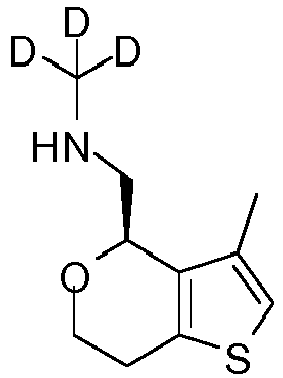
HCl K LC-MS (6 minute method): 0.67 min, M+ 201@ 0.63 min; 1H NMR (CD3OD): δ 6.90 (s, 1H), 5.05-5.02 (m, 1H), 4.17-4.12 (m, 1H), 3.86-3.81 (m, 1H), 3.46-3.42 (m, 1H), 3.33-3.28 (m, 1H), 2.93-2.81 (m, 1H), 2.19 (s, 3H). 224 
HCl K LC-MS (6 minute method): 0.70 min, M+ 201 @ 0.73 min; 1H NMR (CD3OD): δ 6.99 (s, 1H), 5.10 (d, J = 8.07 Hz, 1H), 4.32-4.27 (m, 1H), 3.86-3.80 (m, 1H), 3.48-3.44 (m, 1H), 3.27-3.24 (m, 1H), 2.76-2.68 (m, 1H), 2.57-2.52 (m, 1H), 2.14 (s, 3H). 225 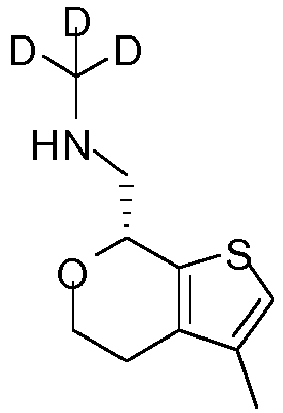
HCl K LC-MS (6 minute method): 0.70 min, M+ 201 @ 0.73 min; 1H NMR (CD3OD): δ 6.99 (s, 1H), 5.10 (d, J = 8.07 Hz, 1H), 4.32-4.27 (m, 1H), 3.86-3.80 (m, 1H), 3.48-3.44 (m, 1H), 3.27-3.24 (m, 1H), 2.76-2.68 (m, 1H), 2.57-2.52 (m, 1H), 2.14 (s, 3H). 226 
HCl K LC-MS (6 minute method): 0.17-0.36 min, M+ 187 @ 0.35 min; 1H NMR (CD3OD): δ 7.37 (d, J = 2.93 Hz, 1H), 6.90 (d, J = 2.93 Hz, 1H), 5.16 (d, J = 7.33 Hz, 1H), 4.28-4.24 (m, 1H), 3.85-3.80 (m, 1H), 3.50 (d, J = 12.8 Hz, 1H), 3.3-3.25 (m, 1H), 2.89-2.84 (m, 1H), 2.71-2.67 (m, 1H). 227 
HCl K LC-MS (6 minute method): 0.17-0.36 min, M+ 187 @ 0.35 min; 1H NMR (CD3OD): δ 7.37 (d, J = 2.93 Hz, 1H), 6.90 (d, J = 2.93 Hz, 1H), 5.16 (d, J = 7.33 Hz, 1H), 4.28-4.24 (m, 1H), 3.85-3.80 (m, 1H), 3.50 (d, J = 12.8 Hz, 1H), 3.3-3.25 (m, 1H), 2.89-2.84 (m, 1H), 2.71-2.67 (m, 1H). 228 
HCl EE LC-MS: m/z 207 (MH+); 1H NMR (CD3OD): δ 8.20-8.19 (d, J = 2.61 Hz, 1H), 7.30-7.29 (d, J = 5.25 Hz, 1H), 6.79-6.74 (m, 2H), 6.08 (s, 1H), 4.21-4.15 (m, 1H), 4.04-3.96 (m, 1H), 3.11-3.02 (m, 1H), 2.98-2.89 (m, 1H). 229 
HCl EE LC-MS: m/z 207 (MH+); 1H NMR (D2O): □ δ 7.73 (s, 1H), 7.23-7.22 (d, J = 3.72 Hz, 1H), 6.82 (s, 1H), 6.41 (s, 1H), 6.02 (s, 1H), 4.00-3.95 (m, 1H), 3.85-3.81 (m, 1H), 2.77-2.62 (m, 2H). 230 
HCl EE LC-MS: m/z 221 (MH+); 1H NMR (CD3OD): □ δ 7.31-7.29 (d, J = 5.19 Hz, 1H), 6.81-6.79 (d, J = 5.22 Hz, 1H), 6.56 (s, 1H), 6.09 (s, 1H), 4.21-4.14 (m, 1H), 4.03-3.95 (m, 1H), 3.09-2.90 (m, 2H), 2.46 (s, 3H). 231 
HCl EE LC-MS: m/z 221 (MH+); 1H NMR (CD3OD): □ δ 7.41-7.39 (dd, J = 5.09 Hz, 0.71 Hz, 1H), 6.95-6.93 (d, J = 5.07 Hz, 1H), 6.63 (s, 1H), 6.16 (s, 1H), 4.21-4.14 (m, 1H), 4.02-3.94 (m, 1H), 2.97-2.87 (m, 1H), 2.84-2.75 (m, 1H), 1.19 (s, 3H). 232 
HCl EE LC-MS: m/z 221 (MH+); 1H NMR (DMSO-d 6): □ δ 9.71-9.66 (d, J = 15.52 Hz, 1H), 7.36-7.33 (m, 2H), 6.62-6.61 (d, J = 5.19 Hz, 1H), 5.98 (s, 1H), 5.91-5.90 (d, J = 1.77 Hz, 1H), 3.93-3.79 (m, 2H), 3.76 (s, 3H), 2.89-2.86 (t, J = 5.27 Hz, 2H). 233 
HCl EE LC-MS: m/z 221 (MH+); 1H NMR (CDCl3): □□ δ 12.01 (s, 1H), 7.85-7.84 (d, J = 2.40 Hz, 1H), 7.30-7.28 (m, 1H), 6.91-6.87 (d, J = 5.07 Hz, 1H), 6.50-6.49 (d, J = 2.34 Hz, 1H), 6.08 (s, 1H), 4.20 (s, 3H), 4.07-4.00 (m, 1H), 3.96-3.88 (m, 1H), 2.91-2.88 (m, 2H). 234 
HCl EE LC-MS: m/z 221 (MH+); 1H NMR (CD3OD): δ 8.67 (s, 1H), 7.27-7.25 (d, J = 5.25 Hz, 1H), 6.57-6.56 (d, J = 5.28 Hz, 1H), 5.97-5.96 (m, 1H), 4.25-4.19 (m, 1H), 4.01-3.93 (m, 1H), 3.17-3.07 (m, 1H), 2.92-2.86 (m, 1H), 2.29 (s, 3H). 235 
HCl EE LC-MS: m/z 221 (MH+); 1H NMR (CD3OD): □ δ 8.17 (s, 1H), 7.33-7.31 (dd, J = 5.07 Hz, 0.75 Hz, 1H), 6.92-6.70 (d, J = 5.07 Hz, 1H), 6.02 (s, 1H), 4.27-4.20 (m, 1H), 3.97-3.90 (m, 1H), 3.00-2.92 (m, 1H), 2.78-2.71 (m, 1H), 2.24 (s, 3H). 236 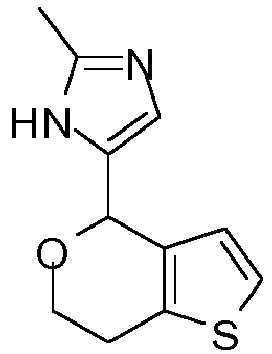
HCl EE LC-MS: m/z 221 (MH+); 1H NMR (CD3OD): □ δ 7.16-7.14 (d, J = 5.19 Hz, 1H), 6.68-6.67 (d, J = 0.48 Hz, 1H), 6.64-6.62 (d, J = 5.16 Hz, 1H), 5.71 (s, 1H), 4.11-4.04 (m, 1H), 3.91-3.84 (m, 1H), 2.98-2.82 (m, 2H), 2.33 (s, 3H). 237 
HCl EE LC-MS: m/z 221 (MH+); 1H NMR (CD3OD): □ δ 7.27-7.25 (dd, J = 5.07 Hz, 0.75 Hz, 1H), 6.87-6.85 (d, J = 5.04 Hz, 1H), 6.84 (s, 1H), 5.82 (s, 1H), 4.17-4.10 (m, 1H), 3.92-3.86 (m, 1H), 2.89-2.81 (m, 1H), 2.76-2.69 (m, 1H), 2.34 (s, 3H). 238 
HCl EE LC-MS: m/z 221 (MH+); 1H NMR (CD3OD): □ δ 8.95 (s, 1H), 7.35-7.33 (d, J = 5.25 Hz, 1H), 7.29 (s, 1H), 6.75-6.73 (d, J = 5.25 Hz, 1H), 6.10 (s, 1H), 4.02-3.97 (m, 2H), 3.89 (s, 3H), 3.00-2.97 (m, 2H). 239 
HCl EE LC-MS: m/z 221 (MH+); 1H NMR (CD3OD): □ δ 8.96 (s, 1H), 7.48-7.47 (d, J = 1.11 Hz, 1H), 7.45-7.44 (dd, J = 5.07 Hz, 0.69 Hz, 1H), 6.98 (d, J = 1.1 Hz, 1H), 6.25 (s, 1H), 4.09-3.92 (m, 2H), 3.88-3.87 (d, J = 0.45 Hz, 3H), 2.89-2.84 (m, 2H). 240 
HCl B 1H NMR (CD3OD): δ 7.36 (d, J = 1.5 Hz, 1H), 6.91 (d, J = 1.5 Hz, 1H), 5.13 (d, J = 2.0 Hz, 1H), 4.26 (ddd, J = 3.0, 1.5, 0.7 Hz, 1H), 3.82 (dt, J = 3.0, 1.0 Hz, 1H), 3.46 (dd, J = 3.0, 0.7 Hz, 1H), 3.25 (dd, J = 3.0, 2.0 Hz, 1H), 3.12 (q, J = 1.7 Hz, 2H) 2.91-2.83 (m, 1H), 2.71-2.65 (m, 1H), 1.32 (t, J = 1.7 Hz, 3H). 241 
HCl CS; FME from SFC separation of Compound 240, using isocratic 8% Hexane :Ethanol (1:1) in CO2 on a 4.6 x 100 mm LUX Cellulose 2 from Phenomenex and flow of 4 mL/min 1H NMR (CD3OD): δ 7.36 (d, J = 1.5 Hz, 1H), 6.91 (d, J = 1.5 Hz, 1H), 5.13 (d, J = 2.0 Hz, 1H), 4.26 (ddd, J = 3.0, 1.5, 0.7 Hz, 1H), 3.82 (dt, J = 3.0, 1.0 Hz, 1H), 3.46 (dd, J = 3.0, 0.7 Hz, 1H), 3.25 (dd, J = 3.0, 2.0 Hz, 1H), 3.12 (q, J = 1.7 Hz, 2H) 2.91-2.83 (m, 1H), 2.71-2.65 (m, 1H), 1.32 (t, J = 1.7 Hz, 3H). 242 
HCl CS; SME from SFC separation of Compound 240, using isocratic 8% Hexane :Ethanol (1:1) in CO2 on a 4.6 x 100 mm LUX Cellulose 2 from Phenomenex and flow of 4 mL/min 1H NMR (CD3OD): δ 7.36 (d, J = 1.5 Hz, 1H), 6.91 (d, J = 1.5 Hz, 1H), 5.13 (d, J = 2.0 Hz, 1H), 4.26 (ddd, J = 3.0, 1.5, 0.7 Hz, 1H), 3.82 (dt, J = 3.0, 1.0 Hz, 1H), 3.46 (dd, J = 3.0, 0.7 Hz, 1H), 3.25 (dd, J = 3.0, 2.0 Hz, 1H), 3.12 (q, J = 1.7 Hz, 2H) 2.91-2.83 (m, 1H), 2.71-2.65 (m, 1H), 1.32 (t, J = 1.7 Hz, 3H). 243 
HCl B 1H NMR (CD3OD): δ 7.37 (d, J = 1.2 Hz, 1H), 6.91 (d, J = 1.2 Hz, 1H), 5.12 (apd, J = 1.8 Hz, 1H), 4.26 (ddd, J = 3.0, 1.5, 0.7 Hz, 1H), 3.82 (ddd, J = 3.0, 2.5, 1.0 Hz, 1H), 3.49-3.40 (m, 2H), 3.28-3.21 (m, 1H), 2.92-2.83 (m, 1H), 2.72-2.67 (m, 1H), 1.35 (dd, J = 2.3, 1.6 Hz, 6H). 244 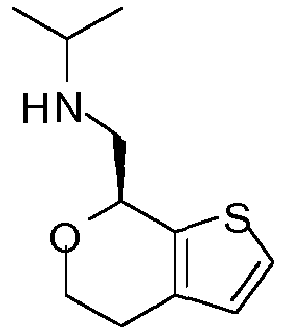
HCl CS; FME from SFC separation of Compound 243, using isocratic 8% Hexane :Ethanol (1:1) in CO2 on a 4.6 x 100 mm LUX Cellulose 2 from Phenomenex and flow of 4 mL/min 1H NMR (CD3OD): δ 7.37 (d, J = 1.2 Hz, 1H), 6.91 (d, J = 1.2 Hz, 1H), 5.12 (apd, J = 1.8 Hz, 1H), 4.26 (ddd, J = 3.0, 1.5, 0.7 Hz, 1H), 3.82 (ddd, J = 3.0, 2.5, 1.0 Hz, 1H), 3.49-3.40 (m, 2H), 3.28-3.21 (m, 1H), 2.92-2.83 (m, 1H), 2.72-2.67 (m, 1H), 1.35 (dd, J = 2.3, 1.6 Hz, 6H). 245 
HCl CS; SME from SFC separation of Compound 243, using isocratic 8% Hexane :Ethanol (1:1) in CO2 on a 4.6 x 100 mm LUX Cellulose 2 from Phenomenex and flow of 4 mL/min 1H NMR (CD3OD): δ 7.37 (d, J = 1.2 Hz, 1H), 6.91 (d, J = 1.2 Hz, 1H), 5.12 (apd, J = 1.8 Hz, 1H), 4.26 (ddd, J = 3.0, 1.5, 0.7 Hz, 1H), 3.82 (ddd, J = 3.0, 2.5, 1.0 Hz, 1H), 3.49-3.40 (m, 2H), 3.28-3.21 (m, 1H), 2.92-2.83 (m, 1H), 2.72-2.67 (m, 1H), 1.35 (dd, J = 2.3, 1.6 Hz, 6H). 246 
HCl B 1H NMR (CD3OD): δ 7.36 (d, J = 1.3 Hz, 1H), 6.91 (d, J = 1.3 Hz, 1H), 5.24 (apd, J = 2.5 Hz, 1H), 4.29-4.25 (m, 1H), 3.85 (dt, J = 2.5, 1.0 Hz, 1H), 3.81-3.67 (m, 1H), 3.66-3.63 (m, 2H), 3.50 (dd, J = 3.0, 2.5 Hz, 1H), 3.31-3.12 (m, 2H), 2.91-2.83 (m, 1H), 2.73-2.68 (m, 1H), 2.19-2.00 (m, 4H). 247 
HCl T LC-MS: m/z 246 (MH+); 1H NMR (DMSO-d 6): δ 9.29 (s, 1H), 8.92 (s, 1H), 7.66-7.64 (d, J = 5.10 Hz, 1H), 7.10-7.37 (dd, J = 7.47 Hz, 1.50 Hz, 1H), 7.27-7.21 (m, 1H), 7.13-7.11 (d, J = 5.07 Hz, 1H), 7.07-7.00 (m, 2H), 5.88-5.84 (dd, J = 9.36 Hz, 2.75 Hz, 1H), 3.50-3.39 (m, 2H), 3.07-3.02 (m, 2H), 1.27-1.22 (t, J = 7.23 Hz, 3H). 248 
HCl U LC-MS: m/z 218 (MH+); 1H NMR (DMSO-d 6): δ 8.40 (s, 3H), 7.71-7.64 (m, 2H), 7.59-7.57 (d, J = 5.10 Hz, 1H), 7.26-7.21 (m, 1H), 7.08-7.03 (m, 2H), 5.87-5.82 (dd, J = 8.90 Hz, 3.23 Hz, 1H), 3.31-3.25 (m, 2H). 249 
HCl U LC-MS: m/z 232 (MH+); 1H NMR (DMSO-d 6): δ 9.36 (s, 1H), 9.09 (s, 1H), 7.72-7.70 (d, J = 5.10 Hz, 1H), 7.67-7.75 (d, J = 6.27 Hz, 1H), 7.59-7.57 (d, J = 5.13 Hz, 1H), 7.27-7.21 (m, 1H), 7.09-7.03 (m, 2H), 6.01-5.96 (dd, J = 8.18 Hz, J = 4.28 Hz, 1H), 3.37 (s, 2H), 2.65 (s, 3H). 250 
HCl U LC-MS: m/z 246 (MH+); 1H NMR (DMSO-d6 +D2O): δ 7.69-7.62 (m, 2H), 7.56-7.55 (d, J = 5.07 Hz, 1H), 7.26-7.21 (m, 1H), 7.09-7.03 (m, 2H), 5.93-5.88 (t, J = 12.3 Hz, 1H), 3.44-3.33 (m, 2H), 3.10-3.03 (m, 2H), 1.24-1.19 (t, J = 7.22 Hz, 3H). 251 
HCl CS; FME from SFC separation of Compound 144, using isocratic 5% isopropyl amine in Methanol:Hexa ne (1:1) w/3% isopropanol in CO2 on a 4.6x 100 mm RegisPack from Regis and flow of 4 mL/min 1H NMR (CD3OD): δ 7.21 (d, J = 1.5 Hz, 1H), 6.92 (d, J = 1.5 Hz, 1H), 3.36 (dd, J = 3.0, 1.0 Hz, 1H), 3.14 (m, 1H), 3.09 (dd, J = 3.0, 2.5 Hz, 1H), 2.80 (apt, J = 1.5 Hz, 2H), 2.75 (s, 3H), 2.03-1.95 (m, 2H), 1.88-1.81 (m, 1H), 1.72-1.65 (m, 1H). 252 
HCl CS; SME from SFC separation of Compound 144, using isocratic 5% isopropyl amine in Methanol:Hexa ne (1:1) w/3% isopropanol in CO2 on a 4.6 x 100 mm RegisPack from Regis and flow of 4 mL/min 1H NMR (CD3OD): δ 7.21 (d, J = 1.5 Hz, 1H), 6.92 (d, J = 1.5 Hz, 1H), 3.36 (dd, J = 3.0, 1.0 Hz, 1H), 3.14 (m, 1H), 3.09 (dd, J = 3.0, 2.5 Hz, 1H), 2.80 (apt, J = 1.5 Hz, 2H), 2.75 (s, 3H), 2.03-1.95 (m, 2H), 1.88-1.81 (m, 1H), 1.72-1.65 (m, 1H). 253 
HCl A 1H NMR (CD3OD): δ 9.85 (d, J = 0.5 Hz, 1H), 7.88 (d, J = 0.5 Hz, 1H), 7.28 (d, J = 1.3, 1H), 6.73 (d, J = 1.3 H, 1H), 6.09 (s, 1H), 4.12-3.95 (m, 2H), 2.99 (ddt, J = 11.0, 4.0, 1.5 Hz, 2H). 254 
HCl A 1H NMR (CD3OD): δ 9.52 (d, J = 0.5 Hz, 1H), 7.82 (d, J = 0.5 Hz, 1H), 7.34 (d, J = 1.3, 1H), 6.91 (d, J = 1.3 H, 1H), 6.17 (s, 1H), 4.15 (dt, J = 2.5, 1.3 Hz, 1H), 3.99-3.92 (m, 1H), 2.96-2.87 (m, 1H), 2.81-2.75 (m, 1H). 255 
HCl FF LC-MS: m/z 254.4 (MH+); 1H NMR (CD3OD):□ δ 7.89-7.86 (d, J = 8.61 Hz, 1H), 7.76-7.76 (d, J = 1.89 Hz, 1H), 7.37-7.34 (dd, J = 8.60 Hz, 1.97 Hz, 1H), 5.27-5.23 (m, 1H), 4.30-4.22 (m, 1H), 3.99-3.91 (m, 1H), 3.61-3.56 (m, 1H), 3.38-3.26 (m, 1H), 3.13-2.94 (m, 2H). 256 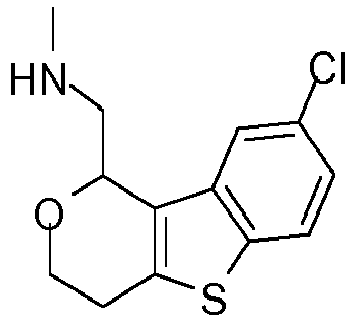
HCl FF LC-MS: m/z 268 (MH+); 1H NMR (DMSO-d6 +D2O):□ □□ δ 7.89-7.85 (d, J =8.58 Hz, 1H), 7.77-7.76 (d, J = 1.38 Hz, 1H), 7.37-7.34 (dd, J = 8.80 Hz, 1.70 Hz, 1H), 5.34-5.31 (d, J = 7.77 Hz, 1H), 4.30-4.23 (m, 1H), 4.01-3.94 (m, 1H), 3.66-3.60 (m, 1H), 3.46-3.36 (m, 1H), 3.12-3.00 (m, 2H), 2.80 (s, 3H). 257 
HCl FF LC-MS: m/z 254 (MH+); 1H NMR (CD3OD):□ δ 7.69-7.66 (dd, J = 6.95 Hz, 1.94 Hz, 1H), 7.47-7.40 (m, 2H), 5.30-5.26 (m, 1H), 4.32-4.25 (m, 1H), 3.40-3.92 (m, 1H), 3.64-3.60 (m, 1H), 3.42-3.35 (dd, J = 13.42 Hz, 8.45 Hz, 1H), 3.10-3.02 (m, 2H). 258 
HCl FF LC-MS: m/z 268 (MH+); 1H NMR (CD3OD): 7.72-7.70 (d, J = 1.7 Hz, 1H), 7.48-7.40 (m, 2H), 5.36-5.33 (m, 1H), 4.92-4.26 (m, 1H), 4.01-3.95 )m, 1H), 3.73-3.68 (m, 1H), 3.51-3.44 (m, 1H), 3.10-3.03 (m, 2H), 2.80 (s, 3H). 259 
HCl FF LC-MS: m/z 288 (MH+); 1H NMR (CD3OD): δ 8.12 (s, 1H), 7.92 (s, 1H), 5.25-5.22 (d, J = 8.50, 1H), 4.30-4.23 (m, 1H), 3.99-3.91 (m, 1H), 3.61-3.40 (m, 1H), 3.37-3.33 (m, 1H), 3.03-2.94 (m, 2H). 260 
HCl FF LC-MS: m/z 302 (MH+); 1H NMR (CD3OD):□ δ 8.12 (s, 1H), 7.97 (s, 1H), 5.33-5.29 (m, 1H), 4.31-4.24 (m, 1H), 3.99-3.92 (m, 1H), 3.71-3.65 (m, 1H), 3.48-3.41 (dd, J = 13.10 Hz, 9.17 Hz, 1H), 3.07-2.99 (m, 2H), 2.80 (s, 3H). 261 
HCl FF LC-MS: m/z 254 (MH+); 1H NMR (CD3OD): δ 7.88-7.85 (d, J = 8.61 Hz, 1H), 7.74-7.73 (d, J = 1.65 Hz, 1H), 7.38-7.35 (dd, J = 8.57 Hz,1.79 Hz, 1H), 5.21-8.19 (m, 1H), 4.43-4.37 (m, 1H), 4.01-3.93 (m, 1H), 3.53-3.46 (m, 1H), 3.33-3.23 (m, 1H), 3.04-2.93 (m, 1H), 2.88-2.82 (m, 1H). 262 
HCl FF LC-MS: m/z 268 (MH+); 1H NMR (CD3OD):□ δ 7.90-7.87 (d, J = 8.55 Hz, 1H), 7.77-7.76 (d, J = 1.98 Hz, 1H), 7.40-7.36 (dd, J = 8.58 Hz, 2.04 Hz, 1H), 5.28-5.24 (m, 1H), 4.44-4.38 (m, 1H), 4.03-3.94 (m, 1H), 3.62-3.56 (m, 1H), 3.43-3.35 (dd, J = 12.95 Hz, 8.42 Hz, 1H), 3.00-2.96 (m, 1H), 2.90-2.79 (m, 1H), 2.79 (s, 3H). 263 
HCl FF LC-MS: m/z 254 (MH+); 1H NMR (DMSO-d 6): δ 8.24 (s, 3H), 7.78-7.75 (dd, J = 7.31 Hz, 1.40 Hz, 1H), 7.54-7.46 (m, 2H), 5.21-2.19 (d, J = 6.24 Hz, 1H), 4.30-4.23 (m, 1H), 3.95-3.87 (m, 1H), 3.37 (s, 1H), 3.19-3.17 (m, 1H), 2.90-2.89 (m, 2H). 264 
HCl FF LC-MS: m/z 268 (MH+); 1H NMR (DMSO-d 6): δ 9.44-9.38 (m, 1H), 8.93-8.86 (m, 1H), 7.80-7.75 (dd, J = 7.34 Hz,1.43 Hz, 1H), 7.55-7.46 (m, 2H), 5.34-5.32 (d, J = 7.65 Hz, 1H), 4.30-4.23 (m, 1H), 3.97-3.89 (m, 1H), 3.53-3.46 (m, 1H), 3.36-3.30 (m, 1H), 2.97-2.83 (m, 2H), 2.62-2.59 (t, J = 4.80 Hz, 3H). 265 
HCl FF LC-MS: m/z 288 (MH+); 1H NMR (MeOD): δ 8.13 (s, 1H), 7.93 (s, 1H), 5.20-5.15 (m, 1H), 4.44-4.37 (m, 1H), 4.01-3.93 (m, 1H), 3.53-3.47 (m, 1H), 3.28-3.26 (m, 1H), 3.00-2.91 (m, 1H), 2.90-2.83 (s, 1H). 266 
HCl FF LC-MS: m/z 302 (MH+); 1H NMR (MeOD):□ δ 8.14 (s, 1H), 7.94 (s, 1H), 5.26-5.22 (dd, J = 8.51 Hz, 2.64 Hz, 1H), 4.43-4.38 (m, 1H), 4.02-3.94 (m, 1H), 3.61-3.56 (m, 1H), 3.43-3.36 (m, 1H), 2.99-2.96 (m, 1H), 2.92-2.90 (m, 1H), 2.79 (s, 3H). 267 
HCl KK 1H NMR (CD3OD): δ 4.97 (dd, J = 2.0, 0.7 Hz, 1H), 4.05-3.99 (m, 1H), 3.74-3.68 (m, 1H), 3.34-3.30 (m, 1H), 3.18 (dd, J = 3.3, 2.5 Hz, 1H), 2.64-2.58 (m, 2H), 2.32 (s, 3H), 2.26 (s, 3H). 268 
HCl KK 1H NMR (CD3OD): δ 5.03 (dd, J = 2.0, 0.7 Hz, 1H), 4.08-4.01 (m, 1H), 3.74-3.67 (m, 1H), 3.39 (dd, J = 3.0, 1.0 Hz, 1H), 3.32-3.26 (m, 1H), 2.75 (s, 3H), 2.69-2.61 (m2H), 2.33 (s, 3H), 2.26 (s, 3H). 269 
HCl FF 1H NMR (CD3OD): δ 7.87 (d, J = 2.0 Hz, 1H), 7.72 (d, J = 2.0 Hz, 1H), 7.42 (t, J = 2.0 Hz, 1H), 7.38 (t, J = 2.0 Hz, 1H), 5.19-5.15 (m, 1H), 4.39 (ddd, J = 3.0, 1.5, 0.7 Hz, 1H), 3.97 (ddd, J = 3.0, 2.5, 1.0 Hz, 1H), 3.48 (dd, J = 3.3, 1.0 Hz, 1H), 3.30-3.22 (m, 1H), 3.03-2.96 (m, 1H), 2.91-2.85 (m, 1H). 270 
HCl FF 1H NMR (CD3OD): δ 7.87 (d, J = 2.0 Hz, 1H), 7.73 (d, J = 2.0 Hz, 1H), 7.42 (t, J = 2.0 Hz, 1H), 7.39 (t, J = 2.0 Hz, 1H), 5.25-5.22 (m, 1H), 4.39 (ddd, J = 3.0, 1.5, 0.7 Hz, 1H), 3.98 (ddd, J = 2.0, 1.7, 1.0 Hz, 1H), 3.57 (dd, J = 3.3, 0.7 Hz, 1H), 3.38 (dd, J = 3.0, 2.0 Hz, 1H), 3.05-2.96 (m, 1H), 2.91-2.86 (m, 1H), 2.77 (s, 3H). 271 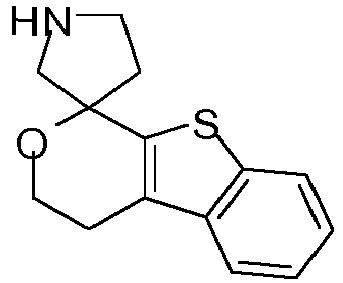
HCl FF 1H NMR (CD3OD): δ 7.87 (d, J = 1.7 Hz, 1H), 7.72 (d, J = 1.7 Hz, 1H), 7.43 (t, J = 1.7 Hz, 1H), 7.40 (dt, J = 1.7, 0.7 Hz, 1H), 4.18-3.72 (m, 2H), 3.74 (apd, J = 2.0 Hz, 1H), 3.65-3.58 (m, 2H), 3.47 (d, J = 3.0 Hz, 1H), 2.93 (t, J = 1.0 Hz, 2H), 2.60-2.54 (m, 1H), 2.48-2.39 (m, 1H). 272 
HCl FF 1H NMR (CD3OD): δ 7.87 (d, J = 2.0 Hz, 1H), 7.73 (d, J = 2.0 Hz, 1H), 7.42 (t, J = 2.0 Hz, 1H), 7.38 (dt, J = 2.0, 0.7 Hz, 1H), 5.25-5.22 (m, 1H), 4.40 (ddd, J = 3.0, 1.5, 0.7 Hz, 1H), 3.98 (dt, J = 3.0, 1.0 Hz, 1H), 3.54 (dd, J = 3.3, 1.0 Hz, 1H), 3.36 (dd, J = 3.0, 2.0 Hz,1H), 3.14 (dq, J = 1.7, 0.7 Hz, 2H), 3.00-2.96 (m, 1H), 2.91-2.87 (m, 1H), 1.34 (t, J = 1.7 Hz, 3H). 273 
HCl CS; FME from SFC separation of Compound 176, using isocratic Isopropanol with 0.1 % Isopropylamine in CO2 on a 4.6 x 100 mm ChiralPak AD-H from Chiral Technologies and flow of 4 mL/min 1H NMR (CD3OD): δ 6.87 (s, 1H), 3.41-3.35 (m, 1H), 3.33-3.25 (m, 1H), 3.05-2.96 (m, 2H), 2.90-2.83 (m, 1H), 2.77-2.70 (m, 1H), 2.75 (s, 3H), 2.39-2.30 (m, 1H), 2.20 (s, 3H). 274 
HCl CS; SME from SFC separation of Compound 176, using isocratic Isopropanol with 0.1% Isopropylamine in CO2 on a 4.6 x 100 mm ChiralPak AD-H from Chiral Technologies and flow of 4 mL/min 1H NMR (CD3OD): δ 6.87 (s, 1H), 3.41-3.35 (m, 1H), 3.33-3.25 (m, 1H), 3.05-2.96 (m, 2H), 2.90-2.83 (m, 1H), 2.77-2.70 (m, 1H), 2.75 (s, 3H), 2.39-2.30 (m, 1H), 2.20 (s, 3H). 275 
HCl JJ LC-MS: m/z 218 (MH+); 1H NMR (MeOD): δ 6.84 (s, 1H), 5.08-5.03 (m, 1H), 4.28-4.22 (m, 1H), 3.89-3.81 (m, 1H), 3.47-3.42 (m, 1H), 3.29-3.25 (m, 1H), 2.87-2.78 (m, 1H), 2.78 (s, 3H), 2.66-2.58 (m, 1H). 276 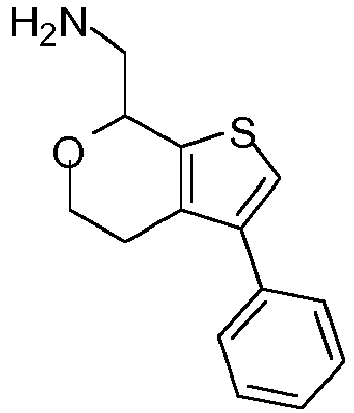
HCl GG LC-MS: m/z 246 (MH+); 1H NMR (MeOD): δ 7.49-7.36 (m, 5H), 7.21 (s, 1H), 5.36-5.32 (m, 1H), 4.26-4.17 (m, 1H), 3.97-3.90 (m, 1H), 3.08-3.00 (m, 1H), 2.93-2.88 (m, 1H), 2.81-2.70 (m, 2H). 277 
HCl GG LC-MS: m/z 260 (MH+); 1H NMR (MeOD):□ δ 7.50-7.38 (m, 5H), 7.24 (s, 1H), 5.42-5.38 (m, 1H), 4.27-4.21 (m, 1H), 3.98-3.90 (m, 1H), 2.95-2.93 (m, 1H), 2.92-2.85 (m, 2H), 2.80-2.71 (m, 1H), 2.47 (s, 3H). 278 
HCl GG LC-MS: m/z 247 (MH+); 1H NMR CD3OD): δ 8.90-8.88 (d, J = 6.87 Hz, 2H), 8.22-8.19 (d, J = 6.87 Hz, 2H), 7.99 (s, 1H), 5.67-5.62 (m, 1H), 4.31-4.24 (m, 1H), 4.03-3.91 (m, 1H), 3.22-2.85 (m, 4H). 279 
HCl GG LC-MS: m/z 261 (MH+); 1H NMR (MeOD): δ 8.90-8.88 (d, J = 6.87 Hz, 2H), 8.22-8.19 (d, J = 6.87 Hz, 2H), 7.99 (s, 1H), 5.74-5.71 (m, 1H), 4.31-4.24 (m, 1H), 4.03-3.95 (m, 1H), 3.32-2.94 (m, 4H), 2.61 (s, 3H). 280 
HCl FF LC-MS: m/z 288 (MH+); 1H NMR (MeOD):□ δ 7.85-7.82 (d, J = 8.40 Hz, 1H), 7.51-7.49 (d, J = 8.40 Hz, 1H), 5.76-5.73 (d, J = 9.92 Hz, 1H), 4.24-4.16 (m, 1H), 4.09-4.00 (m, 1H), 3.67-3.61 (m, 1H), 3.41-3.35 (m, 1H), 3.12-2.99 (m, 2H). 281 
HCl FF LC-MS: m/z 302 (MH+); 1H NMR (D2O): δ 7.42-7.41 (d, J = 2.42 Hz, 1H), 7.15 (s, 1H), 5.50 (s, 1H), 4.00 (s, 2H), 3.45 (s, 2H), 2.98-2.85 (m, 2H), 2.70 (s, 3H). 282 
HCl B LC-MS: m/z 184 (MH+); 1H NMR (MeOD): δ 7.28 (d, J = 1.3 Hz, 1H), 6.85 (d, J = 1.3 Hz, 1H), 5.00-4.96 (m, 1H), 4.24 (ddd, J = 2.8, 1.4, 0.3 Hz, 1H), 3.75 (dt, J = 2.8, 1.0 Hz, 1H), 3.10 (t, J = 1.7 Hz, 2H), 2.90-2.81 (m, 1H), 2.64-2.59 (m, 1H), 2.30-2.22 (m, 1H), 2.09-2.00 (m, 1H). 283 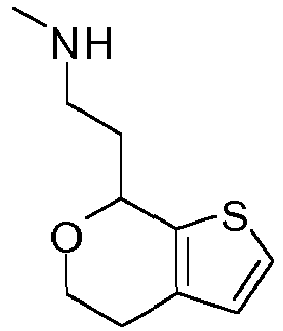
HCl B LC-MS: m/z 198 (MH+); 1H NMR (MeOD): δ 7.29 (d, J = 1.3 Hz, 1H), 6.86 (d, J = 1.3 Hz, 1H), 5.00-4.97 (m, 1H), 4.25 (ddd, J = 2.9, 1.5, 0.4 Hz, 1H), 3.75 (dt, J = 2.9, 0.9 Hz, 1H), 3.23-3.12 (m, 2H), 2.90-2.81 (m, 1H), 2.69 (s, 3H), 2.64-2.59 (m, 1H), 2.33-2.25 (m, 1H), 2.12-2.02 (m, 1H). 284 
HCl CS; FME from SFC separation of Compound 178, using isocratic 7% Hexane: Isopropanol (7:3) in CO2 on a 4.6 x 100 mm (S,S) Whelk0-1 from Regis and flow of 4 mL/min 1H NMR (CD3OD): δ 7.35 (d, J = 1.3 Hz, 1H), 6.85 (d, J = 1.3 Hz, 1H), 3.62-3.55 (m, 1H), 3.33-3.24 (m, 1H), 3.11-3.05 (m, 1H), 2.90-2.80 (m, 1H), 2.79-2.65 (m, 2H), 2.75 (s, 3H), 2.33-2.25 (m, 1H). 285 
HCl CS; SME from SFC separation of Compound 178, using isocratic 7% Hexane: Isopropanol (7:3) in CO2 on a 4.6 x 100 mm (S,S) Whelk0-1 from Regis and flow of 4 mL/min 1H NMR (CD3OD): δ 7.35 (d, J = 1.3 Hz, 1H), 6.85 (d, J = 1.3 Hz, 1H), 3.62-3.55 (m, 1H), 3.33-3.24 (m, 1H), 3.11-3.05 (m, 1H), 2.90-2.80 (m, 1H), 2.79-2.65 (m, 2H), 2.75 (s, 3H), 2.33-2.25 (m, 1H). 286 
HCl F 1H NMR (CD3OD): δ 7.30 (d, J = 1.3 Hz, 1H), 6.91 (d, J = 1.3 Hz, 1H), 5.23 (apd, J = 2.3 Hz, 1H), 4.29 (ddd, J = 3.0, 1.5, 0.7 Hz, 1H), 3.88-3.77 (m, 2H), 3.76-3.46 (m, 6H), 3.43-3.29 (m, 2H), 3.25-3.20 (m, 1H), 3.05-2.98 (m, 1H), 2.85-2.80 (m, 1H). 287 
HCl B 1H NMR (CD3OD): δ 7.37 (d, J = 1.3 Hz, 1H), 6.91 (d, J = 1.3 Hz, 1H), 5.40-5.33 (m, 1H), 4.82-4.25 (m, 2H), 3.85 (dt, J = 2.5, 1.0 Hz, 1H), 3.88-3.75 (m, 6H), 3.54-3.44 (m, 1H), 3.28-3.12 (m, 2H), 2.91-2.83 (m, 1H), 2.74-2.67 (m, 1H). 288 
HCl F 1H NMR (CD3OD): δ 7.29 (d, J = 0.7 Hz, 1H), 6.91 (d, J = 0.7 Hz, 1H), 5.18 (d, J = 2.0 Hz, 1H), 4.27 (ddd, J = 3.0, 1.5, 0.7 Hz, 1H), 3.87-3.78 (m, 2H), 3.77-3.40 (m, 6H), 3.39-3.12 (m, 3H), 3.11-2.87 (m, 1H), 2.99 (s, 3H), 2.92-2.82 (m, 1H). 289 
HCl B 1H NMR (CD3OD): δ 7.35 (d, J = 1. 3 Hz, 1H), 6.90 (d, J = 1.3 Hz, 1H), 5.29 (brd, J = =2.3 Hz, 1H), 4.26 (ddd, J = 3.0, 1.3, 0.7 Hz, 1H), 3.83 (dt, J = 2.0, 1.0 Hz, 1H), 3.80-3.32 (m, 9H), 3.25 (m, 1H), 3.00 (s, 3H), 2.89-2.82 (m, 1H), 2.72-2.65 (m, 1H). 290 
HCl W LC-MS: m/z 183 (MH+); 1H NMR (CD3OD):□ δ 3.47-3.42 (m, 2H), 3.21-3.09 (m, 1H), 2.99 (s, 3H), 2.88 (s, 2H), 2.35-2.14 (m, 2H), 1.97-1.92 (m, 2H). 291 
HCl W LC-MS: m/z 197 (MH+); 1H NMR (CD3OD): □ δ 3.21 (s, 1H), 3.04-2.94 (m, 1H), 2.91-2.87 (m, 1H), 2.73-2.64 (m, 2H), 2.61 (s, 3H), 2.59 (s, 3H), 2.12-1.99 (m, 2H), 1.84-1.79 (m, 2H), 1.72-1.64 (m, 1H). 292 
HCl FF LC-MS: m/z 288 (MH+); 1H NMR (CD3OD):□ δ 7.86-7.83 (d, J = 8.61 Hz, 1H), 7.52-7.49 (d, J = 8.58 Hz, 1H), 5.76-5.73 (d, J = 9.90 Hz, 1H), 4.24-4.17 (m, 1H), 4.07-4.00 (m, 1H), 3.66-3.62 (d, J = 11.19 Hz, 1H), 3.42-3.38(d, J = 9.48 Hz, 1H), 3.17-3.00 (m, 2H). 293 
HCl FF LC-MS: m/z 302 (MH+); 1H NMR (CD3OD): δ 7.85-7.82 (d, J= 8.55, 1H), 7.51-7.49 (d, J = 8.58, 1H), 5.84-5.81 (d, J = 9.55, 1H), 4.25-4.19 (m, 1H), 4.08-4.01 (m, 1H), 3.72-3.67 (dd, J = 13.43 Hz, 2.48 Hz, 1H), 3.54-3.47 (m, 1H), 3.12-3.05 (m, 2H), 2.81 (s, 3H). 294 
HCl CS; FME from SFC separation of Boc-protected Compound 9, using isocratic 10% MeOH in CO2 on a 4.6 x 100 mm LUX Cellulose 2 from Phenomenex and flow of 4 mL/min 1H NMR (DMSO-d 6): δ 8.22 (br s, 3H), 6.70 (s, 1H), 4.85-4.83 (d, J = 8.01 Hz, 1H), 4.13-4.07 (m, 1H), 3.78-3.70 (m, 1H), 3.29 (s, 1H), 2.91-2.67 (m, 5H), 1.22-1.18 (t, J = 7.50 Hz, 3H). 295 
HCl CS; SME from SFC separation of Boc-protected Compound 9, using isocratic 10% MeOH in CO2 on a 4.6 x 100 mm LUX Cellulose 2 from Phenomenex and flow of 4 mL/min 1H NMR (DMSO-d 6): δ 8.22 (br s, 3H), 6.70 (s, 1H), 4.85-4.83 (d, J = 8.01 Hz, 1H), 4.13-4.07 (m, 1H), 3.78-3.70 (m, 1H), 3.29 (s, 1H), 2.91-2.67 (m, 5H), 1.22-1.18 (t, J = 7.50 Hz, 3H). 296 
HCl X LC-MS: m/z 183 (MH+); 1H NMR (CD3OD): δ 3.46-3.35 (m, 2H), 3.25-3.19 (m, 1H), 2.93 (s, 3H), 2.89-2.85 (t, J = 5.43 Hz, 2H), 2.12-2.01 (m, 2H), 1.96-1.85 (m, 2H). 297 
HCl X LC-MS: m/z 197 (MH+); 1H NMR (CD3OD): δ 3.51-3.33 (m, 3H), 2.94 (s, 3H), 2.89-2.85 (m, 2H), 2.83 (s, 3H), 2.13-1.90 (m, 4H). 298 
HCl Q LC-MS: m/z 196 (MH+); 1H NMR (CD3OD): □ δ 6.88 (s, 1H), 3.47-3.38 (m, 1H), 3.27-3.26 (m, 1H), 3.18-3.09 (m, 2H), 3.06-2.97 (m, 2H), 2.93-2.83 (m, 1H), 2.80-2.68 (m, 1H), 2.47-2.38 (m, 1H), 8.24-2.22 (m, 3H), 1.39-1.36 (t, J = 7.29 Hz, 3H). 299 
HCl HH LC-MS: m/z 202 (MH+); 1H NMR (CD3OD): δ 6.89 (s, 1H), 3.45-3.40 (m, 1H), 3.31-3.29 (m, 1H), 3.09-2.94 (m, 3H), 2.74-2.65 (m, 4H), 2.28-2.17 (m, 1H). 300 
HCl Q LC-MS: m/z 196 (MH+); 1H NMR (CD3OD): □ δ 6.93 (s, 1H), 3.45-3.39 (m, 1H), 3.28-3.24 (m, 1H), 3.08-2.98 (m, 2H), 2.94-2.89 (m, 1H), 2.74-2.68 (m, 4H), 2.64-2.56 (m, 2H), 2.42-2.32 (m, 1H), 1.29-1.24 (t, J = 7.52 Hz, 3H). 301 
HCl Q LC-MS: m/z 196 (MH+); 1H NMR (CD3OD):□ □ δ 3.39 (m, 1H), 3.28-3.23 (m, 1H), 3.02-2.93 (m, 2H), 2.87-2.78 (m, 1H), 2.76 (s, 3H), 2.71-2.61 (m, 1H), 2.35-2.22 (m, 1H), 2.31 (s, 3H), 2.10 (s, 3H). 302 
HCl Q LC-MS: m/z 236 (MH+); 1H NMR (CD3OD): □ δ 6.89 (s, 1H), 3.78-3.75 (m, 1H), 3.58-3.52 (m, 2H), 3.21-3.00 (m, 4H), 2.94-2.72 (m, 3H), 2.50-2.41 (m, 1H), 2.23-2.22 (d, J = 0.96 Hz, 3H), 2.02-1.81 (m, 5H), 1.59 (s, 1H). 303 
HCl A LC-MS: m/z 310 (MH+); 1H NMR (CD3OD):□ δ 7.98-7.75 (m, 2H), 7.72-7.66 (m, 3H), 7.50-7.45 (t, J = 7.47 Hz, 2H), 7.40-7.37 (m, 1H), 5.29-5.26 (m, 1H), 4.47-4.41 (m, 1H), 4.06-4.00 (m, 1H), 3.63-3.58 (m, 1H), 3.45-3.38 (m, 1H), 3.63-3.38 (m, 2H)), 2.80 (s, 3H). 304 
HCl FF LC-MS: m/z 296 (MH+); 1H NMR (CD3OD): δ 7.97-7.94 (d, J = 8.34 Hz, 1H), 7.88-7.87 (d, J = 1.26 Hz, 1H), 7.73-7.70 (m, 2H), 7.65-7.62 (dd, J = 8.37 Hz, 1.65 Hz, 1H), 7.51-7.48 (t, J = 7.47 Hz, 2H), 7.40-7.35 (m, 1H), 5.37-5.34 (d, J = 8.52 Hz, 1H), 4.81-4.25 (m, 1H), 4.02-3.94 (m, 1H), 3.70-3.64 (m, 1H), 3.42-3.37 (m, 1H), 3.32-3.01 (m, 2H). 305 
HCl FF LC-MS: m/z 310 (MH+); 1H NMR (CD3OD):□ δ 7.96-7.91 (m, 2H), 7.74-7.71 (d, J = 7.11 Hz, 2H), 7.65-7.62 (dd, J = 8.40 Hz, 1.68 Hz, 1H), 7.50-7.48 (t, J = 7.47 Hz, 2H), 7.40-7.37 (m, 1H), 5.43-5.40 (d, J = 6.24 Hz, 1H), 4.84-4.28 (m, 1H), 4.02-3.96 (m, 1H), 3.77-3.72 (dd, J = 13.07 Hz, J= 2.60 Hz, 1H), 3.53-3.33 (m, 1H), 3.32-3.03 (m, 2H), 2.80 (s, 3H). 306 
HCl II LC-MS: m/z 280 (MH+); 1H NMR (CD3OD): δ 7.87-7.84 (d, J = 8.34 Hz, 2H), 7.58-7.57 (d, J = 1.80 Hz, 3H), 7.39-7.34 (m, 2H), 7.28-7.24 (m, 1H), 4.63-4.60 (m, 1H), 2.97-2.88 (m, 2H), 2.30-2.21 (m, 1H), 2.08-1.94 (m, 3H). 307 
HCl II LC-MS: m/z 294 (MH+); 1H NMR (DMSO-d 6):□ δ 7.99-7.97 (m, 2H), 7.74-7.69 (m, 3H), 7.51-7.46 (t, J = 7.49 Hz, 2H), 7.40-7.38 (m, 1H), 4.67-4.65 (m, 1H), 2.89 (s, 3H), 2.35-2.29 (m, 1H), 2.23-2.18 (m, 1H), 2.13-2.03 (m, 2H), 1.61 (s, 2H). 308 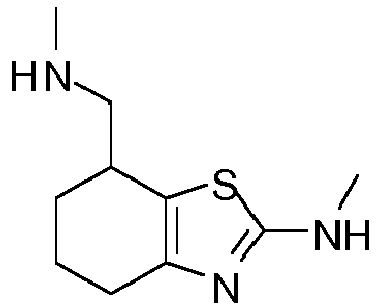
2HCl X LC-MS: m/z 212 (MH+); 1H NMR (CD3OD):□ δ 3.49-3.43 (m, 1H), 3.31-3.28 (m, 2H), 3.16 (s, 3H), 2.81 (s, 3H), 2.62-2.61 (m, 2H), 1.96-1.74 (m, 4H). 309 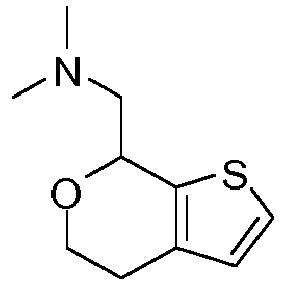
forma te B LC-MS: m/z 198 (MH+); 1H NMR (CD3OD):□ δ 7.33 (d, J = 1.2, 0.7 Hz, 1H), 7.15 (brs, 1H), 7.04 (dd, J = 1.2, 0.3 Hz, 1H), 4.82 (t, J = 1.2 Hz, 1H), 4.00-3.94 (m, 1H), 3.88-3.82 (m, 1H), 3.25 (d, J = 1.2 Hz, 2H), 2.96 (t, J = 1.6 Hz, 2H), 2.85 (s, 6H). 310 
HCl CS; FME from SFC separation of Compound 13, using isocratic 10% Hx:MeOH:EtO H (2:1:1) in C02ona4.6x 100 mm LUX Cellulose 2 from Phenomenex and flow of 4 mL/min GC-MS m/z 139 (M+); 1H NMR (DMSO-d 6): δ 9.02 (s, 1H), 8.65 (s, 1H), 7.41-7.40 (d, J = 5.19 Hz, 1H), 6.99-6.97 (d, J = 5.19 Hz, 1H), 5.03-5.00 (d, J = 8.13 Hz, 1H), 4.21-4.12 (m, 1H), 3.83-3.75 (m, 1H), 3.52-3.48 (d, J = 12.43 Hz, 1H), 3.13-2.72 (m, 5H), 1.25-1.20 (t, J = 7.26 Hz, 3H). 311 
HCl CS; SME from SFC separation of Compound 13, using isocratic 10% Hx:MeOH:EtO H (2:1:1) in CO2 on a 4.6 x 100 mm LUX Cellulose 2 from Phenomenex and flow of 4 mL/min GC-MS m/z 139 (M+); 1H NMR (DMSO-d 6): δ 9.02 (s, 1H), 8.65 (s, 1H), 7.41-7.40 (d, J = 5.19 Hz, 1H), 6.99-6.97 (d, J = 5.19 Hz, 1H), 5.03-5.00 (d, J = 8.13 Hz, 1H), 4.21-4.12 (m, 1H), 3.83-3.75 (m, 1H), 3.52-3.48 (d, J = 12.43 Hz, 1H), 3.13-2.72 (m, 5H), 1.25-1.20 (t, J = 7.26 Hz, 3H). *FB is an abbreviation for "free base". - Anti-psychotic like activity of the compounds was evaluated in mice using the PCP hyperactivity and Pre-Pulse Inhibition (PPI) models of schizophrenia.
- Animals: Male C57B1/6J mice from Jackson Laboratories (Bar Harbor, Maine) were used. Upon receipt, mice were assigned unique identification numbers (tail marked) and were group housed with 4 mice per cage in OptiMICE ventilated cages. All animals remained housed in groups of four during the remainder of the study. All mice were acclimated to the colony room for at least two weeks prior to testing. During the period of acclimation, mice were examined on a regular basis, handled, and weighed to assure adequate health and suitability. Animals were maintained on a 12/12 light/dark cycle. The room temperature was maintained between 20 and 23°C with a relative humidity maintained between 30% and 70%. Chow and water were provided ad libitum for the duration of the study. In each test, animals were randomly assigned across treatment groups.
- Open field (OF) chambers were Plexiglas square chambers (27.3 x 27.3 x 20.3 cm; Med Associates Inc., St Albans, VT) surrounded by infrared photobeams (16 x 16 x 16) to measure horizontal and vertical activity. The analysis was configured to divide the open field into a center and periphery zone. Distance traveled was measured from horizontal beam breaks as the mouse moved whereas rearing activity was measured from vertical beam breaks.
- Mice were injected with vehicle, test compound, or clozapine (1 mg/kg;i.p) and placed in the OF chambers for 30 min measurement of baseline activity. Mice were then injected with either water or PCP (5 mg/kg ;i.p) and placed back in the OF chambers for a 60-minute session. At the end of each OF test session the OF chambers were thoroughly cleaned.
- The acoustic startle is an unconditioned reflex response to an external auditory stimulus. Prepulse inhibition of startle (PPI) refers to the reduction in the startle response caused by the presentation of a low-intensity auditory stimulus prior to the startle stimulus. The PPI paradigm is used for the study of schizophrenia and antipsychotic action due to the similarities between the results from human and rodent studies. PPI has been used as a tool for the assessment of deficiencies in sensory-motor gating observed in schizophrenia and to screen for potential antipsychotic drugs. Various psychotomimetic drugs such as PCP can disrupt PPI. In mice, antipsychotic drugs such as clozapine can reverse the disruption of PPI induced by PCP.
- Mice were placed in the PPI chambers (Med Associates) for a 5 min session of white noise (70 dB) habituation. After the habituation period the test session was initiated. The session started with a habituation block of 6 presentations of the startle stimulus alone, followed by 10 PPI blocks, each of which consisted of 6 different types of trials. Trial types were: 'null' (no stimuli), 'startle' (120 dB), 'startle plus prepulse' (4, 8 and 12 dB over background noise, i.e., 74, 78 or 82 dB) and 'prepulse' (82 dB). Trial types were presented in a random order within each block. Each trial started with a 50 ms stimulus-free period during which baseline movements were recorded. This was followed by a subsequent 20 ms period during which the prepulse stimulus was presented and responses to the prepulse measured. After a further 100 ms period, the startle stimulus was presented for 40 ms and responses recorded for 100 ms from startle onset. Responses were sampled every ms. The inter-trial interval was variable with an average of 15 s (range from 10 to 20 s). In 'startle' trials the basic auditory startle response was measured. The basic startle response was calculated as the mean startle response of all 'startle' trials (i.e., excluding the first habituation block). In 'startle plus prepulse' trials the degree of inhibition of the normal startle was calculated and expressed as a percentage of the basic startle response.
- Mice were treated with vehicle, haloperidol (1 mg/kg;i.p) or test compound 30 min prior to PPI test. The PPI enclosures were cleaned following each test.
-
Table 1: Effects of Compounds on Pre-pulse Inhibition (PPI) in Mice Compound/Doses Effect Compound 5 10 mg/kg - 30 mg/kg +++ 100 mg/kg +++ Compound 58 10 mg/kg +++ 30 mg/kg + 100 mg/kg +++ Compound 57 10 mg/kg - 30 mg/kg - 100 mg/kg ++ Compound 4 10 mg/kg +++ 30 mg/kg - 100 mg/kg +++ Compound 27 10 mg/kg - 30 mg/kg - 100 mg/kg - Compound 28 10 mg/kg - 30 mg/kg +++ 100 mg/kg +++ Compound 1 10 mg/kg - 30 mg/kg +++ 100 mg/kg +++ Compound 2 10 mg/kg - 30 mg/kg - 100 mg/kg +++ Compound 3 10 mg/kg +++ 30 mg/kg +++ 100 mg/kg - Compound 10 10 mg/kg +++ 30 mg/kg +++ 100 mg/kg +++ Compound 75 10 mg/kg - 30 mg/kg - 100 mg/kg - Compound 76 10 mg/kg - 30 mg/kg - 100 mg/kg - Compound 13 10 mg/kg - 30 mg/kg - 100 mg/kg +++ Compound 140 10 mg/kg - 30 mg/kg - 100 mg/kg - Compound 78 10 mg/kg - 30 mg/kg - 100 mg/kg - Compound 158 3 mg/kg - 10 mg/kg - 30 mg/kg - 100 mg/kg +++ Compound 130 3 mg/kg - 10 mg/kg - 30 mg/kg - Compound 131 3 mg/kg - 10 mg/kg - 30 mg/kg - Compound 171 3 mg/kg - 10 mg/kg - 30 mg/kg - 100 mg/kg +++ Compound 172 3 mg/kg - 10 mg/kg - 30 mg/kg - 100 mg/kg - Compound 129 3 mg/kg +++ 10 mg/kg +++ 30 mg/kg +++ Compound 310 3 mg/kg - 10 mg/kg - 30 mg/kg +++ Compound 205 3 mg/kg - 10 mg/kg - 30 mg/kg +++ Compound 311 3 mg/kg - 10 mg/kg - 30 mg/kg +++ Compound 213 3 mg/kg - 10 mg/kg +++ 30 mg/kg +++ Compound 170 3 mg/kg - 10 mg/kg +++ 30 mg/kg +++ Compound 242 3 mg/kg - 10 mg/kg - 30 mg/kg - Compound 127 3 mg/kg +++ 10 mg/kg - 30 mg/kg +++ Compound 102 3 mg/kg - 10 mg/kg - 30 mg/kg - *P<0.05 vs. vehicle
- : No change in PPI
+: Significant increase in PPI at one pre-pulse intensity (P value < 0.05)
++: Significant increase in PPI at two pre-pulse intensities (P value < 0.05)
+++: Significant increase in PPI at three pre-pulse intensities (P value < 0.05)Table 2: Effects of Compounds on PCP-Induced Hyperactivity Responses in Mice Compound/Doses Total Distance Traveled (cm) Compound 4 0.3 mg/kg Compound + PCP + 1 mg/kg Compound + PCP + 3 mg/kg Compound + PCP + 10 mg/kg Compound + PCP + 30 mg/kg Compound + PCP + 100 mg/kg Compound + PCP + Compound 27 0.3 mg/kg Compound + PCP - 1 mg/kg Compound + PCP - 3 mg/kg Compound + PCP - 10 mg/kg Compound + PCP + 30 mg/kg Compound + PCP + 100 mg/kg Compound + PCP + Compound 28 0.3 mg/kg Compound + PCP + 1 mg/kg Compound + PCP + 3 mg/kg Compound + PCP + 10 mg/kg Compound + PCP + 30 mg/kg Compound + PCP + 100 mg/kg Compound + PCP + Compound 2 10 mg/kg Compound + PCP + 30 mg/kg Compound + PCP + 100 mg/kg Compound + PCP - Compound 3 10 mg/kg Compound + PCP - 30 mg/kg Compound + PCP - 100 mg/kg Compound + PCP - Compound 1 10 mg/kg Compound + PCP + 30 mg/kg Compound + PCP + 100 mg/kg Compound + PCP - Compound 5 10 mg/kg Compound + PCP + 30 mg/kg Compound + PCP + 100 mg/kg Compound + PCP + Compound 57 10 mg/kg Compound + PCP + 30 mg/kg Compound + PCP + 100 mg/kg Compound + PCP + Compound 58 10 mg/kg Compound + PCP + 30 mg/kg Compound + PCP + 100 mg/kg Compound + PCP + Compound 10 10 mg/kg Compound + PCP + 30 mg/kg Compound + PCP + 100 mg/kg Compound + PCP + Compound 75 10 mg/kg Compound + PCP + 30 mg/kg Compound + PCP - 100 mg/kg Compound + PCP + Compound 76 10 mg/kg Compound + PCP - 30 mg/kg Compound + PCP - 100 mg/kg Compound + PCP + Compound 140 10 mg/kg Compound + PCP - 30 mg/kg Compound + PCP - 100 mg/kg Compound + PCP + Compound 78 10 mg/kg Compound + PCP + 30 mg/kg Compound + PCP + 100 mg/kg Compound + PCP + Compound 129 0.3 mg/kg Compound + PCP + 1 mg/kg Compound + PCP + 3 mg/kg Compound + PCP + 10 mg/kg Compound + PCP + 30 mg/kg Compound + PCP + 100 mg/kg Compound + PCP + Compound 130 0.3 mg/kg Compound + PCP - 1 mg/kg Compound + PCP - 3 mg/kg Compound + PCP + 10 mg/kg Compound + PCP + 30 mg/kg Compound + PCP + 100 mg/kg Compound + PCP + Compound 119 10 mg/kg Compound + PCP + 30 mg/kg Compound + PCP + 100 mg/kg Compound + PCP + Compound 158 1 mg/kg Compound + PCP + 3 mg/kg Compound + PCP + 10 mg/kg Compound + PCP + 30 mg/kg Compound + PCP + 100 mg/kg Compound + PCP + Compound 131 0.3 mg/kg Compound + PCP - 1 mg/kg Compound + PCP + 3 mg/kg Compound + PCP + Compound 171 0.3 mg/kg Compound + PCP - 1 mg/kg Compound + PCP - 3 mg/kg Compound + PCP - 10 mg/kg Compound + PCP - 30 mg/kg Compound + PCP + Compound 172 0.3 mg/kg Compound + PCP - 1 mg/kg Compound + PCP + 3 mg/kg Compound + PCP + 10 mg/kg Compound + PCP - 30 mg/kg Compound + PCP - Compound 127 0.3 mg/kg Compound + PCP - 1 mg/kg Compound + PCP - 3 mg/kg Compound + PCP + 10 mg/kg Compound + PCP + 30 mg/kg Compound + PCP - Compound 310 0.3 mg/kg Compound + PCP + 1 mg/kg Compound + PCP - 3 mg/kg Compound + PCP - 10 mg/kg Compound + PCP + 30 mg/kg Compound + PCP + Compound 311 0.3 mg/kg Compound + PCP - 1 mg/kg Compound + PCP + 3 mg/kg Compound + PCP + 10 mg/kg Compound + PCP + 30 mg/kg Compound + PCP + Compound 205 0.3 mg/kg Compound + PCP + 1 mg/kg Compound + PCP + 3 mg/kg Compound + PCP + 10 mg/kg Compound + PCP + 30 mg/kg Compound + PCP + Compound 213 0.3 mg/kg Compound + PCP + 1 mg/kg Compound + PCP + 3 mg/kg Compound + PCP + 10 mg/kg Compound + PCP + 30 mg/kg Compound + PCP + Compound 170 0.3 mg/kg Compound + PCP - 1 mg/kg Compound + PCP - 3 mg/kg Compound + PCP - 10 mg/kg Compound + PCP - 30 mg/kg Compound + PCP - Compound 242 0.3 mg/kg Compound + PCP - 1 mg/kg Compound + PCP + 3 mg/kg Compound + PCP + 10 mg/kg Compound + PCP + 30 mg/kg Compound + PCP + Compound 102 0.3 mg/kg Compound + PCP - 1 mg/kg Compound + PCP + 3 mg/kg Compound + PCP + 10 mg/kg Compound + PCP + 30 mg/kg Compound + PCP + *P<0.05 vs. vehicle + PCP
- : No inhibition of PCP hyperactivity
+ : Significant inhibition of PCP hyperactivity (P value < 0.05) - The embodiments described above are intended to be merely exemplary, and those skilled in the art will recognize, or will be able to ascertain using no more than routine experimentation, numerous equivalents of specific compounds, materials, and procedures. All such equivalents are considered to be within the scope of the disclosure and are encompassed by the appended claims.
- All of the patents, patent applications and publications referred to herein are incorporated by reference herein in their entireties. Citation or identification of any reference in this application is not an admission that such reference is available as prior art to this application.
- Embodiments of the invention are provided below:
- 1. A compound of formula (I):

- one of X and Y is O, and the other is CH2; or both X and Y are CH2;
- one of Z1, Z2 , and Z3 is S; and (i) two of Z1, Z2 , and Z3 are C; or (ii) one of Z1, Z2 , and Z3 is C and one of Z1, Z2 , and Z3 is N;
- R1 and R2 are each independently (i) hydrogen, alkyl, alkoxyl, aminoalkyl, alkenyl, alkynyl, cycloalkyl, cycloalkylalkyl, aryl, or aralkyl, each of which is optionally substituted; or (ii) -(CH2)p-R8, wherein R8 is SO2alky or SO2aryl, each of which is optionally substituted; or (iii) R1 and R2 together with the nitrogen atom to which they are attached form an optionally substituted heterocyclyl or heteroaryl;
- R3 and R4 are each independently (i) hydrogen, alkyl, alkoxyl, aminoalkyl, alkenyl, alkynyl, cycloalkyl, cycloalkylalkyl, aryl, or aralkyl, each of which is optionally substituted; or (ii) -(CH2)p-R9, wherein R9 is CF3, CN, nitro, amino, hydroxyl, or cycloalkoxyl, each of which is optionally substituted; or (iii) R3 and R4 together with the carbon atom to which they are attached form an optionally substituted cycloalkyl or heterocyclyl; or (iv) R3 and R1 together with the atoms to which they are attached form an optionally substituted heterocyclyl, and R4 is (i) or (ii); or (v) R3 and R4 are combined together to form a double bond and together with R1 and/or R2 and the atoms to which they are attached form an optionally substituted heteroaryl;
- R5 is (i) hydrogen, alkyl, alkoxyl, aminoalkyl, alkenyl, alkynyl, cycloalkyl, cycloalkylalkyl, aryl, or aralkyl, each of which is optionally substituted; or (ii) -(CH2)p-R10, wherein R10 is CF3, CN, nitro, amino, hydroxyl, or cycloalkoxyl, each of which is optionally substituted; or (iii) R5 and R1 together with the atoms to which they are attached form an optionally substituted heterocyclyl;
- R6 and R7 are each independently (i) hydrogen, halo, alkyl, alkoxyl, aminoalkyl, alkenyl, alkynyl, cycloalkyl, cycloalkylalkyl, aryl, or aralkyl, each of which is optionally substituted; or (ii) -(CH2)p-R11, wherein R11 is CF3, CN, nitro, amino, hydroxyl, cycloalkoxyl, heteroaryl, or heterocyclyl, each of which is optionally substituted; or (iii) R6 and R7 together with the atoms to which they are attached form an optionally substituted aryl, heteroaryl, cycloalkyl or heterocyclyl ring; with the proviso that when one of Z1, Z2 , and Z3 is N, R7 is absent;
- m is 0, 1, or 2;
- n is 0, 1, or 2; and
- each occurrence of p is independently 0, 1, or 2.
- 2. The compound of embodiment 1, wherein two of Z1, Z2 , and Z3 are C, and one of Z1, Z2, and Z3 is S.
- 3. The compound of embodiment 1 or 2, wherein m is 0 or 1.
- 4. The compound of any one of embodiments 1 to 3, wherein n is 0 or 1.
- 5. The compound of embodiment 1, having formula (IIa):

- 6. The compound of embodiment 5, wherein m is 0; n is 1; R1 and R2 are each independently hydrogen, optionally substituted C1-C4 alkyl, or optionally substituted C3-C6 alkyl; R3 and R4 are each independently hydrogen or optionally substituted C1-C4 alkyl; R5 is hydrogen; and R6 and R7 are each independently hydrogen, halo, C1-C4 alkyl, aryl, heteroaryl, heterocyclyl, alkoxyl, or aminoalkyl, each of which is optionally substituted.
- 7. The compound of embodiment 6, wherein the compound is:





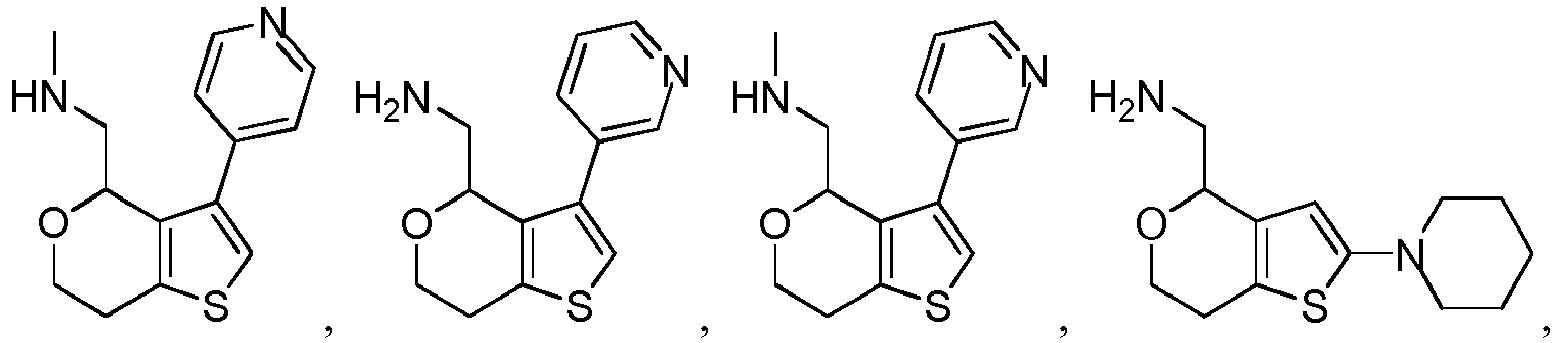


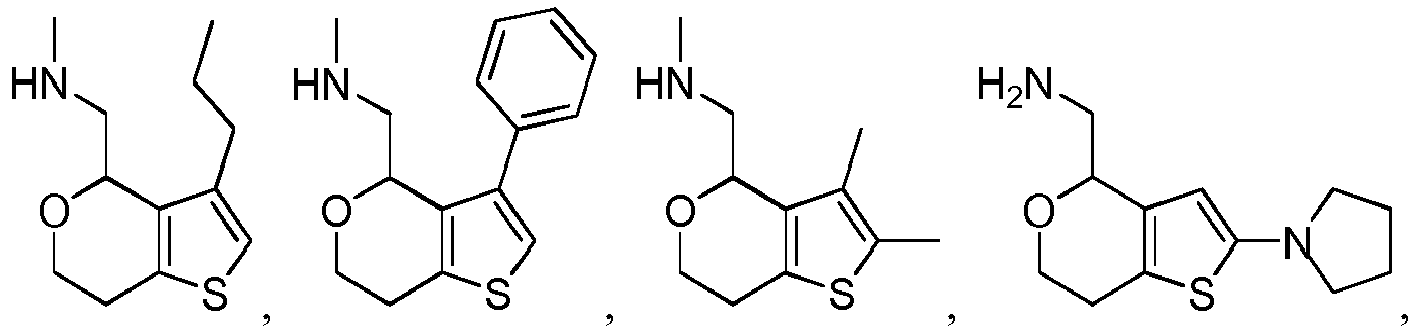


- 8. The compound of embodiment 5, wherein R1 and R2 together with the nitrogen atom to which they are attached form a heteroaryl or heterocyclyl, each of which is optionally substituted.
- 9. The compound of embodiment 8, wherein the compound is:
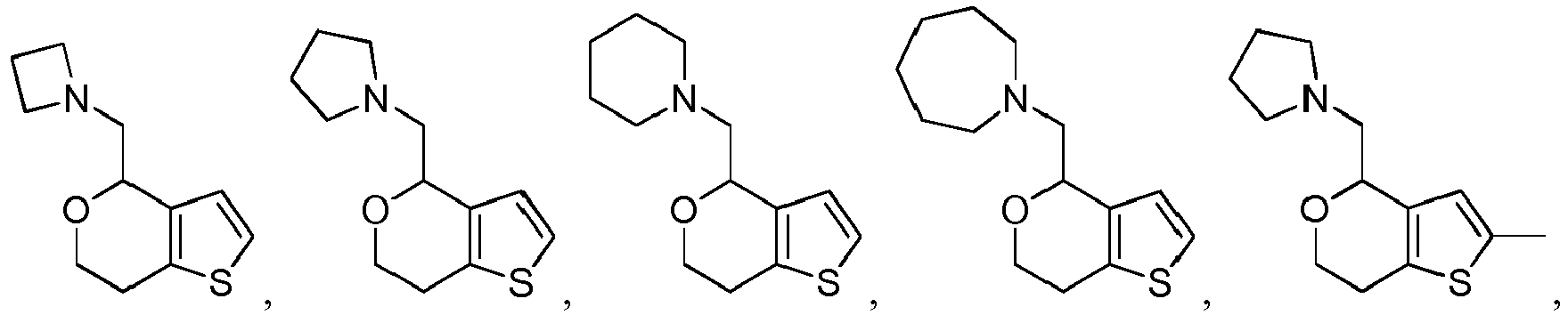


- 10. The compound of embodiment 5, wherein R1 and R3 together with the atoms to which they are attached form an optionally substituted heterocyclyl ring.
- 11. The compound of embodiment 10, wherein the compound is:

- 12. The compound of embodiment 5, wherein R3 and R4 together with the atom to which they are attached form a cycloalkyl or heterocyclyl ring, each of which is optionally substituted.
- 13. The compound of embodiment 12, wherein the compound is:


- 14. The compound of embodiment 5, wherein R6 and R7 together with the atoms to which they are attached form an aryl or cycloalkyl ring, each of which is optionally substituted.
- 15. The compound of embodiment 14, wherein the compound is:


- 16. The compound of embodiment 5, wherein R1 and R5 together with the atoms to which they are attached form an optionally substituted heterocyclyl.
- 17. The compound of embodiment 16, wherein the compound is:


- 18. The compound of embodiment 5, wherein R1 and R5 together with the atoms to which they are attached form an optionally substituted heterocyclyl and R6 and R7 together with the nitrogen atom to which they are attached form an optionally substituted aryl.
- 19. The compound of embodiment 18, wherein the compound is:

- 20. The compound of embodiment 5, wherein m is 0, and R3 and R4 are combined together to form a double bond and together with R1 and/or R2 and the atoms to which they are attached form an optionally substituted heteroaryl.
- 21. The compound of embodiment 20, wherein the compound is:


- 22. The compound of embodiment 5, wherein m is 1.
- 23. The compound of embodiment 22, wherein the compound is:

- 24. The compound of embodiment 5, wherein n is 2.
- 25. The compound of embodiment 24, wherein the compound is:


- 26. The compound of embodiment 5, wherein R5 is alkyl.
- 27. The compound of embodiment 26, wherein the compound is:

- 28. The compound of embodiment 1, having formula (IIc):

- 29. The compound of embodiment 28, wherein R5 is H.
- 30. The compound of embodiment 29, wherein the compound is:


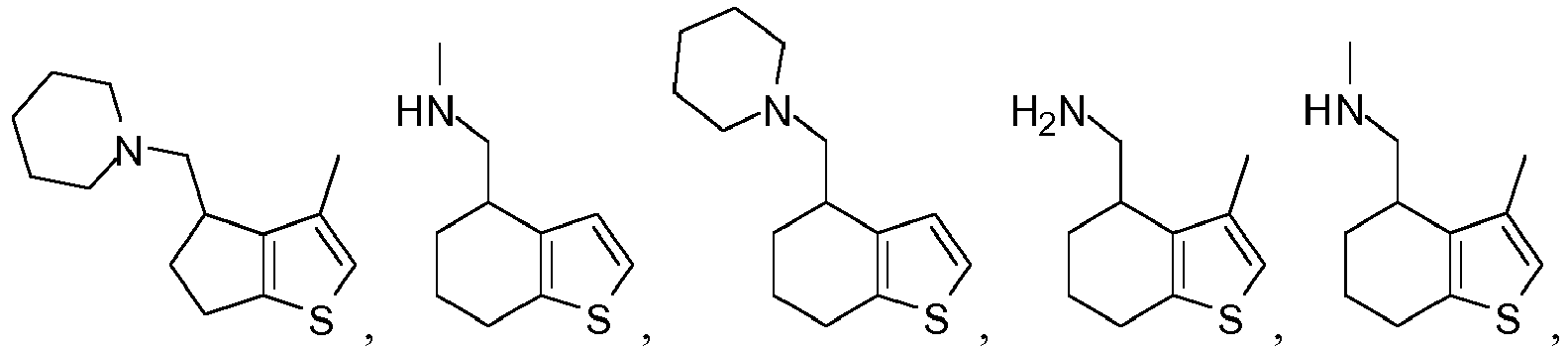

- 31. The compound of embodiment 28, wherein R5 is OH.
- 32. The compound of embodiment 1, having formula (IIIa):

- 33. The compound of embodiment 32, wherein the compound is:

- 34. The compound of embodiment 1, having formula (IVa):

- 35. The compound of embodiment 34, wherein m is 0; n is 1; R1 and R2 are each independently hydrogen, optionally substituted C1-C4 alkyl, or optionally substituted C3-C6 alkyl; R3 and R4 are each independently hydrogen or optionally substituted C1-C4 alkyl; R5 is hydrogen; and R6 and R7 are each independently hydrogen, halo, C1-C4 alkyl, aryl, heteroaryl, heterocyclyl, alkoxyl, or aminoalkyl, each of which is optionally substituted.
- 36. The compound of embodiment 35, wherein the compound is:




- 37. The compound of embodiment 34, wherein m is 1.
- 38. The compound of embodiment 37, wherein the compound is:

- 39. The compound of embodiment 34, wherein R1 and R2 together with the nitrogen atom to which they are attached form a heteroaryl or heterocyclyl, each of which is optionally substituted.
- 40. The compound of embodiment 39, wherein the compound is:

- 41. The compound of embodiment 34, wherein R1 and R3 together with the atoms to which they are attached form an optionally substituted heterocyclyl ring.
- 42. The compound of embodiment 41, wherein the compound is:

- 43. The compound of embodiment 34, wherein R1 and R5 together with the atoms to which they are attached form an optionally substituted heterocyclyl.
- 44. The compound of embodiment 43, wherein the compound is:

- 45. The compound of embodiment 34, wherein R6 and R7 together with the atoms to which they are attached form an aryl or cycloalkyl ring, each of which is optionally substituted.
- 46. The compound of embodiment 45, wherein the compound is:
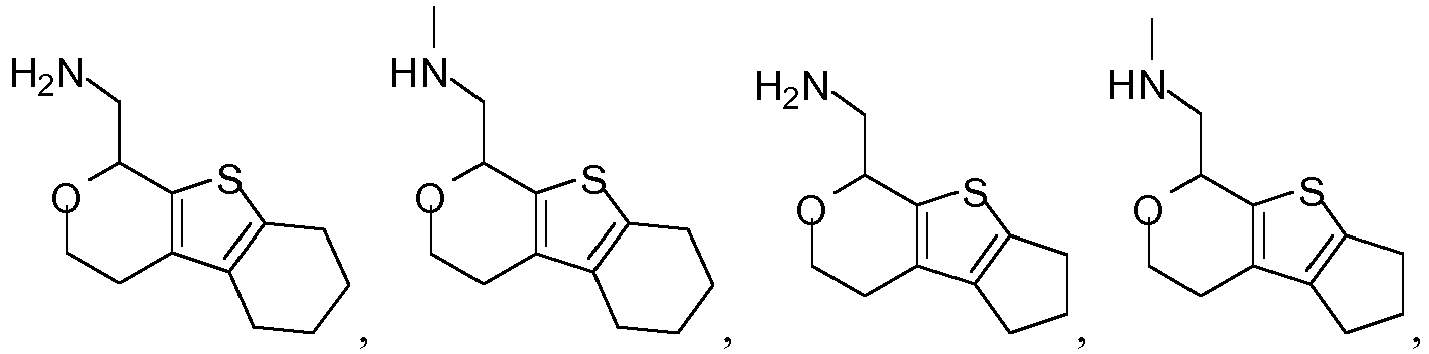


- 47. The compound of embodiment 34, wherein R1 and R5 together with the atoms to which they are attached form an optionally substituted heterocyclyl and R6 and R7 together with the atoms to which they are attached form an optionally substituted aryl.
- 48. The compound of embodiment 47, wherein the compound is:

- 49. The compound of embodiment 34, wherein m is 0 and R3 and R4 are combined together to form a double bond and together with R1 and/or R2 and the atoms to which they are attached form an optionally substituted heteroaryl.
- 50. The compound of embodiment 49, wherein the compound is:


- 51. The compound of embodiment 1, having formula (IVc):

- 52. The compound of embodiment 51, wherein the compound is:


- 53. The compound of embodiment 1, having formula (V):

- 54. The compound of embodiment 53, wherein the compound is:
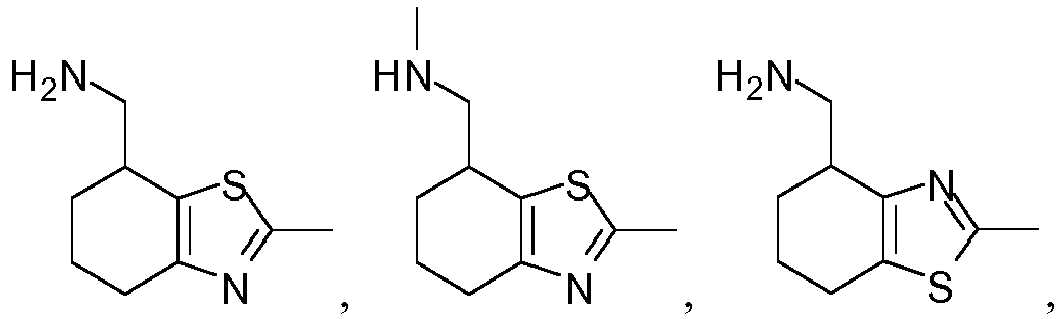

- 55. A compound of formula (VI):

- two of Z1, Z2 , and Z3 are C, and one of Z1, Z2 , and Z3 is S;
- R1 and R2 are each independently (i) hydrogen, alkyl, alkoxyl, aminoalkyl, alkenyl, alkynyl, cycloalkyl, cycloalkylalkyl, aryl, or aralkyl, each of which is optionally substituted; or (ii) -(CH2)p-R8, wherein R8 is SO2alky or SO2aryl, each of which is optionally substituted; or (iii) R1 and R2 together with the nitrogen atom to which they are attached form an optionally substituted heterocyclyl or heteroaryl;
- R3 and R4 are each independently (i) hydrogen, alkyl, alkoxyl, aminoalkyl, alkenyl, alkynyl, cycloalkyl, cycloalkylalkyl, aryl, or aralkyl, each of which is optionally substituted; or (ii) -(CH2)p-R9, wherein R9 is CF3, CN, nitro, amino, hydroxyl, or cycloalkoxyl, each of which is optionally substituted; or (iii) R3 and R4 together with the carbon atom to which they are attached form an optionally substituted cycloalkyl or heterocyclyl; or (iv) R3 and R1 together with the atoms to which they are attached form an optionally substituted heterocyclyl, and R4 is
- (i) or (ii); or (v) R3 and R4 are combined together to form a double bond and together with R1 and/or R2 and the atoms to which they are attached form an optionally substituted heteroaryl;
- R5 is (i) hydrogen, alkyl, alkoxyl, aminoalkyl, alkenyl, alkynyl, cycloalkyl, cycloalkylalkyl, aryl, or aralkyl, each of which is optionally substituted; or
- (ii) -(CH2)p-R10, wherein R10 is CF3, CN, nitro, amino, hydroxyl, or cycloalkoxyl, each of which is optionally substituted; or (iii) R5 and R1 together with the atoms to which they are attached form an optionally substituted heterocyclyl;
- R6 and R7 are each independently (i) hydrogen, halo, alkyl, alkoxyl, aminoalkyl, alkenyl, alkynyl, cycloalkyl, cycloalkylalkyl, aryl, or aralkyl, each of which is optionally substituted; or (ii) -(CH2)p-R11, wherein R11 is CF3, CN, nitro, amino, hydroxyl, cycloalkoxyl, heteroaryl, or heterocyclyl, each of which is optionally substituted; or (iii) R6 and R7 together with the atoms to which they are attached form an optionally substituted aryl, heteroaryl, cycloalkyl or heterocyclyl ring; and
- m is 0, 1, or 2;
- each occurrence of p is independently 0, 1, or 2.
- 56. The compound of embodiment 55, wherein the compound is:


- 57. A pharmaceutical composition comprising a compound of any one of embodiments 1 to 56, or a pharmaceutically acceptable salt or stereoisomer thereof, and a pharmaceutically acceptable excipient or carrier.
- 58. The pharmaceutical composition of embodiment 57, which further comprises one or more additional active agents.
- 59. A method of treating, preventing, or managing a neurological disorder, comprising administering to a subject a therapeutically or prophylactically effective amount of a compound of any one of embodiments 1 to 56, or a pharmaceutically acceptable salt or stereoisomer thereof.
- 60. The method of embodiment 59, wherein said subject is a human.
- 61. The method of embodiment 59 or 60, wherein the disorder is schizophrenia, schizophrenia spectrum disorder, acute schizophrenia, chronic schizophrenia, NOS schizophrenia, schizoid personality disorder, schizotypal personality disorder, delusional disorder, psychosis, psychotic disorder, brief psychotic disorder, shared psychotic disorder, psychotic disorder due to a general medical condition, drug-induced psychosis, psychoaffective disorder, aggression, delirium, Parkinson's psychosis, excitative psychosis, Tourette's syndrome, organic or NOS psychosis, seizure, agitation, post-traumatic stress disorder, behavior disorder, neurodegenerative disease, Alzheimer's disease, Parkinson's disease, dyskinesias, Huntington's disease, dementia, mood disorder, anxiety, affective disorder, depression, major depressive disorder, dysthymia, bipolar disorder, manic disorder; seasonal affective disorder; attention deficit disorder, attention deficit hyperactivity disorder, obsessive-compulsive disorder, vertigo, epilepsy, pain, neuropathic pain, sensitization accompanying neuropathic pain, inflammatory pain, fibromyalgia, migraine, cognitive impairment, movement disorder, restless leg syndrome, multiple sclerosis, sleep disorder, sleep apnea, narcolepsy, excessive daytime sleepiness, jet lag, drowsy side effect of medications, insomnia, substance abuse or dependency, addiction, eating disorder, sexual dysfunction, hypertension, emesis, Lesche-Nyhane disease, Wilson's disease, autism, Huntington's chorea, and premenstrual dysphoria.
- 62. The method of embodiment 59 or 60, wherein the disorder is psychosis or schizophrenia.
Claims (15)
- A compound of formula (I):
 one of X and Y is O, and the other is CH2; or both X and Y are CH2;one of Z1, Z2 , and Z3 is S; and (i) two of Z1, Z2 , and Z3 are C; or (ii) one of Z1, Z2 , and Z3 is C and one of Z1, Z2 , and Z3 is N;R1 and R2 are each independently (i) hydrogen, alkyl, alkoxyl, aminoalkyl, alkenyl, alkynyl, cycloalkyl, cycloalkylalkyl, aryl, or aralkyl, each of which is optionally substituted; or (ii) -(CH2)p-R8, wherein R8 is SO2alky or SO2aryl, each of which is optionally substituted; or (iii) R1 and R2 together with the nitrogen atom to which they are attached form an optionally substituted heterocyclyl or heteroaryl;R3 and R4 are each independently (i) hydrogen, alkyl, alkoxyl, aminoalkyl, alkenyl, alkynyl, cycloalkyl, cycloalkylalkyl, aryl, or aralkyl, each of which is optionally substituted; or (ii) -(CH2)p-R9, wherein R9 is CF3, CN, nitro, amino, hydroxyl, or cycloalkoxyl, each of which is optionally substituted; or (iii) R3 and R4 together with the carbon atom to which they are attached form an optionally substituted cycloalkyl or heterocyclyl; or (iv) R3 and R1 together with the atoms to which they are attached form an optionally substituted heterocyclyl, and R4 is (i) or (ii); or (v) R3 and R4 are combined together to form a double bond and together with R1 and/or R2 and the atoms to which they are attached form an optionally substituted heteroaryl;R5 is (i) hydrogen, alkyl, alkoxyl, aminoalkyl, alkenyl, alkynyl, cycloalkyl, cycloalkylalkyl, aryl, or aralkyl, each of which is optionally substituted; or (ii) -(CH2)p-R10, wherein R10 is CF3, CN, nitro, amino, hydroxyl, or cycloalkoxyl, each of which is optionally substituted; or (iii) R5 and R1 together with the atoms to which they are attached form an optionally substituted heterocyclyl;R6 and R7 are each independently (i) hydrogen, halo, alkyl, alkoxyl, aminoalkyl, alkenyl, alkynyl, cycloalkyl, cycloalkylalkyl, aryl, or aralkyl, each of which is optionally substituted; or (ii) -(CH2)p-R11, wherein R11 is CF3, CN, nitro, amino, hydroxyl, cycloalkoxyl, heteroaryl, or heterocyclyl, each of which is optionally substituted; or (iii) R6 and R7 together with the atoms to which they are attached form an optionally substituted aryl, heteroaryl, cycloalkyl or heterocyclyl ring; with the proviso that when one of Z1, Z2 , and Z3 is N, R7 is absent;m is 0, 1, or 2;n is 0, 1, or 2; andeach occurrence of p is independently 0, 1, or 2.
 - The compound of claim 1, having formula (IVa):

- The compound of claim 2, wherein m is 0; n is 1; R1 and R2 are each independently hydrogen, optionally substituted C1-C4 alkyl, or optionally substituted C3-C6 alkyl; R3 and R4 are each independently hydrogen or optionally substituted C1-C4 alkyl; R5 is hydrogen; and R6 and R7 are each independently hydrogen, halo, C1-C4 alkyl, aryl, heteroaryl, heterocyclyl, alkoxyl, or aminoalkyl, each of which is optionally substituted.
- The compound of claim 3, wherein the compound is:


- The compound of claim 2,
wherein m is 1; or
wherein R1 and R2 together with the nitrogen atom to which they are attached form a heteroaryl or heterocyclyl, each of which is optionally substituted; or
wherein R1 and R3 together with the atoms to which they are attached form an optionally substituted heterocyclyl ring; or
wherein R1 and R5 together with the atoms to which they are attached form an optionally substituted heterocyclyl; or
wherein R6 and R7 together with the atoms to which they are attached form an aryl or cycloalkyl ring, each of which is optionally substituted; or
wherein R1 and R5 together with the atoms to which they are attached form an optionally substituted heterocyclyl and R6 and R7 together with the atoms to which they are attached form an optionally substituted aryl; or
wherein m is 0 and R3 and R4 are combined together to form a double bond and together with R1 and/or R2 and the atoms to which they are attached form an optionally substituted heteroaryl. - The compound of claim 1, having formula (IIa):

- The compound of claim 6,
wherein m is 0; n is 1; R1 and R2 are each independently hydrogen, optionally substituted C1-C4 alkyl, or optionally substituted C3-C6 alkyl; R3 and R4 are each independently hydrogen or optionally substituted C1-C4 alkyl; R5 is hydrogen; and R6 and R7 are each independently hydrogen, halo, C1-C4 alkyl, aryl, heteroaryl, heterocyclyl, alkoxyl, or aminoalkyl, each of which is optionally substituted; or
wherein R1 and R2 together with the nitrogen atom to which they are attached form a heteroaryl or heterocyclyl, each of which is optionally substituted; or
wherein R1 and R3 together with the atoms to which they are attached form an optionally substituted heterocyclyl ring; or
wherein R3 and R4 together with the atom to which they are attached form a cycloalkyl or heterocyclyl ring, each of which is optionally substituted; or
wherein R6 and R7 together with the atoms to which they are attached form an aryl or cycloalkyl ring, each of which is optionally substituted; or
wherein R1 and R5 together with the atoms to which they are attached form an optionally substituted heterocyclyl; or
wherein R1 and R5 together with the atoms to which they are attached form an optionally substituted heterocyclyl and R6 and R7 together with the nitrogen atom to which they are attached form an optionally substituted aryl; or
wherein m is 0, and R3 and R4 are combined together to form a double bond and together with R1 and/or R2 and the atoms to which they are attached form an optionally substituted heteroaryl; or
wherein m is 1; or
wherein n is 2; or
wherein R5 is alkyl. - The compound of claim 1, having formula (IIc):

- The compound of claim 8,
wherein R5 is H; or
wherein R5 is OH. - The compound of claim 1, having formula (IIIa):

- The compound of claim 1, having formula (IVc):

- The compound of claim 1, having formula (V):

- A compound of formula (VI):
 two of Z1, Z2 , and Z3 are C, and one of Z1, Z2 , and Z3 is S;R1 and R2 are each independently (i) hydrogen, alkyl, alkoxyl, aminoalkyl, alkenyl, alkynyl, cycloalkyl, cycloalkylalkyl, aryl, or aralkyl, each of which is optionally substituted; or (ii) -(CH2)p-R8, wherein R8 is SO2alkyl or SO2aryl, each of which is optionally substituted; or (iii) R1 and R2 together with the nitrogen atom to which they are attached form an optionally substituted heterocyclyl or heteroaryl;R3 and R4 are each independently (i) hydrogen, alkyl, alkoxyl, aminoalkyl, alkenyl, alkynyl, cycloalkyl, cycloalkylalkyl, aryl, or aralkyl, each of which is optionally substituted; or (ii) -(CH2)p-R9, wherein R9 is CF3, CN, nitro, amino, hydroxyl, or cycloalkoxyl, each of which is optionally substituted; or (iii) R3 and R4 together with the carbon atom to which they are attached form an optionally substituted cycloalkyl or heterocyclyl; or (iv) R3 and R1 together with the atoms to which they are attached form an optionally substituted heterocyclyl, and R4 is (i) or (ii); or (v) R3 and R4 are combined together to form a double bond and together with R1 and/or R2 and the atoms to which they are attached form an optionally substituted heteroaryl;R5 is (i) hydrogen, alkyl, alkoxyl, aminoalkyl, alkenyl, alkynyl, cycloalkyl, cycloalkylalkyl, aryl, or aralkyl, each of which is optionally substituted; or (ii) -(CH2)p-R10, wherein R10 is CF3, CN, nitro, amino, hydroxyl, or cycloalkoxyl, each of which is optionally substituted; or (iii) R5 and R1 together with the atoms to which they are attached form an optionally substituted heterocyclyl;R6 and R7 are each independently (i) hydrogen, halo, alkyl, alkoxyl, aminoalkyl, alkenyl, alkynyl, cycloalkyl, cycloalkylalkyl, aryl, or aralkyl, each of which is optionally substituted; or (ii) -(CH2)p-R11, wherein R11 is CF3, CN, nitro, amino, hydroxyl, cycloalkoxyl, heteroaryl, or heterocyclyl, each of which is optionally substituted; or (iii) R6 and R7 together with the atoms to which they are attached form an optionally substituted aryl, heteroaryl, cycloalkyl or heterocyclyl ring; andm is 0, 1, or 2;each occurrence of p is independently 0, 1, or 2.
 - A pharmaceutical composition comprising a compound of any one of claims 1 to 13, or a pharmaceutically acceptable salt or stereoisomer thereof, and a pharmaceutically acceptable excipient or carrier, and optionally one or more additional active agents.
- The compound of any one of claims 1 to 13, or a pharmaceutically acceptable salt or stereoisomer thereof for use in a method of treating, preventing, or managing a neurological disorder,
optionally wherein the disorder is schizophrenia, schizophrenia spectrum disorder, acute schizophrenia, chronic schizophrenia, NOS schizophrenia, schizoid personality disorder, schizotypal personality disorder, delusional disorder, psychosis, psychotic disorder, brief psychotic disorder, shared psychotic disorder, psychotic disorder due to a general medical condition, drug-induced psychosis, psychoaffective disorder, aggression, delirium, Parkinson's psychosis, excitative psychosis, Tourette's syndrome, organic or NOS psychosis, seizure, agitation, post-traumatic stress disorder, behavior disorder, neurodegenerative disease, Alzheimer's disease, Parkinson's disease, dyskinesias, Huntington's disease, dementia, mood disorder, anxiety, affective disorder, depression, major depressive disorder, dysthymia, bipolar disorder, manic disorder; seasonal affective disorder; attention deficit disorder, attention deficit hyperactivity disorder, obsessive-compulsive disorder, vertigo, epilepsy, pain, neuropathic pain, sensitization accompanying neuropathic pain, inflammatory pain, fibromyalgia, migraine, cognitive impairment, movement disorder, restless leg syndrome, multiple sclerosis, sleep disorder, sleep apnea, narcolepsy, excessive daytime sleepiness, jet lag, drowsy side effect of medications, insomnia, substance abuse or dependency, addiction, eating disorder, sexual dysfunction, hypertension, emesis, Lesche-Nyhane disease, Wilson's disease, autism, Huntington's chorea, and premenstrual dysphoria;
preferably wherein the disorder is psychosis or schizophrenia.
Applications Claiming Priority (3)
| Application Number | Priority Date | Filing Date | Title |
|---|---|---|---|
| US26688009P | 2009-12-04 | 2009-12-04 | |
| PCT/US2010/058884 WO2011069063A2 (en) | 2009-12-04 | 2010-12-03 | Multicyclic compounds and methods of use thereof |
| EP10835185.9A EP2507245B1 (en) | 2009-12-04 | 2010-12-03 | Multicyclic compounds and methods of use thereof |
Related Parent Applications (1)
| Application Number | Title | Priority Date | Filing Date |
|---|---|---|---|
| EP10835185.9A Division EP2507245B1 (en) | 2009-12-04 | 2010-12-03 | Multicyclic compounds and methods of use thereof |
Publications (3)
| Publication Number | Publication Date |
|---|---|
| EP3252057A2 true EP3252057A2 (en) | 2017-12-06 |
| EP3252057A3 EP3252057A3 (en) | 2018-02-21 |
| EP3252057B1 EP3252057B1 (en) | 2024-03-27 |
Family
ID=44115515
Family Applications (2)
| Application Number | Title | Priority Date | Filing Date |
|---|---|---|---|
| EP10835185.9A Active EP2507245B1 (en) | 2009-12-04 | 2010-12-03 | Multicyclic compounds and methods of use thereof |
| EP17160203.0A Active EP3252057B1 (en) | 2009-12-04 | 2010-12-03 | Multicyclic compounds and methods of use thereof |
Family Applications Before (1)
| Application Number | Title | Priority Date | Filing Date |
|---|---|---|---|
| EP10835185.9A Active EP2507245B1 (en) | 2009-12-04 | 2010-12-03 | Multicyclic compounds and methods of use thereof |
Country Status (20)
| Country | Link |
|---|---|
| US (9) | US8710245B2 (en) |
| EP (2) | EP2507245B1 (en) |
| JP (7) | JP5778168B2 (en) |
| KR (7) | KR102505085B1 (en) |
| CN (5) | CN102762575B (en) |
| AU (3) | AU2010325925B2 (en) |
| BR (2) | BR112012013431B1 (en) |
| CA (2) | CA3272595A1 (en) |
| DK (2) | DK3252057T3 (en) |
| ES (2) | ES2978959T3 (en) |
| FI (1) | FI3252057T3 (en) |
| HK (1) | HK1212969A1 (en) |
| IL (6) | IL272376B2 (en) |
| MX (3) | MX388468B (en) |
| NZ (5) | NZ711802A (en) |
| PT (2) | PT3252057T (en) |
| RU (3) | RU2707067C2 (en) |
| SG (3) | SG10201401661RA (en) |
| WO (1) | WO2011069063A2 (en) |
| ZA (1) | ZA201203533B (en) |
Families Citing this family (47)
| Publication number | Priority date | Publication date | Assignee | Title |
|---|---|---|---|---|
| PT3252057T (en) * | 2009-12-04 | 2024-06-04 | Sunovion Pharmaceuticals Inc | Multicyclic compounds and methods of use thereof |
| WO2013066152A1 (en) * | 2011-10-31 | 2013-05-10 | N.V. Nutricia | Method for improving executive function |
| AU2013216935C1 (en) * | 2012-02-08 | 2017-12-14 | John Emmerson Campbell | Heteroaryl compounds and methods of use thereof |
| CN103755727B (en) * | 2013-12-20 | 2015-12-30 | 南京华威医药科技开发有限公司 | Preparation method of brinzolamide intermediate |
| WO2015112902A2 (en) * | 2014-01-23 | 2015-07-30 | Sova Pharmaceuticals, Inc. | CYSTATHIONINE-(gamma)-LYASE (CSE) INHIBITORS FOR TREATING PAIN |
| EP3186257B1 (en) | 2014-08-27 | 2019-02-06 | Prexton Therapeutics SA | Novel chromone oxime derivative and its use as allosteric modulator of metabotropic glutamate receptors |
| CN104193722A (en) * | 2014-08-27 | 2014-12-10 | 湖南华腾制药有限公司 | Preparation method of N-tert-butyloxycarbonyl-3-methylaminothiophene |
| AU2016219253C1 (en) * | 2015-02-11 | 2022-12-08 | Pgi Drug Discovery Llc | 1-heterocyclyl isochromanyl compounds and analogs for treating CNS disorders |
| CA2976092A1 (en) * | 2015-02-11 | 2016-08-18 | Sunovion Pharmaceuticals Inc. | Fused dihydro-4h-pyrazolo[5,1-c][1,4]oxazinyl compounds and analogs for treating cns disorders |
| WO2017032874A1 (en) | 2015-08-27 | 2017-03-02 | Prexton Therapeutics Sa | Brain-penetrant chromone oxime derivative for the therapy of levodopa-induced dyskinesia |
| JO3638B1 (en) * | 2015-09-09 | 2020-08-27 | Lilly Co Eli | Compounds useful for inhibiting ror-gamma-t |
| PT3407888T (en) * | 2016-01-26 | 2021-03-19 | Intra Cellular Therapies Inc | PYRIDOPIRROLOQUINOXALIN COMPOUNDS, THEIR COMPOSITIONS AND USES |
| WO2017144341A1 (en) | 2016-02-23 | 2017-08-31 | Bayer Cropscience Aktiengesellschaft | Condensed bicyclic heterocycle derivatives as pest control agents |
| MX2019000982A (en) | 2016-07-29 | 2019-07-04 | Sunovion Pharmaceuticals Inc | COMPOUNDS AND COMPOSITIONS AND USES THEREOF. |
| EA201990400A1 (en) | 2016-07-29 | 2019-07-31 | Суновион Фармасьютикалз, Инк. | COMPOUNDS AND COMPOSITIONS AND THEIR APPLICATION |
| CN116808023A (en) * | 2017-02-16 | 2023-09-29 | 桑诺维恩药品公司 | Method for treating schizophrenia |
| WO2018166855A1 (en) | 2017-03-16 | 2018-09-20 | Basf Se | Heterobicyclic substituted dihydroisoxazoles |
| JP7191085B2 (en) | 2017-08-02 | 2022-12-16 | サノビオン ファーマシューティカルズ インク | Isochroman compounds and uses thereof |
| JP2021513972A (en) * | 2018-02-16 | 2021-06-03 | サノビオン ファーマシューティカルズ インクSunovion Pharmaceuticals Inc. | How to treat social dysfunction |
| MX2020008537A (en) * | 2018-02-16 | 2021-01-08 | Sunovion Pharmaceuticals Inc | SALTS, CRYSTALLINE FORMS AND METHODS OF PRODUCTION THEREOF. |
| CA3122261A1 (en) * | 2018-12-06 | 2020-06-11 | Sunovion Pharmaceuticals Inc. | Methods of treating neurological and psychiatric disorders |
| CN113784755B (en) | 2019-03-14 | 2024-05-10 | 赛诺维信制药公司 | Salts of isochroman-based compounds, crystalline forms thereof, methods of preparation, therapeutic uses and pharmaceutical compositions |
| CN110894195A (en) * | 2019-12-09 | 2020-03-20 | 门希国 | Novel preparation method of 2-thiopheneacetic acid |
| EP4125840A1 (en) | 2020-03-27 | 2023-02-08 | Som Innovation Biotech, S.A. | Compounds for use in the treatment of synucleinopathies |
| CA3180115A1 (en) * | 2020-04-14 | 2021-10-21 | Sunovion Pharmaceuticals Inc. | (s)-(4,5-dihydro-7h-thieno[2,3-c]pyran-7-yl)-n-methylmethanamine for treating neurological and psychiatric disorders |
| EP4214212A1 (en) | 2020-09-16 | 2023-07-26 | Teva Pharmaceuticals International GmbH | Solid state forms of sep-363856 and process for preparation thereof |
| TWI836390B (en) * | 2021-03-29 | 2024-03-21 | 大陸商上海樞境生物科技有限公司 | Spirocyclic derivatives, their preparation methods and applications |
| CN117177977A (en) * | 2021-04-10 | 2023-12-05 | 住友制药株式会社 | Bicyclopyridine derivatives |
| US12077546B2 (en) | 2021-04-10 | 2024-09-03 | Sumitomo Pharma Co., Ltd. | Bicyclic pyridine derivative |
| BR112023020924A2 (en) * | 2021-04-10 | 2024-02-15 | Sumitomo Pharma Co Ltd | BICYCLIC PYRIDINE DERIVATIVE |
| CN115677718B (en) * | 2021-07-30 | 2024-11-01 | 武汉思瓴生物科技有限公司 | Methyl methylamine derivative preparation, pharmaceutical composition and application thereof |
| US20230241024A1 (en) | 2021-09-23 | 2023-08-03 | Sunovion Pharmaceuticals Inc. | Methods of treating metabolic disorders |
| EP4428128A4 (en) | 2021-11-04 | 2026-01-07 | Shanghai Hansoh Biomedical Co Ltd | 2-(ARYL-2-YL)MORPHOLINE AND DEUTERED DERIVATIVE THEREIN, METHOD OF PREPARATION AND USE THEREIN |
| CN114324369B (en) * | 2022-03-11 | 2022-06-07 | 北京新研创能科技有限公司 | Bipolar plate surface scratch detection system and method |
| KR20250028295A (en) * | 2022-06-24 | 2025-02-28 | 산동 루예 파마슈티칼 컴파니 리미티드 | Heterocyclic compounds as TAAR1 ligand agonists |
| AU2023334027A1 (en) | 2022-08-30 | 2025-01-09 | Sumitomo Pharma America, Inc. | Ulotaront for the adjuvant treatment of major depressive disorder |
| CN117777157B (en) * | 2022-09-27 | 2026-04-28 | 上海枢境生物科技有限公司 | Salts, crystal forms, preparation methods and applications of spirocyclic derivatives |
| EP4596556A4 (en) * | 2022-09-27 | 2025-12-10 | Shujing Biopharma Co Ltd | Spirocyclic derivative-containing salt or crystal form, and preparation method therefor and use thereof |
| EP4601634A1 (en) | 2022-10-13 | 2025-08-20 | Sumitomo Pharma America, Inc. | Methods of reducing physical dependence to neuropsychiatric treatments |
| CN115677719B (en) * | 2022-10-27 | 2025-03-07 | 复旦大学 | A kind of aromatic heterocyclic compound and its preparation method and use |
| AU2023367071A1 (en) | 2022-10-28 | 2025-06-12 | Sumitomo Pharma America, Inc. | Ulotaront for treating anxiety and associated conditions |
| JP2025538225A (en) | 2022-11-15 | 2025-11-26 | スミトモ・ファーマ・アメリカ・インコーポレイテッド | How to Switch Neuropsychiatric Medications |
| CN120418254A (en) * | 2022-12-09 | 2025-08-01 | 上海枢境生物科技有限公司 | Ring-merging derivative, preparation method, intermediate and application thereof |
| WO2025097104A1 (en) * | 2023-11-02 | 2025-05-08 | Pgi Drug Discovery Llc | Thienyl compounds for the treatment of a central nervous system disease or disorder |
| WO2025131045A1 (en) * | 2023-12-22 | 2025-06-26 | 山东绿叶制药有限公司 | Salt form of taar1 ligand agonist, crystal form, preparation method, and use |
| US20250262185A1 (en) | 2024-02-16 | 2025-08-21 | Sumitomo Pharma America, Inc. | Methods of administering neuropsychiatric medications based on renal impairment |
| TW202600129A (en) | 2024-02-23 | 2026-01-01 | 美商住友製藥美國公司 | Ulotaront hydrochloride manufacturing process |
Citations (14)
| Publication number | Priority date | Publication date | Assignee | Title |
|---|---|---|---|---|
| US3536809A (en) | 1969-02-17 | 1970-10-27 | Alza Corp | Medication method |
| US3598123A (en) | 1969-04-01 | 1971-08-10 | Alza Corp | Bandage for administering drugs |
| US3845770A (en) | 1972-06-05 | 1974-11-05 | Alza Corp | Osmatic dispensing device for releasing beneficial agent |
| US3916899A (en) | 1973-04-25 | 1975-11-04 | Alza Corp | Osmotic dispensing device with maximum and minimum sizes for the passageway |
| US4008719A (en) | 1976-02-02 | 1977-02-22 | Alza Corporation | Osmotic system having laminar arrangement for programming delivery of active agent |
| US5059595A (en) | 1989-03-22 | 1991-10-22 | Bioresearch, S.P.A. | Pharmaceutical compositions containing 5-methyltetrahydrofolic acid, 5-formyltetrahydrofolic acid and their pharmaceutically acceptable salts in controlled-release form active in the therapy of organic mental disturbances |
| US5073543A (en) | 1988-07-21 | 1991-12-17 | G. D. Searle & Co. | Controlled release formulations of trophic factors in ganglioside-lipsome vehicle |
| US5120548A (en) | 1989-11-07 | 1992-06-09 | Merck & Co., Inc. | Swelling modulated polymeric drug delivery device |
| US5134127A (en) | 1990-01-23 | 1992-07-28 | University Of Kansas | Derivatives of cyclodextrins exhibiting enhanced aqueous solubility and the use thereof |
| US5354556A (en) | 1984-10-30 | 1994-10-11 | Elan Corporation, Plc | Controlled release powder and process for its preparation |
| US5591767A (en) | 1993-01-25 | 1997-01-07 | Pharmetrix Corporation | Liquid reservoir transdermal patch for the administration of ketorolac |
| US5639476A (en) | 1992-01-27 | 1997-06-17 | Euro-Celtique, S.A. | Controlled release formulations coated with aqueous dispersions of acrylic polymers |
| US5674533A (en) | 1994-07-07 | 1997-10-07 | Recordati, S.A., Chemical And Pharmaceutical Company | Pharmaceutical composition for the controlled release of moguisteine in a liquid suspension |
| US5733566A (en) | 1990-05-15 | 1998-03-31 | Alkermes Controlled Therapeutics Inc. Ii | Controlled release of antiparasitic agents in animals |
Family Cites Families (127)
| Publication number | Priority date | Publication date | Assignee | Title |
|---|---|---|---|---|
| US402145A (en) * | 1889-04-30 | Combined trough and rack | ||
| US4021451A (en) * | 1972-05-16 | 1977-05-03 | American Home Products Corporation | Process for preparing polycyclic heterocycles having a pyran ring |
| US4036842A (en) * | 1972-05-16 | 1977-07-19 | American Home Products Corporation | Process for preparing polycyclic heterocycles having a pyran ring |
| US4021452A (en) | 1975-04-23 | 1977-05-03 | American Cyanamid Company | 2,5-Dihydro-2,5-dialkoxyfuran derivatives |
| US4127665A (en) | 1978-01-18 | 1978-11-28 | Pfizer Inc. | Thienohydantoin derivatives |
| US4147797A (en) * | 1978-08-11 | 1979-04-03 | Pfizer Inc. | Spiro-furanohydantoin derivatives |
| FR2459239A1 (en) * | 1979-06-20 | 1981-01-09 | Logeais Labor Jacques | NOVEL AMINO DERIVATIVES OF BENZOTHIAZOLE, PROCESS FOR PREPARING THEM AND THEIR THERAPEUTIC APPLICATION |
| GB8333512D0 (en) * | 1983-12-16 | 1984-01-25 | Erba Farmitalia | Tetrahydropyrano derivatives |
| NZ219646A (en) * | 1986-03-27 | 1990-10-26 | Merck Sharp & Dohme | Oxadiazole derivatives of azacyclics for treating cns disorders |
| PH30676A (en) | 1986-07-22 | 1997-09-16 | Boehringer Ingelhein Kg | Hetrazepine compounds which have useful pharmaceutical utility |
| PT90001B (en) | 1988-03-16 | 1994-06-30 | Zambeletti Spa L | METHOD FOR PREPARING HETEROCYCLIC DERIVATIVES OF ETHYLENODIAMINE |
| DE3827727A1 (en) | 1988-08-16 | 1990-02-22 | Boehringer Ingelheim Kg | ANALYZED TETRAHYDROPYRIDINE IGNESE DERIVATIVES, METHOD FOR THE PRODUCTION AND USE OF SUCH CONNECTIONS FOR CARDIRO PROTECTION |
| GB8824400D0 (en) | 1988-10-18 | 1988-11-23 | Glaxo Group Ltd | Chemical compounds |
| EP0368175A1 (en) | 1988-11-06 | 1990-05-16 | Boehringer Ingelheim Kg | 3S,7S-3-(Morpholinocarbonyl)-5-(2-chlorphenyl)-7,10-dimethyl-3,4-dihydro-2H,7H-cyclopenta[4,5]thieno[3,2-f][1,2,4]triazolo[4,3-a][1,4]diazepine. |
| GB8827479D0 (en) | 1988-11-24 | 1988-12-29 | Zambeletti Spa L | Novel compounds |
| EP0416740A3 (en) | 1989-08-08 | 1991-08-28 | Beecham Group P.L.C. | Novel compounds with renin-inhibiting activity |
| GB8926560D0 (en) | 1989-11-24 | 1990-01-17 | Zambeletti Spa L | Pharmaceuticals |
| US5032598A (en) | 1989-12-08 | 1991-07-16 | Merck & Co., Inc. | Nitrogens containing heterocyclic compounds as class III antiarrhythmic agents |
| GB8927872D0 (en) | 1989-12-08 | 1990-02-14 | Beecham Group Plc | Pharmaceuticals |
| JPH03223277A (en) * | 1989-12-29 | 1991-10-02 | Yoshitomi Pharmaceut Ind Ltd | Benzothiophene derivative |
| ZA912744B (en) | 1990-03-23 | 1992-02-26 | Zambeletti Spa L | Pharmaceuticals |
| JPH049367A (en) | 1990-04-26 | 1992-01-14 | Zeria Pharmaceut Co Ltd | Arylalkanoyl derivative, production intermediate for the compound and drug containing the same |
| GB9018139D0 (en) * | 1990-08-17 | 1990-10-03 | Pfizer Ltd | Therapeutic agents |
| NZ240155A (en) | 1990-10-29 | 1992-10-28 | Ishihara Sangyo Kaisha | Heterocyclyl acyl and (hexahydro) indanyl acyl substituted hydrazine derivatives, preparation thereof and pesticidal compositions |
| DE4104257A1 (en) | 1991-02-13 | 1992-08-20 | Boehringer Ingelheim Kg | USE OF ANALYZED TETRAHYDROPYRIDINE IGNESE DERIVATIVES FOR THE TREATMENT OF NEUROLOGICAL ILLNESSES |
| GB9104839D0 (en) | 1991-03-07 | 1991-04-17 | Zambeletti Spa L | Novel compounds |
| NZ243065A (en) | 1991-06-13 | 1995-07-26 | Lundbeck & Co As H | Piperidine derivatives and pharmaceutical compositions |
| PH31294A (en) | 1992-02-13 | 1998-07-06 | Thomae Gmbh Dr K | Benzimidazolyl derivatives, pharmaceutical compositions containing these compounds and process for preparing them. |
| JP3223277B2 (en) | 1992-04-10 | 2001-10-29 | カシオ計算機株式会社 | Music control device |
| FR2692264B1 (en) | 1992-06-12 | 1994-08-05 | Adir | NOVEL 1,4-DISUBSTITUTED PIPERAZINES, THEIR PREPARATION PROCESS AND THE PHARMACEUTICAL COMPOSITIONS CONTAINING THEM. |
| IT1255178B (en) * | 1992-06-26 | 1995-10-20 | Pierrel Spa | N (ETER0) -ARIL-N (ETERO) -TETRALINALCHIL PIPERAZINE HAVING SEROTONINERGIC, DOPAMINERGIC AND ADRENERGIC ACTIVITIES |
| DE59308842D1 (en) | 1992-12-02 | 1998-09-10 | Ciba Geigy Ag | Selective herbicidal agent |
| TW334423B (en) * | 1993-10-22 | 1998-06-21 | Hoffmann La Roche | Tricyclic 1-aminoethylpyrrole-derivatives |
| JP3163068B2 (en) | 1993-12-27 | 2001-05-08 | 日本建工株式会社 | Field edge mounting bracket |
| FR2723091B1 (en) | 1994-07-29 | 1996-11-08 | Esteve Labor Dr | TETRAHYDROPYRIDINE- (6,4-HYDROXYPIPERIDINE) ALKYLAZOLES |
| FR2734819B1 (en) | 1995-05-31 | 1997-07-04 | Adir | NOVEL COMPOUNDS OF PIPERAZINE, PIPERIDINE AND 1,2,5,6-TETRAHYDROPYRIDINE, PROCESS FOR THEIR PREPARATION AND PHARMACEUTICAL COMPOSITIONS CONTAINING THEM |
| WO1999046267A1 (en) | 1998-03-12 | 1999-09-16 | Novo Nordisk A/S | Modulators of protein tyrosine phosphatases (ptpases) |
| US6262044B1 (en) * | 1998-03-12 | 2001-07-17 | Novo Nordisk A/S | Modulators of protein tyrosine phosphatases (PTPASES) |
| EP1080068A1 (en) * | 1998-03-12 | 2001-03-07 | Novo Nordisk A/S | Modulators of protein tyrosine phosphatases |
| BR9908726A (en) * | 1998-03-12 | 2000-11-21 | Novo Nordisk As | Compound, pharmaceutical composition, use of a compound, and, processes for the treatment of type I diabetes and immune disorders, for the manufacture of a drug, and for the preparation of a compound |
| AU6325599A (en) | 1998-10-21 | 2000-05-08 | Dr. Reddy's Research Foundation | New compounds, their preparation and use |
| BR9917047A (en) | 1998-12-14 | 2002-07-30 | Fujisawa Pharmaceutical Co | Piperazine compound, method for preparing it, pharmaceutical composition containing it and its use |
| AU776276B2 (en) | 1999-01-19 | 2004-09-02 | Neurosearch A/S | Fused heterocyclic compounds and their use in the treatment of neurodegenerative diseases |
| US6313309B1 (en) * | 1999-04-05 | 2001-11-06 | Ortho-Mcneil Pharmaceutical, Inc. | 4-thionaphthyl—1H—imidazoles which are usefulα22-adrenoceptoR agonists/ antagonists |
| AU4589800A (en) | 1999-05-05 | 2000-11-21 | Darwin Discovery Limited | 9-(1,2,3,4-tetrahydronaphthalen-1-yl)-1,9-dihydropurin-6-one derivatives as pde7inhibitors |
| EP1196160B1 (en) | 1999-07-02 | 2005-12-21 | Warner-Lambert Company Llc | A synergistic combination: gabapentin and pregabalin |
| EP1214060A2 (en) | 1999-09-10 | 2002-06-19 | Novo Nordisk A/S | Method of inhibiting protein tyrosine phosphatase 1b and/or t-cell protein tyrosine phosphatase and/or other ptpases with an asp residue at position 48 |
| WO2001019831A1 (en) | 1999-09-10 | 2001-03-22 | Novo Nordisk A/S | MODULATORS OF PROTEIN TYROSINE PHOSPHATASES (PTPases) |
| WO2001032610A1 (en) | 1999-10-29 | 2001-05-10 | Kaken Pharmaceutical Co., Ltd. | Urea derivative, process for producing the same, and medicine containing the urea derivative |
| AR030537A1 (en) | 1999-11-05 | 2003-08-27 | Abbott Lab | ANTIBACTERIAL CHINOLINCARBOXILIC AND NAFTIRIDINCARBOXILIC ACIDS |
| ES2213996T3 (en) * | 1999-12-08 | 2004-09-01 | Centre National De La Recherche Scientifique (Cnrs) | USE OF HYMENIALDISINE OR ITS DERIVATIVES IN THE MANUFACTURE OF MEDICINES. |
| AU2001277731A1 (en) | 2000-08-09 | 2002-02-18 | Welfide Corporation | Fused bicyclic amide compounds and medicinal use thereof |
| AU2001286191A1 (en) | 2000-09-12 | 2002-03-26 | Sankyo Company, Limited | Quinolizine derivatives |
| WO2002102387A1 (en) | 2001-06-18 | 2002-12-27 | H. Lundbeck A/S | Treatment of neuropathic pain |
| US20040180883A1 (en) * | 2001-07-11 | 2004-09-16 | Jeremy Gilmore | Pharmaceutical compounds with serotonin receptor activity |
| EP1409476B1 (en) * | 2001-07-11 | 2004-12-15 | Eli Lilly And Company | Pharmaceutical compounds with serotonin receptor activity |
| JP5039268B2 (en) | 2001-10-26 | 2012-10-03 | アベンティス・ファーマスーティカルズ・インコーポレイテツド | Benzimidazoles and analogs and their use as protein kinase inhibitors |
| JP2003261566A (en) | 2002-03-11 | 2003-09-19 | Sankyo Co Ltd | Drugs containing quinolizine |
| TW200930291A (en) * | 2002-04-29 | 2009-07-16 | Bayer Cropscience Ag | Pesticidal heterocycles |
| US7276522B2 (en) | 2002-05-21 | 2007-10-02 | Allergan, Inc. | 4-(substituted cycloalkylmethyl) imidazole-2-thiones, 4-(substituted cycloalkenylmethyl) imidazole-2-thiones, 4-(substituted cycloalkylmethyl) imidazol-2-ones, 4-(substituted cycloalkenylmethyl) imidazol-2-ones and related compounds |
| US7091232B2 (en) | 2002-05-21 | 2006-08-15 | Allergan, Inc. | 4-(substituted cycloalkylmethyl) imidazole-2-thiones, 4-(substituted cycloalkenylmethyl) imidazole-2-thiones, 4-(substituted cycloalkylmethyl) imidazol-2-ones and 4-(substituted cycloalkenylmethyl) imidazol-2-ones and related compounds |
| US7358269B2 (en) | 2002-05-21 | 2008-04-15 | Allergan, Inc. | 2-((2-Thioxo-2,3-dihydro-1H-imidazol-4-yl)methyl)-3,4-dihydronapthalen-1(2H)-one |
| US7323485B2 (en) | 2002-05-21 | 2008-01-29 | Allergan, Inc. | 4-(substituted cycloalkylmethyl) imidazole-2-thiones, 4-(substituted cycloalkenylmethyl) imidazole-2-thiones, 4-(substituted cycloalkylmethyl) imidazol-2-ones and 4-(substituted cycloalkenylmethyl) imidazol-2-ones and related compounds |
| SE0202134D0 (en) | 2002-07-08 | 2002-07-08 | Astrazeneca Ab | Therapeutic agents |
| US7778779B2 (en) | 2002-10-16 | 2010-08-17 | Isis Innovation Limited | Method of identifying a chemical entity which is a hydroxylase modulator |
| DE10252667A1 (en) * | 2002-11-11 | 2004-05-27 | Grünenthal GmbH | New spiro-((cyclohexane)-tetrahydropyrano-(3,4-b)-indole) derivatives, are ORL1 receptor ligands useful e.g. for treating anxiety, depression, epilepsy, senile dementia, withdrawal symptoms or especially pain |
| CN101353321A (en) * | 2002-11-21 | 2009-01-28 | 辉瑞产品公司 | 3-amino-piperidine derivatives and preparation methods thereof |
| EP1587482A4 (en) | 2003-01-31 | 2010-08-25 | Technion Res & Dev Foundation | ANTI-INFLAMMATORY COMPOSITIONS AND USES THEREOF |
| WO2004078723A1 (en) | 2003-03-07 | 2004-09-16 | Santen Pharmaceutical Co. Ltd. | Novel compound having 4-pyridylalkylthio group as substituent |
| JP2004269449A (en) | 2003-03-11 | 2004-09-30 | Ishihara Sangyo Kaisha Ltd | Benzamide derivative, method for producing the same, and pest-controlling agent containing the same |
| US7205318B2 (en) | 2003-03-18 | 2007-04-17 | Bristol-Myers Squibb Company | Lactam-containing cyclic diamines and derivatives as a factor Xa inhibitors |
| WO2004087680A1 (en) | 2003-03-31 | 2004-10-14 | Taisho Pharmaceutical Co., Ltd. | Novel quinazoline derivatives and methods of treatment related to the use thereof |
| JP2005145859A (en) | 2003-11-13 | 2005-06-09 | Nippon Steel Chem Co Ltd | Dehydrogenation method and method for producing aromatic heterocyclic compound |
| DE10360793A1 (en) * | 2003-12-23 | 2005-07-28 | Grünenthal GmbH | Spirocyclic cyclohexane derivatives |
| AU2005208938A1 (en) | 2004-01-29 | 2005-08-11 | Elixir Pharmaceuticals, Inc | Anti-viral therapeutics |
| DE102004004974A1 (en) | 2004-01-31 | 2005-08-18 | Aventis Pharma Deutschland Gmbh | Thieno-imino acid derivatives as inhibitors of matrix metalloproteinases |
| KR100553398B1 (en) | 2004-03-12 | 2006-02-16 | 한미약품 주식회사 | Process for preparing thieno [3,2-c] pyridine derivatives and intermediates used therein |
| JP2008508314A (en) | 2004-07-28 | 2008-03-21 | アイアールエム・リミテッド・ライアビリティ・カンパニー | Compounds and compositions as modulators of steroid hormone nuclear receptors |
| SE0401970D0 (en) | 2004-08-02 | 2004-08-02 | Astrazeneca Ab | Novel compounds |
| SE0401971D0 (en) | 2004-08-02 | 2004-08-02 | Astrazeneca Ab | Piperidne derivatives |
| EP1634873A1 (en) | 2004-08-27 | 2006-03-15 | Laboratorios Del Dr. Esteve, S.A. | Sigma receptor inhibitors |
| FR2875230A1 (en) | 2004-09-13 | 2006-03-17 | Sanofi Aventis Sa | CONDENSED PYRAZOLE DERIVATIVES, THEIR PREPARATION AND THERAPEUTIC USE THEREOF |
| JP2006117568A (en) | 2004-10-20 | 2006-05-11 | Mitsubishi Pharma Corp | Novel amide derivatives having a thiophene ring and their use as pharmaceuticals |
| WO2006053274A2 (en) | 2004-11-15 | 2006-05-18 | Bristol-Myers Squibb Company | 2-amino-1-functionalized tetralin derivatives and related glycogen phosphorylase inhibitors |
| CN101120002A (en) * | 2005-02-17 | 2008-02-06 | 惠氏公司 | Cycloalkyl-fused indole, benzothiophene, benzofuran and indene derivatives |
| CN101203512A (en) | 2005-04-22 | 2008-06-18 | 第一三共株式会社 | Heterocyclic compounds |
| WO2007001939A1 (en) | 2005-06-27 | 2007-01-04 | Janssen Pharmaceutica N.V. | Tetrahydro-pyranopyrazole compounds displaying cannabinoid modulating activities |
| KR20080030630A (en) | 2005-06-27 | 2008-04-04 | 이 아이 듀폰 디 네모아 앤드 캄파니 | Electrically conductive polymer composition |
| BRPI0615524A2 (en) | 2005-07-11 | 2010-04-06 | Devgen Nv | amide derivatives as kinase inhibitors |
| US8846742B2 (en) | 2006-02-14 | 2014-09-30 | The Trustees Of Columbia University In The City Of New York | Neuronal pain pathway modulators |
| JP2009528999A (en) | 2006-02-21 | 2009-08-13 | アンプラ ファーマシューティカルズ インコーポレイテッド | CB1 antagonists and inverse agonists |
| EP1829869A1 (en) * | 2006-03-02 | 2007-09-05 | Laboratorios Del Dr. Esteve, S.A. | 4,5,6,7-Tetrahydrobenzo[b]thiophene derivatives and their use as sigma receptor ligands |
| JPWO2007126041A1 (en) * | 2006-04-28 | 2009-09-10 | エーザイ・アール・アンド・ディー・マネジメント株式会社 | Benzisoxazole compounds |
| AU2007305269A1 (en) | 2006-10-04 | 2008-04-10 | Schering Corporation | Bicyclic and tricyclic derivatives as thrombin receptor antagonists |
| US7960569B2 (en) | 2006-10-17 | 2011-06-14 | Bristol-Myers Squibb Company | Indole antagonists of P2Y1 receptor useful in the treatment of thrombotic conditions |
| US20100137294A1 (en) | 2006-11-15 | 2010-06-03 | Genetic Technologies Limited | Compounds, compositions and methods for controlling invertebrate pests |
| WO2009008906A2 (en) | 2007-02-06 | 2009-01-15 | The Trustees Of The University Of Pennsylvania | Therapeutic compounds for blocking dna synthesis of pox viruses |
| US7598417B2 (en) | 2007-04-12 | 2009-10-06 | Allergan, Inc. | Substituted fluoroethyl ureas as alpha 2 adrenergic agents |
| EP1982987A1 (en) * | 2007-04-16 | 2008-10-22 | Laboratorios del Dr. Esteve S.A. | Spiro-pyrano-pyrazole derivatives |
| EP1982714A1 (en) | 2007-04-16 | 2008-10-22 | Laboratorios del Dr. Esteve S.A. | Pyrano-pyrazole-amines |
| EP2020414A1 (en) | 2007-06-20 | 2009-02-04 | Laboratorios del Dr. Esteve S.A. | spiro[piperidine-4,4'-thieno[3,2-c]pyran] derivatives and related compounds as inhibitors of the sigma receptor for the treatment of psychosis |
| US8338623B2 (en) * | 2007-07-09 | 2012-12-25 | Abbvie Inc. | Compounds as cannabinoid receptor ligands |
| ES2469824T3 (en) | 2007-11-21 | 2014-06-20 | Janssen Pharmaceutica N.V. | Spiropiperidines for use as tryptase inhibitors |
| US7973051B2 (en) | 2007-11-30 | 2011-07-05 | Hoffman-La Roche Inc. | Aminothiazoles as FBPase inhibitors for diabetes |
| JPWO2009072621A1 (en) | 2007-12-07 | 2011-04-28 | 日産化学工業株式会社 | Substituted dihydroazole compounds and pest control agents |
| WO2009085256A1 (en) | 2007-12-27 | 2009-07-09 | Panacos Pharmaceuticals, Inc. | Anti-hiv compounds |
| CN101759710B (en) | 2008-10-06 | 2011-10-05 | 山东轩竹医药科技有限公司 | Cephalosporin derivatives containing substituted nitrogen heterocycles |
| US9776963B2 (en) | 2008-11-10 | 2017-10-03 | The Trustees Of The University Of Pennsylvania | Small molecule CD4 mimetics and uses thereof |
| TW201038569A (en) | 2009-02-16 | 2010-11-01 | Abbott Gmbh & Co Kg | Heterocyclic compounds, pharmaceutical compositions containing them, and their use in therapy |
| AR075442A1 (en) | 2009-02-16 | 2011-03-30 | Abbott Gmbh & Co Kg | AMINOTETRALINE DERIVATIVES, PHARMACEUTICAL COMPOSITIONS THAT CONTAIN THEM AND THEIR USES IN THERAPY |
| WO2011036889A1 (en) | 2009-09-25 | 2011-03-31 | 武田薬品工業株式会社 | Heterocyclic compound |
| DK2501704T3 (en) | 2009-11-16 | 2013-10-14 | Lilly Co Eli | Spiropiperidine Compounds as Oral-1 Receptor Antagonists |
| UA107943C2 (en) * | 2009-11-16 | 2015-03-10 | Lilly Co Eli | SPIROPIPERIDINE COMPOUNDS AS AN ORL-1 RECEPTOR ANTAGONISTS |
| PT3252057T (en) | 2009-12-04 | 2024-06-04 | Sunovion Pharmaceuticals Inc | Multicyclic compounds and methods of use thereof |
| WO2011081205A1 (en) | 2009-12-28 | 2011-07-07 | 一般社団法人ファルマIp | 1,3,4-oxadiazole-2-carboxamide compound |
| EP2377850A1 (en) | 2010-03-30 | 2011-10-19 | Pharmeste S.r.l. | TRPV1 vanilloid receptor antagonists with a bicyclic portion |
| JP2013525368A (en) | 2010-04-23 | 2013-06-20 | キネタ・インコーポレイテツド | Antiviral compounds |
| US8883839B2 (en) | 2010-08-13 | 2014-11-11 | Abbott Laboratories | Tetraline and indane derivatives, pharmaceutical compositions containing them, and their use in therapy |
| US9051280B2 (en) | 2010-08-13 | 2015-06-09 | AbbVie Deutschland GmbH & Co. KG | Tetraline and indane derivatives, pharmaceutical compositions containing them, and their use in therapy |
| JP5715713B2 (en) | 2011-03-10 | 2015-05-13 | ベーリンガー インゲルハイム インターナショナル ゲゼルシャフト ミット ベシュレンクテル ハフツング | Soluble guanylate cyclase activator |
| CN102731574B (en) | 2011-03-30 | 2016-03-02 | 中国人民解放军军事医学科学院毒物药物研究所 | Thienopyridines α-amido benzyl phosphonic acid ester, Preparation Method And The Use |
| WO2013010453A1 (en) | 2011-07-15 | 2013-01-24 | Abbott Laboratories | Chemoking receptor antagonists |
| CN106537488B (en) | 2014-07-23 | 2019-06-07 | 夏普株式会社 | Display device and driving method thereof |
| CN116808023A (en) | 2017-02-16 | 2023-09-29 | 桑诺维恩药品公司 | Method for treating schizophrenia |
| MX2020008537A (en) | 2018-02-16 | 2021-01-08 | Sunovion Pharmaceuticals Inc | SALTS, CRYSTALLINE FORMS AND METHODS OF PRODUCTION THEREOF. |
| JP2021513972A (en) | 2018-02-16 | 2021-06-03 | サノビオン ファーマシューティカルズ インクSunovion Pharmaceuticals Inc. | How to treat social dysfunction |
| CA3122261A1 (en) | 2018-12-06 | 2020-06-11 | Sunovion Pharmaceuticals Inc. | Methods of treating neurological and psychiatric disorders |
-
2010
- 2010-12-03 PT PT171602030T patent/PT3252057T/en unknown
- 2010-12-03 CA CA3272595A patent/CA3272595A1/en active Pending
- 2010-12-03 KR KR1020217030661A patent/KR102505085B1/en active Active
- 2010-12-03 NZ NZ711802A patent/NZ711802A/en unknown
- 2010-12-03 PT PT108351859T patent/PT2507245T/en unknown
- 2010-12-03 DK DK17160203.0T patent/DK3252057T3/en active
- 2010-12-03 KR KR1020207002216A patent/KR102307413B1/en active Active
- 2010-12-03 MX MX2013013377A patent/MX388468B/en unknown
- 2010-12-03 RU RU2018100098A patent/RU2707067C2/en active
- 2010-12-03 KR KR1020187012385A patent/KR102074089B1/en active Active
- 2010-12-03 AU AU2010325925A patent/AU2010325925B2/en active Active
- 2010-12-03 KR KR1020177023257A patent/KR101855471B1/en active Active
- 2010-12-03 CN CN201080062822.2A patent/CN102762575B/en active Active
- 2010-12-03 KR KR1020167017387A patent/KR101772834B1/en active Active
- 2010-12-03 KR KR1020127017294A patent/KR101637247B1/en active Active
- 2010-12-03 NZ NZ731621A patent/NZ731621A/en unknown
- 2010-12-03 MX MX2012006326A patent/MX2012006326A/en active IP Right Grant
- 2010-12-03 KR KR1020157019665A patent/KR101637246B1/en active Active
- 2010-12-03 EP EP10835185.9A patent/EP2507245B1/en active Active
- 2010-12-03 CN CN201610836552.5A patent/CN106883246B/en active Active
- 2010-12-03 CN CN202010422479.3A patent/CN111560025A/en active Pending
- 2010-12-03 CA CA2781716A patent/CA2781716A1/en active Pending
- 2010-12-03 SG SG10201401661RA patent/SG10201401661RA/en unknown
- 2010-12-03 NZ NZ767139A patent/NZ767139A/en unknown
- 2010-12-03 DK DK10835185.9T patent/DK2507245T3/en active
- 2010-12-03 SG SG10201510665WA patent/SG10201510665WA/en unknown
- 2010-12-03 ES ES17160203T patent/ES2978959T3/en active Active
- 2010-12-03 BR BR112012013431-0A patent/BR112012013431B1/en active IP Right Grant
- 2010-12-03 WO PCT/US2010/058884 patent/WO2011069063A2/en not_active Ceased
- 2010-12-03 CN CN202410181638.3A patent/CN118165002A/en active Pending
- 2010-12-03 JP JP2012542219A patent/JP5778168B2/en active Active
- 2010-12-03 EP EP17160203.0A patent/EP3252057B1/en active Active
- 2010-12-03 ES ES10835185.9T patent/ES2625330T3/en active Active
- 2010-12-03 RU RU2012127770/04A patent/RU2557059C2/en active
- 2010-12-03 NZ NZ600008A patent/NZ600008A/en unknown
- 2010-12-03 NZ NZ626068A patent/NZ626068A/en unknown
- 2010-12-03 FI FIEP17160203.0T patent/FI3252057T3/en active
- 2010-12-03 BR BR122021013836-2A patent/BR122021013836B1/en active IP Right Grant
- 2010-12-03 CN CN201410333332.1A patent/CN104193761B/en active Active
- 2010-12-03 US US13/513,176 patent/US8710245B2/en active Active
- 2010-12-03 IL IL272376A patent/IL272376B2/en unknown
- 2010-12-03 SG SG2012040895A patent/SG181498A1/en unknown
- 2010-12-03 RU RU2015119926A patent/RU2641648C1/en active
-
2012
- 2012-05-15 ZA ZA2012/03533A patent/ZA201203533B/en unknown
- 2012-06-01 MX MX2020012825A patent/MX2020012825A/en unknown
- 2012-06-04 IL IL220173A patent/IL220173A0/en active IP Right Grant
-
2014
- 2014-03-12 US US14/205,859 patent/US9351954B2/en active Active
- 2014-12-15 JP JP2014253082A patent/JP5710064B1/en active Active
-
2015
- 2015-06-09 HK HK15105471.0A patent/HK1212969A1/en unknown
- 2015-07-08 JP JP2015136603A patent/JP6005807B2/en active Active
- 2015-11-24 US US14/950,834 patent/US10085968B2/en active Active
- 2015-12-10 IL IL243021A patent/IL243021B/en active IP Right Grant
- 2015-12-10 IL IL243019A patent/IL243019B/en active IP Right Grant
- 2015-12-10 IL IL243018A patent/IL243018B/en active IP Right Grant
- 2015-12-10 IL IL243015A patent/IL243015B/en active IP Right Grant
-
2016
- 2016-01-27 AU AU2016200448A patent/AU2016200448C1/en active Active
- 2016-07-01 JP JP2016131247A patent/JP6028310B1/en active Active
- 2016-09-29 JP JP2016191898A patent/JP6297655B2/en active Active
-
2017
- 2017-10-20 AU AU2017248551A patent/AU2017248551B2/en active Active
-
2018
- 2018-02-21 JP JP2018028819A patent/JP2018104454A/en active Pending
- 2018-08-30 US US16/117,450 patent/US20190125722A1/en not_active Abandoned
-
2020
- 2020-02-14 US US16/791,118 patent/US10894033B2/en active Active
- 2020-06-24 JP JP2020108727A patent/JP7104746B2/en active Active
- 2020-11-19 US US16/952,401 patent/US20210267938A1/en not_active Abandoned
-
2022
- 2022-01-13 US US17/574,702 patent/US20220387382A1/en not_active Abandoned
-
2024
- 2024-01-18 US US18/416,065 patent/US20240358675A1/en not_active Abandoned
-
2025
- 2025-10-10 US US19/354,929 patent/US20260034093A1/en active Pending
Patent Citations (14)
| Publication number | Priority date | Publication date | Assignee | Title |
|---|---|---|---|---|
| US3536809A (en) | 1969-02-17 | 1970-10-27 | Alza Corp | Medication method |
| US3598123A (en) | 1969-04-01 | 1971-08-10 | Alza Corp | Bandage for administering drugs |
| US3845770A (en) | 1972-06-05 | 1974-11-05 | Alza Corp | Osmatic dispensing device for releasing beneficial agent |
| US3916899A (en) | 1973-04-25 | 1975-11-04 | Alza Corp | Osmotic dispensing device with maximum and minimum sizes for the passageway |
| US4008719A (en) | 1976-02-02 | 1977-02-22 | Alza Corporation | Osmotic system having laminar arrangement for programming delivery of active agent |
| US5354556A (en) | 1984-10-30 | 1994-10-11 | Elan Corporation, Plc | Controlled release powder and process for its preparation |
| US5073543A (en) | 1988-07-21 | 1991-12-17 | G. D. Searle & Co. | Controlled release formulations of trophic factors in ganglioside-lipsome vehicle |
| US5059595A (en) | 1989-03-22 | 1991-10-22 | Bioresearch, S.P.A. | Pharmaceutical compositions containing 5-methyltetrahydrofolic acid, 5-formyltetrahydrofolic acid and their pharmaceutically acceptable salts in controlled-release form active in the therapy of organic mental disturbances |
| US5120548A (en) | 1989-11-07 | 1992-06-09 | Merck & Co., Inc. | Swelling modulated polymeric drug delivery device |
| US5134127A (en) | 1990-01-23 | 1992-07-28 | University Of Kansas | Derivatives of cyclodextrins exhibiting enhanced aqueous solubility and the use thereof |
| US5733566A (en) | 1990-05-15 | 1998-03-31 | Alkermes Controlled Therapeutics Inc. Ii | Controlled release of antiparasitic agents in animals |
| US5639476A (en) | 1992-01-27 | 1997-06-17 | Euro-Celtique, S.A. | Controlled release formulations coated with aqueous dispersions of acrylic polymers |
| US5591767A (en) | 1993-01-25 | 1997-01-07 | Pharmetrix Corporation | Liquid reservoir transdermal patch for the administration of ketorolac |
| US5674533A (en) | 1994-07-07 | 1997-10-07 | Recordati, S.A., Chemical And Pharmaceutical Company | Pharmaceutical composition for the controlled release of moguisteine in a liquid suspension |
Non-Patent Citations (46)
| Title |
|---|
| "Bioreversible Carriers in Drug in Drug Design, Theory and Application", 1987, APHA ACAD. PHARM. SCI. |
| "Diagnostic and Statistical Manual of Mental Disorders", 1997, AMERICAN PSYCHIATRIC ASSOCIATION |
| "Handbook of Pharmaceutical Additives", 2007, GOWER PUBLISHING COMPANY |
| "Handbook of Pharmaceutical Excipients", 2005, THE PHARMACEUTICAL PRESS AND THE AMERICAN PHARMACEUTICAL ASSOCIATION |
| "Handbook of Pharmaceutical Salts, Properties, and Use", 2002, WILEY-VCH AND VHCA |
| "Harrison's Principles of Internal Medicine", 1991, pages: 93 - 98 |
| "Introduction to Pharmaceutical Dosage Forms", 1985, LEA & FEBIGER |
| "Pharmaceutical Preformulation and Formulation", 2009, CRC PRESS LLC |
| "Remington: The Science and Practice of Pharmacy", 2005, LIPPINCOTT WILLIAMS & WILKINS |
| "Remington's Pharmaceutical Sciences", 1990, MACK PUBLISHING |
| "Remington's The Science and Practice of Pharmacy", 2005, LIPPINCOTT WILLIAMS & WILKINS |
| ASGHARNEJAD ET AL.: "Transport Processes in Pharmaceutical Systems", 2000, MARCELL DEKKER, pages: 185 - 218 |
| BAKSHI; GEYER, PSYCHOPHARMACOLOGY, vol. 122, 1995, pages 198 - 201 |
| BALANT ET AL., EUR. J. DRUG METAB. PHARMACOKINET, vol. 1ó, 1990, pages 143 - 53 |
| BALIMANE; SINKO, ADV. DRUG DELIVERY REV., vol. 39, 1999, pages 183 - 209 |
| BERGE ET AL., J. PHARM. SCI., vol. 66, 1977, pages 1 - 19 |
| BROWNE, CLIN. NEUROPHARMACOL., vol. 20, 1997, pages 1 - 12 |
| BUNDGAARD, ADV. DRUG DELIVERY REV., vol. 8, 1992, pages 1 - 38 |
| BUNDGAARD, ARCH. PHARM. CHEM., vol. 86, 1979, pages 1 - 39 |
| BUNDGAARD, CONTROLLED DRUG DELIVERY, vol. 17, 1987, pages 179 - 196 |
| BUNDGAARD: "Design of Prodrugs", 1985, ELSEVIER |
| FARQUHAR ET AL., J. PHARM. SCI., vol. 72, 1983, pages 324 - 325 |
| FLEISHER ET AL., ADV. DRUG DELIVERY REV., vol. 19, 1996, pages 115 - 130 |
| FLEISHER ET AL., METHODS ENZYMOL., vol. 112, 1985, pages 360 - 381 |
| FREEMAN ET AL., J. CHEM. SOC., CHEM. COMMUN., 1991, pages 875 - 877 |
| FRIIS; BUNDGAARD, EUR. J. PHARM. SCI., vol. 4, 1996, pages 49 - 59 |
| GAIGNAULT ET AL., PRACT. MED. CHEM., 1996, pages 671 - 696 |
| GANGWAR ET AL., DES. BIOPHARM. PROP. PRODRUGS ANALOGS, 1977, pages 409 - 421 |
| HARPER, PROGRESS IN DRUG RESEARCH, vol. 4, 1962, pages 221 - 294 |
| J. ORG. CHEM., vol. 72, 2007, pages 23A |
| JENS T. CARSTENSEN: "Drug Stability: Principles & Practice", 1995, MARCEL DEKKER, pages: 379 - 380 |
| MIZEN ET AL., PHARM. BIOTECH., vol. 11, 1998, pages 345 - 365 |
| MOROZOWICH ET AL.: "APHA Acad. Pharm. Sci.", 1977, article "Design of Biopharmaceutical Properties through Prodrugs and Analogs" |
| NATHWANI; WOOD, DRUGS, vol. 45, 1993, pages 866 - 894 |
| PAULETTI ET AL., ADV. DRUG. DELIVERY REV., vol. 27, 1997, pages 235 - 256 |
| SINHABABU; THAKKER, ADV. DRUG DELIVERY REV., vol. 19, 1996, pages 241 - 273 |
| STELLA ET AL., DRUGS, vol. 29, 1985, pages 455 - 473 |
| STILL ET AL., J. ORG. CHEM., vol. 43, 1978, pages 2923 |
| SWEDLOW ET AL., J. PHARM. EXP. THER., vol. 279, 1996, pages 1290 - 1299 |
| TAN ET AL., ADV. DRUG DELIVERY REV., vol. 39, 1999, pages 117 - 151 |
| TAYLOR, ADV. DRUG DELIVERY REV., vol. 19, 1996, pages 131 - 148 |
| VALENTINO; BORCHARDT, DRUG DISCOVERY TODAY, vol. 2, 1997, pages 148 - 155 |
| WALLER ET AL., BR. J. CLIN. PHARMAC., vol. 28, 1989, pages 497 - 507 |
| WANG ET AL., CURR. PHARM. DESIGN, vol. 5, 1999, pages 265 - 287 |
| WIEBE; KNAUS, ADV. DRUG DELIVERY REV., vol. 39, 1999, pages 63 - 80 |
| WILLIAMS ET AL., J. OF MED. CHEM., vol. 42, 1999, pages 1481 - 1485 |
Also Published As
Similar Documents
| Publication | Publication Date | Title |
|---|---|---|
| US10894033B2 (en) | Multicyclic compounds and methods of use thereof | |
| EP2812324A1 (en) | Heteroaryl compounds and methods of use thereof | |
| HK1247911B (en) | Multicyclic compounds and methods of use thereof |
Legal Events
| Date | Code | Title | Description |
|---|---|---|---|
| PUAI | Public reference made under article 153(3) epc to a published international application that has entered the european phase |
Free format text: ORIGINAL CODE: 0009012 |
|
| STAA | Information on the status of an ep patent application or granted ep patent |
Free format text: STATUS: THE APPLICATION HAS BEEN PUBLISHED |
|
| AC | Divisional application: reference to earlier application |
Ref document number: 2507245 Country of ref document: EP Kind code of ref document: P |
|
| AK | Designated contracting states |
Kind code of ref document: A2 Designated state(s): AL AT BE BG CH CY CZ DE DK EE ES FI FR GB GR HR HU IE IS IT LI LT LU LV MC MK MT NL NO PL PT RO RS SE SI SK SM TR |
|
| PUAL | Search report despatched |
Free format text: ORIGINAL CODE: 0009013 |
|
| AK | Designated contracting states |
Kind code of ref document: A3 Designated state(s): AL AT BE BG CH CY CZ DE DK EE ES FI FR GB GR HR HU IE IS IT LI LT LU LV MC MK MT NL NO PL PT RO RS SE SI SK SM TR |
|
| RIC1 | Information provided on ipc code assigned before grant |
Ipc: A61P 25/00 20060101ALI20180112BHEP Ipc: C07D 333/56 20060101ALI20180112BHEP Ipc: C07D 495/04 20060101AFI20180112BHEP Ipc: A61K 31/381 20060101ALI20180112BHEP Ipc: C07D 495/20 20060101ALI20180112BHEP Ipc: A61P 25/18 20060101ALI20180112BHEP |
|
| STAA | Information on the status of an ep patent application or granted ep patent |
Free format text: STATUS: REQUEST FOR EXAMINATION WAS MADE |
|
| 17P | Request for examination filed |
Effective date: 20180820 |
|
| RBV | Designated contracting states (corrected) |
Designated state(s): AL AT BE BG CH CY CZ DE DK EE ES FI FR GB GR HR HU IE IS IT LI LT LU LV MC MK MT NL NO PL PT RO RS SE SI SK SM TR |
|
| REG | Reference to a national code |
Ref country code: HK Ref legal event code: DE Ref document number: 1247911 Country of ref document: HK |
|
| RAP1 | Party data changed (applicant data changed or rights of an application transferred) |
Owner name: SUNOVION PHARMACEUTICALS INC. Owner name: PGI DRUG DISCOVERY LLC |
|
| STAA | Information on the status of an ep patent application or granted ep patent |
Free format text: STATUS: EXAMINATION IS IN PROGRESS |
|
| 17Q | First examination report despatched |
Effective date: 20200103 |
|
| GRAP | Despatch of communication of intention to grant a patent |
Free format text: ORIGINAL CODE: EPIDOSNIGR1 |
|
| STAA | Information on the status of an ep patent application or granted ep patent |
Free format text: STATUS: GRANT OF PATENT IS INTENDED |
|
| INTG | Intention to grant announced |
Effective date: 20230515 |
|
| GRAS | Grant fee paid |
Free format text: ORIGINAL CODE: EPIDOSNIGR3 |
|
| GRAJ | Information related to disapproval of communication of intention to grant by the applicant or resumption of examination proceedings by the epo deleted |
Free format text: ORIGINAL CODE: EPIDOSDIGR1 |
|
| GRAL | Information related to payment of fee for publishing/printing deleted |
Free format text: ORIGINAL CODE: EPIDOSDIGR3 |
|
| STAA | Information on the status of an ep patent application or granted ep patent |
Free format text: STATUS: EXAMINATION IS IN PROGRESS |
|
| P01 | Opt-out of the competence of the unified patent court (upc) registered |
Effective date: 20230920 |
|
| INTC | Intention to grant announced (deleted) | ||
| GRAP | Despatch of communication of intention to grant a patent |
Free format text: ORIGINAL CODE: EPIDOSNIGR1 |
|
| STAA | Information on the status of an ep patent application or granted ep patent |
Free format text: STATUS: GRANT OF PATENT IS INTENDED |
|
| INTG | Intention to grant announced |
Effective date: 20240122 |
|
| GRAA | (expected) grant |
Free format text: ORIGINAL CODE: 0009210 |
|
| STAA | Information on the status of an ep patent application or granted ep patent |
Free format text: STATUS: THE PATENT HAS BEEN GRANTED |
|
| AC | Divisional application: reference to earlier application |
Ref document number: 2507245 Country of ref document: EP Kind code of ref document: P |
|
| AK | Designated contracting states |
Kind code of ref document: B1 Designated state(s): AL AT BE BG CH CY CZ DE DK EE ES FI FR GB GR HR HU IE IS IT LI LT LU LV MC MK MT NL NO PL PT RO RS SE SI SK SM TR |
|
| REG | Reference to a national code |
Ref country code: GB Ref legal event code: FG4D |
|
| REG | Reference to a national code |
Ref country code: CH Ref legal event code: EP |
|
| REG | Reference to a national code |
Ref country code: DE Ref legal event code: R096 Ref document number: 602010069317 Country of ref document: DE |
|
| REG | Reference to a national code |
Ref country code: IE Ref legal event code: FG4D |
|
| REG | Reference to a national code |
Ref country code: PT Ref legal event code: SC4A Ref document number: 3252057 Country of ref document: PT Date of ref document: 20240604 Kind code of ref document: T Free format text: AVAILABILITY OF NATIONAL TRANSLATION Effective date: 20240528 |
|
| REG | Reference to a national code |
Ref country code: DK Ref legal event code: T3 Effective date: 20240613 |
|
| REG | Reference to a national code |
Ref country code: FI Ref legal event code: FGE |
|
| PG25 | Lapsed in a contracting state [announced via postgrant information from national office to epo] |
Ref country code: LT Free format text: LAPSE BECAUSE OF FAILURE TO SUBMIT A TRANSLATION OF THE DESCRIPTION OR TO PAY THE FEE WITHIN THE PRESCRIBED TIME-LIMIT Effective date: 20240327 |
|
| REG | Reference to a national code |
Ref country code: NL Ref legal event code: FP Ref country code: LT Ref legal event code: MG9D |
|
| PG25 | Lapsed in a contracting state [announced via postgrant information from national office to epo] |
Ref country code: GR Free format text: LAPSE BECAUSE OF FAILURE TO SUBMIT A TRANSLATION OF THE DESCRIPTION OR TO PAY THE FEE WITHIN THE PRESCRIBED TIME-LIMIT Effective date: 20240628 |
|
| REG | Reference to a national code |
Ref country code: SE Ref legal event code: TRGR |
|
| PG25 | Lapsed in a contracting state [announced via postgrant information from national office to epo] |
Ref country code: RS Free format text: LAPSE BECAUSE OF FAILURE TO SUBMIT A TRANSLATION OF THE DESCRIPTION OR TO PAY THE FEE WITHIN THE PRESCRIBED TIME-LIMIT Effective date: 20240627 Ref country code: HR Free format text: LAPSE BECAUSE OF FAILURE TO SUBMIT A TRANSLATION OF THE DESCRIPTION OR TO PAY THE FEE WITHIN THE PRESCRIBED TIME-LIMIT Effective date: 20240327 |
|
| PG25 | Lapsed in a contracting state [announced via postgrant information from national office to epo] |
Ref country code: RS Free format text: LAPSE BECAUSE OF FAILURE TO SUBMIT A TRANSLATION OF THE DESCRIPTION OR TO PAY THE FEE WITHIN THE PRESCRIBED TIME-LIMIT Effective date: 20240627 Ref country code: LT Free format text: LAPSE BECAUSE OF FAILURE TO SUBMIT A TRANSLATION OF THE DESCRIPTION OR TO PAY THE FEE WITHIN THE PRESCRIBED TIME-LIMIT Effective date: 20240327 Ref country code: HR Free format text: LAPSE BECAUSE OF FAILURE TO SUBMIT A TRANSLATION OF THE DESCRIPTION OR TO PAY THE FEE WITHIN THE PRESCRIBED TIME-LIMIT Effective date: 20240327 Ref country code: GR Free format text: LAPSE BECAUSE OF FAILURE TO SUBMIT A TRANSLATION OF THE DESCRIPTION OR TO PAY THE FEE WITHIN THE PRESCRIBED TIME-LIMIT Effective date: 20240628 Ref country code: BG Free format text: LAPSE BECAUSE OF FAILURE TO SUBMIT A TRANSLATION OF THE DESCRIPTION OR TO PAY THE FEE WITHIN THE PRESCRIBED TIME-LIMIT Effective date: 20240327 |
|
| RAP2 | Party data changed (patent owner data changed or rights of a patent transferred) |
Owner name: PGI DRUG DISCOVERY LLC Owner name: SUMITOMO PHARMA AMERICA, INC. |
|
| REG | Reference to a national code |
Ref country code: BE Ref legal event code: PD Owner name: SUMITOMO PHARMA AMERICA, INC.; US Free format text: DETAILS ASSIGNMENT: CHANGE OF OWNER(S), MERGE; FORMER OWNER NAME: SUNOVION PHARMACEUTICALS INC. Effective date: 20240712 |
|
| PG25 | Lapsed in a contracting state [announced via postgrant information from national office to epo] |
Ref country code: LV Free format text: LAPSE BECAUSE OF FAILURE TO SUBMIT A TRANSLATION OF THE DESCRIPTION OR TO PAY THE FEE WITHIN THE PRESCRIBED TIME-LIMIT Effective date: 20240327 |
|
| REG | Reference to a national code |
Ref country code: ES Ref legal event code: FG2A Ref document number: 2978959 Country of ref document: ES Kind code of ref document: T3 Effective date: 20240923 |
|
| PG25 | Lapsed in a contracting state [announced via postgrant information from national office to epo] |
Ref country code: IS Free format text: LAPSE BECAUSE OF FAILURE TO SUBMIT A TRANSLATION OF THE DESCRIPTION OR TO PAY THE FEE WITHIN THE PRESCRIBED TIME-LIMIT Effective date: 20240727 |
|
| PG25 | Lapsed in a contracting state [announced via postgrant information from national office to epo] |
Ref country code: SM Free format text: LAPSE BECAUSE OF FAILURE TO SUBMIT A TRANSLATION OF THE DESCRIPTION OR TO PAY THE FEE WITHIN THE PRESCRIBED TIME-LIMIT Effective date: 20240327 |
|
| REG | Reference to a national code |
Ref country code: AT Ref legal event code: HC Ref document number: 1669823 Country of ref document: AT Kind code of ref document: T Owner name: PGI DRUG DISCOVERY LLC, US Effective date: 20240906 Ref country code: AT Ref legal event code: HC Ref document number: 1669823 Country of ref document: AT Kind code of ref document: T Owner name: SUMITOMO PHARMA AMERICA, INC., US Effective date: 20240906 |
|
| PG25 | Lapsed in a contracting state [announced via postgrant information from national office to epo] |
Ref country code: EE Free format text: LAPSE BECAUSE OF FAILURE TO SUBMIT A TRANSLATION OF THE DESCRIPTION OR TO PAY THE FEE WITHIN THE PRESCRIBED TIME-LIMIT Effective date: 20240327 Ref country code: CZ Free format text: LAPSE BECAUSE OF FAILURE TO SUBMIT A TRANSLATION OF THE DESCRIPTION OR TO PAY THE FEE WITHIN THE PRESCRIBED TIME-LIMIT Effective date: 20240327 |
|
| PG25 | Lapsed in a contracting state [announced via postgrant information from national office to epo] |
Ref country code: PL Free format text: LAPSE BECAUSE OF FAILURE TO SUBMIT A TRANSLATION OF THE DESCRIPTION OR TO PAY THE FEE WITHIN THE PRESCRIBED TIME-LIMIT Effective date: 20240327 |
|
| PG25 | Lapsed in a contracting state [announced via postgrant information from national office to epo] |
Ref country code: SK Free format text: LAPSE BECAUSE OF FAILURE TO SUBMIT A TRANSLATION OF THE DESCRIPTION OR TO PAY THE FEE WITHIN THE PRESCRIBED TIME-LIMIT Effective date: 20240327 |
|
| PG25 | Lapsed in a contracting state [announced via postgrant information from national office to epo] |
Ref country code: SM Free format text: LAPSE BECAUSE OF FAILURE TO SUBMIT A TRANSLATION OF THE DESCRIPTION OR TO PAY THE FEE WITHIN THE PRESCRIBED TIME-LIMIT Effective date: 20240327 Ref country code: SK Free format text: LAPSE BECAUSE OF FAILURE TO SUBMIT A TRANSLATION OF THE DESCRIPTION OR TO PAY THE FEE WITHIN THE PRESCRIBED TIME-LIMIT Effective date: 20240327 Ref country code: RO Free format text: LAPSE BECAUSE OF FAILURE TO SUBMIT A TRANSLATION OF THE DESCRIPTION OR TO PAY THE FEE WITHIN THE PRESCRIBED TIME-LIMIT Effective date: 20240327 Ref country code: PL Free format text: LAPSE BECAUSE OF FAILURE TO SUBMIT A TRANSLATION OF THE DESCRIPTION OR TO PAY THE FEE WITHIN THE PRESCRIBED TIME-LIMIT Effective date: 20240327 Ref country code: IS Free format text: LAPSE BECAUSE OF FAILURE TO SUBMIT A TRANSLATION OF THE DESCRIPTION OR TO PAY THE FEE WITHIN THE PRESCRIBED TIME-LIMIT Effective date: 20240727 Ref country code: EE Free format text: LAPSE BECAUSE OF FAILURE TO SUBMIT A TRANSLATION OF THE DESCRIPTION OR TO PAY THE FEE WITHIN THE PRESCRIBED TIME-LIMIT Effective date: 20240327 Ref country code: CZ Free format text: LAPSE BECAUSE OF FAILURE TO SUBMIT A TRANSLATION OF THE DESCRIPTION OR TO PAY THE FEE WITHIN THE PRESCRIBED TIME-LIMIT Effective date: 20240327 |
|
| REG | Reference to a national code |
Ref country code: DE Ref legal event code: R097 Ref document number: 602010069317 Country of ref document: DE |
|
| PLBE | No opposition filed within time limit |
Free format text: ORIGINAL CODE: 0009261 |
|
| STAA | Information on the status of an ep patent application or granted ep patent |
Free format text: STATUS: NO OPPOSITION FILED WITHIN TIME LIMIT |
|
| 26N | No opposition filed |
Effective date: 20250103 |
|
| PG25 | Lapsed in a contracting state [announced via postgrant information from national office to epo] |
Ref country code: SI Free format text: LAPSE BECAUSE OF FAILURE TO SUBMIT A TRANSLATION OF THE DESCRIPTION OR TO PAY THE FEE WITHIN THE PRESCRIBED TIME-LIMIT Effective date: 20240327 |
|
| REG | Reference to a national code |
Ref country code: DE Ref legal event code: R081 Ref document number: 602010069317 Country of ref document: DE Owner name: SUMITOMO PHARMA AMERICA, INC., MARLBOROUGH, US Free format text: FORMER OWNERS: PGI DRUG DISCOVERY LLC, PARAMUS, NJ, US; SUNOVION PHARMACEUTICALS INC., MARLBOROUGH, MA, US Ref country code: DE Ref legal event code: R081 Ref document number: 602010069317 Country of ref document: DE Owner name: PGI DRUG DISCOVERY LLC, PARAMUS, US Free format text: FORMER OWNERS: PGI DRUG DISCOVERY LLC, PARAMUS, NJ, US; SUNOVION PHARMACEUTICALS INC., MARLBOROUGH, MA, US |
|
| REG | Reference to a national code |
Ref country code: LU Ref legal event code: PD Free format text: FORMER OWNER: PGI DRUG DISCOVERY LLC Effective date: 20250508 Ref country code: NL Ref legal event code: PD Owner name: PGI DRUG DISCOVERY LLC; US Free format text: DETAILS ASSIGNMENT: CHANGE OF OWNER(S), MERGE; FORMER OWNER NAME: SUNOVION PHARMACEUTICALS INC. Effective date: 20250528 |
|
| PG25 | Lapsed in a contracting state [announced via postgrant information from national office to epo] |
Ref country code: MC Free format text: LAPSE BECAUSE OF FAILURE TO SUBMIT A TRANSLATION OF THE DESCRIPTION OR TO PAY THE FEE WITHIN THE PRESCRIBED TIME-LIMIT Effective date: 20240327 |
|
| REG | Reference to a national code |
Ref country code: GB Ref legal event code: 732E Free format text: REGISTERED BETWEEN 20250814 AND 20250820 |
|
| REG | Reference to a national code |
Ref country code: AT Ref legal event code: UEP Ref document number: 1669823 Country of ref document: AT Kind code of ref document: T Effective date: 20240327 |
|
| PGFP | Annual fee paid to national office [announced via postgrant information from national office to epo] |
Ref country code: NL Payment date: 20251112 Year of fee payment: 16 Ref country code: LU Payment date: 20251128 Year of fee payment: 16 |
|
| PGFP | Annual fee paid to national office [announced via postgrant information from national office to epo] |
Ref country code: PT Payment date: 20251203 Year of fee payment: 16 |
|
| REG | Reference to a national code |
Ref country code: CH Ref legal event code: U11 Free format text: ST27 STATUS EVENT CODE: U-0-0-U10-U11 (AS PROVIDED BY THE NATIONAL OFFICE) Effective date: 20260101 |
|
| PGFP | Annual fee paid to national office [announced via postgrant information from national office to epo] |
Ref country code: DE Payment date: 20251028 Year of fee payment: 16 |
|
| PGFP | Annual fee paid to national office [announced via postgrant information from national office to epo] |
Ref country code: GB Payment date: 20251030 Year of fee payment: 16 |
|
| PGFP | Annual fee paid to national office [announced via postgrant information from national office to epo] |
Ref country code: NO Payment date: 20251210 Year of fee payment: 16 |
|
| PGFP | Annual fee paid to national office [announced via postgrant information from national office to epo] |
Ref country code: AT Payment date: 20251126 Year of fee payment: 16 |
|
| PGFP | Annual fee paid to national office [announced via postgrant information from national office to epo] |
Ref country code: IT Payment date: 20251121 Year of fee payment: 16 Ref country code: FI Payment date: 20251211 Year of fee payment: 16 Ref country code: DK Payment date: 20251212 Year of fee payment: 16 |
|
| PGFP | Annual fee paid to national office [announced via postgrant information from national office to epo] |
Ref country code: FR Payment date: 20251110 Year of fee payment: 16 |
|
| PGFP | Annual fee paid to national office [announced via postgrant information from national office to epo] |
Ref country code: BE Payment date: 20251117 Year of fee payment: 16 |
|
| PGFP | Annual fee paid to national office [announced via postgrant information from national office to epo] |
Ref country code: SE Payment date: 20251028 Year of fee payment: 16 |
|
| PGFP | Annual fee paid to national office [announced via postgrant information from national office to epo] |
Ref country code: IE Payment date: 20251111 Year of fee payment: 16 |
|
| PG25 | Lapsed in a contracting state [announced via postgrant information from national office to epo] |
Ref country code: CY Free format text: LAPSE BECAUSE OF FAILURE TO SUBMIT A TRANSLATION OF THE DESCRIPTION OR TO PAY THE FEE WITHIN THE PRESCRIBED TIME-LIMIT; INVALID AB INITIO Effective date: 20101203 |
|
| PGFP | Annual fee paid to national office [announced via postgrant information from national office to epo] |
Ref country code: ES Payment date: 20260108 Year of fee payment: 16 |
|
| PGFP | Annual fee paid to national office [announced via postgrant information from national office to epo] |
Ref country code: CH Payment date: 20260101 Year of fee payment: 16 |