EP3249382B1 - Mittel zur transparentisierung biologischer proben, system und verwendung davon - Google Patents
Mittel zur transparentisierung biologischer proben, system und verwendung davon Download PDFInfo
- Publication number
- EP3249382B1 EP3249382B1 EP16740221.3A EP16740221A EP3249382B1 EP 3249382 B1 EP3249382 B1 EP 3249382B1 EP 16740221 A EP16740221 A EP 16740221A EP 3249382 B1 EP3249382 B1 EP 3249382B1
- Authority
- EP
- European Patent Office
- Prior art keywords
- biological material
- clearing
- treatment
- less
- urea
- Prior art date
- Legal status (The legal status is an assumption and is not a legal conclusion. Google has not performed a legal analysis and makes no representation as to the accuracy of the status listed.)
- Active
Links
Images





Classifications
-
- G—PHYSICS
- G01—MEASURING; TESTING
- G01N—INVESTIGATING OR ANALYSING MATERIALS BY DETERMINING THEIR CHEMICAL OR PHYSICAL PROPERTIES
- G01N1/00—Sampling; Preparing specimens for investigation
- G01N1/28—Preparing specimens for investigation including physical details of (bio-)chemical methods covered elsewhere, e.g. G01N33/50, C12Q
- G01N1/30—Staining; Impregnating ; Fixation; Dehydration; Multistep processes for preparing samples of tissue, cell or nucleic acid material and the like for analysis
-
- G—PHYSICS
- G01—MEASURING; TESTING
- G01N—INVESTIGATING OR ANALYSING MATERIALS BY DETERMINING THEIR CHEMICAL OR PHYSICAL PROPERTIES
- G01N1/00—Sampling; Preparing specimens for investigation
- G01N1/28—Preparing specimens for investigation including physical details of (bio-)chemical methods covered elsewhere, e.g. G01N33/50, C12Q
-
- G—PHYSICS
- G01—MEASURING; TESTING
- G01N—INVESTIGATING OR ANALYSING MATERIALS BY DETERMINING THEIR CHEMICAL OR PHYSICAL PROPERTIES
- G01N33/00—Investigating or analysing materials by specific methods not covered by groups G01N1/00 - G01N31/00
- G01N33/48—Biological material, e.g. blood, urine; Haemocytometers
- G01N33/483—Physical analysis of biological material
- G01N33/4833—Physical analysis of biological material of solid biological material, e.g. tissue samples, cell cultures
Definitions
- the present invention relates to a clearing reagent for making a biological material transparent, and use thereof.
- Typical examples of known clearing reagents and known clearing treatment methods encompass (i) a Focus Clear (product name) solution described by Ann-Shyn Chiang in Patent Literature 1 and Non-Patent Literature 1 and (ii) a tissue clearing method described by Hans-Ulrich Dodt et al. in Non-Patent Literature 2. These are both used to make a tissue transparent for an observation of a structure which exists in the tissue and which is labeled by a fluorescent substance.
- Scale a clearing technique in which a water-soluble reagent containing urea is used. Scale established a foundation of techniques for three-dimensionally observing a structure of a biological material by making the biological material transparent. (Patent Literature 2 and Non-Patent Literature 3).
- Non Patent Literature 5 discloses a clearing technique (CLARITY) based on a physicochemical method using an electrophoresis apparatus.
- CLARITY uses an electrophoresis apparatus to physicochemically treat acrylamide polymer-embedded brain tissue, for removing lipid components are removed.
- the brain tissue is made transparent in 2 weeks.
- CLARITY unfortunately requires a dedicated device and involves a complicated process.
- electrophoresis generates heat as time elapses, it is difficult to prevent thermal denaturation of protein in a biological material.
- CLARITY performs clearing by removing light scattering of lipid membrane through causing lipid to be eluted from tissue with use of ionic surfactant sodium dodecyl sulfate (SDS) at a high concentration (4%). This causes large loss, for example, of (i) structures of plasma membranes of cells and structures of secretion vesicles and (ii) proteins floating in lipid membranes.
- SDS sodium dodecyl sulfate
- Scale is free of (i) such a problem of SeeDB that non-versatile apparatuses, such as lenses optimized for high refractive index and a two-photon microscope, are necessary and (ii) such problems of CLARITY as thermal denaturation of a biological material and necessity of a dedicated device. It should be noted that although conventional Scale possess such an advantage as an extremely simple process, there is a demand for a further rapid increase in transparency (light-transmitting property) while an original form of a biological material is preserved.
- Non-Patent Literature 6 a technique (CUBIC) has been developed, which is based on clarification with use of urea as with the Scale technique and which achieves excellent clarification by treating a biological material with use of a clearing reagent further containing aminoalcohol and a nonionic surfactant.
- a technique (Scale B4) disclosed in WO2012/147965 enables a reduction in the amount of time required for increasing transparency of a biological material.
- Scale B4 Scale B4
- urea or the like which is an active component for clearing treatment
- CUBIC reduces the amount of time for increasing transparency
- CUBIC poses a risk of disrupting the structure of cellular tissue, depending on the effect of a nonionic surfactant contained at a high concentration.
- CUBIC solution containing aminoalcohol has a pH of 11.4, strong alkali may cause denaturation or loss of proteins which constitute membranes. This makes it highly probable that normal fine structures of membranes which constitute cells are not maintained.
- the inventors of the present invention observed fine structures with use of an electron microscope, and found that shapes of tissue were seriously disrupted in the cells of a biological material treated by CUBIC.
- the inventors of the present invention found that the effect of CUBIC to reduce the amount of time for a clearing treatment is the result of the following: denaturation of the biological material caused destruction of the fine structures of the cells, so that permeation of the clearing reagent became easy.
- the present invention has been made in order to solve the problems, and an object of the present invention is to provide (i) a novel clearing reagent for making a biological material transparent which clearing agent takes advantage of a synergistic effect of, as an active component, a combination of urea or a urea derivative with sorbitol and (ii) use of the clearing agent.
- the clearing reagent causes less quenching of fluorescence of the fluorescent protein in comparison with existing clearing reagents and is therefore suitable for observation of a biological material with use of fluorescent protein.
- the inventors of the present invention conceived an idea of making a clearing reagent permeate into a biological material which has once been treated to shrink, while the volume of the biological material is restored by stress after removing the shrinkage effect, so that the clearing reagent to efficiently permeates into the biological material without destruction of fine structures of the biological material.
- the present invention includes the following configurations.
- the specific and detailed characteristics of the present invention are defined in independent claim 1. Further embodiments are defined in the dependent claims.
- a clearing reagent for making a biological material transparent including: at least one compound selected from the group consisting of urea and a urea derivative; sorbitol; and a surfactant which is contained at a concentration of 5 (w/v)% or less, the clearing reagent being a solution.
- the present invention includes a clearing reagent for making a biological material transparent, which clearing reagent uses a combination of urea or a urea derivative with sorbitol.
- the present invention can advantageously provide (i) a clearing reagent capable of quickly increasing transparency without considerably changing an original form of a biological material and (ii) use of the clearing reagent.
- a “clearing reagent for making a biological material transparent” in accordance with an aspect of the present invention is a solution containing "urea” as an essential active component.
- a “clearing reagent for making a biological material transparent” in accordance with another aspect of the present invention is a solution containing a "urea derivative" as an essential active component.
- the urea derivative is not limited to any particular kind. Specifically, for example, the urea derivative is any of various kinds of ureine or compounds expressed by Formula (1) below. Note that the compounds expressed by Formula (1) include part of ureines.
- the clearing reagent for making a biological material transparent in accordance with an embodiment of the present invention needs to contain, as an active component, at least one compound selected from the group consisting of urea and urea derivatives. Among these, the clearing agent more preferably contains urea.
- each of R1, R2, R3, and R4 is independently a hydrogen atom (note that the one in which all of R1 through R4 are hydrogen atoms is excluded, since it corresponds to urea), a halogen atom, or a hydrocarbon group.
- the hydrocarbon group has a plurality of carbon atoms, part of the carbon atoms can be replaced by a hetero atom such as a nitrogen atom, an oxygen atom, or a sulfur atom.
- the hydrocarbon group encompass a chain hydrocarbon group and a cyclic hydrocarbon group.
- Examples of the chain hydrocarbon group encompass a chain alkyl group, a chain alkenyl group, and a chain alkynyl group.
- the chain hydrocarbon group can have any number of carbon atoms.
- the chain hydrocarbon group can be straight-chain or branched one having 6 or less carbon atoms, preferably, an alkyl group having 1 through 3 carbon atoms.
- the chain hydrocarbon group can have a substituent such as a halogen atom.
- Examples of the chain alkyl group encompass a methyl group, an ethyl group, a propyl group, an isopropyl group, a butyl group, an iso-butyl group, a sec-butyl group, a tert-butyl group, a hexyl group, and an octyl group.
- the cyclic hydrocarbon group can be, for example, a cycloalkyl group or a cycloalkenyl group.
- the cyclic hydrocarbon group can have a substituent such as a halogen atom.
- Examples of the cycloalkyl group encompass those having 3 or more and preferably 6 or less carbon atoms, such as a cyclopropyl group, a cyclobutyl group, a cyclopentyl group, and a cyclohexyl group.
- Examples of the cycloalkenyl group encompass those having 3 or more and preferably not more than 6 carbon atoms, such as a cyclohexenyl group.
- halogen atom encompass a fluorine atom, a chlorine atom, a bromine atom, and an iodine atom.
- An amount, by which the at least one compound selected from the group consisting of urea and a urea derivative is contained, is not particularly limited, provided that a biological material can be cleared.
- the compound is contained at a concentration in a range of 3 M or more and 5 M or less, or in a range of 5 M or more and 9.5 M or less.
- the upper limit of the "urea and a urea derivative" content is determined by the solubility of the urea and the urea derivative in a solvent used.
- a "clearing reagent for making a biological material transparent" with a relatively small amount of urea and a urea derivative can perform a required treatment by performing the treatment for a long time, while a clearing reagent with a relatively large amount of urea and a urea derivative can perform a required treatment by performing the treatment for a short time, although this depends on the type of the biological material to be subjected to the treatment.
- a “clearing reagent for making a biological material transparent” in accordance with an embodiment of the present invention contains, as an essential active component, "sorbitol” in addition to at least one compound selected from the group consisting of urea and a urea derivative.
- the "clearing reagent for making a biological material transparent” contains sorbitol at a concentration in a range of 30 (w/v)% or more to 50 (w/v)% or less, or in a range of 20 (w/v)% or more to 40 (w/v)% or less.
- the at least one compound selected from the group consisting of urea and a urea derivative is contained at a concentration in a range of 3 M or more and 5 M or less, or in a range of 5 M or more and 9.5 M or less, respectively.
- a concentration in a range of 3 M or more and 5 M or less or in a range of 5 M or more and 9.5 M or less, respectively.
- An example of an advantage of a combination of urea or a urea derivative and sorbitol to be used is that it is possible to quickly increase transparency of a biological material without largely changing an original form of the biological material, in comparison with a case where only urea or a urea derivative is used as an active component for a clearing treatment.
- a case where sorbitol was used apart from urea or a urea derivative no substantial effect was found.
- the effect of not largely changing the original form of a biological material and the effect of being able to quickly perform clearing are simultaneously achieved.
- a clearing treatment can be performed quickly while damage and deformation of the biological material are suppressed. Even in a case of clearing a biological sample derived from an aged organism which is conventionally considered difficult to clear, a clearing treatment can be quickly performed while damage and deformation of the biological sample are suppressed.
- urea, a urea derivative, and sorbitol have the following features in common.
- Urea, a urea derivative, and sorbitol are extremely low toxicity.
- urea and sorbitol are ingredients derived from a living organism. Therefore, the "clearing reagent for making a biological material transparent" in accordance with an embodiment of the present invention has a low possibility of damaging fluorescent proteins and quenching of fluorescence therefrom, and therefore the clearing reagent used in the present invention is also applicable to an observation of a biological material with use of a fluorescent protein.
- Urea, a urea derivative, and sorbitol are extremely inexpensive and easily available, and are easy to handle; therefore, use of the clearing reagent used in the present invention allows a clearing treatment to be performed at an extremely low cost and by a simple procedure.
- the clearing reagent used in an embodiment of the present invention can greatly improve transparency of non-transparent biological materials having high light scattering properties, thereby enabling an observation of various fluorescent proteins and fluorescent substances existing in ultra-deep tissues.
- use of the clearing reagent in accordance with an embodiment of the present invention makes it possible to clear a white matter layer, which has been a barrier against an observation of a deep part, thereby enabling an observation of a region (e.g. corpus callosum) located deeper than the white matter layer.
- a clearing treatment using the clearing reagent in accordance with an embodiment of the present invention is reversible.
- a clearing reagent for making a biological material transparent in accordance with an embodiment of the present invention contains “glycerol” as necessary.
- the glycerol content is not particularly limited. Glycerol is to be contained at a concentration preferably in a range of 2.5 (w/v)% or more to 35.0 (w/v)% or less, more preferably in a range of 3.0 (w/v)% or more to 30.0 (w/v)% or less, and particularly preferably in a range of 5.0 (w/v)% or more to 25.0 (w/v)% or less.
- (w/v)% represents a percentage of a weight (w (gram)) of glycerol used, with respect to a volume (v (milliliter)) of a "clearing reagent for making a biological material transparent".
- Glycerol is relatively unlikely to be rejected by an immune response. Further, glycerol is relatively unlikely to be accumulated in a liver, a kidney, and the like because the glycerol is unlikely to be trapped by a reticuloendothelial system. Accordingly, the "clearing reagent for making a biological material transparent" is easily applied to a living organism as a biological material. Further, the glycerol has an advantage of being relatively inexpensive.
- a clearing reagent for making a biological material transparent contains a surfactant as necessary.
- the surfactant is preferably a nonionic surfactant, since the nonionic surfactant gently facilitates intrusion of the present clearing reagent into a biological tissue.
- the nonionic surfactant encompass: fatty acid surfactants such as polyoxyethylene sorbitan monolaurate, polyoxyethylene sorbitan monopalmitate, polyoxyethylene sorbitan monostearate, and polyoxyethylene sorbitan monooleate; higher alcohol surfactants such as polyvinyl alcohol; and alkylphenol surfactants such as polyoxyethylene octylphenyl ether.
- the surfactant can be at least one kind selected from the group consisting of: Triton X (Registered Trademark) series such as Triton X-100 and Triton X-140; Tween (Registered Trademark) series such as Tween-20, Tween-40, Tween-60, and Tween-80; and NP-40 (product name).
- Triton X Registered Trademark
- Tween Registered Trademark
- NP-40 product name
- NP-40 product name
- the "clearing reagent for making a biological material transparent" preferably contains a surfactant.
- a surfactant In a case where a surfactant is to be used, it is necessary to suppress a surfactant concentration to 5.0 (w/v)% or less so as to prevent denaturation of fine structures of cells in a biomaterial.
- the surfactant concentration is not particularly limited, provided that the surfactant concentration is 5.0 (w/v)% or less.
- the surfactant is to be contained at a concentration preferably in a range of 0.025 (w/v)% or more to 2.5 (w/v)% or less, more preferably in a range of 0.05 (w/v)% or more to 0.5 (w/v)% or less, and particularly preferably in a range of 0.05 (w/v)% or more to 0.2 (w/v)% or less.
- (w/v)% represents a percentage of a weight (w (gram)) of a surfactant used, with respect to a volume (v (milliliter)) of a "clearing reagent for making a biological material transparent".
- a "clearing reagent for making a biological material transparent" in accordance with an embodiment of the present invention can further contain a water-soluble macromolecular compound as necessary.
- the macromolecular compound refers to the one which has a molecular weight of approximately 50,000 to 60,000 or more, for example, and which substantially does not intrude into cells. Further, the macromolecular compound is preferably the one which does not cause denaturation or the like of a biological material.
- the water-soluble macromolecular compound encompass a crosslinked sucrose macromolecular substance, polyethylene glycol, polyvinyl pyrrolidone, and Percoll (product name; a macromolecular substance obtained by covering colloidal silica with a polyvinyl pyrrolidone film).
- the crosslinked sucrose macromolecular substance encompass a macromolecular substance which is obtained by crosslinking (copolymerizing) sucrose with epichlorohydrin and which has a weight-average molecular weight of approximately 70,000, such as Ficoll PM70 (product name).
- these water-soluble macromolecular compounds do not intrude into cells. Furthermore, these water-soluble macromolecular compounds are soluble in water. Therefore, these water-soluble macromolecular compounds are considered to contribute to controlling of an osmotic pressure difference between the inside and outside of a cell. As such, each of these water-soluble macromolecular compounds helps a biological material to be subjected to a clearing treatment maintain its original shape, and particularly contributes to prevention of expansion of the biological material.
- the clearing reagent in accordance with an embodiment of the present invention has a relatively high osmotic pressure, the clearing reagent preferably contains any of these water-soluble macromolecular compounds.
- the present invention is not limited to this.
- water-soluble macromolecular compound an amount by which the water-soluble macromolecular compound is contained not particularly limited.
- the water-soluble macromolecular compound concentration is preferably in a range of 2.5 (w/v)% or more to 40.0 (w/v)% or less.
- the above concentration is more preferably in a range of 5.0 (w/v)% or more to 25.0 (w/v)% or less, still more preferably in a range of 10.0 (w/v)% or more to 20.0 (w/v)% or less, and particularly preferably in a range of 10.0 (w/v)% or more to 15.0 (w/v)% or less.
- (w/v)% represents a percentage of a weight (w (gram)) of a “water-soluble macromolecular compound” used, with respect to a volume (v (milliliter)) of a "clearing reagent for making a biological material transparent”.
- a “clearing reagent for making a biological material transparent” in accordance with an embodiment of the present invention can contain a “drying inhibition component", which is at least one compound selected from carboxy vinyl polymer, hydroxypropyl methyl cellulose, propylene glycol, and macrogol, as necessary.
- the drying inhibition component prevents drying of a biological material subjected to a clearing treatment.
- the clearing reagent in accordance with an embodiment of the present invention preferably contains any of the above drying inhibition components. Note that the glycerol also produces a drying inhibition effect.
- an amount by which the drying inhibition component is contained is not particularly limited.
- the drying inhibition component is to be contained at a concentration preferably in a range of more than 0 (w/v)% to 10.0 (w/v)% or less, more preferably in a range of 1.0 (w/v)% or more to 7.0 (w/v)% or less, and particularly preferably in a range of 2.5 (w/v)% or more to 5.0 (w/v)% or less.
- (w/v)% represents a percentage of a weight (w (gram)) of a “drying inhibition component” used, with respect to a volume (v (milliliter)) of a "clearing reagent for making a biological material transparent".
- a "clearing reagent for making a biological material transparent" in accordance with an embodiment of the present invention can further contain, as a "transparency increasing component", a compound included in the group consisting of sugar and sugar alcohol which exclude sorbitol.
- a compound included in the group consisting of sugar and sugar alcohol which exclude sorbitol encompass, but are not limited to, erythritol, fructose, glycerol, mannitol, sucrose, and xylitol.
- the transparency increasing component if used alone is inferior in clearing performance as a replacement of sorbitol which is an essential active component in the clearing reagent for making a biological material transparent in accordance with an embodiment of the present invention.
- the transparency increasing component contributes to a further increase in transparency of a biological material to be subjected to a clearing treatment, in comparison with a case where the "transparency increasing component" is not used.
- an amount by which the transparency increasing component is contained is not particularly limited.
- the transparency increasing component is to be contained at a concentration preferably in a range of more than 0 (w/v)% to 50.0 (w/v)% or less, more preferably in a range of 10.0 (w/v)% or more to 45.0 (w/v)% or less, and particularly preferably in a range of 20.0 (w/v)% or more to 40.0 (w/v)% or less.
- (w/v)% represents a percentage of a weight (w (gram)) of a “transparency increasing component” used, with respect to a volume (v (milliliter)) of a "clearing reagent for making a biological material transparent”.
- a “clearing reagent for making a biological material transparent” in accordance with an embodiment of the present invention can contain an additive(s) such as a pH adjusting agent and/or an osmotic pressure controlling agent, as necessary.
- the "clearing reagent for making a biological material transparent" in accordance with an embodiment of the present invention can further contain a compound which is selected from the group consisting of cyclodextrins and/or collagen binding compound (N-acetyl-L-hydroxyproline and the like).
- Cyclodextrins is a term by which to collectively refer to compounds each of which has a cyclodextrin skeleton which is formed by cyclically linked plural glucoses.
- examples of the cyclodextrins encompass ⁇ -cyclodextrin, a derivative of ⁇ -cyclodextrin, ⁇ -cydodextrin, a derivative of ⁇ -cydodextrin (such as methyl- ⁇ -cyclodextrin), ⁇ -cyclodextrin, and a derivative of ⁇ -cyclodextrin.
- An amount by which cyclodextrin is contained in the clearing reagent for making a biological material transparent is not particularly limited. Cyclodextrin is preferably contained at a concentration in a range of, for example, 1 mM or more to 5 mM or less.
- an amount by which the collagen binding compound is contained in the clearing reagent for making a biological material transparent is not particularly limited.
- the compound is preferably contained at a concentration in a range of, for example, 1 mM or more to 3 mM or less. In a case where cyclodextrins and/or a collagen binding compound is/are further contained, it is possible to greatly improve permeability of a reagent with respect to a biological material.
- a “clearing reagent for making a biological material transparent” in accordance with an embodiment of the present invention is a solution containing a solvent in which urea is soluble.
- the solvent is not limited to any particular kind, provided that urea is soluble in the solvent.
- water is used as a main solvent.
- Particularly preferably, only water is used as the solvent.
- water is used as a main solvent is that a volumetric percentage of water to all solvents used is larger than that of any other solvent, and preferably that water is used in an amount which accounts for more than 50% and 100% or less of a total volume of all solvents used.
- a "clearing reagent for making a biological material transparent" prepared by using water as a main solvent is referred to as a "clearing reagent for making a biological material transparent" as an aqueous solution.
- the water can be mixed with dimethyl sulfoxide (DMSO) for application to a fixed sample, for example.
- DMSO dimethyl sulfoxide
- use of a mixture of DMSO and water to a fixed sample provides effects such as (i) improvement in permeability of the clearing reagent with respect to a biological material and (ii) facilitation of a clearing treatment with respect to a tissue having a keratin surface.
- An amount by which dimethyl sulfoxide is used is not particularly limited.
- Dimethyl sulfoxide is preferably in a range of 0.5 (v/v)% or more to 35.0 (v/v)% or less, more preferably in a range of 1.0 (v/v)% or more to 27.5 (v/v)% or less, and particularly preferably in a range of 1.5 (v/v)% or more to 25.0 (v/v)% or less, with respect to 100% by volume of the whole solvent.
- a “clearing reagent for making a biological material transparent” in accordance with an embodiment of the present invention can be a buffer which can maintain a pH suitable for a biological material to be subjected to a clearing treatment.
- the pH of the "clearing reagent for making a biological material transparent” is not particularly limited.
- the pH is preferably in a range of 6.0 to 9.0, more preferably in a range of 6.5 to 8.5, and still more preferably in a range of 6.8 to 8.0.
- a "clearing reagent for making a biological material transparent" in accordance with an embodiment of the present invention can have an osmotic pressure adjusted to a degree which further suppress deformation of a biological material to be subjected to a clearing treatment and which allows urea to sufficiently penetrate into the biological material.
- the above solvent can also be used for the urea derivative.
- a biological material to be subjected to a clearing treatment using a "clearing reagent for making a biological material transparent" in accordance with an embodiment of the present invention is not limited to any particular kind.
- the biological material is a material derived from a plant or an animal, more preferably a material derived from an animal such as the one selected from fish, amphibians, reptiles, birds, and mammals, particularly preferably a material derived from a mammal.
- Examples of the mammal encompass, but are not particularly limited to: laboratory animals such as mice, rats, rabbits, guinea pigs, marmosets, and primates except for humans; pet animals such as dogs, cats, and ferrets; farm animals such as pigs, cows and horses; and humans.
- the biological material can be an individual itself (except for a living human individual). Further alternatively, the biological material can be an organ, a tissue, or a cell taken from an individual of a multicellular organism.
- a "clearing reagent for making a biological material transparent" in accordance with an embodiment of the present invention has excellent ability to make a subject transparent. Therefore, even if the biological material is a tissue or an organ (e.g. the whole of or part of a brain) derived from a multicellular animal or an individual itself (e.g. embryo) of a multicellular animal which is not a human, the biological material can be subjected to a clearing treatment.
- the "clearing reagent for making a biological material transparent" in accordance with an embodiment of the present invention has an extremely large effect of suppressing deformation of a biological material, so as to be particularly suitable for making a fragile biological material transparent.
- the fragile biological material encompass plumule of plant cells, callus, an animal embryo at an early developmental stage, a stem cell, a primary cultured cell, a lump (e.g. spheroid, neurosphere, cell aggregates) which is obtained by three-dimensionally growing an established cell in a special culture environment.
- the biological material can be either of (i) a material fixed for a microscopic observation and (ii) a non-fixed material.
- the material is preferably immersed in, e.g. a PBS solution or a 20(v/w)% sucrose-PBS solution adequately (e.g. for 24 hours or more) after being subjected to a fixing process.
- this material is embedded into an OCT compound and frozen by liquid nitrogen, thawed in PBS, and then fixed again by a 4 (v/w)% PFA (paraformaldehyde)-PBS solution.
- biological material encompass: biological tissue into which a fluorescent chemical substance injected; biological tissue stained with a fluorescent chemical substance; biological tissue into which a fluorescent protein-expressed cell is transplanted; and biological tissue taken from a genetically-modified animal in which a fluorescent protein is expressed.
- Clearing reagent (1) for making a biological material transparent An aqueous solution obtained by dissolving, in water, (i) urea at a concentration in a range of 1.5 M or more and 8.0 M or less and (ii) sorbitol at a concentration in a range of 15 (w/v)% or more to 50 (w/v)% or less.
- glycerol is to be contained at a concentration preferably in a range of 2.5 (w/v)% or more to 35.0 (w/v)% or less, more preferably in a range of 3.0 (w/v)% or more to 30.0 (w/v)% or less, and still more preferably in a range of 5.0 (w/v)% or more to 15.0 (w/v)% or less.
- dimethyl sulfoxide is to be contained preferably in a range of 0.5 (v/v)% or more to 35.0 (v/v)% or less, more preferably in a range of 1.0 (v/v)% or more to 27.5 (v/v)% or less, and particularly preferably in a range of 1.5 (v/v)% or more to 25.0 (v/v)% or less, with respect to 100% by volume of the whole solvent.
- Clearing reagent (2) for making a biological material transparent An aqueous solution obtained by dissolving, in water, (i) urea at a concentration in a range of 3 M or more to 8 M or less, (ii) sorbitol at a concentration in a range of 15 (w/v)% or more to 50 (w/v)% or less, and further (iii) glycerol and/or dimethyl sulfoxide.
- Glycerol is to be contained at a concentration preferably in a range of 2.5 (w/v)% or more to 35.0 (w/v)% or less, more preferably in a range of 3.0 (w/v)% or more to 30.0 (w/v)% or less, and still more preferably in a range of 5.0 (w/v)% or more to 15.0 (w/v)% or less.
- dimethyl sulfoxide is to be contained preferably in a range of 0.5 (v/v)% or more to 35.0 (v/v)% or less, more preferably in a range of 1.0 (v/v)% or more to 27.5 (v/v)% or less, and particularly preferably in a range of 1.5 (v/v)% or more to 25.0 (v/v)% or less, with respect to 100% by volume of the whole solvent.
- Clearing reagent (3) for making a biological material transparent An aqueous solution obtained by dissolving, in water, (i) urea at a concentration in a range of 2 M or more to 4 M or less and (ii) sorbitol at a concentration in a range of 15 (w/v)% or more to 50 (w/v)% or less.
- glycerol is to be contained at a concentration preferably in a range of 2.5 (w/v)% or more to 35.0 (w/v)% or less, more preferably in a range of 3.0 (w/v)% or more to 30.0 (w/v)% or less, and still more preferably in a range of 5.0 (w/v)% or more to 15.0 (w/v)% or less.
- dimethyl sulfoxide is to be contained preferably in a range of 0.5 (v/v)% or more to 35.0 (v/v)% or less, more preferably in a range of 1.0 (v/v)% or more to 27.5 (v/v)% or less, and particularly preferably in a range of 1.5 (v/v)% or more to 25.0 (v/v)% or less, with respect to 100% by volume of the whole solvent.
- Clearing reagent (4) for making a biological material transparent An aqueous solution obtained by dissolving, in water, (i) urea at a concentration in a range of 3 M or more to 5 M or less, (ii) sorbitol at a concentration in a range of 30 (w/v)% or more to 50 (w/v)% or less, and further (iii) glycerol and/or dimethyl sulfoxide.
- glycerol is to be contained at a concentration preferably in a range of 2.5 (w/v)% or more to 35.0 (w/v)% or less, more preferably in a range of 3.0 (w/v)% or more to 30.0 (w/v)% or less, and still more preferably in a range of 5.0 (w/v)% or more to 15.0 (w/v)% or less.
- dimethyl sulfoxide is to be contained preferably in a range of 0.5 (v/v)% or more to 35.0 (v/v)% or less, more preferably in a range of 1.0 (v/v)% or more to 27.5 (v/v)% or less, and particularly preferably in a range of 1.5 (v/v)% or more to 25.0 (v/v)% or less, with respect to 100% by volume of the whole solvent.
- Clearing reagent (5) for making a biological material transparent An aqueous solution obtained by dissolving, in water, (i) urea at a concentration in a range of 1.5 M or more and 4.0 M or less, (ii) sorbitol at a concentration in a range of 40 (w/v)% or more to 50 (w/v)% or less, and further (iii) glycerol and/or dimethyl sulfoxide.
- glycerol is to be contained at a concentration preferably in a range of 20 (w/v)% or more to 35 (w/v)% or less, and more preferably in a range of 22.5 (w/v)% or more to 30.0 (w/v)% or less.
- dimethyl sulfoxide is to be contained preferably in a range of 0.5 (v/v)% or more to 35.0 (v/v)% or less, more preferably in a range of 1.0 (v/v)% or more to 27.5 (v/v)% or less, and particularly preferably in a range of 1.5 (v/v)% or more to 25.0 (v/v)% or less, with respect to 100% by volume of the whole solvent.
- Clearing reagent (6) for making a biological material transparent An aqueous solution obtained by dissolving, in water, (i) urea at a concentration in a range of 5.0 M or more and 9.5 M or less and (ii) sorbitol at a concentration in a range of 15 (w/v)% or more to 40 (w/v)% or less.
- glycerol is contained, glycerol is to be contained at a concentration preferably in a range of 20 (w/v)% or more to 35 (w/v)% or less, and more preferably in a range of 22.5 (w/v)% or more to 30.0 (w/v)% or less.
- dimethyl sulfoxide is to be contained preferably in a range of 0.5 (v/v)% or more to 35.0 (v/v)% or less, more preferably in a range of 1.0 (v/v)% or more to 27.5 (v/v)% or less, and particularly preferably in a range of 1.5 (v/v)% or more to 25.0 (v/v)% or less, with respect to 100% by volume of the whole solvent.
- Clearing reagent (7) for making a biological material transparent An aqueous solution obtained by dissolving, in water, (i) urea at a concentration in a range of 3 M or more to 5 M or less and (ii) sorbitol at a concentration in a range of 35 (w/v)% or more to 45 (w/v)% or less.
- glycerol is contained, glycerol is to be contained at a concentration preferably in a range of 20 (w/v)% or more to 35 (w/v)% or less, and more preferably in a range of 22.5 (w/v)% or more to 30.0 (w/v)% or less.
- dimethyl sulfoxide is to be contained preferably in a range of 0.5 (v/v)% or more to 35.0 (v/v)% or less, more preferably in a range of 1.0 (v/v)% or more to 27.5 (v/v)% or less, and particularly preferably in a range of 1.5 (v/v)% or more to 25.0 (v/v)% or less, with respect to 100% by volume of the whole solvent.
- a nonionic surfactant such as TritonX-100 is to be contained at a concentration preferably in a range of 0.025 (w/v)% or more to 5 (w/v)% or less, more preferably in a range of 0.05 (w/v)% or more to 0.5 (w/v)% or less, and particularly preferably in a range of 0.05 (w/v)% or more to 0.2 (w/v)% or less.
- the transparency increasing component is to be contained at a concentration preferably in a range of 10.0 (w/v)% or more to 50.0 (w/v)% or less, and more preferably in a range of 20.0 (w/v)% or more to 40.0 (w/v)% or less.
- any of the clearing reagents (1) through (7) for making a biological material transparent can further contain a compound which is selected from the group consisting of cyclodextrins and/or a collagen binding compound (N-acetyl-L-hydroxyproline and the like).
- Cyclodextrin is preferably contained at a concentration in a range of 1 mM or more to 5 mM or less.
- the collagen binding compound is preferably contained at a concentration in a range of 1 mM or more to 3 mM or less.
- a clearing reagent for making a biological material transparent, which contains a collagen binding compound and/or cyclodextrins, is particularly suitable for clearing biological materials containing white matters, and, among such biological materials, particularly suitable for clearing a spinal cord.
- the clearing reagents (1) through (7) for making a biological material transparent can be prepared with the urea derivative (or the mixture) at the same concentration as the above-described concentration of urea.
- a “clearing reagent for making a biological material transparent” in accordance with an embodiment of the present invention can be prepared by dissolving, in a solvent, (i) “urea and/or a urea derivative” and “sorbitol” and (ii) “glycerol”, “surfactant”, “water-soluble macromolecular compound”, “drying inhibition component”, “transparency increasing component”, and the like each of which is to be used as necessary.
- a procedure to dissolve or mix the above ingredients in/with a solvent is not particularly limited.
- a method for a clearing a biological material with use of a "clearing reagent for making a biological material transparent" in accordance with an embodiment of the present invention includes a step (clearing treatment step) for causing the "clearing reagent" to permeate into the "biological material". More specifically, in this step, the "clearing reagent" permeates into the "biological material" in a container for a clearing treatment.
- the clearing treatment step there is no particular limitation on the order in which the "clearing reagent" and the “biological material” are stored in the container for the clearing treatment.
- the "clearing reagent” is stored first, and then the “biological material” is stored (i.e. the biological material is put into the clearing reagent).
- a processing temperature at which the above clearing treatment step is performed is not particularly limited.
- the processing temperature is in a range of 15°C or more to 45°C or less.
- a total processing time in which the clearing treatment is performed is not particularly limited.
- the total processing time is in a range of 2 hours or more to 120 hours or less.
- a pressure at which the clearing treatment is performed is not particularly limited.
- the clearing treatment step can be performed in stages with use of a plurality of kinds of clearing reagents for making a biological material transparent in accordance with an embodiment of the present invention.
- n is an integer of 2 or more
- clearing treatment step in a case where the clearing treatment step is performed in n stages (n is an integer of 3 or more), it is possible that (i) clearing reagents containing glycerol are used at least in the first stage and the nth stage and (ii) a clearing reagent(s) not containing glycerol is/are used at least once between the second stage and the (n-1)th stage.
- clearing reagents used in the respective stages between the first stage and the (n-1)th stage contain (i) sorbitol in an increased amount as the number of stages progresses and (ii) urea in an amount equal to or less than the amount in the previous stage.
- the treatment in the nth stage is performed with use of a clearing reagent which (i) contains urea at a concentration in a range of 3 M or more to 5 M or less, (ii) contains sorbitol at a concentration in a range of 30 (w/v)% or more to 50 (w/v)% or less, and further (iii) contains glycerol and/or dimethyl sulfoxide.
- n is an integer of 2 or more
- the treatment in the first stage is performed with use of a clearing reagent which (a) contains urea at a concentration in a range of 1.5 M or more and 4.0 M or less, (b) contains sorbitol in a range of 40 (w/v)% or more to 50 (w/v)% or less, and further (c) contains glycerol and/or dimethyl sulfoxide and (ii) the treatments in the subsequent stages are performed with use of clearing reagents each of which contains urea and sorbitol at concentrations higher and lower, respectively, than those of the clearing reagent used in the first stage.
- the biological material strongly shrinks in the first stage of treatment. Therefore, while a volume of the biological material is restored due to a decrease in shrinkage effect after the treatment in the first stage, the clearing reagents used in the subsequent stages can easily permeate into the biological material.
- n 3 or more
- a clearing reagent which (i) contains urea at a concentration in a range of 3 M or more to 5 M or less, (ii) contains sorbitol at a concentration in a range of 30 (w/v)% or more to 50 (w/v)% or less, and further (iii) contains glycerol and/or dimethyl sulfoxide.
- the container for the clearing treatment which is used in the above clearing treatment step and in which the biological material having been subjected to the clearing treatment is stored can be preserved, e.g. at room temperature or in a low-temperature environment until the container is used in the below-described observation step. (clearing sample preserving step).
- a biological material can be subjected, before a clearing treatment step, to a pretreatment with use of a pretreatment solution so that the clearing treatment can be performed smoothly.
- the pretreatment solution is preferably an aqueous solution which (i) contains sorbitol, (ii) contains glycerol and/or dimethyl sulfoxide, and (iii) contains neither urea nor the above-described urea derivative.
- the pretreatment solution contains, for example, (i) a component which causes a reduction in cholesterol content of a biological material and/or (ii) a component which causes a reduction in collagen content of the biological material.
- the composition of the pretreatment solution will be described in [3. Kit for clearing treatment for making biological material transparent] below in detail.
- a processing temperature at which the above pretreatment step is performed is not particularly limited.
- the processing temperature is in a range of 15°C or more to 45°C or less.
- a total processing time in which the pretreatment is performed is not particularly limited. The total processing time is preferably in a range of 1 hour or more to 120 hours or less, and more preferably in a range of 2 hours or more to 48 hours or less.
- a pressure at which the pretreatment is performed is not particularly limited.
- a cholesterol content of a biological material and/or a collagen content of the biological material is/are reduced through a pretreatment step, it is possible to greatly increase, in a clearing treatment step, permeability of a clearing reagent with respect to a biological material. This brings the effect of allowing a clearing reagent for making a biological material transparent to quickly permeate, for example, even a biological material which has not been subjected to (i) freezing with use of liquid nitrogen or the like and (ii) a thawing process at room temperature.
- an observation step with use of, for example, an optical microscope is then performed.
- a visualizing treatment step e.g. staining or marking
- a visualizing treatment step can be performed (i) before the clearing treatment step or (ii) after the clearing treatment step but before the observation step.
- a fluorescent protein gene is transferred into a living biological material before the clearing treatment step so that the fluorescent protein will be expressed therein.
- the visualizing treatment step is (i) injection of a fluorescent chemical substance (which is not a fluorescent protein) into a biological material or (ii) staining of a biological material with a fluorescent chemical substance
- the visualizing treatment step is preferably performed before the clearing treatment step.
- the visualizing treatment step can be performed after the clearing treatment step.
- the visualizing treatment step can be staining of a biological material with a chemical substance which is not a fluorescent chemical substance.
- the observation step can be performed with use of any type of optical microscope.
- the observation step can be performed by employing a three-dimensional superresolution microscopy technique (e.g. STED, 3D PALM, FPALM, 3D STORM, or SIM).
- the observation step can be performed by employing a multi-photon excitation type (generally, two-photon excitation type) optical microscopy technique.
- a multi-photon excitation type optical microscopy technique generally, two-photon excitation type optical microscopy technique.
- a clearing treatment using a "clearing reagent for making a biological material transparent" in accordance with an embodiment of the present invention is reversible.
- a biological material having been subjected to the clearing treatment can be brought back to a state that it had before the clearing treatment by, for example, immersing the biological material in an equilibrium salt solution so as to remove therefrom the components of the clearing reagent.
- an equilibrium salt solution encompass: equilibrium salt solutions (e.g.
- PBS and HBSS which are buffered by phosphate; an equilibrium salt solution (TBS) which is buffered by tris hydrochloride; an artificial cerebrospinal fluid (ACSF); and basal media for cell culturing, such as MEM, DMEM, and Ham's F-12.
- the use of the "clearing reagent for making a biological material transparent" does not cause denaturation or the like of a protein, etc. in the biological material (i) before and after the clearing treatment or (ii) in a case where, after the clearing treatment, the biological material is brought back to a state that it had before the clearing treatment. Accordingly, antigenicity of the protein, etc. in the biological material is preserved without a change.
- the biological material can be brought back to a state that it had before the clearing treatment, so as to undergo, for example, a detailed assay by a method of generally-used tissue staining or immunostaining.
- another aspect of the present invention is a method for restoring a biological material which method includes a step of causing an equilibrium salt solution to permeate into a biological material having been made transparent by a clearing treatment by use of the "clearing reagent for making a biological material transparent", so that the biological material is brought back to a state that the biological material had before the clearing treatment.
- a biological material is subjected to a visualizing treatment by a method of immunostaining either during or after the biological material is subjected to a clearing treatment with use of a "clearing reagent for making a biological material transparent" in accordance with an embodiment of the present invention
- the present invention is not particularly limited to this antibody composition and this immunization method.
- the whole of the content disclosed in PCT International Publication, No. WO2014/010633 A1 is incorporated as a part herein by reference.
- the antibody composition is a solution which contains (i) at least one compound selected from the group consisting of urea and a urea derivative, the at least one compound being contained at a concentration in a range of 0.1 M or more to less than 1.0 M and (ii) an antibody.
- the antibody composition preferably contains the at least one compound at a concentration in a range of 0.2 M or more and 0.5 M or less.
- the antibody composition preferably contains a surfactant, and more preferably contains a nonionic surfactant. In a case where a surfactant is contained, the surfactant is preferably contained at a concentration in a range of 0.025 (w/v)% or more to 0.2 (w/v)% or less.
- the antibody composition used in the step 4) is the antibody composition disclosed in PCT International Publication, No. WO2014/010633 A1.
- the step 4) and the step 6) are both performed, (i) at least one of the antibody compositions used in the respective step 4) and the step 6) is the antibody composition disclosed in PCT International Publication, No. WO2014/010633 A1 and (ii) preferably the antibody compositions used in the respective step 4) and the step 6) are each the antibody composition disclosed in PCT International Publication, No. WO2014/010633 A1.
- a "kit for a clearing treatment for making a biological material transparent" in accordance with an embodiment of the present invention includes at least one of the "clearing reagents for making a biological material transparent” described above.
- the kit for a clearing treatment for making a biological material transparent can include the plurality of kinds of clearing reagents for making a biological material transparent.
- the plurality of kinds of clearing reagents can differ, from each other, in terms of (i) components contained and/or (ii) amounts of components contained.
- a combination of the clearing reagents satisfies, for example, at least one condition selected from the following 1) through 7).
- a representative example of the combination is that of the clearing reagents which satisfies the following condition 1).
- a "kit for a clearing treatment for making a biological material transparent” is preferably a kit in which at least one selected from the group consisting of the following clearing reagents A) and B) is included:
- A) a clearing reagent for making a biological material transparent including: at least one compound selected from the group consisting of urea and a urea derivative, the at least one compound being contained at a concentration in a range of 3 M or more to 5 M or less; and sorbitol at a concentration in a range of 30 (w/v)% or more to 50 (w/v)% or less
- B) a clearing reagent for making a biological material transparent including: at least one compound selected from the group consisting of urea and a urea derivative, the at least one compound being contained at a concentration in a range of 5 M or more and 9.5 M or less; and sorbitol at a concentration in a range of 20 (w/v)% or more to 40 (w/v)% or less, and
- the "kit for a clearing treatment for making a biological material transparent” can further include at least one selected from: a “container for a clearing treatment” for use in the clearing treatment step; a “biological material holding tool (e.g. tweezers)"; an “equilibrium salt solution” and a “pretreatment solution” each for bringing a biological material after a clearing treatment back to a state that it had before the clearing treatment; an "antibody for immunostaining” for use in a visualizing treatment step of visualizing the biological material; a “fluorescent chemical substance” for use in the visualizing treatment step of visualizing the biological material; and an “instruction manual for the kit”.
- the instruction manual for the kit explains, for example, a procedure for the clearing treatment method as described in the [2. Example of method for clearing treatment using clearing reagent for making biological material transparent] section above.
- the pretreatment solution is a liquid for treating a biological material before a clearing treatment so as to smoothly perform the clearing treatment.
- the pretreatment solution is preferably an aqueous solution which (i) contains no urea, (ii) contains sorbitol, and further (iii) contains glycerol and/or dimethyl sulfoxide. More preferably, the pretreatment solution contains, for example, (i) a component which causes a reduction in cholesterol content of a biological material and/or (ii) a component which causes a reduction in collagen content of the biological material. Examples of the component which causes a reduction in cholesterol content encompass cyclodextrins.
- the component encompass ⁇ -cyclodextrin, a derivative of ⁇ -cyclodextrin, ⁇ -cyclodextrin, a derivative of ⁇ -cyclodextrin (such as methyl-p-cyclodextrin), ⁇ -cyclodextrin, and a derivative of ⁇ -cyclodextrin.
- An amount by which cyclodextrins are contained in the pretreatment solution is not particularly limited. Cyclodextrins are preferably contained at a concentration in a range of 1 mM or more to 5 mM or less.
- Examples of the component which causes a reduction in collagen content encompass at least one compound selected from the group consisting of N-acetyl-L-hydroxyproline and the like.
- the collagen binding compound is preferably contained at a concentration in a range of 1 mM or more to 3 mM or less.
- the pretreatment solution can contain not only the component which causes a reduction in cholesterol content of a biological material and/or the component which causes a reduction in collagen content of the biological material, but also, as necessary, the components contained in a clearing reagent in accordance with an embodiment of the present invention for making a biological material transparent.
- components contained in the clearing reagent can be contained in the pretreatment solution by the same amounts.
- preferably sorbitol is contained in the pretreatment solution.
- sorbitol is to be contained at a concentration preferably in a range of 15 (w/v)% or more to 50 (w/v)% or less, more preferably in a range of 15 (w/v)% or more to 25 (w/v)% or less, and still more preferably in a range of 17 (w/v)% or more to 23 (w/v)% or less.
- Glycerol is also a component preferably contained in the pretreatment solution.
- glycerol is to be contained at a concentration preferably in a range of 2.5 (w/v)% or more to 35.0 (w/v)% or less, more preferably in a range of 2.5 (w/v)% or more to 15.0 (w/v)% or less, and particularly preferably in a range of 2.5 (w/v)% or more to 7.5 (w/v)% or less.
- dimethyl sulfoxide is to be contained at a concentration preferably in a range of 0.5 (v/v)% or more to 35.0 (v/v)% or less, more preferably in a range of 1.0 (v/v)% or more to 27.5 (v/v)% or less, and particularly preferably in a range of 1.5 (v/v)% or more to 25.0 (v/v)% or less, with respect to 100% by volume of the whole solvent in the pretreatment solution.
- the solvent in the pretreatment solution preferably contains water as a main solvent.
- urea crystals (Wako pure chemical industries), Triton X-100 (Wako pure chemical industries), D(-)-sorbitol (Wako pure chemical industries), methyl- ⁇ -cyclodextrin (Tokyo Chemicals), ⁇ -cyclodextrin (Wako pure chemical industries), N-acetyl-L-hydroxyproline (Kyowa Hakko Bio), dimethyl sulfoxide (DMSO) (Wako pure chemical industries), glycerol (Sigma), and Triton X-100 (Nacalai Tesque).
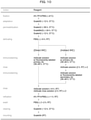
- the reagents were dissolved in or added to water (see Fig.
- ScaleS4(0) is a solution having a composition identical to that of ScaleS4 except that ScaleS4 (0) contains no Triton X-100.
- the unit of sorbitol concentration is (w/v)%
- the unit of glycerol concentration is (w/v)%
- the unit of sucrose concentration is (w/v)%
- the unit of N-acetyl-L-hydroxyproline is (w/v)%
- the unit of DMSO concentration is (v/v)%
- the unit of Triton X-100 concentration is (w/v)%, unless specified otherwise.
- permeability of a sample was increased by incubating, for 12 hours, the sample in a ScaleS0 solution containing 20% sorbitol, 5% glycerol, 1 mM methyl- ⁇ -cyclodextrin, 1 mM ⁇ -cyclodextrin, 1% N-acetyl-L-hydroxyproline, and 3% DMSO (first step).
- the temperatures for the incubation were each 37°C, and only the temperature for washing by PBS was 4°C.
- the incubation was carried out basically in an orbital oscillator (70 rpm/min. to 80 rpm/min.) in which a temperature can be controlled.
- Alexa488-6E10 which is mouse mAb to amyloid- ⁇ conjugated with Alexa Fluor 488
- Cy5-A60 was made by treating, with use of Cy5 bis-reactive dye (GE Healthcare, PA25500), mouse mAb to NeuN (A60) (Millipore, MAB377).
- Cy3-aNeuN which is rabbit polyAb to NeuN conjugated with Cy3, was purchased from Millipore (ABN78C3).
- Rabbit polyAb to Iba1 and goat polyAb to rabbit IgG conjugated with Alexa Fluor 546 were purchased from Wako pure chemical industries and Molecular Probes, respectively.
- antibody treatment solution (AbScale solution: see Fig. 10 ) so that an antibody concentration would be 5 ⁇ g/mL, and were then used for AbScale treatment.
- the antibody treatment solution is an aqueous solution having a composition including 0.33 M urea, 0.1%(w/v) Triton X-100, and x1 time PBS.
- a rinse solution (AbScale rinse solution: see Fig. 10 ) is an aqueous solution having a composition including 2.5% BSA, 0.05% (wt/vol) Tween-20, and x 0.1 times PBS.
- mice and aged mice (8 weeks old to 80 weeks old) were sufficiently anesthetized with pentobarbital (Somnopentyl) and transcardially perfused with 4% PFA/PBS(-).
- the whole brains were taken out and subjected to post-fixation in 4% PFA/PBS(-) at 4°C for 10 hours or 3 days.
- the hemispheres obtained from the whole brain and slices containing the hippocampus were made transparent (cleared) by ScaleS directly or made transparent (cleared) after being subjected to AbScale treatment or ChemScale treatment.
- the experimental procedures and housing conditions for animals were approved by the institute's animal experiments committee, and the experimental procedures were carried out as approved.
- Frozen postmortem brain (frontal cortex-temporal lobe) blocks of Alzheimer's disease patients (60 years old to 80 years old) (provided by Philadelphia University) were thawed and fixed in 4% PFA/PBS(-) at 4°C for 8 hours.
- a 3 mm x 4 mm cube was excised from each block, and was subjected to AbScale treatment with use of Alexa488-6E10 (at a dilution ratio of 1:200), Cy5-A60 (at a dilution ratio of 1:200), and rabbit anti-lbal polyAb (at a dilution ratio of 1:200).
- the sample was further reacted with goat anti-rabbit IgG polyAb conjugated with Alexa Fluor 546 (at a dilution ratio of 1:500).
- the image data of brain samples having been subjected to the AbScale treatment were acquired by the SPIM system (Lightsheet Z.1 and ZEN software, ZEISS), and stored in TIFF format.
- SPIM system Lightsheet Z.1 and ZEN software, ZEISS
- target objects namely, microglia (Alexa546-lba1 signals) and amyloid- ⁇ plaques (Alexa488-6E10 signals)
- ZEISS ZEISS
- a semi-automated image segmentation method was developed. The method began with the manual assignment of objects. Each cell or plaque was fully masked by hand. Binary masking data were produced with use of ImageJ software (64 bit, version 10.7). Then, the target picture was automatically segmented according to the Otsu method.
- This program integrates xy image planes of all numbers systematically. This provides an array of z-stacked images having different thicknesses. This program can also be used to re-slice the three-dimensional reconstruction data to create x-stacked images or y-stacked images. This program was written in C ++ language.
- the inventors of the present invention initially screened compounds included in the group consisting of sugars and sugar alcohols, including erythritol, fructose, glycerol, mannitol, sorbitol, sucrose, and xylitol, for the ones that render fixed brain samples transparent in combination with urea. It was found that sorbitol cleared the mouse cerebral cortex most effectively in combination with urea.
- sorbitol By combining sorbitol with urea, it is possible to make a sample transparent while an original volume of the sample is preserved. The reasons for this phenomenon are not necessarily clear. However, one possible reason is deemed as follows: although both urea and sorbitol have tissue-clearing capability, urea causes hydration (tissue expansion), whereas sorbitol causes dehydration (tissue shrinkage). In hopes of inducing dehydration of tissues, glycerol in addition to sorbitol was employed. Whereas sorbitol is hydrophilic, glycerol is amphipathic. Therefore, by addition of glycerol, action in lipophilic areas inside the brain was further increased.
- ScaleS urea-based clearing solutions containing sorbitol
- the inventors of the present invention attempted to devise, by combining sorbitolcontaining solutions, ScaleS protocol that is intended for adult (aged) mammalian brains.
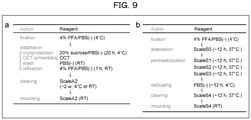
- the most suitable protocol features incubation of a fixed brain sample in a plurality of solutions from ScaleS0 based on PBS through ScaleS4 (b of Fig. 9 ).
- the formulas of all the ScaleS solutions are shown in Fig. 8 . After the sample was equilibrated, the sample became substantially transparent in ScaleS4 (a of Fig.
- CUBIC is a recently devised method that uses mixtures of urea, amyl alcohols, and Triton X-100.
- the method involves an incubation of a sample in a reagent (CUBIC Reagent 1) containing 15% Triton X-100 for approximately 7 days.
- CUBIC Reagent 1 a reagent containing 15% Triton X-100 for approximately 7 days.
- CUBIC Reagent 1 containing 15% Triton X-100 for approximately 7 days.
- CUBIC features powerful clearing capability and therefore enables rapid whole-brain imaging by single-photon excitation microscopy, such as light-sheet microscopy (LSFM) or specific plane illumination microscopy (SPIM) after simple treatment of the sample.
- LSFM light-sheet microscopy
- SPIM specific plane illumination microscopy
- the ScaleS method limits Triton X-100 concentration to low concentrations (such as less than 0.2%) throughout the entire procedure ( Fig. 8 ). It is expected that such low Triton X-100 concentrations would not pose any deleterious effects on biological structures. Therefore, the Scale technology will allow for the visualization of specific fine structures, such as synapses, at both light and electron microscopy scales after global 3D reconstruction. This technology will also ensure adequate preservation of FP (fluorescent protein) signals.
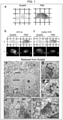
- the inventors of the present invention examined the preserving and clearing capabilities of ScaleS. The fixed brain of a YFP-H mouse (20 weeks old) was split into two hemispheres.
- the left hemisphere was cleared by ScaleS, and the right hemisphere was cleared by PBS.
- the two hemispheres were comparatively imaged for transmission and YFP fluorescence (b of Fig. 1 ).
- the ScaleS-treated hemisphere became substantially transparent, and showed stronger YFP fluorescence than did the PBS-treated hemisphere; the fluorescence observation evidently benefitted from the transparency.
- a similar result was obtained with use of hemispheres prepared from ChR2-YFP mice (c of Fig. 1 ).
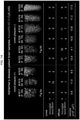
- CUBIC-treated samples showed weaker YFP fluorescence than did PBS-treated samples ( Fig. 13 ).
- CUBIC Reagent 1 This fluorescence reduction by CUBIC was partly due to the quenching of YFP by CUBIC Reagent 1, as was revealed by quenching experiments in which recombinant YFP was used. Because CUBIC Reagent 1 is highly alkaline (pH of 11.3), irreversible denaturation of YFP occurs during the treatment. It should be noted, however, that the fluorescence reduction is also caused by the leakage of YFP. This is because CUBIC Reagent 1 contains 15% Triton X-100, which is expected to induce the leakage of YFP from a sample.
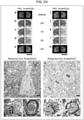
- Membrane integrity was so well preserved that the subcellular organelles in one of the neurons (on the left) could be surveyed from the nucleus to the cell surface extensions, such as the dendrite (Den) and axon hillock (AH). It is therefore possible to examine the ultrastructures in the context of neuronal subcellular organization.
- AIS axon initial segment
- AH axon hillock
- the inventors of the present invention previously discovered that in a case where a sample having been cleared with use of a clearing treatment reagent containing urea as a main component is replaced by PBS so that components such as urea is removed from the sample (deScaled), the deScaled samples are permeable to macromolecules such as antibodies.
- the inventors of the present invention have already devised a method called AbScale, which fully immunostains structures inside several-mm-thick brain samples ( Fig. 10 ).
- 6E10 which is a mouse monoclonal antibody (mAb) that reacts with amino acids 1-16 of A ⁇ , was used for characterizing the spatial distribution of A ⁇ plaques.
- This antibody has been used in molecularly targeted therapy.
- intracranial injection of 6E10 was devised to lower brain A ⁇ .
- a commercially available fluorescent 6E10 Alexa488-6E10 was used.
- Alexa488-6E10 Alexa488-6E10
- the inventors of the present invention therefore used a new AD mouse model (AppNL-F) that overproduces A ⁇ 42.
- AppNL-F AD mouse model
- the inventors of the present invention attempted the combined use of mouse anti-NeuN mAb (A60) conjugated with Cy5 (A60-Cy5).
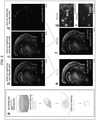
- Cy5 (c of Fig. 2 ), and Alexa488 (d of Fig. 2 ) fluorescence were acquired with a stereomicroscope (a of Fig. 17 : corresponding to Fig. 2 ).
- Cy3- ⁇ NeuN (post-cut staining) and Cy5-A60 images were compared to evaluate the diffusivity of Cy5-A60 inside the whole hemisphere.
- the Cy5 signal was substantially strong irrespective of the depth from the hemisphere surface, and matched the Cy3 signal completely (e of Fig. 2 ). This result indicates the efficient penetration of Cy5-A60 mAb into the hemisphere, and demonstrates the validity of AbScale using Cy5-A60.
- the Cy5-A60 image was compared with the other pre-cut staining image of Alexa488-6E10 (f of Fig. 2 ).
- the Alexa488-labeled A ⁇ plaques were localized to regions deficient in Cy5-labeled neuronal nuclei (g and h of Fig. 2 ). This suggests that the A ⁇ plaques resided extracellularly.
- the Alexa488-labeled A ⁇ plaques were found mostly in the cortex and to a lesser extent in the thalamus (f of Fig. 2 ); the same pattern of A ⁇ distribution had been observed by 2D-IHC in coronal sections obtained from a 20-month-old AppNL-F/NL-F mouse. It was therefore concluded that the penetration of Alexa488 was sufficient to fluorescently label all A ⁇ plaques residing inside the brain samples each having a size of 4 mm or less.
- the inventors of the present invention combined ChemScale with AbScale with an eye to achieving multi-color imaging.
- the inventors of the present invention attempted to monitor A ⁇ plaques by use of Alexa488-6E10 and PP-BTA-1 which is a benzothiazole derivative that shows strong affinity for A ⁇ aggregates, and whose color could be distinguished from that of Alexa488-6E10 (b of Fig. 17 : corresponding to a of Fig. 3 and b of Fig. 3 ).
- This combined approach was applied to the hemisphere of an 18-month-old AppNL-F/NL-F mouse.
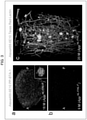
- the inventors of the present invention first obtained a sweeping view of fluorescently-labeled A ⁇ plaques that were scattered throughout the entire cortex (a of Fig.
- PP-BTA-1 highlighted amyloid deposition in cerebral vasculature, a condition termed cerebral amyloid angiopathy, more strongly than Alexa488-6E10.
- the inventors of the present invention zoomed in on individual A ⁇ plaques.
- Detailed 3D reconstruction of a representative fluorescent deposit revealed a round and hollow morphology (a of Fig. 3 , inset) which reflects the shape of previously reported Alexa488-6E10-stained A ⁇ plaques.
- the intense fluorescence of PP-BTA-1 was seen in the core of the A ⁇ plaques.
- the inventors of the present invention previously labeled mouse blood vessels with red fluorescence for the 3D reconstruction of vasculature.
- the inventors of the present invention transcardially perfused an anesthetized AppNL-F/NL-F mouse (20 months old) with Texas-Red-labeled lectin.
- the left hemisphere was AbScaled with Alexa488-6E10 and imaged with the SPIM system (c of Fig. 17 : corresponding to c of Fig. 3 ).
- 3D reconstruction in a quadratic prism located in the cerebral cortex showed that all A ⁇ plaques were either in direct contact with or localized near blood vessels (c of Fig. 3 ).
- the inventors of the present invention applied a dual-color AbScale method to a 2-mm-thick coronal brain slice obtained from a 20-month-old AppNL-F/NL-F mouse (a of Fig. 4 ).
- the slice was subjected to reaction with Alexa488-6E10 and rabbit anti-lbal pAb plus anti-rabbit IgG Ab conjugated with Alexa546 in order to immunostain A ⁇ plaques and microglia, and then optically cleared.
- a region containing the somatosensory cortex and hippocampal CA1 (cuboid in a of Fig.
- the inventors of the present invention selected a cortical region containing 37 well-isolated A ⁇ plaques (d of Fig. 4 ).
- the inventors of the present invention found 120 microglia that were localized near (closer than a distance of 60 ⁇ m) the A ⁇ plaques.
- the inventors of the present invention determined the size and shape of individual plaques and the locations (barycenters) of both plaques and microglia.
- the inventors of the present invention used home-made algorithm to automatically measure the distance of each microglial center to the nearest plaque edge in 3D space (e of Fig. 5 ).
- the inventors of the present invention were able to judge the activation/resting state of each microglial cell segmented.
- the morphological features of the activated microglia may provide information about the severity of plaque neuritis. For instance, the inventors of the present invention discovered two neighboring plaques having a substantially identical size (f of Fig. 4 ) but different spatial association with microglia (g of Fig. 4 ). One plaque was in direct contact with or accompanied by nine active microglia. This suggests its acute neuritic state (h of Fig. 4 , #2).
- the other plaque was not closely associated with any microglia, and its far neighbors were nearly all resting (h of Fig. 4 , #1); this plaque was therefore suggested to be obsolete.
- the histograms of the two A ⁇ plaques show the distribution of the distances of the activated and resting microglia to the plaque edge (h of Fig. 4 , bottom). For all the 37 plaques, their neighboring 120 microglia were analyzed by the same method (i of Fig. 4 ). The distances of both activated and resting microglia to the plaques were relatively long; while 102 microglia were localized far (further than a distance of 21 ⁇ m) from the plaque edges, only 18 cells were associated with the plaques extremely closely (closer than a distance of 21 ⁇ m).
- the histograms of individual plaques are shown in a of Fig. 18 .
- the inventors of the present invention defined, as obsolete plaques, plaques that were not associated by any activated microglia in their vicinity (closer than a distance of 21 ⁇ m). 25 plaques out of 37 (68%) were classified "obsolete”.
- the inventors of the present invention also 3D visualized the microglia-plaque association in postmortem brain samples from Alzheimer's Disease patients likewise by use of the dual-color AbScale approach.
- Cy5-A60 was additionally used to identify neuronal nuclei.
- the 3D reconstructions classified 9 patients' brain blocks into 2 groups; 3 samples were endowed with dense cored plaques ( Fig. 19 , left: cored plaques (+)) and 6 others were not ( Fig. 19 , right: cored plaques (-)).
- This type of plaque was vague in comparison with the surrounding intracellular A ⁇ accumulation, and could not be defined in the volumetric ray casting image data (d of Fig. 5 ).
- a custom-made program was used to construct a full set of z-stacked images each containing 2 xy images to 12 xy images (e of Fig. 5 ).
- Diffuse plaques became evident in several of the z-stacked images (f and g of Fig. 5 ).
- the cuboid regions were used to examine whether or not the diffuse plaques were associated with microglia (h and i of Fig. 5 , respectively).
- the inventors of the present invention compared YFP fluorescence between the cleared half (d of Fig. 6 ) and the control half ( Fig. 20 ) to verify that this approach fully preserved the YFP fluorescence.
- the cleared half was incubated in ScaleS4(0) ( Fig. 8 ) for 2 hours, and then used in a quick 3D imaging experiment that employed the SPIM system.
- the 3D reconstruction of YFP-expressing neurons (e of Fig. 6 ) in a part of the cortex (white box in d of Fig. 6 ) was completed within 1 minute.
- ScaleSQ(0) solution is expected to preserve ultrastructures very well.
- the inventors of the present invention evaluated the membrane integrity in a restored sample by performing EM observation (f of Fig. 6 ).
- ScaleSS20 composition: 4 M urea, 40% sorbitol, 20% sucrose, 20% DMSO, and 0.2% Triton X-100
- ScaleSS40 composition: 3.56 M urea, 35.56% sorbitol, 35.56% sucrose, 17.78% DMSO, and 0.18% Triton X-100
- the sample after the third step as a step before observation was incubated in ScaleS4 for 189 days.
- the whole brain was split into a right hemisphere and a left hemisphere.
- the right hemisphere was incubated in ScaleSS20 or ScaleSS40 for 1 day, and then subjected to a clearing treatment was performed.
- the left hemisphere was incubated in ScaleS4 again for 1 day for comparison of transparency.
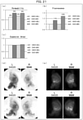
- Fig. 21 The hemispheres, which have been subjected to the clearing treatment with use of ScaleSS20, ScaleSS40, or ScaleS4, were compared ( Fig. 21 ) in terms of permeability (Permeability in Fig. 21 ), signal intensity of YFP fluorescence (Fluorescence) in Fig. 21 ), and change of volume (Expansion (Area) in Fig. 21 ).
- permeability and fluorescence signal intensity are increased by a treatment with ScaleSS20 or ScaleSS40, whereas, as is the case of ScaleS4, there is no effect on the change of volume.
- a transgenic mouse having a fluorescent protein YFP expressed in its neurons of the nervous system (YFP-H line: provided by Professor Joshua Sanes of Harvard University, U.S.A. [reference] Feng et al. Neuron, 28: 41-51, 2000 ) was used to perform perfusion fixation of the mouse and to take out and fix a biological material (cerebrum).
- the method of the fixation is as follows. At room temperature, a peristaltic pump or a syringe was used to perfuse a fixing solution (4 (w/v)% paraformaldehyde/PBS, pH of 7.5 to 8.0) from the left ventricle of the heart, so that the animal was systemically fixed.
- the cranial bones were removed from the animal thus systemically fixed, and the organ (e.g. whole of the brain) was carefully taken out as a biological material. Then, the organ thus taken out was immersed in an ice-cold fixing solution (4 (w/v)% paraformaldehyde/PBS, pH of 7.5 to 8.0) at 4°C for 8 hours to 12 hours.
- an ice-cold fixing solution (4 (w/v)% paraformaldehyde/PBS, pH of 7.5 to 8.0) at 4°C for 8 hours to 12 hours.
- the cerebrum was split into the left hemisphere and the right hemisphere, which were then subjected to fixation.
- a clearing reagent for making a biological material transparent having a composition shown below.
- the other one of the cerebral hemispheres was immersed, at room temperature for 4 days, in a comparative reagent having a composition shown below.
- the results are shown in Fig. 7 . Note that in Fig. 7 , the cerebral hemisphere on the left is the one treated with the comparative reagent, and the cerebral hemisphere on the right is the one treated with the clearing reagent for making a biological material transparent. With the comparative reagent, the cerebral hemisphere was substantially not cleared.
- composition of clearing reagent for making a biological material transparent Aqueous solution in which 40%(w/v) sorbitol, 2 M urea, 10%(w/v) glycerol, and 0.2% (w/v) TritonX-100 are contained in water.
- composition of comparative reagent Aqueous solution in which 40%(w/v) erythritol, 2 M urea, 10%(w/v) glycerol, and 0.2% (w/v) TritonX-100 are contained in water.
- the present invention can provide a (i) clearing reagent to make a biological material transparent for preparation of a biological material for use in optical observation and (ii) use of the clearing reagent.
Landscapes
- Health & Medical Sciences (AREA)
- Life Sciences & Earth Sciences (AREA)
- Physics & Mathematics (AREA)
- Engineering & Computer Science (AREA)
- Chemical & Material Sciences (AREA)
- Biomedical Technology (AREA)
- General Physics & Mathematics (AREA)
- Analytical Chemistry (AREA)
- Biochemistry (AREA)
- General Health & Medical Sciences (AREA)
- Immunology (AREA)
- Pathology (AREA)
- Molecular Biology (AREA)
- Optics & Photonics (AREA)
- Biophysics (AREA)
- Hematology (AREA)
- Urology & Nephrology (AREA)
- Food Science & Technology (AREA)
- Medicinal Chemistry (AREA)
- Investigating Or Analysing Biological Materials (AREA)
- Sampling And Sample Adjustment (AREA)
- Investigating, Analyzing Materials By Fluorescence Or Luminescence (AREA)
Claims (13)
- Klärungsreagens, um ein biologisches Material transparent zu machen, umfassend:- mindestens eine Verbindung, die aus der Gruppe, die aus Harnstoff und Harnstoffderivat besteht, ausgewählt ist;- Sorbit; und- ein Tensid,dadurch gekennzeichnet, dass das Klärungsreagens Folgendes umfasst(i) die mindestens eine Verbindung in einer Konzentration in einen Bereich von 3 M oder mehr bis 5 M oder weniger; und den Sorbit in einer Konzentration in einem Bereich von 30 (w/v)% oder mehr bis 50 (w/v)% oder weniger, oder(ii) die mindestens eine Verbindung in einer Konzentration in einem Bereich von 5 M oder mehr bis 9,5 M oder weniger; und den Sorbit in einer Konzentration in einem Bereich von 20 (w/v)% oder mehr bis 40 (w/v)% oder weniger, und
das Tensid in einer Konzentration in einem Bereich von mehr als 0 (w/v)% bis 5 (w/v)% oder weniger umfasst ist. - Klärungsreagens nach Anspruch 1, wobei das Klärungsreagens eine Lösung ist, die Harnstoff als die Verbindung umfasst.
- Klärungsreagens nach Anspruch 1 oder 2, wobei das Tensid ein nichtionisches Tensid ist.
- Klärungsreagens nach einem der Ansprüche 1 bis 3, ferner umfassend Glycerin.
- Klärungsreagens nach einem der Ansprüche 1 bis 4, ferner umfassend Cyclodextrine.
- Klärungsreagens nach einem der Ansprüche 1 bis 5, wobei das biologische Material (i) ein Gewebe oder ein Organ aus einem Vielzeller oder (ii) ein Vielzeller, der kein Mensch ist, ist.
- System für eine Klärungsbehandlung, um das biologische Material transparent zu machen, umfassend:- das Klärungsreagens nach Anspruch 1; und- das biologische Material, das isoliert wurde, wobei das Klärungsreagens in das biologische Material eingedrungen ist, sodass das biologische Material transparent wird.
- System nach Anspruch 7, wobei das Tensid ein nichtionisches Tensid ist, und das Klärungsreagens ferner Glycerin und Cyclodextrine umfasst.
- Verfahren, um das biologische Material transparent zu machen, umfassend den Schritt des Veranlassens, dass das Klärungsreagens nach Anspruch 1 in das biologische Material, das isoliert wurde, eindringt, sodass das biologische Material transparent wird.
- Verfahren nach Anspruch 9, wobei das Tensid ein nichtionisches Tensid ist, und das Klärungsreagens ferner Glycerin und Cyclodextrine umfasst.
- Kit zur Klärungsbehandlung, um das biologische Material transparent zu machen, umfassend das Klärungsreagens nach einem der Ansprüche 1 bis 6.
- Kit nach Anspruch 11, wobei mehrere Arten von Klärungsreagenzien, um das biologische Material transparent zu machen, die sich durch ihre Sorbitkonzentration unterscheiden, enthalten sind.
- Kit nach Anspruch 12, ferner umfassend eine wässrige Lösung als Vorbehandlungslösung zur Verwendung in einem Klärungsschritt, die a) Sorbit und b) Glycerin und/oder Dimethylsulfoxid und keinen Harnstoff umfasst.
Applications Claiming Priority (2)
| Application Number | Priority Date | Filing Date | Title |
|---|---|---|---|
| JP2015008928 | 2015-01-20 | ||
| PCT/JP2016/051599 WO2016117614A1 (ja) | 2015-01-20 | 2016-01-20 | 生物材料用透明化試薬、システム及びその利用 |
Publications (3)
| Publication Number | Publication Date |
|---|---|
| EP3249382A1 EP3249382A1 (de) | 2017-11-29 |
| EP3249382A4 EP3249382A4 (de) | 2018-10-31 |
| EP3249382B1 true EP3249382B1 (de) | 2022-03-02 |
Family
ID=56417152
Family Applications (1)
| Application Number | Title | Priority Date | Filing Date |
|---|---|---|---|
| EP16740221.3A Active EP3249382B1 (de) | 2015-01-20 | 2016-01-20 | Mittel zur transparentisierung biologischer proben, system und verwendung davon |
Country Status (5)
| Country | Link |
|---|---|
| US (2) | US20170370810A1 (de) |
| EP (1) | EP3249382B1 (de) |
| JP (1) | JP6687949B2 (de) |
| CN (1) | CN107209093B (de) |
| WO (1) | WO2016117614A1 (de) |
Families Citing this family (28)
| Publication number | Priority date | Publication date | Assignee | Title |
|---|---|---|---|---|
| KR102148747B1 (ko) | 2012-08-09 | 2020-08-27 | 더 보드 오브 트러스티스 오브 더 리랜드 스탠포드 쥬니어 유니버시티 | 현미경적 분석을 위한 생물학적 표본을 준비하기 위한 방법과 조성물 |
| JP2017517761A (ja) | 2014-05-30 | 2017-06-29 | ザ ボード オブ トラスティーズ オブ ザ レランド スタンフォード ジュニア ユニバーシティー | 大きなインタクトな組織試料を撮像するための方法及び装置 |
| US11254974B2 (en) | 2016-02-10 | 2022-02-22 | The Board Of Trustees Of The Leland Stanford Junior University | RNA fixation and detection in clarity-based hydrogel tissue |
| CN106323708B (zh) * | 2016-07-29 | 2019-04-30 | 浙江大学 | 一种透明化试剂、生物组织透明化成像方法及其应用 |
| TWI815798B (zh) * | 2016-08-10 | 2023-09-21 | 日商資生堂股份有限公司 | 透明皮膚試料之製造方法及透明皮膚試料 |
| WO2018044899A1 (en) * | 2016-08-29 | 2018-03-08 | The United States Of America, As Represented By The Secretary, Department Of Health And Human Services | Method and composition for optical clearing of tissues |
| JP2018044800A (ja) * | 2016-09-13 | 2018-03-22 | 国立大学法人 東京大学 | 生物試料の透明化方法 |
| CN108445206B (zh) * | 2017-02-16 | 2021-01-01 | 中国科学院合肥物质科学研究院 | 生物组织器官透明化处理液、处理方法和免疫标记方法 |
| JP7033795B2 (ja) * | 2017-02-22 | 2022-03-11 | 国立大学法人 長崎大学 | 生体由来材料の透明化用試薬 |
| GB2563254A (en) * | 2017-06-07 | 2018-12-12 | Erturk Ali | Methods for large tissue labeling, clearing and imaging |
| JP7028979B2 (ja) * | 2017-12-29 | 2022-03-02 | エフ.ホフマン-ラ ロシュ アーゲー | 組織試料調製システム |
| CN108961261B (zh) * | 2018-03-14 | 2022-02-15 | 中南大学 | 一种基于空间连续性约束的视盘区域oct图像层次分割方法 |
| KR102085373B1 (ko) * | 2018-04-05 | 2020-03-05 | 주식회사 바이나리 | 3차원 형광 이미지화를 위한 생체조직 투명화 키트 및 이를 이용한 투명화 방법 |
| CN110763661B (zh) * | 2018-07-25 | 2022-03-22 | 中国科学院合肥物质科学研究院 | 处理液组合物、试剂盒和生物器官透明化同时进行免疫标记的方法 |
| CN109632420B (zh) * | 2018-12-26 | 2020-08-25 | 华中科技大学 | 一种基于水溶性试剂的快速组织透明化的处理方法及其应用 |
| US20200388032A1 (en) * | 2019-06-04 | 2020-12-10 | JelloX Biotech Inc. | Three dimensional histopathology imaging method and system thereof |
| US12152969B2 (en) * | 2019-06-04 | 2024-11-26 | JelloX Biotech Inc. | Method for preparation of tissue sections |
| US20220357246A1 (en) * | 2019-08-07 | 2022-11-10 | JelloX Biotech Inc. | Composition and method for rendering biological material |
| US20230222753A1 (en) * | 2020-06-16 | 2023-07-13 | Hamamatsu Photonics K.K. | Sample observation device and sample observation method |
| US12275920B2 (en) | 2020-06-28 | 2025-04-15 | Sunghee Lee Dimauro | Compositions and methods for clarification of biological materials |
| CN111610078B (zh) * | 2020-07-03 | 2021-12-14 | 中国科学技术大学 | 生物组织透明化试剂及生物组织透明化方法 |
| WO2022104510A1 (zh) * | 2020-11-17 | 2022-05-27 | 深圳先进技术研究院 | 组织透明化试剂及其制备方法和应用 |
| EP4348216A4 (de) * | 2021-05-27 | 2025-03-19 | Cornell University | Optische reinigungs- und autofluoreszenzlöschlösungen und verfahren zur verwendung für verbesserte mikroskopische bildgebung von biologischem gewebe |
| CN113324821B (zh) * | 2021-06-01 | 2022-11-08 | 华中科技大学苏州脑空间信息研究院 | 一种快速染色生物样本并获取三维数据的方法 |
| CN116223149A (zh) * | 2023-01-10 | 2023-06-06 | 武汉沃亿生物有限公司 | 一种基于cubic透明化抗体染色生物组织样本三维成像方法 |
| WO2024177108A1 (ja) * | 2023-02-22 | 2024-08-29 | 国立大学法人大阪大学 | 生きた三次元組織の深部観察を可能とする透明化ポリマー |
| WO2025192756A1 (ja) * | 2024-03-14 | 2025-09-18 | 国立大学法人九州大学 | 生体材料の透明化試薬 |
| WO2025205773A1 (ja) * | 2024-03-29 | 2025-10-02 | 学校法人金沢医科大学 | 透明化前処理 |
Family Cites Families (9)
| Publication number | Priority date | Publication date | Assignee | Title |
|---|---|---|---|---|
| US4748189A (en) * | 1985-04-19 | 1988-05-31 | Ciba-Geigy Corporation | Ophthalmic solutions and methods for improving the comfort and safety of contact lenses |
| AU3942293A (en) * | 1992-07-01 | 1994-01-31 | Church & Dwight Company, Inc. | Plant growth regulating compositions |
| CN1048987C (zh) * | 1992-11-24 | 2000-02-02 | 中国石油化工集团公司 | 二亚苄基山梨糖醇的制备方法 |
| WO2011111876A1 (en) * | 2010-03-12 | 2011-09-15 | Riken | Clearing reagent for biological material, and use thereof |
| BR112012016841B1 (pt) * | 2010-03-29 | 2020-03-31 | Adeka Corporation | Metodo para produzir uma composicao de resina de polipropileno |
| JP5924624B2 (ja) * | 2011-04-28 | 2016-05-25 | 国立研究開発法人理化学研究所 | 生物材料を透明化する方法、及びその利用 |
| JP6044900B2 (ja) * | 2011-05-20 | 2016-12-14 | 国立研究開発法人理化学研究所 | 生物材料用透明化試薬、及びその利用 |
| JP5967528B2 (ja) * | 2012-06-22 | 2016-08-10 | 国立研究開発法人理化学研究所 | 生物材料を透明化する方法および生物材料用透明化処理キット |
| US10254276B2 (en) * | 2012-07-10 | 2019-04-09 | Riken | Antibody composition, kit for preparing antibody composition, and immunostaining method |
-
2016
- 2016-01-20 EP EP16740221.3A patent/EP3249382B1/de active Active
- 2016-01-20 CN CN201680007269.XA patent/CN107209093B/zh not_active Expired - Fee Related
- 2016-01-20 US US15/544,743 patent/US20170370810A1/en not_active Abandoned
- 2016-01-20 JP JP2016570685A patent/JP6687949B2/ja active Active
- 2016-01-20 WO PCT/JP2016/051599 patent/WO2016117614A1/ja not_active Ceased
-
2023
- 2023-11-07 US US18/387,563 patent/US20240142352A1/en not_active Abandoned
Also Published As
| Publication number | Publication date |
|---|---|
| CN107209093A (zh) | 2017-09-26 |
| US20170370810A1 (en) | 2017-12-28 |
| CN107209093B (zh) | 2021-05-04 |
| EP3249382A4 (de) | 2018-10-31 |
| JP6687949B2 (ja) | 2020-04-28 |
| US20240142352A1 (en) | 2024-05-02 |
| WO2016117614A1 (ja) | 2016-07-28 |
| JPWO2016117614A1 (ja) | 2017-10-26 |
| EP3249382A1 (de) | 2017-11-29 |
Similar Documents
| Publication | Publication Date | Title |
|---|---|---|
| US20240142352A1 (en) | Biological-specimen transparentizing agent, system, and use therefor | |
| Hama et al. | Sca l eS: an optical clearing palette for biological imaging | |
| JP6433901B2 (ja) | 光透過性に優れた生物材料を調製するための組成物およびその利用 | |
| EP2866017B1 (de) | Verfahren um ein biologisches material transparent zu machen | |
| Whittington et al. | Suppression of red blood cell autofluorescence for immunocytochemistry on fixed embryonic mouse tissue | |
| EP3273218A1 (de) | Verfahren zur beobachtung von biologischem material und beseitigungsverfahren | |
| Chen et al. | UbasM: An effective balanced optical clearing method for intact biomedical imaging | |
| JP6228205B2 (ja) | 顕微分析のための生体標本を調製するための方法および組成物 | |
| CN103492852B (zh) | 生物材料的透明化方法、及其利用 | |
| EP2711682B1 (de) | Klärungsreagens für biologische materialien und verwendung davon | |
| Michalska et al. | Imaging brain tissue architecture across millimeter to nanometer scales | |
| US20080090269A1 (en) | Compositions and methods for preparing specimens for microscopic analysis | |
| CN110139922B (zh) | 用于澄清组织的组合物和方法 | |
| Hériché et al. | Imaging plant tissues: advances and promising clearing practices | |
| Frétaud et al. | High-resolution 3D imaging of whole organ after clearing: taking a new look at the zebrafish testis | |
| US10641782B2 (en) | Methods for visualization and quantification of fiber-like structures | |
| Palmes-Saloma et al. | Long-depth imaging of specific gene expressions in whole-mount mouse embryos with single-photon excitation confocal fluorescence microscopy and FISH | |
| Taper et al. | A comparison of fixation and immunofluorescence protocols for successful reproducibility and improved signal in human left ventricle cardiac tissue | |
| Qureshi et al. | Imaging cleared embryonic and postnatal hearts at single-cell resolution | |
| US11333588B1 (en) | Matrix-assisted methods and compositions to prepare biological samples for super-resolution imaging | |
| Gard et al. | Confocal immunofluorescence microscopy of microtubules in oocytes, eggs, and embryos of algae and amphibians | |
| Schueth et al. | hFRUIT: An optimized agent for optical clearing of DiI-stained adult human brain tissue | |
| Sturgess et al. | Immersion‐Based Clearing and Autofluorescence Quenching in Myocardial Tissue | |
| Mori et al. | Practical method for endothelial glycocalyx imaging in formalin-fixed, paraffin-embedded tissues in vascular pathology | |
| Norris et al. | Whole Tissue Imaging of Cellular Boundaries at Sub-Micron Resolutions for Automatic Cell Segmentation: Applications in Epithelial Bending of Ectodermal Appendages |
Legal Events
| Date | Code | Title | Description |
|---|---|---|---|
| STAA | Information on the status of an ep patent application or granted ep patent |
Free format text: STATUS: THE INTERNATIONAL PUBLICATION HAS BEEN MADE |
|
| PUAI | Public reference made under article 153(3) epc to a published international application that has entered the european phase |
Free format text: ORIGINAL CODE: 0009012 |
|
| STAA | Information on the status of an ep patent application or granted ep patent |
Free format text: STATUS: REQUEST FOR EXAMINATION WAS MADE |
|
| 17P | Request for examination filed |
Effective date: 20170816 |
|
| AK | Designated contracting states |
Kind code of ref document: A1 Designated state(s): AL AT BE BG CH CY CZ DE DK EE ES FI FR GB GR HR HU IE IS IT LI LT LU LV MC MK MT NL NO PL PT RO RS SE SI SK SM TR |
|
| AX | Request for extension of the european patent |
Extension state: BA ME |
|
| DAV | Request for validation of the european patent (deleted) | ||
| DAX | Request for extension of the european patent (deleted) | ||
| A4 | Supplementary search report drawn up and despatched |
Effective date: 20180927 |
|
| RIC1 | Information provided on ipc code assigned before grant |
Ipc: G01N 1/30 20060101AFI20180922BHEP Ipc: G01N 33/48 20060101ALI20180922BHEP Ipc: G02B 21/00 20060101ALI20180922BHEP |
|
| STAA | Information on the status of an ep patent application or granted ep patent |
Free format text: STATUS: EXAMINATION IS IN PROGRESS |
|
| 17Q | First examination report despatched |
Effective date: 20190516 |
|
| GRAP | Despatch of communication of intention to grant a patent |
Free format text: ORIGINAL CODE: EPIDOSNIGR1 |
|
| STAA | Information on the status of an ep patent application or granted ep patent |
Free format text: STATUS: GRANT OF PATENT IS INTENDED |
|
| INTG | Intention to grant announced |
Effective date: 20211102 |
|
| GRAS | Grant fee paid |
Free format text: ORIGINAL CODE: EPIDOSNIGR3 |
|
| GRAA | (expected) grant |
Free format text: ORIGINAL CODE: 0009210 |
|
| STAA | Information on the status of an ep patent application or granted ep patent |
Free format text: STATUS: THE PATENT HAS BEEN GRANTED |
|
| AK | Designated contracting states |
Kind code of ref document: B1 Designated state(s): AL AT BE BG CH CY CZ DE DK EE ES FI FR GB GR HR HU IE IS IT LI LT LU LV MC MK MT NL NO PL PT RO RS SE SI SK SM TR |
|
| REG | Reference to a national code |
Ref country code: GB Ref legal event code: FG4D |
|
| REG | Reference to a national code |
Ref country code: CH Ref legal event code: EP Ref country code: AT Ref legal event code: REF Ref document number: 1472633 Country of ref document: AT Kind code of ref document: T Effective date: 20220315 |
|
| REG | Reference to a national code |
Ref country code: DE Ref legal event code: R096 Ref document number: 602016069587 Country of ref document: DE |
|
| REG | Reference to a national code |
Ref country code: IE Ref legal event code: FG4D |
|
| REG | Reference to a national code |
Ref country code: LT Ref legal event code: MG9D |
|
| REG | Reference to a national code |
Ref country code: NL Ref legal event code: MP Effective date: 20220302 |
|
| PG25 | Lapsed in a contracting state [announced via postgrant information from national office to epo] |
Ref country code: SE Free format text: LAPSE BECAUSE OF FAILURE TO SUBMIT A TRANSLATION OF THE DESCRIPTION OR TO PAY THE FEE WITHIN THE PRESCRIBED TIME-LIMIT Effective date: 20220302 Ref country code: RS Free format text: LAPSE BECAUSE OF FAILURE TO SUBMIT A TRANSLATION OF THE DESCRIPTION OR TO PAY THE FEE WITHIN THE PRESCRIBED TIME-LIMIT Effective date: 20220302 Ref country code: NO Free format text: LAPSE BECAUSE OF FAILURE TO SUBMIT A TRANSLATION OF THE DESCRIPTION OR TO PAY THE FEE WITHIN THE PRESCRIBED TIME-LIMIT Effective date: 20220602 Ref country code: LT Free format text: LAPSE BECAUSE OF FAILURE TO SUBMIT A TRANSLATION OF THE DESCRIPTION OR TO PAY THE FEE WITHIN THE PRESCRIBED TIME-LIMIT Effective date: 20220302 Ref country code: HR Free format text: LAPSE BECAUSE OF FAILURE TO SUBMIT A TRANSLATION OF THE DESCRIPTION OR TO PAY THE FEE WITHIN THE PRESCRIBED TIME-LIMIT Effective date: 20220302 Ref country code: ES Free format text: LAPSE BECAUSE OF FAILURE TO SUBMIT A TRANSLATION OF THE DESCRIPTION OR TO PAY THE FEE WITHIN THE PRESCRIBED TIME-LIMIT Effective date: 20220302 Ref country code: BG Free format text: LAPSE BECAUSE OF FAILURE TO SUBMIT A TRANSLATION OF THE DESCRIPTION OR TO PAY THE FEE WITHIN THE PRESCRIBED TIME-LIMIT Effective date: 20220602 |
|
| REG | Reference to a national code |
Ref country code: AT Ref legal event code: MK05 Ref document number: 1472633 Country of ref document: AT Kind code of ref document: T Effective date: 20220302 |
|
| PG25 | Lapsed in a contracting state [announced via postgrant information from national office to epo] |
Ref country code: PL Free format text: LAPSE BECAUSE OF FAILURE TO SUBMIT A TRANSLATION OF THE DESCRIPTION OR TO PAY THE FEE WITHIN THE PRESCRIBED TIME-LIMIT Effective date: 20220302 Ref country code: LV Free format text: LAPSE BECAUSE OF FAILURE TO SUBMIT A TRANSLATION OF THE DESCRIPTION OR TO PAY THE FEE WITHIN THE PRESCRIBED TIME-LIMIT Effective date: 20220302 Ref country code: GR Free format text: LAPSE BECAUSE OF FAILURE TO SUBMIT A TRANSLATION OF THE DESCRIPTION OR TO PAY THE FEE WITHIN THE PRESCRIBED TIME-LIMIT Effective date: 20220603 Ref country code: FI Free format text: LAPSE BECAUSE OF FAILURE TO SUBMIT A TRANSLATION OF THE DESCRIPTION OR TO PAY THE FEE WITHIN THE PRESCRIBED TIME-LIMIT Effective date: 20220302 |
|
| PG25 | Lapsed in a contracting state [announced via postgrant information from national office to epo] |
Ref country code: NL Free format text: LAPSE BECAUSE OF FAILURE TO SUBMIT A TRANSLATION OF THE DESCRIPTION OR TO PAY THE FEE WITHIN THE PRESCRIBED TIME-LIMIT Effective date: 20220302 |
|
| PG25 | Lapsed in a contracting state [announced via postgrant information from national office to epo] |
Ref country code: SM Free format text: LAPSE BECAUSE OF FAILURE TO SUBMIT A TRANSLATION OF THE DESCRIPTION OR TO PAY THE FEE WITHIN THE PRESCRIBED TIME-LIMIT Effective date: 20220302 Ref country code: SK Free format text: LAPSE BECAUSE OF FAILURE TO SUBMIT A TRANSLATION OF THE DESCRIPTION OR TO PAY THE FEE WITHIN THE PRESCRIBED TIME-LIMIT Effective date: 20220302 Ref country code: RO Free format text: LAPSE BECAUSE OF FAILURE TO SUBMIT A TRANSLATION OF THE DESCRIPTION OR TO PAY THE FEE WITHIN THE PRESCRIBED TIME-LIMIT Effective date: 20220302 Ref country code: PT Free format text: LAPSE BECAUSE OF FAILURE TO SUBMIT A TRANSLATION OF THE DESCRIPTION OR TO PAY THE FEE WITHIN THE PRESCRIBED TIME-LIMIT Effective date: 20220704 Ref country code: EE Free format text: LAPSE BECAUSE OF FAILURE TO SUBMIT A TRANSLATION OF THE DESCRIPTION OR TO PAY THE FEE WITHIN THE PRESCRIBED TIME-LIMIT Effective date: 20220302 Ref country code: CZ Free format text: LAPSE BECAUSE OF FAILURE TO SUBMIT A TRANSLATION OF THE DESCRIPTION OR TO PAY THE FEE WITHIN THE PRESCRIBED TIME-LIMIT Effective date: 20220302 Ref country code: AT Free format text: LAPSE BECAUSE OF FAILURE TO SUBMIT A TRANSLATION OF THE DESCRIPTION OR TO PAY THE FEE WITHIN THE PRESCRIBED TIME-LIMIT Effective date: 20220302 |
|
| PG25 | Lapsed in a contracting state [announced via postgrant information from national office to epo] |
Ref country code: IS Free format text: LAPSE BECAUSE OF FAILURE TO SUBMIT A TRANSLATION OF THE DESCRIPTION OR TO PAY THE FEE WITHIN THE PRESCRIBED TIME-LIMIT Effective date: 20220702 Ref country code: AL Free format text: LAPSE BECAUSE OF FAILURE TO SUBMIT A TRANSLATION OF THE DESCRIPTION OR TO PAY THE FEE WITHIN THE PRESCRIBED TIME-LIMIT Effective date: 20220302 |
|
| REG | Reference to a national code |
Ref country code: DE Ref legal event code: R097 Ref document number: 602016069587 Country of ref document: DE |
|
| PLBE | No opposition filed within time limit |
Free format text: ORIGINAL CODE: 0009261 |
|
| STAA | Information on the status of an ep patent application or granted ep patent |
Free format text: STATUS: NO OPPOSITION FILED WITHIN TIME LIMIT |
|
| PG25 | Lapsed in a contracting state [announced via postgrant information from national office to epo] |
Ref country code: DK Free format text: LAPSE BECAUSE OF FAILURE TO SUBMIT A TRANSLATION OF THE DESCRIPTION OR TO PAY THE FEE WITHIN THE PRESCRIBED TIME-LIMIT Effective date: 20220302 |
|
| 26N | No opposition filed |
Effective date: 20221205 |
|
| PG25 | Lapsed in a contracting state [announced via postgrant information from national office to epo] |
Ref country code: SI Free format text: LAPSE BECAUSE OF FAILURE TO SUBMIT A TRANSLATION OF THE DESCRIPTION OR TO PAY THE FEE WITHIN THE PRESCRIBED TIME-LIMIT Effective date: 20220302 |
|
| PG25 | Lapsed in a contracting state [announced via postgrant information from national office to epo] |
Ref country code: IT Free format text: LAPSE BECAUSE OF FAILURE TO SUBMIT A TRANSLATION OF THE DESCRIPTION OR TO PAY THE FEE WITHIN THE PRESCRIBED TIME-LIMIT Effective date: 20220302 |
|
| REG | Reference to a national code |
Ref country code: CH Ref legal event code: PL |
|
| GBPC | Gb: european patent ceased through non-payment of renewal fee |
Effective date: 20230120 |
|
| PG25 | Lapsed in a contracting state [announced via postgrant information from national office to epo] |
Ref country code: LU Free format text: LAPSE BECAUSE OF NON-PAYMENT OF DUE FEES Effective date: 20230120 |
|
| REG | Reference to a national code |
Ref country code: BE Ref legal event code: MM Effective date: 20230131 |
|
| PG25 | Lapsed in a contracting state [announced via postgrant information from national office to epo] |
Ref country code: LI Free format text: LAPSE BECAUSE OF NON-PAYMENT OF DUE FEES Effective date: 20230131 Ref country code: GB Free format text: LAPSE BECAUSE OF NON-PAYMENT OF DUE FEES Effective date: 20230120 Ref country code: CH Free format text: LAPSE BECAUSE OF NON-PAYMENT OF DUE FEES Effective date: 20230131 |
|
| PG25 | Lapsed in a contracting state [announced via postgrant information from national office to epo] |
Ref country code: FR Free format text: LAPSE BECAUSE OF NON-PAYMENT OF DUE FEES Effective date: 20230131 Ref country code: BE Free format text: LAPSE BECAUSE OF NON-PAYMENT OF DUE FEES Effective date: 20230131 |
|
| PG25 | Lapsed in a contracting state [announced via postgrant information from national office to epo] |
Ref country code: IE Free format text: LAPSE BECAUSE OF NON-PAYMENT OF DUE FEES Effective date: 20230120 |
|
| PGFP | Annual fee paid to national office [announced via postgrant information from national office to epo] |
Ref country code: DE Payment date: 20240119 Year of fee payment: 9 |
|
| PG25 | Lapsed in a contracting state [announced via postgrant information from national office to epo] |
Ref country code: MC Free format text: LAPSE BECAUSE OF FAILURE TO SUBMIT A TRANSLATION OF THE DESCRIPTION OR TO PAY THE FEE WITHIN THE PRESCRIBED TIME-LIMIT Effective date: 20220302 |
|
| PG25 | Lapsed in a contracting state [announced via postgrant information from national office to epo] |
Ref country code: MC Free format text: LAPSE BECAUSE OF FAILURE TO SUBMIT A TRANSLATION OF THE DESCRIPTION OR TO PAY THE FEE WITHIN THE PRESCRIBED TIME-LIMIT Effective date: 20220302 |
|
| PG25 | Lapsed in a contracting state [announced via postgrant information from national office to epo] |
Ref country code: CY Free format text: LAPSE BECAUSE OF FAILURE TO SUBMIT A TRANSLATION OF THE DESCRIPTION OR TO PAY THE FEE WITHIN THE PRESCRIBED TIME-LIMIT; INVALID AB INITIO Effective date: 20160120 |
|
| REG | Reference to a national code |
Ref country code: DE Ref legal event code: R119 Ref document number: 602016069587 Country of ref document: DE |
|
| PG25 | Lapsed in a contracting state [announced via postgrant information from national office to epo] |
Ref country code: HU Free format text: LAPSE BECAUSE OF FAILURE TO SUBMIT A TRANSLATION OF THE DESCRIPTION OR TO PAY THE FEE WITHIN THE PRESCRIBED TIME-LIMIT; INVALID AB INITIO Effective date: 20160120 |
|
| PG25 | Lapsed in a contracting state [announced via postgrant information from national office to epo] |
Ref country code: DE Free format text: LAPSE BECAUSE OF NON-PAYMENT OF DUE FEES Effective date: 20250801 |
|
| PG25 | Lapsed in a contracting state [announced via postgrant information from national office to epo] |
Ref country code: TR Free format text: LAPSE BECAUSE OF FAILURE TO SUBMIT A TRANSLATION OF THE DESCRIPTION OR TO PAY THE FEE WITHIN THE PRESCRIBED TIME-LIMIT Effective date: 20220302 |