EP3248015B1 - Verbindungen und verfahren für den nachweis von calprotectin - Google Patents
Verbindungen und verfahren für den nachweis von calprotectin Download PDFInfo
- Publication number
- EP3248015B1 EP3248015B1 EP16702206.0A EP16702206A EP3248015B1 EP 3248015 B1 EP3248015 B1 EP 3248015B1 EP 16702206 A EP16702206 A EP 16702206A EP 3248015 B1 EP3248015 B1 EP 3248015B1
- Authority
- EP
- European Patent Office
- Prior art keywords
- heterodimer
- sample
- standard
- amino acid
- amount
- Prior art date
- Legal status (The legal status is an assumption and is not a legal conclusion. Google has not performed a legal analysis and makes no representation as to the accuracy of the status listed.)
- Active
Links
Images


Classifications
-
- G—PHYSICS
- G01—MEASURING; TESTING
- G01N—INVESTIGATING OR ANALYSING MATERIALS BY DETERMINING THEIR CHEMICAL OR PHYSICAL PROPERTIES
- G01N33/00—Investigating or analysing materials by specific methods not covered by groups G01N1/00 - G01N31/00
- G01N33/48—Biological material, e.g. blood, urine; Haemocytometers
- G01N33/50—Chemical analysis of biological material, e.g. blood, urine; Testing involving biospecific ligand binding methods; Immunological testing
- G01N33/68—Chemical analysis of biological material, e.g. blood, urine; Testing involving biospecific ligand binding methods; Immunological testing involving proteins, peptides or amino acids
- G01N33/6893—Chemical analysis of biological material, e.g. blood, urine; Testing involving biospecific ligand binding methods; Immunological testing involving proteins, peptides or amino acids related to diseases not provided for elsewhere
-
- G—PHYSICS
- G01—MEASURING; TESTING
- G01N—INVESTIGATING OR ANALYSING MATERIALS BY DETERMINING THEIR CHEMICAL OR PHYSICAL PROPERTIES
- G01N33/00—Investigating or analysing materials by specific methods not covered by groups G01N1/00 - G01N31/00
- G01N33/48—Biological material, e.g. blood, urine; Haemocytometers
- G01N33/50—Chemical analysis of biological material, e.g. blood, urine; Testing involving biospecific ligand binding methods; Immunological testing
- G01N33/96—Chemical analysis of biological material, e.g. blood, urine; Testing involving biospecific ligand binding methods; Immunological testing involving blood or serum control standard
-
- G—PHYSICS
- G01—MEASURING; TESTING
- G01N—INVESTIGATING OR ANALYSING MATERIALS BY DETERMINING THEIR CHEMICAL OR PHYSICAL PROPERTIES
- G01N2333/00—Assays involving biological materials from specific organisms or of a specific nature
- G01N2333/435—Assays involving biological materials from specific organisms or of a specific nature from animals; from humans
- G01N2333/46—Assays involving biological materials from specific organisms or of a specific nature from animals; from humans from vertebrates
- G01N2333/47—Assays involving proteins of known structure or function as defined in the subgroups
- G01N2333/4701—Details
- G01N2333/4727—Calcium binding proteins, e.g. calmodulin
-
- G—PHYSICS
- G01—MEASURING; TESTING
- G01N—INVESTIGATING OR ANALYSING MATERIALS BY DETERMINING THEIR CHEMICAL OR PHYSICAL PROPERTIES
- G01N2800/00—Detection or diagnosis of diseases
- G01N2800/52—Predicting or monitoring the response to treatment, e.g. for selection of therapy based on assay results in personalised medicine; Prognosis
-
- G—PHYSICS
- G01—MEASURING; TESTING
- G01N—INVESTIGATING OR ANALYSING MATERIALS BY DETERMINING THEIR CHEMICAL OR PHYSICAL PROPERTIES
- G01N2800/00—Detection or diagnosis of diseases
- G01N2800/70—Mechanisms involved in disease identification
- G01N2800/7095—Inflammation
Definitions
- the present invention relates to means and methods for detecting calprotectin in a sample as well as compounds for the use therein.
- the compounds may in particular be mutated calprotectin standards.
- assays for the detection of calprotectin for use in the diagnosis of acute and chronic inflammatory diseases are provided.
- Acute and chronic inflammations are still a major problem in clinical practice. Especially in chronic cases, the adaptation of the therapy is still the main problem.
- An over-treatment is associated with the risk of side effects and increased costs, while a sub therapy involves the risk of a new outbreak of inflammation or may be associated with long-term complications of uncontrolled inflammatory response.
- This problem has increased relevance with the introduction of so-called biologics (usually antibody-based therapies). While it is often possible to achieve remission with these drugs, it is unclear how long and at what dosage the treatment must be continued to treat. Accordingly, this group of drugs has become a large cost factor in our health care system. For these reasons, biomarkers as diagnostic tools that reliably reflect disease progression and detect particular subclinical residual activities of inflammation or even predict relapses are of particular importance.
- the calcium-binding proteins S100A8 and S100A9 have been proposed as suitable and reliable biomarkers to indicate the course of an inflammatory disease. Both S100 proteins show strong pro-inflammatory activities in many inflammatory reactions, e.g., sepsis, lung and skin infections, arthritis and auto immune diseases. In particular, in rheumatoid arthritis and inflammatory bowel disease in which biologics are often applied for therapy, these biomarkers are clearly superior to conventional laboratory parameters and clinical scores.
- S100A8 myeloid related protein 8, MRP8
- S100A9 myeloid related protein 14, MRP14
- S100A8 and S100A9 are two members of the low-molecular-weight S100 protein family that exhibit pro-inflammatory activities in many human diseases and play a role in calcium-mediated signaling. Both, S100A8 and S100A9 are usually co-expressed in circulating neutrophils and early differentiation stage of monocytes, as well as in keratinocytes and epithelial cells under inflammatory conditions. During activation of phagocytes, S100A8 and S100A9 are released suggesting intra- as well as extra-cellular functions during inflammation.
- S100 proteins are characterized by two calcium-binding EF hands with different affinities for calcium connected by a central hinge region: a high affinity site at the C terminus (EF-hand II) and a low affinity site at the N terminus (EF-hand I).
- the EF-hand motifs have two a-helices flanking a central calcium-binding loop, thus resulting in a classical helix-loop-helix motif.
- S100A8 and S100A9 can form monovalent homodimers and a heterodimer known as S100A8/A9 (MRP8/14, calprotectin), as well as even higher oligomeric forms ( Hunter and Chazin, J Biol Chem (1998) 273(20): 12427-35 , Vogl et al., J Am Soc Mass Spectrom (1999) 10:1124-1130 ).
- MRP8/14 calprotectin
- S100A8 and S100A9 have also been found to oligomerize to (S100A8/S100A9) 2 heterotetramers. Tetramer formation is strictly dependent on the presence of calcium, and in the absence of calcium, heterodimers are the preferred forms of S100A8 and S100A9.
- the dimer form is known to bind four Ca 2+ -ions, while the (S100A8/S100A9) 2 heterotetramer binds eight Ca 2+ -ions.
- S100A8 and S100A9 represent the major calcium-binding proteins in phagocytes, and both proteins regulate migration of these cells via modulation of tubulin polymerization. In biological sample, S100A8 and S100A9 generally exist as heterodimers and tetramers.
- S100A8/S100A9 function as endogenous TLR4 (Toll-like receptor 4) ligand and due to their specific and high expression at sites of inflammation, one can refer them as a prime candidate for these TLR4-driven sterile inflammatory processes. Accordingly, S100A8/S100A9 heterodimers may be considered as early amplifier of inflammation, inducing pro-inflammatory response in endothelial cells and phagocytes.
- TLR4 Toll-like receptor 4
- S100A8/S100A9 complex Although a number of possible functions for S100A8/S100A9 complex have been proposed, the exact role of these proteins in cell metabolism is still unclear. In human, they have been associated with several inflammatory diseases (Sorg 1992). Phagocytes expressing S100A9 belong to the early infiltrating cells and dominate acute inflammatory lesions.
- S100A8 and S100A9 have been found in patients suffering from a number of inflammatory disorders including cell arteritis, cystic fibrosis, rheumatoid arthritis, dermatoses, chronic inflammatory bowel disease, chronic bronchitis, some malignancies and autoimmune diseases ( Foell et al., Clin Chim Acta (2004), 344(1-2): 37-51 , Nacken et al., Microsc Res Tech (2003), 60(6): 569-802003 ).
- S100A8 and S100A9 do not occur in isolated forms, but are almost exclusively present as a heterodimeric complex. Furthermore, in the presence of calcium the biologically active S100A8/S100A9 heterodimer oligomerizes to an inactive (S100A8/S100A9) 2 tetramer complex. Accordingly, for the diagnosis and assessment of an inflammatory disease in vivo the existing heterodimers seems to be more important than the tetramer forms. However, when using e.g.
- the proteins S100A8 and S100A9 are mainly present in the form of inactive heterotetramers, in the following also referred to as a heterotetrameric complex.
- the S100A8/S100A9 heterodimers in the following also referred to as a heterodimeric complex, seem to be the more relevant forms of S100A8/S100A9 complexes, having pro-inflammatory effects by interacting with the TLR4 receptor as described in detail in WO2014037588 .
- the present invention discloses for the first time that S100A8/S100A9 heterodimers having at least one mutation in the high- or low-affinity calcium binding region of S100A8 or S100A9 are well suited standards for use in a method of detecting S100A8/S100A9 heterodimers in a sample. This is so, because these S100A8/S100A9 heterodimers are no longer able to tetramerize and thus particularly useful for the reliable evaluation of the amount of S100A8/S100A9 heterodimers in biological samples (e.g. those obtained from the respective patients).
- provided herein are methods for detecting, evaluating, diagnosing acute and chronic inflammatory diseases in a vertebrate organism by using the S100A8/S100A9 heterodimer standard of the present invention.
- the method or use as described herein involving the S100A8/S100A9 heterodimer standards of the present invention allow for a reliable detection of heterodimeric S100A8/S100A9 complexes. It is envisaged that such a method or use is more specific (or reliable) than conventional approaches.
- the present invention relates to a method of detecting a S100A8/S100A9 heterodimer in a sample, the method comprising the use of an S100A8/S100A9 heterodimer standard which comprises at least one mutation in at least one of the following regions:
- the S100A8/S100A9 heterodimer standard of the present invention does not tetramerizes to (S100A8/S100A9) 2 tetramers.
- the S100A8/S100A9 heterodimer standard may comprise at least one mutation in:
- the S100A8/S100A9 heterodimer standard comprises at least one mutation selected from:
- the detection method is an immunoassay, such as for example a quantitative enzyme-linked immunosorbent assay (ELISA) comprising the following steps:
- the capture antibody used in the immunoassay is capable of binding S100A8/S100A9 heterodimers but no S100A8/S100A9 tetramers.
- the capture antibody capable of binding S100A8/S100A9 heterodimers is an antibody having a binding specificity to an epitope of a vertebrate S100A9 protein, wherein the epitope has an amino acid sequence ranging from (i) amino acid position 63 to amino acid position 79 of the human protein S100A9 of Uniprot/Swissprot accession no. P06702 (SEQ ID NO: 1), or (ii) amino acid position 55 to amino acid position 71 of the human protein S100A8 of Uniprot/Swissprot accession number P05109 (SEQ ID NO: 2).
- the quantitative enzyme-linked immunosorbent assay may further comprise the step of comparing the amount of S100A8/S100A9 heterodimer as determined in said assay with the total amount of S100A8/S100A9 protein.
- the sample is a biological sample, such as a stool sample, a serum sample, a plasma sample, an urine sample, a tissue extract sample, a cell or cell culture sample, a sample from a subject suffering from an acute or chronic inflammatory disease, to name some.
- a biological sample such as a stool sample, a serum sample, a plasma sample, an urine sample, a tissue extract sample, a cell or cell culture sample, a sample from a subject suffering from an acute or chronic inflammatory disease, to name some.
- the acute or chronic inflammatory disease is in a preferred embodiment rheumatoid arthritis, juvenile idiopathic arthritis, psoriatic arthritis, immune reconstituation inflammatory syndrome (IRIS), sepsis, systemic inflammatory response syndrome (SIRS), pneumonia, osteomyelitis, autoinflammatory syndromes, hyperzincemia, systemic inflammation, atherosclerosis, acute coronary syndrome, myocardial infarction, Crohn's disease, colitis ulcerosa, glomerulonephritis (SLE), diabetes, an inflammatory skin disease, psoriasis, inflammatory bowel disease, vasculitis, allograft rejection, glomerulonephritis, systemic lupus erythematosus, pancreatitis, cancer, dermatomyositis, polymyositis, multiple sclerosis, allergies, autoimmune diseases, cardiovascular diseases, infections (bacterial, viral, by fungi), pulmonary inflammation, systemic onset juvenile idiopathic arthritis (SOJ
- the present invention also provides a diagnostic composition or kit comprising a S100A8/S100A9 heterodimer standard which comprises at least one mutation in at least one of the following regions:
- the present invention further relates to a S100A8/S100A9 heterodimer standard which comprises at least one mutation in at least one of the following regions:
- the diagnosis may comprise the detection of S100A8/S100A9 heterodimer in a biological sample from the human subject.
- the present invention also relates to the use of the S100A8/S100A9 heterodimer standard which comprises at least one mutation in at least one of the following regions:
- the present invention further relates to the use of the S100A8/S100A9 heterodimer standard which comprises at least one mutation in at least one of the following regions:
- Also disclosed herein is a method of monitoring the progression or defining a specific stage of an acute or chronic inflammatory disease associated with an increased amount of S100A8/S100A9 heterodimer in a patient, the method comprising:
- the present invention also relates to a method of diagnosing an acute or chronic inflammatory disease in a subject, the method comprising:
- the present invention is at least partly based on the surprising finding that S100A8/S100A9 heterodimers comprising at least one mutation in the high- or low-affinity calcium binding hand of S100A8 or in the high- or low-affinity calcium binding hand of S1009 do no longer tetramerize and therefore can be applied as a reliable standard for the detection of S100A8/S100A9 heterodimers in a samples.
- S100A8/S100A9 heterodimers comprising at least one mutation in one of these regions do not tetramerize to (S100A8/S100A9) 2 tetramer and can thus be considered as a stable S100A8/S100A9 standard.
- the S100A8/S100A9 heterodimer standard of the present invention was found to be well suited for standardizing immunoassays (including inter alia established immunoassays that have been used for the detection of S100A8/S100A9 and disease associated therewith, such as acute and chronic inflammatory diseases) and for detecting S100A8/S100A9 heterodimers in a sample.
- immunoassays including inter alia established immunoassays that have been used for the detection of S100A8/S100A9 and disease associated therewith, such as acute and chronic inflammatory diseases
- S100A8/S100A9 heterodimers in a sample. This was unforeseeable since up to now available S100A8/S100A9 detection assays (including the ones that are commercially available) are based on standards comprising an undefined mixture of heterodimeric and heterotetrameric forms, dependent on the calcium concentration in the medium.
- the methods described in the art are not appropriate to determine the amount of heterodimeric S100A8/S100A9 complexes, but relate to the total amount of S100A8/S100A9 irrespective of the multimerization grade (dimer, tetramer).
- the S100A8/S100A9 heterodimer standard of the present invention may be used to improve and/or standardize the respective immunoassay by providing a defined protein standard.
- the standard can be used in methods for generation, selection, and/or maturation etc. of antibodies or similar binding scaffolds, that are specific for the heterodimer S100A8/S100A9 and that are therefore superior to the non-specific antibodies (in terms of the detection of the heterodimer S100A8/S100A9) that are presently employed in commercially available immunoassays.
- Commercially available assays within the context of the present invention include but are not limited to quantitative S100A8/S100A9 ELISA from e.g. Bühlmann, Aspen Bio Pharma, Hycult, Abnova, Alpco, and Immundiagnostik, to name some.
- a "method for” is equivalent to a "method of” and both terms may be used interchangeably.
- the present invention also relates to an antibody whose epitope is comprised either partially or completely in the mutated regions that have been specified herein in the context of the S100A8/S100A9 heterodimer standard. It will be understood that this antibody is specific for the S100A8/S100A9 heterodimer but not specific for the tetramer (i.e. it does not bind to the tetramer). This is so, because its epitope is located in a region that is not accessible for the antibody once the heterodimer tetramerizes.
- the method of the invention thus comprises the use of an antibody.
- Antibodies for use herein may be specifically directed against S100A8/S100A9.
- an antibody refers to a molecule in which the structure and/or function is/are based on the structure and/or function of an antibody, e.g. of a full-length or whole immunoglobulin molecule.
- An antibody construct is hence capable of binding to its specific epitope or antigen.
- an antibody construct according to the invention comprises the minimum structural requirements of an antibody which allow for the epitope binding. This minimum requirement may e.g. be defined by the presence of at least the three light chain CDRs (i.e. CDR1, CDR2 and CDR3 of the VL region) and/or the three heavy chain CDRs (i.e. CDR1, CDR2 and CDR3 of the VH region).
- the antibodies on which the constructs according to the invention are based include for example monoclonal, recombinant, chimeric, deimmunized, humanized and human antibodies.
- antibody within the definition of "antibody” according to the invention are full-length or whole antibodies including camelid antibodies and other immunoglobulin antibodies generated by biotechnological or protein engineering methods or processes. These full length antibodies may be for example monoclonal, recombinant, chimeric, deimmunized, humanized and human antibodies.
- fragments of full-length antibodies such as VH, VHH, VL, (s)dAb, Fv, Fd, Fab, Fab', F(ab')2 or "r IgG" ("half antibody”).
- Antibodies according to the invention may also be modified fragments of antibodies, also called antibody variants, such as scFv, scFab, Fab2, Fab3, diabodies, single chain diabodies, "minibodies” exemplified by a structure which is as follows: (VH-VL-CH3)2, (scFv-CH3)2 or (scFv-CH3-scFv)2, and single domain antibodies such as nanobodies or single variable domain antibodies comprising merely one variable domain, which might be VHH, VH or VL, that specifically bind an antigen or epitope independently of other V regions or domains.
- antibody variants such as scFv, scFab, Fab2, Fab3, diabodies, single chain diabodies, "minibodies” exemplified by a structure which is as follows: (VH-VL-CH3)2, (scFv-CH3)2 or (scFv-CH3-scFv)2, and single domain antibodies such as nano
- the methods and assays of the present invention preferably employ the S100A8/S100A9 heterodimer standard and the antibody of the invention.
- the use of with the S100A8/S100A9 heterodimer standard of the present invention in a detection assay exclusively detecting S100A8/S100A9 heterodimers without detecting S100A8/S100A9 tetramers allows for a specific quantification of S100A8/S100A9 heterodimers in a sample.
- the S100A8/S100A9 heterodimer standard of the present invention may be employed in a method of diagnosing an inflammatory disease, allowing for the accurate detection of pro-inflammatory heterodimers, which seem to be more relevant for assessing the stage of an inflammatory disease in vivo.
- the means and methods of the present invention allow for detecting, diagnosing, monitoring etc. an acute and chronic inflammatory disease.
- S100A8/S100A9 heterodimers having a mutation in the high-affinity hand of S100A9 at amino acid position 69 or 78 of the human S100A9 protein of Uniprot/Swissprot accession no. P06702 (version 1 as of 1 January 1988, SEQ ID NO: 1) do not tetramerize to (S100A8/S100A9) 2 tetramers ( Figures 2 , 3 , and 5 ).
- the use of said heterodimers as standard in a method of detecting S100A8/S100A9 in a sample has never been described before. Also the standardization of such detecting methods by using mutated S100A8/S100A9 heterodimer standards has not been disclosed so far.
- the inventors of the present application further defined additional amino acid position in the high- and low-affinity calcium binding hands of S100A8 and S100A9 which seem to be particularly relevant for the calcium binding.
- S100A8/S100A9 heterodimers having a mutation in at least one of the identified positions lack essential ligands for calcium-coordination. While the dimerization is unaffected by said mutations, the mutated heterodimers of the present invention do not significantly tetramerize and/or polymerize to higher oligomers.
- the S100A8/S100A9 heterodimer standard does not significantly tetramerize but is still capable of forming heterodimers (S100A8/S100A9).
- the present invention relates to a method of detecting a S100A8/S100A9 heterodimer in a sample, the method comprising the use of an S100A8/S100A9 heterodimer standard.
- S100A8/S100A9 heterodimer standard when used herein relates to a S100A8/S100A9 heterodimer comprising at least one mutation in the high-affinity calcium binding hand of S100A9, the low-affinity calcium binding hand of S100A9, the high-affinity calcium binding hand of S100A8, or the low-affinity calcium binding hand of S100A8.
- At least one mutation when used herein means that at least one of the naturally occurring amino acid in any of the position in the defined region is exchanged by another amino acid not naturally occurring in said position. It is envisaged that the amino acid which replaces the naturally occurring amino acid at the respective position is replaced/exchanged by an amino acid having comparable physicochemical characteristics. It is also envisaged that the replacing amino acid is characterized by the same side chain group type (e.g. aliphatic, acyclic, aromatic etc.). In the context of the present invention it is further envisaged that more than one position is mutated.
- the present invention also relates to a S100A8/S100A9 heterodimer standard comprising at least 2, 3, 4, 5, 6, 7, 8, 9, or 10 or more mutations in the low- or high-affinity calcium binding hands of S100A8 and/or S100A9 as explained herein.
- the amino acid exchange leads in a preferred embodiment to a reduced affinity to calcium as compared to a S100A8/S100A9 heterodimer which does not comprise a mutation in any of the defined regions.
- the S100A8/S100A9 heterodimer standard of the present invention does not tetramerize to (S100A8/S100A9) tetramers, but exclusively exists as a heterodimeric complex.
- tetramerize means that two S100A8/S100A9 heterodimers oligomerize to a tetramer in a calcium-dependent manner.
- tetramerize means that two S100A8/S100A9 heterodimers oligomerize to a tetramer in a calcium-dependent manner.
- a S100A8/S100A9 heterodimer standard may still comprise up to 10%, preferably up to 5%, more preferably up to just 1% , even more preferably up to just 0,5% (w/w) impurity of S100A8/S100A9 tetramers when compared to the total amount of S100A8 and S100A9.
- the standard comprises in a most preferred embodiment no detectable impurity with S100A8/S100A9 tetramers.
- the inventors of the present application further defined specific amino acid regions in the human S100A8 and S100A9 protein which seem to be particularly relevant for the calcium binding.
- human S100A8/S100A9 heterodimers having a mutation in at least one of the identified regions lack essential amino acids for the calcium-coordination.
- the S100A8/S100A9 heterodimer standard comprises at least one mutation in amino acid sequence ranging from amino acid position 63 to amino acid position 79 of the human S100A9 protein of Uniprot/Swissprot accession no.
- P06702 (version 1 as of 1 January 1988, SEQ ID NO: 1), the amino acid sequences ranging from amino acid position 20 to amino acid position 38 of the human S100A9 protein of Uniprot/Swissprot accession no. P06702 (version 1 as of 1 January 1988, SEQ ID NO: 1), the amino acid sequences ranging from amino acid position 55 to amino acid position 71 of the human S100A8 protein of Uniprot/Swissprot accession no. P05109 (version 1 as of 1 January 1988, SEQ ID NO: 2), or the amino acid sequences ranging from amino acid position 20 to amino acid position 38 of the human S100A8 protein of Uniprot/Swissprot accession no.
- the S100A8/S100A9 heterodimer standard comprises at least one mutation selected from Ser23, Leu26, His28, Thr31, Asp 33, Glu36, Asp67, Asn69, Asp71 or Glu78 of human S100A9, or Ser23, Lys26, Asn28, Ala31, Asp33, Asp59, Asn61, Asp63 and Glu70 of human S100A8.
- the S100A8/S100A9 heterodimer standard comprises at least one mutation selected from Glu36, Asp67, Asn69, Asp71 and Glu78 of human S100A9 or Asp33, Asp59, Asn61, Asp63 and Glu70 of human S100A8.
- the mutation comprises the amino acid exchange Asn69Ala or Glu78Ala in human S100A9 protein.
- the standard comprises mutations such as amino acid exchanges outside the mutated regions and/or modifications that are located within and/or outside the mutated regions that have been defined herein, as long as these further mutations/modifications do not significantly alter the S100A8/S100A9 heterodimer structure.
- modifications and/or further alterations e.g. truncations are allowed as long as these modifications/alterations do not affect the heterodimer.
- the alterations and/or modifications do not affect the binding specificity of the respective antibody (i.e once an antibody that is specific for the heterodimer is chosen, it is envisaged that the heterodimer standard can be modified but this modification or alteration should preferably not affect the epitope of this respective antibody).
- the system characterizing the S100A8/S100A9 heterodimer standard of the present invention can be easily transferred by the person skilled in the art to other mammalian species in order to identify homolog positions.
- the low- and high-affinity calcium binding regions and positions corresponding to the human S100A8/S100A9 heterodimer standard can be easily identified by aligning the respective S100A8 and S100A9 amino acid sequences.
- Those skilled in the art will be familiar with the fact that corresponding sequences need to be compared. The use of a corresponding sequence includes that a position is not only determined by the number of the preceding amino acids.
- the position of a given amino acid in accordance with the disclosure which may be substituted may very due to deletion or addition of amino acids elsewhere in the protein such as the S100A8 or S100A9 protein.
- a "corresponding position" in accordance with the disclosure it is to be understood that amino acids may differ in the indicated number - for instance when comparing data base entries - but may still have similar neighbouring amino acids. Such amino acids which may be exchanged, deleted or added are also included in the term "corresponding position".
- the S100A8/S100A9 heterodimer standards of the present invention comprise at least one mutation selected from Ser23, Glu26, His28, Thr31, Asp33, Glu37, Asp68, Asn70, Asp72 and Glu79 of the murine S100A9 protein of Uniprot/Swissprot accession no. P31725 (version 3 as of 23 January 2007, SEQ ID NO: 3), or Ser23, Gln26, Asn28, Ala31, Asp33, Asp59, Asn61, Asp63 and Glu70 of the murine S100A8 protein of Uniprot/Swissprot accession no. P27005 (version 3 as of 23 January 2007, SEQ ID NO: 4).
- the S100A8/S100A9 heterodimer standard comprises at least one mutation selected from Glu37, Asp68, Asn70, Asp72 and Glu79 of murine S100A9 or Asp33, Asp59, Asn61, Asp63 and Glu70 of the murine S100A8.
- position when used in accordance with this disclosure means the position of an amino acid within an amino acid sequence depicted herein.
- detecting when used herein includes variations like determining, qualifying, semi-qualifying or, as the case may be, diagnosing etc.
- detect or “detecting”, as well as the term “determine” or “determining” when used in the context of a biomarker refers to any method that can be used to identify the presence of a protein/polypeptide released or expressed by a cell.
- the method of detecting a S100A8/S100A9 heterodimer in a sample may be a method of detecting the level (quantitative or semi-quantitative) of S100A8/S100A9, by comparing the level of S100A8/S100A9 heterodimer in the sample with the level of S100A8/S100A9 heterodimer standard.
- the methods of the present invention are preferably in vitro methods.
- the present invention relates to the use of the S100A8/S100A9 heterodimer standard as defined herein in a method of detecting S100A8/S100A9 heterodimers in a sample.
- the S100A8/S100A9 heterodimer standard for the standardization of established detection methods which do not differentiate between S100A8/S100A9 heterodimer and tetramers, but detect the total amount of S100A8/S100A9 in a sample.
- established detection methods can also be compared using on the one hand the commercial standards and on the other hand the S100A8/S100A9 heterodimer standard of the present invention.
- S100A8/S100A9 heterodimer standard can be used in displacement assays.
- the detecting methods are quantitative immunoassays such as quantitative enzyme-linked immunosorbent assays (ELISAs).
- ELISAs quantitative enzyme-linked immunosorbent assays
- the present invention also provides for a method of standardizing a quantitative S100A8/S100A9 immunoassay by using the S100A8/S100A9 heterodimer standard of the present invention as protein standard in said immunoassay.
- sample when used herein relates to a material or mixture of materials, typically but not necessarily in liquid form, containing one or more analytes of interest.
- the sample of the present invention is a biological sample.
- biological sample refers to a sample obtained from an organism or from components (e.g., cells) of an organism.
- the sample may be of any biological tissue or fluid. Frequently the sample will be a "clinical sample” which is a sample derived from a patient.
- the samples described herein include but are not limited to a stool sample, a blood sample, a serum sample, a plasma sample, an urine sample, a tissues extract sample or a cell culture sample, a stool sample, plasma sample or a serum sample being preferred.
- Biological samples from a subject may be obtained by an individual undergoing a self-diagnostic test (e.g., blood glucose monitoring) or by a trained medical professional through a variety of techniques including, for example, aspirating blood using a needle or scraping or swabbing a particular area. Methods for collecting various biological samples are well known in the art.
- subject refers to a mammalian organism including a human or a non-human animal.
- methods, uses and compositions described in this document are generally applicable to both human and animals.
- a sample may be analyzed that has been obtained from said subject, which is typically a living organism.
- the subject is a living human who may receive treatment or diagnosis for a disease or condition as described herein, it is also addressed as a "patient”.
- biomarker is defined as a physical sign or laboratory measurement that occurs in association with a natural or pathological process, and that has putative diagnostic and/or prognostic utility. More precisely, the term “biomarker” may comprise a protein or a gene encoding a protein/peptide, which is expressed at a lower or higher level by a cell under different cellular conditions. In the present disclosure, said biomarker is preferably expressed and released by a subject under native and/or pathological conditions, such as inflammatory conditions.
- the biomarker described herein is usually expressed and released by an immune cell, in particular neutrophils, early differentiation stage of monocytes, keratinocytes and epithelial cells.
- Said biomarker is preferably S100A8/S100A9 which generally exists as heterodimer or heterotetramer depending on the amount of calcium at the release site.
- measuring the level of the heterodimeric complex of said biomarkers can be used for diagnosing and/or monitoring an acute or chronic inflammatory disease.
- the sample as described in the methods and uses herein is a sample from a subject suffering from an acute or chronic inflammatory disease.
- the acute or chronic inflammatory disease is essentially an inflammatory disease associated with an increased amount of S100A8/S100A9 heterodimer.
- This disease is selected from rheumatoid arthritis, juvenile idiopathic arthritis, psoriatic arthritis, immune reconstituation inflammatory syndrome (IRIS), sepsis, systemic inflammatory response syndrome (SIRS), pneumonia, osteomyelitis, autoinflammatory syndromes, hyperzincemia, systemic inflammation, atherosclerosis, acute coronary syndrome, myocardial infarction, Crohn's disease, colitis ulcerosa, glomerulonephritis (SLE), diabetes, an inflammatory skin disease, psoriasis, inflammatory bowel disease, vasculitis, allograft rejection, glomerulonephritis, systemic lupus erythematosus, pancreatitis, a cancer, dermatomyositis and polymyositis, multiple sclerosis, allergies, autoimmune diseases, cardiovascular diseases, infections, pulmonary inflammation, systemic onset juvenile idiopathic arthritis (SOJIA), acute lung injury (ALI) and its most severe form,
- the present invention also provides for a method of detecting S100A8/S100A9 in a biological sample, the method comprising the use of at least one mutation in at least one of the following regions:
- the S100A8/S100A9 heterodimers as defined herein may further be used in a method of detecting S100A8/S100A9 heterodimers in a sample.
- These methods are based on a distinction between the heterodimeric and tetrameric S100A8/S100A9 complex.
- monoclonal capture antibodies are used which are capable of binding S100A8/S100A9 heterodimers but no S100A8/S100A9 tetramers. This necessarily implies that the antibody has a binding specificity to an epitope which is freely accessible in the S100A8/S100A9 heterodimer, but not available in the tetrameric form.
- the capture antibody may be an antibody having a binding specificity to an epitope of a vertebrate S100A9 protein, wherein the epitope has an amino acid sequence ranging from (i) amino acid position 63 to amino acid position 79 of the human protein S100A9 of Uniprot/Swissprot accession no.
- P06702 (version 1 as of 1 January 1988, SEQ ID NO: 1), or (ii) amino acid position 55 to amino acid position 71 of the human protein S100A8 of Uniprot/Swissprot accession number P05109 (version 1 as of 1 January 1988, SEQ ID NO: 2).
- the method of quantifying S100A8/S100A9 heterodimers further comprises the step of comparing the amount of S100A8/S100A9 heterodimers with the total amount of S100A8/S100A9.
- total amount represents the sum of S100A8/S100A9 heterodimers and tetramers in a sample to be analyzed. This comparison will be well suited to determine the amount of S100A8/S100A9 tetramers in a sample and to assess the heterodimer-tetramer-ratio.
- the present invention also relates to the use of the S100A8/S100A9 heterodimer standard as defined above in a method of comparing the amount of S100A8/S100A9 heterodimers and tetramers in a sample. Since in healthy subjects the proteins S100A8 and S100A9 are mainly present in the form of inactive heterotetramers, the heterodimer-tetramer-ratio will be appropriate for monitoring the progression or regression of an inflammatory disease associated with an increased amount of S100A8/S100A9 heterodimer.
- a shift towards the S100A8/S100A9 heterodimer may indicate the progression of an inflammatory disease, whereas a shift towards the S100A8/S100A9 tetramer may indicate a regression of an inflammatory disease.
- the total amount of S100A8/S100A9 can be determined by any of the commercially available ELISAs described elsewhere herein or by an alternative method. The skilled artisan is aware of the variety of techniques used for protein quantification such as photometric or chromatographic methods.
- the amount of S100A8/S100A9 tetramer can be quantified using FRET-based technology.
- This technic requires the use of two S100A8 or two S100A9 fluorecence-labelled antibodies, wherein only the detection of a tetramer triggers the corresponding FRET-signal.
- a method of quantifying S100A8/S100A9 in a sample comprising quantifying the amount of S100A8/S100A9 tetramers. This method can be used to evaluate the results of commercially available S100A8/S100A9 assays.
- the present invention provides a kit comprising the S100A8/S100A9 heterodimer standard of the present invention.
- the kit is preferably for us in diagnosis.
- the diagnostic kit of the invention comprising a binding molecule which specifically binds to S100A8/S100A9 is preferably carried out by an ELISA or immunochromatographic technique.
- the term "kit” when used herein refers to an assembly of useful compounds and other means like solid support plates or test stripes for detecting S100A8/S100A9 in a mammalian sample.
- a kit therefore may include the standard and/or composition of the present invention.
- such a kit includes a device having an immobilized capture antibody and other useful reagents like wash reagent, as well as detector reagent and the S100A8/S100A9 heterodimer standard of the present invention.
- Other components such as buffers, controls, and the like, known to those skilled in art, may be included in such test kits.
- the relative amounts of the various reagents can be varied, to provide for concentrations in solution of the reagents that substantially optimize the sensitivity of the assay.
- the reagents can be provided as dry powders, usually lyophilized, which on dissolution will provide for a reagent solution having the appropriate concentrations for combining with a sample.
- the present kit may further include instructions for carrying out one or more methods of the present invention, including instructions for using standard and/or composition of the present invention that is included with the kit.
- the diagnostic kit comprises a monoclonal antibody binding to S100A8/A9 heterodimers and tetramers.
- the diagnostic kit comprises a monoclonal antibody exclusively binding to S100A8/S100A9 heterodimers but not to tetramers.
- the antibodies used in said kit can be present in bound or soluble form.
- the monoclonal antibody is 27E10.
- the monoclonal antibody is any of the antibodies described in WO2014037588.
- the diagnostic composition comprises a mixture of a binding molecule which specifically binds to S100A8/S100A9 and chemical reagents.
- the binding molecule is preferably a monoclonal antibody binding to S100A8/A9 heterodimers and tetramers, or a monoclonal antibody exclusively binding to S100A8/S100A9 heterodimers.
- the antibody is present in soluble form.
- the monoclonal antibody is 27E10.
- the monoclonal antibody is any of the antibodies described in WO2014037588.
- the S100A8/S100A9 heterodimer standard, the kit comprising said standard or the diagnostic composition comprising said standard may be used in a method of diagnosing an acute or chronic inflammatory disease in a human subject. Accordingly, a method of diagnosing an acute or chronic inflammatory disease in a subject is also provided herein.
- the S100A8/S100A9 heterodimer standard, the kit comprising said standard or the diagnostic composition comprising said standard are preferably used for diagnosing whether a subject is suffering from any of the acute or chronic inflammatory disease described elsewhere herein. Accordingly, a sample takes from said subject is analyzed using the S100A8/S100A9 heterodimer standard, the kit comprising said standard or the diagnostic composition comprising said standard to the present invention.
- the sample can be any of the samples as described herein above.
- the method of diagnosing an acute or chronic inflammatory disease in a subject comprises a) quantifying the amount of S100A8/S100A9 heterodimer in a sample taken from said subject by using the S100A8/S100A9 heterodimer standard of the present invention and b) comparing the amount of S100A8/S100A9 heterodimer as determined in a) to reference data from a subject known to not suffer from an acute or chronic inflammatory disease.
- a significant increased amount of S100A8/S100A9 heterodimer as compared to the reference data indicates that the subject suffers from an acute or chronic inflammatory disease.
- No significant deviation in the amount of S100A8/S100A9 heterodimer as compared to the reference data indicates that the subject does not suffer from an acute or chronic inflammatory disease.
- detecting the amount of S100A8/S100A9 heterodimer in a sample by using the S100A8/S100A9 heterodimer standard of the present invention can be used to define or evaluate the specific state of an acute or chronic inflammatory disease.
- the disease can be defined or evaluated as to be in a state of progression or remission.
- the risk of relapse during remission can be predicted or the efficacy of novel therapeutics in treatment of inflammatory diseases such as antibody-based therapies can be evaluated.
- Evaluating the efficacy of anti-inflammatory compounds refers to the assessment of whether or not a patient suffering from an inflammatory disease is responsive to said therapeutic compound.
- the amount of S100A8/S100A9 in a sample from a subject will be predictive to assess if the therapy is effective or not.
- the amount of S100A8/S100A9 heterodimer in a sample from said patient has to be compared with the amount of S100A8/S100A9 heterodimer in a sample from said patient determined at an earlier date, preferably before initiation of treatment.
- a significantly increased amount of S100A8/S100A9 heterodimer as compared to the reference data indicates a progression of the inflammatory disease associated with an increased amount of S100A8/S100A9 heterodimer in said patient.
- the present invention further relates to a method of evaluating the progression of an inflammatory disease in a patient suffering from an acute or chronic inflammatory disease. Such evaluation may help an attending physician to obtain the appropriate information to set the appropriate therapy conditions for the treatment of the respective inflammatory disease. Also a method for evaluating whether a subject may be of a risk to develop an inflammatory disease is comprised by the present invention.
- the progression of an acute or chronic inflammatory disease in a patient can be monitored. Monitoring the progression indicates that the amount of S100A8/S100A9 heterodimers in said patient is over a certain period regularly or occasionally determined.
- the method for monitoring the progression of a disease in a patient can be a short-term monitoring or a long-term monitoring.
- the amount of S100A8/S100A9 heterodimer in a sample taken from said patient is quantified by any of the methods described herein.
- the amount of S100A8/S100A9 heterodimer is further compared with a reference sample from said patient quantified at an earlier date, wherein the result of the comparison provides an evaluation of the progression of the inflammatory disease.
- a significantly increased amount of S100A8/S100A9 heterodimer as compared to the reference data indicates a progression of the inflammatory disease, wherein no change or a decreased amount of S100A8/S100A9 heterodimer as compared to the reference data indicates no progression or a regression of the inflammatory disease.
- the conjunctive term "and/or" between multiple recited elements is understood as encompassing both individual and combined options. For instance, where two elements are conjoined by "and/or", a first option refers to the applicability of the first element without the second. A second option refers to the applicability of the second element without the first. A third option refers to the applicability of the first and second elements together. Any one of these options is understood to fall within the meaning, and therefore satisfy the requirement of the term "and/or” as used herein. Concurrent applicability of more than one of the options is also understood to fall within the meaning, and therefore satisfy the requirement of the term "and/or” as used herein.
- the word “about” as used herein refers to a value being within an acceptable error range for the particular value as determined by one of ordinary skill in the art, which will depend in part on how the value is measured or determined, i.e., the limitations of the measurement system. For example, “about” can mean within 1 or more than 1 standard deviation, per the practice in the art. The term “about” is also used to indicate that the amount or value in question may be the value designated or some other value that is approximately the same. The phrase is intended to convey that similar values promote equivalent results or effects according to the invention. In this context "about” may refer to a range above and/or below of up to 10%.
- the word “about” refers in some embodiments to a range above and below a certain value that is up to 5%, such as up to up to 2%, up to 1%, or up to 0.5 % above or below that value. In one embodiment “about” refers to a range up to 0.1 % above and below a given value.
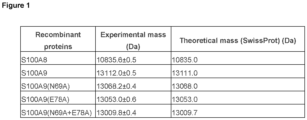
- Electrospray ionization mass spectrometry confirms the theoretically calculated masses without the N-terminal methionine (SwissProt) for mutated and non-mutated recombinant S100A8/S1009 proteins ( Figure 1 ).
- S100A8 and S100A9 exist as heterodimers in the absence of calcium, and these heterodimeric complexes associate to (S100A8/S100A9) 2 tetramers upon calcium-binding.
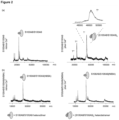
- Figure 2(a) shows the matrix-assisted laser desorption/ionisation mass spectrometry (MALDI-MS) spectra of the recS100A8/S100A9 wt proteins. In the absence of calcium, samples show intense signals of singly charged heterodimers.
- MALDI-MS matrix-assisted laser desorption/ionisation mass spectrometry
- the oligomerization properties of the recS100A8/S100A9 mutant complexes can be determined by MALDI-MS.
- all mutant S100A9 proteins display signals for singly charged heterodimers in the absence of calcium.
- no heterotetramers can be observed for the mutant complexes in the presence of calcium ( Figure 2 ).
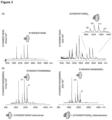
- the base peaks under these conditions exclusively represent S100A8/S100A9(N69A), S100A8/S100A9(E78A) and S100A8/S100A9(N69A+E78A) heterodimers. All MALDI-MS experiments presented here were also confirmed by ESI-MS measurements (see Figure 3 ).
- Density gradient centrifugation can be employed in order to confirm the different complex formation patterns obtained in the mass spectrometric studies ( Figure 5 ).
- the recS100A8/S100A9 wt and mutant complexes are found in the same range of fractions of the glycerol gradient (19( ⁇ 2)%), indicating that in the absence of calcium the formation of heterodimers is preferred in wt proteins and all S100A9 mutants.
- wt complexes shifted to fractions of significantly higher glycerol concentrations (23( ⁇ 2)%), as observed earlier for S100A8/S100A9 purified from granulocytes.
Landscapes
- Life Sciences & Earth Sciences (AREA)
- Health & Medical Sciences (AREA)
- Engineering & Computer Science (AREA)
- Hematology (AREA)
- Molecular Biology (AREA)
- Biomedical Technology (AREA)
- Chemical & Material Sciences (AREA)
- Immunology (AREA)
- Urology & Nephrology (AREA)
- Biotechnology (AREA)
- Biochemistry (AREA)
- Cell Biology (AREA)
- Food Science & Technology (AREA)
- Medicinal Chemistry (AREA)
- Physics & Mathematics (AREA)
- Analytical Chemistry (AREA)
- Microbiology (AREA)
- General Health & Medical Sciences (AREA)
- General Physics & Mathematics (AREA)
- Pathology (AREA)
- Proteomics, Peptides & Aminoacids (AREA)
- Peptides Or Proteins (AREA)
- Investigating Or Analysing Biological Materials (AREA)
Claims (12)
- Verfahren zum Nachweis eines S100A8/S100A9-Heterodimers in einer biologischen Probe, wobei das Verfahren die Verwendung eines S100A8/S100A9-Heterodimers als Standard umfasst, das mindestens eine Mutation in mindestens einer der folgenden Regionen umfasst:a) die hochaffine Calcium-bindende Hand von S100A9,b) die niederaffine Calcium-bindende Hand von S100A9,c) die hochaffine Calcium-bindende Hand von S100A8, oderd) die niederaffine Calcium-bindende Hand von S100A8,wobei der S100A8/S100A9-Heterodimer-Standard nicht zu (S100A8/S100A9)2-Tetrameren tetramerisiert.
- Verfahren nach Anspruch 1, wobei der S100A8/S100A9-Heterodimer-Standard mindestens eine Mutation aufweist in:a) der Aminosäuresequenz im Bereich von Aminosäureposition 63 bis Aminosäureposition 79 des menschlichen S100A9-Proteins der Uniprot/Swissprot-Hinterlegungsnummer P06702 (SEQ ID NO: 1),b) der Aminosäuresequenz im Bereich von Aminosäureposition 20 bis Aminosäureposition 38 des menschlichen S100A9-Proteins der Uniprot/Swissprot-Hinterlegungsnummer P06702 (SEQ ID NO: 1),c) der Aminosäuresequenz im Bereich von Aminosäureposition 55 bis Aminosäureposition 71 des menschlichen S100A8-Proteins der Uniprot/Swissprot-Hinterlegungsnummer P05109 (SEQ ID NO: 2) oderd) der Aminosäuresequenz im Bereich von Aminosäureposition 20 bis Aminosäureposition 38 des menschlichen S100A8-Proteins der Uniprot/Swissprot-Hinterlegungsnummer P05109 (SEQ ID NO: 2), und Kombinationen davon,wobei der S100A8/S100A9-Heterodimer-Standard vorzugsweise mindestens eine Mutation umfasst, ausgewählt aus:i) Ser23, Leu26, His28, Thr31, Asp 33, Glu36, Asp67, Asn69, Asp71 oder Glu78 von S100A9, wobei die Positionen Glu36, Asp67, Asn69, Asp71 und Glu78 bevorzugt sind, oderii) Ser23, Lys26, Asn28, Ala31, Asp33, Asp59, Asn61, Asp63 und Glu70 von S100A8, wobei die Positionen Asp33, Asp59, Asn61, Asp63 und Glu70 bevorzugt sind,wobei die Mutation vorzugsweise den Aminosäureaustausch Asn69Ala oder Glu78Ala umfasst.
- Verfahren nach einem der vorhergehenden Ansprüche, wobei das Nachweisverfahren ein quantitativer Enzym-linked Immunosorbent Assay (ELISA) ist, der den/die folgenden Schritt(e) umfasst:a) Vorbeschichten einer Mikroplatte mit einem monoklonalen Fänger-Antikörper, der S100A8 und/oder S100A9 binden kann,b) gegebenenfalls Kontaktieren des vorbeschichteten Fänger-Antikörpers mit der zu analysierenden Probe und dem Standard wie in Anspruch 1 definiert,c) gegebenenfalls Abwaschen von ungebundener Probe und Standard,d) gegebenenfalls Kontaktieren der gebundener Probe und Standard mit einem Enzym-konjugierten Nachweis-Antikörper,e) gegebenenfalls Abwaschen freier Mengen des Nachweis-Antikörpers,f) gegebenenfalls Kontaktieren des gebundenen Nachweis-Antikörpers mit dem Substrat des konjugierten Enzyms,g) gegebenenfalls Beendigung der enzymatischen Reaktion,h) gegebenenfalls photometrische Bestimmung der Extinktion der Probe und des Standards undi) gegebenenfalls Bestimmung der Menge des S100A8/S100A9-Heterodimers in der Probe durch Vergleich der Extinktion mit der Extinktion des Standards.
- Verfahren nach Anspruch 3,a) wobei der monoklonale Fänger-Antikörper von Schritt a) in der Lage ist, S100A8/S100A9-Heterodimere, aber keine S100A8/S100A9-Tetramere zu binden, wobei der Fänger-Antikörper vorzugsweise ein Antikörper mit einer Bindungsspezifität für ein Epitop eines Wirbeltier-S100A9-Proteins ist, wobei das Epitop eine Aminosäuresequenz aufweist, die von (i) Aminosäureposition 63 bis Aminosäureposition 79 des menschlichen S100A9-Proteins der Uniprot/Swissprot-Hinterlegungsnummer P06702 (SEQ ID NO: 1) oder (ii) Aminosäureposition 55 bis Aminosäureposition 71 des menschlichen S100A8-Proteins der Uniprot/Swissprot-Hinterlegungsnummer P05109 (SEQ ID NO: 2) reicht; und/oderb) ferner umfassend den Schritt des Vergleichens der in i) bestimmten Menge an S100A8/S100A9-Heterodimer mit der Gesamtmenge an S100A8/S100A9-Protein.
- Verfahren nach einem der vorhergehenden Ansprüche, wobei es sich bei der Probe um eine Stuhlprobe, eine Blutprobe, eine Serumprobe, eine Plasmaprobe, eine Urinprobe, eine Gewebeextraktprobe oder eine Zellkulturprobe handelt, wobei die Probe vorzugsweise von einem Subjekt stammt, das an einer akuten oder chronischen entzündlichen Erkrankung leidet, wobei die Krankheit vorzugsweise ausgewählt ist aus rheumatoider Arthritis, juveniler idiopathischer Arthritis, psoriatischer Arthritis, entzündlichem Immunrekonstruktionssyndrom (IRIS), Sepsis, systemischem Entzündungsreaktionssyndrom (SIRS), Lungenentzündung, Osteomyelitis, autoinflammatorischen Syndromen, Hyperzinkämie, systemischer Entzündung, Arteriosklerose, akutem Koronarsyndrom, Myokardinfarkt, Morbus Crohn, Colitis ulcerosa, Glomerulonephritis (SLE), Diabetes, einer entzündlichen Hauterkrankung, Psoriasis, entzündlicher Darmerkrankung, Vaskulitis, Abstoßung von Allotransplantaten, Glomerulonephritis, systemischer Lupus erythematodes, Pankreatitis, Krebs, Dermatomyositis und Polymyositis, Multiple Sklerose, Allergien, Autoimmunerkrankungen, Herz-Kreislauf-Erkrankungen, Infektionen, Lungenentzündungen, systemisch auftretender juveniler idiopathischer Arthritis (SOJIA), akuter Lungenschädigung (ALI) und ihrer schwersten Form, akutem Atemnotsyndrom (ARDS).
- Kit, das einen S100A8/S100A9-Heterodimer-Standard wie in Anspruch 1 definiert, eine Vorrichtung mit einem immobilisierten Fänger-Antikörper, der spezifisch für den S100A8/S100A9-Heterodimer-Standard ist, ein Waschreagenz und ein Detektorreagenz umfasst, wobei der S100A8/S100A9-Heterodimer-Standard den Aminosäureaustausch Asn69Ala oder Glu78Ala in der Aminosäuresequenz von S100A9 umfasst.
- Verwendung des S100A8/S100A9-Heterodimers als Standard wie in Anspruch 1 definiert in einem Verfahren zum Nachweis von S100A8/S100A9-Heterodimeren in einer Probe oder in einem Verfahren zum Vergleich der Menge von S100A8/S100A9-Heterodimeren und -Tetrameren in einer Probe, oder Verwendung des S100A8/S100A9-Heterodimers als Standard in der Diagnose oder Verwendung eines Kits, das dieses S100A8/S100A9-Heterodimer als Standard umfasst, in der Diagnose.
- Verwendung nach Anspruch 7, wobei die Verwendung in der Diagnose erfolgt und wobei die Verwendung in einem Verfahren zur Diagnose einer akuten oder chronischen entzündlichen Erkrankung in einem menschlichen Subjekt erfolgt, wobei die Diagnose vorzugsweise den Nachweis von S100A8/S100A9-Heterodimer in einer biologischen Probe von dem menschlichen Subjekt umfasst.
- Verfahren zur Überwachung des Fortschreitens einer akuten oder chronischen entzündlichen Erkrankung, die mit einer erhöhten Menge an S100A8/S100A9-Heterodimer in einem Patienten verbunden ist, wobei das Verfahren umfasst:a) Quantifizieren der Menge an S100A8/S100A9-Heterodimer in einer Probe, die dem Patienten entnommen wurde, unter Verwendung des S100A8/S100A9-Heterodimers als Standard wie in Anspruch 1 definiert, undb) Vergleichen der Menge an S100A8/S100A9-Heterodimer, die in a) bestimmt wurde, mit der Menge an S100A8/S100A9-Heterodimer in einer Probe von dem Patienten, die zu einem früheren Zeitpunkt bestimmt wurde, wobei das Ergebnis des Vergleichs von b) eine Bewertung des Fortschreitens der entzündlichen Erkrankung, die mit einer erhöhten Menge an S100A8/S100A9-Heterodimer in dem Patienten verbunden ist, liefert.
- Verfahren nach Anspruch 9, wobei eine signifikant erhöhte Menge an S100A8/S100A9-Heterodimer im Vergleich zu den Referenzdaten auf ein Fortschreiten der entzündlichen Erkrankung, die mit einer erhöhten Menge an S100A8/S100A9-Heterodimer bei dem Patienten assoziiert ist, hinweist oder wobei keine Veränderung oder eine verringerte Menge an S100A8/S100A9-Heterodimer im Vergleich zu den Referenzdaten auf kein Fortschreiten oder eine Regression der entzündlichen Erkrankung, die mit einer erhöhten Menge an S100A8/S100A9-Heterodimer bei dem Patienten assoziiert ist, hinweist.
- Verfahren zur Diagnose einer akuten oder chronischen entzündlichen Erkrankung bei einem Subjekt, wobei das Verfahren umfasst:a) Quantifizieren der Menge an S100A8/S100A9-Heterodimer in einer Probe, die dem Subjekt entnommen wurde, unter Verwendung des S100A8/S100A9-Heterodimers als Standard wie in Anspruch 1 definiert, undb) Vergleichen der Menge an S100A8/S100A9-Heterodimer, wie in a) bestimmt, mit Referenzdaten von einem Subjekt, von dem bekannt ist, dass es nicht an einer akuten oder chronischen entzündlichen Krankheit leidet.
- Verfahren nach Anspruch 11, wobei eine signifikant erhöhte Menge an S100A8/S100A9-Heterodimer im Vergleich zu den Referenzdaten anzeigt, dass das Subjekt an einer akuten oder chronischen entzündlichen Erkrankung leidet, oder wobei keine signifikante Abweichung in der Menge an S100A8/S100A9-Heterodimer im Vergleich zu den Referenzdaten anzeigt, dass das Subjekt nicht an einer akuten oder chronischen entzündlichen Erkrankung leidet.
Applications Claiming Priority (2)
| Application Number | Priority Date | Filing Date | Title |
|---|---|---|---|
| EP15000207 | 2015-01-23 | ||
| PCT/IB2016/050288 WO2016116881A1 (en) | 2015-01-23 | 2016-01-21 | Compounds and methods for the detection of calprotectin |
Publications (3)
| Publication Number | Publication Date |
|---|---|
| EP3248015A1 EP3248015A1 (de) | 2017-11-29 |
| EP3248015B1 true EP3248015B1 (de) | 2025-05-14 |
| EP3248015C0 EP3248015C0 (de) | 2025-05-14 |
Family
ID=52462782
Family Applications (1)
| Application Number | Title | Priority Date | Filing Date |
|---|---|---|---|
| EP16702206.0A Active EP3248015B1 (de) | 2015-01-23 | 2016-01-21 | Verbindungen und verfahren für den nachweis von calprotectin |
Country Status (3)
| Country | Link |
|---|---|
| US (1) | US20180017576A1 (de) |
| EP (1) | EP3248015B1 (de) |
| WO (1) | WO2016116881A1 (de) |
Families Citing this family (7)
| Publication number | Priority date | Publication date | Assignee | Title |
|---|---|---|---|---|
| WO2018083291A1 (en) | 2016-11-07 | 2018-05-11 | Westfälische Wilhelms-Universität Münster | S100a8/s100a9-induced immunotolerance in newborn subjects |
| BR112019023210A2 (pt) | 2017-05-09 | 2020-05-26 | Immundiagnostik Ag | Método para determinação de membros da família s100 de proteínas de ligação ao cálcio por meio de imunoturbidimetria |
| JP7236311B2 (ja) | 2019-04-01 | 2023-03-09 | キヤノン株式会社 | モータ制御装置及び画像形成装置 |
| WO2020232262A1 (en) * | 2019-05-16 | 2020-11-19 | Procisedx Inc. | Assay detection methods for vcam-1 and calprotectin |
| EP4004553A1 (de) * | 2019-07-22 | 2022-06-01 | F. Hoffmann-La Roche AG | S100a8 als blutbiomarker zur nichtinvasiven diagnose von endometriose |
| US20230074277A1 (en) * | 2020-02-24 | 2023-03-09 | Buehlmann Laboratories Ag | Recombinant calprotectin |
| CN114062691B (zh) * | 2022-01-12 | 2022-04-01 | 苏州和锐生物科技有限公司 | 一种稀释液以及钙卫蛋白校准品 |
Family Cites Families (3)
| Publication number | Priority date | Publication date | Assignee | Title |
|---|---|---|---|---|
| NO336551B1 (no) * | 2011-06-21 | 2015-09-28 | Magne Fagerhol | Forbedret ELISA for kalprotektin i fekalprøve eller gastrointestinaltraktsprøve |
| WO2013132347A2 (en) * | 2012-03-06 | 2013-09-12 | Calpro As | Improved elisa immunoassay for calprotectin |
| AU2013311537B2 (en) | 2012-09-10 | 2018-04-12 | Westfaelische Wilhelms-Universitaet Muenster | Methods and compounds for preventing, treating and diagnosing an inflammatory condition |
-
2016
- 2016-01-21 WO PCT/IB2016/050288 patent/WO2016116881A1/en not_active Ceased
- 2016-01-21 US US15/544,938 patent/US20180017576A1/en not_active Abandoned
- 2016-01-21 EP EP16702206.0A patent/EP3248015B1/de active Active
Also Published As
| Publication number | Publication date |
|---|---|
| US20180017576A1 (en) | 2018-01-18 |
| WO2016116881A1 (en) | 2016-07-28 |
| EP3248015C0 (de) | 2025-05-14 |
| EP3248015A1 (de) | 2017-11-29 |
Similar Documents
| Publication | Publication Date | Title |
|---|---|---|
| EP3248015B1 (de) | Verbindungen und verfahren für den nachweis von calprotectin | |
| DK2482078T3 (en) | Cardiovascular disease diagnosis | |
| CN107110867B (zh) | 用于肝癌诊断的生物标记物及其用途 | |
| CN103370619A (zh) | 诊断或风险预测心力衰竭的方法和试剂 | |
| US20190011463A1 (en) | Diagnosis of unstable angina | |
| US20240103014A1 (en) | Inspection Method Enabling Specific Diagnosis of Pathological State of Diabetic Nephropathy at Early Stage | |
| CN108139404B (zh) | 特异性地识别、结合活性结构的REIC/Dkk-3蛋白的抗体、以及使用该抗REIC/Dkk-3抗体的癌治疗的监测 | |
| KR101686877B1 (ko) | GDF15 발현 수준을 측정하는 제제를 포함하는 IgA 신병증 진단 또는 예후 분석용 키트 | |
| KR102131860B1 (ko) | 아르기닌이 메틸화된 ggt1에 특이적으로 결합하는 대장암 진단용 바이오마커 조성물 | |
| US11267854B2 (en) | Complex-specific standardization of immunological methods for the quantification of S100A12 | |
| KR102128251B1 (ko) | 아르기닌이 메틸화된 drd2에 특이적으로 결합하는 대장암 진단용 바이오마커 조성물 | |
| CA3036256C (en) | Inspection method enabling specific diagnosis of pathological state of diabetic nephropathy at early stage | |
| AU2016201172B2 (en) | Diagnosis of cardiovascular disease | |
| HK1228502A1 (en) | Prognosis of cardiovascular disease | |
| HK1255344B (en) | Method for predicting prognosis and risk of developing hepatocellular carcinoma in liver cirrhosis patient | |
| HK1255344A1 (zh) | 用於预测肝硬化患者的肝细胞癌发生风险和预後的方法 |
Legal Events
| Date | Code | Title | Description |
|---|---|---|---|
| STAA | Information on the status of an ep patent application or granted ep patent |
Free format text: STATUS: THE INTERNATIONAL PUBLICATION HAS BEEN MADE |
|
| PUAI | Public reference made under article 153(3) epc to a published international application that has entered the european phase |
Free format text: ORIGINAL CODE: 0009012 |
|
| STAA | Information on the status of an ep patent application or granted ep patent |
Free format text: STATUS: REQUEST FOR EXAMINATION WAS MADE |
|
| 17P | Request for examination filed |
Effective date: 20170818 |
|
| AK | Designated contracting states |
Kind code of ref document: A1 Designated state(s): AL AT BE BG CH CY CZ DE DK EE ES FI FR GB GR HR HU IE IS IT LI LT LU LV MC MK MT NL NO PL PT RO RS SE SI SK SM TR |
|
| AX | Request for extension of the european patent |
Extension state: BA ME |
|
| DAV | Request for validation of the european patent (deleted) | ||
| DAX | Request for extension of the european patent (deleted) | ||
| STAA | Information on the status of an ep patent application or granted ep patent |
Free format text: STATUS: EXAMINATION IS IN PROGRESS |
|
| 17Q | First examination report despatched |
Effective date: 20180504 |
|
| GRAP | Despatch of communication of intention to grant a patent |
Free format text: ORIGINAL CODE: EPIDOSNIGR1 |
|
| STAA | Information on the status of an ep patent application or granted ep patent |
Free format text: STATUS: GRANT OF PATENT IS INTENDED |
|
| INTG | Intention to grant announced |
Effective date: 20240424 |
|
| GRAJ | Information related to disapproval of communication of intention to grant by the applicant or resumption of examination proceedings by the epo deleted |
Free format text: ORIGINAL CODE: EPIDOSDIGR1 |
|
| STAA | Information on the status of an ep patent application or granted ep patent |
Free format text: STATUS: EXAMINATION IS IN PROGRESS |
|
| GRAP | Despatch of communication of intention to grant a patent |
Free format text: ORIGINAL CODE: EPIDOSNIGR1 |
|
| STAA | Information on the status of an ep patent application or granted ep patent |
Free format text: STATUS: GRANT OF PATENT IS INTENDED |
|
| INTC | Intention to grant announced (deleted) | ||
| INTG | Intention to grant announced |
Effective date: 20240918 |
|
| GRAS | Grant fee paid |
Free format text: ORIGINAL CODE: EPIDOSNIGR3 |
|
| GRAA | (expected) grant |
Free format text: ORIGINAL CODE: 0009210 |
|
| STAA | Information on the status of an ep patent application or granted ep patent |
Free format text: STATUS: THE PATENT HAS BEEN GRANTED |
|
| REG | Reference to a national code |
Ref country code: DE Ref legal event code: R081 Ref document number: 602016092227 Country of ref document: DE Owner name: WESTFAELISCHE WILHELMS-UNIVERSITAET MUENSTER, , DE Free format text: FORMER OWNER: ANMELDERANGABEN UNKLAR / UNVOLLSTAENDIG, 80297 MUENCHEN, DE |
|
| AK | Designated contracting states |
Kind code of ref document: B1 Designated state(s): AL AT BE BG CH CY CZ DE DK EE ES FI FR GB GR HR HU IE IS IT LI LT LU LV MC MK MT NL NO PL PT RO RS SE SI SK SM TR |
|
| REG | Reference to a national code |
Ref country code: GB Ref legal event code: FG4D |
|
| REG | Reference to a national code |
Ref country code: CH Ref legal event code: EP |
|
| REG | Reference to a national code |
Ref country code: IE Ref legal event code: FG4D |
|
| REG | Reference to a national code |
Ref country code: DE Ref legal event code: R096 Ref document number: 602016092227 Country of ref document: DE |
|
| U01 | Request for unitary effect filed |
Effective date: 20250602 |
|
| U07 | Unitary effect registered |
Designated state(s): AT BE BG DE DK EE FI FR IT LT LU LV MT NL PT RO SE SI Effective date: 20250610 |
|
| PG25 | Lapsed in a contracting state [announced via postgrant information from national office to epo] |
Ref country code: ES Free format text: LAPSE BECAUSE OF FAILURE TO SUBMIT A TRANSLATION OF THE DESCRIPTION OR TO PAY THE FEE WITHIN THE PRESCRIBED TIME-LIMIT Effective date: 20250514 |
|
| PG25 | Lapsed in a contracting state [announced via postgrant information from national office to epo] |
Ref country code: NO Free format text: LAPSE BECAUSE OF FAILURE TO SUBMIT A TRANSLATION OF THE DESCRIPTION OR TO PAY THE FEE WITHIN THE PRESCRIBED TIME-LIMIT Effective date: 20250814 Ref country code: GR Free format text: LAPSE BECAUSE OF FAILURE TO SUBMIT A TRANSLATION OF THE DESCRIPTION OR TO PAY THE FEE WITHIN THE PRESCRIBED TIME-LIMIT Effective date: 20250815 |
|
| PG25 | Lapsed in a contracting state [announced via postgrant information from national office to epo] |
Ref country code: PL Free format text: LAPSE BECAUSE OF FAILURE TO SUBMIT A TRANSLATION OF THE DESCRIPTION OR TO PAY THE FEE WITHIN THE PRESCRIBED TIME-LIMIT Effective date: 20250514 |
|
| PG25 | Lapsed in a contracting state [announced via postgrant information from national office to epo] |
Ref country code: HR Free format text: LAPSE BECAUSE OF FAILURE TO SUBMIT A TRANSLATION OF THE DESCRIPTION OR TO PAY THE FEE WITHIN THE PRESCRIBED TIME-LIMIT Effective date: 20250514 |
|
| PG25 | Lapsed in a contracting state [announced via postgrant information from national office to epo] |
Ref country code: RS Free format text: LAPSE BECAUSE OF FAILURE TO SUBMIT A TRANSLATION OF THE DESCRIPTION OR TO PAY THE FEE WITHIN THE PRESCRIBED TIME-LIMIT Effective date: 20250814 |
|
| PG25 | Lapsed in a contracting state [announced via postgrant information from national office to epo] |
Ref country code: IS Free format text: LAPSE BECAUSE OF FAILURE TO SUBMIT A TRANSLATION OF THE DESCRIPTION OR TO PAY THE FEE WITHIN THE PRESCRIBED TIME-LIMIT Effective date: 20250914 |
|
| PG25 | Lapsed in a contracting state [announced via postgrant information from national office to epo] |
Ref country code: SM Free format text: LAPSE BECAUSE OF FAILURE TO SUBMIT A TRANSLATION OF THE DESCRIPTION OR TO PAY THE FEE WITHIN THE PRESCRIBED TIME-LIMIT Effective date: 20250514 |
|
| PG25 | Lapsed in a contracting state [announced via postgrant information from national office to epo] |
Ref country code: CZ Free format text: LAPSE BECAUSE OF FAILURE TO SUBMIT A TRANSLATION OF THE DESCRIPTION OR TO PAY THE FEE WITHIN THE PRESCRIBED TIME-LIMIT Effective date: 20250514 |
|
| PG25 | Lapsed in a contracting state [announced via postgrant information from national office to epo] |
Ref country code: SK Free format text: LAPSE BECAUSE OF FAILURE TO SUBMIT A TRANSLATION OF THE DESCRIPTION OR TO PAY THE FEE WITHIN THE PRESCRIBED TIME-LIMIT Effective date: 20250514 |
|
| REG | Reference to a national code |
Ref country code: CH Ref legal event code: U11 Free format text: ST27 STATUS EVENT CODE: U-0-0-U10-U11 (AS PROVIDED BY THE NATIONAL OFFICE) Effective date: 20260201 |
|
| U20 | Renewal fee for the european patent with unitary effect paid |
Year of fee payment: 11 Effective date: 20260129 |
|
| PLBE | No opposition filed within time limit |
Free format text: ORIGINAL CODE: 0009261 |
|
| STAA | Information on the status of an ep patent application or granted ep patent |
Free format text: STATUS: NO OPPOSITION FILED WITHIN TIME LIMIT |
|
| REG | Reference to a national code |
Ref country code: CH Ref legal event code: L10 Free format text: ST27 STATUS EVENT CODE: U-0-0-L10-L00 (AS PROVIDED BY THE NATIONAL OFFICE) Effective date: 20260325 |
|
| PGFP | Annual fee paid to national office [announced via postgrant information from national office to epo] |
Ref country code: GB Payment date: 20260123 Year of fee payment: 11 |
|
| 26N | No opposition filed |
Effective date: 20260217 |
|
| PGFP | Annual fee paid to national office [announced via postgrant information from national office to epo] |
Ref country code: CH Payment date: 20260201 Year of fee payment: 11 |