EP3242935B1 - O-glycansialylierte rekombinante glykoproteine und zelllinien zur herstellung davon - Google Patents
O-glycansialylierte rekombinante glykoproteine und zelllinien zur herstellung davon Download PDFInfo
- Publication number
- EP3242935B1 EP3242935B1 EP15821020.3A EP15821020A EP3242935B1 EP 3242935 B1 EP3242935 B1 EP 3242935B1 EP 15821020 A EP15821020 A EP 15821020A EP 3242935 B1 EP3242935 B1 EP 3242935B1
- Authority
- EP
- European Patent Office
- Prior art keywords
- cells
- st3gal1
- inh
- cell line
- glycans
- Prior art date
- Legal status (The legal status is an assumption and is not a legal conclusion. Google has not performed a legal analysis and makes no representation as to the accuracy of the status listed.)
- Active
Links
Images







Classifications
-
- C—CHEMISTRY; METALLURGY
- C12—BIOCHEMISTRY; BEER; SPIRITS; WINE; VINEGAR; MICROBIOLOGY; ENZYMOLOGY; MUTATION OR GENETIC ENGINEERING
- C12N—MICROORGANISMS OR ENZYMES; COMPOSITIONS THEREOF; PROPAGATING, PRESERVING, OR MAINTAINING MICROORGANISMS; MUTATION OR GENETIC ENGINEERING; CULTURE MEDIA
- C12N9/00—Enzymes; Proenzymes; Compositions thereof; Processes for preparing, activating, inhibiting, separating or purifying enzymes
- C12N9/10—Transferases (2.)
- C12N9/1048—Glycosyltransferases (2.4)
- C12N9/1081—Glycosyltransferases (2.4) transferring other glycosyl groups (2.4.99)
-
- C—CHEMISTRY; METALLURGY
- C12—BIOCHEMISTRY; BEER; SPIRITS; WINE; VINEGAR; MICROBIOLOGY; ENZYMOLOGY; MUTATION OR GENETIC ENGINEERING
- C12P—FERMENTATION OR ENZYME-USING PROCESSES TO SYNTHESISE A DESIRED CHEMICAL COMPOUND OR COMPOSITION OR TO SEPARATE OPTICAL ISOMERS FROM A RACEMIC MIXTURE
- C12P21/00—Preparation of peptides or proteins
- C12P21/005—Glycopeptides, glycoproteins
-
- C—CHEMISTRY; METALLURGY
- C07—ORGANIC CHEMISTRY
- C07K—PEPTIDES
- C07K14/00—Peptides having more than 20 amino acids; Gastrins; Somatostatins; Melanotropins; Derivatives thereof
- C07K14/435—Peptides having more than 20 amino acids; Gastrins; Somatostatins; Melanotropins; Derivatives thereof from animals; from humans
- C07K14/475—Growth factors; Growth regulators
- C07K14/4753—Hepatocyte growth factor; Scatter factor; Tumor cytotoxic factor II
-
- C—CHEMISTRY; METALLURGY
- C07—ORGANIC CHEMISTRY
- C07K—PEPTIDES
- C07K14/00—Peptides having more than 20 amino acids; Gastrins; Somatostatins; Melanotropins; Derivatives thereof
- C07K14/81—Protease inhibitors
- C07K14/8107—Endopeptidase (E.C. 3.4.21-99) inhibitors
- C07K14/811—Serine protease (E.C. 3.4.21) inhibitors
- C07K14/8121—Serpins
-
- C—CHEMISTRY; METALLURGY
- C12—BIOCHEMISTRY; BEER; SPIRITS; WINE; VINEGAR; MICROBIOLOGY; ENZYMOLOGY; MUTATION OR GENETIC ENGINEERING
- C12Y—ENZYMES
- C12Y204/00—Glycosyltransferases (2.4)
- C12Y204/99—Glycosyltransferases (2.4) transferring other glycosyl groups (2.4.99)
- C12Y204/99001—Beta-galactoside alpha-2,6-sialyltransferase (2.4.99.1)
-
- C—CHEMISTRY; METALLURGY
- C12—BIOCHEMISTRY; BEER; SPIRITS; WINE; VINEGAR; MICROBIOLOGY; ENZYMOLOGY; MUTATION OR GENETIC ENGINEERING
- C12Y—ENZYMES
- C12Y204/00—Glycosyltransferases (2.4)
- C12Y204/99—Glycosyltransferases (2.4) transferring other glycosyl groups (2.4.99)
- C12Y204/99004—Beta-galactoside alpha-2,3-sialyltransferase (2.4.99.4)
Definitions
- the present invention relates to cell lines that are genetically modified to overexpress a ⁇ -galactoside ⁇ -2,3-sialyltransferase 1 (ST3Gal1), which are further genetically modified to overexpress a ⁇ -galactoside ⁇ -2,3-sialyltransferase 4 (ST3Gal4), which can be used for the production of recombinant glycoproteins having highly or fully sialylated O-linked GalNAc glycans (GaINAc O-glycans), preferably core 1 GalNAc O-glycans, as well as to respective recombinant glycoproteins. Further, the present invention relates to respective methods of expressing recombinant glycoproteins.
- ST3Gal1 ⁇ -galactoside ⁇ -2,3-sialyltransferase 1
- ST3Gal4 ⁇ -galactoside ⁇ -2,3-sialyltransferase 4
- therapeutic proteins Due to their clinical importance, the development of therapeutic proteins has accelerated dramatically over the past years. However, the development of therapeutic proteins is often held up, in particular for complex glycosylated proteins, due to the difficulties in obtaining proteins with favorable glycosylation patterns. This often leads to suboptimal pharmacological properties such as e.g. reduced serum half-life or increased immunogenicity.
- Another drawback is heterogeneity of the therapeutic proteins due to variations in the post-translational modification, in particular of the glycostructures. This can lead to inconsistencies in product quality between different production batches. Therefore, in order to advance the development of therapeutic proteins, it is important to achieve homogenous post-translational modification.
- glycosylation is the most common post-translational modification. Nearly all biopharmaceuticals need to be correctly glycosylated in order to display the optimal therapeutic efficacy.
- glycosylation refers to the covalent attachment of sugars to the protein surface, wherein the sugars are either connected to asparagine residues resulting in N-linked glycans (N-glycans) or serine or threonine residues resulting in O-linked glycans (O-glycans).
- O-linked glycans The most common group of O-linked glycans are GalNAc O-glycans in which the serine or threonine is linked to N-acetylgalactosamine (GaINAc) which in turn is linked to additional monosaccharides.
- GaINAc N-acetylgalactosamine
- the terms "O-linked glycan” or "O-glycan” always relate to GaINAc O-glycans.
- the glycosylation pattern can be very diverse from molecule to molecule as the attached forms can be different in monosaccharide order, branching pattern, and length (micro-heterogeneity). Additionally, not all glycosylation sites are fully occupied (macro-heterogeneity).
- Glycosylation influences the solubility of proteins, their resistance to proteolysis, and their binding behavior to other proteins or to protein receptors such as e.g. the ASGPR (asialoglycoprotein receptor) and therefore influences the half-life of the glycoprotein in the plasma.
- ASGPR asialoglycoprotein receptor
- clearance occurs mainly via renal clearance. Beside the size of a protein, also the protein surface charge has influence on the renal clearance, as the filtration of highly charged proteins in the kidney is decreased.
- ASGPR ASGPR
- glycoproteins with terminal sialic acids covering the adjacent carbohydrate, galactose Due to the action of this receptor, glycoproteins with terminal sialic acids covering the adjacent carbohydrate, galactose, have up to 100-fold increase in half-life as compared to their non-sialylated counterparts with terminal galactose residues on their N-linked glycans.
- Other receptors bind specifically to mannose, N-acetyl-glucosamine, or fucose and clear glycoproteins with these terminal sugars from the system.
- a native N-glycosylation pattern including a high degree of terminal sialylation is crucial for therapeutic proteins since it determines the pharmacokinetic properties of the therapeutic protein.
- terminal sialic acids with the proper linkage on glycoproteins reduce the immunogenicity of the glycoproteins.
- CHO cells Choinese hamster ovary cells
- CHO cells lack the enzyme needed to catalyze 2,6-linkage of sialic acids, and therefore they can only catalyze the 2,3-linkage.
- CHO cells lack the enzyme needed to catalyze 2,6-linkage of sialic acids, and therefore they can only catalyze the 2,3-linkage.
- N-acetylneuraminic acid sialic acid; NeuAc
- they also link N-glycolylneuraminic acid (NeuGc) to glycans, a sugar not synthesized in humans and therefore immunogenic when injected into humans.
- CAP cells derived from human amniocytes
- HEK293 cells derived from human embryo kidney cells
- O-linked GalNAc glycans always have an ⁇ -linked N-acetylgalactosamine residue linked to serine or threonine.
- the GalNAc can be extended with residues like galactose, GlcNAc, fucose, or sialic acid.
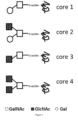
- O-linked GalNAc glycosylation four principal core structures can be distinguished, core 1 (GalGalNAc), core 2 (GalGlcNAcGalNAc), core 3 (GlcNAcGalNAc), and core 4 (GlcNAc2GalNAc) ( Fig. 1 ).
- the terminal ends are often further modified, e.g. with phosphates, sulfates, carboxylic acids, or sialic acids.
- O-linked GalNAc glycans play a role in maintaining structures of fully folded proteins, conferring protease stability.
- Figure 2 shows the biosynthesis of core 1 and core 2 GalNAc O-glycans.
- IGFBP6 Human insulin-like growth factor binding protein-6
- BR3-Fc B cell-activating factor receptor 3
- BR3-Fc has multiple O-linked glycosylation sites and sialylation levels vary in the manufacturing process. Separating the different forms, it could be shown that exposed galactose on the desialylated O-linked glycans of BR3-Fc was associated with rapid clearance due to uptake and degradation in the liver, in particular by non-parenchymal cell mediated clearance.
- Adiponectin an adipocyte-secreted, insulin-sensitizing hormone, has three putative O-linked glycosylation sites, which are not necessary for multimer formation but plasma clearance of the desialylated protein was accelerated compared with that of sialylated protein. So far, no methods have been described that will affect the sialylation or the structure of O-linked GalNAc glycans during recombinant expression of glycoproteins.
- Vallejo-Ruiz et al. ( Vallejo-Ruiz, A. V. et al.; Biochimica et Biophysica Acta, 1549(2); October 2001; pages 161-173 ) describes the delineation of the minimal catalytic domain of human Galbeta1-3GalNAc alpha2,3-sialyltransferase. Further, Dalziel et al. ( Dalziel, M.
- CN 101 613 678 A describes an MDCK-ST3GAL-1 cell line, concretely an MDCK cell line stably expressing beta-galactoside alpha-2,3-sialytransferase 1 (ST3Gal 1), methods of making the same, and uses thereof.
- ST3Gal 1 beta-galactoside alpha-2,3-sialytransferase 1
- US 2012/322738 A1 describes conjugated FVIII variants comprising different polymeric groups as well as use thereof.
- Shang et al. Shang, J. et al.; European Journal of Biochemistry, 265(2); October 1999; pages 580-588 ) describes the molecular cloning and expression of Galbeta1,3GalNAc alpha2,3-sialyltransferase from human fetal liver.
- the technical problem underlying the present invention is to provide recombinant glycoproteins having highly or fully sialylated GalNAc O-glycans, as well as cell lines that are capable of recombinantly producing such proteins. Further, respective methods of expressing recombinant glycoproteins should be provided.
- the present invention relates to the following items:
- an animal cell line preferably an insect, avian, or mammalian cell line, more preferably a mammalian, in particular human, cell line that is genetically modified to overexpress a ⁇ -galactoside ⁇ -2,3-sialyltransferase 1 (ST3Gal1), which is further modified to overexpress a ⁇ -galactoside ⁇ -2,3-sialyltransferase 4 (ST3Gal4).
- ST3Gal1 ⁇ -galactoside ⁇ -2,3-sialyltransferase 1
- ST3Gal4 ⁇ -galactoside ⁇ -2,3-sialyltransferase 4
- cell line genetically modified to overexpress a ST3Gal1 indicates that upon genetic modification, the individual cells of the cell line display a higher activity of the protein, e.g. the sialyltransferase, than they did before the genetic modification.
- the cell line comprises an endogenous gene encoding a ST3Gal 1, such as e.g. human cell lines.
- the cells can be genetically modified by inserting a promoter, enhancing element, and/or stabilizing element into the genome of the cells in a position suitable to cause overexpression of said nucleic acid. This can be done by homologous recombination using TALENS, Zn-finger proteins, CRISPR-CAS9, or other methods known in the art.
- the cell line can comprise an endogenous gene encoding ST3Gal1 and optionally endogenous genes encoding ST3Gal4 and/or ST6Gal1, and further has at least one genetic element, selected from the group consisting of a promoter, an enhancing element, and a stabilizing element inserted into the genome in one or more position(s) suitable to cause overexpression of ST3Gal1 and optionally ST3Gal4 and/or ST6Gal1.
- Suitable promoters, enhancing elements and stabilizing elements are not particularly limited and are known in the art.
- promoters include constitutive promoters, e.g.
- enhancing elements include CMV enhancer, ⁇ -globin enhancer, immunoglobulin enhancer, and PGK-enhancer.
- stabilizing elements include matrix attachment regions (MARS), locus control regions (LCRs), and ubiquitously acting chromatin opening elements (UCOEs).
- nucleic acid encoding a ST3Gal1 into the cells.
- Methods for introducing nucleic acids into cells are not particularly limited and are known in the art.
- said nucleic acids could be introduced in circular or linearized form into the cells by electroporation, nucleofection, microinjection, via viral vectors, e.g. lentiviral vectors, reagent based methods, e.g. lipids, calcium phosphate, cationic polymers or other methods known in the art.
- the nucleic acids can be transiently or stably introduced into the cell by episomal systems or by stable integration of the nucleic acid into the genome.
- Said nucleic acids can be present in the cells in the form of one or more expression vector(s), e.g. pcDNA, pCEP, pLenti, pEntr, pDest, pEF, pEAK, pCMV, pStbl, or other expression vectors known in the art.
- Expression of the ST3Gal1 can be under the control of a constitutive promoter, e.g.
- nucleic acids encoding the ST3Gal1 can be present as one continuous nucleic acid, or can be present as separate nucleic acids, e.g. as separate expression vectors. Said nucleic acids can contain, in addition to the coding region and a promoter, suitable restriction sites, Kozak sequences, ribosomal binding sites, chromatin modulating elements, selection cassettes, episomal replication systems, e.g.
- the cell line can comprise an exogenous nucleic acid encoding a ⁇ -galactoside ⁇ -2,3-sialyltransferase 1 (ST3GaI1), and optionally exogenous nucleic acids encoding a ⁇ -galactoside ⁇ -2,3-sialyltransferase 4 (ST3Gal4) and/or a ⁇ -galactoside ⁇ -2,6-sialyltransferase 1 (ST6GaI1).
- ST3GaI1 ⁇ -galactoside ⁇ -2,3-sialyltransferase 1
- ST3Gal4 optionally exogenous nucleic acids encoding a ⁇ -galactoside ⁇ -2,3-sialyltransferase 4
- ST6GaI1 ⁇ -galactoside ⁇ -2,6-sialyltransferase 1
- Suitable genes encoding a ST3Gal1 for transfection of cell lines are not particularly limited and include any genes from any origin that encode a protein having ST3Gal1 activity, i.e. a protein that catalyzes the linkage of sialic acid to a Gal-beta-1,3-GalNAc structure linked to Thr or Ser.
- such genes are selected from ST3Gal1 genes encoding a ST3Gal1 protein comprising in its amino acid sequence, in particular in motif 3 of the C-terminal acceptor binding site, the conserved consensus sequence (H/C/R)(Y/H/F)(W/Y/F)(E/D/H/Y), wherein the sequence HYWE (SEQ ID NO: 5) is particularly preferred.
- Figure 14 shows an alignment of the amino acids sequences of ST3Gal1 of various species, covering amino acids 191 to 340 of human ST3Gal1 comprising the catalytic domain, and displays said consensus sequence.
- the gene is selected from ST3Gal1 genes encoding a ST3Gal1 protein comprising an amino acid sequence which is at least 50%, preferably 75% and more preferably 90% % identical to amino acids 263 to 321 of the human ST3Gal1.
- the gene is selected from the group consisting of ST3Gal1 genes derived from a species, selected from the group consisting of Homo sapiens (SEQ ID NO: 1), Pan troglodytes (SEQ ID NO: 6), Macaca mulatta (SEQ ID NO: 7), Sus scrota (SEQ ID NO: 8), Rattus norvegicus (SEQ ID NO: 9), Mus musculus (SEQ ID NO: 10), Nannospalax galili (SEQ ID NO: 11), Monodelphis domestica (SEQ ID NO: 12), Oryctolagus cuniculus (SEQ ID NO: 13), Cricetulus griseus (SEQ ID NO: 14), Canis familiaris (SEQ ID NO: 15), Felis catus (SEQ ID NO: 16), Equus caballus (SEQ ID NO: 17), Gallus gallus (SEQ ID NO: 18), Columba livia (SEQ ID NO: 19), Alligator sinensis (SEQ ID
- the cell line can further be genetically modified to overexpress a ⁇ -galactoside ⁇ -2,3-sialyltransferase 4 (ST3Gal4), preferably human ST3Gal4, and/or is further genetically modified to overexpress ⁇ -galactoside ⁇ -2,6-sialyltransferase 1 (ST6GaI1), preferably human ST6Gal1.
- ST3Gal4 and suitable genes encoding ST6Gal1 are not particularly limited and include any genes from any origin that encode a protein having the respective activity. Again, mammalian, in particular human genes are particularly preferred.
- the cell lines described herein can be derived from cell lines, e.g. mammalian cell lines, known in the art.
- a cell line described herein can be derived from Muscovy Duck cells (AGE.CR ® ) African green monkey kidney epithelial cells (Vero), Madin Darby canine kidney cells (MDCK), baby hamster kidney cells (BHK), Chinese hamster ovary (CHO) cells, human hepatocarcinoma cell lines (HepG2, Huh7), human embryonic kidney 293 (HEK293) cells, human neuronal precursor cells (AGE1.HN ® and NC5T11), human embryonic retinoblasts (Per.C6), myeloma cell lines (HMCLs, MM.1, U266, RPMI8226), CML tumor cell lines (NM, NM-F9,), hybrid HEK293 and lymphoma cell (HKB11), or human amniocytes (CAP; cf. EP 1 230 354 B1 ), where
- CAP cells are permanent amniocytic cell lines comprising a nucleic acid encoding the gene products of the adenovirus, in particular adenovirus type 5 (Ad5), E1A and E1B regions.
- CAP cells are derived from primary human amniocytes that are transformed with a nucleic acid encoding Ad5 E1A and E1B.
- the cell lines described herein can be derived from human primary amniocytes comprising at least one nucleic acid encoding the gene products of the adenoviral E1 and pIX region, preferably E1 and pIX region of adenovirus type 5 (Ad5) from nt. 505 to 4079, in which E1A is under the control of the murine phosphoglycerate kinase (pgk) promoter, while E1B and pIX expression is controlled from their natural promoters.
- the E1B downstream intron, splice acceptor and polyA signal are replaced by corresponding motifs from SV40.
- a recombinant glycoprotein having GaINAc O-glycans that are sialylated to a degree of at least 80%.
- the term "recombinant glycoprotein” indicates that the respective glycoproteins are biotechnologically produced in genetically modified organisms or cells.
- the glycoproteins described herein have GalNac O-glycans that are sialylated to a degree of at least 80%, preferably at least 82%, more preferably at least 84%, at least 86%, at least 88%, at least 90%, at least 91%, at least 92%, at least 93%, at least 94%, at least 95%, at least 95.5%, at least 96%, at least 96.5%, at least 97%, at least 97.5%, at least 98%, at least 98.5%,or at least 99%.
- the glycoproteins described herein have GalNac O-glycans that are sialylated to a degree of 95% or above.
- O-glycans that are sialylated to a degree of at least X% indicates that X% of all terminal GalNac O-glycan monosaccharide moieties in a given glycoprotein preparation are sialic acid (N-acetylneuraminic acid; NeuAc).
- At least 80%, preferably at least 82%, more preferably at least 84%, at least 86%, at least 88%, at least 90%, at least 91%, at least 92%, at least 93%, at least 94%, at least 95%, at least 95.5%, at least 96%, at least 96.5%, at least 97%, at least 97.5%, or at least 98% GalNac O-glycans of the glycoproteins described herein are core 1 GalNAc O-glycan, i.e.
- GalNac O-glycans having a core structure of GP-Ser/Thr-O-GalNAc-Gal- wherein GP is the glycoprotein, Ser/Thr-O is a serine or threonine amino acid side chain of the glycoprotein, GalNAc is N-acetylgalactosamine, and Gal is galactose ( Fig. 1 ).
- the glycoproteins described herein have core 1 GalNAc O-glycans that are disialylated to a degree of at least 25%, preferably at least 30%, more preferably at least 35%, at least 37.5%, at least 40%, at least 42.5%, or at least 45%.
- core 1 GalNAc O-glycans that are disialylated to a degree of at least X% indicates that X% of all core 1 GalNAc O-glycans have two terminal sialic acid moieties.
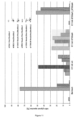
- Figure 11 shows the relative amounts of the six main O-glycan species in various preparations of the glycoprotein C1 esterase inhibitor (C1 Inh).
- Respective recombinant glycoproteins can be produced as described herein, e.g. by overexpression of a ⁇ -galactoside ⁇ -2,3-sialyltransferase 1 (ST3GaI1) together with the recombinant glycoprotein, and by additional overexpression of a ⁇ -galactoside ⁇ -2,3-sialyltransferase 4 (ST3Gal4) and optionally a ⁇ -galactoside ⁇ -2,6-sialyltransferase 1 (ST6GaI1).
- ST3GaI1 ⁇ -galactoside ⁇ -2,3-sialyltransferase 1
- ST3Gal4 ⁇ -galactoside ⁇ -2,3-sialyltransferase 4
- ST6GaI1 ⁇ -galactoside ⁇ -2,6-sialyltransferase 1
- said glycoproteins are produced in a cell line as
- the GalNAc O-glycans of the recombinant glycoproteins described herein can be characterized by a reduced micro-heterogeneity, i.e ., a reduced diversity of GalNAc O-glycan structure and composition within a given glycoprotein preparation.
- Respective recombinant glycoproteins can be produced as described herein, e.g. by overexpression of ST3Gal1 together with the recombinant glycoprotein, and by additional overexpression of ST3Gal4 and optionally ST6Gal1.
- said glycoproteins are produced in a cell line as described herein.
- glycoproteins described herein are not particularly limited, provided that said glycoproteins have GalNAc O-glycans and fulfill the respective requirements of GalNAc O-glycan sialylation.
- said glycoproteins are mammalian, more preferably human glycoproteins.
- Glycoproteins can be selected from the group consisting of growth factors, peptide hormones, cytokines, enzymes, antibodies, antibody fragments, blood clotting factors, and protease inhibitors.
- the glycoprotein is selected from the group consisting of hepatocyte growth factor (HGF), erythropoietin (EPO), Factor VIII (FVIII), Factor IX (FIX), von-Willebrand-Factor (vWF), and C1 esterase inhibitor (C1-inhibitor; C1 Inh), wherein C1 Inh is particularly preferred.
- HGF hepatocyte growth factor
- EPO erythropoietin
- FVIII Factor VIII
- FIX Factor IX
- vWF von-Willebrand-Factor
- C1 esterase inhibitor C1-inhibitor; C1 Inh
- C1 esterase inhibitor C1-inhibitor; C1 Inh
- C1 Inh a recombinant C1 esterase inhibitor
- human C1 Inh having GalNAc O-glycans that are sialylated to a degree of at least 80%.
- All of the above preferred and/or specific embodiments described for recombinant glycoproteins in general also apply to this specific embodiment of recombinant (human) C1 Inh.
- a method for the expression of recombinant glycoproteins having GalNAc O-glycans that are sialylated to a degree of at least 80% to a method for increasing the degree of sialylation of GalNAc O-glycans of recombinant glycoproteins, and to a method for decreasing the micro-heterogeneity of GalNAc O-glycans of recombinant glycoproteins, all of said methods comprising the step of overexpressing with the recombinant glycoproteins a ⁇ -galactoside ⁇ -2,3-sialyltransferase 1 (ST3Gal1).
- Said methods can comprise the steps of:
- the recombinant glycoproteins produced in said methods can be any glycoproteins described herein as defined above.
- the cell lines provided in step (a) of the methods described herein can be any cell line as defined above.
- step (b) of expressing the glycoprotein of interest in said cell line encompasses the transfection of a respective coding nucleic acid into said cell line prior to the actual expression of the glycoprotein.
- means for isolating a glycoprotein of interest from a cell culture are not particularly limited and are known in the art.
- described herein is a use of a cell line described herein for the production of recombinant glycoproteins having GalNAc O-glycans that are sialylated to a degree of at least 80%, and/or for increasing the degree of sialylation of recombinant glycoproteins and/or for decreasing the micro-heterogeneity of GalNAc O-glycans of recombinant glycoproteins.
- the recombinant glycoproteins produced in said use can be any glycoproteins as defined above.
- the used cell lines can be any cell lines as defined above.
- the permanent human amniocyte cell line CAP 1D5 was cultured in suspension, either in chemically defined, animal component free CAP-CDM medium (CEVEC Pharmaceuticals, Germany) supplemented with 6 mM stable glutamine (biochrom, Germany), or in serum free PEM media (Life Technologies) supplemented with 4 mM stable glutamine (biochrom, Germany).
- the 293F cells from Life Technologies were cultured in suspension in Freestyle 293 expression media (Life Technologies), supplemented with 4 mM stable glutamine (biochrom, Germany).
- the adherent CHO-K1 cells (ATCC, CCL-61) were cultured in F12-K media (Life Technologies), supplemented with 10 % FBS, and 2 mM stable glutamine (biochrom, Germany).
- the adherent MDCK.1 cells (ATCC, CRL-2935) were cultured either in EMEM media (ATCC) or in DMEM F-12 (ATCC) supplemented with 10 % FBS and with 2 mM stable glutamine (biochrom, Germany).
- CAP cells and 293F cells were cultivated at 37 °C in shaker flasks (Corning, 125 mL (25 mL wv) or 3000 mL (1000 mL wv)) at 5% CO 2 , and 185 rpm.
- CAP cells were fed at d3, d5, and d7 with 10 % CAP-CDM feed solution (CEVEC Pharmaceuticals, Germany) and 4 mM stable glutamine (biochrom, Germany).
- Adherent CHO-K1 and MDCK.1 cells were cultured at 37 °C, 5% CO 2 , in 6 cm or 10 cm cell culture dishes (TPP) or 225cm 2 cell culture dishes (BD).
- cells were sequentially nucleofected with the nucleic acid constructs encoding the glyco structure modifying enzymes ST3Gal1 and/or ST3Gal4, as well as the specific recombinant protein. Only stable cell lines were utilized. Table 1 lists all cell lines created. Table 1: Stable cell lines used herein. Cell line rec.
- sequence information of the precursor protein and mature protein was based of the database entry UniProt Q11201 (SEQ ID NO: 1).
- a ClaI restriction site and a Kozak sequence were added 5' of the start codon of the human ST3Gal1 cDNA and an EcoRV restriction site was added 3' of the stop codon to be inserted between the ClaI and EcoRV restriction sites in the pStbl-Puro-CMV-MCS(-) vector resulting in the expression plasmid pStbl-Puro-CMV-ST3Gal1.
- This vector contains a CMV promoter driving the expression of the gene of interest, followed by an SV40 intron for improved, splicing-mediated mRNA transport and a multiple cloning site for the insertion of the gene of interest.
- the selection marker (Puromycin) is driven by the human ubiquitin (UbC) promoter.
- cDNA synthesis was performed at GeneArt (Germany, Life Technologies).
- sequence information of the precursor protein and mature protein was based of the database entry UniProt Q11206 (SEQ ID NO: 2).
- a ClaI restriction site and a Kozak sequence were added 5' of the start codon of the human ST3Gal4 cDNA and a EcoRV restriction site was added 3' of the stop codon to be inserted between the ClaI and EcoRV restriction sites in the pStbl-Puro-CMV-MCS(-) vector resulting in the expression plasmid pStbl-Puro-CMV-ST3Gal4.
- cDNA synthesis was performed at GeneArt (Germany, Life Technologies).
- Nucleofection was performed using a Nucleofector (LONZA) with the appropriate Nucleofector Kit (KitV; CAP cells, 293F, and CHO or the KitT; MDCK.1 cells) according to the manufacturer's protocol. Briefly, during exponential growth phase of the culture 1 ⁇ 10 7 cells were harvested via centrifugation (150 g for 5 min) and resuspended in 100 ⁇ l complete nucleofector solution and mixed with a total of 5 ⁇ g plasmid. Nucleofection was performed using the X001 program (CAP and 293F cells), the U024 program (CHO-K1), or the P029 program (MDCK.1). After the pulse, cells were recovered in complete cell culture media. The cells were cultured as before.
- 72 to 96 h post-nucleofection cells were selected with 5 ⁇ g/ml blasticidin (therapeutic protein) and/or 200 ⁇ g/ml neomycin (pStbl-neo-CMV-ST3Gal4) and/or 2 ⁇ g/ml puromycin (pStbl-Puro-CMV-ST3Gal1), in order to generate stable pools.
- the methylated glycan alditols were applied to the stainless steel target by mixing 1:1 with matrix ( ⁇ -cyano-4-hydroxycinnamic acid in 50 % acetonitrile/0.1 % TFA). Analyses were performed by positive ion detection in MS1 and MS2 (Post-Source-Decay-Modus). Identification of the different glycan species were based i) on the molecule ions, which give information about the monosaccharide composition and ii) the fragmentation in the MS2 analysis (B, C, Y, and Z ions).
- PNGaseF is an amidase that cleaves between the innermost GlcNAc and asparagine residues of N-linked glycoproteins. Therefore, after treatment of C1 Inh proteins with PNGaseF the protein backbone and the O-linked glycans remain. As the protein backbone between the plasma derived human C1 Inh and C1 Inh expressed in CAP cells is equal, the PNGaseF treatment carries indirectly information about the structure of the O-glycans.
- Lectins are proteins that bind specific carbohydrate structures. Biotin-coupled lectins can be therefore used to analyze N-linked and O-linked glycans.
- Erythrina crista galli (ECL) lectin detects ⁇ 1-4 linked terminal galactose on N-linked glycans
- peanut agglutinin (PNA) detects ⁇ 1-3 linked terminal galactose on O-linked glycans
- Sambucus nigra agglutinin (SNA) preferentially binds to a 2,6-linked sialic acid
- MAL Maackia amurensis lectin
- Purified protein or cell culture supernatants with or without co-expression of ST3Gal1 and/or ST3Gal4 were separated as described above and blotted onto Hybond ECL nitrocellulose membrane (GE healthcare).
- the membrane was stained with streptavidin-coupled horseradish peroxidase for 1 h at RT (1:1000 diluted in PBSTB).
- the HRP signal was amplified using anti-streptavidin IgG and anti IgG-HRP.
- the proteins were detected using the Pierce ECL WB Substrate Kit via a chemiluminescence detector (INTAS).
- IEF isoelectric focusing
- pl isoelectric point
- IEF analysis was done according to the manufacturers protocol (Invitrogen). Briefly, 5 ⁇ g of purified protein were loaded on pH3-7 gels and subjected to electrophoresis (1h 100 V, 1 h 200 V, 30 min 500 V). Proteins were stained with SimplyBlue SafeStain according to the manufacturers protocol (Invitrogen).
- the protease inhibitor C1 esterase inhibitor (C1 Inh) belongs to the serpin superfamily. Its main function is the inhibition of the complement system to prevent spontaneous activation.
- the 500 aa protein is highly glycosylated with 7 predicted N-glycans and 8 predicted O-linked glycans.
- CAP 1D5 previously stably transfected to express human recombinant C1 Inhibitor (rhC1 Inh, SEQ ID NO: 3) (CAP-C1 Inh) were nucleofected with a vector encoding for ST3Gal4 linearized with Scal in order to facilitated stable integration of the construct into the genome.
- the vector contains a drug expression cassette, for selection of stable integration of the linearized construct into the genome.
- the obtained stable CAP-C1 Inh-ST3Gal4 pool was subject to single cell cloning via limiting dilution. Selected clones were analyzed to proof expression of ST3Gal4.
- CAP single cell clones expressing ST3Gal4 were then further nucleofected with the gene encoding for ST3Gal1 gene.
- Cells were selected with antibiotics to obtain a pool of cells stably co-expressing rhC1 Inh, human ST3Gal4 and ST3Gal1 (CAP-C1 Inh-ST3Gal1/4).
- C1 Inh In order to generate sufficient amounts of recombinant C1 Inh, the generated CAP-C1 Inh cell lines overexpressing human C1 Inh were cultured as described in experimental procedures. Subsequently, C1 Inh was purified from the cell culture supernatant of the following cell lines: CAP-C1 Inh, CAP-C1 lnh-ST3Gal4, and CAP-C1 Inh-ST3Gal1/4 (pool A and B), as described below.
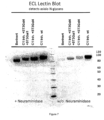
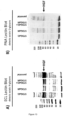
- ECL lectin immunoblot was performed.
- Erythrina crista galli (ECL) lectin detects ⁇ 1-4 linked terminal galactose on N-linked glycans. Therefore, a diminished signal in the ECL blot means an increased amount of sialylation.
- the N-linked glycans of Berinert are almost completely sialylated.
- N-Glycans of the C1 Inh from CAP cells overexpressing ST3Gal4 are equally sialylated
- C1 Inh from CAP cells overexpressing ST3Gal1/4 display a slightly higher amount of asialo N-glycans.
- C1 Inh purified from CAP cells without overexpression of sialyltransferase give a strong signal in the ECL blot indicating a large amount of asialo N-glycans.
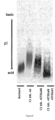
- results from the lectin blots could be confirmed by isoelectric focusing (IEF).
- IEF isoelectric focusing
- the backbones of the different C1 Inh are identical, changes in the IEF are most likely due to changes in the sialic acid content.
- the resulting modified C1 Inh shifts very slightly towards the anode, indicating a small increase in the total amount of sialic acids per molecule.
- the additional expression of ST3Gal1 results in a pronounced shift of C1 Inh towards the anode, indicating a significant increase in the total amount of sialic acids.
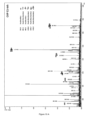
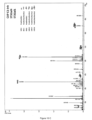
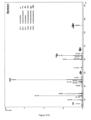
- CAP C1 Inh samples without additional overexpression of ST3Gal1 or ST3Gal4, namely CAP C1 Inh 75 % of the detectable O-glycans are core 2 structure with only 35 % sialylated O-glycans without terminal galactose residues(Gal1-3(Gal1-GlcNAc1-6)GalNAc-ol_Core 2) (m/z 983), or NeuAc2-3Gal1-3(Gal1-4GlcNAc1-6)GalNAc-ol (m/z 1344), Gal1-3(NeuAc2-3Gal1-4GlcNAc1-6)GaINAc-ol (m/z 1344) and NeuAc2-3Gal1-3(NeuAc2-3Gal1-4GlcNAc1-6)GaINAc-ol (m/z 1706)).
- Core 1 structures are only rarely detectable. Additional expression of ST3Gal4 leads to a shift towards core 1 structures (68.7%)(NeuAc2-3Gal1-3GalNAc-ol_Core 1). Interestingly, the expression of C1 Inh in CAP cells coupled with the overexpression of ST3Gal1 leads to the exclusive expression of core 1 O-glycans (99.1%) which are almost entirely sialylated (98.5%) without any terminal galactose residues, in particular (NeuAc2-3Gal1-3GalNAc-ol respectively Gal1-3(NeuAc2-6)GalNAc-ol (m/z 895) and NeuAc2-3Gal1-3(NeuAc2-6)GalNAc-ol (m/z 1256).
- Hepatocyte growth factor is a potent mitogen for mature parenchymal hepatocyte cells, seems to be a hepatotrophic factor, and acts as a growth factor for a broad spectrum of tissues and cell types.
- the 728 aa sized protein contains 4 predicted N-glycans and 1 predicted O-linked glycan.
- CAP 1D5 cells stably expressing human recombinant hepatocyte growth factor (SEQ ID NO: 4) were nucleofected either with a vector encoding for ST3Gal4, ST3Gal1, or ST3Gal4 and ST3Gal1 linearized with Scal in order to facilitate stable integration of the construct into the genome.
- the vectors contain a drug expression cassette, which facilitates selection for cells with a stable integration of the linearized construct into the genome.
- CAP-HGF, CAP-HGF-ST3Gal1, CAP-HGF-ST3Gal4, and CAP-HGF-ST3Gal1/4 were cultured as described in experimental procedures. Cell culture supernatants containing recombinant human HGF were examined by ECL and PNA lectin blots to determine the existing N- and O-linked glycostructures.
- Erythrina crista galli (ECL) lectin detects ⁇ 1-4 linked terminal galactose on N-linked glycans. Therefore a diminished signal in the ECL blot means an increased amount of sialylation.
- ECL Erythrina crista galli
- 293F cells (Life Technologies, R-970-07), immortalized human embryonic kidney cells, were nucleofected either with a vector encoding for ST3Gal1, or ST3Gal1 and ST3Gal4 linearized with Scal in order to facilitate stable integration of the construct into the genome.
- the vectors contain a drug expression cassette, which facilitates selection for cells with a stable integration of the linearized construct into the genome.
- 293F-ST3Gal1, and 293F-ST3Gal1/4 and wildtype 293F cells were further nucleofected with the gene encoding for hC1 Inh.
- C1 Inh was purified from C1 Inh containing cell culture supernatant as described in the method section and examined by ECL and PNA lectin blots to determine the existing N- and O-linked glycostructures.
- Erythrina crista galli (ECL) lectin detects ⁇ 1-4 linked terminal galactose on N-linked glycans. Therefore a diminished signal in the ECL blot means an increased amount of sialylation.
- ECL Erythrina crista galli
- CHO-K1 (ATCC, CCL-61) cell line was derived as a subclone from the parental CHO cell line initiated from a biopsy of an ovary of an adult Chinese hamster.
- CHO-K1 cells were nucleofected with a vector encoding for ST3Gal1 linearized with Scal in order to facilitate stable integration of the construct into the genome.
- the vector contains a drug expression cassette, which facilitates selection for cells with a stable integration of the linearized construct into the genome.
- After pool generation the obtained stable CHO-K1 cell pool, CHO-ST3Gal1, and wildtype CHO-K1 cells were further nucleofected with the gene encoding for hC1 Inh. Cells were selected with antibiotics to obtain pools of cells stably expressing i) rhC1 Inh, ii) rhC1 Inh and human ST3Gal1.
- C1 Inh was purified as described in the method section.
- Canine MDCK.1 cells (ATCC, CRL-2935) were stably transfected.
- the resulting stable MDCK.1 cell pool, MDCK.1 -ST3Gal1, and wildtype MDCK.1 cells were further stably transfected to obtain pools of cells stably expressing i) rhC1 Inh, ii) rhC1 Inh and human ST3Gal1.
- MDCK.1 cells were expanded as described in the method section.
- For the production of cell culture supernatant containing human C1 Inh cells were seeded onto 225 cm 2 cell culture dishes, 2 d post seeding cells were extensively washed with 1 ⁇ PBS in order to remove fetal bovine serum, subsequently adding fresh serum free media.
- Five days later cell culture supernatant were harvest, cells and cell debris were removed by centrifugation and filtration via a 0.22 ⁇ m filter.
- C1 Inh was purified as described in the method section and examined by ECL and PNA lectin blots to determine the existing N- and O-linked glycostructures.
- Erythrina crista galli (ECL) lectin detects ⁇ 1-4 linked terminal galactose on N-linked glycans. Therefore a diminished signal in the ECL blot means an increased amount of sialylation. As shown in Figure 17 , overexpression of ST3Gal1 does not result in an increased sialylation of the N-linked glycans.
- an ST3Gal1 catalyzing the transfer of sialic acid from CMP-sialic acid to galactose-containing substrates was overexpressed in mammalian cells, either alone or in combination with an ST3Gal4.
- Modifying the glycan structures of therapeutic proteins in order to improve their pharmacokinetic profile is a very potent tool.
- two common weaknesses of therapeutic proteins are addressed, first the limited serum half-life and second the heterogeneity of glyco-structures. This can be achieved by a forced expression of ST3Gal1 enzyme resulting in secreted glycoproteins showing nearly complete sialylation of GalNAc O-glycans.
- This invention is not limited to one particular cell line from one host but is rather applicable to a broad range of animal cell lines. Additionally, it is not restricted to one particular group of glycoproteins but is applicable to a wide range of glycoproteins containing at least one GalNAc O-linked glycan, e.g. growth factors, peptide hormones, cytokines, enzymes, antibodies, antibody fragments, blood clotting factors, or protease inhibitors.
- growth factors e hormones, cytokines, enzymes, antibodies, antibody fragments, blood clotting factors, or protease inhibitors.
- the present invention relates to the following amino acid and nucleotide sequences.
Landscapes
- Chemical & Material Sciences (AREA)
- Organic Chemistry (AREA)
- Health & Medical Sciences (AREA)
- Life Sciences & Earth Sciences (AREA)
- Zoology (AREA)
- Genetics & Genomics (AREA)
- Engineering & Computer Science (AREA)
- Wood Science & Technology (AREA)
- Bioinformatics & Cheminformatics (AREA)
- General Health & Medical Sciences (AREA)
- Biochemistry (AREA)
- General Engineering & Computer Science (AREA)
- Molecular Biology (AREA)
- Medicinal Chemistry (AREA)
- Biotechnology (AREA)
- Microbiology (AREA)
- Gastroenterology & Hepatology (AREA)
- Biomedical Technology (AREA)
- Biophysics (AREA)
- Proteomics, Peptides & Aminoacids (AREA)
- Chemical Kinetics & Catalysis (AREA)
- General Chemical & Material Sciences (AREA)
- Toxicology (AREA)
- Preparation Of Compounds By Using Micro-Organisms (AREA)
- Peptides Or Proteins (AREA)
- Micro-Organisms Or Cultivation Processes Thereof (AREA)
- Medicines That Contain Protein Lipid Enzymes And Other Medicines (AREA)
Claims (16)
- Zelllinie, welche genetisch verändert ist, um eine β-Galaktosid-α-2,3-Sialyltransferase 1 (ST3Gal1) zu überexprimieren, welche weiter genetisch verändert ist, um eine β-Galaktosid-α-2,3-Sialyltransferase 4 (ST3Gal4) zu überexprimieren.
- Zelllinie nach Anspruch 1, welche weiter genetisch verändert ist, um eine β-Galaktosid-α-2,6-Sialyltransferase 1 (ST6Gal1) zu überexprimieren.
- Zelllinie nach Anspruch 1 oder Anspruch 2, wobei die Zelllinie endogene Gene, welche ST3Gal1 und ST3Gal4 kodieren, und optional ein endogenes Gen umfasst, welches ST6Gal1 kodiert, und weiter zumindest ein genetisches Element aufweist, ausgewählt aus der Gruppe bestehend aus einem Promotor, einem Verstärkungselement und einem Stabilisierungselement, welches an einer oder mehreren Position(en) in das Genom eingefügt wird, welches geeignet ist, eine Überexpression von ST3Gal1 und ST4Gal4 und optional ST6Gal1 zu verursachen.
- Zelllinie nach einem der Ansprüche 1 bis 3, wobei die Zelllinie exogene Nukleinsäuren, welche ST3Gal1 und ST3Gal4 kodieren, und optional eine exogene Nukleinsäure umfasst, welche ST6Gal1 kodiert.
- Zelllinie nach einem der Ansprüche 1 bis 4, wobei die Zelllinie eine Säugetierzelllinie, bevorzugt eine menschliche Zelllinie, ist.
- Zelllinie nach einem der Ansprüche 1 bis 4, wobei die Zelllinie von einer Zelllinie abgeleitet ist, ausgewählt aus der Gruppe bestehend aus AGE.CR®-Zellen, Vero-Zellen, MDCK-Zellen, BHK-Zellen, CHO-Zellen, HEK293-Zellen, HepG2-Zellen, Huh7-Zellen, AGE1.HN®-Zellen, NC5T11-Zellen, Per.C6-Zellen, HMCLs-Zellen, MM.1-Zellen, U266-Zellen, RPMI18226-Zellen, HKB11-Zellen, NM-Zellen, NM-F9-Zellen und CAP-Zellen.
- Zelllinie nach einem der Ansprüche 1 bis 4, wobei die Zelllinie von menschlichen primären Amniozyten abgeleitet ist, welche zumindest eine Nukleinsäure umfassen, welche die Genprodukte der adenoviralen E1- und pIX-Regionen kodiert.
- Rekombinantes Glykoprotein mit GalNAc-O-Glykanen, welche zumindest bis zu einem Grad von 80 % sialyliert sind, wobei das Glykoprotein in einer Zelllinie nach einem der Ansprüche 1 bis 7 produziert wird.
- Rekombinantes Glykoprotein nach Anspruch 8 mit GalNAc-O-Glykanen, die zumindest bis zu einem Grad von 95 % sialyliert sind.
- Rekombinantes Glykoprotein nach Anspruch 8 oder Anspruch 9, wobei zumindest 80 % der GalNAc-O-Glykane Kern-1-GalNAc-O-Glykane sind.
- Rekombinantes Glykoprotein nach Anspruch 10, wobei die Core-1-GalNAc-O-Glykane zumindest bis zu einem Grad von 25 % disialyliert sind.
- Rekombinantes Glykoprotein nach einem der Ansprüche 8 bis 11, wobei das Glykoprotein aus der Gruppe bestehend aus Wachstumsfaktoren, Peptidhormonen, Zytokinen, Enzymen, Antikörpern, Antikörperfragmenten, Blutgerinnungsfaktoren und Proteaseinhibitoren ausgewählt ist.
- Rekombinantes Glykoprotein nach einem der Ansprüche 8 bis 12, wobei das Glykoprotein aus der Gruppe bestehend aus Hepatozytenwachstumsfaktor (HGF), Erythropoietin (EPO), Faktor VIII (FVIII), Faktor IX (FIX), von-Willebrand-Faktor (IWF) und C1-Esterase-Inhibitor (C1-Inhibitor; C1 Inh) ausgewählt ist.
- Rekombinantes Glykoprotein nach einem der Ansprüche 8 bis 13, wobei das Glykoprotein ein menschliches Glykoprotein ist.
- Verfahren zur Expression rekombinanter Glykoproteine mit GalNAc-O-Glykanen, welche zumindest bis zu einem Grad von 80 % sialyliert sind, umfassend den Schritt des Überexprimierens einer β-Galaktosid-α-2,3-Sialyltransferase 1 (ST3Gal1) und einer β-Galaktosid-α-2,3-Sialyltransferase 4 (ST3Gal4) mit den rekombinanten Glykoproteinen, wobei das Verfahren nicht am menschlichen oder Tierkörper praktiziert wird.
- Verfahren nach Anspruch 15, weiter den Schritt eines Überexprimierens einer β-Galaktosid-α-2,6-Sialyltransferase 1 (ST6Gal1) mit den rekombinanten Glykoproteinen umfassend.
Applications Claiming Priority (2)
| Application Number | Priority Date | Filing Date | Title |
|---|---|---|---|
| EP15000016.4A EP3042952A1 (de) | 2015-01-07 | 2015-01-07 | O-Glycansialylierte rekombinante Glykoproteine und Zelllinien zur Herstellung davon |
| PCT/EP2015/002521 WO2016110302A1 (en) | 2015-01-07 | 2015-12-15 | O-glycan sialylated recombinant glycoproteins and cell lines for producing the same |
Publications (2)
| Publication Number | Publication Date |
|---|---|
| EP3242935A1 EP3242935A1 (de) | 2017-11-15 |
| EP3242935B1 true EP3242935B1 (de) | 2023-11-22 |
Family
ID=52396403
Family Applications (2)
| Application Number | Title | Priority Date | Filing Date |
|---|---|---|---|
| EP15000016.4A Withdrawn EP3042952A1 (de) | 2015-01-07 | 2015-01-07 | O-Glycansialylierte rekombinante Glykoproteine und Zelllinien zur Herstellung davon |
| EP15821020.3A Active EP3242935B1 (de) | 2015-01-07 | 2015-12-15 | O-glycansialylierte rekombinante glykoproteine und zelllinien zur herstellung davon |
Family Applications Before (1)
| Application Number | Title | Priority Date | Filing Date |
|---|---|---|---|
| EP15000016.4A Withdrawn EP3042952A1 (de) | 2015-01-07 | 2015-01-07 | O-Glycansialylierte rekombinante Glykoproteine und Zelllinien zur Herstellung davon |
Country Status (16)
| Country | Link |
|---|---|
| US (2) | US10081798B2 (de) |
| EP (2) | EP3042952A1 (de) |
| JP (1) | JP6395943B2 (de) |
| KR (1) | KR102013712B1 (de) |
| CN (1) | CN107109370B (de) |
| AU (2) | AU2015376273B2 (de) |
| BR (1) | BR112017014769A2 (de) |
| CA (1) | CA2972932C (de) |
| DK (1) | DK3242935T3 (de) |
| IL (1) | IL253339A0 (de) |
| MX (1) | MX387417B (de) |
| MY (1) | MY187076A (de) |
| RU (1) | RU2714209C2 (de) |
| SG (1) | SG11201704571WA (de) |
| WO (1) | WO2016110302A1 (de) |
| ZA (1) | ZA201703767B (de) |
Families Citing this family (12)
| Publication number | Priority date | Publication date | Assignee | Title |
|---|---|---|---|---|
| EP2877589B1 (de) | 2012-07-26 | 2024-03-06 | Momenta Pharmaceuticals, Inc. | Glykoproteine mit entzündungshemmenden eigenschaften |
| WO2017087882A1 (en) * | 2015-11-19 | 2017-05-26 | Shire Human Genetic Therapies, Inc. | Recombinant human c1 esterase inhibitor and uses thereof |
| EP3382014A1 (de) | 2017-03-29 | 2018-10-03 | CEVEC Pharmaceuticals GmbH | Rekombinante glycoproteine mit fucosylierung mit reduzierten antennen |
| EP3575404B1 (de) * | 2018-05-28 | 2022-10-19 | Chr. Hansen HMO GmbH | Fermentative herstellung von sialylierten sacchariden |
| US12331320B2 (en) | 2018-10-10 | 2025-06-17 | The Research Foundation For The State University Of New York | Genome edited cancer cell vaccines |
| CN110029129A (zh) * | 2019-03-06 | 2019-07-19 | 华南农业大学 | 一种表达鸡st3gal 1基因的mdck稳转细胞株的构建方法 |
| EP3736286A1 (de) | 2019-05-09 | 2020-11-11 | Biotest AG | Einzelkettenfaktor-viii-molekül |
| EP3785726A1 (de) | 2019-09-02 | 2021-03-03 | Biotest AG | Faktor-viii-protein mit erhöhter halbwertszeit |
| EP4017521A1 (de) | 2019-09-02 | 2022-06-29 | Biotest AG | Faktor-viii-protein mit erhöhter halbwertszeit |
| EP4106798A1 (de) | 2020-02-17 | 2022-12-28 | Biotest AG | Subkutane verabreichung von faktor viii |
| AU2021376384B2 (en) | 2020-11-06 | 2026-04-16 | Cho Pharma, Inc. | Immune composition comprising antigen and glycoengineered antibody thereof |
| US12234472B2 (en) | 2021-10-18 | 2025-02-25 | Regeneron Pharmaceuticals, Inc. | Eukaryotic cells comprising adenovirus-associated virus polynucleotides |
Family Cites Families (15)
| Publication number | Priority date | Publication date | Assignee | Title |
|---|---|---|---|---|
| US5262308A (en) | 1992-01-28 | 1993-11-16 | Thomas Jefferson University | Cell lines which constitutively express IGF-1 and IGF-1 R |
| DE19955558C2 (de) | 1999-11-18 | 2003-03-20 | Stefan Kochanek | Permanente Amniozyten-Zelllinie, ihre Herstellung und Verwendung zur Herstellung von Gentransfervektoren |
| KR101495549B1 (ko) * | 2006-07-13 | 2015-02-25 | 와이어쓰 엘엘씨 | 당단백질의 생산 |
| JP2010512766A (ja) | 2006-12-22 | 2010-04-30 | エフ.ホフマン−ラ ロシュ アーゲー | α−1,6−フコシルトランスフェラーゼの発現のSHRNA媒介抑制 |
| CA2679732A1 (en) | 2007-03-07 | 2008-09-18 | Glycofi, Inc. | Production of glycoproteins with modified fucosylation |
| WO2010012793A1 (en) | 2008-08-01 | 2010-02-04 | Bayer Cropscience Sa | Fungicide aminothiazole derivatives |
| CN101613678A (zh) | 2009-01-14 | 2009-12-30 | 中国农业科学院哈尔滨兽医研究所 | 稳定表达β-半乳糖苷α-2,3-唾液酸转移酶I(ST3GAL I)的MDCK细胞系的建立 |
| WO2011096750A2 (en) * | 2010-02-08 | 2011-08-11 | Korea Advanced Institute Of Science And Technology | Method for preparing recombinant glycoproteins with high sialic acid content |
| JP5914363B2 (ja) * | 2010-02-16 | 2016-05-11 | ノヴォ ノルディスク アー/エス | 低減されたvwf結合を有する因子viii分子 |
| TW201209160A (en) | 2010-04-27 | 2012-03-01 | Lonza Ag | Improved glycosylation of proteins in host cells |
| WO2012077128A1 (en) | 2010-12-07 | 2012-06-14 | Intas Biopharmaceuticals Limited | A novel cell line development process to produce recombinant proteins using twin vector expression system |
| DK2661492T3 (en) * | 2011-01-06 | 2018-01-15 | Univ Johns Hopkins | Method for Preparing Recombinant Glycoproteins with Increased Circuit Half Life in Mammalian Cells |
| WO2013093760A2 (en) | 2011-12-19 | 2013-06-27 | Grifols, S.A. | Compositions, methods, and kits for preparing sialylated recombinant proteins |
| WO2014015227A1 (en) | 2012-07-19 | 2014-01-23 | The Scripps Research Institute | Engineering cell surfaces for orthogonal selectability |
| BR112015019348A2 (pt) | 2013-02-13 | 2017-08-22 | Lab Francais Du Fractionnement | Métodos para produção de proteína com glicosilação modificada e com sialilação aumentada, para aumentar a atividade de sialil transferase na glândula mamária e para produzir sialil transferase, proteína com glicosilação modificada ou proteína com sialilação aumentada, composição, sialil transferase, mamífero transgênico, e, célula epitelial mamária |
-
2015
- 2015-01-07 EP EP15000016.4A patent/EP3042952A1/de not_active Withdrawn
- 2015-12-15 SG SG11201704571WA patent/SG11201704571WA/en unknown
- 2015-12-15 AU AU2015376273A patent/AU2015376273B2/en active Active
- 2015-12-15 KR KR1020177021780A patent/KR102013712B1/ko active Active
- 2015-12-15 JP JP2017536883A patent/JP6395943B2/ja active Active
- 2015-12-15 WO PCT/EP2015/002521 patent/WO2016110302A1/en not_active Ceased
- 2015-12-15 BR BR112017014769-6A patent/BR112017014769A2/pt not_active Application Discontinuation
- 2015-12-15 CA CA2972932A patent/CA2972932C/en active Active
- 2015-12-15 RU RU2017127276A patent/RU2714209C2/ru active
- 2015-12-15 MY MYPI2017000930A patent/MY187076A/en unknown
- 2015-12-15 DK DK15821020.3T patent/DK3242935T3/da active
- 2015-12-15 CN CN201580072695.7A patent/CN107109370B/zh active Active
- 2015-12-15 US US15/541,565 patent/US10081798B2/en active Active
- 2015-12-15 MX MX2017008923A patent/MX387417B/es unknown
- 2015-12-15 EP EP15821020.3A patent/EP3242935B1/de active Active
-
2017
- 2017-06-01 ZA ZA2017/03767A patent/ZA201703767B/en unknown
- 2017-07-05 IL IL253339A patent/IL253339A0/en active IP Right Grant
- 2017-07-27 AU AU2017208292A patent/AU2017208292A1/en not_active Abandoned
-
2018
- 2018-08-21 US US16/107,009 patent/US10793839B2/en active Active
Also Published As
| Publication number | Publication date |
|---|---|
| US10793839B2 (en) | 2020-10-06 |
| RU2017127276A3 (de) | 2019-02-07 |
| AU2015376273B2 (en) | 2017-07-27 |
| DK3242935T3 (da) | 2024-01-02 |
| CA2972932A1 (en) | 2016-07-14 |
| US20170342390A1 (en) | 2017-11-30 |
| KR102013712B1 (ko) | 2019-08-23 |
| US10081798B2 (en) | 2018-09-25 |
| RU2714209C2 (ru) | 2020-02-13 |
| MX2017008923A (es) | 2017-10-11 |
| CA2972932C (en) | 2019-08-06 |
| ZA201703767B (en) | 2018-04-25 |
| CN107109370A (zh) | 2017-08-29 |
| MY187076A (en) | 2021-08-29 |
| AU2015376273A1 (en) | 2017-06-08 |
| JP6395943B2 (ja) | 2018-09-26 |
| EP3042952A1 (de) | 2016-07-13 |
| HK1243728A1 (zh) | 2018-07-20 |
| IL253339A0 (en) | 2017-09-28 |
| US20200095562A1 (en) | 2020-03-26 |
| WO2016110302A1 (en) | 2016-07-14 |
| CN107109370B (zh) | 2022-03-22 |
| MX387417B (es) | 2025-03-18 |
| EP3242935A1 (de) | 2017-11-15 |
| KR20170094454A (ko) | 2017-08-17 |
| BR112017014769A2 (pt) | 2018-01-16 |
| AU2017208292A1 (en) | 2017-08-17 |
| RU2017127276A (ru) | 2019-02-07 |
| JP2018500922A (ja) | 2018-01-18 |
| SG11201704571WA (en) | 2017-07-28 |
Similar Documents
| Publication | Publication Date | Title |
|---|---|---|
| US10793839B2 (en) | O-glycan sialylated recombinant glycoproteins | |
| EP3601548B1 (de) | Rekombinante glycoproteine mit fucosylierung mit reduzierten antennen | |
| EP3417054B1 (de) | Zelllinien zur herstellung rekombinanter glycoproteine mit di-antennären n-glykanen, verfahren zur verwendung davon und rekombinante glykoproteinen | |
| Beatty et al. | Biochemical characterization of the soluble form of tumor antigen MUC1 isolated from sera and ascites fluid of breast and pancreatic cancer patients | |
| HK1243728B (zh) | O-聚糖唾液酸化的重组糖蛋白及用於生产其的细胞系 | |
| BR122024008803A2 (pt) | Glicoprotéina recombinante e seu método de expressão, bem como linhagem de células para produção da dita glicoproteína e seu método de geração | |
| BR112018016696B1 (pt) | Método para a expressão de uma glicoproteína recombinante na dita linhagem de células |
Legal Events
| Date | Code | Title | Description |
|---|---|---|---|
| STAA | Information on the status of an ep patent application or granted ep patent |
Free format text: STATUS: THE INTERNATIONAL PUBLICATION HAS BEEN MADE |
|
| PUAI | Public reference made under article 153(3) epc to a published international application that has entered the european phase |
Free format text: ORIGINAL CODE: 0009012 |
|
| STAA | Information on the status of an ep patent application or granted ep patent |
Free format text: STATUS: REQUEST FOR EXAMINATION WAS MADE |
|
| 17P | Request for examination filed |
Effective date: 20170614 |
|
| AK | Designated contracting states |
Kind code of ref document: A1 Designated state(s): AL AT BE BG CH CY CZ DE DK EE ES FI FR GB GR HR HU IE IS IT LI LT LU LV MC MK MT NL NO PL PT RO RS SE SI SK SM TR |
|
| AX | Request for extension of the european patent |
Extension state: BA ME |
|
| STAA | Information on the status of an ep patent application or granted ep patent |
Free format text: STATUS: EXAMINATION IS IN PROGRESS |
|
| 17Q | First examination report despatched |
Effective date: 20180216 |
|
| DAV | Request for validation of the european patent (deleted) | ||
| DAX | Request for extension of the european patent (deleted) | ||
| REG | Reference to a national code |
Ref country code: HK Ref legal event code: DE Ref document number: 1238290 Country of ref document: HK |
|
| GRAP | Despatch of communication of intention to grant a patent |
Free format text: ORIGINAL CODE: EPIDOSNIGR1 |
|
| STAA | Information on the status of an ep patent application or granted ep patent |
Free format text: STATUS: GRANT OF PATENT IS INTENDED |
|
| INTG | Intention to grant announced |
Effective date: 20230327 |
|
| P01 | Opt-out of the competence of the unified patent court (upc) registered |
Effective date: 20230430 |
|
| GRAJ | Information related to disapproval of communication of intention to grant by the applicant or resumption of examination proceedings by the epo deleted |
Free format text: ORIGINAL CODE: EPIDOSDIGR1 |
|
| STAA | Information on the status of an ep patent application or granted ep patent |
Free format text: STATUS: EXAMINATION IS IN PROGRESS |
|
| GRAP | Despatch of communication of intention to grant a patent |
Free format text: ORIGINAL CODE: EPIDOSNIGR1 |
|
| STAA | Information on the status of an ep patent application or granted ep patent |
Free format text: STATUS: GRANT OF PATENT IS INTENDED |
|
| INTC | Intention to grant announced (deleted) | ||
| INTG | Intention to grant announced |
Effective date: 20230801 |
|
| GRAS | Grant fee paid |
Free format text: ORIGINAL CODE: EPIDOSNIGR3 |
|
| GRAA | (expected) grant |
Free format text: ORIGINAL CODE: 0009210 |
|
| STAA | Information on the status of an ep patent application or granted ep patent |
Free format text: STATUS: THE PATENT HAS BEEN GRANTED |
|
| AK | Designated contracting states |
Kind code of ref document: B1 Designated state(s): AL AT BE BG CH CY CZ DE DK EE ES FI FR GB GR HR HU IE IS IT LI LT LU LV MC MK MT NL NO PL PT RO RS SE SI SK SM TR |
|
| REG | Reference to a national code |
Ref country code: GB Ref legal event code: FG4D |
|
| REG | Reference to a national code |
Ref country code: CH Ref legal event code: EP Ref country code: DE Ref legal event code: R096 Ref document number: 602015086659 Country of ref document: DE |
|
| REG | Reference to a national code |
Ref country code: IE Ref legal event code: FG4D Ref country code: NL Ref legal event code: FP |
|
| REG | Reference to a national code |
Ref country code: SE Ref legal event code: TRGR |
|
| REG | Reference to a national code |
Ref country code: DK Ref legal event code: T3 Effective date: 20231219 |
|
| REG | Reference to a national code |
Ref country code: LT Ref legal event code: MG9D |
|
| PG25 | Lapsed in a contracting state [announced via postgrant information from national office to epo] |
Ref country code: GR Free format text: LAPSE BECAUSE OF FAILURE TO SUBMIT A TRANSLATION OF THE DESCRIPTION OR TO PAY THE FEE WITHIN THE PRESCRIBED TIME-LIMIT Effective date: 20240223 |
|
| PG25 | Lapsed in a contracting state [announced via postgrant information from national office to epo] |
Ref country code: IS Free format text: LAPSE BECAUSE OF FAILURE TO SUBMIT A TRANSLATION OF THE DESCRIPTION OR TO PAY THE FEE WITHIN THE PRESCRIBED TIME-LIMIT Effective date: 20240322 |
|
| PG25 | Lapsed in a contracting state [announced via postgrant information from national office to epo] |
Ref country code: LT Free format text: LAPSE BECAUSE OF FAILURE TO SUBMIT A TRANSLATION OF THE DESCRIPTION OR TO PAY THE FEE WITHIN THE PRESCRIBED TIME-LIMIT Effective date: 20231122 |
|
| REG | Reference to a national code |
Ref country code: AT Ref legal event code: UEP Ref document number: 1633879 Country of ref document: AT Kind code of ref document: T Effective date: 20231122 |
|
| PG25 | Lapsed in a contracting state [announced via postgrant information from national office to epo] |
Ref country code: ES Free format text: LAPSE BECAUSE OF FAILURE TO SUBMIT A TRANSLATION OF THE DESCRIPTION OR TO PAY THE FEE WITHIN THE PRESCRIBED TIME-LIMIT Effective date: 20231122 |
|
| PG25 | Lapsed in a contracting state [announced via postgrant information from national office to epo] |
Ref country code: LT Free format text: LAPSE BECAUSE OF FAILURE TO SUBMIT A TRANSLATION OF THE DESCRIPTION OR TO PAY THE FEE WITHIN THE PRESCRIBED TIME-LIMIT Effective date: 20231122 Ref country code: IS Free format text: LAPSE BECAUSE OF FAILURE TO SUBMIT A TRANSLATION OF THE DESCRIPTION OR TO PAY THE FEE WITHIN THE PRESCRIBED TIME-LIMIT Effective date: 20240322 Ref country code: GR Free format text: LAPSE BECAUSE OF FAILURE TO SUBMIT A TRANSLATION OF THE DESCRIPTION OR TO PAY THE FEE WITHIN THE PRESCRIBED TIME-LIMIT Effective date: 20240223 Ref country code: ES Free format text: LAPSE BECAUSE OF FAILURE TO SUBMIT A TRANSLATION OF THE DESCRIPTION OR TO PAY THE FEE WITHIN THE PRESCRIBED TIME-LIMIT Effective date: 20231122 Ref country code: BG Free format text: LAPSE BECAUSE OF FAILURE TO SUBMIT A TRANSLATION OF THE DESCRIPTION OR TO PAY THE FEE WITHIN THE PRESCRIBED TIME-LIMIT Effective date: 20240222 Ref country code: PT Free format text: LAPSE BECAUSE OF FAILURE TO SUBMIT A TRANSLATION OF THE DESCRIPTION OR TO PAY THE FEE WITHIN THE PRESCRIBED TIME-LIMIT Effective date: 20240322 |
|
| PG25 | Lapsed in a contracting state [announced via postgrant information from national office to epo] |
Ref country code: RS Free format text: LAPSE BECAUSE OF FAILURE TO SUBMIT A TRANSLATION OF THE DESCRIPTION OR TO PAY THE FEE WITHIN THE PRESCRIBED TIME-LIMIT Effective date: 20231122 Ref country code: PL Free format text: LAPSE BECAUSE OF FAILURE TO SUBMIT A TRANSLATION OF THE DESCRIPTION OR TO PAY THE FEE WITHIN THE PRESCRIBED TIME-LIMIT Effective date: 20231122 Ref country code: NO Free format text: LAPSE BECAUSE OF FAILURE TO SUBMIT A TRANSLATION OF THE DESCRIPTION OR TO PAY THE FEE WITHIN THE PRESCRIBED TIME-LIMIT Effective date: 20240222 Ref country code: LV Free format text: LAPSE BECAUSE OF FAILURE TO SUBMIT A TRANSLATION OF THE DESCRIPTION OR TO PAY THE FEE WITHIN THE PRESCRIBED TIME-LIMIT Effective date: 20231122 Ref country code: HR Free format text: LAPSE BECAUSE OF FAILURE TO SUBMIT A TRANSLATION OF THE DESCRIPTION OR TO PAY THE FEE WITHIN THE PRESCRIBED TIME-LIMIT Effective date: 20231122 |
|
| PG25 | Lapsed in a contracting state [announced via postgrant information from national office to epo] |
Ref country code: CZ Free format text: LAPSE BECAUSE OF FAILURE TO SUBMIT A TRANSLATION OF THE DESCRIPTION OR TO PAY THE FEE WITHIN THE PRESCRIBED TIME-LIMIT Effective date: 20231122 |
|
| PG25 | Lapsed in a contracting state [announced via postgrant information from national office to epo] |
Ref country code: SK Free format text: LAPSE BECAUSE OF FAILURE TO SUBMIT A TRANSLATION OF THE DESCRIPTION OR TO PAY THE FEE WITHIN THE PRESCRIBED TIME-LIMIT Effective date: 20231122 |
|
| PG25 | Lapsed in a contracting state [announced via postgrant information from national office to epo] |
Ref country code: SM Free format text: LAPSE BECAUSE OF FAILURE TO SUBMIT A TRANSLATION OF THE DESCRIPTION OR TO PAY THE FEE WITHIN THE PRESCRIBED TIME-LIMIT Effective date: 20231122 Ref country code: SK Free format text: LAPSE BECAUSE OF FAILURE TO SUBMIT A TRANSLATION OF THE DESCRIPTION OR TO PAY THE FEE WITHIN THE PRESCRIBED TIME-LIMIT Effective date: 20231122 Ref country code: RO Free format text: LAPSE BECAUSE OF FAILURE TO SUBMIT A TRANSLATION OF THE DESCRIPTION OR TO PAY THE FEE WITHIN THE PRESCRIBED TIME-LIMIT Effective date: 20231122 Ref country code: EE Free format text: LAPSE BECAUSE OF FAILURE TO SUBMIT A TRANSLATION OF THE DESCRIPTION OR TO PAY THE FEE WITHIN THE PRESCRIBED TIME-LIMIT Effective date: 20231122 Ref country code: CZ Free format text: LAPSE BECAUSE OF FAILURE TO SUBMIT A TRANSLATION OF THE DESCRIPTION OR TO PAY THE FEE WITHIN THE PRESCRIBED TIME-LIMIT Effective date: 20231122 |
|
| PG25 | Lapsed in a contracting state [announced via postgrant information from national office to epo] |
Ref country code: LU Free format text: LAPSE BECAUSE OF NON-PAYMENT OF DUE FEES Effective date: 20231215 |
|
| REG | Reference to a national code |
Ref country code: DE Ref legal event code: R097 Ref document number: 602015086659 Country of ref document: DE |
|
| PG25 | Lapsed in a contracting state [announced via postgrant information from national office to epo] |
Ref country code: MC Free format text: LAPSE BECAUSE OF FAILURE TO SUBMIT A TRANSLATION OF THE DESCRIPTION OR TO PAY THE FEE WITHIN THE PRESCRIBED TIME-LIMIT Effective date: 20231122 |
|
| PG25 | Lapsed in a contracting state [announced via postgrant information from national office to epo] |
Ref country code: MC Free format text: LAPSE BECAUSE OF FAILURE TO SUBMIT A TRANSLATION OF THE DESCRIPTION OR TO PAY THE FEE WITHIN THE PRESCRIBED TIME-LIMIT Effective date: 20231122 Ref country code: LU Free format text: LAPSE BECAUSE OF NON-PAYMENT OF DUE FEES Effective date: 20231215 |
|
| PLBE | No opposition filed within time limit |
Free format text: ORIGINAL CODE: 0009261 |
|
| STAA | Information on the status of an ep patent application or granted ep patent |
Free format text: STATUS: NO OPPOSITION FILED WITHIN TIME LIMIT |
|
| REG | Reference to a national code |
Ref country code: IE Ref legal event code: MM4A |
|
| PG25 | Lapsed in a contracting state [announced via postgrant information from national office to epo] |
Ref country code: IE Free format text: LAPSE BECAUSE OF NON-PAYMENT OF DUE FEES Effective date: 20231215 |
|
| PG25 | Lapsed in a contracting state [announced via postgrant information from national office to epo] |
Ref country code: SI Free format text: LAPSE BECAUSE OF FAILURE TO SUBMIT A TRANSLATION OF THE DESCRIPTION OR TO PAY THE FEE WITHIN THE PRESCRIBED TIME-LIMIT Effective date: 20231122 |
|
| 26N | No opposition filed |
Effective date: 20240823 |
|
| PG25 | Lapsed in a contracting state [announced via postgrant information from national office to epo] |
Ref country code: SI Free format text: LAPSE BECAUSE OF FAILURE TO SUBMIT A TRANSLATION OF THE DESCRIPTION OR TO PAY THE FEE WITHIN THE PRESCRIBED TIME-LIMIT Effective date: 20231122 Ref country code: IE Free format text: LAPSE BECAUSE OF NON-PAYMENT OF DUE FEES Effective date: 20231215 |
|
| PGFP | Annual fee paid to national office [announced via postgrant information from national office to epo] |
Ref country code: NL Payment date: 20241004 Year of fee payment: 10 |
|
| PGFP | Annual fee paid to national office [announced via postgrant information from national office to epo] |
Ref country code: DK Payment date: 20241212 Year of fee payment: 10 |
|
| PGFP | Annual fee paid to national office [announced via postgrant information from national office to epo] |
Ref country code: BE Payment date: 20241007 Year of fee payment: 10 |
|
| PGFP | Annual fee paid to national office [announced via postgrant information from national office to epo] |
Ref country code: AT Payment date: 20241126 Year of fee payment: 10 |
|
| PGFP | Annual fee paid to national office [announced via postgrant information from national office to epo] |
Ref country code: IT Payment date: 20241112 Year of fee payment: 10 |
|
| PGFP | Annual fee paid to national office [announced via postgrant information from national office to epo] |
Ref country code: CH Payment date: 20250101 Year of fee payment: 10 |
|
| PG25 | Lapsed in a contracting state [announced via postgrant information from national office to epo] |
Ref country code: FI Free format text: LAPSE BECAUSE OF FAILURE TO SUBMIT A TRANSLATION OF THE DESCRIPTION OR TO PAY THE FEE WITHIN THE PRESCRIBED TIME-LIMIT Effective date: 20231122 |
|
| PG25 | Lapsed in a contracting state [announced via postgrant information from national office to epo] |
Ref country code: CY Free format text: LAPSE BECAUSE OF FAILURE TO SUBMIT A TRANSLATION OF THE DESCRIPTION OR TO PAY THE FEE WITHIN THE PRESCRIBED TIME-LIMIT; INVALID AB INITIO Effective date: 20151215 |
|
| PG25 | Lapsed in a contracting state [announced via postgrant information from national office to epo] |
Ref country code: HU Free format text: LAPSE BECAUSE OF FAILURE TO SUBMIT A TRANSLATION OF THE DESCRIPTION OR TO PAY THE FEE WITHIN THE PRESCRIBED TIME-LIMIT; INVALID AB INITIO Effective date: 20151215 |
|
| REG | Reference to a national code |
Ref country code: DE Ref legal event code: R081 Ref document number: 602015086659 Country of ref document: DE Owner name: CEVEC PHARMACEUTICALS GMBH, DE Free format text: FORMER OWNER: CEVEC PHARMACEUTICALS GMBH, 51105 KOELN, DE |
|
| PG25 | Lapsed in a contracting state [announced via postgrant information from national office to epo] |
Ref country code: TR Free format text: LAPSE BECAUSE OF FAILURE TO SUBMIT A TRANSLATION OF THE DESCRIPTION OR TO PAY THE FEE WITHIN THE PRESCRIBED TIME-LIMIT Effective date: 20231122 |
|
| PGFP | Annual fee paid to national office [announced via postgrant information from national office to epo] |
Ref country code: GB Payment date: 20251223 Year of fee payment: 11 |
|
| PGFP | Annual fee paid to national office [announced via postgrant information from national office to epo] |
Ref country code: FR Payment date: 20251230 Year of fee payment: 11 |
|
| PGFP | Annual fee paid to national office [announced via postgrant information from national office to epo] |
Ref country code: SE Payment date: 20251222 Year of fee payment: 11 |
|
| PGFP | Annual fee paid to national office [announced via postgrant information from national office to epo] |
Ref country code: DE Payment date: 20251229 Year of fee payment: 11 |