EP3239341A1 - Austenitic stainless steel having excellent flexibility - Google Patents
Austenitic stainless steel having excellent flexibility Download PDFInfo
- Publication number
- EP3239341A1 EP3239341A1 EP15873501.9A EP15873501A EP3239341A1 EP 3239341 A1 EP3239341 A1 EP 3239341A1 EP 15873501 A EP15873501 A EP 15873501A EP 3239341 A1 EP3239341 A1 EP 3239341A1
- Authority
- EP
- European Patent Office
- Prior art keywords
- less
- austenitic stainless
- stainless steel
- flexibility
- invention example
- Prior art date
- Legal status (The legal status is an assumption and is not a legal conclusion. Google has not performed a legal analysis and makes no representation as to the accuracy of the status listed.)
- Withdrawn
Links
Images


Classifications
-
- C—CHEMISTRY; METALLURGY
- C22—METALLURGY; FERROUS OR NON-FERROUS ALLOYS; TREATMENT OF ALLOYS OR NON-FERROUS METALS
- C22C—ALLOYS
- C22C38/00—Ferrous alloys, e.g. steel alloys
- C22C38/18—Ferrous alloys, e.g. steel alloys containing chromium
- C22C38/40—Ferrous alloys, e.g. steel alloys containing chromium with nickel
- C22C38/42—Ferrous alloys, e.g. steel alloys containing chromium with nickel with copper
-
- C—CHEMISTRY; METALLURGY
- C21—METALLURGY OF IRON
- C21D—MODIFYING THE PHYSICAL STRUCTURE OF FERROUS METALS; GENERAL DEVICES FOR HEAT TREATMENT OF FERROUS OR NON-FERROUS METALS OR ALLOYS; MAKING METAL MALLEABLE, e.g. BY DECARBURISATION OR TEMPERING
- C21D6/00—Heat treatment of ferrous alloys
- C21D6/004—Heat treatment of ferrous alloys containing Cr and Ni
-
- C—CHEMISTRY; METALLURGY
- C21—METALLURGY OF IRON
- C21D—MODIFYING THE PHYSICAL STRUCTURE OF FERROUS METALS; GENERAL DEVICES FOR HEAT TREATMENT OF FERROUS OR NON-FERROUS METALS OR ALLOYS; MAKING METAL MALLEABLE, e.g. BY DECARBURISATION OR TEMPERING
- C21D8/00—Modifying the physical properties of ferrous metals or ferrous alloys by deformation combined with, or followed by, heat treatment
- C21D8/02—Modifying the physical properties of ferrous metals or ferrous alloys by deformation combined with, or followed by, heat treatment during manufacturing of plates or strips
- C21D8/0221—Modifying the physical properties of ferrous metals or ferrous alloys by deformation combined with, or followed by, heat treatment during manufacturing of plates or strips characterised by the working steps
- C21D8/0226—Hot rolling
-
- C—CHEMISTRY; METALLURGY
- C21—METALLURGY OF IRON
- C21D—MODIFYING THE PHYSICAL STRUCTURE OF FERROUS METALS; GENERAL DEVICES FOR HEAT TREATMENT OF FERROUS OR NON-FERROUS METALS OR ALLOYS; MAKING METAL MALLEABLE, e.g. BY DECARBURISATION OR TEMPERING
- C21D8/00—Modifying the physical properties of ferrous metals or ferrous alloys by deformation combined with, or followed by, heat treatment
- C21D8/02—Modifying the physical properties of ferrous metals or ferrous alloys by deformation combined with, or followed by, heat treatment during manufacturing of plates or strips
- C21D8/0247—Modifying the physical properties of ferrous metals or ferrous alloys by deformation combined with, or followed by, heat treatment during manufacturing of plates or strips characterised by the heat treatment
- C21D8/0263—Modifying the physical properties of ferrous metals or ferrous alloys by deformation combined with, or followed by, heat treatment during manufacturing of plates or strips characterised by the heat treatment following hot rolling
-
- C—CHEMISTRY; METALLURGY
- C22—METALLURGY; FERROUS OR NON-FERROUS ALLOYS; TREATMENT OF ALLOYS OR NON-FERROUS METALS
- C22C—ALLOYS
- C22C38/00—Ferrous alloys, e.g. steel alloys
- C22C38/001—Ferrous alloys, e.g. steel alloys containing N
-
- C—CHEMISTRY; METALLURGY
- C22—METALLURGY; FERROUS OR NON-FERROUS ALLOYS; TREATMENT OF ALLOYS OR NON-FERROUS METALS
- C22C—ALLOYS
- C22C38/00—Ferrous alloys, e.g. steel alloys
- C22C38/02—Ferrous alloys, e.g. steel alloys containing silicon
-
- C—CHEMISTRY; METALLURGY
- C22—METALLURGY; FERROUS OR NON-FERROUS ALLOYS; TREATMENT OF ALLOYS OR NON-FERROUS METALS
- C22C—ALLOYS
- C22C38/00—Ferrous alloys, e.g. steel alloys
- C22C38/04—Ferrous alloys, e.g. steel alloys containing manganese
-
- C—CHEMISTRY; METALLURGY
- C22—METALLURGY; FERROUS OR NON-FERROUS ALLOYS; TREATMENT OF ALLOYS OR NON-FERROUS METALS
- C22C—ALLOYS
- C22C38/00—Ferrous alloys, e.g. steel alloys
- C22C38/18—Ferrous alloys, e.g. steel alloys containing chromium
- C22C38/40—Ferrous alloys, e.g. steel alloys containing chromium with nickel
- C22C38/58—Ferrous alloys, e.g. steel alloys containing chromium with nickel with more than 1.5% by weight of manganese
-
- C—CHEMISTRY; METALLURGY
- C21—METALLURGY OF IRON
- C21D—MODIFYING THE PHYSICAL STRUCTURE OF FERROUS METALS; GENERAL DEVICES FOR HEAT TREATMENT OF FERROUS OR NON-FERROUS METALS OR ALLOYS; MAKING METAL MALLEABLE, e.g. BY DECARBURISATION OR TEMPERING
- C21D2211/00—Microstructure comprising significant phases
- C21D2211/001—Austenite
-
- C—CHEMISTRY; METALLURGY
- C21—METALLURGY OF IRON
- C21D—MODIFYING THE PHYSICAL STRUCTURE OF FERROUS METALS; GENERAL DEVICES FOR HEAT TREATMENT OF FERROUS OR NON-FERROUS METALS OR ALLOYS; MAKING METAL MALLEABLE, e.g. BY DECARBURISATION OR TEMPERING
- C21D8/00—Modifying the physical properties of ferrous metals or ferrous alloys by deformation combined with, or followed by, heat treatment
- C21D8/10—Modifying the physical properties of ferrous metals or ferrous alloys by deformation combined with, or followed by, heat treatment during manufacturing of tubular bodies
-
- C—CHEMISTRY; METALLURGY
- C21—METALLURGY OF IRON
- C21D—MODIFYING THE PHYSICAL STRUCTURE OF FERROUS METALS; GENERAL DEVICES FOR HEAT TREATMENT OF FERROUS OR NON-FERROUS METALS OR ALLOYS; MAKING METAL MALLEABLE, e.g. BY DECARBURISATION OR TEMPERING
- C21D9/00—Heat treatment, e.g. annealing, hardening, quenching or tempering, adapted for particular articles; Furnaces therefor
- C21D9/46—Heat treatment, e.g. annealing, hardening, quenching or tempering, adapted for particular articles; Furnaces therefor for sheet metals
-
- C—CHEMISTRY; METALLURGY
- C22—METALLURGY; FERROUS OR NON-FERROUS ALLOYS; TREATMENT OF ALLOYS OR NON-FERROUS METALS
- C22C—ALLOYS
- C22C2202/00—Physical properties
Definitions
- the present invention relates to austenitic stainless steels excellent in flexibility.
- a metal material has a property that when subjected to strain such as tensile or compression, work hardening occurs and it becomes stronger as it is subjected to strain.
- strain such as tensile or compression
- the bending of pipe is a complex action of tension and compression, and as the degree of bending increases, the material becomes more hardened.
- SUS 304 which is most widely used as austenitic stainless steel, has a severe degree of work hardening, and it is very difficult to bend piping by manpower in a space where air conditioner piping work is required.
- TS-YS Work hardening is expressed as TS-YS, which is the difference between the yield strength (YS) indicating the strength at the start of material deformation and the tensile strength (TS) indicating the maximum strength due to maximization of work hardening of the material.
- YS yield strength
- TS tensile strength
- Patent Literature 0001 KR 10-2010-0099726 A (2010.09.13 )
- An object of the present invention is to provide austenitic stainless steels excellent in flexibility by controlling the content of component elements affecting the degree of work hardening and controlling the size of crystal grains in order to solve such conventional problems.
- an austenitic stainless steel excellent in flexibility is characterized by comprising, by weight percent, 0.1 to 0.65% of Si, 1.0 to 3.0% of Mn, 6.5 to 10.0% of Ni, 16.5 to 18.5% of Cr, 6.0% or less ot Cu (excluding 0), 0.13% or less of (C + N) (excluding 0), and the remainder comprising Fe and unavoidable impurities, wherein the work hardening formula H1 defined by the following formula is 300 or less.
- H 1 ⁇ 459 + 79.8 Si ⁇ 10.2 Mn ⁇ 8.16 Ni + 48.0 Cr ⁇ 13.2 Cu + 623 C + N
- the austenitic stainless steel excellent in flexibility according to the present invention is characterized by having the size of structure (D) of 20 to 40 ⁇ m.
- an austenitic stainless steel excellent in flexibility is characterized by comprising, by weight percent, 0.1 to 0.65% of Si, 1.0 to 3.0% of Mn, 6.5 to 10.0% of Ni, 16.5 to 18.5% of Cr, 6.0% or less of Cu (excluding 0), 0.13% or less of (C + N) (excluding 0), and the remainder comprising Fe and unavoidable impurities, wherein the work hardening formula H2 defined by the following formula is 300 or less.
- H 2 4.27 + 0.875 ⁇ 459 + 79.8 Si ⁇ 10.2 Mn ⁇ 8.16 Ni + 48.0 Cr ⁇ 13.2 Cu + 623 C + N ⁇ 287 D D D : the size of structure
- the size of structure (D) is characterized by being 20 to 300 ⁇ m.
- An austenitic stainless steel excellent in flexibility according to the present invention is characterized by comprising, by weight percent, 0.1 to 0.65% of Si, 1.0 to 3.0% of Mn, 6.5 to 10.0% of Ni, 16.5 to 18.5% of Cr, 6.0% or less of Cu (excluding 0), 0.13% or less of (C + N) (excluding 0), and the remainder comprising Fe and unavoidable impurities, wherein M d30 defined by the following formula is 0 or less.
- M d 30 551 ⁇ 462 C + N ⁇ 9.2 Si ⁇ 8.1 Mn ⁇ 29 Ni + Cu ⁇ 13.7 Cr
- M d30 is -100 to 0.
- the difference value between TS (tensile strength) and YS (yield strength) is characterized by being 300MPa or less.
- the present invention has an advantage that austenitic stainless steels excellent in flexibility can be produced by controlling the content of elements, the size of crystal grains, and the like.
- An austenitic stainless steel according to the present invention is characterized by containing, by weight percent, 0.1 to 0.65% of Si, 1.0 to 3.0% of Mn, 6.5 to 10.0% of Ni, 16.5 to 18.5% of Cr, 6.0% or less of Cu (excluding 0), 0.13% or less of (C + N) (excluding 0), and the remainder comprising Fe and unavoidable impurities.
- C + N should be added to 0.13wt% or less.
- C and N not only harden the austenitic stainless steel as interstitial solid solution strengthening elements but also increase the work hardening degree of the material by hardening the strain induced martensite generated during processing if the contents of C and N are high. Therefore, there is a need to limit the content of C and N, and in the present invention, the content of C + N is limited to 0.13% or less.
- Si is added in a controlled amount with the range of 0.1 to 0.65wt%.
- Si is an element added essentially for deoxidation, 0.1% or more is added.
- the upper limit is limited to 0.65%.
- Mn is added in a controlled amount with the range of 1.0 to 3.0wt%.
- Mn which is an element not only added essentially for deoxidation but also increases the degree of stabilization of the austenite phase, is added at 1.0% or more for maintaining the austenite balance.
- the addition of an excessively high content of Mn reduces the corrosion resistance of the material, so the upper limit is limited to 3.0%.
- Ni is added in a controlled amount with the range of 6.5 to 10.0wt%.
- Ni is not only effective for improving the corrosion resistance such as pitting corrosion resistance by being added with Cr in combination, but also can increase softening of austenite steel when its content is increased.
- Ni is an element contributing to improvement of phase stability of austenitic stainless steel, and is added at 6.5% or more in order to maintain an austenite balance.
- the addition of an excessively high content of Ni results in an increase in the cost of the steel, so the upper limit is limited to 10.0%.
- Cr is an indispensable element for improving the corrosion resistance, and in order to be used for general purpose, 16.5% or more of Cr should be added. However, the addition of an excessively high content of Cr causes austenite phase hardening and increases the cost, so the upper limit is limited to 18.5%.
- Cu is added in a controlled amount with the range of 6.0wt% or less.
- Cu can cause softening of the austenite steel.
- the addition of an excessively high content of Cu lowers the hot workability and can rather harden the austenite phase, so the upper limit is limited to 6.0%.
- the component control method provided by the present invention is important.
- the hollowing description will be made with reference to the embodiments of the present invention.
- the materials described in the following embodiments were prepared by preparing ingots with a 150 mm thickness, heating them to 1,250°C, hot rolling them to 3 mm, and then heat treating them at 1,100°C for 60 seconds or more.
- such a manufacturing method does not limit the characteristics of the material provided in the present invention, but merely adopts one of the conventional methods of manufacturing austenitic stainless steel, and is merely an example of producing a material for evaluating characteristics.
- the characteristics of the material change depending on the component control method provided by the present invention.
- the yield strength YS and the tensile strength TS are values obtained by uniaxially tensioning the material.
- Example 1 Classification Si Mn Ni Cr Cu C+N TS-YS H1 Invention
- Example 2 0.4 2.7 8.0 17.3 2.7 0.019 281 292
- Invention Example 2 0.4 1.7 9.6 17.4 3.2 0.028 277 284
- Example 3 0.4 1.7 9.6 17.4 3.2 0.024 273 281
- Example 4 0.4 2.8 9.6 17.5 3.1 0.010 276 271 Invention
- Example 5 0.4 2.7 9.6 17.4 3.2 0.011 279 267
- Invention Example 6 0.4 2.7 9.7 17.5 3.2 0.019 277 273
- Example 7 0.4 2.7 9.6 17.4 3.2 0.041 280 285
- Example 8 0.4 1.2 8.3 16.9 2.1 0.016 287 286
- Example 9 0.4 1.2 8.4 16.9 2.2 0.033 295 294
- Example 10 0.4
- H1 shown in Table 1 is defined by the following formula.
- H 1 ⁇ 459 + 79.8 Si ⁇ 10.2 Mn ⁇ 8.16 Ni + 48.0 Cr ⁇ 13.2 Cu + 623 C + N
- the H1 values are defined using the component elements constituting the present invention, and the correlation between the H1 values and the actually measured TS-YS values were analyzed.
- FIG. 1 it can be seen that the relationship between the H1 values obtained through the component control and the actually measured TS-YS values is shown, and the above description is implemented. In particular, as shown by a dotted line, a linearly smooth relationship is established therebetween. Therefore, it can be seen that even if the lower limit of the H1 value is not set in the present invention, it is possible to manufacture an austenitic steel having more excellent flexibility through production of a material having a lower H1 value.
- the crystal grain size of the austenitic stainless steel produced by a conventional manufacturing process is generally 30 ⁇ 10 ⁇ m.
- the crystal grain size (D) of the austenitic stainless steel excellent in flexibility of the present invention is also present in the interval of 30 ⁇ 10 ⁇ m, and it can be seen that when H1 is obtained as 329 as in Comparative Example 1 of Table 2, the actual TS-YS value is obtained as 328, indicating that the flexibility is not good.
- FIGS. 3 to 5 show size distributions of crystal grains, in which FIG. 3 is a structure photograph showing the crystal grain size of the austenitic stainless steel according to the following Invention Example 6, FIG. 4 is a structure photograph showing the crystal grain size of the austenitic stainless steel according to the following Comparative Example 6, and FIG. 5 is a structure photograph showing the crystal grain size of the austenitic stainless steel according to the following Invention Example 17.
- a modified work hardening formula H2 is provided so as to obtain a material having a low work hardening degree even when the crystal grain size is larger than usual.
- H 2 4.27 + 0.875 H 1 ⁇ 0.287 D
- Table 3 shows the component contents of Invention Examples 17 to 21 and Comparative Examples 4 to 6 disclosed in Table 2.
- Table 3 Classification Si Mn Ni Cr Cu C+N Invention Example 17 0.6 1.2 7.5 16.7 3.9 0.119
- Invention Example 18 0.6 1.3 7.6 17.0 5.0 0.087 Invention Example 19 0.6 1.3 7.9 17.1 5.8 0.075
- Invention Example 20 0.5 1.1 6.9 17.1 4.4 0.091
- Invention Example 21 0.6 1.3 7.6 17.0 5.0 0.087 Comparative Example 4 0.2 1.4 8.1 18.1 0.2 0.105 Comparative Example 5 0.2 1.4 8.1 18.1 0.2 0.105 Comparative Example 6 0.6 1.2 7.5 16.7 3.9 0.119
- the TS-YS values may be limited by the following austenite stability M d30 .
- M d30 In order to maintain the M d30 in the range of 0 or less, Si, Mn, Ni, Cu and Cr which are the main additive elements must be added. In the present invention, M d30 -related component parameters for maintaining the TS-YS values at 300MPa or less are presented.
- the TS-YS values can be maintained at 300MPa or less, which indicates that the flexibility is improved.
- the component element contents should be further increased.
- the lower limit value is preferably limited to -100.
- the austenitic stainless steels excellent in flexibility according to the embodiments of the present invention are applicable to air conditioner refrigerant piping and the like for domestic use and automobiles.
Landscapes
- Chemical & Material Sciences (AREA)
- Engineering & Computer Science (AREA)
- Materials Engineering (AREA)
- Mechanical Engineering (AREA)
- Metallurgy (AREA)
- Organic Chemistry (AREA)
- Physics & Mathematics (AREA)
- Thermal Sciences (AREA)
- Crystallography & Structural Chemistry (AREA)
- Heat Treatment Of Steel (AREA)
- Heat Treatment Of Sheet Steel (AREA)
- Materials For Medical Uses (AREA)
Abstract
Description
- The present invention relates to austenitic stainless steels excellent in flexibility.
- Attempts have been made to apply stainless steel to air conditioner refrigerant piping for conventional household use and automobiles. This is because it is not only excellent in corrosion resistance but also relatively low in material cost.
- However, work such as bending of piping is essential since installation of air conditioner refrigerant piping is limited by the installation space, but there exists a problem in that the general stainless steel does not have the flexibility that must be provided in piping installation.
- A metal material has a property that when subjected to strain such as tensile or compression, work hardening occurs and it becomes stronger as it is subjected to strain. The bending of pipe is a complex action of tension and compression, and as the degree of bending increases, the material becomes more hardened. In particular, SUS 304, which is most widely used as austenitic stainless steel, has a severe degree of work hardening, and it is very difficult to bend piping by manpower in a space where air conditioner piping work is required.
- Work hardening is expressed as TS-YS, which is the difference between the yield strength (YS) indicating the strength at the start of material deformation and the tensile strength (TS) indicating the maximum strength due to maximization of work hardening of the material. In other words, in order to bend the material easily with manpower, a material in which TS-YS is minimized by suppressing such work hardening phenomenon is required.
- In the austenitic stainless steels, Cr, Ni, Mn, Cu, C and N elements are mainly added. Although many steel types have been produced by varying the content of these elements, an optimum component control method for excellent flexibility has not been disclosed. In the present invention, it was attempted to produce materials having excellent flexibility by minimizing work hardening through control of these elements.
- It should be understood that the foregoing description of the background art is merely for the purpose of promoting an understanding of the background of the present invention, and is not to be construed as admission that it is the prior art known to those skilled in the art.
(Patent Literature 0001)KR 10-2010-0099726 A (2010.09.13 - An object of the present invention is to provide austenitic stainless steels excellent in flexibility by controlling the content of component elements affecting the degree of work hardening and controlling the size of crystal grains in order to solve such conventional problems.
- To achieve the object described above, an austenitic stainless steel excellent in flexibility according to the present invention is characterized by comprising, by weight percent, 0.1 to 0.65% of Si, 1.0 to 3.0% of Mn, 6.5 to 10.0% of Ni, 16.5 to 18.5% of Cr, 6.0% or less ot Cu (excluding 0), 0.13% or less of (C + N) (excluding 0), and the remainder comprising Fe and unavoidable impurities, wherein the work hardening formula H1 defined by the following formula is 300 or less.

- The austenitic stainless steel excellent in flexibility according to the present invention is characterized by having the size of structure (D) of 20 to 40µm.
- To achieve the object described above, an austenitic stainless steel excellent in flexibility according to the present invention is characterized by comprising, by weight percent, 0.1 to 0.65% of Si, 1.0 to 3.0% of Mn, 6.5 to 10.0% of Ni, 16.5 to 18.5% of Cr, 6.0% or less of Cu (excluding 0), 0.13% or less of (C + N) (excluding 0), and the remainder comprising Fe and unavoidable impurities, wherein the work hardening formula H2 defined by the following formula is 300 or less.

- The size of structure (D) is characterized by being 20 to 300µm.
- An austenitic stainless steel excellent in flexibility according to the present invention is characterized by comprising, by weight percent, 0.1 to 0.65% of Si, 1.0 to 3.0% of Mn, 6.5 to 10.0% of Ni, 16.5 to 18.5% of Cr, 6.0% or less of Cu (excluding 0), 0.13% or less of (C + N) (excluding 0), and the remainder comprising Fe and unavoidable impurities, wherein Md30 defined by the following formula is 0 or less.

- It is preferable that Md30 is -100 to 0.
- The difference value between TS (tensile strength) and YS (yield strength) is characterized by being 300MPa or less.
- The present invention has an advantage that austenitic stainless steels excellent in flexibility can be produced by controlling the content of elements, the size of crystal grains, and the like.
-
-
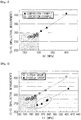
FIG. 1 is a diagram showing a correlation between the work hardening formula H1 and actually measured values of work hardening degree; -
FIG. 2 is a diagram showing a change of the work hardening formula H1 according to the size of crystal grains; -
FIGS. 3 to 5 show size distributions of crystal grains; -
FIG. 6 is a diagram showing a correlation between the modified work hardening formula H2 and actually measured values of the work hardening degree; and -
FIG. 7 is a diagram showing a correlation between the austenite stabilization index and actually measured values of the work hardening degree. - Hereinafter, austenitic stainless steels excellent in flexibility according to preferred embodiments of the present invention will be described with reference to the accompanying drawings.
- An austenitic stainless steel according to the present invention is characterized by containing, by weight percent, 0.1 to 0.65% of Si, 1.0 to 3.0% of Mn, 6.5 to 10.0% of Ni, 16.5 to 18.5% of Cr, 6.0% or less of Cu (excluding 0), 0.13% or less of (C + N) (excluding 0), and the remainder comprising Fe and unavoidable impurities.
- The reasons for limiting the numerical values of the components constituting the austenitic stainless steel excellent in flexibility of the present invention will be described below.
- C + N should be added to 0.13wt% or less.
- C and N not only harden the austenitic stainless steel as interstitial solid solution strengthening elements but also increase the work hardening degree of the material by hardening the strain induced martensite generated during processing if the contents of C and N are high. Therefore, there is a need to limit the content of C and N, and in the present invention, the content of C + N is limited to 0.13% or less.
- Si is added in a controlled amount with the range of 0.1 to 0.65wt%.
- Since Si is an element added essentially for deoxidation, 0.1% or more is added.
- However, when an excessively high content of Si is added, the material is hardened and the corrosion resistance is lowered by forming inclusions in association with oxygen, so the upper limit is limited to 0.65%.
- Mn is added in a controlled amount with the range of 1.0 to 3.0wt%.
- Mn, which is an element not only added essentially for deoxidation but also increases the degree of stabilization of the austenite phase, is added at 1.0% or more for maintaining the austenite balance. However, the addition of an excessively high content of Mn reduces the corrosion resistance of the material, so the upper limit is limited to 3.0%.
- Ni is added in a controlled amount with the range of 6.5 to 10.0wt%.
- Ni is not only effective for improving the corrosion resistance such as pitting corrosion resistance by being added with Cr in combination, but also can increase softening of austenite steel when its content is increased.
- In addition, Ni is an element contributing to improvement of phase stability of austenitic stainless steel, and is added at 6.5% or more in order to maintain an austenite balance. However, the addition of an excessively high content of Ni results in an increase in the cost of the steel, so the upper limit is limited to 10.0%.
- Cr is added in a controlled amount with the range of 16.5 to 18.5wt%.
- Cr is an indispensable element for improving the corrosion resistance, and in order to be used for general purpose, 16.5% or more of Cr should be added. However, the addition of an excessively high content of Cr causes austenite phase hardening and increases the cost, so the upper limit is limited to 18.5%.
- Cu is added in a controlled amount with the range of 6.0wt% or less.
- Cu can cause softening of the austenite steel. However, the addition of an excessively high content of Cu lowers the hot workability and can rather harden the austenite phase, so the upper limit is limited to 6.0%.
- In order to attain the object of the present invention, the component control method provided by the present invention is important. In order to express this specifically, the hollowing description will be made with reference to the embodiments of the present invention. The materials described in the following embodiments were prepared by preparing ingots with a 150 mm thickness, heating them to 1,250°C, hot rolling them to 3 mm, and then heat treating them at 1,100°C for 60 seconds or more. However, such a manufacturing method does not limit the characteristics of the material provided in the present invention, but merely adopts one of the conventional methods of manufacturing austenitic stainless steel, and is merely an example of producing a material for evaluating characteristics. The characteristics of the material change depending on the component control method provided by the present invention. The yield strength YS and the tensile strength TS are values obtained by uniaxially tensioning the material.
[Table 1] Classification Si Mn Ni Cr Cu C+N TS-YS H1 Invention Example 1 0.4 2.7 8.0 17.3 2.7 0.019 281 292 Invention Example 2 0.4 1.7 9.6 17.4 3.2 0.028 277 284 Invention Example 3 0.4 1.7 9.6 17.4 3.2 0.024 273 281 Invention Example 4 0.4 2.8 9.6 17.5 3.1 0.010 276 271 Invention Example 5 0.4 2.7 9.6 17.4 3.2 0.011 279 267 Invention Example 6 0.4 2.7 9.7 17.5 3.2 0.019 277 273 Invention Example 7 0.4 2.7 9.6 17.4 3.2 0.041 280 285 Invention Example 8 0.4 1.2 8.3 16.9 2.1 0.016 287 286 Invention Example 9 0.4 1.2 8.4 16.9 2.2 0.033 295 294 Invention Example 10 0.4 1.2 8.1 17.0 2.8 0.018 288 284 Invention Example 11 0.4 1.2 8.0 17.0 2.7 0.036 293 295 Invention Example 12 0.4 1.2 8.4 16.8 2.7 0.017 280 275 Invention Example 13 0.4 1.2 8.4 17.0 2.7 0.036 287 293 Invention Example 14 0.6 1.2 7.6 16.9 3.0 0.017 283 296 Invention Example 15 0.6 1.2 7.6 16.9 4.0 0.021 286 286 Invention Example 16 0.6 1.2 7.6 16.7 5.0 0.020 274 263 Comparative Example 1 0.6 1.2 7.6 16.9 2.1 0.056 328 329 Comparative Example 2 0.4 1.0 7.9 17.7 0.2 0.088 407 399 Comparative Example 3 0.6 1.2 7.5 16.8 2.0 0.021 309 308 - H1 shown in Table 1 is defined by the following formula.

- In the present invention, in order to obtain an austenitic stainless steel excellent in flexibility by controlling the TS-YS value to 300MPa or less, the H1 values are defined using the component elements constituting the present invention, and the correlation between the H1 values and the actually measured TS-YS values were analyzed.
- As shown in
FIG. 1 , it can be seen that the relationship between the H1 values obtained through the component control and the actually measured TS-YS values is shown, and the above description is implemented. In particular, as shown by a dotted line, a linearly smooth relationship is established therebetween. Therefore, it can be seen that even if the lower limit of the H1 value is not set in the present invention, it is possible to manufacture an austenitic steel having more excellent flexibility through production of a material having a lower H1 value. - On the other hand, the crystal grain size of the austenitic stainless steel produced by a conventional manufacturing process is generally 30 ± 10µm.
- As shown in Table 2, the crystal grain size (D) of the austenitic stainless steel excellent in flexibility of the present invention is also present in the interval of 30 ± 10 µm, and it can be seen that when H1 is obtained as 329 as in Comparative Example 1 of Table 2, the actual TS-YS value is obtained as 328, indicating that the flexibility is not good.
- As above, it can be seen that the values of H1 and the actual TS-YS values have similar values at crystal grain sizes of the range of 30 ± 10µm, which is also confirmed through
FIG. 2 . - However, in a case when the size of the crystal grains exceeds the range of 30 ± 10µm, it can be seen that the actual TS-YS values are less than 300MPa even if the values of H1 exceed 300MPa, which is also confirmed through Invention Examples 17, 18, 19, 20 and 21 in Table 2 and the section marked as ellipse in
FIG. 2 . - If the crystal grain size is large, surface irregularity defect called orange peel occurs during processing. However, if the smoothness of the surface is not important or can be corrected through polishing and can be ignored, even if the crystal grain size is large, it is not a big problem.
-
FIGS. 3 to 5 show size distributions of crystal grains, in whichFIG. 3 is a structure photograph showing the crystal grain size of the austenitic stainless steel according to the following Invention Example 6,FIG. 4 is a structure photograph showing the crystal grain size of the austenitic stainless steel according to the following Comparative Example 6, andFIG. 5 is a structure photograph showing the crystal grain size of the austenitic stainless steel according to the following Invention Example 17. - In the present invention, a modified work hardening formula H2 is provided so as to obtain a material having a low work hardening degree even when the crystal grain size is larger than usual.

- As shown in Table 2 and
FIG. 6 , it can be seen that austenitic stainless steels excellent in flexibility can be produced by controlling the range of the modified work hardening formula H2 to 300MPa or less.[Table 2] TS-YS H1 D H2 Invention Example 1 281 292 29 289 Invention Example 2 277 284 31 282 Invention Example 3 273 281 33 279 Invention Example 4 276 271 29 271 Invention Example 5 279 167 31 268 Invention Example 6 277 173 32 272 Invention Example 7 280 285 35 282 Invention Example 17 269 336 223 273 Invention Example 18 247 316 218 256 Invention Example 19 240 301 209 246 Invention Example 20 267 333 284 253 Invention Example 21 283 316 93 292 Comparative Example 1 328 329 33 321 Comparative Example 4 337 406 210 337 Comparative Example 5 371 406 990 372 Comparative Example 6 313 336 72 316 - Table 3 shows the component contents of Invention Examples 17 to 21 and Comparative Examples 4 to 6 disclosed in Table 2.
[Table 3] Classification Si Mn Ni Cr Cu C+N Invention Example 17 0.6 1.2 7.5 16.7 3.9 0.119 Invention Example 18 0.6 1.3 7.6 17.0 5.0 0.087 Invention Example 19 0.6 1.3 7.9 17.1 5.8 0.075 Invention Example 20 0.5 1.1 6.9 17.1 4.4 0.091 Invention Example 21 0.6 1.3 7.6 17.0 5.0 0.087 Comparative Example 4 0.2 1.4 8.1 18.1 0.2 0.105 Comparative Example 5 0.2 1.4 8.1 18.1 0.2 0.105 Comparative Example 6 0.6 1.2 7.5 16.7 3.9 0.119 - On the other hand, the TS-YS values may be limited by the following austenite stability Md30.
- As shown in
FIG. 7 , it can be seen that when Md30 exceeds 0, the TS-YS values greatly increase, and in the range where Md30 is 0 or less, the TS-YS values do not react sensitively to Md30 but remain at a constant low level. - In order to maintain the Md30 in the range of 0 or less, Si, Mn, Ni, Cu and Cr which are the main additive elements must be added. In the present invention, Md30-related component parameters for maintaining the TS-YS values at 300MPa or less are presented.
[Table 4] TS-YS Md30 Invention Example 1 281 -30 Invention Example 2 227 88 Invention Example 3 273 85 Invention Example 4 276 88 Invention Example 5 279 88 Invention Example 6 277 -97 Invention Example 7 280 -102 Invention Examples 8 287 -2 Invention Example 9 295 -14 Invention Example 10 288 -18 Invention Example 11 293 -22 Invention Example 12 280 -21 Invention Example 13 287 -34 Invention Example 14 283 -13 Invention Example 15 286 -41 Invention Example 16 274 -69 Comparative Example 1 328 -1 Comparative Example 2 407 20 Comparative Example 3 309 20 - As shown in Table 4, when the values are maintained at 0 or less, the TS-YS values can be maintained at 300MPa or less, which indicates that the flexibility is improved.
- On the other hand, in order to lower the Md30 values, the component element contents should be further increased. In order to reduce the cost, the lower limit value is preferably limited to -100.
- While the present invention has been particularly shown and described with reference to specific embodiments thereof, it will be understood by those skilled in the art that the present invention may be variously modified and changed without departing from the technical idea of the present invention provided by the following claims.
- The austenitic stainless steels excellent in flexibility according to the embodiments of the present invention are applicable to air conditioner refrigerant piping and the like for domestic use and automobiles.
Claims (7)
- An austenitic stainless steel excellent in flexibility being characterized by comprising:by weight percent, 0.1 to 0.65% of Si, 1.0 to 3.0% of Mn, 6.5 to 10.0% of Ni, 16.5 to 18.5% of Cr, 6.0% or less of Cu (excluding 0), 0.13% or less of (C + N) (excluding 0), and the remainder comprising Fe and unavoidable impurities,wherein the work hardening formula H1 defined by the following formula is 300 or less.

- The austenitic stainless steel excellent in flexibility according to claim 1, being characterized by having the size of structure (D) of 20 to 40µm.
- An austenitic stainless steel excellent in flexibility being characterized by comprising:by weight percent, 0.1 to 0.65% of Si, 1.0 to 3.0% of Mn, 6.5 to 10.0% of Ni, 16.5 to 18.5% of Cr, 6.0% or less of Cu (excluding 0), 0.13% or less of (C + N) (excluding 0), and the remainder comprising Fe and unavoidable impurities,wherein the work hardening formula H2 defined by the following formula is 300 or less.

- The austenitic stainless steel excellent in flexibility according to claim 3, being characterized by having the size of structure (D) of 20 to 300µm.
- An austenitic stainless steel excellent in flexibility being characterized by comprising:by weight percent, 0.1 to 0.65% of Si, 1.0 to 3.0% of Mn, 6.5 to 10.0% of Ni, 16.5 to 18.5% of Cr, 6.0% or less of Cu (excluding 0), 0.13% or less of (C + N) (excluding 0), and the remainder comprising Fe and unavoidable impurities,wherein Md30 defined by the following formula is 0 or less.

- The austenitic stainless steel excellent in flexibility according to claim 5, wherein Md30 is -100 to 0.
- The austenitic stainless steel excellent in flexibility according to any one of claims 1 to 6, wherein the difference value between TS (tensile strength) and YS (yield strength) is 300MPa or less.
Applications Claiming Priority (2)
| Application Number | Priority Date | Filing Date | Title |
|---|---|---|---|
| KR1020140191165A KR101659186B1 (en) | 2014-12-26 | 2014-12-26 | Austenitic stainless steels with increased flexibility |
| PCT/KR2015/012973 WO2016104974A1 (en) | 2014-12-26 | 2015-12-01 | Austenitic stainless steel having excellent flexibility |
Publications (2)
| Publication Number | Publication Date |
|---|---|
| EP3239341A1 true EP3239341A1 (en) | 2017-11-01 |
| EP3239341A4 EP3239341A4 (en) | 2018-10-31 |
Family
ID=56150947
Family Applications (1)
| Application Number | Title | Priority Date | Filing Date |
|---|---|---|---|
| EP15873501.9A Withdrawn EP3239341A4 (en) | 2014-12-26 | 2015-12-01 | Austenitic stainless steel having excellent flexibility |
Country Status (6)
| Country | Link |
|---|---|
| US (1) | US20170349985A1 (en) |
| EP (1) | EP3239341A4 (en) |
| JP (1) | JP2018502991A (en) |
| KR (1) | KR101659186B1 (en) |
| CN (1) | CN107429367A (en) |
| WO (1) | WO2016104974A1 (en) |
Cited By (1)
| Publication number | Priority date | Publication date | Assignee | Title |
|---|---|---|---|---|
| EP3598025B1 (en) * | 2017-03-13 | 2024-03-06 | LG Electronics Inc. | Air conditioner |
Families Citing this family (18)
| Publication number | Priority date | Publication date | Assignee | Title |
|---|---|---|---|---|
| KR101756701B1 (en) * | 2015-12-23 | 2017-07-12 | 주식회사 포스코 | Austenitic stainless steel with increased workability |
| EP3301199B1 (en) * | 2016-03-28 | 2021-01-20 | LG Electronics Inc. -1- | Bent pipe made of stainless steel |
| KR101923922B1 (en) * | 2016-12-23 | 2018-11-30 | 주식회사 포스코 | Austenitic stainless steel product having excellent surface properties and manufacturing method of the same |
| KR20180104511A (en) * | 2017-03-13 | 2018-09-21 | 엘지전자 주식회사 | Air conditioner |
| KR20180104520A (en) * | 2017-03-13 | 2018-09-21 | 엘지전자 주식회사 | Air conditioner |
| KR20180104509A (en) * | 2017-03-13 | 2018-09-21 | 엘지전자 주식회사 | Air conditioner |
| KR20180104519A (en) * | 2017-03-13 | 2018-09-21 | 엘지전자 주식회사 | Air conditioner |
| KR20180104514A (en) * | 2017-03-13 | 2018-09-21 | 엘지전자 주식회사 | Air conditioner |
| KR20180104521A (en) | 2017-03-13 | 2018-09-21 | 엘지전자 주식회사 | Air conditioner |
| KR20180104513A (en) * | 2017-03-13 | 2018-09-21 | 엘지전자 주식회사 | Air conditioner |
| KR20180104508A (en) * | 2017-03-13 | 2018-09-21 | 엘지전자 주식회사 | Air conditioner |
| KR20180104507A (en) * | 2017-03-13 | 2018-09-21 | 엘지전자 주식회사 | Air conditioner |
| KR20180104506A (en) * | 2017-03-13 | 2018-09-21 | 엘지전자 주식회사 | Air conditioner |
| KR20180111416A (en) * | 2017-03-31 | 2018-10-11 | 엘지전자 주식회사 | Ductile stainless steel pipe |
| KR20190000254A (en) | 2017-06-22 | 2019-01-02 | 엘지전자 주식회사 | Air conditioner |
| KR102419898B1 (en) | 2017-06-26 | 2022-07-12 | 엘지전자 주식회사 | Gas heat pump system |
| KR102364389B1 (en) * | 2017-09-27 | 2022-02-17 | 엘지전자 주식회사 | Air conditioner |
| US11457783B2 (en) | 2019-06-05 | 2022-10-04 | Lg Electronics Inc. | Cleaner |
Family Cites Families (29)
| Publication number | Priority date | Publication date | Assignee | Title |
|---|---|---|---|---|
| JP2714987B2 (en) * | 1989-08-30 | 1998-02-16 | 日新製鋼株式会社 | Non-magnetic austenitic stainless steel for high-quality Western tableware |
| JPH0770705A (en) * | 1993-09-03 | 1995-03-14 | Aichi Steel Works Ltd | Austenitic stainless steel excellent in thermal expansion property |
| JP2946274B2 (en) * | 1993-11-30 | 1999-09-06 | 株式会社栗本鐵工所 | Austenitic stainless steel T-head bolt and method of manufacturing the same |
| JP3637991B2 (en) * | 1996-03-29 | 2005-04-13 | 日新製鋼株式会社 | Soft austenitic stainless steel |
| JPH09310155A (en) * | 1996-05-16 | 1997-12-02 | Nkk Corp | Austenitic stainless steel with excellent surface properties after processing |
| JPH1036922A (en) * | 1996-07-23 | 1998-02-10 | Kawasaki Steel Corp | Method for controlling grain size of austenitic stainless steel sheet |
| JPH11181550A (en) * | 1997-12-17 | 1999-07-06 | Sanyo Special Steel Co Ltd | Austenitic stainless steel with good cold workability |
| JPH11350089A (en) * | 1998-06-12 | 1999-12-21 | Nisshin Steel Co Ltd | Austenitic stainless steel having excellent antibacterial characteristic and high workability, and its production |
| JP2000248339A (en) * | 1999-02-26 | 2000-09-12 | Nisshin Steel Co Ltd | Austenitic free cutting stainless steel excellent in workability and corrosion resistance |
| JP2000303152A (en) * | 1999-04-20 | 2000-10-31 | Nisshin Steel Co Ltd | Austenitic stainless steel excellent in antibacterial property and hole expanding workability in secondary working and its production |
| JP3691341B2 (en) * | 2000-05-16 | 2005-09-07 | 日新製鋼株式会社 | Austenitic stainless steel sheet with excellent precision punchability |
| ES2250443T3 (en) * | 2000-08-01 | 2006-04-16 | Nisshin Steel Co., Ltd. | STAINLESS STEEL FUEL TANK FOR CAR. |
| DE60141866D1 (en) * | 2000-08-01 | 2010-05-27 | Nisshin Steel Co Ltd | Stainless steel fuel filler neck |
| JP2002206148A (en) * | 2001-01-09 | 2002-07-26 | Nisshin Steel Co Ltd | Austenitic stainless steel sheet with low work cracking susceptibility and method for producing the same |
| JP3827986B2 (en) * | 2001-10-16 | 2006-09-27 | 日新製鋼株式会社 | Stainless steel flexible pipe or duct pipe |
| JP4907151B2 (en) * | 2005-11-01 | 2012-03-28 | 新日鐵住金ステンレス株式会社 | Austenitic high Mn stainless steel for high-pressure hydrogen gas |
| JP5165236B2 (en) * | 2006-12-27 | 2013-03-21 | 新日鐵住金ステンレス株式会社 | Stainless steel plate for structural members with excellent shock absorption characteristics |
| JP2008208430A (en) * | 2007-02-27 | 2008-09-11 | Nippon Steel & Sumikin Stainless Steel Corp | Soft austenitic stainless steel and method for producing the same |
| DK2245202T3 (en) | 2007-12-20 | 2011-12-19 | Ati Properties Inc | Low nickel Austenitic stainless steel containing stabilizing elements |
| US8337749B2 (en) * | 2007-12-20 | 2012-12-25 | Ati Properties, Inc. | Lean austenitic stainless steel |
| JP5448023B2 (en) | 2008-02-12 | 2014-03-19 | 独立行政法人物質・材料研究機構 | Steel fine wire or strip steel plate with excellent plastic workability |
| JP5308726B2 (en) * | 2008-06-17 | 2013-10-09 | 新日鐵住金ステンレス株式会社 | Austenitic stainless steel sheet for press forming having a fine grain structure and method for producing the same |
| KR20100069875A (en) * | 2008-12-17 | 2010-06-25 | 주식회사 포스코 | Austenitic stainless steel having excellent hot workability with high manganese |
| JP5500960B2 (en) * | 2009-12-01 | 2014-05-21 | 新日鐵住金ステンレス株式会社 | Fine grain austenitic stainless steel sheet with excellent stress corrosion cracking resistance and workability |
| KR101177488B1 (en) * | 2009-12-29 | 2012-08-27 | 주식회사 포스코 | Ultra High strength and high corrosion resistant stainless steel alloy and method for manufacturing the same |
| KR20160005795A (en) * | 2011-03-01 | 2016-01-15 | 신닛테츠스미킨 카부시키카이샤 | Metal plate for laser processing and method for producing stainless steel plate for laser processing |
| JP5920691B2 (en) * | 2011-06-22 | 2016-05-18 | 日本精線株式会社 | High-strength fine metal wire for saw wire, method for producing the same, and saw wire using the fine metal wire |
| KR101554771B1 (en) * | 2012-12-20 | 2015-09-21 | 주식회사 포스코 | Super ductile lean duplex stainless steel |
| JP6340870B2 (en) * | 2014-03-31 | 2018-06-13 | 新日鐵住金株式会社 | Austenitic stainless steel |
-
2014
- 2014-12-26 KR KR1020140191165A patent/KR101659186B1/en active Active
-
2015
- 2015-12-01 EP EP15873501.9A patent/EP3239341A4/en not_active Withdrawn
- 2015-12-01 CN CN201580071219.3A patent/CN107429367A/en active Pending
- 2015-12-01 WO PCT/KR2015/012973 patent/WO2016104974A1/en not_active Ceased
- 2015-12-01 US US15/539,874 patent/US20170349985A1/en not_active Abandoned
- 2015-12-01 JP JP2017530337A patent/JP2018502991A/en active Pending
Cited By (1)
| Publication number | Priority date | Publication date | Assignee | Title |
|---|---|---|---|---|
| EP3598025B1 (en) * | 2017-03-13 | 2024-03-06 | LG Electronics Inc. | Air conditioner |
Also Published As
| Publication number | Publication date |
|---|---|
| JP2018502991A (en) | 2018-02-01 |
| KR20160079998A (en) | 2016-07-07 |
| KR101659186B1 (en) | 2016-09-23 |
| EP3239341A4 (en) | 2018-10-31 |
| US20170349985A1 (en) | 2017-12-07 |
| WO2016104974A1 (en) | 2016-06-30 |
| CN107429367A (en) | 2017-12-01 |
Similar Documents
| Publication | Publication Date | Title |
|---|---|---|
| KR101659186B1 (en) | Austenitic stainless steels with increased flexibility | |
| KR101122840B1 (en) | Carbon steel sheet having excellent carburization properties, and method for producing same | |
| EP3184662A1 (en) | Austenitic stainless steel sheet and metal gasket | |
| JP5277658B2 (en) | Manufacturing method of hot press member | |
| JP5034803B2 (en) | Steel sheet for soft nitriding treatment and method for producing the same | |
| EP3674434A1 (en) | Low-ni austenitic stainless steel with excellent hot workability and hydrogen embrittlement resistance | |
| KR102096190B1 (en) | Moldable lightweight steel with improved mechanical properties and method for manufacturing semi-finished products from the steel | |
| EP3260570A1 (en) | Hot-rolled steel sheet, steel member, and method for manufacturing hot-rolled steel sheet | |
| EP2660348A1 (en) | Die steel having superior rusting resistance and thermal conductivity, and method for producing same | |
| CN103827334B (en) | Maraging steel | |
| EP3438308A1 (en) | Ti-containing ferritic stainless steel sheet, manufacturing method, and flange | |
| JP6159209B2 (en) | High strength steel for bolts with excellent delayed fracture resistance and bolt formability, and method for producing bolts | |
| KR20110045184A (en) | Heat treatment method of 17-4PH stainless steel | |
| EP3396001B1 (en) | Austenitic stainless steel having improved processability | |
| KR20160080314A (en) | Ferritic stainless steel and method for manufacturing the same | |
| KR20140131214A (en) | Austenitic stainless steel with high age cracking resistance | |
| EP4177368A1 (en) | Austenitic stainless steel with improved deep drawability | |
| EP3214189B1 (en) | Method for manufacturing a quenched and tempered seamless pipe for a high-strength hollow spring | |
| JP2011001564A (en) | Ferritic stainless steel sheet having excellent roughening resistance and method for producing the same | |
| CN109440004B (en) | Steel sheet for can and method for producing same | |
| JP5534112B2 (en) | Hot-rolled steel sheet for cold rolling material and manufacturing method thereof | |
| CN105543715A (en) | High-intensity and corrosion-resistant high-nitrogen steel fastener and manufacturing process thereof | |
| EP3748027B1 (en) | Bolt | |
| EP3018227B1 (en) | Hot-rolled steel sheet having excellent workability and anti-aging properties and method for manufacturing same | |
| JP5489503B2 (en) | Steel plate for machine parts and method for producing the same |
Legal Events
| Date | Code | Title | Description |
|---|---|---|---|
| STAA | Information on the status of an ep patent application or granted ep patent |
Free format text: STATUS: THE INTERNATIONAL PUBLICATION HAS BEEN MADE |
|
| PUAI | Public reference made under article 153(3) epc to a published international application that has entered the european phase |
Free format text: ORIGINAL CODE: 0009012 |
|
| STAA | Information on the status of an ep patent application or granted ep patent |
Free format text: STATUS: REQUEST FOR EXAMINATION WAS MADE |
|
| 17P | Request for examination filed |
Effective date: 20170621 |
|
| AK | Designated contracting states |
Kind code of ref document: A1 Designated state(s): AL AT BE BG CH CY CZ DE DK EE ES FI FR GB GR HR HU IE IS IT LI LT LU LV MC MK MT NL NO PL PT RO RS SE SI SK SM TR |
|
| AX | Request for extension of the european patent |
Extension state: BA ME |
|
| RAP1 | Party data changed (applicant data changed or rights of an application transferred) |
Owner name: POSCO |
|
| DAV | Request for validation of the european patent (deleted) | ||
| DAX | Request for extension of the european patent (deleted) | ||
| RIC1 | Information provided on ipc code assigned before grant |
Ipc: C22C 38/02 20060101ALI20180227BHEP Ipc: C22C 38/04 20060101ALI20180227BHEP Ipc: C21D 6/00 20060101ALI20180227BHEP Ipc: C22C 38/42 20060101AFI20180227BHEP Ipc: C21D 9/46 20060101ALI20180227BHEP Ipc: C22C 38/00 20060101ALI20180227BHEP Ipc: C22C 38/58 20060101ALI20180227BHEP Ipc: C21D 8/02 20060101ALI20180227BHEP |
|
| A4 | Supplementary search report drawn up and despatched |
Effective date: 20180928 |
|
| RIC1 | Information provided on ipc code assigned before grant |
Ipc: C21D 8/02 20060101ALI20180924BHEP Ipc: C22C 38/00 20060101ALI20180924BHEP Ipc: C22C 38/04 20060101ALI20180924BHEP Ipc: C21D 6/00 20060101ALI20180924BHEP Ipc: C22C 38/02 20060101ALI20180924BHEP Ipc: C21D 9/46 20060101ALI20180924BHEP Ipc: C22C 38/58 20060101ALI20180924BHEP Ipc: C22C 38/42 20060101AFI20180924BHEP |
|
| STAA | Information on the status of an ep patent application or granted ep patent |
Free format text: STATUS: EXAMINATION IS IN PROGRESS |
|
| 17Q | First examination report despatched |
Effective date: 20190521 |
|
| STAA | Information on the status of an ep patent application or granted ep patent |
Free format text: STATUS: THE APPLICATION IS DEEMED TO BE WITHDRAWN |
|
| RAP3 | Party data changed (applicant data changed or rights of an application transferred) |
Owner name: POSCO HOLDINGS INC. |
|
| 18D | Application deemed to be withdrawn |
Effective date: 20220705 |