EP3237101B1 - Herstellungsverfahren für asymmetrische verbundmembrane, asymmetrische verbundmembrane und verfahren zur herstellung eines permeats unter einsatz asymmetrischer verbundmembrane. - Google Patents
Herstellungsverfahren für asymmetrische verbundmembrane, asymmetrische verbundmembrane und verfahren zur herstellung eines permeats unter einsatz asymmetrischer verbundmembrane. Download PDFInfo
- Publication number
- EP3237101B1 EP3237101B1 EP15872088.8A EP15872088A EP3237101B1 EP 3237101 B1 EP3237101 B1 EP 3237101B1 EP 15872088 A EP15872088 A EP 15872088A EP 3237101 B1 EP3237101 B1 EP 3237101B1
- Authority
- EP
- European Patent Office
- Prior art keywords
- sample
- cross
- membrane
- asymmetric composite
- ether
- Prior art date
- Legal status (The legal status is an assumption and is not a legal conclusion. Google has not performed a legal analysis and makes no representation as to the accuracy of the status listed.)
- Active
Links
Images





Classifications
-
- B—PERFORMING OPERATIONS; TRANSPORTING
- B01—PHYSICAL OR CHEMICAL PROCESSES OR APPARATUS IN GENERAL
- B01D—SEPARATION
- B01D67/00—Processes specially adapted for manufacturing semi-permeable membranes for separation processes or apparatus
- B01D67/0081—After-treatment of organic or inorganic membranes
- B01D67/0093—Chemical modification
- B01D67/00931—Chemical modification by introduction of specific groups after membrane formation, e.g. by grafting
-
- A—HUMAN NECESSITIES
- A23—FOODS OR FOODSTUFFS; TREATMENT THEREOF, NOT COVERED BY OTHER CLASSES
- A23C—DAIRY PRODUCTS, e.g. MILK, BUTTER OR CHEESE; MILK OR CHEESE SUBSTITUTES; PREPARATION THEREOF
- A23C9/00—Milk preparations; Milk powder or milk powder preparations
- A23C9/14—Milk preparations; Milk powder or milk powder preparations in which the chemical composition of the milk is modified by non-chemical treatment
-
- B—PERFORMING OPERATIONS; TRANSPORTING
- B01—PHYSICAL OR CHEMICAL PROCESSES OR APPARATUS IN GENERAL
- B01D—SEPARATION
- B01D67/00—Processes specially adapted for manufacturing semi-permeable membranes for separation processes or apparatus
-
- B—PERFORMING OPERATIONS; TRANSPORTING
- B01—PHYSICAL OR CHEMICAL PROCESSES OR APPARATUS IN GENERAL
- B01D—SEPARATION
- B01D67/00—Processes specially adapted for manufacturing semi-permeable membranes for separation processes or apparatus
- B01D67/0081—After-treatment of organic or inorganic membranes
- B01D67/009—After-treatment of organic or inorganic membranes with wave-energy, particle-radiation or plasma
-
- B—PERFORMING OPERATIONS; TRANSPORTING
- B01—PHYSICAL OR CHEMICAL PROCESSES OR APPARATUS IN GENERAL
- B01D—SEPARATION
- B01D69/00—Semi-permeable membranes for separation processes or apparatus characterised by their form, structure or properties; Manufacturing processes specially adapted therefor
- B01D69/12—Composite membranes; Ultra-thin membranes
-
- B—PERFORMING OPERATIONS; TRANSPORTING
- B01—PHYSICAL OR CHEMICAL PROCESSES OR APPARATUS IN GENERAL
- B01D—SEPARATION
- B01D71/00—Semi-permeable membranes for separation processes or apparatus characterised by the material; Manufacturing processes specially adapted therefor
- B01D71/06—Organic material
- B01D71/26—Polyalkenes
- B01D71/261—Polyethylene
-
- B—PERFORMING OPERATIONS; TRANSPORTING
- B01—PHYSICAL OR CHEMICAL PROCESSES OR APPARATUS IN GENERAL
- B01D—SEPARATION
- B01D71/00—Semi-permeable membranes for separation processes or apparatus characterised by the material; Manufacturing processes specially adapted therefor
- B01D71/06—Organic material
- B01D71/26—Polyalkenes
- B01D71/262—Polypropylene
-
- B—PERFORMING OPERATIONS; TRANSPORTING
- B01—PHYSICAL OR CHEMICAL PROCESSES OR APPARATUS IN GENERAL
- B01D—SEPARATION
- B01D71/00—Semi-permeable membranes for separation processes or apparatus characterised by the material; Manufacturing processes specially adapted therefor
- B01D71/06—Organic material
- B01D71/52—Polyethers
- B01D71/522—Aromatic polyethers
- B01D71/5222—Polyetherketone, polyetheretherketone, or polyaryletherketone
-
- B—PERFORMING OPERATIONS; TRANSPORTING
- B01—PHYSICAL OR CHEMICAL PROCESSES OR APPARATUS IN GENERAL
- B01D—SEPARATION
- B01D2323/00—Details relating to membrane preparation
- B01D2323/30—Cross-linking
-
- B—PERFORMING OPERATIONS; TRANSPORTING
- B01—PHYSICAL OR CHEMICAL PROCESSES OR APPARATUS IN GENERAL
- B01D—SEPARATION
- B01D2325/00—Details relating to properties of membranes
- B01D2325/02—Details relating to pores or porosity of the membranes
- B01D2325/022—Asymmetric membranes
Definitions
- the invention relates in part to modifying the chemical and physical properties of microporous polyolefin substrates.
- the invention further relates to asymmetric composite membranes prepared using these modified substrates.
- the invention relates to the use of modified microporous polyethylene sheets in the preparation of durable asymmetric composite membranes for use in the removal of water from dairy feed streams.
- the publication of Ogiwara et al (1981) discloses the photografting on poly(propylene) and low-density poly(ethylene) (LDPE) films on which sensitizers were coated beforehand.
- the sensitizers coated on films enabled vinyl hydrophilicitizing agents, such as methyl methacrylate, acrylic acid and methacrylic acid to graft easily with high yields.
- the hydrophilic hydrophilicitizing agents acrylic acid and methacrylic acid were conveniently grafted using them in aqueous solution in a liquid phase system.
- Allmer et al (1988) discloses the modification of surfaces of LDPE, high-density poly(ethylene) (HDPE) and polystyrene by grafting with acrylic acid.
- the grafting is performed in the vapor-phase and increased the wettability of the polymer. It was observed that acetone was able to initiate grafting and was found to promote and direct grafting to the surface.
- the publication of Allmer et al (1989) discloses the grafting of the surface of LDPE with glycidyl acrylate and glycidyl methacrylate by photoinitiation.
- Acetone and ethanol were used as solvents, with acetone yielding slightly more grafting at the surface.
- the publication of Edge et al (1993) discloses the photochemical grafting of 2-hydroxyethyl methacrylate (HEMA) onto LDPE film. A solution phase method is used to produce a material with increased wettability.
- the publication of Singleton et al (1993) discloses a method of making a polymeric sheet wettable by aqueous solvents and useful as an electrode separator in an electrochemical device. The polymeric sheet is formed from fibers which comprise poly(propylene) alone and is distinguished from a membrane formed from a microporous polymer sheet.
- Zhang and Ranby (1993) discloses the photochemically induced graft copolymerisation of acrylamide onto the surface of PP film. Acetone was shown to be the best solvent among the three aliphatic ketones tested.
- Hirooka and Kawazu discloses alkaline separators prepared from unsaturated carboxylic acid grafted poly(ethylene)-poly(propylene) fiber sheets. Again, the sheets used as a substrate in these studies are distinguished from a membrane formed from a microporous polymer sheet.
- the publication of Xu and Yang (2000) discloses a study on the mechanism of vapor-phase photografting of acrylic acid in LDPE.
- the publication of Shentu et al (2002) discloses a study of the factors, including the concentration of hydrophilicitizing agent, affecting photo-grafting on low-density LDPE.
- the publication of El Kholdi et al (2004) discloses a continuous process for the graft polymerisation of acrylic acid from hydrophilicitizing agent solutions in water onto LDPE.
- the publication of Bai et al (2011) discloses the preparation of a hot melt adhesive of grafted low-density poly(ethylene) (LDPE). The adhesive is prepared by surface UV photografting of acrylic acid onto the LDPE with benzophenone as the photoinitiator.
- the publication of Choi discloses a method for producing an acrylic graft polymer on the surface of a polyolefin article comprising the steps of immersing the article in a solution of an initiator in a volatile solvent, allowing the solvent to evaporate, and then immersing the article in a solution of an acrylic hydrophilicitizing agent before subjecting the article to ultraviolet irradiation in air or an inert atmosphere.
- Acrylic acid is used as the acrylic hydrophilicitizing agent in each one of the Examples disclosed in the publication, although the use of equivalent amounts of methacrylic acid, acrylamide and other acrylic hydrophilicitizing agents is anticipated.
- the publication of Choi (2005) discloses a non-woven sheet of polyolefin fibres where opposed surfaces of the sheet are hydrophilic as a consequence of an acrylic graft polymerisation.
- the properties of the sheet are asymmetric, the ion exchange coefficient of the two surfaces being different.
- the method used to prepare these asymmetric acrylic graft polymerised non-woven polyolefin sheets comprises the steps of immersing the substrates in a solution of benzophenone (a photoinitiator), drying and then immersing the substrate in a solution of acrylic acid prior to subjecting to ultraviolet (UV) irradiation.
- UV ultraviolet
- the irradiation may be performed when the surfaces are in contact with either air or an inert atmosphere.
- Gao et al (2013) discloses a method of preparing a radiation cross-linked lithium-ion battery separator.
- a porous polyethylene membrane is immersed in a solution of benzophenone and triallyl cyanurate in dichloromethane.
- the immersed membrane is dried at room temperature before being immersed in a water bath at 30°C and irradiated on both sides using a high-pressure mercury lamp for three minutes.
- the objective of the majority of these prior art methods is to improve the adhesion, biocompatibility, printability or wettability of the surface of a substrate.
- These improvements to surface characteristics are to be distinguished from the use of UV-initiated polymerisation to modify the permeability of preformed microporous polyolefin substrates, such as the substrates described in the publications of Fisher et al (1991) and Gillberg-LaForce (1994).
- the publication of Cussler et al (1992) discloses a process for modifying the properties of a hydrophobic microporous membrane which includes the steps of treating a hydrophobic microporous membrane with a surfactant to render the membrane hydrophilic, permeating the membrane with a polyol, and crosslinking the polyol to yield a hydrophilic microporous membrane having pores filled with an aqueous gel.
- the modified membranes are asserted to be useful in carrying out chromatographic separations.
- the publication of Donato and Phillips (1993) discloses a composite membrane having a microporous support which is coated with a polymer selected from the group consisting of polyethylene oxide, polyacrylic acid, poly(methyl methacrylate) and polyacrylamide wherein there is no pore filing of the microporous support.
- the publication of Donato (1994) discloses a composite membrane having a microporous support coated with an aqueous polyeurethane dispersion composition.
- the publication of Donato and Phillips (1994) discloses a composite membrane having a microporous support which is coated with a polymer composition and a contact adhesive layer applied to said polymer.
- the invention provides a method of preparing an asymmetric composite membrane comprising a film of cross-linked sulfonated poly(ether ether ketone) adhered to a sheet of hydrophilic microporous polyolefin comprising the steps:
- the aqueous solvent is 40 to 60% (v/v) acetone in water.
- the hydrophilicitizing agent is 4-ethenyl-benzenesulfonic acid.
- the hydrophilic microporous polyolefin is a graft polymer.
- the side chains of the graft polymer are derived from one or more of 2-acrylamido-1-methyl-2-propanesulfonic acid, 2-propen-1-ol, 2-propenoic acid, 2-hydroxyethyl 2-methyl-2-propenoic acid ester and 4-ethenyl-benzenesulfonic acid.
- the side chains of the graft polymer are derived from either or both of 2-acrylamido-1-methyl-2-propanesulfonic acid and 4-ethenyl-benzenesulfonic acid.
- the side chains of the graft polymer are derived from 4-ethenyl-benzenesulfonic acid.
- the organic solvent is dimethylacetamide.
- the cross-linking agent is a di-, tri- or tetra-ethenyl compound with a molecular weight less than 260. More preferably, the cross-linking agent is a di- or tetra-ethenyl compound selected from the group consisting of: divinylbenzene, ethylene glycol dimethacrylate and glyoxal bis (diallyl acetal). Most preferably, the cross-linking agent is p -divinylbenzene.
- the ratio of cross-linking agent to sulfonated poly(ether ether ketone) is in the range 2:3 to 1:3. More preferably, the ratio of cross-linking agent to sulfonated poly(ether ether ketone) is 1:2.
- the dispersion additionally includes at least one hydrophilicitizing agent.
- the at least one hydrophilicitizing agent is 2-acrylamido-1-methyl-2-propanesulfonic acid, 4-ethenyl-benzenesulfonic acid, or a salt thereof.
- the at least one hydrophilicitizing agent is 4-ethenyl-benzenesulfonic acid.
- the dispersion comprises a photoinitiator.
- the photoinitiator is benzophenone.
- the concentration of photoinitiator is greater than 2% (w/w). More preferably, the concentration of photoinitiator is greater than 4% (w/w).
- the irradiating is at wavelengths greater than 350 nm and at an intensity equivalent to 0.1 mW m -1 at a distance of 50 mm.
- the irradiating is for a time of 60 to 120 seconds. More preferably, the irradiating is for a time of 80 to 100 seconds
- the invention provides an asymmetric composite membrane comprising a film of cross-linked sulfonated poly(ether ether ketone) adhered to a sheet of hydrophilic microporous polyolefin.
- the film of cross-linked sulfonated poly(ether ether ketone) is an interpenetrating film of cross-linked sulfonated poly(ether ether ketone).
- the invention provides a method of removing water from a feed stream comprising the step of contacting the asymmetric composite membrane of the second aspect of the invention with the feed stream at a pressure and temperature sufficient to produce permeate.
- the feed stream is a dairy product. More preferably, the feed stream is milk. Most preferably, the feed stream is whole milk.
- the pressure is in the range 10 to 40 bar. More preferably, the pressure is in the range 15 to 35 bar. Most preferably, the pressure is 20 ⁇ 2.5 bar.
- the temperature is in the range 2 to 98 °C. More preferably, the temperature is in the range 4 to 40 °C. Most preferably, the temperature is in the range 4 to 20 °C.
- the method of preparing a hydrophilic microporous polyolefin substrate comprises the steps of:
- the contacting is under an atmosphere of air.
- the microporous polyolefin substrate is a sheet of microporous polyolefin. More preferably, the polyolefin is selected from the group consisting of: polyethylene, polypropylene, polybutylene and polymethylpentene. Most preferably, the polyolefin is polyethylene.
- the microporous polyethylene substrate is prepared according to a method disclosed in the publications of Fisher et al (1991) and Gillberg-LaForce (1994).
- the solution is a solution in 40 to 60% (v/v) acetone in water. More preferably, the solution is a solution in 50% (v/v) acetone in water.
- the photoinitiator is selected from the group consisting of: aceto-phenone, anthraquinone, benzoin, benzoin ether, benzoin ethyl ether, benzil, benzil ketal, benzophenone, benzoyl peroxide, n -butyl phenyl ketone, iso -butyl phenyl ketone, fluorenone, propiophenone, n -propyl phenyl ketone and iso -propyl phenyl ketone.
- the photoinitiator is benzophenone.
- the UVA irradiating is at wavelengths greater than 350 nm.
- the UVA irradiating is for a time no greater than 5 minutes.
- the removing non-grafted polymer is by washing in water. More preferably, the removing non-grafted polymer is by washing in water at a temperature of 40 to 50 °C.
- bursting strength means the maximum uniformly distributed pressure applied at right angles to its surface, that a single sample location can withstand under test conditions
- close to its limit of solubility means an increase in concentration of 5% (w/v) or more causes at least a portion of the solute to come out of solution, e.g.
- crosslinking agents means materials that are incorporated into the crosslinking bridge of a polymer network; “crosslinking” means the formation of a three-dimensional polymer network by covalent bonding between the main chains of the polymer;
- csPEEK means chlorosulfonated PEEK;
- degree of sulfonation means the ratio of moles of sulfonated structural repeating units to total moles of structural repeating units expressed as a percentage;
- DMAc means dimethylacetamide;
- DS means degree of sulfonation;
- durable means capable of maintaining performance during repeated clean-in-place (CIP) protocols; "ethen
- recovery means the percentage of the feed stream that emerges from the system as product water or “permeate”
- rejection means the percentage of solids concentration removed from the feed stream by the membrane
- sPEEK means sulfonated PEEK
- structural repeating unit means a smallest structural unit that repeats in the polymer backbone, e.g.
- oxy-1,4-phenyleneoxy-1.4-phenylenecarbonyl-1,4-phenylene is the structural repeating unit of PEEK;
- tensile strength means the maximum tensile stress sustained by a specimen at the yield point (tensile strength at yield) or at break (tensile strength at break) during a tension test;
- UVA means electromagnetic radiation having wavelengths between 320 and 400 nm and
- UVB means electromagnetic radiation having wavelengths between 290 and 320 nm.
- rejection layer is used synonymously with the phrase “barrier layer” and the phrase “backing layer” is used synonymously with the phrase “support layer”.
- film is generally used when referring to the rejection layer of the asymmetric composite membrane and the term “sheet” is generally used when referring to the backing layer of the asymmetric composite membrane. Any reference to a "preformed microporous substrate” specifically excludes a preformed post-treated polymer.
- concentrations or ratios of reagents or solvents are specified, the concentration or ratio specified is the initial concentration or ratio of the reagents or solvents. Where values are expressed to one or more decimal places standard rounding applies. For example, 1.7 encompasses the range 1.650 recurring to 1.749 recurring.
- the invention resides in part in the preparation of water permeable hydrophilic microporous polyethylene ( ⁇ PE) sheets that may be advantageously used as a backing layer in the preparation of a durable asymmetric composite membrane.
- the backing layer is prepared by the photoinitiated graft polymerisation of a sheet of ⁇ PE with selected hydrophilicitizing agents (Table 1).
- the hydrophilicitizing agent is selected to provide graft polymers with the chemical and physical properties dictated by the intended use of the asymmetric composite membrane.
- the method uses UVA irradiation to reduce the risk of harm to operators and permit the rate and degree of modification of the microporous polyolefin substrate to be readily controlled.
- the period of irradiation of the microporous substrate is limited to less than 5 minutes.
- a solvent system e.g. 1:1 (v/v) acetone-water
- the photoinitiator e.g. benzophenone
- this selection of parameters has been found to provide a ⁇ PE sheet suitable for use in ultrafiltration of feed streams such as whole milk.
- a durable i.e.
- a microporous polyolefin substrate is contacted with a solution of 1% (w/v) photoinitiator and 6% (w/v) hydrophilicitizing agent in 1:1 (v/v) acetone-water.
- the contacted substrate is then UVA-irradiated at a peak wavelength of 368 nm for a maximum of 5 minutes.
- the irradiated substrate is finally washed using ultrasound in an excess of water followed by soaking in water. It was observed that a lower contact angle was achievable when irradiation of the contacted substrate occurred with the photoinitiator in solution (as opposed to being dried on the surface of the substrate).
- samples A to D of modified polyolefin substrate For the preparation of samples A to D of modified polyolefin substrate according to the general method, sheets (20 um thickness) of porous (45% porosity, 0.08 um average pore diameter) poly(ethylene) (CELGARD TM K2045, Celgard LLC) were used as the polyolefin substrate.
- the solution was prepared by mixing benzophenone (photoinitiator) with acetone before adding water and then the selected hydrophilicitizing agent.
- the polyolefin substrate was contacted with the solution by placing a sheet of the substrate in a clear polyethylene bag and then using a threaded rod to apply the solution to the substrate. Any residual air was then removed from the bag before sealing and hanging from a frame.
- Irradiation was for three and a half minutes using UV fluorescent lamps (368 nm) having a bulb irradiance of 0.1 mW m -1 at a distance of 50 mm.
- the ultrasound washing was for five minutes followed by soaking at 45°C for three hours.
- Sample E For the preparation of Sample E amounts of 0.6 g of the hydrophilicitizing agent sodium 4-vinylbenzene sulphonate and 0.1 g of the photoinitator benzophenone were dissolved in water (5 mL) and acetone (5 mL). The solution was then applied to a microporous polyethylene sheet on a glass plate using a threaded rod. Three applications were made until the polyethylene was wetted out. The glass plate and sample were then placed in a polyethylene plastic bag then clamped to a frame and cured using fluorescent UV lamps at a distance of 5 cm on both sides of the sample. The peak wavelength of the lamps was 368nm and an irradiance power of 0.2 to 0.4 mW/m for each lamp.
- Sample F was prepared by the same method as used for the preparation of Sample E, but with a volume of 0.6 mL of the hydrophilicitizing agent acrylic acid being substituted for the hydrophilicitizing agent sodium 4-vinylbenzene sulphonate and added after the benzophenone was dissolved in the solvent.
- Sample G was prepared by the same method as used for the preparation of Sample E, but with a volume of 0.6 mL of the hydrophilicitizing agent 2-hydroxyethyl methacrylate being substituted for the hydrophilicitizing agent sodium 4-vinylbenzene sulphonate and added after the benzophenone was dissolved in the solvent.
- the properties of samples of modified polyolefin substrate prepared using different hydrophilicitizing agents were assessed. Table 1. Structure of AMPS, SSS and alternative hydrophilicitizing agents.
- Spectra of the samples were recorded using a Thermo Electron Nicolet 8700 FTIR spectrometer equipped with a single bounce ATR and diamond crystal. An average of 32 scans with a 4 cm -1 resolution was taken for all samples.
- the contact angles for the surfaces of the asymmetric composite membrane were determined in using the captive bubble method as described in the publication of Causserand and Aimar (2010).
- the samples were immersed in deionized water with the surface to be analysed facing downwards. An air bubble was trapped on the lower surface of the sample using a syringe. An image of the bubble was captured and the contact angle was calculated from its geometrical parameters.
- Total solids rejection for whole milk samples was measured by pouring 20 mL of sample from the feed in a petri dish and measuring the dry weight after 2 hours in a 100 °C oven.
- %R TS 1 ⁇ m p , TS m f , TS ⁇ 100 where m p,TS is total milk solids in the permeate and m f,TS is the mass of milk total solids in the feed.
- %R NaCl 1 ⁇ ⁇ p ⁇ f ⁇ 100
- ⁇ p is the conductivity of permeate and ⁇ f is the conductivity of the feed.
- the bubble point of the dry membranes was determined by gradually increasing the pressure of the feed until permeate started to flow through the membrane.
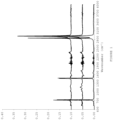
- the FTIR spectra for samples A to D generally showed faint peaks compared to the peaks observed in the FTIR spectrum of the unmodified polyolefin substrate (CELGARD TM K2045, Celgard LLC)(see Figure 1 ). However, the ester and carbonyl groups of Sample C were clearly discernible. The hydroxyl group peaks of Sample A and Sample D were barely evident. The FTIR spectrum for Sample B was not determined.
- modified polyolefin substrates Based on the assessment the preparation of modified polyolefin substrates according to the general method using 2-hydroxyethyl 2-methyl-2-propenoic acid ester as the hydrophilicitizing agent is selected for use as a backing or support layer in osmosis membranes. Sample C has been determined to provide high initial flux and the ability to let permeate through at low pressure differentials. Use of this class of modified polyolefin is indicated for medical applications.
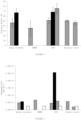
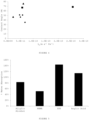
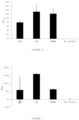
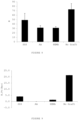
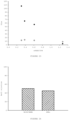
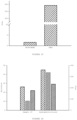
- Sample F was observed to provide a water permeable membrane with the highest rejection of salt (sodium chloride) ( Figure 10 ) combined with a relatively high flux ( Figure 11 ) and rejection of total milk solids ( Figure 12 ). Based on this assessment the preparation of modified polyolefin substrates according to the general method using acrylic acid as the hydrophilicitizing agent is indicated for use as a membrane in the ultrafiltration of feed streams such as milk.
- salt sodium chloride
- Figure 12 rejection of total milk solids
- the combination of a cross-linked poly(ether ether ketone) rejection layer and a hydrophilic microporous polyethylene backing layer provides a durable asymmetric composite membrane suitable for use in commercial processing operations.
- the membrane is prepared by adhering a sheet of hydrophilic microporous poly(ethylene) ( ⁇ PE) to a film of putatively cross-linked sulfonated poly(ether ether ketone) (sPEEK). The adherence is augmented by the interpenetration of the two polymers.
- the membrane may be prepared according to the following method in which the sheet of hydrophilic uPE is nominally referred to as the ⁇ backing layer' and the film of putatively cross-linked sPEEK is nominally referred to as the ⁇ rejection layer'.
- the backing layer may alternatively be referred to as the 'support layer' and the rejection layer alternatively referred to as the 'barrier layer'.
- the method provides the advantage of being adaptable to the continuous production of the asymmetric composite membrane. The method is described in detail in respect of the preparation of a single sample.
- PEEK Poly(ether ether ketone) (PEEK) (VICTREX TM 450P, Victrex, England) was sulfonated by heating to 70°C in concentrated sulfuric acid (95%) for 8 hours.
- the degree of sulfonation of the sPEEK was determined by titration according to a modified form of the method disclosed in the publication of Drioli et al (2004).
- the sPEEK was leached for three days in a 3M solution of sodium chloride (NaCl) and the resulting solution titrated against a 0.2 M solution of sodium hydroxide (NaOH) using phenolphthalein as indicator.
- An amount of sPEEK (0.2 g) with a 69% DS was then added to a volume of dimethylacetamide (DMAc) (2.7 mL) and sonicated until a clear to slightly cloudy dispersion was obtained.
- DMAc dimethylacetamide
- a volume (0.1 mL) of divinylbenzene (DVB) as crosslinking agent and an amount (0.14 g) of sodium styrene sulfonate (SSS) as hydrophilicitizing agent were added to a dispersion of sPEEK in DMAc.
- the dispersion contained 8% (w/w) sPEEK (0.216 mol/L) to provide a mixture containing a molar ratio of DVB to sPEEK of 1:2 and a molar ratio of SSS to sPEEK of 1:2.
- Cross-linking agents Structures of cross-linking agents.
- Cross-linking agents Structure o-Divinylbenzene (o-DVB) m-Divinylbenzene (m-DVB) p-Divinylbenzene (p-DVB) Ethylene glycol dimethacrylate (EGDMA) glyoxal bis (diallyl acetal) (GBDA)
- the sheet of suPE to which a film of xsPEEK is adhered was prepared from a preformed sheet of microporous poly(ethylene)( ⁇ PE).
- the formation of sheets uPE is described, for example, in the publications of Fisher et al (1991) and Gillberg-LaForce (1994).
- the sheet of uPE contacted with the solution was laid on top of the semi-cured film (the nascent ⁇ rejection layer').
- the composite of ⁇ PE contacted with the solution and semi-cured film of putative xsPEEK was then exposed as before to 0.1 mW m -1 UVA fluorescent lamps (368 nm) at a distance of 50 mm, but for a limited time of 210 seconds.
- the UVA-irradiated composite was then dried in an oven at 60°C for 30 minutes to promote adherence of the film and sheet before releasing the composite membrane from the aluminium foil by immersion in a solution of 2 % w/w sodium hydroxide or, if cured on a glass plate, by immersing the membrane in a water bath at room temperature until the membrane releases and floats to the surface (typically for 10 to 15 minutes). Where the nascent rejection layer is cured on a stainless steel surface it may be necessary to soak in water overnight.
- the structures of AMPS, SSS and alternative mono-ethenyl hydrophilicitizing agents are provided in Table 1. Before evaluation the laboratory prepared composite membrane was rinsed at 50°C with a large excess of deionised (DI) water.
- Samples of the asymmetric composite membrane were prepared according to the foregoing method consisting of a rejection layer and a backing layer prepared using the compositions and conditions provided in Table 3 and Table 4. Table 5. Rejection layer formulations and cure conditions used in the preparation of each of the samples.
- the rejection layer of sample 12 was prepared using 1:1 (v/v) acetone-water as solvent.
- the performance of the asymmetric composite membrane was evaluated using a reverse osmosis (RO) filter assembly of the type illustrated in Figure 13 .
- a section of the asymmetric composite membrane (1) was pre-wetted by dipping in distilled water and then placed on a coarse support mesh (2) located in the lower half (3) of the filter assembly housing, with a shim (4) optionally interposed. The section was placed with the rejection layer of the asymmetric composite membrane facing downwards.
- a fine mesh (5) located in the upper half of the filter assembly (6) housing was placed over the upper surface of the section of the asymmetric composite membrane (1).
- the filter assembly was sealed by sealing rings (7, 8) and held in a hydraulic press pressurised to 60 Bar.
- the inlet port (9) of the lower half of the filter assembly housing (3) was in fluid connection with a feed reservoir (not shown) from which a feed stream was pumped (425 rpm) at a rate to maintain the feed stream pressure measured on the pressure gauge (10).
- Permeate was collected from the outlet port (11) of the upper half of the filter assembly housing (6) in a graduated cylinder (not shown). Collection was started at least 5 minutes after the commencement of permeate being discharged from the outlet port (11) in order to exclude water from the pre-wetting of the membrane or permeate from previously used feed streams. Flow rates of approximately 2 L/min were obtained.
- asymmetric composite membrane was subjected to 'clean-in-place' (CIP) protocols between each use of milk as the feed stream.
- CIP protocols were based on those employed in a commercial processing operation for reverse osmosis (RO) membranes (Anon (2014)) and summarised in Table 7.
- the CIP protocols were repeated alternating with the use of milk as a feed stream. Samples were taken from the feed and permeate for each intervening use of milk as a feed stream to determine any deterioration in the performance of the membrane attributable to repeated CIP protocols.
- the asymmetric composite membrane was also evaluated for its tolerance to a CIP protocol including sodium hypochlorite (Table 8). Table 7. Clean-in-place (CIP) protocol adapted from Anon (2014).
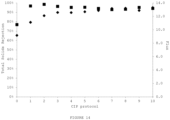
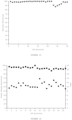
- the sample was subjected to repeated sequential CIP protocols according to the schedules provided in Table 7 (10 x) and Table 8 (12 x). The sample was then dried for several days before being subjected to further CIP protocols. The lactose rejection remained high throughout the sequential CIP protocols, the moderate decline in performance being recoverable following drying of the sample ( Figure 15 ).
- the performance of the sample was evaluated when used to recover permeate from fresh raw milk over a prolonged period of time (18 hours) at a constant pressure of 16 bar. A performance comparable with that of existing commercial operations was observed.
- the sample was prepared to demonstrate the advantage provided by the inclusion of both cross-linking and hydrophilicitizing agents in the preparation of the rejection layer.
- the performance of the sample before and after a single CIP protocol according to the schedule provided in Table 8 was compared with that of Sample 1. Whereas the performance of the latter in terms of total solids rejection improved, the performance of Sample 6 deteriorated.
- the poor durability of the sample is attributed to the absence of cross-linking and interpenetration of the polymers of the backing layer and rejection layer of the composite membrane.
- the sample was prepared using a high (greater than 80%) solids content when preparing the rejection layer.
- HEMA was substituted for SSS as the hydrophilicitizing agent due to the poor solubility of the latter in methanol.
- An extended curing period of 10 minutes was employed.
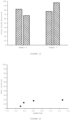
- the sample provided a comparable sodium chloride rejection ( Figure 24 ) but at a negligible flux ( Figure 25 ).
- the sample was prepared using an unmodified uPE as the backing layer. This necessitated the use of acetone/water as the solvent for the rejection layer formulation. Pursuant to the use of this solvent the proportion of sPEEK was reduced and the proportion of SSS increased with a total solid content of 6% (w/w).
- the curing was performed in a sealed polyethylene bag to prevent flush evaporation of acetone during the curing period of five minutes.
- the performance of the sample at 20 bar in terms of flux and sodium chloride and sucrose rejection was poor when compared with the performance of an analogous sample prepared using a grafted, hydrophilicitized backing layer.
Landscapes
- Chemical & Material Sciences (AREA)
- Chemical Kinetics & Catalysis (AREA)
- Engineering & Computer Science (AREA)
- Manufacturing & Machinery (AREA)
- Inorganic Chemistry (AREA)
- Polymers & Plastics (AREA)
- Plasma & Fusion (AREA)
- Physics & Mathematics (AREA)
- Life Sciences & Earth Sciences (AREA)
- Food Science & Technology (AREA)
- Health & Medical Sciences (AREA)
- Transplantation (AREA)
- Separation Using Semi-Permeable Membranes (AREA)
- Manufacture Of Porous Articles, And Recovery And Treatment Of Waste Products (AREA)
- Laminated Bodies (AREA)
- Treatments Of Macromolecular Shaped Articles (AREA)
Claims (14)
- Verfahren zur Herstellung einer asymmetrischen Verbundmembran, umfassend einen Film aus vernetztem sulfoniertem Polyetheretherketon, der mit einer Schicht aus hydrophilem mikroporösem Polyolefin verklebt ist, umfassend die Schritte:a) Bestrahlen einer Dispersion umfassend sulfoniertes Polyetheretherketon und mindestens ein Vernetzungsmittel in einem organischen Lösungsmittel, um eine teilweise vernetzte Dispersion aus sulfoniertem Polyetheretherketon zu erhalten,b) Inkontaktbringen einer Seite einer Folie aus angefeuchtetem mikroporösem Polyolefin mit der Dispersion aus teilweise vernetztem sulfoniertem Poly etheretherketon,c) Bestrahlen der einen Seite der beschichteten Folie mit einer Wellenlänge und Intensität für eine Zeit, die ausreicht, um das vernetzte sulfonierte Polyetheretherketon mit der Schicht aus mikroporösem Polyolefin zu verkleben und so ein Verbundmaterial zu erhalten, und dannd) Trocknen des Verbundmaterials bei einer Temperatur und für eine Zeit, die ausreichen, um die asymmetrische Verbundmembran zu bilden,wobei die Schicht aus benetztem mikroporösem Polyolefin mit einer Lösung eines Hydrophilierungsmittels in einem wässrigen Lösungsmittel befeuchtet wird.
- Verfahren nach Anspruch 1, wobei das wässrige Lösungsmittel 40 bis 60 % (v/v) Aceton in Wasser ist.
- Verfahren nach Anspruch 2, wobei das Hydrophilierungsmittel 4-Ethenylbenzolsulfonsäure ist.
- Verfahren nach einem der Ansprüche 1 bis 3, wobei das organische Lösungsmittel Dimethylacetamid ist.
- Verfahren nach einem der Ansprüche 1 bis 4, wobei das Vernetzungsmittel p-Divinylbenzol ist.
- Verfahren nach einem der Ansprüche 1 bis 5, wobei die Dispersion zusätzlich 4-Ethenylbenzolsulfonsäure enthält.
- Verfahren nach einem der Ansprüche 1 bis 6, wobei die Dispersion Benzophenon enthält.
- Asymmetrische Verbundmembran, die einen Film aus vernetztem sulfoniertem Polyetheretherketon umfasst, der mit einer Schicht aus hydrophilem mikroporösem Polyolefin verklebt ist.
- Membran nach Anspruch 8, wobei das in das vernetzte sulfonierte Polyetheretherketon eingearbeitete Vernetzungsmittel p-Divinylbenzol ist.
- Membran nach Anspruch 8 oder 9, wobei das in das hydrophile mikroporöse Polyolefin eingearbeitete Hydrophilierungsmittel 4-Ethenylbenzolsulfonsäure ist.
- Membran nach einem der Ansprüche 8 bis 10, wobei der Film aus vernetztem sulfoniertem Polyetheretherketon ein interpenetrierender Film aus vernetztem sulfoniertem Polyetheretherketon ist.
- Verfahren zum Entfernen von Wasser aus einem Zulaufstrom, umfassend den Schritt des Inkontaktbringens einer Seite der asymmetrischen Verbundmembran nach einem der Ansprüche 8 bis 11 mit dem Zulaufstrom bei einem Druck und einer Temperatur, die ausreichen, um Permeat auf der anderen Seite der asymmetrischen Verbundmembran zu erzeugen.
- Verfahren nach Anspruch 12, wobei der Zulaufstrom ein Milchprodukt ist.
- Verfahren nach Anspruch 13, wobei der Zulaufstrom Vollmilch ist.
Applications Claiming Priority (2)
| Application Number | Priority Date | Filing Date | Title |
|---|---|---|---|
| AU2014905278A AU2014905278A0 (en) | 2014-12-24 | Membrane | |
| PCT/IB2015/060001 WO2016103239A1 (en) | 2014-12-24 | 2015-12-28 | Asymmetric composite membranes and modified substrates used in their preparation |
Publications (5)
| Publication Number | Publication Date |
|---|---|
| EP3237101A1 EP3237101A1 (de) | 2017-11-01 |
| EP3237101A4 EP3237101A4 (de) | 2019-01-02 |
| EP3237101B1 true EP3237101B1 (de) | 2024-08-28 |
| EP3237101C0 EP3237101C0 (de) | 2024-08-28 |
| EP3237101B8 EP3237101B8 (de) | 2024-10-09 |
Family
ID=56149370
Family Applications (1)
| Application Number | Title | Priority Date | Filing Date |
|---|---|---|---|
| EP15872088.8A Active EP3237101B8 (de) | 2014-12-24 | 2015-12-28 | Herstellungsverfahren für asymmetrische verbundmembrane, asymmetrische verbundmembrane und verfahren zur herstellung eines permeats unter einsatz asymmetrischer verbundmembrane. |
Country Status (9)
| Country | Link |
|---|---|
| US (1) | US10335742B2 (de) |
| EP (1) | EP3237101B8 (de) |
| JP (1) | JP6896642B2 (de) |
| CN (1) | CN107614093B (de) |
| AU (3) | AU2015370441B2 (de) |
| GB (1) | GB2549433B (de) |
| IL (1) | IL253140B (de) |
| SG (1) | SG11201705235UA (de) |
| WO (1) | WO2016103239A1 (de) |
Families Citing this family (10)
| Publication number | Priority date | Publication date | Assignee | Title |
|---|---|---|---|---|
| WO2015187412A1 (en) * | 2014-06-04 | 2015-12-10 | The Research Foundation For The State University Of New York | Highly porous fibrous network materials for gas filtration |
| TWI666055B (zh) * | 2014-11-20 | 2019-07-21 | 美商恩特格林斯公司 | 接枝超高分子量聚乙烯微孔膜 |
| TWI682000B (zh) * | 2015-06-26 | 2020-01-11 | 美商恩特格林斯公司 | 接枝聚碸膜 |
| AU2016333025B2 (en) | 2015-10-01 | 2021-10-14 | Hydroxsys Holdings Limited | Asymmetric composite membrane and a method of preparation thereof |
| US12083780B2 (en) | 2018-03-30 | 2024-09-10 | Hydroxsys Holdings Limited | Asymmetric composite membranes and hydrophilicitized microporous sheets of polyolefin used in their preparation |
| SG11202009651QA (en) * | 2018-03-30 | 2020-10-29 | Hydroxsys Holdings Ltd | Asymmetric composite membranes and modified substrates used in their preparation |
| US11181460B1 (en) * | 2019-06-20 | 2021-11-23 | The United States Of America As Represented By The Secretary Of The Army | Apparatus and method for measuring permeation of contaminants through a complex protective material swatch |
| CN110479118A (zh) * | 2019-09-03 | 2019-11-22 | 长春工业大学 | 聚芳芴醚酮气体分离膜及其制备方法 |
| JP2022550869A (ja) * | 2019-10-02 | 2022-12-05 | ハイドロオクシス ホールディングス リミテッド | 耐久性のある膜、それらの調製及び使用 |
| TWI903352B (zh) * | 2023-01-18 | 2025-11-01 | 美商恩特葛瑞斯股份有限公司 | 聚醚醚酮膜及相關方法及裝置 |
Family Cites Families (21)
| Publication number | Priority date | Publication date | Assignee | Title |
|---|---|---|---|---|
| US4933083A (en) | 1985-04-15 | 1990-06-12 | Hoechst Celanese Corp. | Polybenzimidazole thin film composite membranes |
| US4976897A (en) | 1987-12-16 | 1990-12-11 | Hoechst Celanese Corporation | Composite porous membranes and methods of making the same |
| US5102552A (en) | 1987-12-16 | 1992-04-07 | Hoechst Celanese Corporation | Membranes from UV-curable resins |
| US5013439A (en) | 1988-05-12 | 1991-05-07 | Hoechst Celanese Corporation | Microporous membranes having increased pore densities and process for making the same |
| CA2007160C (en) | 1989-01-09 | 1997-08-19 | Gunilla E. Gillberg-Laforce | Microporus membrane from cold-rolled precursor films |
| US5049275A (en) | 1990-06-15 | 1991-09-17 | Hoechst Celanese Corp. | Modified microporous structures |
| US5160627A (en) | 1990-10-17 | 1992-11-03 | Hoechst Celanese Corporation | Process for making microporous membranes having gel-filled pores, and separations methods using such membranes |
| DE69222421T3 (de) | 1991-07-09 | 2006-04-20 | Scimat Ltd. | Polymer-Folie und Verfahren zu deren Herstellung |
| US5294342A (en) | 1992-10-01 | 1994-03-15 | Hoechst Celanese Corporation | Composite porous membranes |
| US5266391A (en) | 1992-12-18 | 1993-11-30 | Hoechst Celanese Corporation | Composite porous membranes |
| US6680144B2 (en) | 1999-10-29 | 2004-01-20 | Kvg Technologies, Inc. | Battery separator |
| US6955865B2 (en) | 1999-10-29 | 2005-10-18 | Hollingsworth & Vose Company | Graft polymerization, separators, and batteries including the separators |
| US6384100B1 (en) | 1999-10-29 | 2002-05-07 | Hollingsworth + Vose Company | Graft polymerization, separators, and batteries including the separators |
| CA2576221A1 (en) * | 2004-08-13 | 2006-02-16 | Mcmaster University | Composite material comprising a non-crosslinked gel polymer |
| EP1793916B1 (de) * | 2004-09-30 | 2010-11-24 | McMASTER UNIVERSITY | Verbundwerkstoff mit übereinandergelagerten hydrophilen beschichtungen |
| EP1693101A1 (de) * | 2005-02-11 | 2006-08-23 | Paul Scherrer Institut | Verfahren zur Herstellung einer unter Bestrahlung gepfropften Brennstoffzellen-Membran mit erhöhter chemischen Stabilität sowie eine Membran-Elektroden Anordnung |
| US20080197070A1 (en) * | 2006-10-30 | 2008-08-21 | New Jersey Institute Of Technology | Composite Membranes and Membrane Systems and Methods For Production and Utilization Thereof |
| BRPI0915331A2 (pt) * | 2008-06-30 | 2015-10-27 | 3M Innovative Properties Co | método de formação de uma membrana assimétrica remolhável |
| KR20170104656A (ko) * | 2009-11-13 | 2017-09-15 | 나트릭스 세퍼레이션즈, 인코포레이티드 | 소수성 상호반응 크로마토그래피용 막 및 그의 사용방법 |
| CN103421208B (zh) | 2013-05-23 | 2015-04-29 | 浙江大学 | 一种辐照交联锂离子电池隔膜及其制备方法 |
| WO2015147657A1 (en) * | 2014-03-26 | 2015-10-01 | Hydroxsys Holdings Limited | Durable asymmetric composite membrane |
-
2015
- 2015-12-28 EP EP15872088.8A patent/EP3237101B8/de active Active
- 2015-12-28 AU AU2015370441A patent/AU2015370441B2/en not_active Ceased
- 2015-12-28 CN CN201580076709.2A patent/CN107614093B/zh not_active Expired - Fee Related
- 2015-12-28 US US15/539,903 patent/US10335742B2/en active Active
- 2015-12-28 WO PCT/IB2015/060001 patent/WO2016103239A1/en not_active Ceased
- 2015-12-28 SG SG11201705235UA patent/SG11201705235UA/en unknown
- 2015-12-28 GB GB1711527.0A patent/GB2549433B/en not_active Expired - Fee Related
- 2015-12-28 JP JP2017552537A patent/JP6896642B2/ja not_active Expired - Fee Related
-
2017
- 2017-06-22 IL IL253140A patent/IL253140B/en unknown
- 2017-11-03 AU AU2017254972A patent/AU2017254972B2/en not_active Ceased
-
2018
- 2018-11-13 AU AU2018263979A patent/AU2018263979A1/en not_active Abandoned
Also Published As
| Publication number | Publication date |
|---|---|
| EP3237101A1 (de) | 2017-11-01 |
| CN107614093B (zh) | 2021-04-06 |
| AU2017254972B2 (en) | 2018-12-06 |
| NZ755706A (en) | 2024-04-26 |
| US10335742B2 (en) | 2019-07-02 |
| US20180015424A1 (en) | 2018-01-18 |
| AU2015370441B2 (en) | 2017-12-07 |
| EP3237101C0 (de) | 2024-08-28 |
| IL253140A0 (en) | 2017-08-31 |
| IL253140B (en) | 2022-04-01 |
| AU2017254972A1 (en) | 2017-11-23 |
| CN107614093A (zh) | 2018-01-19 |
| JP6896642B2 (ja) | 2021-06-30 |
| WO2016103239A1 (en) | 2016-06-30 |
| AU2018263979A1 (en) | 2018-12-13 |
| EP3237101A4 (de) | 2019-01-02 |
| SG11201705235UA (en) | 2017-07-28 |
| GB2549433B (en) | 2021-11-24 |
| NZ733706A (en) | 2019-08-30 |
| EP3237101B8 (de) | 2024-10-09 |
| JP2018505055A (ja) | 2018-02-22 |
| GB201711527D0 (en) | 2017-08-30 |
| AU2015370441A1 (en) | 2017-08-03 |
| GB2549433A (en) | 2017-10-18 |
Similar Documents
| Publication | Publication Date | Title |
|---|---|---|
| EP3237101B1 (de) | Herstellungsverfahren für asymmetrische verbundmembrane, asymmetrische verbundmembrane und verfahren zur herstellung eines permeats unter einsatz asymmetrischer verbundmembrane. | |
| EP3463631B1 (de) | Beschichtete poröse polymermembranen | |
| KR101963063B1 (ko) | 그래프팅된 초고분자량 폴리에틸렌 미세다공성 막 | |
| Baroña et al. | Negatively charged poly (vinylidene fluoride) microfiltration membranes by sulfonation | |
| AU2020233616A1 (en) | Asymmetric composite membranes and modified substrates used in their preparation | |
| WO2020202044A1 (en) | Composite membranes | |
| US11389771B2 (en) | Asymmetric composite membrane and a method of preparation thereof | |
| US11291215B2 (en) | Durable asymmetric composite membranes and modified substrates used in their preparation | |
| US20220193620A1 (en) | Asymmetric composite membranes and modified substrates used in their preparation | |
| US12083780B2 (en) | Asymmetric composite membranes and hydrophilicitized microporous sheets of polyolefin used in their preparation | |
| US20220161204A1 (en) | Durable membranes, their preparation and use | |
| NZ733706B (en) | Asymmetric composite membranes and modified substrates used in their preparation | |
| CN115151336B (zh) | 耐用膜及其制备和用途 | |
| NZ767051B2 (en) | Asymmetric composite membranes and modified substrates used in their preparation |
Legal Events
| Date | Code | Title | Description |
|---|---|---|---|
| STAA | Information on the status of an ep patent application or granted ep patent |
Free format text: STATUS: THE INTERNATIONAL PUBLICATION HAS BEEN MADE |
|
| PUAI | Public reference made under article 153(3) epc to a published international application that has entered the european phase |
Free format text: ORIGINAL CODE: 0009012 |
|
| STAA | Information on the status of an ep patent application or granted ep patent |
Free format text: STATUS: REQUEST FOR EXAMINATION WAS MADE |
|
| 17P | Request for examination filed |
Effective date: 20170718 |
|
| AK | Designated contracting states |
Kind code of ref document: A1 Designated state(s): AL AT BE BG CH CY CZ DE DK EE ES FI FR GB GR HR HU IE IS IT LI LT LU LV MC MK MT NL NO PL PT RO RS SE SI SK SM TR |
|
| AX | Request for extension of the european patent |
Extension state: BA ME |
|
| DAV | Request for validation of the european patent (deleted) | ||
| DAX | Request for extension of the european patent (deleted) | ||
| RIC1 | Information provided on ipc code assigned before grant |
Ipc: B01D 71/26 20060101ALI20180814BHEP Ipc: A23C 9/14 20060101ALI20180814BHEP Ipc: B01D 69/12 20060101AFI20180814BHEP Ipc: B01D 67/00 20060101ALI20180814BHEP |
|
| A4 | Supplementary search report drawn up and despatched |
Effective date: 20181204 |
|
| RIC1 | Information provided on ipc code assigned before grant |
Ipc: B01D 67/00 20060101ALI20181128BHEP Ipc: B01D 71/26 20060101ALI20181128BHEP Ipc: B01D 69/12 20060101AFI20181128BHEP Ipc: A23C 9/14 20060101ALI20181128BHEP |
|
| STAA | Information on the status of an ep patent application or granted ep patent |
Free format text: STATUS: EXAMINATION IS IN PROGRESS |
|
| 17Q | First examination report despatched |
Effective date: 20200506 |
|
| GRAP | Despatch of communication of intention to grant a patent |
Free format text: ORIGINAL CODE: EPIDOSNIGR1 |
|
| STAA | Information on the status of an ep patent application or granted ep patent |
Free format text: STATUS: GRANT OF PATENT IS INTENDED |
|
| INTG | Intention to grant announced |
Effective date: 20231020 |
|
| GRAJ | Information related to disapproval of communication of intention to grant by the applicant or resumption of examination proceedings by the epo deleted |
Free format text: ORIGINAL CODE: EPIDOSDIGR1 |
|
| STAA | Information on the status of an ep patent application or granted ep patent |
Free format text: STATUS: EXAMINATION IS IN PROGRESS |
|
| INTC | Intention to grant announced (deleted) | ||
| RAP3 | Party data changed (applicant data changed or rights of an application transferred) |
Owner name: HYDROXSYS HOLDINGS LIMITED |
|
| GRAP | Despatch of communication of intention to grant a patent |
Free format text: ORIGINAL CODE: EPIDOSNIGR1 |
|
| STAA | Information on the status of an ep patent application or granted ep patent |
Free format text: STATUS: GRANT OF PATENT IS INTENDED |
|
| INTG | Intention to grant announced |
Effective date: 20240319 |
|
| GRAS | Grant fee paid |
Free format text: ORIGINAL CODE: EPIDOSNIGR3 |
|
| GRAA | (expected) grant |
Free format text: ORIGINAL CODE: 0009210 |
|
| STAA | Information on the status of an ep patent application or granted ep patent |
Free format text: STATUS: THE PATENT HAS BEEN GRANTED |
|
| GRAT | Correction requested after decision to grant or after decision to maintain patent in amended form |
Free format text: ORIGINAL CODE: EPIDOSNCDEC |
|
| AK | Designated contracting states |
Kind code of ref document: B1 Designated state(s): AL AT BE BG CH CY CZ DE DK EE ES FI FR GB GR HR HU IE IS IT LI LT LU LV MC MK MT NL NO PL PT RO RS SE SI SK SM TR |
|
| REG | Reference to a national code |
Ref country code: GB Ref legal event code: FG4D |
|
| REG | Reference to a national code |
Ref country code: CH Ref legal event code: EP |
|
| REG | Reference to a national code |
Ref country code: DE Ref legal event code: R096 Ref document number: 602015089718 Country of ref document: DE |
|
| REG | Reference to a national code |
Ref country code: CH Ref legal event code: PK Free format text: BERICHTIGUNG B8 |
|
| RBV | Designated contracting states (corrected) |
Designated state(s): AL AT BE BG CH CY CZ DE DK EE ES FI FR GR HR HU IE IS IT LI LT LU LV MC MK MT NL NO PL PT RO RS SE SI SK SM TR |
|
| REG | Reference to a national code |
Ref country code: IE Ref legal event code: FG4D |
|
| U01 | Request for unitary effect filed |
Effective date: 20240912 |
|
| U07 | Unitary effect registered |
Designated state(s): AT BE BG DE DK EE FI FR IT LT LU LV MT NL PT RO SE SI Effective date: 20241004 |
|
| PG25 | Lapsed in a contracting state [announced via postgrant information from national office to epo] |
Ref country code: NO Free format text: LAPSE BECAUSE OF FAILURE TO SUBMIT A TRANSLATION OF THE DESCRIPTION OR TO PAY THE FEE WITHIN THE PRESCRIBED TIME-LIMIT Effective date: 20241128 |
|
| PG25 | Lapsed in a contracting state [announced via postgrant information from national office to epo] |
Ref country code: GR Free format text: LAPSE BECAUSE OF FAILURE TO SUBMIT A TRANSLATION OF THE DESCRIPTION OR TO PAY THE FEE WITHIN THE PRESCRIBED TIME-LIMIT Effective date: 20241129 Ref country code: PL Free format text: LAPSE BECAUSE OF FAILURE TO SUBMIT A TRANSLATION OF THE DESCRIPTION OR TO PAY THE FEE WITHIN THE PRESCRIBED TIME-LIMIT Effective date: 20240828 |
|
| PG25 | Lapsed in a contracting state [announced via postgrant information from national office to epo] |
Ref country code: IS Free format text: LAPSE BECAUSE OF FAILURE TO SUBMIT A TRANSLATION OF THE DESCRIPTION OR TO PAY THE FEE WITHIN THE PRESCRIBED TIME-LIMIT Effective date: 20241228 |
|
| PG25 | Lapsed in a contracting state [announced via postgrant information from national office to epo] |
Ref country code: HR Free format text: LAPSE BECAUSE OF FAILURE TO SUBMIT A TRANSLATION OF THE DESCRIPTION OR TO PAY THE FEE WITHIN THE PRESCRIBED TIME-LIMIT Effective date: 20240828 |
|
| PG25 | Lapsed in a contracting state [announced via postgrant information from national office to epo] |
Ref country code: RS Free format text: LAPSE BECAUSE OF FAILURE TO SUBMIT A TRANSLATION OF THE DESCRIPTION OR TO PAY THE FEE WITHIN THE PRESCRIBED TIME-LIMIT Effective date: 20241128 Ref country code: ES Free format text: LAPSE BECAUSE OF FAILURE TO SUBMIT A TRANSLATION OF THE DESCRIPTION OR TO PAY THE FEE WITHIN THE PRESCRIBED TIME-LIMIT Effective date: 20240828 |
|
| PG25 | Lapsed in a contracting state [announced via postgrant information from national office to epo] |
Ref country code: RS Free format text: LAPSE BECAUSE OF FAILURE TO SUBMIT A TRANSLATION OF THE DESCRIPTION OR TO PAY THE FEE WITHIN THE PRESCRIBED TIME-LIMIT Effective date: 20241128 Ref country code: PL Free format text: LAPSE BECAUSE OF FAILURE TO SUBMIT A TRANSLATION OF THE DESCRIPTION OR TO PAY THE FEE WITHIN THE PRESCRIBED TIME-LIMIT Effective date: 20240828 Ref country code: NO Free format text: LAPSE BECAUSE OF FAILURE TO SUBMIT A TRANSLATION OF THE DESCRIPTION OR TO PAY THE FEE WITHIN THE PRESCRIBED TIME-LIMIT Effective date: 20241128 Ref country code: IS Free format text: LAPSE BECAUSE OF FAILURE TO SUBMIT A TRANSLATION OF THE DESCRIPTION OR TO PAY THE FEE WITHIN THE PRESCRIBED TIME-LIMIT Effective date: 20241228 Ref country code: HR Free format text: LAPSE BECAUSE OF FAILURE TO SUBMIT A TRANSLATION OF THE DESCRIPTION OR TO PAY THE FEE WITHIN THE PRESCRIBED TIME-LIMIT Effective date: 20240828 Ref country code: GR Free format text: LAPSE BECAUSE OF FAILURE TO SUBMIT A TRANSLATION OF THE DESCRIPTION OR TO PAY THE FEE WITHIN THE PRESCRIBED TIME-LIMIT Effective date: 20241129 Ref country code: ES Free format text: LAPSE BECAUSE OF FAILURE TO SUBMIT A TRANSLATION OF THE DESCRIPTION OR TO PAY THE FEE WITHIN THE PRESCRIBED TIME-LIMIT Effective date: 20240828 |
|
| PG25 | Lapsed in a contracting state [announced via postgrant information from national office to epo] |
Ref country code: SM Free format text: LAPSE BECAUSE OF FAILURE TO SUBMIT A TRANSLATION OF THE DESCRIPTION OR TO PAY THE FEE WITHIN THE PRESCRIBED TIME-LIMIT Effective date: 20240828 |
|
| PG25 | Lapsed in a contracting state [announced via postgrant information from national office to epo] |
Ref country code: CZ Free format text: LAPSE BECAUSE OF FAILURE TO SUBMIT A TRANSLATION OF THE DESCRIPTION OR TO PAY THE FEE WITHIN THE PRESCRIBED TIME-LIMIT Effective date: 20240828 |
|
| PG25 | Lapsed in a contracting state [announced via postgrant information from national office to epo] |
Ref country code: SK Free format text: LAPSE BECAUSE OF FAILURE TO SUBMIT A TRANSLATION OF THE DESCRIPTION OR TO PAY THE FEE WITHIN THE PRESCRIBED TIME-LIMIT Effective date: 20240828 |
|
| PLBE | No opposition filed within time limit |
Free format text: ORIGINAL CODE: 0009261 |
|
| STAA | Information on the status of an ep patent application or granted ep patent |
Free format text: STATUS: NO OPPOSITION FILED WITHIN TIME LIMIT |
|
| PG25 | Lapsed in a contracting state [announced via postgrant information from national office to epo] |
Ref country code: MC Free format text: LAPSE BECAUSE OF FAILURE TO SUBMIT A TRANSLATION OF THE DESCRIPTION OR TO PAY THE FEE WITHIN THE PRESCRIBED TIME-LIMIT Effective date: 20240828 |
|
| REG | Reference to a national code |
Ref country code: CH Ref legal event code: PL |
|
| 26N | No opposition filed |
Effective date: 20250530 |
|
| U90 | Renewal fees not paid: noting of loss of rights |
Free format text: RENEWAL FEE NOT PAID FOR YEAR 10 Effective date: 20250711 |
|
| PG25 | Lapsed in a contracting state [announced via postgrant information from national office to epo] |
Ref country code: CH Free format text: LAPSE BECAUSE OF NON-PAYMENT OF DUE FEES Effective date: 20241231 |
|
| PG25 | Lapsed in a contracting state [announced via postgrant information from national office to epo] |
Ref country code: IE Free format text: LAPSE BECAUSE OF NON-PAYMENT OF DUE FEES Effective date: 20241228 |
|
| U93 | Unitary patent lapsed |
Free format text: RENEWAL FEE NOT PAID Effective date: 20241231 |