EP3237080B1 - Beinbeugungsübungsmaschine mit beweglichem träger zur durchführung von beinbeugungsübungen - Google Patents
Beinbeugungsübungsmaschine mit beweglichem träger zur durchführung von beinbeugungsübungen Download PDFInfo
- Publication number
- EP3237080B1 EP3237080B1 EP15873787.4A EP15873787A EP3237080B1 EP 3237080 B1 EP3237080 B1 EP 3237080B1 EP 15873787 A EP15873787 A EP 15873787A EP 3237080 B1 EP3237080 B1 EP 3237080B1
- Authority
- EP
- European Patent Office
- Prior art keywords
- exercise
- moving support
- user
- exercise arm
- pivot axis
- Prior art date
- Legal status (The legal status is an assumption and is not a legal conclusion. Google has not performed a legal analysis and makes no representation as to the accuracy of the status listed.)
- Active
Links
Images




Classifications
-
- A—HUMAN NECESSITIES
- A63—SPORTS; GAMES; AMUSEMENTS
- A63B—APPARATUS FOR PHYSICAL TRAINING, GYMNASTICS, SWIMMING, CLIMBING, OR FENCING; BALL GAMES; TRAINING EQUIPMENT
- A63B23/00—Exercising apparatus specially adapted for particular parts of the body
- A63B23/035—Exercising apparatus specially adapted for particular parts of the body for limbs, i.e. upper or lower limbs, e.g. simultaneously
- A63B23/04—Exercising apparatus specially adapted for particular parts of the body for limbs, i.e. upper or lower limbs, e.g. simultaneously for lower limbs
- A63B23/0494—Exercising apparatus specially adapted for particular parts of the body for limbs, i.e. upper or lower limbs, e.g. simultaneously for lower limbs primarily by articulating the knee joints
-
- A—HUMAN NECESSITIES
- A63—SPORTS; GAMES; AMUSEMENTS
- A63B—APPARATUS FOR PHYSICAL TRAINING, GYMNASTICS, SWIMMING, CLIMBING, OR FENCING; BALL GAMES; TRAINING EQUIPMENT
- A63B21/00—Exercising apparatus for developing or strengthening the muscles or joints of the body by working against a counterforce, with or without measuring devices
- A63B21/00058—Mechanical means for varying the resistance
- A63B21/00065—Mechanical means for varying the resistance by increasing or reducing the number of resistance units
-
- A—HUMAN NECESSITIES
- A63—SPORTS; GAMES; AMUSEMENTS
- A63B—APPARATUS FOR PHYSICAL TRAINING, GYMNASTICS, SWIMMING, CLIMBING, OR FENCING; BALL GAMES; TRAINING EQUIPMENT
- A63B21/00—Exercising apparatus for developing or strengthening the muscles or joints of the body by working against a counterforce, with or without measuring devices
- A63B21/06—User-manipulated weights
- A63B21/062—User-manipulated weights including guide for vertical or non-vertical weights or array of weights to move against gravity forces
- A63B21/0626—User-manipulated weights including guide for vertical or non-vertical weights or array of weights to move against gravity forces with substantially vertical guiding means
- A63B21/0628—User-manipulated weights including guide for vertical or non-vertical weights or array of weights to move against gravity forces with substantially vertical guiding means for vertical array of weights
-
- A—HUMAN NECESSITIES
- A63—SPORTS; GAMES; AMUSEMENTS
- A63B—APPARATUS FOR PHYSICAL TRAINING, GYMNASTICS, SWIMMING, CLIMBING, OR FENCING; BALL GAMES; TRAINING EQUIPMENT
- A63B21/00—Exercising apparatus for developing or strengthening the muscles or joints of the body by working against a counterforce, with or without measuring devices
- A63B21/06—User-manipulated weights
- A63B21/062—User-manipulated weights including guide for vertical or non-vertical weights or array of weights to move against gravity forces
- A63B21/0626—User-manipulated weights including guide for vertical or non-vertical weights or array of weights to move against gravity forces with substantially vertical guiding means
- A63B21/0628—User-manipulated weights including guide for vertical or non-vertical weights or array of weights to move against gravity forces with substantially vertical guiding means for vertical array of weights
- A63B21/063—Weight selecting means
-
- A—HUMAN NECESSITIES
- A63—SPORTS; GAMES; AMUSEMENTS
- A63B—APPARATUS FOR PHYSICAL TRAINING, GYMNASTICS, SWIMMING, CLIMBING, OR FENCING; BALL GAMES; TRAINING EQUIPMENT
- A63B21/00—Exercising apparatus for developing or strengthening the muscles or joints of the body by working against a counterforce, with or without measuring devices
- A63B21/15—Arrangements for force transmissions
- A63B21/151—Using flexible elements for reciprocating movements, e.g. ropes or chains
- A63B21/154—Using flexible elements for reciprocating movements, e.g. ropes or chains using special pulley-assemblies
- A63B21/155—Cam-shaped pulleys or other non-uniform pulleys, e.g. conical
-
- A—HUMAN NECESSITIES
- A63—SPORTS; GAMES; AMUSEMENTS
- A63B—APPARATUS FOR PHYSICAL TRAINING, GYMNASTICS, SWIMMING, CLIMBING, OR FENCING; BALL GAMES; TRAINING EQUIPMENT
- A63B21/00—Exercising apparatus for developing or strengthening the muscles or joints of the body by working against a counterforce, with or without measuring devices
- A63B21/40—Interfaces with the user related to strength training; Details thereof
- A63B21/4001—Arrangements for attaching the exercising apparatus to the user's body, e.g. belts, shoes or gloves specially adapted therefor
- A63B21/4011—Arrangements for attaching the exercising apparatus to the user's body, e.g. belts, shoes or gloves specially adapted therefor to the lower limbs
-
- A—HUMAN NECESSITIES
- A63—SPORTS; GAMES; AMUSEMENTS
- A63B—APPARATUS FOR PHYSICAL TRAINING, GYMNASTICS, SWIMMING, CLIMBING, OR FENCING; BALL GAMES; TRAINING EQUIPMENT
- A63B21/00—Exercising apparatus for developing or strengthening the muscles or joints of the body by working against a counterforce, with or without measuring devices
- A63B21/40—Interfaces with the user related to strength training; Details thereof
- A63B21/4027—Specific exercise interfaces
- A63B21/4029—Benches specifically adapted for exercising
- A63B21/4031—Benches specifically adapted for exercising with parts of the bench moving against a resistance during exercise
-
- A—HUMAN NECESSITIES
- A63—SPORTS; GAMES; AMUSEMENTS
- A63B—APPARATUS FOR PHYSICAL TRAINING, GYMNASTICS, SWIMMING, CLIMBING, OR FENCING; BALL GAMES; TRAINING EQUIPMENT
- A63B21/00—Exercising apparatus for developing or strengthening the muscles or joints of the body by working against a counterforce, with or without measuring devices
- A63B21/40—Interfaces with the user related to strength training; Details thereof
- A63B21/4027—Specific exercise interfaces
- A63B21/4033—Handles, pedals, bars or platforms
-
- A—HUMAN NECESSITIES
- A63—SPORTS; GAMES; AMUSEMENTS
- A63B—APPARATUS FOR PHYSICAL TRAINING, GYMNASTICS, SWIMMING, CLIMBING, OR FENCING; BALL GAMES; TRAINING EQUIPMENT
- A63B21/00—Exercising apparatus for developing or strengthening the muscles or joints of the body by working against a counterforce, with or without measuring devices
- A63B21/40—Interfaces with the user related to strength training; Details thereof
- A63B21/4027—Specific exercise interfaces
- A63B21/4033—Handles, pedals, bars or platforms
- A63B21/4034—Handles, pedals, bars or platforms for operation by feet
-
- A—HUMAN NECESSITIES
- A63—SPORTS; GAMES; AMUSEMENTS
- A63B—APPARATUS FOR PHYSICAL TRAINING, GYMNASTICS, SWIMMING, CLIMBING, OR FENCING; BALL GAMES; TRAINING EQUIPMENT
- A63B21/00—Exercising apparatus for developing or strengthening the muscles or joints of the body by working against a counterforce, with or without measuring devices
- A63B21/40—Interfaces with the user related to strength training; Details thereof
- A63B21/4027—Specific exercise interfaces
- A63B21/4033—Handles, pedals, bars or platforms
- A63B21/4035—Handles, pedals, bars or platforms for operation by hand
-
- A—HUMAN NECESSITIES
- A63—SPORTS; GAMES; AMUSEMENTS
- A63B—APPARATUS FOR PHYSICAL TRAINING, GYMNASTICS, SWIMMING, CLIMBING, OR FENCING; BALL GAMES; TRAINING EQUIPMENT
- A63B21/00—Exercising apparatus for developing or strengthening the muscles or joints of the body by working against a counterforce, with or without measuring devices
- A63B21/40—Interfaces with the user related to strength training; Details thereof
- A63B21/4041—Interfaces with the user related to strength training; Details thereof characterised by the movements of the interface
- A63B21/4047—Pivoting movement
-
- A—HUMAN NECESSITIES
- A63—SPORTS; GAMES; AMUSEMENTS
- A63B—APPARATUS FOR PHYSICAL TRAINING, GYMNASTICS, SWIMMING, CLIMBING, OR FENCING; BALL GAMES; TRAINING EQUIPMENT
- A63B21/00—Exercising apparatus for developing or strengthening the muscles or joints of the body by working against a counterforce, with or without measuring devices
- A63B21/40—Interfaces with the user related to strength training; Details thereof
- A63B21/4041—Interfaces with the user related to strength training; Details thereof characterised by the movements of the interface
- A63B21/4049—Rotational movement
-
- A—HUMAN NECESSITIES
- A63—SPORTS; GAMES; AMUSEMENTS
- A63B—APPARATUS FOR PHYSICAL TRAINING, GYMNASTICS, SWIMMING, CLIMBING, OR FENCING; BALL GAMES; TRAINING EQUIPMENT
- A63B22/00—Exercising apparatus specially adapted for conditioning the cardio-vascular system, for training agility or co-ordination of movements
- A63B22/0087—Exercising apparatus specially adapted for conditioning the cardio-vascular system, for training agility or co-ordination of movements with a seat or torso support moving during the exercise, e.g. reformers
-
- A—HUMAN NECESSITIES
- A63—SPORTS; GAMES; AMUSEMENTS
- A63B—APPARATUS FOR PHYSICAL TRAINING, GYMNASTICS, SWIMMING, CLIMBING, OR FENCING; BALL GAMES; TRAINING EQUIPMENT
- A63B22/00—Exercising apparatus specially adapted for conditioning the cardio-vascular system, for training agility or co-ordination of movements
- A63B22/20—Exercising apparatus specially adapted for conditioning the cardio-vascular system, for training agility or co-ordination of movements using rollers, wheels, castors or the like, e.g. gliding means, to be moved over the floor or other surface, e.g. guide tracks, during exercising
- A63B22/201—Exercising apparatus specially adapted for conditioning the cardio-vascular system, for training agility or co-ordination of movements using rollers, wheels, castors or the like, e.g. gliding means, to be moved over the floor or other surface, e.g. guide tracks, during exercising for moving a support element in reciprocating translation, i.e. for sliding back and forth on a guide track
- A63B22/203—Exercising apparatus specially adapted for conditioning the cardio-vascular system, for training agility or co-ordination of movements using rollers, wheels, castors or the like, e.g. gliding means, to be moved over the floor or other surface, e.g. guide tracks, during exercising for moving a support element in reciprocating translation, i.e. for sliding back and forth on a guide track in a horizontal plane
-
- A—HUMAN NECESSITIES
- A63—SPORTS; GAMES; AMUSEMENTS
- A63B—APPARATUS FOR PHYSICAL TRAINING, GYMNASTICS, SWIMMING, CLIMBING, OR FENCING; BALL GAMES; TRAINING EQUIPMENT
- A63B23/00—Exercising apparatus specially adapted for particular parts of the body
- A63B23/02—Exercising apparatus specially adapted for particular parts of the body for the abdomen, the spinal column or the torso muscles related to shoulders (e.g. chest muscles)
- A63B23/0205—Abdomen
- A63B23/0211—Abdomen moving torso with immobilized lower limbs
-
- A—HUMAN NECESSITIES
- A63—SPORTS; GAMES; AMUSEMENTS
- A63B—APPARATUS FOR PHYSICAL TRAINING, GYMNASTICS, SWIMMING, CLIMBING, OR FENCING; BALL GAMES; TRAINING EQUIPMENT
- A63B23/00—Exercising apparatus specially adapted for particular parts of the body
- A63B23/02—Exercising apparatus specially adapted for particular parts of the body for the abdomen, the spinal column or the torso muscles related to shoulders (e.g. chest muscles)
- A63B23/0205—Abdomen
- A63B23/0216—Abdomen moving lower limbs with immobilized torso
-
- A—HUMAN NECESSITIES
- A63—SPORTS; GAMES; AMUSEMENTS
- A63B—APPARATUS FOR PHYSICAL TRAINING, GYMNASTICS, SWIMMING, CLIMBING, OR FENCING; BALL GAMES; TRAINING EQUIPMENT
- A63B23/00—Exercising apparatus specially adapted for particular parts of the body
- A63B23/02—Exercising apparatus specially adapted for particular parts of the body for the abdomen, the spinal column or the torso muscles related to shoulders (e.g. chest muscles)
- A63B23/0205—Abdomen
- A63B23/0222—Abdomen moving torso and lower limbs
-
- A—HUMAN NECESSITIES
- A63—SPORTS; GAMES; AMUSEMENTS
- A63B—APPARATUS FOR PHYSICAL TRAINING, GYMNASTICS, SWIMMING, CLIMBING, OR FENCING; BALL GAMES; TRAINING EQUIPMENT
- A63B23/00—Exercising apparatus specially adapted for particular parts of the body
- A63B23/02—Exercising apparatus specially adapted for particular parts of the body for the abdomen, the spinal column or the torso muscles related to shoulders (e.g. chest muscles)
- A63B23/0233—Muscles of the back, e.g. by an extension of the body against a resistance, reverse crunch
-
- A—HUMAN NECESSITIES
- A63—SPORTS; GAMES; AMUSEMENTS
- A63B—APPARATUS FOR PHYSICAL TRAINING, GYMNASTICS, SWIMMING, CLIMBING, OR FENCING; BALL GAMES; TRAINING EQUIPMENT
- A63B23/00—Exercising apparatus specially adapted for particular parts of the body
- A63B23/02—Exercising apparatus specially adapted for particular parts of the body for the abdomen, the spinal column or the torso muscles related to shoulders (e.g. chest muscles)
- A63B23/0233—Muscles of the back, e.g. by an extension of the body against a resistance, reverse crunch
- A63B23/0238—Spinal column
-
- A—HUMAN NECESSITIES
- A63—SPORTS; GAMES; AMUSEMENTS
- A63B—APPARATUS FOR PHYSICAL TRAINING, GYMNASTICS, SWIMMING, CLIMBING, OR FENCING; BALL GAMES; TRAINING EQUIPMENT
- A63B23/00—Exercising apparatus specially adapted for particular parts of the body
- A63B23/035—Exercising apparatus specially adapted for particular parts of the body for limbs, i.e. upper or lower limbs, e.g. simultaneously
- A63B23/0355—A single apparatus used for either upper or lower limbs, i.e. with a set of support elements driven either by the upper or the lower limb or limbs
- A63B23/03558—Compound apparatus having multiple stations allowing an user to exercise different limbs
- A63B23/03566—Compound apparatus having multiple stations allowing an user to exercise different limbs the multiple stations having a common resistance device
-
- A—HUMAN NECESSITIES
- A63—SPORTS; GAMES; AMUSEMENTS
- A63B—APPARATUS FOR PHYSICAL TRAINING, GYMNASTICS, SWIMMING, CLIMBING, OR FENCING; BALL GAMES; TRAINING EQUIPMENT
- A63B2208/00—Characteristics or parameters related to the user or player
- A63B2208/02—Characteristics or parameters related to the user or player posture
- A63B2208/0242—Lying down
- A63B2208/0257—Lying down prone
-
- A—HUMAN NECESSITIES
- A63—SPORTS; GAMES; AMUSEMENTS
- A63B—APPARATUS FOR PHYSICAL TRAINING, GYMNASTICS, SWIMMING, CLIMBING, OR FENCING; BALL GAMES; TRAINING EQUIPMENT
- A63B2208/00—Characteristics or parameters related to the user or player
- A63B2208/02—Characteristics or parameters related to the user or player posture
- A63B2208/0242—Lying down
- A63B2208/0257—Lying down prone
- A63B2208/0261—Lying down prone using trunk supports resisting forward motion of user
-
- A—HUMAN NECESSITIES
- A63—SPORTS; GAMES; AMUSEMENTS
- A63B—APPARATUS FOR PHYSICAL TRAINING, GYMNASTICS, SWIMMING, CLIMBING, OR FENCING; BALL GAMES; TRAINING EQUIPMENT
- A63B2225/00—Miscellaneous features of sport apparatus, devices or equipment
- A63B2225/09—Adjustable dimensions
-
- A—HUMAN NECESSITIES
- A63—SPORTS; GAMES; AMUSEMENTS
- A63B—APPARATUS FOR PHYSICAL TRAINING, GYMNASTICS, SWIMMING, CLIMBING, OR FENCING; BALL GAMES; TRAINING EQUIPMENT
- A63B2225/00—Miscellaneous features of sport apparatus, devices or equipment
- A63B2225/09—Adjustable dimensions
- A63B2225/093—Height
-
- A—HUMAN NECESSITIES
- A63—SPORTS; GAMES; AMUSEMENTS
- A63B—APPARATUS FOR PHYSICAL TRAINING, GYMNASTICS, SWIMMING, CLIMBING, OR FENCING; BALL GAMES; TRAINING EQUIPMENT
- A63B2225/00—Miscellaneous features of sport apparatus, devices or equipment
- A63B2225/10—Multi-station exercising machines
- A63B2225/102—Multi-station exercising machines having a common resisting device
Definitions
- the present invention generally relates to fitness equipment. Specifically, the embodiments of the present invention are directed to an exercise machine for performing prone leg curl exercises, including a moving support platform or frame that allows a user to perform prone leg curl exercises without excessively arching his or her lower back.
- Traditional leg curl exercise machines include a stationary platform or frame for supporting the user's upper torso while the user performs prone leg curl exercises. These traditional leg curl exercise machines support the upper torso in a relatively fixed position while the user's lower legs move in an arcuate path from an exercise starting position to an exercise ending position (and often back to the exercise start position). Because the traditional leg curl exercise machine supports the user's upper torso in a relatively fixed position, the movement associated with the user's lower body often results in excessive arching of the lower back, particularly when the user's lower legs are in the exercise ending position. Excessive arching of the lower back can lead to lower back pain, strain, or other associated injury.
- leg curl exercise machine that maintains the user's body in a more ergonomically sound position throughout the exercise motion.
- the embodiments of the present invention solve this problem by providing a leg curl exercise machine that includes a moving support platform or frame to support the user's upper torso.
- the moving support platform or frame may include a linkage assembly that allows the moving support platform or frame to tilt as the user performs a prone leg curl exercise.
- US 2008/058177 A1 discloses an isolation exercise machine for exercising one muscle group having a user support which is pivotally mounted on a main frame by a pivotal mounting system.
- a user engaging exercise arm is pivotally connected to the user support, and a connecting link links movement of the user exercise arm to movement in the user support.
- a load provides resistance to movement of the user support, exercise arm and/or connecting link.
- the pivotal mounting system is configured to place the user support seat in a relatively flat position in the rest or exercise start position and to recline and change the seat angle to an inclined position as the exercise arm is moved.
- a disclosure is directed to an exercise machine for performing prone leg curl exercises, the exercise machine including a main frame coupled to a stationary thigh pad; an exercise arm pivotally connected to the main frame that moves in an arcuate path from an exercise starting position to an exercise ending position; a source of resistance associated with the exercise arm, which may be a selectorized weight stack assembly and which biases the exercise arm toward the exercise starting position; a moving support platform pivotally connected to the main frame that is configured to support a user's upper torso, which may include a chest pad; and a connecting link assembly pivotally connected to the exercise arm and to the moving support platform or frame, which may be a four-bar linkage and which translates movement of the exercise arm into a tilting or lowering movement of the moving support platform.
- an exercise machine for performing prone leg curl exercises, the exercise machine including a main frame coupled to a stationary thigh pad; an exercise arm pivotally connected to the main frame that moves in an arcuate path from an exercise starting position to an exercise ending position; a source of resistance associated with the exercise arm, which may be a selectorized weight stack assembly and which biases the exercise arm toward the exercise starting position; a moving support frame pivotally connected to the main frame that is configured to support a user's upper torso, which may include an arm rest support frame; and a connecting link assembly pivotally connected to the main frame, to the exercise arm, and to the moving support platform or frame, which may be a four-bar linkage and which translates movement of the exercise arm into a tilting or lowering movement of the moving support frame.
- a leg curl exercise machine including a moving support for performing prone leg curl exercises is described herein.
- the embodiments of the present invention are designed to provide a leg curl exercise machine that avoids excessive arching of the lower back by maintaining the user's body in a more economically sound position throughout the exercise motion when a user performs prone leg curl exercises.
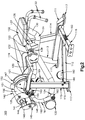
- a leg curl exercise machine 100 includes a stationary main frame 110.
- the main frame 110 is a fixed frame structure and includes a horizontal side strut 1 11 ; a horizontal cross strut 1 12; support uprights 1 13, 1 14; a vertical exercise arm support member 1 15, and a horizontal connecting strut 116.
- the main frame 110 also includes support feet 117 at both ends of the horizontal side strut 1 1 1 and at the end of the horizontal cross strut 1 12.
- the main frame 1 10 includes a thigh pad frame 1 18 on which a thigh pad 1 19 is mounted.
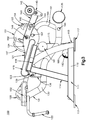
- the main frame 1 10 further includes, a weight stack support strut 120 ( FIG. 2 ), an exercise arm support strut 121 ( FIG. 2 ), moving support frame pivot brackets 122, 123 ( FIGS. 2-4 ), an exercise arm pivot bracket 124 ( FIGS. 1 and 3 ), and a pivot sleeve 125 ( FIGS. 2 and 4 ).
- the main frame 1 10 supports the weight of the user and provides a fixed structure to which all moving assemblies are connected.
- the leg curl exercise machine 100 further includes a moving support frame 130 that supports the user's upper torso during performance of a prone leg curl exercise.
- the moving support frame 130 is a frame structure or platform that includes a moving frame member 131, a chest pad 132, and a pair of handles 133.
- the handles 133 are positioned forward of the chest pad 132 and angled downwardly and outwardly.
- the moving frame member 131 includes an axle 134 for pivotally connecting the moving support frame 130 to the connecting link 160, which is further described below.
- the axle 134 comprises a shaft passing through the frame member 131 and welded into place.
- the moving support frame 130 further includes a counterweight 135 connected to the moving frame member 131 at an end opposite the chest pad 132 and handles 133.
- the counterweight 135 balances the moving support frame 130.
- the counterweight 135 may also lightly bias the moving support frame 130 toward an exercise starting position, which is described in further detail below.
- the moving support frame 130 is pivotally connected to the main frame 1 10.
- the moving support frame 130 includes a pivot strut 136 connecting the moving frame member 131 to a pivot sleeve 137.
- a pivot pin 138 passes through moving support frame pivot brackets 122, 123 on the main frame 1 10 and through the pivot sleeve 137.
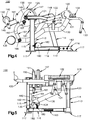
- the moving support frame 130 is thus pivotally connected to the main frame 1 10 for rotation about pivot axis 139 ( FIGS. 3 and 4 ).
- the leg curl exercise machine 100 further includes an exercise arm assembly 140.
- the exercise arm assembly 140 includes a rotating exercise arm 141, and at least one roller pad 142.
- the rotating exercise arm 141 has a pivot sleeve 143 and a pull pin 144 that allows a user to adjust the position and orientation of the exercise arm assembly 140 in the exercise starting position, which is described in further detail below.
- the rear end of the rotating exercise arm 141 has a roller pad support and pivot bracket 145.
- a roller pad support rod 146 is connected to the roller pad support and pivot bracket 145 and provides support and mounting for the roller pad 142.
- the opposite, front end of the rotating exercise arm 141 has a counterweight 147 that balances the exercise arm assembly 140, so that its position and orientation may be more easily adjusted.
- the exercise arm assembly 140 and the cam assembly 150 are both pivotally connected to the main frame 110.
- a pivot pin 148 passes through the exercise arm pivot bracket 124 and the pivot sleeve 125 on the main frame 1 10, through the pivot sleeve 143 on the rotating exercise arm 141 of the exercise arm assembly 140, and through the opening 152 in the cam 151 of the cam assembly 150.
- the exercise arm assembly 140 and the cam assembly 150 are pivotally connected to the main frame 1 10 for independent rotation about pivot axis 149 ( FIGS. 3 and 4 ).
- the exercise arm assembly 140 and the cam assembly 150 are pivotally connected for independent rotation about a common pivot axis 149, the pull pin 144 and the adjustment openings 154 in the exercise arm adjuster 153 allow the exercise arm assembly 140 and cam assembly 150 to be selectively coupled together at various orientations for synchronized rotation about pivot axis 149.
- a user may select from among the adjustment openings 154 and selectively engage or release the pull pin 144 into one or more of the adjustment openings 154 in order to couple the exercise arm assembly 140 to the cam assembly 150. Once coupled, the exercise arm assembly 140 and the cam assembly 150 will rotate together about pivot axis 149.
- the various adjustment openings 154 allow the user to couple the exercise arm assembly 140 to the cam assembly 150 when the exercise arm assembly 140 is in a preferred position and orientation for starting an exercise. That is, the user may engage or release the pull pin 144 into one or more adjustment openings 154 in order to adjust the position and orientation of the exercise arm assembly 140, so that the exercise arm assembly 140, specifically the roller pad 142, is in a preferred position and orientation for the exercise starting position.
- the leg curl exercise machine 100 of FIGS. 1-10 further includes a connecting link 160.
- the connecting link 160 includes a bent member 161 with pivot sleeves 162, 163 on each end thereof.
- the pivot sleeve 162 at one end of the bent member 161 is pivotally connected to the moving frame member 131 at axle 134.
- the axle 134 passes through pivot sleeve 162, pivotally connecting the connecting link 160 to the moving support frame 130 for relative rotation about pivot axis 166 ( FIGS. 3 and 4 ).
- the pivot sleeve 163 at the opposite end of the bent member 161 is pivotally connected to the cam 151 at its axle 155.
- the axle 155 passes through pivot sleeve 163, pivotally connecting the connecting link 160 to the cam assembly 150 for relative rotation about pivot axis 167 ( FIGS. 3 and 4 ).
- the leg curl exercise machine 100 further includes a source of resistance, which in the case of the embodiment depicted in FIGS. 1-10 is a selectorized weight stack assembly 170.
- a source of resistance which in the case of the embodiment depicted in FIGS. 1-10 is a selectorized weight stack assembly 170.
- the source of resistance may include, without limitation, a weight stack, weight plates mounted on pegs, or other types of resistance such as hydraulic, pneumatic, electromagnetic, friction, springs, elastically bending rods, elastic bands, or the like.
- the selectorized weight stack assembly 170 is connected to the main frame 1 10 at the ends of horizontal connecting strut 1 16 and weight stack support strut 120.
- the selectorized weight stack assembly 170 includes a lifting rod 171 operatively connected to a cable (not shown), a plurality of weight plates 172 which are slidingly mounted on guide rods 173 (only one shown) and a housing 174.
- Lifting rod 171 and weight plates 172 have aligned openings 175 through which a pin 176 can be inserted to connect weight plates 172 to lifting rod 171.
- the leg curl exercise machine 100 depicted in FIGS. 1-10 further includes a pulley assembly 180 that transmits the resistance provided by the selectorized weight stack assembly 170 to the exercise arm assembly 140, biasing the exercise arm assembly 140 toward an exercise starting position.
- the pulley assembly 180 includes a cable (not shown) anchored at a first end to the cam 151. The cable extends around a first pulley 181 mounted on the vertical exercise arm support member 115 and a second pulley 182 mounted on the horizontal cross strut 112. The cable then extends through a hollow in the horizontal cross strut 1 12 and around a third pulley 183 mounted on the horizontal connecting strut 116.
- the cable then extends through a hollow in the horizontal connecting strut 1 16 and its second end is directly or indirectly connected to the lifting rod 171 of the selectorized weight stack assembly 170.
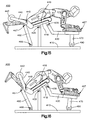
- FIG. 9 shows the depicted embodiment in an exercise starting position, with a user prepared to perform a prone leg curl exercise.
- the user is in a face-down, prone position with his thighs engaging and being supported by the thigh pad 119, which is mounted to the main frame 110.
- the user's upper torso is supported by the chest pad 132 and the handles 133.
- the backs of the user's lower legs engage the roller pad 142.
- the exercise arm assembly 140 may be adjusted to achieve a preferred position and orientation for the exercise starting position of the roller pad 142. Accordingly, when performing a prone leg curl exercise, the exercise arm assembly 140 is coupled to the cam assembly 150, as previously described.
- the user begins by using his lower legs to exert a force on the roller pad 142.
- the roller pad 142 moves upwardly and forwardly in an arcuate path as the exercise arm assembly 140 and the cam assembly 150 rotate together about pivot axis 149 ( FIGS. 3 and 4 ).
- the cam 151 rotates about pivot axis 149, it lifts connecting link 160, which is pivotally connected to the cam 151 at pivot axis 167.
- the connecting link 160 moves upward, it lifts the rear (counterweighted) end of moving frame member 131, which is pivotally connected to the connecting link at pivot axis 166.
- the entire moving support frame 130 tilts as it rotates about pivot axis 139.
- the front end of the moving support frame 130 dips lower as the user completes a prone leg curl exercise, finishing in the exercise ending position shown in FIG. 10 .
- the user's upper torso moves downward as the chest pad 132 and handles 133 dip lower, thus avoiding any excessive arching or stressing of the user's lower back.
- the cam 151 pulls on the cable (not shown) of the pulley assembly 180, which is connected to the selectorized weight stack assembly 170.
- the counterweights 135, 147 balance the respective moving assemblies, i.e. the moving support frame 130 and the exercise arm assembly 140. Accordingly, the amount of resistance that biases the exercise arm assembly 140 toward the exercise starting position is almost entirely determined by the amount of weight selected in the selectorized weight stack assembly 170. That is, the user experiences substantially zero additional resistance throughout the exercise motion.
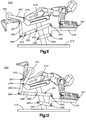
- FIGS. 1 1 and 12 depict an additional embodiment of the present invention.
- FIG. 1 1 shows a leg curl exercise machine 200 in an exercise starting position
- FIG. 12 shows the embodiment in an exercise ending position.
- the embodiment of FIGS. 1 1 and 12 includes a main frame 210 supporting a stationary thigh pad 219.
- An exercise arm assembly 240 includes a roller pad 242 and is pivotally mounted to the main frame 210 for rotation about pivot axis 249.
- the exercise arm assembly 240 is pivotally connected to a connecting link 260 for relative rotation about pivot axis 267.
- the exercise arm assembly's 240 pivotal connection to the connecting link 260 may be direct, or alternatively, it may be indirect using an intervening cam assembly such as the cam assembly 150 previously described.
- the connecting link 260 is pivotally connected to a first member 291 for relative rotation about pivot axis 266.
- the first member 291 is pivotally connected to the main frame 210 for rotation about pivot axis 292, which is forward of pivot axis 266.
- the first member 291 is also pivotally connected to a moving support frame 230 at a location forward of pivot axis 292, for relative rotation about pivot axis 293.
- a second member 294 is pivotally connected to the main frame 210 for rotation about pivot axis 295.
- the second member 294 is also pivotally connected to the moving support frame 230 at a location forward of the pivot axis 295, for relative rotation about pivot axis 296.
- the main frame 210, first member 291, moving support frame 230, and second member 294 together form a four-bar linkage 290.
- the moving support frame 230 is depicted in FIGS. 1 1 and 12 as including an arm rest pad 297. But those skilled in the art will appreciate that this embodiment may also utilize one or more chest pads, handles, or other means of supporting the user's upper torso that are understood in the art.
- the user's lower legs exert a force on the roller pad 242.
- the roller pad 242 moves upwardly and forwardly in an arcuate path as the exercise arm assembly 240 rotates about pivot axis 249.
- connecting link 260 which is pivotally connected to the exercise arm assembly (or to a cam assembly such as cam assembly 150) at pivot axis 267, is pulled upward.
- the connecting link 260 moves upward, it lifts the rear end of first member 291, which is pivotally connected to the connecting link at pivot axis 266.
- first member 291 As the rear end of first member 291 moves upward, it tilts about pivot axis 292, such that the front end of first member 291 moves downward. As the front end of first member 291 moves downward, the front end of second member 294 and the moving support frame 230 also move downward because the moving support frame 230 and the front ends of the first and second members 291 , 294 are all coupled together through pivot axes 293, 296.
- the moving support frame 230 dips lower as the user completes a prone leg curl exercise, finishing in the exercise ending position shown in FIG. 12 .
- the user's upper torso moves downward as the arm rest pad 297 dips lower, thus avoiding any excessive arching or stressing of the user's lower back.
- FIGS. 13 and 14 depict an additional embodiment of the present invention.
- FIG. 13 shows a leg curl exercise machine 300 in an exercise starting position
- FIG. 14 shows the embodiment in an exercise ending position.
- the embodiment of FIGS. 13 and 14 includes a main frame 310 supporting a tilting thigh pad frame 318 that is pivotally connected to the main frame for rotation about pivot axis 320.
- a thigh pad 319 is mounted on the tilting thigh pad frame 318.
- An exercise arm assembly 340 includes a roller pad 342 and is pivotally mounted to the tilting thigh pad frame 318 for relative rotation about pivot axis 349.
- the exercise arm assembly 340 is pivotally connected to a connecting link 360 for relative rotation about pivot axis 367.
- the exercise arm assembly's 340 pivotal ⁇ '>connection to the connecting link 360 may be direct, or alternatively, it may be indirect using an intervening cam assembly such as the cam assembly 150 previously described.
- the connecting link 360 is pivotally connected to the main frame 310 for rotation about pivot axis 366.
- a moving support frame 330 is pivotally connected to the tilting thigh pad frame 318 for relative rotation about pivot axis 339.
- the moving support frame 330 is pivotally connected to a second connecting link 370 for relative rotation about pivot axis 377.
- the second connecting link 370 is pivotally connected to the main frame 310 for relative rotation about pivot axis 376.
- the moving support frame 330 is depicted in FIGS. 13 and 14 as including an arm rest pad 397. But those skilled in the art will appreciate that this embodiment may also utilize one or more chest pads, handles, or other means of supporting the user's upper torso that are understood in the art.
- the user's lower legs exert a force on the roller pad 342.
- the roller pad 342 moves upwardly and forwardly in an arcuate path as the exercise arm assembly 340 rotates.
- an exercise arm assembly rotates about a fixed pivot axis, pulling a connecting link upward.
- the connecting link 360 of the leg curl exercise machine 300 cannot move upward because it is pivotally connected to the main frame 310 for rotation about pivot axis 366.
- exercise arm assembly 340 rotates about pivot axes 349 and 367, which both move relative to the main frame 310. Pivot axis 349 moves downward, along with the rear end of the tilting thigh pad frame 318.
- the tilting thigh pad frame 318 thus tilts as it rotates about pivot axis 320. Accordingly, the front end of the tilting thigh pad frame 318 moves upward. As the front end of the tilting thigh pad frame 318 moves upward, it lifts and draws rearward the rear end of moving support frame 330, which is pivotally coupled to the tilting thigh pad frame 318 for relative rotation about pivot axis 339. As the rear end of the moving support frame 330 moves rearward, the second connecting link 370, which is pivotally connected to the moving support frame 330 for rotation about pivot axis 377, rotates about pivot axis 376. This causes the front end of the moving support frame 330 to rise.
- the tilting thigh pad frame 318 and thigh pad 319 tilt as the user completes a prone leg curl exercise, finishing in the exercise ending position shown in FIG. 14 .
- the moving support frame 330 including the arm rest pad 397, moves in an upward and rearward direction while also tilting slightly to end in the exercise ending position of FIG. 14 .
- the user's thighs, lower torso, and upper torso move in such a way as to avoid any excessive arching or stressing of the user's lower back.
- FIGS. 15 and 16 depict an additional embodiment of the present invention.
- FIG. 15 shows a leg curl exercise machine 400 in an exercise starting position
- FIG. 16 shows the embodiment in an exercise ending position.
- the embodiment of FIGS. 15 and 16 is substantially similar to the embodiment of FIGS. 13 and 14 , except that the moving support frame 430 is rigidly connected to a second connecting link 470 that includes a roller 490 that engages the main frame 410.
- the embodiment shown in FIGS. 13 and 14 includes a second connecting link 370 pivotally connected to the main frame 310 for rotation about pivot axis 376 and to the moving support frame 330 for rotation about pivot axis 377.
- FIGS. 15 and 16 includes a main frame 410 supporting a tilting thigh pad frame 418 that is pivotally connected to the main frame 410 for rotation about pivot axis 420.
- a thigh pad 419 is mounted on the tilting thigh pad frame 418.
- An exercise arm assembly 440 includes a roller pad 442 and is pivotally mounted to the tilting thigh pad frame 418 for relative rotation about pivot axis 449.
- the exercise arm assembly 440 is pivotally connected to a connecting link 460 for relative rotation about pivot axis 467.
- the exercise arm assembly's 440 pivotal connection to the connecting link 460 may be direct, or alternatively, it may be indirect using an intervening cam assembly such as the cam assembly 150 previously described.
- the connecting link 460 is pivotally connected to the main frame 410 for rotation about pivot axis 466.
- a moving support frame 430 is pivotally connected to the tilting thigh pad frame 418 for relative rotation about pivot axis 439.
- the moving support frame 430 is rigidly connected to a second connecting link 470.
- the second connecting link 470 includes a roller 490 that engages the main frame 410 to allow the moving support frame 430 to move fore and aft and rotate relative to the main frame 410.
- the second connecting link 470 may slide along a surface on the main frame 410.
- Other means of enabling the desired movement between the moving support frame 430 and the main frame 410 will be readily apparent to those skilled in the art.
- the moving support frame 430 is depicted in FIGS. 15 and 16 as including an arm rest pad 497. But those skilled in the art will appreciate that this embodiment may also utilize one or more chest pads, handles, or other means of supporting the user's upper torso that are understood in the art.
- the user's lower legs exert a force on the roller pad 442.
- the roller pad 442 moves upwardly and forwardly in an arcuate path as the exercise arm assembly 440 rotates.
- the exercise arm assembly 440 rotates about pivot axes 449 and 467, which both move relative to the main frame 410.
- Pivot axis 449 moves downward, along with the rear end of the tilting thigh pad frame 418.
- the tilting thigh pad frame 418 thus tilts as it rotates about pivot axis 420. Accordingly, the front end of the tilting thigh pad frame 418 moves upward.
- the tilting thigh pad frame 418 As the front end of the tilting thigh pad frame 418 moves upward, it lifts and draws rearward the rear end of moving support frame 430, which is pivotally coupled to the tilting thigh pad frame 418 for relative rotation about pivot axis 439. As the rear end of the moving support frame 430 moves rearward, the second connecting link 470, which is rigidly connected to the moving support frame 430, moves rearward as well. This causes the roller 490 to travel rearward along the main frame 410.
- the tilting thigh pad frame 418 and thigh pad 419 tilt as the user completes a prone leg curl exercise, finishing in the exercise ending position shown in FIG. 16 .
- the moving support frame 430 including the arm rest pad 497, moves in an upward and rearward direction while also tilting slightly to end in the exercise ending position of FIG. 16 .
- the user's thighs, lower torso, and upper torso move in such a way as to avoid any excessive arching of the lower back.
- leg curl exercise machine 180 - pulley assembly 110- main frame 181 - first pulley 111 - horizontal side strut 182 - second pulley 112 - horizontal cross strut 183 - third pulley 113 - support upright 200 - leg curl exercise machine 114 - support upright 210 - main frame 115 - vertical exercise arm support member 219 - stationary thigh pad 116 - horizontal connecting strut 230 - moving support frame 117 - support foot 240 - exercise arm assembly 118 - thigh pad frame 242 - roller pad 119 - thigh pad 249 - pivot axis 120 - weight stack support strut 260 - connecting link 121 - exercise arm support strut 266 - pivot axis 122 - moving support frame pivot bracket 267 - pivot axis 123 - moving support frame pivot bracket 290 - four-bar linkage 124 - exercise arm pivot bracket 291 - first member
Landscapes
- Health & Medical Sciences (AREA)
- Orthopedic Medicine & Surgery (AREA)
- Physical Education & Sports Medicine (AREA)
- General Health & Medical Sciences (AREA)
- Biophysics (AREA)
- Life Sciences & Earth Sciences (AREA)
- Neurology (AREA)
- Biomedical Technology (AREA)
- Engineering & Computer Science (AREA)
- Pulmonology (AREA)
- Cardiology (AREA)
- Vascular Medicine (AREA)
- Rehabilitation Tools (AREA)
Claims (15)
- Übungsmaschine (100) zur Durchführung von Beinbeugungsübungen in Bauchlage, umfassend:einen stationären Hauptrahmen (110);eine Übungsarmanordnung (140), die schwenkbar mit dem stationären Hauptrahmen (110) zur Drehung um eine erste Schwenkachse (149) verbunden ist, wobei die Übungsarmanordnung (140) einen Übungsarm (141) enthält, der dazu konfiguriert ist, sich in einer bogenförmigen Bahn zwischen einer Übungsstartposition und einer Übungsendposition zu bewegen;eine bewegliche Stützplattform, die schwenkbar mit dem stationären Hauptrahmen (110) zur Drehung um eine zweite Schwenkachse (139) verbunden ist; undein Verbindungselement (160), das schwenkbar mit der Übungsarmanordnung (140) zur relativen Drehung um eine dritte Schwenkachse (155) verbunden ist, wobei das Verbindungselement (160) schwenkbar mit der beweglichen Stützplattform zur relativen Drehung um eine vierte Schwenkachse (166) verbunden ist,wobei das Verbindungselement (160) die Bewegung des Übungsarms (141) zwischen der Übungsstartposition und der Übungsendposition in eine entsprechende Bewegung der beweglichen Stützplattform übersetzt.
- Übungsmaschine nach Anspruch 1, wobei der stationäre Hauptrahmen (110) ein Benutzerstützpolster enthält, wobei insbesondere das Benutzerstützpolster ein Oberschenkelpolster (119) ist.
- Übungsmaschine nach Anspruch 1, ferner umfassend eine Widerstandsquelle, die mindestens einem von der Übungsarmanordnung (140), der beweglichen Stützplattform und dem Verbindungselement (160) zugeordnet ist, wobei die Widerstandsquelle vorzugsweise ein selektorisierter Gewichtsstapel (170) ist, wobei insbesondere die Übungsmaschine ferner eine Riemenscheibenanordnung (180) umfasst, die den vom selektorisierten Gewichtsstapel (170) bereitgestellten Widerstand an die Übungsarmanordnung (140) überträgt, wobei die Übungsarmanordnung (140) zur Übungsstartposition hin vorgespannt wird.
- Übungsmaschine nach Anspruch 1, wobei die bewegliche Stützplattform mindestens ein Benutzerstützpolster enthält, wobei insbesondere(i) das mindestens eine Benutzerstützpolster dazu konfiguriert ist, einen Oberkörper eines Benutzers zu stützen, wobei vorzugsweise das mindestens eine Benutzerstützpolster ein Brustpolster (132) ist, oder(ii) die bewegliche Stützplattform mindestens einen Griff (133) zum Greifen durch einen Benutzer enthält, wobei vorzugsweise die bewegliche Stützplattform ein längliches Rahmenelement (131) enthält, das ein erstes Ende und ein zweites, dem ersten Ende gegenüberliegendes Ende aufweist.
- Übungsmaschine nach Alternative (ii) von Anspruch 4, wobei das erste Ende des länglichen Rahmenelements (131) das mindestens eine Benutzerstützpolster enthält, wobei insbesondere die bewegliche Stützplattform ein Gegengewicht (135) am zweiten Ende des länglichen Rahmenelements (131) enthält, wobei das Gegengewicht (135) dazu konfiguriert ist, die bewegliche Stützplattform leicht zur Übungsstartposition hin vorzuspannen.
- Übungsmaschine nach Anspruch 1, wobei, wenn sich die Übungsarmanordnung (140) von der Übungsstartposition hin zur Übungsendposition bewegt, sich die bewegliche Stützplattform relativ zum stationären Hauptrahmen (110) neigt, oder wobei, wenn sich der Übungsarm (141) von der Übungsstartposition hin zur Übungsendposition bewegt, sich die bewegliche Stützplattform relativ zum stationären Hauptrahmen (110) nach unten bewegt.
- Übungsmaschine nach Anspruch 1, ferner umfassend eine erste Achse, welche die Schwenkverbindung zwischen dem Verbindungselement (160) und der Übungsarmanordnung (140) bereitstellt, und welche die dritte Schwenkachse (155) definiert, wobei vorzugsweise die erste Achse an der Übungsarmanordnung (140) montiert ist.
- Übungsmaschine nach Anspruch 1, ferner umfassend eine zweite Achse, welche die Schwenkverbindung zwischen dem Verbindungselement (160) und der beweglichen Stützplattform bereitstellt, und welche die vierte Schwenkachse (166) definiert, wobei insbesondere die zweite Achse an der beweglichen Stützplattform montiert ist.
- Übungsmaschine nach Anspruch 1, wobei
die Übungsarmanordnung (140) mindestens ein Rollenpolster (142) zum Eingriff der Rückseite eines Unterschenkels eines Benutzers enthält, wobei vorzugsweise der Übungsarm (141) ein erstes und ein zweites, dem ersten Ende gegenüberliegendes Ende enthält. - Übungsmaschine nach Anspruch 9, wobei das erste Ende des Übungsarms (141) das mindestens eine Rollenpolster (142) enthält, wobei insbesondere die Übungsarmanordnung (140) ein Gegengewicht (147) am zweiten Ende des Übungsarms (141) enthält, wobei das Gegengewicht (147) dazu konfiguriert ist, die bewegliche Stützplattform leicht zur Übungsstartposition hin vorzuspannen.
- Übungsmaschine nach Anspruch 1, wobei die Übungsarmanordnung (140) ferner Folgendes umfasst:eine Nockenanordnung (150), die eine Nocke (151), die schwenkbar mit dem stationären Hauptrahmen (110) zur Drehung um die erste Schwenkachse (149) verbunden ist, und eine Vielzahl an Einstellöffnungen (154), die der Nocke (151) zugeordnet sind, enthält; undeinen Zugstift (144), der dem Übungsarm (141) zugeordnet ist, wobei der Zugstift (144) dazu konfiguriert ist, selektiv in eine oder mehrere der Einstellöffnungen (154) einzugreifen,wobei das selektive Eingreifen des Zugstiftes (144) in eine oder mehrere der Einstellöffnungen (154) die Nockenanordnung (150) und den Übungsarm (141) zur synchronisierten Drehung um die erste Schwenkachse (149) koppelt.
- Übungsmaschine nach Anspruch 11, wobei
der Zugstift (144) in eine oder mehrere Einstellöffnungen (154) selektiv eingreifen kann, um die Übungsstartposition des Übungsarms (141) einzustellen, wobei vorzugsweise die Übungsmaschine ferner Folgendes umfasst:(i) einen Übungsarmeinsteller (153), der an der Nocke (151) montiert ist, wobei der Übungsarmeinsteller (153) die Vielzahl an Einstellöffnungen (154) enthält, oder(ii) eine erste Achse, die an der Nocke (151) montiert ist, wobei die erste Achse die Schwenkverbindung zwischen dem Verbindungselement (160) und der Übungsarmanordnung (140) bereitstellt, und wobei die erste Achse die dritte Schwenkachse (155) definiert. - Übungsmaschine nach Anspruch 1, wobei
der stationäre Hauptrahmen (110) ein Benutzerstützpolster aufweist;
die Übungsarmanordnung (140) mindestens ein Rollenpolster (142) zum Eingriff der Rückseite eines Unterschenkels eines Benutzers enthält;
die bewegliche Stützplattform ein Benutzerstützpolster und mindestens einen Griff (133) zum Greifen durch einen Benutzer aufweist; und
die Übungsmaschine eine Widerstandsquelle umfasst, die mindestens einem von der Übungsarmanordnung (140), der beweglichen Stützplattform und dem Verbindungselement (160) zugeordnet ist. - Übungsmaschine nach Anspruch 13, ferner umfassend:eine Nockenanordnung (150), die eine Nocke (151), die schwenkbar mit dem stationären Hauptrahmen (110) verbunden ist und eine Vielzahl an Einstellöffnungen (154), die der Nocke (151) zugeordnet sind, enthält; undeinen Zugstift (144), der dem Übungsarm (141) zugeordnet ist, wobei der Zugstift (144) dazu konfiguriert ist, selektiv in eine oder mehrere der Einstellöffnungen (154) einzugreifen,wobei das selektive Eingreifen des Zugstiftes (144) in eine oder mehrere der Einstellöffnungen (154) die Nockenanordnung (150) und den Übungsarm (141) zur synchronisierten Drehung um die erste Schwenkachse (149) koppelt.
- Übungsmaschine nach Anspruch 1, wobei
der stationäre Hauptrahmen (110) ein Benutzerstützpolster aufweist;
die Übungsarmanordnung (140) Folgendes umfasst:eine Nocke (151), die schwenkbar mit dem stationären Hauptrahmen (110) zur Drehung um eine erste Schwenkachse (149) verbunden ist und eine Vielzahl an Einstellöffnungen (154), die der Nocke (151) zugeordnet sind,mindestens ein Rollenpolster (142) zum Eingriff der Rückseite eines Unterschenkels eines Benutzers, undeinen Zugstift (144), der dem Übungsarm (141) zugeordnet ist;die bewegliche Stützplattform ein Benutzerstützpolster und mindestens einen Griff (133) zum Greifen durch einen Benutzer aufweist;die Übungsmaschine ferner eine Widerstandsquelle umfasst, die mindestens einem von der Übungsarmanordnung (140), der beweglichen Stützplattform und dem Verbindungselement (160) zugeordnet ist; undwobei der Zugstift (144) in eine oder mehrere Einstellöffnungen (154) selektiv eingreifen kann, um die Übungsstartposition des Übungsarms (141) einzustellen.
Priority Applications (1)
| Application Number | Priority Date | Filing Date | Title |
|---|---|---|---|
| EP19209540.4A EP3659678B1 (de) | 2014-12-24 | 2015-12-23 | Beinbeugungsübungsmaschine mit beweglichem träger zur durchführung von beinbeugungsübungen |
Applications Claiming Priority (2)
| Application Number | Priority Date | Filing Date | Title |
|---|---|---|---|
| US201462096685P | 2014-12-24 | 2014-12-24 | |
| PCT/US2015/000240 WO2016105506A1 (en) | 2014-12-24 | 2015-12-23 | Leg curl exercise machine including a moving support for performing prone leg curl exercises |
Related Child Applications (1)
| Application Number | Title | Priority Date | Filing Date |
|---|---|---|---|
| EP19209540.4A Division EP3659678B1 (de) | 2014-12-24 | 2015-12-23 | Beinbeugungsübungsmaschine mit beweglichem träger zur durchführung von beinbeugungsübungen |
Publications (3)
| Publication Number | Publication Date |
|---|---|
| EP3237080A1 EP3237080A1 (de) | 2017-11-01 |
| EP3237080A4 EP3237080A4 (de) | 2018-07-04 |
| EP3237080B1 true EP3237080B1 (de) | 2019-11-27 |
Family
ID=56151253
Family Applications (2)
| Application Number | Title | Priority Date | Filing Date |
|---|---|---|---|
| EP19209540.4A Active EP3659678B1 (de) | 2014-12-24 | 2015-12-23 | Beinbeugungsübungsmaschine mit beweglichem träger zur durchführung von beinbeugungsübungen |
| EP15873787.4A Active EP3237080B1 (de) | 2014-12-24 | 2015-12-23 | Beinbeugungsübungsmaschine mit beweglichem träger zur durchführung von beinbeugungsübungen |
Family Applications Before (1)
| Application Number | Title | Priority Date | Filing Date |
|---|---|---|---|
| EP19209540.4A Active EP3659678B1 (de) | 2014-12-24 | 2015-12-23 | Beinbeugungsübungsmaschine mit beweglichem träger zur durchführung von beinbeugungsübungen |
Country Status (7)
| Country | Link |
|---|---|
| US (2) | US9950210B2 (de) |
| EP (2) | EP3659678B1 (de) |
| CN (2) | CN111317971B (de) |
| BR (1) | BR112017013760B1 (de) |
| DK (1) | DK3237080T3 (de) |
| ES (2) | ES2954468T3 (de) |
| WO (1) | WO2016105506A1 (de) |
Families Citing this family (17)
| Publication number | Priority date | Publication date | Assignee | Title |
|---|---|---|---|---|
| KR101952412B1 (ko) * | 2016-12-05 | 2019-02-27 | 김은비 | 무릎과 발목 관절을 보호하며 다리 상부와 힙을 운동시키는 방법 및 장치 |
| CN108714292A (zh) * | 2018-06-25 | 2018-10-30 | 尚体健康科技(上海)股份有限公司 | 一种骨盆稳定训练机 |
| CN108939435B (zh) * | 2018-07-18 | 2020-05-01 | 深圳市人民医院 | 一种腿部肌肉锻炼装置 |
| US10786705B2 (en) * | 2018-09-27 | 2020-09-29 | Life Fitness, Llc | Exercise machines for leg strengthening |
| US10946240B2 (en) | 2018-12-10 | 2021-03-16 | Tuffstuff Fitness International, Inc. | Glute machine |
| CN110152249B (zh) * | 2019-05-27 | 2020-07-17 | 卢华定 | 一种腿部关节炎锻炼康复器械 |
| CN112138333A (zh) * | 2019-06-27 | 2020-12-29 | 克里斯·见多 | 用于骨盆复位及减少下背疼痛的物理治疗装置 |
| CN111068251B (zh) * | 2020-01-13 | 2023-10-03 | 合肥工业大学 | 一种训练装置及训练方法 |
| CN111111114B (zh) * | 2020-01-13 | 2023-10-03 | 合肥工业大学 | 一种训练装置及训练方法 |
| RU209793U1 (ru) * | 2021-11-23 | 2022-03-23 | Общество с ограниченной ответственностью "Уральский центр кинезиотерапии" | Устройство для тренировки мышц ног |
| USD1049278S1 (en) * | 2023-02-15 | 2024-10-29 | Coulter Ventures, Llc. | Weightlifting support |
| USD1007621S1 (en) * | 2023-08-09 | 2023-12-12 | Wei Shen | Preacher curl bench |
| USD1006921S1 (en) * | 2023-08-25 | 2023-12-05 | Wei Shen | Exercise machine |
| USD1006923S1 (en) * | 2023-08-31 | 2023-12-05 | Xuexiang Mao | Exercise machine |
| USD1036583S1 (en) * | 2023-10-09 | 2024-07-23 | Zhiqiong Gu | Leg extension exercise machine |
| US12420140B2 (en) * | 2023-12-14 | 2025-09-23 | Life Fitness, Llc | Exercise apparatuses for leg strengthening |
| WO2025212876A1 (en) * | 2024-04-05 | 2025-10-09 | GE Precision Healthcare LLC | Component handling system |
Family Cites Families (21)
| Publication number | Priority date | Publication date | Assignee | Title |
|---|---|---|---|---|
| US326247A (en) * | 1885-02-16 | 1885-09-15 | Exercising-machine | |
| US4429871A (en) * | 1981-11-12 | 1984-02-07 | Amf Incorporated | Hydraulic exerciser |
| JPS58112356U (ja) * | 1982-01-25 | 1983-08-01 | セノ−株式会社 | 脚部トレ−ニング器具 |
| US5066003A (en) * | 1990-09-12 | 1991-11-19 | Hammer Corporation | Leg curl exercise machine |
| USRE37648E1 (en) * | 1993-03-19 | 2002-04-09 | Kent Fulks | Compact weight lifting machine |
| US5549530A (en) * | 1993-03-19 | 1996-08-27 | Kent Fulks | Compact weight lifting machine |
| CA2170720A1 (en) * | 1995-03-15 | 1996-09-16 | Keiser Corporation | Exercising apparatus |
| US5569138A (en) * | 1995-06-05 | 1996-10-29 | Greenmaster Industrial Corp. | Multi-purpose exercising apparatus |
| US5672143A (en) * | 1996-02-02 | 1997-09-30 | Vectra Fitness, Inc. | Exercise station for leg exercises |
| US7150702B2 (en) * | 2002-07-01 | 2006-12-19 | Nautilus Human Performance Systems, Inc. | Leg curl/leg extension weight training machine |
| US7223213B2 (en) * | 2002-08-08 | 2007-05-29 | Nautilus, Inc. | Dual-direction pulley system |
| US7563209B2 (en) * | 2006-09-05 | 2009-07-21 | Hoist Fitness Systems, Inc. | Leg exercise machine with self-aligning pivoting seat |
| IT1390763B1 (it) * | 2008-07-24 | 2011-09-23 | Innocenti | Attrezzatura multifunzionale di fitness per muscolatura arti inferiori |
| US7967733B2 (en) * | 2008-09-08 | 2011-06-28 | Don Walker | Exercise device |
| US20140371036A1 (en) * | 2011-12-19 | 2014-12-18 | Joseph K. Ellis | Multi-functional exercise machine |
| CN202526828U (zh) * | 2011-12-21 | 2012-11-14 | 临沂大学 | 卧式曲腿杠铃架 |
| CN103751959A (zh) * | 2011-12-24 | 2014-04-30 | 淄博天燧工贸有限公司 | 卧式曲腿训练机 |
| GB2498335A (en) * | 2012-01-04 | 2013-07-17 | Satian Ind Co Ltd | A multi use exercise machine |
| US9707448B2 (en) * | 2012-08-08 | 2017-07-18 | Hoist Fitness Systems, Inc. | Exercise machine with movable user support |
| CN203400455U (zh) * | 2013-08-18 | 2014-01-22 | 郑方俊 | 多功能综合健身器 |
| CN203663369U (zh) * | 2013-12-30 | 2014-06-25 | 山东汇祥健身器材有限公司 | 多功能屈伸腿一体机 |
-
2015
- 2015-12-22 US US14/978,399 patent/US9950210B2/en active Active
- 2015-12-23 CN CN202010170556.0A patent/CN111317971B/zh active Active
- 2015-12-23 ES ES19209540T patent/ES2954468T3/es active Active
- 2015-12-23 EP EP19209540.4A patent/EP3659678B1/de active Active
- 2015-12-23 BR BR112017013760-7A patent/BR112017013760B1/pt not_active IP Right Cessation
- 2015-12-23 EP EP15873787.4A patent/EP3237080B1/de active Active
- 2015-12-23 DK DK15873787.4T patent/DK3237080T3/da active
- 2015-12-23 ES ES15873787T patent/ES2772771T3/es active Active
- 2015-12-23 CN CN201580076623.XA patent/CN107257701B/zh active Active
- 2015-12-23 WO PCT/US2015/000240 patent/WO2016105506A1/en not_active Ceased
-
2018
- 2018-03-16 US US15/923,336 patent/US10086229B2/en active Active
Non-Patent Citations (1)
| Title |
|---|
| None * |
Also Published As
| Publication number | Publication date |
|---|---|
| US20180200573A1 (en) | 2018-07-19 |
| BR112017013760A2 (en) | 2018-04-17 |
| EP3659678A1 (de) | 2020-06-03 |
| ES2772771T3 (es) | 2020-07-08 |
| CN107257701B (zh) | 2020-03-17 |
| CN111317971A (zh) | 2020-06-23 |
| WO2016105506A1 (en) | 2016-06-30 |
| CN111317971B (zh) | 2021-01-15 |
| EP3237080A1 (de) | 2017-11-01 |
| BR112017013760B1 (pt) | 2022-03-15 |
| EP3659678C0 (de) | 2023-06-07 |
| ES2954468T3 (es) | 2023-11-22 |
| DK3237080T3 (da) | 2020-02-24 |
| EP3659678B1 (de) | 2023-06-07 |
| EP3237080A4 (de) | 2018-07-04 |
| CN107257701A (zh) | 2017-10-17 |
| US9950210B2 (en) | 2018-04-24 |
| US20160184630A1 (en) | 2016-06-30 |
| US10086229B2 (en) | 2018-10-02 |
Similar Documents
| Publication | Publication Date | Title |
|---|---|---|
| EP3237080B1 (de) | Beinbeugungsübungsmaschine mit beweglichem träger zur durchführung von beinbeugungsübungen | |
| US7654938B2 (en) | Exercise machine with pivoting user support having multiple pivot linkage | |
| US7563209B2 (en) | Leg exercise machine with self-aligning pivoting seat | |
| US7553262B2 (en) | Exercise apparatus using weights and springs for high-speed training | |
| US7794371B2 (en) | Lat exercise machine with self-aligning pivoting user support | |
| US8702573B2 (en) | Glute exercise machine with rocking user support | |
| US5342270A (en) | Exercise machine for upper torso | |
| US20160346586A1 (en) | Squat exercise apparatus | |
| US9682276B2 (en) | Lateral deltoid exercise machine with rocking user support | |
| US7794372B1 (en) | Leg press exercise machine with self-aligning pivoting seat | |
| AU2015363271A1 (en) | Exercise apparatus | |
| NO336522B1 (no) | Treningsapparat for styrketrening og rehabilitering | |
| CA3093374C (en) | Leg press exercise machine | |
| EP3356000B1 (de) | Übungsmaschine zum trizepsdrücken mit beweglicher benutzerunterstützung | |
| EP3713651B1 (de) | Übungsgerät für unterstützte körperliche betätigung | |
| EP2599526B1 (de) | Maschine für gymnastische Übungen, in besonders, um die Bauchmuskeln auszuüben | |
| US20080026919A1 (en) | Press arm | |
| CN210786145U (zh) | 一种自重式手脚腹肌器 | |
| US20040254051A1 (en) | Arm and leg erxercise machine | |
| KR101005206B1 (ko) | 운동장치 | |
| HK1173406A (en) | Glute exercise machine with rocking user support |
Legal Events
| Date | Code | Title | Description |
|---|---|---|---|
| STAA | Information on the status of an ep patent application or granted ep patent |
Free format text: STATUS: THE INTERNATIONAL PUBLICATION HAS BEEN MADE |
|
| PUAI | Public reference made under article 153(3) epc to a published international application that has entered the european phase |
Free format text: ORIGINAL CODE: 0009012 |
|
| STAA | Information on the status of an ep patent application or granted ep patent |
Free format text: STATUS: REQUEST FOR EXAMINATION WAS MADE |
|
| 17P | Request for examination filed |
Effective date: 20170713 |
|
| AK | Designated contracting states |
Kind code of ref document: A1 Designated state(s): AL AT BE BG CH CY CZ DE DK EE ES FI FR GB GR HR HU IE IS IT LI LT LU LV MC MK MT NL NO PL PT RO RS SE SI SK SM TR |
|
| AX | Request for extension of the european patent |
Extension state: BA ME |
|
| DAV | Request for validation of the european patent (deleted) | ||
| DAX | Request for extension of the european patent (deleted) | ||
| A4 | Supplementary search report drawn up and despatched |
Effective date: 20180606 |
|
| RIC1 | Information provided on ipc code assigned before grant |
Ipc: A63B 21/06 20060101ALI20180531BHEP Ipc: A63B 21/02 20060101ALI20180531BHEP Ipc: A63B 23/04 20060101ALI20180531BHEP Ipc: A63B 23/12 20060101ALI20180531BHEP Ipc: A63B 23/035 20060101ALI20180531BHEP Ipc: A63B 21/00 20060101AFI20180531BHEP |
|
| GRAP | Despatch of communication of intention to grant a patent |
Free format text: ORIGINAL CODE: EPIDOSNIGR1 |
|
| STAA | Information on the status of an ep patent application or granted ep patent |
Free format text: STATUS: GRANT OF PATENT IS INTENDED |
|
| INTG | Intention to grant announced |
Effective date: 20190606 |
|
| GRAJ | Information related to disapproval of communication of intention to grant by the applicant or resumption of examination proceedings by the epo deleted |
Free format text: ORIGINAL CODE: EPIDOSDIGR1 |
|
| STAA | Information on the status of an ep patent application or granted ep patent |
Free format text: STATUS: REQUEST FOR EXAMINATION WAS MADE |
|
| GRAR | Information related to intention to grant a patent recorded |
Free format text: ORIGINAL CODE: EPIDOSNIGR71 |
|
| GRAS | Grant fee paid |
Free format text: ORIGINAL CODE: EPIDOSNIGR3 |
|
| STAA | Information on the status of an ep patent application or granted ep patent |
Free format text: STATUS: GRANT OF PATENT IS INTENDED |
|
| GRAA | (expected) grant |
Free format text: ORIGINAL CODE: 0009210 |
|
| STAA | Information on the status of an ep patent application or granted ep patent |
Free format text: STATUS: THE PATENT HAS BEEN GRANTED |
|
| INTC | Intention to grant announced (deleted) | ||
| AK | Designated contracting states |
Kind code of ref document: B1 Designated state(s): AL AT BE BG CH CY CZ DE DK EE ES FI FR GB GR HR HU IE IS IT LI LT LU LV MC MK MT NL NO PL PT RO RS SE SI SK SM TR |
|
| INTG | Intention to grant announced |
Effective date: 20191022 |
|
| REG | Reference to a national code |
Ref country code: GB Ref legal event code: FG4D |
|
| REG | Reference to a national code |
Ref country code: CH Ref legal event code: EP |
|
| REG | Reference to a national code |
Ref country code: AT Ref legal event code: REF Ref document number: 1206043 Country of ref document: AT Kind code of ref document: T Effective date: 20191215 |
|
| REG | Reference to a national code |
Ref country code: DE Ref legal event code: R096 Ref document number: 602015042726 Country of ref document: DE |
|
| REG | Reference to a national code |
Ref country code: IE Ref legal event code: FG4D |
|
| REG | Reference to a national code |
Ref country code: DK Ref legal event code: T3 Effective date: 20200218 |
|
| REG | Reference to a national code |
Ref country code: NL Ref legal event code: FP |
|
| REG | Reference to a national code |
Ref country code: LT Ref legal event code: MG4D |
|
| PG25 | Lapsed in a contracting state [announced via postgrant information from national office to epo] |
Ref country code: LV Free format text: LAPSE BECAUSE OF FAILURE TO SUBMIT A TRANSLATION OF THE DESCRIPTION OR TO PAY THE FEE WITHIN THE PRESCRIBED TIME-LIMIT Effective date: 20191127 Ref country code: SE Free format text: LAPSE BECAUSE OF FAILURE TO SUBMIT A TRANSLATION OF THE DESCRIPTION OR TO PAY THE FEE WITHIN THE PRESCRIBED TIME-LIMIT Effective date: 20191127 Ref country code: GR Free format text: LAPSE BECAUSE OF FAILURE TO SUBMIT A TRANSLATION OF THE DESCRIPTION OR TO PAY THE FEE WITHIN THE PRESCRIBED TIME-LIMIT Effective date: 20200228 Ref country code: BG Free format text: LAPSE BECAUSE OF FAILURE TO SUBMIT A TRANSLATION OF THE DESCRIPTION OR TO PAY THE FEE WITHIN THE PRESCRIBED TIME-LIMIT Effective date: 20200227 Ref country code: NO Free format text: LAPSE BECAUSE OF FAILURE TO SUBMIT A TRANSLATION OF THE DESCRIPTION OR TO PAY THE FEE WITHIN THE PRESCRIBED TIME-LIMIT Effective date: 20200227 Ref country code: FI Free format text: LAPSE BECAUSE OF FAILURE TO SUBMIT A TRANSLATION OF THE DESCRIPTION OR TO PAY THE FEE WITHIN THE PRESCRIBED TIME-LIMIT Effective date: 20191127 Ref country code: LT Free format text: LAPSE BECAUSE OF FAILURE TO SUBMIT A TRANSLATION OF THE DESCRIPTION OR TO PAY THE FEE WITHIN THE PRESCRIBED TIME-LIMIT Effective date: 20191127 |
|
| PG25 | Lapsed in a contracting state [announced via postgrant information from national office to epo] |
Ref country code: RS Free format text: LAPSE BECAUSE OF FAILURE TO SUBMIT A TRANSLATION OF THE DESCRIPTION OR TO PAY THE FEE WITHIN THE PRESCRIBED TIME-LIMIT Effective date: 20191127 Ref country code: IS Free format text: LAPSE BECAUSE OF FAILURE TO SUBMIT A TRANSLATION OF THE DESCRIPTION OR TO PAY THE FEE WITHIN THE PRESCRIBED TIME-LIMIT Effective date: 20200327 Ref country code: HR Free format text: LAPSE BECAUSE OF FAILURE TO SUBMIT A TRANSLATION OF THE DESCRIPTION OR TO PAY THE FEE WITHIN THE PRESCRIBED TIME-LIMIT Effective date: 20191127 |
|
| PG25 | Lapsed in a contracting state [announced via postgrant information from national office to epo] |
Ref country code: AL Free format text: LAPSE BECAUSE OF FAILURE TO SUBMIT A TRANSLATION OF THE DESCRIPTION OR TO PAY THE FEE WITHIN THE PRESCRIBED TIME-LIMIT Effective date: 20191127 |
|
| REG | Reference to a national code |
Ref country code: ES Ref legal event code: FG2A Ref document number: 2772771 Country of ref document: ES Kind code of ref document: T3 Effective date: 20200708 |
|
| PG25 | Lapsed in a contracting state [announced via postgrant information from national office to epo] |
Ref country code: RO Free format text: LAPSE BECAUSE OF FAILURE TO SUBMIT A TRANSLATION OF THE DESCRIPTION OR TO PAY THE FEE WITHIN THE PRESCRIBED TIME-LIMIT Effective date: 20191127 Ref country code: PT Free format text: LAPSE BECAUSE OF FAILURE TO SUBMIT A TRANSLATION OF THE DESCRIPTION OR TO PAY THE FEE WITHIN THE PRESCRIBED TIME-LIMIT Effective date: 20200419 Ref country code: EE Free format text: LAPSE BECAUSE OF FAILURE TO SUBMIT A TRANSLATION OF THE DESCRIPTION OR TO PAY THE FEE WITHIN THE PRESCRIBED TIME-LIMIT Effective date: 20191127 Ref country code: CZ Free format text: LAPSE BECAUSE OF FAILURE TO SUBMIT A TRANSLATION OF THE DESCRIPTION OR TO PAY THE FEE WITHIN THE PRESCRIBED TIME-LIMIT Effective date: 20191127 |
|
| REG | Reference to a national code |
Ref country code: CH Ref legal event code: PL |
|
| REG | Reference to a national code |
Ref country code: BE Ref legal event code: MM Effective date: 20191231 |
|
| REG | Reference to a national code |
Ref country code: DE Ref legal event code: R097 Ref document number: 602015042726 Country of ref document: DE |
|
| PG25 | Lapsed in a contracting state [announced via postgrant information from national office to epo] |
Ref country code: SM Free format text: LAPSE BECAUSE OF FAILURE TO SUBMIT A TRANSLATION OF THE DESCRIPTION OR TO PAY THE FEE WITHIN THE PRESCRIBED TIME-LIMIT Effective date: 20191127 Ref country code: SK Free format text: LAPSE BECAUSE OF FAILURE TO SUBMIT A TRANSLATION OF THE DESCRIPTION OR TO PAY THE FEE WITHIN THE PRESCRIBED TIME-LIMIT Effective date: 20191127 Ref country code: MC Free format text: LAPSE BECAUSE OF FAILURE TO SUBMIT A TRANSLATION OF THE DESCRIPTION OR TO PAY THE FEE WITHIN THE PRESCRIBED TIME-LIMIT Effective date: 20191127 |
|
| REG | Reference to a national code |
Ref country code: AT Ref legal event code: MK05 Ref document number: 1206043 Country of ref document: AT Kind code of ref document: T Effective date: 20191127 |
|
| PLBE | No opposition filed within time limit |
Free format text: ORIGINAL CODE: 0009261 |
|
| STAA | Information on the status of an ep patent application or granted ep patent |
Free format text: STATUS: NO OPPOSITION FILED WITHIN TIME LIMIT |
|
| PG25 | Lapsed in a contracting state [announced via postgrant information from national office to epo] |
Ref country code: IE Free format text: LAPSE BECAUSE OF NON-PAYMENT OF DUE FEES Effective date: 20191223 Ref country code: LU Free format text: LAPSE BECAUSE OF NON-PAYMENT OF DUE FEES Effective date: 20191223 |
|
| 26N | No opposition filed |
Effective date: 20200828 |
|
| PG25 | Lapsed in a contracting state [announced via postgrant information from national office to epo] |
Ref country code: SI Free format text: LAPSE BECAUSE OF FAILURE TO SUBMIT A TRANSLATION OF THE DESCRIPTION OR TO PAY THE FEE WITHIN THE PRESCRIBED TIME-LIMIT Effective date: 20191127 Ref country code: CH Free format text: LAPSE BECAUSE OF NON-PAYMENT OF DUE FEES Effective date: 20191231 Ref country code: LI Free format text: LAPSE BECAUSE OF NON-PAYMENT OF DUE FEES Effective date: 20191231 Ref country code: PL Free format text: LAPSE BECAUSE OF FAILURE TO SUBMIT A TRANSLATION OF THE DESCRIPTION OR TO PAY THE FEE WITHIN THE PRESCRIBED TIME-LIMIT Effective date: 20191127 Ref country code: AT Free format text: LAPSE BECAUSE OF FAILURE TO SUBMIT A TRANSLATION OF THE DESCRIPTION OR TO PAY THE FEE WITHIN THE PRESCRIBED TIME-LIMIT Effective date: 20191127 Ref country code: BE Free format text: LAPSE BECAUSE OF NON-PAYMENT OF DUE FEES Effective date: 20191231 |
|
| PG25 | Lapsed in a contracting state [announced via postgrant information from national office to epo] |
Ref country code: IT Free format text: LAPSE BECAUSE OF FAILURE TO SUBMIT A TRANSLATION OF THE DESCRIPTION OR TO PAY THE FEE WITHIN THE PRESCRIBED TIME-LIMIT Effective date: 20191127 |
|
| PG25 | Lapsed in a contracting state [announced via postgrant information from national office to epo] |
Ref country code: CY Free format text: LAPSE BECAUSE OF FAILURE TO SUBMIT A TRANSLATION OF THE DESCRIPTION OR TO PAY THE FEE WITHIN THE PRESCRIBED TIME-LIMIT Effective date: 20191127 |
|
| PG25 | Lapsed in a contracting state [announced via postgrant information from national office to epo] |
Ref country code: MT Free format text: LAPSE BECAUSE OF FAILURE TO SUBMIT A TRANSLATION OF THE DESCRIPTION OR TO PAY THE FEE WITHIN THE PRESCRIBED TIME-LIMIT Effective date: 20191127 Ref country code: HU Free format text: LAPSE BECAUSE OF FAILURE TO SUBMIT A TRANSLATION OF THE DESCRIPTION OR TO PAY THE FEE WITHIN THE PRESCRIBED TIME-LIMIT; INVALID AB INITIO Effective date: 20151223 |
|
| PG25 | Lapsed in a contracting state [announced via postgrant information from national office to epo] |
Ref country code: TR Free format text: LAPSE BECAUSE OF FAILURE TO SUBMIT A TRANSLATION OF THE DESCRIPTION OR TO PAY THE FEE WITHIN THE PRESCRIBED TIME-LIMIT Effective date: 20191127 |
|
| PG25 | Lapsed in a contracting state [announced via postgrant information from national office to epo] |
Ref country code: MK Free format text: LAPSE BECAUSE OF FAILURE TO SUBMIT A TRANSLATION OF THE DESCRIPTION OR TO PAY THE FEE WITHIN THE PRESCRIBED TIME-LIMIT Effective date: 20191127 |
|
| PGFP | Annual fee paid to national office [announced via postgrant information from national office to epo] |
Ref country code: DE Payment date: 20241227 Year of fee payment: 10 |
|
| PGFP | Annual fee paid to national office [announced via postgrant information from national office to epo] |
Ref country code: ES Payment date: 20250102 Year of fee payment: 10 |
|
| PGFP | Annual fee paid to national office [announced via postgrant information from national office to epo] |
Ref country code: GB Payment date: 20251229 Year of fee payment: 11 |
|
| PGFP | Annual fee paid to national office [announced via postgrant information from national office to epo] |
Ref country code: DK Payment date: 20251226 Year of fee payment: 11 |
|
| PGFP | Annual fee paid to national office [announced via postgrant information from national office to epo] |
Ref country code: FR Payment date: 20251226 Year of fee payment: 11 Ref country code: NL Payment date: 20251226 Year of fee payment: 11 |