EP3231795B1 - Method for preparing 2,5-disubstituted furan compound - Google Patents
Method for preparing 2,5-disubstituted furan compound Download PDFInfo
- Publication number
- EP3231795B1 EP3231795B1 EP14908044.2A EP14908044A EP3231795B1 EP 3231795 B1 EP3231795 B1 EP 3231795B1 EP 14908044 A EP14908044 A EP 14908044A EP 3231795 B1 EP3231795 B1 EP 3231795B1
- Authority
- EP
- European Patent Office
- Prior art keywords
- anhydride
- chloride
- furan
- group
- oxabicyclo
- Prior art date
- Legal status (The legal status is an assumption and is not a legal conclusion. Google has not performed a legal analysis and makes no representation as to the accuracy of the status listed.)
- Active
Links
Images

Classifications
-
- C—CHEMISTRY; METALLURGY
- C07—ORGANIC CHEMISTRY
- C07D—HETEROCYCLIC COMPOUNDS
- C07D307/00—Heterocyclic compounds containing five-membered rings having one oxygen atom as the only ring hetero atom
- C07D307/02—Heterocyclic compounds containing five-membered rings having one oxygen atom as the only ring hetero atom not condensed with other rings
- C07D307/34—Heterocyclic compounds containing five-membered rings having one oxygen atom as the only ring hetero atom not condensed with other rings having two or three double bonds between ring members or between ring members and non-ring members
- C07D307/38—Heterocyclic compounds containing five-membered rings having one oxygen atom as the only ring hetero atom not condensed with other rings having two or three double bonds between ring members or between ring members and non-ring members with substituted hydrocarbon radicals attached to ring carbon atoms
- C07D307/40—Radicals substituted by oxygen atoms
- C07D307/46—Doubly bound oxygen atoms, or two oxygen atoms singly bound to the same carbon atom
-
- C—CHEMISTRY; METALLURGY
- C07—ORGANIC CHEMISTRY
- C07D—HETEROCYCLIC COMPOUNDS
- C07D307/00—Heterocyclic compounds containing five-membered rings having one oxygen atom as the only ring hetero atom
- C07D307/02—Heterocyclic compounds containing five-membered rings having one oxygen atom as the only ring hetero atom not condensed with other rings
- C07D307/34—Heterocyclic compounds containing five-membered rings having one oxygen atom as the only ring hetero atom not condensed with other rings having two or three double bonds between ring members or between ring members and non-ring members
- C07D307/36—Heterocyclic compounds containing five-membered rings having one oxygen atom as the only ring hetero atom not condensed with other rings having two or three double bonds between ring members or between ring members and non-ring members with only hydrogen atoms or radicals containing only hydrogen and carbon atoms, directly attached to ring carbon atoms
Definitions
- the present application relates to a method for preparing a 2,5-disubstituted furan compound, which belongs to the technical fields of the preparation of polymer monomers for such as high-performance polyesters, epoxy resins, polyamides and polyurethanes and the like, as well as the preparation of chemical engineering and pharmaceutical intermediates.
- 2,5-disubstituted furan compounds contain a rigid furan ring and a structure of para-diacyl, they can be oxidized or reduced to furan diacids or furan diols, which can be directly used in the preparation of high-performance engineering plastics such as polyesters, epoxy resins, polyamides, polyurethane, and the like.
- the polymers prepared using furan diacids and furan diols have excellent mechanical properties in terms of strength, modulus, creep resistance, and the like, and simultaneously have higher glass transition temperature and heat distortion temperature.
- 2,5-disubstituted furan compounds per se can also be used as chemical raw materials and pharmaceutical intermediates.
- Document D1 relates to Methodology for in Situ Protection of Aldehydes and Ketones Using Trimethylsilyl Trifluoromethanesulfonate and Phosphines: Selective Alkylation and Reduction of Ketones, Esters, Amides, and Nitriles.
- a 2,5-disubstituted furan compound is prepared in a simple, convenient and highly efficient way by reacting 2,3-dicarboxylic anhydride-7-oxabicyclo[2.2.1]hept-5-ene and/or furan with an acylating reagent.
- the preparation method is simple and efficient, and has a short process and fewer by-products.
- the 2,5-disubstituted furan compound prepared by using the method has a high purity, and can satisfy the requirements for being used as a raw material for engineering plastics, such as high-performance polyesters, epoxy resins, polyamides, polyurethanes and the like, and as a chemical raw material and a pharmaceutical intermediate raw material.
- the method for preparing a 2,5-disubstituted furan compound wherein the 2,5-disubstituted furan compound is prepared by reacting 2,3-dicarboxylic anhydride-7-oxabicyclo[2.2.1]hept-5-ene and/or furan with an acylating reagent;
- 2,3-dicarboxylic anhydride-7-oxabicyclo[2.2.1]hept-5-ene is prepared by Dies-Alder reaction (abbreviated as D-A reaction) of furan with maleic anhydride.
- the molar ratio of furan to maleic anhydride is from 1:0.1 to 1:2.
- the D-A reaction is performed at a temperature ranging from -10°C to 100°C for 0.1 to 48 hours.
- the chemical structure of 2,3-dicarboxylic anhydride-7-oxabicyclo[2.2.1]hept-5-ene is shown as Formula VI:
- the R 3 (CO)- group without X in Formula II is at least one selected from the group consisting of 2-fluoroacetyl, 2-chloroacetyl, 2-bromoacetyl, 2-iodoacetyl, 3-fluoropropionyl, 3-chloropropionyl, 3-bromopropionyl, 3-iodopropionyl, dichloro acetyl, 2-bromopropionyl, furoyl, oxalyl, oxalyl monoethyl ester, phenylacetyl, isobutyryl, benzoyl, methyl oxalyl, hydrocinnamoyl, and diphenylacetyl.
- the acyl halide is at least one selected from the group consisting of acetyl chloride, acetyl bromide, acetyl iodide, propionyl chloride, butyryl chloride, 2-fluoroacetyl chloride, 2-chloroacetyl chloride, 2-bromoacetyl chloride, 2-iodoacetyl chloride, 3-fluoropropionyl chloride, 3-chloropropionyl chloride, 3-bromopropionyl chloride, 3-iodopropionyl chloride, dichloroacetyl chloride, 2-bromopropionyl chloride, furoyl chloride, oxalyl chloride, monoethyl oxalyl chloride, phenylacetyl chloride, isobutyryl chloride, benzoyl chloride, methyl oxalyl chloride, hydrocinnamyl chloride, and diphenylacety
- the alkyl group is a group obtained by removing a hydrogen atom from an alkane.
- the alkane is at least one selected from the group consisting of linear alkanes, branched alkanes, and naphthenes.
- the aryl or heteroaryl group is a group obtained by removing a hydrogen atom on the aromatic ring from an aromatic compound.
- the obtained group is an aryl group; while when heteroatoms such as N, O, S, or the like are present in the aromatic ring, the obtained group is a heteroaryl group.
- the aromatic compound, which forms an aryl or heteroaryl group may or may not have substituents on its aromatic ring. Typically, the examples of the substituents are alkyl, carboxyl, hydroxyl, halogeno-group, and the like.
- a group comprising at least one group selected from the list consisting of halogen, aryl, heteroaryl, carbonyl, aliphatic group, and nitrile group is a group which comprises at least one selected from the list consisting of halogen, aryl, heteroaryl, carbonyl, aliphatic group, and nitrile group.
- a chloracetyl group is a group comprising both a chloride atom and a carbonyl group.
- R 1 and R 2 of Formula I, R 3 of Formula II, and R 5 and R 6 of Formula IV are each independently selected from the group consisting of H, -CH 3 , -CH 2 CH 3 , -CHCH 3 CH 3 , -CF 3 , -CCl 3 , -CBr 3 , -CI 3 , -CH 2 F, -CH 2 Cl, -CH 2 Br, -CH 2 I, -CHCl 2 , -CH 2 CH 2 F, -CH 2 CH 2 Cl, -CH 2 CH 2 Br, -CH 2 CH 2 I, -CH 3 CHBr, -CF 3 CF 2 , -CF 3 CF 2 CF 2 , furyl, -COCl, CH 3 CH 2 OCO-, C 6 H 5 CH 2 -, -C 6 H 5 , CH 3 OCO-, C 6 H 5 CH 2 CH 2 -, and (C 6 H 5 ) 2 CH-.
- the 2,5-disubstituted furan compound is at least one selected from the group consisting of 2,5-diacetylfuran and 2,5-dihaloacetylfuran.
- the reaction of 2,3-dicarboxylic anhydride-7-oxabicyclo[2.2.1]hept-5-ene and/or furan with the acylating reagent is performed at a temperature ranging from 10°C to 200°C and for a time ranging 0.1 to 48 hours.
- the upper limit of the temperature of the acylation reaction is selected from the group consisting of 200°C, 180°C, 160°C, 120°C, and 100°C, and the lower limit is selected from the group consisting of 30°C, 40°C, 50°C, 60°C, 70°C, and 80°C.
- the molar ratio of the acylating reagent to 2,3-dicarboxylic anhydride-7-oxabicyclo[2.2.1]hept-5-ene and/or furan is that: moles of the acylating reagent (moles of 2,3-dicarboxylic anhydride-7-oxabicyclo[2.2.1]hept-5-ene + moles of furan) is in a range from 1:1 to 20:1.
- an acid catalyst is used in the reaction of 2,3-dicarboxylic anhydride-7-oxabicyclo[2.2.1]hept-5-ene and/or furan with the acylating reagent; and the molar ratio of the acid catalyst to the acylating reagent is that moles of the acid catalyst : moles of the acylating reagent is in a range from 0.002%: 1 to 20%: 1.
- the acid catalyst is at least one selected from sulfuric acid, nitric acid, phosphoric acid, hydrochloric acid, methanesulfonic acid, aluminum chloride, zinc chloride, tin chloride, boron trifluoride ethyl ether complex.
- the beneficial effects of the present application include, but are not limited to the following effects:
- Elemental analysis was performed by using the Perkin-Elmer 2400 II CHN mode and O mode. The products were analyzed by using 7890B-5977A Liquid Chromatography-Mass Spectrometer (Agilent).
Landscapes
- Chemical & Material Sciences (AREA)
- Organic Chemistry (AREA)
- Heterocyclic Carbon Compounds Containing A Hetero Ring Having Oxygen Or Sulfur (AREA)
Description
- The present application relates to a method for preparing a 2,5-disubstituted furan compound, which belongs to the technical fields of the preparation of polymer monomers for such as high-performance polyesters, epoxy resins, polyamides and polyurethanes and the like, as well as the preparation of chemical engineering and pharmaceutical intermediates.
- At present, monomers such as alcohols, acids, and esters with a rigid ring structure are single raw materials in the synthesis of high-performance engineering plastics such as polyesters, epoxy resins, polyamides, polyurethanes, and the like. Furan is an important aromatic monomer. However, as a bifunctional reactive group is not present in the structure of furan, furan cannot be directly used for the preparation of high-performance polymers, and the application of furan in the fields of medicine and chemical engineering is also limited.
- Since 2,5-disubstituted furan compounds contain a rigid furan ring and a structure of para-diacyl, they can be oxidized or reduced to furan diacids or furan diols, which can be directly used in the preparation of high-performance engineering plastics such as polyesters, epoxy resins, polyamides, polyurethane, and the like. The polymers prepared using furan diacids and furan diols have excellent mechanical properties in terms of strength, modulus, creep resistance, and the like, and simultaneously have higher glass transition temperature and heat distortion temperature. In addition, 2,5-disubstituted furan compounds per se can also be used as chemical raw materials and pharmaceutical intermediates. At present, there are few reports on the synthesis of 2,5-disubstituted furan compounds. Chief among these reports is that a 2,5-diacylfuran compound was synthesized by Uchiyama M et al. with 2-acetylfuran as a raw material [Tetrahedron: Asymmetry, 1997, 8 (20): 3467-3474]. However, this method has the disadvantages of complicated synthesis route, low total yield and high cost, and it is difficult to realize large-scale industrial application.
- Document D1 (XP003032462) relates to Methodology for in Situ Protection of Aldehydes and Ketones Using Trimethylsilyl Trifluoromethanesulfonate and Phosphines: Selective Alkylation and Reduction of Ketones, Esters, Amides, and Nitriles.
- According to an aspect of the present application, there is provided a method for preparing a 2,5-disubstituted furan compound. A 2,5-disubstituted furan compound is prepared in a simple, convenient and highly efficient way by reacting 2,3-dicarboxylic anhydride-7-oxabicyclo[2.2.1]hept-5-ene and/or furan with an acylating reagent. The preparation method is simple and efficient, and has a short process and fewer by-products. The 2,5-disubstituted furan compound prepared by using the method has a high purity, and can satisfy the requirements for being used as a raw material for engineering plastics, such as high-performance polyesters, epoxy resins, polyamides, polyurethanes and the like, and as a chemical raw material and a pharmaceutical intermediate raw material.
- The method for preparing a 2,5-disubstituted furan compound, wherein the 2,5-disubstituted furan compound is prepared by reacting 2,3-dicarboxylic anhydride-7-oxabicyclo[2.2.1]hept-5-ene and/or furan with an acylating reagent;
- wherein, the acylating reagent is an anhydride and/or an acyl halide;
- wherein the anhydride is at least one selected from the compounds with the chemical structure formula represented by Formula I:

- wherein, R1 is hydrogen or an alkyl group with carbon atoms from 1 to 20; or R1 is a group which is selected from groups with carbon atoms from 1 to 20 and comprising at least one group selected from halogen, aryl, heteroaryl, carbonyl, aliphatic group, nitrile group;
- R2 is hydrogen or an alkyl group with carbon atoms from 1 to 20; or R2 is a group which is selected from groups with carbon atoms from 1 to 20 carbon atoms and comprising at least one group selected from halogen, aryl, heteroaryl, carbonyl, aliphatic group, nitrile group;
- wherein the acyl halide is at least one selected from the compounds with the chemical structure formula represented by Formula II:

- wherein, R3 is hydrogen or an alkyl group with carbon atoms from 1 to 20; or R3 is selected from groups with carbon atoms from 1 to 20 and comprising at least one group selected from the list consisting of halogen, aryl, heteroaryl, carbonyl, aliphatic group, nitrile group; and X is selected from fluorine, chlorine, bromine, iodine,
- wherein the 2,5-disubstituted furan compound is at least one selected from the compounds with the chemical structure formula represented by Formula IV;

- wherein, R5 is hydrogen or an alkyl group with carbon atoms from 1 to 20; or R5 is selected from groups with carbon atoms from 1 to 20 and comprising at least one group selected from the list consisting of halogen, aryl, heteroaryl, carbonyl, aliphatic group, nitrile group;
- R6 is hydrogen or an alkyl group with carbon atoms from 1 to 20; or R6 is selected from groups with carbon atoms from 1 to 20 and comprising at least one group selected from the list consisting of halogen, aryl, heteroaryl, carbonyl, aliphatic group, nitrile group.
- Preferably, 2,3-dicarboxylic anhydride-7-oxabicyclo[2.2.1]hept-5-ene is prepared by Dies-Alder reaction (abbreviated as D-A reaction) of furan with maleic anhydride. The molar ratio of furan to maleic anhydride (furan:maleic anhydride) is from 1:0.1 to 1:2. The D-A reaction is performed at a temperature ranging from -10°C to 100°C for 0.1 to 48 hours. The chemical structure of 2,3-dicarboxylic anhydride-7-oxabicyclo[2.2.1]hept-5-ene is shown as Formula VI:

- The acylation reaction of 2,3-dicarboxylic anhydride-7-oxabicyclo[2.2.1]hept-5-ene with an anhydride is shown as Formula VII-1, and the acylation reaction of furan with an anhydride is shown as Formula VII-2:


- The acylation reaction of 2,3-dicarboxylic anhydride-7-oxabicyclo[2.2.1]hept-5-ene with an acyl halide is shown as Formula VIII-1, and the acylation reaction of furan with an acyl halide is shown as Formula VIII-2:


- Preferably, the R3(CO)- group without X in Formula II is at least one selected from the group consisting of 2-fluoroacetyl, 2-chloroacetyl, 2-bromoacetyl, 2-iodoacetyl, 3-fluoropropionyl, 3-chloropropionyl, 3-bromopropionyl, 3-iodopropionyl, dichloro acetyl, 2-bromopropionyl, furoyl, oxalyl, oxalyl monoethyl ester, phenylacetyl, isobutyryl, benzoyl, methyl oxalyl, hydrocinnamoyl, and diphenylacetyl.
- Preferably, the acyl halide is at least one selected from the group consisting of acetyl chloride, acetyl bromide, acetyl iodide, propionyl chloride, butyryl chloride, 2-fluoroacetyl chloride, 2-chloroacetyl chloride, 2-bromoacetyl chloride, 2-iodoacetyl chloride, 3-fluoropropionyl chloride, 3-chloropropionyl chloride, 3-bromopropionyl chloride, 3-iodopropionyl chloride, dichloroacetyl chloride, 2-bromopropionyl chloride, furoyl chloride, oxalyl chloride, monoethyl oxalyl chloride, phenylacetyl chloride, isobutyryl chloride, benzoyl chloride, methyl oxalyl chloride, hydrocinnamyl chloride, and diphenylacetyl chloride.
- The alkyl group is a group obtained by removing a hydrogen atom from an alkane. The alkane is at least one selected from the group consisting of linear alkanes, branched alkanes, and naphthenes.
- The aryl or heteroaryl group is a group obtained by removing a hydrogen atom on the aromatic ring from an aromatic compound. When heteroatoms such as N, O, S, or the like are not present in the aromatic ring, the obtained group is an aryl group; while when heteroatoms such as N, O, S, or the like are present in the aromatic ring, the obtained group is a heteroaryl group. The aromatic compound, which forms an aryl or heteroaryl group, may or may not have substituents on its aromatic ring. Typically, the examples of the substituents are alkyl, carboxyl, hydroxyl, halogeno-group, and the like.
- A group comprising at least one group selected from the list consisting of halogen, aryl, heteroaryl, carbonyl, aliphatic group, and nitrile group, is a group which comprises at least one selected from the list consisting of halogen, aryl, heteroaryl, carbonyl, aliphatic group, and nitrile group. For instance, a chloracetyl group is a group comprising both a chloride atom and a carbonyl group.
- Preferably, R1 and R2 of Formula I, R3 of Formula II, and R5 and R6 of Formula IV are each independently selected from the group consisting of H, -CH3, -CH2CH3, -CHCH3CH3, -CF3, -CCl3, -CBr3, -CI3, -CH2F, -CH2Cl, -CH2Br, -CH2I, -CHCl2, -CH2CH2F, -CH2CH2Cl, -CH2CH2Br, -CH2CH2I, -CH3CHBr, -CF3CF2, -CF3CF2CF2, furyl, -COCl, CH3CH2OCO-, C6H5CH2-, -C6H5, CH3OCO-, C6H5CH2CH2-, and (C6H5)2CH-.
- Preferably, the 2,5-disubstituted furan compound is at least one selected from the group consisting of 2,5-diacetylfuran and 2,5-dihaloacetylfuran.
- Preferably, the reaction of 2,3-dicarboxylic anhydride-7-oxabicyclo[2.2.1]hept-5-ene and/or furan with the acylating reagent is performed at a temperature ranging from 10°C to 200°C and for a time ranging 0.1 to 48 hours.
- Further preferably, the upper limit of the temperature of the acylation reaction is selected from the group consisting of 200°C, 180°C, 160°C, 120°C, and 100°C, and the lower limit is selected from the group consisting of 30°C, 40°C, 50°C, 60°C, 70°C, and 80°C.
- Preferably, in the reaction of 2,3-dicarboxylic anhydride-7-oxabicyclo[2.2.1]hept-5-ene and/or furan with the acylating reagent, the molar ratio of the acylating reagent to 2,3-dicarboxylic anhydride-7-oxabicyclo[2.2.1]hept-5-ene and/or furan is that:
moles of the acylating reagent (moles of 2,3-dicarboxylic anhydride-7-oxabicyclo[2.2.1]hept-5-ene + moles of furan) is in a range from 1:1 to 20:1. - Preferably, an acid catalyst is used in the reaction of 2,3-dicarboxylic anhydride-7-oxabicyclo[2.2.1]hept-5-ene and/or furan with the acylating reagent; and the molar ratio of the acid catalyst to the acylating reagent is that moles of the acid catalyst : moles of the acylating reagent is in a range from 0.002%: 1 to 20%: 1.
- The acid catalyst is at least one selected from sulfuric acid, nitric acid, phosphoric acid, hydrochloric acid, methanesulfonic acid, aluminum chloride, zinc chloride, tin chloride, boron trifluoride ethyl ether complex.
- The beneficial effects of the present application include, but are not limited to the following effects:
- The technical solution according to the present application establishes a simple and efficient technique for chemical conversion with short process flow and fewer by-products, in which the furan is used as a raw material effectively and a 2,5-disubstituted furan compound is prepared from furan in two steps, with a total yield of 70% to 90%.
- The technical solution according to the present application provides an important raw material for the synthesis of high-performance polyesters, epoxy resins and polyurethanes, can fully assist in raising the manufacturing level of high performance engineering plastics, and can promote getting rid of the high dependency on oil resources in the bio-based polymer material industry.
-
-
Figure 1 shows an 1H-NMR spectrum of the 2,3-dicarboxylic anhydride-7-oxabicyclo[2.2.1] hept-5-ene obtained in Example 1. -
Figure 2 shows an 1H-NMR spectrum of 2,5-diacetylfuran obtained in Example 1. -
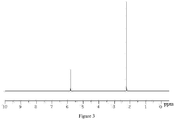
Figure 3 shows an 1H-NMR spectrum of 2,5-dimethylfuran obtained in Example 22. - Hereinafter, the present invention will be described in further detail in combination with the Examples. It will be appreciated that these Examples are merely illustrative of the present application and are not intended to limit the scope of the present application.
- In the Examples, 1H-NMR spectra were measured by using 400 AVANCE Type III Spectrometer from Bruker (400 MHz, CDCl3).
- Elemental analysis was performed by using the Perkin-Elmer 2400 II CHN mode and O mode. The products were analyzed by using 7890B-5977A Liquid Chromatography-Mass Spectrometer (Agilent).
- The yield of 2,3-dicarboxylic anhydride-7-oxabicyclo[2.2.1]hept-5-ene was calculated by using the following equation:

- The yield of a 2,5-disubstituted furan compound was calculated by using the following equation:

- In a 500 ml reactor, 68.0 g of furan, 78.5 g of maleic anhydride, and 100 ml of toluene were added, and reacted at 50°C for 10 hours. The resultant was cooled, crystallized, and dried to give white crystals of 2,3-dicarboxylic anhydride-7-oxabicyclo[2.2.1]hept-5-ene, with a yield of 92%. It was showed from the 1H-NMR (400MHz, CDCl3) spectrum that there were three peaks of CH, 2H of the ring, δ(3.18, 5.46, 6.58), respectively, as shown in
Figure 1 . - 16.6 g of 2,3-dicarboxylic anhydride-7-oxabicyclo[2.2.1]hept-5-ene was added into a 100 ml reactor. 20.4 g of acetic anhydride and 0.02 mol of concentrated sulfuric acid were added thereto and reacted at 160°C for 4 hours. After the reaction was finished, the temperature was reduced to room temperature. The resultant was distilled to remove acetic anhydride under reduced pressure and sublimated to give white crystals of 2,5-diacetylfuran having a melting point ranging from 135°C to 136°C, and the yield was 86%. The molecular weight of 2,5-diacetylfuran was 152.1, which was measured by liquid chromatography-mass spectrometry (LC-MS). It was showed from the 1H-NMR (400MHz, CDCl3) spectrum that: furan ring: CH, 2H: δ(7.24), CH3, 6H: δ(2.59), as shown in
Figure 2 . Elemental analysis for C8H8O3: Calculated: C: 63.15, H: 5.30, O: 31.55; Found: C: 62.8, H: 5.27, O: 31.57. - In a 500 ml reactor, 68.0 g of furan, 19.6 g of maleic anhydride, and 20 ml of dichloromethane were added, and reacted at 100°C for 1 hour. The resultant was cooled, crystallized, and dried to give white crystals of 2,3-dicarboxylic anhydride-7-oxabicyclo[2.2.1]hept-5-ene, with a yield of 90%. It was showed from the 1H-NMR (400MHz, CDCl3) spectrum that there were three peaks of CH, 2H of the ring, δ(3.18, 5.46, 6.58), respectively.
- 16.6 g of 2,3-dicarboxylic anhydride-7-oxabicyclo[2.2.1]hept-5-ene was added into a 100 ml reactor. 45.0 g of formic anhydride and 0.025 mol of concentrated nitric acid were added thereto and reacted at 180°C for 2 hours. After the reaction was finished, the temperature was reduced to room temperature. The resultant was distilled to remove acetic anhydride under reduced pressure and sublimated to give white crystals of 2,5-diformoxylfuran, with a yield of 92%. The molecular weight of 2,5-diformoxylfuran was 124.1, which was measured by liquid chromatography-mass spectrometry (LC-MS). It was showed from the 1H-NMR (400MHz, CDCl3) spectrum that: furan ring: CH, 2H, δ(7.54); CHO, 2H, δ(9.60). Elemental analysis for C6H4O3: Calculated: C: 58.07, H: 3.25, O: 38.68; Found: C: 57.9, H: 3.26, O: 38.10.
- In a 500 ml reactor, 68.0 g of furan, 9.8 g of maleic anhydride, and 10 ml of trichloromethane were added, and reacted at 70°C for 2 hours. The resultant was cooled, crystallized, and dried to give white crystals of 2,3-dicarboxylic anhydride-7-oxabicyclo[2.2.1]hept-5-ene, with a yield of 96%. It was showed from the 1H-NMR (400MHz, CDCl3) spectrum that there were three peaks of CH, 2H of the ring, δ(3.18, 5.46, 6.58), respectively.
- 8.3 g of 2,3-dicarboxylic anhydride-7-oxabicyclo[2.2.1]hept-5-ene was added into a 100 ml reactor. 73.1 g of propionic anhydride and 0.005 mol of concentrated hydrochloric acid were added thereto and reacted at 120°C for 8 hours. After the reaction was finished, the temperature was reduced to room temperature. The resultant was distilled to remove propionic anhydride under reduced pressure and sublimated to give white crystals of 2,5-dipropionylfuran, with a yield of 88%. The molecular weight of 2,5-dipropionylfuran was 180.1, which was measured by liquid chromatography-mass spectrometry (LC-MS). It was showed from the 1H-NMR (400MHz, CDCl3) spectrum that: furan ring: CH, 2H, δ(7.24); CH2, 4H, δ(2.78); CH3, 6H, δ(1.22). Elemental analysis for C10H12O3: Calculated: C: 66.65, H: 6.71, O: 26.64; Found: C: 66.4, H: 6.51, O:27.1.
- In a 500 ml reactor, 68.0 g of furan, and 24.5 g of maleic anhydride were added, and reacted at 30°C for 6 hours. The resultant was crystallized and dried to give white crystals of 2,3-dicarboxylic anhydride-7-oxabicyclo[2.2.1]hept-5-ene, with a yield of 92%. It was showed from the 1H-NMR (400MHz, CDCl3) spectrum that there were three peaks of CH, 2H of the aromatic ring, δ(3.18, 5.46, 6.58), respectively.
- 16.6 g of 2,3-dicarboxylic anhydride-7-oxabicyclo[2.2.1]hept-5-ene was added into a 100 ml reactor. 8.7 g of butyric anhydride and 0.005 mol of methanesulfonic acid were added thereto and reacted at 100°C for 12 hours. After the reaction was finished, the temperature was reduced to room temperature. The resultant was distilled to remove butyric anhydride under reduced pressure and sublimated to give white crystals of 2,5-dibutyrylfuran, with a yield of 81%. The molecular weight of 2,5-dibutyrylfuran was 208.3, which was measured by liquid chromatography-mass spectrometry (LC-MS). It was showed from the 1H-NMR (400MHz, CDCl3) spectrum that: furan ring: CH, 2H, δ(7.24); CH2, 4H, δ(2.74); CH2, 4H, δ(1.52); CH3, 6H, δ(0.96). Elemental analysis for C12H16O3: Calculated: C: 69.21, H: 7.74, O: 23.05; Found: C: 69.10, H: 7.47, O: 23.22.
- In a 500 ml reactor, 68.0 g of furan, 117.7 g of maleic anhydride, and 200 ml of acetone were added, and reacted at 10°C for 16 hours. The resultant was crystallized and dried to give white crystals of 2,3-dicarboxylic anhydride-7-oxabicyclo[2.2.1]hept-5-ene, with a yield of 88%. It was showed from the 1H-NMR (400MHz, CDCl3) spectrum that there were three peaks of CH, 2H of the aromatic ring, δ(3.18, 5.46, 6.58), respectively.
- 16.6 g of 2,3-dicarboxylic anhydride-7-oxabicyclo[2.2.1]hept-5-ene monomer was added into a 100 ml reactor. 20.2 g of pentanoic anhydride and 0.01 mol of benzene methyl sulfonic acid were added thereto and reacted at 10°C for 48 hours. After the reaction was finished, the temperature was increased to room temperature. The resultant was distilled to remove pentanoic anhydride under reduced pressure and sublimated to give white crystals of 2,5-divalerylfuran, with a yield of 94%. The molecular weight of 2,5-divalerylfuran was 236.3, which was measured by liquid chromatography-mass spectrometry (LC-MS). It was showed from the 1H-NMR (400MHz, CDCl3) spectrum that: furan ring: CH, 2H, δ(7.24); CH2, 4H, δ(2.74); CH2, 4H, δ(1.48); CH2, 4H, δ(1.33); CH3, 6H, δ(0.96). Elemental analysis for C14H20O3: Calculated: C: 71.16, H: 8.53, O: 20.31; Found: C: 71.12, H: 7.95, O: 21.08.
- In a 1000 ml reactor, 68.0 g of furan, 137.2 g of maleic anhydride, and 400 ml of methanol were added, and reacted at 0°C for 24 hours. The resultant was crystallized and dried to give white crystals of 2,3-dicarboxylic anhydride-7-oxabicyclo[2.2.1]hept-5-ene, with a yield of 90%. It was showed from the 1H-NMR (400MHz, CDCl3) spectrum that there were three peaks of CH, 2H of the ring, δ(3.18, 5.46, 6.58), respectively.
- 16.6 g of 2,3-dicarboxylic anhydride-7-oxabicyclo[2.2.1]hept-5-ene was added into a 250 ml reactor. 92.1 g of caproic anhydride and 0.00005 mol of concentrated phosphoric acid were added thereto and reacted at 0°C for 36 hours. After the reaction was finished, the temperature was increased to room temperature. The resultant was distilled to remove caproic anhydride under reduced pressure and sublimated to give white crystals of 2,5-dicaproylfuran, with a yield of 88%. The molecular weight of 2,5-dicaproylfuran was 264.4, which was measured by liquid chromatography-mass spectrometry (LC-MS). It was showed from the 1H-NMR (400MHz, CDCl3) spectrum that: furan ring: CH, 2H, δ(7.24); CH2, 4H, δ(2.74); CH2, 4H, δ(1.48); CH2, 4H, δ(1.33); CH2, 4H, δ(1.29); CH3, 6H, δ(0.96). Elemental analysis for C16H24O3: Calculated: C: 72.69, H: 9.15, O: 18.16; Found: C: 72.61, H: 9.10, O: 18.04.
- In a 2000 ml reactor, 68.0 g of furan, 176.4 g of maleic anhydride, and 1000 ml of ethanol were added, and reacted at -5°C for 48 hours. The resultant was crystallized and dried to give white crystals of 2,3-dicarboxylic anhydride-7-oxabicyclo[2.2.1]hept-5-ene, with a yield of 92%. It was showed from the 1H-NMR (400MHz, CDCl3) spectrum that there were three peaks of CH, 2H of the ring, δ(3.18, 5.46, 6.58), respectively.
- 16.6 g of 2,3-dicarboxylic anhydride-7-oxabicyclo[2.2.1]hept-5-ene was added into a 500 ml reactor. 205.4 g of capric anhydride and 0.012 mol of AlCl3 were added thereto and reacted at 200°C for 0.1 hour. After the reaction was finished, the temperature was reduced to room temperature. The resultant was distilled to remove capric anhydride under reduced pressure and sublimated to give white crystals of 2,5-dicaprylfuran, with a yield of 84%. The molecular weight of 2,5-dicaprylfuran was 376.6, which was measured by liquid chromatography-mass spectrometry (LC-MS). It was showed from the 1H-NMR (400MHz, CDCl3) spectrum that: furan ring: CH, 2H, δ(7.24); CH2, 4H, δ(2.74); CH2, 4H, δ(1.48); CH2, 20H, δ(1.31); CH2, 4H, δ(1.36); CH3, 6H, δ(0.96). Elemental analysis for C24H40O3: Calculated: C: 76.55, H: 10.71, O: 12.75; Found: C: 76.21, H: 9.97, O: 12.40.
- In a 250 ml reactor, 68.0 g of furan, 58.8 g of maleic anhydride, and 5 ml of chloroform were added, and reacted at 20°C for 12 hours. The resultant was crystallized and dried to give white crystals of 2,3-dicarboxylic anhydride-7-oxabicyclo[2.2.1]hept-5-ene, with a yield of 89%. It was showed from the 1H-NMR (400MHz, CDCl3) spectrum that there were three peaks of CH, 2H of the ring, δ(3.18, 5.46, 6.58), respectively.
- 16.6 g of 2,3-dicarboxylic anhydride-7-oxabicyclo[2.2.1]hept-5-ene was added into a 250 ml reactor. 40.8 g of hexadecanoic anhydride and 0.005 mol of ZnCl2 were added thereto and reacted at 80°C for 1 hour. After the reaction was finished, the temperature was reduced to room temperature. The resultant was distilled to remove hexadecanoic anhydride under reduced pressure and sublimated to give white crystals of 2,5-dihexadecanoylfuran, with a yield of 92%. The molecular weight of 2,5-dihexadecanoylfuran was 544.5, which was measured by liquid chromatography-mass spectrometry (LC-MS). It was showed from the 1H-NMR (400MHz, CDCl3) spectrum that: furan ring: CH, 2H, δ(7.24); CH2, 4H, δ(2.74); CH2, 4H, δ(1.48); CH2, 20H, δ(1.31); CH2, 4H, δ(1.36); CH3, 6H, δ(0.96). Elemental analysis for C36H64O3: Calculated: C: 79.35, H: 11.84, O: 8.81; Found: C: 79.20, H: 11.66, O: 8.74.
- In a 500 ml reactor, 68.0 g of furan, 78.5 g of maleic anhydride, and 100 ml of toluene were added, and reacted at 50°C for 10 hours. The resultant was cooled, crystallized, and dried to give white crystals of 2,3-dicarboxylic anhydride-7-oxabicyclo[2.2.1]hept-5-ene, with a yield of 92%. It was showed from the 1H-NMR (400MHz, CDCl3) spectrum that there were three peaks of CH, 2H of the ring, δ(3.18, 5.46, 6.58), respectively.
- 16.6 g of 2,3-dicarboxylic anhydride-7-oxabicyclo[2.2.1]hept-5-ene was added into a 100 ml reactor. 15.7 g of acetyl chloride and 0.001 mol of SnCl4 were added thereto and reacted at 100°C for 6 hours. After the reaction was finished, the temperature was reduced to room temperature. The resultant was distilled to remove acetyl chloride under reduced pressure and sublimated to give white crystals of 2,5-diacetylfuran having a melting point ranging from 135°C to 136°C, and the yield was 88%. The molecular weight of 2,5-diacetylfuran was 152.1, which was measured by liquid chromatography-mass spectrometry (LC-MS). It was showed from the 1H-NMR (400MHz, CDCl3) spectrum that: furan ring: CH, 2H, δ(7.24); CH3, 6H, δ(2.59). Elemental analysis for C8H8O3: Calculated: C: 63.15, H: 5.30, O: 31.55; Found: C: 62.9, H: 5.33, O: 31.43.
- In a 500 ml reactor, 68.0 g of furan, 78.5 g of maleic anhydride, and 100 ml of toluene were added, and reacted at 50°C for 10 hours. The resultant was cooled, crystallized, and dried to give white crystals of 2,3-dicarboxylic anhydride-7-oxabicyclo[2.2.1]hept-5-ene, with a yield of 92%. It was showed from the 1H-NMR (400MHz, CDCl3) spectrum that there were three peaks of CH, 2H of the ring, δ(3.18, 5.46, 6.58), respectively.
- 16.6 g of 2,3-dicarboxylic anhydride-7-oxabicyclo[2.2.1]hept-5-ene was added into a 100 ml reactor. 24.6 g of acetyl bromide and 0.001 mol of boron trifluoride ethyl ether complex were added thereto and reacted at 100°C for 6 hours. After the reaction was finished, the temperature was reduced to room temperature. The resultant was distilled to remove acetyl bromide under reduced pressure and sublimated to give white crystals of 2,5-diacetylfuran having a melting point ranging from 135°C to 136°C, and the yield was 87%. The molecular weight of 2,5-diacetylfuran was 152.1, which was measured by liquid chromatography-mass spectrometry (LC-MS). It was showed from the 1H-NMR (400MHz, CDCl3) spectrum that: furan ring: CH, 2H, δ(7.24); CH3, 6H, δ(2.59). Elemental analysis for C8H8O3: Calculated: C: 63.15, H: 5.30, O: 31.55; Found: C: 63.1, H: 5.29, O: 31.40.
- In a 500 ml reactor, 68.0 g of furan, 78.5 g of maleic anhydride, and 100 ml of toluene were added, and reacted at 50°C for 10 hours. The resultant was cooled, crystallized, and dried to give white crystals of 2,3-dicarboxylic anhydride-7-oxabicyclo[2.2.1]hept-5-ene, with a yield of 92%. It was showed from the 1H-NMR (400MHz, CDCl3) spectrum that there were three peaks of CH, 2H of the ring, δ(3.18, 5.46, 6.58), respectively.
- 16.6 g of 2,3-dicarboxylic anhydride-7-oxabicyclo[2.2.1]hept-5-ene was added into a 100 ml reactor. 34.0 g of acetyl iodine and 0.001 mol of concentrated sulfuric acid were added thereto and reacted at 100°C for 6 hours. After the reaction was finished, the temperature was reduced to room temperature. The resultant was distilled to remove acetyl iodine under reduced pressure and sublimated to give white crystals of 2,5-diacetylfuran having a melting point ranging from 135°C to 136°C, and the yield was 90%. The molecular weight of 2,5-diacetylfuran was 152.1, which was measured by liquid chromatography-mass spectrometry (LC-MS). It was showed from the 1H-NMR (400MHz, CDCl3) spectrum that: furan ring: CH, 2H, δ(7.24); CH3, 6H, δ(2.59). Elemental analysis for C8H8O3: Calculated: C: 63.15, H: 5.30, O: 31.55; Found: C: 63.20, H: 5.33, O: 31.60.
- In a 500 ml reactor, 68.0 g of furan, 24.5 g of maleic anhydride, and 60 ml of petroleum ether were added, and reacted at 30°C for 6 hours. The resultant was crystallized and dried to give white crystals of 2,3-dicarboxylic anhydride-7-oxabicyclo[2.2.1]hept-5-ene, with a yield of 90%. It was showed from the 1H-NMR (400MHz, CDCl3) spectrum that there were three peaks of CH, 2H of the ring, δ(3.18, 5.46, 6.58), respectively.
- 16.6 g of 2,3-dicarboxylic anhydride-7-oxabicyclo[2.2.1]hept-5-ene was added into a 100 ml reactor. 21.3 g of butyryl chloride and 0.001 mol of concentrated sulfuric acid were added thereto and reacted at 120°C for 12 hours. After the reaction was finished, the temperature was reduced to room temperature. The resultant was distilled to remove butyryl chloride under reduced pressure and sublimated to give white crystals of 2,5-dibutyrylfuran, with a yield of 92%. The molecular weight of 2,5-dibutyrylfuran was 208.3, which was measured by liquid chromatography-mass spectrometry (LC-MS). It was showed from the 1H-NMR (400MHz, CDCl3) spectrum that: furan ring: CH, 2H, δ(7.24); CH2, 4H, δ(2.74); CH2, 4H, δ(1.52), CH3, 6H; δ(0.96). Elemental analysis for C12H16O3: Calculated: C: 69.21, H: 7.74, O: 23.05; Found: C: 69.15, H: 7.52, O: 22.94.
- In a 500 ml reactor, 68.0 g of furan, 19.6 g of maleic anhydride, and 20 ml of dichloromethane were added, and reacted at 100°C for 1 hour. The resultant was cooled, crystallized, and dried to give white crystals of 2,3-dicarboxylic anhydride-7-oxabicyclo[2.2.1]hept-5-ene monomer, with a yield of 90%. It was showed from the 1H-NMR (400MHz, CDCl3) spectrum that there were three peaks of CH, 2H of the ring, δ(3.18, 5.46, 6.58), respectively.
- 16.6 g of 2,3-dicarboxylic anhydride-7-oxabicyclo[2.2.1]hept-5-ene monomer was added into a 250 ml reactor. 102.6 g of chloroacetic anhydride and 0.025 mol of concentrated nitric acid were added thereto and reacted at 200°C for 0.5 hour. After the reaction was finished, the temperature was reduced to room temperature. The resultant was distilled to remove chloroacetic anhydride under reduced pressure and sublimated to give white crystals of 2,5-dichloroacetylfuran, with a yield of 93%. The molecular weight of 2,5-dichloroacetylfuran was 221.0, which was measured by liquid chromatography-mass spectrometry (LC-MS). It was showed from the 1H-NMR (400MHz, CDCl3) spectrum that: furan ring: CH, 2H, δ(7.24); CH2Cl, 4H, δ(4.83).
- In a 500 ml reactor, 68.0 g of furan, 9.8 g of maleic anhydride, and 10 ml trichloromethane were added, and reacted at 70°C for 2 hours. The resultant was cooled, crystallized, and dried to give white crystals of 2,3-dicarboxylic anhydride-7-oxabicyclo[2.2.1]hept-5-ene monomer, with a yield of 96%. It was showed from the 1H-NMR (400MHz, CDCl3) spectrum that there were three peaks of CH, 2H of the ring, δ(3.18, 5.46, 6.58), respectively.
- 8.3 g of 2,3-dicarboxylic anhydride-7-oxabicyclo[2.2.1]hept-5-ene monomer was added into a 250 ml reactor. 57.8 g of trifluoroacetic anhydride and 0.005 mol of concentrated hydrochloric acid were added thereto and reacted at 160°C for 6 hours. After the reaction was finished, the temperature was reduced to room temperature. The resultant was distilled to remove trifluoroacetic anhydride under reduced pressure and sublimated to give white crystals of 2,5-di(trifluoroacetyl)furan, with a yield of 88%. The molecular weight of 2,5-di(trifluoroacetyl)furan was 260.1, which was measured by liquid chromatography-mass spectrometry (LC-MS). It was showed from the 1H-NMR (400MHz, CDCl3) spectrum that: furan ring: CH, 2H, δ(8.14).
- In a 500 ml reactor, 68.0 g of furan, 24.5 g of maleic anhydride, and 60 ml of petroleum ether were added, and reacted at 30°C for 6 hours. The resultant was crystallized and dried to give white crystals of 2,3-dicarboxylic anhydride-7-oxabicyclo[2.2.1]hept-5-ene monomer, with a yield of 92%. It was showed from the 1H-NMR (400MHz, CDCl3) spectrum that there were three peaks of CH, 2H of the ring, δ(3.18, 5.46, 6.58), respectively.
- 16.6 g of 2,3-dicarboxylic anhydride-7-oxabicyclo[2.2.1]hept-5-ene monomer was added into a 100 ml reactor. 15.5 g of heptafluorobutyric anhydride and 0.005 mol of concentrated phosphoric acid were added thereto and reacted at 100°C for 12 hours. After the reaction was finished, the temperature was reduced to room temperature. The resultant was distilled to remove heptafluorobutyric anhydride under reduced pressure and sublimated to give crystals of 2,5-di(heptafluorobutyryl)furan, with a yield of 83%. The molecular weight of 2,5-di-heptafluorobutyrylfuran was 360.1, which was measured by liquid chromatography-mass spectrometry (LC-MS). It was showed from the 1H-NMR (400MHz, CDCl3) spectrum that: furan ring: CH, 2H, δ(7.34).
- In a 500 ml reactor, 68.0 g of furan, and 117.7 g of maleic anhydride were added, and reacted at 10°C for 16 hours. The resultant was crystallized and dried to give white crystals of 2,3-dicarboxylic anhydride-7-oxabicyclo[2.2.1]hept-5-ene monomer, with a yield of 88%. It was showed from the 1H-NMR (400MHz, CDCl3) spectrum that there were three peaks of CH, 2H of the ring, δ(3.18, 5.46, 6.58), respectively.
- 16.6 g of 2,3-dicarboxylic anhydride-7-oxabicyclo[2.2.1]hept-5-ene monomer was added into a 100 ml reactor. 7.85 g of acetyl chloride and 0.01 mol of methanesulfonic acid were added thereto and reacted at 10°C for 40 hours. After the reaction was finished, the temperature was increased to room temperature. The resultant was distilled to remove acetyl chloride under reduced pressure and sublimated to give white crystals of 2,5-diacetylfuran, with a yield of 91%. The molecular weight of 2,5-diacetylfuran was 152.1, which was measured by liquid chromatography-mass spectrometry (LC-MS). It was showed from the 1H-NMR (400MHz, CDCl3) spectrum that: furan ring: CH, 2H, δ(7.24); CH3, 6H, δ(2.59). Elemental analysis for C8H8O3: Calculated: C: 63.15, H: 5.30, O: 31.55; Found: C: 62.9, H: 5.33, O: 31.43.
- In a 1000 ml reactor, 68.0 g of furan, 137.2 g of maleic anhydride, and 400 ml of methanol were added, and reacted at 0°C for 24 hours. The resultant was crystallized and dried to give white crystals of 2,3-dicarboxylic anhydride-7-oxabicyclo[2.2.1]hept-5-ene monomer, with a yield of 90%. It was showed from the 1H-NMR (400MHz, CDCl3) spectrum that there were three peaks of CH, 2H of the ring, δ(3.18, 5.46, 6.58), respectively.
- 16.6 g of 2,3-dicarboxylic anhydride-7-oxabicyclo[2.2.1]hept-5-ene monomer was added into a 250 ml reactor. 90.4 g of chloroacetyl chloride and 0.0005 mol of benzene methyl sulfonic acid were added thereto and reacted at 40°C for 24 hours. After the reaction was finished, the temperature was reduced to room temperature. The resultant was distilled to remove chloroacetyl chloride under reduced pressure and sublimated to give white crystals of 2,5-dichloroacetylfuran, with a yield of 88%. The molecular weight of 2,5-dichloroacetylfuran was 221.0, which was measured by liquid chromatography-mass spectrometry (LC-MS). It was showed from the 1H-NMR (400MHz, CDCl3) spectrum that: furan ring: CH, 2H, δ(7.24); CH2Cl, 4H, δ(4.83).
- In a 2000 ml reactor, 68.0 g of furan, 176.4 g of maleic anhydride, and 1000 ml of ethanol were added, and reacted at -5°C for 48 hours. The resultant was crystallized and dried to give white crystals of 2,3-dicarboxylic anhydride-7-oxabicyclo[2.2.1]hept-5-ene monomer, with a yield of 92%. It was showed from the 1H-NMR (400MHz, CDCl3) spectrum that there were three peaks of CH, 2H of the ring, δ(3.18, 5.46, 6.58), respectively.
- 16.6 g of 2,3-dicarboxylic anhydride-7-oxabicyclo[2.2.1]hept-5-ene monomer was added into a 250 ml reactor. 14.7 g of dichloroacetyl chloride and 0.012 mol of AlCl3 were added thereto and reacted at 80°C for 12 hours. After the reaction was finished, the temperature was reduced to room temperature. The resultant was distilled to remove dichloroacetyl chloride under reduced pressure and sublimated to give crystals of 2,5-di(dichloroacetyl)furan, with a yield of 84%. The molecular weight of 2,5-di(dichloroacetyl)furan was 289.9, which was measured by liquid chromatography-mass spectrometry (LC-MS). It was showed from the 1H-NMR (400MHz, CDCl3) spectrum that: furan ring: CH, 2H, δ(7.24); CHCl2, 2H, δ(6.32).
- In a 250 ml reactor, 68.0 g of furan, 58.8 g of maleic anhydride, and 5 ml of chloroform were added, and reacted at 20°C for 12 hours. The resultant was crystallized and dried to give white crystal of 2,3-dicarboxylic anhydride-7-oxabicyclo[2.2.1]hept-5-ene monomer, with a yield of 89%. It was showed from the 1H-NMR (400MHz, CDCl3) spectrum that there were three peaks of CH, 2H of the ring, δ(3.18, 5.46, 6.58), respectively.
- 16.6 g of 2,3-dicarboxylic anhydride-7-oxabicyclo[2.2.1]hept-5-ene monomer was added into a 250 ml reactor. 156.6 g of furoyl chloride and 0.005 mol of ZnCl2 were added thereto and reacted at 180°C for 1 hour. After the reaction was finished, the temperature was reduced to room temperature. The resultant was distilled to remove furoyl chloride under reduced pressure and sublimated to give white crystals of 2,5-difuroylfuran, with a yield of 92%. The molecular weight of 2,5-difuroylfuran was 256.2, which was measured by liquid chromatography-mass spectrometry (LC-MS). It was showed from the 1H-NMR (400MHz, CDCl3) spectrum that: furan ring: CH, 2H, δ(7.54); CH, 2H; δ(7.23); CH, 2H, δ(6.61); CH, 2H, δ(7.72).
- In a 500 ml reactor, 68.0 g of furan, 78.5 g of maleic anhydride, and 100 ml of toluene were added, and reacted at 50°C for 10 hours. The resultant was cooled, crystallized, and dried to give white crystals of 2,3-dicarboxylic anhydride-7-oxabicyclo[2.2.1]hept-5-ene monomer, with a yield of 92%. It was showed from the 1H-NMR (400MHz, CDCl3) spectrum that there were three peaks of CH, 2H of the ring, δ(3.18, 5.46, 6.58), respectively.
- 16.6 g of 2,3-dicarboxylic anhydride-7-oxabicyclo[2.2.1]hept-5-ene monomer was added into a 500 ml reactor. 204.8 g of oxalyl chloride monoethyl ester and 0.001 mol of SnCl4 were added thereto and reacted at 100°C for 8 hours. After the reaction was finished, the temperature was reduced to room temperature. The resultant was distilled to remove oxalyl chloride monoethyl ester under reduced pressure and sublimated to give white crystals of 2,5-di(monoethyl ester acetyl) furan, with a yield of 89%. The molecular weight of 2,5-di(monoethyl ester acetyl)furan was 268.2, which was measured by liquid chromatography-mass spectrometry (LC-MS). It was showed from the 1H-NMR (400MHz, CDCl3) spectrum that: furan ring: CH, 2H, δ(7.24); CH2, 4H, δ(4.20); CH3, 6H, δ(1.30).
- In a 500 ml reactor, 68.0 g of furan, 78.5 g of maleic anhydride, and 100 ml of toluene were added, and reacted at 50°C for 10 hours. The resultant was cooled, crystallized, and dried to give white crystals of 2,3-dicarboxylic anhydride-7-oxabicyclo[2.2.1]hept-5-ene monomer, with a yield of 92%. It was showed from the 1H-NMR (400MHz, CDCl3) spectrum that there were three peaks of CH, 2H of the ring, δ(3.18, 5.46, 6.58), respectively.
- 16.6 g of 2,3-dicarboxylic anhydride-7-oxabicyclo[2.2.1]hept-5-ene monomer was added into a 250 ml reactor. 56.2 g of benzoyl chloride and 0.001 mol of boron trifluoride ethyl ether complex were added thereto and reacted at 140°C for 4 hours. After the reaction was finished, the temperature was reduced to room temperature. The resultant was distilled to remove benzoyl chloride under reduced pressure and sublimated to give white crystals of 2,5-dibenzoylfuran, with a yield of 92%. The molecular weight of 2,5-dibenzoylfuran was 276.3, which was measured by liquid chromatography-mass spectrometry (LC-MS). It was showed from the 1H-NMR (400MHz, CDCl3) spectrum that: furan ring: CH, 2H, δ(7.24); benzene ring, 4H, δ(7.81); benzene ring, 4H, δ(7.45); benzene ring, 2H, δ(7.54).
- In a 100 ml reactor, 68.0 g of furan, 78.5 g of maleic anhydride, and 100 ml of toluene were added, and reacted at 50°C for 8 hours. The resultant was cooled, crystallized, and dried to give white crystals of 2,3-dicarboxylic anhydride-7-oxabicyclo[2.2.1]hept-5-ene monomer, with a yield of 92%. It was showed from the 1H-NMR (400MHz, CDCl3) spectrum that there were three peaks of CH, 2H of the ring, δ(3.18, 5.46, 6.58), respectively.
- 16.6 g of 2,3-dicarboxylic anhydride-7-oxabicyclo[2.2.1]hept-5-ene monomer was added into a 250 ml reactor. 28.4 g of iodomethane and 0.02 mol of concentrated sulfuric acid were added thereto and reacted at 40°C for 20 hours. After the reaction was finished, the temperature was reduced to room temperature. The resultant was distilled under reduced pressure to give 2,5-dimethylfuran having a boiling point ranging from 92°C to 94°C, and the yield was 87%. It was showed from the 1H-NMR (400MHz, CDCl3) spectrum that in the furan ring, CH, 2H, δ(5.81); CH3, 6H, δ(2.23), as shown in
Figure 3 . - In a 500 ml reactor, 68.0 g of furan, 19.6 g of maleic anhydride, and 20 ml of dichloromethane were added, and reacted at 100°C for 0.5 hour. The resultant was cooled, crystallized, and dried to give white crystals of 2,3-dicarboxylic anhydride-7-oxabicyclo[2.2.1]hept-5-ene monomer, with a yield of 90%. It was showed from the 1H-NMR (400MHz, CDCl3) spectrum that there were three peaks of CH, 2H of the ring, δ(3.18, 5.46, 6.58), respectively.
- 16.6 g of 2,3-dicarboxylic anhydride-7-oxabicyclo[2.2.1]hept-5-ene monomer was added into a 250 ml reactor. 14.2 g of iodomethane and 0.005 mol of concentrated hydrochloric acid were added thereto and reacted at 20°C for 24 hours. After the reaction was finished, the temperature was increased to room temperature. The resultant was distilled under reduced pressure to give 2,5-dimethylfuran having a boiling point ranging from 92°C to 94°C, and the yield was 85%. It was showed from the 1H-NMR (400MHz, CDCl3) spectrum that: furan ring: CH, 2H, δ(5.81); CH3, 6H, δ(2.23).
- In a 200 ml reactor, 68.0 g of furan, 196 g of maleic anhydride, and 800 ml of trichloromethane were added, and reacted at 80°C for 1 hour. The resultant was cooled, crystallized, and dried to give white crystals of 2,3-dicarboxylic anhydride-7-oxabicyclo[2.2.1]hept-5-ene monomer, with a yield of 96%. It was showed from the 1H-NMR (400MHz, CDCl3) spectrum that there were three peaks of CH, 2H of the ring, δ(3.18, 5.46, 6.58), respectively.
- 8.3 g of 2,3-dicarboxylic anhydride-7-oxabicyclo[2.2.1]hept-5-ene monomer was added into a 100 ml reactor. 78.0 g of iodoethane and 0.005 mol of concentrated nitric acid were added thereto and reacted at 60°C for 16 hours. After the reaction was finished, the temperature was reduced to room temperature. The resultant was distilled under reduced pressure to give 2,5-diethylfuran, with a yield of 92%. It was showed from the 1H-NMR (400MHz, CDCl3) spectrum that: furan ring: CH, 2H, δ(5.76); CH2, 4H, δ(2.44); CH3, 6H, δ(1.24).
- In a 500 ml reactor, 68.0 g of furan, 147 g of maleic anhydride, and 400 ml of petroleum ether were added, and reacted at 65°C for 4 hours. The resultant was cooled, crystallized, and dried to give white crystals of 2,3-dicarboxylic anhydride-7-oxabicyclo[2.2.1]hept-5-ene monomer, with a yield of 92%. It was showed from the 1H-NMR (400MHz, CDCl3) spectrum that there were three peaks of CH, 2H of the ring, δ(3.18, 5.46, 6.58), respectively.
- 16.6 g of 2,3-dicarboxylic anhydride-7-oxabicyclo[2.2.1]hept-5-ene monomer was added into a 100 ml reactor. n-chloropropane and 0.0004 mol of concentrated phosphoric acid were added thereto and reacted at 100°C for 10 hours. After the reaction was finished, the temperature was reduced to room temperature. The resultant was distilled under reduced pressure to give 2,5-di-n-propylfuran, with a yield of 87%. It was showed from the 1H-NMR (400MHz, CDCl3) spectrum that: furan ring: CH, 2H, δ(5.76); CH2, 4H, δ(2.44); CH2, 4H, δ(1.52); CH3, 6H, δ(0.96).
- In a 500 ml reactor, 68.0 g of furan, 117.7 g of maleic anhydride, and 200 ml of acetone were added, and reacted at 30°C for 12 hours. The resultant was cooled, crystallized, and dried to give white crystals of 2,3-dicarboxylic anhydride-7-oxabicyclo[2.2.1]hept-5-ene monomer, with a yield of 88%. It was showed from the 1H-NMR (400MHz, CDCl3) spectrum that there were three peaks of CH, 2H of the ring, δ(3.18, 5.46, 6.58), respectively.
- 16.6 g of 2,3-dicarboxylic anhydride-7-oxabicyclo[2.2.1]hept-5-ene monomer was added into a 100 ml reactor. 47.1 g of 2-chloropropane and 0.012 mol of methanesulfonic acid were added thereto and reacted at 120°C for 4 hours. After the reaction was finished, the temperature was reduced to room temperature. The resultant was distilled under reduced pressure to give 2,5-di-isopropylfuran, with a yield of 89%. It was showed from the 1H-NMR (400MHz, CDCl3) spectrum that: furan ring: CH, 2H, δ(5.76); CH, 2H, δ(3.30); CH3, 6H, δ(1.33).
- In a 1000 ml reactor, 68.0 g of furan, and 39.2 g of maleic anhydride were added, and reacted at 10°C for 24 hours. The resultant was crystallized, and dried to give white crystals of 2,3-dicarboxylic anhydride-7-oxabicyclo[2.2.1]hept-5-ene monomer, with a yield of 90%. It was showed from the 1H-NMR (400MHz, CDCl3) spectrum that there were three peaks of CH, 2H of the ring, δ(3.18, 5.46, 6.58), respectively.
- 16.6 g of 2,3-dicarboxylic anhydride-7-oxabicyclo[2.2.1]hept-5-ene monomer was added into a 100 ml reactor. 360.8 g of n-iodobutane and 0.06 mol of benzene methyl sulfonic acid were added thereto and reacted at 160°C for 1 hour. After the reaction was finished, the temperature was reduced to room temperature. The resultant was distilled under reduced pressure to give 2,5-di-n-propylfuran, with a yield of 88%. It was showed from the 1H-NMR (400MHz, CDCl3) spectrum that: furan ring: CH, 2H, δ(5.76); CH2, 4H, δ(2.42); CH2, 4H, δ(1.66); CH2, 4H, δ(1.33); CH3, 6H, δ(0.96).
- In a 500 ml reactor, 68.0 g of furan, 14.7 g of maleic anhydride, and 60 ml of ethanol were added, and reacted at -5°C for 48 hours. The resultant was crystallized and dried to give white crystals of 2,3-dicarboxylic anhydride-7-oxabicyclo[2.2.1]hept-5-ene monomer, with a yield of 90%. It was showed from the 1H-NMR (400MHz, CDCl3) spectrum that there were three peaks of CH, 2H of the ring, δ(3.18, 5.46, 6.58), respectively.
- 16.6 g of 2,3-dicarboxylic anhydride-7-oxabicyclo[2.2.1]hept-5-ene monomer was added into a 250 ml reactor. 198.8 g of iodomethane and 0.084 mol of AlCl3 were added thereto and reacted at 120°C for 2 hours. After the reaction was finished, the temperature was reduced to room temperature. The resultant was distilled under reduced pressure to give 2,5-dimethylfuran having a boiling point ranging from 92°C to 94°C and the yield was 93%. It was showed from the 1H-NMR (400MHz, CDCl3) spectrum that: furan ring: CH, 2H, δ(5.81); CH3, 6H, δ(2.23).
- In a 200 ml reactor, 68.0 g of furan, 58.8 g of maleic anhydride, and 200 ml of trichloromethane were added, and reacted at 25°C for 10 hours. The resultant was cooled, crystallized, and dried to give white crystals of 2,3-dicarboxylic anhydride-7-oxabicyclo[2.2.1]hept-5-ene monomer, with a yield of 90%. It was showed from the 1H-NMR (400MHz, CDCl3) spectrum that there were three peaks of CH, 2H of the ring, δ(3.18, 5.46, 6.58), respectively.
- 8.3 g of 2,3-dicarboxylic anhydride-7-oxabicyclo[2.2.1]hept-5-ene monomer was added into a 100 ml reactor. 78.0 g of iodoethane and 0.025 mol of boron trifluoride ethyl ether complex were added thereto and reacted at 80°C for 6 hours. After the reaction was finished, the temperature was reduced to room temperature. The resultant was distilled under reduced pressure to give 2,5-diethylfuran, with a yield of 91%. It was showed from the 1H-NMR (400MHz, CDCl3) spectrum that: furan ring: CH, 2H, δ(5.76); CH2, 4H, δ(2.44); CH3, 6H, δ(1.24).
- 6.8 g of furan was added into a 100 ml reactor, then 20.4 g of acetic anhydride and 0.01 mol of concentrated sulfuric acid were added thereto and reacted at 140°C for 8 hours. After the reaction was finished, the temperature was reduced to room temperature. The resultant was distilled to remove acetic anhydride under reduced pressure and sublimated to give white crystals of 2,5-diacetylfuran having a melting point ranging from 135°C to 136°C, and the yield was 64%. The molecular weight of 2,5-diacetylfuran was 152.1, which was measured by liquid chromatography-mass spectrometry (LC-MS). It was showed from the 1H-NMR (400MHz, CDCl3) spectrum that: furan ring: CH, 2H, δ(7.24); CH3, 6H, δ(2.59). Elemental analysis for C8H8O3: Calculated: C: 63.15, H: 5.30, O: 31.55; Found: C: 62.70, H: 5.29, O: 31.67.
- 6.8 g of furan was added into a 100 ml reactor, then 15.7 g of acetyl chloride and 0.005 mol of SnCl4 were added thereto and reacted at 60°C for 12 hours. After the reaction was finished, the temperature was reduced to room temperature. The resultant was distilled to remove acetyl chloride under reduced pressure and sublimated to give white crystals of 2,5-diacetylfuran having a melting point ranging from 135°C to 136°C, and the yield was 62%. The molecular weight of 2,5-diacetylfuran was 152.1, which was measured by liquid chromatography-mass spectrometry (LC-MS). It was showed from the 1H-NMR (400MHz, CDCl3) spectrum that: furan ring: CH, 2H, δ(7.24); CH3, 6H, δ(2.59). Elemental analysis for C8H8O3: Calculated: C: 63.15, H: 5.30, O: 31.55; Found: C: 62.80, H: 5.37, O: 31.32.
- 6.8 g of furan was added into a 200 ml reactor, then 73.1 g of propionic anhydride and 0.010 mol of concentrated hydrochloric acid were added thereto and reacted at 40°C for 16 hours. After the reaction was finished, the temperature was reduced to room temperature. The resultant was distilled to remove propionic anhydride under reduced pressure and sublimated to give white crystals of 2,5-dipropionylfuran, with a yield of 67%. The molecular weight of 2,5-dipropionylfuran was 180.1, which was measured by liquid chromatography-mass spectrometry (LC-MS). It was showed from the 1H-NMR (400MHz, CDCl3) spectrum that: furan ring: CH, 2H, δ(7.24); CH2, 4H, δ(2.78); CH3, 6H, δ(1.22). Elemental analysis for C10H12O3: Calculated: C: 66.65, H: 6.71, O: 26.64; Found: C: 66.7, H: 6.60, O: 27.03.
- 6.8 g of furan was added into a 250 ml reactor, then 102.6 g of chloroacetic anhydride and 0.030 mol of concentrated nitric acid were added thereto and reacted at 100°C for 5 hours. After the reaction was finished, the temperature was reduced to room temperature. The resultant was distilled to remove chloroacetic anhydride under reduced pressure and sublimated to give white crystals of 2,5-dichloroacetylfuran, with a yield of 62%. The molecular weight of 2,5-dichloroacetylfuran was 221.0, which was measured by liquid chromatography-mass spectrometry (LC-MS). It was showed from the 1H-NMR (400MHz, CDCl3) spectrum that: furan ring: CH, 2H, δ(7.24); CH2Cl, 4H, δ(4.83).
- 6.8 g of furan was added into a 250 ml reactor, then 57.8 g of trifluoroacetic anhydride and 0.005 mol of concentrated hydrochloric acid were added thereto and reacted at 80°C for 2 hours.
- After the reaction was finished, the temperature was reduced to room temperature. The resultant was distilled to remove trifluoroacetic anhydride under reduced pressure and sublimated to give white crystals of 2,5-di(trifluoroacetyl)furan, with a yield of 66%. The molecular weight of 2,5-di(trifluoroacetyl)furan was 260.1, which was measured by liquid chromatography-mass spectrometry (LC-MS). It was showed from the 1H-NMR (400MHz, CDCl3) spectrum that: furan ring: CH, 2H, δ(8.14).
- 6.8 g of furan was added into a 100 ml reactor, then 15.5 g of heptafluorobutyric anhydride and 0.005 mol of concentrated phosphoric acid were added thereto and reacted at 140°C for 2 hours. After the reaction was finished, the temperature was reduced to room temperature. The resultant was distilled to remove heptafluorobutyric anhydride under reduced pressure and sublimated to give crystals of 2,5-di(heptafluorobutyryl)furan, with a yield of 67%. The molecular weight of 2,5-di-heptafluorobutyrylfuran was 360.1, which was measured by liquid chromatography-mass spectrometry (LC-MS). It was showed from the 1H-NMR (400MHz, CDCl3) spectrum that: furan ring: CH, 2H, δ(7.34).
- 6.8 g of furan was added into a 250 ml reactor, then 28.4 g of iodomethane and 0.01 mol of concentrated sulfuric acid were added thereto and reacted at 80°C for 10 hours. After the reaction was finished, the temperature was reduced to room temperature. The resultant was distilled under reduced pressure to give 2,5-dimethylfuran having a boiling point ranging from 92°C to 94°C, and the yield was 64%. It was showed from the 1H-NMR (400MHz, CDCl3) spectrum that in the furan ring, CH, 2H, δ(5.81); CH3, 6H, δ(2.23).
- 6.8 g of furan was added into a 250 ml reactor, then 14.2 g of iodomethane and 0.008 mol of concentrated hydrochloric acid were added thereto and reacted at 20°C for 24 hours. After the reaction was finished, the temperature was increased to room temperature. The resultant was distilled under reduced pressure to give 2,5-dimethylfuran having a boiling point ranging from 92°C to 94°C, and the yield was 61%. It was showed from the 1H-NMR (400MHz, CDCl3) spectrum that: furan ring: CH, 2H, δ(5.81); CH3, 6H, δ(2.23).
- 6.8 g of furan was added into a 250 ml reactor, then 78.0 g of iodoethane and 0.010 mol of concentrated nitric acid were added thereto and reacted at 60°C for 16 hours. After the reaction was finished, the temperature was reduced to room temperature. The resultant was distilled under reduced pressure to give 2,5-diethylfuran, with a yield of 71%. It was showed from the 1H-NMR (400MHz, CDCl3) spectrum that: furan ring: CH, 2H, δ(5.76); CH2, 4H, δ(2.44); CH3, 6H, δ(1.24).
Claims (11)
- A method for preparing a 2,5-disubstituted furan compound, wherein the 2,5-disubstituted furan compound is prepared by reacting 2,3-dicarboxylic anhydride-7-oxabicyclo[2.2.1]hept-5-ene and/or furan with an acylating reagent,wherein the acylating reagent is an anhydride and/or an acyl halide,wherein the anhydride is at least one selected from the compounds with the chemical structure formula represented by Formula I:
 wherein, R1 is hydrogen or an alkyl group with carbon atoms from 1 to 20; or R1 is a group which is selected from groups with carbon atoms from 1 to 20 and comprising at least one group selected from halogen, aryl, heteroaryl, carbonyl, aliphatic group, nitrile group;R2 is hydrogen or an alkyl group with carbon atoms from 1 to 20; or R2 is a group which is selected from groups with carbon atoms from 1 to 20 carbon atoms and comprising at least one group selected from halogen, aryl, heteroaryl, carbonyl, aliphatic group, nitrile group;wherein the acyl halide is at least one selected from the compounds with the chemical structure formula represented by Formula II:
 wherein, R3 is hydrogen or an alkyl group with carbon atoms from 1 to 20; or R3 is selected from groups with carbon atoms from 1 to 20 and comprising at least one group selected from the list consisting of halogen, aryl, heteroaryl, carbonyl, aliphatic group, nitrile group; and X is selected from fluorine, chlorine, bromine, iodine,wherein the 2,5-disubstituted furan compound is at least one selected from the compounds with the chemical structure formula represented by Formula IV:
 wherein, R5 is hydrogen or an alkyl group with carbon atoms from 1 to 20; or R5 is selected from groups with carbon atoms from 1 to 20 and comprising at least one group selected from the list consisting of halogen, aryl, heteroaryl, carbonyl, aliphatic group, nitrile group;R6 is hydrogen or an alkyl group with carbon atoms from 1 to 20; or R6 is selected from groups with carbon atoms from 1 to 20 and comprising at least one group selected from the list consisting of halogen, aryl, heteroaryl, carbonyl, aliphatic group, nitrile group.
 - The method according to claim 1, wherein the 2,5-disubstituted furan compound is at least one selected from 2,5-diacetylfuran and 2,5-dihlaoacetylfuran.
- The method according to claim 1, wherein the reaction of 2,3-dicarboxylic anhydride-7-oxabicyclo[2.2.1]hept-5-ene and/or furan with the acylating reagent is performed at a temperature ranging from 10°C to 200°C and for a time ranging 0.1 to 48 hours.
- The method according to claim 1, wherein, in the reaction of 2,3-dicarboxylic anhydride-7-oxabicyclo[2.2.1]hept-5-ene and/or furan with the acylating reagent, the molar ratio of the acylating reagent to 2,3-dicarboxylic anhydride-7-oxabicyclo[2.2.1]hept-5-ene and/or furan is that:
moles of the acylating reagent: (moles of 2,3-dicarboxylic anhydride-7-oxabicyclo[2.2.1]hept-5-ene + moles of furan) is in a range from 1:1 to 20:1. - The method according to claim 1, wherein an acid catalyst is used in the reaction of 2,3-dicarboxylic anhydride-7-oxabicyclo[2.2.1]hept-5-ene and/or furan with the acylating reagent; and the molar ratio of the acid catalyst to the acylating reagent is that moles of the acid catalyst: moles of the acylating reagent is in a range from 0.002%:1 to 20%:1.
- The method according to claim 5, wherein the acid catalyst is at least one selected from sulfuric acid, nitric acid, phosphoric acid, hydrochloric acid, methanesulfonic acid, aluminum chloride, zinc chloride, tin chloride, boron trifluoride ethyl ether complex.
- The method according to claim 1, wherein the anhydride is at least one selected from formic anhydride, acetic anhydride, propionic anhydride, butyric anhydride, pentanoic anhydride, caproic anhydride, heptanoic anhydride, octanoic anhydride, nonanoic anhydride, capric anhydride, undecanoic anhydride, dodecanoic anhydride, tridecanoic anhydride, tetradecanoic anhydride, pentadecanoic anhydride, hexadecanoic anhydride, heptadecanoic anhydride, octadecanoic anhydride, chloroacetic anhydride, benzoic anhydride, trifluoroacetic anhydride, trichloroacetic anhydride, tribromoacetic anhydride, triiodoacetic anhydride, heptafluorobutyric anhydride, pentafluoropropionic anhydride.
- The method according to claim 1, wherein the acyl halide is at least one selected from acetyl chloride, acetyl bromide, acetyl iodide, propionyl chloride, butyryl chloride, 2-fluoroacetyl chloride, 2-chloroacetyl chloride, 2-bromoacetyl chloride, 2-iodoacetyl chloride, 3-fluoropropionyl chloride, 3-chloropropionyl chloride, 3-bromopropionyl chloride, 3-iodopropionyl chloride, dichloroacetyl chloride, 2-bromopropionyl chloride, furoyl chloride, oxalyl chloride, monoethyl oxalyl chloride, phenylacetyl chloride, isobutyryl chloride, benzoyl chloride, methyl oxalyl chloride, hydrocinnamyl chloride, diphenylacetyl chloride.
- The method according to claim 1, wherein the R3(CO)- group without X in Formula II is at least one selected from 2-fluoroacetyl, 2-chloroacetyl, 2-bromoacetyl, 2-iodoacetyl, 3-fluoropropionyl, 3-chloropropionyl, 3-bromopropionyl, 3-iodopropionyl, dichloro acetyl, 2-bromopropionyl, furoyl, oxalyl, oxalyl monoethyl ester, phenylacetyl, isobutyryl, benzoyl, methyl oxalyl, hydrocinnamoyl, diphenylacetyl.
- The method according to claim 1, wherein R1 and R2 in Formula I and R3 in Formula II are each independently selected from H, -CH3, -CH2CH3, -CHCH3CH3, -CF3, -CCl3, - CBr3, -CI3, -CH2F, -CH2Cl, -CH2Br, -CH2I, -CHCl2, -CH2CH2F, -CH2CH2Cl, -CH2CH2Br, -CH2CH2I, -CH3CHBr, -CF3CF2, -CF3CF2CF2, furyl, -COCl, CH3CH2OCO-, C6H5CH2-, -C6H5, CH3OCO-, C6H5CH2CH2-, (C6H5)2CH-.
- The method according to claim 1, wherein R5 and R6 in Formula IV are each independently selected from H, -CH3, -CH2CH3, -CHCH3CH3, -CF3, -CCl3, -CBr3, -CI3, -CH2F, -CH2Cl, -CH2Br, -CH2I, -CHCl2, -CH2CH2F, -CH2CH2Cl, -CH2CH2Br, -CH2CH2I, -CH3CHBr, -CF3CF2, -CF3CF2CF2, furyl, -COCl, CH3CH2OCO-, C6H5CH2-, -C6H5, CH3OCO-, C6H5CH2CH2-, (C6H5)2CH-.
Applications Claiming Priority (4)
| Application Number | Priority Date | Filing Date | Title |
|---|---|---|---|
| CN201410763428.1A CN105732544A (en) | 2014-12-11 | 2014-12-11 | Preparation method of 2,5-dialkyl furan compound |
| CN201410763313.2A CN105732545A (en) | 2014-12-11 | 2014-12-11 | A kind of preparation method of 2,5-diacyl furan compound |
| CN201410765238.3A CN105732546A (en) | 2014-12-11 | 2014-12-11 | A kind of preparation method of 2,5-diacyl furan compound |
| PCT/CN2014/094066 WO2016090658A1 (en) | 2014-12-11 | 2014-12-17 | Method for preparing 2,5-disubstituted furan compound |
Publications (3)
| Publication Number | Publication Date |
|---|---|
| EP3231795A1 EP3231795A1 (en) | 2017-10-18 |
| EP3231795A4 EP3231795A4 (en) | 2018-10-31 |
| EP3231795B1 true EP3231795B1 (en) | 2021-09-15 |
Family
ID=56106516
Family Applications (1)
| Application Number | Title | Priority Date | Filing Date |
|---|---|---|---|
| EP14908044.2A Active EP3231795B1 (en) | 2014-12-11 | 2014-12-17 | Method for preparing 2,5-disubstituted furan compound |
Country Status (3)
| Country | Link |
|---|---|
| US (1) | US10125110B2 (en) |
| EP (1) | EP3231795B1 (en) |
| WO (1) | WO2016090658A1 (en) |
Families Citing this family (1)
| Publication number | Priority date | Publication date | Assignee | Title |
|---|---|---|---|---|
| CN117362249A (en) * | 2023-09-11 | 2024-01-09 | 北京福源坊科技有限公司 | Preparation method of spice 2-heptylfuran |
Family Cites Families (1)
| Publication number | Priority date | Publication date | Assignee | Title |
|---|---|---|---|---|
| CN102120735B (en) | 2011-01-20 | 2013-03-20 | 清华大学 | Method for preparing substituted furan containing 2,5-di-substituent |
-
2014
- 2014-12-17 WO PCT/CN2014/094066 patent/WO2016090658A1/en not_active Ceased
- 2014-12-17 US US15/535,075 patent/US10125110B2/en active Active
- 2014-12-17 EP EP14908044.2A patent/EP3231795B1/en active Active
Also Published As
| Publication number | Publication date |
|---|---|
| US20170320844A1 (en) | 2017-11-09 |
| WO2016090658A1 (en) | 2016-06-16 |
| EP3231795A1 (en) | 2017-10-18 |
| US10125110B2 (en) | 2018-11-13 |
| EP3231795A4 (en) | 2018-10-31 |
Similar Documents
| Publication | Publication Date | Title |
|---|---|---|
| KR102877880B1 (en) | Method for producing cyclobutane tetracarboxylic acid derivative | |
| KR102254089B1 (en) | Method for producing cyclobutane tetracarboxylic acid derivative | |
| CN106365966A (en) | Preparation method of benzyl aryl ether | |
| JP5309318B2 (en) | Process for producing esters, carboxylic acids and amides | |
| EP3231795A1 (en) | Method for preparing 2,5-disubstituted furan compound | |
| JP7247817B2 (en) | Dialdehyde compound having norbornane skeleton and cyclohexadione skeleton and method for producing the same | |
| JP2009298753A (en) | Method for producing furandicarboxylic acid chloride | |
| Muhammad et al. | Facile synthesis and mesomorphic properties of 4-hydroxybutyl 4-(4-alkoxybenzoyloxy) benzoate mesogens | |
| CN105732545A (en) | A kind of preparation method of 2,5-diacyl furan compound | |
| WO1993014055A1 (en) | Preparation of 2,5-dichlorobenzophenones | |
| CN114195762A (en) | Curcumin analogue and synthesis method thereof | |
| CN106749078A (en) | A kind of synthetic method of 2- imido grpups oxazole | |
| EP3357902A1 (en) | Method for producing acid halide solution, mixed solution, and method for producing monoester compound | |
| CN112409305A (en) | Preparation method of 2, 5-diacyl furan compound | |
| JP5352477B2 (en) | Process for preparing 2,4-dihydroxyphenyl-4-methoxybenzyl ketones | |
| JP6350910B2 (en) | Method for producing azidoamine derivative | |
| SISIDO et al. | The Friedel-Crafts Reaction of o-Xylylene Bromide | |
| Maksimenko et al. | Synthesis and mesomorphic properties of esters derived from alkanediols | |
| JP2008031085A (en) | Method for producing 2-naphthol derivative | |
| JP7109000B2 (en) | Method for producing prenyl carboxylates and prenols | |
| RU2625157C1 (en) | Pseudochloroanhydride 2-[4'-(2",6"-dimethylphenoxy)benzoyl]benzoic acid and the method of its production | |
| JP2010235545A (en) | Method for producing vinyl furans | |
| JPH035439A (en) | Production of optically active acylbiphenyl derivative | |
| JP3950955B2 (en) | Liquid crystalline crown ether | |
| JP4649945B2 (en) | Method for producing 3-arylglutaric anhydride |
Legal Events
| Date | Code | Title | Description |
|---|---|---|---|
| STAA | Information on the status of an ep patent application or granted ep patent |
Free format text: STATUS: THE INTERNATIONAL PUBLICATION HAS BEEN MADE |
|
| PUAI | Public reference made under article 153(3) epc to a published international application that has entered the european phase |
Free format text: ORIGINAL CODE: 0009012 |
|
| STAA | Information on the status of an ep patent application or granted ep patent |
Free format text: STATUS: REQUEST FOR EXAMINATION WAS MADE |
|
| 17P | Request for examination filed |
Effective date: 20170710 |
|
| AK | Designated contracting states |
Kind code of ref document: A1 Designated state(s): AL AT BE BG CH CY CZ DE DK EE ES FI FR GB GR HR HU IE IS IT LI LT LU LV MC MK MT NL NO PL PT RO RS SE SI SK SM TR |
|
| AX | Request for extension of the european patent |
Extension state: BA ME |
|
| DAX | Request for extension of the european patent (deleted) | ||
| RIC1 | Information provided on ipc code assigned before grant |
Ipc: C07D 307/46 20060101AFI20180621BHEP |
|
| REG | Reference to a national code |
Ref country code: DE Ref legal event code: R079 Ref document number: 602014080200 Country of ref document: DE Free format text: PREVIOUS MAIN CLASS: C07D0307360000 Ipc: C07D0307460000 |
|
| A4 | Supplementary search report drawn up and despatched |
Effective date: 20181004 |
|
| RIC1 | Information provided on ipc code assigned before grant |
Ipc: C07D 307/46 20060101AFI20180927BHEP |
|
| STAA | Information on the status of an ep patent application or granted ep patent |
Free format text: STATUS: EXAMINATION IS IN PROGRESS |
|
| 17Q | First examination report despatched |
Effective date: 20200221 |
|
| GRAP | Despatch of communication of intention to grant a patent |
Free format text: ORIGINAL CODE: EPIDOSNIGR1 |
|
| STAA | Information on the status of an ep patent application or granted ep patent |
Free format text: STATUS: GRANT OF PATENT IS INTENDED |
|
| RAP3 | Party data changed (applicant data changed or rights of an application transferred) |
Owner name: NINGBO INSTITUTE OF MATERIALS TECHNOLOGY AND ENGINEERING, CHINESE ACADEMY OF SCIENCES |
|
| INTG | Intention to grant announced |
Effective date: 20210420 |
|
| GRAS | Grant fee paid |
Free format text: ORIGINAL CODE: EPIDOSNIGR3 |
|
| GRAA | (expected) grant |
Free format text: ORIGINAL CODE: 0009210 |
|
| STAA | Information on the status of an ep patent application or granted ep patent |
Free format text: STATUS: THE PATENT HAS BEEN GRANTED |
|
| AK | Designated contracting states |
Kind code of ref document: B1 Designated state(s): AL AT BE BG CH CY CZ DE DK EE ES FI FR GB GR HR HU IE IS IT LI LT LU LV MC MK MT NL NO PL PT RO RS SE SI SK SM TR |
|
| REG | Reference to a national code |
Ref country code: GB Ref legal event code: FG4D Ref country code: CH Ref legal event code: EP |
|
| REG | Reference to a national code |
Ref country code: DE Ref legal event code: R096 Ref document number: 602014080200 Country of ref document: DE |
|
| REG | Reference to a national code |
Ref country code: IE Ref legal event code: FG4D |
|
| REG | Reference to a national code |
Ref country code: AT Ref legal event code: REF Ref document number: 1430441 Country of ref document: AT Kind code of ref document: T Effective date: 20211015 |
|
| REG | Reference to a national code |
Ref country code: LT Ref legal event code: MG9D |
|
| REG | Reference to a national code |
Ref country code: NL Ref legal event code: MP Effective date: 20210915 |
|
| PG25 | Lapsed in a contracting state [announced via postgrant information from national office to epo] |
Ref country code: BG Free format text: LAPSE BECAUSE OF FAILURE TO SUBMIT A TRANSLATION OF THE DESCRIPTION OR TO PAY THE FEE WITHIN THE PRESCRIBED TIME-LIMIT Effective date: 20211215 Ref country code: LT Free format text: LAPSE BECAUSE OF FAILURE TO SUBMIT A TRANSLATION OF THE DESCRIPTION OR TO PAY THE FEE WITHIN THE PRESCRIBED TIME-LIMIT Effective date: 20210915 Ref country code: NO Free format text: LAPSE BECAUSE OF FAILURE TO SUBMIT A TRANSLATION OF THE DESCRIPTION OR TO PAY THE FEE WITHIN THE PRESCRIBED TIME-LIMIT Effective date: 20211215 Ref country code: FI Free format text: LAPSE BECAUSE OF FAILURE TO SUBMIT A TRANSLATION OF THE DESCRIPTION OR TO PAY THE FEE WITHIN THE PRESCRIBED TIME-LIMIT Effective date: 20210915 Ref country code: HR Free format text: LAPSE BECAUSE OF FAILURE TO SUBMIT A TRANSLATION OF THE DESCRIPTION OR TO PAY THE FEE WITHIN THE PRESCRIBED TIME-LIMIT Effective date: 20210915 Ref country code: RS Free format text: LAPSE BECAUSE OF FAILURE TO SUBMIT A TRANSLATION OF THE DESCRIPTION OR TO PAY THE FEE WITHIN THE PRESCRIBED TIME-LIMIT Effective date: 20210915 Ref country code: SE Free format text: LAPSE BECAUSE OF FAILURE TO SUBMIT A TRANSLATION OF THE DESCRIPTION OR TO PAY THE FEE WITHIN THE PRESCRIBED TIME-LIMIT Effective date: 20210915 |
|
| REG | Reference to a national code |
Ref country code: AT Ref legal event code: MK05 Ref document number: 1430441 Country of ref document: AT Kind code of ref document: T Effective date: 20210915 |
|
| PG25 | Lapsed in a contracting state [announced via postgrant information from national office to epo] |
Ref country code: LV Free format text: LAPSE BECAUSE OF FAILURE TO SUBMIT A TRANSLATION OF THE DESCRIPTION OR TO PAY THE FEE WITHIN THE PRESCRIBED TIME-LIMIT Effective date: 20210915 Ref country code: GR Free format text: LAPSE BECAUSE OF FAILURE TO SUBMIT A TRANSLATION OF THE DESCRIPTION OR TO PAY THE FEE WITHIN THE PRESCRIBED TIME-LIMIT Effective date: 20211216 |
|
| PG25 | Lapsed in a contracting state [announced via postgrant information from national office to epo] |
Ref country code: AT Free format text: LAPSE BECAUSE OF FAILURE TO SUBMIT A TRANSLATION OF THE DESCRIPTION OR TO PAY THE FEE WITHIN THE PRESCRIBED TIME-LIMIT Effective date: 20210915 |
|
| PG25 | Lapsed in a contracting state [announced via postgrant information from national office to epo] |
Ref country code: IS Free format text: LAPSE BECAUSE OF FAILURE TO SUBMIT A TRANSLATION OF THE DESCRIPTION OR TO PAY THE FEE WITHIN THE PRESCRIBED TIME-LIMIT Effective date: 20220115 Ref country code: SM Free format text: LAPSE BECAUSE OF FAILURE TO SUBMIT A TRANSLATION OF THE DESCRIPTION OR TO PAY THE FEE WITHIN THE PRESCRIBED TIME-LIMIT Effective date: 20210915 Ref country code: SK Free format text: LAPSE BECAUSE OF FAILURE TO SUBMIT A TRANSLATION OF THE DESCRIPTION OR TO PAY THE FEE WITHIN THE PRESCRIBED TIME-LIMIT Effective date: 20210915 Ref country code: RO Free format text: LAPSE BECAUSE OF FAILURE TO SUBMIT A TRANSLATION OF THE DESCRIPTION OR TO PAY THE FEE WITHIN THE PRESCRIBED TIME-LIMIT Effective date: 20210915 Ref country code: PT Free format text: LAPSE BECAUSE OF FAILURE TO SUBMIT A TRANSLATION OF THE DESCRIPTION OR TO PAY THE FEE WITHIN THE PRESCRIBED TIME-LIMIT Effective date: 20220117 Ref country code: PL Free format text: LAPSE BECAUSE OF FAILURE TO SUBMIT A TRANSLATION OF THE DESCRIPTION OR TO PAY THE FEE WITHIN THE PRESCRIBED TIME-LIMIT Effective date: 20210915 Ref country code: NL Free format text: LAPSE BECAUSE OF FAILURE TO SUBMIT A TRANSLATION OF THE DESCRIPTION OR TO PAY THE FEE WITHIN THE PRESCRIBED TIME-LIMIT Effective date: 20210915 Ref country code: ES Free format text: LAPSE BECAUSE OF FAILURE TO SUBMIT A TRANSLATION OF THE DESCRIPTION OR TO PAY THE FEE WITHIN THE PRESCRIBED TIME-LIMIT Effective date: 20210915 Ref country code: EE Free format text: LAPSE BECAUSE OF FAILURE TO SUBMIT A TRANSLATION OF THE DESCRIPTION OR TO PAY THE FEE WITHIN THE PRESCRIBED TIME-LIMIT Effective date: 20210915 Ref country code: CZ Free format text: LAPSE BECAUSE OF FAILURE TO SUBMIT A TRANSLATION OF THE DESCRIPTION OR TO PAY THE FEE WITHIN THE PRESCRIBED TIME-LIMIT Effective date: 20210915 Ref country code: AL Free format text: LAPSE BECAUSE OF FAILURE TO SUBMIT A TRANSLATION OF THE DESCRIPTION OR TO PAY THE FEE WITHIN THE PRESCRIBED TIME-LIMIT Effective date: 20210915 |
|
| REG | Reference to a national code |
Ref country code: DE Ref legal event code: R097 Ref document number: 602014080200 Country of ref document: DE |
|
| PLBE | No opposition filed within time limit |
Free format text: ORIGINAL CODE: 0009261 |
|
| STAA | Information on the status of an ep patent application or granted ep patent |
Free format text: STATUS: NO OPPOSITION FILED WITHIN TIME LIMIT |
|
| PG25 | Lapsed in a contracting state [announced via postgrant information from national office to epo] |
Ref country code: MC Free format text: LAPSE BECAUSE OF FAILURE TO SUBMIT A TRANSLATION OF THE DESCRIPTION OR TO PAY THE FEE WITHIN THE PRESCRIBED TIME-LIMIT Effective date: 20210915 Ref country code: DK Free format text: LAPSE BECAUSE OF FAILURE TO SUBMIT A TRANSLATION OF THE DESCRIPTION OR TO PAY THE FEE WITHIN THE PRESCRIBED TIME-LIMIT Effective date: 20210915 |
|
| 26N | No opposition filed |
Effective date: 20220616 |
|
| PG25 | Lapsed in a contracting state [announced via postgrant information from national office to epo] |
Ref country code: SI Free format text: LAPSE BECAUSE OF FAILURE TO SUBMIT A TRANSLATION OF THE DESCRIPTION OR TO PAY THE FEE WITHIN THE PRESCRIBED TIME-LIMIT Effective date: 20210915 |
|
| REG | Reference to a national code |
Ref country code: BE Ref legal event code: MM Effective date: 20211231 |
|
| PG25 | Lapsed in a contracting state [announced via postgrant information from national office to epo] |
Ref country code: LU Free format text: LAPSE BECAUSE OF NON-PAYMENT OF DUE FEES Effective date: 20211217 |
|
| PG25 | Lapsed in a contracting state [announced via postgrant information from national office to epo] |
Ref country code: BE Free format text: LAPSE BECAUSE OF NON-PAYMENT OF DUE FEES Effective date: 20211231 |
|
| PG25 | Lapsed in a contracting state [announced via postgrant information from national office to epo] |
Ref country code: IT Free format text: LAPSE BECAUSE OF FAILURE TO SUBMIT A TRANSLATION OF THE DESCRIPTION OR TO PAY THE FEE WITHIN THE PRESCRIBED TIME-LIMIT Effective date: 20210915 |
|
| PG25 | Lapsed in a contracting state [announced via postgrant information from national office to epo] |
Ref country code: HU Free format text: LAPSE BECAUSE OF FAILURE TO SUBMIT A TRANSLATION OF THE DESCRIPTION OR TO PAY THE FEE WITHIN THE PRESCRIBED TIME-LIMIT; INVALID AB INITIO Effective date: 20141217 |
|
| PG25 | Lapsed in a contracting state [announced via postgrant information from national office to epo] |
Ref country code: CY Free format text: LAPSE BECAUSE OF FAILURE TO SUBMIT A TRANSLATION OF THE DESCRIPTION OR TO PAY THE FEE WITHIN THE PRESCRIBED TIME-LIMIT Effective date: 20210915 |
|
| PG25 | Lapsed in a contracting state [announced via postgrant information from national office to epo] |
Ref country code: MK Free format text: LAPSE BECAUSE OF FAILURE TO SUBMIT A TRANSLATION OF THE DESCRIPTION OR TO PAY THE FEE WITHIN THE PRESCRIBED TIME-LIMIT Effective date: 20210915 |
|
| PG25 | Lapsed in a contracting state [announced via postgrant information from national office to epo] |
Ref country code: TR Free format text: LAPSE BECAUSE OF FAILURE TO SUBMIT A TRANSLATION OF THE DESCRIPTION OR TO PAY THE FEE WITHIN THE PRESCRIBED TIME-LIMIT Effective date: 20210915 |
|
| PGFP | Annual fee paid to national office [announced via postgrant information from national office to epo] |
Ref country code: IE Payment date: 20240628 Year of fee payment: 10 |
|
| PG25 | Lapsed in a contracting state [announced via postgrant information from national office to epo] |
Ref country code: MT Free format text: LAPSE BECAUSE OF FAILURE TO SUBMIT A TRANSLATION OF THE DESCRIPTION OR TO PAY THE FEE WITHIN THE PRESCRIBED TIME-LIMIT Effective date: 20210915 |
|
| PGFP | Annual fee paid to national office [announced via postgrant information from national office to epo] |
Ref country code: GB Payment date: 20241227 Year of fee payment: 11 |
|
| PGFP | Annual fee paid to national office [announced via postgrant information from national office to epo] |
Ref country code: FR Payment date: 20241224 Year of fee payment: 11 |
|
| PGFP | Annual fee paid to national office [announced via postgrant information from national office to epo] |
Ref country code: DE Payment date: 20241231 Year of fee payment: 11 |
|
| PGFP | Annual fee paid to national office [announced via postgrant information from national office to epo] |
Ref country code: CH Payment date: 20250115 Year of fee payment: 11 |
|
| REG | Reference to a national code |
Ref country code: DE Ref legal event code: R081 Ref document number: 602014080200 Country of ref document: DE Owner name: SUZHOU YACOO SCIENCE CO,, LTD, SUZHOU CITY, CN Free format text: FORMER OWNER: NINGBO INSTITUTE OF MATERIALS TECHNOLOGY AND ENGINEERING, CHINESE ACADEMY OF SCIENCES, NINGBO, ZHEJIANG, CN Ref country code: DE Ref legal event code: R082 Ref document number: 602014080200 Country of ref document: DE Representative=s name: LORENZ SEIDLER GOSSEL RECHTSANWAELTE PATENTANW, DE |
|
| REG | Reference to a national code |
Ref country code: CH Ref legal event code: R14 Free format text: ST27 STATUS EVENT CODE: U-0-0-R10-R14 (AS PROVIDED BY THE NATIONAL OFFICE) Effective date: 20260127 Ref country code: CH Ref legal event code: R17 Free format text: ST27 STATUS EVENT CODE: U-0-0-R10-R17 (AS PROVIDED BY THE NATIONAL OFFICE) Effective date: 20260127 |
|
| REG | Reference to a national code |
Ref country code: GB Ref legal event code: 732E Free format text: REGISTERED BETWEEN 20260115 AND 20260121 |
|
| REG | Reference to a national code |
Ref country code: CH Ref legal event code: U11 Free format text: ST27 STATUS EVENT CODE: U-0-0-U10-U11 (AS PROVIDED BY THE NATIONAL OFFICE) Effective date: 20260421 |