EP3222601B1 - Keramikmatrixverbundstoffe mit monomodaler porengrössenverteilung und geringer faservolumenfraktion - Google Patents
Keramikmatrixverbundstoffe mit monomodaler porengrössenverteilung und geringer faservolumenfraktion Download PDFInfo
- Publication number
- EP3222601B1 EP3222601B1 EP17161270.8A EP17161270A EP3222601B1 EP 3222601 B1 EP3222601 B1 EP 3222601B1 EP 17161270 A EP17161270 A EP 17161270A EP 3222601 B1 EP3222601 B1 EP 3222601B1
- Authority
- EP
- European Patent Office
- Prior art keywords
- ceramic matrix
- composite article
- matrix composite
- percent
- pore size
- Prior art date
- Legal status (The legal status is an assumption and is not a legal conclusion. Google has not performed a legal analysis and makes no representation as to the accuracy of the status listed.)
- Active
Links
Images


Classifications
-
- C—CHEMISTRY; METALLURGY
- C04—CEMENTS; CONCRETE; ARTIFICIAL STONE; CERAMICS; REFRACTORIES
- C04B—LIME, MAGNESIA; SLAG; CEMENTS; COMPOSITIONS THEREOF, e.g. MORTARS, CONCRETE OR LIKE BUILDING MATERIALS; ARTIFICIAL STONE; CERAMICS; REFRACTORIES; TREATMENT OF NATURAL STONE
- C04B35/00—Shaped ceramic products characterised by their composition; Ceramics compositions; Processing powders of inorganic compounds preparatory to the manufacturing of ceramic products
- C04B35/515—Shaped ceramic products characterised by their composition; Ceramics compositions; Processing powders of inorganic compounds preparatory to the manufacturing of ceramic products based on non-oxide ceramics
- C04B35/56—Shaped ceramic products characterised by their composition; Ceramics compositions; Processing powders of inorganic compounds preparatory to the manufacturing of ceramic products based on non-oxide ceramics based on carbides or oxycarbides
- C04B35/565—Shaped ceramic products characterised by their composition; Ceramics compositions; Processing powders of inorganic compounds preparatory to the manufacturing of ceramic products based on non-oxide ceramics based on carbides or oxycarbides based on silicon carbide
- C04B35/571—Shaped ceramic products characterised by their composition; Ceramics compositions; Processing powders of inorganic compounds preparatory to the manufacturing of ceramic products based on non-oxide ceramics based on carbides or oxycarbides based on silicon carbide obtained from Si-containing polymer precursors or organosilicon monomers
-
- C—CHEMISTRY; METALLURGY
- C04—CEMENTS; CONCRETE; ARTIFICIAL STONE; CERAMICS; REFRACTORIES
- C04B—LIME, MAGNESIA; SLAG; CEMENTS; COMPOSITIONS THEREOF, e.g. MORTARS, CONCRETE OR LIKE BUILDING MATERIALS; ARTIFICIAL STONE; CERAMICS; REFRACTORIES; TREATMENT OF NATURAL STONE
- C04B35/00—Shaped ceramic products characterised by their composition; Ceramics compositions; Processing powders of inorganic compounds preparatory to the manufacturing of ceramic products
- C04B35/515—Shaped ceramic products characterised by their composition; Ceramics compositions; Processing powders of inorganic compounds preparatory to the manufacturing of ceramic products based on non-oxide ceramics
- C04B35/56—Shaped ceramic products characterised by their composition; Ceramics compositions; Processing powders of inorganic compounds preparatory to the manufacturing of ceramic products based on non-oxide ceramics based on carbides or oxycarbides
- C04B35/565—Shaped ceramic products characterised by their composition; Ceramics compositions; Processing powders of inorganic compounds preparatory to the manufacturing of ceramic products based on non-oxide ceramics based on carbides or oxycarbides based on silicon carbide
-
- C—CHEMISTRY; METALLURGY
- C04—CEMENTS; CONCRETE; ARTIFICIAL STONE; CERAMICS; REFRACTORIES
- C04B—LIME, MAGNESIA; SLAG; CEMENTS; COMPOSITIONS THEREOF, e.g. MORTARS, CONCRETE OR LIKE BUILDING MATERIALS; ARTIFICIAL STONE; CERAMICS; REFRACTORIES; TREATMENT OF NATURAL STONE
- C04B35/00—Shaped ceramic products characterised by their composition; Ceramics compositions; Processing powders of inorganic compounds preparatory to the manufacturing of ceramic products
- C04B35/515—Shaped ceramic products characterised by their composition; Ceramics compositions; Processing powders of inorganic compounds preparatory to the manufacturing of ceramic products based on non-oxide ceramics
- C04B35/56—Shaped ceramic products characterised by their composition; Ceramics compositions; Processing powders of inorganic compounds preparatory to the manufacturing of ceramic products based on non-oxide ceramics based on carbides or oxycarbides
- C04B35/565—Shaped ceramic products characterised by their composition; Ceramics compositions; Processing powders of inorganic compounds preparatory to the manufacturing of ceramic products based on non-oxide ceramics based on carbides or oxycarbides based on silicon carbide
- C04B35/573—Shaped ceramic products characterised by their composition; Ceramics compositions; Processing powders of inorganic compounds preparatory to the manufacturing of ceramic products based on non-oxide ceramics based on carbides or oxycarbides based on silicon carbide obtained by reaction sintering or recrystallisation
-
- C—CHEMISTRY; METALLURGY
- C04—CEMENTS; CONCRETE; ARTIFICIAL STONE; CERAMICS; REFRACTORIES
- C04B—LIME, MAGNESIA; SLAG; CEMENTS; COMPOSITIONS THEREOF, e.g. MORTARS, CONCRETE OR LIKE BUILDING MATERIALS; ARTIFICIAL STONE; CERAMICS; REFRACTORIES; TREATMENT OF NATURAL STONE
- C04B35/00—Shaped ceramic products characterised by their composition; Ceramics compositions; Processing powders of inorganic compounds preparatory to the manufacturing of ceramic products
- C04B35/622—Forming processes; Processing powders of inorganic compounds preparatory to the manufacturing of ceramic products
- C04B35/626—Preparing or treating the powders individually or as batches ; preparing or treating macroscopic reinforcing agents for ceramic products, e.g. fibres; mechanical aspects section B
- C04B35/62605—Treating the starting powders individually or as mixtures
- C04B35/62645—Thermal treatment of powders or mixtures thereof other than sintering
- C04B35/6267—Pyrolysis, carbonisation or auto-combustion reactions
-
- C—CHEMISTRY; METALLURGY
- C04—CEMENTS; CONCRETE; ARTIFICIAL STONE; CERAMICS; REFRACTORIES
- C04B—LIME, MAGNESIA; SLAG; CEMENTS; COMPOSITIONS THEREOF, e.g. MORTARS, CONCRETE OR LIKE BUILDING MATERIALS; ARTIFICIAL STONE; CERAMICS; REFRACTORIES; TREATMENT OF NATURAL STONE
- C04B35/00—Shaped ceramic products characterised by their composition; Ceramics compositions; Processing powders of inorganic compounds preparatory to the manufacturing of ceramic products
- C04B35/71—Ceramic products containing macroscopic reinforcing agents
- C04B35/74—Ceramic products containing macroscopic reinforcing agents containing shaped metallic materials
- C04B35/76—Fibres, filaments, whiskers, platelets, or the like
-
- C—CHEMISTRY; METALLURGY
- C04—CEMENTS; CONCRETE; ARTIFICIAL STONE; CERAMICS; REFRACTORIES
- C04B—LIME, MAGNESIA; SLAG; CEMENTS; COMPOSITIONS THEREOF, e.g. MORTARS, CONCRETE OR LIKE BUILDING MATERIALS; ARTIFICIAL STONE; CERAMICS; REFRACTORIES; TREATMENT OF NATURAL STONE
- C04B35/00—Shaped ceramic products characterised by their composition; Ceramics compositions; Processing powders of inorganic compounds preparatory to the manufacturing of ceramic products
- C04B35/71—Ceramic products containing macroscopic reinforcing agents
- C04B35/78—Ceramic products containing macroscopic reinforcing agents containing non-metallic materials
- C04B35/80—Fibres, filaments, whiskers, platelets, or the like
-
- C—CHEMISTRY; METALLURGY
- C04—CEMENTS; CONCRETE; ARTIFICIAL STONE; CERAMICS; REFRACTORIES
- C04B—LIME, MAGNESIA; SLAG; CEMENTS; COMPOSITIONS THEREOF, e.g. MORTARS, CONCRETE OR LIKE BUILDING MATERIALS; ARTIFICIAL STONE; CERAMICS; REFRACTORIES; TREATMENT OF NATURAL STONE
- C04B38/00—Porous mortars, concrete, artificial stone or ceramic ware; Preparation thereof
- C04B38/0022—Porous mortars, concrete, artificial stone or ceramic ware; Preparation thereof obtained by a chemical conversion or reaction other than those relating to the setting or hardening of cement-like material or to the formation of a sol or a gel, e.g. by carbonising or pyrolysing preformed cellular materials based on polymers, organo-metallic or organo-silicon precursors
-
- C—CHEMISTRY; METALLURGY
- C04—CEMENTS; CONCRETE; ARTIFICIAL STONE; CERAMICS; REFRACTORIES
- C04B—LIME, MAGNESIA; SLAG; CEMENTS; COMPOSITIONS THEREOF, e.g. MORTARS, CONCRETE OR LIKE BUILDING MATERIALS; ARTIFICIAL STONE; CERAMICS; REFRACTORIES; TREATMENT OF NATURAL STONE
- C04B38/00—Porous mortars, concrete, artificial stone or ceramic ware; Preparation thereof
- C04B38/06—Porous mortars, concrete, artificial stone or ceramic ware; Preparation thereof by burning-out added substances by burning natural expanding materials or by sublimating or melting out added substances
-
- C—CHEMISTRY; METALLURGY
- C04—CEMENTS; CONCRETE; ARTIFICIAL STONE; CERAMICS; REFRACTORIES
- C04B—LIME, MAGNESIA; SLAG; CEMENTS; COMPOSITIONS THEREOF, e.g. MORTARS, CONCRETE OR LIKE BUILDING MATERIALS; ARTIFICIAL STONE; CERAMICS; REFRACTORIES; TREATMENT OF NATURAL STONE
- C04B38/00—Porous mortars, concrete, artificial stone or ceramic ware; Preparation thereof
- C04B38/06—Porous mortars, concrete, artificial stone or ceramic ware; Preparation thereof by burning-out added substances by burning natural expanding materials or by sublimating or melting out added substances
- C04B38/063—Preparing or treating the raw materials individually or as batches
- C04B38/0635—Compounding ingredients
- C04B38/0645—Burnable, meltable, sublimable materials
-
- C—CHEMISTRY; METALLURGY
- C04—CEMENTS; CONCRETE; ARTIFICIAL STONE; CERAMICS; REFRACTORIES
- C04B—LIME, MAGNESIA; SLAG; CEMENTS; COMPOSITIONS THEREOF, e.g. MORTARS, CONCRETE OR LIKE BUILDING MATERIALS; ARTIFICIAL STONE; CERAMICS; REFRACTORIES; TREATMENT OF NATURAL STONE
- C04B38/00—Porous mortars, concrete, artificial stone or ceramic ware; Preparation thereof
- C04B38/06—Porous mortars, concrete, artificial stone or ceramic ware; Preparation thereof by burning-out added substances by burning natural expanding materials or by sublimating or melting out added substances
- C04B38/063—Preparing or treating the raw materials individually or as batches
- C04B38/0635—Compounding ingredients
- C04B38/0645—Burnable, meltable, sublimable materials
- C04B38/067—Macromolecular compounds
-
- F—MECHANICAL ENGINEERING; LIGHTING; HEATING; WEAPONS; BLASTING
- F01—MACHINES OR ENGINES IN GENERAL; ENGINE PLANTS IN GENERAL; STEAM ENGINES
- F01D—NON-POSITIVE DISPLACEMENT MACHINES OR ENGINES, e.g. STEAM TURBINES
- F01D5/00—Blades; Blade-carrying members; Heating, heat-insulating, cooling or antivibration means on the blades or the members
- F01D5/12—Blades
- F01D5/28—Selecting particular materials; Particular measures relating thereto; Measures against erosion or corrosion
- F01D5/282—Selecting composite materials, e.g. blades with reinforcing filaments
-
- F—MECHANICAL ENGINEERING; LIGHTING; HEATING; WEAPONS; BLASTING
- F01—MACHINES OR ENGINES IN GENERAL; ENGINE PLANTS IN GENERAL; STEAM ENGINES
- F01D—NON-POSITIVE DISPLACEMENT MACHINES OR ENGINES, e.g. STEAM TURBINES
- F01D9/00—Stators
- F01D9/02—Nozzles; Nozzle boxes; Stator blades; Guide conduits, e.g. individual nozzles
-
- C—CHEMISTRY; METALLURGY
- C04—CEMENTS; CONCRETE; ARTIFICIAL STONE; CERAMICS; REFRACTORIES
- C04B—LIME, MAGNESIA; SLAG; CEMENTS; COMPOSITIONS THEREOF, e.g. MORTARS, CONCRETE OR LIKE BUILDING MATERIALS; ARTIFICIAL STONE; CERAMICS; REFRACTORIES; TREATMENT OF NATURAL STONE
- C04B2111/00—Mortars, concrete or artificial stone or mixtures to prepare them, characterised by specific function, property or use
- C04B2111/00474—Uses not provided for elsewhere in C04B2111/00
- C04B2111/00896—Uses not provided for elsewhere in C04B2111/00 as prepregs
-
- C—CHEMISTRY; METALLURGY
- C04—CEMENTS; CONCRETE; ARTIFICIAL STONE; CERAMICS; REFRACTORIES
- C04B—LIME, MAGNESIA; SLAG; CEMENTS; COMPOSITIONS THEREOF, e.g. MORTARS, CONCRETE OR LIKE BUILDING MATERIALS; ARTIFICIAL STONE; CERAMICS; REFRACTORIES; TREATMENT OF NATURAL STONE
- C04B2235/00—Aspects relating to ceramic starting mixtures or sintered ceramic products
- C04B2235/02—Composition of constituents of the starting material or of secondary phases of the final product
- C04B2235/30—Constituents and secondary phases not being of a fibrous nature
- C04B2235/38—Non-oxide ceramic constituents or additives
- C04B2235/3817—Carbides
- C04B2235/3821—Boron carbides
-
- C—CHEMISTRY; METALLURGY
- C04—CEMENTS; CONCRETE; ARTIFICIAL STONE; CERAMICS; REFRACTORIES
- C04B—LIME, MAGNESIA; SLAG; CEMENTS; COMPOSITIONS THEREOF, e.g. MORTARS, CONCRETE OR LIKE BUILDING MATERIALS; ARTIFICIAL STONE; CERAMICS; REFRACTORIES; TREATMENT OF NATURAL STONE
- C04B2235/00—Aspects relating to ceramic starting mixtures or sintered ceramic products
- C04B2235/02—Composition of constituents of the starting material or of secondary phases of the final product
- C04B2235/30—Constituents and secondary phases not being of a fibrous nature
- C04B2235/38—Non-oxide ceramic constituents or additives
- C04B2235/3817—Carbides
- C04B2235/3826—Silicon carbides
-
- C—CHEMISTRY; METALLURGY
- C04—CEMENTS; CONCRETE; ARTIFICIAL STONE; CERAMICS; REFRACTORIES
- C04B—LIME, MAGNESIA; SLAG; CEMENTS; COMPOSITIONS THEREOF, e.g. MORTARS, CONCRETE OR LIKE BUILDING MATERIALS; ARTIFICIAL STONE; CERAMICS; REFRACTORIES; TREATMENT OF NATURAL STONE
- C04B2235/00—Aspects relating to ceramic starting mixtures or sintered ceramic products
- C04B2235/02—Composition of constituents of the starting material or of secondary phases of the final product
- C04B2235/30—Constituents and secondary phases not being of a fibrous nature
- C04B2235/42—Non metallic elements added as constituents or additives, e.g. sulfur, phosphor, selenium or tellurium
- C04B2235/428—Silicon
-
- C—CHEMISTRY; METALLURGY
- C04—CEMENTS; CONCRETE; ARTIFICIAL STONE; CERAMICS; REFRACTORIES
- C04B—LIME, MAGNESIA; SLAG; CEMENTS; COMPOSITIONS THEREOF, e.g. MORTARS, CONCRETE OR LIKE BUILDING MATERIALS; ARTIFICIAL STONE; CERAMICS; REFRACTORIES; TREATMENT OF NATURAL STONE
- C04B2235/00—Aspects relating to ceramic starting mixtures or sintered ceramic products
- C04B2235/02—Composition of constituents of the starting material or of secondary phases of the final product
- C04B2235/50—Constituents or additives of the starting mixture chosen for their shape or used because of their shape or their physical appearance
- C04B2235/52—Constituents or additives characterised by their shapes
- C04B2235/5208—Fibers
- C04B2235/5216—Inorganic
- C04B2235/524—Non-oxidic, e.g. borides, carbides, silicides or nitrides
- C04B2235/5244—Silicon carbide
-
- C—CHEMISTRY; METALLURGY
- C04—CEMENTS; CONCRETE; ARTIFICIAL STONE; CERAMICS; REFRACTORIES
- C04B—LIME, MAGNESIA; SLAG; CEMENTS; COMPOSITIONS THEREOF, e.g. MORTARS, CONCRETE OR LIKE BUILDING MATERIALS; ARTIFICIAL STONE; CERAMICS; REFRACTORIES; TREATMENT OF NATURAL STONE
- C04B2235/00—Aspects relating to ceramic starting mixtures or sintered ceramic products
- C04B2235/02—Composition of constituents of the starting material or of secondary phases of the final product
- C04B2235/50—Constituents or additives of the starting mixture chosen for their shape or used because of their shape or their physical appearance
- C04B2235/52—Constituents or additives characterised by their shapes
- C04B2235/5208—Fibers
- C04B2235/5268—Orientation of the fibers
-
- C—CHEMISTRY; METALLURGY
- C04—CEMENTS; CONCRETE; ARTIFICIAL STONE; CERAMICS; REFRACTORIES
- C04B—LIME, MAGNESIA; SLAG; CEMENTS; COMPOSITIONS THEREOF, e.g. MORTARS, CONCRETE OR LIKE BUILDING MATERIALS; ARTIFICIAL STONE; CERAMICS; REFRACTORIES; TREATMENT OF NATURAL STONE
- C04B2235/00—Aspects relating to ceramic starting mixtures or sintered ceramic products
- C04B2235/02—Composition of constituents of the starting material or of secondary phases of the final product
- C04B2235/50—Constituents or additives of the starting mixture chosen for their shape or used because of their shape or their physical appearance
- C04B2235/54—Particle size related information
- C04B2235/5463—Particle size distributions
- C04B2235/5481—Monomodal
-
- C—CHEMISTRY; METALLURGY
- C04—CEMENTS; CONCRETE; ARTIFICIAL STONE; CERAMICS; REFRACTORIES
- C04B—LIME, MAGNESIA; SLAG; CEMENTS; COMPOSITIONS THEREOF, e.g. MORTARS, CONCRETE OR LIKE BUILDING MATERIALS; ARTIFICIAL STONE; CERAMICS; REFRACTORIES; TREATMENT OF NATURAL STONE
- C04B2235/00—Aspects relating to ceramic starting mixtures or sintered ceramic products
- C04B2235/60—Aspects relating to the preparation, properties or mechanical treatment of green bodies or pre-forms
- C04B2235/614—Gas infiltration of green bodies or pre-forms
-
- C—CHEMISTRY; METALLURGY
- C04—CEMENTS; CONCRETE; ARTIFICIAL STONE; CERAMICS; REFRACTORIES
- C04B—LIME, MAGNESIA; SLAG; CEMENTS; COMPOSITIONS THEREOF, e.g. MORTARS, CONCRETE OR LIKE BUILDING MATERIALS; ARTIFICIAL STONE; CERAMICS; REFRACTORIES; TREATMENT OF NATURAL STONE
- C04B2235/00—Aspects relating to ceramic starting mixtures or sintered ceramic products
- C04B2235/60—Aspects relating to the preparation, properties or mechanical treatment of green bodies or pre-forms
- C04B2235/616—Liquid infiltration of green bodies or pre-forms
-
- C—CHEMISTRY; METALLURGY
- C04—CEMENTS; CONCRETE; ARTIFICIAL STONE; CERAMICS; REFRACTORIES
- C04B—LIME, MAGNESIA; SLAG; CEMENTS; COMPOSITIONS THEREOF, e.g. MORTARS, CONCRETE OR LIKE BUILDING MATERIALS; ARTIFICIAL STONE; CERAMICS; REFRACTORIES; TREATMENT OF NATURAL STONE
- C04B2235/00—Aspects relating to ceramic starting mixtures or sintered ceramic products
- C04B2235/70—Aspects relating to sintered or melt-casted ceramic products
- C04B2235/96—Properties of ceramic products, e.g. mechanical properties such as strength, toughness, wear resistance
-
- F—MECHANICAL ENGINEERING; LIGHTING; HEATING; WEAPONS; BLASTING
- F05—INDEXING SCHEMES RELATING TO ENGINES OR PUMPS IN VARIOUS SUBCLASSES OF CLASSES F01-F04
- F05D—INDEXING SCHEME FOR ASPECTS RELATING TO NON-POSITIVE-DISPLACEMENT MACHINES OR ENGINES, GAS-TURBINES OR JET-PROPULSION PLANTS
- F05D2220/00—Application
- F05D2220/30—Application in turbines
-
- F—MECHANICAL ENGINEERING; LIGHTING; HEATING; WEAPONS; BLASTING
- F05—INDEXING SCHEMES RELATING TO ENGINES OR PUMPS IN VARIOUS SUBCLASSES OF CLASSES F01-F04
- F05D—INDEXING SCHEME FOR ASPECTS RELATING TO NON-POSITIVE-DISPLACEMENT MACHINES OR ENGINES, GAS-TURBINES OR JET-PROPULSION PLANTS
- F05D2230/00—Manufacture
- F05D2230/30—Manufacture with deposition of material
- F05D2230/31—Layer deposition
- F05D2230/314—Layer deposition by chemical vapour deposition
-
- F—MECHANICAL ENGINEERING; LIGHTING; HEATING; WEAPONS; BLASTING
- F05—INDEXING SCHEMES RELATING TO ENGINES OR PUMPS IN VARIOUS SUBCLASSES OF CLASSES F01-F04
- F05D—INDEXING SCHEME FOR ASPECTS RELATING TO NON-POSITIVE-DISPLACEMENT MACHINES OR ENGINES, GAS-TURBINES OR JET-PROPULSION PLANTS
- F05D2300/00—Materials; Properties thereof
- F05D2300/60—Properties or characteristics given to material by treatment or manufacturing
- F05D2300/603—Composites; e.g. fibre-reinforced
- F05D2300/6033—Ceramic matrix composites [CMC]
-
- F—MECHANICAL ENGINEERING; LIGHTING; HEATING; WEAPONS; BLASTING
- F05—INDEXING SCHEMES RELATING TO ENGINES OR PUMPS IN VARIOUS SUBCLASSES OF CLASSES F01-F04
- F05D—INDEXING SCHEME FOR ASPECTS RELATING TO NON-POSITIVE-DISPLACEMENT MACHINES OR ENGINES, GAS-TURBINES OR JET-PROPULSION PLANTS
- F05D2300/00—Materials; Properties thereof
- F05D2300/60—Properties or characteristics given to material by treatment or manufacturing
- F05D2300/614—Fibres or filaments
Definitions
- the present disclosure generally relates to ceramic matrix composites, and more particularly, to articles and methods for forming ceramic matrix composite articles having monomodal pore size distribution, and optimized fiber volume fraction.
- Ceramic matrix composites generally include a ceramic fiber reinforcement material embedded in a ceramic matrix material.
- the reinforcement material serves as the load-bearing constituent of the CMC in the event of a matrix crack, while the ceramic matrix protects the reinforcement material, maintains the orientation of its fibers, and serves to dissipate loads to the reinforcement material.
- silicon-based composites which include silicon carbide (SiC) as the matrix and/or reinforcement material.
- CVI chemical vapor infiltration
- a matrix material is infiltrated into a fibrous preform by the use of reactive gases at elevated temperature to form the fiber-reinforced composite.
- conventional cloth based CMCs formed by CVI typically have a porosity between 10 percent and 20 percent, a fiber volume fraction between 35 percent and 40 percent, and an interlaminar tensile (ILT) strength between 6.9 MPa to 20.7MPa, i.e. between 1 ksi and 3 ksi, as measured by a standard 2.54 cm i.e. 1 inch diameter button pull test.
- CVI composite matrices typically have no free silicon phase, and thus have good creep resistance and the potential to operate at temperatures above 1410 degrees Celsius i.e. 2,570 degrees Fahrenheit.
- MI melt infiltration
- conventional unidirectional tape-based CMCs formed by MI typically have a porosity of below 3 percent, a fiber volume fraction between 20 percent and 33 percent, and an interlaminar tensile (ILT) strength between 34.5 MPa and 62 MPa (5 ksi and 9 ksi).
- the matrix of MI composites contains a free silicon phase (i.e. elemental silicon or silicon alloy) that limits use of the CMC to below that of the melting point of the silicon or silicon alloy, or about 1399 to 1410 degrees Celsius (2,550 degrees Fahrenheit to 2,570 degrees Fahrenheit).
- the free silicon phase causes the MI SiC matrix to have relatively poor creep resistance.
- a method according to claim 1 there is provided a method according to claim 1.
- a method according to claim 9 there is provided a ceramic matrix composite article according to claim 10.
- FIG. 1 illustrates a portion of a ceramic matrix composite (CMC) article 10 according to an embodiment of the present disclosure.
- CMC article 10 may include a ceramic fiber reinforcement material in a ceramic matrix material.
- CMC article 10 is formed by a process resulting in CMC article 10 having a plurality of unidirectional arrays of fiber tows 20, and a densified matrix 30.
- Such a CMC article may be tailored to have improved properties such as, but not limited to, mechanical properties (e.g., interlaminar (ITL) strength and proportional limit (PL)), and oxidation resistance.
- ITL interlaminar
- PL proportional limit
- pre-coated fiber tows, prepregging, ply layup, consolidation, and burnout may result in a cured preform for subsequent densification.
- a slurry may be used during prepregging, having for example a matrix precursor along with particulate fillers and pore formers such as polymeric pore formers to adjust the fiber spacing and pore size distribution and give a free-standing preform for CVI densification.
- the cured preform can be densified using CVI alone, using a combination of a partial CVI followed by melt infiltration with silicon, silicon alloy or an oxide, such as rare-earth disilicates (RE 2 Si 2 O 7 ), or using slurry infiltration prior to melt infiltration.
- Advantages of using tow-based unidirectional ply preforms may give more uniform pore structure for densification resulting in a more uniform CMC microstructure. Touching of fibers and continuous coatings may be eliminated, thereby improving mechanical properties and oxidation resistance of a CMC article.
- Such a technique of the present disclosure may be advantageous for application to silicon-bearing ceramic turbine components, for example, turbine blades, vanes, nozzles, shrouds, combustors, etc., and repairs thereof.
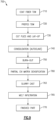
- FIG. 2 illustrates a method 100 for forming ceramic matrix composite article 10 ( FIG. 1 ) in accordance with an embodiment of the present disclosure.
- method 100 generally includes, at 110, providing a shaped preform comprising a prepreg tape layup of unidirectional arrays of fiber tows, a matrix precursor, and a pore former, at 120 curing the shaped preform to pyrolyze the matrix precursor and burnout the pore former so that the shaped preform comprises the unidirectional arrays of fiber tows and a porous matrix skeleton having a monomodal pore size distribution, and at 130 subjecting the cured shaped preform to chemical vapor infiltration to densify the porous matrix skeleton so that the ceramic matrix composite article has a fiber volume fraction between 15 percent and 35 percent.
- FIG. 3 illustrates an uncured shaped preform 200 fabricated from a plurality of prepreg layers 210 in the form of tape-like structures unidirectionally-aligned tows impregnated with a slurry 214 to create a generally two-dimensional laminate.
- the prepreg may be formed form, for example, a reinforcement material of a desired CMC and a slurry, which slurry may include a matrix precursor, a pore formers, particulate fillers, and a carrier, as described below.
- the slurry can be roll milled to deagglomerate and disperse the powders.
- the slurry can be infiltrated into the coated tows by passing the tows through a bath of the slurry.
- the tow can then be wound onto a drum and may include partial drying of the slurry such that a tape is formed.
- the tape can be removed from the drum and unidirectional preform plies can be cut to form the tape.
- Materials for the tows may include silicon carbide (SiC) fibers, polycrystalline SiC fibers, or other suitable fiber.
- SiC silicon carbide
- An example of a material suitable for the tows is HI-NICALON ® from NGS Advanced Fibers Co. LTD.
- a suitable range for the diameters of the fibers is about five to about twenty micrometers, though fibers with larger and smaller diameters are also within the scope of this disclosure.
- the fibers may be preferably coated with materials such as a carbon or boron nitride interface layer (not shown) to impart certain desired properties to the CMC article, e.g., allows slippage between coating and the formed matrix material of the CMC article.
- a fiber tow for example, may be a single bundle of about 500 individual fibers.
- the slurry may include a matrix precursor such as organic or inorganic material that leaves char/residue after burnout such as pyrolysis or firing.
- the matrix precursor may include a silicon containing precursor operable, as described below, for forming a porous silicon containing precursor such as silicon carbide in the cured preform.
- Examples of a matrix precursor include tetraethyl orthosilicate (TEOS), polycarbosilanes, polysilazanes, polysiloxanes, phenolics, and furanic compounds.
- TEOS tetraethyl orthosilicate
- a pore former may include a particle or other species that can remain present through a consolidation process but can be fugitive in the burnout or pyrolysis process resulting in a pore.
- Examples of a pore former can comprise polyethylene, polypropylene, polyamide, nylon, polytetrafluoroethylene (PTFE), polystyrene, polyvinyl acetate, polyvinyl alcohol, and/or cellulosic powders.
- Fillers may include an oxide or non-oxide particle or whisker that helps control shrinkage. Examples of a filler include SiC, B 4 C, SiO 2 , HfC, HfB 2 , ZrC, ZrB 2 , MoSi 2 , Si 3 N 4 , Al 2 O 3 , rare earth silicates, and rare earth silicides.
- a carrier may include organic or inorganic liquid that dissolves or carries the matrix precursor and other ingredients. Examples of a carrier include water, isopropanol, toluene, and acetone.
- the particles included in the pore former include a monomodal particle size distribution for a collection of particles which have a single clearly discernable maxima on a particle size distribution curve as compared to a collection of particles having a bimodal particle size distribution having two clearly discernable maxima on a particle size distribution curve, or a for a collection of particles having a multimodal particle size distribution of three or more clearly discernable maxima on a particle size distribution curve.
- the particles included in a pore former include a median size in the range of from 1 micrometer to 30 micrometers, may include a median size in the range of from about 1 micrometer to about 20 micrometers, may include a median size in the range of from about 3 micrometer to about 10 micrometers, and/or may include a median size in the range of from about 3.5 micrometers to about 8 micrometers.
- the slurry including the matrix precursor, the pore formers, the particulate fillers, and the carrier may be combined and mixed until a uniform mixture is obtained with the pore formers having a uniform spacial distribution.
- the plurality of plies of the resulting prepregs are laid-up or stacked into a desired pattern and shape, and typically arranged so that tows of the prepreg layers are oriented parallel, transverse (e.g., perpendicular), or at an angle relative to other tows of the prepreg layers in other plies.
- the plurality of layers may typically undergo consolidation or debulking while subjected to applied pressure and an elevated temperature, such as in a vacuum or in and autoclave or localized application of pressure and heat.
- the consolidated plurality of stacked plies is subjected to burnout such as pyrolysis or heated in vacuum or in an inert or a reactive atmosphere in order to decompose the matrix precursor, to form a ceramic or ceramic char, and where the pore former is, for example, volatilized, and produces a porous preform for chemical vapor infiltration, resulting in cured preform 300 illustrated in FIG. 4 .
- the resulting porosity of precursor matrix has a predominantly monomodal pore size distribution and predominantly uniform spacial distribution.
- the local maxima in the pore size distribution of the cured porous silicon-containing precursor is between about 1 micrometer to about 30 micrometers, about 1 micrometers to about 20 micrometers, about 3 micrometer to about 10 micrometers, and/or about 3.5 micrometers to about 8 micrometers.
- the cured preform may have a volume porosity of about 35 percent to about 65 percent.
- the cured preform is then subject to chemical vapor infiltration, such as with a gaseous source of silicon carbide supplied externally.
- the gaseous silicon carbide source infiltrates into the porosity, reacts to deposit SiC on the internal pore surfaces of the porous layer to form a densified silicon carbide matrix of CMC article 10 as shown in FIG. 1 , and may contain no free Si metal.
- An appropriate chemical vapor infiltration gas may include methyl-trichlorosilane, dimethyl-dichlorosilane, silane + methane, tetrachlorosilane + methane, and other suitable gases.
- the resulting porosity of CMC article 10 has a monomodal pore size distribution.
- the median pore size of the CVI-densified CMC article is 1 micrometers to 20 micrometers, or 1 micrometers to about 15 micrometers.
- CMC article 10 may have a volume porosity of about 5 percent to about 20 percent.
- the CMC article may have a uniform spacial distributed fiber volume percentage.
- the CMC article may have a fiber volume of between about 15 percent and about 35 percent.
- a CMC article may be tailored to have different fiber volume throughout the CMC based on the layup and tape prepregs.
- CMC article may include at least one first portion having a first fiber volume percentage and at least one second portion having a second fiber volume percentage different from said first fiber volume percentage.
- Suitable materials for use in the chemical vapor infiltration process may include silicon carbide, silicon nitride, silicon oxynitride, silicon oxy-carbide, silicon dioxide, aluminum nitride, aluminum oxide, boron carbide, zirconium carbide, hafnium carbide, zirconium diboride, hafnium diboride, molybdenum silicides, and other suitable material.
- ILT interlaminar tensile
- FIG. 5 shows a schematic representation of the microstructure of a conventional CVI composite preform made with woven fibers.
- the cross-over of the fiber tows in the weave pattern tend to compress the tows into tight bundles. Also, due to the surface roughness of the woven fiber cloth, the fiber plies tend to pack inefficiently.
- the microstructure of the conventional CVI preform thus has two distinct types of porosity; the first being the small inter-fiber pores within the fiber tows, and the second being the larger inter-tow pores caused by the weaving pattern and the dis-registry of this pattern at the ply boundaries.
- FIG. 6 shows an idealized representation of the pore size distributions for CVI preforms and final densified composites made using the conventional woven fiber-based CVI approach and by the technique of the present disclosure.
- the two populations of pores illustrated in Figure 5 and described in the previous paragraph lead to a bimodal or multimodal pores size distribution for the conventional woven fiber CVI preforms.
- FIGS. 7-9 By using the process outlined in the current invention, and described in FIGS. 7-9 , a preform microstructure as shown in FIG. 1 is obtained, which has a monomodal pore size distribution.
- the amount of porosity is reduced and the means of the peaks in the pore size distributions may be shifted, but the multimodal or monomodal nature of the distributions is retained. It is the larger pores, e.g. above 30 micrometers in size, that are primarily responsible for limiting the interlaminar tensile strength and proportional limit strength of conventional cloth-based CVI composites. Composites made by the present disclosure eliminate, or minimize, the amount of this undesirable large porosity, resulting in the improved interlaminar tensile strengths cited.
- the present inventors' work indicates that, for a specimen of constant thickness, the interlaminar tensile (ILT) strength is inversely related to the fiber volume fraction, as long as the fibers remain homogenously dispersed within the matrix and as long as the porosity remains predominantly monomodal.
- the ultimate tensile strength (UTS) and the proportional limit (PL) are directly related to the fiber volume fraction.
- an optimum balance of properties for a specific application may include CMC articles in accordance with the present disclosure having fiber volumes of 15 percent to 35 percent compared to fiber volumes of 35 percent to 40 percent normally used for conventional CVI composites.
- portions of a ceramic matrix composite article may have different of fiber volume percentages based on the desired properties of the different portions of the ceramic matrix composite article. For example, some ceramic matrix composite articles may have portions or regions that have a lower fiber volume percentage compared to other portions or regions that have a higher fiber volume percentage.
- FIG. 7 illustrates a method 500 for forming ceramic matrix composite articles in accordance with an embodiment of the present disclosure.
- method 500 generally includes, at 510 coating fiber tows, at 520 prepregging the tows to form prepreg tape, and at 530 cutting the prepreg tape and laying up an uncured preform for forming the article.
- the preform is consolidated such as in an autoclave under heat and pressure.
- the preform is subject to a burn-out process so that, for example, the resulting preform has a monomodal pore size distribution.
- the cured perform is subjected to chemical vapor infiltration to densify the cured preform to form a finished ceramic matrix composite articles at 570.
- a ceramic matrix composite articles formed by method 500 may have an optimized range of interlaminar (ILT) strength and proportional limit (PL) with a fiber volume of between 15 percent and 35 percent, and a volume porosity of about 8 percent to about 20 percent.
- the ceramic matrix of the ceramic matrix composite may have a monomodal pore size distribution with a median pore size of about 3 micrometer to about 30 micrometers.
- the ceramic matrix of the ceramic matrix composite may have a uniform spacial pore distribution.
- Such a ceramic matrix composite article may be advantageous for application to silicon-bearing ceramic turbine components, for example, turbine blades, vanes, nozzles, shrouds, combustors, etc., and repairs thereof.
- CVI chemical vapor infiltration
- a matrix material such as silicon carbide is infiltrated into a fibrous preform by the use of reactive gases at elevated temperature.
- reactive gases at elevated temperature.
- limitations introduced by having reactants diffuse into the preform and by-product gases diffusing out of the perform result in relatively high residual porosity of between about 12 percent and about 15 percent in the composite.
- the inner portion of the composite formed by CVI typically has a higher porosity than the porosity of the outer portion.
- the CVI composite matrices typically have no free silicon phase, good creep resistance and the potential to operate at temperatures above 1410 degrees Celsius, i.e. 2,570 degrees Fahrenheit.
- FIG. 8 illustrates a method 600 for forming ceramic matrix composite articles in accordance with an embodiment of the present disclosure.
- method 600 generally includes, at 610 coating fiber tows, at 620 prepregging the tows to form prepreg tape, and at 630 cutting the prepreg tape and laying up an uncured preform for forming the article.
- the preform is consolidated such as in an autoclave under heat and pressure.
- the preform is subject to a burn-out process so that, for example, the preform matrix has a monomodal pore size distribution.
- the cured perform is subjected to a chemical vapor infiltration to densify the cured preform resulting in a volume porosity of about 12 percent to about 35 percent. Further densification may occur at 665 with melt infiltration process to form a finished ceramic matrix composite articles at 570.
- the melt infiltration may include silicon, silicon alloy, a silicide, an oxide, or a combination thereof.
- the step of chemical vapor infiltration may be a partial or full chemical vapor infiltration compared to the chemical vapor infiltration process of method 500 ( FIG. 6 ).
- a ceramic matrix composite articles formed by method 600 may have a volume porosity of less than about 5 percent.
- the ceramic matrix of the ceramic matrix composite may have a monomodal pore size distribution with a median pore size of about 1 micrometers to about 20 micrometers.
- the ceramic matrix of the ceramic matrix composite may have a uniform spacial pore distribution.
- Such a ceramic matrix composite article may be advantageous for application to silicon-bearing ceramic turbine components, for example, turbine blades, vanes, nozzles, shrouds, combustors, etc., and repairs thereof.
- FIG. 9 illustrates a method 700 for forming ceramic matrix composite articles in accordance with an embodiment of the present disclosure.
- method 700 generally includes, at 710 coating fiber tows, at 720 prepregging the tows to form prepreg tape, and at 730 cutting the prepreg tape and laying up an uncured preform for forming the article.
- the preform is consolidated such as in an autoclave under heat and pressure.
- the preform is subject to a burn-out process so that, for example, the preform matrix has a monomodal pore size distribution.
- the cured perform is subjected to chemical vapor infiltration to densify the cured preform.
- densification may be occur at 763 by application of a slurry cast followed at 767 by melt infiltration to form a finished ceramic matrix composite articles at 770.
- the slurry cast may include silicon carbide, silicon nitride, molybdenum silicides, boron carbide, HfC, ZrC, HfB2, ZrB2, rare earth silicates, and the melt infiltration may include silicon, silicon alloys, silicides, oxide, or combinations thereof.
- a ceramic matrix composite articles formed by method 700 may have a volume porosity of less than about 5 percent.
- the ceramic matrix of the ceramic matrix composite has a monomodal pore size distribution with a median pore size of 1 micrometers to 20 micrometers.
- the ceramic matrix of the ceramic matrix composite may have a uniform spacial pore distribution.
- Such a ceramic matrix composite article may be advantageous for application to silicon-bearing ceramic turbine components, for example, turbine blades, vanes, nozzles, shrouds, combustors, etc., and repairs thereof.
- the further densification in methods 600 and 700 using melt infiltration may result in ceramic matrix composite articles that are fully dense, e.g., having generally zero, or less than about 5 or less that about 3 percent by volume residual porosity.
- This very low porosity gives the composite desirable mechanical properties, such as a high proportional limit strength and interlaminar tensile and shear strengths, high thermal conductivity and good oxidation resistance.
- the matrices may have a free silicon phase (i.e. elemental silicon or silicon alloy) that may limits the use temperature of the ceramic matrix composite articles to below that of the melting point of the silicon or silicon alloy, or about 1399 to 1410 degrees Celsius, i.e. about 2,550 degrees Fahrenheit to 2,570 degrees Fahrenheit.
- the free silicon phase may result in a lower creep resistance compared to densification solely by chemical vapor infiltration.
Landscapes
- Chemical & Material Sciences (AREA)
- Engineering & Computer Science (AREA)
- Ceramic Engineering (AREA)
- Materials Engineering (AREA)
- Structural Engineering (AREA)
- Organic Chemistry (AREA)
- Manufacturing & Machinery (AREA)
- Chemical Kinetics & Catalysis (AREA)
- Mechanical Engineering (AREA)
- General Engineering & Computer Science (AREA)
- Composite Materials (AREA)
- Combustion & Propulsion (AREA)
- Physics & Mathematics (AREA)
- Thermal Sciences (AREA)
- Inorganic Chemistry (AREA)
- Dispersion Chemistry (AREA)
- Ceramic Products (AREA)
- Turbine Rotor Nozzle Sealing (AREA)
- Chemical Vapour Deposition (AREA)
Claims (14)
- Verfahren (100) zum Bilden eines Keramikmatrix-Verbundwerkstoff-Erzeugnisses (10), das Verfahren (100) umfassend:Bereitstellen (110) eines geformten Vorformlings, umfassend ein Prepreg-Bandgelege aus unidirektionalen Anordnungen von Faserkabeln (20), einen Matrixvorläufer und einen Porenbildner, wobei der Porenbildner Partikel einschließt, die eine monomodale Partikelgrößenverteilung mit einer mittleren Größe in einem Bereich von 1 Mikrometer bis 30 Mikrometer aufweist;Aushärten (120) des geformten Vorformlings, um den Matrixvorläufer zu pyrolysieren und den Porenbildner auszubrennen, so dass der geformte Vorformling die unidirektionalen Anordnungen von Faserkabeln (20) und ein poröses Matrixgerüst umfasst, das eine monomodale Porengrößenverteilung aufweist, wobei ein Medianwert der monomodalen Porengrößenverteilung des ausgehärteten Vorformlings zwischen 1 Mikrometer und 30 Mikrometer liegt; undUnterziehen (130) des gehärteten geformten Vorformlings einer chemischen Dampfinfiltration, um das poröse Matrixgerüst zu verdichten, so dass das Keramikmatrix-Verbundwerkstoff-Erzeugnis (10) einen Faservolumenanteil zwischen 15 Prozent und 35 Prozent und eine Matrix aufweist, die eine monomodale Porengrößenverteilung mit einer mittleren Porengröße von 1 Mikrometer bis 20 Mikrometer aufweist.
- Verfahren (100) nach Anspruch 1, wobei das Keramikmatrix-Verbundwerkstoff-Erzeugnis (10) einen Faservolumenanteil zwischen 15 Prozent und 30 Prozent aufweist.
- Verfahren (100) nach Anspruch 1 oder 2, wobei der Matrixvorläufer eine auf Polycarbosilan und/oder Polysilazan basierende Chemie ist.
- Verfahren (100) nach einem der vorstehenden Ansprüche, wobei das Keramikmatrix-Verbundwerkstoff-Erzeugnis (10) eine interlaminare Zugfestigkeit von über 41,4 MPa (6 ksi) umfasst.
- Verfahren (100) nach einem der vorstehenden Ansprüche, wobei die chemische Dampfinfiltration eine teilweise chemische Dampfinfiltration umfasst, und ferner umfassend ein Unterziehen des durch teilweise chemische Dampfinfiltration verdichtete Keramikmatrix-Verbundwerkstoff-Erzeugnisses (10) einer Schmelzinfiltration.
- Verfahren (100) nach einem der vorstehenden Ansprüche, wobei das Keramikmatrix-Verbundwerkstoff-Erzeugnis (10) eine Volumenporosität von 5 Prozent bis 20 Prozent umfasst.
- Verfahren (100) nach einem der vorstehenden Ansprüche, wobei das Keramikmatrix-Verbundwerkstoff-Erzeugnis (10) mindestens einen ersten Abschnitt, der einen ersten Faservolumenprozentsatz aufweist, und mindestens einen zweiten Abschnitt umfasst, der einen zweiten Faservolumenprozentsatz aufweist, der sich von dem ersten Faservolumenprozentsatz unterscheidet.
- Verfahren (100) nach einem der vorstehenden Ansprüche, wobei die Faserkabel (20) Siliziumkarbidfaserkabel umfassen.
- Verfahren (100) zum Bilden eines Keramikmatrix-Verbundwerkstoff-Erzeugnisses (10), das Verfahren (100) umfassend:Bereitstellen (110) eines geformten Vorformlings, umfassend ein Prepreg-Bandgelege aus unidirektionalen Anordnungen von Faserkabeln (20), einen Matrixvorläufer zum Bilden einer Keramikmatrix und einen Porenbildner, der Partikel einschließt, die eine monomodale Partikelgrößenverteilung mit einer mittleren Größe in einem Bereich von 1 Mikrometer bis 30 Mikrometer aufweist;Aushärten (120) des geformten Vorformlings, um den Matrixvorläufer zu pyrolysieren und den Porenbildner auszubrennen, so dass der geformte Vorformling die unidirektionalen Anordnungen von Faserkabeln (20) und ein poröses keramisches Matrixgerüst umfasst, das eine monomodale Porengrößenverteilung mit einer mittleren Porengröße zwischen 1 Mikrometer und 30 Mikrometer aufweist; undUnterziehen (130) des gehärteten geformten Vorformlings einer chemischen Dampfinfiltration mit gasförmiger Keramik, einer teilweisen chemischen Dampfinfiltration und Schmelzinfiltration oder einer teilweisen chemischen Dampfinfiltration, einem Schlammgießen und einer Schmelzinfiltration, um das poröse Keramikmatrixgerüst zu verdichten, so dass das Keramikmatrix-Verbundwerkstoff-Erzeugnis (10) einen Faservolumenanteil zwischen 15 Prozent und 35 Prozent und eine Matrix umfasst, die eine monomodale Porengrößenverteilung mit einer mittleren Porengröße von 1 Mikrometer bis 20 Mikrometer aufweist.
- Keramikmatrix-Verbundwerkstoff-Erzeugnis (10), umfassend:eine Vielzahl von unidirektionalen Anordnungen von Faserkabeln (20) in einer Matrix, die eine monomodale Porengrößenverteilung mit einer mittleren Porengröße von 1 Mikrometer bis 20 Mikrometer aufweist, undwobei das Keramikmatrix-Verbundwerkstoff-Erzeugnis (10) einen Faservolumenanteil zwischen 15 Prozent und 35 Prozent umfasst.
- Keramikmatrix-Verbundwerkstoff-Erzeugnis (10) nach Anspruch 10, wobei das Keramikmatrix-Verbundwerkstoff-Erzeugnis (10) einen Faservolumenanteil zwischen 15 Prozent und 30 Prozent aufweist.
- Keramikmatrix-Verbundwerkstoff-Erzeugnis (10) nach Anspruch 10 oder 11, wobei das Keramikmatrix-Verbundwerkstoff-Erzeugnis (10) eine interlaminare Zugfestigkeit von über 41,4 MPa (6 ksi) umfasst.
- Keramikmatrix-Verbundwerkstoff-Erzeugnis (10) nach einem der vorstehenden Ansprüche 10 bis 12, wobei das Keramikmatrix-Verbundwerkstoff-Erzeugnis (10) mindestens einen ersten Abschnitt, der einen ersten Faservolumenprozentsatz aufweist, und mindestens einen zweiten Abschnitt umfasst, der einen zweiten Faservolumenprozentsatz aufweist, der sich von dem ersten Faservolumenprozentsatz unterscheidet.
- Keramikmatrix-Verbundwerkstoff-Erzeugnis (10) nach einem der vorstehenden Ansprüche 10 bis 13, wobei das Keramikmatrix-Verbundwerkstoff-Erzeugnis (10) eine Turbinenkomponente oder eine Turbinenkomponentenreparatur umfasst.
Applications Claiming Priority (1)
| Application Number | Priority Date | Filing Date | Title |
|---|---|---|---|
| US15/078,124 US9850174B2 (en) | 2016-03-23 | 2016-03-23 | Ceramic matrix composites having monomodal pore size distribution and low fiber volume fraction |
Publications (2)
| Publication Number | Publication Date |
|---|---|
| EP3222601A1 EP3222601A1 (de) | 2017-09-27 |
| EP3222601B1 true EP3222601B1 (de) | 2025-04-23 |
Family
ID=58489476
Family Applications (1)
| Application Number | Title | Priority Date | Filing Date |
|---|---|---|---|
| EP17161270.8A Active EP3222601B1 (de) | 2016-03-23 | 2017-03-16 | Keramikmatrixverbundstoffe mit monomodaler porengrössenverteilung und geringer faservolumenfraktion |
Country Status (5)
| Country | Link |
|---|---|
| US (2) | US9850174B2 (de) |
| EP (1) | EP3222601B1 (de) |
| JP (1) | JP6629777B2 (de) |
| CN (2) | CN107226706B (de) |
| CA (1) | CA2960342C (de) |
Families Citing this family (22)
| Publication number | Priority date | Publication date | Assignee | Title |
|---|---|---|---|---|
| WO2014120117A1 (en) * | 2013-01-29 | 2014-08-07 | United Technologies Corporation | Blade rub material |
| US10723660B2 (en) * | 2017-01-11 | 2020-07-28 | General Electric Company | Carbon yielding resin for melt infiltration |
| US11066333B2 (en) * | 2018-02-19 | 2021-07-20 | The Florida State University Research Foundation, Inc. | Ceramic composite materials, articles, and methods |
| US11286208B2 (en) | 2018-08-21 | 2022-03-29 | General Electric Company | Systems and methods for thermally processing CMC components |
| FR3101629B1 (fr) * | 2019-10-07 | 2022-06-17 | Safran Ceram | Procédé de fabrication d'une pièce en CMC |
| EP3947319A1 (de) * | 2019-04-05 | 2022-02-09 | Safran Ceramics | Verfahren zur herstellung eines aus cmc gefertigten teils |
| US11624287B2 (en) * | 2020-02-21 | 2023-04-11 | Raytheon Technologies Corporation | Ceramic matrix composite component having low density core and method of making |
| US11421538B2 (en) * | 2020-05-12 | 2022-08-23 | Rolls-Royce Corporation | Composite aerofoils |
| US11506083B2 (en) | 2020-06-03 | 2022-11-22 | Rolls-Royce Corporalion | Composite liners for turbofan engines |
| JP7473406B2 (ja) * | 2020-06-10 | 2024-04-23 | イビデン株式会社 | SiC/SiC複合材の製造方法 |
| US11492915B2 (en) * | 2020-12-17 | 2022-11-08 | Raytheon Technologies Corporation | Turbine with reduced burst margin |
| US20230019485A1 (en) * | 2021-07-14 | 2023-01-19 | Raytheon Technologies Corporation | Homogeneous composite microstructure |
| DE102022102373A1 (de) * | 2022-02-01 | 2023-08-03 | The Yellow SiC Holding GmbH | Verfahren und Vorrichtung zur Herstellung eines siliziumkarbidhaltigen Werkstücks |
| US12522543B2 (en) | 2022-02-02 | 2026-01-13 | Goodrich Corporation | Methods of forming siAlON in carbon/carbon composites |
| US11906010B2 (en) | 2022-05-23 | 2024-02-20 | Goodrich Corporation | Sacrificial materials to improve chemical vapor infiltration of B4C loaded preforms |
| US20230399266A1 (en) * | 2022-06-08 | 2023-12-14 | General Electric Company | Composite components and methods of densifying composite components |
| CN115557791B (zh) * | 2022-09-27 | 2024-02-09 | 中国科学院金属研究所 | 一种制备变组分碳纤维增强超高温陶瓷基复合材料的方法 |
| US20240116828A1 (en) * | 2022-10-07 | 2024-04-11 | Raytheon Technologies Corporation | Ceramic matrix composite article and method of making the same |
| US12215062B2 (en) | 2022-11-10 | 2025-02-04 | Rolls-Royce Plc | Multi-stage consolidation process for ceramic matrix composite prepreg material |
| US12194691B2 (en) | 2022-11-10 | 2025-01-14 | Rolls-Royce Plc | Method of debulking of ceramic matrix composite prepreg material |
| US20250026049A1 (en) * | 2023-07-21 | 2025-01-23 | Rohr, Inc. | Porosity gradient preform architecture for high temperature composites |
| US20250026104A1 (en) * | 2023-07-21 | 2025-01-23 | Rohr, Inc. | Porosity gradient preform architecture for high temperature composites |
Family Cites Families (24)
| Publication number | Priority date | Publication date | Assignee | Title |
|---|---|---|---|---|
| US4324843A (en) | 1980-02-13 | 1982-04-13 | United Technologies Corporation | Continuous length silicon carbide fiber reinforced ceramic composites |
| US4626461A (en) | 1983-01-18 | 1986-12-02 | United Technologies Corporation | Gas turbine engine and composite parts |
| AU8101491A (en) | 1990-06-29 | 1992-01-23 | Gui Gerard De Jager | A process for manufacturing reinforced composites and filament material for use in said process |
| DE69229007T2 (de) * | 1991-01-16 | 1999-10-21 | Sgl Carbon Composites, Inc. | Verbundwerkstoffe aus siliciumcarbidfaserarmiertem Kohlenstoff |
| US5294489A (en) * | 1992-04-02 | 1994-03-15 | General Electric Company | Protective coating with reactive interlayer on reinforcement in silicon carbide composite |
| US5865922A (en) * | 1994-06-21 | 1999-02-02 | The United States Of America As Represented By The Administrator Of The National Aeronautics And Space Administration | Producing fiber reinforced composites having dense ceramic matrices |
| US5605868A (en) | 1994-12-29 | 1997-02-25 | Corning Incorporated | Oxidative stable ceramic composites |
| US5840221A (en) * | 1996-12-02 | 1998-11-24 | Saint-Gobain/Norton Industrial Ceramics Corporation | Process for making silicon carbide reinforced silicon carbide composite |
| US6024898A (en) * | 1996-12-30 | 2000-02-15 | General Electric Company | Article and method for making complex shaped preform and silicon carbide composite by melt infiltration |
| US5945166A (en) * | 1997-12-30 | 1999-08-31 | The United States Of America As Represented By The Administrator Of The National Aeronautics And Space Administration | Method for forming fiber reinforced composite bodies with graded composition and stress zones |
| US7378362B2 (en) * | 2000-09-29 | 2008-05-27 | Goodrich Corporation | Boron carbide based ceramic matrix composites |
| US6627019B2 (en) * | 2000-12-18 | 2003-09-30 | David C. Jarmon | Process for making ceramic matrix composite parts with cooling channels |
| US20020190409A1 (en) | 2001-06-18 | 2002-12-19 | Burdsall Charles W. | Method for reinforcing ceramic composites and ceramic composites including an improved reinforcement system |
| DE10208991B4 (de) * | 2002-02-28 | 2007-07-19 | Sgl Carbon Ag | Keramische Verbundwerkstoffe mit unidirektionaler Ausrichtung der Verstärkungsfasern, Verfahren zu deren Herstellung und deren Verwendung |
| US7223465B2 (en) | 2004-12-29 | 2007-05-29 | General Electric Company | SiC/SiC composites incorporating uncoated fibers to improve interlaminar strength |
| US7387758B2 (en) | 2005-02-16 | 2008-06-17 | Siemens Power Generation, Inc. | Tabbed ceramic article for improved interlaminar strength |
| US7708851B2 (en) * | 2005-10-25 | 2010-05-04 | General Electric Company | Process of producing a ceramic matrix composite article and article formed thereby |
| FR2907778B1 (fr) | 2006-10-26 | 2010-12-10 | Snecma Propulsion Solide | Procede de fabrication d'une piece en materiau composite thermostructural. |
| US20110071014A1 (en) | 2009-09-24 | 2011-03-24 | United Technologies Corporation | Hybred polymer cvi composites |
| US20130122763A1 (en) | 2009-10-06 | 2013-05-16 | Composite Tech, LLC. | Composite materials |
| US20130167374A1 (en) * | 2011-12-29 | 2013-07-04 | General Electric Company | Process of producing ceramic matrix composites and ceramic matrix composites formed thereby |
| FR2988777B1 (fr) | 2012-03-29 | 2014-04-25 | Snecma Propulsion Solide | Integration de pieces d'arriere-corps de moteur aeronautique |
| US9523149B2 (en) | 2013-03-14 | 2016-12-20 | Rolls-Royce Corporation | Rapid ceramic matrix composite production method |
| US9650303B2 (en) | 2013-03-15 | 2017-05-16 | Rolls-Royce Corporation | Silicon carbide ceramic matrix composites |
-
2016
- 2016-03-23 US US15/078,124 patent/US9850174B2/en active Active
-
2017
- 2017-03-08 JP JP2017043383A patent/JP6629777B2/ja active Active
- 2017-03-09 CA CA2960342A patent/CA2960342C/en active Active
- 2017-03-16 EP EP17161270.8A patent/EP3222601B1/de active Active
- 2017-03-23 CN CN201710180235.7A patent/CN107226706B/zh active Active
- 2017-03-23 CN CN202110061423.4A patent/CN112694341B/zh active Active
- 2017-12-05 US US15/831,896 patent/US10584070B2/en active Active
Non-Patent Citations (1)
| Title |
|---|
| "Characterization of Materials, Second Edition", 12 October 2012, WILEY, article ESPINAL LAURA: "POROSITY AND ITS MEASUREMENT", pages: 1 - 9, XP055832126 * |
Also Published As
| Publication number | Publication date |
|---|---|
| CA2960342C (en) | 2019-07-09 |
| CA2960342A1 (en) | 2017-09-23 |
| CN112694341A (zh) | 2021-04-23 |
| CN107226706A (zh) | 2017-10-03 |
| EP3222601A1 (de) | 2017-09-27 |
| US20170275210A1 (en) | 2017-09-28 |
| US10584070B2 (en) | 2020-03-10 |
| CN112694341B (zh) | 2022-10-21 |
| JP2017171568A (ja) | 2017-09-28 |
| US20180093926A1 (en) | 2018-04-05 |
| JP6629777B2 (ja) | 2020-01-15 |
| US9850174B2 (en) | 2017-12-26 |
| CN107226706B (zh) | 2021-02-09 |
Similar Documents
| Publication | Publication Date | Title |
|---|---|---|
| US10584070B2 (en) | Ceramic matrix composites having monomodal pore size distribution and low fiber volume fraction | |
| US11890836B2 (en) | Ceramic matrix composite articles having different localized properties and methods for forming same | |
| US10954168B2 (en) | Ceramic matrix composite articles and methods for forming same | |
| CA2921729C (en) | Ceramic matrix composite structures with controlled microstructures fabricated using chemical vapor infiltration (cvi) | |
| EP3124458A1 (de) | Verbesserte gleichmässigkeit des faserabstands in cmc-materialien | |
| US20160009602A1 (en) | Methods for reducing the process-induced shrinkage in a ceramic matrix composite, and articles made therefrom | |
| EP3124459A2 (de) | Verbesserte gleichmässigkeit des faserabstands in cmc-materialien | |
| CN105924200B (zh) | 陶瓷基质复合物制品及用于形成其的方法 | |
| CN117183390A (zh) | 复合部件和致密化复合部件的方法 |
Legal Events
| Date | Code | Title | Description |
|---|---|---|---|
| AK | Designated contracting states |
Kind code of ref document: A1 Designated state(s): AL AT BE BG CH CY CZ DE DK EE ES FI FR GB GR HR HU IE IS IT LI LT LU LV MC MK MT NL NO PL PT RO RS SE SI SK SM TR |
|
| AX | Request for extension of the european patent |
Extension state: BA ME |
|
| PUAI | Public reference made under article 153(3) epc to a published international application that has entered the european phase |
Free format text: ORIGINAL CODE: 0009012 |
|
| STAA | Information on the status of an ep patent application or granted ep patent |
Free format text: STATUS: THE APPLICATION HAS BEEN PUBLISHED |
|
| STAA | Information on the status of an ep patent application or granted ep patent |
Free format text: STATUS: REQUEST FOR EXAMINATION WAS MADE |
|
| 17P | Request for examination filed |
Effective date: 20180327 |
|
| RBV | Designated contracting states (corrected) |
Designated state(s): AL AT BE BG CH CY CZ DE DK EE ES FI FR GB GR HR HU IE IS IT LI LT LU LV MC MK MT NL NO PL PT RO RS SE SI SK SM TR |
|
| STAA | Information on the status of an ep patent application or granted ep patent |
Free format text: STATUS: EXAMINATION IS IN PROGRESS |
|
| 17Q | First examination report despatched |
Effective date: 20191125 |
|
| REG | Reference to a national code |
Ref country code: DE Ref legal event code: R079 Free format text: PREVIOUS MAIN CLASS: C04B0035626000 Ipc: C04B0035800000 Ref document number: 602017089022 Country of ref document: DE |
|
| RIC1 | Information provided on ipc code assigned before grant |
Ipc: C04B 38/00 20060101ALI20230209BHEP Ipc: C04B 35/565 20060101ALI20230209BHEP Ipc: C04B 35/626 20060101ALI20230209BHEP Ipc: C04B 35/80 20060101AFI20230209BHEP |
|
| GRAP | Despatch of communication of intention to grant a patent |
Free format text: ORIGINAL CODE: EPIDOSNIGR1 |
|
| STAA | Information on the status of an ep patent application or granted ep patent |
Free format text: STATUS: GRANT OF PATENT IS INTENDED |
|
| RIC1 | Information provided on ipc code assigned before grant |
Ipc: C04B 35/571 20060101ALI20240423BHEP Ipc: C04B 35/626 20060101ALI20240423BHEP Ipc: C04B 35/565 20060101ALI20240423BHEP Ipc: C04B 38/00 20060101ALI20240423BHEP Ipc: C04B 35/80 20060101AFI20240423BHEP |
|
| INTG | Intention to grant announced |
Effective date: 20240515 |
|
| GRAJ | Information related to disapproval of communication of intention to grant by the applicant or resumption of examination proceedings by the epo deleted |
Free format text: ORIGINAL CODE: EPIDOSDIGR1 |
|
| STAA | Information on the status of an ep patent application or granted ep patent |
Free format text: STATUS: EXAMINATION IS IN PROGRESS |
|
| INTC | Intention to grant announced (deleted) | ||
| GRAP | Despatch of communication of intention to grant a patent |
Free format text: ORIGINAL CODE: EPIDOSNIGR1 |
|
| STAA | Information on the status of an ep patent application or granted ep patent |
Free format text: STATUS: GRANT OF PATENT IS INTENDED |
|
| INTG | Intention to grant announced |
Effective date: 20241016 |
|
| GRAS | Grant fee paid |
Free format text: ORIGINAL CODE: EPIDOSNIGR3 |
|
| RAP3 | Party data changed (applicant data changed or rights of an application transferred) |
Owner name: GENERAL ELECTRIC COMPANY |
|
| GRAA | (expected) grant |
Free format text: ORIGINAL CODE: 0009210 |
|
| STAA | Information on the status of an ep patent application or granted ep patent |
Free format text: STATUS: THE PATENT HAS BEEN GRANTED |
|
| P01 | Opt-out of the competence of the unified patent court (upc) registered |
Free format text: CASE NUMBER: APP_8742/2025 Effective date: 20250220 |
|
| AK | Designated contracting states |
Kind code of ref document: B1 Designated state(s): AL AT BE BG CH CY CZ DE DK EE ES FI FR GB GR HR HU IE IS IT LI LT LU LV MC MK MT NL NO PL PT RO RS SE SI SK SM TR |
|
| REG | Reference to a national code |
Ref country code: GB Ref legal event code: FG4D |
|
| REG | Reference to a national code |
Ref country code: CH Ref legal event code: EP |
|
| REG | Reference to a national code |
Ref country code: DE Ref legal event code: R096 Ref document number: 602017089022 Country of ref document: DE |
|
| REG | Reference to a national code |
Ref country code: IE Ref legal event code: FG4D |
|
| REG | Reference to a national code |
Ref country code: NL Ref legal event code: MP Effective date: 20250423 |
|
| PG25 | Lapsed in a contracting state [announced via postgrant information from national office to epo] |
Ref country code: NL Free format text: LAPSE BECAUSE OF FAILURE TO SUBMIT A TRANSLATION OF THE DESCRIPTION OR TO PAY THE FEE WITHIN THE PRESCRIBED TIME-LIMIT Effective date: 20250423 |
|
| REG | Reference to a national code |
Ref country code: AT Ref legal event code: MK05 Ref document number: 1787655 Country of ref document: AT Kind code of ref document: T Effective date: 20250423 |
|
| PG25 | Lapsed in a contracting state [announced via postgrant information from national office to epo] |
Ref country code: PT Free format text: LAPSE BECAUSE OF FAILURE TO SUBMIT A TRANSLATION OF THE DESCRIPTION OR TO PAY THE FEE WITHIN THE PRESCRIBED TIME-LIMIT Effective date: 20250825 Ref country code: FI Free format text: LAPSE BECAUSE OF FAILURE TO SUBMIT A TRANSLATION OF THE DESCRIPTION OR TO PAY THE FEE WITHIN THE PRESCRIBED TIME-LIMIT Effective date: 20250423 Ref country code: ES Free format text: LAPSE BECAUSE OF FAILURE TO SUBMIT A TRANSLATION OF THE DESCRIPTION OR TO PAY THE FEE WITHIN THE PRESCRIBED TIME-LIMIT Effective date: 20250423 |
|
| REG | Reference to a national code |
Ref country code: LT Ref legal event code: MG9D |
|
| PG25 | Lapsed in a contracting state [announced via postgrant information from national office to epo] |
Ref country code: GR Free format text: LAPSE BECAUSE OF FAILURE TO SUBMIT A TRANSLATION OF THE DESCRIPTION OR TO PAY THE FEE WITHIN THE PRESCRIBED TIME-LIMIT Effective date: 20250724 Ref country code: NO Free format text: LAPSE BECAUSE OF FAILURE TO SUBMIT A TRANSLATION OF THE DESCRIPTION OR TO PAY THE FEE WITHIN THE PRESCRIBED TIME-LIMIT Effective date: 20250723 |
|
| PG25 | Lapsed in a contracting state [announced via postgrant information from national office to epo] |
Ref country code: PL Free format text: LAPSE BECAUSE OF FAILURE TO SUBMIT A TRANSLATION OF THE DESCRIPTION OR TO PAY THE FEE WITHIN THE PRESCRIBED TIME-LIMIT Effective date: 20250423 |
|
| PG25 | Lapsed in a contracting state [announced via postgrant information from national office to epo] |
Ref country code: BG Free format text: LAPSE BECAUSE OF FAILURE TO SUBMIT A TRANSLATION OF THE DESCRIPTION OR TO PAY THE FEE WITHIN THE PRESCRIBED TIME-LIMIT Effective date: 20250423 |
|
| PG25 | Lapsed in a contracting state [announced via postgrant information from national office to epo] |
Ref country code: HR Free format text: LAPSE BECAUSE OF FAILURE TO SUBMIT A TRANSLATION OF THE DESCRIPTION OR TO PAY THE FEE WITHIN THE PRESCRIBED TIME-LIMIT Effective date: 20250423 |
|
| PG25 | Lapsed in a contracting state [announced via postgrant information from national office to epo] |
Ref country code: AT Free format text: LAPSE BECAUSE OF FAILURE TO SUBMIT A TRANSLATION OF THE DESCRIPTION OR TO PAY THE FEE WITHIN THE PRESCRIBED TIME-LIMIT Effective date: 20250423 |
|
| PG25 | Lapsed in a contracting state [announced via postgrant information from national office to epo] |
Ref country code: RS Free format text: LAPSE BECAUSE OF FAILURE TO SUBMIT A TRANSLATION OF THE DESCRIPTION OR TO PAY THE FEE WITHIN THE PRESCRIBED TIME-LIMIT Effective date: 20250723 |
|
| PG25 | Lapsed in a contracting state [announced via postgrant information from national office to epo] |
Ref country code: IS Free format text: LAPSE BECAUSE OF FAILURE TO SUBMIT A TRANSLATION OF THE DESCRIPTION OR TO PAY THE FEE WITHIN THE PRESCRIBED TIME-LIMIT Effective date: 20250823 |
|
| PG25 | Lapsed in a contracting state [announced via postgrant information from national office to epo] |
Ref country code: LV Free format text: LAPSE BECAUSE OF FAILURE TO SUBMIT A TRANSLATION OF THE DESCRIPTION OR TO PAY THE FEE WITHIN THE PRESCRIBED TIME-LIMIT Effective date: 20250423 |
|
| PG25 | Lapsed in a contracting state [announced via postgrant information from national office to epo] |
Ref country code: SM Free format text: LAPSE BECAUSE OF FAILURE TO SUBMIT A TRANSLATION OF THE DESCRIPTION OR TO PAY THE FEE WITHIN THE PRESCRIBED TIME-LIMIT Effective date: 20250423 Ref country code: DK Free format text: LAPSE BECAUSE OF FAILURE TO SUBMIT A TRANSLATION OF THE DESCRIPTION OR TO PAY THE FEE WITHIN THE PRESCRIBED TIME-LIMIT Effective date: 20250423 |
|
| PG25 | Lapsed in a contracting state [announced via postgrant information from national office to epo] |
Ref country code: CZ Free format text: LAPSE BECAUSE OF FAILURE TO SUBMIT A TRANSLATION OF THE DESCRIPTION OR TO PAY THE FEE WITHIN THE PRESCRIBED TIME-LIMIT Effective date: 20250423 |
|
| PG25 | Lapsed in a contracting state [announced via postgrant information from national office to epo] |
Ref country code: EE Free format text: LAPSE BECAUSE OF FAILURE TO SUBMIT A TRANSLATION OF THE DESCRIPTION OR TO PAY THE FEE WITHIN THE PRESCRIBED TIME-LIMIT Effective date: 20250423 |
|
| REG | Reference to a national code |
Ref country code: DE Ref legal event code: R097 Ref document number: 602017089022 Country of ref document: DE |
|
| PG25 | Lapsed in a contracting state [announced via postgrant information from national office to epo] |
Ref country code: SK Free format text: LAPSE BECAUSE OF FAILURE TO SUBMIT A TRANSLATION OF THE DESCRIPTION OR TO PAY THE FEE WITHIN THE PRESCRIBED TIME-LIMIT Effective date: 20250423 Ref country code: RO Free format text: LAPSE BECAUSE OF FAILURE TO SUBMIT A TRANSLATION OF THE DESCRIPTION OR TO PAY THE FEE WITHIN THE PRESCRIBED TIME-LIMIT Effective date: 20250423 |
|
| PG25 | Lapsed in a contracting state [announced via postgrant information from national office to epo] |
Ref country code: IT Free format text: LAPSE BECAUSE OF FAILURE TO SUBMIT A TRANSLATION OF THE DESCRIPTION OR TO PAY THE FEE WITHIN THE PRESCRIBED TIME-LIMIT Effective date: 20250423 |
|
| PLBE | No opposition filed within time limit |
Free format text: ORIGINAL CODE: 0009261 |
|
| STAA | Information on the status of an ep patent application or granted ep patent |
Free format text: STATUS: NO OPPOSITION FILED WITHIN TIME LIMIT |
|
| REG | Reference to a national code |
Ref country code: CH Ref legal event code: L10 Free format text: ST27 STATUS EVENT CODE: U-0-0-L10-L00 (AS PROVIDED BY THE NATIONAL OFFICE) Effective date: 20260304 |
|
| 26N | No opposition filed |
Effective date: 20260126 |
|
| PGFP | Annual fee paid to national office [announced via postgrant information from national office to epo] |
Ref country code: GB Payment date: 20260219 Year of fee payment: 10 |
|
| PGFP | Annual fee paid to national office [announced via postgrant information from national office to epo] |
Ref country code: DE Payment date: 20260219 Year of fee payment: 10 |
|
| PGFP | Annual fee paid to national office [announced via postgrant information from national office to epo] |
Ref country code: FR Payment date: 20260220 Year of fee payment: 10 |