EP3208288A1 - Verfahren zur herstellung einer polymerisierten flüssigkeit der cashewnussschale und verwendung davon zur herstellung einer bitumenzusammensetzung - Google Patents
Verfahren zur herstellung einer polymerisierten flüssigkeit der cashewnussschale und verwendung davon zur herstellung einer bitumenzusammensetzung Download PDFInfo
- Publication number
- EP3208288A1 EP3208288A1 EP16200894.0A EP16200894A EP3208288A1 EP 3208288 A1 EP3208288 A1 EP 3208288A1 EP 16200894 A EP16200894 A EP 16200894A EP 3208288 A1 EP3208288 A1 EP 3208288A1
- Authority
- EP
- European Patent Office
- Prior art keywords
- cnsl
- bitumen
- composition
- polymerized
- heat treatment
- Prior art date
- Legal status (The legal status is an assumption and is not a legal conclusion. Google has not performed a legal analysis and makes no representation as to the accuracy of the status listed.)
- Granted
Links
Images
Classifications
-
- C—CHEMISTRY; METALLURGY
- C09—DYES; PAINTS; POLISHES; NATURAL RESINS; ADHESIVES; COMPOSITIONS NOT OTHERWISE PROVIDED FOR; APPLICATIONS OF MATERIALS NOT OTHERWISE PROVIDED FOR
- C09F—NATURAL RESINS; FRENCH POLISH; DRYING-OILS; OIL DRYING AGENTS, i.e. SICCATIVES; TURPENTINE
- C09F7/00—Chemical modification of drying oils
- C09F7/06—Chemical modification of drying oils by polymerisation
-
- C—CHEMISTRY; METALLURGY
- C08—ORGANIC MACROMOLECULAR COMPOUNDS; THEIR PREPARATION OR CHEMICAL WORKING-UP; COMPOSITIONS BASED THEREON
- C08F—MACROMOLECULAR COMPOUNDS OBTAINED BY REACTIONS ONLY INVOLVING CARBON-TO-CARBON UNSATURATED BONDS
- C08F136/00—Homopolymers of compounds having one or more unsaturated aliphatic radicals, at least one having two or more carbon-to-carbon double bonds
- C08F136/22—Homopolymers of compounds having one or more unsaturated aliphatic radicals, at least one having two or more carbon-to-carbon double bonds the radical having three or more carbon-to-carbon double bonds
-
- C—CHEMISTRY; METALLURGY
- C08—ORGANIC MACROMOLECULAR COMPOUNDS; THEIR PREPARATION OR CHEMICAL WORKING-UP; COMPOSITIONS BASED THEREON
- C08F—MACROMOLECULAR COMPOUNDS OBTAINED BY REACTIONS ONLY INVOLVING CARBON-TO-CARBON UNSATURATED BONDS
- C08F242/00—Copolymers of drying oils with other monomers
-
- C—CHEMISTRY; METALLURGY
- C08—ORGANIC MACROMOLECULAR COMPOUNDS; THEIR PREPARATION OR CHEMICAL WORKING-UP; COMPOSITIONS BASED THEREON
- C08F—MACROMOLECULAR COMPOUNDS OBTAINED BY REACTIONS ONLY INVOLVING CARBON-TO-CARBON UNSATURATED BONDS
- C08F4/00—Polymerisation catalysts
- C08F4/02—Carriers therefor
-
- C—CHEMISTRY; METALLURGY
- C08—ORGANIC MACROMOLECULAR COMPOUNDS; THEIR PREPARATION OR CHEMICAL WORKING-UP; COMPOSITIONS BASED THEREON
- C08F—MACROMOLECULAR COMPOUNDS OBTAINED BY REACTIONS ONLY INVOLVING CARBON-TO-CARBON UNSATURATED BONDS
- C08F4/00—Polymerisation catalysts
- C08F4/28—Oxygen or compounds releasing free oxygen
- C08F4/32—Organic compounds
-
- C—CHEMISTRY; METALLURGY
- C08—ORGANIC MACROMOLECULAR COMPOUNDS; THEIR PREPARATION OR CHEMICAL WORKING-UP; COMPOSITIONS BASED THEREON
- C08F—MACROMOLECULAR COMPOUNDS OBTAINED BY REACTIONS ONLY INVOLVING CARBON-TO-CARBON UNSATURATED BONDS
- C08F4/00—Polymerisation catalysts
- C08F4/42—Metals; Metal hydrides; Metallo-organic compounds; Use thereof as catalyst precursors
-
- C—CHEMISTRY; METALLURGY
- C08—ORGANIC MACROMOLECULAR COMPOUNDS; THEIR PREPARATION OR CHEMICAL WORKING-UP; COMPOSITIONS BASED THEREON
- C08G—MACROMOLECULAR COMPOUNDS OBTAINED OTHERWISE THAN BY REACTIONS ONLY INVOLVING UNSATURATED CARBON-TO-CARBON BONDS
- C08G16/00—Condensation polymers of aldehydes or ketones with monomers not provided for in the groups C08G4/00 - C08G14/00
- C08G16/02—Condensation polymers of aldehydes or ketones with monomers not provided for in the groups C08G4/00 - C08G14/00 of aldehydes
-
- C—CHEMISTRY; METALLURGY
- C08—ORGANIC MACROMOLECULAR COMPOUNDS; THEIR PREPARATION OR CHEMICAL WORKING-UP; COMPOSITIONS BASED THEREON
- C08L—COMPOSITIONS OF MACROMOLECULAR COMPOUNDS
- C08L91/00—Compositions of oils, fats or waxes; Compositions of derivatives thereof
-
- C—CHEMISTRY; METALLURGY
- C08—ORGANIC MACROMOLECULAR COMPOUNDS; THEIR PREPARATION OR CHEMICAL WORKING-UP; COMPOSITIONS BASED THEREON
- C08L—COMPOSITIONS OF MACROMOLECULAR COMPOUNDS
- C08L95/00—Compositions of bituminous materials, e.g. asphalt, tar, pitch
-
- C—CHEMISTRY; METALLURGY
- C09—DYES; PAINTS; POLISHES; NATURAL RESINS; ADHESIVES; COMPOSITIONS NOT OTHERWISE PROVIDED FOR; APPLICATIONS OF MATERIALS NOT OTHERWISE PROVIDED FOR
- C09F—NATURAL RESINS; FRENCH POLISH; DRYING-OILS; OIL DRYING AGENTS, i.e. SICCATIVES; TURPENTINE
- C09F5/00—Obtaining drying-oils
- C09F5/02—Obtaining drying-oils from natural sources
- C09F5/04—Obtaining drying-oils from natural sources from cashew nuts
-
- C—CHEMISTRY; METALLURGY
- C08—ORGANIC MACROMOLECULAR COMPOUNDS; THEIR PREPARATION OR CHEMICAL WORKING-UP; COMPOSITIONS BASED THEREON
- C08F—MACROMOLECULAR COMPOUNDS OBTAINED BY REACTIONS ONLY INVOLVING CARBON-TO-CARBON UNSATURATED BONDS
- C08F2800/00—Copolymer characterised by the proportions of the comonomers expressed
- C08F2800/20—Copolymer characterised by the proportions of the comonomers expressed as weight or mass percentages
Definitions
- the present invention relates to a method for the preparation of a polymerized cashew nut shell liquid (CNSL) composition, a polymerized CNSL composition, use of the polymerized CNSL according to the invention in a bitumen composition, a modified bitumen composition comprising the polymerized CNSL composition according to the invention and an asphalt composition comprising the modified bitumen according to the invention.
- CNSL polymerized cashew nut shell liquid
- Bitumen is a bi-product of the distillation of oil, which is widely used in the preparation of asphalts.
- Bitumen comprises saturated hydrocarbons, aromates, resins and asphaltenes.
- Asphaltenes are high molecular weight hydrocarbons, the composition of which vary depending on the oil distillation process. The aromates and resins stabilize the asphaltenes by keeping them dispersed in the bitumen.
- bitumen More and more bitumen are sold on the market with a high asphaltenes content and low aromatics and resins content (the maltenes). If polymers or waxes are introduced to this type of binder the colloidal stability is disrupted and the bitumen will lose a big part of its properties. When the bitumen becomes unstable the asphalt mix will lose its workability and its cohesion. Furthermore, a significant decrease is observed in the water sensitivity. Adding maltenes will improve the bitumen binder behaviour and will stabilize the asphaltenes. Adding aged asphalt to the asphalt mix with this high asphaltenes content, will have the same result as the addition of polymers or waxes: not only will it make the virgin unstable it will also result in a quicker aging. Accordingly, there is a need methods for modifying virgin bitumen compositions.
- bitumen compositions are very sensitive to aging and need to be replaced in time as their properties degrade in the course of time.
- a common problem is that bitumen compositions become too brittle as a result of which road surfaces deteriorate and need to be renewed every so many years. Since the amount of available and suitable bitumen has been decreasing considerably in recent years, it is also desirable to reuse bitumen compositions. This can be established by recycling the bitumen compositions with or without the addition of fresh bitumen and/or suitable additives.
- bitumen compositions for recycling examples include for instance mineral oils, paraffin's and rapeseed oil. These additives have, however, the disadvantage that they render the bitumen composition too soft, resulting in for instance asphalts having too high viscous behavior and thus impacting the durability of such asphalts in road applications. Another disadvantage of these additives is that they poorly agree with bitumen compositions as they not only have a bad influence on the colloidal index (CII), but also on the adhesion on the minerals.
- CCII colloidal index
- Other known bitumen modification additives include petrochemical resins but these are very expensive.
- WO 2010/085140 describes a method to rejuvenate bitumen-containing compositions by adding to the bitumen-containing compositions a distillation residue of a cashew nut shell liquid (DR-CNSL).
- DR-CNSL cashew nut shell liquid
- WO 2010/110651 discloses another method for rejuvenating a bitumen-containing according to which a raw (untreated) cashew nut shell liquid, which has been heated so as to obtain a technical CNSL (T-CNSL), is added to a bitumen-containing composition.
- T-CNSL technical CNSL
- the present inventors hereby provide an improvement to these previously disclosed methods, by providing a polymerized CNSL, that besides showing an improved effect, also is more reliable and obtainable with a high yield.
- the present invention provides a method for the preparation of a polymerized CNSL composition, the method comprising subjecting a raw or technical CNSL to a heat treatment under reflux to obtain the polymerized CNSL composition, wherein the heat treatment is performed until the polymerized CNSL composition has a molecular weight M w of about 2800 to about 3700, such as from about 2900 to about 3600, or from about 3000 to about 3500 g/mol.
- M w molecular weight of about 2800 to about 3700, such as from about 2900 to about 3600, or from about 3000 to about 3500 g/mol.
- the present invention relates to a polymerized CNSL composition obtainable by this method, which has improved effect when used in modifying bitumen compositions, such as compositions comprising virgin bitumen and/or recycled bitumen.
- the present invention relates to polymerized CNSL composition having a molecular weight of about 2800 to about 3700, such as from about 2900 to about 3600, or from about 3000 to about 3500 g/mol, which has improved effect when used for modifying bitumen compositions, such as compositions comprising virgin bitumen and/or recycled bitumen.
- the present invention relates to use of the polymerized CNSL composition according to the invention or obtainable by the method for the preparation of a polymerized CNSL according to the invention, in a bitumen composition.
- Use of such polymerized CNSL compositions according to the invention in bitumen results in a modified bitumen composition, for example by decreasing the colloidal index, decreasing the penetration index, decreasing the stiffness, increasing the fatigue, increasing the phase angle and/or increasing the water sensitivity of the bitumen composition.
- the present invention relates to bitumen compositions comprising from about 0.2 to about 40 wt. % polymerized CNSL, such as, from about 0.5 to about 35 wt. %, from about 2 to about 30 wt. %, from about 5 to about 25 wt. % or from about 5 to about 20 wt. % of the polymerized CNSL composition according to the invention or obtainable by the method for the preparation of a polymerized CNSL according to the invention.
- bitumen compositions prepared in accordance with the present invention display an improved performance in terms of penetration index (I), colloidal index (CII), stiffness, fatigue, phase angle and/or water sensitivity when compared with known bitumen-containing compositions that have been modified with distillate residues of cashew nut shell liquids (DR-CNSLs), technical cashew nut shell liquids (T-CNSLs) or raw cashew nut shell liquids (R-CNSLs).
- penetration index I
- CI colloidal index
- stiffness stiffness
- fatigue phase angle and/or water sensitivity
- a further embodiment of the present invention relates to asphalt compositions comprising a bitumen composition according to the present invention.
- the present invention relates to a method for the preparation of a polymerized CNSL composition, the method comprising subjecting a raw or technical CNSL to a heat treatment under reflux to obtain the polymerized CNSL composition, wherein the heat treatment is performed until the polymerized CNSL composition has a molecular weight M w of about 2800 to about 3700, such as from about 2900 to about 3600, or from about 3000 to about 3500 g/mol.
- the preparation method according to the invention results in a polymerized CNSL with a reliable composition and a high yield, when compared to the known DR-CNSL, which is also a polymerized CNSL.
- the polymerized CNSL according to the invention hereinafter also called “directly polymerized CNSL” or "DP-CNSL"
- bitumen compositions such as compositions comprising virgin bitumen and/or recycled bitumen
- the starting material used in the method according to the present invention can be either R-CNSL or T-CNSL.
- the term "raw CNSL” or “R-CNSL” means CNSL obtained by solvent extraction and is characterized by comprising mostly anacardic acid.
- the exact composition of R-CNSL varies with the exact conditions under which the extraction is performed, but the composition is roughly 70 wt. % anacardic acid, 18 wt. % cardol and 5 wt. % cardanol.
- the term “raw CNSL” is used interchangeably with the term “natural CNSL", "crude CNSL” or "untreated CNSL”.
- the term "technical CNSL” or “T-CNSL” means the CNSL obtained by hot-oil or roasting processing of the cashew nuts.
- Technical CNSL is rich in cardanol.
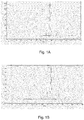
- the exact composition of technical CNSL varies with the exact conditions under which the roasting is performed, as can be seen from samples 3 and 4 shown in Table 1 and in Figures 1A and 1B .
- the heat treatment may suitably be carried out at a temperature in the range of from about 150 °C to about 400 °C, such as, from about 225 °C to about 375 °C, from about 250 °C to about 350 °C or from about 250 °C to about 300 °C for about 1 to about 10 hours, such as from about 2 to about 9 hours, from about 3 to about 8 hours, from about 4 to about 7 hours or from about 5 to about 6 hours.
- the heat treatment is carried out at a temperature from about 250 °C to about 300 °C for about from about 5 to about 6 hours.
- the heat treatment may suitable be carried out at atmospheric pressure, but may also be carried out at higher pressure, such as from 1000-10,000 hPa.
- the heat treatment is performed under reflux and thereby leading to a high yield in terms of retaining compounds present in the starting material or polymerization products thereof.
- the known polymerization product of CNSL, DR-CNSL has a lower yield due to fact that the anacardic, cardol and cardanol present in the starting material CNSL are distilled off, instead of, as in the present invention, being retained in the composition and undergoing polymerization therein.
- polymerized CNSL is a composition based on polymerization of R-CNSL or T-CNSL.
- a polymerized CNSL comprises a polymerized fraction and an un-polymerized fraction, where the polymerized fraction comprises alkyl-phenol polymers, which are high molecular weight polymerization products of cardol and cardanol.
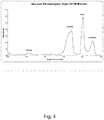
- the polymerized fraction corresponds to the first peak in the GPC chromatograms of DR-CNSL and DP-CNSL shown in Figures 2 and 3 , respectively.
- the un-polymerized fraction comprises mainly cardanol and corresponds to the second peak in these chromatograms.
- distillation residue of CNSL or "DR-CNSL” means the distillation residue obtained upon distilling T-CNSL in order to obtain purified cardanol.
- the distillation residue of CNSL comprises high molecular weight polymerization products of cardol and cardanol and the already polymerized alkyl phenols present in the technical CNSL. Since the majority of the cardol and cardanol is distilled off, the distillation residue of CNSL mainly comprises the products of further polymerization of the polymerized fraction of the CNSL. This distillation residue is a liquid which can be made into a solid powder which is widely used as a component in friction materials.
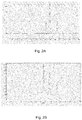
- composition of DR-CNSL also varies among batches, and even more so than T-CNSL, depending both on the composition on the starting material CNSL and on the exact conditions under the distillation is performed as can be seen samples 1 and 2 in Table 1 and in Figures 2A and 2B .
- directly polymerized CNSL means the polymerized CNSL according to the present invention. It is also called DP-CNSL or "RheoFalt HP-AM". For the avoidance of any doubt, DP-CNSL is not the result of a distillation process and thereby differs from DR-CNSL. Since DP-CNSL is not the same as DR-CNSL, the polymerized CNSL according to the invention is not a distillation residue CNSL.
- the term "polymerized fraction" of a CNSL composition means the fraction comprising the polymerized alkyl phenols.
- the polymerized fraction comes out as peak 1 in a gel permeation chromatography (GPC) as illustrated for DP-CNSLs according to the invention in Figure 3 .
- GPC gel permeation chromatography
- the amount of this fraction by wt. % varies considerably among different types and batches of known CNSL compositions.
- the M w and M n of the polymers present in this fraction also varies considerably between different types and batches of known CNSL compositions. This variation is highly undesirable for using CNSL as a modifying additive for bitumen.
- reliability and reproduction of the effect is of course of outmost importance. This problem is solved by the present invention.
- the "un-polymerized fraction" of a CNSL fraction means the fraction mainly comprising alkyl phenols selected from the group consisting of anacardic acid, cardol and cardanol and has an M w in the area of 350-370 g/mol._The un-polymerized fraction comes out as peak 2 in a gel permeation chromatography (GPC) as illustrated for DP-CNSLs according to the invention in Figure 3 .
- GPC gel permeation chromatography
- M w Molecular weight
- the heat treatment is performed until the polymerized CNSL composition furthermore has a number average molar mass M n of from about 600 to about 800, from about 620 to about 750, from about 635 to about 720 or from about 650 to about 700 g/mol.
- the heat treatment is performed until the obtained polymerized CNSL composition furthermore has a ratio of M w :Mn of from about 3.5 to about 5.5, such as from about 4 to about 5, from about 4.5 to about 5 or from about 4.7 to about 4.9, where M w :Mn is a measure of the dispersity, formerly known as polydispersity index (PDI) which is used to describe the degree of "non-uniformity" of a distribution.
- PDI polydispersity index
- the heat treatment may also be performed until the obtained polymerized CNSL composition further has a water content of less than 0.2 wt. % based on the total polymerized CNSL composition.
- the heat treatment may be performed until the polymerized fraction of the polymerized CNSL composition has a M w of from about 3800 to about 4800, such as from about 4000 to about 4750, from about 4200 to about 4700, from about 4400 to about 4650 or from about 4500 to about 4600 g/mol and/or a Mn of from about 950 to about 1300, such as from about 1000 to about 1250, from about 1050 to about 1200 or from about 1100 to about 1150 g/mol.
- the heat treatment may also be performed until the polymerized fraction constitutes more than 50 wt. % of the polymerized CNSL composition.
- the heat treatment is performed until the polymerized fraction of the polymerized CNSL composition has a ratio of M w :Mn of from about 2.5 to about 5.5, such as from about 3 to about 5, from about 3.5 to about 4.5, or about 4.
- the heat treatment is performed until the obtained polymerized CNSL composition has a M w from about 3000 to about 3500 g/mol, a Mn from about 650 to about 700 g/mol, a ratio of M w :Mn of from about 4.7 to about 4.9 and/or until the polymerized fraction of the obtained polymerized CNSL has a M w of from about 4500 to about 4600 g/mol, a Mn of about 1100 to about 1150 g/mol and a ratio of M w :Mn of about 4.
- the heat treatment is performed until the obtained polymerized CNSL according to the invention has a viscosity of at least 25,000 mPa ⁇ s at 25°C, such as at least 28,000 mPa ⁇ s at 25°C, at least 30,000 mPa ⁇ s at 25°C, at least 35,000 mPa ⁇ s at 25°C, at least 40,000 mPa ⁇ s at 25°C, at least 45,000 mPa ⁇ s at 25°C, at least 50,000 mPa ⁇ s at 25°C, at least 55,000 mPa ⁇ s at 25°C, at least 60,000 mPa ⁇ s at 25°C, at least 65,000 mPa ⁇ s at 25°C or at least 68,000 mPa ⁇ s at 25°C.
- the heat treatment to be carried out in accordance with the present invention can suitably be carried out in the presence of a catalyst.
- Suitable catalysts to be used include metal catalysts that can be supported on a carrier material such as silica, alumina or titanium; or they can be unsupported metal catalysts.
- Suitable metals to be used in supported or non-supported metal catalysts can be selected from the group consisting of nickel, zinc, cobalt, lead, cupper and palladium.
- Other suitable catalysts are pumice and silica.
- Such catalyst can suitably be present in an amount in the range of from 1.0-10.0 wt. %, based on total weight of the cashew nut shell liquid.
- the heat treatment may also take place in the presence of organic substances such as aldehydes (e.g. formaldehyde and 1,3,5-trioxaan.) or hexamethylenetetramine.
- organic substances such as aldehydes (e.g. formaldehyde and 1,3,5-trioxaan.) or hexamethylenetetramine.
- the reaction product obtained will be a phenolic resin with aromatic groups and also aliphatic chains.
- organic substances can suitably be present in an amount in the range of from 1.0-25.0 wt. %, based on total weight of the cashew nut shell liquid.
- the method for the preparation of a polymerized CNSL according to the present invention results in a polymerized CNSL with a reliable composition in a high yield, which composition has improved effect when used for modifying bitumen compositions, such as compositions comprising virgin bitumen and/or recycled bitumen.
- bitumen compositions such as compositions comprising virgin bitumen and/or recycled bitumen.
- temperature, time and pressure under which the process of the present invention is performed may be adjusted so as to obtain a product with one or more of the given characteristics in terms of M w , M n and the ratio of M w :M n for the polymerized CNSL obtained by the method, and will vary depending on the composition of the R-CNSL or T-CNSL used as starting material. What is important is to adjust the temperature, time and pressure so as to obtain a product with one or more of the above-mentioned characteristics.
- the present invention also relates to a polymerized CNSL composition obtainable by the above described method for the preparation of a polymerized CNSL composition according to the present invention.
- Such polymerized CNSL composition according to the invention can be used for modifying bitumen compositions, such as compositions comprising virgin bitumen and/or recycled bitumen.
- the present inventors have found, that it has an improved effect in modifying bitumen compositions compared to the effect of DR-CNSL, T-CNSL and R-CNSL.
- the present invention relates to a polymerized CNSL composition having a molecular weight M w of about 2800 to about 3700, such as from about 2900 to about 3600, or from about 3000 to about 3500 g/mol and/or a number average molar mass M n of from about 600 to about 800, from about 620 to about 750, from about 635 to about 720 or from about 650 to about 700 g/mol.
- the polymerized CNSL composition according to the invention further has a water content of less than 0.2 wt.% based on the total polymerized CNSL composition.
- the polymerized CNSL composition according to the invention further has a ratio of M w :Mn of from about 3.5 to about 5.5, such as from about 4 to about 5, from about 4.5 to about 5 or from about 4.7 to about 4.9.
- the polymerized fraction of the polymerized CNSL according to the invention comprises alkyl-phenol polymers having a molecular weight in the range of from 500-25,000, such as in the range of from 600-10,000 or 700-10,000 g/mol and/or a number average molecular weight (M n ) in the range from 400-2500, such as in the range of from 450-2000 or 450-1500 g/mol.
- the ratio M w :M n of the alkyl-phenol polymers in this fraction lies in the range of from 1.3-10.0, preferably in the range of from 1.3-5.0, and more preferably in the range of from 1.6-6.7.
- the polymerized fraction of the polymerized CNSL composition according to the invention has a M w of from about 3800 to about 4800, such as from about 4000 to about 4750, from about 4200 to about 4700, from about 4400 to about 4650 or from about 4500 to about 4600 g/mol and/or a M n of from about 950 to about 1300, such as from about 1000 to about 1250, from about 1050 to about 1200 or from about 1100 to about 1150 g/mol.
- the polymerized fraction constitutes more than 50 wt. % of the polymerized CNSL composition.
- the polymerized fraction of the polymerized CNSL according to the invention has a ratio of M w :M n of from about 2.5 to about 5.5, such as from about 3 to about 5, from about 3.5 to about 4.5, or about 4.
- the polymerized fraction of the polymerized CNSL according to the invention has a M w from about 3000 to about 3500 g/mol, a M n from about 650 to about 700 g/mol, a ratio of M w :M n of from about 4.7 to about 4.9.
- the polymerized fraction of the polymerized CNSL according to the invention has a M w of from about 4500 to about 4600 g/mol, an M n of about 1100 to about 1150 g/mol and a ratio of M w :M n of about 4.
- the alkyl-phenol polymers (also called the polymerized fraction) having a molecular weight (M w ) in the range of from 500-25,000 can suitably be present in an amount in the range of from 40-80 wt. %, based on the total weight of the polymerized CNSL according to the invention.
- the alkyl-phenol polymers are present in an amount in the range of from 50-90 wt.
- the cardanol content in the polymerized CNSL according to the invention is lower than in the known CNSLs, including the DR-CNSL, which is an advantage because of cardanol being an irritating compound for people handling it.
- the cardanol content in DP-CNSL is typically lower that 40 wt.
- % such as lower than 35 wt. %, lower than 30 wt. %, lower than 25 wt. %, lower than 20 wt. %, lower than 15 wt. %, lower than 10 wt. % or lower than 5 wt. %.
- the polymerized CNSL according to the invention has a viscosity of at least 25,000 mPa ⁇ s at 25°C, , such as at least 28,000 mPa ⁇ s at 25°C, at least 30,000 mPa ⁇ s at 25°C, at least 35,000 mPa ⁇ s at 25°C, at least 40,000 mPa ⁇ s at 25°C, at least 45,000 mPa ⁇ s at 25°C, at least 50,000 mPa ⁇ s at 25°C, at least 55,000 mPa ⁇ s at 25°C, at least 60,000 mPa ⁇ s at 25°C, at least 65,000 mPa ⁇ s at 25°C or at least 68,000 mPa ⁇ s at 25°C.
- the polymerized CNSL composition according to the invention is useful for modifying and/or for stabilizing bitumen compositions, such as compositions comprising virgin bitumen, natural bitumen and/or recycled bitumen. Furthermore, the present inventors have found, that it has an improved effect in doing so compared to the effect of DR-CNSL, T-CNSL and R-CNSL.
- the polymerized CNSL according to the present invention has the advantage that it has a beneficial impact on important properties of a bitumen composition like for example improving the bitumen composition with respect to stiffness, fatigue, water sensitivity, phase angle, penetration index and/or colloidal index. This is most likely due to the alkyl-phenol polymers present in the polymerized fraction. Consequently, the bitumen compositions modified in accordance with the present invention will display a more rigid and elastic behavior and will age less rapidly.
- bitumen is a virtually nonvolatile, adhesive and waterproofing material obtained by refinery processes from crude petroleum (virgin bitumen), or present in natural asphalt deposits in some parts of the world (natural bitumen). It is black or brown in color and completely or nearly completely soluble in toluene. It is very viscous or near solid at ambient temperatures and softens gradually when heated.
- bitumen or “oxidized bitumen” means bitumen that has been treated by blowing air through it at elevated temperature to produce physical properties required for industrial use of the final product, such as higher softening point and great resistance to flow than a straight run bitumen of the same hardness.
- bitumen composition means a composition comprising bitumen, such as a bitumen emulsion or bituminous binder, where a bituminous binder is a modified bitumen, or mixture of bitumen with fluxes, etc used for road sealing or the manufacture of asphalt mixes.
- the present invention relates to use of the polymerized CNSL composition according to the invention or obtainable by the method for the preparation of a polymerized CNSL according to the invention, in bitumen composition.
- Use of such polymerized CNSL compositions according to the invention in bitumen results in modifying the bitumen composition, where the term "modifying a bitumen composition” means changing one or more of the parameters selected from the group consisting of colloidal index (CII), penetration index (PI), stiffness, fatigue, phase angle and water sensitivity. These parameters are all important for the usefulness of a bitumen for different applications.
- bitumen to be modified can be selected from the group consisting of virgin bitumen, natural bitumen, blown bitumen and aged bitumen, where aged bitumen is a bitumen composition in need of rejuvenation.
- rejuvenation of bitumen is used interchangeably with recycling of bitumen.
- the present invention relates to use of the polymerized CNSL composition according to the invention for modifying and/or stabilizing a bitumen composition, where stabilizing the bitumen means stabilizing the asphaltenes by keeping them dispersed in the bitumen.
- the polymerized CNSL composition according to the invention can be used for decreasing the colloidal index, decreasing the penetration index, decreasing the stiffness, increasing the fatigue, increasing the phase angle and/or increasing the water sensitivity of a Bitumen composition.
- the present invention also relates to a process for modifying a bitumen composition which comprising mixing a bitumen composition with a polymerized CNSL according to the invention to form a modified bitumen composition.
- Penetration Index is an index that tells something on the temperature sensitivity of bitumen at low temperatures. PI ⁇ -2 will result in a very stiff and brittle bitumen at low temperatures, normally the PI is between +1.0 and -1.2. A PI of >2 is not used in the road building industry.
- the bitumen composition modified in accordance with the present invention can suitably have a colloidal index (CII) in the range of from 0.0-9.0.
- the bitumen composition modified in accordance with the present invention has a colloidal index in the range of from 0.1-0.7, and more preferably a colloidal index in the range of from 0.1-0.5, such as from 0.2 to 0.4.
- the saturates consists of nonpolar material including linear, branched, and cyclic saturated hydrocarbons (paraffins).
- the aromatics which contain one or more aromatic rings, are slightly more polarizable.
- the remaining two fractions, resins and asphaltenes have polar substituents. The distinction between the two is, that asphaltenes are insoluble in an excess of heptane (or pentane) whereas resins are miscible with heptane (or pentane).
- water sensitivity also called “Indirect Tensile Strenght Retained” (ITSR)
- ITSR Indirect Tensile Strenght Retained
- the resins fraction in these "unstable" bitumen compostions are often lower than the normal approximately 20 wt. %.
- the resins available in the asphalt mix are mainly captured by the asphaltenes which makes them less available for the adhesive properties of the bitumen. If the adhesion is decreasing, the water sensitivity increases. For normal mixes the ITSR will be 90% to 100%, below the 60% the asphalt mix will show a strong decline in the durability of the mix. In 2016 virgin straight run bitumen were observed with a water sensitivity (ITSR) of less than 45%.
- Stiffness is determined with the so called four point (beam) bending test in accordance with NEN-EN12697-26. Stiffness of the dynamic four point bending test is an indication how high the average load (MPa) can be without failing.
- MPa average load
- bitumen have a high saturates content the stiffness will be low and the asphalt mix will be vulnerable to rotting.
- Blown bitumen compositions have a higher content of asphaltenes, which make them more brittle to start with.
- the softening point (R&B) is much higher than standard penetration bitumen which makes it more ideal for roofing applications. Stiffness levels will vary for the various asphalt application from min. 3500 MPa to max.14,000 MPa.
- the stiffness in the four point bending test is measured at 20°C with a load frequency of 8 Hz. I
- Fatique is determined according to the four point bending test NEN-EN12697-24.
- the fatigue properties of the asphalt is specified according the four point bending test. This test is run at a temperature of 20°C and a frequency of 30 Hz. For a normal dense asphalt the fatigue should be ⁇ 100 ⁇ m/m.
- phase angle in a measurement is an indication of the ability to withstand a certain load without failing and to recover after the load is ended ("flexibility").
- the phase angle is determined in accordance with NEN-EN 12697-26 at 20°C, mean stiffness and at 8 Hz. With normal bitumen this angle is around the 20° to 25°. Stiff and brittle asphalt will show an angle of around the 10° to 6°. Below this value the durability of the asphalt mix will be poor.
- a modified bitumen composition is provided. Surprisingly, it appeared that by the addition of a relatively small amount of polymerized CNSL according to the invention, the modified bitumen composition has improved properties on one or more of the parameters selected from the group consisting of colloidal index (CII), penetration index (PI), stiffness, fatigue, phase angle and water sensitivity (ITSR), when compared with freshly prepared bitumen compositions and/or bitumen compositions which has been modified with the known T-CNSL, R-CNSL or DR-CNSL.
- colloidal index CII
- PI penetration index
- ITSR phase angle and water sensitivity
- the bitumen composition to be modified in accordance with the present invention can be a bitumen composition derived from a variety of sources, such as virgin bitumen, natural bitumen and different kinds of aged bitumen compositions in need of rejuvenation.
- the bitumen composition to be modified is selected from the group consisting of virgin bitumen, natural bitumen, blown bitumen compositions, polymer-containing bitumen compositions, metallocene-containing bitumen compositions and synthetic wax-containing bitumen compositions.
- the polymer-containing bitumen compositions may be bitumen compositions that have been modified with polymers such as styrene-butadiene-styrene (SBS) or ethylene vinyl acetate (EVA).
- bitumen composition to be modified in accordance with the present invention suitably contains asphaltenes in an amount in the range of from 2-25 wt. %, based on the total bitumen composition.
- bitumen composition to be modified in accordance with the present invention suitably contains asphaltenes in an amount in the range of from 10-20 wt. %, more preferably in the range of from 12-18 wt. %, based on the total bitumen composition.
- such bitumen composition comprises from about 0.2 to about 40 wt. % polymerized CNSL according to the invention, such as, from about 0.5 to about 35 wt. %, from about 2 to about 30 wt. %, from about 5 to about 25 wt. % or from about 5 to about 20 wt. % based on total weight of the modified bitumen composition.
- bitumen composition may comprise more than 50 wt. % bitumen, such as more than 55 wt. %, 60 wt. %, 65 wt. %, 75 wt. %, 80 wt. %, 85 wt. %, 90 wt. % or 95 wt. %.
- the bitumen composition may consist essentially of bitumen and polymerized CNSL according to the invention. If the bitumen in the composition is virgin bitumen, the bitumen composition advantageously comprises from about 90 wt. % to about 99.5 wt. % virgin Bitumen and from about 0.5 wt. % to about 10 wt. % polymerized CNSL according to the invention.
- bitumen in the composition is natural bitumen
- the bitumen composition advantageously comprises from about 65 wt. % to about 90 wt. % natural bitumen and from about 10 wt. % to about 35 wt. % polymerized CNSL according to the invention.
- the present invention relates to the use of a modified bitumen according to the invention in roofing applications. Also, the present invention relates to the use of a modified bitumen according to the invention in bank revetment applications.
- the modified bitumen composition according to the present invention is improved on properties important for its usefulness in asphalt compositions, such as colloidal index (CII), penetration index (PI), stiffness, fatigue, phase angle and/or water sensitivity (ITSR).
- CII colloidal index
- PI penetration index
- ITSR water sensitivity
- a modified bitumen composition has been improved with respect to a property, if the measured value of the property in question is getting closer to the ideal value or ideal value range for said property or if the measured value is brought within the ideal range for said property by the addition of a polymerized CNSL according to the invention, when compared to a corresponding bitumen composition to which no CNSL was added and/or to a bitumen composition which has been modified by addition of R-CNSL, T-CNSL and/or DR-CNSL.
- the ideal value range for colloidal index (CII) is from 0.2 to 0.4 when determined in accordance with formula 4 as described above.
- the ideal value range for penetration index (PI) is from -1.2 to +1 when determined in accordance the penetration/ring and ball softening point method as described above.
- the ideal value range for stiffness is from 3500 MPa to 14,000 MPa, when determined with the so called four point (beam) bending test in accordance with NEN-EN12697-26 as described above.
- the ideal value for phase angle is from 20° to 25°, when measured in accordance with NEN-EN 12697-26 as described above.
- the ideal value range for water sensitivity (ITSR) is from 90% to 100%, when determined in accordance with NEN-EN12697-12.
- a modified bitumen composition has been improved if the measured value is higher than the corresponding value for a bitumen composition to which no CNSL was added and/or for a bitumen composition which has been modified by addition of R-CNSL, T-CNSL and/or DR-CNSL, where fatigue is determined according to the four point bending test NEN-EN12697-24 as described above.
- the modified bitumen composition according to the present invention is improved with respect to at least one of the properties selected from the group consisting of colloidal index (CII), penetration index (PI), stiffness, fatigue, phase angle and water sensitivity (ITSR), compared to a corresponding bitumen composition to which no CNSL was added.
- the modified bitumen composition is improved with respect to at least two, such as at least three, at least four or at least five of the properties selected from the group consisting of colloidal index (CII), penetration index (PI), stiffness, fatigue, phase angle and water sensitivity (ITSR), compared to a corresponding bitumen composition to which no CNSL was added.
- the modified bitumen composition according to the invention is improved with respect to colloidal index (CII), penetration index (PI), stiffness, fatigue, phase angle and water sensitivity (ITSR), compared to a corresponding bitumen composition to which no CNSL has been added.
- CII colloidal index
- PI penetration index
- ITSR phase angle and water sensitivity
- the modified bitumen composition according to the invention has:
- the modified bitumen composition according to the present invention is improved with respect to at least one of the properties selected from the group consisting of colloidal index (CII), penetration index (PI), stiffness, fatigue, phase angle and water sensitivity (ITSR), compared to a corresponding bitumen composition which has been modified by addition of R-CNSL, T-CNSL and/or DR-CNSL.
- CCI colloidal index
- PI penetration index
- ITSR phase angle and water sensitivity
- the modified bitumen composition is improved with respect to at least two, such as at least three, at least four or at least five of the properties selected from the group consisting of colloidal index (CII), penetration index (PI), stiffness, fatigue, phase angle and water sensitivity (ITSR), compared to a corresponding bitumen composition which has been modified by addition of R-CNSL, T-CNSL and/or DR-CNSL.
- CCI colloidal index
- PI penetration index
- ITSR phase angle and water sensitivity
- the modified bitumen composition according to the invention is improved with respect to colloidal index (CII), penetration index (PI), stiffness, fatigue, phase angle and water sensitivity (ITSR), compared to a corresponding bitumen composition which has been modified by addition of R-CNSL, T-CNSL and/or DR-CNSL.
- CII colloidal index
- PI penetration index
- ITSR phase angle and water sensitivity
- the modified bitumen composition according to the invention has:
- the modified bitumen composition according to the present invention is improved with respect to at least one of the properties selected from the group consisting of colloidal index (CII), penetration index (PI), stiffness, fatigue, phase angle and water sensitivity (ITSR), compared to a corresponding bitumen composition which has been modified by addition of a corresponding amount of R-CNSL, T-CNSL and/or DR-CNSL.
- CCI colloidal index
- PI penetration index
- ITSR phase angle and water sensitivity
- the modified bitumen composition is improved with respect to at least two, such as at least three, at least four or at least five of the properties selected from the group consisting of colloidal index (CII), penetration index (PI), stiffness, fatigue, phase angle and water sensitivity (ITSR), compared to a corresponding bitumen composition which has been modified by addition of a corresposponding amount ot R-CNSL, T-CNSL and/or DR-CNSL.
- CCI colloidal index
- PI penetration index
- ITSR phase angle and water sensitivity
- the modified bitumen composition according to the invention is improved with respect to colloidal index (CII), penetration index (PI), stiffness, fatigue, phase angle and water sensitivity (ITSR), compared to a corresponding bitumen composition which has been modified by addition of a corresponding amount of R-CNSL, T-CNSL and/or DR-CNSL.
- CII colloidal index
- PI penetration index
- ITSR phase angle and water sensitivity
- the modified bitumen composition according to the invention has:
- the present invention relates to the use of a bitumen as modified in accordance with the present process in roofing applications. Also, the present invention relates to the use of a bitumen as modified in accordance with the present process in bank revetment applications.
- Asphalt compositions comprising modified bitumen according to the invention.
- the present invention also relates to an asphalt mixture comprising a modified bitumen composition according to the invention.
- asphalt can either mean the bitumen itself or a mixture of mineral aggregate and a bituminous binder.
- Example 1 Comparative study of different CNSL samples.
- CNSL samples were characterized for their physico-chemical properties and analyzed by gel permeation chromatography (GPC) with respect to retention time, M n , M w , M w :M n , and area in percentage under the curve of peak 1 and 2, respectively, (Area %).
- the first peak is the polymerized fraction of varying M w and the second peak is the un-polymerized fraction, which mainly consists of cardanol and has an M w in the area of 350-370 g/mol.
- Sample 1 is a DR-CNSL from Cardolite with product code NX-5345 produced in China (GPC chromatogram shown as figure 2A ).
- Sample 2 is a DR-CNSL from Cardolite with product code NX-5345 produced in USA (GPC chromatogram shown as figure 2B ).
- Samples 3 and 4 are two different samples of T-CNSL (NC-603) (GPC chromatogram shown as figure 1A and 1B ).
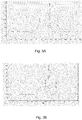
- Sample 5 is a DP-CNSL composition obtained by subjecting sample 3 to a heat treatment at a temperature between 250 °C and 300 °C for 6 hours, under reflux and at atmospheric pressure to obtain a polymerized CNSL according to the present invention (GPC chromatogram shown as figure 3A ).
- Sample 6 is a CNSL composition obtained by subjecting a DR-CNSL (sample 1) to a heat treatment at 200 °C for 2 hours, under reflux and at atmospheric pressure (GPC chromatogram shown as figure 3B ).
- bitumen compositions were made from an aged (blown) bitumen composition having the properties as shown in Table 3.
- the penetration index (PI) and the colloidal index (CII) as defined hereinbefore were determined in respect of this modified bitumen composition and their values are shown in Table 3.
- Bitumen compositions II-V were prepared by adding different amounts of raw CNSL subjected to a light heat treatment as controls.
- Bitumen compositions VII-X were prepared by adding corresponding different amounts of the polymerized CNSL according to the invention.
- Compositions I and VI are both controls with no added CNSL.
- the cashew nut shell liquid was obtained by heating a raw cashew nut shell liquid at a temperature of 140 °C for 60 minutes.
- the alkyl-phenol polymers present in the cashew nut shell liquid had a M n of 379 g/mol and a M w of 392 g/mol; the alkyl-phenol polymers were present in an amount of 65 wt. %, based on total weight of the cashew nut shell liquid; and 99 wt. % of the anarcadic acid originally present in the crude cashew nut shell liquid was converted into cardanol.
- Bitumen composition I was prepared as follows: 500 grams of the aged blown bitumen with no added CNSL.
- Bitumen composition II was prepared as follows: 475 grams of the aged blown bitumen composition was mixed with 25 grams of the CNSL obtained in this example.
- Bitumen composition III was prepared as follows: 450 grams of the aged blown bitumen composition was mixed with 50 grams of the CNSL obtained in this example.
- Bitumen composition IV was prepared as follows: 425 grams of the aged blown bitumen composition was mixed with 75 grams of the CNSL obtained in this example.
- Bitumen composition V was prepared as follows: 400 grams of the aged blown bitumen composition was mixed 100 grams of the cashew nut shell liquid as used in Example 2.
- bitumen compositions VII-X the polymerized cashew nut shell liquid was obtained by heating a raw cashew nut shell liquid at a temperature of 250 °C for 120 minutes, under reflux and at atmospheric pressure to obtain a polymerized CNSL according to the invention.
- This polymerized CNSL had a M n of 695 g/mol and an M w of 3415 g/mol.
- the alkyl-phenol polymers were present in an amount of 95 wt%, based on total weight of the cashew nut shell liquid; and 99 % of the anarcadic acid originally present in the crude cashew nut shell liquid was converted into cardanol.
- Bitumen composition VII was prepared by mixing 475 grams of the aged blown bitumen composition with 25 grams of the polymerized CNSL according to the invention.
- Bitumen composition VIII was prepared as follows: 450 grams of the aged blown bitumen composition was mixed with 50 grams of a polymerized CNSL according to the invention.
- Bitumen composition IX was prepared by mixing 425 grams of the aged blown bitumen composition with 75 grams of the polymerized CNSL according to the invention.
- Bitumen composition X was prepared by mixing 400 grams of the aged blown bitumen composition with 100 grams of the polymerized CNSL according to the invention.
- the penetration index (PI) and the colloidal index (CII) as defined hereinbefore were determined in respect of this modified bitumen compositions I to X and their values are shown in Table 3. From Table 4 it will be clear that the bitumen compositions modified in accordance with the present invention (bitumen compositions VII-X) display a desirable lower CII and display a considerably improved performance in terms of penetration index when compared with the comparative bitumen compositions I-VI.
- the Penetration Index is a measure of the temperature dependence of the viscosity of bitumen and should be between the -2.0 and 2.0 and preferably between the -1.5 and 0.7.
- Table 4 PI in blown bitumen Technical CNSL Directly polymerized CNSL according to the invention Wt. % CNSL Sample No. T (R&B) Pen 25 Pen40 CII PI Sample No.
- bitumen compositions comprising 10 wt. % were analyzed with respect to colloidal index and penetration index (see table 5).
- the high quality bitumen "Puerto Gil quality" is included.
- Indirect Tensile Strength Retained was determined according to NEN-EN12697-12. The shown ratio is the calculated average of two time three samples tested.
- the asphalt stiffness is determined with the so called four point (beam) bending test.
- This test is according to European norm NEN-EN12697-26. This test is performed at a temperature of 20°C and a load frequency of 8 Hz. The frequency sweep is run at 0.1 Hz, 0.2 Hz, 0.5 Hz, 1 Hz, 2 Hz, 5 Hz, 8 Hz, 10 Hz, 20 Hz, 30 Hz and 0,1 Hz. The results shown are the calculated average of eighteen tested samples.
- the fatigue properties of the 100% recycled asphalt is specified according the four point bending test NEN-EN12697-24.
- the test is run at a temperature of 20°C and a frequency of 30 Hz.
- the shown values are based on eighteen samples were at least six samples were tested on three different strain levels.
- the phase angle is a measurement which is an indication of the ability to withstand a certain load without failing an to recover after the load is ended ("flexibility") the phase angle is determined at 20°C at the mean stiffness with 8 Hz.
Landscapes
- Chemical & Material Sciences (AREA)
- Organic Chemistry (AREA)
- Chemical Kinetics & Catalysis (AREA)
- Polymers & Plastics (AREA)
- Health & Medical Sciences (AREA)
- Medicinal Chemistry (AREA)
- Oil, Petroleum & Natural Gas (AREA)
- Materials Engineering (AREA)
- Engineering & Computer Science (AREA)
- Civil Engineering (AREA)
- Structural Engineering (AREA)
- General Chemical & Material Sciences (AREA)
- Compositions Of Macromolecular Compounds (AREA)
Applications Claiming Priority (1)
| Application Number | Priority Date | Filing Date | Title |
|---|---|---|---|
| EP15196489 | 2015-11-26 |
Publications (2)
| Publication Number | Publication Date |
|---|---|
| EP3208288A1 true EP3208288A1 (de) | 2017-08-23 |
| EP3208288B1 EP3208288B1 (de) | 2018-04-18 |
Family
ID=54782454
Family Applications (1)
| Application Number | Title | Priority Date | Filing Date |
|---|---|---|---|
| EP16200894.0A Active EP3208288B1 (de) | 2015-11-26 | 2016-11-28 | Verfahren zur herstellung einer polymerisierten flüssigkeit der cashewnussschale und verwendung davon zur herstellung einer bitumenzusammensetzung |
Country Status (2)
| Country | Link |
|---|---|
| US (2) | US10385235B2 (de) |
| EP (1) | EP3208288B1 (de) |
Cited By (2)
| Publication number | Priority date | Publication date | Assignee | Title |
|---|---|---|---|---|
| WO2021250014A1 (en) | 2020-06-09 | 2021-12-16 | Basf Se | Rejuvenating agents for asphalt recycling |
| DE102020130714A1 (de) | 2020-11-20 | 2022-05-25 | EUROVIA Services GmbH | Bitumenmischung |
Families Citing this family (6)
| Publication number | Priority date | Publication date | Assignee | Title |
|---|---|---|---|---|
| US10323147B1 (en) | 2016-05-26 | 2019-06-18 | Marathon Petroleum Company Lp | Asphalt composition containing ester bottoms |
| US11814506B2 (en) | 2019-07-02 | 2023-11-14 | Marathon Petroleum Company Lp | Modified asphalts with enhanced rheological properties and associated methods |
| US12304377B2 (en) | 2020-05-21 | 2025-05-20 | Marathon Petroleum Company Lp | Systems and methods for venting tanks to enhance transporting asphalt |
| DE102021131019B4 (de) | 2021-11-25 | 2024-05-29 | ALBR3CHT Supply Concepts GmbH | Verfahren zum Steuern einer Mischanlage zur Herstellung von Bitumen |
| NO20240702A1 (en) * | 2024-06-28 | 2025-12-29 | Gind As | Concrete paving stones |
| WO2026068819A1 (en) | 2024-09-30 | 2026-04-02 | Sika Technology Ag | Sustainable acoustic damping material |
Citations (3)
| Publication number | Priority date | Publication date | Assignee | Title |
|---|---|---|---|---|
| US1912435A (en) * | 1930-03-06 | 1933-06-06 | Harvel Corp | Composition of matter |
| WO2010085140A1 (en) | 2009-01-22 | 2010-07-29 | Van Weezenbeek Specialties Bv | Method for rejuvenating a bitumen containing composition |
| WO2010110651A1 (en) | 2009-03-24 | 2010-09-30 | Van Weezenbeek Specialties B.V. | Method for rejuvenating a bitumen containing composition |
Family Cites Families (8)
| Publication number | Priority date | Publication date | Assignee | Title |
|---|---|---|---|---|
| US2143880A (en) * | 1935-05-16 | 1939-01-17 | Harvel Corp | Composition of matter and methods and steps of making and using the same |
| US2223549A (en) | 1937-11-05 | 1940-12-03 | Harvel Corp | Treatment of cashew nut shell liquid |
| US4352944A (en) * | 1980-01-08 | 1982-10-05 | Minnesota Mining And Manufacturing Company | Treatment of cashew nut shell liquid |
| DE102004047793B3 (de) | 2004-09-29 | 2006-05-11 | Hänel-Labryga, Carsten | Bitumenhaltiges Bindemittel |
| DE102005017126A1 (de) * | 2005-04-14 | 2006-10-19 | Cognis Ip Management Gmbh | Verfahren zur Herstellung von Cardanol (I) |
| US8161540B2 (en) * | 2007-07-27 | 2012-04-17 | Redshift Internetworking, Inc. | System and method for unified communications threat management (UCTM) for converged voice, video and multi-media over IP flows |
| US8231692B2 (en) * | 2008-11-06 | 2012-07-31 | International Business Machines Corporation | Method for manufacturing an electronic device |
| WO2010077141A1 (en) | 2009-01-05 | 2010-07-08 | Rasenberg Wegenbouw B.V. | Asphalt composition |
-
2016
- 2016-11-28 EP EP16200894.0A patent/EP3208288B1/de active Active
- 2016-11-28 US US15/362,200 patent/US10385235B2/en active Active
-
2019
- 2019-07-10 US US16/507,909 patent/US10717898B2/en active Active
Patent Citations (3)
| Publication number | Priority date | Publication date | Assignee | Title |
|---|---|---|---|---|
| US1912435A (en) * | 1930-03-06 | 1933-06-06 | Harvel Corp | Composition of matter |
| WO2010085140A1 (en) | 2009-01-22 | 2010-07-29 | Van Weezenbeek Specialties Bv | Method for rejuvenating a bitumen containing composition |
| WO2010110651A1 (en) | 2009-03-24 | 2010-09-30 | Van Weezenbeek Specialties B.V. | Method for rejuvenating a bitumen containing composition |
Non-Patent Citations (6)
| Title |
|---|
| ANONYMOUS: "Pitch (resin) - Wikipedia, the free encyclopedia", 26 April 2016 (2016-04-26), XP055269365, Retrieved from the Internet <URL:https://en.wikipedia.org/wiki/Pitch_(resin)> [retrieved on 20160428] * |
| EDEILTO ALMEIDA RIBEIRO ET AL: "EVALUATION OF MOISTURE DAMAGE IN ASPHALT CONTAINING CASHEW NUT SHELL LIQUID (CNSL) MODIFIED BITUMEN", 5TH EURASPHALT & EUROBITUME CONGRESS, 13-15TH JUNE 2012, ISTANBUL, 15 June 2015 (2015-06-15), pages 13 - 15, XP055269056, Retrieved from the Internet <URL:http://www.h-a-d.hr/pubfile.php?id=522> [retrieved on 20160427] * |
| M. T. HARVEY ET AL: "Cashew Nut Shell Liquid", INDUSTRIAL AND ENGINEERING CHEMISTRY, vol. 32, no. 10, 1 October 1940 (1940-10-01), US, pages 1306 - 1310, XP055269049, ISSN: 0019-7866, DOI: 10.1021/ie50370a008 * |
| MOREIRA L F B ET AL: "STABILIZATION OF ASPHALTENES BY PHENOLIC COMPOUNDS EXTRACTED FROM CASHEW-NUT SHELL LIQUID", JOURNAL OF APPLIED POLYMER SCIENCE, JOHN WILEY & SONS, INC, US, vol. 73, no. 1, 1 January 1999 (1999-01-01), pages 29 - 34, XP009057289, ISSN: 0021-8995, DOI: 10.1002/(SICI)1097-4628(19990705)73:1<29::AID-APP3>3.0.CO;2-O * |
| ROSY ANTONY ET AL: "GPC studies on the cationic polymerization of cardanol initiated by borontrifluoridediethyletherate", JOURNAL OF APPLIED POLYMER SCIENCE, 1 January 1990 (1990-01-01), pages 1765 - 1775, XP055269214, Retrieved from the Internet <URL:http://www.readcube.com/articles/10.1002/app.1990.070410733> [retrieved on 20160428], DOI: 10.1002/app.1990.070410733 * |
| SELMA ELAINE MAZZETTO ET AL: "Óleo da castanha de caju: oportunidades e desafios no contexto do desenvolvimento e sustentabilidade industrial", QUIMICA NOVA, vol. 32, no. 3, 1 January 2009 (2009-01-01), BR, pages 732 - 741, XP055269190, ISSN: 0100-4042, DOI: 10.1590/S0100-40422009000300017 * |
Cited By (4)
| Publication number | Priority date | Publication date | Assignee | Title |
|---|---|---|---|---|
| WO2021250014A1 (en) | 2020-06-09 | 2021-12-16 | Basf Se | Rejuvenating agents for asphalt recycling |
| CN115768837A (zh) * | 2020-06-09 | 2023-03-07 | 巴斯夫欧洲公司 | 用于沥青再生的再生剂 |
| DE102020130714A1 (de) | 2020-11-20 | 2022-05-25 | EUROVIA Services GmbH | Bitumenmischung |
| EP4039739A1 (de) | 2020-11-20 | 2022-08-10 | Eurovia Services GmbH | Bitumenmischung |
Also Published As
| Publication number | Publication date |
|---|---|
| US20170152384A1 (en) | 2017-06-01 |
| US20190330495A1 (en) | 2019-10-31 |
| US10385235B2 (en) | 2019-08-20 |
| US10717898B2 (en) | 2020-07-21 |
| EP3208288B1 (de) | 2018-04-18 |
Similar Documents
| Publication | Publication Date | Title |
|---|---|---|
| US10717898B2 (en) | Directly polymerized cashew nut shell liquid (CNSL) and bitumen compositions comprising the same | |
| CA2787959C (en) | Polymer-modified asphalt with a crosslinking agent and methods of preparing | |
| EP0815170B1 (de) | Mit säure umgesetzte, polymermodifizierte asphaltzusammensetzungen und deren herstellung | |
| AU2004220301B2 (en) | Bituminous binder and method for the production thereof | |
| Carrera et al. | Influence of the prepolymer molecular weight and free isocyanate content on the rheology of polyurethane modified bitumens | |
| Radziszewski et al. | Quality assessment of bituminous binders based on the viscoelastic properties: Polish experience | |
| CN112409803B (zh) | 改性沥青原料组合物、改性沥青及其制备方法和应用 | |
| CN102329102A (zh) | 一种热拌冷铺sbs改性沥青混合料 | |
| US6972047B2 (en) | Incorporation of gilsonite into asphalt compositions | |
| CN112213475B (zh) | 一种沥青老化参数的测定方法 | |
| US20170349725A1 (en) | Oligoterpenes as rejuvenating agent in asphalt | |
| Navarro et al. | Rheology and microstructure of MDI–PEG reactive prepolymer-modified bitumen | |
| US20090118395A1 (en) | Process of polymer modified asphalt preparation | |
| Daly et al. | Chemical characterization of asphalts related to their performance | |
| US5749953A (en) | High shear asphalt compositions | |
| CN109439000B (zh) | 一种化学反应性复合改性沥青及其制备方法 | |
| Mustafa Kamal et al. | Warm mix asphalt additive in natural rubber modified bitumen | |
| US20160017149A1 (en) | Process for the production of polymer modified bitumen using nitrogen rich polycyclic aromatic hydrocarbon | |
| KR20070105533A (ko) | 기계적 물성 및 내노화 성능이 개선된 아스팔트 조성물 및그의 제조방법 | |
| CN110437630A (zh) | 一种聚合物改性沥青及其制备方法 | |
| KR101120509B1 (ko) | 경질원유로부터 침입도 20?80의 아스팔트를 제조하는 방법 및 그에 의하여 제조된 침입도 20?80의 아스팔트 | |
| Kim et al. | Laboratory evaluation of SBS modified asphalt binder containing GTR, SIS, and PE | |
| CN113698559A (zh) | 嵌段共聚物及由其获得的聚合物改性的沥青 | |
| Joshi et al. | Modification of lower viscosity grade bitumen into higher viscosity grade bitumen via glycerol and maleic anhydride-based polyester | |
| RU2655334C2 (ru) | Композиционное резинобитумное вяжущее и способ его получения |
Legal Events
| Date | Code | Title | Description |
|---|---|---|---|
| PUAI | Public reference made under article 153(3) epc to a published international application that has entered the european phase |
Free format text: ORIGINAL CODE: 0009012 |
|
| AK | Designated contracting states |
Kind code of ref document: A1 Designated state(s): AL AT BE BG CH CY CZ DE DK EE ES FI FR GB GR HR HU IE IS IT LI LT LU LV MC MK MT NL NO PL PT RO RS SE SI SK SM TR |
|
| AX | Request for extension of the european patent |
Extension state: BA ME |
|
| 17P | Request for examination filed |
Effective date: 20170726 |
|
| RBV | Designated contracting states (corrected) |
Designated state(s): AL AT BE BG CH CY CZ DE DK EE ES FI FR GB GR HR HU IE IS IT LI LT LU LV MC MK MT NL NO PL PT RO RS SE SI SK SM TR |
|
| REG | Reference to a national code |
Ref country code: DE Ref legal event code: R079 Ref document number: 602016002600 Country of ref document: DE Free format text: PREVIOUS MAIN CLASS: C08F0242000000 Ipc: C08L0095000000 |
|
| GRAP | Despatch of communication of intention to grant a patent |
Free format text: ORIGINAL CODE: EPIDOSNIGR1 |
|
| RIC1 | Information provided on ipc code assigned before grant |
Ipc: C08F 136/22 20060101ALI20171206BHEP Ipc: C08L 95/00 20060101AFI20171206BHEP Ipc: C08F 242/00 20060101ALI20171206BHEP Ipc: C08L 91/00 20060101ALI20171206BHEP |
|
| INTG | Intention to grant announced |
Effective date: 20180105 |
|
| GRAS | Grant fee paid |
Free format text: ORIGINAL CODE: EPIDOSNIGR3 |
|
| GRAA | (expected) grant |
Free format text: ORIGINAL CODE: 0009210 |
|
| AK | Designated contracting states |
Kind code of ref document: B1 Designated state(s): AL AT BE BG CH CY CZ DE DK EE ES FI FR GB GR HR HU IE IS IT LI LT LU LV MC MK MT NL NO PL PT RO RS SE SI SK SM TR |
|
| REG | Reference to a national code |
Ref country code: GB Ref legal event code: FG4D |
|
| REG | Reference to a national code |
Ref country code: CH Ref legal event code: EP |
|
| REG | Reference to a national code |
Ref country code: AT Ref legal event code: REF Ref document number: 990433 Country of ref document: AT Kind code of ref document: T Effective date: 20180515 |
|
| REG | Reference to a national code |
Ref country code: IE Ref legal event code: FG4D |
|
| REG | Reference to a national code |
Ref country code: DE Ref legal event code: R096 Ref document number: 602016002600 Country of ref document: DE |
|
| REG | Reference to a national code |
Ref country code: NL Ref legal event code: FP |
|
| REG | Reference to a national code |
Ref country code: LT Ref legal event code: MG4D |
|
| PG25 | Lapsed in a contracting state [announced via postgrant information from national office to epo] |
Ref country code: BG Free format text: LAPSE BECAUSE OF FAILURE TO SUBMIT A TRANSLATION OF THE DESCRIPTION OR TO PAY THE FEE WITHIN THE PRESCRIBED TIME-LIMIT Effective date: 20180718 Ref country code: SE Free format text: LAPSE BECAUSE OF FAILURE TO SUBMIT A TRANSLATION OF THE DESCRIPTION OR TO PAY THE FEE WITHIN THE PRESCRIBED TIME-LIMIT Effective date: 20180418 Ref country code: FI Free format text: LAPSE BECAUSE OF FAILURE TO SUBMIT A TRANSLATION OF THE DESCRIPTION OR TO PAY THE FEE WITHIN THE PRESCRIBED TIME-LIMIT Effective date: 20180418 Ref country code: ES Free format text: LAPSE BECAUSE OF FAILURE TO SUBMIT A TRANSLATION OF THE DESCRIPTION OR TO PAY THE FEE WITHIN THE PRESCRIBED TIME-LIMIT Effective date: 20180418 Ref country code: LT Free format text: LAPSE BECAUSE OF FAILURE TO SUBMIT A TRANSLATION OF THE DESCRIPTION OR TO PAY THE FEE WITHIN THE PRESCRIBED TIME-LIMIT Effective date: 20180418 Ref country code: PL Free format text: LAPSE BECAUSE OF FAILURE TO SUBMIT A TRANSLATION OF THE DESCRIPTION OR TO PAY THE FEE WITHIN THE PRESCRIBED TIME-LIMIT Effective date: 20180418 Ref country code: AL Free format text: LAPSE BECAUSE OF FAILURE TO SUBMIT A TRANSLATION OF THE DESCRIPTION OR TO PAY THE FEE WITHIN THE PRESCRIBED TIME-LIMIT Effective date: 20180418 Ref country code: NO Free format text: LAPSE BECAUSE OF FAILURE TO SUBMIT A TRANSLATION OF THE DESCRIPTION OR TO PAY THE FEE WITHIN THE PRESCRIBED TIME-LIMIT Effective date: 20180718 |
|
| PG25 | Lapsed in a contracting state [announced via postgrant information from national office to epo] |
Ref country code: LV Free format text: LAPSE BECAUSE OF FAILURE TO SUBMIT A TRANSLATION OF THE DESCRIPTION OR TO PAY THE FEE WITHIN THE PRESCRIBED TIME-LIMIT Effective date: 20180418 Ref country code: RS Free format text: LAPSE BECAUSE OF FAILURE TO SUBMIT A TRANSLATION OF THE DESCRIPTION OR TO PAY THE FEE WITHIN THE PRESCRIBED TIME-LIMIT Effective date: 20180418 Ref country code: HR Free format text: LAPSE BECAUSE OF FAILURE TO SUBMIT A TRANSLATION OF THE DESCRIPTION OR TO PAY THE FEE WITHIN THE PRESCRIBED TIME-LIMIT Effective date: 20180418 Ref country code: GR Free format text: LAPSE BECAUSE OF FAILURE TO SUBMIT A TRANSLATION OF THE DESCRIPTION OR TO PAY THE FEE WITHIN THE PRESCRIBED TIME-LIMIT Effective date: 20180719 |
|
| REG | Reference to a national code |
Ref country code: AT Ref legal event code: MK05 Ref document number: 990433 Country of ref document: AT Kind code of ref document: T Effective date: 20180418 |
|
| PG25 | Lapsed in a contracting state [announced via postgrant information from national office to epo] |
Ref country code: PT Free format text: LAPSE BECAUSE OF FAILURE TO SUBMIT A TRANSLATION OF THE DESCRIPTION OR TO PAY THE FEE WITHIN THE PRESCRIBED TIME-LIMIT Effective date: 20180820 |
|
| REG | Reference to a national code |
Ref country code: DE Ref legal event code: R097 Ref document number: 602016002600 Country of ref document: DE |
|
| PG25 | Lapsed in a contracting state [announced via postgrant information from national office to epo] |
Ref country code: CZ Free format text: LAPSE BECAUSE OF FAILURE TO SUBMIT A TRANSLATION OF THE DESCRIPTION OR TO PAY THE FEE WITHIN THE PRESCRIBED TIME-LIMIT Effective date: 20180418 Ref country code: RO Free format text: LAPSE BECAUSE OF FAILURE TO SUBMIT A TRANSLATION OF THE DESCRIPTION OR TO PAY THE FEE WITHIN THE PRESCRIBED TIME-LIMIT Effective date: 20180418 Ref country code: EE Free format text: LAPSE BECAUSE OF FAILURE TO SUBMIT A TRANSLATION OF THE DESCRIPTION OR TO PAY THE FEE WITHIN THE PRESCRIBED TIME-LIMIT Effective date: 20180418 Ref country code: SK Free format text: LAPSE BECAUSE OF FAILURE TO SUBMIT A TRANSLATION OF THE DESCRIPTION OR TO PAY THE FEE WITHIN THE PRESCRIBED TIME-LIMIT Effective date: 20180418 Ref country code: AT Free format text: LAPSE BECAUSE OF FAILURE TO SUBMIT A TRANSLATION OF THE DESCRIPTION OR TO PAY THE FEE WITHIN THE PRESCRIBED TIME-LIMIT Effective date: 20180418 Ref country code: DK Free format text: LAPSE BECAUSE OF FAILURE TO SUBMIT A TRANSLATION OF THE DESCRIPTION OR TO PAY THE FEE WITHIN THE PRESCRIBED TIME-LIMIT Effective date: 20180418 |
|
| PLBE | No opposition filed within time limit |
Free format text: ORIGINAL CODE: 0009261 |
|
| STAA | Information on the status of an ep patent application or granted ep patent |
Free format text: STATUS: NO OPPOSITION FILED WITHIN TIME LIMIT |
|
| PG25 | Lapsed in a contracting state [announced via postgrant information from national office to epo] |
Ref country code: IT Free format text: LAPSE BECAUSE OF FAILURE TO SUBMIT A TRANSLATION OF THE DESCRIPTION OR TO PAY THE FEE WITHIN THE PRESCRIBED TIME-LIMIT Effective date: 20180418 Ref country code: SM Free format text: LAPSE BECAUSE OF FAILURE TO SUBMIT A TRANSLATION OF THE DESCRIPTION OR TO PAY THE FEE WITHIN THE PRESCRIBED TIME-LIMIT Effective date: 20180418 |
|
| 26N | No opposition filed |
Effective date: 20190121 |
|
| PG25 | Lapsed in a contracting state [announced via postgrant information from national office to epo] |
Ref country code: MC Free format text: LAPSE BECAUSE OF FAILURE TO SUBMIT A TRANSLATION OF THE DESCRIPTION OR TO PAY THE FEE WITHIN THE PRESCRIBED TIME-LIMIT Effective date: 20180418 Ref country code: LU Free format text: LAPSE BECAUSE OF NON-PAYMENT OF DUE FEES Effective date: 20181128 |
|
| PG25 | Lapsed in a contracting state [announced via postgrant information from national office to epo] |
Ref country code: MT Free format text: LAPSE BECAUSE OF NON-PAYMENT OF DUE FEES Effective date: 20181128 |
|
| PG25 | Lapsed in a contracting state [announced via postgrant information from national office to epo] |
Ref country code: TR Free format text: LAPSE BECAUSE OF FAILURE TO SUBMIT A TRANSLATION OF THE DESCRIPTION OR TO PAY THE FEE WITHIN THE PRESCRIBED TIME-LIMIT Effective date: 20180418 |
|
| PG25 | Lapsed in a contracting state [announced via postgrant information from national office to epo] |
Ref country code: HU Free format text: LAPSE BECAUSE OF FAILURE TO SUBMIT A TRANSLATION OF THE DESCRIPTION OR TO PAY THE FEE WITHIN THE PRESCRIBED TIME-LIMIT; INVALID AB INITIO Effective date: 20161128 Ref country code: MK Free format text: LAPSE BECAUSE OF NON-PAYMENT OF DUE FEES Effective date: 20180418 Ref country code: CY Free format text: LAPSE BECAUSE OF FAILURE TO SUBMIT A TRANSLATION OF THE DESCRIPTION OR TO PAY THE FEE WITHIN THE PRESCRIBED TIME-LIMIT Effective date: 20180418 |
|
| REG | Reference to a national code |
Ref country code: CH Ref legal event code: PL |
|
| PG25 | Lapsed in a contracting state [announced via postgrant information from national office to epo] |
Ref country code: LI Free format text: LAPSE BECAUSE OF NON-PAYMENT OF DUE FEES Effective date: 20191130 Ref country code: CH Free format text: LAPSE BECAUSE OF NON-PAYMENT OF DUE FEES Effective date: 20191130 Ref country code: IS Free format text: LAPSE BECAUSE OF FAILURE TO SUBMIT A TRANSLATION OF THE DESCRIPTION OR TO PAY THE FEE WITHIN THE PRESCRIBED TIME-LIMIT Effective date: 20180818 |
|
| PG25 | Lapsed in a contracting state [announced via postgrant information from national office to epo] |
Ref country code: SI Free format text: LAPSE BECAUSE OF NON-PAYMENT OF DUE FEES Effective date: 20181128 |
|
| PGFP | Annual fee paid to national office [announced via postgrant information from national office to epo] |
Ref country code: NL Payment date: 20251126 Year of fee payment: 10 |
|
| PGFP | Annual fee paid to national office [announced via postgrant information from national office to epo] |
Ref country code: DE Payment date: 20251128 Year of fee payment: 10 |
|
| PGFP | Annual fee paid to national office [announced via postgrant information from national office to epo] |
Ref country code: GB Payment date: 20251127 Year of fee payment: 10 |
|
| PGFP | Annual fee paid to national office [announced via postgrant information from national office to epo] |
Ref country code: FR Payment date: 20251125 Year of fee payment: 10 |
|
| PGFP | Annual fee paid to national office [announced via postgrant information from national office to epo] |
Ref country code: BE Payment date: 20251127 Year of fee payment: 10 |
|
| PGFP | Annual fee paid to national office [announced via postgrant information from national office to epo] |
Ref country code: IE Payment date: 20251127 Year of fee payment: 10 |