EP3206489B1 - Agrochemische zusammensetzungen sowie verfahren zur herstellung und verwendung davon - Google Patents
Agrochemische zusammensetzungen sowie verfahren zur herstellung und verwendung davon Download PDFInfo
- Publication number
- EP3206489B1 EP3206489B1 EP15788258.0A EP15788258A EP3206489B1 EP 3206489 B1 EP3206489 B1 EP 3206489B1 EP 15788258 A EP15788258 A EP 15788258A EP 3206489 B1 EP3206489 B1 EP 3206489B1
- Authority
- EP
- European Patent Office
- Prior art keywords
- composition
- component
- plant
- hydrogen peroxide
- chelate
- Prior art date
- Legal status (The legal status is an assumption and is not a legal conclusion. Google has not performed a legal analysis and makes no representation as to the accuracy of the status listed.)
- Active
Links
Images












Classifications
-
- A—HUMAN NECESSITIES
- A01—AGRICULTURE; FORESTRY; ANIMAL HUSBANDRY; HUNTING; TRAPPING; FISHING
- A01N—PRESERVATION OF BODIES OF HUMANS OR ANIMALS OR PLANTS OR PARTS THEREOF; BIOCIDES, e.g. AS DISINFECTANTS, AS PESTICIDES OR AS HERBICIDES; PEST REPELLANTS OR ATTRACTANTS; PLANT GROWTH REGULATORS
- A01N37/00—Biocides, pest repellants or attractants, or plant growth regulators containing organic compounds containing a carbon atom having three bonds to hetero atoms with at the most two bonds to halogen, e.g. carboxylic acids
- A01N37/10—Aromatic or araliphatic carboxylic acids, or thio analogues thereof; Derivatives thereof
-
- A—HUMAN NECESSITIES
- A01—AGRICULTURE; FORESTRY; ANIMAL HUSBANDRY; HUNTING; TRAPPING; FISHING
- A01N—PRESERVATION OF BODIES OF HUMANS OR ANIMALS OR PLANTS OR PARTS THEREOF; BIOCIDES, e.g. AS DISINFECTANTS, AS PESTICIDES OR AS HERBICIDES; PEST REPELLANTS OR ATTRACTANTS; PLANT GROWTH REGULATORS
- A01N37/00—Biocides, pest repellants or attractants, or plant growth regulators containing organic compounds containing a carbon atom having three bonds to hetero atoms with at the most two bonds to halogen, e.g. carboxylic acids
- A01N37/16—Biocides, pest repellants or attractants, or plant growth regulators containing organic compounds containing a carbon atom having three bonds to hetero atoms with at the most two bonds to halogen, e.g. carboxylic acids containing the group; Thio analogues thereof
-
- A—HUMAN NECESSITIES
- A01—AGRICULTURE; FORESTRY; ANIMAL HUSBANDRY; HUNTING; TRAPPING; FISHING
- A01N—PRESERVATION OF BODIES OF HUMANS OR ANIMALS OR PLANTS OR PARTS THEREOF; BIOCIDES, e.g. AS DISINFECTANTS, AS PESTICIDES OR AS HERBICIDES; PEST REPELLANTS OR ATTRACTANTS; PLANT GROWTH REGULATORS
- A01N37/00—Biocides, pest repellants or attractants, or plant growth regulators containing organic compounds containing a carbon atom having three bonds to hetero atoms with at the most two bonds to halogen, e.g. carboxylic acids
- A01N37/36—Biocides, pest repellants or attractants, or plant growth regulators containing organic compounds containing a carbon atom having three bonds to hetero atoms with at the most two bonds to halogen, e.g. carboxylic acids containing at least one carboxylic group or a thio analogue, or a derivative thereof, and a singly bound oxygen or sulfur atom attached to the same carbon skeleton, this oxygen or sulfur atom not being a member of a carboxylic group or of a thio analogue, or of a derivative thereof, e.g. hydroxy-carboxylic acids
- A01N37/38—Biocides, pest repellants or attractants, or plant growth regulators containing organic compounds containing a carbon atom having three bonds to hetero atoms with at the most two bonds to halogen, e.g. carboxylic acids containing at least one carboxylic group or a thio analogue, or a derivative thereof, and a singly bound oxygen or sulfur atom attached to the same carbon skeleton, this oxygen or sulfur atom not being a member of a carboxylic group or of a thio analogue, or of a derivative thereof, e.g. hydroxy-carboxylic acids having at least one oxygen or sulfur atom attached to an aromatic ring system
- A01N37/40—Biocides, pest repellants or attractants, or plant growth regulators containing organic compounds containing a carbon atom having three bonds to hetero atoms with at the most two bonds to halogen, e.g. carboxylic acids containing at least one carboxylic group or a thio analogue, or a derivative thereof, and a singly bound oxygen or sulfur atom attached to the same carbon skeleton, this oxygen or sulfur atom not being a member of a carboxylic group or of a thio analogue, or of a derivative thereof, e.g. hydroxy-carboxylic acids having at least one oxygen or sulfur atom attached to an aromatic ring system having at least one carboxylic group or a thio analogue, or a derivative thereof, and one oxygen or sulfur atom attached to the same aromatic ring system
-
- A—HUMAN NECESSITIES
- A01—AGRICULTURE; FORESTRY; ANIMAL HUSBANDRY; HUNTING; TRAPPING; FISHING
- A01N—PRESERVATION OF BODIES OF HUMANS OR ANIMALS OR PLANTS OR PARTS THEREOF; BIOCIDES, e.g. AS DISINFECTANTS, AS PESTICIDES OR AS HERBICIDES; PEST REPELLANTS OR ATTRACTANTS; PLANT GROWTH REGULATORS
- A01N43/00—Biocides, pest repellants or attractants, or plant growth regulators containing heterocyclic compounds
- A01N43/02—Biocides, pest repellants or attractants, or plant growth regulators containing heterocyclic compounds having rings with one or more oxygen or sulfur atoms as the only ring hetero atoms
- A01N43/04—Biocides, pest repellants or attractants, or plant growth regulators containing heterocyclic compounds having rings with one or more oxygen or sulfur atoms as the only ring hetero atoms with one hetero atom
- A01N43/14—Biocides, pest repellants or attractants, or plant growth regulators containing heterocyclic compounds having rings with one or more oxygen or sulfur atoms as the only ring hetero atoms with one hetero atom six-membered rings
- A01N43/16—Biocides, pest repellants or attractants, or plant growth regulators containing heterocyclic compounds having rings with one or more oxygen or sulfur atoms as the only ring hetero atoms with one hetero atom six-membered rings with oxygen as the ring hetero atom
-
- A—HUMAN NECESSITIES
- A01—AGRICULTURE; FORESTRY; ANIMAL HUSBANDRY; HUNTING; TRAPPING; FISHING
- A01N—PRESERVATION OF BODIES OF HUMANS OR ANIMALS OR PLANTS OR PARTS THEREOF; BIOCIDES, e.g. AS DISINFECTANTS, AS PESTICIDES OR AS HERBICIDES; PEST REPELLANTS OR ATTRACTANTS; PLANT GROWTH REGULATORS
- A01N47/00—Biocides, pest repellants or attractants, or plant growth regulators containing organic compounds containing a carbon atom not being member of a ring and having no bond to a carbon or hydrogen atom, e.g. derivatives of carbonic acid
- A01N47/08—Biocides, pest repellants or attractants, or plant growth regulators containing organic compounds containing a carbon atom not being member of a ring and having no bond to a carbon or hydrogen atom, e.g. derivatives of carbonic acid the carbon atom having one or more single bonds to nitrogen atoms
- A01N47/28—Ureas or thioureas containing the groups >N—CO—N< or >N—CS—N<
-
- A—HUMAN NECESSITIES
- A01—AGRICULTURE; FORESTRY; ANIMAL HUSBANDRY; HUNTING; TRAPPING; FISHING
- A01N—PRESERVATION OF BODIES OF HUMANS OR ANIMALS OR PLANTS OR PARTS THEREOF; BIOCIDES, e.g. AS DISINFECTANTS, AS PESTICIDES OR AS HERBICIDES; PEST REPELLANTS OR ATTRACTANTS; PLANT GROWTH REGULATORS
- A01N59/00—Biocides, pest repellants or attractants, or plant growth regulators containing elements or inorganic compounds
-
- A—HUMAN NECESSITIES
- A01—AGRICULTURE; FORESTRY; ANIMAL HUSBANDRY; HUNTING; TRAPPING; FISHING
- A01N—PRESERVATION OF BODIES OF HUMANS OR ANIMALS OR PLANTS OR PARTS THEREOF; BIOCIDES, e.g. AS DISINFECTANTS, AS PESTICIDES OR AS HERBICIDES; PEST REPELLANTS OR ATTRACTANTS; PLANT GROWTH REGULATORS
- A01N59/00—Biocides, pest repellants or attractants, or plant growth regulators containing elements or inorganic compounds
- A01N59/16—Heavy metals; Compounds thereof
-
- C—CHEMISTRY; METALLURGY
- C05—FERTILISERS; MANUFACTURE THEREOF
- C05C—NITROGENOUS FERTILISERS
- C05C9/00—Fertilisers containing urea or urea compounds
-
- C—CHEMISTRY; METALLURGY
- C05—FERTILISERS; MANUFACTURE THEREOF
- C05D—INORGANIC FERTILISERS NOT COVERED BY SUBCLASSES C05B, C05C; FERTILISERS PRODUCING CARBON DIOXIDE
- C05D9/00—Other inorganic fertilisers
- C05D9/02—Other inorganic fertilisers containing trace elements
Definitions
- Embodiments relate generally to agrichemical compositions. More particularly embodiments relate to agrichemical compositions with enhanced performance.
- Agricultural production plays an increasingly important and substantial role in the social welfare and economic productivity of many countries and geographic regions.
- agricultural production is often limited due to the presence and propagation of diseases and pests, as well as the presence of generally poor soil conditions and the occurrence of unpredictable meteorological anomalies.
- EP 2 476 314 A1 relates to a disinfectant composition containing components (A) to (D): component (A): a zinc compound, component (B): a chelate compound represented by general formula (b1) or (b2) as defined in EP'314, component (C): hydrogen peroxide or a peroxide that releases hydrogen peroxide in water, and component (D): an organic peroxy acid precursor that generates an organic peroxy acid by reacting with the component (C)
- WO2011092574 discloses a composition for plant protection that provides chelated micronutrients to the plant in order to work as a fertilizer and as a protection against microbes. Zn, Cu, Mn are brought in solution of alcohols, citric acid, boron and an extract from lignite after treatment with hydrogen peroxide wherein urea is added to saturation.
- Embodiments provide a composition suitable for agricultural applications, a method for producing the composition suitable for the agricultural applications and a method for using the composition suitable for the agricultural applications.
- a particular composition in accordance with the embodiments includes a chelate-based ternary complex.
- a particular method for producing the particular composition in accordance with the embodiments includes mixing together within an aqueous solution three components to provide a chelate-based ternary complex as defined in the appended claims. The method also includes adjusting as needed the pH of the solution to provide a pH within a specific range.
- the embodiments are predicated upon a three component composition (i.e., a chelate-based ternary complex composition) in a first instance in the form of a carbamate peroxide chelated divalent zinc cation composition that is useful in an agricultural application.
- the carbamate peroxide chelated divalent zinc cation composition derives from a hydrogen peroxide component, a urea component and a divalent zinc salt component.
- the carbamate peroxide chelated divalent zinc cation composition acts simultaneously as an antimicrobial material (i.e., due to the presence of the hydrogen peroxide component), a plant compatible growth promoter (i.e., a soil nutrient material, due to presence of the urea component) and a systemic nutrient material (i.e., due to presence of the divalent zinc ion component).
- An embodiment of the present disclosure provides a chelate-based ternary complex, that includes hydrogen peroxide (microbial agent), urea/gluconate/salicylate (hydrogen peroxide stabilizer and plant compatible growth promoter component) and divalent zinc ion (a plant micronutrient that is capable of forming complex with urea and hydrogen peroxide), and can be referred to as "TSOL.”
- TSOL a plant micronutrient that is capable of forming complex with urea and hydrogen peroxide
- urea stabilizes hydrogen peroxide through the formation of a urea-hydrogen peroxide adduct (also known as carbamide peroxide, also known as hydrogen bonding).
- introduction of divalent zinc ion results in the formation of a ternary complex (hydrogen peroxide-urea-zinc) as it has dual affinity for both hydrogen peroxide component and the urea component.
- the divalent zinc ion can be provided by a water soluble form of a zinc compound such as zinc sulfate, zinc chloride, zinc nitrate, zinc acetate and the like.
- Embodiments of the chelate-based ternary complex can be designed to boost plant health by promoting growth (as it contains nitrogen fertilizer and micronutrient zinc) and preventing damage due to infection caused by plant pathogens.
- the chelate-based ternary complex composition in accordance with the embodiments serves at least a dual role.
- Carbamide peroxide is approved for use in human populations as a tooth whitening (oxidizing) agent.
- Peroxide antibacterial activity of carbamate peroxide (a free radical producing agent) has been well studied and used commercially as general purpose disinfectant.
- Divalent ionic zinc is an essential plant micronutrient.
- the chelate-based ternary complex composition is not only safe for plant protection but also eco-friendly and is a green-technology.
- Embodiments of the present disclosure provide for improved anti-microbial efficacy against Escherichia coli and Xanthomonas alfalfae (as compared to independent hydrogen peroxide component, urea component and divalent zinc ion component controls) due to the synergistic effect from zinc and hydrogen peroxide.
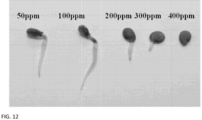
- seed germination may be improved using chelate-based ternary complex treatment (e.g., observed for 50 ppm chelate-based ternary complex when studied on tomato seeds as illustrated in FIG. 12 ).
- embodiments of the present disclosure provide for a composition that can be used for multiple purposes.
- Embodiments of the present disclosure are advantageous in that they can substantially prevent and/or treat or substantially treat a disease or condition in a plant, and act at least as an antibacterial and/or antifungal.
- the composition may have an antimicrobial characteristic (e.g., disables at least 70%, at least 80%, at least 90%, at least 95%, or at least 99% of the microorganisms (e.g., bacteria) on the surface and/or reduces the amount of microorganisms that form or grow on the surface by at least 70%, at least 80%, at least 90%, at least 95%, or at least 99%, as compared with a similar surface without the composition disposed on the surface). Additional details are described in the Examples.
- an antimicrobial characteristic e.g., disables at least 70%, at least 80%, at least 90%, at least 95%, or at least 99% of the microorganisms (e.g., bacteria) on the surface and/or reduces the amount of microorganisms that form or grow on the surface by at least 70%, at least 80%, at least 90%, at least 95%, or at least 99%, as compared with a similar surface without the composition disposed on the surface. Additional details are described in the Examples.
- the structure may have an antimicrobial characteristic that is capable of disabling a substantial portion of the microorganisms (e.g., bacteria such as E.coli, B.subtilis and S.aureus) on the surface of the structure and/or inhibits or substantially inhibits the growth of the microorganisms on the surface of the structure.
- the phrase "disabling a substantial portion” includes disabling at least about 70%, at least about 80%, at least about 90%, at least about 95%, or at least about 99% of the microorganism (e.g., bacteria) on the surface that the composition is disposed on, relative to structure that does not have the composition disposed thereon.
- substantially inhibits the growth includes reducing the growth of the microorganism (e.g., bacteria) by at least about 70%, at least about 80%, at least about 90%, at least about 95%, or at least 99% of the microorganisms on the surface that the composition is disposed on, relative to a structure that does not have the composition disposed thereon.
- the microorganism e.g., bacteria
- compositions can function as an antibacterial and/or antifungal, specifically, treating, substantially treating, preventing or substantially preventing, plant diseases such as citrus greening (HLB) and citrus canker diseases.
- HLB citrus greening
- Embodiments of the present disclosure can be applied on the time frames consistent with the treating or preventing diseases and the like, and these time frames can include from the first day of application to about a week, about a month, about two months, about three months, about four months, about five months, about six months, about seven month, or about eight months.
- Tomato seeds were purchased from Home Depot, Orlando, FL and stored in a dry opaque packet at room temperature. Prior to use, the seeds were soaked in DI water for 30 min to soften the seed coat. Thereafter surface sterilization was performed by washing the seeds with separate solutions of 70% ethanol and 1% sodium hypochlorite for 1 minute. Seeds were then washed five times with DI water to ensure the removal of additional sterilizing solutions remaining on the surface.
- Tomato plants (Solanum lycopersicum L.) were treated through foliar spray application with different concentrations of TSOL (100, 300, 500 and 800 ppm). After 24 hours of treatment plants were sampled, dried (for 48 hours) and grinded to powder. Known mass of dried powder samples were digested with 20 ml of aqua regia solution for 2 hours. Digested samples were then filtered and used for atomic absorption spectroscopy (AAS) studies for estimate amount of zinc uptake by different parts of plant (whole plant, leaves, root, stem, xylem and phloem). Phytotoxicity data was collected after 24 hour of treatment.
- AAS atomic absorption spectroscopy
- FIG. 1a shows a graph of zinc content as a function of TSOL treatment concentration for various components of a tomato plant in accordance with the embodiments.
- the tomato plant xylem cells absorb less zinc as a consequence of the TSOL treatment than corresponding phloem cells. Further, absorbance of zinc within either the leaf, the stem or the roots is approximately equal.
- FIG. 1b shows a graph similar to the graph of FIG. 1a , but wherein the data is first normalized to a basal zinc content for a TSOL untreated tomato plant. No particular trend is illustrated by the graph of FIG. 1b .
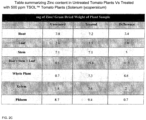
- FIG. 2a , FIG. 2b , FIG 2c and FIG. 2d show a series of data Table presentations for zinc accumulation within various parts of a tomato plant as a function of TSOL dose application in accordance with the embodiments.
- FIG. 2a Clearly most noticeable within the data of FIG. 2a , FIG. 2b , FIG. 2c and FIG. 2d is the observation that treatment of a tomato plant with TSOL at 500 ppm appears to have a uniquely enhanced uptake in comparison with any of the other TSOL concentrations.
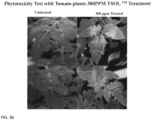
- FIG. 3a , FIG. 3b , FIG 3c and FIG. 3d show a series of images of tomato plants treated with TSOL at various dose concentrations in accordance with the embodiments.
- FIG. 4 shows a summary Table of tomato plant subjective data observations from FIG. 3a to FIG. 3d in accordance with the embodiments.
- the data of FIG. 4 shows the TSOL composition to be phytotoxic to tomato plants at all dose concentrations except 100 ppm.
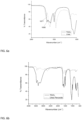
- FIG. 5 shows the FTIR spectra of TSOL and urea.
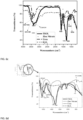
- FIG. 6b shows infrared spectra of TSOL and commercially purchased urea peroxide. This figure illustrates the retention of hydrogen peroxide by the TSOL embodiments after the commercial hydrogen peroxide is added to the formulation.
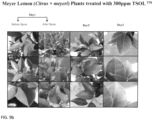
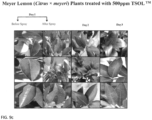
- FIG. 9a , FIG. 9b , FIG. 9c , FIG. 9d and FIG. 9e show a series of images illustrating phytotoxicity of TSOL with respect to Meyer Lemon plant in accordance with the embodiments.
- FIG. 10 shows a data Table including compiled data derived from the images of FIG. 9a , FIG. 9b , FIG. 9c , FIG. 9d and FIG. 9e .
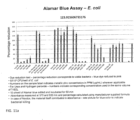
- FIG. 11a , FIG. 11b , FIG. 11c and FIG. 11d show a series of images illustrating Alamar Blue assay in accordance with the embodiments.
- TSOL is highly effective against Xanthomonas alfalfae at metallic zinc concentration as low as 50 PPM whereas the individual components of TSOL (hydrogen peroxide, urea and divalent zinc ion at relevant concentrations) separately did not elicit similar effect at those concentrations.
- TSOL also appeared to provide enhanced antimicrobial activity when compared to comparable commercial products such as Kocide tm and Nordox tm.
- antimicrobial characteristic refers to the ability to disable (i.e., kill) and/or inhibit the growth of microorganisms.
- a substance having an antimicrobial characteristic may be harmful to microorganisms (e.g., bacteria, fungi, protozoan's, algae, and the like).
- a substance having an antimicrobial characteristic can kill the microorganism and/or prevent or substantially prevent the growth or reproduction of the microorganism.
- antibacterial characteristic refers to the ability to kill and/or inhibit the growth of bacteria.
- a substance having an antibacterial characteristic may be harmful to bacteria.
- a substance having an antibacterial characteristic can kill the bacteria and/or prevent or substantially prevent the replication or reproduction of the bacteria.
- Uniform plant surface coverage refers to a uniform and complete (e.g., about 100%) wet surface due to spray application of embodiments of the present disclosure. In other words, spray application causes embodiments of the present disclosure to spread throughout the plant surface. In an embodiment, complexes of the present disclosure can provide uniform plant surface coverage.
- Substantial uniform plant surface coverage refers to about 70%, about 80%, about 90%, or more uniform plant surface coverage. In an embodiment, complexes of the present disclosure can provide substantial uniform plant surface coverage.
- Substantially covering refers to covering about 70%, about 80%, about 90°/o, or more, of the leaves and branches of a plant. In an embodiment, complexes of the present disclosure can substantially cover the plants.
- Plant refers to trees, plants, shrubs, flowers, and the like as well as portions of the plant such as twigs, leaves, stems, branches, fruit, flowers, and the like.
- the term plant includes a fruit tree such as a citrus tree (e.g., orange tree, lemon tree, lime tree, and the like).
- treat refers to acting upon a disease or condition with a composition of the present disclosure to affect the disease or condition by improving or altering it.
- treatment includes completely or partially preventing (e.g., about 70% or more, about 80% or more, about 90% or more, about 95% or more, or about 99% or more) a plant from acquiring a disease or condition.
- prevent can be used instead of treatment for this meaning.
- Treatment covers one or more treatments of a disease in a plant, and includes: (a) reducing the risk of occurrence of the disease in a plant predisposed to the disease but not yet diagnosed as infected with the disease (b) impeding the development of the disease, and/or (c) relieving the disease, e.g., causing regression of the disease and/or relieving one or more disease symptoms.
- bacteria include, but are not limited to, Gram positive and Gram negative bacteria.
- Bacteria can include, but are not limited to, Abiotrophia, Achromobacter, Acidaminococcus, Acidovorax, Acinetobacter, Actinobacillus, Actinobaculum, Actinomadura, Actinomyces, Aerococcus, Aeromonas, Afipia, Agrobacterium, Alcaligenes, Alloiococcus, Alteromonas, Amycolata, Amycolatopsis, Anaerobospirillum, Anabaena affinis and other cyanobacteria (including the Anabaena, Anabaenopsis, Aphanizomenon, Camesiphon, Cylindrospermopsis, Gloeobacter Hapalosiphon, Lyngbya, Microcystis, Nodularia, Nostoc, Phormidium, Planktothrix, Pseudoanabaena
- bacterium examples include Mycobacterium tuberculosis, M. bovis, M. ryphimurium, M. bovis strain BCG, BCG substrains, M. avium, M. intracellulare, M. africanum, M. kansasii, M. marinum, M. ulcerans, M. avium subspecies paratuberculosis, Staphylococcus aureus, Staphylococcus epidermidis, Staphylococcus equi, Streptococcus pyogenes, Streptococcus agalactiae, Listeria monocytogenes, Listeria ivanovii, Bacillus anthracis, B.
- subtilis Nocardia asteroides, and other Nocardia species, Streptococcus viridans group, Peptococcus species, Peptostreptococcus species, Actinomyces israelii and other Actinomyces species, and Propionibacterium acnes, Clostridium tetani, Clostridium botulinum, other Clostridium species, Pseudomonas aeruginosa, other Pseudomonas species, Campylobacter species, Vibrio cholera, Ehrlichia species, Actinobacillus pleuropneumoniae, Pasteurella haemolytica, Pasteurella multocida, other Pasteurella species, Legionella pneumophila, other Legionella species, Salmonella typhi, other Salmonella species, Shigella species Brucella abortus, other Brucella species, Chlamydi trachomatis, Chlamydia psittaci, Coxiella
- the Gram-positive bacteria may include, but is not limited to, Gram positive Cocci (e.g., Streptococcus, Staphylococcus, and Enterococcus).
- the Gram-negative bacteria may include, but is not limited to, Gram negative rods (e.g., Bacteroidaceae, Enterobacteriaceae, Vibrionaceae, Pasteurellae and Pseudomonadaceae).
- Gram negative rods e.g., Bacteroidaceae, Enterobacteriaceae, Vibrionaceae, Pasteurellae and Pseudomonadaceae.
- the bacteria can include Mycoplasma pneumoniae.
- protozoan as used herein includes, without limitations flagellates (e.g., Giardia lamblia), amoeboids (e.g., Entamoeba histolitica), and sporozoans (e.g., Plasmodium knowlesi) as well as ciliates (e.g., R. tole).
- flagellates e.g., Giardia lamblia
- amoeboids e.g., Entamoeba histolitica
- sporozoans e.g., Plasmodium knowlesi
- ciliates e.g., R. tole
- Protozoan can include, but it is not limited to, Entamoeba tole, Entamoeabe histolitica, lodoamoeba buetschlii, Chilomastix meslini, Trichomonas vaginalis, Pentatrichomonas homini, Plasmodium vivax, Leishmania braziliensis, Trypanosoma cruzi, Trypanosoma brucei, and Myxoporidia.
- algae includes, without limitations microalgae and filamentous algae such as Anacystis nidulans, Scenedesmus sp., Chlamydomonas sp., Clorella sp., Dunaliella sp., Euglena so., Prynmesium sp., Porphyridium sp., Synechoccus sp., Botryococcus braunii, Crypthecodinium cohnii, Cylindrotheca sp., Microcystis sp., Isochrysis sp., Monallanthus saliva, M.
- Anacystis nidulans Scenedesmus sp., Chlamydomonas sp., Clorella sp., Dunaliella sp., Euglena so., Prynmesium sp., Porphyridium sp., Synechoccus sp., Botryococcus bra
- fungi includes, without limitations, a plurality of organisms such as molds, mildews and rusts and include species in the Penicillium, Aspergillus, Acremonium, Cladosporium, Fusarium, Mucor, Nerospora, Rhizopus, Tricophyton, Botryotinia, Phytophthora, Ophiostoma, Magnaporthe, Stachybotrys and Uredinalis genera.
Landscapes
- Life Sciences & Earth Sciences (AREA)
- Health & Medical Sciences (AREA)
- General Health & Medical Sciences (AREA)
- Wood Science & Technology (AREA)
- Environmental Sciences (AREA)
- Engineering & Computer Science (AREA)
- Dentistry (AREA)
- Pest Control & Pesticides (AREA)
- Agronomy & Crop Science (AREA)
- Zoology (AREA)
- Plant Pathology (AREA)
- Chemical & Material Sciences (AREA)
- Inorganic Chemistry (AREA)
- Organic Chemistry (AREA)
- Chemical Kinetics & Catalysis (AREA)
- Agricultural Chemicals And Associated Chemicals (AREA)
- Toxicology (AREA)
Claims (10)
- Eine Zusammensetzung, umfassend einen ternären Komplex auf Chelatbasis, wobei der ternäre Komplex auf Chelatbasis eine Wasserstoffperoxid-Komponente, eine pflanzenverträgliche Wachstumsförderer-Komponente, welche eine Harnstoffkomponente umfasst, und eine zweiwertige Zinkkationen-Komponente umfasst.
- Die Zusammensetzung gemäß Anspruch 1, wobei:die Wasserstoffperoxid-Komponente eine Konzentration von etwa 1 Mikromolar (1µM) bis etwa 1 Molar (1 M) in dem ternären Komplex auf Chelatbasis aufweist;die pflanzenverträgliche Wachstumsförderer-Komponente eine Konzentration von etwa 1 Mikromolar (1µM) bis etwa 1 Molar (1 M) in dem ternären Komplex auf Chelatbasis aufweist; unddie zweiwertige Zinkionen-Komponente eine Konzentration von etwa 1 Mikromolar (1µM) bis etwa 1 Molar (1 M) in dem ternären Komplex auf Chelatbasis aufweist.
- Die Zusammensetzung gemäß Anspruch 1, wobei die Zusammensetzung einen pH-Wert von etwa 2,0 bis etwa 6,0 aufweist.
- Die Zusammensetzung gemäß Anspruch 1, wobei die Zusammensetzung einen pH-Wert von etwa 6,5 bis etwa 8,0 aufweist.
- Die Zusammensetzung gemäß Anspruch 1, wobei die pflanzenverträgliche Wachstumsförderer-Komponente in einer Konzentration vorliegt, welche größer ist als die Wasserstoffperoxid-Komponente.
- Nicht-therapeutische Verwendung einer Zusammensetzung wie in einem der Ansprüche 1 bis 5 definiert als ein antimikrobielles Mittel.
- Ein Verfahren zur Herstellung einer Zusammensetzung, umfassend Mischen von drei Komponenten in einer wässrigen Lösung, welche eine Wasserstoffperoxid-Komponente, eine pflanzenverträgliche Wachstumsförderer-Komponente und eine zweiwertige Zinkionen-Komponente umfassen, um einen ternären Komplex auf Chelatbasis bereitzustellen, wobei die pflanzenverträgliche Wachstumsförderer-Komponente eine Harnstoffkomponente umfasst; und Anpasssen des pH-Wertes der wässrigen Lösung nach Bedarf, auf entweder:etwa 2,0 bis etwa 6,0; oderetwa 6,5 bis etwa 8,0.
- Ein nicht-therapeutisches Verfahren, umfassend:
Behandeln einer Oberfläche einer Struktur mit einer Zusammensetzung wie in einem der Ansprüche 1 bis 5 definiert, um mindestens entweder:mindestens einen Teil einer auf der Struktur gebildeten Mikroorganismenpopulation zu deaktivieren;
unddas Wachstum einer Mikroorganismenpopulation auf der Struktur zumindest teilweise zu hemmen. - Das Verfahren gemäß Anspruch 8, wobei der Mikroorganismus ein Bakterium ist.
- Das Verfahren gemäß Anspruch 8, wobei die Struktur eine Pflanze oder ein Baum ist.
Applications Claiming Priority (2)
| Application Number | Priority Date | Filing Date | Title |
|---|---|---|---|
| US201462062997P | 2014-10-13 | 2014-10-13 | |
| PCT/US2015/055265 WO2016061059A1 (en) | 2014-10-13 | 2015-10-13 | Agrichemical compositions and methods of making and using same |
Publications (2)
| Publication Number | Publication Date |
|---|---|
| EP3206489A1 EP3206489A1 (de) | 2017-08-23 |
| EP3206489B1 true EP3206489B1 (de) | 2024-11-27 |
Family
ID=55747203
Family Applications (1)
| Application Number | Title | Priority Date | Filing Date |
|---|---|---|---|
| EP15788258.0A Active EP3206489B1 (de) | 2014-10-13 | 2015-10-13 | Agrochemische zusammensetzungen sowie verfahren zur herstellung und verwendung davon |
Country Status (8)
| Country | Link |
|---|---|
| US (1) | US11083201B2 (de) |
| EP (1) | EP3206489B1 (de) |
| CN (1) | CN107249333B (de) |
| BR (1) | BR112017007659B1 (de) |
| CA (1) | CA2964357C (de) |
| ES (1) | ES2999770T3 (de) |
| MX (1) | MX391845B (de) |
| WO (1) | WO2016061059A1 (de) |
Families Citing this family (1)
| Publication number | Priority date | Publication date | Assignee | Title |
|---|---|---|---|---|
| US20180092350A1 (en) * | 2016-10-03 | 2018-04-05 | University Of Central Florida Research Foundation, Inc. | Ternary agrichemical compositions and related methods |
Citations (3)
| Publication number | Priority date | Publication date | Assignee | Title |
|---|---|---|---|---|
| CN1201594A (zh) * | 1997-06-06 | 1998-12-16 | 王良田 | 植物灭毒剂 |
| WO2008021441A2 (en) * | 2006-08-15 | 2008-02-21 | Fitchmun Mark I | Surface sanitizer |
| WO2011092574A1 (en) * | 2010-01-27 | 2011-08-04 | Bijam Biosciences Private Limited | A method of producing functionally effective organically chelated micronutrients |
Family Cites Families (13)
| Publication number | Priority date | Publication date | Assignee | Title |
|---|---|---|---|---|
| US4337147A (en) * | 1979-11-07 | 1982-06-29 | Uop Inc. | Catalytic composite and process for use |
| US4477438A (en) * | 1982-11-12 | 1984-10-16 | Surgikos, Inc. | Hydrogen peroxide composition |
| US6015816A (en) * | 1996-02-29 | 2000-01-18 | The Research Foundation Of State University Of New York | Antimicrobial compositions |
| CN1193460A (zh) * | 1997-03-14 | 1998-09-23 | 尚兴甲 | 一种防治植物弱寄生菌病害的制剂及其制备方法 |
| US6106854A (en) * | 1998-03-25 | 2000-08-22 | Belfer; William A. | Disinfectant composition for infectious water and surface contaminations |
| US6972273B2 (en) * | 2002-03-01 | 2005-12-06 | W. Neudorff Gmbh Kg | Composition and method for selective herbicide |
| CN100387575C (zh) | 2006-08-07 | 2008-05-14 | 浙江工业大学 | 一种过氧化尿素的制备方法 |
| CZ300772B6 (cs) | 2006-11-15 | 2009-08-05 | Univerzita Pardubice | Komplexní slouceniny kyseliny borité, kyseliny salicylové nebo jejích derivátu a stríbra, zpusob jejich prípravy a prípravek pro hubení plísní, hub a drevokazného hmyzu, obsahující tyto slouceniny |
| JP2009029164A (ja) | 2007-07-24 | 2009-02-12 | Jtekt Corp | 電動パワーステアリング装置 |
| WO2010002730A2 (en) * | 2008-06-30 | 2010-01-07 | Potter Electric Signal Company, Llc | Systems, methods, and compositions for the inhibition of corrosion of metallic surfaces |
| CN101993279B (zh) * | 2009-08-27 | 2013-02-13 | 金广彦 | 一种葡萄糖酸水溶性微量元素肥料 |
| US20120164236A1 (en) * | 2009-09-07 | 2012-06-28 | Lion Corporation | Disinfectant composition and disinfecting method |
| WO2012051699A1 (en) * | 2010-10-22 | 2012-04-26 | Agri-Neo Inc. | Synergistic activity of peracetic acid and at least one sar inducer for the control of pathogens in and onto growing plants |
-
2015
- 2015-10-13 EP EP15788258.0A patent/EP3206489B1/de active Active
- 2015-10-13 CA CA2964357A patent/CA2964357C/en active Active
- 2015-10-13 CN CN201580064741.9A patent/CN107249333B/zh not_active Expired - Fee Related
- 2015-10-13 US US15/517,644 patent/US11083201B2/en not_active Expired - Fee Related
- 2015-10-13 ES ES15788258T patent/ES2999770T3/es active Active
- 2015-10-13 MX MX2017004965A patent/MX391845B/es unknown
- 2015-10-13 WO PCT/US2015/055265 patent/WO2016061059A1/en not_active Ceased
- 2015-10-13 BR BR112017007659-4A patent/BR112017007659B1/pt active IP Right Grant
Patent Citations (3)
| Publication number | Priority date | Publication date | Assignee | Title |
|---|---|---|---|---|
| CN1201594A (zh) * | 1997-06-06 | 1998-12-16 | 王良田 | 植物灭毒剂 |
| WO2008021441A2 (en) * | 2006-08-15 | 2008-02-21 | Fitchmun Mark I | Surface sanitizer |
| WO2011092574A1 (en) * | 2010-01-27 | 2011-08-04 | Bijam Biosciences Private Limited | A method of producing functionally effective organically chelated micronutrients |
Also Published As
| Publication number | Publication date |
|---|---|
| CN107249333A (zh) | 2017-10-13 |
| BR112017007659A2 (pt) | 2017-12-19 |
| MX391845B (es) | 2025-03-21 |
| WO2016061059A1 (en) | 2016-04-21 |
| BR112017007659B1 (pt) | 2021-12-21 |
| CA2964357A1 (en) | 2016-04-21 |
| MX2017004965A (es) | 2017-07-19 |
| CN107249333B (zh) | 2021-06-11 |
| US11083201B2 (en) | 2021-08-10 |
| CA2964357C (en) | 2023-10-03 |
| ES2999770T3 (en) | 2025-02-26 |
| US20170303543A1 (en) | 2017-10-26 |
| EP3206489A1 (de) | 2017-08-23 |
Similar Documents
| Publication | Publication Date | Title |
|---|---|---|
| US9072304B2 (en) | Compositions and methods for anti-transpiration in plants | |
| US20110294384A1 (en) | Photochemical cross-linkable polymers, methods of making photochemical cross-linkable polymers, and methods of using photochemical cross-linkable polymers | |
| US11910798B2 (en) | Compositions including a vacancy-engineered (VE)-ZnO nanocomposite, methods of making the compositions and methods of using the compositions | |
| US9781936B2 (en) | Compositions, methods of making a composition, and methods of use | |
| EP3102540B1 (de) | Zusammensetzungen mit einem vacancy-engineered-(ve) zno-nanokomposit, verfahren zur herstellung einer zusammensetzung, verfahren zur verwendung einer zusammensetzung | |
| WO2013106724A1 (en) | Modulation of plant biology | |
| CA2964357C (en) | Agrichemical compositions and methods of making and using same | |
| US20230380419A1 (en) | Nanocomposite compositions comprising multi-valent metal material and immobilized quat material, methods of making the compositions and methods of using the compositions | |
| US20180092362A1 (en) | Compositions, methods of making a composition, and methods of use | |
| US9439421B2 (en) | Permanent attachment of ammonium and guanidine-based antimicrobials to surfaces containing -OH functionality | |
| US20140141230A1 (en) | Permanent attachment of ammonium and guanidine-based antimicrobials to surfaces containing c-h functionality | |
| US8968421B2 (en) | Synthesis and application reactive antimicrobial copolymers for textile fibers |
Legal Events
| Date | Code | Title | Description |
|---|---|---|---|
| STAA | Information on the status of an ep patent application or granted ep patent |
Free format text: STATUS: THE INTERNATIONAL PUBLICATION HAS BEEN MADE |
|
| PUAI | Public reference made under article 153(3) epc to a published international application that has entered the european phase |
Free format text: ORIGINAL CODE: 0009012 |
|
| STAA | Information on the status of an ep patent application or granted ep patent |
Free format text: STATUS: REQUEST FOR EXAMINATION WAS MADE |
|
| 17P | Request for examination filed |
Effective date: 20170505 |
|
| AK | Designated contracting states |
Kind code of ref document: A1 Designated state(s): AL AT BE BG CH CY CZ DE DK EE ES FI FR GB GR HR HU IE IS IT LI LT LU LV MC MK MT NL NO PL PT RO RS SE SI SK SM TR |
|
| AX | Request for extension of the european patent |
Extension state: BA ME |
|
| DAV | Request for validation of the european patent (deleted) | ||
| DAX | Request for extension of the european patent (deleted) | ||
| STAA | Information on the status of an ep patent application or granted ep patent |
Free format text: STATUS: EXAMINATION IS IN PROGRESS |
|
| 17Q | First examination report despatched |
Effective date: 20191002 |
|
| P01 | Opt-out of the competence of the unified patent court (upc) registered |
Effective date: 20230522 |
|
| REG | Reference to a national code |
Ref country code: DE Ref legal event code: R079 Free format text: PREVIOUS MAIN CLASS: A01N0037160000 Ipc: A01N0059000000 Ref country code: DE Ref legal event code: R079 Ref document number: 602015090508 Country of ref document: DE Free format text: PREVIOUS MAIN CLASS: A01N0037160000 Ipc: A01N0059000000 |
|
| GRAP | Despatch of communication of intention to grant a patent |
Free format text: ORIGINAL CODE: EPIDOSNIGR1 |
|
| RIC1 | Information provided on ipc code assigned before grant |
Ipc: A01P 1/00 20060101ALI20240513BHEP Ipc: A01N 47/28 20060101ALI20240513BHEP Ipc: A01N 59/16 20060101ALI20240513BHEP Ipc: A01N 59/00 20060101AFI20240513BHEP |
|
| STAA | Information on the status of an ep patent application or granted ep patent |
Free format text: STATUS: GRANT OF PATENT IS INTENDED |
|
| INTG | Intention to grant announced |
Effective date: 20240620 |
|
| GRAS | Grant fee paid |
Free format text: ORIGINAL CODE: EPIDOSNIGR3 |
|
| GRAA | (expected) grant |
Free format text: ORIGINAL CODE: 0009210 |
|
| STAA | Information on the status of an ep patent application or granted ep patent |
Free format text: STATUS: THE PATENT HAS BEEN GRANTED |
|
| AK | Designated contracting states |
Kind code of ref document: B1 Designated state(s): AL AT BE BG CH CY CZ DE DK EE ES FI FR GB GR HR HU IE IS IT LI LT LU LV MC MK MT NL NO PL PT RO RS SE SI SK SM TR |
|
| REG | Reference to a national code |
Ref country code: GB Ref legal event code: FG4D |
|
| REG | Reference to a national code |
Ref country code: CH Ref legal event code: EP |
|
| REG | Reference to a national code |
Ref country code: IE Ref legal event code: FG4D |
|
| REG | Reference to a national code |
Ref country code: DE Ref legal event code: R096 Ref document number: 602015090508 Country of ref document: DE |
|
| REG | Reference to a national code |
Ref country code: ES Ref legal event code: FG2A Ref document number: 2999770 Country of ref document: ES Kind code of ref document: T3 Effective date: 20250226 |
|
| REG | Reference to a national code |
Ref country code: LT Ref legal event code: MG9D |
|
| REG | Reference to a national code |
Ref country code: NL Ref legal event code: MP Effective date: 20241127 |
|
| PG25 | Lapsed in a contracting state [announced via postgrant information from national office to epo] |
Ref country code: PT Free format text: LAPSE BECAUSE OF FAILURE TO SUBMIT A TRANSLATION OF THE DESCRIPTION OR TO PAY THE FEE WITHIN THE PRESCRIBED TIME-LIMIT Effective date: 20250327 Ref country code: HR Free format text: LAPSE BECAUSE OF FAILURE TO SUBMIT A TRANSLATION OF THE DESCRIPTION OR TO PAY THE FEE WITHIN THE PRESCRIBED TIME-LIMIT Effective date: 20241127 Ref country code: IS Free format text: LAPSE BECAUSE OF FAILURE TO SUBMIT A TRANSLATION OF THE DESCRIPTION OR TO PAY THE FEE WITHIN THE PRESCRIBED TIME-LIMIT Effective date: 20250327 |
|
| PG25 | Lapsed in a contracting state [announced via postgrant information from national office to epo] |
Ref country code: FI Free format text: LAPSE BECAUSE OF FAILURE TO SUBMIT A TRANSLATION OF THE DESCRIPTION OR TO PAY THE FEE WITHIN THE PRESCRIBED TIME-LIMIT Effective date: 20241127 Ref country code: NL Free format text: LAPSE BECAUSE OF FAILURE TO SUBMIT A TRANSLATION OF THE DESCRIPTION OR TO PAY THE FEE WITHIN THE PRESCRIBED TIME-LIMIT Effective date: 20241127 |
|
| REG | Reference to a national code |
Ref country code: AT Ref legal event code: MK05 Ref document number: 1744778 Country of ref document: AT Kind code of ref document: T Effective date: 20241127 |
|
| PG25 | Lapsed in a contracting state [announced via postgrant information from national office to epo] |
Ref country code: BG Free format text: LAPSE BECAUSE OF FAILURE TO SUBMIT A TRANSLATION OF THE DESCRIPTION OR TO PAY THE FEE WITHIN THE PRESCRIBED TIME-LIMIT Effective date: 20241127 |
|
| PG25 | Lapsed in a contracting state [announced via postgrant information from national office to epo] |
Ref country code: NO Free format text: LAPSE BECAUSE OF FAILURE TO SUBMIT A TRANSLATION OF THE DESCRIPTION OR TO PAY THE FEE WITHIN THE PRESCRIBED TIME-LIMIT Effective date: 20250227 |
|
| PG25 | Lapsed in a contracting state [announced via postgrant information from national office to epo] |
Ref country code: LV Free format text: LAPSE BECAUSE OF FAILURE TO SUBMIT A TRANSLATION OF THE DESCRIPTION OR TO PAY THE FEE WITHIN THE PRESCRIBED TIME-LIMIT Effective date: 20241127 Ref country code: GR Free format text: LAPSE BECAUSE OF FAILURE TO SUBMIT A TRANSLATION OF THE DESCRIPTION OR TO PAY THE FEE WITHIN THE PRESCRIBED TIME-LIMIT Effective date: 20250228 Ref country code: AT Free format text: LAPSE BECAUSE OF FAILURE TO SUBMIT A TRANSLATION OF THE DESCRIPTION OR TO PAY THE FEE WITHIN THE PRESCRIBED TIME-LIMIT Effective date: 20241127 |
|
| PG25 | Lapsed in a contracting state [announced via postgrant information from national office to epo] |
Ref country code: PL Free format text: LAPSE BECAUSE OF FAILURE TO SUBMIT A TRANSLATION OF THE DESCRIPTION OR TO PAY THE FEE WITHIN THE PRESCRIBED TIME-LIMIT Effective date: 20241127 |
|
| PG25 | Lapsed in a contracting state [announced via postgrant information from national office to epo] |
Ref country code: RS Free format text: LAPSE BECAUSE OF FAILURE TO SUBMIT A TRANSLATION OF THE DESCRIPTION OR TO PAY THE FEE WITHIN THE PRESCRIBED TIME-LIMIT Effective date: 20250227 |
|
| PG25 | Lapsed in a contracting state [announced via postgrant information from national office to epo] |
Ref country code: SM Free format text: LAPSE BECAUSE OF FAILURE TO SUBMIT A TRANSLATION OF THE DESCRIPTION OR TO PAY THE FEE WITHIN THE PRESCRIBED TIME-LIMIT Effective date: 20241127 |
|
| PG25 | Lapsed in a contracting state [announced via postgrant information from national office to epo] |
Ref country code: DK Free format text: LAPSE BECAUSE OF FAILURE TO SUBMIT A TRANSLATION OF THE DESCRIPTION OR TO PAY THE FEE WITHIN THE PRESCRIBED TIME-LIMIT Effective date: 20241127 |
|
| PG25 | Lapsed in a contracting state [announced via postgrant information from national office to epo] |
Ref country code: EE Free format text: LAPSE BECAUSE OF FAILURE TO SUBMIT A TRANSLATION OF THE DESCRIPTION OR TO PAY THE FEE WITHIN THE PRESCRIBED TIME-LIMIT Effective date: 20241127 |
|
| PG25 | Lapsed in a contracting state [announced via postgrant information from national office to epo] |
Ref country code: RO Free format text: LAPSE BECAUSE OF FAILURE TO SUBMIT A TRANSLATION OF THE DESCRIPTION OR TO PAY THE FEE WITHIN THE PRESCRIBED TIME-LIMIT Effective date: 20241127 |
|
| PG25 | Lapsed in a contracting state [announced via postgrant information from national office to epo] |
Ref country code: SK Free format text: LAPSE BECAUSE OF FAILURE TO SUBMIT A TRANSLATION OF THE DESCRIPTION OR TO PAY THE FEE WITHIN THE PRESCRIBED TIME-LIMIT Effective date: 20241127 |
|
| PG25 | Lapsed in a contracting state [announced via postgrant information from national office to epo] |
Ref country code: CZ Free format text: LAPSE BECAUSE OF FAILURE TO SUBMIT A TRANSLATION OF THE DESCRIPTION OR TO PAY THE FEE WITHIN THE PRESCRIBED TIME-LIMIT Effective date: 20241127 |
|
| REG | Reference to a national code |
Ref country code: DE Ref legal event code: R097 Ref document number: 602015090508 Country of ref document: DE |
|
| PG25 | Lapsed in a contracting state [announced via postgrant information from national office to epo] |
Ref country code: SE Free format text: LAPSE BECAUSE OF FAILURE TO SUBMIT A TRANSLATION OF THE DESCRIPTION OR TO PAY THE FEE WITHIN THE PRESCRIBED TIME-LIMIT Effective date: 20241127 |
|
| PLBE | No opposition filed within time limit |
Free format text: ORIGINAL CODE: 0009261 |
|
| STAA | Information on the status of an ep patent application or granted ep patent |
Free format text: STATUS: NO OPPOSITION FILED WITHIN TIME LIMIT |
|
| 26N | No opposition filed |
Effective date: 20250828 |