EP3205124B1 - Random access method of devices with different path loss - Google Patents
Random access method of devices with different path loss Download PDFInfo
- Publication number
- EP3205124B1 EP3205124B1 EP15778496.8A EP15778496A EP3205124B1 EP 3205124 B1 EP3205124 B1 EP 3205124B1 EP 15778496 A EP15778496 A EP 15778496A EP 3205124 B1 EP3205124 B1 EP 3205124B1
- Authority
- EP
- European Patent Office
- Prior art keywords
- request
- signal
- signal format
- coding
- base station
- Prior art date
- Legal status (The legal status is an assumption and is not a legal conclusion. Google has not performed a legal analysis and makes no representation as to the accuracy of the status listed.)
- Active
Links
Images





Classifications
-
- H—ELECTRICITY
- H04—ELECTRIC COMMUNICATION TECHNIQUE
- H04W—WIRELESS COMMUNICATION NETWORKS
- H04W74/00—Wireless channel access
- H04W74/002—Transmission of channel access control information
- H04W74/004—Transmission of channel access control information in the uplink, i.e. towards network
-
- H—ELECTRICITY
- H04—ELECTRIC COMMUNICATION TECHNIQUE
- H04W—WIRELESS COMMUNICATION NETWORKS
- H04W72/00—Local resource management
- H04W72/20—Control channels or signalling for resource management
- H04W72/21—Control channels or signalling for resource management in the uplink direction of a wireless link, i.e. towards the network
-
- H—ELECTRICITY
- H04—ELECTRIC COMMUNICATION TECHNIQUE
- H04L—TRANSMISSION OF DIGITAL INFORMATION, e.g. TELEGRAPHIC COMMUNICATION
- H04L1/00—Arrangements for detecting or preventing errors in the information received
- H04L1/12—Arrangements for detecting or preventing errors in the information received by using return channel
- H04L1/16—Arrangements for detecting or preventing errors in the information received by using return channel in which the return channel carries supervisory signals, e.g. repetition request signals
- H04L1/18—Automatic repetition systems, e.g. Van Duuren systems
- H04L1/1867—Arrangements specially adapted for the transmitter end
- H04L1/1887—Scheduling and prioritising arrangements
-
- H—ELECTRICITY
- H04—ELECTRIC COMMUNICATION TECHNIQUE
- H04L—TRANSMISSION OF DIGITAL INFORMATION, e.g. TELEGRAPHIC COMMUNICATION
- H04L5/00—Arrangements affording multiple use of the transmission path
- H04L5/0091—Signalling for the administration of the divided path, e.g. signalling of configuration information
- H04L5/0092—Indication of how the channel is divided
-
- H—ELECTRICITY
- H04—ELECTRIC COMMUNICATION TECHNIQUE
- H04W—WIRELESS COMMUNICATION NETWORKS
- H04W74/00—Wireless channel access
- H04W74/08—Non-scheduled access, e.g. ALOHA
- H04W74/0833—Random access procedures, e.g. with 4-step access
-
- H—ELECTRICITY
- H04—ELECTRIC COMMUNICATION TECHNIQUE
- H04W—WIRELESS COMMUNICATION NETWORKS
- H04W4/00—Services specially adapted for wireless communication networks; Facilities therefor
- H04W4/50—Service provisioning or reconfiguring
Definitions
- Wireless communication systems are widely deployed to provide various telecommunication services such as telephony, video, data, messaging, and broadcasts.
- Typical wireless communication systems may employ multiple-access technologies capable of supporting communication with multiple users by sharing available system resources (e.g., bandwidth, transmit power).
- multiple-access technologies include code division multiple access (CDMA) systems, time division multiple access (TDMA) systems, frequency division multiple access (FDMA) systems, orthogonal frequency division multiple access (OFDMA) systems, single-carrier frequency division multiple access (SC-FDMA) systems, and time division synchronous code division multiple access (TD-SCDMA) systems.
- CDMA code division multiple access
- TDMA time division multiple access
- FDMA frequency division multiple access
- OFDMA orthogonal frequency division multiple access
- SC-FDMA single-carrier frequency division multiple access
- TD-SCDMA time division synchronous code division multiple access
- LTE Long Term Evolution
- UMTS Universal Mobile Telecommunications System
- 3GPP Third Generation Partnership Project
- LTE is designed to better support mobile broadband Internet access by improving spectral efficiency, lowering costs, improving services, making use of new spectrum, and better integrating with other open standards using OFDMA on the downlink (DL), SC-FDMA on the uplink (UL), and multiple-input multiple-output (MIMO) antenna technology.
- WO 2011/017281 A1 (QUALCOMM Inc; Chen, Wanshi; Zhang, Xiaoxia) 10 February 2011, relates to facilitating dynamic selection of a physical random access channel configuration to be employed during a random access procedure.
- US 2014/198677 A1 (Xu, Hao Et Al) 17 July 2014 , relates to channel state information and adaptive modulation and coding design for long-term evolution machine type communications.
- WO 2010/123430 A1 (Ericsson Weg AB L M; Wager, Stefan; Saagfors, Mats) 28 October 2010 , relates to uplink transmissions in a wireless communications system in which a mobile terminal selects a suitable UL transport format from a set of available transport formats.
- Software shall be construed broadly to mean instructions, instruction sets, code, code segments, program code, programs, subprograms, software modules, applications, software applications, software packages, routines, subroutines, objects, executables, threads of execution, procedures, functions, etc., whether referred to as software, firmware, middleware, microcode, hardware description language, or otherwise.
- the functions described may be implemented in hardware, software, firmware, or any combination thereof. If implemented in software, the functions may be stored on or encoded as one or more instructions or code on a computer-readable medium.
- Computer-readable media includes computer storage media. Storage media may be any available media that can be accessed by a computer.
- the base station 104 provides an access point (e.g., to an evolved packet core (EPC)) for a device 106.
- EPC evolved packet core
- Each of the devices 106 may be in communication with one or more of the base stations 104.
- the device 106 may be a device configured to operate in an Internet of Things (IoT) network.
- IoT Internet of Things
- Such a device may conduct data transfers that are infrequent and/or short in length. For example, for a particular application, the device 106 may conduct data transfers once per hour or once every few hours, or may send 20 to 100 bytes in a particular data transfer.
- Examples of devices 106 in an IoT network may include user equipment (UEs) such as heart monitoring implants, biochip transponders, communication devices installed in kitchen appliances, and smart thermostat devices that may be installed in open environments.
- UEs user equipment
- heart monitoring implants such as heart monitoring implants, biochip transponders, communication devices installed in kitchen appliances, and smart thermostat devices that may be installed in open environments.
- devices 106 are described in this disclosure with respect to an IoT network, it is understood that other examples of the device 106 may include a cellular phone, a smart phone, a session initiation protocol (SIP) phone, a laptop, a personal digital assistant (PDA), a satellite radio, a global positioning system, a multimedia device, a video device, a digital audio player (e.g., MP3 player), a camera, a game console, a tablet, or any other similar functioning device.
- SIP session initiation protocol
- PDA personal digital assistant
- satellite radio a global positioning system
- multimedia device e.g., a digital audio player (e.g., MP3 player), a camera, a game console, a tablet, or any other similar functioning device.
- MP3 player digital audio player
- the device 106 may also be referred to by those skilled in the art as a mobile station, a subscriber station, a mobile unit, a subscriber unit, a wireless unit, a remote unit, a mobile device, a wireless device, a wireless communications device, a remote device, a mobile subscriber station, an access terminal, a mobile terminal, a wireless terminal, a remote terminal, a handset, a user agent, a mobile client, a client, or some other suitable terminology.
- the modulation and multiple access scheme employed by the access network 100 may vary depending on the particular telecommunications standard being deployed.
- OFDM is used on the DL
- SC-FDMA is used on the UL to support both frequency division duplex (FDD) and time division duplex (TDD).
- FDD frequency division duplex
- TDD time division duplex
- FDD frequency division duplex
- TDD time division duplex
- EV-DO Evolution-Data Optimized
- UMB Ultra Mobile Broadband
- Cellular systems operating in licensed spectrum may have some important potential advantages compared with alternative technologies (e.g., technologies using unlicensed spectrum).
- a cellular system can re-use existing base station infrastructure and licensed spectrum. In principle, this should allow such a system to achieve a significantly better link budget, quality of service, scalability, and ease of deployment with respect to systems that attempt to use licensed-exempt (or unlicensed) spectrum.
- the re-use of existing cellular infrastructure and spectrum for a particular application may raise certain considerations.
- the nature and requirements of the particular application may be different (or even substantially different) from the applications for which the existing cellular systems were designed and optimized.
- a typical traffic model for low throughput devices may require that the IoT network primarily support infrequent and/or small data transfers for each device (for example, data transfers occurring once per hour or once every few hours, data transfers having a size of 20 to 100 bytes).
- an additional consideration may be related to UE cost. For example, it may be preferable that the cost of a UE be kept much lower than a UE typically associated with General Packet Radio Service (GPRS). In this regard, the preferred cost of the UE may be closer to Bluetooth Smart and Zigbee than current GPRS solutions.
- Another consideration may be related to battery life. For example, it may be preferable that battery life be prolonged compared with GPRS. In this regard, the preferred battery life may be on the order of many years, assuming reasonable traffic models.
- Yet another consideration may be related to cellular coverage. For example, it may be preferable that indoor coverage be enhanced compared with GPRS. In this regard, it may be contemplated that: UEs may be located deep indoors; the UEs may remain stationary in poor coverage locations; and/or the UEs may have rather poorly functioning antennas due to form-factor and other cost constraints.
- a random access of a base station is configured to address one or more of the above considerations.
- a set of resource blocks may be used by a UE to perform initial system access and achieve UL synchronization.
- a request for random access may include a random access preamble that occupies a particular bandwidth.
- the transmission of the random access preamble may be restricted to certain time and frequency resources.
- a UE sends a request for random access in order to access a base station.
- the UE receives a downlink signal from the base station and measures the strength of the signal to determine the transmit power of a random access signal.
- Open loop power control is employed such that the UE targets a given receive power of the random access signal at the base station.
- the modulation and coding scheme of the random access signal that is sent by the UE is fixed so as to simplify processing at the base station receiver.
- the design described in the previous paragraph may be effective for those systems in which the UEs may be phones or smartphones and/or systems in which requests for random access constitute a minor overhead (e.g., a relatively small portion of the entire communication session between the UE and the base station).
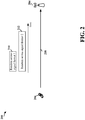
- the device 206 may determine a path loss between the device and the base station 204.
- the path loss reflects an attenuation of an electromagnetic wave as it propagates from/to the device 206 to/from the base station 204.
- the path loss may be measured in a manner similar to the manner in which a GPRS UE measures path loss.
- the device 206 may determine the path loss by averaging measurements of the downlink Reference Signal Received Power (RSRP).
- RSRP downlink Reference Signal Received Power
- the device 206 may measure signals transmitted by the base station 204. The measurements may involve calculating a running average of the measured signal power over a fixed time period.
- the determined path loss may be used to send the request 208 for random access.
- the determined path loss may be stored at the device 206 to facilitate a subsequent request for access.
- the device 206 selects a signal format from two or more signal formats (e.g., signal formats 210, 212).
- Each of the signal formats may correspond to a respective coding and modulation scheme (e.g., a different coding and modulation scheme).
- each of the signal formats may correspond to a predetermined frequency bandwidth.
- each of the signal formats may correspond to a respective time duration. The time duration of a given signal format may depend on its corresponding coding and modulation scheme.
- the time duration may correspond to a predetermined number of symbols, and may be different for the signal formats (e.g., signal formats 210, 212 of FIG. 2 ). Accordingly, transmitting the request 208 may require a shorter or longer duration of time depending on the signal format that is selected.
- the signal format 212 corresponds to a time duration that is twice as long as the time duration corresponding to the signal format 210. Therefore, if the signal format 212 is selected and the request 208 is sent according to the signal format 212, the time required to transmit the request 208 will be twice as long relative to the situation in which the signal format 210 is selected and the request 208 is sent according to the signal format 210.
- each BPSK symbol carries 1 fewer information bit than each QPSK symbol. Therefore, transmitting a request 208 according to a signal format that corresponds to BPSK (e.g., signal format 212) will require transmitting twice as many symbols as transmitting the request 208 according to a signal format that corresponds to QPSK (e.g., signal format 210). Therefore, if signal format 212 is chosen over signal format 210, the time required to transmit the request 208 is doubled. An increase in transmission time results in an increase in power consumption. Accordingly, transmitting the request 208 using BPSK consumes more battery power than transmitting the request 208 using QPSK.
- a code rate of 1/3 may correspond to the second signal format (e.g., signal format 212), and a code rate of 2/3 may correspond to the first signal format (e.g., signal format 210).
- the code rate of 1/3 (in which a total of 3 bits carry only 1 bit of useful information) is more robust than the code rate of 2/3 (in which a total of 3 bits carry 2 bits of useful information).
- the difference in robustness is related to the difference in the number of redundant bits: 2 bits in the code rate of 1/3, versus 1 bit in the code rate of 2/3.
- Such aspects may be distinguishable from a situation in which the length and coding and modulation of a random access signal (e.g., a signal carrying a request that may be similar to request 208) is fixed for one or more devices.
- the signal format may have been fixed to increase the likelihood that a random access signal that is transmitted by a particular device (e.g., the device suffering from the highest path loss) will successfully reach the base station.
- the above approach may lead to an unnecessarily long transmission time for other IOT UEs (e.g., IOT UEs that do not suffer from worst case path loss).
- the conservative design described above may be appropriate for the worst case scenario, but may be unnecessarily burdensome for other scenarios where the path loss is not as large and the IoT UE can finish the transmission of the random access signal (e.g., request 208) in a shorter amount of time, thereby reducing power consumption.
- time-frequency resources 300 are utilized such that the random access channel resource is partitioned into multiple, non-overlapping, blocks.
- Each block corresponds to one signal format (e.g., signal format 210, 212).
- Each block may have a size (e.g., number of symbols and number of subcarriers) corresponding to a particular signal format.
- a request that is based on a particular signal format may be sent/received in any of blocks 302-1, 302-2, 302-3, 302-4, 302-5, 302-6, 302-7, 302-8, each of which has a size corresponding to the signal format.
- a request that is based on another particular signal format e.g., signal format 212 of FIG. 2
- a request that is based on signal format 210 would not be sent/received in any of blocks 304-2, 304-4, 304-6, and a request that is based on signal format 212 would not be sent/received in any of blocks 302-1, 302-2, 302-3, 302-4, 302-5, 302-6, 302-7, 302-8.
- the allocations between signal formats and the noted blocks are known at the device (e.g., device 206) and at the base station (e.g., base station 204). As such, processing of a receiver at the base station may be simplified. For example, the base station may specify the allocations in a downlink broadcast channel so that the device learns the allocations from the broadcast channel and then selects one of the signal formats to use.
- time-frequency resources 350 are utilized such that the random access channel resource is partitioned into multiple, non-overlapping, blocks (e.g., blocks 352-1, 352-2, 352-3, 352-4).
- any signal format e.g., signal format 210 or 212
- resource blocks 352 are not a priori partitioned (e.g., partitioned at an earlier time) to correspond to a specific signal format.
- different signal formats use non-overlapping resource blocks such that a given resource block is used only by one specific signal format.
- a given resource block may be used by signals of two or more different formats.
- a request that is based on a particular signal format may be sent/received in any of blocks 352-1, 352-2, 352-3, 352-4.
- a request that is based on another particular signal format e.g., signal format 212 of FIG. 2
- a pair of blocks e.g., the pair of blocks 352-1 and 352-2, the pair of blocks 352-3 and 352-4.
- aspects of the disclosure are described with respect to IoT devices, it is understood that such aspects may be applied to other devices/situations.
- disclosed aspects may be applied to situations in which a UE (e.g., a UE in a GPRS system) sends only infrequent and small data transfers and/or in which the UE desires (or is required to) conserve power.
- a UE e.g., a UE in a GPRS system
- FIG. 4 is a flow chart 400 of a method of operating a device.
- the method may be performed by a UE (e.g., the device 106, 206).
- the device determines a path loss between the device and the base station. For example, with reference to FIG. 2 , the UE 206 determines a path loss between it and a nearest base station 204.
- the device selects a signal format from a plurality of signal formats. For example, with reference to FIG. 2 , the UE 206 selects a signal format from among signal format 210 and signal format 212.
- the device selects a time and frequency resource from a predetermined set of time and frequency resources corresponding to the selected signal format. For example, with reference to FIG.
- FIG. 5 is a flow chart 500 of a method of operating a base station.
- the method may be performed by the base station (e.g., the base station 104, 204).
- the base station monitors a predetermined set of time and frequency resources to receive a request for random access from a device. For example, with reference to FIGs. 2 , 3(a) and 3(b) , the base station 204 monitors one or more blocks (e.g., block 302-1, 302-2, ... , 302-8, 304-2, 304-4, 304-6, 352-1, 352-2, ...) to receive a request for random access from a UE 206.
- the base station determines a signal format of the request from among a plurality of signal formats.
- the base station 204 determines a signal format of the request from among signal format 210 and signal format 212.
- the base station 204 may determine a signal format simply on the basis of the resource blocks of the received signal.
- the base station 204 may try out (or test) multiple decoding possibilities in order to determine which signal format is actually used by the request. In this regard, the base station 204 may use a blind detection approach.
- the base station recovers the request based on the determined signal format.
- the base station decodes the request based on the determined signal format.
- the base station decodes the request using at least two of the plurality of signal formats. For example, with reference to FIG. 2 , the base station 204 decodes the request using signal format 210 and signal format 212.
- FIG. 6 is a conceptual data flow diagram 600 illustrating the data flow between different modules/means/components in an exemplary apparatus 602.
- the apparatus may be a UE.
- the apparatus 602 includes a determination module 604 that determines a path loss between the apparatus and a base station. The determined path loss is output to a selection module 606 and a storage module 608.
- the selection module 606 selects a signal format from a plurality of signal formats (e.g., signal formats 210 and 212 of FIG. 2 ).
- the selected signal format is output to the storage module 608 and the sending module 610.
- the selection module 606 may also select a time and frequency resource from a predetermined set of time and frequency resources corresponding to the selected signal format. For example, with reference to FIGs. 3(a) and 3(b) , the selection module 606 selects a block corresponding to the selected signal format.
- the sending module 610 sends a request for random access to the base station according to the selected signal format.
- the storage module 608 stores the determined path loss and/or the selected signal format to facilitate a subsequent request for random access.
- the apparatus may include additional modules that perform each of the blocks of the algorithm in the aforementioned flow chart of FIG. 4 .
- each block in the aforementioned flow chart of FIG. 4 may be performed by a module and the apparatus may include one or more of those modules.
- the modules may be one or more hardware components specifically configured to carry out the stated processes/algorithm, implemented by a processor configured to perform the stated processes/algorithm, stored within a computer-readable medium for implementation by a processor, or some combination thereof.
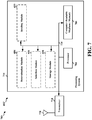
- FIG. 7 is a diagram 700 illustrating an example of a hardware implementation for an apparatus 602' employing a processing system 714.
- the processing system 714 may be implemented with a bus architecture, represented generally by the bus 724.
- the bus 724 may include any number of interconnecting buses and bridges depending on the specific application of the processing system 714 and the overall design constraints.
- the bus 724 links together various circuits including one or more processors and/or hardware modules, represented by the processor 704, the modules 604, 606, 608, 610, and the computer-readable medium / memory 706.
- the bus 724 may also link various other circuits such as timing sources, peripherals, voltage regulators, and power management circuits, which are well known in the art, and therefore, will not be described any further.
- the processing system 714 may be coupled to a transceiver 710.
- the transceiver 710 is coupled to one or more antennas 720.
- the transceiver 710 provides a means for communicating with various other apparatus over a transmission medium.
- the transceiver 710 receives a signal from the one or more antennas 720, extracts information from the received signal, and provides the extracted information to the processing system 714, specifically the determination module 604.
- the transceiver 710 receives information from the processing system 714, specifically the sending module 610, and based on the received information, generates a signal to be applied to the one or more antennas 720.
- the processing system 714 includes a processor 704 coupled to a computer-readable medium / memory 706.
- the processor 704 is responsible for general processing, including the execution of software stored on the computer-readable medium / memory 706.
- the software when executed by the processor 704, causes the processing system 714 to perform the various functions described supra for any particular apparatus.
- the computer-readable medium / memory 706 may also be used for storing data that is manipulated by the processor 704 when executing software.
- the processing system further includes at least one of the modules 604, 606, 608, 610.
- the modules may be software modules running in the processor 704, resident/stored in the computer readable medium / memory 706, one or more hardware modules coupled to the processor 704, or some combination thereof.
- the processing system 714 may be a component of the UE 106, 206.
- the apparatus 602/602' for wireless communication includes means for selecting (e.g., 606) a signal format from a plurality of signal formats, each of the plurality of signal formats corresponding to a respective coding and modulation scheme of a plurality of coding and modulation schemes.
- the apparatus further includes means for sending (e.g., 610) a request for random access to a base station according to the selected signal format.
- each of the plurality of signal formats further corresponds to a predetermined set of non-overlapping time and frequency resources.
- the apparatus may further include means for selecting (e.g., 606) a time and frequency resource from the predetermined set of non-overlapping time and frequency resources corresponding to the selected signal format.
- the means for sending (e.g., 610) may be configured to send the request for random access using the selected time and frequency resource.
- the apparatus may further include means for receiving a signal from the base station (e.g., 720) and means for recovering (e.g., 606, 704) an allocation control message from the signal.
- the allocation control message specifies the signal formats corresponding to the predetermined set of non-overlapping time and frequency resources.
- the plurality of signal formats further corresponds to a predetermined set of time and frequency resources.
- the apparatus may further include means for selecting (e.g., 606) a time and frequency resource from the predetermined set of time and frequency resources.
- the means for sending (e.g., 610) may be configured to send the request for random access using the selected time and frequency resource.
- the apparatus may further include means for determining (e.g., 604) a path loss between the apparatus and the base station.
- Each of the plurality of signal formats may further correspond to a predetermined frequency bandwidth.
- a respective time duration is based on the respective coding and modulation scheme corresponding to each of the plurality of signal formats.
- the means for selecting (e.g., 606) the signal format may be configured to select the signal format based on the path loss.
- the means for selecting (e.g., 606) the signal format may also be configured to select the signal format based on a transmission-power capability of the apparatus.
- the plurality of signal formats may be for OFDMA signals or SC-FDMA signals.
- the respective time duration may correspond to a predetermined number of symbols.
- the predetermined frequency bandwidth may correspond to a predetermined number of subcarriers.
- the apparatus further includes means for storing (e.g., 608) the determined path loss at the apparatus to facilitate a subsequent request for random access.
- the coding and modulation scheme corresponding to a first signal format of the plurality of signal formats and the coding and modulation scheme corresponding to a second signal format of the plurality of signal formats are different from each other.
- the signal format may be selected such that a robustness of the coding and modulation scheme corresponding to the selected signal format is commensurate with the path loss between the apparatus and the base station.
- the signal format may be selected further such that, if the path loss is less than a threshold value, the coding and modulation scheme corresponding to the selected signal format is less robust than the coding and modulation scheme corresponding to a second signal format of the plurality of signal formats.
- the signal format may be selected further such that, if the path loss is greater than a threshold value, the coding and modulation scheme corresponding to the selected signal format is more robust than the coding and modulation scheme corresponding to a second signal format of the plurality of signal formats.
- the apparatus may further include means for storing (e.g., 608) the selected signal format to facilitate a subsequent request for random access.
- the request for random access is sent to facilitate sending of an IoT communication to the base station.
- the aforementioned means may be one or more of the aforementioned modules of the apparatus 602 and/or the processing system 714 of the apparatus 602' configured to perform the functions recited by the aforementioned means.
- FIG. 8 is a conceptual data flow diagram 800 illustrating the data flow between different modules/means/components in an exemplary apparatus 802.
- the apparatus may be a base station.
- the apparatus 802 includes a monitoring module 804 that monitors a predetermined set of time and frequency resources (from transceiver 850) to receive a request for random access from a device.
- the monitoring module 804 monitors one or more blocks (e.g., block 302-1, 302-2, ... , 302-8, 304-2, 304-4, 304-6, 352-1, 352-2, ...) to receive a request for random access from a UE 206.
- the received request is output to determination module 806.
- the determination module 806 determines a signal format of the request from among a plurality of signal formats. For example, with reference to FIG. 2 , the determination module 806 determines a signal format of the request from among signal format 210 and signal format 212. The determined signal format is output to the recovering module 808 and the decoding module 810. The recovering module 808 recovers the request based on the determined signal format. The recovered request may be output to the decoding module 810. The decoding module 810 may decode the request based on the determined signal format. The decoding module 810 may decode the request using at least two of the plurality of signal formats. For example, with reference to FIG. 2 , the decoding module 810 may decode the request using signal format 210 and signal format 212.
- the apparatus may include additional modules that perform each of the blocks of the algorithm in the aforementioned flow chart of FIG. 5 .
- each block in the aforementioned flow chart of FIG. 5 may be performed by a module and the apparatus may include one or more of those modules.
- the modules may be one or more hardware components specifically configured to carry out the stated processes/algorithm, implemented by a processor configured to perform the stated processes/algorithm, stored within a computer-readable medium for implementation by a processor, or some combination thereof.
- FIG. 9 is a diagram 900 illustrating an example of a hardware implementation for an apparatus 802' employing a processing system 914.
- the processing system 914 may be implemented with a bus architecture, represented generally by the bus 924.
- the bus 924 may include any number of interconnecting buses and bridges depending on the specific application of the processing system 914 and the overall design constraints.
- the bus 924 links together various circuits including one or more processors and/or hardware modules, represented by the processor 904, the modules 804, 806, 808, 810, and the computer-readable medium / memory 906.
- the bus 924 may also link various other circuits such as timing sources, peripherals, voltage regulators, and power management circuits, which are well known in the art, and therefore, will not be described any further.
- the processing system 914 may be coupled to a transceiver 910.
- the transceiver 910 is coupled to one or more antennas 920.
- the transceiver 910 provides a means for communicating with various other apparatus over a transmission medium.
- the transceiver 910 receives a signal from the one or more antennas 920, extracts information from the received signal, and provides the extracted information to the processing system 914, specifically the monitoring module 804.
- the transceiver 910 may receive information from the processing system 914, and, based on the received information, generates a signal to be applied to the one or more antennas 920.
- the processing system 914 includes a processor 904 coupled to a computer-readable medium / memory 906.
- the processor 904 is responsible for general processing, including the execution of software stored on the computer-readable medium / memory 906.
- the software when executed by the processor 904, causes the processing system 914 to perform the various functions described supra for any particular apparatus.
- the computer-readable medium / memory 906 may also be used for storing data that is manipulated by the processor 904 when executing software.
- the processing system further includes at least one of the modules 804, 806, 808, 810.
- the modules may be software modules running in the processor 904, resident/stored in the computer readable medium / memory 906, one or more hardware modules coupled to the processor 904, or some combination thereof.
- the processing system 914 may be a component of the base station 104, 204.
- the apparatus 802/702' for wireless communication includes means for monitoring (e.g., 804) a predetermined set of time and frequency resources to receive a request for random access from a device.
- the apparatus further includes means for determining (e.g., 806) a signal format of the request from among a plurality of signal formats.
- Each of the plurality of signal formats corresponds to a respective coding and modulation scheme of a plurality of coding and modulation schemes.
- the apparatus further includes means for recovering (e.g., 808) the request based on the determined signal format.
- each of the plurality of signal formats may further correspond to a predetermined frequency bandwidth.
- a respective time duration may be based on the respective coding and modulation scheme corresponding to each of the plurality of signal formats.
- each of the plurality of signal formats may further correspond to a predetermined non-overlapping subset of the predetermined set of time and frequency resources.
- the signal format of the request may be determined from the predetermined non-overlapping subset monitored.
- the apparatus may further include means for decoding (e.g., 810) the request based on the determined signal format.
- the apparatus may further include means for decoding (e.g., 810) the request using at least two of the plurality of signal formats.
- the signal format of the request may be determined by one of the at least two of the plurality of signal formats that successfully decodes the request.
- the signal format may be determined based on at least a time at which the request is received or a carrier frequency on which the request is received.
- the received request may start with a known preamble.
- the known preamble may be common to the plurality of signal formats.
- the coding and modulation scheme corresponding to a first signal format of the plurality of signal formats and the coding and modulation scheme corresponding to a second signal format of the plurality of signal formats may be different from each other.
- the aforementioned means may be one or more of the aforementioned modules of the apparatus 802 and/or the processing system 914 of the apparatus 802' configured to perform the functions recited by the aforementioned means.
- Combinations such as "at least one of A, B, or C,” “at least one of A, B, and C,” and “A, B, C, or any combination thereof' include any combination of A, B, and/or C, and may include multiples of A, multiples of B, or multiples of C.
- combinations such as “at least one of A, B, or C,” “at least one of A, B, and C,” and “A, B, C, or any combination thereof' may be A only, B only, C only, A and B, A and C, B and C, or A and B and C, where any such combinations may contain one or more member or members of A, B, or C.
Landscapes
- Engineering & Computer Science (AREA)
- Signal Processing (AREA)
- Computer Networks & Wireless Communication (AREA)
- Mobile Radio Communication Systems (AREA)
- Digital Transmission Methods That Use Modulated Carrier Waves (AREA)
Applications Claiming Priority (3)
| Application Number | Priority Date | Filing Date | Title |
|---|---|---|---|
| US201462062126P | 2014-10-09 | 2014-10-09 | |
| US14/553,980 US10104645B2 (en) | 2014-10-09 | 2014-11-25 | Random access method of devices with different path loss |
| PCT/US2015/052449 WO2016057248A1 (en) | 2014-10-09 | 2015-09-25 | Random access method of devices with different path loss |
Publications (2)
| Publication Number | Publication Date |
|---|---|
| EP3205124A1 EP3205124A1 (en) | 2017-08-16 |
| EP3205124B1 true EP3205124B1 (en) | 2018-08-01 |
Family
ID=54291663
Family Applications (1)
| Application Number | Title | Priority Date | Filing Date |
|---|---|---|---|
| EP15778496.8A Active EP3205124B1 (en) | 2014-10-09 | 2015-09-25 | Random access method of devices with different path loss |
Country Status (8)
| Country | Link |
|---|---|
| US (2) | US10104645B2 (https=) |
| EP (1) | EP3205124B1 (https=) |
| JP (2) | JP6766038B2 (https=) |
| KR (1) | KR102381806B1 (https=) |
| CN (2) | CN112040550B (https=) |
| AU (1) | AU2015328523B2 (https=) |
| BR (1) | BR112017007140B1 (https=) |
| WO (1) | WO2016057248A1 (https=) |
Families Citing this family (7)
| Publication number | Priority date | Publication date | Assignee | Title |
|---|---|---|---|---|
| US10104645B2 (en) | 2014-10-09 | 2018-10-16 | Qualcomm Incorporated | Random access method of devices with different path loss |
| WO2018006315A1 (zh) * | 2016-07-07 | 2018-01-11 | 华为技术有限公司 | 传输数据的方法、用户设备和基站 |
| CN117062227A (zh) * | 2016-11-04 | 2023-11-14 | 中兴通讯股份有限公司 | 无线通信方法、设备、节点以及计算机可读程序存储介质 |
| CN109413622B (zh) * | 2018-12-25 | 2020-07-24 | 深圳职业技术学院 | 一种解决物联网中数据传输冲突的方法 |
| CN109714735B (zh) * | 2018-12-25 | 2020-07-24 | 深圳职业技术学院 | 一种物联网中鲁棒的数据传输方法 |
| EP3909379B1 (en) * | 2019-01-11 | 2024-08-21 | ZTE Corporation | Two-step random access procedure in wireless systems |
| US11653347B2 (en) * | 2020-12-14 | 2023-05-16 | Qualcomm Incorporated | Coexistence of multiple uplink control channel formats for wireless communication with power spectral density limitation |
Family Cites Families (38)
| Publication number | Priority date | Publication date | Assignee | Title |
|---|---|---|---|---|
| WO2002052875A2 (en) | 2000-12-27 | 2002-07-04 | Ensemble Communications, Inc. | Adaptive call admission control for use in a wireless communication system |
| KR20060117056A (ko) * | 2005-05-12 | 2006-11-16 | 삼성전자주식회사 | 이동 통신 시스템에서 핸드오버 수행을 위한 시스템 및방법 |
| WO2007145273A1 (ja) * | 2006-06-15 | 2007-12-21 | Panasonic Corporation | 無線送信装置及び無線送信方法 |
| AU2007309945B2 (en) * | 2006-10-24 | 2010-07-01 | Lg Electronics Inc. | Procedure for non synchronized radio access (NSRA) resource assignment |
| JP5159274B2 (ja) | 2006-11-30 | 2013-03-06 | パナソニック株式会社 | 無線送信装置及び無線送信方法 |
| KR101312231B1 (ko) * | 2007-02-23 | 2013-09-27 | 삼성전자주식회사 | 통신 시스템에서 맵 메시지 송수신 장치 및 방법 |
| RU2009134935A (ru) | 2007-03-01 | 2011-04-10 | НТТ ДоСоМо, Инк. (JP) | Базовая станция и способ управления связью |
| GB2458258A (en) * | 2008-02-04 | 2009-09-16 | Nec Corp | Method of controlling base station loading in a mobile communication system |
| US8068458B2 (en) * | 2008-08-19 | 2011-11-29 | Telefonaktiebolaget L M Ericson (Publ) | Random access preamble selection |
| US9992009B2 (en) | 2009-04-24 | 2018-06-05 | Telefonaktiebolaget Lm Ericsson (Publ) | Method and apparatus for performing uplink transmissions in a wireless communications system |
| US8583160B2 (en) * | 2009-05-04 | 2013-11-12 | Qualcomm Incorporated | Uplink power control for wireless communication |
| US20110243075A1 (en) * | 2009-06-16 | 2011-10-06 | Qualcomm Incorporated | Method and apparatus for access procedure in a wireless communication system |
| EP2265077B1 (en) * | 2009-06-18 | 2012-03-21 | Panasonic Corporation | Enhanced random access procedure for mobile communications |
| US8644277B2 (en) | 2009-08-06 | 2014-02-04 | Qualcomm Incorporated | Dynamic selection of random access channel configurations |
| CA2770701C (en) * | 2009-08-12 | 2017-03-14 | Research In Motion Limited | System and method for modulation and coding scheme adaptation and power control in a relay network |
| AU2010282562B2 (en) * | 2009-08-12 | 2015-04-02 | Interdigital Patent Holdings, Inc. | Method and apparatus for contention-based uplink data transmission |
| KR101636931B1 (ko) * | 2009-12-11 | 2016-07-06 | 삼성전자 주식회사 | 이동통신 시스템에서 경쟁 기반 액세스를 수행하는 방법 및 장치 |
| CN102118189B (zh) | 2009-12-31 | 2016-07-27 | 华为技术有限公司 | 一种基于竞争资源的配置方法和装置 |
| US8358615B2 (en) * | 2010-03-11 | 2013-01-22 | Research In Motion Limited | Modulation and coding scheme selection method for a specific absorption rate compliant communication device |
| CN102457979B (zh) * | 2010-11-02 | 2014-12-10 | 中兴通讯股份有限公司 | 一种随机接入响应的传输方法及装置 |
| CA2827218C (en) * | 2011-02-11 | 2016-06-28 | Research In Motion Limited | Time-advanced random access channel transmission |
| CN102869113B (zh) * | 2011-07-06 | 2016-01-27 | 上海贝尔股份有限公司 | 一种通信网络中的物理随机接入的方法和装置 |
| JP5162699B1 (ja) * | 2011-10-04 | 2013-03-13 | シャープ株式会社 | 移動局装置、基地局装置、無線通信方法、無線通信システムおよび集積回路 |
| US9723496B2 (en) | 2011-11-04 | 2017-08-01 | Qualcomm Incorporated | Method and apparatus for interference cancellation by a user equipment using blind detection |
| KR101616220B1 (ko) * | 2011-12-23 | 2016-05-11 | 블랙베리 리미티드 | Enodeb 기지국에서 구현되는 방법 |
| KR101555456B1 (ko) * | 2011-12-23 | 2015-09-23 | 블랙베리 리미티드 | 무선 시스템에서 사용하기 위한 사용자 장비(ue)에서 구현되는 방법 |
| WO2013123445A1 (en) | 2012-02-17 | 2013-08-22 | Interdigital Patent Holdings, Inc. | Smart internet of things services |
| CN104205670B (zh) | 2012-03-22 | 2017-12-05 | 中兴通讯(美国)公司 | 机器类型通信数据从移动装置向无线网络的优化传输 |
| WO2013169974A1 (en) | 2012-05-11 | 2013-11-14 | Interdigital Patent Holdings, Inc. | Context-aware peer-to-peer communication |
| US9699811B2 (en) | 2012-07-12 | 2017-07-04 | Samsung Electronics Co., Ltd. | Apparatus and method for random access with multiple antennas in a wireless network |
| HK1213415A1 (zh) * | 2012-10-05 | 2016-06-30 | Interdigital Patent Holdings, Inc. | 用於增强机器类型通信(mtc)设备的覆盖的方法和装置 |
| WO2014075270A1 (zh) * | 2012-11-15 | 2014-05-22 | 华为技术有限公司 | 信息传输的方法、基站和用户设备 |
| CN104969522B (zh) * | 2012-12-21 | 2019-03-15 | 三星电子株式会社 | 在无线通信系统中使用调制技术收发信号的方法和设备 |
| US9590878B2 (en) | 2013-01-16 | 2017-03-07 | Qualcomm Incorporated | Channel state information and adaptive modulation and coding design for long-term evolution machine type communications |
| CN111867120B (zh) * | 2014-04-04 | 2024-05-31 | 北京三星通信技术研究有限公司 | 数据传输的方法、基站及终端 |
| US9820225B2 (en) | 2014-05-13 | 2017-11-14 | Qualcomm Incorporated | Techniques for managing power consumption of a mobile device |
| US9788318B2 (en) * | 2014-08-18 | 2017-10-10 | Telefonaktiebolaget Lm Ericsson (Publ) | Channel capacity on collision based channels |
| US10104645B2 (en) | 2014-10-09 | 2018-10-16 | Qualcomm Incorporated | Random access method of devices with different path loss |
-
2014
- 2014-11-25 US US14/553,980 patent/US10104645B2/en active Active
-
2015
- 2015-09-25 CN CN202010919567.4A patent/CN112040550B/zh active Active
- 2015-09-25 WO PCT/US2015/052449 patent/WO2016057248A1/en not_active Ceased
- 2015-09-25 EP EP15778496.8A patent/EP3205124B1/en active Active
- 2015-09-25 JP JP2017518971A patent/JP6766038B2/ja active Active
- 2015-09-25 CN CN201580054573.5A patent/CN106797663B/zh active Active
- 2015-09-25 BR BR112017007140-1A patent/BR112017007140B1/pt active IP Right Grant
- 2015-09-25 AU AU2015328523A patent/AU2015328523B2/en active Active
- 2015-09-25 KR KR1020177009548A patent/KR102381806B1/ko active Active
-
2018
- 2018-10-03 US US16/151,030 patent/US11019606B2/en active Active
-
2020
- 2020-06-03 JP JP2020096698A patent/JP7110274B2/ja active Active
Also Published As
| Publication number | Publication date |
|---|---|
| AU2015328523A1 (en) | 2017-03-23 |
| CN112040550B (zh) | 2024-01-09 |
| US20190037557A1 (en) | 2019-01-31 |
| BR112017007140A2 (pt) | 2017-12-19 |
| US10104645B2 (en) | 2018-10-16 |
| KR20170067763A (ko) | 2017-06-16 |
| JP6766038B2 (ja) | 2020-10-07 |
| KR102381806B1 (ko) | 2022-03-31 |
| JP2020167704A (ja) | 2020-10-08 |
| JP2017536022A (ja) | 2017-11-30 |
| AU2015328523B2 (en) | 2019-11-21 |
| US11019606B2 (en) | 2021-05-25 |
| BR112017007140B1 (pt) | 2023-11-14 |
| CN106797663A (zh) | 2017-05-31 |
| WO2016057248A1 (en) | 2016-04-14 |
| US20160105884A1 (en) | 2016-04-14 |
| CN106797663B (zh) | 2020-09-18 |
| JP7110274B2 (ja) | 2022-08-01 |
| CN112040550A (zh) | 2020-12-04 |
| EP3205124A1 (en) | 2017-08-16 |
Similar Documents
| Publication | Publication Date | Title |
|---|---|---|
| US11019606B2 (en) | Random access method of devices with different path loss | |
| US10848251B2 (en) | Channel quality measurement in unlicensed deployments | |
| US12185337B2 (en) | Techniques for communicating synchronization signal block index in a timing synchronization signal | |
| CN111316716A (zh) | 为ue功率节省触发适应机制 | |
| JP2018517338A (ja) | システムタイプ依存型マスタ情報ブロック(mib) | |
| CN113508637A (zh) | 用于促成将唤醒信号与其他资源复用的方法和装置 | |
| CN114208364B (zh) | 用于调度控制信道信息的系统和方法 | |
| EP3097729B1 (en) | Method and apparatus for resource allocation for distributed device to device synchronization | |
| US20190349991A1 (en) | Multiplexing multi-radio access technology transmissions | |
| CN111656723A (zh) | 基于pt-rs与coreset之间的冲突来对pt-rs进行穿孔 | |
| CN108293261A (zh) | 用于执行网络可配置接入和数据传送过程的系统和方法 | |
| WO2024082472A1 (en) | Method and apparatus of supporting low power wireless communication | |
| US9888449B2 (en) | Method and apparatus for timing source selection and deselection distributed device to device synchronization | |
| WO2022000186A1 (en) | Methods and apparatuses of saving power for a sidelink | |
| WO2023197334A1 (en) | Methods and apparatuses for sidelink beam management | |
| GB2640209A (en) | Sequence-based low power wakeup signal | |
| GB2637489A (en) | Low power wake-up signal reception | |
| GB2640207A (en) | Sequence-based low power wakeup signal |
Legal Events
| Date | Code | Title | Description |
|---|---|---|---|
| STAA | Information on the status of an ep patent application or granted ep patent |
Free format text: STATUS: THE INTERNATIONAL PUBLICATION HAS BEEN MADE |
|
| PUAI | Public reference made under article 153(3) epc to a published international application that has entered the european phase |
Free format text: ORIGINAL CODE: 0009012 |
|
| STAA | Information on the status of an ep patent application or granted ep patent |
Free format text: STATUS: REQUEST FOR EXAMINATION WAS MADE |
|
| 17P | Request for examination filed |
Effective date: 20170301 |
|
| AK | Designated contracting states |
Kind code of ref document: A1 Designated state(s): AL AT BE BG CH CY CZ DE DK EE ES FI FR GB GR HR HU IE IS IT LI LT LU LV MC MK MT NL NO PL PT RO RS SE SI SK SM TR |
|
| AX | Request for extension of the european patent |
Extension state: BA ME |
|
| DAV | Request for validation of the european patent (deleted) | ||
| DAX | Request for extension of the european patent (deleted) | ||
| REG | Reference to a national code |
Ref country code: DE Ref legal event code: R079 Ref document number: 602015014407 Country of ref document: DE Free format text: PREVIOUS MAIN CLASS: H04W0004000000 Ipc: H04W0074080000 |
|
| GRAP | Despatch of communication of intention to grant a patent |
Free format text: ORIGINAL CODE: EPIDOSNIGR1 |
|
| STAA | Information on the status of an ep patent application or granted ep patent |
Free format text: STATUS: GRANT OF PATENT IS INTENDED |
|
| RIC1 | Information provided on ipc code assigned before grant |
Ipc: H04W 4/00 20180101ALN20180124BHEP Ipc: H04L 5/00 20060101ALI20180124BHEP Ipc: H04W 74/08 20090101AFI20180124BHEP |
|
| INTG | Intention to grant announced |
Effective date: 20180214 |
|
| GRAS | Grant fee paid |
Free format text: ORIGINAL CODE: EPIDOSNIGR3 |
|
| GRAA | (expected) grant |
Free format text: ORIGINAL CODE: 0009210 |
|
| STAA | Information on the status of an ep patent application or granted ep patent |
Free format text: STATUS: THE PATENT HAS BEEN GRANTED |
|
| AK | Designated contracting states |
Kind code of ref document: B1 Designated state(s): AL AT BE BG CH CY CZ DE DK EE ES FI FR GB GR HR HU IE IS IT LI LT LU LV MC MK MT NL NO PL PT RO RS SE SI SK SM TR |
|
| REG | Reference to a national code |
Ref country code: GB Ref legal event code: FG4D |
|
| REG | Reference to a national code |
Ref country code: CH Ref legal event code: EP Ref country code: AT Ref legal event code: REF Ref document number: 1025885 Country of ref document: AT Kind code of ref document: T Effective date: 20180815 |
|
| REG | Reference to a national code |
Ref country code: IE Ref legal event code: FG4D |
|
| REG | Reference to a national code |
Ref country code: DE Ref legal event code: R096 Ref document number: 602015014407 Country of ref document: DE |
|
| REG | Reference to a national code |
Ref country code: FR Ref legal event code: PLFP Year of fee payment: 4 |
|
| REG | Reference to a national code |
Ref country code: NL Ref legal event code: MP Effective date: 20180801 |
|
| REG | Reference to a national code |
Ref country code: LT Ref legal event code: MG4D |
|
| REG | Reference to a national code |
Ref country code: AT Ref legal event code: MK05 Ref document number: 1025885 Country of ref document: AT Kind code of ref document: T Effective date: 20180801 |
|
| PG25 | Lapsed in a contracting state [announced via postgrant information from national office to epo] |
Ref country code: SE Free format text: LAPSE BECAUSE OF FAILURE TO SUBMIT A TRANSLATION OF THE DESCRIPTION OR TO PAY THE FEE WITHIN THE PRESCRIBED TIME-LIMIT Effective date: 20180801 Ref country code: AT Free format text: LAPSE BECAUSE OF FAILURE TO SUBMIT A TRANSLATION OF THE DESCRIPTION OR TO PAY THE FEE WITHIN THE PRESCRIBED TIME-LIMIT Effective date: 20180801 Ref country code: NO Free format text: LAPSE BECAUSE OF FAILURE TO SUBMIT A TRANSLATION OF THE DESCRIPTION OR TO PAY THE FEE WITHIN THE PRESCRIBED TIME-LIMIT Effective date: 20181101 Ref country code: NL Free format text: LAPSE BECAUSE OF FAILURE TO SUBMIT A TRANSLATION OF THE DESCRIPTION OR TO PAY THE FEE WITHIN THE PRESCRIBED TIME-LIMIT Effective date: 20180801 Ref country code: BG Free format text: LAPSE BECAUSE OF FAILURE TO SUBMIT A TRANSLATION OF THE DESCRIPTION OR TO PAY THE FEE WITHIN THE PRESCRIBED TIME-LIMIT Effective date: 20181101 Ref country code: IS Free format text: LAPSE BECAUSE OF FAILURE TO SUBMIT A TRANSLATION OF THE DESCRIPTION OR TO PAY THE FEE WITHIN THE PRESCRIBED TIME-LIMIT Effective date: 20181201 Ref country code: GR Free format text: LAPSE BECAUSE OF FAILURE TO SUBMIT A TRANSLATION OF THE DESCRIPTION OR TO PAY THE FEE WITHIN THE PRESCRIBED TIME-LIMIT Effective date: 20181102 Ref country code: LT Free format text: LAPSE BECAUSE OF FAILURE TO SUBMIT A TRANSLATION OF THE DESCRIPTION OR TO PAY THE FEE WITHIN THE PRESCRIBED TIME-LIMIT Effective date: 20180801 Ref country code: RS Free format text: LAPSE BECAUSE OF FAILURE TO SUBMIT A TRANSLATION OF THE DESCRIPTION OR TO PAY THE FEE WITHIN THE PRESCRIBED TIME-LIMIT Effective date: 20180801 Ref country code: PL Free format text: LAPSE BECAUSE OF FAILURE TO SUBMIT A TRANSLATION OF THE DESCRIPTION OR TO PAY THE FEE WITHIN THE PRESCRIBED TIME-LIMIT Effective date: 20180801 Ref country code: FI Free format text: LAPSE BECAUSE OF FAILURE TO SUBMIT A TRANSLATION OF THE DESCRIPTION OR TO PAY THE FEE WITHIN THE PRESCRIBED TIME-LIMIT Effective date: 20180801 |
|
| PG25 | Lapsed in a contracting state [announced via postgrant information from national office to epo] |
Ref country code: LV Free format text: LAPSE BECAUSE OF FAILURE TO SUBMIT A TRANSLATION OF THE DESCRIPTION OR TO PAY THE FEE WITHIN THE PRESCRIBED TIME-LIMIT Effective date: 20180801 Ref country code: AL Free format text: LAPSE BECAUSE OF FAILURE TO SUBMIT A TRANSLATION OF THE DESCRIPTION OR TO PAY THE FEE WITHIN THE PRESCRIBED TIME-LIMIT Effective date: 20180801 Ref country code: HR Free format text: LAPSE BECAUSE OF FAILURE TO SUBMIT A TRANSLATION OF THE DESCRIPTION OR TO PAY THE FEE WITHIN THE PRESCRIBED TIME-LIMIT Effective date: 20180801 |
|
| PG25 | Lapsed in a contracting state [announced via postgrant information from national office to epo] |
Ref country code: IT Free format text: LAPSE BECAUSE OF FAILURE TO SUBMIT A TRANSLATION OF THE DESCRIPTION OR TO PAY THE FEE WITHIN THE PRESCRIBED TIME-LIMIT Effective date: 20180801 Ref country code: CZ Free format text: LAPSE BECAUSE OF FAILURE TO SUBMIT A TRANSLATION OF THE DESCRIPTION OR TO PAY THE FEE WITHIN THE PRESCRIBED TIME-LIMIT Effective date: 20180801 Ref country code: EE Free format text: LAPSE BECAUSE OF FAILURE TO SUBMIT A TRANSLATION OF THE DESCRIPTION OR TO PAY THE FEE WITHIN THE PRESCRIBED TIME-LIMIT Effective date: 20180801 Ref country code: RO Free format text: LAPSE BECAUSE OF FAILURE TO SUBMIT A TRANSLATION OF THE DESCRIPTION OR TO PAY THE FEE WITHIN THE PRESCRIBED TIME-LIMIT Effective date: 20180801 Ref country code: ES Free format text: LAPSE BECAUSE OF FAILURE TO SUBMIT A TRANSLATION OF THE DESCRIPTION OR TO PAY THE FEE WITHIN THE PRESCRIBED TIME-LIMIT Effective date: 20180801 Ref country code: MC Free format text: LAPSE BECAUSE OF FAILURE TO SUBMIT A TRANSLATION OF THE DESCRIPTION OR TO PAY THE FEE WITHIN THE PRESCRIBED TIME-LIMIT Effective date: 20180801 |
|
| REG | Reference to a national code |
Ref country code: CH Ref legal event code: PL |
|
| REG | Reference to a national code |
Ref country code: DE Ref legal event code: R097 Ref document number: 602015014407 Country of ref document: DE |
|
| PG25 | Lapsed in a contracting state [announced via postgrant information from national office to epo] |
Ref country code: SK Free format text: LAPSE BECAUSE OF FAILURE TO SUBMIT A TRANSLATION OF THE DESCRIPTION OR TO PAY THE FEE WITHIN THE PRESCRIBED TIME-LIMIT Effective date: 20180801 Ref country code: SM Free format text: LAPSE BECAUSE OF FAILURE TO SUBMIT A TRANSLATION OF THE DESCRIPTION OR TO PAY THE FEE WITHIN THE PRESCRIBED TIME-LIMIT Effective date: 20180801 Ref country code: DK Free format text: LAPSE BECAUSE OF FAILURE TO SUBMIT A TRANSLATION OF THE DESCRIPTION OR TO PAY THE FEE WITHIN THE PRESCRIBED TIME-LIMIT Effective date: 20180801 |
|
| PLBE | No opposition filed within time limit |
Free format text: ORIGINAL CODE: 0009261 |
|
| STAA | Information on the status of an ep patent application or granted ep patent |
Free format text: STATUS: NO OPPOSITION FILED WITHIN TIME LIMIT |
|
| REG | Reference to a national code |
Ref country code: BE Ref legal event code: MM Effective date: 20180930 |
|
| REG | Reference to a national code |
Ref country code: IE Ref legal event code: MM4A |
|
| PG25 | Lapsed in a contracting state [announced via postgrant information from national office to epo] |
Ref country code: LU Free format text: LAPSE BECAUSE OF NON-PAYMENT OF DUE FEES Effective date: 20180925 |
|
| 26N | No opposition filed |
Effective date: 20190503 |
|
| PG25 | Lapsed in a contracting state [announced via postgrant information from national office to epo] |
Ref country code: IE Free format text: LAPSE BECAUSE OF NON-PAYMENT OF DUE FEES Effective date: 20180925 |
|
| PG25 | Lapsed in a contracting state [announced via postgrant information from national office to epo] |
Ref country code: LI Free format text: LAPSE BECAUSE OF NON-PAYMENT OF DUE FEES Effective date: 20180930 Ref country code: CH Free format text: LAPSE BECAUSE OF NON-PAYMENT OF DUE FEES Effective date: 20180930 Ref country code: SI Free format text: LAPSE BECAUSE OF FAILURE TO SUBMIT A TRANSLATION OF THE DESCRIPTION OR TO PAY THE FEE WITHIN THE PRESCRIBED TIME-LIMIT Effective date: 20180801 Ref country code: BE Free format text: LAPSE BECAUSE OF NON-PAYMENT OF DUE FEES Effective date: 20180930 |
|
| PG25 | Lapsed in a contracting state [announced via postgrant information from national office to epo] |
Ref country code: MT Free format text: LAPSE BECAUSE OF NON-PAYMENT OF DUE FEES Effective date: 20180925 |
|
| PG25 | Lapsed in a contracting state [announced via postgrant information from national office to epo] |
Ref country code: TR Free format text: LAPSE BECAUSE OF FAILURE TO SUBMIT A TRANSLATION OF THE DESCRIPTION OR TO PAY THE FEE WITHIN THE PRESCRIBED TIME-LIMIT Effective date: 20180801 |
|
| PG25 | Lapsed in a contracting state [announced via postgrant information from national office to epo] |
Ref country code: PT Free format text: LAPSE BECAUSE OF FAILURE TO SUBMIT A TRANSLATION OF THE DESCRIPTION OR TO PAY THE FEE WITHIN THE PRESCRIBED TIME-LIMIT Effective date: 20180801 |
|
| PG25 | Lapsed in a contracting state [announced via postgrant information from national office to epo] |
Ref country code: MK Free format text: LAPSE BECAUSE OF NON-PAYMENT OF DUE FEES Effective date: 20180801 Ref country code: HU Free format text: LAPSE BECAUSE OF FAILURE TO SUBMIT A TRANSLATION OF THE DESCRIPTION OR TO PAY THE FEE WITHIN THE PRESCRIBED TIME-LIMIT; INVALID AB INITIO Effective date: 20150925 Ref country code: CY Free format text: LAPSE BECAUSE OF FAILURE TO SUBMIT A TRANSLATION OF THE DESCRIPTION OR TO PAY THE FEE WITHIN THE PRESCRIBED TIME-LIMIT Effective date: 20180801 |
|
| PGFP | Annual fee paid to national office [announced via postgrant information from national office to epo] |
Ref country code: DE Payment date: 20250808 Year of fee payment: 11 |
|
| PGFP | Annual fee paid to national office [announced via postgrant information from national office to epo] |
Ref country code: GB Payment date: 20250814 Year of fee payment: 11 |
|
| PGFP | Annual fee paid to national office [announced via postgrant information from national office to epo] |
Ref country code: FR Payment date: 20250808 Year of fee payment: 11 |