EP3200503A1 - Engpass-/überlastungssteuerungsverfahren, -system und -vorrichtung sowie basisstation - Google Patents
Engpass-/überlastungssteuerungsverfahren, -system und -vorrichtung sowie basisstation Download PDFInfo
- Publication number
- EP3200503A1 EP3200503A1 EP15803062.7A EP15803062A EP3200503A1 EP 3200503 A1 EP3200503 A1 EP 3200503A1 EP 15803062 A EP15803062 A EP 15803062A EP 3200503 A1 EP3200503 A1 EP 3200503A1
- Authority
- EP
- European Patent Office
- Prior art keywords
- congestion
- overload
- gcs
- enbs
- user plane
- Prior art date
- Legal status (The legal status is an assumption and is not a legal conclusion. Google has not performed a legal analysis and makes no representation as to the accuracy of the status listed.)
- Withdrawn
Links
Images


Classifications
-
- H—ELECTRICITY
- H04—ELECTRIC COMMUNICATION TECHNIQUE
- H04W—WIRELESS COMMUNICATION NETWORKS
- H04W24/00—Supervisory, monitoring or testing arrangements
- H04W24/04—Arrangements for maintaining operational condition
-
- H—ELECTRICITY
- H04—ELECTRIC COMMUNICATION TECHNIQUE
- H04W—WIRELESS COMMUNICATION NETWORKS
- H04W28/00—Network traffic management; Network resource management
- H04W28/02—Traffic management, e.g. flow control or congestion control
- H04W28/10—Flow control between communication endpoints
- H04W28/12—Flow control between communication endpoints using signalling between network elements
-
- H—ELECTRICITY
- H04—ELECTRIC COMMUNICATION TECHNIQUE
- H04W—WIRELESS COMMUNICATION NETWORKS
- H04W28/00—Network traffic management; Network resource management
- H04W28/02—Traffic management, e.g. flow control or congestion control
- H04W28/0284—Traffic management, e.g. flow control or congestion control detecting congestion or overload during communication
-
- H—ELECTRICITY
- H04—ELECTRIC COMMUNICATION TECHNIQUE
- H04W—WIRELESS COMMUNICATION NETWORKS
- H04W28/00—Network traffic management; Network resource management
- H04W28/02—Traffic management, e.g. flow control or congestion control
- H04W28/0289—Congestion control
-
- H—ELECTRICITY
- H04—ELECTRIC COMMUNICATION TECHNIQUE
- H04W—WIRELESS COMMUNICATION NETWORKS
- H04W4/00—Services specially adapted for wireless communication networks; Facilities therefor
- H04W4/06—Selective distribution of broadcast services, e.g. multimedia broadcast multicast service [MBMS]; Services to user groups; One-way selective calling services
-
- H—ELECTRICITY
- H04—ELECTRIC COMMUNICATION TECHNIQUE
- H04W—WIRELESS COMMUNICATION NETWORKS
- H04W4/00—Services specially adapted for wireless communication networks; Facilities therefor
- H04W4/06—Selective distribution of broadcast services, e.g. multimedia broadcast multicast service [MBMS]; Services to user groups; One-way selective calling services
- H04W4/10—Push-to-Talk [PTT] or Push-On-Call services
-
- H—ELECTRICITY
- H04—ELECTRIC COMMUNICATION TECHNIQUE
- H04W—WIRELESS COMMUNICATION NETWORKS
- H04W76/00—Connection management
- H04W76/40—Connection management for selective distribution or broadcast
-
- H—ELECTRICITY
- H04—ELECTRIC COMMUNICATION TECHNIQUE
- H04W—WIRELESS COMMUNICATION NETWORKS
- H04W76/00—Connection management
- H04W76/40—Connection management for selective distribution or broadcast
- H04W76/45—Connection management for selective distribution or broadcast for Push-to-Talk [PTT] or Push-to-Talk over cellular [PoC] services
-
- H—ELECTRICITY
- H04—ELECTRIC COMMUNICATION TECHNIQUE
- H04W—WIRELESS COMMUNICATION NETWORKS
- H04W8/00—Network data management
- H04W8/02—Processing of mobility data, e.g. registration information at HLR [Home Location Register] or VLR [Visitor Location Register]; Transfer of mobility data, e.g. between HLR, VLR or external networks
- H04W8/04—Registration at HLR or HSS [Home Subscriber Server]
Definitions
- the disclosure relates to a technology for controlling congestion or overload, and more particularly to a method, system, device for controlling congestion or overload and an eNB.
- a trunking communication system is a dedicated wireless communication system, which is developed for meeting a commanding and scheduling requirement of a user in the industry and oriented to a specific industrial application.
- a large number of wireless users share a small number of wireless channels in the system; the system is mainly applied for commanding and scheduling, and is a multipurpose and high-performance wireless communication system.
- the trunking communication system has a broad application market in the fields of government departments, public security, emergency communication, power, civil aviation, petrochemical industry, military and the like.
- a trunking communication system experiences a development history similar to a cellular mobile communication system.
- a first-generation trunking system is an analogue trunking communication system, which mainly supports voice communication.
- the analogue trunking communication system earliest introduced into China is an Actionet system of the Nokia corporation, and the system adopts MPT-1327 signalling applied to a 450MHz frequency band. Then, F.A.S.T of Japan and Smartnet of Motorola corporation of the United States are introduced into China, and the market share occupied by them in the trunking market in China is more than 80 percent for a long term.
- a second-generation trunking system is a narrowband digital trunking communication system, rising in the 1990s, and is started to be deployed in China in about 2004, which is a trunking communication system most widely applied in China at present.
- the digital trunking communication system supports voice and low-speed data (at most 28.8kbps) communication, and representative systems include a Terrestrial Trunked Radio (TETRA) system defined by the European Telecommunications Standards Institute (ETSI), an Integrated Digital Enhanced Networks (iDEN) system of the Motorola corporation of the United States, a Global Open Trunking Architecture (GoTa) system developed by the ZTE Corporation on the basis of Code Division Multiple Access 1X (CDMA1X), and a GT800 system developed by the Huawei Technologies Co., Ltd. on the basis of Global System for Mobile Communications (GSM).
- TETRA Terrestrial Trunked Radio
- CDMA1X Code Division Multiple Access 1X
- GSM Global System for Mobile Communications
- a characteristic differentiating a trunking system from a public system is that the trunking system is required to have an efficient commanding and scheduling characteristic and a network is required to have high reliability and security.
- Call control a service bearer is established, maintained and released between a calling user and a called user according to a service request of a user.
- Authentication and certification functions are supported, and the authentication function includes authentication performed by a network side for a terminal and two-way authentication performed by the network side for the terminal and performed by the terminal for the network side.
- Fail soft when a link between a network side and an eNB or between network elements inside the network side fails, the eNB may provide limited trunking service for user terminals within its coverage.
- Network interconnection and intercommunication function intercommunication with a Public Switched Telephone Network (PSTN), a public mobile communication system (a GSM or CDMA, Time Division-Long Term Evolution (TD-LTE) and the like), an Internet Protocol (IP) telephone, a trunking communication system of another model and the like may be implemented.
- PSTN Public Switched Telephone Network
- GSM Global System for Mobile communications
- TD-LTE Time Division-Long Term Evolution
- IP Internet Protocol
- trunking communication is called as a Group Communication Service Enabler (GCSE).
- Fig. 1 is a system structure of an LTE GCSE.
- the 3GPP proposes a Multimedia Broadcast Multicast Service (MBMS), which is a technology for transmitting data from a data source to multiple target mobile terminals, and the MBMS implements sharing of a network (including a core network and an access network) resource and increases a utilization rate of the network resource (particularly an air interface resource).
- MBMS Multimedia Broadcast Multicast Service
- the MBMS defined by the 3GPP may not only implement to multicast and broadcast pure-text low-rate message but also implement to broadcast and multicast high-speed multimedia service and the MBMS provides various video, audio and multimedia services, which undoubtedly follows a development trend of mobile data in the future and provides broader service prospect for development of 3rd or 4th-Generation (3 or 4G).
- Characteristics of the MBMS are large service data volume, long receiving duration of a mobile terminal and constant average data rate.
- the aforementioned characteristics determine that both scheduling and control signalling configuration of the MBMS are semi-static, that is, scheduling information and control signalling information of the MBMS are kept unchanged "for a long time", and the information is periodically sent through an MBMS Control Channel (MCCH), and is collectively referred to as MCCH information.
- Multiple MCCHs may exist in an Evolved MBMS (eMBMS) system, each MCCH corresponds to a different Signal Frequency Network (MBSFN) area, and only control information of an MBMS sent by a corresponding MBSFN area is borne on the MCCH.
- Fig. 2 is a structure diagram of an MBMS in LTE.
- a required trunking service may be received in any one of the following two manners: multicast and unicast, wherein the multicast manner is that the trunking service is borne and received through the MBMS, and at this moment, the UE is required to have an MBMS receiving capability.
- a Group Communication Service (GCS) Application Server (AS) sends a congestion or overload detection request to a Multicell/Multicast Coordination Entity (MCE); the MCE which receives the request sends a request to all eNBs in an MBSFN area; and the eNB which detects congestion or overload reports information to the GCS AS through the MCE. Since congestion or overload occurs in all the eNBs in the MBSFN area, all the eNBs in the MBSFN area report the same information to the MCE, which obviously wastes an M2 interface resource and reduces work efficiency.
- GCS Group Communication Service
- AS Multicell/Multicast Coordination Entity
- the technical problem to be solved by the disclosure is to provide a method and system for controlling congestion or overload, which are configured to solve the problem of influence for a trunking service when congestion or overload occurs in a network.
- a method for controlling congestion or overload includes:
- selecting the one or more eNBs configured to detect the congestion or overload of the user plane data includes:
- the congestion or overload indication information includes at least one of the following information: a congestion or overload Identity (ID), a cell ID and/or an SAI, a Temporary Mobile Group Identity (TMGI) and a congestion or overload starting ID, wherein the congestion or overload ID is configured to indicate congestion or overload in a network; the cell ID is configured to indicate a cell influenced by congestion or overload; the SAI is configured to indicate an MBMS area influenced by congestion or overload; the TMGI is configured to indicate a trunking service influenced by congestion or overload; and the congestion or overload starting ID is configured to indicate whether congestion or overload starts or ends.
- ID congestion or overload Identity
- SAI is configured to indicate an MBMS area influenced by congestion or overload
- TMGI Temporary Mobile Group Identity
- the congestion or overload starting ID is configured to indicate whether congestion or overload starts or ends.
- sending, by the one or more eNBs selected, the congestion or overload indication information to the GCS AS includes:
- the congestion or overload event of the user plane data includes:
- the triggering condition includes any one of the following conditions:
- a method for controlling congestion or overload including:
- the congestion or overload indication information includes at least one of the following information:
- sending, by the one or more eNBs selected, the congestion or overload indication information to the GCS AS includes:
- the congestion or overload event of the user plane data includes:
- the triggering condition includes any one of the following conditions:
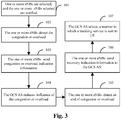
- a system for controlling congestion or overload including a selection component, a detection component, a sending component and a processing component, wherein the selection component, which is configured in network equipment, configured to select one or more eNBs configured to detect congestion or overload of user plane data, and notify the one or more eNBs selected; the detection component, which is configured in an eNB, configured to detect a congestion or overload event of the user plane data when the eNB is selected; the sending component, which is configured in the eNB, configured to send congestion or overload indication information to a GCS AS when a triggering condition is met; and the processing component, which is configured in the GCS AS, configured to determine a start or end of congestion or overload which occurs in an MBMS area according to the congestion or overload indication information reported by the one or more eNBs selected, and select a manner in which trunking service data are sent.
- the selection component which is configured in network equipment, configured to select one or more eNBs configured to detect congestion or overload of user plane data, and notify the one or more e
- the network equipment includes any one of the following equipment:
- the congestion or overload indication information includes at least one of the following information:
- the sending component is configured to send the congestion or overload indication information to the GCS AS according to the following manner:
- the congestion or overload event of the user plane data includes:
- the triggering condition includes any one of the following conditions:
- a device for controlling congestion or overload configured in an eNB including a detection component and a sending component, wherein the detection component is configured to, when the eNB is selected to detect congestion or overload, detect a congestion or overload event of user plane data; and the sending component is configured to, when a triggering condition is met, send congestion or overload indication information to a GCS AS.
- the congestion or overload indication information includes at least one of the following information:
- the sending component is configured to send the congestion or overload indication information to the GCS AS according to the following manner:
- the congestion or overload event of the user plane data includes:
- the triggering condition includes any one of the following conditions:
- the disclosure further provides an eNB, which may include the abovementioned control device.
- congestion or overload of an MBMS area may be determined according to indication information of a part of eNBs, so that efficiency is improved, an influence of network congestion or overload on a trunking service is reduced, and service experiences of a user are improved.
- an MBMS of the embodiments of the disclosure refers to an evolved MBMS, i.e. eMBMS, and an AS refers to a GCS AS.
- the triggering condition includes any one of the following:
- the selection is any one of following: selection by an MCE, selection by a GCS AS and selection by O&M.
- the congestion or overload refers to congestion or overload of a user plane data service of an MBMS, and a judgment criterion of the congestion or overload is required to be formulated and notified to a target eNB in advance.
- the judgment criterion may be contained in an indication message.
- One or more eNBs may be configured to detect the congestion or overload, and one eNB may usually be selected in one MBSFN area when the eNB configured to detect the congestion or overload is selected by the MCE or the O&M. Notification may be implemented through the O&M or a signalling manner.
- the GCS AS When the eNB configured to detect the congestion or overload is selected by the GCS AS, it is considered that the congestion or overload does not occur at the selected eNB, but the congestion or overload may still occur in a target MBMS area. For example, there are multiple MBSFN areas in the target MBMS area, the congestion or overload does not occur in the MBSFN area where the eNB is located, the congestion or overload occurs in other MBSFN area, but the GCS AS does not know about a configuration of the MBSFN area. In order to avoid occurrence of the condition as much as possible, the GCS AS may select multiple eNBs configured to detect the congestion or overload. Of course, only one eNB may be selected to detect the congestion or overload.
- the eNB configured to detect the congestion or overload is an eNB in a specific MBMS area. There are usually multiple eNBs in an MBMS area, and at this moment, any eNB may be selected to detect the congestion or overload.
- the target MBMS area is usually also specified at the same time of selecting the eNB configured to detect the congestion or overload.
- the target MBMS area is an area which needs to be detected on congestion or overload.
- an SAI is adopted. If there is no MBMS area specified, because a single eNB may belong to multiple MBMS areas, the selected eNB detects congestion or overload states of all the MBMS areas to which the selected eNB belongs.
- the eNB configured to detect congestion or overload may also be selected by indication of a cell ID, that is, the eNB is determined through the cell ID.
- an MBMS bearer an MBSFN bearer, a multicast bearer and a Point To Multipoint (PTM) bearer.
- PTM Point To Multipoint
- the MBMS bearer includes a core network bearer (i.e. an Evolved Packet Core network (EPC) bearer) and an air interface bearer, and a Radio Access Network (RAN) (the eNB and/or the MCE) configures an MBMS air interface resource, and sends MBMS configuration information and trunking data at an air interface.
- EPC Evolved Packet Core network
- RAN Radio Access Network
- a user plane service where congestion or overload occurs may be an ordinary MBMS or a GCS, and the ordinary MBMS and the GCS may be differentiated through different QCI parameters.
- the ordinary MBMS no corresponding MBMS bearer is required to be established in advance.
- the one or more eNBs configured to detect the congestion or overload detect the congestion or overload (that is, the congestion or overload is in a starting state).
- the congestion refers to that a user plane data load reaches a preset threshold, and the overload refers to that it is impossible for a network node to continue processing an additional user plane data load.
- the user plane data mentioned in the embodiments of the disclosure refer to MBMS data on a Physical Multicast Channel (PMCH).
- PMCH Physical Multicast Channel
- the one or more eNBs configured to detect the congestion or overload may judge whether the MBMS user plane data is congested or overloaded according to a preset rule, that is, a congestion or overload judgment condition is predefined, and the one or more eNBs configured to detect the congestion or overload determine to detect the congestion or overload when judging that the judgment condition is met.
- the congestion or overload judgment condition is the set judgment rule, which may be carried in an indication message sent to the eNB, besides being preset.
- the one or more eNBs configured to detect the congestion or overload send congestion or overload indication information to a GCS AS.
- the one or more eNBs configured to detect the congestion or overload send the congestion or overload indication information to the GCS AS through eNB ⁇ MCE ⁇ Mobility Management Entity (MME) ⁇ MBMS GateWay (GW) ⁇ Broadcast Multicast-Service Centre (BM-SC) ⁇ GCS AS.
- MME Mobility Management Entity
- GW MBMS GateWay
- BM-SC Broadcast Multicast-Service Centre
- the one or more eNBs configured to detect the congestion or overload send the indication information to the MCE through an M2 interface at first, wherein the indication information transmission may be implemented by adopting related M2 interface signalling and adding a new indication field, or, directly by adopting new M2 interface signalling.
- the congestion or overload indication information may be implemented by adopting related interface signalling and adding a new indication field, or, directly adopting new dedicated interface signalling.
- the congestion or overload indication information includes at least one of the following: a congestion or overload ID, a cell ID (Evolved Universal Terrestrial Radio Access Network (E-UTRAN) Cell Identifier (ECI) or E-UTRAN Cell Global Identifier (ECGI)) and/or SAI, an MBMS ID (TMGI) and a congestion or overload starting ID, wherein the congestion or overload ID is configured to indicate congestion or overload in a network, the cell ID is configured to indicate a cell influenced by congestion or overload, the SAI is configured to indicate an MBMS area influenced by congestion or overload, and the TMGI is configured to indicate a trunking service influenced by the congestion or overload.
- a congestion or overload ID includes at least one of the following: a congestion or overload ID, a cell ID (Evolved Universal Terrestrial Radio Access Network (E-UTRAN) Cell Identifier (ECI) or E-UTRAN Cell Global Identifier (ECGI)) and/or SAI, an MBMS ID (TMGI) and a congestion
- the congestion or overload starting ID is configured to indicate whether the congestion or overload starts (namely exists) or ends. For example, the start is indicated by 1 or true, and the end is indicated by 0 or false.
- the start or end of the congestion or overload is that: the start of the congestion or overload is equivalent to that the congestion or overload currently occurs, and the end of the congestion or overload is equivalent to that no congestion or overload currently occurs or the started congestion or overload has ended.
- Node congestion refers to that a load of MBMS user plane data in a network reaches a preset threshold; and node overload refers to that the network node cannot continue processing an extra MBMS user plane data load.
- the content of MBMS congestion or overload information reported is: if congestion is indicated by C and overload is indicated by O, for example:
- congestion occurs at TMGI1, TMGI2 and TMGI3 in ECI1; overload of TIMGI5 and TMGI6 in ECI2 ends; and congestion of TMGI10 in ECI3 ends.
- the congestion or overload indication information may be modified in a sending process, cell ID ECI is usually modified into an SAI in an MBMS area, and if the MCE modifies an ECI in the received indication information into an SAI, the GCS AS may determine the MBMS area in which congestion or overload occurs according to the received indication information.
- the congestion indication C may not be sent any more; or although the congestion indication C is sent, UE may ignore the indication.
- congestion or overload may occur only in a specific trunking service (for example: Push To Talk (PTT))
- PTT Push To Talk
- the service where the congestion or overload occurs is the specific trunking service according to QoS information of the service, for example, the QCI or the ARP. Since the eNB does not know about the QoS information of the service, there are two congestion or overload reporting methods for the eNB.
- a triggering manner for sending the congestion or overload indication information may be any one of the following: event triggering, AS request triggering, combination of the two, and reporting periodically, wherein event triggering reporting refers to that the eNB configured to detect the congestion or overload reports indication information to the GCS AS when a congestion or overload starting or ending event occurs at the network node;
- the AS request triggering refers to that the GCS AS sends the request message to the eNB configured to detect the congestion or overload and the eNB receiving the request reports state information of the node to the GCS AS;
- the combination of the two refers to that the GCS AS sends the request message to the eNB configured to detect the congestion or overload or the eNB configured to detect the congestion or overload reports indication information to the GCS AS when detecting a congestion or overload event;
- reporting periodically refers to that a reporting period is configured and the eNB configured to detect the congestion or overload reports the state of the node to the GCS AS in each period, wherein the reporting period may be specified in advance or specified when
- the congestion or overload starting or ending event of the user plane data includes: an event in which the congestion or overload of the user plane data is switched from a starting state to an ending state, or an event in which the congestion or overload of the user plane data is switched from the ending state to the starting state.
- the eNB configured to detect the congestion or overload is required to report the state; in case that existence of congestion or overload (equivalent to the starting state) is switched to no congestion or overload (equivalent to the ending state), the eNB configured to detect the congestion or overload is required to report the state; and moreover, this means that the eNB configured to detect the congestion or overload is also required to report the state when the eNB configured to detect the congestion or overload detects a switch between a congestion state and an overload state (the congestion is switched to the overload or the overload is switched to the congestion), that is because a switch from the congestion state to the overload state is equivalent to a switch of the congestion from the starting state to the ending state and a switch of the overload from the ending state to the starting state; and a switch from the overload to the congestion is equivalent to
- the eNB configured to detect the congestion or overload is not required to report, and then the GCS AS may accurately master the congestion or overload state of the MBMS.
- the GCS AS adopts an action for reducing influence of the congestion or overload.
- the GCS AS determines influenced target UE and/or trunking service TMGI according to the congestion or overload indication information, and then the GCS AS determines an action to be adopted according to the congestion or overload indication information and a local strategy.
- the GCS AS establishes a unicast bearer for the target UE, and sends the trunking service through the unicast bearer; and in case of overload, the GCS AS puts the trunking service in a queue and sends it after the overload ends, or, the GCS AS seizes a resource of a related trunking service by virtue of a high-priority trunking service.
- the one or more eNBs configured to detect the congestion or overload detect an end of congestion or overload.
- the end of the congestion or overload refers to recovery of the network, for example: the user plane data load does not meet the preset congestion or overload judgment condition.
- the one or more eNBs configured to detect the congestion or overload send recovery indication information to the GCS AS.
- the one or more eNBs configured to detect the congestion or overload send congestion or overload indication information to the GCS AS through eNB ⁇ MCE ⁇ MME ⁇ MBMS GW ⁇ BM-SC ⁇ GCS AS.
- the congestion or overload indication information includes at least one of the following: the congestion or overload ID, the cell ID (the ECI or the ECGI) and/or SAI, the MBMS ID (the IMGI) and a congestion or overload ending ID.
- a sending triggering manner is any one of the following: event triggering, AS request triggering, combination of the two, and reporting periodically.
- the GCS AS selects a manner in which a trunking service is sent to UE.
- the GCS AS determines the influenced target UE through the recovery indication information, and selects a proper manner to send the trunking service to the target UE. For example: the trunking service is continued to be sent through a recovered MBMS bearer.
- the embodiments of the disclosure further disclose a computer program, which includes a program instruction, and a computer may execute any abovementioned control method by executing the program instruction.
- the embodiments of the disclosure further disclose a carrier carrying the computer program.
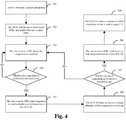
- a method for implementing controlling trunking communication congestion includes the following steps.
- a GCS AS sends congestion or overload detection request information to an MCE.
- the GCS AS sends the detection request information through GCS AS ⁇ BM-SC ⁇ MBMS GW ⁇ MME ⁇ MCE.
- the request information at least includes: an MBMS SAI.
- the MCE receiving the request information selects one or more target eNBs (i.e. one or more eNBs configured to detect congestion or overload) and notifies the one or more eNBs.
- target eNBs i.e. one or more eNBs configured to detect congestion or overload
- the MCE receives the request information, maps an SAI required to be detected in the request information onto multiple cells, selects one or more from the multiple cells as one or more monitoring cells, and determines one or more eNBs to which the one or more monitoring cells belong as the one or more eNBs configured to detect the congestion or overload of the user plane data.
- Notification may be implemented by notifying the one or more eNBs, which are selected, by adding a new request field into related M2 interface signaling such as an M2 session start request or M2 session update, or notifying the one or more eNBs, which are selected, by adopting new dedicated M2 interface signaling.
- each MCE selects a cell in the SAI, and notifies an eNB to which the selected cell belongs as the eNB configured to detect the congestion or overload.
- the one or more eNBs configured to detect the congestion or overload detect the congestion or overload.
- the one or more eNBs configured to detect the congestion or overload detect congestion or overload of MBMS user plane data.
- step 204 the one or more eNBs configured to detect the congestion or overload judge whether the congestion or overload is detected or not, step 205 is executed if the congestion or overload is detected, otherwise step 203 is executed.
- the one or more eNBs configured to detect the congestion or overload judge that the MBMS user plane data are congested or overloaded according to a preset rule, that is, a congestion or overload judgment condition is predefined, and the one or more eNBs configured to detect the congestion or overload determine the congestion or overload when judging that the judgment condition is met.
- the one or more eNBs configured to detect the congestion or overload send congestion or overload indication information to the GCS AS.
- the one or more eNBs configured to detect the congestion or overload send the congestion or overload indication information through eNB ⁇ MCE ⁇ MME ⁇ BMBS GW ⁇ BM-SC ⁇ GCS AS.
- the congestion or overload indication information includes at least one of the following: a congestion or overload ID, a cell ID (an ECI or an ECGI) and/or SAI, an MBMS ID (a TMGI) and a congestion or overload ending ID.
- a sending triggering manner may be any one of the following: event triggering, AS request triggering, combination of the two, and reporting periodically.
- the GCS AS takes an action to reduce influence of the congestion or overload.
- the GCS AS determines influenced target UE and trunking service at first, and takes different actions for congestion and overload information. For example, in case of congestion, the GCS AS sends a trunking service through a unicast bearer; and in case of overload, the GCS AS puts the trunking service in a queue and sends the trunking service after the overload ends, or, the GCS AS seizes a resource of a related trunking service by virtue of a high-priority trunking service.
- step 207 the one or more eNBs configured to detect the congestion or overload judge whether an end of congestion or overload is detected or not, step 208 is executed if the end of the congestion or overload is detected, otherwise step 203 is executed.
- the one or more eNBs configured to detect the congestion or overload send recovery indication information to the GCS AS.
- a sending triggering manner may be any one of the following: event triggering, AS request triggering, combination of the two, and reporting periodically.
- the GCS AS selects a manner in which a trunking service is sent to target UE.
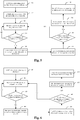
- a method for implementing controlling trunking communication congestion includes the following steps.
- a GCS AS sends congestion or overload detection request information.
- the request information at least includes: an MBMS SAI.
- the request information may further include a congestion or overload judgment condition.
- the O&M selects one or more eNBs configured to detect congestion or overload and notifies the one or more eNBs.
- the O&M usually refers to a network management system, and the O&M selects one or more eNBs from an MBSFN area required to be detected as the one or more eNBs configured to detect the congestion or overload of the user plane data, and notifies the one or more eNBs selected. Notification includes the congestion or overload detection request information and the MBMS SAI.
- the one or more eNBs configured to detect the congestion or overload have stored the congestion or overload judgment condition and the O&M indicates the judgment condition to the one or more eNBs selected.
- the one or more eNBs configured to detect the congestion or overload detect the congestion or overload.
- the congestion or overload refers to congestion or overload of MBMS user plane data, and specifically refers to congestion or overload on a PMCH.
- step 304 the one or more eNBs configured to detect the congestion or overload judge whether the congestion or overload is detected or not, step 305 is executed if the congestion or overload is detected, otherwise step 303 is executed.
- the one or more eNBs configured to detect the congestion or overload determine whether congestion or overload occurs or not according to the stored congestion or overload judgment condition, notifies the GCS AS if the congestion or overload occurs, otherwise continues detection.
- the one or more eNBs configured to detect the congestion or overload send congestion or overload indication information to the GCS AS.
- the one or more eNBs configured to detect the congestion or overload send the congestion or overload indication information to the GCS AS through eNB ⁇ MCE ⁇ MME ⁇ BMBS GW ⁇ BM-SC ⁇ GCS AS.
- the congestion or overload indication information includes at least one of the following: a congestion or overload ID, a cell ID (an ECI or an ECGI) and/or SAI, an MBMS ID (a TMGI) and a congestion or overload ending ID.
- a sending triggering manner may be any one of the following: event triggering, AS request triggering, combination of the two, and reporting periodically.
- the GCS AS takes an action to reduce influence of the congestion or overload.
- the GCS AS determines influenced target UE and trunking service at first, and takes different actions for congestion and overload information. For example, in case of congestion, the GCS AS sends a trunking service through a unicast bearer; and in case of overload, the GCS AS puts the trunking service in a queue and sends the trunking service after the overload ends, or, the GCS AS seizes a resource of a related trunking service by virtue of a high-priority trunking service.
- step 307 the one or more eNBs configured to detect the congestion or overload judge whether an end of congestion or overload is detected or not, step 308 is executed if the end of the congestion or overload is detected, otherwise step 303 is executed.
- the one or more eNBs configured to detect the congestion or overload send recovery indication information to the GCS AS.
- a sending triggering manner may be any one of the following: event triggering, AS request triggering, combination of the two, and reporting periodically.
- the GCS AS selects a manner in which a trunking service is sent to target UE.
- a method for implementing controlling trunking communication congestion includes the following steps.
- a GCS AS sends detection request information to one or more eNBs.
- the GCS AS Before the one or more eNBs configured to detect the congestion or overload are selected, the GCS AS usually has known about cell information of an MBMS, that is, the GCS AS is required to send cell information of a GCS by adopting an MBMS bearer, and then the GCS AS selects a target cell, and may determine a required target eNB according to a selected cell ID.
- the GCS AS only knows about MBMS area information, the GCS AS selects a certain eNB in an MBMS area to detect the congestion or overload, and if the eNB configured to detect the congestion or overload detects the congestion or overload, it is indicated that the congestion or overload occurs in the MBMS area. There is a possibility that the eNB selected by the GCS AS does not detect the congestion or overload but the congestion or overload occurs in the target MBMS area. In order to reduce the condition as much as possible, multiple eNBs may be selected from the target MBMS area to detect the congestion or overload.
- the GCS AS sends the detection request information through GCS AS ⁇ BM-SC ⁇ MBMS GW ⁇ MME ⁇ MCE.
- the request information includes at least one of the following: an MBMS SAI and an ECI/ECGI/eNB ID.
- the one or more eNBs receiving the request information detect the congestion or overload.
- the one or more eNBs receiving the request information detect congestion or overload of MBMS user plane data.
- step 403 the one or more eNBs configured to detect the congestion or overload judge whether the congestion or overload is detected or not, step 404 is executed if the congestion or overload is detected, otherwise step 402 is executed.
- the one or more eNBs configured to detect the congestion or overload judge that the MBMS user plane data are congested or overloaded according to a preset rule, that is, a congestion or overload judgment condition is predefined, and the one or more eNBs configured to detect the congestion or overload determine the congestion or overload when judging that the judgment condition is met.
- the one or more eNBs configured to detect the congestion or overload send congestion or overload indication information to the GCS AS.
- the one or more eNBs configured to detect the congestion or overload send the congestion or overload indication information to the GCS AS through eNB ⁇ MCE ⁇ MME ⁇ BMBS GW ⁇ BM-SC ⁇ GCS AS.
- the congestion or overload indication information includes at least one of the following: a congestion or overload ID, a cell ID (an ECI or an ECGI) and/or SAI, an MBMS ID (a TMGI) and a congestion or overload ending ID.
- a sending triggering manner may be any one of the following: event triggering, AS request triggering, combination of the two, and reporting periodically.
- the GCS AS takes an action to reduce influence of the congestion or overload.
- the GCS AS determines influenced target UE and trunking service at first, and takes different actions for congestion and overload information. For example, in case of congestion, the GCS AS sends a trunking service through a unicast bearer; and in case of overload, the GCS AS puts the trunking service in a queue and sends the trunking service after the overload ends, or, the GCS AS seizes a resource of a related trunking service by virtue of a high-priority trunking service.
- step 406 the one or more eNBs configured to detect the congestion or overload judge whether an end of congestion or overload is detected or not, step 407 is executed if the end of the congestion or overload is detected, otherwise step 402 is executed.
- the one or more eNBs configured to detect the congestion or overload send recovery indication information to the GCS AS.
- a sending triggering manner may be any one of the following: event triggering, AS request triggering, combination of the two, and reporting periodically.
- the GCS AS selects a manner in which a trunking service is sent to target UE.
- the embodiments of the disclosure further disclose a computer program, which includes a program instruction, and a computer may execute the control method in any one of embodiment 1 to embodiment 3 by executing the program instruction.
- the embodiments of the disclosure further disclose a carrier carrying the computer program.
- the embodiments of the disclosure further provide a method for controlling a trunking communication congestion or overload at an eNB side, which includes that:
- the step that the one or more eNBs selected send the congestion or overload indication information to the GCS AS may include that:
- the embodiments of the disclosure further provide a system for controlling trunking communication congestion or overload, which includes:
- the specific network equipment includes any one of the following:
- the congestion or overload indication information includes at least one of the following:
- the sending component is configured to send the congestion or overload indication information to the GCS AS, which refers to that:
- the congestion or overload event of the user plane data includes: an event in which the congestion or overload of the user plane data is switched from a starting state to an ending state, or an event in which the congestion or overload of the user plane data is switched from the ending state to the starting state.
- the triggering condition includes any one of the following:
- An embodiment of the control system includes:
- the embodiments of the disclosure further provide a device for controlling congestion or overload, which is configured in an eNB and includes:
- An embodiment of the control device as shown in Fig. 8 , includes:
- sending the congestion or overload indication information to the GCS AS refers to that:
- the embodiments of the disclosure further provide an eNB, which includes the abovementioned control device.
- congestion or overload of an MBMS area may be determined according to indication information of a part of eNBs, so that efficiency is improved, an influence of network congestion or overload on a trunking service is reduced, and service experiences of a user are improved. Therefore, the disclosure has high industrial practicability.
Landscapes
- Engineering & Computer Science (AREA)
- Computer Networks & Wireless Communication (AREA)
- Signal Processing (AREA)
- Multimedia (AREA)
- Mobile Radio Communication Systems (AREA)
Applications Claiming Priority (2)
| Application Number | Priority Date | Filing Date | Title |
|---|---|---|---|
| CN201410493801.6A CN104301931A (zh) | 2014-09-24 | 2014-09-24 | 拥塞/过载的控制方法,系统,装置和基站 |
| PCT/CN2015/074799 WO2015184901A1 (zh) | 2014-09-24 | 2015-03-20 | 拥塞或过载的控制方法,系统,装置和基站 |
Publications (2)
| Publication Number | Publication Date |
|---|---|
| EP3200503A1 true EP3200503A1 (de) | 2017-08-02 |
| EP3200503A4 EP3200503A4 (de) | 2017-10-18 |
Family
ID=52321450
Family Applications (1)
| Application Number | Title | Priority Date | Filing Date |
|---|---|---|---|
| EP15803062.7A Withdrawn EP3200503A4 (de) | 2014-09-24 | 2015-03-20 | Engpass-/überlastungssteuerungsverfahren, -system und -vorrichtung sowie basisstation |
Country Status (4)
| Country | Link |
|---|---|
| US (1) | US10334480B2 (de) |
| EP (1) | EP3200503A4 (de) |
| CN (1) | CN104301931A (de) |
| WO (1) | WO2015184901A1 (de) |
Families Citing this family (9)
| Publication number | Priority date | Publication date | Assignee | Title |
|---|---|---|---|---|
| CN105323722B (zh) * | 2014-07-31 | 2020-05-26 | 中兴通讯股份有限公司 | 基于mbms承载的集群通信中拥塞状态上报方法及系统 |
| CN105323723A (zh) * | 2014-07-31 | 2016-02-10 | 中兴通讯股份有限公司 | 基于mbms承载的集群通信中查询节点状态的方法及系统 |
| CN104301931A (zh) * | 2014-09-24 | 2015-01-21 | 中兴通讯股份有限公司 | 拥塞/过载的控制方法,系统,装置和基站 |
| CN106162565B (zh) | 2015-04-09 | 2021-06-01 | 北京三星通信技术研究有限公司 | 传输组通信业务数据的方法、系统及装置 |
| US20180160274A1 (en) * | 2015-05-07 | 2018-06-07 | Lg Electronics Inc. | Method and device for receiving information on base station connected to mce by mme |
| CN107040996B (zh) * | 2016-02-04 | 2023-11-21 | 中兴通讯股份有限公司 | 车联网业务标识的处理方法及装置 |
| CN108886501B (zh) * | 2016-09-12 | 2023-03-24 | Sk电信有限公司 | 物联网设备和用于操作物联网设备的方法 |
| US11812300B2 (en) * | 2021-07-08 | 2023-11-07 | Cisco Technology, Inc. | Traffic engineering in 5G and LTE CUPS architecture |
| CN121014228A (zh) * | 2023-04-25 | 2025-11-25 | 联想(北京)有限公司 | 用于通信的网络设备和方法 |
Family Cites Families (16)
| Publication number | Priority date | Publication date | Assignee | Title |
|---|---|---|---|---|
| CN1499760A (zh) * | 2002-11-05 | 2004-05-26 | ��������ͨ�ż����о�����˾ | 多媒体广播与组播业务在Iu接口的信令承载连接方法 |
| JP2004221759A (ja) * | 2003-01-10 | 2004-08-05 | Nec Corp | 移動通信システム及びそれに用いる無線端末並びに無線制御装置及びその動作制御方法 |
| JP5921446B2 (ja) * | 2011-01-07 | 2016-05-24 | 三菱電機株式会社 | 通信システム |
| CN102905314A (zh) * | 2011-07-29 | 2013-01-30 | 中兴通讯股份有限公司 | 过载控制停止方法、装置及系统 |
| CN102291688B (zh) * | 2011-09-23 | 2014-03-19 | 电信科学技术研究院 | 一种基于mbms业务的切换方法和设备 |
| US9521008B2 (en) * | 2011-10-10 | 2016-12-13 | Samsung Electronics Co., Ltd. | Method and device for receiving a multimedia broadcast multicast service in a mobile communication system |
| CN102572713B (zh) * | 2012-01-30 | 2014-08-20 | 电信科学技术研究院 | 一种mbms接收和能力传输方法及其装置 |
| US9723523B2 (en) * | 2012-08-03 | 2017-08-01 | Blackberry Limited | Maintaining MBMS continuity |
| KR102122895B1 (ko) * | 2013-02-14 | 2020-06-15 | 엘지전자 주식회사 | 무선 통신 시스템에서 mbms 정보 보고 방법 및 이를 지원하는 장치 |
| EP3017616B1 (de) * | 2013-07-01 | 2018-12-05 | NEC Corporation | Verfahren zur bereitstellung von multicast-/broadcast-dienstkontinuität für mobile endgeräte |
| WO2015060608A1 (en) * | 2013-10-23 | 2015-04-30 | Lg Electronics Inc. | Method of selectively trnsmitting mbms service level information in wireless communication system and apparatus therefor |
| WO2015065053A1 (en) * | 2013-10-31 | 2015-05-07 | Lg Electronics Inc. | Method of receiving mbms service in wireless communication system and apparatus thereof |
| CN104955065A (zh) * | 2014-03-31 | 2015-09-30 | 北京三星通信技术研究有限公司 | 进行用户统计的方法、暂停数据传输的方法和装置 |
| CN105472663B (zh) * | 2014-07-04 | 2020-12-25 | 北京三星通信技术研究有限公司 | 无线资源管理的方法和装置 |
| CN104301931A (zh) * | 2014-09-24 | 2015-01-21 | 中兴通讯股份有限公司 | 拥塞/过载的控制方法,系统,装置和基站 |
| WO2016053066A1 (ko) * | 2014-10-03 | 2016-04-07 | 엘지전자(주) | 무선 통신 시스템에서 셀 단위 보고를 위한 방법 및 이를 위한 장치 |
-
2014
- 2014-09-24 CN CN201410493801.6A patent/CN104301931A/zh not_active Withdrawn
-
2015
- 2015-03-20 WO PCT/CN2015/074799 patent/WO2015184901A1/zh not_active Ceased
- 2015-03-20 EP EP15803062.7A patent/EP3200503A4/de not_active Withdrawn
- 2015-03-20 US US15/514,135 patent/US10334480B2/en active Active
Also Published As
| Publication number | Publication date |
|---|---|
| US20170295519A1 (en) | 2017-10-12 |
| CN104301931A (zh) | 2015-01-21 |
| WO2015184901A1 (zh) | 2015-12-10 |
| US10334480B2 (en) | 2019-06-25 |
| EP3200503A4 (de) | 2017-10-18 |
Similar Documents
| Publication | Publication Date | Title |
|---|---|---|
| US10334480B2 (en) | Method, system, device for controlling congestion or overload and evolved node B (eNB) | |
| EP3200484B1 (de) | Verfahren und system zur behandlung von netzüberlastung | |
| US10687179B2 (en) | Service continuity for group communication over LTE eMBMS | |
| US10993086B2 (en) | Method, system, and apparatus for transmitting group communication service data | |
| EP3165035B1 (de) | Verfahren und entsprechende vorrichtungen zur funkressourcenverwaltung | |
| EP3217691B1 (de) | Verfahren und vorrichtung zur verarbeitung von befehlsinformationen | |
| CN105323722B (zh) | 基于mbms承载的集群通信中拥塞状态上报方法及系统 | |
| CN104754522A (zh) | 一种保持组通信业务连续性的方法、装置和系统 | |
| US10412623B2 (en) | MBMS bearer-based method and system for querying node state in cluster communication and storage medium | |
| CN105376718B (zh) | Lte集群通信的方法、用户设备及第一网元设备 | |
| WO2015117376A1 (zh) | 建立lte集群通信承载的方法、用户设备及第一网元设备 |
Legal Events
| Date | Code | Title | Description |
|---|---|---|---|
| STAA | Information on the status of an ep patent application or granted ep patent |
Free format text: STATUS: THE INTERNATIONAL PUBLICATION HAS BEEN MADE |
|
| PUAI | Public reference made under article 153(3) epc to a published international application that has entered the european phase |
Free format text: ORIGINAL CODE: 0009012 |
|
| STAA | Information on the status of an ep patent application or granted ep patent |
Free format text: STATUS: REQUEST FOR EXAMINATION WAS MADE |
|
| 17P | Request for examination filed |
Effective date: 20170329 |
|
| AK | Designated contracting states |
Kind code of ref document: A1 Designated state(s): AL AT BE BG CH CY CZ DE DK EE ES FI FR GB GR HR HU IE IS IT LI LT LU LV MC MK MT NL NO PL PT RO RS SE SI SK SM TR |
|
| AX | Request for extension of the european patent |
Extension state: BA ME |
|
| A4 | Supplementary search report drawn up and despatched |
Effective date: 20170918 |
|
| RIC1 | Information provided on ipc code assigned before grant |
Ipc: H04W 28/02 20090101AFI20170912BHEP |
|
| DAV | Request for validation of the european patent (deleted) | ||
| DAX | Request for extension of the european patent (deleted) | ||
| STAA | Information on the status of an ep patent application or granted ep patent |
Free format text: STATUS: EXAMINATION IS IN PROGRESS |
|
| 17Q | First examination report despatched |
Effective date: 20190716 |
|
| STAA | Information on the status of an ep patent application or granted ep patent |
Free format text: STATUS: THE APPLICATION IS DEEMED TO BE WITHDRAWN |
|
| 18D | Application deemed to be withdrawn |
Effective date: 20210526 |