EP3200424B1 - Mobilkommunikationsverfahren und system zur signalisierung von informationen bezüglich der fähigkeiten eines netzwerks - Google Patents
Mobilkommunikationsverfahren und system zur signalisierung von informationen bezüglich der fähigkeiten eines netzwerks Download PDFInfo
- Publication number
- EP3200424B1 EP3200424B1 EP17160787.2A EP17160787A EP3200424B1 EP 3200424 B1 EP3200424 B1 EP 3200424B1 EP 17160787 A EP17160787 A EP 17160787A EP 3200424 B1 EP3200424 B1 EP 3200424B1
- Authority
- EP
- European Patent Office
- Prior art keywords
- vcc
- call
- information
- network element
- mobile terminal
- Prior art date
- Legal status (The legal status is an assumption and is not a legal conclusion. Google has not performed a legal analysis and makes no representation as to the accuracy of the status listed.)
- Active
Links
Images
Classifications
-
- H—ELECTRICITY
- H04—ELECTRIC COMMUNICATION TECHNIQUE
- H04W—WIRELESS COMMUNICATION NETWORKS
- H04W8/00—Network data management
- H04W8/22—Processing or transfer of terminal data, e.g. status or physical capabilities
- H04W8/24—Transfer of terminal data
-
- H—ELECTRICITY
- H04—ELECTRIC COMMUNICATION TECHNIQUE
- H04L—TRANSMISSION OF DIGITAL INFORMATION, e.g. TELEGRAPHIC COMMUNICATION
- H04L65/00—Network arrangements, protocols or services for supporting real-time applications in data packet communication
- H04L65/10—Architectures or entities
- H04L65/1016—IP multimedia subsystem [IMS]
-
- H—ELECTRICITY
- H04—ELECTRIC COMMUNICATION TECHNIQUE
- H04L—TRANSMISSION OF DIGITAL INFORMATION, e.g. TELEGRAPHIC COMMUNICATION
- H04L65/00—Network arrangements, protocols or services for supporting real-time applications in data packet communication
- H04L65/1066—Session management
- H04L65/1083—In-session procedures
-
- H—ELECTRICITY
- H04—ELECTRIC COMMUNICATION TECHNIQUE
- H04L—TRANSMISSION OF DIGITAL INFORMATION, e.g. TELEGRAPHIC COMMUNICATION
- H04L65/00—Network arrangements, protocols or services for supporting real-time applications in data packet communication
- H04L65/1066—Session management
- H04L65/1083—In-session procedures
- H04L65/1095—Inter-network session transfer or sharing
-
- H—ELECTRICITY
- H04—ELECTRIC COMMUNICATION TECHNIQUE
- H04L—TRANSMISSION OF DIGITAL INFORMATION, e.g. TELEGRAPHIC COMMUNICATION
- H04L65/00—Network arrangements, protocols or services for supporting real-time applications in data packet communication
- H04L65/60—Network streaming of media packets
- H04L65/75—Media network packet handling
- H04L65/752—Media network packet handling adapting media to network capabilities
-
- H—ELECTRICITY
- H04—ELECTRIC COMMUNICATION TECHNIQUE
- H04W—WIRELESS COMMUNICATION NETWORKS
- H04W36/00—Hand-off or reselection arrangements
- H04W36/0005—Control or signalling for completing the hand-off
- H04W36/0011—Control or signalling for completing the hand-off for data sessions of end-to-end connection
- H04W36/0022—Control or signalling for completing the hand-off for data sessions of end-to-end connection for transferring data sessions between adjacent core network technologies
-
- H—ELECTRICITY
- H04—ELECTRIC COMMUNICATION TECHNIQUE
- H04W—WIRELESS COMMUNICATION NETWORKS
- H04W36/00—Hand-off or reselection arrangements
- H04W36/13—Cell handover without a predetermined boundary, e.g. virtual cells
-
- H—ELECTRICITY
- H04—ELECTRIC COMMUNICATION TECHNIQUE
- H04W—WIRELESS COMMUNICATION NETWORKS
- H04W76/00—Connection management
- H04W76/20—Manipulation of established connections
- H04W76/22—Manipulation of transport tunnels
-
- H—ELECTRICITY
- H04—ELECTRIC COMMUNICATION TECHNIQUE
- H04W—WIRELESS COMMUNICATION NETWORKS
- H04W80/00—Wireless network protocols or protocol adaptations to wireless operation
- H04W80/08—Upper layer protocols
- H04W80/10—Upper layer protocols adapted for application session management, e.g. SIP [Session Initiation Protocol]
-
- H—ELECTRICITY
- H04—ELECTRIC COMMUNICATION TECHNIQUE
- H04W—WIRELESS COMMUNICATION NETWORKS
- H04W84/00—Network topologies
- H04W84/02—Hierarchically pre-organised networks, e.g. paging networks, cellular networks, WLAN [Wireless Local Area Network] or WLL [Wireless Local Loop]
- H04W84/04—Large scale networks; Deep hierarchical networks
- H04W84/042—Public Land Mobile systems, e.g. cellular systems
Definitions
- the present invention relates to mobile communications method and systems. More particularly, but not exclusively, the invention relates to transmitting information relating to the network's capabilities to transmit voice information via a packet switched network portion, to voice call continuity services and/or transmitting information relating to the terminal's capability to support.
- a 3rd Generation Partnership Project (3GPP) Voice Call Continuity (VCC) service provides the capability to transfer the path of a voice call between a Circuit-Switched (CS) and an Internet Protocol (IP) Multimedia Subsystem (IMS) domains, and vice versa.
- the service assumes an User Equipment (UE) capable of supporting two separate call legs related to the same voice communication (one over the CS domain and one over the IMS domain).
- UE User Equipment
- all CS & IMS voice calls from and to VCC capable UE are anchored in the subscriber's IMS domain.
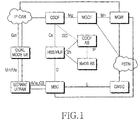
- FIG. 1 shows the functional architecture for VCC. It does not represent any change from the existing 3GPP reference architecture in that a Call Continuity Control Function (CCCF) is implemented as a Session Initiation Protocol (SIP) Application Server (AS). At the time of writing it has not been agreed whether CCCF and a Network Domain Selection function (NeDS) should be co-located. Figure 1 assumes that they are, hence only one ISC interface is shown.
- CCCF Call Continuity Control Function
- SIP Session Initiation Protocol
- AS Application Server
- An UE registers with a CCCF at time of UE IMS registration following the procedure defined in 23.288 for Application Server registration with the filter criteria set that 3rd party registration is required via IMS Service Control (ISC) interface.
- ISC IMS Service Control
- a CCCF exists for each voice continuity event in the system and controls the establishment of call legs required to transfer a call between CS and IMS. If a UE is involved in multiple calls all requiring VCC, then a separate CCCF exists for each call.
- VCC information is exchanged between UE and CCCF. This includes:
- the exact information exchange mechanism has not yet been specified, but the post registration exchange of information is likely to be handled by a mutual SIP Subscribe/Notify process. I.e. the UE subscribes to information from the CCCF, and the CCCF subscribes to information from the UE. Each will in turn be notified upon initial subscription and as information changes.
- the SIP INVITE is routed via the Call Session Control Function's (CSCF's) to the CCCF using initial filter criteria.
- the CCCF records the call event (assigns call reference, and records route to stay in signalling path for call) and routes the call back to the Serving CSCF (S-CSCF) so that S-CSCF can perform termination handling to IMS/CS domains as defined in TS 23.228.
- IMS anchoring of VCC calls originated in the IMS domain is independent of whether the UE is CS attached or detached.
- the terminal is not capable of supporting VCC procedures, but the user is a subscriber to VCC services, the lack of VCC capability in the terminal could be informed to the CCCF during IMS registration. In that case, the CCCF could decide not to IMS anchor the call. Given that S-CSCF and CCCF are both located in the user's home network, and that the IMS bearer is established end to end, it is debatable whether there would be much benefit in not IMS anchoring an IMS originated call from a VCC subscriber.
- the default mechanism (only mandated mechanism) for IMS anchoring of VCC calls originated in the CS domain is to use a Customized Applications for Mobile network Enhanced Logic (CAMEL) triggers at the Visited Mobile Switched Center (VMSC). This means it is possible to anchor calls even if the UE is not IMS registered at the time of call originating.
- CAMEL Mobile network Enhanced Logic
- the CCCF for the call cannot be aware of the lack of VCC capability in the terminal, as no prior exchange of VCC information will have been possible between the UE and CCCF.
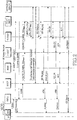
- Figure 2 shows the message flow for CS originated VCC calls.
- the invention provides a method of receiving information by a mobile terminal according to claim 1 and an apparatus for receiving information by a mobile terminal according to claim 5.
- a method and system of signalling information between a mobile terminal and a network element of a mobile communications network the mobile terminal transmits information to the network element relating to the desirability and/or possibility to support voice call continuity during a communication, and the network element receives the information from the mobile terminal to use the information as a basis for deciding whether to anchor a call of the mobile terminal or not.
- VCC Voice Call Continuity
- the 3GPP technical report TR 23.806 states: "If the UE is in a location where VCC is not possible and/or desirable, the gsmSCF directs the VMSC to continue with normal call origination procedures.”
- the CCCF should not IMS anchor the call.
- VCC is a subscription based service
- a VCC subscriber may be using a terminal that is not VCC capable (e.g. a standard 2G terminal, with a VCC subscription Universal Subscriber Identity Module (USIM)).
- VCC would not be possible regardless of the location of the UE, so it would be desirable not to IMS anchor any of the calls made by that terminal.
- VCC would not be possible regardless of the location of the UE, so it would be desirable not to IMS anchor any of the calls made by that terminal.
- the idea proposed herein seeks to solve the problem that whilst it is not always desirable to IMS anchor a CS originated call from a VCC subscriber there is at present no mechanism enabling such anchoring to not take place.
- the proposal describes a mechanism whereby the desirability/possibility of using VCC within a call is communicated by the serving network to the UE via the system information broadcast or during registration signalling, and by the UE to the CCCF in the home network via the SETUP and InitialDP messages sent at the time of CS call establishment.
- the 3GPP technical report TR 23.806 states: "If the UE is in a location where VCC is not possible and/or desirable, the gsmSCF directs the VMSC to continue with normal call origination procedures.”
- VCC is a subscription based service
- a VCC subscriber may be using a terminal that is not VCC capable (e.g. a standard 2G terminal).
- VCC would not be possible regardless of the location of the UE, so it would be desirable not to IMS anchor any of the calls made by that terminal.
- Appendix 1 section A1.3 if the UE is not IMS registered at the time of call setup, there is no way for the CCCF to know whether the terminal of the calling VCC subscriber is capable of supporting VCC procedures.
- the UE could determine VCC desirability/possibility based on four factors:
- the network would need to inform the UE of the network's VoIP capability. This could be achieved for example via System Information Broadcast, or during Routing Area Update, or General Packet Radio Service (GPRS) attached signalling.
- GPRS General Packet Radio Service
- the user VCC preference (2) could be tied to the availability of local IP-CANs (4), e.g. so that calls made in areas where no suitable IP-CANs were detected should not be anchored.
- cases 1 and 2 could be considered as semi-static information that would not change during the lifetime of a call, where as cases 3 and 4 could be considered as dynamic information that could change as the terminal moves during the lifetime of the call.
- the serving network could send and indication of whether it supports VoIP via its PS domain.
- the UE could decide whether to indicate the possibility/desirability of call anchoring to the CCCF at the time of call establishment.
- NAS Non-Access Stratum
- the information could be signalled during UE registration in the Routing Update Accept or in the Attach Accept message. Both messages include the information element Network Feature Support, which has two spare bits available (as described in section 10.5.5.23 of TS 24.008). In this case the information could be tailored to individual subscribers, but its resolution would be at Location Area level.
- the information could be broadcast in the System Information Broadcast. This would provide greater (cell level) resolution and facilitate for more dynamic management of local voice traffic between PS and CS domain, but could not be tailored for individual subscribers.
- This method further extends to the Radio Network procedures that transfer system information through dedicated signalling, for instance, the UTRAN Mobility Information transfer procedures of the UMTS Radio Access Network.
- SMS Short Messaging Service
- the UE In order that the CCCF/gsmSCF can make a decision on whether to anchor the CS originated call from the VCC subscriber, the UE should send an indication of whether it is desirable/possible to support VCC during the call.
- Classmark 2 as defined in 3GPP TS 24.008 is sent in these messages, has one spare bit available in each of octets 3, 4 and 5.
- the VCC capability information could also be provided to the network via classmark change procedure described in TS 44.108 section 3.4.10.
- Classmark 2 is automatically included in the InitialDP message (see message 2 in figure 2 ), so on reception of the InitialDP message the gsmSCF in the CCCF could check the VCC possibility/desirability bit(s) and respond accordingly. i.e. either by sending a CONNECT message containing IMRN directing the VMSC to route the call towards the user's IMS domain for anchoring, or by sending a continue message so that the call is routed normally.
- one or two of these spare bits be used to indicate to the network whether VCC is possible/desirable. If two of the spare bits were used it would be possible to indicate separately whether VCC was possible (e.g. based on terminal capability, user preference) and whether VCC was desirable (e.g. based on availability of IP-CANs in the area of the calling UE at the time of call establishment). In that case the CCCF in the home network could decide whether to override an indication that VCC was not desirable and to anchor the call in case the user subsequently moved into the coverage area of a suitable IP-CAN.
- Classmark 2 could also be extended and the UE VCC capability indicated in an extension to that classmark in order that VCC capability signalling does not use up all the remaining spare bits of the classmark.
- the UE could include VCC the possibility/desirability indication in the SETUP message sent as part of the Call Control protocol during the call establishment procedure (see message 1 of the message flow in figure 2 ).
- the gsmSSF in the VMSC could then include that indication in the InitialDP message sent towards the gsmSCF at the CCCF (see message 2 in figure 2 ), so that it can respond accordingly. i.e. either by sending a CONNECT message containing IMRN directing the VMSC to route the call towards the user's IMS domain for anchoring, or by sending a continue message so that the call is routed normally.
- the 3GPP Call Control protocol is specified in 3GPP TS 24.008.
- the format for the SETUP message in the case of mobile originated call establishment is shown in table 9.70a of that document.
- One of the information elements contained in the SETUP message from the UE is Call Control Capabilities (described in table 10.5.89 of TS 24.008). The purpose of this information element is to identify the Call Control Capabilities of the mobile station.
- the information element is four octets in length. It has one spare bit in octet 3 and four spare bits in octet 4.
- the gsmSSF includes some of the information from the SETUP message in the InitialDP message sent to the gsmSCF. It is proposed that VCC capability/possibility be added to the InitialDP below the InitialDPArgExtension defined in section 6.1.1 of 29.078.
- a further alternative would be to include the UE VCC possibility/desirability information in Classmark 3. This is not presently included in the InitialDP message, but could be added in the same way as proposed above for the SETUP message.
- the CCCF could then choose whether to anchor the call based on whether the VCC possibility/desirability was static (i.e. not likely to change during the course of the call), dynamic (i.e. more likely to change during the course of the call/dependent on the preferences/policy of the serving network.
- the VCC possibility/desirability information could be signaled directly to the CCCF via methods and procedures supported in GPRS and could be through use of WAP.
- the CCCF/gsmSCF address should be provisioned so that UE can direct the GPRS method to that address. This address could be in the form of a specific dedicated APN.
- the CCCF did not receive an indication that VCC was possible from the UE, it could decide not to anchor the call. This would mean that non-VCC supporting UE would not have calls anchored even if they were using a VCC subscriber SIM.
- the VCC possibility/desirability information could be signalled directly to the CCCF using SMS.
- the CCCF/gsmSCF address should be provisioned so that UE can direct the SMS to that address. This could be in the form of an E164 number. If the CCCF did not receive an indication that VCC was possible from the UE, it could decide not to anchor the call. This would mean that non-VCC supporting UE would not have calls anchored even if they were using a VCC subscriber SIM.
- the VCC possibility/desirability information could be signalled directly to the CCCF using a CS data call.
- the CCCF/gsmSCF address should be provisioned so that UE can direct the CS data call to that address. This could be in the form of an E164 number. If the CCCF did not receive an indication that FCC was possible from the UE, it could decide not to anchor the call. This would mean that non-FCC supporting UE would not have calls anchored even in they were using a VCC subscriber SIM.
- the capability of the UE to support VCC would be indicated through use of a defined feature tag. E.g. named +g.3gpp.vcc-capble or a similarly indicative name tag. If the CCCF.gsmSCF does not receive such an indication of the UE's VCC capability, it could decide not to anchor the call. This would mean that non-VCC supporting UE would not have calls anchored even if they were using a VCC subscriber SIM.
- the UE can include capability information in Classmark 2 or Classmark 3 for CS terminated calls that were originated in the CS domain.
- the decision to anchor the call is taken by the CCCF after receiving the InitialDP message from the GMSC to which the incoming call was routed.
- This is another application for the idea of including static (see below) VCC capability information in Classmark 2 or Classmark 3.
- Voice over IP Voice over IP
- CS Circuit Switched
- IMS IMS domains
- VoIP Voice over IP
- IP-CAN IP-Connectivity Access Networks
- the above described application is a generic application for signalling the network's VoIP capability.
- CSI Combined CS and IMS services
- IMS enhancement work items Another possible application is the CSI (Combined CS and IMS services) phase 2 work item currently being elaborated by 3GPP, as well as the IMS enhancement work items.
- CSI Phase 1 it is so designed that the Voice Call part is always carried over the CS domain.
- CSI Phase 1 there is only ever an end-to-end CSI call, ie. UEs of both parties must be able to support the combining of CS and PS sessions.
- CSI Phase 2 the view is that fully fledge IMS UEs in an IMS network that can support VoIP will be making VoIP + data sessions to a CSI capable UE. So while one party may be in a VoIP scenario, the other party could be utilising combining of CS and PS sessions.
- the UE needs to know the VoIP capability of the network / LA / RA / cell it is currently registered and camped on.
Landscapes
- Engineering & Computer Science (AREA)
- Computer Networks & Wireless Communication (AREA)
- Signal Processing (AREA)
- Multimedia (AREA)
- Business, Economics & Management (AREA)
- General Business, Economics & Management (AREA)
- Databases & Information Systems (AREA)
- Mobile Radio Communication Systems (AREA)
- Telephonic Communication Services (AREA)
Claims (8)
- Verfahren zum Empfangen von Information, das durch ein Mobilendgerät in einem Mobilkommunikationsnetzwerk ausgeführt wird und die Schritte umfasst:Empfangen, aus einem dienstausführenden Netzwerkelement, von Information, die mit einer Angabe in Beziehung steht, ob ein Sprache-über-Internet-Protokoll, VolP über einen paketvermittelten, PS, Bereich unterstützt wird, während einer Routenbereichsaktualisierungs-, RAU-, Prozedur oder einer Anlageprozedur;Ermitteln einer Sprachanrufkontinuitäts-, VCC-, Fähigkeit des Mobilendgeräts; undSenden, an das dienstausführende Netzwerkelement, der VCC-Fähigkeit des Mobilendgeräts, wobei die Information auf einer VolP-Fähigkeit des dienstausführenden Netzwerkelements beruht.
- Verfahren nach Anspruch 1, wobei die Information in einer Nicht-Zugriffs-Schicht-, NAS-, Nachricht zwischen dem dienstausführenden Netzwerkelement und dem Mobilendgerät enthalten ist.
- Verfahren nach Anspruch 1, das ferner umfasst:
Empfangen, aus dem dienstausführenden Netzwerkelement, die Adresse des dienstausführenden Netzwerkelements. - Verfahren nach Anspruch 1, das ferner umfasst:
Senden der VCC-Fähigkeit des Mobilendgeräts während einer Internet-Multimedia-Subsystem-, IMS-, Registrierung oder unter Verwendung einer Eigenschaftsmarke an das dienstausführende Netzwerkelement. - Mobilendgerät zum Empfangen von Information in einem Mobilkommunikationsnetzwerk, mit:einem Sender/Empfänger, der ausgebildet ist, Daten zu senden und zu empfangen; undeiner Steuerung, die ausgebildet ist, um:aus einem dienstausführenden Netzwerkelement Information, die mit einer Angabe darüber im Zusammenhang steht, ob ein Sprache-über-Internet-Protokoll, VolP über einen paketvermittelten, PS, Bereich unterstützt wird, während einer Routenbereichsaktualisierungs-, RAU-, Prozedur oder einer Anlageprozedur zu empfangen,eine Sprachanrufkontinuitäts-, VCC-, Fähigkeit des Mobilendgeräts zu ermitteln, unddie VCC-Fähigkeit des Mobilendgeräts an das dienstausführende Netzwerkelement zu senden,wobei die Information auf einer VolP-Fähigkeit des dienstausführenden Netzwerkelements beruht.
- Mobilendgerät nach Anspruch 6, wobei die Information in einer Nicht-Zugriffs-Schicht-, NAS-, Nachricht zwischen dem dienstausführenden Netzwerkelement und dem Mobilendgerät enthalten ist.
- Mobilendgerät nach Anspruch 6, wobei die Steuerung ausgebildet ist, von dem dienstausführenden Netzwerkelement die Adresse des dienstausführenden Netzwerkelements zu empfangen.
- Mobilendgerät nach Anspruch 6, wobei die Steuerung ausgebildet ist, die VCC-Fähigkeit des Mobilendgeräts während einer Internet-Multimedia-Subsystem-, IMS-, Registrierung oder unter Anwendung einer Eigenschaftsmarke an das dienstausführende Netzwerkelement zu senden.
Applications Claiming Priority (6)
| Application Number | Priority Date | Filing Date | Title |
|---|---|---|---|
| GB0600409A GB0600409D0 (en) | 2006-01-10 | 2006-01-10 | Mobile communications |
| GB0600410A GB2434058B (en) | 2006-01-10 | 2006-01-10 | Mobile communications |
| GBGB0601007.8A GB0601007D0 (en) | 2006-01-10 | 2006-01-18 | Mobile Communications |
| GB0605674A GB2434059B (en) | 2006-01-10 | 2006-03-21 | Mobile communications |
| PCT/KR2007/000157 WO2007081146A1 (en) | 2006-01-10 | 2007-01-09 | Mobile communications method and system for signalling information relating to network's capabilities |
| EP07700924.9A EP1972100B1 (de) | 2006-01-10 | 2007-01-09 | Mobilkommunkationsverfahren und system zur signalisierung von informationen bezüglich der fähigkeiten des netzwerks |
Related Parent Applications (1)
| Application Number | Title | Priority Date | Filing Date |
|---|---|---|---|
| EP07700924.9A Division EP1972100B1 (de) | 2006-01-10 | 2007-01-09 | Mobilkommunkationsverfahren und system zur signalisierung von informationen bezüglich der fähigkeiten des netzwerks |
Publications (2)
| Publication Number | Publication Date |
|---|---|
| EP3200424A1 EP3200424A1 (de) | 2017-08-02 |
| EP3200424B1 true EP3200424B1 (de) | 2018-07-11 |
Family
ID=36010524
Family Applications (2)
| Application Number | Title | Priority Date | Filing Date |
|---|---|---|---|
| EP07700924.9A Active EP1972100B1 (de) | 2006-01-10 | 2007-01-09 | Mobilkommunkationsverfahren und system zur signalisierung von informationen bezüglich der fähigkeiten des netzwerks |
| EP17160787.2A Active EP3200424B1 (de) | 2006-01-10 | 2007-01-09 | Mobilkommunikationsverfahren und system zur signalisierung von informationen bezüglich der fähigkeiten eines netzwerks |
Family Applications Before (1)
| Application Number | Title | Priority Date | Filing Date |
|---|---|---|---|
| EP07700924.9A Active EP1972100B1 (de) | 2006-01-10 | 2007-01-09 | Mobilkommunkationsverfahren und system zur signalisierung von informationen bezüglich der fähigkeiten des netzwerks |
Country Status (6)
| Country | Link |
|---|---|
| US (2) | US8718043B2 (de) |
| EP (2) | EP1972100B1 (de) |
| CN (2) | CN101401362B (de) |
| GB (1) | GB0601007D0 (de) |
| RU (1) | RU2389142C1 (de) |
| WO (1) | WO2007081146A1 (de) |
Families Citing this family (26)
| Publication number | Priority date | Publication date | Assignee | Title |
|---|---|---|---|---|
| US8811954B1 (en) | 2005-10-31 | 2014-08-19 | Genband Us Llc | Network domain selection |
| KR101213285B1 (ko) * | 2006-01-04 | 2012-12-17 | 삼성전자주식회사 | 이동통신 시스템에서 아이들모드 단말기의 세션 설정 프로토콜 데이터를 전송하는 방법 및 장치 |
| US7706779B2 (en) | 2006-03-16 | 2010-04-27 | Research In Motion Limited | System and method for controlling VCC functionality in a network environment including IMS |
| KR101233176B1 (ko) * | 2006-05-02 | 2013-02-15 | 엘지전자 주식회사 | Vcc에서의 호처리 방법, 서버 및 엔티티 |
| US8600006B2 (en) * | 2006-12-27 | 2013-12-03 | Genband Us Llc | Voice continuity among user terminals |
| US8073447B2 (en) * | 2007-02-05 | 2011-12-06 | Research In Motion Limted | System and method to identify voice call continuity (VCC) subscriber |
| GB0711592D0 (en) * | 2007-06-15 | 2007-07-25 | Ericsson Telefon Ab L M | Access domain selection in a communications network |
| CN101345748B (zh) * | 2007-07-13 | 2010-08-04 | 华为技术有限公司 | 将用户状态通知应用服务器的方法、系统及装置 |
| US8644298B1 (en) * | 2007-09-12 | 2014-02-04 | Genband Us Llc | Adding a service control channel after session establishment |
| CN101137097B (zh) * | 2007-09-28 | 2011-07-20 | 中兴通讯股份有限公司 | 一种ip多媒体子系统集中业务中的呼叫迟前转方法 |
| CN102067681B (zh) * | 2008-06-17 | 2016-08-10 | 阿尔卡特朗讯 | 对服从语音呼叫连续性的承载的显式指示 |
| MX2011012979A (es) * | 2009-06-03 | 2012-01-20 | Research In Motion Ltd | Servicio de voz en sistema evolucionado de paquetes. |
| US9743228B2 (en) * | 2009-06-22 | 2017-08-22 | Qualcomm Incorporated | Transport of LCS-related messages for LTE access |
| CA2766689C (en) * | 2009-06-30 | 2018-07-03 | Ralf Keller | Handling of access capability information in a mobile network |
| US9794831B2 (en) * | 2009-10-30 | 2017-10-17 | Alcatel Lucent | Method for shortening signaling delay of ISC session transfer, network element and system |
| ES2651669T3 (es) * | 2009-11-03 | 2018-01-29 | Alcatel Lucent | Procedimiento y equipo para la convergencia de datos de servicio plurales de dispositivos terminales de máquina |
| TWI440332B (zh) * | 2010-06-02 | 2014-06-01 | Htc Corp | 處理ps以及cs通訊服務的方法 |
| JP4944232B2 (ja) * | 2010-08-06 | 2012-05-30 | 株式会社エヌ・ティ・ティ・ドコモ | 移動通信方法及び移動通信システム |
| JP4885297B1 (ja) * | 2010-10-04 | 2012-02-29 | 株式会社エヌ・ティ・ティ・ドコモ | 移動通信方法、移動管理ノード、サービングゲートウェイ装置、パケットデータネットワークゲートウェイ装置、ポリシー制御装置及びパケット交換機 |
| CN102647693B (zh) * | 2011-02-18 | 2016-11-23 | 中兴通讯股份有限公司 | 语音业务呼叫连续性实现方法和系统 |
| US8428032B1 (en) * | 2012-07-16 | 2013-04-23 | Metropcs Wireless, Inc. | System and method for providing selective voice call continuity |
| US9241019B2 (en) * | 2012-09-11 | 2016-01-19 | Oracle International Corporation | System and method of extending IMS SCIM / service broker to enable application servers using MSCML to execute on GSM camel networks |
| SE537290C2 (sv) | 2012-11-09 | 2015-03-31 | True Heading Ab | Förfarande för att sända tillståndsinformation från en sändare till en mottagare |
| US20140359061A1 (en) * | 2013-06-04 | 2014-12-04 | Telefonaktiebolaget L M Ericsson (Publ) | Method and Apparatus for Automating Access Rights Creation and Control in Machine-to-Machine Systems |
| US11638272B2 (en) * | 2019-09-19 | 2023-04-25 | Google Llc | User-equipment-coordination-set selective participation |
| CN113783877B (zh) * | 2021-09-14 | 2023-04-07 | 深圳国人无线通信有限公司 | 一种基于VoNR的语音呼叫方法和系统 |
Family Cites Families (18)
| Publication number | Priority date | Publication date | Assignee | Title |
|---|---|---|---|---|
| EP1240795A1 (de) * | 1999-10-29 | 2002-09-18 | Telefonaktiebolaget LM Ericsson (publ) | Bewegliches terminalhandover von einem netz des zweiten erzeugung zu einem ip des dritten erzeugung gründete netz |
| DE60034319T2 (de) | 2000-05-19 | 2007-12-20 | Lucent Technologies Inc. | System und Verfahren zur Realzeitdatenübertragung |
| US6721565B1 (en) * | 2000-08-07 | 2004-04-13 | Lucent Technologies Inc. | Handover of wireless calls between systems supporting circuit and packet call models |
| KR100467643B1 (ko) * | 2000-12-28 | 2005-01-24 | 엘지전자 주식회사 | 무선 랜에서의 멀티미디어 데이터 전송 방법 |
| ES2225749T3 (es) * | 2001-06-18 | 2005-03-16 | Swisscom Mobile Ag | Procedimiento y sistema para nodos ip moviles en redes heterogeneas. |
| ATE313193T1 (de) * | 2001-10-31 | 2005-12-15 | Nokia Corp | Eine methode für handhabung von meldungen zwischen einem terminal und einem datennetz |
| ATE541425T1 (de) * | 2002-05-08 | 2012-01-15 | Nokia Corp | Dynamische zuweisung der radiobetriebsmittel |
| RU2295200C2 (ru) | 2002-08-16 | 2007-03-10 | Тогева Холдинг Аг | Способ и система для gsm-аутентификации при роуминге в беспроводных локальных сетях |
| JP4832756B2 (ja) | 2002-08-16 | 2011-12-07 | トゲバ ホールディング エージー | Wlanローミングの間にgsm認証を行う方法およびシステム |
| JP2005538639A (ja) * | 2002-09-10 | 2005-12-15 | コーニンクレッカ フィリップス エレクトロニクス エヌ ヴィ | リアルタイムのリトライ限界−無線ローカル・エリア・ネットワークのスループットを最大化し、パケット・ロスを最小化するシステムおよび方法 |
| US7606190B2 (en) | 2002-10-18 | 2009-10-20 | Kineto Wireless, Inc. | Apparatus and messages for interworking between unlicensed access network and GPRS network for data services |
| US20040264413A1 (en) * | 2003-06-26 | 2004-12-30 | Oren Kaidar | Device, system and method for channel scanning |
| KR100703264B1 (ko) * | 2003-08-29 | 2007-04-03 | 삼성전자주식회사 | 다양한 억세스망들이 중첩된 이동통신시스템에서 음성 및데이터 서비스 제공 방법 및 장치 |
| US6940844B2 (en) * | 2003-10-17 | 2005-09-06 | Interdigital Technology Corporation | Method and apparatus for reporting WLAN capabilities of a dual mode GPRS/WLAN or UMTS/WLAN WTRU |
| US7860046B2 (en) | 2003-12-08 | 2010-12-28 | Motorola Mobility, Inc. | Method and apparatus for providing bearer format type information in a cellular communication system |
| JP2007524302A (ja) * | 2004-02-06 | 2007-08-23 | テレフオンアクチーボラゲット エル エム エリクソン(パブル) | パケット交換通信における通信システム、通信装置および通信方法 |
| US7574212B2 (en) * | 2005-06-22 | 2009-08-11 | Sprint Spectrum L.P. | Method and system for managing communication sessions during multi-mode mobile station handoff |
| WO2007080444A1 (en) | 2005-10-07 | 2007-07-19 | Alcatel Lucent | Method and apparatus for assisting a radio communication transfer in a cellular radio comunication system |
-
2006
- 2006-01-18 GB GBGB0601007.8A patent/GB0601007D0/en not_active Ceased
-
2007
- 2007-01-09 WO PCT/KR2007/000157 patent/WO2007081146A1/en not_active Ceased
- 2007-01-09 CN CN2007800086392A patent/CN101401362B/zh active Active
- 2007-01-09 US US12/160,542 patent/US8718043B2/en active Active
- 2007-01-09 RU RU2008132861/09A patent/RU2389142C1/ru active
- 2007-01-09 CN CN201210161942.9A patent/CN102711284B/zh active Active
- 2007-01-09 EP EP07700924.9A patent/EP1972100B1/de active Active
- 2007-01-09 EP EP17160787.2A patent/EP3200424B1/de active Active
-
2014
- 2014-05-02 US US14/268,688 patent/US10003963B2/en active Active
Non-Patent Citations (1)
| Title |
|---|
| None * |
Also Published As
| Publication number | Publication date |
|---|---|
| RU2389142C1 (ru) | 2010-05-10 |
| EP1972100B1 (de) | 2017-03-15 |
| GB0601007D0 (en) | 2006-03-01 |
| WO2007081146A1 (en) | 2007-07-19 |
| EP1972100A1 (de) | 2008-09-24 |
| US20090219843A1 (en) | 2009-09-03 |
| CN102711284B (zh) | 2016-08-03 |
| CN101401362B (zh) | 2012-12-12 |
| CN102711284A (zh) | 2012-10-03 |
| RU2008132861A (ru) | 2010-02-20 |
| CN101401362A (zh) | 2009-04-01 |
| US20140241246A1 (en) | 2014-08-28 |
| US10003963B2 (en) | 2018-06-19 |
| EP3200424A1 (de) | 2017-08-02 |
| US8718043B2 (en) | 2014-05-06 |
| EP1972100A4 (de) | 2012-10-03 |
Similar Documents
| Publication | Publication Date | Title |
|---|---|---|
| EP1972100B1 (de) | Mobilkommunkationsverfahren und system zur signalisierung von informationen bezüglich der fähigkeiten des netzwerks | |
| US12464484B2 (en) | Indicating network types to use for SIP messages | |
| US10827392B2 (en) | Handover delay optimization | |
| EP2263392B1 (de) | Vorrichtung und dazugehöriges verfahren zur ermöglichung eines funksteuerungssystembetriebs mit einem ics-fähigen drahtlosen gerät | |
| EP2073479A1 (de) | Verfahren und System zur Anrufkontinuität | |
| KR20080086782A (ko) | 이종 무선 통신 네트워크에서 핸드오버 방법 및 시스템 | |
| JP2013528993A (ja) | 端末、hss、及びコア・ネットワークエレメントによる端末能力の取得方法とシステム | |
| EP2089995B1 (de) | Heterogenes kommunikationssystem und verfahren zur anrufverarbeitung in selbigem system | |
| JP5666577B2 (ja) | セッションの継続性を改善するための方法及びデバイス | |
| CN101018400A (zh) | 一种基于话音业务连续性的实现呼叫业务的系统和方法 | |
| EP2575320B1 (de) | Telekommunikationssystem und Verfahren für die Netzwerkübergabe zwischen Zugriffen | |
| GB2439407A (en) | Supplementary call services provided via a IP Multimedia Network | |
| GB2434058A (en) | Network capability to transmit voice information via a packet switched network portion | |
| GB2434059A (en) | User-determined implementation of VCC during a call | |
| EP2182702B1 (de) | Verfahren und Vorrichtungen zum Aufbau einer Kommunikation in einem mobilen Kommunikationsnetz mit zwei verschiedenen Subsystemen |
Legal Events
| Date | Code | Title | Description |
|---|---|---|---|
| PUAI | Public reference made under article 153(3) epc to a published international application that has entered the european phase |
Free format text: ORIGINAL CODE: 0009012 |
|
| AC | Divisional application: reference to earlier application |
Ref document number: 1972100 Country of ref document: EP Kind code of ref document: P |
|
| AK | Designated contracting states |
Kind code of ref document: A1 Designated state(s): DE FR IT NL |
|
| 17P | Request for examination filed |
Effective date: 20171103 |
|
| RBV | Designated contracting states (corrected) |
Designated state(s): DE FR IT NL |
|
| GRAP | Despatch of communication of intention to grant a patent |
Free format text: ORIGINAL CODE: EPIDOSNIGR1 |
|
| RIC1 | Information provided on ipc code assigned before grant |
Ipc: H04L 29/06 20060101AFI20171215BHEP Ipc: H04W 80/10 20090101ALN20171215BHEP Ipc: H04W 76/04 00000000ALI20171215BHEP Ipc: H04W 36/00 20090101ALI20171215BHEP Ipc: H04W 36/14 20090101ALN20171215BHEP Ipc: H04W 84/04 20090101ALN20171215BHEP |
|
| RIC1 | Information provided on ipc code assigned before grant |
Ipc: H04W 36/00 20090101ALI20171222BHEP Ipc: H04W 80/10 20090101ALN20171222BHEP Ipc: H04W 36/14 20090101ALN20171222BHEP Ipc: H04L 29/06 20060101AFI20171222BHEP Ipc: H04W 84/04 20090101ALN20171222BHEP Ipc: H04W 76/04 00000000ALI20171222BHEP |
|
| INTG | Intention to grant announced |
Effective date: 20180116 |
|
| RIC1 | Information provided on ipc code assigned before grant |
Ipc: H04W 80/10 20090101ALN20180110BHEP Ipc: H04L 29/06 20060101AFI20180110BHEP Ipc: H04W 36/14 20090101ALN20180110BHEP Ipc: H04W 76/20 20180101ALI20180110BHEP Ipc: H04W 36/00 20090101ALI20180110BHEP Ipc: H04W 84/04 20090101ALN20180110BHEP |
|
| GRAS | Grant fee paid |
Free format text: ORIGINAL CODE: EPIDOSNIGR3 |
|
| GRAA | (expected) grant |
Free format text: ORIGINAL CODE: 0009210 |
|
| AC | Divisional application: reference to earlier application |
Ref document number: 1972100 Country of ref document: EP Kind code of ref document: P |
|
| AK | Designated contracting states |
Kind code of ref document: B1 Designated state(s): DE FR IT NL |
|
| REG | Reference to a national code |
Ref country code: DE Ref legal event code: R096 Ref document number: 602007055387 Country of ref document: DE |
|
| REG | Reference to a national code |
Ref country code: NL Ref legal event code: MP Effective date: 20180711 |
|
| PG25 | Lapsed in a contracting state [announced via postgrant information from national office to epo] |
Ref country code: NL Free format text: LAPSE BECAUSE OF FAILURE TO SUBMIT A TRANSLATION OF THE DESCRIPTION OR TO PAY THE FEE WITHIN THE PRESCRIBED TIME-LIMIT Effective date: 20180711 |
|
| RIC2 | Information provided on ipc code assigned after grant |
Ipc: H04W 36/00 20090101ALI20180110BHEP Ipc: H04W 36/14 20090101ALN20180110BHEP Ipc: H04W 76/20 20180101ALI20180110BHEP Ipc: H04L 29/06 20060101AFI20180110BHEP Ipc: H04W 84/04 20090101ALN20180110BHEP Ipc: H04W 80/10 20090101ALN20180110BHEP |
|
| REG | Reference to a national code |
Ref country code: DE Ref legal event code: R097 Ref document number: 602007055387 Country of ref document: DE |
|
| PLBE | No opposition filed within time limit |
Free format text: ORIGINAL CODE: 0009261 |
|
| STAA | Information on the status of an ep patent application or granted ep patent |
Free format text: STATUS: NO OPPOSITION FILED WITHIN TIME LIMIT |
|
| 26N | No opposition filed |
Effective date: 20190412 |
|
| PG25 | Lapsed in a contracting state [announced via postgrant information from national office to epo] |
Ref country code: FR Free format text: LAPSE BECAUSE OF NON-PAYMENT OF DUE FEES Effective date: 20190131 |
|
| REG | Reference to a national code |
Ref country code: DE Ref legal event code: R079 Ref document number: 602007055387 Country of ref document: DE Free format text: PREVIOUS MAIN CLASS: H04L0029060000 Ipc: H04L0065000000 |
|
| PGFP | Annual fee paid to national office [announced via postgrant information from national office to epo] |
Ref country code: DE Payment date: 20251222 Year of fee payment: 20 |
|
| PGFP | Annual fee paid to national office [announced via postgrant information from national office to epo] |
Ref country code: IT Payment date: 20251223 Year of fee payment: 20 |