EP3197980B1 - Verfahren zur unterirdischen erdölgewinnung unter verwendung einer tensidmischung - Google Patents
Verfahren zur unterirdischen erdölgewinnung unter verwendung einer tensidmischung Download PDFInfo
- Publication number
- EP3197980B1 EP3197980B1 EP15777771.5A EP15777771A EP3197980B1 EP 3197980 B1 EP3197980 B1 EP 3197980B1 EP 15777771 A EP15777771 A EP 15777771A EP 3197980 B1 EP3197980 B1 EP 3197980B1
- Authority
- EP
- European Patent Office
- Prior art keywords
- nonionic
- surfactant
- aqueous solution
- ppm
- solution
- Prior art date
- Legal status (The legal status is an assumption and is not a legal conclusion. Google has not performed a legal analysis and makes no representation as to the accuracy of the status listed.)
- Active
Links
Images

Classifications
-
- C—CHEMISTRY; METALLURGY
- C09—DYES; PAINTS; POLISHES; NATURAL RESINS; ADHESIVES; COMPOSITIONS NOT OTHERWISE PROVIDED FOR; APPLICATIONS OF MATERIALS NOT OTHERWISE PROVIDED FOR
- C09K—MATERIALS FOR MISCELLANEOUS APPLICATIONS, NOT PROVIDED FOR ELSEWHERE
- C09K8/00—Compositions for drilling of boreholes or wells; Compositions for treating boreholes or wells, e.g. for completion or for remedial operations
- C09K8/58—Compositions for enhanced recovery methods for obtaining hydrocarbons, i.e. for improving the mobility of the oil, e.g. displacing fluids
- C09K8/584—Compositions for enhanced recovery methods for obtaining hydrocarbons, i.e. for improving the mobility of the oil, e.g. displacing fluids characterised by the use of specific surfactants
-
- C—CHEMISTRY; METALLURGY
- C11—ANIMAL OR VEGETABLE OILS, FATS, FATTY SUBSTANCES OR WAXES; FATTY ACIDS THEREFROM; DETERGENTS; CANDLES
- C11D—DETERGENT COMPOSITIONS; USE OF SINGLE SUBSTANCES AS DETERGENTS; SOAP OR SOAP-MAKING; RESIN SOAPS; RECOVERY OF GLYCEROL
- C11D1/00—Detergent compositions based essentially on surface-active compounds; Use of these compounds as a detergent
- C11D1/02—Anionic compounds
- C11D1/12—Sulfonic acids or sulfuric acid esters; Salts thereof
-
- C—CHEMISTRY; METALLURGY
- C11—ANIMAL OR VEGETABLE OILS, FATS, FATTY SUBSTANCES OR WAXES; FATTY ACIDS THEREFROM; DETERGENTS; CANDLES
- C11D—DETERGENT COMPOSITIONS; USE OF SINGLE SUBSTANCES AS DETERGENTS; SOAP OR SOAP-MAKING; RESIN SOAPS; RECOVERY OF GLYCEROL
- C11D1/00—Detergent compositions based essentially on surface-active compounds; Use of these compounds as a detergent
- C11D1/66—Non-ionic compounds
- C11D1/72—Ethers of polyoxyalkylene glycols
-
- C—CHEMISTRY; METALLURGY
- C11—ANIMAL OR VEGETABLE OILS, FATS, FATTY SUBSTANCES OR WAXES; FATTY ACIDS THEREFROM; DETERGENTS; CANDLES
- C11D—DETERGENT COMPOSITIONS; USE OF SINGLE SUBSTANCES AS DETERGENTS; SOAP OR SOAP-MAKING; RESIN SOAPS; RECOVERY OF GLYCEROL
- C11D1/00—Detergent compositions based essentially on surface-active compounds; Use of these compounds as a detergent
- C11D1/66—Non-ionic compounds
- C11D1/83—Mixtures of non-ionic with anionic compounds
- C11D1/831—Mixtures of non-ionic with anionic compounds of sulfonates with ethers of polyoxyalkylenes without phosphates
-
- E—FIXED CONSTRUCTIONS
- E21—EARTH OR ROCK DRILLING; MINING
- E21B—EARTH OR ROCK DRILLING; OBTAINING OIL, GAS, WATER, SOLUBLE OR MELTABLE MATERIALS OR A SLURRY OF MINERALS FROM WELLS
- E21B43/00—Methods or apparatus for obtaining oil, gas, water, soluble or meltable materials or a slurry of minerals from wells
- E21B43/16—Enhanced recovery methods for obtaining hydrocarbons
- E21B43/20—Displacing by water
-
- C—CHEMISTRY; METALLURGY
- C09—DYES; PAINTS; POLISHES; NATURAL RESINS; ADHESIVES; COMPOSITIONS NOT OTHERWISE PROVIDED FOR; APPLICATIONS OF MATERIALS NOT OTHERWISE PROVIDED FOR
- C09K—MATERIALS FOR MISCELLANEOUS APPLICATIONS, NOT PROVIDED FOR ELSEWHERE
- C09K2208/00—Aspects relating to compositions of drilling or well treatment fluids
- C09K2208/06—Structured surfactants, i.e. well drilling or treating fluids with a lamellar or spherulitic phase
Definitions
- the present invention relates to a method for recovering petroleum from subterranean formations by injecting an aqueous solution of nonionic and anionic surfactants into the subterranean formation.
- Subterranean petroleum recovery processes typically involve injecting a water phase into a subterranean formation to displace petroleum remaining after a primary petroleum recovery effort, a process commonly known as waterflooding. Petroleum recovery by waterflooding can be low if using just water, so aqueous systems having enhanced recovery properties are desirable.
- Prior art references teach that it is possible to inject water containing a surfactant into a subterranean formation to increase displacement of residual petroleum in the formation and increase total yield of petroleum from the formation.
- there is a challenge in identifying optimal surfactant solutions for use in subterranean petroleum recovery operations due in part to the high temperature and high salt concentration in the subterranean formation.
- Nonionic surfactants also provide higher oil recovery in waterflooding as a result of converting rock surfaces from oil-wet to water-wet when included as additive to the flooding water.
- solubility of a nonionic surfactant in water decreases with temperature and a nonionic surfactant eventually becomes insoluble when reaching what is known as a cloud point temperature.
- the presence of salts suppresses the cloud point of a surfactant, with cloud point suppression increasing with salinity.
- a decrease in solution stability with increased temperature and increased salinity makes it particularly challenging for using nonionic surfactant at high salinity and high temperature conditions.
- TDS total dissolved solids
- US4194565 discloses an aqueous surfactant system for subterranean oil recovery that is reportedly useful in a temperature range of 27 to 82 degrees Celsius (°C) (90 to 180 degrees Fahrenheit (°F)) and at a water salinity concentration of 40,000 to 140,000 parts per million ppm.
- the surfactant system requires an aromatic nonionic surfactant that contains two alkoxy chains extending from an aromatic hydrophobic end and a monosulfonate anionic surfactant.
- Nonionic surfactants that contain two alkoxy chains extending from a hydrophobic end are more expensive to prepare than nonionic surfactants with a single alkoxy chain.
- US4016932 and US4110229 each disclose petroleum recovery solutions comprising a blend of anionic and nonionic surfactants.
- the anionic surfactant is a mono-sulfonate.
- the solution is reportedly useful for environments ranging in temperature from 37.8°C to 65.6°C (100°F to 150°F ).
- US 4391719 A relates to ethoxylated sulfosuccinate additives for stabilizing solutions of petroleum sulfonates in hard brine.
- US 4269271 A relates to an emulsion oil recovery process usable in high temperature, high salinity formations.
- the present invention provides a solution to the problem of identifying a surfactant solution that is stable at temperature of 70°C or more, preferably 80°C or more and more preferably 90°C or more in the presence of TDS concentration of 80,000 ppm or more, preferably 90,000 ppm or more, even more preferably 100,000 ppm or more and yet more preferably 120,000 ppm or more while at the same time the amount of multivalent ions in the solution is greater than 1,000 ppm and that does not require the presence of a nonionic surfactant with two alkoxy groups extending from a hydrophobic end, and does not require an aromatic nonionic surfactant.
- the solution of the present invention demonstrates little or no chromatographic separation at 80°C, which indicates to one of ordinary skill that the solution would demonstrate little or no chromatographic separation at any subterranean temperature.
- the present invention can be free of nonionic surfactants having two alkoxy groups extending from a hydrophobic end, especially an aromatic hydrophobic end. Additionally, the present invention can be free of aromatic nonionic surfactants altogether.
- an aqueous solution of a nonionic surfactant of structure (I) in combination with a di-sulfonated anionic surfactant of structure (II) provides the solution.
- a nonionic surfactant of structure (I) having an average of 7-20 ethylene oxide units and where the (R 1 )R 2 CH- group contains from 8-20 carbons and G is hydrogen.
- the present invention is a method for recovering petroleum from a subterranean formation, the method comprising injecting an aqueous solution into the subterranean formation to displace petroleum wherein the aqueous solution comprises: (a) a nonionic surfactant of structure (I): where R 1 is a linear or branched alkyl with from one to 23 carbons; R 2 is selected from hydrogen and linear or branched alkyls with from one to 23 carbons provided that the total number of carbons in the combination of R 1 and R 2 is in a range of 7 to 23; (AO) is selected from a group consisting of CH(CH 3 )CH 2 O and CH(CH 2 CH 3 )CH 2 O; m is a number from zero to 10; n is a number from 7 to 20; and G is hydrogen, wherein the (R 1 )R 2 CH- group contains 8 to 20 carbons; and (b) an anionic surfactant of structure (II): where R 3 and R 4 are
- the present invention is useful for subterranean petroleum recovery.
- Test methods refer to the most recent test method as of the priority date of this document unless a date is indicated with the test method number as a hyphenated two digit number. References to test methods contain both a reference to the testing society and the test method number. Test method organizations are referenced by one of the following abbreviations: ASTM refers to ASTM International (formerly known as American Society for Testing and Materials); EN refers to European Norm; DIN refers to Deutsches Institut für Normung; and ISO refers to International Organization for Standards.
- the present invention comprises injecting an aqueous solution into a subterranean formation where the aqueous solution comprises a nonionic surfactant and an anionic surfactant.
- the nonionic surfactant of the present invention has the following structure (structure (I)): where R 1 is a linear or branched alkyl with from one to 23 carbons; R 2 is selected from hydrogen and linear or branched alkyls with from one to 23 carbons provided that the total number of carbons in the combination of R 1 and R 2 is in a range of 7 to 23; (AO) is selected from a group consisting of CH(CH 3 )CH 2 O and CH(CH 2 CH 3 )CH 2 O; m is a number from zero to 10; n is a number from 7 to 20, preferably to 20; and G is hydrogen, and the (R 1 )R 2 CH- group contains 8 to 20 carbons.
- the nonionic is further characterized by any one or combination or more than one of the following desirable features:
- nonionic surfactants examples include those selected from a group consisting of surfactants having the following structures (Ia) and (Ib): where the average value for n is selected from a group consisting of 9, 14 and 20.
- suitable nonionic surfactants are 11-15 carbon (C11-C15), preferably 12-15 carbon (C12-C15) linear secondary alcohol initiated polyethylene glycols having a general structure of (1b) where the asterisks indicates the polyethylene glycol chain is on any secondary carbon and the bracket of 3-7 indicates a repeat of 3-7 carbons, corresponding to a distribution of C11-C15 total chain lengths. where x is selected from 7, 9, 12, 15, and 20.
- the concentration of nonionic surfactant in the aqueous solution is desirably 0.01 weight-percent (wt%) or more, preferably 0.05 wt% or more, more preferably 0.1 wt% or more, and can be 0.5 wt% or more, one wt% or more 2 wt% or more even 3 wt% or more while at the same time is desirably 10 wt% or less, preferably 8 wt% or less, more preferably 5 wt% or less and can be 4 wt% or less, 3 wt% or less, 2 wt% or less, even one wt% or less based on total aqueous solution weight.
- the anionic surfactant is a di-sulfonated anionic surfactant that has a structure of structure (II): where R 3 and R 4 are each independently selected from a group consisting of hydrogen and linear and branched alkyl groups with one to 16 carbons; and M is selected from sodium, potassium, lithium and ammonium. Desirably, R 3 and R 4 are independently selected from a group consisting of hydrogen and linear hexyl group provided both R 3 and R 4 are not hydrogen at the same time.
- the di-sulfonate anionic surfactant provides unexpected stability to the aqueous solution, allowing the surfactant to remain stable at higher salt concentrations and higher temperatures than aqueous solutions without the di-sulfonate, even aqueous solutions with only a mono-sulfonate anionic surfactant.
- the concentration of di-sulfonated anionic surfactant is desirably 0.01 wt% or more, preferably 0.05 wt% or more while at the same time is desirably 10 wt% or less, preferably 5 wt% or less and still more preferably one wt% or less based on total aqueous solution weight.
- the aqueous solution of the present invention necessarily contains the bi-sulfonate anionic surfactant of structure (II), and can include or be free of a monosulfonate analogue of structure (II).
- the bi-sulfonate anionic surfactant is present at a greater concentration than either of the analogues, preferably a greater concentration than the combined concentration of the analogues.
- the aqueous solution can contain salt including monovalent and divalent ions.
- the salt composition of the aqueous solution can be similar to that of the aqueous fluid in the formation in which the aqueous solution will be injected.
- the aqueous solution has the particularly surprising and valuable characteristic of having a cloud point above 70°C, preferably 80°C or higher, more preferably 90°C or higher even in the presence of a total dissolved solids (TDS) concentration of 80,000 ppm or more, preferably 90,000 ppm or more, more preferably 100,000 ppm or more, even more preferably 110,000 ppm or more and most preferably 120,000 ppm or more, even 130,000 ppm or more, 140,000 ppm or more, 150,000 or more and even 160,000 ppm or more.
- TDS total dissolved solids
- the cloud point refers to the highest temperature where the surfactant solution remains stable; that is, the highest temperature at which all of the components remain soluble.
- the cloud point is determined by identifying the temperature at which a solution goes from clear to cloudy or turbid. Determine a solution's cloud point according the method set forth in the Examples as described prior to Table 1 below.
- the aqueous solution of the present invention offers a further advantage in that it remains chromatographically inseparable even at 80°C.
- Cloud point evaluation of the aqueous solution provides stability information with respect to the aqueous solution alone.
- Chromatographic evaluation of the aqueous solution provides information with respect to the aqueous solution in the presence of substrates on which components of the aqueous solution can adsorb. In an actual subterranean formation there is an abundance of solid substrates to which surfactants in the aqueous solution can adsorb.
- An aqueous solution that has little or no chromatographic separation even at 80°C is less likely to suffer from surfactant separation, and thereby remain functional, in the presence of subterranean formation substrates than a solution that demonstrates chromatographic separation. Determine whether an aqueous solution demonstrates chromatographic separation according to the procedure set forth below in the Examples section.
- the method of the present invention is particularly advantageous because it can include injecting the aqueous solution into a subterranean environment that is at a temperature of 70°C or higher, 80°C or higher, even 90°C or higher.
- the subterranean environment can comprise an aqueous phase into which the aqueous solution is injected that has a TDS concentration of 80,000 ppm or more, 90,000 ppm or more, 100,000 ppm or more 110,000 ppm or more, 120,000 ppm or more, 130,000 ppm or more, 140,000 ppm or more, 150,000 or more and even 160,000 ppm or more.
- TDS concentration 1,000 ppm or more, preferably 2,000 ppm or more, more preferably 3,000 ppm or more, even more preferably 4,000 ppm or more and even 5,000 ppm or more, 6,000 ppm or more even 7,000 ppm or more can be divalent metal ions.
- An aqueous solution of the present invention can be added into water or brine in the beginning of a waterflooding process, or at any point or points during a waterflooding process, including any point or points in an extended period of waterflooding.
- An aqueous solution of the present invention can be added in a manner of slug injection at a quantity of 0.01 to 5 times the estimated treatment volume of the reservoir section into which the aqueous solution is being injected.
- the aqueous solution can be applied in a manner of alternate slugs between an aqueous solution of the present invention and brine or water.
- After injecting the aqueous solution of the present invention it may be beneficial to lock the surfactant solution in the subterranean formation for a period of time, for example from one hour to one year, before beginning a continuous flooding with injecting additional aqueous solution of the present invention, brine, and/or water.
- a process of the present invention is useful together with other improved oil recovery (IOR) technologies such as low salinity water flooding, polymer flooding, foam flooding (such as carbon-dioxide foam flooding), gas flooding, and chemical flooding (such as alkaline-polymer-surfactant flooding) as a standalone process step or as a pretreatment step followed by other IOR processes.
- IOR oil recovery
- Nonionic Surfactants :
- C11-C15 linear secondary alcohols initiated polyethylene glycol having the general structure as follows where the asterisks indicates the polyethylene glycol chain can be on any secondary carbon and, generally, the surfactant is represented by a distribution of structures on different secondary carbons:
- nonionic surfactants 8-11 by catalyzing 813 grams of 2-ethylhexanol with 3.35 grams of 85% potassium hydroxide flake and then drying under vacuum (5 millimeters of mercury at 100°C until water concentration is below 100 weight-parts per million based on total material weight). Alkoxylate the catalyzed alcohol in an autoclave by feeding an 1812 grams of propylene oxide at a feed rate of approximately 5.0 grams per minute and a temperature of 130°C to prepare an intermediate propylene oxide alkoxylate. Continue to heat the reaction and maintain at 130°C for four hours.
- Ethoxylate the intermediate by feeding an appropriate amount to ethylene oxide at a feed rate of approximately 5.0 grams per minute at a temperature of 130°C to the intermediate to add the desired ethylene oxide chain length based on the stoichiometric ratio to propylene oxide. Continue to heat the reaction and maintain the ethoxylated material at 130°C for four hours. Remove the product from the autoclave and neutralize it with acetic acid to a pH in a range of 4-8 as a 10% aqueous solution.
- ADPDS and ADPDS #2 are alkyldiphenyloxide disulfonates having the structure of (II) where R 3 and R 4 are independently selected from linear C6 (six carbon) alkyl, branched C12 (twelve carbon) alkyl, and hydrogen provided at least one of R 3 and R 4 is a linear C6 alkyl or branched C12 alkyl on each molecule.
- the ADPDS surfactants are a combination of monoalkylated disulfonated diphenyl oxide, dialkylated disulfonated diphenyl oxide, monoalkylated monosulfonated diphenyl oxide and dialkylated monosulfonated diphenyl oxide, with the disulfonated diphenyl oxide components making up more than 50 wt% of the ADPDS composition weight.
- the surfactants ADPDS and ADPDS #2 are available under the tradename DOWFAX TM C6L and DOWFAX TM 2A1, respectively (DOWFAX is a trademark of The Dow Chemical Company).
- 3MPEP - 3-methyl phenol ether phosphate available under the tradename TRITON TM H-66 (TRITON is a trademark of The Dow Chemical Company).
- Table 1 illustrates the affect salinity concentration has on the cloud point for solutions of non-ionic surfactants.
- the data in Table 2 illustrates that the ADPDS anionic surfactant has a surprisingly high efficacy at increasing the cloud point of the solution.
- other commonly used hydrotropes increase the cloud point at this level of salinity to a much lower extent or actually decrease the cloud point or even cause the solution to be unstable.
- the ADPDS anionic stabilizes the nonionic surfactant at elevated temperature and salinity concentration to a surprising extent.
- Each aqueous solution further contains 159,000 ppm sodium chloride and 1000 ppm calcium chloride.
- Prepare the solutions by adding each surfactant and sufficient sodium chloride and calcium chloride to deionized water. Determine the cloud point for each solution.
- Tables 3 and 4 list the cloud point values for the different solutions.
- the data in Table 4 shows that the ADPDS #2 anionic surfactant has a surprisingly high efficacy at increasing the cloud point of the solution when added at a 1:2.3 nonionic: anionic surfactant concentration ratio as compared to the 1:1 concentration ratio.
- the ADPDS #2 anionic stabilizes the nonionic surfactant, when added to the solution at higher concentration relative to the nonionic surfactant, at elevated temperature and salinity to a surprising extent.
- the cloud point for the nonionic surfactant alone is 55.8°C and the cloud point for the one that further contains ADPDS is 80.8°C.
- the solution with 7,000 ppm divalent ions has a cloud point of 56.1for the nonionic alone and 81.2°C for the solution that further contains ADPDS.
- the ADPDS is remarkably effective at stabilizing the surfactant solution even at extremely high salinity concentrations and divalent ion concentrations.
- Table 5 The data in Table 5 indicates that optimal stability according to cloud point determination is achieved when the ethylene oxide chain length is between 9 and 15, with optimal being 12.
- Table 5 Surfactant System Number of EO units on nonionic surfactant Cloud Point (°C) Reference Nonionic #5+ ADPDS 5 50.3 Nonionic #6 + ADPDS 7 74.1 Nonionic #7+ ADPDS 9 81.0 Nonionic #1+ ADPDS 12 83.6 Nonionic #2+ ADPDS 15 81.2 Nonionic #3+ ADPDS 20 74.4 Reference Nonionic #4+ ADPDS 30 63.5 Reference Nonionic #10+ ADPDS 6 69.5 Nonionic #11 + ADPDS 9 75.4 Nonionic #8+ ADPDS 14 75.9 Nonionic #9 + ADPDS 20 66.2
- the cloud point data reported in Table 6 indicates addition to ADPDS #2 leads to optimal stability according to cloud point determination when the ethylene oxide chain length is between 9 and 20, with optimal being 15.
- Table 6 Surfactant System Number of EO units on nonionic surfactant Cloud Point (°C) Nonionic #7+ ADPDS #2 9 108.6 Nonionic #1+ ADPDS #2 12 111.1 Nonionic #2+ ADPDS #2 15 121.0 Nonionic #3+ ADPDS #2 20 109.8
- Examine the HPLC retention times by examining the solution for number of eluent peaks and location of eluent peaks relative to those for aqueous solutions of the individual surfactants in an aqueous solution.
- a single eluent peak at a different retention time than any of the individual components indicates that the combination of surfactants has little to no chromatographic separation. Compare eluent peaks after flooding the core plug for different periods of time to determine if any additional peaks become evident after flooding for an extended period of time ensuring that the chromatogram for the eluting solution is similar to that for the feed. Typically, flooding continues for approximately 25 pore volumes for the core plug. If no additional peaks appear, then little to no chromatographic separation is confirmed.
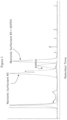
- Figure 1 shows an overlay of the HPLC traces for each of the individual surfactants and for a combination of the two surfactants.
- the Y- axis is the relative signal magnitude and the X-axis is relative retention time.
- the combination of surfactants has a retention time longer than either of the individual surfactants, suggesting no chromatographic separation.
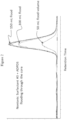
- Figure 2 presents an overlay of eluent peaks from the HPLC for a combination of the Surfactant 3 and ADPDS after flooding through the core 50, 100 and 150 milliliters of aqueous solution containing Surfactant #3 and ADPDS.
- the Y- axis is the relative signal magnitude and the X-axis is relative retention time. While the peak changes magnitude at the different times, it does not change location nor does any additional peak appear. This result confirms chromatographic separation is not occurring for this aqueous solution.
- nonionic surfactant is beneficial to removing subterranean oil from formations even after regular brine rinses have ceased to remove oil. It follows that stabilized nonionic rinse solutions would be effective at subterranean oil recovery.
- the surfactant solution of the present invention is particularly stable at high salinity and temperatures and so it follows that they are particularly useful for subterranean petroleum recovery.
Landscapes
- Chemical & Material Sciences (AREA)
- Life Sciences & Earth Sciences (AREA)
- Engineering & Computer Science (AREA)
- Oil, Petroleum & Natural Gas (AREA)
- Organic Chemistry (AREA)
- Chemical Kinetics & Catalysis (AREA)
- Wood Science & Technology (AREA)
- General Life Sciences & Earth Sciences (AREA)
- Geology (AREA)
- Mining & Mineral Resources (AREA)
- Materials Engineering (AREA)
- Physics & Mathematics (AREA)
- Environmental & Geological Engineering (AREA)
- Fluid Mechanics (AREA)
- Geochemistry & Mineralogy (AREA)
- Emulsifying, Dispersing, Foam-Producing Or Wetting Agents (AREA)
- Cosmetics (AREA)
Claims (7)
- Verfahren zum Gewinnen von Erdöl aus einer unterirdischen Formation, das Verfahren umfassend ein Injizieren einer wässrigen Lösung in die unterirdische Formation, um Erdöl zu verdrängen, wobei die wässrige Lösung umfasst:a. ein nichtionisches Tensid von Struktur (I):
 b. ein anionisches Tensid von Struktur (II):
- Verfahren nach Anspruch 1, wobei das Verfahren ferner gekennzeichnet ist durch das Injizieren der wässrigen Lösung in eine unterirdische Umgebung, die bei einer Temperatur von 70 Grad Celsius oder höher ist.
- Verfahren nach Anspruch 1, wobei das Verfahren ferner gekennzeichnet ist durch das Injizieren der wässrigen Lösung in eine unterirdische wässrige Phase, die einen Gesamtgehalt an gelösten Feststoffen von über 80.000 Teilen pro Million und eine Konzentration an zweiwertigen Ionen von mindestens 1.000 Teilen pro Million aufweist, wobei Teile pro Million auf einem Gewicht relativ zu dem Gesamtgewicht der wässrigen Phase basiert.
- Verfahren nach einem vorstehenden Anspruch, wobei das Verfahren ferner dadurch gekennzeichnet ist, dass das nichtionische Tensid und das anionische Tensid jeweils unabhängig in einer Konzentration von 0,01 Gewichtsprozent oder mehr und zehn Gewichtsprozent oder weniger basierend auf dem Gesamtgewicht der wässrigen Lösung vorhanden sind.
- Verfahren nach einem vorstehenden Anspruch, wobei das Verfahren ferner dadurch gekennzeichnet ist, dass m eine Zahl in einem Bereich von 0 bis 5 ist; und n in einem Bereich von 9 bis 15 ist.
- Verfahren nach einem vorstehenden Anspruch, ferner
dadurch gekennzeichnet, dass die R(1)R2CH-Gruppe aus einer Gruppe ausgewählt ist, bestehend aus linearen C11- bis C15-Linearkohlenwasserstoffkettenresten und einem Ethylhexylrest. - Verfahren nach einem vorstehenden Anspruch, ferner
dadurch gekennzeichnet, dass R3 und R4 jeweils unabhängig aus einer Gruppe ausgewählt sind, bestehend aus Wasserstoff und einer linearen Hexylgruppe, vorausgesetzt, dass sowohl R3 als auch R4 nicht beide Wasserstoff sind.
Applications Claiming Priority (2)
| Application Number | Priority Date | Filing Date | Title |
|---|---|---|---|
| US201462054399P | 2014-09-24 | 2014-09-24 | |
| PCT/US2015/050550 WO2016048765A1 (en) | 2014-09-24 | 2015-09-17 | Method for subterranean petroleum recovery using a surfactant blend |
Publications (2)
| Publication Number | Publication Date |
|---|---|
| EP3197980A1 EP3197980A1 (de) | 2017-08-02 |
| EP3197980B1 true EP3197980B1 (de) | 2023-10-11 |
Family
ID=54266625
Family Applications (1)
| Application Number | Title | Priority Date | Filing Date |
|---|---|---|---|
| EP15777771.5A Active EP3197980B1 (de) | 2014-09-24 | 2015-09-17 | Verfahren zur unterirdischen erdölgewinnung unter verwendung einer tensidmischung |
Country Status (5)
| Country | Link |
|---|---|
| US (1) | US10370584B2 (de) |
| EP (1) | EP3197980B1 (de) |
| JP (1) | JP6637032B2 (de) |
| CN (1) | CN106715642B (de) |
| WO (1) | WO2016048765A1 (de) |
Families Citing this family (15)
| Publication number | Priority date | Publication date | Assignee | Title |
|---|---|---|---|---|
| MX2018007008A (es) | 2015-12-08 | 2018-08-15 | Chevron Usa Inc | Metodos para recuperacion de hidrocarburos. |
| BR112018011688B1 (pt) | 2015-12-08 | 2023-04-11 | Kemira Oyj | Composições de emulsão inversa |
| CA2950810A1 (en) | 2015-12-08 | 2017-06-08 | Chevron U.S.A. Inc. | Methods for hydrocarbon recovery |
| CA3033648A1 (en) * | 2016-08-19 | 2018-02-22 | Dow Global Technologies Llc | Use of polyalkoxylated alcohols in post-chops oilfield recovery operations |
| CN107022346B (zh) * | 2016-11-15 | 2021-03-02 | 陕西邦希化工有限公司 | 一种具有高乳化性能的复合表面活性剂体系及其制备方法 |
| US10344129B2 (en) | 2016-12-07 | 2019-07-09 | Chevron U.S.A. Inc. | Methods and systems for generating aqueous polymer solutions |
| US11220622B2 (en) | 2017-06-30 | 2022-01-11 | Chevron U.S.A. Inc. | High stability polymer compositions for enhanced oil recovery applications |
| US11584881B2 (en) | 2017-06-30 | 2023-02-21 | Dow Global Technologies Llc | Low-temperature stabilized surfactant blend for enhanced oil recovery |
| CA3071632A1 (en) | 2017-07-31 | 2019-02-07 | Chevron U.S.A. Inc. | Injection fluids for stimulating fractured formations |
| US20200216746A1 (en) * | 2017-09-28 | 2020-07-09 | Dow Global Technologies Llc | Polyalkoxylated alcohols for post-chops oilfield recovery |
| CN109851530B (zh) * | 2019-01-02 | 2021-06-01 | 中国石油天然气股份有限公司 | N,n,n′,n′-十二烷基四取代二苯醚磺酸盐阴离子型双子表面活性剂及其合成 |
| US12098324B2 (en) | 2019-02-19 | 2024-09-24 | Dow Global Technologies Llc | Enhanced crude oil recovery from subterranean crude oil-bearing sandstone reservoirs |
| MX2022004006A (es) * | 2019-10-10 | 2022-04-26 | Dow Global Technologies Llc | Metodos y composiciones de recuperacion mejorada de petroleo. |
| US12565618B2 (en) | 2020-03-20 | 2026-03-03 | Cnpc Usa Corporation | Di-alkyl chain surfactants as a main surfactant for enhancing oil recovery for tight oil formations |
| US11649395B2 (en) | 2020-03-20 | 2023-05-16 | Cnpc Usa Corporation | Nonionic surfactants employed with extended chain as the oil displacement agent to use in enhanced oil recovery |
Family Cites Families (16)
| Publication number | Priority date | Publication date | Assignee | Title |
|---|---|---|---|---|
| US4018278A (en) | 1974-11-25 | 1977-04-19 | Texaco Inc. | Surfactant oil recovery process usable in high temperature formations |
| US3945437A (en) * | 1975-03-26 | 1976-03-23 | Shell Oil Company | Process for displacing oil using aqueous anionic surfactant systems containing aromatic ether polysulfonates |
| US4016932A (en) | 1975-12-24 | 1977-04-12 | Texaco Inc. | Surfactant oil recovery method for use in high temperature formations containing water having high salinity and hardness |
| US4110229A (en) | 1976-12-01 | 1978-08-29 | Texaco Inc. | Salinity tolerant surfactant oil recovery process |
| US4077471A (en) * | 1976-12-01 | 1978-03-07 | Texaco Inc. | Surfactant oil recovery process usable in high temperature, high salinity formations |
| US4269271A (en) * | 1978-05-01 | 1981-05-26 | Texaco Inc. | Emulsion oil recovery process usable in high temperature, high salinity formations |
| US4391719A (en) | 1978-11-28 | 1983-07-05 | Phillips Petroleum Company | Ethoxylated sulfosuccinate additives for stabilizing solutions of petroleum sulfonates in hard brine |
| CA1146834A (en) * | 1979-12-03 | 1983-05-24 | Nancy J. Byth | Surfactant compositions useful in enhanced oil recovery processes |
| US4426303A (en) * | 1979-12-03 | 1984-01-17 | The Dow Chemical Company | Surfactant compositions useful in enhanced oil recovery processes |
| US4532051A (en) * | 1979-12-03 | 1985-07-30 | The Dow Chemical Company | Surfactant compositions useful in enhanced oil recovery processes |
| US5203411A (en) * | 1992-03-11 | 1993-04-20 | The Dow Chemical Company | Oil recovery process using mobility control fluid comprising alkylated diphenyloxide sulfonates and foam forming amphoteric surfactants |
| CN1778462A (zh) * | 2004-11-26 | 2006-05-31 | 刘春德 | 一种含二苯甲醚新型表面活性剂、其配方体系及在三次采油中的应用 |
| CN100434500C (zh) * | 2005-07-04 | 2008-11-19 | 中国科学院理化技术研究所 | 格尔贝特阴离子表面活性剂及其制备方法和用途 |
| CN100354258C (zh) * | 2006-05-19 | 2007-12-12 | 西华师范大学 | 双烷基联苯二磺酸钠及其制备方法 |
| WO2009155187A1 (en) | 2008-06-18 | 2009-12-23 | Dow Global Technologies Inc. | Cleaning compositions containing mid-range alkoxylates |
| US8841241B2 (en) * | 2010-04-16 | 2014-09-23 | Board Of Regents, The University Of Texas System | Anionic polyalkoxy group comprising surfactants on basis of guerbet-alcohols, method of manufacture and use in enhanced oil recovery (EOR) applications |
-
2015
- 2015-09-17 EP EP15777771.5A patent/EP3197980B1/de active Active
- 2015-09-17 JP JP2017513082A patent/JP6637032B2/ja active Active
- 2015-09-17 US US15/512,863 patent/US10370584B2/en active Active
- 2015-09-17 WO PCT/US2015/050550 patent/WO2016048765A1/en not_active Ceased
- 2015-09-17 CN CN201580049844.8A patent/CN106715642B/zh active Active
Also Published As
| Publication number | Publication date |
|---|---|
| EP3197980A1 (de) | 2017-08-02 |
| US20170321111A1 (en) | 2017-11-09 |
| CN106715642B (zh) | 2020-06-23 |
| JP2017533293A (ja) | 2017-11-09 |
| CN106715642A (zh) | 2017-05-24 |
| JP6637032B2 (ja) | 2020-01-29 |
| US10370584B2 (en) | 2019-08-06 |
| WO2016048765A1 (en) | 2016-03-31 |
Similar Documents
| Publication | Publication Date | Title |
|---|---|---|
| US10370584B2 (en) | Method for subterranean petroleum recovery using a surfactant blend | |
| CA2385605C (en) | A method of improving the permeability of an underground petroleum-containing formation | |
| CN103842469B (zh) | 用于可渗透碳酸盐的聚合物增强的表面活性剂驱油 | |
| EP2265688B1 (de) | Viskoelastische zusammensetzung mit erhöhter stabilität | |
| US20120208726A1 (en) | Composition and method for removing filter cake | |
| EP3126468B1 (de) | Tensidunterstützte ölrückgewinnung mit alkoholethersulfonaten und kationischen tensiden | |
| US20090253595A1 (en) | Surfactants for hydrocarbon recovery | |
| US10047271B2 (en) | Bifunctional anti-deposit and anti-corrosion additives | |
| EA023089B1 (ru) | Применение смесей поверхностно-активных веществ поликарбоксилатов для вытеснения нефти микроэмульсией | |
| DK2675866T3 (en) | PROCEDURE FOR TRANSPORTING OIL OIL FROM OIL OIL DEPOSITS WITH HIGH DEPOSITION TEMPERATURE | |
| NO158824B (no) | Fremgangsmaate til utvinning av olje fra et underjordisk reservoar. | |
| WO2015161124A1 (en) | Gemini epoxide surfactant compositions | |
| EP0707134B1 (de) | Verfahren zur Förderung von Erdöl | |
| EP0032072B1 (de) | Tensid zur Verbesserung der Ausbeute bei Ölgewinnungsverfahren | |
| US9206348B2 (en) | Process for mineral oil production from mineral oil deposits with high deposit temperature | |
| US20080210428A1 (en) | Method of removing filter cake | |
| EP3652268A1 (de) | Löslichkeitsverbesserer auf basis von allylalkohol für wässrige tensidformulierungen zur erhöhten ölrückgewinnung | |
| EP3162872A1 (de) | Interne olefinsulfonatzusammensetzung und verwendung davon bei verbesserter ölgewinnung | |
| US11584881B2 (en) | Low-temperature stabilized surfactant blend for enhanced oil recovery | |
| CN110055045B (zh) | 一种低聚阳离子季铵盐表面活性剂增效型驱油剂 | |
| CA1199783A (en) | Method for recovering oil from an underground deposit | |
| CN106590605A (zh) | 高盐油藏气驱泡沫组合物及制备方法 | |
| US20200157411A1 (en) | Alcohol alkoxy sulfate composition | |
| DE2912663C2 (de) | ||
| RU2656293C1 (ru) | Кислотный состав для обработки призабойной зоны пласта |
Legal Events
| Date | Code | Title | Description |
|---|---|---|---|
| STAA | Information on the status of an ep patent application or granted ep patent |
Free format text: STATUS: THE INTERNATIONAL PUBLICATION HAS BEEN MADE |
|
| PUAI | Public reference made under article 153(3) epc to a published international application that has entered the european phase |
Free format text: ORIGINAL CODE: 0009012 |
|
| STAA | Information on the status of an ep patent application or granted ep patent |
Free format text: STATUS: REQUEST FOR EXAMINATION WAS MADE |
|
| 17P | Request for examination filed |
Effective date: 20170413 |
|
| AK | Designated contracting states |
Kind code of ref document: A1 Designated state(s): AL AT BE BG CH CY CZ DE DK EE ES FI FR GB GR HR HU IE IS IT LI LT LU LV MC MK MT NL NO PL PT RO RS SE SI SK SM TR |
|
| AX | Request for extension of the european patent |
Extension state: BA ME |
|
| DAV | Request for validation of the european patent (deleted) | ||
| DAX | Request for extension of the european patent (deleted) | ||
| STAA | Information on the status of an ep patent application or granted ep patent |
Free format text: STATUS: EXAMINATION IS IN PROGRESS |
|
| 17Q | First examination report despatched |
Effective date: 20180425 |
|
| GRAP | Despatch of communication of intention to grant a patent |
Free format text: ORIGINAL CODE: EPIDOSNIGR1 |
|
| STAA | Information on the status of an ep patent application or granted ep patent |
Free format text: STATUS: GRANT OF PATENT IS INTENDED |
|
| RIC1 | Information provided on ipc code assigned before grant |
Ipc: C11D 1/72 20060101ALI20230420BHEP Ipc: C09K 8/584 20060101AFI20230420BHEP |
|
| INTG | Intention to grant announced |
Effective date: 20230517 |
|
| P01 | Opt-out of the competence of the unified patent court (upc) registered |
Effective date: 20230526 |
|
| GRAS | Grant fee paid |
Free format text: ORIGINAL CODE: EPIDOSNIGR3 |
|
| GRAA | (expected) grant |
Free format text: ORIGINAL CODE: 0009210 |
|
| STAA | Information on the status of an ep patent application or granted ep patent |
Free format text: STATUS: THE PATENT HAS BEEN GRANTED |
|
| AK | Designated contracting states |
Kind code of ref document: B1 Designated state(s): AL AT BE BG CH CY CZ DE DK EE ES FI FR GB GR HR HU IE IS IT LI LT LU LV MC MK MT NL NO PL PT RO RS SE SI SK SM TR |
|
| REG | Reference to a national code |
Ref country code: GB Ref legal event code: FG4D |
|
| REG | Reference to a national code |
Ref country code: CH Ref legal event code: EP |
|
| REG | Reference to a national code |
Ref country code: DE Ref legal event code: R096 Ref document number: 602015086066 Country of ref document: DE |
|
| REG | Reference to a national code |
Ref country code: IE Ref legal event code: FG4D |
|
| REG | Reference to a national code |
Ref country code: LT Ref legal event code: MG9D |
|
| REG | Reference to a national code |
Ref country code: NL Ref legal event code: MP Effective date: 20231011 |
|
| REG | Reference to a national code |
Ref country code: AT Ref legal event code: MK05 Ref document number: 1620238 Country of ref document: AT Kind code of ref document: T Effective date: 20231011 |
|
| PG25 | Lapsed in a contracting state [announced via postgrant information from national office to epo] |
Ref country code: NL Free format text: LAPSE BECAUSE OF FAILURE TO SUBMIT A TRANSLATION OF THE DESCRIPTION OR TO PAY THE FEE WITHIN THE PRESCRIBED TIME-LIMIT Effective date: 20231011 |
|
| PG25 | Lapsed in a contracting state [announced via postgrant information from national office to epo] |
Ref country code: GR Free format text: LAPSE BECAUSE OF FAILURE TO SUBMIT A TRANSLATION OF THE DESCRIPTION OR TO PAY THE FEE WITHIN THE PRESCRIBED TIME-LIMIT Effective date: 20240112 |
|
| PG25 | Lapsed in a contracting state [announced via postgrant information from national office to epo] |
Ref country code: IS Free format text: LAPSE BECAUSE OF FAILURE TO SUBMIT A TRANSLATION OF THE DESCRIPTION OR TO PAY THE FEE WITHIN THE PRESCRIBED TIME-LIMIT Effective date: 20240211 |
|
| PG25 | Lapsed in a contracting state [announced via postgrant information from national office to epo] |
Ref country code: LT Free format text: LAPSE BECAUSE OF FAILURE TO SUBMIT A TRANSLATION OF THE DESCRIPTION OR TO PAY THE FEE WITHIN THE PRESCRIBED TIME-LIMIT Effective date: 20231011 |
|
| PG25 | Lapsed in a contracting state [announced via postgrant information from national office to epo] |
Ref country code: AT Free format text: LAPSE BECAUSE OF FAILURE TO SUBMIT A TRANSLATION OF THE DESCRIPTION OR TO PAY THE FEE WITHIN THE PRESCRIBED TIME-LIMIT Effective date: 20231011 |
|
| PG25 | Lapsed in a contracting state [announced via postgrant information from national office to epo] |
Ref country code: ES Free format text: LAPSE BECAUSE OF FAILURE TO SUBMIT A TRANSLATION OF THE DESCRIPTION OR TO PAY THE FEE WITHIN THE PRESCRIBED TIME-LIMIT Effective date: 20231011 |
|
| PG25 | Lapsed in a contracting state [announced via postgrant information from national office to epo] |
Ref country code: LT Free format text: LAPSE BECAUSE OF FAILURE TO SUBMIT A TRANSLATION OF THE DESCRIPTION OR TO PAY THE FEE WITHIN THE PRESCRIBED TIME-LIMIT Effective date: 20231011 Ref country code: IS Free format text: LAPSE BECAUSE OF FAILURE TO SUBMIT A TRANSLATION OF THE DESCRIPTION OR TO PAY THE FEE WITHIN THE PRESCRIBED TIME-LIMIT Effective date: 20240211 Ref country code: GR Free format text: LAPSE BECAUSE OF FAILURE TO SUBMIT A TRANSLATION OF THE DESCRIPTION OR TO PAY THE FEE WITHIN THE PRESCRIBED TIME-LIMIT Effective date: 20240112 Ref country code: ES Free format text: LAPSE BECAUSE OF FAILURE TO SUBMIT A TRANSLATION OF THE DESCRIPTION OR TO PAY THE FEE WITHIN THE PRESCRIBED TIME-LIMIT Effective date: 20231011 Ref country code: BG Free format text: LAPSE BECAUSE OF FAILURE TO SUBMIT A TRANSLATION OF THE DESCRIPTION OR TO PAY THE FEE WITHIN THE PRESCRIBED TIME-LIMIT Effective date: 20240111 Ref country code: AT Free format text: LAPSE BECAUSE OF FAILURE TO SUBMIT A TRANSLATION OF THE DESCRIPTION OR TO PAY THE FEE WITHIN THE PRESCRIBED TIME-LIMIT Effective date: 20231011 Ref country code: PT Free format text: LAPSE BECAUSE OF FAILURE TO SUBMIT A TRANSLATION OF THE DESCRIPTION OR TO PAY THE FEE WITHIN THE PRESCRIBED TIME-LIMIT Effective date: 20240212 |
|
| PG25 | Lapsed in a contracting state [announced via postgrant information from national office to epo] |
Ref country code: SE Free format text: LAPSE BECAUSE OF FAILURE TO SUBMIT A TRANSLATION OF THE DESCRIPTION OR TO PAY THE FEE WITHIN THE PRESCRIBED TIME-LIMIT Effective date: 20231011 Ref country code: RS Free format text: LAPSE BECAUSE OF FAILURE TO SUBMIT A TRANSLATION OF THE DESCRIPTION OR TO PAY THE FEE WITHIN THE PRESCRIBED TIME-LIMIT Effective date: 20231011 Ref country code: PL Free format text: LAPSE BECAUSE OF FAILURE TO SUBMIT A TRANSLATION OF THE DESCRIPTION OR TO PAY THE FEE WITHIN THE PRESCRIBED TIME-LIMIT Effective date: 20231011 Ref country code: NO Free format text: LAPSE BECAUSE OF FAILURE TO SUBMIT A TRANSLATION OF THE DESCRIPTION OR TO PAY THE FEE WITHIN THE PRESCRIBED TIME-LIMIT Effective date: 20240111 Ref country code: LV Free format text: LAPSE BECAUSE OF FAILURE TO SUBMIT A TRANSLATION OF THE DESCRIPTION OR TO PAY THE FEE WITHIN THE PRESCRIBED TIME-LIMIT Effective date: 20231011 Ref country code: HR Free format text: LAPSE BECAUSE OF FAILURE TO SUBMIT A TRANSLATION OF THE DESCRIPTION OR TO PAY THE FEE WITHIN THE PRESCRIBED TIME-LIMIT Effective date: 20231011 |
|
| PG25 | Lapsed in a contracting state [announced via postgrant information from national office to epo] |
Ref country code: DK Free format text: LAPSE BECAUSE OF FAILURE TO SUBMIT A TRANSLATION OF THE DESCRIPTION OR TO PAY THE FEE WITHIN THE PRESCRIBED TIME-LIMIT Effective date: 20231011 |
|
| REG | Reference to a national code |
Ref country code: DE Ref legal event code: R097 Ref document number: 602015086066 Country of ref document: DE |
|
| PG25 | Lapsed in a contracting state [announced via postgrant information from national office to epo] |
Ref country code: CZ Free format text: LAPSE BECAUSE OF FAILURE TO SUBMIT A TRANSLATION OF THE DESCRIPTION OR TO PAY THE FEE WITHIN THE PRESCRIBED TIME-LIMIT Effective date: 20231011 |
|
| PG25 | Lapsed in a contracting state [announced via postgrant information from national office to epo] |
Ref country code: SK Free format text: LAPSE BECAUSE OF FAILURE TO SUBMIT A TRANSLATION OF THE DESCRIPTION OR TO PAY THE FEE WITHIN THE PRESCRIBED TIME-LIMIT Effective date: 20231011 |
|
| PG25 | Lapsed in a contracting state [announced via postgrant information from national office to epo] |
Ref country code: SM Free format text: LAPSE BECAUSE OF FAILURE TO SUBMIT A TRANSLATION OF THE DESCRIPTION OR TO PAY THE FEE WITHIN THE PRESCRIBED TIME-LIMIT Effective date: 20231011 Ref country code: SK Free format text: LAPSE BECAUSE OF FAILURE TO SUBMIT A TRANSLATION OF THE DESCRIPTION OR TO PAY THE FEE WITHIN THE PRESCRIBED TIME-LIMIT Effective date: 20231011 Ref country code: RO Free format text: LAPSE BECAUSE OF FAILURE TO SUBMIT A TRANSLATION OF THE DESCRIPTION OR TO PAY THE FEE WITHIN THE PRESCRIBED TIME-LIMIT Effective date: 20231011 Ref country code: IT Free format text: LAPSE BECAUSE OF FAILURE TO SUBMIT A TRANSLATION OF THE DESCRIPTION OR TO PAY THE FEE WITHIN THE PRESCRIBED TIME-LIMIT Effective date: 20231011 Ref country code: EE Free format text: LAPSE BECAUSE OF FAILURE TO SUBMIT A TRANSLATION OF THE DESCRIPTION OR TO PAY THE FEE WITHIN THE PRESCRIBED TIME-LIMIT Effective date: 20231011 Ref country code: DK Free format text: LAPSE BECAUSE OF FAILURE TO SUBMIT A TRANSLATION OF THE DESCRIPTION OR TO PAY THE FEE WITHIN THE PRESCRIBED TIME-LIMIT Effective date: 20231011 Ref country code: CZ Free format text: LAPSE BECAUSE OF FAILURE TO SUBMIT A TRANSLATION OF THE DESCRIPTION OR TO PAY THE FEE WITHIN THE PRESCRIBED TIME-LIMIT Effective date: 20231011 |
|
| PLBE | No opposition filed within time limit |
Free format text: ORIGINAL CODE: 0009261 |
|
| STAA | Information on the status of an ep patent application or granted ep patent |
Free format text: STATUS: NO OPPOSITION FILED WITHIN TIME LIMIT |
|
| 26N | No opposition filed |
Effective date: 20240712 |
|
| PG25 | Lapsed in a contracting state [announced via postgrant information from national office to epo] |
Ref country code: SI Free format text: LAPSE BECAUSE OF FAILURE TO SUBMIT A TRANSLATION OF THE DESCRIPTION OR TO PAY THE FEE WITHIN THE PRESCRIBED TIME-LIMIT Effective date: 20231011 |
|
| PG25 | Lapsed in a contracting state [announced via postgrant information from national office to epo] |
Ref country code: SI Free format text: LAPSE BECAUSE OF FAILURE TO SUBMIT A TRANSLATION OF THE DESCRIPTION OR TO PAY THE FEE WITHIN THE PRESCRIBED TIME-LIMIT Effective date: 20231011 |
|
| PG25 | Lapsed in a contracting state [announced via postgrant information from national office to epo] |
Ref country code: MC Free format text: LAPSE BECAUSE OF FAILURE TO SUBMIT A TRANSLATION OF THE DESCRIPTION OR TO PAY THE FEE WITHIN THE PRESCRIBED TIME-LIMIT Effective date: 20231011 |
|
| REG | Reference to a national code |
Ref country code: CH Ref legal event code: PL |
|
| PG25 | Lapsed in a contracting state [announced via postgrant information from national office to epo] |
Ref country code: LU Free format text: LAPSE BECAUSE OF NON-PAYMENT OF DUE FEES Effective date: 20240917 |
|
| REG | Reference to a national code |
Ref country code: BE Ref legal event code: MM Effective date: 20240930 |
|
| PG25 | Lapsed in a contracting state [announced via postgrant information from national office to epo] |
Ref country code: BE Free format text: LAPSE BECAUSE OF NON-PAYMENT OF DUE FEES Effective date: 20240930 |
|
| PG25 | Lapsed in a contracting state [announced via postgrant information from national office to epo] |
Ref country code: CH Free format text: LAPSE BECAUSE OF NON-PAYMENT OF DUE FEES Effective date: 20240930 |
|
| PG25 | Lapsed in a contracting state [announced via postgrant information from national office to epo] |
Ref country code: IE Free format text: LAPSE BECAUSE OF NON-PAYMENT OF DUE FEES Effective date: 20240917 |
|
| PG25 | Lapsed in a contracting state [announced via postgrant information from national office to epo] |
Ref country code: FI Free format text: LAPSE BECAUSE OF FAILURE TO SUBMIT A TRANSLATION OF THE DESCRIPTION OR TO PAY THE FEE WITHIN THE PRESCRIBED TIME-LIMIT Effective date: 20231011 |
|
| PGFP | Annual fee paid to national office [announced via postgrant information from national office to epo] |
Ref country code: DE Payment date: 20250702 Year of fee payment: 11 |
|
| PGFP | Annual fee paid to national office [announced via postgrant information from national office to epo] |
Ref country code: GB Payment date: 20250703 Year of fee payment: 11 |
|
| PGFP | Annual fee paid to national office [announced via postgrant information from national office to epo] |
Ref country code: FR Payment date: 20250708 Year of fee payment: 11 |
|
| PG25 | Lapsed in a contracting state [announced via postgrant information from national office to epo] |
Ref country code: CY Free format text: LAPSE BECAUSE OF FAILURE TO SUBMIT A TRANSLATION OF THE DESCRIPTION OR TO PAY THE FEE WITHIN THE PRESCRIBED TIME-LIMIT; INVALID AB INITIO Effective date: 20150917 |
|
| PG25 | Lapsed in a contracting state [announced via postgrant information from national office to epo] |
Ref country code: HU Free format text: LAPSE BECAUSE OF FAILURE TO SUBMIT A TRANSLATION OF THE DESCRIPTION OR TO PAY THE FEE WITHIN THE PRESCRIBED TIME-LIMIT; INVALID AB INITIO Effective date: 20150917 |