EP3186264B1 - Electroluminescent imidazo-quinoxaline carbene metal complexes - Google Patents
Electroluminescent imidazo-quinoxaline carbene metal complexes Download PDFInfo
- Publication number
- EP3186264B1 EP3186264B1 EP15750362.4A EP15750362A EP3186264B1 EP 3186264 B1 EP3186264 B1 EP 3186264B1 EP 15750362 A EP15750362 A EP 15750362A EP 3186264 B1 EP3186264 B1 EP 3186264B1
- Authority
- EP
- European Patent Office
- Prior art keywords
- substituted
- group
- optionally
- alkyl
- substituent
- Prior art date
- Legal status (The legal status is an assumption and is not a legal conclusion. Google has not performed a legal analysis and makes no representation as to the accuracy of the status listed.)
- Active
Links
- 0 C*C(N=N)=C(C)N=N Chemical compound C*C(N=N)=C(C)N=N 0.000 description 88
- IXUZRCDHBZJLOC-UHFFFAOYSA-N CCOC(N(c1nc(cccc2)c2nc11)c2ccccc2)N1c1ccccc1 Chemical compound CCOC(N(c1nc(cccc2)c2nc11)c2ccccc2)N1c1ccccc1 IXUZRCDHBZJLOC-UHFFFAOYSA-N 0.000 description 4
- NJOIHMOJMJVFLR-UHFFFAOYSA-N CCOC(N(c1nc(cccc2)c2nc11)c2ccc(C(C)(C)C)cc2)N1c1ccc(C(C)(C)C)cc1 Chemical compound CCOC(N(c1nc(cccc2)c2nc11)c2ccc(C(C)(C)C)cc2)N1c1ccc(C(C)(C)C)cc1 NJOIHMOJMJVFLR-UHFFFAOYSA-N 0.000 description 3
- ORCWJHQPACNBSC-UHFFFAOYSA-N CC(C12)(C3(C)c(cccc4)c4N1c1nc(cccc4)c4nc1N2c1ccccc1)C3=C Chemical compound CC(C12)(C3(C)c(cccc4)c4N1c1nc(cccc4)c4nc1N2c1ccccc1)C3=C ORCWJHQPACNBSC-UHFFFAOYSA-N 0.000 description 2
- REWCLKSAYFPNLF-UHFFFAOYSA-N CCOC(N(c1nc(cccc2)c2nc11)c2ccc(C(C)C)cc2)N1c1ccc(C(C)C)cc1 Chemical compound CCOC(N(c1nc(cccc2)c2nc11)c2ccc(C(C)C)cc2)N1c1ccc(C(C)C)cc1 REWCLKSAYFPNLF-UHFFFAOYSA-N 0.000 description 2
- JRHQNBCTCQJYJJ-UHFFFAOYSA-N CCc1cccc(N(C2OCC)c3nccnc3N2c2cc(CC)ccc2)c1 Chemical compound CCc1cccc(N(C2OCC)c3nccnc3N2c2cc(CC)ccc2)c1 JRHQNBCTCQJYJJ-UHFFFAOYSA-N 0.000 description 2
- NKBYTMOQAQRVRR-UHFFFAOYSA-N C(C12)c3ccccc3N1c1nc(cccc3)c3nc1N2c1ccccc1 Chemical compound C(C12)c3ccccc3N1c1nc(cccc3)c3nc1N2c1ccccc1 NKBYTMOQAQRVRR-UHFFFAOYSA-N 0.000 description 1
- IGLUUYOOETWXOO-UHFFFAOYSA-N C(C1C23)C1c1ccccc1N2c(cccc1)c1N3c1ccccc1 Chemical compound C(C1C23)C1c1ccccc1N2c(cccc1)c1N3c1ccccc1 IGLUUYOOETWXOO-UHFFFAOYSA-N 0.000 description 1
- WRDWWAVNELMWAM-UHFFFAOYSA-N CC(C)(C)c(cc1)ccc1N Chemical compound CC(C)(C)c(cc1)ccc1N WRDWWAVNELMWAM-UHFFFAOYSA-N 0.000 description 1
- XCHFTPSQUBDOFU-UHFFFAOYSA-N CC(C)(C)c(cc1)ccc1N(C1C(C)(C23C)C2=[IH](C2N4c5ccccc5)c(cccc5)c5N2c2c4nccn2)c2nc(cccc4)c4nc2N1c1c3cc(C(C)(C)C)cc1 Chemical compound CC(C)(C)c(cc1)ccc1N(C1C(C)(C23C)C2=[IH](C2N4c5ccccc5)c(cccc5)c5N2c2c4nccn2)c2nc(cccc4)c4nc2N1c1c3cc(C(C)(C)C)cc1 XCHFTPSQUBDOFU-UHFFFAOYSA-N 0.000 description 1
- CSWRBXLIDAFXPZ-UHFFFAOYSA-N CC(C)(C)c(cc1)ccc1Nc1nccnc1Nc1ccc(C(C)(C)C)cc1 Chemical compound CC(C)(C)c(cc1)ccc1Nc1nccnc1Nc1ccc(C(C)(C)C)cc1 CSWRBXLIDAFXPZ-UHFFFAOYSA-N 0.000 description 1
- IMLAGRQAYAASCW-UHFFFAOYSA-N CC(C)c(cc1)ccc1N(C1C2(C)C3(C)C2)c2nc(cccc4)c4nc2N1c1c3cc(C(C)C)cc1 Chemical compound CC(C)c(cc1)ccc1N(C1C2(C)C3(C)C2)c2nc(cccc4)c4nc2N1c1c3cc(C(C)C)cc1 IMLAGRQAYAASCW-UHFFFAOYSA-N 0.000 description 1
- HEKISXAUKKENJB-UHFFFAOYSA-N CC(C12)(C3(C)c(cccc4)c4N1c(cc(cccc1)c1c1)c1N2c1ccccc1)[IH]3(C12)c(cccc3)c3N1c1nc(cccc3)c3nc1N2c1ccccc1 Chemical compound CC(C12)(C3(C)c(cccc4)c4N1c(cc(cccc1)c1c1)c1N2c1ccccc1)[IH]3(C12)c(cccc3)c3N1c1nc(cccc3)c3nc1N2c1ccccc1 HEKISXAUKKENJB-UHFFFAOYSA-N 0.000 description 1
- IHRJLYVYQYRVOR-CZGNYUOKSA-N CC(C12)(C3(C)c(cccc4)c4N1c1nc(cccc4)c4nc1N2c1ccccc1)/C3=C(\CC12)/c3cc(-c4ccccc4C)ccc3N1c(cccc1)c1N2c(cc1)ccc1-c1c(C)cccc1 Chemical compound CC(C12)(C3(C)c(cccc4)c4N1c1nc(cccc4)c4nc1N2c1ccccc1)/C3=C(\CC12)/c3cc(-c4ccccc4C)ccc3N1c(cccc1)c1N2c(cc1)ccc1-c1c(C)cccc1 IHRJLYVYQYRVOR-CZGNYUOKSA-N 0.000 description 1
- DMTXBBXHVLLMEA-UHFFFAOYSA-N CC(C12)(C3(C)c(cccc4)c4N1c1nc(cccc4)c4nc1N2c1ccccc1)[IH]3(C12)C(CC(C)(C)C=C3)=C3N1c1nc(cccc3)c3nc1N2c1ccc(C)cc1 Chemical compound CC(C12)(C3(C)c(cccc4)c4N1c1nc(cccc4)c4nc1N2c1ccccc1)[IH]3(C12)C(CC(C)(C)C=C3)=C3N1c1nc(cccc3)c3nc1N2c1ccc(C)cc1 DMTXBBXHVLLMEA-UHFFFAOYSA-N 0.000 description 1
- MMDFKJHHVJFORX-UHFFFAOYSA-N CC(C12)(C3(C)c(cccc4)c4N1c1nc(cccc4)c4nc1N2c1ccccc1)[IH]3(C12)c(cccc3)c3N1c(cc(cccc1)c1c1)c1N2c1ccccc1 Chemical compound CC(C12)(C3(C)c(cccc4)c4N1c1nc(cccc4)c4nc1N2c1ccccc1)[IH]3(C12)c(cccc3)c3N1c(cc(cccc1)c1c1)c1N2c1ccccc1 MMDFKJHHVJFORX-UHFFFAOYSA-N 0.000 description 1
- YJXMTNWZAWRHNZ-UHFFFAOYSA-N CC(N(C=C1)c2ccc(C)cc2)N1c1ccc(C)cc1C Chemical compound CC(N(C=C1)c2ccc(C)cc2)N1c1ccc(C)cc1C YJXMTNWZAWRHNZ-UHFFFAOYSA-N 0.000 description 1
- AHNCLTCLIZKEFM-UHFFFAOYSA-N CC(N(c1cc(cccc2)c2cc11)c2ccccc2)N1c1ccccc1C Chemical compound CC(N(c1cc(cccc2)c2cc11)c2ccccc2)N1c1ccccc1C AHNCLTCLIZKEFM-UHFFFAOYSA-N 0.000 description 1
- ADDVKLBWBVWAPI-MVBFOZEESA-N CC(N(c1nc(cccc2)c2nc11)c2ccccc2)N1c1ccccc1C/C=C(\C1(C)C23)/C1(C)c(cc(C)cc1)c1N2c(cc(cccc1)c1c1)c1N3c1ccc(C)cc1 Chemical compound CC(N(c1nc(cccc2)c2nc11)c2ccccc2)N1c1ccccc1C/C=C(\C1(C)C23)/C1(C)c(cc(C)cc1)c1N2c(cc(cccc1)c1c1)c1N3c1ccc(C)cc1 ADDVKLBWBVWAPI-MVBFOZEESA-N 0.000 description 1
- GHJQXOCAQBRJBN-UHFFFAOYSA-N CC1(C23)[I](C4N5c6cccc(C)c6)(c(ccc(C)c6)c6N4c4c5nccn4)=CC1(C)c(cccc1)c1N2c1nc(cccc2)c2nc1N3c1ccccc1 Chemical compound CC1(C23)[I](C4N5c6cccc(C)c6)(c(ccc(C)c6)c6N4c4c5nccn4)=CC1(C)c(cccc1)c1N2c1nc(cccc2)c2nc1N3c1ccccc1 GHJQXOCAQBRJBN-UHFFFAOYSA-N 0.000 description 1
- BBVGJOBNKZBHRC-UHFFFAOYSA-N CC1C=CC=CC1N(C1C(C)(C23C)[IH]2(C24)c(cccc5)c5N2c2cc(cccc5)c5cc2N4c2ccccc2)C(N=C2C=CC=CC2(C)N2)=C2N1c1c3cccc1 Chemical compound CC1C=CC=CC1N(C1C(C)(C23C)[IH]2(C24)c(cccc5)c5N2c2cc(cccc5)c5cc2N4c2ccccc2)C(N=C2C=CC=CC2(C)N2)=C2N1c1c3cccc1 BBVGJOBNKZBHRC-UHFFFAOYSA-N 0.000 description 1
- IOLSOWXSIYEUDO-UHFFFAOYSA-N CCOC(N(c1cc(C(F)(F)F)cnc11)c2ccccc2C)N1c1ccccc1 Chemical compound CCOC(N(c1cc(C(F)(F)F)cnc11)c2ccccc2C)N1c1ccccc1 IOLSOWXSIYEUDO-UHFFFAOYSA-N 0.000 description 1
- DKKCXEVCCISAKS-UHFFFAOYSA-N CCOC(N(c1nc(c(cccc2)c2c2ccccc22)c2nc11)c2ccccc2)N1c1ccccc1 Chemical compound CCOC(N(c1nc(c(cccc2)c2c2ccccc22)c2nc11)c2ccccc2)N1c1ccccc1 DKKCXEVCCISAKS-UHFFFAOYSA-N 0.000 description 1
- VYWFNZTZPPUVDD-UHFFFAOYSA-N CCc(cc1)ccc1N(C12)c3nc(cccc4)c4nc3N1c1ccc(CC)cc1[IH]2(C1(C)C23)C1(C)c(cccc1)c1N2c1nc(cccc2)c2nc1N3c1ccccc1 Chemical compound CCc(cc1)ccc1N(C12)c3nc(cccc4)c4nc3N1c1ccc(CC)cc1[IH]2(C1(C)C23)C1(C)c(cccc1)c1N2c1nc(cccc2)c2nc1N3c1ccccc1 VYWFNZTZPPUVDD-UHFFFAOYSA-N 0.000 description 1
- ADSWUPROFSSWDW-UHFFFAOYSA-N CCc(cc1)ccc1N(C1C)c2nc(cccc3)c3nc2N1c1c(C(C2(C)C34)C2(C)c(cccc2)c2N3c2nc(cccc3)c3nc2N4c2ccccc2)cc(CC)cc1 Chemical compound CCc(cc1)ccc1N(C1C)c2nc(cccc3)c3nc2N1c1c(C(C2(C)C34)C2(C)c(cccc2)c2N3c2nc(cccc3)c3nc2N4c2ccccc2)cc(CC)cc1 ADSWUPROFSSWDW-UHFFFAOYSA-N 0.000 description 1
- CPEYKDBZCIPZSH-UHFFFAOYSA-N CCc(ccc(CC)c1NC2=O)c1NC2=O Chemical compound CCc(ccc(CC)c1NC2=O)c1NC2=O CPEYKDBZCIPZSH-UHFFFAOYSA-N 0.000 description 1
- KCAYCHVNVLRDNZ-WITYNDFSSA-N CCc(cccc1)c1-c(cc1)ccc1N(C1C/C(/c2c3)=C(\C4(C)C56)/C4(C)c(cccc4)c4N5c4nc(cccc5)c5nc4N6c4ccccc4)c(cccc4)c4N1c2ccc3-c1ccccc1CC Chemical compound CCc(cccc1)c1-c(cc1)ccc1N(C1C/C(/c2c3)=C(\C4(C)C56)/C4(C)c(cccc4)c4N5c4nc(cccc5)c5nc4N6c4ccccc4)c(cccc4)c4N1c2ccc3-c1ccccc1CC KCAYCHVNVLRDNZ-WITYNDFSSA-N 0.000 description 1
- RPEHJSQYFBBXBY-RQZHXJHFSA-N CCc1cc(N(C2/C(/Cl)=C3\C(C4)CCCC44C3C4)c3nccnc3N2c2cc(CC)ccc2)ccc1 Chemical compound CCc1cc(N(C2/C(/Cl)=C3\C(C4)CCCC44C3C4)c3nccnc3N2c2cc(CC)ccc2)ccc1 RPEHJSQYFBBXBY-RQZHXJHFSA-N 0.000 description 1
- GEWOMEBJNZFHSI-UHFFFAOYSA-N CCc1cc(Nc2nccnc2Nc2cc(CC)ccc2)ccc1 Chemical compound CCc1cc(Nc2nccnc2Nc2cc(CC)ccc2)ccc1 GEWOMEBJNZFHSI-UHFFFAOYSA-N 0.000 description 1
- FMILYEYYAKQKTD-UHFFFAOYSA-N CCc1ccc(CC)c(nc2Cl)c1nc2Cl Chemical compound CCc1ccc(CC)c(nc2Cl)c1nc2Cl FMILYEYYAKQKTD-UHFFFAOYSA-N 0.000 description 1
- JOVGLRSLWFSVNB-COBSHVIPSA-N C[C@H]1C(C)C=CC1 Chemical compound C[C@H]1C(C)C=CC1 JOVGLRSLWFSVNB-COBSHVIPSA-N 0.000 description 1
- SBTAFZMWFIHBHP-RXLDOXEOSA-N Cc1cc(N(C2[IH]([C@H]3C4C3CCCC/C=C(/C)\C4)=CCl)c3nccnc3N2c2cc(C)ccc2)ccc1 Chemical compound Cc1cc(N(C2[IH]([C@H]3C4C3CCCC/C=C(/C)\C4)=CCl)c3nccnc3N2c2cc(C)ccc2)ccc1 SBTAFZMWFIHBHP-RXLDOXEOSA-N 0.000 description 1
- WIMJWYKJGMYYNS-UHFFFAOYSA-N Cc1cc(Nc2nc(cccc3)c3nc2Nc2cc(C)ccc2)ccc1 Chemical compound Cc1cc(Nc2nc(cccc3)c3nc2Nc2cc(C)ccc2)ccc1 WIMJWYKJGMYYNS-UHFFFAOYSA-N 0.000 description 1
- JJYPMNFTHPTTDI-UHFFFAOYSA-N Cc1cccc(N)c1 Chemical compound Cc1cccc(N)c1 JJYPMNFTHPTTDI-UHFFFAOYSA-N 0.000 description 1
- BVUPBEWXQCPLBH-FLWNBWAVSA-N Cl/C(/C(N(c(c1c2)cc3c2nccn3)c2ccccc2)N1c1ccccc1)=C1/C2=CCCC1CCC2 Chemical compound Cl/C(/C(N(c(c1c2)cc3c2nccn3)c2ccccc2)N1c1ccccc1)=C1/C2=CCCC1CCC2 BVUPBEWXQCPLBH-FLWNBWAVSA-N 0.000 description 1
- QVMSRCAYTLDCTA-UHFFFAOYSA-N ClC1=C(C(N(c2nccnc22)c3ccccc3)N2c2ccccc2)C2=CCCC1CC2 Chemical compound ClC1=C(C(N(c2nccnc22)c3ccccc3)N2c2ccccc2)C2=CCCC1CC2 QVMSRCAYTLDCTA-UHFFFAOYSA-N 0.000 description 1
- SPSSDDOTEZKOOV-UHFFFAOYSA-N Clc1nc2ccccc2nc1Cl Chemical compound Clc1nc2ccccc2nc1Cl SPSSDDOTEZKOOV-UHFFFAOYSA-N 0.000 description 1
- MLCNOCRGSBCAGH-UHFFFAOYSA-N Clc1nccnc1Cl Chemical compound Clc1nccnc1Cl MLCNOCRGSBCAGH-UHFFFAOYSA-N 0.000 description 1
- LQXFOLBBQWZYNH-UHFFFAOYSA-N N#CC(C#N)=C(C(F)=C(C1=C(C2=C(C#N)C#N)F)C(F)=C2F)C(F)=C1F Chemical compound N#CC(C#N)=C(C(F)=C(C1=C(C2=C(C#N)C#N)F)C(F)=C2F)C(F)=C1F LQXFOLBBQWZYNH-UHFFFAOYSA-N 0.000 description 1
- HZWPYAVJBWXJND-DJJIWSAGSA-N N#CC(C(/C1=C(/c(c(F)c(c(C#N)c2F)F)c2F)\C#N)/C1=C(\c(c(F)c(c(C#N)c1F)F)c1F)/C#N)c(c(F)c(c(C#N)c1F)F)c1F Chemical compound N#CC(C(/C1=C(/c(c(F)c(c(C#N)c2F)F)c2F)\C#N)/C1=C(\c(c(F)c(c(C#N)c1F)F)c1F)/C#N)c(c(F)c(c(C#N)c1F)F)c1F HZWPYAVJBWXJND-DJJIWSAGSA-N 0.000 description 1
- DLINWXKATGQNCQ-UHFFFAOYSA-N N#Cc(c(C#N)c1)cc([n]2C3=CC=CCC3)c1[n+](-c1ccccc1)c2[F][Br-](F)F Chemical compound N#Cc(c(C#N)c1)cc([n]2C3=CC=CCC3)c1[n+](-c1ccccc1)c2[F][Br-](F)F DLINWXKATGQNCQ-UHFFFAOYSA-N 0.000 description 1
- XSXWNBGBWOURGP-UHFFFAOYSA-N c(cc1)cc(-c(cc2)cc(c3cc(-c4ccccc4-c4ncccc4)ccc33)c2[n]3-c(cc2)cc(c3c4)c2[o]c3ccc4-[n]2c(ccc(-c3ccccc3-c3ccccn3)c3)c3c3c2ccc(-c2ccccc2-c2ccccn2)c3)c1-c1ncccc1 Chemical compound c(cc1)cc(-c(cc2)cc(c3cc(-c4ccccc4-c4ncccc4)ccc33)c2[n]3-c(cc2)cc(c3c4)c2[o]c3ccc4-[n]2c(ccc(-c3ccccc3-c3ccccn3)c3)c3c3c2ccc(-c2ccccc2-c2ccccn2)c3)c1-c1ncccc1 XSXWNBGBWOURGP-UHFFFAOYSA-N 0.000 description 1
- MRCBZMGIXFYZIO-UHFFFAOYSA-N c(cc1)ccc1Nc1nc(c2ccccc2c2c3cccc2)c3nc1Nc1ccccc1 Chemical compound c(cc1)ccc1Nc1nc(c2ccccc2c2c3cccc2)c3nc1Nc1ccccc1 MRCBZMGIXFYZIO-UHFFFAOYSA-N 0.000 description 1
- SLGBZMMZGDRARJ-UHFFFAOYSA-N c1ccc2c(cccc3)c3c3ccccc3c2c1 Chemical compound c1ccc2c(cccc3)c3c3ccccc3c2c1 SLGBZMMZGDRARJ-UHFFFAOYSA-N 0.000 description 1
Images
Classifications
-
- C—CHEMISTRY; METALLURGY
- C07—ORGANIC CHEMISTRY
- C07F—ACYCLIC, CARBOCYCLIC OR HETEROCYCLIC COMPOUNDS CONTAINING ELEMENTS OTHER THAN CARBON, HYDROGEN, HALOGEN, OXYGEN, NITROGEN, SULFUR, SELENIUM OR TELLURIUM
- C07F15/00—Compounds containing elements of Groups 8, 9, 10 or 18 of the Periodic Table
- C07F15/0006—Compounds containing elements of Groups 8, 9, 10 or 18 of the Periodic Table compounds of the platinum group
- C07F15/0033—Iridium compounds
-
- C—CHEMISTRY; METALLURGY
- C07—ORGANIC CHEMISTRY
- C07F—ACYCLIC, CARBOCYCLIC OR HETEROCYCLIC COMPOUNDS CONTAINING ELEMENTS OTHER THAN CARBON, HYDROGEN, HALOGEN, OXYGEN, NITROGEN, SULFUR, SELENIUM OR TELLURIUM
- C07F15/00—Compounds containing elements of Groups 8, 9, 10 or 18 of the Periodic Table
- C07F15/0006—Compounds containing elements of Groups 8, 9, 10 or 18 of the Periodic Table compounds of the platinum group
- C07F15/0086—Platinum compounds
-
- C—CHEMISTRY; METALLURGY
- C09—DYES; PAINTS; POLISHES; NATURAL RESINS; ADHESIVES; COMPOSITIONS NOT OTHERWISE PROVIDED FOR; APPLICATIONS OF MATERIALS NOT OTHERWISE PROVIDED FOR
- C09B—ORGANIC DYES OR CLOSELY-RELATED COMPOUNDS FOR PRODUCING DYES, e.g. PIGMENTS; MORDANTS; LAKES
- C09B57/00—Other synthetic dyes of known constitution
-
- C—CHEMISTRY; METALLURGY
- C09—DYES; PAINTS; POLISHES; NATURAL RESINS; ADHESIVES; COMPOSITIONS NOT OTHERWISE PROVIDED FOR; APPLICATIONS OF MATERIALS NOT OTHERWISE PROVIDED FOR
- C09B—ORGANIC DYES OR CLOSELY-RELATED COMPOUNDS FOR PRODUCING DYES, e.g. PIGMENTS; MORDANTS; LAKES
- C09B57/00—Other synthetic dyes of known constitution
- C09B57/04—Isoindoline dyes
-
- C—CHEMISTRY; METALLURGY
- C09—DYES; PAINTS; POLISHES; NATURAL RESINS; ADHESIVES; COMPOSITIONS NOT OTHERWISE PROVIDED FOR; APPLICATIONS OF MATERIALS NOT OTHERWISE PROVIDED FOR
- C09B—ORGANIC DYES OR CLOSELY-RELATED COMPOUNDS FOR PRODUCING DYES, e.g. PIGMENTS; MORDANTS; LAKES
- C09B57/00—Other synthetic dyes of known constitution
- C09B57/10—Metal complexes of organic compounds not being dyes in uncomplexed form
-
- C—CHEMISTRY; METALLURGY
- C09—DYES; PAINTS; POLISHES; NATURAL RESINS; ADHESIVES; COMPOSITIONS NOT OTHERWISE PROVIDED FOR; APPLICATIONS OF MATERIALS NOT OTHERWISE PROVIDED FOR
- C09K—MATERIALS FOR MISCELLANEOUS APPLICATIONS, NOT PROVIDED FOR ELSEWHERE
- C09K11/00—Luminescent materials, e.g. electroluminescent or chemiluminescent
- C09K11/02—Use of particular materials as binders, particle coatings or suspension media therefor
- C09K11/025—Use of particular materials as binders, particle coatings or suspension media therefor non-luminescent particle coatings or suspension media
-
- C—CHEMISTRY; METALLURGY
- C09—DYES; PAINTS; POLISHES; NATURAL RESINS; ADHESIVES; COMPOSITIONS NOT OTHERWISE PROVIDED FOR; APPLICATIONS OF MATERIALS NOT OTHERWISE PROVIDED FOR
- C09K—MATERIALS FOR MISCELLANEOUS APPLICATIONS, NOT PROVIDED FOR ELSEWHERE
- C09K11/00—Luminescent materials, e.g. electroluminescent or chemiluminescent
- C09K11/06—Luminescent materials, e.g. electroluminescent or chemiluminescent containing organic luminescent materials
-
- H—ELECTRICITY
- H10—SEMICONDUCTOR DEVICES; ELECTRIC SOLID-STATE DEVICES NOT OTHERWISE PROVIDED FOR
- H10K—ORGANIC ELECTRIC SOLID-STATE DEVICES
- H10K50/00—Organic light-emitting devices
- H10K50/10—OLEDs or polymer light-emitting diodes [PLED]
- H10K50/11—OLEDs or polymer light-emitting diodes [PLED] characterised by the electroluminescent [EL] layers
-
- H—ELECTRICITY
- H10—SEMICONDUCTOR DEVICES; ELECTRIC SOLID-STATE DEVICES NOT OTHERWISE PROVIDED FOR
- H10K—ORGANIC ELECTRIC SOLID-STATE DEVICES
- H10K85/00—Organic materials used in the body or electrodes of devices covered by this subclass
- H10K85/30—Coordination compounds
- H10K85/341—Transition metal complexes, e.g. Ru(II)polypyridine complexes
- H10K85/342—Transition metal complexes, e.g. Ru(II)polypyridine complexes comprising iridium
-
- H—ELECTRICITY
- H10—SEMICONDUCTOR DEVICES; ELECTRIC SOLID-STATE DEVICES NOT OTHERWISE PROVIDED FOR
- H10K—ORGANIC ELECTRIC SOLID-STATE DEVICES
- H10K85/00—Organic materials used in the body or electrodes of devices covered by this subclass
- H10K85/30—Coordination compounds
- H10K85/341—Transition metal complexes, e.g. Ru(II)polypyridine complexes
- H10K85/346—Transition metal complexes, e.g. Ru(II)polypyridine complexes comprising platinum
-
- C—CHEMISTRY; METALLURGY
- C09—DYES; PAINTS; POLISHES; NATURAL RESINS; ADHESIVES; COMPOSITIONS NOT OTHERWISE PROVIDED FOR; APPLICATIONS OF MATERIALS NOT OTHERWISE PROVIDED FOR
- C09K—MATERIALS FOR MISCELLANEOUS APPLICATIONS, NOT PROVIDED FOR ELSEWHERE
- C09K2211/00—Chemical nature of organic luminescent or tenebrescent compounds
- C09K2211/10—Non-macromolecular compounds
- C09K2211/1003—Carbocyclic compounds
- C09K2211/1007—Non-condensed systems
-
- C—CHEMISTRY; METALLURGY
- C09—DYES; PAINTS; POLISHES; NATURAL RESINS; ADHESIVES; COMPOSITIONS NOT OTHERWISE PROVIDED FOR; APPLICATIONS OF MATERIALS NOT OTHERWISE PROVIDED FOR
- C09K—MATERIALS FOR MISCELLANEOUS APPLICATIONS, NOT PROVIDED FOR ELSEWHERE
- C09K2211/00—Chemical nature of organic luminescent or tenebrescent compounds
- C09K2211/10—Non-macromolecular compounds
- C09K2211/1018—Heterocyclic compounds
- C09K2211/1025—Heterocyclic compounds characterised by ligands
- C09K2211/1044—Heterocyclic compounds characterised by ligands containing two nitrogen atoms as heteroatoms
-
- C—CHEMISTRY; METALLURGY
- C09—DYES; PAINTS; POLISHES; NATURAL RESINS; ADHESIVES; COMPOSITIONS NOT OTHERWISE PROVIDED FOR; APPLICATIONS OF MATERIALS NOT OTHERWISE PROVIDED FOR
- C09K—MATERIALS FOR MISCELLANEOUS APPLICATIONS, NOT PROVIDED FOR ELSEWHERE
- C09K2211/00—Chemical nature of organic luminescent or tenebrescent compounds
- C09K2211/10—Non-macromolecular compounds
- C09K2211/1018—Heterocyclic compounds
- C09K2211/1025—Heterocyclic compounds characterised by ligands
- C09K2211/1074—Heterocyclic compounds characterised by ligands containing more than three nitrogen atoms as heteroatoms
-
- C—CHEMISTRY; METALLURGY
- C09—DYES; PAINTS; POLISHES; NATURAL RESINS; ADHESIVES; COMPOSITIONS NOT OTHERWISE PROVIDED FOR; APPLICATIONS OF MATERIALS NOT OTHERWISE PROVIDED FOR
- C09K—MATERIALS FOR MISCELLANEOUS APPLICATIONS, NOT PROVIDED FOR ELSEWHERE
- C09K2211/00—Chemical nature of organic luminescent or tenebrescent compounds
- C09K2211/18—Metal complexes
- C09K2211/185—Metal complexes of the platinum group, i.e. Os, Ir, Pt, Ru, Rh or Pd
-
- H—ELECTRICITY
- H10—SEMICONDUCTOR DEVICES; ELECTRIC SOLID-STATE DEVICES NOT OTHERWISE PROVIDED FOR
- H10K—ORGANIC ELECTRIC SOLID-STATE DEVICES
- H10K2101/00—Properties of the organic materials covered by group H10K85/00
- H10K2101/10—Triplet emission
-
- H—ELECTRICITY
- H10—SEMICONDUCTOR DEVICES; ELECTRIC SOLID-STATE DEVICES NOT OTHERWISE PROVIDED FOR
- H10K—ORGANIC ELECTRIC SOLID-STATE DEVICES
- H10K2102/00—Constructional details relating to the organic devices covered by this subclass
- H10K2102/301—Details of OLEDs
- H10K2102/351—Thickness
-
- H—ELECTRICITY
- H10—SEMICONDUCTOR DEVICES; ELECTRIC SOLID-STATE DEVICES NOT OTHERWISE PROVIDED FOR
- H10K—ORGANIC ELECTRIC SOLID-STATE DEVICES
- H10K50/00—Organic light-emitting devices
- H10K50/10—OLEDs or polymer light-emitting diodes [PLED]
- H10K50/14—Carrier transporting layers
- H10K50/15—Hole transporting layers
-
- H—ELECTRICITY
- H10—SEMICONDUCTOR DEVICES; ELECTRIC SOLID-STATE DEVICES NOT OTHERWISE PROVIDED FOR
- H10K—ORGANIC ELECTRIC SOLID-STATE DEVICES
- H10K50/00—Organic light-emitting devices
- H10K50/10—OLEDs or polymer light-emitting diodes [PLED]
- H10K50/17—Carrier injection layers
-
- H—ELECTRICITY
- H10—SEMICONDUCTOR DEVICES; ELECTRIC SOLID-STATE DEVICES NOT OTHERWISE PROVIDED FOR
- H10K—ORGANIC ELECTRIC SOLID-STATE DEVICES
- H10K85/00—Organic materials used in the body or electrodes of devices covered by this subclass
- H10K85/30—Coordination compounds
-
- H—ELECTRICITY
- H10—SEMICONDUCTOR DEVICES; ELECTRIC SOLID-STATE DEVICES NOT OTHERWISE PROVIDED FOR
- H10K—ORGANIC ELECTRIC SOLID-STATE DEVICES
- H10K85/00—Organic materials used in the body or electrodes of devices covered by this subclass
- H10K85/60—Organic compounds having low molecular weight
- H10K85/615—Polycyclic condensed aromatic hydrocarbons, e.g. anthracene
- H10K85/622—Polycyclic condensed aromatic hydrocarbons, e.g. anthracene containing four rings, e.g. pyrene
-
- H—ELECTRICITY
- H10—SEMICONDUCTOR DEVICES; ELECTRIC SOLID-STATE DEVICES NOT OTHERWISE PROVIDED FOR
- H10K—ORGANIC ELECTRIC SOLID-STATE DEVICES
- H10K85/00—Organic materials used in the body or electrodes of devices covered by this subclass
- H10K85/60—Organic compounds having low molecular weight
- H10K85/649—Aromatic compounds comprising a hetero atom
- H10K85/657—Polycyclic condensed heteroaromatic hydrocarbons
- H10K85/6572—Polycyclic condensed heteroaromatic hydrocarbons comprising only nitrogen in the heteroaromatic polycondensed ring system, e.g. phenanthroline or carbazole
-
- H—ELECTRICITY
- H10—SEMICONDUCTOR DEVICES; ELECTRIC SOLID-STATE DEVICES NOT OTHERWISE PROVIDED FOR
- H10K—ORGANIC ELECTRIC SOLID-STATE DEVICES
- H10K85/00—Organic materials used in the body or electrodes of devices covered by this subclass
- H10K85/60—Organic compounds having low molecular weight
- H10K85/649—Aromatic compounds comprising a hetero atom
- H10K85/657—Polycyclic condensed heteroaromatic hydrocarbons
- H10K85/6574—Polycyclic condensed heteroaromatic hydrocarbons comprising only oxygen in the heteroaromatic polycondensed ring system, e.g. cumarine dyes
-
- Y—GENERAL TAGGING OF NEW TECHNOLOGICAL DEVELOPMENTS; GENERAL TAGGING OF CROSS-SECTIONAL TECHNOLOGIES SPANNING OVER SEVERAL SECTIONS OF THE IPC; TECHNICAL SUBJECTS COVERED BY FORMER USPC CROSS-REFERENCE ART COLLECTIONS [XRACs] AND DIGESTS
- Y02—TECHNOLOGIES OR APPLICATIONS FOR MITIGATION OR ADAPTATION AGAINST CLIMATE CHANGE
- Y02E—REDUCTION OF GREENHOUSE GAS [GHG] EMISSIONS, RELATED TO ENERGY GENERATION, TRANSMISSION OR DISTRIBUTION
- Y02E10/00—Energy generation through renewable energy sources
- Y02E10/50—Photovoltaic [PV] energy
- Y02E10/549—Organic PV cells
Definitions
- the present invention relates to metal-carbene complexes comprising at least one imidazo-quinoxaline ligand of the general formula (I), to organic electronic devices, especially OLEDs (Organic Light-Emitting Diodes) which comprise such complexes, to a light-emitting layer comprising at least one inventive metal carbene complex, to an apparatus selected from the group consisting of illuminating elements, stationary visual display units and mobile visual display units comprising such an OLED, to the use of such a metal-carbene complex for electrophotographic photoreceptors, photoelectric converters, organic solar cells (organic photovoltaics), switching elements, organic light emitting field effect transistors (OLEFETs), image sensors, dye lasers and electroluminescent devices and to a process for preparing such metal-carbene complexes.
- OLEDs Organic Light-Emitting Diodes
- OLEDs Organic light-emitting diodes
- OLEDs exploit the propensity of materials to emit light when they are excited by electrical current.
- OLEDs are of particular interest as an alternative to cathode ray tubes and liquid-crystal displays for production of flat visual display units.
- devices comprising OLEDs are suitable especially for mobile applications, for example for applications in cellphones, smartphones, digital cameras, mp3 players, laptops, etc.
- white OLEDs give great advantages over the illumination technologies known to date, especially a particularly high efficiency.
- the prior art proposes numerous materials which emit light on excitation by electrical current.
- WO2006/056418A2 discloses the use of "unsymmetrical" transition metal-carbene complexes comprising one aromatic ligand and one aliphatic ligand connected with an imidazole ring in organic light-emitting diodes.
- the imidazole ring may comprise further aromatic or non-aromatic rings fused to the imidazole ring. All complexes shown in the examples in WO2006/056418A2 emit light in the purple to blue region of the electromagnetic spectrum.
- WO2011/073149A1 discloses metal complexes comprising diazabenzimidazol carbene ligands and their use in OLEDs. According to the specification, metal complexes are provided emitting light especially in the blue region of the electromagnetic spectrum. Diazabenzimidazole carbene ligands, wherein the benzimidazole residue comprises further fused aromatic rings are excluded in WO2011/073149A1 .
- the carbene complexes mentioned in the prior art mentioned above are - according to said prior art - especially suitable as emitter materials emitting light in the blue region of the visible electromagnetic spectrum.
- Baldo et al., Applied Physics Letters, vol. 75, No. 1, 5 July 1999, 4-6 concerns an organic light-emitting device based on electrophosphorescent emitting light in the green region of the electromagnetic spectrum comprising - as emitter material -fac tris(2-phenylpyridine)iridium ([Ir(ppy) 3 ]).
- US2011/0227049A1 concerns organic iridium complexes containing a 2-phenylpyridine ligand having a twisted aryl group on the pyridine portion of the ligand.
- the compounds may be used in organic light-emitting devices, particularly as emitting dopants.
- the iridium compounds shown in US2011/0227049A1 are, according to all examples, employed as emitter material in organic light-emitting diodes emitting light in the green region of the electromagnetic spectrum.
- US2014/0203268A1 discloses heteroleptic iridium complexes having a combination of ligands which includes a single pyridyl dibenzo-substituted ligand.
- the compounds may be used in organic light-emitting devices. All organic light-emitting devices mentioned in the examples of US2014/0203268A1 comprise the specific iridium complexes mentioned before as emitter materials emitting light in the green region of the electromagnetic spectrum.
- WO2012/053627A1 discloses organometallic complexes in which a 4-arylpyrimidine derivative is a ligand and iridium is a central metal, which organometallic complex emits phosphorescence and may be used in a light-emitting device. According to the specification, the organometallic complex has a broad range of emission spectra in the wavelength range of red to green.
- WO 2005/019373 discloses transition metal complexes comprising carbene ligands for use as emitters in OLEDs.
- phosphorescent emissive molecules One important application for phosphorescent emissive molecules is a full color display. Industry standards for such a display call for pixels adapted to emit the particular colors: saturated red, green and blue pixels. The color may be measured using CIE coordinates, which are well-known to a person skilled in the art.
- a metal carbene complex wherein the metal is selected from Ir and Pt, comprising at least one ligand of formula (A), preferably at least one ligand of formula (I) preferably wherein
- the inventive metal carbene complexes mentioned above emit light in the yellow to green area, especially in the yellow-green to green region, respectively in the green to yellow area, especially in the green to yellow-green region, of the visible electromagnetic spectrum ( ⁇ max of 510 to 590 nm). It has been further found by the inventors of the present application - in contrast to the expectation of a person skilled in the art - that the imidazo-quinoxaline carbene metal complexes according to the present invention show a short lifetime of the luminescence ( ⁇ v ) of the respective Pt or Ir carbene complexes, especially Ir carbene complexes, of the present invention.
- metal-carbene complexes may spend less time in the excited state, thereby decreasing the possibility for photochemical reactions, or quenching to occur. Therefore, these compounds may provide devices with improved stability and/or also improved device efficiency.
- inventive metal-carbene complexes may provide reduced color-shift of the emission with increasing doping concentration of the compounds in a host material.
- Organic electronic devices comprising the metal carbene complexes according to the present invention further show a high color purity in the green to yellow region, especially in the yellow-green to green region, respectively in the green to yellow-green region, of the visible electromagnetic spectrum, a high efficiency, low voltage and/or improved lifetime/stability.
- Organic electronic devices comprising the metal-carbene complex according to the present invention further show improved device performance such as high quantum efficiency, high luminous efficacy, low voltage, good stabilities and/or long lifetimes.
- inventive metal-carbene complexes comprising at least one ligand of formula (I) are particularly suitable as emitter materials with an emission in the green to yellow region of the visible electromagnetic spectrum with a ⁇ max of 510 to 590 nm.
- the preferred CIE-y coordinate is higher than 0.47, preferably higher than 0.50. This enables for example the production of white OLEDs, or full-color displays.
- any colour can be expressed by the chromaticity coordinates x and y on the CIE chromaticity diagram.
- the boundaries of this horseshoe-shaped diagram are the plots of monochromatic light, called spectrum loci, and all the colours in the visible spectrum fall within or on the boundary of this diagram.
- the arc near the centre of the diagram is called the Planckian locus, which is the plot of the coordinates of black body radiation at the temperatures from 1000 K to 20000 K, described as CCT.
- the correlated colour temperature is the temperature of a blackbody radiator that has a colour that most closely matches the emission from a nonblackbody radiator.
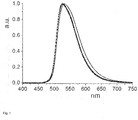
- the metal carbene complexes of the present invention preferably emit yellow to green light ( ⁇ max of 510 to 590 nm) with a FWHM (full width at half maximum) of 20 nm to 140 nm, more preferably of 40 nm to 100 nm, most preferably 60 nm to 90 nm.
- the color purity plays a crucial role.
- the spectra of the OLED emitters are narrow. Therefore, it is preferred that the emission shows a single peak spectrum with a full width half-maximum (FWHM) of 20 nm to 140 nm, more preferably of 40 nm to 100 nm, most preferably 60 nm to 90 nm.
- FWHM full width half-maximum
- the metal carbene complex according to the present invention is - at room temperature (i.e. at 25 °C) - a phosphorescent emitter.
- the phosphosphorescent emitters according to the present invention emit preferably from triplet excited states. Phosphorescence may be preceded by a transition from a triplet excited state to an intermediate non-triplet state from which the emissive decay occurs.
- organic molecules coordinated to lanthanide elements often phosphoresce from excited states localized on the lanthanide metal. However, such materials do not phosphoresce directly from a triplet excited state but instead emit from an atomic excited state centered on the lanthanide metal ion.
- the europium diketonate complexes illustrate one group of these types of species.
- the absolute photoluminescence quantum yield of the metal carbene complexes of the present invention is in general at least 50%, preferably at least 70%, e.g. 50 to 95 %, more preferably 70 to 95 %.
- the absolute photoluminescence quantum yield of the metal carbene complexes of the present invention (measured at room temperature (in the context of the present invention "room temperature” is 25°C) is in general 50 to 99 %, more preferably 70 to 99 %.
- the complexes according to the present invention generally remain undegraded at a temperature above 250°C, preferably above 300 °C, more preferably above 350 °C, in general for a duration of more than 2 days, preferably more than 5 days, more preferably more than 9 days.
- This can for example been prooved by a so-called "ampulla test". For that test, 50 mg of material have been sealed in glass ampullas under nitrogen atmosphere and afterwards they were stored in an oven at different temperatures at temperatures between 310° up to 385°C for a duration of 10 days. After that period the materials have been investigated by means of HPLC to check their quality. The results show that the inventive complexes remain undegraded.
- a metal-carbene bond is depicted as C-M, as, for example, preferably
- a C 1 -C 18 alkyl group, which can optionally be substituted by at least one substituent E and/or interrupted by D preferably a C 1 -C 12 alkyl group, which can optionally be substituted by at least one substituent E and/or interrupted by D; more preferably a C 1 -C 8 alkyl group, which can optionally be substituted by at least one substituent E and/or interrupted by D; most preferably a C 1 -C 8 alkyl group, which can optionally be substituted by at least one substituent E; even more preferably an unsubstituted C 1 -C 8 alkyl group; further even more preferably an unsubstituted C 1 -C 5 alkyl group, e.g.
- alkyl groups may be linear or branched.
- a C 3 -C 12 cycloalkyl group which can optionally be substituted by at least one substituent E: preferably a C 3 -C 12 cycloalkyl group, which can optionally be substituted by at least one substituent E; more preferably a C 3 -C 6 cycloalkyl group, which can optionally be substituted by at least one substituent E; most preferably an unsubstituted C 3 -C 6 cycloalkyl group, e.g. cyclohexyl or cyclopentyl.
- a heterocycloalkyl group comprising 3 to 6 ring atoms, interrupted by at least one of O, S and NR 65 and/or substituted by at least one substituent E: preferably an unsubstituted heterocycloalkyl group comprising 3 to 6 ring atoms, interrupted by at least one of O, S and NR 65 , e.g. heterocycloalkyl groups based on pyrrolidine, tetrahydrothiophene, tetrahydrofurane, tetrahydropyrane, tetrahydrothiopyrane, piperidine, dioxane, e.g. 1,4-dioxane or morpholine and derivatives thereof substituted by at least one substituent E.
- a C 6 -C 14 aryl group, which can optionally be substituted by at least one substituent G preferably a C 6 -C 14 aryl group, which can optionally be substituted by one or two groups G; more preferably a phenyl group, which can optionally be substituted by one or two groups G.
- a -NR 65 -C 6 -C 14 aryl group which can optionally be substituted by at least one substituent G: preferably a -N(C 6 -C 14 aryl) 2 group, which can optionally be substituted by at least one substituent G; more preferably a -N(phenyl) 2 group, which can optionally be substituted by one or two groups G; most preferably an unsubstituted -N(phenyl) 2 group.
- a halogen atom preferably F or Cl, more preferably F.
- a C 1 -C 18 haloalkyl group preferably a fluoroC 1 -C 4 alkyl group, more preferably CF 3 .
- the alkyl groups may be linear or branched.
- one or more hydrogen atoms may be substituted by deuterium atoms.
- the residues R 1 , R 2 , R 3 and R 4 in the metal carbene complexes according to the present invention are independently of each other hydrogen; a C 1 -C 18 alkyl group, which can optionally be substituted by at least one substituent E and/or interrupted by D; a C 3 -C 12 cycloalkyl group, which can optionally be substituted by at least one substituent E; a heterocycloalkyl group comprising 3 to 6 ring atoms, interrupted by at least one of O, S and NR 65 and/or substituted by at least one substituent E; a C 6 -C 14 aryl group, which can optionally be substituted by at least one substituent G; a -NR 65 -C 6 -C 14 aryl group, preferably a -N(C 6 -C 14 aryl) 2 group, which can optionally be substituted by at least one substituent G; a heteroaryl group comprising 3 to 11 ring atoms, which can optionally be substituted
- R 1 and R 2 , R 2 and R 3 or R 3 and R 4 form together a ring wherein A 21 , A 21' , A 22 , A 22' , A 23 , A 23' , A 24' and A 24 are independently of each other H, a C 1 -C 4 alkyl group, a C 3 -C 6 cycloalkyl group, or a fluoroC 1 -C 4 alkyl group.
- R 1 , R 2 , R 3 and R 4 are independently of each other hydrogen; a C 1 -C 12 alkyl group, which can optionally be substituted by at least one substituent E and/or interrupted by D; a C 3 -C 12 cycloalkyl group, which can optionally be substituted by at least one substituent E; a C 6 -C 14 aryl group, which can optionally be substituted by one or two groups G; a heteroaryl group comprising 3 to 11 ring atoms, which can optionally be substituted by one or two groups G; or a -N(phenyl) 2 group, which can optionally be substituted by one or two groups G.
- R 1 , R 2 , R 3 and R 4 are independently of each other hydrogen; a C 1 -C 8 alkyl group, which can optionally be substituted by at least one substituent E and/or interrupted by D; a C 3 -C 6 cycloalkyl group, which can optionally be substituted by at least one substituent E; or a phenyl group, which can optionally be substituted by one or two groups G.
- R 1 , R 2 , R 3 and R 4 are independently of each other hydrogen; a C 1 -C 8 alkyl group, which can optionally be substituted by at least one substituent E; a C 3 -C 6 cycloalkyl group, which can optionally be substituted by at least one substituent E; or a phenyl group, which can optionally be substituted by one or two groups G.
- R 1 , R 2 , R 3 and R 4 are independently of each other hydrogen; a C 1 -C 8 alkyl group, which can optionally be substituted by at least one substituent E; a C 3 -C 6 cycloalkyl group; or either R 2 and R 3 or R 1 and R 4 are a phenyl group, which can optionally be substituted by one or two groups G.
- R 1 , R 2 , R 3 and R 4 are independently of each other hydrogen; a C 1 -C 8 alkyl group; or a C 3 -C 6 cycloalkyl group.
- either R 2 and R 3 or R 1 and R 4 are H.
- R 1 and R 4 are hydrogen and R 2 and R 3 are independently of each other hydrogen; a C 1 -C 8 alkyl group; or a C 3 -C 6 cycloalkyl group, or a phenyl group, which can optionally be substituted by one or two groups G.
- R 1 , R 2 , R 3 and R 4 are hydrogen.
- the residues R 5 and R 6 are independently of each other hydrogen; a C 1 -C 18 alkyl group, which can optionally be substituted by at least one substituent E and/or interrupted by D; a C 3 -C 12 cycloalkyl group, which can optionally be substituted by at least one substituent E; a heterocycloalkyl group comprising 3 to 6 ring atoms, interrupted by at least one of O, S and NR 65 and/or substituted by at least one substituent E; a C 6 -C 14 aryl group, which can optionally be substituted by at least one substituent G; a -NR 65 -C 6 -C 14 aryl group, preferably a -N(C 6 -C 14 aryl) 2 group, which can optionally be substituted by at least one substituent G; a heteroaryl group comprising 3 to 11 ring atoms, which can optionally be substituted by at least one substituent G, interrupted by at least one of O, S, N and
- R 5 and R 6 are independently of each other hydrogen; a C 1 -C 12 alkyl group, which can optionally be substituted by E and/or interrupted by D; a C 3 -C 12 cycloalkyl group, which can optionally be substituted by E; or one of R 5 and R 6 , preferably R 5 , is a group of formula in a further preferred embodiment, R 6 is a group of formula R a is H, a C 1 -C 5 alkyl group, a fluoroC 1 -C 4 alkyl group, or a C 3 -C 6 cycloalkyl group; preferably H, a C 1 -C 5 alkyl group, C 3 -C 6 cycloalkyl group; more preferably H, or a C 1 -C 5 alkyl group; R e is H, a C 1 -C 5 alkyl group, a fluoroC 1 -C 4 alkyl group, or a C 3 -C 6 .
- R 5 and R 6 are independently of each other hydrogen; a C 1 -C 8 alkyl group, which can optionally be substituted by at least one substituent E and/or interrupted by D; or one of R 5 and R 6 is a C 3 -C 6 cycloalkyl group, which can optionally be substituted by at least one substituent E; or one of R 5 and R 6 is a phenyl group, which can optionally be substituted by one or two groups G.
- R 5 and R 6 are independently of each other hydrogen; a C 1 -C 8 alkyl group, which can optionally be substituted by at least one substituent E; or a C 3 -C 6 cycloalkyl group, which can optionally be substituted by at least one substituent E; or a phenyl group, which can optionally be substituted by one or two groups G.
- R 5 and R 6 are independently of each other hydrogen; a C 1 -C 8 alkyl group, which can optionally be substituted by at least one substituent E; a C 3 -C 6 cycloalkyl group, which can optionally be substituted by at least one substituent E; or either R 5 or R 6 , preferably R 5 , is a phenyl group, which can optionally be substituted by one or two groups G; in a further preferred embodiment R 6 is a phenyl group, which can optionally be substituted by one or two groups G.
- R 5 and R 6 are independently of each other hydrogen; a C 1 -C 8 alkyl group; or a C 3 -C 6 cycloalkyl group.
- at least one of R 5 and R 6 is hydrogen, and the other one is a C 1 -C 8 alkyl group. More preferably, at least R 5 is hydrogen, and R 6 is a C 1 -C 8 alkyl group. Most preferably both R 5 and R 6 are hydrogen.
- R 5 and R 6 are independently of each other hydrogen; a C 1 -C 8 alkyl group; or one of R 5 and R 6 , preferably R 5 , is a phenyl group, which can optionally be substituted by one group or two groups selected from CF 3 or C 1 -C 8 alkyl, preferably optionally be substituted by one or two C 1 -C 8 alkyl group; in a further preferred embodiment R 6 is a phenyl group, which can optionally be substituted by one group or two groups selected from CF 3 or C 1 -C 8 alkyl, preferably optionally be substituted by one or two C 1 -C 8 alkyl group; preferably, at least one of R 5 and R 6 is hydrogen; more preferably, at least one of R 5 and R 6 is hydrogen and the other one of R 5 and R 6 is hydrogen or a phenyl group, which can optionally be substituted by one or two C 1 -C 8 alkyl groups.
- R 5 and R 6 are hydrogen.
- R 5 is H and R 6 is a phenyl group, which can optionally be substituted by one group or two C 1 -C 8 alkyl groups.
- R 7 , R 8 , R 9 , R 27 and R 28 are independently of each other hydrogen; a C 1 -C 18 alkyl group, which can optionally be substituted by at least one substituent E and/or interrupted by D; a C 3 -C 12 cycloalkyl group, which can optionally be substituted by at least one substituent E; a heterocycloalkyl group comprising 3 to 6 ring atoms, interrupted by at least one of O, S and NR 65 and/or substituted by at least one substituent E; a C 6 -C 14 aryl group, which can optionally be substituted by at least one substituent G; a heteroaryl group comprising 3 to 11 ring atoms, which can optionally be substituted by at least one substituent G, interrupted by at least one of O, S, N and NR 65 a halogen atom, especially F or Cl; a C 1 -C 18 haloalkyl group such as CF 3 ; CN; or SiR 80 R
- R 7 , R 8 and R 9 are independently of each other hydrogen; a C 1 -C 12 alkyl group, which can optionally be substituted by E and/or interrupted by D; a C 3 -C 12 cycloalkyl group, which can optionally be substituted by E, a C 6 -C 14 aryl group, which can optionally be substituted by one or two groups G; a heteroaryl group comprising 3 to 11 ring atoms, which can optionally be substituted by one or two groups G.
- R 27 , R 28 are independently of each other hydrogen; or a C 1 -C 12 alkyl group, which can optionally be substituted by E and/or interrupted by D, preferably a CH 2 -C 1 -C 7 alkyl group, which can optionally be substituted by E and/or interrupted by D.
- R 7 , R 8 and R 9 are independently of each other hydrogen; a C 1 -C 8 alkyl group, which can optionally be substituted by at least one substituent E and/or interrupted by D; a C 3 -C 6 cycloalkyl group, which can optionally be substituted by at least one substituent E or a phenyl group, which can optionally be substituted by one or two groups G.
- R 27 and R 28 is hydrogen.
- R 7 , R 8 and R 9 are independently of each other hydrogen; a C 1 -C 8 alkyl group, which can optionally be substituted by at least one substituent E; or a C 3 -C 6 cycloalkyl group, which can optionally be substituted by at least one substituent E; or a phenyl group, which can optionally be substituted by one or two groups G.
- R 27 and R 28 are hydrogen.
- R 7 , R 8 and R 9 are independently of each other hydrogen; a C 1 -C 8 alkyl group, which can optionally be substituted by at least one substituent E; a C 3 -C 6 cycloalkyl group; or R 8 is a phenyl group, which can optionally be substituted by one or two groups G.
- R 7 , R 8 and R 9 are independently of each other hydrogen; a C 1 -C 8 alkyl group; or a C 3 -C 6 cycloalkyl group; most preferably, R 7 , R 8 and R 9 are a C 1 -C 8 alkyl group.
- R 7 is hydrogen and R 8 and R 9 are identical with R 5 and R 6 .
- R 7 and R 9 are hydrogen and R 8 is hydrogen or a phenyl group, which can optionally be substituted by one or two groups G. Even most preferably, R 7 , R 8 and R 9 are hydrogen.
- R 1 , R 2 , R 3 , R 4 , R 5 , R 6 , R 7 , R 8 , R 9 and R 27 and R 28 are hydrogen.
- E is -OR 69 , -SR 69 , -NR 65 R 66 , -COR 68 , -COOR 67 , -CONR 65 R 66 , -CN, halogen, or a C 1 -C 18 alkyl group, which can optionally be substituted by at least one substituent E and/or interrupted by D; preferably F; a C 1 -C 8 haloalkyl group such as CF 3 , or a C 1 -C 8 alkyl group; preferably, E is C 1 -C 8 alkyl, C 1 -C 8 alkoxy, CN, halogen, preferably F, or C 1 -C 8 haloalkyl, such as CF 3 ; more preferably E is C 1 -C 8 alkyl, C 1 -C 8 alkoxy, or C 1 -C 8 haloalkyl, such as CF 3 ; more preferably, E is -OR 69 , CF 3
- G is E; or an unsubstituted C 6 -C 14 aryl group; a C 6 -C 14 aryl group, which is substituted by F, C 1 -C 18 alkyl, a C 3 -C 6 cycloalkyl group, or C 1 -C 18 alkyl, which is substituted by F and/or interrupted by O; an unsubstituted heteroaryl group comprising 3 to 11 ring atoms, interrupted by at least one of O, S, N and NR 65 ; or a heteroaryl group comprising 3 to 11 ring atoms, interrupted by at least one of O, S, N and NR 65 , which is substituted by F, unsubstituted C 1 -C 18 alkyl, SiR 80 R 81 R 82 , or C 1 -C 18 alkyl which is substituted by F and/or interrupted by O; preferably, G is a C 1 -C 8 alkyl group, or a group of formula R a is H,
- R 63 and R 64 are independently of each other H; unsubstituted C 6 -C 18 aryl; C 6 -C 18 aryl which is substituted by C 1 -C 18 alkyl, or C 1 -C 18 alkoxy; unsubstituted C 1 -C 18 alkyl; or C 1 -C 18 alkyl which is interrupted by -O-; preferably unsubstituted C 6 -C 18 aryl; C 6 -C 18 aryl which is substituted by C 1 -C 18 alkyl, or C 1 -C 18 alkoxy; unsubstituted C 1 -C 18 alkyl; or C 1 -C 18 alkyl which is interrupted by -O-; preferably, R 63 and R 64 are independently of each other a phenyl group, which can optionally be substituted by one or two C 1 -C 8 alkyl groups; an unsubstituted C 1 -C 18 alkyl group; or a C 1
- R 65 and R 66 are independently of each other H, an unsubstituted C 6 -C 18 aryl group; a C 6 -C 18 aryl group which is substituted by C 1 -C 18 alkyl, or C 1 -C 18 alkoxy; an unsubstituted C 1 -C 18 alkyl group; or a C 1 -C 18 alkyl group, which is interrupted by -O-; or R 65 and R 66 together form a five or six membered ring; preferably, R 65 and R 66 are independently of each other a phenyl group, which can optionally be substituted by one or two C 1 -C 8 alkyl groups; an unsubstituted C 1 -C 18 alkyl group; or a C 1 -C 18 alkyl group, which is interrupted by -O-.
- R 67 is H, an unsubstituted C 6 -C 18 aryl group; a C 6 -C 18 aryl group, which is substituted by C 1 -C 18 alkyl, or C 1 -C 18 alkoxy; an unsubstituted C 1 -C 18 alkyl group; or a C 1 -C 18 alkyl group, which is interrupted by -O-; preferably an unsubstituted C 6 -C 18 aryl group; a C 6 -C 18 aryl group, which is substituted by C 1 -C 18 alkyl, or C 1 -C 18 alkoxy; an unsubstituted C 1 -C 18 alkyl group; or a C 1 -C 18 alkyl group, which is interrupted by -O-; preferably, R 67 is a phenyl group, which can optionally be substituted by one or two C 1 -C 8 alkyl groups; an unsubstituted C 1 -C 18
- R 68 is H; an unsubstituted C 6 -C 18 aryl group; a C 6 -C 18 aryl group, which is substituted by C 1 -C 18 alkyl, or C 1 -C 18 alkoxy; an unsubstituted C 1 -C 18 alkyl group; or a C 1 -C 18 alkyl group, which is interrupted by -O-; preferably, R 68 is a phenyl group, which can optionally be substituted by one or two C 1 -C 8 alkyl groups; an unsubstituted C 1 -C 18 alkyl group; or a C 1 -C 18 alkyl group, which is interrupted by -O-.
- R 69 is H, an unsubstituted C 6 -C 18 aryl; a C 6 -C 18 aryl, which is substituted by C 1 -C 18 alkyl, or C 1 -C 18 alkoxy; an unsubstituted C 1 -C 18 alkyl group; or a C 1 -C 18 alkyl group, which is interrupted by - O-; preferably an unsubstituted C 6 -C 18 aryl; a C 6 -C 18 aryl, which is substituted by C 1 -C 18 alkyl, or C 1 -C 18 alkoxy; an unsubstituted C 1 -C 18 alkyl group; or a C 1 -C 18 alkyl group, which is interrupted by -O-; preferably, R 69 is a phenyl group, which can optionally be substituted by one or two C 1 -C 8 alkyl groups; an unsubstituted C 1 -C 18 alkyl group
- R 70 and R 71 are independently of each other an unsubstituted C 1 -C 18 alkyl group; an unsubstituted C 6 -C 18 aryl group; or a C 6 -C 18 aryl group, which is substituted by C 1 -C 18 alkyl; preferably, R 70 and R 71 are independently of each other a phenyl group, which can optionally be substituted by one or two C 1 -C 8 alkyl groups; or an unsubstituted C 1 -C 18 alkyl group.
- R 72 is an unsubstituted C 1 -C 18 alkyl group; an unsubstituted C 6 -C 18 aryl group, or a C 6 -C 18 aryl group, which is substituted by C 1 -C 18 alkyl; preferably, R 72 is a phenyl group, which can optionally be substituted by one or two C 1 -C 8 alkyl groups; or an unsubstituted C 1 -C 18 alkyl group.
- R 73 and R 74 are independently of each other H, C 1 -C 25 alkyl, C 1 -C 25 alkyl which is interrupted by O, C 7 -C 25 arylalkyl, C 6 -C 24 aryl, C 6 -C 24 aryl which is substituted by C 1 -C 18 alkyl, C 2 -C 20 heteroaryl, or C 2 -C 20 heteroaryl which is substituted by C 1 -C 18 alkyl; preferably, R 73 and R 74 are independently of each other a phenyl group, which can optionally be substituted by one or two C 1 -C 8 alkyl groups; an unsubstituted C 1 -C 18 alkyl group; or a C 1 -C 18 alkyl group, which is interrupted by -O-.
- R 75 is a C 6 -C 18 aryl group; a C 6 -C 18 aryl which is substituted by C 1 -C 18 alkyl, or C 1 -C 18 alkoxy; a C 1 -C 18 alkyl group; or a C 1 -C 18 alkyl group, which is interrupted by -O-; preferably, R 75 is a phenyl group, which can optionally be substituted by one or two C 1 -C 8 alkyl groups; an unsubstituted C 1 -C 18 alkyl group; or a C 1 -C 18 alkyl group, which is interrupted by -O-.
- the present invention concerns the inventive metal carbene complex, wherein at least one of the radicals R 1 , R 2 , R 3, R 4 , R 5 , R 6 , R 7 , R 8 , and R 9 is not hydrogen; preferably, either R 5 is not hydrogen or at least two of the radicals R 1 , R 2 , R 3 , R 4 , R 5 , R 6 , R 7 , R 8 and R 9 are not hydrogen.
- two adjacent radicals of the group R 1 , R 2 , R 3 , R 4 , R 5 , R 6 , R 7 , R 8 , R 9 , R 27 and R 28 are not at the same time an aromatic group, e.g.
- a C 6 -C 14 aryl group which can optionally be substituted by at least one substituent G
- a -NR 65 -C 6 -C 14 aryl group preferably a-N(C 6 -C 14 aryl) 2 group, which can optionally be substituted by at least one substituent G
- a heteroaryl group comprising 3 to 11 ring atoms, which can optionally be substituted by at least one substituent G, interrupted by at least one of O, S, N and NR 65
- a -NR 65 -heteroaryl group preferably a -N(heteroaryl) 2 group, comprising 3 to 11 ring atoms, which can optionally be substituted by at least one substituent G, interrupted by at least one of O, S, N and NR 65 .
- the present invention also concerns a combination of both preferred embodiments mentioned before.
- the present invention concerns the inventive metal carbene complex, wherein R 1 , R 2 , R 3 , R 4 , R 5 , R 6 , R 7 , R 8 , R 9 and R 27 and R 28 are hydrogen.
- R 6 and R 8 are both present in the inventive metal carbene complexes, R 6 and R 8 are preferably identical.
- R 5 and R 9 are both present in the inventive metal carbene complexes, R 5 and R 9 are identical. "Present" means in the sense of the present application that the respective residues are not hydrogen.
- the metal carbene complex according to the present invention is preferably an inventive metal carbene complex, wherein R 1 , R 2 , R 3 and R 4 are independently of each other hydrogen; a C 1 -C 12 alkyl group, which can optionally be substituted by at least one substituent E and/or interrupted by D; a C 3 -C 12 cycloalkyl group, which can optionally be substituted by at least one substituent E; a C 6 -C 14 aryl group, which can optionally be substituted by one or two groups G; a heteroaryl group comprising 3 to 11 ring atoms, which can optionally be substituted by one or two groups G; or a -N(phenyl) 2 group, which can optionally be substituted by one or two groups G; preferably, R 1 , R 2 , R 3 and R 4 are independently of each other hydrogen; a C 1 -C 8 alkyl group, which can optionally be substituted by at least one substituent E and/or interrupted by D; a C 3
- the metal carbene complex according to the present invention is an inventive metal carbene complex, wherein R 1 , R 2 , R 3 and R 4 are independently of each other hydrogen; a C 1 -C 8 alkyl group, which can optionally be substituted by at least one substituent E; a C 3 -C 6 cycloalkyl group, which can optionally be substituted by at least one substituent E; or a phenyl group, which can optionally be substituted by one or two groups G; preferably, R 1 , R 2 , R 3 and R 4 are independently of each other hydrogen; a C 1 -C 8 alkyl group, which can optionally be substituted by at least one substituent E; a C 3 -C 6 cycloalkyl group; or either R 2 and R 3 or R 1 and R 4 are a phenyl group, which can optionally be substituted by one or two groups G; more preferably, R 1 , R 2 , R 3 and R 4 are hydrogen; R 5 and R 6 are
- the metal carbene complex according to the present invention is an inventive metal carbene complex, wherein R 1 , R 2 , R 3 and R 4 are independently of each other hydrogen; a C 1 -C 8 alkyl group; or a C 3 -C 6 cycloalkyl group;or either R 1 and R 4 or R 2 and R 3 are a phenyl group, which can optionally be substituted by one or two groups G; preferably, R 1 and R 4 are hydrogen and R 2 and R 3 are are independently of each other hydrogen; a C 1 -C 8 alkyl group; or a C 3 -C 6 cycloalkyl group, or a phenyl group, which can optionally be substituted by one or two groups G.
- R 1 , R 2 , R 3 and R 4 are hydrogen.
- R 5 , R 6 , R 7 , R 8 and R 9 are independently of each other hydrogen; a C 1 -C 8 alkyl group; or a C 3 -C 6 cycloalkyl group; or R 7 and R 9 are hydrogen and R 8 is hydrogen or a phenyl group which can be optionally substituted by one or two groups G and either one of R 5 and R 6 is phenyl group which can be optionally substituted by one or two groups G and the other one of R 5 and R 6 is hydrogen; more preferably, R 5 , R 6 , R 7 , R 8 and R 9 are hydrogen; and R 27 and R 28 are hydrogen.
- the metal carbene complex according to the present invention is an inventive metal carbene complex, wherein either R 2 and R 3 or R 1 and R 4 are H; preferably, R 1 and R 4 are H, more preferably, R 1 , R 2 , R 3 and R 4 are H.
- the metal carbene complex according to the present invention is an inventive metal carbene complex, wherein R 5 and R 6 are independently of each other hydrogen; a C 1 -C 8 alkyl group; or one of R 5 and R 6 , preferably R 5 , is a phenyl group, which can optionally be substituted by one or two groups selected from CF 3 or C 1 -C 8 alkyl, preferably optionally be substituted by one or two C 1 -C 8 alkyl groups; preferably, at least one of R 5 and R 6 is hydrogen; more preferably, R 5 and R 6 are hydrogen; R 7 and R 9 are C 1 -C 8 alkyl or R 7 and R 9 are hydrogen; preferably, R 7 and R 9 are hydrogen; R 8 is hydrogen; a C 1 -C 8 alkyl group; or a phenyl group, which can optionally be para-substituted by one group selected from CF 3 or C 1 -C 8 alkyl, preferably optionally be substituted by one C
- the metal carbene complex according to the present invention is further more preferably an inventive metal carbene complex, wherein R 5 is hydrogen; a C 1 -C 8 alkyl group, which can optionally be substituted by at least one substituent selected from CF 3 , C 1 -C 8 alkyl and F, preferably a C 1 -C 8 alkyl substituent; a C 3 -C 6 cycloalkyl group, which can optionally be substituted by at least one substituent selected from CF 3 , C 1 -Csalkyl and F, preferably a C 1 -C 8 alkyl substituent; or a phenyl group, which can optionally be substituted by one or two groups selected from CF 3 and C 1 -C 8 alkyl, preferably optionally be substituted by one or two C 1 -C 8 alkyl groups; preferably hydrogen; R 6 and R 8 are identical and selected from the group consisting of a C 1 -C 8 alkyl group,
- the metal carbene complex according to the present invention is further more preferably an inventive metal carbene complex, wherein R 7 , R 8 and R 9 are H; and R 6 is H; and R 27 and R 28 are hydrogen.
- the metal carben complex according to the present invention has the following formula (B), preferably the following formula (II) preferably wherein
- the metal carbene complex according to the present invention has the formula (II).
- residues, symbols and indices in the metal carbene complex of formula (II) according to the present invention have the following meanings:
- the metal carbene complex according to the present invention has the formula (B), preferably the formula (II) mentioned above wherein Z is NR x , O or S, preferably NR x or O, more preferably NR x ;
- the metal carbene complex according to the present invention has the formula (B), preferably the formula (II) mentioned above wherein Z is NR x , O or S, preferably NR x or O, more preferably NR x ;
- the metal carbene complex according to the present invention has the formula (B), preferably the formula (II) mentioned above wherein Z is NR x , O or S, preferably NR x or O, more preferably NR x ;
- L in the metal carbene complex according to the present invention is a group of formula preferably or or wherein
- L in the metal carbene complex according to the present invention is a group of formula (X-1), (X-2), (X-3), (X-4), (X-5), preferably (X-5a) and (X-5b), (X-8), (X-9), (X-10), (X-11), (X-12), (X-13), (X-14), (X-15), (X-16), (X-17), (X-18), (X-20), (X-21), (X-22), (X-23), (X-24), (X-25), (X-26), (X-27), (X-28), and (X-29); or a group of formula (X-30), (X-31), (X-32), (X-33), (X-34), (X-35), (X-36), (X-37), (X-38), (X-39), (X-40), (X-41), (X-42), (X-43) or (X-44).
- L in the metal carbene complex according to the present invention is a group of formula (X-1), (X-2), (X-3), (X-4), (X-5), preferably (X-5a) and (X-5b), (X-8), (X-9), (X-10), (X-11), (X-12), (X-13), (X-14), (X-15), (X-16), (X-17), and (X-18); or a group of formula (X-31), (X-32), (X-33), (X-34), (X-35), (X-36), (X-37), (X-38), (X-39), (X-40), (X-41), (X-42), (X-43) or (X-44).
- L in the metal carbene complex according to the present invention is a group of formula (X-1), (X-2), (X-3), (X-4), (X-5), preferably (X-5a) and (X-5b), (X-8), (X-9), (X-10), (X-11), and (X-12); or a group of formula (X-31), (X-32), (X-33), (X-34), (X-35), (X-36), (X-37), (X-38), (X-39), (X-40), (X-41), (X-42), (X-43) or (X-44).
- L in the metal carbene complex according to the present invention is a group of formula (X-1), (X-4), (X-5), preferably (X-5a) and (X-5b), (X-8), (X-9), (X-10), (X-11), and (X-12);; more preferably (X-1), (X-4), (X-5), (X-8), (X-9), and (X-12).
- L in the metal carbene complex according to the present invention is a group of formula (X-1) or (X-4).
- L in the metal carbene complex according to the present invention is a group of formula (X-1), (X-2), (X-3), (X-4), (X-5a), (X-8, wherein R 26 is a phenyl group, which can optionally be substituted by one or two groups selected from CF 3 and C 1 -Csalkyl), (X-31), (X-34), (X-36), (X-38), (X-40), (X-42) or (X-44).
- L in the metal carbene complex according to the present invention is a group of formula (X-1), (X-2), (X-3), (X-4), (X-5a), (X-8, wherein R 26 is a phenyl group, which can optionally be substituted by one or two selected from CF 3 and C 1 -C 8 alkyl), (X-31), (X-34) or (X-44).
- L in the metal carbene complex according to the present invention is a group of formula (X-1), (X-4), (X-5a), (X-8, wherein R 26 is a phenyl group, which can optionally be substituted by one or two selected from CF 3 and C 1 -C 8 alkyl) or (X-31); further even more preferably L is (X-1), (X-4), (X-5a) or (X-31) and most preferably, L is (X-1) or (X-4).
- L in the metal carbene complex according to the present invention is a group of formula (X-1), (X-5a) or (X-31), more preferably (X-1) or (X-5a).
- L is (X-1).
- the metal M in the inventive metal carbene complexes is Ir or Pt, preferably Ir, more preferably Ir (III). In the case that the metal is Pt, Pt(II) is preferred.
- L in the metal carbene complex mentioned above is a group of formula (X-5a), (X-31), more preferably (X-1), (X-8, wherein R 26 is a phenyl group, which can optionally be substituted by one or two selected from CF 3 and C 1 -C 8 alkyl) or (X-31).
- L in the metal carbene complex mentioned above is a group of formula (X-5a), (X-8, wherein R 26 is a phenyl group, which can optionally be substituted by one or two selected from CF 3 and C 1 -C 8 alkyl) or (X-31).
- residues, symbols and indices in the metal carbene complexes of formula (II) according to the present invention have the following meanings:
- the metal carbene complex according to the present invention is selected from wherein
- the ligands L may be the same or different, preferably the same; and in the case that m is 2 or 3, the m carbene ligands may be the same or different, preferably the same.
- At least one of the residues R 1 , R 2 , R 3 , R 4 , R 5 , R 6 , R 8 and R 9 in the complexes of formulae (IIa), (IIb), (IIc), (IId), (IIe), (IIf), (IIg) and (IIh) is not hydrogen; most preferably, in formula (IIa), two or all of R 1 , R 4 , R 6 and R 8 are not hydrogen; in formula (IIb), two or all of R 2 , R 3 , R 6 and R 8 are not hydrogen; in formula (IIc), two or all of R 1 , R 4 , R 5 and R 9 are not hydrogen; in formula (IId), two or all of R 2 , R 3 , R 5 and R 9 are not hydrogen; in formula (IIe), one or all of R 1 , R 4 and R 5 are not hydrogen; in formula (IIf), one or all of R 2 , R 3 and R 5 are not hydrogen;
- R 1 , R 2 , R 3 and R 4 are hydrogen and the residues R 5 , R 6 and R 8 are as mentioned above.
- R 5 , R 6 and R 8 in formulae (X-1'), (X-2'), (X-3'), and (X-4') are hydrogen.
- R 5 , R 6 and R 8 in formulae (X-5a'), (X-8') and (X-31') are hydrogen.
- the metal carbene complex according to the present invention is selected from the metal carbene complexes (IIa), (IIb), (IIe), (IIf), (IIg) and (IIh).
- the metal carbene complex according to the present invention is selected from the metal carbene complex (IId).
- the metal carbene complex according to the present invention is selected from the metal carbene complexes (IIb), (IId), (IIf) and (IIh).
- R 1 , R 2 , R 3 , R 4 , R 5 , R 6 , R 8 , and R 9 are hydrogen, i.e. the metal carbene complex of the present invention has the following formula:
- the metal carbene complex according to the present invention is selected from wherein
- At least one of the residues R 1 , R 2 , R 3 , R 4 , R 5 , R 6 , R 8 and R 9 in each formula of formulae (II-1) to (II-74) is not hydrogen.
- R 1 , R 2 , R 3 , R 4 , R 5 , R 6 , R 8 , and R 9 in each formula of formulae (II-1) to (II-74) are hydrogen.
- the metal carbene complex according to the present invention is selected from the metal carbene complexes (II-1), (II-2), (II-5), (II-6), (II-7), (II-8), (II-11), (II-12), (II-13), (II-14), (II-15), (II-16), (II-17), (II-18), (II-19), (II-20), (II-21), (II-22), (II-23), (II-24), (II-25), (II-26), (II-27), (II-28), (II-29), (II-30), (II-31), (II-32), (II-33), (II-34), (II-35), (II-36), (II-37), (II-38), (II-39), (II-40), (II-41), (II-42), (II-45), and (II-46).
- the metal carbene complex according to the present invention is selected from the metal carbene complexes (II-51), (II-52), (II-53), (II-54), (II-55), (II-56), (II-57), (II-58), (II-59), (II-60), (II-61), (II-62), (II-63), (II-64), (II-65), (II-66), (II-67), (II-68), (II-69), (II-70), (II-71), (II-72), (II-73) and (II-74).
- the metal carbene complex according to the present invention is selected from the metal carbene complexes (II-1), (II-2), (II-5), (II-6), (II-11), (II-12), (II-15), (II-16), (II-17), (II-18), (II-25), (II-26), (II-27), (II-28), (II-33), (II-34), (II-35), (II-36), (II-37), (II-38), (II-39), (II-40), (II-41), and (II-42).
- R 1 , R 2 , R 3 , R 4 , R 5 , R 6 , R 8 , and R 9 are hydrogen, i.e. the metal carbene complex of the present invention has one of the following formulae: or wherein
- R 1 , R 2 , R 3 , R 4 , R 5 , R 6 , R 8 , and R 9 are hydrogen, i.e. the metal carbene complex of the present invention has one of the formulae (II-A), (II-B), (II-C), (II-D) or (II-E) as mentioned above, wherein
- R 4 R 1 R 6 R 8 A-1, A'-1, A"-1, A"'-1, A""-1, A""'-1 -CH 3 -CH 3 H A-2, A'-2, A"-2, A"'-2, A""-2, A""'-2 -CH 2 CH 3 -CH 2 CH 3 H A-3, A'-3, A"-3, A"'-3, A-""-3, A""'-3 n -propyl n -propyl H A-4, A'-4, A"-4, A"'-4, A""-4, A""'-4 iso -propyl iso -propyl H A-5, A'-5, A"-5, A"'-5, A""-5, A""'-5 sec -butyl sec -butyl H A-6, A'-6, A"-6, A"'-6, A""-6, A"
- Preferred compounds A, A', A", A"', A"" and A'" are compounds A-1, A'-1, A"-1, A"'-1, A"" and A""'-1 to A-90, A'-90, A"-90, A"'-90, A""-90 and A""'-90. Further most preferred compounds are A-133, A'-133, A"-133, A""-133, A""-133 and A'""-133. Cpd.
- R 3 R 2 R 6 R 8 B-1, B'-1, B"-1, B"'-1, B""-1, B""'-1 -CH 3 -CH 3 H B-2, B'-2, B"-2, B"'-2, B""-2, B""'-2 -CH 2 CH 3 -CH 2 CH 3 H B-3, B'-3, B"-3, B"'-3, B-""-3, B""'-3 n -propyl n -propyl H B-4, B'-4, B"-4, B"'-4, B""-4, B""'-4 iso -propyl iso -propyl H B-5, B'-5, B"-5, B"'-5, B""-5, B""'-5 sec -butyl sec -butyl sec -butyl sec -butyl sec -butyl H B-6, B'-6, B"-6, B"'-6, B"""-6, B""'-6 iso -but
- Preferred compounds B, B', B", B'", B"" and B""' are compounds B-1, B'-1, B"-1, B"'-1, B""-1 and B""'-1 to B-90, B'-90, B"-90, B"'-90, B""-90 and B""'-90. Cpd.
- Preferred compounds C are C-1 to C-90. Further, most preferred is compound C-109.
- Preferred compounds E, E', E", E"', E"" and E""' are compounds E-1, E'-1, E"-1, E'"-1, E-1"" and E""'-1 to E-90, E'-90, E"-90, E"'-90, E""-90 and E""'-90. Cpd.
- Preferred compounds F, F', F", F"', F"" and F'” are compounds F-1, F'-1, F"-1, F"'-1, F""-1 and F""'-1 to F-90, F'-90, F"-90, F"'-90, F""-90 and F""'-90. or Cpd.
- R 5 R 8
- R 6 R 9 I-1, I'-1, I"-1, I"'-1, I""-1, I""'-1, HI-1, HI'-1, HI"-1, HI'"-1, HI""-1, HI""'-1 -CH 3 H I-2, I'-2, I"-2, I"'-2, I""-2, I""'-2, HI-2, HI'-2, HI"-2, HI"'-2, HI""-2, HI""'-2 -CH 2 CH 3 H I-3, I'-3, I"-3, I"'-3, I-""-3, I""'-3, HI-3, HI'-3, HI-""-3, HI-""-3, HI-""-3, HI""'-3, HI-""-3, HI""'-3, n -propyl H I-4, I'-4, I'"-4, I""-4, I""'-4, HI-4,
- Examples for most preferred metal carbene complexes of the present invention are the following complexes:
- the present invention also relates to a process for preparing the inventive metal carbene complexes, wherein the metal is selected from Ir and Pt, comprising at least one ligand of formula (A) wherein
- the present invention also relates to a process for preparing the inventive metal carbene complexes, wherein the metal is selected from Ir and Pt, comprising at least one ligand of formula (I') by contacting suitable compounds comprising Ir or Pt with the appropriate ligands or ligand precursors.
- the residues R 1 , R 2 , R 3 , R 4 , R 5 , R 6 , R 7 , R 8 , R 9 , R 27 and R 28 have been defined before.
- a suitable compound comprising iridium or platinum, preferably iridium, and appropriate carbene ligands, preferably in deprotonated form as the free carbene or in the form of a protected carbene, for example as the silver-carbene complex, are contacted.
- the present invention therefore relates - in one embodiment - to a process according to the invention wherein the ligand precursor used is a corresponding Ag-carbene complex.
- the ligand precursors used are organic compounds which are reacted with suitable Ir or Pt comprising compounds.
- the carbene can be released from precursors of the carbene ligands by removing volatile substances, for example lower alcohols such as methanol or ethanol, for example at elevated temperature and/or under reduced pressure and/or using molecular sieves which bind the alcohol molecules eliminated.
- volatile substances for example lower alcohols such as methanol or ethanol, for example at elevated temperature and/or under reduced pressure and/or using molecular sieves which bind the alcohol molecules eliminated.
- the present invention also relates to the process according to the invention wherein the ligand precursor used is a compound of the general formula wherein R 1 , R 2 , R 3 , R 4 , R 5 , R 6 , R 7 , R 8 , R 9 , R 27 and R 28 and Z are as defined above, and
- the present invention also relates to the process according to the invention wherein the ligand precursor used is a compound of the general formula wherein R 1 , R 2 , R 3 , R 4 , R 5 , R 6 , R 7 , R 8 , R 9 , R 27 and R 28 are as defined above, and
- R" is alkyl, especially C 1 -C 20 alkyl, preferably C 1 -C 10 alkyl, more preferably C 1 -C 8 alkyl, for example methyl, ethyl, propyl such as n-propyl, isopropyl, butyl such as n-butyl, isobutyl, tert-butyl, pentyl, hexyl, heptyl or octyl.
- R" in the compound of the general formula (XXA) and ( XX ) is most preferably methyl or ethyl.
- Compounds of the general formula (XXA) and ( XX ) are generally obtainable by processes known to those skilled in the art.
- Compounds of the general formula (XXA) and ( XX ) can be obtained for example by reacting compounds of the general formula ( XXIAa ), preferably by reacting compounds of the general formula ( XXIa ) preferably or the corresponding Cl or BF 4 salt of formula preferably wherein X is Cl or BF 4 , with compounds of the general formula HC(OR") 3 ( XXII ), or by reacting compounds of the general formula ( XXIAa ) or (XXIAb), preferably ( XXIa ) or (XXIb) in a first step with Vilsmeier reagent ((chloromethylene)dimethylammonium chloride) and a sodium salt selected from NaBF 4 , NaCl, NaBror Nal to obtain a compound of formula (XXIAc), preferably ( X
- the reaction of compounds of formula (XXIAa), preferably (XXIa) with the compounds of the general formula HC(OR") 3 ( XXII ) is preferably carried out in the presence of an ammonium salt.
- Suitable ammonium salts are for example ammonium tetrafluoroborate or ammonium halides, e.g. ammonium chloride.
- the amount of the ammonium salt in relation to the compound of formula (XXIAa), preferably (XXIa) (100 mol%) is usually 1 mol% to 100 mol %.
- This preparation of the compounds of the general formula (XXA), preferably ( XX ) can be effected in the presence or in the absence of a solvent. Suitable solvents are specified below.
- the compounds of the general formula (XXA), preferably ( XX ) are prepared in substance, or the compound of the general formula (XXIIA), preferably ( XXII ) is added in an excess, such that it functions as a solvent.
- the compounds of the general formula (XXA), preferably ( XX ) are prepared generally at a temperature of 10 to 150°C, preferably 40 to 120°C, more preferably 60 to 110°C.
- the reaction time is generally 2 to 48 hours, preferably 6 to 24 hours, more preferably 8 to 16 hours.
- the desired product can be isolated and purified by customary processes known to those skilled in the art, for example filtration, recrystallization, column chromatography, etc.
- Appropriate compounds, especially complexes, comprising Ir or Pt, preferably iridium, are known to those skilled in the art.
- Particularly suitable compounds comprising platinum or iridium comprise, for example, ligands such as halides, preferably chloride, 1,5-cyclooctadiene (COD), cyclooctene (COE), phosphines, cyanides, alkoxides, pseudohalides and/or alkyl.
- BARF tetraki
- the carbene ligand precursors are deprotonated, preferably before the reaction, for example, by basic compounds known to those skilled in the art, for example basic metalates, basic metal acetates, acetylacetonates or alkoxides, or bases such as KO t Bu, NaO t Bu, LiO t Bu, NaH, silylamides, Ag 2 O and phosphazene bases. Particular preference is given to deprotonating with Ag 2 O to obtain the corresponding Ag-carbene, which is reacted with the compound comprising M to give the inventive complexes.
- basic compounds known to those skilled in the art for example basic metalates, basic metal acetates, acetylacetonates or alkoxides, or bases such as KO t Bu, NaO t Bu, LiO t Bu, NaH, silylamides, Ag 2 O and phosphazene bases.
- bases such as KO t Bu, NaO t Bu, LiO t Bu,
- the carbene can be released from precursors of the carbene ligands by removing volatile substances, for example lower alcohols.
- the contacting is preferably effected in a solvent.
- Suitable solvents are known per se to those skilled in the art and are preferably selected from the group consisting of aromatic or aliphatic solvents, for example benzene, toluene, xylene or mesitylene, cyclic or acyclic ethers, for example dioxane or THF, alcohols, esters, amides, ketones, nitriles, halogenated compounds and mixtures thereof.
- Particularly preferred solvents are toluene, xylenes, mesitylene and dioxane.
- the molar ratio of metal-noncarbene complex used to carbene ligand precursor used is generally 1:10 to 10:1, preferably 1:1 to 1:6, more preferably 1:2 to 1:5.
- the contacting is generally effected at a temperature of 20 to 200°C, preferably 50 to 150°C, more preferably 60 to 150°C.
- the reaction time depends on the desired carbene complex and is generally 0.02 to 50 hours, preferably 0.1 to 24 hours, more preferably 1 to 24 hours.
- the metal carbene complexes comprising at least one ligand of formula (A), preferably of formula (I) obtained after the reaction can optionally be purified by processes known to those skilled in the art, for example washing, crystallization or chromatography, and optionally isomerized under conditions likewise known to those skilled in the art, for example with acid mediation, thermally or photochemically.
- Suitable processes for preparing the metal carbene complex comprising at least one ligand of formula (A), preferably of formula (I) are for example mentioned in WO 2011/073149 and EP13174779 .
- the resulting complexes may yield different isomers that can be separated or converted into a form with a major isomer by isomerization of the mixture.
- the post-functionalization is exemplified in the following for ligands of formula (I), wherein Z - as mentioned in the ligands of formula (A) - is NR x .
- Z is O or S.
- the present invention therefore further provides a process for preparing a metal carbene complex according to the present invention, compising at least one ligand of formula (I') wherein the residues R 1 , R 2 , R 3 , R 4 , R 6 , R 7 , R 8 , R 9 , R 27 and R 28 have been defined before, and R 5' is a C 1 -C 18 alkyl group, which can optionally be substituted by at least one substituent E and/or interrupted by D; a C 3 -C 12 cycloalkyl group, which can optionally be substituted by at least one substituent E; a C 6 -C 14 aryl group, which can optionally be substituted by at least one substituent G; a -N(C 6 -C 14 aryl) 2 group, which can optionally be substituted by at least one substituent G; or a heteroaryl group comprising 3 to 11 ring atoms, which can optionally be substituted by at least one substituent G, interrupted by at least
- Preferred residues R 5' are:
- R 5' is a C 1 -C 8 alkyl group, which can optionally be substituted by at least one substituent E and/or interrupted by D; or R 5' is a C 3 -C 6 cycloalkyl group, which can optionally be substituted by at least one substituent E; or a phenyl group, which can optionally be substituted by one or two groups G.
- R 5' is a C 1 -C 8 alkyl group, which can optionally be substituted by at least one substituent E; or a C 3 -C 6 cycloalkyl group, which can optionally be substituted by at least one substituent E; or a phenyl group, which can optionally be substituted by one or two groups G.
- Preferred reactions for the introduction of the substituent R 5' on the compound of formula (III) are in general metal catalyzed reactions and more specifically Suzuki, Ullmann, Negishi, Heck, Stille and Kumada coupling reactions ( J. Hassan et al., Chemical Reviews 102 (2002) 5 ; L. Ackermann: "Modern Arylation Methods” (Ed.: L. Ackermann), Wiley-VCH, Weinheim, 2009 ).
- inventive metal carbene complex of formula (I') comprising a residue R 5' as mentioned above can be synthesized by one of the following coupling reactions:
- the Suzuki reaction of compound (III) with compound (IV) is carried out in presence of
- the organic solvent is usually an aromatic hydrocarbon, a linear, branched, or cyclic ether, or a usual polar organic solvent, such as benzene, toluene, xylene, tetrahydrofurane, or dioxane, or mixtures thereof.
- a polar organic solvent such as benzene, toluene, xylene, tetrahydrofurane, or dioxane, or mixtures thereof.
- water can be added to the organic reaction medium, in which case, depending on the organic solvent used, the reaction can be carried out in a single phase or in a two-phase mixture.
- the amount of the solvent is chosen in the range of from 1 to 10 I per mol of boronic acid derivative.
- reaction is carried out under an inert atmosphere such as nitrogen, or argon.
- an aqueous base such as an alkali metal hydroxide, metal phosphate, or carbonate such as NaOH, KOH, K 3 PO 4 , Na 2 CO 3 , K 2 CO 3 , or Cs 2 CO 3 .
- Organic bases such as, for example, tetraalkylammonium hydroxide
- phase transfer catalysts such as, for example TBAB
- boron see, for example, L eadbeater & Marco; Angew. Chem. Int. Ed. Eng. 42 (2003) 1407 and references cited therein).
- the molar ratio of the base to boronic acid or boronic ester derivative is chosen in the range of from 0.5:1 to 50:1, very especially in the range of 1:1 to 5:1.
- reaction temperature is chosen in the range of from 40 to 180°C, preferably under reflux conditions.
- reaction time is chosen in the range of from 0.5 to 80 hours, preferably from 2 hours to 60 hours.
- a usual catalyst for coupling reactions or for polycondensation reactions is used, preferably Pd-based, which is described in WO2007/101820 .
- the palladium compound is added in a ratio of from 1:10000 to 1:50, preferably from 1:5000 to 1:200, based on the number of bonds to be closed. Preference is given, for example, to the use of palladium(II) salts such as PdOAc 2 or Pd 2 dba 3 and to the addition of ligands selected from the group consisting of wherein
- the ligand is added in a ratio of from 1:1 to 1:10, based on Pd.
- the catalyst is added as in solution or suspension.
- an appropriate organic solvent such as the ones described above, preferably benzene, toluene, xylene, THF, dioxane, more preferably toluene, or mixtures thereof, is used.
- the amount of solvent usually is chosen in the range of from 1 to 10 I per mol of boronic acid derivative.
- the metal carbene complex wherein the metal is selected from Ir and Pt, comprising at least one ligand of formula of formula (III) can be obtained by reacting a metal carbene complex, wherein the metal is selected from Ir and Pt, comprising at least one ligand of formula of formula (III') with a halogenating agent, wherein R 1 , R 2 , R 3 , R 4 , R 6 , R 7 , R 8 , R 9 , R 27 and R 28 have been defined before.
- the halogenation can be performed by methods known to those skilled in the art.
- Halogenating agents according to the invention are the halogens X 2 or the interhalogens X-X and a base in a ratio of from 1:1 to 1:100 and optionally a Lewis acid in a ratio (halogen to Lewis acid) of from 1:0.1 to 1:0.0001, for example chlorine, bromine or iodine, or chlorine fluoride, bromine fluoride, iodine fluoride, bromine chloride, iodine chloride or iodine bromide, in combination with organic bases such as amines, for example triethylamine, tri-n-butylamine, diisopropylethylamine, morpholine, N-methylmorpholine and pyridine, or salts of carboxylic acids such as sodium acetate, sodium propionate, sodium benzoate, or inorganic bases such as sodium or potassium phosphate or hydrogenphosphate, potassium or sodium hydrogencarbonate, potassium or sodium carbonate, or else organic bromine complexes such as pyridinium perbro
- halogenating agents are organic N-X compounds, such as 1-(chloromethyl)-4-fluoro-1,4-diazoniabicyclo[2.2.2]octane bis(tetrafluoroborate), or N-halocarboxamides such as N-chloro-, N-bromo- and N-iodoacetamide, N-chloro-, N-bromo- and N-iodopropionamide, N-chloro-, N-bromo- and N-iodobenzamide, or N-halocarboximides such as N-chloro-, N-bromo- and N-iodosuccinimide, N-chloro-, N-bromo- and N-iodophthalimide, or N,N-dihalohydantoins, such as 1,3-dibromo-5,5-dimethylhydantoin, 1,3-dichloro-5,5-
- N-halocarboxamides such as N-chloro-, N-bromo- and N-iodosuccinimide, N-chloro-, N-bromo- and N-iodophthalimide, or N,N-dihalohydantoins, such as 1,3-dibromo-5,5-dimethylhydantoin, 1,3-dichloro-5,5-dimethylhydantoin and 1,3-diiodo-5,5-dimethylhydantoin.
- a stoichiometric ratio or an excess of the halogenating agent based on the content of active halogen, to the ligands (III') is used, and can lead selectively to the ligands (III).
- a stoichiometric ratio up to a ratio of 2:1 of the halogenating agent based on the content of active halogen to the ligands (III') is used. More preferably a stoichiometric ratio is used.
- Reaction media according to the invention are protic or aprotic, halogen-free or halogenated solvents, for example alcohols such as methanol, ethanol, propanol, butanol, polyhydric alcohols such as ethylene glycol, propyleneglycol, nitriles such as acetonitrile, propionitrile or benzonitrile, ethers such as diethyl ether THF or dioxane, aromatic hydrocarbons such as benzonitrile, nitrobenzene or chlorobenzene, N,N-dialkylamides such as dimethylformamide, methylacetamide or N-methylpyrroldinone, sulfoxides, such as dimethyl sulfoxide, sulfones such as dimethylsulfone or sulfolane, halogenated hydrocarbons such as dichloromethane, trichloromethanen, 1,1-dichloroethane, 1,2-dichloroethane, 1,1,
- the concentration of the metal carbene complex comprising at least one ligand of formula (III') is in the range from 0.0005 mol/l to 2 mol/l, more preferably in the range from 0.002 mol/l to 0.1 mol/l.
- the metal carbene complex comprising at least one ligand of formula (III') may be dissolved or suspended in the reaction medium.
- the reaction is carried out in the temperature range from -78°C to 150°C, preferably at from 0°C to 80°C, more preferably at from 0°C. to 40°C.
- the reaction is carried out within from 1 h to 100 hours, preferably within from 3 h to 60 h.
- Brominating in the 3 position of the cyclometallating N-aryl group of the imidazo-quinoxaline carbene ligand can be, for example, accomplished by reaction of the metal carbene complex comprising at least one ligand of formula (III') with N -bromosuccinimide in dichloromethane.
- Iodinating in the 3 position of the cyclometallating N-aryl group of the imidazo-quinoxaline carbene ligand can be, for example, accomplished by reaction of the metal carbene complex comprising at least one ligand of formula (III') with N -iodosuccinimide in dichloromethane.
- the imidazo-quinoxalines which form the basis for the imidazo-quinoxaline carbene ligands in the metal carbene complexes of the present invention are commercially available or prepared by methods known in the art and for example described in Saravanakumar et al., Chem. Commun. 2006, 640-642 ; Al-Raqa et al., Heteroatom Chem. 17: 634-647, 2006 ; EI-Sharief et al., Heteroatom Chem. 16: 218-225, 2005 ; Phukan et al., J. Org. Chem. 2013, 78, 11032-11039 ; JP-A 2000-121807 ; and Semenov et al., Russian Journal of Organic Chemistry, 2010, Vol. 46, No. 3, pp. 439-443 .
- the inventive metal carbene complexes can be used in organic electronic devices.
- Suitable organic electronic devices are selected from organic light-emitting diodes (OLEDs), organic photovoltaic cells (OPVs), organic field-effect transistors (OFETs) and light-emitting electrochemical cells (LEECs), preference being given to OLEDs.
- inventive metal carbene complexes are generally notable for improved device performance such as high external quantum efficiency, high luminous efficacy and low voltage, green to yellow emission, decreased lifetime of the luminescence ⁇ (higher radiation rate k rad ), reduced color-shift (e.g. CIE-y shift) with increasing doping concentration, or long device lifetime and/or excellent thermal stability.
- inventive metal-carbene complexes are therefore suitable with particular preference as emitter material in OLEDs
- the present invention therefore concerns an organic electronic device, comprising at least one metal carbene complex according to the present invention.
- the organic electronic device is an OLED.
- the present application therefore further provides an OLED comprising at least one inventive metal carbene complex.
- the inventive metal carbene complex is used in the OLED preferably as an emitter, matrix material, charge transport material, especially hole transport material, and/or charge blocker, more preferably as an emitter and/or hole transport material, most preferably as emitter.
- the inventive metal carbene complex is used in the OLED as an electron transport material or as an electron transport material and a hole transport material.
- the at least one inventive metal carbene complex is more preferably present in the light-emitting layer of an OLED, most preferably as emitter.
- the present application therefore also provides for a light-emitting layer comprising at least one inventive metal carbene complex, preferably as emitter.
- the light-emitting layer additionally comprises at least one host material.
- the light-emitting layer additionally comprises two host materials.
- the present invention relates to a light-emitting layer consisting of at least one inventive metal carbene complex.
- Organic light-emitting diodes are in principle formed from a plurality of layers, e.g.:
- the OLED does not comprise all of the layers mentioned; for example, an OLED comprising layers (a) (anode), (e) (light-emitting layer) and (i) (cathode) is likewise suitable, in which case the functions of layers (c) (hole-transport layer) and (g) (electron-transport layer) are assumed by the adjoining layers.
- OLEDs comprising layers (a), (c), (e), (g) and (i) or (a), (c), (e) and (i) or layers (a), (e), (g) and (i) or (a), (b), (c), (d), (e), (g), (h) and (i) or (a), (b), (c), (e), (g), (h) and (i) or (a), (b), (c), (d), (e), (g) and (i) are likewise suitable.
- the individual layers among the aforementioned layers of the OLED may in turn be formed from two or more layers.
- the hole-transport layer may be formed from one layer, into which holes are injected from the electrode, and a layer which transports the holes away from the hole-injecting layer into the light-emitting layer.
- the electron-transport layer may likewise consist of a plurality of layers, for example of a layer in which electrons are injected through the electrode and a layer which receives electrons from the electron-injecting layer and transports them into the light-emitting layer.
- These layers mentioned are each selected according to factors such as energy level, thermal resistance and charge carrier mobility, and also energy difference of the layers mentioned with the organic layers or the metal electrodes.
- the person skilled in the art is capable of selecting the construction of the OLEDs such that it is matched optimally to the inventive metal-carbene complexes, preferably used as emitter substances in accordance with the invention.
- the HOMO (highest occupied molecular orbital) of the hole-transport layer should be aligned to the work function of the anode
- the LUMO (lowest unoccupied molecular orbital) of the electron-transport layer should be aligned to the work function of the cathode.
- Suitable materials for the aforementioned layers are known to those skilled in the art and are specified, for example, in H. Meng, N. Herron, Organic Small Molecule Materials for Organic Light-Emitting Devices in Organic Light-Emitting Materials and Devices, eds: Z. Li, H. Meng, Taylor & Francis, 2007, Chapter 3, pages 295 to 411 as well as in US2012/0104422 , D.J.
- the layers (b) to (h) have been surface-treated in order to increase the efficiency of charge carrier transport.
- the selection of the materials for each of the layers mentioned is preferably determined by obtaining an OLED having a high efficiency.
- the inventive metal carbene complexes are preferably used as emitter molecules and/or matrix materials in the light-emitting layer (e).
- the inventive metal-carbene complexes may - in addition to use as emitter molecules and/or matrix materials in the light-emitting layer (e) or instead of use in the light-emitting layer - also be used as a charge transport material in the hole-transport layer (c) or in the electron-transport layer (g) and/or as a charge blocker, preference being given to use as a charge transport material in the hole-transport layer (c) (hole transport material).
- the inventive metal carbene complex is used as an electron transport material, or as an electron transport material and a hole transport material.
- the light-emitting layer preferably comprises at least one phosphorescent emitter. Phosphorescent emitter are preferred because of the higher luminescent efficiencies associated with such materials.
- the light-emitting layer preferably also comprises at least one host material.
- the host material is capable of transporting electrons and/or holes, doped with an emitting material that may trap electrons, holes, and/or excitons, such that excitons relax from the emissive material via a photoemissive mechanism.
- the light emitting layer comprises the emitter and two host materials. In this case the two host materials both contribute to the transport of electrons and/or holes.
- the emitter in the OLED of the present invention is therefore preferably a phosphorescent emitter emitting light in the green to yellow region of the visible electromagnetic spectrum ("phosphorescent green emitter").
- phosphorescent green emitter refers to a yellow or green phosphorescent emitter having an emission maximum ( ⁇ max ), which is located at 510 nm to 590 nm, preferably at 515 nm to 570 nm.
- Suitable phosphorescent green emitters are known in the prior art, for example in Baldo et al., Applied Physics Letters, vol. 75, No. 1, 5 July 1999, 4-6 , US 2011/0227049 A1 , US 2014/0203268 A1 , US 2013/0341609 , US 2013/0181190 , US 2013/0119354 , WO 2012/053627 A1 , and WO 2013/112557 ,
- the inventive metal carbene complexes are used as emitter.
- the light-emitting layer (e) may comprise one or more of the inventive metal-carbene complexes as emitter material. Suitable and preferred inventive metal carbene complexes are mentioned above. It is also possible that the light-emitting layer comprises in addition to at least one inventive metal carbene complex one or more further emitters.
- the light-emitting layer preferably comprises beside at least one emitter material (suitable emitter materials are mentioned above), preferably at least one metal cabene complex according to the present invention, at least one host material.
- Suitable host materials are known by a person skilled in the art. Preferred host materials are mentioned below.
- the triplet energy of the host material has to be about 0.2 eV larger than the triplet energy of the phosphorescent emitter (preferably the metal carbene complex according to the present invention) used.
- the triplet energy of the phosphorescent emitter preferably the metal carbene complex according to the present invention
- Suitable host materials for phosphorescent green to yellow emitters are, for example, described in EP2363398A1 , WO2008/031743 , WO2008/065975 , WO2010/145991 , WO2010/047707 , US2009/0283757 , US2009/0322217 , US2010/0001638 , WO2010/002850 , US2010/0060154 , US2010/0060155 , US2010/0076201 , US2010/0096981 , US2010/0156957 , US2011/186825 , US2011/198574 , US2011/0210316 , US2011/215714 , US2011/284835 , and WO2012/045710 .
- the host material may be a compound having hole-transporting property and/or an organic compound having electron-transporting property.
- the host material is an organic compound or organometallic compound having hole-transporting property.
- the host compound may be a mixture of an organic compound or organometallic compound having hole-transporting property and an organic compound or organometallic compound having electron-transporting property.
- any organic compound or organometallic compound having hole-transporting property or having electron-transporting property and sufficient triplet energy can be used as host in the light-emitting layer.
- CBP 4, 4'-di(carbazolyl)biphenyl
- mCP 1,3-bis(carbazolyl)benzene
- TCzB 1,3,5-tris(N-carbazolyl)benzene
- organometallic compounds which can be used for the host material include iridium carbene complexes.
- Suitable iridium carbene complexes are, for example, iridium carbene complexes as described in WO2005/019373A2 , WO2006/056418 A2 , WO2007/115970 , WO2007/115981 , WO2008/000727 , WO2012/121936A2 , US2012/0305894A1 , and WO2012/172482A1 .
- suitable iridium carbene complexes are Ir(DPBIC) 3 with the formula: and Ir(ABIC) 3 with the Ia:
- Suitable host materials are the compounds described in WO2010/079051 (in particular pages on 19 to 26 and in the tables on pages 27 to 34, pages 35 to 37 and pages 42 to 43).
- Also preferred as host compounds in the OLED and in the light-emitting layer of the present invention are the compounds mentioned in WO2012/130709 ; WO2013/050401 ; WO2014/009317 ; WO2014/044722 ; and the non-published European Patent Application EP13191100.0 .
- Further preferred host materials are binary host systems as described in WO2011/136755 ; the hosts described in WO2013/022419 and WO2013/112557 ; triphenylene derivatives for example as described in WO2010/028151 , WO2010/002850 , WO2010/0056669 , US2010/0244004 , US2011/0177641 , US2011/022749 , WO2011/109042 , and WO2011/137157 ; azaborinine compounds for example as described in WO2011/143563 ; bicarbazole compounds for example as described in WO2012/023947 ; carbazolephenyl-pyridine, -pyrimidine and -triazine compounds for example as described in WO2012/108879 ; biscarbazolephenyl-pyridine, -pyrimidine and - triazine compounds for example as described in WO2012/108881 ; dibenzoquinoxaline compounds for example as described in US2011/0210316
- Especially suitable host materials are for example host materials described in WO2013/112557 having the following general formula: wherein R 1 , R 2 , R 3 , R 4 , R 5 , and R 6 may be the same or different fluorine atom, chlorine atom, a deuterium atom, a cyano group, a trifluoromethyl group, a nitro group, linear or branched C 1 -C 6 alkyl group, C 5 -C 10 cyclo-alkyl group, linear or branched C 1 -C 6 alkoxy group, C 5 -C 10 cyclo-alkoxy group, substituted or unsubstituted aromatic hydrocarbon group, substituted or unsubstituted aromatic heterocyclic group, substituted or unsubstituted condensed polycyclic aromatic group, r1, r4, r5 is 0, 1, 2, 3, or 4, r2, r3, r6 is 0, 1, 2 or 3, n is 0 or 1, and Ar1, Ar 2 , and Ar 3 may be
- substitution groups can be any non-carbon or carbon- containing functional group, such as, an aromatic hydrocarbon group, an aromatic heterocyclic group or a polycyclic aromatic group.
- the substitution group on the aromatic ring structure of Ar 1 , A 2 , or Ar 3 can be or the like.
- host materials - which may be employed together with the host material mentioned before - are host materials containing at least one of the following groups in the molecule: wherein X 1 to X 8 is selected from C or N; and wherein Z 1 and Z 2 is S or O.
- Further suitable host compounds are compounds comprising a triphenylene containing benzo-fused thiophene.
- a combination of benzo-fused thiophenes and triphenylene as hosts in OLEDs may be beneficial. Therefore combining these two moieties in one molecule may offer improved charge balance which may improve device performance in terms of lifetime, efficiency and low voltage.
- Different chemical linkage of the two moieties can be used to tune the properties of the resulting compound to make it the most appropriate for a particular phosphorescent emitter, device architecture, and/or fabrication process. For example, m-phenylene linkage is expected to result in higher triplet energy and higher solubility whereas p-phenylene linkage is expected to result in lower triplet energy and lower solubility.
- benzo-fused furans are also suitable host materials.
- benzo-fused furans include benzofuran and dibenzofuran. Therefore, a material containing both triphenylene and benzofuran may be advantageously used as host material in OLEDs. A compound containing both of these two groups may offer improved electron stabilization which may improve device stability and efficiency with low voltage.
- the properties of the triphenylene containing benzofuran compounds may be tuned as necessary by using different chemical linkages to link the triphenylene and the benzofuran.
- Benzo-fused furans are benzofurans and dibenzofurans.
- Benzo-fused thiophenes are benzothiophenes and dibenzothiophenes.
- substituents of the compounds described above are unfused such that the substituents are not fused to the triphenylene, benzo-fused furan or benzo-fused thiophene moieties of the compound.
- the substituents may optionally be inter-fused (i.e. fused to each other).
- benzo-fused thiophene and benzo-fused furans mentioned above are for example described in WO2013/112557 and in WO2009/021126 .
- the host compound can be one compound or it can be a mixture of two or more compounds. Suitable mixtures are for example the binary hosts systems as described in WO2011/136755 and WO2013/112557 .
- a further suitable host material for the emitters of the present invention is mentioned in US2012/0235123 and US2011/0279020 .
- a typical and preferred host material described in the documents mentioned before is
- co-host systems are suitable as host material for the emitters of the present invention.
- a suitable co-host system is exemplified below. It is clear for a person skilled in the art that also similar co-host systems are suitable.
- the light-emitting layer (e) comprises the emitter in an amount of 2 to 40% by weight, preferably 5 to 35% by weight, more preferably 5 to 20 % by weight and the host compound in an amount of 60 to 98% by weight, preferably 65 to 95% by weight, more preferably 80 to 95 % by weight, where the amount of the phosphorescent emitter and the host compound adds up to a total of 100% by weight.
- the emitter may be one emitter or a combination of two ore more emitters.
- the host may be one host or a combination of two or more hosts. In a preferred embodiment, in case of the use of two host compounds they are mixed in a ratio of 1:1 to 1:30, more preferably 1:1 to 1:7, most preferably 1:1 to 1:3.
- the anode is an electrode which provides positive charge carriers. It may be composed, for example, of materials which comprise a metal, a mixture of different metals, a metal alloy, a metal oxide or a mixture of different metal oxides. Alternatively, the anode may be a conductive polymer. Suitable metals comprise the metals of groups 11, 4, 5 and 6 of the Periodic Table of the Elements, and also the transition metals of groups 8 to 10. When the anode is to be transparent, mixed metal oxides of groups 12, 13 and 14 of the Periodic Table of the Elements are generally used, for example indium tin oxide (ITO). It is likewise possible that the anode (a) comprises an organic material, for example polyaniline, as described, for example, in Nature, Vol.
- Preferred anode materials include conductive metal oxides, such as indium tin oxide (ITO) and indium zinc oxide (IZO), aluminum zinc oxide (AlZnO), and metals.
- Anode (and substrate) may be sufficiently transparent to create a bottom-emitting device.
- a preferred transparent substrate and anode combination is commercially available ITO (anode) deposited on glass or plastic (substrate).
- a reflective anode may be preferred for some top-emitting devices, to increase the amount of light emitted from the top of the device. At least either the anode or the cathode should be at least partly transparent in order to be able to emit the light formed. Other anode materials and structures may be used.
- injection layers are comprised of a material that may improve the injection of charge carriers from one layer, such as an electrode or a charge generating layer, into an adjacent organic layer. Injection layers may also perform a charge transport function.
- the hole injection layer may be any layer that improves the injection of holes from anode into an adjacent organic layer.
- a hole injection layer may comprise a solution deposited material, such as a spin-coated polymer, or it may be a vapor deposited small molecule material, such as, for example, CuPc or MTDATA.
- Polymeric hole-injection materials can be used such as poly(N-vinylcarbazole) (PVK), polythiophenes, polypyrrole, polyaniline, self-doping polymers, such as, for example, sulfonated poly(thiophene-3-[2[(2-methoxyethoxy)ethoxy]-2,5-diyl) (Plexcore® OC Conducting Inks commercially available from Plextronics), and copolymers such as poly(3,4-ethylenedioxythiophene)/poly(4-styrenesulfonate) also called PEDOT/PSS. Further suitable hole injection materials are mentioned in US2013/0181190 , especially in table 3, and US2013/0119354 , especially in table 4.
- Suitable p-dopants are mentioned below concerning the hole transport layer.
- suitable p-dopants are MoO 3 , F4-TCNQ or NDP-9.
- layers of p-dopants itself.
- suitable p-dopants are MoO 3 , F4-TCNQ or NDP-9.
- hole injection materials are described in US2010/0219400 , US2015/0073142 and US2015/0102331 , whereby the following material is an example for a preferred hole injection material: preferably doped with MoO 3 , F4-TCNQ or NDP-9, more preferably doped with NDP-9.
- the dopant NDP-9 is commercially available and for example described in EP 2 180 029 .
- Further suitable hole injection materials are the following materials:
- Suitable as hole injection material are for example mentioned in US2010/0044689 and US2014/0217392 , e.g. the following compound doped with a p-dopant. Suitable p-dopants are mentioned below concerning the hole transport layer. Examples for suitable p-dopants are MoO 3 , F4-TCNQ or NDP-9.
- Suitable as hole injection material are for example mentioned in US2010/0219400 , US2015/0073142 and US2015/0102331 , e.g. the following compound doped with a p-dopant.
- Suitable p-dopants are mentioned below concerning the hole transport layer. Examples for suitable p-dopants are MoO 3 , F4-TCNQ or NDP-9.
- Suitable p-dopants are mentioned below concerning the hole transport layer.
- suitable p-dopants are MoO 3 , F4-TCNQ or NDP-9 ( N,N' -Di(1-naphthyl)- N,N' -diphenyl-(1,1'-biphenyl)-4,4'-diamine).
- F4-TCNQ :
- hole transport material Either hole-transporting molecules or polymers may be used as the hole transport material.
- Suitable hole transport materials for layer (c) of the inventive OLED are disclosed, for example, in Kirk-Othmer Encyclopedia of Chemical Technology, 4th Edition, Vol. 18, pages 837 to 860, 1996 , US20070278938 , US2008/0106190 , US2011/0163302 (triarylamines with (di)benzothiophen/(di)benzofuran; Nan-Xing Hu et al. Synth. Met.
- Customarily used hole-transporting molecules are selected from the group consisting of (4-phenyl-N-(4-phenylphenyl)-N-[4-[4-(N-[4-(4-phenyl-phenyl)phenyl]anilino)phenyl]phenyl]aniline), (4-phenyl-N-(4-phenylphenyl)-N-[4-[4-(4-phenyl-N-(4-phenylphenyl)anilino)phenyl]phenyl]aniline), (4-phenyl-N-[4-(9-phenylcarbazol-3-yl)phenyl]-N-(4-phenylphenyl)aniline), (1,1',3,3'-tetraphenylspiro[1,3,2-benzodiazasilole-2,2'-3a,7a-dihydro-1,3,2-benzodiazasilole]), (N2,N2,N2',N
- Suitable carbene complexes are, for example, carbene complexes as described in WO2005/019373A2 , WO2006/056418 A2 , WO2007/115970 , WO2007/115981 , WO2008/000727 , WO2012/121936A2 , US2012/0305894A1 , and WO2012/172482A1 .
- One example of a suitable carbene complex is Ir(DPBIC) 3 ( HTM-1 ).
- Another example of a suitable carbene complex is Ir(ABIC) 3 ( HTM-2 ). The formulae of ( HTM-1 ) and ( HTM-2 ) are mentioned above.
- hole transport material for example mentioned in US2010/0044689 and US2014/0217392 , e.g. the following compound
- the compounds are employed in the hole transport layer in doped or undoped form. Suitable dopants are mentioned below.
- the hole-transporting layer may also be electronically doped in order to improve the transport properties of the materials used, in order firstly to make the layer thicknesses more generous (avoidance of pinholes/short circuits) and in order secondly to minimize the operating voltage of the device.
- Electronic doping is known to those skilled in the art and is disclosed, for example, in W. Gao, A. Kahn, J. Appl. Phys., Vol. 94, 2003, 359 (p-doped organic layers); A. G. Werner, F. Li, K. Harada, M. Pfeiffer, T. Fritz, K. Leo, Appl. Phys. Lett., Vol. 82, No.
- mixtures may, for example, be the following mixtures: mixtures of the abovementioned hole transport materials with at least one metal oxide, for example MoO 2 , MoO 3 , WO x , ReO 3 and/or V 2 O 5 , preferably MoO 3 and/or ReO 3 , more preferably MoO 3 , or mixtures comprising the aforementioned hole transport materials and one or more compounds selected from 7,7,8,8-tetracyanoquinodimethane (TCNQ), 2,3,5,6-tetrafluoro-7,7,8,8-tetracyanoquinodimethane (F 4 -TCNQ), 2,5-bis(2-hydroxyethoxy)-7,7,8,8-tetracyanoquinodimethane, bis(tetra-n-butylammonium)tetracyanodiphenoquinodimethane, 2,5-dimethyl-7,7,8,8-tetracyanoquinodimethane, tetracyanoethylene, 11,11,12
- NHT-49, NHT-51 are commercially available from Novaled.
- the materials mentioned as hole injection materials in the hole injection layer are also useful as hole transport materials.
- Said materials may be used in undoped form or in combination with a p-dopant, for example in combination with MoO 3 , F4-TCNQ or NDP-9, in the hole transport layer.
- Blocking layers may be used to reduce the number of charge carriers (electrons or holes) and/or excitons that leave the emissive layer.
- An electron/exciton blocking layer (d) may be disposed between the emitting layer (e) and the hole transport layer (c), to block electrons from emitting layer (e) in the direction of hole transport layer (c).
- Blocking layers may also be used to block excitons from diffusing out of the emissive layer.
- Suitable metal complexes for use as electron/exciton blocker material are, for example, carbene complexes as described in WO2005/019373A2 , WO2006/056418A2 , WO2007/115970 , WO2007/115981 , WO2008/000727 , WO2012/121936A2 , US2012/0305894A1 , and WO2012/172482A1 .
- Explicit reference is made here to the disclosure of the WO applications cited, and these disclosures shall be considered to be incorporated into the content of the present application.
- One example of a suitable carbene complex is compound HTM-1.
- Another example of a suitable carbene complex is compound HTM-2. The formulae of ( HTM-1 ) and ( HTM-2 ) are mentioned above.
- electron/exciton blocker materials are the compounds mentioned in WO2012/130709 ; WO2013/050401 ; WO2014/009317 ; WO2014/044722 ; and the non-published European Patent Application EP13191100.0 .
- Blocking layers may be used to reduce the number of charge carriers (electrons or holes) and/or excitons that leave the emissive layer.
- the hole blocking layer may be disposed between the emitting layer (e) and electron transport layer (g), to block holes from leaving layer (e) in the direction of electron transport layer (g).
- Blocking layers may also be used to block excitons from diffusing out of the emissive layer.
- Suitable hole/exciton blocking materials are, in principle, the host compounds mentioned above. The same preferences apply as for the host material.
- Suitable hole/exciton blocker materials are therefore for example the materials containing both triphenylene and benzo-fused furans or benzo-fused thiophenes as mentioned above concerning suitable host materials.
- Further hole/exciton blocking materials are one or more compounds of the general formula ( X ) wherein
- bathocuprine compounds such as: metal-8-hydroxy-quinolates such as: triazoles, oxadiazoles, imidazoles, benzoimidazoles, triphenylene compounds, fluorinated aromatic compounds, phenothiazine-S-oxides, silylated five-membered nitrogen, oxygen, sulfur or phosphorous dibenzoheterocycles, or Aza-carbazoles.
- metal-8-hydroxy-quinolates such as: triazoles, oxadiazoles, imidazoles, benzoimidazoles, triphenylene compounds, fluorinated aromatic compounds, phenothiazine-S-oxides, silylated five-membered nitrogen, oxygen, sulfur or phosphorous dibenzoheterocycles, or Aza-carbazoles.
- Electron transport layer may include a material capable of transporting electrons. Electron transport layer may be intrinsic (undoped), or doped. Doping may be used to enhance conductivity.
- At least one material is electron-conducting.
- at least one phenanthroline compound is used, preferably BCP, or at least one pyridine compound according to the formula ( VIII ) below, preferably a compound of the formula ( VIIIaa ) below.
- alkaline earth metal or alkali metal hydroxyquinolate complexes for example Liq, are used.
- Suitable alkaline earth metal or alkali metal hydroxyquinolate complexes are specified below ( formula VII ). Reference is made to WO2011/157779 .
- the electron-transporting layer may also be electronically doped in order to improve the transport properties of the materials used, in order firstly to make the layer thicknesses more generous (avoidance of pinholes/short circuits) and in order secondly to minimize the operating voltage of the device.
- Electronic doping is known to those skilled in the art and is disclosed, for example, in W. Gao, A. Kahn, J. Appl. Phys., Vol. 94, No. 1, 1 July 2003 (p-doped organic layers); A. G. Werner, F. Li, K. Harada, M. Pfeiffer, T. Fritz, K. Leo, Appl. Phys. Lett., Vol. 82, No.
- n-Doping is achieved by the addition of reducing materials.
- mixtures may, for example, be mixtures of the abovementioned electron transport materials with alkali/alkaline earth metals or alkali/alkaline earth metal salts, for example Li, Cs, Ca, Sr, Cs 2 CO 3 , with alkali metal complexes, for example 8-hydroxyquinolatolithium (Liq), and with Y, Ce, Sm, Gd, Tb, Er, Tm, Yb, Li 3 N, Rb 2 CO 3 , dipotassium phthalate, W(hpp) 4 from EP1786050 , or with compounds described in EP1837926B1 , EP1837927 , EP2246862 , WO2010132236 and DE102010004453 .
- alkali/alkaline earth metal salts for example Li, Cs, Ca, Sr, Cs 2 CO 3
- alkali metal complexes for example 8-hydroxyquinolatolithium (Liq)
- the electron-transporting layer comprises at least one compound of the general formula ( VII ) in which
- a very particularly preferred compound of the formula ( VII ) is which may be present as a single species, or in other forms such as Li g Q g in which g is an integer, for example Li 6 Q 6 .
- Q is an 8-hydroxyquinolate ligand or an 8-hydroxyquinolate derivative.
- the electron-transporting layer comprises at least one compound of the formula ( VIII ), in which
- Preferred compounds of the formula (VIII) are compounds of the formula (Villa) in which Q is: R 48 is H or C 1 -C 18 -alkyl and R 48' is H, C 1 -C 18 -alkyl or
- the electron-transporting layer comprises a compound Liq and a compound ETM-2.
- the electron-transporting layer comprises the compound of the formula (VII) in an amount of 99 to 1% by weight, preferably 75 to 25% by weight, more preferably about 50% by weight, where the amount of the compounds of the formulae (VII) and the amount of the compounds of the formulae (VIII) adds up to a total of 100% by weight.
- the electron-transporting layer comprises Liq in an amount of 99 to 1% by weight, preferably 75 to 25% by weight, more preferably about 50% by weight, where the amount of Liq and the amount of the dibenzofuran compound(s), especially ETM-1, adds up to a total of 100% by weight.
- the electron-transporting layer comprises at least one phenanthroline derivative and/or pyridine derivative.
- the electron-transporting layer comprises at least one phenanthroline derivative and/or pyridine derivative and at least one alkali metal hydroxyquinolate complex.
- the electron-transporting layer comprises at least one of the dibenzofuran compounds A-1 to A-36 and B-1 to B-22 described in WO2011/157790 , especially ETM-1 .
- the electron-transporting layer comprises a compound described in WO2012/111462 , WO2012/147397 , WO2012/014621 , such as, for example, a compound of formula US2012/0261654 , such as, for example, a compound of formula and WO2012/115034 , such as for example, such as, for example, a compound of formula
- EP2452946 is mentioned in EP2452946 , especially compound (28) on page 5 and compound (10) on page 6.
- a further suitable electron transport material is
- n-dopant for example the material mentioned in EP 1 837 926 is employed.
- the electron injection layer may be any layer that improves the injection of electrons into an adjacent organic layer.
- Lithium-comprising organometallic compounds such as 8-hydroxyquinolatolithium (Liq), CsF, NaF, KF, Cs 2 CO 3 or LiF may be applied between the electron transport layer (g) and the cathode (i) as an electron injection layer (h) in order to reduce the operating voltage.
- the cathode (i) is an electrode which serves to introduce electrons or negative charge carriers.
- the cathode may be any metal or nonmetal which has a lower work function than the anode. Suitable materials for the cathode are selected from the group consisting of alkali metals of group 1, for example Li, Cs, alkaline earth metals of group 2, metals of group 12 of the Periodic Table of the Elements, comprising the rare earth metals and the lanthanides and actinides. In addition, metals such as aluminum, indium, calcium, barium, samarium and magnesium, and combinations thereof, may be used.
- the different layers if present, have the following thicknesses:
- the inventive OLED can be produced by methods known to those skilled in the art.
- the OLED is produced by successive vapor deposition of the individual layers onto a suitable substrate.
- Suitable substrates are, for example, glass, inorganic materials such as ITO or IZO or polymer films.
- customary techniques may be used, such as thermal evaporation, chemical vapor deposition (CVD), physical vapor deposition (PVD) and others.
- the substrate can be an AMOLED backplane.
- the coating can be obtained using a solution prepared by dissolving the composition in a concentration of 0.0001 to 90% by weight in a suitable organic solvent such as benzene, toluene, xylene, tetrahydrofuran, methyltetrahydrofuran, N,N-dimethylformamide, acetone, acetonitrile, anisole, dichloromethane, dimethyl sulfoxide, water and mixtures thereof.
- a suitable organic solvent such as benzene, toluene, xylene, tetrahydrofuran, methyltetrahydrofuran, N,N-dimethylformamide, acetone, acetonitrile, anisole, dichloromethane, dimethyl sulfoxide, water and mixtures thereof.
- the layers of the OLED are all produced by the same coating method. Furthermore, it is likewise possible to conduct two or more different coating methods to produce the layers of the OLED.
- the inventive OLEDs can be used in all devices in which electroluminescence is useful. Suitable devices are preferably selected from stationary and mobile visual display units and illumination means. Further suitable devices are devices such as keyboards; items of clothing; furniture; and wallpaper.
- the present invention therefore also relates to a device selected from the group consisting of stationary visual display units; mobile visual display units; illumination means; keyboards; items of clothing; furniture; and wallpaper comprising an inventive OLED or an inventive light-emitting layer.
- Stationary visual display units are, for example, visual display units of computers, televisions, visual display units in printers, kitchen appliances and advertising panels, illuminations and information panels.
- Mobile visual display units are, for example, visual display units in cellphones, laptops, tablet PCs, digital cameras, mp-3 players, smartphones, vehicles, and destination displays on buses and trains.
- inventive metal carbene complexes can additionally be used in OLEDs with inverse structure.
- inventive complexes are in turn preferably used in the light-emitting layer.
- the structure of inverse OLEDs and the materials typically used therein are known to those skilled in the art.
- the present invention further provides a white OLED comprising at least one inventive metal carbene complex.
- the inventive metal carbene complex is used as emitter material in the white OLED.
- Preferred embodiments of the inventive metal carbene complexes have been specified above. Suitable structures of white OLEDs and suitable components are known by a person skilled in the art.
- the OLED In order to obtain white light, the OLED must generate light which colors the entire visible range of the spectrum.
- organic emitters normally emit only in a limited portion of the visible spectrum - i.e. are colored.
- White light can be generated by the combination of different emitters. Typically, red, green and blue emitters are combined.
- the prior art also discloses other methods for formation of white OLEDs, for example the triplet harvesting approach. Suitable structures for white OLEDs or methods for formation of white OLEDs are known to those skilled in the art.
- a white OLED In one embodiment of a white OLED, several dyes are layered one on top of another in the light-emitting layer of an OLED and hence combined (layered device). This can be achieved by mixing all dyes or by direct series connection of different-colored layers.
- layered OLED and suitable embodiments are known to those skilled in the art.
- a white OLED In a further embodiment of a white OLED, several different-colored OLEDs are stacked one on top of another (stacked device). For the stacking of two OLEDs, what is called a charge generation layer (CG layer) is used. This CG layer may be formed, for example, from one electrically n-doped and one electrically p-doped transport layer.
- CG layer charge generation layer
- This expression "stacked OLED" and suitable embodiments are known to those skilled in the art.
- the two concepts mentioned for white light generation can also be combined.
- a single-color OLED for example blue
- a multicolor layered OLED for example red-green
- the inventive metal carbene complex can be used in any of the layers mentioned above in white OLEDs. In a preferred embodiment, it is used in one or more or all light-emitting layer(s) of the OLED(s), in which case the structure of the invention metal carbene complex is varied as a function of the use of the complex. Suitable and preferred components for the further layers of the light OLED(s) or materials suitable as matrix material in the light-emitting layer(s) and preferred matrix materials are likewise specified above.
- the solid is suspended in a mixture of 100 ml of ethanol, 100 ml of water and 50 ml of 25% aqueous ammonia solution, and the resulting suspension stirred during 15 minutes, providing a light brown emulsion.
- the emulsion is diluted with water and extracted with dichloromethane.
- the dichloromethane phase is separated and the aqueous phase extracted with an additional amount of dichloromethane.
- the combined dichloromethane fractions are washed with water, dried over magnesium sulfate, filtered and concentrated under vacuum.
- the yellow-brown oil is purified by chromatography (silica gel, heptane/ethyl acetate) giving the title product as a yellow solid (yield: 12.4 g (65%)).
- the suspension is filtered and the solid further purified by chromatography (silica gel, heptane/dichloromethane).
- the resulting solid is dissolved in 50 ml of dichloromethane followed by the addition of 250 ml of ethanol.
- the resulting yellow suspension is stirred at room temperature during 30 minutes, then filtered, the solid washed with ethanol, dried under vacuum, giving the title product as a bright yellow solid (yield: 1.90 g (75%)).
- the yellow resin is dissolved in a mimimum amount of dichloromethane and treated with ethanol until precipitation is initiated and further stirred over an ice-batch during one hour.
- the suspension is filtered and the solid dried under vacuum, giving the title product as a bright yellow solid (yield: 50 mg (18%)).
- the yellow-brown reaction mixture is poured onto 200 ml water and 50 ml of toluene, followed by stirring for short time.
- the water phase is separated, and the organic phase two times washed with 200 ml of water.
- the organic phase is dried over magnesium sulfate and filtered.
- the orange solution is further filtered over a 3 cm layer of silica gel and the silica gel layer rinsed with toluene.
- the combined filtrates are concentrated under vacuum.
- the resulting yellow oil is cooled down and stirred together with 30 ml of heptane over an ice-bath providing a yellow suspension which is first further stirred during 30 minutes.
- the suspension is filtered, the white solid washed with heptane.
- the combined filtrates are concentrated under vacuum giving the title product as a yellow oil (yield: 3.21 g (98%)).
- the beige solid is treated with 100 ml of metanol and stirred during 10 minutes.
- the suspension is filtered and the solid washed with a small amount of metanol, giving the title product as a White solid (yield: 20.2 g (86%)).
- 2,3-Dianilino-quinoxaline was synthetized similar to the protocol described in J. Chem. Soc. 1948, 777-782 .
- 5.00 g (24.6 mmol) 2,3-dichloro-quinoxaline were added in portions to 25 ml aniline at 140 °C.
- the solution was heated to 160 °C and held at that temperature for 30 min.
- 100 ml methyl-tert.-butylether was added to the suspension after the solution had cooled down to room temperature.
- the precipitate was filtered off, washed five times with 10 ml methyl-tert.-butylether each, and dried at 30 °C in a vacuum oven.
- the solid was suspended in 150 ml water, then filtered off, washed four times with 20 ml water each, and sucked dry. The residue was dissolved in 70 ml methylenechloride. Magnesium sulfate was added. The solution was concentrated. Then 30 ml methyl-tert.-butylether was added. The suspension was concentrated to dryness and dried at 50 °C in a vacuum oven. 8.35 g yellow solid were obtained. It was used without further purification.
- the yellow solid (64 mg) was suspended in 5 ml methanol, then filtered off, washed three times with 1 ml methanol each, and dried at 60 °C in a vacuum oven. 53 mg (14 % of theory) yellow solid were obtained.
- the resulting brown oil is mixed with 100 ml of heptane and heated up to reflux, and the solution cooled down to room temperature.
- the resulting suspension is filtered, the light yellow solid dissolved in 100 ml of heptane under reflux, followed by cooling down the solution to room temperature.
- the suspension is filtered and the solid dried under vacuum, giving the title product as a light yellow solid (yield: 13.4 g (63%)).
- the yellow suspension is cooled down to room temperature, then filtered, and the yellow solid washed with ethanol.
- the solid is further stirred in 60 ml of ethanol, and the suspension filtered, followed by drying the solid under vacuum.
- the solid is stirred in 50 ml of heptane, filtered, and dried under vacuum, giving the title product as a light yellow solid (yield: 18.5 g (min. 37%)).
- the solid is dissolved in 600 ml of dichloromethane and filtered through a 5 cm layer of silica gel followed by rinsing the silica gel layer with 300 ml of dichloromethane.
- the collected eluents (orange solution) is treated with 50 ml of ethyl acetate and the solution concentrated under vacuum until a suspension is formed.
- the suspension is filtered and the solid washed subsequently with ethyl acetate and ethanol, respectively, followed by drying under vacuum.
- the solid is dissolved in 500 ml of dichloromethane and 50 ml of ethyl acetate, and the solution concentrated under vacuum until a suspension is formed.
- the suspension is filtered, the solid washed with ethyl acetate first, then with ethanol, followed by drying under vacuum, giving the title product as a yellow solid (yield: 4.15 g (67%)).
- the yellow suspension is filtered and the solid dried under vacuum.
- the solid is further purified by chromatrography (silica gel, heptane/ethyl acetate).
- the isolated product is dissolved in dichloromethane, followed by the addition of ethanol.
- the solution is concentrated under vacuum until a suspension is formed.
- the suspension is filtered, the solid washed with ethanol and further dried under vauum, giving the title product as a yellow solid (yield: 179 mg (11%)).
- the suspension is heated under reflux during 4 hours, then cooled down to room temperature, and diluted with toluene and water.
- the water phase is separated, and the organic phase two times extracted with water.
- the organic phase is dried over magnesium sulfate first, then filtered, and the solution further filtered through a 4 cm layer of silica gel, followed by rinsing the silica gel layer with toluene.
- the combined eluents are concentrated under vacuum, and the residual resin stirred in toluene first, followed by the addition of half concentrated hydrochloric acid solution. Stirring is continued until a suspension is formed.
- the suspension is filtered, the solid washed with heptane, and then further suspended in a mixture of heptane and water.
- the resulting orange suspension is further stirred during 30 minutes, then filtered, and the solid washed with 50 ml of ethanol.
- the solid is dissolved in dichloromethane and filtered through a 2.5 cm layer of silica gel, followed by rinsing the silica gel layer with dichloromethane.
- the combined eluents are diluted with 150 ml of ethanol and concentrated under vacuum until a suspension is formed.
- the suspension is filtered, the solid washed with ethanol, followed by drying under vacuum, giving the title product as a yellow solid (yield: 0.95 g (38%)).
- the solution is concentrated under vacuum until a suspension is formed.
- the suspension is filtered, the solid washed with ethanol, followed by drying under vacuum, giving 0.7 g product.
- the solid is heated in 30 ml of DMF during one hour at 130°C first, then at room temperature during 30 minutes.
- the resulting suspension is filtered, the solid two times washed with ethanol, followed by drying under vacuum, giving the title product as a yellow solid (yield: 0.5 g (33%)).
- the beige suspension is filtered and the solid dissolved in 300 ml of toluene, then treated with 10 ml of concentrated aqueous hydrochloric acid, and stirred at room temperature during 15 minutes.
- the suspension is filtered, the resulting solid washed with toluene first, followed by stirring in 250 ml of heptane and 50 ml of water. 30 g of a 33% aqueous sodium hydroxide solution are added and the mixture stirred during one hour.
- the resulting suspension is filtered, the solid washed with heptane, followed by drying under vacuum, giving the title product as a light yellow solid (yield: 5.07 g (30%)).
- 75 ml of o-xylene are three times evacuated and backfilled with argon and heated up to 130°C.
- 0.52 g (0.77 mmol) of chloro(1,5-cyclooctadiene)iridium(I) dimer are added first and the orange suspension stirred during 5 minutes, followed by the addition of 3.03 g (7.46 mmol) of 2-ethoxy-1,3-bis(m-tolyl)-2H-imidazo[4,5-b]quinoxaline.
- the suspension is heated under reflux during 17 hours, then cooled down to 80°C, and poured into 300 ml of ethanol.
- the wine-red suspension is further cooled down to room temperature, and stirring continued for one hour.
- the suspension is filtered, and the solid washed with ethanol.
- the solid is dissolved in 600 ml of dichloromethane, followed by the addition of 200 ml of ethyl acetate, and concentration under vacuum until a suspension is formed.
- the suspension is further stirred at room temperature during 30 minutes, followed by filtration.
- the solid is washed with ethanol, followed by drying under vacuum, giving the title product as a yellow solid (0.91 g (47%)).
- the organic phase is three times washed with 200 ml of water and treated with 30 ml of concentrated hydrochloric acid.
- the suspension is filtered, the solid washed with heptane, followed by washing with a 4:1-mixture of water and ethanol.
- the solid is further dried under vacuum, giving the title product as a slightly yellow solid (5.9 g isolated, still including residual water).
- the dark reaction solution is cooled down to 110°C and poured onto 300 ml of ethanol.
- the red suspension is stirred until a temperature of 32°C is reached.
- the suspension is filtered, the solid washed with ethanol, followed by drying under vacuum.
- the solid is dissolved in dichloromethane and filtered through a 4 cm layer of silica gel, followed by rinsing the silica gel layer with dichloromethane and a mixture of dichloromethane/ethanol.
- the combined fractions are diluted with 100 ml of ethanol and concentrated under vacuum, until a suspension formed.
- the suspension is further stirred at room temperature, then filtered, the solid washed with ethanol, followed by drying under vacuum, giving the title product as a yellow solid (yield: 1.42 g (61%)).
- 75 ml of o-xylene are three times evacuated and backfilled with argon and heated up to 135°C.
- a slightly turbid orange solution of 6.00 g (14.1 mmol) of 1,3-bis(3,4-dimethylphenyl)-2-ethoxy-2H-imidazo[4,5-b]quinoxaline and 1.19 g (1.77 mmol) of chloro(1,5-cyclooctadiene)iridium(I) dimer is added, using an additional portion of pre-heated o-xylene (total 20 ml) for rinsing the flask for complete transfer of the reagents.
- the resulting reaction mixture is heated at 132°C during 17 hours.
- the dark reaction solution is cooled down to 120°C and poured onto 1.2 L of ethanol.
- the orange-yellow suspension is stirred until 35°C are reached.
- the yellow suspension is filtered and the solid washed with ethanol.
- the solid is suspended in 200 ml of ethanol and heated under reflux during one hour.
- the suspension is cooled down to room temperature and filtered, the solid washed with ethanol, followed by drying.
- the solid is suspended in toluene and heated under reflux.
- the solution is cooled down to 9°C and the solid filtered off, and washed with a small amount of toluene.
- the solid is washed with water and heptane, and then stirred in 500 ml of 10% aqueous hydrochloric acid and 400 ml of heptane during 30 minutes.
- the suspension is filtered and the solid washed with water and further dried under vacuum giving the title product as a white solid (28.5 g isolated, still including residual water).
- the temperature is raised up to 85°C during which a thick suspension is formed. Heating is continued at 85°C during 20 hours.
- the reaction mixture is cooled down to room temperature, filtered, and the solid rinsed with toluene.
- the yellow solid is suspended first in 300 ml of heptane, then filtered, followed by stirring the resulting solid in 150 ml of ethanol under reflux.
- the hot suspension is filtered and the solid washed with ethanol.
- the solid is stirred in solution of 150 ml of water and 1.5 g of sodium cyanide under moderate heating.
- the suspension is filtered, the solid washed with water and heated up again in 150 ml of ethanol.
- the hot suspension is filtered, the solid dried under vacuum, giving the title product as a light yellow solid (yield: 18.1 g (65%)).
- the filtrate is filtered over a 0.5 cm layer of Hyflo® filter aid, followed by rinsing the filter aid with dichloromethane.
- the combined filtrates are concentrated under vacuum.
- the resulting solid is further purified by chromatography (silica gel, dichloromethane/heptane).
- the isolated product fractions are concentrated under vacuum and the solid dissolved in a minimal amount of dichloromethane followed by the addition of 50 ml of ethanol.
- the solution is concentrated under vauum until a suspension is formed.
- the suspension is further stirred at room temperature, then filtered, and the solid washed with ethanol, followed by drying under vacuum, giving the title product as a light yellow solid (190 mg (14%)).
- the greenish suspension is added within 15 minutes to a preheated brownish solution of 4.69 g (7.0 mmol) of chloro(1,5-cyclooctadiene)iridium(I) dimer in 120 ml of toluene at 74°C, and stirring continued at the same temperature during three hours.
- the warm suspension is filtered through a 3 cm layer of silica gel and the silica gel layer rinsed with toluene.
- the collected fractions are concentrated under vacuum and the resulting solid dissolved in a minimal amount of dichloromethane, followed by the addition of 50 ml of ethanol.
- the solution is concentrated until a suspension is generated.
- the suspension is filtered, the solid washed with cold ethanol and dried under vacuum, giving the title compound as a yellow solid (yield: 6.20 g (74%)).
- the reaction mixture is diluted with 200 ml of toluene and filtered through a 5 cm layer of Hyflo® filter aid.
- the filtrate is concentrated under vacuum and the residue dissolved in hot ethanol.
- the solution is cooled down to room temperature, and the resulting suspension filtered.
- the solid is washed with ethanol and heptane, followed by drying under vacuum, giving the title product as a white solid (yield: 23.6 g (78%)).
- the brown suspension is added within 20 minutes to a preheated brownish solution of 4.28 g (6.37 mmol) of chloro(1,5-cyclooctadiene)iridium(I) dimer in 70 ml toluene at 74°C, and stirring continued at the same temperature during 30 minutes.
- the hot reaction mixture is filtered through a 4 cm layer of silica gel and the silica gel layer rinsed with toluene.
- the combined eluents are concentrated under vacuum and the residue stirred in hot ethanol.
- the suspension is filtered, the solid washed with ethanol, followed by drying under vacuum, giving the title product as a yellow solid (yield: 7.78 g (85%)).
- the solid is further purified by chromatography (silica gel, dichloromethane/heptane).
- the isolated product fractions are diluted with 100 ml of ethanol and concentrated under vacuum until a suspension is formed.
- the suspension is filtered, the solid washed with ethanol, followed by drying under vacuum, giving the title product as a yellow solid (yield: 2.71 g (36%)).
- the dark suspension is diluted with toluene and filtered through a 5 cm layer of silica gel, followed by rinsing the silica gel layer with 100 ml of toluene.
- the collected eluents are concentrated under vacuum, and then dissolved in 100 ml of heptane and 200 ml of 20% aqueous hydrochloric acid, followed by strirring at 50°C during 30 minutes.
- the suspension is cooled down to room temperature, then filtered, and the solid washed with water and heptane.
- the solid is suspended in 10% aqueous sodium hydroxide and 100 ml of toluene.
- a beige suspension of 10.0 g (24.2 mmol) of N1,N2-bis(4-phenylphenyl)benzene-1,2-diamine, 2.54 g (24.2 mmol) of ammonium tetrafluoroborate and 36.6 g (0.25 mol) of triethyl orthoformate is heated at 112°C during 15 minutes. An additional 36.6 g (0.25 mol) of triethyl orthoformate are added and heating continued at 119°C during 4 h 30 min.
- the beige suspension is cooled down to room temperature first, then diluted with ethanol, and filtered. The resulting solid is washed with ethanol first, followed by drying under vacuum, giving the title product as an off-white solid (yield: 11.6 g (94%)).
- the hot reaction mixture is filtered through Hyflo® filter aid, followed by rinsing the filter aid with toluene.
- the combined eluents are partly concentrated under vacuum and diluted with 100 ml of ethanol.
- the resulting suspension is filtered, the solid dried under vacuum, giving the title product as a yellow solid (yield: 4.10 g (61%)).
- the solid is dissolved in 75 ml of dichloromethane and filtered through a 4 cm layer of silica gel, followed by rinsing the silica gel layer with 400 ml of dichloromethane.
- the combined eluents are treated with 100 ml of acetone, and concentrated under vacuum to a volume of 50 ml until a suspension is formed.
- the suspension is filtered, the solid washed with 100 ml of acetone and 50 ml of pentane, followed by drying under vacuum.
- the solid is further purified by chromatography (silica gel, dichloromethane/heptane), giving the title product as a yellow solid (yield: 4.23 g (44%)).
- the precipitate is filtered off, three times washed with 3 ml of n-pentane, and dried under vacuum in drying cabinet at 60°C overnight.
- a dark yellow solid is obtained that is further purified by MPLC with the CombiFlash Companion (silica gel, dichloromethane/methanol 99.5 : 0.5).
- the purified yellow solid (0.52 g) is boiled up in 10 ml of acetonitrile.
- the hot suspension is filtered.
- the residue is washed three times with 1 ml of acetonitrile, then washed twice with 3 ml of ethanol, and three times with 3 ml of n-pentane, and dried under vacuum in a drying cabinet at 100°C overnight.
- the yellow solid (0.41 g) obtained is again purified by boiling up in acetonitrile as described before.
- the yellow solid is purified by MPLC a second time as described before.
- the yellow solid is boiled up in acetonitrile again as described before. 225 mg (13 % of theory) yellow solid are obtained.
- the reaction mixture is cooled down to room temperature, filtered, and the solid washed with 50 ml of toluene.
- the combined filtrates are diluted with 300 ml of ethanol and 500 ml of heptane, followed by stirring during one hour.
- the suspension is filtered, the solid washed with ethanol and heptane, followed by drying under vacuum.
- the solid is further purified by chromatography (silica gel, dichloromethane/heptane), giving the title product as a yellow solid (yield: 1.64 g (26%)).
- the hot reaction mixture is filtered through a 3 cm layer of Hyflo® filter aid, and the filter aid layer rinsed with 30 ml of toluene.
- the combined eluents are concentrated under vacuum, and the black residue stirred in 100 ml of ethanol during 15 minutes.
- the resulting suspension is filtered, the solid washed with 30 ml of ethanol, followed by drying under vacuum, giving the title product as a greenish yellow solid (yield: 4.54 g (56%)).
- the solid is further stirred in 20 ml of DMF, and the resulting suspension filtered, followed by stirring the solid two times in 30 ml of ethanol first, and then two times in 30 ml of heptane.
- the suspension is filtered and the solid dried under vacuum.
- the solid is dissolved in 80 ml of hot NMP.
- the brownish yellow solution is cooled down to room temperature and the resulting suspension stirred during 30 minutes.
- the suspension is filtered, the solid washed with 20 ml of NMP first, then 50 ml of ethanol and 50 ml of heptane, followed by drying under vacuum.
- the yellow solid is stirred in 1 L of dichloromethane during one hour, followed by filtration.
- the filtrate is treated with 10 g of Hyflo® filter aid, and concentrated under vacuum.
- the solid Hyflo®-product mixture is subjected to further purification by chromatography (silica gel, dichloromethane/toluene), giving the title product as a yellow solid (yield: 1.73 g (25%)).
- a suspension of 9.40 g (23.0 mmol) of 1,3-diphenylbenzo[f]benzimidazol-3-ium tetrafluoroborate in 150 ml of toluene is cooled down to -12°C.
- 46.1 ml (23.1 mmol) of potassium bis(trimethylsilyl)amide solution (KHMDS, 0.5M in toluene) are added within 25 minutes at a maximum temperature of -9°C.
- the cooling bath is removed and stirring continued until room temperature is reached.
- the red suspension is treated with 3.80 g (5.76 mmol) of complex intermediate (VIII-a), and heated under reflux during 75 minutes.
- the hot orange-brown suspension is filtered through a 3 cm layer of Hyflo® filter aid, and the filter aid rinsed with 30 ml of toluene.
- the combined eluents are diluted with 600 ml of ethanol and stirred during 45 minutes.
- the suspension is filtered, the solid washed with ethanol, followed by drying under vacuum.
- the solid is further purified by chromatography (silica gel, dichloromethane/heptane), giving the title product as a yellow solid (yield: 3.49 g (53%)).
- a solution of 50.0 g (0.34 mol) of a 40% aqueous glyoxal solution, 65.3 g (0.70 mol) of aniline and 500 ml of ethyl acetate is stirred over an ice-bath during one hour.
- the ice-bath is removed and the reaction mixture stirred at room temperature during one hour.
- the light orange solution is slowly treated at ice-bath temperature with an ice-cold suspension of 5.20 g of paraformaldehyde in 120 ml of 1,4-dioxane and 52 g of concentrated aqueous hydrochloric acid, followed by stirring during 20 minutes.
- the ice-bath is removed and stirring continued until room temperature is reached, followed by stirring during one hour at room temperature.
- the resulting suspension is treated with 500 ml of saturated aqueous sodium hydrogencarbonate solution first, then filtered, and the solid washed with ethyl acetate.
- the water phase is separated of the filtrate solution, and two times washed with 100 ml of ethyl acetate.
- the water phase is further treated with 45.4 g of 48% aqueous solution of tetrafluoroboric acid and stirred for a short time.
- the resulting suspension is filtered and the solid dried under vacuum, giving the title product as a white solid (yield: 22.7 g (21%)).
- the orange suspension is dropwise added to a preheated brownish solution of 1.00 g (1.49 mmol) of chloro(1,5-cyclooctadiene)iridium(I) dimer in 15 ml of toluene at 74°C, and stirring continued at the same temperature during two hours.
- the warm orange suspension is diluted with 50 ml of toluene and filtered through a 3 cm layer of silica gel and the silica gel layer rinsed with toluene.
- the collected fractions are concentrated under vacuum and the resulting solid dissolved in a minimal amount of dichloromethane, followed by the addition of 30 ml of ethanol.
- the solution is concentrated until a suspension is generated.
- the suspension is filtered, the solid washed with cold ethanol and dried under vacuum, giving the title compound as a yellow solid (yield: 0.64 g (39%)).
- the solid is filtered off and washed four times with 25 ml of warm toluene (50-60°C). The filtrate is concentrated under vacuum. The solid is stirred in 90 ml ethanol for one hour, then filtered off, washed three times with 10 ml of ethanol, and then washed three times with 10 ml n-pentane, and dried under vacuum in a drying cabinet at 60°C for 17 hours. 10.8 g dark brown solid are obtained.
- the solid is dissolved in 90 ml of dichloromethane and purified by MPLC with the CombiFlash Companion (silica gel, dichloromethane/methanol 98 : 2).
- the obtained solid (0.26 g) is heated in 5 ml of acetonitrile.
- the suspension is filtered hot.
- the precipitate is washed twice with 1 ml of hot acetonitrile each, and then washed twice with 1 ml of hot THF, and dried under vacuum in a drying cabinet at 60°C for 17 hours.
- 0.21 g yellow solid are obtained which are recrystallized from chlorobenzene.
- the filtered precipitation is washed with a small amount of chlorobenzene and n-pentane.
- the solid is dried under vacuum in a drying cabinet at 60°C for 65 hours, giving the title product as a yellow solid (yield: 80 mg).
- the reaction mixture is cooled down to 80°C and filtered.
- the solid is washed with dioxane and acetone, followed by drying under vacuum.
- the solid is suspended in 1.5 L of dichloromethane and filtered through a 5 cm layer of silica gel, followed by rinsing the silica gel layer with 200 ml of dichloromethane.
- the combined eluents are treated with 200 ml of acetone and concentrated under vacuum until a suspension formed.
- the suspension is filtered, the solid washed with acetone, followed by drying under vacuum, giving the title product as a light yellow solid (yield: 3.34 g (65%)).
- the photoluminescence (PL) spectra of the complexes are measured on thin polymer films doped with the respective complexes.
- the thin films are prepared by the following procedure: a 10%-w/w polymer solution is made by dissolving 1 g of the polymer "PMMA 6N" ( Evonik ) in 9 g of dichloromethane, followed by stirring for one hour. 2 mg of the respective complexes are added to 0.098 g of the PMMA solution, and stirring continued for one minute.
- the solutions are casted by doctor-blading with a film applicator ( Model 360 2082, Erichsen ) with a 60 ⁇ m gap onto quartz substrates providing thin doped polymer films (thickness ca. 6 ⁇ m).
- the PL spectra and quantum-yields (Q.Y.) of these films are measured with the integrating-sphere method using the Absolute PL Quantum Yield Measurement System ( Hamamatsu, Model C9920-02 ) (excitation wavelength: 370 nm).
- the lifetime ( ⁇ V ) of the luminescence of the complexes in the prepared films are measured by the following procedure: For excitation of the emission a sequence of short laser pulses (THG Nd-YAG, 355 nm, 1 nsec pulse length, 1 kHz repetition rate) is used. The emissions are detected by the time-resolved photon-counting technique in the multi-channel scaling modus using a combination of photomultiplier, discriminator and a multiscaler card ( FAST ComTec GmbH, Model P7888 ).
- the photoluminescence (PL) spectra of the complexes are measured on thin polymer films doped with the respective complexes.
- the thin films are prepared by the following procedure: a 10%-w/w polymer solution is made by dissolving 1 g of the polymer "PMMA 6N " ( Evonik ) in 9 g of dichloromethane, followed by stirring for one hour. 2 mg of the respective complexes are added to 0.098 g of the PMMA solution, and stirring continued for one minute.
- the solutions are casted by doctor-blading with a film applicator ( Model 360 2082, Erichsen ) with a 60 ⁇ m gap onto quartz substrates providing thin doped polymer films (thickness ca. 6 ⁇ m).
- the PL spectra and quantum-yields (Q.Y.) of these films are measured with the integrating-sphere method using the Absolute PL Quantum Yield Measurement System ( Hamamatsu, Model C9920-02 ) (excitation wavelength: 400 nm).
- the lifetime ( ⁇ V ) of the luminescence of the complexes in the prepared films are measured by the following procedure: For excitation of the emission a sequence of short laser pulses (THG Nd-YAG, 355 nm, 1 nsec pulse length, 1 kHz repetition rate) is used. The emissions are detected by the time-resolved photon-counting technique in the multi-channel scaling modus using a combination of photomultiplier, discriminator and a multiscaler card ( FAST ComTec GmbH, Model P7888 ).
- the PL Q.Y., ⁇ max , CIE x, y color coordinates, full width at half maximum (FWHM) of the emission spectra, and ⁇ V values of the photoluminescence measurements in the iridium complex doped PMMA films are included in the following tables. Data of all emitters are given from PL measurements of 2% films in PMMA matrix, except for compound IV, of which the data are given from a PL measurement of a 1% film in PMMA matrix. Cpd. Formula PL Q.Y.
- the complexes of the present invention show an emission in the green to yellow-green area, with very high absolute PL quantum efficiency values Q.Y., with short lifetimes of luminescence ⁇ v , which are as low as down to 1.1 ⁇ s.
- the PL Q.Y., ⁇ max , CIE x, y color coordinates and ⁇ V values of the photoluminescence measurements of complexes IV and CC-1 are included in the following table. Data of both complexes are given from PL measurements of 1% films of the respective complexes in PMMA matrix. Synthesis of the comparative complex CC-1 is described in WO2014/147134 (example BE-12 ). pens weg Cpd. Formula PL Q.Y. ⁇ max (nm) CIE x, y ⁇ V ( ⁇ s) IV 92% 521 0.32, 0,62 2.4 CC-1 86% 473 0.14, 0.20 6.0
- the green emitting inventive metal carbene complex IV shows a factor of 2.5 shorter (improved) lifetime of the luminescence ⁇ v in comparison to comparative compound CC-1.
- the comparative complex CC-1 with a cyclohexane unit attached to the imidazo-pyrazine unit, instead of the benzene unit, as in the inventive complex IV shows a blue emission with CIE x,y color coordinates of (0.14, 0.20), with a high absolute PL quantum efficiency Q.Y. of 86%, but a lifetime of luminescence ⁇ v which is elongated to 6.0 ⁇ s.
- the short lifetime of luminescence ⁇ v of the inventive complex IV is surprising in respect to the elongated lifetime of luminescence ⁇ v of the comparative complex CC-1.
- the green emitting inventive metal carbene complex IV shows a factor of 44 shorter (improved) lifetime of the luminescence ⁇ v in comparison to green emitting comparative compound CC-2, at the same CIE x,y color coordinates.
- the comparative complex CC-2 with an imidazo-naphthalene carbene ligand instead shows a green emission with the same CIE x,y color coordinates, with a high absolute PL quantum efficiency Q.Y.
- the hole conductor and exciton blocker applied to the substrate is Ir(DPBIC) 3 (devices 1 to 3).
- the hole conductor has a thickness of 50 or 55 nm
- the blocker has a thickness of 10nm.
- the hole conducting layer is doped with MoO x (50wt.-% : 50 wt.-%) to improve the conductivity. (for preparation of Ir(DPBIC) 3 see Ir complex (7) in the application WO2005/019373 ).
- a mixture of emitter, Ir(DPBIC) 3 and a host material (the emitter, the host material (SH-1 or SH-2) and the relative amounts in % by weight are given in the specific device examples) is applied by vapor deposition with a thickness of 30 or 40 nm (devices 1 to 3).
- the host material is applied by vapor deposition with a thickness of 5 nm as an exciton and hole blocker.
- a mixture of Liq and ETM (ETM-1 as specified in the specific device examples) (50 wt.-% : 50 wt.-%) is applied by vapor deposition in a thickness of 30 nm; then a 4 nm KF layer is applied; and finally a 100 nm-thick Al electrode is applied.
- the whole device is encapsulated by attaching a glass lid under inert nitrogen atmosphere with an UV curable adhesive with very low water vapor permeation rate.
- ETM-1 (compound A1 in WO2011/157779 ; compound A-10 in WO2006/128800 )
- electroluminescence spectra are recorded at different currents and voltages.
- the current-voltage characteristic is measured in combination with the light output emitted.
- the light output can be converted to photometric parameters by calibration with a photometer.
- the lifetime LT 95 of the diode is defined by the time taken for the luminance to fall to 95% of its initial value. The lifetime measurement is carried out at a constant current.
- the CIE x,y coordinates are extracted from the spectra according to CIE 1931 as known in the state-of-the-art.
- the inventive green emitting metal complex IV shows much improved device lifetime LT 95 against comparative green emitting complex CC-3 in the same device setup 3.
- LT 95 is improved by a factor of 250, at otherwise comparable device characteristics, and at highly comparable emission ( ⁇ max and CIE x,y).
- inventive metal carbene complexes show a green to yellow-green emission color at desirable high external quantum efficiencies (EQEs) and high current efficiencies.
- EQEs external quantum efficiencies
- all EQEs are calculated from the measured luminance in forward direction under the assumption of Lambertian emission.
- typical examples of inventive emitters demonstrate remarkable high device stability, as shown for devices 1, 2, or 3, respectively.
- the device setups 4 and 5 are similar to device setups 1 to 3, but demonstrate optimized setups, including different emitter concentrations, different Ir(DPBIC) 3 concentration, or use of a different host SH-1 or SH-2.
Landscapes
- Chemical & Material Sciences (AREA)
- Organic Chemistry (AREA)
- Engineering & Computer Science (AREA)
- Materials Engineering (AREA)
- Crystallography & Structural Chemistry (AREA)
- Inorganic Chemistry (AREA)
- Physics & Mathematics (AREA)
- Optics & Photonics (AREA)
- Electroluminescent Light Sources (AREA)
- Nitrogen Condensed Heterocyclic Rings (AREA)
- Plural Heterocyclic Compounds (AREA)
Description
- The present invention relates to metal-carbene complexes comprising at least one imidazo-quinoxaline ligand of the general formula (I), to organic electronic devices, especially OLEDs (Organic Light-Emitting Diodes) which comprise such complexes, to a light-emitting layer comprising at least one inventive metal carbene complex, to an apparatus selected from the group consisting of illuminating elements, stationary visual display units and mobile visual display units comprising such an OLED, to the use of such a metal-carbene complex for electrophotographic photoreceptors, photoelectric converters, organic solar cells (organic photovoltaics), switching elements, organic light emitting field effect transistors (OLEFETs), image sensors, dye lasers and electroluminescent devices and to a process for preparing such metal-carbene complexes.
- Organic light-emitting diodes (OLEDs) exploit the propensity of materials to emit light when they are excited by electrical current. OLEDs are of particular interest as an alternative to cathode ray tubes and liquid-crystal displays for production of flat visual display units. Owing to the very compact design and the intrinsically low power consumption, devices comprising OLEDs are suitable especially for mobile applications, for example for applications in cellphones, smartphones, digital cameras, mp3 players, laptops, etc. In addition, white OLEDs give great advantages over the illumination technologies known to date, especially a particularly high efficiency.
- The prior art proposes numerous materials which emit light on excitation by electrical current.
-
WO2006/056418A2 discloses the use of "unsymmetrical" transition metal-carbene complexes comprising one aromatic ligand and one aliphatic ligand connected with an imidazole ring in organic light-emitting diodes. The imidazole ring may comprise further aromatic or non-aromatic rings fused to the imidazole ring. All complexes shown in the examples inWO2006/056418A2 emit light in the purple to blue region of the electromagnetic spectrum. -
WO2011/073149A1 discloses metal complexes comprising diazabenzimidazol carbene ligands and their use in OLEDs. According to the specification, metal complexes are provided emitting light especially in the blue region of the electromagnetic spectrum. Diazabenzimidazole carbene ligands, wherein the benzimidazole residue comprises further fused aromatic rings are excluded inWO2011/073149A1 . -
WO2012/170463 relates to metal-carbene complexes comprising a central atom selected from iridium and platinum, and specific azabenzimidazolocarbene ligands and to OLEDs, which comprise such complexes.WO2012/170461 andWO2012/121936 relate to metal-carbene complexes comprising a central atom selected from iridium and platinum, and diazabenzimid-azolocarbene ligands, to organic light diodes which comprise such complexes and to light-emitting layers comprising at least one such metal-carbene complex. However, no complexes which have imidazo-quinoxaline carbene lgands are disclosed by said documents. - The carbene complexes mentioned in the prior art mentioned above are - according to said prior art - especially suitable as emitter materials emitting light in the blue region of the visible electromagnetic spectrum.
- In the prior art mentioned below, complexes suitable as emitter materials emitting light in the green region of the visible electromagnetic spectrum are mentioned.
- Baldo et al., Applied Physics Letters, vol. 75, No. 1, 5 July 1999, 4-6, concerns an organic light-emitting device based on electrophosphorescent emitting light in the green region of the electromagnetic spectrum comprising - as emitter material -fac tris(2-phenylpyridine)iridium ([Ir(ppy)3]).
-
US2011/0227049A1 concerns organic iridium complexes containing a 2-phenylpyridine ligand having a twisted aryl group on the pyridine portion of the ligand. The compounds may be used in organic light-emitting devices, particularly as emitting dopants. The iridium compounds shown inUS2011/0227049A1 are, according to all examples, employed as emitter material in organic light-emitting diodes emitting light in the green region of the electromagnetic spectrum. -
US2014/0203268A1 discloses heteroleptic iridium complexes having a combination of ligands which includes a single pyridyl dibenzo-substituted ligand. The compounds may be used in organic light-emitting devices. All organic light-emitting devices mentioned in the examples ofUS2014/0203268A1 comprise the specific iridium complexes mentioned before as emitter materials emitting light in the green region of the electromagnetic spectrum. -
WO2012/053627A1 discloses organometallic complexes in which a 4-arylpyrimidine derivative is a ligand and iridium is a central metal, which organometallic complex emits phosphorescence and may be used in a light-emitting device. According to the specification, the organometallic complex has a broad range of emission spectra in the wavelength range of red to green. -
WO 2005/019373 discloses transition metal complexes comprising carbene ligands for use as emitters in OLEDs. - One important application for phosphorescent emissive molecules is a full color display. Industry standards for such a display call for pixels adapted to emit the particular colors: saturated red, green and blue pixels. The color may be measured using CIE coordinates, which are well-known to a person skilled in the art.
- There is therefore a need to provide phosphorescent emissive molecules emitting with high quantum efficiency and good color purity in the red, green and blue area of the electromagnetic spectrum.
- Since highly emissive phosphorescent molecules emitting light in the blue region of the electromagnetic spectrum, based on carbene ligands, are known in the art (see for example the prior art mentioned above), it is an object of the present invention to provide phosphorescent emissive molecules based on transition metal carbene complexes, emitting in the green to yellow region of the visible electromagnetic spectrum, i.e. having a λmax of 510 to 590 nm. The preferred CIE-y coordinate is higher than 0.47, preferably higher than 0.50.
- It is a further object of the present invention to provide organic electronic devices, preferably OLEDs, having - compared with the organic electronic devices known in the art - a high color purity in the green to yellow region of the visible electromagnetic spectrum, a high efficiency, low voltage and/or improved lifetime/stability.
- The object is achieved by a metal carbene complex, wherein the metal is selected from Ir and Pt, comprising at least one ligand of formula (A), preferably at least one ligand of formula (I)


- Z is NRx, O or S, preferably NRx or O, more preferably NRx,
- Rx is

- R1, R2, R3 and R4
- are independently of each other hydrogen; a C1-C18alkyl group, which can optionally be substituted by at least one substituent E and/or interrupted by D; a C3-C12cycloalkyl group, which can optionally be substituted by at least one substituent E; a heterocycloalkyl group comprising 3 to 6 ring atoms, interrupted by at least one of O, S and NR65 and/or substituted by at least one substituent E; a C6-C14aryl group, which can optionally be substituted by at least one substituent G; a -NR65-C6-C14aryl group, preferably a -N(C6-C14aryl)2 group, which can optionally be substituted by at least one substituent G; a heteroaryl group comprising 3 to 11 ring atoms, which can optionally be substituted by at least one substituent G, interrupted by at least one of O, S, N and NR65; or a -NR65-heteroaryl group, preferably a -N(heteroaryl)2 group, comprising 3 to 11 ring atoms, which can optionally be substituted by at least one substituent G, interrupted by at least one of O, S, N and NR65; a halogen atom, especially F or Cl; a C1-C18haloalkyl group such as CF3; CN; or SiR80R81R82; or
- R1 and R2, R2 and R3 or R3 and R4 form together a ring

- R5 and R6
- are independently of each other hydrogen; a C1-C18alkyl group, which can optionally be substituted by at least one substituent E and/or interrupted by D; a C3-C12cycloalkyl group, which can optionally be substituted by at least one substituent E; a heterocycloalkyl group comprising 3 to 6 ring atoms, interrupted by at least one of O, S and NR65 and/or substituted by at least one
- substituent E; a C6-C14aryl group, which can optionally be substituted by at least one substituent G; a -NR65-C6-C14aryl group, preferably a -N(C6-C14aryl)2 group, which can optionally be substituted by at least one substituent G; a heteroaryl group comprising 3 to 11 ring atoms, which can optionally be substituted by at least one substituent G, interrupted by at least one of O, S, N and NR65; a halogen atom, especially F or Cl; a C1-C18haloalkyl group such as CF3; CN; or
- SiR80R81R82;
- R7, R8, R9, R27 and R28
- are independently of each other hydrogen; a C1-C18alkyl group, which can optionally be substituted by at least one substituent E and/or interrupted by D; a C3-C12cycloalkyl group, which can optionally be substituted by at least one substituent E; a heterocycloalkyl group comprising 3 to 6 ring atoms, interrupted by at least one of O, S and NR65 and/or substituted by at least one substituent E; a C6-C14aryl group, which can optionally be substituted by at least one substituent G; a heteroaryl group comprising 3 to 11 ring atoms, which can optionally be substituted by at least one substituent G, interrupted by at least one of O, S, N and NR65 a halogen atom, especially F or Cl; a C1-C18haloalkyl group such as CF3; CN; or SiR80R81R82; in addition to the groups mentioned above, R8 may be a -NR65-C6-C14aryl group, preferably a -N(C6-C14aryl)2 group, which can optionally be substituted by at least one substituent G; or a -NR65-heteroaryl group, preferably a -N(heteroaryl)2 group, comprising 3 to 11 ring atoms, which can optionally be substituted by at least one substituent G, interrupted by at least one of O, S, N and NR65; or
- R5 and R6 and/or R8 and R9 together form a group of formula

- CR'", wherein 0 or 1 Z is N, preferably

- D is -CO-, -COO-, -S-, -SO-, -SO2-, -O-, -NR65-, -SiR70R71-, -POR72-, -CR63=CR64-, or -C≡C, preferably -O-, -S- or -NR65-;
- E is -OR69, -SR69, -NR65R66, -COR68, -COOR67, -CONR65R66, -CN, halogen, a C1-C18alkyl group, which can optionally be substituted by at least one substituent E and/or interrupted by D; preferably F; a C1-C8haloalkyl group such as CF3, or a C1-C8alkyl group;
- preferably, E is C1-C8alkyl, C1-C8alkoxy, CN, halogen, preferably F, or C1-C8haloalkyl, such as CF3; more preferably E is C1-C8alkyl, C1-C8alkoxy, or C1-C8haloalkyl, such as CF3;
- G is E; or an unsubstituted C6-C14aryl group; a C6-C14aryl group, which is substituted by F, C1-C18alkyl, or C1-C18alkyl, which is substituted by F and/or interrupted by O; an unsubstituted heteroaryl group comprising 3 to 11 ring atoms, interrupted by at least one of O, S, N and NR65; or a heteroaryl group comprising 3 to 11 ring atoms, interrupted by at least one of O, S, N and NR65, which is substituted by F, unsubstituted C1-C18alkyl, SiR80R81R82, or C1-C18alkyl which is substituted by F and/or interrupted by O;
- preferably, G is a C1-C8alkyl group, or a group of formula

- Rc and Rb, or Ra and Rb together form a group of formula


- R63 and R64 are independently of each other H; unsubstituted C6-C18aryl; C6-C18aryl which is substituted by C1-C18alkyl, or C1-C18alkoxy; unsubstituted C1-C18alkyl; or C1-C18alkyl which is interrupted by -O-; preferably unsubstituted C6-C18aryl; C6-C18aryl which is substituted by C1-C18alkyl, or C1-C18alkoxy; unsubstituted C1-C18alkyl; or C1-C18alkyl which is interrupted by -O-; R65 and R66 are independently of each other H, an unsubstituted C6-C18aryl group; a C6-C18aryl group which is substituted by C1-C18alkyl, or C1-C18alkoxy; an unsubstituted C1-C18alkyl group; or a C1-C18alkyl group, which is interrupted by -O-;
- R65 and R66 together form a five or six membered ring,
- R67 is H, an unsubstituted C6-C18aryl group; a C6-C18aryl group, which is substituted by C1-C18alkyl, or C1-C18alkoxy; an unsubstituted C1-C18alkyl group; or a C1-C18alkyl group, which is interrupted by -O-; preferably an unsubstituted C6-C18aryl group; a C6-C18aryl group, which is substituted by C1-C18alkyl, or C1-C18alkoxy; an unsubstituted C1-C18alkyl group; or a C1-C18alkyl group, which is interrupted by -O-;
- R68 is H; an unsubstituted C6-C18aryl group; a C6-C18aryl group, which is substituted by C1-C18alkyl, or C1-C18alkoxy; an unsubstituted C1-C18alkyl group; or a C1-C18alkyl group, which is interrupted by -O-;
- R69 is H, an unsubstituted C6-C18aryl; a C6-C18aryl, which is substituted by C1-C18alkyl, or C1-C18alkoxy; an unsubstituted C1-C18alkyl group; or a C1-C18alkyl group, which is interrupted by - O-; preferably an unsubstituted C6-C18aryl; a C6-C18aryl, which is substituted by C1-C18alkyl, or C1-C18alkoxy; an unsubstituted C1-C18alkyl group; or a C1-C18alkyl group, which is interrupted by -O-;
- R70 and R71 are independently of each other an unsubstituted C1-C18alkyl group; an unsubstituted C6-C18aryl group; or a C6-C18aryl group, which is substituted by C1-C18alkyl;
- R72 is an unsubstituted C1-C18alkyl group; an unsubstituted C6-C18aryl group, or a C6-C18aryl group, which is substituted by C1-C18alkyl;
- R73 and R74 are independently of each other H, C1-C25alkyl, C1-C25alkyl which is interrupted by O, C7-C25arylalkyl, C6-C24aryl, C6-C24aryl which is substituted by C1-C18alkyl, C2-C20heteroaryl, or C2-C20heteroaryl which is substituted by C1-C18alkyl;
- R75 is a C6-C18aryl group; a C6-C18aryl which is substituted by C1-C18alkyl, or C1-C18alkoxy; a C1-C18alkyl group; or a C1-C18alkyl group, which is interrupted by -O-;
- R80, R81 and R82 are independently of each other a C1-C25alkyl group, which can optionally be interrupted by O; a C6-C14aryl group, which can optionally be substituted by C1-C18alkyl; or a heteroaryl group comprising 3 to 11 ring atoms, which can optionally be substituted by C1-C18alkyl;
- ∼ is a bonding site to the metal.
- It has been found by the inventors of the present invention that the inventive metal carbene complexes mentioned above emit light in the yellow to green area, especially in the yellow-green to green region, respectively in the green to yellow area, especially in the green to yellow-green region, of the visible electromagnetic spectrum (λmax of 510 to 590 nm). It has been further found by the inventors of the present application - in contrast to the expectation of a person skilled in the art - that the imidazo-quinoxaline carbene metal complexes according to the present invention show a short lifetime of the luminescence (τv) of the respective Pt or Ir carbene complexes, especially Ir carbene complexes, of the present invention.
- These metal-carbene complexes may spend less time in the excited state, thereby decreasing the possibility for photochemical reactions, or quenching to occur. Therefore, these compounds may provide devices with improved stability and/or also improved device efficiency. In addition, the inventive metal-carbene complexes may provide reduced color-shift of the emission with increasing doping concentration of the compounds in a host material.
- Organic electronic devices comprising the metal carbene complexes according to the present invention further show a high color purity in the green to yellow region, especially in the yellow-green to green region, respectively in the green to yellow-green region, of the visible electromagnetic spectrum, a high efficiency, low voltage and/or improved lifetime/stability.
- Organic electronic devices, preferably OLEDs, comprising the metal-carbene complex according to the present invention further show improved device performance such as high quantum efficiency, high luminous efficacy, low voltage, good stabilities and/or long lifetimes. The inventive metal-carbene complexes comprising at least one ligand of formula (I) are particularly suitable as emitter materials with an emission in the green to yellow region of the visible electromagnetic spectrum with a λmax of 510 to 590 nm. The preferred CIE-y coordinate is higher than 0.47, preferably higher than 0.50. This enables for example the production of white OLEDs, or full-color displays.
- Any colour can be expressed by the chromaticity coordinates x and y on the CIE chromaticity diagram. The boundaries of this horseshoe-shaped diagram are the plots of monochromatic light, called spectrum loci, and all the colours in the visible spectrum fall within or on the boundary of this diagram. The arc near the centre of the diagram is called the Planckian locus, which is the plot of the coordinates of black body radiation at the temperatures from 1000 K to 20000 K, described as CCT.
- The correlated colour temperature (CCT) is the temperature of a blackbody radiator that has a colour that most closely matches the emission from a nonblackbody radiator.
- The metal carbene complexes of the present invention preferably emit yellow to green light (λmax of 510 to 590 nm) with a FWHM (full width at half maximum) of 20 nm to 140 nm, more preferably of 40 nm to 100 nm, most preferably 60 nm to 90 nm.
- In case of OLED display applications, the color purity plays a crucial role. In order to achieve highly efficient displays with high color gamut, it is reasonable that the spectra of the OLED emitters are narrow. Therefore, it is preferred that the emission shows a single peak spectrum with a full width half-maximum (FWHM) of 20 nm to 140 nm, more preferably of 40 nm to 100 nm, most preferably 60 nm to 90 nm. For OLED lighting application, a broad spectrum is benefitial.
- The triplet decay time (= lifetime of the luminescence τv) of metal carbene complexes of the present invention (as emitter) is 0.5 to 100 micro seconds, more preferably 0.5 to 10 micro seconds, most preferably 0.5 to 5 micro seconds, even more preferably 0.5 to 3 micro seconds.
- The metal carbene complex according to the present invention is - at room temperature (i.e. at 25 °C) - a phosphorescent emitter.
- The phosphosphorescent emitters according to the present invention emit preferably from triplet excited states. Phosphorescence may be preceded by a transition from a triplet excited state to an intermediate non-triplet state from which the emissive decay occurs. For example, organic molecules coordinated to lanthanide elements often phosphoresce from excited states localized on the lanthanide metal. However, such materials do not phosphoresce directly from a triplet excited state but instead emit from an atomic excited state centered on the lanthanide metal ion. The europium diketonate complexes illustrate one group of these types of species.
- The absolute photoluminescence quantum yield of the metal carbene complexes of the present invention (measured at room temperature (in the context of the present invention "room temperature" is 25°C) is in general at least 50%, preferably at least 70%, e.g. 50 to 95 %, more preferably 70 to 95 %.
- In a preferred embodiment, the absolute photoluminescence quantum yield of the metal carbene complexes of the present invention (measured at room temperature (in the context of the present invention "room temperature" is 25°C) is in general 50 to 99 %, more preferably 70 to 99 %.
- The determination of the photoluminescence spectra of the inventive metal carbene complexes as well as the determination of the lifetime of luminescence τV are described below. The further data mentioned below can be determined based on said information by methods known to a person skilled in the art.
- Another advantage of the complexes according to the present invention is their generally very high thermal stability. The complexes according to the present invention generally remain undegraded at a temperature above 250°C, preferably above 300 °C, more preferably above 350 °C, in general for a duration of more than 2 days, preferably more than 5 days, more preferably more than 9 days. This can for example been prooved by a so-called "ampulla test". For that test, 50 mg of material have been sealed in glass ampullas under nitrogen atmosphere and afterwards they were stored in an oven at different temperatures at temperatures between 310° up to 385°C for a duration of 10 days. After that period the materials have been investigated by means of HPLC to check their quality. The results show that the inventive complexes remain undegraded.
- A variety of representations are used to depict the bonding in metal-carbenes, including those in which a curved line is used to indicate partial multiple bonding between the carbene carbon and the adjacent heteroatom(s):


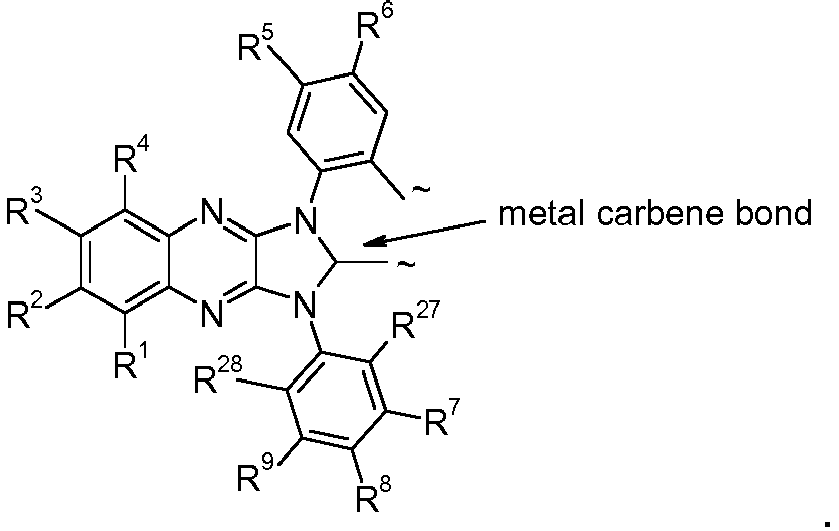
- The residues mentioned in the specification of the present application generally have the following preferred meanings, if not defined differently in a specific residue:
A C1-C18alkyl group, which can optionally be substituted by at least one substituent E and/or interrupted by D: preferably a C1-C12alkyl group, which can optionally be substituted by at least one substituent E and/or interrupted by D; more preferably a C1-C8alkyl group, which can optionally be substituted by at least one substituent E and/or interrupted by D; most preferably a C1-C8alkyl group, which can optionally be substituted by at least one substituent E; even more preferably an unsubstituted C1-C8alkyl group; further even more preferably an unsubstituted C1-C5alkyl group, e.g. methyl, ethyl, propyl, like n-propyl, iso-propyl, n-butyl, sec-butyl, iso-butyl, tert-butyl, or neopentyl. The alkyl groups may be linear or branched. - A C3-C12cycloalkyl group, which can optionally be substituted by at least one substituent E: preferably a C3-C12cycloalkyl group, which can optionally be substituted by at least one substituent E; more preferably a C3-C6cycloalkyl group, which can optionally be substituted by at least one substituent E; most preferably an unsubstituted C3-C6cycloalkyl group, e.g. cyclohexyl or cyclopentyl.
- A heterocycloalkyl group comprising 3 to 6 ring atoms, interrupted by at least one of O, S and NR65 and/or substituted by at least one substituent E: preferably an unsubstituted heterocycloalkyl group comprising 3 to 6 ring atoms, interrupted by at least one of O, S and NR65, e.g. heterocycloalkyl groups based on pyrrolidine, tetrahydrothiophene, tetrahydrofurane, tetrahydropyrane, tetrahydrothiopyrane, piperidine, dioxane, e.g. 1,4-dioxane or morpholine and derivatives thereof substituted by at least one substituent E.
- A C6-C14aryl group, which can optionally be substituted by at least one substituent G: preferably a C6-C14aryl group, which can optionally be substituted by one or two groups G; more preferably a phenyl group, which can optionally be substituted by one or two groups G.
A -NR65-C6-C14aryl group, which can optionally be substituted by at least one substituent G: preferably a -N(C6-C14aryl)2 group, which can optionally be substituted by at least one substituent G; more preferably a -N(phenyl)2 group, which can optionally be substituted by one or two groups G; most preferably an unsubstituted -N(phenyl)2 group. - A heteroaryl group comprising 3 to 11 ring atoms, which can optionally be substituted by at least one substituent G, interrupted by at least one of O, S, N and NR65: preferably a heteroaryl group comprising 3 to 11 ring atoms, which can optionally be substituted by one or two groups G, interrupted by at least one of O, S, N and NR65; more preferably pyridyl, methylpyridyl, pyrimidyl, pyrazinyl, carbazolyl, dibenzofuranyl, dibenzothiophenyl, indolyl, methylindolyl, benzofuranyl and benzothiophenyl, which can optionally be substituted by one, or more groups selected from a C1-C5alkyl group, a C3-C6cycloalkyl group and a C1-C4fluoroalkyl group; especially carbazolyl, dibenzofuranyl, dibenzothiophenyl, which can optionally be substituted by one, or more groups selected from a C1-C5alkyl group, a C3-C6cycloalkyl group and a C1-C4fluoroalkyl group; more especially dibenzofuranyl, dibenzothiophenyl, which can optionally be substituted by one, or more groups selected from a C1-C4alkyl group, and a C3-C6cycloalkyl group.
- A a -NR65-heteroaryl group, comprising 3 to 11 ring atoms, which can optionally be substituted by at least one substituent G, interrupted by at least one of O, S, N and NR65: preferably a - N(heteroaryl)2 group, comprising 3 to 11 ring atoms, which can optionally be substituted by at least one substituent G, interrupted by at least one of O, S, N and NR65, preferred heteroaryl residues are mentioned before.
- A halogen atom: preferably F or Cl, more preferably F.
- A C1-C18haloalkyl group; preferably a fluoroC1-C4alkyl group, more preferably CF3. The alkyl groups may be linear or branched.
- In the alkyl groups and aryl groups mentioned in the present application one or more hydrogen atoms may be substituted by deuterium atoms.
- The residues R1, R2, R3 and R4 in the metal carbene complexes according to the present invention are independently of each other hydrogen; a C1-C18alkyl group, which can optionally be substituted by at least one substituent E and/or interrupted by D; a C3-C12cycloalkyl group, which can optionally be substituted by at least one substituent E; a heterocycloalkyl group comprising 3 to 6 ring atoms, interrupted by at least one of O, S and NR65 and/or substituted by at least one substituent E; a C6-C14aryl group, which can optionally be substituted by at least one substituent G; a -NR65-C6-C14aryl group, preferably a -N(C6-C14aryl)2 group, which can optionally be substituted by at least one substituent G; a heteroaryl group comprising 3 to 11 ring atoms, which can optionally be substituted by at least one substituent G, interrupted by at least one of O, S, N and NR65; or a -NR65-heteroaryl group, preferably a -N(heteroaryl)2 group, comprising 3 to 11 ring atoms, which can optionally be substituted by at least one substituent G, interrupted by at least one of O, S, N and NR65; a halogen atom, especially F or Cl; a C1-C18haloalkyl group such as CF3; CN; or SiR80R81R82; or
- R1 and R2, R2 and R3 or R3 and R4 form together a ring

- Preferably, R1, R2, R3 and R4 are independently of each other hydrogen; a C1-C12alkyl group, which can optionally be substituted by at least one substituent E and/or interrupted by D; a C3-C12cycloalkyl group, which can optionally be substituted by at least one substituent E; a C6-C14aryl group, which can optionally be substituted by one or two groups G; a heteroaryl group comprising 3 to 11 ring atoms, which can optionally be substituted by one or two groups G; or a -N(phenyl)2 group, which can optionally be substituted by one or two groups G.
- More preferably, R1, R2, R3 and R4 are independently of each other hydrogen; a C1-C8alkyl group, which can optionally be substituted by at least one substituent E and/or interrupted by D; a C3-C6cycloalkyl group, which can optionally be substituted by at least one substituent E; or a phenyl group, which can optionally be substituted by one or two groups G.
- Most preferably, R1, R2, R3 and R4 are independently of each other hydrogen; a C1-C8alkyl group, which can optionally be substituted by at least one substituent E; a C3-C6cycloalkyl group, which can optionally be substituted by at least one substituent E; or a phenyl group, which can optionally be substituted by one or two groups G.
- Even more preferably, R1, R2, R3 and R4 are independently of each other hydrogen; a C1-C8alkyl group, which can optionally be substituted by at least one substituent E; a C3-C6cycloalkyl group; or either R2 and R3 or R1 and R4 are a phenyl group, which can optionally be substituted by one or two groups G.
- Further more preferably, R1, R2, R3 and R4 are independently of each other hydrogen; a C1-C8alkyl group; or a C3-C6cycloalkyl group.
- In one especially preferred embodiment, either R2 and R3 or R1 and R4 are H.
- Further more preferably, R1 and R4 are hydrogen and R2 and R3 are independently of each other hydrogen; a C1-C8alkyl group; or a C3-C6cycloalkyl group, or a phenyl group, which can optionally be substituted by one or two groups G.
- Most preferably, R1, R2, R3 and R4 are hydrogen.
- The residues R5 and R6 are independently of each other hydrogen; a C1-C18alkyl group, which can optionally be substituted by at least one substituent E and/or interrupted by D; a C3-C12cycloalkyl group, which can optionally be substituted by at least one substituent E; a heterocycloalkyl group comprising 3 to 6 ring atoms, interrupted by at least one of O, S and NR65 and/or substituted by at least one substituent E; a C6-C14aryl group, which can optionally be substituted by at least one substituent G; a -NR65-C6-C14aryl group, preferably a -N(C6-C14aryl)2 group, which can optionally be substituted by at least one substituent G; a heteroaryl group comprising 3 to 11 ring atoms, which can optionally be substituted by at least one substituent G, interrupted by at least one of O, S, N and NR65; a halogen atom, especially F or Cl; a C1-C18haloalkyl group such as CF3; CN; or SiR80R81R82; or
R5 and R6 together form a group of formula

D is -CO-, -COO-, -S-, -SO-, -SO2-, -O-, -NR65-, -SiR70R71-, -POR72-, -CR63=CR64-, or -C≡C, preferably -O-, -S- or -NR65-. - Preferably, R5 and R6 are independently of each other hydrogen; a C1-C12alkyl group, which can optionally be substituted by E and/or interrupted by D; a C3-C12cycloalkyl group, which can optionally be substituted by E; or
one of R5 and R6, preferably R5, is a group of formula
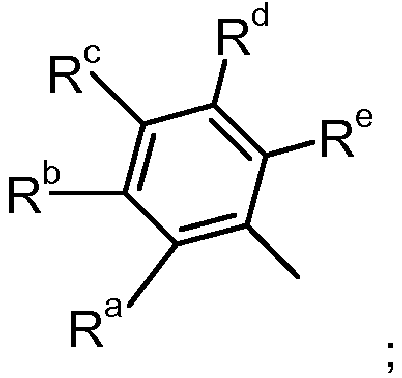
Re is H, a C1-C5alkyl group, a fluoroC1-C4alkyl group, or a C3-C6cycloalkyl group; preferably H, a C1-C5alkyl group, C3-C6cycloalkyl group; more preferably H, or a C1-C5alkyl group;
Rc, Rb and Rd are independently of each other hydrogen; a C1-C18alkyl group, which can optionally be substituted by E and/or interupted by D; a C3-C12cycloalkyl group, which can optionally be substituted by G; a C6-C14aryl group, which can optionally be substituted by G; or a C2-C30heteroaryl group, which can optionally be substituted by G; C1-C8haloalkyl such as CF3; or SiR80R81 R82; preferably Rc, Rb and Rd are independently of each other H, a C1-C5alkyl group, C3-C6cycloalkyl group; more preferably H, or a C1-C5alkyl group; further preferably, Rb, Rc and Rd are hydrogen or a phenyl group, which can optionally be substituted by one or two groups G; or
Rc and Rb, or Ra and Rb together form a group of formula

- More preferably, R5 and R6 are independently of each other hydrogen; a C1-C8alkyl group, which can optionally be substituted by at least one substituent E and/or interrupted by D; or one of R5 and R6 is a C3-C6cycloalkyl group, which can optionally be substituted by at least one substituent E; or one of R5 and R6 is a phenyl group, which can optionally be substituted by one or two groups G.
- Most preferably, R5 and R6 are independently of each other hydrogen; a C1-C8alkyl group, which can optionally be substituted by at least one substituent E; or a C3-C6cycloalkyl group, which can optionally be substituted by at least one substituent E; or a phenyl group, which can optionally be substituted by one or two groups G.
- Even more preferably, R5 and R6 are independently of each other hydrogen; a C1-C8alkyl group, which can optionally be substituted by at least one substituent E; a C3-C6cycloalkyl group, which can optionally be substituted by at least one substituent E; or either R5 or R6, preferably R5, is a phenyl group, which can optionally be substituted by one or two groups G; in a further preferred embodiment R6 is a phenyl group, which can optionally be substituted by one or two groups G.
- Further more preferably, R5 and R6 are independently of each other hydrogen; a C1-C8alkyl group; or a C3-C6cycloalkyl group. Preferably, at least one of R5 and R6 is hydrogen, and the other one is a C1-C8alkyl group. More preferably, at least R5 is hydrogen, and R6 is a C1-C8alkyl group. Most preferably both R5 and R6 are hydrogen.
- In one further preferred embodiment, R5 and R6 are independently of each other hydrogen; a C1-C8alkyl group; or one of R5 and R6, preferably R5, is a phenyl group, which can optionally be substituted by one group or two groups selected from CF3 or C1-C8alkyl, preferably optionally be substituted by one or two C1-C8alkyl group; in a further preferred embodiment R6 is a phenyl group, which can optionally be substituted by one group or two groups selected from CF3 or C1-C8alkyl, preferably optionally be substituted by one or two C1-C8alkyl group; preferably, at least one of R5 and R6 is hydrogen; more preferably, at least one of R5 and R6 is hydrogen and the other one of R5 and R6 is hydrogen or a phenyl group, which can optionally be substituted by one or two C1-C8alkyl groups.
- Most preferably, R5 and R6 are hydrogen.
- In a further embodiment, R5 is H and R6 is a phenyl group, which can optionally be substituted by one group or two C1-C8alkyl groups.
- R7, R8, R9, R27 and R28 are independently of each other hydrogen; a C1-C18alkyl group, which can optionally be substituted by at least one substituent E and/or interrupted by D; a C3-C12cycloalkyl group, which can optionally be substituted by at least one substituent E; a heterocycloalkyl group comprising 3 to 6 ring atoms, interrupted by at least one of O, S and NR65 and/or substituted by at least one substituent E; a C6-C14aryl group, which can optionally be substituted by at least one substituent G; a heteroaryl group comprising 3 to 11 ring atoms, which can optionally be substituted by at least one substituent G, interrupted by at least one of O, S, N and NR65 a halogen atom, especially F or Cl; a C1-C18haloalkyl group such as CF3; CN; or SiR80R81R82; in addition to the groups mentioned above, R8 may be a -NR65-C6-C14aryl group, preferably a -N(C6-C14aryl)2 group, which can optionally be substituted by at least one substituent G; or a -NR65-heteroaryl group, preferably a -N(heteroaryl)2 group, comprising 3 to 11 ring atoms, which can optionally be substituted by at least one substituent G, interrupted by at least one of O, S, N and NR65; or
R8 and R9 together form a group of formula

D is -CO-, -COO-, -S-, -SO-, -SO2-, -O-, -NR65-, -SiR70R71-, -POR72-, -CR63=CR64-, or -C≡C, preferably -O-, -S- or -NR65-. - Preferably, R7, R8 and R9 are independently of each other hydrogen; a C1-C12alkyl group, which can optionally be substituted by E and/or interrupted by D; a C3-C12cycloalkyl group, which can optionally be substituted by E, a C6-C14aryl group, which can optionally be substituted by one or two groups G; a heteroaryl group comprising 3 to 11 ring atoms, which can optionally be substituted by one or two groups G.
- Preferably, R27, R28 are independently of each other hydrogen; or a C1-C12alkyl group, which can optionally be substituted by E and/or interrupted by D, preferably a CH2-C1-C7alkyl group, which can optionally be substituted by E and/or interrupted by D.
- More preferably, R7, R8 and R9 are independently of each other hydrogen; a C1-C8alkyl group, which can optionally be substituted by at least one substituent E and/or interrupted by D; a C3-C6cycloalkyl group, which can optionally be substituted by at least one substituent E or a phenyl group, which can optionally be substituted by one or two groups G.
- More preferably, at least one of R27 and R28 is hydrogen.
- Most preferably, R7, R8 and R9 are independently of each other hydrogen; a C1-C8alkyl group, which can optionally be substituted by at least one substituent E; or a C3-C6cycloalkyl group, which can optionally be substituted by at least one substituent E; or a phenyl group, which can optionally be substituted by one or two groups G.
- Most preferably, R27 and R28 are hydrogen.
- Even more preferably, R7, R8 and R9 are independently of each other hydrogen; a C1-C8alkyl group, which can optionally be substituted by at least one substituent E; a C3-C6cycloalkyl group; or R8 is a phenyl group, which can optionally be substituted by one or two groups G.
- Further more preferably, R7, R8 and R9 are independently of each other hydrogen; a C1-C8alkyl group; or a C3-C6cycloalkyl group; most preferably, R7, R8 and R9 are a C1-C8alkyl group.
- Further more preferably, R7 is hydrogen and R8 and R9 are identical with R5 and R6.
- Most preferably, R7 and R9 are hydrogen and R8 is hydrogen or a phenyl group, which can optionally be substituted by one or two groups G.
Even most preferably, R7, R8 and R9 are hydrogen. - In a most preferred embodiment, R1, R2, R3, R4, R5, R6, R7, R8, R9 and R27 and R28 are hydrogen.
- D is -CO-, -COO-, -S-, -SO-, -SO2-, -O-, -NR65-, -SiR70R71-, -POR72-, -CR63=CR64-, or -C≡C, preferably -O-, -S- or -NR65-; more preferably -S-, or -O-;
- E is -OR69, -SR69, -NR65R66, -COR68, -COOR67, -CONR65R66, -CN, halogen, or a C1-C18alkyl group, which can optionally be substituted by at least one substituent E and/or interrupted by D; preferably F; a C1-C8haloalkyl group such as CF3, or a C1-C8alkyl group; preferably, E is C1-C8alkyl, C1-C8alkoxy, CN, halogen, preferably F, or C1-C8haloalkyl, such as CF3; more preferably E is C1-C8alkyl, C1-C8alkoxy, or C1-C8haloalkyl, such as CF3; more preferably, E is -OR69, CF3, C1-C8alkyl or F; most preferably CF3, C1-C8alkyl or F; even most preferably, E is -C1-Csalkyl.
- G is E; or an unsubstituted C6-C14aryl group; a C6-C14aryl group, which is substituted by F, C1-C18alkyl, a C3-C6cycloalkyl group, or C1-C18alkyl, which is substituted by F and/or interrupted by O; an unsubstituted heteroaryl group comprising 3 to 11 ring atoms, interrupted by at least one of O, S, N and NR65; or a heteroaryl group comprising 3 to 11 ring atoms, interrupted by at least one of O, S, N and NR65, which is substituted by F, unsubstituted C1-C18alkyl, SiR80R81R82, or C1-C18alkyl which is substituted by F and/or interrupted by O; preferably, G is a C1-C8alkyl group, or a group of formula

Rc, Rb and Rd are independently of each other hydrogen; a C1-C18alkyl group, which can optionally be substituted by E and/or interupted by D; a C3-C12cycloalkyl group, which can optionally be substituted by G; a C3-C10heterocycloalkyl radical which is interrupted by at least one of O, S and NR65 and/or substituted by E; a C6-C24aryl group, which can optionally be substituted by G; or a C2-C30heteroaryl group, which can optionally be substituted by G; a halogen atom, especially F or Cl; C1-C8haloalkyl such as CF3; CN; or SiR80R81R82; preferably Rc, Rb and Rd are independently of each other H, a C1-C5alkyl group, C3-C6cycloalkyl group; more preferably, Rc, Rb and Rd are independently of each other H, or a C1-C5alkyl group; or
Rc and Rb, or Ra and Rb together form a group of formula
wherein 0 or 1 Z is N, preferably
- R63 and R64 are independently of each other H; unsubstituted C6-C18aryl; C6-C18aryl which is substituted by C1-C18alkyl, or C1-C18alkoxy; unsubstituted C1-C18alkyl; or C1-C18alkyl which is interrupted by -O-; preferably unsubstituted C6-C18aryl; C6-C18aryl which is substituted by C1-C18alkyl, or C1-C18alkoxy; unsubstituted C1-C18alkyl; or C1-C18alkyl which is interrupted by -O-; preferably, R63 and R64 are independently of each other a phenyl group, which can optionally be substituted by one or two C1-C8alkyl groups; an unsubstituted C1-C18alkyl group; or a C1-C18alkyl group, which is interrupted by -O-.
- R65 and R66 are independently of each other H, an unsubstituted C6-C18aryl group; a C6-C18aryl group which is substituted by C1-C18alkyl, or C1-C18alkoxy; an unsubstituted C1-C18alkyl group; or a C1-C18alkyl group, which is interrupted by -O-; or R65 and R66 together form a five or six membered ring; preferably, R65 and R66 are independently of each other a phenyl group, which can optionally be substituted by one or two C1-C8alkyl groups; an unsubstituted C1-C18alkyl group; or a C1-C18alkyl group, which is interrupted by -O-.
- R67 is H, an unsubstituted C6-C18aryl group; a C6-C18aryl group, which is substituted by C1-C18alkyl, or C1-C18alkoxy; an unsubstituted C1-C18alkyl group; or a C1-C18alkyl group, which is interrupted by -O-; preferably an unsubstituted C6-C18aryl group; a C6-C18aryl group, which is substituted by C1-C18alkyl, or C1-C18alkoxy; an unsubstituted C1-C18alkyl group; or a C1-C18alkyl group, which is interrupted by -O-; preferably, R67 is a phenyl group, which can optionally be substituted by one or two C1-C8alkyl groups; an unsubstituted C1-C18alkyl group; or a C1-C18alkyl group, which is interrupted by -O-.
- R68 is H; an unsubstituted C6-C18aryl group; a C6-C18aryl group, which is substituted by C1-C18alkyl, or C1-C18alkoxy; an unsubstituted C1-C18alkyl group; or a C1-C18alkyl group, which is interrupted by -O-; preferably, R68 is a phenyl group, which can optionally be substituted by one or two C1-C8alkyl groups; an unsubstituted C1-C18alkyl group; or a C1-C18alkyl group, which is interrupted by -O-.
- R69 is H, an unsubstituted C6-C18aryl; a C6-C18aryl, which is substituted by C1-C18alkyl, or C1-C18alkoxy; an unsubstituted C1-C18alkyl group; or a C1-C18alkyl group, which is interrupted by - O-; preferably an unsubstituted C6-C18aryl; a C6-C18aryl, which is substituted by C1-C18alkyl, or C1-C18alkoxy; an unsubstituted C1-C18alkyl group; or a C1-C18alkyl group, which is interrupted by -O-; preferably, R69 is a phenyl group, which can optionally be substituted by one or two C1-C8alkyl groups; an unsubstituted C1-C18alkyl group; or a C1-C18alkyl group, which is interrupted by -O-.
- R70 and R71 are independently of each other an unsubstituted C1-C18alkyl group; an unsubstituted C6-C18aryl group; or a C6-C18aryl group, which is substituted by C1-C18alkyl; preferably, R70 and R71 are independently of each other a phenyl group, which can optionally be substituted by one or two C1-C8alkyl groups; or an unsubstituted C1-C18alkyl group.
- R72 is an unsubstituted C1-C18alkyl group; an unsubstituted C6-C18aryl group, or a C6-C18aryl group, which is substituted by C1-C18alkyl; preferably, R72 is a phenyl group, which can optionally be substituted by one or two C1-C8alkyl groups; or an unsubstituted C1-C18alkyl group.
- R73 and R74 are independently of each other H, C1-C25alkyl, C1-C25alkyl which is interrupted by O, C7-C25arylalkyl, C6-C24aryl, C6-C24aryl which is substituted by C1-C18alkyl, C2-C20heteroaryl, or C2-C20heteroaryl which is substituted by C1-C18alkyl; preferably, R73 and R74 are independently of each other a phenyl group, which can optionally be substituted by one or two C1-C8alkyl groups; an unsubstituted C1-C18alkyl group; or a C1-C18alkyl group, which is interrupted by -O-.
- R75 is a C6-C18aryl group; a C6-C18aryl which is substituted by C1-C18alkyl, or C1-C18alkoxy; a C1-C18alkyl group; or a C1-C18alkyl group, which is interrupted by -O-; preferably, R75 is a phenyl group, which can optionally be substituted by one or two C1-C8alkyl groups; an unsubstituted C1-C18alkyl group; or a C1-C18alkyl group, which is interrupted by -O-.
- R80, R81 and R82 are independently of each other a C1-C25alkyl group, which can optionally be interrupted by O; a C6-C14aryl group, which can optionally be substituted by C1-C18alkyl; or a heteroaryl group comprising 3 to 11 ring atoms, which can optionally be substituted by C1-C18alkyl; preferably, R80, R81 and R82 are independently of each other a phenyl group, which can optionally be substituted by one or two C1-C8alkyl groups; an unsubstituted C1-C18alkyl group; or a C1-C18alkyl group, which is interrupted by -O-.
- In a preferred embodiment the present invention concerns the inventive metal carbene complex, wherein at least one of the radicals R1, R2, R3, R4, R5, R6, R7, R8, and R9 is not hydrogen; preferably, either R5 is not hydrogen or at least two of the radicals R1, R2, R3, R4, R5, R6, R7, R8 and R9 are not hydrogen.
- In a further preferred embodiment two adjacent radicals of the group R1, R2, R3, R4, R5, R6, R7, R8, R9, R27 and R28 are not at the same time an aromatic group, e.g. a C6-C14aryl group, which can optionally be substituted by at least one substituent G; a -NR65-C6-C14aryl group, preferably a-N(C6-C14aryl)2 group, which can optionally be substituted by at least one substituent G; a heteroaryl group comprising 3 to 11 ring atoms, which can optionally be substituted by at least one substituent G, interrupted by at least one of O, S, N and NR65; or a -NR65-heteroaryl group, preferably a -N(heteroaryl)2 group, comprising 3 to 11 ring atoms, which can optionally be substituted by at least one substituent G, interrupted by at least one of O, S, N and NR65.
- The present invention also concerns a combination of both preferred embodiments mentioned before.
- In a most preferred embodiment, the present invention concerns the inventive metal carbene complex, wherein R1, R2, R3, R4, R5, R6, R7, R8, R9 and R27 and R28 are hydrogen.
- In the case that R6 and R8 are both present in the inventive metal carbene complexes, R6 and R8 are preferably identical.
- In the case that R5 and R9 are both present in the inventive metal carbene complexes, R5 and R9 are identical. "Present" means in the sense of the present application that the respective residues are not hydrogen.
- The metal carbene complex according to the present invention is preferably an inventive metal carbene complex, wherein
R1, R2, R3 and R4
are independently of each other hydrogen; a C1-C12alkyl group, which can optionally be substituted by at least one substituent E and/or interrupted by D; a C3-C12cycloalkyl group, which can optionally be substituted by at least one substituent E; a C6-C14aryl group, which can optionally be substituted by one or two groups G; a heteroaryl group comprising 3 to 11 ring atoms, which can optionally be substituted by one or two groups G; or a -N(phenyl)2 group, which can optionally be substituted by one or two groups G;
preferably, R1, R2, R3 and R4 are independently of each other hydrogen; a C1-C8alkyl group, which can optionally be substituted by at least one substituent E and/or interrupted by D; a C3-C6cycloalkyl group, which can optionally be substituted by at least one substituent E; or a phenyl group, which can optionally be substituted by one or two groups G; more preferably, R1, R2, R3 and R4 are hydrogen;
R5 and R6
are independently of each other hydrogen; a C1-C12alkyl group, which can optionally be substituted by E and/or interrupted by D; a C3-C12cycloalkyl group, which can optionally be substituted by E;
or
one of R5 and R6, preferably R5, is a group of formula
Ra is H, a C1-C5alkyl group, a fluoroC1-C4alkyl group, or a C3-C6cycloalkyl group; preferably H, a C1-C5alkyl group, C3-C6cycloalkyl group; more preferably H, or a C1-C5alkyl group;
Re is H, a C1-C5alkyl group, a fluoroC1-C4alkyl group, or a C3-C6cycloalkyl group; preferably H, a C1-C5alkyl group, C3-C6cycloalkyl group; more preferably H, or a C1-C5alkyl group;
Rc, Rb and Rd are independently of each other hydrogen; a C1-C18alkyl group, which can optionally be substituted by E and/or interupted by D; a C3-C12cycloalkyl group, which can optionally be substituted by G; a C6-C14aryl group, which can optionally be substituted by G; or a C2-C30heteroaryl group, which can optionally be substituted by G; C1-C8haloalkyl such as CF3; or SiR80R81R82; preferably Rc, Rb and Rd are independently of each other H, a C1-C5alkyl group, C3-C6cycloalkyl group; more preferably H, or a C1-C5alkyl group; further preferably Rc, Rb and Rd are hydrogen or a phenyl group which can optionally substituted by one or two groups G;
or
Rc and Rb, or Ra and Rb together form a group of formula
wherein 0 or 1 Z is N, preferably
preferably, R5 and R6 are independently of each other hydrogen; a C1-C8alkyl group, which can optionally be substituted by at least one substituent E and/or interrupted by D; or one of R5 and R6 is a C3-C6cycloalkyl group, which can optionally be substituted by at least one substituent E; or one of R5 and R6 is a phenyl group, which can optionally be substituted by one or two groups G; more preferably, R5 and R6 are hydrogen;
R7, R8 and R9
are independently of each other hydrogen; a C1-C12alkyl group, which can optionally be substituted by E and/or interrupted by D; a C3-C12cycloalkyl group, which can optionally be substituted by E a C6-C14aryl group, which can optionally be substituted by one or two groups G; a heteroaryl group comprising 3 to 11 ring atoms, which can optionally be substituted by one or two groups G;
preferably, R7, R8 and R9 are independently of each other hydrogen; a C1-C8alkyl group, which can optionally be substituted by at least one substituent E and/or interrupted by D; a C3-C6cycloalkyl group, which can optionally be substituted by at least one substituent E; more preferably, R7 and R9 are hydrogen and R8 is hydrogen or a phenyl group which can be optionally substituted by one or two groups G; most preferably, R7, R8 and R9 are hydrogen;
R27, R28
are independently of each other hydrogen; a C1-C12alkyl group, which can optionally be substituted by E and/or interrupted by D, preferably a CH2-C1-C7alkyl group, which can optionally be substituted by E and/or interrupted by D;
preferably, at least one of R27 and R28 is hydrogen, more preferably, R27 and R28 are hydrogen; D is -S-, or -O-
E is -OR69, CF3, C1-C8alkyl or F; preferably CF3, C1-C8alkyl or F; most preferably C1-C8alkyl;
G is -OR69, CF3 or C1-C8alkyl; preferably CF3 or C1-C8alkyl; more preferably C1-C8alkyl;
R65 is a phenyl group, which can optionally be substituted by one or two C1-C8alkyl groups; an unsubstituted C1-C18alkyl group; or a C1-C18alkyl group, which is interrupted by -O-; and R69 is a phenyl group, which can optionally be substituted by one or two C1-C8alkyl groups; an unsubstituted C1-C18alkyl group; or a C1-C18alkyl group, which is interrupted by-O-. - More preferably, the metal carbene complex according to the present invention is an inventive metal carbene complex, wherein
R1, R2, R3 and R4
are independently of each other hydrogen; a C1-C8alkyl group, which can optionally be substituted by at least one substituent E; a C3-C6cycloalkyl group, which can optionally be substituted by at least one substituent E; or a phenyl group, which can optionally be substituted by one or two groups G;
preferably, R1, R2, R3 and R4 are independently of each other hydrogen; a C1-C8alkyl group, which can optionally be substituted by at least one substituent E; a C3-C6cycloalkyl group; or either R2 and R3 or R1 and R4 are a phenyl group, which can optionally be substituted by one or two groups G; more preferably, R1, R2, R3 and R4 are hydrogen;
R5 and R6
are independently of each other hydrogen; a C1-C8alkyl group, which can optionally be substituted by at least one substituent E; or a C3-C6cycloalkyl group, which can optionally be substituted by at least one substituent E; or a phenyl group, which can optionally be substituted by one or two groups G;
preferably, R5 and R6 are independently of each other hydrogen; a C1-C8alkyl group, which can optionally be substituted by at least one substituent E; a C3-C6cycloalkyl group; or either R5 or R6, preferably R5, is a phenyl group, which can optionally be substituted by one or two groups G; in a further preferred embodiment, R6 is a phenyl group, which can optionally be substituted by one or two groups G; more preferably, R5 and R6 are hydrogen;
R7, R8 and R9
are independently of each other hydrogen; a C1-C8alkyl group, which can optionally be substituted by at least one substituent E; or a C3-C6cycloalkyl group, which can optionally be substituted by at least one substituent E; or a phenyl group, which can optionally be substituted by one or two groups G;
preferably, R7, R8 and R9 are independently of each other hydrogen; a C1-C8alkyl group, which can optionally be substituted by at least one substituent E; a C3-C6cycloalkyl group; or R8 is a phenyl group, which can optionally be substituted by one or two groups G; more preferably, R7 and R9 are hydrogen and R8 is hydrogen or a phenyl group which can be optionally substituted by one or two groups G; most preferably, R7, R8 and R9 are hydrogen;
R27 and R28
are hydrogen;
E is CF3, C1-C8alkyl or F; preferably, E is C1-C8alkyl;
G is CF3 or C1-C8alkyl; preferably C1-C8alkyl;
R65 is a phenyl group, which can optionally be substituted by one or two C1-C8alkyl groups; an unsubstituted C1-C8alkyl group; or a C1-C8alkyl group, which is interrupted by -O-; and R69 is a phenyl group, which can optionally be substituted by one or two C1-C8alkyl groups; an unsubstituted C1-C8alkyl group; or a C1-C8alkyl group, which is interrupted by -O-. - Most preferably, the metal carbene complex according to the present invention is an inventive metal carbene complex, wherein
R1, R2, R3 and R4
are independently of each other hydrogen; a C1-C8alkyl group; or a C3-C6cycloalkyl group;or either R1 and R4 or R2 and R3 are a phenyl group, which can optionally be substituted by one or two groups G; preferably, R1 and R4 are hydrogen and R2 and R3 are are independently of each other hydrogen; a C1-C8alkyl group; or a C3-C6cycloalkyl group, or a phenyl group, which can optionally be substituted by one or two groups G. - Further most preferably, R1, R2, R3 and R4 are hydrogen.
- R5, R6, R7, R8 and R9
are independently of each other hydrogen; a C1-C8alkyl group; or a C3-C6cycloalkyl group; or R7 and R9 are hydrogen and R8 is hydrogen or a phenyl group which can be optionally substituted by one or two groups G and either one of R5 and R6 is phenyl group which can be optionally substituted by one or two groups G and the other one of R5 and R6 is hydrogen; more preferably, R5, R6, R7, R8 and R9 are hydrogen;
and
R27 and R28
are hydrogen. - Even more preferably, the metal carbene complex according to the present invention is an inventive metal carbene complex, wherein
either R2 and R3 or R1 and R4 are H; preferably, R1 and R4 are H, more preferably, R1, R2, R3 and R4 are H. - Further more preferably, the metal carbene complex according to the present invention is an inventive metal carbene complex, wherein
R5 and R6 are independently of each other hydrogen; a C1-C8alkyl group; or one of R5 and R6, preferably R5, is a phenyl group, which can optionally be substituted by one or two groups selected from CF3 or C1-C8alkyl, preferably optionally be substituted by one or two C1-C8alkyl groups; preferably, at least one of R5 and R6 is hydrogen; more preferably, R5 and R6 are hydrogen;
R7 and R9
are C1-C8alkyl or R7 and R9 are hydrogen; preferably, R7 and R9 are hydrogen;
R8
is hydrogen; a C1-C8alkyl group; or a phenyl group, which can optionally be para-substituted by one group selected from CF3 or C1-C8alkyl, preferably optionally be substituted by one C1-Csalkyl group; preferably, R8 is hydrogen;
R27 and R28
are hydrogen. - In a further embodiment of the present invention, the metal carbene complex according to the present invention is further more preferably an inventive metal carbene complex, wherein R5
is hydrogen; a C1-C8alkyl group, which can optionally be substituted by at least one substituent selected from CF3, C1-C8alkyl and F, preferably a C1-C8alkyl substituent; a C3-C6cycloalkyl group, which can optionally be substituted by at least one substituent selected from CF3, C1-Csalkyl and F, preferably a C1-C8alkyl substituent; or a phenyl group, which can optionally be substituted by one or two groups selected from CF3 and C1-C8alkyl, preferably optionally be substituted by one or two C1-C8alkyl groups; preferably hydrogen;
R6 and R8
are identical and selected from the group consisting of a C1-C8alkyl group, which can optionally be substituted by at least one substituent selected from CF3, C1-C8alkyl and F, preferably a C1-Csalkyl substituent; a C3-C6cycloalkyl group, which can optionally be substituted by at least one substituent selected from CF3, C1-C8alkyl and F, preferably a C1-C8alkyl substituent; and a phenyl group, which can optionally be substituted by one or two groups selected from CF3 and C1-Csalkyl, preferably optionally be substituted by one or two C1-C8alkyl groups; preferably hydrogen; and
R7 and R9
are hydrogen,
wherein R5 and R6 are not at the same time a phenyl group, which can optionally be substituted by one or two groups selected from CF3 and C1-C8alkyl, preferably optionally be substituted by one or two C1-C8alkyl groups;
R27 and R28
are hydrogen. - In a further embodiment of the present invention, the metal carbene complex according to the present invention is further more preferably an inventive metal carbene complex, wherein R7, R8 and R9 are H; and
R6 is H; and
R27 and R28
are hydrogen. - Preferably, the metal carben complex according to the present invention has the following formula (B), preferably the following formula (II)


- Z is NRx, O or S, preferably NRx or O, more preferably Rx;
- Rx is

- M is Pt, or Ir, preferably Ir;
- if M is Ir, m is 1, 2, or 3, preferably 2 or 3; o is 0, 1, or 2, preferably 0 or 1; and the sum of m + o is 3;
in the case that o = 2, the ligands L may be the same or different, preferably the same; and in the case that m is 2 or 3, the m carbene ligands may be the same or different, preferably the same;
if M is Pt, m is 1, or 2; o is 0, or 1; and the sum of m + o is 2;
in the case that m is 2, the m carbene ligands may be the same or different, preferably the same; and
L is a monoanionic bidentate ligand;
and R1, R2, R3, R4, R5, R6, R7, R8, R9, R27 and R28 having the meanings mentioned before. - Preferably, the metal carbene complex according to the present invention has the formula (II).
- More preferably, the residues, symbols and indices in the metal carbene complex of formula (II) according to the present invention have the following meanings:
- M is Ir;
- m is 2 or 3; o is 0 or 1; and the sum of m + o is 3;
- in the case that o = 2, the ligands L may be the same or different, preferably the same; and in the case that m is 2 or 3, the m carbene ligands may be the same or different, preferably the same; and
- L is a monoanionic bidentate ligand;
- and R1, R2, R3, R4, R5, R6, R7, R8, R9, R27 and R28 having the meanings mentioned before.
- In one most preferred embodiment, the metal carbene complex according to the present invention has the formula (B), preferably the formula (II) mentioned above
wherein
Z is NRx, O or S, preferably NRx or O, more preferably NRx; - Rx is

- M is Ir;
- m is 1; o is 2, wherein the ligands L may be the same or different, preferably the same; and
- L is a monoanionic bidentate ligand;
- and R1, R2, R3, R4, R5, R6, R7, R8, R9, R27 and R28 having the meanings mentioned before.
- In another most preferred embodiment, the metal carbene complex according to the present invention has the formula (B), preferably the formula (II) mentioned above
wherein
Z is NRx, O or S, preferably NRx or O, more preferably NRx; - Rx is

- M is Ir;
- m is 2; o is 1, wherein the m carbene ligands may be the same or different, preferably the same; and
- L is a monoanionic bidentate ligand;
- and R1, R2, R3, R4, R5, R6, R7, R8, R9, R27 and R28 having the meanings mentioned before.
- In another most preferred embodiment, the metal carbene complex according to the present invention has the formula (B), preferably the formula (II) mentioned above
wherein
Z is NRx, O or S, preferably NRx or O, more preferably NRx; - Rx is

- M is Ir;
- m is 3; o is 0, wherein the m carbene ligands may be the same or different, preferably the same; and
- L is a monoanionic bidentate ligand;
- and R1, R2, R3, R4, R5, R6, R7, R8, R9, R27 and R28 having the meanings mentioned before.
- Preferably, L in the metal carbene complex according to the present invention is a group of formula


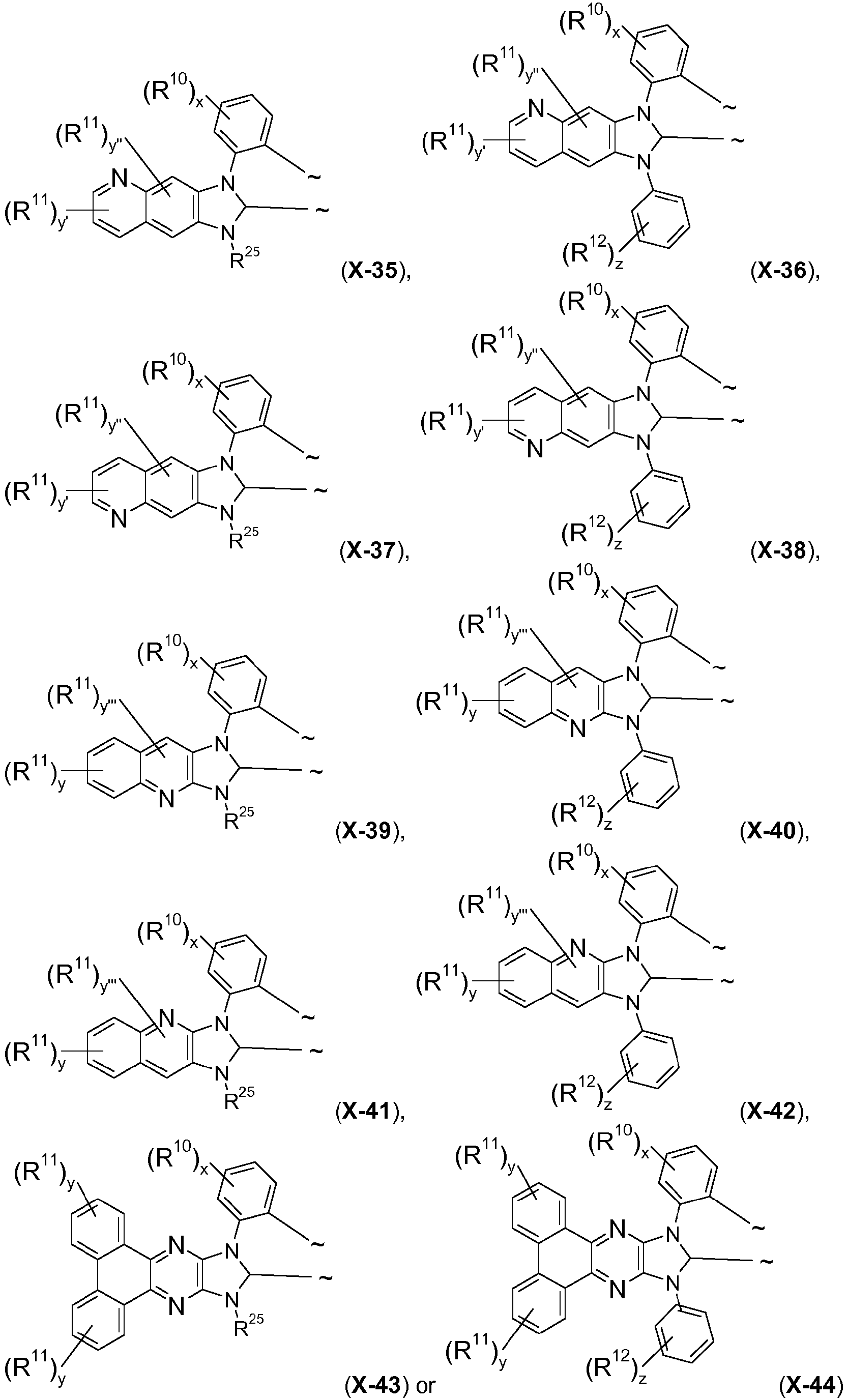
- R10, R12, R13, R16, R17, R18 and R19
- the radicals R10, R12, R13, R16, R17, R18 and R19 are - in each case - independently of each other a C1-C18alkyl group, which can optionally be substituted by E and/or interrupted by D; a C3-C12cycloalkyl group, which can optionally be substituted by E; a heterocycloalkyl group comprising 3 to 6 ring atoms, interrupted by at least one heteroatom selected from -O-, -S- and -NR65-, optionally bearing at least one substituent E; a halogen atom, especially F or Cl; C1-C8haloalkyl such as CF3; CN; or SiR80R81R82; or
- one radical R10 and/or one radical R12; one radical R13 and/or one radical R12; one radical R16 and/or one radical R17; one radical R18 and/or one radical R19 is a group of formula

- Ra is H, a C1-C5alkyl group, a fluoroC1-C4alkyl group, or a C3-C6cycloalkyl group, preferably C1-C5-alkyl, or H, more preferably H,
- Re is H, a C1-C5alkyl group, a fluoroC1-C4alkyl group, or a C3-C6cycloalkyl group, preferably C1-C5-alkyl, or H, more preferably H,
- Rc, Rb and Rd are independently of each other hydrogen; a C1-C18alkyl group, which can optionally be substituted by E and/or interupted by D; a C3-C12cycloalkyl group, which can optionally be substituted by G; a C3-C10heterocycloalkyl radical which is interrupted by at least one of O, S and NR65 and/or substituted by E; a C6-C24aryl group, which can optionally be substituted by G; or a C2-C30heteroaryl group, which can optionally be substituted by G; a halogen atom, especially F or Cl; C1-C8haloalkyl such as CF3; CN; or SiR80R81R82; preferably H or a C1-C8alkyl group, more preferably, Rd is H and one of Rb or Rc is a C1-C8alkyl group and the other one of Rb and Rd is H; even more preferably Rc, Rb and Rd are H;
- or
- two adjacent radicals R10 and/or two adjacent radicals R12; two adjacent radicals R13 and/or two adjacent radicals R12; two adjacent radicals R16 and/or two adjacent radicals R17; or two adjacent radicals R19; or Rc and Rb, or Ra and Rb together form a group of formula

- wherein Z is N or CR'", wherein 0 or 1 Z is N, preferably

- NR75 or CR73R74, preferably O; R'" is C1-C8alkyl and a' is 0 or 1, preferably 0;
- preferably, the radicals R10, R12, R13, R16, R17, R18 and R19 are - in each case - independently of each other a C1-C8alkyl group, which can optionally be substituted by at least one substituent E and/or interrupted by D, especially methyl, ethyl, i-propyl, n-butyl, sec-butyl, tert-butyl or isoamyl; a C3-C6cycloalkyl group, which can optionally be substituted by at least one substituent E; F; Cl; C1-C8haloalkyl such as CF3; CN;
- in a further preferred embodiment, R10, R12, R13, R16, R17, R18 and R19 are - in each case - independently of each other hydrogen, a C1-C8alkyl group especially methyl, ethyl, i-propyl, n-butyl, sec-butyl, tert-butyl or isoamyl; or a phenyl group, which can optionally be substituted by one or two groups G; or a C2-C30heteroaryl group, which can optionally be substituted by G; more preferably hydrogen, a C1-C8alkyl group especially methyl, ethyl, i-propyl, n-butyl, sec-butyl, tert-butyl or isoamyl; or a phenyl group, which can optionally be substituted by one or two C1-C8alkyl groups, for example 2-tolyl, 3-tolyl, 4-tolyl, 2-ethylphenyl, 3-ethylphenyl, 4-ethylphenyl, 2-isopropylphenyl, 3-isopropylphenyl or 4-isopropylphenyl; most preferably hydrogen or a C1-Csalkyl group especially methyl, ethyl, i-propyl, n-butyl, sec-butyl, tert-butyl or isoamyl.
- or
- two adjacent radicals R10 and/or two adjacent radicals R12; two adjacent radicals R13 and/or two adjacent radicals R12; two adjacent radicals R16 and/or two adjacent radicals R17; or two adjacent radicals R19 together form a group of formula

- wherein 0 or 1 Z is N, preferably

- R11, R14, R20, R21, R22, R23 and R24:
- the radicals R11, R14, R20, R21, R22, R23 and R24 are - in each case - independently of each other a C1-C18alkyl group, which can optionally be substituted by at least one substituent E and/or
- interrupted by D; a C3-C12cycloalkyl group, which can optionally be substituted by at least one substituent E; a heterocycloalkyl group comprising 3 to 6 ring atoms, interrupted by at least one heteroatom selected from -O-, -S- and -NR65-, optionally bearing at least one substituent E; a C6-C14aryl group, which can optionally be substituted by one or two groups G; a heteroaryl group comprising 3 to 11 ring atoms, which can optionally be substituted by one or two groups G; or a -NR65-phenyl group, which can optionally be substituted by one or two groups G;
- preferably, R11, R14, R20, R21, R22, R23 and R24 are - in each case - independently of each other hydrogen; a C1-C8alkyl group, which can optionally be substituted by at least one substituent E and/or interrupted by D; a C3-C6cycloalkyl group, which can optionally be substituted by at least one substituent E; or a phenyl group, which can optionally be substituted by one or two groups G; C1-C8 haloalkyl such as CF3; or SiR80R81R82; or in the case of X-1, X-2, X-3, X-31, X-34, X-35, X-36, X-37 and X-38 CN;;
- or
- two adjacent radicals R11 or two adjacent radicals R14 form together a group


- other H, a C1-C4alkyl group, a C3-C6cycloalkyl group, or a fluoroC1-C4alkyl group;
- preferably, R11, R14, R20, R21, R22, R23 and R24 are - in each case - independently of each other a C1-C8alkyl group, which can optionally be substituted by at least one substituent E and/or interrupted by D, especially methyl, ethyl, i-propyl, n-butyl, sec-butyl, tert-butyl or isoamyl; a C3-C6cycloalkyl group, which can optionally be substituted by at least one substituent E; C1-Cshaloalkyl such as CF3; or in the case of X-1, X-2, X-3, X-31, X-34, X-35, X-36, X-37 and X-38 CN;
- in a further preferred embodiment R11, R14, R20, R21, R22, R23 and R24 are - in each case - independently of each other hydrogen, a C1-C8alkyl group especially methyl, ethyl, i-propyl, n-butyl, sec-butyl, tert-butyl or isoamyl; or a phenyl group, which can optionally be substituted by one or two groups G; or a C2-C30heteroaryl group, which can optionally be substituted by G; more preferably hydrogen, a C1-C8alkyl group especially methyl, ethyl, i-propyl, n-butyl, sec-butyl, tert-butyl or isoamyl; or a phenyl group, which can optionally be substituted by one or two C1-C8alkyl groups, for example 2-tolyl, 3-tolyl, 4-tolyl, 2-ethylphenyl, 3-ethylphenyl, 4-ethylphenyl, 2-isopropylphenyl, 3-isopropylphenyl or 4-isopropylphenyl; most preferably hydrogen or a C1-Csalkyl group especially methyl, ethyl, i-propyl, n-butyl, sec-butyl, tert-butyl or isoamyl;
- or
- two adjacent radicals R11 or two adjacent radicals R14 form together a group


- other H, a C1-C4alkyl group, a C3-C6cycloalkyl group, or a fluoroC1-C4alkyl group;
- R25 is CH3 or ethyl or iso-propyl;
- R26 is a phenyl group, which can optionally be substituted by one or two groups selected from CF3 and C1-C8alkyl; preferably optionally substituted by one or two C1-C8alkyl groups; or R26 is CH3; or iso-propyl; preferably, R26 is a phenyl group, which can optionally be substituted by one or two groups selected from CF3 and C1-C8alkyl preferably optionally substituted by one or two C1-C8alkyl groups; in a further preferred embodiment R26 is a phenyl group, which is substituted by one or two phenyl groups;
- D is -S-, -O-, or -NR65-;
- E is -OR69, -CN, CF3, C1-C8alkyl or F; preferably CF3 or C1-C8alkyl; more preferably C1-C8alkyl; G is -OR69, -CN, CF3 or C1-C8alkyl; preferably C1-C8alkyl;
- R65 is a phenyl group, which can optionally be substituted by one or two C1-C8alkyl groups; an unsubstituted C1-C18alkyl group; or a C1-C18alkyl group, which is interrupted by -O-; and R69 is a phenyl group, which can optionally be substituted by one or two C1-C8alkyl groups; an unsubstituted C1-C18alkyl group; or a C1-C18alkyl group, which is interrupted by -O-;
- A1 is C6-C10aryl;
- or
- two adjoint groups A1 together form a group

- Q1 and Q2 are independently of each other hydrogen, C1-C18alkyl, or C6-C18aryl;
- w, x are are independently of each other 0, 1 or 2, preferably 0 or 1; more preferably 0;
- z is 0, 1, 2 or 3, preferably 0, 1, more preferably 0;
- y, y', y", u, v
are independently of each other 0, 1 or 2, preferably 0 or 2; more preferably 0; - y'" is 0 or 1, preferably 0;
- p, q, r, s, t, t', t"
are are independently of each other 0, 1, 2, 3 or 4, preferably 0, 1, 2 or 3; - r' is 0, 1 or 2, preferably 0 or 1, more preferably 0.
- Preferably, L in the metal carbene complex according to the present invention is a group of formula (X-1), (X-2), (X-3), (X-4), (X-5), preferably (X-5a) and (X-5b), (X-8), (X-9), (X-10), (X-11), (X-12), (X-13), (X-14), (X-15), (X-16), (X-17), (X-18), (X-20), (X-21), (X-22), (X-23), (X-24), (X-25), (X-26), (X-27), (X-28), and (X-29); or a group of formula (X-30), (X-31), (X-32), (X-33), (X-34), (X-35), (X-36), (X-37), (X-38), (X-39), (X-40), (X-41), (X-42), (X-43) or (X-44).
- More preferably, L in the metal carbene complex according to the present invention is a group of formula (X-1), (X-2), (X-3), (X-4), (X-5), preferably (X-5a) and (X-5b), (X-8), (X-9), (X-10), (X-11), (X-12), (X-13), (X-14), (X-15), (X-16), (X-17), and (X-18); or a group of formula (X-31), (X-32), (X-33), (X-34), (X-35), (X-36), (X-37), (X-38), (X-39), (X-40), (X-41), (X-42), (X-43) or (X-44).
- Most preferably, L in the metal carbene complex according to the present invention is a group of formula (X-1), (X-2), (X-3), (X-4), (X-5), preferably (X-5a) and (X-5b), (X-8), (X-9), (X-10), (X-11), and (X-12); or a group of formula (X-31), (X-32), (X-33), (X-34), (X-35), (X-36), (X-37), (X-38), (X-39), (X-40), (X-41), (X-42), (X-43) or (X-44).
- Even more preferably, L in the metal carbene complex according to the present invention is a group of formula (X-1), (X-4), (X-5), preferably (X-5a) and (X-5b), (X-8), (X-9), (X-10), (X-11), and (X-12);; more preferably (X-1), (X-4), (X-5), (X-8), (X-9), and (X-12).
- Most preferably, L in the metal carbene complex according to the present invention is a group of formula (X-1) or (X-4).
- In a further preferred embodiment, L in the metal carbene complex according to the present invention is a group of formula (X-1), (X-2), (X-3), (X-4), (X-5a), (X-8, wherein R26 is a phenyl group, which can optionally be substituted by one or two groups selected from CF3 and C1-Csalkyl), (X-31), (X-34), (X-36), (X-38), (X-40), (X-42) or (X-44).
- In a further more preferred embodiment, L in the metal carbene complex according to the present invention is a group of formula (X-1), (X-2), (X-3), (X-4), (X-5a), (X-8, wherein R26 is a phenyl group, which can optionally be substituted by one or two selected from CF3 and C1-C8alkyl), (X-31), (X-34) or (X-44).
- In a further even more preferred embodiment, L in the metal carbene complex according to the present invention is a group of formula (X-1), (X-4), (X-5a), (X-8, wherein R26 is a phenyl group, which can optionally be substituted by one or two selected from CF3 and C1-C8alkyl) or (X-31); further even more preferably L is (X-1), (X-4), (X-5a) or (X-31) and most preferably, L is (X-1) or (X-4).
- In a further even more preferred embodiment, L in the metal carbene complex according to the present invention is a group of formula (X-1), (X-5a) or (X-31), more preferably (X-1) or (X-5a).
- Most preferably, L is (X-1).
- The metal M in the inventive metal carbene complexes is Ir or Pt, preferably Ir, more preferably Ir (III). In the case that the metal is Pt, Pt(II) is preferred.
- In the most preferred metal carbene complexes of formula (II) according to the present invention the residues, symbols and indices have the following meanings:
- M is Ir;
- m is 2 or 3;
- o is 0 or 1; and
- L is (X-1) or (X-4),
- whereby the m carbene ligands are preferably the same (identical),
- wherein the further residues, symbols and indices in the metal carbene complexes of formula (II) are the same as mentioned above.
- In a further more preferred embodiment, L in the metal carbene complex mentioned above is a group of formula (X-5a), (X-31), more preferably (X-1), (X-8, wherein R26 is a phenyl group, which can optionally be substituted by one or two selected from CF3 and C1-C8alkyl) or (X-31).
- Even further preferred are metal carbene complexes of formula (II) according to the present invention the residues, symbols and indices have the following meanings:
- M is Ir;
- m is 2 or 3;
- o is 0 or 1; and
- L is (X-1) or (X-4),
- whereby the m carbene ligands are preferably the same (identical);
- wherein the residues R1, R2, R3, R4, R5, R6, R7, R8, R9, R27, R28 are H and the indices x, y, z and y" are 0.
- In a further more preferred embodiment, L in the metal carbene complex mentioned above is a group of formula (X-5a), (X-8, wherein R26 is a phenyl group, which can optionally be substituted by one or two selected from CF3 and C1-C8alkyl) or (X-31).
- In further most preferred embodiment, the residues, symbols and indices in the metal carbene complexes of formula (II) according to the present invention have the following meanings:
- M is Ir;
- m is 1;
- o is 2; and
- L is (X-1), (X-4) (X-5a), (X-8, wherein R26 is a phenyl group, which can optionally be substituted by one or two selected from CF3 and C1-C8alkyl) or (X-31), preferably (X-1), (X-4), (X-5a) or (X-31), even more preferably (X-1) or (X-4);
- whereby the o carbene ligands are preferably the same (identical)
- wherein the further residues, symbols and indices in the metal carbene complexes of formula (II) are the same as mentioned above.
- In an even further preferred embodiment, the residues, symbols and indices in the metal carbene complexes of formula (II) according to the present invention have the following meanings: M is Ir;
m is 1;
o is 2; and
L is (X-1), (X-4) (X-5a), (X-8, wherein R26 is a phenyl group, which can optionally be substituted by one or two selected from CF3 and C1-C8alkyl) or (X-31), preferably (X-1), (X-4), (X-5a) or (X-31), even more preferably (X-1) or (X-4);
whereby the o carbene ligands are preferably the same (identical),
wherein the residues R1, R2, R3, R4, R5, R6, R7, R8, R9, R27, R28 are H and the indices x, y, z and y" are 0. - Preferably, the metal carbene complex according to the present invention is selected from


- R1, R2, R3 and R4
- are independently of each other - in each case - hydrogen; a C1-C8alkyl group, which can optionally be substituted by at least one substituent E and/or interrupted by D; a C3-C6cycloalkyl group, which can optionally be substituted by at least one substituent E; or a phenyl group, which can optionally be substituted by one or two groups G;
- preferably, in the case that R1, R2, R3 and/or R4 are a phenyl group, which can optionally be substituted by one or two groups G; R5, R6, R8 and R9 are not a phenyl group, which can optionally be substituted by one or two groups G;
- more preferably, R1, R2, R3 and R4 are independently of each other - in each case - hydrogen; a C1-C8alkyl group, which can optionally be substituted by at least one substituent E and/or interrupted by D; or a C3-C6cycloalkyl group, which can optionally be substituted by at least one substituent E;
- most preferably, R1 and R4 as well as R2 and R3 are identical; even further more preferably, R1, R2, R3 and R4 are hydrogen;
- R5 and R6
- are independently of each other - in each case - hydrogen; a C1-C8alkyl group, which can optionally be substituted by at least one substituent E and/or interrupted by D; or a C3-C6cycloalkyl group, which can optionally be substituted by at least one substituent E; or a phenyl group, which can optionally be substituted by one or two groups G;
- preferably, R5 and R6 are independently of each other - in each case - hydrogen; a C1-C8alkyl group, which can optionally be substituted by at least one substituent E and/or interrupted by D; or a C3-C6cycloalkyl group, which can optionally be substituted by at least one substituent E; or either R5 or R6, preferably R5, are a phenyl group, which can optionally be substituted by one or two groups G;
- more preferably, R5 and R6 are independently of each other - in each case - hydrogen; a C1-Csalkyl group, which can optionally be substituted by at least one substituent E and/or interrupted by D; or a C3-C6cycloalkyl group, which can optionally be substituted by at least one substituent E; or either R5 or R6, preferably R5, is a phenyl group, which can optionally be substituted by one or two groups G; in a further preferred embodiment, R6 is a phenyl group, which can optionally be substituted by one or two groups G; more preferably, R5 and R6 are hydrogen;
- R8 and R9 are independently of each other hydrogen; a C1-C8alkyl group, which can optionally be substituted by at least one substituent E and/or interrupted by D; or a C3-C6cycloalkyl group, which can optionally be substituted by at least one substituent E; or a phenyl group, which can optionally be substituted by one or two groups G;
- preferably, R8 and R9 are independently of each other - in each case - hydrogen; a C1-C8alkyl group, which can optionally be substituted by at least one substituent E and/or interrupted by D; or a C3-C6cycloalkyl group, which can optionally be substituted by at least one substituent E; or either R8 or R9 are a phenyl group, which can optionally be substituted by one or two groups G; more preferably, R8 and R9 are independently of each other - in each case - hydrogen; a C1-Csalkyl group, which can optionally be substituted by at least one substituent E and/or interrupted by D; or a C3-C6cycloalkyl group, which can optionally be substituted by at least one substituent E; more preferably, R9 is hydrogen and R8 is hydrogen or a phenyl group which can be optionally substituted by one or two groups G; most preferably, R8 and R9 are hydrogen;
- D is -S- or -O-;
- E is -OR69, -CN, CF3, C1-C8alkyl or F; preferably CF3 or C1-C8alkyl; preferably C1-C8alkyl;
- G is -OR69, -CN, CF3 or C1-C8alkyl; preferably C1-C8alkyl;
- R69 is a phenyl group, which can optionally be substituted by one or two C1-C8alkyl groups; an unsubstituted C1-C8alkyl group; or a C1-C8alkyl group, which is interrupted by -O-;
- L is a monoanionic bidentate ligand, for example

 and
and

- m is 1, 2, or 3; preferably 2 or 3; or - in a further preferred embodiment - 1;
- o is 0, 1, or 2; preferably 0 or 1; or - in a further preferred embodiment - 2;
- and the sum of m + o is 3;
- in the case that o = 2, the ligands L may be the same or different, preferably the same; and in the case that m is 2 or 3, the m carbene ligands may be the same or different, preferably the same.
- More preferably, at least one of the residues R1, R2, R3, R4, R5, R6, R8 and R9 in the complexes of formulae (IIa), (IIb), (IIc), (IId), (IIe), (IIf), (IIg) and (IIh) is not hydrogen; most preferably, in formula (IIa), two or all of R1, R4, R6 and R8 are not hydrogen; in formula (IIb), two or all of R2, R3, R6 and R8 are not hydrogen; in formula (IIc), two or all of R1, R4, R5 and R9 are not hydrogen; in formula (IId), two or all of R2, R3, R5 and R9 are not hydrogen; in formula (IIe), one or all of R1, R4 and R5 are not hydrogen; in formula (IIf), one or all of R2, R3 and R5 are not hydrogen; in formula (IIg), three or all of R1, R4, R5, R6 and R8 are not hydrogen; in formula (IIh), three or all of R2, R3, R5, R6 and R8 are not hydrogen.
- In a further preferred embodiment, R1, R2, R3 and R4 are hydrogen and the residues R5, R6 and R8 are as mentioned above.
- In a further preferred embodiment of the present invention, R5, R6 and R8 in formulae (X-1'), (X-2'), (X-3'), and (X-4') are hydrogen. In a further preferred embodiment of the present invention, R5, R6 and R8 in formulae (X-5a'), (X-8') and (X-31') are hydrogen.
- More preferably, the metal carbene complex according to the present invention is selected from the metal carbene complexes (IIa), (IIb), (IIe), (IIf), (IIg) and (IIh). In a further more preferred embodiment, the metal carbene complex according to the present invention is selected from the metal carbene complex (IId). Most preferably, the metal carbene complex according to the present invention is selected from the metal carbene complexes (IIb), (IId), (IIf) and (IIh).
- In a most preferred embodiment, R1, R2, R3, R4, R5, R6, R8, and R9 are hydrogen, i.e. the metal carbene complex of the present invention has the following formula:

- Most preferably, the metal carbene complex according to the present invention is selected from


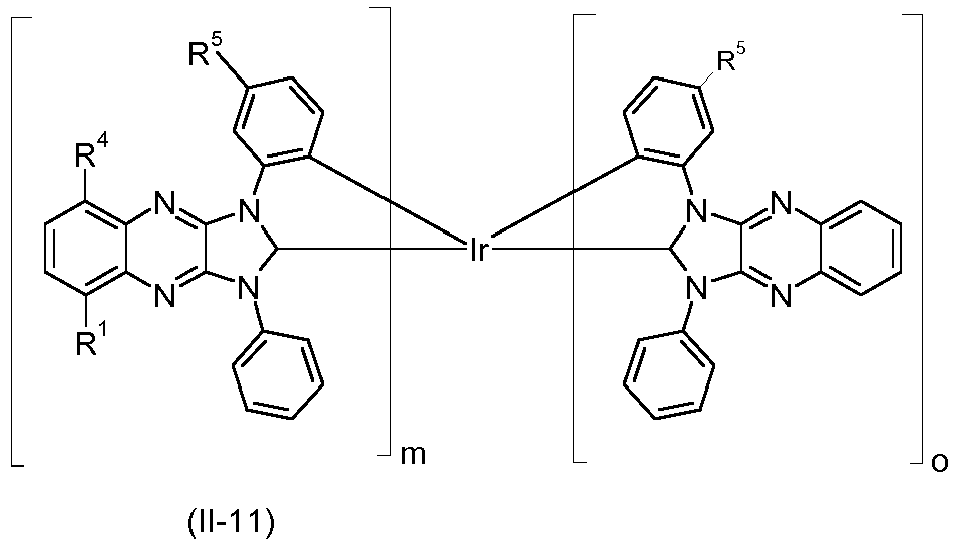


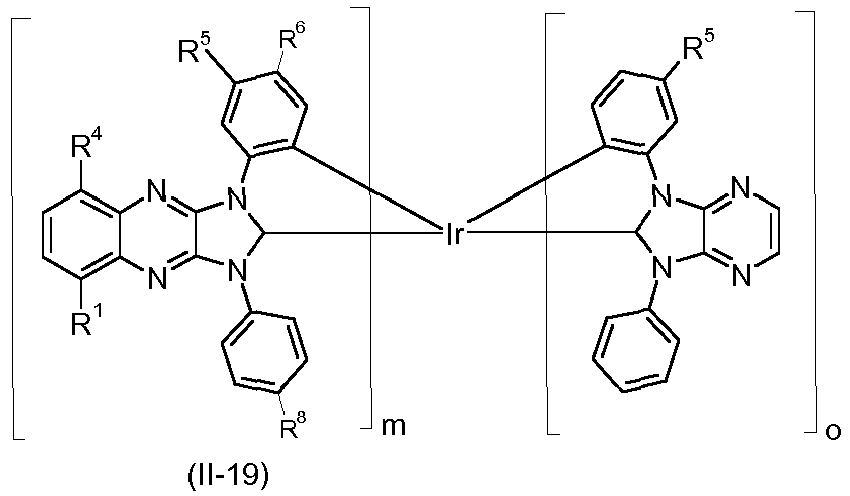


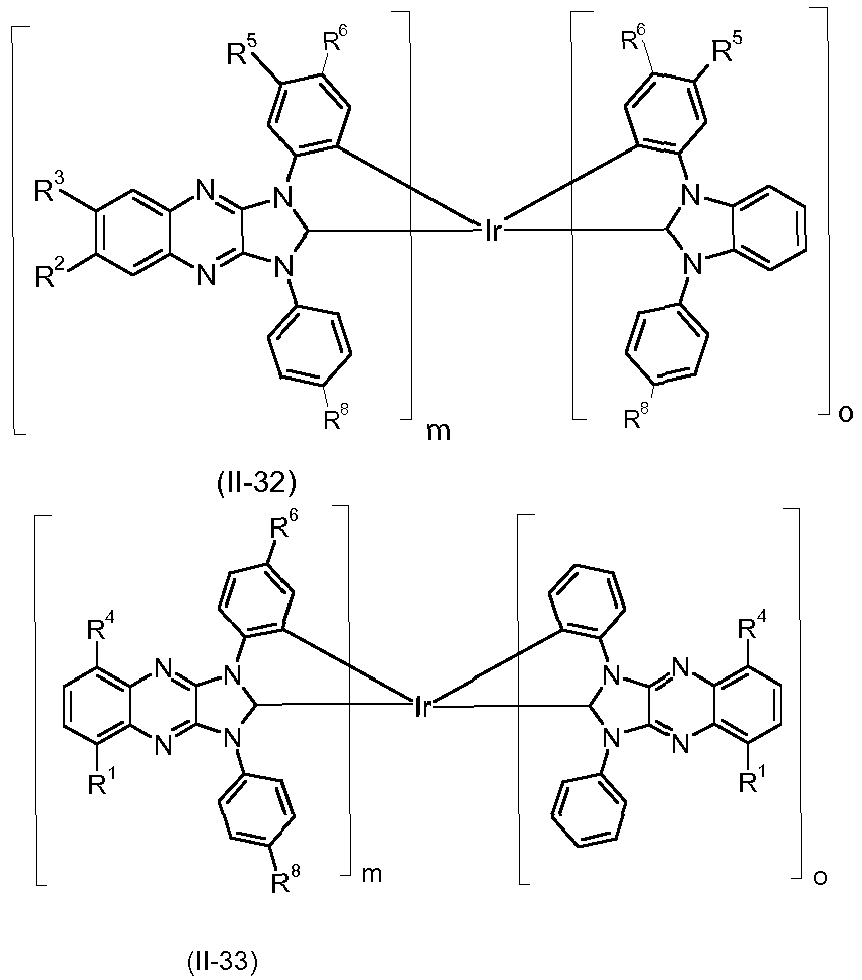


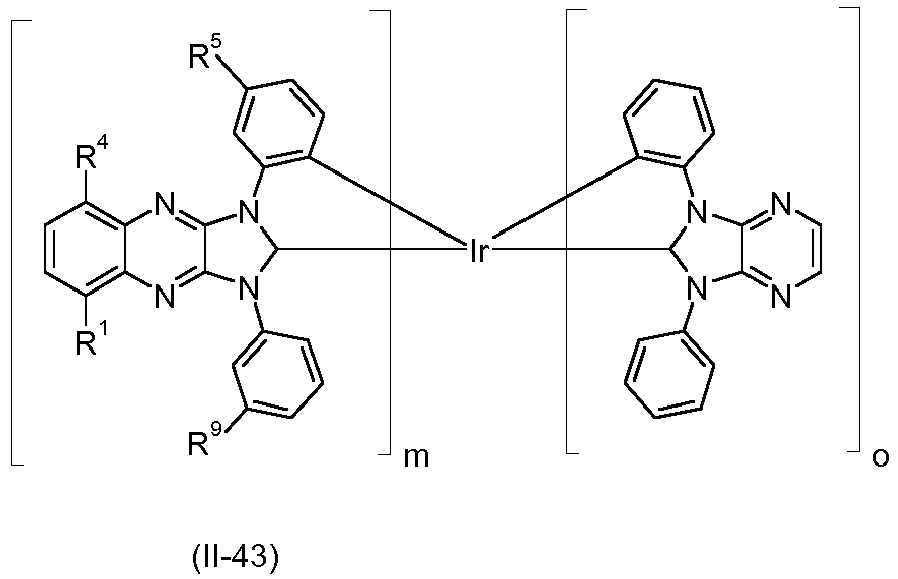


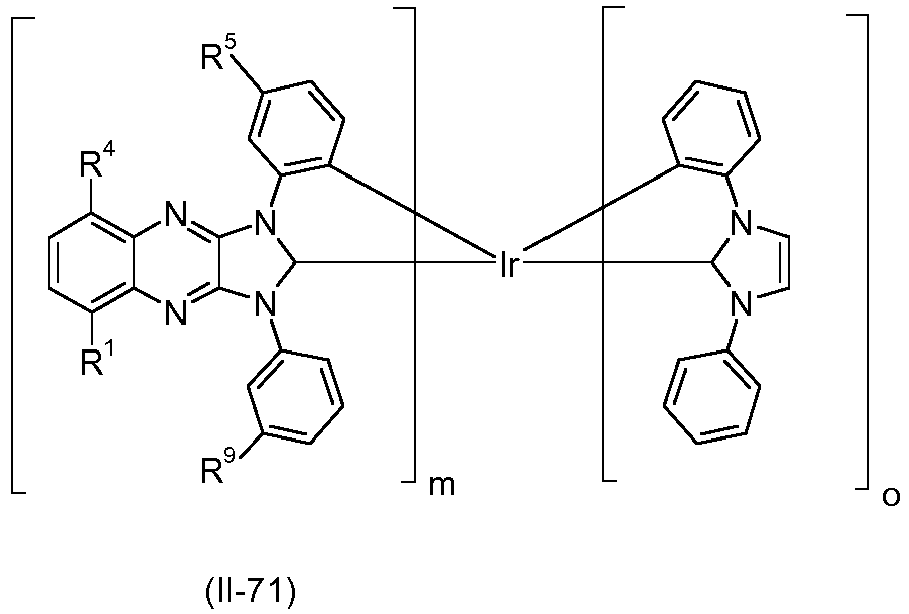
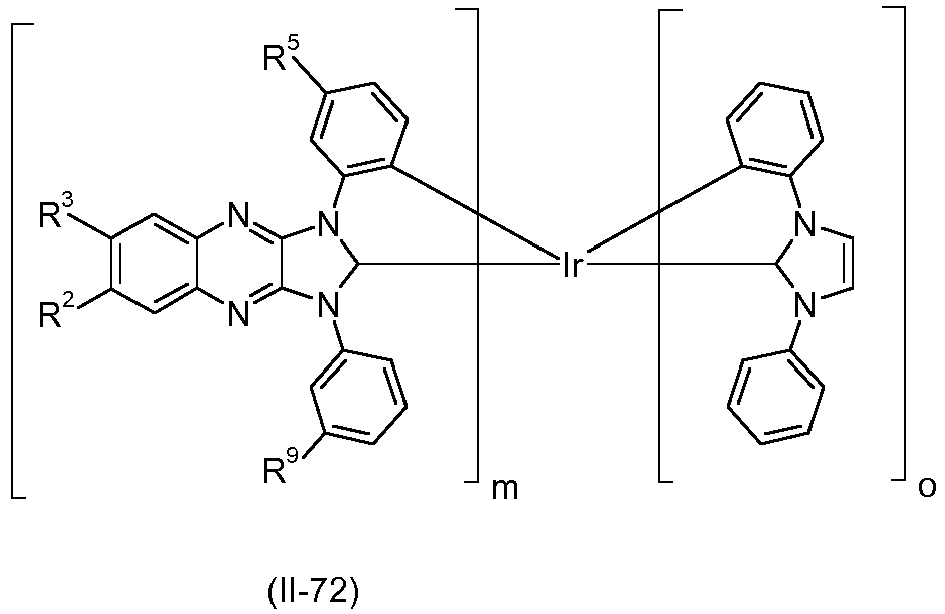


- R1, R2, R3 and R4
- are independently of each other - in each case - hydrogen, a C1-C8alkyl group, which can optionally be substituted by at least one substituent E and/or interrupted by D; a C3-C6cycloalkyl group, which can optionally be substituted by at least one substituent E; or a phenyl group, which can optionally be substituted by one or two groups G;
- preferably, in the case that R1, R2, R3 and/or R4 are a phenyl group, which can optionally be substituted by one or two groups G; R5, R6, R8 and R9 are not a phenyl group, which can optionally be substituted by one or two groups G;
- more preferably, R1, R2, R3 and R4 are independently of each other - in each case - hydrogen, a C1-C8alkyl group, which can optionally be substituted by at least one substituent E and/or interrupted by D; or a C3-C6cycloalkyl group, which can optionally be substituted by at least one substituent E;
- most preferably, R1 and R4 as well as R2 and R3 are identical; even further more preferably, R1, R2, R3 and R4 are hydrogen;
- R5 and R6
- are independently of each other - in each case - hydrogen, a C1-C8alkyl group, which can optionally be substituted by at least one substituent E and/or interrupted by D; or a C3-C6cycloalkyl group, which can optionally be substituted by at least one substituent E; or a phenyl group, which can optionally be substituted by one or two groups G;
- preferably, R5 and R6 are independently of each other - in each case - hydrogen, a C1-C8alkyl group, which can optionally be substituted by at least one substituent E and/or interrupted by D; or a C3-C6cycloalkyl group, which can optionally be substituted by at least one substituent E; or either R5 or R6, preferably R5, are a phenyl group, which can optionally be substituted by one or two groups G;
- more preferably, R5 and R6 are independently of each other - in each case - hydrogen, a C1-Csalkyl group, which can optionally be substituted by at least one substituent E and/or interrupted by D; or a C3-C6cycloalkyl group, which can optionally be substituted by at least one substituent E; or either R5 or R6, preferably R5, is a phenyl group, which can optionally be substituted by one or two groups G; in a further preferred embodiment, R6 is a phenyl group, which can optionally be substituted by one or two groups G; more preferably, R5 and R6 are hydrogen; R8 and R9
- are independently of each other - in each case - hydrogen, a C1-C8alkyl group, which can optionally be substituted by at least one substituent E and/or interrupted by D; or a C3-C6cycloalkyl group, which can optionally be substituted by at least one substituent E; or a phenyl group, which can optionally be substituted by one or two groups G;
- preferably, R8 and R9 are independently of each other - in each case - hydrogen, a C1-C8alkyl group, which can optionally be substituted by at least one substituent E and/or interrupted by D; or a C3-C6cycloalkyl group, which can optionally be substituted by at least one substituent E; or either R8 or R9 are a phenyl group, which can optionally be substituted by one or two groups G; more preferably, R8 and R9 are independently of each other - in each case - a C1-C8alkyl group, which can optionally be substituted by at least one substituent E and/or interrupted by D; or a C3-C6cycloalkyl group, which can optionally be substituted by at least one substituent E; more preferably, R9 is hydrogen and R8 is hydrogen or a phenyl group which can be optionally substituted by one or two groups G; most preferably, R8 and R9 are hydrogen;
- most preferably, in the case that R6 and R8 are both present, R6 and R8 are identical; in the case that R5 and R9 are both present, R5 and R9 are identical;
- D is -S- or -O-;
- E is -OR69, -CN, CF3, C1-C8alkyl or F; preferably CF3 or C1-C8alkyl; preferably C1-C8alkyl;
- G is -OR69, -CN, CF3 or C1-C8alkyl; preferably C1-C8alkyl;
- R69 is a phenyl group, which can optionally be substituted by one or two C1-C8alkyl groups; an unsubstituted C1-C8alkyl group; or a C1-C8alkyl group, which is interrupted by-O-;
- m is 2 or 1, preferably 2; in the case that m is 2, the two ligands are identical or different, preferably, the two ligands are identical;
- o is 1 or 2, preferably 1; in the case that m is 2, the two ligands are identical or different, preferably, the two ligands are identical;
- and the sum of m + o is 3.
- Preferred residues R1, R2, R3, R4, R5, R6, R8 and R9 and combinations of said residues are mentioned above. Preferred groups D, E, G and R69 are also mentioned above.
- In one preferred embodiment of the present invention, at least one of the residues R1, R2, R3, R4, R5, R6, R8 and R9 in each formula of formulae (II-1) to (II-74) is not hydrogen.
- In a most preferred embodiment, R1, R2, R3, R4, R5, R6, R8, and R9 in each formula of formulae (II-1) to (II-74) are hydrogen.
- Even more preferably, the metal carbene complex according to the present invention is selected from the metal carbene complexes (II-1), (II-2), (II-5), (II-6), (II-7), (II-8), (II-11), (II-12), (II-13), (II-14), (II-15), (II-16), (II-17), (II-18), (II-19), (II-20), (II-21), (II-22), (II-23), (II-24), (II-25), (II-26), (II-27), (II-28), (II-29), (II-30), (II-31), (II-32), (II-33), (II-34), (II-35), (II-36), (II-37), (II-38), (II-39), (II-40), (II-41), (II-42), (II-45), and (II-46).
- Additionally, even more preferably, the metal carbene complex according to the present invention is selected from the metal carbene complexes (II-51), (II-52), (II-53), (II-54), (II-55), (II-56), (II-57), (II-58), (II-59), (II-60), (II-61), (II-62), (II-63), (II-64), (II-65), (II-66), (II-67), (II-68), (II-69), (II-70), (II-71), (II-72), (II-73) and (II-74).
- Further even more preferably, the metal carbene complex according to the present invention is selected from the metal carbene complexes (II-1), (II-2), (II-5), (II-6), (II-11), (II-12), (II-15), (II-16), (II-17), (II-18), (II-25), (II-26), (II-27), (II-28), (II-33), (II-34), (II-35), (II-36), (II-37), (II-38), (II-39), (II-40), (II-41), and (II-42).
- Additionally, further even more preferably, the metal carbene complex according to the present invention is selected from the metal carbene complexes (II-51), (II-52), (II-53), (II-54), (II-59), (II-60), (II-63), (II-64), (II-65), (II-66), (II-71) and (II-72).
- In a most preferred embodiment, R1, R2, R3, R4, R5, R6, R8, and R9 are hydrogen, i.e. the metal carbene complex of the present invention has one of the following formulae:


wherein - m is 1, 2 or 3, preferably 2 or 3; and
- o is 0, 1 or 2, preferably 0 or 1.
- In a further most preferred embodiment, R1, R2, R3, R4, R5, R6, R8, and R9 are hydrogen, i.e. the metal carbene complex of the present invention has one of the formulae (II-A), (II-B), (II-C), (II-D) or (II-E) as mentioned above, wherein
- m is 1; and
- o is 2.
- Examples for particularly preferred metal carbene complexes according to the present invention are mentioned in the following tables:


Cpd. R4 R1 R6 = R8 A-1, A'-1, A"-1, A"'-1, A""-1, A""'-1 -CH3 -CH3 H A-2, A'-2, A"-2, A"'-2, A""-2, A""'-2 -CH2CH3 -CH2CH3 H A-3, A'-3, A"-3, A"'-3, A-""-3, A""'-3 n-propyl n-propyl H A-4, A'-4, A"-4, A"'-4, A""-4, A""'-4 iso-propyl iso-propyl H A-5, A'-5, A"-5, A"'-5, A""-5, A""'-5 sec-butyl sec-butyl H A-6, A'-6, A"-6, A"'-6, A""-6, A""'-6 iso-butyl iso-butyl H A-7, A'-7, A"-7, A"'-7, A""-7, A""'-7 neopentyl neopentyl H A-8, A'-8, A"-8, A"'-8, A""-8, A""'-8 

H A-9, A'-9, A"-9, A"'-9, A""-9, A""'-9 

H A-10, A'-10, A"-10, A"'-10, A""-10, A'""-10 -CH3 -CH3 -CH3 A-11, A'-11, A"-11, A"'-11, A""-11, A""'-11 -CH2CH3 -CH2CH3 -CH3 A-12, A'-12, A"-12, A"'-12, A""-12, A""'-12 n-propyl n-propyl -CH3 A-13, A'-13, A"-13, A"'-13, A""-13, A""'-13 iso-propyl iso-propyl -CH3 A-14, A'-14, A"-14, A"'-14, A""-14, A""'-14 sec-butyl sec-butyl -CH3 A-15, A'-15, A"-15, A"'-15, A""-15, A""'-15 iso-butyl iso-butyl -CH3 A-16, A'-16, A"-16, A"'-16, A""-16, A""'-16 neopentyl neopentyl -CH3 A-17, A'-17, A"-17, A"'-17, A""-17, A""'-17 

-CH3 A-18, A'-18, A"-18, A"'-18, A""-18, A""'-18 

-CH3 A-19, A'-19, A"-19, A"'-19, A""-19, A""'-19 -CH3 -CH3 -CH2CH3 A-20, A'-20, A"-20, A'"-20, A""-20, A""'-20 -CH2CH3 -CH2CH3 -CH2CH3 A-21, A'-21, A"-21, A"'-21, A""-21, A""'-21 n-propyl n-propyl -CH2CH3 A-22, A'-22, A"-22, A'"-22, A""-22, A""'-22 iso-propyl iso-propyl -CH2CH3 A-23, A'-23, A"-23, A'"-23, A""-23, A""'-23 sec-butyl sec-butyl -CH2CH3 A-24, A'-24, A"-24, A'"-24, A""-24, A""'-24 iso-butyl iso-butyl -CH2CH3 A-25, A'-25, A"-25, A'"-25, A""-25, A""'-25 neopentyl neopentyl -CH2CH3 A-26, A'-26, A"-26, A'"-26, A""-26, A""'-26 

-CH2CH3 A-27, A'-27, A"-27, A'"-27, A""-27, A""'-27 

-CH2CH3 A-28, A'-28, A"-28, A'"-28, A""-28, A""'-28 -CH3 -CH3 n-propyl A-29, A'-29, A"-29, A'"-29, A""-29, A""'-29 -CH2CH3 -CH2CH3 n-propyl A-30, A'-30, A"-30, A'"-30, A""-30, A""'-30 n-propyl n-propyl n-propyl A-31, A'-31, A"-31, A"'-31, A""-31, A""'-31 iso-propyl iso-propyl n-propyl A-32, A'-32, A"-32, A'"-32, A""-32, A""'-32 sec-butyl sec-butyl n-propyl A-33, A'-33, A"-33, A'"-33, A""-33, A""'-33 iso-butyl iso-butyl n-propyl A-34, A'-34, A"-34, A'"-34, A""-34, A""'-34 neopentyl neopentyl n-propyl A-35, A'-35, A"-35, A'"-35, A""-35, A""'-35 
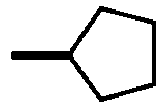
n-propyl A-36, A'-36, A"-36, A'"-36, A""-36, A""'-36 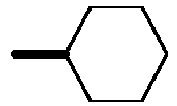

n-propyl A-37, A'-37, A"-37, A'"-37, A""-37, A""'-37 -CH3 -CH3 iso-propyl A-38, A'-38, A"-38, A'"-38, A""-38, A""'-38 -CH2CH3 -CH2CH3 iso-propyl A-39, A'-39, A"-39, A'"-39, A""-39, A""'-39 n-propyl n-propyl iso-propyl A-40, A'-40, A"-40, A'"-40, A""-40, A""'-40 iso-propyl iso-propyl iso-propyl A-41, A'-41, A"-41, A"'-41, A""-41, A""'-41 sec-butyl sec-butyl iso-propyl A-42, A'-42, A"-42, A'"-42, A""-42, A""'-42 iso-butyl iso-butyl iso-propyl A-43, A'-43, A"-43, A'"-43, A""-43, A""'-43 neopentyl neopentyl iso-propyl A-44, A'-44, A"-44, A'"-44, A""-44, A""'-44 

iso-propyl A-45, A'-45, A"-45, A'"-45, A""-45, A""'-45 

iso-propyl A-46, A'-46, A"-46 A"'-46, A""-46, A""'-46 -CH3 -CH3 sec-butyl A-47, A'-47, A"-47, A'"-47, A""-47, A""'-47 -CH2CH3 -CH2CH3 sec-butyl A-48, A'-48, A"-48, A'"-48, A""-48, A""'-48 n-propyl n-propyl sec-butyl A-49, A'-49, A"-49, A'"-49, A""-49, A""'-49 iso-propyl iso-propyl sec-butyl A-50, A'-50, A"-50, A'"-50, A""-50, A""'-50 sec-butyl sec-butyl sec-butyl A-51, A'-51, A"-51, A"'-51, A""-51, A""'-51 iso-butyl iso-butyl sec-butyl A-52, A'-52, A"-52, A'"-52, A""-52, A""'-52 neopentyl neopentyl sec-butyl A-53, A'-53, A"-53, A'"-53, A""-53, A""'-53 
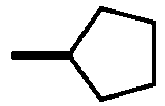
sec-butyl A-54, A'-54, A"-54, A'"-54, A""-54, A""'-54 

sec-butyl A-55, A'-55, A"-55, A'"-55, A""-55, A""'-55 -CH3 -CH3 iso-butyl A-56, A'-56, A"-56, A'"-56, A""-56, A""'-56 -CH2CH3 -CH2CH3 iso-butyl A-57, A'-57, A"-57, A'"-57, A""-57, A""'-57 n-propyl n-propyl iso-butyl A-58, A'-58, A"-58, A'"-58, A""-58, A""'-58 iso-propyl iso-propyl iso-butyl A-59, A'-59, A"-59, A'"-59, A""-59, A""'-59 sec-butyl sec-butyl iso-butyl A-60, A'-60, A"-60, A'"-60, A""-60, A""'-60 iso-butyl iso-butyl iso-butyl A-61, A'-61, A"-61, A"'-61, A""-61, A""'-61 neopentyl neopentyl iso-butyl A-62, A'-62, A"-62, A'"-62, A""-62, A""'-62 
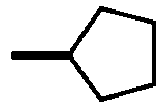
iso-butyl A-63, A'-63, A"-63, A'"-63, A""-63, A""'-63 

iso-butyl A-64, A'-64, A"-64, A'"-64, A""-64, A""'-64 -CH3 -CH3 neopentyl A-65, A'-65, A"-65, A'"-65, A""-65, A""'-65 -CH2CH3 -CH2CH3 neopentyl A-66, A'-66, A"-66, A'"-66, A""-66, A""'-66 n-propyl n-propyl neopentyl A-67, A'-67, A"-67, A'"-67, A""-67, A""'-67 iso-propyl iso-propyl neopentyl A-68, A'-68, A"-68, A'"-68, A""-68, A""'-68 sec-butyl sec-butyl neopentyl A-69, A'-69, A"-69, A'"-69, A""-69, A""'-69 iso-butyl iso-butyl neopentyl A-70, A'-70, A"-70, A'"-70, A""-70, A""'-70 neopentyl neopentyl neopentyl A-71, A'-71, A"-71, A"'-71, A""-71, A""'-71 

neopentyl A-72, A'-72, A"-72, A'"-72, A""-72, A""'-72 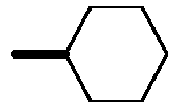

neopentyl A-73, A'-73, A"-73, A'"-73, A""-73, A""'-73 -CH3 -CH3 
A-74, A'-74, A"-74, A'"-74, A""-74, A""'-74 -CH2CH3 -CH2CH3 
A-75, A'-75, A"-75, A'"-75, A""-75, A""'-75 n-propyl n-propyl 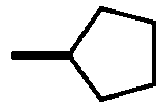
A-76, A'-76, A"-76, A'"-76, A""-76, A""'-76 iso-propyl iso-propyl 
A-77, A'-77, A"-77, A'"-77, A""-77, A'""-77 sec-butyl sec-butyl 
A-78, A'-78, A"-78, A'"-78, A""-78, A""'-78 iso-butyl iso-butyl 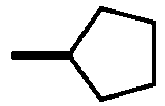
A-79, A'-79, A"-79, A'"-79, A""-79, A""'-79 neopentyl neopentyl 
A-80, A'-80, A"-80, A'"-80, A""-80, A""'-80 


A-81, A'-81, A"-81, A"'-81, A""-81, A""'-81 


A-82, A'-82, A"-82, A'"-82, A""-82, A""'-82 -CH3 -CH3 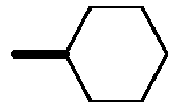
A-83, A'-83, A"-83, A'"-83, A""-83, A""'-83 -CH2CH3 -CH2CH3 
A-84, A'-84, A"-84, A'"-84, A""-84, A""'-84 n-propyl n-propyl 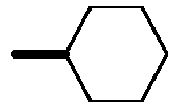
A-85, A'-85, A"-85, A'"-85, A""-85, A""'-85 iso-propyl iso-propyl 
A-86, A'-86, A"-86, A'"-86, A""-86, A""'-86 sec-butyl sec-butyl 
A-87, A'-87, A"-87, A'"-87, A""-87, A""'-87 iso-butyl iso-butyl 
A-88, A'-88, A"-88, A'"-88, A""-88, A""-88 neopentyl neopentyl 
A-89, A'-89, A"-89, A'"-89, A""-89, A""-89 

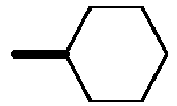
A-90, A'-90, A"-90, A'"-90, A""-90, A""'-90 


A-91, A'-91, A"-91, A"'-91, A""-91, A""'-91 -CH3 -CH3 tert-butyl A-92, A'-92, A"-92, A'"-92, A""-92, A""'-92 -CH2CH3 -CH2CH3 tert-butyl A-93, A'-93, A"-93, A'"-93, A""-93, A""'-93 n-propyl n-propyl tert-butyl A-94, A'-94, A"-94, A'"-94, A""-94, A""'-94 iso-propyl iso-propyl tert-butyl A-95, A'-95, A"-95, A'"-95, A""-95, A""'-95 sec-butyl sec-butyl tert-butyl A-96, A'-96, A"-96, A'"-96, A""-96, A""'-96 iso-butyl iso-butyl tert-butyl A-97, A'-97, A"-97, A'"-97, A""-97, A""'-97 neopentyl neopentyl tert-butyl A-98, A'-98, A"-98, A'"-98, A""-98, A'""-98 

tert-butyl A-99, A'-99, A"-99, A'"-99, A""-99, A""-99 

tert-butyl A-100, A'-100, A"-100, A"'-100, A""-100, A""'-100 -CH3 -CH3 tert-amyl A-101, A'-101, A"-101, A'"-101, A""-101, A""'-101 -CH2CH3 -CH2CH3 tert-amyl A-102, A'-102, A"-102, A'"-102, A""-102, A""'-102 n-propyl n-propyl tert-amyl A-103, A'-103, A"-103, A'"-103, A""-103, A""'-103 iso-propyl iso-propyl tert-amyl A-104, A'-104, A"-104, A'"-104, A""-104, A""'-104 sec-butyl sec-butyl tert-amyl A-105, A'-105, A"-105, A'"-105, A""-105, A""'-105 iso-butyl iso-butyl tert-amyl A-106, A'-106, A"-106, A"'-106, A""-106, A""'-106 neopentyl neopentyl tert-amyl A-107, A'-107, A"-107, A"'-107, A""-107, A""'-107 

tert-amyl A-108, A'-108, A"-108, A"'-108, A""-108, A""'-108 

tert-amyl A-109, A'-109, A"-109, A"'-109, A""-109, A""'-109 tert-butyl tert-butyl -CH3 A-110, A'-110, A"-110, A"'-110, A""-110, A""'-110 tert-butyl tert-butyl -CH2CH3 A-111, A'-111, A"-111, A"'-111, A""-111, A""'-111 tert-butyl tert-butyl n-propyl A-112, A'-112, A"-112, A"'-112, A""-112, A""'-112 tert-butyl tert-butyl iso-propyl A-113, A'-113, A"-113, A"'-113, A""-113, A""'-113 tert-butyl tert-butyl sec-butyl A-114, A'-114, A"-114, A"'-114, A""-114, A""'-114 tert-butyl tert-butyl iso-butyl A-115, A'-115, A"-115, A"'-115, A""-115, A""'-115 tert-butyl tert-butyl neopentyl A-116, A'-116, A"-116, A"'-116, A""-116, A""'-116 tert-butyl tert-butyl 
A-117, A'-117, A"-117, A"'-117, A""-117, A""'-117 tert-butyl tert-butyl 
A-118, A'-118, A"-118, A"'-118, A""-118, A""'-118 tert-butyl tert-butyl tert-butyl A-119, A'-119, A"-119, A"'-119, A""-119, A""'-119 tert-butyl tert-butyl tert-amyl A-120, A'-120, A"-120, A"'-120, A""-120, A""'-120 tert-amyl tert-amyl -CH3 A-121, A'-121, A"-121, A"'-121, A""-121, A""'-121 tert-amyl tert-amyl -CH2CH3 A-122, A'-122, A"-122, A"'-122, A""-122, A""'-122 tert-amyl tert-amyl n-propyl A-123, A'-123, A"-123, A"'-123, A""-123, A""'-123 tert-amyl tert-amyl iso-propyl A-124, A'-124, A"-124, A"'-124, A""-124, A""'-124 tert-amyl tert-amyl sec-butyl A-125, A'-125, A"-125, A"'-125, A""-125, A""'-125 tert-amyl tert-amyl iso-butyl A-126, A'-126, A"-126, A"'-126, A""-126, A""'-126 tert-amyl tert-amyl neopentyl A-127, A'-127, A"-127, A"'-127, A""-127, A""'-127 tert-amyl tert-amyl 
A-128, A'-128, A"-128, A"'-128, A""-128, A""'-128 tert-amyl tert-amyl 
A-129, A'-129, A"-129, A"'-129, A""-129, A""'-129 tert-amyl tert-amyl tert-butyl A-130, A'-130, A"-130, A"'-130, A""-130, A""'-130 tert-amyl tert-amyl tert-amyl A-131, A'-131, A"-131, A"'-131, A""-131, A""'-131 tert-butyl tert-butyl H A-132, A'-132, A"-132, A"'-132, A""-132, A""'-132 tert-amyl tert-amyl H A-133, A'-133, A"-133, A'''133, A""-133, A""'-133 H H H - Preferred compounds A, A', A", A"', A"" and A'"" are compounds A-1, A'-1, A"-1, A"'-1, A"" and A""'-1 to A-90, A'-90, A"-90, A"'-90, A""-90 and A""'-90. Further most preferred compounds are A-133, A'-133, A"-133, A""-133, A""-133 and A'""-133.


Cpd. R3 R2 R6= R8 B-1, B'-1, B"-1, B"'-1, B""-1, B""'-1 -CH3 -CH3 H B-2, B'-2, B"-2, B"'-2, B""-2, B""'-2 -CH2CH3 -CH2CH3 H B-3, B'-3, B"-3, B"'-3, B-""-3, B""'-3 n-propyl n-propyl H B-4, B'-4, B"-4, B"'-4, B""-4, B""'-4 iso-propyl iso-propyl H B-5, B'-5, B"-5, B"'-5, B""-5, B""'-5 sec-butyl sec-butyl H B-6, B'-6, B"-6, B"'-6, B""-6, B""'-6 iso-butyl iso-butyl H B-7, B'-7, B"-7, B"'-7, B""-7, B""'-7 neopentyl neopentyl H B-8, B'-8, B"-8, B"'-8, B""-8, B""'-8 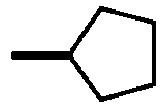

H B-9, B'-9, B"-9, B"'-9, B""-9, B""'-9 

H B-10, B'-10, B"-10, B"'-10, B""-10, B""'-10 -CH3 -CH3 -CH3 B-11, B'-11, B"-11, B"'-11, B""-11, B""'-11 -CH2CH3 -CH2CH3 -CH3 B-12, B'-12, B"-12, B"'-12, B""-12, B'""-12 n-propyl n-propyl -CH3 B-13, B'-13, B"-13, B"'-13, B""-13, B""'-13 iso-propyl iso-propyl -CH3 B-14, B'-14, B"-14, B"'-14, B""-14, B""'-14 sec-butyl sec-butyl -CH3 B-15, B'-15, B"-15, B"'-15, B""-15, B""'-15 iso-butyl iso-butyl -CH3 B-16, B'-16, B"-16, B"'-16, B""-16, B""'-16 neopentyl neopentyl -CH3 B-17, B'-17, B"-17, B"'-17, B""-17, B""'-17 

-CH3 B-18, B'-18, B"-18, B"'-18, B""-18, B""'-18 

-CH3 B-19, B'-19, B"-19, B"'-19, B""-19, B""'-19 -CH3 -CH3 -CH2CH3 B-20, B'-20, B"-20, B"'-20, B""-20, B""'-20 -CH2CH3 -CH2CH3 -CH2CH3 B-21, B'-21, B"-21, B"'-21, B""-21, B""'-21 n-propyl n-propyl -CH2CH3 B-22, B'-22, B"-22, B"'-22, B""-22, B""'-22 iso-propyl iso-propyl -CH2CH3 B-23, B'-23, B"-23, B"'-23, B""-23, B""'-23 sec-butyl sec-butyl -CH2CH3 B-24, B'-24, B"-24, B"'-24, B""-24, B""'-24 iso-butyl iso-butyl -CH2CH3 B-25, B'-25, B"-25, B"'-25, B""-25, B""'-25 neopentyl neopentyl -CH2CH3 B-26, B'-26, B"-26, B"'-26, B""-26, B""'-26 

-CH2CH3 B-27, B'-27, B"-27, B"'-27, B""-27, B'""-27 

-CH2CH3 B-28, B'-28, B"-28, B"'-28, B""-28, B'""-28 -CH3 -CH3 n-propyl B-29, B'-29, B"-29, B"'-29, B""-29, B'""-29 -CH2CH3 -CH2CH3 n-propyl B-30, B'-30, B"-30, B"'-30, B""-30, B""'-30 n-propyl n-propyl n-propyl B-31, B'-31, B"-31, B"'-31, B""-31, B""'-31 iso-propyl iso-propyl n-propyl B-32, B'-32, B"-32, B"'-32, B""-32, B""'-32 sec-butyl sec-butyl n-propyl B-33, B'-33, B"-33, B"'-33, B""-33, B""'-33 iso-butyl iso-butyl n-propyl B-34, B'-34, B"-34, B"'-34, B""-34, B""'-34 neopentyl neopentyl n-propyl B-35, B'-35, B"-35, B"'-35, B""-35, B""'-35 

n-propyl B-36, B'-36, B"-36, B"'-36, B""-36, B""'-36 

n-propyl B-37, B'-37, B"-37, B"'-37, B""-37, B""'-37 -CH3 -CH3 iso-propyl B-38, B'-38, B"-38, B"'-38, B""-38, B""'-38 -CH2CH3 -CH2CH3 iso-propyl B-39, B'-39, B"-39, B"'-39, B""-39, B""'-39 n-propyl n-propyl iso-propyl B-40, B'-40, B"-40, B"'-40, B""-40, B""'-40 iso-propyl iso-propyl iso-propyl B-41, B'-41, B"-41, B"'-41, B""-41, B""'-41 sec-butyl sec-butyl iso-propyl B-42, B'-42, B"-42, B"'-42, B""-42, B""'-42 iso-butyl iso-butyl iso-propyl B-43, B'-43, B"-43, B"'-43, B""-43, B""'-43 neopentyl neopentyl iso-propyl B-44, B'-44, B"-44, B"'-44, B""-44, B""'-44 

iso-propyl B-45, B'-45, B"-45, B"'-45, B""-45, B""'-45 

iso-propyl B-46, B'-46, B"-46 B"'-46, B""-46, B""'-46 -CH3 -CH3 sec-butyl B-47, B'-47, B"-47, B"'-47, B""-47, B""'-47 -CH2CH3 -CH2CH3 sec-butyl B-48, B'-48, B"-48, B"'-48, B""-48, B""'-48 n-propyl n-propyl sec-butyl B-49, B'-49, B"-49, B'"-49, B""-49, B""'-49 iso-propyl iso-propyl sec-butyl B-50, B'-50, B"-50, B"'-50, B""-50, B""'-50 sec-butyl sec-butyl sec-butyl B-51, B'-51, B"-51, B"'-51, B""-51, B""'-51 iso-butyl iso-butyl sec-butyl B-52, B'-52, B"-52, B"'-52, B""-52, B""'-52 neopentyl neopentyl sec-butyl B-53, B'-53, B"-53, B"'-53, B""-53, B""'-53 

sec-butyl B-54, B'-54, B"-54, B"'-54, B""-54, B""'-54 

sec-butyl B-55, B'-55, B"-55, B"'-55, B""-55, B""'-55 -CH3 -CH3 iso-butyl B-56, B'-56, B"-56, B"'-56, B""-56, B""'-56 -CH2CH3 -CH2CH3 iso-butyl B-57, B'-57, B"-57, B"'-57, B""-57, B""'-57 n-propyl n-propyl iso-butyl B-58, B'-58, B"-58, B"'-58, B""-58, B""'-58 iso-propyl iso-propyl iso-butyl B-59, B'-59, B"-59, B"'-59, B""-59, B""'-59 sec-butyl sec-butyl iso-butyl B-60, B'-60, B"-60, B"'-60, B""-60, B""'-60 iso-butyl iso-butyl iso-butyl B-61, B'-61, B"-61, B"'-61, B""-61, B""'-61 neopentyl neopentyl iso-butyl B-62, B'-62, B"-62, B"'-62, B""-62, B""'-62 

iso-butyl B-63, B'-63, B"-63, B"'-63, B""-63, B""'-63 
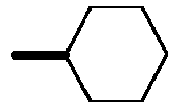
iso-butyl B-64, B'-64, B"-64, B"'-64, B""-64, B""'-64 -CH3 -CH3 neopentyl B-65, B'-65, B"-65, B"'-65, B""-65, B""'-65 -CH2CH3 -CH2CH3 neopentyl B-66, B'-66, B"-66, B"'-66, B""-66, B""'-66 n-propyl n-propyl neopentyl B-67, B'-67, B"-67, B"'-67, B""-67, B""'-67 iso-propyl iso-propyl neopentyl B-68, B'-68, B"-68, B"'-68, B""-68, B'""-68 sec-butyl sec-butyl neopentyl B-69, B'-69, B"-69, B"'-69, B""-69, B""'-69 iso-butyl iso-butyl neopentyl B-70, B'-70, B"-70, B"'-70, B""-70, B""'-70 neopentyl neopentyl neopentyl B-71, B'-71, B"-71, B"'-71, B""-71, B""'-71 

neopentyl B-72, B'-72, B"-72, B"'-72, B""-72, B""'-72 

neopentyl B-73, B'-73, B"-73, B"'-73, B""-73, B""'-73 -CH3 -CH3 
B-74, B'-74, B"-74, B"'-74, B""-74, B""'-74 -CH2CH3 -CH2CH3 
B-75, B'-75, B"-75, B"'-75, B""-75, B""'-75 n-propyl n-propyl 
B-76, B'-76, B"-76, B"'-76, B""-76, B""'-76 iso-propyl iso-propyl 
B-77, B'-77, B"-77, B"'-77, B""-77, B""'-77 sec-butyl sec-butyl 
B-78, B'-78, B"-78, B"'-78, B""-78, B""'-78 iso-butyl iso-butyl 
B-79, B'-79, B"-79, B"'-79, B""-79, B""'-79 neopentyl neopentyl 
B-80, B'-80, B"-80, B"'-80, B""-80, B""'-80 


B-81, B'-81, B"-81, B"'-81, B""-81, B""'-81 


B-82, B'-82, B"-82, B"'-82, B""-82, B""'-82 -CH3 -CH3 
B-83, B'-83, B"-83, B"'-83, B""-83, B""'-83 -CH2CH3 -CH2CH3 
B-84, B'-84, B"-84, B"'-84, B""-84, B""'-84 n-propyl n-propyl 
B-85, B'-85, B"-85, B"'-85, B""-85, B""'-85 iso-propyl iso-propyl 
B-86, B'-86, B"-86, B"'-86, B""-86, B""'-86 sec-butyl sec-butyl 
B-87, B'-87, B"-87, B"'-87, B""-87, B""'-87 iso-butyl iso-butyl 
B-88, B'-88, B"-88, B"'-88, B""-88, B""'-88 neopentyl neopentyl 
B-89, B'-89, B"-89, B"'-89, B""-89, B""'-89 


B-90, B'-90, B"-90, B"'-90, B""-90, B""'-90 


B-91, B'-91, B"-91, B"'-91, B""-91, B""'-91 -CH3 -CH3 tert-butyl B-92, B'-92, B"-92, B"'-92, B""-92, B""'-92 -CH2CH3 -CH2CH3 tert-butyl B-93, B'-93, B"-93, B"'-93, B""-93, B""'-93 n-propyl n-propyl tert-butyl B-94, B'-94, B"-94, B"'-94, B""-94, B""'-94 iso-propyl iso-propyl tert-butyl B-95, B'-95, B"-95, B"'-95, B""-95, B""'-95 sec-butyl sec-butyl tert-butyl B-96, B'-96, B"-96, B"'-96, B""-96, B""'-96 iso-butyl iso-butyl tert-butyl B-97, B'-97, B"-97, B"'-97, B""-97, B""'-97 neopentyl neopentyl tert-butyl B-98, B'-98, B"-98, B"'-98, B""-98, B""'-98 

tert-butyl B-99, B'-99, B"-99, B"'-99, B""-99, B""'-99 

tert-butyl B-100, B'-100, B"-100, B"'-100, B""-100, B""'-100 -CH3 -CH3 tert-amyl B-101, B'-101, B"-101, B"'-101, B""-101, B""'-101 -CH2CH3 -CH2CH3 tert-amyl B-102, B'-102, B"-102, B"'-102, B""-102, B""'-102 n-propyl n-propyl tert-amyl B-103, B'-103, B"-103, B"'-103, B""-103, B""'-103 iso-propyl iso-propyl tert-amyl B-104, B'-104, B"-104, B"'-104, B""-104, B""'-104 sec-butyl sec-butyl tert-amyl B-105, B'-105, B"-105, B"'-105, B""-105, B""'-105 iso-butyl iso-butyl tert-amyl B-106, B'-106, B"-106, B"'-106, B""-106, B""'-106 neopentyl neopentyl tert-amyl B-107, B'-107, B"-107, B"'-107, B""-107, B""'-107 

tert-amyl B-108, B'-108, B"-108, B"'-108, B""-108, B""'-108 

tert-amyl - Preferred compounds B, B', B", B'", B"" and B""' are compounds B-1, B'-1, B"-1, B"'-1, B""-1 and B""'-1 to B-90, B'-90, B"-90, B"'-90, B""-90 and B""'-90.

Cpd. R4 R1 R5 = R6 =R8 C-1 -CH3 -CH3 H C-2 -CH2CH3 -CH2CH3 H C-3 n-propyl n-propyl H C-4 iso-propyl iso-propyl H C-5 sec-butyl sec-butyl H C-6 iso-butyl iso-butyl H C-7 neopentyl Neopentyl H C-8 

H C-9 

H C-10 -CH3 -CH3 -CH3 C-11 -CH2CH3 -CH2CH3 -CH3 C-12 n-propyl n-propyl -CH3 C-13 iso-propyl iso-propyl -CH3 C-14 sec-butyl sec-butyl -CH3 C-15 iso-butyl iso-butyl -CH3 C-16 neopentyl Neopentyl -CH3 C-17 

-CH3 C-18 
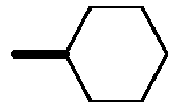
-CH3 C-19 -CH3 -CH3 -CH2CH3 C-20 -CH2CH3 -CH2CH3 -CH2CH3 C-21 n-propyl n-propyl -CH2CH3 C-22 iso-propyl iso-propyl -CH2CH3 C-23 sec-butyl sec-butyl -CH2CH3 C-24 iso-butyl iso-butyl -CH2CH3 C-25 neopentyl Neopentyl -CH2CH3 C-26 

-CH2CH3 C-27 

-CH2CH3 C-28 -CH3 -CH3 n-propyl C-29 -CH2CH3 -CH2CH3 n-propyl C-30 n-propyl n-propyl n-propyl C-31 iso-propyl iso-propyl n-propyl C-32 sec-butyl sec-butyl n-propyl C-33 iso-butyl iso-butyl n-propyl C-34 neopentyl Neopentyl n-propyl C-35 

n-propyl C-36 

n-propyl C-37 -CH3 -CH3 iso-propyl C-38 -CH2CH3 -CH2CH3 iso-propyl C-39 n-propyl n-propyl iso-propyl C-40 iso-propyl iso-propyl iso-propyl C-41 sec-butyl sec-butyl iso-propyl C-42 iso-butyl iso-butyl iso-propyl C-43 neopentyl Neopentyl iso-propyl C-44 

iso-propyl C-45 

iso-propyl C-46 -CH3 -CH3 sec-butyl C-47 -CH2CH3 -CH2CH3 sec-butyl C-48 n-propyl n-propyl sec-butyl C-49 iso-propyl iso-propyl sec-butyl C-50 sec-butyl sec-butyl sec-butyl C-51 iso-butyl iso-butyl sec-butyl C-52 neopentyl Neopentyl sec-butyl C-53 

sec-butyl C-54 

sec-butyl C-55 -CH3 -CH3 iso-butyl C-56 -CH2CH3 -CH2CH3 iso-butyl C-57 n-propyl n-propyl iso-butyl C-58 iso-propyl iso-propyl iso-butyl C-59 sec-butyl sec-butyl iso-butyl C-60 iso-butyl iso-butyl iso-butyl C-61 neopentyl Neopentyl iso-butyl C-62 

iso-butyl C-63 
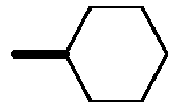
iso-butyl C-64 -CH3 -CH3 neopentyl C-65 -CH2CH3 -CH2CH3 neopentyl C-66 n-propyl n-propyl neopentyl C-67 iso-propyl iso-propyl neopentyl C-68 sec-butyl sec-butyl neopentyl C-69 iso-butyl iso-butyl neopentyl C-70 neopentyl Neopentyl neopentyl C-71 

neopentyl C-72 

neopentyl C-73 -CH3 -CH3 
C-74 -CH2CH3 -CH2CH3 
C-75 n-propyl n-propyl 
C-76 iso-propyl iso-propyl 
C-77 sec-butyl sec-butyl 
C-78 iso-butyl iso-butyl 
C-79 neopentyl Neopentyl 
C-80 


C-81 


C-82 -CH3 -CH3 
C-83 -CH2CH3 -CH2CH3 
C-84 n-propyl n-propyl 
C-85 iso-propyl iso-propyl 
C-86 sec-butyl sec-butyl 
C-87 iso-butyl iso-butyl 
C-88 neopentyl Neopentyl 
C-89 


C-90 


C-91 tert-butyl tert-butyl -CH3 C-92 tert-butyl tert-butyl -CH2CH3 C-93 tert-butyl tert-butyl n-propyl C-94 tert-butyl tert-butyl iso-propyl C-95 tert-butyl tert-butyl sec-butyl C-96 tert-butyl tert-butyl iso-butyl C-97 tert-butyl tert-butyl neopentyl C-98 tert-butyl tert-butyl 
C-99 tert-butyl tert-butyl 
C-100 tert-amyl tert-amyl -CH3 C-101 tert-amyl tert-amyl -CH2CH3 C-102 tert-amyl tert-amyl n-propyl C-103 tert-amyl tert-amyl iso-propyl C-104 tert-amyl tert-amyl sec-butyl C-105 tert-amyl tert-amyl iso-butyl C-106 tert-amyl tert-amyl neopentyl C-107 tert-amyl tert-amyl 
C-108 tert-amyl tert-amyl 
C-109 H H H - Preferred compounds C are C-1 to C-90. Further, most preferred is compound C-109.

Cpd. R3 R2 R5=R6 =R8 D-1 -CH3 -CH3 H D-2 -CH2CH3 -CH2CH3 H D-3 n-propyl n-propyl H D-4 iso-propyl iso-propyl H D-5 sec-butyl sec-butyl H D-6 iso-butyl iso-butyl H D-7 neopentyl Neopentyl H D-8 

H D-9 

H D-10 -CH3 -CH3 -CH3 D-11 -CH2CH3 -CH2CH3 -CH3 D-12 n-propyl n-propyl -CH3 D-13 iso-propyl iso-propyl -CH3 D-14 sec-butyl sec-butyl -CH3 D-15 iso-butyl iso-butyl -CH3 D-16 neopentyl Neopentyl -CH3 D-17 

-CH3 D-18 

-CH3 D-19 -CH3 -CH3 -CH2CH3 D-20 -CH2CH3 -CH2CH3 -CH2CH3 D-21 n-propyl n-propyl -CH2CH3 D-22 iso-propyl iso-propyl -CH2CH3 D-23 sec-butyl sec-butyl -CH2CH3 D-24 iso-butyl iso-butyl -CH2CH3 D-25 neopentyl Neopentyl -CH2CH3 D-26 

-CH2CH3 D-27 

-CH2CH3 D-28 -CH3 -CH3 n-propyl D-29 -CH2CH3 -CH2CH3 n-propyl D-30 n-propyl n-propyl n-propyl D-31 iso-propyl iso-propyl n-propyl D-32 sec-butyl sec-butyl n-propyl D-33 iso-butyl iso-butyl n-propyl D-34 neopentyl Neopentyl n-propyl D-35 

n-propyl D-36 

n-propyl D-37 -CH3 -CH3 iso-propyl D-38 -CH2CH3 -CH2CH3 iso-propyl D-39 n-propyl n-propyl iso-propyl D-40 iso-propyl iso-propyl iso-propyl D-41 sec-butyl sec-butyl iso-propyl D-42 iso-butyl iso-butyl iso-propyl D-43 neopentyl Neopentyl iso-propyl D-44 

iso-propyl D-45 

iso-propyl D-46 -CH3 -CH3 sec-butyl D-47 -CH2CH3 -CH2CH3 sec-butyl D-48 n-propyl n-propyl sec-butyl D-49 iso-propyl iso-propyl sec-butyl D-50 sec-butyl sec-butyl sec-butyl D-51 iso-butyl iso-butyl sec-butyl D-52 neopentyl Neopentyl sec-butyl D-53 

sec-butyl D-54 
sec-butyl D-55 -CH3 -CH3 iso-butyl D-56 -CH2CH3 -CH2CH3 iso-butyl D-57 n-propyl n-propyl iso-butyl D-58 iso-propyl iso-propyl iso-butyl D-59 sec-butyl sec-butyl iso-butyl D-60 iso-butyl iso-butyl iso-butyl D-61 neopentyl Neopentyl iso-butyl D-62 

iso-butyl D-63 

iso-butyl D-64 -CH3 -CH3 neopentyl D-65 -CH2CH3 -CH2CH3 neopentyl D-66 n-propyl n-propyl neopentyl D-67 iso-propyl iso-propyl neopentyl D-68 sec-butyl sec-butyl neopentyl D-69 iso-butyl iso-butyl neopentyl D-70 neopentyl Neopentyl neopentyl D-71 

neopentyl D-72 
neopentyl D-73 -CH3 -CH3 
D-74 -CH2CH3 -CH2CH3 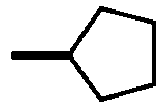
D-75 n-propyl n-propyl 
D-76 iso-propyl iso-propyl 
D-77 sec-butyl sec-butyl 
D-78 iso-butyl iso-butyl 
D-79 neopentyl Neopentyl 
D-80 


D-81 


D-82 -CH3 -CH3 
D-83 -CH2CH3 -CH2CH3 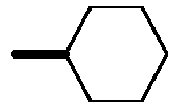
D-84 n-propyl n-propyl 
D-85 iso-propyl iso-propyl 
D-86 sec-butyl sec-butyl 
D-87 iso-butyl iso-butyl 
D-88 neopentyl Neopentyl 
D-89 


D-90 


Cpd. R4 R1 R5 E-1, E'-1, E"-1, E"'-1, E""-1, E""'-1 -CH3 -CH3 H E-2, E'-2, E"-2, E"'-2, E""-2, E""'-2 -CH2CH3 -CH2CH3 H E-3, E'-3, E"-3, E"'-3, E-""-3, E""'-3 n-propyl n-propyl H E-4, E'-4, E"-4, E"'-4, E""-4, E""'-4 iso-propyl iso-propyl H E-5, E'-5, E"-5, E"'-5, E""-5, E""'-5 sec-butyl sec-butyl H E-6, E'-6, E"-6, E"'-6, E""-6, E""'-6 iso-butyl iso-butyl H E-7, E'-7, E"-7, E"'-7, E""-7, E""'-7 neopentyl neopentyl H E-8, E'-8, E"-8, E"'-8, E""-8, E""'-8 

H E-9, E'-9, E"-9, E"'-9, E""-9, E""'-9 

H E-10, E'-10, E"-10, E"'-10, E""-10, E""'-10 -CH3 -CH3 -CH3 E-11, E'-11, E"-11, E"'-11, E""-11, E""'-11 -CH2CH3 -CH2CH3 -CH3 E-12, E'-12, E"-12, E"'-12, E""-12, E""'-12 n-propyl n-propyl -CH3 E-13, E'-13, E"-13, E"'-13, E""-13, E""'-13 iso-propyl iso-propyl -CH3 E-14, E'-14, E"-14, E"'-14, E""-14, E""'-14 sec-butyl sec-butyl -CH3 E-15, E'-15, E"-15, E"'-15, E""-15, E""'-15 iso-butyl iso-butyl -CH3 E-16, E'-16, E"-16, E"'-16, E""-16, E""'-16 neopentyl neopentyl -CH3 E-17, E'-17, E"-17, E"'-17, E""-17, E""'-17 

-CH3 E-18, E'-18, E"-18, E"'-18, E""-18, E""'-18 

-CH3 E-19, E'-19, E"-19, E"'-19, E""-19, E""'-19 -CH3 -CH3 -CH2CH3 E-20, E'-20, E"-20, E"'-20, E""-20, E""'-20 -CH2CH3 -CH2CH3 -CH2CH3 E-21, E'-21, E"-21, E"'-21, E""-21, E""'-21 n-propyl n-propyl -CH2CH3 E-22, E'-22, E"-22, E'"-22, E""-22, E""'-22 iso-propyl iso-propyl -CH2CH3 E-23, E'-23, E"-23, E"'-23, E""-23, E""'-23 sec-butyl sec-butyl -CH2CH3 E-24, E'-24, E"-24, E"'-24, E""-24, E""'-24 iso-butyl iso-butyl -CH2CH3 E-25, E'-25, E"-25, E"'-25, E""-25, E""'-25 neopentyl neopentyl -CH2CH3 E-26, E'-26, E"-26, E"'-26, E""-26, E""'-26 

-CH2CH3 E-27, E'-27, E"-27, E"'-27, E""-27, E""'-27 

-CH2CH3 E-28, E'-28, E"-28, E"'-28, E""-28, E""'-28 -CH3 -CH3 n-propyl E-29, E'-29, E"-29, E"'-29, E""-29, E""'-29 -CH2CH3 -CH2CH3 n-propyl E-30, E'-30, E"-30, E"'-30, E""-30, E""'-30 n-propyl n-propyl n-propyl E-31, E'-31, E"-31, E"'-31, E""-31, E""'-31 iso-propyl iso-propyl n-propyl E-32, E'-32, E"-32, E"'-32, E""-32, E""'-32 sec-butyl sec-butyl n-propyl E-33, E'-33, E"-33, E"'-33, E""-33, E""'-33 iso-butyl iso-butyl n-propyl E-34, E'-34, E"-34, E"'-34, E""-34, E""'-34 neopentyl neopentyl n-propyl E-35, E'-35, E"-35, E"'-35, E""-35, E""'-35 
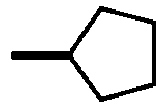
n-propyl E-36, E'-36, E"-36, E"'-36, E""-36, E""'-36 

n-propyl E-37, E'-37, E"-37, E"'-37, E""-37, E""'-37 -CH3 -CH3 iso-propyl E-38, E'-38, E"-38, E"'-38, E""-38, E""'-38 -CH2CH3 -CH2CH3 iso-propyl E-39, E'-39, E"-39, E"'-39, E""-39, E""'-39 n-propyl n-propyl iso-propyl E-40, E'-40, E"-40, E"'-40, E""-40, E""'-40 iso-propyl iso-propyl iso-propyl E-41, E'-41, E"-41, E"'-41, E""-41, E""'-41 sec-butyl sec-butyl iso-propyl E-42, E'-42, E"-42, E"'-42, E""-42, E""'-42 iso-butyl iso-butyl iso-propyl E-43, E'-43, E"-43, E"'-43, E""-43, E""'-43 neopentyl neopentyl iso-propyl E-44, E'-44, E"-44, E"'-44, E""-44, E""'-44 

iso-propyl E-45, E'-45, E"-45, E"'-45, E""-45, E""'-45 

iso-propyl E-46, E'-46, E"-46 E"'-46, E""-46, E""'-46 -CH3 -CH3 sec-butyl E-47, E'-47, E"-47, E"'-47, E""-47, E""'-47 -CH2CH3 -CH2CH3 sec-butyl E-48, E'-48, E"-48, E"'-48, E""-48, E""'-48 n-propyl n-propyl sec-butyl E-49, E'-49, E"-49, E"'-49, E""-49, E""'-49 iso-propyl iso-propyl sec-butyl E-50, E'-50, E"-50, E"'-50, E""-50, E""'-50 sec-butyl sec-butyl sec-butyl E-51, E'-51, E"-51, E"'-51, E""-51, E""'-51 iso-butyl iso-butyl sec-butyl E-52, E'-52, E"-52, E"'-52, E""-52, E""'-52 neopentyl neopentyl sec-butyl E-53, E'-53, E"-53, E"'-53, E""-53, E""'-53 

sec-butyl E-54, E'-54, E"-54, E"'-54, E""-54, E""'-54 

sec-butyl E-55, E'-55, E"-55, E"'-55, E""-55, E""'-55 -CH3 -CH3 iso-butyl E-56, E'-56, E"-56, E"'-56, E""-56, E""'-56 -CH2CH3 -CH2CH3 iso-butyl E-57, E'-57, E"-57, E'"-57, E""-57, E""'-57 n-propyl n-propyl iso-butyl E-58, E'-58, E"-58, E"'-58, E""-58, E""'-58 iso-propyl iso-propyl iso-butyl E-59, E'-59, E"-59, E"'-59, E""-59, E""'-59 sec-butyl sec-butyl iso-butyl E-60, E'-60, E"-60, E"'-60, E""-60, E""'-60 iso-butyl iso-butyl iso-butyl E-61, E'-61, E"-61, E"'-61, E""-61, E""'-61 neopentyl neopentyl iso-butyl E-62, E'-62, E"-62, E"'-62, E""-62, E""'-62 

iso-butyl E-63, E'-63, E"-63, E"'-63, E""-63, E""'-63 

iso-butyl E-64, E'-64, E"-64, E"'-64, E""-64, E""'-64 -CH3 -CH3 neopentyl E-65, E'-65, E"-65, E"'-65, E""-65, E""'-65 -CH2CH3 -CH2CH3 neopentyl E-66, E'-66, E"-66, E"'-66, E""-66, E""'-66 n-propyl n-propyl neopentyl E-67, E'-67, E"-67, E"'-67, E""-67, E""'-67 iso-propyl iso-propyl neopentyl E-68, E'-68, E"-68, E"'-68, E""-68, E""'-68 sec-butyl sec-butyl neopentyl E-69, E'-69, E"-69, E"'-69, E""-69, E""'-69 iso-butyl iso-butyl neopentyl E-70, E'-70, E"-70, E"'-70, E""-70, E""'-70 neopentyl neopentyl neopentyl E-71, E'-71, E"-71, E"'-71, E""-71, E""'-71 

neopentyl E-72, E'-72, E"-72, E"'-72, E""-72, E""'-72 

neopentyl E-73, E'-73, E"-73, E"'-73, E""-73, E""'-73 -CH3 -CH3 
E-74, E'-74, E"-74, E"'-74, E""-74, E""'-74 -CH2CH3 -CH2CH3 
E-75, E'-75, E"-75, E"'-75, E""-75, E""'-75 n-propyl n-propyl 
E-76, E'-76, E"-76, E"'-76, E""-76, E""'-76 iso-propyl iso-propyl 
E-77, E'-77, E"-77, E"'-77, E""-77, E""'-77 sec-butyl sec-butyl 
E-78, E'-78, E"-78, E"'-78, E""-78, E""'-78 iso-butyl iso-butyl 
E-79, E'-79, E"-79, E"'-79, E""-79, E""'-79 neopentyl neopentyl 
E-80, E'-80, E"-80, E"'-80, E""-80, E""'-80 


E-81, E'-81, E"-81, E"'-81, E""-81, E""'-81 


E-82, E'-82, E"-82, E"'-82, E""-82, E""'-82 -CH3 -CH3 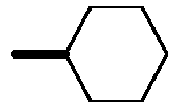
E-83, E'-83, E"-83, E"'-83, E""-83, E""'-83 -CH2CH3 -CH2CH3 
E-84, E'-84, E"-84, E"'-84, E""-84, E""'-84 n-propyl n-propyl 
E-85, E'-85, E"-85, E"'-85, E""-85, E""'-85 iso-propyl iso-propyl 
E-86, E'-86, E"-86, E"'-86, E""-86, E""'-86 sec-butyl sec-butyl 
E-87, E'-87, E"-87, E"'-87, E""-87, E""'-87 iso-butyl iso-butyl 
E-88, E'-88, E"-88, E"'-88, E""-88, E""'-88 neopentyl neopentyl 
E-89, E'-89, E"-89, E"'-89, E""-89, E""'-89 


E-90, E'-90, E"-90, E"'-90, E""-90, E""'-90 


E-91, E'-91, E"-91, E"'-91, E""-91, E""'-91 -CH3 -CH3 tert-butyl E-92, E'-92, E"-92, E"'-92, E""-92, E""'-92 -CH2CH3 -CH2CH3 tert-butyl E-93, E'-93, E"-93, E"'-93, E""-93, E""'-93 n-propyl n-propyl tert-butyl E-94, E'-94, E"-94, E"'-94, E""-94, E""'-94 iso-propyl iso-propyl tert-butyl E-95, E'-95, E"-95, E"'-95, E""-95, E""'-95 sec-butyl sec-butyl tert-butyl E-96, E'-96, E"-96, E"'-96, E""-96, E""'-96 iso-butyl iso-butyl tert-butyl E-97, E'-97, E"-97, E"'-97, E""-97, E""'-97 neopentyl neopentyl tert-butyl E-98, E'-98, E"-98, E"'-98, E""-98, E""'-98 

tert-butyl E-99, E'-99, E"-99, E"'-99, E""-99, E""'-99 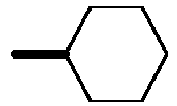

tert-butyl E-100, E'-100, E"-100, E"'-100, E""-100, E""'-100 -CH3 -CH3 tert-amyl E-101, E'-101, E"-101, E"'-101, E""-101, E""'-101 -CH2CH3 -CH2CH3 tert-amyl E-102, E'-102, E"-102, E"'-102, E""-102, E""'-102 n-propyl n-propyl tert-amyl E-103, E'-103, E"-103, E"'-103, E""-103, E""'-103 iso-propyl iso-propyl tert-amyl E-104, E'-104, E"-104, E"'-104, E""-104, E""'-104 sec-butyl sec-butyl tert-amyl E-105, E'-105, E"-105, E"'-105, E""-105, E""'-105 iso-butyl iso-butyl tert-amyl E-106, E'-106, E"-106, E"'-106, E""-106, E""'-106 neopentyl neopentyl tert-amyl E-107, E'-107, E"-107, E"'-107, E""-107, E""'-107 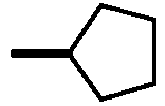

tert-amyl E-108, E'-108, E"-108, E"'-108, E""-108, E""'-108 

tert-amyl E-109, E'-109, E"-109, E"'-109, E""-109, E""'-109 tert-butyl tert-butyl -CH3 E-110, E'-110, E"-110, E"'-110, E""-110, E""'-110 tert-butyl tert-butyl -CH2CH3 E-111, E'-111, E"-111, E"'-111, E""-111, E""'-111 tert-butyl tert-butyl n-propyl E-112, E'-112, E"-112, E"'-112, E""-112, E""'-112 tert-butyl tert-butyl iso-propyl E-113, E'-113, E"-113, E"'-113, E""-113, E""'-113 tert-butyl tert-butyl sec-butyl E-114, E'-114, E"-114, E"'-114, E""-114, E""'-114 tert-butyl tert-butyl iso-butyl E-115, E'-115, E"-115, E"'-115, E""-115, E""'-115 tert-butyl tert-butyl neopentyl E-116, E'-116, E"-116, E"'-116, E""-116, E""'-116 tert-butyl tert-butyl 
E-117, E'-117, E"-117, E"'-117, E""-117, E""'-117 tert-butyl tert-butyl 
E-118, E'-118, E"-118, E"'-118, E""-118, E""'-118 tert-butyl tert-butyl tert-butyl E-119, E'-119, E"-119, E"'-119, E""-119, E""'-119 tert-butyl tert-butyl tert-amyl E-120, E'-120, E"-120, E"'-120, E""-120, E""'-120 tert-amyl tert-amyl -CH3 E-121, E'-121, E"-121, E"'-121, E""-121, E""'-121 tert-amyl tert-amyl -CH2CH3 E-122, E'-122, E"-122, E"'-122, E""-122, E""'-122 tert-amyl tert-amyl n-propyl E-123, E'-123, E"-123, E"'-123, E""-123, E""'-123 tert-amyl tert-amyl iso-propyl E-124, E'-124, E"-124, E"'-124, E""-124, E""'-124 tert-amyl tert-amyl sec-butyl E-125, E'-125, E"-125, E"'-125, E""-125, E""'-125 tert-amyl tert-amyl iso-butyl E-126, E'-126, E"-126, E"'-126, E""-126, E""'-126 tert-amyl tert-amyl neopentyl E-127, E'-127, E"-127, E"'-127, E""-127, E""'-127 tert-amyl tert-amyl 
E-128, E'-128, E"-128, E"'-128, E""-128, E""'-128 tert-amyl tert-amyl 
E-129, E'-129, E"-129, E"'-129, E""-129, E""'-129 tert-amyl tert-amyl tert-butyl E-130, E'-130, E"-130, E"'-130, E""-130, E""'-130 tert-amyl tert-amyl tert-amyl - Preferred compounds E, E', E", E"', E"" and E""' are compounds E-1, E'-1, E"-1, E'"-1, E-1"" and E""'-1 to E-90, E'-90, E"-90, E"'-90, E""-90 and E""'-90.


Cpd. R3 R2 R5 F-1, F'-1, F"-1, F"'-1, F""-1, F""'-1 -CH3 -CH3 H F-2, F'-2, F"-2, F"'-2, F""-2, F""'-2 -CH2CH3 -CH2CH3 H F-3, F'-3, F"-3, F"'-3, F-""-3, F""'-3 n-propyl n-propyl H F-4, F'-4, F"-4, F"'-4, F""-4, F""'-4 iso-propyl iso-propyl H F-5, F'-5, F"-5, F"'-5, F""-5, F""'-5 sec-butyl sec-butyl H F-6, F'-6, F"-6, F"'-6, F""-6, F""'-6 iso-butyl iso-butyl H F-7, F'-7, F"-7, F"'-7, F""-7, F""'-7 neopentyl neopentyl H F-8, F'-8, F"-8, F"'-8, F""-8, F""'-8 

H F-9, F'-9, F"-9, F"'-9, F""-9, F""'-9 

H F-10, F'-10, F"-10, F"'-10, F""-10, F""'-10 -CH3 -CH3 -CH3 F-11, F'-11, F"-11, F"'-11, F""-11, F""'-11 -CH2CH3 -CH2CH3 -CH3 F-12, F'-12, F"-12, F"'-12, F""-12, F""'-12 n-propyl n-propyl -CH3 F-13, F'-13, F"-13, F"'-13, F""-13, F""'-13 iso-propyl iso-propyl -CH3 F-14, F'-14, F"-14, F"'-14, F""-14, F""'-14 sec-butyl sec-butyl -CH3 F-15, F'-15, F"-15, F"'-15, F""-15, F""'-15 iso-butyl iso-butyl -CH3 F-16, F'-16, F"-16, F"'-16, F""-16, F""'-16 neopentyl neopentyl -CH3 F-17, F'-17, F"-17, F"'-17, F""-17, F""'-17 

-CH3 F-18, F'-18, F"-18, F"'-18, F""-18, F""'-18 

-CH3 F-19, F'-19, F"-19, F"'-19, F""-19, F""'-19 -CH3 -CH3 -CH2CH3 F-20, F'-20, F"-20, F"'-20, F""-20, F""'-20 -CH2CH3 -CH2CH3 -CH2CH3 F-21, F'-21, F"-21, F"'-21, F""-21, F""'-21 n-propyl n-propyl -CH2CH3 F-22, F'-22, F"-22, F"'-22, F""-22, F""'-22 iso-propyl iso-propyl -CH2CH3 F-23, F'-23, F"-23, F"'-23, F""-23, F""'-23 sec-butyl sec-butyl -CH2CH3 F-24, F'-24, F"-24, F"'-24, F""-24, F""'-24 iso-butyl iso-butyl -CH2CH3 F-25, F'-25, F"-25, F"'-25, F""-25, F""'-25 neopentyl neopentyl -CH2CH3 F-26, F'-26, F"-26, F"'-26, F""-26, F""'-26 

-CH2CH3 F-27, F'-27, F"-27, F"'-27, F""-27, F""'-27 

-CH2CH3 F-28, F'-28, F"-28, F"'-28, F""-28, F""'-28 -CH3 -CH3 n-propyl F-29, F'-29, F"-29, F"'-29, F""-29, F""'-29 -CH2CH3 -CH2CH3 n-propyl F-30, F'-30, F"-30, F"'-30, F""-30, F""'-30 n-propyl n-propyl n-propyl F-31, F'-31, F"-31, F"'-31, F""-31, F""'-31 iso-propyl iso-propyl n-propyl F-32, F'-32, F"-32, F"'-32, F""-32, F""'-32 sec-butyl sec-butyl n-propyl F-33, F'-33, F"-33, F"'-33, F""-33, F""'-33 iso-butyl iso-butyl n-propyl F-34, F'-34, F"-34, F"'-34, F""-34, F""'-34 neopentyl neopentyl n-propyl F-35, F'-35, F"-35, F"'-35, F""-35, F""'-35 

n-propyl F-36, F'-36, F"-36, F"'-36, F""-36, F""'-36 
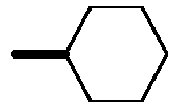
n-propyl F-37, F'-37, F"-37, F"'-37, F""-37, F""'-37 -CH3 -CH3 iso-propyl F-38, F'-38, F"-38, F"'-38, F""-38, F""'-38 -CH2CH3 -CH2CH3 iso-propyl F-39, F'-39, F"-39, F"'-39, F""-39, F""'-39 n-propyl n-propyl iso-propyl F-40, F'-40, F"-40, F"'-40, F""-40, F""'-40 iso-propyl iso-propyl iso-propyl F-41, F'-41, F"-41, F"'-41, F""-41, F""'-41 sec-butyl sec-butyl iso-propyl F-42, F'-42, F"-42, F"'-42, F""-42, F""'-42 iso-butyl iso-butyl iso-propyl F-43, F'-43, F"-43, F"'-43, F""-43, F""'-43 neopentyl neopentyl iso-propyl F-44, F'-44, F"-44, F"'-44, F""-44, F""'-44 
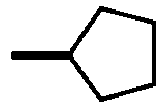
iso-propyl F-45, F'-45, F"-45, F"'-45, F""-45, F""'-45 

iso-propyl F-46, F'-46, F"-46 F"'-46, F""-46, F""'-46 -CH3 -CH3 sec-butyl F-47, F'-47, F"-47, F"'-47, F""-47, F""'-47 -CH2CH3 -CH2CH3 sec-butyl F-48, F'-48, F"-48, F"'-48, F""-48, F""'-48 n-propyl n-propyl sec-butyl F-49, F'-49, F"-49, F"'-49, F""-49, F""'-49 iso-propyl iso-propyl sec-butyl F-50, F'-50, F"-50, F"'-50, F""-50, F""'-50 sec-butyl sec-butyl sec-butyl F-51, F'-51, F"-51, F"'-51, F""-51, F""'-51 iso-butyl iso-butyl sec-butyl F-52, F'-52, F"-52, F"'-52, F""-52, F""'-52 neopentyl neopentyl sec-butyl F-53, F'-53, F"-53, F"'-53, F""-53, F""'-53 

sec-butyl F-54, F'-54, F"-54, F"'-54, F""-54, F""'-54 

sec-butyl F-55, F'-55, F"-55, F"'-55, F""-55, F""'-55 -CH3 -CH3 iso-butyl F-56, F'-56, F"-56, F"'-56, F""-56, F""'-56 -CH2CH3 -CH2CH3 iso-butyl F-57, F'-57, F"-57, F"'-57, F""-57, F""'-57 n-propyl n-propyl iso-butyl F-58, F'-58, F"-58, F"'-58, F""-58, F""'-58 iso-propyl iso-propyl iso-butyl F-59, F'-59, F"-59, F"'-59, F""-59, F""'-59 sec-butyl sec-butyl iso-butyl F-60, F'-60, F"-60, F"'-60, F""-60, F""'-60 iso-butyl iso-butyl iso-butyl F-61, F'-61, F"-61, F"'-61, F""-61, F""'-61 neopentyl neopentyl iso-butyl F-62, F'-62, F"-62, F"'-62, F""-62, F""'-62 

iso-butyl F-63, F'-63, F"-63, F"'-63, F""-63, F""'-63 

iso-butyl F-64, F'-64, F"-64, F"'-64, F""-64, F""'-64 -CH3 -CH3 Neopentyl F-65, F'-65, F"-65, F"'-65, F""-65, F""'-65 -CH2CH3 -CH2CH3 Neopentyl F-66, F'-66, F"-66, F"'-66, F""-66, F""'-66 n-propyl n-propyl Neopentyl F-67, F'-67, F"-67, F"'-67, F""-67, F""'-67 iso-propyl iso-propyl Neopentyl F-68, F'-68, F"-68, F"'-68, F""-68, F""'-68 sec-butyl sec-butyl Neopentyl F-69, F'-69, F"-69, F"'-69, F""-69, F""'-69 iso-butyl iso-butyl neopentyl F-70, F'-70, F"-70, F"'-70, F""-70, F""'-70 neopentyl neopentyl Neopentyl F-71, F'-71, F"-71, F"'-71, F""-71, F""'-71 

Neopentyl F-72, F'-72, F"-72, F"'-72, F""-72, F""'-72 

Neopentyl F-73, F'-73, F"-73, F"'-73, F""-73, F""'-73 -CH3 -CH3 
F-74, F'-74, F"-74, F"'-74, F""-74, F""'-74 -CH2CH3 -CH2CH3 
F-75, F'-75, F"-75, F"'-75, F""-75, F""'-75 n-propyl n-propyl 
F-76, F'-76, F"-76, F"'-76, F""-76, F""'-76 iso-propyl iso-propyl 
F-77, F'-77, F"-77, F"'-77, F""-77, F""'-77 sec-butyl sec-butyl 
F-78, F'-78, F"-78, F"'-78, F""-78, F""'-78 iso-butyl iso-butyl 
F-79, F'-79, F"-79, F"'-79, F""-79, F""'-79 neopentyl neopentyl 
F-80, F'-80, F"-80, F"'-80, F""-80, F""'-80 


F-81, F'-81, F"-81, F"'-81, F""-81, F""'-81 


F-82, F'-82, F"-82, F"'-82, F""-82, F""'-82 -CH3 -CH3 
F-83, F'-83, F"-83, F"'-83, F""-83, F""'-83 -CH2CH3 -CH2CH3 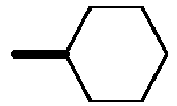
F-84, F'-84, F"-84, F"'-84, F""-84, F""'-84 n-propyl n-propyl 
F-85, F'-85, F"-85, F"'-85, F""-85, F""'-85 iso-propyl iso-propyl 
F-86, F'-86, F"-86, F"'-86, F""-86, F""'-86 sec-butyl sec-butyl 
F-87, F'-87, F"-87, F"'-87, F""-87, F""'-87 iso-butyl iso-butyl 
F-88, F'-88, F"-88, F"'-88, F""-88, F""'-88 neopentyl neopentyl 
F-89, F'-89, F"-89, F"'-89, F""-89, F""'-89 


F-90, F'-90, F"-90, F"'-90, F""-90, F""'-90 


F-91, F'-91, F"-91, F"'-91, F""-91, F""'-91 -CH3 -CH3 tert-butyl F-92, F'-92, F"-92, F"'-92, F""-92, F""'-92 -CH2CH3 -CH2CH3 tert-butyl F-93, F'-93, F"-93, F"'-93, F""-93, F""'-93 n-propyl n-propyl tert-butyl F-94, F'-94, F"-94, F"'-94, F""-94, F""'-94 iso-propyl iso-propyl tert-butyl F-95, F'-95, F"-95, F"'-95, F""-95, F""'-95 sec-butyl sec-butyl tert-butyl F-96, F'-96, F"-96, F"'-96, F""-96, F""'-96 iso-butyl iso-butyl tert-butyl F-97, F'-97, F"-97, F"'-97, F""-97, F""'-97 neopentyl neopentyl tert-butyl F-98, F'-98, F"-98, F"'-98, F""-98, F""'-98 

tert-butyl F-99, F'-99, F"-99, F"'-99, F""-99, F""'-99 

tert-butyl F-100, F'-100, F"-100, F"'-100, F""-100, F""'-100 -CH3 -CH3 tert-amyl F-101, F'-101, F"-101, F"'-101, F""-101, F""'-101 -CH2CH3 -CH2CH3 tert-amyl F-102, F'-102, F"-102, F"'-102, F""-102, F""'-102 n-propyl n-propyl tert-amyl F-103, F'-103, F"-103, F"'-103, F""-103, F""'-103 iso-propyl iso-propyl tert-amyl F-104, F'-104, F"-104, F"'-104, F""-104, F""'-104 sec-butyl sec-butyl tert-amyl F-105, F'-105, F"-105, F"'-105, F""-105, F""'-105 iso-butyl iso-butyl tert-amyl F-106, F'-106, F"-106, F"'-106, F""-106, F""'-106 neopentyl neopentyl tert-amyl F-107, F'-107, F"-107, F"'-107, F""-107, F""'-107 

tert-amyl F-108, F'-108, F"-108, F"'-108, F""-108, F""'-108 

tert-amyl - Preferred compounds F, F', F", F"', F"" and F'"" are compounds F-1, F'-1, F"-1, F"'-1, F""-1 and F""'-1 to F-90, F'-90, F"-90, F"'-90, F""-90 and F""'-90.


Cpd. R5 = R8 R6 = R9 I-1, I'-1, I"-1, I"'-1, I""-1, I""'-1, HI-1, HI'-1, HI"-1, HI'"-1, HI""-1, HI""'-1 -CH3 H I-2, I'-2, I"-2, I"'-2, I""-2, I""'-2, HI-2, HI'-2, HI"-2, HI"'-2, HI""-2, HI""'-2 -CH2CH3 H I-3, I'-3, I"-3, I"'-3, I-""-3, I""'-3, HI-3, HI'-3, HI"-3, HI'"-3, HI-""-3, HI""'-3 n-propyl H I-4, I'-4, I"-4, I'"-4, I""-4, I""'-4, HI-4, HI'-4, HI"-4, HI'"-4, HI""-4, HI""'-4 iso-propyl H I-5, I'-5, I"-5, I"'-5, I""-5, I""'-5, HI-5, HI'-5, HI"-5, HI"'-5, HI""-5, HI""'-5 sec-butyl H I-6, I'-6, I"-6, I"'-6, I""-6, I""'-6, HI-6, HI'-6, HI"-6, HI'"-6, HI""-6, HI""'-6 iso-butyl H I-7, I'-7, I"-7, I"'-7, I""-7, I""'-7, HI-7, HI'-7, HI"-7, HI'"-7, HI""-7, HI""'-7 neopentyl H I-8, I'-8, I"-8, I'"-8, I""-8, I""'-8, HI-8, HI'-8, HI"-8, HI'"-8, HI""-8, HI""'-8 
H I-9, I'-9, I"-9, I'"-9, I""-9, I""'-9, HI-9, HI'-9, HI"-9, HI'"-9, HI""-9, HI""'-9 
H I-10, I'-10, I"-10, I'"-10, I""-10, I'""-10, HI-10, HI'-10, HI"-10, HI'"-10, HI""-10, HI""'-10 H -CH3 I-11, I'-11, I"-11, I'"-11, I""-11, I'""-11, HI-11, HI'-11, HI"-11, HI"'-11, HI""-11, HI""'-11 H -CH2CH3 I-12, I'-12, I"-12, I'"-12, I""-12, I""'-12, HI-12, HI'-12, HI"-12, HI"'-12, HI""-12, HI""'-12 H n-propyl I-13, I'-13, I"-13, I'"-13, I""-13, I'""-13, HI-13, HI'-13, HI"-13, HI'"-13, HI""-13, HI""'-13 H iso-propyl 1-14, I'-14, I"-14, I'"-14, I""-14, I""'-14, HI-14, HI'-14, HI"-14, HI"'-14, HI""-14, HI""'-14 H sec-butyl I-15, I'-15, I"-15, I'"-15, I""-15, I'""-15, HI-15, HI'-15, HI"-15, HI'"-15, HI""-15, HI""'-15 H iso-butyl I-16, I'-16, I"-16, I'"-16, I""-16, I'""-16, HI-16, HI'-16, HI"-16, HI'"-16, HI""-16, HI""'-16 H neopentyl I-17, I'-17, I"-17, I'"-17, I""-17, I'""-17, HI-17, HI'-17, HI"-17, HI'"-17, HI""-17, HI""'-17 H 
I-18, I'-18, I"-18, I'"-18, I""-18, I'""-18, HI-18, HI'-18, HI"-18, HI'"-18, HI""-18, HI""'-18 H 
I-19, I'-19, I"-19, I'"-19, I""-19, I'""-19, HI-19, HI'-19, HI"-19, HI'"-19, HI""-19, HI""'-19 
H I-20, I'-20, I"-20, I"'-20, I""-20, I""'-20, HI-20, HI'-20, HI"-20, HI"'-20, HI""-20, HI""'-20 
H I-21, I'-21, I"-21, I'"-21, I""21, I'""-21, HI-21, HI'-21, HI"-21, HI"'-21, HI""-21, HI""'-21 
H I-22, I'-22, I"-22, I"'-22, I""-22, I'""-22, HI-22, HI'-22, HI"-22, HI"'-22, HI""-22, HI""'-22 
H I-23, I'-23, I"-23, I"'-23, I""-23, I'""-23, HI-23, HI'-23, HI"-23, HI"'-23, HI""-23, HI""'-23 
H I-24, I'-24, I"-24, I"'-24, I""-24, I'""-24, HI-24, HI'-24, HI"-24, HI"'-24, HI""-24, HI""'-24 
H I-25, I'-25, I"-25, I"'-25, I""-25, I'""-25, HI-25, HI'-25, HI"-25, HI"'-25, HI""-25, HI""'-25 
H I-26, I'-26, I"-26, I"'-26, I""-26, I'""-26, HI-26, HI'-26, HI"-26, HI"'-26, HI""-26, HI""'-26 
H I-27, I'-27, I"-27, I"'-27, I""-27, I'""-27, HI-27, HI'-27, HI"-27, HI"'-27, HI""-27, HI""'-27 
H I-28, I'-28, I"-28, I"'-28, I""-28, I'""-28, HI-28, HI'-28, HI"-28, HI"'-28, HI""-28, HI""'-28 
H I-29, I'-29, I"-29, I"'-29, I""-29, I'""-29, HI-29, HI'-29, HI"-29, HI"'-29, HI""-29, HI""'-29 H 
I-30, I'-30, I"-30, I"'-30, I""-30, I""'-30, HI-30, HI'-30, HI"-30, HI"'-30, HI""-30, HI""'-30 H 
I-31, I'-31, I"-31, I'"-31, I""-31, I'""-31, HI-31, HI'-31, HI"-31, HI"'-31, HI""-31, HI""'-31 H 
I-32, I'-32, I"-32, I"'-32, I""-32, I""'-32, HI-32, HI'-32, HI"-32, HI"'-32, HI""-32, HI""'-32 H 
I-33, I'-33, I"-33, I"'-33, I""-33, I""'-33, HI-33, HI'-33, HI"-33, HI"'-33, HI""-33, HI""'-33 H 
I-34, I'-34, I"-34, I'"-34, I""-34, I""'-34, HI-34, HI'-34, HI"-34, HI"'-34, HI""-34, HI""'-34 H 
I-35, I'-35, I"-35, I"'-35, I""-35, I""'-35, HI-35, HI'-35, HI"-35, HI"'-35, HI""-35, HI""'-35 H 
I-36, I'-36, I"-36, I"'-36, I""-36, I""'-36, HI-36, HI'-36, HI"-36, HI"'-36, HI""-36, HI""'-36 H 
I-37, I'-37, I"-37, I'"-37, I""-37, I""'-37, HI-37, HI'-37, HI"-37, HI"'-37, HI""-37, HI""'-37 H 
I-38, I'-38, I"-38, I"'-38, I""-38, I""'-38, HI-38, HI'-38, HI"-38, HI"'-38, HI""-38, HI""'-38 H 
I-39, I'-39, I"-39, I"'-39, I""-39, I""'-39, HI-39, HI'-39, HI"-39, HI"'-39, HI""-39, HI""'-39 H H 

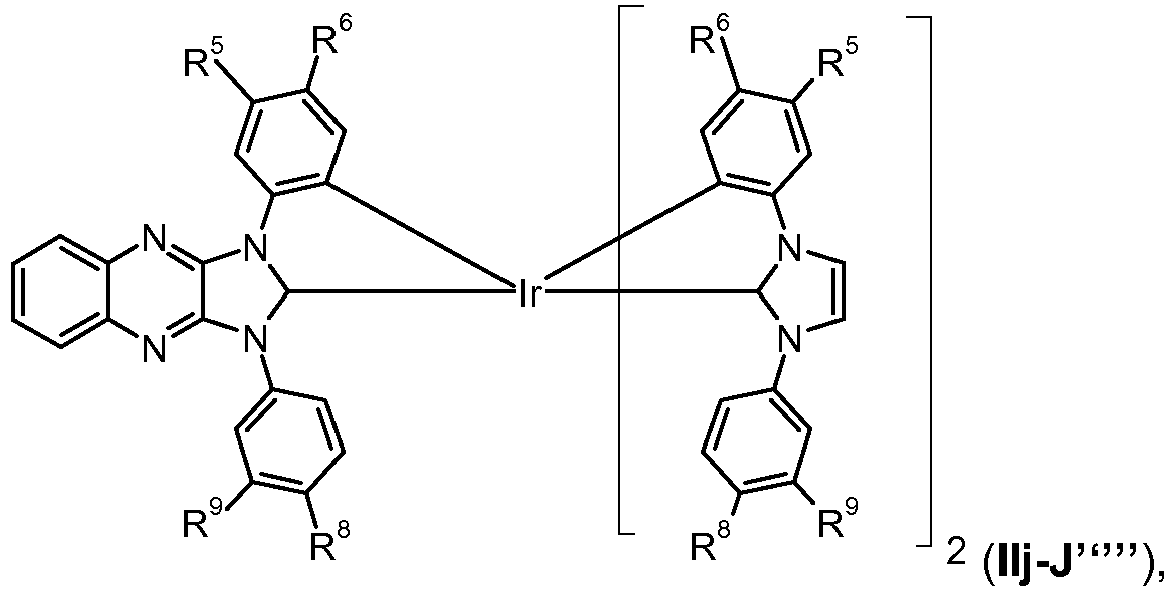


Cpd. R5 = R8 R6 = R9 J'-1, J"-1, J'"-1, J""-1, J""'-1, HJ'-1, HJ"-1, HJ"'-1, HJ""-1, HJ""'-1 -CH3 H J'-2, J"-2, J'"-2, J""-2, J""'-2, HJ'-2, HJ"-2, HJ"'-2, HJ""-2, HJ""'-2 -CH2CH3 H J'-3, J"-3, J'"-3, J-""-3, J""'-3, HJ'-3, HJ"-3, HJ"'-3, HJ-""-3, HJ""'-3 n-propyl H J'-4, J"-4, J"'-4, J""-4, J""'-4, HJ'-4, HJ"-4, HJ"'-4, HJ""-4, HJ""'-4 iso-propyl H J'-5, J"-5, J"'-5, J""-5, J""'-5, HJ'-5, HJ"-5, HJ"'-5, HJ""-5, HJ""'-5 sec-butyl H J'-6, J"-6, J"'-6, J""-6, J""'-6, HJ'-6, HJ"-6, HJ"'-6, HJ""-6, HJ""'-6 iso-butyl H J'-7, J"-7, J"'-7, J""-7, J""'-7, HJ'-7, HJ"-7, HJ"'-7, HJ""-7, HJ""'-7 neopentyl H J'-8, J"-8, J"'-8, J""-8, J""'-8, HJ'-8, HJ"-8, HJ"'-8, HJ""-8, HJ""'-8 
H J'-9, J"-9, J"'-9, J""-9, J""'-9, HJ'-9, HJ"-9, HJ"'-9, HJ""-9, HJ""'-9 
H J'-10, J"-10, J"'-10, J""-10, J""'-10, HJ'-10, HJ"-10, HJ"'-10, HJ""-10, HJ""'-10 H -CH3 J'-11, J"-11, J"'-11, J""-11, J""'-11, HJ'-11, HJ"-11, HJ"'-11, HJ""-11, HJ""'-11 H -CH2CH3 J'-12, J"-12, J"'-12, J""-12, J""'-12, HJ'-12, HJ"-12, HJ"'-12, HJ""-12, HJ""'-12 H n-propyl J'-13, J"-13, J"'-13, J""-13, J""'-13, HJ'-13, HJ"-13, HJ"'-13, HJ""-13, HJ""'-13 H iso-propyl J'-14, J"-14, J"'-14, J""-14, J""'-14, HJ'-14, HJ"-14, HJ"'-14, HJ""-14, HJ""'-14 H sec-butyl J'-15, J"-15, J"'-15, J""-15, J""'-15, HJ'-15, HJ"-15, HJ"'-15, HJ""-15, HJ""'-15 H iso-butyl J'-16, J"-16, J"'-16, J""-16, J""'-16, HJ'-16, HJ"-16, HJ"'-16, HJ""-16, HJ""'-16 H neopentyl J'-17, J"-17, J"'-17, J""-17, J""'-17, HJ'-17, HJ"-17, HJ"'-17, HJ""-17, HJ""'-17 H 
J'-18, J"-18, J"'-18, J""-18, J""'-18, HJ'-18, HJ"-18, HJ"'-18, HJ""-18, HJ""'-18 H 
J'-19, J"-19, J"'-19, J""-19, J""'-19, HJ'-19, HJ"-19, HJ"'-19, HJ""-19, HJ""'-19 
H J'-20, J"-20, J"'-20, J""-20, J""'-20, HJ'-20, HJ"-20, HJ"'-20, HJ""-20, HJ""'-20 
H J'-21, J"-21, J"'-21, J""-21, J""'-21, HJ'-21, HJ"-21, HJ"'-21, HJ""-21, HJ""'-21 
H J'-22, J"-22, J"'-22, J""-22, J""'-22, HJ'-22, HJ"-22, HJ"'-22, HJ""-22, HJ""'-22 
H J'-23, J"-23, J"'-23, J""-23, J""'-23, HJ'-23, HJ"-23, HJ"'-23, HJ""-23, HJ""'-23 
H J'-24, J"-24, J"'-24, J""-24, J""'-24, HJ'-24, HJ"-24, HJ"'-24, HJ""-24, HJ""'-24 
H J'-25, J"-25, J"'-25, J""-25, J""'-25, HJ'-25, HJ"-25, HJ"'-25, HJ""-25, HJ""'-25 
H J'-26, J"-26, J"'-26, J""-26, J""'-26, HJ'-26, HJ"-26, HJ"'-26, HJ""-26, HJ""'-26 
H J'-27, J"-27, J"'-27, J""-27, J""'-27, HJ'-27, HJ"-27, HJ"'-27, HJ""-27, HJ""'-27 
H J'-28, J"-28, J"'-28, J""-28, J""'-28, HJ'-28, HJ"-28, HJ"'-28, HJ""-28, HJ""'-28 
H J'-29, J"-29, J"'-29, J""-29, J""'-29, HJ'-29, HJ"-29, HJ"'-29, HJ""-29, HJ""'-29 H 
J'-30, J"-30, J"'-30, J""-30, J""'-30, HJ'-30, HJ"-30, HJ"'-30, HJ""-30, HJ""'-30 H 
J'-31, J"-31, J"'-31, J""-31, J""'-31, HJ'-31, HJ"-31, HJ"'-31, HJ""-31, HJ""'-31 H 
J'-32, J"-32, J"'-32, J""-32, J""'-32, HJ'-32, HJ"-32, HJ"'-32, HJ""-32, HJ""'-32 H 
J'-33, J"-33, J"'-33, J""-33, J""'-33, HJ'-33, HJ"-33, HJ"'-33, HJ""-33, HJ""'-33 H 
J'-34, J"-34, J"'-34, J""-34, J""'-34, HJ'-34, HJ"-34, HJ"'-34, HJ""-34, HJ""'-34 H 
J'-35, J"-35, J"'-35, J""-35, J""'-35, HJ'-35, HJ"-35, HJ"'-35, HJ""-35, HJ""'-35 H 
J'-36, J"-36, J"'-36, J""-36, J""'-36, HJ'-36, HJ"-36, HJ"'-36, HJ""-36, HJ""'-36 H 
J'-37, J"-37, J"'-37, J""-37, J""'-37, HJ'-37, HJ"-37, HJ"'-37, HJ""-37, HJ""'-37 H 
J'-38, J"-38, J"'-38, J""-38, J""'-38, HJ'-38, HJ"-38, HJ"'-38, HJ""-38, HJ""'-38 H 
J'-39, J"-39, J"'-39, J""-39, J""'-39, HJ'-39, HJ"-39, HJ"'-39, HJ""-39, HJ""'-39 H H - Examples for most preferred metal carbene complexes of the present invention are the following complexes:


- Further preferred compounds are


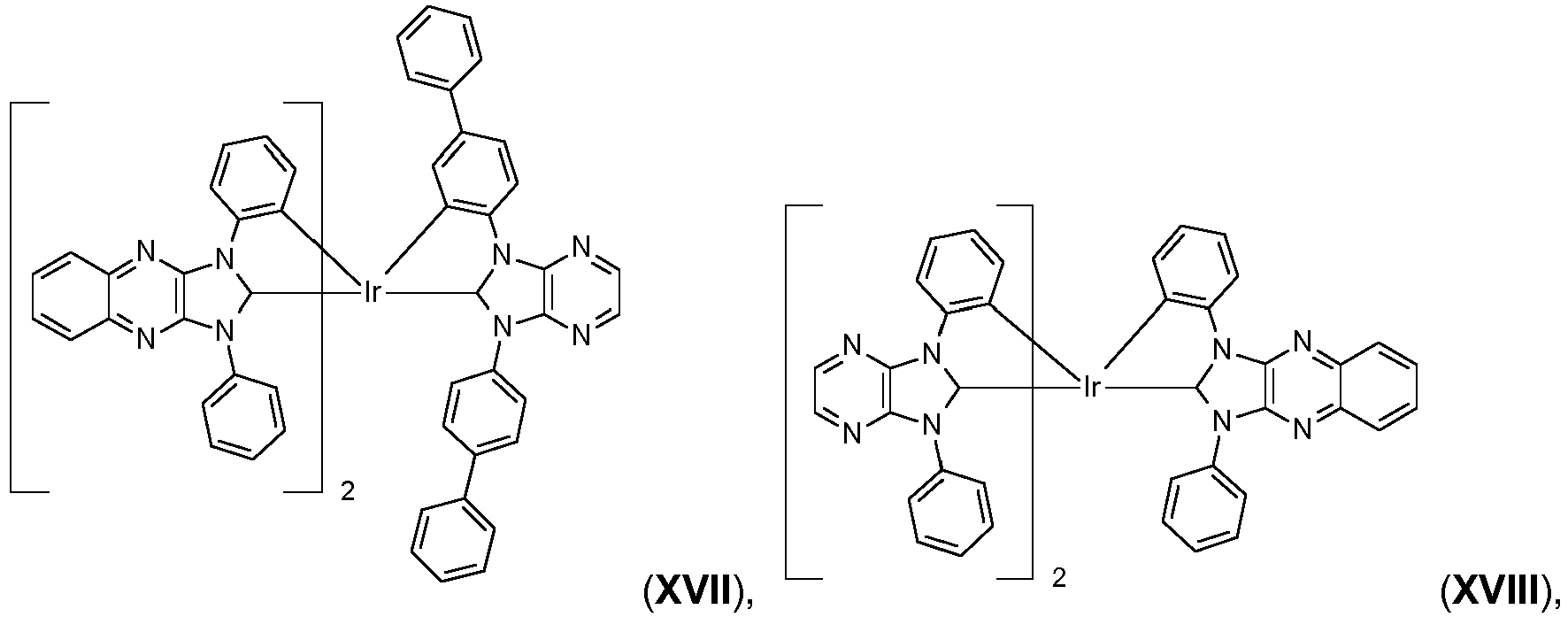


- Most preferred compounds are the following compounds


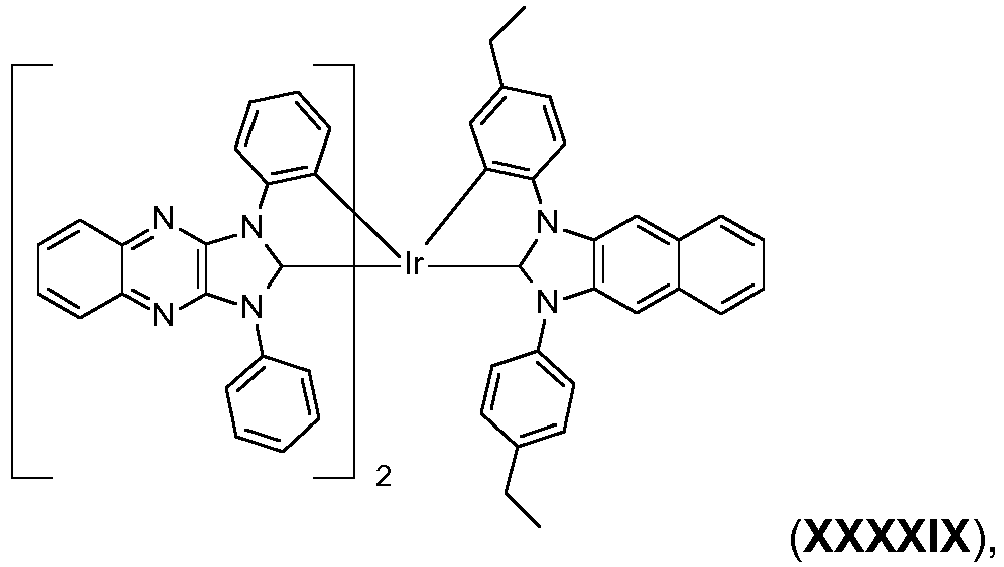


- Even more preferred are the following compounds:


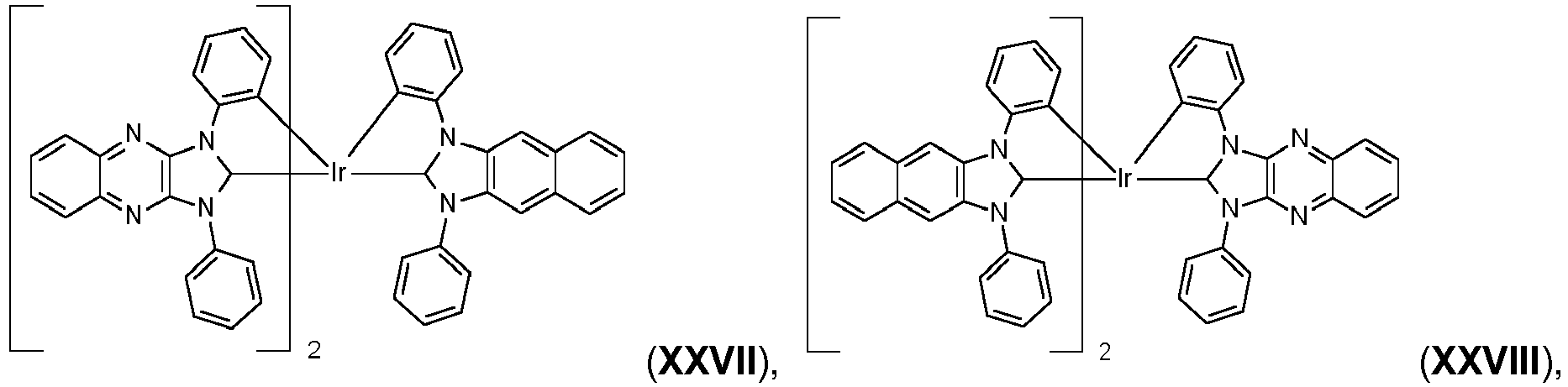


- Even more preferred are the following compounds:


- Even more preferred are the following compounds:


- Even more preferred are the following compounds:


- Even more preferred are the following compounds:

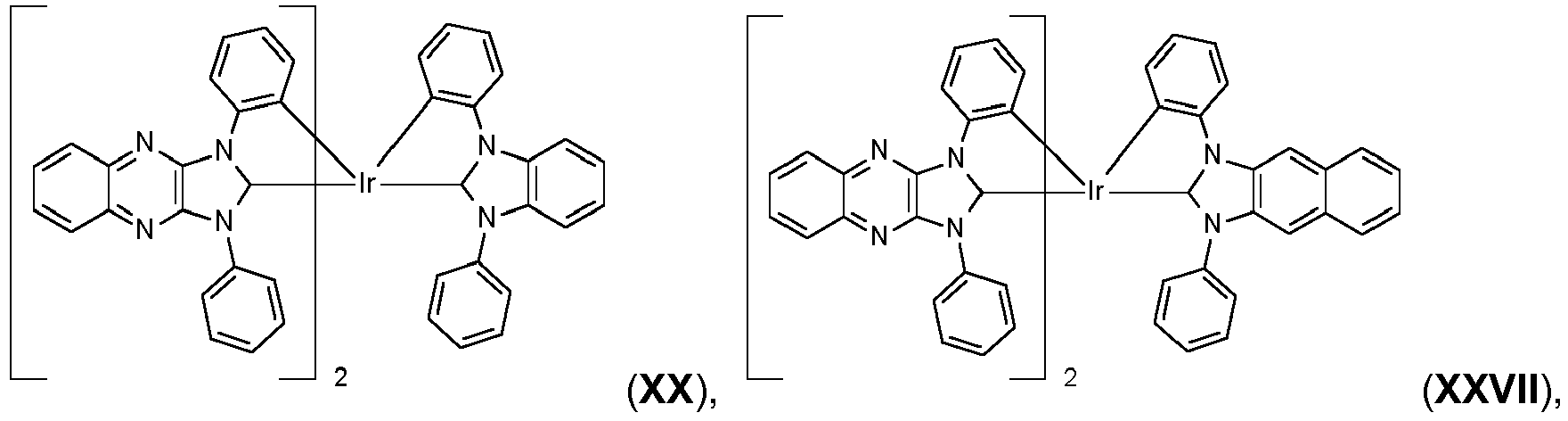


- The present invention also relates to a process for preparing the inventive metal carbene complexes, wherein the metal is selected from Ir and Pt, comprising at least one ligand of formula (A)
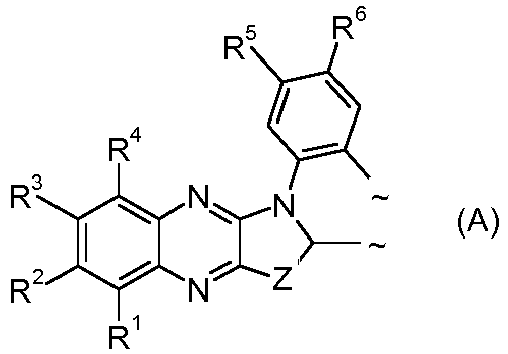
- Z is NRx, O or S, preferably NRx or O, more preferably NRx,
- Rx is

- In a preferred embodiment, the present invention also relates to a process for preparing the inventive metal carbene complexes, wherein the metal is selected from Ir and Pt, comprising at least one ligand of formula (I')

- In one embodiment of the process according to the invention, a suitable compound comprising iridium or platinum, preferably iridium, and appropriate carbene ligands, preferably in deprotonated form as the free carbene or in the form of a protected carbene, for example as the silver-carbene complex, are contacted.
- The present invention therefore relates - in one embodiment - to a process according to the invention wherein the ligand precursor used is a corresponding Ag-carbene complex.
- In a further preferred embodiment of the process according to the invention, the ligand precursors used are organic compounds which are reacted with suitable Ir or Pt comprising compounds. The carbene can be released from precursors of the carbene ligands by removing volatile substances, for example lower alcohols such as methanol or ethanol, for example at elevated temperature and/or under reduced pressure and/or using molecular sieves which bind the alcohol molecules eliminated. Corresponding processes are known to those skilled in the art.
- The present invention also relates to the process according to the invention wherein the ligand precursor used is a compound of the general formula

- R" is SiR13R14R15, aryl, heteroaryl, alkyl, cycloalkyl or heterocycloalkyl, wherein
- R13, R14 and R15 are independently of each other aryl, heteroaryl, alkyl, cycloalkyl or heterocycloalkyl.
- Preferably, the present invention also relates to the process according to the invention wherein the ligand precursor used is a compound of the general formula

- R" is SiR13R14R15, aryl, heteroaryl, alkyl, cycloalkyl or heterocycloalkyl, wherein
- R13, R14 and R15 are independently of each other aryl, heteroaryl, alkyl, cycloalkyl or heterocycloalkyl.
- In a particularly preferred embodiment, R" is alkyl, especially C1-C20alkyl, preferably C1-C10alkyl, more preferably C1-C8alkyl, for example methyl, ethyl, propyl such as n-propyl, isopropyl, butyl such as n-butyl, isobutyl, tert-butyl, pentyl, hexyl, heptyl or octyl.
- R" in the compound of the general formula (XXA) and (XX) is most preferably methyl or ethyl.
- Compounds of the general formula (XXA) and (XX) are generally obtainable by processes known to those skilled in the art. Compounds of the general formula (XXA) and (XX) can be obtained for example by reacting compounds of the general formula (XXIAa), preferably by reacting compounds of the general formula (XXIa)


by reacting compounds of the general formula (XXIAa) or (XXIAb), preferably (XXIa) or (XXIb) in a first step with Vilsmeier reagent ((chloromethylene)dimethylammonium chloride) and a sodium salt selected from NaBF4, NaCl, NaBror Nal to obtain a compound of formula (XXIAc), preferably (XXIc)

- The reaction of compounds of formula (XXIAa), preferably (XXIa) with the compounds of the general formula HC(OR")3 (XXII) is preferably carried out in the presence of an ammonium salt. Suitable ammonium salts are for example ammonium tetrafluoroborate or ammonium halides, e.g. ammonium chloride. The amount of the ammonium salt in relation to the compound of formula (XXIAa), preferably (XXIa) (100 mol%) is usually 1 mol% to 100 mol %.
- This preparation of the compounds of the general formula (XXA), preferably (XX) can be effected in the presence or in the absence of a solvent. Suitable solvents are specified below. In one preferred embodiment, the compounds of the general formula (XXA), preferably (XX) are prepared in substance, or the compound of the general formula (XXIIA), preferably (XXII) is added in an excess, such that it functions as a solvent.
- Compounds of the general formulae (XXIA) and (XXIIA), preferably (XXI) and (XXII) are commercially available and/or obtainable by processes known to those skilled in the art; for example, compounds of the general formula (XXIA), preferably (XXI) are obtainable by reacting the appropriate chlorides with the appropriate amines.
- The compounds of the general formula (XXA), preferably (XX) are prepared generally at a temperature of 10 to 150°C, preferably 40 to 120°C, more preferably 60 to 110°C.
- The reaction time is generally 2 to 48 hours, preferably 6 to 24 hours, more preferably 8 to 16 hours.
- After the reaction has ended, the desired product can be isolated and purified by customary processes known to those skilled in the art, for example filtration, recrystallization, column chromatography, etc.
- Appropriate compounds, especially complexes, comprising Ir or Pt, preferably iridium, are known to those skilled in the art. Particularly suitable compounds comprising platinum or iridium comprise, for example, ligands such as halides, preferably chloride, 1,5-cyclooctadiene (COD), cyclooctene (COE), phosphines, cyanides, alkoxides, pseudohalides and/or alkyl.
- Particularly preferred complexes comprising the appropriate metal, especially iridium, are selected from the group consisting of [Ir(COD)Cl]2, [Ir(COE)2Cl]2 IrCl3 x H2O, Ir(acac)3, Ir(COD)2BF4, Ir(COD)2BARF (BARF = tetrakis[3,5-bis(trifluoromethyl)phenyl]borate)), Pt(COD)Cl2, Pt(acac)2, [Pt(C6H10)Cl2]2, K2PtCl6, Pt(pyridine)2Cl2, [PtMe2(SMe2)]2, Pt(SMe2)2Cl2, Pt(SEt2)2Cl2, Pt(phenanthroline)Cl2, Pt(NH3)2Cl2 and mixtures thereof.
- The carbene ligand precursors are deprotonated, preferably before the reaction, for example, by basic compounds known to those skilled in the art, for example basic metalates, basic metal acetates, acetylacetonates or alkoxides, or bases such as KOtBu, NaOtBu, LiOtBu, NaH, silylamides, Ag2O and phosphazene bases. Particular preference is given to deprotonating with Ag2O to obtain the corresponding Ag-carbene, which is reacted with the compound comprising M to give the inventive complexes.
- Particularly preferably, the carbene can be released from precursors of the carbene ligands by removing volatile substances, for example lower alcohols.
- The process according to the invention for preparing the metal carbene complexes comprising at least one ligand of formula (I) according to the present invention using the compounds of the general formula (XX) has the advantage that the compounds of the general formula (XXA), preferably (XX) are stable intermediates which can be handled readily and can be isolated under standard laboratory conditions. In addition, the compounds of the general formula (XXA), preferably (XX) are soluble in customary organic solvents, such that the preparation of the inventive metal carbene complexes comprising at least one ligand of formula (A), preferably of formula (I) in homogeneous solution is possible, such that a workup of the desired product, i.e. of the metal carbene complexes comprising at least one ligand of formula (A), preferably of formula (I) is more readily possible, for example for isolation and/or purification.
- The contacting is preferably effected in a solvent. Suitable solvents are known per se to those skilled in the art and are preferably selected from the group consisting of aromatic or aliphatic solvents, for example benzene, toluene, xylene or mesitylene, cyclic or acyclic ethers, for example dioxane or THF, alcohols, esters, amides, ketones, nitriles, halogenated compounds and mixtures thereof. Particularly preferred solvents are toluene, xylenes, mesitylene and dioxane.
- The molar ratio of metal-noncarbene complex used to carbene ligand precursor used is generally 1:10 to 10:1, preferably 1:1 to 1:6, more preferably 1:2 to 1:5.
- The contacting is generally effected at a temperature of 20 to 200°C, preferably 50 to 150°C, more preferably 60 to 150°C.
- The reaction time depends on the desired carbene complex and is generally 0.02 to 50 hours, preferably 0.1 to 24 hours, more preferably 1 to 24 hours.
- The metal carbene complexes comprising at least one ligand of formula (A), preferably of formula (I) obtained after the reaction can optionally be purified by processes known to those skilled in the art, for example washing, crystallization or chromatography, and optionally isomerized under conditions likewise known to those skilled in the art, for example with acid mediation, thermally or photochemically.
- Suitable processes for preparing the metal carbene complex comprising at least one ligand of formula (A), preferably of formula (I) are for example mentioned in
WO 2011/073149 andEP13174779 - The resulting complexes may yield different isomers that can be separated or converted into a form with a major isomer by isomerization of the mixture.
- It is also possible to insert the radical R5 - if present - by post-functionalization of the metal carbene complex (which does not comprise a residue R5). In the case of inventive heteroleptic metal carbene complexes comprising a ligand L selected from the ligands (X-1), (X-2), (X-3) or (X-4), comprising a substitutable position R5 (the position R5 is shown in the ligands (X-1'), (X-2'), (X-3') or (X-4')), in general, also the position R5 in said ligand L is post-functionalized at the same time.
- The post-functionalization is exemplified in the following for ligands of formula (I), wherein Z - as mentioned in the ligands of formula (A) - is NRx. However, a person skilled in the art knows that the post-functionalization steps can be easily transferred to prepare ligands of formula (A), wherein Z is O or S.
- The present invention therefore further provides a process for preparing a metal carbene complex according to the present invention, compising at least one ligand of formula (I')

R5' is a C1-C18alkyl group, which can optionally be substituted by at least one substituent E and/or interrupted by D; a C3-C12cycloalkyl group, which can optionally be substituted by at least one substituent E; a C6-C14aryl group, which can optionally be substituted by at least one substituent G; a -N(C6-C14aryl)2 group, which can optionally be substituted by at least one substituent G; or a heteroaryl group comprising 3 to 11 ring atoms, which can optionally be substituted by at least one substituent G, interrupted by at least one of O, S and N; comprising reacting metal carbene complex, wherein the metal is selected from Ir and Pt, comprising at least one ligand of formula of formula (III)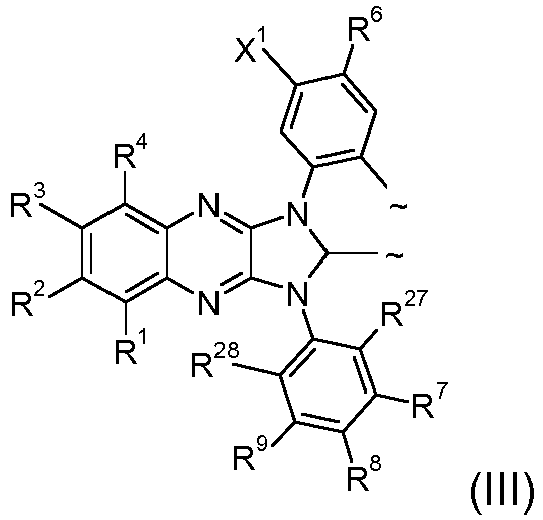
- R5'-Y (IV)
- wherein
- X1 is Cl, Br, or I, especially Br;
- Y is -B(OH)2, -B(OY1)2,

- Y2 is independently in each occurrence a C2-C10alkylene group, such as -CY3Y4-CY5Y6-, or-CY7Y8-CY9Y10- CY11Y12- wherein Y3, Y4, Y5, Y6, Y7, Y8, Y9, Y10, Y11 and Y12 are independently of each other hydrogen, or a C1-C10alkyl group, especially -C(CH3)2C(CH3)2-, -CH2C(CH3)2CH2-, or -C(CH3)2CH2C(CH3)2-, and Y13 and Y14 are independently of each other hydrogen, or a C1-C10alkyl group;
- -SnR307R308R309, wherein R307, R308 and R309 are identical or different and are H or C1-C6alkyl, wherein two radicals optionally form a common ring and these radicals are optionally branched or unbranched;
- ZnR310R311, wherein R310 is halogen and R311 is a C1-C10alkyl group, a C6-C12aryl group, or C1-C10alkenyl group; or
- SiR312R313R314, wherein R312, R313 and R314 are identical or different and are halogen, or C1-C6alkyl.
- Preferred residues R5' are:
- a C1-C12alkyl group, which can optionally be substituted by E and/or interrupted by D; a C3-C12cycloalkyl group, which can optionally be substituted by E;
- or
- R5', is a group of formula

- Ra is H, a C1-C5alkyl group, a fluoroC1-C4alkyl group, or a C3-C6cycloalkyl group; preferably H, a C1-C5alkyl group, C3-C6cycloalkyl group; more preferably H, or a C1-C5alkyl group;
- Re is H, a C1-C5alkyl group, a fluoroC1-C4alkyl group, or a C3-C6cycloalkyl group; preferably H, a C1-C5alkyl group, C3-C6cycloalkyl group; more preferably H, or a C1-C5alkyl group;
- Rc, Rb and Rd are independently of each other hydrogen; a C1-C18alkyl group, which can optionally be substituted by E and/or interupted by D; a C3-C12cycloalkyl group, which can optionally be substituted by G; a C6-C14aryl group, which can optionally be substituted by G; or a C2-C30heteroaryl group, which can optionally be substituted by G; C1-C8haloalkyl such as CF3; or SiR80R81R82; preferably Rc, Rb and Rd are independently of each other H, a C1-C5alkyl group, C3-C6cycloalkyl group; more preferably H, or a C1-C5alkyl group;
- or
- Rc and Rb, or Ra and Rb together form a group of formula

- NR75 or CR73R74; R'" is C1-C8alkyl and a is 0, 1 or 2, preferably 0 or 1, more preferably 0.
- More preferably, R5' is a C1-C8alkyl group, which can optionally be substituted by at least one substituent E and/or interrupted by D; or R5' is a C3-C6cycloalkyl group, which can optionally be substituted by at least one substituent E; or a phenyl group, which can optionally be substituted by one or two groups G.
- Most preferably, R5' is a C1-C8alkyl group, which can optionally be substituted by at least one substituent E; or a C3-C6cycloalkyl group, which can optionally be substituted by at least one substituent E; or a phenyl group, which can optionally be substituted by one or two groups G.
- Suitable and preferred groups E, D and G are mentioned before.
- Preferred residues R1, R2, R3, R4, R6, R7, R8, R9, R27 and R28 have also been defined before.
- Preferred reactions for the introduction of the substituent R5' on the compound of formula (III) are in general metal catalyzed reactions and more specifically Suzuki, Ullmann, Negishi, Heck, Stille and Kumada coupling reactions (J. Hassan et al., Chemical Reviews 102 (2002) 5; L. Ackermann: "Modern Arylation Methods" (Ed.: L. Ackermann), Wiley-VCH, Weinheim, 2009).
- Preferably, the inventive metal carbene complex of formula (I') comprising a residue R5' as mentioned above can be synthesized by one of the following coupling reactions:
- i) Negishi coupling reaction using a compound of formula: R5'-Y, wherein Y is ZnR310R311, wherein R310 is halogen and R311 is a C1-C10alkyl group, a C6-C12aryl group, or C1-C10alkenyl group. Reference is, for example, made to B. Vilas et al., Chem. Soc. Rev., 38 (2009) 1598-1607.
- ii) Stille coupling reaction using a compound of formula: R5'-Y, wherein Y is -SnR307R308R309, wherein R307, R308 and R309 are identical or different and are H or C1-C6alkyl, wherein two radicals optionally form a common ring and these radicals are optionally branched or unbranched. Reference is, for example, made to J. K. Stille, Angew. Chem. 98 (1986) 504 - 519; P. Espinet et al., Angew. Chem. Int. Ed., 43 (2004) 4704-4734.
- iii) Hiyama coupling reaction using a a compound of formula: R5'-Y, wherein Y is SiR312R313R314, wherein R312, R313 and R314 are identical or different and are halogen, or C1-C6alkyl. Reference is, for example, made to T. Hiyama et al., Pure Appl. Chem. 66 (1994) 1471-1478 and T. Hiyama et al., Synlett (1991) 845-853.
- iv) Suzuki coupling reaction using a a compound of formula: R5'-Y, wherein Y is -B(OH)2, -B(OY1)2,

- Preferably, the Suzuki reaction of compound (III) with compound (IV) is carried out in presence of
- a) a catalyst/ligand system comprising a palladium catalyst and an organic phosphine or phosphonium compound,
- b) a base,
- c) a solvent or a mixture of solvents.
- The organic solvent is usually an aromatic hydrocarbon, a linear, branched, or cyclic ether, or a usual polar organic solvent, such as benzene, toluene, xylene, tetrahydrofurane, or dioxane, or mixtures thereof. If desired, water can be added to the organic reaction medium, in which case, depending on the organic solvent used, the reaction can be carried out in a single phase or in a two-phase mixture.
- Usually, the amount of the solvent is chosen in the range of from 1 to 10 I per mol of boronic acid derivative.
- Also preferred, the reaction is carried out under an inert atmosphere such as nitrogen, or argon.
- Further, it is preferred to carry out the reaction in the presence of an aqueous base, such as an alkali metal hydroxide, metal phosphate, or carbonate such as NaOH, KOH, K3PO4, Na2CO3, K2CO3, or Cs2CO3.
- Organic bases, such as, for example, tetraalkylammonium hydroxide, and phase transfer catalysts, such as, for example TBAB, can promote the activity of the boron (see, for example, Leadbeater & Marco; Angew. Chem. Int. Ed. Eng. 42 (2003) 1407 and references cited therein).
- Usually, the molar ratio of the base to boronic acid or boronic ester derivative is chosen in the range of from 0.5:1 to 50:1, very especially in the range of 1:1 to 5:1.
- Generally, the reaction temperature is chosen in the range of from 40 to 180°C, preferably under reflux conditions.
- Generally, the reaction time is chosen in the range of from 0.5 to 80 hours, preferably from 2 hours to 60 hours.
- In a preferred embodiment a usual catalyst for coupling reactions or for polycondensation reactions is used, preferably Pd-based, which is described in
WO2007/101820 . The palladium compound is added in a ratio of from 1:10000 to 1:50, preferably from 1:5000 to 1:200, based on the number of bonds to be closed. Preference is given, for example, to the use of palladium(II) salts such as PdOAc2 or Pd2dba3 and to the addition of ligands selected from the group consisting of

- The ligand is added in a ratio of from 1:1 to 1:10, based on Pd. Also preferred, the catalyst is added as in solution or suspension. Preferably, an appropriate organic solvent such as the ones described above, preferably benzene, toluene, xylene, THF, dioxane, more preferably toluene, or mixtures thereof, is used. The amount of solvent usually is chosen in the range of from 1 to 10 I per mol of boronic acid derivative.
- Other variations of reaction conditions are given by T. I. Wallow and B. M. Novak in J. Org. Chem. 59 (1994) 5034-5037; and M. Remmers, M. Schulze, G. Wegner in Macromol. Rapid Commun. 17 (1996) 239-252 and G. A. Molander und B. Canturk, Angew. Chem., 121 (2009) 9404 - 9425.
- The following reaction systems are preferred:
- i) aryl boronic acid, tris(dibenzylideneacetone) dipalladium(0), SPhos (Dicyclohexylphosphino-2',6'-dimethoxybiphenyl), tripotassium phosphate (solvent toluene/water mixture);
- ii) aryl boronic acid, bis(tri-t-butylphosphin)palladium(0) (Pd[P(tBu)3]2), sodium hydroxide (solvent toluene/dioxane/water mixture); and
- iii) aryl boronic acid, palladium acetate (Pd(OAc)2), SPhos (Dicyclohexylphosphino-2',6'-dimethoxybiphenyl), tripotassium phosphate (o-xylene mixture).
- The metal carbene complex, wherein the metal is selected from Ir and Pt, comprising at least one ligand of formula of formula (III) can be obtained by reacting a metal carbene complex, wherein the metal is selected from Ir and Pt, comprising at least one ligand of formula of formula (III')

- Halogenating agents according to the invention are the halogens X2 or the interhalogens X-X and a base in a ratio of from 1:1 to 1:100 and optionally a Lewis acid in a ratio (halogen to Lewis acid) of from 1:0.1 to 1:0.0001, for example chlorine, bromine or iodine, or chlorine fluoride, bromine fluoride, iodine fluoride, bromine chloride, iodine chloride or iodine bromide, in combination with organic bases such as amines, for example triethylamine, tri-n-butylamine, diisopropylethylamine, morpholine, N-methylmorpholine and pyridine, or salts of carboxylic acids such as sodium acetate, sodium propionate, sodium benzoate, or inorganic bases such as sodium or potassium phosphate or hydrogenphosphate, potassium or sodium hydrogencarbonate, potassium or sodium carbonate, or else organic bromine complexes such as pyridinium perbromide, optionally each in combination with a Lewis acid, e.g. boron trifluoride, boron trifluoride etherate, boron trichloride, boron tribromide, boron triiodide, aluminum trichloride, aluminum tribromide, aluminum triiodide, iron(III) chloride, iron(III)bromide, zinc(II)chloride, zinc(II)bromide, tin(IV)chloride, tin(IV)bromide, phosphorus pentachloride, arsenic pentachloride and antimony pentachloride are used.
- Further halogenating agents according to the invention are organic N-X compounds, such as 1-(chloromethyl)-4-fluoro-1,4-diazoniabicyclo[2.2.2]octane bis(tetrafluoroborate), or N-halocarboxamides such as N-chloro-, N-bromo- and N-iodoacetamide, N-chloro-, N-bromo- and N-iodopropionamide, N-chloro-, N-bromo- and N-iodobenzamide, or N-halocarboximides such as N-chloro-, N-bromo- and N-iodosuccinimide, N-chloro-, N-bromo- and N-iodophthalimide, or N,N-dihalohydantoins, such as 1,3-dibromo-5,5-dimethylhydantoin, 1,3-dichloro-5,5-dimethylhydantoin, 1,3-diiodo-5,5-dimethylhydantoin or N-dihalosulfonamides such as, benzenesulfo-N-dibromamide, or N-halosulfonamide salts such as chloramine B or T. In the case of these halogenating agents, the additive use of Lewis acids, as listed above, for example, may likewise be advantageous.
- Preferred halogenating agents N-halocarboxamides such as N-chloro-, N-bromo- and N-iodosuccinimide, N-chloro-, N-bromo- and N-iodophthalimide, or N,N-dihalohydantoins, such as 1,3-dibromo-5,5-dimethylhydantoin, 1,3-dichloro-5,5-dimethylhydantoin and 1,3-diiodo-5,5-dimethylhydantoin.
- In the process according to the invention, a stoichiometric ratio or an excess of the halogenating agent based on the content of active halogen, to the ligands (III') is used, and can lead selectively to the ligands (III). Preferably a stoichiometric ratio up to a ratio of 2:1 of the halogenating agent based on the content of active halogen to the ligands (III') is used. More preferably a stoichiometric ratio is used.
- Reaction media according to the invention are protic or aprotic, halogen-free or halogenated solvents, for example alcohols such as methanol, ethanol, propanol, butanol, polyhydric alcohols such as ethylene glycol, propyleneglycol, nitriles such as acetonitrile, propionitrile or benzonitrile, ethers such as diethyl ether THF or dioxane, aromatic hydrocarbons such as benzonitrile, nitrobenzene or chlorobenzene, N,N-dialkylamides such as dimethylformamide, methylacetamide or N-methylpyrroldinone, sulfoxides, such as dimethyl sulfoxide, sulfones such as dimethylsulfone or sulfolane, halogenated hydrocarbons such as dichloromethane, trichloromethanen, 1,1-dichloroethane, 1,2-dichloroethane, 1,1,2,2-tetrachloroethane. Preference is given to aromatic or chlorinated solvents.
- According to the invention, the concentration of the metal carbene complex comprising at least one ligand of formula (III') is in the range from 0.0005 mol/l to 2 mol/l, more preferably in the range from 0.002 mol/l to 0.1 mol/l.
- According to the invention, the metal carbene complex comprising at least one ligand of formula (III') may be dissolved or suspended in the reaction medium.
- According to the invention, the reaction is carried out in the temperature range from -78°C to 150°C, preferably at from 0°C to 80°C, more preferably at from 0°C. to 40°C.
- According to the invention, the reaction is carried out within from 1 h to 100 hours, preferably within from 3 h to 60 h.
- Brominating in the 3 position of the cyclometallating N-aryl group of the imidazo-quinoxaline carbene ligand can be, for example, accomplished by reaction of the metal carbene complex comprising at least one ligand of formula (III') with N-bromosuccinimide in dichloromethane.
- Iodinating in the 3 position of the cyclometallating N-aryl group of the imidazo-quinoxaline carbene ligand can be, for example, accomplished by reaction of the metal carbene complex comprising at least one ligand of formula (III') with N-iodosuccinimide in dichloromethane.
- The imidazo-quinoxalines which form the basis for the imidazo-quinoxaline carbene ligands in the metal carbene complexes of the present invention are commercially available or prepared by methods known in the art and for example described in Saravanakumar et al., Chem. Commun. 2006, 640-642; Al-Raqa et al., Heteroatom Chem. 17: 634-647, 2006; EI-Sharief et al., Heteroatom Chem. 16: 218-225, 2005; Phukan et al., J. Org. Chem. 2013, 78, 11032-11039;
JP-A 2000-121807 - Exemplary examples for the preparation of inidazo-quinoxaline ligands are shown in the experimental part of the present application.
- The inventive metal carbene complexes can be used in organic electronic devices. Suitable organic electronic devices are selected from organic light-emitting diodes (OLEDs), organic photovoltaic cells (OPVs), organic field-effect transistors (OFETs) and light-emitting electrochemical cells (LEECs), preference being given to OLEDs.
- The inventive metal carbene complexes are generally notable for improved device performance such as high external quantum efficiency, high luminous efficacy and low voltage, green to yellow emission, decreased lifetime of the luminescence τ (higher radiation rate krad), reduced color-shift (e.g. CIE-y shift) with increasing doping concentration, or long device lifetime and/or excellent thermal stability. The inventive metal-carbene complexes are therefore suitable with particular preference as emitter material in OLEDs
- The present invention therefore concerns an organic electronic device, comprising at least one metal carbene complex according to the present invention.
- In a preferred embodiment, the organic electronic device is an OLED. The present application therefore further provides an OLED comprising at least one inventive metal carbene complex. The inventive metal carbene complex is used in the OLED preferably as an emitter, matrix material, charge transport material, especially hole transport material, and/or charge blocker, more preferably as an emitter and/or hole transport material, most preferably as emitter.
- In a further embodiment, the inventive metal carbene complex is used in the OLED as an electron transport material or as an electron transport material and a hole transport material.
- The present application also provides for the use of the inventive metal carbene complexes in OLEDs, preferably as emitter, matrix material, charge transport material, especially hole transport material, and/or charge blocker, more preferably as emitter and/or hole transport material, most preferably as emitter.
- The at least one inventive metal carbene complex is more preferably present in the light-emitting layer of an OLED, most preferably as emitter. The present application therefore also provides for a light-emitting layer comprising at least one inventive metal carbene complex, preferably as emitter. More preferably, the light-emitting layer additionally comprises at least one host material. Most preferably, the light-emitting layer additionally comprises two host materials.
- In a further embodiment, the present invention relates to a light-emitting layer consisting of at least one inventive metal carbene complex.
- Organic light-emitting diodes are in principle formed from a plurality of layers, e.g.:
- (a) an anode,
- (b) optionally a hole injection layer,
- (c) optionally a hole transport layer,
- (d) optionally an electron / exciton blocking layer
- (e) a light-emitting layer,
- (f) optionally a hole / exciton blocking layer,
- (g) optionally an electron transport layer,
- (h) optionally an electron injection layer, and
- (i) a cathode.
- It is, however, also possible that the OLED does not comprise all of the layers mentioned; for example, an OLED comprising layers (a) (anode), (e) (light-emitting layer) and (i) (cathode) is likewise suitable, in which case the functions of layers (c) (hole-transport layer) and (g) (electron-transport layer) are assumed by the adjoining layers. OLEDs comprising layers (a), (c), (e), (g) and (i) or (a), (c), (e) and (i) or layers (a), (e), (g) and (i) or (a), (b), (c), (d), (e), (g), (h) and (i) or (a), (b), (c), (e), (g), (h) and (i) or (a), (b), (c), (d), (e), (g) and (i) are likewise suitable.
- The individual layers among the aforementioned layers of the OLED may in turn be formed from two or more layers. For example, the hole-transport layer may be formed from one layer, into which holes are injected from the electrode, and a layer which transports the holes away from the hole-injecting layer into the light-emitting layer. The electron-transport layer may likewise consist of a plurality of layers, for example of a layer in which electrons are injected through the electrode and a layer which receives electrons from the electron-injecting layer and transports them into the light-emitting layer. These layers mentioned are each selected according to factors such as energy level, thermal resistance and charge carrier mobility, and also energy difference of the layers mentioned with the organic layers or the metal electrodes. The person skilled in the art is capable of selecting the construction of the OLEDs such that it is matched optimally to the inventive metal-carbene complexes, preferably used as emitter substances in accordance with the invention.
- In order to obtain particularly efficient OLEDs, the HOMO (highest occupied molecular orbital) of the hole-transport layer should be aligned to the work function of the anode, and the LUMO (lowest unoccupied molecular orbital) of the electron-transport layer should be aligned to the work function of the cathode.
- Suitable materials for the aforementioned layers (anode, cathode, hole and electron injection materials, hole and electron transport materials and hole and electron blocker materials, matrix materials, fluorescence and phosphorescence emitters) are known to those skilled in the art and are specified, for example, in H. Meng, N. Herron, Organic Small Molecule Materials for Organic Light-Emitting Devices in Organic Light-Emitting Materials and Devices, eds: Z. Li, H. Meng, Taylor & Francis, 2007, Chapter 3, pages 295 to 411 as well as in
US2012/0104422 , D.J. Gaspar, E Polikarpov, OLED Fundamentals: Materials, Devices, and Processing of Organic Light-Emitting Diodes, CRC Press, Taylor & Francis, 2015,and Z.R. Li, Organic Light-Emitting Materials and Devices, CRC Press, Taylor & Francis, 2015. - In addition, it is possible that some or all of the layers (b) to (h) have been surface-treated in order to increase the efficiency of charge carrier transport. The selection of the materials for each of the layers mentioned is preferably determined by obtaining an OLED having a high efficiency.
- The inventive metal carbene complexes are preferably used as emitter molecules and/or matrix materials in the light-emitting layer (e). The inventive metal-carbene complexes may - in addition to use as emitter molecules and/or matrix materials in the light-emitting layer (e) or instead of use in the light-emitting layer - also be used as a charge transport material in the hole-transport layer (c) or in the electron-transport layer (g) and/or as a charge blocker, preference being given to use as a charge transport material in the hole-transport layer (c) (hole transport material).
- In a further embodiment, the inventive metal carbene complex is used as an electron transport material, or as an electron transport material and a hole transport material.
- Suitable emitter materials for OLEDs are known by a person skilled in the art. The light-emitting layer preferably comprises at least one phosphorescent emitter. Phosphorescent emitter are preferred because of the higher luminescent efficiencies associated with such materials. The light-emitting layer preferably also comprises at least one host material. Preferably, the host material is capable of transporting electrons and/or holes, doped with an emitting material that may trap electrons, holes, and/or excitons, such that excitons relax from the emissive material via a photoemissive mechanism. In a preferred embodiment, the light emitting layer comprises the emitter and two host materials. In this case the two host materials both contribute to the transport of electrons and/or holes. By adjusting the mixing ratio of the two host materials, the optimal charge carrier balance and thus the optimal device performance in terms of voltage, lifetime, efficiency and/or color can be achieved.
- It is an object of the present invention to provide organic electronic devices, preferably OLEDs, having - compared with the organic electronic devices known in the art - a high color purity in the green to yellow region of the visible electromagnetic spectrum, a high efficiency, low voltage and/or improved lifetime/stability.to provide organic electronic devices, preferably OLEDs, having - compared with the organic electronic devices known in the art - a high color purity in the green to yellow region of the visible electromagnetic spectrum, a high efficiency, low voltage and/or improved lifetime/stability.
- The emitter in the OLED of the present invention is therefore preferably a phosphorescent emitter emitting light in the green to yellow region of the visible electromagnetic spectrum ("phosphorescent green emitter").
- The term "phosphorescent green emitter" as used herein refers to a yellow or green phosphorescent emitter having an emission maximum (λmax), which is located at 510 nm to 590 nm, preferably at 515 nm to 570 nm.
- Suitable phosphorescent green emitters are known in the prior art, for example in Baldo et al., Applied Physics Letters, vol. 75, No. 1, 5 July 1999, 4-6,
US 2011/0227049 A1 ,US 2014/0203268 A1 ,US 2013/0341609 ,US 2013/0181190 ,US 2013/0119354 ,WO 2012/053627 A1 , andWO 2013/112557 , - Preferably, the inventive metal carbene complexes are used as emitter. The light-emitting layer (e) may comprise one or more of the inventive metal-carbene complexes as emitter material. Suitable and preferred inventive metal carbene complexes are mentioned above. It is also possible that the light-emitting layer comprises in addition to at least one inventive metal carbene complex one or more further emitters.
- The light-emitting layer preferably comprises beside at least one emitter material (suitable emitter materials are mentioned above), preferably at least one metal cabene complex according to the present invention, at least one host material.
- Suitable host materials are known by a person skilled in the art. Preferred host materials are mentioned below.
- For efficient light emission the triplet energy of the host material has to be about 0.2 eV larger than the triplet energy of the phosphorescent emitter (preferably the metal carbene complex according to the present invention) used. Hence, all host materials fulfilling this requirement are, in principle, suitable as host compound.
- Suitable host materials for phosphorescent green to yellow emitters are, for example, described in
EP2363398A1 ,WO2008/031743 ,WO2008/065975 ,WO2010/145991 ,WO2010/047707 ,US2009/0283757 ,US2009/0322217 ,US2010/0001638 ,WO2010/002850 ,US2010/0060154 ,US2010/0060155 ,US2010/0076201 ,US2010/0096981 ,US2010/0156957 ,US2011/186825 ,US2011/198574 ,US2011/0210316 ,US2011/215714 ,US2011/284835 , andWO2012/045710 . Further suitable host materials for phosphorescent green to yellow emitters are, for example, described inWO2012/004765 andUS2011/0006670 (e.g. SH-2 Host),US2014/0001446 andWO2015/014791 . The host material may be a compound having hole-transporting property and/or an organic compound having electron-transporting property. Preferably, the host material is an organic compound or organometallic compound having hole-transporting property. Alternatively the host compound may be a mixture of an organic compound or organometallic compound having hole-transporting property and an organic compound or organometallic compound having electron-transporting property. In principle, any organic compound or organometallic compound having hole-transporting property or having electron-transporting property and sufficient triplet energy can be used as host in the light-emitting layer. In a preferred embodiment, it is also possible to combine an organic compound or organometallic compound having both hole- and electron-transporting property and an organic compound or organometallic compound having either hole- or electron-transporting properties as hosts. Both materials can be processed from separate sources or as one pre-mixed host-compound. - Examples of organic compounds which can be used for the host material include a carbazole derivative such as 4, 4'-di(carbazolyl)biphenyl (abbreviation: CBP), 1,3-bis(carbazolyl)benzene (abbreviation: mCP) or 1,3,5-tris(N-carbazolyl)benzene (abbreviation: TCzB), = DNTPD.
- Examples of organometallic compounds which can be used for the host material include iridium carbene complexes. Suitable iridium carbene complexes are, for example, iridium carbene complexes as described in
WO2005/019373A2 ,WO2006/056418 A2 ,WO2007/115970 ,WO2007/115981 ,WO2008/000727 ,WO2012/121936A2 ,US2012/0305894A1 , andWO2012/172482A1 . Examples of suitable iridium carbene complexes are Ir(DPBIC)3 with the formula:

- Further suitable host materials are the compounds described in
WO2010/079051 (in particular pages on 19 to 26 and in the tables on pages 27 to 34, pages 35 to 37 and pages 42 to 43). - Also preferred as host compounds in the OLED and in the light-emitting layer of the present invention are the compounds mentioned in
WO2012/130709 ;WO2013/050401 ;WO2014/009317 ;WO2014/044722 ; and the non-published European Patent ApplicationEP13191100.0 - Further preferred host materials are binary host systems as described in
WO2011/136755 ; the hosts described inWO2013/022419 andWO2013/112557 ; triphenylene derivatives for example as described inWO2010/028151 ,WO2010/002850 ,WO2010/0056669 US2010/0244004 ,US2011/0177641 ,US2011/022749 ,WO2011/109042 , andWO2011/137157 ; azaborinine compounds for example as described inWO2011/143563 ; bicarbazole compounds for example as described inWO2012/023947 ; carbazolephenyl-pyridine, -pyrimidine and -triazine compounds for example as described inWO2012/108879 ; biscarbazolephenyl-pyridine, -pyrimidine and - triazine compounds for example as described inWO2012/108881 ; dibenzoquinoxaline compounds for example as described inUS2011/0210316 ; triazole derivatives for example as described inUS2011/0285276 andUS2012/0025697 ; benzimidazole derivatives for example as described inUS2011/0147792 ; heterocyclic compounds for example as described inUS2012/0061651 ; phenanthrene derivatives for example as described inUS2012/0104369 ; benzoxazole derivatives for example as described inUS2012/0132896 ; oxazole derivatives for example as described inUS2012/0130081 ; and carbazole-benzimidazole derivatives for example as described inUS2012/0133274 . - Further preferred host materials are described in
US2011/0006670 (the SH-2 host is for example mentioned therein). - Especially suitable host materials are for example host materials described in
WO2013/112557 having the following general formula:
r1, r4, r5 is 0, 1, 2, 3, or 4,
r2, r3, r6 is 0, 1, 2 or 3,
n is 0 or 1, and
Ar1, Ar2, and Ar3 may be the same or different, substituted or unsubstituted aromatic hydrocarbon group, substituted or unsubstituted aromatic heterocyclic group, substituted or unsubstituted condensed polycyclic aromatic group, deuterium substituted aromatic hydrocarbon group, deuterium substituted aromatic heterocyclic group, or deuterium substituted condensed polycyclic aromatic group. - When Ar1, Ar2, or Ar3 is a substituted aromatic hydrocarbon group, a substituted aromatic heterocyclic group, or a substituted polycyclic aromatic group, the substitution groups can be any non-carbon or carbon- containing functional group, such as, an aromatic hydrocarbon group, an aromatic heterocyclic group or a polycyclic aromatic group. For example, the substitution group on the aromatic ring structure of Ar1, A2, or Ar3 can be
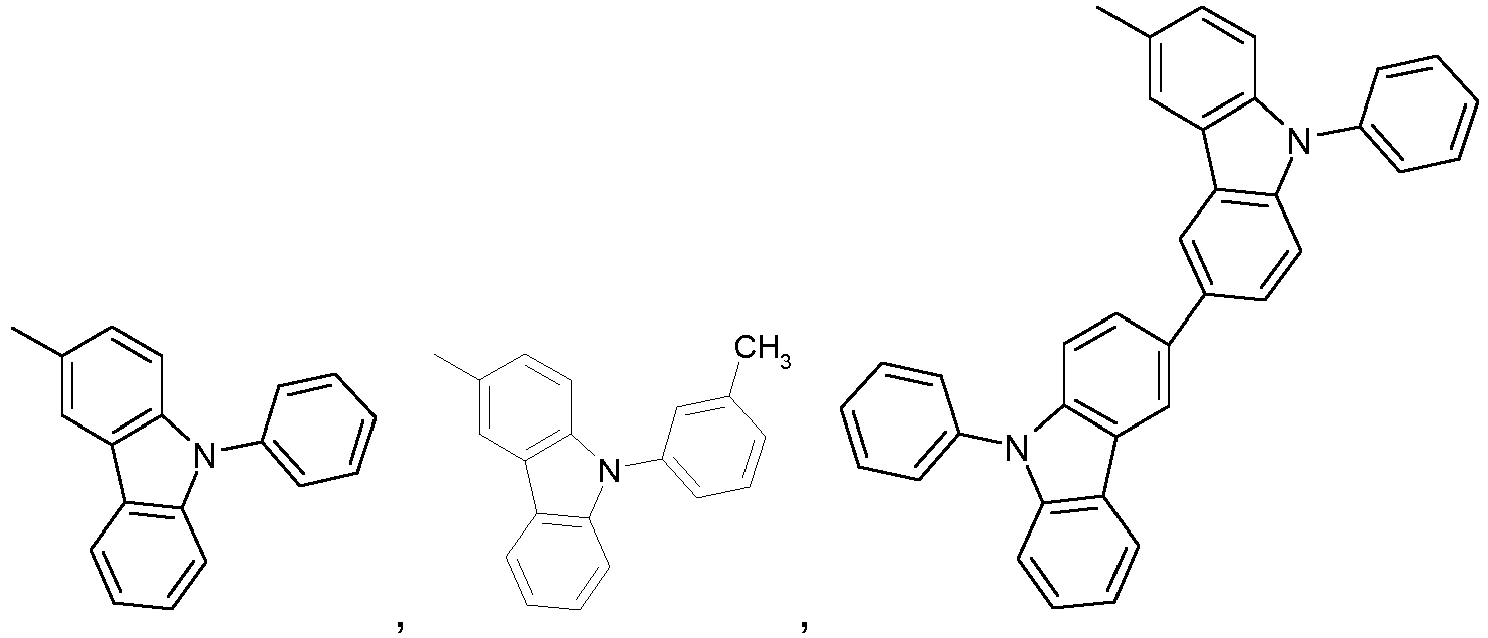
- Especially suitable are the compounds (H1-1), (H1-2), (H1-7) as mentioned below and the compounds (H1-3), (H1-4), (H1-5), (H1-6), (H1-8), (H1-9), (H1-10), (H1-11), (H1-12), (H1-13), (H1-14), (H1-14), (H-16) and (H1-17) as described in
WO 2013/112557 .
- Further suitable host materials - which may be employed together with the host material mentioned before - are host materials containing at least one of the following groups in the molecule:

- The groups mentioned above may be unsubstituted or substituted by an unfused substituent independently selected from the group consisting of CnH2n+1, OCnH2n+1, OAr1, N(CnH2n+1)2, N(Ar1)(Ar2), CH=CH- CnH2n+1, C=CHCnH2n+1, A1 , Ar1-Ar2, CnH2n-Ar1, wherein n is 1, 2, 3, 4, 5, 6, 7, 8, 9, or 10, and wherein Ar1 and Ar2 are independently selected from the group consisting of benzene, biphenyl, naphthalene, triphenylene, carbazole, and heteroaromatic analogs thereof.
- Further suitable host compounds are compounds comprising a triphenylene containing benzo-fused thiophene. A combination of benzo-fused thiophenes and triphenylene as hosts in OLEDs may be beneficial. Therefore combining these two moieties in one molecule may offer improved charge balance which may improve device performance in terms of lifetime, efficiency and low voltage. Different chemical linkage of the two moieties can be used to tune the properties of the resulting compound to make it the most appropriate for a particular phosphorescent emitter, device architecture, and/or fabrication process. For example, m-phenylene linkage is expected to result in higher triplet energy and higher solubility whereas p-phenylene linkage is expected to result in lower triplet energy and lower solubility.
- Similar to the characterization of benzo-fused thiophenes, benzo-fused furans are also suitable host materials. Examples of benzo-fused furans include benzofuran and dibenzofuran. Therefore, a material containing both triphenylene and benzofuran may be advantageously used as host material in OLEDs. A compound containing both of these two groups may offer improved electron stabilization which may improve device stability and efficiency with low voltage. The properties of the triphenylene containing benzofuran compounds may be tuned as necessary by using different chemical linkages to link the triphenylene and the benzofuran.
- Benzo-fused furans are benzofurans and dibenzofurans. Benzo-fused thiophenes are benzothiophenes and dibenzothiophenes.
- The benzo-fused thiophene and benzo-fused furans mentioned above may be unsubstituted or substituted for example by one or more unfused substituents independently selected from the group consisting of CnH2n+1, OCnH2n+1, OAr1, N(CnH2n+1)2, N(Ar1)(Ar2), CH=CH- CnH2n+1, C=CHCnH2n+1, A1, Ar1-Ar2, CnH2n-Ar1, wherein n is 1, 2, 3, 4, 5, 6, 7, 8, 9, or 10, and wherein Ar1 and Ar2 are independently selected from the group consisting of benzene, biphenyl, naphthalene, triphenylene, carbazole, and heteroaromatic analogs thereof.
- The substituents of the compounds described above are unfused such that the substituents are not fused to the triphenylene, benzo-fused furan or benzo-fused thiophene moieties of the compound. The substituents may optionally be inter-fused (i.e. fused to each other).
- The benzo-fused thiophene and benzo-fused furans mentioned above are for example described in
WO2013/112557 and inWO2009/021126 . - Further suitable host materials for phosphorescent green emitters are mentioned in
US2013/0181190 , especially in table 3, andUS2013/0119354 , especially in table 4. - Specific examples of organic compounds which can be used for the host material include a compounds such as


- Further specific examples of organic compounds which can be used for the host material include the following compounds


- The host compound can be one compound or it can be a mixture of two or more compounds. Suitable mixtures are for example the binary hosts systems as described in
WO2011/136755 andWO2013/112557 . - A further suitable host material for the emitters of the present invention is mentioned in
US2012/0235123 andUS2011/0279020 . A typical and preferred host material described in the documents mentioned before is
- Additionally, as mentioned before, co-host systems are suitable as host material for the emitters of the present invention. A suitable co-host system is exemplified below. It is clear for a person skilled in the art that also similar co-host systems are suitable.


- In a preferred embodiment, the light-emitting layer (e) comprises the emitter in an amount of 2 to 40% by weight, preferably 5 to 35% by weight, more preferably 5 to 20 % by weight and the host compound in an amount of 60 to 98% by weight, preferably 65 to 95% by weight, more preferably 80 to 95 % by weight, where the amount of the phosphorescent emitter and the host compound adds up to a total of 100% by weight. The emitter may be one emitter or a combination of two ore more emitters. The host may be one host or a combination of two or more hosts. In a preferred embodiment, in case of the use of two host compounds they are mixed in a ratio of 1:1 to 1:30, more preferably 1:1 to 1:7, most preferably 1:1 to 1:3.
- The anode is an electrode which provides positive charge carriers. It may be composed, for example, of materials which comprise a metal, a mixture of different metals, a metal alloy, a metal oxide or a mixture of different metal oxides. Alternatively, the anode may be a conductive polymer. Suitable metals comprise the metals of groups 11, 4, 5 and 6 of the Periodic Table of the Elements, and also the transition metals of groups 8 to 10. When the anode is to be transparent, mixed metal oxides of groups 12, 13 and 14 of the Periodic Table of the Elements are generally used, for example indium tin oxide (ITO). It is likewise possible that the anode (a) comprises an organic material, for example polyaniline, as described, for example, in Nature, Vol. 357, pages 477 to 479 (June 11, 1992). Preferred anode materials include conductive metal oxides, such as indium tin oxide (ITO) and indium zinc oxide (IZO), aluminum zinc oxide (AlZnO), and metals. Anode (and substrate) may be sufficiently transparent to create a bottom-emitting device. A preferred transparent substrate and anode combination is commercially available ITO (anode) deposited on glass or plastic (substrate). A reflective anode may be preferred for some top-emitting devices, to increase the amount of light emitted from the top of the device. At least either the anode or the cathode should be at least partly transparent in order to be able to emit the light formed. Other anode materials and structures may be used.
- Generally, injection layers are comprised of a material that may improve the injection of charge carriers from one layer, such as an electrode or a charge generating layer, into an adjacent organic layer. Injection layers may also perform a charge transport function. The hole injection layer may be any layer that improves the injection of holes from anode into an adjacent organic layer. A hole injection layer may comprise a solution deposited material, such as a spin-coated polymer, or it may be a vapor deposited small molecule material, such as, for example, CuPc or MTDATA. Polymeric hole-injection materials can be used such as poly(N-vinylcarbazole) (PVK), polythiophenes, polypyrrole, polyaniline, self-doping polymers, such as, for example, sulfonated poly(thiophene-3-[2[(2-methoxyethoxy)ethoxy]-2,5-diyl) (Plexcore® OC Conducting Inks commercially available from Plextronics), and copolymers such as poly(3,4-ethylenedioxythiophene)/poly(4-styrenesulfonate) also called PEDOT/PSS. Further suitable hole injection materials are mentioned in
US2013/0181190 , especially in table 3, andUS2013/0119354 , especially in table 4. - It is possible to use as hole injection materials p-doped layers. Suitable p-dopants are mentioned below concerning the hole transport layer. Examples for suitable p-dopants are MoO3, F4-TCNQ or NDP-9. It is further possible to use layers of p-dopants itself. Suitable p-dopants are mentioned below concerning the hole transport layer. Examples for suitable p-dopants are MoO3, F4-TCNQ or NDP-9.
- Further suitable hole injection materials are described in
US2006/0188745 ,US2006/0240280 andUS2007/0092755 , whereby the following material is an example for a preferred hole injection material: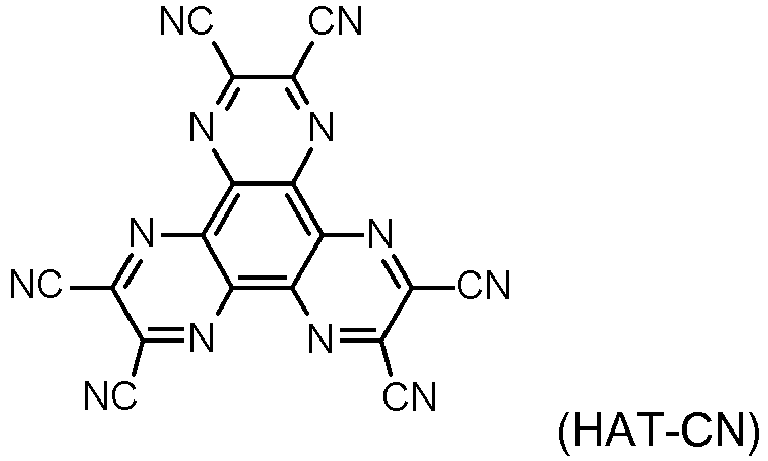
- Further suitable hole injection materials are described in
US2010/0219400 ,US2015/0073142 andUS2015/0102331 , whereby the following material is an example for a preferred hole injection material:
- The dopant NDP-9 is commercially available and for example described in
EP 2 180 029 . Further suitable hole injection materials are the following materials:
- Further compounds suitable as hole injection material are for example mentioned in
US2010/0044689 andUS2014/0217392 , e.g. the following compound
- Further compounds suitable as hole injection material are for example mentioned in
US2010/0219400 ,US2015/0073142 andUS2015/0102331 , e.g. the following compound
- Further compounds suitable as hole injection material are for example mentioned in
US2008/0014464 , e.g. the following compound

- In addition to the hole injection materials mentioned above, the materials mentioned as hole transport materials in the hole transport layer are also useful as hole injection materials, especially in combination with a p-dopant, for example in combination with MoO3, F4-TCNQ or NDP-9. Further suitable p-dopants are mentioned below (see hole transport layer (c)).
- Either hole-transporting molecules or polymers may be used as the hole transport material. Suitable hole transport materials for layer (c) of the inventive OLED are disclosed, for example, in Kirk-Othmer Encyclopedia of Chemical Technology, 4th Edition, Vol. 18, pages 837 to 860, 1996,
US20070278938 ,US2008/0106190 ,US2011/0163302 (triarylamines with (di)benzothiophen/(di)benzofuran; Nan-Xing Hu et al. Synth. Met. 111 (2000) 421 (indolocarbazoles),WO2010/002850 (substituted phenylamine compounds),WO2012/16601 WO2012/16601 US2013/0181190 , especially in table 3, andUS2013/0119354 , especially in table 4. Further suitable hole transport materials are mentioned inUS20120223296 . Combination of different hole transport material may be used. Reference is made, for example, to wherein
- Customarily used hole-transporting molecules are selected from the group consisting of

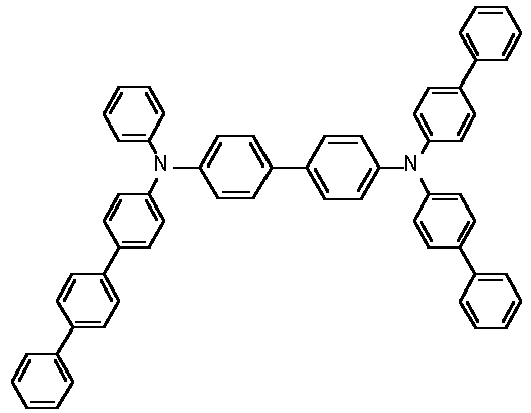

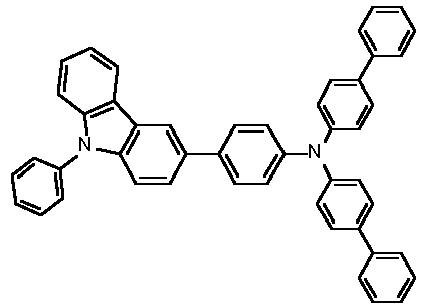


- In a preferred embodiment it is possible to use metal carbene complexes as hole transport materials. Suitable carbene complexes are, for example, carbene complexes as described in
WO2005/019373A2 ,WO2006/056418 A2 ,WO2007/115970 ,WO2007/115981 ,WO2008/000727 ,WO2012/121936A2 ,US2012/0305894A1 , andWO2012/172482A1 . One example of a suitable carbene complex is Ir(DPBIC)3 (HTM-1). Another example of a suitable carbene complex is Ir(ABIC)3 (HTM-2). The formulae of (HTM-1) and (HTM-2) are mentioned above. - Further compounds suitable as hole transport material are for example mentioned in
US2010/0044689 andUS2014/0217392 , e.g. the following compound
- Further compounds suitable as hole transport material are for example mentioned in
US2010/0219400 ,US2015/0073142 andUS2015/0102331 , e.g. the following compound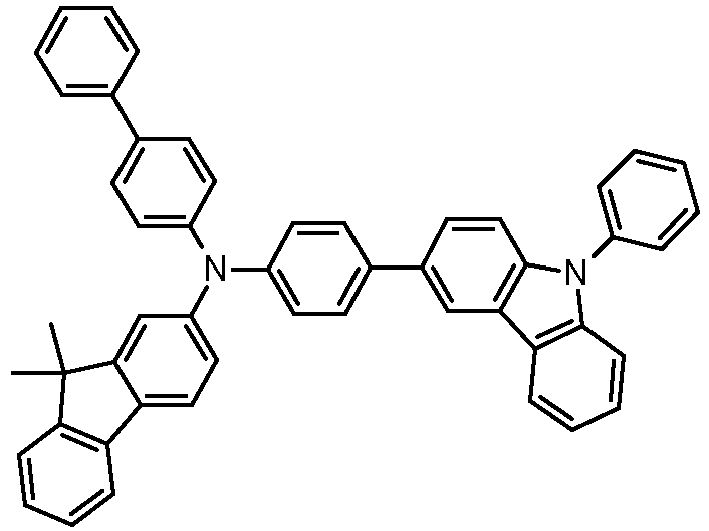
- Further compounds suitable as hole transport material are for example mentioned in
US2008/0014464 , e.g. the following compound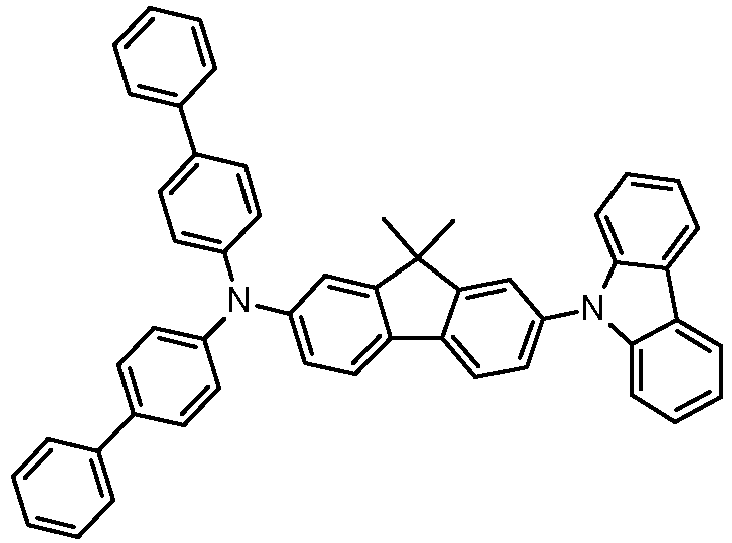
- Further compounds suitable as hole transport material are for example mentioned in
WO2013/112557 , e.g. the following compounds 1a to 12a mentioned inWO2013/112557 :
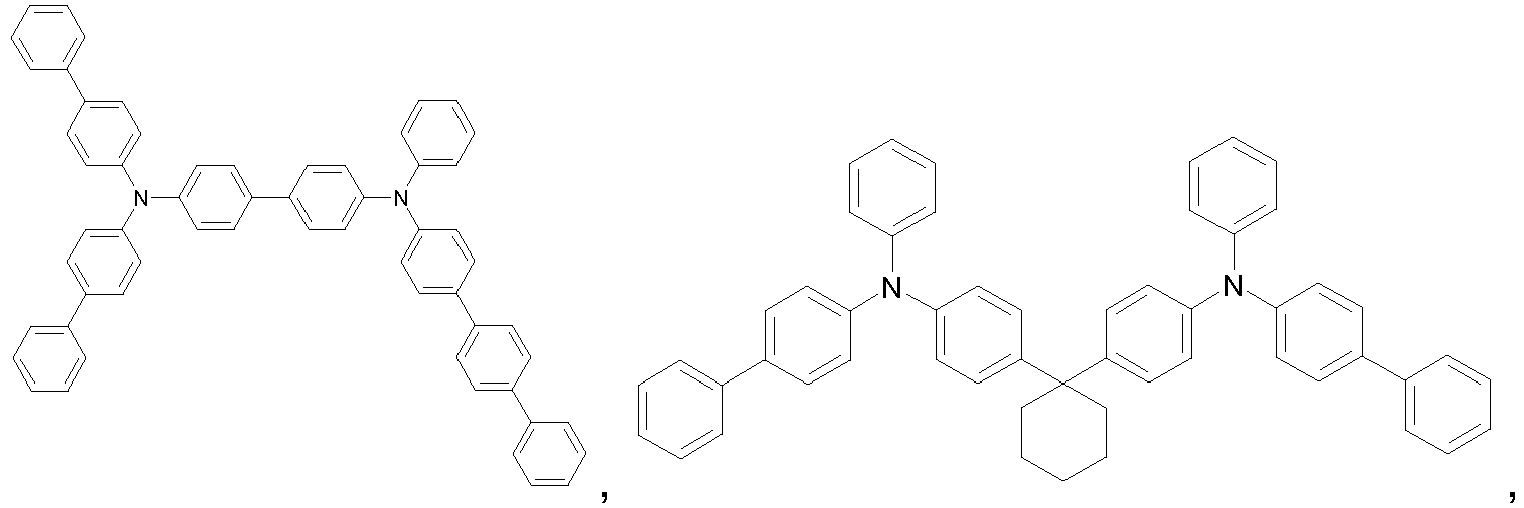


- The hole-transporting layer may also be electronically doped in order to improve the transport properties of the materials used, in order firstly to make the layer thicknesses more generous (avoidance of pinholes/short circuits) and in order secondly to minimize the operating voltage of the device. Electronic doping is known to those skilled in the art and is disclosed, for example, in W. Gao, A. Kahn, J. Appl. Phys., Vol. 94, 2003, 359 (p-doped organic layers); A. G. Werner, F. Li, K. Harada, M. Pfeiffer, T. Fritz, K. Leo, Appl. Phys. Lett., Vol. 82, No. 25, 2003, 4495 and Pfeiffer et al., Organic Electronics 2003, 4, 89 - 103 and K. Walzer, B. Maennig, M. Pfeiffer, K. Leo, Chem. Soc. Rev. 2007, 107, 1233. For example it is possible to use mixtures in the hole-transporting layer, in particular mixtures which lead to electrical p-doping of the hole-transporting layer. p-Doping is achieved by the addition of oxidizing materials. These mixtures may, for example, be the following mixtures: mixtures of the abovementioned hole transport materials with at least one metal oxide, for example MoO2, MoO3, WOx, ReO3 and/or V2O5, preferably MoO3 and/or ReO3, more preferably MoO3, or mixtures comprising the aforementioned hole transport materials and one or more compounds selected from 7,7,8,8-tetracyanoquinodimethane (TCNQ), 2,3,5,6-tetrafluoro-7,7,8,8-tetracyanoquinodimethane (F4-TCNQ), 2,5-bis(2-hydroxyethoxy)-7,7,8,8-tetracyanoquinodimethane, bis(tetra-n-butylammonium)tetracyanodiphenoquinodimethane, 2,5-dimethyl-7,7,8,8-tetracyanoquinodimethane, tetracyanoethylene, 11,11,12,12-tetracyanonaphtho2,6-quinodimethane, 2-fluoro-7,7,8,8-tetracyanoquino-dimethane, 2,5-difluoro-7,7,8,8etracyanoquinodimethane, dicyanomethylene-1,3,4,5,7,8-hexafluoro-6Hnaphthalen-2-ylidene)malononitrile (F6-TNAP), Mo(tfd)3 (from Kahn et al., J. Am. Chem. Soc. 2009, 131 (35), 12530-12531), compounds as described in
EP1988587 ,US2008/265216 ,EP2180029 ,US2010/0102709 ,WO2010/132236 ,EP2180029 and quinone compounds as mentioned inEP2401254 ; as well as compounds as described inEP1713136 andWO2007/071450 andUS2008/0265216 . - Further materials useful in the hole transport layer are the following materials:

- In addition to the hole transport materials mentioned above, the materials mentioned as hole injection materials in the hole injection layer are also useful as hole transport materials. Said materials may be used in undoped form or in combination with a p-dopant, for example in combination with MoO3, F4-TCNQ or NDP-9, in the hole transport layer.
- Blocking layers may be used to reduce the number of charge carriers (electrons or holes) and/or excitons that leave the emissive layer. An electron/exciton blocking layer (d) may be disposed between the emitting layer (e) and the hole transport layer (c), to block electrons from emitting layer (e) in the direction of hole transport layer (c). Blocking layers may also be used to block excitons from diffusing out of the emissive layer. Suitable metal complexes for use as electron/exciton blocker material are, for example, carbene complexes as described in
WO2005/019373A2 ,WO2006/056418A2 ,WO2007/115970 ,WO2007/115981 ,WO2008/000727 ,WO2012/121936A2 ,US2012/0305894A1 , andWO2012/172482A1 . Explicit reference is made here to the disclosure of the WO applications cited, and these disclosures shall be considered to be incorporated into the content of the present application. One example of a suitable carbene complex is compound HTM-1. Another example of a suitable carbene complex is compound HTM-2. The formulae of (HTM-1) and (HTM-2) are mentioned above. - Also suitable as electron/exciton blocker materials are the compounds mentioned in
WO2012/130709 ;WO2013/050401 ;WO2014/009317 ;WO2014/044722 ; and the non-published European Patent ApplicationEP13191100.0 - Further suitable electron/exciton blocker materials are the compounds of formula (H1) mentioned in
WO2013/112557 , as described above. - Further suitable electron/exciton blocker materials are the compounds mentioned in
US2012/0223296 . - Especially suitable are the compounds (H1-1), (H1-2), (H1-7) as mentioned above and the compounds (H1-3), (H1-4), (H1-5), (H1-6), (H1-8), (H1-9), (H1-10), (H1-11), (H1-12), (H1-13), (H1-14), (H1-14), (H-16) and (H1-17) as described in
WO 2013/112557 . - (Further suitable electron/exciton blocker materials are: NHT-49, NHT-51 (which are commercially available from Novaled) and HTM-211,
- Further compounds suitable as electron/exciton blocker materials are for example mentioned in
US2010/0044689 andUS2014/0217392 , e.g. the following compound
- Further compounds suitable as electron/exciton blocker materials are for example mentioned in
US2010/0219400 ,US2015/0073142 andUS2015/0102331 , e.g. the following compound
- Further compounds suitable as electron/exciton blocker materials are for example mentioned in
US2008/0014464 , e.g. the following compound
- Blocking layers may be used to reduce the number of charge carriers (electrons or holes) and/or excitons that leave the emissive layer. The hole blocking layer may be disposed between the emitting layer (e) and electron transport layer (g), to block holes from leaving layer (e) in the direction of electron transport layer (g). Blocking layers may also be used to block excitons from diffusing out of the emissive layer. Suitable hole/exciton blocking materials are, in principle, the host compounds mentioned above. The same preferences apply as for the host material.
- Suitable hole/exciton blocker materials are therefore for example the materials containing both triphenylene and benzo-fused furans or benzo-fused thiophenes as mentioned above concerning suitable host materials.
- Further hole/exciton blocking materials are one or more compounds of the general formula (X)

- X is NR, S, O or PR;
- R is aryl, heteroaryl, alkyl, cycloalkyl, or heterocycloalkyl;
- A200 is -NR206R207, -P(O)R208R209, -PR210R211, -S(O)2R212, -S(O)R213, -SR214, or -OR215;
- R221, R222 and R223 are independently of each other aryl, heteroaryl, alkyl, cycloalkyl, or heterocycloalkyl, wherein at least on of the groups R221, R222, or R223 is aryl, or heteroaryl;
- R224 and R225 are independently of each other alkyl, cycloalkyl, heterocycloalkyl, aryl, heteroaryl, a group A200, or a group having donor, or acceptor characteristics;
- n2 and m2 are independently of each other 0, 1, 2, or 3;
- R206 and R207 form together with the nitrogen atom a cyclic residue having 3 to 10 ring atoms, which can be unsubstituted, or which can be substituted with one, or more substituents selected from alkyl, cycloalkyl, heterocycloalkyl, aryl, heteroaryl and a group having donor, or acceptor characteristics; and/or which can be annulated with one, or more further cyclic residues having 3 to 10 ring atoms, wherein the annulated residues can be unsubstituted, or can be substituted with one, or more substituents selected from alkyl, cycloalkyl, heterocycloalkyl, aryl, heteroaryl and a group having donor, or acceptor characteristics; and
- R208, R209 R210, R211, R212, R213, R214 und R215 are independently of each other aryl, heteroaryl, alkyl, cycloalkyl, or heterocycloalkyl.
- Compounds of formula (X) are described in
WO2010/079051 (in particular pages on 19 to 26 and in tables on pages 27 to 34, pages 35 to 37 and pages 42 to 43). - Further suitable hole/exciton blocker materials are mentioned in
US2013/0181190 , especially in table 3, andUS 2013/0119354 , especially in table 4. Further suitable hole/exciton blocker materials are mentioned inUS2014/0001446 andWO2015/014791 . - Examples are bathocuprine compounds such as:


- Electron transport layer may include a material capable of transporting electrons. Electron transport layer may be intrinsic (undoped), or doped. Doping may be used to enhance conductivity. Suitable electron-transporting materials for layer (g) of the inventive OLEDs comprise metals chelated with oxinoid compounds, such as tris(8-hydroxyquinolato)aluminum (Alq3), compounds based on phenanthroline such as 2,9-dimethyl-4,7-diphenyl-1,10-phenanthroline (DDPA = BCP), 4,7-diphenyl-1,10-phenanthroline (Bphen), 2,4,7,9-tetraphenyl-1,10-phenanthroline, 4,7-diphenyl-1,10-phenanthroline (DPA) or phenanthroline derivatives disclosed in
EP1786050 , inEP1970371 , or inEP1097981 , and azole compounds such as 2-(4-biphenylyl)-5-(4-t-butylphenyl)-1,3,4-oxadiazole (PBD) and 3-(4-biphenylyl)-4phenyl-5-(4-t-butylphenyl)-1,2,4-triazole (TAZ). - It is likewise possible to use mixtures of at least two materials in the electron-transporting layer, in which case at least one material is electron-conducting. Preferably, in such mixed electron-transporting layers, at least one phenanthroline compound is used, preferably BCP, or at least one pyridine compound according to the formula (VIII) below, preferably a compound of the formula (VIIIaa) below. More preferably, in mixed electron-transporting layers, in addition to at least one phenanthroline compound, alkaline earth metal or alkali metal hydroxyquinolate complexes, for example Liq, are used. Suitable alkaline earth metal or alkali metal hydroxyquinolate complexes are specified below (formula VII). Reference is made to
WO2011/157779 . - The electron-transporting layer may also be electronically doped in order to improve the transport properties of the materials used, in order firstly to make the layer thicknesses more generous (avoidance of pinholes/short circuits) and in order secondly to minimize the operating voltage of the device. Electronic doping is known to those skilled in the art and is disclosed, for example, in W. Gao, A. Kahn, J. Appl. Phys., Vol. 94, No. 1, 1 July 2003 (p-doped organic layers); A. G. Werner, F. Li, K. Harada, M. Pfeiffer, T. Fritz, K. Leo, Appl. Phys. Lett., Vol. 82, No. 25, 23 June 2003 and Pfeiffer et al., Organic Electronics 2003, 4, 89 - 103 and K. Walzer, B. Maennig, M. Pfeiffer, K. Leo, Chem. Soc. Rev. 2007, 107, 1233. For example, it is possible to use mixtures which lead to electrical n-doping of the electron-transporting layer. n-Doping is achieved by the addition of reducing materials. These mixtures may, for example, be mixtures of the abovementioned electron transport materials with alkali/alkaline earth metals or alkali/alkaline earth metal salts, for example Li, Cs, Ca, Sr, Cs2CO3, with alkali metal complexes, for example 8-hydroxyquinolatolithium (Liq), and with Y, Ce, Sm, Gd, Tb, Er, Tm, Yb, Li3N, Rb2CO3, dipotassium phthalate, W(hpp)4 from
EP1786050 , or with compounds described inEP1837926B1 ,EP1837927 ,EP2246862 ,WO2010132236 andDE102010004453 . - In a preferred embodiment, the electron-transporting layer comprises at least one compound of the general formula (VII)

- R32 and R33 are each independently F, C1-C8-alkyl, or C6-C14-aryl, which is optionally substituted by one or more C1-C8-alkyl groups, or
- two R32 and/or R33 substituents together form a fused benzene ring which is optionally substituted by one or more C1-C8-alkyl groups;
- a and b are each independently 0, or 1, 2 or 3,
- M1 is an alkaline metal atom or alkaline earth metal atom,
- p is 1 when M1 is an alkali metal atom, p is 2 when M1 is an earth alkali metal atom.
- A very particularly preferred compound of the formula (VII) is

- In a further preferred embodiment, the electron-transporting layer comprises at least one compound of the formula (VIII),

- R34, R35, R36, R37, R34', R35', R36' and R37' are each independently H, C1-C18-alkyl, C1-C18-alkyl which is substituted by E and/or interrupted by D, C6-C24-aryl, C6-C24-aryl which is substituted by G, C2-C20-heteroaryl or C2-C20-heteroaryl which is substituted by G,
- Q is an arylene or heteroarylene group, each of which is optionally substituted by G;
- D is -CO-; -COO-; -S-; -SO-; -SO2-; -O-; -NR40-; -SiR45R46-; -POR47-; -CR38=CR39-; or -C=C-;
- E is -OR44; -SR44; -NR40R41; -COR43; -COOR42; -CONR40R41; -CN; or F;
- G is E, C1-C18-alkyl, C1-C18-alkyl which is interrupted by D , C1-C18-perfluoroalkyl, C1-C18-alkoxy, or C1-C18-alkoxy which is substituted by E and/or interrupted by D,
- in which
- R38 and R39 are each independently H, C6-C18-aryl; C6-C18-aryl which is substituted by C1-C18-alkyl or C1-C18-alkoxy; C1-C18-alkyl; or C1-C18-alkyl which is interrupted by -O-;
- R40 and R41 are each independently C6-C18-aryl; C6-C18-aryl which is substituted by C1-C18-alkyl or C1-C18-alkoxy; C1-C18-alkyl; or C1-C18-alkyl which is interrupted by -O-; or R40 and R41 together form a 6-membered ring;
- R42 and R43 are each independently C6-C18-aryl; C6-C18-aryl which is substituted by C1-C18-alkyl or C1-C18-alkoxy; C1-C18-alkyl; or C1-C18-alkyl which is interrupted by -O-,
- R44 is C6-C18-aryl; C6-C18-aryl which is substituted by C1-C18-alkyl or C1-C18-alkoxy; C1-C18-alkyl; or C1-C18-alkyl which is interrupted by -O-,
- R45 and R46 are each independently C1-C18-alkyl, C6-C18-aryl or C6-C18-aryl which is substituted by C1-C18-alkyl,
- R47 is C1-C18-alkyl, C6-C18-aryl or C6-C18-aryl which is substituted by C1-C18-alkyl.
- Preferred compounds of the formula (VIII) are compounds of the formula (Villa)


- Particular preference is given to a compound of the formula
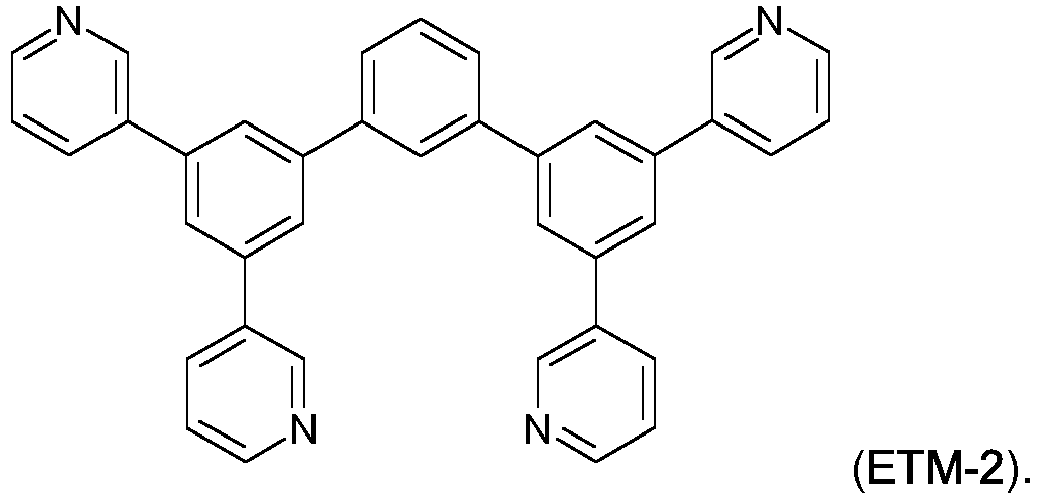
- In a further, very particularly preferred embodiment, the electron-transporting layer comprises a compound Liq and a compound ETM-2.
- In a preferred embodiment, the electron-transporting layer comprises the compound of the formula (VII) in an amount of 99 to 1% by weight, preferably 75 to 25% by weight, more preferably about 50% by weight, where the amount of the compounds of the formulae (VII) and the amount of the compounds of the formulae (VIII) adds up to a total of 100% by weight.
- The preparation of the compounds of the formula (VIII) is described in J. Kido et al., Chem. Commun. (2008) 5821-5823, J. Kido et al., Chem. Mater. 20 (2008) 5951-5953 and
JP2008/127326 - It is likewise possible to use mixtures of alkali metal hydroxyquinolate complexes, preferably Liq, and dibenzofuran compounds in the electron-transporting layer. Reference is made to
WO2011/157790 . Dibenzofuran compounds A-1 to A-36 and B-1 to B-22 described inWO2011/157790 are preferred, wherein dibenzofuran compound
- In a preferred embodiment, the electron-transporting layer comprises Liq in an amount of 99 to 1% by weight, preferably 75 to 25% by weight, more preferably about 50% by weight, where the amount of Liq and the amount of the dibenzofuran compound(s), especially ETM-1, adds up to a total of 100% by weight.
- In a preferred embodiment, the electron-transporting layer comprises at least one phenanthroline derivative and/or pyridine derivative.
- In a further preferred embodiment, the electron-transporting layer comprises at least one phenanthroline derivative and/or pyridine derivative and at least one alkali metal hydroxyquinolate complex.
- In a further preferred embodiment, the electron-transporting layer comprises at least one of the dibenzofuran compounds A-1 to A-36 and B-1 to B-22 described in
WO2011/157790 , especially ETM-1. - In a further preferred embodiment, the electron-transporting layer comprises a compound described in
WO2012/111462 ,WO2012/147397 ,WO2012/014621 , such as, for example, a compound of formula
US2012/0261654 , such as, for example, a compound of formula
WO2012/115034 , such as for example, such as, for example, a compound of formula
- Further suitable electron transport materials are mentioned in
US2013/0181190 , especially in table 3, andUS2013/0119354 , especially in table 4. - Further suitable electron transport materials are mentioned in
WO2013/079678 , especially the compounds mentioned in the examples. - Further suitable electron transport materials are mentioned in
EP2452946 , especially compound (28) on page 5 and compound (10) on page 6. - A further suitable electron transport material is

- Further suitable electron transport materials are mentioned in
EP2434559 andWO2013/187896 , for example:
- As n-dopant, for example the material mentioned in
EP 1 837 926 is employed. - The electron injection layer may be any layer that improves the injection of electrons into an adjacent organic layer. Lithium-comprising organometallic compounds such as 8-hydroxyquinolatolithium (Liq), CsF, NaF, KF, Cs2CO3 or LiF may be applied between the electron transport layer (g) and the cathode (i) as an electron injection layer (h) in order to reduce the operating voltage.
- The cathode (i) is an electrode which serves to introduce electrons or negative charge carriers. The cathode may be any metal or nonmetal which has a lower work function than the anode. Suitable materials for the cathode are selected from the group consisting of alkali metals of group 1, for example Li, Cs, alkaline earth metals of group 2, metals of group 12 of the Periodic Table of the Elements, comprising the rare earth metals and the lanthanides and actinides. In addition, metals such as aluminum, indium, calcium, barium, samarium and magnesium, and combinations thereof, may be used.
- In general, the different layers, if present, have the following thicknesses:
- In general, the different layers in the inventive OLED, if present, have the following thicknesses: anode (a): 12 to 500 nm, preferably 40 to 500, more preferably 50 to 500 nm, most preferably 100 to 200 nm; in a further most preferred embodiment: 40 to 120 nm;
- hole injection layer (b): 1 to 100 nm, preferably 5 to 100 nm, more preferably 2 to 80 nm, most preferably 20 to 80 nm, ,
- hole-transport layer (c): 5 to 200 nm, preferably 5 to 100 nm, , more preferably 10 to 80 nm; electron/exciton blocking layer (d): 1 to 50 nm, preferably 5 to 10 nm, preferably 3 to 10 nm; light-emitting layer (e): 1 to 100 nm, preferably 5 to 60 nm, preferably 5 to-40 nm;
- hole/exciton blocking layer (f): 1 to 50 nm, preferably 5 to 10 nm, preferably 3 to 10 nm; electron-transport layer (g): 5 to 100 nm, preferably 20 to 80 nm; preferably 20 to 50 nm; electron injection layer (h): 1 to 50 nm, preferably 2 to 10 nm;
- cathode (i): 20 to 1000 nm, preferably 30 to 500 nm.
- The inventive OLED can be produced by methods known to those skilled in the art. In general, the OLED is produced by successive vapor deposition of the individual layers onto a suitable substrate. Suitable substrates are, for example, glass, inorganic materials such as ITO or IZO or polymer films. For the vapor deposition, customary techniques may be used, such as thermal evaporation, chemical vapor deposition (CVD), physical vapor deposition (PVD) and others. In case of an active matrix OLED display (AMOLED), the substrate can be an AMOLED backplane.
- In an alternative process, the organic layers may be coated from solutions or dispersions in suitable solvents, in which case coating techniques known to those skilled in the art are employed. Suitable coating techniques are, for example, spin-coating, the casting method, the Langmuir-Blodgett ("LB") method, the inkjet printing method, dip-coating, letterpress printing, screen printing, doctor blade printing, slit-coating, roller printing, reverse roller printing, offset lithography printing, flexographic printing, web printing, spray coating, coating by a brush or pad printing, and the like. Among the processes mentioned, in addition to the aforementioned vapor deposition, preference is given to spin-coating, the inkjet printing method and the casting method since they are particularly simple and inexpensive to perform. In the case that layers of the OLED are obtained by the spin-coating method, the casting method or the inkjet printing method, the coating can be obtained using a solution prepared by dissolving the composition in a concentration of 0.0001 to 90% by weight in a suitable organic solvent such as benzene, toluene, xylene, tetrahydrofuran, methyltetrahydrofuran, N,N-dimethylformamide, acetone, acetonitrile, anisole, dichloromethane, dimethyl sulfoxide, water and mixtures thereof.
- It is possible that the layers of the OLED are all produced by the same coating method. Furthermore, it is likewise possible to conduct two or more different coating methods to produce the layers of the OLED.
- The inventive OLEDs can be used in all devices in which electroluminescence is useful. Suitable devices are preferably selected from stationary and mobile visual display units and illumination means. Further suitable devices are devices such as keyboards; items of clothing; furniture; and wallpaper. The present invention therefore also relates to a device selected from the group consisting of stationary visual display units; mobile visual display units; illumination means; keyboards; items of clothing; furniture; and wallpaper comprising an inventive OLED or an inventive light-emitting layer.
- Stationary visual display units are, for example, visual display units of computers, televisions, visual display units in printers, kitchen appliances and advertising panels, illuminations and information panels. Mobile visual display units are, for example, visual display units in cellphones, laptops, tablet PCs, digital cameras, mp-3 players, smartphones, vehicles, and destination displays on buses and trains.
- The inventive metal carbene complexes can additionally be used in OLEDs with inverse structure. In these inverse OLEDs, the inventive complexes are in turn preferably used in the light-emitting layer. The structure of inverse OLEDs and the materials typically used therein are known to those skilled in the art.
- The present invention further provides a white OLED comprising at least one inventive metal carbene complex. In a preferred embodiment, the inventive metal carbene complex is used as emitter material in the white OLED. Preferred embodiments of the inventive metal carbene complexes have been specified above. Suitable structures of white OLEDs and suitable components are known by a person skilled in the art.
- In order to obtain white light, the OLED must generate light which colors the entire visible range of the spectrum. However, organic emitters normally emit only in a limited portion of the visible spectrum - i.e. are colored. White light can be generated by the combination of different emitters. Typically, red, green and blue emitters are combined. However, the prior art also discloses other methods for formation of white OLEDs, for example the triplet harvesting approach. Suitable structures for white OLEDs or methods for formation of white OLEDs are known to those skilled in the art.
- In one embodiment of a white OLED, several dyes are layered one on top of another in the light-emitting layer of an OLED and hence combined (layered device). This can be achieved by mixing all dyes or by direct series connection of different-colored layers. The expression "layered OLED" and suitable embodiments are known to those skilled in the art.
- In a further embodiment of a white OLED, several different-colored OLEDs are stacked one on top of another (stacked device). For the stacking of two OLEDs, what is called a charge generation layer (CG layer) is used. This CG layer may be formed, for example, from one electrically n-doped and one electrically p-doped transport layer. The expression "stacked OLED" and suitable embodiments are known to those skilled in the art.
- In further embodiments of this "stacked device concept", it is also possible to stack only two or three OLEDs or to stack more than three OLEDs.
- In a further embodiment of white OLEDs, the two concepts mentioned for white light generation can also be combined. For example, a single-color OLED (for example blue) can be stacked with a multicolor layered OLED (for example red-green). Further combinations of the two concepts are conceivable and known to those skilled in the art.
- The inventive metal carbene complex can be used in any of the layers mentioned above in white OLEDs. In a preferred embodiment, it is used in one or more or all light-emitting layer(s) of the OLED(s), in which case the structure of the invention metal carbene complex is varied as a function of the use of the complex. Suitable and preferred components for the further layers of the light OLED(s) or materials suitable as matrix material in the light-emitting layer(s) and preferred matrix materials are likewise specified above.
- The examples which follow, more particularly the methods, materials, conditions, process parameters, apparatus and the like detailed in the examples, are intended to support the present invention, but not to restrict the scope of the present invention.
- All experiments are carried out in protective gas atmosphere. The percentages and ratios mentioned in the examples below - unless stated otherwise - are % by weight and weight ratios.
-

- 1H-NMR (400 MHz, CD3OD): δ = 1.27 (d, 12 H), 2.90 (m, 2 H), 7.24 (m, 4 H), 7.30 (m, 2 H), 7.56 (m, 2 H), 7.69 (m, 4 H).
-

- An orange suspension of 12.4 g (31.3 mmol) of N2,N3-bis(4-isopropylphenyl)quinoxaline-2,3-diamine and 250 ml of 37% hydrochloric acid solution is stirred at room temperature during one hour. The yellow suspension is carefully diluted with water and stirring continued for 10 minutes. The suspension is filtered und the solid washed with water and further dried under vacuum giving the title product as a yellow solid (yield: 22.0 g, still wet).
-

- 22 g (max. 31 mmol, still including residual water) of [3-(4-isopropylanilino)quinoxalin-2-yl]-(4-isopropylphenyl)ammonium chloride and 200 ml (1.2 mol) of triethyl orthoformate are heated under argon at 95°C during 90 minutes. The light yellow-greenish turbid solution is cooled down and triethyl orthoformate distilled off under vacuum. 50 ml of ethanol are added and the resulting suspension stirred over an ice-bath. The suspension is filtered and the solid washed with 25 ml of ethanol giving the title product as a white solid (yield: 12.1 g (86%)).
- 1H-NMR (400 MHz, d6-DMSO): δ = 0.91 (t, 3 H), 1.26 (d, 12 H), 2.96 (m, 2 H), 3.28 (m, 2 H), 7.37 (m, 2 H), 7.42 (m, 4 H), 7.61 (m, 2 H), 7.78 (s, 1 H), 8.02 (m, 4 H).
-

- 4.00 g (8.84 mmol) of 2-ethoxy-1,3-bis(4-isopropylphenyl)-2H-imidazo[4,5-b]quinoxaline and 0.60 g (0.89 mmol) of chloro(1,5-cyclooctadiene)iridium(I) dimer are suspended under argon in 70 ml of o-xylene. The orange suspension is three times evacuated and backfilled with argon, followed by heating at 142°C during 9 hours. The solution is cooled down to room temperature and concentrated under vacuum. The solid is treated with ethanol and stirred at room temperature during one hour. The suspension is filtered and the solid further purified by chromatography (silica gel, heptane/dichloromethane). The resulting solid is dissolved in 50 ml of dichloromethane followed by the addition of 250 ml of ethanol. The resulting yellow suspension is stirred at room temperature during 30 minutes, then filtered, the solid washed with ethanol, dried under vacuum, giving the title product as a bright yellow solid (yield: 1.90 g (75%)).
- APCI-LC-MS (positive, m/z): exact mass of C81H75IrN12 = 1408.59; found 1409.7 [M+1]+. 1H-NMR (400 MHz, CD2Cl2): δ = 0.70 (d, 9 H), 0.80 (d, 9 H), 1.01 (d, 9 H), 1.11 (d, 9 H), 2.11 (m, 3 H), 2.66 (m, 3 H), 6.05 (br. s, 3 H), 6.35-6.79 (2x br. s, and d, 9 H), 7.12 (dd, 3 H), 7.37 (br. s, 3 H), 7.72 (m, 3 H), 7.84 (m, 6 H), 8.35 (d, 3 H), 8.99 (d, 3 H).
-
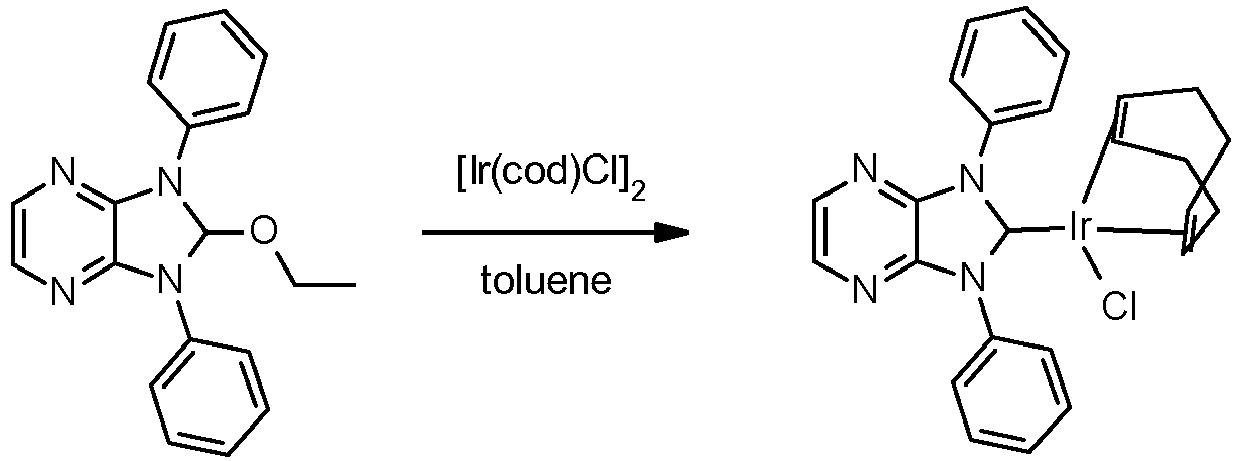
- 5.27 g (7.85 mmol) of chloro(1,5-cyclooctadiene)iridium(I) dimer are suspended in 250 ml of toluene and three times evacuated and backfilled with argon. 5.00 g (15.7 mmol) of 2-ethoxy-1,3-diphenyl-2H-imidazo[4,5-b]pyrazine are added in small portions at 66°C during 20 minutes. Heating is continued at 66°C and the generated ethanol continuously removed by using a distillation bridge. The yellow-brown suspension is cooled down to room temperature and diluted with 200 ml of ethanol, and cooling is continued until 5°C is reached. Stirring is continued at this temperature for 30 minutes, followed by filtration and washing with 50 ml of cold ethanol and 50 ml of heptane. The resulting solid is dried under vacuum giving the title product as a yellow solid (yield: 4.1 g (43%)).
- 1H-NMR (400 MHz, CDCl3): δ = 1.31-1.42 (m, 2 H), 1.43-1.64 (m, 4 H), 1.73-1.86 (m, 2 H), 2.50-2.59 (m, 2 H), 4.68-4.78 (m, 2 H), 7.57-7.69 (m, 6 H), 8.15-8.22 (m, 4 H), 8.33 (s, 2 H).
-

- 0.3 g (0.5 mmol) of intermediate complex (II-1) and 0.49 g (1.08 mmol) of 2-ethoxy-1,3-bis(4-isopropylphenyl)-2H-imidazo[4,5-b]quinoxaline are dissolved under argon in 50 ml of o-xylene. The yellow turbid solution is three times evacuated and backfilled with argon, followed by heating at 140°C during 10 hours. The reaction mixture is cooled down to 50°C and directly purified by elution via chromatography (silica gel, toluene/ethyl acetat) The product fractions are combined and concentrated under vacuum. The yellow resin is dissolved in a mimimum amount of dichloromethane and treated with ethanol until precipitation is initiated and further stirred over an ice-batch during one hour. The suspension is filtered and the solid dried under vacuum, giving the title product as a bright yellow solid (yield: 50 mg (18%)).
- APCI-LC-MS (positive, m/z): exact mass of C61H47IrN12 = 1140.37; found 1141.5 [M+1]+. 1H-NMR (400 MHz, CD2Cl2): δ = 0.97 (d, 3 H), 1.02 (d, 3 H), 1.06 (d, 6 H), 2.54 (m, 1 H), 2.64 (m, 1 H), 6.02-7.67 (broad signals, 12 H), 6.55 (d, 1 H), 6.66 (m, 4 H), 6.87 (m, 3 H), 7.13 (dd, 1 H), 7.20 (m, 2 H), 7.84 (ddd, 1 H), 7.90 (dd, 1 H), 8.09 (dd, 2 H), 8.31-8.43 (m, 3 H), 8.78 (dd, 1 H), 8.85 (dd, 1 H), 8.97 (d, 1 H).
-

- 5.0 g (17.0 mmol) of 4,7-dibromo-2,1,3-benzothiadiazole and 3.77 g (51.0 mmol) of ethylboronic acid are suspended under argon in 50 ml of toluene. 150 mg (0.67 mmol) of palladium(II) acetate and 0.85 g (2.07 mmol) of 2-dicyclohexyl-phosphino-2',6'-dimethoxybiphenyl are added, followed by the addition of 36.1 g (0.16 mol) of potassium phosphate monohydrate. The yellow suspension is three times evacuated and backfilled with argon, followed by heating at 110°C during three hours. The yellow-brown reaction mixture is poured onto 200 ml water and 50 ml of toluene, followed by stirring for short time. The water phase is separated, and the organic phase two times washed with 200 ml of water. The organic phase is dried over magnesium sulfate and filtered. The orange solution is further filtered over a 3 cm layer of silica gel and the silica gel layer rinsed with toluene. The combined filtrates are concentrated under vacuum. The resulting yellow oil is cooled down and stirred together with 30 ml of heptane over an ice-bath providing a yellow suspension which is first further stirred during 30 minutes. The suspension is filtered, the white solid washed with heptane. The combined filtrates are concentrated under vacuum giving the title product as a yellow oil (yield: 3.21 g (98%)).
- 1H-NMR (400 MHz, CD2Cl2): δ = 1.41 (t, 6 H), 3.15 (q, 4 H), 7.31 (s, 2 H).
-

- 6.90 g (35.9 mmol) of 4,7-diethyl-2,1,3-benzothiadiazole are dissolved in 150 ml of methanol and heated under reflux. A total of 6.15 g (0.25 mol) of magnesium shavings are carefully added in four portions during one hour, and stirring continued for 30 minutes. The green slightly turbid solution is cooled down to room temperature and diluted with methanol up to a volume of 800 ml. The turbid solution is filtered over cellulose filter aid and the filtrate treated with 60 ml of water. The thick suspension is filtered and the solid rinsed with methanol. The filtrates are concentrated under vacuum and the resulting oil diluted with dichloromethane. The solution is filtered over a layer of silica gel followed by rinsing of the silica gel with dichloromethane. The collected fractions are concentrated under vacuum giving the title product as a yellow oil (yield: 3.52 g (60%)).
- 1H-NMR (400 MHz, CD2Cl2): δ = 1.26 (t, 6 H), 2.57 (q, 4 H), 3.43 (br. s, 4 H), 6.62 (s, 2 H).
-

- 11.6 g (70.6 mmol) of 3,6-diethylbenzene-1,2-diamine are suspended in 130 ml of water and 80 ml of 4N aqueous hydrochloric acid. 9.05 g (71.8 mmol) of oxalic acid dihydrate are added and the white suspension heated under reflux during 15 hours. The pink suspension is cooled down to room temperature, followed by filtration and washing of the solid with water. The solid is stirred in 200 ml of 5% aqueous sodium bicarbonate. The suspension is filtered and the solid washed with water, giving the title product as a white solid (yield: 14.3 g (93%)).
- 1H-NMR (400 MHz, d6-DMSO): δ = 1.12 (t, 6 H), 2.75 (q, 4 H), 6.89 (s, 2 H), 11.18 (br. s, 2 H).
-

- 20.2 g (92.6 mmol) of 5,8-diethyl-1,4-dihydroquinoxaline-2,3-dione are slowly treated at room temperature with 50 ml (0.7 mol) of thionyl chloride. The white suspension is heated at 38°C during two hours, followed by heating at 73°C during 30 minutes. Thionyl chloride is distilled off and the yellow oil carefully transferred at room temperature into a beaker containing 1000 ml of water. The beige suspension is stirred during 10 minutes. The suspension is made slightly basic by the addition of sodium bicarbonate and sodium hydroxide. The suspension is further stirred during 10 minutes, followed by filtration and washing of the solid with water. The beige solid is treated with 100 ml of metanol and stirred during 10 minutes. The suspension is filtered and the solid washed with a small amount of metanol, giving the title product as a White solid (yield: 20.2 g (86%)).
- 1H-NMR (400 MHz, CD2Cl2): δ = 1.36 (t, 6 H), 3.19 (q, 4 H), 7.63 (s, 2 H).
-

- 8.35 g (32.7 mmol) of 2,3-dichloro-5,8-diethyl-quinoxaline and 50 ml (0.55 mol) of aniline in 100 ml of o-xylene are heated under reflux during 18 hours. The yellow reaction mixture is cooled down to 50°C, filtered, and the solid rinsed with o-xylene. The yellow filtrate is treated with 200 ml of water and 50 ml of 25% aqueous ammonia solution, followed by stirring during 10 minutes, and dilution with 250 ml of heptane. The aqueous phase is separated and the organic phase three times washed with 300 ml of water. The organic phase is treated with 200 ml of water, and 15 ml of 37% aqueous hydrochlorid acid. The suspension is filtered and the solid stirred in 300 ml of heptane first, followed by stirring in 300 ml of water. The solid is filtered and dried under vacuum, giving the title product as a light yellow solid (yield: 9.3 g (70%)). 1H-NMR (400 MHz, d6-DMSO): δ = 1.28 (t, 6 H), 3.00 (q, 4 H), 7.06 (m, 2 H), 7.15 (s, 2 H), 7.39 (m, 4 H), 8.08 (d, 4 H), 9.41 (br. s, 2 H).
-
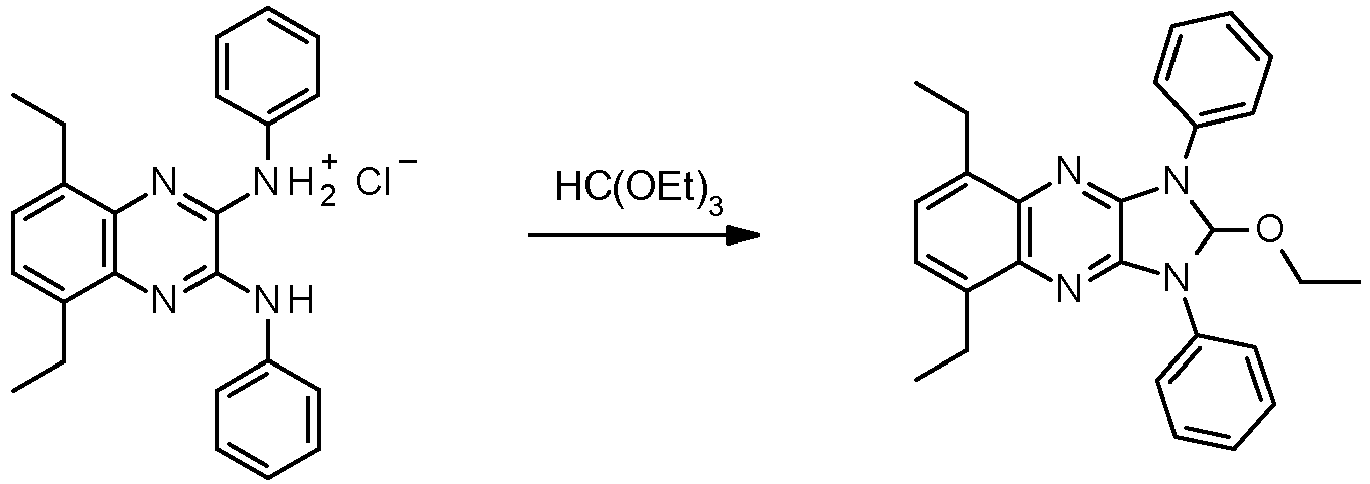
- 9.53 g (23.5 mmol) of (3-anilino-5,8-diethyl-quinoxalin-2-yl)-phenyl-ammonium chloride and 200 ml (1.2 mol) of triethyl orthoformate are heated under argon at 95°C during 90 minutes. The slightly turbid orange solution is concentrated under vacuum and the resulting solid three times stirred in 50 ml of heptane. The suspension is filtered and dried under vacuum, giving the title product as a light grey solid (yield: 7.5 g (75%)).
- 1H-NMR (400 MHz, d6-DMSO): δ = 0.89 (t, 3 H), 1.31 (t, 6 H), 3.05 (q, 4 H), 3.23 (q, 2 H), 7.22 (s, 2 H), 7.24 (t, 2 H), 7.54 (t, 4 H), 7.92 (s, 1 H), 8.28 (d, 4 H).
-

- 4.00 g (9.42 mmol) of 2-ethoxy-5,8-diethyl-1,3-diphenyl-2H-imidazo[4,5-b]quinoxaline and 0.63 (0.94 mmol) of chloro(1,5-cyclooctadiene)iridium(I) dimer are suspended under argon in 70 ml of o-xylene. The suspension is three times evacuated and backfilled with argon, followed by heating at 136°C during 15 hours. The reaction mixture is cooled down to 100°C and filtered through a 4.5 cm layer of silica gel. The silica gel layer is rinsed with o-xylene and dichloromethane. The collected filtrates are stirred over an ice-bath during 30 minutes. The suspension is filtered and the solid washed with a small amount of o-xylene, followed by drying under vacuum, giving the title product as a bright yellow solid (yield: 0.65 g (25%)).
- APCI-LC-MS (positive, m/z): exact mass of C75H63IrN12 = 1324.49; found 1325.5 [M+1]+. 1H-NMR (400 MHz, CD2Cl2): δ = 1.19 (t, 9 H), 1.59 (t, 9 H), 2.88 (m, 3 H), 3.00 (m, 3 H), 3.49 (m, 6 H), 6.49-7.41 (broad signal, 12 H), 6.54 (td, 3 H), 6.76 (dd, 3 H), 6.89 (td, 3 H), 7.29 (td, 3 H), 7.54 (d, 3 H), 7.63 (d, 3 H), 9.09 (d, 3 H).
-

- 2,3-Dianilino-quinoxaline was synthetized similar to the protocol described in J. Chem. Soc. 1948, 777-782. 5.00 g (24.6 mmol) 2,3-dichloro-quinoxaline were added in portions to 25 ml aniline at 140 °C. The solution was heated to 160 °C and held at that temperature for 30 min. 100 ml methyl-tert.-butylether was added to the suspension after the solution had cooled down to room temperature. The precipitate was filtered off, washed five times with 10 ml methyl-tert.-butylether each, and dried at 30 °C in a vacuum oven. The solid was suspended in 150 ml water, then filtered off, washed four times with 20 ml water each, and sucked dry. The residue was dissolved in 70 ml methylenechloride. Magnesium sulfate was added. The solution was concentrated. Then 30 ml methyl-tert.-butylether was added. The suspension was concentrated to dryness and dried at 50 °C in a vacuum oven. 8.35 g yellow solid were obtained. It was used without further purification.
- 1H-NMR (500 MHz, d6-DMSO): δ [ppm] = 7.09 (mc; 2H), 7.34 (mc; 2H), 7.41 (mc; 4H), 7.55 (mc; 2H), 7.90 (mc; 4H), 9.03 (s; 2H).
-

- 16.00 g (51.2 mmol) 2,3-dianilino-quinoxaline and 5.54 g (51.2 mmol) ammonium tetrafluoroborate were dissolved in 64 ml ortho-formic acid trimethylester. The solution was heated to 82 °C and held at that temperature for 1.5 h. After cooling to room temperature the suspension was filtered. The residue was washed three times with little cold ortho ester and then with petrol ether. The solid was dissolved in methylene chloride. The suspension was filtered to separate the product from the salt. The filtrate was concentrated to dryness. 13.7 g (75 % of theory) colorless solid were isolated.
- 1H-NMR (400 MHz, CD2Cl2): δ [ppm] = 3.08 (s; 3H), 7.25 (mc; 2H), 7.36 (s; 1H), 7.41 (mc; 2H), 7.51 (mc; 4H), 7.73 (mc; 2H), 8.17 (mc; 4H)
-

- 16.35 g (18.7 mmol) 2,3-dianilino-quinoxaline and 0.50 g (4.6 mmol) ammonium tetrafluoroborate were suspended in ortho-formic acid triethylester. The reaction mixture was heated to reflux for 1 h. The solution was cooled to room temperature, filtered, and concentrated to dryness. The residue was suspended in pentane, filtered, washed with pentane, and dried. 6.24 g (87 % of theory) colorless solid were obtained.
- 1H-NMR (500 MHz, CD2Cl2): δ [ppm] = 1.04 (t; 3H), 3.36 (q; 2H), 7.26 (mc; 2H), 7.35 (s; 1H), 7.41 (mc; 2H), 7.51 (mc; 4H), 7.73 (mc; 2H), 8.20 (mc; 4H).
-

- 4.00 g (10.9 mmol) 2-ethoxy-1,3-diphenyl-2H-imidazo[4,5-b]quinoxaline and 0.948 g (1.41 mmol) chloro-(1,5-cyclooctadiene)-iridium(I) dimer were dissolved in 60 ml o-dichloro benzene. The suspension was heated to 150 °C and held at that temperature for 20 h. After cooling the solution to room temperature the precipitate was filtered, washed three times with 1.5 ml o-dichloro benzene each, then four times with 2 ml pentane each, and dried in a vacuum oven at 50 °C. The solid was suspended in tetrahydrofurane and heated to reflux for 1 h. The hot suspension was filtered. The residue was washed with THF, pentane, and dried in a vacuum oven at 70 °C. 0.902 g (28 % of theory) bright yellow solid was obtained.
- MALDI-MS (positive, m/z): exact mass of C63H39IrN12 = 1156.28; found 1156 [M + H]+.
- 1H-NMR (500 MHz, CD2Cl2): δ [ppm] = 6.58 (mc) 6.67 (mc), 6.84 (mc), 7.72 (mc), 7.82 (mc), 7.87 (mc), 8.32 (mc), 9.05 (mc).
-

- 0.250 g 2-Ethoxy-1,3-diphenyl-2H-imidazo[4,5-b]quinoxaline and 0.206 g of intermediate complex (II-1) were dissolved/suspended in 18 ml o-xylene. The suspension was heated to 115 °C and held at that temperature for 43 h. The precipitate was filtered off after cooling the solution to room temperature. The filtrate was concentrated to brown resin and then suspended in methylenchloride. The solid was filtered off. The filtrate was purified at silica gel 60 (70 - 200 µm) with methylenchloride as the eluent. The last fractions monitored by TLC were combined and concentrated to dryness. The yellow solid (64 mg) was suspended in 5 ml methanol, then filtered off, washed three times with 1 ml methanol each, and dried at 60 °C in a vacuum oven. 53 mg (14 % of theory) yellow solid were obtained.
- MALDI-MS (positive, m/z): exact mass of C59H37IrN12 = 1106.22; found 1106 [M + H]+.
- 1H-NMR (500 MHz, CD2Cl2): δ [ppm] = 6.56 - 6.89 (m; 18H), 7.15 - 7.45 (m; 5H), 7.45 - 7.73 (m; 3H), 7.81 (mc; 2H), 7.86 (mc; 2H), 8.08 (mc; 1H), 8.31 (mc; 2H), 8.35 (mc; 1H), 8.77 (mc; 1H), 9.04 (mc; 2H).
-

- 10.0 g (50.2 mmol) of 2,3-dichloroquinoxaline and 16.5 g (0.11 mol) 4-tert-butylaniline in 90 ml of o-xylene are heated at 150°C during five hours. The reaction mixture is cooled down to room temperature, diluted with a small amount of dichloromethane and concentrated under vacuum. The mixture is treated with 200 ml of water, 200 ml of ethanol, and solid sodium carbonate is added until a basic pH is reached. The organic phase is separated and the aqueous phase extracted with dichloromethane. The combined organic phases are two times washed with water, dried over sodium sulfate, and concentrated under vacuum. The resulting brown oil is mixed with 100 ml of heptane and heated up to reflux, and the solution cooled down to room temperature. The resulting suspension is filtered, the light yellow solid dissolved in 100 ml of heptane under reflux, followed by cooling down the solution to room temperature. The suspension is filtered and the solid dried under vacuum, giving the title product as a light yellow solid (yield: 13.4 g (63%)).
-

- 13.4 g (31.6 mmol) of N2,N3-bis(4-tert-butylphenyl)quinoxaline-2,3-diamine are added in several portions to 250 ml of concentrated aqueous hydrochloric acid and stirred at room temperature during one hour. The yellow suspension is carefully diluted with 300 ml of water and stirring continued for ten minutes. The suspension is filtered and the solid washed with water and further dried under vacuum, giving the title product as a yellow solid (12.1 g isolated, still including residual water).
- 1H-NMR (400 MHz, d6-DMSO): δ = 1.33 (s, 18 H), 7.32-7.38 (m, 2 H), 7.46 (d, 4 H), 7.55-7.61 (m, 2 H), 7.85 (d, 4 H), 10.14 (br. s, 2 H).
-

- 48.3 g (max. 0.1 mol, still including residual water) of [3-(4-tert-butylanilino)quinoxalin-2-yl]-(4-tert-butylphenyl)ammonium chloride and 250 ml (1.7 mol) of triethyl orthoformate are heated under argon at 95°C during 30 minutes in a reactor fitted with a Dean-Stark separator and condenser. 100 ml (0.7 mol) of triethyl orthoformate are added to the yellow suspension and stirring continued for 30 minutes. Another 100 ml of triethyl orthoformate are added after 30 minutes, and heating continued for one hour. The yellow suspension is cooled down to room temperature, then filtered, and the yellow solid washed with ethanol. The solid is further stirred in 60 ml of ethanol, and the suspension filtered, followed by drying the solid under vacuum. The solid is stirred in 50 ml of heptane, filtered, and dried under vacuum, giving the title product as a light yellow solid (yield: 18.5 g (min. 37%)).
- 1H-NMR (400 MHz, d6-DMSO): δ = 0.93 (t, 3 H), 1.35 (s, 18 H), 3.29 (q, 2 H), 7.35-7.41 (m, 2 H), 7.54-7.65 (2 m, 6 H), 7.78 (s, 1 H), 8.00-8.08 (m, 4 H).
-

- 8.00 g (16.6 mmol) of 1,3-bis(4-tert-butylphenyl)-2-ethoxy-2H-imidazo[4,5-b]quinoxaline and 1.40 g (2.08 mmol) of chloro(1,5-cyclooctadiene)iridium(I) dimer are suspended under argon in 150 ml of o-xylene. The orange suspension is three times evacuated and backfilled with argon, followed by heating at 134°C during five hours. The orange-red solution is cooled down to room temperature and diluted with 200 ml of ethanol. The resulting suspension is filtered and the yellow solid washed with ethanol. The solid is dissolved in 600 ml of dichloromethane and filtered through a 5 cm layer of silica gel followed by rinsing the silica gel layer with 300 ml of dichloromethane. The collected eluents (orange solution) is treated with 50 ml of ethyl acetate and the solution concentrated under vacuum until a suspension is formed. The suspension is filtered and the solid washed subsequently with ethyl acetate and ethanol, respectively, followed by drying under vacuum. The solid is dissolved in 500 ml of dichloromethane and 50 ml of ethyl acetate, and the solution concentrated under vacuum until a suspension is formed. The suspension is filtered, the solid washed with ethyl acetate first, then with ethanol, followed by drying under vacuum, giving the title product as a yellow solid (yield: 4.15 g (67%)).
- APCI-LC-MS (positive, m/z): exact mass of C87H87IrN12 = 1492.68; found 1493.8 [M+1]+.
- 1H-NMR (400 MHz, CD2Cl2): δ = 0.79 (s, 27 H), 1.10 (s, 27 H), 6.09-6.23 (br. signal, 3 H), 6.40-6.56 (br. signal, 6 H), 6.68 (d, 3 H), 7.29 (dd, 3 H), 7.47-7.62 (br. signal, 3 H), 7.68-7.75 (m, 3 H), 7.78-7.91 (m, 6 H), 8.35 (dd, 3 H), 9.01 (d, 3 H).
-

- 2.34 g (3.48 mmol) of chloro(1,5-cyclooctadiene)iridium(I) dimer are suspended in 100 ml of toluene. The suspension is three times evacuated and backfilled with argon and heated up to 77°C. 3.35 g (6.97 mmol) of 1,3-bis(4-tert-butylphenyl)-2-ethoxy-2H-imidazo[4,5-b]quinoxaline are added in small portions, and heating continued at 78°C during 19 hours. The brown solution is cooled down to room temperature and concentrated under vacuum. The resulting red solid is dissolved in dichloromethane first, followed by the addition of and 50 ml of ethanol. The solution is concentrated under vacuum until a suspension is formed. The suspension is filtered, the solid washed with ethanol and heptane, followed by drying under vacuum, giving the title product as a yellow solid (yield: 3.10 g (58%)).
- 1H-NMR (400 MHz, CDCl3): δ = 1.30-1.52 (m, 4 H), 1.47 (s, 18 H), 1.53-1.65 (m, 2 H), 1.69-1.82 (m, 2 H), 2.46-2.55 (m, 2 H), 4.72-4.81 (m, 2 H), 7.68 (d, 2 H), 7.73-7.79 (d, 4 H), 8.11-8.20 (m, 6 H).
-

- 2.50 g (3.24 mmol) of complex intermediate (VII-a) and 2.39 g (6.49 mmol) of 2-ethoxy-1,3-diphenyl-2H-imidazo[4,5-b]quinoxaline are suspended under argon in 50 ml of 1,2-dichlorobenzene. The orange-red suspension is three times evacuated and backfilled with argon, followed by heating at 117°C during 20 hours. The reaction mixture is diluted with 50 ml of acetone, then filtered, and the solid washed with acetone. The combined filtrates are concentrated under vacuum, then dissolved in dichloromethane, followed by the addition of 50 ml of acetone. The solution is concentrated under vacuum until a suspension is formed. The suspension is filtered, the solid washed with acetone and ethanol, followed by drying under vacuum. The solid is further purified by chromatography (silica gel, dichloromethane), giving the title product as a yellow solid (yield: 1.05 g (25%)).
- APCI-LC-MS (positive, m/z): exact mass of C71H55IrN12 = 1268.43; found 1269.6 [M+1]+. 1H-NMR (400 MHz, CD2Cl2): δ = 0.72 (s, 9 H), 1.08 (s, 9 H), 6.08-8.07 (br. signals, 12 H), 6.62-6.76 (m, 5 H), 6.86-6.93 (m, 2 H), 7.24-7.33 (m, 3 H), 7.69-7.79 (m, 3 H), 7.81-7.88 (m, 4 H), 7.88-7.94 (m, 2 H), 8.32 -8.39 (m, 3 H), 8.95 (d, 1 H), 9.09 (d, 1 H), 9.15 (d, 1 H).
-

- 3.00 g (4.47 mmol) of chloro(1,5-cyclooctadiene)iridium(I) dimer are suspended in 50 ml of toluene. The suspension is three times evacuated and backfilled with argon and heated up to 75°C. A solution of 3.29 g (8.92 mmol) of 2-ethoxy-1,3-diphenyl-2H-imidazo[4,5-b]quinoxaline in 100 ml of toluene is added within two hours, and heating continued at 75°C during 21 hours. The reaction mixture is concentrated under vacuum and the residue dissolved in dichloromethane and a small amount of ethanol. The solution is concentrated under vacuum until a suspension is formed. The suspension is filtered, the solid washed with ethanol, and further dried under vacuum, giving the title product as a yellow solid (yield: 2.70 g (46%)).
- 1H-NMR (400 MHz, CDCl3): δ = 1.31-1.87 (4 m, 8 H), 2.53-2.62 (m, 2 H), 4.74-4.84 (m, 2 H), 7.59-7.72 (m, 6 H), 7.73-7.79 (m, 2 H), 8.09-8.16 (m, 2 H), 8.22-8.29 (m, 4 H).
-

- 0.80 g (1.21 mmol) of complex intermediate (VIII-a) and 1.17 g (2.43 mmol) of 1,3-bis(4-tert-butylphenyl)-2-ethoxy-2H-imidazo[4,5-b]quinoxaline are suspended under argon in 25 ml of o-xylene. The orange suspension is three times evacuated and backfilled with argon, followed by heating at 138°C during three hours. The orange suspension is cooled down to room temperature and filtered. The filtrate is concentrated under vacuum and the resulting thick oil dissolved in dichloromethane first, followed by the addition of 30 ml of ethanol. The orange-red solution is concentrated under vacuum until a suspension is formed. The yellow suspension is filtered and the solid dried under vacuum. The solid is further purified by chromatrography (silica gel, heptane/ethyl acetate). The isolated product is dissolved in dichloromethane, followed by the addition of ethanol. The solution is concentrated under vacuum until a suspension is formed. The suspension is filtered, the solid washed with ethanol and further dried under vauum, giving the title product as a yellow solid (yield: 179 mg (11%)).
- APCI-LC-MS (positive, m/z): exact mass of C79H71IrN12 = 1380.56; found 1381.7 [M+1]+. 1H-NMR (400 MHz, CD2Cl2): δ = 0.75 (s, 18 H), 1.08 (s, 9 H), 1.10 (s, 9 H), 6.03-7.69 (br. signals, 8 H), 6.49 (br. d, 2 H), 6.56 (d, 2 H), 6.62-6.71 (m, 3 H), 6.75 (d, 1 H), 6.89 (dt, 1 H), 7.24-7.32 (m, 3 H), 7.69-7.79 (m, 3 H), 7.79-7.95 (m, 6 H), 8.32-8.40 (m, 3 H), 8.94 (d, 1 H), 9.00 (d, 1 H), 9.15 (dd, 1 H).
-

- 57.6 g (0.29 mol) of 1-bromo-4-nitrobenzene together with 50.0 g (0.37 mol) of o-tolylboronic acid, 161 g (0.70 mol) of potassium phosphate tribasic monohydrate, 1.72 g (4.19 mmol)) of 2-dicyclohexylphosphino-2',6'-dimethoxybiphenyl, and 314 mg (1.40 mmol) of palladium(II) acetate are suspended in 500 ml of toluene and 100 ml of water at room temperature under argon. The suspension is three times evacuated and backfilled with argon, followed by heating under reflux for two hours. The dark reaction mixture is cooled down to room temperature, diluted with toluene, and the resulting mixture two times extracted with water. The organic phase is dried over magnesium sulfate and concentrated under vacuum. The resulting solid is recrystallized from 2-propanol, giving the title product as an orange solid (yield: 39.3 g (66%)).
- 1H-NMR (400 MHz, CD2Cl2): δ = 2.31 (s, 3 H), 7.25-7.39 (m, 4 H), 7.52-7.58 (m, 2 H), 8.27-8.33 (m, 2 H).
-

- 39.3 g (0.18 mol) of 1-methyl-2-(4-nitrophenyl)benzene and 2.25 g of 10 wt%-palladium on carbon in 400 ml of ethanol are reacted in a pressure reactor under 2 bar hydrogen pressure at 35°C during 5 hours. The reaction mixture is cooled down to room temperature and the reactor flooded with argon. The reaction mixture is filtered through a layer of Hyflo® filter aid and rinsed with additional ethanol, followed by drying under vacuum. The residual oil is further purified by distillation under vacuum (0.3 mbar/140°C), giving the title product as a beige solid (yield: 22.0 g (65%)).
- 1H-NMR (300 MHz, CD2Cl2): δ = 2.35 (s, 3 H), 3.80 (br. s, 2 H), 6.75-6.82 (m, 2 H), 7.15-7.21 (m, 2 H), 7.24-7.35 (m, 4 H).
-

- 10.2 g (55.7 mmol) of 4-(o-tolyl)aniline and 6.40 g (66.6 mmol) of sodium tert-butoxide in 100 ml of toluene are three times evacuated and backfilled with argon. 135 mg (0.25 mmol) of BrettPhos ligand [= 2-(dicyclohexylphosphino)3,6-dimethoxy-2',4',6'-triisopropyl-1,1'-biphenyl, CAS No. 1070663-78-3] and 201 mg (0.25 mmol) of BrettPhos-Pd-G3 palladacycle {= [(2-dicyclohexylphosphino-3,6-dimethoxy-2',4',6'- triisopropyl-1,1'-biphenyl)-2-(2'-amino-1,1'-biphenyl)]palladium(II) methanesulfonate methanesulfonate, CAS No. 1470372-59-8} are added, followed by the addition of 5.00 g (25.1 mmol) of 2,3-dichloroquinoxaline. The suspension is heated under reflux during 4 hours, then cooled down to room temperature, and diluted with toluene and water. The water phase is separated, and the organic phase two times extracted with water. The organic phase is dried over magnesium sulfate first, then filtered, and the solution further filtered through a 4 cm layer of silica gel, followed by rinsing the silica gel layer with toluene. The combined eluents are concentrated under vacuum, and the residual resin stirred in toluene first, followed by the addition of half concentrated hydrochloric acid solution. Stirring is continued until a suspension is formed. The suspension is filtered, the solid washed with heptane, and then further suspended in a mixture of heptane and water. Concentrated aqueous sodium hydroxide solution is added until a basic pH is reached. The suspension is filtered, the solid washed with heptane, followed by drying under vacuum, giving the title product as a beige solid (yield: 1.68 g (14%)).
-

- 1.68 g (3.41 mmol) of N2,N3-bis[4-(o-tolyl)phenyl]quinoxaline-2,3-diamine are treated with 50 ml of concentrated aqueous hydrochloric acid and stirred at room temperature during 30 minutes. The orange suspension is carefully diluted with 50 ml of water first, then filtered, and the solid dried under vacuum, giving the title product as a yellow solid (2.3 g isolated, still including residual water).
-

- 2.3 g (max. 4.3 mmol, still including residual water) of [3-[4-(o-tolyl)anilino]quinoxalin-2-yl]-[4-(o-tolyl)phenyl]ammonium chloride and 30 ml of triethyl orthoformate are heated under argon at 100°C during one hour in a reactor fitted with a Dean-Stark separator and condenser. The reaction mixture is cooled down to room temperature and concentrated under vacuum until a suspension formed. The suspension is diluted with heptane, then filtered, and the solid dissolved in dichloromethane. The solution is treated with ethanol, and concentrated under vacuum until a suspension is formed. The suspension is filtered, the solid washed with ethanol, followed by drying under vacuum, giving the title product as a yellow solid (yield: 1.70 g (minimum 71%)). 1H-NMR (300 MHz, CD2Cl2): δ = 1.16 (t, 3 H), 2.40 (s, 6 H), 3.49 (q, 2 H), 7.27-7.40 (m, 8 H), 7.44-7.58 (m, 7 H), 7.77-7.85 (m, 2 H), 8.28-8.38 (m, 4 H).
-

- 1.63 g (2.97 mmol) of 2-ethoxy-1,3-bis[4-(o-tolyl)phenyl]-2H-imidazo[4,5-b]quinoxaline are dissolved under argon in 50 ml of o-xylene. 1.06 g (1.58 mmol) of chloro(1,5-cyclooctadiene)-iridium(I) dimer are added and the resulting orange solution three times evacuated and backfilled with argon, followed by heating at 110°C during two hours. The heating bath is removed, the red solution treated with 50 ml of ethanol, followed by further cooling down to room temperature under stirring. The resulting orange suspension is further stirred during 30 minutes, then filtered, and the solid washed with 50 ml of ethanol. The solid is dissolved in dichloromethane and filtered through a 2.5 cm layer of silica gel, followed by rinsing the silica gel layer with dichloromethane. The combined eluents are diluted with 150 ml of ethanol and concentrated under vacuum until a suspension is formed. The suspension is filtered, the solid washed with ethanol, followed by drying under vacuum, giving the title product as a yellow solid (yield: 0.95 g (38%)).
- 1H-NMR (400 MHz, CD2Cl2): δ = 1.44-1.56 (m, 2 H), 1.57-1.76 (m, 4 H), 1.81-1.96 (m, 2 H), 2.47 (s, 6 H), 2.69-2.77 (m, 2 H), 4.75-4.85 (m, 2 H), 7.33-7.48 (m, 8 H), 7.64-7.72 (m, 4 H), 7.81-7.88 (m, 2 H), 8.15-8.22 (m, 2 H), 8.31-8.38 (m, 4 H).
-

- 0.95 g (1.13 mmol) of complex intermediate (IX-a) and 1.67 g (4.53 mmol) of 2-ethoxy-1,3-diphenyl-2H-imidazo[4,5-b]quinoxaline are suspended under argon in 50 ml of o-xylene. The yellow suspension is three times evacuated and backfilled with argon, followed by heating at 124°C during two hours. The orange suspension is cooled down to room temperature, then concentrated under vacuum, and further purified by chromatography (silica gel, toluene/dichloromethane). The pure product fractions are concentrated under vacuum, and the resulting solid dissolved in dichloromethane, followed by the addition of ethanol. The solution is concentrated under vacuum until a suspension is formed. The suspension is filtered, the solid washed with ethanol, followed by drying under vacuum, giving 0.7 g product. The solid is heated in 30 ml of DMF during one hour at 130°C first, then at room temperature during 30 minutes. The resulting suspension is filtered, the solid two times washed with ethanol, followed by drying under vacuum, giving the title product as a yellow solid (yield: 0.5 g (33%)).
- APCI-LC-MS (positive, m/z): exact mass of C77H51IrN12 = 1336.40; found 1337.5 [M+1]+. 1H-NMR (400 MHz, CD2Cl2): δ = 1.97 (s, 3 H), 2.04 (s, 3 H), 6.05 (d, 1 H), 6.16-8.04 (br. signal, 12 H), 6.58-6.70 (m, 4 H), 6.72 (d, 1 H), 6.79-6.89 (m, 2 H), 6.90-6.96 (m, 1 H), 6.99-7.07 (m, 2 H), 7.09-7.15 (m, 3 H), 7.15-7.39 (m, 4 H), 7.65-7.94 (m, 8 H), 7.99 (dd, 1 H), 8.27 (dd, 1 H), 8.34 (dd, 1 H), 8.39 (dd, 1 H), 9.03 (dd, 1 H), 9.11-9.17 (m, 2 H).
-

- 10.0 g (50.2 mmol) of 2,3-dichloroquinoxaline and 12.0 g (0.11 mol) of m-toluidine in 70 ml of o-xylene are heated at 143°C during one hour. The reaction mixture is cooled down to room temperature and treated with a small amount of 25% aqueous ammonia solution. The mixture is two times extracted with 500 ml of water, and the organic phase dried over magnesium sulfate and concentrated under vacuum. The dark brown oil is stirred at room temperature in 250 ml of heptane, and heated up to 40°C. The resulting suspension is stirred over an ice-bath during 15 minutes. The beige suspension is filtered and the solid dissolved in 300 ml of toluene, then treated with 10 ml of concentrated aqueous hydrochloric acid, and stirred at room temperature during 15 minutes. The suspension is filtered, the resulting solid washed with toluene first, followed by stirring in 250 ml of heptane and 50 ml of water. 30 g of a 33% aqueous sodium hydroxide solution are added and the mixture stirred during one hour. The resulting suspension is filtered, the solid washed with heptane, followed by drying under vacuum, giving the title product as a light yellow solid (yield: 5.07 g (30%)).
- 1H-NMR (400 MHz, d6-DMSO): δ = 2.36 (s, 6 H), 6.90 (d, 2 H), 7.28 (t, 2 H), 7.34 (dd, 2 H), 7.54 (dd, 2 H), 7.74 (s, 2 H), 7.81 (d, 2 H), 9.16 (br. s, 2 H).
-

- 5.07 g (14.9 mmol) of [3-(3-methylanilino)quinoxalin-2-yl]-(m-tolyl)ammonium chloride are treated with 25 ml of concentrated aqueous hydrochloric acid and stirred at room temperature during 20 minutes. 50 ml of water are added and the suspension stirred during 10 minutes. The yellow suspension is filtered, the solid washed with a small amount of water, followed by drying under vacuum, giving the title compound as a yellow solid (4.57 g isolated, still including residual water).
- 1H-NMR (400 MHz, d6-DMSO): δ = 2.37 (s, 6 H), 7.01 (d, 2 H), 7.33 (t, 2 H), 7.37 (dd, 2 H), 7.61 (dd, 2 H), 7.72-7.85 (m, 4 H), 10.41 (br. s, 2 H).
-

- 4.57 g (max. 14.9 mmol, still including residual water) of [3-(3-methylanilino)quinoxalin-2-yl]-(m-tolyl)ammonium chloride and 75 ml of triethyl orthoformate are heated under argon at 105°C during one hour in a reactor fitted with a Dean-Stark separator and condenser. The resulting solution is treated with a small amount of active charcoal first, and then cooled down under stirring until 40°C are reached, followed by filtration over a 4 cm silica gel layer. The silica gel layer is rinsed with a small amount of ethanol and the combined eluents concentrated under vacuum. The resulting oil is stirred at room temperature in 50 ml of heptane until a solid is precipitating. The resulting suspension is filtered, the solid washed with heptane, followed by drying under vacuum, giving the title product as a white solid (yield: 3.74 g (78%)).
- 1H-NMR (300 MHz, d6-DMSO): δ = 0.89 (t, 3 H), 2.42 (s, 6 H), 3.25 (q, 2 H), 7.09 (d, 2 H), 7.34-7.48 (m, 4 H), 7.60-7.70 (m, 2 H), 7.83 (s, 1 H), 7.92-8.06 (m, 4 H).
-

- 75 ml of o-xylene are three times evacuated and backfilled with argon and heated up to 130°C. 0.52 g (0.77 mmol) of chloro(1,5-cyclooctadiene)iridium(I) dimer are added first and the orange suspension stirred during 5 minutes, followed by the addition of 3.03 g (7.46 mmol) of 2-ethoxy-1,3-bis(m-tolyl)-2H-imidazo[4,5-b]quinoxaline. The suspension is heated under reflux during 17 hours, then cooled down to 80°C, and poured into 300 ml of ethanol. The wine-red suspension is further cooled down to room temperature, and stirring continued for one hour. The suspension is filtered, and the solid washed with ethanol. The solid is dissolved in 600 ml of dichloromethane, followed by the addition of 200 ml of ethyl acetate, and concentration under vacuum until a suspension is formed. The suspension is further stirred at room temperature during 30 minutes, followed by filtration. The solid is washed with ethanol, followed by drying under vacuum, giving the title product as a yellow solid (0.91 g (47%)).
- APCI-LC-MS (positive, m/z): exact mass of C69H51IrN12 = 1240.40; found 1241.5 [M+1]+.
-

- 3.05 g (15.3 mmol) of 2,3-dichloroquinoxaline and 4.10 g (33.8 mmol) of 3-ethylaniline in 25 ml of o-xylene are heated at 122°C during two hours. The resulting yellow thick suspension is cooled down to room temperature and treated with 100 ml of heptane. The mixture is further stirred under heating, then cooled down to room temperature and treated with 50 ml of 25% aqueous ammonia solution first, followed by the addition of 300 ml of water together with 50 ml of heptane and 50 ml of toluene, and further stirred at room temperature for 30 minutes. The organic phase is three times washed with 200 ml of water and treated with 30 ml of concentrated hydrochloric acid. The suspension is filtered, the solid washed with heptane, followed by washing with a 4:1-mixture of water and ethanol. The solid is further dried under vacuum, giving the title product as a slightly yellow solid (5.9 g isolated, still including residual water).
- 1H-NMR (300 MHz, d6-DMSO): δ = 1.25 (t, 6 H), 2.67 (q, 4 H), 6.97-7.05 (m, 2 H), 7.29-7.43 (m, 4 H), 7.54-7.63 (m, 2 H), 7.74-7.86 (m, 4 H), 10.12 (br. s, 2 H).
-

- A yellow suspension of 5.9 g (max. 14.6 mmol, still including residual water) of [3-(3-ethylanilino)quinoxalin-2-yl]-(3-ethylphenyl)ammonium chloride and 50 g (0.34 mol) of triethyl orthoformate is heated in a reactor fitted with a Dean-Stark separator and condenser under argon at 80°C during two hours first, and at 100°C during one hour. The reaction solution is concentrated under vacuum. The residual oil is stirred together with 25 ml of heptane during 10 minutes. The resulting suspension is filtered, the solid washed with a small amount of heptane, followed by drying under vacuum, giving the title product as a blueish-white solid (yield: 3.54 g (min. 57%)).
- 1H-NMR (400 MHz, d6-DMSO): δ = 0.90 (t, 3 H), 1.27 (t, 6 H), 2.27 (q, 4 H), 3.27 (q, 2 H), 7.09-7.17 (m, 2 H), 7.35-7.48 (2 m, 4 H), 7.60-7.67 (m, 2 H), 7.85 (s, 1 H), 7.97-8.06 (m, 4 H).
-

- 50 ml of o-xylene are three times evacuated and backfilled with argon and heated up to 132°C. A slightly turbid orange solution of 2.95 g (6.95 mmol) of 2-ethoxy-1,3-bis(3-ethylphenyl)-2H-imidazo[4,5-b]quinoxaline and 0.59 g (0.88 mmol) of chloro(1,5-cyclooctadiene)iridium(I) dimer is added, using an additional portion of pre-heated o-xylene (total 20 ml) for rinsing the flask for complete transfer of the reagents. The resulting dark red solution is heated at 143°C during 17 hours. The dark reaction solution is cooled down to 110°C and poured onto 300 ml of ethanol. The red suspension is stirred until a temperature of 32°C is reached. The suspension is filtered, the solid washed with ethanol, followed by drying under vacuum. The solid is dissolved in dichloromethane and filtered through a 4 cm layer of silica gel, followed by rinsing the silica gel layer with dichloromethane and a mixture of dichloromethane/ethanol. The combined fractions are diluted with 100 ml of ethanol and concentrated under vacuum, until a suspension formed. The suspension is further stirred at room temperature, then filtered, the solid washed with ethanol, followed by drying under vacuum, giving the title product as a yellow solid (yield: 1.42 g (61%)).
- APCI-LC-MS (positive, m/z): exact mass of C75H63IrN12 = 1324.49; found 1325.5 [M+1]+. 1H-NMR (400 MHz, CD2Cl2): δ = 0.65-1.40 (br. signal, 9 H), 1.36 (t, 9 H), 1.89-2.91 (br. signal, 6 H), 2.67-2.87 (m, 6 H), 5.98-7.67 (br. signal, 12 H), 6.55 (d, 3 H), 6.71 (d, 3 H), 7.75 (t, 3 H), 7.84 (t, 3 H), 7.92 (d, 3 H), 8.34 (d, 3 H), 8.89 (br. s, 3 H).
-

- 20.0 g (0.10 mol) of 2,3-dichloroquinoxaline and 28.0 g (0.23 mol) 3,4-dimethylaniline in 400 ml of o-xylene are heated at 140°C during 23 hours. 28.0 g of 3,4-dimethylaniline are added and heating continued at the same temperature during 19 hours. The yellow suspension is cooled down to room temperature and diluted with 200 ml of heptane. The suspension is filtered and the solid stirred in 500 ml of heptane, followed by filtration. The solid is stirred in 500 ml of water together with 100 ml of 25% aqueous ammonia solution and 250 ml heptane. The suspension is filtered, followed by stirring the solid in 500 ml of heptane, and then by stirring the solid in methanol (
2x 500 ml). The suspension is filtered, the solid dried under vacuum giving the title product as a light yellow solid (yield: 36.6 g (99%)). - 1H-NMR (400 MHz, d6-DMSO): δ = 2.26 (s, 6 H), 2.28 (s, 6 H), 7.21 (d, 2 H), 7.31-7.39 (m, 2 H), 7.55-7.62 (m, 2 H), 7.62-7.72 (m, 4 H), 10.22 (br. s, 2 H).
-

- 36.6 g (0.10 mol) of N2,N3-bis(3,4-dimethylphenyl)quinoxaline-2,3-diamine are added in several portions to 350 ml of concentrated hydrochloric acid and stirred at room temperature during one hour. The reaction mixture is filtered and the solid dried under vacuum, followed by two times stirring in cyclohexane. The suspension is filtered, followed by drying the solid under vacuum, giving the title product as a light yellow solid (41.9 g isolated, sill including residual water). 1H-NMR (400 MHz, d6-DMSO): δ = 2.27 (s, 6 H), 2.28 (s, 6 H), 7.25 (d, 2 H), 7.34-7.43 (m, 2 H), 7.58-7.73 (m, 6 H), 11.42 (br. s, 2 H).
-

- 40.2 g (max. 0.1 mol, still including residual water) of [3-(3,4-dimethylanilino)quinoxalin-2-yl]-(3,4-dimethylphenyl)ammonium chloride and 350 ml of triethyl orthoformate are heated under argon at 95°C during 30 minutes in a reactor fitted with a Dean-Stark separator and condenser. The reaction mixture is cooled down to room temperature and treated with 1.2 g of active charcoal, followed by stirring at 110°C during 30 minutes. The mixture is cooled down and filtered over a 3 cm layer of Hyflo® filter aid, followed by rinsing the filter aid with 150 ml of ethanol. After short time precipitation of a solid is starting in the combined filtrates, providing a white suspension. The suspension is stirred at room temperature during 30 minutes, followed by filtration, and rinsing the solid with 50 ml of ethanol. The solid is further dried under vacuum, and then mixed with 250 ml of cyclohexane and 150 ml of dichloromethane. The suspension is heated up to 50°C and the resulting light yellow solution concentrated under vacuum until most of dichloromethane is evaporated off. The residual solution is cooled down to room temperature and the resulting suspension filtered. The solid is washed with a small amount of cyclohexane, followed by drying under vacuum, giving the title compound as a white solid (yield: 36.2 g (min. 86%)).
- 1H-NMR (400 MHz, d6-DMSO): δ = 0.89 (t, 3 H), 2.28 (s, 6 H), 2.33 (s, 6 H), 3.25 (q, 2 H), 7.29 (d, 2 H), 7.36 (m, 2 H), 7.61 (m, 2 H), 7.78 (s, 1 H), 7.83-7.93 (m, 4 H).
-

- 75 ml of o-xylene are three times evacuated and backfilled with argon and heated up to 135°C. A slightly turbid orange solution of 6.00 g (14.1 mmol) of 1,3-bis(3,4-dimethylphenyl)-2-ethoxy-2H-imidazo[4,5-b]quinoxaline and 1.19 g (1.77 mmol) of chloro(1,5-cyclooctadiene)iridium(I) dimer is added, using an additional portion of pre-heated o-xylene (total 20 ml) for rinsing the flask for complete transfer of the reagents. The resulting reaction mixture is heated at 132°C during 17 hours. The dark reaction solution is cooled down to 120°C and poured onto 1.2 L of ethanol. The orange-yellow suspension is stirred until 35°C are reached. The yellow suspension is filtered and the solid washed with ethanol. The solid is suspended in 200 ml of ethanol and heated under reflux during one hour. The suspension is cooled down to room temperature and filtered, the solid washed with ethanol, followed by drying. The solid is suspended in toluene and heated under reflux. The solution is cooled down to 9°C and the solid filtered off, and washed with a small amount of toluene. The solid is further purified by chromatography (silica gel, dichloromethane/heptane), giving the title product as a yellow solid (yield: 1.78 g (38%)). APCI-LC-MS (positive, m/z): exact mass of C75H63IrN12 = 1324.49; found 1325.5 [M+1]+. 1H-NMR (400 MHz, CD2Cl2): δ = 1.25 (br. s, 9 H), 1.48-2.36 (br. signal, 9 H), 2.05 (s, 9 H), 2.41 (s, 9 H), 5.84-7.67 (br. signal, 12 H), 7.67-7.98 (m, 9 H), 8.35 (d, 3 H), 8.78 (s, 3 H).
-

- 71.3 g 4-tert-butyl aniline (0.47 mol) are added to a solution of 2,3-dichloropyrazine (32.3 g; 0.21 mol) in 200 ml o-xylene. The red solution is heated to 150°C over 1.25 hours and stirred at that temperature overnight. The mixture turns to a brownish yellow suspension. After cooling to room temperature, the yellow solid is filtered and washed with successive portions of heptane, aqueous saturated sodium bicarbonate, and ethanol. The product is dried under vacuum at 60°C to give the title product as a bright yellow solid (yield: 52.5 g (66%)).
- 1H-NMR (300 MHz, d6-DMSO): δ = 8.91 (br.s, 2H), 7.59 (m, 4H), 7.48 (s, 2H) 7.36 (m, 4H), 1.29 (s, 18H).
-

- 17.1 g (45.7 mmol) of N2,N3-bis(4-tert-butylphenyl)pyrazine-2,3-diamine and 67.7 g (0.46 mol) of triethylothoformate are heated in a 3-necked flask fitted with a Dean-Stark separator and condenser to 130°C (bath temperature). Distillation of a ethanol/triethylorthoformate mixture starts at ca. 105°C internal temperature. After 105 minutes (int. temperature 120°C), distillation ceases and the suspension is filtered at ca. 80°C in order to remove some residual solid. The filtrate is concentrated under vacuum to give 17 g of pink crude product, which is recrystallized from 35 g heptane to give the title compound as a light pinkish solid (yield: 13.0 g (66%)).
- 1H-NMR (400 MHz, CDCl3): δ = 7.94-7.89 (m, 4H), 7.52 (s, 2H), 7.51-7.47 (m, 4H), 7.21 (s, 1H), 3.38 (q, J = 7.0 Hz, 2H), 1.37 (s, 18H), 1.13 (t, J = 7.0 Hz, 3H).
-

- 3.90 g (5.81 mmol) of chloro(1,5-cyclooctadiene)iridium(I) dimer are suspended in 70 ml of toluene and three times evacuated and backfilled with argon, and heated up to 73°C. A solution of 5.00 g (11.6 mmol) of 1,3-bis(4-tert-butylphenyl)-2-ethoxy-2H-imidazo[4,5-b]pyrazine in 70 ml of toluene is added within 45 minutes and the resulting greenish-brown solution heated at 74°C during 17 hours. The warm reaction mixture is filtered, the solid washed with toluene and heptane, followed by drying under vacuum, giving the title product as a brownish-yellow solid (yield: 6.83 g (82%)).
- 1H-NMR (400 MHz, CDCl3): δ = 1.25-1.49 (2 m, 4 H), 1.44 (s, 18 H), 1.49-1.62 (m, 2 H), 1.67-1.81 (m, 2 H), 2.45-2.55 (m, 2 H), 4.63-4.74 (m, 2 H), 7.65 (d, 4 H), 8.07 (d, 4 H), 8.32 (s, 2 H).
-

- 2.00 g (2.78 mmol) of complex intermediate (XIII-a) and 2.05 g (5.56 mmol) of 2-ethoxy-1,3-diphenyl-2H-imidazo[4,5-b]quinoxaline are suspended under argon in 40 ml of 1,2-dichlorobenzene. The yellow suspension is three times evacuated and backfilled with argon, followed by heating at 116°C during seven hours. The dark solution is cooled down to room temperature, diluted with 100 ml of heptane and filtered. The solid is washed with ethanol. The combined filtrates are concentrated under vacuum and the residue subjected to further purification by chromatography (silica gel, dichloromethane/heptane), giving the title product as a yellow solid (yield: 0.64 g (19%)).
- APCI-LC-MS (positive, m/z): exact mass of C67H53IrN12 = 1218.41; found 1219.5 [M+1]+. 1H-NMR (400 MHz, CD2Cl2): δ = 0.69 (s, 9 H), 1.06 (s, 9 H), 5.99-7.99 (br. signal, 10 H), 6.54 (br. d, 2 H), 6.61-6.69 (m, 2 H), 6.69-6.75 (m, 2 H), 6.85-6.97 (m, 3 H), 7.18-7.33 (m, 3 H), 7.69-7.78 (m, 2 H), 7.79-7.87 (m, 2 H), 7.87-7.93 (m, 1 H), 8.11 (d, 1 H), 8.31-8.37 (m, 2 H), 8.38 (d, 1 H), 8.67 (d, 1 H), 9.08 (d, 1 H), 9.15 (d, 1 H).
-

- 13.3 g (8.93 mmol) of 2,3-dichloropyrazine and 25 ml (0.2 mol) of 3-ethylaniline in 30 ml of o-xylene are heated under reflux during 20 hours. The dark reaction mixture is cooled down to room temperature and poured onto 300 ml of 10% aqueous hydrochloric acid solution, followed by the addition of 200 ml of heptane, and stirring for one hour. The suspension is filtered and the solid washed with water and heptane, followed by drying under vacuum. The solid is suspended in 1 L of 10% aqueous sodium hydroxide and 1 L of heptane, followed by stirring during 30 minutes and filtration. The solid is washed with water and heptane, and then stirred in 500 ml of 10% aqueous hydrochloric acid and 400 ml of heptane during 30 minutes. The suspension is filtered and the solid washed with water and further dried under vacuum giving the title product as a white solid (28.5 g isolated, still including residual water).
- 1H-NMR (400 MHz, d6-DMSO): δ = 1.21 (t, 6 H), 2.62 (q, 4 H), 6.95 (d, 2 H), 7.28 (t, 2 H), 7.49 (s, 2 H), 7.53 (s, 2 H), 7.58 (d, 2 H), 9.68 (br. s, 2 H).
-
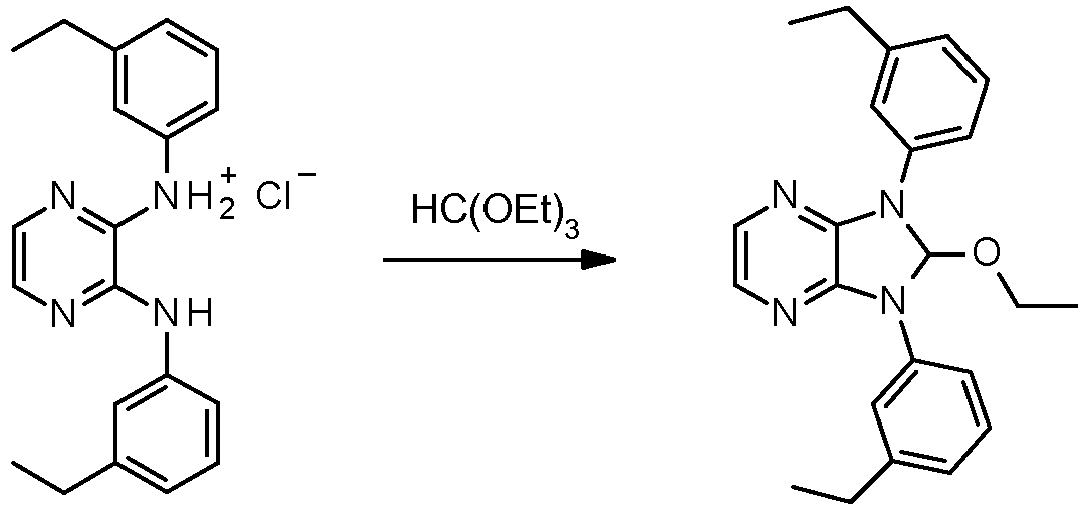
- 27.0 g (max. 76 mmol, still including residual water) of [3-(3-ethylanilino)pyrazin-2-yl]-(3-ethylphenyl)ammonium chloride and 200 ml (1.2 mol) of triethyl orthoformate are heated under argon at 130°C during five hours in a reactor fitted with a Dean-Stark separator and condenser. The reaction solution is concentrated under vauum and dried, giving the title compound as a yellowish solid (yield: 22.2 g (78%)).
- 1H-NMR (400 MHz, d6-DMSO): δ = 0.90 (t, 3 H), 1.23 (t, 6 H), 2.66 (q, 4 H), 3.18 (q, 2 H), 7.03 (d, 2 H), 7.36 (t, 2 H), 7.51 (s, 2 H), 7.72 (s, 1 H), 7.84-7.94 (m, 4 H).
-
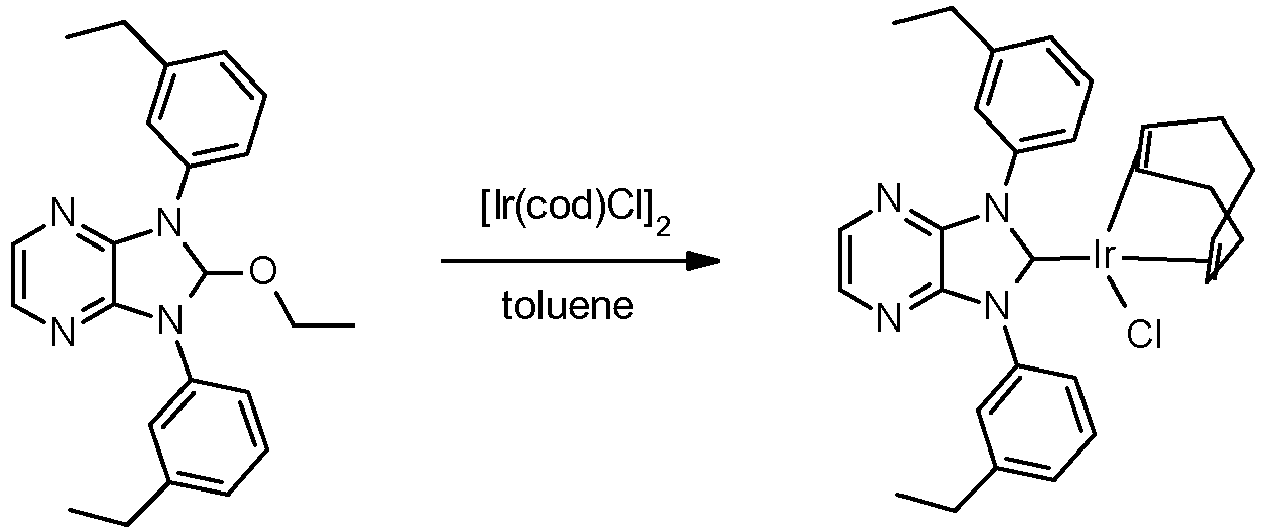
- 3.68 g (5.48 mmol) of chloro(1,5-cyclooctadiene)iridium(I) dimer are suspended in 50 ml of toluene and three times evacuated and backfilled with argon, and heated up to 73°C. A solution of 4.10 g (10.9 mmol) of 2-ethoxy-1,3-bis(3-ethylphenyl)-2H-imidazo[4,5-b]pyrazine in 50 ml of toluene is slowly added and the resulting greenish-brown solution heated at 74°C during one hour. The orange-brown slightly turbid solution is filtered and the filtrate diluted with 100 ml of ethanol and cooled down using an ice-bath. The resulting suspension is filtered and the solid washed with ethanol and heptane, followed by drying under vacuum, giving the title product as a yellow solid (yield: 4.10 g (56%)).
- 1H-NMR (400 MHz, CD2Cl2): δ = 1.28-1.66 (m, 6 H), 1.40 (t, 6 H), 1.69-1.87 (m, 2 H), 2.54-2.64 (m, 2 H), 2.78-2.93 (m, 4 H), 4.56-4.67 (m, 2 H), 7.42-7.49 (m, 2 H), 7.55 (t, 2 H), 7.79-7.87 (m, 2 H), 8.16-8.22 (m, 2 H), 8.32 (s, 2 H).
-

- 2.00 g (3.0 mmol) of complex intermediate (XIV-a) and 2.18 g (6.0 mmol) of the 2-ethoxy-1,3-diphenyl-2H-imidazo[4,5-b]quinoxaline are suspended in 100 ml of o-xylene, and heated at 144°C during 18 hours. The dark solution is cooled down to room temperature, diluted with 150 ml of ethanol, and further cooled down with an ice-bath. The suspension is filtered, the solid washed with ethanol, followed by drying under vacuum. The solid is dissolved in 1 L of dichloromethane and the solution filtered through a 4 cm layer of silica gel, followed by rinsing the silica gel layer with 500 ml of dichloromethane. The combined fractions are mixed with 50 ml of ethanol and the solution concentrated under vacuum until a solid formed. The solid is filtered off and dissolved in 1 L of dichloromethane, then filtered and the filtrate treated with 50 ml of ethyl acetate. The solution is concentrated under vacuum to a volume of 250 ml, and the resulting suspension filtered. The solid is washed with ethyl acetate and dried under vacuum, giving the title product as a yellow solid (yield: 0.36 g (10%)).
- APCI-LC-MS (positive, m/z): exact mass of C63H45IrN12 = 1162.35; found 1163.5 [M+1]+. 1H-NMR (400 MHz, CD2Cl2): δ = 1.22-1.36 (m, 6 H), 2.73 (q, 4 H), 6.00-7.98 (br. signal, 12 H), 6.55 (d, 1 H), 6.58-6.66 (m, 1 H), 6.66-6.76 (m, 3 H), 6.81-6.96 (m, 3 H), 7.21-7.32 (m, 2 H), 7.77-7.80 (m, 2 H), 7.80-7.95 (m, 4 H), 8.11 (d, 1 H), 8.26-8.42 (m, 3 H), 8.70 (s, 1 H), 9.01-9.12 (m, 2 H).
-

- A solution of 13.8 g 2,3-dichloropyrazine (92.6 mmol) in 100 g m-toluidine (0.93 mol) is heated at 140°C for five hours. The mixture is allowed to cool to 50°C and diluted with 150 ml methanol. It is further cooled in an ice bath whereby products starts to precipitate. After stirring at room temperature overnight, the mixture is cooled again to 10°C and the light beige suspension is filtered. The crude product is resuspended in 100 ml cold methanol, filtered, and dried under vacuum to give the title product as a light beige solid (yield: 19.2 g (71.6%)).
- 1H-NMR (300 MHz, d6-DMSO): δ = 8.93 (bs, 2H), 7.71-7.41 (m, 6H), 7.27-7.09 (m, 2H), 6.88-6.72 (m, 2H), 2.30 (s, 6H).
-

- A yellow suspension of 19 g (65 mmol) of N2,N3-bis(m-tolyl)pyrazine-2,3-diamine in 400 ml of ethanol and 128 g of 37% hydrochloric acid is stirred at room temperature overnight. The product is filtered, washed with heptane (3x100 ml), and dried under vacuum. The product is obtained as a yellow solid (17.9 g isolated, still including residual water).
- 1H-NMR (300 MHz, d6-DMSO): δ = 10.07 (bs, 2H), 7.69 - 7.52 (m, 4H), 7.48 (s, 2H), 7.31 - 7.14 (m, 2H), 6.91 (dt, J = 6.8, 1.2 Hz, 2H), 6.7 (bs, 1H), 2.32 (s, 6H).
-

- 17.8 g of [3-(3-methylanilino)pyrazin-2-yl]-(m-tolyl)ammonium chloride (max. 55 mmol, still including residual water) are suspended in 207 g triethyl orthoformate (1.36 mol) are heated at 110°C for six hours in a reactor fitted with a Dean-Stark separator and condenser. 14 ml of ethanol and triethylorthoformate are separated during the reaction time. The reaction mixture is cooled, filtered, and the orange filtrate is concentrated under vacuum. The crude product is washed with ethanol and heptane, filtered, purified by resuspension in ethanol (3x), and dried under vacuum. The title compound is obtained as a salmon pink powder (yield: 10.8 g (57%)). 1H-NMR (300 MHz, d6-DMSO): δ = 7.89 (m, 2H), 7.85 (m, 2H), 7.75 (s, 1H), 7.52 (s, 2H), 7.36 (t, 2H), 7.02 (m, 2H), 3.18 (q, J = 7.0 Hz, 2H), 2.38 (s, 6H), 0.91 (t, J = 7.0 Hz, 3H).
-

- 3.00 g (4.47 mmol) of chloro(1,5-cyclooctadiene)iridium(I) dimer and 3.09 g (8.92 mmol) of 2-ethoxy-1,3-bis(m-tolyl)-2H-imidazo[4,5-b]pyrazine are dissolved in 50 ml of toluene. The dark solution is three times evacuated and backfilled with argon, and heated at 75°C during two hours. The reaction mixture is cooled down to room temperature and diluted with 100 ml of ethanol. The resulting suspension is filtered, the solid washed with ethanol and heptane, followed by drying under vacuum, giving the title product as a yellow solid (yield: 3.88 g (68%)).
- 1H-NMR (400 MHz, CD2Cl2): δ = 1.33-1.45 (m, 2 H), 1.47-1.66 (m, 4 H), 1.75-1.88 (m, 2 H), 2.55 (s, 6 H), 2.58-2.65 (m, 2 H), 4.59-4.67 (m, 2 H), 7.43 (d, 2 H), 7.53 (t, 2 H), 7.92 (d, 2 H), 8.06 (s, 2 H), 8.33 (s, 2 H).
-

- 2.00 g (3.14 mmol) of complex intermediate (XV-a) and 4.63 g (12.6 mmol) of 2-ethoxy-1,3-diphenyl-2H-imidazo[4,5-b]quinoxaline are dissolved under argon in 40 ml of chlorobenzene. The yellow solution is three times evacuated and backfilled with argon, followed by heating at 124°C during 23 hours. The reaction mixture is cooled down to room temperature and treated with 40 ml of ethanol and 80 ml of acetone, followed by stirring during 30 minutes. The suspension is filtered, and the solid washed with 30 ml of ethanol first, followed by washing with 30 ml of acetone and 30 ml of heptane. The solid is dried under vacuum and further purified by chromatography (silica gel, dichloromethane/heptane), giving the title product as a yellow solid (yield: 1.94 g (54%)).
- APCI-LC-MS (positive, m/z): exact mass of C61H41IrN12 = 1134.32; found 1135.3 [M+1]+. 1H-NMR (400 MHz, CD2Cl2): δ = 1.61-2.67 (br. signals, 3 H), 2.43 (s, 3 H), 5.86-7.69 (br. signals, 12 H), 6.53 (d, 1 H), 6.59-6.76 (m, 5 H), 6.82-6.92 (m, 2 H), 7.21-7.33 (m, 2 H), 7.70-7.96 (m, 6 H), 8.10 (d, 1 H), 8.26-8.42 (m, 3 H), 8.67 (s, 1 H), 9.00-9.14 (m, 2 H).
-

- 1.50 g (2.47 mmol) of complex intermediate (II-1) and 2.38 g (4.95 mmol) of 1,3-bis(4-tert-butylphenyl)-2-ethoxy-2H-imidazo[4,5-b]quinoxaline are suspended under argon in 70 ml of o-xylene. The grey-yellow suspension is three times evacuated and backfilled with argon, followed by heating at 128°C during 20 hours. The reaction mixture is cooled down to room temperature and concentrated under vacuum. The residue is dissolved in dichloromethane and filtered through a 4 cm layer of silica gel followed by rinsing the silica gel layer with dichloromethane. The combined eluents are concentrated under vacuum and the solid further purified by chromatography (silica gel, heptane/ethyl acetate). The isolated product is dissolved in dichloromethane first, followed by the addition of 20 ml of ethanol. The solution is concentrated until a suspension is formed. The suspension is filtered, the solid washed with ethanol and further dried under vacuum, giving a first crop of the title product as a yellow solid. The filtrate is concentrated giving a second crop of the title product (combined yield: 0.45 g (14%)). APCI-LC-MS (positive, m/z): exact mass of C75H69IrN12 = 1330.54; found 1331.7 [M+1]+. 1H-NMR (400 MHz, CD2Cl2): δ = 0.76 (s, 9 H), 1.08 (2 s, 18 H), 1.10 (s, 9 H), 6.10-7.68 (br. signal, 12 H), 6.60-6.73 (m, 4 H), 6.87 (t, 1 H), 7.18-7.30 (m, 3 H), 7.69-7.78 (m, 2 H), 7.79-7.93 (m, 4 H), 8.09 (d, 1 H), 8.30-8.38 (m, 2 H), 8.39 (d, 1 H), 8.86-8.93 (m, 2 H), 8.90 (d, 1 H).
-

- 25.0 g (0.15 mol) of 4-biphenylamine and 16.8 g (0.17 mol) of sodium tert-butoxide in 200 ml of toluene are three times evacuated and backfilled with argon. 0.36 g (0.67 mmol) of BrettPhos ligand [= 2-(dicyclohexylphosphino)3,6-dimethoxy-2',4',6'-triisopropyl-1,1'-biphenyl, CAS No. 1070663-78-3] and 0.54 g (0.68 mmol) of BrettPhos-Pd-G3 palladacycle {= [(2-di-cyclohexylphosphino-3,6-dimethoxy-2',4',6'- triisopropyl-1,1'-biphenyl)-2-(2'-amino-1,1'-biphenyl)]palladium(II) methanesulfonate methanesulfonate, CAS No. 1470372-59-8} are added, followed by the addition of 10.2 g (68.5 mmol) of 2,3-dichloropyrazine. The temperature is raised up to 85°C during which a thick suspension is formed. Heating is continued at 85°C during 20 hours. The reaction mixture is cooled down to room temperature, filtered, and the solid rinsed with toluene. The yellow solid is suspended first in 300 ml of heptane, then filtered, followed by stirring the resulting solid in 150 ml of ethanol under reflux. The hot suspension is filtered and the solid washed with ethanol. The solid is stirred in solution of 150 ml of water and 1.5 g of sodium cyanide under moderate heating. The suspension is filtered, the solid washed with water and heated up again in 150 ml of ethanol. The hot suspension is filtered, the solid dried under vacuum, giving the title product as a light yellow solid (yield: 18.1 g (65%)).
- 1H-NMR (400 MHz, d6-DMSO): δ = 7.33 (t, 2 H), 7.46 (t, 4 H), 7.60-7.73 (m, 10 H), 7.80 (d, 4 H), 8.70 (s, 2 H).
-

- A yellow suspension of 18.1 g (43.6 mmol) of N2,N3-bis(4-phenylphenyl)pyrazine-2,3-diamine and 120 ml of concentrated hydrochloric acid is stirred at room temperature during 15 minutes. 100 ml of water are carefully added under stirring and the resulting suspension filtered, and the solid dried under vacuum, giving the title product as a light yellow solid (32.6 g isolated, still including residual water).
- 1H-NMR (400 MHz, d6-DMSO): δ = 7.34 (t, 2 H), 7.47 (t, 4 H), 7.55 (s, 2 H), 7.63-7.77 (m, 8 H), 7.91 (d, 4 H), 10.21 (br. s, 2 H).
-

- 20.4 g (max. 45 mmol, still including residual water) of [3-(4-phenylanilino)pyrazin-2-yl]-(4-phenylphenyl)ammonium chloride are suspended in 200 ml of triethyl orthoformate and heated at 110°C during 17 hours in a reactor fitted with a Dean-Stark separator and condenser. The orange-brown slightly turbid solution is cooled down and filtered through a 2 cm layer of silica gel, followed by rinsing the silica gel layer with heptane and ethanol. The combined eluents are filtered over cellulose powder, followed by rinsing the cellulose powder with heptane. The combined eluents are concentrated under vacuum until a suspension is formed. The suspension is further stirred at room temperature, then filtered, and the solid washed with ethanol, followed by
- drying under vacuum. The solid is dissolved in dichloromethane followed by addition of ethanol. The solution is concentrated under vacuum until a suspension is formed. The suspension is cooled down to room temperature under stirring, then filtered, and the solid washed with ethanol, followed by drying under vacuum, giving the title product as a light pink solid (yield: 11.2 g (mininmum 53%)).
- 1H-NMR (400 MHz, d6-DMSO): δ = 0.95 (t, 3 H), 3.24 (q, 2 H), 7.37 (t, 2 H), 7.49 (t, 4 H), 7.59 (s, 2 H), 7.73 (d, 4 H), 7.82 (d, 4 H), 7.90 (s, 1 H), 8.19 (d, 4 H).
-

- 4.32 g (6.43 mmol) of chloro(1,5-cyclooctadiene)iridium(I) dimer and 6.02 g (12.8 mmol) of 2-ethoxy-1,3-bis(4-phenylphenyl)-2H-imidazo[4,5-b]pyrazine are dissolved in 250 ml of toluene. The orange slightly turbid solution is three times evacuated and backfilled with argon, and heated under reflux during one hour. The hot hot orange suspension is filtered through a 3 cm layer of silica gel and the silica gel layer rinsed two times with 25 ml of toluene. The solid is dried under vacuum, giving the title product as a yellow solid (yield: 7.9 g (81%)).
- 1H-NMR (400 MHz, CD2Cl2): δ = 1.36-1.47 (m, 2 H), 1.51-1.68 (m, 4 H), 1.77-1.92 (m, 2 H), 2.67 (m, 2 H), 4.71 (m, 2 H), 7.44-7.51 (m, 2 H), 7.52-7.61 (m, 4 H), 7.77-7.83 (m, 4 H), 7.88-7.95 (m, 4 H), 8.26-8.33 (m, 4 H), 8.37 (s, 2 H).
-

- 50 ml of o-xylene are three times evacuated and backfilled with argon and heated up to 132°C. 0.80 g (1.05 mmol) of complex intermediate (XVII-a) and 0.81 g (2.20 mmol) of 2-ethoxy-1,3-diphenyl-2H-imidazo[4,5-b]quinoxaline are added and stirring continued at 134°C during one hour. The dark red suspension is cooled down to room temperature followed by filtration. The solid is washed with o-xylene. The filtrate is treated with 200 ml of ethanol and the resulting suspension stirred during 10 minutes, followed by filtration. The filtrate is filtered over a 0.5 cm layer of Hyflo® filter aid, followed by rinsing the filter aid with dichloromethane. The combined filtrates are concentrated under vacuum. The resulting solid is further purified by chromatography (silica gel, dichloromethane/heptane). The isolated product fractions are concentrated under vacuum and the solid dissolved in a minimal amount of dichloromethane followed by the addition of 50 ml of ethanol. The solution is concentrated under vauum until a suspension is formed. The suspension is further stirred at room temperature, then filtered, and the solid washed with ethanol, followed by drying under vacuum, giving the title product as a light yellow solid (190 mg (14%)).
- APCI-LC-MS (positive, m/z): exact mass of C71H45IrN12 = 1258.35; found 1259.5 [M+1]+. 1H-NMR (300 MHz, CD2Cl2): δ = 6.16-7.96 (br. signal, 12 H), 6.59-6.69 (m, 3 H), 6.76-6.86 (m, 3 H), 6.88-7.03 (m, 5 H), 7.07-7.15 (m, 1 H), 7.16-7.24 (m, 1 H), 7.25-7.40 (m, 6 H), 7.46-7.53 (dd, 1 H), 7.59-7.87 (m, 5 H), 7.87-7.93 (m, 1 H), 8.16 (d, 1 H), 8.28-8.37 (m, 2 H), 8.42 (d, 1 H), 8.87 (d, 1 H), 9.08-9.19 (m, 2 H).
-

- 3.50 g (5.31 mmol) of complex intermediate (VIII-a) and 3.38 g (10.6 mmol) of 2-ethoxy-1,3-diphenyl-2H-imidazo[4,5-b]pyrazine (see synthesis example 16,
WO2011/073149 ) are dissolved under argon in 70 ml of chlorobenzene. The reaction mixture is three times evacuated and backfilled with argon, followed by heating at 112°C during 18 hours. The reaction mixture is cooled down to room temperature, treated with 400 ml of ethanol and vigorously stirred during 30 minutes. The suspension is filtered, and the solid subjected to further purification by chromography (silica gel, dichloromethane/ethyl acetate), giving the title product as a yellow solid (yield: 1.53 g (27%)). - APCI-LC-MS (positive, m/z): exact mass of C55H35IrN12 = 1056.27; found 1057.4 [M+1]+. 1H-NMR (400 MHz, CD2Cl2): δ = 6.12-8.06 (br. signal, 12 H), 6.61 (t, 1 H), 6.67-6.75 (m, 3 H), 6.82-6.95 (m, 5 H), 7.17-7.32 (m, 3 H), 7.71-7.79 (m, 1 H), 7.80-7.93 (m, 2 H), 8.07-8.15 (m, 2 H), 8.30-8.43 (m, 3 H), 8.82 (t, 2 H), 9.09 (d, 1 H).
-

- 2.50 g (3.80 mmol) of complex intermediate (VIII-a) and 3.27 g (7.59 mmol) of 1,3-bis(4-tert-butylphenyl)-2-ethoxy-2H-imidazo[4,5-b]pyrazine are suspended under argon in 100 ml of toluene. The yellow suspension is three times evacuated and backfilled with argon, followed by heating at 108°C during 22 hours. The reaction mixture is cooled down to room temperature and diluted with 400 ml of heptane, followed by stirring during one hour. The suspension is filtered and the solid washed with heptane. The combined filtrates are concentrated under vacuum and the solid further purified by chromatography (silica gel, dichloromethane/heptane), giving the title product as a yellow solid (yield: 1.40 g (28%)).
- APCI-LC-MS (positive, m/z): exact mass of C71H67IrN12 = 1280.52; found 1281.7 [M+1]+. 1H-NMR (400 MHz, CD2Cl2): δ = 0.73 (s, 9 H), 1.08 (s, 27 H), 5.92-7.93 (br. signal, 12 H), 6.61 (d, 1 H), 6.64 (d, 1 H), 6.76 (d, 1 H), 6.88 (t, 1 H), 6.97 (t, 1 H), 7.18-7.30 (m, 3 H), 7.66-7.74 (m, 1 H), 7.77-7.88 (m, 2 H), 8.06-8.13 (m, 2 H), 8.33 (d, 1 H), 8.38 (dd, 2 H), 8.67 (d, 1 H), 8.72 (d, 1 H), 9.11 (d, 1 H).
-

- 5.00 g (14.0 mmol) of 1,3-diphenylbenzimidazol-3-ium tetrafluoroborate (see synthesis in
WO2005/019373 ) are suspended in 80 ml of toluene and cooled down to -10°C. 27.9 ml (14.0 mmol) of potassium bis(trimethylsilyl)amide solution (KHMDS, 0.5M in toluene) are added within 10 minutes at a maximum temperature of -8°C. The cooling bath is removed and the suspension stirred during 40 minutes reaching room temperature. The greenish suspension is added within 15 minutes to a preheated brownish solution of 4.69 g (7.0 mmol) of chloro(1,5-cyclooctadiene)iridium(I) dimer in 120 ml of toluene at 74°C, and stirring continued at the same temperature during three hours. The warm suspension is filtered through a 3 cm layer of silica gel and the silica gel layer rinsed with toluene. The collected fractions are concentrated under vacuum and the resulting solid dissolved in a minimal amount of dichloromethane, followed by the addition of 50 ml of ethanol. The solution is concentrated until a suspension is generated. The suspension is filtered, the solid washed with cold ethanol and dried under vacuum, giving the title compound as a yellow solid (yield: 6.20 g (74%)). - 1H-NMR (400 MHz, CD2Cl2): δ = 1.22-1.36 (m, 2 H), 1.39-1.54 (m, 4 H), 1.66-1.82 (m, 2 H), 2.52-2.62 (m, 2 H), 4.39-4.49 (m, 2 H), 7.28-7.40 (2 m, 4 H), 7.57-7.70 (m, 6 H), 8.04-8.13 (m, 4 H).
-

- 8.00 g (13.2 mmol) of complex intermediate (XX-a) and 19.5 g (52.8 mmol) of 2-ethoxy-1,3-diphenyl-2H-imidazo[4,5-b]quinoxaline are dissolved under argon in 120 ml of chlorobenzene. The yellow solution is three times evacuated and backfilled with argon, followed by heating at 124°C during 21 hours. The reaction mixture is cooled down to room temperature and treated with 100 ml of ethanol and 300 ml of acetone, followed by stirring during 30 minutes. The suspension is filtered, the solid washed with 100 ml of ethanol first, followed by washing with 100 ml of acetone and 100 ml of heptane. The collected filtrates are concentrated under vacuum and further purified by chromatography (silica gel, dichloromethane/heptane). The pure product fractions are collected and concentrated under vacuum, until a suspension is formed. The suspension is filtered, the solid washed with 100 ml of ethanol and 100 ml of heptane, followed by drying under vacuum, giving the title product as a yellow solid (yield: 5.10 g (35%)). APCI-LC-MS (positive, m/z): exact mass of C61H39IrN10 = 1104.30; found 1105.2 [M+1]+.
- 1H-NMR (400 MHz, CD2Cl2): δ = 5.92-7.68 (br. signal, 8 H), 6.32-6.41 (m, 2 H), 6.47-6.67 (m, 5 H), 6.67-6.76 (t, 2 H), 6.78-6.92 (m, 4 H), 7.13 (t, 1 H), 7.17-7.30 (m, 3 H), 7.30-7.44 (m, 2 H), 7.69-7.94 (2 m, 6 H), 8.06 (d, 1 H), 8.22 (d, 1 H), 8.33 (t, 2 H), 9.03 (d, 1 H), 9.09 (d, 1 H).
-

- 12.0 g (81.6 mmol) of 1,2-dichlorobenzene and 26.8 g (0.18 mol) of 4-tert-butylaniline are dissolved under argon in 100 ml of dioxane. 27.5 g (0.25 mol) of potassium tert-butoxide are added first, followed by the addition of 150 mg (0.41 mmol) allylpalladium(II) chloride dimer and 350 mg (0.82 mmol) of 1,3-bis-(2,6-diisopropylphenyl)imidazolium chloride. The reaction mixture is three times evacuated and backfilled with argon, followed by heating at 94°C during three hours. The reaction mixture is diluted with 200 ml of toluene and filtered through a 5 cm layer of Hyflo® filter aid. The filtrate is concentrated under vacuum and the residue dissolved in hot ethanol. The solution is cooled down to room temperature, and the resulting suspension filtered. The solid is washed with ethanol and heptane, followed by drying under vacuum, giving the title product as a white solid (yield: 23.6 g (78%)).
- 1H-NMR (400 MHz, d6-DMSO): δ = 1.25 (s, 18 H), 6.83-6.88 (m, 2 H), 6.90 (d, 4 H), 7.09 (s, 2 H), 7.16-7.25 (m, 6 H).
-

- A dark blue suspension of 20.0 g (53.7 mmol) of N1,N2-bis(4-tert-butylphenyl)benzene-1,2-diamine and 5.63 g (53.7 mmol) of ammonium tetrafluoroborate in 90 ml (0.54 mol) of triethyl orthoformate are heated at 128°C during three hours. The reaction mixture is cooled down to room temperature and diluted with 200 ml of heptane. The dark suspension is filtered, the solid washed with heptane, followed by drying under vacuum, giving the title compound as an off-white solid (yield: 24.9 g (99%).
- 1H-NMR (400 MHz, d6-DMSO): δ = 1.40 (s, 18 H), 7.74-7.90 (m, 10 H), 7.91-8.01 (m, 2 H), 10.45 (s, 1 H).
-

- 6.00 g (12.8 mmol) of 1,3-bis(4-tert-butylphenyl)benzimidazol-3-ium tetrafluoroborate are suspended in 100 ml of toluene and cooled down to -12°C. 25.5 ml (12.8 mmol) of potassium bis(trimethylsilyl)amide solution (KHMDS, 0.5M in toluene) are added within 20 minutes. The cooling bath is removed and the suspension stirred during 30 minutes until room temperature is reached. The brown suspension is added within 20 minutes to a preheated brownish solution of 4.28 g (6.37 mmol) of chloro(1,5-cyclooctadiene)iridium(I) dimer in 70 ml toluene at 74°C, and stirring continued at the same temperature during 30 minutes. The hot reaction mixture is filtered through a 4 cm layer of silica gel and the silica gel layer rinsed with toluene. The combined eluents are concentrated under vacuum and the residue stirred in hot ethanol. The suspension is filtered, the solid washed with ethanol, followed by drying under vacuum, giving the title product as a yellow solid (yield: 7.78 g (85%)).
- 1H-NMR (400 MHz, CDCl3): δ = 1.17-1.61 (m, 6 H), 1.45 (s, 18 H), 1.62-1.75 (m, 2 H), 2.40-2.50 (m, 2 H), 4.44-4.55 (m, 2 H), 7.23-7.38 (m, 2 H), 7.34-7.41 (m, 2 H), 7.61 (d, 4 H), 7.97 (d, 4 H).
-
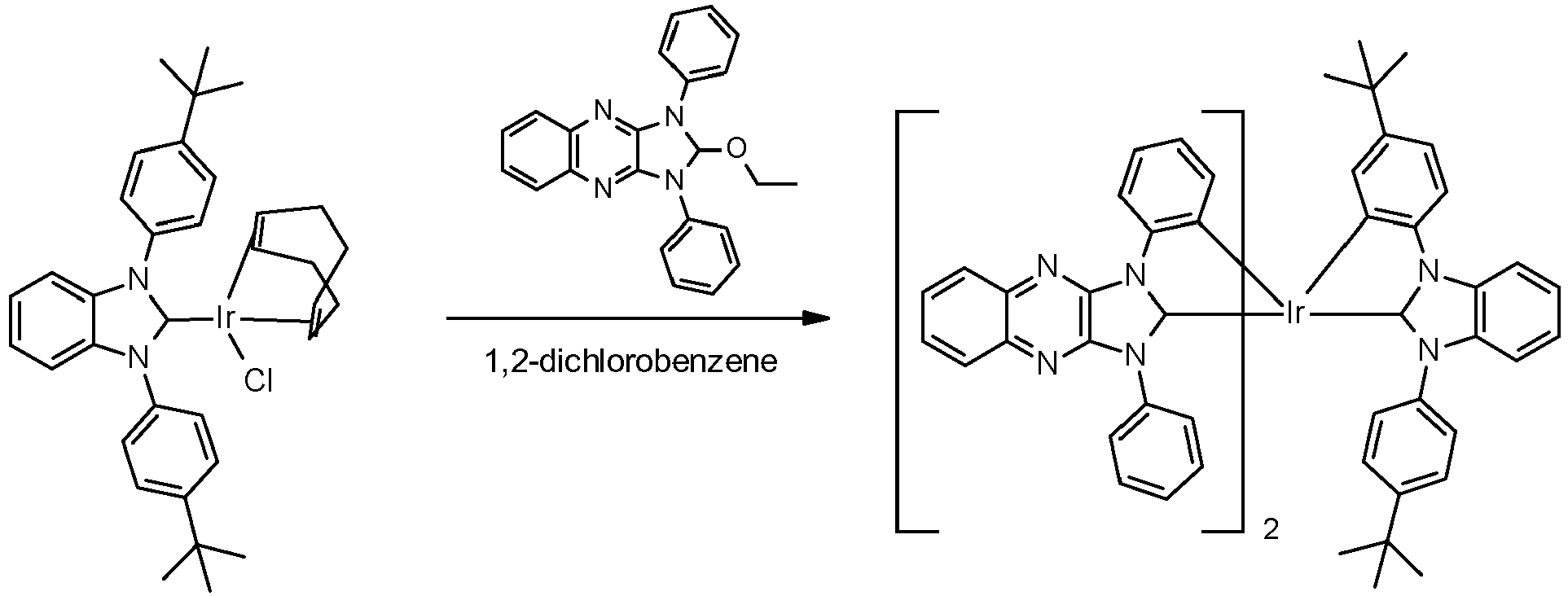
- 4.62 g (12.5 mmol) of complex intermediate (XXI-a) and 4.50 g (6.26 mmol) of 2-ethoxy-1,3-diphenyl-2H-imidazo[4,5-b]quinoxaline are suspended in 100 ml of 1,2-dichlorobenzene, and heated at 123°C during during 49 hours. The reaction mixture is cooled down to room temperature and concentrated under vacuum to a volume of ca. 40 ml, followed by the addition of 300 ml of ethanol and 300 ml of heptane. The resulting suspension is filtered, the solid washed with 100 ml of ethanol, followed by drying under vacuum. The solid is further purified by chromatography (silica gel, dichloromethane/heptane). The isolated product fractions are diluted with 100 ml of ethanol and concentrated under vacuum until a suspension is formed. The suspension is filtered, the solid washed with ethanol, followed by drying under vacuum, giving the title product as a yellow solid (yield: 2.71 g (36%)).
- APCI-LC-MS (positive, m/z): exact mass of C69H55IrN10 = 1216.42; found 1217.4 [M+1]+. 1H-NMR (400 MHz, CD2Cl2): δ = 0.69 (s, 9 H), 1.06 (s, 9 H), 5.98-8.08 (br. signals, 8 H), 6.28 (dd, 1 H), 6.33 (dd, 1 H), 6.40 (dd, 1 H), 6.52 (d, 1 H), 6.59-6.65 (m, 2 H), 6.70-6.77 (m, 2 H), 6.82-6.94 (m, 3 H), 7.12 (t, 1 H), 7.17-7.29 (m, 3 H), 7.35-7.45 (m, 2 H), 7.66-7.87 (m, 5 H), 7.88-7.93 (m, 1 H), 7.95 (d, 1 H), 8.22 (d, 1 H), 8.30-8.38 (m, 2 H), 9.09 (d, 2 H).
-
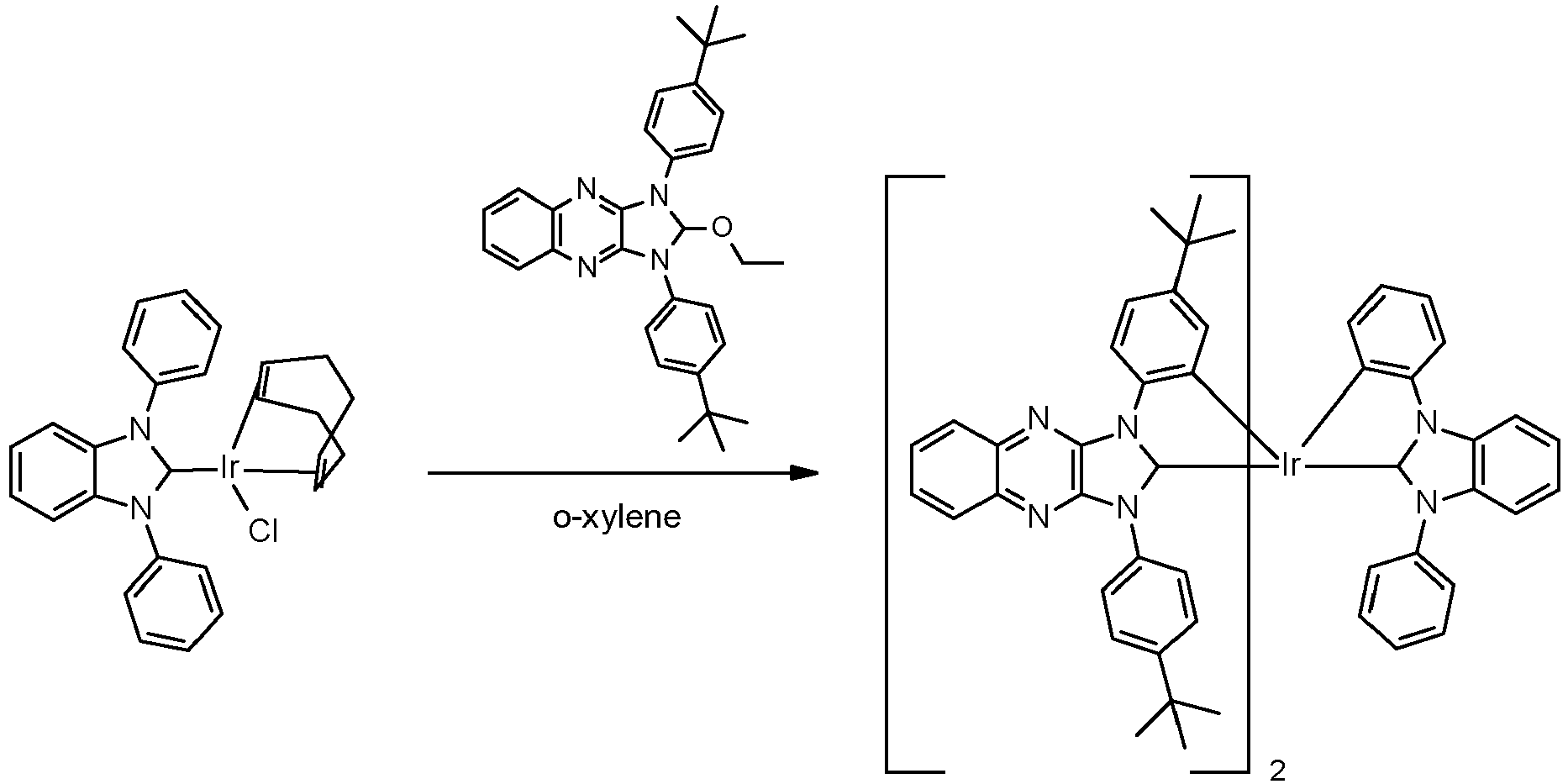
- 1.50 g (2.47 mmol) of complex intermediate (XX-a) and 2.37 g (4.93 mmol) of the 1,3-bis(4-tert-butylphenyl)-2-ethoxy-2H-imidazo[4,5-b]quinoxaline are dissolved in 70 ml of o-xylene, and heated at 141°C during 21 hours. The reaction mixture is cooled down to room temperature and concentrated under vacuum. The residue is dissolved in dichloromethane and filtered through a 4 cm layer of silica gel followed by rinsing the silica gel layer with dichloromethane. The combined eluents are concentrated under vacuum and the solid further purified by chromatography (silica gel, heptane/ethyl acetate 4:1). The isolated product is dissolved in dichloromethane first, followed by the addition of 30 ml ethanol. The solution is concentrated until a suspension is formed. The suspension is filtered, the solid washed with ethanol and further dried under vacuum, giving the title product as a yellow solid (yield: 421 mg (13%)).
- APCI-LC-MS (positive, m/z): exact mass of C77H71IrN10 = 1328.55; found 1329.7 [M+1]+. 1H-NMR (400 MHz, CD2Cl2): δ = 0.76 (s, 9 H), 1.04 (s, 9 H), 1.08 (s, 9 H), 1.09 (s, 9 H), 6.05-7.97 (br. signals, 8 H), 6.10 (d, 1 H), 6.20 (t, 1 H), 6.38 (d, 1 H), 6.48 (d, 1 H), 6.56-6.66 (m, 2 H), 6.68 (d, 1 H), 6.73 (d, 1 H), 6.82 (t, 1 H), 7.10 (t, 1 H), 7.16-7.29 (m, 3 H), 7.29-7.43 (m, 2 H), 7.68-7.76 (m, 2 H), 7.77-7.85 (m, 2 H), 7.88 (d, 2 H), 8.09 (d, 1 H), 8.25-8.38 (m, 3 H), 8.85 (d, 1 H), 9.00 (d, 1 H).
-

- 11.1 g (75.8 mmol) of 1,2-dichlorobenzene and 20.2 g (0.17 mol) of 3-ethylaniline are dissolved under argon in 100 ml of dioxane. 25.5 g (0.23 mol) of potassium tert-butoxide are added first, followed by the addition of 139 mg (0.38 mmol) allylpalladium(II) chloride dimer and 0.32 g (0.75 mmol) of 1,3-bis-(2,6-diisopropylphenyl)imidazolium chloride. The reaction mixture is three times evacuated and backfilled with argon, followed by heating at 92°C during 90 minutes. The dark suspension is diluted with toluene and filtered through a 5 cm layer of silica gel, followed by rinsing the silica gel layer with 100 ml of toluene. The collected eluents are concentrated under vacuum, and then dissolved in 100 ml of heptane and 200 ml of 20% aqueous hydrochloric acid, followed by strirring at 50°C during 30 minutes. The suspension is cooled down to room temperature, then filtered, and the solid washed with water and heptane. The solid is suspended in 10% aqueous sodium hydroxide and 100 ml of toluene. The toluene phase is separated then washed two times with 50 ml water, followed by dyring over sodium sulfate, and concentrated under vacuum, giving the title product as a light yellow oil (yield: 13.1 g (55%)).
- 1H-NMR (400 MHz, d6-DMSO): δ = 1.12 (t, 6 H), 2.49 (q, 4 H), 6.61 (d, 2 H), 6.74-6.81 (2 br. signals, 4 H), 6.87-6.94 (m, 2 H), 7.08 (t, 2 H), 7.17 (s, 2 H), 7.20-7.27 (m, 2 H).
-
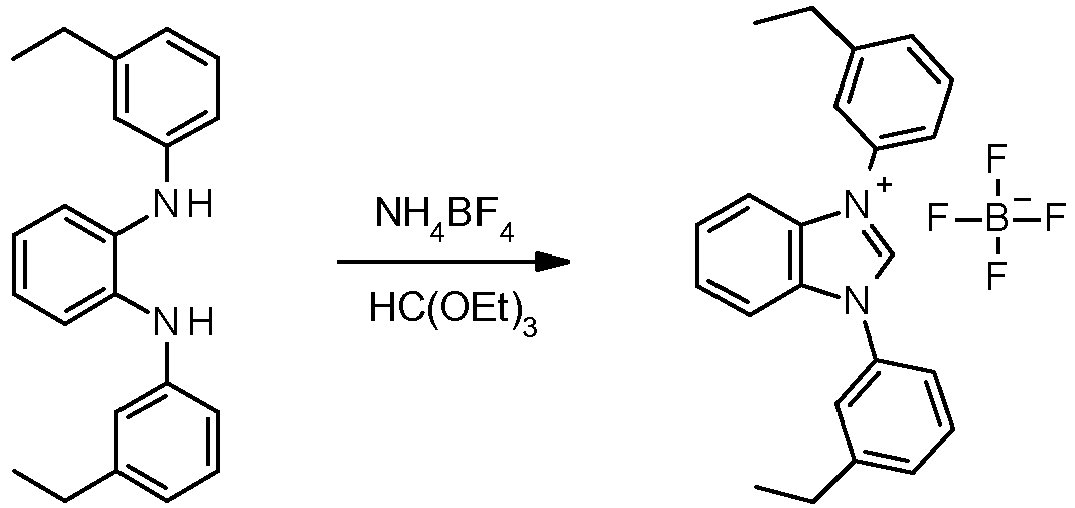
- A dark blue suspension of 13.0 g (41.1 mmol) of N1,N2-bis(3-ethylphenyl)benzene-1,2-diamine and 4.31 g (41.1 mmol) of ammonium tetrafluoroborate in 70 ml (0.42 mol) of triethyl orthoformate are heated under reflux during four hours. The reaction mixture is cooled down to room temperature and diluted with 200 ml of heptane, followed by stirring during 17 hours. The dark suspension is filtered, the solid washed with heptane and further dried under vacuum, giving the title compound as a light yellow solid (yield: 16.3 g (96%)).
- 1H-NMR (400 MHz, d6-DMSO): δ = 1.30 (t, 6 H), 2.82 (q, 4 H), 7.59-7.65 (2 br. signals, 2 H), 7.69-7.84 (m, 8 H), 7.94-8.00 (m, 2 H), 10.53 (s, 1 H).
-

- 5.00 g (12.1 mmol) of 1,3-bis(3-ethylphenyl)benzimidazol-3-ium tetrafluoroborate are suspended in 100 ml of toluene and cooled down to -13°C. 24.0 ml (12.0 mmol) of potassium bis(trimethylsilyl)amide solution (KHMDS, 0.5M in toluene) are added within 15 minutes. The cooling bath is removed and the suspension stirred during 30 minutes reaching room temperature. The brown suspension is added within 35 minutes to a preheated brownish solution of 4.05 g (6.03 mmol) of chloro(1,5-cyclooctadiene)iridium(I) dimer in 70 ml toluene at 74°C, and stirring continued at the same temperature during three hours. The warm reaction mixture is filtered through a 3 cm layer of silica gel, and the silica gel layer rinsed with toluene. The collected eluents are concentrated under vacuum and stirred in warm ethanol. The suspension is filtered, the solid washed with ethanol and further dried under vacuum, giving the title product as a yellow solid (yield: 5.5 g (69%)).
- 1H-NMR (400 MHz, CDCl3): δ = 1.18-1.29 (m, 2 H), 1.33-1.51 (2 m, 4 H), 1.38 (t, 6 H), 1.65-1.79 (m, 2 H), 2.45-2.52 (m, 2 H), 2.75-2.90 (m, 4 H), 4.46-4.54 (m, 2 H), 7.24-7.30 (m, 2 H), 7.33-7.41 (m, 4 H), 7.50 (t, 2 H), 7.76 (d, 2 H), 8.06 (s, 2 H).
-

- 3.00 g (4.53 mmol) of complex intermediate (XXIII-a) and 3.34 g (9.07 mmol) of 2-ethoxy-1,3-diphenyl-2H-imidazo[4,5-b]quinoxaline are dissolved in 90 ml of 1,2-dichlorobenzene, and heated first at 112°C during 20 hours, followed by heating at 123°C during 48 hours. The reaction mixture is cooled down to room temperature, diluted with 200 ml of acetone, and stirred during three hours. The suspension is filtered, the solid washed with acetone and ethanol and further dried under vacuum, giving the title product as a yellow solid (yield: 1.69 g (32%)). APCI-LC-MS (positive, m/z): exact mass of C65H47IrN10 = 1160.36; found 1161.4 [M+1]+.
-

- 10.9 g (73.9 mmol) of 1,2-dichlorobenzene and 25.0 g (0.15 mol) of 4-biphenylamine are dissolved under argon in 100 ml of dioxane. 24.9 g (0.22 mol) of potassium tert-butoxide are added first, followed by the addition of 135 mg (0.37 mmol) allylpalladium(II) chloride dimer and 315 mg (0.74 mmol) of 1,3-bis-(2,6-diisopropylphenyl)imidazolium chloride. The reaction mixture is three times evacuated and backfilled with argon, followed by heating under reflux during 20 hours. 5.00 g (29.5 mmol) of 4-biphenylamine are added and heating continued during 24 hours. The reaction mixture is cooled down to room temperature, then diluted with 200 ml of toluene, followed by filtration through Hyflo® filter aid. The filter aid is rinsed with toluene and the combined eluents concentrated under vacuum. The residue is stirred in ethanol under reflux and the resulting suspension filtered. The solid is washed with ethanol and dissolved in 600 ml of dichloromethane. 100 ml of a 5% aqueous sodium cyanide solution are added under stirring and stirring continued during 30 minutes. The organic phase is separated and two times washed with 100 ml of water, and further diluted with 200 ml of ethanol. The solution is concentrated under vacuum until a suspension is formed. The suspension is filtered, the solid washed with ethanol, followed by drying under vacuum, giving the title product as a solid (yield: 15.3 g (50%)).
- 1H-NMR (400 MHz, d6-DMSO): δ = 6.91-7.02 (m, 2 H), 7.06 (d, 4 H), 7.22-7.36 (m, 4 H), 7.41 (t, 4 H), 7.50 (s, 2 H), 7.48-7.55 (m, 4 H), 7.56-7.63 (m, 4 H).
-

- A beige suspension of 10.0 g (24.2 mmol) of N1,N2-bis(4-phenylphenyl)benzene-1,2-diamine, 2.54 g (24.2 mmol) of ammonium tetrafluoroborate and 36.6 g (0.25 mol) of triethyl orthoformate is heated at 112°C during 15 minutes. An additional 36.6 g (0.25 mol) of triethyl orthoformate are added and heating continued at 119°C during 4 h 30 min. The beige suspension is cooled down to room temperature first, then diluted with ethanol, and filtered. The resulting solid is washed with ethanol first, followed by drying under vacuum, giving the title product as an off-white solid (yield: 11.6 g (94%)).
- 1H-NMR (400 MHz, d6-DMSO): δ = 7.49 (t, 2 H), 7.58 (t, 4 H), 7.82-7.89 (m, 6 H), 8.03-8.09 (m, 6 H), 8.10-8.16 (m, 4 H), 10.65 (s, 1 H).
-

- 4.56 g (8.94 mmol) of 1,3-bis(4-phenylphenyl)benzimidazol-3-ium tetrafluoroborate are suspended in 50 ml of toluene and cooled down to -14°C. 18.0 ml (9.00 mmol) of potassium bis(trimethylsilyl)amide solution (KHMDS, 0.5M in toluene) are added within 15 minutes. The cooling bath is removed and the suspension stirred during 25 minutes until room temperature is reached. 3.00 g (4.47 mmol) of chloro(1,5-cyclooctadiene)iridium(I) dimer are added and the suspension heated at 63°C during 1 h 40 min. The hot reaction mixture is filtered through Hyflo® filter aid, followed by rinsing the filter aid with toluene. The combined eluents are partly concentrated under vacuum and diluted with 100 ml of ethanol. The resulting suspension is filtered, the solid dried under vacuum, giving the title product as a yellow solid (yield: 4.10 g (61%)).
- 1H-NMR (400 MHz, d6-DMSO): δ = 1.18-1.30 (m, 2 H), 1.32-1.46 (m, 4 H), 1.61-1.74 (m, 2 H), 2.57-2.66 (m, 2 H), 4.30-4.39 (m, 2 H), 7.38-7.51 (m, 6 H), 7.56 (t, 4 H), 7.85 (d, 4 H), 7.98 (d, 4 H), 8.18 (d, 4 H).
-

- 4.00 g (5.27 mmol) of complex intermediate (XXIV-a) and 7.80 g (21.1 mmol) of 2-ethoxy-1,3-diphenyl-2H-imidazo[4,5-b]quinoxaline are dissolved under argon in 100 ml of chlorobenzene. The green-brown solution is three times evacuated and backfilled with argon, followed by heating at 124°C during 19 hours. The orange-brown solution is cooled down to room temperature first, then treated with 400 ml of acetone, and stirring continued during one hour. The resulting suspension is filtered, the solid washed with 100 ml of acetone and 200 ml of ethanol. The solid is dissolved in 75 ml of dichloromethane and filtered through a 4 cm layer of silica gel, followed by rinsing the silica gel layer with 400 ml of dichloromethane. The combined eluents are treated with 100 ml of acetone, and concentrated under vacuum to a volume of 50 ml until a suspension is formed. The suspension is filtered, the solid washed with 100 ml of acetone and 50 ml of pentane, followed by drying under vacuum. The solid is further purified by chromatography (silica gel, dichloromethane/heptane), giving the title product as a yellow solid (yield: 4.23 g (44%)). APCI-LC-MS (positive, m/z): exact mass of C73H47IrN10 = 1256.36; found 1257.4 [M+1]+.
- 1H-NMR (400 MHz, CD2Cl2): δ = 5.98-7.70 (br. signal, 8 H), 6.46 (dd, 1 H), 6.57-6.64 (m, 2 H), 6.64-6.72 (m, 4 H), 6.73-6.83 (m, 2 H), 6.85-6.95 (m, 3 H), 6.95-7.03 (m, 3 H), 7.11 (t, 1 H), 7.14-7.23 (m, 2 H), 7.24-7.33 (m, 4 H), 7.33-7.39 (m, 2 H), 7.43 (t, 1 H), 7.50 (dd, 1 H), 7.56-7.65 (m, 3 H), 7.71-7.79 (m, 2 H), 7.80-7.86 (m, 1 H), 7.91 (dd, 1 H), 8.12 (d, 1 H), 8.27 (t, 2 H), 8.33 (dd, 1 H), 9.09 (dd, 1 H), 9.13 (dd, 1 H).
-

- 22.6 g (170 mmol) of chloromethylene-dimethyliminium chloride (Vilsmeyer reagent) are dissolved in 270 ml of acetonitrile at -5°C. 9.20 g (26.6 mmol) 4,5-dianilinophthalic acid diamide described in
EP0600832 are added in portions within 5 minutes. The dark green solution is stirred for one hour at 0°C. The reaction mixture is warmed up to room temperature and stirred overnight. 19.0 g (173 mmol) of sodium tetrafluoroborate are added to the dark blue solution. After stirring the suspension for 4.5 hours the solid is filtered off and washed with acetonitrile. The filtrate is concentrated. 100 ml of an ice-water mixture are added. After stirring the suspension for 30 min the residue is filtered off, washed three times with 20 ml ice-cold water each, and is sucked dry. The solid is suspended three times in 20 ml of isopropanol each, sucked dry, and is washed twice with 20 ml of n-pentane each. The solid is dried under vacuum in a drying cabinet at 60°C for 16 hours. 10.6 g (94% of theory) slightly turquoise solid are obtained. - 1H-NMR (400 MHz, CD3CN): δ [ppm] = 7.80 (mc; 10H), 8.50 (mc; 2H), 9.78 (s; 1H).
-

- 10.6 g (26.0 mmol) of 5,6-dicyano-1,3-diphenyl-benzimidazolium tetrafluoroborate are suspended in 250 ml of methanol. After cooling the suspension to 0°C a solution, 4.68 g (26.0 mmol) of sodium methoxide in methanol (30%) is added within 10 minutes. The reaction mixture is stirred at 0°C for 40 minutes and then warmed up to room temperature and stirred for three hours. The residue is filtered off, washed three times with 10 ml of ice-cold methanol, and dried under vacuum in drying cabinet overnight at 50°C. 8.51 g (93% of theory) greenish solid are obtained.
- 1H-NMR (400 MHz, CD2Cl2): δ [ppm] = 3.17 (s; 3H), 7.02 (s; 1H), 7.19 (mc; 2H), 7.32 (mc; 2H), 7.50 (mc; 8H).
-

- 9.50 g (27.0 mmol) 2-methoxy-1,3-diphenyl-2H-benzimidazol-5,6-dicarbonitrile and 9.05 g (13.5 mmol) of µ-chloro-1,5-cyclooctadiene-iridium(I) dimer are added to 500 ml toluene. The flask is rinsed with 150 ml of toluene. After heating the suspension to 60°C a solution is formed which is heated at that temperature for 24 hours. The suspension is cooled to 15°C and then filtered. The residue is washed five times with 5 ml of toluene, then three times with 10 ml of n-pentane, and dried under vacuum in drying cabinet at 60°C during 16 hours. 14.1 g (80 % of theory) of an olive-green solid are obtained.
- 1H-NMR (400 MHz, CD2Cl2): δ [ppm] = 1.30-1.60 (m; 6H), 1.71 (mc; 2H), 2.54 (mc; 2H), 4.57 (mc; 2H), 7.68 (mc; 6H), 7.73 (mc; 2H), 7.99 (mc; 4H).
-

- 1.00 g (1.52 mmol) of complex intermediate (XXV-a) and 2.25 g (6.10 mmol) 2-ethoxy-1,3-diphenyl-2H-imidazo[4,5-b]quinoxaline are suspended in 30 ml of chlorobenzene. The suspension is heated to 125°C and stirred at that temperature for 17 hours. After cooling the reaction mixture to room temperature 15 ml of acetone and 45 ml of absolute ethanol are added. The suspension is stirred for 30 minutes and then filtered. The filtrate is evaporated to dryness. The brown solid is dissolved in 5 ml of dichloromethane and then precipitated by adding 7 ml of absolute ethanol. The precipitate is filtered off, three times washed with 3 ml of n-pentane, and dried under vacuum in drying cabinet at 60°C overnight. A dark yellow solid is obtained that is further purified by MPLC with the CombiFlash Companion (silica gel, dichloromethane/methanol 99.5 : 0.5). The purified yellow solid (0.52 g) is boiled up in 10 ml of acetonitrile. The hot suspension is filtered. The residue is washed three times with 1 ml of acetonitrile, then washed twice with 3 ml of ethanol, and three times with 3 ml of n-pentane, and dried under vacuum in a drying cabinet at 100°C overnight. The yellow solid (0.41 g) obtained is again purified by boiling up in acetonitrile as described before. The yellow solid is purified by MPLC a second time as described before. The yellow solid is boiled up in acetonitrile again as described before. 225 mg (13 % of theory) yellow solid are obtained.
- ESI-LC/MS (positive, m/z): exact mass of C63H37IrN12 = 1154.29; found 1154.2 [M + H]+
- 1H-NMR (500 MHz, CD2Cl2): δ [ppm] = 6.30 (mc), 6.39 (mc), 6.53-6.61 (m), 6.68 (mc), 6.78-6.84 (m), 6.88 (mc), 6.92 (mc), 7.21 (mc), 7.36 (mc), 7.72 (mc; 2H), 7.78-7.87 (m; 5H), 8.29 (mc; 2H), 8.56 (mc; 1H), 9.01 (mc; 2H).
-

- A suspension of 8.69 g (24.3 mmol) of 1,3-diphenylbenzimidazol-3-ium tetrafluoroborate (see synthesis in
WO2005/019373 ) in 50 ml of toluene is cooled down to -11°C. 48.6 ml (24.3 mmol) of potassium bis(trimethylsilyl)amide solution (KHMDS, 0.5M in toluene) are added within 20 minutes. The cooling bath is removed and stirring continued until room temperature is reached. The green suspension is treated with 4.00 g (6.07 mmol) of complex intermediate (VIII-a) and 100 ml of toluene, and heated at 109°C during three hours. The reaction mixture is cooled down to room temperature, filtered, and the solid washed with 50 ml of toluene. The combined filtrates are diluted with 300 ml of ethanol and 500 ml of heptane, followed by stirring during one hour. The suspension is filtered, the solid washed with ethanol and heptane, followed by drying under vacuum. The solid is further purified by chromatography (silica gel, dichloromethane/heptane), giving the title product as a yellow solid (yield: 1.64 g (26%)). - APCI-LC-MS (positive, m/z): exact mass of C59H39IrN8 = 1052.29; found 1053.3 [M+1]+.
- 1H-NMR (400 MHz, CD2Cl2): δ = 6.23-7.49 (br. signal, 4 H), 6.25-6.40 (m, 4 H), 6.45 (d, 1 H), 6.49-6.61 (m, 3 H), 6.61-6.69 (m, 3 H), 6.70-6.89 (m, 6 H), 7.06-7.24 (m, 5 H), 7.27-7.41 (m, 4 H), 7.68-7.75 (m, 1 H), 7.77-7.84 (m, 1 H), 7.88 (d, 1 H), 7.98-8.08 (m, 2 H), 8.20 (t, 2 H), 8.31 (d, 1 H), 9.02 (d, 1 H).
-
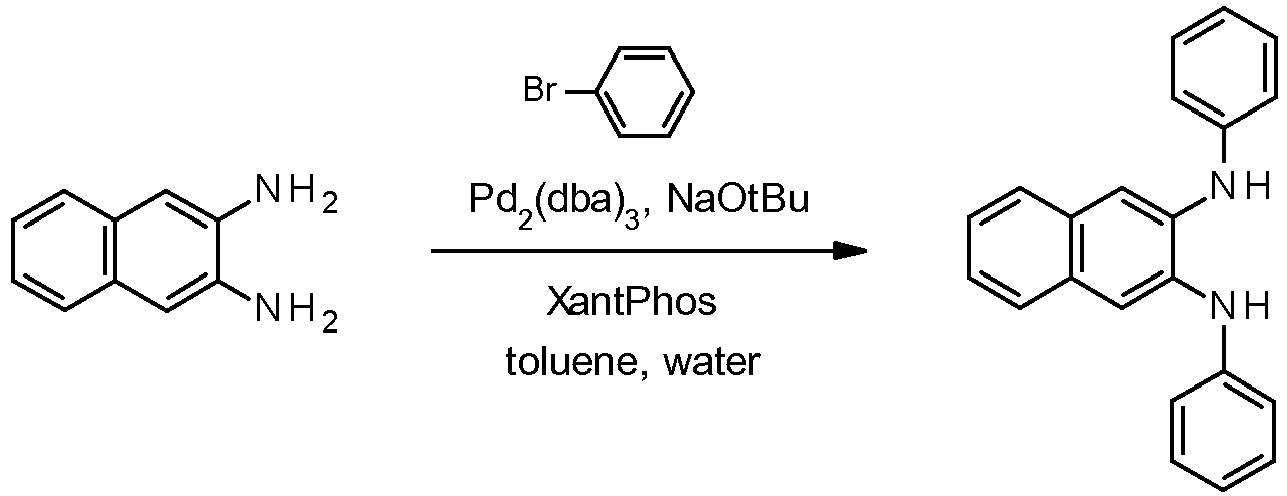
- A mixture of 25 g (0.16 mol) of 2,3-diaminonaphthalene, 49.6 g (0.32 mol) of bromobenzene and 250 ml of toluene is degassed under vacuum and backfilling with argon (repeated three times). 1.45 g (1.58 mmol) of dipalladium tris(dibenzylidene acetonate), 2.74 g (4.74 mmol) of XantPhos ligand (= 4,5-bis(diphenylphosphino)-9,9-dimethylxanthene), 21.0 g sodium tert-butoxide (0.22 mol) and 2.84 ml of degassed water are added and the mixture degassed again 3 times with vacuum / argon backfilling. The dark suspension is refluxed under argon for 20 hours and cooled to room temperature. The mixture is diluted with 400 ml of dichloromethane, extracted twice with a 1% aqueous solution of sodium cyanide, washed three times with water, dried over sodium sulfate, and concentrated under vacuum. The residue is purified by chromatography (silica gel, dichloromethane 99.5% : triethylamine 0.5%) to give the title product as a brown powder (yield: 23.5 g (48%)).
- 1H-NMR (300 MHz, CDCl3): δ = 7.67 (s, 2H), 7.64-7.60 (m, 2H), 7.37-7.27 (m, 6H), 7.10 (m, 4H), 7.00 (tt, 2H), 5.84 (s, 2H).
-

- A mixture of 22 g of N2,N3-diphenylnaphthalene-2,3-diamine (71 mmol) and 7.44 g ammonium tetrafluoroborate (71 mmol) in 154.8 g triethyl orthoformate (1.05 mol) is heated for 20 hours at 100°C in a reactor fitted with a Dean-Stark separator and condenser. The reaction mixture is cooled to 15°C and the precipitate is rinsed with cold triethyl orthoformate and heptane. The crude product is dissolved in 600 ml of dichloromethane, filtered, and the filtrate concentrated under vacuum. The title product is obtained as a brown powder (yield: 24 g (85%)).
- 1H-NMR (300 MHz, d6-DMSO): δ = 10.74 (s, 1H), 8.61 (s, 2H), 8.30 (m, 2H), 8.05 (m, 4H), 7.85 (m, 6H), 7.71 (m, 2H).
-

- 5.00 g (12.2 mmol) of 1,3-diphenylbenzo[f]benzimidazol-3-ium tetrafluoroborate are suspended in 100 ml of toluene and cooled down to -13°C. 24.5 ml (12.3 mmol) of potassium bis(trimethylsilyl)amide solution (KHMDS, 0.5M in toluene) are added within 20 minutes. The cooling bath is removed and the suspension stirred during one hour until room temperature is reached. The orange suspension is treated with 4.11 g (6.12 mmol) of chloro(1,5-cyclooctadiene)iridium(I) dimer and 50 ml of toluene, and then heated at 66°C during one hour. The hot reaction mixture is filtered through a 3 cm layer of Hyflo® filter aid, and the filter aid layer rinsed with 30 ml of toluene. The combined eluents are concentrated under vacuum, and the black residue stirred in 100 ml of ethanol during 15 minutes. The resulting suspension is filtered, the solid washed with 30 ml of ethanol, followed by drying under vacuum, giving the title product as a greenish yellow solid (yield: 4.54 g (56%)).
- 1H-NMR (400 MHz, d6-DMSO): δ = 1.19-1.49 (m, 6 H), 1.57-1.71 (m, 2 H), 2.58-2.66 (m, 2 H), 4.28-4.37 (m, 2 H), 7.47-7.54 (m, 2 H), 7.63-7.76 (m, 2 H), 7.88 (s, 2 H), 8.05-8.11 (m, 2 H), 8.11-8.17 (m, 4 H).
-

- 4.00 g (6.10 mmol) of complex intermediate (XXVII-a) and 9.00 g (24.4 mmol) of 2-ethoxy-1,3-diphenyl-2H-imidazo[4,5-b]quinoxaline are dissolved under argon in 100 ml of chlorobenzene. The dark solution is three times evacuated and backfilled with argon, followed by heating at 126°C during 23 hours. The reaction mixture is treated with 100 ml of DMF and then cooled down to room temperature, followed by stirring at ice-bath temperature during 30 minutes. The suspension is filtered and the resulting solid washed with 20 ml of DMF. The solid is further stirred in 20 ml of DMF, and the resulting suspension filtered, followed by stirring the solid two times in 30 ml of ethanol first, and then two times in 30 ml of heptane. The suspension is filtered and the solid dried under vacuum. The solid is dissolved in 80 ml of hot NMP. The brownish yellow solution is cooled down to room temperature and the resulting suspension stirred during 30 minutes. The suspension is filtered, the solid washed with 20 ml of NMP first, then 50 ml of ethanol and 50 ml of heptane, followed by drying under vacuum. The yellow solid is stirred in 1 L of dichloromethane during one hour, followed by filtration. The filtrate is treated with 10 g of Hyflo® filter aid, and concentrated under vacuum. The solid Hyflo®-product mixture is subjected to further purification by chromatography (silica gel, dichloromethane/toluene), giving the title product as a yellow solid (yield: 1.73 g (25%)).
- APCI-LC-MS (positive, m/z): exact mass of C65H41IrN10 = 1154.31; found 1155.4 [M+1]+.
- 1H-NMR (400 MHz, CD2Cl2): δ = 6.04-7.63 (br. signal, 8 H), 6.44 (m, 2 H), 6.54-6.78 (m, 7 H), 6.79-6.91 (m, 4 H), 7.17-7.34 (m, 3 H), 7.39 (t, 1 H), 7.48 (t, 1 H), 7.57 (t, 1 H), 7.67-7.80 (m, 3 H), 7.80-7.96 (m, 4 H), 8.17 (d, 1 H), 8.24 (d, 1 H), 8.35 (t, 2 H), 8.64 (s, 1 H), 9.03 (d, 1 H), 9.10 (d, 1 H).
-

- A suspension of 9.40 g (23.0 mmol) of 1,3-diphenylbenzo[f]benzimidazol-3-ium tetrafluoroborate in 150 ml of toluene is cooled down to -12°C. 46.1 ml (23.1 mmol) of potassium bis(trimethylsilyl)amide solution (KHMDS, 0.5M in toluene) are added within 25 minutes at a maximum temperature of -9°C. The cooling bath is removed and stirring continued until room temperature is reached. The red suspension is treated with 3.80 g (5.76 mmol) of complex intermediate (VIII-a), and heated under reflux during 75 minutes. The hot orange-brown suspension is filtered through a 3 cm layer of Hyflo® filter aid, and the filter aid rinsed with 30 ml of toluene. The combined eluents are diluted with 600 ml of ethanol and stirred during 45 minutes. The suspension is filtered, the solid washed with ethanol, followed by drying under vacuum. The solid is further purified by chromatography (silica gel, dichloromethane/heptane), giving the title product as a yellow solid (yield: 3.49 g (53%)).
- APCI-LC-MS (positive, m/z): exact mass of C67H43IrN8 = 1152.32; found 1153.3 [M+1]+.
- 1H-NMR (400 MHz, CD2Cl2): δ = 6.26-7.63 (br. signal, 4 H), 6.27-6.50 (m, 4 H), 6.57 (t, 1 H), 6.61-6.88 (m, 12 H), 6.90 (s, 1 H), 7.15-7.32 (m, 3 H), 7.34-7.60 (m, 5 H), 7.65-7.94 (m, 5 H), 8.10-8.28 (m, 4 H), 8.32 (dd, 1 H), 8.61 (d, 2 H), 9.03 (dd, 1 H).
-

- A solution of 50.0 g (0.34 mol) of a 40% aqueous glyoxal solution, 65.3 g (0.70 mol) of aniline and 500 ml of ethyl acetate is stirred over an ice-bath during one hour. The ice-bath is removed and the reaction mixture stirred at room temperature during one hour. The light orange solution is slowly treated at ice-bath temperature with an ice-cold suspension of 5.20 g of paraformaldehyde in 120 ml of 1,4-dioxane and 52 g of concentrated aqueous hydrochloric acid, followed by stirring during 20 minutes. The ice-bath is removed and stirring continued until room temperature is reached, followed by stirring during one hour at room temperature. The resulting suspension is treated with 500 ml of saturated aqueous sodium hydrogencarbonate solution first, then filtered, and the solid washed with ethyl acetate. The water phase is separated of the filtrate solution, and two times washed with 100 ml of ethyl acetate. The water phase is further treated with 45.4 g of 48% aqueous solution of tetrafluoroboric acid and stirred for a short time. The resulting suspension is filtered and the solid dried under vacuum, giving the title product as a white solid (yield: 22.7 g (21%)).
- 1H-NMR (400 MHz, d6-DMSO): δ = 7.65 (t, 2 H), 7.73 (t, 4 H), 7.93 (d, 4 H), 8.58 (d, 2 H), 10.34 (s, 1 H).
-
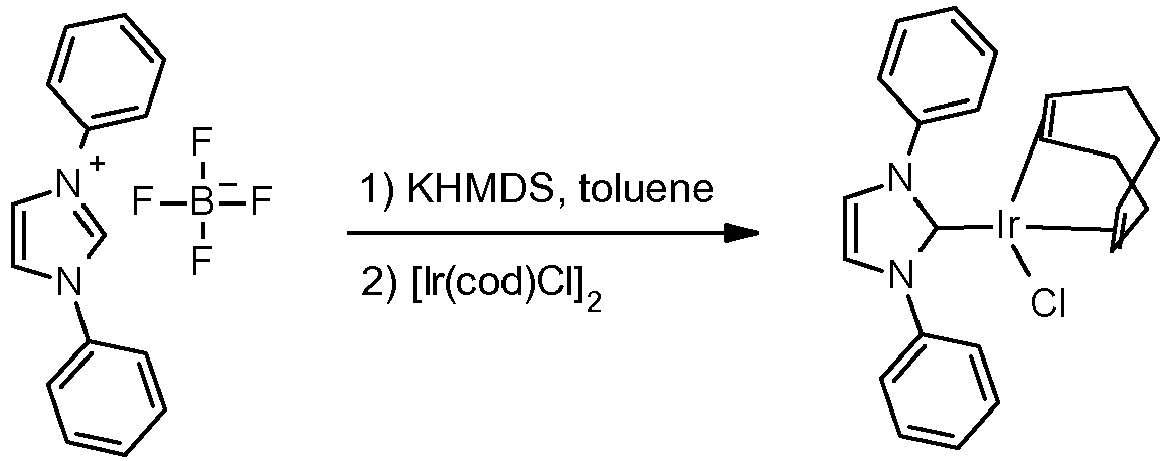
- 0.92 g (14.0 mmol) of 1,3-diphenylimidazol-1-ium tetrafluoroborate are suspended under argon in 15 ml of toluene and cooled down to -10°C. 6.0 ml (3.0 mmol) of potassium bis(trimethylsilyl)-amide solution (KHMDS, 0.5M in toluene) are dropwise added at a max. temperature of -8°C. The cooling bath is removed and the suspension stirred until room temperature is reached. The orange suspension is dropwise added to a preheated brownish solution of 1.00 g (1.49 mmol) of chloro(1,5-cyclooctadiene)iridium(I) dimer in 15 ml of toluene at 74°C, and stirring continued at the same temperature during two hours. The warm orange suspension is diluted with 50 ml of toluene and filtered through a 3 cm layer of silica gel and the silica gel layer rinsed with toluene. The collected fractions are concentrated under vacuum and the resulting solid dissolved in a minimal amount of dichloromethane, followed by the addition of 30 ml of ethanol. The solution is concentrated until a suspension is generated. The suspension is filtered, the solid washed with cold ethanol and dried under vacuum, giving the title compound as a yellow solid (yield: 0.64 g (39%)).
- 1H-NMR (400 MHz, CD2Cl2): δ = 1.17-1.31 (m, 2 H), 1.40-154 (m, 4 H), 1.74-1.89 (m, 2 H), 2.37-2.45 (m, 2 H), 4.40-4.48 (m, 2 H), 7.39 (s, 2 H), 7.47-7.61 (m, 6 H), 8.11-8.18 (m, 4 H).
-

- APCI-LC-MS (positive, m/z): exact mass of C57H37IrN10 = 1054.28; found 1055.2 [M+1]+.
- 1H-NMR (400 MHz, CD2Cl2): δ = 6.21-7.66 (br. signals, 8 H), 6.35 (dd, 2 H), 6.48 (tt, 1 H), 6.55 (d, 1 H), 6.56-6.65 (m, 3 H), 6.66-6.90 (m, 7 H), 7.10 (td, 1 H), 7.24 (td, 2 H), 7.40 (m, 1 H), 7.49 (d, 1 H), 7.68-7.88 (m, 5 H), 7.93 (dd, 1 H), 8.29 (dd, 1 H), 8.34 (dd, 1 H), 8.97 (dd, 1 H), 9.08 (dd, 1 H).
-

- 0.50 g (1.64 mmol) of 1,3-Diphenyl-imidazo[4,5-b]pyridiniumchloride (synthesis described in
WO2011/073149 , example 26) are dissolved in 10 ml toluene and cooled to -10°C. 3.28 ml (1.64 mmol) of a 0.5M KHMDS solution in toluene are added to the solution within five minutes. The solution is stirred another five minutes und then slowly warmed up to room temperature. 0.55 g (0.82 mmol) µ-chloro-1,5-cyclooctadien-iridium(I) dimer are added to the reaction mixture. After heating the suspension to 60°C it is held at that temperature for 20.5 hours. The suspension is cooled to room temperature and then filtered through Decalite Speed. The filtrate is washed with water and then with brine. The organic solution is dried with magnesium sulfate and filtered. The solution is concentrated under vacuum. The solid (0.83 g) is dissolved in dichloromethane and adsorbed on 2 g of Decalite Speed. The solid is filtered off and further purified by MPLC with the CombiFlash Companion (silica gel, ethyl acetate/n-heptane), giving the title product as a yellow solid (yield: 0.21 g (21%)). - 1H-NMR (500 MHz, CD2Cl2): δ [ppm] = 1.29-1.34 (m, 2H), 1.29-1.52 (m, 4H), 1.74 (mc, 2H), 2.50-2.59 (m, 2H), 4.48 (mc, 2H), 7.25 (mc, 1H), 7.54-7.66 (m, 7H), 8.05 (mc, 2H), 8.12 (mc, 2H), 8.32 (mc, 1H).
-

- 0.40 g (0.66 mmol) of complex intermediate (XXX-a) and 0.49 g (1.32 mmol) 2-ethoxy-1,3-diphenyl-2H-imidazo[4,5-b]quinoxaline are dissolved in 20 ml o-xylene. The solution is heated to 115°C and held at that temperature for 21.5 hours. After cooling the reaction mixture to room temperature it is evaporated to dryness. The solid is added to ethyl acetate. After the suspension has been filtered the filtrate is evaporated to dryness. The solid is purified by MPLC with the CombiFlash Companion (silica gel, ethyl acetate/n-heptane). After evaporating the solvent the solid is recrystallized in toluene. The solid is filtered, and dried under vacuum, giving the title product as a yellow solid (yield: 20 mg (3 %)).
- ESI-LC/MS (positive, m/z): exact mass of C60H38IrN11 = 1105.29; found 1106.3 [M + H]+. 1H-NMR (500 MHz, CD2Cl2): δ [ppm] = 6.28-7.36 (m; 26H), 7.72 (mc; 2H), 7.76-7.88 (m; 4H), 8.30 (mc; 2H), 8.41 (mc; 1H), 9.02 (mc, 3H).
-

- 5.32 g (14.0 mmol) HCl-Adduct of 2,3-dianilino-5-trifluoromethyl-pyridine are heated in 45 g triethyl orthoformate at 120°C for 16 h. The reaction mixture is evaporated to dryness in vacuum. 6.39 g oil are obtained containing small amounts of triethyl orthoformate.
-

- A solution of 6.39 g of 2-ethoxy-1-(o-tolyl)-3-phenyl-6-(trifluoromethyl)-2H-imidazo[4,5-b]pyridine and 4.49 g (6.68 mmol) µ-chloro-cyclooctadien-iridium dimer in 75 ml toluene is heated at 55°C for 50 min. The reaction mixture is evaporated to dryness in vacuum. 50 ml ethanol are added to the residue. The mixture is stirred during five minutes and then filtered. The solid is dried under vacuum giving the title product as a solid (yield: 5.32 g).
-

- A solution of 12.83 g (34.8 mmol) complex intermediate (XXXI-a) and 8.00 g 2-ethoxy-1,3-diphenyl-2H-imidazo[4,5-b]quinoxaline in 300 ml o-dichlorobenzene is heated at 150°C for one hour. After cooling the reaction mixture to room temperature the suspension is filtered. The residue is purified by MPLC with CombiFlash Companion (silica gel, dichloromethane/n-heptane), giving the title product as a yellow solid (yield: 2.80 g (20%)).
- MALDI-MS (positive, m/z): exact mass of C62H39F3IrN11 = 1187.30; found 1187 [M + H]+
- 1H-NMR (500 MHz, d6-DMSO): δ [ppm] = 0.77 (s; 3H), 6.20 (mc; 1H), 6.50-6.65 (m; 5H), 6.68-6.78 (m; 4H), 6.82 (mc; 1H), 6.90-7.23 (m; 9H), 7.78 (mc, 2H), 7.81-7.90 (m; 4H), 8.25 (mc; 1H), 8.31 (mc; 1H), 8.72 (mc; 1H), 8.81 (mc; 1H), 8.84 (mc; 1H), 8.95 (mc; 1H).
-

- 12.6 g (61 mmol) 9,10-Phenthrenedione, 16.9 g (243 mmol) hydroxylamine hydrochloride, 12.5 g (152 mmol) sodium acetate and 250 ml ethanol are heated under reflux over night. After cooling to room temperature the precipitate is filtered off. The solid residue is suspended in water (50 ml) and filtered off. It is washed with water and petroleum spirits. The crude product is recrystallized from methanol. Isomers of phenanthrene-9,10-dione oxime are obtained as light-orange solid (yield: 11.9 g (83%)).
- 1H-NMR (400 MHz, d6-DMSO): δ = 7.43-7.50 (m, 2 H), 7.52-7.60 (m, 2 H), 7.80 + 7.85 (2 x d, 1H), 8.09-8.15 (m, 2 H), 8.46-8.49 (m, 1 H), 12.20 + 12.24 + 12.31 + 12.49 (4 x s, 2 H).
-
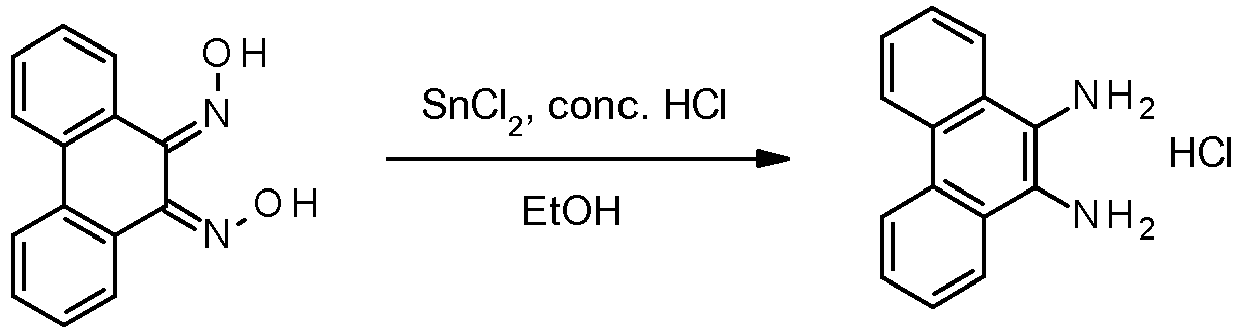
- 3.4 g (14.3 mmol) of phenanthrene-9,10-dione oxime are dissolved in refluxing ethanol (135 ml). The solution is cooled below 70 °C and 14.9 g (78.5 mmol) SnCl2 dissolved in 135 ml hydrochloric acid (32%) are added dropwise within 10 minutes. The reaction mixture starts to reflux upon the exothermic reaction. The reaction is refluxed for additional 10 minutes. After cooling to room temperature the precipitate is filtered off and is washed with ethanol. The crude product is directly used in the next reaction.
-

- 3.5 g (14.3 mmol) of crude phenanthrene-9,10-diamine hydrochloride and 9.34 g (111 mmol) NaHCO3 are suspended in 140 ml diethyl oxalate. The mixture is heated to 130°C overnight.
- After cooling to room temperature the precipitate is filtered off. The residue is suspended in 100 ml water and filtered off. The solid is washed with ethanol and dried under vacuum. 1,4-Dihydro-phenanthro[9,10-b]pyrazine-2,3-dione is obtained as light-orange powder (yield: 481 mg (13% w.r.t. phenanthrene-9,10-dione oxime)).
- 1H-NMR (500 MHz, d6-DMSO): δ = 7.71-7.77 (m, 4 H), 8.69 (d, 2 H), 8.91 (d, 2 H), 12.17 (s, br, 2 H).
-

- 600 mg (2.29 mmol) of 1,4-dihydrophenanthro[9,10-b]pyrazine-2,3-dione are dissolved in 9 ml DMF under argon. 4 ml (6.28 g, 20 mmol) PCl3 are added dropwise and the reaction mixture is heated to 100°C for 3.5 h. After cooling to room temperature the reaction mixture is quenched with water. The precipitate is filtered off and washed with ethanol. After drying under vacuum 2,3-dichlorophenanthro[9,10-b]pyrazine is obtained as light-brown solid (yield: 539 mg (78%)). 1H-NMR (400 MHz, d6-DMSO): δ = 7.90 (t, 2 H), 7.99 (t, 2 H), 8.95-8.99 (m, 4 H).
-

- 582 mg (1.95 mmol) of 2,3-dichlorophenanthro[9,10-b]pyrazine and 0.43 ml (435 mg, 2.4 mmol) aniline are dissolved in 5 ml THF under argon. The solution is degassed. 106 mg (0.12 mmol) BrettPhos Pd(II) (G3) and 63 mg (0.12 mmol) BrettPhos ligand are added. 4.7 ml LiHMDS (4.7 mmol in THF) are added dropwise within 5 minutes. Then, the reaction mixture is heated under reflux over night. After cooling to room temperature the reaction is quenched with ice and 1 M hydrochlorid acid. Solids are fitered off and the filtrate is diluted with 20 ml dichloromethane. The layers are separated and the aqueous layer is extracted with dichloromethane (2 x 20 ml). The combinded organic layers are washed with brine (20 ml) and dried over Na2SO4. The solvent is removed in vacuo. The crude product is recrystallized from methanol. N2,N3-Diphenyl-phenanthro[9,10-b]pyrazine-2,3-diamine is obtained as light-brown solid (yield: 435 mg (54%)). 1H-NMR (400 MHz, d6-DMSO): δ = 7.18 (t, 2 H), 7.54 (t, 4 H), 7.72-7.80 (m, 4 H), 8.04 (d, 4 H), 8.83-8.86 (m, 4 H), 9.20 (s, 2 H).
-

- 225 mg (0.55 mmol) of N2,N3-diphenylphenanthro[9,10-b]pyrazine-2,3-diamine, 2.5 ml (2.23 g, 15 mmol) triethyl orthoformate and 5 mg (0.05 mmol) NH4BF4 are heated to 135 °C with stirring for 10 h under argon. After cooling to room temperature the residue is suspended in ethanol and filtered off. After drying in vacuo (1,3-bisphenyl-2-ethoxy-2H-imidazo)phenanthro[9,10-b]pyrazine is obtained as light-brown solid (yield: 131 mg (51%)).
- 1H-NMR (400 MHz, d6-DMSO): δ = 0.96 (t, 3 H), 3.35 (H2O peak + q, 2 H), 7.35 (t, 2 H), 7.68 (t, 4 H), 7.78 (t, 2 H), 7.84 (m, 2 H), 8. 09 (s, 1 H), 8.39 (d, 4 H), 8.89 (d, 2 H), 9.01 (d, 2 H).
-

- 115 mg (0.24 mmol) of (1,3-bisphenyl-2-ethoxy-2H-imidazo)phenanthro[9,10-b]pyrazine and 84 mg (0.12 mmol) of chloro(1,5-cyclooctadiene)iridium(I) dimer are dissolved in 5 ml toluene. The suspension is degassed and subsequently heated to 80 °C. Upon heating a dark solution is obtained. Stirring at 80 °C is continued over night. After cooling a precipitate is formed and filtered off and the solid is washed with ethanol. Complex intermediate (XXXII-a) is obtained as a dark solid (yield: 130 mg (70%)).
- 1H-NMR (400 MHz, CD2Cl2): δ = 1.36-1.44 (m, 2 H), 1.54 (H2O peak + m, 2 H), 1.58-1.62 (m, 2 H), 1.79-1.87 (m, 2H), 2.63-2.64 (m, 2 H), 4.70-4.72 (m, 2 H), 7.66-7.76 (m, 8 H), 7.79-7.83 (m, 2 H), 8.37-8.40 (m, 4 H), 8.69 (d, 2 H), 9.09 (d, 2 H).
-

- 120 mg (0.16 mmol) of complex intermediate (XXXII-a) and 116 mg (0.32 mmol) of 2-ethoxy-1,3-diphenyl-2H-imidazo[4,5-b]quinoxaline are dissolved in 9 ml toluene under argon. The solution is degassed and subsequently heated to 100 °C with stirring over night. After cooling to room temperature the solvent is removed in vacuo and the residue is filtered through a short alumina column with cyclohexane/ethyl acetate (1:1). The solvent is again removed in vacuo and the crude product is purified by silica column chromatography with dichloromethane/hexane 4:1. The title product is obtained as yellow powder (yield: 8 mg (4%)).
- HPLC-MS (positive, m/z): exact mass of C71H43IrN12 = 1256.34; found 1257.5 [M+1]+.
- 1H-NMR (400 MHz, CD2Cl2): δ = 6.35-7.02 (br, 12 H), 6.54 (t, 1 H), 6.59 (t, 1 H), 6.65-6.74 (m, 4 H), 6.83-6.91 (m, 4 H), 7.25 (t, 2 H), 7.35 (t, 1 H), 7.58 (t, 1 H), 7.69-7.76 (m, 2 H), 7.80-7.92 (m, 6 H), 8.31-8.35 (m, 2 H), 8.69 (d, 1 H), 8.72-8.76 (m, 2 H), 9.06 (d, 1H), 9.10 (d, 1H), 9.21 (d, 1H), 9.49 (d, 1H).
-

- A suspension of 19.5 g of 6,7-dichloroquinoxaline (0.098 mol; prepared according to J. Chem. Soc., Perkin Trans. 1, 1999, 803), 20.2 g aniline (0.22 mol) and 25.2 g sodium tert-butoxide (0.26 mol) in 300 ml of anhydrous toluene is degassed by cooling down to -70°C in a dry ice/acetone bath under vacuum and backfilling with argon (repeated three times). Then 1.07 g (2 mmol) of BrettPhos ligand [= 2-(dicyclohexylphosphino)3,6-dimethoxy-2',4',6'-triisopropyl-1,1'-biphenyl, CAS No. 1070663-78-3] and 1.60g (2 mmol) of BrettPhos-Pd-G3 palladacycle {= [(2-di-cyclohexylphosphino-3,6-dimethoxy-2',4',6'- triisopropyl-1,1'-biphenyl)-2-(2'-amino-1,1'-biphenyl)]palladium(II) methanesulfonate methanesulfonate, CAS No. 1470372-59-8} are added and degassing repeated. The thick suspension is heated for 18 hours at 100°C (propeller stirrer), cooled to room temperature, filtered (very slow), and rinsed with ca. 200 ml of dichloromethane. The filtrate is acidified with 10% aqueous hydrogen chloride (100 ml) and the precipitated salt is filtered and rinsed with water. The red-brown solid is taken up in 350 ml of dichloromethane and stirred during 30 min with 250 ml of saturated aqueous sodium hydrogen carbonate. The organic phase is separated, extracted with water first, then 1% aqueous sodium cyanide solution, followed by water (3x), dried over magnesium sulfate, and concentrated under vacuum. The crude product is purified by chromatography (1.1 kg neutral aluminum oxide, heptane/ethyl acetate 1:1) to give the title product as a yellow-brown solid (yield: 18.6 g (61%)).
- 1H-NMR (300 MHz, CDCl3): δ = 8.57 (s, 2H), 7.79 (s, 2H), 7.37 (m, 4H), 7.19 (m, 4H), 7.10 (m, 2H), 6.03 (s, 2H).
-
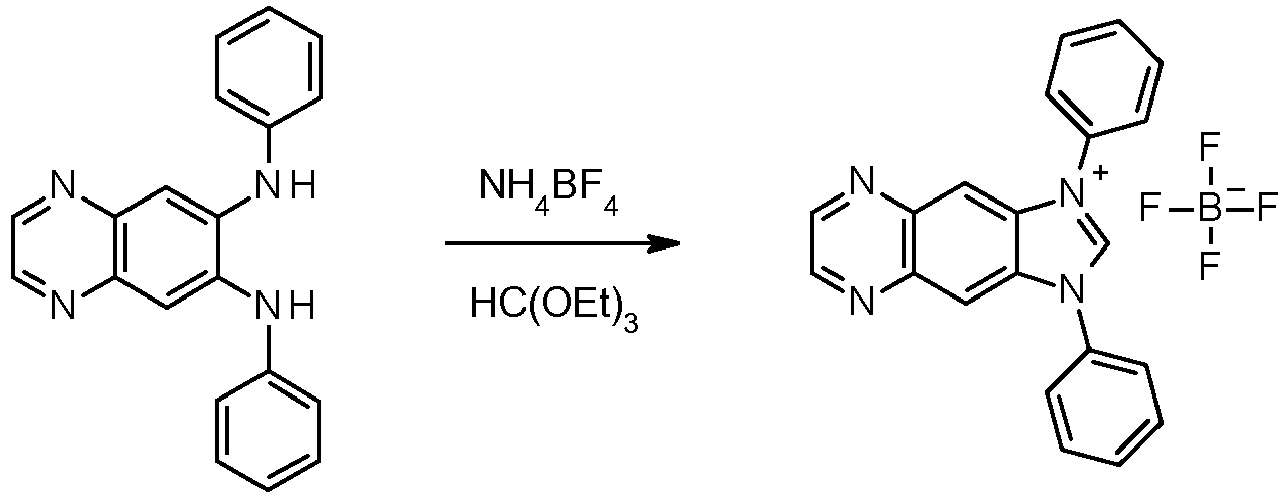
- A suspension of 18.64 g of N6,N7-diphenylquinoxaline-6,7-diamine (0.06 mol) and 6.38 g of ammonium tetrafluoroborate (0.06 mol) in 190 ml triethyl orthoformate is heated for six hours at a temperature of 100-122°C in a reactor fitted with a Dean-Stark separator and condenser. After cooling to room temperature, the precipitated product is filtered and rinsed successively with cold triethyl orthoformate and heptane, then dried under vacuum. The title product is obtained as a red-brown solid (yield: 20.64 g (84%)).
- 1H-NMR (300 MHz, d6-DMSO): · = 10.94 (s, 1H), 9.18 (s, 2H), 8.63 (s, 2H), 8.08 (m, 4H), 7.85 (m, 4H).
-

- 9.46 g (23.1 mmol) of 1,3-Diphenyl-imidazo[4,5-g]quinoxalinium-tetrafluoroborate and 7.75 g (11.5 mmol) of µ-chloro-1,5-cyclopentadiene-iridium(I) dimer are suspended in 310 ml of toluene. The suspension is heated to 60°C. 46.1 ml of a0.5M (23.1 mmol) solution of potassium bis(trimethylsilyl)amide in toluene are added within 25 minutes to the reaction mixture and stirred at 60°C for 15 min. 15 g of Diatomaceous earth are added to the reaction mixture at 60°C. The solid is filtered off and washed four times with 25 ml of warm toluene (50-60°C). The filtrate is concentrated under vacuum. The solid is stirred in 90 ml ethanol for one hour, then filtered off, washed three times with 10 ml of ethanol, and then washed three times with 10 ml n-pentane, and dried under vacuum in a drying cabinet at 60°C for 17 hours. 10.8 g dark brown solid are obtained.
- 1H-NMR (500 MHz, CD2Cl2): δ [ppm] = 1.34 (mc; 2H), 1.42-1.56 (m; 4H), 1.73 (mc; 2H), 2.63 (mc; 2H), 4.52 (mc; 2H), 7.67 (mc; 6H), 7.94 (mc; 2H), 8.13 (mc; 4H), 8.80 (mc; 2H).
-

- 2.16 g (2.95 mmol) of complex intermediate (XXXIII-a) and 4.35 g (11.8 mmol) 2-ethoxy-1,3-diphenyl-2H-imidazo[4,5-b]quinoxaline are added to 70 ml of chlorobenzene. The suspension is heated to 125°C and is held at that temperature for 22 hours. After cooling the reaction mixture to room temperature the precipitate is filtered off. The filtrate is evaporated to dryness in an attenuated vacuum. The solid is washed three times with 2 ml of chlorobenzene, then three times with 3 ml n-pentane, and dried under vacuum in a drying cabinet at 60°C for 3 hours. 0.33 g brown solid are obtained. The solid is dissolved in 90 ml of dichloromethane and purified by MPLC with the CombiFlash Companion (silica gel, dichloromethane/methanol 98 : 2). The obtained solid (0.26 g) is heated in 5 ml of acetonitrile. The suspension is filtered hot. The precipitate is washed twice with 1 ml of hot acetonitrile each, and then washed twice with 1 ml of hot THF, and dried under vacuum in a drying cabinet at 60°C for 17 hours. 0.21 g yellow solid are obtained which are recrystallized from chlorobenzene. The filtered precipitation is washed with a small amount of chlorobenzene and n-pentane. The solid is dried under vacuum in a drying cabinet at 60°C for 65 hours, giving the title product as a yellow solid (yield: 80 mg).
- 1H-NMR (400 MHz, CD2Cl2): δ [ppm] = 6.40 (mc; 2H), 6.55-6.85 (m; 15H), 7.11 (mc; 1H), 7.24 (mc; 4H), 7.40 (mc; 2H), 7.74 (mc; 2H), 7.79-7.90 (m; 5H), 8.20 (mc; 1H), 8.33 (mc; 2H), 8.76 (mc; 1H), 8.82 (mc;1H), 8.89 (mc; 1H), 9.02 (mc; 1H), 9.08 (mc; 1H).
- Desribed in
WO2014/147134 
- The synthesis of the comparitive complex CC-1 is described in
WO2014/147134 (example BE-12). -

- 9.12 g (22.3 mmol) of 1,3-diphenylbenzo[f]benzimidazol-3-ium tetrafluoroborate in 200 ml dioxane are three times evacuated and backfilled with argon. 53.6 ml (26.8 mmol) of potassium bis(trimethylsilyl)amide solution (KHMDS, 0.5M in toluene) are added at room temperature within 15 minutes. The orange-red-suspension is heated up to 67°C and treated with 1.50 g (2.23 mmol) of chloro(1,5-cyclooctadiene)iridium(I) dimer, followed by heating at 101°C during 22 hours. The reaction mixture is cooled down to 80°C and filtered. The solid is washed with dioxane and acetone, followed by drying under vacuum. The solid is suspended in 1.5 L of dichloromethane and filtered through a 5 cm layer of silica gel, followed by rinsing the silica gel layer with 200 ml of dichloromethane. The combined eluents are treated with 200 ml of acetone and concentrated under vacuum until a suspension formed. The suspension is filtered, the solid washed with acetone, followed by drying under vacuum, giving the title product as a light yellow solid (yield: 3.34 g (65%)).
- APCI-LC-MS (positive, m/z): exact mass of C69H45IrN6 = 1150.33; found 1151.4 [M+1]+.
- 1H-NMR (400 MHz, CD2Cl2): δ = 6.36 (br. d, 6 H), 6.61-6.67 (m, 3 H), 6.69 (dd, 3 H), 6.76 (td, 3 H), 6.82 (br. d, 3 H), 6.87 (s, 3 H), 7.18-7.25 (m, 3 H), 7.37-7.48 (m, 6 H), 7.50-7.57 (m, 3 H), 7.69 (d, 3 H), 8.14 (d, 3 H), 8.18 (d, 3 H), 8.59 (s, 3 H).
-
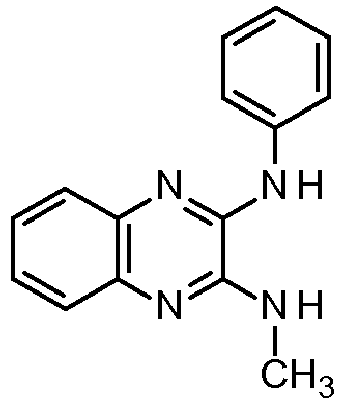
- A suspension of 22.60 g (0.227 mol) 2-methylamino-3-chloro-quinoxaline which has been synthetized according to
DE 1135471 , 16.37 g (0.176 mol) aniline, and 1.06 g (0.006 mol) HBr 48 % are dissolved in 375 ml diethylenglycol by heating to 170 °C. The reaction mixture is held at that temperature for 15 min. After cooling the reaction mixture to room temperature the solid is filtered off, and then shortly stirred in 300 ml water. The solid is filtered off and dried in a vacuum drying cabinet at 60 °C. 15.69 g solid are obtained. - MALDI-MS (positive, m/z): exact mass of C48H33IrN12 = 970.26; found 970 [M + H]+
- 1H-NMR (400 MHz, D6-DMSO): δ [ppm] = 3.22 (s; 3H), 7.13 (mc; 1H), 7.43 (mc; 4H), 7.60 (mc; 1H), 7.85 (mc; 1H), 8.07 (mc; 2H), 10.11 (s; 1H, broad), 10.64 (s; 1H, very broad).
-

- A solution of 11.80 g (47.1 mmol) N2-methyl-N3-phenyl-quinoxaline-2,3-diamine in 224 ml triethyl ortho-formiate is stirred at 90 °C for 24 h. After cooling the reaction mixture to 60 °C the solution is evaporated to dryness in an attenuated vacuum until 70 °C. The residue is stirred in diethylether for 1 h. The precipitate is filtered off, washed with diethylether, and is dried in a vacuum drying cabinet at 60 °C. 10.5 g solid are obtained
- 1H-NMR (400 MHz, CD3CN): δ [ppm] = 1.06 (t; 3H), 3.18 (s; 3H), 3.27 (q; 2H), 6.90 (s; 1H), 7.24 (mc; 1H), 7.32 (mc; 2H), 7.50 (mc; 2H), 7.56 (mc; 1H), 7.60 (mc; 1H), 8.10 (mc; 2H).
- 1H-NMR (400 MHz, CD3CN): · [ppm] = 1.06 (t; 3H), 3.18 (s; 3H), 3.27 (q; 2H), 6.90 (s; 1H), 7.24 (mc; 1H), 7.32 (mc; 2H), 7.50 (mc; 2H), 7.56 (mc; 1H), 7.60 (mc; 1H), 8.10 (mc; 2H).
-

- A solution of 10.40 g (33.95 mmol) of 2-ethoxy-1-methyl-3-phenyl-2H-imidazo[4,5-b]quinoxaline and 2.97 g (4.42 mmol) µ-chloro-cyclooctadien-iridium dimer in 130 ml o-dichlorobenzene is heated to 150 °C and stirred at that temperature for 21 h. After cooling the reaction mixture to room temperature the precipitate is filtered off, washed with o-dichlorobenzene, and dried in a vacuum drying cabinet at 60 °C. The solid is stirred in hot ethanol for 30 min. After cooling the suspension to room temperature the precipitate is filtered off, washed with n-pentane, and is dried in a vacuum drying cabinet at 80 °C. 8.60 g beige solid are obtained. 1.88 g of the beige solid are treated with 20 ml 1M aqueous HCl in 190 ml ethylmethylketone. The reaction mixture is heated at 70 °C for 29.5 h. After cooling the reaction mixture to 60 °C it is filtered. The residue is washed with n-pentane and dried at 60 °C in a vacuum drying cabinet. 1.80 g dark yellow solid is obtained. The solid is heated in 35 ml chlorobenzene under reflux for 1 h. The suspension is cooled to 110 °C and filtered. The residue is washed with warm chlorobenzene and then with n-pentane. The solid is dried at 150 °C at 6.5 x 10⁻² mbar for 7 h. 1.25 g (66 % of theory in two steps) yellow solid are obtained.
- 1H-NMR (400 MHz, CD2Cl2): δ [ppm] = 3.59 (s; 9H), 6.55 (mc; 3H), 6.79 (mc; 3H), 7.16 (mc; 3H), 7.80 (mc; 6H), 8.10 (mc; 3H), 8.30 (mc; 3H), 8.93 (mc; 3H).
- The photoluminescence (PL) spectra of the complexes are measured on thin polymer films doped with the respective complexes. The thin films are prepared by the following procedure: a 10%-w/w polymer solution is made by dissolving 1 g of the polymer "PMMA 6N" (Evonik) in 9 g of dichloromethane, followed by stirring for one hour. 2 mg of the respective complexes are added to 0.098 g of the PMMA solution, and stirring continued for one minute. The solutions are casted by doctor-blading with a film applicator (Model 360 2082, Erichsen) with a 60 µm gap onto quartz substrates providing thin doped polymer films (thickness ca. 6 µm). The PL spectra and quantum-yields (Q.Y.) of these films are measured with the integrating-sphere method using the Absolute PL Quantum Yield Measurement System (Hamamatsu, Model C9920-02) (excitation wavelength: 370 nm).
- The lifetime (τV) of the luminescence of the complexes in the prepared films are measured by the following procedure: For excitation of the emission a sequence of short laser pulses (THG Nd-YAG, 355 nm, 1 nsec pulse length, 1 kHz repetition rate) is used. The emissions are detected by the time-resolved photon-counting technique in the multi-channel scaling modus using a combination of photomultiplier, discriminator and a multiscaler card (FAST ComTec GmbH, Model P7888).
- The PL Q.Y., λmax, CIE x, y, and τV values of the photoluminescence measurements are included in the following tables.
Cpd. Formula PL Q.Y. λmax (nm) CIE x, y τV (µs) I 
84% 543 0.39, 0.58 1.7 II 
88% 539 0.37, 0.59 - The photoluminescence (PL) spectra of the complexes are measured on thin polymer films doped with the respective complexes. The thin films are prepared by the following procedure: a 10%-w/w polymer solution is made by dissolving 1 g of the polymer "PMMA 6N" (Evonik) in 9 g of dichloromethane, followed by stirring for one hour. 2 mg of the respective complexes are added to 0.098 g of the PMMA solution, and stirring continued for one minute. The solutions are casted by doctor-blading with a film applicator (Model 360 2082, Erichsen) with a 60 µm gap onto quartz substrates providing thin doped polymer films (thickness ca. 6 µm). The PL spectra and quantum-yields (Q.Y.) of these films are measured with the integrating-sphere method using the Absolute PL Quantum Yield Measurement System (Hamamatsu, Model C9920-02) (excitation wavelength: 400 nm).
- The lifetime (τV) of the luminescence of the complexes in the prepared films are measured by the following procedure: For excitation of the emission a sequence of short laser pulses (THG Nd-YAG, 355 nm, 1 nsec pulse length, 1 kHz repetition rate) is used. The emissions are detected by the time-resolved photon-counting technique in the multi-channel scaling modus using a combination of photomultiplier, discriminator and a multiscaler card (FAST ComTec GmbH, Model P7888).
- The PL Q.Y., λmax, CIE x, y color coordinates, full width at half maximum (FWHM) of the emission spectra, and τV values of the photoluminescence measurements in the iridium complex doped PMMA films are included in the following tables. Data of all emitters are given from PL measurements of 2% films in PMMA matrix, except for compound IV, of which the data are given from a PL measurement of a 1% film in PMMA matrix.
Cpd. Formula PL Q.Y. λmax (nm) CIE x, y FWHM (nm) τV (µs) I 
84% 543 0.39, 0.58 80 1.7 II 
88% 539 0.37, 0.59 83 2.8 IV O795 
92% 521 0.32, 0,62 73 2.4 V 035191 
95% 531 0.34, 0.61 78 2.1 VIa 
86% 542 0.39, 0.59 86 1.8 VII 
90% 534 0.35, 0.61 76 2.1 VIII 
89% 539 0.38, 0.59 79 1.8 X 
84% 546 0.40, 0.57 85 1.1 XI 
82% 549 0.41, 0.57 85 1.4 XIII 
89% 531 0.35, 0.61 79 2.2 XIV 
92% 530 0.34, 0.61 78 1.9 XV 
88% 533 0.35, 0.61 78 1.9 XVI 
87% 542 0.39, 0.59 80 2.3 XVII 
95% 527 0.33, 0.61 76 2.4 XVIII 
89% 530 0.33, 0.61 79 2.3 XIX 
95% 536 0.35, 0.61 79 1.9 XX 
91% 538 0.37, 0.60 80 1.4 XXI 
89% 544 0.39, 0.59 81 1.2 XXII 
79% 551 0.42, 0.56 82 1.3 XXIII 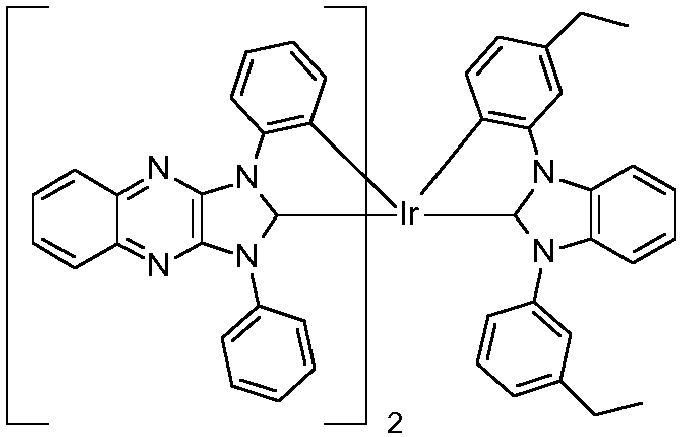
89% 544 0.40, 0.58 82 1.5 XXIV 
94% 540 0.38, 0.59 81 1.5 XXV 
87% 523 0.32, 0.62 74 2.6 XXVI 
86% 553 0.43, 0.56 90 1.2 XXVII 
90% 535 0.36, 0.60 79 2.3 XXVIII 
87% 542 0.38, 0.59 84 2.9 XXIX 
84% 548 0.40, 0.57 85 1.1 XXX 
91% 536 0.36, 0.60 79 1.7 XXXI 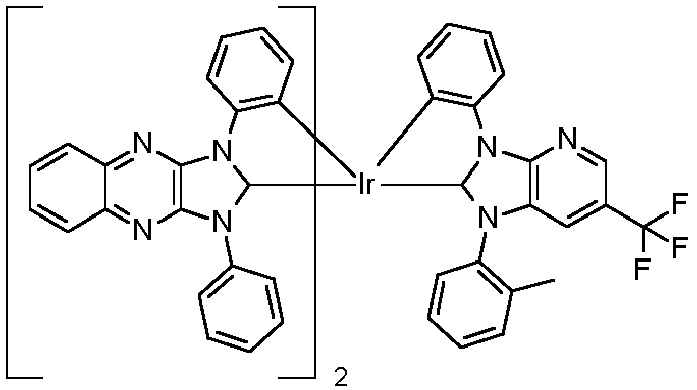
95% 525 0.33, 0.62 74 3.0 XXXII 
91% 525 0.33, 0.62 75 3.0 - As evident from the above table, the complexes of the present invention show an emission in the green to yellow-green area, with very high absolute PL quantum efficiency values Q.Y., with short lifetimes of luminescence τv, which are as low as down to 1.1 µs.
- The PL Q.Y., λmax, CIE x, y color coordinates and τV values of the photoluminescence measurements of complexes IV and CC-1 are included in the following table. Data of both complexes are given from PL measurements of 1% films of the respective complexes in PMMA matrix. Synthesis of the comparative complex CC-1 is described in
WO2014/147134 (example BE-12). überall wegCpd. Formula PL Q.Y. λmax (nm) CIE x, y τV (µs) IV 
92% 521 0.32, 0,62 2.4 CC-1 
86% 473 0.14, 0.20 6.0 - As is evident from the above table, the green emitting inventive metal carbene complex IV shows a factor of 2.5 shorter (improved) lifetime of the luminescence τv in comparison to comparative compound CC-1.
- The inventive metal carbene complex IV with an imidazo-quinoxaline carbene ligand shows a green emission with CIE x,y color coordinates of (0.32, 0.62), with very high absolute PL quantum efficiency Q.Y. of 92% close to the theoretical limit, and a very good (= short) lifetime of the luminescence τv of 2.4 µs. The comparative complex CC-1 with a cyclohexane unit attached to the imidazo-pyrazine unit, instead of the benzene unit, as in the inventive complex IV, shows a blue emission with CIE x,y color coordinates of (0.14, 0.20), with a high absolute PL quantum efficiency Q.Y. of 86%, but a lifetime of luminescence τv which is elongated to 6.0 µs.
- The short lifetime of luminescence τv of the inventive complex IV is surprising in respect to the elongated lifetime of luminescence τv of the comparative complex CC-1. As is evident from the above table, surprisingly, despite the attached benzene ring at the imidazo-pyrazine unit of the carbene ligand in complex IV the lifetime of the luminescence τv is very good (= short), although the attached cyclic alkane unit to the imidazo-pyrazine unit of the carbene ligand in comparative complex CC-1 is leading to a long lifetime of the luminescence τv.
- The PL Q.Y., λmax, CIE x, y color coordinates and τV values of the photoluminescence measurements of complexes IV and CC-2 are included in the following table. Data of both complexes are given from PL measurements of 1% films of the respective complexes in PMMA matrix. Synthesis of the comparative complex CC-2 is described in Comparative synthesis Example 2.
Cpd. Formula PL Q.Y. λmax (nm) CIE x, y τV (µs) IV 
92% 521 0.32, 0,62 2.4 CC-2 
85% 512 0.32, 0.62 105 - As is evident from the above table, the green emitting inventive metal carbene complex IV shows a factor of 44 shorter (improved) lifetime of the luminescence τv in comparison to green emitting comparative compound CC-2, at the same CIE x,y color coordinates.
- The inventive metal carbene complex IV with an imidazo-quinoxaline carbene ligand shows a green emission with CIE x,y color coordinates of (0.32, 0.62), with very high absolute PL quantum efficiency Q.Y. of 92% close to the theoretical limit, and a very good (= short) lifetime of the luminescence τv of 2.4 µs. The comparative complex CC-2 with an imidazo-naphthalene carbene ligand instead shows a green emission with the same CIE x,y color coordinates, with a high absolute PL quantum efficiency Q.Y. of 85%, but a lifetime of luminescence τv which is extremely elongated to 105 µs, compared to 2.4 µs in the case of the inventive complex IV. The short lifetime of luminescence τv of the inventive complex IV is suprising in respect to the highly elongated lifetime of luminescence τv of CC-2.
- As is evident from the above tables, a carbene metal complex is emitting in the green to yellow-green area, with a very high Q.Y. close to the theoretical limit, and together with a short luminescence τv if an inventive imidazo-quinoxaline cabene ligand is used.
- The ITO substrate used as the anode is cleaned first by rinsing with isopropanol. To eliminate possible organic residues, the substrate is exposed to a continuous ozone flow in an UV ozone oven for a further 20 minutes. This treatment also improves the hole injection properties of the ITO.
- Thereafter, the organic materials specified below are applied by vapor deposition to the cleaned substrate at a pressure of about 10-7-10-9 mbar and at a rate of approx. 0.5-5 nm/min. The hole conductor and exciton blocker applied to the substrate is Ir(DPBIC)3 (devices 1 to 3). Depending on the emissive layer thickness and thus for adjusting the optical cavity, the hole conductor has a thickness of 50 or 55 nm, the blocker has a thickness of 10nm. The hole conducting layer is doped with MoOx (50wt.-% : 50 wt.-%) to improve the conductivity.

WO2005/019373 ). - Subsequently, a mixture of emitter, Ir(DPBIC)3 and a host material (the emitter, the host material (SH-1 or SH-2) and the relative amounts in % by weight are given in the specific device examples) is applied by vapor deposition with a thickness of 30 or 40 nm (devices 1 to 3). Subsequently, the host material is applied by vapor deposition with a thickness of 5 nm as an exciton and hole blocker.
-
- SH-1:

US2009/066226 ) - SH-2:

US2011/0006670 ) - Next, as an electron transporter, a mixture of Liq and ETM (ETM-1 as specified in the specific device examples) (50 wt.-% : 50 wt.-%) is applied by vapor deposition in a thickness of 30 nm; then a 4 nm KF layer is applied; and finally a 100 nm-thick Al electrode is applied. The whole device is encapsulated by attaching a glass lid under inert nitrogen atmosphere with an UV curable adhesive with very low water vapor permeation rate.

-
- To characterize the OLED, electroluminescence spectra are recorded at different currents and voltages. In addition, the current-voltage characteristic is measured in combination with the light output emitted. The light output can be converted to photometric parameters by calibration with a photometer. The lifetime LT95 of the diode is defined by the time taken for the luminance to fall to 95% of its initial value. The lifetime measurement is carried out at a constant current. The CIEx,y coordinates are extracted from the spectra according to CIE 1931 as known in the state-of-the-art.
- For the different emitters, host materials and electron transport materials in the above-described OLED structure, the following electrooptical data are obtained:
All data are obtained at 1000 cd/m2, lifetime data is taken at 4000 cd/m2 initial luminance. - 50nm Ir(DPBIC)3:MoO3 (50:50) - 10nm Ir(DPBIC)3 - 40nm emitter/SH-1/Ir(DPBIC)3 (15:80:5) - 5nm SH-1 - 30nm ETM-1:Liq (50:50) - 4nm KF - 100nm Al
- 55nm Ir(DPBIC)3:MoO3 (50:50) - 10nm Ir(DPBIC)3 - 30nm emitter/SH-1/ Ir(DPBIC)3 (15:80:5) - 5nm SH-1 - 35nm ETM-1:Liq (50:50) - 4nm KF - 100nm Al
- 55nm Ir(DPBIC)3:MoO3 (50:50) - 10nm Ir(DPBIC)3 - 30nm emitter/SH-2/ Ir(DPBIC)3 (15:80:5) - 5nm SH-2 - 35nm ETM-1:Liq (50:50) - 4nm KF - 100nm Al
- Synthesis of the comparative complex CC-3 is described in Comparative Synthesis Example 3.
Table 5 Emitter Voltage [V] CurrEff [cd/A] LumEff [lm/W] EQE [%] CIE x, y λmax / FWHM (nm) LT95 (h) Dev. 1 IV 5.13 66.9 41.0 18.2 0.34, 0.62 528 / 70 360 Dev. 3 IV 4.56 61.1 42.1 16.7 0.33, 0.62 526 / 71 500 Dev. 1 V 5.81 72.0 38.9 19.5 0.34, 0.62 528 / 71 370 Dev. 2 V 4.82 72.6 47.3 19.7 0.34, 0.62 529 / 70 310 Dev. 2 XX 4.26 72.9 53.8 19.9 0.38, 0.59 543 / 74 380 Dev. 3 XXVII 4.60 65.5 44.8 17.7 0.37,0.61 537 / 74 340 Dev. 3 XXIX 4.42 64.1 45.6 18.0 0.41, 0.58 549 / 77 250 Dev. 3 XVIII 5.32 71.2 42.0 19.3 0.35, 0.61 531 / 76 230 Dev. 3 XXVI 4.20 58.6 43.8 16.8 0.42, 0.56 554 / 78 160 Dev. 1 VII 5.53 57.8 32.8 15.8 0.36, 0.61 534 / 75 350 Dev. 1 XXI 5.75 68.9 37.7 18.8 0.38, 0.60 541 / 73 130 Dev. 1 VIa 5.79 56.3 30.5 15.2 0.38, 0.60 537/71 100 Dev. 3 CC-3 4.71 60.8 40.5 16.8 0.36, 0.60 532 / 78 2 - As is evident from the above table, the inventive green emitting metal complex IV shows much improved device lifetime LT95 against comparative green emitting complex CC-3 in the same device setup 3. LT95 is improved by a factor of 250, at otherwise comparable device characteristics, and at highly comparable emission (λmax and CIE x,y).
- As is also evident from the above table, the inventive metal carbene complexes show a green to yellow-green emission color at remarcable high external quantum efficiencies (EQEs) and high current efficiencies. In those tables, all EQEs are calculated from the measured luminance in forward direction under the assumption of Lambertian emission. As shown above, typical examples of inventive emitters demonstrate remarkable high device stability, as shown for devices 1, 2, or 3, respectively.
- The device setups 4 and 5 are similar to device setups 1 to 3, but demonstrate optimized setups, including different emitter concentrations, different Ir(DPBIC)3 concentration, or use of a different host SH-1 or SH-2.
- 50nm Ir(DPBIC)3:MoO3 (50:50) - 10nm Ir(DPBIC)3 - 40nm emitter/SH-2/Ir(DPBIC)3 (15:80:5) - 5nm SH-2 - 30nm ETM-1:Liq (50:50) - 4nm KF - 100nm Al
- 55nm Ir(DPBIC)3:MoO3 (50:50) - 10nm Ir(DPBIC)3 - 30nm emitter/SH-1/ Ir(DPBIC)3 (25:65:10) - 5nm SH-1 - 35nm ETM-1:Liq (50:50) - 4nm KF - 100nm Al
Table 6 Emitter Voltage [V] CurrEff [cd/A] LumEff [lm/W] EQE [%] CIE x, y λmax / FWHM (nm) LT95 (h) Dev. 4 IV 5.96 56.8 29.9 15.5 0.34 , 0.62 527 / 74 670 Dev. 5 XX 4.08 66.1 50.9 18.3 0.40 , 0.58 545 / 77 610 - As is evident from the above table, for example, LT95 of both inventive metal complexes IV and XX is further increased to over 600 h by using adapted device setups 4 or 5, respectively.
- For a comparison of the influence of the emission layer thickness on the driving voltage, the following results in device 6 of the inventive emitter example V are shown.
- 50nm Ir(DPBIC)3:MoO3 (50:50) - 10nm Ir(DPBIC)3 - 20-40nm V/SH-1/ Ir(DPBIC)3 (20:75:5) - 3nm SH-1 - 30nm ETM-1:Liq (50:50) - 4nm KF - 100nm Al
Table 7 Emissive layer thickness Voltage [V] CurrEff [cd/A] LumEff [lm/W] EQE [%] CIE x, y λmax / FWHM (nm) LT95 (h) 20nm 3.55 67.9 60.0 18.6 0.33 , 0.63 526 / 67 230 30nm 4.34 69.3 50.2 18.8 0.33 ,0.62 527 / 68 405 40nm 5.19 69.6 42.1 18.9 0.34 , 0.62 530 / 72 430 - As is evident from the above table, a voltage drop from 5.19 eV to 3.55 eV can be observed when decreasing the layer thickness from 40 nm to 20 nm, at the same time leaving all other initial performance parameters almost unchanged.
- Additional results in device setup 7 are demonstrating the same findings using the inventive emitter example IV.
- 60-45nm Ir(DPBIC)3:MoO3 (50:50) - 10nm Ir(DPBIC)3 - 20-50nm IV/SH-1/ Ir(DPBIC)3 (20:75:5) - 5nm SH-1 - 40-25nm ETM-1:Liq (50:50) - 4nm KF - 100nm Al
Table 8 Emissive layer thickness Voltage [V] CurrEff [cd/A] LumEff [lm/W] EQE [%] CIE x, y λmax / FWHM (nm) LT95 (h) 20nm 3.79 64.6 53.6 17.6 0.33 , 0.62 527 / 71 250 30nm 4.51 64.7 45.1 17.6 0.33 , 0.62 528 / 72 320 40nm 5.35 66.1 38.8 17.9 0.33 , 0.62 527 / 70 250 50nm 6.06 66.5 34.5 18.1 0.34 , 0.62 527 / 71 220 - By changing molecular properties of the inventive compounds it is possible to directly influence the driving voltage of the OLED devices. This can be done either by modification of the electron affinity which will affect the electron transport property of the emissive layer since the emitter acts as a deep trap (see data in the following table 9). Or the number of electron transporting ligands of the inventive compound is modified which leads to altered electron transporting properties between the emitter molecules (see data in the following table 10).
- Results in the following tables are achieved using the inventive compounds XVIII, XXVI, XX, respectively, in device setup 7 with 20% of emitter concentration and 30nm emissive layer thickness. Electron Affinities (EA) are calculated based on geometries of neutral and anionic molecules from density functional theory with the b-p86 functional and a SVp basis set in the gas phase. EA is then obtained as the energy difference between the single point energy of the anionic and neutral state, both evaluated within the Conductor Like Screening Model (COSMO) employing a dielectric constant of 4.5 using the b-p86 functional and a TZVp basis set. All calculations are performed using the TURBOMOLE package. The number of electron transporting ligands is obtained by analyzing the LUMO distribution from the gas phase calculation of the neutral molecule.
Table 9 Emitter EA [eV] # of e-transporting ligands Voltage [V] XVIII 2.53 1 5.13 XXVI 2.30 1 3.98 Table 10 Emitter EA [eV] # of e-transporting ligands Voltage [V] XVIII 2.53 1 5.13 XX 2.62 2 4.42 - As is evident from the above table, starting from a higher voltage of 5.13 V for XVIII, it is possible to reduce the voltage down to <4 V by reduction of the EA, and thus reduction of the electron trap depth, for inventive compound XXVI. By just looking at the EA of the inventive compound XX one would now expect an even higher voltage compared to XVIII, since the trap depth is even larger for electrons. However, the driving voltage can be reduced to 4.42 eV by increasing the number of e-transporting ligands from one to two and thus increasing the propability for an electron to hop between the emitter molecules.
-
Figure 1 (Fig. 1 ) shows a comparison of the emission spectrum of OLED device 3 comprising inventive complex (IV) compared with the emission spectrum of OLED device 3 comprising comparative complex (CC-3). - The Y-axis shows the EL intensity in arbitrary units (a.u.) and the X-axis shows the wavelength in nm.
- The dotted line shows the emission spectrum of the OLED comprising inventive complex (IV) and the continuous line shows the emission spectrum of the OLED comprising comparative complex (CC-3).

Claims (23)
- A metal carbene complex, wherein the metal is selected from Ir and Pt, comprising at least one ligand of formula (A), preferably at least one ligand of formula (I)

 Z is NRx, O or S, preferably NRx or O, more preferably NRx,Rx is
 R1, R2, R3 and R4are independently of each other hydrogen; a C1-C18alkyl group, which can optionally be substituted by at least one substituent E and/or interrupted by D; a C3-C12cycloalkyl group, which can optionally be substituted by at least one substituent E; a heterocycloalkyl group comprising 3 to 6 ring atoms, interrupted by at least one of O, S and NR65 and/or substituted by at least one substituent E; a C6-C14aryl group, which can optionally be substituted by at least one substituent G; a -NR65-C6-C14aryl group, preferably a -N(C6-C14aryl)2 group, which can optionally be substituted by at least one substituent G; a heteroaryl group comprising 3 to 11 ring atoms, which can optionally be substituted by at least one substituent G, interrupted by at least one of O, S, N and NR65; or a -NR65-heteroaryl group, preferably a -N(heteroaryl)2 group, comprising 3 to 11 ring atoms, which can optionally be substituted by at least one substituent G, interrupted by at least one of O, S, N and NR65; a halogen atom, especially F or Cl; a C1-C18haloalkyl group such as CF3; CN; or SiR80R81R82;orR1 and R2, R2 and R3 or R3 and R4 form together a ring
 R5 and R6are independently of each other hydrogen; a C1-C18alkyl group, which can optionally be substituted by at least one substituent E and/or interrupted by D; a C3-C12cycloalkyl group, which can optionally be substituted by at least one substituent E; a heterocycloalkyl group comprising 3 to 6 ring atoms, interrupted by at least one of O, S and NR65 and/or substituted by at least one substituent E; a C6-C14aryl group, which can optionally be substituted by at least one substituent G; a -NR65-C6-C14aryl group, preferably a -N(C6-C14aryl)2 group, which can optionally be substituted by at least one substituent G; a heteroaryl group comprising 3 to 11 ring atoms, which can optionally be substituted by at least one substituent G, interrupted by at least one of O, S, N and NR65; a halogen atom, especially F or Cl; a C1-C18haloalkyl group such as CF3; CN; or SiR80R81R82;R7, R8, R9, R27 and R28are independently of each other hydrogen; a C1-C18alkyl group, which can optionally be substituted by at least one substituent E and/or interrupted by D; a C3-C12cycloalkyl group, which can optionally be substituted by at least one substituent E; a heterocycloalkyl group comprising 3 to 6 ring atoms, interrupted by at least one of O, S and NR65 and/or substituted by at least one substituent E; a C6-C14aryl group, which can optionally be substituted by at least one substituent G; a heteroaryl group comprising 3 to 11 ring atoms, which can optionally be substituted by at least one substituent G, interrupted by at least one of O, S, N and NR65 a halogen atom, especially F or Cl; a C1-C18haloalkyl group such as CF3; CN; or SiR80R81R82; in addition to the groups mentioned above, R8 may be a -NR65-C6-C14aryl group, preferably a -N(C6-C14aryl)2 group, which can optionally be substituted by at least one substituent G; or a -NR65-heteroaryl group, preferably a -N(heteroaryl)2 group, comprising 3 to 11 ring atoms, which can optionally be substituted by at least one substituent G, interrupted by at least one of O, S, N and NR65;orR5 and R6 and/or R8 and R9 together form a group of formula
 N or CR'", wherein 0 or 1 Z is N, preferably
 D is -CO-, -COO-, -S-, -SO-, -SO2-, -O-, -NR65-, -SiR70R71-, -POR72-, -CR63=CR64-, or-C≡C, preferably -O-, -S- or -NR65-;E is -OR69, -SR69, -NR65R66, -COR68, -COOR67, -CONR65R66, -CN, halogen, a C1-C18alkyl group, which can optionally be substituted by at least one substituent E and/or interrupted by D; preferably F; a C1-C8haloalkyl group such as CF3, or a C1-C8alkyl group; preferably, E is C1-C8alkyl, C1-C8alkoxy, CN, halogen, preferably F, or C1-C8haloalkyl, such as CF3; more preferably E is C1-C8alkyl, C1-C8alkoxy, or C1-C8haloalkyl, such as CF3;G is E; or an unsubstituted C6-C14aryl group; a C6-C14aryl group, which is substituted by F, C1-C18alkyl, or C1-C18alkyl, which is substituted by F and/or interrupted by O; an unsubstituted heteroaryl group comprising 3 to 11 ring atoms, interrupted by at least one of O, S, N and NR65; or a heteroaryl group comprising 3 to 11 ring atoms, interrupted by at least one of O, S, N and NR65, which is substituted by F, unsubstituted C1-C18alkyl, SiR80R81R82, or C1-C18alkyl which is substituted by F and/or interrupted by O;preferably, G is a C1-C8alkyl group, or a group of formula
 Re is H, a C1-C8alkyl group, a fluoroC1-C4alkyl group, or a C3-C6cycloalkyl group, Rc, Rb and Rd are independently of each other hydrogen; a C1-C18alkyl group, which can optionally be substituted by E and/or interupted by D; a C3-C12cycloalkyl group, which can optionally be substituted by G; a C3-C10heterocycloalkyl radical which is interrupted by at least one of O, S and NR65 and/or substituted by E; a C6-C24aryl group, which can optionally be substituted by G; or a C2-C30heteroaryl group, which can optionally be substituted by G; a halogen atom, especially F or Cl; C1-C8haloalkyl such as CF3; CN; or SiR80R81R82; orRc and Rb, or Ra and Rb together form a group of formula
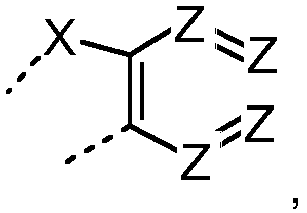 CR"', wherein 0 or 1 Z is N, preferably
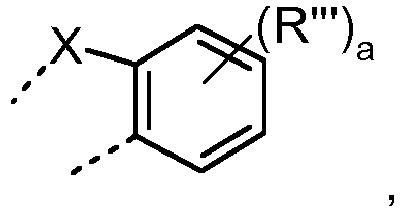 CR73R74, preferably O; R'" is C1-C8alkyl and a is 0, 1 or 2, preferably 0 or 1, more preferably 0;R63 and R64 are independently of each other H; unsubstituted C6-C18aryl; C6-C18aryl which is substituted by C1-C18alkyl, or C1-C18alkoxy; unsubstituted C1-C18alkyl; or C1-C18alkyl which is interrupted by -O-; preferably unsubstituted C6-C18aryl; C6-C18aryl which is substituted by C1-C18alkyl, or C1-C18alkoxy; unsubstituted C1-C18alkyl; or C1-C18alkyl which is interrupted by -O-;R65 and R66 are independently of each other H, an unsubstituted C6-C18aryl group; a C6-C18aryl group which is substituted by C1-C18alkyl, or C1-C18alkoxy; an unsubstituted C1-C18alkyl group; or a C1-C18alkyl group, which is interrupted by -O-;R65 and R66 together form a five or six membered ring,R67 is H, an unsubstituted C6-C18aryl group; a C6-C18aryl group, which is substituted by C1-C18alkyl, or C1-C18alkoxy; an unsubstituted C1-C18alkyl group; or a C1-C18alkyl group, which is interrupted by -O-; preferably an unsubstituted C6-C18aryl group; a C6-C18aryl group, which is substituted by C1-C18alkyl, or C1-C18alkoxy; an unsubstituted C1-C18alkyl group; or a C1-C18alkyl group, which is interrupted by -O-;R68 is H; an unsubstituted C6-C18aryl group; a C6-C18aryl group, which is substituted by C1-C18alkyl, or C1-C18alkoxy; an unsubstituted C1-C18alkyl group; or a C1-C18alkyl group, which is interrupted by -O-;R69 is H, an unsubstituted C6-C18aryl; a C6-C18aryl, which is substituted by C1-C18alkyl, or C1-C18alkoxy; an unsubstituted C1-C18alkyl group; or a C1-C18alkyl group, which is interrupted by -O-; preferably an unsubstituted C6-C18aryl; a C6-C18aryl, which is substituted by C1-C18alkyl, or C1-C18alkoxy; an unsubstituted C1-C18alkyl group; or a C1-C18alkyl group, which is interrupted by -O-;R70 and R71 are independently of each other an unsubstituted C1-C18alkyl group; an unsubstituted C6-C18aryl group; or a C6-C18aryl group, which is substituted by C1-C18alkyl; R72 is an unsubstituted C1-C18alkyl group; an unsubstituted C6-C18aryl group, or a C6-C18aryl group, which is substituted by C1-C18alkyl;R73 and R74 are independently of each other H, C1-C25alkyl, C1-C25alkyl which is interrupted by O, C7-C25arylalkyl, C6-C24aryl, C6-C24aryl which is substituted by C1-C18alkyl, C2-C20heteroaryl, or C2-C20heteroaryl which is substituted by C1-C18alkyl;R75 is a C6-C18aryl group; a C6-C18aryl which is substituted by C1-C18alkyl, or C1-C18alkoxy; a C1-C18alkyl group; or a C1-C18alkyl group, which is interrupted by -O-;R80, R81 and R82 are independently of each other a C1-C25alkyl group, which can optionally be interrupted by O; a C6-C14aryl group, which can optionally be substituted by C1-C18alkyl; or a heteroaryl group comprising 3 to 11 ring atoms, which can optionally be substituted by C1-C18alkyl;∼ is a bonding site to the metal.
 - The metal carbene complex according to claim 1, wherein
R1, R2, R3 and R4
are independently of each other hydrogen; a C1-C12alkyl group, which can optionally be substituted by at least one substituent E and/or interrupted by D; a C3-C12cycloalkyl group, which can optionally be substituted by at least one substituent E; a C6-C14aryl group, which can optionally be substituted by one or two groups G; a heteroaryl group comprising 3 to 11 ring atoms, which can optionally be substituted by one or two groups G; or a - N(phenyl)2 group, which can optionally be substituted by one or two groups G.
R5 and R6
are independently of each other hydrogen; a C1-C12alkyl group, which can optionally be substituted by E and/or interrupted by D; a C3-C12cycloalkyl group, which can optionally be substituted by E;
or
one of R5 and R6, preferably R5, is a group of formula
 Ra is H, a C1-C5alkyl group, a fluoroC1-C4alkyl group, or a C3-C6cycloalkyl group; preferably H, a C1-C5alkyl group, C3-C6cycloalkyl group; more preferably H, or a C1-C5alkyl group; Re is H, a C1-C5alkyl group, a fluoroC1-C4alkyl group, or a C3-C6cycloalkyl group; preferably H, a C1-C5alkyl group, C3-C6cycloalkyl group; more preferably H, or a C1-C5alkyl group; Rc, Rb and Rd are independently of each other hydrogen; a C1-C18alkyl group, which can optionally be substituted by E and/or interupted by D; a C3-C12cycloalkyl group, which can optionally be substituted by G; a C6-C14aryl group, which can optionally be substituted by G; or a C2-C30heteroaryl group, which can optionally be substituted by G; C1-C8haloalkyl such as CF3; or SiR80R81R82; preferably Rc, Rb and Rd are independently of each other H, a C1-C5alkyl group, C3-C6cycloalkyl group; more preferably H, or a C1-C5alkyl group; further preferably, Rb, Rc and Rd are hydrogen or a phenyl group, which can optionally be substituted by one or two groups G;orRc and Rb, or Ra and Rb together form a group of formula
 CR"', wherein 0 or 1 Z is N, preferably
 CR73R74, preferably O; R'" is C1-C8alkyl and a is 0, 1 or 2, preferably 0 or 1, more preferably 0.R7, R8 and R9are independently of each other hydrogen; a C1-C12alkyl group, which can optionally be substituted by E and/or interrupted by D; a C3-C12cycloalkyl group, which can optionally be substituted by E, a C6-C14aryl group, which can optionally be substituted by one or two groups G; a heteroaryl group comprising 3 to 11 ring atoms, which can optionally be substituted by one or two groups G.R27, R28independently of each other hydrogen; or a C1-C12alkyl group, which can optionally be substituted by E and/or interrupted by D, preferably a CH2-C1-C7alkyl group, which can optionally be substituted by E and/or interrupted by D;preferably, at least one of R27 and R28 is hydrogen;D is -S-, or -O-E is -OR69, CF3, C1-C8alkyl or F;G is -OR69, CF3 or C1-C8alkyl;R65 is a phenyl group, which can optionally be substituted by one or two C1-C8alkyl groups; an unsubstituted C1-C18alkyl group; or a C1-C18alkyl group, which is interrupted by -O-; andR69 is a phenyl group, which can optionally be substituted by one or two C1-C8alkyl groups; an unsubstituted C1-C18alkyl group; or a C1-C18alkyl group, which is interrupted by -O-.
 - The metal carbene complex according to claim 1 or 2, wherein at least one of the radicals R1, R2, R3, R4, R5, R6, R7, R8, and R9 is not hydrogen; preferably, either R5 is not hydrogen or at least two of the radicals R1, R2, R3, R4, R5, R6, R7, R8 and R9 are not hydrogen.
- The metal carbene complex according to anyone of claims 1 to 3, wherein
R1, R2, R3 and R4
are independently of each other hydrogen; a C1-C8alkyl group, which can optionally be substituted by at least one substituent E; a C3-C6cycloalkyl group, which can optionally be substituted by at least one substituent E; or a phenyl group, which can optionally be substituted by one or two groups G;
R5 and R6
are independently of each other hydrogen; a C1-C8alkyl group, which can optionally be substituted by at least one substituent E; or a C3-C6cycloalkyl group, which can optionally be substituted by at least one substituent E; or a phenyl group, which can optionally be substituted by one or two groups G;
R7, R8 and R9
are independently of each other hydrogen; a C1-C8alkyl group, which can optionally be substituted by at least one substituent E; or a C3-C6cycloalkyl group, which can optionally be substituted by at least one substituent E; or a phenyl group, which can optionally be substituted by one or two groups G;
R27 and R28
are hydrogen;
E is CF3, C1-C8alkyl or F;
G is CF3 or C1-C8alkyl; preferably C1-C8alkyl;
R65 is a phenyl group, which can optionally be substituted by one or two C1-C8alkyl groups; an unsubstituted C1-C8alkyl group; or a C1-C8alkyl group, which is interrupted by - O-; and
R69 is a phenyl group, which can optionally be substituted by one or two C1-C8alkyl groups; an unsubstituted C1-C8alkyl group; or a C1-C8alkyl group, which is interrupted by - O-. - The metal carbene complex according to anyone of claims 1 to 4, wherein
R1, R2, R3 and R4
are independently of each other hydrogen; a C1-C8alkyl group; or a C3-C6cycloalkyl group;
R5, R6, R7, R8 and R9
are independently of each other hydrogen; a C1-C8alkyl group; or a C3-C6cycloalkyl group;
or one of R5 and R6 is a phenyl group, which can optionally be substituted by one or two groups G; and
R27 and R28
are hydrogen. - The metal carbene complex according to anyone of claims 1 to 5, wherein
either R2 and R3 or R1 and R4 are H. - The metal carbene complex according to anyone of claims 1 to 6, wherein
R5 and R6
are independently of each other hydrogen; a C1-C8alkyl group; or one of R5 and R6, preferably R5, is a phenyl group, which can optionally be substituted by one or two groups selected from CF3 or C1-C8alkyl, preferably optionally be substituted by one C1-C8alkyl group; in a further preferred embodiment R6 is a phenyl group, which can optionally be substituted by one or two groups selected from CF3 or C1-C8alkyl, preferably optionally be substituted by one C1-C8alkyl group;
preferably, at least one of R5 and R6 is hydrogen;
R7 and R9
are C1-C8alkyl;
R8
is hydrogen; a C1-C8alkyl group; or a phenyl group, which can optionally be para-substituted by one group selected from CF3 or C1-C8alkyl, preferably optionally be substituted by one C1-C8alkyl group;
R27 and R28
are hydrogen. - The metal carbene complex according to anyone of claims 1 to 6, wherein
R5
is hydrogen; a C1-C8alkyl group, which can optionally be substituted by at least one substituent selected from CF3, C1-C8alkyl and F; a C3-C6cycloalkyl group, which can optionally be substituted by at least one substituent selected from CF3, C1-C8alkyl and F; or a phenyl group, which can optionally be substituted by one or two groups selected from CF3 and
C1-C8alkyl, preferably optionally be substituted by one or two C1-C8alkyl groups;
R6 and R8
are identical and selected from the group consisting of a C1-C8alkyl group, which can optionally be substituted by at least one substituent selected from CF3, C1-C8alkyl and F; a C3-C6cycloalkyl group, which can optionally be substituted by at least one substituent selected from CF3, C1-C8alkyl and F; and a phenyl group, which can optionally be substituted by one or two groups selected from CF3 and C1-C8alkyl, preferably optionally be substituted by one or two C1-C8alkyl groups; and
R7 and R9
are hydrogen,
wherein R5 and R6 are not at the same time a phenyl group, which can optionally be substituted by one or two groups selected from CF3 and C1-C8alkyl, preferably optionally be substituted by one or two C1-C8alkyl groups;
R27 and R28
are hydrogen. - The metal carbene complex according to anyone of claims 1 to 6, wherein
R7, R8 and R9 are H; and
R6 is H; and
R27 and R28
are hydrogen. - The metal carbene complex according to anyone of claims 1 to 9, having the following formula (II)
 M is Pt, or Ir, preferably Ir;if M is Ir, m is 1, 2, or 3; o is 0, 1, or 2; and the sum of m + o is 3;in the case that o = 2, the ligands L may be the same or different, preferably the same;and in the case that m is 2 or 3, the m carbene ligands may be the same or different, preferably the same;if M is Pt, m is 1, or 2; o is 0, or 1; and the sum of m + o is 2;in the case that m is 2, the m carbene ligands may be the same or different, preferably the same; andL is a monoanionic bidentate ligand.
 - The metal carbene complex according to anyone of claims 1 to 10, wherein L is a group of formula


 R10, R12, R13, R16, R17, R18 and R19the radicals R10, R12, R13, R16, R17, R18 and R19 are - in each case - independently of each other a C1-C18alkyl group, which can optionally be substituted by E and/or interrupted by D; a C3-C12cycloalkyl group, which can optionally be substituted by E; a heterocycloalkyl group comprising 3 to 6 ring atoms, interrupted by at least one heteroatom selected from -O-, -Sand -NR65-, optionally bearing at least one substituent E; a halogen atom, especially F or Cl; C1-C8haloalkyl such as CF3; CN; or SiR80R81R82; orone radical R10 and/or one radical R12; one radical R13 and/or one radical R12; one radical R16 and/or one radical R17; one radical R18 and/or one radical R19 is a group of formula
 Ra is H, a C1-C5alkyl group, a fluoroC1-C4alkyl group, or a C3-C6cycloalkyl group, preferably C1-C5-alkyl, or H, more preferably H,Re is H, a C1-C5alkyl group, a fluoroC1-C4alkyl group, or a C3-C6cycloalkyl group, preferably C1-C5-alkyl, or H, more preferably H,Rc, Rb and Rd are independently of each other hydrogen; a C1-C18alkyl group, which can optionally be substituted by E and/or interupted by D; a C3-C12cycloalkyl group, which can optionally be substituted by G; a C3-C10heterocycloalkyl radical which is interrupted by at least one of O, S and NR65 and/or substituted by E; a C6-C24aryl group, which can optionally be substituted by G; or a C2-C30heteroaryl group, which can optionally be substituted by G; a halogen atom, especially F or Cl; C1-C8haloalkyl such as CF3; CN; or SiR80R81R82; preferably H or a C1-C8alkyl group, more preferably, Rd is H and one of Rb or Rc is a C1-C8alkyl group and the other one of Rb and Rd is H; even more preferably Rc, Rb and Rd are H;ortwo adjacent radicals R10 and/or two adjacent radicals R12; two adjacent radicals R13 and/or two adjacent radicals R12; two adjacent radicals R16 and/or two adjacent radicals R17; or two adjacent radicals R19; or Rc and Rb, or Ra and Rb together form a group of formula
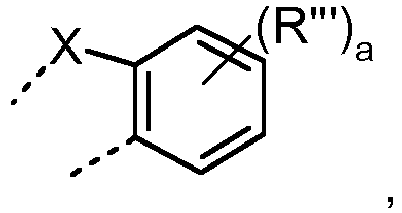 preferably, the radicals R10, R12, R13, R16, R17, R18 and R19 are - in each case - independently of each other a C1-C8alkyl group, which can optionally be substituted by at least one substituent E and/or interrupted by D, especially methyl, ethyl, i-propyl, n-butyl, sec-butyl, tert-butyl or isoamyl; a C3-C6cycloalkyl group, which can optionally be substituted by at least one substituent E; F; Cl; C1-C8haloalkyl such as CF3; CN;in a further preferred embodiment, R10, R12, R13, R16, R17, R18 and R19 are - in each case - independently of each other hydrogen, a C1-C8alkyl group especially methyl, ethyl, i-propyl, n-butyl, sec-butyl, tert-butyl or isoamyl; or a phenyl group, which can optionally be substituted by one or two groups G; or a C2-C30heteroaryl group, which can optionally be substituted by G; more preferably hydrogen, a C1-C8alkyl group especially methyl, ethyl, i-propyl, n-butyl, sec-butyl, tert-butyl or isoamyl; or a phenyl group, which can optionally be substituted by one or two C1-C8alkyl groups, for example 2-tolyl, 3-tolyl, 4-tolyl, 2-ethylphenyl, 3-ethylphenyl, 4-ethylphenyl, 2-isopropylphenyl, 3-isopropylphenyl or 4-isopropylphenyl; most preferably hydrogen or a C1-C8alkyl group especially methyl, ethyl, i-propyl, n-butyl, sec-butyl, tert-butyl or isoamyl.ortwo adjacent radicals R10 and/or two adjacent radicals R12; two adjacent radicals R13 and/or two adjacent radicals R12; two adjacent radicals R16 and/or two adjacent radicals R17; or two adjacent radicals R19 together form a group of formula
 CR"', wherein 0 or 1 Z is N, preferably
 CR73R74, preferably O or S; more preferably O; R'" is C1-C8alkyl and a' is 0 or 1, preferably 0; R11, R14, R20, R21, R22, R23 and R24:the radicals R11, R14, R20, R21, R22, R23 and R24 are - in each case - independently of each other a C1-C18alkyl group, which can optionally be substituted by at least one substituent E and/or interrupted by D; a C3-C12cycloalkyl group, which can optionally be substituted by at least one substituent E; a heterocycloalkyl group comprising 3 to 6 ring atoms, interrupted by at least one heteroatom selected from -O-, -S- and -NR65-, optionally bearing at least one substituent E; a C6-C14aryl group, which can optionally be substituted by one or two groups G; a heteroaryl group comprising 3 to 11 ring atoms, which can optionally be substituted by one or two groups G; or a -NR65-phenyl group, which can optionally be substituted by one or two groups G;preferably, R11, R14, R20, R21, R22, R23 and R24 are - in each case - independently of each other hydrogen; a C1-C8alkyl group, which can optionally be substituted by at least one substituent E and/or interrupted by D; a C3-C6cycloalkyl group, which can optionally be substituted by at least one substituent E; or a phenyl group, which can optionally be substituted by one ortwo groups G; C1-C8 haloalkyl such as CF3; or SiR80R81R82; or in the case of X-1, X-2, X-3, X-31, X-34, X-35, X-36, X-37 and X-38 CN;ortwo adjacent radicals R11 or two adjacent radicals R14 form together a group
 preferably, R11, R14, R20, R21, R22, R23 and R24 are - in each case - independently of each other a C1-C8alkyl group, which can optionally be substituted by at least one substituent E and/or interrupted by D, especially methyl, ethyl, i-propyl, n-butyl, sec-butyl, tert-butyl or isoamyl; a C3-C6cycloalkyl group, which can optionally be substituted by at least one substituent E; C1-C8haloalkyl such as CF3; or in the case of X-1, X-2, X-3, X-31, X-34, X-35, X-36, X-37 and X-38 CN;in a further preferred embodiment R11, R14, R20, R21, R22, R23 and R24 are - in each case - independently of each other hydrogen, a C1-C8alkyl group especially methyl, ethyl, i-propyl, n-butyl, sec-butyl, tert-butyl or isoamyl; or a phenyl group, which can optionally be substituted by one or two groups G; or a C2-C30heteroaryl group, which can optionally be substituted by G; more preferably hydrogen, a C1-C8alkyl group especially methyl, ethyl, i-propyl, n-butyl, sec-butyl, tert-butyl or isoamyl; or a phenyl group, which can optionally be substituted by one or two C1-C8alkyl groups, for example 2-tolyl, 3-tolyl, 4-tolyl, 2-ethylphenyl, 3-ethylphenyl, 4-ethylphenyl, 2-isopropylphenyl, 3-isopropylphenyl or 4-isopropylphenyl; most preferably hydrogen or a C1-C8alkyl group especially methyl, ethyl, i-propyl, n-butyl, sec-butyl, tert-butyl or isoamyl;ortwo adjacent radicals R11 or two adjacent radicals R14 form together a group
 R25 is CH3 or ethyl or iso-propyl;R26 is a phenyl group, which can optionally be substituted by one or two groups selected from CF3 and C1-C8alkyl; preferably optionally substituted by one or two C1-C8alkyl groups; orR26 is CH3; or iso-propyl; preferably, R26 is a phenyl group, which can optionally be substituted by one or two groups selected from CF3 and C1-C8alkyl preferably optionally substituted by one or two C1-C8alkyl groups; in a further preferred embodiment R26 is a phenyl group,which is substituted by one or two phenyl groups;D is -S-, -O-, or -NR65-;E is -OR69, -CN, CF3, C1-C8alkyl or F; preferably CF3 or C1-C8alkyl; more preferably C1-C8alkyl;G is -OR69, -CN, CF3 or C1-C8alkyl; preferably C1-C8alkyl;R65 is a phenyl group, which can optionally be substituted by one or two C1-C8alkyl groups;an unsubstituted C1-C18alkyl group; or a C1-C18alkyl group, which is interrupted by -O-; andR69 is a phenyl group, which can optionally be substituted by one or two C1-C8alkyl groups;an unsubstituted C1-C18alkyl group; or a C1-C18alkyl group, which is interrupted by -O-;A1 is C6-C10aryl;ortwo adjoint groups A1 together form a group
 Q1 and Q2 are independently of each other hydrogen, C1-C18alkyl, or C6-C18aryl;w, x are are independently of each other 0, 1 or 2, preferably 0 or 1; more preferably 0;z is 0, 1, 2 or 3, preferably 0, 1, more preferably 0;y, y', y", u, v
are independently of each other 0, 1 or 2, preferably 0 or 2; more preferably 0;y'" is 0 or 1, preferably 0;p, q, r, s, t, t', t"
are are independently of each other 0, 1, 2, 3 or 4, preferably 0, 1, 2 or 3;r' is 0, 1 or 2, preferably 0 or 1, more preferably 0. - The metal carbene complex according to anyone of claims 1 to 11, wherein the metal is Ir.
- The metal carbene complex according to claim 12, selected from


 R1, R2, R3 and R4are independently of each other - in each case - hydrogen; a C1-C8alkyl group, which can optionally be substituted by at least one substituent E and/or interrupted by D; a C3-C6cycloalkyl group, which can optionally be substituted by at least one substituent E; or a phenyl group, which can optionally be substituted by one or two groups G;preferably, in the case that R1, R2, R3 and/or R4 are a phenyl group, which can optionally be substituted by one or two groups G; R5, R6, R8 and R9 are not a phenyl group, which can optionally be substituted by one or two groups G;more preferably, R1, R2, R3 and R4 are independently of each other - in each case - hydrogen; a C1-C8alkyl group, which can optionally be substituted by at least one substituent E and/or interrupted by D; or a C3-C6cycloalkyl group, which can optionally be substituted by at least one substituent E;most preferably, R1 and R4 as well as R2 and R3 are identical; even further more preferably, R1, R2, R3 and R4 are hydrogen;R5 and R6are independently of each other - in each case - hydrogen; a C1-C8alkyl group, which can optionally be substituted by at least one substituent E and/or interrupted by D; or a C3-C6cycloalkyl group, which can optionally be substituted by at least one substituent E; or a phenyl group, which can optionally be substituted by one or two groups G;preferably, R5 and R6 are independently of each other - in each case - hydrogen; a C1-C8alkyl group, which can optionally be substituted by at least one substituent E and/or interrupted by D; or a C3-C6cycloalkyl group, which can optionally be substituted by at least one substituent E; or either R5 or R6, preferably R5, are a phenyl group, which can optionally be substituted by one or two groups G;more preferably, R5 and R6 are independently of each other - in each case - hydrogen; a C1-C8alkyl group, which can optionally be substituted by at least one substituent E and/orinterrupted by D; or a C3-C6cycloalkyl group, which can optionally be substituted by at least one substituent E; or either R5 or R6, preferably R5, is a phenyl group, which can optionally be substituted by one or two groups G; in a further preferred embodiment, R6 is a phenyl group, which can optionally be substituted by one or two groups G; more preferably, R5 and R6 are hydrogen;R8 and R9are independently of each other hydrogen; a C1-C8alkyl group, which can optionally be substituted by at least one substituent E and/or interrupted by D; or a C3-C6cycloalkyl group, which can optionally be substituted by at least one substituent E; or a phenyl group, which can optionally be substituted by one or two groups G;preferably, R8 and R9 are independently of each other - in each case - hydrogen; a C1-C8alkyl group, which can optionally be substituted by at least one substituent E and/or interrupted by D; or a C3-C6cycloalkyl group, which can optionally be substituted by at least one substituent E; or either R8 or R9 are a phenyl group, which can optionally be substituted by one or two groups G;more preferably, R8 and R9 are independently of each other - in each case - hydrogen; a C1-C8alkyl group, which can optionally be substituted by at least one substituent E and/orinterrupted by D; or a C3-C6cycloalkyl group, which can optionally be substituted by at least one substituent E; more preferably, R9 is hydrogen and R8 is hydrogen or a phenyl group which can be optionally substituted by one or two groups G; most preferably, R8 and R9 are hydrogen;D is -S- or -O-;E is -OR69, -CN, CF3, C1-C8alkyl or F; preferably CF3 or C1-C8alkyl; preferably C1-C8alkyl;G is -OR69, -CN, CF3 or C1-C8alkyl; preferably C1-C8alkyl;R69 is a phenyl group, which can optionally be substituted by one or two C1-C8alkyl groups; an unsubstituted C1-C8alkyl group; or a C1-C8alkyl group, which is interrupted by - O-;L is a monoanionic bidentate ligand;m is 1, 2, or 3; preferably 2 or 3; or - in a further preferred embodiment - 1;o is 0, 1, or 2; preferably 0 or 1; or - in a further preferred embodiment - 2;and the sum of m + o is 3;in the case that o = 2, the ligands L may be the same or different, preferably the same;and in the case that m is 2 or 3, the m carbene ligands may be the same or different, preferably the same.
 - The metal carbene complex according to claim 13, selected from


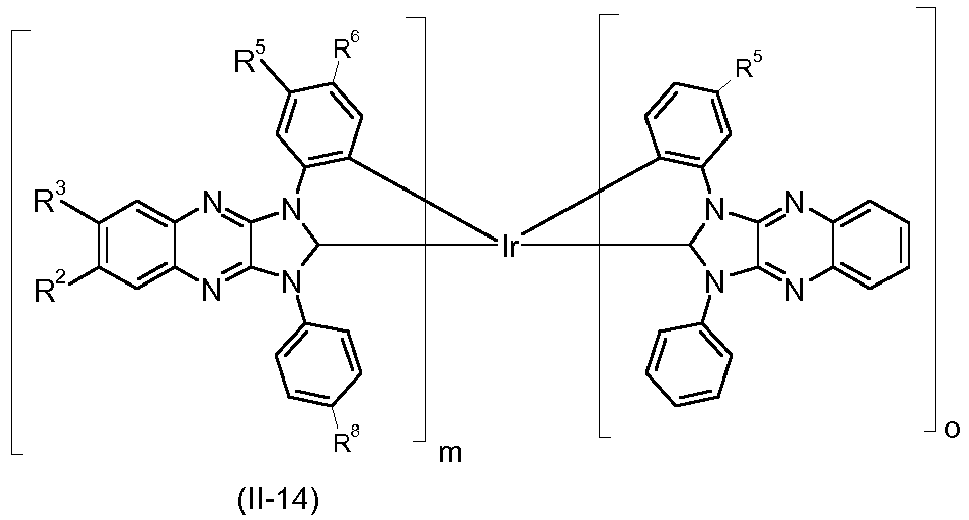
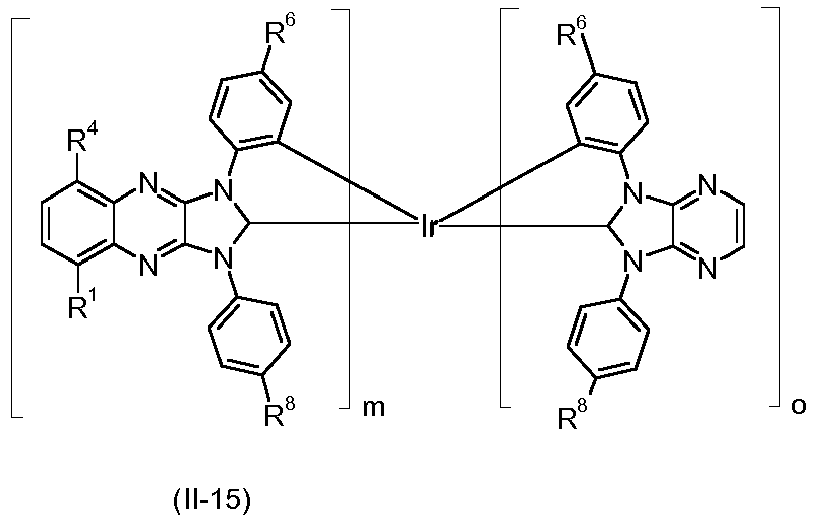


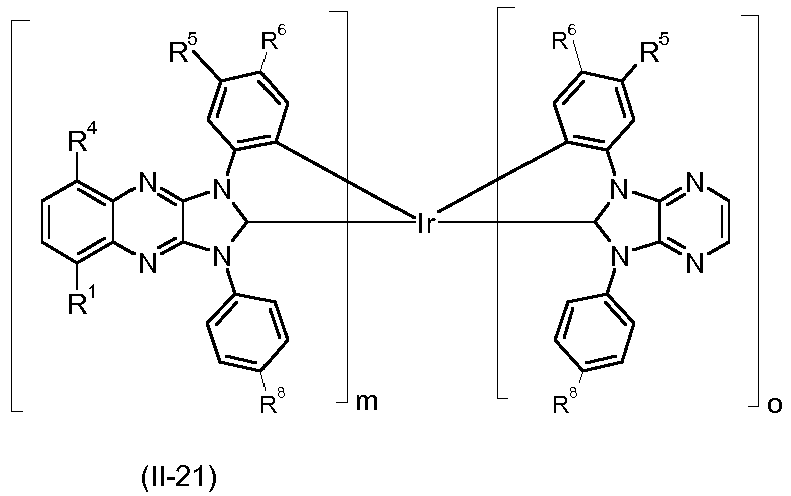


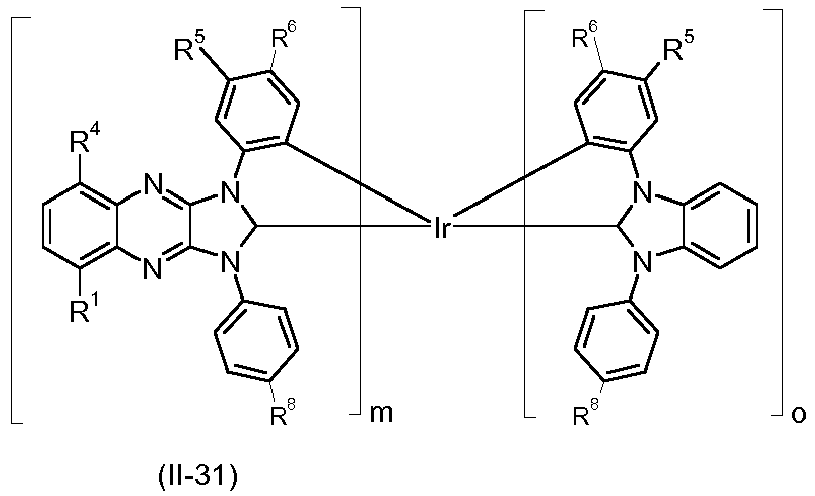


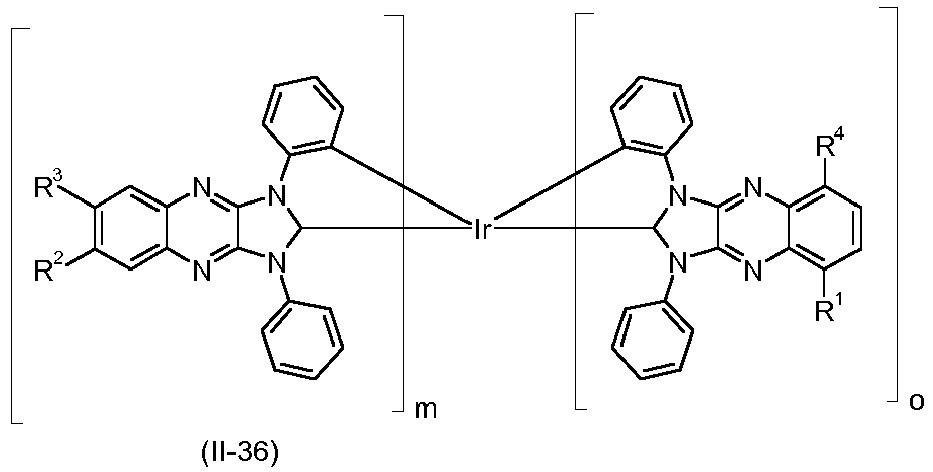


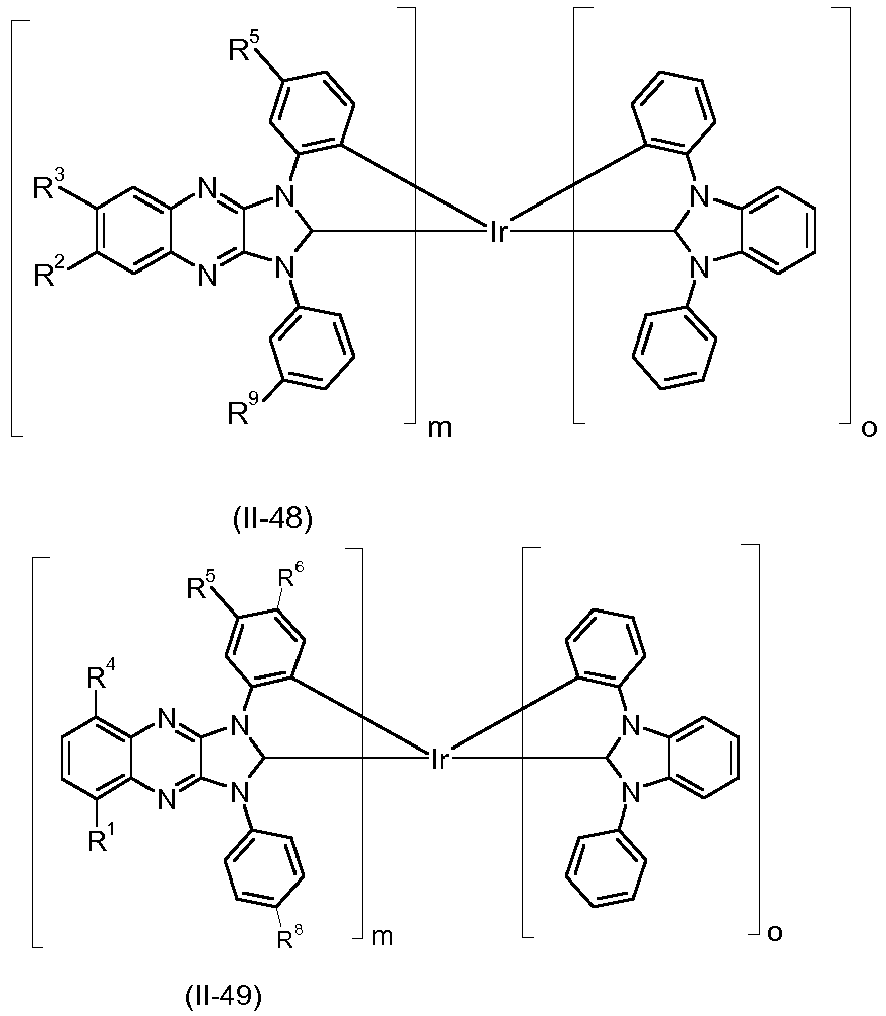


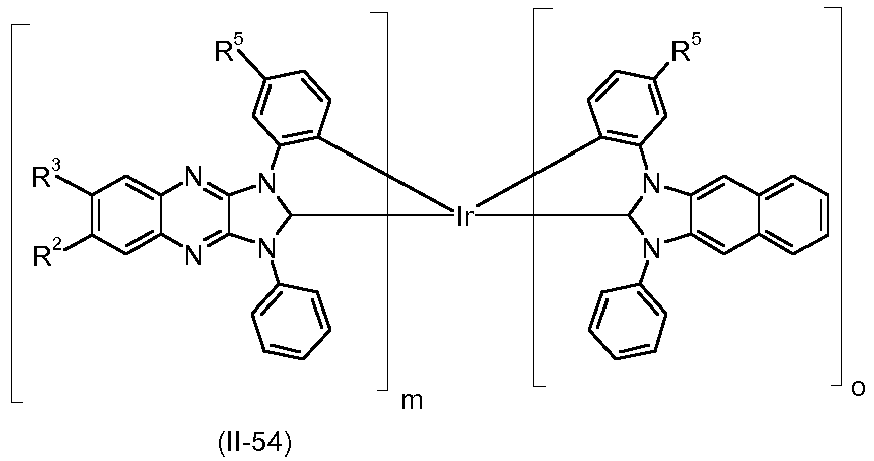


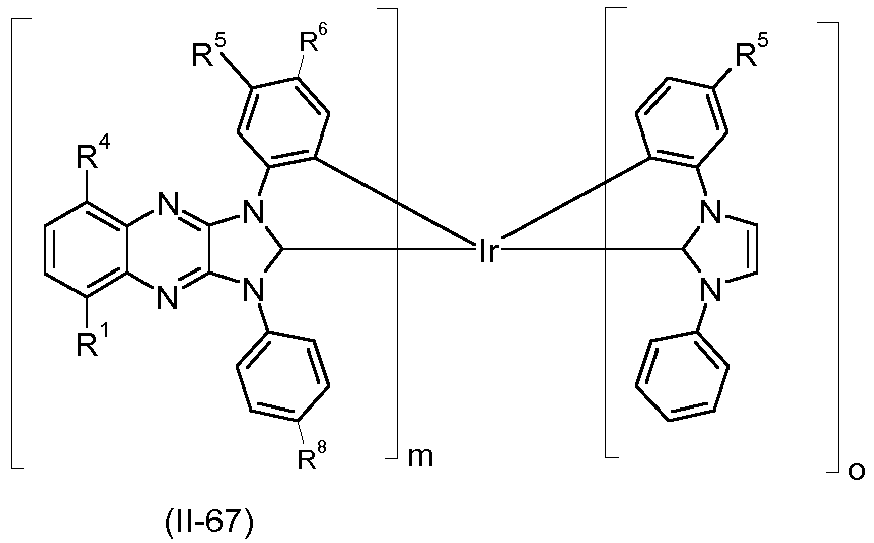


 R1, R2, R3 and R4are independently of each other - in each case - hydrogen, a C1-C8alkyl group, which can optionally be substituted by at least one substituent E and/or interrupted by D; a C3-C6cycloalkyl group, which can optionally be substituted by at least one substituent E; or a phenyl group, which can optionally be substituted by one or two groups G;preferably, in the case that R1, R2, R3 and/or R4 are a phenyl group, which can optionally be substituted by one or two groups G; R5, R6, R8 and R9 are not a phenyl group, which can optionally be substituted by one or two groups G;more preferably, R1, R2, R3 and R4 are independently of each other - in each case - hydrogen, a C1-C8alkyl group, which can optionally be substituted by at least one substituent E and/or interrupted by D; or a C3-C6cycloalkyl group, which can optionally be substituted by at least one substituent E;most preferably, R1 and R4 as well as R2 and R3 are identical; even further more preferably, R1, R2, R3 and R4 are hydrogen;R5 and R6are independently of each other - in each case - hydrogen, a C1-C8alkyl group, which can optionally be substituted by at least one substituent E and/or interrupted by D; or a C3-C6cycloalkyl group, which can optionally be substituted by at least one substituent E; or a phenyl group, which can optionally be substituted by one or two groups G;preferably, R5 and R6 are independently of each other - in each case - hydrogen, a C1-C8alkyl group, which can optionally be substituted by at least one substituent E and/or interrupted by D; or a C3-C6cycloalkyl group, which can optionally be substituted by at least one substituent E; or either R5 or R6, preferably R5, are a phenyl group, which can optionally be substituted by one or two groups G;more preferably, R5 and R6 are independently of each other - in each case - hydrogen, a C1-C8alkyl group, which can optionally be substituted by at least one substituent E and/orinterrupted by D; or a C3-C6cycloalkyl group, which can optionally be substituted by at least one substituent E; or either R5 or R6, preferably R5, is a phenyl group, which can optionally be substituted by one or two groups G; in a further preferred embodiment, R6 is a phenyl group, which can optionally be substituted by one or two groups G; more preferably, R5 and R6 are hydrogen;R8 and R9are independently of each other - in each case - hydrogen, a C1-C8alkyl group, which can optionally be substituted by at least one substituent E and/or interrupted by D; or a C3-C6cycloalkyl group, which can optionally be substituted by at least one substituent E; or a phenyl group, which can optionally be substituted by one or two groups G;preferably, R8 and R9 are independently of each other - in each case - hydrogen, a C1-C8alkyl group, which can optionally be substituted by at least one substituent E and/or interrupted by D; or a C3-C6cycloalkyl group, which can optionally be substituted by at least one substituent E; or either R8 or R9 are a phenyl group, which can optionally be substituted by one or two groups G;more preferably, R8 and R9 are independently of each other - in each case - a C1-C8alkyl group, which can optionally be substituted by at least one substituent E and/or interrupted by D; or a C3-C6cycloalkyl group, which can optionally be substituted by at least one substituent E; more preferably, R9 is hydrogen and R8 is hydrogen or a phenyl group which can be optionally substituted by one or two groups G; most preferably, R8 and R9 are hydrogen;most preferably, in the case that R6 and R8 are both present, R6 and R8 are identical; in the case that R5 and R9 are both present, R5 and R9 are identical;D is -S- or -O-;E is -OR69, -CN, CF3, C1-C8alkyl or F; preferably CF3 or C1-C8alkyl; preferably C1-C8alkyl;G is -OR69, -CN, CF3 or C1-C8alkyl; preferably C1-C8alkyl;R69 is a phenyl group, which can optionally be substituted by one or two C1-C8alkyl groups; an unsubstituted C1-C8alkyl group; or a C1-C8alkyl group, which is interrupted by -O-;m is 2 or 1, preferably 2; in the case that m is 2, the two ligands are identical or different, preferably, the two ligands are identical;o is 1 or 2, preferably 1; in the case that m is 2, the two ligands are identical or different, preferably, the two ligands are identical;and the sum of m + o is 3.
 - An organic electronic device, comprising at least one metal carbene complex according to any of claims 1 to 14 and 22 and 23.
- The organic electronic device according to claim 15, wherein the organic electronic device is selected from organic light-emitting diodes (OLEDs), organic photovoltaic cells (OPVs), organic field-effect transistors (OFETs) and light-emitting electrochemical cells (LEECs).
- A light-emitting layer comprising at least one metal carbene complex according to any of claims 1 to 14 and 22 and 23.
- The light-emitting layer according to claim 17, comprising at least one metal carbene complex according to any of claims 1 to 14 and 22 and 23 and at least one host material.
- An apparatus selected from the group consisting of stationary visual display units such as visual display units of computers, televisions, visual display units in printers, kitchen appliances and advertising panels, illuminations, information panels, and mobile visual display units such as visual display units in cellphones, tablet PCs, laptops, digital cameras, MP3 players, vehicles and destination displays on buses and trains; illumination units; keyboards; items of clothing; furniture; wallpaper, comprising the organic electronic device according to claim 15, or 16, or the emitting layer according to claim 17 or 18.
- Use of a metal carbene complex according to any of claims 1 to 14 and 22 and 23 for electrophotographic photoreceptors, photoelectric converters, organic solar cells (organic photovoltaics), switching elements, organic light emitting field effect transistors (OLEFETs), image sensors, dye lasers and electroluminescent devices.
- A process for preparing a metal carbene complex according to anyone of claims 1 to 14 and 22 and 23, comprising at least one ligand of formula (I')

wherein the residues R1, R2, R3, R4, R6, R7, R8, R9, R27 and R28 are defined in any one of claims 1 to 14, and
R5 is a C1-C18alkyl group, which can optionally be substituted by at least one substituent E and/or interrupted by D; a C3-C12cycloalkyl group, which can optionally be substituted by at least one substituent E; a C6-C14aryl group, which can optionally be substituted by at least one substituent G; a -N(C6-C14aryl)2 group, which can optionally be substituted by at least one substituent G; or a heteroaryl group comprising 3 to 11 ring atoms, which can optionally be substituted by at least one substituent G, interrupted by at least one of O, S and N;
comprising reacting metal carbene complex, wherein the metal is selected from Ir and Pt, comprising at least one ligand of formula of formula (III) R5'-Y (IV)whereinX' is Cl, Br, or I, especially Br;Y is -B(OH)2, -B(OY1)2,
 -SnR307R308 R309, wherein R307, R308 and R309 are identical or different and are H or C1-C6alkyl, wherein two radicals optionally form a common ring and these radicals are optionally branched or unbranched;ZnR310R311, wherein R310 is halogen and R311 is a C1-C10alkyl group, a C6-C12aryl group, or C1-C10alkenyl group; orSiR312R313R314, wherein R312, R313 and R314 are identical or different and are halogen, or C1-C6alkyl.
 - The metal carbene complex according to anyone of claims 1, 2, 4-14, wherein the radicals R1, R2, R3, R4, R5, R6, R7, R8, R9, R27 and R29 are hydrogen.
- The metal carbene complex according to anyone of claims 1 to 14, wherein the metal carbene complex has one of the following formulae


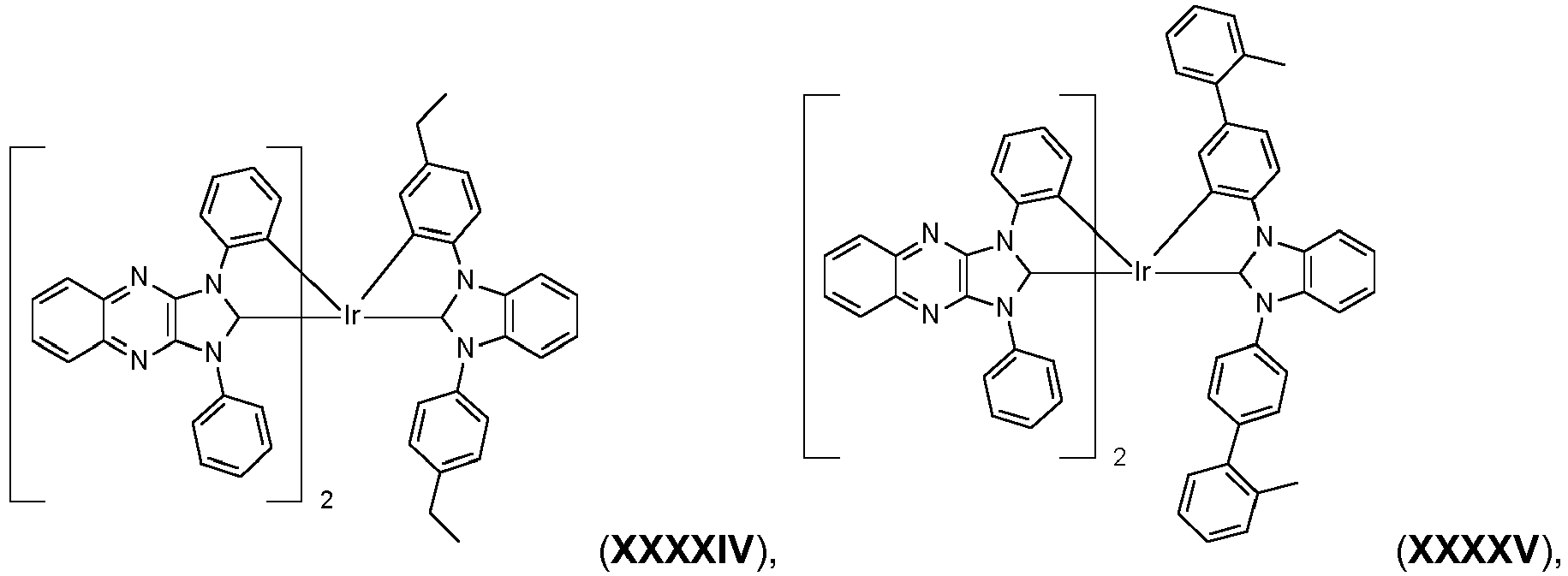


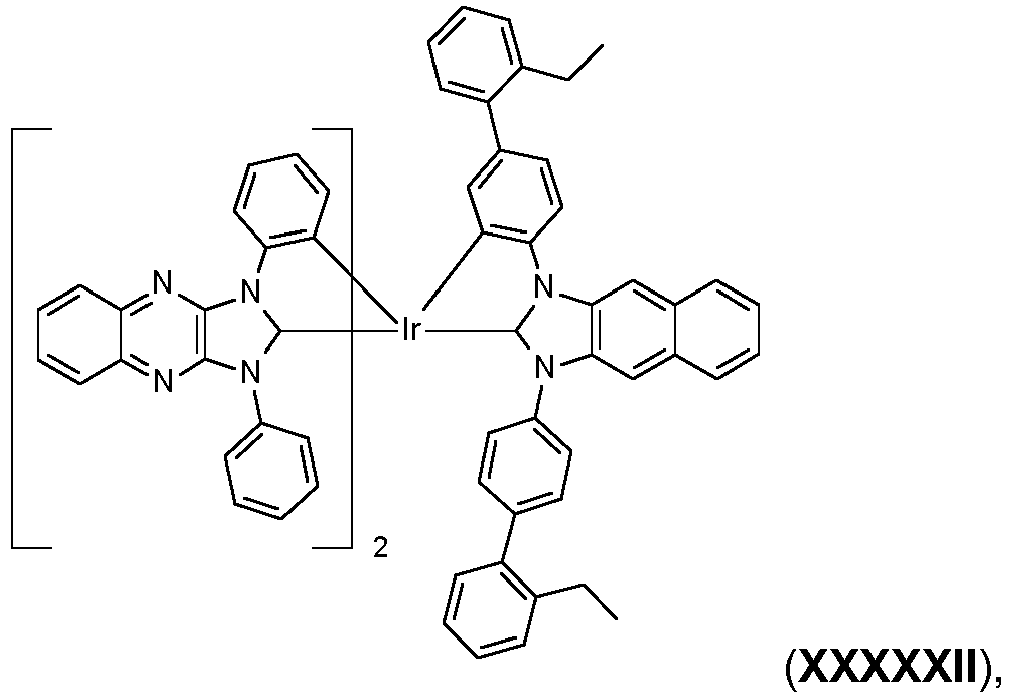


Priority Applications (1)
| Application Number | Priority Date | Filing Date | Title |
|---|---|---|---|
| EP18202308.5A EP3466957A1 (en) | 2014-08-08 | 2015-08-07 | Oled comprising an electroluminescent imidazo-quinoxaline carbene metal complexes |
Applications Claiming Priority (2)
| Application Number | Priority Date | Filing Date | Title |
|---|---|---|---|
| EP14180422 | 2014-08-08 | ||
| PCT/EP2015/068240 WO2016020516A1 (en) | 2014-08-08 | 2015-08-07 | Electroluminescent imidazo-quinoxaline carbene metal complexes |
Related Child Applications (2)
| Application Number | Title | Priority Date | Filing Date |
|---|---|---|---|
| EP18202308.5A Division-Into EP3466957A1 (en) | 2014-08-08 | 2015-08-07 | Oled comprising an electroluminescent imidazo-quinoxaline carbene metal complexes |
| EP18202308.5A Division EP3466957A1 (en) | 2014-08-08 | 2015-08-07 | Oled comprising an electroluminescent imidazo-quinoxaline carbene metal complexes |
Publications (2)
| Publication Number | Publication Date |
|---|---|
| EP3186264A1 EP3186264A1 (en) | 2017-07-05 |
| EP3186264B1 true EP3186264B1 (en) | 2018-11-28 |
Family
ID=51352402
Family Applications (2)
| Application Number | Title | Priority Date | Filing Date |
|---|---|---|---|
| EP18202308.5A Withdrawn EP3466957A1 (en) | 2014-08-08 | 2015-08-07 | Oled comprising an electroluminescent imidazo-quinoxaline carbene metal complexes |
| EP15750362.4A Active EP3186264B1 (en) | 2014-08-08 | 2015-08-07 | Electroluminescent imidazo-quinoxaline carbene metal complexes |
Family Applications Before (1)
| Application Number | Title | Priority Date | Filing Date |
|---|---|---|---|
| EP18202308.5A Withdrawn EP3466957A1 (en) | 2014-08-08 | 2015-08-07 | Oled comprising an electroluminescent imidazo-quinoxaline carbene metal complexes |
Country Status (7)
| Country | Link |
|---|---|
| US (1) | US10784448B2 (en) |
| EP (2) | EP3466957A1 (en) |
| JP (1) | JP6491315B2 (en) |
| KR (1) | KR102472084B1 (en) |
| CN (1) | CN107074896B (en) |
| TW (2) | TWI663173B (en) |
| WO (1) | WO2016020516A1 (en) |
Families Citing this family (14)
| Publication number | Priority date | Publication date | Assignee | Title |
|---|---|---|---|---|
| TW202030902A (en) | 2018-09-12 | 2020-08-16 | 德商麥克專利有限公司 | Electroluminescent devices |
| US20220048836A1 (en) | 2018-09-12 | 2022-02-17 | Merck Patent Gmbh | Materials for organic electroluminescent devices |
| TWI826522B (en) | 2018-09-12 | 2023-12-21 | 德商麥克專利有限公司 | Electroluminescent devices |
| EP3935129B1 (en) | 2019-03-04 | 2023-11-29 | Merck Patent GmbH | Ligands for nano-sized materials |
| JP7598873B2 (en) | 2019-04-11 | 2024-12-12 | メルク パテント ゲゼルシャフト ミット ベシュレンクテル ハフツング | Materials for organic electroluminescent devices |
| KR102937291B1 (en) | 2019-11-04 | 2026-03-11 | 유디씨 아일랜드 리미티드 | Materials for organic electroluminescent devices |
| TW202134252A (en) | 2019-11-12 | 2021-09-16 | 德商麥克專利有限公司 | Materials for organic electroluminescent devices |
| TW202136181A (en) | 2019-12-04 | 2021-10-01 | 德商麥克專利有限公司 | Materials for organic electroluminescent devices |
| CN115052865A (en) | 2020-01-29 | 2022-09-13 | 默克专利有限公司 | Benzimidazole Derivatives |
| US20230337537A1 (en) | 2020-03-23 | 2023-10-19 | Merck Patent Gmbh | Materials for organic electroluminescent devices |
| CN114105996B (en) * | 2021-12-01 | 2023-08-18 | 武汉天马微电子有限公司 | An organic compound and its application in electroluminescence |
| EP4619484A1 (en) | 2022-11-17 | 2025-09-24 | Merck Patent GmbH | Materials for organic electroluminescent devices |
| JP2024092444A (en) * | 2022-12-26 | 2024-07-08 | 株式会社ジャパンディスプレイ | Display device |
| WO2025210013A1 (en) | 2024-04-04 | 2025-10-09 | Merck Patent Gmbh | Compounds for electronic devices, in particular compounds for oleds |
Family Cites Families (122)
| Publication number | Priority date | Publication date | Assignee | Title |
|---|---|---|---|---|
| DE1135471B (en) | 1960-07-30 | 1962-08-30 | Basf Ag | Process for the preparation of 3-chloroquinoxaline derivatives |
| JPH02233684A (en) * | 1989-03-06 | 1990-09-17 | Nippon Soda Co Ltd | Pyridoimidazoquinoxalines and its production |
| JPH04110390A (en) * | 1990-08-31 | 1992-04-10 | Nec Corp | Organic thin-film el element |
| EP0600832A1 (en) | 1992-11-27 | 1994-06-08 | Ciba-Geigy Ag | Derivatives of diamino benzoic and diamino phthalic acid und their use as protein linase inhibitors |
| JP4011766B2 (en) | 1998-10-20 | 2007-11-21 | 富士フイルム株式会社 | Anti-reflection coating |
| JP3924648B2 (en) | 1999-11-02 | 2007-06-06 | ソニー株式会社 | Organic electroluminescence device |
| JP4110390B2 (en) * | 2002-03-19 | 2008-07-02 | セイコーエプソン株式会社 | Manufacturing method of semiconductor device |
| DE10338550A1 (en) | 2003-08-19 | 2005-03-31 | Basf Ag | Transition metal complexes with carbene ligands as emitters for organic light-emitting diodes (OLEDs) |
| DE102004057072A1 (en) | 2004-11-25 | 2006-06-01 | Basf Ag | Use of Transition Metal Carbene Complexes in Organic Light Emitting Diodes (OLEDs) |
| US7494722B2 (en) | 2005-02-23 | 2009-02-24 | Eastman Kodak Company | Tandem OLED having an organic intermediate connector |
| EP2264806B1 (en) | 2005-04-13 | 2019-03-27 | Novaled GmbH | Assembly for an organic pin-type LED and manufacturing method |
| WO2006114966A1 (en) | 2005-04-18 | 2006-11-02 | Konica Minolta Holdings, Inc. | Organic electroluminescent device, display and illuminating device |
| US20060240280A1 (en) | 2005-04-21 | 2006-10-26 | Eastman Kodak Company | OLED anode modification layer |
| JP5107237B2 (en) | 2005-05-30 | 2012-12-26 | チバ ホールディング インコーポレーテッド | Electroluminescent device |
| KR101540037B1 (en) | 2005-09-12 | 2015-07-29 | 가부시키가이샤 한도오따이 에네루기 켄큐쇼 | Quinoxaline derivative, and light emitting element, light emitting device, and electronic appliance using the same |
| US20070092755A1 (en) | 2005-10-26 | 2007-04-26 | Eastman Kodak Company | Organic element for low voltage electroluminescent devices |
| EP1786050B1 (en) | 2005-11-10 | 2010-06-23 | Novaled AG | Doped organic semiconductor material |
| WO2007071450A1 (en) | 2005-12-23 | 2007-06-28 | Novaled Ag | Electronic device with a layer structure of organic layers |
| WO2007101820A1 (en) | 2006-03-08 | 2007-09-13 | Ciba Holding Inc. | Palladium catalyzed polymerization reaction |
| US20070215889A1 (en) | 2006-03-20 | 2007-09-20 | Semiconductor Energy Laboratory Co., Ltd. | Aromatic amine compound, and light-emitting element, light-emitting device, and electronic appliance using the aromatic amine compound |
| EP1837927A1 (en) | 2006-03-22 | 2007-09-26 | Novaled AG | Use of heterocyclic radicals for doping of organic semiconductors |
| DE502006000749D1 (en) | 2006-03-21 | 2008-06-19 | Novaled Ag | Heterocyclic radical or diradical, their dimers, oligomers, polymers, dispiro compounds and polycycles, their use, organic semiconducting material and electronic component |
| KR20090007389A (en) | 2006-04-04 | 2009-01-16 | 바스프 에스이 | Transition metal complexes comprising one bicarbene ligand and one or two carbene ligands and their use in OLD |
| KR101431844B1 (en) | 2006-04-05 | 2014-08-25 | 바스프 에스이 | Heterogeneous ligand transition metal-carbene complexes and their use in organic light emitting diodes (OLEDs) |
| WO2007125714A1 (en) | 2006-04-26 | 2007-11-08 | Idemitsu Kosan Co., Ltd. | Aromatic amine derivative, and organic electroluminescence element using the same |
| KR101422864B1 (en) | 2006-06-22 | 2014-07-24 | 소니 주식회사 | Organic electroluminescent device using heterocyclic-containing arylamine derivative |
| EP2035526B1 (en) | 2006-06-26 | 2021-11-17 | UDC Ireland Limited | Use in oleds of transition metal carbene complexes that contain no cyclometallation via non-carbenes |
| CN101506192A (en) | 2006-08-23 | 2009-08-12 | 出光兴产株式会社 | Aromatic amine derivative and organic electroluminescent element using same |
| JP5722541B2 (en) | 2006-09-14 | 2015-05-20 | チバ ホールディング インコーポレーテッドCiba Holding Inc. | Heterocyclic bridged biphenyls and their use in OLEDs |
| EP1905768B1 (en) | 2006-09-29 | 2014-03-05 | Semiconductor Energy Laboratory Co., Ltd. | Quinoxaline derivative, and light-emitting device, electronic device using the quinoxaline derivative |
| JP5063992B2 (en) | 2006-11-20 | 2012-10-31 | ケミプロ化成株式会社 | Novel di (pyridylphenyl) derivative, electron transport material comprising the same, and organic electroluminescence device including the same |
| CN104091899B (en) | 2006-11-30 | 2017-01-11 | 株式会社半导体能源研究所 | Light-emitting device |
| DE102007012794B3 (en) | 2007-03-16 | 2008-06-19 | Novaled Ag | Pyrido [3,2-h] quinazolines and / or their 5,6-dihydro derivatives, their method of preparation and doped organic semiconductor material containing them |
| JPWO2008123178A1 (en) | 2007-03-23 | 2010-07-15 | 出光興産株式会社 | Organic EL device |
| EP3076451B1 (en) | 2007-04-30 | 2019-03-06 | Novaled GmbH | Oxocarbon, pseudo oxocarbon and radial compounds and their use |
| CN101827834B (en) | 2007-08-08 | 2015-11-25 | 通用显示公司 | Benzo-fused thiophene or benzo-fused furan compounds containing benzo[9,10]phenanthrene |
| EP2067778B1 (en) * | 2007-12-03 | 2016-08-17 | Semiconductor Energy Laboratory Co., Ltd. | Quinoxaline derivative, and light emitting element, light emitting device and electronic appliance using the same |
| JP5574598B2 (en) | 2007-12-03 | 2014-08-20 | 株式会社半導体エネルギー研究所 | Quinoxaline derivative, and light-emitting element, light-emitting device, and electronic device using quinoxaline derivative |
| US8057712B2 (en) | 2008-04-29 | 2011-11-15 | Novaled Ag | Radialene compounds and their use |
| EP2479234B1 (en) | 2008-05-13 | 2017-06-21 | Konica Minolta Holdings, Inc. | Organic electroluminescent element, display device and lighting device |
| CN103258964B (en) | 2008-05-16 | 2016-06-01 | 株式会社半导体能源研究所 | Luminous element, electronics and means of illumination |
| WO2009157498A1 (en) | 2008-06-25 | 2009-12-30 | Semiconductor Energy Laboratory Co., Ltd. | Organometallic complex, and lighting apparatus, and electronic device using the organometallic complex |
| WO2010002850A1 (en) | 2008-06-30 | 2010-01-07 | Universal Display Corporation | Hole transport materials containing triphenylene |
| KR101913462B1 (en) | 2008-06-30 | 2018-10-30 | 유니버셜 디스플레이 코포레이션 | Hole transport materials having a sulfer-containing group |
| WO2010027583A1 (en) | 2008-09-03 | 2010-03-11 | Universal Display Corporation | Phosphorescent materials |
| JP5479759B2 (en) | 2008-09-05 | 2014-04-23 | 株式会社半導体エネルギー研究所 | Benzoxazole derivatives, materials for light-emitting elements, light-emitting elements, light-emitting devices, and electronic devices |
| KR101529062B1 (en) | 2008-09-05 | 2015-06-16 | 가부시키가이샤 한도오따이 에네루기 켄큐쇼 | Organic semiconductor material and light-emitting element, light-emitting device, lighting system, and electronic device using the same |
| EP2166001B1 (en) | 2008-09-19 | 2011-07-20 | Semiconductor Energy Laboratory Co., Ltd. | Carbazole Derivative and Method for Producing the Same |
| US8283055B2 (en) | 2008-10-17 | 2012-10-09 | Semiconductor Energy Laboratory Co., Ltd. | Material for light-emitting element, light-emitting element, light-emitting device, electronic device, and lighting device |
| US9112171B2 (en) | 2008-10-23 | 2015-08-18 | Universal Display Corporation | Organic light emitting device and materials for use in same |
| EP2180029B1 (en) | 2008-10-23 | 2011-07-27 | Novaled AG | Radialene compounds and their use |
| JP5854839B2 (en) | 2008-11-11 | 2016-02-09 | ユニバーサル ディスプレイ コーポレイション | Phosphorescent emitter |
| US20100156957A1 (en) | 2008-12-19 | 2010-06-24 | Semiconductor Energy Laboratory Co., Ltd. | Organic compound, anthracene derivative, and light-emitting elements, light-emitting devices, electronic devices, and lighting devices using the anthracene derivative |
| KR101693903B1 (en) | 2009-01-07 | 2017-01-06 | 바스프 에스이 | Silyl- and heteroatom-substituted compounds selected from carbazoles, dibenzofurans, dibenzothiophenes and dibenzophospholes, and use thereof in organic electronics |
| EP2401254B1 (en) | 2009-02-26 | 2013-06-19 | Novaled AG | Quinone compounds as dopants in organic electronics |
| US8367222B2 (en) | 2009-02-27 | 2013-02-05 | Idemitsu Kosan Co., Ltd. | Organic electroluminescent device |
| US8722205B2 (en) | 2009-03-23 | 2014-05-13 | Universal Display Corporation | Heteroleptic iridium complex |
| EP2246862A1 (en) | 2009-04-27 | 2010-11-03 | Novaled AG | Organic electronic device comprising an organic semiconducting material |
| US8603642B2 (en) | 2009-05-13 | 2013-12-10 | Global Oled Technology Llc | Internal connector for organic electronic devices |
| US20100295445A1 (en) | 2009-05-22 | 2010-11-25 | Idemitsu Kosan Co., Ltd. | Organic electroluminescent device |
| US9028979B2 (en) | 2009-06-18 | 2015-05-12 | Basf Se | Phenanthroazole compounds as hole transporting materials for electro luminescent devices |
| WO2011004639A1 (en) | 2009-07-07 | 2011-01-13 | コニカミノルタホールディングス株式会社 | Organic electroluminescent element, novel compound, lighting device and display device |
| JP5040970B2 (en) | 2009-07-24 | 2012-10-03 | 富士通株式会社 | System control server, storage system, setting method and setting program |
| KR101431644B1 (en) | 2009-08-10 | 2014-08-21 | 롬엔드하스전자재료코리아유한회사 | Novel organic electroluminescent compounds and organic electroluminescent devices containing them |
| EP2513125B1 (en) | 2009-12-14 | 2014-10-29 | Basf Se | Metal complexes with diazabenzimidazolecarbene ligands and their use in oleds |
| EP2662369B1 (en) | 2009-12-23 | 2015-09-23 | Semiconductor Energy Laboratory Co., Ltd. | Benzimidazol-2-yl-phenyl compound, light-emitting element, light-emitting device, electronic device, and lighting device |
| DE102010004453A1 (en) | 2010-01-12 | 2011-07-14 | Novaled AG, 01307 | Organic light emitting component has connection units formed with p-doped and n-doped hole transport layers and n-type and p-type dot layers formed with organic n-dopant and p-dopant materials respectively |
| US8288187B2 (en) | 2010-01-20 | 2012-10-16 | Universal Display Corporation | Electroluminescent devices for lighting applications |
| TWI620747B (en) | 2010-03-01 | 2018-04-11 | 半導體能源研究所股份有限公司 | Heterocyclic compound and light-emitting device |
| EP2366753B1 (en) | 2010-03-02 | 2015-06-17 | Semiconductor Energy Laboratory Co., Ltd. | Light-Emitting Element and Lighting Device |
| US9175211B2 (en) | 2010-03-03 | 2015-11-03 | Universal Display Corporation | Phosphorescent materials |
| KR101421365B1 (en) | 2010-04-20 | 2014-07-18 | 이데미쓰 고산 가부시키가이샤 | Bis-carbazole derivative, material for organic electroluminescent element and organic electroluminescent element using same |
| JP5646733B2 (en) | 2010-04-28 | 2014-12-24 | ユニバーサル ディスプレイ コーポレイション | Premixed material deposition |
| US8968887B2 (en) | 2010-04-28 | 2015-03-03 | Universal Display Corporation | Triphenylene-benzofuran/benzothiophene/benzoselenophene compounds with substituents joining to form fused rings |
| US9073948B2 (en) | 2010-05-14 | 2015-07-07 | Universal Display Corporation | Azaborine compounds as host materials and dopants for PHOLEDs |
| US8993125B2 (en) | 2010-05-21 | 2015-03-31 | Semiconductor Energy Laboratory Co., Ltd. | Triazole derivative, and light-emitting element, light-emitting device, electronic device and lighting device using the triazole derivative |
| EP2582769B1 (en) | 2010-06-18 | 2014-11-19 | Basf Se | Organic electronic devices comprising a layer of a dibenzofurane compound and a 8-hydroxyquinolinolato earth alkaline metal, or alkali metal complex |
| WO2011157779A1 (en) | 2010-06-18 | 2011-12-22 | Basf Se | Organic electronic devices comprising a layer of a pyridine compound and a 8-hydroxyquinolinolato earth alkaline metal, or alkali metal complex |
| JP6072681B2 (en) | 2010-07-08 | 2017-02-01 | ユー・ディー・シー アイルランド リミテッド | Dibenzofurans and dibenzothiophenes substituted by nitrogen-bonded 5-membered heterocycles and their use in organic electronics |
| WO2012014621A1 (en) | 2010-07-29 | 2012-02-02 | コニカミノルタホールディングス株式会社 | Transparent conductive film and organic electroluminescent element |
| KR101925158B1 (en) | 2010-08-02 | 2018-12-04 | 가부시키가이샤 한도오따이 에네루기 켄큐쇼 | Triazole derivative, heterocyclic compound, light-emitting element, light-emitting device, electronic device and lighting device |
| ES2386564B1 (en) | 2010-08-06 | 2013-04-26 | Telefónica, S.A. | METHOD FOR MANAGING PRESENCE INFORMATION. |
| JP5770289B2 (en) | 2010-08-20 | 2015-08-26 | ユニバーサル ディスプレイ コーポレイション | Bicarbazole compounds for OLED |
| JP5815341B2 (en) | 2010-09-09 | 2015-11-17 | 株式会社半導体エネルギー研究所 | Heterocyclic compounds |
| WO2012045710A1 (en) | 2010-10-07 | 2012-04-12 | Basf Se | Phenanthro[9,10-b]furans for electronic applications |
| KR101436288B1 (en) | 2010-10-22 | 2014-08-29 | 가부시키가이샤 한도오따이 에네루기 켄큐쇼 | Compound |
| US9287339B2 (en) | 2010-10-28 | 2016-03-15 | Samsung Display Co., Ltd. | Organic light emitting display device and method of manufacturing the same |
| KR101950363B1 (en) | 2010-10-29 | 2019-02-20 | 가부시키가이샤 한도오따이 에네루기 켄큐쇼 | Phenanthrene compound, light-emitting element, light-emitting device, electronic device, and lighting device |
| EP2452946B1 (en) | 2010-11-16 | 2014-05-07 | Novaled AG | Pyridylphosphinoxides for organic electronic device and organic electronic device |
| TWI520952B (en) | 2010-11-18 | 2016-02-11 | 半導體能源研究所股份有限公司 | Oxadiazole derivative, and light-emitting element, light-emitting device, electronic device, and lighting device using the oxadiazole derivative |
| KR101910030B1 (en) | 2010-11-30 | 2018-10-19 | 가부시키가이샤 한도오따이 에네루기 켄큐쇼 | Benzoxazole derivative, light-emitting element, light-emitting device, electronic device, and lighting device |
| JP5872861B2 (en) | 2010-11-30 | 2016-03-01 | 株式会社半導体エネルギー研究所 | Carbazole compounds |
| WO2012108879A1 (en) | 2011-02-11 | 2012-08-16 | Universal Display Corporation | Organic light emitting device and materials for use in same |
| JP5964328B2 (en) | 2011-02-11 | 2016-08-03 | ユニバーサル ディスプレイ コーポレイション | ORGANIC LIGHT EMITTING DEVICE AND MATERIAL FOR USE IN THE ORGANIC LIGHT EMITTING DEVICE |
| US9368735B2 (en) | 2011-02-15 | 2016-06-14 | Konica Minolta, Inc. | Organic electroluminescence element and illumination device |
| JP5839027B2 (en) | 2011-02-22 | 2016-01-06 | コニカミノルタ株式会社 | ORGANIC ELECTROLUMINESCENCE ELEMENT, ITS MANUFACTURING METHOD, LIGHTING DEVICE, AND DISPLAY DEVICE |
| TWI526418B (en) | 2011-03-01 | 2016-03-21 | 諾瓦發光二極體股份公司 | Organic semiconductor materials and organic compositions |
| US8883322B2 (en) | 2011-03-08 | 2014-11-11 | Universal Display Corporation | Pyridyl carbene phosphorescent emitters |
| WO2012130709A1 (en) | 2011-03-25 | 2012-10-04 | Basf Se | 4h-imidazo[1,2-a]imidazoles for electronic applications |
| JP5821951B2 (en) | 2011-04-26 | 2015-11-24 | コニカミノルタ株式会社 | ORGANIC ELECTROLUMINESCENT ELEMENT AND LIGHTING DEVICE |
| US10158089B2 (en) | 2011-05-27 | 2018-12-18 | Universal Display Corporation | Organic electroluminescent materials and devices |
| KR20120135363A (en) | 2011-06-01 | 2012-12-13 | 엘지디스플레이 주식회사 | Blue phosphorescent compound and organic electroluminescence device using the same |
| WO2012170461A1 (en) * | 2011-06-08 | 2012-12-13 | Universal Display Corporation | Heteroleptic iridium carbene complexes and light emitting device using them |
| KR101950460B1 (en) | 2011-06-14 | 2019-02-20 | 유디씨 아일랜드 리미티드 | Metal complexes comprising azabenzimidazole carbene ligands and the use thereof in oleds |
| WO2013022419A1 (en) | 2011-08-05 | 2013-02-14 | Universal Display Corporation | Phosphorescent organic light emitting devices combined with hole transport material having high operating stability |
| WO2013050401A2 (en) | 2011-10-04 | 2013-04-11 | Basf Se | Polymers based on benzodiones |
| US9193745B2 (en) | 2011-11-15 | 2015-11-24 | Universal Display Corporation | Heteroleptic iridium complex |
| JP6165760B2 (en) | 2011-11-30 | 2017-07-19 | ノヴァレッド ゲーエムベーハー | Organic electronic equipment |
| WO2013084881A1 (en) | 2011-12-05 | 2013-06-13 | 出光興産株式会社 | Material for organic electroluminescent element and organic electroluminescent element |
| US10211413B2 (en) | 2012-01-17 | 2019-02-19 | Universal Display Corporation | Organic electroluminescent materials and devices |
| US9705099B2 (en) | 2012-01-26 | 2017-07-11 | Universal Display Corporation | Phosphorescent organic light emitting devices having a hole transporting cohost material in the emissive region |
| US9331287B2 (en) | 2012-02-27 | 2016-05-03 | Lg Chem, Ltd. | Organic light emitting diode |
| JP6100368B2 (en) | 2012-06-14 | 2017-03-22 | ユニバーサル ディスプレイ コーポレイション | Biscarbazole derivative host material and green light emitter for OLED light emitting region |
| US9620724B2 (en) | 2012-07-10 | 2017-04-11 | Udc Ireland Limited | Benzimidazo[1,2-A]benzimidazole derivatives for electronic applications |
| JP2014027041A (en) * | 2012-07-25 | 2014-02-06 | Fujifilm Corp | Organic material for deposition and organic photoelectric conversion element obtained by using the same, imaging element, deposition method, and method for manufacturing organic photoelectric conversion element |
| CN113943306A (en) | 2012-09-20 | 2022-01-18 | Udc 爱尔兰有限责任公司 | Azadibenzofurans for electronic applications and electronic devices comprising same |
| US10374172B2 (en) | 2013-03-20 | 2019-08-06 | Udc Ireland Limited | Azabenzimidazole carbene complexes as efficiency booster in OLEDs |
| KR102464739B1 (en) | 2013-07-02 | 2022-11-09 | 유디씨 아일랜드 리미티드 | Monosubstituted diazabenzimidazole carbene metal complexes for use in organic light emitting diodes |
| WO2015014791A1 (en) | 2013-07-30 | 2015-02-05 | Basf Se | Benzimidazolo[2,1-b][1,3]benzothiazoles for electronic applications |
| ITMI20131337A1 (en) | 2013-08-05 | 2015-02-06 | Andrea Bellani | CAN BE CONNECTED TO A WHEEL OF A TERRESTRIAL VEHICLE EQUIPPED WITH AN INFLATABLE TIRE, TO ALLOW THE VEHICLE TO BE CIRCULATED WHEN THAT TIRE IS DEFLATED |
| WO2015037548A1 (en) | 2013-09-12 | 2015-03-19 | Semiconductor Energy Laboratory Co., Ltd. | Organometallic iridium complex, light-emitting element, light-emitting device, electronic device, and lighting device |
| TWI685128B (en) | 2013-10-16 | 2020-02-11 | 日商半導體能源研究所股份有限公司 | Light-emitting element, light-emitting device, electronic device, and lighting device |
-
2015
- 2015-08-07 JP JP2017506869A patent/JP6491315B2/en active Active
- 2015-08-07 US US15/502,394 patent/US10784448B2/en active Active
- 2015-08-07 EP EP18202308.5A patent/EP3466957A1/en not_active Withdrawn
- 2015-08-07 CN CN201580056604.0A patent/CN107074896B/en active Active
- 2015-08-07 WO PCT/EP2015/068240 patent/WO2016020516A1/en not_active Ceased
- 2015-08-07 EP EP15750362.4A patent/EP3186264B1/en active Active
- 2015-08-07 KR KR1020177004964A patent/KR102472084B1/en active Active
- 2015-08-07 TW TW104125837A patent/TWI663173B/en active
- 2015-08-07 TW TW108118607A patent/TWI690534B/en active
Non-Patent Citations (1)
| Title |
|---|
| None * |
Also Published As
| Publication number | Publication date |
|---|---|
| TW201619174A (en) | 2016-06-01 |
| US10784448B2 (en) | 2020-09-22 |
| CN107074896B (en) | 2021-04-13 |
| TWI663173B (en) | 2019-06-21 |
| EP3186264A1 (en) | 2017-07-05 |
| KR102472084B1 (en) | 2022-11-29 |
| JP2017525694A (en) | 2017-09-07 |
| JP6491315B2 (en) | 2019-03-27 |
| WO2016020516A1 (en) | 2016-02-11 |
| TWI690534B (en) | 2020-04-11 |
| US20170237020A1 (en) | 2017-08-17 |
| EP3466957A1 (en) | 2019-04-10 |
| KR20170039693A (en) | 2017-04-11 |
| CN107074896A (en) | 2017-08-18 |
| TW201936622A (en) | 2019-09-16 |
Similar Documents
| Publication | Publication Date | Title |
|---|---|---|
| US10784448B2 (en) | Electroluminescent imidazo-quinoxaline carbene metal complexes | |
| EP3640252B1 (en) | 4h-imidazo[1,2-a]imidazoles for electronic applications | |
| EP2802594B1 (en) | Metal complexes with dibenzo[f,h]quinoxalines | |
| US10249827B2 (en) | Azadibenzofurans for electronic applications | |
| EP3027629B1 (en) | Luminescent diazabenzimidazole carbene metal complexes | |
| EP3145928B1 (en) | Fluorescent organic light emitting elements having high efficiency | |
| JP2023526758A (en) | Organic molecules for optoelectronic devices | |
| EP3063153B1 (en) | Azadibenzothiophenes for electronic applications | |
| TWI797429B (en) | Pyrromethene metal complex, light-emitting device material and light-emitting device | |
| JP2024514596A (en) | Organic molecules for optoelectronic devices | |
| EP4656637A1 (en) | Compound, and light-emitting element, display device, lighting device and photosensitizer each containing same | |
| JP2024514692A (en) | Organic molecules for optoelectronic devices | |
| JP2024131253A (en) | Organic electroluminescent device, organic EL display device, and organic EL lighting |
Legal Events
| Date | Code | Title | Description |
|---|---|---|---|
| STAA | Information on the status of an ep patent application or granted ep patent |
Free format text: STATUS: THE INTERNATIONAL PUBLICATION HAS BEEN MADE |
|
| PUAI | Public reference made under article 153(3) epc to a published international application that has entered the european phase |
Free format text: ORIGINAL CODE: 0009012 |
|
| STAA | Information on the status of an ep patent application or granted ep patent |
Free format text: STATUS: REQUEST FOR EXAMINATION WAS MADE |
|
| 17P | Request for examination filed |
Effective date: 20170223 |
|
| AK | Designated contracting states |
Kind code of ref document: A1 Designated state(s): AL AT BE BG CH CY CZ DE DK EE ES FI FR GB GR HR HU IE IS IT LI LT LU LV MC MK MT NL NO PL PT RO RS SE SI SK SM TR |
|
| AX | Request for extension of the european patent |
Extension state: BA ME |
|
| DAV | Request for validation of the european patent (deleted) | ||
| DAX | Request for extension of the european patent (deleted) | ||
| GRAP | Despatch of communication of intention to grant a patent |
Free format text: ORIGINAL CODE: EPIDOSNIGR1 |
|
| STAA | Information on the status of an ep patent application or granted ep patent |
Free format text: STATUS: GRANT OF PATENT IS INTENDED |
|
| RIC1 | Information provided on ipc code assigned before grant |
Ipc: C09K 11/02 20060101ALI20180125BHEP Ipc: H01L 51/00 20060101ALI20180125BHEP Ipc: C07F 15/00 20060101AFI20180125BHEP Ipc: H05B 33/10 20060101ALI20180125BHEP Ipc: C09K 11/06 20060101ALI20180125BHEP Ipc: H01L 51/50 20060101ALI20180125BHEP |
|
| INTG | Intention to grant announced |
Effective date: 20180219 |
|
| GRAJ | Information related to disapproval of communication of intention to grant by the applicant or resumption of examination proceedings by the epo deleted |
Free format text: ORIGINAL CODE: EPIDOSDIGR1 |
|
| STAA | Information on the status of an ep patent application or granted ep patent |
Free format text: STATUS: REQUEST FOR EXAMINATION WAS MADE |
|
| GRAP | Despatch of communication of intention to grant a patent |
Free format text: ORIGINAL CODE: EPIDOSNIGR1 |
|
| STAA | Information on the status of an ep patent application or granted ep patent |
Free format text: STATUS: GRANT OF PATENT IS INTENDED |
|
| INTC | Intention to grant announced (deleted) | ||
| INTG | Intention to grant announced |
Effective date: 20180608 |
|
| GRAS | Grant fee paid |
Free format text: ORIGINAL CODE: EPIDOSNIGR3 |
|
| GRAA | (expected) grant |
Free format text: ORIGINAL CODE: 0009210 |
|
| STAA | Information on the status of an ep patent application or granted ep patent |
Free format text: STATUS: THE PATENT HAS BEEN GRANTED |
|
| AK | Designated contracting states |
Kind code of ref document: B1 Designated state(s): AL AT BE BG CH CY CZ DE DK EE ES FI FR GB GR HR HU IE IS IT LI LT LU LV MC MK MT NL NO PL PT RO RS SE SI SK SM TR |
|
| REG | Reference to a national code |
Ref country code: CH Ref legal event code: EP |
|
| REG | Reference to a national code |
Ref country code: AT Ref legal event code: REF Ref document number: 1070091 Country of ref document: AT Kind code of ref document: T Effective date: 20181215 |
|
| REG | Reference to a national code |
Ref country code: DE Ref legal event code: R096 Ref document number: 602015020460 Country of ref document: DE |
|
| REG | Reference to a national code |
Ref country code: IE Ref legal event code: FG4D |
|
| REG | Reference to a national code |
Ref country code: NL Ref legal event code: MP Effective date: 20181128 |
|
| REG | Reference to a national code |
Ref country code: LT Ref legal event code: MG4D |
|
| REG | Reference to a national code |
Ref country code: AT Ref legal event code: MK05 Ref document number: 1070091 Country of ref document: AT Kind code of ref document: T Effective date: 20181128 |
|
| PG25 | Lapsed in a contracting state [announced via postgrant information from national office to epo] |
Ref country code: FI Free format text: LAPSE BECAUSE OF FAILURE TO SUBMIT A TRANSLATION OF THE DESCRIPTION OR TO PAY THE FEE WITHIN THE PRESCRIBED TIME-LIMIT Effective date: 20181128 Ref country code: LV Free format text: LAPSE BECAUSE OF FAILURE TO SUBMIT A TRANSLATION OF THE DESCRIPTION OR TO PAY THE FEE WITHIN THE PRESCRIBED TIME-LIMIT Effective date: 20181128 Ref country code: LT Free format text: LAPSE BECAUSE OF FAILURE TO SUBMIT A TRANSLATION OF THE DESCRIPTION OR TO PAY THE FEE WITHIN THE PRESCRIBED TIME-LIMIT Effective date: 20181128 Ref country code: AT Free format text: LAPSE BECAUSE OF FAILURE TO SUBMIT A TRANSLATION OF THE DESCRIPTION OR TO PAY THE FEE WITHIN THE PRESCRIBED TIME-LIMIT Effective date: 20181128 Ref country code: HR Free format text: LAPSE BECAUSE OF FAILURE TO SUBMIT A TRANSLATION OF THE DESCRIPTION OR TO PAY THE FEE WITHIN THE PRESCRIBED TIME-LIMIT Effective date: 20181128 Ref country code: BG Free format text: LAPSE BECAUSE OF FAILURE TO SUBMIT A TRANSLATION OF THE DESCRIPTION OR TO PAY THE FEE WITHIN THE PRESCRIBED TIME-LIMIT Effective date: 20190228 Ref country code: ES Free format text: LAPSE BECAUSE OF FAILURE TO SUBMIT A TRANSLATION OF THE DESCRIPTION OR TO PAY THE FEE WITHIN THE PRESCRIBED TIME-LIMIT Effective date: 20181128 Ref country code: IS Free format text: LAPSE BECAUSE OF FAILURE TO SUBMIT A TRANSLATION OF THE DESCRIPTION OR TO PAY THE FEE WITHIN THE PRESCRIBED TIME-LIMIT Effective date: 20190328 Ref country code: NO Free format text: LAPSE BECAUSE OF FAILURE TO SUBMIT A TRANSLATION OF THE DESCRIPTION OR TO PAY THE FEE WITHIN THE PRESCRIBED TIME-LIMIT Effective date: 20190228 |
|
| PG25 | Lapsed in a contracting state [announced via postgrant information from national office to epo] |
Ref country code: AL Free format text: LAPSE BECAUSE OF FAILURE TO SUBMIT A TRANSLATION OF THE DESCRIPTION OR TO PAY THE FEE WITHIN THE PRESCRIBED TIME-LIMIT Effective date: 20181128 Ref country code: PT Free format text: LAPSE BECAUSE OF FAILURE TO SUBMIT A TRANSLATION OF THE DESCRIPTION OR TO PAY THE FEE WITHIN THE PRESCRIBED TIME-LIMIT Effective date: 20190328 Ref country code: GR Free format text: LAPSE BECAUSE OF FAILURE TO SUBMIT A TRANSLATION OF THE DESCRIPTION OR TO PAY THE FEE WITHIN THE PRESCRIBED TIME-LIMIT Effective date: 20190301 Ref country code: SE Free format text: LAPSE BECAUSE OF FAILURE TO SUBMIT A TRANSLATION OF THE DESCRIPTION OR TO PAY THE FEE WITHIN THE PRESCRIBED TIME-LIMIT Effective date: 20181128 |
|
| PG25 | Lapsed in a contracting state [announced via postgrant information from national office to epo] |
Ref country code: NL Free format text: LAPSE BECAUSE OF FAILURE TO SUBMIT A TRANSLATION OF THE DESCRIPTION OR TO PAY THE FEE WITHIN THE PRESCRIBED TIME-LIMIT Effective date: 20181128 |
|
| PG25 | Lapsed in a contracting state [announced via postgrant information from national office to epo] |
Ref country code: CZ Free format text: LAPSE BECAUSE OF FAILURE TO SUBMIT A TRANSLATION OF THE DESCRIPTION OR TO PAY THE FEE WITHIN THE PRESCRIBED TIME-LIMIT Effective date: 20181128 Ref country code: IT Free format text: LAPSE BECAUSE OF FAILURE TO SUBMIT A TRANSLATION OF THE DESCRIPTION OR TO PAY THE FEE WITHIN THE PRESCRIBED TIME-LIMIT Effective date: 20181128 Ref country code: PL Free format text: LAPSE BECAUSE OF FAILURE TO SUBMIT A TRANSLATION OF THE DESCRIPTION OR TO PAY THE FEE WITHIN THE PRESCRIBED TIME-LIMIT Effective date: 20181128 Ref country code: DK Free format text: LAPSE BECAUSE OF FAILURE TO SUBMIT A TRANSLATION OF THE DESCRIPTION OR TO PAY THE FEE WITHIN THE PRESCRIBED TIME-LIMIT Effective date: 20181128 |
|
| REG | Reference to a national code |
Ref country code: DE Ref legal event code: R097 Ref document number: 602015020460 Country of ref document: DE |
|
| PG25 | Lapsed in a contracting state [announced via postgrant information from national office to epo] |
Ref country code: SM Free format text: LAPSE BECAUSE OF FAILURE TO SUBMIT A TRANSLATION OF THE DESCRIPTION OR TO PAY THE FEE WITHIN THE PRESCRIBED TIME-LIMIT Effective date: 20181128 Ref country code: EE Free format text: LAPSE BECAUSE OF FAILURE TO SUBMIT A TRANSLATION OF THE DESCRIPTION OR TO PAY THE FEE WITHIN THE PRESCRIBED TIME-LIMIT Effective date: 20181128 Ref country code: SK Free format text: LAPSE BECAUSE OF FAILURE TO SUBMIT A TRANSLATION OF THE DESCRIPTION OR TO PAY THE FEE WITHIN THE PRESCRIBED TIME-LIMIT Effective date: 20181128 Ref country code: RO Free format text: LAPSE BECAUSE OF FAILURE TO SUBMIT A TRANSLATION OF THE DESCRIPTION OR TO PAY THE FEE WITHIN THE PRESCRIBED TIME-LIMIT Effective date: 20181128 |
|
| PLBE | No opposition filed within time limit |
Free format text: ORIGINAL CODE: 0009261 |
|
| STAA | Information on the status of an ep patent application or granted ep patent |
Free format text: STATUS: NO OPPOSITION FILED WITHIN TIME LIMIT |
|
| PG25 | Lapsed in a contracting state [announced via postgrant information from national office to epo] |
Ref country code: SI Free format text: LAPSE BECAUSE OF FAILURE TO SUBMIT A TRANSLATION OF THE DESCRIPTION OR TO PAY THE FEE WITHIN THE PRESCRIBED TIME-LIMIT Effective date: 20181128 |
|
| 26N | No opposition filed |
Effective date: 20190829 |
|
| PG25 | Lapsed in a contracting state [announced via postgrant information from national office to epo] |
Ref country code: TR Free format text: LAPSE BECAUSE OF FAILURE TO SUBMIT A TRANSLATION OF THE DESCRIPTION OR TO PAY THE FEE WITHIN THE PRESCRIBED TIME-LIMIT Effective date: 20181128 |
|
| GBPC | Gb: european patent ceased through non-payment of renewal fee |
Effective date: 20190807 |
|
| PG25 | Lapsed in a contracting state [announced via postgrant information from national office to epo] |
Ref country code: LI Free format text: LAPSE BECAUSE OF NON-PAYMENT OF DUE FEES Effective date: 20190831 Ref country code: CH Free format text: LAPSE BECAUSE OF NON-PAYMENT OF DUE FEES Effective date: 20190831 Ref country code: LU Free format text: LAPSE BECAUSE OF NON-PAYMENT OF DUE FEES Effective date: 20190807 Ref country code: MC Free format text: LAPSE BECAUSE OF FAILURE TO SUBMIT A TRANSLATION OF THE DESCRIPTION OR TO PAY THE FEE WITHIN THE PRESCRIBED TIME-LIMIT Effective date: 20181128 |
|
| REG | Reference to a national code |
Ref country code: BE Ref legal event code: MM Effective date: 20190831 |
|
| PG25 | Lapsed in a contracting state [announced via postgrant information from national office to epo] |
Ref country code: IE Free format text: LAPSE BECAUSE OF NON-PAYMENT OF DUE FEES Effective date: 20190807 |
|
| PG25 | Lapsed in a contracting state [announced via postgrant information from national office to epo] |
Ref country code: BE Free format text: LAPSE BECAUSE OF NON-PAYMENT OF DUE FEES Effective date: 20190831 Ref country code: GB Free format text: LAPSE BECAUSE OF NON-PAYMENT OF DUE FEES Effective date: 20190807 |
|
| PG25 | Lapsed in a contracting state [announced via postgrant information from national office to epo] |
Ref country code: RS Free format text: LAPSE BECAUSE OF FAILURE TO SUBMIT A TRANSLATION OF THE DESCRIPTION OR TO PAY THE FEE WITHIN THE PRESCRIBED TIME-LIMIT Effective date: 20181128 |
|
| PG25 | Lapsed in a contracting state [announced via postgrant information from national office to epo] |
Ref country code: CY Free format text: LAPSE BECAUSE OF FAILURE TO SUBMIT A TRANSLATION OF THE DESCRIPTION OR TO PAY THE FEE WITHIN THE PRESCRIBED TIME-LIMIT Effective date: 20181128 |
|
| PG25 | Lapsed in a contracting state [announced via postgrant information from national office to epo] |
Ref country code: MT Free format text: LAPSE BECAUSE OF FAILURE TO SUBMIT A TRANSLATION OF THE DESCRIPTION OR TO PAY THE FEE WITHIN THE PRESCRIBED TIME-LIMIT Effective date: 20181128 Ref country code: HU Free format text: LAPSE BECAUSE OF FAILURE TO SUBMIT A TRANSLATION OF THE DESCRIPTION OR TO PAY THE FEE WITHIN THE PRESCRIBED TIME-LIMIT; INVALID AB INITIO Effective date: 20150807 |
|
| PG25 | Lapsed in a contracting state [announced via postgrant information from national office to epo] |
Ref country code: MK Free format text: LAPSE BECAUSE OF FAILURE TO SUBMIT A TRANSLATION OF THE DESCRIPTION OR TO PAY THE FEE WITHIN THE PRESCRIBED TIME-LIMIT Effective date: 20181128 |
|
| P01 | Opt-out of the competence of the unified patent court (upc) registered |
Effective date: 20230424 |
|
| PGFP | Annual fee paid to national office [announced via postgrant information from national office to epo] |
Ref country code: DE Payment date: 20250827 Year of fee payment: 11 |
|
| PGFP | Annual fee paid to national office [announced via postgrant information from national office to epo] |
Ref country code: FR Payment date: 20250825 Year of fee payment: 11 |