EP3177244B2 - Wundauflage - Google Patents
Wundauflage Download PDFInfo
- Publication number
- EP3177244B2 EP3177244B2 EP15763066.6A EP15763066A EP3177244B2 EP 3177244 B2 EP3177244 B2 EP 3177244B2 EP 15763066 A EP15763066 A EP 15763066A EP 3177244 B2 EP3177244 B2 EP 3177244B2
- Authority
- EP
- European Patent Office
- Prior art keywords
- wound
- layer
- contact layer
- wound contact
- dressing
- Prior art date
- Legal status (The legal status is an assumption and is not a legal conclusion. Google has not performed a legal analysis and makes no representation as to the accuracy of the status listed.)
- Active
Links
Images

Classifications
-
- A—HUMAN NECESSITIES
- A61—MEDICAL OR VETERINARY SCIENCE; HYGIENE
- A61F—FILTERS IMPLANTABLE INTO BLOOD VESSELS; PROSTHESES; DEVICES PROVIDING PATENCY TO, OR PREVENTING COLLAPSING OF, TUBULAR STRUCTURES OF THE BODY, e.g. STENTS; ORTHOPAEDIC, NURSING OR CONTRACEPTIVE DEVICES; FOMENTATION; TREATMENT OR PROTECTION OF EYES OR EARS; BANDAGES, DRESSINGS OR ABSORBENT PADS; FIRST-AID KITS
- A61F13/00—Bandages or dressings; Absorbent pads
- A61F13/00051—Accessories for dressings
- A61F13/00063—Accessories for dressings comprising medicaments or additives, e.g. odor control, PH control, debriding, antimicrobic
-
- A—HUMAN NECESSITIES
- A61—MEDICAL OR VETERINARY SCIENCE; HYGIENE
- A61F—FILTERS IMPLANTABLE INTO BLOOD VESSELS; PROSTHESES; DEVICES PROVIDING PATENCY TO, OR PREVENTING COLLAPSING OF, TUBULAR STRUCTURES OF THE BODY, e.g. STENTS; ORTHOPAEDIC, NURSING OR CONTRACEPTIVE DEVICES; FOMENTATION; TREATMENT OR PROTECTION OF EYES OR EARS; BANDAGES, DRESSINGS OR ABSORBENT PADS; FIRST-AID KITS
- A61F13/00—Bandages or dressings; Absorbent pads
- A61F13/02—Adhesive bandages or dressings
- A61F13/0203—Adhesive bandages or dressings with fluid retention members
- A61F13/0223—Adhesive bandages or dressings with fluid retention members characterized by parametric properties of the fluid retention layer, e.g. absorbency, wicking capacity, liquid distribution
-
- A—HUMAN NECESSITIES
- A61—MEDICAL OR VETERINARY SCIENCE; HYGIENE
- A61F—FILTERS IMPLANTABLE INTO BLOOD VESSELS; PROSTHESES; DEVICES PROVIDING PATENCY TO, OR PREVENTING COLLAPSING OF, TUBULAR STRUCTURES OF THE BODY, e.g. STENTS; ORTHOPAEDIC, NURSING OR CONTRACEPTIVE DEVICES; FOMENTATION; TREATMENT OR PROTECTION OF EYES OR EARS; BANDAGES, DRESSINGS OR ABSORBENT PADS; FIRST-AID KITS
- A61F13/00—Bandages or dressings; Absorbent pads
- A61F13/01—Non-adhesive bandages or dressings
-
- A—HUMAN NECESSITIES
- A61—MEDICAL OR VETERINARY SCIENCE; HYGIENE
- A61F—FILTERS IMPLANTABLE INTO BLOOD VESSELS; PROSTHESES; DEVICES PROVIDING PATENCY TO, OR PREVENTING COLLAPSING OF, TUBULAR STRUCTURES OF THE BODY, e.g. STENTS; ORTHOPAEDIC, NURSING OR CONTRACEPTIVE DEVICES; FOMENTATION; TREATMENT OR PROTECTION OF EYES OR EARS; BANDAGES, DRESSINGS OR ABSORBENT PADS; FIRST-AID KITS
- A61F13/00—Bandages or dressings; Absorbent pads
- A61F13/01—Non-adhesive bandages or dressings
- A61F13/01008—Non-adhesive bandages or dressings characterised by the material
- A61F13/01017—Non-adhesive bandages or dressings characterised by the material synthetic, e.g. polymer based
-
- A—HUMAN NECESSITIES
- A61—MEDICAL OR VETERINARY SCIENCE; HYGIENE
- A61F—FILTERS IMPLANTABLE INTO BLOOD VESSELS; PROSTHESES; DEVICES PROVIDING PATENCY TO, OR PREVENTING COLLAPSING OF, TUBULAR STRUCTURES OF THE BODY, e.g. STENTS; ORTHOPAEDIC, NURSING OR CONTRACEPTIVE DEVICES; FOMENTATION; TREATMENT OR PROTECTION OF EYES OR EARS; BANDAGES, DRESSINGS OR ABSORBENT PADS; FIRST-AID KITS
- A61F13/00—Bandages or dressings; Absorbent pads
- A61F13/02—Adhesive bandages or dressings
- A61F13/0203—Adhesive bandages or dressings with fluid retention members
- A61F13/0206—Adhesive bandages or dressings with fluid retention members with absorbent fibrous layers, e.g. woven or non-woven absorbent pads or island dressings
- A61F13/0209—Adhesive bandages or dressings with fluid retention members with absorbent fibrous layers, e.g. woven or non-woven absorbent pads or island dressings comprising superabsorbent material
-
- A—HUMAN NECESSITIES
- A61—MEDICAL OR VETERINARY SCIENCE; HYGIENE
- A61F—FILTERS IMPLANTABLE INTO BLOOD VESSELS; PROSTHESES; DEVICES PROVIDING PATENCY TO, OR PREVENTING COLLAPSING OF, TUBULAR STRUCTURES OF THE BODY, e.g. STENTS; ORTHOPAEDIC, NURSING OR CONTRACEPTIVE DEVICES; FOMENTATION; TREATMENT OR PROTECTION OF EYES OR EARS; BANDAGES, DRESSINGS OR ABSORBENT PADS; FIRST-AID KITS
- A61F13/00—Bandages or dressings; Absorbent pads
- A61F13/02—Adhesive bandages or dressings
- A61F13/0203—Adhesive bandages or dressings with fluid retention members
- A61F13/022—Adhesive bandages or dressings with fluid retention members having more than one layer with different fluid retention characteristics
-
- A—HUMAN NECESSITIES
- A61—MEDICAL OR VETERINARY SCIENCE; HYGIENE
- A61F—FILTERS IMPLANTABLE INTO BLOOD VESSELS; PROSTHESES; DEVICES PROVIDING PATENCY TO, OR PREVENTING COLLAPSING OF, TUBULAR STRUCTURES OF THE BODY, e.g. STENTS; ORTHOPAEDIC, NURSING OR CONTRACEPTIVE DEVICES; FOMENTATION; TREATMENT OR PROTECTION OF EYES OR EARS; BANDAGES, DRESSINGS OR ABSORBENT PADS; FIRST-AID KITS
- A61F13/00—Bandages or dressings; Absorbent pads
- A61F13/02—Adhesive bandages or dressings
- A61F13/0246—Adhesive bandages or dressings characterised by the skin-adhering layer
- A61F13/0253—Adhesive bandages or dressings characterised by the skin-adhering layer characterized by the adhesive material
-
- A—HUMAN NECESSITIES
- A61—MEDICAL OR VETERINARY SCIENCE; HYGIENE
- A61F—FILTERS IMPLANTABLE INTO BLOOD VESSELS; PROSTHESES; DEVICES PROVIDING PATENCY TO, OR PREVENTING COLLAPSING OF, TUBULAR STRUCTURES OF THE BODY, e.g. STENTS; ORTHOPAEDIC, NURSING OR CONTRACEPTIVE DEVICES; FOMENTATION; TREATMENT OR PROTECTION OF EYES OR EARS; BANDAGES, DRESSINGS OR ABSORBENT PADS; FIRST-AID KITS
- A61F13/00—Bandages or dressings; Absorbent pads
- A61F13/02—Adhesive bandages or dressings
- A61F13/0276—Apparatus or processes for manufacturing adhesive dressings or bandages
-
- A—HUMAN NECESSITIES
- A61—MEDICAL OR VETERINARY SCIENCE; HYGIENE
- A61F—FILTERS IMPLANTABLE INTO BLOOD VESSELS; PROSTHESES; DEVICES PROVIDING PATENCY TO, OR PREVENTING COLLAPSING OF, TUBULAR STRUCTURES OF THE BODY, e.g. STENTS; ORTHOPAEDIC, NURSING OR CONTRACEPTIVE DEVICES; FOMENTATION; TREATMENT OR PROTECTION OF EYES OR EARS; BANDAGES, DRESSINGS OR ABSORBENT PADS; FIRST-AID KITS
- A61F13/00—Bandages or dressings; Absorbent pads
- A61F13/05—Bandages or dressings; Absorbent pads specially adapted for use with sub-pressure or over-pressure therapy, wound drainage or wound irrigation, e.g. for use with negative-pressure wound therapy [NPWT]
-
- A—HUMAN NECESSITIES
- A61—MEDICAL OR VETERINARY SCIENCE; HYGIENE
- A61L—METHODS OR APPARATUS FOR STERILISING MATERIALS OR OBJECTS IN GENERAL; DISINFECTION, STERILISATION OR DEODORISATION OF AIR; CHEMICAL ASPECTS OF BANDAGES, DRESSINGS, ABSORBENT PADS OR SURGICAL ARTICLES; MATERIALS FOR BANDAGES, DRESSINGS, ABSORBENT PADS OR SURGICAL ARTICLES
- A61L15/00—Chemical aspects of, or use of materials for, bandages, dressings or absorbent pads
- A61L15/16—Bandages, dressings or absorbent pads for physiological fluids such as urine or blood, e.g. sanitary towels, tampons
- A61L15/22—Bandages, dressings or absorbent pads for physiological fluids such as urine or blood, e.g. sanitary towels, tampons containing macromolecular materials
- A61L15/26—Macromolecular compounds obtained otherwise than by reactions only involving carbon-to-carbon unsaturated bonds; Derivatives thereof
-
- A—HUMAN NECESSITIES
- A61—MEDICAL OR VETERINARY SCIENCE; HYGIENE
- A61L—METHODS OR APPARATUS FOR STERILISING MATERIALS OR OBJECTS IN GENERAL; DISINFECTION, STERILISATION OR DEODORISATION OF AIR; CHEMICAL ASPECTS OF BANDAGES, DRESSINGS, ABSORBENT PADS OR SURGICAL ARTICLES; MATERIALS FOR BANDAGES, DRESSINGS, ABSORBENT PADS OR SURGICAL ARTICLES
- A61L15/00—Chemical aspects of, or use of materials for, bandages, dressings or absorbent pads
- A61L15/16—Bandages, dressings or absorbent pads for physiological fluids such as urine or blood, e.g. sanitary towels, tampons
- A61L15/42—Use of materials characterised by their function or physical properties
- A61L15/425—Porous materials, e.g. foams or sponges
-
- A—HUMAN NECESSITIES
- A61—MEDICAL OR VETERINARY SCIENCE; HYGIENE
- A61L—METHODS OR APPARATUS FOR STERILISING MATERIALS OR OBJECTS IN GENERAL; DISINFECTION, STERILISATION OR DEODORISATION OF AIR; CHEMICAL ASPECTS OF BANDAGES, DRESSINGS, ABSORBENT PADS OR SURGICAL ARTICLES; MATERIALS FOR BANDAGES, DRESSINGS, ABSORBENT PADS OR SURGICAL ARTICLES
- A61L15/00—Chemical aspects of, or use of materials for, bandages, dressings or absorbent pads
- A61L15/16—Bandages, dressings or absorbent pads for physiological fluids such as urine or blood, e.g. sanitary towels, tampons
- A61L15/42—Use of materials characterised by their function or physical properties
- A61L15/44—Medicaments
-
- A—HUMAN NECESSITIES
- A61—MEDICAL OR VETERINARY SCIENCE; HYGIENE
- A61L—METHODS OR APPARATUS FOR STERILISING MATERIALS OR OBJECTS IN GENERAL; DISINFECTION, STERILISATION OR DEODORISATION OF AIR; CHEMICAL ASPECTS OF BANDAGES, DRESSINGS, ABSORBENT PADS OR SURGICAL ARTICLES; MATERIALS FOR BANDAGES, DRESSINGS, ABSORBENT PADS OR SURGICAL ARTICLES
- A61L15/00—Chemical aspects of, or use of materials for, bandages, dressings or absorbent pads
- A61L15/16—Bandages, dressings or absorbent pads for physiological fluids such as urine or blood, e.g. sanitary towels, tampons
- A61L15/42—Use of materials characterised by their function or physical properties
- A61L15/46—Deodorants or malodour counteractants, e.g. to inhibit the formation of ammonia or bacteria
-
- A—HUMAN NECESSITIES
- A61—MEDICAL OR VETERINARY SCIENCE; HYGIENE
- A61L—METHODS OR APPARATUS FOR STERILISING MATERIALS OR OBJECTS IN GENERAL; DISINFECTION, STERILISATION OR DEODORISATION OF AIR; CHEMICAL ASPECTS OF BANDAGES, DRESSINGS, ABSORBENT PADS OR SURGICAL ARTICLES; MATERIALS FOR BANDAGES, DRESSINGS, ABSORBENT PADS OR SURGICAL ARTICLES
- A61L15/00—Chemical aspects of, or use of materials for, bandages, dressings or absorbent pads
- A61L15/16—Bandages, dressings or absorbent pads for physiological fluids such as urine or blood, e.g. sanitary towels, tampons
- A61L15/42—Use of materials characterised by their function or physical properties
- A61L15/58—Adhesives
-
- A—HUMAN NECESSITIES
- A61—MEDICAL OR VETERINARY SCIENCE; HYGIENE
- A61L—METHODS OR APPARATUS FOR STERILISING MATERIALS OR OBJECTS IN GENERAL; DISINFECTION, STERILISATION OR DEODORISATION OF AIR; CHEMICAL ASPECTS OF BANDAGES, DRESSINGS, ABSORBENT PADS OR SURGICAL ARTICLES; MATERIALS FOR BANDAGES, DRESSINGS, ABSORBENT PADS OR SURGICAL ARTICLES
- A61L15/00—Chemical aspects of, or use of materials for, bandages, dressings or absorbent pads
- A61L15/16—Bandages, dressings or absorbent pads for physiological fluids such as urine or blood, e.g. sanitary towels, tampons
- A61L15/42—Use of materials characterised by their function or physical properties
- A61L15/60—Liquid-swellable gel-forming materials, e.g. super-absorbents
-
- A—HUMAN NECESSITIES
- A61—MEDICAL OR VETERINARY SCIENCE; HYGIENE
- A61L—METHODS OR APPARATUS FOR STERILISING MATERIALS OR OBJECTS IN GENERAL; DISINFECTION, STERILISATION OR DEODORISATION OF AIR; CHEMICAL ASPECTS OF BANDAGES, DRESSINGS, ABSORBENT PADS OR SURGICAL ARTICLES; MATERIALS FOR BANDAGES, DRESSINGS, ABSORBENT PADS OR SURGICAL ARTICLES
- A61L2300/00—Biologically active materials used in bandages, wound dressings, absorbent pads or medical devices
- A61L2300/40—Biologically active materials used in bandages, wound dressings, absorbent pads or medical devices characterised by a specific therapeutic activity or mode of action
- A61L2300/404—Biocides, antimicrobial agents, antiseptic agents
Definitions
- 'proximal' and 'distal' are used relative to a wound site.
- 'proximal' is used herein to refer to a surface of a layer that faces toward the wound site and the term 'distal' is used herein to refer to a surface of a layer that faces away from the wound site.
- the lateral wicking rate of the wound contact layer may be the same or higher than the lateral wicking rate of the absorption layer.
- Such wound dressings are capable of absorbing and rapidly spreading wound exudate from the wound site in the wound contact layer.
- the wound contact layer comprises an antimicrobial agent.
- the wound exudate that is rapidly spread in the wound contact layer is exposed to a greater amount of the antimicrobial agent before it passes through to the absorption layer. Beneficially, this reduces the level of microorganisms in the wound exudate. It also means that the antimicrobial agent is exposed to both the wound site and the surrounding healthy tissue, which significantly reduces the risk of infection.
- the absorption layer enables the transmission of wound exudate away from the wound site, which allows the wound site to remain moist whilst not being too wet. Beneficially, this promotes healing and minimises the risk of maceration.
- a high lateral wicking rate refers to the rapid speed at which the wound contact layer will absorb wound exudate and allow it to disperse throughout the layer.
- the lateral wicking rate of the wound contact layer will be from 0.1-20 seconds, preferably from 0.5-10 seconds and more preferably from 1-5 seconds as measured by the test method described herein. Rapidly dispersing the wound exudate in the wound contact layer activates more of the antimicrobial agent in that layer. This has the beneficial effect of improving antimicrobial activity at the wound interface and throughout the dressing.
- the lateral wicking rate is preferably uniform across the wound contact layer. A uniform lateral wicking rate provides a more even distribution of wound exudate throughout the wound contact layer.
- the wound contact layer may have an absorbency of less than the absorbency of the absorption layer.
- Absorbency is typically measured as grams of fluid that can be absorbed per gram of absorbent.
- the absorbency of the wound contact layer may be less than 20g/g, preferably less than 15g/g and most preferably less than 10g/g. The absorbency is based on the test methods described herein.
- the wound contact layer may comprise a biologically acceptable polymer material that has a wicking rate the same or equal to that of the absorption layer.
- Suitable biologically acceptable polymer materials may be selected from the group consisting of polyurethane, polyvinyl chloride, Styrofoam, polyimide and silicone.
- the biologically acceptable polymer is polyurethane.
- the wound contact layer is in the form of an open-celled foam.
- the biologically acceptable polymer materials may be selected from the group consisting of polyurethane foam, polyvinyl chloride foam, Styrofoam, polyimide foam and silicone foam.
- the wound contact layer comprises polyurethane foam.
- the polyurethane foam is open-celled so as to allow for the passage of wound exudate through the foam and into the absorption layer. Closed-celled foams are not appropriate for the wound contact layer as they do not allow the passage of fluid through the foam.
- the wound contact layer may have a thickness of from 0.5-4mm, preferably 1-3mm and more preferably 1.5-2mm. Good results have been observed with a wound contact layer having a thickness of around 3mm.
- the wound contact layer may have any suitable shape common in the field of wound dressings. Typically, the wound contact layer will have a rectangular, elliptical or circular shape.
- the wound contact layer may have a surface area the same as or less than that of the absorption layer.
- the wound contact layer may be dimensionally stable.
- dimensionally stable is used herein to refer to a material that does not expand beyond 10% of its original dimension when wet.
- the wound contact layer comprises at least one antimicrobial agent.
- Antimicrobial agents are used primarily to kill microorganisms or inhibit their growth. It is important in wound management to remove or reduce the risk of infection at the wound site or in the bloodstream.
- the antimicrobial agent is operable to kill or inhibit the growth of microorganisms at and around the wound site and in the wound exudate.
- the antimicrobial agent may act as an antibacterial, an antifungal, or both.
- the antimicrobial agent is antibacterial.
- the wound contact layer may comprise one or more antimicrobial agents.
- the wound contact layer may comprise two, three, four or five different antimicrobial agents.
- Antimicrobial agents for use in wound dressings will be familiar to a person skilled in the art.
- Suitable antimicrobial agents for use in the wound dressings manufactured by the method of the present invention may be selected from the group consisting of silver, polyhexamethylene biguanide (PHMB), chlorhexidine gluconate (CHG), chitosan, chitosan derivatives, octenidine, iodine and combinations of any two or more thereof.
- the antimicrobial agent is selected from CHG, silver of a combination thereof. More preferably, the antimicrobial agent is CHG, since CHG has a broader activity range than other antimicrobials.
- the CHG is preferably applied in the form of a solution.
- the solution comprises CHG in water.
- the solution is preferably British Pharmacopoeia (BP) grade.
- BP British Pharmacopoeia
- the CHG solution is a 20% CHG solution.
- Other concentrations are suitable for use in the present invention. However, the more concentrated the solution, the thicker it is. This affects the absorption of the solution. Also, the more dilute the concentration is, the more liquid has to be applied. As such, increased drying is required.
- the antimicrobial agent is typically applied to the wound contact layer in the form of a solution. If the antimicrobial agent is in solid form, such as a powder or particulate form, it may be mixed with a solution prior to application to the wound contact layer. Preferably, the antimicrobial agent dissolves in the fluid.
- the antimicrobial agent in solution may be applied to the wound contact layer by any liquid application process known in the art. Such methods may include spraying the solution onto a surface of the wound contact layer, pipetting the solution onto a surface of wound contact layer, dip coating the wound contact layer in the solution, and the like.
- the wound dressing Prior to application, the wound dressing is preferably dry. It is therefore desirable to dry the wound contact layer following application of the antimicrobial agent.
- the drying process can comprise driving off any excess fluid from the wound contact layer after the solution containing the antimicrobial agent has been applied. This is typically performed by heat treating the wound contact layer. Suitable heat treatment techniques will be familiar to a person skilled in the art. They may include treatment in an oven or infrared treatment.
- the wound contact layer and the absorbent layer are formed into the wound dressing prior to application of the antimicrobial agent.
- the techniques for applying the antimicrobial agent are the same as described herein.
- the amount of antimicrobial agent required in the wound contact layer may vary depending on the specific antimicrobial agent, or combination of agents, applied. For example, certain antimicrobial agents, such as octenidine, may be required in a lesser amount than CHG.
- the wound contact layer may comprise around 0.1-2wt% of the antimicrobial agent. Where the antimicrobial respective layers may be attached using heat bonding or at least one adhesive. Where the absorption layer and the wound contact layer are both polyurethane based, they may be physically bonded to each other by bringing the two layers together under heat and pressure.
- the antimicrobial agent bonds to the surface of the wound contact layer.
- the antimicrobial agent may be dispersed across and/or throughout the wound contact layer.
- the antimicrobial agent is dispersed uniformly across and/or throughout the wound contact layer. This improves the efficacy of the antimicrobial action as a greater proportion of the wound exudate is exposed to the antimicrobial agent. Also, more of the antimicrobial agent is released at the wound interface. It is beneficial to also deliver the antimicrobial agent to the tissue surrounding the wound to prevent bacteria or microbes entering the wound through the channel between the dressing and the skin.
- the antimicrobial agent may migrate into the absorption layer. This can occur during application of the antimicrobial agent to the wound contact layer and/or in use when the wound exudate passes through the wound contact layer into the absorption layer. It is beneficial to have antimicrobial agent in the absorption layer, as this enables the antimicrobial agent to act on the wound exudate in a greater proportion of the dressing as well as at the wound interface.
- the antimicrobial agent in the wound contact layer can act on microbes, such as bacteria, at the wound interface whilst the antimicrobial agent in the absorption layer can act on microbes that have entered the wound dressing so as to kill or inhibit bacterial growth within the dressing.
- the wound dressing of the present invention may comprise a wound contact layer and an absorption layer, wherein the wound contact layer and the absorption layer comprise at least one antimicrobial agent and wherein the lateral wicking rate of the wound contact layer is the same or higher than the lateral wicking rate of the absorption layer.
- the concentration of antimicrobial agent is typically higher in the wound contact layer than the absorption layer.
- the absorption layer is operable to absorb wound exudate that passes through the wound contact layer.
- the absorption layer swells as it absorbs wound exudate.
- the absorption layer may swell by greater than 5%, preferably greater than 10% and more preferably greater than 15% when fully saturated.
- the absorption layer may have a surface proximal to the wound site that contacts the wound contact layer and a surface distal to the wound site that faces away from the wound.
- the absorption layer has an equal or lower lateral wicking rate than the wound contact layer.
- the lateral wicking rate of the absorption layer will be from around 15-60 seconds or more as measured by the test method described herein.
- the absorption layer may have a higher absorbency than the wound contact layer to facilitate the passage of the wound exudate through the wound dressing.
- the absorbency of the absorption layer may be greater than 5g/g, preferably greater than 8g/g and more preferably greater than 12g/g. In some instances, the absorbency of the absorption layer may be greater than 20g/g.
- the absorption layer may comprise a biologically acceptable polymer material that has a wicking rate the same or lower than the wound contact layer.
- the biologically acceptable polymer material will also have an absorbency greater than that of the wound contact layer.
- Suitable biologically acceptable polymer materials may be selected from the group consisting of polyurethane and a superabsorbent material selected from polymeric materials such as poly(vinyl) alcohol (PVA), poly(ethylene oxide) (PEO) and poly(acrylic acid).
- the biologically acceptable polymer is polyurethane.
- the polyurethane of the absorption layer may have a pore size that is larger than that in the wound contact layer.
- the absorption layer may be in the form of a foam.
- the absorption layer comprises polyurethane foam.
- the polyurethane foam is typically open-celled.
- the absorption layer typically has a greater thickness than that of the wound contact layer.
- the absorption layer may have a thickness of from 1-6mm, preferably 2-5mm and more preferably 3-4mm. Good results have been observed with an absorption layer having a thickness of around 4mm.
- the absorption layer may have any suitable shape common in the field of wound dressings.
- the absorption layer may have the same shape as the wound contact layer.
- the absorption layer will follow the same shape and contour as the wound contact layer.
- the absorption layer may comprise a further antimicrobial agent.
- the further antimicrobial agent may be the same or different to the antimicrobial agent in the wound contact layer.
- the further antimicrobial agent may be selected from the group consisting of silver, polyhexamethylene biguanide (PHMB), chlorhexidine gluconate (CHG), chitosan, chitosan derivatives, octenidine, iodine and combinations of any two or more thereof.
- PHMB polyhexamethylene biguanide
- CHG chlorhexidine gluconate
- chitosan chitosan derivatives
- octenidine iodine and combinations of any two or more thereof.
- the further antimicrobial agent in the absorption layer is silver.
- the absorption and/or wound contact layers may comprise one or more additional antimicrobial agents.
- a proximal surface of the absorption layer may be attached to a distal surface of the wound contact layer.
- the respective layers may be attached using heat bonding or at least one adhesive. Where the absorption layer and the wound contact layer are both polyurethane based, they may be physically bonded to each other by bringing the two layers together under heat and pressure.
- the absorption layer is attached to the wound contact layer using an adhesive in the form of a porous layer.
- the adhesive may be applied to either or both of the surfaces that will be contacted with each other.
- the adhesive may be applied across substantially all of either or both surfaces or, alternatively, across a portion or portions thereof.
- the adhesive may be in the form of a powder, a liquid, a web or a net.
- the web may be an acrylic web.
- the adhesive may comprise a meltable adhesive and/or a pressure sensitive adhesive, or the like.
- the meltable adhesive may be a heat-bonding adhesive.
- the pressure sensitive adhesive may be acrylic based.
- the adhesive may be in the form of a layer between the absorption layer and the wound contact layer.
- the layer is porous so as to allow transmission of the wound exudate from the would contact layer into the absorbent layer. If the adhesive covers the entire surface of either the absorption layer or the wound contact layer, it will not be feasible for wound exudate to pass from the wound contact layer into the absorption layer.
- the adhesive is a powder adhesive.
- the dry powder may be scattered onto a surface to be attached and then passed through a heat tunnel to laminate the absorption layer and wound contact layer.
- the wound dressing of the present invention may further comprise a backing layer.
- a proximal surface of the backing layer is typically attached to the distal surface of the absorption layer.
- the layers can be attached by any of the means referred to herein.
- the backing layer is attached to the absorption layer using an adhesive.
- the adhesive is preferably an acrylic based pressure sensitive adhesive but may comprise any of the adhesives and be applied by any of the methods referred to herein.
- the backing layer serves as a barrier and is operable to prevent microorganisms, such as bacteria, from entering the wound dressing from an external source, such as clothing, etc.
- the backing layer may also be waterproof. Further, the backing layer also serves to retain the wound exudate within the wound dressing and prevent it leaching out of the wound dressing.
- the backing layer may have a surface area greater than that of the absorption layer and/or the wound contact layer. In such instances, there may be an overlap section whereby the backing layer extends beyond the edge of the absorption and wound contact layers.
- the backing layer may be permeable to air and moisture but impermeable to water droplets and bacteria. In this regard, no water droplets or bacteria can penetrate the backing layer and enter the wound dressing.
- the backing layer may be permeable to moisture.
- the backing layer may be occlusive.
- the permeability of the backing layer may be measured using established industry practices, such as the Paddington cup method (BS:EN 13726).
- the backing layer may therefore comprise a material that is porous to air and moisture vapour but nonporous to water, such as water droplets, and microorganisms, such as bacteria.
- the backing layer may be in the form of a film, a foam, or a combination thereof.
- the backing layer is in the form of a film.
- the backing layer may comprise any biologically acceptable polymer material that is impermeable to water droplets and microorganisms but permeable to air and moisture.
- Suitable biologically acceptable polymer materials for the backing layer may be selected from the group consisting of polyurethane and polyethylene.
- the backing layer comprises a polyurethane film.
- the thickness of the film varies depending on the material of the backing layer.
- polyurethane and polyethylene films may have a thickness of from 10-100microns; polyurethane foam/film combinations typically have a thickness in the range 200-600microns.
- a particularly preferred example of a suitable polyurethane film envisaged by the present invention is polyurethane wherein the thickness of the film is 30microns.
- Other options include, for example, polyurethane having a film thickness of 15microns.
- the wound dressing manufactured by the method of the present invention may comprise a wound contact layer, an absorption layer, and a backing layer, wherein the wound contact layer comprises at least one antimicrobial agent and wherein the lateral wicking rate of the wound contact layer is the same or higher than the lateral wicking rate of the absorption layer.
- the wound dressing manufactured by the method of the present invention may comprise additional layers as desirable and as appropriate.
- the wound dressing may comprise a second or more absorption layers.
- the second absorption layer may be located adjacent the first absorption layer.
- the second absorption layer may be operable to absorb wound exudate passing through the first absorption layer. This may be beneficial when treating wounds exuding a high amount of fluid, such as severe bleeding.
- the second and subsequent absorption layers may comprise any of the features described herein in relation to the absorption layer.
- the second or subsequent absorption layer may comprise or consist of a superabsorbent material.
- 'superabsorbent material' is used herein to refer to a hydrophilic material that is water-swellable, but layer, absorption layer(s) and backing layer.
- additional components include, but are not limited to, pharmaceutical agents; wetting agents such as surfactants; growth factors; cytokines; agents which absorb agents which delay healing such as MMP's (matrix metalloproteinases) and elastase; and/or another wound dressing component, such as calcium, vitamin K, fibrinogen, thrombin, factor VII, factor VIII, clays such as kaolin, oxidised regenerated cellulose, gelatin, or collagen, etc.
- water-swellable' is used herein to refer to a material that, when contacted with water or water-containing fluid, will absorb the fluid and swell, but will not substantially dissolve in that fluid.
- water soluble' is used herein to refer to a material that, when contacted with water or a water-containing fluid, will dissolve in that fluid.
- the superabsorbent material may be selected from polymeric materials such as poly(vinyl) alcohol (PVA), poly(ethylene oxide) (PEO) and poly(acrylic acid).
- PVA poly(vinyl) alcohol
- PEO poly(ethylene oxide)
- PEO poly(acrylic acid)
- the superabsorbent material may be chemically modified.
- the superabsorbent material may be a polymeric material obtained by graft polymerisation of acrylic acid onto a chain of carboxymethyl cellulose.
- the superabsorbent material may comprise a chemically modified material selected from starch, cellulose and polymeric materials such as poly(vinyl alcohol) (PVA), poly(ethylene oxide) (PEO), and poly(acrylic acid).
- PVA poly(vinyl alcohol)
- PEO poly(ethylene oxide)
- poly(acrylic acid) may be a partially neutralised, lightly cross-linked poly(acrylic acid).
- cross-linking and “cross-linked” are used herein to refer to two or more polymer chains being linked by a primary bond, such as a covalent bond.
- lightly cross-linked is used herein to refer to embodiments wherein the number of cross-linking primary bonds in the superabsorbent material is less than the total number of possible cross-linking bonds.
- the superabsorbent material is selected from polymeric materials such as PVA, PEO, and poly(acrylic acid), preferably a partially neutralised, lightly cross-linked poly(acrylic acid).
- the superabsorbent material is a partially neutralised, lightly crosslinked poly(acrylic acid).
- the superabsorbent material may be in the form of fibres.
- the superabsorbent material is in the form of non-woven fibres.
- the length of the fibres can be up to 100mm, and is typically from 20-75mm, more typically from 32 to 51mm.
- the wound dressing of the present invention may further comprise adhesion means for adhering the wound dressing to the body of a user.
- the adhesion means may comprise a skin contact adhesive material.
- the adhesion means may comprise a skin contact adhesive material that can be applied over a portion of the outermost layer of the wound dressing and a portion of the patient's skin.
- the adhesive material such as a medical grade tape, may be applied after the wound dressing is in place.
- the adhesive material may be attached to the wound dressing prior to the wound dressing being applied to the patient.
- the adhesion means may comprise a skin contact adhesive material on the proximal surface of the wound contact layer.
- such adhesive material may be fashioned to extend around some or all of a peripheral portion of the wound contact layer.
- a perforated skin contact adhesive material may extend across the surface of the wound contact layer. The perforations are suitable to allow the passage of wound exudate through the adhesive material and into the wound contact layer.
- Suitable skin contact adhesives may include, but are not limited to, acrylate, silicone, polyester or polyurethane based adhesives. They can be based on hydrogels and can be porous to moisture with a high moisture vapour transmission rate. They can be applied from water emulsions, solvents or using hot melt systems. The adhesives should have a good skin tack but give minimal skin trauma on removal. They can constitute 100% coverage of the wound contact layer, or a partial coverage thereof in the form of a pattern or mesh.
- the skin contact adhesive material is selected from the group consisting of pressure sensitive adhesives, polyurethane adhesives, silicone adhesives.
- the pressure sensitive adhesive is acrylic based.
- the silicone adhesives may be selected from common adhesives known in the art, such as Dow Corning, Bluestar, Wacker and Nusil.
- the skin contact adhesive material may comprise an adhesive, such as those referred to herein, bonded to a carrier layer.
- the carrier layer may be coated with the skin contact adhesive.
- the carrier layer may have any of the features of the backing layer described herein.
- the carrier layer may constitute 100% coverage of the wound contact layer, or a partial coverage thereof in the form of a pattern or mesh.
- the carrier layer should be perforated in order to allow the passage of wound exudate through the carrier layer and into the wound contact layer.
- a perforated silicone coated polyurethane film may be coated with an adhesive, such as silicone adhesive, and perforated.
- the perforated film is then bonded to the proximal surface of the wound contact layer.
- the silicone coated layer may bond to the wound and surrounding healthy tissue.
- the silicone adhesive has a good skin tack and gives minimal skin trauma on removal.
- the wound dressing of the present invention may also comprise additional components in the wound contact layer, absorption layer(s) and backing layer.
- additional components include, but are not limited to, pharmaceutical agents; wetting agents such as surfactants; growth factors; cytokines; agents which absorb agents which delay healing such as MMP's (matrix metalloproteinases) and elastase; and/or another wound dressing component, such as calcium, vitamin K, fibrinogen, thrombin, factor VII, factor VIII, clays such as kaolin, oxidised regenerated cellulose, gelatin, or collagen, etc.
- Typical levels of any of these additional components could be from about 50 ppm up to about 50% by weight of the wound dressing. More typical levels would be less than 10%, still more typically less than about 5% by weight of the wound dressing. Additional components comprising less than about 1% by weight of the wound dressing are also envisaged by the present invention.
- the wound dressing manufactured by the method of the present invention is typically sterilised prior to packaging. This enables the physician or emergency responder to use the wound dressing directly from the packaging, thus saving further time.
- the sterilisation may be carried out using any of the methods conventionally known in the art, such as gamma irradiation, electron beam treatment, heat treatment, x-ray, etc., or it may alternatively be carried out by treatment using ethylene oxide.
- One such use for the wound dressing manufactured by the method of the present invention is as a wound dressing for application at the site of a catheter.
- the wound dressing may comprise a radial slit extending from an edge of the wound dressing to a central point thereof.
- the central point need not necessarily be the exact centre of the wound dressing but should preferably be near or at the centre.
- the slit allows the wound dressing to be applied around the catheter.
- the wound dressing may further comprises a central aperture suitable for receiving a catheter therethrough.
- the wound dressing may be in the shape of rectangular, elliptical or circular disc.
- the wound dressing of the present invention typically does not comprise collagen and/or a cross-linked biopolymer. Further, the wound dressing manufactured by the method of the present invention typically has the antimicrobial agent applied directly to the wound contact layer and then dried to remove excess water.
- the method of manufacturing a wound dressing comprises the steps defined in the appended claims.
- the adhesive may be applied to a surface of the wound contact layer and/or the absorption layer.
- the adhesive may comprise a powder that is scattered onto a surface of the wound contact layer and/or absorption layer. It is important to ensure that the adhesive does not result in a continuous film providing 100% coverage of the wound contact layer and/or adhesive layer, as this will prevent passage of wound exudate through the dressing. In such instances, the adhesive may be perforated to ensure that wound exudate can pass through the dressing.
- the wound contact layer and absorption layer may be laminated.
- the lamination may be conducted by means known in the art, such as a dry-heat lamination process using a heat tunnel.
- the antimicrobial agent is applied to the wound contact layer after step (a).
- the antimicrobial agent may be applied to the wound contact layer as a first step and the wound contact layer is then attached to the absorption layer using an adhesive.
- the antimicrobial agent may be applied by spray coating or pipetting a solution containing antimicrobial agent onto the proximal surface of the wound contact layer.
- the wound contact layer may be dipped into a solution containing the antimicrobial agent.
- the drying step may be conducted by any suitable drying means for wound dressings, such as an oven.
- the method may further comprise the step of attaching a backing layer to the distal surface of the absorption layer.
- the backing layer is attached to the wound contact layer using an adhesive as described herein.
- the method of attaching the adhesion means may first comprise the step of applying an adhesive to a carrier material.
- the adhesive may be applied to the carrier material by any suitable means known in the art, such as for example, spray coating, pipetting, dip-coating and the like.
- the method may comprise a further step of sterilising the wound dressing.
- the sterilisation may comprise sterilising the individual components of the wound dressing prior to formation of the wound dressing or, additionally or alternatively, sterilisation of the prepared wound dressing.
- wound dressing prepared according to the method defined in the appended claims for use in killing or inhibiting the growth of microorganisms.
- a wound dressing as described herein for use in absorbing fluid discharged from a physiological target, or for use in stemming a flow of a fluid discharged from a physiological target site.
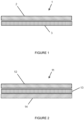
- a wound dressing (1) comprising a wound contact layer (2) and an absorption layer (3).
- the wound contact layer comprises an antimicrobial agent (not shown).
- the wound contact layer (2) is a polyurethane open celled foam having a thickness of around 3mm.
- the polyurethane foam can be compressed down to a thickness of 1.5mm and/or can have a density of greater than 0.06 g/cm 3 .
- the absorption layer (3) is typically a polyurethane foam having a thickness of around 4mm.
- a distal surface of the wound contact layer (2) and a proximal surface of the absorption layer (3) are bonded to each other using an adhesive (not shown).
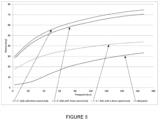
- a wound dressing (11) comprising a wound contact layer (12), an absorption layer (13) and a backing layer (14).
- the wound contact layer (12) and absorption layer (13) may be the same as those shown to in Figure 1 .
- the backing layer (14) typically comprises a polyurethane film.
- the polyurethane film typically has a thickness of around 30microns.
- the backing layer (14) is permeable to air and moisture vapour but is impermeable to microorganisms, such as bacteria, and liquid droplets, such as water.
- a distal surface of the absorption layer (13) and a proximal surface of the backing layer (14) are bonded to each other using an adhesive (not shown).
- a wound dressing (21) comprising a wound contact layer (22), an absorption layer (23), a backing layer (24) and a superabsorbent layer (25).
- the wound contact layer (22), absorption layer (23) and backing layer (24) may be the same as those described in Figure 2 .
- the superabsorbent layer (25) typically comprises nonwoven fibrous material.
- the superabsorbent layer (25) is bonded to the absorption layer (23) and the backing layer (24) using an adhesive (not shown).
- the adhesive may be a heat bonded net.
- a wound dressing (31) comprising a wound contact layer (32), an absorption layer (33), a backing layer (34) and a skin contact adhesive layer (35).
- the wound contact layer (32), absorption layer (33) and backing layer (34) may be the same as those described in Figure 2 .
- the skin contact adhesive layer (35) comprises a polyurethane film coated with a silicone adhesive.
- the film is perforated to as to allow for the passage of wound exudate into the wound contact layer (32).
- the skin contact adhesive layer (35) is bonded to a proximal surface of the wound contact layer (32).
- Table 1 shows changing density values for a 5mm thick polyethylene foam compressed to three different thicknesses.
- Table 1 Density (g/cm 3 ) Min Max Thickness (mm) 0.07 0.09 4.5 0.22 0.28 1.5 0.33 0.43 1.0
- 3mm thick open celled polyurethane foam wound contact layer was compressed to 1.5mm and adhesive bonded to 4mm thick polyurethane foam absorbent layer using an acrylic pressure sensitive adhesive.
- the polyurethane foam absorbent layer was then adhesive bonded to a polyurethane 30micron film.
- a 20% BP CHG solution was dosed onto the wound contact layer and the dressing was heat treated to leave approximately 92mg of CHG within the wound contact layer.
- 3mm thick open celled polyurethane foam wound contact layer was compressed to 1.5mm and adhesive bonded to 3.25mm thick polyurethane foam absorbent layer using an acrylic pressure sensitive adhesive.
- the polyurethane foam absorbent layer was then adhesive bonded to a polyurethane 30micron film.
- a 20% BP CHG solution was dosed onto the wound contact layer and the dressing was heat treated to leave approximately 92mg of CHG within the wound contact layer.
- 3mm thick open celled polyurethane foam wound contact layer was compressed to 1.5mm and adhesive bonded to 4mm thick polyurethane foam containing approximately 0.13% Ag using an acrylic pressure sensitive adhesive.
- the polyurethane foam absorbent layer was then adhesive bonded to a polyurethane 30micron film.
- a 20% BP CHG solution was dosed onto the wound contact layer and the dressing was heat treated to leave approximately 92mg of CHG within the wound contact layer.
- 3mm thick open celled polyurethane foam wound contact layer was compressed to 1.5mm and adhesive bonded to 4mm thick polyurethane foam containing approximately 0.13% Ag using an acrylic pressure sensitive adhesive.
- the polyurethane foam absorbent layer was then adhesive bonded to a polyurethane 30micron film.
- a 20% BP CHG solution was dosed onto the wound contact layer and the dressing was heat treated to leave approximately 50mg of CHG within the wound contact layer.
- 3mm thick open celled polyurethane foam wound contact layer was compressed to 1.5mm and adhesive bonded to 4mm thick polyurethane foam absorbent layer using an acrylic pressure sensitive adhesive.
- the polyurethane foam absorbent layer was then adhesive bonded to a polyurethane 30micron film.
- a chitosan lactate solution was dosed onto the wound contact layer and the dressing was heat treated to leave approximately 50mg of chitosan derivative within the wound contact layer.
- 3mm thick open celled polyurethane foam wound contact layer was compressed to 1.5mm and adhesive bonded to 2.5mm thick polyurethane foam absorbent layer using an acrylic pressure sensitive adhesive.
- the polyurethane foam absorbent layer was then adhesive bonded to a polyacrylate superabsorbent nonwoven material with a net heat bonded on the side distal to the wound surface.
- the superabsorbent material was then adhesive bonded to a polyurethane 30micron film.
- a chitosan lactate solution was dosed onto the wound contact layer and the dressing was heat treated to leave approximately 92mg of chitosan lactate within the wound contact layer.
Landscapes
- Health & Medical Sciences (AREA)
- Engineering & Computer Science (AREA)
- General Health & Medical Sciences (AREA)
- Veterinary Medicine (AREA)
- Public Health (AREA)
- Life Sciences & Earth Sciences (AREA)
- Animal Behavior & Ethology (AREA)
- Chemical & Material Sciences (AREA)
- Vascular Medicine (AREA)
- Biomedical Technology (AREA)
- Heart & Thoracic Surgery (AREA)
- Hematology (AREA)
- Materials Engineering (AREA)
- Epidemiology (AREA)
- Dispersion Chemistry (AREA)
- Chemical Kinetics & Catalysis (AREA)
- Medicinal Chemistry (AREA)
- Manufacturing & Machinery (AREA)
- Dermatology (AREA)
- Materials For Medical Uses (AREA)
- Polymers & Plastics (AREA)
- Organic Chemistry (AREA)
Claims (3)
- Verfahren zur Herstellung einer Wundauflage, wobei das Verfahren die folgenden Schritte umfasst:a. Komprimieren einer Wundkontaktschicht auf eine Breite von 30-60% ihrer ursprünglichen Breite, wobei die Wundkontaktschicht in der Form eines offenzelligen Schaums ist;b. Anbringen der Wundkontaktschicht an einer Absorptionsschicht unter Verwendung eines Haftmittels in der Form einer porösen Schicht; undc. Aufbringen wenigstens eines antimikrobiellen Mittels auf die Wundkontaktschicht, wobei das antimikrobielle Mittel über die Wundkontaktschicht verteilt wird und wobei das antimikrobielle Mittel auf die Wundkontaktschicht nach dem Schritt a) aufgebracht wird.
- Verfahren nach Anspruch 1, wobei das Haftmittel ein Acrylpulver umfasst, wobei das Pulver auf eine Oberfläche der Wundkontaktschicht und/oder der Absorptionsschicht gestreut wird, und die Wundkontaktschicht und die Absorptionsschicht dann laminiert werden, und/oder wobei das antimikrobielle Mittel als eine Lösung auf die Wundkontaktschicht aufgebracht wird.
- Verfahren nach Anspruch 1 oder 2, ferner umfassend den Schritt des Trocknens der Wundauflage und/oder des Anbringens einer Stützschicht an der Absorptionsschicht unter Verwendung eines Haftmittels, und/oder des Anbringens einer Hafteinrichtung an der Wundkontaktschicht, wobei die Hafteinrichtung ein Haftmittel umfasst, das mit einer Trägerschicht verbunden ist.
Applications Claiming Priority (2)
| Application Number | Priority Date | Filing Date | Title |
|---|---|---|---|
| GBGB1414147.7A GB201414147D0 (en) | 2014-08-08 | 2014-08-08 | Wound dressing |
| PCT/GB2015/052299 WO2016020703A1 (en) | 2014-08-08 | 2015-08-07 | Wound dressing |
Publications (3)
| Publication Number | Publication Date |
|---|---|
| EP3177244A1 EP3177244A1 (de) | 2017-06-14 |
| EP3177244B1 EP3177244B1 (de) | 2022-03-23 |
| EP3177244B2 true EP3177244B2 (de) | 2025-07-09 |
Family
ID=51629560
Family Applications (1)
| Application Number | Title | Priority Date | Filing Date |
|---|---|---|---|
| EP15763066.6A Active EP3177244B2 (de) | 2014-08-08 | 2015-08-07 | Wundauflage |
Country Status (9)
| Country | Link |
|---|---|
| US (2) | US12090028B2 (de) |
| EP (1) | EP3177244B2 (de) |
| CA (1) | CA2957050C (de) |
| DK (1) | DK3177244T3 (de) |
| ES (1) | ES2919786T5 (de) |
| GB (2) | GB201414147D0 (de) |
| PL (1) | PL3177244T5 (de) |
| PT (1) | PT3177244T (de) |
| WO (1) | WO2016020703A1 (de) |
Families Citing this family (10)
| Publication number | Priority date | Publication date | Assignee | Title |
|---|---|---|---|---|
| US10898217B2 (en) | 2014-05-09 | 2021-01-26 | Kci Licensing, Inc. | Dressing providing apertures with multiple orifice sizes for negative-pressure therapy |
| WO2015172108A1 (en) | 2014-05-09 | 2015-11-12 | Kci Licensing, Inc. | Dressing with contracting layer for linear tissue sites |
| EP3263078B1 (de) | 2014-05-09 | 2019-05-08 | KCI Licensing, Inc. | Ablösungsverband zur verwendung mit unterdruck- und fluidinstillation |
| CN111839658B (zh) | 2014-05-09 | 2024-07-16 | 3M创新知识产权公司 | 用于与负压和流体滴注一起使用的破坏性敷件 |
| CN107753180A (zh) * | 2017-07-13 | 2018-03-06 | 江苏创铭医疗器械有限公司 | 一种可视防水敷料 |
| EP3876885B1 (de) | 2018-11-08 | 2023-11-29 | 3M Innovative Properties Company | Wundverband mit halbsteifem träger zur erhöhung der zerstörung anhand einer perforierten wundauflage und unterdruckwundtherapie |
| CN114007663A (zh) * | 2019-06-12 | 2022-02-01 | 凯希特许有限公司 | 用负压进行组织闭合的复合敷料 |
| EP4007550B1 (de) * | 2019-07-26 | 2024-11-27 | Solventum Intellectual Properties Company | Antimikrobieller/antibakterieller verband mit zerstörender wirkung zur verwendung mit unterdruck und flüssigkeitsinstillation |
| EP4069171A1 (de) | 2019-12-05 | 2022-10-12 | KCI Licensing, Inc. | Mehrschichtiger unterdruckverband für inzisionswunden |
| CN115040321B (zh) * | 2022-08-17 | 2022-11-08 | 上海大博医疗科技有限公司 | 一种便捷式敷料 |
Citations (11)
| Publication number | Priority date | Publication date | Assignee | Title |
|---|---|---|---|---|
| WO2005065604A1 (en) † | 2004-01-07 | 2005-07-21 | Biopol Co., Ltd. | Wound dressing |
| KR200422370Y1 (ko) † | 2006-05-16 | 2006-07-25 | 강정열 | 창상피복재 |
| WO2007030601A2 (en) † | 2005-09-06 | 2007-03-15 | Tyco Healthcare Group Lp | Self contained wound dressing with micropump |
| US20090216168A1 (en) † | 2006-11-07 | 2009-08-27 | Paul Hartmann Ag | Multi-layer absorbent wound dressing with a hydrophilic wound contact layer |
| US7777091B2 (en) † | 2006-12-19 | 2010-08-17 | Biopol Co., Ltd. | Polyurethane foam dressing with improved moisturization |
| WO2011135285A1 (en) † | 2010-04-27 | 2011-11-03 | Smith & Nephew Plc | Wound dressing |
| US20130131621A1 (en) † | 2011-11-17 | 2013-05-23 | Robert W. Van Holten | Dressing device |
| CN203342090U (zh) † | 2013-05-02 | 2013-12-18 | 稳健实业(深圳)有限公司 | 一种海藻酸敷料及其敷贴 |
| US20140121627A1 (en) † | 2011-06-08 | 2014-05-01 | Emiliano Lepore | Compressive dressing and production process thereof |
| WO2014165495A1 (en) † | 2013-04-01 | 2014-10-09 | 3M Innovative Properties Company | Absorbent foam composites |
| US20150320434A1 (en) † | 2014-05-09 | 2015-11-12 | Kci Licensing, Inc. | Disruptive dressing for use with negative pressure and fluid instillation |
Family Cites Families (14)
| Publication number | Priority date | Publication date | Assignee | Title |
|---|---|---|---|---|
| GB9123707D0 (en) * | 1991-11-07 | 1992-01-02 | Johnson & Johnson Medical Ltd | Polyurethane foam |
| GB2290031B (en) * | 1994-06-08 | 1998-09-30 | Seton Healthcare Group Plc | Wound dressings |
| US5836970A (en) * | 1996-08-02 | 1998-11-17 | The Kendall Company | Hemostatic wound dressing |
| EP1105290B1 (de) * | 1998-08-10 | 2006-02-22 | Hunt Technology Limited | Verbesserungen in bezug auf verfahren zum thermischen laminieren |
| WO2003057485A1 (en) * | 2001-12-21 | 2003-07-17 | Avery Dennison Corporation | Process for the manufacture of multi-layered wound dressings |
| US7138230B2 (en) * | 2002-12-06 | 2006-11-21 | Renovar, Inc. | Systems and methods for characterizing kidney diseases |
| US6923320B2 (en) * | 2002-07-06 | 2005-08-02 | Victor A. Grossman | Bandage package and dispenser |
| WO2005079718A1 (en) * | 2004-02-13 | 2005-09-01 | Bristol-Myers Squibb Company | Multi layered wound dressing |
| US10413451B2 (en) * | 2009-01-06 | 2019-09-17 | Medline Industries, Inc. | Wound dressing |
| JP4339928B2 (ja) * | 2005-10-21 | 2009-10-07 | アルゲンツム メディカル,エルエルシー | 医療装置 |
| EP2143744A1 (de) * | 2008-07-09 | 2010-01-13 | Bayer MaterialScience AG | Hydrophile, aliphatische Polyurethan-Schäume |
| CA2826575C (en) * | 2011-02-22 | 2016-10-11 | Oleg Siniaguine | Adaptive and optionally also otherwise adaptable wound dressing |
| EP2572737B1 (de) * | 2011-09-26 | 2016-03-23 | BSN Medical GmbH | Verbesserte Wundauflage |
| EP2752176B1 (de) | 2013-01-08 | 2024-03-20 | BSN medical GmbH | Antimikrobiell aktive Wundauflage für Katheterfixierungen |
-
2014
- 2014-08-08 GB GBGB1414147.7A patent/GB201414147D0/en not_active Ceased
-
2015
- 2015-08-07 PL PL15763066.6T patent/PL3177244T5/pl unknown
- 2015-08-07 US US15/502,763 patent/US12090028B2/en active Active
- 2015-08-07 DK DK15763066.6T patent/DK3177244T3/da active
- 2015-08-07 ES ES15763066T patent/ES2919786T5/es active Active
- 2015-08-07 EP EP15763066.6A patent/EP3177244B2/de active Active
- 2015-08-07 PT PT157630666T patent/PT3177244T/pt unknown
- 2015-08-07 WO PCT/GB2015/052299 patent/WO2016020703A1/en not_active Ceased
- 2015-08-07 CA CA2957050A patent/CA2957050C/en active Active
- 2015-08-07 GB GB1514019.7A patent/GB2530640B/en active Active
-
2024
- 2024-09-16 US US18/886,074 patent/US20250009559A1/en active Pending
Patent Citations (11)
| Publication number | Priority date | Publication date | Assignee | Title |
|---|---|---|---|---|
| WO2005065604A1 (en) † | 2004-01-07 | 2005-07-21 | Biopol Co., Ltd. | Wound dressing |
| WO2007030601A2 (en) † | 2005-09-06 | 2007-03-15 | Tyco Healthcare Group Lp | Self contained wound dressing with micropump |
| KR200422370Y1 (ko) † | 2006-05-16 | 2006-07-25 | 강정열 | 창상피복재 |
| US20090216168A1 (en) † | 2006-11-07 | 2009-08-27 | Paul Hartmann Ag | Multi-layer absorbent wound dressing with a hydrophilic wound contact layer |
| US7777091B2 (en) † | 2006-12-19 | 2010-08-17 | Biopol Co., Ltd. | Polyurethane foam dressing with improved moisturization |
| WO2011135285A1 (en) † | 2010-04-27 | 2011-11-03 | Smith & Nephew Plc | Wound dressing |
| US20140121627A1 (en) † | 2011-06-08 | 2014-05-01 | Emiliano Lepore | Compressive dressing and production process thereof |
| US20130131621A1 (en) † | 2011-11-17 | 2013-05-23 | Robert W. Van Holten | Dressing device |
| WO2014165495A1 (en) † | 2013-04-01 | 2014-10-09 | 3M Innovative Properties Company | Absorbent foam composites |
| CN203342090U (zh) † | 2013-05-02 | 2013-12-18 | 稳健实业(深圳)有限公司 | 一种海藻酸敷料及其敷贴 |
| US20150320434A1 (en) † | 2014-05-09 | 2015-11-12 | Kci Licensing, Inc. | Disruptive dressing for use with negative pressure and fluid instillation |
Non-Patent Citations (5)
| Title |
|---|
| "Surgical Dressings and Wound Management", 1 January 2010, MEDETEC PUBLICATIONS, article THOMAS STEPHEN: "Foam Dressings", pages: 181 - 194, XP093012902 † |
| ANONYMOUS: "Absorbency Testing of Wound Care Products", SDMA POSITION PAPER NUMBER 59, 2020, XP093012909, Retrieved from the Internet <URL:https://www.dressings.org.uk/position-paper-number-59-absorbency-testing-wound-care-products> † |
| ANONYMOUS: "Xeroflo", KENDALL - MATERIAL SAFETY DATA SHEET, 22 September 1998 (1998-09-22), pages 1 - 8, XP093012906, [retrieved on 20230111] † |
| MT24 patent work - wicking of compressed foam versus non compressed foam in dressing † |
| WALTER FUNG: "Coated and laminated textiles", 2002, CRC, article "Lamination", pages: 114 - 131, XP093012903 † |
Also Published As
| Publication number | Publication date |
|---|---|
| GB2530640B (en) | 2021-05-19 |
| WO2016020703A1 (en) | 2016-02-11 |
| PT3177244T (pt) | 2022-06-27 |
| EP3177244A1 (de) | 2017-06-14 |
| GB201414147D0 (en) | 2014-09-24 |
| GB201514019D0 (en) | 2015-09-23 |
| DK3177244T3 (da) | 2022-07-04 |
| CA2957050A1 (en) | 2016-02-11 |
| US12090028B2 (en) | 2024-09-17 |
| GB2530640A (en) | 2016-03-30 |
| EP3177244B1 (de) | 2022-03-23 |
| ES2919786T5 (en) | 2025-12-22 |
| US20170231822A1 (en) | 2017-08-17 |
| PL3177244T3 (pl) | 2022-07-18 |
| CA2957050C (en) | 2023-10-03 |
| PL3177244T5 (pl) | 2025-11-03 |
| US20250009559A1 (en) | 2025-01-09 |
| ES2919786T3 (es) | 2022-07-28 |
Similar Documents
| Publication | Publication Date | Title |
|---|---|---|
| US20250009559A1 (en) | Wound dressing | |
| JP7438264B2 (ja) | 創傷被覆材 | |
| EP3177245B1 (de) | Wundauflage | |
| JP6744315B2 (ja) | 複数の接着剤層を有する創傷被覆材 | |
| JP6872528B2 (ja) | 創傷被覆材 | |
| WO2015140564A1 (en) | Wound dressing |
Legal Events
| Date | Code | Title | Description |
|---|---|---|---|
| STAA | Information on the status of an ep patent application or granted ep patent |
Free format text: STATUS: THE INTERNATIONAL PUBLICATION HAS BEEN MADE |
|
| PUAI | Public reference made under article 153(3) epc to a published international application that has entered the european phase |
Free format text: ORIGINAL CODE: 0009012 |
|
| STAA | Information on the status of an ep patent application or granted ep patent |
Free format text: STATUS: REQUEST FOR EXAMINATION WAS MADE |
|
| 17P | Request for examination filed |
Effective date: 20170131 |
|
| AK | Designated contracting states |
Kind code of ref document: A1 Designated state(s): AL AT BE BG CH CY CZ DE DK EE ES FI FR GB GR HR HU IE IS IT LI LT LU LV MC MK MT NL NO PL PT RO RS SE SI SK SM TR |
|
| AX | Request for extension of the european patent |
Extension state: BA ME |
|
| DAV | Request for validation of the european patent (deleted) | ||
| DAX | Request for extension of the european patent (deleted) | ||
| STAA | Information on the status of an ep patent application or granted ep patent |
Free format text: STATUS: EXAMINATION IS IN PROGRESS |
|
| 17Q | First examination report despatched |
Effective date: 20181004 |
|
| GRAP | Despatch of communication of intention to grant a patent |
Free format text: ORIGINAL CODE: EPIDOSNIGR1 |
|
| STAA | Information on the status of an ep patent application or granted ep patent |
Free format text: STATUS: GRANT OF PATENT IS INTENDED |
|
| INTG | Intention to grant announced |
Effective date: 20211007 |
|
| GRAS | Grant fee paid |
Free format text: ORIGINAL CODE: EPIDOSNIGR3 |
|
| GRAA | (expected) grant |
Free format text: ORIGINAL CODE: 0009210 |
|
| STAA | Information on the status of an ep patent application or granted ep patent |
Free format text: STATUS: THE PATENT HAS BEEN GRANTED |
|
| AK | Designated contracting states |
Kind code of ref document: B1 Designated state(s): AL AT BE BG CH CY CZ DE DK EE ES FI FR GB GR HR HU IE IS IT LI LT LU LV MC MK MT NL NO PL PT RO RS SE SI SK SM TR |
|
| REG | Reference to a national code |
Ref country code: GB Ref legal event code: FG4D |
|
| REG | Reference to a national code |
Ref country code: CH Ref legal event code: EP |
|
| REG | Reference to a national code |
Ref country code: IE Ref legal event code: FG4D |
|
| REG | Reference to a national code |
Ref country code: DE Ref legal event code: R096 Ref document number: 602015077717 Country of ref document: DE |
|
| REG | Reference to a national code |
Ref country code: AT Ref legal event code: REF Ref document number: 1476952 Country of ref document: AT Kind code of ref document: T Effective date: 20220415 |
|
| REG | Reference to a national code |
Ref country code: FI Ref legal event code: FGE |
|
| REG | Reference to a national code |
Ref country code: PT Ref legal event code: SC4A Ref document number: 3177244 Country of ref document: PT Date of ref document: 20220627 Kind code of ref document: T Free format text: AVAILABILITY OF NATIONAL TRANSLATION Effective date: 20220621 |
|
| REG | Reference to a national code |
Ref country code: NL Ref legal event code: FP |
|
| REG | Reference to a national code |
Ref country code: DK Ref legal event code: T3 Effective date: 20220627 |
|
| REG | Reference to a national code |
Ref country code: NO Ref legal event code: T2 Effective date: 20220323 Ref country code: LT Ref legal event code: MG9D |
|
| REG | Reference to a national code |
Ref country code: SE Ref legal event code: TRGR |
|
| REG | Reference to a national code |
Ref country code: ES Ref legal event code: FG2A Ref document number: 2919786 Country of ref document: ES Kind code of ref document: T3 Effective date: 20220728 |
|
| PG25 | Lapsed in a contracting state [announced via postgrant information from national office to epo] |
Ref country code: RS Free format text: LAPSE BECAUSE OF FAILURE TO SUBMIT A TRANSLATION OF THE DESCRIPTION OR TO PAY THE FEE WITHIN THE PRESCRIBED TIME-LIMIT Effective date: 20220323 Ref country code: LT Free format text: LAPSE BECAUSE OF FAILURE TO SUBMIT A TRANSLATION OF THE DESCRIPTION OR TO PAY THE FEE WITHIN THE PRESCRIBED TIME-LIMIT Effective date: 20220323 Ref country code: HR Free format text: LAPSE BECAUSE OF FAILURE TO SUBMIT A TRANSLATION OF THE DESCRIPTION OR TO PAY THE FEE WITHIN THE PRESCRIBED TIME-LIMIT Effective date: 20220323 Ref country code: BG Free format text: LAPSE BECAUSE OF FAILURE TO SUBMIT A TRANSLATION OF THE DESCRIPTION OR TO PAY THE FEE WITHIN THE PRESCRIBED TIME-LIMIT Effective date: 20220623 |
|
| PGFP | Annual fee paid to national office [announced via postgrant information from national office to epo] |
Ref country code: DK Payment date: 20220622 Year of fee payment: 8 |
|
| REG | Reference to a national code |
Ref country code: GR Ref legal event code: EP Ref document number: 20220401297 Country of ref document: GR Effective date: 20220808 |
|
| PG25 | Lapsed in a contracting state [announced via postgrant information from national office to epo] |
Ref country code: LV Free format text: LAPSE BECAUSE OF FAILURE TO SUBMIT A TRANSLATION OF THE DESCRIPTION OR TO PAY THE FEE WITHIN THE PRESCRIBED TIME-LIMIT Effective date: 20220323 |
|
| PGFP | Annual fee paid to national office [announced via postgrant information from national office to epo] |
Ref country code: GR Payment date: 20220630 Year of fee payment: 8 Ref country code: FI Payment date: 20220621 Year of fee payment: 8 |
|
| PG25 | Lapsed in a contracting state [announced via postgrant information from national office to epo] |
Ref country code: SM Free format text: LAPSE BECAUSE OF FAILURE TO SUBMIT A TRANSLATION OF THE DESCRIPTION OR TO PAY THE FEE WITHIN THE PRESCRIBED TIME-LIMIT Effective date: 20220323 Ref country code: SK Free format text: LAPSE BECAUSE OF FAILURE TO SUBMIT A TRANSLATION OF THE DESCRIPTION OR TO PAY THE FEE WITHIN THE PRESCRIBED TIME-LIMIT Effective date: 20220323 Ref country code: RO Free format text: LAPSE BECAUSE OF FAILURE TO SUBMIT A TRANSLATION OF THE DESCRIPTION OR TO PAY THE FEE WITHIN THE PRESCRIBED TIME-LIMIT Effective date: 20220323 Ref country code: EE Free format text: LAPSE BECAUSE OF FAILURE TO SUBMIT A TRANSLATION OF THE DESCRIPTION OR TO PAY THE FEE WITHIN THE PRESCRIBED TIME-LIMIT Effective date: 20220323 Ref country code: CZ Free format text: LAPSE BECAUSE OF FAILURE TO SUBMIT A TRANSLATION OF THE DESCRIPTION OR TO PAY THE FEE WITHIN THE PRESCRIBED TIME-LIMIT Effective date: 20220323 |
|
| PGFP | Annual fee paid to national office [announced via postgrant information from national office to epo] |
Ref country code: PT Payment date: 20220701 Year of fee payment: 8 Ref country code: IE Payment date: 20220721 Year of fee payment: 8 Ref country code: AT Payment date: 20220802 Year of fee payment: 8 |
|
| PG25 | Lapsed in a contracting state [announced via postgrant information from national office to epo] |
Ref country code: AL Free format text: LAPSE BECAUSE OF FAILURE TO SUBMIT A TRANSLATION OF THE DESCRIPTION OR TO PAY THE FEE WITHIN THE PRESCRIBED TIME-LIMIT Effective date: 20220323 |
|
| PGFP | Annual fee paid to national office [announced via postgrant information from national office to epo] |
Ref country code: IS Payment date: 20220704 Year of fee payment: 8 Ref country code: BE Payment date: 20220824 Year of fee payment: 8 |
|
| REG | Reference to a national code |
Ref country code: DE Ref legal event code: R026 Ref document number: 602015077717 Country of ref document: DE |
|
| PGFP | Annual fee paid to national office [announced via postgrant information from national office to epo] |
Ref country code: CH Payment date: 20220902 Year of fee payment: 8 |
|
| PLBI | Opposition filed |
Free format text: ORIGINAL CODE: 0009260 |
|
| PLAX | Notice of opposition and request to file observation + time limit sent |
Free format text: ORIGINAL CODE: EPIDOSNOBS2 |
|
| 26 | Opposition filed |
Opponent name: CONVATEC LIMITED Effective date: 20221222 |
|
| PG25 | Lapsed in a contracting state [announced via postgrant information from national office to epo] |
Ref country code: MC Free format text: LAPSE BECAUSE OF FAILURE TO SUBMIT A TRANSLATION OF THE DESCRIPTION OR TO PAY THE FEE WITHIN THE PRESCRIBED TIME-LIMIT Effective date: 20220323 |
|
| PG25 | Lapsed in a contracting state [announced via postgrant information from national office to epo] |
Ref country code: LU Free format text: LAPSE BECAUSE OF NON-PAYMENT OF DUE FEES Effective date: 20220807 |
|
| PG25 | Lapsed in a contracting state [announced via postgrant information from national office to epo] |
Ref country code: SI Free format text: LAPSE BECAUSE OF FAILURE TO SUBMIT A TRANSLATION OF THE DESCRIPTION OR TO PAY THE FEE WITHIN THE PRESCRIBED TIME-LIMIT Effective date: 20220323 |
|
| PLBB | Reply of patent proprietor to notice(s) of opposition received |
Free format text: ORIGINAL CODE: EPIDOSNOBS3 |
|
| P01 | Opt-out of the competence of the unified patent court (upc) registered |
Effective date: 20230518 |
|
| P01 | Opt-out of the competence of the unified patent court (upc) registered |
Effective date: 20230526 |
|
| P03 | Opt-out of the competence of the unified patent court (upc) deleted | ||
| REG | Reference to a national code |
Ref country code: AT Ref legal event code: UEP Ref document number: 1476952 Country of ref document: AT Kind code of ref document: T Effective date: 20220323 |
|
| REG | Reference to a national code |
Ref country code: DK Ref legal event code: EBP Effective date: 20230831 |
|
| REG | Reference to a national code |
Ref country code: CH Ref legal event code: PL |
|
| PG25 | Lapsed in a contracting state [announced via postgrant information from national office to epo] |
Ref country code: HU Free format text: LAPSE BECAUSE OF FAILURE TO SUBMIT A TRANSLATION OF THE DESCRIPTION OR TO PAY THE FEE WITHIN THE PRESCRIBED TIME-LIMIT; INVALID AB INITIO Effective date: 20150807 |
|
| PG25 | Lapsed in a contracting state [announced via postgrant information from national office to epo] |
Ref country code: GR Free format text: LAPSE BECAUSE OF NON-PAYMENT OF DUE FEES Effective date: 20240307 |
|
| REG | Reference to a national code |
Ref country code: AT Ref legal event code: MM01 Ref document number: 1476952 Country of ref document: AT Kind code of ref document: T Effective date: 20230807 |
|
| PG25 | Lapsed in a contracting state [announced via postgrant information from national office to epo] |
Ref country code: AT Free format text: LAPSE BECAUSE OF NON-PAYMENT OF DUE FEES Effective date: 20230807 |
|
| PG25 | Lapsed in a contracting state [announced via postgrant information from national office to epo] |
Ref country code: GR Free format text: LAPSE BECAUSE OF NON-PAYMENT OF DUE FEES Effective date: 20240307 Ref country code: FI Free format text: LAPSE BECAUSE OF NON-PAYMENT OF DUE FEES Effective date: 20230807 Ref country code: CY Free format text: LAPSE BECAUSE OF FAILURE TO SUBMIT A TRANSLATION OF THE DESCRIPTION OR TO PAY THE FEE WITHIN THE PRESCRIBED TIME-LIMIT Effective date: 20220323 Ref country code: AT Free format text: LAPSE BECAUSE OF NON-PAYMENT OF DUE FEES Effective date: 20230807 Ref country code: PT Free format text: LAPSE BECAUSE OF NON-PAYMENT OF DUE FEES Effective date: 20240207 Ref country code: CH Free format text: LAPSE BECAUSE OF NON-PAYMENT OF DUE FEES Effective date: 20230831 |
|
| REG | Reference to a national code |
Ref country code: BE Ref legal event code: MM Effective date: 20230831 |
|
| REG | Reference to a national code |
Ref country code: IE Ref legal event code: MM4A |
|
| PG25 | Lapsed in a contracting state [announced via postgrant information from national office to epo] |
Ref country code: MK Free format text: LAPSE BECAUSE OF FAILURE TO SUBMIT A TRANSLATION OF THE DESCRIPTION OR TO PAY THE FEE WITHIN THE PRESCRIBED TIME-LIMIT Effective date: 20220323 |
|
| PG25 | Lapsed in a contracting state [announced via postgrant information from national office to epo] |
Ref country code: IE Free format text: LAPSE BECAUSE OF NON-PAYMENT OF DUE FEES Effective date: 20230807 |
|
| PG25 | Lapsed in a contracting state [announced via postgrant information from national office to epo] |
Ref country code: DK Free format text: LAPSE BECAUSE OF NON-PAYMENT OF DUE FEES Effective date: 20230831 |
|
| PG25 | Lapsed in a contracting state [announced via postgrant information from national office to epo] |
Ref country code: IE Free format text: LAPSE BECAUSE OF NON-PAYMENT OF DUE FEES Effective date: 20230807 Ref country code: DK Free format text: LAPSE BECAUSE OF NON-PAYMENT OF DUE FEES Effective date: 20230831 |
|
| PG25 | Lapsed in a contracting state [announced via postgrant information from national office to epo] |
Ref country code: BE Free format text: LAPSE BECAUSE OF NON-PAYMENT OF DUE FEES Effective date: 20230831 |
|
| PG25 | Lapsed in a contracting state [announced via postgrant information from national office to epo] |
Ref country code: MT Free format text: LAPSE BECAUSE OF FAILURE TO SUBMIT A TRANSLATION OF THE DESCRIPTION OR TO PAY THE FEE WITHIN THE PRESCRIBED TIME-LIMIT Effective date: 20220323 |
|
| PUAH | Patent maintained in amended form |
Free format text: ORIGINAL CODE: 0009272 |
|
| STAA | Information on the status of an ep patent application or granted ep patent |
Free format text: STATUS: PATENT MAINTAINED AS AMENDED |
|
| 27A | Patent maintained in amended form |
Effective date: 20250709 |
|
| AK | Designated contracting states |
Kind code of ref document: B2 Designated state(s): AL AT BE BG CH CY CZ DE DK EE ES FI FR GB GR HR HU IE IS IT LI LT LU LV MC MK MT NL NO PL PT RO RS SE SI SK SM TR |
|
| REG | Reference to a national code |
Ref country code: DE Ref legal event code: R102 Ref document number: 602015077717 Country of ref document: DE |
|
| PGFP | Annual fee paid to national office [announced via postgrant information from national office to epo] |
Ref country code: NL Payment date: 20250819 Year of fee payment: 11 |
|
| PGFP | Annual fee paid to national office [announced via postgrant information from national office to epo] |
Ref country code: ES Payment date: 20250929 Year of fee payment: 11 |
|
| PGFP | Annual fee paid to national office [announced via postgrant information from national office to epo] |
Ref country code: DE Payment date: 20250901 Year of fee payment: 11 |
|
| PGFP | Annual fee paid to national office [announced via postgrant information from national office to epo] |
Ref country code: NO Payment date: 20250707 Year of fee payment: 11 |
|
| PGFP | Annual fee paid to national office [announced via postgrant information from national office to epo] |
Ref country code: TR Payment date: 20250805 Year of fee payment: 11 Ref country code: IT Payment date: 20250709 Year of fee payment: 11 |
|
| PG25 | Lapsed in a contracting state [announced via postgrant information from national office to epo] |
Ref country code: IS Free format text: LAPSE BECAUSE OF NON-PAYMENT OF DUE FEES Effective date: 20240305 |
|
| PGFP | Annual fee paid to national office [announced via postgrant information from national office to epo] |
Ref country code: GB Payment date: 20250704 Year of fee payment: 11 |
|
| PGFP | Annual fee paid to national office [announced via postgrant information from national office to epo] |
Ref country code: FR Payment date: 20250704 Year of fee payment: 11 |
|
| PGFP | Annual fee paid to national office [announced via postgrant information from national office to epo] |
Ref country code: SE Payment date: 20250704 Year of fee payment: 11 |
|
| REG | Reference to a national code |
Ref country code: NL Ref legal event code: FP |
|
| REG | Reference to a national code |
Ref country code: SE Ref legal event code: RPEO |
|
| REG | Reference to a national code |
Ref country code: ES Ref legal event code: DC2A Ref document number: 2919786 Country of ref document: ES Kind code of ref document: T5 Effective date: 20251222 |
|
| PG25 | Lapsed in a contracting state [announced via postgrant information from national office to epo] |
Ref country code: GR Free format text: LAPSE BECAUSE OF FAILURE TO SUBMIT A TRANSLATION OF THE DESCRIPTION OR TO PAY THE FEE WITHIN THE PRESCRIBED TIME-LIMIT Effective date: 20251010 |
|
| PGFP | Annual fee paid to national office [announced via postgrant information from national office to epo] |
Ref country code: PL Payment date: 20250714 Year of fee payment: 11 |