EP3176198A1 - Epoxy resin compositions and thermal interface materials comprising the same - Google Patents
Epoxy resin compositions and thermal interface materials comprising the same Download PDFInfo
- Publication number
- EP3176198A1 EP3176198A1 EP16192675.3A EP16192675A EP3176198A1 EP 3176198 A1 EP3176198 A1 EP 3176198A1 EP 16192675 A EP16192675 A EP 16192675A EP 3176198 A1 EP3176198 A1 EP 3176198A1
- Authority
- EP
- European Patent Office
- Prior art keywords
- epoxy resin
- thermal interface
- solution
- interface material
- aromatic epoxy
- Prior art date
- Legal status (The legal status is an assumption and is not a legal conclusion. Google has not performed a legal analysis and makes no representation as to the accuracy of the status listed.)
- Granted
Links
- MEVBAGCIOOTPLF-UHFFFAOYSA-N C(C1OC1)Oc1cc2cccc(OCC3OC3)c2cc1 Chemical compound C(C1OC1)Oc1cc2cccc(OCC3OC3)c2cc1 MEVBAGCIOOTPLF-UHFFFAOYSA-N 0.000 description 1
- PEAUCPNQVANATB-UHFFFAOYSA-N CC(C)(CC(COc1ccc(C(C)(C)c(cc2)ccc2OCC(CC(C)(C)OCC2OC2)O)cc1)O)OCC1OC1 Chemical compound CC(C)(CC(COc1ccc(C(C)(C)c(cc2)ccc2OCC(CC(C)(C)OCC2OC2)O)cc1)O)OCC1OC1 PEAUCPNQVANATB-UHFFFAOYSA-N 0.000 description 1
- 0 Cc1c(*)c(-c(c(*)c2)c(*)c(I)c2OCC2OC2)c(*)c(*)c1OCC1OC1 Chemical compound Cc1c(*)c(-c(c(*)c2)c(*)c(I)c2OCC2OC2)c(*)c(*)c1OCC1OC1 0.000 description 1
- UHNUHZHQLCGZDA-UHFFFAOYSA-N Nc1ccc(CCc(cc2)ccc2N)cc1 Chemical compound Nc1ccc(CCc(cc2)ccc2N)cc1 UHNUHZHQLCGZDA-UHFFFAOYSA-N 0.000 description 1
Classifications
-
- C—CHEMISTRY; METALLURGY
- C09—DYES; PAINTS; POLISHES; NATURAL RESINS; ADHESIVES; COMPOSITIONS NOT OTHERWISE PROVIDED FOR; APPLICATIONS OF MATERIALS NOT OTHERWISE PROVIDED FOR
- C09K—MATERIALS FOR MISCELLANEOUS APPLICATIONS, NOT PROVIDED FOR ELSEWHERE
- C09K5/00—Heat-transfer, heat-exchange or heat-storage materials, e.g. refrigerants; Materials for the production of heat or cold by chemical reactions other than by combustion
- C09K5/08—Materials not undergoing a change of physical state when used
- C09K5/14—Solid materials, e.g. powdery or granular
-
- C—CHEMISTRY; METALLURGY
- C08—ORGANIC MACROMOLECULAR COMPOUNDS; THEIR PREPARATION OR CHEMICAL WORKING-UP; COMPOSITIONS BASED THEREON
- C08G—MACROMOLECULAR COMPOUNDS OBTAINED OTHERWISE THAN BY REACTIONS ONLY INVOLVING UNSATURATED CARBON-TO-CARBON BONDS
- C08G59/00—Polycondensates containing more than one epoxy group per molecule; Macromolecules obtained by polymerising compounds containing more than one epoxy group per molecule using curing agents or catalysts which react with the epoxy groups
- C08G59/18—Macromolecules obtained by polymerising compounds containing more than one epoxy group per molecule using curing agents or catalysts which react with the epoxy groups ; e.g. general methods of curing
- C08G59/20—Macromolecules obtained by polymerising compounds containing more than one epoxy group per molecule using curing agents or catalysts which react with the epoxy groups ; e.g. general methods of curing characterised by the epoxy compounds used
- C08G59/22—Di-epoxy compounds
- C08G59/24—Di-epoxy compounds carbocyclic
- C08G59/245—Di-epoxy compounds carbocyclic aromatic
-
- C—CHEMISTRY; METALLURGY
- C08—ORGANIC MACROMOLECULAR COMPOUNDS; THEIR PREPARATION OR CHEMICAL WORKING-UP; COMPOSITIONS BASED THEREON
- C08G—MACROMOLECULAR COMPOUNDS OBTAINED OTHERWISE THAN BY REACTIONS ONLY INVOLVING UNSATURATED CARBON-TO-CARBON BONDS
- C08G59/00—Polycondensates containing more than one epoxy group per molecule; Macromolecules obtained by polymerising compounds containing more than one epoxy group per molecule using curing agents or catalysts which react with the epoxy groups
- C08G59/18—Macromolecules obtained by polymerising compounds containing more than one epoxy group per molecule using curing agents or catalysts which react with the epoxy groups ; e.g. general methods of curing
- C08G59/20—Macromolecules obtained by polymerising compounds containing more than one epoxy group per molecule using curing agents or catalysts which react with the epoxy groups ; e.g. general methods of curing characterised by the epoxy compounds used
- C08G59/22—Di-epoxy compounds
-
- C—CHEMISTRY; METALLURGY
- C08—ORGANIC MACROMOLECULAR COMPOUNDS; THEIR PREPARATION OR CHEMICAL WORKING-UP; COMPOSITIONS BASED THEREON
- C08G—MACROMOLECULAR COMPOUNDS OBTAINED OTHERWISE THAN BY REACTIONS ONLY INVOLVING UNSATURATED CARBON-TO-CARBON BONDS
- C08G59/00—Polycondensates containing more than one epoxy group per molecule; Macromolecules obtained by polymerising compounds containing more than one epoxy group per molecule using curing agents or catalysts which react with the epoxy groups
- C08G59/18—Macromolecules obtained by polymerising compounds containing more than one epoxy group per molecule using curing agents or catalysts which react with the epoxy groups ; e.g. general methods of curing
- C08G59/20—Macromolecules obtained by polymerising compounds containing more than one epoxy group per molecule using curing agents or catalysts which react with the epoxy groups ; e.g. general methods of curing characterised by the epoxy compounds used
- C08G59/22—Di-epoxy compounds
- C08G59/226—Mixtures of di-epoxy compounds
-
- C—CHEMISTRY; METALLURGY
- C08—ORGANIC MACROMOLECULAR COMPOUNDS; THEIR PREPARATION OR CHEMICAL WORKING-UP; COMPOSITIONS BASED THEREON
- C08G—MACROMOLECULAR COMPOUNDS OBTAINED OTHERWISE THAN BY REACTIONS ONLY INVOLVING UNSATURATED CARBON-TO-CARBON BONDS
- C08G59/00—Polycondensates containing more than one epoxy group per molecule; Macromolecules obtained by polymerising compounds containing more than one epoxy group per molecule using curing agents or catalysts which react with the epoxy groups
- C08G59/18—Macromolecules obtained by polymerising compounds containing more than one epoxy group per molecule using curing agents or catalysts which react with the epoxy groups ; e.g. general methods of curing
- C08G59/20—Macromolecules obtained by polymerising compounds containing more than one epoxy group per molecule using curing agents or catalysts which react with the epoxy groups ; e.g. general methods of curing characterised by the epoxy compounds used
- C08G59/22—Di-epoxy compounds
- C08G59/24—Di-epoxy compounds carbocyclic
-
- C—CHEMISTRY; METALLURGY
- C08—ORGANIC MACROMOLECULAR COMPOUNDS; THEIR PREPARATION OR CHEMICAL WORKING-UP; COMPOSITIONS BASED THEREON
- C08G—MACROMOLECULAR COMPOUNDS OBTAINED OTHERWISE THAN BY REACTIONS ONLY INVOLVING UNSATURATED CARBON-TO-CARBON BONDS
- C08G59/00—Polycondensates containing more than one epoxy group per molecule; Macromolecules obtained by polymerising compounds containing more than one epoxy group per molecule using curing agents or catalysts which react with the epoxy groups
- C08G59/18—Macromolecules obtained by polymerising compounds containing more than one epoxy group per molecule using curing agents or catalysts which react with the epoxy groups ; e.g. general methods of curing
- C08G59/40—Macromolecules obtained by polymerising compounds containing more than one epoxy group per molecule using curing agents or catalysts which react with the epoxy groups ; e.g. general methods of curing characterised by the curing agents used
- C08G59/50—Amines
-
- C—CHEMISTRY; METALLURGY
- C08—ORGANIC MACROMOLECULAR COMPOUNDS; THEIR PREPARATION OR CHEMICAL WORKING-UP; COMPOSITIONS BASED THEREON
- C08G—MACROMOLECULAR COMPOUNDS OBTAINED OTHERWISE THAN BY REACTIONS ONLY INVOLVING UNSATURATED CARBON-TO-CARBON BONDS
- C08G59/00—Polycondensates containing more than one epoxy group per molecule; Macromolecules obtained by polymerising compounds containing more than one epoxy group per molecule using curing agents or catalysts which react with the epoxy groups
- C08G59/18—Macromolecules obtained by polymerising compounds containing more than one epoxy group per molecule using curing agents or catalysts which react with the epoxy groups ; e.g. general methods of curing
- C08G59/40—Macromolecules obtained by polymerising compounds containing more than one epoxy group per molecule using curing agents or catalysts which react with the epoxy groups ; e.g. general methods of curing characterised by the curing agents used
- C08G59/50—Amines
- C08G59/5033—Amines aromatic
-
- C—CHEMISTRY; METALLURGY
- C08—ORGANIC MACROMOLECULAR COMPOUNDS; THEIR PREPARATION OR CHEMICAL WORKING-UP; COMPOSITIONS BASED THEREON
- C08G—MACROMOLECULAR COMPOUNDS OBTAINED OTHERWISE THAN BY REACTIONS ONLY INVOLVING UNSATURATED CARBON-TO-CARBON BONDS
- C08G59/00—Polycondensates containing more than one epoxy group per molecule; Macromolecules obtained by polymerising compounds containing more than one epoxy group per molecule using curing agents or catalysts which react with the epoxy groups
- C08G59/18—Macromolecules obtained by polymerising compounds containing more than one epoxy group per molecule using curing agents or catalysts which react with the epoxy groups ; e.g. general methods of curing
- C08G59/40—Macromolecules obtained by polymerising compounds containing more than one epoxy group per molecule using curing agents or catalysts which react with the epoxy groups ; e.g. general methods of curing characterised by the curing agents used
- C08G59/50—Amines
- C08G59/504—Amines containing an atom other than nitrogen belonging to the amine group, carbon and hydrogen
-
- C—CHEMISTRY; METALLURGY
- C08—ORGANIC MACROMOLECULAR COMPOUNDS; THEIR PREPARATION OR CHEMICAL WORKING-UP; COMPOSITIONS BASED THEREON
- C08L—COMPOSITIONS OF MACROMOLECULAR COMPOUNDS
- C08L63/00—Compositions of epoxy resins; Compositions of derivatives of epoxy resins
-
- H—ELECTRICITY
- H10—SEMICONDUCTOR DEVICES; ELECTRIC SOLID-STATE DEVICES NOT OTHERWISE PROVIDED FOR
- H10W—GENERIC PACKAGES, INTERCONNECTIONS, CONNECTORS OR OTHER CONSTRUCTIONAL DETAILS OF DEVICES COVERED BY CLASS H10
- H10W40/00—Arrangements for thermal protection or thermal control
- H10W40/20—Arrangements for cooling
- H10W40/25—Arrangements for cooling characterised by their materials
- H10W40/251—Organics
Definitions
- the technical field relates to an epoxy resin composition and a thermal interface material comprising the same.
- thermal interface material plays a key role in thermal management design. How to increase thermal conductivity efficiency between elements and heat sinks, the characteristics of thermal conductivity and thermal resistance of the thermal interface material play an important role.
- the resin composition of the current thermal interface material is mostly epoxy resin, siloxane resin and polyamide resin, and high-thermal-conductive powder capable of improving thermal conductivity, for example ceramic powder such as aluminum oxide or boron nitride is added thereto, and then made into the form of flakes, gaskets, ribbon or film.
- the amount of thermally conductive powder that is added is usually greater than 80wt% based on the total composition. As more thermally conductive powder is added, the thermal conductivity value gets higher. However, in this situation, it is often difficult to exhibit the characteristics of the resin composition, resulting in deteriorated characteristics such as softness, mechanical strength etc.
- the composition includes a first aromatic epoxy resin and an amino compound, wherein the ratio between the epoxy groups of the first aromatic epoxy resin and the amino groups of the amino compound ranges from 1:1 to 2:1.
- the first aromatic epoxy resin is represented by the following formula (I), and the amino compound is selected from the group consisting of 4,4'-methylenedianiline (MDA), 4,4'-ethylenedianiline (EDA), 4,4'-bis(4-aminophenoxy)biphenyl (BAPB) and 1,4-bis(4-aminophenoxy)benzene.
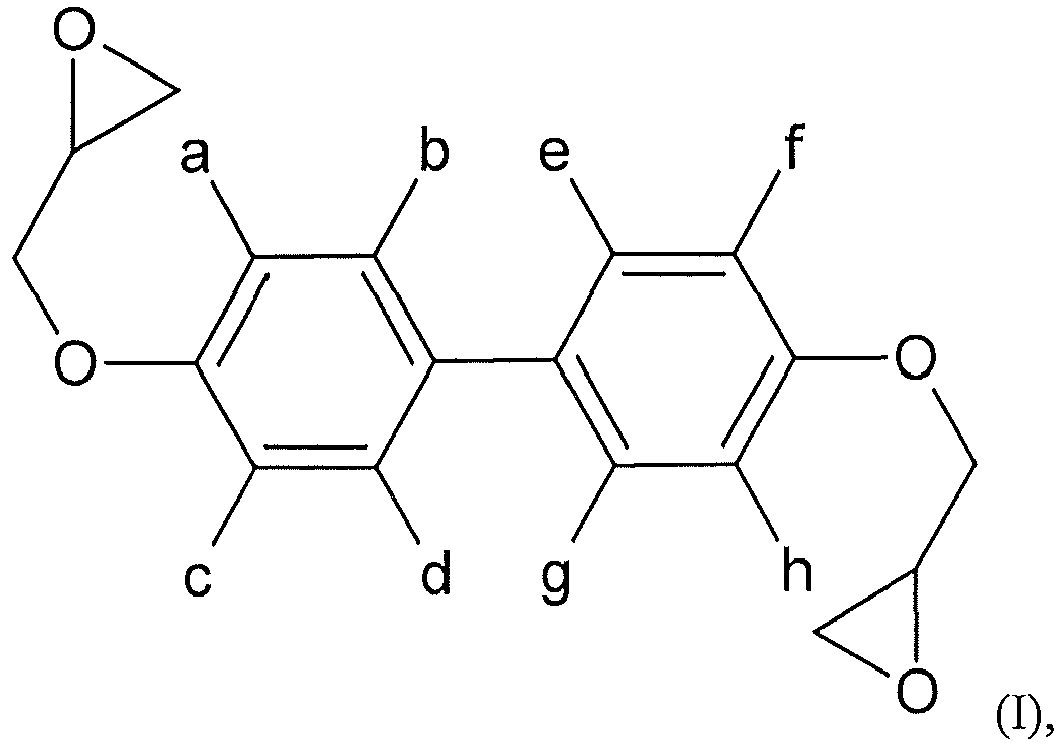
- a-h are independently hydrogen or methyl.
- the thermal interface material includes the aforementioned epoxy resin composition and a thermal conductive filler.
- an epoxy resin composition comprises a first aromatic epoxy resin represented by the following formula (I) and an amino compound selected from the group consisting of the following formulae (II), (III), (IV) and (V).
- the ratio between the epoxy groups of the first aromatic epoxy resin and the amino groups of the amino compound may range from about 1:1 to 2:1.
- a-h may, independently, be hydrogen or methyl.
- the first aromatic epoxy resin may be selected from the group consisting of (4,4'-bis(2,3-epoxypropoxy)biphenyl, BEPB) and (4,4'-bis(2,3-epoxypropoxy)-2,2',3,3',5,5'-hexamethylbiphenyl, BEPHMB).
- an epoxy resin composition includes a first aromatic epoxy resin, a second aromatic epoxy resin and an amino compound.
- the first aromatic epoxy resin is represented by the following formula (I), and the amino compound is selected from the group consisting of 4,4'-methylenedianiline (MDA), 4,4'-ethylenedianiline (EDA), 4,4'-bis(4-aminophenoxy)biphenyl (BAPB) and 1,4-bis(4-aminophenoxy)benzene.
- MDA 4,4'-methylenedianiline
- EDA 4,4'-ethylenedianiline
- BAPB 4,4'-bis(4-aminophenoxy)biphenyl
- 1,4-bis(4-aminophenoxy)benzene 1,4-bis(4-aminophenoxy)benzene.
- the ratio between the epoxy groups of the first aromatic epoxy resin and the second aromatic epoxy resin and the amino groups of the amino compound may range from about 1:1 to 2:1. Additionally, the ratio between the first aromatic epoxy resin and the second aromatic epoxy resin may range from about 70:30-90:10.
- a-h may, independently, be hydrogen or methyl.
- the first aromatic epoxy resin may be selected from the group consisting of 4,4'-bis(2,3-epoxypropoxy)biphenyl (BEPB) and 4,4'-bis(2,3-epoxypropoxy)-2,2',3,3',5,5'-hexamethylbiphenyl (BEPHMB).
- the second aromatic epoxy resin may be represented by the following formula: (4032).
- an epoxy resin composition includes a first aromatic epoxy resin, an alicyclic epoxy resin and an amino compound.
- the first aromatic epoxy resin is represented by the following formula (I), and the amino compound is selected from the group consisting of 4,4'-methylenedianiline (MDA), 4,4'-ethylenedianiline (EDA), 4,4'-bis(4-aminophenoxy)biphenyl (BAPB) and 1,4-bis(4-aminophenoxy)benzene.
- MDA 4,4'-methylenedianiline
- EDA 4,4'-ethylenedianiline
- BAPB 4,4'-bis(4-aminophenoxy)biphenyl
- 1,4-bis(4-aminophenoxy)benzene 1,4-bis(4-aminophenoxy)benzene.
- the ratio between the epoxy groups of the first aromatic epoxy resin and the alicyclic epoxy resin and the amino groups of the amino compound may range from about 1:1 to 2:1. Additionally, the ratio between the first aromatic epoxy resin and the alicyclic epoxy resin may range from about 60:40-100:0 or 62:38-89:11.
- a-h may, independently, be hydrogen or methyl.
- the first aromatic epoxy resin may be selected from the group consisting of 4,4'-bis(2,3-epoxypropoxy)biphenyl (BEPB) and 4,4'-bis(2,3-epoxypropoxy)-2,2',3,3',5,5'-hexamethylbiphenyl (BEPHMB).
- the alicyclic epoxy resin may be selected from the group consisting of and
- an epoxy resin composition includes a first aromatic epoxy resin, a second aromatic epoxy resin, an alicyclic epoxy resin and an amino compound.
- the first aromatic epoxy resin is represented by the following formula (I), and the amino compound selected from the group consisting of 4,4'-methylenedianiline (MDA), 4,4'-ethylenedianiline (EDA), 4,4'-bis(4-aminophenoxy)biphenyl (BAPB) and 1,4-bis(4-aminophenoxy)benzene.
- the ratio between the epoxy groups of the first aromatic epoxy resin, the second aromatic epoxy resin and the alicyclic epoxy resin and the amino groups of the amino compound may range from about 1:1 to 2:1. Additionally, the ratio between the aromatic epoxy groups and the alicyclic epoxy groups of the first aromatic epoxy resin, the second aromatic epoxy resin and the alicyclic epoxy resin may range from about 70:30-100:0 or 70:30-90:10.
- a-h may, independently, be hydrogen or methyl.
- the first aromatic epoxy resin may be selected from the group consisting of 4,4'-bis(2,3-epoxypropoxy)biphenyl (BEPB) or 4,4'-bis(2,3-epoxypropoxy)-2,2',3,3',5,5'-hexamethylbiphenyl (BEPHMB).
- the second aromatic epoxy resin may be represented by the following formula:
- the alicyclic epoxy resin may be selected from the group consisting of and
- a thermal interface material comprises an epoxy resin composition and a thermal conductive filler.
- the epoxy resin composition may include a first aromatic epoxy resin and an amino compound.
- the first aromatic epoxy resin is represented by the following formula (I) and an amino compound is selected from the group consisting of 4,4'-methylenedianiline (MDA), 4,4'-ethylenedianiline (EDA), 4,4'-bis(4-aminophenoxy)biphenyl (BAPB) and 1,4-bis(4-aminophenoxy)benzene.
- the ratio between the epoxy groups of the first aromatic epoxy resin and the amino groups of the amino compound may range from about 1:1 to 2:1.
- a-h may, independently, be hydrogen or methyl.
- the first aromatic epoxy resin may be selected from the group consisting of 4,4'-bis(2,3-epoxypropoxy)biphenyl (BEPB) and 4,4'-bis(2,3-epoxypropoxy)-2,2',3,3',5,5'-hexamethylbiphenyl (BEPHMB).
- the epoxy resin composition may include a first aromatic epoxy resin, a second aromatic epoxy resin and an amino compound.
- the first aromatic epoxy resin is represented by the following formula (I), and the amino compound is selected from the group consisting of 4,4'-methylenedianiline (MDA), 4,4'-ethylenedianiline (EDA), 4,4'-bis(4-aminophenoxy)biphenyl (BAPB) and 1,4-bis(4-aminophenoxy)benzene.
- MDA 4,4'-methylenedianiline
- EDA 4,4'-ethylenedianiline
- BAPB 4,4'-bis(4-aminophenoxy)biphenyl
- 1,4-bis(4-aminophenoxy)benzene 1,4-bis(4-aminophenoxy)benzene.
- the ratio between the epoxy groups of the first aromatic epoxy resin and the second aromatic epoxy resin and the amino groups of the amino compound may range from about 1:1 to 2:1. Additionally, the ratio between the first aromatic epoxy resin and the second aromatic epoxy resin may range from about 70:30-90:10.
- a-h may, independently, be hydrogen or methyl.
- the first aromatic epoxy resin may be selected from the group consisting of 4,4'-bis(2,3-epoxypropoxy)biphenyl (BEPB) or 4,4'-bis(2,3-epoxypropoxy)-2,2',3,3',5,5'-hexamethylbiphenyl (BEPHMB).
- the second aromatic epoxy resin may be represented by the following formula: (4032).
- the epoxy resin composition may include a first aromatic epoxy resin, an alicyclic epoxy resin and an amino compound.
- the first aromatic epoxy resin is represented by the following formula (I), and the amino compound selected from the group consisting of 4,4'-methylenedianiline (MDA), 4,4'-ethylenedianiline (EDA), 4,4'-bis(4-aminophenoxy)biphenyl (BAPB) and 1,4-bis(4-aminophenoxy)benzene.
- the ratio between the epoxy groups of the first aromatic epoxy resin and the alicyclic epoxy resin and the amino groups of the amino compound may range from about 1:1 to 2:1. Additionally, the ratio between the first aromatic epoxy resin and the alicyclic epoxy resin may range from about 60:40-100:0.
- the ratio between the first aromatic epoxy resin and the alicyclic epoxy resin may range from about 62:38-89:11.
- a-h may, independently, be hydrogen or methyl.
- the first aromatic epoxy resin may be selected from the group consisting of 4,4'-bis(2,3-epoxypropoxy)biphenyl (BEPB) or 4,4'-bis(2,3-epoxypropoxy)-2,2',3,3',5,5'-hexamethylbiphenyl (BEPHMB).
- the alicyclic epoxy resin may be selected from the group consisting of and
- the epoxy resin composition may include a first aromatic epoxy resin, a second aromatic epoxy resin, an alicyclic epoxy resin and an amino compound.
- the first aromatic epoxy resin is represented by the following formula (I), and the amino compound is selected from the group consisting of 4,4'-methylenedianiline (MDA), 4,4'-ethylenedianiline (EDA), 4,4'-bis(4-aminophenoxy)biphenyl (BAPB) and 1,4-bis(4-aminophenoxy)benzene.
- MDA 4,4'-methylenedianiline
- EDA 4,4'-ethylenedianiline
- BAPB 4,4'-bis(4-aminophenoxy)biphenyl
- 1,4-bis(4-aminophenoxy)benzene 1,4-bis(4-aminophenoxy)benzene.
- the ratio between the epoxy groups of the first aromatic epoxy resin, the second aromatic epoxy resin and the alicyclic epoxy resin and the amino groups of the amino compound may range from about 1:1 to 2:1. Additionally, the ratio between the aromatic epoxy groups and the alicyclic epoxy groups of the first aromatic epoxy resin, the second aromatic epoxy resin and the alicyclic epoxy resin may range from about 70:30-100:0.
- the ratio between the aromatic epoxy groups and the alicyclic epoxy groups of the first aromatic epoxy resin, the second aromatic epoxy resin and the alicyclic epoxy resin may range from about 70:30-90:10.
- a-h may, independently, be hydrogen or methyl.
- the first aromatic epoxy resin may be selected from the group consisting of 4,4'-bis(2,3-epoxypropoxy)biphenyl (BEPB) or 4,4'-bis(2,3-epoxypropoxy)-2,2',3,3',5,5'-hexamethylbiphenyl (BEPHMB).
- the second aromatic epoxy resin may be represented by the following formula: (4032).
- the alicyclic epoxy resin may be selected from the group consisting of and
- the thermal conductive filler added in the epoxy resin composition may be selected from the group consisting of copper, gold, nickel, silver, aluminum, boron nitride, aluminum oxide, aluminum nitride, magnesium oxide, zinc oxide, silicon carbide, beryllium oxide, diamond, graphite sheet, tungsten carbide, carbon fiber, carbon nanotube or a mixture thereof, with a weight ratio less than or equal to about 50%.
- a cured epoxy resin composition is developed adopting a specific molecular structure design.
- An aromatic epoxy resin for example, BEPB, BEPHMB or 4032
- an alicyclic epoxy resin for example, 5200 or 5000
- an amino compound with the specific structure for example, 4,4'-methylenedianiline (MDA), 4,4'-ethylenedianiline (EDA), 4,4'-bis(4-aminophenoxy)biphenyl (BAPB) or 1,4-bis(4-aminophenoxy)benzene
- MDA 4,4'-methylenedianiline
- EDA 4,4'-ethylenedianiline
- BAPB 4,4'-bis(4-aminophenoxy)biphenyl
- 1,4-bis(4-aminophenoxy)benzene are conducted to improve the arrangement of the microstructure of an epoxy resin. Therefore, an epoxy resin with high thermal conductivity (0.3W/mK above) and insulating property is developed.
- thermal interface material was obtained. Some physical properties, for example thermal conductivity value, volume resistivity and breakdown voltage, of the thermal interface material were tested and are listed in Table 1.
- Example 1 Example 2
- Example 3 Example 4 Epoxy resin 4032/BEPB (3:7) 4032/BEPHMB (3:7) 5000/4032/BEPB (3:2:5) 5000/4032/BEPHMB (3:2:5)
- Amine curing agent MDA MDA MDA MDA Thermal conductivity value (W/mK) 0.35 0.33 0.32 0.30 Volume resistivity ( ⁇ -cm) 10 13 10 13 10 15 10 15 Breakdown 1.7 1.6 1.7 1.7 voltage (KV/mil)
- Example 5 Example 6
- Example 7 Example 8 Epoxy resin 5000/4032/BEPB (2:1:7) 5000/4032/BEPB (1:1:8) 5000/4032/BEPHMB (1:1:8) 5000/4032/BEPB (1:1:8) Amine MDA MDA MDA EDA curing agent Thermal conductivity value (W/mK) 0.33 0.36 0.34 0.38 Volume resistivity ( ⁇ -cm) 10 16 10 15 10 15 10 15 Breakdown voltage (KV/mil) 1.8 1.7 1.7 1.6
- Example 10 Example 11 Epoxy resin 5000/4032/BEPB (1:1:8) 5000/4032/BEPB (1:1:8) 5000/4032/BEPHMB (1:1:8) Amine curing agent BAPB BAPBz BAPB Thermal 0.45 0.34 0.42 conductivity value (W/mK) Volume resistivity ( ⁇ -cm) 10 15 10 15 10 15 Breakdown voltage (KV/mil) 1.7 1.7 1.7 1.7
- thermal interface material was obtained. Some physical properties, for example thermal conductivity value, volume resistivity and breakdown voltage, of the thermal interface material were tested and are listed in Table 4.
- thermal interface material was obtained.
- Example 5 Epoxy resin 5000/4032 (4:6) 5000/4032 (4:6) 828 828 BEPB Amine curing agent MDA MDA DDS MDA DDS Thermal conductivity value (W/mK) 0.22 0.23 0.18 0.24 0.26 Volume resistivity ( ⁇ -cm) 10 17 10 17 10 17 10 17 10 17 Breakdown voltage (KV/mil) 1.9 1.9 1.7 1.5 1.7
- Example 6 Epoxy resin 5000/4032/BEPB 5000/4032/BEPHMB 828 Amine curing agent BAPB BAPB DDS Thermally conductive powder Al 2 O 3 (50%) Al 2 O 3 (50%) Al 2 O 3 (85%) Thermal conductivity value (W/mK) 5.0 4.5 3.2 Volume resistivity ( ⁇ -cm) 10 13 10 13 10 11 Breakdown voltage (KV/mil) 1.5 1.5 1.1
Landscapes
- Chemical & Material Sciences (AREA)
- Chemical Kinetics & Catalysis (AREA)
- Organic Chemistry (AREA)
- Medicinal Chemistry (AREA)
- Polymers & Plastics (AREA)
- Health & Medical Sciences (AREA)
- Engineering & Computer Science (AREA)
- Materials Engineering (AREA)
- Physics & Mathematics (AREA)
- Thermal Sciences (AREA)
- Combustion & Propulsion (AREA)
- Epoxy Resins (AREA)
- Compositions Of Macromolecular Compounds (AREA)
Abstract
Description
- This Application claims the priority of
Taiwan Patent Application No. 104140492, filed on December 3, 2015 - The technical field relates to an epoxy resin composition and a thermal interface material comprising the same.
- In order to improve the design of electronic products to have multi-function, high-speed and high-power, a thermal interface material plays a key role in thermal management design. How to increase thermal conductivity efficiency between elements and heat sinks, the characteristics of thermal conductivity and thermal resistance of the thermal interface material play an important role.
- The resin composition of the current thermal interface material is mostly epoxy resin, siloxane resin and polyamide resin, and high-thermal-conductive powder capable of improving thermal conductivity, for example ceramic powder such as aluminum oxide or boron nitride is added thereto, and then made into the form of flakes, gaskets, ribbon or film. In order to improve the thermal conductivity value of the thermal interface material, the amount of thermally conductive powder that is added is usually greater than 80wt% based on the total composition. As more thermally conductive powder is added, the thermal conductivity value gets higher. However, in this situation, it is often difficult to exhibit the characteristics of the resin composition, resulting in deteriorated characteristics such as softness, mechanical strength etc.
- Accordingly, there is a need for a novel resin composition to meet the requirements of high thermal conductivity and mechanical property.
- One embodiment of the disclosure provides an epoxy resin composition, The composition includes a first aromatic epoxy resin and an amino compound, wherein the ratio between the epoxy groups of the first aromatic epoxy resin and the amino groups of the amino compound ranges from 1:1 to 2:1. The first aromatic epoxy resin is represented by the following formula (I), and the amino compound is selected from the group consisting of 4,4'-methylenedianiline (MDA), 4,4'-ethylenedianiline (EDA), 4,4'-bis(4-aminophenoxy)biphenyl (BAPB) and 1,4-bis(4-aminophenoxy)benzene.

- In formula (I), a-h are independently hydrogen or methyl.
- One embodiment of the disclosure provides a thermal interface material. The thermal interface material includes the aforementioned epoxy resin composition and a thermal conductive filler.
- A detailed description is given in the following embodiments.
- In the following detailed description, for purposes of explanation, numerous specific details are set forth in order to provide a thorough understanding of the disclosed embodiments. It will be apparent, however, that one or more embodiments may be practiced without these specific details.
- In accordance with one embodiment of the disclosure, an epoxy resin composition is provided. The epoxy resin composition comprises a first aromatic epoxy resin represented by the following formula (I) and an amino compound selected from the group consisting of the following formulae (II), (III), (IV) and (V).
- In this embodiment, the ratio between the epoxy groups of the first aromatic epoxy resin and the amino groups of the amino compound may range from about 1:1 to 2:1.

- In formula (I), a-h may, independently, be hydrogen or methyl.

-

-

-

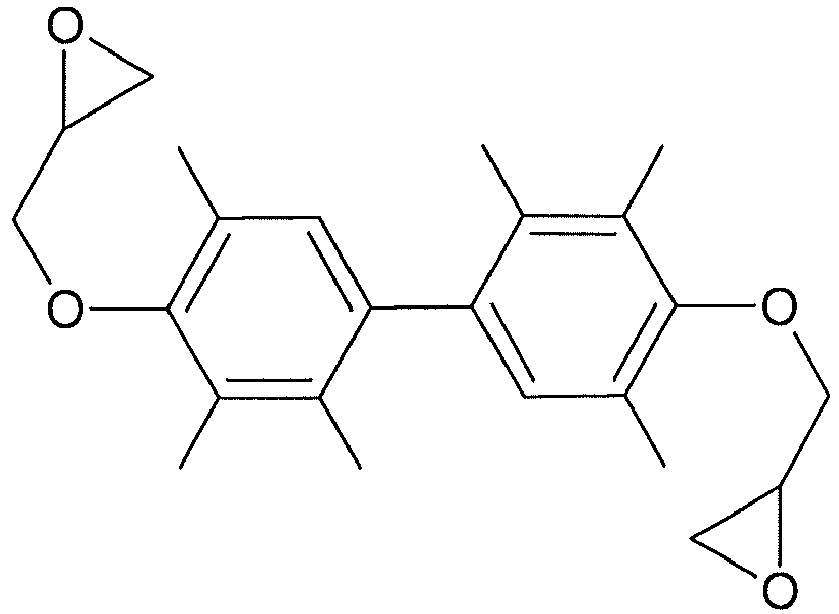
- In one embodiment, the first aromatic epoxy resin may be selected from the group consisting of


- In accordance with one embodiment of the disclosure, an epoxy resin composition is provided. The epoxy resin composition includes a first aromatic epoxy resin, a second aromatic epoxy resin and an amino compound. The first aromatic epoxy resin is represented by the following formula (I), and the amino compound is selected from the group consisting of 4,4'-methylenedianiline (MDA), 4,4'-ethylenedianiline (EDA), 4,4'-bis(4-aminophenoxy)biphenyl (BAPB) and 1,4-bis(4-aminophenoxy)benzene.
- In this embodiment, the ratio between the epoxy groups of the first aromatic epoxy resin and the second aromatic epoxy resin and the amino groups of the amino compound may range from about 1:1 to 2:1. Additionally, the ratio between the first aromatic epoxy resin and the second aromatic epoxy resin may range from about 70:30-90:10.

- In formula (I), a-h may, independently, be hydrogen or methyl.
- In one embodiment, the first aromatic epoxy resin may be selected from the group consisting of 4,4'-bis(2,3-epoxypropoxy)biphenyl (BEPB) and 4,4'-bis(2,3-epoxypropoxy)-2,2',3,3',5,5'-hexamethylbiphenyl (BEPHMB).
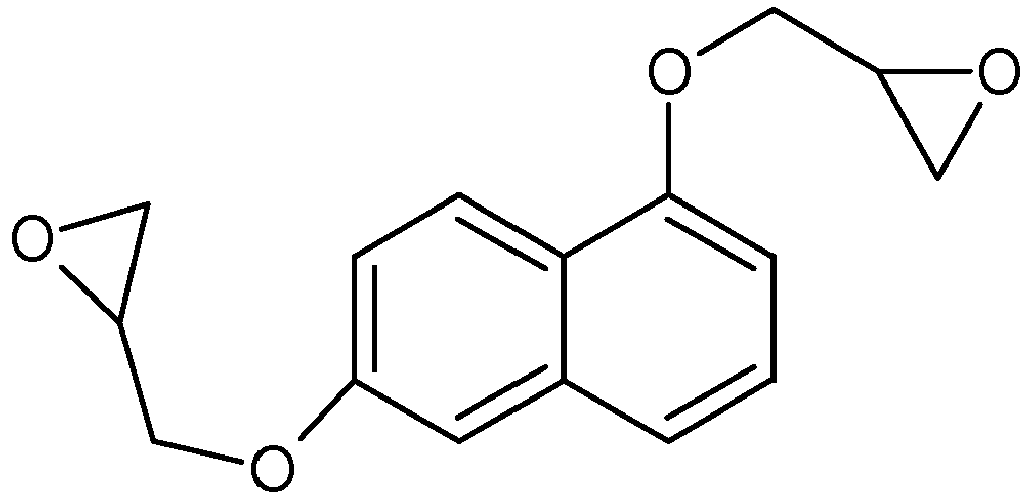
- In one embodiment, the second aromatic epoxy resin may be represented by the following formula:
- In accordance with one embodiment of the disclosure, an epoxy resin composition is provided. The epoxy resin composition includes a first aromatic epoxy resin, an alicyclic epoxy resin and an amino compound. The first aromatic epoxy resin is represented by the following formula (I), and the amino compound is selected from the group consisting of 4,4'-methylenedianiline (MDA), 4,4'-ethylenedianiline (EDA), 4,4'-bis(4-aminophenoxy)biphenyl (BAPB) and 1,4-bis(4-aminophenoxy)benzene.
- In this embodiment, the ratio between the epoxy groups of the first aromatic epoxy resin and the alicyclic epoxy resin and the amino groups of the amino compound may range from about 1:1 to 2:1. Additionally, the ratio between the first aromatic epoxy resin and the alicyclic epoxy resin may range from about 60:40-100:0 or 62:38-89:11.

- In formula (I), a-h may, independently, be hydrogen or methyl.
- In one embodiment, the first aromatic epoxy resin may be selected from the group consisting of 4,4'-bis(2,3-epoxypropoxy)biphenyl (BEPB) and 4,4'-bis(2,3-epoxypropoxy)-2,2',3,3',5,5'-hexamethylbiphenyl (BEPHMB).
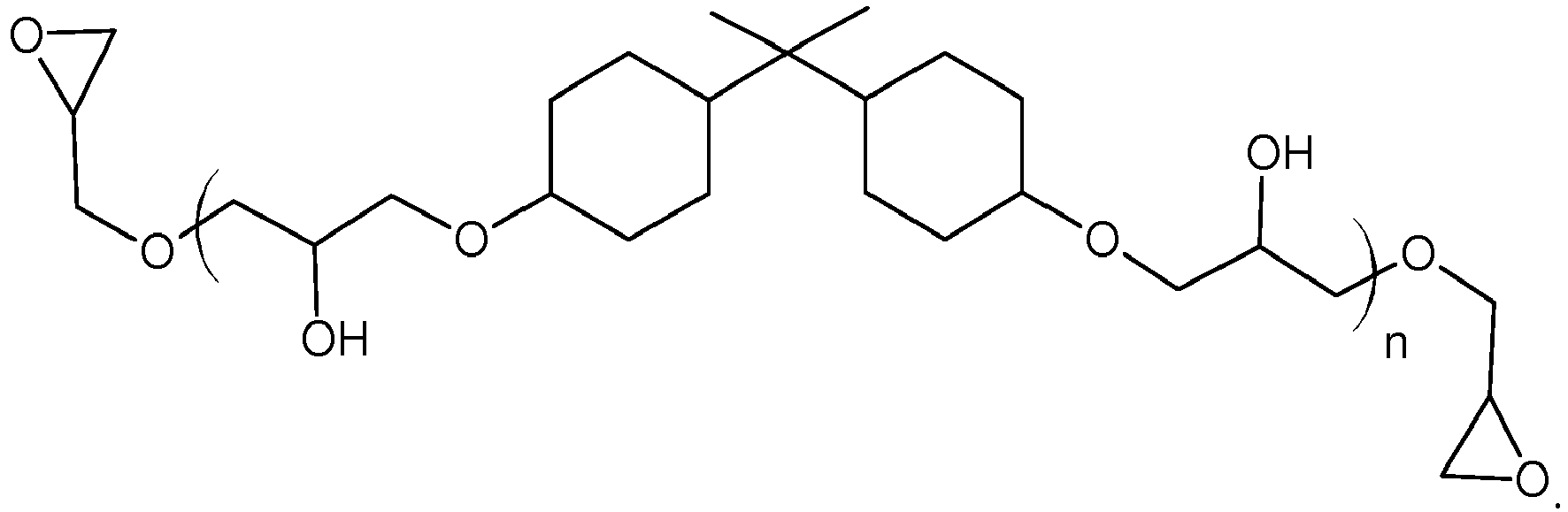
- In one embodiment, the alicyclic epoxy resin may be selected from the group consisting of


- In accordance with one embodiment of the disclosure, an epoxy resin composition is provided. The epoxy resin composition includes a first aromatic epoxy resin, a second aromatic epoxy resin, an alicyclic epoxy resin and an amino compound. The first aromatic epoxy resin is represented by the following formula (I), and the amino compound selected from the group consisting of 4,4'-methylenedianiline (MDA), 4,4'-ethylenedianiline (EDA), 4,4'-bis(4-aminophenoxy)biphenyl (BAPB) and 1,4-bis(4-aminophenoxy)benzene.
- In this embodiment, the ratio between the epoxy groups of the first aromatic epoxy resin, the second aromatic epoxy resin and the alicyclic epoxy resin and the amino groups of the amino compound may range from about 1:1 to 2:1. Additionally, the ratio between the aromatic epoxy groups and the alicyclic epoxy groups of the first aromatic epoxy resin, the second aromatic epoxy resin and the alicyclic epoxy resin may range from about 70:30-100:0 or 70:30-90:10.

- In formula (I), a-h may, independently, be hydrogen or methyl.
- In one embodiment, the first aromatic epoxy resin may be selected from the group consisting of 4,4'-bis(2,3-epoxypropoxy)biphenyl (BEPB) or 4,4'-bis(2,3-epoxypropoxy)-2,2',3,3',5,5'-hexamethylbiphenyl (BEPHMB).
- In one embodiment, the second aromatic epoxy resin may be represented by the following formula:

- In one embodiment, the alicyclic epoxy resin may be selected from the group consisting of


- In accordance with one embodiment of the disclosure, a thermal interface material is provided. The thermal interface material comprises an epoxy resin composition and a thermal conductive filler.
- In one embodiment, the epoxy resin composition may include a first aromatic epoxy resin and an amino compound. The first aromatic epoxy resin is represented by the following formula (I) and an amino compound is selected from the group consisting of 4,4'-methylenedianiline (MDA), 4,4'-ethylenedianiline (EDA), 4,4'-bis(4-aminophenoxy)biphenyl (BAPB) and 1,4-bis(4-aminophenoxy)benzene.
- In this embodiment, the ratio between the epoxy groups of the first aromatic epoxy resin and the amino groups of the amino compound may range from about 1:1 to 2:1.

- In formula (I), a-h may, independently, be hydrogen or methyl.
- In one embodiment, the first aromatic epoxy resin may be selected from the group consisting of 4,4'-bis(2,3-epoxypropoxy)biphenyl (BEPB) and 4,4'-bis(2,3-epoxypropoxy)-2,2',3,3',5,5'-hexamethylbiphenyl (BEPHMB).
- In one embodiment, the epoxy resin composition may include a first aromatic epoxy resin, a second aromatic epoxy resin and an amino compound. The first aromatic epoxy resin is represented by the following formula (I), and the amino compound is selected from the group consisting of 4,4'-methylenedianiline (MDA), 4,4'-ethylenedianiline (EDA), 4,4'-bis(4-aminophenoxy)biphenyl (BAPB) and 1,4-bis(4-aminophenoxy)benzene.
- In this embodiment, the ratio between the epoxy groups of the first aromatic epoxy resin and the second aromatic epoxy resin and the amino groups of the amino compound may range from about 1:1 to 2:1. Additionally, the ratio between the first aromatic epoxy resin and the second aromatic epoxy resin may range from about 70:30-90:10.

- In formula (I), a-h may, independently, be hydrogen or methyl.
- In one embodiment, the first aromatic epoxy resin may be selected from the group consisting of 4,4'-bis(2,3-epoxypropoxy)biphenyl (BEPB) or 4,4'-bis(2,3-epoxypropoxy)-2,2',3,3',5,5'-hexamethylbiphenyl (BEPHMB).
- In one embodiment, the second aromatic epoxy resin may be represented by the following formula:

- In one embodiment, the epoxy resin composition may include a first aromatic epoxy resin, an alicyclic epoxy resin and an amino compound. The first aromatic epoxy resin is represented by the following formula (I), and the amino compound selected from the group consisting of 4,4'-methylenedianiline (MDA), 4,4'-ethylenedianiline (EDA), 4,4'-bis(4-aminophenoxy)biphenyl (BAPB) and 1,4-bis(4-aminophenoxy)benzene.
- In this embodiment, the ratio between the epoxy groups of the first aromatic epoxy resin and the alicyclic epoxy resin and the amino groups of the amino compound may range from about 1:1 to 2:1. Additionally, the ratio between the first aromatic epoxy resin and the alicyclic epoxy resin may range from about 60:40-100:0.
- In one embodiment, the ratio between the first aromatic epoxy resin and the alicyclic epoxy resin may range from about 62:38-89:11.

- In formula (I), a-h may, independently, be hydrogen or methyl.
- In one embodiment, the first aromatic epoxy resin may be selected from the group consisting of 4,4'-bis(2,3-epoxypropoxy)biphenyl (BEPB) or 4,4'-bis(2,3-epoxypropoxy)-2,2',3,3',5,5'-hexamethylbiphenyl (BEPHMB).
- In one embodiment, the alicyclic epoxy resin may be selected from the group consisting of


- In one embodiment, the epoxy resin composition may include a first aromatic epoxy resin, a second aromatic epoxy resin, an alicyclic epoxy resin and an amino compound. The first aromatic epoxy resin is represented by the following formula (I), and the amino compound is selected from the group consisting of 4,4'-methylenedianiline (MDA), 4,4'-ethylenedianiline (EDA), 4,4'-bis(4-aminophenoxy)biphenyl (BAPB) and 1,4-bis(4-aminophenoxy)benzene.
- In this embodiment, the ratio between the epoxy groups of the first aromatic epoxy resin, the second aromatic epoxy resin and the alicyclic epoxy resin and the amino groups of the amino compound may range from about 1:1 to 2:1. Additionally, the ratio between the aromatic epoxy groups and the alicyclic epoxy groups of the first aromatic epoxy resin, the second aromatic epoxy resin and the alicyclic epoxy resin may range from about 70:30-100:0.
- In one embodiment, the ratio between the aromatic epoxy groups and the alicyclic epoxy groups of the first aromatic epoxy resin, the second aromatic epoxy resin and the alicyclic epoxy resin may range from about 70:30-90:10.

- In formula (I), a-h may, independently, be hydrogen or methyl.
- In one embodiment, the first aromatic epoxy resin may be selected from the group consisting of 4,4'-bis(2,3-epoxypropoxy)biphenyl (BEPB) or 4,4'-bis(2,3-epoxypropoxy)-2,2',3,3',5,5'-hexamethylbiphenyl (BEPHMB).
- In one embodiment, the second aromatic epoxy resin may be represented by the following formula:

- In one embodiment, the alicyclic epoxy resin may be selected from the group consisting of

- In some embodiments, the thermal conductive filler added in the epoxy resin composition may be selected from the group consisting of copper, gold, nickel, silver, aluminum, boron nitride, aluminum oxide, aluminum nitride, magnesium oxide, zinc oxide, silicon carbide, beryllium oxide, diamond, graphite sheet, tungsten carbide, carbon fiber, carbon nanotube or a mixture thereof, with a weight ratio less than or equal to about 50%.
- In the disclosure, a cured epoxy resin composition is developed adopting a specific molecular structure design. An aromatic epoxy resin (for example, BEPB, BEPHMB or 4032), an alicyclic epoxy resin (for example, 5200 or 5000) and an amino compound with the specific structure (for example, 4,4'-methylenedianiline (MDA), 4,4'-ethylenedianiline (EDA), 4,4'-bis(4-aminophenoxy)biphenyl (BAPB) or 1,4-bis(4-aminophenoxy)benzene) are conducted to improve the arrangement of the microstructure of an epoxy resin. Therefore, an epoxy resin with high thermal conductivity (0.3W/mK above) and insulating property is developed.
- After 2.12g of epoxy resin BEPB was completely dissolved in 2.68g of DMAc, 0.91g of epoxy resin 4032 and 0.99g of MDA were added to form a solution. After the solution was uniformly stirred and mixed, 6g of the solution was taken out and placed on an aluminum pan and in an oven with 120 °C for two hours. After curing, the oven was adjusted to 170°C. After baking for 40 minutes, solvent was removed from the solution. A thermal interface material was obtained. Some physical properties, for example thermal conductivity value, volume resistivity and breakdown voltage, of the thermal interface material were tested and are listed in Table 1.
- After 2.68g of epoxy resin BEPHMB was completely dissolved in 3.05g of DMAc, 0.91g of epoxy resin 4032 and 0.99g of MDA were added to form a solution. After the solution was uniformly stirred and mixed, 6g of the solution was taken out and placed on an aluminum pan and in an oven with 120°C for two hours. After curing, the oven was adjusted to 170°C. After baking for 40 minutes, solvent was removed from the solution. A thermal interface material was obtained. Some physical properties, for example thermal conductivity value, volume resistivity and breakdown voltage, of the thermal interface material were tested and are listed in Table 1.
- After 1.51g of epoxy resin BEPB was completely dissolved in 2.95g of DMAc, 1.32g of epoxy resin 5000, 0.6g of epoxy resin 4032 and 0.99g of MDA were added to form a solution. After the solution was uniformly stirred and mixed, 6g of the solution was taken out and placed on an aluminum pan and in an oven with 120°C for two hours. After curing, the oven was adjusted to 170°C. After baking for 40 minutes, solvent was removed from the solution. A thermal interface material was obtained. Some physical properties, for example thermal conductivity value, volume resistivity and breakdown voltage, of the thermal interface material were tested and are listed in Table 1.
- After 1.91g of epoxy resin BEPHMB was completely dissolved in 3.22g of DMAc, 1.32g of epoxy resin 5000, 0.6g of epoxy resin 4032 and 0.99g of MDA were added to form a solution. After the solution was uniformly stirred and mixed, 6g of the solution was taken out and placed on an aluminum pan and in an oven with 120°C for two hours. After curing, the oven was adjusted to 170°C. After baking for 40 minutes, solvent was removed from the solution. A thermal interface material was obtained. Some physical properties, for example thermal conductivity value, volume resistivity and breakdown voltage, of the thermal interface material were tested and are listed in Table 1.
Table 1 Example 1 Example 2 Example 3 Example 4 Epoxy resin 4032/BEPB (3:7) 4032/BEPHMB (3:7) 5000/4032/BEPB (3:2:5) 5000/4032/BEPHMB (3:2:5) Amine curing agent MDA MDA MDA MDA Thermal conductivity value (W/mK) 0.35 0.33 0.32 0.30 Volume resistivity (Ω-cm) 1013 1013 1015 1015 Breakdown 1.7 1.6 1.7 1.7 voltage (KV/mil) - After 2.12g of epoxy resin BEPB was completely dissolved in 2.86g of DMAc, 0.88g of epoxy resin 5000, 0.3g of epoxy resin 4032 and 0.99g of MDA were added to form a solution. After the solution was uniformly stirred and mixed, 6g of the solution was taken out and placed on an aluminum pan and in an oven with 120°C for two hours. After curing, the oven was adjusted to 170°C. After baking for 40 minutes, solvent was removed from the solution. A thermal interface material was obtained. Some physical properties, for example thermal conductivity value, volume resistivity and breakdown voltage, of the thermal interface material were tested and are listed in Table 2.
- After 2.41g of epoxy resin BEPB was completely dissolved in 2.77g of DMAc, 0.44g of epoxy resin 5000, 0.3g of epoxy resin 4032 and 0.99g of MDA were added to form a solution. After the solution was uniformly stirred and mixed, 6g of the solution was taken out and placed on an aluminum pan and in an oven with 120°C for two hours. After curing, the oven was adjusted to 170°C. After baking for 40 minutes, solvent was removed from the solution. A thermal interface material was obtained. Some physical properties, for example thermal conductivity value, volume resistivity and breakdown voltage, of the thermal interface material were tested and are listed in Table 2.
- After 3.06g of epoxy resin BEPHMB was completely dissolved in 3.20g of DMAc, 0.44g of epoxy resin 5000, 0.3g of epoxy resin 4032 and 0.99g of MDA were added to form a solution. After the solution was uniformly stirred and mixed, 6g of the solution was taken out and placed on an aluminum pan and in an oven with 120°C for two hours. After curing, the oven was adjusted to 170°C. After baking for 40 minutes, solvent was removed from the solution. A thermal interface material was obtained. Some physical properties, for example thermal conductivity value, volume resistivity and breakdown voltage, of the thermal interface material were tested and are listed in Table 2.
- After 2.42g of epoxy resin BEPB was completely dissolved in 2.82g of DMAc, 0.44g of epoxy resin 5000, 0.3g of epoxy resin 4032 and 1.06g of EDA were added to form a solution. After the solution was uniformly stirred and mixed, 6g of the solution was taken out and placed on an aluminum pan and in an oven with 120°C for two hours. After curing,
the oven was adjusted to 170°C. After baking for 40 minutes, solvent was removed from the solution. A thermal interface material was obtained. Some physical properties, for example thermal conductivity value, volume resistivity and breakdown voltage, of the thermal interface material were tested and are listed in Table 2.Table 2 Example 5 Example 6 Example 7 Example 8 Epoxy resin 5000/4032/BEPB (2:1:7) 5000/4032/BEPB (1:1:8) 5000/4032/BEPHMB (1:1:8) 5000/4032/BEPB (1:1:8) Amine MDA MDA MDA EDA curing agent Thermal conductivity value (W/mK) 0.33 0.36 0.34 0.38 Volume resistivity (Ω-cm) 1016 1015 1015 1015 Breakdown voltage (KV/mil) 1.8 1.7 1.7 1.6 - After 2.42g of epoxy resin BEPB was completely dissolved in 3.08g of DMAc, 0.44g of epoxy resin 5000, 0.3g of epoxy resin 4032 and 1.46g of BAPB were added to form a solution. After the solution was uniformly stirred and mixed, 6g of the solution was taken out and placed on an aluminum pan and in an oven with 120°C for two hours. After curing, the oven was adjusted to 170°C. After baking for 40 minutes, solvent was removed from the solution. A thermal interface material was obtained. Some physical properties, for example thermal conductivity value, volume resistivity and breakdown voltage, of the thermal interface material were tested and are listed in Table 3.
- After 2.42g of epoxy resin BEPB was completely dissolved in 3.33g of DMAc, 0.44g of epoxy resin 5000, 0.3g of epoxy resin 4032 and 1.84g of BAPBz were added to form a solution. After the solution was uniformly stirred and mixed, 6g of the solution was taken out and placed on an aluminum pan and in an oven with 120°C for two hours. After curing, the oven was adjusted to 170°C. After baking for 40 minutes, solvent was removed from the solution. A thermal interface material was obtained. Some physical properties, for example thermal conductivity value, volume resistivity and breakdown voltage, of the thermal interface material were tested and are listed in Table 3.
- After 3.06g of epoxy resin BEPHMB was completely dissolved in 3.76g of DMAc, 0.44g of epoxy resin 5000, 0.3g of epoxy resin 4032 and 1.84g of BAPB were added to form a solution. After the solution was uniformly stirred and mixed, 6g of the solution was taken out and placed on an aluminum pan and in an oven with 120°C for two hours. After curing, the oven was adjusted to 170°C. After baking for 40 minutes, solvent was removed from the solution. A thermal interface material was obtained. Some physical properties, for example thermal conductivity value, volume resistivity and breakdown voltage, of the thermal interface material were tested and are listed in Table 3.
Table 3 Example 9 Example 10 Example 11 Epoxy resin 5000/4032/BEPB (1:1:8) 5000/4032/BEPB (1:1:8) 5000/4032/BEPHMB (1:1:8) Amine curing agent BAPB BAPBz BAPB Thermal 0.45 0.34 0.42 conductivity value (W/mK) Volume resistivity (Ω-cm) 1015 1015 1015 Breakdown voltage (KV/mil) 1.7 1.7 1.7 - After 1.81g of epoxy resin 4032 was completely dissolved in 3.041g of DMAc, 1.76g of epoxy resin 5000 and 0.99g of MDA were added to form a solution. After the solution was uniformly stirred and mixed, 6g of the solution was taken out and placed on an aluminum pan and in an oven with 120 °C for two hours. After curing, the oven was adjusted to 170°C. After baking for 40 minutes, solvent was removed from the solution. A thermal interface material was obtained. Some physical properties, for example thermal conductivity value, volume resistivity and breakdown voltage, of the thermal interface material were tested and are listed in Table 4.
- After 1.81g of epoxy resin 4032 was completely dissolved in 2.78g of DMAc, 1.36g of epoxy resin 5200 and 0.99g of MDA were added to form a solution. After the solution was uniformly stirred and mixed, 6g of the solution was taken out and placed on an aluminum pan and in an oven with 120 °C for two hours. After curing, the oven was adjusted to 170°C. After baking for 40 minutes, solvent was removed from the solution. A thermal interface material was obtained. Some physical properties, for example thermal conductivity value, volume resistivity and breakdown voltage, of the thermal interface material were tested and are listed in Table 4.
- After 3.77g of epoxy resin 828


- After 3.77g of epoxy resin 828 was completely dissolved in 3.17g of DMAc, 0.99g of MDA was added to form a solution. After the solution was uniformly stirred and mixed, 6g of the solution was taken out and placed on an aluminum pan and in an oven with 120°C for two hours. After curing, the oven was adjusted to 170°C. After baking for 40 minutes, solvent was removed from the solution. A thermal interface material was obtained. Some physical properties, for example thermal conductivity value, volume resistivity and breakdown voltage, of the thermal interface material were tested and are listed in Table 4.
- After 3.02g of epoxy resin BEPB was completely dissolved in 2.84g of DMAc, 1.24g of 4,4'-diaminodiphenyl sulfone was added to form a solution. After the solution was uniformly stirred and mixed, 6g of the solution was taken out and placed on an aluminum pan and in an oven with 120°C for two hours. After curing, the oven was adjusted to 170°C. After baking for 40 minutes, solvent was removed from the solution. A thermal interface material was obtained. Some physical properties, for example thermal conductivity value, volume resistivity and breakdown voltage, of the thermal interface material were tested and are listed in Table 4.
Table 4 Com. Example 1 Com. Example 2 Com. Example 3 Com. Example 4 Com. Example 5 Epoxy resin 5000/4032 (4:6) 5000/4032 (4:6) 828 828 BEPB Amine curing agent MDA MDA DDS MDA DDS Thermal conductivity value (W/mK) 0.22 0.23 0.18 0.24 0.26 Volume resistivity (Ω-cm) 1017 1017 1017 1017 1017 Breakdown voltage (KV/mil) 1.9 1.9 1.7 1.5 1.7 - After 0.3g of epoxy resin 4032 and 2.42g of epoxy resin BEPB were completely dissolved in 3.33g of DMAc, 0.44g of epoxy resin 5000 and 1.84g of BAPB were added to form a solution. After the solution was uniformly stirred and mixed, 6g of the solution was taken out and mixed with 6g of aluminum oxide (Al2O3) by a mixer. The solution was placed in an oven with 120°C for two hours. After curing, the oven was adjusted to 170°C. After baking for 40 minutes, solvent was removed from the solution. A thermal interface material with a solid content of about 50wt% was obtained. Some physical properties, for example thermal conductivity value, volume resistivity and breakdown voltage, of the thermal interface material were then tested and are listed in Table 5.
- After 0.3g of epoxy resin 4032 and 3.06g of epoxy resin BEPHMB were completely dissolved in 3.76g of DMAc, 0.44g of epoxy resin 5000 and 1.84g of BAPB were added to form a solution. After the solution was uniformly stirred and mixed, 6g of the solution was taken out and mixed with 6g of aluminum oxide (Al2O3) by a mixer. The solution was placed in an oven with 120°C for two hours. After curing, the oven was adjusted to 170°C. After baking for 40 minutes, solvent was removed from the solution. A thermal interface material with a solid content of about 50wt% was obtained. Some physical properties, for example thermal conductivity value, volume resistivity and breakdown voltage, of the thermal interface material were then tested and are listed in Table 5.
- After 3.77g of epoxy resin 828 was completely dissolved in 3.34g of DMAc, 1.24g of 4,4'-diaminodiphenyl sulfone was added to form a solution. After the solution was uniformly stirred and mixed, 6g of the solution was taken out and mixed with 34g of aluminum oxide (Al2O3) by a mixer. The solution was placed in an oven with 120°C for two hours. After curing, the oven was adjusted to 170°C. After baking for 40 minutes, solvent was removed from the solution. A thermal interface material with a solid content of about 85wt% was obtained. Some physical properties, for example thermal conductivity value, volume resistivity and breakdown voltage, of the thermal interface material were then tested and are listed in Table 5.
Table 5 Example 12 Example 13 Com. Example 6 Epoxy resin 5000/4032/BEPB 5000/4032/BEPHMB 828 Amine curing agent BAPB BAPB DDS Thermally conductive powder Al2O3 (50%) Al2O3 (50%) Al2O3 (85%) Thermal conductivity value (W/mK) 5.0 4.5 3.2 Volume resistivity (Ω-cm) 1013 1013 1011 Breakdown voltage (KV/mil) 1.5 1.5 1.1 - It will be apparent to those skilled in the art that various modifications and variations can be made to the disclosed embodiments. It is intended that the specification and examples be considered as exemplary only, with the true scope of the disclosure being indicated by the following claims and their equivalents.
Claims (6)
- An epoxy resin composition, comprising:a first aromatic epoxy resin represented by formula (I):
a second aromatic epoxy resin represented by the following formula: an alicyclic epoxy resin selected from the group consisting of
 ; andan amino compound selected from the group consisting of 4,4'-methylenedianiline (MDA), 4,4'-ethylenedianiline (EDA), 4,4'-bis(4-aminophenoxy)biphenyl (BAPB) and 1,4-bis(4-aminophenoxy)benzene, wherein the ratio between the epoxy groups of the first aromatic epoxy resin, the second aromatic epoxy resin and the alicyclic epoxy resin and the amino groups of the amino compound ranges from 1:1 to 2:1.
 - The epoxy resin composition as claimed in claim 1, wherein the first aromatic epoxy resin is selected from the group consisting of

- The epoxy resin composition as claimed in one of claims 1 and 2, wherein the ratio between the aromatic epoxy groups and the alicyclic epoxy groups of the first aromatic epoxy resin, the second aromatic epoxy resin and the alicyclic epoxy resin ranges from 70:30-90:10.
- A thermal interface material, comprising:an epoxy resin composition as claimed in one of claims 1, 2 and 3; anda thermal conductive filler.
- The thermal interface material as claimed in claim 4, wherein the thermal conductive filler comprises copper, gold, nickel, silver, aluminum, boron nitride, aluminum oxide, aluminum nitride, magnesium oxide, zinc oxide, silicon carbide, beryllium oxide, diamond, graphite sheet, tungsten carbide, carbon fiber, carbon nanotube or a mixture thereof.
- The thermal interface material as claimed in one of claims 4 and 5, wherein the thermal conductive filler has a weight ratio of 20-95%.
Applications Claiming Priority (1)
| Application Number | Priority Date | Filing Date | Title |
|---|---|---|---|
| TW104140492A TWI575016B (en) | 2015-12-03 | 2015-12-03 | Epoxy resin composition and thermal interface material containing the same |
Publications (2)
| Publication Number | Publication Date |
|---|---|
| EP3176198A1 true EP3176198A1 (en) | 2017-06-07 |
| EP3176198B1 EP3176198B1 (en) | 2018-12-12 |
Family
ID=57113143
Family Applications (1)
| Application Number | Title | Priority Date | Filing Date |
|---|---|---|---|
| EP16192675.3A Active EP3176198B1 (en) | 2015-12-03 | 2016-10-06 | Epoxy resin compositions and thermal interface materials comprising the same |
Country Status (5)
| Country | Link |
|---|---|
| US (1) | US10059866B2 (en) |
| EP (1) | EP3176198B1 (en) |
| JP (1) | JP6333929B2 (en) |
| CN (1) | CN106832222B (en) |
| TW (1) | TWI575016B (en) |
Families Citing this family (6)
| Publication number | Priority date | Publication date | Assignee | Title |
|---|---|---|---|---|
| JP6591488B2 (en) * | 2017-05-22 | 2019-10-16 | 株式会社大一商会 | Game machine |
| TWI631167B (en) | 2017-12-25 | 2018-08-01 | 財團法人工業技術研究院 | Monomer, resin composition, prepreg, and copper clad laminate |
| TWI656158B (en) | 2017-12-25 | 2019-04-11 | 聯茂電子股份有限公司 | Resin composition, film, and copper foil substrate |
| TWI654218B (en) * | 2018-01-08 | 2019-03-21 | 財團法人工業技術研究院 | Method for forming resin composition and heat conductive material |
| TWI849606B (en) * | 2022-12-05 | 2024-07-21 | 財團法人工業技術研究院 | Thermal interface material |
| US20250058351A1 (en) * | 2023-08-16 | 2025-02-20 | Ppg Industries Ohio, Inc. | Dielectric coatings |
Citations (2)
| Publication number | Priority date | Publication date | Assignee | Title |
|---|---|---|---|---|
| WO2009031536A1 (en) * | 2007-09-05 | 2009-03-12 | Sekisui Chemical Co., Ltd. | Insulating sheet and multilayer structure |
| US20150017450A1 (en) * | 2012-01-26 | 2015-01-15 | Toray Industries, Inc. | Resin composition and semiconductor mounting substrate obtained by molding same |
Family Cites Families (19)
| Publication number | Priority date | Publication date | Assignee | Title |
|---|---|---|---|---|
| JPS61101524A (en) * | 1984-10-25 | 1986-05-20 | Toshiba Chem Corp | Sealing resin composition |
| KR950011902B1 (en) * | 1990-04-04 | 1995-10-12 | 도오레 가부시끼가이샤 | Epoxy resin composition for encapsulating semiconductor device |
| JPH05214214A (en) | 1992-02-06 | 1993-08-24 | Mitsubishi Petrochem Co Ltd | Epoxy resin composition and its cured article |
| JPH0753671A (en) * | 1993-08-11 | 1995-02-28 | Toshiba Chem Corp | Epoxy resin composition and sealed semiconductor device |
| US6790473B2 (en) * | 1995-10-26 | 2004-09-14 | International Business Machines Corporation | Lead protective coating composition, process and structure thereof |
| WO2001081445A1 (en) | 2000-04-21 | 2001-11-01 | Mitsubishi Rayon Co., Ltd. | Epoxy resin composition and prepreg made with the epoxy resin composition |
| TWI298412B (en) | 2000-06-21 | 2008-07-01 | Mitsui Chemicals Inc | |
| WO2002094905A1 (en) | 2001-05-18 | 2002-11-28 | Hitachi, Ltd. | Cured thermosetting resin product |
| JP4414674B2 (en) | 2003-05-07 | 2010-02-10 | ポリマテック株式会社 | Thermally conductive epoxy resin molded body and method for producing the same |
| WO2006129630A1 (en) * | 2005-05-31 | 2006-12-07 | Sumitomo Bakelite Co., Ltd. | Encapsulating resin composition for preapplication, semiconductor device made with the same, and process for producing the same |
| US7727426B2 (en) | 2005-09-02 | 2010-06-01 | Nippon Steel Chemical Co., Ltd. | Epoxy resin composition |
| TWI414538B (en) | 2006-04-25 | 2013-11-11 | Yokohama Rubber Co Ltd | Epoxy resin compositions for fiber-reinforced composite materials |
| JPWO2007129662A1 (en) | 2006-05-08 | 2009-09-17 | 積水化学工業株式会社 | Insulating material, method of manufacturing electronic component device, and electronic component device |
| US20130203882A1 (en) * | 2010-04-29 | 2013-08-08 | Huntsman International Llc | Curable Composition |
| WO2012070387A1 (en) * | 2010-11-25 | 2012-05-31 | 旭化成イーマテリアルズ株式会社 | Epoxy resin and resin composition |
| JP5737028B2 (en) | 2011-07-14 | 2015-06-17 | 住友ベークライト株式会社 | Pre-preg for printed wiring board, laminated board, printed wiring board, and semiconductor package |
| CN102516718B (en) * | 2011-12-01 | 2013-04-24 | 珠海全宝电子科技有限公司 | Resin composition and metal-based copper-clad plate using resin composition as heat conducting insulation layer |
| EP3121210A4 (en) * | 2014-03-20 | 2017-12-06 | Hitachi Chemical Co., Ltd. | Resin composition, resin sheet, resin sheet cured product, resin sheet laminate, resin sheet laminate cured product and method for producing same, semiconductor device, and led device. |
| CN103964747B (en) * | 2014-04-10 | 2016-01-20 | 广东省建筑科学研究院集团股份有限公司 | A kind of weather-proof quick-drying road surface breakage patching material and preparation method thereof |
-
2015
- 2015-12-03 TW TW104140492A patent/TWI575016B/en active
- 2015-12-17 CN CN201510952092.8A patent/CN106832222B/en active Active
- 2015-12-18 US US14/974,616 patent/US10059866B2/en active Active
-
2016
- 2016-10-06 EP EP16192675.3A patent/EP3176198B1/en active Active
- 2016-12-02 JP JP2016235117A patent/JP6333929B2/en active Active
Patent Citations (2)
| Publication number | Priority date | Publication date | Assignee | Title |
|---|---|---|---|---|
| WO2009031536A1 (en) * | 2007-09-05 | 2009-03-12 | Sekisui Chemical Co., Ltd. | Insulating sheet and multilayer structure |
| US20150017450A1 (en) * | 2012-01-26 | 2015-01-15 | Toray Industries, Inc. | Resin composition and semiconductor mounting substrate obtained by molding same |
Non-Patent Citations (1)
| Title |
|---|
| GUO HUILONG ET AL: "High thermal conductivity epoxies containing substituted biphenyl mesogenic", JOURNAL OF MATERIALS SCIENCE. MATERIALS IN ELECTRONICS, CHAPMAN AND HALL, LONDON, GB, vol. 27, no. 3, 21 November 2015 (2015-11-21), pages 2754 - 2759, XP035915268, ISSN: 0957-4522, [retrieved on 20151121], DOI: 10.1007/S10854-015-4087-8 * |
Also Published As
| Publication number | Publication date |
|---|---|
| JP2017101237A (en) | 2017-06-08 |
| JP6333929B2 (en) | 2018-05-30 |
| US10059866B2 (en) | 2018-08-28 |
| CN106832222B (en) | 2019-06-18 |
| TW201720868A (en) | 2017-06-16 |
| US20170158932A1 (en) | 2017-06-08 |
| EP3176198B1 (en) | 2018-12-12 |
| TWI575016B (en) | 2017-03-21 |
| CN106832222A (en) | 2017-06-13 |
Similar Documents
| Publication | Publication Date | Title |
|---|---|---|
| EP3176198B1 (en) | Epoxy resin compositions and thermal interface materials comprising the same | |
| US9029438B2 (en) | Thermosetting resin composition, B-stage heat conductive sheet, and power module | |
| CN103131381B (en) | High-performance environmentally-friendly flame retardant type organic electron pouring sealant and preparation method thereof | |
| Gong et al. | Heat conductive h‐BN/CTPB/epoxy with enhanced dielectric properties for potential high‐voltage applications | |
| CN105623198A (en) | High-thermal conductivity resin composition and application thereof | |
| TW200415964A (en) | Resin composition for printed circuit board and varnish, prepreg as well as laminate with metal layer using the same | |
| JP5171798B2 (en) | Thermosetting resin composition, thermally conductive resin sheet, method for producing the same, and power module | |
| EP3279261A1 (en) | Resin composition, electroconductive resin composition, adhesive, electroconductive adhesive, paste for forming electrodes, and semiconductor device | |
| JP2014520172A5 (en) | ||
| Lu et al. | Synergetic effect of graphite nanosheets and spherical alumina particles on thermal conductivity enhancement of silicone rubber composites | |
| CN105754535A (en) | Insulating heat-conducting adhesive and preparation method thereof | |
| JP2015147849A (en) | Resin composition and semiconductor device | |
| JP4890063B2 (en) | Resin composition, varnish obtained using this resin composition, film adhesive and copper foil with film adhesive | |
| Qian et al. | Efficient thermal properties enhancement to hyperbranched aromatic polyamide grafted aluminum nitride in epoxy composites | |
| KR101782231B1 (en) | Coating composition for radiant heat having improved heat radiation property and surface hardness, preparation method thereof, and heat radiating coating comprising the same | |
| Huang et al. | Phthalonitrile/epoxy copolymers endowing molding compounds with high T g, low CTE, and intrinsic flame retardancy | |
| US10329468B2 (en) | Thermally conductive resin and thermal interface material comprising the same | |
| JP2012241151A (en) | Resin composition for sealing electronic part, and electronic part device using the same | |
| KR101996605B1 (en) | Epoxy paste using silver coated-copper nanowire of core-shell structure and conductive film including the same | |
| JP4380272B2 (en) | Epoxy resin composition and semiconductor device using the same | |
| US20220112370A1 (en) | Polymeric blend composite and process for preparing the same | |
| CN112457706A (en) | Heat dissipation ink, preparation method and preparation method of heat dissipation shielding case | |
| JP2001230353A (en) | Heat dissipation member | |
| CN110016122B (en) | Forming method of resin composition and thermally conductive material | |
| CN118344782B (en) | Epoxy insulating paint and production process thereof |
Legal Events
| Date | Code | Title | Description |
|---|---|---|---|
| AK | Designated contracting states |
Kind code of ref document: A1 Designated state(s): AL AT BE BG CH CY CZ DE DK EE ES FI FR GB GR HR HU IE IS IT LI LT LU LV MC MK MT NL NO PL PT RO RS SE SI SK SM TR |
|
| AX | Request for extension of the european patent |
Extension state: BA ME |
|
| PUAI | Public reference made under article 153(3) epc to a published international application that has entered the european phase |
Free format text: ORIGINAL CODE: 0009012 |
|
| STAA | Information on the status of an ep patent application or granted ep patent |
Free format text: STATUS: THE APPLICATION HAS BEEN PUBLISHED |
|
| STAA | Information on the status of an ep patent application or granted ep patent |
Free format text: STATUS: REQUEST FOR EXAMINATION WAS MADE |
|
| 17P | Request for examination filed |
Effective date: 20170823 |
|
| RBV | Designated contracting states (corrected) |
Designated state(s): AL AT BE BG CH CY CZ DE DK EE ES FI FR GB GR HR HU IE IS IT LI LT LU LV MC MK MT NL NO PL PT RO RS SE SI SK SM TR |
|
| GRAP | Despatch of communication of intention to grant a patent |
Free format text: ORIGINAL CODE: EPIDOSNIGR1 |
|
| RIC1 | Information provided on ipc code assigned before grant |
Ipc: C08G 59/22 20060101AFI20180410BHEP Ipc: C08G 59/24 20060101ALI20180410BHEP Ipc: H01L 23/373 20060101ALI20180410BHEP Ipc: C08G 59/50 20060101ALI20180410BHEP Ipc: C09K 5/14 20060101ALI20180410BHEP |
|
| STAA | Information on the status of an ep patent application or granted ep patent |
Free format text: STATUS: GRANT OF PATENT IS INTENDED |
|
| INTG | Intention to grant announced |
Effective date: 20180517 |
|
| GRAS | Grant fee paid |
Free format text: ORIGINAL CODE: EPIDOSNIGR3 |
|
| GRAA | (expected) grant |
Free format text: ORIGINAL CODE: 0009210 |
|
| STAA | Information on the status of an ep patent application or granted ep patent |
Free format text: STATUS: THE PATENT HAS BEEN GRANTED |
|
| AK | Designated contracting states |
Kind code of ref document: B1 Designated state(s): AL AT BE BG CH CY CZ DE DK EE ES FI FR GB GR HR HU IE IS IT LI LT LU LV MC MK MT NL NO PL PT RO RS SE SI SK SM TR |
|
| REG | Reference to a national code |
Ref country code: GB Ref legal event code: FG4D |
|
| REG | Reference to a national code |
Ref country code: CH Ref legal event code: EP |
|
| REG | Reference to a national code |
Ref country code: AT Ref legal event code: REF Ref document number: 1075883 Country of ref document: AT Kind code of ref document: T Effective date: 20181215 |
|
| REG | Reference to a national code |
Ref country code: IE Ref legal event code: FG4D |
|
| REG | Reference to a national code |
Ref country code: DE Ref legal event code: R096 Ref document number: 602016008081 Country of ref document: DE |
|
| REG | Reference to a national code |
Ref country code: DE Ref legal event code: R082 Ref document number: 602016008081 Country of ref document: DE Representative=s name: MICHALSKI HUETTERMANN & PARTNER PATENTANWAELTE, DE |
|
| REG | Reference to a national code |
Ref country code: NL Ref legal event code: MP Effective date: 20181212 |
|
| REG | Reference to a national code |
Ref country code: LT Ref legal event code: MG4D |
|
| PG25 | Lapsed in a contracting state [announced via postgrant information from national office to epo] |
Ref country code: LT Free format text: LAPSE BECAUSE OF FAILURE TO SUBMIT A TRANSLATION OF THE DESCRIPTION OR TO PAY THE FEE WITHIN THE PRESCRIBED TIME-LIMIT Effective date: 20181212 Ref country code: BG Free format text: LAPSE BECAUSE OF FAILURE TO SUBMIT A TRANSLATION OF THE DESCRIPTION OR TO PAY THE FEE WITHIN THE PRESCRIBED TIME-LIMIT Effective date: 20190312 Ref country code: NO Free format text: LAPSE BECAUSE OF FAILURE TO SUBMIT A TRANSLATION OF THE DESCRIPTION OR TO PAY THE FEE WITHIN THE PRESCRIBED TIME-LIMIT Effective date: 20190312 Ref country code: HR Free format text: LAPSE BECAUSE OF FAILURE TO SUBMIT A TRANSLATION OF THE DESCRIPTION OR TO PAY THE FEE WITHIN THE PRESCRIBED TIME-LIMIT Effective date: 20181212 Ref country code: LV Free format text: LAPSE BECAUSE OF FAILURE TO SUBMIT A TRANSLATION OF THE DESCRIPTION OR TO PAY THE FEE WITHIN THE PRESCRIBED TIME-LIMIT Effective date: 20181212 Ref country code: FI Free format text: LAPSE BECAUSE OF FAILURE TO SUBMIT A TRANSLATION OF THE DESCRIPTION OR TO PAY THE FEE WITHIN THE PRESCRIBED TIME-LIMIT Effective date: 20181212 Ref country code: ES Free format text: LAPSE BECAUSE OF FAILURE TO SUBMIT A TRANSLATION OF THE DESCRIPTION OR TO PAY THE FEE WITHIN THE PRESCRIBED TIME-LIMIT Effective date: 20181212 |
|
| REG | Reference to a national code |
Ref country code: AT Ref legal event code: MK05 Ref document number: 1075883 Country of ref document: AT Kind code of ref document: T Effective date: 20181212 |
|
| PG25 | Lapsed in a contracting state [announced via postgrant information from national office to epo] |
Ref country code: GR Free format text: LAPSE BECAUSE OF FAILURE TO SUBMIT A TRANSLATION OF THE DESCRIPTION OR TO PAY THE FEE WITHIN THE PRESCRIBED TIME-LIMIT Effective date: 20190313 Ref country code: SE Free format text: LAPSE BECAUSE OF FAILURE TO SUBMIT A TRANSLATION OF THE DESCRIPTION OR TO PAY THE FEE WITHIN THE PRESCRIBED TIME-LIMIT Effective date: 20181212 Ref country code: RS Free format text: LAPSE BECAUSE OF FAILURE TO SUBMIT A TRANSLATION OF THE DESCRIPTION OR TO PAY THE FEE WITHIN THE PRESCRIBED TIME-LIMIT Effective date: 20181212 Ref country code: AL Free format text: LAPSE BECAUSE OF FAILURE TO SUBMIT A TRANSLATION OF THE DESCRIPTION OR TO PAY THE FEE WITHIN THE PRESCRIBED TIME-LIMIT Effective date: 20181212 |
|
| PG25 | Lapsed in a contracting state [announced via postgrant information from national office to epo] |
Ref country code: NL Free format text: LAPSE BECAUSE OF FAILURE TO SUBMIT A TRANSLATION OF THE DESCRIPTION OR TO PAY THE FEE WITHIN THE PRESCRIBED TIME-LIMIT Effective date: 20181212 |
|
| PG25 | Lapsed in a contracting state [announced via postgrant information from national office to epo] |
Ref country code: PL Free format text: LAPSE BECAUSE OF FAILURE TO SUBMIT A TRANSLATION OF THE DESCRIPTION OR TO PAY THE FEE WITHIN THE PRESCRIBED TIME-LIMIT Effective date: 20181212 Ref country code: CZ Free format text: LAPSE BECAUSE OF FAILURE TO SUBMIT A TRANSLATION OF THE DESCRIPTION OR TO PAY THE FEE WITHIN THE PRESCRIBED TIME-LIMIT Effective date: 20181212 Ref country code: PT Free format text: LAPSE BECAUSE OF FAILURE TO SUBMIT A TRANSLATION OF THE DESCRIPTION OR TO PAY THE FEE WITHIN THE PRESCRIBED TIME-LIMIT Effective date: 20190412 Ref country code: IT Free format text: LAPSE BECAUSE OF FAILURE TO SUBMIT A TRANSLATION OF THE DESCRIPTION OR TO PAY THE FEE WITHIN THE PRESCRIBED TIME-LIMIT Effective date: 20181212 |
|
| PG25 | Lapsed in a contracting state [announced via postgrant information from national office to epo] |
Ref country code: SM Free format text: LAPSE BECAUSE OF FAILURE TO SUBMIT A TRANSLATION OF THE DESCRIPTION OR TO PAY THE FEE WITHIN THE PRESCRIBED TIME-LIMIT Effective date: 20181212 Ref country code: IS Free format text: LAPSE BECAUSE OF FAILURE TO SUBMIT A TRANSLATION OF THE DESCRIPTION OR TO PAY THE FEE WITHIN THE PRESCRIBED TIME-LIMIT Effective date: 20190412 Ref country code: SK Free format text: LAPSE BECAUSE OF FAILURE TO SUBMIT A TRANSLATION OF THE DESCRIPTION OR TO PAY THE FEE WITHIN THE PRESCRIBED TIME-LIMIT Effective date: 20181212 Ref country code: EE Free format text: LAPSE BECAUSE OF FAILURE TO SUBMIT A TRANSLATION OF THE DESCRIPTION OR TO PAY THE FEE WITHIN THE PRESCRIBED TIME-LIMIT Effective date: 20181212 Ref country code: RO Free format text: LAPSE BECAUSE OF FAILURE TO SUBMIT A TRANSLATION OF THE DESCRIPTION OR TO PAY THE FEE WITHIN THE PRESCRIBED TIME-LIMIT Effective date: 20181212 |
|
| REG | Reference to a national code |
Ref country code: DE Ref legal event code: R097 Ref document number: 602016008081 Country of ref document: DE |
|
| PLBE | No opposition filed within time limit |
Free format text: ORIGINAL CODE: 0009261 |
|
| STAA | Information on the status of an ep patent application or granted ep patent |
Free format text: STATUS: NO OPPOSITION FILED WITHIN TIME LIMIT |
|
| PG25 | Lapsed in a contracting state [announced via postgrant information from national office to epo] |
Ref country code: SI Free format text: LAPSE BECAUSE OF FAILURE TO SUBMIT A TRANSLATION OF THE DESCRIPTION OR TO PAY THE FEE WITHIN THE PRESCRIBED TIME-LIMIT Effective date: 20181212 Ref country code: DK Free format text: LAPSE BECAUSE OF FAILURE TO SUBMIT A TRANSLATION OF THE DESCRIPTION OR TO PAY THE FEE WITHIN THE PRESCRIBED TIME-LIMIT Effective date: 20181212 Ref country code: AT Free format text: LAPSE BECAUSE OF FAILURE TO SUBMIT A TRANSLATION OF THE DESCRIPTION OR TO PAY THE FEE WITHIN THE PRESCRIBED TIME-LIMIT Effective date: 20181212 |
|
| 26N | No opposition filed |
Effective date: 20190913 |
|
| PG25 | Lapsed in a contracting state [announced via postgrant information from national office to epo] |
Ref country code: TR Free format text: LAPSE BECAUSE OF FAILURE TO SUBMIT A TRANSLATION OF THE DESCRIPTION OR TO PAY THE FEE WITHIN THE PRESCRIBED TIME-LIMIT Effective date: 20181212 |
|
| PG25 | Lapsed in a contracting state [announced via postgrant information from national office to epo] |
Ref country code: MC Free format text: LAPSE BECAUSE OF FAILURE TO SUBMIT A TRANSLATION OF THE DESCRIPTION OR TO PAY THE FEE WITHIN THE PRESCRIBED TIME-LIMIT Effective date: 20181212 |
|
| REG | Reference to a national code |
Ref country code: CH Ref legal event code: PL |
|
| PG25 | Lapsed in a contracting state [announced via postgrant information from national office to epo] |
Ref country code: CH Free format text: LAPSE BECAUSE OF NON-PAYMENT OF DUE FEES Effective date: 20191031 Ref country code: LI Free format text: LAPSE BECAUSE OF NON-PAYMENT OF DUE FEES Effective date: 20191031 Ref country code: LU Free format text: LAPSE BECAUSE OF NON-PAYMENT OF DUE FEES Effective date: 20191006 |
|
| REG | Reference to a national code |
Ref country code: BE Ref legal event code: MM Effective date: 20191031 |
|
| PG25 | Lapsed in a contracting state [announced via postgrant information from national office to epo] |
Ref country code: BE Free format text: LAPSE BECAUSE OF NON-PAYMENT OF DUE FEES Effective date: 20191031 |
|
| PG25 | Lapsed in a contracting state [announced via postgrant information from national office to epo] |
Ref country code: FR Free format text: LAPSE BECAUSE OF NON-PAYMENT OF DUE FEES Effective date: 20191031 Ref country code: IE Free format text: LAPSE BECAUSE OF NON-PAYMENT OF DUE FEES Effective date: 20191006 |
|
| PG25 | Lapsed in a contracting state [announced via postgrant information from national office to epo] |
Ref country code: CY Free format text: LAPSE BECAUSE OF FAILURE TO SUBMIT A TRANSLATION OF THE DESCRIPTION OR TO PAY THE FEE WITHIN THE PRESCRIBED TIME-LIMIT Effective date: 20181212 |
|
| GBPC | Gb: european patent ceased through non-payment of renewal fee |
Effective date: 20201006 |
|
| PG25 | Lapsed in a contracting state [announced via postgrant information from national office to epo] |
Ref country code: HU Free format text: LAPSE BECAUSE OF FAILURE TO SUBMIT A TRANSLATION OF THE DESCRIPTION OR TO PAY THE FEE WITHIN THE PRESCRIBED TIME-LIMIT; INVALID AB INITIO Effective date: 20161006 Ref country code: MT Free format text: LAPSE BECAUSE OF FAILURE TO SUBMIT A TRANSLATION OF THE DESCRIPTION OR TO PAY THE FEE WITHIN THE PRESCRIBED TIME-LIMIT Effective date: 20181212 |
|
| PG25 | Lapsed in a contracting state [announced via postgrant information from national office to epo] |
Ref country code: GB Free format text: LAPSE BECAUSE OF NON-PAYMENT OF DUE FEES Effective date: 20201006 |
|
| PG25 | Lapsed in a contracting state [announced via postgrant information from national office to epo] |
Ref country code: MK Free format text: LAPSE BECAUSE OF FAILURE TO SUBMIT A TRANSLATION OF THE DESCRIPTION OR TO PAY THE FEE WITHIN THE PRESCRIBED TIME-LIMIT Effective date: 20181212 |
|
| PGFP | Annual fee paid to national office [announced via postgrant information from national office to epo] |
Ref country code: DE Payment date: 20251029 Year of fee payment: 10 |