EP3145902B1 - Process for the continuous production of ethylene glycol from carbohydrates - Google Patents
Process for the continuous production of ethylene glycol from carbohydrates Download PDFInfo
- Publication number
- EP3145902B1 EP3145902B1 EP15796005.5A EP15796005A EP3145902B1 EP 3145902 B1 EP3145902 B1 EP 3145902B1 EP 15796005 A EP15796005 A EP 15796005A EP 3145902 B1 EP3145902 B1 EP 3145902B1
- Authority
- EP
- European Patent Office
- Prior art keywords
- reactor
- catalyst
- zone
- retro
- aldol
- Prior art date
- Legal status (The legal status is an assumption and is not a legal conclusion. Google has not performed a legal analysis and makes no representation as to the accuracy of the status listed.)
- Active
Links
Images
Classifications
-
- C—CHEMISTRY; METALLURGY
- C07—ORGANIC CHEMISTRY
- C07C—ACYCLIC OR CARBOCYCLIC COMPOUNDS
- C07C29/00—Preparation of compounds having hydroxy or O-metal groups bound to a carbon atom not belonging to a six-membered aromatic ring
- C07C29/132—Preparation of compounds having hydroxy or O-metal groups bound to a carbon atom not belonging to a six-membered aromatic ring by reduction of an oxygen containing functional group
- C07C29/136—Preparation of compounds having hydroxy or O-metal groups bound to a carbon atom not belonging to a six-membered aromatic ring by reduction of an oxygen containing functional group of >C=O containing groups, e.g. —COOH
- C07C29/14—Preparation of compounds having hydroxy or O-metal groups bound to a carbon atom not belonging to a six-membered aromatic ring by reduction of an oxygen containing functional group of >C=O containing groups, e.g. —COOH of a —CHO group
- C07C29/141—Preparation of compounds having hydroxy or O-metal groups bound to a carbon atom not belonging to a six-membered aromatic ring by reduction of an oxygen containing functional group of >C=O containing groups, e.g. —COOH of a —CHO group with hydrogen or hydrogen-containing gases
-
- B—PERFORMING OPERATIONS; TRANSPORTING
- B01—PHYSICAL OR CHEMICAL PROCESSES OR APPARATUS IN GENERAL
- B01J—CHEMICAL OR PHYSICAL PROCESSES, e.g. CATALYSIS OR COLLOID CHEMISTRY; THEIR RELEVANT APPARATUS
- B01J21/00—Catalysts comprising the elements, oxides, or hydroxides of magnesium, boron, aluminium, carbon, silicon, titanium, zirconium, or hafnium
- B01J21/02—Boron or aluminium; Oxides or hydroxides thereof
-
- B—PERFORMING OPERATIONS; TRANSPORTING
- B01—PHYSICAL OR CHEMICAL PROCESSES OR APPARATUS IN GENERAL
- B01J—CHEMICAL OR PHYSICAL PROCESSES, e.g. CATALYSIS OR COLLOID CHEMISTRY; THEIR RELEVANT APPARATUS
- B01J21/00—Catalysts comprising the elements, oxides, or hydroxides of magnesium, boron, aluminium, carbon, silicon, titanium, zirconium, or hafnium
- B01J21/06—Silicon, titanium, zirconium or hafnium; Oxides or hydroxides thereof
- B01J21/066—Zirconium or hafnium; Oxides or hydroxides thereof
-
- B—PERFORMING OPERATIONS; TRANSPORTING
- B01—PHYSICAL OR CHEMICAL PROCESSES OR APPARATUS IN GENERAL
- B01J—CHEMICAL OR PHYSICAL PROCESSES, e.g. CATALYSIS OR COLLOID CHEMISTRY; THEIR RELEVANT APPARATUS
- B01J23/00—Catalysts comprising metals or metal oxides or hydroxides, not provided for in group B01J21/00
- B01J23/16—Catalysts comprising metals or metal oxides or hydroxides, not provided for in group B01J21/00 of arsenic, antimony, bismuth, vanadium, niobium, tantalum, polonium, chromium, molybdenum, tungsten, manganese, technetium or rhenium
- B01J23/24—Chromium, molybdenum or tungsten
- B01J23/30—Tungsten
-
- B—PERFORMING OPERATIONS; TRANSPORTING
- B01—PHYSICAL OR CHEMICAL PROCESSES OR APPARATUS IN GENERAL
- B01J—CHEMICAL OR PHYSICAL PROCESSES, e.g. CATALYSIS OR COLLOID CHEMISTRY; THEIR RELEVANT APPARATUS
- B01J23/00—Catalysts comprising metals or metal oxides or hydroxides, not provided for in group B01J21/00
- B01J23/70—Catalysts comprising metals or metal oxides or hydroxides, not provided for in group B01J21/00 of the iron group metals or copper
- B01J23/76—Catalysts comprising metals or metal oxides or hydroxides, not provided for in group B01J21/00 of the iron group metals or copper combined with metals, oxides or hydroxides provided for in groups B01J23/02 - B01J23/36
- B01J23/84—Catalysts comprising metals or metal oxides or hydroxides, not provided for in group B01J21/00 of the iron group metals or copper combined with metals, oxides or hydroxides provided for in groups B01J23/02 - B01J23/36 with arsenic, antimony, bismuth, vanadium, niobium, tantalum, polonium, chromium, molybdenum, tungsten, manganese, technetium or rhenium
- B01J23/889—Manganese, technetium or rhenium
- B01J23/8896—Rhenium
-
- B—PERFORMING OPERATIONS; TRANSPORTING
- B01—PHYSICAL OR CHEMICAL PROCESSES OR APPARATUS IN GENERAL
- B01J—CHEMICAL OR PHYSICAL PROCESSES, e.g. CATALYSIS OR COLLOID CHEMISTRY; THEIR RELEVANT APPARATUS
- B01J23/00—Catalysts comprising metals or metal oxides or hydroxides, not provided for in group B01J21/00
- B01J23/70—Catalysts comprising metals or metal oxides or hydroxides, not provided for in group B01J21/00 of the iron group metals or copper
- B01J23/89—Catalysts comprising metals or metal oxides or hydroxides, not provided for in group B01J21/00 of the iron group metals or copper combined with noble metals
- B01J23/892—Nickel and noble metals
-
- C—CHEMISTRY; METALLURGY
- C07—ORGANIC CHEMISTRY
- C07C—ACYCLIC OR CARBOCYCLIC COMPOUNDS
- C07C29/00—Preparation of compounds having hydroxy or O-metal groups bound to a carbon atom not belonging to a six-membered aromatic ring
- C07C29/132—Preparation of compounds having hydroxy or O-metal groups bound to a carbon atom not belonging to a six-membered aromatic ring by reduction of an oxygen containing functional group
-
- C—CHEMISTRY; METALLURGY
- C07—ORGANIC CHEMISTRY
- C07C—ACYCLIC OR CARBOCYCLIC COMPOUNDS
- C07C29/00—Preparation of compounds having hydroxy or O-metal groups bound to a carbon atom not belonging to a six-membered aromatic ring
- C07C29/132—Preparation of compounds having hydroxy or O-metal groups bound to a carbon atom not belonging to a six-membered aromatic ring by reduction of an oxygen containing functional group
- C07C29/136—Preparation of compounds having hydroxy or O-metal groups bound to a carbon atom not belonging to a six-membered aromatic ring by reduction of an oxygen containing functional group of >C=O containing groups, e.g. —COOH
- C07C29/143—Preparation of compounds having hydroxy or O-metal groups bound to a carbon atom not belonging to a six-membered aromatic ring by reduction of an oxygen containing functional group of >C=O containing groups, e.g. —COOH of ketones
- C07C29/145—Preparation of compounds having hydroxy or O-metal groups bound to a carbon atom not belonging to a six-membered aromatic ring by reduction of an oxygen containing functional group of >C=O containing groups, e.g. —COOH of ketones with hydrogen or hydrogen-containing gases
-
- C—CHEMISTRY; METALLURGY
- C07—ORGANIC CHEMISTRY
- C07C—ACYCLIC OR CARBOCYCLIC COMPOUNDS
- C07C29/00—Preparation of compounds having hydroxy or O-metal groups bound to a carbon atom not belonging to a six-membered aromatic ring
- C07C29/74—Separation; Purification; Use of additives, e.g. for stabilisation
-
- C—CHEMISTRY; METALLURGY
- C07—ORGANIC CHEMISTRY
- C07C—ACYCLIC OR CARBOCYCLIC COMPOUNDS
- C07C31/00—Saturated compounds having hydroxy or O-metal groups bound to acyclic carbon atoms
- C07C31/18—Polyhydroxylic acyclic alcohols
- C07C31/20—Dihydroxylic alcohols
- C07C31/202—Ethylene glycol
-
- C—CHEMISTRY; METALLURGY
- C07—ORGANIC CHEMISTRY
- C07C—ACYCLIC OR CARBOCYCLIC COMPOUNDS
- C07C31/00—Saturated compounds having hydroxy or O-metal groups bound to acyclic carbon atoms
- C07C31/18—Polyhydroxylic acyclic alcohols
- C07C31/20—Dihydroxylic alcohols
- C07C31/205—1,3-Propanediol; 1,2-Propanediol
-
- C—CHEMISTRY; METALLURGY
- C07—ORGANIC CHEMISTRY
- C07C—ACYCLIC OR CARBOCYCLIC COMPOUNDS
- C07C45/00—Preparation of compounds having >C = O groups bound only to carbon or hydrogen atoms; Preparation of chelates of such compounds
- C07C45/56—Preparation of compounds having >C = O groups bound only to carbon or hydrogen atoms; Preparation of chelates of such compounds from heterocyclic compounds
- C07C45/57—Preparation of compounds having >C = O groups bound only to carbon or hydrogen atoms; Preparation of chelates of such compounds from heterocyclic compounds with oxygen as the only heteroatom
- C07C45/60—Preparation of compounds having >C = O groups bound only to carbon or hydrogen atoms; Preparation of chelates of such compounds from heterocyclic compounds with oxygen as the only heteroatom in six-membered rings
-
- C—CHEMISTRY; METALLURGY
- C07—ORGANIC CHEMISTRY
- C07C—ACYCLIC OR CARBOCYCLIC COMPOUNDS
- C07C45/00—Preparation of compounds having >C = O groups bound only to carbon or hydrogen atoms; Preparation of chelates of such compounds
- C07C45/61—Preparation of compounds having >C = O groups bound only to carbon or hydrogen atoms; Preparation of chelates of such compounds by reactions not involving the formation of >C = O groups
- C07C45/67—Preparation of compounds having >C = O groups bound only to carbon or hydrogen atoms; Preparation of chelates of such compounds by reactions not involving the formation of >C = O groups by isomerisation; by change of size of the carbon skeleton
- C07C45/673—Preparation of compounds having >C = O groups bound only to carbon or hydrogen atoms; Preparation of chelates of such compounds by reactions not involving the formation of >C = O groups by isomerisation; by change of size of the carbon skeleton by change of size of the carbon skeleton
-
- C—CHEMISTRY; METALLURGY
- C07—ORGANIC CHEMISTRY
- C07C—ACYCLIC OR CARBOCYCLIC COMPOUNDS
- C07C47/00—Compounds having —CHO groups
- C07C47/02—Saturated compounds having —CHO groups bound to acyclic carbon atoms or to hydrogen
- C07C47/19—Saturated compounds having —CHO groups bound to acyclic carbon atoms or to hydrogen containing hydroxy groups
-
- C—CHEMISTRY; METALLURGY
- C07—ORGANIC CHEMISTRY
- C07H—SUGARS; DERIVATIVES THEREOF; NUCLEOSIDES; NUCLEOTIDES; NUCLEIC ACIDS
- C07H3/00—Compounds containing only hydrogen atoms and saccharide radicals having only carbon, hydrogen, and oxygen atoms
- C07H3/02—Monosaccharides
-
- Y—GENERAL TAGGING OF NEW TECHNOLOGICAL DEVELOPMENTS; GENERAL TAGGING OF CROSS-SECTIONAL TECHNOLOGIES SPANNING OVER SEVERAL SECTIONS OF THE IPC; TECHNICAL SUBJECTS COVERED BY FORMER USPC CROSS-REFERENCE ART COLLECTIONS [XRACs] AND DIGESTS
- Y02—TECHNOLOGIES OR APPLICATIONS FOR MITIGATION OR ADAPTATION AGAINST CLIMATE CHANGE
- Y02P—CLIMATE CHANGE MITIGATION TECHNOLOGIES IN THE PRODUCTION OR PROCESSING OF GOODS
- Y02P20/00—Technologies relating to chemical industry
- Y02P20/50—Improvements relating to the production of bulk chemicals
-
- Y—GENERAL TAGGING OF NEW TECHNOLOGICAL DEVELOPMENTS; GENERAL TAGGING OF CROSS-SECTIONAL TECHNOLOGIES SPANNING OVER SEVERAL SECTIONS OF THE IPC; TECHNICAL SUBJECTS COVERED BY FORMER USPC CROSS-REFERENCE ART COLLECTIONS [XRACs] AND DIGESTS
- Y02—TECHNOLOGIES OR APPLICATIONS FOR MITIGATION OR ADAPTATION AGAINST CLIMATE CHANGE
- Y02P—CLIMATE CHANGE MITIGATION TECHNOLOGIES IN THE PRODUCTION OR PROCESSING OF GOODS
- Y02P20/00—Technologies relating to chemical industry
- Y02P20/50—Improvements relating to the production of bulk chemicals
- Y02P20/52—Improvements relating to the production of bulk chemicals using catalysts, e.g. selective catalysts
-
- Y—GENERAL TAGGING OF NEW TECHNOLOGICAL DEVELOPMENTS; GENERAL TAGGING OF CROSS-SECTIONAL TECHNOLOGIES SPANNING OVER SEVERAL SECTIONS OF THE IPC; TECHNICAL SUBJECTS COVERED BY FORMER USPC CROSS-REFERENCE ART COLLECTIONS [XRACs] AND DIGESTS
- Y02—TECHNOLOGIES OR APPLICATIONS FOR MITIGATION OR ADAPTATION AGAINST CLIMATE CHANGE
- Y02P—CLIMATE CHANGE MITIGATION TECHNOLOGIES IN THE PRODUCTION OR PROCESSING OF GOODS
- Y02P30/00—Technologies relating to oil refining and petrochemical industry
- Y02P30/20—Technologies relating to oil refining and petrochemical industry using bio-feedstock
Definitions
- This invention relates generally to a process for the production of glycols and, more specifically, to a catalyzed continuous process to convert carbohydrates to mainly either ethylene glycol or propylene glycol.
- Ethylene glycol is a valuable commodity chemical that has a broad range of uses as both a building block for other materials such as polyethylene terephthalate (PET) and for its intrinsic properties such as for antifreeze. It is currently made by a multistep process that starts with ethylene derived from hydrocarbon feedstocks.
- PET polyethylene terephthalate
- a cost-effective way to produce ethylene glycol from renewable resources would reduce dependence on non-renewable hydrocarbon feedstocks and create substantial new uses for agricultural based products.
- Several patents have demonstrated that carbohydrates, one of the most abundant renewable resources, can be converted to ethylene glycol.
- the tungsten very selectively converts aldohexoses such as glucose to glycolaldehyde and erythrose by a retro-aldol mechanism and then further converts the erythrose into two more glycolaldehydes.
- the glycolaldehydes are hydrogenated by another catalyst to the ethylene glycol.
- the present invention provides a continuous process for converting carbohydrates, which can yield aldoses, to ethylene glycol, comprising the steps of:
- the process of the present invention takes place in two areas, a catalysis area and a recovery area.
- the catalysis area comprises a feed tank wherein a bio-sourced carbohydrate feedstock is mixed with solvent to adjust the concentration of starting carbohydrate to approximately 5 to 71 wt % carbohydrates in solvent.
- the preferred carbohydrate feedstock for the process is a carbohydrate polymer such as starch, cellulose, or partially hydrolyzed fractions of such polymers or mixtures of the polymers or mixtures of the polymers with partially hydrolyzed fractions; glucose or, if higher levels of propylene glycol are desired, fructose can be utilized as the feedstock.
- the carbohydrate mixture in the solvent is fed into a reactor where it sequentially contacts initially a retro-aldol catalyst and secondly a reduction catalyst. Hydrogen is fed either at the beginning of the catalyst reactor or at an alternate point to the reactor. Product is removed at the outlet of the reactor and processed for recovery of the product, glycol.
- the catalyst reactor used contains several catalysts chosen to have different properties in order to conduct different chemical conversions.
- the catalyst is comprised of a retro-aldol catalyst that catalyzes the conversion of glucose to glycolaldehyde and erythrose. This same catalyst will also catalyze the reaction of erythrose to two additional moles of glycolaldehyde. If a carbohydrate mixture containing carbohydrates larger than a monosaccharide is used as the carbohydrate feedstock, in the presence of water, it will partially hydrolyze and eventually become glucose molecules as it travels through the catalyst reactor. Part of the way through the reactor, a second catalyst is encountered as a distinct second catalyst phase.
- This second catalyst is chosen for its ability to reduce the glycolaldehyde to ethylene glycol using the hydrogen fed to the reactor. As the feedstock moves through the reactor, from beginning to end, the amount of reduction catalyst increases as a fraction of the amount of catalyst encountered in the reactor.
- An object of the present invention is to provide a process for the continuous production of ethylene glycol from a carbohydrate feedstock, and preferably a bio-sourced carbohydrate feedstock in which the carbohydrate concentration of the feedstock is between 5% and 71%.
- Another object of the present invention is to provide a process for the continuous production of ethylene glycol with a selectivity to ethylene glycol of up to at least 59%.
- a further object of the present invention is to provide a process for the continuous production of ethylene glycol which results in a product having up to at least 4.9% organic concentration.
- Yet another object of the present invention is to provide a process for the continuous production of propylene glycol from a carbohydrate feedstock, and preferably a bio-sourced carbohydrate feedstock, with a selectivity to propylene glycol of up to at least 24%.
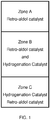
- Fig. 1 is a schematic diagram of a reactor for use in the present invention.
- aldoses include aldohexose (all six-carbon, aldehyde-containing sugars, including glucose, mannose and galactose), aldopentose (all five-carbon aldehyde containing sugars, including xylose and arabinose), aldotetrose (all four-carbon, aldehyde containing sugars, including erythrose), and aldotriose (all three-carbon aldehyde containing sugars, including glyceraldehyde).
- bio-sourced carbohydrate feedstock refers to a product that includes carbohydrates sourced, derived or synthesized from, in whole or in significant part, biological products or renewable agricultural materials (including, but not limited to, plant, animal and marine materials) or forestry materials.
- ketoses include ketohexose (all six-carbon, ketone-containing sugars, including fructose), ketopentose (all five-carbon ketone containing sugars, including xylulose and ribulose), ketotetrose (all four-carbon, ketose containing sugars, including erythrulose), and ketotriose (all three-carbon ketose containing sugars, including dihydroxyacetone).
- reducing metal catalyst refers to catalysts that assist in the reduction of carbonyls.
- Nickel, palladium and platinum are among the more widely used reducing metal catalysts.
- Nickel-rhenium is a preferred reducing metal catalyst and may be supported on alumina-silica.
- Nickel-iridium may also be used.
- Ni-Re catalysts with B as a promoter is very good in this application.
- Retro-aldol catalyst refers to a catalyst that catalyzes the retro-aldol reaction.
- Retro-aldol catalysts preferred in practicing the present invention include tungsten and its oxides, sulfates, phosphides, nitrides, carbides, halides and the like that convert to a form of a catalytically active hydrated tungsten species supported on a carrier. Tungsten carbide and soluble phosphotungstens are also included. Tungsten oxides supported on zirconia, alumina and alumina-silica. Soluble tungsten compounds, such as ammonium metatungstate, have been found to be an acceptable precursor to an active retro-aldol catalyst. Other forms of soluble tungstates, such as ammonium paratungstate and sodium metatungstate, are also included.
- the starting composition of the carbohydrate feedstock is between 5% and 71% carbohydrate and all values between such limits, including, for example, without limitation or exception, 6%, 13.43%, 31.5%, 31.55%, 44%, 51.01%, 63.33% and 69.9% .
- the carbohydrate concentration of the feedstock can take any value "ab.cd" % wherein a is selected from the numerals 0, 1, 2, 3, 4, 5, 6 and 7, and b, c and d are each individually selected from the numerals 0, 1, 2, 3, 4, 5, 6, 7, 8 and 9, with the exception that b cannot be less than 5 if a is 0 nor can b be greater than 1 if a is 7.
- the process comprises two areas - the catalysis area and the recovery area.
- the catalysis area comprises a feed tank wherein the bio-sourced feed is mixed with solvent to adjust the concentration of starting carbohydrate to approximately 5 to 71 wt % carbohydrates in solvent.
- concentrations if available, can be used if the feed rate is matched to the process reaction rates.
- water is required to be at least a portion of the solvent used in the process.
- additional components in the solvent is ethylene glycol and it can be obtained from the reactor outlet product which is a mixture of the reaction products which can also include recycled retro-aldol catalyst. This means that it is possible that a portion of the crude reactor outlet can be recycled and used as solvent for the reaction.
- the preferred carbohydrate feedstock for the process is a carbohydrate polymer such as starch, cellulose, or partially hydrolyzed fractions of such polymers or mixtures of the polymers or mixtures of the polymers with partially hydrolyzed fractions.
- One of the desired hydrolyzed fractions consists of glucose.
- glucose or glucose precursors as a portion of the reactor feed. It is also acceptable to have glucose as a major portion or sole reactive component of the reactor feedstock.
- aldoses sugars with an aldehyde group
- Carbohydrates that produce ketoses such as fructose, will increase the selectivity to propylene glycol by this sequence of catalysts.
- the carbohydrate mixture in the water miscible solvent is fed into a reactor where it sequentially contacts initially a retro-aldol catalyst and secondly a reduction catalyst.
- the carbohydrate mixture is fed at the beginning of a catalyst reactor and hydrogen is fed either at the beginning of the reactor or at an alternate point to the reactor.
- Product is removed at the outlet of the reactor and processed for recovery of the product, glycol, or for partial recycle to the reactor.
- Various types of catalyst bed designs can be employed, among which a trickle bed or bubble column is favored, to aid in the diffusion of hydrogen to the reduction catalyst surface.
- the reactor can be a CSTR in which a solid phase reduction catalyst is suspended in, but it does not occupy the full volume, of the reactor.
- This arrangement protects the solid catalyst from mechanical breakdown due to the agitator.
- This design also provides a solid phase supported-catalyst free zone where the initial retro-aldol reaction can be catalyzed free of the solid-phase reduction catalyst and the retro-aldol reaction products are subsequently reduced by the solid phase catalyst.
- the presence of a zone that is free of reduction catalyst allows the retro aldol reaction to proceed and lowers the amount of glucose that is reduced to sorbitol in the reaction. Sorbitol is an unwanted by-product of the reaction.
- the catalyst reactor used contains several catalysts chosen to have different properties in order to conduct different chemical conversions.
- the catalyst is comprised of a retro-aldol catalyst that if glucose is the starting material catalyzes the conversion of glucose to glycolaldehyde and erythrose. This same catalyst will also catalyze the reaction of erythrose to two additional moles of glycolaldehyde.
- starch or similar carbohydrates is used, due to the temperatures employed the carbohydrate polymer mixture, in the presence of water, while being fed to the reactor, partially hydrolyzes and eventually becomes glucose molecules as it enters the reactor and travels through the catalyst reactor.
- a second catalyst is encountered as a distinct second catalyst or it is mixed in with the retro-aldol catalyst.
- This second catalyst has been chosen for its ability to reduce the glycolaldehyde to ethylene glycol using the hydrogen fed to the reactor.
- the amount of reduction catalyst increases as a fraction of the amount of catalyst encountered in the reactor.
- the amount of reduction catalyst can be nearly 100% of the catalyst in this portion of the bed if the retro-aldol catalyst is supported. It is possible for the two reactions to be done in two or more reactors.
- the first zone (identified as Zone A) is mostly retro-aldol catalyst.
- the function of this catalyst zone as mentioned previously is to cause the glucose to produce glycolaldehyde and erythrose.
- the same catalyst can also decompose erythrose selectively to two moles of glycolaldehyde. It is necessary to reduce the formed glycolaldehyde to ethylene glycol which is the desired product. For this reason the reduction catalyst is present in the reactor. However it may not be practical to wait until all the glucose has been decomposed before beginning to reduce the glycolaldehyde.
- the reduction catalyst can be mixed with the retro-aldol catalyst and some of the glycolaldehyde will be converted to ethylene glycol but still allowing un-reacted glucose and erythrose to be converted to glycolaldehyde. In the case where the two catalysts are mixed, this is identified as Zone B. As the carbohydrate is consumed and glycolaldehyde formation drops the need for the retro-aldol catalyst drops and the percentage of reduction catalyst in the reducing zone of the bed increases until near the bottom of the reactor the reduction catalyst comprises a large proportion of the catalyst (identified as Zone C). It is not required that Zone C be used but it can lead to higher overall selectivity to ethylene glycol. If the reduction catalyst is a solid it is acceptable to dilute the active supported catalyst with inert materials such as the support used for the catalyst or possibly glass beads or the like.
- the catalysis zones of the process operate at high temperatures.
- the initial zone of the bed operates from 170 to 300 °C, more preferably in the range of 190 to 270 °C, and most preferably in the range of 190 to 255 °C.
- the lower section of the bed can operate at lower temperatures, between 90 to 245 °C, with the preferred range for the reaction being between 150 to 245 °C.
- the bed temperature can be controlled via addition of additional, cooler solvent at various feed points along the reactor bed or the use of an inter-stage cooler. However with close-coupled zones it is most likely that the zones will be at comparable temperatures
- the reactor pressure can be operated from 2068.43 to 13789.51 kPa (300 to 2000 psig).
- the preferred range is such that it will ensure that hydrogen is dissolved into the solvent phase and is replenished from the vapor phase as it is consumed in the reducing reaction.
- the use of a trickle bed or bubble column is preferred to provide mixing of the hydrogen into the liquid phase and to directly replenish the hydrogen depleted from the catalyst surface when the gas bubbles directly contact the catalyst surface.
- the preferred range is 2757.9 - 11031.61 kPa (400-1600 psig).
- the amount of catalyst required in the packed bed is dependent on the flow-rate of carbohydrate to the reactor. The higher the feed rate, the larger the amount of catalyst required to provide high conversion of the carbohydrate.
- the carbohydrate mixture that is used as the reactor feed can be pre-heated prior to its introduction into the reactor. This heating in an aqueous environment allows depolymerization of the starch or cellulose polymers into lower molecular weight oligomers and the production of glucose or other 4 to 6 carbon aldoses prior to introduction into the reactor.
- the carbohydrate can also be hydrolyzed to form glucose or other 4 to 6 carbon aldoses by other means prior to introduction into the reactor such as by acids or enzymes or combinations of both.
- the carbohydrate feed can be mostly fructose or carbohydrates that will yield ketoses. If this is the starting material and the same reaction sequence is followed then the majority of the product will be propylene glycol.
- the carbohydrate feed may also be a one which will yield aldoses and ketoses, such as sucrose. If this is the starting material and the same reaction sequence is followed then the product will be a ratio of ethylene glycol and propylene glycol, dependent on the aldose to ketose ratio.
- the retro-aldol catalyst zone designated Zone A utilizes a retro-aldol catalyst that can be a form of tungsten or its oxides, sulfates, phosphides, nitrides, carbides, halides and the like that convert to some form of catalytically active tungsten species supported on a carrier.
- tungsten carbide has been used as well as soluble phosphotungstates.
- tungsten oxides supported on zirconia, alumina or alumina silica can be used as the source of the retro-aldol catalyst.
- soluble tungsten compounds such as ammonium metatungstate have been found to be an acceptable precursor to an active retro-aldol catalyst.
- ammonium metatungstate has been found to be an acceptable precursor to an active retro-aldol catalyst.
- other forms of soluble tungstates work well - among them are ammonium paratungstate and sodium metatungstate.
- retro-aldol catalysts Without wishing to be limited to known retro-aldol catalysts the concept is simply to use selective retro-aldol catalysts in Zone A. Although the specific ones mentioned appear to be acidic or neutral in nature it is possible that basic retro-aldol catalysts will be discovered that will also function well in this reactor design.
- the reduction catalyst can be chosen from a wide variety of supported transition metal catalysts. Nickel and ruthenium as the primary reducing metal components are well known for their ability to reduce carbonyls.
- One particularly favored catalyst for the reduction catalyst in this process is a Ni-Re catalyst supported on alumina silica.
- Ni/Re or Ni/Ir can be used with good selectivity for the conversion of the formed glycolaldehyde to ethylene glycol.
- Zone B The mid-portion of the catalytic reactor is designated Zone B when a mixture of catalysts is used and in this zone both retro-aldol and reduction catalysts are found.
- the purpose is to begin the conversion of the intermediate formed glycolaldehyde to ethylene glycol before its concentration becomes so high that significant by-product formation begins from reactions of the glycolaldehyde with itself or other intermediates.
- Zone B When the catalytic bed is built if a Zone B is to be used it is helpful that Zone B is well-mixed with both catalysts. If the retro-aldol catalyst is not supported then Zone B will be the area where the retro-aldol catalyst begins being mixed with the reduction catalyst.
- the reactor chosen is a CSTR that contains a porous catalyst "basket” that is suspended in the reactor.
- Examples of such catalyst baskets for stirred reactors are available from Parr Instrument Company.
- the basket contains solid catalyst and occupies approximately 2 % of the liquid volume of the reactor. Containment of the solid reduction catalyst also improves the handling ease and process safety when using reduction catalyst particles.
- Zone A the liquid portion of the reactor that is outside of the basket is approximately 98% of the reactor liquid and is referred to as Zone A.
- Zone B The 2% of the reactor liquid volume in the basket.
- Example 5 is a description of the operation and provides good evidence that separation of the solid reduction catalyst from a significant portion of the soluble retro-aldol portion of the reactor allows each reaction to proceed independently and provide high selectivity to ethylene glycol.
- the raw material is added to the reactor in such a way that the feed initially contacts the basket-free Zone A allowing the retro-aldol reaction to dominate before the products of the reaction contact Zone B.
- the reactor chosen is a tubular reactor that contains the supported Ni-Re reduction catalyst. There is a portion of this reactor that is free of reduction catalyst where the feedstock and the soluble retro-aldol catalyst are contacted at the reaction temperature of approximately 245C. This is the Zone A referred to earlier in this application. Downstream of Zone A the reaction stream contacts the supported reduction catalyst where both the reduction of the glycolaldehyde and further retro-aldol reactions are occurring due to the presence of some unreacted glucose and erythrose with the retro-aldol catalyst. Hydrogen is fed to the tubular reactor to allow the reduction of the glycolaldehyde to ethylene glycol.
- the catalyst bed may be loaded with supported catalysts this in no means suggests that it is not possible or undesirable to also employ soluble retro-aldol or reduction catalysts.
- soluble forms of tungsten such as phosphotungstic acid are capable of conducting the retro-aldol reaction and its use or the use of similar soluble retro-aldol catalysts are compatible with the zoned catalyst bed concept.
- a separate reactor used just with the retro-aldol catalyst could be used to generate glycolaldehyde which could then be fed to the reduction catalyst reactor.
- conducting the two reactions - retro-aldol and reduction - separately will increase investment.
- the reducing portion of the reaction sequence be separated initially, in part, from the retro-aldol portion of the reaction. Since this is a sequential reaction the initial reaction should be the retro-aldol, followed by both retro-aldol and reduction and finally mainly reduction to convert the remaining glycolaldehyde to ethylene glycol. Having retro-aldol catalyst present with the reduction catalyst is not a problem but lower selectivity will result if the feedstock does not initially encounter the retro-aldol catalyst.
- a part of the product stream may be separated for recycle back to the front of the process.
- this recycle stream can contain ethylene glycol and soluble retro-aldol catalyst among other components.
- the remaining reactor effluent may then be depressurized and cooled to begin the recovery portion.
- the gases are captured for recovery of the hydrogen and removal of unwanted gaseous by-products such as methane and carbon dioxide.
- the catalyst reactor which is equipped with a stirrer to provide agitation is charged only with the reduction catalyst and operated at 245 °C.
- the feed consists of glucose at 20 wt% in water and is fed at the top of the reactor.
- Hydrogen is fed into the reactor at 10342.14 kPa (1500 psig).
- No retro-aldol catalyst is provided. Once the reactor is lined out samples are collected and the conversion of glucose to ethylene glycol is very low with modest amounts of propylene glycol also formed. The major product formed is sorbitol.
- the catalyst reactor is charged only with a retro-aldol catalyst and operated at 245 °C.
- the carbohydrate feed composition is the same as that used in Example 1 and is fed at the top of the reactor.
- Hydrogen is fed at 10342.14 kPa (1500 psig).
- samples are collected and analyzed. The conversion to ethylene glycol is low with many unidentified products made.
- the catalyst reactor is charged with retro-aldol catalyst and reduction catalyst and operated at 245 °C.
- the incoming feed encounters both the reduction catalyst and the retro-aldol catalyst as soon as it enters the reactor.
- the feed composition is the same as that used in Example 1.
- Hydrogen is fed at 1500 psig.
- samples are collected and analyzed.
- the major product identified is ethylene glycol but substantial amounts of sorbitol are also identified. Higher levels of propylene glycol are also identified.
- the catalyst reactor is charged with reduction catalyst suspended in a basket in the reactor.
- the carbohydrate feed composition is the same as that used in Example 1 and is fed at the top of the reactor.
- Hydrogen is fed at 10342.14 kPa (1500 psig).
- samples are collected and analyzed.
- the major product found is ethylene glycol with low levels of propylene glycol.
- the amount of sorbitol formed is lower than in Examples 1 and 3.
- a fed-batch reaction was carried out to react an aqueous glucose solution to ethylene glycol.
- a 300 ml stainless steel Autoclave Engineers stirred high pressure reactor was charged with 145 ml of deoxygenated distilled water, 0.30 g of ammonium metatungstate and 2.2 grams of Ni/Re/B containing alumina silica catalyst. The previously reduced Ni/Re/B catalyst was carefully transferred under nitrogen atmosphere into a static catalyst basket fixed to the internals of the reactor. The reactor was then sealed and then subjected to three nitrogen purges followed by three hydrogen purges to remove any oxygen from the system. Finally the reactor was pressurized to 4481.59 kPa (650 psi) with hydrogen and the contents heated to 245 °C.
- the agitator was operated at 1000 rpm. When the target temperature was reached the pressure was adjusted to 10686.87 kPa (1550 psi) with hydrogen and the feeding of 33% glucose in water was initiated. The glucose was injected into the area of the reactor free of the catalyst basket. 25 grams of feed was injected into the reactor at a constant rate over 2 hours. At the end of the feed the reaction was concluded. The final product weighed 170 grams and had a 4.9% cumulative organic concentration. The reactor was cooled rapidly in an ice bath and a sample of the contents was submitted for analysis. The GC analysis indicated 59% selectivity to ethylene glycol with a 15/1 ratio of ethylene glycol to propylene glycol. The sorbitol selectivity was 1.4%.
- the previously reduced Ni/Re/B catalyst was carefully transferred under a nitrogen atmosphere to a static catalyst basket fixed to the internals of the reactor and the catalyst was immediately covered with water.
- the reactor was sealed and then purged with nitrogen three times and hydrogen three times.
- the reactor was pressurized to 3447.38 kPa (500 psig) with hydrogen and the contents were heated to 245 °C.
- the agitator was operated at 1000 rpm.
- the pressure was adjusted to 10686.87 kPa (1550 psig) with hydrogen. 25 g of 33% fructose in water was fed to the reactor at a constant rate over 2 hours. At the end of the feed the experiment was concluded.
- the final product weighed 170 g and had a 4.9% cumulative organic concentration.
- the reactor was cooled rapidly with an ice bath and a sample of the contents was submitted for analysis.
- the GC analysis identified propylene glycol as the major product. Propylene glycol was produced with 24% selectivity and ethylene glycol was produced with 10% selectivity.
- the LC analysis indicated that glycerin was generated at approximately 7% selectivity. Only 1.4% sorbitol was detected.
Landscapes
- Chemical & Material Sciences (AREA)
- Organic Chemistry (AREA)
- Chemical Kinetics & Catalysis (AREA)
- Engineering & Computer Science (AREA)
- Materials Engineering (AREA)
- Biotechnology (AREA)
- Life Sciences & Earth Sciences (AREA)
- Biochemistry (AREA)
- Health & Medical Sciences (AREA)
- General Health & Medical Sciences (AREA)
- Genetics & Genomics (AREA)
- Molecular Biology (AREA)
- Organic Low-Molecular-Weight Compounds And Preparation Thereof (AREA)
- Low-Molecular Organic Synthesis Reactions Using Catalysts (AREA)
- Catalysts (AREA)
- Saccharide Compounds (AREA)
Applications Claiming Priority (2)
| Application Number | Priority Date | Filing Date | Title |
|---|---|---|---|
| US201462000087P | 2014-05-19 | 2014-05-19 | |
| PCT/US2015/031390 WO2015179302A1 (en) | 2014-05-19 | 2015-05-18 | Process for the continuous production of ethylene glycol from carbohydrates |
Publications (3)
| Publication Number | Publication Date |
|---|---|
| EP3145902A1 EP3145902A1 (en) | 2017-03-29 |
| EP3145902A4 EP3145902A4 (en) | 2017-05-10 |
| EP3145902B1 true EP3145902B1 (en) | 2018-08-15 |
Family
ID=54537955
Family Applications (1)
| Application Number | Title | Priority Date | Filing Date |
|---|---|---|---|
| EP15796005.5A Active EP3145902B1 (en) | 2014-05-19 | 2015-05-18 | Process for the continuous production of ethylene glycol from carbohydrates |
Country Status (11)
| Country | Link |
|---|---|
| US (2) | US9399610B2 (enExample) |
| EP (1) | EP3145902B1 (enExample) |
| JP (2) | JP6502386B2 (enExample) |
| KR (1) | KR102455978B1 (enExample) |
| CN (1) | CN106795081B (enExample) |
| BR (1) | BR112016026936B1 (enExample) |
| CA (1) | CA2949512C (enExample) |
| DK (1) | DK3145902T3 (enExample) |
| MY (1) | MY184090A (enExample) |
| SG (1) | SG11201609633PA (enExample) |
| WO (1) | WO2015179302A1 (enExample) |
Families Citing this family (25)
| Publication number | Priority date | Publication date | Assignee | Title |
|---|---|---|---|---|
| CN106795079A (zh) * | 2014-06-30 | 2017-05-31 | 托普索公司 | 从糖制备乙二醇的方法 |
| US9926247B2 (en) * | 2014-06-30 | 2018-03-27 | Haldor Topsoe A/S | Process for the preparation of ethylene glycol from sugars |
| CN105523890B (zh) * | 2014-09-28 | 2021-04-16 | 长春美禾科技发展有限公司 | 一种制备二元醇的方法 |
| CN107428642B (zh) * | 2015-01-13 | 2020-11-27 | 阿凡田知识中心有限公司 | 从碳水化合物源制备乙二醇的工艺 |
| BR112017014945B1 (pt) | 2015-01-13 | 2021-06-08 | Avantium Knowledge Centre B.V. | processo contínuo para preparação de etileno glicol |
| CA3001378C (en) * | 2015-10-20 | 2023-10-31 | Shell Internationale Research Maatschappij B.V. | Method for the production of glycols from a carbohydrate feed |
| CN108367266B (zh) * | 2015-12-09 | 2021-07-06 | 国际壳牌研究有限公司 | 用于制备二醇的方法 |
| CN108602041A (zh) * | 2015-12-09 | 2018-09-28 | 国际壳牌研究有限公司 | 用于制备二醇的方法 |
| EP3400207B1 (en) | 2016-01-07 | 2023-06-07 | Topsoe A/S | Process for the preparation of ethylene glycol from sugars |
| RU2737159C2 (ru) * | 2016-01-07 | 2020-11-25 | Хальдор Топсёэ А/С | Способ получения этиленгликоля из сахаров |
| BR112018016160A2 (pt) * | 2016-02-08 | 2018-12-18 | Shell Int Research | processo para a hidrogenação de glicoladeído |
| CN108602738A (zh) * | 2016-02-09 | 2018-09-28 | 国际壳牌研究有限公司 | 制造亚烷基二醇的方法 |
| US20190084907A1 (en) * | 2016-03-07 | 2019-03-21 | Shell Oil Company | Process for recovering a metallic component |
| US10472310B2 (en) | 2016-06-03 | 2019-11-12 | Iowa Corn Promotion Board | Continuous processes for the highly selective conversion of sugars to propylene glycol or mixtures of propylene glycol and ethylene glycol |
| CA3026268A1 (en) * | 2016-06-03 | 2017-12-07 | Iowa Corn Promotion Board | Continuous processes for the highly selective conversion of aldohexose-yielding carbohydrate to ethylene glycol |
| BR112018075706B1 (pt) | 2016-06-16 | 2022-10-04 | Haldor Tops0E A/S | Processo e sistema para fragmentação termolítica de açúcares em compostos oxigenados c1-c3 |
| BR112019001733B1 (pt) * | 2016-08-04 | 2023-01-17 | Shell Internationale Research Maatschappij B.V. | Processo para a preparação de glicóis a partir de um estoque de alimentação contendo sacarídeo em um sistema de reator |
| US20190194100A1 (en) * | 2016-08-23 | 2019-06-27 | Shell Oil Company | Method for the production of glycols from an anhydrosugar feed |
| CN111918856A (zh) * | 2017-12-01 | 2020-11-10 | 爱荷华谷类推广协会 | 糖高度选择性转化为丙二醇或丙二醇和乙二醇的混合物的连续方法 |
| DK4034298T3 (da) * | 2019-09-24 | 2025-05-19 | T En Process Tech Inc | Kontinuerlige fremgangsmåder for carbonhydrid til ethylenglycol |
| FR3113055B1 (fr) * | 2020-07-28 | 2022-07-22 | Ifp Energies Now | Procede comprenant une etape de retroaldolisation et une etape d’extraction reactive |
| US11680031B2 (en) | 2020-09-24 | 2023-06-20 | T. EN Process Technology, Inc. | Continuous processes for the selective conversion of aldohexose-yielding carbohydrate to ethylene glycol using low concentrations of retro-aldol catalyst |
| US11319269B2 (en) | 2020-09-24 | 2022-05-03 | Iowa Corn Promotion Board | Continuous processes for the selective conversion of aldohexose-yielding carbohydrate to ethylene glycol using low concentrations of retro-aldol catalyst |
| AU2020470068A1 (en) * | 2020-09-24 | 2023-05-25 | T.En Process Technology, Inc. | Continuous processes for the selective conversion of aldohexose-yielding carbohydrate to ethylene glycol using low concentrations of retro-aldol catalyst |
| CN118754800B (zh) * | 2024-09-09 | 2025-02-18 | 山东天力药业有限公司 | 一种山梨醇的制备方法 |
Family Cites Families (40)
| Publication number | Priority date | Publication date | Assignee | Title |
|---|---|---|---|---|
| US4317946A (en) * | 1980-06-27 | 1982-03-02 | The Halcon Sd Group, Inc. | Process for producing ethylene glycol via catalytic hydrogenation of glycolaldehyde |
| US4496781A (en) * | 1984-04-05 | 1985-01-29 | The Halcon Sd Group, Inc. | Process for the production of ethylene glycol through the hydroformylation of glycol aldehyde |
| US4795733A (en) | 1987-11-27 | 1989-01-03 | Gaf Corporation | Hydrogenation catalyst and process for its preparation |
| DE3818198A1 (de) * | 1988-05-28 | 1989-12-21 | Basf Ag | Verfahren zur herstellung niederer mehrwertiger alkohole |
| MY119958A (en) | 1999-03-10 | 2005-08-30 | Basf Ag | Catalytic gas-phase oxidation of propene to acrylic acid |
| US7098449B1 (en) | 1999-07-21 | 2006-08-29 | The Charles Stark Draper Laboratory, Inc. | Spectrometer chip assembly |
| CA2326471A1 (en) * | 2000-11-20 | 2002-05-20 | Resource Transforms International Ltd. | Production of glycolaldehyde by hydrous thermolysis of sugars |
| JP2003104929A (ja) * | 2001-09-28 | 2003-04-09 | Toyota Motor Corp | グリコルアルデヒドの生成方法 |
| US6982328B2 (en) | 2003-03-03 | 2006-01-03 | Archer Daniels Midland Company | Methods of producing compounds from plant material |
| EP1697291A1 (en) * | 2003-12-16 | 2006-09-06 | Shell Internationale Researchmaatschappij B.V. | Process for preparing glycolaldehyde |
| US7914946B2 (en) | 2004-06-15 | 2011-03-29 | Fuelcell Energy, Inc. | Cathode side hardware for carbonate fuel cells |
| AU2012238196B2 (en) | 2006-05-08 | 2014-03-13 | Virent, Inc. | Methods and systems for generating polyols |
| JP2009536648A (ja) * | 2006-05-08 | 2009-10-15 | ヴァイレント エナジー システムズ インク. | ポリオール生成の方法およびシステム |
| US7619124B2 (en) * | 2007-03-29 | 2009-11-17 | Board Of Trustees Of Michigan State University | Process for the preparation of propylene glycol |
| CN101648140B (zh) | 2008-08-14 | 2011-09-07 | 中国科学院大连化学物理研究所 | 碳化钨催化剂及其制备和在纤维素制乙二醇反应中的应用 |
| CN101723802B (zh) | 2008-10-24 | 2013-06-19 | 中国科学院大连化学物理研究所 | 一种纤维素制乙二醇的方法 |
| CN101735014B (zh) | 2008-11-26 | 2013-07-24 | 中国科学院大连化学物理研究所 | 一种多羟基化合物制乙二醇的方法 |
| US8987528B2 (en) | 2009-04-16 | 2015-03-24 | Mossi & Ghisolfi International S.A.R.L. | Method of hydrogenolysis of sugar alcohols |
| WO2010144448A2 (en) * | 2009-06-08 | 2010-12-16 | University Of Kansas | Polyol hydrogenolysis by in-situ generated hydrogen |
| CN102049273B (zh) | 2009-10-27 | 2013-05-01 | 中国科学院大连化学物理研究所 | 一种介孔炭担载的碳化钨催化剂及其制备和应用 |
| US8383864B2 (en) | 2009-12-08 | 2013-02-26 | Iowa State University Research Foundation, Inc. | Method for the conversion of cellulose and related carbohydrate materials to low-molecular-weight compounds |
| CN102190562B (zh) * | 2010-03-17 | 2014-03-05 | 中国科学院大连化学物理研究所 | 一种多羟基化合物制乙二醇的方法 |
| JP5858514B2 (ja) * | 2010-03-31 | 2016-02-10 | 株式会社日本触媒 | スズ含有化合物を用いた乳酸類の製造方法 |
| MY157001A (en) * | 2010-03-31 | 2016-04-15 | Nippon Catalytic Chem Ind | Method for producing lactic acids from carbohydrate -containing raw material |
| WO2011125882A1 (ja) * | 2010-03-31 | 2011-10-13 | 株式会社日本触媒 | 炭水化物含有原料から乳酸類を製造する方法 |
| JP5960382B2 (ja) * | 2010-04-14 | 2016-08-02 | 宇部興産株式会社 | ビフェニル類の連続製造方法 |
| CA2828880C (en) | 2011-03-14 | 2018-11-20 | Kevin ADLAF | Improved methods for producing bioderived propylene glycol |
| US8877985B2 (en) * | 2011-06-14 | 2014-11-04 | Shell Oil Company | Co-production of biofuels and glycols |
| US20110312487A1 (en) | 2011-07-28 | 2011-12-22 | Uop Llc | Catalyst system for generation of polyols from saccharides |
| US8323937B2 (en) | 2011-07-28 | 2012-12-04 | Uop Llc | Continuous catalytic generation of polyols from cellulose |
| US8222464B2 (en) | 2011-07-28 | 2012-07-17 | Uop Llc | Catalytic process for continuously generating polyols |
| US8410319B2 (en) | 2011-07-28 | 2013-04-02 | Uop Llc | Continuous catalytic generation of polyols from cellulose with recycle |
| IN2014DN07484A (enExample) * | 2012-03-07 | 2015-04-24 | Myriant Corp | |
| US8846974B2 (en) * | 2012-04-10 | 2014-09-30 | King Abdullah University Of Science And Technology | Molybdenum-containing acidic catalysts to convert cellulosic biomass to glycolic acid |
| EP2981515B1 (en) | 2013-04-05 | 2017-02-01 | Shell Internationale Research Maatschappij B.V. | Process for the preparation of glycols |
| EP2989085A1 (en) | 2013-04-26 | 2016-03-02 | Shell Internationale Research Maatschappij B.V. | Process for the preparation of monoethylene glycol |
| RU2674144C2 (ru) | 2013-08-26 | 2018-12-05 | Шелл Интернэшнл Рисерч Маатсхаппий Б.В. | Способ получения гликолей |
| BR112017014945B1 (pt) | 2015-01-13 | 2021-06-08 | Avantium Knowledge Centre B.V. | processo contínuo para preparação de etileno glicol |
| CN107438591B (zh) | 2015-01-13 | 2020-10-16 | 阿凡田知识中心有限公司 | 从碳水化合物源制备乙二醇的工艺 |
| EP3245180B1 (en) | 2015-01-13 | 2020-04-08 | Avantium Knowledge Centre B.v. | Process for preparing ethylene glycol from a carbohydrate source |
-
2015
- 2015-05-18 CA CA2949512A patent/CA2949512C/en active Active
- 2015-05-18 US US14/715,089 patent/US9399610B2/en active Active
- 2015-05-18 EP EP15796005.5A patent/EP3145902B1/en active Active
- 2015-05-18 KR KR1020167035349A patent/KR102455978B1/ko active Active
- 2015-05-18 BR BR112016026936-5A patent/BR112016026936B1/pt active IP Right Grant
- 2015-05-18 CN CN201580026319.4A patent/CN106795081B/zh active Active
- 2015-05-18 MY MYPI2016704246A patent/MY184090A/en unknown
- 2015-05-18 SG SG11201609633PA patent/SG11201609633PA/en unknown
- 2015-05-18 WO PCT/US2015/031390 patent/WO2015179302A1/en not_active Ceased
- 2015-05-18 JP JP2016568532A patent/JP6502386B2/ja active Active
- 2015-05-18 DK DK15796005.5T patent/DK3145902T3/en active
-
2016
- 2016-06-22 US US15/189,224 patent/US9783472B2/en active Active
-
2018
- 2018-03-20 JP JP2018052172A patent/JP2018115182A/ja active Pending
Non-Patent Citations (1)
| Title |
|---|
| None * |
Also Published As
| Publication number | Publication date |
|---|---|
| EP3145902A1 (en) | 2017-03-29 |
| BR112016026936B1 (pt) | 2021-10-13 |
| KR102455978B1 (ko) | 2022-10-17 |
| CA2949512A1 (en) | 2015-11-26 |
| BR112016026936A2 (enExample) | 2017-08-15 |
| US20160304423A1 (en) | 2016-10-20 |
| CN106795081B (zh) | 2018-12-28 |
| DK3145902T3 (en) | 2018-10-01 |
| SG11201609633PA (en) | 2016-12-29 |
| WO2015179302A1 (en) | 2015-11-26 |
| KR20170037893A (ko) | 2017-04-05 |
| US9399610B2 (en) | 2016-07-26 |
| JP2018115182A (ja) | 2018-07-26 |
| US20150329449A1 (en) | 2015-11-19 |
| JP6502386B2 (ja) | 2019-04-17 |
| EP3145902A4 (en) | 2017-05-10 |
| JP2017521365A (ja) | 2017-08-03 |
| MY184090A (en) | 2021-03-17 |
| CA2949512C (en) | 2020-08-18 |
| CN106795081A (zh) | 2017-05-31 |
| US9783472B2 (en) | 2017-10-10 |
Similar Documents
| Publication | Publication Date | Title |
|---|---|---|
| EP3145902B1 (en) | Process for the continuous production of ethylene glycol from carbohydrates | |
| US10975010B2 (en) | Continuous processes for the highly selective conversion of aldohexose-yielding carbohydrate to ethylene glycol | |
| WO2023141211A1 (en) | Processes for making ethylene glycol and/or propylene glycol from aldose- and/or ketose-yielding carbohydrates with integrated tungsten catalyst recovery | |
| EP3414219A1 (en) | Process for the production of alkylene glycols | |
| EP3400208B1 (en) | Process for the preparation of ethylene glycol from sugars | |
| US20190047929A1 (en) | Process for the hydrogenation of glycolaldehyde | |
| EP3717445A1 (en) | Continuous processes for highly selective conversion of sugars to propylene-glycol or mixtures of propylene-glycol and ethylene-glycol |
Legal Events
| Date | Code | Title | Description |
|---|---|---|---|
| STAA | Information on the status of an ep patent application or granted ep patent |
Free format text: STATUS: THE INTERNATIONAL PUBLICATION HAS BEEN MADE |
|
| PUAI | Public reference made under article 153(3) epc to a published international application that has entered the european phase |
Free format text: ORIGINAL CODE: 0009012 |
|
| STAA | Information on the status of an ep patent application or granted ep patent |
Free format text: STATUS: REQUEST FOR EXAMINATION WAS MADE |
|
| 17P | Request for examination filed |
Effective date: 20161213 |
|
| AK | Designated contracting states |
Kind code of ref document: A1 Designated state(s): AL AT BE BG CH CY CZ DE DK EE ES FI FR GB GR HR HU IE IS IT LI LT LU LV MC MK MT NL NO PL PT RO RS SE SI SK SM TR |
|
| AX | Request for extension of the european patent |
Extension state: BA ME |
|
| STAA | Information on the status of an ep patent application or granted ep patent |
Free format text: STATUS: EXAMINATION IS IN PROGRESS |
|
| A4 | Supplementary search report drawn up and despatched |
Effective date: 20170407 |
|
| RIC1 | Information provided on ipc code assigned before grant |
Ipc: C07C 29/145 20060101ALI20170403BHEP Ipc: C07C 29/141 20060101AFI20170403BHEP Ipc: C07C 47/19 20060101ALI20170403BHEP Ipc: C10G 3/00 20060101ALI20170403BHEP Ipc: C10G 1/06 20060101ALI20170403BHEP Ipc: C07C 45/67 20060101ALI20170403BHEP Ipc: C07C 47/127 20060101ALI20170403BHEP Ipc: C07C 31/20 20060101ALN20170403BHEP |
|
| 17Q | First examination report despatched |
Effective date: 20170425 |
|
| DAV | Request for validation of the european patent (deleted) | ||
| DAX | Request for extension of the european patent (deleted) | ||
| REG | Reference to a national code |
Ref country code: DE Ref legal event code: R079 Ref document number: 602015014932 Country of ref document: DE Free format text: PREVIOUS MAIN CLASS: C07C0047190000 Ipc: C07C0029141000 |
|
| GRAP | Despatch of communication of intention to grant a patent |
Free format text: ORIGINAL CODE: EPIDOSNIGR1 |
|
| STAA | Information on the status of an ep patent application or granted ep patent |
Free format text: STATUS: GRANT OF PATENT IS INTENDED |
|
| RIC1 | Information provided on ipc code assigned before grant |
Ipc: C07C 47/127 20060101ALI20180202BHEP Ipc: C07C 29/141 20060101AFI20180202BHEP Ipc: C07C 45/67 20060101ALI20180202BHEP Ipc: C10G 3/00 20060101ALI20180202BHEP Ipc: C07C 31/20 20060101ALN20180202BHEP Ipc: C07C 47/19 20060101ALI20180202BHEP Ipc: C07C 29/145 20060101ALI20180202BHEP Ipc: C10G 1/06 20060101ALI20180202BHEP |
|
| INTG | Intention to grant announced |
Effective date: 20180228 |
|
| RIN1 | Information on inventor provided before grant (corrected) |
Inventor name: ALBIN, BROOKE Inventor name: BRADFORD, MARION Inventor name: SCHRECK, DAVID Inventor name: CLINTON, NYE Inventor name: CHRISMAN, RAY |
|
| GRAS | Grant fee paid |
Free format text: ORIGINAL CODE: EPIDOSNIGR3 |
|
| GRAA | (expected) grant |
Free format text: ORIGINAL CODE: 0009210 |
|
| STAA | Information on the status of an ep patent application or granted ep patent |
Free format text: STATUS: THE PATENT HAS BEEN GRANTED |
|
| AK | Designated contracting states |
Kind code of ref document: B1 Designated state(s): AL AT BE BG CH CY CZ DE DK EE ES FI FR GB GR HR HU IE IS IT LI LT LU LV MC MK MT NL NO PL PT RO RS SE SI SK SM TR |
|
| REG | Reference to a national code |
Ref country code: CH Ref legal event code: EP Ref country code: GB Ref legal event code: FG4D Ref country code: AT Ref legal event code: REF Ref document number: 1029566 Country of ref document: AT Kind code of ref document: T Effective date: 20180815 |
|
| REG | Reference to a national code |
Ref country code: IE Ref legal event code: FG4D |
|
| REG | Reference to a national code |
Ref country code: DE Ref legal event code: R096 Ref document number: 602015014932 Country of ref document: DE |
|
| REG | Reference to a national code |
Ref country code: DK Ref legal event code: T3 Effective date: 20180924 |
|
| REG | Reference to a national code |
Ref country code: NL Ref legal event code: FP |
|
| REG | Reference to a national code |
Ref country code: LT Ref legal event code: MG4D |
|
| REG | Reference to a national code |
Ref country code: AT Ref legal event code: MK05 Ref document number: 1029566 Country of ref document: AT Kind code of ref document: T Effective date: 20180815 |
|
| PG25 | Lapsed in a contracting state [announced via postgrant information from national office to epo] |
Ref country code: AT Free format text: LAPSE BECAUSE OF FAILURE TO SUBMIT A TRANSLATION OF THE DESCRIPTION OR TO PAY THE FEE WITHIN THE PRESCRIBED TIME-LIMIT Effective date: 20180815 Ref country code: RS Free format text: LAPSE BECAUSE OF FAILURE TO SUBMIT A TRANSLATION OF THE DESCRIPTION OR TO PAY THE FEE WITHIN THE PRESCRIBED TIME-LIMIT Effective date: 20180815 Ref country code: IS Free format text: LAPSE BECAUSE OF FAILURE TO SUBMIT A TRANSLATION OF THE DESCRIPTION OR TO PAY THE FEE WITHIN THE PRESCRIBED TIME-LIMIT Effective date: 20181215 Ref country code: GR Free format text: LAPSE BECAUSE OF FAILURE TO SUBMIT A TRANSLATION OF THE DESCRIPTION OR TO PAY THE FEE WITHIN THE PRESCRIBED TIME-LIMIT Effective date: 20181116 Ref country code: NO Free format text: LAPSE BECAUSE OF FAILURE TO SUBMIT A TRANSLATION OF THE DESCRIPTION OR TO PAY THE FEE WITHIN THE PRESCRIBED TIME-LIMIT Effective date: 20181115 Ref country code: LT Free format text: LAPSE BECAUSE OF FAILURE TO SUBMIT A TRANSLATION OF THE DESCRIPTION OR TO PAY THE FEE WITHIN THE PRESCRIBED TIME-LIMIT Effective date: 20180815 Ref country code: BG Free format text: LAPSE BECAUSE OF FAILURE TO SUBMIT A TRANSLATION OF THE DESCRIPTION OR TO PAY THE FEE WITHIN THE PRESCRIBED TIME-LIMIT Effective date: 20181115 Ref country code: FI Free format text: LAPSE BECAUSE OF FAILURE TO SUBMIT A TRANSLATION OF THE DESCRIPTION OR TO PAY THE FEE WITHIN THE PRESCRIBED TIME-LIMIT Effective date: 20180815 Ref country code: SE Free format text: LAPSE BECAUSE OF FAILURE TO SUBMIT A TRANSLATION OF THE DESCRIPTION OR TO PAY THE FEE WITHIN THE PRESCRIBED TIME-LIMIT Effective date: 20180815 |
|
| PG25 | Lapsed in a contracting state [announced via postgrant information from national office to epo] |
Ref country code: LV Free format text: LAPSE BECAUSE OF FAILURE TO SUBMIT A TRANSLATION OF THE DESCRIPTION OR TO PAY THE FEE WITHIN THE PRESCRIBED TIME-LIMIT Effective date: 20180815 Ref country code: AL Free format text: LAPSE BECAUSE OF FAILURE TO SUBMIT A TRANSLATION OF THE DESCRIPTION OR TO PAY THE FEE WITHIN THE PRESCRIBED TIME-LIMIT Effective date: 20180815 Ref country code: HR Free format text: LAPSE BECAUSE OF FAILURE TO SUBMIT A TRANSLATION OF THE DESCRIPTION OR TO PAY THE FEE WITHIN THE PRESCRIBED TIME-LIMIT Effective date: 20180815 |
|
| PG25 | Lapsed in a contracting state [announced via postgrant information from national office to epo] |
Ref country code: IT Free format text: LAPSE BECAUSE OF FAILURE TO SUBMIT A TRANSLATION OF THE DESCRIPTION OR TO PAY THE FEE WITHIN THE PRESCRIBED TIME-LIMIT Effective date: 20180815 Ref country code: EE Free format text: LAPSE BECAUSE OF FAILURE TO SUBMIT A TRANSLATION OF THE DESCRIPTION OR TO PAY THE FEE WITHIN THE PRESCRIBED TIME-LIMIT Effective date: 20180815 Ref country code: ES Free format text: LAPSE BECAUSE OF FAILURE TO SUBMIT A TRANSLATION OF THE DESCRIPTION OR TO PAY THE FEE WITHIN THE PRESCRIBED TIME-LIMIT Effective date: 20180815 Ref country code: PL Free format text: LAPSE BECAUSE OF FAILURE TO SUBMIT A TRANSLATION OF THE DESCRIPTION OR TO PAY THE FEE WITHIN THE PRESCRIBED TIME-LIMIT Effective date: 20180815 Ref country code: RO Free format text: LAPSE BECAUSE OF FAILURE TO SUBMIT A TRANSLATION OF THE DESCRIPTION OR TO PAY THE FEE WITHIN THE PRESCRIBED TIME-LIMIT Effective date: 20180815 Ref country code: CZ Free format text: LAPSE BECAUSE OF FAILURE TO SUBMIT A TRANSLATION OF THE DESCRIPTION OR TO PAY THE FEE WITHIN THE PRESCRIBED TIME-LIMIT Effective date: 20180815 |
|
| REG | Reference to a national code |
Ref country code: DE Ref legal event code: R097 Ref document number: 602015014932 Country of ref document: DE |
|
| PG25 | Lapsed in a contracting state [announced via postgrant information from national office to epo] |
Ref country code: SM Free format text: LAPSE BECAUSE OF FAILURE TO SUBMIT A TRANSLATION OF THE DESCRIPTION OR TO PAY THE FEE WITHIN THE PRESCRIBED TIME-LIMIT Effective date: 20180815 Ref country code: SK Free format text: LAPSE BECAUSE OF FAILURE TO SUBMIT A TRANSLATION OF THE DESCRIPTION OR TO PAY THE FEE WITHIN THE PRESCRIBED TIME-LIMIT Effective date: 20180815 |
|
| PLBE | No opposition filed within time limit |
Free format text: ORIGINAL CODE: 0009261 |
|
| STAA | Information on the status of an ep patent application or granted ep patent |
Free format text: STATUS: NO OPPOSITION FILED WITHIN TIME LIMIT |
|
| 26N | No opposition filed |
Effective date: 20190516 |
|
| PG25 | Lapsed in a contracting state [announced via postgrant information from national office to epo] |
Ref country code: SI Free format text: LAPSE BECAUSE OF FAILURE TO SUBMIT A TRANSLATION OF THE DESCRIPTION OR TO PAY THE FEE WITHIN THE PRESCRIBED TIME-LIMIT Effective date: 20180815 |
|
| REG | Reference to a national code |
Ref country code: CH Ref legal event code: PL |
|
| GBPC | Gb: european patent ceased through non-payment of renewal fee |
Effective date: 20190518 |
|
| PG25 | Lapsed in a contracting state [announced via postgrant information from national office to epo] |
Ref country code: CH Free format text: LAPSE BECAUSE OF NON-PAYMENT OF DUE FEES Effective date: 20190531 Ref country code: MC Free format text: LAPSE BECAUSE OF FAILURE TO SUBMIT A TRANSLATION OF THE DESCRIPTION OR TO PAY THE FEE WITHIN THE PRESCRIBED TIME-LIMIT Effective date: 20180815 Ref country code: LI Free format text: LAPSE BECAUSE OF NON-PAYMENT OF DUE FEES Effective date: 20190531 |
|
| REG | Reference to a national code |
Ref country code: BE Ref legal event code: MM Effective date: 20190531 |
|
| PG25 | Lapsed in a contracting state [announced via postgrant information from national office to epo] |
Ref country code: LU Free format text: LAPSE BECAUSE OF NON-PAYMENT OF DUE FEES Effective date: 20190518 |
|
| PG25 | Lapsed in a contracting state [announced via postgrant information from national office to epo] |
Ref country code: TR Free format text: LAPSE BECAUSE OF FAILURE TO SUBMIT A TRANSLATION OF THE DESCRIPTION OR TO PAY THE FEE WITHIN THE PRESCRIBED TIME-LIMIT Effective date: 20180815 |
|
| PG25 | Lapsed in a contracting state [announced via postgrant information from national office to epo] |
Ref country code: GB Free format text: LAPSE BECAUSE OF NON-PAYMENT OF DUE FEES Effective date: 20190518 Ref country code: IE Free format text: LAPSE BECAUSE OF NON-PAYMENT OF DUE FEES Effective date: 20190518 |
|
| PG25 | Lapsed in a contracting state [announced via postgrant information from national office to epo] |
Ref country code: BE Free format text: LAPSE BECAUSE OF NON-PAYMENT OF DUE FEES Effective date: 20190531 |
|
| PG25 | Lapsed in a contracting state [announced via postgrant information from national office to epo] |
Ref country code: PT Free format text: LAPSE BECAUSE OF FAILURE TO SUBMIT A TRANSLATION OF THE DESCRIPTION OR TO PAY THE FEE WITHIN THE PRESCRIBED TIME-LIMIT Effective date: 20181215 |
|
| PG25 | Lapsed in a contracting state [announced via postgrant information from national office to epo] |
Ref country code: CY Free format text: LAPSE BECAUSE OF FAILURE TO SUBMIT A TRANSLATION OF THE DESCRIPTION OR TO PAY THE FEE WITHIN THE PRESCRIBED TIME-LIMIT Effective date: 20180815 |
|
| PG25 | Lapsed in a contracting state [announced via postgrant information from national office to epo] |
Ref country code: HU Free format text: LAPSE BECAUSE OF FAILURE TO SUBMIT A TRANSLATION OF THE DESCRIPTION OR TO PAY THE FEE WITHIN THE PRESCRIBED TIME-LIMIT; INVALID AB INITIO Effective date: 20150518 Ref country code: MT Free format text: LAPSE BECAUSE OF FAILURE TO SUBMIT A TRANSLATION OF THE DESCRIPTION OR TO PAY THE FEE WITHIN THE PRESCRIBED TIME-LIMIT Effective date: 20180815 |
|
| PG25 | Lapsed in a contracting state [announced via postgrant information from national office to epo] |
Ref country code: MK Free format text: LAPSE BECAUSE OF FAILURE TO SUBMIT A TRANSLATION OF THE DESCRIPTION OR TO PAY THE FEE WITHIN THE PRESCRIBED TIME-LIMIT Effective date: 20180815 |
|
| P01 | Opt-out of the competence of the unified patent court (upc) registered |
Effective date: 20230601 |
|
| REG | Reference to a national code |
Ref country code: DE Ref legal event code: R082 Ref document number: 602015014932 Country of ref document: DE Representative=s name: WITHERS & ROGERS LLP, DE Ref country code: DE Ref legal event code: R081 Ref document number: 602015014932 Country of ref document: DE Owner name: T.EN PROCESS TECHNOLOGY, INC. (N.D.GES.D.STAAT, US Free format text: FORMER OWNER: IOWA CORN PROMOTION BOARD, JOHNSTON, IA., US |
|
| PGFP | Annual fee paid to national office [announced via postgrant information from national office to epo] |
Ref country code: NL Payment date: 20250425 Year of fee payment: 11 |
|
| PGFP | Annual fee paid to national office [announced via postgrant information from national office to epo] |
Ref country code: DE Payment date: 20250423 Year of fee payment: 11 |
|
| PGFP | Annual fee paid to national office [announced via postgrant information from national office to epo] |
Ref country code: DK Payment date: 20250516 Year of fee payment: 11 |
|
| PGFP | Annual fee paid to national office [announced via postgrant information from national office to epo] |
Ref country code: FR Payment date: 20250422 Year of fee payment: 11 |