EP3134339B1 - Zuführeinrichtung für briefumschläge mit zwei ausgerichteten förderern - Google Patents
Zuführeinrichtung für briefumschläge mit zwei ausgerichteten förderern Download PDFInfo
- Publication number
- EP3134339B1 EP3134339B1 EP14878609.8A EP14878609A EP3134339B1 EP 3134339 B1 EP3134339 B1 EP 3134339B1 EP 14878609 A EP14878609 A EP 14878609A EP 3134339 B1 EP3134339 B1 EP 3134339B1
- Authority
- EP
- European Patent Office
- Prior art keywords
- conveyor
- envelopes
- envelope
- feeder
- conveyors
- Prior art date
- Legal status (The legal status is an assumption and is not a legal conclusion. Google has not performed a legal analysis and makes no representation as to the accuracy of the status listed.)
- Active
Links
Images





Classifications
-
- B—PERFORMING OPERATIONS; TRANSPORTING
- B65—CONVEYING; PACKING; STORING; HANDLING THIN OR FILAMENTARY MATERIAL
- B65H—HANDLING THIN OR FILAMENTARY MATERIAL, e.g. SHEETS, WEBS, CABLES
- B65H5/00—Feeding articles separated from piles; Feeding articles to machines
- B65H5/24—Feeding articles in overlapping streams, i.e. by separation of articles from a pile
-
- B—PERFORMING OPERATIONS; TRANSPORTING
- B65—CONVEYING; PACKING; STORING; HANDLING THIN OR FILAMENTARY MATERIAL
- B65H—HANDLING THIN OR FILAMENTARY MATERIAL, e.g. SHEETS, WEBS, CABLES
- B65H1/00—Supports or magazines for piles from which articles are to be separated
- B65H1/08—Supports or magazines for piles from which articles are to be separated with means for advancing the articles to present the articles to the separating device
- B65H1/22—Supports or magazines for piles from which articles are to be separated with means for advancing the articles to present the articles to the separating device moving in direction of plane of articles, e.g. for bodily advancement of fanned-out piles
-
- B—PERFORMING OPERATIONS; TRANSPORTING
- B65—CONVEYING; PACKING; STORING; HANDLING THIN OR FILAMENTARY MATERIAL
- B65H—HANDLING THIN OR FILAMENTARY MATERIAL, e.g. SHEETS, WEBS, CABLES
- B65H11/00—Feed tables
- B65H11/002—Feed tables incorporating transport belts
-
- B—PERFORMING OPERATIONS; TRANSPORTING
- B65—CONVEYING; PACKING; STORING; HANDLING THIN OR FILAMENTARY MATERIAL
- B65H—HANDLING THIN OR FILAMENTARY MATERIAL, e.g. SHEETS, WEBS, CABLES
- B65H7/00—Controlling article feeding, separating, pile-advancing, or associated apparatus, to take account of incorrect feeding, absence of articles, or presence of faulty articles
- B65H7/02—Controlling article feeding, separating, pile-advancing, or associated apparatus, to take account of incorrect feeding, absence of articles, or presence of faulty articles by feelers or detectors
- B65H7/04—Controlling article feeding, separating, pile-advancing, or associated apparatus, to take account of incorrect feeding, absence of articles, or presence of faulty articles by feelers or detectors responsive to absence of articles, e.g. exhaustion of pile
-
- B—PERFORMING OPERATIONS; TRANSPORTING
- B65—CONVEYING; PACKING; STORING; HANDLING THIN OR FILAMENTARY MATERIAL
- B65H—HANDLING THIN OR FILAMENTARY MATERIAL, e.g. SHEETS, WEBS, CABLES
- B65H2402/00—Constructional details of the handling apparatus
- B65H2402/30—Supports; Subassemblies; Mountings thereof
- B65H2402/32—Sliding support means
-
- B—PERFORMING OPERATIONS; TRANSPORTING
- B65—CONVEYING; PACKING; STORING; HANDLING THIN OR FILAMENTARY MATERIAL
- B65H—HANDLING THIN OR FILAMENTARY MATERIAL, e.g. SHEETS, WEBS, CABLES
- B65H2404/00—Parts for transporting or guiding the handled material
- B65H2404/20—Belts
- B65H2404/26—Particular arrangement of belt, or belts
- B65H2404/264—Arrangement of side-by-side belts
-
- B—PERFORMING OPERATIONS; TRANSPORTING
- B65—CONVEYING; PACKING; STORING; HANDLING THIN OR FILAMENTARY MATERIAL
- B65H—HANDLING THIN OR FILAMENTARY MATERIAL, e.g. SHEETS, WEBS, CABLES
- B65H2404/00—Parts for transporting or guiding the handled material
- B65H2404/20—Belts
- B65H2404/26—Particular arrangement of belt, or belts
- B65H2404/269—Particular arrangement of belt, or belts other arrangements
- B65H2404/2691—Arrangement of successive belts forming a transport path
-
- B—PERFORMING OPERATIONS; TRANSPORTING
- B65—CONVEYING; PACKING; STORING; HANDLING THIN OR FILAMENTARY MATERIAL
- B65H—HANDLING THIN OR FILAMENTARY MATERIAL, e.g. SHEETS, WEBS, CABLES
- B65H2511/00—Dimensions; Position; Numbers; Identification; Occurrences
- B65H2511/20—Location in space
- B65H2511/22—Distance
-
- B—PERFORMING OPERATIONS; TRANSPORTING
- B65—CONVEYING; PACKING; STORING; HANDLING THIN OR FILAMENTARY MATERIAL
- B65H—HANDLING THIN OR FILAMENTARY MATERIAL, e.g. SHEETS, WEBS, CABLES
- B65H2513/00—Dynamic entities; Timing aspects
- B65H2513/10—Speed
-
- B—PERFORMING OPERATIONS; TRANSPORTING
- B65—CONVEYING; PACKING; STORING; HANDLING THIN OR FILAMENTARY MATERIAL
- B65H—HANDLING THIN OR FILAMENTARY MATERIAL, e.g. SHEETS, WEBS, CABLES
- B65H2513/00—Dynamic entities; Timing aspects
- B65H2513/40—Movement
-
- B—PERFORMING OPERATIONS; TRANSPORTING
- B65—CONVEYING; PACKING; STORING; HANDLING THIN OR FILAMENTARY MATERIAL
- B65H—HANDLING THIN OR FILAMENTARY MATERIAL, e.g. SHEETS, WEBS, CABLES
- B65H2701/00—Handled material; Storage means
- B65H2701/10—Handled articles or webs
- B65H2701/19—Specific article or web
- B65H2701/1916—Envelopes and articles of mail
Definitions
- the present invention -relates to conveyor based envelope feeders for printers.
- Envelope feeders are typically used by organizations such as banks or insurance companies, print shops, and mailing houses that service such organizations, to produce a large volume of mail pieces. For example, banks send out monthly balance ledgers, insurance companies send out claim summaries, and for corporations shareholders might receive quarterly income/dividend statements.
- Each envelope must be labeled in order to properly utilize the U.S. Postal System, and each must meet certain USPS printing positional requirements. While in the past "windowed" envelopes were utilized in order that preprinted envelopes might be combined with individually printed sheets of paper oriented to show through the envelope window, most modern mail printing systems include the ability to individually print envelopes using onsite, relatively inexpensive laser or inkjet printers. This allows for the combining of customized envelopes with customized printed sheets at the point of disembarkation.
- the typical configuration is to have an "envelope stacker” or “envelope shoe” holding dozens or even hundreds of envelopes in a stacked column from which individual envelopes are pulled from the bottom of the stack and conveyed along a conveyor deck that is positioned to feed envelopes into the manual feed tray of a printer.
- a pair of friction rollers commonly referred to as “footballs” presses down upon a leading edge of an envelope held in the stacker and in conjunction with a pair of conveyor rolling belts engages the envelope to sheer it away from the bottom of the envelope stack.
- the footballs include removable donut weights on a spindle that extends upward from the feed deck so that the pressure of the footballs may be adjusted in response to envelope size and thickness, and other conditions.
- the footballs are biased downwards with a spring which may be adjusted with a tensioning knob or screw.
- the sheered envelope then moves forward under the weight of additional passive rollers on the conveying rollers to keep consistent friction between each envelope and the conveyor so that the envelopes maintain edge alignment relative to a receiving input or ingestion area on a printer, such as a manual input tray.
- WO 2011/031966 discloses a friction feeder assembly that is designed to be positioned near a digital printer's manual feed tray, and feed envelopes, one at a time, to the manual feed tray feed roller, thus increasing the production capability of the printer.
- the printer has a top-feed roller accessible from outside the printer and the feeder assembly comprises a bottom-feed sheet feeder physically and electrically separate from the printer, and a delivery table positioned to receive sheets from the sheet feeder and deliver the sheets one at a time to the top-feed roller, the delivery table being pivotably mounted relative to the printer, to allow a free end of the delivery table to move vertically with respect to the top-feed roller.
- the invention is an envelope feeder for a printer having two aligned conveyors moving at different speeds, as defined in the independent claims.
- An upstream conveyor moves a backwards slanted procession of envelopes having equal height upper edges onto a downstream conveyor that accelerates the envelopes along a curved upper edge so that by the time any single envelope arrives at the printer ingestion or feed slot, the envelope is almost completely flat yet supported upwards slightly so that the pickup roller of the printer can easily and reliably ingest the envelope for processing.
- the conveyors create a stack of envelopes at a pickup assembly in the input slot of the printer and a sensor is positioned at the pickup assembly so that when the stack of envelopes is sufficiently depleted, a signal is sent to a control assembly in the feeder to advance the conveyors for a set duration, thereby replenishing the envelope stack at the printer.
- the entire feeder is a movable, self-contained unit that may be mated to varying types of high-speed printers.
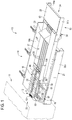
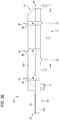
- FIGS. 1-5 show the envelope feeder 10 from different views showing all of the major components of the invention.
- a printer 11 is shown in phantom having the invention positioned so that the output of the feeder 10 inserts envelopes into the input tray or input slot 12 of printer 11.
- the feeder 10 includes a horizontal feeder assembly 14 that supports an acceleration conveyor assembly 16 and a feed conveyor assembly 17. Both the acceleration conveyor assembly 16 and feed assembly 17 are laterally supported by guide plates 19a,b and side plates 20a,b, and the entire assembly 14 is slidably supported below by a base 21.
- the acceleration conveyor 16 is positioned toward the downstream end 23 of the feeder 10, and the feed conveyor 17 is positioned toward the upstream end 24 of the feeder 10.
- the acceleration conveyor assembly 16 is positioned over a cover 26 that is also laterally supported by the guide plates 19a,b.
- the feed conveyor assembly 17 includes a deck 27 over which four (4) belts 28 traverse for movement of envelopes as will be discussed.
- a triangular backstop 29 is positioned along the length of the conveyor feed assembly 17 to provide a support to a stack of envelopes loaded onto the deck 27. The position of the backstop is determined by the amount of envelopes loaded onto the conveyor feed assembly deck 27.
- the left guide plate 19b is somewhat shorter than the right guide plate 19a to facilitate operative access to the upstream portion of the deck 27 and for the loading and unloading of envelopes against the backstop 29.
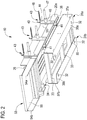
- Fig. 2 shows the underside of the feeder 10 and provides a better view of how the horizontal feed assembly 14 slides relative to the printer.
- the base 21 includes two slide panels 31a,b, each having a vertical portion 37a,b and an angled horizontal portion 38a,b.
- Each horizontal portion 38 includes mounting holes 32 for mounting the base 21 on a work table or other suitable platform (see Fig. 6 ) for the feeder 10.
- the work table typically might be mounted on lockable wheels so that the entire feeder 10 might be moved into a general relative position next to printer 11 to which the feeder 10 would be mated.
- the slide panels 31a,b are connected together by three struts 32 that stabilize the base 21 so that as the horizontal assembly 14 is moved toward or away from the printer 12 the slide panels 31 will not buckle.
- a pair of slide rails 36 is affixed to the top edge of each slide panel 31 and the horizontal feed assembly 14 includes two pairs of rollers 41 bolted onto its lower side edges sized so that they lock into rails 36.
- the arrangement allows for the horizontal feed assembly 14 to be finely positioned toward the printer after the work table on which the feeder 10 rests has been positioned within the general vicinity of the printer 11, thus facilitating mating.
- a series of guide mount assemblies 43 laterally support the right guide plate 19a so that it may be moved inward and outward relative to the acceleration conveyor assembly 16 and the conveyor feed assembly 17 to accommodate different lengths of envelopes.
- a linear guide mount plate 44 is bolted to the right support plate 20a and a hollow sleeve 46 is mounted on the inside surface of the guide mount plate 44.
- a guide mounting plate 51 is bolted to the outside surface of the guide plate 19a and a shaft 47 affixed to the plate 19a such that the shaft extends laterally away from the guide plate 19a.
- the shaft 47 extends through the hollow sleeve 46 so that the guide plate 19a is supported by the shaft as it translates through the sleeve 46.
- a guide locking plate 48 is affixed to the top of the guide mounting plate 51 which has a channel formed in the center of the plate.
- a locking handle 49 is screwed into the top of mount plate 44 and extends through the locking plate channel such that when the handle 49 is tightened movement of the locking plate 51 is arrested, thereby locking the guide plate 19a in place at a selected position along the locking channel.
- the three guide mount assemblies 43 are identical and provide lateral, adjustable support for moving the right guide plate 19a in and out from the envelope flow area.
- the left guide 19b is laterally adjusted with a "C" shaped guide handle 57 that is part of a left guide mount assembly.
- the handle 57 is mounted to the guide plate 19b with a plate 58 bolted to the guide plate.
- the arms of the handle 57 extend through two guide blocks 59 that are affixed to the top of another mounting plate 61 that is bolted to the left support plate 20b at its lower end.
- the arms of the handle 57 include slots or channels 62 on each arm and a pair of locking bolts 63 extend through each channel screw into the blocks 59.
- the blocks 59 are formed such that the handle 57 may be moved inward and outward to effect lateral movement of the left guide 19b and then locked into place by tightening the bolts 63.
- the feeder includes an acceleration conveying assembly 16.
- the acceleration conveyor assembly 16 includes a pair of bearing mount members 66a,b that rotatably support five (5) shafts spanning the distance between the mounts 66a,b.
- Two rubber conveying belts 68 surround the shafts 67 from the right-most shaft to the left-most shaft.
- a belt separator bracket 69 spans the two bearing mount members 66a,b and provides additional support between the pair of bearing mount members 66a,b.
- the belt separator bracket 69 also includes a plurality of guide screws 71 that extend upwards from the bracket 69 to guide the lower belt portion during travel around the shafts 67.
- the right-most shaft 67a includes a drive motor 73 and gearing assembly 74 that turns shaft 67a via a short drive belt (not shown) at the left most extent of the shafted 67a to power belts 68. Due to the elastic tension that the belts 68 exert on the shafts 67, when shaft 67a rotates, the other shafts passively rotate in response thereof.
- envelope feed conveyor assembly 17 includes a motor drive assembly 34 connected to a drive shaft 81 positioned between a upstream preparation deck 55 and loading deck 27.
- the drive assembly 34 includes a gearing assembly next to a standard electric drive motor that drives a gear positioned on the metal shaft of the shaft 81.
- a similar passive idler shaft 82 is positioned on the other end of deck 27 toward the downstream end 23.
- Each shaft 81,82 includes four recessed belt engagement portions 83 having raised surface features to increase friction.
- Each recessed portion 83 on roller 81 has an aligned companion recessed portion, and four belts 28 span the two rollers at each recessed portion 83 as shown.
- the belts are made of plastic fabric, and while resilient their surface features are such that the underside surface glides easily over the top of loading deck 27 while being supported by same.
- each belt guide 84 includes a plurality of spacers affixed to the primary shaft of the belt guide to separate each belt 28 from one another and maintain a preselected spatial relationship between them.
- three guides 84 are utilized underneath deck 27 spaced at equal distances from each other and from the end rollers 81 and 82.
- deck 27 includes at least one guide finger 86 extending toward the downstream direction and over roller 82 so that envelopes moving in the downstream direction do not fall in between rollers 82 and 67a during movement toward printer 11.
- Envelope feed conveyor 17 also includes an underside cover 86 covering most of the underside of deck 27 and the belts 28, and a second cover 87 covering the feeder drive shaft 81 and, generally, the belts 28 in upstream end of the envelope feeder 17.
- the feeder 10 For holding envelope boxes and related envelope container paraphernalia, the feeder 10 includes a preparation deck assembly 53 that is supported by two rail plates 54a,b having their ends bolted to the upstream extent of the right support plate 20a.
- the plates 54a,b are of sufficient thickness so that relatively heavy envelope boxes may be placed on the deck 55 such that the operator may have an ample supply of envelopes for each job.
- the base 21 includes mounting apertures 32 in the lower portions of the slide panels 31a,b which preferably are used to firmly mount the base on a work table (see Fig. 6 ).
- the feeder 10 is preferably bolted securely onto a table 40 and moved into a position adjacent to the printer 11 with collator 110 abutting the manual input ingestion 12 area on the printer so that the downstream end 23 of the feeder 10 abuts the pickup roller assembly 13 on the printer 11.
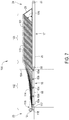
- the horizontal feeder assembly 14 may also be finely adjusted using the horizontal feed assembly rollers 41 so that roller 67e discharges envelopes directly into the pickup roller assembly 13 across a gap between roller 67e and pickup roller 18 (see Fig. 7 ).
- the gap between the feeder 10 and the printer 11 may be adjusted to suit the type of printer to which the feeder 10 is being mated and the type of envelope media being printed.
- the envelope feeder 10 is designed to provide a two stage feed flow 100 that suits the ingestion of envelopes for printing at a rate adapted to suit most high-speed printers.
- Conveyors 16 and 17 are oriented longitudinally and in the same horizontal plane to create a continuous smooth liner movement of envelopes 101 along the feeder 10 from an upstream end 24 toward a downstream end 23.
- envelopes 101 are stacked against backstop 29 at approximately a sixty (60) degree backward slanting angle 105 and laid in a grouped parallel fashion 103 on the feed conveyor belts 28 such that the backward angle is maintained, thereby creating a horizontal plane 113 along the upper edges of the envelopes 101 parallel to the loading deck 27.
- the conveyors 16 and 17 operate at different speeds with the accelerator feed conveyor 17 moving at approximately eight (8) times that of feed conveyor 17. Movement is coordinated with a microprocessor (see Fig. 9 ) so that conveyors 16 and 17 move simultaneously. However, since the acceleration conveyor 16 is moving faster than the feed conveyor the lower edge of each envelope 101 advances more rapidly as soon as an envelope reaches the separation point 104 (a slight gap) between each conveyor.
- the curve 114 is actually a curved plane formed along the upper edges of the envelopes.
- the severity of the curve angle 114 will vary depending upon the height of the particular envelope being fed along the conveyors, the speed of the acceleration feed conveyor, and the length of the acceleration feed conveyor 16. But, generally the curve 114 will have a downward slope that is most severe from the gap 104 to about the mid-way point of the acceleration feed conveyor toward the downstream end, with a more moderate curve slope within the second half of the acceleration feed conveyor.
- the shingled envelope group 102 terminates at the downstream end of the acceleration feed conveyor with an envelope pickup stack 117 in an engagement/pickup zone 116 of pickup assembly 13.
- an envelope pickup stack 117 in an engagement/pickup zone 116 of pickup assembly 13.
- the stack height is typically at least 6 envelopes deep which raises the upper most envelope to easy engagement with the pickup roller 18 and facilitates the ingestion of envelopes into the printer 11 at a speed suitable for high-speed printer processing.
- a sensor 118 is positioned below the envelope stack 117 in the pickup zone 116 and is configured to deflect backward and downward at the presence of any envelopes within the pickup zone 116. When the pickup zone 116 is absent of envelopes, the sensor 118 moves upward and provides a signal to indicate a "paper-out" condition to the printer 11, or to the feeder 10 if desired and as will be further discussed.
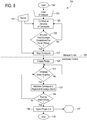
- the process 120 of feeding envelopes utilizing feeder 10 involves a combination of operator and automatic controls 128.
- An operator loads a stacked collection of envelopes against the backstop 122 and initiates a continuous advancement of the acceleration and feed conveyors (16 and 17) 123 utilizing a switch 124 until a satisfactory envelope pickup stack 117 has been established 126.
- a stack of about six (6) envelopes is preferred, as long as one envelope is present in the pickup zone the automatic feeding process will proceed successfully under automatic control.
- the conveyors are switched off 127 and the printer 11 initiated 129.
- an optical proximity sensor (153 in Figs.
- the sensor 153 is calibrated to detect a certain length of movement of the pickup roller 18 downward corresponding with a depletion of the envelope stack to a known quantity of envelopes, typically less than or equal to 6 envelopes. When the sensor 153 is triggered, it sends a signal 131 to a control system 140 (see Fig. 9 ).
- the control system 140 responds by advancing both conveyors for about one half (1 ⁇ 2) a second 132 causing several envelopes (typically 4-6) within the shingled envelope group 102 to advance into the envelope stack 117 at the bottom-most position of the stack.
- the acceleration feed conveyor 16 will continue to feed envelopes into the envelope stack for consumption by the pickup roller 18 as long as envelopes are present within the stack 117 responsive to continuing pickup roller sensor signals. While the inventors have found that one half (1 ⁇ 2) a second of conveyor advancement is satisfactory for standard, low-cost electric drive motors, the period of time for advancing the conveyors in coordinated unison will depend upon the envelope ingestion speed (i.e.
- the conveyors will be continually advance envelopes at coordinated intervals to replenish the envelope stack 117 irrespective of the speed at which the envelopes arrive at the pickup zone 116, and irrespective of how long or the type of envelope media that has been loaded onto the conveyors. Moreover, such replenishment is done without operator intervention.
- the paper out sensor 118 When no further envelopes are present in the stack 117, the paper out sensor 118 will rotate upwards and send a signal 136 to indicate on a display 137 that a paper-out condition has occurred.
- the signal can be processed internally by the printer pursuant to known processing within the printer electronics when paper is unavailable, and/or the signal can simultaneously be processed by the control system 140 to stop the conveyors 16 and 17 from further movement. Alternatively, an operator can simply actuate a switch on the feeder 10 to disengage further movement of the conveyors.
- the control system 140 includes a micro-controller 141 connected to a group A of sensors 147, including the optical proximity sensor 153 for sensing the movement downward of the pickup roller 18, indicating a depletion event in the height of the envelope stack 117, and at least one sensor 151 to indicate a paper out condition in the envelope stack.
- the micro-controller 141 may be any known 4 or 8 bit micro-controller that can be programed as is understood in the industry. Additional sensors 152, such as an envelope alignment condition within the pickup zone 116, may also be included to form a second sensor sub-group B 149.
- Micro-controller 141 also controls motor drivers 145 that turn-on and initiate rotation of two motors 142.
- Motor 143 drives acceleration feed conveyor 16 and motor 144 drives feed conveyor 17.
- Two variable resistor elements 156 and 157 control the voltage supplied to the motors 142, and thereby vary the speed of each motor by providing a varying voltage value to the micro-controller 141.
- Manual switch 154 actuates immediate and continuous movement of the motors 142 pursuant to the loading step 122/123 in Fig. 8 , and power supply 159 provides power to the control system 140, including all sensors and motors from an AC source 161.
- feeder 10 does not need the presence of sub-group B 149 sensors to operate.
- mechanical sensor 151 arranged within the pickup assembly 13 e.g. element 118 in Fig. 7
- sensor group A 147 may be varied as may be understood to enhance the timing and speed of ingestion of envelopes into printer 11.
- optical proximity sensor 153 might be replaced with a pressure switch adjacent to the stack to determine its height, or by a lever switch in contact with the pickup roller to determine its movement downward. Nevertheless, the inventors prefer the use of an optical proximity sensor to determine a depletion event in the pickup stack 117 at the pickup zone 116 because of its ease of calibration for different types of printers.
- the micro-controller 141 is programmed to actuate the motors 142 upon the receipt from sensor 153, indicating a stack depletion event, for a time period of approximately one half (1 ⁇ 2) of one second, although a movement actuation range of .3 to .7 seconds will typically satisfy the pickup speed for most printers using a pickup roller to ingest an envelope for processing.
- the duration of the movement actuation should be evaluated prior to feeder 10 operation so that movement duration may be pre-programmed into the micro-controller 141, or a simple variable resistor knob for each roller (e.g. elements 156 and 157) may be adjusted to set the speed of each conveyor drive motor and, thereby, the speed of each conveyor.
- an optimal configuration for the feeder 10 is a speed of 46 inches/minute for the acceleration feed conveyor 16 combined with a speed of 5.7 inches/minute for the feed conveyor 17, thereby yielding an 8:1 speed ratio, with a dual conveyor activation period of .5 seconds.
- higher and lower ratios are possible.
- a low ratio of 5:1 is possible with the acceleration feed conveyor 16 moving at 46 inches/minute and the feed conveyor 17 moving at 9.2 inches/minute, and the conveyors would need to be activated for .3 seconds.
- a high ratio is also possible with the acceleration feed conveyor 16 moving at 46 inches/minute and the feed conveyor 17 moving at 3.8 inches/minute, but the conveyors would need to be activated for at least .7 seconds to keep the pickup stack satisfactorily filled.
- Fig. 10 provides a detailed view of the pickup roller assembly 13 with an envelope stack 117 already formed beneath the assembly 13 trailed by a shingled set of waiting envelopes 102.
- roller 18 moves down to capture the top-most envelope and moves it forward into the printer for processing.
- Other envelopes are stacked in shingled fashion below the lead envelope supporting one another within the pickup zone 116.
- Paper out sensor 118 is depressed while any envelope is present within the pickup zone 116, thereby stopping the sending of any signal by the sensor 118.
- Pickup roller 18 includes just below sensor 153 an optically reflective surface 163 capable of reflecting light frequencies detected by sensor 153.
- sensor 153 detects a calibrated loss of reflected light by the sensor due to the distance the reflective surface has moved downward and away from sensor 153.
- sensor 153 sends a signal to the micro-controller 141 as previously discussed and conveyors 16 and 17 activate to replace the envelopes ingested by the printer 11 for a specified time period. Since, optimally, the acceleration conveyor 16 moves at eight (8) times the rate of conveyor 17, a flat shingled procession of envelopes is continually presented to the pickup roller 18 in an orientation that facilitates envelope pickup and at a feed rate that maintains envelopes in the correct orientation in the pickup zone 116 until all envelopes on the acceleration feed conveyor 16 have been exhausted. Guides 19a and 19b assist to keep the envelope procession structured such that each envelope arrives at the pickup zone 116 with an orthogonally oriented leading edge.
Landscapes
- Engineering & Computer Science (AREA)
- Mechanical Engineering (AREA)
- Sheets, Magazines, And Separation Thereof (AREA)
- Delivering By Means Of Belts And Rollers (AREA)
Claims (19)
- Umschlagzuführung (10) für einen Drucker (11) mit einem Eingangsschlitz (12) und einer Aufnahmeanordnung (13) in dem Eingangsschlitz, wobei die Umschlagzuführung (10) Folgendes umfasst:a. einen ersten motorisierten Förderer (16) mit einem stromaufwärts gelegenen Ende (24) und einem stromabwärts gelegenen Ende (23), wobei das stromabwärts gelegene Ende nahe bei dem Eingangsschlitz (12) an dem Drucker (11) positioniert ist;b. einen zweiten motorisierten Förderer (17) mit einem stromaufwärts gelegenen Ende und einem stromabwärts gelegenen Ende, wobei der zweite Förderer so positioniert ist, dass Umschläge in stromabwärts weisender Richtung auf dem zweiten Förderer leer auf das stromabwärts gelegene Ende des ersten Förderers (16) zubewegt werden, um darauf eine Gruppe von Umschlägen zu bilden;c. wobei sich der erste Förderer (16) mit einer Geschwindigkeit bewegt, die wesentlich größer ist als die des zweiten Förderers (17);d. wobei die Zuführung (10) so konfiguriert ist, dass sie eine auf dem zweiten Förderer (17) angeordnete Gruppe von Umschlägen (101) von einer im Wesentlichen vertikalen Ausrichtung, in der jeder Umschlag auf dem zweiten Förderer eine horizontal ausgerichtete obere Kante (113) aufweist, zu einem flachen fächerartigen Stapel von Umschlägen auf dem ersten Förderer zu überführen, und wobei der flache Stapel von Umschlägen bei Ankunft an dem Drucker (11) im Wesentlichen horizontal ist;e. Mittel zum Bereitstellen einer Rücklaufsperre (92), damit die Umschläge (101), die auf dem zweiten Förderer geladen sind, in einer im Wesentlichen vertikalen Position abgestützt werden; undf. ein Steuermittel (140), die von einem an der Aufnahmeanordnung (13) angeordneten Sensor abhängig sind, um den ersten und den zweiten Förderer als Reaktion auf einen Zustand an dem Eingangsschlitz (12) kooperativ anzutreiben.
- Umschlagzuführung nach Anspruch 1, wobei die Zuführung (10) ferner so konfiguriert ist, dass die oberen Kanten der Gruppe von Umschlägen auf dem ersten Förderer eine abwärts geneigte Kurve (114) bilden, die sich von dem stromabwärts gelegenen Ende (23) des zweiten Förderers (17) zu dem stromabwärts gelegenen Ende (23) des ersten Förderers (16) erstreckt.
- Umschlagzuführung nach Anspruch 2, wobei der Unterschied der Geschwindigkeiten zwischen dem ersten und dem zweiten Förderer etwa siebenmal größer ist.
- Umschlagzuführung nach Anspruch 3, wobei der erste und der zweite Förderer einen Spalt (104) zwischen beiden bilden, der eine Übergangszone umfasst, und wobei die Umschläge von einer festen Ausrichtung auf dem zweiten Förderer (17) zu einer kontinuierlich drehenden Orientierung auf dem ersten Förderer (16) an der Übergangszone übergehen.
- Umschlagzuführung nach Anspruch 4, wobei der Einzug (10) so angepasst ist, dass er bei Bewegung des ersten Förderers einen Aufnahmestapel (117) von Umschlägen innerhalb der Aufnahmeanordnung (13) bildet;
und optional: die Umschlagzuführung umfasst ferner einen Sensor (153), der an der Aufnahmeanordnung (13) positioniert ist und in elektrischer Kommunikation mit dem Steuermittel (140) steht, und wobei der Sensor so konfiguriert ist, dass er die Abnahme des Aufnahmestapels (117) auf ein vorbestimmtes Niveau registriert und das Ereignis der Abnahme an die Steuereinrichtung kommuniziert, und wobei die Steuereinrichtung, die auf das Ereignis der Abnahme reagiert, so konfiguriert ist, dass sie die Förderer für eine vorgewählte Zeitdauer antreibt, um den Aufnahmestapel (117) periodisch aufzufüllen. - Umschlagzuführung nach Anspruch 1, wobei das Steuermittel (140) Folgendes umfasst:a. einen Mikro-Controller (141);b. eine Mehrzahl von motorischen Antrieben (145), die mit dem Mikro-Controller verbunden sind, um die Motoren an den Förderbändern anzutreiben;c. mindestens eine Eingabeeinrichtung (156), die mit dem Mikro-Controller verbunden ist, um die Geschwindigkeit der Förderer einzustellen;d. Mittel zum Zuführen von Energie zu der Steuereinrichtung; unde. einen Schalter (154) zum Auslösen einer kontinuierlichen Bewegung der genannten Förderer;und optional: wobei der erste Förderer Folgendes umfasst:a. fünf parallele Wellen (67);b. ein Paar von parallele Lagerelementen (66), die die Wellen an ihren Enden drehbar tragen;c. zwei endlose Förderbänder (68), die die Wellen überspannen und parallel zueinander angeordnet sind;d. Antriebsmittel (73, 74), die mit einer der Wellen verbunden sind, um diese anzutreiben; unde. mindestens eine Führungseinrichtung (71) zum Halten der Förderbänder an festen Stellen an dem ersten Förderer;und ferner optional: wobei der zweite Förderer Folgendes umfasst:a. zwei Wellen (81, 82), die an den Enden des zweiten Förderers (17) positioniert sind;b. zwei parallele Stützplatten (20), die die beiden Wellen an ihren Enden drehbar tragen;c. vier endlose Förderbänder (28), die die beiden Wellen überspannen;d. Antriebsmittel (34), die an einem stromaufwärts gelegenen Ende des zweiten Förderers mit der einen Welle verbunden sind, um diese anzutreiben;e. ein Deck (27), das von den beiden Stützplatten (20) getragen wird und sich zwischen diesen erstreckt, wobei die Förderbänder (28) von dem Deck (27) auf einer oberen Oberfläche des zweiten Förderers verschieblich getragen werden; undf. eine Mehrzahl von rotierenden Führungsmitteln, die an der Unterseite des Decks angebracht sind, um die Förderbänder an festen Stellen an dem zweiten Förderer zu spannen und zu halten.
- Umschlagzuführung nach Anspruch 6, wobei die Zuführung ferner eine Basis (21) umfasst, die mit Mitteln zum verschiebbaren Tragen des ersten und des zweiten Förderers versehen ist, und wobei der erste und der zweite Förderer in einer einzigen Chassisform angeordnet sind;
und optional: die Umschlagzuführung umfasst ferner zwei einstellbare Führungsschienen, die sich in eine stromaufwärts und stromabwärts weisende Richtung der Zuführung erstrecken, um die Umschläge während der Bewegung darauf entlang der Förderer zu führen. - Umschlagzuführung nach Anspruch 1, wobei die Zuführung so angepasst ist, dass sie einen Aufnahmestapel von Umschlägen (117) innerhalb der Aufnahmeanordnung (13) bei Bewegung des ersten Förderers (16) bildet, und wobei die Zuführung ferner einen Sensor (140) umfasst, der an der Aufnahmeanordnung positioniert ist und in elektrischer Kommunikation mit den Steuermitten (140) steht, und wobei der Sensor derart konfiguriert ist, dass er die Abnahme des Aufnahmestapels (117) auf ein vordefiniertes Niveau registriert und das Ereignis der Abnahme zu der Steuereinrichtung kommuniziert, und wobei die Steuereinrichtung, die auf die Kommunikation des Ereignisses der Abnahme anspricht, so konfiguriert ist, dass die Förderer für eine vorgewählte Zeitdauer angetrieben werden, um den Aufnahmestapel periodisch aufzufüllen;
und optional: wobei die Zuführung eine in sich geschlossene bewegliche Einheit umfasst. - Umschlagzuführung (10) für einen Drucker mit einem manuellen Eingangsschlitz (12) für Medien, einer Aufnahmeanordnung (13) zum Aufnehmen von in den Schlitz eingelegten Medien und einem in dem Schlitz (12) positionierten Sensor (118) für die Papierausgabe, wobei die Umschlagzuführung (10) zur Zuführung von Umschlägen (101) dient, die zum Bedrucken in den Eingangsschlitz eingeführt werden, und wobei die Briefumschlagzuführung Folgendes umfasst:a. eine horizontale Zuführanordnung (14) mit einem Beschleunigungsförderer (16), der nahe an dem manuellen Eingangsschlitz positioniert ist, einem Zuführförderer (17), der nahe an dem Beschleunigungsförderer an dem stromaufwärts gelegenen Ende (24) des Beschleunigungsförderers liegt und der zu diesem ausgerichtet ist, und ein Paar paralleler Führungsplatten (19), die sich entlang der Länge der horizontalen Zuführanordnung und der Außenteile der beiden Förderer erstrecken;b. Mittel (21) zum Abstützen der horizontalen Zuführanordnung in proximaler Beziehung zu dem Drucker;c. Antriebsmittel (34), die an jedem Förderer angebracht sind, um denselben anzutreiben; undd. ein Steuermittel (140), die auf mindestens einen Sensor (118) anspricht, der in dem manuellen Eingangsschlitz angeordnet ist, um die Förderer mit dem Antriebsmittel anzutreiben, wobei die Steuereinrichtung den Beschleunigungsförderer mit einer Geschwindigkeit antreibt, die wesentlich größer als die des Zuführförderers ist, und zwar dergestalt, dass Umschläge, die sich auf dem Beschleunigungsförderer bewegen, eine nach unten geneigte gefächerte Gruppe (102) von Umschlägen bilden, wobei jeder Umschlag beim Erreichen des manuellen Eingangsschlitzes (12) eine im Wesentlichen flache Ausrichtung aufweist;und optional: wobei sich der Beschleunigungsförderer (16) mit etwa der siebenfachen Geschwindigkeit des Zuführrohrförderers (17) bewegt.
- Umschlagzuführung nach Anspruch 9, ferner umfassend eine Rücklaufsperre (29), die von dem Zuführförderer getragen wird, um die Umschläge darauf in einer im Wesentlichen vertikalen Ausrichtung abzustützen;
und optional: wobei die Zuführung eine in sich geschlossene bewegliche Einheit umfasst. - Umschlagzuführung nach Anspruch 9, wobei der Sensor (118) an der Aufnahmeanordnung positioniert ist und mit der Steuereinrichtung in elektrischer Verbindung steht;
und optional: wobei die Förderer einen Spalt (104) zwischen sich bilden, der eine Übergangszone umfasst, wobei die Umschläge von einer festen Ausrichtung auf dem Zuführrohrförderer zu einer kontinuierlich drehenden Ausrichtung in der Übergangszone auf den Beschleunigungsförderer übergehen. - Zweistufige Umschlagzuführung (10) zur Zuführung von Umschlägen (101) in einen Eingangsschlitz (12) an einem Drucker (11), umfassend:a. eine Fördereinrichtung einer ersten Stufe (17);b. eine Fördereinrichtung einer zweiten Stufe (16), wobei der Förderer der zweiten Stufe so positioniert ist, dass er Umschläge von dem Förderer der ersten Stufe aufnimmt;c. wobei der Förderer der ersten Stufe (17) Umschläge in einem identischen, rückwärtsgerichteten vertikalen Winkel von mindestens 50 Grad bewegt und Mittel (29) zum Abstützen der Umschläge in dieser Winkelstellung enthält;d. Mittel (140) in Kommunikation mit den Förderern der ersten und der zweiten Stufe zum automatisch gesteuerten Vorschieben von Umschlägen auf den Förderern;e. wobei das Steuermittel (140) so angepasst sind, um den Förderer der zweiten Stufe (16) mit einer Geschwindigkeit zu bewegen, die wesentlich schneller ist als die des Förderers der ersten Stufe (17), sodass die von dem Förderer der ersten Stufe empfangenen Umschläge einen gefächerten Stapel (102) mit einer abwärtsgeneigten Kurve bilden, und wobei jeder Umschlag in einer im Wesentlichen horizontalen Ausrichtung an dem Eingangsschlitz (12) ankommt, und wobei jeder Umschlag auf einem zuvor empfangenen Umschlag innerhalb des Eingangsschlitzes vertikal gestapelt ist, um einen Aufnahmestapel (117) von Umschlägen darin zu erzeugen; undf. einen optischen Sensor (153), der proximal zu dem Eingangsschlitz und in elektrischer Verbindung mit den Steuermitteln (140) positioniert ist, um die restliche Höhe des vertikalen Briefumschlagstapels zu überwachen und ein Signal an die Steuermittel zu senden, wenn der vertikale Umschlagstapel auf ein vorbestimmtes Restniveau abgenommen hat.
- Umschlagzuführung nach Anspruch 12, wobei die Förderanordnung (17) der ersten Stufe Folgendes umfasst:a. zwei parallele Wellen (81, 82), die an den Enden der Förderanordnung (17) der ersten Stufe angeordnet sind;b. zwei parallele Stützplatten (20), die die beiden Wellen an ihren Enden drehbar tragen;c. vier endlose Förderbänder (28), die die beiden Wellen überspannen;d. Antriebsmittel (34), die mit der einen Welle an einem stromaufwärts gelegenen Ende der Förderanordnung der ersten Stufe verbunden sind, um diese anzutreiben;e. ein Deck (27), das von den beiden Stützplatten (20) getragen wird und sich zwischen diesen erstreckt, wobei die Förderbänder (28) von dem Deck auf einer oberen Oberfläche der Förderanordnung der ersten Stufe verschiebbar getragen werden; undf. eine Mehrzahl von rotierenden Führungsmitteln (84), die an der Unterseite des Decks (27) angebracht sind, um die Förderbänder (28) zu spannen und an festen Stellen auf der Förderanordnung (17) der ersten Stufe zu halten.
- Verfahren zum Zuführen von Umschlägen in einen Eingabeschlitz (12) eines Druckers (11), wobei das Verfahren die folgenden Schritte umfasst:a. Laden von Umschlägen (101) auf den ersten Förderer (17), und zwar dergestalt, dass die Umschläge vertikal in einem Stapel mit einem Rückenwinkel von einem vorbestimmten Betrag ausgerichtet werden;b. Antreiben des ersten Förderers (17) in einer stromabwärts verlaufenden Richtung (23), sodass die Umschläge leer auf einen zweiten Förderer (16) gelangen;c. bei einer kooperativen Bewegung zwischen dem ersten und dem zweiten Förderer: Vorschieben der leeren Umschläge auf dem zweiten Förderer mit einer Geschwindigkeit, die schneller ist als die auf dem ersten Förderer, sodass die Umschläge einen gefächerten Stapel (102) bilden, der sich in einer stromabwärts erstreckenden Richtung (23) bewegt, und ihre Oberkanten eine geneigte Abwärtskurve (114) bilden, wobei eine solche Bewegung der Umschläge bewirkt, dass jeder Umschlag in eine horizontale Ausrichtung zu dem Druckerschlitz (12) gelangt;d. Laden einer Gruppe der horizontal ausgerichteten Umschläge in den Druckerschlitz, um einen Aufnahmestapel (117) darin zu bilden; unde. automatisches Antreiben des ersten und des zweiten Förderers, um den Aufnahmestapel wieder aufzufüllen, wenn die Umschläge von dem Drucker (11) verbraucht sind.
- Verfahren nach Anspruch 14, wobei der Schritt des automatischen Antreibens des ersten und des zweiten Förderers das Antreiben des zweiten Förderers mit einer Geschwindigkeit zwischen dem 5-fachen und dem 12-fachen der Geschwindigkeit des ersten Förderers umfasst.
- Verfahren nach Anspruch 15, wobei der Schritt des Ladens einer Gruppe der horizontal ausgerichteten Umschläge in den Druckerschlitz das Laden von mindestens einem Umschlag in den Druckerschlitz vor dem Antreiben des ersten und des zweiten Förderers umfasst.
- Verfahren nach Anspruch 16, wobei der Schritt des automatischen Antreibens des ersten und des zweiten Förderers zum Auffüllen des Aufnahmestapels (117), wenn die Umschläge aufgebraucht sind, das periodische Antreiben der Förderer für ein vorbestimmtes Zeitsegment zwischen 0,3 und 0,7 Sekunden umfasst.
- Verfahren nach Anspruch 17, ferner umfassend den folgenden Schritt des Überwachens des Aufnahmestapels (117) der Umschläge mit einem optischen Sensor (153), der die Transportstrecke einer Aufnahmerolle (13) misst, die den obersten Umschlag in dem Aufnahmestapel (117) erfasst, und Senden eines Signals an ein Steuermittel (140), um den automatisch vorrückenden Schritt des Nachschubs einzuleiten, wenn die Transportstrecke der Aufnahmerolle einen bestimmten Betrag überschreitet;
und optional: wobei die Schritte des Antreibens des ersten Förderers (17) in einer stromabwärts verlaufenden Richtung (23) mit gestapelten Umschlägen und des Vorschiebens leerer Umschläge auf den zweiten Förderer (16) zur Bildung eines Umschlagstapels (117) in dem Druckerschlitz (12) von einer menschlichen Bedienungsperson gesteuert werden, die einen Schalter (154) an einem elektrischen Steuersystem betätigt. - Verfahren nach Anspruch 14, wobei der Schritt des automatischen Antreibens des ersten und des zweiten Förderers zum Auffüllen des Aufnahmestapels (117), wenn die Umschläge aufgebraucht sind, dass periodische Vorrücken der Förderer in vordefinierten Zeitsegmenten umfasst;
und optional: wobei der Schritt des automatischen Anschreibens des ersten und des zweiten Förderers zum Auffüllen des Aufnahmestapels der Umschläge ferner den Schritt des Überwachens des Aufnahmestapels (117) der Umschläge mit einem optischen Sensor (153) umfasst, der die Transportstrecke einer Aufnahmerolle (13) misst, den obersten Umschlag in dem Aufnahmestapel (117) erfasst und ein Signal an ein Steuermittel (140) sendet, um den automatisch vorrückenden Schritt einzuleiten.
Applications Claiming Priority (1)
| Application Number | Priority Date | Filing Date | Title |
|---|---|---|---|
| PCT/US2014/011718 WO2015108517A1 (en) | 2014-01-15 | 2014-01-15 | Envelope feeder having dual aligned conveyors |
Publications (3)
| Publication Number | Publication Date |
|---|---|
| EP3134339A1 EP3134339A1 (de) | 2017-03-01 |
| EP3134339A4 EP3134339A4 (de) | 2017-12-20 |
| EP3134339B1 true EP3134339B1 (de) | 2020-10-28 |
Family
ID=53543276
Family Applications (1)
| Application Number | Title | Priority Date | Filing Date |
|---|---|---|---|
| EP14878609.8A Active EP3134339B1 (de) | 2014-01-15 | 2014-01-15 | Zuführeinrichtung für briefumschläge mit zwei ausgerichteten förderern |
Country Status (3)
| Country | Link |
|---|---|
| EP (1) | EP3134339B1 (de) |
| JP (1) | JP6348602B2 (de) |
| WO (1) | WO2015108517A1 (de) |
Families Citing this family (2)
| Publication number | Priority date | Publication date | Assignee | Title |
|---|---|---|---|---|
| CN109127931A (zh) * | 2018-09-28 | 2019-01-04 | 安徽得高金属制品有限公司 | 一种冲压生产线用上料装置 |
| CN109626047B (zh) * | 2019-01-09 | 2024-01-16 | 深圳市万德数字科技有限公司 | 一种送料自动纠偏装置 |
Family Cites Families (9)
| Publication number | Priority date | Publication date | Assignee | Title |
|---|---|---|---|---|
| GB1248511A (en) * | 1969-06-30 | 1971-10-06 | Claude Raymond Huntwork | Sheet unstacking and fanning machine |
| IT1166837B (it) * | 1979-05-18 | 1987-05-06 | Omg Off Macch Grafic | Caricatore di segnature, fogli, fascicoli e consimili, in particolare per raccoglitrici, accavallatrici, cucitrici e simili macchine per legatoria |
| US4522382A (en) * | 1983-11-23 | 1985-06-11 | Primages, Inc. | Sheet and envelope feed apparatus for a printer and associated methods |
| US4524691A (en) * | 1984-01-11 | 1985-06-25 | Graphic Arts Technical Innovators, Inc. | Envelope feeder for printing press with timing circuit for suction cups, feed roller and flywheel |
| US5356129A (en) * | 1991-05-03 | 1994-10-18 | Godlewski Edward S | Press feeding apparatus |
| JP4475129B2 (ja) * | 2005-02-03 | 2010-06-09 | 澁谷工業株式会社 | シート状物品の取り出し装置 |
| US8181768B2 (en) * | 2009-02-03 | 2012-05-22 | Pitney Bowes Inc. | Mailpiece inserter adapted for one-sided operation (OSO) and input conveyor module therefor |
| US8490964B2 (en) * | 2009-09-10 | 2013-07-23 | James C. Kaiping | Document feeder with pivoting delivery table, particularly for digital printers |
| JP5805963B2 (ja) * | 2011-02-28 | 2015-11-10 | 理想科学工業株式会社 | インクジェット印刷装置 |
-
2014
- 2014-01-15 JP JP2016545981A patent/JP6348602B2/ja active Active
- 2014-01-15 WO PCT/US2014/011718 patent/WO2015108517A1/en not_active Ceased
- 2014-01-15 EP EP14878609.8A patent/EP3134339B1/de active Active
Non-Patent Citations (1)
| Title |
|---|
| None * |
Also Published As
| Publication number | Publication date |
|---|---|
| WO2015108517A1 (en) | 2015-07-23 |
| JP2017502895A (ja) | 2017-01-26 |
| EP3134339A1 (de) | 2017-03-01 |
| JP6348602B2 (ja) | 2018-06-27 |
| EP3134339A4 (de) | 2017-12-20 |
Similar Documents
| Publication | Publication Date | Title |
|---|---|---|
| US8939274B1 (en) | Envelope feeder having dual aligned conveyors | |
| AU600238B2 (en) | Improvements in and relating to packaging apparatus | |
| US8490964B2 (en) | Document feeder with pivoting delivery table, particularly for digital printers | |
| JPH09235033A (ja) | 給紙装置 | |
| TWI527750B (zh) | A placing method of the plate-like body, a feeding means for separating the paper and the separating paper | |
| EP0983950B1 (de) | Automatische Vorrichtung zum Beladen von Produkten zur Verwendung bei einem Bogenanleger | |
| EP3134339B1 (de) | Zuführeinrichtung für briefumschläge mit zwei ausgerichteten förderern | |
| US20030189283A1 (en) | Method and apparatus for mailpiece stacking | |
| KR101901882B1 (ko) | 파우치 커팅기의 오절단 방지장치 | |
| TW201010926A (en) | Inserting apparatus for discrete objects into envelopes and related methods | |
| US6142462A (en) | Horizontal feed table and method | |
| US10589947B2 (en) | Apparatus for franking flat items of mail transported individually or from a supplied stack, such as envelopes, mailers, cards, printed products, sleeves, labels or the like, on a processing line | |
| JPH082683A (ja) | 冊子供給装置 | |
| US7857302B2 (en) | Vacuum friction feeder | |
| EP2569237B1 (de) | Vorrichtung zur kantenstapelung von flachen artikeln | |
| CA3047380C (en) | Envelope printing system | |
| US4026550A (en) | Continuous feeder | |
| US5730275A (en) | Cup conveyor | |
| JPS62146833A (ja) | 印刷紙供給装置 | |
| JPH0328034Y2 (de) | ||
| US20190276252A1 (en) | Sheet feeder with transversely translatable floating final height adjustment block | |
| US20050104274A1 (en) | Mailing machine | |
| JPH0333711Y2 (de) | ||
| JPH0636033Y2 (ja) | 丁合装置 | |
| JPH0891592A (ja) | 丁合機などへの折帖供給装置 |
Legal Events
| Date | Code | Title | Description |
|---|---|---|---|
| STAA | Information on the status of an ep patent application or granted ep patent |
Free format text: STATUS: THE INTERNATIONAL PUBLICATION HAS BEEN MADE |
|
| PUAI | Public reference made under article 153(3) epc to a published international application that has entered the european phase |
Free format text: ORIGINAL CODE: 0009012 |
|
| STAA | Information on the status of an ep patent application or granted ep patent |
Free format text: STATUS: REQUEST FOR EXAMINATION WAS MADE |
|
| 17P | Request for examination filed |
Effective date: 20160811 |
|
| AK | Designated contracting states |
Kind code of ref document: A1 Designated state(s): AL AT BE BG CH CY CZ DE DK EE ES FI FR GB GR HR HU IE IS IT LI LT LU LV MC MK MT NL NO PL PT RO RS SE SI SK SM TR |
|
| AX | Request for extension of the european patent |
Extension state: BA ME |
|
| DAX | Request for extension of the european patent (deleted) | ||
| A4 | Supplementary search report drawn up and despatched |
Effective date: 20171120 |
|
| RIC1 | Information provided on ipc code assigned before grant |
Ipc: B65H 1/22 20060101ALI20171114BHEP Ipc: B65H 5/24 20060101AFI20171114BHEP |
|
| GRAP | Despatch of communication of intention to grant a patent |
Free format text: ORIGINAL CODE: EPIDOSNIGR1 |
|
| STAA | Information on the status of an ep patent application or granted ep patent |
Free format text: STATUS: GRANT OF PATENT IS INTENDED |
|
| RIC1 | Information provided on ipc code assigned before grant |
Ipc: B65H 1/22 20060101ALI20200406BHEP Ipc: B65H 5/24 20060101AFI20200406BHEP Ipc: B65H 11/00 20060101ALI20200406BHEP Ipc: B65H 7/04 20060101ALI20200406BHEP |
|
| INTG | Intention to grant announced |
Effective date: 20200512 |
|
| GRAS | Grant fee paid |
Free format text: ORIGINAL CODE: EPIDOSNIGR3 |
|
| GRAA | (expected) grant |
Free format text: ORIGINAL CODE: 0009210 |
|
| STAA | Information on the status of an ep patent application or granted ep patent |
Free format text: STATUS: THE PATENT HAS BEEN GRANTED |
|
| AK | Designated contracting states |
Kind code of ref document: B1 Designated state(s): AL AT BE BG CH CY CZ DE DK EE ES FI FR GB GR HR HU IE IS IT LI LT LU LV MC MK MT NL NO PL PT RO RS SE SI SK SM TR |
|
| REG | Reference to a national code |
Ref country code: GB Ref legal event code: FG4D |
|
| REG | Reference to a national code |
Ref country code: CH Ref legal event code: EP |
|
| REG | Reference to a national code |
Ref country code: DE Ref legal event code: R096 Ref document number: 602014071829 Country of ref document: DE |
|
| REG | Reference to a national code |
Ref country code: AT Ref legal event code: REF Ref document number: 1328010 Country of ref document: AT Kind code of ref document: T Effective date: 20201115 |
|
| REG | Reference to a national code |
Ref country code: IE Ref legal event code: FG4D |
|
| REG | Reference to a national code |
Ref country code: AT Ref legal event code: MK05 Ref document number: 1328010 Country of ref document: AT Kind code of ref document: T Effective date: 20201028 |
|
| REG | Reference to a national code |
Ref country code: NL Ref legal event code: MP Effective date: 20201028 |
|
| PG25 | Lapsed in a contracting state [announced via postgrant information from national office to epo] |
Ref country code: GR Free format text: LAPSE BECAUSE OF FAILURE TO SUBMIT A TRANSLATION OF THE DESCRIPTION OR TO PAY THE FEE WITHIN THE PRESCRIBED TIME-LIMIT Effective date: 20210129 Ref country code: FI Free format text: LAPSE BECAUSE OF FAILURE TO SUBMIT A TRANSLATION OF THE DESCRIPTION OR TO PAY THE FEE WITHIN THE PRESCRIBED TIME-LIMIT Effective date: 20201028 Ref country code: RS Free format text: LAPSE BECAUSE OF FAILURE TO SUBMIT A TRANSLATION OF THE DESCRIPTION OR TO PAY THE FEE WITHIN THE PRESCRIBED TIME-LIMIT Effective date: 20201028 Ref country code: NL Free format text: LAPSE BECAUSE OF FAILURE TO SUBMIT A TRANSLATION OF THE DESCRIPTION OR TO PAY THE FEE WITHIN THE PRESCRIBED TIME-LIMIT Effective date: 20201028 Ref country code: NO Free format text: LAPSE BECAUSE OF FAILURE TO SUBMIT A TRANSLATION OF THE DESCRIPTION OR TO PAY THE FEE WITHIN THE PRESCRIBED TIME-LIMIT Effective date: 20210128 Ref country code: PT Free format text: LAPSE BECAUSE OF FAILURE TO SUBMIT A TRANSLATION OF THE DESCRIPTION OR TO PAY THE FEE WITHIN THE PRESCRIBED TIME-LIMIT Effective date: 20210301 |
|
| REG | Reference to a national code |
Ref country code: LT Ref legal event code: MG4D |
|
| PG25 | Lapsed in a contracting state [announced via postgrant information from national office to epo] |
Ref country code: LV Free format text: LAPSE BECAUSE OF FAILURE TO SUBMIT A TRANSLATION OF THE DESCRIPTION OR TO PAY THE FEE WITHIN THE PRESCRIBED TIME-LIMIT Effective date: 20201028 Ref country code: SE Free format text: LAPSE BECAUSE OF FAILURE TO SUBMIT A TRANSLATION OF THE DESCRIPTION OR TO PAY THE FEE WITHIN THE PRESCRIBED TIME-LIMIT Effective date: 20201028 Ref country code: IS Free format text: LAPSE BECAUSE OF FAILURE TO SUBMIT A TRANSLATION OF THE DESCRIPTION OR TO PAY THE FEE WITHIN THE PRESCRIBED TIME-LIMIT Effective date: 20210228 Ref country code: PL Free format text: LAPSE BECAUSE OF FAILURE TO SUBMIT A TRANSLATION OF THE DESCRIPTION OR TO PAY THE FEE WITHIN THE PRESCRIBED TIME-LIMIT Effective date: 20201028 Ref country code: BG Free format text: LAPSE BECAUSE OF FAILURE TO SUBMIT A TRANSLATION OF THE DESCRIPTION OR TO PAY THE FEE WITHIN THE PRESCRIBED TIME-LIMIT Effective date: 20210128 Ref country code: AT Free format text: LAPSE BECAUSE OF FAILURE TO SUBMIT A TRANSLATION OF THE DESCRIPTION OR TO PAY THE FEE WITHIN THE PRESCRIBED TIME-LIMIT Effective date: 20201028 Ref country code: ES Free format text: LAPSE BECAUSE OF FAILURE TO SUBMIT A TRANSLATION OF THE DESCRIPTION OR TO PAY THE FEE WITHIN THE PRESCRIBED TIME-LIMIT Effective date: 20201028 |
|
| PG25 | Lapsed in a contracting state [announced via postgrant information from national office to epo] |
Ref country code: HR Free format text: LAPSE BECAUSE OF FAILURE TO SUBMIT A TRANSLATION OF THE DESCRIPTION OR TO PAY THE FEE WITHIN THE PRESCRIBED TIME-LIMIT Effective date: 20201028 |
|
| REG | Reference to a national code |
Ref country code: DE Ref legal event code: R097 Ref document number: 602014071829 Country of ref document: DE |
|
| PG25 | Lapsed in a contracting state [announced via postgrant information from national office to epo] |
Ref country code: SK Free format text: LAPSE BECAUSE OF FAILURE TO SUBMIT A TRANSLATION OF THE DESCRIPTION OR TO PAY THE FEE WITHIN THE PRESCRIBED TIME-LIMIT Effective date: 20201028 Ref country code: RO Free format text: LAPSE BECAUSE OF FAILURE TO SUBMIT A TRANSLATION OF THE DESCRIPTION OR TO PAY THE FEE WITHIN THE PRESCRIBED TIME-LIMIT Effective date: 20201028 Ref country code: LT Free format text: LAPSE BECAUSE OF FAILURE TO SUBMIT A TRANSLATION OF THE DESCRIPTION OR TO PAY THE FEE WITHIN THE PRESCRIBED TIME-LIMIT Effective date: 20201028 Ref country code: CZ Free format text: LAPSE BECAUSE OF FAILURE TO SUBMIT A TRANSLATION OF THE DESCRIPTION OR TO PAY THE FEE WITHIN THE PRESCRIBED TIME-LIMIT Effective date: 20201028 Ref country code: EE Free format text: LAPSE BECAUSE OF FAILURE TO SUBMIT A TRANSLATION OF THE DESCRIPTION OR TO PAY THE FEE WITHIN THE PRESCRIBED TIME-LIMIT Effective date: 20201028 Ref country code: SM Free format text: LAPSE BECAUSE OF FAILURE TO SUBMIT A TRANSLATION OF THE DESCRIPTION OR TO PAY THE FEE WITHIN THE PRESCRIBED TIME-LIMIT Effective date: 20201028 |
|
| PG25 | Lapsed in a contracting state [announced via postgrant information from national office to epo] |
Ref country code: MC Free format text: LAPSE BECAUSE OF FAILURE TO SUBMIT A TRANSLATION OF THE DESCRIPTION OR TO PAY THE FEE WITHIN THE PRESCRIBED TIME-LIMIT Effective date: 20201028 Ref country code: DK Free format text: LAPSE BECAUSE OF FAILURE TO SUBMIT A TRANSLATION OF THE DESCRIPTION OR TO PAY THE FEE WITHIN THE PRESCRIBED TIME-LIMIT Effective date: 20201028 |
|
| REG | Reference to a national code |
Ref country code: CH Ref legal event code: PL |
|
| PLBE | No opposition filed within time limit |
Free format text: ORIGINAL CODE: 0009261 |
|
| STAA | Information on the status of an ep patent application or granted ep patent |
Free format text: STATUS: NO OPPOSITION FILED WITHIN TIME LIMIT |
|
| PG25 | Lapsed in a contracting state [announced via postgrant information from national office to epo] |
Ref country code: LU Free format text: LAPSE BECAUSE OF NON-PAYMENT OF DUE FEES Effective date: 20210115 |
|
| 26N | No opposition filed |
Effective date: 20210729 |
|
| REG | Reference to a national code |
Ref country code: BE Ref legal event code: MM Effective date: 20210131 |
|
| PG25 | Lapsed in a contracting state [announced via postgrant information from national office to epo] |
Ref country code: IT Free format text: LAPSE BECAUSE OF FAILURE TO SUBMIT A TRANSLATION OF THE DESCRIPTION OR TO PAY THE FEE WITHIN THE PRESCRIBED TIME-LIMIT Effective date: 20201028 Ref country code: AL Free format text: LAPSE BECAUSE OF FAILURE TO SUBMIT A TRANSLATION OF THE DESCRIPTION OR TO PAY THE FEE WITHIN THE PRESCRIBED TIME-LIMIT Effective date: 20201028 |
|
| PG25 | Lapsed in a contracting state [announced via postgrant information from national office to epo] |
Ref country code: CH Free format text: LAPSE BECAUSE OF NON-PAYMENT OF DUE FEES Effective date: 20210131 Ref country code: SI Free format text: LAPSE BECAUSE OF FAILURE TO SUBMIT A TRANSLATION OF THE DESCRIPTION OR TO PAY THE FEE WITHIN THE PRESCRIBED TIME-LIMIT Effective date: 20201028 Ref country code: LI Free format text: LAPSE BECAUSE OF NON-PAYMENT OF DUE FEES Effective date: 20210131 |
|
| PG25 | Lapsed in a contracting state [announced via postgrant information from national office to epo] |
Ref country code: IE Free format text: LAPSE BECAUSE OF NON-PAYMENT OF DUE FEES Effective date: 20210115 |
|
| PG25 | Lapsed in a contracting state [announced via postgrant information from national office to epo] |
Ref country code: IS Free format text: LAPSE BECAUSE OF FAILURE TO SUBMIT A TRANSLATION OF THE DESCRIPTION OR TO PAY THE FEE WITHIN THE PRESCRIBED TIME-LIMIT Effective date: 20210228 |
|
| PG25 | Lapsed in a contracting state [announced via postgrant information from national office to epo] |
Ref country code: BE Free format text: LAPSE BECAUSE OF NON-PAYMENT OF DUE FEES Effective date: 20210131 |
|
| PG25 | Lapsed in a contracting state [announced via postgrant information from national office to epo] |
Ref country code: HU Free format text: LAPSE BECAUSE OF FAILURE TO SUBMIT A TRANSLATION OF THE DESCRIPTION OR TO PAY THE FEE WITHIN THE PRESCRIBED TIME-LIMIT; INVALID AB INITIO Effective date: 20140115 |
|
| PG25 | Lapsed in a contracting state [announced via postgrant information from national office to epo] |
Ref country code: CY Free format text: LAPSE BECAUSE OF FAILURE TO SUBMIT A TRANSLATION OF THE DESCRIPTION OR TO PAY THE FEE WITHIN THE PRESCRIBED TIME-LIMIT Effective date: 20201028 |
|
| PG25 | Lapsed in a contracting state [announced via postgrant information from national office to epo] |
Ref country code: MK Free format text: LAPSE BECAUSE OF FAILURE TO SUBMIT A TRANSLATION OF THE DESCRIPTION OR TO PAY THE FEE WITHIN THE PRESCRIBED TIME-LIMIT Effective date: 20201028 |
|
| PG25 | Lapsed in a contracting state [announced via postgrant information from national office to epo] |
Ref country code: MT Free format text: LAPSE BECAUSE OF FAILURE TO SUBMIT A TRANSLATION OF THE DESCRIPTION OR TO PAY THE FEE WITHIN THE PRESCRIBED TIME-LIMIT Effective date: 20201028 |
|
| PG25 | Lapsed in a contracting state [announced via postgrant information from national office to epo] |
Ref country code: TR Free format text: LAPSE BECAUSE OF FAILURE TO SUBMIT A TRANSLATION OF THE DESCRIPTION OR TO PAY THE FEE WITHIN THE PRESCRIBED TIME-LIMIT Effective date: 20201028 |
|
| PGFP | Annual fee paid to national office [announced via postgrant information from national office to epo] |
Ref country code: GB Payment date: 20260116 Year of fee payment: 13 |
|
| PGFP | Annual fee paid to national office [announced via postgrant information from national office to epo] |
Ref country code: DE Payment date: 20260121 Year of fee payment: 13 |
|
| PGFP | Annual fee paid to national office [announced via postgrant information from national office to epo] |
Ref country code: FR Payment date: 20260123 Year of fee payment: 13 |