EP3130329A1 - Reinigungsprodukt auf ölbasis - Google Patents
Reinigungsprodukt auf ölbasis Download PDFInfo
- Publication number
- EP3130329A1 EP3130329A1 EP16173512.1A EP16173512A EP3130329A1 EP 3130329 A1 EP3130329 A1 EP 3130329A1 EP 16173512 A EP16173512 A EP 16173512A EP 3130329 A1 EP3130329 A1 EP 3130329A1
- Authority
- EP
- European Patent Office
- Prior art keywords
- preparations according
- cleaning
- oil
- cleaning preparations
- lipids
- Prior art date
- Legal status (The legal status is an assumption and is not a legal conclusion. Google has not performed a legal analysis and makes no representation as to the accuracy of the status listed.)
- Granted
Links
- 238000004140 cleaning Methods 0.000 title claims abstract description 60
- 238000002360 preparation method Methods 0.000 claims abstract description 99
- 150000002632 lipids Chemical class 0.000 claims abstract description 44
- 239000004094 surface-active agent Substances 0.000 claims abstract description 27
- 239000007788 liquid Substances 0.000 claims abstract description 18
- 239000000203 mixture Substances 0.000 claims abstract description 14
- 239000003921 oil Substances 0.000 claims description 38
- 235000019198 oils Nutrition 0.000 claims description 38
- 239000007787 solid Substances 0.000 claims description 14
- 125000004432 carbon atom Chemical group C* 0.000 claims description 13
- 230000037336 dry skin Effects 0.000 claims description 13
- 239000000126 substance Substances 0.000 claims description 13
- 239000004064 cosurfactant Substances 0.000 claims description 12
- 150000001408 amides Chemical class 0.000 claims description 9
- 239000003755 preservative agent Substances 0.000 claims description 9
- 239000003549 soybean oil Substances 0.000 claims description 8
- 235000012424 soybean oil Nutrition 0.000 claims description 8
- 150000002191 fatty alcohols Chemical class 0.000 claims description 7
- 239000002736 nonionic surfactant Substances 0.000 claims description 7
- 239000004952 Polyamide Substances 0.000 claims description 6
- 239000004359 castor oil Substances 0.000 claims description 6
- 235000019438 castor oil Nutrition 0.000 claims description 6
- 235000014113 dietary fatty acids Nutrition 0.000 claims description 6
- 229930195729 fatty acid Natural products 0.000 claims description 6
- 239000000194 fatty acid Substances 0.000 claims description 6
- 150000004665 fatty acids Chemical class 0.000 claims description 6
- ZEMPKEQAKRGZGQ-XOQCFJPHSA-N glycerol triricinoleate Natural products CCCCCC[C@@H](O)CC=CCCCCCCCC(=O)OC[C@@H](COC(=O)CCCCCCCC=CC[C@@H](O)CCCCCC)OC(=O)CCCCCCCC=CC[C@H](O)CCCCCC ZEMPKEQAKRGZGQ-XOQCFJPHSA-N 0.000 claims description 6
- 229920002647 polyamide Polymers 0.000 claims description 6
- 239000000975 dye Substances 0.000 claims description 5
- 239000008172 hydrogenated vegetable oil Substances 0.000 claims description 5
- 229920005862 polyol Polymers 0.000 claims description 5
- 150000003077 polyols Chemical class 0.000 claims description 5
- 230000003014 reinforcing effect Effects 0.000 claims description 5
- 235000019484 Rapeseed oil Nutrition 0.000 claims description 4
- 239000003925 fat Substances 0.000 claims description 4
- 230000037307 sensitive skin Effects 0.000 claims description 4
- 230000032683 aging Effects 0.000 claims description 3
- 239000002304 perfume Substances 0.000 claims description 3
- 235000020238 sunflower seed Nutrition 0.000 claims description 3
- 229910052500 inorganic mineral Inorganic materials 0.000 claims description 2
- JJWLVOIRVHMVIS-UHFFFAOYSA-N isopropylamine Chemical compound CC(C)N JJWLVOIRVHMVIS-UHFFFAOYSA-N 0.000 claims description 2
- 239000011707 mineral Substances 0.000 claims description 2
- 239000002994 raw material Substances 0.000 claims description 2
- 239000002502 liposome Substances 0.000 abstract 1
- 239000000047 product Substances 0.000 description 18
- KRKNYBCHXYNGOX-UHFFFAOYSA-N citric acid Chemical compound OC(=O)CC(O)(C(O)=O)CC(O)=O KRKNYBCHXYNGOX-UHFFFAOYSA-N 0.000 description 15
- XLYOFNOQVPJJNP-UHFFFAOYSA-N water Substances O XLYOFNOQVPJJNP-UHFFFAOYSA-N 0.000 description 13
- 206010013786 Dry skin Diseases 0.000 description 9
- -1 fatty alcohol sulfuric acid esters Chemical class 0.000 description 7
- PEDCQBHIVMGVHV-UHFFFAOYSA-N Glycerine Chemical compound OCC(O)CO PEDCQBHIVMGVHV-UHFFFAOYSA-N 0.000 description 6
- DNIAPMSPPWPWGF-UHFFFAOYSA-N Propylene glycol Chemical compound CC(O)CO DNIAPMSPPWPWGF-UHFFFAOYSA-N 0.000 description 6
- 239000002537 cosmetic Substances 0.000 description 6
- SFNALCNOMXIBKG-UHFFFAOYSA-N ethylene glycol monododecyl ether Chemical compound CCCCCCCCCCCCOCCO SFNALCNOMXIBKG-UHFFFAOYSA-N 0.000 description 6
- 238000005259 measurement Methods 0.000 description 6
- 239000013543 active substance Substances 0.000 description 5
- 239000003788 bath preparation Substances 0.000 description 5
- 229960004106 citric acid Drugs 0.000 description 5
- 230000000694 effects Effects 0.000 description 5
- 239000003995 emulsifying agent Substances 0.000 description 5
- 235000015112 vegetable and seed oil Nutrition 0.000 description 5
- IJGRMHOSHXDMSA-UHFFFAOYSA-N Atomic nitrogen Chemical compound N#N IJGRMHOSHXDMSA-UHFFFAOYSA-N 0.000 description 4
- DHMQDGOQFOQNFH-UHFFFAOYSA-N Glycine Chemical compound NCC(O)=O DHMQDGOQFOQNFH-UHFFFAOYSA-N 0.000 description 4
- ZTHYODDOHIVTJV-UHFFFAOYSA-N Propyl gallate Chemical compound CCCOC(=O)C1=CC(O)=C(O)C(O)=C1 ZTHYODDOHIVTJV-UHFFFAOYSA-N 0.000 description 4
- 235000004443 Ricinus communis Nutrition 0.000 description 4
- QAOWNCQODCNURD-UHFFFAOYSA-L Sulfate Chemical compound [O-]S([O-])(=O)=O QAOWNCQODCNURD-UHFFFAOYSA-L 0.000 description 4
- 238000001035 drying Methods 0.000 description 4
- 239000006260 foam Substances 0.000 description 4
- HXKKHQJGJAFBHI-UHFFFAOYSA-N 1-aminopropan-2-ol Chemical group CC(O)CN HXKKHQJGJAFBHI-UHFFFAOYSA-N 0.000 description 3
- 239000004215 Carbon black (E152) Substances 0.000 description 3
- YASYEJJMZJALEJ-UHFFFAOYSA-N Citric acid monohydrate Chemical compound O.OC(=O)CC(O)(C(O)=O)CC(O)=O YASYEJJMZJALEJ-UHFFFAOYSA-N 0.000 description 3
- 244000060011 Cocos nucifera Species 0.000 description 3
- 235000013162 Cocos nucifera Nutrition 0.000 description 3
- 235000010469 Glycine max Nutrition 0.000 description 3
- 229920002884 Laureth 4 Polymers 0.000 description 3
- 208000003251 Pruritus Diseases 0.000 description 3
- 240000000528 Ricinus communis Species 0.000 description 3
- 125000003545 alkoxy group Chemical group 0.000 description 3
- 125000000217 alkyl group Chemical group 0.000 description 3
- 239000003795 chemical substances by application Substances 0.000 description 3
- 229960002303 citric acid monohydrate Drugs 0.000 description 3
- 239000013256 coordination polymer Substances 0.000 description 3
- 230000006378 damage Effects 0.000 description 3
- RTZKZFJDLAIYFH-UHFFFAOYSA-N ether Substances CCOCC RTZKZFJDLAIYFH-UHFFFAOYSA-N 0.000 description 3
- 235000019197 fats Nutrition 0.000 description 3
- 239000003205 fragrance Substances 0.000 description 3
- 229930195733 hydrocarbon Natural products 0.000 description 3
- 150000002430 hydrocarbons Chemical class 0.000 description 3
- 125000002887 hydroxy group Chemical group [H]O* 0.000 description 3
- 230000007803 itching Effects 0.000 description 3
- 229940061515 laureth-4 Drugs 0.000 description 3
- 230000003020 moisturizing effect Effects 0.000 description 3
- 239000002562 thickening agent Substances 0.000 description 3
- NIXOWILDQLNWCW-UHFFFAOYSA-N 2-Propenoic acid Natural products OC(=O)C=C NIXOWILDQLNWCW-UHFFFAOYSA-N 0.000 description 2
- 244000303965 Cyamopsis psoralioides Species 0.000 description 2
- 206010012438 Dermatitis atopic Diseases 0.000 description 2
- 102000004190 Enzymes Human genes 0.000 description 2
- 108090000790 Enzymes Proteins 0.000 description 2
- IAYPIBMASNFSPL-UHFFFAOYSA-N Ethylene oxide Chemical compound C1CO1 IAYPIBMASNFSPL-UHFFFAOYSA-N 0.000 description 2
- 239000004471 Glycine Substances 0.000 description 2
- 244000068988 Glycine max Species 0.000 description 2
- CERQOIWHTDAKMF-UHFFFAOYSA-N Methacrylic acid Chemical compound CC(=C)C(O)=O CERQOIWHTDAKMF-UHFFFAOYSA-N 0.000 description 2
- 208000027418 Wounds and injury Diseases 0.000 description 2
- 125000005157 alkyl carboxy group Chemical group 0.000 description 2
- 201000008937 atopic dermatitis Diseases 0.000 description 2
- 230000003796 beauty Effects 0.000 description 2
- 230000033228 biological regulation Effects 0.000 description 2
- 150000001875 compounds Chemical class 0.000 description 2
- GHVNFZFCNZKVNT-UHFFFAOYSA-N decanoic acid Chemical compound CCCCCCCCCC(O)=O GHVNFZFCNZKVNT-UHFFFAOYSA-N 0.000 description 2
- 230000018044 dehydration Effects 0.000 description 2
- 238000006297 dehydration reaction Methods 0.000 description 2
- POULHZVOKOAJMA-UHFFFAOYSA-N dodecanoic acid Chemical compound CCCCCCCCCCCC(O)=O POULHZVOKOAJMA-UHFFFAOYSA-N 0.000 description 2
- 230000002349 favourable effect Effects 0.000 description 2
- 238000009472 formulation Methods 0.000 description 2
- 239000003349 gelling agent Substances 0.000 description 2
- IPCSVZSSVZVIGE-UHFFFAOYSA-N hexadecanoic acid Chemical compound CCCCCCCCCCCCCCCC(O)=O IPCSVZSSVZVIGE-UHFFFAOYSA-N 0.000 description 2
- FUZZWVXGSFPDMH-UHFFFAOYSA-N hexanoic acid Chemical compound CCCCCC(O)=O FUZZWVXGSFPDMH-UHFFFAOYSA-N 0.000 description 2
- 208000014674 injury Diseases 0.000 description 2
- JVTAAEKCZFNVCJ-UHFFFAOYSA-N lactic acid Chemical compound CC(O)C(O)=O JVTAAEKCZFNVCJ-UHFFFAOYSA-N 0.000 description 2
- 238000002844 melting Methods 0.000 description 2
- 230000008018 melting Effects 0.000 description 2
- 238000000034 method Methods 0.000 description 2
- 239000004530 micro-emulsion Substances 0.000 description 2
- 229910052757 nitrogen Inorganic materials 0.000 description 2
- FBUKVWPVBMHYJY-UHFFFAOYSA-N nonanoic acid Chemical compound CCCCCCCCC(O)=O FBUKVWPVBMHYJY-UHFFFAOYSA-N 0.000 description 2
- WWZKQHOCKIZLMA-UHFFFAOYSA-N octanoic acid Chemical compound CCCCCCCC(O)=O WWZKQHOCKIZLMA-UHFFFAOYSA-N 0.000 description 2
- 239000001301 oxygen Substances 0.000 description 2
- 229910052760 oxygen Inorganic materials 0.000 description 2
- 229920000642 polymer Polymers 0.000 description 2
- 230000002335 preservative effect Effects 0.000 description 2
- 239000000473 propyl gallate Substances 0.000 description 2
- 235000010388 propyl gallate Nutrition 0.000 description 2
- 229940075579 propyl gallate Drugs 0.000 description 2
- 238000012216 screening Methods 0.000 description 2
- 230000036556 skin irritation Effects 0.000 description 2
- 238000012360 testing method Methods 0.000 description 2
- PUPZLCDOIYMWBV-UHFFFAOYSA-N (+/-)-1,3-Butanediol Chemical compound CC(O)CCO PUPZLCDOIYMWBV-UHFFFAOYSA-N 0.000 description 1
- WRIDQFICGBMAFQ-UHFFFAOYSA-N (E)-8-Octadecenoic acid Natural products CCCCCCCCCC=CCCCCCCC(O)=O WRIDQFICGBMAFQ-UHFFFAOYSA-N 0.000 description 1
- 229940015975 1,2-hexanediol Drugs 0.000 description 1
- SMZOUWXMTYCWNB-UHFFFAOYSA-N 2-(2-methoxy-5-methylphenyl)ethanamine Chemical compound COC1=CC=C(C)C=C1CCN SMZOUWXMTYCWNB-UHFFFAOYSA-N 0.000 description 1
- TWJNQYPJQDRXPH-UHFFFAOYSA-N 2-cyanobenzohydrazide Chemical compound NNC(=O)C1=CC=CC=C1C#N TWJNQYPJQDRXPH-UHFFFAOYSA-N 0.000 description 1
- OSCJHTSDLYVCQC-UHFFFAOYSA-N 2-ethylhexyl 4-[[4-[4-(tert-butylcarbamoyl)anilino]-6-[4-(2-ethylhexoxycarbonyl)anilino]-1,3,5-triazin-2-yl]amino]benzoate Chemical compound C1=CC(C(=O)OCC(CC)CCCC)=CC=C1NC1=NC(NC=2C=CC(=CC=2)C(=O)NC(C)(C)C)=NC(NC=2C=CC(=CC=2)C(=O)OCC(CC)CCCC)=N1 OSCJHTSDLYVCQC-UHFFFAOYSA-N 0.000 description 1
- QWGRWMMWNDWRQN-UHFFFAOYSA-N 2-methylpropane-1,3-diol Chemical compound OCC(C)CO QWGRWMMWNDWRQN-UHFFFAOYSA-N 0.000 description 1
- LQJBNNIYVWPHFW-UHFFFAOYSA-N 20:1omega9c fatty acid Natural products CCCCCCCCCCC=CCCCCCCCC(O)=O LQJBNNIYVWPHFW-UHFFFAOYSA-N 0.000 description 1
- ANZUDYZHSVGBRF-UHFFFAOYSA-N 3-ethylnonane-1,2,3-triol Chemical compound CCCCCCC(O)(CC)C(O)CO ANZUDYZHSVGBRF-UHFFFAOYSA-N 0.000 description 1
- VFKZECOCJCGZQK-UHFFFAOYSA-M 3-hydroxypropyl(trimethyl)azanium;chloride Chemical class [Cl-].C[N+](C)(C)CCCO VFKZECOCJCGZQK-UHFFFAOYSA-M 0.000 description 1
- ZCYVEMRRCGMTRW-UHFFFAOYSA-N 7553-56-2 Chemical compound [I] ZCYVEMRRCGMTRW-UHFFFAOYSA-N 0.000 description 1
- QSBYPNXLFMSGKH-UHFFFAOYSA-N 9-Heptadecensaeure Natural products CCCCCCCC=CCCCCCCCC(O)=O QSBYPNXLFMSGKH-UHFFFAOYSA-N 0.000 description 1
- HRPVXLWXLXDGHG-UHFFFAOYSA-N Acrylamide Chemical compound NC(=O)C=C HRPVXLWXLXDGHG-UHFFFAOYSA-N 0.000 description 1
- 235000019489 Almond oil Nutrition 0.000 description 1
- 235000017166 Bambusa arundinacea Nutrition 0.000 description 1
- 235000017491 Bambusa tulda Nutrition 0.000 description 1
- 239000005632 Capric acid (CAS 334-48-5) Substances 0.000 description 1
- 239000005635 Caprylic acid (CAS 124-07-2) Substances 0.000 description 1
- 201000004624 Dermatitis Diseases 0.000 description 1
- MYMOFIZGZYHOMD-UHFFFAOYSA-N Dioxygen Chemical compound O=O MYMOFIZGZYHOMD-UHFFFAOYSA-N 0.000 description 1
- QZKRHPLGUJDVAR-UHFFFAOYSA-K EDTA trisodium salt Chemical compound [Na+].[Na+].[Na+].OC(=O)CN(CC([O-])=O)CCN(CC([O-])=O)CC([O-])=O QZKRHPLGUJDVAR-UHFFFAOYSA-K 0.000 description 1
- LFQSCWFLJHTTHZ-UHFFFAOYSA-N Ethanol Chemical compound CCO LFQSCWFLJHTTHZ-UHFFFAOYSA-N 0.000 description 1
- 244000020551 Helianthus annuus Species 0.000 description 1
- 235000003222 Helianthus annuus Nutrition 0.000 description 1
- 239000005639 Lauric acid Substances 0.000 description 1
- OYHQOLUKZRVURQ-HZJYTTRNSA-N Linoleic acid Chemical compound CCCCC\C=C/C\C=C/CCCCCCCC(O)=O OYHQOLUKZRVURQ-HZJYTTRNSA-N 0.000 description 1
- 235000021360 Myristic acid Nutrition 0.000 description 1
- TUNFSRHWOTWDNC-UHFFFAOYSA-N Myristic acid Natural products CCCCCCCCCCCCCC(O)=O TUNFSRHWOTWDNC-UHFFFAOYSA-N 0.000 description 1
- 239000005642 Oleic acid Substances 0.000 description 1
- ZQPPMHVWECSIRJ-UHFFFAOYSA-N Oleic acid Natural products CCCCCCCCC=CCCCCCCCC(O)=O ZQPPMHVWECSIRJ-UHFFFAOYSA-N 0.000 description 1
- 235000021314 Palmitic acid Nutrition 0.000 description 1
- 239000005643 Pelargonic acid Substances 0.000 description 1
- 244000082204 Phyllostachys viridis Species 0.000 description 1
- 235000015334 Phyllostachys viridis Nutrition 0.000 description 1
- 229920001090 Polyaminopropyl biguanide Polymers 0.000 description 1
- 239000002202 Polyethylene glycol Substances 0.000 description 1
- 229920000289 Polyquaternium Polymers 0.000 description 1
- GOOHAUXETOMSMM-UHFFFAOYSA-N Propylene oxide Chemical compound CC1CO1 GOOHAUXETOMSMM-UHFFFAOYSA-N 0.000 description 1
- 201000004681 Psoriasis Diseases 0.000 description 1
- 206010037888 Rash pustular Diseases 0.000 description 1
- 206010040880 Skin irritation Diseases 0.000 description 1
- 235000021355 Stearic acid Nutrition 0.000 description 1
- 235000019486 Sunflower oil Nutrition 0.000 description 1
- 239000004480 active ingredient Substances 0.000 description 1
- 239000000853 adhesive Substances 0.000 description 1
- 230000001070 adhesive effect Effects 0.000 description 1
- 125000003342 alkenyl group Chemical group 0.000 description 1
- 239000008168 almond oil Substances 0.000 description 1
- 239000003945 anionic surfactant Substances 0.000 description 1
- QVGXLLKOCUKJST-UHFFFAOYSA-N atomic oxygen Chemical compound [O] QVGXLLKOCUKJST-UHFFFAOYSA-N 0.000 description 1
- 235000021302 avocado oil Nutrition 0.000 description 1
- 239000008163 avocado oil Substances 0.000 description 1
- 239000011425 bamboo Substances 0.000 description 1
- 230000004888 barrier function Effects 0.000 description 1
- 229910052799 carbon Inorganic materials 0.000 description 1
- 125000002091 cationic group Chemical group 0.000 description 1
- 229920006317 cationic polymer Polymers 0.000 description 1
- 239000003093 cationic surfactant Substances 0.000 description 1
- WOWHHFRSBJGXCM-UHFFFAOYSA-M cetyltrimethylammonium chloride Chemical compound [Cl-].CCCCCCCCCCCCCCCC[N+](C)(C)C WOWHHFRSBJGXCM-UHFFFAOYSA-M 0.000 description 1
- 239000000470 constituent Substances 0.000 description 1
- 239000006071 cream Substances 0.000 description 1
- 230000007423 decrease Effects 0.000 description 1
- 239000003599 detergent Substances 0.000 description 1
- 238000011161 development Methods 0.000 description 1
- 230000018109 developmental process Effects 0.000 description 1
- 206010012601 diabetes mellitus Diseases 0.000 description 1
- 125000005265 dialkylamine group Chemical group 0.000 description 1
- 150000005690 diesters Chemical class 0.000 description 1
- 201000010099 disease Diseases 0.000 description 1
- 208000037265 diseases, disorders, signs and symptoms Diseases 0.000 description 1
- 230000035622 drinking Effects 0.000 description 1
- 125000001301 ethoxy group Chemical group [H]C([H])([H])C([H])([H])O* 0.000 description 1
- 238000007046 ethoxylation reaction Methods 0.000 description 1
- 230000003203 everyday effect Effects 0.000 description 1
- 230000001815 facial effect Effects 0.000 description 1
- 238000005187 foaming Methods 0.000 description 1
- 235000021588 free fatty acids Nutrition 0.000 description 1
- 125000005842 heteroatom Chemical group 0.000 description 1
- FHKSXSQHXQEMOK-UHFFFAOYSA-N hexane-1,2-diol Chemical compound CCCCC(O)CO FHKSXSQHXQEMOK-UHFFFAOYSA-N 0.000 description 1
- 238000011086 high cleaning Methods 0.000 description 1
- 230000003054 hormonal effect Effects 0.000 description 1
- 229910052739 hydrogen Inorganic materials 0.000 description 1
- 230000002209 hydrophobic effect Effects 0.000 description 1
- 208000003532 hypothyroidism Diseases 0.000 description 1
- 230000002989 hypothyroidism Effects 0.000 description 1
- 239000011630 iodine Substances 0.000 description 1
- 229910052740 iodine Inorganic materials 0.000 description 1
- QXJSBBXBKPUZAA-UHFFFAOYSA-N isooleic acid Natural products CCCCCCCC=CCCCCCCCCC(O)=O QXJSBBXBKPUZAA-UHFFFAOYSA-N 0.000 description 1
- 239000004310 lactic acid Substances 0.000 description 1
- 235000014655 lactic acid Nutrition 0.000 description 1
- 235000020778 linoleic acid Nutrition 0.000 description 1
- OYHQOLUKZRVURQ-IXWMQOLASA-N linoleic acid Natural products CCCCC\C=C/C\C=C\CCCCCCCC(O)=O OYHQOLUKZRVURQ-IXWMQOLASA-N 0.000 description 1
- 230000003340 mental effect Effects 0.000 description 1
- 208000030159 metabolic disease Diseases 0.000 description 1
- 229940100573 methylpropanediol Drugs 0.000 description 1
- 239000000178 monomer Substances 0.000 description 1
- WQEPLUUGTLDZJY-UHFFFAOYSA-N n-Pentadecanoic acid Natural products CCCCCCCCCCCCCCC(O)=O WQEPLUUGTLDZJY-UHFFFAOYSA-N 0.000 description 1
- 235000016709 nutrition Nutrition 0.000 description 1
- 230000035764 nutrition Effects 0.000 description 1
- QIQXTHQIDYTFRH-UHFFFAOYSA-N octadecanoic acid Chemical compound CCCCCCCCCCCCCCCCCC(O)=O QIQXTHQIDYTFRH-UHFFFAOYSA-N 0.000 description 1
- OQCDKBAXFALNLD-UHFFFAOYSA-N octadecanoic acid Natural products CCCCCCCC(C)CCCCCCCCC(O)=O OQCDKBAXFALNLD-UHFFFAOYSA-N 0.000 description 1
- AEIJTFQOBWATKX-UHFFFAOYSA-N octane-1,2-diol Chemical compound CCCCCCC(O)CO AEIJTFQOBWATKX-UHFFFAOYSA-N 0.000 description 1
- 229960002446 octanoic acid Drugs 0.000 description 1
- ZQPPMHVWECSIRJ-KTKRTIGZSA-N oleic acid Chemical compound CCCCCCCC\C=C/CCCCCCCC(O)=O ZQPPMHVWECSIRJ-KTKRTIGZSA-N 0.000 description 1
- 150000007524 organic acids Chemical class 0.000 description 1
- 235000005985 organic acids Nutrition 0.000 description 1
- 244000052769 pathogen Species 0.000 description 1
- 229940093424 polyaminopropyl biguanide Drugs 0.000 description 1
- 229920001223 polyethylene glycol Polymers 0.000 description 1
- 239000006041 probiotic Substances 0.000 description 1
- 230000000529 probiotic effect Effects 0.000 description 1
- 235000018291 probiotics Nutrition 0.000 description 1
- 208000029561 pustule Diseases 0.000 description 1
- 150000003254 radicals Chemical class 0.000 description 1
- 230000001172 regenerating effect Effects 0.000 description 1
- 239000012744 reinforcing agent Substances 0.000 description 1
- 229960003656 ricinoleic acid Drugs 0.000 description 1
- FEUQNCSVHBHROZ-UHFFFAOYSA-N ricinoleic acid Natural products CCCCCCC(O[Si](C)(C)C)CC=CCCCCCCCC(=O)OC FEUQNCSVHBHROZ-UHFFFAOYSA-N 0.000 description 1
- 150000003839 salts Chemical class 0.000 description 1
- 238000006748 scratching Methods 0.000 description 1
- 230000002393 scratching effect Effects 0.000 description 1
- 230000035807 sensation Effects 0.000 description 1
- 208000017520 skin disease Diseases 0.000 description 1
- 231100000475 skin irritation Toxicity 0.000 description 1
- 230000036558 skin tension Effects 0.000 description 1
- 230000036555 skin type Effects 0.000 description 1
- 150000003384 small molecules Chemical class 0.000 description 1
- 239000002689 soil Substances 0.000 description 1
- 239000002904 solvent Substances 0.000 description 1
- 239000008117 stearic acid Substances 0.000 description 1
- 230000035882 stress Effects 0.000 description 1
- 150000005846 sugar alcohols Polymers 0.000 description 1
- 239000002600 sunflower oil Substances 0.000 description 1
- 239000013589 supplement Substances 0.000 description 1
- 208000024891 symptom Diseases 0.000 description 1
- 238000005496 tempering Methods 0.000 description 1
- 150000003626 triacylglycerols Chemical class 0.000 description 1
- 229940099259 vaseline Drugs 0.000 description 1
- 239000008158 vegetable oil Substances 0.000 description 1
- 238000005406 washing Methods 0.000 description 1
Images


Classifications
-
- A—HUMAN NECESSITIES
- A61—MEDICAL OR VETERINARY SCIENCE; HYGIENE
- A61K—PREPARATIONS FOR MEDICAL, DENTAL OR TOILETRY PURPOSES
- A61K8/00—Cosmetics or similar toiletry preparations
- A61K8/18—Cosmetics or similar toiletry preparations characterised by the composition
- A61K8/30—Cosmetics or similar toiletry preparations characterised by the composition containing organic compounds
- A61K8/40—Cosmetics or similar toiletry preparations characterised by the composition containing organic compounds containing nitrogen
- A61K8/42—Amides
-
- A—HUMAN NECESSITIES
- A61—MEDICAL OR VETERINARY SCIENCE; HYGIENE
- A61K—PREPARATIONS FOR MEDICAL, DENTAL OR TOILETRY PURPOSES
- A61K8/00—Cosmetics or similar toiletry preparations
- A61K8/18—Cosmetics or similar toiletry preparations characterised by the composition
- A61K8/92—Oils, fats or waxes; Derivatives thereof, e.g. hydrogenation products thereof
- A61K8/922—Oils, fats or waxes; Derivatives thereof, e.g. hydrogenation products thereof of vegetable origin
-
- A—HUMAN NECESSITIES
- A61—MEDICAL OR VETERINARY SCIENCE; HYGIENE
- A61Q—SPECIFIC USE OF COSMETICS OR SIMILAR TOILETRY PREPARATIONS
- A61Q19/00—Preparations for care of the skin
- A61Q19/007—Preparations for dry skin
-
- A—HUMAN NECESSITIES
- A61—MEDICAL OR VETERINARY SCIENCE; HYGIENE
- A61Q—SPECIFIC USE OF COSMETICS OR SIMILAR TOILETRY PREPARATIONS
- A61Q19/00—Preparations for care of the skin
- A61Q19/10—Washing or bathing preparations
-
- A—HUMAN NECESSITIES
- A61—MEDICAL OR VETERINARY SCIENCE; HYGIENE
- A61K—PREPARATIONS FOR MEDICAL, DENTAL OR TOILETRY PURPOSES
- A61K2800/00—Properties of cosmetic compositions or active ingredients thereof or formulation aids used therein and process related aspects
- A61K2800/20—Chemical, physico-chemical or functional or structural properties of the composition as a whole
- A61K2800/30—Characterized by the absence of a particular group of ingredients
- A61K2800/31—Anhydrous
Definitions
- the present invention includes oil-based cleaning products in semi-solid form.
- Cleansing of the skin and skin appendages is part of everyday life in many cultures today, almost comparable to eating and drinking.
- dirt which is often in the form of a film on the surface of the skin, is removed from the surface of the skin.
- the dirt film consists of solid or liquid components that have come from the outside on the skin.
- the dirt film also includes excess skin lipids and dead body cells.
- surfactants in the cleaning compositions the components of the soil film enter the wash liquor and are removed from the skin by the rinse off process.
- surface lipids of the skin such as barrier lipids, can be solved by the surface-active substances in the cleaning preparations and removed in the rinse with. Loss of skin lipids can cause dehydration and skin irritation.
- Dry skin is characterized by a lack of moisture and fatty substances in the uppermost skin layer.
- the skin is rough, flaky, lackluster and not very elastic. It is often felt an unpleasant feeling of tension or itching, which can occur especially after washing. This itching causes the affected person often scratching. This in turn leads to small injuries, which can be a gateway for pathogens.
- skin inflammations can occur, which develop in the form of redness, scaling, blisters and pustules.
- dry skin can also be measured by measurements of roughness, water loss, the Water content and fat characterize.
- Dry skin can be hereditary and can be exacerbated by, for example, improper care habits, dehydration, one-sided nutrition, hormonal changes and mental stress. But other diseases can lead to the appearance of dry skin. These include, for example, skin diseases such as atopic dermatitis, atopic dermatitis, psoriasis and timidity and metabolic disorders such as hypothyroidism and diabetes.
- the cleaning products should be selected so that they are particularly mild to the Not irritate skin and / or be characterized by a sufficient content of moisturizing substances.
- a cleaning preparation in the form of an oil bath.
- three classes can be distinguished.
- the nurturing aspect is at the forefront of these products.
- wash-active substances are added. This addition causes foaming to occur. In general, however, the addition of these detergent-active substances means that the care performance decreases.
- Oil-containing bath preparations are known per se, as the prior art shows.
- the document DE 29 43 202 describes agents having a cleansing and skin-care effect based on mixtures of surfactants and oils, which are preferably used as so-called care foam baths, although the use of these agents is also mentioned as a shower preparation.
- the preparations described have a content of 20 to 80 wt .-% of an aqueous surfactant solution, which in turn consists of 85 to 95 wt .-% surfactant and 5 to 15 wt .-% water, and an oil content of 80 to 20 wt. %.
- the detergent component of these preparations consists of mono- or dialkylamine, mono or dialkanolamine or alkylalkanolamine salts of fatty alcohol sulfuric acid esters.
- the font EP 120 224 describes active substance-containing oil bath preparations with a content of 38.75% by weight of soybean oil, 2.00% by weight of castor oil, 37.00% by weight of vaseline oil. Polyethylene glycol mono- or diesters are disclosed as emulsifier, in concentrations of about 10-12% by weight.
- the active substance used is pelargonic acid.
- the document DD 236014 discloses oily cosmetic products that need to be clear. These agents are used, inter alia, as bath oils and cream baths. In addition to 20 to 80% oil, an aqueous anionic surfactant solution or water, these preparations contain a combination of certain hydrophobic and hydrophilic emulsifiers or nonionic surfactants.
- cosmetic or dermatological shower preparations having a surfactant content of at most 55 wt .-% and an oil content of more than 45 wt .-%, wherein the preparations are substantially free of water. Due to the high Oil content, these preparations have a regenerating effect on the general skin condition. At the same time you have a good foam development and a high cleaning power.
- the document WO 03/051319 also discloses oily cleaning products, but in this case cleaning products based on oily microemulsions. A process for the preparation of these oily microemulsions is described. At a constant total amount of surfactant, the primary surfactant / cosurfactant ratio can be varied.
- oily anhydrous surfactant preparations can be designed to counteract enzyme damage to the enzymes of the upper skin layers.
- CD care shower oil Mintel number 1715513; Avocado oil is contained in this shower oil, the shower oil gently cleanses the skin and protects against dry and sensitive skin.
- the object of the present invention was therefore to provide oil-containing cleaning preparations whose application does not lead to the described disadvantages, in particular to provide oil-containing cleaning preparations which have viscosity values of> 5000 mPa ⁇ s.
- formulations should consist of as few, largely natural or nature-based components as possible and be free of commonly used polymeric structurants and free of polyamide gelling agents.
- cleaning preparations should provide a good cleaning performance but at the same time a very good care performance and be suitable for all skin types, but especially for dry skin. After application of the products according to the invention there should be no skin tension or irritation of the skin, such as redness or itching.
- the lipids which are liquid at room temperature are preferably native and / or mineral and / or synthetic oils.
- the liquid lipids are of natural origin, more preferably the liquid lipids are vegetable oils. It is particularly preferred if the liquid lipids are selected from the group of castor oil, soybean oil and sunflower seed oil. In the preparations according to the invention at least one liquid lipid is present.
- the lipids solid at room temperature are preferably mixtures of hardened oils and / or fats. It is further preferred to select the solid lipids from the group Hydrogenated Vegetable Oil and Hydrogenated Rapeseed Oil. Hydrogenated Vegetable Oil is available for example from Dr. Ing. Straetmans under the trade name Dermofeel Viscolid or the company AAK under the trade name Akogel Plus. Hydrogenated Rapeseed Oil is for example available from the company ADM under the trade name VGB 22. In the preparations according to the invention at least one solid lipid is present.
- the lipids which are solid and liquid at room temperature are preferably present in a certain ratio to one another in order to achieve the desired consistency of the preparation.
- the weight ratios of lipids solid at room temperature to the lipids which are liquid at room temperature have proven to be advantageous from 60: 5 to 40: 1, preferably 55: 4 to 22.5: 1.
- the mixtures of at least one lipid present in liquid form at room temperature and at least one lipid present in solid form at room temperature have a content of from 45 to 75% by weight, preferably from 50 to 70% by weight, based on the total weight of the preparation , in front.
- the total weight of the preparation is brought to 100% by weight.
- the lipids and the oil-soluble surfactants are present in a particular weight ratio; namely in a weight ratio of lipids to oil-soluble surfactants of 1: 2 to 2: 1.
- the cleaning formulations contain surfactants that are oil-soluble. It has proved favorable if the preparations comprise a main surfactant which is preferably at least one nonionic surfactant, in particular an amide of a C 10 -C 16 -fatty acid, particularly preferably a monoisopropylamide.
- Main surfactants for the purposes of the present invention are those surfactants which, taking into account all surfactants in the preparation according to the invention, are present in the predominant amount.
- cosurfactants In addition to the main surfactant, there may be other surfactants known as cosurfactants. It is preferred if at least one cosurfactant is another amide of a C 10 -C 16 -fatty acid.
- This amide of a C 10 -C 16 fatty acid is different from the amide used as the main surfactant of a C 10 -C 16 fatty acid. It is particularly preferred if the cosurfactant is a diethanolamide.
- the cosurfactants comprise further structurally different nonionic surfactants.
- Particularly preferred nonionic surfactants surfactants selected from the group of alkoxylated fatty alcohols having a chain length of 8 to 16, preferably 10 to 14 carbon atoms and a degree of alkoxylation of 2 to 10, preferably 2 to 6 selected.
- the degree of alkoxylation describes the number of alkoxy groups in the molecule.
- Preferred alkoxy groups are propylene oxide and ethylene oxide.
- Particularly preferred is ethylene oxide.
- An ethylene oxide radical may be abbreviated to EO.
- the degree of ethoxylation is understood to be the number of EO radicals present.
- the cosurfactants comprise amides of a C 10 -C 16 -fatty acid and alkoxylated fatty alcohols having a chain length of 8 to 16, preferably 10 to 14 C-atoms and a degree of alkoxylation of 2 to 10, preferably 2 to 6.
- cosurfactants include other nonionic surfactants.
- the content of oil-soluble surfactants is 10 to 60 wt .-%, preferably 20 to 50 wt .-%, particularly preferably 25 to 40 wt .-%, based on the total weight of the preparation.
- polymeric structurants are understood as meaning polymers which are composed of a large number of structurally structurally structured structural units and are synthetic in nature.
- components which contain repeating alkoxy units, in particular ethoxy units are not understood as polymeric structurants.
- polymeric structuralants are, in particular, those polymers which contain at least one acrylic acid as structural unit (monomer) and / or Methacrylic acid and / or derivatives of acrylic acid and / or methacrylic acid, in particular acrylamide.
- the preparations according to the invention are therefore free of polymeric structurants.
- the cleaning preparations according to the invention contain no polyols.
- polyols are included, but not more than 10 wt .-%, based on the total weight of the preparation.
- the cleaning preparations according to the invention are characterized in that the addition of preservatives is not required. Therefore, the cleaning preparations of the invention are free of preservatives.
- Preservatives are those preserving substances that are authorized according to the Cosmetics Regulation for Germany and according to Regulation (EC) No. 1223/2009 on cosmetic products for use in cosmetic products for Europe.
- Reinforcing substances are, for example, the following compounds: Alcohol Denat., Propylene Glycol, Ethylhexylglycerol, 1,2-Hexanediol, Trisodium EDTA, Methylpropanediol, Butylene Glycol, Polyaminopropyl Biguanide, and Caprylyl Glycol.
- selected cationic polymers such as polyquaternium and polyquaternium-10 or selected cationic guar derivatives such as guar hydroxypropyl trimethylammonium chlorides and selected cationic surfactants such as cetyl trimethylammonium chloride can act as reinforcing agents.
- the preparations according to the invention are free from the reinforcing substances.
- the preparations according to the invention contain 0.02 to 0.09 wt .-%, preferably 0.04 to 0.08 wt .-% water, based on the total preparation.
- Citric acid is present in the preparations according to the invention in a concentration of 0.05 to 0.2 wt .-%, preferably 0.075 to 0.15 wt .-%, based on the total weight of the preparation.
- the cleaning products according to the invention are extremely advantageous preparations which manage without the use of polymeric structurants, polyamide gel formers, preservatives and dyes and moreover are composed of a few, largely natural or nature-based raw materials. Therefore, the cleaning preparations of the invention are extremely suitable for mild and nourishing cleansing of dry and / or sensitive skin and / or aging skin, but especially in dry skin.
- Another object of the present invention is therefore the use of cleaning preparations according to the invention for mild and nourishing cleansing of dry and / or sensitive skin and / or aging skin.
- the cleaning preparations according to the invention are advantageous to use as cleaning preparations. Also advantageous is the use as a facial cleansing product.
- amides of the fatty alcohol sulfates or of the fatty alcohol ether sulfates to be used according to the invention have the following structure:
- b can assume values of 0 to 10, advantageously 1 to 5.
- R 2 is selected from the group of branched and unbranched alkyl groups having 6 to 24 carbon atoms.
- Preferred fatty alcohol ether sulfate is MIPA laureth sulfate.
- the fatty alcohol ethoxylates to be used according to the invention have the following structure: R 3 - (O-CH 2 -CH 2 -) c -OH
- c can assume values of 2 to 10, preferably 2 to 6.
- R 3 is selected from the group of branched and unbranched alkyl groups having 8 to 16 carbon atoms, in particular 10 to 14 carbon atoms.
- Preferred fatty alcohol ethoxylate is laureth-4.
- fatty acid mono- or diethanolamides which are advantageously used according to the invention have the following structures:
- R 4 or R 5 are selected from the group of branched and unbranched alkyl groups and / or alkenyl groups having 6 to 24 carbon atoms, in particular having 10 to 16 carbon atoms.
- Preferred fatty acid diethanolamide is coconut fatty acid diethanolamide (Cocamide DEA).
- Natural coconut fatty acid contains as essential constituents lauric acid at 44-51% by weight, myristic acid at 13-18% by weight, palmitic acid at 8-10% by weight, caprylic acid at 6-9% by weight, capric acid at 6-10% by weight. 10 wt .-%, oleic acid to 5- 8 wt .-%, stearic acid to 1-3 wt .-%, linoleic acid to 0-2 wt .-% and caproic acid to 0-1 wt .-%.
- mixtures of MIPA laureth sulfate, laureth-4 and coconut fatty acid diethanolamide are, for example, under the Designation ZETESOL® 100 from Zschimmer & Schwarz Chemical factories, Lahnstein / Rhein, or TEXAPON® WW 99 from Henkel KGaA, Düsseldorf, available.
- oils according to the invention are preferably selected from the group of triglycerides of the following structure: wherein R 6 , R 7 and R 8 are independently selected from the group of branched and unbranched, alkylcarboxyl or alkenylcarboxyl groups having 12 to 24 carbon atoms. It may be advantageous if one or more aliphatic hydrogen atoms of the alkylcarboxyl or alkenylcarboxyl groups are substituted by hydroxyl groups.
- R 6 , R 7 and / or R 8 have 16 to 20 carbon atoms and are selected from the group of monosubstituted to triunsaturated carboxylic acid radicals.
- the preferred alkenyl carboxyl radical is the ricinoleic acid radical.
- inventive liquid at room temperature lipids from the group of soybean oil, castor oil and sunflower seed oil.
- lipids solid at room temperature it is advantageous if these have a melting point or melting range in a window of 50 to 70 ° C, an iodine value between 0 and 5 and a free fatty acid content of 0 to 0.8 wt .-%. to have.
- Polyols in the context of the present invention are polyhydric alcohols. These are low molecular weight compounds which carry at least two hydroxyl groups. According to the invention, the compounds are preferably propylene glycol and glycerol, particularly preferred is glycerol.
- the viscosity of selected preparations was carried out using a deformation-controlled rotational rheometer ARES from TA Instruments. The measurement was carried out by rate sweep test, in which the shear rate is increased stepwise from 0.1 to 1000 per second with 5 measuring points per decade. In this case, the respective shear rate is maintained before each measuring point during a waiting time of 15 seconds and in another 5 seconds measurement data is recorded from which the software then determines the measuring point.
- the geometry used was a cone-plate measuring system with a diameter of 25 mm and a cone angle of 0.02 rad. The temperature was maintained at 25 ° C. by means of a Peltier tempering system on the lower measuring plate. During filling, the edge was cleared 0.1 mm before reaching the measuring gap. Immediately after filling, a waiting time of 2 minutes for the temperature control was maintained before the test. The viscosity was evaluated at a shear rate of 10 per second.
- TARTINE: 216 a selected preparation, was used in an in-use screening.
- the preparation TARTINE: 216 was distributed to 100 subjects who had to use the product at least four times within 12 days.
- a questionnaire was handed out asking for different product services.
- Out of 100 questionnaires 80 were returned and could be evaluated.
- the subjects were all female, on average 52 years old.
- the questions were able to a scale from 1 (disagree) to 7 (agree).
- the answers were evaluated in terms of the determination of the respective mean value, the absolute and relative frequency.
- so-called topboxes and lowboxes were identified, ie the answers in terms of best and second best, or the weakest and second weakest statements grouped.
- TARTINE 216 has the following composition: Trade name, manufacturer TARTINE 216 Fragrance 2.00 AKOGEL PLUS, AAK 50,00 VGB 22, ADM 3.00 Soybean oil, Gustav Heess 3.77 Citric Acid Monohydrate, Jungbunzlauer 0.12 WATER VES 0.06 Jonol CP, Technochemistry 0.05 Zetesol 100, Zschimmer & Schwarz 41,00
- FIG. 5 the measurement results of viscosity measurements are shown. The measurement was carried out under the conditions described above. The samples were measured, # 158, according to the composition TARTINE 216 and # 160. Trade name, manufacturer # 158 ( TARTINE 216 ) # 160 (TARTINE 273 ) Fragrance 2.00 2.00 AKOGEL PLUS, AAK 50,00 47,00 VGB 22, ADM 3.00 2.82 Soybean oil, Gustav Heess 3.77 6.95 Citric Acid Monohydrate, Jungbunzlauer 0.12 0.12 WATER VES 0.06 0.06 Jonol CP, Technochemistry 0.05 0.05 Zetesol 100, Zschimmer & Schwarz 41,00 41,00
Landscapes
- Health & Medical Sciences (AREA)
- Life Sciences & Earth Sciences (AREA)
- Animal Behavior & Ethology (AREA)
- General Health & Medical Sciences (AREA)
- Public Health (AREA)
- Veterinary Medicine (AREA)
- Dermatology (AREA)
- Birds (AREA)
- Epidemiology (AREA)
- Chemical & Material Sciences (AREA)
- Oil, Petroleum & Natural Gas (AREA)
- Cosmetics (AREA)
Abstract
Description
- Die vorliegende Erfindung umfasst Reinigungsprodukte auf Ölbasis in halbfester Form.
- Die Reinigung der Haut und Hautanhangsgebilde gehört heutzutage in vielen Kulturkreisen zum täglichen Leben, fast vergleichbar wie Essen und Trinken. Bei der Reinigung wird in erster Linie Schmutz, der häufig in Form eines Films auf der Hautoberfläche liegt, von der Hautoberfläche entfernt. Der Schmutzfilm besteht aus festen oder flüssigen Komponenten, die von außen auf die Haut gelangt sind. Ebenfalls zum Schmutzfilm gehören überschüssige Hautlipide und abgestorbene Körperzellen. Durch oberflächenaktive Inhaltsstoffe in den Reinigungszusammensetzungen gelangen die Komponenten des Schmutzfilms in die Waschflotte und werden durch den Abspülprozess von der Haut entfernt. Neben der Beseitigung des Schmutzfilms können jedoch auch, je nach den Reinigungsbedingungen mehr oder weniger, Oberflächenlipide der Haut, beispielsweise Barrierelipide, durch die oberflächenaktiven Substanzen in den Reinigungszubereitungen gelöst und im Abspülvorgang mit entfernt werden. Der Verlust der Hautlipide kann zu Austrocknungserscheinungen und Hautirritationen führen.
- Diese unerwünschten Auswirkungen sind besonders bei Menschen mit trockener Haut zu beobachten. Trockene Haut zeichnet sich durch einen Mangel an Feuchtigkeit und Fettstoffen in der obersten Hautschicht aus. Die Haut ist rau, schuppig, glanzlos und wenig elastisch. Es wird häufig ein unangenehmes Spannungsgefühl oder ein Juckreiz empfunden, der insbesondere nach dem Waschen auftreten kann. Dieser Juckreiz führt dazu, dass der Betroffene sich häufig kratzt. Dies wiederum führt dann zu kleinen Verletzungen, die ein Einfallstor für Krankheitserreger sein können. Ebenso können Hautentzündungen auftreten, die sich in Form von Rötungen, Schuppungen, Bläschen und Pusteln ausbilden. Neben den sichtbaren und spürbaren Symptomen lässt sich trockene Haut auch durch Messungen der Rauigkeit, des Wasserverlustes, des Wassergehaltes und des Fettes charakterisieren. Trockene Haut kann erblich bedingt sein und zum Beispiel durch falsche Pflegegewohnheiten, Flüssigkeitsmangel, einseitige Ernährung, Hormonschwankungen und psychische Belastungen verstärkt werden. Aber auch andere Krankheiten können zum Auftreten von trockener Haut führen. Zu nennen sind hier zum einen Hautkrankheiten, wie beispielsweise Neurodermitis, atopische Dermitis, Schuppenflechte und Ichtyosen und zum anderen Stoffwechselerkrankungen wie beispielsweise Schilddrüsenunterfunktion und Diabetes.
- Bei der Reinigung trockener Haut sollte beachtet werden, der Haut so wenig wie möglich Fette und Feuchtigkeit zu entziehen. Neben der Beachtung der allgemeinen Regel "so viel wie nötig, so wenig wie möglich", die sich auf die Häufigkeit der Reinigung, insbesondere in Form von Duschbädern oder Wannenbädern bezieht, sollten die Reinigungsprodukte so ausgewählt werden, dass sie besonders mild sind, um die Haut nicht zu reizen und/oder sich durch einen hinreichenden Gehalt an rückfettenden Substanzen auszeichnen.
- Besonders geeignet für Menschen mit trockner Haut ist die Anwendung einer Reinigungszubereitung in Form eines Ölbades. Hier können drei Klassen unterschieden werden. Zum einen gibt es Zubereitungen, die im Wesentlichen aus Ölen und Duftstoffen bestehen. Diese Produkte bilden einen Film auf der Wasseroberfläche, der beim Verlassen des Bades auf die Haut aufzieht. In der Regel schäumen derartige Produkt nicht und entfalten auch keine reinigende Wirkung. Der pflegende Aspekt steht bei diesen Produkten im Vordergrund.
- Es ist auch möglich, Öl-haltige Badezubereitungen mit Emulgatoren zu versetzen. Bei einer verhältnismäßig geringen Menge an Emulgator tritt eine Trübung bei der Zugabe ins Badewasser auf. Es ist möglich die Emulgatormenge so weit zu erhöhen, dass die Trübung vermieden werden kann.
- In einer weiteren Zubereitungsform ölhaltiger Badezubereitungen werden waschaktive Substanzen zugesetzt. Dieser Zusatz führt dazu, dass eine Schaumbildung erfolgen kann. Im Allgemeinen bedeutet der Zusatz dieser waschaktiven Substanzen jedoch, dass die Pflegeleistung abnimmt.
- Öl-haltige Badezubereitungen sind an sich bekannt, wie der Stand der Technik zeigt.
- Das Dokument
DE 29 43 202 beschreibt Mittel mit reinigender und hautpflegender Wirkung auf der Basis von Gemischen aus Tensiden und Ölen, die bevorzugt als sogenannte Pflegeschaumbäder eingesetzt werden, wobei allerdings auch die Verwendung dieser Mittel als Duschzubereitung erwähnt wird. Die beschriebenen Zubereitungen haben einen Gehalt von 20 bis 80 Gew.-% einer wässrigen Tensidlösung, die ihrerseits aus 85 bis 95 Gew.-% Tensid und 5 bis 15 Gew.-% Wasser besteht, sowie einen Ölgehalt von 80 bis 20 Gew.-%. Die waschaktive Komponente dieser Zubereitungen besteht aus Mono-oder Dialkylamin-, Mono-oder Dialkanolamin-oder Alkylalkanolaminsalzen von Fettalkoholschwefelsäureestern. - Die Schrift
EP 120 224 - Das Dokument
DD 236014 - In dem Dokument
DE 44 24 210 werden kosmetische oder dermatologische Duschzubereitungen mit einem Tensidgehalt von höchstens 55 Gew.-% und einem Ölgehalt von mehr als 45 Gew.-% beschrieben, wobei die Zubereitungen im Wesentlichen wasserfrei sind. Aufgrund des hohen Ölgehalts wirken diese Zubereitungen regenerierend in Bezug auf den allgemeinen Hautzustand. Sie haben dabei gleichzeitig eine gute Schaumentwicklung und eine hohe Reinigungskraft. - Die Schrift
EP 0867176 beschreibt Duschzubereitungen, die einen hohen, jedoch im Vergleich zum Stand der Technik deutlich geringeren, Ölgehalt aufweisen. Es wird aber dennoch eine hohe Rückfettung erzielt bei besserer Schaumleistung und Verträglichkeit. - Das Dokument
WO 03/051319 - In dem Dokument
WO 2005/065629 wird offenbart, dass ölhaltige, wasserfreie Tensidzubereitungen derart ausgestaltet werden können, dass sie einer Enzymschädigung der Enzyme der oberen Hautschichten entgegenwirken. - Im Dokument
WO 2012/104025 werden auch lipidhaltige Badezubereitungen beschrieben, diese werden mit probiotisch aktiven Wirkstoffen versetzt. - Ebenso sind in der Mintel-Datenbank ölhaltige Reinigungszubereitungen zu finden. Beispielhaft seien hier folgende Beispiele erwähnt:
- Kneipp Duschöl Schönheitsgeheimnis, Mintel-Nummer 2798965; dieses Duschöl enthält vier natürliche Öle, es wirkt rückfettend und feuchtigkeitsspendend.
- Rossmann Wellness&Beauty Duschöl mit Mandelöl und Bambusextrakt, Mintel-Nummer 2303447; dieses Duschöl enthält ebenfalls natürliche Öle und schützt die Haut vor dem Austrocknen.
- CD Pflege Duschöl, Mintel-Nummer 1715513; in diesem Duschöl ist Avocadoöl enthalten, das Duschöl reinigt die Haut schonend und schützt vor trockener und empfindlicher Haut.
- Alle diese Zubereitungen haben jedoch Nachteile. Sie sind dünnflüssig, d.h. sie haben in der Regel Viskositätswerte < 1000 mPa·s. Dies führt dazu, dass bei Anwendung derartiger Zubereitungen als Duschzubereitung ein Großteil der Zubereitung leicht von der Hand fließen kann, bevor eine Verteilung auf dem Körper möglich ist. Der Teil der Duschzubereitung, der nicht auf dem Körper verteilt werden konnte, verteilt sich in der Regel auf dem Boden der Duschkabine und kann dazu führen, dass der Boden der Duschkabine rutschig und glitschig wird. Dann besteht durch Ausrutschen eine Verletzungsgefahr.
- Zudem kann bei der Anwendung derartiger Produkt beobachtet werden, dass auch die Hände, auf die derartige Produkte aufgebracht wurden, glitschig werden. Bei älteren Badezimmerarmaturen, bei denen ein Nachregeln der Wassertemperatur durch Drehen der entsprechenden Wasserhähne erfolgen muss, führt dies zu Problemen. Das Nachregeln der Temperatur ist erschwert.
- Wünschenswert sind also ölhaltige Duschzubereitungen, die weniger dünnflüssig sind. Im Stand der Technik werden Zubereitungen offenbart, die diesem Nachteil entgegenwirken, wie
DE 10350425 . Hier wird ein zähflüssiges Duschöl beschrieben, dem bestimmte Verdicker zugesetzt werden. Diese Verdicker sind Polyamid-Gelbildner, die jedoch dazu führen, dass die Sensorik von Zubereitungen enthaltend diesen Verdicker als negativ empfunden wird. Häufig sind derartige Zubereitungen fadenziehend und klebend. - Die Aufgabe der vorliegenden Erfindung war es also ölhaltige Reinigungszubereitungen zur Verfügung zu stellen, deren Anwendung nicht zu den beschriebenen Nachteilen führt, insbesondere ölhaltige Reinigungszubereitungen zur Verfügung zu stellen, die Viskositätswerte > 5000 mPa·s aufweisen.
- Darüber hinaus sollten die Zubereitungen aus möglichst wenigen, weitgehend natürlichen oder Natur-basierten Komponenten bestehen und frei sein von üblicherweise verwendeten polymeren Strukturanten und frei sein von Polyamid-Gelbildnern.
- Diese Reinigungszubereitungen sollten eine gute Reinigungsleistung zugleich aber eine sehr gute Pflegeleistung erbringen und für alle Hauttypen geeignet sein, insbesondere jedoch für trockene Haut. Nach der Anwendung der erfindungsgemäßen Produkte sollte es nicht zu Spannungsgefühlen der Haut oder Reizungen der Haut kommen, wie beispielsweise Rötungen oder Juckreiz.
- Überraschend wurden diese Aufgaben gelöst durch
ölhaltige Reinigungszubereitungen in halbfester Form enthaltend - a. Lipide, wobei die Lipide Gemische von wenigstens einem bei Raumtemperatur in flüssiger Form vorliegenden Lipid und von wenigstens einem bei Raumtemperatur in fester Form vorliegenden Lipid sind und
- b. öllösliche Tenside.
- Die bei Raumtemperatur flüssigen Lipide sind bevorzugt native und/oder mineralische und/oder synthetische Öle. Bevorzugt sind die flüssigen Lipide natürlichen Ursprungs, weiter bevorzugt sind die flüssigen Lipide pflanzliche Öle. Es ist insbesondere bevorzugt, wenn die flüssigen Lipide aus der Gruppe Rizinusöl, Sojaöl und Öl aus Sonnenblumenkernen ausgewählt werden. In den erfindungsgemäßen Zubereitungen ist wenigstens ein flüssiges Lipid vorhanden.
- Bevorzugt sind die bei Raumtemperatur festen Lipide Gemische aus gehärteten Ölen und/oder Fetten. Es ist weiter bevorzugt, die festen Lipide aus der Gruppe Hydrogenated Vegetable Oil und Hydrogenated Rapeseed Oil auszuwählen. Hydrogenated Vegetable Oil ist beispielsweise erhältlich bei der Firma Dr. Straetmans unter der Handelsbezeichnung Dermofeel Viscolid oder bei der Firma AAK unter der Handelsbezeichnung Akogel Plus. Hydrogenated Rapeseed Oil ist beispielsweise erhältlich bei der Firma ADM unter der Handelsbezeichnung VGB 22. In den erfindungsgemäßen Zubereitungen ist wenigstens ein festes Lipid vorhanden.
- Die bei Raumtemperatur festen und flüssigen Lipide liegen bevorzugt in einem bestimmten Verhältnis zueinander vor, um die gewünschte Konsistenz der Zubereitung zu erzielen. Als vorteilhaft haben sich die Gewichtsverhältnisse der bei Raumtemperatur festen Lipide zu den bei Raumtemperatur flüssigen Lipiden von 60:5 bis 40:1, bevorzugt 55:4 bis 22,5:1 erwiesen.
- Die Gemische von wenigstens einem bei Raumtemperatur in flüssiger Form vorliegenden Lipid und von wenigstens einem bei Raumtemperatur in fester Form vorliegenden Lipid liegen einem Gehalt von 45 bis 75 Gew.-%, bevorzugt 50 bis 70 Gew.-%, bezogen auf das Gesamtgewicht der Zubereitung, vor. Mit Hilfe wenigstens eines flüssigen Lipides, in bevorzugten Ausführungsformen mit Rizinusöl oder Sojaöl, wird das Gesamtgewicht der Zubereitung auf 100 Gew.-% gebracht.
- Es ist bevorzugt, wenn die Lipide und die öllöslichen Tenside in einem bestimmten Gewichtsverhältnis vorliegen; nämlich in einem Gewichtsverhältnis von Lipiden zu öllöslichen Tensiden von 1: 2 bis 2:1.
- Die Reinigungszubereitungen enthalten Tenside, die öllöslich sind. Es hat sich als günstig erwiesen, wenn die Zubereitungen ein Haupttensid enthalten, das bevorzugt wenigstens ein nichtionisches Tensid ist, insbesondere ein Amid einer C10 - C16-Fettsäure, insbesondere bevorzugt ein Monoisopropylamid ist. Haupttenside im Sinne der vorliegenden Erfindung sind diejenigen Tenside, die unter Berücksichtigung aller Tenside in der erfindungsgemäßen Zubereitung, in der überwiegenden Menge vorliegen.
- Neben dem Haupttensid können weitere Tenside vorliegen, die als Cotenside bezeichnet werden. Bevorzugt ist es, wenn wenigstens ein Cotensid ein weiteres Amid einer C10 - C16-Fettsäure ist.
- Dieses Amid einer C10 - C16-Fettsäure ist verschieden von dem als Haupttensid eingesetzten Amid einer C10 - C16-Fettsäure. Es ist besonders bevorzugt, wenn das Cotensid ein Diethanolamid ist.
- Es hat sich ebenfalls als günstig erwiesen, wenn die Cotenside weitere, strukturell andersartige, nichtionische Tenside umfassen. Insbesondere bevorzugt werden als weitere nichtionische Tenside Tenside aus der Gruppe der alkoxylierten Fettalkohole mit einer Kettenlänge von 8 bis 16, bevorzugt 10 bis 14 C-Atomen und einem Alkoxylierungsgrad von 2 bis 10, bevorzugt 2 bis 6 ausgewählt. Der Alkoxylierungsgrad beschreibt die Anzahl der Alkoxygruppen im Molekül. Bevorzugte Alkoxygruppen sind Propylenoxid und Ethylenoxid. Besonders bevorzugt ist Ethylenoxid. Ein Ethylenoxid- Rest kann mit der Bezeichnung EO abgekürzt werden. Als Ethoxilierungsgrad wird die Anzahl der vorhandenen EO-Reste verstanden.
- Es ist besonders bevorzugt, wenn die Cotenside Amide einer C10 - C16-Fettsäure und alkoxylierte Fettalkohole mit einer Kettenlänge von 8 bis 16, bevorzugt 10 bis 14 C-Atomen und einem Alkoxylierungsgrad von 2 bis 10, bevorzugt 2 bis 6 umfassen.
- Es ist auch möglich, dass die Cotenside noch weitere nichtionische Tenside umfassen.
- Der Gehalt an öllöslichen Tensiden beträgt 10 bis 60 Gew.-%, bevorzugt 20 bis 50 Gew.-%, insbesondere bevorzugt 25 bis 40 Gew.-%, bezogen auf das Gesamtgewicht der Zubereitung.
- Es ist nicht erforderlich, den erfindungsgemäßen Reinigungszubereitungen polymere Strukturanten zuzusetzen. Unter polymeren Strukturanten werden Polymere verstanden, die sich aus einer Vielzahl chemisch einheitlich aufgebauter Struktureinheiten zusammensetzen und synthetischer Natur sind. Im Sinne der vorliegenden Erfindung werden Komponenten, die sich wiederholende Alkoxy-Einheiten, insbesondere Ethoxy-Einheiten, enthalten, nicht als polymere Strukturanten verstanden. Polymere Strukturanten im Sinne der vorliegenden Erfindung sind insbesondere diejenigen Polymere, die als Struktureinheit (Monomer) wenigstens Acrylsäure und/oder Methacrylsäure und/oder Derivate der Acrylsäure und/oder Methacrylsäure, insbesondere Acrylamid, enthalten. Die erfindungsgemäßen Zubereitungen sind daher frei von polymeren Strukturanten.
- Als Polyamidgelbildner werden Substanzen der folgenden chemischen Zusammensetzung verstanden:

- n = 0-5,
- R1 = Kohlenwasserstoff mit 1-22 Kohlenstoffatomen,
- R2 = Kohlenwasserstoff mit 2-42 Kohlenstoffatomen,
- R3 = Kohlenwasserstoff mit 2-36 Kohlenstoffatomen, enthaltend 0-3 Heteroatome, gewählt aus der Gruppe Sauerstoff und Stickstoff,
- R3 a = H, C1 -C10 -Kohlenstoffrest bedeuten. Die erfindungsgemäßen Reinigungszubereitungen sind frei von Polyamidgelbildnern.
- In einer vorteilhaften Ausführungsform enthalten die erfindungsgemäßen Reinigungszubereitungen keine Polyole.
- In einer anderen Ausführungsform, die ebenfalls vorteilhaft ist, sind Polyole enthalten, jedoch nicht mehr als 10 Gew.-%, bezogen auf das Gesamtgewicht der Zubereitung.
- Die erfindungsgemäßen Reinigungszubereitungen zeichnen sich dadurch aus, dass der Zusatz von Konservierungsmitteln nicht erforderlich ist. Daher sind die erfindungsgemäßen Reinigungszubereitungen frei von Konservierungsmitteln.
- Konservierungsmittel sind diejenigen konservierenden Substanzen, die gemäß Kosmetikverordnung für Deutschland und gemäß der Verordnung (EG) Nr. 1223/2009 über kosmetische Mittel für den Einsatz in kosmetischen Produkten für Europa zugelassen sind.
- Um die Wirkung von Konservierungsstoffen zu ergänzen oder zu verstärken, werden kosmetischen Zubereitungen Substanzen zugesetzt, die die Wirkung von Konservierungsmitten verstärken, so dass es möglich ist, die Konzentration des Konservierungsmittels abzusenken. Diese Substanzen werden im Folgenden als verstärkende Substanzen bezeichnet.
- Verstärkende Substanzen sind beispielsweise folgende Verbindungen: Alcohol Denat., Propylene Glycol, Ethylhexylglycerin, 1,2-Hexanediol, Trisodium EDTA, Methylpropanediol, Butylene Glycol, Polyaminopropyl Biguanide, und Caprylyl Glycol. Ebenso können ausgewählte kationische Polymere wie Polyquaternium- und Polyquaternium-10 oder ausgewählte kationische Guar-Derivate wie beispielsweise Guar Hydroxpropyl Trimethylammonium Chloride und ausgewählte kationische Tenside wie beispielsweise Cetyl Trimethylammonium Chloride als verstärkende Substanzen wirken.
- Die erfindungsgemäßen Zubereitungen sind frei von den verstärkenden Substanzen.
- Gleichwohl ist es denkbar, in alternativen Ausführungsformen Konservierungsmittel und/oder verstärkende Substanzen einzusetzen.
- Den erfindungsgemäßen Reinigungszubereitungen werden keine Farbstoffe zugesetzt. Die erfindungsgemäßen Zubereitungen sind also frei von Farbstoffen. Gleichwohl ist es denkbar, in alternativen Ausführungsformen Farbstoffe einzusetzen.
- Um die Stabilität der erfindungsgemäßen Zubereitungen zu gewährleisten, müssen geringe Mengen an Wasser zugesetzt werden. Daher enthalten die erfindungsgemäßen Zubereitungen 0,02 bis 0,09 Gew.-%, bevorzugt 0,04 bis 0,08 Gew.-% Wasser, bezogen auf die Gesamtzubereitung.
- Weiterhin förderlich für die Stabilität der erfindungsgemäßen Reinigungszubereitungen ist der Zusatz von ausgewählten organischen Säuren wie Milchsäure oder Zitronensäure, bevorzugt Zitronensäure. Zitronensäure liegt in den erfindungsgemäßen Zubereitungen in einer Konzentration von 0,05 bis 0,2 Gew.-%, bevorzugt mit 0,075 bis 0,15 Gew.-% vor, bezogen auf das Gesamtgewicht der Zubereitung.
- Die erfindungsgemäßen Reinigungsprodukte sind überaus vorteilhafte Zubereitungen, die ohne den Einsatz von polymeren Strukturanten, Polyamidgelbildnern, Konservierungsmitteln und Farbstoffen auskommen und darüber hinaus aus wenigen, weitgehend natürlichen oder Natur-basierten Rohstoffen zusammengesetzt sind. Daher sind die erfindungsgemäßen Reinigungszubereitungen überaus geeignet zur milden und pflegenden Reinigung bei trockener und/oder empfindlicher Haut und/oder Altershaut, insbesondere jedoch bei trockener Haut.
- Ein weiterer Gegenstand der vorliegenden Erfindung ist daher die Verwendung von erfindungsgemäßen Reinigungszubereitungen zur milden und pflegenden Reinigung bei trockener und/oder empfindlicher Haut und/oder Altershaut.
- Die erfindungsgemäßen Reinigungszubereitungen sind vorteilhaft zu verwenden als Reinigungszubereitungen. Ebenso vorteilhaft ist die Verwendung als Gesichtsreinigungsprodukt.
- Denkbar sind auch andere Anwendungsformen, beispielsweise als Zubereitung zur Unterstützung der Körperrasur.
- Folgende Tenside können in den erfindungsgemäßen Zubereitungen vorteilhaft verwendet werden:
- Die erfindungsgemäß günstig zu verwendenden Amide der Fettalkoholsulfate bzw. der Fettalkoholethersulfate weisen folgende Struktur auf:

- Dabei kann b Werte von 0 bis 10, vorteilhaft 1 bis 5 annehmen. R2 wird gewählt aus der Gruppe der verzweigten und unverzweigten Alkylgruppen mit 6 bis 24 Kohlenstoffatomen.
- Bevorzugtes Fettalkoholethersulfat ist MIPA-Laurethsulfat.
- Vorteilhaft weisen die erfindungsgemäß günstig zu verwendenden Fettalkoholethoxylate folgende Struktur auf:
R3-(O-CH2-CH2-)c-OH
- Dabei kann c Werte von 2 bis 10 annehmen, bevorzugt von 2 bis 6. R3 wird gewählt aus der Gruppe der verzweigten und unverzweigten Alkylgruppen mit 8 bis 16 Kohlenstoffatomen, insbesondere 10 bis 14 Kohlenstoffatome.
- Bevorzugtes Fettalkoholethoxylat ist Laureth-4.
- Vorteilhaft weisen die erfindungsgemäß günstig zu verwendenden Fettsäuremono- bzw. - diethanolamide folgende Strukturen auf:

- R4 bzw. R5 werden dabei gewählt aus der Gruppe der verzweigten und unverzweigten Alkylgruppen und/oder Alkenylgruppen mit 6 bis 24 Kohlenstoffatomen, insbesondere mit 10 bis 16 Kohlenstoffatomen.
- Bevorzugtes Fettsäurediethanolamid ist Kokosfettsäurediethanolamid (Cocamide DEA). Natürliche Kokosfettsäure enthält als wesentliche Bestandteile Laurinsäure zu 44-51 Gew.-%, Myristinsäure zu 13-18 Gew.-%, Palmitinsäure zu 8-10 Gew.-%, Caprylsäure zu 6-9 Gew.-%, Caprinsäure zu 6-10 Gew.-%, Ölsäure zu 5- 8 Gew.-%, Stearinsäure zu 1-3 Gew.-%, Linolsäure zu 0-2 Gew.-% und Capronsäure zu 0-1 Gew.-%.
- Ganz besonders bevorzugt ist, Gemische aus MIPA-Laurethsulfat, Laureth-4 und Kokosfettsäurediethanolamid einzusetzen. Solche Gemische sind beispielsweise unter der Bezeichnung ZETESOL® 100 von der Firma Zschimmer & Schwarz Chemische Fabriken, Lahnstein/Rhein, oder TEXAPON® WW 99 von der Henkel KGaA, Düsseldorf, erhältlich.
- Die erfindungsgemäßen Öle werden vorzugsweise gewählt aus der Gruppe der Triglyceride folgender Struktur:

- Für die Auswahl der bei Raumtemperatur flüssigen Lipide ist es insbesondere vorteilhaft, wenn R6, R7 und/oder R8 16 bis 20 Kohlenstoffatome aufweisen und aus der Gruppe der einfach bis dreifach ungesättigten Carbonsäurereste gewählt werden.
- Wenn R6, R7 und/oder R8 Hydroxylgruppen tragen, ist der bevorzugte Alkenylcarboxylrest der Ricinolsäurerest.
- Besonders vorteilhaft ist, die erfindungsgemäßen bei Raumtemperatur flüssigen Lipide aus der Gruppe Sojaöl, Rizinusöl und Sonnenblumenkernöl auszuwählen.
- Für die Auswahl der bei Raumtemperatur festen Lipide ist es vorteilhaft, wenn diese einen Schmelzpunkt oder Schmelzbereich in einem Fenster von 50 bis 70°C, eine Jodzahl zwischen 0 und 5 und einen Gehalt an freien Fettsäuren von 0 bis 0,8 Gew.-% haben.
- Polyole in Sinne der vorliegenden Erfindung sind mehrwertige Alkohole. Es handelt sich um niedermolekulare Verbindungen, die mindestens zwei Hydroxylgruppen tragen. Erfindungsgemäß bevorzugt sind die Verbindungen Propylenglycol und Glycerin, insbesondere bevorzugt ist Glycerin.
- Die Viskosität ausgewählter Zubereitungen wurde mit einem deformationsgesteuerten Rotationsrheometer ARES der Firma TA Instruments durchgeführt. Die Messung erfolgte mittels Rate Sweep Test, bei dem die Scherrate stufenförmig von 0,1 bis 1000 pro Sekunde mit 5 Messpunkten pro Dekade erhöht wird. Hierbei wird vor jedem Messpunkt während einer Wartezeit von 15 Sekunden die jeweilige Scherrate gehalten und in weiteren 5 Sekunden Messdaten erfasst aus denen dann die Software den Messpunkt ermittelt. Als Geometrie kam ein Kegel-Platte-Messsystem zum Einsatz mit einem Durchmesser von 25 mm und einem Kegelwinkel von 0,02 rad. Die Temperatur wurde mittels eines Peltiertemperiersystems an der unteren Messplatte auf 25°C gehalten. Beim Befüllen wurde der Rand 0,1 mm vor dem Erreichen des Messspalts bereinigt. Direkt nach dem Befüllen wurde vor dem Test eine Wartezeit von 2 Minuten zur Temperierung eingehalten. Die Viskosität wurde bei einer Scherrate von 10 pro Sekunde ausgewertet.
- Um die Wirksamkeit der erfindungsgemäßen Zubereitungen zu belegen, wurde eine ausgewählte Zubereitung, TARTINE:216, in einem In-Use-Screening eingesetzt. Die Zubereitung TARTINE:216 wurde an 100 Probandinnen verteilt, die das Produkt mindestens viermal innerhalb von 12 Tagen benutzen mussten. Es wurde ein Fragebogen ausgeteilt, mit dem verschiedene Produktleistungen abgefragt wurden. Von 100 Fragebögen wurden 80 zurückgegeben und konnten ausgewertet werden. Die Probandinnen waren alle weiblich, im Schnitt 52 Jahre alt. Die Fragen konnten auf einer Skala von 1 (stimme nicht zu) bis 7 (stimme zu) beantwortet werden. Die Antworten wurden in Bezug auf die Ermittlung des jeweiligen Mittelwertes, der absoluten und relativen Häufigkeit ausgewertet. Zusätzlich wurden sogenannte Topboxes und Lowboxes ermittelt, d.h. die Antworten in Bezug auf jeweils besten und zweitbesten bzw. die schwächsten und zweit schwächsten Aussagen gruppiert.
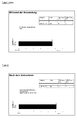
- Die Reinigung durch die Zubereitung TARTINE:216 wurde von 68 % der Anwender während der Anwendung mit mild und sanft beurteilt. Der Prozentwert setzt sich aus den Werten der höchsten und zweithöchsten Zustimmung zusammen (siehe
Figur 1 ). - Ebenso wurde abgefragt, ob die Zubereitung TARTINE:216 nach dem Abtrocknen ein Spannungsgefühl auf der Haut hinterlässt. Dies verneinten 75 % der Anwender. Der Prozentwert setzt sich aus den Werten der höchsten und zweithöchsten Zustimmung zusammen (siehe
Figur 2 ). - Weiterhin sollten die Anwender nach dem Abtrocknen beurteilen, ob die Zubereitung TARTINE:216 die Haut austrocknet. Dies verneinten 69 % der Anwender. Der Prozentwert setzt sich aus den Werten der höchsten und zweithöchsten Zustimmung zusammen (siehe
Figur 3 ). - Nach dem Abtrocknen fühlt sich die Haut nach Anwendung der Zubereitung TARTINE:216 angenehm gepflegt an. Dies bejahten 61 % der Anwender. Der Prozentwert setzt sich aus den Werten der höchsten und zweithöchsten Zustimmung zusammen (siehe
Figur 4 ). - Das in dem IN-USE-Screening verwendete Produkt, TARTINE:216 hat folgende Zusammensetzung:
Handelsname, Hersteller TARTINE 216 Fragrance 2,00 AKOGEL PLUS, AAK 50,00 VGB 22, ADM 3,00 Sojaöl, Gustav Heess 3,77 CitronensäureMonohydrat, Jungbunzlauer 0,12 WASSER VES 0,06 Jonol CP, Technochemie 0,05 Zetesol 100, Zschimmer&Schwarz 41,00 - In der
Figur 5 sind die Messergebnisse von Viskositätsmessungen dargestellt. Die Messung erfolgte unter den oben beschriebenen Bedingungen. Vermessen wurden die Proben , #158, entsprechend der Zusammensetzung TARTINE 216 und #160.Handelsname, Hersteller #158 (TARTINE 216) # 160 (TARTINE 273) Fragrance 2,00 2,00 AKOGEL PLUS, AAK 50,00 47,00 VGB 22, ADM 3,00 2,82 Sojaöl, Gustav Heess 3,77 6,95 CitronensäureMonohydrat, Jungbunzlauer 0,12 0,12 WASSER VES 0,06 0,06 Jonol CP, Technochemie 0,05 0,05 Zetesol 100, Zschimmer&Schwarz 41,00 41,00 -
Handelsname, Hersteller INCI 1 2 3 4 5 Fragrance Parfum 1,80 2,00 2,00 2,20 1,90 AKOGEL PLUS, AAK Hydrogenated Vegetable Oil 45,00 50,00 42,00 55,00 57,00 Dermofeel Viscolid, Dr. Straetmans Hydrogenated Vegetable Oil 3,50 0,00 0,00 0,00 1,00 VGB 22, ADM Hydrogenated Rapeseed Oil 0,00 2,40 4,40 0,00 1,00 Sojaöl*, Gustav Heess Glycine Soja Oil + Ricinus Communis Seed Oil + Propyl Gallate 0,00 3,60 4,20 ad.q. ad.q. Castor oil virgin, Gustav Heess Ricinus Communis Seed Oil ad.q. 1,00 ad.q. 0,00 0,00 Sunflower Oil refined solvent, Gustav Heess Helianthus Annuus Seed Oil 0,00 ad q 0,00 0,00 2,40 CitronensäureMonohydrat, Jungbunzlauer Citric Acid 0,11 0,10 0,11 0,10 0,13 WASSER VES Aqua 0,06 0,05 0,06 0,05 0,07 Jonol CP, Technochemie BHT 0,00 0,07 0,06 0,05 0,04 Zetesol 100, Zschimmer&Schwarz MIPA Laureth Sulfate+Laureth-4 + Cocamide DEA 46,00 39,00 41,00 42,00 34,00 *99,919% Glycine Soja (Soybean) Oil
0,07% Ricinus Communis (Castor) Seed Oil
0,01% Propyl Gallate
0,001% Citric Acid[KS/H1]
Claims (21)
- Ölhaltige Reinigungszubereitungen in halbfester Form enthaltenda) Lipide, wobei die Lipide Gemische von wenigstens einem bei Raumtemperatur in flüssiger Form vorliegenden Lipid und von wenigstens einem bei Raumtemperatur in fester Form vorliegenden Lipid sind undb) öllösliche Tenside.
- Reinigungszubereitungen nach Anspruch 1 dadurch gekennzeichnet, dass die bei Raumtemperatur flüssigen Lipide native und/oder mineralische und/oder synthetische Ölen sind.
- Reinigungszubereitungen nach wenigstens einem der vorstehenden Ansprüche dadurch gekennzeichnet, dass die bei Raumtemperatur in fester Form vorliegenden Lipide aus gehärteten Fetten und/oder Ölen bestehen.
- Reinigungszubereitungen nach wenigstens einem der vorstehenden Ansprüche dadurch gekennzeichnet, dass das Gewichtsverhältnis des wenigstens einen bei Raumtemperatur festen Lipids zu dem wenigstens einen bei Raumtemperatur flüssigen Lipids 60:5 bis 40:1, bevorzugt 55:4 bis 22,5:1, beträgt.[SC/H2]
- Reinigungszubereitungen nach wenigstens einem der vorstehenden Ansprüche dadurch gekennzeichnet, dass die bei Raumtemperatur festen Lipide ausgewählt werden aus der Gruppe Hydrogenated Vegetable Oil und Hydrogenated Rapeseed Oil.
- Reinigungszubereitungen nach wenigstens einem der vorstehenden Ansprüche dadurch gekennzeichnet, dass die bei Raumtemperatur flüssigen Lipide ausgewählt werden aus der Gruppe Rizinusöl, Sojaöl und Öl aus Sonnenblumenkernen.
- Reinigungszubereitungen nach wenigstens einem der vorstehenden Ansprüche dadurch gekennzeichnet, dass die Lipide mit einem Gehalt von 45 bis 75 Gew.-%, bevorzugt 50 bis 70 Gew.-%, bezogen auf das Gesamtgewicht der Zubereitung, vorliegen.
- Reinigungszubereitungen nach wenigstens einem der vorstehenden Ansprüche dadurch gekennzeichnet, dass das Gewichtsverhältnis von Lipiden zu öllöslichen Tensiden 1: 2 bis 2:1 beträgt.
- Reinigungszubereitungen nach wenigstens einem der vorstehenden Ansprüche dadurch gekennzeichnet, dass die öllöslichen Tenside nichtionische Tenside sind.
- Reinigungszubereitungen nach wenigstens einem der vorstehenden Ansprüche dadurch gekennzeichnet, dass die Zubereitungen mindestens ein nichtionisches Haupttensid enthalten, bevorzugt ein Amid einer C10 - C16-Fettsäure, besonders bevorzugt ein Monoisopropylamid.
- Reinigungszubereitungen nach wenigstens einem der vorstehenden Ansprüche dadurch gekennzeichnet, dass die Zubereitungen wenigstens ein Cotensid enthalten.
- Reinigungszubereitungen nach wenigstens einem der vorstehenden Ansprüche dadurch gekennzeichnet, dass das/die Cotensid(e) Amide von C10 - C16-Fettsäuren und/oder alkoxylierte Fettalkohole mit einer Kettenlänge von 8 bis 16, bevorzugt 10 bis 14 C-Atomen und einem Alkoxylierungsgrad von 2 bis 10, bevorzugt 2 bis 6 umfassen.
- Reinigungszubereitungen nach Anspruch 12 dadurch gekennzeichnet, dass das Cotensid ein Amid einer C10 - C16-Fettsäure ist, das verschieden ist vom Haupttensid.
- Reinigungszubereitungen nach Anspruch 13 dadurch gekennzeichnet, dass das Cotensid ein Diethanolamid ist.
- Reinigungszubereitungen nach Anspruch 12 dadurch gekennzeichnet, dass das Cotensid aus der Gruppe der ethoxylierten Fettalkohole ausgewählt wird.
- Reinigungszubereitungen nach wenigstens einem der vorstehenden Ansprüche dadurch gekennzeichnet, dass die Reinigungszubereitung frei ist von polymeren Strukturanten und/oder Polyamidgelbildnern.
- Reinigungszubereitungen nach wenigstens einem der vorstehenden Ansprüche dadurch gekennzeichnet, dass die Reinigungszubereitung keine Polyole enthält oder nicht mehr als 10 Gew.-%, bezogen auf das Gesamtgewicht der Zubereitung, an Polyolen enthält.
- Reinigungszubereitungen nach wenigstens einem der vorstehenden Ansprüche dadurch gekennzeichnet, dass die Reinigungszubereitung frei ist von Konservierungsmitteln und/oder verstärkende Substanzen.
- Reinigungszubereitungen nach wenigstens einem der vorstehenden Ansprüche dadurch gekennzeichnet, dass die Reinigungszubereitung frei ist von Parfümrohstoffen.
- Reinigungszubereitungen nach wenigstens einem der vorstehenden Ansprüche dadurch gekennzeichnet, dass die Reinigungszubereitung frei ist von Farbstoffen.
- Verwendung von Reinigungszubereitungen gemäß Anspruch 1 zur milden und pflegenden Reinigung bei trockener und/oder empfindlicher Haut und/oder Altershaut.
Priority Applications (1)
| Application Number | Priority Date | Filing Date | Title |
|---|---|---|---|
| PL16173512T PL3130329T3 (pl) | 2015-08-12 | 2016-06-08 | Produkt do czyszczenia skóry na bazie oleju |
Applications Claiming Priority (1)
| Application Number | Priority Date | Filing Date | Title |
|---|---|---|---|
| DE102015215358.4A DE102015215358A1 (de) | 2015-08-12 | 2015-08-12 | Halbfestes Reinigungsprodukt auf Ölbasis |
Publications (2)
| Publication Number | Publication Date |
|---|---|
| EP3130329A1 true EP3130329A1 (de) | 2017-02-15 |
| EP3130329B1 EP3130329B1 (de) | 2018-08-15 |
Family
ID=56117553
Family Applications (1)
| Application Number | Title | Priority Date | Filing Date |
|---|---|---|---|
| EP16173512.1A Not-in-force EP3130329B1 (de) | 2015-08-12 | 2016-06-08 | Reinigungsprodukt auf ölbasis |
Country Status (3)
| Country | Link |
|---|---|
| EP (1) | EP3130329B1 (de) |
| DE (1) | DE102015215358A1 (de) |
| PL (1) | PL3130329T3 (de) |
Cited By (1)
| Publication number | Priority date | Publication date | Assignee | Title |
|---|---|---|---|---|
| WO2022253513A1 (de) * | 2021-06-04 | 2022-12-08 | Beiersdorf Ag | Wärmestabile, polyacrylat-freie kosmetische zubereitung |
Citations (15)
| Publication number | Priority date | Publication date | Assignee | Title |
|---|---|---|---|---|
| DE2943202A1 (de) | 1979-09-22 | 1981-03-26 | Lingner + Fischer GmbH, 77815 Bühl | Mittel mit reinigender und hauptpflegender wirkung auf basis von gemischen aus tensiden und oelen |
| EP0120224A2 (de) | 1983-03-02 | 1984-10-03 | Beiersdorf Aktiengesellschaft | Funktionelles Ölcremebad |
| DD236014A1 (de) | 1985-04-12 | 1986-05-28 | Miltitz Chem Werk | Klare oelhaltige kosmetische mittel |
| EP0557825A2 (de) * | 1992-02-24 | 1993-09-01 | Merz & Co. GmbH & Co. | Bade- und Duschzusätze mit vesikelbildenden Eigenschaften, ihre Herstellung und Verwendung |
| DE4424210A1 (de) | 1994-07-09 | 1996-01-11 | Beiersdorf Ag | Duschöl |
| EP0867176A2 (de) | 1997-03-26 | 1998-09-30 | Beiersdorf Aktiengesellschaft | Duschzubereitungen mit hohem Ölgehalt |
| DE19843547A1 (de) * | 1997-09-26 | 1999-04-15 | Sebapharma Gmbh & Co | Duschöl |
| WO2003051319A1 (de) | 2001-12-17 | 2003-06-26 | Beiersdorf Ag | Reinigungsprodukte auf basis ölhaltiger mikroemulsionen |
| DE10350425A1 (de) | 2003-10-29 | 2005-07-14 | Beiersdorf Ag | Zähflüssiges Duschöl |
| WO2005065629A2 (de) | 2005-05-03 | 2005-07-21 | Beiersdorf Ag | Wasserfreie und ölhaltige tensidzubereitung mit verminderter enzymschädigung |
| DE102004027323A1 (de) * | 2004-06-03 | 2005-12-22 | Beiersdorf Ag | Seifenhaltige kosmetische Zubereitung mit ethoxylierten Glycerinen |
| US20060257353A1 (en) * | 2005-05-03 | 2006-11-16 | Firouz Jahaniaval | Process for preparing a food grade plant jelly with no petroleum or animal based products |
| EP1955690A2 (de) * | 2007-02-08 | 2008-08-13 | Beiersdorf AG | Neues Duschöl |
| WO2012104025A2 (de) | 2011-01-31 | 2012-08-09 | Merz Pharma Gmbh & Co. Kgaa | Balneologische lipidhaltige probiotische zubereitungen und deren anwendungen |
| WO2013190129A1 (en) * | 2012-06-21 | 2013-12-27 | L'oreal | Liquid cosmetic composition comprising an oil, hydrophobic silica aerogel particles and a wax with a melting point of greater than 60°c |
Family Cites Families (1)
| Publication number | Priority date | Publication date | Assignee | Title |
|---|---|---|---|---|
| DE19742480B4 (de) * | 1997-09-26 | 2008-08-21 | Sebapharma Gmbh & Co. | Duschöl |
-
2015
- 2015-08-12 DE DE102015215358.4A patent/DE102015215358A1/de not_active Withdrawn
-
2016
- 2016-06-08 PL PL16173512T patent/PL3130329T3/pl unknown
- 2016-06-08 EP EP16173512.1A patent/EP3130329B1/de not_active Not-in-force
Patent Citations (15)
| Publication number | Priority date | Publication date | Assignee | Title |
|---|---|---|---|---|
| DE2943202A1 (de) | 1979-09-22 | 1981-03-26 | Lingner + Fischer GmbH, 77815 Bühl | Mittel mit reinigender und hauptpflegender wirkung auf basis von gemischen aus tensiden und oelen |
| EP0120224A2 (de) | 1983-03-02 | 1984-10-03 | Beiersdorf Aktiengesellschaft | Funktionelles Ölcremebad |
| DD236014A1 (de) | 1985-04-12 | 1986-05-28 | Miltitz Chem Werk | Klare oelhaltige kosmetische mittel |
| EP0557825A2 (de) * | 1992-02-24 | 1993-09-01 | Merz & Co. GmbH & Co. | Bade- und Duschzusätze mit vesikelbildenden Eigenschaften, ihre Herstellung und Verwendung |
| DE4424210A1 (de) | 1994-07-09 | 1996-01-11 | Beiersdorf Ag | Duschöl |
| EP0867176A2 (de) | 1997-03-26 | 1998-09-30 | Beiersdorf Aktiengesellschaft | Duschzubereitungen mit hohem Ölgehalt |
| DE19843547A1 (de) * | 1997-09-26 | 1999-04-15 | Sebapharma Gmbh & Co | Duschöl |
| WO2003051319A1 (de) | 2001-12-17 | 2003-06-26 | Beiersdorf Ag | Reinigungsprodukte auf basis ölhaltiger mikroemulsionen |
| DE10350425A1 (de) | 2003-10-29 | 2005-07-14 | Beiersdorf Ag | Zähflüssiges Duschöl |
| DE102004027323A1 (de) * | 2004-06-03 | 2005-12-22 | Beiersdorf Ag | Seifenhaltige kosmetische Zubereitung mit ethoxylierten Glycerinen |
| WO2005065629A2 (de) | 2005-05-03 | 2005-07-21 | Beiersdorf Ag | Wasserfreie und ölhaltige tensidzubereitung mit verminderter enzymschädigung |
| US20060257353A1 (en) * | 2005-05-03 | 2006-11-16 | Firouz Jahaniaval | Process for preparing a food grade plant jelly with no petroleum or animal based products |
| EP1955690A2 (de) * | 2007-02-08 | 2008-08-13 | Beiersdorf AG | Neues Duschöl |
| WO2012104025A2 (de) | 2011-01-31 | 2012-08-09 | Merz Pharma Gmbh & Co. Kgaa | Balneologische lipidhaltige probiotische zubereitungen und deren anwendungen |
| WO2013190129A1 (en) * | 2012-06-21 | 2013-12-27 | L'oreal | Liquid cosmetic composition comprising an oil, hydrophobic silica aerogel particles and a wax with a melting point of greater than 60°c |
Cited By (1)
| Publication number | Priority date | Publication date | Assignee | Title |
|---|---|---|---|---|
| WO2022253513A1 (de) * | 2021-06-04 | 2022-12-08 | Beiersdorf Ag | Wärmestabile, polyacrylat-freie kosmetische zubereitung |
Also Published As
| Publication number | Publication date |
|---|---|
| PL3130329T3 (pl) | 2019-03-29 |
| DE102015215358A1 (de) | 2017-02-16 |
| EP3130329B1 (de) | 2018-08-15 |
Similar Documents
| Publication | Publication Date | Title |
|---|---|---|
| DE69121976T2 (de) | Haarreinigungsmittel | |
| EP3319585B1 (de) | Reinigungstücher getränkt mit tränkungsmitteln basierend auf einer mizellentechnologie | |
| EP3233212B1 (de) | Peelendes reinigungsprodukt auf ölbasis | |
| DE69912760T2 (de) | Verwendung von topischen formulierungen des öl-in-wasser typs, enthaltend galaktolipid material als emulsionsmittel, um eine länger anhaltende wirkung eines darin enthaltenen aktiven wirkstoffs zu vermitteln | |
| DE102007017851A1 (de) | Zusammensetzung auf Basis von Glycerinether/Polyol-Gemischen | |
| EP0540857B1 (de) | Verfahren zur Herstellung von stabilen, komplexen Emulsionssystemen des Typs Wasser-Öl-Wasser und Verwendung als kosmetische Präparate | |
| EP3843697B1 (de) | Milde reinigungszubereitung ii | |
| EP2018889A1 (de) | Wässrige tensidische Formulierung enthaltend Polypropylenglykol(3)myristylether | |
| KR20160043758A (ko) | 보습력이 우수한 저자극성의 세정용 화장료 조성물 | |
| DE69323676T2 (de) | Hautreinigungsmittel | |
| WO2007104740A1 (de) | Silikonfreie haarreinigungsemulsion | |
| DE102017216244B4 (de) | Mildes Gesichtsreinigungsprodukt basierend auf einer Mizellentechnologie | |
| EP3130329B1 (de) | Reinigungsprodukt auf ölbasis | |
| DE102005003708B4 (de) | Verwendung von Hautpflegeöl mit Kakaobutter | |
| EP4041412B1 (de) | Reinigungszubereitung enthaltend caesalpinia spinosa gum | |
| DE69500018T3 (de) | Öliges Peeling Gel | |
| EP3130330B1 (de) | Reinigungsprodukt auf ölbasis mit partikeln | |
| WO2004073666A1 (de) | Schäumbare kosmetische reinigungszubereitung | |
| DE69935105T2 (de) | Schwach-saures Hautreinigungsmittel enthaltend Alkalisalz von N-Acylaminosäure | |
| WO2020208253A1 (de) | Zusammensetzung zur topischen anwendung auf der haut | |
| DE19843547B4 (de) | Duschöl | |
| EP1150643B1 (de) | Mikroemulsion, enthaltend alkanolammonium-salze der alkylsulfate und/oder alkylpolyalkylenglykolethersulfate | |
| EP2409680A2 (de) | Kosmetisches Körperreinigungsmittel mit nicht spürbarem Fehlen von alkoxylierten Tensiden | |
| DE19742480B4 (de) | Duschöl | |
| KR20230077331A (ko) | 보습 효과가 우수한 올인원 클렌징용 화장료 조성물 |
Legal Events
| Date | Code | Title | Description |
|---|---|---|---|
| STAA | Information on the status of an ep patent application or granted ep patent |
Free format text: STATUS: EXAMINATION IS IN PROGRESS |
|
| PUAI | Public reference made under article 153(3) epc to a published international application that has entered the european phase |
Free format text: ORIGINAL CODE: 0009012 |
|
| 17P | Request for examination filed |
Effective date: 20160608 |
|
| AK | Designated contracting states |
Kind code of ref document: A1 Designated state(s): AL AT BE BG CH CY CZ DE DK EE ES FI FR GB GR HR HU IE IS IT LI LT LU LV MC MK MT NL NO PL PT RO RS SE SI SK SM TR |
|
| AX | Request for extension of the european patent |
Extension state: BA ME |
|
| RBV | Designated contracting states (corrected) |
Designated state(s): AL AT BE BG CH CY CZ DE DK EE ES FI FR GB GR HR HU IE IS IT LI LT LU LV MC MK MT NL NO PL PT RO RS SE SI SK SM TR |
|
| GRAP | Despatch of communication of intention to grant a patent |
Free format text: ORIGINAL CODE: EPIDOSNIGR1 |
|
| STAA | Information on the status of an ep patent application or granted ep patent |
Free format text: STATUS: GRANT OF PATENT IS INTENDED |
|
| INTG | Intention to grant announced |
Effective date: 20171212 |
|
| GRAJ | Information related to disapproval of communication of intention to grant by the applicant or resumption of examination proceedings by the epo deleted |
Free format text: ORIGINAL CODE: EPIDOSDIGR1 |
|
| STAA | Information on the status of an ep patent application or granted ep patent |
Free format text: STATUS: EXAMINATION IS IN PROGRESS |
|
| INTC | Intention to grant announced (deleted) | ||
| GRAP | Despatch of communication of intention to grant a patent |
Free format text: ORIGINAL CODE: EPIDOSNIGR1 |
|
| STAA | Information on the status of an ep patent application or granted ep patent |
Free format text: STATUS: GRANT OF PATENT IS INTENDED |
|
| INTG | Intention to grant announced |
Effective date: 20180306 |
|
| GRAS | Grant fee paid |
Free format text: ORIGINAL CODE: EPIDOSNIGR3 |
|
| GRAA | (expected) grant |
Free format text: ORIGINAL CODE: 0009210 |
|
| STAA | Information on the status of an ep patent application or granted ep patent |
Free format text: STATUS: THE PATENT HAS BEEN GRANTED |
|
| AK | Designated contracting states |
Kind code of ref document: B1 Designated state(s): AL AT BE BG CH CY CZ DE DK EE ES FI FR GB GR HR HU IE IS IT LI LT LU LV MC MK MT NL NO PL PT RO RS SE SI SK SM TR |
|
| REG | Reference to a national code |
Ref country code: CH Ref legal event code: EP Ref country code: GB Ref legal event code: FG4D Free format text: NOT ENGLISH Ref country code: AT Ref legal event code: REF Ref document number: 1028911 Country of ref document: AT Kind code of ref document: T Effective date: 20180815 |
|
| REG | Reference to a national code |
Ref country code: IE Ref legal event code: FG4D Free format text: LANGUAGE OF EP DOCUMENT: GERMAN |
|
| REG | Reference to a national code |
Ref country code: DE Ref legal event code: R096 Ref document number: 502016001668 Country of ref document: DE |
|
| REG | Reference to a national code |
Ref country code: NL Ref legal event code: MP Effective date: 20180815 |
|
| REG | Reference to a national code |
Ref country code: LT Ref legal event code: MG4D |
|
| PG25 | Lapsed in a contracting state [announced via postgrant information from national office to epo] |
Ref country code: GR Free format text: LAPSE BECAUSE OF FAILURE TO SUBMIT A TRANSLATION OF THE DESCRIPTION OR TO PAY THE FEE WITHIN THE PRESCRIBED TIME-LIMIT Effective date: 20181116 Ref country code: NO Free format text: LAPSE BECAUSE OF FAILURE TO SUBMIT A TRANSLATION OF THE DESCRIPTION OR TO PAY THE FEE WITHIN THE PRESCRIBED TIME-LIMIT Effective date: 20181115 Ref country code: BG Free format text: LAPSE BECAUSE OF FAILURE TO SUBMIT A TRANSLATION OF THE DESCRIPTION OR TO PAY THE FEE WITHIN THE PRESCRIBED TIME-LIMIT Effective date: 20181115 Ref country code: RS Free format text: LAPSE BECAUSE OF FAILURE TO SUBMIT A TRANSLATION OF THE DESCRIPTION OR TO PAY THE FEE WITHIN THE PRESCRIBED TIME-LIMIT Effective date: 20180815 Ref country code: SE Free format text: LAPSE BECAUSE OF FAILURE TO SUBMIT A TRANSLATION OF THE DESCRIPTION OR TO PAY THE FEE WITHIN THE PRESCRIBED TIME-LIMIT Effective date: 20180815 Ref country code: FI Free format text: LAPSE BECAUSE OF FAILURE TO SUBMIT A TRANSLATION OF THE DESCRIPTION OR TO PAY THE FEE WITHIN THE PRESCRIBED TIME-LIMIT Effective date: 20180815 Ref country code: LT Free format text: LAPSE BECAUSE OF FAILURE TO SUBMIT A TRANSLATION OF THE DESCRIPTION OR TO PAY THE FEE WITHIN THE PRESCRIBED TIME-LIMIT Effective date: 20180815 Ref country code: IS Free format text: LAPSE BECAUSE OF FAILURE TO SUBMIT A TRANSLATION OF THE DESCRIPTION OR TO PAY THE FEE WITHIN THE PRESCRIBED TIME-LIMIT Effective date: 20181215 Ref country code: NL Free format text: LAPSE BECAUSE OF FAILURE TO SUBMIT A TRANSLATION OF THE DESCRIPTION OR TO PAY THE FEE WITHIN THE PRESCRIBED TIME-LIMIT Effective date: 20180815 |
|
| PG25 | Lapsed in a contracting state [announced via postgrant information from national office to epo] |
Ref country code: LV Free format text: LAPSE BECAUSE OF FAILURE TO SUBMIT A TRANSLATION OF THE DESCRIPTION OR TO PAY THE FEE WITHIN THE PRESCRIBED TIME-LIMIT Effective date: 20180815 Ref country code: AL Free format text: LAPSE BECAUSE OF FAILURE TO SUBMIT A TRANSLATION OF THE DESCRIPTION OR TO PAY THE FEE WITHIN THE PRESCRIBED TIME-LIMIT Effective date: 20180815 Ref country code: HR Free format text: LAPSE BECAUSE OF FAILURE TO SUBMIT A TRANSLATION OF THE DESCRIPTION OR TO PAY THE FEE WITHIN THE PRESCRIBED TIME-LIMIT Effective date: 20180815 |
|
| PG25 | Lapsed in a contracting state [announced via postgrant information from national office to epo] |
Ref country code: EE Free format text: LAPSE BECAUSE OF FAILURE TO SUBMIT A TRANSLATION OF THE DESCRIPTION OR TO PAY THE FEE WITHIN THE PRESCRIBED TIME-LIMIT Effective date: 20180815 Ref country code: IT Free format text: LAPSE BECAUSE OF FAILURE TO SUBMIT A TRANSLATION OF THE DESCRIPTION OR TO PAY THE FEE WITHIN THE PRESCRIBED TIME-LIMIT Effective date: 20180815 Ref country code: CZ Free format text: LAPSE BECAUSE OF FAILURE TO SUBMIT A TRANSLATION OF THE DESCRIPTION OR TO PAY THE FEE WITHIN THE PRESCRIBED TIME-LIMIT Effective date: 20180815 Ref country code: RO Free format text: LAPSE BECAUSE OF FAILURE TO SUBMIT A TRANSLATION OF THE DESCRIPTION OR TO PAY THE FEE WITHIN THE PRESCRIBED TIME-LIMIT Effective date: 20180815 Ref country code: ES Free format text: LAPSE BECAUSE OF FAILURE TO SUBMIT A TRANSLATION OF THE DESCRIPTION OR TO PAY THE FEE WITHIN THE PRESCRIBED TIME-LIMIT Effective date: 20180815 |
|
| REG | Reference to a national code |
Ref country code: DE Ref legal event code: R097 Ref document number: 502016001668 Country of ref document: DE |
|
| PG25 | Lapsed in a contracting state [announced via postgrant information from national office to epo] |
Ref country code: SK Free format text: LAPSE BECAUSE OF FAILURE TO SUBMIT A TRANSLATION OF THE DESCRIPTION OR TO PAY THE FEE WITHIN THE PRESCRIBED TIME-LIMIT Effective date: 20180815 Ref country code: DK Free format text: LAPSE BECAUSE OF FAILURE TO SUBMIT A TRANSLATION OF THE DESCRIPTION OR TO PAY THE FEE WITHIN THE PRESCRIBED TIME-LIMIT Effective date: 20180815 Ref country code: SM Free format text: LAPSE BECAUSE OF FAILURE TO SUBMIT A TRANSLATION OF THE DESCRIPTION OR TO PAY THE FEE WITHIN THE PRESCRIBED TIME-LIMIT Effective date: 20180815 |
|
| PLBE | No opposition filed within time limit |
Free format text: ORIGINAL CODE: 0009261 |
|
| STAA | Information on the status of an ep patent application or granted ep patent |
Free format text: STATUS: NO OPPOSITION FILED WITHIN TIME LIMIT |
|
| 26N | No opposition filed |
Effective date: 20190516 |
|
| PGFP | Annual fee paid to national office [announced via postgrant information from national office to epo] |
Ref country code: PL Payment date: 20190531 Year of fee payment: 4 |
|
| PG25 | Lapsed in a contracting state [announced via postgrant information from national office to epo] |
Ref country code: SI Free format text: LAPSE BECAUSE OF FAILURE TO SUBMIT A TRANSLATION OF THE DESCRIPTION OR TO PAY THE FEE WITHIN THE PRESCRIBED TIME-LIMIT Effective date: 20180815 |
|
| PGFP | Annual fee paid to national office [announced via postgrant information from national office to epo] |
Ref country code: FR Payment date: 20190619 Year of fee payment: 4 |
|
| PGFP | Annual fee paid to national office [announced via postgrant information from national office to epo] |
Ref country code: DE Payment date: 20190630 Year of fee payment: 4 |
|
| PG25 | Lapsed in a contracting state [announced via postgrant information from national office to epo] |
Ref country code: MC Free format text: LAPSE BECAUSE OF FAILURE TO SUBMIT A TRANSLATION OF THE DESCRIPTION OR TO PAY THE FEE WITHIN THE PRESCRIBED TIME-LIMIT Effective date: 20180815 |
|
| REG | Reference to a national code |
Ref country code: CH Ref legal event code: PL |
|
| REG | Reference to a national code |
Ref country code: BE Ref legal event code: MM Effective date: 20190630 |
|
| PG25 | Lapsed in a contracting state [announced via postgrant information from national office to epo] |
Ref country code: TR Free format text: LAPSE BECAUSE OF FAILURE TO SUBMIT A TRANSLATION OF THE DESCRIPTION OR TO PAY THE FEE WITHIN THE PRESCRIBED TIME-LIMIT Effective date: 20180815 |
|
| PG25 | Lapsed in a contracting state [announced via postgrant information from national office to epo] |
Ref country code: IE Free format text: LAPSE BECAUSE OF NON-PAYMENT OF DUE FEES Effective date: 20190608 |
|
| PG25 | Lapsed in a contracting state [announced via postgrant information from national office to epo] |
Ref country code: LU Free format text: LAPSE BECAUSE OF NON-PAYMENT OF DUE FEES Effective date: 20190608 Ref country code: BE Free format text: LAPSE BECAUSE OF NON-PAYMENT OF DUE FEES Effective date: 20190630 Ref country code: CH Free format text: LAPSE BECAUSE OF NON-PAYMENT OF DUE FEES Effective date: 20190630 Ref country code: LI Free format text: LAPSE BECAUSE OF NON-PAYMENT OF DUE FEES Effective date: 20190630 |
|
| PG25 | Lapsed in a contracting state [announced via postgrant information from national office to epo] |
Ref country code: PT Free format text: LAPSE BECAUSE OF FAILURE TO SUBMIT A TRANSLATION OF THE DESCRIPTION OR TO PAY THE FEE WITHIN THE PRESCRIBED TIME-LIMIT Effective date: 20181215 |
|
| REG | Reference to a national code |
Ref country code: DE Ref legal event code: R119 Ref document number: 502016001668 Country of ref document: DE |
|
| GBPC | Gb: european patent ceased through non-payment of renewal fee |
Effective date: 20200608 |
|
| PG25 | Lapsed in a contracting state [announced via postgrant information from national office to epo] |
Ref country code: GB Free format text: LAPSE BECAUSE OF NON-PAYMENT OF DUE FEES Effective date: 20200608 Ref country code: FR Free format text: LAPSE BECAUSE OF NON-PAYMENT OF DUE FEES Effective date: 20200630 |
|
| PG25 | Lapsed in a contracting state [announced via postgrant information from national office to epo] |
Ref country code: CY Free format text: LAPSE BECAUSE OF FAILURE TO SUBMIT A TRANSLATION OF THE DESCRIPTION OR TO PAY THE FEE WITHIN THE PRESCRIBED TIME-LIMIT Effective date: 20180815 Ref country code: DE Free format text: LAPSE BECAUSE OF NON-PAYMENT OF DUE FEES Effective date: 20210101 |
|
| PG25 | Lapsed in a contracting state [announced via postgrant information from national office to epo] |
Ref country code: HU Free format text: LAPSE BECAUSE OF FAILURE TO SUBMIT A TRANSLATION OF THE DESCRIPTION OR TO PAY THE FEE WITHIN THE PRESCRIBED TIME-LIMIT; INVALID AB INITIO Effective date: 20160608 Ref country code: MT Free format text: LAPSE BECAUSE OF FAILURE TO SUBMIT A TRANSLATION OF THE DESCRIPTION OR TO PAY THE FEE WITHIN THE PRESCRIBED TIME-LIMIT Effective date: 20180815 |
|
| PG25 | Lapsed in a contracting state [announced via postgrant information from national office to epo] |
Ref country code: MK Free format text: LAPSE BECAUSE OF FAILURE TO SUBMIT A TRANSLATION OF THE DESCRIPTION OR TO PAY THE FEE WITHIN THE PRESCRIBED TIME-LIMIT Effective date: 20180815 |
|
| REG | Reference to a national code |
Ref country code: AT Ref legal event code: MM01 Ref document number: 1028911 Country of ref document: AT Kind code of ref document: T Effective date: 20210608 |
|
| PG25 | Lapsed in a contracting state [announced via postgrant information from national office to epo] |
Ref country code: PL Free format text: LAPSE BECAUSE OF NON-PAYMENT OF DUE FEES Effective date: 20200608 |
|
| PG25 | Lapsed in a contracting state [announced via postgrant information from national office to epo] |
Ref country code: AT Free format text: LAPSE BECAUSE OF NON-PAYMENT OF DUE FEES Effective date: 20210608 |