EP3114485B1 - Nephropathiebiomarker - Google Patents
Nephropathiebiomarker Download PDFInfo
- Publication number
- EP3114485B1 EP3114485B1 EP15709334.5A EP15709334A EP3114485B1 EP 3114485 B1 EP3114485 B1 EP 3114485B1 EP 15709334 A EP15709334 A EP 15709334A EP 3114485 B1 EP3114485 B1 EP 3114485B1
- Authority
- EP
- European Patent Office
- Prior art keywords
- cadherin
- ckd
- urine
- diabetic
- patients
- Prior art date
- Legal status (The legal status is an assumption and is not a legal conclusion. Google has not performed a legal analysis and makes no representation as to the accuracy of the status listed.)
- Active
Links
Images







Classifications
-
- G—PHYSICS
- G01—MEASURING; TESTING
- G01N—INVESTIGATING OR ANALYSING MATERIALS BY DETERMINING THEIR CHEMICAL OR PHYSICAL PROPERTIES
- G01N33/00—Investigating or analysing materials by specific methods not covered by groups G01N1/00 - G01N31/00
- G01N33/48—Biological material, e.g. blood, urine; Haemocytometers
- G01N33/50—Chemical analysis of biological material, e.g. blood, urine; Testing involving biospecific ligand binding methods; Immunological testing
- G01N33/68—Chemical analysis of biological material, e.g. blood, urine; Testing involving biospecific ligand binding methods; Immunological testing involving proteins, peptides or amino acids
- G01N33/6893—Chemical analysis of biological material, e.g. blood, urine; Testing involving biospecific ligand binding methods; Immunological testing involving proteins, peptides or amino acids related to diseases not provided for elsewhere
-
- C—CHEMISTRY; METALLURGY
- C07—ORGANIC CHEMISTRY
- C07K—PEPTIDES
- C07K16/00—Immunoglobulins [IG], e.g. monoclonal or polyclonal antibodies
- C07K16/18—Immunoglobulins [IG], e.g. monoclonal or polyclonal antibodies against material from animals or humans
-
- G—PHYSICS
- G01—MEASURING; TESTING
- G01N—INVESTIGATING OR ANALYSING MATERIALS BY DETERMINING THEIR CHEMICAL OR PHYSICAL PROPERTIES
- G01N2333/00—Assays involving biological materials from specific organisms or of a specific nature
- G01N2333/435—Assays involving biological materials from specific organisms or of a specific nature from animals; from humans
- G01N2333/705—Assays involving receptors, cell surface antigens or cell surface determinants
-
- G—PHYSICS
- G01—MEASURING; TESTING
- G01N—INVESTIGATING OR ANALYSING MATERIALS BY DETERMINING THEIR CHEMICAL OR PHYSICAL PROPERTIES
- G01N2800/00—Detection or diagnosis of diseases
- G01N2800/34—Genitourinary disorders
- G01N2800/347—Renal failures; Glomerular diseases; Tubulointerstitial diseases, e.g. nephritic syndrome, glomerulonephritis; Renovascular diseases, e.g. renal artery occlusion, nephropathy
-
- G—PHYSICS
- G01—MEASURING; TESTING
- G01N—INVESTIGATING OR ANALYSING MATERIALS BY DETERMINING THEIR CHEMICAL OR PHYSICAL PROPERTIES
- G01N2800/00—Detection or diagnosis of diseases
- G01N2800/56—Staging of a disease; Further complications associated with the disease
Definitions
- the invention relates to a biomarker useful for the diagnosis of kidney disease and for determining patients whose disease severity level is likely to progress. Accordingly, the invention relates to a method for determining the likelihood of kidney disease progression, particularly of chronic kidney disease in a diabetic patient.
- CKD Chronic kidney disease
- end stage renal failure are conditions associated with significant morbidity and mortality.
- the incidence of CKD is significant and, with aging and more diabetes-prone populations, is rising internationally.
- CKD is a condition of varying severity which frequently progresses along a 'severity spectrum' over time. Stages 1 and 2 may be considered mild CKD, stage 3 moderate and stages 4 and 5 more severe. Stage 5 may be considered end-stage/established renal failure (ERF).
- ERP end-stage/established renal failure
- kidney function which might be relatively asymptomatic for mild forms
- the CKD is associated with an increased risk of heart disease and stroke.
- ERF advanced renal damage
- CKD has a range of causes, including high blood pressure, diabetes, general aging, glomeruli inflammation, polycystic kidney disease, repeated infection, renal artery stenosis and drug/toxin damage.
- diabetes is considered one of the most significant, with diabetic nephropathy (diabetes-related kidney disease) accounting, in the West, for around 30% of patients requiring RRT. This impact is most likely only to concomitantly rise with the increasing obesity rates of many countries.
- Tubulo-interstitial fibrosis contributes to the irreversible deterioration of renal function and is an accurate predictor of long-term prognosis, irrespective of the type of disease or the compartment of origin. It is assessed by renal biopsy, however, a procedure which can incur complications and risks and so is neither desirable nor feasible for all patients.
- GFR glomerular filtration rate
- the current "gold standard" indicator for (diabetic) CKD may be considered to be a person's urinary albumin (or other/general) protein level.
- microalbuminuria when the kidneys 'leak' albumin into the urine and which may be related to failure of proximal-tube endocytosis, can be assessed by a non-invasive urine test.
- Albuminuria is a sub-type of, and may precede, proteinuria.
- PCR/ACR protein/albumin to creatinine ratio
- urine albumin/protein per se is considered to have limited sensitivity and specificity with respect to CKD progression.
- diabetic nephropathy for example, not all patients with microalbuminuria will progress to ERF and a significant proportion of type-2 diabetic patients do not present with incremental proteinuria or have non-proteinuric renal disease (yet, of these, a substantial proportion progress over time).
- a method for determining the propensity for a person's kidney disease (CKD) level to progress in severity comprising testing for the presence/level of K-cadherin in the person's urine.
- detection e.g. by Western immunoblot as described below
- the relative level of urinary K-cadherin may be related to the rate of progression.
- the relative K-cadherin level is pertinent with respect to more sensitive systems (such as an ELISA (enzyme-linked immunosorbent assay) that has proven able to detect its presence in non-progressors' urine, for example.
- the invention therefore provides for an assay useful for determining whether a person's CKD is likely to progress, and thus whether, for example, closer monitoring/intervention treatment may be advisable.
- K-cadherin relates to 'normal' expressed, un-fragmented protein (since, as mentioned below, fragments which react with K-cadherin antibodies have been found in the urine of healthy control subjects). Accordingly, the K-cadherin may be thought of/described as full length (as judged by electrophoresis separation, for example) though, as would be apparent to a skilled person, there could naturally be a level of variation.
- K-cadherin which is also known as cadherin-6 (CDH6), is a member of the cadherin protein family, a family, having more than 100 members, of transmembrane glycoproteins important in the maintenance of cell-cell adhesion, cell phenotype regulation, tissue organisation and development.
- K-cadherin is a 120kDa type II classical cadherin of 790 amino acids, coded by the CDH6 gene on chromosome 5.
- full length K-cadherin (as measured by Western Immunoblotting) was not detected in the urine of healthy control subjects or diabetics without CKD but was detectable initially (and subsequently) in the urine of every patient who exhibited progressive CKD over the study period. Further, none of the diabetic CKD subjects who were negative for urinary K-cadherin at baseline progressed over the follow-up period.
- the method may comprise testing for elevated K-cadherin.
- the elevated K-cadherin may be with respect to the normal (healthy) population and/or relative to a non-progressive standard model (control).
- control There may be different non-progressive standard levels applicable to different CKD disease stages; stages may include mild disease (CKD stages 1/2) and/or moderate/severe disease (CKD stages 3/4).
- Elevation may also optionally be assessed more specifically, e.g. with respect to a control non-progressive standard for particular variable characteristics (used to calculate estimated renal function) common to a patient.
- variable characteristics used to calculate estimated renal function
- Such characteristics may include any one or more of age, ethnicity, gender and traceable IDMS (isotope-dilution mass spectrometry).
- the degree of elevation for indicating likelihood of progression may correspond to at least an approximate doubling of the relevant non-progressive level.
- Other possibilities include instances where a non-progressive standard may correspond to an undetectable K-cadherin concentration.
- K-cadherin was, however, not echoed for N-cadherin (cadherin-2).
- full-length N-cadherin protein was present in the urine of all subjects tested (including healthy controls) and did not correlate with CKD, even though it was found (as for K-cadherin) to be downregulated in proximal tubule epithelial cells in kidney biopsies from patients with diabetic CKD. This may relate to its widespread expression, particularly in the lower urinary tract and the prostate.
- the person(s) may be diabetics.
- the kidney disease may be diabetic chronic kidney disease (diabetic nephropathy).
- the kidney disease may also be, for example, IgA nephropathy or chronic allograft nephropathy (whether or not the person is diabetic).
- IgA nephropathy or chronic allograft nephropathy whether or not the person is diabetic.
- some of the relevant diabetic patients in the study described below may not have had diabetic nephropathy, they may coincidentally have had another form of CKD (though efforts were made to avoid this and it is expected that for most/all cases the CKD cause would have been diabetes).
- K-cadherin loss similar to that seen from proximal tubule epithelia in early diabetic CKD has also been observed for advancing IgA nephropathy and chronic allograft nephropathy (CAN). Furthermore, loss of K-cadherin was observed also in an in vitro model of fibrosis using primary human proximal tubule cells.
- a person for whom the invention may be used may have more than cause/type of kidney disease.
- the person may be a type I or type II diabetic.
- Testing for K-cadherin may conveniently involve Western Immunoblotting as a detection system.
- Western Immunoblotting it has been shown that K-cadherin was not detected by Western Immunoblotting in the urine of healthy control subjects or diabetics without CKD but was detectable initially (and subsequently) in the urine of every patient who exhibited progressive diabetic CKD over the study period.
- Other techniques which may be used/exploited include an antibody system such as an ELISA (enzyme-linked immunosorbent assay), NMR (nuclear magnetic resonance), colorimetric and mass spectrometry.
- a point of care system e.g. one exploiting a membrane-based lateral flow strip (similar to the approach used in pregnancy tests), could be used to facilitate result determination.
- a test system may optionally exploit one or more antibodies as discussed below.
- the method comprises Western Immunoblotting and/or an ELISA for assessing the presence and/or level of K-cadherin.
- Western immunoblotting the sample should first be subject to a process such as gel electrophoresis, e.g. SDS-PAGE.
- the ELISA system used preferably comprises two sets of antibodies.
- one set is reactive towards the N-terminal end of K-cadherin and the other towards the C-terminal end.
- the target protein may be immobilised from one end and detected by antibodies which interact with the other end and, accordingly, the assay effectively tests for the presence of essentially full-length (non-degraded) K-cadherin.
- cellular degradation and death might lead to cleavage of K-cadherin and excretion of the extra-cellular domain (with the cytoplasmic domain being endocytosed and recycled/degraded in the proteasome).
- K-cadherin as judged on a Western Immunoblot was found in the urine of diabetic CKD patients, unlike for healthy controls. This implied the release of intact, essentially full length K-cadherin from proximal tubular epithelial cells exposed to fibrotic stimuli. Protein fragments recognised by K-cadherin antibodies have also been found in healthy control urine, indicating metabolism/degradation and excretion of K-cadherin may be a normal pathway.
- an antibody-based detection system such as an ELISA may be to use an antibody specific to the relevant K-cadherin cleavage point, e.g. as the capture antibody. By recognising and binding only protein un-broken at the relevant point, the presence of full-length K-cadherin may specifically be detected.
- the urine sample may be concentrated before the presence (and level) of K-cadherin is assessed.
- a sample is concentrated six-fold.
- concentrating a sample can facilitate subsequent testing (e.g. by reducing the sample volume to be applied to a gel).
- Whether or not, and to what extent, it is desirable to concentrate a sample may vary and depend on the testing method and the starting urine concentration. For example, as discussed below, urinary K-cadherin has been detected by ELISA in samples that were initially concentrated but then re-diluted (to the corresponding extent) to decrease urine matrix interference.
- the method further comprises testing for albumin and/or other protein in the person's urine.
- (micro)albuminuria in the early stage, and subsequently proteinuria, are the current favoured options as markers for the diagnosis and progression of diabetic nephropathy (and may also be applied to other forms of kidney disease).
- CKD ⁇ 3 eGFR ⁇ 60 ml/min
- urinary K-cadherin as a marker for determining the propensity for a person's kidney disease level to progress in severity.
- kits for testing for the presence/level of K-cadherin in a person's urine are provided. Also, according to another aspect of the present invention there is provided a point-of-care test for testing for the presence/level of K-cadherin in a person's urine.
- the point-of-care test and/or the kit may comprise a K-cadherin cleavage-point specific antibody.
- the point-of-care test and/or the kit may comprise two sets of K-cadherin antibodies.
- one of the antibody sets is reactive towards the N-terminal end of K-cadherin and the other is reactive towards the C-terminal end.
- the kit may conveniently be for a Western blotting assay (e.g. one involving immunoprecipitation) or an ELISA assay.
- the antibodies are commercially available, e.g.
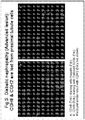
- Example 1 Immuno-histochemistry of archived human kidney biopsy.
- Blocking to remove endogenous tissue peroxidase was performed by oxidizing and using freshly prepared peroxidase block buffer (3% H 2 O 2 in PBS) . Antigen retrieval was performed using Tris/EDTA (pH9.0) at boiling temperature for 20 min.
- FITC AlexaFluor 488
- TSA Tetra methyl rhodamine system
- Ftc TSA fluorescein system
- N-cadherin is up-regulated by the powerful fibrotic growth factor TGF ⁇ 1
- TGF ⁇ 1 fibrotic growth factor 1
- N-cadherin down-regulation in kidney biopsies from patients with diabetic CKD was found.
- This study demonstrates for the first time that expression of K- and N-cadherin are altered in the proximal tubule epithelia in early diabetic CKD and that the loss is progressive with advancing tubulo-interstitial fibrosis. Further data suggests that this phenomenon is true irrespective of the etiology of the fibrotic process, e.g.
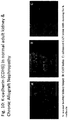
- K-cadherin loss was observed with advancing IgA nephropathy and chronic allograft nephropathy (CAN) ( Figure 10 shows results for CAN). Moreover, loss of K-cadherin was observed also in an in vitro model of fibrosis using primary human proximal tubule cells.
- This Example also demonstrates that the predominant cadherin in human proximal tubules is K-cadherin and not E-cadherin.
- Example 2 Urine collection and concentration and subject (patient/control) data
- Urine from a UK cohort of diabetic patients with and without CKD was analysed for K and N-Cadherin; local ethics committee approval was obtained.
- Table 1 The clinical and demographic data for subjects whose urine was analysed for K and N-cadherin.
- the clinical characteristics among various groups; diabetic patients without CKD, diabetics with CKD stage ⁇ 3 and diabetic with CKD stage ⁇ 3 is indicated in tabulated form.
- the clinical characteristics are shown as mean ⁇ SD among various groups; diabetic patients with CKD stage ⁇ 3 (eGFR ⁇ 60 ml/min) and diabetic patients with CKD stage ⁇ 3 (eGFR ⁇ 60 ml/min).
- the non-diabetic healthy controls were volunteers with an age range of 20-50. Diabetes control (blood sugar level control) was fair and not different between diabetic patients with CKD stage ⁇ 3 and diabetic patients with CKD stage ⁇ 3. As one might predict, diabetic patients with CKD stage ⁇ 3 had higher urinary albumin, RBP and NAG.
- Example 3 Detection of urinary K and N-cadherin by Western blotting
- Urinary K-cadherin was detected by Western Immunoblotting.
- the samples were prepared for gel electrophoresis by taking 65 ⁇ l of concentrated urine and adding 25 ⁇ l of Western sample buffer(x4) and 10 ⁇ l of reducing agent(x10) (Invitrogen; NP0008, NP0004) and denaturing at 70°C for 10 min. 40 ⁇ l of samples prepared were loaded on to a 4-12% Bis-Tris gel for electrophoresis followed by immunoblotting.
- the blot was incubated with mouse monoclonal antibodies against extracellular domain of K-cadherin (diluted 1:1000 in Tris-buffered saline with 0.1% triton and 5% Bovine Serum Albumin, Fischer Thermo-scientific Ltd, UK, Cadherin K Antibody 2B6) and N-cadherin (1:1000, Santa Cruz Biotechnologies, USA).
- the protein was detected using a rabbit polyclonal anti-mouse IgG (Whole molecule) HRP labelled antibody (Sigma-Aldrich, UK) and Amersham ECL PlusTM Western Blotting Detection Reagents (GE Healthcare Life Sciences, UK) according to the manufacturer's recommendations.
- the quantification of the band was performed by ImageQuant (GE Healthcare Life Sciences, UK) .
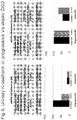
- FIG. 6 An example Western blot probed with an antibody to the extracellular domain of K-cadherin is shown in Figure 6 , with primary human proximal tubule whole cell lysate as a positive control.
- the whole molecule of K-cadherin is detectable ( ⁇ 120 kDa) in the urine from diabetic patients (as judged by gel migration with respect to known standards), with an increasing rate of detection correlating with severity of CKD stages ( Figure 6 ).
- 75% (9 out of 12) of diabetic subjects with CKD stages ⁇ 3 had detectable K-cadherin in the urine as compared to 29% (7 out of 24) of subjects with CKD ⁇ 3 and this difference was statistically different ( Figure 8 ).
- N-cadherin protein was present in urine of all subjects and did not correlate with CKD, which contrasts with the N-cadherin down-regulation in kidney biopsies from patients with diabetic CKD shown in Example 1. This might relate to its wide-spread expression, particularly in the lower urinary tract and in the prostate.
- Example 4 Association of urinary K-cadherin with progression of CKD.
- the level of urine albumin was also assessed for all subjects at the baseline and subsequent time points.
- Diabetic patients with and without various stages of CKD were further stratified into groups based on Progressors and non-Progressors (change of eGFR during 3 years of follow up) and presence or absence of detectable K-cadherin and albumin in the urine at baseline. The difference between groups was evaluated using Chi-Square test in a 2x2 contingency table. All tests were two tailed and p ⁇ 0.05 was considered significant.
- Kaplan-Meier event free survival curves were plotted with progression of CKD as an event and presence or absence of K-cadherin or albumin in the urine using Graphpad Prism software. Comparison of these curves was done using log-rank (Mantel-Cox) test. p ⁇ 0.05 was considered significant. Hazard ratio was calculated at 95% confidence interval. Sensitivity and specificity of urinary K-cadherin and albumin in predicting progression of kidney disease were calculated using standard statistical equations.
- Presence or absence of K-cadherin or albumin in the urine of these patients was plotted using Kaplan-Meier survival curve where an event was defined as a progression of CKD ( Figure 9 ).
- Patients with K-cadherin in the urine had a statistically significant risk of progression of CKD over this follow up period (p ⁇ 0.0001, HR-75.18 (95% CI of ratio 9.289 to 608.5)), similar to patients with albumin in the urine over this follow up period (p ⁇ 0.05, HR 16.36 (95% CI of ratio 1.675 to 159.9)) ( Figure 9 ).
- HR stands for hazard ratio
- CI stands for confidence interval.
- Presence or absence of K-cadherin or albumin in the urine of these patients was plotted using Kaplan-Meier survival curve where an event was defined as a progression of CKD ( Figure 9 ).
- type II diabetes subjects at both 'early' and 'advanced' disease stages, progressed and had urinary K-cadherin as a marker at baseline, suggests that it may be particularly applicable within the type II diabetic patient population.
- Example 5 ELISA assessment of K-cadherin and association with CKD progression.
- An ELISA system as indicated in Figure 12 was devised using commercial reagents. Accordingly, a sandwich ELISA with a capture antibody and a detection antibody, one that targets the near C-terminus and one that targets the N-terminus was established so as to detect the full length molecule.
- the C-terminal antibody was adhered to the plate wells and used as the capture antibody.
- the C-terminal antibody was ab64917 purchased from Abcam and the N-terminal antibody was MA1-06305 purchased from Thermo Scientific.
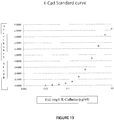
- a standard curve of K-Cadherin concentration as in Figure 13 was obtained for the ELISA system.
- Substrate reagent kit RnD (mix equal parts of A and B when needed) Sulphuric acid (0.125M) 1. Coat plate with Aabcam Anti-K-cadherin. Dilute 1:2000 in coating buffer. 100ul/well. Incubate at 4°C overnight. 2. Make standard curve. Label 7 tubes S1-S7, Label 1 tube Blank. S1 (10,000 ng/ml) 70ul of K-cadherin stock (100ug/ml) in to 630ul of assay buffer S2 (5000 ng/ml) 350ul of S1 in to 350ul of assay buffer S3 (2500 ng/ml) 350ul of S2 in to 350ul of assay buffer.
- S4 (1250 ng/ml) 350ul of S3 in to 350ul of assay buffer
- S5 (625 ng/ml) 350ul of S4 in to 350ul of assay buffer.
- S6 (3125ng/ml) 350ul of S5 in to 350ul of assay buffer.
- S7 (156 ng/ml) 350ul of S6 in to 350ul of assay buffer.
- S8 (78 ng/ml) 350ul of S7 in to 350ul of assay buffer.
- S9 39 ng/ml) 350ul of S8 in to 350ul of assay buffer.
- S10 (19.5 ng/ml) 350ul of S9 in to 350ul of assay buffer.
- 172 were classified as initially having minor renal impairment and 150 as having moderate/severe renal impairment. 49% of patients with mild renal disease exhibited progression for some or all of the 3 to 5 year follow-up period and 34% of patients with moderate/severe disease exhibited progression. The majority of non-progressors in the mild renal impairment group had K-Cad values below the level of detection, a much smaller number of progressors also had values below the level of detection; all such values were classified as 0 K-Cadherin.
Landscapes
- Life Sciences & Earth Sciences (AREA)
- Health & Medical Sciences (AREA)
- Chemical & Material Sciences (AREA)
- Engineering & Computer Science (AREA)
- Molecular Biology (AREA)
- Immunology (AREA)
- Urology & Nephrology (AREA)
- Hematology (AREA)
- Biomedical Technology (AREA)
- Medicinal Chemistry (AREA)
- General Health & Medical Sciences (AREA)
- Proteomics, Peptides & Aminoacids (AREA)
- Biochemistry (AREA)
- Organic Chemistry (AREA)
- Cell Biology (AREA)
- Biotechnology (AREA)
- Microbiology (AREA)
- Food Science & Technology (AREA)
- Physics & Mathematics (AREA)
- Analytical Chemistry (AREA)
- General Physics & Mathematics (AREA)
- Pathology (AREA)
- Genetics & Genomics (AREA)
- Biophysics (AREA)
- Investigating Or Analysing Biological Materials (AREA)
Claims (12)
- Ein In-vitro-Verfahren zum Bestimmen der Neigung eines Niveaus einer diabetischen CNK (chronische Nierenkrankheit) einer Person, in einem Schweregrad fortzuschreiten, wobei das Verfahren ein Testen auf das Vorhandensein/Niveau von K-Cadherin in dem Urin der Person umfasst, um zu bestimmen, ob das Urin-K-Cadherin erhöht ist.
- Ein Verfahren nach Anspruch 1, wobei die Person ein Typ-II-Diabetiker ist.
- Ein Verfahren nach Anspruch 1 oder 2, wobei erhöhtes K-Cadherin in Bezug auf einen nicht-progressiven Standard bestimmt wird, der optional für ein spezifisches CKD-Stadium gelten kann, wobei das Stadium optional eine leichte Krankheit (Stadien 1/2) sein kann.
- Ein Verfahren nach einem der vorhergehenden Ansprüche, umfassend ein Verwenden eines für die K-Cadherin-Spaltstelle spezifischen Antikörpers.
- Ein Verfahren nach einem der vorhergehenden Ansprüche, umfassend das Verwenden von Western-Immunblotting oder einem ELISA(Enzymimmunoassay)-System zum Testen auf K-Cadherin.
- Ein Verfahren nach Anspruch 5, wobei das ELISA-System zwei Sätze von Antikörperproben umfasst, von denen einer zum Einfangen von K-Cadherin und der andere zum anschließenden Nachweisen des Proteins immobilisiert ist.
- Ein Verfahren nach Anspruch 6, wobei eine Antikörperprobe gegenüber dem N-terminalen Ende von K-Cadherin reaktiv ist und die andere gegenüber dem C-terminalen Ende reaktiv ist.
- Ein Verfahren nach einem der vorhergehenden Ansprüche, wobei eine Urinprobe konzentriert wird, bevor das Vorhandensein/Niveau von K-Cadherin bewertet wird.
- Verwendung eines Schnelltests oder -Kits in einem Verfahren nach einem der vorhergehenden Ansprüche, wobei der Test oder das Kit einen für die K-Cadherin-Spaltstelle spezifischen Antikörper oder zwei Sätze von K-Cadherin-Antikörpern umfasst.
- Verwendung nach Anspruch 9, wobei der Test oder das Kit zwei Sätze von Antikörpern umfasst und wobei einer der Antikörpersätze gegenüber dem N-terminalen Ende von K-Cadherin reaktiv ist und der andere gegenüber dem C-terminalen Ende reaktiv ist.
- Verwendung nach einem der Ansprüche 9 bis 10, wobei das Kit ein Kit für einen Immunpräzipitationsassay, wie etwa einen ELISA-Assay, ist.
- Verwendung des Urin-K-Cadherins in einem In-vitro-Verfahren zum Bestimmen der Neigung des Niveaus der diabetischen CNK (chronische Nierenkrankheit) einer Person, in dem Schweregrad fortzuschreiten.
Applications Claiming Priority (2)
| Application Number | Priority Date | Filing Date | Title |
|---|---|---|---|
| GB201404061A GB201404061D0 (en) | 2014-03-07 | 2014-03-07 | Nephropathy biomarker |
| PCT/GB2015/050669 WO2015132612A1 (en) | 2014-03-07 | 2015-03-06 | Nephropathy biomarker |
Publications (2)
| Publication Number | Publication Date |
|---|---|
| EP3114485A1 EP3114485A1 (de) | 2017-01-11 |
| EP3114485B1 true EP3114485B1 (de) | 2020-11-18 |
Family
ID=50554700
Family Applications (1)
| Application Number | Title | Priority Date | Filing Date |
|---|---|---|---|
| EP15709334.5A Active EP3114485B1 (de) | 2014-03-07 | 2015-03-06 | Nephropathiebiomarker |
Country Status (5)
| Country | Link |
|---|---|
| US (1) | US20170016914A1 (de) |
| EP (1) | EP3114485B1 (de) |
| ES (1) | ES2842110T3 (de) |
| GB (1) | GB201404061D0 (de) |
| WO (1) | WO2015132612A1 (de) |
Families Citing this family (2)
| Publication number | Priority date | Publication date | Assignee | Title |
|---|---|---|---|---|
| CN117577321A (zh) | 2017-08-08 | 2024-02-20 | 费森尤斯医疗保健控股公司 | 用于治疗和评估慢性肾脏疾病的进程的系统和方法 |
| WO2025122579A1 (en) * | 2023-12-04 | 2025-06-12 | Cedars-Sinai Medical Center | Cadherin 6 expression status in determination of renal fibrosis and related uses thereof |
Citations (1)
| Publication number | Priority date | Publication date | Assignee | Title |
|---|---|---|---|---|
| WO2009055937A1 (en) * | 2007-11-01 | 2009-05-07 | The Royal Institution For The Advancement Of Learning/Mcgill University | Altered n-cadherin processing in tumor cells by furln and proproteln convertase 5a (pc5a) |
Family Cites Families (2)
| Publication number | Priority date | Publication date | Assignee | Title |
|---|---|---|---|---|
| US20110177613A1 (en) * | 2009-10-13 | 2011-07-21 | Los Angeles Biomedical Research Institute at Harbor-UCLA- Medical Center | Use of periostin as a novel biomarker |
| US20130338021A1 (en) * | 2012-06-14 | 2013-12-19 | Wisconsin Alumni Research Foundation | Methods and compositions for the detection of complications of diabetes |
-
2014
- 2014-03-07 GB GB201404061A patent/GB201404061D0/en not_active Ceased
-
2015
- 2015-03-06 EP EP15709334.5A patent/EP3114485B1/de active Active
- 2015-03-06 US US15/124,244 patent/US20170016914A1/en not_active Abandoned
- 2015-03-06 ES ES15709334T patent/ES2842110T3/es active Active
- 2015-03-06 WO PCT/GB2015/050669 patent/WO2015132612A1/en not_active Ceased
Patent Citations (1)
| Publication number | Priority date | Publication date | Assignee | Title |
|---|---|---|---|---|
| WO2009055937A1 (en) * | 2007-11-01 | 2009-05-07 | The Royal Institution For The Advancement Of Learning/Mcgill University | Altered n-cadherin processing in tumor cells by furln and proproteln convertase 5a (pc5a) |
Also Published As
| Publication number | Publication date |
|---|---|
| EP3114485A1 (de) | 2017-01-11 |
| US20170016914A1 (en) | 2017-01-19 |
| WO2015132612A1 (en) | 2015-09-11 |
| GB201404061D0 (en) | 2014-04-23 |
| ES2842110T3 (es) | 2021-07-12 |
Similar Documents
| Publication | Publication Date | Title |
|---|---|---|
| RU2688168C2 (ru) | Прогнозирование исходов у пациентов с хронической обструктивной болезнью легких | |
| Fu et al. | Urinary tubular biomarkers in short-term type 2 diabetes mellitus patients: a cross-sectional study | |
| Bhensdadia et al. | Urine haptoglobin levels predict early renal functional decline in patients with type 2 diabetes | |
| CN102105794B (zh) | 移植物衰竭和死亡的标志物 | |
| Duan et al. | Assessment of urinary NGAL for differential diagnosis and progression of diabetic kidney disease | |
| JP5931200B2 (ja) | L−fabpに基づく、急性事象後または外科的介入後の腎障害の診断 | |
| Rodrigues et al. | Definitions, phenotypes, and subphenotypes in acute kidney injury—Moving towards precision medicine | |
| US20090081713A1 (en) | Peptide biomarkers predictive of renal function decline and kidney disease | |
| DK2623517T3 (en) | Urine and serum biomarkers associated with diabetic nephropathy | |
| EP2442106B1 (de) | Testverfahren auf diabetes-nephropathie | |
| CN111065925B (zh) | Agrin在诊断子宫内膜癌中的应用 | |
| Munir et al. | Rapid detection of acute kidney injury by urinary neutrophil gelatinase-associated lipocalin after cardiopulmonary bypass surgery | |
| KR20150096728A (ko) | 급성 신장 손상 | |
| EP2960655B1 (de) | Verfahren zur schätzung der glomerulären filtrationsrate aus einem messwert von megalin im harn | |
| US20120115747A1 (en) | Methods Of Renal Cancer Detection | |
| US20170016914A1 (en) | Nephropathy biomarker | |
| JP7162104B2 (ja) | 糖尿病性腎症の早期病態の特異的な診断を可能とする検査方法 | |
| EP2391653B1 (de) | Mit nephropathie assoziierte biomarker | |
| Reznichenko et al. | Uromodulin in renal transplant recipients: elevated urinary levels and bimodal association with graft failure | |
| Patel et al. | Urinary periostin as an early predictor of renal injury in diabetic kidney disease: a tertiary centre experience. | |
| Funayama et al. | Renal tubulointerstitial damage is associated with short-term cardiovascular events in patients with myocardial infarction | |
| US20260043813A1 (en) | Chronic kidney disease detection | |
| HR et al. | UTILITY OF SERUM KIDNEY INJURY MOLECULE-1 (KIM-1) AS A DIAGNOSTIC TOOL FOR EARLY MARKER FOR DIABETIC NEPHROPATHY IN PATIENTS WITH TYPE-2 DIABETES MELLITUS | |
| JP2020020755A (ja) | 肝硬変の診断方法、非アルコール性脂肪肝炎及び肝細胞がんの合併症の診断方法並びに非アルコール性脂肪肝炎及び食道胃静脈瘤の合併症の診断方法 | |
| KR102065545B1 (ko) | 당뇨병성 신증 환자의 신장 섬유화 및 신기능 저하 예측용 조성물 |
Legal Events
| Date | Code | Title | Description |
|---|---|---|---|
| STAA | Information on the status of an ep patent application or granted ep patent |
Free format text: STATUS: THE INTERNATIONAL PUBLICATION HAS BEEN MADE |
|
| PUAI | Public reference made under article 153(3) epc to a published international application that has entered the european phase |
Free format text: ORIGINAL CODE: 0009012 |
|
| STAA | Information on the status of an ep patent application or granted ep patent |
Free format text: STATUS: REQUEST FOR EXAMINATION WAS MADE |
|
| 17P | Request for examination filed |
Effective date: 20161006 |
|
| AK | Designated contracting states |
Kind code of ref document: A1 Designated state(s): AL AT BE BG CH CY CZ DE DK EE ES FI FR GB GR HR HU IE IS IT LI LT LU LV MC MK MT NL NO PL PT RO RS SE SI SK SM TR |
|
| AX | Request for extension of the european patent |
Extension state: BA ME |
|
| DAV | Request for validation of the european patent (deleted) | ||
| DAX | Request for extension of the european patent (deleted) | ||
| STAA | Information on the status of an ep patent application or granted ep patent |
Free format text: STATUS: EXAMINATION IS IN PROGRESS |
|
| 17Q | First examination report despatched |
Effective date: 20170728 |
|
| GRAP | Despatch of communication of intention to grant a patent |
Free format text: ORIGINAL CODE: EPIDOSNIGR1 |
|
| STAA | Information on the status of an ep patent application or granted ep patent |
Free format text: STATUS: GRANT OF PATENT IS INTENDED |
|
| INTG | Intention to grant announced |
Effective date: 20200528 |
|
| GRAS | Grant fee paid |
Free format text: ORIGINAL CODE: EPIDOSNIGR3 |
|
| GRAA | (expected) grant |
Free format text: ORIGINAL CODE: 0009210 |
|
| STAA | Information on the status of an ep patent application or granted ep patent |
Free format text: STATUS: THE PATENT HAS BEEN GRANTED |
|
| AK | Designated contracting states |
Kind code of ref document: B1 Designated state(s): AL AT BE BG CH CY CZ DE DK EE ES FI FR GB GR HR HU IE IS IT LI LT LU LV MC MK MT NL NO PL PT RO RS SE SI SK SM TR |
|
| REG | Reference to a national code |
Ref country code: GB Ref legal event code: FG4D |
|
| REG | Reference to a national code |
Ref country code: CH Ref legal event code: EP |
|
| REG | Reference to a national code |
Ref country code: DE Ref legal event code: R096 Ref document number: 602015062109 Country of ref document: DE |
|
| REG | Reference to a national code |
Ref country code: IE Ref legal event code: FG4D |
|
| REG | Reference to a national code |
Ref country code: AT Ref legal event code: REF Ref document number: 1336331 Country of ref document: AT Kind code of ref document: T Effective date: 20201215 |
|
| REG | Reference to a national code |
Ref country code: AT Ref legal event code: MK05 Ref document number: 1336331 Country of ref document: AT Kind code of ref document: T Effective date: 20201118 |
|
| PG25 | Lapsed in a contracting state [announced via postgrant information from national office to epo] |
Ref country code: GR Free format text: LAPSE BECAUSE OF FAILURE TO SUBMIT A TRANSLATION OF THE DESCRIPTION OR TO PAY THE FEE WITHIN THE PRESCRIBED TIME-LIMIT Effective date: 20210219 Ref country code: RS Free format text: LAPSE BECAUSE OF FAILURE TO SUBMIT A TRANSLATION OF THE DESCRIPTION OR TO PAY THE FEE WITHIN THE PRESCRIBED TIME-LIMIT Effective date: 20201118 Ref country code: FI Free format text: LAPSE BECAUSE OF FAILURE TO SUBMIT A TRANSLATION OF THE DESCRIPTION OR TO PAY THE FEE WITHIN THE PRESCRIBED TIME-LIMIT Effective date: 20201118 Ref country code: NO Free format text: LAPSE BECAUSE OF FAILURE TO SUBMIT A TRANSLATION OF THE DESCRIPTION OR TO PAY THE FEE WITHIN THE PRESCRIBED TIME-LIMIT Effective date: 20210218 Ref country code: PT Free format text: LAPSE BECAUSE OF FAILURE TO SUBMIT A TRANSLATION OF THE DESCRIPTION OR TO PAY THE FEE WITHIN THE PRESCRIBED TIME-LIMIT Effective date: 20210318 |
|
| PG25 | Lapsed in a contracting state [announced via postgrant information from national office to epo] |
Ref country code: AT Free format text: LAPSE BECAUSE OF FAILURE TO SUBMIT A TRANSLATION OF THE DESCRIPTION OR TO PAY THE FEE WITHIN THE PRESCRIBED TIME-LIMIT Effective date: 20201118 Ref country code: BG Free format text: LAPSE BECAUSE OF FAILURE TO SUBMIT A TRANSLATION OF THE DESCRIPTION OR TO PAY THE FEE WITHIN THE PRESCRIBED TIME-LIMIT Effective date: 20210218 Ref country code: IS Free format text: LAPSE BECAUSE OF FAILURE TO SUBMIT A TRANSLATION OF THE DESCRIPTION OR TO PAY THE FEE WITHIN THE PRESCRIBED TIME-LIMIT Effective date: 20210318 Ref country code: LV Free format text: LAPSE BECAUSE OF FAILURE TO SUBMIT A TRANSLATION OF THE DESCRIPTION OR TO PAY THE FEE WITHIN THE PRESCRIBED TIME-LIMIT Effective date: 20201118 Ref country code: SE Free format text: LAPSE BECAUSE OF FAILURE TO SUBMIT A TRANSLATION OF THE DESCRIPTION OR TO PAY THE FEE WITHIN THE PRESCRIBED TIME-LIMIT Effective date: 20201118 Ref country code: PL Free format text: LAPSE BECAUSE OF FAILURE TO SUBMIT A TRANSLATION OF THE DESCRIPTION OR TO PAY THE FEE WITHIN THE PRESCRIBED TIME-LIMIT Effective date: 20201118 |
|
| REG | Reference to a national code |
Ref country code: LT Ref legal event code: MG9D |
|
| PG25 | Lapsed in a contracting state [announced via postgrant information from national office to epo] |
Ref country code: HR Free format text: LAPSE BECAUSE OF FAILURE TO SUBMIT A TRANSLATION OF THE DESCRIPTION OR TO PAY THE FEE WITHIN THE PRESCRIBED TIME-LIMIT Effective date: 20201118 |
|
| REG | Reference to a national code |
Ref country code: ES Ref legal event code: FG2A Ref document number: 2842110 Country of ref document: ES Kind code of ref document: T3 Effective date: 20210712 |
|
| RAP2 | Party data changed (patent owner data changed or rights of a patent transferred) |
Owner name: SOUTH WEST THAMES INSTITUTE FOR RENAL RESEARCH |
|
| PG25 | Lapsed in a contracting state [announced via postgrant information from national office to epo] |
Ref country code: LT Free format text: LAPSE BECAUSE OF FAILURE TO SUBMIT A TRANSLATION OF THE DESCRIPTION OR TO PAY THE FEE WITHIN THE PRESCRIBED TIME-LIMIT Effective date: 20201118 Ref country code: SK Free format text: LAPSE BECAUSE OF FAILURE TO SUBMIT A TRANSLATION OF THE DESCRIPTION OR TO PAY THE FEE WITHIN THE PRESCRIBED TIME-LIMIT Effective date: 20201118 Ref country code: RO Free format text: LAPSE BECAUSE OF FAILURE TO SUBMIT A TRANSLATION OF THE DESCRIPTION OR TO PAY THE FEE WITHIN THE PRESCRIBED TIME-LIMIT Effective date: 20201118 Ref country code: SM Free format text: LAPSE BECAUSE OF FAILURE TO SUBMIT A TRANSLATION OF THE DESCRIPTION OR TO PAY THE FEE WITHIN THE PRESCRIBED TIME-LIMIT Effective date: 20201118 Ref country code: CZ Free format text: LAPSE BECAUSE OF FAILURE TO SUBMIT A TRANSLATION OF THE DESCRIPTION OR TO PAY THE FEE WITHIN THE PRESCRIBED TIME-LIMIT Effective date: 20201118 Ref country code: EE Free format text: LAPSE BECAUSE OF FAILURE TO SUBMIT A TRANSLATION OF THE DESCRIPTION OR TO PAY THE FEE WITHIN THE PRESCRIBED TIME-LIMIT Effective date: 20201118 |
|
| REG | Reference to a national code |
Ref country code: DE Ref legal event code: R097 Ref document number: 602015062109 Country of ref document: DE |
|
| REG | Reference to a national code |
Ref country code: DE Ref legal event code: R081 Ref document number: 602015062109 Country of ref document: DE Owner name: SOUTH WEST THAMES INSTITUTE FOR RENAL RESEARCH, GB Free format text: FORMER OWNER: EPSOM AND ST HELIER UNIVERSITY HOSPITALS NHS TRUST, CARSHALTON, GB |
|
| PG25 | Lapsed in a contracting state [announced via postgrant information from national office to epo] |
Ref country code: DK Free format text: LAPSE BECAUSE OF FAILURE TO SUBMIT A TRANSLATION OF THE DESCRIPTION OR TO PAY THE FEE WITHIN THE PRESCRIBED TIME-LIMIT Effective date: 20201118 |
|
| REG | Reference to a national code |
Ref country code: NL Ref legal event code: PD Owner name: SOUTH WEST THAMES INSTITUTE FOR RENAL RESEARCH; GB Free format text: DETAILS ASSIGNMENT: CHANGE OF OWNER(S), ASSIGNMENT; FORMER OWNER NAME: EPSOM AND ST HELIER UNIVERSITY HOSPITALS NHS TRUST Effective date: 20210806 Ref country code: NL Ref legal event code: FP |
|
| REG | Reference to a national code |
Ref country code: GB Ref legal event code: 732E Free format text: REGISTERED BETWEEN 20210819 AND 20210825 |
|
| PLBE | No opposition filed within time limit |
Free format text: ORIGINAL CODE: 0009261 |
|
| STAA | Information on the status of an ep patent application or granted ep patent |
Free format text: STATUS: NO OPPOSITION FILED WITHIN TIME LIMIT |
|
| REG | Reference to a national code |
Ref country code: BE Ref legal event code: PD Owner name: SOUTH WEST THAMES INSTITUTE FOR RENAL RESEARCH; GB Free format text: DETAILS ASSIGNMENT: CHANGE OF OWNER(S), ASSIGNMENT; FORMER OWNER NAME: EPSOM AND ST HELIER UNIVERSITY HOSPITALS NHS TRUST Effective date: 20210812 |
|
| 26N | No opposition filed |
Effective date: 20210819 |
|
| PG25 | Lapsed in a contracting state [announced via postgrant information from national office to epo] |
Ref country code: MC Free format text: LAPSE BECAUSE OF FAILURE TO SUBMIT A TRANSLATION OF THE DESCRIPTION OR TO PAY THE FEE WITHIN THE PRESCRIBED TIME-LIMIT Effective date: 20201118 Ref country code: AL Free format text: LAPSE BECAUSE OF FAILURE TO SUBMIT A TRANSLATION OF THE DESCRIPTION OR TO PAY THE FEE WITHIN THE PRESCRIBED TIME-LIMIT Effective date: 20201118 |
|
| REG | Reference to a national code |
Ref country code: CH Ref legal event code: PL |
|
| PG25 | Lapsed in a contracting state [announced via postgrant information from national office to epo] |
Ref country code: SI Free format text: LAPSE BECAUSE OF FAILURE TO SUBMIT A TRANSLATION OF THE DESCRIPTION OR TO PAY THE FEE WITHIN THE PRESCRIBED TIME-LIMIT Effective date: 20201118 |
|
| PG25 | Lapsed in a contracting state [announced via postgrant information from national office to epo] |
Ref country code: IE Free format text: LAPSE BECAUSE OF NON-PAYMENT OF DUE FEES Effective date: 20210306 Ref country code: CH Free format text: LAPSE BECAUSE OF NON-PAYMENT OF DUE FEES Effective date: 20210331 Ref country code: LU Free format text: LAPSE BECAUSE OF NON-PAYMENT OF DUE FEES Effective date: 20210306 Ref country code: LI Free format text: LAPSE BECAUSE OF NON-PAYMENT OF DUE FEES Effective date: 20210331 |
|
| PG25 | Lapsed in a contracting state [announced via postgrant information from national office to epo] |
Ref country code: IS Free format text: LAPSE BECAUSE OF FAILURE TO SUBMIT A TRANSLATION OF THE DESCRIPTION OR TO PAY THE FEE WITHIN THE PRESCRIBED TIME-LIMIT Effective date: 20210318 |
|
| PG25 | Lapsed in a contracting state [announced via postgrant information from national office to epo] |
Ref country code: HU Free format text: LAPSE BECAUSE OF FAILURE TO SUBMIT A TRANSLATION OF THE DESCRIPTION OR TO PAY THE FEE WITHIN THE PRESCRIBED TIME-LIMIT; INVALID AB INITIO Effective date: 20150306 |
|
| PG25 | Lapsed in a contracting state [announced via postgrant information from national office to epo] |
Ref country code: CY Free format text: LAPSE BECAUSE OF FAILURE TO SUBMIT A TRANSLATION OF THE DESCRIPTION OR TO PAY THE FEE WITHIN THE PRESCRIBED TIME-LIMIT Effective date: 20201118 |
|
| PG25 | Lapsed in a contracting state [announced via postgrant information from national office to epo] |
Ref country code: MK Free format text: LAPSE BECAUSE OF FAILURE TO SUBMIT A TRANSLATION OF THE DESCRIPTION OR TO PAY THE FEE WITHIN THE PRESCRIBED TIME-LIMIT Effective date: 20201118 |
|
| PG25 | Lapsed in a contracting state [announced via postgrant information from national office to epo] |
Ref country code: TR Free format text: LAPSE BECAUSE OF FAILURE TO SUBMIT A TRANSLATION OF THE DESCRIPTION OR TO PAY THE FEE WITHIN THE PRESCRIBED TIME-LIMIT Effective date: 20201118 |
|
| PG25 | Lapsed in a contracting state [announced via postgrant information from national office to epo] |
Ref country code: MT Free format text: LAPSE BECAUSE OF FAILURE TO SUBMIT A TRANSLATION OF THE DESCRIPTION OR TO PAY THE FEE WITHIN THE PRESCRIBED TIME-LIMIT Effective date: 20201118 |
|
| PGFP | Annual fee paid to national office [announced via postgrant information from national office to epo] |
Ref country code: DE Payment date: 20250328 Year of fee payment: 11 |
|
| PGFP | Annual fee paid to national office [announced via postgrant information from national office to epo] |
Ref country code: IT Payment date: 20250321 Year of fee payment: 11 |
|
| PGFP | Annual fee paid to national office [announced via postgrant information from national office to epo] |
Ref country code: ES Payment date: 20250401 Year of fee payment: 11 |
|
| PGFP | Annual fee paid to national office [announced via postgrant information from national office to epo] |
Ref country code: GB Payment date: 20260330 Year of fee payment: 12 |
|
| PGFP | Annual fee paid to national office [announced via postgrant information from national office to epo] |
Ref country code: BE Payment date: 20260330 Year of fee payment: 12 |
|
| PGFP | Annual fee paid to national office [announced via postgrant information from national office to epo] |
Ref country code: NL Payment date: 20260330 Year of fee payment: 12 |
|
| PGFP | Annual fee paid to national office [announced via postgrant information from national office to epo] |
Ref country code: FR Payment date: 20260331 Year of fee payment: 12 |