EP3102467B1 - Verfahren für sicheres und entferntes starten eines kraftfahrzeuges - Google Patents
Verfahren für sicheres und entferntes starten eines kraftfahrzeuges Download PDFInfo
- Publication number
- EP3102467B1 EP3102467B1 EP15705634.2A EP15705634A EP3102467B1 EP 3102467 B1 EP3102467 B1 EP 3102467B1 EP 15705634 A EP15705634 A EP 15705634A EP 3102467 B1 EP3102467 B1 EP 3102467B1
- Authority
- EP
- European Patent Office
- Prior art keywords
- vehicle
- engine
- torque
- module
- time interval
- Prior art date
- Legal status (The legal status is an assumption and is not a legal conclusion. Google has not performed a legal analysis and makes no representation as to the accuracy of the status listed.)
- Active
Links
Images

Classifications
-
- B—PERFORMING OPERATIONS; TRANSPORTING
- B60—VEHICLES IN GENERAL
- B60R—VEHICLES, VEHICLE FITTINGS, OR VEHICLE PARTS, NOT OTHERWISE PROVIDED FOR
- B60R25/00—Fittings or systems for preventing or indicating unauthorised use or theft of vehicles
-
- B—PERFORMING OPERATIONS; TRANSPORTING
- B60—VEHICLES IN GENERAL
- B60R—VEHICLES, VEHICLE FITTINGS, OR VEHICLE PARTS, NOT OTHERWISE PROVIDED FOR
- B60R25/00—Fittings or systems for preventing or indicating unauthorised use or theft of vehicles
- B60R25/20—Means to switch the anti-theft system on or off
- B60R25/209—Remote starting of engine
Definitions
- the present invention relates to a method for remote start-up of a vehicle and a system for carrying out such a method.
- the invention also relates to a vehicle comprising this secure remote start system.
- the remote start of the vehicle is made from an activation device such as a remote control, for example the key of the vehicle optionally provided with actuatable buttons, which is able to transmit a radio signal to a control unit also known by the acronym BCM ("Body Control Module" for cabin controller).
- BCM Body Control Module
- This control unit upon receipt of said signal transmits an instruction to an engine control module to trigger the starting of the vehicle.
- the present invention aims to solve these problems resulting from the disadvantages of the state of the art, by proposing a method and a secure remote start system which are robust and of great reliability as well as a simple implementation. .
- the monitoring module comprises hardware and software elements that are capable of performing the detection of an event, in particular a take-off of the vehicle by the clutch or a take-off of the vehicle by an application of a torque setpoint defined by a depression of an accelerator pedal.
- the invention also relates to a vehicle comprising such a secure remote start system.
- One of the advantages of the invention is to be able to detect the movement of the vehicle in particular during a takeoff from the latter to the clutch.
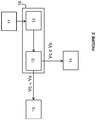
- FIG. 1 there is shown an embodiment of the system 1 for remote remote start of a vehicle comprising a remote start activation device 2, a control unit 3 and a motor control device 4. Only the elements necessary for the understanding of the invention were figured.
- This activation device 2 is able to communicate with the control unit 3 which is included in the vehicle.
- This control unit 3 is able to carry out a processing of the activation signal received from the activation device 2 in order to initiate the starting of the vehicle.
- This control unit 3 is also able on the basis of the processing of this signal to trigger the locking / unlocking of the opening of the vehicle and manage the activation / deactivation of cooling equipment and / or heating the vehicle.
- control device 4 comprises in particular a regulation module 5 of the engine speed, a monitoring module 6 and a motor control module 7.
- This engine control device is able to control the engine 10 of the vehicle according to the information data it receives.
- the engine 10 driven by the control device 4 is an internal combustion engine 10, for example of the four-stroke type and four-cylinder in line, which is equipped with a fuel supply device, for example of the type multipoint injection where each cylinder is fueled by a specific electro-injector.
- each electro-injector is controlled by the control module 7 of this control device 4, which determines the amount of fuel injected according to the operating conditions.
- This control module 7 is able to start and stop the engine 10. It is also able to increase the engine torque, particularly when it receives a setpoint from the idle regulation module 5 in order to maintain the idling speed, in particular by acting on injectors and actuator means of the engine 10.
- This idling control module 5 of the remote secure starting system 1 makes it possible to control and / or regulate the engine variable idle speed.
- the idle phase normally corresponds to the situation where the engine 10 is running and the accelerator pedal is not activated.
- the regulation module 5 then makes it possible to ensure the rallying of the speed of the engine 10 at a setpoint speed, by regulating this regime around this setpoint regime despite possible disturbances and the passage of various transient phases such as a phase Starting the engine 10.
- the regulation module 5 makes it possible to ensure the stability of the engine 10 at low speed, taking into account, in particular, idling phase entry conditions which can vary considerably, as regards, for example, the temperature of the cooling water. of the motor 10, the air temperature, the possible presence of random disturbances due to the engagement of a consumer of electrical energy (lighting device, fan) or mechanical (cooling / heating equipment, power steering, clutch).
- this control module 5 implements a correction algorithm of the PID corrector type (acronym for "Proportional Integral and Derivative") for generating and subsequently delivering control signals relating to torque request instructions which are then transmitted to the control module 7 to which it is connected.
- This regulation module 5 is able to receive input signals relating to the operation of the motor 10 and peripheral devices, to perform operations and to generate the control signals.
- the monitoring module 6 is also connected to this regulation module 5. It conventionally comprises hardware elements 8 and software 7 which are capable of performing calculations in particular to carry out particular processing of the control signals transmitted by the regulation module 5 to 7.
- the hardware elements 8 comprise a CPU, a random access memory (RAM), a read-only memory (ROM), analog-to-digital (A / D) converters, and different input and output interfaces.
- This system 1 is able to implement a remote starting method secured vehicle.
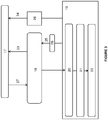
- This process which is represented on the figure 2 , comprises an activation step 11 for starting the engine 10 of the vehicle in which the activation device 2 is able to transmit a start signal to the control unit 3 located in the vehicle.
- This control unit 3 then performs a processing of this start signal which consists in decoding said signal and in generating an instruction to start the motor 10.
- the control unit 3 is able to check the state of safety parameters of the vehicle in order to authorize vehicle starting modes, namely whether the vehicle can be started when the driver is in the cockpit of the vehicle and / or conversely when the driver is not in the immediate environment of the vehicle for starting the latter at a distance.
- Safety parameters whose status is checked relate to the position of the gearbox to know if it is in neutral or parking mode, locking the doors, etc ...
- control unit 3 then implements the waiting step 18 for receiving a start signal coming from the device. activation 2. Conversely, if this result is not satisfactory, the control unit 3 authorizes a start only when the driver is in the passenger compartment of the vehicle.
- control unit 3 can return to the start mode determination step 17 if the state of a security parameter has changed, for example that a door of the vehicle is no longer locked.
- the control unit 3 is also able to implement a step 26 for receiving information from the control device 4, relating to the stopping of the engine 10. Therefore, the control unit 3 returns 24 then at the step of determining 17 starting modes of the vehicle.
- control unit 3 also returns to the step 18 of waiting for a remote start signal when the remote start of the motor is stopped 28 following the expiration of the running time defined during the start-up step 20 or when the control unit 3 has received a stop signal from the engine 10 from the activation device 2.
- the engine control module 7 upon receipt of this instruction, the engine control module 7 then triggers a starting procedure of the engine 10, which once started operates in idle mode. This engine idling speed is maintained by a motor torque setpoint controlled by the regulation module 5.
- the regulation module 5 then generates the control signals relating to torque request instructions. These control signals are transmitted to the engine control module 7 in order to modify the engine torque setpoint 10, by increasing it.
- the control signals are transmitted to the control module 7 via the monitoring module 6 which is able, from these signals, to detect an event which corresponds, when the vehicle has was started remotely, a take-off at the clutch or a take-off of the vehicle by application of a torque setpoint defined by a depression of the accelerator pedal.
- the event to be detected is the take-off at the clutch.
- the determining step 12 comprises a substep of processing the control signals.
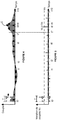
- This substep of signal processing illustrated on the figures 3 , 4 and 5 , is carried out from the implementation by the hardware elements 8 and software 7 of the monitoring module 6 of a digital analysis of the control signals consisting of an integration of a function f (t) corresponding to these signals and which is illustrated by the visible curve C on the figures 3 and 5 .
- the processing sub-step provides for a pretreatment of these control signals implementing a calculation of an integral of the curve C relating to these so-called integral slow-down control signals, which is then recorded in the memory of the controller.
- This calculation is performed according to the software elements 7 included in the memory of the monitoring module 6 and the hardware elements 8 which use the requested torque values relating to the control signals and which are stored in the module memory. 6 in order to calculate this integral of the curve C.
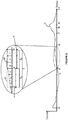
- This integral of idle control is illustrated in figure 4 and is formulated in this example of the figure 4 as follows : ⁇ t 0 t 10 f t dt , with t0 corresponding to the moment when the engine 10 of the vehicle is started while being maintained at an idle speed and t10 at the moment when the engine torque is zero following the detection of the event at time t8.
- the analysis time interval T is configured according to the event to be detected. More specifically, it is set to correspond to the time required for the event to be detected by the monitoring module 6 can be identified. When the event to be detected is the take-off at the clutch of the vehicle, this analysis time interval T is then between about 3 and 20 seconds.
- the calculation of the torque variation Vc is performed between at least a first set of requested pairs B1 in a first time interval Ta and at least a second set of requested couples B2 in a second time interval Tb.
- the sum of the first Ta and second Tb time intervals is equal to the analysis time interval T.
- the first time interval Ta delimited by the instants t3 and t4 and the second time interval Tb delimited by the instants t4 and t5 are consecutive and not necessarily equal to each other.
- the first set of requested pairs B1 corresponds to the surface area delimited by this curve and the abscissa axis, here the time axis, to the first time interval Ta.
- the second set of requested pairs B2 it corresponds to the surface area delimited by this curve and the time axis over the second time interval Tb.
- the hardware elements 8 and the software elements 7 can then implement algorithms such as the so-called trapezium method or the so-called rectangles method.
- the monitoring module 6 preferably implements the algorithm relating to the trapezium method which makes it possible to calculate a sliding integral of the part of the idle regulation integral included in the interval of analysis time T.
- the algorithm relating to the trapezium method has the advantage of improving the accuracy of the torque variation Vc determined over the analysis time interval T.
- the first set of pairs B1 is divided into several subsets of couples a, bc, over n no time of the first time interval Ta.
- the second set of pairs B2 is divided into several subsets of couples d, e, f, on m no time of the second time interval Tb.
- each subset of pairs a, b, c, d, e, f is the area of the surface between the curve and the time axis for each n and m no time. Note that the n and m no time are not necessarily equal to each other.
- the method provides a comparison step 13 between the torque variation Vc calculated between the first B1 and second B2 sets of couples and a detection threshold value Vs which is configured according to the event to detect, here the take off at the clutch.
- the monitoring module 6 transmits to the control module 7 an instruction to cause the triggering 14 of the stopping of the engine 10. It will be noted that in this context, the vehicle began to take off at the clutch at the instant t7.
- the engine control device 4 then transmits the information relating to the stopping of the engine to the control unit 3.
- the control module 7 is based on the control signals generated by the control module 5, drive the motor 10 to increase the torque of this last to compensate for the torque and thus maintain the engine speed.
- the reiteration frequency of the detection step 16 of the event is configurable. So, this frequency can be configured so that this process step is initiated approximately between 0.2 and 3 seconds.
Landscapes
- Engineering & Computer Science (AREA)
- Mechanical Engineering (AREA)
- Control Of Vehicle Engines Or Engines For Specific Uses (AREA)
- Combined Controls Of Internal Combustion Engines (AREA)
Claims (11)
- Verfahren zum sicheren Fernstarten eines Fahrzeugs, welches die folgenden Schritte umfasst:- Aktivierung (11) des Startens des Motors (10) des Fahrzeugs;- Detektion (16) eines Ereignisses, welche umfasst:• Bestimmung (12) einer Drehmomentänderung (Vc) in einem Analysezeitintervall (T) aus Steuersignalen, die sich auf Anweisungen zur Motordrehmomentanforderung von einem Modul zur Regelung (5) des Motorleerlaufs beziehen,• Vergleich (13) der bestimmten Drehmomentänderung (Vc) mit einem Drehmomentschwellenwert (Vs), und- Auslösung (14) des Abstellens des Motors (10), wenn die bestimmte Drehmomentänderung (Vc) größer oder gleich dem Drehmomentschwellenwert (Vs) ist.
- Verfahren nach dem vorhergehenden Anspruch, dadurch gekennzeichnet, dass der Schritt der Bestimmung (12) einer Drehmomentänderung (Vc) zwischen wenigstens einer ersten Menge von angeforderten Drehmomenten (B1) in einem ersten Zeitintervall (T1) und wenigstens einer zweiten Menge von angeforderten Drehmomenten (B2) in einem ersten Zeitintervall (T2) durchgeführt wird.
- Verfahren nach einem der vorhergehenden Ansprüche, dadurch gekennzeichnet, dass das erste und das zweite Zeitintervall (T1, T2) aufeinander folgen.
- Verfahren nach einem der vorhergehenden Ansprüche, dadurch gekennzeichnet, dass es eine iterative Wiederholung des Schrittes der Detektion (16) mit einer Häufigkeit, welche konfigurierbar ist, vorsieht.
- Verfahren nach einem der vorhergehenden Ansprüche, dadurch gekennzeichnet, dass im Schritt der Bestimmung (12) ein Algorithmus vom Typ der Trapezmethode oder Rechteckmethode durchgeführt wird.
- Verfahren nach einem der vorhergehenden Ansprüche, dadurch gekennzeichnet, dass das Analysezeitintervall (T) im Wesentlichen gleich der Summe des ersten und zweiten Zeitintervalls (T1, T2) ist.
- Verfahren nach einem der vorhergehenden Ansprüche, dadurch gekennzeichnet, dass der Drehmomentschwellenwert (Vs) in Abhängigkeit von einem zu detektierenden Ereignis konfiguriert wird.
- Verfahren nach einem der vorhergehenden Ansprüche, dadurch gekennzeichnet, dass das Ereignis einem Anfahren des Fahrzeugs durch die Kupplung oder einem Anfahren des Fahrzeugs durch eine Anwendung eines Drehmoment-Sollwertes, der durch ein Niedertreten eines Gaspedals definiert wird, entspricht.
- System (1) zum sicheren Fernstarten eines Fahrzeugs für die Durchführung des Verfahrens nach einem der vorhergehenden Ansprüche, welches ein Motorsteuermodul (7) umfasst, das dazu eingerichtet ist, den Motor (10) des Fahrzeugs zu starten oder abzustellen, dadurch gekennzeichnet, dass es umfasst:- ein Modul zur Überwachung (6) einer Drehmomentänderung (Vc) in einem Analysezeitintervall (T) ausgehend von Steuersignalen, die sich auf Anweisungen zur Motordrehmomentanforderung beziehen, und- ein Modul zur Regelung (5) des Motorleerlaufs, das geeignet ist, diese Signale zu senden,wobei das Überwachungsmodul (6) mit dem Motorsteuermodul (7) und mit dem Modul zur Regelung (5) des Leerlaufs verbunden ist.
- System (1) nach dem vorhergehenden Anspruch, dadurch gekennzeichnet, dass das Überwachungsmodul (6) Hardware- (8) und Softwareelemente (7) aufweist, welche geeignet sind, die Detektion (16) eines Ereignisses durchzuführen, insbesondere eines Anfahrens des Fahrzeugs durch die Kupplung oder eines Anfahrens des Fahrzeugs durch eine Anwendung eines Drehmoment-Sollwertes, der durch ein Niedertreten eines Gaspedals definiert wird.
- Verfahren, welches ein System (1) zum sicheren Fernstarten nach einem der Ansprüche 9 und 10 umfasst.
Applications Claiming Priority (2)
| Application Number | Priority Date | Filing Date | Title |
|---|---|---|---|
| FR1450945A FR3017354B1 (fr) | 2014-02-07 | 2014-02-07 | Procede et systeme de demarrage a distance securise d'un vehicule |
| PCT/FR2015/050096 WO2015118239A1 (fr) | 2014-02-07 | 2015-01-15 | Procede de demarrage a distance securise d'un vehicule |
Publications (2)
| Publication Number | Publication Date |
|---|---|
| EP3102467A1 EP3102467A1 (de) | 2016-12-14 |
| EP3102467B1 true EP3102467B1 (de) | 2019-03-06 |
Family
ID=50877419
Family Applications (1)
| Application Number | Title | Priority Date | Filing Date |
|---|---|---|---|
| EP15705634.2A Active EP3102467B1 (de) | 2014-02-07 | 2015-01-15 | Verfahren für sicheres und entferntes starten eines kraftfahrzeuges |
Country Status (5)
| Country | Link |
|---|---|
| EP (1) | EP3102467B1 (de) |
| CN (1) | CN105939900B (de) |
| FR (1) | FR3017354B1 (de) |
| RU (1) | RU2668139C2 (de) |
| WO (1) | WO2015118239A1 (de) |
Families Citing this family (1)
| Publication number | Priority date | Publication date | Assignee | Title |
|---|---|---|---|---|
| US10144390B1 (en) * | 2017-05-17 | 2018-12-04 | Deere & Company | Work vehicle start system and method with optical verification for authorizing remote start |
Family Cites Families (7)
| Publication number | Priority date | Publication date | Assignee | Title |
|---|---|---|---|---|
| DE4402197C1 (de) * | 1993-12-30 | 1995-05-24 | Kleine Natrop Heinz Werner | Diebstahlsicherung eines Kraffahrzeuges |
| US5621252A (en) * | 1994-05-09 | 1997-04-15 | Bucknam; Steven H. | Apparatus for preventing unauthorized use of machinery |
| RU2237585C1 (ru) * | 2003-11-17 | 2004-10-10 | Общество с ограниченной ответственностью "Альтоника" | Система защиты транспортного средства от несанкционированного использования |
| DE102008039303B4 (de) * | 2008-08-22 | 2011-05-05 | Audi Ag | Fernstartsystem für ein Fahrzeug und Verfahren zum Absichern einer Fernstartfunktion |
| CN201350888Y (zh) * | 2009-01-14 | 2009-11-25 | 西安理工大学 | 一种手机短信远程点火启动发动机的调温防盗报警装置 |
| RU106193U1 (ru) * | 2011-03-25 | 2011-07-10 | Закрытое акционерное общество "Производственное объединение "Аверс-Сервис" | Автоматическая система управления агрегатами автомобиля и охраны транспортного средства |
| CN103144606A (zh) * | 2013-03-26 | 2013-06-12 | 陈慧君 | 汽车远程启动方法 |
-
2014
- 2014-02-07 FR FR1450945A patent/FR3017354B1/fr not_active Expired - Fee Related
-
2015
- 2015-01-15 RU RU2016136011A patent/RU2668139C2/ru active
- 2015-01-15 CN CN201580006886.3A patent/CN105939900B/zh not_active Expired - Fee Related
- 2015-01-15 EP EP15705634.2A patent/EP3102467B1/de active Active
- 2015-01-15 WO PCT/FR2015/050096 patent/WO2015118239A1/fr not_active Ceased
Non-Patent Citations (1)
| Title |
|---|
| None * |
Also Published As
| Publication number | Publication date |
|---|---|
| WO2015118239A1 (fr) | 2015-08-13 |
| CN105939900B (zh) | 2019-08-30 |
| RU2016136011A3 (de) | 2018-08-13 |
| CN105939900A (zh) | 2016-09-14 |
| FR3017354B1 (fr) | 2016-02-05 |
| RU2016136011A (ru) | 2018-03-15 |
| EP3102467A1 (de) | 2016-12-14 |
| FR3017354A1 (fr) | 2015-08-14 |
| RU2668139C2 (ru) | 2018-09-26 |
Similar Documents
| Publication | Publication Date | Title |
|---|---|---|
| EP1781937B1 (de) | Verfahren zur hemmung des automatischen stoppsteuersystems einer wärmekraftmaschine in einem fahrzeug bei abwesenheit des fahrers | |
| EP1781939B1 (de) | Verfahren zur hemmung des automatischen stoppsteuersystems einer wärmekraftmaschine in einem fahrzeug bei parkmanövern | |
| US8566007B2 (en) | Automatic stop/restart device for internal combustion engine | |
| EP1781936B1 (de) | Verfahren zur hemmung des automatischen stoppsteuersystems einer wärmekraftmaschine in einem fahrzeug im verkehrsstau | |
| JP2016124392A (ja) | 負圧センサ異常検出装置及び内燃機関の制御装置 | |
| EP1368204B1 (de) | Verfahren zur automatischen ortung der vor- und hinterräder eines kraftfahrzeuges | |
| EP2937554B1 (de) | Diagnoseverfahren zum Erkennen eines Schlupfes des Aggregate-Antriebsriemens eines Antriebsstranges | |
| FR2922505A1 (fr) | Procede et systeme de commande d'un groupe motopropulseur a derivation de puissance | |
| WO2015118239A1 (fr) | Procede de demarrage a distance securise d'un vehicule | |
| FR2879526A1 (fr) | Procede d'aide au demarrage d'un vehicule automobile et dispositif associe | |
| US9989031B2 (en) | Engine automatic stop/restart device | |
| EP3894283B1 (de) | Verfahren zur steuerung eines fahrzeugs mit mehreren betriebsarten | |
| EP3217529B1 (de) | Verfahren und system zur steuerung eines elektromotors im falle eines ausfalls des positionssignals eines rotors | |
| WO2022248781A1 (fr) | Procede de surveillance d'adaptatifs dans un controle moteur | |
| EP3727996A1 (de) | Lenkung mit temperaturabhängig einziehbarer lenksäule für autonomes fahren | |
| EP3730385A1 (de) | Verfahren und vorrichtung zur erkennung und minderung von geschwindigkeitsabweichungen eines kraftfahrzeugs, die in ein einparkhilfssystem integriert ist | |
| EP3504466A1 (de) | Verfahren zur erkennung eines fehlers einer riemenverbindung zwischen einem generator-starter und einer wärmekraftmaschine | |
| WO2015067874A1 (fr) | Procede d'attenuation d'un couple d'agrement curatif en cas d'activation d'un regulateur de ralenti et calculateur moteur correspondant | |
| EP3092392A1 (de) | Verfahren zur optimierung des betriebs eines fahrzeugmotors zur gewinnung eines vakuums für notbremsung | |
| EP3411580A1 (de) | Verfahren zum zurücksetzen von zwei drucksensoren in einer lufteinlassleitung eines motors mit sensorfehlervorbeugung | |
| FR2994407A1 (fr) | Systeme de gestion de l'etat d'activation du groupe motopropulseur d'un vehicule | |
| FR3024855A1 (fr) | Procede et dispositif de determination du couple de consigne a appliquer aux roues d'un vehicule automobile | |
| FR2995378A3 (fr) | Systeme et procede de commande d'une transmission automatique d'un vehicule automobile en situation de descente | |
| EP4436849B1 (de) | Verfahren zum wiederanfahren eines kraftfahrzeugs | |
| EP3462010B1 (de) | Verfahren zur ausführung einer neueinstellung des kraftstoffeinspritzers in einem verbrennungsmotor |
Legal Events
| Date | Code | Title | Description |
|---|---|---|---|
| PUAI | Public reference made under article 153(3) epc to a published international application that has entered the european phase |
Free format text: ORIGINAL CODE: 0009012 |
|
| STAA | Information on the status of an ep patent application or granted ep patent |
Free format text: STATUS: REQUEST FOR EXAMINATION WAS MADE |
|
| 17P | Request for examination filed |
Effective date: 20160627 |
|
| AK | Designated contracting states |
Kind code of ref document: A1 Designated state(s): AL AT BE BG CH CY CZ DE DK EE ES FI FR GB GR HR HU IE IS IT LI LT LU LV MC MK MT NL NO PL PT RO RS SE SI SK SM TR |
|
| AX | Request for extension of the european patent |
Extension state: BA ME |
|
| DAX | Request for extension of the european patent (deleted) | ||
| GRAP | Despatch of communication of intention to grant a patent |
Free format text: ORIGINAL CODE: EPIDOSNIGR1 |
|
| STAA | Information on the status of an ep patent application or granted ep patent |
Free format text: STATUS: GRANT OF PATENT IS INTENDED |
|
| INTG | Intention to grant announced |
Effective date: 20181012 |
|
| GRAS | Grant fee paid |
Free format text: ORIGINAL CODE: EPIDOSNIGR3 |
|
| GRAA | (expected) grant |
Free format text: ORIGINAL CODE: 0009210 |
|
| STAA | Information on the status of an ep patent application or granted ep patent |
Free format text: STATUS: THE PATENT HAS BEEN GRANTED |
|
| AK | Designated contracting states |
Kind code of ref document: B1 Designated state(s): AL AT BE BG CH CY CZ DE DK EE ES FI FR GB GR HR HU IE IS IT LI LT LU LV MC MK MT NL NO PL PT RO RS SE SI SK SM TR |
|
| REG | Reference to a national code |
Ref country code: GB Ref legal event code: FG4D Free format text: NOT ENGLISH |
|
| REG | Reference to a national code |
Ref country code: CH Ref legal event code: EP Ref country code: AT Ref legal event code: REF Ref document number: 1104106 Country of ref document: AT Kind code of ref document: T Effective date: 20190315 |
|
| REG | Reference to a national code |
Ref country code: DE Ref legal event code: R096 Ref document number: 602015025777 Country of ref document: DE |
|
| REG | Reference to a national code |
Ref country code: IE Ref legal event code: FG4D Free format text: LANGUAGE OF EP DOCUMENT: FRENCH |
|
| REG | Reference to a national code |
Ref country code: NL Ref legal event code: MP Effective date: 20190306 |
|
| REG | Reference to a national code |
Ref country code: LT Ref legal event code: MG4D |
|
| PG25 | Lapsed in a contracting state [announced via postgrant information from national office to epo] |
Ref country code: SE Free format text: LAPSE BECAUSE OF FAILURE TO SUBMIT A TRANSLATION OF THE DESCRIPTION OR TO PAY THE FEE WITHIN THE PRESCRIBED TIME-LIMIT Effective date: 20190306 Ref country code: FI Free format text: LAPSE BECAUSE OF FAILURE TO SUBMIT A TRANSLATION OF THE DESCRIPTION OR TO PAY THE FEE WITHIN THE PRESCRIBED TIME-LIMIT Effective date: 20190306 Ref country code: NO Free format text: LAPSE BECAUSE OF FAILURE TO SUBMIT A TRANSLATION OF THE DESCRIPTION OR TO PAY THE FEE WITHIN THE PRESCRIBED TIME-LIMIT Effective date: 20190606 Ref country code: LT Free format text: LAPSE BECAUSE OF FAILURE TO SUBMIT A TRANSLATION OF THE DESCRIPTION OR TO PAY THE FEE WITHIN THE PRESCRIBED TIME-LIMIT Effective date: 20190306 |
|
| PG25 | Lapsed in a contracting state [announced via postgrant information from national office to epo] |
Ref country code: GR Free format text: LAPSE BECAUSE OF FAILURE TO SUBMIT A TRANSLATION OF THE DESCRIPTION OR TO PAY THE FEE WITHIN THE PRESCRIBED TIME-LIMIT Effective date: 20190607 Ref country code: LV Free format text: LAPSE BECAUSE OF FAILURE TO SUBMIT A TRANSLATION OF THE DESCRIPTION OR TO PAY THE FEE WITHIN THE PRESCRIBED TIME-LIMIT Effective date: 20190306 Ref country code: NL Free format text: LAPSE BECAUSE OF FAILURE TO SUBMIT A TRANSLATION OF THE DESCRIPTION OR TO PAY THE FEE WITHIN THE PRESCRIBED TIME-LIMIT Effective date: 20190306 Ref country code: HR Free format text: LAPSE BECAUSE OF FAILURE TO SUBMIT A TRANSLATION OF THE DESCRIPTION OR TO PAY THE FEE WITHIN THE PRESCRIBED TIME-LIMIT Effective date: 20190306 Ref country code: BG Free format text: LAPSE BECAUSE OF FAILURE TO SUBMIT A TRANSLATION OF THE DESCRIPTION OR TO PAY THE FEE WITHIN THE PRESCRIBED TIME-LIMIT Effective date: 20190606 Ref country code: RS Free format text: LAPSE BECAUSE OF FAILURE TO SUBMIT A TRANSLATION OF THE DESCRIPTION OR TO PAY THE FEE WITHIN THE PRESCRIBED TIME-LIMIT Effective date: 20190306 |
|
| REG | Reference to a national code |
Ref country code: AT Ref legal event code: MK05 Ref document number: 1104106 Country of ref document: AT Kind code of ref document: T Effective date: 20190306 |
|
| PG25 | Lapsed in a contracting state [announced via postgrant information from national office to epo] |
Ref country code: CZ Free format text: LAPSE BECAUSE OF FAILURE TO SUBMIT A TRANSLATION OF THE DESCRIPTION OR TO PAY THE FEE WITHIN THE PRESCRIBED TIME-LIMIT Effective date: 20190306 Ref country code: RO Free format text: LAPSE BECAUSE OF FAILURE TO SUBMIT A TRANSLATION OF THE DESCRIPTION OR TO PAY THE FEE WITHIN THE PRESCRIBED TIME-LIMIT Effective date: 20190306 Ref country code: IT Free format text: LAPSE BECAUSE OF FAILURE TO SUBMIT A TRANSLATION OF THE DESCRIPTION OR TO PAY THE FEE WITHIN THE PRESCRIBED TIME-LIMIT Effective date: 20190306 Ref country code: EE Free format text: LAPSE BECAUSE OF FAILURE TO SUBMIT A TRANSLATION OF THE DESCRIPTION OR TO PAY THE FEE WITHIN THE PRESCRIBED TIME-LIMIT Effective date: 20190306 Ref country code: ES Free format text: LAPSE BECAUSE OF FAILURE TO SUBMIT A TRANSLATION OF THE DESCRIPTION OR TO PAY THE FEE WITHIN THE PRESCRIBED TIME-LIMIT Effective date: 20190306 Ref country code: AL Free format text: LAPSE BECAUSE OF FAILURE TO SUBMIT A TRANSLATION OF THE DESCRIPTION OR TO PAY THE FEE WITHIN THE PRESCRIBED TIME-LIMIT Effective date: 20190306 Ref country code: PT Free format text: LAPSE BECAUSE OF FAILURE TO SUBMIT A TRANSLATION OF THE DESCRIPTION OR TO PAY THE FEE WITHIN THE PRESCRIBED TIME-LIMIT Effective date: 20190706 Ref country code: SK Free format text: LAPSE BECAUSE OF FAILURE TO SUBMIT A TRANSLATION OF THE DESCRIPTION OR TO PAY THE FEE WITHIN THE PRESCRIBED TIME-LIMIT Effective date: 20190306 |
|
| PG25 | Lapsed in a contracting state [announced via postgrant information from national office to epo] |
Ref country code: PL Free format text: LAPSE BECAUSE OF FAILURE TO SUBMIT A TRANSLATION OF THE DESCRIPTION OR TO PAY THE FEE WITHIN THE PRESCRIBED TIME-LIMIT Effective date: 20190306 Ref country code: SM Free format text: LAPSE BECAUSE OF FAILURE TO SUBMIT A TRANSLATION OF THE DESCRIPTION OR TO PAY THE FEE WITHIN THE PRESCRIBED TIME-LIMIT Effective date: 20190306 |
|
| REG | Reference to a national code |
Ref country code: DE Ref legal event code: R097 Ref document number: 602015025777 Country of ref document: DE |
|
| PG25 | Lapsed in a contracting state [announced via postgrant information from national office to epo] |
Ref country code: AT Free format text: LAPSE BECAUSE OF FAILURE TO SUBMIT A TRANSLATION OF THE DESCRIPTION OR TO PAY THE FEE WITHIN THE PRESCRIBED TIME-LIMIT Effective date: 20190306 Ref country code: IS Free format text: LAPSE BECAUSE OF FAILURE TO SUBMIT A TRANSLATION OF THE DESCRIPTION OR TO PAY THE FEE WITHIN THE PRESCRIBED TIME-LIMIT Effective date: 20190706 |
|
| PLBE | No opposition filed within time limit |
Free format text: ORIGINAL CODE: 0009261 |
|
| STAA | Information on the status of an ep patent application or granted ep patent |
Free format text: STATUS: NO OPPOSITION FILED WITHIN TIME LIMIT |
|
| PG25 | Lapsed in a contracting state [announced via postgrant information from national office to epo] |
Ref country code: DK Free format text: LAPSE BECAUSE OF FAILURE TO SUBMIT A TRANSLATION OF THE DESCRIPTION OR TO PAY THE FEE WITHIN THE PRESCRIBED TIME-LIMIT Effective date: 20190306 |
|
| 26N | No opposition filed |
Effective date: 20191209 |
|
| PG25 | Lapsed in a contracting state [announced via postgrant information from national office to epo] |
Ref country code: SI Free format text: LAPSE BECAUSE OF FAILURE TO SUBMIT A TRANSLATION OF THE DESCRIPTION OR TO PAY THE FEE WITHIN THE PRESCRIBED TIME-LIMIT Effective date: 20190306 |
|
| PG25 | Lapsed in a contracting state [announced via postgrant information from national office to epo] |
Ref country code: TR Free format text: LAPSE BECAUSE OF FAILURE TO SUBMIT A TRANSLATION OF THE DESCRIPTION OR TO PAY THE FEE WITHIN THE PRESCRIBED TIME-LIMIT Effective date: 20190306 |
|
| PG25 | Lapsed in a contracting state [announced via postgrant information from national office to epo] |
Ref country code: MC Free format text: LAPSE BECAUSE OF FAILURE TO SUBMIT A TRANSLATION OF THE DESCRIPTION OR TO PAY THE FEE WITHIN THE PRESCRIBED TIME-LIMIT Effective date: 20190306 |
|
| REG | Reference to a national code |
Ref country code: CH Ref legal event code: PL |
|
| REG | Reference to a national code |
Ref country code: BE Ref legal event code: MM Effective date: 20200131 |
|
| PG25 | Lapsed in a contracting state [announced via postgrant information from national office to epo] |
Ref country code: LU Free format text: LAPSE BECAUSE OF NON-PAYMENT OF DUE FEES Effective date: 20200115 |
|
| PG25 | Lapsed in a contracting state [announced via postgrant information from national office to epo] |
Ref country code: BE Free format text: LAPSE BECAUSE OF NON-PAYMENT OF DUE FEES Effective date: 20200131 Ref country code: CH Free format text: LAPSE BECAUSE OF NON-PAYMENT OF DUE FEES Effective date: 20200131 Ref country code: LI Free format text: LAPSE BECAUSE OF NON-PAYMENT OF DUE FEES Effective date: 20200131 |
|
| PG25 | Lapsed in a contracting state [announced via postgrant information from national office to epo] |
Ref country code: IE Free format text: LAPSE BECAUSE OF NON-PAYMENT OF DUE FEES Effective date: 20200115 |
|
| PG25 | Lapsed in a contracting state [announced via postgrant information from national office to epo] |
Ref country code: MT Free format text: LAPSE BECAUSE OF FAILURE TO SUBMIT A TRANSLATION OF THE DESCRIPTION OR TO PAY THE FEE WITHIN THE PRESCRIBED TIME-LIMIT Effective date: 20190306 Ref country code: CY Free format text: LAPSE BECAUSE OF FAILURE TO SUBMIT A TRANSLATION OF THE DESCRIPTION OR TO PAY THE FEE WITHIN THE PRESCRIBED TIME-LIMIT Effective date: 20190306 |
|
| PG25 | Lapsed in a contracting state [announced via postgrant information from national office to epo] |
Ref country code: MK Free format text: LAPSE BECAUSE OF FAILURE TO SUBMIT A TRANSLATION OF THE DESCRIPTION OR TO PAY THE FEE WITHIN THE PRESCRIBED TIME-LIMIT Effective date: 20190306 |
|
| P01 | Opt-out of the competence of the unified patent court (upc) registered |
Effective date: 20230608 |
|
| PGFP | Annual fee paid to national office [announced via postgrant information from national office to epo] |
Ref country code: DE Payment date: 20240119 Year of fee payment: 10 Ref country code: GB Payment date: 20240119 Year of fee payment: 10 |
|
| PGFP | Annual fee paid to national office [announced via postgrant information from national office to epo] |
Ref country code: FR Payment date: 20240124 Year of fee payment: 10 |
|
| REG | Reference to a national code |
Ref country code: DE Ref legal event code: R119 Ref document number: 602015025777 Country of ref document: DE |
|
| GBPC | Gb: european patent ceased through non-payment of renewal fee |
Effective date: 20250115 |
|
| PG25 | Lapsed in a contracting state [announced via postgrant information from national office to epo] |
Ref country code: DE Free format text: LAPSE BECAUSE OF NON-PAYMENT OF DUE FEES Effective date: 20250801 |
|
| PG25 | Lapsed in a contracting state [announced via postgrant information from national office to epo] |
Ref country code: GB Free format text: LAPSE BECAUSE OF NON-PAYMENT OF DUE FEES Effective date: 20250115 |
|
| PG25 | Lapsed in a contracting state [announced via postgrant information from national office to epo] |
Ref country code: FR Free format text: LAPSE BECAUSE OF NON-PAYMENT OF DUE FEES Effective date: 20250131 |