EP3090519B1 - Verfahren und vorrichtungen zur dopplerverschiebungskompensation in einem mobilkommunikationssystem - Google Patents
Verfahren und vorrichtungen zur dopplerverschiebungskompensation in einem mobilkommunikationssystem Download PDFInfo
- Publication number
- EP3090519B1 EP3090519B1 EP15701940.7A EP15701940A EP3090519B1 EP 3090519 B1 EP3090519 B1 EP 3090519B1 EP 15701940 A EP15701940 A EP 15701940A EP 3090519 B1 EP3090519 B1 EP 3090519B1
- Authority
- EP
- European Patent Office
- Prior art keywords
- signal
- doppler shift
- algorithm
- channel
- doppler
- Prior art date
- Legal status (The legal status is an assumption and is not a legal conclusion. Google has not performed a legal analysis and makes no representation as to the accuracy of the status listed.)
- Not-in-force
Links
Images




Classifications
-
- H—ELECTRICITY
- H04—ELECTRIC COMMUNICATION TECHNIQUE
- H04L—TRANSMISSION OF DIGITAL INFORMATION, e.g. TELEGRAPHIC COMMUNICATION
- H04L25/00—Baseband systems
- H04L25/02—Details ; arrangements for supplying electrical power along data transmission lines
- H04L25/0202—Channel estimation
- H04L25/0204—Channel estimation of multiple channels
-
- H—ELECTRICITY
- H04—ELECTRIC COMMUNICATION TECHNIQUE
- H04B—TRANSMISSION
- H04B7/00—Radio transmission systems, i.e. using radiation field
- H04B7/01—Reducing phase shift
-
- H—ELECTRICITY
- H04—ELECTRIC COMMUNICATION TECHNIQUE
- H04L—TRANSMISSION OF DIGITAL INFORMATION, e.g. TELEGRAPHIC COMMUNICATION
- H04L25/00—Baseband systems
- H04L25/02—Details ; arrangements for supplying electrical power along data transmission lines
- H04L25/0202—Channel estimation
- H04L25/0224—Channel estimation using sounding signals
- H04L25/0228—Channel estimation using sounding signals with direct estimation from sounding signals
- H04L25/023—Channel estimation using sounding signals with direct estimation from sounding signals with extension to other symbols
- H04L25/0232—Channel estimation using sounding signals with direct estimation from sounding signals with extension to other symbols by interpolation between sounding signals
-
- H—ELECTRICITY
- H04—ELECTRIC COMMUNICATION TECHNIQUE
- H04L—TRANSMISSION OF DIGITAL INFORMATION, e.g. TELEGRAPHIC COMMUNICATION
- H04L25/00—Baseband systems
- H04L25/02—Details ; arrangements for supplying electrical power along data transmission lines
- H04L25/0202—Channel estimation
- H04L25/024—Channel estimation channel estimation algorithms
- H04L25/0242—Channel estimation channel estimation algorithms using matrix methods
- H04L25/0244—Channel estimation channel estimation algorithms using matrix methods with inversion
-
- H—ELECTRICITY
- H04—ELECTRIC COMMUNICATION TECHNIQUE
- H04L—TRANSMISSION OF DIGITAL INFORMATION, e.g. TELEGRAPHIC COMMUNICATION
- H04L25/00—Baseband systems
- H04L25/02—Details ; arrangements for supplying electrical power along data transmission lines
- H04L25/0202—Channel estimation
- H04L25/024—Channel estimation channel estimation algorithms
- H04L25/0258—Channel estimation using zero-forcing criteria
-
- H—ELECTRICITY
- H04—ELECTRIC COMMUNICATION TECHNIQUE
- H04L—TRANSMISSION OF DIGITAL INFORMATION, e.g. TELEGRAPHIC COMMUNICATION
- H04L25/00—Baseband systems
- H04L25/02—Details ; arrangements for supplying electrical power along data transmission lines
- H04L25/03—Shaping networks in transmitter or receiver, e.g. adaptive shaping networks
- H04L25/03006—Arrangements for removing intersymbol interference
- H04L25/03821—Inter-carrier interference cancellation [ICI]
-
- H—ELECTRICITY
- H04—ELECTRIC COMMUNICATION TECHNIQUE
- H04L—TRANSMISSION OF DIGITAL INFORMATION, e.g. TELEGRAPHIC COMMUNICATION
- H04L27/00—Modulated-carrier systems
- H04L27/26—Systems using multi-frequency codes
- H04L27/2601—Multicarrier modulation systems
- H04L27/2647—Arrangements specific to the receiver only
- H04L27/2655—Synchronisation arrangements
- H04L27/2657—Carrier synchronisation
-
- H—ELECTRICITY
- H04—ELECTRIC COMMUNICATION TECHNIQUE
- H04L—TRANSMISSION OF DIGITAL INFORMATION, e.g. TELEGRAPHIC COMMUNICATION
- H04L27/00—Modulated-carrier systems
- H04L27/26—Systems using multi-frequency codes
- H04L27/2601—Multicarrier modulation systems
- H04L27/2647—Arrangements specific to the receiver only
- H04L27/2655—Synchronisation arrangements
- H04L27/2689—Link with other circuits, i.e. special connections between synchronisation arrangements and other circuits for achieving synchronisation
- H04L27/2695—Link with other circuits, i.e. special connections between synchronisation arrangements and other circuits for achieving synchronisation with channel estimation, e.g. determination of delay spread, derivative or peak tracking
-
- H—ELECTRICITY
- H04—ELECTRIC COMMUNICATION TECHNIQUE
- H04L—TRANSMISSION OF DIGITAL INFORMATION, e.g. TELEGRAPHIC COMMUNICATION
- H04L27/00—Modulated-carrier systems
- H04L27/26—Systems using multi-frequency codes
- H04L27/2601—Multicarrier modulation systems
- H04L27/2647—Arrangements specific to the receiver only
- H04L27/2655—Synchronisation arrangements
- H04L27/2668—Details of algorithms
- H04L27/2669—Details of algorithms characterised by the domain of operation
- H04L27/2672—Frequency domain
Definitions
- OFDM In the field of wireless communications, OFDM has received much recent attention because of its high spectral efficiency, simple equalization, low complexity FFT based implementation, among other aspects. Therefore, many systems e.g., Digital Video Broadcasting (DVB), Digital Audio Broadcasting (DAB), Long Term Evolution (LTE), Worldwide Interoperability for Microwave Access (WiMAX) etc. are based on OFDM.
- DVD Digital Video Broadcasting
- DAB Digital Audio Broadcasting
- LTE Long Term Evolution
- WiMAX Worldwide Interoperability for Microwave Access
- OFDM is very sensitive to Doppler shift, where subcarriers are shifted causing an orthogonality loss in the receiver. This phenomenon is described in the literature as intercarrier interference (ICI).
- ICI intercarrier interference
- the high performance can be supported at speeds between 15 to 120 km/h depending on the frequency band and the direction of the movement.
- OFDM can cope with inter symbol interference (ISI) with the help of a cyclic prefix (CP) this becomes inefficient in the presence of the ICI.
- ISI inter symbol interference
- CP cyclic prefix
- T. Hrycak et al. proposed a low-complexity ICI cancellation algorithm based on basis expansion model (BEM) coefficients ( T. Hrycak, S. Das, G. Matz and H.G. Feichtinger, Low Complexity Equalization for Doubly Selective Channels Modeled by a Basis Expansion, IEEE Transactions on Signal Processing, 2010 ).
- BEM basis expansion model
- MA ZIJI ET AL "Low-complexity channel estimation for ISDB-T over doubly-selective fading channels", 2013 INTERNATIONAL SYMPOSIUM ON INTELLIGENT SIGNAL PROCESSING AND COMMUNICATION SYSTEMS, IEEE, 12 November 2013 (2013-11-12), pages 114-118 discloses a scheme of channel estimation by using modified orthogonal matching pursuit (MOMP) that can reduce the computational complexity as well as keep accurate estimation performance, comparing with the conventional OMP scheme.
- MOMP modified orthogonal matching pursuit
- a method for compensating Doppler shifts comprises the steps of receiving a signal ( y ), transforming the signal in order to compensate a Doppler shift ( n p ) of at least one propagation path ( p ) of the signal ( y ) and outputting the compensated signal.
- the signal may be transformed based on a model of the Doppler shift (v p ) of at least one propagation path (p) of the signal (y).
- the Doppler (v p ) shift may be modeled to be constant for the duration of at least one symbol. Where the method is used in the context of MISO transmission, the Doppler (v p ) shift may be modeled to be constant for the duration of two symbols.
- the step of transforming may comprise applying a Fast Fourier Transform (FFT) to the signal.
- FFT Fast Fourier Transform
- the signal may be an OFDM signal.
- the Doppler shift may be compensated based on an inverted channel matrix of the communication system.
- the channel matrix may include a representation of the Doppler shift ( n p ) of the at least one propagation path ( p ) of the signal ( y ).
- the channel matrix may be estimated from the received signal.
- the channel matrix may be estimated using a matching pursuit (MP) algorithm.
- Channel coefficients may be determined using least squares (LS) minimization.
- the channel matrix may further include a representation of at least one of the attenuation, phase shift and time delay of the propagation path.
- a stopping criterion for the matching pursuit algorithm may take a distance between channel coefficients for different numbers of paths into account.
- a stopping criterion for the matching pursuit algorithm may further take a signal-to-noise-ratio (SNR) into account.
- SNR signal-to-noise-ratio
- Figure 1 shows a flow chart of a method for compensating Doppler shifts in an OFDM system according to an embodiment of the invention.
- step 110 after reception, the received signal is sampled and subsequently converted from serial to parallel (step 120) and entered into the DFT block, where it is processed in step130.
- step 140 the inverse of a channel matrix H is calculated and used in step 150 to equalize the received signal
- step 160 the signal is converted from parallel to serial and input into a symbol detection block in step 170, which outputs the received symbols.
- a linear time-variant (LTV) multipath propagation model is used as the channel model. It can also be called a double selective channel where both time and Doppler shifts occur due to several reasons e.g., the mobility of either the transmitter or receiver, frequency offsets, oscillator drifts, multipath propagation, etc. Considering that OFDM is more sensitive to Doppler shifts than conventional frequency division systems, there is a need to compensate these effects for OFDM to achieve a high mobility.
- the transmitted signal will be faded, time delayed, phase and Doppler shifted.
- Doppler shifts occur when at least one of the objects is moving in mobile environments.
- the Doppler shift is considered as a constant within the given symbol duration.
- the Doppler shift in the beginning of the symbol are assumed to be equal or at least to be very close to the Doppler shift at the end of the symbol.
- the second assumption is the narrowband OFDM case where bandwidth B is very small in comparison to the carrier frequency f c , B ⁇ f c . This assumption does not degrade the accuracy and ensures that all frequencies are close to the carrier frequency.
- the definition of the Doppler shift is independent of time and frequency and allows to compensate Doppler shifts efficiently with low complexity.
- the channel transfer function can be denoted with h ( ⁇ ,t ), the number of propagation paths with P, and input signal with x( t ). It is assumed that the guard interval T GI is long enough for the maximum delay in the channel.
- AWGN additive white Gaussian noise
- the received signal y ( t ) enters into the FFT block, the received signal is transformed into the frequency domain.
- the channel transfer function for the time-variant channel can be inverted in the frequency domain based on a FFT, in just O ( N log N ) operations in case the assumptions made in the previous section hold.
- H cp H p 0 H p N ⁇ 1 ⁇ H p 1 H p 1 H p 0 ⁇ ⁇ ⁇ H p N ⁇ 1 ⁇ H p 0
- the above matrix is a circulant matrix, and it was proven that this kind of matrices can be inverted based on the FFT with just O ( N log N ) operations ( P. Feinsilver, Circulants, inversion of circulants, and some related matrix algebras, Linear Algebra and Appl., 56, 29-43, 1984 and T. Hrycak, S. Das, G. Matz and H.G. Feichtinger, Low Complexity Equalization for Doubly Selective Channels Modeled by a Basis Expansion, IEEE Transactions on Signal Processing, 2010 ).
- ⁇ diag 1, ⁇ , ⁇ 2 , ... , ⁇ N ⁇ 1
- LSQR sparse least squares
- a MP algorithm which is greedy in nature and accurate enough for the proposed Doppler compensation can be used to estimate the channel response, if it is not known a priori.
- One may either implement Basic MP (BMP) or least squares MP (LS-MP) which chooses the most dominant taps based on a dictionary ( W. Li and J. C. Preisig, Estimation of Rapidly Time-Varying Sparse Channels, IEEE Journal of Oceanic Engineering, 2007, 32, 4, 927-939 ).
- the algorithm matches one of the elements of the dictionary based on the maximum rank-one projection and then subtract it from the residual signal b j .
- the algorithm can iterate up to P possible paths until the residual goes to zero. Indexes and coefficients are denoted with I p and c p .
- Figure 2 shows a flowchart of a method for estimating a channel response according to an embodiment of the invention.
- Phase shifts are calculated implicitly when coefficients are calculated.
- ⁇ p which can be considered as h p for the p -th path.
- Time delay ⁇ p and Doppler shift v p are derived from the selected dictionary element i p at each iteration.
- the stopping criterion is adaptive to SNR which makes the algorithm robust to noise.
- the channel coefficient estimates are output in step 280. Otherwise, the method branches back to begin a new iteration with another path in step 220.
- Running MP algorithms for all elements of the dictionary can be very complex.
- the complexity may be decreased by a novel heuristic search algorithm taking advantage of the two dimensions in the dictionary which are time delay and Doppler shift, while keeping the same quality.
- Figure 3 shows an example of a dictionary search according to an embodiment of the invention.
- the search algorithm may be described as a tree search where the root elements have 10 ⁇ s precision 6 elements starting from o up to 50 ⁇ s (0 ⁇ s , ...,50 ⁇ s ).
- the algorithm continues in the same way two more times with ten times more precision by searching 18 elements at each step, and find the final 1.245 ⁇ s delay in just 36 operations.
- the branches are restricted to 10 elements instead of 18.
- P is the maximum number of the iteration in MP algorithm having 32 as maximum. However, in a simulation done by the inventors it did not go over 40.
- a dynamic dictionary whose elements are computed and then kept in memory may be used to reduce the computation.
- the complexity will be O ( N pilot ⁇ log Npilot for each element.
- N is the number of carriers in an OFDM symbol equal to 8K
- N pilot is the number of pilots in the OFDM symbol equal to 576
- p is the index of the path and the maximum number of the iteration in the MP algorithm up to P.
- the complexity of FFT operations is O ( N log N ) . This part is very important since this was very complex before similar to O ( N 3 ) .
- the complexity of the MP algorithm can be reduced by the search heuristic described in relation to figure 3 . Considering that the number of the search steps is S, the complexity of the MP can be written as O ( S ⁇ P 2 ) where S can be 90 at most.
- the Doppler shift compensation according to the invention can be exemplified with a simple 2-path model with angles 0° and 45° and delays 0 and 1.6 ⁇ s.
- the carrier frequency and speed are 862 MHz and 250 km/h which translates to a Doppler shift of 200 Hz.
- angles mean that there is only one moving receiver seeing paths under those angles.
- D 2 0.9803 + 0.1977 i ,0.9218 + 0.3877 i ,0.8270 + 0.5623 i ,0.6995 + 0.7147 i
- a prototype of the invention was implemented in DVB-T2, a common simulations package (DVB-T2 CSP) as a 32 bit Matlab.
- the selected guard interval of the system is 1 ⁇ 8, FFT size 8 K , modulation 16-QAM and PP2 scattered pilots.
- the synchronization is assumed to be perfect during simulation.
- TU-6 typical urban 6-path
- Rayleigh matlab channel model with a maximum Doppler shift of 200 Hz.
- the symbol duration is 896 ⁇ s which can make the compensation very sensitive in time-variant channels to short coherence time.
- the Doppler shift is nearly constant over one symbol duration.
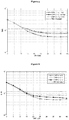
- Figure 4 shows the performance of the Doppler compensation in comparison to the 1-tap frequency domain equalizer, BEM (Basis Expansion Model) based equalizer (which is one of the state-of-art methods) and that without Doppler shift compensation case.
- the OMP Orthogonal Matching Pursuit
- Figure 5 shows the FEC (Forward Error Correction) threshold with red line after which BER becomes zero in case FEC is activated.
- the adaptive dictionary can reduce the power knowing that FEC will correct all bit errors starting from that FEC threshold. Hence, low precision dictionary can be used which requires less computation and BER which can be corrected by FEC. By using the adaptive dictionary, the computation can be reduced up to 45%.
- FEC is concatenated LDPC and BCH codes in DVB-T2 with coding rate of 1/2.
- Figure 6 introduces the adaptive stopping criterion which can reduce the computation after FEC threshold similar to the adaptive dictionary.
- the algorithm is stopped when T p > 1 or R p ⁇ 10 ⁇ SNR / 200 2 is satisfied where for st.c.2 it will T p > 1 or R p ⁇ 10 ⁇ SNR / 200 0.04 and for st.c.3 T p > 1 or R p ⁇ 10 ⁇ SNR / 200 0.07 .
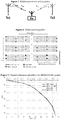
- Figure 7 shows a MISO transmission system using multiple transmitters and one receiver, where the transmitted base data is the same in the transmitters but transmitted with slightly modified versions.
- y is the superimposition of them through different channels. The resulting diversity property improves the transmission.
- Figure 8 illustrates a diversity scheme of the system based on the Alamouti methodology(Digital Video Broadcasting (DVB); Implementation guidelines for a second generation digital terrestrial television broadcasting system (DVBT2), Technical Specifications, ETSI TS 102 831 V1.2.1, 2012; Alamouti S. M., A simple transmit diversity technique for wireless communications, IEEE journal on selected areas in communications, 1998, 1,8 ).
- DVD Digital Video Broadcasting
- DVBT2 digital terrestrial television broadcasting system
- the Tx 1 and Tx 2 are the transmitters which belong to MISO group 1 and group 2.
- the transmitter in MISO group 1 transmits the signals without buffering, negation and complex conjugation.
- the signals transmitted by MISO group 2 transmitter undergo pairwise modification; Tx 2 transmits - S 1 * while Tx 1 transmits S 0 , and Tx 2 transmits S 0 * while Tx 1 transmits S 1 .
- the cells S 0 and S 1 come from different Physical Layer Pipes (PLPs) and have no special relationship.
- h 11 and h 12 are the channel transfer functions between Tx 1 and Rx and Tx 2 and Rx.
- MISO in frequency direction with two transmitters and a slightly modified version of the second transmitter's symbols.
- the MISO processing and pilot modification for the signal from transmitters in MISO group 1 is unmodified.
- the group 2 is modified in the reverse order in frequency for each pair of the constellation. Since some pilots are inverted in MISO group 2 signal, the pilots for the same position can be calculated using the sum ( sum ) and the difference ( diff ) pilots. This is done by interpolation both in time and in frequency direction. After calculating sum and the diff pilots for the same positions one can find values for the channel 1 as ( sum - diff )/2 and for the channel 2 as ( sum + diff )/2 . Finally, one can estimate both channels.
- the channel coherence time i.e. the time in which the Doppler shift is assumed to be constant, needs to be longer due to the interpolation in time - between symbols.
- the density of the pilots decreases twice in MISO in comparison to SISO. To achieve the same performance in the channel estimation, the number of the pilots should be increased twice.
- channel matrix is unknown, it can be estimated using the methods described in connection with the single sender (SISO) case, using matching pursuit.
- the algorithms have been implemented in the DVB-T2 common simulations package (DVB-T2 CSP, DVB-T2: The Common Simulation Platform, BBC R&D White Paper 196, http://downloads.bbc.co.uk/rd/pubs/whp/whp-pdf-files/WHP196.pdf).
- the selected system parameters are MISO-OFDM with 1 ⁇ 8 guard interval, 8k mode, 256-QAM modulation and PP2 pilot symbols.
- the synchronization and phase offset correction are assumed to be perfect;
- Figure 9 shows a comparison of different channel estimation algorithms, based on the bit error rate (BER).
- BER bit error rate
- Figure 10 compares the system without Doppler compensation (conventional) to the system with the proposed algorithm to demonstrate the Doppler compensation algorithm. The difference is very small between the ideal and the proposed one which indicates that the channel estimation is very accurate.
- LS-OMP is used as a channel estimation algorithm.
- Figure 11 compares MISO and SISO using LS-OMP and the proposed Doppler compensation.
- MISO is better than SISO which is evident that MISO benefits the diversity property.
Landscapes
- Engineering & Computer Science (AREA)
- Computer Networks & Wireless Communication (AREA)
- Signal Processing (AREA)
- Power Engineering (AREA)
- Physics & Mathematics (AREA)
- Mathematical Physics (AREA)
- Radio Transmission System (AREA)
Claims (6)
- Verfahren zur Kompensation von Dopplerverschiebungen, v, in einem Mobilkommunikationssystem, umfassend die Schritte:- Empfang eines Mobilfunksignals, y;- Transformieren (140) des Signals, um eine Dopplerverschiebung, vp, mindestens eines Ausbreitungsweges, p, des Signals, y, zu kompensieren, wobei die Dopplerverschiebung, vp, basierend auf einer invertierten Kanalmatrix des mobilen Kommunikationssystems kompensiert wird und wobei die Kanalmatrix aus dem empfangenen Signal unter Verwendung eines Matching-Pursuit, MP, Algorithmus geschätzt wird; und- Ausgabe des kompensierten Signals;dadurch gekennzeichnet, dass
der Matching-Pursuit, MP, Algorithmus den Schritt umfasst:- Suche nach einer Zeitverzögerung in einem Wörterbuch, indem eine Dopplerverschiebung konstant gehalten wird. - Verfahren nach Anspruch 1, wobei der Matching-Pursuit, MP, Algorithmus weiterhin den Schritt umfasst:- Bestimmen einer Dopplerverschiebung, für die gefundene Verzögerung.
- Verfahren nach Anspruch 1, wobei ein Stoppkriterium für den Matching-Pursuit Algorithmus einen Abstand zwischen Kanalkoeffizienten für unterschiedliche Anzahlen von Pfaden berücksichtigt.
- Verfahren nach Anspruch 3, wobei ein Stoppkriterium für den Matching-Pursuit Algorithmus weiterhin ein Signal-Rausch-Verhältnis, SNR, berücksichtigt.
- Verfahren nach Anspruch 1, wobei das Mobilfunksignal ein OFDM-Signal ist.
- OFDM-Empfänger, geeignet zur Durchführung eines Verfahrens nach Anspruch 1.
Priority Applications (1)
| Application Number | Priority Date | Filing Date | Title |
|---|---|---|---|
| EP15701940.7A EP3090519B1 (de) | 2013-12-30 | 2015-01-05 | Verfahren und vorrichtungen zur dopplerverschiebungskompensation in einem mobilkommunikationssystem |
Applications Claiming Priority (4)
| Application Number | Priority Date | Filing Date | Title |
|---|---|---|---|
| US201361921609P | 2013-12-30 | 2013-12-30 | |
| EP13199807 | 2013-12-30 | ||
| PCT/EP2015/050068 WO2015101672A1 (en) | 2013-12-30 | 2015-01-05 | Methods and devices for doppler shift compensation in a mobile communication system |
| EP15701940.7A EP3090519B1 (de) | 2013-12-30 | 2015-01-05 | Verfahren und vorrichtungen zur dopplerverschiebungskompensation in einem mobilkommunikationssystem |
Publications (2)
| Publication Number | Publication Date |
|---|---|
| EP3090519A1 EP3090519A1 (de) | 2016-11-09 |
| EP3090519B1 true EP3090519B1 (de) | 2018-10-10 |
Family
ID=49911354
Family Applications (1)
| Application Number | Title | Priority Date | Filing Date |
|---|---|---|---|
| EP15701940.7A Not-in-force EP3090519B1 (de) | 2013-12-30 | 2015-01-05 | Verfahren und vorrichtungen zur dopplerverschiebungskompensation in einem mobilkommunikationssystem |
Country Status (2)
| Country | Link |
|---|---|
| EP (1) | EP3090519B1 (de) |
| WO (2) | WO2015101418A2 (de) |
Families Citing this family (4)
| Publication number | Priority date | Publication date | Assignee | Title |
|---|---|---|---|---|
| US20210105167A1 (en) * | 2017-12-06 | 2021-04-08 | Xinow Ltd. | Audio transmission and reception |
| CN113472462B (zh) * | 2020-07-01 | 2023-07-21 | 鄂尔多斯市高新技术产业投资有限责任公司 | 一种基于通信技术的信道接入配置系统 |
| CN115987741B (zh) * | 2023-03-20 | 2023-05-30 | 四川创智联恒科技有限公司 | 一种基于ofdm系统的多普勒频偏补偿方法 |
| CN116953643A (zh) * | 2023-07-19 | 2023-10-27 | 中国船舶集团有限公司第七二四研究所 | 一种基于加权模糊函数的波形设计方法 |
Family Cites Families (1)
| Publication number | Priority date | Publication date | Assignee | Title |
|---|---|---|---|---|
| AU724387B2 (en) * | 1997-02-04 | 2000-09-21 | Nokia Telecommunications Oy | Compensation of doppler shift in a mobile communication system |
-
2014
- 2014-12-30 WO PCT/EP2014/003486 patent/WO2015101418A2/en not_active Ceased
-
2015
- 2015-01-05 EP EP15701940.7A patent/EP3090519B1/de not_active Not-in-force
- 2015-01-05 WO PCT/EP2015/050068 patent/WO2015101672A1/en not_active Ceased
Non-Patent Citations (2)
| Title |
|---|
| MA ZIJI ET AL: "Low-complexity channel estimation for ISDB-T over doubly-selective fading channels", 2013 INTERNATIONAL SYMPOSIUM ON INTELLIGENT SIGNAL PROCESSING AND COMMUNICATION SYSTEMS, IEEE, 12 November 2013 (2013-11-12), pages 114 - 118, XP032541931, DOI: 10.1109/ISPACS.2013.6704531 * |
| SEAN MASON ET AL: "An OFDM Design for Underwater Acoustic Channels with Doppler Spread", DIGITAL SIGNAL PROCESSING WORKSHOP AND 5TH IEEE SIGNAL PROCESSING EDUCATION WORKSHOP, 2009. DSP/SPE 2009. IEEE 13TH, IEEE, PISCATAWAY, NJ, USA, 4 January 2009 (2009-01-04), pages 138 - 143, XP031425831, ISBN: 978-1-4244-3677-4 * |
Also Published As
| Publication number | Publication date |
|---|---|
| EP3090519A1 (de) | 2016-11-09 |
| WO2015101418A2 (en) | 2015-07-09 |
| WO2015101672A1 (en) | 2015-07-09 |
Similar Documents
| Publication | Publication Date | Title |
|---|---|---|
| Sure et al. | A survey on OFDM channel estimation techniques based on denoising strategies | |
| US9806912B2 (en) | Methods and devices for channel estimation and OFDM receiver | |
| CN111786921B (zh) | 一种基于先验时延信息的航空通信系统基扩展信道估计方法 | |
| US20250055738A1 (en) | Receiver for and method of receiving symbols over time varying channels with Doppler spread | |
| US12531771B2 (en) | Transmitter and receiver for, and method of, transmitting and receiving symbols over time varying channels with Doppler spread | |
| KR20130016920A (ko) | Ofdm 통신 시스템의 수신 장치 및 그의 위상 잡음 완화 방법 | |
| US9674024B2 (en) | Method for transmitting a signal with a preamble and corresponding devices, signal with corresponding preamble for synchronization of a receiver | |
| JP2003218826A (ja) | 直交周波数分割多重信号の受信方式及び受信機 | |
| WO2015101672A1 (en) | Methods and devices for doppler shift compensation in a mobile communication system | |
| CN120077619B (zh) | 用于在具有多普勒扩展的时变信道上发射和接收符号的发射机和接收机及其方法 | |
| US7619964B2 (en) | High doppler channel estimation for OFD multiple antenna systems | |
| US8335284B1 (en) | System and method for inter-channel interference reduction | |
| US8611444B2 (en) | Receiver and signal receiving method thereof | |
| US7424062B2 (en) | Efficient doppler compensation method and receiver for orthogonal-frequency-division-multiplexing (OFDM) systems | |
| CN103428126B (zh) | 一种基于梳状导频的ofdm自适应信道估计方法 | |
| CN117397215A (zh) | 基于码本线性化的预编码信号的生成和接收 | |
| CN103414666A (zh) | 一种基于均匀分布导频的二维自适应ofdm信道估计方法 | |
| KR101346282B1 (ko) | 단일 반송파 mimo 시스템 기반의 pn 부호열을 이용한 반송파 주파수 오차 추정 방법 | |
| KR102136935B1 (ko) | V2x 통신을 위한 채널 추정 방법 | |
| Wang et al. | Attenuated-RMMP: A Compressed Sensing Estimation over OTFS Modulation for High Doppler Shift Communications | |
| Tanangsanakool et al. | Low-Complexity based TDE Method for OFDM Signal in Higher Time-Varying Fading Channels | |
| Eldarov et al. | FFT-based equalizer with Doppler compensation for OFDM systems in time-variant multipath channels | |
| Liu et al. | A Detection Chain Based Low Complexity SIC Detector for OTFS Systems with Direction Selection | |
| Hegazy et al. | A Low-Complexity Framework for Enhanced Sensing and Communication in Terahertz ISAC Systems | |
| Ranasinghe et al. | Low-Complexity Receiver Design for Affine Filter Bank Modulation |
Legal Events
| Date | Code | Title | Description |
|---|---|---|---|
| PUAI | Public reference made under article 153(3) epc to a published international application that has entered the european phase |
Free format text: ORIGINAL CODE: 0009012 |
|
| 17P | Request for examination filed |
Effective date: 20160728 |
|
| AK | Designated contracting states |
Kind code of ref document: A1 Designated state(s): AL AT BE BG CH CY CZ DE DK EE ES FI FR GB GR HR HU IE IS IT LI LT LU LV MC MK MT NL NO PL PT RO RS SE SI SK SM TR |
|
| AX | Request for extension of the european patent |
Extension state: BA ME |
|
| DAX | Request for extension of the european patent (deleted) | ||
| STAA | Information on the status of an ep patent application or granted ep patent |
Free format text: STATUS: EXAMINATION IS IN PROGRESS |
|
| 17Q | First examination report despatched |
Effective date: 20170511 |
|
| RIC1 | Information provided on ipc code assigned before grant |
Ipc: H04L 25/02 20060101AFI20180315BHEP Ipc: H04L 27/26 20060101ALI20180315BHEP Ipc: H04B 7/01 20060101ALI20180315BHEP Ipc: H04L 25/03 20060101ALI20180315BHEP |
|
| GRAP | Despatch of communication of intention to grant a patent |
Free format text: ORIGINAL CODE: EPIDOSNIGR1 |
|
| STAA | Information on the status of an ep patent application or granted ep patent |
Free format text: STATUS: GRANT OF PATENT IS INTENDED |
|
| INTG | Intention to grant announced |
Effective date: 20180420 |
|
| GRAS | Grant fee paid |
Free format text: ORIGINAL CODE: EPIDOSNIGR3 |
|
| GRAA | (expected) grant |
Free format text: ORIGINAL CODE: 0009210 |
|
| STAA | Information on the status of an ep patent application or granted ep patent |
Free format text: STATUS: THE PATENT HAS BEEN GRANTED |
|
| AK | Designated contracting states |
Kind code of ref document: B1 Designated state(s): AL AT BE BG CH CY CZ DE DK EE ES FI FR GB GR HR HU IE IS IT LI LT LU LV MC MK MT NL NO PL PT RO RS SE SI SK SM TR |
|
| REG | Reference to a national code |
Ref country code: GB Ref legal event code: FG4D |
|
| REG | Reference to a national code |
Ref country code: AT Ref legal event code: REF Ref document number: 1052563 Country of ref document: AT Kind code of ref document: T Effective date: 20181015 Ref country code: CH Ref legal event code: EP |
|
| REG | Reference to a national code |
Ref country code: IE Ref legal event code: FG4D |
|
| REG | Reference to a national code |
Ref country code: DE Ref legal event code: R096 Ref document number: 602015017806 Country of ref document: DE |
|
| REG | Reference to a national code |
Ref country code: NL Ref legal event code: MP Effective date: 20181010 |
|
| REG | Reference to a national code |
Ref country code: LT Ref legal event code: MG4D |
|
| REG | Reference to a national code |
Ref country code: AT Ref legal event code: MK05 Ref document number: 1052563 Country of ref document: AT Kind code of ref document: T Effective date: 20181010 |
|
| PG25 | Lapsed in a contracting state [announced via postgrant information from national office to epo] |
Ref country code: NL Free format text: LAPSE BECAUSE OF FAILURE TO SUBMIT A TRANSLATION OF THE DESCRIPTION OR TO PAY THE FEE WITHIN THE PRESCRIBED TIME-LIMIT Effective date: 20181010 |
|
| PG25 | Lapsed in a contracting state [announced via postgrant information from national office to epo] |
Ref country code: BG Free format text: LAPSE BECAUSE OF FAILURE TO SUBMIT A TRANSLATION OF THE DESCRIPTION OR TO PAY THE FEE WITHIN THE PRESCRIBED TIME-LIMIT Effective date: 20190110 Ref country code: ES Free format text: LAPSE BECAUSE OF FAILURE TO SUBMIT A TRANSLATION OF THE DESCRIPTION OR TO PAY THE FEE WITHIN THE PRESCRIBED TIME-LIMIT Effective date: 20181010 Ref country code: AT Free format text: LAPSE BECAUSE OF FAILURE TO SUBMIT A TRANSLATION OF THE DESCRIPTION OR TO PAY THE FEE WITHIN THE PRESCRIBED TIME-LIMIT Effective date: 20181010 Ref country code: FI Free format text: LAPSE BECAUSE OF FAILURE TO SUBMIT A TRANSLATION OF THE DESCRIPTION OR TO PAY THE FEE WITHIN THE PRESCRIBED TIME-LIMIT Effective date: 20181010 Ref country code: IS Free format text: LAPSE BECAUSE OF FAILURE TO SUBMIT A TRANSLATION OF THE DESCRIPTION OR TO PAY THE FEE WITHIN THE PRESCRIBED TIME-LIMIT Effective date: 20190210 Ref country code: LV Free format text: LAPSE BECAUSE OF FAILURE TO SUBMIT A TRANSLATION OF THE DESCRIPTION OR TO PAY THE FEE WITHIN THE PRESCRIBED TIME-LIMIT Effective date: 20181010 Ref country code: LT Free format text: LAPSE BECAUSE OF FAILURE TO SUBMIT A TRANSLATION OF THE DESCRIPTION OR TO PAY THE FEE WITHIN THE PRESCRIBED TIME-LIMIT Effective date: 20181010 Ref country code: HR Free format text: LAPSE BECAUSE OF FAILURE TO SUBMIT A TRANSLATION OF THE DESCRIPTION OR TO PAY THE FEE WITHIN THE PRESCRIBED TIME-LIMIT Effective date: 20181010 Ref country code: PL Free format text: LAPSE BECAUSE OF FAILURE TO SUBMIT A TRANSLATION OF THE DESCRIPTION OR TO PAY THE FEE WITHIN THE PRESCRIBED TIME-LIMIT Effective date: 20181010 Ref country code: NO Free format text: LAPSE BECAUSE OF FAILURE TO SUBMIT A TRANSLATION OF THE DESCRIPTION OR TO PAY THE FEE WITHIN THE PRESCRIBED TIME-LIMIT Effective date: 20190110 |
|
| PG25 | Lapsed in a contracting state [announced via postgrant information from national office to epo] |
Ref country code: RS Free format text: LAPSE BECAUSE OF FAILURE TO SUBMIT A TRANSLATION OF THE DESCRIPTION OR TO PAY THE FEE WITHIN THE PRESCRIBED TIME-LIMIT Effective date: 20181010 Ref country code: GR Free format text: LAPSE BECAUSE OF FAILURE TO SUBMIT A TRANSLATION OF THE DESCRIPTION OR TO PAY THE FEE WITHIN THE PRESCRIBED TIME-LIMIT Effective date: 20190111 Ref country code: SE Free format text: LAPSE BECAUSE OF FAILURE TO SUBMIT A TRANSLATION OF THE DESCRIPTION OR TO PAY THE FEE WITHIN THE PRESCRIBED TIME-LIMIT Effective date: 20181010 Ref country code: PT Free format text: LAPSE BECAUSE OF FAILURE TO SUBMIT A TRANSLATION OF THE DESCRIPTION OR TO PAY THE FEE WITHIN THE PRESCRIBED TIME-LIMIT Effective date: 20190210 Ref country code: AL Free format text: LAPSE BECAUSE OF FAILURE TO SUBMIT A TRANSLATION OF THE DESCRIPTION OR TO PAY THE FEE WITHIN THE PRESCRIBED TIME-LIMIT Effective date: 20181010 |
|
| REG | Reference to a national code |
Ref country code: DE Ref legal event code: R097 Ref document number: 602015017806 Country of ref document: DE |
|
| PG25 | Lapsed in a contracting state [announced via postgrant information from national office to epo] |
Ref country code: IT Free format text: LAPSE BECAUSE OF FAILURE TO SUBMIT A TRANSLATION OF THE DESCRIPTION OR TO PAY THE FEE WITHIN THE PRESCRIBED TIME-LIMIT Effective date: 20181010 Ref country code: DK Free format text: LAPSE BECAUSE OF FAILURE TO SUBMIT A TRANSLATION OF THE DESCRIPTION OR TO PAY THE FEE WITHIN THE PRESCRIBED TIME-LIMIT Effective date: 20181010 Ref country code: CZ Free format text: LAPSE BECAUSE OF FAILURE TO SUBMIT A TRANSLATION OF THE DESCRIPTION OR TO PAY THE FEE WITHIN THE PRESCRIBED TIME-LIMIT Effective date: 20181010 |
|
| PLBE | No opposition filed within time limit |
Free format text: ORIGINAL CODE: 0009261 |
|
| STAA | Information on the status of an ep patent application or granted ep patent |
Free format text: STATUS: NO OPPOSITION FILED WITHIN TIME LIMIT |
|
| PG25 | Lapsed in a contracting state [announced via postgrant information from national office to epo] |
Ref country code: RO Free format text: LAPSE BECAUSE OF FAILURE TO SUBMIT A TRANSLATION OF THE DESCRIPTION OR TO PAY THE FEE WITHIN THE PRESCRIBED TIME-LIMIT Effective date: 20181010 Ref country code: SK Free format text: LAPSE BECAUSE OF FAILURE TO SUBMIT A TRANSLATION OF THE DESCRIPTION OR TO PAY THE FEE WITHIN THE PRESCRIBED TIME-LIMIT Effective date: 20181010 Ref country code: SM Free format text: LAPSE BECAUSE OF FAILURE TO SUBMIT A TRANSLATION OF THE DESCRIPTION OR TO PAY THE FEE WITHIN THE PRESCRIBED TIME-LIMIT Effective date: 20181010 Ref country code: EE Free format text: LAPSE BECAUSE OF FAILURE TO SUBMIT A TRANSLATION OF THE DESCRIPTION OR TO PAY THE FEE WITHIN THE PRESCRIBED TIME-LIMIT Effective date: 20181010 Ref country code: MC Free format text: LAPSE BECAUSE OF FAILURE TO SUBMIT A TRANSLATION OF THE DESCRIPTION OR TO PAY THE FEE WITHIN THE PRESCRIBED TIME-LIMIT Effective date: 20181010 |
|
| REG | Reference to a national code |
Ref country code: CH Ref legal event code: PL |
|
| 26N | No opposition filed |
Effective date: 20190711 |
|
| PG25 | Lapsed in a contracting state [announced via postgrant information from national office to epo] |
Ref country code: LU Free format text: LAPSE BECAUSE OF NON-PAYMENT OF DUE FEES Effective date: 20190105 |
|
| REG | Reference to a national code |
Ref country code: BE Ref legal event code: MM Effective date: 20190131 |
|
| REG | Reference to a national code |
Ref country code: IE Ref legal event code: MM4A |
|
| PG25 | Lapsed in a contracting state [announced via postgrant information from national office to epo] |
Ref country code: SI Free format text: LAPSE BECAUSE OF FAILURE TO SUBMIT A TRANSLATION OF THE DESCRIPTION OR TO PAY THE FEE WITHIN THE PRESCRIBED TIME-LIMIT Effective date: 20181010 |
|
| PG25 | Lapsed in a contracting state [announced via postgrant information from national office to epo] |
Ref country code: BE Free format text: LAPSE BECAUSE OF NON-PAYMENT OF DUE FEES Effective date: 20190131 |
|
| PG25 | Lapsed in a contracting state [announced via postgrant information from national office to epo] |
Ref country code: LI Free format text: LAPSE BECAUSE OF NON-PAYMENT OF DUE FEES Effective date: 20190131 Ref country code: CH Free format text: LAPSE BECAUSE OF NON-PAYMENT OF DUE FEES Effective date: 20190131 |
|
| PG25 | Lapsed in a contracting state [announced via postgrant information from national office to epo] |
Ref country code: IE Free format text: LAPSE BECAUSE OF NON-PAYMENT OF DUE FEES Effective date: 20190105 |
|
| PG25 | Lapsed in a contracting state [announced via postgrant information from national office to epo] |
Ref country code: TR Free format text: LAPSE BECAUSE OF FAILURE TO SUBMIT A TRANSLATION OF THE DESCRIPTION OR TO PAY THE FEE WITHIN THE PRESCRIBED TIME-LIMIT Effective date: 20181010 |
|
| PGFP | Annual fee paid to national office [announced via postgrant information from national office to epo] |
Ref country code: GB Payment date: 20200127 Year of fee payment: 6 |
|
| PG25 | Lapsed in a contracting state [announced via postgrant information from national office to epo] |
Ref country code: MT Free format text: LAPSE BECAUSE OF NON-PAYMENT OF DUE FEES Effective date: 20190105 |
|
| PGFP | Annual fee paid to national office [announced via postgrant information from national office to epo] |
Ref country code: FR Payment date: 20200129 Year of fee payment: 6 |
|
| PG25 | Lapsed in a contracting state [announced via postgrant information from national office to epo] |
Ref country code: CY Free format text: LAPSE BECAUSE OF FAILURE TO SUBMIT A TRANSLATION OF THE DESCRIPTION OR TO PAY THE FEE WITHIN THE PRESCRIBED TIME-LIMIT Effective date: 20181010 |
|
| PG25 | Lapsed in a contracting state [announced via postgrant information from national office to epo] |
Ref country code: HU Free format text: LAPSE BECAUSE OF FAILURE TO SUBMIT A TRANSLATION OF THE DESCRIPTION OR TO PAY THE FEE WITHIN THE PRESCRIBED TIME-LIMIT; INVALID AB INITIO Effective date: 20150105 |
|
| GBPC | Gb: european patent ceased through non-payment of renewal fee |
Effective date: 20210105 |
|
| PG25 | Lapsed in a contracting state [announced via postgrant information from national office to epo] |
Ref country code: FR Free format text: LAPSE BECAUSE OF NON-PAYMENT OF DUE FEES Effective date: 20210131 |
|
| PG25 | Lapsed in a contracting state [announced via postgrant information from national office to epo] |
Ref country code: GB Free format text: LAPSE BECAUSE OF NON-PAYMENT OF DUE FEES Effective date: 20210105 |
|
| PGFP | Annual fee paid to national office [announced via postgrant information from national office to epo] |
Ref country code: DE Payment date: 20220127 Year of fee payment: 8 |
|
| PG25 | Lapsed in a contracting state [announced via postgrant information from national office to epo] |
Ref country code: MK Free format text: LAPSE BECAUSE OF FAILURE TO SUBMIT A TRANSLATION OF THE DESCRIPTION OR TO PAY THE FEE WITHIN THE PRESCRIBED TIME-LIMIT Effective date: 20181010 |
|
| REG | Reference to a national code |
Ref country code: DE Ref legal event code: R119 Ref document number: 602015017806 Country of ref document: DE |
|
| PG25 | Lapsed in a contracting state [announced via postgrant information from national office to epo] |
Ref country code: DE Free format text: LAPSE BECAUSE OF NON-PAYMENT OF DUE FEES Effective date: 20230801 |