EP3086696B1 - Toaster and method for controlling said toaster - Google Patents
Toaster and method for controlling said toaster Download PDFInfo
- Publication number
- EP3086696B1 EP3086696B1 EP14833209.1A EP14833209A EP3086696B1 EP 3086696 B1 EP3086696 B1 EP 3086696B1 EP 14833209 A EP14833209 A EP 14833209A EP 3086696 B1 EP3086696 B1 EP 3086696B1
- Authority
- EP
- European Patent Office
- Prior art keywords
- heating
- program
- food
- toaster
- heating element
- Prior art date
- Legal status (The legal status is an assumption and is not a legal conclusion. Google has not performed a legal analysis and makes no representation as to the accuracy of the status listed.)
- Active
Links
- 238000000034 method Methods 0.000 title claims description 8
- 238000010438 heat treatment Methods 0.000 claims description 81
- 235000013305 food Nutrition 0.000 claims description 47
- 238000001514 detection method Methods 0.000 claims description 44
- 230000004913 activation Effects 0.000 claims description 13
- 238000001994 activation Methods 0.000 claims description 13
- 230000009849 deactivation Effects 0.000 claims description 12
- 230000006870 function Effects 0.000 description 18
- 238000006073 displacement reaction Methods 0.000 description 7
- 235000008429 bread Nutrition 0.000 description 5
- 238000000605 extraction Methods 0.000 description 2
- 235000015219 food category Nutrition 0.000 description 2
- 238000003780 insertion Methods 0.000 description 2
- 230000037431 insertion Effects 0.000 description 2
- 241001237745 Salamis Species 0.000 description 1
- 235000013351 cheese Nutrition 0.000 description 1
- 238000010411 cooking Methods 0.000 description 1
- 238000010586 diagram Methods 0.000 description 1
- 230000000694 effects Effects 0.000 description 1
- 239000012467 final product Substances 0.000 description 1
- 239000000463 material Substances 0.000 description 1
- 230000004044 response Effects 0.000 description 1
- 235000015175 salami Nutrition 0.000 description 1
- 235000013311 vegetables Nutrition 0.000 description 1
Images

Classifications
-
- A—HUMAN NECESSITIES
- A47—FURNITURE; DOMESTIC ARTICLES OR APPLIANCES; COFFEE MILLS; SPICE MILLS; SUCTION CLEANERS IN GENERAL
- A47J—KITCHEN EQUIPMENT; COFFEE MILLS; SPICE MILLS; APPARATUS FOR MAKING BEVERAGES
- A47J37/00—Baking; Roasting; Grilling; Frying
- A47J37/06—Roasters; Grills; Sandwich grills
- A47J37/08—Bread-toasters
- A47J37/0814—Bread-toasters with automatic bread ejection or timing means
- A47J37/0842—Bread-toasters with automatic bread ejection or timing means with electronic timers
Definitions
- the present invention relates to a toaster and to a method for controlling said toaster.
- a toaster includes one or more heating compartments, into which foods to be heated are inserted.
- Said foods may comprise, for example, one or more slices of bread; in case of two slices of bread, other foods can be placed in between, such as, for example, sliced salami and ham, cheese, vegetables, etc.
- a toaster which additionally comprises one or more grids for centering the food within said heating compartments.
- Heating elements are also associated with the heating compartments, typically consisting of electric resistors that, when run by electric current, transfer heat to the foods inserted in the heating compartments.
- accessory pliers can be used, which facilitate the insertion and extraction of the foods from the heating compartments.
- Known toasters make available to the user one or more heating programs, each one characterized by a respective time duration.
- the user can choose the preferred program as a function of the type of food to be heated.
- Document US20120237657A1 discloses a method for cooking food, determining cook time based on recognized food product and a user entered food category of food product; by moving upper platen toward lower platen, the food product is recognized due to thickness in response to upper platen making contact with food product which is arranged on lower platen.
- the Applicant has then thought that, by setting a heating program including a suitable series of activations/deactivations of the heating means, the heat can be allowed to reach also the innermost layers of the food without causing any undesired effects, such as burning, on the outermost surfaces.
- the Applicant has also perceived that, for the purpose of optimizing the operation of the toaster and hence the heating of the food positioned in the heating compartments, it would be desirable that the toaster itself could automatically activate the most appropriate heating programs without requiring the user's intervention.
- One basic idea of the present invention is therefore to include, in a toaster equipped with at least one heating compartment and at least one heating element associated with said heating compartment, at least one detection device for recognising a thickness of said at least one food and generating a corresponding detection signal, as well as a control unit, acting upon said at least one heating element and configured for executing a heating program as a function of said detection signal.
- the invention relates to a method for controlling a toaster, said method comprising the recognition of a thickness of at least one food, and the execution of a heating program as a function of said thickness.
- Said toaster comprises at least one positioning structure acting upon said at least one food for positioning the same in said at least one heating compartment.
- Said detection device cooperates with at least one positioning structure in order to recognise said at least one thickness.
- Said detection device is configured for recognising said at least one thickness as a function of a displacement of said at least one positioning structure.
- Said at least one positioning structure comprises a pair of grids respectively acting upon opposite sides of a respective food.
- Said toaster comprises at least one stem having a first end constrained to a respective one of said grids, and a second end opposite to said first end, said detection device being configured for determining said at least one thickness as a function of a displacement of said second end.
- Said detection device comprises a sensing element which can be switched between a first and a second operating conditions, said sensing element being in the first operating condition when it is not in contact with the second end of said stem, said sensing element being switched into the second operating condition when the second end of said stem exerts a certain pressure on said sensing element.
- Said detection device generates said detection signal when said sensing element is switched into the second operating condition.
- said control unit acts upon said at least one heating element in order to execute a main heating program comprising a succession of activations separated by respective deactivations of said at least one heating element.
- said control unit acts upon said at least one heating element in order to execute a heating program in which said at least one heating element is kept active for substantially the whole duration of the program.
- said detection device comprises a sensing element cooperating with the second end of said stem, so that said detection signal will vary as a function of the position of said second end.
- said sensing element is configured for detecting the position of said second end with substantial spatial continuity within a predetermined stroke.
- said detection signal is representative of the position of said second end within said predetermined stroke.
- said control unit is configured for selecting, among a plurality of preset programs, one heating program to be executed as a function of said detection signal.
- said plurality of programs comprise:
- reference numeral 1 designates as a whole a toaster in accordance with the present invention.
- the toaster 1 comprises, first of all, a heating compartment 11, 12, into which the food 13, 14 to be heated is positioned.
- the toaster 1 comprises two heating compartments 11, 12, each one adapted to receive a respective food 13, 14.
- the food 13, 14 may comprise, by way of example, slices of bread, toasts, sandwiches, etc.
- Each one of the compartments 11, 12 may have a substantially parallelepiped shape, i.e. a shape suitable for housing, with some clearance allowing comfortable insertion and extraction, a slice of bread or a couple of slices of bread between which at least one other food is interposed (toast/sandwich).
- the toaster 1 further comprises at least one heating element 21-24, associated with the at least one heating compartment 11, 12 and adapted to heat the food 13, 14 contained in said at least one compartment.
- each heating compartment 11, 12 can be conveniently associated with a respective positioning structure 50, 51.
- each positioning structure 50, 51 comprises a pair of grids 25, 26; 27, 28, also referred to as "centering grids".
- the positioning structure 50, 51 is movable relative to the frame 2 of the toaster 1, in order to allow the food 13, 14 to be properly centered within the respective heating compartment 11, 12.
- each heating compartment 11, 12 is associated with a respective pair of heating elements 21, 22; 23, 24.
- each heating element 21-24 is integral with the frame 2 of the toaster 1.
- Each heating element 21-24 can advantageously be implemented as an electric resistor, e.g. a coil-shaped one, and positioned on one side of the heating compartment 11, 12.
- the heating elements 21, 22; 23, 24 of each pair are located on opposite sides of the respective heating compartment 11, 12, in order to heat both surfaces of the food 13, 14.
- the at least one heating element 21-24 is preferably run by a predetermined current, so as to generate the necessary heat and transfer it to the food positioned in the respective heating compartment 11, 12.
- the toaster 1 further comprises at least one detection device 70, 80 in order to recognise a thickness of the at least one food 13, 14 and generate a corresponding detection signal DS1, DS2.
- the toaster 1 comprises a pair of detection devices 70, 80, each one associated with a respective positioning structure 50, 51.
- the toaster 1 further comprises a control unit associated with the at least one heating element 21-24 and configured for executing a heating program as a function of the detection signal DS1, DS2.
- the detection device 70, 80 cooperates with the positioning structure 50, 51 in order to recognise said at least one thickness.
- the detection device 70, 80 is configured for recognising the thickness of the food 13, 14 as a function of a displacement of the positioning structure 50, 51.
- the detection device 70 recognises the thickness of the food 13 as a function of the displacement of the positioning structure 50 and generates the corresponding detection signal DS1; likewise, the detection device 80 recognises the thickness of the food 14 as a function of the displacement of the positioning structure 51 and generates the detection signal DS2.
- the control unit 30 then adjusts the operation of the heating elements 21-24 as a function of the signals DS1, DS2.
- the operation of the heating elements 21, 22 can be adjusted as a function of the detection signal DS1
- the operation of the heating elements 23, 24 can be adjusted as a function of the detection signal DS2.
- the detection elements 21-24 are all adjusted in the same manner, which is determined by the control unit 30 on the basis of the two detection signals DS1, DS2.
- the toaster 1 comprises at least one stem 60, 65 having a first end 60a, 65a and a second end 60b, 65b.
- the first end 60a, 65a of the stem 60, 65 is constrained to a respective one of the above-mentioned grids 25-28.
- the second end 60b, 65b of the stem 60, 65 is used, instead, for determining the displacement of the grid, and hence the thickness of the food.
- the grid 25 is constrained to the stem 60, and the grid 28 is constrained to the stem 65.
- the stem 60, 65 is substantially integral with the respective grid.
- the detection device 70, 80 is configured for determining the thickness of the food 13, 14 as a function of the displacement of the second end 60b, 65b of the stem 60, 65.
- the detection device 70, 80 is preferably equipped with a sensing element 71, 81, which can be switched between a first and a second operating conditions.
- the sensing element 71, 81 is in the first operating condition when it is not in contact with the second end 60b, 65b of the stem 60.
- the sensing element 71, 81 is switched into the second operating condition when the second end 60b, 65b of the stem 60, 65 exerts a certain pressure on the sensing element 71, 81 itself.
- the sensing element 71, 81 is normally separated from the second end 60b, 65b of the stem 60, 65, i.e. in the first operating condition.
- the stem undergoes a translational movement (from left to right in Figure 2 ), until the second end 60b, 65b of the stem 60, 65 abuts against the sensing element 71, 81, thus exerting some pressure on it and switching it into the second operating condition.
- a particularly thick food e.g. a toast or a sandwich
- the sensing element 71, 81 can be implemented as some sort of electromechanical push-button that, depending on the pressure exerted on it, will cause either the generation or the interruption of a certain voltage/current.
- the detection device 70, 80 When the sensing element 71, 81 is switched into the second operating condition, the detection device 70, 80 generates the detection signal DS1, DS2.
- the control unit 30 acts upon the at least one heating element 21-24 in order to execute a main heating program comprising a succession of activations separated by respective deactivations of said at least one heating element 21-24.
- the main heating program will activate and deactivate the at least one heating element 21-24 multiple times, so that, given a certain total duration of the main heating program, the total on time of the at least one heating element 21-24 will be significantly shorter than said duration and will be distributed in a predetermined manner over the duration of the program.
- the heating compartment 11, 12 is associated with a pair of heating elements 21, 22; 23, 24, the succession of activations/deactivations in the main heating program is imposed on both of such heating elements.
- the main heating program may comprise a plurality of activations of the at least one heating element 21-24, each one having a duration of 40 seconds to 50 seconds, each pair of consecutive activations being separated by one deactivation having a duration of 10 seconds to 20 seconds.
- the total duration of the program may be, for example, comprised between 190 seconds and 260 seconds, during which the at least one heating element 21-24 is activated 4 times, i.e. it is activated for a total time between 160 seconds and 200 seconds.
- the control unit 30 acts upon the at least one heating element 21-24 in order to execute a heating program in which the at least one heating element 21-24 is kept active for substantially the whole duration of the program.
- a traditional program is executed, the duration of which is preferably set by the user.
- the detection device 70, 80 comprises a sensing element 71', 81' cooperating with the second end 60b, 65b of the stem 60, 65, so that the detection signal DS1, DS2 will vary as a function of the position of the second end 60b, 65b itself.
- the sensing element 71', 81' is configured for detecting the position of the second end 60b, 65b with substantial spatial continuity within a predetermined stroke.
- Said predetermined stroke is defined between two extreme positions that the second end 60b, 65b can take, respectively in the absence of food in the heating compartment or in the presence of a food 13, 14 of maximum thickness in the same compartment.
- the detection signal DS1, DS2 is representative of the position of the second end 60b, 65b within the predetermined stroke.
- One possible practical implementation uses a sliding electric contact between the second end 60b, 65b and a support 90, 91 integral with the frame 2 of the toaster 1. As the position of the second end 60b, 65b changes, a corresponding variable electric signal is generated, which preferably defines the detection signal DS1, DS2.
- the control unit 30 is configured for selecting, among a plurality of preset programs, one heating program to be executed as a function of the detection signal DS1, DS2.
- said plurality of programs comprise:
- the following table shows some examples of programs belonging to the second group: the first and third columns show some exemplary durations of periods of activation of the at least one heating element 21-24; the second and fourth columns show some exemplary durations of the respective periods of deactivation of the at least one heating element 21-24; and the fifth column shows the total duration of each program.
- ON OFF ON OFF Total 55" 30" 55" 30" 2' 50 1' 30" 1' 30" 3' 1' 10" 30" 1' 10" 30" 3' 20" 1' 15" 30" 1' 15" 30" 3' 30" 1' 20" 32" 1' 20" 32" 3' 44" 1' 25" 30" 1' 25" 30" 3' 50"
- control unit 30 is associated with a respective memory 31, which is logically and/or physically divided into two portions: the first portion stores the characteristic parameters of the programs of the first group (typically the time duration thereof), whereas the second portion stores the characteristic parameters of the programs of the second group (e.g.: heating element on/off times, number of activations/deactivations, etc.).
- programs of the second group will be selected.
- programs of the first group will preferably be selected.
- the invention offers significant advantages.
- the toaster can autonomously determine which is the most appropriate program to be used for heating the food positioned in the heating compartments, thereby optimizing the quality of the final product provided to the user.
- the toaster according to the invention has a simple structure which can be manufactured easily and economically.
Landscapes
- Engineering & Computer Science (AREA)
- Food Science & Technology (AREA)
- Electric Stoves And Ranges (AREA)
Description
- The present invention relates to a toaster and to a method for controlling said toaster.
- As is known, a toaster includes one or more heating compartments, into which foods to be heated are inserted. Said foods may comprise, for example, one or more slices of bread; in case of two slices of bread, other foods can be placed in between, such as, for example, sliced salami and ham, cheese, vegetables, etc.
- A toaster is also known which additionally comprises one or more grids for centering the food within said heating compartments. Heating elements are also associated with the heating compartments, typically consisting of electric resistors that, when run by electric current, transfer heat to the foods inserted in the heating compartments.
- In some cases accessory pliers can be used, which facilitate the insertion and extraction of the foods from the heating compartments.
- Known toasters make available to the user one or more heating programs, each one characterized by a respective time duration. By means of a suitable selector, the user can choose the preferred program as a function of the type of food to be heated.
- Document
US20120237657A1 discloses a method for cooking food, determining cook time based on recognized food product and a user entered food category of food product; by moving upper platen toward lower platen, the food product is recognized due to thickness in response to upper platen making contact with food product which is arranged on lower platen. - The Applicant, however, has noticed that known toasters cannot ensure optimal results for some food categories, such as, for example, toasts: by selecting short programs one can obtain a satisfactory browning of the outer surface of the toast, but the inside will not be heated appropriately; by selecting longer programs, the inside of the toast will be heated appropriately, but the outer surfaces will get too hot or may even burn.
- The Applicant has sensed that this problem is due to the fact that, in short programs, the heat is not allowed sufficient time to penetrate the innermost layers of the toast, which will not get sufficiently hot.
- The Applicant has then thought that, by setting a heating program including a suitable series of activations/deactivations of the heating means, the heat can be allowed to reach also the innermost layers of the food without causing any undesired effects, such as burning, on the outermost surfaces.
- The Applicant has also perceived that, for the purpose of optimizing the operation of the toaster and hence the heating of the food positioned in the heating compartments, it would be desirable that the toaster itself could automatically activate the most appropriate heating programs without requiring the user's intervention.
- One basic idea of the present invention is therefore to include, in a toaster equipped with at least one heating compartment and at least one heating element associated with said heating compartment, at least one detection device for recognising a thickness of said at least one food and generating a corresponding detection signal, as well as a control unit, acting upon said at least one heating element and configured for executing a heating program as a function of said detection signal.
- According to another aspect, the invention relates to a method for controlling a toaster, said method comprising the recognition of a thickness of at least one food, and the execution of a heating program as a function of said thickness.
- The Applicant believes that this allows an optimal selection of the mode in which the heat will be transferred to the food.
- Said toaster comprises at least one positioning structure acting upon said at least one food for positioning the same in said at least one heating compartment.
- Said detection device cooperates with at least one positioning structure in order to recognise said at least one thickness.
- Said detection device is configured for recognising said at least one thickness as a function of a displacement of said at least one positioning structure.
- Said at least one positioning structure comprises a pair of grids respectively acting upon opposite sides of a respective food.
- Said toaster comprises at least one stem having a first end constrained to a respective one of said grids, and a second end opposite to said first end, said detection device being configured for determining said at least one thickness as a function of a displacement of said second end.
- Said detection device comprises a sensing element which can be switched between a first and a second operating conditions, said sensing element being in the first operating condition when it is not in contact with the second end of said stem, said sensing element being switched into the second operating condition when the second end of said stem exerts a certain pressure on said sensing element.
- Said detection device generates said detection signal when said sensing element is switched into the second operating condition.
- When said sensing element is switched into the second operating condition, said control unit acts upon said at least one heating element in order to execute a main heating program comprising a succession of activations separated by respective deactivations of said at least one heating element.
- Preferably, when said sensing element is in the first operating condition, said control unit acts upon said at least one heating element in order to execute a heating program in which said at least one heating element is kept active for substantially the whole duration of the program.
- Not according to the invention, said detection device comprises a sensing element cooperating with the second end of said stem, so that said detection signal will vary as a function of the position of said second end.
- Not according to the invention, said sensing element is configured for detecting the position of said second end with substantial spatial continuity within a predetermined stroke.
- Not according to the invention, said detection signal is representative of the position of said second end within said predetermined stroke.
- Preferably, said control unit is configured for selecting, among a plurality of preset programs, one heating program to be executed as a function of said detection signal.
- Preferably, said plurality of programs comprise:
- a. a first group of heating programs, in each one of which said at least one heating element is activated with substantial continuity for the whole duration of the program;
- b. a second group of heating programs, each one of which performing a plurality of activations, separated by respective deactivations, of said at least one heating element during the execution of the program.
- Further features and advantages will become more apparent from the following description of a preferred and non-limiting embodiment of the invention. Said description will refer to the annexed drawings, also provided merely as explanatory and non-limiting examples, wherein:
-
Figure 1 schematically shows a block diagram of a toaster in accordance with the present invention; -
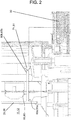
Figure 2 schematically shows a sectional view of a portion of a first embodiment of a toaster in accordance with the present invention; -
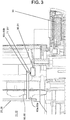
Figure 3 schematically shows a sectional view of a portion of a second embodiment of a toaster, not in accordance with the present invention. - The drawings show different aspects and embodiments of the present invention and, where appropriate, similar structures, components, materials and/or elements are designated in the various drawings by the same reference numerals.
- With reference to the annexed drawings, reference numeral 1 designates as a whole a toaster in accordance with the present invention.
- The toaster 1 comprises, first of all, a
heating compartment - In the preferred embodiment, the toaster 1 comprises two
heating compartments - The food 13, 14 may comprise, by way of example, slices of bread, toasts, sandwiches, etc.
- Each one of the
compartments - The toaster 1 further comprises at least one heating element 21-24, associated with the at least one
heating compartment - For the purpose of positioning the food 13, 14 correctly, each
heating compartment respective positioning structure positioning structure grids 25, 26; 27, 28, also referred to as "centering grids". Thepositioning structure frame 2 of the toaster 1, in order to allow the food 13, 14 to be properly centered within therespective heating compartment - In the preferred embodiment, each
heating compartment heating elements 21, 22; 23, 24. - Preferably, each heating element 21-24 is integral with the
frame 2 of the toaster 1. - Each heating element 21-24 can advantageously be implemented as an electric resistor, e.g. a coil-shaped one, and positioned on one side of the
heating compartment heating elements 21, 22; 23, 24 of each pair are located on opposite sides of therespective heating compartment - When food must be heated, the at least one heating element 21-24 is preferably run by a predetermined current, so as to generate the necessary heat and transfer it to the food positioned in the
respective heating compartment - In accordance with the invention, the toaster 1 further comprises at least one
detection device - Preferably, the toaster 1 comprises a pair of
detection devices respective positioning structure - Advantageously, the toaster 1 further comprises a control unit associated with the at least one heating element 21-24 and configured for executing a heating program as a function of the detection signal DS1, DS2.
- Preferably, the
detection device positioning structure - In particular, the
detection device positioning structure - In practice, the
detection device 70 recognises the thickness of the food 13 as a function of the displacement of thepositioning structure 50 and generates the corresponding detection signal DS1; likewise, thedetection device 80 recognises the thickness of the food 14 as a function of the displacement of thepositioning structure 51 and generates the detection signal DS2. - The
control unit 30 then adjusts the operation of the heating elements 21-24 as a function of the signals DS1, DS2. - For example, the operation of the
heating elements 21, 22 can be adjusted as a function of the detection signal DS1, and the operation of the heating elements 23, 24 can be adjusted as a function of the detection signal DS2. - In a different embodiment, the detection elements 21-24 are all adjusted in the same manner, which is determined by the
control unit 30 on the basis of the two detection signals DS1, DS2. - According to the invention, the toaster 1 comprises at least one
stem first end second end - The
first end stem - The
second end stem - In practice, as schematically shown in
Figure 1 , thegrid 25 is constrained to thestem 60, and the grid 28 is constrained to thestem 65. - Preferably, the
stem - Preferably, the
detection device second end stem - According to the invention, (
Figure 2 ), thedetection device sensing element - The
sensing element second end stem 60. - The
sensing element second end stem sensing element - In practice, the
sensing element second end stem - When a particularly thick food, e.g. a toast or a sandwich, is inserted, the stem undergoes a translational movement (from left to right in
Figure 2 ), until thesecond end stem sensing element - The
sensing element - When the
sensing element detection device - According to the invention, when the
sensing element control unit 30 acts upon the at least one heating element 21-24 in order to execute a main heating program comprising a succession of activations separated by respective deactivations of said at least one heating element 21-24. - In other words, the main heating program will activate and deactivate the at least one heating element 21-24 multiple times, so that, given a certain total duration of the main heating program, the total on time of the at least one heating element 21-24 will be significantly shorter than said duration and will be distributed in a predetermined manner over the duration of the program.
- Preferably, when the
heating compartment heating elements 21, 22; 23, 24, the succession of activations/deactivations in the main heating program is imposed on both of such heating elements. - By way of example only, the main heating program may comprise a plurality of activations of the at least one heating element 21-24, each one having a duration of 40 seconds to 50 seconds, each pair of consecutive activations being separated by one deactivation having a duration of 10 seconds to 20 seconds. The total duration of the program may be, for example, comprised between 190 seconds and 260 seconds, during which the at least one heating element 21-24 is activated 4 times, i.e. it is activated for a total time between 160 seconds and 200 seconds.
- When, on the contrary, the
sensing element control unit 30 acts upon the at least one heating element 21-24 in order to execute a heating program in which the at least one heating element 21-24 is kept active for substantially the whole duration of the program. - In practice, when the
sensing element - In a second embodiment not according to the invention (
Figure 3 ), thedetection device second end stem second end - In particular, the sensing element 71', 81' is configured for detecting the position of the
second end - Said predetermined stroke is defined between two extreme positions that the
second end - Preferably, the detection signal DS1, DS2 is representative of the position of the
second end - One possible practical implementation uses a sliding electric contact between the
second end frame 2 of the toaster 1. As the position of thesecond end - The
control unit 30 is configured for selecting, among a plurality of preset programs, one heating program to be executed as a function of the detection signal DS1, DS2. - In one possible embodiment, said plurality of programs comprise:
- a. a first group of heating programs, in each one of which the at least one heating element 21-24 is activated with substantial continuity for the whole duration of the program;
- b. a second group of heating programs, each one of which performing a plurality of activations, separated by respective deactivations, of the at least one heating element 21-24 during the execution of the program.
- The following table shows some examples of programs belonging to the second group: the first and third columns show some exemplary durations of periods of activation of the at least one heating element 21-24; the second and fourth columns show some exemplary durations of the respective periods of deactivation of the at least one heating element 21-24; and the fifth column shows the total duration of each program.
ON OFF ON OFF Total 55" 30" 55" 30" 2' 50" 1' 30" 1' 30" 3' 1' 10" 30" 1' 10" 30" 3' 20" 1' 15" 30" 1' 15" 30" 3' 30" 1' 20" 32" 1' 20" 32" 3' 44" 1' 25" 30" 1' 25" 30" 3' 50" - In a preferred embodiment, the
control unit 30 is associated with arespective memory 31, which is logically and/or physically divided into two portions: the first portion stores the characteristic parameters of the programs of the first group (typically the time duration thereof), whereas the second portion stores the characteristic parameters of the programs of the second group (e.g.: heating element on/off times, number of activations/deactivations, etc.). - As a function of the detection signal DS1, DS2, it is thus possible to select the most appropriate program from the first or second memory portions.
- Preferably, when the detected thickness is greater than a predetermined threshold, programs of the second group will be selected. Instead, when the thickness is below said threshold, programs of the first group will preferably be selected.
- The invention offers significant advantages.
- First of all, the toaster can autonomously determine which is the most appropriate program to be used for heating the food positioned in the heating compartments, thereby optimizing the quality of the final product provided to the user.
- In addition, by executing programs such as, for example, the above-mentioned main heating program or the above-mentioned programs of the second group, it is possible to optimally heat both the outer surfaces and the innermost layers of the food inserted in the heating compartment.
- This significantly improves the quality of the food provided to the user.
- Furthermore, the toaster according to the invention has a simple structure which can be manufactured easily and economically.
Claims (5)
- A toaster comprising:- at least one heating compartment (11, 12), in which the food to be heated (13, 14) is positioned;- at least one heating element (21-24), associated with said at least one heating compartment (11, 12) and adapted to heat the food (13, 14) positioned in said at least one heating compartment (11, 12);- at least one detection device (70, 80) for recognising a thickness of said at least one food (13, 14) and generating a corresponding detection signal (DS1, DS2);- a control unit (30), acting upon said at least one heating element (21-24) and configured for executing a heating program as a function of said detection signal (DS1, DS2)- at least one positioning structure (50, 51) acting upon said at least one food (13, 14) in order to position the same in said at least one heating compartment (11, 12), wherein said at least one positioning structure (50, 51) comprises a pair of grids (25, 26; 27, 28) respectively acting upon opposite sides of a respective food (13, 14), characterized in that said positioning structure further comprises at least one stem (60, 65) having a first end (60a, 65a) constrained to a respective one of said grids (25, 28) and a second end (60b, 65b) opposite to said first end (60a, 65a), wherein said detection device (70, 80) comprises a sensing element (71, 81) which can be switched between a first and a second operating conditions, said sensing element (71, 81) being in the first operating condition when it is not in contact with the second end (60b, 65b) of said stem (60, 65), said sensing element (71, 81) being switched into the second operating condition when the second end (60b, 65b) of said stem (60, 65) exerts a certain pressure on said sensing element (71, 81), wherein when said sensing element (71, 81) is switched into the second operating condition, said control unit (30) acts upon said at least one heating element (21-24) in order to execute a main heating program comprising a succession of activations separated by respective deactivations of said at least one heating element (21-24).
- A toaster according to claim 1, wherein, when said sensing element (71, 81) is in the first operating condition, said control unit (30) acts upon said at least one heating element (21-24) in order to execute a heating program in which said at least one heating element (21-24) is kept active for substantially the whole duration of the program.
- A toaster according to claim 2, wherein said control unit (30) is configured for selecting, among a plurality of preset programs, one heating program to be executed as a function of said detection signal (DS1, DS2).
- A toaster according to claim 3, wherein said plurality of programs comprise:a. a first group of heating programs, in each one of which said at least one heating element (21-24) is activated with substantial continuity for the whole duration of the program;b. a second group of heating programs, each one of which performing a plurality of activations, separated by respective deactivations, of said at least one heating element (21-24) during the execution of the program.
- A method for controlling a toaster as disclosed in anyone of the preceding claims, said method comprising:- recognising a thickness of at least one food (13, 14);- generating a detection signal (DS1, DS2) corresponding to said thickness- executing a heating program as a function of said detection signal (DS1, DS2),said method further comprising
said control unit (30) acting upon said at least one heating element (21-24) in order to execute a main heating program comprising a succession of activations separated by respective deactivations of said at least one heating element (21-24) when said sensing element (71, 81) is switched into the second operating condition.
Applications Claiming Priority (2)
| Application Number | Priority Date | Filing Date | Title |
|---|---|---|---|
| IT001061A ITTO20131061A1 (en) | 2013-12-23 | 2013-12-23 | TOASTERS AND METHOD OF CONTROL OF SUCH TOASTER |
| PCT/IB2014/066911 WO2015097590A1 (en) | 2013-12-23 | 2014-12-15 | Toaster and method for controlling said toaster |
Publications (2)
| Publication Number | Publication Date |
|---|---|
| EP3086696A1 EP3086696A1 (en) | 2016-11-02 |
| EP3086696B1 true EP3086696B1 (en) | 2020-06-10 |
Family
ID=50239816
Family Applications (1)
| Application Number | Title | Priority Date | Filing Date |
|---|---|---|---|
| EP14833209.1A Active EP3086696B1 (en) | 2013-12-23 | 2014-12-15 | Toaster and method for controlling said toaster |
Country Status (4)
| Country | Link |
|---|---|
| US (2) | US10646073B2 (en) |
| EP (1) | EP3086696B1 (en) |
| IT (1) | ITTO20131061A1 (en) |
| WO (1) | WO2015097590A1 (en) |
Families Citing this family (3)
| Publication number | Priority date | Publication date | Assignee | Title |
|---|---|---|---|---|
| USD810492S1 (en) | 2016-04-11 | 2018-02-20 | Whirlpool Corporation | Toaster |
| USD798098S1 (en) | 2016-07-11 | 2017-09-26 | Whirlpool Corporation | Toaster |
| US20240382040A1 (en) * | 2021-09-16 | 2024-11-21 | Breville Pty Limited | Toaster with bread lift mechanism |
Citations (1)
| Publication number | Priority date | Publication date | Assignee | Title |
|---|---|---|---|---|
| US20120237657A1 (en) * | 2004-03-02 | 2012-09-20 | Enodis Corporation | Cooking apparatus and method with product recognition |
Family Cites Families (93)
| Publication number | Priority date | Publication date | Assignee | Title |
|---|---|---|---|---|
| US3051074A (en) * | 1958-11-10 | 1962-08-28 | Knapp Monarch Co | Semi-automatic toaster |
| US3129650A (en) * | 1959-08-17 | 1964-04-21 | Knapp Monarch Co | Manual release for automatic toaster |
| US3585365A (en) * | 1969-04-14 | 1971-06-15 | Westinghouse Electric Corp | Switch and timing mechanism for appliances |
| DK124514B (en) * | 1969-07-22 | 1972-10-30 | J Paaskesen | Toaster. |
| US3600554A (en) * | 1970-04-08 | 1971-08-17 | Sybron Corp | Cooking appliance having a thermally sensitive base |
| US3684860A (en) * | 1971-07-22 | 1972-08-15 | Gen Electric | Electric toaster with improved heat-up cool-down bimetal timer |
| US3684861A (en) * | 1971-07-22 | 1972-08-15 | Gen Electric | Electric toaster control |
| US4226176A (en) * | 1979-05-01 | 1980-10-07 | Giannino Macchi | Bread toaster |
| US4345145A (en) * | 1980-05-19 | 1982-08-17 | General Electric Company | User programmable control system for toaster oven appliance |
| AT388860B (en) * | 1983-01-14 | 1989-09-11 | Philips Nv | BREAD ROESTER |
| US4487115A (en) * | 1983-07-13 | 1984-12-11 | Su Cheng Hsiung | Toaster |
| US4894518A (en) * | 1984-12-06 | 1990-01-16 | Sharp Kabushiki Kaisha | Toaster oven with initial temperature compensation and sensor check |
| US4727799A (en) * | 1985-07-01 | 1988-03-01 | Sharp Kabushiki Kaisha | Cooking appliance with sensor means |
| US4791862A (en) * | 1985-11-23 | 1988-12-20 | Robert Krups Stiftung & Co. Kg | Electric toaster |
| US5128521A (en) * | 1986-11-07 | 1992-07-07 | Hamilton Beach/Proctor-Silex, Inc. | Microcomputer controlled toaster |
| US5620624A (en) * | 1988-05-19 | 1997-04-15 | Quadlux, Inc. | Cooking method and apparatus controlling cooking cycle |
| US5193439A (en) * | 1989-01-13 | 1993-03-16 | Sanyei Corporation Of Nagoya | Programmable electric toaster |
| ES2020837A6 (en) * | 1990-01-31 | 1991-10-01 | Agrupada Invest Off | Improvements in household toasters. |
| BR9107224A (en) * | 1990-12-14 | 1994-02-08 | Talbert Ltd | ELECTRIC GRILL APPLIANCE |
| US5414243A (en) * | 1992-11-13 | 1995-05-09 | Maxmilian Gort-Barten | Electric toasting machines with variable timing circuit |
| US5970851A (en) * | 1993-09-09 | 1999-10-26 | Dime Group Corp. | Grilling appliance and food holder therefor |
| US5390588A (en) * | 1994-01-07 | 1995-02-21 | Black & Decker Inc. | Toasting cavity for an electric toaster |
| US5426280A (en) * | 1994-02-16 | 1995-06-20 | Intellectual Property Development Associates Of Connecticut, Inc. | Cooking device having a sensor responsive to an indicia for executing a cooking program |
| US5590584A (en) * | 1994-04-11 | 1997-01-07 | Shin Young Co., Ltd. | Barbecue |
| FR2729286B1 (en) * | 1995-01-13 | 1997-06-13 | Moulinex Sa | ELECTRIC TOASTER |
| FR2742034A1 (en) * | 1995-12-06 | 1997-06-13 | Philips Electronique Lab | APPARATUS FOR GRILLING A PRODUCT |
| FR2743287B1 (en) * | 1996-01-10 | 1998-02-27 | Seb Sa | TOASTER OF THE TOASTER TYPE WITH VISUAL CONTROL |
| FR2744006B1 (en) * | 1996-01-29 | 1999-06-11 | Moulinex Espana Sa | PROCESS FOR TREATING A FOOD PLACED IN AN ELECTRIC TOASTER |
| USD415924S (en) * | 1996-12-30 | 1999-11-02 | Seb | Toaster |
| US5948301A (en) * | 1997-01-31 | 1999-09-07 | Bel Group Llc | Food thermalization device |
| US6265695B1 (en) * | 1997-01-31 | 2001-07-24 | Benno Liebermann | Food thermalization device and method |
| ATE243971T1 (en) * | 1997-04-03 | 2003-07-15 | Koninkl Philips Electronics Nv | TOASTER WITH HEATING ELEMENTS WHICH PERFORMANCE DEPENDS ON THE SIZE OF THE BREAD SLICES |
| US5802958A (en) * | 1997-06-16 | 1998-09-08 | Hermansson; Alf E. | Cooking grill |
| US6012380A (en) * | 1997-06-16 | 2000-01-11 | Hermansson; A.E. | Cooking grill |
| US5802957A (en) * | 1997-07-16 | 1998-09-08 | Conair Corporation | Toaster shade control display |
| US5924355A (en) * | 1997-10-06 | 1999-07-20 | Hamilton Beach/Proctor-Silex, Inc. | Household electric toaster |
| US5938959A (en) * | 1998-04-07 | 1999-08-17 | Testrite Baparoma International Llc | Oven with automatically movable shelf |
| US6357343B1 (en) * | 1998-10-05 | 2002-03-19 | Nesco, Inc. | Toaster |
| US6326596B1 (en) * | 1998-11-02 | 2001-12-04 | Cara Incorporated | Systems and methods for controlling power applied to a resistor array |
| US6267044B1 (en) * | 1999-05-13 | 2001-07-31 | Edgecroft Corporation | Batch toaster |
| GB2350550B (en) * | 1999-06-03 | 2003-09-17 | Dualit Ltd | Electric toaster and parts therefor |
| GB9912976D0 (en) * | 1999-06-04 | 1999-08-04 | Cambridge Consultants | Toasting device with browning control |
| FR2795935B1 (en) * | 1999-07-08 | 2001-09-14 | Seb Sa | CONTROL OF BREAD TOASTING IN A TOASTER BY RESPONSE CURVE OF A PHOTOSENSITIVE ELEMENT |
| CN2393246Y (en) * | 1999-09-29 | 2000-08-23 | 深圳晶辉电器有限公司 | Blocked automatic resetting and power cutting-off protection mechanism for Duoshi stove |
| US6129007A (en) * | 2000-02-01 | 2000-10-10 | Simatelex Manufactory Co., Ltd. | Electric toaster |
| FR2805143B1 (en) * | 2000-02-18 | 2002-04-19 | Seb Sa | TRANSPARENT HEATED WALL TOASTER |
| FR2807639B1 (en) * | 2000-04-13 | 2002-06-21 | Seb Sa | IMPROVED ROOF FOR TOASTER |
| GB2365756A (en) * | 2000-06-05 | 2002-02-27 | Simatelex Manuf Co | Toaster with auxiliary power cut-off switch |
| FR2813180B1 (en) * | 2000-08-25 | 2003-10-17 | Moulinex Sa | TOASTER WITH ELECTROMAGNETIC RETAINER |
| US6630184B2 (en) * | 2000-12-14 | 2003-10-07 | Goldus Industrial Ltd. | Controllable override electric toasting apparatus |
| ES2260165T3 (en) * | 2000-12-22 | 2006-11-01 | Koninklijke Philips Electronics N.V. | APPARATUS FOR TOASTING BREAD. |
| US6298772B1 (en) * | 2001-04-05 | 2001-10-09 | Hamilton Beach/Proctor-Silex, Inc. | Toaster |
| ATE403113T1 (en) * | 2001-08-10 | 2008-08-15 | Lg Electronics Inc | MICROWAVE OVEN WITH BREAD TOASTER |
| US6486451B1 (en) * | 2001-09-21 | 2002-11-26 | Hamilton Beach/Proctor-Silex, Inc. | Toaster chassis assembly with improved safety device |
| CN2512357Y (en) * | 2001-12-25 | 2002-09-25 | 谭天弘 | Baking room of bread baker |
| USD470355S1 (en) * | 2002-01-11 | 2003-02-18 | Hamilton Beach/Proctor-Silex, Inc. | Toaster |
| USD470709S1 (en) * | 2002-01-11 | 2003-02-25 | Hamilton Beach/Proctor-Silex, Inc. | Toaster |
| US6546844B1 (en) * | 2002-04-12 | 2003-04-15 | Alberto Trevino | Tortilla toaster-like warmer appliance |
| US6753510B2 (en) * | 2002-04-19 | 2004-06-22 | Salton, Inc. | Methods and systems for quickly heating items |
| KR100428511B1 (en) * | 2002-05-27 | 2004-04-29 | 삼성전자주식회사 | Microwave oven and control method thereof |
| ATE302711T1 (en) * | 2002-06-10 | 2005-09-15 | Honda Access Kk | CONTROL DEVICE FOR HEATED GRIPS |
| US6708602B2 (en) * | 2002-06-28 | 2004-03-23 | Hamilton Beach/Proctor-Silex, Inc. | Gravity biased grill wires |
| AU2003258865A1 (en) * | 2002-09-03 | 2004-03-29 | Lg Electronics Inc. | Combined toaster and microwave oven and control method thereof |
| ATE459231T1 (en) * | 2002-09-03 | 2010-03-15 | Lg Electronics Inc | TOASTER/MICROWAVE OVEN AND METHOD OF USE THEREOF |
| KR100487321B1 (en) * | 2002-09-03 | 2005-05-03 | 엘지전자 주식회사 | Microwave oven range having toaster function and method for controlling of the same |
| US6571687B1 (en) * | 2002-09-27 | 2003-06-03 | Tsann Kuen Usa Inc. | Electric toaster |
| KR20040043021A (en) * | 2002-11-15 | 2004-05-22 | 삼성전자주식회사 | Microwave oven having a toaster |
| US6868775B2 (en) * | 2003-05-06 | 2005-03-22 | Crastal Technology (Shenzhen) Co. Ltd. | Bread toaster with motor-driven toast rack |
| US20040262300A1 (en) * | 2003-06-30 | 2004-12-30 | Daewoo Electronics Corporation | Toaster-cum-microwave oven |
| US7041948B2 (en) * | 2003-06-30 | 2006-05-09 | Daewoo Electronics Corporation | Microwave oven with a toaster and method for controlling a heater of the toaster |
| US6786133B1 (en) * | 2003-08-22 | 2004-09-07 | Tsann Kuen Enterprise Co., Ltd. | Coffee maker with a position adjustable control unit |
| USD525817S1 (en) * | 2004-02-05 | 2006-08-01 | Koninklijke Philips Electronics, N.V. | Toaster |
| US7954422B2 (en) * | 2004-03-02 | 2011-06-07 | Enodis Corporation | Cooking apparatus and method with product recognition |
| US7351939B2 (en) * | 2004-03-19 | 2008-04-01 | Whirlpool Corporation | Toaster |
| USD524089S1 (en) * | 2004-03-19 | 2006-07-04 | Maytag Corporation | Toaster |
| GB0426467D0 (en) * | 2004-12-02 | 2005-01-05 | Ceramaspeed Ltd | Apparatus for detecting abnormal temperature rise associated with a cooking arrangement |
| US10687391B2 (en) * | 2004-12-03 | 2020-06-16 | Pressco Ip Llc | Method and system for digital narrowband, wavelength specific cooking, curing, food preparation, and processing |
| US7856924B1 (en) * | 2005-04-21 | 2010-12-28 | Doru Stihi | Collapsible barbeque with variable firebed position and method of use |
| JP2007120956A (en) * | 2005-10-25 | 2007-05-17 | Eicon Denshi Kk | Apparatus for detecting operation of electronic device |
| US8653482B2 (en) * | 2006-02-21 | 2014-02-18 | Goji Limited | RF controlled freezing |
| US8631739B2 (en) * | 2006-06-22 | 2014-01-21 | Kenyon International, Inc. | Grill |
| US8076614B2 (en) * | 2006-09-01 | 2011-12-13 | Nieco Corporation | Multi-stage cooking system using radiant, convection, and magnetic induction heating, and having a compressed air heat guide |
| US8272320B2 (en) * | 2006-09-01 | 2012-09-25 | Nieco Corporation | Broiler, conveyor oven, and toaster system with pressurized air guide for heat and flames |
| US7997189B1 (en) * | 2006-09-01 | 2011-08-16 | Nieco Corporation | Heated compressed air broiler system |
| US20090178575A1 (en) * | 2006-09-01 | 2009-07-16 | Nieco Corporation | Broiler, conveyor oven, and toaster system with pressurized air guide for heat and flames |
| US7481153B2 (en) * | 2006-10-13 | 2009-01-27 | Hamilton Beach Brands, Inc. | Toaster having visual shade indicator |
| AU2008261598B2 (en) * | 2007-06-14 | 2012-05-24 | Breville Pty Limited | Motorised toaster with inspection feature |
| US8573117B2 (en) * | 2007-09-10 | 2013-11-05 | Cfa Properties, Inc. | Charbroiler and method of charbroiling |
| US10441110B2 (en) * | 2008-05-12 | 2019-10-15 | Breville Pty Limited | Toaster with supplemental cycle |
| GB2461092B (en) * | 2008-06-20 | 2012-03-14 | Dyson Technology Ltd | Domestic appliance |
| GB2461080B (en) * | 2008-06-20 | 2012-03-14 | Dyson Technology Ltd | Domestic appliance |
| US20140220196A1 (en) * | 2013-02-06 | 2014-08-07 | Restaurant Technology, Inc. | Temperature Controlled Cooking Device, Control System, and Method |
| US20150305554A1 (en) * | 2014-04-25 | 2015-10-29 | Restaurant Technology, Inc. | Two-sided grill and method |
-
2013
- 2013-12-23 IT IT001061A patent/ITTO20131061A1/en unknown
-
2014
- 2014-12-15 EP EP14833209.1A patent/EP3086696B1/en active Active
- 2014-12-15 US US15/107,618 patent/US10646073B2/en not_active Expired - Fee Related
- 2014-12-15 WO PCT/IB2014/066911 patent/WO2015097590A1/en not_active Ceased
-
2019
- 2019-12-27 US US16/728,148 patent/US20200146507A1/en not_active Abandoned
Patent Citations (1)
| Publication number | Priority date | Publication date | Assignee | Title |
|---|---|---|---|---|
| US20120237657A1 (en) * | 2004-03-02 | 2012-09-20 | Enodis Corporation | Cooking apparatus and method with product recognition |
Also Published As
| Publication number | Publication date |
|---|---|
| EP3086696A1 (en) | 2016-11-02 |
| US20200146507A1 (en) | 2020-05-14 |
| WO2015097590A1 (en) | 2015-07-02 |
| US10646073B2 (en) | 2020-05-12 |
| ITTO20131061A1 (en) | 2015-06-24 |
| US20160338538A1 (en) | 2016-11-24 |
Similar Documents
| Publication | Publication Date | Title |
|---|---|---|
| US10932618B2 (en) | Two-surface grill with adjustable gap and multi-stage method for cooking food | |
| US7250587B2 (en) | Method for simultaneously toasting bread and steaming | |
| US20140352549A1 (en) | Toaster Apparatus and Method | |
| US20200146507A1 (en) | Toaster and method for controlling said toaster | |
| EP3005916B1 (en) | Cooking apparatus | |
| EP2838407B1 (en) | Cooking apparatus and method for controlling a cooking apparatus | |
| CN110870704B (en) | Electric grill with two barbecue plates for expanding barbecue space | |
| CN110297512A (en) | Temprature control method, device, cooking apparatus and the storage medium of cooking apparatus | |
| EP3079540B1 (en) | Toaster and method for controlling said toaster | |
| KR20160015103A (en) | Rice Burger-forming device | |
| US4456820A (en) | Rotary cam and sensor temperature control for V-1000 toaster oven | |
| CN202287740U (en) | Electrothermal cooking appliance capable of accurately controlling temperature | |
| JP6850961B2 (en) | Induction heating cooker | |
| KR200393115Y1 (en) | Roast for stick of rounded rice cake | |
| EP0474900A1 (en) | A multi-purpose toaster | |
| DE102006036945B4 (en) | Fondue facility | |
| JPH0956602A (en) | Hot plate | |
| US20170188753A1 (en) | Toaster with enhanced functionality | |
| JP2009005794A (en) | Cooker | |
| DE102022129549A1 (en) | Sensor-controlled hob | |
| AU2014221217A1 (en) | Toaster | |
| GB2272362A (en) | Electric toasting machines | |
| DE202022106277U1 (en) | Sensor-controlled hob | |
| EP3102077B1 (en) | Toaster | |
| GB2560959A (en) | An electric toaster |
Legal Events
| Date | Code | Title | Description |
|---|---|---|---|
| PUAI | Public reference made under article 153(3) epc to a published international application that has entered the european phase |
Free format text: ORIGINAL CODE: 0009012 |
|
| 17P | Request for examination filed |
Effective date: 20160721 |
|
| AK | Designated contracting states |
Kind code of ref document: A1 Designated state(s): AL AT BE BG CH CY CZ DE DK EE ES FI FR GB GR HR HU IE IS IT LI LT LU LV MC MK MT NL NO PL PT RO RS SE SI SK SM TR |
|
| AX | Request for extension of the european patent |
Extension state: BA ME |
|
| RIN1 | Information on inventor provided before grant (corrected) |
Inventor name: GIARDINI, FRANCESCO Inventor name: RIDERELLI BELLI, MARCELLO Inventor name: NOCERA, FORTUNATO Inventor name: PALMETO, STEFANO |
|
| RAP1 | Party data changed (applicant data changed or rights of an application transferred) |
Owner name: WHIRLPOOL EMEA S.P.A |
|
| DAX | Request for extension of the european patent (deleted) | ||
| RIN1 | Information on inventor provided before grant (corrected) |
Inventor name: RIDERELLI BELLI, MARCELLO Inventor name: GIARDINI, FRANCESCO Inventor name: PALMETO, STEFANO Inventor name: NOCERA, FORTUNATO |
|
| STAA | Information on the status of an ep patent application or granted ep patent |
Free format text: STATUS: EXAMINATION IS IN PROGRESS |
|
| 17Q | First examination report despatched |
Effective date: 20170703 |
|
| GRAP | Despatch of communication of intention to grant a patent |
Free format text: ORIGINAL CODE: EPIDOSNIGR1 |
|
| STAA | Information on the status of an ep patent application or granted ep patent |
Free format text: STATUS: GRANT OF PATENT IS INTENDED |
|
| INTG | Intention to grant announced |
Effective date: 20200316 |
|
| GRAS | Grant fee paid |
Free format text: ORIGINAL CODE: EPIDOSNIGR3 |
|
| GRAA | (expected) grant |
Free format text: ORIGINAL CODE: 0009210 |
|
| STAA | Information on the status of an ep patent application or granted ep patent |
Free format text: STATUS: THE PATENT HAS BEEN GRANTED |
|
| AK | Designated contracting states |
Kind code of ref document: B1 Designated state(s): AL AT BE BG CH CY CZ DE DK EE ES FI FR GB GR HR HU IE IS IT LI LT LU LV MC MK MT NL NO PL PT RO RS SE SI SK SM TR |
|
| REG | Reference to a national code |
Ref country code: GB Ref legal event code: FG4D |
|
| REG | Reference to a national code |
Ref country code: AT Ref legal event code: REF Ref document number: 1278550 Country of ref document: AT Kind code of ref document: T Effective date: 20200615 Ref country code: CH Ref legal event code: EP |
|
| REG | Reference to a national code |
Ref country code: DE Ref legal event code: R096 Ref document number: 602014066530 Country of ref document: DE |
|
| REG | Reference to a national code |
Ref country code: IE Ref legal event code: FG4D |
|
| REG | Reference to a national code |
Ref country code: LT Ref legal event code: MG4D |
|
| PG25 | Lapsed in a contracting state [announced via postgrant information from national office to epo] |
Ref country code: LT Free format text: LAPSE BECAUSE OF FAILURE TO SUBMIT A TRANSLATION OF THE DESCRIPTION OR TO PAY THE FEE WITHIN THE PRESCRIBED TIME-LIMIT Effective date: 20200610 Ref country code: GR Free format text: LAPSE BECAUSE OF FAILURE TO SUBMIT A TRANSLATION OF THE DESCRIPTION OR TO PAY THE FEE WITHIN THE PRESCRIBED TIME-LIMIT Effective date: 20200911 Ref country code: FI Free format text: LAPSE BECAUSE OF FAILURE TO SUBMIT A TRANSLATION OF THE DESCRIPTION OR TO PAY THE FEE WITHIN THE PRESCRIBED TIME-LIMIT Effective date: 20200610 Ref country code: NO Free format text: LAPSE BECAUSE OF FAILURE TO SUBMIT A TRANSLATION OF THE DESCRIPTION OR TO PAY THE FEE WITHIN THE PRESCRIBED TIME-LIMIT Effective date: 20200910 Ref country code: SE Free format text: LAPSE BECAUSE OF FAILURE TO SUBMIT A TRANSLATION OF THE DESCRIPTION OR TO PAY THE FEE WITHIN THE PRESCRIBED TIME-LIMIT Effective date: 20200610 |
|
| REG | Reference to a national code |
Ref country code: NL Ref legal event code: MP Effective date: 20200610 |
|
| PG25 | Lapsed in a contracting state [announced via postgrant information from national office to epo] |
Ref country code: BG Free format text: LAPSE BECAUSE OF FAILURE TO SUBMIT A TRANSLATION OF THE DESCRIPTION OR TO PAY THE FEE WITHIN THE PRESCRIBED TIME-LIMIT Effective date: 20200910 Ref country code: RS Free format text: LAPSE BECAUSE OF FAILURE TO SUBMIT A TRANSLATION OF THE DESCRIPTION OR TO PAY THE FEE WITHIN THE PRESCRIBED TIME-LIMIT Effective date: 20200610 Ref country code: HR Free format text: LAPSE BECAUSE OF FAILURE TO SUBMIT A TRANSLATION OF THE DESCRIPTION OR TO PAY THE FEE WITHIN THE PRESCRIBED TIME-LIMIT Effective date: 20200610 Ref country code: LV Free format text: LAPSE BECAUSE OF FAILURE TO SUBMIT A TRANSLATION OF THE DESCRIPTION OR TO PAY THE FEE WITHIN THE PRESCRIBED TIME-LIMIT Effective date: 20200610 |
|
| REG | Reference to a national code |
Ref country code: AT Ref legal event code: MK05 Ref document number: 1278550 Country of ref document: AT Kind code of ref document: T Effective date: 20200610 |
|
| PG25 | Lapsed in a contracting state [announced via postgrant information from national office to epo] |
Ref country code: AL Free format text: LAPSE BECAUSE OF FAILURE TO SUBMIT A TRANSLATION OF THE DESCRIPTION OR TO PAY THE FEE WITHIN THE PRESCRIBED TIME-LIMIT Effective date: 20200610 Ref country code: NL Free format text: LAPSE BECAUSE OF FAILURE TO SUBMIT A TRANSLATION OF THE DESCRIPTION OR TO PAY THE FEE WITHIN THE PRESCRIBED TIME-LIMIT Effective date: 20200610 |
|
| PG25 | Lapsed in a contracting state [announced via postgrant information from national office to epo] |
Ref country code: ES Free format text: LAPSE BECAUSE OF FAILURE TO SUBMIT A TRANSLATION OF THE DESCRIPTION OR TO PAY THE FEE WITHIN THE PRESCRIBED TIME-LIMIT Effective date: 20200610 Ref country code: PT Free format text: LAPSE BECAUSE OF FAILURE TO SUBMIT A TRANSLATION OF THE DESCRIPTION OR TO PAY THE FEE WITHIN THE PRESCRIBED TIME-LIMIT Effective date: 20201012 Ref country code: EE Free format text: LAPSE BECAUSE OF FAILURE TO SUBMIT A TRANSLATION OF THE DESCRIPTION OR TO PAY THE FEE WITHIN THE PRESCRIBED TIME-LIMIT Effective date: 20200610 Ref country code: AT Free format text: LAPSE BECAUSE OF FAILURE TO SUBMIT A TRANSLATION OF THE DESCRIPTION OR TO PAY THE FEE WITHIN THE PRESCRIBED TIME-LIMIT Effective date: 20200610 Ref country code: SM Free format text: LAPSE BECAUSE OF FAILURE TO SUBMIT A TRANSLATION OF THE DESCRIPTION OR TO PAY THE FEE WITHIN THE PRESCRIBED TIME-LIMIT Effective date: 20200610 Ref country code: RO Free format text: LAPSE BECAUSE OF FAILURE TO SUBMIT A TRANSLATION OF THE DESCRIPTION OR TO PAY THE FEE WITHIN THE PRESCRIBED TIME-LIMIT Effective date: 20200610 Ref country code: CZ Free format text: LAPSE BECAUSE OF FAILURE TO SUBMIT A TRANSLATION OF THE DESCRIPTION OR TO PAY THE FEE WITHIN THE PRESCRIBED TIME-LIMIT Effective date: 20200610 |
|
| PG25 | Lapsed in a contracting state [announced via postgrant information from national office to epo] |
Ref country code: IS Free format text: LAPSE BECAUSE OF FAILURE TO SUBMIT A TRANSLATION OF THE DESCRIPTION OR TO PAY THE FEE WITHIN THE PRESCRIBED TIME-LIMIT Effective date: 20201010 Ref country code: PL Free format text: LAPSE BECAUSE OF FAILURE TO SUBMIT A TRANSLATION OF THE DESCRIPTION OR TO PAY THE FEE WITHIN THE PRESCRIBED TIME-LIMIT Effective date: 20200610 Ref country code: SK Free format text: LAPSE BECAUSE OF FAILURE TO SUBMIT A TRANSLATION OF THE DESCRIPTION OR TO PAY THE FEE WITHIN THE PRESCRIBED TIME-LIMIT Effective date: 20200610 |
|
| REG | Reference to a national code |
Ref country code: DE Ref legal event code: R097 Ref document number: 602014066530 Country of ref document: DE |
|
| PLBE | No opposition filed within time limit |
Free format text: ORIGINAL CODE: 0009261 |
|
| STAA | Information on the status of an ep patent application or granted ep patent |
Free format text: STATUS: NO OPPOSITION FILED WITHIN TIME LIMIT |
|
| PG25 | Lapsed in a contracting state [announced via postgrant information from national office to epo] |
Ref country code: DK Free format text: LAPSE BECAUSE OF FAILURE TO SUBMIT A TRANSLATION OF THE DESCRIPTION OR TO PAY THE FEE WITHIN THE PRESCRIBED TIME-LIMIT Effective date: 20200610 |
|
| 26N | No opposition filed |
Effective date: 20210311 |
|
| PG25 | Lapsed in a contracting state [announced via postgrant information from national office to epo] |
Ref country code: SI Free format text: LAPSE BECAUSE OF FAILURE TO SUBMIT A TRANSLATION OF THE DESCRIPTION OR TO PAY THE FEE WITHIN THE PRESCRIBED TIME-LIMIT Effective date: 20200610 |
|
| REG | Reference to a national code |
Ref country code: CH Ref legal event code: PL |
|
| PG25 | Lapsed in a contracting state [announced via postgrant information from national office to epo] |
Ref country code: MC Free format text: LAPSE BECAUSE OF FAILURE TO SUBMIT A TRANSLATION OF THE DESCRIPTION OR TO PAY THE FEE WITHIN THE PRESCRIBED TIME-LIMIT Effective date: 20200610 |
|
| REG | Reference to a national code |
Ref country code: BE Ref legal event code: MM Effective date: 20201231 |
|
| PG25 | Lapsed in a contracting state [announced via postgrant information from national office to epo] |
Ref country code: LU Free format text: LAPSE BECAUSE OF NON-PAYMENT OF DUE FEES Effective date: 20201215 Ref country code: IE Free format text: LAPSE BECAUSE OF NON-PAYMENT OF DUE FEES Effective date: 20201215 |
|
| PG25 | Lapsed in a contracting state [announced via postgrant information from national office to epo] |
Ref country code: LI Free format text: LAPSE BECAUSE OF NON-PAYMENT OF DUE FEES Effective date: 20201231 Ref country code: CH Free format text: LAPSE BECAUSE OF NON-PAYMENT OF DUE FEES Effective date: 20201231 |
|
| PG25 | Lapsed in a contracting state [announced via postgrant information from national office to epo] |
Ref country code: TR Free format text: LAPSE BECAUSE OF FAILURE TO SUBMIT A TRANSLATION OF THE DESCRIPTION OR TO PAY THE FEE WITHIN THE PRESCRIBED TIME-LIMIT Effective date: 20200610 Ref country code: MT Free format text: LAPSE BECAUSE OF FAILURE TO SUBMIT A TRANSLATION OF THE DESCRIPTION OR TO PAY THE FEE WITHIN THE PRESCRIBED TIME-LIMIT Effective date: 20200610 Ref country code: CY Free format text: LAPSE BECAUSE OF FAILURE TO SUBMIT A TRANSLATION OF THE DESCRIPTION OR TO PAY THE FEE WITHIN THE PRESCRIBED TIME-LIMIT Effective date: 20200610 |
|
| PG25 | Lapsed in a contracting state [announced via postgrant information from national office to epo] |
Ref country code: MK Free format text: LAPSE BECAUSE OF FAILURE TO SUBMIT A TRANSLATION OF THE DESCRIPTION OR TO PAY THE FEE WITHIN THE PRESCRIBED TIME-LIMIT Effective date: 20200610 |
|
| PG25 | Lapsed in a contracting state [announced via postgrant information from national office to epo] |
Ref country code: BE Free format text: LAPSE BECAUSE OF NON-PAYMENT OF DUE FEES Effective date: 20201231 |
|
| P01 | Opt-out of the competence of the unified patent court (upc) registered |
Effective date: 20230523 |
|
| REG | Reference to a national code |
Ref country code: DE Ref legal event code: R081 Ref document number: 602014066530 Country of ref document: DE Owner name: WHIRLPOOL EMEA S.R.L., IT Free format text: FORMER OWNER: WHIRLPOOL EMEA S.P.A, PERO, IT |
|
| PGFP | Annual fee paid to national office [announced via postgrant information from national office to epo] |
Ref country code: GB Payment date: 20241217 Year of fee payment: 11 |
|
| PGFP | Annual fee paid to national office [announced via postgrant information from national office to epo] |
Ref country code: FR Payment date: 20241227 Year of fee payment: 11 |
|
| PGFP | Annual fee paid to national office [announced via postgrant information from national office to epo] |
Ref country code: IT Payment date: 20241121 Year of fee payment: 11 |
|
| PGFP | Annual fee paid to national office [announced via postgrant information from national office to epo] |
Ref country code: DE Payment date: 20241227 Year of fee payment: 11 |