EP3085010B1 - Präsenzbasierte gemeinsame inhaltsnutzung - Google Patents
Präsenzbasierte gemeinsame inhaltsnutzung Download PDFInfo
- Publication number
- EP3085010B1 EP3085010B1 EP14872750.6A EP14872750A EP3085010B1 EP 3085010 B1 EP3085010 B1 EP 3085010B1 EP 14872750 A EP14872750 A EP 14872750A EP 3085010 B1 EP3085010 B1 EP 3085010B1
- Authority
- EP
- European Patent Office
- Prior art keywords
- content
- contact
- contents
- presence information
- target
- Prior art date
- Legal status (The legal status is an assumption and is not a legal conclusion. Google has not performed a legal analysis and makes no representation as to the accuracy of the status listed.)
- Active
Links
Images





Classifications
-
- G—PHYSICS
- G06—COMPUTING OR CALCULATING; COUNTING
- G06F—ELECTRIC DIGITAL DATA PROCESSING
- G06F21/00—Security arrangements for protecting computers, components thereof, programs or data against unauthorised activity
- G06F21/60—Protecting data
- G06F21/606—Protecting data by securing the transmission between two devices or processes
-
- G—PHYSICS
- G06—COMPUTING OR CALCULATING; COUNTING
- G06F—ELECTRIC DIGITAL DATA PROCESSING
- G06F21/00—Security arrangements for protecting computers, components thereof, programs or data against unauthorised activity
- G06F21/10—Protecting distributed programs or content, e.g. vending or licensing of copyrighted material ; Digital rights management [DRM]
-
- G—PHYSICS
- G06—COMPUTING OR CALCULATING; COUNTING
- G06F—ELECTRIC DIGITAL DATA PROCESSING
- G06F21/00—Security arrangements for protecting computers, components thereof, programs or data against unauthorised activity
- G06F21/10—Protecting distributed programs or content, e.g. vending or licensing of copyrighted material ; Digital rights management [DRM]
- G06F21/12—Protecting executable software
- G06F21/121—Restricting unauthorised execution of programs
-
- H—ELECTRICITY
- H04—ELECTRIC COMMUNICATION TECHNIQUE
- H04L—TRANSMISSION OF DIGITAL INFORMATION, e.g. TELEGRAPHIC COMMUNICATION
- H04L51/00—User-to-user messaging in packet-switching networks, transmitted according to store-and-forward or real-time protocols, e.g. e-mail
- H04L51/04—Real-time or near real-time messaging, e.g. instant messaging [IM]
- H04L51/043—Real-time or near real-time messaging, e.g. instant messaging [IM] using or handling presence information
-
- H—ELECTRICITY
- H04—ELECTRIC COMMUNICATION TECHNIQUE
- H04L—TRANSMISSION OF DIGITAL INFORMATION, e.g. TELEGRAPHIC COMMUNICATION
- H04L51/00—User-to-user messaging in packet-switching networks, transmitted according to store-and-forward or real-time protocols, e.g. e-mail
- H04L51/04—Real-time or near real-time messaging, e.g. instant messaging [IM]
- H04L51/046—Interoperability with other network applications or services
-
- H—ELECTRICITY
- H04—ELECTRIC COMMUNICATION TECHNIQUE
- H04L—TRANSMISSION OF DIGITAL INFORMATION, e.g. TELEGRAPHIC COMMUNICATION
- H04L67/00—Network arrangements or protocols for supporting network services or applications
- H04L67/50—Network services
- H04L67/54—Presence management, e.g. monitoring or registration for receipt of user log-on information, or the connection status of the users
-
- H—ELECTRICITY
- H04—ELECTRIC COMMUNICATION TECHNIQUE
- H04L—TRANSMISSION OF DIGITAL INFORMATION, e.g. TELEGRAPHIC COMMUNICATION
- H04L67/00—Network arrangements or protocols for supporting network services or applications
- H04L67/50—Network services
- H04L67/56—Provisioning of proxy services
- H04L67/567—Integrating service provisioning from a plurality of service providers
-
- H—ELECTRICITY
- H04—ELECTRIC COMMUNICATION TECHNIQUE
- H04L—TRANSMISSION OF DIGITAL INFORMATION, e.g. TELEGRAPHIC COMMUNICATION
- H04L51/00—User-to-user messaging in packet-switching networks, transmitted according to store-and-forward or real-time protocols, e.g. e-mail
- H04L51/52—User-to-user messaging in packet-switching networks, transmitted according to store-and-forward or real-time protocols, e.g. e-mail for supporting social networking services
Definitions
- the present disclosure relates generally to techniques for content sharing among communication devices.
- a content sharing service platform enables users of devices at remote locations to share multi-media content such as photographs, videos, music and documents stored within their devices.
- Content sharing has become particularly popular among mobile device users, where content is shareable over a wide area network.
- Recently developed methods allow a user to group several personal content storage devices so that each device becomes available to provide content associated with that user to third parties.
- Presence information is a status indicator that conveys the ability and willingness of a potential communication partner to communicate.
- Traditional presence information just shows a communication status such as "free for chat", "busy” or “away”.
- Presence information has expanded to include a current communication bearer (i.e., wireless protocol) of the user device such as Wi-Fi, 3G or 4G, which is displayed on a contacts page or phonebook adjacent other contact information of an instant messaging application. For instance, certain services charge for data usage via 3G and 4G but not for Wi-Fi, and video conferencing is only available through Wi-Fi for some providers. Thus, knowing communication capabilities beforehand is an added convenience to users.
- One method of sharing contents between mobile devices involves the provision of IP addresses. That is, each mobile device obtains the IP address of one or more other mobile devices with which communication is desired.
- US 2013/080915 A1 discloses a system and a method to facilitate real-time communications and content sharing among users over a network. It was disclosed that multiple links to content information are dynamically generated for a sender, and in response to selection of a link by the sender, the link and the associated meta data information are communicated to at least one recipient user engaged in real time communication session with the sender.
- US 2008/201437 A1 discloses a system and method for viewing media content in instant messaging. It discloses one embodiment, where a first IM server that manages instant messaging of a first IM client receives a chat message having a media address from a second IM client whose instant messaging is managed by second IM server. A first media recognizer associated with the first IM server recognizes the media address in the chat message. In response to the recognition, the first IM server provides the chat message and a media instruction to the first IM client. In another embodiment, D2 discloses, the first IM server obtains media associated with the recognized media address and provides the chat message and the obtained media to the first IM client. It also further discloses, a system for viewing media content based on presence information in instant messaging.
- US 2012/136943 A1 discloses a system and method for communication between a plurality of users in a communication network are disclosed. Each of the plurality of users is associated with at least one communication device.
- the method is disclosed to include receiving a message from a sender intended for at least one recipient in the communication network wherein the sender has initiated sending of the message using the associated communication device.
- the message may be selected from a group comprising text, audio, video and multimedia.
- the method further includes customizing the message for at least one communication device associated with the at least one recipient based on a set of rules. Additionally, the method includes delivering the customized message to the at least one communication device associated with the at least one recipient based on the availability of the at least one recipient on the at least one communication device.
- EP 2 375 635 A2 discloses method and system for sharing data amongst a group of a plurality of mobile devices without requiring a database or server to centrally store the shared data.
- the shared data is instead stored by each group member individually while controlling the manner in which the shared data is u pdated.
- the shared data can be used to manage tasks in a group project.
- To ma nage updates the shared data is atomized such that individual databases in the s hared data are separated or otherwise delineated into one or more records, each record having associated therewith, a value.
- any update is sent to all group members using an i ntermediate message exchange service that is capable of transmitting a sent mess age to more than one recipient if necessary. In this way, the updates are multica st to the group.
- each update compris es one or more changes to a current copy of a corresponding record.
- Another method of sharing contents utilizes a content sharing application.
- each participating mobile device needs to download and set up the same content sharing application.
- Each device also needs to know the user ID of the other party device prior to sharing content.
- these types of content sharing applications have proved cumbersome to users.
- a messaging application is executed in a device, in which a contact list is displayed.
- a selection is detected, from among contacts displayed on the contact list, of only a portion of the contacts to receive shared content.
- Presence information is published to all of the contacts on the contact list.
- An indication of contents available for sharing is included in the presence information published to only the selected portion of the contacts.
- the device may be a control device in a local area network, and the shared content may be retrievable from a peripheral device controlled by the control device, where information on the peripheral device is included in the presence information.
- the indication of contents available for sharing may comprise at least one of a device icon representing a device from which the contents are available; a number of contents available; a device model of the device from which the contents are available; and an Internet Protocol (IP) address of the device from which the contents are available.
- IP Internet Protocol
- the presence information published to the selected portion of the contacts may further include an indication of a communication protocol restriction in which the content is downloadable to the second device only if at least the control device is connected to a wide area network via a specified communication protocol.
- the control device may also receive shared content from a third party device.
- the messaging application which displays a contact list screen containing a plurality of contact fields, where each contact field associated with a specific contact and displaying presence information of that specific contact.
- the presence information of a given contact also displays a selectable item representing shareable content available from the third party device which is controlled by the given contact. A detection for a selection of the selectable item is detected, and in response, a request for the available shareable content is transmitted to the third party device.
- a user selection for content to be shared is detected. Presence information is published to at least one target device, where the presence information includes an indication of one or more peripheral devices of the first device storing the selected content. The selected content is downloadable to the target device from the peripheral device.
- An aspect of the present disclosure provides a control device user to selectively control which target users are permitted to receive shareable contents controlled by the control device, in a presence-based messaging environment.
- Embodiments also provide enhanced presence information in a user interface on the receiving side, allowing users to conveniently select content for immediate download, or to access specific peripheral devices presented in the presence information.
- content refers to data representing text, still images, moving images, audio, and combinations thereof.
- An item of content can be a particular photograph, a word processing file, video clip, audio clip, etc.
- a number N of items of content is referred to as "N contents”.
- source device is used to refer to an end user device from which shared content is transmitted, or as a control device that controls transmission of shared content from an associated device in a local network.
- a source device that controls content sharing of an associated local device can also be called a control node.
- the associated local device controlled by the source device is referred to as a "peripheral device” or “peripheral node”.
- Terms such as “target device”, “third party device” and “receiving device” are used interchangeably to refer to an end user device that receives the shared content transmitted by the source device or its peripheral device.
- a source device or target device can be any display device with data storage, processing, and communication capability.
- Examples include handheld, portable electronic devices, e.g., smartphones, tablet computers and smart cameras, as well as larger devices such as laptops, desktop PCs and smart TVs.
- handheld, portable electronic devices e.g., smartphones, tablet computers and smart cameras, as well as larger devices such as laptops, desktop PCs and smart TVs.
- larger devices such as laptops, desktop PCs and smart TVs.
- the embodiments described herein are particularly applicable to portable and wireless-capable devices; however, the disclosed technology is applicable to fixed and wired devices as well.
- 3G and 4G refer to the well-known protocols of third and fourth generation mobile communication technologies, respectively.
- 4G is also known as Long Term Evolution (LTE).
- Wi-Fi is the well-known Wireless Fidelity short range communication technology, also known as IEEE 802.11 technology.
- FIG. 1 is a functional block diagram of an exemplary data communication system 10 which allows for messaging and content sharing in accordance with an embodiment of the present technology.
- System 10 allows end user devices 100, e.g., 100-A, 100-B, 100-C and 100-D, to share content amongst one another through an IP based wide area network (WAN) 20, e.g., the Internet or a private network.
- WAN 20 includes an instant messaging (IM) server / IPx proxy entity 30 (hereafter, "IM server 30") operated by a service provider to provide at least instant messaging services for the various mobile devices 100.
- Presence servers 50, 60 are communicatively coupled between IM server 30 and the devices 100.
- Each device 100 can be connected in a local area network (LAN) to one or more associated, peripheral devices (equivalently, “peripheral nodes") that store personal content which is shareable with other (target) devices 100.
- peripheral devices equivalently, “peripheral nodes”
- Nodes refer to devices that provide IP-based wireless communication functions.
- device 100-A is communicatively coupled to peripheral devices D1 and D2 in a LAN such as a home network or enterprise network.
- Device 100-A acts as a control device in the LAN, where it controls the transfer of personal content stored within peripheral devices D1 and D2 to target devices 100-B, 100-C and 100-D.
- Device 100-A can also be referred to as a control node.
- Device 100-A is assumed to be connectable to the WAN 20 through either a Wi-Fi link or a 3G/4G link, and may be assigned a phone number by a service provider for 3G/4G telephony. Alternatively, device 100-A may only be 3G/4G enabled for data communication.
- 3G/4G Internet data usage by device 100-A may be monitored, and charges may be incurred for 3G/4G data usage.
- 3G/4G data and telephony communication is routed via a base station 66 and a control server 68.
- AP Wi-Fi Access Point
- target devices 100-B, -C, and -D may be capable of connection to WAN 20 via links 63 using either Wi-Fi or 3G/4G, using similar base stations and APs (not shown).
- Wi-Fi may only be configured for Wi-Fi connection to WAN 20, and not for a 3G/4G connection; other peripheral devices may be 3G/4G capable. It should be noted that the use of other short range and long range wireless communication protocols are also possible; the present technology is not limited to any particular wireless protocols.
- a user interface of a control device 100-A allows a user to select peripheral devices and content stored therein for sharing with selected third party target devices.
- the user commands device 100-A to publish an updated presence to the presence server 50.
- This presence information differs from traditional presence information by including an indication of available content for sharing.
- the available content indication is selectively provided to desired target users, whereby the actual content can be automatically downloaded via selection by the target user.
- the presence information may further include an indication of at least one peripheral device storing the content desired to be shared. In this manner, the third party can recognize the exact source of the offered content, and directly access the peripheral device in some implementations.
- the presence information may also include a selection of a communication bearer to handle the data sharing, e.g., from among Wi-Fi, 3G or 4G.
- the presence information may further include an indication of the number of content items that are available for sharing from corresponding associated devices D1, D2, etc.
- end user device 100-A may publish its presence information via the Wi-Fi link or 3G/4G link, and target devices 100-B, 100-C, 100-D may be notified of the presence information via their currently connected links.
- the protocol by which data is finally downloaded may differ from that used for publishing and notifying the presence information.
- IM server 30 provides at least IM (chatting) services to users, and may also serve as a conduit by which the contents are shared between the user devices. To this end, IM server 30 sets up an IP connection to each first party user device, and forwards presence information of third party users that are on each first party user's contacts list. IM server 30 sets up logical connections between user devices to forward chatting messages to recipients selected by the message generating users. IM server 30 parses the presence information provided by a control device such as 100-A, and selectively provides different presence information for the control device 100-A user to different respective target devices 100. In this manner, only intended recipients on a messaging contact list of content-available indications receive those indications, while other contacts on the list only receive basic presence information (e.g., online or "free", offline, away) of the device 100-A user.
- basic presence information e.g., online or "free", offline, away
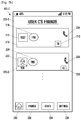
- FIGS. 2A , 2B and 2C are example instant messenger screenshots of target devices 100-B, 100-C and 100-D, respectively, for illustrating an exemplary user interface in accordance with the present technology.
- a user / owner "Bob" of source device 100-A has selected users at devices 100-B, 100-C and 100-D (hereafter, users B, C and D, respectively) for inclusion in his contacts ("friends") list for messaging in a messaging service such as an IM service.
- users B, C and D have each included Bob in their friends list for the same IM service.
- the screenshots are screens existing at about the same time.
- users are permitted to selectively publish their presence information so that different presence information can be presented to different respective contacts at any given time.
- Such selective presence information includes not only online / offline type presence information but also the availability of personal content for sharing.
- Bob has chosen to share some of his content with users B and D, but not with user C. However, Bob still desires to maintain user C as a current chatting party. Bob has also chosen to make more content items available to user B than to user D.
- device 100-B has executed a messenger / content sharing application in which an instant messenger screen 200-B is displayed.
- Screen 200-B which may be a touchscreen, shows a friends list which is accessed via selecting a friends icon 232, or which initially appears when the messenger application is newly selected for execution.
- friends icon 232 or which initially appears when the messenger application is newly selected for execution.
- Other icons such as chats 234 and settings 236 execute corresponding functions in the IM application, and an exit icon 230 may also be displayed.
- Any friend on the list who has a presence status of "free" can be contacted for instant messaging via a predetermined operation, such as a predetermined touch gesture relevant to that friend's display field.
- Screen 200-B initially includes contact fields 210, 220-B, etc., each displaying contact and presence information of a particular contact.
- Field 210 is designated for the contact "Billy”, contains an icon 212 designating Billy (and/or a photo of Billy), and a presence icon 214 indicating whether Billy is free for chatting, offline, busy, away, etc.
- a "talk" icon 216 allows user B to initiate an immediate VoIP telephony call with Billy.
- An icon 218 indicates the current type of communication bearer (protocol) by which Billy is currently connected to the IM server 30. For instance, if user B knows that Billy is currently connected to the messenger service using 3G, user B may be reluctant to initiate a voice call if the IM service provider charges for 3G based data usage.
- Field 220-B displays contact and presence information for the next contact following Billy, which in the example is Bob, i.e., the user of device 110-A.
- Bob had previously published a presence of "free" to presence server 50, signifying that Bob is presently available for at least instant messaging.
- presence icon 224 indicating "free” is displayed.
- Phone icon 226 and communication bearer icon 228 have the same functions as those discussed above for items 216 and 218 in field 210.
- a device icon 223 indicates a camera and abuts circled number ("2") icon 241. This signifies that the contact in the field 220-B, i.e., Bob, has two items of content stored on his camera that are currently available for sharing with user B.
- the two contents associated with Bob's camera may be immediately downloaded to device 100-B.
- the predetermined operation may be designed by the device designer, and could be a simple tap on the icon 223 or 241, a long touch, a multi-tap, etc.
- icon 227 indicates that Bob's Galaxy® brand smart phone has nine items available for sharing;
- icon 225 shows that Bob's PC has 11 items available and 229 indicates his laptop has three items available. All of this device-related content information was previously published by Bob to presence server 50 as being applicable to user B.
- the relevant icons 223, 225, etc. may be caused to automatically disappear from the contact field 220-B, so that a downloading operation of the same contents need not be repeated.
- an icon 221 indicative of a communication bearer (also referred to as communication protocol) associated with the shareable contents of the source device is displayed.
- a Wi-Fi image 221 is displayed adjacent the camera icon 223, which may indicate that the available contents from camera 223 are only downloadable when at least the source device (of user A) is connected to the messaging service via Wi-Fi.
- icon 221 indicates that the contents are protocol restricted.
- both the source device 100-A and the target device 100-B must be connected with the designated protocol for the download to proceed. This option allows users to limit data usage charges that may otherwise occur with some connection protocols such as 3G or 4G, particularly for large file downloads, e.g., video clips.
- protocol icon 221 is associated with the potential shareable contents, and differs from the protocol icon 228 which indicates the current connection protocol of the source device 100-A.
- protocol icon 228 which indicates the current connection protocol of the source device 100-A.
- screen 200-B if user B observes that Bob is connected with 4G and the operative embodiment provisions that protocol-restricted files require both source and target devices to be connected with the displayed restricted protocol, user B may avoid attempting to download contents from camera 223 by observing that Bob is connected using 4G, indicated at 228.
- no such protocol-restriction icon is shown displayed on device icons 225, 227 and 229, whereby the receiving party B can be connected with any protocol to download the contents of those devices.
- an example screen 200-C represents an IM messaging contacts screen of device 100-C corresponding to the above-noted scenario.
- User C is assumed to have also named Billy as a friend preceding Bob, such that field 210 is the same as that in FIG. 2A .
- field 220-C presents Bob's contact and presence information. Since Bob has previously published presence information that does not include contents for sharing with user C, device 100-C has received no device or contents related presence information, whereby no icons such as 223, 225, 227 or 229 are shown in field 220-C.
- device 100-D presents example screen 200-D, which includes the same field 210 as well as field 220-D.
- Bob had previously published presence information allowing user D to access two photos from his camera, hence the icon 223 depicting a camera and the circled number "2' is displayed in association with user D's friend Bob.
- screens 200-A, 200-B and 200-C illustrated that a publishing user is able to selectively publish different presence information to different respective target device users concerning content available for downloading from the publishing user's personal devices.
- "shareable content presence information” is exemplified as composed of a device icon and a number (indicating the number of shareable content items available).
- the shareable content presence information may only include, at a minimum, one or more of: a device icon; a device model; the number of shared content items; an IP address of a device with the available content; and a communication bearer (e.g., Wi-Fi, 3G or 4G) by which any available content is permitted to be received.
- a communication bearer e.g., Wi-Fi, 3G or 4G
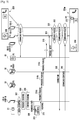
- FIG. 3 is a signal flow diagram illustrating an example method of publishing presence information and notifying end users thereof in accordance with the presently disclosed technology.
- the flow diagram illustrates an example by which a user A of a publishing device 100-A desires to make the same content available from at least a personal camera D1 to each of users B, C and D of target devices 100-B, 100-C and 100-D, respectively, as a group.
- users B, C and D are assumed to have each previously transmitted, at 301, a "Subscribe" request to presence server 60 with respect to user A.
- the Subscribe request conveys a selection of user A for inclusion within a friends list in the respective devices 100-B, 100-C and 100-D.
- user A is set as a subscriber for each devices 100-B, 100-C and 100-D, which means that if the status of user A changes, information pertaining to this changed status is sent to users B, D and D.
- an initial friend list field 220i is displayed in each of the devices 100-B, 100-C and 100-D friends lists.
- the initial field 220i is devoid of any content based presence information (such as the icons 223, 225 in FIGS. 2A-2C ).
- user A decides to update his presence status by publishing information on the availability of two content items (two "contents") for sharing (e.g., photos or videos) which are currently stored in his personal camera D1.
- user A performs a Device grouping operation at 302 in which he selects, via a user interface on device 100-A, content to be made available for sharing from any desired device (in this case, device D1).
- user A commands a Presence Grouping operation at 304, in which he selects particular friends on his friends list to be permitted to receive all of the selected contents.
- Presence Grouping operation is described later in reference to FIG. 4 .
- user A selects each of users B, C and D to receive the two selected contents.
- a Contents Sharing command at 306. This causes device 100-A to send a Contents Copy request to device D1 at 308.
- Device D1 copies the requested contents from its memory at 310 and transmits a file containing the same at 312 to device 100-A.
- Device 100-A thereafter transmits a Presence PUBLISH message at 314a to presence server 50, which is in turn forwarded at 314b to IM server / IPx proxy 30 and then at 314c to presence server 60.
- the presence PUBLISH message contains the updated presence information for device 100-A, which includes, in this example, an indication of the personal device (camera D1) from which newly available content is available, and the number of contents available.
- presence servers 50 and 60 are depicted as distinct entities from the IM server / IPx proxy 30. In other embodiments, presence servers 50 and 60 can be a part of the IM server / IPx proxy 30.
- Presence server 60 forwards a Presence NOTIFY message containing the updated presence information of user A to each of target devices 100-B, 100-C and 100-D at steps 316, 318 and 320, respectively.
- Each target device then performs a presence update operation at 322 in which the respective friends list (such as 200-B, 200-C and 200-D) is updated to change the contact field 220i to that of 220u.
- the respective friends list such as 200-B, 200-C and 200-D
- example contact field 220u represents an updated version of field 220i, and contains the camera icon 223 with the number "2" displayed in association, indicating that two contents which originated from user A's camera are now available for sharing from user A.
- a download request message is automatically transmitted from that target device at 330 to either device 100-A, or, directly to device D1, depending on control data provided in the presence information.
- the contents are then preferably automatically downloaded to the target device at 340, i.e., without any additional operation required by user A.
- the download request 330 may extend only to device 100-A, and the download is performed by device 100-A.
- the set-up condition is for a direct access of device D1
- the download request 300 can proceed directly to device D1.
- the presence information data includes an IP address for the peripheral device and other control data
- the target device may recognize that the peripheral device is to be accessed directly, and include the destination IP address in its request message.
- a predetermined response indicative of the icon 223 selection is forwarded by the target device to the IM server 30, and the IM server 30 makes the routing decision to connect either device 100-A or D1 to the target device.
- FIG. 4 shows example screenshots of a messaging application screen on a contents sharing device 100-A, which illustrate a presence grouping operation 304 in the method of FIG. 3 .
- the device user is able to select a group of contacts permitted to receive selective contents.
- the selected group of contacts is designated to receive a presence notification (stemming from a presence PUBLISH) corresponding to the same shareable contents, and to thereafter automatically receive the contents upon request.
- screen (a) shows that a friends list containing friends B through F is displayed during a messaging application.
- the messaging application may configure the friends list such that if an input touch is detected on an area of a friend's name or photo, the display field of that friend is highlighted, indicating it has been selected for a subsequent operation.
- the user has selected friends B, C and D via touch input.
- a contents sharing icon 404 or the like may then be selected and automatically highlighted, indicating that contents sharing operation will be applied to the selected contacts.
- the selection screen (b) may contain a group indicator field 427 indicating the group of contacts selected for the content sharing, a device selection field 431, a contents list selection field 410, a selected contents field 414 and a communication bearer selection field 415.
- Device field 431 contains icons representing peripheral devices of control device 100-A. In the example, images of example peripheral devices D1, D2, D3 and D4 represent a tablet, laptop, video camera and digital camera, respectively. When a touch input is detected on any of these images, information of content items from the selected device is displayed in thumbnails or other suitable form in the contents list field 410.
- any suitable means of retrieving and displaying representations of the contents can be employed. Since, in the case of a handheld device 100-A, the display screen is of a constrained size, a relatively small number of content items, P1 to P8, are displayed. The contents list is scrollable via directional arrows 413 to access more content in the selected device D4. If the contents consist of text files, images of just the file names may be displayed in field 410. For a video clip, a representative still image may be displayed.
- a user may select a particular content item for inclusion in a selected contents group of field 414 via a predetermined operation such as a touch and drag 412 ending in the field 414.
- the user has selected items P3 and P8 for content sharing corresponding to group BCD.
- metadata may be added to each file of selected content in field 414, where the metadata indicates the device, e.g., D4, from which the content originated. In this manner, when contents from various devices D1 - D4 are selected and grouped in field 414 as available content for the presence group BCD, the peripheral device information is attached to each file.
- predetermined rules may be used to determine whether or not the entire file contents should be transferred from the peripheral device to device 100-A for the purpose of facilitating the subsequent contents sharing with the target devices. For instance, a rule based on the size of the selected file may be used, e.g., if the selected file exceeds a predetermined number of megabits, it is not copied to device 100-A. It is further noted, in some cases, the user desires to grant unlimited access to one or more peripheral devices D1-D4 rather than selecting specific available content. In this scenario, a preconfigured input operation, such as a drag of the device icon in field 431 directly to field 414, can be employed to indicate an unlimited access grant.
- Field 415 displays communication bearer icons 416-422, each indicating a specific protocol by which the selected contents of field 414 can be designated for a downloading operation to the target user devices. This is referred to as a protocol restriction for particular content. For instance, the user may select only the Wi-Fi icon 418, which restricts the allowed downloading protocol for the contents to Wi-Fi. Other options include selectable icons for LTE (4G) 416, 3G 420, or 5G 422. When a particular protocol such as Wi-Fi is chosen, both the sending side device 100-A and target device 100-B, -C or -D are required in some embodiments to be connected via that protocol at the time of a requested download, in order for the download to proceed. As illustrated earlier in FIG.
- an indication of the protocol restriction in the target device user interface, an indication of the protocol restriction, if any, can be displayed in association with the available content presence information.
- One benefit of the protocol restriction is to enable users to control data usage costs. For instance, the data costs for Wi-Fi usage may be significantly less than each of the other protocols. If user A of the transmitting device 100-A groups available content, including large files such as videos, to users B, C and D, although user A may set up the available content while using Wi-Fi, he may thereafter leave a Wi-Fi area before any of users B, C or D request an automatic download.
- Wi-Fi Wi-Fi
- users B, C and D are family members of user A
- user A may desire to limit the data usage costs for the devices 100-B, -C and -D, by preventing users B, C and D from downloading large files in protocols other than Wi-Fi.
- the user interface may be designed to allow the protocol restriction to be applied only to particular ones of the selected files, or only to files originating from particular devices from among D1 - D4.
- Predetermined icons and/or input commands can be implemented on the user interface screen (b) to realize the selective protocol restriction allocation.
- FIG. 5 is a flow chart illustrating a method, 500, performed in a source device for sharing selective content with target devices in the presence-based sharing environment according to an embodiment.
- the source device is exemplified by device 100-A of FIG. 1 , where the user / owner will be referred to as user A, and the target devices may be any one of devices 100-B, -C or -D operated by users B, C and D, respectively.
- content offered for sharing may be either content stored in device 100-A, or content stored in one or more peripheral devices associated with device 100-A, e.g., D1-D4 described above.
- user A is permitted to select devices for grouping in association with the control device 100-A, and such grouping is performed with the use of a suitable preconfigured user interface menu at block 502.
- a suitable preconfigured user interface menu In a LAN formed between device 100-A and peripheral devices D1-D4, connection among devices is achievable using Bluetooth or other short range protocol, where device 100-A can act as a master to control peripheral devices D1-D4. If several peripheral devices are grouped, permission may be granted to a target device to access content of any one of the grouped devices, preferably with the use of a password-protected security scheme.
- peripheral nodes can be grouped in association with the control device, with the use of a category from grouping, such as a phone number of the control device.
- the wireless system registers the peripheral nodes in the control server in order to facilitate the connection between the nodes.
- user A is permitted to select a group of target devices to receive common presence information.
- This operation may involve the selections described above in screen (a) of FIG. 4 , in which the user inputs a suitable grouping command on a messenger application screen friends list, and directly selects friends for grouping.
- the display screen then progresses to screen (b), which shows e.g., that Group BCD is formed.
- screen (b) shows e.g., that Group BCD is formed.
- one or more peripheral devices D1 - D4 is selected (from field 431) to be included in the presence information to the group, and then specific contents are optionally selected at block 508, e.g., content items are selected from field 412 and dragged to field 414.
- user A may wish to allow a target device user or target user group to have unrestricted access to one or more peripheral devices D1 - D4.
- block 508 would be skipped, and the resulting icon for the peripheral device displayed on the target device screen would omit a contents number.
- the camera icon 23 could be displayed without the circled number "2", indicating unlimited access is available.
- a menu screen would preferably appear with a field for password entry. Once a password is entered, a link would be established directly from the target device to the peripheral device, and the password would be checked via security software installed at the peripheral device. If the password is correct, the target user may then scroll through content at the peripheral device through remote access software.
- the user has the option of placing a communication bearer constraint (protocol constraint) on the downloadable contents as part of the presence information, as described above with respect to field 415 of FIG. 4 . All the presence information is then transmitted to the target device(s) at block 512. At this point, the user may initiate another content sharing selection, as indicated at path 521.
- a communication bearer constraint protocol constraint
- control device 100-A receives a content share request from one of the target devices, and if the protocol constraint was imposed at block 520, a comparison is made at query box 516 between the set bearer option and the current bearer of either device 100-A or of the peripheral device D1-D4 identified in the presence information. If the bearers are the same, the contents are downloaded at block 518. If the bearers are different, device 100-A or the peripheral device sends an error message to the target device.
- FIG. 6 is a flow chart illustrating a method operable in a receiving (target) device for receiving shared content in a presence-based sharing environment according to an embodiment.
- presence information of a source device user is received, e.g., during the execution of an instant messenger application.
- the presence information is displayed at block 604, so as to update a friends list or the like, as in the examples of FIGS. 2A-2C .
- the presence information contains an icon for a peripheral device D1-D4, or for the control device itself (e.g., 100-A)
- the icon is displayed as a selectable icon (e.g., 223), in which an action is automatically performed when touch on the icon or other predetermined selection means therefor is detected.
- a selection of the device icon is detectable at block 606. If no device icon is included in the presence information, block 606 is skipped as indicated by path 607.
- presence information can include both a device icon (e.g. 223) and an associated contents icon such as 241.
- the user interface may be designed to allow the user to preview the contents before a request is sent to fully download the contents.
- Preview information for contents may be included along with the presence information, and temporarily stored but not displayed unless requested by the target user.
- preview information may be a low resolution still image of a video clip; a file name of a long text file; a brief summary, etc.
- a device icon is selected at 606
- multiple preview images for respective contents may be caused to automatically appear in a pop up window.
- the user may then select one or more of the preview images at block 608, thereby selecting the associated content for downloading. This selection can be followed by a specific content share request at block 610 for all the selected contents, via another predetermined input, e.g., on a "download” icon or the like.
- block 606 is skipped and then if the user selects a content icon, preview images for contents are similarly displayed for selection at block 608.
- the target user is granted unlimited access to a peripheral device.
- the device icon 223 may be displayed without a specific indication of a number of contents, but with an indication of unlimited access. If the device icon is then selected at block 606, block 608 is skipped as indicated by path 609. A window may then be generated which includes an input field for a password to grant remote access to the peripheral device, thereby providing some measure of security against unauthorized users and hackers to the peripheral device's contents.
- the content share request is sent at block 610, if the content is received (query box 612), the content is stored in memory and the display of the presence information is modified at block 614. For instance, the relevant presence information may be caused to disappear, or it may be displayed in a faded an unresponsive manner to indicate that downloading has already occurred. If, however, the content is not received, and an error message originating from the source device is received, the error message is displayed at block 618.
- One cause of such error could be that the content sharing is protocol-constrained, e.g., to Wi-Fi, but the source device is currently connected via 3G or 4G. If no error message of this type is received but the content is nevertheless not received, a different type of error message may be displayed at block 618; this condition is indicated by path 619.
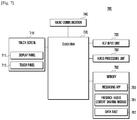
- FIG. 7 is a functional block diagram of an example electronic device, 700, which is an embodiment of any of the devices 100 of FIG. 1 .
- Device 700 can function as both a control device for transmitting content to be shared, and as a target device for receiving shared content.
- Device 700 can be a smartphone, tablet computer, smart camera, or any other processing device that normally has a display and a user input mechanism for detecting user commands.
- Device 700 includes a controller 770 that includes at least one processor and generally controls all the operations of device 700.
- a touch screen 710 may be provisioned to directly receive touch input from a user with a touch implement, e.g., the user's finger or a stylus, a touch panel 712 detects the touch input and a display panel 711 displays the images of the touch screen 710.
- a physical key input unit 720 is also be provided to receive control inputs, e.g., power on/off, volume adjustment, immediate home screen access, and optionally, physical character keys to supplement the touch screen (or, if just a display with no touch screen is included, to receive all user inputs for device 700).
- An audio processing unit 730 outputs audio and receives user voice input for telephony communication, recordings, and voice commands.
- a radio communication unit 740 is configured to transmit / receive data over a number of wireless communication protocols for both short range and long range data communication. Examples of short range protocols include Wi-Fi, Bluetooth, Zigbee, etc. Examples of long range protocols include 3G and 4G.
- Memory 750 includes a messaging application 760 which is executed by controller 770.
- device 700 can be a commercially available, handheld portable device such as a Samsung Galaxy ® smart phone, which is enhanced by the messaging application 760.
- Messaging app 760 may be a conventional messaging app enhanced by a presence-based content sharing module 761 and database 762.
- the execution of messaging app 760 by controller 770 causes execution of the operations in any of the methods described above with respect to FIGS. 3 , 5 and 6 above, which may include the generation of screens on display panel 711 as depicted in any one of FIGS. 2A , 3B , 2C and 4 hereinabove.
- implementations of the presently disclosed technology enable a control device user to selectively control which target users are permitted to receive shareable contents controlled by the control device, in a presence-based messaging environment.
- Embodiments also provide enhanced presence information in a user interface on the receiving side, allowing users to conveniently select content for immediate download, or to access specific peripheral devices presented in the presence information.
- the above-described methods according to the present invention can be implemented in hardware, firmware or as software or computer code that can be stored in a recording medium such as a CD ROM, an RAM, a floppy disk, a hard disk, or a magneto-optical disk or computer code downloaded over a network originally stored on a remote recording medium or a non-transitory machine readable medium and to be stored on a local recording medium, so that the methods described herein can be rendered in such software that is stored on the recording medium using a general purpose computer, or a special processor or in programmable or dedicated hardware, such as an ASIC or FPGA.
- a recording medium such as a CD ROM, an RAM, a floppy disk, a hard disk, or a magneto-optical disk or computer code downloaded over a network originally stored on a remote recording medium or a non-transitory machine readable medium and to be stored on a local recording medium, so that the methods described herein can be rendered in such software that is stored on the recording medium using a
- the computer, the processor, microprocessor controller or the programmable hardware include memory components, e.g., RAM, ROM, Flash, etc. that may store or receive software or computer code that when accessed and executed by the computer, processor or hardware implement the processing methods described herein.
- memory components e.g., RAM, ROM, Flash, etc.
- the execution of the code transforms the general purpose computer into a special purpose computer for executing the processing shown herein.
Landscapes
- Engineering & Computer Science (AREA)
- Theoretical Computer Science (AREA)
- Computer Networks & Wireless Communication (AREA)
- Signal Processing (AREA)
- Software Systems (AREA)
- Computer Security & Cryptography (AREA)
- Computer Hardware Design (AREA)
- Physics & Mathematics (AREA)
- General Engineering & Computer Science (AREA)
- General Physics & Mathematics (AREA)
- General Health & Medical Sciences (AREA)
- Bioethics (AREA)
- Health & Medical Sciences (AREA)
- Multimedia (AREA)
- Technology Law (AREA)
- Computing Systems (AREA)
- Information Transfer Between Computers (AREA)
Claims (14)
- Verfahren, das zum Teilen von Inhalten durchgeführt wird, das Folgendes umfasst:Erfassen einer Auswahl von Inhalten, die gemeinsam genutzt werden sollen, die in mindestens einem Peripheriegerät gespeichert sind, das der ersten Vorrichtung (508) zugeordnet ist, durch eine erste Vorrichtung;Veröffentlichen von Anwesenheitsinformationen, einschließlich einer Angabe des mindestens einen Peripheriegeräts, in dem die herunterladbaren Inhalte gespeichert (512, 322) sind, einer Angabe einer Anzahl an Inhalten, die von dem mindestens einen Peripheriegerät verfügbar sind, und eines Anwesenheitszustands der ersten Vorrichtung, durch die erste Vorrichtung auf mindestens einer Zielvorrichtung;Empfangen einer Nachricht von dem mindestens einen Zielgerät durch das mindestens eine Peripheriegerät, die eine Anforderung zum Herunterladen der ausgewählten Inhalte basierend auf der Anzeige auf dem mindestens einen Peripheriegerät (514, 330) anzeigt, und Übertragen der ausgewählten Inhalte des mindestens einen Zielgeräts (518, 340) durch das mindestens eine Peripheriegerät, das die Nachricht empfangen hat; undVeröffentlichen von Anwesenheitsinformationen auf jedem der anderen Zielgeräte durch die erste Vorrichtung auf den anderen Zielgeräten, wobei die Angabe des mindestens einen Peripheriegeräts ausgeschlossen wird, wobei die ausgewählten Inhalte nicht auf die anderen Zielgeräte heruntergeladen werden können.
- Verfahren nach Anspruch 1, ferner umfassend das Ausführen einer Nachrichtenanwendung und Anzeigen eines Kontaktlistenbildschirms davon auf der ersten Vorrichtung, und Auswählen des mindestens einen Zielgeräts durch Auswählen eines Zielkontakts aus dem Kontaktlistenbildschirm.
- Verfahren nach Anspruch 2, wobei die Kontaktliste eine Vielzahl von anderen Zielkontakten enthält, die den anderen Zielgeräten neben dem ausgewählten Zielkontakt entsprechen.
- Verfahren nach Anspruch 3, wobei der ausgewählte Zielkontakt eine ausgewählte Gruppe von Kontakten ist.
- Verfahren nach Anspruch 1, ferner umfassend das Empfangen von dem mindestens einen Zielgerät einer Nachricht, die eine Anforderung zum Herunterladen der ausgewählten Inhalte anzeigt, durch die erste Vorrichtung und Übertragen der ausgewählten Inhalte an das mindestens eine Zielgerät durch die erste Vorrichtung, die die Nachricht empfangen hat.
- Verfahren nach Anspruch 1, wobei:die Anwesenheitsinformationen des Weiteren mindestens einen Hinweis auf eine Kommunikationsprotokollbeschränkung enthalten, bei der die Inhalte nur dann auf das mindestens eine Zielgerät heruntergeladen werden können, wenn mindestens die erste Vorrichtung über ein bestimmtes Kommunikationsprotokoll mit einem Weitverkehrsnetz verbunden ist, und/oder eine Internetprotokoll (IP)-Adresse des mindestens einen Peripheriegeräts, unddie Kommunikationsprotokollbeschränkung verhindert, dass die Inhalte auf das mindestens eine Zielgerät heruntergeladen werden, es sei denn, dass sowohl das mindestens eine Zielgerät als auch die erste Vorrichtung mit dem bestimmten Kommunikationsprotokoll verbunden sind.
- Verfahren nach Anspruch 1, ferner umfassend das Empfangen von gemeinsam genutzten Inhalten von einer Vorrichtung eines Drittanbieters durch die erste Vorrichtung durch Folgendes:Durchführen einer Nachrichtenanwendung, die einen Kontaktlistenbildschirm anzeigt, der eine Vielzahl von Kontaktfeldern enthält, wobei jedes Kontaktfeld einem bestimmten Kontakt zugeordnet ist und Anzeigen von Anwesenheitsinformationen von diesem bestimmten Kontakt, wobei die Anwesenheitsinformationen von einem gegebenen Kontakt auch ein auswählbares Element anzeigen, das die gemeinsamen nutzbaren Inhalte darstellt, die von einem Gerät eines Drittanbieters, das durch den gegebenen Kontakt kontrolliert wird, zur Verfügung stehen;Erfassen einer Auswahl für das auswählbare Element;Übertragen einer Anfrage nach den verfügbaren gemeinsam nutzbaren Inhalten als Antwort auf die erfasste Auswahl an das Gerät eines Drittanbieters; undEmpfangen der gemeinsam nutzbaren Inhalten von dem Gerät eines Drittanbieters.
- Verfahren nach Anspruch 1, wobei:die Auswahl für Inhalte, die gemeinsam genutzt werden sollen, eine Auswahl für alle Inhalte in dem mindestens einen Peripheriegerät ist; unddie Anwesenheitsinformationen einschließlich einer Angabe des mindestens einen Peripheriegeräts ohne eine Angabe einer Anzahl der verfügbaren Inhalte vorgesehen sind, und als eine Angabe dienen, dass alle Inhalte des mindestens einen Peripheriegeräts von dem mindestens einen Zielgerät mittels einer Fernzugriffsoperation zugänglich werden.
- Verfahren nach Anspruch 1, das vor dem Erfassen der Auswahl der Inhalte, die geteilt werden sollen, des Weiteren Folgendes umfasst:Durchführen einer Nachrichtenanwendung, bei der eine Kontaktliste angezeigt wird, durch die erste Vorrichtung; undErfassen einer ersten Auswahl unter Kontakten, die auf der Kontaktliste einer Gruppe von Kontakten angezeigt werden, durch die erste Vorrichtung, um die geteilten Inhalte (504) zu empfangen.
- Verfahren nach Anspruch 9, wobei die Anzeige der Inhalte, die zum Teilen zur Verfügung stehen, mindestens eines von Folgenden umfasst: ein Vorrichtungsicon, das ein Peripheriegerät darstellt, aus welchem die Inhalte verfügbar sind, und/oder eine Internetprotokoll (IP)-Adresse des Peripheriegeräts aus welchem die Inhalte verfügbar sind.
- Verfahren nach Anspruch 9, wobei:die Anwesenheitsinformationen, die auf den ausgewählten Kontakten veröffentlicht werden, des Weiteren einen Hinweis auf eine Kommunikationsprotokollbeschränkung enthalten, bei der die Inhalte nur dann auf die ausgewählte Gruppe heruntergeladen werden können, wenn mindestens die erste Vorrichtung über ein bestimmtes Kommunikationsprotokoll mit einem Weitverkehrsnetz verbunden ist, unddie Kommunikationsprotokollbeschränkung betrieben wird, um zu verhindern, dass die Inhalte auf das mindestens eine Zielgerät heruntergeladen werden, es sei denn, dass sowohl der mindestens eine Kontakt als auch die erste Vorrichtung mit dem bestimmten Kommunikationsprotokoll verbunden sind.
- Verfahren nach Anspruch 9, wobei die Anwesenheitsinformationen des Weiteren aktuelle Kommunikationsträgerinformationen der ersten Vorrichtung einschließen.
- Verfahren nach Anspruch 9, ferner umfassend das Empfangen von gemeinsam genutzten Inhalten von einer Vorrichtung eines Drittanbieters durch die erste Vorrichtung durch Folgendes:Durchführen einer Nachrichtenanwendung, die einen Kontaktlistenbildschirm anzeigt, der eine Vielzahl von Kontaktfeldern enthält, wobei jedes Kontaktfeld einem bestimmten Kontakt zugeordnet ist und Anzeigen von Anwesenheitsinformationen von diesem bestimmten Kontakt, wobei die Anwesenheitsinformationen von einem gegebenen Kontakt auch ein auswählbares Element anzeigen, das die gemeinsam nutzbaren Inhalte darstellt, die von einem Gerät eines Drittanbieters, das durch den gegebenen Kontakt kontrolliert wird, zur Verfügung stehen;Erfassen einer Auswahl für das auswählbare Element;Übertragen einer Anfrage nach den verfügbaren gemeinsam nutzbaren Inhalten als Antwort auf die erfasste Auswahl an das Gerät eines Drittanbieters; undEmpfangen der gemeinsam nutzbaren Inhalte von dem Gerät eines Drittanbieter.
- Vorrichtung zum Teilen von Inhalten mit mindestens einer zweiten Vorrichtung, die Folgendes umfasst:ein Display (711), auf der eine Kontaktliste einer Nachrichtenanwendung angezeigt wird;einen Speicher (750), in dem die Nachrichtenanwendung und die Kontaktliste davon gespeichert werden;eine Steuerung (770) mit mindestens einem Prozessor, wobei die Steuerung konfiguriert ist zum:Durchführen der Nachrichtenanwendung und Steuern des Displays, um die Kontaktliste anzuzeigen;Erfassen einer ersten Auswahl von einer Gruppe von Kontakten unter den in der Kontaktliste angezeigten Kontakten;Erfassen einer zweiten Auswahl aus einem Inhaltsverzeichnis von Inhalten, die mit der Kontaktgruppe geteilt werden sollen;Veröffentlichen von Anwesenheitsinformationen mit Angabe des mindestens einen Peripheriegeräts, in dem die herunterladbaren Inhalte gespeichert sind,einer Angabe einer Anzahl an Inhalten, die von dem mindestens einen Peripheriegerät verfügbar sind, die der zweiten Auswahl entsprechen und ein Anwesenheitszustand der ersten Vorrichtung in den Anwesenheitsinformationen eingeschlossen, die lediglich auf den ausgewählten Kontaktgruppen veröffentlicht werden, undVeröffentlichen von Anwesenheitsinformationen auf jedem der anderen Kontakten, wobei die Angabe des mindestens einen Peripheriegeräts ausgeschlossen wird, wobei die ausgewählten Inhalte nicht auf die anderen Zielgeräte heruntergeladen werden können.
Applications Claiming Priority (3)
| Application Number | Priority Date | Filing Date | Title |
|---|---|---|---|
| US14/107,495 US9710661B2 (en) | 2013-12-16 | 2013-12-16 | Presence-based content sharing |
| KR1020140169777A KR102334506B1 (ko) | 2013-12-16 | 2014-12-01 | 프레즌스-기반 콘텐츠 공유 방법 및 이를 지원하는 전자 장치 |
| PCT/KR2014/012340 WO2015093799A1 (en) | 2013-12-16 | 2014-12-15 | Presence-based content sharing |
Publications (3)
| Publication Number | Publication Date |
|---|---|
| EP3085010A1 EP3085010A1 (de) | 2016-10-26 |
| EP3085010A4 EP3085010A4 (de) | 2017-11-29 |
| EP3085010B1 true EP3085010B1 (de) | 2020-09-30 |
Family
ID=53368823
Family Applications (1)
| Application Number | Title | Priority Date | Filing Date |
|---|---|---|---|
| EP14872750.6A Active EP3085010B1 (de) | 2013-12-16 | 2014-12-15 | Präsenzbasierte gemeinsame inhaltsnutzung |
Country Status (4)
| Country | Link |
|---|---|
| US (1) | US9710661B2 (de) |
| EP (1) | EP3085010B1 (de) |
| KR (1) | KR102334506B1 (de) |
| CN (1) | CN105830391B (de) |
Families Citing this family (8)
| Publication number | Priority date | Publication date | Assignee | Title |
|---|---|---|---|---|
| US10070063B2 (en) * | 2015-02-20 | 2018-09-04 | Grideo Technologies Inc. | Integrated video capturing and sharing application on handheld device |
| US10725615B2 (en) | 2015-02-20 | 2020-07-28 | Grideo Technologies Inc. | Social contact information organized in a grid like visual object |
| US9894152B2 (en) * | 2015-07-28 | 2018-02-13 | Arris Enterprises Llc | Consolidation and monitoring of consumed content |
| CN107703909A (zh) * | 2017-08-31 | 2018-02-16 | 张家港浦项不锈钢有限公司 | 一种plc过程控制通讯共享数据块在线修改方法 |
| WO2019117359A1 (ko) * | 2017-12-14 | 2019-06-20 | 라인 가부시키가이샤 | 메시징 서비스 환경에서의 컨텐츠 공유를 위한 인터랙션 방법 및 시스템 |
| WO2020191551A1 (zh) * | 2019-03-22 | 2020-10-01 | 江苏盐城风景风行网络技术研究院 | 一种向特定用户分享电子内容或评论的方法 |
| CN112312222A (zh) * | 2019-10-31 | 2021-02-02 | 北京字节跳动网络技术有限公司 | 视频发送方法、装置和电子设备 |
| US12061774B2 (en) * | 2023-01-18 | 2024-08-13 | Snap Inc. | Providing contextual data for candidate message recipients |
Family Cites Families (29)
| Publication number | Priority date | Publication date | Assignee | Title |
|---|---|---|---|---|
| KR20040012311A (ko) | 2002-08-02 | 2004-02-11 | 에스케이 텔레콤주식회사 | 무선 통신망에서 프리젠스 정보 기반 개인간 컨텐츠 공유서비스 시스템 및 방법 |
| US20040162878A1 (en) | 2002-11-22 | 2004-08-19 | Lewis Michael Pescatello | System and method to facilitate real-time communications and content sharing among users over a network |
| US7496623B2 (en) | 2004-04-23 | 2009-02-24 | Yahoo! Inc. | System and method for enhanced messaging including a displayable status indicator |
| US20070130158A1 (en) * | 2005-12-06 | 2007-06-07 | Maurice Labiche | Downloadable content delivery management using a presence server |
| US8090779B2 (en) * | 2007-02-20 | 2012-01-03 | Google Inc. | Systems and methods for viewing media content in instant messaging |
| US8224897B2 (en) * | 2007-06-13 | 2012-07-17 | Microsoft Corporation | Automatically sharing a user's personal message |
| US8027293B2 (en) * | 2007-07-16 | 2011-09-27 | Cellport Systems, Inc. | Communication channel selection and use |
| US8739242B2 (en) * | 2008-07-07 | 2014-05-27 | Adobe Systems Incorporated | Digital rights management in a collaborative environment |
| JP4683128B2 (ja) | 2009-01-06 | 2011-05-11 | ソニー株式会社 | プレゼンス情報共有装置、プレゼンス情報共有方法、プレゼンス情報共有プログラムおよびプレゼンス情報共有システム |
| US8254890B2 (en) | 2009-04-08 | 2012-08-28 | Research In Motion Limited | System and method for managing items in a list shared by a group of mobile devices |
| KR101632573B1 (ko) * | 2009-12-15 | 2016-06-23 | 에스케이텔레콤 주식회사 | 프레즌스 정보 기반 부가서비스 제공 시스템 및 그 방법 |
| KR101685364B1 (ko) | 2010-01-05 | 2016-12-12 | 엘지전자 주식회사 | 휴대 단말기, 휴대 단말기 시스템 및 그 동작 제어방법 |
| KR101071552B1 (ko) | 2010-07-21 | 2011-10-10 | 주식회사 인스프리트 | 미디어공유를 위한 사용자계정과 공유폴더를 관리하기위한 통신시스템 및 그 제어방법 |
| US9104302B2 (en) * | 2010-09-09 | 2015-08-11 | Opentv, Inc. | Methods and systems for drag and drop content sharing in a multi-device environment |
| US9300701B2 (en) * | 2010-11-01 | 2016-03-29 | Google Inc. | Social circles in social networks |
| US8676908B2 (en) * | 2010-11-25 | 2014-03-18 | Infosys Limited | Method and system for seamless interaction and content sharing across multiple networks |
| KR20120058782A (ko) | 2010-11-30 | 2012-06-08 | 삼성전자주식회사 | 컨텐츠 중심 네트워킹 환경에서의 단말, 중간 노드 및 이들의 통신 방법 |
| WO2012170786A1 (en) * | 2011-06-08 | 2012-12-13 | Sgrouples, Inc. | Group authorization method and software |
| KR101889378B1 (ko) | 2011-10-14 | 2018-08-21 | 삼성전자주식회사 | 사용자 단말 장치 및 그 컨텐츠 공유 방법 |
| KR101782884B1 (ko) | 2011-10-17 | 2017-09-28 | 주식회사 케이티 | 콘텐츠 공유를 위한 콘텐츠 정보 제공 장치 및 방법 |
| US20130094516A1 (en) | 2011-10-17 | 2013-04-18 | Toyota Infotechnology Center Co., Ltd. | Control Protocol System |
| CN102710555B (zh) * | 2012-06-28 | 2016-06-01 | 北京奇虎科技有限公司 | 一种用于实现即时通讯中传输文件的方法、装置及系统 |
| US9426229B2 (en) * | 2012-06-29 | 2016-08-23 | Nokia Technologies Oy | Apparatus and method for selection of a device for content sharing operations |
| US9571604B2 (en) * | 2012-07-05 | 2017-02-14 | Nokia Technologies Oy | Method and apparatus for distributing collaborative content |
| US20140201648A1 (en) * | 2013-01-17 | 2014-07-17 | International Business Machines Corporation | Displaying hotspots in response to movement of icons |
| US9438543B2 (en) * | 2013-03-04 | 2016-09-06 | Google Technology Holdings LLC | Gesture-based content sharing |
| WO2014142814A1 (en) * | 2013-03-12 | 2014-09-18 | Intel Corporation | Content sharing device management |
| US10027723B2 (en) * | 2013-04-12 | 2018-07-17 | Provenance Asset Group Llc | Method and apparatus for initiating communication and sharing of content among a plurality of devices |
| US9712577B2 (en) * | 2013-06-09 | 2017-07-18 | Apple Inc. | Device, method, and graphical user interface for sharing content from a respective application |
-
2013
- 2013-12-16 US US14/107,495 patent/US9710661B2/en active Active
-
2014
- 2014-12-01 KR KR1020140169777A patent/KR102334506B1/ko active Active
- 2014-12-15 CN CN201480068779.9A patent/CN105830391B/zh active Active
- 2014-12-15 EP EP14872750.6A patent/EP3085010B1/de active Active
Non-Patent Citations (1)
| Title |
|---|
| None * |
Also Published As
| Publication number | Publication date |
|---|---|
| US9710661B2 (en) | 2017-07-18 |
| CN105830391B (zh) | 2021-04-23 |
| KR20150070005A (ko) | 2015-06-24 |
| KR102334506B1 (ko) | 2021-12-03 |
| EP3085010A1 (de) | 2016-10-26 |
| CN105830391A (zh) | 2016-08-03 |
| EP3085010A4 (de) | 2017-11-29 |
| US20150169883A1 (en) | 2015-06-18 |
Similar Documents
| Publication | Publication Date | Title |
|---|---|---|
| US9710661B2 (en) | Presence-based content sharing | |
| JP7570045B2 (ja) | 端末装置の制御プログラム、端末装置の制御方法及び端末装置 | |
| EP2891296B1 (de) | Systeme und verfahren zur gemeinsamen datennutzung zwischen mehreren endbenutzervorrichtungen | |
| KR101902948B1 (ko) | 정보 공유 방법 및 장치 | |
| US9407686B2 (en) | Device to-device transfer | |
| JP6101861B2 (ja) | グループ作成方法、グループ脱退方法、装置、プログラム、及び記録媒体 | |
| JP6096998B2 (ja) | インスタントメッセージング方法、装置、プログラム及び記録媒体 | |
| US20160050254A1 (en) | Cross-device integration system and method | |
| US20090037519A1 (en) | Network File Transfer and Caching System | |
| WO2017214217A1 (en) | Delivering data to multiple devices of a recipient | |
| JP2017041236A (ja) | グループメッセージを管理するための方法、システム、および記録媒体 | |
| WO2016022036A1 (en) | Intermediary for multiple-transport client-device communications | |
| EP3178045B1 (de) | Zugangsverwaltung anhand von elektronischen bildern | |
| US20140164534A1 (en) | System for sending a content item through an online content management system | |
| WO2017020521A1 (zh) | 航班通知方法、航班设置方法及装置 | |
| CN106027597A (zh) | 一种离线文件传输的方法、系统、终端设备以及服务器 | |
| EP3491534A1 (de) | Vorrichtung zum austausch von kontaktinformationen sowie inhaltssystem und verfahren für vernetzung und vermarktung | |
| KR101973531B1 (ko) | 복수의 클라이언트 간의 어플리케이션 자동 공유 방법 및 장치 | |
| US20250202849A1 (en) | Application manager for platform interoperability | |
| CN120513614A (zh) | 网络应用中的用户联系人控制 | |
| JP6415613B2 (ja) | 情報配信装置、プッシュ通知方法、及び、コンピュータプログラム | |
| WO2017209997A1 (en) | File access permission revocation notification | |
| US11153240B2 (en) | Method, system and computer program product for selectively adapting and transmitting messaging data | |
| KR100874337B1 (ko) | 이동통신단말기를 이용한 사진 공유 방법 | |
| US12314348B2 (en) | Method and system for user content view protection |
Legal Events
| Date | Code | Title | Description |
|---|---|---|---|
| PUAI | Public reference made under article 153(3) epc to a published international application that has entered the european phase |
Free format text: ORIGINAL CODE: 0009012 |
|
| 17P | Request for examination filed |
Effective date: 20160616 |
|
| AK | Designated contracting states |
Kind code of ref document: A1 Designated state(s): AL AT BE BG CH CY CZ DE DK EE ES FI FR GB GR HR HU IE IS IT LI LT LU LV MC MK MT NL NO PL PT RO RS SE SI SK SM TR |
|
| AX | Request for extension of the european patent |
Extension state: BA ME |
|
| DAX | Request for extension of the european patent (deleted) | ||
| RIC1 | Information provided on ipc code assigned before grant |
Ipc: G06F 21/10 20130101ALI20170630BHEP Ipc: G06F 21/60 20130101ALI20170630BHEP Ipc: H04L 29/08 20060101ALI20170630BHEP Ipc: H04L 12/16 20060101AFI20170630BHEP Ipc: H04L 12/58 20060101ALI20170630BHEP |
|
| A4 | Supplementary search report drawn up and despatched |
Effective date: 20171027 |
|
| RIC1 | Information provided on ipc code assigned before grant |
Ipc: G06F 21/10 20130101ALI20171023BHEP Ipc: H04L 12/58 20060101ALI20171023BHEP Ipc: H04L 29/08 20060101ALI20171023BHEP Ipc: H04L 12/16 20060101AFI20171023BHEP Ipc: G06F 21/60 20130101ALI20171023BHEP |
|
| STAA | Information on the status of an ep patent application or granted ep patent |
Free format text: STATUS: EXAMINATION IS IN PROGRESS |
|
| 17Q | First examination report despatched |
Effective date: 20190215 |
|
| GRAP | Despatch of communication of intention to grant a patent |
Free format text: ORIGINAL CODE: EPIDOSNIGR1 |
|
| STAA | Information on the status of an ep patent application or granted ep patent |
Free format text: STATUS: GRANT OF PATENT IS INTENDED |
|
| INTG | Intention to grant announced |
Effective date: 20200618 |
|
| GRAS | Grant fee paid |
Free format text: ORIGINAL CODE: EPIDOSNIGR3 |
|
| GRAA | (expected) grant |
Free format text: ORIGINAL CODE: 0009210 |
|
| STAA | Information on the status of an ep patent application or granted ep patent |
Free format text: STATUS: THE PATENT HAS BEEN GRANTED |
|
| AK | Designated contracting states |
Kind code of ref document: B1 Designated state(s): AL AT BE BG CH CY CZ DE DK EE ES FI FR GB GR HR HU IE IS IT LI LT LU LV MC MK MT NL NO PL PT RO RS SE SI SK SM TR |
|
| REG | Reference to a national code |
Ref country code: GB Ref legal event code: FG4D Ref country code: CH Ref legal event code: EP |
|
| REG | Reference to a national code |
Ref country code: AT Ref legal event code: REF Ref document number: 1319928 Country of ref document: AT Kind code of ref document: T Effective date: 20201015 |
|
| REG | Reference to a national code |
Ref country code: DE Ref legal event code: R096 Ref document number: 602014070869 Country of ref document: DE |
|
| REG | Reference to a national code |
Ref country code: IE Ref legal event code: FG4D |
|
| PG25 | Lapsed in a contracting state [announced via postgrant information from national office to epo] |
Ref country code: SE Free format text: LAPSE BECAUSE OF FAILURE TO SUBMIT A TRANSLATION OF THE DESCRIPTION OR TO PAY THE FEE WITHIN THE PRESCRIBED TIME-LIMIT Effective date: 20200930 Ref country code: FI Free format text: LAPSE BECAUSE OF FAILURE TO SUBMIT A TRANSLATION OF THE DESCRIPTION OR TO PAY THE FEE WITHIN THE PRESCRIBED TIME-LIMIT Effective date: 20200930 Ref country code: GR Free format text: LAPSE BECAUSE OF FAILURE TO SUBMIT A TRANSLATION OF THE DESCRIPTION OR TO PAY THE FEE WITHIN THE PRESCRIBED TIME-LIMIT Effective date: 20201231 Ref country code: NO Free format text: LAPSE BECAUSE OF FAILURE TO SUBMIT A TRANSLATION OF THE DESCRIPTION OR TO PAY THE FEE WITHIN THE PRESCRIBED TIME-LIMIT Effective date: 20201230 Ref country code: HR Free format text: LAPSE BECAUSE OF FAILURE TO SUBMIT A TRANSLATION OF THE DESCRIPTION OR TO PAY THE FEE WITHIN THE PRESCRIBED TIME-LIMIT Effective date: 20200930 Ref country code: BG Free format text: LAPSE BECAUSE OF FAILURE TO SUBMIT A TRANSLATION OF THE DESCRIPTION OR TO PAY THE FEE WITHIN THE PRESCRIBED TIME-LIMIT Effective date: 20201230 |
|
| REG | Reference to a national code |
Ref country code: AT Ref legal event code: MK05 Ref document number: 1319928 Country of ref document: AT Kind code of ref document: T Effective date: 20200930 |
|
| PG25 | Lapsed in a contracting state [announced via postgrant information from national office to epo] |
Ref country code: RS Free format text: LAPSE BECAUSE OF FAILURE TO SUBMIT A TRANSLATION OF THE DESCRIPTION OR TO PAY THE FEE WITHIN THE PRESCRIBED TIME-LIMIT Effective date: 20200930 Ref country code: LV Free format text: LAPSE BECAUSE OF FAILURE TO SUBMIT A TRANSLATION OF THE DESCRIPTION OR TO PAY THE FEE WITHIN THE PRESCRIBED TIME-LIMIT Effective date: 20200930 |
|
| REG | Reference to a national code |
Ref country code: NL Ref legal event code: MP Effective date: 20200930 |
|
| REG | Reference to a national code |
Ref country code: LT Ref legal event code: MG4D |
|
| PG25 | Lapsed in a contracting state [announced via postgrant information from national office to epo] |
Ref country code: LT Free format text: LAPSE BECAUSE OF FAILURE TO SUBMIT A TRANSLATION OF THE DESCRIPTION OR TO PAY THE FEE WITHIN THE PRESCRIBED TIME-LIMIT Effective date: 20200930 Ref country code: NL Free format text: LAPSE BECAUSE OF FAILURE TO SUBMIT A TRANSLATION OF THE DESCRIPTION OR TO PAY THE FEE WITHIN THE PRESCRIBED TIME-LIMIT Effective date: 20200930 Ref country code: PT Free format text: LAPSE BECAUSE OF FAILURE TO SUBMIT A TRANSLATION OF THE DESCRIPTION OR TO PAY THE FEE WITHIN THE PRESCRIBED TIME-LIMIT Effective date: 20210201 Ref country code: EE Free format text: LAPSE BECAUSE OF FAILURE TO SUBMIT A TRANSLATION OF THE DESCRIPTION OR TO PAY THE FEE WITHIN THE PRESCRIBED TIME-LIMIT Effective date: 20200930 Ref country code: SM Free format text: LAPSE BECAUSE OF FAILURE TO SUBMIT A TRANSLATION OF THE DESCRIPTION OR TO PAY THE FEE WITHIN THE PRESCRIBED TIME-LIMIT Effective date: 20200930 Ref country code: RO Free format text: LAPSE BECAUSE OF FAILURE TO SUBMIT A TRANSLATION OF THE DESCRIPTION OR TO PAY THE FEE WITHIN THE PRESCRIBED TIME-LIMIT Effective date: 20200930 Ref country code: CZ Free format text: LAPSE BECAUSE OF FAILURE TO SUBMIT A TRANSLATION OF THE DESCRIPTION OR TO PAY THE FEE WITHIN THE PRESCRIBED TIME-LIMIT Effective date: 20200930 |
|
| PG25 | Lapsed in a contracting state [announced via postgrant information from national office to epo] |
Ref country code: PL Free format text: LAPSE BECAUSE OF FAILURE TO SUBMIT A TRANSLATION OF THE DESCRIPTION OR TO PAY THE FEE WITHIN THE PRESCRIBED TIME-LIMIT Effective date: 20200930 Ref country code: IS Free format text: LAPSE BECAUSE OF FAILURE TO SUBMIT A TRANSLATION OF THE DESCRIPTION OR TO PAY THE FEE WITHIN THE PRESCRIBED TIME-LIMIT Effective date: 20210130 Ref country code: ES Free format text: LAPSE BECAUSE OF FAILURE TO SUBMIT A TRANSLATION OF THE DESCRIPTION OR TO PAY THE FEE WITHIN THE PRESCRIBED TIME-LIMIT Effective date: 20200930 Ref country code: AT Free format text: LAPSE BECAUSE OF FAILURE TO SUBMIT A TRANSLATION OF THE DESCRIPTION OR TO PAY THE FEE WITHIN THE PRESCRIBED TIME-LIMIT Effective date: 20200930 Ref country code: AL Free format text: LAPSE BECAUSE OF FAILURE TO SUBMIT A TRANSLATION OF THE DESCRIPTION OR TO PAY THE FEE WITHIN THE PRESCRIBED TIME-LIMIT Effective date: 20200930 |
|
| PG25 | Lapsed in a contracting state [announced via postgrant information from national office to epo] |
Ref country code: SK Free format text: LAPSE BECAUSE OF FAILURE TO SUBMIT A TRANSLATION OF THE DESCRIPTION OR TO PAY THE FEE WITHIN THE PRESCRIBED TIME-LIMIT Effective date: 20200930 |
|
| REG | Reference to a national code |
Ref country code: DE Ref legal event code: R097 Ref document number: 602014070869 Country of ref document: DE |
|
| REG | Reference to a national code |
Ref country code: CH Ref legal event code: PL |
|
| PLBE | No opposition filed within time limit |
Free format text: ORIGINAL CODE: 0009261 |
|
| STAA | Information on the status of an ep patent application or granted ep patent |
Free format text: STATUS: NO OPPOSITION FILED WITHIN TIME LIMIT |
|
| PG25 | Lapsed in a contracting state [announced via postgrant information from national office to epo] |
Ref country code: MC Free format text: LAPSE BECAUSE OF FAILURE TO SUBMIT A TRANSLATION OF THE DESCRIPTION OR TO PAY THE FEE WITHIN THE PRESCRIBED TIME-LIMIT Effective date: 20200930 Ref country code: DK Free format text: LAPSE BECAUSE OF FAILURE TO SUBMIT A TRANSLATION OF THE DESCRIPTION OR TO PAY THE FEE WITHIN THE PRESCRIBED TIME-LIMIT Effective date: 20200930 |
|
| REG | Reference to a national code |
Ref country code: BE Ref legal event code: MM Effective date: 20201231 |
|
| 26N | No opposition filed |
Effective date: 20210701 |
|
| PG25 | Lapsed in a contracting state [announced via postgrant information from national office to epo] |
Ref country code: LU Free format text: LAPSE BECAUSE OF NON-PAYMENT OF DUE FEES Effective date: 20201215 Ref country code: FR Free format text: LAPSE BECAUSE OF NON-PAYMENT OF DUE FEES Effective date: 20201231 Ref country code: IT Free format text: LAPSE BECAUSE OF FAILURE TO SUBMIT A TRANSLATION OF THE DESCRIPTION OR TO PAY THE FEE WITHIN THE PRESCRIBED TIME-LIMIT Effective date: 20200930 Ref country code: IE Free format text: LAPSE BECAUSE OF NON-PAYMENT OF DUE FEES Effective date: 20201215 |
|
| PG25 | Lapsed in a contracting state [announced via postgrant information from national office to epo] |
Ref country code: SI Free format text: LAPSE BECAUSE OF FAILURE TO SUBMIT A TRANSLATION OF THE DESCRIPTION OR TO PAY THE FEE WITHIN THE PRESCRIBED TIME-LIMIT Effective date: 20200930 Ref country code: CH Free format text: LAPSE BECAUSE OF NON-PAYMENT OF DUE FEES Effective date: 20201231 Ref country code: LI Free format text: LAPSE BECAUSE OF NON-PAYMENT OF DUE FEES Effective date: 20201231 |
|
| PG25 | Lapsed in a contracting state [announced via postgrant information from national office to epo] |
Ref country code: IS Free format text: LAPSE BECAUSE OF FAILURE TO SUBMIT A TRANSLATION OF THE DESCRIPTION OR TO PAY THE FEE WITHIN THE PRESCRIBED TIME-LIMIT Effective date: 20210130 Ref country code: TR Free format text: LAPSE BECAUSE OF FAILURE TO SUBMIT A TRANSLATION OF THE DESCRIPTION OR TO PAY THE FEE WITHIN THE PRESCRIBED TIME-LIMIT Effective date: 20200930 Ref country code: MT Free format text: LAPSE BECAUSE OF FAILURE TO SUBMIT A TRANSLATION OF THE DESCRIPTION OR TO PAY THE FEE WITHIN THE PRESCRIBED TIME-LIMIT Effective date: 20200930 Ref country code: CY Free format text: LAPSE BECAUSE OF FAILURE TO SUBMIT A TRANSLATION OF THE DESCRIPTION OR TO PAY THE FEE WITHIN THE PRESCRIBED TIME-LIMIT Effective date: 20200930 |
|
| PG25 | Lapsed in a contracting state [announced via postgrant information from national office to epo] |
Ref country code: MK Free format text: LAPSE BECAUSE OF FAILURE TO SUBMIT A TRANSLATION OF THE DESCRIPTION OR TO PAY THE FEE WITHIN THE PRESCRIBED TIME-LIMIT Effective date: 20200930 |
|
| PG25 | Lapsed in a contracting state [announced via postgrant information from national office to epo] |
Ref country code: BE Free format text: LAPSE BECAUSE OF NON-PAYMENT OF DUE FEES Effective date: 20201231 |
|
| PGFP | Annual fee paid to national office [announced via postgrant information from national office to epo] |
Ref country code: DE Payment date: 20251120 Year of fee payment: 12 |
|
| PGFP | Annual fee paid to national office [announced via postgrant information from national office to epo] |
Ref country code: GB Payment date: 20251120 Year of fee payment: 12 |