EP3082284B1 - Kommunikationsverfahren, -vorrichtung und -system für ein passives optisches netzwerk - Google Patents
Kommunikationsverfahren, -vorrichtung und -system für ein passives optisches netzwerk Download PDFInfo
- Publication number
- EP3082284B1 EP3082284B1 EP14899739.8A EP14899739A EP3082284B1 EP 3082284 B1 EP3082284 B1 EP 3082284B1 EP 14899739 A EP14899739 A EP 14899739A EP 3082284 B1 EP3082284 B1 EP 3082284B1
- Authority
- EP
- European Patent Office
- Prior art keywords
- wavelength channel
- onu
- wavelength
- calibrated
- calibration
- Prior art date
- Legal status (The legal status is an assumption and is not a legal conclusion. Google has not performed a legal analysis and makes no representation as to the accuracy of the status listed.)
- Active
Links
Images




Classifications
-
- H—ELECTRICITY
- H04—ELECTRIC COMMUNICATION TECHNIQUE
- H04J—MULTIPLEX COMMUNICATION
- H04J14/00—Optical multiplex systems
- H04J14/02—Wavelength-division multiplex systems
- H04J14/0227—Operation, administration, maintenance or provisioning [OAMP] of WDM networks, e.g. media access, routing or wavelength allocation
- H04J14/0254—Optical medium access
- H04J14/0256—Optical medium access at the optical channel layer
- H04J14/0258—Wavelength identification or labelling
-
- H—ELECTRICITY
- H04—ELECTRIC COMMUNICATION TECHNIQUE
- H04Q—SELECTING
- H04Q11/00—Selecting arrangements for multiplex systems
- H04Q11/0001—Selecting arrangements for multiplex systems using optical switching
- H04Q11/0005—Switch and router aspects
-
- H—ELECTRICITY
- H04—ELECTRIC COMMUNICATION TECHNIQUE
- H04B—TRANSMISSION
- H04B10/00—Transmission systems employing electromagnetic waves other than radio-waves, e.g. infrared, visible or ultraviolet light, or employing corpuscular radiation, e.g. quantum communication
- H04B10/07—Arrangements for monitoring or testing transmission systems; Arrangements for fault measurement of transmission systems
- H04B10/073—Arrangements for monitoring or testing transmission systems; Arrangements for fault measurement of transmission systems using an out-of-service signal
-
- H—ELECTRICITY
- H04—ELECTRIC COMMUNICATION TECHNIQUE
- H04J—MULTIPLEX COMMUNICATION
- H04J14/00—Optical multiplex systems
- H04J14/02—Wavelength-division multiplex systems
- H04J14/0227—Operation, administration, maintenance or provisioning [OAMP] of WDM networks, e.g. media access, routing or wavelength allocation
- H04J14/0241—Wavelength allocation for communications one-to-one, e.g. unicasting wavelengths
- H04J14/0242—Wavelength allocation for communications one-to-one, e.g. unicasting wavelengths in WDM-PON
-
- H—ELECTRICITY
- H04—ELECTRIC COMMUNICATION TECHNIQUE
- H04J—MULTIPLEX COMMUNICATION
- H04J14/00—Optical multiplex systems
- H04J14/02—Wavelength-division multiplex systems
- H04J14/0227—Operation, administration, maintenance or provisioning [OAMP] of WDM networks, e.g. media access, routing or wavelength allocation
- H04J14/0241—Wavelength allocation for communications one-to-one, e.g. unicasting wavelengths
- H04J14/0242—Wavelength allocation for communications one-to-one, e.g. unicasting wavelengths in WDM-PON
- H04J14/0249—Wavelength allocation for communications one-to-one, e.g. unicasting wavelengths in WDM-PON for upstream transmission, e.g. ONU-to-OLT or ONU-to-ONU
- H04J14/025—Wavelength allocation for communications one-to-one, e.g. unicasting wavelengths in WDM-PON for upstream transmission, e.g. ONU-to-OLT or ONU-to-ONU using one wavelength per ONU, e.g. for transmissions from-ONU-to-OLT or from-ONU-to-ONU
-
- H—ELECTRICITY
- H04—ELECTRIC COMMUNICATION TECHNIQUE
- H04J—MULTIPLEX COMMUNICATION
- H04J14/00—Optical multiplex systems
- H04J14/02—Wavelength-division multiplex systems
- H04J14/0278—WDM optical network architectures
- H04J14/0282—WDM tree architectures
-
- H—ELECTRICITY
- H04—ELECTRIC COMMUNICATION TECHNIQUE
- H04J—MULTIPLEX COMMUNICATION
- H04J14/00—Optical multiplex systems
- H04J14/02—Wavelength-division multiplex systems
- H04J14/03—WDM arrangements
- H04J14/0305—WDM arrangements in end terminals
-
- H—ELECTRICITY
- H04—ELECTRIC COMMUNICATION TECHNIQUE
- H04Q—SELECTING
- H04Q11/00—Selecting arrangements for multiplex systems
-
- H—ELECTRICITY
- H04—ELECTRIC COMMUNICATION TECHNIQUE
- H04Q—SELECTING
- H04Q11/00—Selecting arrangements for multiplex systems
- H04Q11/0001—Selecting arrangements for multiplex systems using optical switching
- H04Q11/0062—Network aspects
-
- H—ELECTRICITY
- H04—ELECTRIC COMMUNICATION TECHNIQUE
- H04Q—SELECTING
- H04Q11/00—Selecting arrangements for multiplex systems
- H04Q11/0001—Selecting arrangements for multiplex systems using optical switching
- H04Q11/0005—Switch and router aspects
- H04Q2011/0007—Construction
- H04Q2011/0016—Construction using wavelength multiplexing or demultiplexing
-
- H—ELECTRICITY
- H04—ELECTRIC COMMUNICATION TECHNIQUE
- H04Q—SELECTING
- H04Q11/00—Selecting arrangements for multiplex systems
- H04Q11/0001—Selecting arrangements for multiplex systems using optical switching
- H04Q11/0062—Network aspects
- H04Q2011/0086—Network resource allocation, dimensioning or optimisation
-
- H—ELECTRICITY
- H04—ELECTRIC COMMUNICATION TECHNIQUE
- H04Q—SELECTING
- H04Q2213/00—Indexing scheme relating to selecting arrangements in general and for multiplex systems
- H04Q2213/1301—Optical transmission, optical switches
Definitions
- the present invention relates to the field of optical communications technologies, and in particular, to a passive optical network communications method, apparatus and system.
- a passive optical network (PON, Passive Optical Network) technology is a point-to-multipoint fiber access technology.
- an EPON Ethernet Passive Optical Network, Ethernet passive optical network
- a GPON Gigabit passive Optical Network, gigabit passive optical network
- an NG PON next generation PON
- FIG. 1 shows a PON network architecture, which includes a first OLT 10 (Optical Line Terminal, optical line terminal), a second OLT 12, an ODN (Optical Distribution Network, optical distribution network), and ONUs (Optical Network Unit, optical network unit).
- a feeder fiber between an active port on the first OLT 10 and the ODN is an active feeder fiber
- a feeder fiber between a standby port on the second OLT 12 and the ODN is a standby feeder fiber.
- switching to the standby port needs to be performed to recover a service and implement protection for the feeder fiber.
- a time wavelength division multiplexing-passive optical network (Time wavelength division multiplexing-Passive Optical Network, TWDM-PON) is put forward in the industry.
- the TWDM-PON is a passive optical network that combines both WDM and TDM technologies, and includes an office-side OLT (optical line terminal), a user-side ONU (optical network unit) or ONT (optical network terminal), and an ODN (optical distribution network).
- an existing ONU After initial access to a system, an existing ONU performs automatic calibration to implement alignment of all available receive and transmit wavelengths of the OLT.
- the new wavelength channels are not calibrated by the ONU, so that the ONU is unable to switch to a new wavelength channel to perform data communication, which further leads to inefficient use of the new wavelength channels and drastic waste of bandwidth.
- US 2013/0094862 A1 discloses a system for supporting wavelength management in a passive optical network (PON), comprising an optical line terminal (OLT) configured to send an wavelength assignment for optical network unit (ONU) communications based on a wavelength tunability capability, and an ONU coupled to the OLT and configured to send the wavelength tunability capability to the OLT, wherein the wavelength assignment and the wavelength tunability capability are sent in media access control (MAC) message (See Abstract).
- OLT optical line terminal
- ONU optical network unit
- ONU optical network unit
- Embodiments of the present invention provide a PON communications method, and a related device and system to solve an issue of performing data communication by using a new wavelength channel, which enables an ONU to implement wavelength switching quickly after calibrating a new wavelength channel so as to perform data communication over the calibrated new wavelength channel, thereby expanding capacity of a system effectively by using the new wavelength channel and improving a bandwidth utilization rate of the system.
- data communications method in a passive optical network includes: receiving, by an optical line terminal OLT, a calibration record reported by an optical network unit ONU, where the calibration record includes an ID of a calibrated wavelength channel; sending a first message to the ONU when the OLT determines, according to the calibration record, that a target wavelength channel ID corresponding to a target wavelength channel to which the ONU needs to switch is not in the calibration record, where the first message includes a forced wavelength switching flag, where the forced wavelength switching flag is used to instruct the ONU to perform wavelength channel calibration for the target wavelength channel to switch to and instruct the ONU to switch to the calibrated target wavelength channel; and receiving data sent by the ONU over the calibrated target wavelength channel.
- the first message further includes a forced calibration flag that is used to instruct the ONU to switch to the target wavelength channel after calibrating all new wavelength channels, where new wavelength channel IDs corresponding to the new wavelength channels are not in the calibration record, and the new wavelength channels include the target wavelength channel.
- the calibration record includes at least one of an ID of a calibrated upstream wavelength channel and an ID of a calibrated downstream wavelength channel.
- the calibration record further includes at least one of a quantity of calibrated downstream wavelength channels and a quantity of calibrated upstream wavelength channels.
- a data communications method in a passive optical network includes: reporting, by an optical network unit ONU, a calibration record to an optical line terminal OLT, where the calibration record includes an ID of a calibrated wavelength channel; receiving, by the ONU, a first message sent by the OLT, where the first message includes a forced wavelength switching flag; performing, by the ONU according to the forced wavelength switching flag, wavelength channel calibration for a target wavelength channel to switch to, and switching to the calibrated target wavelength channel; and performing, by the ONU, data communication with the OLT over the switched-to target wavelength channel.
- the first message further includes a forced calibration flag
- the method further includes: calibrating, by the ONU, all new wavelength channels according to the forced calibration flag, and switching to the target wavelength channel, where new wavelength channel IDs corresponding to the new wavelength channels are not in the calibration record, and the new wavelength channels include the target wavelength channel.
- the calibration record includes at least one of an ID of a calibrated upstream wavelength channel and an ID of a calibrated downstream wavelength channel.
- the method further includes: receiving, by the ONU, a fourth message sent by the OLT, where the fourth message includes a wavelength channel calibration indication bit; and calibrating, by the ONU, all new wavelength channels according to the wavelength channel calibration indication bit; or calibrating, by the ONU, a specified new wavelength channel according to the wavelength channel calibration indication bit, where the all new wavelength channels include an OLT-expected wavelength channel identified by an OLT-expected wavelength channel ID and the specified new wavelength channel, and the specified new wavelength channel is a wavelength channel specified according to an ID of a to-be-calibrated wavelength channel in the fourth message or is a wavelength channel specified according to a quantity of to-be-calibrated wavelength channels and IDs of the to-be-calibrated wavelength channels in the fourth message.
- a passive optical network communications apparatus includes: a first communications unit, configured to: receive a calibration record reported by an optical network unit ONU, where the calibration record includes an ID of a calibrated wavelength channel; send a first message to the ONU according to an instruction of a first processing unit, where the first message includes a forced wavelength switching flag, where the forced wavelength switching flag is used to instruct the ONU to perform wavelength channel calibration for a target wavelength channel to switch to and instruct the ONU to switch to the calibrated target wavelength channel; and receive data sent by the ONU over the calibrated target wavelength channel; and a first processing unit, configured to: according to the calibration record, if determine that a target wavelength channel ID corresponding to the target wavelength channel to which the ONU needs to switch is not in the calibration record received from the first communications unit, instruct the first communications unit to send the first message to the ONU.
- a passive optical network communications apparatus includes: a second communications unit, configured to: report a calibration record to an optical line terminal OLT, where the calibration record includes an ID of a calibrated wavelength channel; and receive a first message sent by the OLT, where the first message includes a forced wavelength switching flag; and a second processing unit, configured to: perform, according to the forced wavelength switching flag received from the second communications unit, wavelength channel calibration for a target wavelength channel, and switch to the calibrated target wavelength channel; and performdata communication with the OLT over the switched-to target wavelength channel.
- a passive optical network system is provided, where the system includes the apparatus provided in the third aspect and the apparatus provided in the fourth aspect.
- an ONU reports a calibration record of the ONU, where the calibration record includes an ID of a calibrated wavelength channel; an OLT sends a first message to the ONU when determining, according to the calibration record, that a target wavelength channel ID corresponding to a target wavelength channel to which the ONU needs to switch is not in the calibration record, where the first message includes a forced wavelength switching flag; the ONU performs, according to the forced wavelength switching flag, wavelength channel calibration for the target wavelength channel to switch to, and instructs the ONU to switch to the calibrated target wavelength channel.
- the ONU can implement wavelength switching quickly after calibrating a new wavelength channel so as to perform data communication over the calibrated new wavelength channel, thereby expanding a capacity of a system by effectively using the new wavelength channel and improving bandwidth utilization of the system.
- Embodiments of the present invention provide a PON communications method, related devices, and a PON to improve available efficiency of a link between PON devices in a PON and improve a data transmission rate.
- FIG. 1 is a schematic diagram of a network architecture of a TWDM-PON system.
- a TWDM-PON system 100 includes one OLT 110, multiple ONUs 120, and an optical distribution network (Optical Distribution Network, ODN) 130, where the OLT 110 is connected to the multiple ONUs 120 via the ODN 130 in a point-to-multipoint manner.
- the TWDM-PON system 100 may further include more than one OLT.
- the multiple ONUs 120 share an optical transmission medium of the ODN 130.
- the ODN 130 may include a feeder fiber 131, an optical power splitting module 132, and multiple distribution fibers 133.
- the optical power splitting module 132 may be disposed on a remote node (Remote Node, RN), and is connected to the OLT 110 by using the feeder fiber 131 and also connected to the multiple ONUs 120 by using the multiple distribution fibers 133.
- a communications link between the OLT 110 and the multiple ONUs 120 may include multiple operating wavelength channels, and the multiple operating wavelength channels share the optical transmission medium of the ODN 130 in a WDM manner.
- Each ONU 120 may work on one operating wavelength channel of the TWDM-PON system 100, and each operating wavelength channel may carry services of one or more ONUs 120.
- ONUs 120 that work on a same operating wavelength channel may share the wavelength channel in a time division multiplexing TDM manner.
- the TWDM-PON system 100 has four operating wavelength channels is used as an example for description. It should be understood that, in practical application, a quantity of operating wavelength channels of the TWDM-PON system 100 may also be determined according to a network need.
- a transmission direction in which data or an optical signal that carries the data is transmitted from an OLT to an ONT/ONU is called a downstream direction, and correspondingly, the optical signal sent by the OLT to the ONT/ONU is also called a downstream optical signal.
- a transmission direction in which data or an optical signal that carries the data is transmitted from the ONT/ONU to the OLT is called an upstream direction, and correspondingly, the optical signal sent by the ONT/ONU to the OLT is also called an upstream optical signal.
- operating wavelength channel 1 includes an upstream operating wavelength channel and a downstream operating wavelength channel, where an upstream operating wavelength corresponding to the upstream operating wavelength channel is ⁇ up1, and a downstream operating wavelength corresponding to the downstream operating wavelength channel may be ⁇ dn1;
- operating wavelength channel 2 includes an upstream operating wavelength channel and a downstream operating wavelength channel, where an upstream operating wavelength corresponding to the upstream operating wavelength channel is ⁇ up2, and a downstream wavelength corresponding to the downstream operating wavelength channel may be ⁇ dn2;
- operating wavelength channel 3 includes an upstream operating wavelength channel and a downstream operating wavelength channel, where an upstream operating wavelength corresponding to the upstream operating wavelength channel is ⁇ up3, and a downstream operating wavelength corresponding to the downstream operating wavelength channel may be ⁇ dn3;
- operating wavelength channel 4 includes an upstream operating wavelength channel and
- Each operating wavelength channel may have a corresponding operating wavelength channel ID (for example, channel numbers of the four wavelength channels may be 1, 2, 3, and 4). That is, an operating wavelength channel ID is in a matching relationship with an upstream or a downstream wavelength corresponding to an operating wavelength channel identified by the operating wavelength channel ID, and the OLT 110 and the ONUs 120 can learn, according to an operating wavelength channel ID, an upstream operating wavelength and a downstream operating wavelength that are corresponding to an operating wavelength channel.
- an operating wavelength channel ID is in a matching relationship with an upstream or a downstream wavelength corresponding to an operating wavelength channel identified by the operating wavelength channel ID, and the OLT 110 and the ONUs 120 can learn, according to an operating wavelength channel ID, an upstream operating wavelength and a downstream operating wavelength that are corresponding to an operating wavelength channel.
- the OLT 110 may include an optical coupler 111, a first wavelength division multiplexer 112, a second wavelength division multiplexer 113, multiple downstream optical transmitters Tx1-Tx4, multiple upstream optical receivers Rx1-Rx4, and a processing module 114.
- the multiple downstream optical transmitters Tx1-Tx4 are connected to the optical coupler 111 via the first wavelength division multiplexer 112, the multiple upstream optical receivers Rx1-Rx4 are connected to the optical coupler 111 via the second wavelength division multiplexer 113, and the coupler 111 is further connected to the feeder fiber 131 of the ODN 130.
- Transmit wavelengths vary between the multiple downstream optical transmitters Tx1-Tx4.
- Each downstream optical transmitter of Tx1-Tx4 may correspond to one wavelength channel of the TWDM-PON system 100.
- the transmit wavelengths of the multiple downstream optical transmitters Tx1-Tx4 may be ⁇ d1- ⁇ d4 respectively.
- the downstream optical transmitters Tx1-Tx4 may use their respective transmit wavelengths ⁇ d1- ⁇ d4 to transmit downstream data to corresponding wavelength channels so that the downstream data can be received by the ONUs 120 that work on the corresponding wavelength channels.
- receive wavelengths may vary between the multiple upstream optical receivers Rx1-Rx4.
- Each upstream optical receiver of Rx1-Rx4 also corresponds to one wavelength channel of the TWDM-PON system 100.
- the receive wavelengths of the multiple upstream optical receivers Rx1-Rx4 may be ⁇ u1- ⁇ u4 respectively.
- the upstream optical receivers Rx1-Rx4 may use their respective receive wavelengths ⁇ u1- ⁇ u4 to receive upstream data sent by the ONUs 120 that work on corresponding wavelength channels.
- the first wavelength division multiplexer 112 is configured to perform wavelength division multiplexing for the downstream data that is transmitted by the multiple downstream optical transmitters Tx1-Tx4 and whose wavelengths are ⁇ d1- ⁇ d4, and send the downstream data to the feeder fiber 131 of the ODN 130 via the optical coupler 111, so as to provide the downstream data for the ONUs 120 via the ODN 130.
- the optical coupler 111 may be further configured to provide the second wavelength division multiplexer 113 with the upstream data that comes from the multiple ONUs 120 and whose wavelengths are ⁇ u1- ⁇ u4, and the second wavelength division multiplexer 113 may demultiplex the upstream data whose wavelengths are ⁇ u1- ⁇ u4 to the upstream optical receivers Rx1-Rx4 so as to implement data reception.
- the processing module 114 may be a media access control (Media Access Control, MAC) module.
- the processing module may specify operating wavelength channels for the multiple ONUs 120 by means of wavelength negotiation, and according to an operating wavelength channel of one ONU 120, provide downstream data, which is to be sent to the ONU 120, for the downstream optical transmitters Tx1-Tx4 corresponding to the wavelength channel, so that the downstream optical transmitters Tx1-Tx4 transmit the downstream data to the corresponding wavelength channel;
- the processing module 114 may further perform dynamic bandwidth allocation (Dynamic Bandwidth Allocation, DBA) for upstream transmission for each wavelength channel, and allocate an upstream transmit timeslot to ONUs 120 that are multiplexed to a same wavelength channel in a TDM manner, so as to authorize the ONUs 120 to send upstream data in the specified timeslot through the corresponding wavelength channel.
- DBA Dynamic Bandwidth Allocation
- the upstream transmit wavelength and the downstream receive wavelength of each ONU 120 are adjustable. According to a wavelength channel specified by the OLT 110, an ONU 120 may adjust its own upstream transmit wavelength and downstream receive wavelength respectively to an upstream operating wavelength and a downstream operating wavelength that are corresponding to the operating wavelength channel, so as to implement upstream and downstream data transmission and reception by using the wavelength channel.
- the OLT 110 instructs, in a wavelength negotiation process, one ONU 120 to work on wavelength channel 1
- the ONU 120 may adjust its own upstream transmit wavelength and downstream receive wavelength to a first upstream operating wavelength ⁇ up1 and a first downstream operating wavelength ⁇ dn1 respectively
- the OLT 110 instructs the ONU 120 to work on wavelength channel 3
- the ONU 120 may adjust its own upstream transmit wavelength and downstream receive wavelength to a third upstream operating wavelength ⁇ up3 and a first downstream operating wavelength ⁇ dn3 respectively.
- the ONU 120 may include an optical coupler 121, a downstream optical receiver 122, an upstream optical transmitter 123, and a processing module 124.
- the downstream optical receiver 122 and the upstream optical transmitter 123 are connected to a distribution fiber 133 corresponding to the ONU 120 via the optical coupler 121.
- the optical coupler 121 may provide the distribution fiber 133 of the ODN 130 with upstream data sent by the upstream optical transmitter 123, so as to send the upstream data to the OLT 110 via the ODN 130; on the other hand, the optical coupler 121 may further provide the downstream optical receiver 122 with downstream data sent by the OLT 110 via the ODN 130, so as to implement data reception.
- the processing module 124 may be a media access control MAC module or a microprocessor, and may perform wavelength negotiation with the OLT 110, and according to an operating wavelength channel specified by the OLT 110, adjust a receive wavelength of the downstream optical receiver 122 and a transmit wavelength of the upstream optical transmitter 123 (that is, adjust the downstream receive wavelength and upstream transmit wavelength of the ONU 120), so that the ONU 120 works on the operating wavelength channel specified by the OLT 110.
- the processing module 124 may further control, according to a dynamic bandwidth allocation result of the OLT 110, the upstream optical transmitter 123 to send upstream data in a specified timeslot.
- the passive optical network communications method, apparatus and system according to the embodiments of the present invention may be applied in a time division or wavelength division passive optical network system, for example, a GPON system, a 10G GPON system, a 40G GPON system, an Ethernet passive optical network (Ethernet Passive Optical Network, "EPON" for short) system, a 10G EPON system or a wavelength division multiplexing passive optical network WDM PON system.
- a GPON system is used as an example for description below, but the present invention is not limited thereto.
- an optical network unit Optical Network Terminal, ONU
- ONT optical Network Terminal
- ONT optical Network Terminal
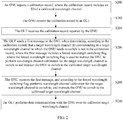
- FIG. 2 is a data communications method in a passive optical network according to an embodiment of the present invention.
- the method may be based on the foregoing network architecture in FIG. 2 .
- the method includes: S200.
- An ONU reports a calibration record, where the calibration record includes an ID of a calibrated wavelength channel.
- an ONU reports a calibration record specifically includes:
- the calibration record includes at least one of an ID of a calibrated upstream wavelength channel and an ID of a calibrated downstream wavelength channel.
- the calibration record further includes at least one of a quantity of calibrated downstream wavelength channels and a quantity of calibrated upstream wavelength channels.
- the ONU reports the calibration record to an OLT.
- the ONU reports the calibration record to an OLT specifically includes:
- the OLT receives the calibration record reported by the ONU.
- the method may further include: determining, by the OLT according to the calibration record, that an OLT-expected wavelength channel ID is in the calibration record, and then allowing the ONU to register, where the OLT-expected wavelength channel ID is an operating wavelength channel ID allocated by the OLT to the ONU.
- the OLT sends a first message to the ONU when the OLT determines, according to the calibration record, that a target wavelength channel ID corresponding to a target wavelength channel to which the ONU needs to switch is not in the calibration record, where the first message includes a forced wavelength switching flag, where the forced wavelength switching flag is used to instruct the ONU to perform wavelength channel calibration for the target wavelength channel to switch to and instruct the ONU to switch to the calibrated target wavelength channel.
- the first message further includes a forced calibration flag that is used to instruct the ONU to switch to the target wavelength channel after calibrating all new wavelength channels, where new wavelength channel IDs corresponding to the new wavelength channels are not in the calibration record, and the new wavelength channels include the target wavelength channel.
- the OLT sends a second message to the ONU, where the second message includes a quiet window and is used to instruct the ONU to register within the quiet window; and receives, within the quiet window, a registration request reported by the ONU, where the registration request includes a sequence number of the ONU and the calibration record.
- a third message is sent to the ONU when an OLT-expected wavelength channel ID is not in the calibration record, so as to request the ONU to perform wavelength channel calibration for a wavelength channel identified by the OLT-expected wavelength channel ID, where the OLT-expected wavelength channel ID is an operating wavelength channel ID allocated by the OLT to the ONU.
- the third message further includes an expected wavelength channel indication bit and is used to instruct the ONU to perform wavelength channel calibration for the OLT-expected wavelength channel and use the calibrated OLT-expected wavelength channel as an operating wavelength channel of the ONU.
- a method used by the ONU to calibrate the new wavelength channels may further specifically include: sending a fourth message to the ONU when an OLT-expected wavelength channel ID is not in the calibration record, where the fourth message includes a wavelength channel calibration indication bit and is used to instruct the ONU to calibrate all new wavelength channels or instruct the ONU to calibrate a specified new wavelength channel, where the all new wavelength channels include an OLT-expected wavelength channel identified by the OLT-expected wavelength channel ID and the specified new wavelength channel, and the specified new wavelength channel is determined according to an ID of a to-be-calibrated wavelength channel in the fourth message or determined according to a quantity of to-be-calibrated wavelength channels and IDs of the to-be-calibrated wavelength channels in the fourth message.
- the method used by the ONU to calibrate the new wavelength channels may further specifically include: sending a fifth message to the ONU when an OLT-expected wavelength channel ID is not in the calibration record, where the fifth message includes an ONU deactivation indication bit and is used to instruct the ONU to get deactivated and then calibrate all new wavelength channels before re-registration, where the all new wavelength channels include an OLT-expected wavelength channel identified by the OLT-expected wavelength channel ID.
- the ONU receives the first message, and according to the forced wavelength switching flag, performs wavelength channel calibration for a target wavelength channel to switch to, and instructs the ONU to switch to the calibrated target wavelength channel.
- the first message further includes a forced calibration flag
- the method further includes: calibrating, by the ONU, all new wavelength channels according to the forced calibration flag, and switching to the target wavelength channel, where new wavelength channel IDs corresponding to the new wavelength channels are not in the calibration record, and the new wavelength channels include the target wavelength channel.
- the ONU receives a third message sent by the OLT; and the method further includes: performing, by the ONU according to the third message, wavelength channel calibration for a wavelength channel identified by an OLT-expected operating wavelength channel ID, where the OLT-expected wavelength channel ID is an operating wavelength channel ID allocated by the OLT to the ONU.
- the third message further includes an expected wavelength channel indication bit; and the method further includes: performing, by the ONU according to the expected wavelength channel indication bit, wavelength channel calibration for the OLT-expected wavelength channel and using the calibrated OLT-expected wavelength channel as an operating wavelength channel of the ONU.
- the ONU receives a fourth message sent by the OLT, where the fourth message includes a wavelength channel calibration indication bit; and the ONU calibrates all new wavelength channels according to the wavelength channel calibration indication bit; or the ONU calibrates a specified new wavelength channel according to the wavelength channel calibration indication bit, where the all new wavelength channels include an OLT-expected wavelength channel identified by an OLT-expected wavelength channel ID and the specified new wavelength channel, and the specified new wavelength channel is a wavelength channel specified according to an ID of a to-be-calibrated wavelength channel in the fourth message or is a wavelength channel specified according to a quantity of to-be-calibrated wavelength channels and IDs of the to-be-calibrated wavelength channels in the fourth message.
- the ONU receives a fifth message sent by the OLT, where the fifth message includes an ONU deactivation indication bit; and the ONU calibrates all new wavelength channels according to the ONU deactivation indication bit before re-registration, where the new wavelength channels include an OLT-expected wavelength channel identified by an OLT-expected wavelength channel ID, where the OLT-expected wavelength channel ID is an operating wavelength channel ID allocated by the OLT to the ONU.
- the OLT performs data communication with the ONU over the calibrated target wavelength channel.
- an ONU reports a calibration record of the ONU, where the calibration record includes an ID of a calibrated wavelength channel; an OLT sends a first message to the ONU when determining, according to the calibration record, that a target wavelength channel ID corresponding to a target wavelength channel to which the ONU needs to switch is not in the calibration record, where the first message includes a forced wavelength switching flag; the ONU performs, according to the forced wavelength switching flag, wavelength channel calibration for the target wavelength channel to switch to, and instructs the ONU to switch to the calibrated target wavelength channel.
- the ONU can implement wavelength switching quickly after calibrating a new wavelength channel so as to perform data communication over the calibrated new wavelength channel, thereby expanding a capacity of a system by effectively using the new wavelength channel and improving bandwidth utilization of the system.
- Embodiment 2 is used to detail an ONU registration authentication process performed by an OLT according to a calibration record reported by an ONU
- Embodiment 3 is used to detail a process in which an ONU switches, after calibrating an OLT-expected wavelength channel, to the expected wavelength channel
- Embodiment 4 is used to detail a process of calibration performed by an ONU for a new wavelength channel.
- FIG. 3 gives a schematic flowchart of an ONU registration method of a passive optical network according to an embodiment of the present invention.
- the method may be applied in the network architecture shown in FIG. 1 , and the method may be executed by an apparatus that executes the communications method.
- the method may be executed by an ONU or an OLT.
- the method includes:
- An OLT sends, over multiple downstream wavelength channels, a first message that carries a quiet window, where the first message is used to instruct an unregistered ONU to register within the quiet window.
- the first message may be any one of the following messages: a physical layer operation, administration and maintenance (Physical Layer Operations Administration and Maintenance, PLOAM) message, an ONT management and control interface (ONT Management and Control Interface, OMCI) message, a Multi-Point Control Protocol (Multi-Point Control Protocol, MPCP) message, and an operation, administration and maintenance (Operation Administration and Maintenance, OAM) message, or may be other messages.
- PLOAM Physical Layer Operations Administration and Maintenance
- ONT management and control interface ONT Management and Control Interface
- OMCI ONT Management and Control Interface
- MPCP Multi-Point Control Protocol
- OAM Opera Administration and Maintenance
- the unregistered ONU performs downstream wavelength self-calibration, generates a first entry in a calibration record, and then selects a calibrated downstream wavelength channel in the first entry of the calibration record as an initial downstream operating wavelength channel, and receives, over the initial downstream operating wavelength channel, the first message delivered by the OLT.
- a specific process of generating the first entry in the calibration record is as follows: If an ONU type is an ONU whose wavelengths are pre-calibrated at delivery, the ONU traverses pre-calibrated downstream wavelengths, and establishes a correspondence between the downstream wavelengths and downstream wavelength channels; and if an ONU type is an ONU whose wavelengths are not calibrated at delivery, the ONU performs wavelength scan (the ONU changes the downstream wavelength continuously according to a specific step size), and establishes a correspondence between downstream wavelengths and downstream wavelength channels.
- the downstream wavelength channel in the correspondence is determined by the ONU according to a received downstream wavelength channel ID that is broadcast by the OLT.
- the ONU uses an ID corresponding to a downstream wavelength channel in the established correspondence, that is, a downstream wavelength channel ID, as the first entry of the calibration record.
- the specific process of generating the first entry in the calibration record is applicable to both unregistered ONUs and registered ONUs.
- the unregistered ONU reports a second message to the OLT within the quiet window specified in the first message, where the second message includes an SN and the calibration record, and the calibration record includes the first entry and/or a second entry, where the first entry includes an ID of the calibrated downstream wavelength channel and the second entry includes an ID of a calibrated upstream wavelength channel.
- the ONU uses the second message to carry the calibration record that includes the first entry generated in the foregoing step S202 and the generated second entry, and sends the second message to the OLT.
- a specific process of generating the second entry in the calibration record is as follows: If an ONU type is an ONU whose wavelengths are pre-calibrated at delivery, the ONU traverses pre-calibrated upstream wavelengths, and establishes a correspondence between the upstream wavelengths and upstream wavelength channels; and if an ONU type is an ONU whose wavelengths are not calibrated at delivery, the ONU performs wavelength scan (the ONU changes the upstream wavelength continuously according to a specific step size), and establishes a correspondence between upstream wavelengths and upstream wavelength channels.
- the upstream wavelength channel in the correspondence is determined by the OLT by performing detection according to an optical signal sent by the ONU.
- a specific process of determining the upstream wavelength channel by the OLT is: The OLT receives an optical signal sent by the ONU, determines an upstream wavelength channel that receives the optical signal, and delivers an ID corresponding to the determined upstream wavelength channel to the ONU, so that the ONU establishes a correspondence between the upstream wavelength and the upstream wavelength channel, where the upstream wavelength channel is an upstream wavelength channel corresponding to the upstream channel ID.
- the ONU uses an ID corresponding to an upstream wavelength channel in the established correspondence, that is, an upstream wavelength channel ID, as the second entry of the calibration record.
- the specific process of generating the second entry in the calibration record is applicable to both unregistered ONUs and registered ONUs.
- the second message may be any one of: a PLOAM message, an OMCI message, an MPCP message or an OAM message, or may be other messages.
- the ONU may use any one of the PLOAM message, the OMCI message, the MPCP message or the OAM message or other types of messages to carry the SN and the calibration record.
- Table 1 is a schematic diagram of a PLOAM message format.
- the PLOAM message generally includes an optical network unit ID (ONU ID) field, a message type ID (Message type ID) field, a sequence number (Sequence No) field, a message content (Message Content) field, and a message integrity check (Message Integrity Check) field.
- ONU ID optical network unit ID
- Message type ID message type ID
- Sequence No sequence number
- message content Message Content
- message integrity check Message Integrity Check
- a message format in which the message content in octets 5-40 in Table 1 carries the SN and the calibration record, may be shown in Table 2.
- AAAABBBB quantity of calibrated downstream wavelength channels
- BBBB quantity of calibrated upstream wavelength channels
- 19 0000 DDDD ID of a calibrated downstream wavelength channel ...... 0000 UUUU ID of a calibrated upstream wavelength channel 41-48 Message integrity check Message integrity check
- octets 19-n (n is an integer, and n>19) are new mandatory fields, octets 19-n are filled with a "calibration record", where the calibration record further includes an ID of a calibrated wavelength channel, where the ID of the calibrated wavelength channel may include an ID of a calibrated downstream wavelength channel or an ID of a calibrated upstream wavelength channel; or the ID of a calibrated wavelength channel includes an ID of a calibrated downstream wavelength channel and an ID of a calibrated upstream wavelength channel.
- 0000 DDDD may be used to indicate the ID of the calibrated downstream wavelength channel and "0000 UUUU” may be used to indicate the ID of the calibrated upstream wavelength channel, where DDDD and UUUU are binary values. For example, if "0000 DDDD” with a value of "0000 0000” indicates that the ID of the calibrated downstream wavelength channel is 0; and "0000 UUUU” with a value of "0000 0000” indicates that the ID of the calibrated upstream wavelength channel is 0. It should be understood that it is not unique to fill the "calibration record” in octets 19-n, and the "calibration record” may also be located in other octets of the message.
- octet 17 is a new optional octet, octet 17 is filled with an "ONU calibration type", and "0000 00TT" may be used to denote a standard ONU type.
- octet 18 may be a new optional field, and octet 18 is filled with a "quantity of calibrated wavelength channels”.
- "AAAABBBB” may be used to denote the "quantity of calibrated wavelength channels”.
- AAAA denotes the quantity of calibrated upstream wavelength channels
- BBBB denotes the quantity of calibrated downstream wavelength channels, where AAAA and BBBB are binary values.
- “AAAA” with a value of "0001” indicates that the quantity of calibrated downstream wavelength channels is 1; and "BBBB” with a value of "0001” indicates that the quantity of calibrated upstream wavelength channels is 1.
- Octets 1-2 in the PLOAM message are filled with an ONU ID (ONU-ID) field, where the ONU-ID with a value of 0x03FF indicates that no ONU-ID has been allocated to the ONU by now;
- octet 3 is filled with a "message type ID (Message type ID)", and "0x01" may be used to denote an ONU sequence number if the message type is an ONU sequence number;
- octet 4 is filled with a "sequence number (sequence numbe)", and denotes a broadcast message sequence number or a unicast message sequence number, which may be denoted by "0x00";
- octets 5-16 may be filled with a "vendor ID (Vendor ID)", a “vendor specific serial number (Vendor specific serial number, VSSN)", a "random delay (Random delay)", or other information, where a specific style
- field values, field lengths, and positions of the fields in the message may be determined according to actual needs and are not limited to description of the specific fields in the foregoing table.
- the second message reported by the unregistered ONU carries at least an SN and a calibration record, and may also carry an ONU calibration type or a quantity of calibrated wavelength channels.
- the OLT receives the second message of the unregistered ONU, and according to the calibration record in the second message, determines whether the ONU meets a registration condition.
- the OLT acquires calibrated upstream and downstream wavelength channels of the ONU from the calibration record, and according to the acquired calibrated upstream and downstream wavelength channels of the ONU, determines whether the ONU meets the registration condition.
- the ONU registration condition is: The ONU has calibrated a pair of bound upstream and downstream wavelength channels, and the pair of bound upstream and downstream wavelength channels is OLT-expected upstream and downstream operating wavelength channels, and the pair of bound upstream and downstream wavelength channels, which has been calibrated by the ONU, is in the calibration record, where the OLT-expected upstream and downstream operating wavelength channels are upstream and downstream operating wavelength channels allocated by the OLT to the ONU. That is, according to the calibration record, the OLT determines that an OLT-expected wavelength channel ID is in the calibration record, and then allows the ONU to register.
- the OLT allows the ONU to register.
- an OLT performs registration authentication for the unregistered ONU, thereby ensuring that the ONU can work normally on an expected operating wavelength channel after the registration, which implements quick authentication of the ONU by the OLT and improves system reliability.
- FIG. 4 is a schematic flowchart of a wavelength channel switching method according to an embodiment of the present invention.
- the method process shown in FIG. 4 may also, based on the architecture in FIG. 1 , specifically deal with addition of a new wavelength channel in a passive optical network system, where the new wavelength channel may be a non-calibrated wavelength channel.
- wavelength channels involved in the two scenarios described below may be both understood as new wavelength channels added in the passive optical network system.
- the operating wavelength channels are wavelength channels already calibrated by the ONU.
- the wavelength channels that are previously disabled for energy saving need to be enabled again.
- the re-enabled wavelength channels, which are previously disabled for energy saving may be understood as the new wavelength channels mentioned above.
- 4 newly added wavelength channels are the new wavelength channels mentioned above, where the 4 wavelength channels are given merely as an example without limitation to 4 wavelength channels.
- An ONU reports a calibration record to an OLT.
- the calibration record includes a first entry and/or a second entry, where the first entry includes an ID of a calibrated downstream wavelength channel and the second entry includes an ID of a calibrated upstream wavelength channel.
- the OLT receives the calibration record sent by the ONU.
- the ONU may, in the ONU registration process in Embodiment 1, report the calibration record to the OLT by adding the calibration record into the second message in Embodiment 1, which is a most preferred embodiment.
- the ONU may also send a message that carries the calibration record to the OLT, and no limitation is imposed herein.
- the OLT sends a third message to the ONU, where the third message carries a forced wavelength switching flag, which is used to instruct the ONU to calibrate the target wavelength channel to switch to and switch to the calibrated target wavelength channel by force.
- the third message may further include a forced calibration flag, used for the OLT to decide, before the ONU performs wavelength switching and according to the forced calibration flag, whether to calibrate a new wavelength channel. Specifically, if a value of the forced calibration flag is 1, the ONU switches to the target wavelength channel after completing calibration of all new wavelength channels; and if a value of the forced calibration flag is 0, the ONU switches to the target wavelength channel directly.
- a forced calibration flag used for the OLT to decide, before the ONU performs wavelength switching and according to the forced calibration flag, whether to calibrate a new wavelength channel. Specifically, if a value of the forced calibration flag is 1, the ONU switches to the target wavelength channel after completing calibration of all new wavelength channels; and if a value of the forced calibration flag is 0, the ONU switches to the target wavelength channel directly.
- the OLT may extract the calibration record from the message that is reported by the ONU and includes the calibration record.
- the ONU may report the calibration record to the OLT by adding the calibration record into a message that carries an SN. For this manner, reference may be made to related method description of Embodiment 1.
- Table 3 is described by using a format of a PLOAM message as an example, but is not limited to the PLOAM message.
- octet 11 is a new field, and octet 11 is filled with a forced wavelength switching flag, which is used to instruct the ONU to calibrate a non-calibrated target wavelength channel and switch to the calibrated target wavelength channel by force.
- C00F 000R may be used to indicate a forced wavelength switching flag, which is detailed below:
- the C value is used to indicate a forced calibration flag. That is, when the C value is 1, it indicates that the ONU switches to the calibrated target wavelength channel after the ONU completes calibration of all new wavelength channels; and when the C value is 0, it indicates that the ONU switches to the calibrated target wavelength channel directly.
- the F value is a forced wavelength switching flag and is used to instruct the ONU to calibrate a non-calibrated target wavelength channel and instruct the ONU to switch to the calibrated target wavelength channel.
- the F value is 1, no matter whether the ONU supports the target wavelength channel, forced switching needs to be performed through self-calibration; and when the F value is 0, for a target wavelength channel that is not supported by the ONU, a corresponding error code is returned directly without forced switching.
- the R value is used to indicate, after wavelength switching fails, whether to perform forced rollback to the wavelength channel that works before the wavelength switching. That is, when the R value is 1, it indicates that when the wavelength switching fails, the ONU is forced to roll back to the wavelength channel that works before the switching; and when the R value is 0, it indicates that when the wavelength switching fails, the ONU is not forced to roll back to the wavelength channel that works before the switching.
- Octets 1-2 are filled with an ONU ID, and used to denote an ONU ID that is delivered to a specified ONU in a unicast manner;
- octet 3 is filled with a message type ID (Message type ID), where, for this message type ID, 0x21 may be used to indicate that the message is an adjustment control message, and may also be understood as a wavelength switching message;
- octet 4 is a sequence number, and is specifically a unicast PLOAM message sequence number or a broadcast PLOAM message sequence number;
- octet 5 is an operation code (operation code), and a value 0 indicates that the operation is a request operation;
- octets 7-8 are an upstream start count (Upstream start count), whose value is used to denote start time for upstream wavelength adjustment of the ONU;
- octets 9-10 are a downstream start count (Down).
- field values, field lengths, and positions of the fields in the message may be determined according to actual needs and are not limited to description of the specific fields in the foregoing table.
- steps S300 and S302 may also be skipped for the OLT. That is, the OLT has no ONU calibration record reported by the ONU. In this case, the OLT sends a third message to the ONU, where the third message carries a forced wavelength switching flag, which is used to instruct the ONU to calibrate a non-calibrated target wavelength channel and switch to the calibrated target wavelength channel by force.
- the third message carries a forced wavelength switching flag, which is used to instruct the ONU to calibrate a non-calibrated target wavelength channel and switch to the calibrated target wavelength channel by force.
- the OLT sends a third message to the ONU, which is used to instruct the ONU to switch to the target wavelength channel.
- the third message sent by the OLT to the ONU does not carry a forced wavelength switching flag.
- a wavelength channel in the calibration record may be selected preemptively as the target wavelength channel to switch to for the switching.
- the ONU receives the third message; according to the forced wavelength switching flag in the third message, the ONU calibrates the non-calibrated target wavelength channel and switches to the calibrated target wavelength channel by force.
- the ONU determines a value of the forced wavelength switching flag in the received third message. If the value is 1 and if the ONU does not support the target wavelength channel, forced switching is performed through self-calibration; or, if the value is 0 and if the ONU does not support the target wavelength channel, a corresponding error code is returned directly without forced switching.
- the ONU decides, according to a forced calibration flag, whether to calibrate a new wavelength channel.
- the third message may further include the forced calibration flag, where the flag is used to decide, before the wavelength switching process, whether to calibrate the new wavelength channel. Specifically, if a value of the forced calibration flag is 1, the ONU switches to the target wavelength channel after completing calibration of all new wavelength channels; and if a value of the forced calibration flag is 0, the ONU switches to the target wavelength channel directly.
- an OLT determines that a target wavelength channel to switch to is not in the calibration record, and therefore uses a forced wavelength switching flag to instruct the ONU to calibrate a non-calibrated target wavelength channel and switch to the calibrated target wavelength channel by force, thereby ensuring that the ONU can switch to a new wavelength channel.
- a target wavelength channel recorded in the calibration record is calibrated preemptively, so that wavelength switching is performed quickly.
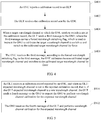
- FIG. 5 shows a method for wavelength channel calibration of an ONU, which is detailed below: S500.
- An OLT receives a calibration record reported by an ONU, and when an OLT-expected wavelength channel is not in the reported calibration record, that is, if the OLT-expected wavelength channel is a new wavelength channel, sends a fourth message to the ONU to request the ONU to perform wavelength channel calibration for the expected wavelength channel.
- the OLT receives the calibration record, and according to the calibration record, queries whether the ONU-expected wavelength channel is in the calibration record.
- the OLT instructs the ONU to perform wavelength channel calibration for the expected wavelength channel; or, when the ONU-expected wavelength channel is in the reported calibration record, the expected wavelength channel does not need to be calibrated any more.
- the calibration record includes a first entry and/or a second entry, where the first entry includes an ID of a calibrated downstream wavelength channel and the second entry includes an ID of a calibrated upstream wavelength channel.
- the fourth message may be obtained by extending any one of: a PLOAM message, an OMCI message, an MPCP message or an OAM message.
- the fourth message carries an expected wavelength channel indication bit, where the expected wavelength channel indication bit is used to instruct the ONU to perform wavelength channel calibration for the expected wavelength channel and then use the currently calibrated wavelength channel as a new operating wavelength channel or switch back, after completion of wavelength calibration, to an original wavelength channel.
- a PLOAM message is used as an example of the fourth message for description.
- New octets are octet 3 and octet 5.
- Octet 3 indicates that the message type ID is a calibration request.
- the format of the fourth message may also be shown in the following Table 5.
- the new octets 5-6 are used to denote wavelength channels that need to be calibrated by the ONU.
- octet 5 is an option field.
- a "0" value of the option instructs the ONU to calibrate all new wavelength channels; and a "1" value of the option instructs the ONU to calibrate a wavelength channel specified in octet 6.
- Octet 6 is used to indicate which wavelength channels need to be calibrated in octet 5.
- "DDDD" is an ID of a downstream wavelength channel that needs to be calibrated
- UUUU is an ID of an upstream wavelength channel that needs to be calibrated.
- Table 6 differs from Table 5 in that a quantity of wavelength channels that need to be calibrated is added, so that wavelength channel calibration may be performed for multiple wavelength channels, as detailed below in Table 6.
- Table 6 Octet Content Description 1-2 0x03FF ONU ID 3
- Message type ID Calibration request 4 Sequence number Broadcast or unicast PLOAM message sequence number 5 option 0: Calibrate all new wavelength channels 1: Calibrate wavelength channels specified by the subsequent octets 6-7 6
- AAAABBBB quantity of downstream wavelength channels that need to be calibrated
- the new octet 6 denotes the quantity of wavelength channels that need to be calibrated, where the quantity of wavelength channels that need to be calibrated may indicate multiple wavelength channels that need to be calibrated, which is a difference from Table 5, and in Table 5, the quantity of wavelength channels that need to be calibrated may be one. Specifically, this is denoted by "AAAA BBBB”, where "AAAA” denotes the quantity of downstream wavelength channels that need to be calibrated, and "BBBB” denotes the quantity of upstream wavelength channels that need to be calibrated.
- 0000 DDDD denotes an ID of a downstream wavelength channel that needs to be calibrated, and is used to identify a downstream wavelength channel that needs to be calibrated
- 0000 UUUU denotes an ID of an upstream wavelength channel that needs to be calibrated, and is used to identify an upstream wavelength channel that needs to be calibrated.
- the ONU receives the fourth message of the OLT and performs wavelength channel calibration for the expected wavelength channel.
- the ONU may report the calibration record to the OLT by adding the calibration record into the second message in Embodiment 1, which is a most preferred embodiment.
- the ONU may also send a message that carries the calibration record to the OLT, and no limitation is imposed herein.
- the ONU performs wavelength channel calibration for the expected wavelength channel and then uses the currently calibrated wavelength channel as a new operating wavelength channel or switches back, after completion of wavelength calibration, to the original wavelength channel.
- FIG. 6 shows another method for wavelength channel calibration of an ONU, which is detailed below: S600.
- An OLT receives a calibration record reported by an ONU, and when an ONU-expected wavelength channel is not in the reported calibration record, that is, if the ONU-expected wavelength channel is a new wavelength channel, the OLT sends a fifth message to the ONU, where the fifth message carries an ONU deactivation indication bit and is used to instruct the ONU to get deactivated and then calibrate all new wavelength channels before re-registration.
- the OLT receives the calibration record, and according to the calibration record, queries whether the ONU-expected wavelength channel is in the calibration record. When the ONU-expected wavelength channel is not in the reported calibration record, the OLT instructs the ONU to get deactivated and then calibrate all new wavelength channels before re-registration. When the ONU-expected wavelength channel is in the reported calibration record, the expected wavelength channel does not need to be calibrated any more.
- the calibration record includes a first entry and/or a second entry, where the first entry includes an ID of a calibrated downstream wavelength channel and the second entry includes an ID of a calibrated upstream wavelength channel.
- the fifth message may be obtained by extending any one of: a PLOAM message, an OMCI message, an MPCP message or an OAM message.
- the fifth message carries an expected wavelength channel indication bit, where the expected wavelength channel indication bit is used to instruct the ONU to perform wavelength channel calibration for the expected wavelength channel and then use a current calibrated wavelength channel as a new operating wavelength channel or switch back, after completion of wavelength calibration, to the original wavelength channel (the indication bit is not displayed in Table 7, and reference may be made to the description of Table 6).
- the format of the fifth message may be shown in Table 7.
- a deactivation indication bit in octet 5 in Table 7 instructs the ONU to get deactivated and then calibrate all new wavelength channels before re-registration. It should be understood that a position, a length and the like of the deactivation indication in Table 7 are not limited to those in Table 7, and the position and the like may be changed according to various needs.
- the new octet 5 is used to instruct the ONU whether to calibrate all new wavelength channels, which may be denoted by "0000 000F".
- octets are content defined by a standard PLOAM message, where octet 3 is a message type ID, and the message type ID is a Deactivate ONU ID (Deactivate ONU ID) message and may be denoted by 0x05.
- the ONU receives the fifth message of the OLT, and according to the deactivation indication bit in the fifth message, performs deactivation processing and then calibrates all new wavelength channels before re-registration.
- the ONU may report the calibration record to the OLT by adding the calibration record into the second message in Embodiment 2, which is a most preferred embodiment.
- the ONU may also send a message that carries the calibration record to the OLT, and no limitation is imposed herein.
- an OLT instructs, by using different message indications, the OLT to calibrate a new wavelength channel, thereby implementing smooth expansion of a system and improving a utilization rate of system bandwidth.
- FIG. 7 An apparatus provided in an embodiment of the present invention is shown in FIG. 7 .
- a passive optical network communications apparatus 70 is provided, where the apparatus includes:
- the communications apparatus may be an OLT, and corresponds to the OLT in FIG. 1 .
- the first communications unit may be a transceiver of the OLT.
- the first processing unit may be a MAC or a microprocessor, and the first processing unit may be implemented on a chip.
- the first message further includes a forced calibration flag that is used to instruct the ONU to switch to the target wavelength channel after calibrating all new wavelength channels, where new wavelength channel IDs corresponding to the new wavelength channels are not in the calibration record, and the new wavelength channels include the target wavelength channel.
- the first communications unit is specifically configured to: send a second message to the ONU, where the second message includes a quiet window and is used to instruct the ONU to register within the quiet window; and receive, within the quiet window, a registration request reported by the ONU, where the registration request includes a sequence number of the ONU and the calibration record.
- the calibration record includes at least one of an ID of a calibrated upstream wavelength channel and an ID of a calibrated downstream wavelength channel.
- the calibration record includes at least one of an ID of a calibrated upstream wavelength channel and an ID of a calibrated downstream wavelength channel.
- the first processing unit is further configured to determine, according to the calibration record, that an OLT-expected wavelength channel ID is in the calibration record, and then allows the ONU to register, where the OLT-expected wavelength channel ID is an operating wavelength channel ID allocated by the OLT to the ONU.
- the first processing unit is further configured to: when an OLT-expected wavelength channel ID is not in the calibration record, instruct the first communications unit to send a third message to the ONU; and the first communications unit is further configured to: according to an instruction of the first processing unit, send a third message to the ONU, so as to request the ONU to perform wavelength channel calibration for a wavelength channel identified by the OLT-expected wavelength channel ID, where the OLT-expected wavelength channel ID is an operating wavelength channel ID allocated by the OLT to the ONU.
- the third message further includes an expected wavelength channel indication bit and is used to instruct the ONU to perform wavelength channel calibration for the OLT-expected wavelength channel and use the calibrated OLT-expected wavelength channel as an operating wavelength channel of the ONU.
- the first processing unit is further configured to: when an OLT-expected wavelength channel ID is not in the calibration record, instruct the first communications unit to send a fourth message to the ONU; and the first communications unit is further configured to send a fourth message to the ONU according to an instruction of the first processing unit, where the fourth message includes a wavelength channel calibration indication bit and is used to instruct the ONU to calibrate all new wavelength channels or instruct the ONU to calibrate a specified new wavelength channel, where the all new wavelength channels include an OLT-expected wavelength channel identified by the OLT-expected wavelength channel ID and the specified new wavelength channel, and the specified new wavelength channel is determined according to an ID of a to-be-calibrated wavelength channel in the fourth message or determined according to a quantity of to-be-calibrated wavelength channels and IDs of the to-be-calibrated wavelength channels in the fourth message.
- the first processing unit is further configured to: when an OLT-expected wavelength channel ID is not in the calibration record, instruct the first communications unit to send a fifth message to the ONU; and the first communications unit is further configured to send a fifth message to the ONU according to an instruction of the first processing unit, where the fifth message includes an ONU deactivation indication bit and is used to instruct the ONU to get deactivated and then calibrate all new wavelength channels before re-registration, where the all new wavelength channels include an OLT-expected wavelength channel identified by the OLT-expected wavelength channel ID.
- an optical network unit ONU reports a calibration record of the ONU, where the calibration record includes an ID of a calibrated wavelength channel; an OLT sends a first message to the ONU when determining, according to the calibration record, that a target wavelength channel ID corresponding to a target wavelength channel to which the ONU needs to switch is not in the calibration record, where the first message includes a forced wavelength switching flag; the ONU performs, according to the forced wavelength switching flag, wavelength channel calibration for the target wavelength channel to switch to, and instructs the ONU to switch to the calibrated target wavelength channel.
- the ONU can implement wavelength switching quickly after calibrating a new wavelength channel so as to perform data communication over the calibrated new wavelength channel, thereby expanding a capacity of a system by effectively using the new wavelength channel and improving bandwidth utilization of the system.
- an embodiment of the present invention further provides a passive optical network communications apparatus 80, whose specific structure is described below:
- the communications apparatus 80 includes:
- the communications apparatus may be an ONU, and corresponds to the ONU in FIG. 1 .
- the second communications unit may be a transceiver of the ONU.
- the second processing unit may be a MAC or a microprocessor, and functions of the second processing unit may be implemented on a chip of the ONU.
- the first message further includes a forced calibration flag
- the second communications unit is further configured to calibrate all new wavelength channels according to the forced calibration flag, and switch to the target wavelength channel, where new wavelength channel IDs corresponding to the new wavelength channels are not in the calibration record, and the new wavelength channels include the target wavelength channel.
- the second communications unit is specifically configured to: receive a second message sent by the OLT, where the second message includes a quiet window; send, by the ONU within the quiet window, a registration request to the OLT, where the registration request includes a sequence number of the ONU and the calibration record, and the calibration record is generated by the ONU; and receive, within the quiet window, the sequence number of the ONU and the calibration record that are reported by the ONU.
- the calibration record includes at least one of an ID of a calibrated upstream wavelength channel and an ID of a calibrated downstream wavelength channel.
- the calibration record further includes at least one of a quantity of calibrated downstream wavelength channels and a quantity of calibrated upstream wavelength channels.
- the second communications unit is further configured to receive a third message sent by the OLT; and the second processing unit is further configured to perform, according to the third message, wavelength channel calibration for a wavelength channel identified by an OLT-expected operating wavelength channel ID, where the OLT-expected wavelength channel ID is an operating wavelength channel ID allocated by the OLT to the ONU.
- the third message further includes an expected wavelength channel indication bit; and the second processing unit is further configured to: according to the expected wavelength channel indication bit, perform wavelength channel calibration for the OLT-expected wavelength channel and use the calibrated OLT-expected wavelength channel as an operating wavelength channel of the ONU.
- the second communications unit is further configured to receive a fourth message sent by the OLT, where the fourth message includes a wavelength channel calibration indication bit; and the second processing unit is further configured to: calibrate all new wavelength channels according to the wavelength channel calibration indication bit; or, calibrate a specified new wavelength channel according to the wavelength channel calibration indication bit, where the all new wavelength channels include an OLT-expected wavelength channel identified by an OLT-expected wavelength channel ID and the specified new wavelength channel, and the specified new wavelength channel is a wavelength channel specified according to an ID of a to-be-calibrated wavelength channel in the fourth message or is a wavelength channel specified according to a quantity of to-be-calibrated wavelength channels and IDs of the to-be-calibrated wavelength channels in the fourth message.
- the second communications unit is further configured to receive a fifth message sent by the OLT, where the fifth message includes an ONU deactivation indication bit; and the second processing unit is further configured to calibrate all new wavelength channels according to the ONU deactivation indication bit before re-registration, where the new wavelength channels include an OLT-expected wavelength channel identified by an OLT-expected wavelength channel ID, where the OLT-expected wavelength channel ID is an operating wavelength channel ID allocated by the OLT to the ONU.
- an optical network unit ONU reports a calibration record of the ONU, where the calibration record includes an ID of a calibrated wavelength channel; an OLT sends a first message to the ONU when determining, according to the calibration record, that a target wavelength channel ID corresponding to a target wavelength channel to which the ONU needs to switch is not in the calibration record, where the first message includes a forced wavelength switching flag; the ONU performs, according to the forced wavelength switching flag, wavelength channel calibration for the target wavelength channel to switch to, and instructs the ONU to switch to the calibrated target wavelength channel.
- the ONU can implement wavelength switching quickly after calibrating a new wavelength channel so as to perform data communication over the calibrated new wavelength channel, thereby expanding a capacity of a system by effectively using the new wavelength channel and improving bandwidth utilization of the system.
- An embodiment of the present invention further provides a communications apparatus 90, as shown in FIG. 90.
- the communications apparatus 90 includes: a processor 902, a memory 904, and a bus system 906, where the processor 902 is connected to the memory 904 via the bus system 904, the memory 904 is used to store instructions, and the processor 904 is used to execute the instructions stored by the memory 904.
- the processor 902 is configured to: when determining, according to a calibration record, that a target wavelength channel ID corresponding to a target wavelength channel to which an ONU needs to switch is not in the calibration record, send a first message to the ONU.
- the processor 902 is configured to perform, according to a forced wavelength switching flag, wavelength channel calibration for a target wavelength channel to switch to, and switch to the calibrated target wavelength channel; and perform, by an ONU, data communication with the OLT over the switched-to target wavelength channel.
- the processor 902 may be a central processing unit (Central Processing Unit, "CPU” for short), and the processor 902 may also be another general purpose processor, a digital signal processor (DSP), an application-specific integrated circuit (ASIC), a field programmable gate array (FPGA) or other programmable logical device, a discrete gate or transistor logical device, a discrete hardware assembly, or the like.
- the general purpose processor may be a microprocessor, or the processor may also be any conventional processor or the like.
- the memory 904 may include a read-only memory and a random access memory, and provide instructions and data for the processor 902. Apart of the memory 904 may further include a non-volatile random access memory. For example, the memory 904 may further store device type information.
- the bus system 906 may include not only a data bus but also a power supply bus, a control bus, a status signal bus and the like. However, for clear description, various buses are denoted by the bus system 906 in the diagram.
- steps of the foregoing methods may be implemented by using an integrated logical circuit in a hardware form or instructions in a software form in the processor 902.
- the steps of the methods disclosed with reference to the embodiments of the present invention may be directly implemented by a hardware processor, or may be implemented by a combination of hardware and a software module in a processor.
- the software module may be located in a storage medium that is mature in the art, such as a random access memory, a flash memory, a read-only memory, a programmable read-only memory, or an electrically erasable programmable memory, or a register.
- the storage medium is located in the memory 904, and the processor 904 reads information in the memory 904 and implements, in combination with its hardware, the steps of the foregoing methods. To avoid repetition, no detailed description is given herein again.
- the present invention further provides a passive optical network system.
- the passive optical network system at least includes an OLT and ONUs.
- the OLT is connected to the ONUs via an optical splitter.
- FIG. 7 of the apparatus embodiments and the corresponding description of FIG. 7 For functions implemented by the OLT, refer to FIG. 7 of the apparatus embodiments and the corresponding description of FIG. 7 ; and for functions implemented by the ONU, refer to FIG. 8 of the apparatus embodiments and the corresponding description of FIG. 8 .
- the OLT is configured to: receive a calibration record reported by an optical network unit ONU, where the calibration record includes an ID of a calibrated wavelength channel; send a first message to the ONU when the OLT determines, according to the calibration record, that a target wavelength channel ID corresponding to a target wavelength channel to which the ONU needs to switch is not in the calibration record, where the first message includes a forced wavelength switching flag, where the forced wavelength switching flag is used to instruct the ONU to perform wavelength channel calibration for the target wavelength channel to switch to and instruct the ONU to switch to the calibrated target wavelength channel; and receive data sent by the ONU over the calibrated target wavelength channel.
- the ONU is configured to: report the calibration record to the optical line terminal OLT, where the calibration record includes the ID of the calibrated wavelength channel; receive the first message sent by the OLT, where the first message includes the forced wavelength switching flag; according to the forced wavelength switching flag, perform wavelength channel calibration for the target wavelength channel to switch to, and switch to the calibrated target wavelength channel; and perform data communication with the OLT over the switched-to target wavelength channel.
- an optical network unit receives a first message sent by an optical line terminal, where the first message carries backup wavelength channel ID information; when the optical network unit detects a fault, the optical network unit switches an operating wavelength channel of the optical network unit to a backup wavelength channel identified by the backup wavelength channel ID information; and the optical network unit performs data communication over the switched-to backup wavelength channel, thereby implementing fast protection switching of the passive optical network system and improving reliability of the system.
- the present invention further provides a passive optical network system.
- the passive optical network system at least includes an OLT and ONUs.
- the OLT is connected to the ONUs via an optical splitter.
- FIG. 7 and the corresponding description of FIG. 7 For functions implemented by the OLT, refer to FIG. 7 and the corresponding description of FIG. 7 ; and for functions implemented by the ONU, refer to FIG. 8 of the apparatus embodiments and the corresponding description of FIG. 8 .
- the OLT is configured to: receive a calibration record reported by an optical network unit ONU, where the calibration record includes an ID of a calibrated wavelength channel; send a first message to the ONU when the OLT determines, according to the calibration record, that a target wavelength channel ID corresponding to a target wavelength channel to which the ONU needs to switch is not in the calibration record, where the first message includes a forced wavelength switching flag, where the forced wavelength switching flag is used to instruct the ONU to perform wavelength channel calibration for the target wavelength channel to switch to and instruct the ONU to switch to the calibrated target wavelength channel; and receive data sent by the ONU over the calibrated target wavelength channel.
- the ONU is configured to: report the calibration record to the optical line terminal OLT, where the calibration record includes the ID of the calibrated wavelength channel; receive the first message sent by the OLT, where the first message includes the forced wavelength switching flag; according to the forced wavelength switching flag, perform wavelength channel calibration for the target wavelength channel to be switched to, and switch to the calibrated target wavelength channel; and perform, by the ONU, data communication with the OLT over the switched-to target wavelength channel.
- an ONU reports a calibration record of the ONU, where the calibration record includes an ID of a calibrated wavelength channel; an OLT sends a first message to the ONU when determining, according to the calibration record, that a target wavelength channel ID corresponding to a target wavelength channel to which the ONU needs to switch is not in the calibration record, where the first message includes a forced wavelength switching flag; the ONU performs, according to the forced wavelength switching flag, wavelength channel calibration for the target wavelength channel to switch to, and instructs the ONU to switch to the calibrated target wavelength channel.
- the ONU can implement wavelength switching quickly after calibrating a new wavelength channel so as to perform data communication over the calibrated new wavelength channel, thereby expanding a capacity of a system by effectively using the new wavelength channel and improving bandwidth utilization of the system.
- the disclosed apparatus may be implemented in other manners.
- the described apparatus embodiment is merely exemplary.
- the unit division is merely logical function division and may be other division in actual implementation.
- a plurality of units or components may be combined or integrated into another system, or some features may be ignored or not performed.
- the displayed or discussed mutual couplings or direct couplings or communication connections may be implemented through some interfaces.
- the indirect couplings or communication connections between the apparatuses or units may be implemented in electronic or other forms.
- the units described as separate parts may or may not be physically separate, and parts displayed as units may or may not be physical units, may be located in one position, or may be distributed on a plurality of network units. Some or all of the units may be selected according to actual needs to achieve the objectives of the solutions of the embodiments.
- functional units in the embodiments of the present invention may be integrated into one processing unit, or each of the units may exist alone physically, or two or more units are integrated into one unit.
- the integrated unit may be implemented in a form of hardware, or may be implemented in a form of a software functional unit.
- the integrated unit When the foregoing integrated unit is implemented in the form of a software functional unit and sold or used as an independent product, the integrated unit may be stored in a computer-readable storage medium.
- the software product is stored in a storage medium and includes several instructions for instructing a computer device (which may be a personal computer, a server, or a network device, and may specifically be a processor in a computer device) to perform all or a part of the steps of the foregoing methods described in the embodiments of the present invention.
- the foregoing storage medium may include: any medium that can store program code, such as a USB flash drive, a removable hard disk, a magnetic disk, an optical disc, a read-only memory (ROM, Read-Only Memory), or a random access memory (RAM, Random Access Memory).
- program code such as a USB flash drive, a removable hard disk, a magnetic disk, an optical disc, a read-only memory (ROM, Read-Only Memory), or a random access memory (RAM, Random Access Memory).
Landscapes
- Engineering & Computer Science (AREA)
- Computer Networks & Wireless Communication (AREA)
- Signal Processing (AREA)
- Physics & Mathematics (AREA)
- Electromagnetism (AREA)
- Optical Communication System (AREA)
- Small-Scale Networks (AREA)
Claims (18)
- Datenkommunikationsverfahren in einem passiven optischen Netzwerk, wobei das Verfahren umfasst:Empfangen (S204), durch einen "Optical Line Terminal", OLT, einer Kalibrierungsaufzeichnung, die von einer "Optical Network Unit", ONU, gemeldet wird, wobei die Kalibrierungsaufzeichnung eine ID eines kalibrierten Wellenlängenkanals umfasst;Senden (S206) einer ersten Mitteilung zu der ONU, wenn der OLT gemäß der Kalibrierungsaufzeichnung bestimmt, dass eine ID eines Zielwellenlängenkanals, die einem Zielwellenlängenkanal entspricht, zu dem die ONU umschalten muss, nicht in der Kalibrierungsaufzeichnung enthalten ist, wobei die erste Mitteilung ein Erzwungene-Wellenlängenumschaltung-Flag umfasst, wobei das Erzwungene-Wellenlängenumschaltung-Flag zum Anweisen der ONU, eine Wellenlängenkanalkalibrierung für den Zielwellenlängenkanal, zu dem umzuschalten ist, durchzuführen, und zum Anweisen der ONU, zu dem kalibrierten Zielwellenlängenkanal umzuschalten, verwendet wird; undEmpfangen (S208) von Daten, die von der ONU über den kalibrierten Zielwellenlängenkanal gesendet werden.
- Datenkommunikationsverfahren nach Anspruch 1, wobei die erste Mitteilung ferner ein Erzwungene-Kalibrierung-Flag umfasst, das zum Anweisen der ONU verwendet wird, zu dem Zielwellenlängenkanal umzuschalten, nachdem sämtliche neuen Wellenlängenkanäle kalibriert sind, wobei IDs von neuen Wellenlängenkanälen, die den neuen Wellenlängenkanälen entsprechen, nicht in der Kalibrierungsaufzeichnung enthalten sind und die neuen Wellenlängenkanäle den Zielwellenlängenkanal umfassen.
- Datenkommunikationsverfahren nach Anspruch 1, wobei die Kalibrierungsaufzeichnung eine ID eines kalibrierten vorgeschalteten Wellenlängenkanals und/oder eine ID eines kalibrierten nachgeschalteten Wellenlängenkanals umfasst.
- Datenkommunikationsverfahren nach Anspruch 1, wobei die Kalibrierungsaufzeichnung ferner eine Menge von kalibrierten nachgeschalteten Wellenlängenkanälen und/oder eine Menge von kalibrierten vorgeschalteten Wellenlängenkanälen umfasst.
- Datenkommunikationsverfahren in einem passiven optischen Netzwerk, wobei das Verfahren umfasst:Melden (S200, S202), durch eine "Optical Network Unit", ONU, einer Kalibrierungsaufzeichnung an ein "Optical Line Terminal", OLT, wobei die Kalibrierungsaufzeichnung eine ID eines kalibrierten Wellenlängenkanals umfasst;Empfangen (S208), durch die ONU, einer ersten Mitteilung, die von dem OLT gesendet wird, wobei die erste Mitteilung ein Erzwungene-Wellenlängenumschaltung-Flag umfasst; Durchführen, durch die ONU gemäß dem Erzwungene-Wellenlängenumschaltung-Flag, einer Wellenlängenkanalkalibrierung für einen Zielwellenlängenkanal, zu dem umzuschalten ist, und Umschalten zu dem kalibrierten Zielwellenlängenkanal; undDurchführen (S210), durch die ONU, einer Datenkommunikation mit dem OLT über den Zielwellenlängenkanal, zu dem umgeschaltet worden ist.
- Datenkommunikationsverfahren nach Anspruch 5, wobei die erste Mitteilung ferner ein Erzwungene-Kalibrierung-Flag umfasst; und
das Verfahren ferner umfasst:Kalibrieren, durch die ONU, sämtlicher neuen Wellenlängenkanäle gemäß dem Erzwungene-Kalibrierung-Flag und Umschalten zu dem Zielwellenlängenkanal,wobei IDs von neuen Wellenlängenkanälen, die den neuen Wellenlängenkanälen entsprechen, nicht in der Kalibrierungsaufzeichnung enthalten sind und die neuen Wellenlängenkanäle den Zielwellenlängenkanal umfassen. - Datenkommunikationsverfahren nach Anspruch 5, wobei die Kalibrierungsaufzeichnung eine ID eines kalibrierten vorgeschalteten Wellenlängenkanals und/oder eine ID eines kalibrierten nachgeschalteten Wellenlängenkanals umfasst.
- Datenkommunikationsverfahren nach Anspruch 5, wobei die Kalibrierungsaufzeichnung ferner eine Menge von kalibrierten nachgeschalteten Wellenlängenkanälen und/oder eine Menge von kalibrierten vorgeschalteten Wellenlängenkanälen umfasst.
- Passive optische Netzwerkkommunikationseinrichtung, wobei die Kommunikationseinrichtung umfasst:eine erste Kommunikationseinheit (702), die so ausgeführt ist, dass sie: eine Kalibrierungsaufzeichnung empfängt, die von einer "Optical Network Unit", ONU, gemeldet wird, wobei die Kalibrierungsaufzeichnung eine ID eines kalibrierten Wellenlängenkanals umfasst; gemäß einer Anweisung einer ersten Verarbeitungseinheit eine erste Mitteilung zu der ONU sendet, wobei die erste Mitteilung ein Erzwungene-Wellenlängenumschaltung-Flag umfasst, wobei das Erzwungene-Wellenlängenumschaltung-Flag zum Anweisen der ONU, eine Wellenlängenkanalkalibrierung für einen Zielwellenlängenkanal, zu dem umzuschalten ist, durchzuführen, und zum Anweisen der ONU, zu dem kalibrierten Zielwellenlängenkanal umzuschalten, verwendet wird; und Daten empfängt, die von der ONU über den kalibrierten Zielwellenlängenkanal gesendet werden; undeine erste Verarbeitungseinheit (704), die so ausgeführt ist, dass sie: gemäß der Kalibrierungsaufzeichnung dann, wenn bestimmt wird, dass eine ID des Zielwellenlängenkanals, die dem Zielwellenlängenkanal entspricht, zu dem die ONU umschalten muss, nicht in der Kalibrierungsaufzeichnung enthalten ist, die aus der ersten Kommunikationseinheit empfangen wird, die erste Kommunikationseinheit anweist, die erste Mitteilung zu der ONU zu senden.
- Kommunikationseinrichtung nach Anspruch 9, wobei die erste Mitteilung ferner ein Erzwungene-Kalibrierung-Flag umfasst, das verwendet wird zum Anweisen der ONU, zu dem Zielwellenlängenkanal umzuschalten, nachdem sämtliche neuen Wellenlängenkanäle kalibriert sind, wobei IDs von neuen Wellenlängenkanälen, die den neuen Wellenlängenkanälen entsprechen, nicht in der Kalibrierungsaufzeichnung enthalten sind und die neuen Wellenlängenkanäle den Zielwellenlängenkanal umfassen.
- Kommunikationseinrichtung nach Anspruch 9, wobei die Kalibrierungsaufzeichnung eine ID eines kalibrierten vorgeschalteten Wellenlängenkanals und/oder eine ID eines kalibrierten nachgeschalteten Wellenlängenkanals umfasst.
- Kommunikationseinrichtung nach Anspruch 9, wobei die Kalibrierungsaufzeichnung ferner eine Menge von kalibrierten nachgeschalteten Wellenlängenkanälen und/oder eine Menge von kalibrierten vorgeschalteten Wellenlängenkanälen umfasst.
- Kommunikationseinrichtung nach Anspruch 9, wobei die erste Verarbeitungseinheit (704) ferner so ausgeführt ist, dass sie gemäß der Kalibrierungsaufzeichnung bestimmt, dass eine ID eines OLT-erwarteten Wellenlängenkanals in der Kalibrierungsaufzeichnung enthalten ist und dann der ONU eine Registrierung ermöglicht, wobei die ID des OLT-erwarteten Wellenlängenkanals eine ID eines Betriebswellenlängenkanals ist, die von dem OLT der ONU zugeteilt wird.
- Kommunikationseinrichtung nach Anspruch 9, wobei die erste Verarbeitungseinheit (704) ferner so ausgeführt ist, dass sie: wenn eine ID des OLT-erwarteten Wellenlängenkanals nicht in der Kalibrierungsaufzeichnung enthalten ist, die erste Kommunikationseinheit anweist, eine vierte Mitteilung zu der ONU zu senden; und die erste Kommunikationseinheit (702) ferner so ausgeführt ist, dass sie gemäß einer Anweisung der ersten Verarbeitungseinheit eine vierte Mitteilung zu der ONU sendet, wobei die vierte Mitteilung ein Wellenlängenkanalkalibrierungs-Anzeigebit umfasst und zum Anweisen der ONU, sämtliche neuen Wellenlängenkanäle zu kalibrieren, oder zum Anweisen der ONU, einen spezifizierten neuen Wellenlängenkanal zu kalibrieren, verwendet wird, wobei die sämtlichen neuen Wellenlängenkanäle einen OLT-erwarteten Wellenlängenkanal, der von der ID des OLT-erwarteten Wellenlängenkanals identifiziert wird, und den spezifizierten neuen Wellenlängenkanal umfassen und der spezifizierte neue Wellenlängenkanal gemäß einer ID eines zu kalibrierenden Wellenlängenkanals in der vierten Mitteilung bestimmt wird oder gemäß einer Menge von zu kalibrierenden Wellenlängenkanälen und IDs der zu kalibrierenden Wellenlängenkanäle in der vierten Mitteilung bestimmt wird.
- Passive optische Netzwerkkommunikationseinrichtung, wobei die Kommunikationseinrichtung umfasst:eine zweite Kommunikationseinheit (802), die so ausgeführt ist, dass sie: eine Kalibrierungsaufzeichnung an einen "Optical Line Terminal", OLT, meldet, wobei die Kalibrierungsaufzeichnung eine ID eines kalibrierten Wellenlängenkanals umfasst; und eine erste Mitteilung, die von dem OLT gesendet wird, empfängt, wobei die erste Mitteilung ein Erzwungene-Wellenlängenumschaltung-Flag umfasst; undeine zweite Verarbeitungseinheit (804), die so ausgeführt ist, dass sie: gemäß dem Erzwungene-Wellenlängenumschaltung-Flag, das aus der zweiten Kommunikationseinheit empfangen wird, eine Wellenlängenkanalkalibrierung für einen Zielwellenlängenkanal, zu dem umzuschalten ist, durchführt und zu dem kalibrierten Zielwellenlängenkanal umschaltet; und eine Datenkommunikation mit dem OLT über den Zielwellenlängenkanal, zu dem umgeschaltet worden ist, durchführt.
- Kommunikationseinrichtung nach Anspruch 15, wobei die erste Mitteilung ferner ein Erzwungene-Kalibrierung-Flag umfasst; und
die zweite Kommunikationseinheit (802) ferner so ausgeführt ist, dass sie sämtliche neuen Wellenlängenkanäle gemäß dem Erzwungene-Kalibrierung-Flag kalibriert und zu dem Zielwellenlängenkanal umschaltet, wobei die IDs von neuen Wellenlängenkanälen, die den neuen Wellenlängenkanälen entsprechen, nicht in der Kalibrierungsaufzeichnung enthalten sind und die neuen Wellenlängenkanäle den Zielwellenlängenkanal umfassen. - Kommunikationseinrichtung nach Anspruch 15, wobei die Kalibrierungsaufzeichnung eine ID eines kalibrierten vorgeschalteten Wellenlängenkanals und/oder eine ID eines kalibrierten nachgeschalteten Wellenlängenkanals umfasst.
- Passives optisches Netzwerksystem, wobei das System eine erste Kommunikationseinrichtung nach einem der Ansprüche 9 bis 14 und eine zweite Kommunikationseinrichtung nach einem der Ansprüche 15 bis 17 umfasst.
Priority Applications (1)
| Application Number | Priority Date | Filing Date | Title |
|---|---|---|---|
| EP18156704.1A EP3382920B1 (de) | 2014-08-13 | 2014-08-13 | Verfahren und system zur passiven optischen netzwerkkommunikation |
Applications Claiming Priority (1)
| Application Number | Priority Date | Filing Date | Title |
|---|---|---|---|
| PCT/CN2014/084242 WO2016023180A1 (zh) | 2014-08-13 | 2014-08-13 | 无源光网络的通信方法、装置以及系统 |
Related Child Applications (2)
| Application Number | Title | Priority Date | Filing Date |
|---|---|---|---|
| EP18156704.1A Division EP3382920B1 (de) | 2014-08-13 | 2014-08-13 | Verfahren und system zur passiven optischen netzwerkkommunikation |
| EP18156704.1A Division-Into EP3382920B1 (de) | 2014-08-13 | 2014-08-13 | Verfahren und system zur passiven optischen netzwerkkommunikation |
Publications (3)
| Publication Number | Publication Date |
|---|---|
| EP3082284A1 EP3082284A1 (de) | 2016-10-19 |
| EP3082284A4 EP3082284A4 (de) | 2017-03-08 |
| EP3082284B1 true EP3082284B1 (de) | 2018-05-09 |
Family
ID=55303785
Family Applications (2)
| Application Number | Title | Priority Date | Filing Date |
|---|---|---|---|
| EP14899739.8A Active EP3082284B1 (de) | 2014-08-13 | 2014-08-13 | Kommunikationsverfahren, -vorrichtung und -system für ein passives optisches netzwerk |
| EP18156704.1A Active EP3382920B1 (de) | 2014-08-13 | 2014-08-13 | Verfahren und system zur passiven optischen netzwerkkommunikation |
Family Applications After (1)
| Application Number | Title | Priority Date | Filing Date |
|---|---|---|---|
| EP18156704.1A Active EP3382920B1 (de) | 2014-08-13 | 2014-08-13 | Verfahren und system zur passiven optischen netzwerkkommunikation |
Country Status (5)
| Country | Link |
|---|---|
| US (2) | US10129614B2 (de) |
| EP (2) | EP3082284B1 (de) |
| CN (2) | CN106576011B (de) |
| ES (1) | ES2675505T3 (de) |
| WO (1) | WO2016023180A1 (de) |
Families Citing this family (9)
| Publication number | Priority date | Publication date | Assignee | Title |
|---|---|---|---|---|
| EP3082284B1 (de) * | 2014-08-13 | 2018-05-09 | Huawei Technologies Co., Ltd. | Kommunikationsverfahren, -vorrichtung und -system für ein passives optisches netzwerk |
| CN107317647B (zh) * | 2016-04-26 | 2019-07-26 | 中兴通讯股份有限公司 | 通道的调整方法、装置及系统 |
| EP3826241B1 (de) * | 2017-02-13 | 2023-03-08 | Nippon Telegraph And Telephone Corporation | Bandbreitenzuteilungsgerät und bandbreitenzuteilungsverfahren |
| JP7317552B2 (ja) * | 2019-04-05 | 2023-07-31 | 日本ルメンタム株式会社 | 光モジュール及び光通信システム |
| US10651946B1 (en) * | 2019-05-30 | 2020-05-12 | Google Llc | In-field calibration of laser transmitter |
| CN112235662A (zh) * | 2019-07-15 | 2021-01-15 | 中兴通讯股份有限公司 | 一种降低无源光网络上行时延的方法及相关设备 |
| US12368506B2 (en) | 2022-12-30 | 2025-07-22 | Realtek Singapore Private Limited | Passive optical network device for detecting anomaly and method thereof |
| CN119603580A (zh) * | 2023-09-08 | 2025-03-11 | 华为技术有限公司 | 光通信设备的配置、认证方法及装置、光通信设备和系统 |
| CN116916199B (zh) * | 2023-09-12 | 2023-12-05 | 武汉长光科技有限公司 | 多波接入系统onu的波长的锁定方法及装置 |
Family Cites Families (24)
| Publication number | Priority date | Publication date | Assignee | Title |
|---|---|---|---|---|
| EP1628423B1 (de) * | 2003-05-28 | 2016-02-24 | Nippon Telegraph And Telephone Corporation | Optisches wellenlängenmultiplexzugangssystem |
| JP4410789B2 (ja) * | 2006-12-08 | 2010-02-03 | 株式会社日立コミュニケーションテクノロジー | パッシブ光ネットワークシステム、光終端装置及び光ネットワークユニット |
| JP4388556B2 (ja) * | 2007-01-09 | 2009-12-24 | 株式会社日立コミュニケーションテクノロジー | パッシブ光ネットワークシステムおよび波長割当方法 |
| JP4839266B2 (ja) * | 2007-06-07 | 2011-12-21 | 株式会社日立製作所 | 光通信システム |
| US8041217B2 (en) * | 2007-11-27 | 2011-10-18 | Fujitsu Limited | System and method for managing wavelength drift in an optical network |
| EP2366228A4 (de) * | 2008-12-01 | 2016-12-21 | ERICSSON TELEFON AB L M (publ) | Verfahren und vorrichtung zur wellenlängenausrichtung in einem wdm-pon |
| CN102082976B (zh) * | 2009-11-27 | 2014-12-10 | 中兴通讯股份有限公司 | 一种无源光网络中数据发送的方法和系统 |
| WO2012096630A1 (en) | 2011-01-14 | 2012-07-19 | Agency For Science, Technology And Research | Identification of an optical-layer failure in a passive optical network |
| US9219566B2 (en) * | 2011-04-08 | 2015-12-22 | Futurewei Technologies, Inc. | Wavelength management in multiple-wavelength passive optical networks |
| US9667377B2 (en) * | 2011-04-08 | 2017-05-30 | Futurewei Technologies, Inc. | Wavelength indication in multiple-wavelength passive optical networks |
| WO2013018337A1 (ja) * | 2011-07-29 | 2013-02-07 | 日本電気株式会社 | ネットワークシステム、ネットワーク装置、およびネットワーク制御方法 |
| WO2012103849A2 (zh) * | 2012-04-11 | 2012-08-09 | 华为技术有限公司 | 无源光网络的测距方法、系统和装置 |
| US9712241B2 (en) * | 2012-04-20 | 2017-07-18 | Mitsubishi Electric Corporation | Communication system, master station device, slave station device, control unit, and communication control method |
| JP2013229743A (ja) * | 2012-04-25 | 2013-11-07 | Mitsubishi Electric Corp | 光通信システム |
| CN103391486B (zh) * | 2012-05-09 | 2018-05-04 | 中兴通讯股份有限公司 | 一种进行波长调整的方法及光线路终端及光网络单元 |
| JP2015522992A (ja) * | 2012-05-23 | 2015-08-06 | ▲ホア▼▲ウェイ▼技術有限公司 | 多波長パッシブ光ネットワーク上での波長切替えのための方法、システム、および装置 |
| CN103636153B (zh) * | 2012-06-13 | 2016-09-14 | 华为技术有限公司 | 多波长无源光网络的波长配置方法、系统和装置 |
| JP5940444B2 (ja) * | 2012-12-10 | 2016-06-29 | 株式会社日立製作所 | ネットワークシステム、局側装置、及び、通信制御方法 |
| EP2997684B1 (de) * | 2013-05-15 | 2018-10-31 | ZTE Corporation | Verwendung eines verrauschten fensters zur aktivierung einer unkalibrierten optischen netzwerkeinheit |
| EP2999167B1 (de) * | 2013-06-09 | 2018-05-09 | Huawei Technologies Co., Ltd. | Verfahren und vorrichtung zur virtualisierung eines passiven optischen netzwerkes und virtualisierungssystem für passives optisches netzwerk |
| CN103916179B (zh) * | 2014-03-28 | 2016-09-07 | 武汉光迅科技股份有限公司 | 通过局端光线路终端监控用户端可调激光器波长的方法 |
| CN111654765B (zh) * | 2014-05-13 | 2023-02-24 | 中兴通讯股份有限公司 | 业务服务处理方法、装置及光线路终端 |
| EP3082284B1 (de) * | 2014-08-13 | 2018-05-09 | Huawei Technologies Co., Ltd. | Kommunikationsverfahren, -vorrichtung und -system für ein passives optisches netzwerk |
| KR102291046B1 (ko) * | 2015-07-20 | 2021-08-19 | 한국전자통신연구원 | 광망 종단 장치 및 그 제어 방법 |
-
2014
- 2014-08-13 EP EP14899739.8A patent/EP3082284B1/de active Active
- 2014-08-13 CN CN201480081175.8A patent/CN106576011B/zh active Active
- 2014-08-13 WO PCT/CN2014/084242 patent/WO2016023180A1/zh not_active Ceased
- 2014-08-13 ES ES14899739.8T patent/ES2675505T3/es active Active
- 2014-08-13 CN CN201910412978.1A patent/CN110391864B/zh active Active
- 2014-08-13 EP EP18156704.1A patent/EP3382920B1/de active Active
-
2017
- 2017-02-13 US US15/431,390 patent/US10129614B2/en active Active
-
2018
- 2018-10-18 US US16/164,309 patent/US10939190B2/en active Active
Non-Patent Citations (1)
| Title |
|---|
| None * |
Also Published As
| Publication number | Publication date |
|---|---|
| US20190052940A1 (en) | 2019-02-14 |
| US10939190B2 (en) | 2021-03-02 |
| CN110391864A (zh) | 2019-10-29 |
| EP3082284A1 (de) | 2016-10-19 |
| CN106576011B (zh) | 2019-05-24 |
| WO2016023180A1 (zh) | 2016-02-18 |
| CN110391864B (zh) | 2021-02-23 |
| ES2675505T3 (es) | 2018-07-11 |
| EP3082284A4 (de) | 2017-03-08 |
| EP3382920A1 (de) | 2018-10-03 |
| EP3382920B1 (de) | 2020-04-15 |
| US20170155982A1 (en) | 2017-06-01 |
| CN106576011A (zh) | 2017-04-19 |
| US10129614B2 (en) | 2018-11-13 |
Similar Documents
| Publication | Publication Date | Title |
|---|---|---|
| EP3082284B1 (de) | Kommunikationsverfahren, -vorrichtung und -system für ein passives optisches netzwerk | |
| US10735836B2 (en) | Passive optical network communications method, apparatus and system | |
| CN103636153B (zh) | 多波长无源光网络的波长配置方法、系统和装置 | |
| CN103650422B (zh) | 多波长无源光网络的波长协商方法、系统和装置 | |
| US20180212705A1 (en) | Optical network unit registration method, apparatus, and system | |
| EP2750330A1 (de) | Verfahren und system zur nachrichtenübertragung über eine steuerschnittstelle zur endgeräteverwaltung über ein optisches netzwerk sowie entsprechende vorrichtung | |
| WO2015172279A1 (zh) | 一种波长切换的方法、装置及系统 | |
| JP6367983B2 (ja) | 光ネットワークユニット(onu)較正の光回線終端装置(olt)サポート | |
| US9819437B2 (en) | Rogue optical network unit mitigation in passive optical networks | |
| CN105830369B (zh) | 以太网无源光网络系统中设备注册和波长切换的方法和装置 | |
| CN111316575B (zh) | Pon系统中的数据发送和接收方法、网络设备及系统 | |
| CN106059704A (zh) | 波长配置方法、系统和装置 |
Legal Events
| Date | Code | Title | Description |
|---|---|---|---|
| PUAI | Public reference made under article 153(3) epc to a published international application that has entered the european phase |
Free format text: ORIGINAL CODE: 0009012 |
|
| 17P | Request for examination filed |
Effective date: 20160715 |
|
| AK | Designated contracting states |
Kind code of ref document: A1 Designated state(s): AL AT BE BG CH CY CZ DE DK EE ES FI FR GB GR HR HU IE IS IT LI LT LU LV MC MK MT NL NO PL PT RO RS SE SI SK SM TR |
|
| AX | Request for extension of the european patent |
Extension state: BA ME |
|
| A4 | Supplementary search report drawn up and despatched |
Effective date: 20170203 |
|
| RIC1 | Information provided on ipc code assigned before grant |
Ipc: H04J 14/02 20060101AFI20170130BHEP Ipc: H04Q 11/00 20060101ALI20170130BHEP |
|
| RAP1 | Party data changed (applicant data changed or rights of an application transferred) |
Owner name: HUAWEI TECHNOLOGIES CO., LTD. |
|
| GRAP | Despatch of communication of intention to grant a patent |
Free format text: ORIGINAL CODE: EPIDOSNIGR1 |
|
| DAX | Request for extension of the european patent (deleted) | ||
| INTG | Intention to grant announced |
Effective date: 20171120 |
|
| GRAS | Grant fee paid |
Free format text: ORIGINAL CODE: EPIDOSNIGR3 |
|
| GRAA | (expected) grant |
Free format text: ORIGINAL CODE: 0009210 |
|
| AK | Designated contracting states |
Kind code of ref document: B1 Designated state(s): AL AT BE BG CH CY CZ DE DK EE ES FI FR GB GR HR HU IE IS IT LI LT LU LV MC MK MT NL NO PL PT RO RS SE SI SK SM TR |
|
| REG | Reference to a national code |
Ref country code: GB Ref legal event code: FG4D |
|
| REG | Reference to a national code |
Ref country code: CH Ref legal event code: EP Ref country code: AT Ref legal event code: REF Ref document number: 998467 Country of ref document: AT Kind code of ref document: T Effective date: 20180515 |
|
| REG | Reference to a national code |
Ref country code: IE Ref legal event code: FG4D |
|
| REG | Reference to a national code |
Ref country code: DE Ref legal event code: R096 Ref document number: 602014025417 Country of ref document: DE |
|
| REG | Reference to a national code |
Ref country code: ES Ref legal event code: FG2A Ref document number: 2675505 Country of ref document: ES Kind code of ref document: T3 Effective date: 20180711 |
|
| REG | Reference to a national code |
Ref country code: FR Ref legal event code: PLFP Year of fee payment: 5 |
|
| REG | Reference to a national code |
Ref country code: NL Ref legal event code: MP Effective date: 20180509 |
|
| REG | Reference to a national code |
Ref country code: LT Ref legal event code: MG4D |
|
| PG25 | Lapsed in a contracting state [announced via postgrant information from national office to epo] |
Ref country code: LT Free format text: LAPSE BECAUSE OF FAILURE TO SUBMIT A TRANSLATION OF THE DESCRIPTION OR TO PAY THE FEE WITHIN THE PRESCRIBED TIME-LIMIT Effective date: 20180509 Ref country code: BG Free format text: LAPSE BECAUSE OF FAILURE TO SUBMIT A TRANSLATION OF THE DESCRIPTION OR TO PAY THE FEE WITHIN THE PRESCRIBED TIME-LIMIT Effective date: 20180809 Ref country code: FI Free format text: LAPSE BECAUSE OF FAILURE TO SUBMIT A TRANSLATION OF THE DESCRIPTION OR TO PAY THE FEE WITHIN THE PRESCRIBED TIME-LIMIT Effective date: 20180509 Ref country code: NO Free format text: LAPSE BECAUSE OF FAILURE TO SUBMIT A TRANSLATION OF THE DESCRIPTION OR TO PAY THE FEE WITHIN THE PRESCRIBED TIME-LIMIT Effective date: 20180809 Ref country code: SE Free format text: LAPSE BECAUSE OF FAILURE TO SUBMIT A TRANSLATION OF THE DESCRIPTION OR TO PAY THE FEE WITHIN THE PRESCRIBED TIME-LIMIT Effective date: 20180509 |
|
| PG25 | Lapsed in a contracting state [announced via postgrant information from national office to epo] |
Ref country code: GR Free format text: LAPSE BECAUSE OF FAILURE TO SUBMIT A TRANSLATION OF THE DESCRIPTION OR TO PAY THE FEE WITHIN THE PRESCRIBED TIME-LIMIT Effective date: 20180810 Ref country code: NL Free format text: LAPSE BECAUSE OF FAILURE TO SUBMIT A TRANSLATION OF THE DESCRIPTION OR TO PAY THE FEE WITHIN THE PRESCRIBED TIME-LIMIT Effective date: 20180509 Ref country code: HR Free format text: LAPSE BECAUSE OF FAILURE TO SUBMIT A TRANSLATION OF THE DESCRIPTION OR TO PAY THE FEE WITHIN THE PRESCRIBED TIME-LIMIT Effective date: 20180509 Ref country code: LV Free format text: LAPSE BECAUSE OF FAILURE TO SUBMIT A TRANSLATION OF THE DESCRIPTION OR TO PAY THE FEE WITHIN THE PRESCRIBED TIME-LIMIT Effective date: 20180509 Ref country code: RS Free format text: LAPSE BECAUSE OF FAILURE TO SUBMIT A TRANSLATION OF THE DESCRIPTION OR TO PAY THE FEE WITHIN THE PRESCRIBED TIME-LIMIT Effective date: 20180509 |
|
| REG | Reference to a national code |
Ref country code: AT Ref legal event code: MK05 Ref document number: 998467 Country of ref document: AT Kind code of ref document: T Effective date: 20180509 |
|
| PG25 | Lapsed in a contracting state [announced via postgrant information from national office to epo] |
Ref country code: DK Free format text: LAPSE BECAUSE OF FAILURE TO SUBMIT A TRANSLATION OF THE DESCRIPTION OR TO PAY THE FEE WITHIN THE PRESCRIBED TIME-LIMIT Effective date: 20180509 Ref country code: EE Free format text: LAPSE BECAUSE OF FAILURE TO SUBMIT A TRANSLATION OF THE DESCRIPTION OR TO PAY THE FEE WITHIN THE PRESCRIBED TIME-LIMIT Effective date: 20180509 Ref country code: AT Free format text: LAPSE BECAUSE OF FAILURE TO SUBMIT A TRANSLATION OF THE DESCRIPTION OR TO PAY THE FEE WITHIN THE PRESCRIBED TIME-LIMIT Effective date: 20180509 Ref country code: RO Free format text: LAPSE BECAUSE OF FAILURE TO SUBMIT A TRANSLATION OF THE DESCRIPTION OR TO PAY THE FEE WITHIN THE PRESCRIBED TIME-LIMIT Effective date: 20180509 Ref country code: SK Free format text: LAPSE BECAUSE OF FAILURE TO SUBMIT A TRANSLATION OF THE DESCRIPTION OR TO PAY THE FEE WITHIN THE PRESCRIBED TIME-LIMIT Effective date: 20180509 Ref country code: CZ Free format text: LAPSE BECAUSE OF FAILURE TO SUBMIT A TRANSLATION OF THE DESCRIPTION OR TO PAY THE FEE WITHIN THE PRESCRIBED TIME-LIMIT Effective date: 20180509 Ref country code: PL Free format text: LAPSE BECAUSE OF FAILURE TO SUBMIT A TRANSLATION OF THE DESCRIPTION OR TO PAY THE FEE WITHIN THE PRESCRIBED TIME-LIMIT Effective date: 20180509 |
|
| REG | Reference to a national code |
Ref country code: DE Ref legal event code: R097 Ref document number: 602014025417 Country of ref document: DE |
|
| PG25 | Lapsed in a contracting state [announced via postgrant information from national office to epo] |
Ref country code: SM Free format text: LAPSE BECAUSE OF FAILURE TO SUBMIT A TRANSLATION OF THE DESCRIPTION OR TO PAY THE FEE WITHIN THE PRESCRIBED TIME-LIMIT Effective date: 20180509 |
|
| PLBE | No opposition filed within time limit |
Free format text: ORIGINAL CODE: 0009261 |
|
| STAA | Information on the status of an ep patent application or granted ep patent |
Free format text: STATUS: NO OPPOSITION FILED WITHIN TIME LIMIT |
|
| PG25 | Lapsed in a contracting state [announced via postgrant information from national office to epo] |
Ref country code: MC Free format text: LAPSE BECAUSE OF FAILURE TO SUBMIT A TRANSLATION OF THE DESCRIPTION OR TO PAY THE FEE WITHIN THE PRESCRIBED TIME-LIMIT Effective date: 20180509 |
|
| REG | Reference to a national code |
Ref country code: CH Ref legal event code: PL |
|
| 26N | No opposition filed |
Effective date: 20190212 |
|
| PG25 | Lapsed in a contracting state [announced via postgrant information from national office to epo] |
Ref country code: CH Free format text: LAPSE BECAUSE OF NON-PAYMENT OF DUE FEES Effective date: 20180831 Ref country code: LI Free format text: LAPSE BECAUSE OF NON-PAYMENT OF DUE FEES Effective date: 20180831 Ref country code: LU Free format text: LAPSE BECAUSE OF NON-PAYMENT OF DUE FEES Effective date: 20180813 |
|
| REG | Reference to a national code |
Ref country code: BE Ref legal event code: MM Effective date: 20180831 |
|
| REG | Reference to a national code |
Ref country code: IE Ref legal event code: MM4A |
|
| PG25 | Lapsed in a contracting state [announced via postgrant information from national office to epo] |
Ref country code: SI Free format text: LAPSE BECAUSE OF FAILURE TO SUBMIT A TRANSLATION OF THE DESCRIPTION OR TO PAY THE FEE WITHIN THE PRESCRIBED TIME-LIMIT Effective date: 20180509 |
|
| PG25 | Lapsed in a contracting state [announced via postgrant information from national office to epo] |
Ref country code: IE Free format text: LAPSE BECAUSE OF NON-PAYMENT OF DUE FEES Effective date: 20180813 |
|
| PG25 | Lapsed in a contracting state [announced via postgrant information from national office to epo] |
Ref country code: BE Free format text: LAPSE BECAUSE OF NON-PAYMENT OF DUE FEES Effective date: 20180831 |
|
| PG25 | Lapsed in a contracting state [announced via postgrant information from national office to epo] |
Ref country code: AL Free format text: LAPSE BECAUSE OF FAILURE TO SUBMIT A TRANSLATION OF THE DESCRIPTION OR TO PAY THE FEE WITHIN THE PRESCRIBED TIME-LIMIT Effective date: 20180509 |
|
| PG25 | Lapsed in a contracting state [announced via postgrant information from national office to epo] |
Ref country code: MT Free format text: LAPSE BECAUSE OF NON-PAYMENT OF DUE FEES Effective date: 20180813 |
|
| PG25 | Lapsed in a contracting state [announced via postgrant information from national office to epo] |
Ref country code: TR Free format text: LAPSE BECAUSE OF FAILURE TO SUBMIT A TRANSLATION OF THE DESCRIPTION OR TO PAY THE FEE WITHIN THE PRESCRIBED TIME-LIMIT Effective date: 20180509 |
|
| PG25 | Lapsed in a contracting state [announced via postgrant information from national office to epo] |
Ref country code: PT Free format text: LAPSE BECAUSE OF FAILURE TO SUBMIT A TRANSLATION OF THE DESCRIPTION OR TO PAY THE FEE WITHIN THE PRESCRIBED TIME-LIMIT Effective date: 20180509 |
|
| PG25 | Lapsed in a contracting state [announced via postgrant information from national office to epo] |
Ref country code: MK Free format text: LAPSE BECAUSE OF NON-PAYMENT OF DUE FEES Effective date: 20180509 Ref country code: CY Free format text: LAPSE BECAUSE OF FAILURE TO SUBMIT A TRANSLATION OF THE DESCRIPTION OR TO PAY THE FEE WITHIN THE PRESCRIBED TIME-LIMIT Effective date: 20180509 Ref country code: HU Free format text: LAPSE BECAUSE OF FAILURE TO SUBMIT A TRANSLATION OF THE DESCRIPTION OR TO PAY THE FEE WITHIN THE PRESCRIBED TIME-LIMIT; INVALID AB INITIO Effective date: 20140813 |
|
| PG25 | Lapsed in a contracting state [announced via postgrant information from national office to epo] |
Ref country code: IS Free format text: LAPSE BECAUSE OF FAILURE TO SUBMIT A TRANSLATION OF THE DESCRIPTION OR TO PAY THE FEE WITHIN THE PRESCRIBED TIME-LIMIT Effective date: 20180909 |
|
| PGFP | Annual fee paid to national office [announced via postgrant information from national office to epo] |
Ref country code: ES Payment date: 20250903 Year of fee payment: 12 |
|
| PGFP | Annual fee paid to national office [announced via postgrant information from national office to epo] |
Ref country code: DE Payment date: 20250702 Year of fee payment: 12 |
|
| PGFP | Annual fee paid to national office [announced via postgrant information from national office to epo] |
Ref country code: IT Payment date: 20250722 Year of fee payment: 12 |
|
| PGFP | Annual fee paid to national office [announced via postgrant information from national office to epo] |
Ref country code: GB Payment date: 20250703 Year of fee payment: 12 |
|
| PGFP | Annual fee paid to national office [announced via postgrant information from national office to epo] |
Ref country code: FR Payment date: 20250703 Year of fee payment: 12 |