EP3076968B1 - Ccr6 compounds - Google Patents
Ccr6 compounds Download PDFInfo
- Publication number
- EP3076968B1 EP3076968B1 EP14867718.0A EP14867718A EP3076968B1 EP 3076968 B1 EP3076968 B1 EP 3076968B1 EP 14867718 A EP14867718 A EP 14867718A EP 3076968 B1 EP3076968 B1 EP 3076968B1
- Authority
- EP
- European Patent Office
- Prior art keywords
- compound
- ring
- alkyl
- disease
- compounds
- Prior art date
- Legal status (The legal status is an assumption and is not a legal conclusion. Google has not performed a legal analysis and makes no representation as to the accuracy of the status listed.)
- Active
Links
- PAHCOMGGZLMDOX-UHFFFAOYSA-N CC(C)(C)c(c(F)c1)ccc1S(Nc(c(-c(cc1)c(cccn2)c2c1-c1nnn[nH]1)c1)cc(O2)c1OC2(F)F)(=O)=O Chemical compound CC(C)(C)c(c(F)c1)ccc1S(Nc(c(-c(cc1)c(cccn2)c2c1-c1nnn[nH]1)c1)cc(O2)c1OC2(F)F)(=O)=O PAHCOMGGZLMDOX-UHFFFAOYSA-N 0.000 description 1
- MODCRBHUELTBNQ-UHFFFAOYSA-N CC(C)(C)c(cc1)ccc1S(Nc(cc1)c(-c2ccc(C(O)=O)c3c2cccn3)c(Cl)c1C#N)(=O)=O Chemical compound CC(C)(C)c(cc1)ccc1S(Nc(cc1)c(-c2ccc(C(O)=O)c3c2cccn3)c(Cl)c1C#N)(=O)=O MODCRBHUELTBNQ-UHFFFAOYSA-N 0.000 description 1
Images
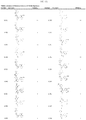
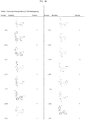

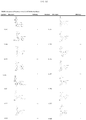


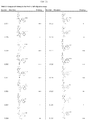
Classifications
-
- A—HUMAN NECESSITIES
- A61—MEDICAL OR VETERINARY SCIENCE; HYGIENE
- A61K—PREPARATIONS FOR MEDICAL, DENTAL OR TOILETRY PURPOSES
- A61K31/00—Medicinal preparations containing organic active ingredients
- A61K31/33—Heterocyclic compounds
- A61K31/395—Heterocyclic compounds having nitrogen as a ring hetero atom, e.g. guanethidine or rifamycins
- A61K31/435—Heterocyclic compounds having nitrogen as a ring hetero atom, e.g. guanethidine or rifamycins having six-membered rings with one nitrogen as the only ring hetero atom
- A61K31/47—Quinolines; Isoquinolines
-
- A—HUMAN NECESSITIES
- A61—MEDICAL OR VETERINARY SCIENCE; HYGIENE
- A61K—PREPARATIONS FOR MEDICAL, DENTAL OR TOILETRY PURPOSES
- A61K31/00—Medicinal preparations containing organic active ingredients
- A61K31/33—Heterocyclic compounds
- A61K31/395—Heterocyclic compounds having nitrogen as a ring hetero atom, e.g. guanethidine or rifamycins
- A61K31/435—Heterocyclic compounds having nitrogen as a ring hetero atom, e.g. guanethidine or rifamycins having six-membered rings with one nitrogen as the only ring hetero atom
- A61K31/47—Quinolines; Isoquinolines
- A61K31/4709—Non-condensed quinolines and containing further heterocyclic rings
-
- A—HUMAN NECESSITIES
- A61—MEDICAL OR VETERINARY SCIENCE; HYGIENE
- A61K—PREPARATIONS FOR MEDICAL, DENTAL OR TOILETRY PURPOSES
- A61K31/00—Medicinal preparations containing organic active ingredients
- A61K31/33—Heterocyclic compounds
- A61K31/395—Heterocyclic compounds having nitrogen as a ring hetero atom, e.g. guanethidine or rifamycins
- A61K31/435—Heterocyclic compounds having nitrogen as a ring hetero atom, e.g. guanethidine or rifamycins having six-membered rings with one nitrogen as the only ring hetero atom
- A61K31/47—Quinolines; Isoquinolines
- A61K31/472—Non-condensed isoquinolines, e.g. papaverine
- A61K31/4725—Non-condensed isoquinolines, e.g. papaverine containing further heterocyclic rings
-
- A—HUMAN NECESSITIES
- A61—MEDICAL OR VETERINARY SCIENCE; HYGIENE
- A61P—SPECIFIC THERAPEUTIC ACTIVITY OF CHEMICAL COMPOUNDS OR MEDICINAL PREPARATIONS
- A61P1/00—Drugs for disorders of the alimentary tract or the digestive system
-
- A—HUMAN NECESSITIES
- A61—MEDICAL OR VETERINARY SCIENCE; HYGIENE
- A61P—SPECIFIC THERAPEUTIC ACTIVITY OF CHEMICAL COMPOUNDS OR MEDICINAL PREPARATIONS
- A61P11/00—Drugs for disorders of the respiratory system
-
- A—HUMAN NECESSITIES
- A61—MEDICAL OR VETERINARY SCIENCE; HYGIENE
- A61P—SPECIFIC THERAPEUTIC ACTIVITY OF CHEMICAL COMPOUNDS OR MEDICINAL PREPARATIONS
- A61P11/00—Drugs for disorders of the respiratory system
- A61P11/02—Nasal agents, e.g. decongestants
-
- A—HUMAN NECESSITIES
- A61—MEDICAL OR VETERINARY SCIENCE; HYGIENE
- A61P—SPECIFIC THERAPEUTIC ACTIVITY OF CHEMICAL COMPOUNDS OR MEDICINAL PREPARATIONS
- A61P11/00—Drugs for disorders of the respiratory system
- A61P11/06—Antiasthmatics
-
- A—HUMAN NECESSITIES
- A61—MEDICAL OR VETERINARY SCIENCE; HYGIENE
- A61P—SPECIFIC THERAPEUTIC ACTIVITY OF CHEMICAL COMPOUNDS OR MEDICINAL PREPARATIONS
- A61P15/00—Drugs for genital or sexual disorders; Contraceptives
- A61P15/02—Drugs for genital or sexual disorders; Contraceptives for disorders of the vagina
-
- A—HUMAN NECESSITIES
- A61—MEDICAL OR VETERINARY SCIENCE; HYGIENE
- A61P—SPECIFIC THERAPEUTIC ACTIVITY OF CHEMICAL COMPOUNDS OR MEDICINAL PREPARATIONS
- A61P17/00—Drugs for dermatological disorders
-
- A—HUMAN NECESSITIES
- A61—MEDICAL OR VETERINARY SCIENCE; HYGIENE
- A61P—SPECIFIC THERAPEUTIC ACTIVITY OF CHEMICAL COMPOUNDS OR MEDICINAL PREPARATIONS
- A61P17/00—Drugs for dermatological disorders
- A61P17/04—Antipruritics
-
- A—HUMAN NECESSITIES
- A61—MEDICAL OR VETERINARY SCIENCE; HYGIENE
- A61P—SPECIFIC THERAPEUTIC ACTIVITY OF CHEMICAL COMPOUNDS OR MEDICINAL PREPARATIONS
- A61P17/00—Drugs for dermatological disorders
- A61P17/06—Antipsoriatics
-
- A—HUMAN NECESSITIES
- A61—MEDICAL OR VETERINARY SCIENCE; HYGIENE
- A61P—SPECIFIC THERAPEUTIC ACTIVITY OF CHEMICAL COMPOUNDS OR MEDICINAL PREPARATIONS
- A61P25/00—Drugs for disorders of the nervous system
- A61P25/28—Drugs for disorders of the nervous system for treating neurodegenerative disorders of the central nervous system, e.g. nootropic agents, cognition enhancers, drugs for treating Alzheimer's disease or other forms of dementia
-
- A—HUMAN NECESSITIES
- A61—MEDICAL OR VETERINARY SCIENCE; HYGIENE
- A61P—SPECIFIC THERAPEUTIC ACTIVITY OF CHEMICAL COMPOUNDS OR MEDICINAL PREPARATIONS
- A61P29/00—Non-central analgesic, antipyretic or antiinflammatory agents, e.g. antirheumatic agents; Non-steroidal antiinflammatory drugs [NSAID]
-
- A—HUMAN NECESSITIES
- A61—MEDICAL OR VETERINARY SCIENCE; HYGIENE
- A61P—SPECIFIC THERAPEUTIC ACTIVITY OF CHEMICAL COMPOUNDS OR MEDICINAL PREPARATIONS
- A61P3/00—Drugs for disorders of the metabolism
- A61P3/08—Drugs for disorders of the metabolism for glucose homeostasis
- A61P3/10—Drugs for disorders of the metabolism for glucose homeostasis for hyperglycaemia, e.g. antidiabetics
-
- A—HUMAN NECESSITIES
- A61—MEDICAL OR VETERINARY SCIENCE; HYGIENE
- A61P—SPECIFIC THERAPEUTIC ACTIVITY OF CHEMICAL COMPOUNDS OR MEDICINAL PREPARATIONS
- A61P31/00—Antiinfectives, i.e. antibiotics, antiseptics, chemotherapeutics
-
- A—HUMAN NECESSITIES
- A61—MEDICAL OR VETERINARY SCIENCE; HYGIENE
- A61P—SPECIFIC THERAPEUTIC ACTIVITY OF CHEMICAL COMPOUNDS OR MEDICINAL PREPARATIONS
- A61P37/00—Drugs for immunological or allergic disorders
- A61P37/02—Immunomodulators
- A61P37/06—Immunosuppressants, e.g. drugs for graft rejection
-
- A—HUMAN NECESSITIES
- A61—MEDICAL OR VETERINARY SCIENCE; HYGIENE
- A61P—SPECIFIC THERAPEUTIC ACTIVITY OF CHEMICAL COMPOUNDS OR MEDICINAL PREPARATIONS
- A61P37/00—Drugs for immunological or allergic disorders
- A61P37/08—Antiallergic agents
-
- A—HUMAN NECESSITIES
- A61—MEDICAL OR VETERINARY SCIENCE; HYGIENE
- A61P—SPECIFIC THERAPEUTIC ACTIVITY OF CHEMICAL COMPOUNDS OR MEDICINAL PREPARATIONS
- A61P43/00—Drugs for specific purposes, not provided for in groups A61P1/00-A61P41/00
-
- A—HUMAN NECESSITIES
- A61—MEDICAL OR VETERINARY SCIENCE; HYGIENE
- A61P—SPECIFIC THERAPEUTIC ACTIVITY OF CHEMICAL COMPOUNDS OR MEDICINAL PREPARATIONS
- A61P5/00—Drugs for disorders of the endocrine system
- A61P5/14—Drugs for disorders of the endocrine system of the thyroid hormones, e.g. T3, T4
- A61P5/16—Drugs for disorders of the endocrine system of the thyroid hormones, e.g. T3, T4 for decreasing, blocking or antagonising the activity of the thyroid hormones
-
- A—HUMAN NECESSITIES
- A61—MEDICAL OR VETERINARY SCIENCE; HYGIENE
- A61P—SPECIFIC THERAPEUTIC ACTIVITY OF CHEMICAL COMPOUNDS OR MEDICINAL PREPARATIONS
- A61P9/00—Drugs for disorders of the cardiovascular system
-
- A—HUMAN NECESSITIES
- A61—MEDICAL OR VETERINARY SCIENCE; HYGIENE
- A61P—SPECIFIC THERAPEUTIC ACTIVITY OF CHEMICAL COMPOUNDS OR MEDICINAL PREPARATIONS
- A61P9/00—Drugs for disorders of the cardiovascular system
- A61P9/10—Drugs for disorders of the cardiovascular system for treating ischaemic or atherosclerotic diseases, e.g. antianginal drugs, coronary vasodilators, drugs for myocardial infarction, retinopathy, cerebrovascula insufficiency, renal arteriosclerosis
-
- C—CHEMISTRY; METALLURGY
- C07—ORGANIC CHEMISTRY
- C07D—HETEROCYCLIC COMPOUNDS
- C07D215/00—Heterocyclic compounds containing quinoline or hydrogenated quinoline ring systems
- C07D215/02—Heterocyclic compounds containing quinoline or hydrogenated quinoline ring systems having no bond between the ring nitrogen atom and a non-ring member or having only hydrogen atoms or carbon atoms directly attached to the ring nitrogen atom
- C07D215/16—Heterocyclic compounds containing quinoline or hydrogenated quinoline ring systems having no bond between the ring nitrogen atom and a non-ring member or having only hydrogen atoms or carbon atoms directly attached to the ring nitrogen atom with hetero atoms or with carbon atoms having three bonds to hetero atoms with at the most one bond to halogen, e.g. ester or nitrile radicals, directly attached to ring carbon atoms
- C07D215/48—Carbon atoms having three bonds to hetero atoms with at the most one bond to halogen
-
- C—CHEMISTRY; METALLURGY
- C07—ORGANIC CHEMISTRY
- C07D—HETEROCYCLIC COMPOUNDS
- C07D405/00—Heterocyclic compounds containing both one or more hetero rings having oxygen atoms as the only ring hetero atoms, and one or more rings having nitrogen as the only ring hetero atom
- C07D405/02—Heterocyclic compounds containing both one or more hetero rings having oxygen atoms as the only ring hetero atoms, and one or more rings having nitrogen as the only ring hetero atom containing two hetero rings
- C07D405/04—Heterocyclic compounds containing both one or more hetero rings having oxygen atoms as the only ring hetero atoms, and one or more rings having nitrogen as the only ring hetero atom containing two hetero rings directly linked by a ring-member-to-ring-member bond
-
- C—CHEMISTRY; METALLURGY
- C07—ORGANIC CHEMISTRY
- C07D—HETEROCYCLIC COMPOUNDS
- C07D405/00—Heterocyclic compounds containing both one or more hetero rings having oxygen atoms as the only ring hetero atoms, and one or more rings having nitrogen as the only ring hetero atom
- C07D405/14—Heterocyclic compounds containing both one or more hetero rings having oxygen atoms as the only ring hetero atoms, and one or more rings having nitrogen as the only ring hetero atom containing three or more hetero rings
Definitions
- Chemokines are chemotactic cytokines that are released by a wide variety of cells to attract macrophages, T cells, eosinophils, basophils and neutrophils to sites of inflammation (reviewed in Schall, Cytokine, 3:165-183 (1991 ), Schall, et al., Curr Opin. Immunol. 6:865-873 (1994 ) and Murphy, Rev. Immun., 12:593-633 (1994 )).
- chemokines in addition to stimulating chemotaxis, other changes can be selectively induced by chemokines in responsive cells, including changes in cell shape, transient rises in the concentration of intracellular free calcium ions ([Ca2+]), granule exocytosis, integrin upregulation, formation ofbioactive lipids (e.g., leukotrienes) and respiratory burst, associated with leukocyte activation.
- the chemokines are early triggers of the inflammatory response, causing inflammatory mediator release, chemotaxis and extravasation to sites of infection or inflammation.
- chemokines There are two main classes of chemokines, CXC (alpha) and CC (beta), depending on whether the first two cysteines are separated by a single amino acid (C-X-C) or are adjacent (C-C).
- the alpha-chemokines such as interleukin-8 (IL-8), neutrophil-activating protein-2 (NAP-2) and melanoma growth stimulatory activity protein (MGSA) are chemotactic primarily for neutrophils
- beta-chemokines such as RANTES, MIP-1a, MIP-lb, monocyte chemotactic protein-1 (MCP-1), MCP-2, MCP-3 and eotaxin are chemotactic for macrophages, T-cells, eosinophils and basophils ( Deng, et al., Nature, 381:661-666 (1996 )).
- chemokines bind specific cell-surface receptors belonging to the family of G-protein-coupled seven-transmembrane-domain proteins (reviewed in Horuk, Trends Pharm. Sci., 15:159-165 (1994 )) which are termed "chemokine receptors.”
- chemokine receptors On binding their cognate ligands, chemokine receptors transduce an intracellular signal though the associated trimeric G protein, resulting in a rapid increase in intracellular calcium concentration.
- chemokine receptors There are at least eleven human chemokine receptors that bind or respond to beta-chemokines and at least seven human chemokine recepotrs that bind to the alpha chemokines.
- CX3CR1 fractalkine receptor
- Chemokine receptors have been implicated as being important mediators of inflammatory and immunoregulatory disorders and diseases, including asthma and allergic diseases, as well as autoimmune pathologies such as rheumatoid arthritis and atherosclerosis.
- CCR6 is known to be expressed primarily in B cells, IL17 secreting T cells, regulatory T cells and dendritic cells and shows strong binding to its cognate ligand CCL20 (MIP-3 ⁇ ). It is expressed on approximately 30-60% of adult peripheral blood effector/memory CD4+ T cells. CCR6 is involved in leukocyte homing to inflamed tissue, particularly the skin and lungs and is co-expressed on almost all T cells that have a skin homing phenotype, the CLA+ T cells. Thus CCR6 may be an important player in skin pathologies in which leukocytes participate.
- CCR6 expression has been linked to psoriasis in the following manner.
- a large majority of skin-homing CD4 T cells in the peripheral blood express CCR6 with a greater degree of CCL20-mediated chemotaxis occurring in T cells isolated from psoriatic patients ( Homey, et. al., JI, 2000 ).
- IL17 secreting cells are central agents in several inflammatory diseases. T cells, such as ⁇ T cells and TH17 T cells produce IL17 after activation.
- the pathogenic effects of IL17 have been associated with human diseases such as rheumatoid arthritis ( Patel DD et.
- CCR6+ T cells isolated from psoriatic patients preferentially secrete IL-17A, IL22, and TNF ⁇ when compared to healthy controls ( Kagami, et. al., J. Invest. Dermatol., 2010 ).
- ccl20 mRNA was up-regulated in lesional psoriatic skin samples ( Homey, et. al., JI, 2000 ; Val-Nosjean, et. al., JEM, 2000 ).
- CCR6 knock-out mice were protected from IL-23 driven psoriasis.
- WO 2006/076644 describes compounds that act as potent antagonists of the CCR2 receptor.
- WO 2013/061004 relates to disubstituted 3,4-diamino-3-cyclobutene-1,2-dione compounds and pharmaceutical compositions thereof for the treatment of chemokine-mediates diseases.
- WO 2013/061005 relates to disubstituted 3,4-diamino-3-cyclobutene-1,2-dione compounds and pharmaceutical compositions thereof for the treatment of chemokine-mediates pathologies.
- the present invention provides a compound which is of formula (I): or is a pharmaceutically acceptable salt, hydrate, solvate, or rotamer thereof, wherein
- the present invention provides a compound of formula I which is: or a pharmaceutically acceptable salt, hydrate, solvate, or N-oxide thereof.
- composition comprising a compound of the invention and a pharmaceutically acceptable excipient.
- the compound of the invention is for use in a method of treating a disease or condition modulated at least in part by CCR6, comprising administering to a subject in need thereof, said compound, wherein said disease or condition is an inflammatory disease or condition; optionally wherein said disease or condition is atopic dermatitis or psoriasis.
- the present disclosure also describes preparative methods for the synthesis of compounds of formula (I), as well as selected intermediates useful in the preparation.
- alkyl by itself or as part of another substituent, means, unless otherwise stated, a straight or branched chain hydrocarbon radical, having the number of carbon atoms designated (i.e. C 1-8 means one to eight carbons).
- alkyl groups include methyl, ethyl, n-propyl, isopropyl, n-butyl, t-butyl, isobutyl, sec-butyl, n-pentyl, n-hexyl, n-heptyl, n-octyl, and the like.
- alkenyl refers to an unsaturated alkyl group having one or more double bonds.
- alkynyl refers to an unsaturated alkyl group having one or more triple bonds.
- unsaturated alkyl groups include vinyl, 2-propenyl, crotyl, 2-isopentenyl, 2-(butadienyl), 2,4-pentadienyl, 3-(1,4-pentadienyl), ethynyl, 1- and 3-propynyl, 3-butynyl, and the higher homologs and isomers.
- cycloalkyl refers to hydrocarbon rings having the indicated number of ring atoms (e.g ., C 3-6 cycloalkyl) and being fully saturated or having no more than one double bond between ring vertices. "Cycloalkyl” is also meant to refer to bicyclic and polycyclic hydrocarbon rings such as, for example, bicyclo[2.2.1]heptane, bicyclo[2.2.2]octane, etc.
- heterocycloalkane or “heterocycloalkyl” refers to a cycloalkyl group that contain from one to five heteroatoms selected from N, O, and S, wherein the nitrogen and sulfur atoms are optionally oxidized, and the nitrogen atom(s) are optionally quaternized.
- the heterocycloalkane may be a monocyclic, a bicyclic or a polycylic ring system.
- heterocycloalkane groups include pyrrolidine, imidazolidine, pyrazolidine, butyrolactam, valerolactam, imidazolidinone, hydantoin, dioxolane, phthalimide, piperidine, 1,4-dioxane, morpholine, thiomorpholine, thiomorpholine-S-oxide, thiomorpholine-S,S-oxide, piperazine, pyran, pyridone, 3-pyrroline, thiopyran, pyrone, tetrahydrofuran, tetrhydrothiophene, quinuclidine, and the like.
- a heterocycloalkane group can be attached to the remainder of the molecule through a ring carbon or a heteroatom.
- alkylene by itself or as part of another substituent means a divalent radical derived from an alkane, as exemplified by -CH 2 CH 2 CH 2 CH 2 -.
- an alkyl (or alkylene) group will have from 1 to 24 carbon atoms, with those groups having 10 or fewer carbon atoms being preferred in the present invention.
- a “lower alkyl” or “lower alkylene” is a shorter chain alkyl or alkylene group, generally having four or fewer carbon atoms.
- alkenylene and “alkynylene” refer to the unsaturated forms of "alkylene” having double or triple bonds, respectively.
- a wavy line, " ", that intersects a single, double or triple bond in any chemical structure depicted herein, represent the point attachment of the single, double, or triple bond to the remainder of the molecule.
- alkoxy alkylamino and “alkylthio” (or thioalkoxy) are used in their conventional sense, and refer to those alkyl groups attached to the remainder of the molecule via an oxygen atom, an amino group, or a sulfur atom, respectively. Additionally, for dialkylamino groups, the alkyl portions can be the same or different and can also be combined to form a 3-7 membered ring with the nitrogen atom to which each is attached. Accordingly, a group represented as dialkylamino or -NR a R b is meant to include piperidinyl, pyrrolidinyl, morpholinyl, azetidinyl and the like.
- di-(C 1-4 alkyl)amino-C 1-4 alkyl refers to an amino group bearing two C 1-4 alkyl groups that can be the same or different (e.g., methyl, ethyl, propyl, isopropyl, n-butyl, sec-butyl, isobutyl and tert-butyl) and which is attached to the remainder of the molecule through a C 1-4 alkyl group (a one to four carbon alkylene linking group).
- di-(C 1-4 alkyl)amino-C 1-4 alkyl groups include dimethylaminomethyl, 2-(ethyl(methyl)amino)ethyl, 3-(dimethylamino)butyl, and the like.
- halo or halogen
- substituents mean, unless otherwise stated, a fluorine, chlorine, bromine, or iodine atom.
- terms such as “haloalkyl,” are meant to include monohaloalkyl and polyhaloalkyl.
- C 1-4 haloalkyl is mean to include trifluoromethyl, 2,2,2-trifluoroethyl, 4-chlorobutyl, 3-bromopropyl, and the like.
- aryl means, unless otherwise stated, a polyunsaturated, typically aromatic, hydrocarbon group which can be a single ring or multiple rings (up to three rings) which are fused together or linked covalently.
- heteroaryl refers to aryl groups (or rings) that contain from one to five heteroatoms selected from N, O, and S, wherein the nitrogen and sulfur atoms are optionally oxidized, and the nitrogen atom(s) are optionally quaternized.
- a heteroaryl group can be attached to the remainder of the molecule through a heteroatom.
- Non-limiting examples of aryl groups include phenyl, naphthyl and biphenyl, while non-limiting examples of heteroaryl groups include pyridyl, pyridazinyl, pyrazinyl, pyrimindinyl, triazinyl, quinolinyl, quinoxalinyl, quinazolinyl, cinnolinyl, phthalazinyl, benzotriazinyl, purinyl, benzimidazolyl, benzopyrazolyl, benzotriazolyl, benzisoxazolyl, isobenzofuryl, isoindolyl, indolizinyl, benzotriazinyl, thienopyridinyl, thienopyrimidinyl, pyrazolopyrimidinyl, imidazopyridines, benzothiaxolyl, benzofuranyl, benzothienyl, indolyl, quinolyl
- arylalkyl is meant to include those radicals in which an aryl group is attached to an alkyl group (e . g ., benzyl, phenethyl, and the like).
- heteroaryl-alkyl is meant to include those radicals in which a heteroaryl group is attached to an alkyl group (e.g., pyridylmethyl, thiazolylethyl, and the like).
- heteroatom is meant to include oxygen (O), nitrogen (N), sulfur (S) and silicon (Si).
- salts are meant to include salts of the active compounds which are prepared with relatively nontoxic acids or bases, depending on the particular substituents found on the compounds described herein.
- base addition salts can be obtained by contacting the neutral form of such compounds with a sufficient amount of the desired base, either neat or in a suitable inert solvent.
- salts derived from pharmaceutically-acceptable inorganic bases include aluminum, ammonium, calcium, copper, ferric, ferrous, lithium, magnesium, manganic, manganous, potassium, sodium, zinc and the like.
- Salts derived from pharmaceutically-acceptable organic bases include salts of primary, secondary and tertiary amines, including substituted amines, cyclic amines, naturally-occuring amines and the like, such as arginine, betaine, caffeine, choline, N,N'-dibenzylethylenediamine, diethylamine, 2-diethylaminoethanol, 2-dimethylaminoethanol, ethanolamine, ethylenediamine, N-ethylmorpholine, N-ethylpiperidine, glucamine, glucosamine, histidine, hydrabamine, isopropylamine, lysine, methylglucamine, morpholine, piperazine, piperidine, polyamine resins, procaine, purines, theobromine, triethylamine, trimethylamine, tripropylamine, tromethamine and the like.
- acid addition salts can be obtained by contacting the neutral form of such compounds with a sufficient amount of the desired acid, either neat or in a suitable inert solvent.
- pharmaceutically acceptable acid addition salts include those derived from inorganic acids like hydrochloric, hydrobromic, nitric, carbonic, monohydrogencarbonic, phosphoric, monohydrogenphosphoric, dihydrogenphosphoric, sulfuric, monohydrogensulfuric, hydriodic, or phosphorous acids and the like, as well as the salts derived from relatively nontoxic organic acids like acetic, propionic, isobutyric, malonic, benzoic, succinic, suberic, fumaric, mandelic, phthalic, benzenesulfonic, p-tolylsulfonic, citric, tartaric, methanesulfonic, and the like.
- salts of amino acids such as arginate and the like, and salts of organic acids like glucuronic or galactunoric acids and the like (see, for example, Berge, S.M., et al, "Pharmaceutical Salts", Journal of Pharmaceutical Science, 1977, 66, 1-19 ).
- Certain specific compounds of the present invention contain both basic and acidic functionalities that allow the compounds to be converted into either base or acid addition salts.
- the neutral forms of the compounds may be regenerated by contacting the salt with a base or acid and isolating the parent compound in the conventional manner.
- the parent form of the compound differs from the various salt forms in certain physical properties, such as solubility in polar solvents, but otherwise the salts are equivalent to the parent form of the compound for the purposes of the present invention.
- prodrugs of the compounds described herein are those compounds that readily undergo chemical changes under physiological conditions to provide the compounds of the present invention.
- prodrugs can be converted to the compounds of the present invention by chemical or biochemical methods in an ex vivo environment. For example, prodrugs can be slowly converted to the compounds of the present invention when placed in a transdermal patch reservoir with a suitable enzyme or chemical reagent.
- Certain compounds of the present invention can exist in unsolvated forms as well as solvated forms, including hydrated forms. In general, the solvated forms are equivalent to unsolvated forms and are intended to be encompassed within the scope of the present invention. Certain compounds of the present invention may exist in multiple crystalline or amorphous forms. In general, all physical forms are equivalent for the uses contemplated by the present invention and are intended to be within the scope of the present invention.
- Certain compounds of the present invention possess asymmetric carbon atoms (optical centers) or double bonds; the racemates, diastereomers, geometric isomers, regioisomers and individual isomers (e.g., separate enantiomers) are all intended to be encompassed within the scope of the present invention.
- the compounds of the present invention may also contain unnatural proportions of atomic isotopes at one or more of the atoms that constitute such compounds. Unnatural proportions of an isotope may be defined as ranging from the amount found in nature to an amount consisting of 100% of the atom in question.
- the compounds may incorporate radioactive isotopes, such as for example tritium ( 3 H), iodine-125 ( 125 I) or carbon-14 ( 14 C), or non-radioactive isotopes, such as deuterium ( 2 H) or carbon-13 ( 13 C).
- radioactive isotopes such as for example tritium ( 3 H), iodine-125 ( 125 I) or carbon-14 ( 14 C), or non-radioactive isotopes, such as deuterium ( 2 H) or carbon-13 ( 13 C).
- isotopic variants of the compounds of the invention may find additional utility, including but not limited to, as diagnostic and/or imaging reagents, or as cytotoxic/radiotoxic therapeutic agents.
- isotopic variants of the compounds of the invention can have altered pharmacokinetic and pharmacodynamic characteristics which can contribute to enhanced safety, tolerability or efficacy during treatment. All isotopic variations of the compounds of the present invention, whether radioactive or not, are intended to be encompassed within
- acid isosteres means, unless otherwise stated, a group which can replace a carboxylic acid, having an acidic functionality and steric and electronic characteristics that provide a level of activity (or other compound characteristic such as solubility) similar to a carboxylic acid.
- Representative acid isosteres include, hydroxamic acids, sulfonic acids, sulfinic acids, sulfonamides, acyl-sulfonamides, phosphonic acids, phosphinic acids, phosphoric acids, tetrazole, and oxo-oxadiazoles.
- the present invention derives from the discovery that compounds of formula I act as potent antagonists of the CCR6 receptor.
- the compounds have in vivo anti-inflammatory activity and have superior pharmacokinetic properties.
- the compounds provided herein are useful in pharmaceutical compositions, may be used in methods for the treatment of CCR6-mediated diseases, and may be used as controls in assays for the identification of competitive CCR6 antagonists.
- the letter A represents a carboxylic acid moiety or a carboxylic acid isostere; ring vertices a, b, c and d are independently selected from the group consisting of N, CH and C(R 1 ); each R 1 is independently selected from the group consisting of halogen, CN, -SF 5 , C 1-8 alkyl, C 3-8 cycloalkyl, C 2-8 alkenyl, C 2-8 alkynyl, C 1-8 haloalkyl, -OR a , -SR a , -COR a , -NR a R b , and 5- or 6-membered heteroaryl, wherein the alkyl portions of R 1 are optionally further substituted with 1-3 R a ; and optionally, adjacent R 1 members are connected to form an additional 5- or 6-
- the claimed compounds of formula (I) are those wherein ring vertices a, b, c and d are each independently selected from the group consisting of CH and C(R 1 ). In some selected embodiments, the compounds of formula (I) are those wherein ring vertex d is CH. In still other selected embodiments, the compounds of formula (I) are those wherein ring vertices c and d are each CH. In yet other selected embodiments, the compounds of formula (I) are those wherein ring vertices a, b, and c are each C(R 1 ). In other selected embodiments, the compounds of formula (I) are those wherein ring vertices a and b are each C(R 1 ).
- the letter A represents a member selected from the group consisting of -CO 2 H, -SO 3 H, -PO 3 H 2 and a tetrazole.
- the compounds of formula (I) are those wherein A is a carboxylic acid (-CO 2 H) or a tetrazole. In some embodiments A is a tetrazole. In some embodiments, A is-CO 2 H or a salt thereof.
- the compounds of formula (I) are those wherein m and n are independently selected from 0 and 1.
- R 2 and R 3 are present, selected embodiments are those wherein each is independently selected from the group consisting of halogen, C 1-8 alkyl, -OR a , -NR a R b and -N(R a )-C 1 -C 4 alkylene-OR b , and wherein the alkyl portions of R 2 and R 3 are optionally further substituted with 1-3 R a .
- Ar is a 6-membered aromatic or heteroaromatic ring selected from the group consisting of benzene, pyridine and pyrimidine, each of which is optionally substituted with from 1-3 R 4 substituents.
- Ar is selected from the group consisting of benzene and pyridine, each of which is optionally substituted with from 1-2 R 4 substituents.
- Ar is a benzene ring which is optionally substituted with from 1-3 R 4 substituents; A is -CO 2 H; d is CH; and each of a, b and c is independently selected from the group consisting of CH and C(R 1 ).
- further selected embodiments are those wherein m and n are each independently 0 or 1.
- Still further selected embodiments are those wherein m and n are each 0.
- the ring having a, b, c and d as ring vertices is selected from the group consisting of: wherein the wavy line labeled y indicates the point of attachment to the NHS(O) 2 portion of the compound and the wavy line labeled z indicates the point of attachment to the quinoline ring.
- Ar is selected from the group consisting of: wherein the wavy line labeled w indicates the point of attachment to the S(O) 2 moiety.
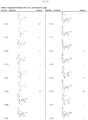
- the compounds of formula (I) are selected from the group consisting of:
- the compounds of formula (I) are selected from the group consisting of: or a pharmaceutically acceptable salt, hydrate, solvate, N-oxide or rotamer thereof.
- compositions for modulating CCR6, activity in humans and animals will typically contain a pharmaceutical carrier or diluent.
- composition as used herein is intended to encompass a product comprising the specified ingredients in the specified amounts, as well as any product which results, directly or indirectly, from combination of the specified ingredients in the specified amounts.
- pharmaceutically acceptable it is meant the carrier, diluent or excipient must be compatible with the other ingredients of the formulation and not deleterious to the recipient thereof.
- compositions for the administration of the compounds of this invention may conveniently be presented in unit dosage form and may be prepared by any of the methods well known in the art of pharmacy and drug delivery. All methods include the step of bringing the active ingredient into association with the carrier which constitutes one or more accessory ingredients.
- the pharmaceutical compositions are prepared by uniformly and intimately bringing the active ingredient into association with a liquid carrier or a finely divided solid carrier or both, and then, if necessary, shaping the product into the desired formulation.
- the active object compound is included in an amount sufficient to produce the desired effect upon the process or condition of diseases.
- compositions containing the active ingredient may be in a form suitable for oral use, for example, as tablets, troches, lozenges, aqueous or oily suspensions, dispersible powders or granules, emulsions and self emulsifications as described in U.S. Patent No. 6,451,339 , hard or soft capsules, syrups, elixirs, solutions, buccal patch, oral gel, chewing gum, chewable tablets, effervescent powder and effervescent tablets.
- compositions intended for oral use may be prepared according to any method known to the art for the manufacture of pharmaceutical compositions and such compositions may contain one or more agents selected from the group consisting of sweetening agents, flavoring agents, coloring agents, antioxidants and preserving agents in order to provide pharmaceutically elegant and palatable preparations.
- Tablets contain the active ingredient in admixture with non-toxic pharmaceutically acceptable excipients which are suitable for the manufacture of tablets.
- excipients may be for example, inert diluents, such as cellulose, silicon dioxide, aluminum oxide, calcium carbonate, sodium carbonate, glucose, mannitol, sorbitol, lactose, calcium phosphate or sodium phosphate; granulating and disintegrating agents, for example, corn starch, or alginic acid; binding agents, for example PVP, cellulose, PEG, starch, gelatin or acacia, and lubricating agents, for example magnesium stearate, stearic acid or talc.
- the tablets may be uncoated or they may be coated, enterically or otherwise, by known techniques to delay disintegration and absorption in the gastrointestinal tract and thereby provide a sustained action over a longer period.
- a time delay material such as glyceryl monostearate or glyceryl distearate may be employed. They may also be coated by the techniques described in the U.S. Pat. Nos. 4,256,108 ; 4,166,452 ; and 4,265,874 to form osmotic therapeutic tablets for control release.
- Formulations for oral use may also be presented as hard gelatin capsules wherein the active ingredient is mixed with an inert solid diluent, for example, calcium carbonate, calcium phosphate or kaolin, or as soft gelatin capsules wherein the active ingredient is mixed with water or an oil medium, for example peanut oil, liquid paraffin, or olive oil.
- emulsions can be prepared with a non-water miscible ingredient such as oils and stabilized with surfactants such as mono-diglycerides, PEG esters and the like.
- Aqueous suspensions contain the active materials in admixture with excipients suitable for the manufacture of aqueous suspensions.
- excipients are suspending agents, for example sodium carboxymethylcellulose, methylcellulose, hydroxypropylmethylcellulose, sodium alginate, polyvinyl-pyrrolidone, gum tragacanth and gum acacia; dispersing or wetting agents may be a naturally-occurring phosphatide, for example lecithin, or condensation products of an alkylene oxide with fatty acids, for example polyoxyethylene stearate, or condensation products of ethylene oxide with long chain aliphatic alcohols, for example heptadecaethyleneoxycetanol, or condensation products of ethylene oxide with partial esters derived from fatty acids and a hexitol such as polyoxyethylene sorbitol monooleate, or condensation products of ethylene oxide with partial esters derived from fatty acids and hexitol anhydrides, for example polyethylene sorbitan monoole
- the aqueous suspensions may also contain one or more preservatives, for example ethyl, or n-propyl, p-hydroxybenzoate, one or more coloring agents, one or more flavoring agents, and one or more sweetening agents, such as sucrose or saccharin.
- preservatives for example ethyl, or n-propyl, p-hydroxybenzoate
- coloring agents for example ethyl, or n-propyl, p-hydroxybenzoate
- coloring agents for example ethyl, or n-propyl, p-hydroxybenzoate
- flavoring agents for example ethyl, or n-propyl, p-hydroxybenzoate
- sweetening agents such as sucrose or saccharin.
- Oily suspensions may be formulated by suspending the active ingredient in a vegetable oil, for example arachis oil, olive oil, sesame oil or coconut oil, or in a mineral oil such as liquid paraffin.
- the oily suspensions may contain a thickening agent, for example beeswax, hard paraffin or cetyl alcohol. Sweetening agents such as those set forth above, and flavoring agents may be added to provide a palatable oral preparation. These compositions may be preserved by the addition of an anti-oxidant such as ascorbic acid.
- Dispersible powders and granules suitable for preparation of an aqueous suspension by the addition of water provide the active ingredient in admixture with a dispersing or wetting agent, suspending agent and one or more preservatives.
- a dispersing or wetting agent e.g., glycerol, glycerol, glycerol, glycerol, glycerol, glycerol, glycerin, glycerin, glycerin, glycerin, glycerin, sorbitol, sorbitol, sorbitol, sorbitol, sorbitol, sorbitol, sorbitol, sorbitol, sorbitol, sorbitol, glycerol, glycerol, glycerol, glycerol, glycerol, glycerol, glycerol, glycerol, glycerol
- the pharmaceutical compositions of the invention may also be in the form of oil-in-water emulsions.
- the oily phase may be a vegetable oil, for example olive oil or arachis oil, or a mineral oil, for example liquid paraffin or mixtures of these.
- Suitable emulsifying agents may be naturally-occurring gums, for example gum acacia or gum tragacanth, naturally-occurring phosphatides, for example soy bean, lecithin, and esters or partial esters derived from fatty acids and hexitol anhydrides, for example sorbitan monooleate, and condensation products of the said partial esters with ethylene oxide, for example polyoxyethylene sorbitan monooleate.
- the emulsions may also contain sweetening and flavoring agents.
- Syrups and elixirs may be formulated with sweetening agents, for example glycerol, propylene glycol, sorbitol or sucrose. Such formulations may also contain a demulcent, a preservative and flavoring and coloring agents.
- Oral solutions can be prepared in combination with, for example, cyclodextrin, PEG and surfactants.
- the pharmaceutical compositions may be in the form of a sterile injectable aqueous or oleagenous suspension.
- This suspension may be formulated according to the known art using those suitable dispersing or wetting agents and suspending agents which have been mentioned above.
- the sterile injectable preparation may also be a sterile injectable solution or suspension in a non-toxic parenterally-acceptable diluent or solvent, for example as a solution in 1,3-butane diol.
- the acceptable vehicles and solvents that may be employed are water, Ringer's solution and isotonic sodium chloride solution.
- sterile, fixed oils are conventionally employed as a solvent or suspending medium.
- any bland fixed oil may be employed including synthetic mono- or diglycerides.
- fatty acids such as oleic acid find use in the preparation of injectables.
- the compounds of the present invention may also be administered in the form of suppositories for rectal administration of the drug.
- These compositions can be prepared by mixing the drug with a suitable non-irritating excipient which is solid at ordinary temperatures but liquid at the rectal temperature and will therefore melt in the rectum to release the drug.
- a suitable non-irritating excipient which is solid at ordinary temperatures but liquid at the rectal temperature and will therefore melt in the rectum to release the drug.
- Such materials include cocoa butter and polyethylene glycols.
- the compounds can be administered via ocular delivery by means of solutions or ointments.
- transdermal delivery of the subject compounds can be accomplished by means of iontophoretic patches and the like.
- creams, ointments, jellies, solutions or suspensions, etc., containing the compounds of the present invention are employed.
- topical application is also meant to include the use of mouth washes and gargles.
- the compounds of the invention may be formulated for depositing into a medical device, which may include any of variety of conventional grafts, stents, including stent grafts, catheters, balloons, baskets or other device that can be deployed or permanently implanted within a body lumen.
- a medical device which may include any of variety of conventional grafts, stents, including stent grafts, catheters, balloons, baskets or other device that can be deployed or permanently implanted within a body lumen.
- a medical device may include any of variety of conventional grafts, stents, including stent grafts, catheters, balloons, baskets or other device that can be deployed or permanently implanted within a body lumen.
- the inhibitory agent of this invention may be deposited within a medical device, such as a stent, and delivered to the treatment site for treatment of a portion of the body.
- Stents have been used as delivery vehicles for therapeutic agents (i.e., drugs).
- Intravascular stents are generally permanently implanted in coronary or peripheral vessels.
- Stent designs include those of U.S. Pat. Nos. 4,733,655 (Palmaz ), 4,800,882 (Gianturco ), or 4,886,062 (Wiktor ).
- Such designs include both metal and polymeric stents, as well as self-expanding and balloon-expandable stents.
- Stents may also used to deliver a drug at the site of contact with the vasculature, as disclosed in U.S. Pat. No. 5,102,417 (Palmaz ) and in International Patent Application Nos.
- WO 91/12779 Medtronic, Inc.
- WO 90/13332 Cedars-Sanai Medical Center
- U.S. Pat. Nos. 5,419,760 Narciso, Jr.
- U.S. Pat. No. 5,429,634 Narciso, Jr.
- Stents have also been used to deliver viruses to the wall of a lumen for gene delivery, as disclosed in U.S. patent application Ser. No. 5,833,651 (Donovan et al. ).
- deposited means that the inhibitory agent is coated, adsorbed, placed, or otherwise incorporated into the device by methods known in the art.
- the inhibitory agent may be embedded and released from within ("matrix type") or surrounded by and released through (“reservoir type") polymer materials that coat or span the medical device.
- the inhibitory agent may be entrapped within the polymer materials or coupled to the polymer materials using one or more the techniques for generating such materials known in the art.
- the inhibitory agent may be linked to the surface of the medical device without the need for a coating by means of detachable bonds and release with time, can be removed by active mechanical or chemical processes, or are in a permanently immobilized form that presents the inhibitory agent at the implantation site.
- the inhibitory agent may be incorporated with polymer compositions during the formation of biocompatible coatings for medical devices, such as stents.
- the coatings produced from these components are typically homogeneous and are useful for coating a number of devices designed for implantation.
- the polymer may be either a biostable or a bioabsorbable polymer depending on the desired rate of release or the desired degree of polymer stability, but a bioabsorbable polymer is preferred for this embodiment since, unlike a biostable polymer, it will not be present long after implantation to cause any adverse, chronic local response.
- Bioabsorbable polymers that could be used include, but are not limited to, poly(L-lactic acid), polycaprolactone, polyglycolide (PGA), poly(lactide-co-glycolide) (PLLA/PGA), poly(hydroxybutyrate), poly(hydroxybutyrate-co-valerate), polydioxanone, polyorthoester, polyanhydride, poly(glycolic acid), poly(D-lactic acid), poly(L-lactic acid), poly(D,L-lactic acid), poly(D,L-lactide) (PLA), poly (L-lactide) (PLLA), poly(glycolic acid-co-trimethylene carbonate) (PGA/PTMC), polyethylene oxide (PEO), polydioxanone (PDS), polyphosphoester, polyphosphoester urethane, poly(amino acids), cyanoacrylates, poly(trimethylene carbonate), poly(iminocarbonate), copoly(ether-esters) (e.g.,
- biostable polymers with a relatively low chronic tissue response such as polyurethanes, silicones, and polyesters could be used and other polymers could also be used if they can be dissolved and cured or polymerized on the medical device such as polyolefins, polyisobutylene and ethylene-alphaolefin copolymers; acrylic polymers and copolymers, vinyl halide polymers and copolymers, such as polyvinyl chloride; polyvinylpyrrolidone; polyvinyl ethers, such as polyvinyl methyl ether; polyvinylidene halides, such as polyvinylidene fluoride and polyvinylidene chloride; polyacrylonitrile, polyvinyl ketones; polyvinyl aromatics, such as polystyrene, polyvinyl esters, such as polyvinyl acetate; copolymers of vinyl monomers with each other and olefins, such as ethylene-methyl methacrylate copo
- Polymers and semipermeable polymer matrices may be formed into shaped articles, such as valves, stents, tubing, prostheses and the like.
- the inhibitory agent of the invention is coupled to a polymer or semipermeable polymer matrix that is formed as a stent or stent-graft device.
- polymers are applied to the surface of an implantable device by spin coating, dipping or spraying. Additional methods known in the art can also be utilized for this purpose. Methods of spraying include traditional methods as well as microdeposition techniques with an inkjet type of dispenser. Additionally, a polymer can be deposited on an implantable device using photo-patterning to place the polymer on only specific portions of the device. This coating of the device provides a uniform layer around the device which allows for improved diffusion of various analytes through the device coating.
- the inhibitory agent is formulated for release from the polymer coating into the environment in which the medical device is placed.
- the inhibitory agent is released in a controlled manner over an extended time frame (e.g., months) using at least one of several well-known techniques involving polymer carriers or layers to control elution. Some of these techniques were previously described in U.S. Patent Application 20040243225A1 .
- the reagents and reaction conditions of the polymer compositions can be manipulated so that the release of the inhibitory agent from the polymer coating can be controlled.
- the diffusion coefficient of the one or more polymer coatings can be modulated to control the release of the inhibitory agent from the polymer coating.
- the diffusion coefficient of the one or more polymer coatings can be controlled to modulate the ability of an analyte that is present in the environment in which the medical device is placed (e.g.
- Yet another embodiment of the invention includes a device having a plurality of polymer coatings, each having a plurality of diffusion coefficients. In such embodiments of the invention, the release of the inhibitory agent from the polymer coating can be modulated by the plurality of polymer coatings.
- the release of the inhibitory agent from the polymer coating is controlled by modulating one or more of the properties of the polymer composition, such as the presence of one or more endogenous or exogenous compounds, or alternatively, the pH of the polymer composition.
- the properties of the polymer composition such as the presence of one or more endogenous or exogenous compounds, or alternatively, the pH of the polymer composition.
- certain polymer compositions can be designed to release a inhibitory agent in response to a decrease in the pH of the polymer composition.
- certain polymer compositions can be designed to release the inhibitory agent in response to the presence of hydrogen peroxide.
- the present invention provides compounds for use in methods of treating or preventing a CCR6-mediated condition or disease by administering to a subject having such a condition or disease, a therapeutically effective amount of any compound of the invention.
- Preferred compounds for use in the present methods are those compounds provided above as preferred embodiments, as well as compounds specifically exemplified in the Examples below, and provided with specific structures herein.
- the "subject” is defined herein to include animals such as mammals, including, but not limited to, primates (e.g., humans), cows, sheep, goats, horses, dogs, cats, rabbits, rats, mice and the like. In preferred embodiments, the subject is a human.
- CCR6-mediated condition or disease refers to a condition or disease characterized by inappropriate, e.g., less than or greater than normal, CCR6 functional activity.
- Inappropriate CCR6 functional activity might arise as the result of CCR6 expression in cells which normally do not express CCR6, increased CCR6 expression (leading to, e.g., inflammatory and immunoregulatory disorders and diseases) or decreased CCR6 expression.
- Inappropriate CCR6 functional activity might also arise as the result of CCL20 secretion by cells which normally do not secrete CCL20, increased CCL20 expression (leading to, e.g., inflammatory and immunoregulatory disorders and diseases) or decreased CCL20 expression.
- a CCR6-mediated condition or disease may be completely or partially mediated by inappropriate CCR6 functional activity.
- a CCR6-mediated condition or disease is one in which modulation of CCR6 results in some effect on the underlying condition or disease (e.g., a CCR6 antagonist results in some improvement in patient well-being in at least some patients).
- terapéuticaally effective amount means the amount of the subject compound that will elicit the biological or medical response of a tissue, system, animal or human that is being sought by the researcher, veterinarian, medical doctor or other clinician.
- inhibitors of CCR6 function may be used in methods for treating or preventing diseases or conditions, including chronic diseases, of humans or other species .
- Diseases or conditions that may be treated with inhibitors of CCR6 function include: (1) allergic diseases such as systemic anaphylaxis or hypersensitivity responses, drug allergies, insect sting allergies and food allergies, (2) inflammatory bowel diseases, such as Crohn's disease, ulcerative colitis, ileitis and enteritis, (3) vaginitis, (4) psoriasis and inflammatory dermatoses such as dermatitis, eczema, atopic dermatitis, allergic contact dermatitis, urticaria and pruritus, Vitiligo (5) vasculitis, (6) spondyloarthropathies, (7) scleroderma, (8) asthma and respiratory allergic diseases such as allergic asthma, allergic rhinitis, hypersensitivity
- the present compounds are used in methods for the treatment of diseases or conditions selected from allergic diseases, psoriasis, skin conditions such as atopic dermatitis and asthma and scleroderma.
- CCR6 dependent regulatory T cell trafficking may be modulated to treat diseases or conditions including cancers, infectious diseases (viral infections, e.g., HIV infection, and bacterial infections) and immunosuppressive diseases such as organ transplant conditions and skin transplant conditions.
- infectious diseases viral infections, e.g., HIV infection, and bacterial infections
- immunosuppressive diseases such as organ transplant conditions and skin transplant conditions.
- organ transplant conditions is meant to include bone marrow transplant conditions and solid organ (e.g., kidney, liver, lung, heart, pancreas or combination thereof) transplant conditions.
- the compounds of the present invention may be administered by oral, parenteral (e.g., intramuscular, intraperitoneal, intravenous, ICV, intracisternal injection or infusion, subcutaneous injection, or implant), inhalation, nasal, vaginal, rectal, sublingual, or topical routes of administration and may be formulated, alone or together, in suitable dosage unit formulations containing conventional non-toxic pharmaceutically acceptable carriers, adjuvants and vehicles appropriate for each route of administration.
- the compounds of the present invention may also be administered in a depot formulation.
- agents that modulate CCR6 activity can be combined in treatment regimens with other therapeutic agents and/or with chemotherapeutic agents or radiation.
- the amount of chemotherapeutic agent or radiation is an amount which would be sub-therapeutic if provided without combination with a composition of the invention.
- “combinations" can involve combinations in treatments (i.e., two or more drugs can be administered as a mixture, or at least concurrently or at least introduced into a subject at different times but such that both are in the bloodstream of a subject at the same time).
- compositions of the current invention may be administered prior to or subsequent to a second therapeutic regimen, for instance prior to or subsequent to a dose of chemotherapy or irradiaition.
- the compounds of the present invention are accordingly useful in methods for preventing and treating a wide variety of inflammatory and immunoregulatory disorders and diseases.
- an appropriate dosage level will generally be about 0.001 to 100 mg per kg patient body weight per day which can be administered in single or multiple doses.
- the dosage level will be about 0.01 to about 25 mg/kg per day; more preferably about 0.05 to about 10 mg/kg per day.
- a suitable dosage level may be about 0.01 to 25 mg/kg per day, about 0.05 to 10 mg/kg per day, or about 0.1 to 5 mg/kg per day. Within this range the dosage may be 0.005 to 0.05, 0.05 to 0.5 or 0.5 to 5.0 mg/kg per day.
- compositions are preferably provided in the form of tablets containing 1.0 to 1000 milligrams of the active ingredient, particularly 1.0, 5.0, 10.0, 15.0. 20.0, 25.0, 50.0, 75.0, 100.0, 150.0, 200.0, 250.0, 300.0, 400.0, 500.0, 600.0, 750.0, 800.0, 900.0, and 1000.0 milligrams of the active ingredient for the symptomatic adjustment of the dosage to the patient to be treated.
- the compounds may be administered on a regimen of 1 to 4 times per day, preferably once or twice per day.
- the specific dose level and frequency of dosage for any particular patient may be varied and will depend upon a variety of factors including the activity of the specific compound employed, the metabolic stability and length of action of that compound, the age, body weight, hereditary characteristics, general health, sex and diet of the subject, as well as the mode and time of administration, rate of excretion, drug combination, and the severity of the particular condition for the subject undergoing therapy.
- the compounds and compositions of the present invention can be combined with other compounds and compositions having related utilities to prevent and treat the condition or disease of interest, such as inflammatory or autoimmune disorders, conditions and diseases, including inflammatory bowel disease, rheumatoid arthritis, osteoarthritis, psoriatic arthritis, polyarticular arthritis, multiple sclerosis, allergic diseases, psoriasis, atopic dermatitis and asthma, and those pathologies noted above.
- inflammatory or autoimmune disorders including inflammatory bowel disease, rheumatoid arthritis, osteoarthritis, psoriatic arthritis, polyarticular arthritis, multiple sclerosis, allergic diseases, psoriasis, atopic dermatitis and asthma, and those pathologies noted above.
- the present compounds and compositions may be used in conjunction with an anti-inflammatory or analgesic agent such as an opiate agonist, a lipoxygenase inhibitor, such as an inhibitor of 5-lipoxygenase, a cyclooxygenase inhibitor, such as a cyclooxygenase-2 inhibitor, an interleukin inhibitor, such as an interleukin-1 inhibitor, an NMDA antagonist, an inhibitor of nitric oxide or an inhibitor of the synthesis of nitric oxide, a non steroidal anti-inflammatory agent, or a cytokine-suppressing anti-inflammatory agent, for example with a compound such as acetaminophen, aspirin, codeine, fentanyl, ibuprofen, indomethacin, ketorolac, morphine, naproxen, phenacetin, piroxicam, a steroidal analgesic, sufentanyl, sunlindac, tenidap, and the like
- the instant compounds and compositions may be administered with an analgesic listed above; a potentiator such as caffeine, an H2 antagonist (e . g ., ranitidine), simethicone, aluminum or magnesium hydroxide; a decongestant such as phenylephrine, phenylpropanolamine, pseudoephedrine, oxymetazoline, ephinephrine, naphazoline, xylometazoline, propylhexedrine, or levo desoxy ephedrine; an antitussive such as codeine, hydrocodone, caramiphen, carbetapentane, or dextromethorphan; a diuretic; and a sedating or non sedating antihistamine.
- a potentiator such as caffeine, an H2 antagonist (e . g ., ranitidine), simethicone, aluminum or magnesium hydroxide
- a decongestant such as phenylephrine
- compounds and compositions of the present invention may be used in combination with other drugs that are used in methods of preventing, treating, suppressing or ameliorating the diseases or conditions for which compounds and compositions of the present invention are useful.
- Such other drugs may be administered, by a route and in an amount commonly used therefor, contemporaneously or sequentially with a compound or composition of the present invention.
- a pharmaceutical composition containing such other drugs in addition to the compound or composition of the present invention is preferred.
- the pharmaceutical compositions of the present invention include those that also contain one or more other active ingredients or therapeutic agents, in addition to a compound or composition of the present invention.
- Examples of other therapeutic agents that may be combined with a compound or composition of the present invention, either administered separately or in the same pharmaceutical compositions, include, but are not limited to: (a) VLA-4 antagonists, (b) corticosteroids, such as beclomethasone, methylprednisolone, betamethasone, prednisone, prenisolone, dexamethasone, fluticasone, hydrocortisone, budesonide, triamcinolone, salmeterol, salmeterol, salbutamol, formeterol; (c) immunosuppressants such as cyclosporine (cyclosporine A, Sandimmune®, Neoral®), tacrolimus (FK-506, Prograf®), rapamycin (sirolimus, Rapamune®), Tofacitinib (Xeljanz®) and other FK-506 type immunosuppressants, and mycophenolate, e.g., mycophenolate mofetil (CellCept
- terbutaline metaproterenol, fenoterol, isoetharine, albuterol, bitolterol and pirbuterol
- theophylline cromolyn sodium, atropine, ipratropium bromide
- leukotriene antagonists e . g ., zafmlukast, montelukast, pranlukast, iralukast, pobilukast and SKB-106,203
- leukotriene biosynthesis inhibitors zileuton, BAY-1005
- NSAIDs non steroidal anti-inflammatory agents
- propionic acid derivatives e .
- alminoprofen alminoprofen, benoxaprofen, bucloxic acid, carprofen, fenbufen, fenoprofen, fluprofen, flurbiprofen, ibuprofen, indoprofen, ketoprofen, niroprofen, naproxen, oxaprozin, pirprofen, pranoprofen, suprofen, tiaprofenic acid and tioxaprofen), acetic acid derivatives ( e .
- indomethacin acemetacin, alclofenac, clidanac, diclofenac, fenclofenac, fenclozic acid, fentiazac, furofenac, ibufenac, isoxepac, oxpinac, sulindac, tiopinac, tolmetin, zidometacin and zomepirac
- fenamic acid derivatives e . g ., flufenamic acid, meclofenamic acid, mefenamic acid, niflumic acid and tolfenamic acid
- biphenylcarboxylic acid derivatives e .
- oxicams e . g ., isoxicam, piroxicam, sudoxicam and tenoxican
- salicylates e . g ., acetyl salicylic acid and sulfasalazine
- pyrazolones e .
- cyclooxygenase-2 (COX-2) inhibitors such as celecoxib (Celebrex®) and rofecoxib (Vioxx®);
- COX-2 (COX-2) inhibitors such as celecoxib (Celebrex®) and rofecoxib (Vioxx®);
- PDE IV inhibitors of phosphodiesterase type IV (PDE IV);
- gold compounds such as auranofin and aurothioglucose,
- etanercept Enbrel®
- antibody therapies such as orthoclone (OKT3), daclizumab (Zenapax®), basiliximab (Simulect®) and infliximab (Remicade®), adalimumab (Humira®), golimumab (Simponi®), rituximab (Rituxan®), tocilizumab (Actemra®), (1) other antagonists
- calcipotriene or calcipotriol Dovonex®
- p PUVA
- q anthralin
- Drithrocreme® etretinate
- Tegison® etretinate
- isotretinoin and (s) multiple sclerosis therapeutic agents such as interferon ⁇ -1 ⁇ (Betaseron*)), interferon ( ⁇ -1 ⁇ (Avonex*)), azathioprine (Imurek*), Imuran®), glatiramer acetate (Capoxone®), a glucocorticoid (e.g., prednisolone) and cyclophosphamide (t) DMARDS such as methotrexate and leflunomide (u) other compounds such as 5-aminosalicylic acid and prodrugs thereof; hydroxychloroquine; D-penicillamine; antimetabolites such as azathioprine, 6-mercaptopurine and methotrexate; DNA synthesis inhibitor
- the weight ratio of the compound of the present invention to the second active ingredient may be varied and will depend upon the effective dose of each ingredient. Generally, an effective dose of each will be used. Thus, for example, when a compound of the present invention is combined with an NSAID the weight ratio of the compound of the present invention to the NSAID will generally range from about 1000:1 to about 1:1000, preferably about 200:1 to about 1:200. Combinations of a compound of the present invention and other active ingredients will generally also be within the aforementioned range, but in each case, an effective dose of each active ingredient should be used.
- Reagents and solvents used below can be obtained from commercial sources such as Aldrich Chemical Co. (Milwaukee, Wisconsin, USA). 1 H-NMR were recorded on a Varian Mercury 400 MHz NMR spectrometer. Significant peaks are provided relative to TMS and are tabulated in the order: multiplicity (s, singlet; d, doublet; t, triplet; q, quartet; m, multiplet) and number of protons. Mass spectrometry results are reported as the ratio of mass over charge, followed by the relative abundance of each ion (in parenthesis). In tables, a single m/e value is reported for the M+H (or, as noted, M-H) ion containing the most common atomic isotopes.
- Electrospray ionization (ESI) mass spectrometry analysis was conducted on a Hewlett-Packard MSD electrospray mass spectrometer using the HP1100 HPLC equipped with an Agilent Zorbax SB-C18, 2.1X50 mm, 5 ⁇ column for sample delivery. Normally the analyte was dissolved in methanol at 0.1 mg/mL and 1 microlitre was infused with the delivery solvent into the mass spectrometer, which scanned from 100 to 1500 daltons. All compounds could be analyzed in the positive ESI mode, using acetonitrile / water with 1% formic acid as the delivery solvent. The compounds provided below could also be analyzed in the negative ESI mode, using 2 mM NH 4 OAc in acetonitrile / water as delivery system.
- HPLC High Pressure Liquid Chromatography
- DMF Dimethyl formamide
- TFA Trifluoroacetic Acid
- THF Tetrahydrofuran
- EtOAc Ethyl acetate
- BOC 2 O di-tertbutyl dicarbonate or BOC anhydride
- HPLC High Pressure Liquid Chromatography
- DIPEA Diisopropyl ethylamine
- HBTU O -(benzotriazol-1-yl)- N , N , N ', N '-tetramethyluronium hexafluorophosphate
- dppf 1,1'-Bis(diphenylphosphino)ferrocene
- Pd 2 (dba) 3 Tris(dibenzylideneacetone)dipalladium(0)
- DIPEA diisopropylethylamine
- DMP dimethylphthalate
- Me Me
- Example 12 5-[2-[(4- tert -butyl-3-fluorophenyl)sulfonylamino]-5-cyanophenyl]quinoline-8-carboxylic acid bis sodium salt
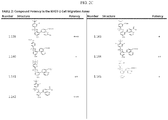
- Ligand binding assay was used to determine the ability of potential CCR6 antagonists to block the interaction between CCR6 and its ligand CCL20 (MIP3alpha).
- L1.2 cells stably expressing the CCR6 receptor were centrifuged and resuspended in assay buffer (20 mM HEPES pH 7.1, 140 mM NaCl, 1 mM CaCl 2 , 5 mM MgCl 2 , 0.1% sodium azide and with 0.1% bovine serum albumin) to a concentration of 5 x 10 ⁇ 5 cells/mL. Binding assays were set up as follows.
- 0.1 mL of cells (5 x 10⁴ cells/well) was added to the assay plates containing the compounds, giving a final concentration of ⁇ 2-10 uM each compound for screening (or part of a dose response for compound IC50 determinations). Then 0.1 mL of 125 I labeled CCL20 (obtained from PerkinElmer; Waltham, MA) diluted in assay buffer to a final concentration of ⁇ 50 pM, yielding ⁇ 30,000 cpm per well, was added, the plates sealed and incubated for approximately 3 hours at 25 °C on a shaker platform.
- a serum chemotaxis assay was used to determine the efficacy of potential receptor antagonists at blocking the migration mediated through chemokine receptors, such as CCR6.
- This assay was routinely performed using the ChemoTX® microchamber system with a 5- ⁇ m pore-sized polycarbonate membrane.
- chemokine-receptor expressing cells such as L1.2 cells stably expressing CCR6 were collected by centrifugation at 400 x g at room temperature, then suspended at 50 million/ml in human serum. The compound being tested or an equivalent volume of its solvent (DMSO) was then added to the cell/serum mixture at a final DMSO concentration of 0.25% (v/v).
- recombinant human CCL20 was diluted with chemotaxis buffer (HBSS + 0.1% BSA), generally spanning a range from 0.01 nM to 500 nM, after which 29 ⁇ l of diluted chemokine was placed in the lower wells of the ChemoTX® plate.
- the 5- ⁇ m (pore size) polycarbonate membrane was placed onto the plate, and 20 ⁇ L of the cell/compound mixture was transferred onto each well of the membrane.
- the plates were incubated at 37 °C for 90 minutes, after which the polycarbonate membranes were removed and 5 ⁇ l of the DNA-intercalating agent CyQUANT (Invitrogen, Carlsbad, CA) was added to the lower wells.
- the amount of fluorescence, corresponding to the number of migrated cells, was measured using a Spectrafluor Plus plate reader (TECAN, San Jose, CA).
- mice were sensitized topically with a 1% solution of oxazolone dissolved in ethanol on their shaved abdomens on day 0.
- mice were dosed orally with either vehicle or increasing doses of compounds 1.061 and 1.033 of the invention immediately prior to and 4 hours following a topical challenge with a 0.5% solution of oxazolone in ethanol on the right ear.
- ear thicknesses were measured using caliper measurements. Animals treated with compound had significantly reduced ear swelling compared to vehicle treated controls indicating a compound mediated decrease in oxazolone induced dermal hypersensitivity.
- mice Multiple mouse models of psoriasis are known. For example, in the Imiquimod-induced mouse model of psoriasis, hair was removed from the back of balb/c mice three days prior to the application of 5% Imiquimod once a day. Vehicle (1% HPMC) or CCR6 compound was administered eg. orally at between 5 and 200mg/kg once/twice daily at the initiation of Imiquimod application and continued for five to ten days.
- Vehicle 1% HPMC
- CCR6 compound was administered eg. orally at between 5 and 200mg/kg once/twice daily at the initiation of Imiquimod application and continued for five to ten days.
- Therapeutic value was assessed using the following methodologies: daily electronic caliper measurements and immunohistochemistry at the end point to assess skin thickening, flow cytometry and immunofluorescence at the end point to measure leukocyte infiltration and inflammation, and mRNA quantitation via Luminex at days two and five to assess molecular changes. Treatment of animals with compound 1.033 or 1.061 of the invention resulted in a significant improvement in disease.
- Another method to induce phenotypic changes associated with psoriasis involved intra-dermal injections of IL-23. Briefly, 500 ng of recombinant murine IL-23 was intra-dermally injected every other day into the right ear of C57BL6/N mice for a total of 5-6 administrations over a period of ten to twelve days. Concomitantly, PBS was intra-dermally injected every other day into the left ear of the same mice. CCR6 compound was dosed prophylactically at eg. between 5-200mg/kg once/twice daily via the oral or other route. Therapeutic dosing was performed by orally providing IL-23 challenged mice with vehicle control for four days.
- mice were dosed with a compound of the invention at eg. 5-200 mg/kg once/twice daily via the oral or other route (at this point, two rounds of IL-23 have been intra-dermally injected into the right ear). Efficacy was assessed quantitatively by manually measuring ear thickness using a caliper daily. Treatment of animals with compound 1.033 or 1.061 of the invention resulted in a significant improvement in disease.
- This example describes a procedure to evaluate the efficacy of CCR6 antagonists for treatment of septic shock.
- An animal model of endotoxic shock can be induced by injecting rodents with lipopolysaccharide (LPS).
- LPS lipopolysaccharide
- Three series of mouse groups, comprising 15 mice per group, are treated with an intra-peritoneal injection of an L.D. (lethal dose)-90 of LPS.
- One series of mice additionally receives phosphate buffered saline (PBS) and Tween 0.5% i.p. 30 minutes before LPS administration.
- PBS phosphate buffered saline
- a second series consists of groups of mice receiving different doses of the CCR6 antagonist given either intra-peritoneally, intra-venously, sub-cutaneously, intra-muscularly, orally, or via any other mode of administration 30 minutes before, or concurrently with, LPS administration.
- a third series of mice, serving as positive control, consists of groups treated with either mouse IL-10 i.p., or anti-TNF antibodies i.p., 30 minutes before LPS administration. Mice are monitored for death for 72 hours following the LPS injection.
- CCR6 compounds of the invention can be assessed in a murine model of allergic asthma. Asthma is induced in 8 - 10 week old BALB/c mice by sensitizing mice with OVA in Alum adjuvant on days 0 and 10. On day 20 mice are challenged with OVA in PBS intranasally to elicit airway inflammation. Groups of mice are either treated with vehicle, or increasing doses of a compound of the invention starting on day 20 and lasting until day 23. Animals are subsequently analyzed at day 23 after the intranasal OVA challenge for cellular infiltrates in bronchoalveolar lavage (BAL). Mice treated with a compound of the invention will display significantly reduced BAL leukocyte numbers relative to vehicle treated mice.
- BAL bronchoalveolar lavage
- This example describes a procedure to evaluate the efficacy of CCR6 antagonists for treatment of rheumatoid arthritis.
- An animal model of rheumatoid arthritis was induced in rodents by injecting them with type II collagen in selected adjuvants.
- Three series of rodent groups consisting of 15 genetically-susceptible mice or rats per group were injected sub-cutaneously or intra-dermally with type II collagen emulsified in Complete Freund's Adjuvant at days 0 and 21.
- One series of rodents additionally received PBS and Tween 0.5% i.p. at the initial sensitization and at different dosing schedules thereafter.
- a second series consists of groups of rodents received different doses of the CCR6 antagonist given either intra-peritoneally, intra-venously, sub-cutaneously, intramuscularly, orally, or via any other mode of administration at the initial sensitization, and at different dosing schedules thereafter.
- a third series of rodents, serving as positive control may consist of groups treated with either mouse IL-10 i.p., or anti-TNF antibodies i.p. at the initial sensitization, and at different dosing schedules thereafter. Animals were monitored from weeks 3 till 8 for the development of swollen joints or paws, and graded on a standard disease severity scale. Disease severity was confirmed by histological analysis of joints. Animals treated with compound 1.061 of the invention displayed significantly improved scores following treatment.
- This example describes a procedure to evaluate efficacy of CCR6 antagonists for treatment of Systemic Lupus Erythematosus (SLE).
- SLE Systemic Lupus Erythematosus
- Female NZB/W FI mice spontaneously develop an SLE-like pathology commencing at 6 months of age that is characterized by proteinuria, serum autoantibodies, glomerulonephritis, and eventually death.
- Three series of NZB/W FI mouse groups comprising 20 mice per group are tested for efficacy of CCR6 antagonist as follows: One series of mice additionally receives phosphate buffered saline (PBS) and Tween 0.5% i.p. soon after weaning, and thereafter at varying dosing schedules.
- PBS phosphate buffered saline
- a second series consists of groups of mice receiving different doses of the CCR6 antagonist given either intra-peritoneally, intra-venously, sub-cutaneously, intramuscularly, orally, or via any other mode of administration soon after weaning, and thereafter at varying dosing schedules.
- a third series of mice, serving as positive control, consists of groups treated with anti-IL10 antibodies given soon after weaning, and thereafter at varying dosing schedules. Disease development is monitored in terms of eventual mortality, kidney histology, serum autoantibody levels, and proteinuria.
- This example describes a procedure to evaluate efficacy of CCR6 antagonists for treatment of malignancy.
- Normal mouse strains can be transplanted with a variety of well-characterized mouse tumor lines, including a mouse thymoma EL4 which has been transfected with OVA to allow easy evaluation of tumor specific antigen responses following vaccination with OVA.
- Three series of mouse groups from any of these tumor models are tested for CCR6 antagonist efficacy as follows: One series of mice additionally receives PBS and Tween 0.5% i.p. soon after tumor transplant, and thereafter at varying dosing schedules.
- a second series consists of groups of mice receiving different doses of the CCR6 antagonist given either intra-peritoneally, intra-venously, sub-cutaneously, intramuscularly, orally, or via any other mode of administration soon after tumor transplant, and thereafter at varying dosing schedules.
- a third series of mice, serving as positive control consists of groups treated with either anti-IL17 antibodies, anti-IFNg antibodies, given i.p. soon after tumor transplant, and thereafter at varying dosing schedules. Efficacy is monitored via tumor growth versus regression.
- cytolytic OVA-specific responses can be measured by stimulating draining lymph node cells with OVA in vitro, and measuring antigen-specific cytotoxicity at 72 hours. Analysis can be performed on eg. tumor mass, IL-17 levels or infiltration of regulatory T cells and treatment with a compound of the invention would be expected to produce a beneficial effect in this model.
- the mouse RENCA tumor model accurately mimics the progression of human adult renal cell carcinoma specifically with reference to spontaneous metastasis to lungs and serves as a model for solid tumors.
- Balb/c 6-8 week old female mice are inoculated with approximately 5e5 RENCA cells (mouse renal adenocarcinoma; ATCC cat# CRL-2947) under the kidney capsule and kidney tumor growth is observed over 22 days, with lung metastasis observed as early as day 15.
- Animals are dosed with either vehicle or a compound of the invention eg daily subcutaneously, from the time of tumor implantation to monitor effects on primary growth, or at a later time (eg day 7) to monitor the compound effect on metastasis.
- IBD Inflammatory Bowel Disease
- mice Several mouse models of IBD (including Crohn's Disease and Ulcerative Colitis) have been developed. Some of these are spontaneous models occurring in genetically engineered transgenic mice that have been depleted of certain cytokine genes (e.g. IL-10, or IL-2).
- Another mouse model of IBD is obtained by transferring highly purified populations of CD4+ T lymphocytes bearing a particular surface marker phenotype (namely CD45 RB hi) into SCID mice.
- Three series of mouse groups from anyone of these models can be used to evaluate CCR6 antagonist efficacy as follows. One group of mice additionally receives PBS and Tween 0.5% i.p.
- a second series consists of groups of mice receiving different doses of the CCR6 antagonist given either intraperitoneally, intra-venously, sub-cutaneously, intra-muscularly, orally, or via any other mode of administration soon after weaning in the case of the spontaneous models in transgenic mice, or at time of cell transfer into SCID mice and varying dosings thereafter for the cell transfer model.
- mice serving as positive control, consists of groups treated with antibodies to either IFNg, or TNF, or with cytokine IL-10 soon after weaning in the case of the spontaneous models in transgenic mice, or at time of cell transfer into SCID mice and varying dosings thereafter for the cell transfer model. Mice are evaluated for 6-8 weeks for disease development, monitored initially via weight loss and/or prolapsed rectum, and eventually by histological evaluation of the animals colon and intestinal tract.
Landscapes
- Health & Medical Sciences (AREA)
- Chemical & Material Sciences (AREA)
- Organic Chemistry (AREA)
- General Health & Medical Sciences (AREA)
- Veterinary Medicine (AREA)
- Medicinal Chemistry (AREA)
- Public Health (AREA)
- Pharmacology & Pharmacy (AREA)
- Life Sciences & Earth Sciences (AREA)
- Animal Behavior & Ethology (AREA)
- Engineering & Computer Science (AREA)
- Bioinformatics & Cheminformatics (AREA)
- General Chemical & Material Sciences (AREA)
- Chemical Kinetics & Catalysis (AREA)
- Nuclear Medicine, Radiotherapy & Molecular Imaging (AREA)
- Epidemiology (AREA)
- Pulmonology (AREA)
- Immunology (AREA)
- Diabetes (AREA)
- Dermatology (AREA)
- Endocrinology (AREA)
- Neurosurgery (AREA)
- Biomedical Technology (AREA)
- Heart & Thoracic Surgery (AREA)
- Cardiology (AREA)
- Neurology (AREA)
- Oncology (AREA)
- Otolaryngology (AREA)
- Reproductive Health (AREA)
- Gynecology & Obstetrics (AREA)
- Emergency Medicine (AREA)
- Hematology (AREA)
- Obesity (AREA)
- Pain & Pain Management (AREA)
- Rheumatology (AREA)
- Transplantation (AREA)
- Communicable Diseases (AREA)
- Hospice & Palliative Care (AREA)
- Vascular Medicine (AREA)
- Urology & Nephrology (AREA)
Applications Claiming Priority (2)
| Application Number | Priority Date | Filing Date | Title |
|---|---|---|---|
| US201361910838P | 2013-12-02 | 2013-12-02 | |
| PCT/US2014/068152 WO2015084842A1 (en) | 2013-12-02 | 2014-12-02 | Ccr6 compounds |
Publications (3)
| Publication Number | Publication Date |
|---|---|
| EP3076968A1 EP3076968A1 (en) | 2016-10-12 |
| EP3076968A4 EP3076968A4 (en) | 2017-04-12 |
| EP3076968B1 true EP3076968B1 (en) | 2019-04-17 |
Family
ID=53274030
Family Applications (1)
| Application Number | Title | Priority Date | Filing Date |
|---|---|---|---|
| EP14867718.0A Active EP3076968B1 (en) | 2013-12-02 | 2014-12-02 | Ccr6 compounds |
Country Status (13)
| Country | Link |
|---|---|
| US (4) | US9340509B2 (enExample) |
| EP (1) | EP3076968B1 (enExample) |
| JP (1) | JP6563947B2 (enExample) |
| KR (1) | KR102331833B1 (enExample) |
| CN (1) | CN105960237B (enExample) |
| AU (1) | AU2014360743C1 (enExample) |
| CA (1) | CA2930148C (enExample) |
| EA (1) | EA029826B1 (enExample) |
| ES (1) | ES2735360T3 (enExample) |
| IL (1) | IL245704B (enExample) |
| MX (1) | MX2016007128A (enExample) |
| WO (1) | WO2015084842A1 (enExample) |
| ZA (1) | ZA201603167B (enExample) |
Families Citing this family (15)
| Publication number | Priority date | Publication date | Assignee | Title |
|---|---|---|---|---|
| CN105960237B (zh) | 2013-12-02 | 2020-03-31 | 凯莫森特里克斯股份有限公司 | Ccr6化合物 |
| KR20200037857A (ko) | 2017-08-14 | 2020-04-09 | 알러간, 인코포레이티드 | 3,4-이치환된 3-시클로부텐-1,2-디온 및 그의 용도 |
| CR20200464A (es) | 2018-03-08 | 2021-04-14 | Incyte Corp | Compuestos diólicos de aminopirazina como inhibidores de pi3k-y |
| WO2020010003A1 (en) | 2018-07-02 | 2020-01-09 | Incyte Corporation | AMINOPYRAZINE DERIVATIVES AS PI3K-γ INHIBITORS |
| WO2020086504A1 (en) | 2018-10-23 | 2020-04-30 | Daiichi Sankyo Company, Limited | Biaryl derivative |
| CN117018202A (zh) * | 2019-07-08 | 2023-11-10 | 上海交通大学医学院附属瑞金医院 | 趋化因子受体ccr6抑制剂在预防银屑病复发中的新应用 |
| KR102890201B1 (ko) | 2019-07-10 | 2025-11-24 | 케모센트릭스, 인크. | Pd-l1 억제제로서의 인단 |
| ES3068390T3 (en) | 2019-10-16 | 2026-05-29 | Chemocentryx Inc | Heteroaryl-biphenyl amides for the treatment of pd-l1 diseases |
| AU2020368392B2 (en) | 2019-10-16 | 2026-01-08 | Chemocentryx, Inc. | Heteroaryl-biphenyl amines for the treatment of PD-L1 diseases |
| TWI904157B (zh) | 2020-04-30 | 2025-11-11 | 瑞士商愛杜西亞製藥有限公司 | Ccr6受體調節劑 |
| MX2024002173A (es) * | 2021-08-18 | 2024-03-26 | Chemocentryx Inc | Compuestos de arilsulfonilo como inhibidores de ccr6. |
| IL310368A (en) | 2021-08-18 | 2024-03-01 | Chemocentryx Inc | Arylsulfonyl(hydroxy)piperidines as CCR6 inhibitors |
| WO2023057548A1 (en) | 2021-10-07 | 2023-04-13 | Idorsia Pharmaceuticals Ltd | Ccr6 receptor modulators |
| JP2024539987A (ja) | 2021-10-26 | 2024-10-31 | イドルシア・ファーマシューティカルズ・リミテッド | Ccr6受容体調節剤 |
| ES3073199T3 (en) | 2021-10-28 | 2026-07-09 | Idorsia Pharmaceuticals Ltd | Ccr6 receptor modulators |
Family Cites Families (38)
| Publication number | Priority date | Publication date | Assignee | Title |
|---|---|---|---|---|
| US3944553A (en) | 1974-02-13 | 1976-03-16 | Trw Inc. | Bis quinoline peri acids |
| US4021409A (en) | 1975-06-19 | 1977-05-03 | The United States Of America As Represented By The Secretary Of The Air Force | Thermally stable benzimidazonaphthyridine compositions |
| US4166452A (en) | 1976-05-03 | 1979-09-04 | Generales Constantine D J Jr | Apparatus for testing human responses to stimuli |
| US4256108A (en) | 1977-04-07 | 1981-03-17 | Alza Corporation | Microporous-semipermeable laminated osmotic system |
| US4265874A (en) | 1980-04-25 | 1981-05-05 | Alza Corporation | Method of delivering drug with aid of effervescent activity generated in environment of use |
| LU86084A1 (fr) | 1985-09-20 | 1987-04-02 | Faco Sa | Apparei de massage electrique |
| US5102417A (en) | 1985-11-07 | 1992-04-07 | Expandable Grafts Partnership | Expandable intraluminal graft, and method and apparatus for implanting an expandable intraluminal graft |
| US4800882A (en) | 1987-03-13 | 1989-01-31 | Cook Incorporated | Endovascular stent and delivery system |
| US4886062A (en) | 1987-10-19 | 1989-12-12 | Medtronic, Inc. | Intravascular radially expandable stent and method of implant |
| WO1990013332A1 (en) | 1989-05-11 | 1990-11-15 | Cedars-Sinai Medical Center | Stent with sustained drug delivery |
| EP0470246B1 (en) | 1990-02-28 | 1995-06-28 | Medtronic, Inc. | Intralumenal drug eluting prosthesis |
| US5429634A (en) | 1993-09-09 | 1995-07-04 | Pdt Systems | Biogenic implant for drug delivery and method |
| US5419760A (en) | 1993-01-08 | 1995-05-30 | Pdt Systems, Inc. | Medicament dispensing stent for prevention of restenosis of a blood vessel |
| US6774278B1 (en) | 1995-06-07 | 2004-08-10 | Cook Incorporated | Coated implantable medical device |
| US5833651A (en) | 1996-11-08 | 1998-11-10 | Medtronic, Inc. | Therapeutic intraluminal stents |
| US6294192B1 (en) | 1999-02-26 | 2001-09-25 | Lipocine, Inc. | Triglyceride-free compositions and methods for improved delivery of hydrophobic therapeutic agents |
| US6770729B2 (en) | 2002-09-30 | 2004-08-03 | Medtronic Minimed, Inc. | Polymer compositions containing bioactive agents and methods for their use |
| JP2007537275A (ja) * | 2004-05-12 | 2007-12-20 | ケモセントリックス, インコーポレイテッド | アリールスルホンアミド |
| AU2006204750C1 (en) * | 2005-01-14 | 2012-11-01 | Chemocentryx, Inc. | Heteroaryl sulfonamides and CCR2 |
| CN101511800B (zh) * | 2006-07-14 | 2013-02-27 | 坎莫森特里克斯公司 | 三唑基苯基苯磺酰胺 |
| PL2046762T3 (pl) * | 2006-07-14 | 2011-07-29 | Chemocentryx Inc | Triazolilofenylobenzenosulfonamidy |
| WO2009008552A1 (en) | 2007-07-11 | 2009-01-15 | Taisho Pharmaceutical Co., Ltd. | 8-aryl-4-alkylpyrrolo[2,3,4-de]quinolin-5(4h)-one and 8-aryl-4-alkyl-4,5-dihydropyrrolo[2,3,4-de]quinolin-5-ol derivatives |
| CA2692761C (en) * | 2007-07-12 | 2013-04-30 | Chemocentryx, Inc. | Fused heteroaryl pyridyl and phenyl benzenesulfonamides as ccr2 modulators for the treament of inflammation |
| CN101790374A (zh) * | 2007-08-01 | 2010-07-28 | H.隆德贝克有限公司 | Kcnq钾通道开放剂用于减轻多巴胺能系统受到干扰的障碍或病症的症状或治疗这种障碍或病症的用途 |
| AU2009248774B2 (en) | 2008-05-23 | 2012-05-31 | Novartis Ag | Derivatives of quinolines and quinoxalines as protein tyrosine kinase inhibitors |
| JP5599783B2 (ja) * | 2008-05-30 | 2014-10-01 | アムジエン・インコーポレーテツド | Pi3キナーゼの阻害薬 |
| RU2505539C2 (ru) | 2008-12-23 | 2014-01-27 | Эбботт Лэборетриз | Антивирусные соединения |
| KR20120063515A (ko) | 2009-09-09 | 2012-06-15 | 아빌라 테라퓨틱스, 인크. | Pi3 키나제 억제제 및 이들의 용도 |
| TWI487486B (zh) | 2009-12-01 | 2015-06-11 | Syngenta Participations Ag | 以異唑啉衍生物為主之殺蟲化合物 |
| US9284301B2 (en) * | 2010-03-25 | 2016-03-15 | Merck Sharp & Dohme Corp. | Soluble guanylate cyclase activators |
| CN103347520A (zh) | 2010-10-13 | 2013-10-09 | 波士顿大学管理委员会 | 用作癌症化学治疗的晚期sv40因子(lsf)的抑制剂 |
| KR101985184B1 (ko) | 2011-01-28 | 2019-06-03 | 주식회사 동진쎄미켐 | 신규한 유기염료 및 이의 제조방법 |
| TW201311149A (zh) | 2011-06-24 | 2013-03-16 | Ishihara Sangyo Kaisha | 有害生物防治劑 |
| BR112014004275A2 (pt) | 2011-08-25 | 2017-03-21 | Syngenta Participations Ag | derivados de isoxazolina como compostos inseticidas |
| FR2981935B1 (fr) | 2011-10-28 | 2015-08-07 | Galderma Res & Dev | Nouveaux composes di-substitues de la diamino-3,4-cyclobutene-3-dione-1,2 utiles dans le traitement de pathologies mediees par des chimiokines. |
| FR2981934B1 (fr) * | 2011-10-28 | 2013-12-20 | Galderma Res & Dev | Nouveaux composes di-substitues de la diamino-3,4-cyclobutene-3-dione-1,2 utiles dans le traitement de pathologies mediees par des chimiokines. |
| DK2820006T3 (da) | 2012-02-29 | 2017-11-06 | Chemocentryx Inc | Pyrazol-1-yl benzen sulfonamider som ccr9 antagonister |
| CN105960237B (zh) | 2013-12-02 | 2020-03-31 | 凯莫森特里克斯股份有限公司 | Ccr6化合物 |
-
2014
- 2014-12-02 CN CN201480065637.7A patent/CN105960237B/zh active Active
- 2014-12-02 US US14/557,949 patent/US9340509B2/en active Active
- 2014-12-02 EA EA201691141A patent/EA029826B1/ru not_active IP Right Cessation
- 2014-12-02 CA CA2930148A patent/CA2930148C/en active Active
- 2014-12-02 JP JP2016556693A patent/JP6563947B2/ja active Active
- 2014-12-02 ES ES14867718T patent/ES2735360T3/es active Active
- 2014-12-02 EP EP14867718.0A patent/EP3076968B1/en active Active
- 2014-12-02 MX MX2016007128A patent/MX2016007128A/es active IP Right Grant
- 2014-12-02 AU AU2014360743A patent/AU2014360743C1/en active Active
- 2014-12-02 WO PCT/US2014/068152 patent/WO2015084842A1/en not_active Ceased
- 2014-12-02 KR KR1020167017459A patent/KR102331833B1/ko active Active
-
2016
- 2016-03-18 US US15/074,965 patent/US9795599B2/en active Active
- 2016-05-11 ZA ZA2016/03167A patent/ZA201603167B/en unknown
- 2016-05-18 IL IL24570416A patent/IL245704B/en active IP Right Grant
-
2017
- 2017-09-19 US US15/709,012 patent/US10117865B2/en active Active
-
2018
- 2018-10-03 US US16/150,796 patent/US10786494B2/en active Active
Non-Patent Citations (1)
| Title |
|---|
| None * |
Also Published As
| Publication number | Publication date |
|---|---|
| KR20160096634A (ko) | 2016-08-16 |
| CN105960237A (zh) | 2016-09-21 |
| CN105960237B (zh) | 2020-03-31 |
| EA029826B1 (ru) | 2018-05-31 |
| US20160296508A1 (en) | 2016-10-13 |
| US20150175547A1 (en) | 2015-06-25 |
| CA2930148C (en) | 2023-04-11 |
| ZA201603167B (en) | 2019-09-25 |
| ES2735360T3 (es) | 2019-12-18 |
| US20190167659A1 (en) | 2019-06-06 |
| JP2016540051A (ja) | 2016-12-22 |
| EA201691141A1 (ru) | 2017-01-30 |
| EP3076968A4 (en) | 2017-04-12 |
| CA2930148A1 (en) | 2015-06-11 |
| US10117865B2 (en) | 2018-11-06 |
| JP6563947B2 (ja) | 2019-08-21 |
| AU2014360743C1 (en) | 2021-01-28 |
| KR102331833B1 (ko) | 2021-11-25 |
| MX2016007128A (es) | 2016-08-11 |
| US9795599B2 (en) | 2017-10-24 |
| US20180092902A1 (en) | 2018-04-05 |
| AU2014360743B2 (en) | 2020-07-16 |
| US10786494B2 (en) | 2020-09-29 |
| EP3076968A1 (en) | 2016-10-12 |
| IL245704A0 (en) | 2016-07-31 |
| IL245704B (en) | 2019-10-31 |
| US9340509B2 (en) | 2016-05-17 |
| WO2015084842A1 (en) | 2015-06-11 |
| AU2014360743A1 (en) | 2016-05-26 |
Similar Documents
| Publication | Publication Date | Title |
|---|---|---|
| US10786494B2 (en) | CCR6 compounds | |
| US8481545B2 (en) | 3-(imidazolyl)-pyrazolo[3,4-b] pyridines | |
| EP2935227B1 (en) | Diazole amides as ccr1 receptor antagonists | |
| US9758512B2 (en) | Substituted anilines as CCR(4) antagonists | |
| EP2928474B1 (en) | Diazole lactams | |
| AU2013364038A1 (en) | Diazole amides | |
| HK1229729B (en) | Ccr6 compounds | |
| HK1229729A1 (en) | Ccr6 compounds | |
| HK1216017B (en) | Diazole lactams | |
| HK1141524B (en) | 3-(imidazolyl)-pyrazolo[3,4-b]pyridines |
Legal Events
| Date | Code | Title | Description |
|---|---|---|---|
| PUAI | Public reference made under article 153(3) epc to a published international application that has entered the european phase |
Free format text: ORIGINAL CODE: 0009012 |
|
| 17P | Request for examination filed |
Effective date: 20160525 |
|
| AK | Designated contracting states |
Kind code of ref document: A1 Designated state(s): AL AT BE BG CH CY CZ DE DK EE ES FI FR GB GR HR HU IE IS IT LI LT LU LV MC MK MT NL NO PL PT RO RS SE SI SK SM TR |
|
| AX | Request for extension of the european patent |
Extension state: BA ME |
|
| RIN1 | Information on inventor provided before grant (corrected) |
Inventor name: TAN, JOANNE Inventor name: KALISIAK, JAREK Inventor name: MALATHONG, VIENGKHAM Inventor name: LUI, REBECCA, M. Inventor name: TANAKA, HIROKO Inventor name: LELETI, MANMOHAN, REDDY Inventor name: ZHANG, PENGLIE Inventor name: YANG, JU Inventor name: DAIRAGHI, DANIEL Inventor name: POWERS, JAY, P. Inventor name: DRAGOLI, DEAN, R. Inventor name: MALI, VENKAT REDDY Inventor name: LANGE, CHRISTOPHER, W. Inventor name: WALTERS, MATTHEW, J. Inventor name: LI, YANDONG |
|
| A4 | Supplementary search report drawn up and despatched |
Effective date: 20170314 |
|
| RIC1 | Information provided on ipc code assigned before grant |
Ipc: C07D 405/14 20060101ALI20170308BHEP Ipc: C07D 405/04 20060101ALI20170308BHEP Ipc: A61K 31/47 20060101ALI20170308BHEP Ipc: C07D 215/48 20060101ALI20170308BHEP Ipc: A61K 31/44 20060101AFI20170308BHEP |
|
| REG | Reference to a national code |
Ref country code: HK Ref legal event code: DE Ref document number: 1229729 Country of ref document: HK |
|
| STAA | Information on the status of an ep patent application or granted ep patent |
Free format text: STATUS: EXAMINATION IS IN PROGRESS |
|
| 17Q | First examination report despatched |
Effective date: 20180221 |
|
| GRAP | Despatch of communication of intention to grant a patent |
Free format text: ORIGINAL CODE: EPIDOSNIGR1 |
|
| STAA | Information on the status of an ep patent application or granted ep patent |
Free format text: STATUS: GRANT OF PATENT IS INTENDED |
|
| INTG | Intention to grant announced |
Effective date: 20181030 |
|
| GRAS | Grant fee paid |
Free format text: ORIGINAL CODE: EPIDOSNIGR3 |
|
| GRAA | (expected) grant |
Free format text: ORIGINAL CODE: 0009210 |
|
| STAA | Information on the status of an ep patent application or granted ep patent |
Free format text: STATUS: THE PATENT HAS BEEN GRANTED |
|
| AK | Designated contracting states |
Kind code of ref document: B1 Designated state(s): AL AT BE BG CH CY CZ DE DK EE ES FI FR GB GR HR HU IE IS IT LI LT LU LV MC MK MT NL NO PL PT RO RS SE SI SK SM TR |
|
| AX | Request for extension of the european patent |
Extension state: BA ME |
|
| REG | Reference to a national code |
Ref country code: GB Ref legal event code: FG4D |
|
| REG | Reference to a national code |
Ref country code: CH Ref legal event code: EP |
|
| REG | Reference to a national code |
Ref country code: DE Ref legal event code: R096 Ref document number: 602014045094 Country of ref document: DE |
|
| REG | Reference to a national code |
Ref country code: AT Ref legal event code: REF Ref document number: 1120812 Country of ref document: AT Kind code of ref document: T Effective date: 20190515 Ref country code: IE Ref legal event code: FG4D |
|
| REG | Reference to a national code |
Ref country code: CH Ref legal event code: NV Representative=s name: VENI GMBH, CH |
|
| REG | Reference to a national code |
Ref country code: NL Ref legal event code: FP |
|
| REG | Reference to a national code |
Ref country code: SE Ref legal event code: TRGR |
|
| REG | Reference to a national code |
Ref country code: LT Ref legal event code: MG4D |
|
| PG25 | Lapsed in a contracting state [announced via postgrant information from national office to epo] |
Ref country code: FI Free format text: LAPSE BECAUSE OF FAILURE TO SUBMIT A TRANSLATION OF THE DESCRIPTION OR TO PAY THE FEE WITHIN THE PRESCRIBED TIME-LIMIT Effective date: 20190417 Ref country code: NO Free format text: LAPSE BECAUSE OF FAILURE TO SUBMIT A TRANSLATION OF THE DESCRIPTION OR TO PAY THE FEE WITHIN THE PRESCRIBED TIME-LIMIT Effective date: 20190717 Ref country code: LT Free format text: LAPSE BECAUSE OF FAILURE TO SUBMIT A TRANSLATION OF THE DESCRIPTION OR TO PAY THE FEE WITHIN THE PRESCRIBED TIME-LIMIT Effective date: 20190417 Ref country code: PT Free format text: LAPSE BECAUSE OF FAILURE TO SUBMIT A TRANSLATION OF THE DESCRIPTION OR TO PAY THE FEE WITHIN THE PRESCRIBED TIME-LIMIT Effective date: 20190817 Ref country code: HR Free format text: LAPSE BECAUSE OF FAILURE TO SUBMIT A TRANSLATION OF THE DESCRIPTION OR TO PAY THE FEE WITHIN THE PRESCRIBED TIME-LIMIT Effective date: 20190417 Ref country code: AL Free format text: LAPSE BECAUSE OF FAILURE TO SUBMIT A TRANSLATION OF THE DESCRIPTION OR TO PAY THE FEE WITHIN THE PRESCRIBED TIME-LIMIT Effective date: 20190417 |
|
| PG25 | Lapsed in a contracting state [announced via postgrant information from national office to epo] |
Ref country code: LV Free format text: LAPSE BECAUSE OF FAILURE TO SUBMIT A TRANSLATION OF THE DESCRIPTION OR TO PAY THE FEE WITHIN THE PRESCRIBED TIME-LIMIT Effective date: 20190417 Ref country code: GR Free format text: LAPSE BECAUSE OF FAILURE TO SUBMIT A TRANSLATION OF THE DESCRIPTION OR TO PAY THE FEE WITHIN THE PRESCRIBED TIME-LIMIT Effective date: 20190718 Ref country code: PL Free format text: LAPSE BECAUSE OF FAILURE TO SUBMIT A TRANSLATION OF THE DESCRIPTION OR TO PAY THE FEE WITHIN THE PRESCRIBED TIME-LIMIT Effective date: 20190417 Ref country code: RS Free format text: LAPSE BECAUSE OF FAILURE TO SUBMIT A TRANSLATION OF THE DESCRIPTION OR TO PAY THE FEE WITHIN THE PRESCRIBED TIME-LIMIT Effective date: 20190417 Ref country code: BG Free format text: LAPSE BECAUSE OF FAILURE TO SUBMIT A TRANSLATION OF THE DESCRIPTION OR TO PAY THE FEE WITHIN THE PRESCRIBED TIME-LIMIT Effective date: 20190717 |
|
| REG | Reference to a national code |
Ref country code: AT Ref legal event code: MK05 Ref document number: 1120812 Country of ref document: AT Kind code of ref document: T Effective date: 20190417 |
|
| REG | Reference to a national code |
Ref country code: ES Ref legal event code: FG2A Ref document number: 2735360 Country of ref document: ES Kind code of ref document: T3 Effective date: 20191218 |
|
| PG25 | Lapsed in a contracting state [announced via postgrant information from national office to epo] |
Ref country code: IS Free format text: LAPSE BECAUSE OF FAILURE TO SUBMIT A TRANSLATION OF THE DESCRIPTION OR TO PAY THE FEE WITHIN THE PRESCRIBED TIME-LIMIT Effective date: 20190817 |
|
| REG | Reference to a national code |
Ref country code: DE Ref legal event code: R097 Ref document number: 602014045094 Country of ref document: DE |
|
| PG25 | Lapsed in a contracting state [announced via postgrant information from national office to epo] |
Ref country code: RO Free format text: LAPSE BECAUSE OF FAILURE TO SUBMIT A TRANSLATION OF THE DESCRIPTION OR TO PAY THE FEE WITHIN THE PRESCRIBED TIME-LIMIT Effective date: 20190417 Ref country code: CZ Free format text: LAPSE BECAUSE OF FAILURE TO SUBMIT A TRANSLATION OF THE DESCRIPTION OR TO PAY THE FEE WITHIN THE PRESCRIBED TIME-LIMIT Effective date: 20190417 Ref country code: SK Free format text: LAPSE BECAUSE OF FAILURE TO SUBMIT A TRANSLATION OF THE DESCRIPTION OR TO PAY THE FEE WITHIN THE PRESCRIBED TIME-LIMIT Effective date: 20190417 Ref country code: AT Free format text: LAPSE BECAUSE OF FAILURE TO SUBMIT A TRANSLATION OF THE DESCRIPTION OR TO PAY THE FEE WITHIN THE PRESCRIBED TIME-LIMIT Effective date: 20190417 Ref country code: EE Free format text: LAPSE BECAUSE OF FAILURE TO SUBMIT A TRANSLATION OF THE DESCRIPTION OR TO PAY THE FEE WITHIN THE PRESCRIBED TIME-LIMIT Effective date: 20190417 Ref country code: DK Free format text: LAPSE BECAUSE OF FAILURE TO SUBMIT A TRANSLATION OF THE DESCRIPTION OR TO PAY THE FEE WITHIN THE PRESCRIBED TIME-LIMIT Effective date: 20190417 |
|
| PLBE | No opposition filed within time limit |
Free format text: ORIGINAL CODE: 0009261 |
|
| STAA | Information on the status of an ep patent application or granted ep patent |
Free format text: STATUS: NO OPPOSITION FILED WITHIN TIME LIMIT |
|
| PG25 | Lapsed in a contracting state [announced via postgrant information from national office to epo] |
Ref country code: SM Free format text: LAPSE BECAUSE OF FAILURE TO SUBMIT A TRANSLATION OF THE DESCRIPTION OR TO PAY THE FEE WITHIN THE PRESCRIBED TIME-LIMIT Effective date: 20190417 |
|
| 26N | No opposition filed |
Effective date: 20200120 |
|
| PG25 | Lapsed in a contracting state [announced via postgrant information from national office to epo] |
Ref country code: TR Free format text: LAPSE BECAUSE OF FAILURE TO SUBMIT A TRANSLATION OF THE DESCRIPTION OR TO PAY THE FEE WITHIN THE PRESCRIBED TIME-LIMIT Effective date: 20190417 |
|
| PG25 | Lapsed in a contracting state [announced via postgrant information from national office to epo] |
Ref country code: SI Free format text: LAPSE BECAUSE OF FAILURE TO SUBMIT A TRANSLATION OF THE DESCRIPTION OR TO PAY THE FEE WITHIN THE PRESCRIBED TIME-LIMIT Effective date: 20190417 |
|
| REG | Reference to a national code |
Ref country code: BE Ref legal event code: MM Effective date: 20191231 |
|
| PG25 | Lapsed in a contracting state [announced via postgrant information from national office to epo] |
Ref country code: MC Free format text: LAPSE BECAUSE OF FAILURE TO SUBMIT A TRANSLATION OF THE DESCRIPTION OR TO PAY THE FEE WITHIN THE PRESCRIBED TIME-LIMIT Effective date: 20190417 |
|
| PG25 | Lapsed in a contracting state [announced via postgrant information from national office to epo] |
Ref country code: LU Free format text: LAPSE BECAUSE OF NON-PAYMENT OF DUE FEES Effective date: 20191202 |
|
| PG25 | Lapsed in a contracting state [announced via postgrant information from national office to epo] |
Ref country code: BE Free format text: LAPSE BECAUSE OF NON-PAYMENT OF DUE FEES Effective date: 20191231 |
|
| PG25 | Lapsed in a contracting state [announced via postgrant information from national office to epo] |
Ref country code: CY Free format text: LAPSE BECAUSE OF FAILURE TO SUBMIT A TRANSLATION OF THE DESCRIPTION OR TO PAY THE FEE WITHIN THE PRESCRIBED TIME-LIMIT Effective date: 20190417 |
|
| PG25 | Lapsed in a contracting state [announced via postgrant information from national office to epo] |
Ref country code: MT Free format text: LAPSE BECAUSE OF FAILURE TO SUBMIT A TRANSLATION OF THE DESCRIPTION OR TO PAY THE FEE WITHIN THE PRESCRIBED TIME-LIMIT Effective date: 20190417 Ref country code: HU Free format text: LAPSE BECAUSE OF FAILURE TO SUBMIT A TRANSLATION OF THE DESCRIPTION OR TO PAY THE FEE WITHIN THE PRESCRIBED TIME-LIMIT; INVALID AB INITIO Effective date: 20141202 |
|
| PG25 | Lapsed in a contracting state [announced via postgrant information from national office to epo] |
Ref country code: MK Free format text: LAPSE BECAUSE OF FAILURE TO SUBMIT A TRANSLATION OF THE DESCRIPTION OR TO PAY THE FEE WITHIN THE PRESCRIBED TIME-LIMIT Effective date: 20190417 |
|
| P01 | Opt-out of the competence of the unified patent court (upc) registered |
Effective date: 20230419 |
|
| PGFP | Annual fee paid to national office [announced via postgrant information from national office to epo] |
Ref country code: NL Payment date: 20251119 Year of fee payment: 12 |
|
| REG | Reference to a national code |
Ref country code: CH Ref legal event code: U11 Free format text: ST27 STATUS EVENT CODE: U-0-0-U10-U11 (AS PROVIDED BY THE NATIONAL OFFICE) Effective date: 20260101 |
|
| PGFP | Annual fee paid to national office [announced via postgrant information from national office to epo] |
Ref country code: DE Payment date: 20251126 Year of fee payment: 12 |
|
| PGFP | Annual fee paid to national office [announced via postgrant information from national office to epo] |
Ref country code: GB Payment date: 20251119 Year of fee payment: 12 |
|
| PGFP | Annual fee paid to national office [announced via postgrant information from national office to epo] |
Ref country code: IT Payment date: 20251119 Year of fee payment: 12 |
|
| PGFP | Annual fee paid to national office [announced via postgrant information from national office to epo] |
Ref country code: FR Payment date: 20251120 Year of fee payment: 12 |
|
| PGFP | Annual fee paid to national office [announced via postgrant information from national office to epo] |
Ref country code: SE Payment date: 20251119 Year of fee payment: 12 |
|
| PGFP | Annual fee paid to national office [announced via postgrant information from national office to epo] |
Ref country code: IE Payment date: 20251121 Year of fee payment: 12 |
|
| PGFP | Annual fee paid to national office [announced via postgrant information from national office to epo] |
Ref country code: ES Payment date: 20260102 Year of fee payment: 12 |
|
| PGFP | Annual fee paid to national office [announced via postgrant information from national office to epo] |
Ref country code: CH Payment date: 20260101 Year of fee payment: 12 |