EP3068868B1 - Verfahren zur herstellung von biogenen stoffen - Google Patents
Verfahren zur herstellung von biogenen stoffen Download PDFInfo
- Publication number
- EP3068868B1 EP3068868B1 EP14812139.5A EP14812139A EP3068868B1 EP 3068868 B1 EP3068868 B1 EP 3068868B1 EP 14812139 A EP14812139 A EP 14812139A EP 3068868 B1 EP3068868 B1 EP 3068868B1
- Authority
- EP
- European Patent Office
- Prior art keywords
- phase
- enzymes
- process according
- enzyme
- liver
- Prior art date
- Legal status (The legal status is an assumption and is not a legal conclusion. Google has not performed a legal analysis and makes no representation as to the accuracy of the status listed.)
- Active
Links
Images



Classifications
-
- C—CHEMISTRY; METALLURGY
- C12—BIOCHEMISTRY; BEER; SPIRITS; WINE; VINEGAR; MICROBIOLOGY; ENZYMOLOGY; MUTATION OR GENETIC ENGINEERING
- C12P—FERMENTATION OR ENZYME-USING PROCESSES TO SYNTHESISE A DESIRED CHEMICAL COMPOUND OR COMPOSITION OR TO SEPARATE OPTICAL ISOMERS FROM A RACEMIC MIXTURE
- C12P19/00—Preparation of compounds containing saccharide radicals
- C12P19/44—Preparation of O-glycosides, e.g. glucosides
- C12P19/60—Preparation of O-glycosides, e.g. glucosides having an oxygen of the saccharide radical directly bound to a non-saccharide heterocyclic ring or a condensed ring system containing a non-saccharide heterocyclic ring, e.g. coumermycin, novobiocin
- C12P19/605—Preparation of O-glycosides, e.g. glucosides having an oxygen of the saccharide radical directly bound to a non-saccharide heterocyclic ring or a condensed ring system containing a non-saccharide heterocyclic ring, e.g. coumermycin, novobiocin to a 1-benzopyran-2-on (or the chalcones and hydrogenated chalcones thereof, e.g. coumermycin, novobiocin, novenamin)
-
- C—CHEMISTRY; METALLURGY
- C12—BIOCHEMISTRY; BEER; SPIRITS; WINE; VINEGAR; MICROBIOLOGY; ENZYMOLOGY; MUTATION OR GENETIC ENGINEERING
- C12P—FERMENTATION OR ENZYME-USING PROCESSES TO SYNTHESISE A DESIRED CHEMICAL COMPOUND OR COMPOSITION OR TO SEPARATE OPTICAL ISOMERS FROM A RACEMIC MIXTURE
- C12P13/00—Preparation of nitrogen-containing organic compounds
- C12P13/001—Amines; Imines
-
- C—CHEMISTRY; METALLURGY
- C12—BIOCHEMISTRY; BEER; SPIRITS; WINE; VINEGAR; MICROBIOLOGY; ENZYMOLOGY; MUTATION OR GENETIC ENGINEERING
- C12P—FERMENTATION OR ENZYME-USING PROCESSES TO SYNTHESISE A DESIRED CHEMICAL COMPOUND OR COMPOSITION OR TO SEPARATE OPTICAL ISOMERS FROM A RACEMIC MIXTURE
- C12P13/00—Preparation of nitrogen-containing organic compounds
- C12P13/005—Amino acids other than alpha- or beta amino acids, e.g. gamma amino acids
-
- C—CHEMISTRY; METALLURGY
- C12—BIOCHEMISTRY; BEER; SPIRITS; WINE; VINEGAR; MICROBIOLOGY; ENZYMOLOGY; MUTATION OR GENETIC ENGINEERING
- C12P—FERMENTATION OR ENZYME-USING PROCESSES TO SYNTHESISE A DESIRED CHEMICAL COMPOUND OR COMPOSITION OR TO SEPARATE OPTICAL ISOMERS FROM A RACEMIC MIXTURE
- C12P19/00—Preparation of compounds containing saccharide radicals
- C12P19/44—Preparation of O-glycosides, e.g. glucosides
- C12P19/60—Preparation of O-glycosides, e.g. glucosides having an oxygen of the saccharide radical directly bound to a non-saccharide heterocyclic ring or a condensed ring system containing a non-saccharide heterocyclic ring, e.g. coumermycin, novobiocin
-
- C—CHEMISTRY; METALLURGY
- C12—BIOCHEMISTRY; BEER; SPIRITS; WINE; VINEGAR; MICROBIOLOGY; ENZYMOLOGY; MUTATION OR GENETIC ENGINEERING
- C12Y—ENZYMES
- C12Y106/00—Oxidoreductases acting on NADH or NADPH (1.6)
- C12Y106/02—Oxidoreductases acting on NADH or NADPH (1.6) with a heme protein as acceptor (1.6.2)
- C12Y106/02004—NADPH-hemoprotein reductase (1.6.2.4), i.e. NADP-cytochrome P450-reductase
Definitions
- the invention relates to a method for producing biogenic substances.
- biogenic substances There is a great need for improved manufacturing processes for biogenic substances. It is particularly preferred to produce such biogenic substances which arise during the biotransformation or metabolism in liver cells (hepatocytes) or in the liver.
- liver is a central detoxification organ of the metabolism.
- Liver cells hepatocytes represent 70-80% of all cells in the liver and have the important physiological liver functions (Elaut et al. (2006)).
- the liver uses biotransformation or metabolism in order to be able to excrete or detoxify ingested substances (e.g. drugs, toxins, natural products).
- ingested substances e.g. drugs, toxins, natural products.
- the phase I enzymes of the cytochrome P-450 (CYP450) system are particularly important for the biotransformation.
- the CYP450 enzymes are oxidoreductases that cause an oxidative breakdown or metabolism of numerous substances, including drugs.
- the isoenzymes CYP1A2, -2C9, -2C19, -2D6, - 2E1 and -3A4 alone are responsible for approx. 90% of all oxidative metabolism of drugs (Arimoto ( 2006); Shimada et al. (1994); Lamb et al. (2007)).
- a large number of medications only become curative after these biochemical changes or even cause toxic metabolites with undesirable drug effects (Chang et al. 2007).
- liver metabolites are to be produced in sufficient quantity; in particular, these biogenic substances have a high regioselective and stereoselective specificity.
- stereoisomers have regio- and stereoselective modifications that are characteristic of biotransformatory enzymes, as described below.
- Phase I enzymes are described for the biotransformation or metabolism in liver cells, in particular of the cytochrome P-450 (CYP450) system, so-called oxidoreductases.
- Phase II enzymes are also relevant, e.g. N-acetyltransferases [NATs], UDP-glucuronosyltransferases, sulfotransferases.
- NATs N-acetyltransferases
- UDP-glucuronosyltransferases sulfotransferases.
- the activity of the phase I enzymes and phase II enzymes and other liver functions is of crucial importance for the assessment of the liver toxicity of substances.
- biotransformatory enzymes can also occur in other organisms, such as fungi and bacteria, for evolutionary reasons.
- WO 2008/119780 A2 describes a process for the enzymatic hydroxylation of non-activated hydrocarbons, in particular aromatic rings of non-activated hydrocarbon molecules (for example the selective conversion of naphthalene to 1-naphthol) by using fungal peroxidases from Basidiomycetes of the Bolbitiaceae family (eg Agrocybe sp.) for the production of pharmaceuticals , Terpenes, steroids or fatty acids.
- Basidiomycetes of the Bolbitiaceae family eg Agrocybe sp.
- DE102008034829 A1 discloses a one-step, enzymatic process for the regioselective hydroxylation of 2-phenoxypropionic acid to 2- (4-hydroxyphenoxy) propionic acid.
- the enantioselective and regioselective monohydroxylation of 2-phenoxypropionic acid to 2- (4-hydroxyphenoxy) propionic acid by isolated biocatalysts (in vitro) can also be achieved by a stable extracellular fungal enzyme, the Agrocybe aegerita peroxygenase (AaP), 2-phenoxypropionic acid to highly regioselective - (4-Hydroxyphenoxy) propionic acid and preferably to its (R) -enantiomer.
- AaP Agrocybe aegerita peroxygenase
- 2-phenoxypropionic acid to highly regioselective - (4-Hydroxyphenoxy) propionic acid and preferably to its (R)
- biogenic substances cannot be produced in sufficient yield and diversity.
- precursor molecules are mostly synthesized in the prior art. Additional semi-synthetic processes are often required so that the necessary additional regio- and stereoselective modifications can be introduced into the substance (s), which are crucial for metabolites from the liver.
- the invention therefore relates to the production of biogenic substances which are produced by a new process.
- liver-relevant biogenic substances can be produced inexpensively in a high yield continuously or discontinuously, it being possible advantageously to obtain new stereoselective compounds (metabolites).
- the starting material (s) or starting material (s) contain at least one chemical substance, a mixture of substances, in particular a medicament or active substance.
- the chemical substances are preferably an organic molecule which can contain heteroatoms in addition to carbon (C) and hydrogen (H), such as oxygen (0), nitrogen (N), sulfur (S) or phosphorus (P).
- the chemical substances can have linear and / or ring-shaped carbon chains including heteroatoms.
- Organic molecules with less than 1,000 g / mol, in particular less than 750 g / mol, less than 500 g / mol, less than 250 g / mol are preferred. It is further preferred that at least one chemical substance contains at least one chiral carbon atom.
- biogenic substances in the sense of this invention means that the method according to the invention allows the production of substances or chemical substances, preferably new stereoisomers.
- the chemical substances are preferably organic molecules which, in addition to carbon (C) and hydrogen (H), can contain heteroatoms, such as oxygen (0), nitrogen (N), sulfur (S) and phosphorus (P).
- the chemical substance can have linear and / or ring-shaped carbon chains including heteroatoms.
- Organic molecules with less than 1,000 g / mol, in particular less than 750 g / mol, less than 500 g / mol, less than 250 g / mol are preferred.
- the raw materials as well as biogenic substances can e.g. are adequately analyzed by means of combined analytical methods such as GC / LC-MS, IR, NMR and, if necessary, subjected to a structure elucidation. Mass spectroscopy in particular allows the substances mentioned to be identified quickly enough, e.g. Molar mass, etc.
- An "enzyme” in the sense of this invention is a protein which can catalyze one or more biochemical reactions.
- An enzyme according to the invention is able to obtain a first (enzyme) product or products from starting materials (starting materials) - a substrate. Liver-specific enzymes are contained in a liver cell.
- the enzymes are selected from the group of oxidoreductases (EC 1.xxx), in particular monooxygenases, dioxygenases, oxidases, dehydrogenases, reductases and peroxygenases. Peroxygenases are particularly preferred. Enzymes of the biotransformation are also suitable, in particular phase I enzymes and / or phase II enzymes. Esterases (EC 3.1.xx), hydrolases (EC 3.xxx) and transferases (EC 2.xxx) are also suitable. Appropriate enzymes can be assigned using the known EC enzyme classes or nomenclature.
- the enzyme from b) and c '), in contrast to the liver cell, comes from another organism.
- a first enzyme is obtained from fungi, yeast, algae or bacteria and the liver cells used are preferably human hepatocytes.
- the liver cells used are preferably human hepatocytes.
- mushrooms are preferred according to the invention.
- the enzymes can be isolated from the organisms and purified by known methods. Furthermore, such enzymes can be produced recombinantly in a host.
- Liver cell in the sense of this invention means that the cell has at least enzymes for biotransformation, in particular phase I enzymes and / or phase II enzymes and consequently sufficiently carries out a liver function.
- the liver cell is preferably one that can be obtained from human liver cells or mammalian liver cells.
- Such hepatocytes can, for example, according to the teachings WO2009 / 030217A2 and WO2012 / 045731A1 are provided, comprising genetically modified hepatocytes which have, for example, a proliferation gene, so-called proliferating liver cells.
- liver cells are also included according to the invention, which can be (transgenically) changed as desired.
- liver cells can be isolated using viral vectors (e.g. lentiviruses, e.g. DE 69830663 T2 , EP 1175436 B1 ) getting produced.
- viral vectors e.g. lentiviruses, e.g. DE 69830663 T2 , EP 1175436 B1
- phase I and phase II enzymes can also be recombinant.
- liver cell lines which are known to the person skilled in the art can also be included according to the invention, as not finally commercially available (www.cell-lines-service.de) Chang-Liver (human liver cell line), Hep-G2 (human hepatoma cell line) , HuH-7 (human hepatoblastoma cell line), PLC-PRF-5 (human hepatoma cell line), SK-HEP-1 (human liver adenocarcinoma cell line) and also, for example, Fa2N-4, Hep3B, BC2, HepaRG .
- the liver cells can also appear in the cell cluster.
- phase I enzymes include in particular cytochrome P450 system, alcohol dehydrogenases, aldehyde dehydrogenases, peroxidases, glutathione peroxidase, esterases, hydrolases.
- phase 1I enzymes include, in particular, glucuronyltransferases, sulfotransferases, glutathione-S-transferase, methyltransferases, aminotransferases / transaminases, acetyltransferases.
- Process steps b) (b ') and c) (c') can be carried out in a one-pot device.
- a one-pot device is preferably designed as a bioreactor.
- process steps b) (b ') and c) (c') are spatially separated from one another, for example by means of two or more separate bioreactors. This can also be done in such a way that a bioreactor has two or more layers, at least one above-mentioned process step according to the invention being carried out in each layer.
- the use of two or more independent bioreactors, which can preferably be coupled to one another, is preferred.
- the invention therefore relates to a method according to the invention, at least one bioreactor, preferably two or more bioreactors, being used to carry out process steps b) (b ') and c) (c'), and at least one step b) (b ') and c ) (c ') can also be repeated or connected.
- the bioreactors can be equipped with stirrers and other conventional aids.
- Suitable bioreactors for cultivation are those such as hollow fiber bioreactors, stirred tank reactors (fermenters), fluidized bed reactors (aggregates or porous support materials), fixed bed reactors with hollow fiber or flat bed membranes (process is tangential flow filtration), Plug-flow reactor, spinner bottle cultivation (see Horst Chmiel (ed.) Bioreatechnik (2011), Spektrum Akademischer Verlag, Heidelberg ).
- the bioreactors can contain a medium, culture medium, culture liquid, in particular those media which are suitable for liver cells. Suitable cell cultures and culture media are known to the person skilled in the art and are commercially available (see examples).
- the bioreactors are coupled to one another.
- the coupling can take place, for example, by any connection between two or more bioreactors, for example along a flow gradient, medium, culture fluid or supernatant passing from one bioreactor to another bioreactor.
- the enzymes according to b) and c ') can be used in such a way that the enzymes are present in an enzyme membrane reactor or immobilized on any support. Scaffolds, microsomes or cell-free systems are also suitable. The enzymes can also be fixed using collagen or gelatin.
- the biogenic substances obtained (down-stream process) or intermediate products can be isolated by disrupting the liver cells or purifying them from the supernatant (step d.)).
- the products and compounds obtained can e.g. identified by LC / MS.
- HepG2 cells are cultivated in the medium DMEM PAA (Pasching, Austria), which is mixed with 10% FCS gold, 2 mM L-glutamine, 100 U / ml penicillin and 0.1 mg / ml streptomycin.
- Primary human hepatocytes pHHs are commercially available from, for example, TebuBio (Le Perray-en-Yvelines, France) or Promocell (Heidelberg, Germany). The cells are seeded onto 50 pg / ml collagen type I (rat tail, BD Biosciences, San Jose, USA) coated cell culture plates and at 37 ° C.
- hepatocyte growth medium Promocell GmbH, Heidelberg, Germany
- pHHs can be used directly for the Metabolite production are used or after generation of proliferation-competent liver cells.
- proliferation genes are transduced into the cells with a lentiviral vector. This technique is in the WO2009 / 030217A2 (Braspenning et al. (2007)).
- Cell clones which have retained the ability to proliferate in comparison to uninfected primary hepatocytes, grow to colonies visible in the cell culture dishes and can be detached and isolated by trypsinization.
- the proliferating hepatocyte clones are characterized in terms of their liver cell markers.
- Quantitative real-time PCR can be used to demonstrate that the enzymes necessary for the formation of phase I and phase II metabolites are expressed.
- sequences for generating primers the person skilled in the art can use databases such as NCBI Genbank (http://www.ncbi.nlm.nih.gov/genbank) or European Nucleotide Archive (http://www.ebi.ac.uk/ena /) use.
- the enzymes of the cytochrome P450 (CYP) family are particularly relevant for phase I.
- UDP-glucuronosyltransferases UDP-glucuronosyltransferases
- STs sulfotransferases
- NATs N-acetyltransferases
- GSTs glutathione-S-transferases
- methyltransferases e.g. TPMT, COMT etc.
- Suitable primers for detection by qRT-PCR can be derived from database entries (NCBI, ENA) for all of these phase I and phase II enzymes.
- the expression of relevant enzymes of the biotransformation via immunofluorescence or Western blot by means of specific primary antibodies which bind to the expressed phase I and phase II enzymes can be detected.
- a suitable hepatocyte culture whether hepatocytes capable of proliferation (e.g. cell clone HepaFH3) or non-proliferating pHHs are then converted to e.g. 5x10⁵ cells per well are seeded in collagen I coated 24-well plates. After 2-7 days in culture, medium with 100 ⁇ M diclofenac (Sigma-Aldrich, St. Louis, USA) is added to the cells. Incubation takes place for 2-24 hours in an incubator at 5% CO2 and 37 ° C in hepatocyte medium. Supernatants from these cell cultures are used for trace analysis with HPLC.
- hepatocytes capable of proliferation e.g. cell clone HepaFH3
- pHHs non-proliferating pHHs
- the device VWR-Hitachi Elite LaChrom series HPLC with photodiode array L-2455 (column: Phenomenex Kinetex C18, 4.6x150 mm, 5 ⁇ m particle size, 100 ⁇ ; guard column: RP18; 4.6x2 mm) can be used.
- the detection of the metabolite 4'-hydroxy-diclofenac can also be carried out by LC-MS with a Waters Alliance HPLC system (column: Phenomenex Luna C18 [2] 2.0x150 mm, 5 ⁇ m particle size, 100 ⁇ ; guard column: RP18; 4x3 mm in combination with a ZMD SingleQuad-MS detection system (ESI +; cone voltage: 30eV).
- Table 1 Metabolism of diclofenac and testosterone in various liver cell systems
- the starting substance 7-ethoxycoumarin in a first reaction to the phase I metabolite 7-hydroxycoumarin was catalyzed by fungal peroxygenases.
- this intermediate was biotransformed in a cell bioreactor to the phase II metabolite (glucuronide).
- This second reaction took place on primary or molecularly modified human liver cells.
- This example illustrates the combined synthesis for human first - pass drug metabolites (phases I and II) from an enzyme and cell-mediated biotransformation ((Ullrich et al. (2007); Kinne et al. (2009); Poraj-Kobielska et al. (2011)).
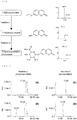
- Figure 2 the principle of the reaction sequence is shown.
- reaction I a reaction mixture of 0.5-200 ml was used (0.5-5 mM substrate; peroxygenase of the fungus Agrocybe aegerita with an activity of 4-400 units; phosphate buffer 50 mM (pH7); 4 mM ascorbic acid).
- cells human hepatocytes
- the hepatocytes were preincubated in a hollow fiber bioreactor (CellFiber system; area: 75 cm 2 ; cell count: 1x10 8 cells) for at least 7 days.
- the substrate 100 ⁇ M was then applied by changing the medium. The conversion was carried out almost completely in the Hepatocyte Growth Medium (Promocell GmbH) over a period of 5-6 days ( Figure 2 ).
- the HPLC analysis of the substrates and their metabolites was carried out on an LC-MS system (Waters alliance HPLC system with ZMD SingleQuad-MS (ESI +; cone voltage: 30eV) using an RP-HPLC column (Phenomenex Luna C18 (2nd ) 2x150mm, 100 ⁇ , guard column: RP18; 4x3mm)
- the linear HPLC gradient was composed as follows: 5 min (5% LM B / 95% LM A), from 5 to 20 min the mixing ratio of the Superplasticizer composition linear to 100% solvent B.
- the flow rate was 0.5 ml / min (Hansen et al. (2013)).
- phase II metabolite 2-hydroxydesipramine ⁇ -D-glucuronide from desipramine using a two-step process.
- liver cells with existing phase I biotransformation activity (primary liver cells or genetically modified liver cells) and recombinant phase II enzyme (UDP-glucuronosyl transferase)
- the starting substance desipramine was converted catalytically by genetically modified human liver cells in a first reaction to the phase I metabolite 2-hydroxydesipramine.
- this intermediate was biotransformed in a cell bioreactor to the phase II metabolite (glucuronide).
- This second reaction was carried out with recombinant functional phase II enzyme (see Figure 4a ).
- the reaction mixture consists of the following components: phosphate buffer 50 mM (pH7); 0.5 mg / ml UDP-glucuronosyltransferase; 5mM UDPGA; 1mM MgCl.
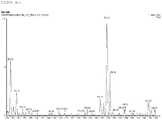
- the phase II metabolite (2-hydroxydesipramine- ⁇ -D-glucuronide, M 458) is detected via LC / MS (see Figure 4b and Figure 4c ).
- the starting substance desipramine was converted catalytically by fungal peroxygenases in a first reaction to the phase I metabolite 2-hydroxydesipramine.
- this intermediate was biotransformed in a cell bioreactor with genetically modified liver cells to form the phase II metabolite (glucuronide).
- phase I / -II human first-pass drug metabolites
- liver cells are used to biotransform 2-hydroxydesipramine to the phase II metabolite 2-2-hydroxydesipramine- ⁇ -D-glucuronide used.
- the liver cells were preincubated in a hollow fiber bioreactor (CellFiber system; area: 75 cm2; cell number: 1x10⁸ cells) for 7 days.
- the substrate 100 ⁇ M was then applied by changing the medium.
- the conversion was carried out almost completely in the Hepatocyte Growth Medium (Promocell GmbH) over a period of 5 days.
- the phase II metabolite (2-hydroxydesipramine- ⁇ -D-glucuronide, M 458) is detected via LC / MS (see Figure 5 ).
- the HPLC analysis of the substrates and their metabolites was carried out on an LC-MS system (Waters alliance HPLC system with ZMD SingleQuad-MS (ESI +; cone voltage: 30eV) using an RP-HPLC column (Phenomenex Kinetex C18 (2nd ) 150mmx4.6mm, 100 ⁇ , guard column: RP18; 4x3mm)
- the linear HPLC gradient was composed as follows: 5 min (5% LM B / 95% LM A), from 5 to 20 min, the mixing ratio of the eluent composition changes linearly to 100% eluent B.
- the flow rate was
- phase II metabolite 5-hydroxypropranol ⁇ -D-glucuronide from propranolol using a two-stage process.
- the starting substance propranolol was converted catalytically by fungal peroxygenases in a first reaction to the phase I metabolite 5-hydroxypropranolol.
- this intermediate was biotransformed in a cell bioreactor with genetically modified liver cells to form the phase II metabolite (glucuronide).
- phase I / -II phase I / -II
- reaction I 5 mM substrate propranolol; peroxygenase of the fungus Agrocybe aegerita with an activity of 300 units; phosphate buffer 50 mM (pH7); 4 mM ascorbic acid).
Landscapes
- Organic Chemistry (AREA)
- Chemical & Material Sciences (AREA)
- Life Sciences & Earth Sciences (AREA)
- Engineering & Computer Science (AREA)
- Zoology (AREA)
- Wood Science & Technology (AREA)
- Health & Medical Sciences (AREA)
- Genetics & Genomics (AREA)
- General Health & Medical Sciences (AREA)
- General Engineering & Computer Science (AREA)
- Bioinformatics & Cheminformatics (AREA)
- Biochemistry (AREA)
- Chemical Kinetics & Catalysis (AREA)
- General Chemical & Material Sciences (AREA)
- Microbiology (AREA)
- Biotechnology (AREA)
- Molecular Biology (AREA)
- Proteomics, Peptides & Aminoacids (AREA)
- Micro-Organisms Or Cultivation Processes Thereof (AREA)
- Preparation Of Compounds By Using Micro-Organisms (AREA)
- Enzymes And Modification Thereof (AREA)
Description
- Gegenstand der Erfindung ist ein Verfahren zur Herstellung von biogenen Stoffen.
- Es besteht ein hohes Bedürfnis an verbesserten Herstellungsverfahren für biogene Stoffe. Besonders bevorzugt ist die Herstellung solcher biogenen Stoffe, die bei der Biotransformation oder Metabolisierung in Leberzellen (Hepatozyten) bzw. in der Leber entstehen.
- Die Leber ist ein zentrales Entgiftungsorgan des Stoffwechsels. Leberzellen (Hepatozyten) repräsentieren 70-80% aller Zellen in der Leber und verfügen über die wichtigen physiologischen Leberfunktionen (Elaut et al. (2006)).
- Die Leber verwendet die Biotransformation oder Metabolisierung um aufgenommene Substanzen (z.B. Medikamente, Toxine, Naturstoffe) ausscheiden zu können bzw. zu entgiften. Für die Biotransformation wichtig sind insbesondere die Phase-I-Enzyme des Cytochrom-P-450 (CYP450) Systems. Es handelt sich bei den CYP450-Enyzmen um Oxidoreduktasen, die einen oxidativen Abbau bzw. Metabolisierung zahlreicher Substanzen wie u.a. auch Arzneistoffe bewirken. Von den zahlreichen CYP450-Isoenzymen mit unterschiedlicher Substratspezifität, die es beim Menschen gibt, sind alleine die Isoenzyme CYP1A2, -2C9, -2C19, -2D6, - 2E1 und -3A4 für ca. 90 % sämtlicher oxidativer Metabolisierungen von Medikamenten verantwortlich (Arimoto (2006); Shimada et al. (1994); Lamb et al. (2007)). In vielen Fällen erhalten eine Vielzahl von Medikamenten erst durch diese biochemischen Veränderungen ihre curative Wirksamkeit oder verursachen gar giftige Metaboliten mit unerwünschten Arzneimittelwirkungen (Chang et al. 2007).
- Diese Stoffe sind vor allem als Abbauprodukte der Leber interessant und bedürfen der weiteren Untersuchung. Hierzu sind solche Lebermetaboliten in ausreichender Menge herzustellen, insbesondere weisen diese biogenen Stoffe eine hohe regioselektive und stereoselektive Spezifität auf. Solche Stereoisomere weisen regio- als auch stereoselektive Modifkationen auf, die charakteristisch für biotransformatorische Enzyme sind, wie nachfolgend beschrieben.
- Für die Biotransformation oder Metabolisierung in Leberzellen sind Phase I Enzyme beschrieben, insbesondere des Cytochrom-P-450 (CYP450) Systems, so genannte Oxidoreduktasen. Weiterhin sind Phase II Enzyme relevant, wie z.B. N-Acetyltransferasen [NATs], UDP-Glucuronosyltransferasen, Sulfotransferasen. Für die Beurteilung der Lebertoxizität von Substanzen ist die Aktivität der Phase-I-Enzyme und Phase-II-Enzyme sowie weiterer Leberfunktionen von entscheidender Bedeutung.
- Beachtlich ist weiterhin, dass solche biotransformatorische Enzyme evolutionär bedingt ebenfalls in anderen Organismen, wie Pilze und Bakterien vorkommen können.
-
WO 2008/119780 A2 beschreibt ein Verfahren zur enzymatischen Hydroxylierung nicht-aktivierter Kohlenwasserstoffe, insbesondere aromatischer Ringe nicht-aktivierter Kohlenwasserstoffmoleküle (beispielsweise die selektive Umsetzung von Naphthalin zu 1-Naphthol) durch Verwendung von pilzlichen Peroxidasen aus Basidiomyceten der Familie Bolbitiaceae (z.B. Agrocybe sp.) zur Herstellung von Pharmazeutika, Terpenen, Steroiden oder Fettsäuren. -
DE102008034829 A1 offenbart ein einstufiges, enzymatisches Verfahren zur regioselektiven Hydroxylierung von 2-Phenoxypropionsäure zu 2-(4-Hydroxyphenoxy)propionsäure. Die enantioselektive und regioselektive Monohydroxylierung von 2-Phenoxypropionsäure zu 2-(4-Hydroxyphenoxy)propionsäure durch isolierte Biokatalysatoren (in vitro) kann ebenfalls durch ein stabiles extrazelluläres Pilzenzym, die Agrocybe-aegerita-Peroxygenase (AaP), 2-Phenoxypropionsäure hoch regioselektiv zu 2-(4-Hydroxyphenoxy)propionsäure und bevorzugt zu dessen (R)-Enantiomer umgesetzt werden. - Im Stand der Technik ist die Herstellung von biogenen Stoffen mittels Koppelung von Enzymen und Leberzellen nicht beschrieben.
- Im Stand der Technik ist nachteilig, dass biogene Stoffe nicht in ausreichender Ausbeute und Vielfalt hergestellt werden können. Zudem werden im Stand der Technik zumeist Vorläufermoleküle synthetisiert. Oftmals sind zusätzlich halbsynthetische Verfahren erforderlich, so dass die erforderlichen weiteren regio- und stereoselektiven Modifikationen in die Substanz(en) aufwändig eingeführt werden können, die für Metabolite aus der Leber entscheidend sind.
- Die Erfindung betrifft daher die Herstellung von biogenen Stoffen, die nach einem neuen Verfahren hergestellt werden.
- Erfindungswesentlich ist, dass die Synthese von biogenen Stoffen unter Einsatz von Enzymen in Kombination mit einem Leberzellsystem erfolgt.
- Gegenstand der Erfindung ist daher ein Verfahren zur Herstellung von biogenen Stoffen, dadurch gekennzeichnet, dass
- a) mindestens ein Ausgangsstoff mit
- b) mindestens einem Enzym versetzt wird und das erhaltene Produkt aus b) mit
- c) mindestens einer Leberzelle versetzt wird,
oder - b') mindestens eine Leberzelle versetzt wird und das erhaltene Produkt aus b) mit
- c') mindestens einem Enzym versetzt wird,
und - d) mindestens ein biogener Stoff isoliert wird.
(nach- und vorstehend "erfindungsgemäßes Verfahren") - Überraschender Weise lassen sich kostengünstig leberrelevante biogene Stoffe in hoher Ausbeute kontinuierlich oder diskontinuierlich herstellen, wobei vorteilhaft neue stereoselektive Verbindungen (Metaboliten) erhalten werden können.
- Die Ausgangstoff(e) oder Edukt(e) enthalten mindestens eine chemische Substanz, ein Substanzgemisch, insbesondere einen Arznei- oder Wirkstoff. Die chemischen Substanzen sind vorzugsweise ein organisches Molekül, welches neben Kohlenstoff (C) und Wasserstoff (H) Heteroatome enthalten können, wie Sauerstoff (0), Stickstoff (N), Schwefel (S) oder Phosphor (P). Die chemischen Substanzen können lineare und/oder ringförmige Kohlenstoffketten samt Heteroatomen aufweisen. Bevorzugt sind organische Moleküle mit weniger als 1.000 g/mol, insbesondere weniger als 750 g/mol, weniger als 500 g/mol, weniger als 250 g/mol. Weiterhin ist bevorzugt, dass mindestens eine chemische Substanz mindestens ein chirales Kohlenstoffatom enthält.
- Der Begriff "biogene Stoffe" im Sinne dieser Erfindung bedeutet, dass das erfindungsgemäße Verfahren die Herstellung von Stoffen bzw. von chemischen Substanzen und zwar vorzugsweise von neuen Stereoisomeren erlaubt. Die chemischen Substanzen sind vorzugsweise organische Moleküle, welche neben Kohlenstoff (C) und Wasserstoff (H) Heteroatome enthalten können, wie Sauerstoff (0), Stickstoff (N), Schwefel (S) und Phosphor (P). Die chemische Substanz kann lineare und/oder ringförmige Kohlenstoffketten samt Heteroatomen aufweisen. Bevorzugt sind organische Moleküle mit weniger als 1.000 g/mol, insbesondere weniger als 750 g/mol, weniger als 500 g/mol, weniger als 250 g/mol.
- Die Ausgangstoffe als auch biogene Stoffe können z.B. mittels kombinierten analytischen Verfahren, wie GC/LC-MS, IR, NMR hinreichend analysiert werden und ggfs. einer Strukturaufklärung unterzogen werden. Insbesondere die Massenspektroskopie erlaubt eine hinreichende schnelle Identifizierung der besagten Stoffe, wie z.B. Molmasse, etc.
- Ein "Enzym" im Sinne dieser Erfindung ist ein Protein, welches eine oder mehrere biochemische Reaktionen katalysieren kann. Ein erfindungsgemäßes Enzym ist in der Lage aus Ausgangsstoffen (Edukten) - einem Substrat - ein erstes (Enzym)Produkt oder Produkte zu erhalten. Leberspezifische Enzyme sind in einer Leberzelle enthalten.
- In einer bevorzugten Ausführungsform werden die Enzyme ausgewählt aus der Gruppe der Oxidoreduktasen (EC 1.x.x.x), insbesondere Monooxygenasen, Dioxygenasen, Oxidasen, Dehydrogenasen, Reduktasen und Peroxygenasen. Besonders bevorzugt sind Peroxygenasen. Weiterhin sind Enzyme der Biotransformation geeignet, insbesondere Phase-I-Enzyme und/oder Phase-II-Enzyme. Darüber hinaus sind Esterasen (EC 3.1.x.x), Hydrolasen (EC 3.x.x.x) und Transferasen (EC 2.x.x.x) geeignet. Entsprechende Enzyme können anhand der bekannten EC-Enzymklassen oder Nomenklatur zugewiesen werden.
- Weiterhin ist bevorzugt, dass das Enzym aus b) und c') im Gegensatz zu der Leberzelle aus einem anderen Organismus stammt.
- In einer bevorzugten Ausführungsform wird ein erstes Enzym aus Pilzen, Hefen, Algen oder Bakterien erhalten und die eingesetzten Leberzellen sind vorzugsweise humane Hepatozyten. Pilze sind jedoch erfindungsgemäß bevorzugt.
- Die Enzyme können nach bekannten Verfahren aus den Organismen isoliert und aufgereinigt werden. Weiterhin können solche Enzyme rekombinant in einem Wirt hergestellt werden.
- "Leberzelle" im Sinne dieser Erfindung bedeutet, dass die Zelle mindestens Enzyme zur Biotransformation aufweist, insbesondere Phase-I-Enzyme und/oder Phase-II-Enzyme und folglich hinreichend eine Leberfunktion ausführt. Die Leberzelle ist vorzugsweise eine solche, die aus humanen Leberzellen oder Säugerleberzellen erhalten werden kann. Solche Hepatozyten können z.B. aus den Lehren gemäß
WO2009/030217A2 undWO2012/045731A1 bereitgestellt werden, umfassend genetisch veränderte Hepatozyten, welche z.B. ein Proliferationsgen aufweisen, so genannte proliferierende Leberzellen. - Ebenfalls sind erfindungsgemäß genetisch veränderte Leberzellen umfasst, die (transgen) beliebig verändert sein können. Beispielsweise können solche Leberzellen mittels viralen Vektoren (z.B. Lentiviren, z.B.
DE 69830663 T2 ,EP 1175436 B1 ) hergestellt werden. Die Herstellung solcher genetisch veränderter Leberzellen ist dem Fachmann bekannt, vorzugsweise können Phase I und Phase II Enzyme ebenfalls rekombinant vorliegen. Weiterhin können Leberzelllinien erfindungsgemäß umfasst sein, die dem Fachmann bekannt sind, wie nicht abschließend käuflich erwerblich (www.cell-lines-service.de) Chang-Liver (Humane Leber Zell-Linie), Hep-G2 (Humane Hepatom Zell-Linie), HuH-7 (Humane Hepatoblastom Zell-Linie), PLC-PRF-5 (Humane Hepatom Zell-Linie), SK-HEP-1 (Humane Leber Adenokarzinom Zell-Linie) als auch z.B. Fa2N-4, Hep3B, BC2, HepaRG. Erfindungsgemäß können die Leberzellen ebenfalls im Zellverband auftreten. - Zu den erfindungsgemäßen relevanten Phase I Enzymen zählen insbesondere Cytochrom P450 System, Alkohol Dehydrogenasen, Aldehyd Dehydrogenasen, Peroxidasen, Glutathionperoxidase, Esterasen, Hydrolasen.
- Zu den erfindungsgemäßen relevanten Phase 1I Enzymen zählen insbesondere Glucuronyltransferasen, Sulfotransferasen, Glutathion-S-Transferase, Methyltransferasen, Aminotransferasen / Transaminasen, Acetyltransferasen.
- Die Verfahrensschritte b) (b') und c) (c') können in einer Ein-Topfvorrichtung durchgeführt werden. Eine solche Ein-Topfvorrichtung ist bevorzugt als Bioreaktor ausgestaltet.
- In einer weiteren bevorzugten Ausführungsform sind die Verfahrensschritte b) (b') und c) (c') voneinander räumlich getrennt, z.B. mittels zwei oder mehreren voneinander getrennten Bioreaktoren. Dies kann ebenfalls in der Weise erfolgen, dass ein Bioreaktor zwei oder mehr Schichten aufweist, wobei jeweils in einer Schicht mindestens ein erfindungsgemäßer o.g. Verfahrensschritt durchgeführt wird. Bevorzugt ist jedoch der Einsatz von zwei oder mehreren unabhängigen Bioreaktoren, die vorzugsweise miteinander gekoppelt sein können.
- Daher betrifft die Erfindung ein erfindungsgemäßes Verfahren, wobei mindestens ein Bioreaktor, vorzugsweise zwei oder mehrere Bioreaktoren zur Ausführung der Verfahrensschritte b) (b') und c) (c') eingesetzt werden, und mindestens ein Schritt b) (b') und c) (c') auch wiederholt oder nachgeschaltet werden kann.
- Die Bioreaktoren können mit Rührer und anderen üblichen Hilfsmitteln ausgestattet sein. Geeignete Bioreaktoren zur Kultivierung sind solche wie Hohlfaser-Bioreaktoren, Rührkesselreaktor (Fermenter), Wirbelschichtreaktor (Aggregate oder poröse Trägermaterialien), Festbettreaktoren mit Hohlfaser- bzw. Flachbettmembranen (Verfahren ist Tangentialflussfiltration), Plug-Flow-Reactor, Spinner Flaschen Kultivierung (siehe Horst Chmiel (Hrsg.) Bioprozesstechnik (2011), Spektrum Akademischer Verlag, Heidelberg). Die Bioreaktoren können ein Medium, Kulturmedium, Kulturflüssigkeit enthalten, insbesondere solche Medien, die für Leberzellen geeignet sind. Geeignete Zellkulturen und Kulturmedien sind dem Fachmann einschlägig bekannt und käuflich erwerblich (siehe Beispiele).
- In einer weiteren bevorzugten Ausführungsform sind die Bioreaktoren miteinander gekoppelt. Die Kopplung kann beispielsweise durch eine beliebige Verbindung zweier oder mehrerer Bioreaktoren erfolgen, z.B. entlang einem Flussgradienten, wobei Medium, Kulturflüssigkeit oder Überstand von einem Bioreaktor zu einem anderen Bioreaktor gelangt.
- Zur Durchführung der Erfindung können die Enzyme gemäß b) und c') in der Weise eingesetzt werden, dass die Enzyme in einem Enzym-Membranreaktor oder immobilisiert auf einem beliebigen Träger vorliegen. Weiterhin geeignet sind Scaffolds, Mikrosomen oder zellfreie Systeme. Ebenfalls können die Enzyme mittels Kollagen oder Gelatine fixiert werden.
- Die Isolierung der erhaltenen biogenen Stoffe (Down-Stream-Prozess) oder Zwischenprodukte kann mittels Aufschließen der Leberzellen oder Aufreinigung aus dem Überstand erfolgen (Schritt d.)). Die erhaltenen Produkte und Verbindungen können z.B. mittels LC/MS identifiziert werden.
- Nachfolgende Beispiele und Figuren dienen zur näheren Erläuterung der Erfindung, ohne jedoch die Erfindung auf diese Beispiele und Figuren zu begrenzen.
- HepG2 Zellen (ATCC HB-8065) werden in dem Medium DMEM PAA (Pasching, Austria) kultiviert, welches mit 10 % FCS Gold, 2 mM L-Glutamin, 100 U/ml Penicillin und 0,1mg/ml Streptomycin versetzt wird. Primäre humane Hepatozyten (pHHs) werden kommerziell von z.B. TebuBio (Le Perray-en-Yvelines, Frankreich) oder Promocell (Heidelberg, Deutschland) bezogen. Die Zellen werden auf 50 pg/ml Kollagen Typ I (Rattenschwanz, BD Biosciences, San Jose, USA) beschichtete Zellkulturplatten ausgesät und bei 37°C und 5 % CO2 in Hepatozyten Growth Medium (Promocell GmbH, Heidelberg, Deutschland) oder dem Fachmann bekanntem gleichwertigen Zellkulturmedien anderer Hersteller kultiviert. Diese pHHs können direkt für die Metabolitproduktion eingesetzt werden oder nach Erzeugung proliferationskompetenter Leberzellen. Dafür werden Proliferationsgene mit einem lentiviralen Vektor in die Zellen transduziert. Diese Technik ist in der
WO2009/030217A2 (Braspenning et al. (2007)) beschrieben. Zellklone, welche die Proliferationsfähigkeit im Vergleich zu nicht infizierten primären Hepatozyten erhalten haben, wachsen zu in den Zellkulturschalen sichtbaren Kolonien aus und können über Trypsinierung abgelöst und isoliert werden. Die proliferienden Hepatozyten-Klone (Zelllinien) werden in Bezug auf ihre Leberzellmarker charakterisiert. Über quantitative real-time PCR (qRT-PCR) kann nachgewiesen werden, dass die für die Bildung von Phase-I- und Phase-II-Metaboliten notwendigen Enzyme exprimiert werden. Zur Definition von Sequenzen zur Generierung von Primern kann der Fachmann Datenbanken wie NCBI Genbank (http://www.ncbi.nlm.nih.gov/genbank) oder European Nucleotide Archive (http://www.ebi.ac.uk/ena/) verwenden. Für Phase I sind vor allem die Enzyme der Cytochrom- P450 (CYP) Familie relevant. Dazu gehören unter anderem die CYPs 1A2, 2B6, 2C6, 2C8, 2C9, 2C19, 3A4, 3A5, 3A6, 2D5, 2E1. Für Phase II sind u.a. die UDP-Glucuronosyltransfersasen (UGTs), Sulfotransferasen, (STs), N-Acetyltransferasen (NATs), Glutathion-S- Transferasen (GSTs), Methyltransferasen (z.B. TPMT, COMT etc.) relevant. Für alle diese Phase-I- und Phase-II-Enzyme lassen sich geeignete Primer zum Nachweis über qRT-PCR aus Datenbankeinträgen (NCBI, ENA) ableiten. Alternativ kann die Expression von relevanten Enzymen der Biotransformation über Immunfluoreszenz oder Western Blot mittels spezifischer Primärantikörper, welche an die exprimierten Phase-I- und Phase-II-Enzyme binden, nachweisen. - Eine geeignete Hepatozyten-Kultur, ob proliferationsfähige Hepatozyten (z.B. Zellklon HepaFH3) oder nicht proliferationsfähige pHHs werden dann zu z.B. 5x10⁵ Zellen pro well in Kollagen I beschichtete 24-well- Platten ausgesät. Nach 2-7 Tagen in Kultur wird Medium mit 100 µM Diclofenac (Sigma-Aldrich, St. Louis, USA) zu den Zellen gegeben. Die Inkubation findet für 2-24 Stunden im Brutschrank bei 5 % CO2 und 37 °C in Hepatozytenmedium statt. Überstände dieser Zellkulturen werden für Spurenanalytik mit HPLC verwendet. Dazu kann das Gerät: VWR-Hitachi Elite LaChrom series HPLC mit Photodiode array L-2455 (Säule: Phenomenex Kinetex C18, 4.6x150 mm, 5 µm Partikelgröße, 100 Å; Vorsäule: RP18; 4,6x2 mm) verwendet werden. Der Nachweis des gebildeten Metabolits 4'-Hydroxy-Diclofenac kann auch über LC-MS mit einem Waters Alliance HPLC System (Säule: Phenomenex Luna C18[2] 2,0x150 mm, 5 µm Partikelgröße, 100 Å; Vorsäule: RP18; 4x3 mm in Kombination mit einem ZMD SingleQuad-MS Detektionsystem (ESI+; cone voltage: 30eV) durchgeführt werden.
- Wie in der Tabelle 1 dargestellt, werden bei HepaFH3 (proliferationsfähige Leberzellen) sowie bei HepG2 (Leberzelllinie) sowie bei primären humanen Hepatozyten (pHH) verschiedener Donoren für das Zellsystem jeweils charakteristische Mengen von Metaboliten gefunden.
Tabelle 1: Metabolismus von Diclofenac und Testosteron in verschiedenen Leberzellsystemen Substanz Diclofenac Metabolite 4'-OH-Diclofenac HepaFH3 (n = 6) HepG2 (n = 3) pHH Donor 1 pHH Donor 2 7,13 ± 2,22 n.n. 15,3 59,4 Testosteron Androstendion 84,33 ± 11,59 35,32 ± 0,1 30,9 72,2 OH-Testosteron 3,02 ± 1,06 2, 76 ± 0,1 6,1 23,0 - Die über HPLC und LC-MS Analyse erhaltenen Werte sind in pmol/(min*106 Zellen); n.n. = keine Metabolite nachweisbar; pHH-primäre humane Hepatozyten
- Bei diesem Ausführungsbeispiel wurde die Ausgangssubstanz 7-Ethoxycumarin in einer ersten Reaktion zum Phase-I-Metaboliten 7-Hydroxycumarin katalysiert durch pilzliche Peroxygenasen umgesetzt. In einer Folgereaktion wurde dieses Zwischenprodukt in einem Zell-Bioreaktor zum Phase-II-Metaboliten (Glucuronid) biotransformiert. Diese zweite Reaktion erfolgte an primären oder molekularbiologisch veränderten humanen Leberzellen. Mit diesem Beispiel wird die kombinierte Synthese für humane First-pass-Arzneimetabolite (Phase I und II) aus einer enzymund zellvermittelten Biotransformation verdeutlicht ((Ullrich et al. (2007); Kinne et al. (2009); Poraj-Kobielska et al. (2011)). In
Figur 2 ist das Prinzip der Reaktionsfolge dargestellt. - Für die Reaktion I wurde ein Reaktionsansatz von 0,5-200 ml verwendet (0,5-5 mM Substrat; Peroxygenase des Pilzes Agrocybe aegerita mit einer Aktivität von 4-400 Units; Phosphatpuffer 50 mM (pH7); 4 mM Ascorbinsäure). Nach Zugabe des Co-Substrat H2O2 (Aktivator der Reaktion; 5 mM) und einer Reaktionszeit von 60 min wurde das gebildete Produkt (7-Hydroxycumarin) via LC-MS bestimmt (λmax = 323 nm). In diesem Beispiel handelt es sich somit um eine O-Deethylierungsreaktion von 7-Ethoxycumarin zum Phase-I-Metaboliten 7-Hydroxycumarin. In der zweiten Reaktion werden Zellen (humane Hepatozyten) zur Biotransformation von 7-Hydroxycumarin zum Phase-II-Metaboliten 7-Hydroxycumarin-Glucuronid verwendet (Braspenning et al. (2007); Hansen et al. (2013); Burkard et al. (2012)). Die Hepatozyten wurden in einem Hohlfaser-Bioreaktor (CellFiber-System; Fläche: 75 cm2; Zellzahl: 1x10⁸ Zellen) für mindestens 7 Tage vorinkubiert. Anschließend erfolgte die Applikation des Substrates (100 µM) über einen Mediumswechsel. Die Umsetzung erfolgte im Hepatocyte Growth Medium (Promocell GmbH) über einen Zeitraum von 5-6 Tagen nahezu vollständig (
Figur 2 ).
Die HPLC-Analytik der Substrate und deren Metabolite wurde an einem LC-MS-System (Waters alliance HPLC-System mit ZMD SingleQuad-MS (ESI+; cone voltage: 30eV) unter Verwendung einer RP-HPLC-Säule (Phenomenex Luna C18(2) 2x150mm, 100 Ä, Vorsäule:RP18; 4x3mm) durchgeführt. Erforderliche Quantifizierungen wurden mittels Kalibriergeraden bei verbindungstypischen Absorptionsmaxima (Diclofenac: Amax = 270 nm; Propranolol: Amax = 220 nm) verwendet. Unter Verwendung der Laufmittel A (Wasser + 0,1 % Ameisensäure) und Laufmittel B (Acetonitril) setzte sich der lineare HPLC-Gradient wie folgt zusammen: 5 min (5 % LM B/95 % LM A), von 5 bis 20 min ändert sich das Mischungsverhältnis der Fließmittelzusammensetzung linear auf 100 % Laufmittel B. Die Flussrate betrug 0,5 ml/min (Hansen et al. (2013)). - Bei diesem Ausführungsbeispiel wurde die Ausgangsubstanz Desipramin in einer ersten Reaktion zum Phase-I-Metaboliten 2-Hydroxydesipramin katalytisch durch genetisch veränderte humanen Leberzellen umgesetzt. In einer Folgereaktion wurde dieses Zwischenprodukt in einem Zell-Bioreaktor zum Phase-II-Metaboliten (Glucuronid) biotransformiert. Diese zweite Reaktion erfolgte mit rekombinantem funktionsaktiven Phase II Enzym (siehe
Figur 4a ). - Zunächst wurde ein Reaktionsansatz mit dem Substrat Desipramin von 0,5 ml verwendet (200µM Desipramin in Krebs-Henseleit-Buffer [25mM NaHC03, 2mM CaCl2, 25mM HEPES, pH7,4, Inkubation 24h, 0,5x10⁶ Leberzellen]). Das gebildete Produkt (2-Hydroxydesipramin) wurde via LC-MS bestimmt (λ=254nm; M=282). In diesem Beispiel handelt es um eine Hydroxylierung an Position 2 von Desipramin zu 2-Hydroxydesipramin. In einer zweiten Reaktion erfolgt durch an Membran gebundene rekombinante UDP-Glucuronosyltransferase (erzeugt über E.coli-Expressionssysteme) die Biotransformation von 2-Hydroxydesipramin zum Phase-II-Metaboliten 2-Hydroxydesipramin-β-D-Glucuronid. Der Reaktionsansatz setzt sich aus folgenden Komponenten zusammen: Phosphatpuffer 50 mM (pH7); 0,5 mg/ml UDP-Glucuronosyltransferase; 5 mM UDPGA; 1mM MgCl. Der Nachweis des Phase-II-Metaboliten (2-Hydroxydesipramin-β-D-Glucuronid, M=458) erfolgt via LC/MS (siehe
Figur 4b undFigur 4c ). - Bei diesem Ausführungsbeispiel wurde die Ausgangsubstanz Desipramin in einer ersten Reaktion zum Phase-I-Metaboliten 2-Hydroxydesipramin katalytisch durch pilzliche Peroxygenasen umgesetzt. In einer Folgereaktion wurde dieses Zwischenprodukt in einem Zell-Bioreaktor mit genetisch veränderten Leberzellen zum Phase-II-Metaboliten (Glucuronid) biotransformiert. Mit diesen Beispiel wird die kombinierte Synthese für humane First-pass-Arzneiwirkstoffmetabolite (Phase-I/-II) aus einer enzym- und einer zellvermittelten Biotransformation verdeutlicht.
- Für die Reaktion I wurde ein Reaktionsansatz von 100 ml verwendet (5 mM Substrat Desipramin; Peroxygenase des Pilzes Agrocybe aegerita mit einer Aktivität von 300 Units; Phosphatpuffer 50 mM (pH7); 4 mM Ascorbinsäure). Nach Zugabe des Co-Substrat H2O2 (Aktivator der Reaktion; 5 mM) und einer Reaktionszeit von 60 min wurde das gebildete Produkt (hydroxyliertes Desipramin) via LC-MS bestimmt (λmax = 254 nm). In diesem Beispiel handelt es sich somit um eine Hydroxylierung von Desipramin zum Phase-I-Metaboliten 2-Hydroxydesipramin. In der zweiten Reaktion werden Zellen (genetisch veränderte Leberzellen) zur Biotransformation von 2-Hydroxydesipramin zum Phase-II-Metaboliten 2-2-Hydroxydesipramin-β-D-Glucuronid verwendet. Die Leberzellen wurden in einem Hohlfaser-Bioreaktor (CellFiber-System; Fläche: 75 cm2; Zellzahl: 1x10⁸ Zellen) für 7 Tage vorinkubiert. Anschließend erfolgte die Applikation des Substrates (100 µM) über einen Mediumwechsel. Die Umsetzung erfolgte im Hepatocyte Growth Medium (Promocell GmbH) über einen Zeitraum von 5 Tagen nahezu vollständig. Der Nachweis des Phase-II-Metaboliten (2-Hydroxydesipramin-β-D-Glucuronid, M=458) erfolgt via LC/MS (siehe
Figur 5 ). - Die HPLC-Analytik der Substrate und deren Metabolite wurde an einem LC-MS-System (Waters alliance HPLC-System mit ZMD SingleQuad-MS (ESI+; cone voltage: 30eV) unter Verwendung einer RP-HPLC-Säule (Phenomenex Kinetex C18(2) 150mmx4,6mm, 100 Å, Vorsäule:RP18; 4x3mm) durchgeführt. Erforderliche Quantifizierungen wurden mittels Kalibriergeraden bei verbindungstypischen Absorptionsmaxima (Diclofenac: Amax = 270 nm; Propranolol: Amax = 220 nm, Desipramin 254 nM) verwendet. Unter Verwendung der Laufmittel A (Wasser + 0,1 % Trifluressigsäure) und Laufmittel B (Acetonitril+0,75 % Trifluressigsäure) setzte sich der lineare HPLC-Gradient wie folgt zusammen: 5 min (5 % LM B/95 % LM A), von 5 bis 20 min ändert sich das Mischungsverhältnis der Fließmittelzusammensetzung linear auf 100 % Laufmittel B. Die Flussrate betrug 1,0 ml/min.
-
- i.) LC-MS-System (Waters alliance HPLC system with ZMD SingleQuad-MS (ESI+; cone voltage: 30eV; column: Phenomenex Kinetex C18(2) 250x4,6mm, 5µ particle size, 100 Å; security guard: C18(2), 4x3mm))
- ii.) Desipramin (M=266), 2-Hydroxydesipramin (M=282), 2-Hydroxydesipramin β-D-Glucuronid (M=458)
- Bei diesem Ausführungsbeispiel wurde die Ausgangsubstanz Propranolol in einer ersten Reaktion zum Phase-I-Metaboliten 5-Hydroxypropranolol katalytisch durch pilzliche Peroxygenasen umgesetzt. In einer Folgereaktion wurde dieses Zwischenprodukt in einem Zell-Bioreaktor mit genetisch veränderten Leberzellen zum Phase-II-Metaboliten (Glucuronid) biotransformiert. Mit diesem Beispiel wird die kombinierte Synthese für humane First-pass-Arzneiwirkstoffmetabolite (Phase-I/-II) aus einer enzym- und zellvermittelten Biotransformation verdeutlicht.
- Für die Reaktion I wurde ein Reaktionsansatz 100 ml verwendet (5 mM Substrat Propranolol; Peroxygenase des Pilzes Agrocybe aegerita mit einer Aktivität von 300 Units; Phosphatpuffer 50 mM (pH7); 4 mM Ascorbinsäure). Nach Zugabe des Co-Substrat H2O2 (Aktivator der Reaktion; 5 mM) und einer Reaktionszeit von 60 min wurde das gebildete Produkt (hydroxyliertes Propranolol) via LC-MS bestimmt (Amax = 280 nm). In diesem Beispiel handelt es sich somit um eine Ring-Hydroxylierung von Propranolol (M=259) zum Phase-I-Metaboliten 5-Hydroxypropranolol (M=275) (siehe
Figur 6a ). - In der zweiten Reaktion werden genetisch veränderten Leberzellen zur Biotransformation von 5-Hydroxypropranol zum Phase-II-Metaboliten 5-Hydroxypropranolol-β-D-Glucuronid verwendet. Die Hepatozyten wurden in einem Hohlfaser-Bioreaktor (CellFiber-System; Fläche: 75 cm2; Zellzahl: 1x10⁸ Zellen) für 7 Tage vorinkubiert. Anschließend erfolgte die Applikation des Substrates (Phase I Metabolit, 100 µM) über einen Mediumswechsel. Die Umsetzung erfolgte im Hepatocyte Growth Medium (Promocell GmbH) über einen Zeitraum von 5-6 Tagen nahezu vollständig. Der Nachweis des Phase-II-Metaboliten (5-Hydroxypropranolol-β-D-Glucuronid, M=452) erfolgt via LC/MS (siehe
Figur 6b ). -
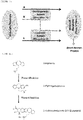
Figur 1 : Dargestellt ist ein zweistufiges Verfahren zur Umsetzung von dem Substrat 7-Ethoxycumarin über ein Phase-I-Zwischenprodukt (7-Hydroxycumarin) zu einem Phase-II-Metaboliten (7-Hydroxycumarin-Glucuronid). Reaktion I (Modul pilzliche Peroxygenase): Grundlage sind extrazelluläre Enzyme pilzlichen Ursprungs (Peroxygenase; Agrocybe aegerita [1, 2]; Reaktion II (Modul Hepatozyten): In einer Folgereaktion wird der Phase-II-Metabolit (7-Hydroxycumarin-Glucuronid) mit einem präparativen 3D-Zellkulturverfahren (Hohlfasermodul-System, Fibercell Inc.) mit veränderten humanen Leberzellen (Hepatozyten) generiert. -
Figur 2 : HPLC-Chromatogramme (λmax=323nm) : Umsetzung von 7-Ethoxycumarin (ret. time = 17,2 min) zu 7-Hydroxycumarin (ret. time = 12,9 min) mit fungaler Peroxygenase ((A) Reaktionszeit: 0 h; (B) Reaktionszeit: 0,5 h) in der ersten Reaktion. In der zweiten Folgereaktion ist die Biotransformation von 7-Hydroxycumarin (ret. time = 13,0 min) zum Phase-II-Metabolit 7-Hydroxycumarin-Glucuronid (ret. time = 11,6 min) mit humanen Hepatozyten dargestellt ((C) Reaktionszeit: 0 h; (D) Reaktionszeit: 24 h). -
Figur 3 : Darstellung des Erfindungsprinzips. -
Figur 4a : Reaktionsfolge der selektiven Umsetzung von Desipramin. -
Figur 4b : HPLC-Chromatogramm Umsetzung mit Desipramin zum Phase I Metabolit mit genetisch veränderten Leberzellen. -
Figur 4c : Massenspektrum zur Demonstration der Umsetzung von Desipramin mit genetisch veränderten Leberzellen. -
Figur 5 : Links, HPLC-Chromatogramm zur Umsetzung Desipramin mit Peroxygenase-System (AaeUPO = Agrocybe aegerita Peroxygenase, S=Substrat, Desipramin, P1 = Produkt, hydroxyliertes Desipramin, M=282), rechts LC-MS Massenspektrum des Produkts. -
Figur 6a : Reaktionsfolge der selektiven Umsetzung von Propranolol. -
Figur 6b : Massenspektrum zur Umsetzung von Propranolol mit Peroxygenase-Enzym-System zu Phase-I-Metabolit (Kinne et al. 2009) . -
- 1. Elaut G, Henkens T, Papeleu P, Snykers S, Vinken M, Vanhaecke T, Rogiers V (2006): Molecular mechanisms underlying the dedifferentiation process of isolated hepatocytes and their cultures. Current drug metabolism 7 (6): 629-60.
- 2. Arimoto R (2006): Computational models for predicting interactions with cytochrome p450 enzyme. Current topics in medicinal chemistry 6 (15): 1609-18.
- 3. Shimada T, Yamazaki H, Mimura M, Inui Y, Guengerich FP (1994): Interindividual variations in human liver cytochrome P-450 enzymes involved in the oxidation of drugs, carcinogens and toxic chemicals: studies with liver microsomes of 30 Japanese and 30 Caucasians. The Journal of pharmacology and experimental therapeutics 270 (1): 414-23.
- 4. Lamb DC, Waterman MR, Kelly SL, Guengerich FP (2007): Cytochromes P450 and drug discovery. Current opinion in biotechnology 18 (6): 504-12.
- 5. Chang CY, Schiano TD (2007): Review article: drug hepatotoxicity. Alimentary pharmacology & therapeutics 25 (10): 1135-51.
- 6. Walker K, Ginsberg G, Hattis D, Johns DO, Guyton KZ, Sonawane B (2009): GENETIC POLYMORPHISM IN N-ACETYLTRANSFERASE (NAT): POPULATION DISTRIBUTION OF NAT1 AND NAT2 ACTIVITY. Journal of Toxicology and Environmental Health-Part B-Critical Reviews 12 (5-6): 440-472
- 7. Ullrich R, Kinne M, Hofrichter M, Scheibner K (2007): Verfahren zur O-Dealkylierung von Alkyarylethern.
DE 10 2007 058 741.6 . - 8. Kinne M, Poraj-Kobielska M, Aranda E, Ullrich R, Hammel KE, Scheibner K, Hofrichter M (2009): Regioselective preparation of 5-hydroxypropranolol and 4'-hydroxydiclofenac with a fungal peroxygenase. Bioorganic & medicinal chemistry letters 19 (11): 3085-7.
- 9. Poraj-Kobielska M, Kinne M, Ullrich R, Scheibner K, Kayser G, Hammel KE, Hofrichter M (2011): Preparation of human drug metabolites using fungal peroxygenases. Biochemical pharmacology 82 (7): 789-96.
- 10. Hansen M, Herzog N, Miethbauer S, Schmidtke KU, Lupp A, Sperling S, Seehofer D, Damm G, Scheibner K, Küpper J-H (2013): Primary-like human hepatocytes genetically engineered to obtain proliferation competence display hepatic differentiation characteristics in monolayer and organotypical spheroid cultures. Drug metabolism and disposition: the biological fate of chemicals (submitted).
- 11. Burkard A, Dahn C, Heinz S, Zutavern A, Sonntag-Buck V, Maltman D, Przyborski S, Hewitt NJ, Braspenning J (2012): Generation of proliferating human hepatocytes using Upcyte(R) technology: characterisation and applications in induction and cytotoxicity assays. Xenobiotica; the fate of foreign compounds in biological systems 42 (10): 939-56.
Claims (11)
- Verfahren zur Herstellung von biogenen Stoffen in mindestens einem Bioreaktor, dadurch gekennzeichnet, dassa) mindestens ein Ausgangsstoff mitb) mindestens einem Enzym versetzt wird und das erhaltene Produkt mitc) mindestens einer Leberzelle versetzt wird,
oderb') mindestens einer Leberzelle versetzt wird und das erhaltene Produkt mitc') mindestens einem Enzym versetzt wird,
undd) mindestens ein biogener Stoff isoliert wird,wobei der Ausgangstoff mindestens eine chemische Substanz enthält und mindestens ein Enzym ausgewählt ist aus der Gruppe Phase-I-Enzyme, Phase-II-Enzyme und Oxidoreduktasen. - Verfahren nach Anspruch 1, dadurch gekennzeichnet, dass der Ausgangstoff mindestens eine chemische Substanz enthält ausgewählt aus der Gruppe Arznei- oder Wirkstoff, organische Moleküle, insbesondere mit weniger als 1.000 g/mol.
- Verfahren nach Anspruch 1 oder 2, dadurch gekennzeichnet, dass das Enzym aus b) und c') im Gegensatz zu der Leberzelle aus einem anderen Organismus stammt.
- Verfahren nach einem der vorhergehenden Ansprüche, wobei mindestens ein Bioreaktor, vorzugsweise zwei oder mehrere Bioreaktoren zur Ausführung der Verfahrensschritte b) (b') und c) (c') eingesetzt werden, und mindestens ein Schritt b) (b') und c) (c') auch wiederholt oder nachgeschaltet werden kann.
- Verfahren nach einem der vorhergehenden Ansprüche, wobei das Enzym ausgewählt ist aus Oxidoreduktasen, und zwar Monooxygenasen, Dioxygenasen, Oxidasen, Dehydrogenasen, Reduktasen und Peroxygenasen.
- Verfahren nach einem der vorhergehenden Ansprüche, wobei die Leberzelle ausgewählt ist aus einer Zelle enthaltend mindestens Enzyme zur Biotransformation, insbesondere Phase-I-Enzyme und/oder Phase-II-Enzyme, humane Leberzelle, Säugerleberzelle, genetisch veränderte Hepatozyten, proliferierenden Leberzellen, Leberzelllinien.
- Verfahren nach einem der vorhergehenden Ansprüche, wobei Phase I Enzyme Cytochrom P450 System, Alkohol Dehydrogenasen, Aldehyd Dehydrogenasen, Peroxidasen, Glutathionperoxidase, Esterasen, Hydrolasen umfassen und/oder Phase 1I Enzyme Glucuronyltransferasen, Sulfotransferasen, Glutathion-S-Transferase, Methyltransferasen, Aminotransferasen / Transaminasen, Acetyltransferasen umfassen.
- Verfahren nach einem der vorhergehenden Ansprüche, dadurch gekennzeichnet, dass der isolierte biogene Stoff ein organisches Molekül ist, welches neben Kohlenstoff und Wasserstoff Heteroatome enthalten kann und weniger als 1.000 g/mol aufweist.
- Verfahren nach einem der vorhergehenden Ansprüche, dadurch gekennzeichnet, dass der mindestens eine Bioreaktor ein Medium, Kulturmedium oder Kulturflüssigkeit enthält.
- Verfahren nach einem der vorhergehenden Ansprüche, dadurch gekennzeichnet, dass der mindestens eine Bioreaktor einen Rührer enthält.
- Verfahren nach einem der vorhergehenden Ansprüche, dadurch gekennzeichnet, dass der mindestens eine Bioreaktor ausgewählt ist aus der Gruppe Hohlfaser-Bioreaktoren, Rührkesselreaktor, Fermenter, Wirbelschichtreaktor, Festbettreaktoren mit Hohlfaser- bzw. Flachbettmembranen, Plug-Flow-Reactor und Spinner-Flasche.
Priority Applications (1)
| Application Number | Priority Date | Filing Date | Title |
|---|---|---|---|
| EP14812139.5A EP3068868B1 (de) | 2013-11-12 | 2014-11-11 | Verfahren zur herstellung von biogenen stoffen |
Applications Claiming Priority (3)
| Application Number | Priority Date | Filing Date | Title |
|---|---|---|---|
| EP20130192606 EP2871233A1 (de) | 2013-11-12 | 2013-11-12 | Verfahren zur Herstellung von biogenen Stoffen |
| EP14812139.5A EP3068868B1 (de) | 2013-11-12 | 2014-11-11 | Verfahren zur herstellung von biogenen stoffen |
| PCT/EP2014/074278 WO2015071264A1 (de) | 2013-11-12 | 2014-11-11 | Verfahren zur herstellung von biogenen stoffen |
Publications (2)
| Publication Number | Publication Date |
|---|---|
| EP3068868A1 EP3068868A1 (de) | 2016-09-21 |
| EP3068868B1 true EP3068868B1 (de) | 2020-05-06 |
Family
ID=49552291
Family Applications (2)
| Application Number | Title | Priority Date | Filing Date |
|---|---|---|---|
| EP20130192606 Withdrawn EP2871233A1 (de) | 2013-11-12 | 2013-11-12 | Verfahren zur Herstellung von biogenen Stoffen |
| EP14812139.5A Active EP3068868B1 (de) | 2013-11-12 | 2014-11-11 | Verfahren zur herstellung von biogenen stoffen |
Family Applications Before (1)
| Application Number | Title | Priority Date | Filing Date |
|---|---|---|---|
| EP20130192606 Withdrawn EP2871233A1 (de) | 2013-11-12 | 2013-11-12 | Verfahren zur Herstellung von biogenen Stoffen |
Country Status (5)
| Country | Link |
|---|---|
| US (1) | US10036052B2 (de) |
| EP (2) | EP2871233A1 (de) |
| AU (1) | AU2014350274A1 (de) |
| CA (1) | CA2930269A1 (de) |
| WO (1) | WO2015071264A1 (de) |
Families Citing this family (1)
| Publication number | Priority date | Publication date | Assignee | Title |
|---|---|---|---|---|
| DE102021204094A1 (de) | 2021-04-25 | 2022-10-27 | Brandenburgische Technische Universität Cottbus-Senftenberg | In-vitro Arzneimittel aus Prodrugs und deren Verwendung |
Family Cites Families (11)
| Publication number | Priority date | Publication date | Assignee | Title |
|---|---|---|---|---|
| CA2304983A1 (en) | 1997-09-24 | 1999-04-01 | The Regents Of The University Of California | Non-primate lentiviral vectors and packaging systems |
| WO2000061617A2 (en) | 1999-04-12 | 2000-10-19 | Modex Therapeutiques, S.A. | Transiently immortalized cells for use in gene therapy |
| WO2002040995A2 (en) * | 2000-11-17 | 2002-05-23 | Takeda Chemical Industries, Ltd. | Method for estimating metabolic function of xenobiotic and induction thereof |
| DE102007016139A1 (de) | 2007-03-30 | 2008-10-02 | Jenabios Gmbh | Verfahren zur regioselektiven Oxygenierung von N-Heterozyklen |
| GB2450761B (en) * | 2007-07-06 | 2010-08-04 | Univ London | Multi-functional chamber for housing a biological component |
| DE102007041655A1 (de) | 2007-09-03 | 2009-03-05 | Medicyte Gmbh | Vermehrung von primären Zellen und deren Verwendung |
| DE102007058741A1 (de) | 2007-12-03 | 2009-06-04 | Jenabios Gmbh | Verfahren zur O-Dealkylierung von Alkylarylethern |
| DE102008034829A1 (de) | 2008-07-23 | 2010-02-04 | Jenabios Gmbh | Verfahren zur Herstellung von 2-(4-Hydroxyphenoxy)propionsäure |
| EP2421954B1 (de) * | 2009-04-21 | 2018-12-26 | Academisch Ziekenhuis bij de Universiteit van Amsterdam | Differenzierte menschenleberzellenkulturen und deren verwendung in bioartifiziellen lebersystemen |
| DE102010041958A1 (de) | 2010-10-04 | 2012-04-05 | Medicyte Gmbh | Geeignete Hepatozyten für in-vitro Genotoxitätstests |
| CN103374573B (zh) * | 2012-04-28 | 2016-01-06 | 复旦大学附属华山医院 | 肝癌细胞核酸适配体序列及其用途 |
-
2013
- 2013-11-12 EP EP20130192606 patent/EP2871233A1/de not_active Withdrawn
-
2014
- 2014-11-11 CA CA2930269A patent/CA2930269A1/en not_active Abandoned
- 2014-11-11 EP EP14812139.5A patent/EP3068868B1/de active Active
- 2014-11-11 WO PCT/EP2014/074278 patent/WO2015071264A1/de not_active Ceased
- 2014-11-11 AU AU2014350274A patent/AU2014350274A1/en not_active Abandoned
- 2014-11-11 US US15/035,927 patent/US10036052B2/en active Active
Non-Patent Citations (2)
| Title |
|---|
| ALAM T ET AL: "Glucose-regulated insulin production in hepatocytes", TRANSPLANTATION, WILLIAMS AND WILKINS, GB, vol. 74, no. 12, 27 December 2002 (2002-12-27), pages 1781 - 1787, XP002685524, ISSN: 0041-1337, DOI: 10.1097/01.TP.0000039333.11465.D9 * |
| M. A. SELLS ET AL: "Production of hepatitis B virus particles in Hep G2 cells transfected with cloned hepatitis B virus DNA.", PROCEEDINGS NATIONAL ACADEMY OF SCIENCES PNAS, vol. 84, no. 4, 1 February 1987 (1987-02-01), US, pages 1005 - 1009, XP055379467, ISSN: 0027-8424, DOI: 10.1073/pnas.84.4.1005 * |
Also Published As
| Publication number | Publication date |
|---|---|
| WO2015071264A1 (de) | 2015-05-21 |
| US10036052B2 (en) | 2018-07-31 |
| US20160289724A1 (en) | 2016-10-06 |
| EP2871233A1 (de) | 2015-05-13 |
| CA2930269A1 (en) | 2015-05-21 |
| EP3068868A1 (de) | 2016-09-21 |
| AU2014350274A1 (en) | 2016-06-16 |
Similar Documents
| Publication | Publication Date | Title |
|---|---|---|
| Igarashi et al. | Maklamicin, an antibacterial polyketide from an endophytic Micromonospora sp. | |
| Tsukamoto et al. | Notoamides F− K, prenylated indole alkaloids isolated from a marine-derived Aspergillus sp. | |
| Lee et al. | Protuboxepins A and B and protubonines A and B from the marine-derived fungus Aspergillus sp. SF-5044 | |
| Shen et al. | Unusual and highly bioactive sesterterpenes synthesized by Pleurotus ostreatus during coculture with Trametes robiniophila Murr | |
| Minamida et al. | Amphirionin-4 with potent proliferation-promoting activity on bone marrow stromal cells from a marine dinoflagellate Amphidinium species | |
| Chigu et al. | Cytochrome P450 monooxygenases involved in anthracene metabolism by the white-rot basidiomycete Phanerochaete chrysosporium | |
| Piska et al. | Cunninghamella biotransformation-similarities to human drug metabolism and its relevance for the drug discovery process | |
| Socha et al. | Antibiotic Bisanthraquinones Produced by a Streptomycete Isolated from a Cyanobacterium Associated with Ecteinascidia t urbinata | |
| EP3274465A1 (de) | Biokatalytische herstellung von l-fucose | |
| EP4389881A1 (de) | Genetisch modifizierter mikroorganismus und dessen verwendung zur herstellung von d-chiro-inositol | |
| Ma et al. | Highly selective isomerization and dehydrogenation of three major bufadienolides at 3-OH by Fusarium solani | |
| DE69122016T2 (de) | Mitochondriales P450 | |
| WO2015071264A1 (de) | Verfahren zur herstellung von biogenen stoffen | |
| CN107586793A (zh) | 制备具有多个手性中心的醇化合物的方法 | |
| Jennings et al. | Study of the potential for Streptomyces coelicolor to produce bioactive compounds from flower waste as a sustainable feedstock | |
| EP2130916B1 (de) | Zur expression von cytochrom p-450 fähige e. coli und biokonversionsverfahren unter verwendung davon | |
| EP1067195B1 (de) | Verfahren zur Reduktion von Ketogruppen enthaltende Verbindungen | |
| Marconi et al. | Endophytic biocatalysts with enoate reductase activity isolated from Mentha pulegium | |
| DE102006039189B4 (de) | Enantioselektive Darstellung von aliphatischen azyklischen Estern und Ketonen | |
| Schramm et al. | RETRACTED: Rapid screening system to identify unspecific peroxygenase activity | |
| Wu et al. | Isolation of the Anti-Inflammatory Agent Myceliostatin from a Methionine-Enriched Culture of Myceliophthora thermophila ATCC 42464 | |
| Fessner et al. | Regiospecific 7-hydroxylation of ten-carbon monoterpenes by detoxifying CYP5035S7 monooxygenase of the white-rot fungus Polyporus arcularius | |
| Feitosa et al. | Bioreduction of the Chalcones by Fungus Scedosporium apiospermum EJCP13 | |
| Tallarico et al. | Fungal biotransformations: a powerful tool in drug metabolism studies | |
| DE102010045662A1 (de) | Verfahren zur Oxidation von organischen Verbindungen |
Legal Events
| Date | Code | Title | Description |
|---|---|---|---|
| PUAI | Public reference made under article 153(3) epc to a published international application that has entered the european phase |
Free format text: ORIGINAL CODE: 0009012 |
|
| 17P | Request for examination filed |
Effective date: 20160613 |
|
| AK | Designated contracting states |
Kind code of ref document: A1 Designated state(s): AL AT BE BG CH CY CZ DE DK EE ES FI FR GB GR HR HU IE IS IT LI LT LU LV MC MK MT NL NO PL PT RO RS SE SI SK SM TR |
|
| AX | Request for extension of the european patent |
Extension state: BA ME |
|
| RIN1 | Information on inventor provided before grant (corrected) |
Inventor name: KUEPPER, JAN-HEINER Inventor name: HERZOG, NATALIE Inventor name: MIETHBAUER, SEBASTIAN Inventor name: SCHMIDTKE, KAI-UWE Inventor name: SCHEIBNER, KATRIN |
|
| RIN1 | Information on inventor provided before grant (corrected) |
Inventor name: SCHEIBNER, KATRIN Inventor name: KUEPPER, JAN-HEINER Inventor name: SCHMIDTKE, KAI-UWE Inventor name: MIETHBAUER, SEBASTIAN Inventor name: HERZOG, NATALIE |
|
| DAX | Request for extension of the european patent (deleted) | ||
| STAA | Information on the status of an ep patent application or granted ep patent |
Free format text: STATUS: EXAMINATION IS IN PROGRESS |
|
| 17Q | First examination report despatched |
Effective date: 20170627 |
|
| GRAP | Despatch of communication of intention to grant a patent |
Free format text: ORIGINAL CODE: EPIDOSNIGR1 |
|
| STAA | Information on the status of an ep patent application or granted ep patent |
Free format text: STATUS: GRANT OF PATENT IS INTENDED |
|
| INTG | Intention to grant announced |
Effective date: 20191121 |
|
| GRAS | Grant fee paid |
Free format text: ORIGINAL CODE: EPIDOSNIGR3 |
|
| GRAA | (expected) grant |
Free format text: ORIGINAL CODE: 0009210 |
|
| STAA | Information on the status of an ep patent application or granted ep patent |
Free format text: STATUS: THE PATENT HAS BEEN GRANTED |
|
| AK | Designated contracting states |
Kind code of ref document: B1 Designated state(s): AL AT BE BG CH CY CZ DE DK EE ES FI FR GB GR HR HU IE IS IT LI LT LU LV MC MK MT NL NO PL PT RO RS SE SI SK SM TR |
|
| REG | Reference to a national code |
Ref country code: GB Ref legal event code: FG4D Free format text: NOT ENGLISH |
|
| REG | Reference to a national code |
Ref country code: CH Ref legal event code: EP Ref country code: AT Ref legal event code: REF Ref document number: 1266739 Country of ref document: AT Kind code of ref document: T Effective date: 20200515 |
|
| REG | Reference to a national code |
Ref country code: IE Ref legal event code: FG4D Free format text: LANGUAGE OF EP DOCUMENT: GERMAN |
|
| REG | Reference to a national code |
Ref country code: DE Ref legal event code: R096 Ref document number: 502014014160 Country of ref document: DE |
|
| REG | Reference to a national code |
Ref country code: NL Ref legal event code: FP |
|
| REG | Reference to a national code |
Ref country code: LT Ref legal event code: MG4D |
|
| PG25 | Lapsed in a contracting state [announced via postgrant information from national office to epo] |
Ref country code: LT Free format text: LAPSE BECAUSE OF FAILURE TO SUBMIT A TRANSLATION OF THE DESCRIPTION OR TO PAY THE FEE WITHIN THE PRESCRIBED TIME-LIMIT Effective date: 20200506 Ref country code: NO Free format text: LAPSE BECAUSE OF FAILURE TO SUBMIT A TRANSLATION OF THE DESCRIPTION OR TO PAY THE FEE WITHIN THE PRESCRIBED TIME-LIMIT Effective date: 20200806 Ref country code: GR Free format text: LAPSE BECAUSE OF FAILURE TO SUBMIT A TRANSLATION OF THE DESCRIPTION OR TO PAY THE FEE WITHIN THE PRESCRIBED TIME-LIMIT Effective date: 20200807 Ref country code: PT Free format text: LAPSE BECAUSE OF FAILURE TO SUBMIT A TRANSLATION OF THE DESCRIPTION OR TO PAY THE FEE WITHIN THE PRESCRIBED TIME-LIMIT Effective date: 20200907 Ref country code: IS Free format text: LAPSE BECAUSE OF FAILURE TO SUBMIT A TRANSLATION OF THE DESCRIPTION OR TO PAY THE FEE WITHIN THE PRESCRIBED TIME-LIMIT Effective date: 20200906 Ref country code: SE Free format text: LAPSE BECAUSE OF FAILURE TO SUBMIT A TRANSLATION OF THE DESCRIPTION OR TO PAY THE FEE WITHIN THE PRESCRIBED TIME-LIMIT Effective date: 20200506 Ref country code: FI Free format text: LAPSE BECAUSE OF FAILURE TO SUBMIT A TRANSLATION OF THE DESCRIPTION OR TO PAY THE FEE WITHIN THE PRESCRIBED TIME-LIMIT Effective date: 20200506 |
|
| PG25 | Lapsed in a contracting state [announced via postgrant information from national office to epo] |
Ref country code: HR Free format text: LAPSE BECAUSE OF FAILURE TO SUBMIT A TRANSLATION OF THE DESCRIPTION OR TO PAY THE FEE WITHIN THE PRESCRIBED TIME-LIMIT Effective date: 20200506 Ref country code: LV Free format text: LAPSE BECAUSE OF FAILURE TO SUBMIT A TRANSLATION OF THE DESCRIPTION OR TO PAY THE FEE WITHIN THE PRESCRIBED TIME-LIMIT Effective date: 20200506 Ref country code: RS Free format text: LAPSE BECAUSE OF FAILURE TO SUBMIT A TRANSLATION OF THE DESCRIPTION OR TO PAY THE FEE WITHIN THE PRESCRIBED TIME-LIMIT Effective date: 20200506 Ref country code: BG Free format text: LAPSE BECAUSE OF FAILURE TO SUBMIT A TRANSLATION OF THE DESCRIPTION OR TO PAY THE FEE WITHIN THE PRESCRIBED TIME-LIMIT Effective date: 20200806 |
|
| PG25 | Lapsed in a contracting state [announced via postgrant information from national office to epo] |
Ref country code: AL Free format text: LAPSE BECAUSE OF FAILURE TO SUBMIT A TRANSLATION OF THE DESCRIPTION OR TO PAY THE FEE WITHIN THE PRESCRIBED TIME-LIMIT Effective date: 20200506 |
|
| PG25 | Lapsed in a contracting state [announced via postgrant information from national office to epo] |
Ref country code: SM Free format text: LAPSE BECAUSE OF FAILURE TO SUBMIT A TRANSLATION OF THE DESCRIPTION OR TO PAY THE FEE WITHIN THE PRESCRIBED TIME-LIMIT Effective date: 20200506 Ref country code: RO Free format text: LAPSE BECAUSE OF FAILURE TO SUBMIT A TRANSLATION OF THE DESCRIPTION OR TO PAY THE FEE WITHIN THE PRESCRIBED TIME-LIMIT Effective date: 20200506 Ref country code: CZ Free format text: LAPSE BECAUSE OF FAILURE TO SUBMIT A TRANSLATION OF THE DESCRIPTION OR TO PAY THE FEE WITHIN THE PRESCRIBED TIME-LIMIT Effective date: 20200506 Ref country code: ES Free format text: LAPSE BECAUSE OF FAILURE TO SUBMIT A TRANSLATION OF THE DESCRIPTION OR TO PAY THE FEE WITHIN THE PRESCRIBED TIME-LIMIT Effective date: 20200506 Ref country code: EE Free format text: LAPSE BECAUSE OF FAILURE TO SUBMIT A TRANSLATION OF THE DESCRIPTION OR TO PAY THE FEE WITHIN THE PRESCRIBED TIME-LIMIT Effective date: 20200506 Ref country code: IT Free format text: LAPSE BECAUSE OF FAILURE TO SUBMIT A TRANSLATION OF THE DESCRIPTION OR TO PAY THE FEE WITHIN THE PRESCRIBED TIME-LIMIT Effective date: 20200506 Ref country code: DK Free format text: LAPSE BECAUSE OF FAILURE TO SUBMIT A TRANSLATION OF THE DESCRIPTION OR TO PAY THE FEE WITHIN THE PRESCRIBED TIME-LIMIT Effective date: 20200506 |
|
| REG | Reference to a national code |
Ref country code: DE Ref legal event code: R097 Ref document number: 502014014160 Country of ref document: DE |
|
| PG25 | Lapsed in a contracting state [announced via postgrant information from national office to epo] |
Ref country code: SK Free format text: LAPSE BECAUSE OF FAILURE TO SUBMIT A TRANSLATION OF THE DESCRIPTION OR TO PAY THE FEE WITHIN THE PRESCRIBED TIME-LIMIT Effective date: 20200506 Ref country code: PL Free format text: LAPSE BECAUSE OF FAILURE TO SUBMIT A TRANSLATION OF THE DESCRIPTION OR TO PAY THE FEE WITHIN THE PRESCRIBED TIME-LIMIT Effective date: 20200506 |
|
| PLBE | No opposition filed within time limit |
Free format text: ORIGINAL CODE: 0009261 |
|
| STAA | Information on the status of an ep patent application or granted ep patent |
Free format text: STATUS: NO OPPOSITION FILED WITHIN TIME LIMIT |
|
| 26N | No opposition filed |
Effective date: 20210209 |
|
| PG25 | Lapsed in a contracting state [announced via postgrant information from national office to epo] |
Ref country code: SI Free format text: LAPSE BECAUSE OF FAILURE TO SUBMIT A TRANSLATION OF THE DESCRIPTION OR TO PAY THE FEE WITHIN THE PRESCRIBED TIME-LIMIT Effective date: 20200506 |
|
| PG25 | Lapsed in a contracting state [announced via postgrant information from national office to epo] |
Ref country code: MC Free format text: LAPSE BECAUSE OF FAILURE TO SUBMIT A TRANSLATION OF THE DESCRIPTION OR TO PAY THE FEE WITHIN THE PRESCRIBED TIME-LIMIT Effective date: 20200506 |
|
| PG25 | Lapsed in a contracting state [announced via postgrant information from national office to epo] |
Ref country code: LU Free format text: LAPSE BECAUSE OF NON-PAYMENT OF DUE FEES Effective date: 20201111 |
|
| REG | Reference to a national code |
Ref country code: BE Ref legal event code: MM Effective date: 20201130 |
|
| PG25 | Lapsed in a contracting state [announced via postgrant information from national office to epo] |
Ref country code: IE Free format text: LAPSE BECAUSE OF NON-PAYMENT OF DUE FEES Effective date: 20201111 |
|
| REG | Reference to a national code |
Ref country code: DE Ref legal event code: R081 Ref document number: 502014014160 Country of ref document: DE Owner name: BRANDENBURGISCHE TECHNISCHE UNIVERSITAET COTTB, DE Free format text: FORMER OWNER: BRANDENBURGISCHE TECHNISCHE UNIVERSITAET COTTBUS-SENFTENBERG, 01968 SENFTENBERG, DE |
|
| PG25 | Lapsed in a contracting state [announced via postgrant information from national office to epo] |
Ref country code: TR Free format text: LAPSE BECAUSE OF FAILURE TO SUBMIT A TRANSLATION OF THE DESCRIPTION OR TO PAY THE FEE WITHIN THE PRESCRIBED TIME-LIMIT Effective date: 20200506 Ref country code: MT Free format text: LAPSE BECAUSE OF FAILURE TO SUBMIT A TRANSLATION OF THE DESCRIPTION OR TO PAY THE FEE WITHIN THE PRESCRIBED TIME-LIMIT Effective date: 20200506 Ref country code: CY Free format text: LAPSE BECAUSE OF FAILURE TO SUBMIT A TRANSLATION OF THE DESCRIPTION OR TO PAY THE FEE WITHIN THE PRESCRIBED TIME-LIMIT Effective date: 20200506 |
|
| PG25 | Lapsed in a contracting state [announced via postgrant information from national office to epo] |
Ref country code: MK Free format text: LAPSE BECAUSE OF FAILURE TO SUBMIT A TRANSLATION OF THE DESCRIPTION OR TO PAY THE FEE WITHIN THE PRESCRIBED TIME-LIMIT Effective date: 20200506 |
|
| PG25 | Lapsed in a contracting state [announced via postgrant information from national office to epo] |
Ref country code: BE Free format text: LAPSE BECAUSE OF NON-PAYMENT OF DUE FEES Effective date: 20201130 |
|
| PGFP | Annual fee paid to national office [announced via postgrant information from national office to epo] |
Ref country code: NL Payment date: 20221128 Year of fee payment: 9 Ref country code: GB Payment date: 20221127 Year of fee payment: 9 Ref country code: FR Payment date: 20221127 Year of fee payment: 9 Ref country code: AT Payment date: 20221128 Year of fee payment: 9 |
|
| PGFP | Annual fee paid to national office [announced via postgrant information from national office to epo] |
Ref country code: CH Payment date: 20221129 Year of fee payment: 9 |
|
| REG | Reference to a national code |
Ref country code: CH Ref legal event code: PL |
|
| REG | Reference to a national code |
Ref country code: NL Ref legal event code: MM Effective date: 20231201 |
|
| REG | Reference to a national code |
Ref country code: AT Ref legal event code: MM01 Ref document number: 1266739 Country of ref document: AT Kind code of ref document: T Effective date: 20231111 |
|
| PG25 | Lapsed in a contracting state [announced via postgrant information from national office to epo] |
Ref country code: CH Free format text: LAPSE BECAUSE OF NON-PAYMENT OF DUE FEES Effective date: 20231130 |
|
| PG25 | Lapsed in a contracting state [announced via postgrant information from national office to epo] |
Ref country code: AT Free format text: LAPSE BECAUSE OF NON-PAYMENT OF DUE FEES Effective date: 20231111 |
|
| GBPC | Gb: european patent ceased through non-payment of renewal fee |
Effective date: 20231111 |
|
| PG25 | Lapsed in a contracting state [announced via postgrant information from national office to epo] |
Ref country code: CH Free format text: LAPSE BECAUSE OF NON-PAYMENT OF DUE FEES Effective date: 20231130 Ref country code: AT Free format text: LAPSE BECAUSE OF NON-PAYMENT OF DUE FEES Effective date: 20231111 |
|
| PG25 | Lapsed in a contracting state [announced via postgrant information from national office to epo] |
Ref country code: NL Free format text: LAPSE BECAUSE OF NON-PAYMENT OF DUE FEES Effective date: 20231201 |
|
| PG25 | Lapsed in a contracting state [announced via postgrant information from national office to epo] |
Ref country code: NL Free format text: LAPSE BECAUSE OF NON-PAYMENT OF DUE FEES Effective date: 20231201 |
|
| PG25 | Lapsed in a contracting state [announced via postgrant information from national office to epo] |
Ref country code: GB Free format text: LAPSE BECAUSE OF NON-PAYMENT OF DUE FEES Effective date: 20231111 |
|
| PG25 | Lapsed in a contracting state [announced via postgrant information from national office to epo] |
Ref country code: FR Free format text: LAPSE BECAUSE OF NON-PAYMENT OF DUE FEES Effective date: 20231130 |
|
| PG25 | Lapsed in a contracting state [announced via postgrant information from national office to epo] |
Ref country code: GB Free format text: LAPSE BECAUSE OF NON-PAYMENT OF DUE FEES Effective date: 20231111 Ref country code: FR Free format text: LAPSE BECAUSE OF NON-PAYMENT OF DUE FEES Effective date: 20231130 |
|
| PGFP | Annual fee paid to national office [announced via postgrant information from national office to epo] |
Ref country code: DE Payment date: 20260202 Year of fee payment: 12 |