EP3068367B1 - System and method for applying oral care agents - Google Patents
System and method for applying oral care agents Download PDFInfo
- Publication number
- EP3068367B1 EP3068367B1 EP14799400.8A EP14799400A EP3068367B1 EP 3068367 B1 EP3068367 B1 EP 3068367B1 EP 14799400 A EP14799400 A EP 14799400A EP 3068367 B1 EP3068367 B1 EP 3068367B1
- Authority
- EP
- European Patent Office
- Prior art keywords
- layer
- composition
- solvent
- oral care
- polymer matrix
- Prior art date
- Legal status (The legal status is an assumption and is not a legal conclusion. Google has not performed a legal analysis and makes no representation as to the accuracy of the status listed.)
- Active
Links
Images







Classifications
-
- A—HUMAN NECESSITIES
- A61—MEDICAL OR VETERINARY SCIENCE; HYGIENE
- A61K—PREPARATIONS FOR MEDICAL, DENTAL OR TOILETRY PURPOSES
- A61K8/00—Cosmetics or similar toiletry preparations
- A61K8/02—Cosmetics or similar toiletry preparations characterised by special physical form
- A61K8/04—Dispersions; Emulsions
- A61K8/044—Suspensions
-
- A—HUMAN NECESSITIES
- A61—MEDICAL OR VETERINARY SCIENCE; HYGIENE
- A61K—PREPARATIONS FOR MEDICAL, DENTAL OR TOILETRY PURPOSES
- A61K8/00—Cosmetics or similar toiletry preparations
- A61K8/18—Cosmetics or similar toiletry preparations characterised by the composition
- A61K8/30—Cosmetics or similar toiletry preparations characterised by the composition containing organic compounds
- A61K8/31—Hydrocarbons
-
- A—HUMAN NECESSITIES
- A61—MEDICAL OR VETERINARY SCIENCE; HYGIENE
- A61K—PREPARATIONS FOR MEDICAL, DENTAL OR TOILETRY PURPOSES
- A61K8/00—Cosmetics or similar toiletry preparations
- A61K8/02—Cosmetics or similar toiletry preparations characterised by special physical form
- A61K8/0216—Solid or semisolid forms
- A61K8/0233—Distinct layers, e.g. core/shell sticks
-
- A—HUMAN NECESSITIES
- A61—MEDICAL OR VETERINARY SCIENCE; HYGIENE
- A61K—PREPARATIONS FOR MEDICAL, DENTAL OR TOILETRY PURPOSES
- A61K8/00—Cosmetics or similar toiletry preparations
- A61K8/18—Cosmetics or similar toiletry preparations characterised by the composition
- A61K8/19—Cosmetics or similar toiletry preparations characterised by the composition containing inorganic ingredients
- A61K8/22—Peroxides; Oxygen; Ozone
-
- A—HUMAN NECESSITIES
- A61—MEDICAL OR VETERINARY SCIENCE; HYGIENE
- A61K—PREPARATIONS FOR MEDICAL, DENTAL OR TOILETRY PURPOSES
- A61K8/00—Cosmetics or similar toiletry preparations
- A61K8/18—Cosmetics or similar toiletry preparations characterised by the composition
- A61K8/30—Cosmetics or similar toiletry preparations characterised by the composition containing organic compounds
- A61K8/33—Cosmetics or similar toiletry preparations characterised by the composition containing organic compounds containing oxygen
- A61K8/34—Alcohols
-
- A—HUMAN NECESSITIES
- A61—MEDICAL OR VETERINARY SCIENCE; HYGIENE
- A61K—PREPARATIONS FOR MEDICAL, DENTAL OR TOILETRY PURPOSES
- A61K8/00—Cosmetics or similar toiletry preparations
- A61K8/18—Cosmetics or similar toiletry preparations characterised by the composition
- A61K8/30—Cosmetics or similar toiletry preparations characterised by the composition containing organic compounds
- A61K8/33—Cosmetics or similar toiletry preparations characterised by the composition containing organic compounds containing oxygen
- A61K8/37—Esters of carboxylic acids
-
- A—HUMAN NECESSITIES
- A61—MEDICAL OR VETERINARY SCIENCE; HYGIENE
- A61K—PREPARATIONS FOR MEDICAL, DENTAL OR TOILETRY PURPOSES
- A61K8/00—Cosmetics or similar toiletry preparations
- A61K8/18—Cosmetics or similar toiletry preparations characterised by the composition
- A61K8/30—Cosmetics or similar toiletry preparations characterised by the composition containing organic compounds
- A61K8/40—Cosmetics or similar toiletry preparations characterised by the composition containing organic compounds containing nitrogen
- A61K8/42—Amides
-
- A—HUMAN NECESSITIES
- A61—MEDICAL OR VETERINARY SCIENCE; HYGIENE
- A61K—PREPARATIONS FOR MEDICAL, DENTAL OR TOILETRY PURPOSES
- A61K8/00—Cosmetics or similar toiletry preparations
- A61K8/18—Cosmetics or similar toiletry preparations characterised by the composition
- A61K8/30—Cosmetics or similar toiletry preparations characterised by the composition containing organic compounds
- A61K8/64—Proteins; Peptides; Derivatives or degradation products thereof
-
- A—HUMAN NECESSITIES
- A61—MEDICAL OR VETERINARY SCIENCE; HYGIENE
- A61K—PREPARATIONS FOR MEDICAL, DENTAL OR TOILETRY PURPOSES
- A61K8/00—Cosmetics or similar toiletry preparations
- A61K8/18—Cosmetics or similar toiletry preparations characterised by the composition
- A61K8/30—Cosmetics or similar toiletry preparations characterised by the composition containing organic compounds
- A61K8/64—Proteins; Peptides; Derivatives or degradation products thereof
- A61K8/65—Collagen; Gelatin; Keratin; Derivatives or degradation products thereof
-
- A—HUMAN NECESSITIES
- A61—MEDICAL OR VETERINARY SCIENCE; HYGIENE
- A61K—PREPARATIONS FOR MEDICAL, DENTAL OR TOILETRY PURPOSES
- A61K8/00—Cosmetics or similar toiletry preparations
- A61K8/18—Cosmetics or similar toiletry preparations characterised by the composition
- A61K8/72—Cosmetics or similar toiletry preparations characterised by the composition containing organic macromolecular compounds
- A61K8/81—Cosmetics or similar toiletry preparations characterised by the composition containing organic macromolecular compounds obtained by reactions involving only carbon-to-carbon unsaturated bonds
- A61K8/8141—Compositions of homopolymers or copolymers of compounds having one or more unsaturated aliphatic radicals, each having only one carbon-to-carbon double bond, and at least one being terminated by only one carboxyl radical, or of salts, anhydrides, esters, amides, imides or nitriles thereof; Compositions of derivatives of such polymers
- A61K8/8152—Homopolymers or copolymers of esters, e.g. (meth)acrylic acid esters; Compositions of derivatives of such polymers
-
- A—HUMAN NECESSITIES
- A61—MEDICAL OR VETERINARY SCIENCE; HYGIENE
- A61Q—SPECIFIC USE OF COSMETICS OR SIMILAR TOILETRY PREPARATIONS
- A61Q11/00—Preparations for care of the teeth, of the oral cavity or of dentures; Dentifrices, e.g. toothpastes; Mouth rinses
-
- A—HUMAN NECESSITIES
- A61—MEDICAL OR VETERINARY SCIENCE; HYGIENE
- A61K—PREPARATIONS FOR MEDICAL, DENTAL OR TOILETRY PURPOSES
- A61K2800/00—Properties of cosmetic compositions or active ingredients thereof or formulation aids used therein and process related aspects
- A61K2800/80—Process related aspects concerning the preparation of the cosmetic composition or the storage or application thereof
- A61K2800/88—Two- or multipart kits
- A61K2800/884—Sequential application
Definitions
- the invention relates to the dental care arts, and related arts and more specifically concerns a method for applying an oral care agent in the form of a varnish composition.
- Oral care agents can be applied to teeth via varnish compositions that release the agents into the teeth as moisture from the teeth ingresses through the inner surface of the varnish.
- varnish compositions as a carrier for oral care agents, brings about several advantages. Particularly, applying a liquid varnish composition onto the teeth can be done easily. This is, e.g., by painting or other spreading techniques such as by using a syringe, brush, or spatula.
- a particular advantage is that dental trays, or other invasive application devices, can be avoided, as a varnish composition can be painted or otherwise be manually spread onto the teeth. This is of benefit in a professional care environment, but also allows patients or users to apply such oral care composition by themselves.
- the varnish composition may also be soft and easily washed away, thereby not allowing an effective amount of the oral care agent to be delivered to the teeth.
- the deposited varnish composition may also have a rough surface that can irritate the lips and other soft tissues. Furthermore, the deposited composition may have an undesirable appearance in terms of a rough surface, poor color, and/or undesirable reflectance properties.
- the barrier layer is a shaped device, e.g., in the form of a dental tray, sheet, strip, or patch.
- a shaped device e.g., in the form of a dental tray, sheet, strip, or patch.
- US 2002/0197214 A1 relates to a dental bleaching material which contains at least one bleaching substance and at least one support material capable of solidifying by a chemical reaction.
- a system and method are which can overcome some of the problems with existing systems, such as having a reduced leakage rate of an oral care agent into a mouth, but which is fully based on varnish-type composition. i.e., a system and method is sought that is entirely based on compositions that can be easily applied onto tooth surfaces as a fluid, and which are thereafter cured.
- the invention may take form in various components and arrangements of components, and in various process operations and arrangements of process operations.
- the drawings are only for the purpose of illustrating preferred embodiments and are not to be construed as limiting the invention.
- the layers as discussed in the context of this invention are essentially flowable during or after their application, and curable.
- Curing also referred to as hardening or drying, refers to the phenomenon that the layers are applied as a flowable, typically liquid varnish.
- the flowability of at least the first layer, and preferably both layers is reduced by curing, such as by solvent evaporation.
- Curing can also refer to the initiation, e.g. by means of photo-initiators, of crosslinking so as to increase the number of intermolecular bonds in the materials making up the layers.
- the fluid, and preferably curable nature of the layers making up the system of the invention makes this system fundamentally different from other solutions that may exist in the art, whereby shaped devices such as a dental tray, sheet, strip, patch are applied.
- the composition making up the second layer is a fluid comprising a liquid carrier different from the first solvent.
- solvent refers to a single solvent as to a mixture of solvents.
- the first solvent can consist of a single solvent, but it also can comprise a mixture of two or more solvents.
- the liquid carrier of the second composition can be a solvent, or a mixture of at least two solvents, but it can also be another liquid formulation, such as a melted wax. In the event that the liquid carrier of the second composition is a solvent or a mixture of solvents, the total solvent composition thereof is different from that of the solvent of the first composition.
- curable layers are those wherein the first layer comprises: a first polymer matrix; a first solvent; and the oral care agent; and wherein the second layer (20) comprises: a second polymer matrix (24); and a second solvent different from the first solvent.
- the second solvent can be a single solvent or a mixture of solvent.
- both the first and second solvents are mixture, they can comprise the same solvents, but in different ratio's.
- at least one solvent in such mixture for one layer is not present in the solvent composition for the other layer.
- the solvent compositions for both layers are fully different, i.e., not having a solvent in common.
- the first layer is cured prior to the application of the second layer.
- the second solvent can be (but does not need to be) the same as or similar to the first solvent.
- the solvent in the second composition is sufficiently different from that in the first composition so as to prevent redissolution of the first layer.
- the aforementioned first layer, and preferably also the second layer are such as to be curable during or after their application, by the at least partial evaporation of the solvents.
- This type of curing is hereinafter also described as “drying/curing” resulting in a layer that is “dried/cured”.
- the second layer could be a semi-solid composition such as petroleum jelly or grease which is not cured on the tooth and gradually erodes during usage.
- the oral care agent delivery system of the present disclosure includes a first layer containing an oral care agent and a second layer which provides a protective and/or barrier function.
- the inclusion of the second layer enhances the delivery efficiency of the oral care agent by reducing the amount of oral care agent that leaks out of the first layer in unwanted directions.
- the first layer is the layer positioned generally closest to the tooth surface, and the second layer is substantially spaced from the tooth surface by the first layer (and optionally by one or more intermediate layers).
- the second layer may: be harder to prevent the first layer from washing away prematurely; be smoother than the first layer to prevent lip irritation and/or be more aesthetically pleasing; have more desirable color and/or reflectance properties; contain a component that activates the oral care agent in the first layer; contain pain relieving/numbing ingredients to reduce lip pain; and/or harden the first layer, thereby reducing cure time.
- the first and/or second layers may be subjected to pH adjustment. Color can be added by agent resistant dyes or particles. Either or both layers may contain flavorings, such as mint.
- a first composition 10 specifically, an oral care composition, in the form of a curable varnish.
- the first composition 10 includes a first matrix material 12 and an oral care agent 14 in solution or dispersed in the first matrix material 12.
- the first composition may further include a first solvent, when applied.
- the first solvent may be evaporated during a subsequent curing step, although a residual amount may remain.
- the first matrix material 12 includes a resin component.
- the resin component can include at least one of a polymerizable monomer and a film-forming polymer.
- the first composition is applied as a first layer 16 to teeth 18.
- the first layer 16 is bounded, on the side away from the teeth 18, by a second layer (i.e., a barrier layer) 20 formed from a moisture-resistant material, such as a polymer material.
- the barrier layer 20 is formed from a second composition 22, specifically, a barrier layer composition.
- the second composition 22 generally includes a second matrix material 24.
- the second composition 22 can be applied to the first layer in the form of a liquid, such as a solution including the second matrix material 24 in a second solvent.
- the second solvent may be evaporated during subsequent curing, although a residual amount may remain.
- the second composition is not configured to be dried/cured.
- the second composition 22 may include one or more materials such as fats, lipids, oils, oleochemicals, and waxes which are generally insoluble in water.
- materials such as fats, lipids, oils, oleochemicals, and waxes which are generally insoluble in water.
- Non-limiting examples include monoolein, mineral oil, paraffin oil, olive oil, essential oils, oils derived from plants, paraffin wax, and glycerol.
- the second composition includes a hydrophobic mixture or hydrocarbons, such as petroleum jelly. Hydrophobic polymers may be included in combination with these materials.
- Non-limiting examples of polymers than can be made hydrophobic and blended with these materials include polyesters, polyethers, polyolefins, polyvinyl acetates, polyamides, fluorinated polymers, silicone resins, styrene-based polymers, hydrocarbon polymers, block copolymers of polystyrene with polyalkylene and/or polydiene, and copolymers or mixtures thereof.
- the barrier layer may comprise first and second barrier layers 20, 26.
- a third layer 26 may be applied over the second layer.
- the first matrix material may be selected from poly(alkyl acrylates), poly(aryl acrylates), poly(alkyl methacrylates), poly(aryl methacrylates), poly(vinyl alcohol), poly(vinyl pyrrolidone), poly(ethylene glycol), poly(acrylic acid) derivatives, poly(acryl amide) derivatives, cellulose derivatives, and copolymers and mixtures thereof.
- Suitable acrylates for forming the matrix material include alkyl acrylates, alkyl methacrylates, aryl acrylate, aryl methacrylates, methyl, ethyl, propyl, isopropyl, butyl, isobutyl, tert-butyl, phenyl, and benzyl esters of acrylic acid, methacrylic acid, ethacrylic acid, and butacrylic acid and combinations thereof.
- Example acrylates include methyl acrylate (MA), ethyl acrylate, methyl methacrylate (MMA), and ethyl methacrylate and combinations thereof.
- the first matrix includes one or more ester polymers of acetate.
- the first matrix material includes a mixture of a methyl methacrylate polymer and an ethyl acrylate polymer. Adding the ethyl acrylate to the methyl methacrylate softens the resulting composition. Without wishing to be bound by theory, it is believed that the softening results from the change from acidic to neutral pH in the mouth.
- the first and second (and any additional) layers may be applied to the teeth one after the other, with any suitable applicator, such as a brush, wipe, fingers, dispensing device, a combination thereof, or the like.
- the layers may be cured by evaporation (with or without heat and/or air drying), light curing (e.g., with UV light), moisture curing, a combination thereof, or the like.
- the oral care agent 14 may be combined with other components of the first composition 10 and may be in the form of solid particles or a solution (e.g., an aqueous solution).
- the solution may contain at least 2 wt. %, or at least 5 wt. % or at least 10 wt. %, or at least 20 wt. %, or at least 30 wt. % of the oral care agent, and in some embodiments up to 50 wt. %, such as from 40-50 wt. %, of the oral care agent.
- the oral care agent 14 may be present in the undried/uncured first layer at a concentration of at least 0.1 wt. %, or at least 1 wt. %, or at least 2 wt. % or at least 3 wt. %, or at least 5 wt. %, or at least 10 wt. %, and in some embodiments up to 95 wt. %, such up to 50 wt. %, or up to 40 wt. %, or up to 30 wt. %, or up to 20 wt. %.
- the oral care agent 14 may be present in the dried/cured first layer at a concentration of at least 0.2 wt. %, or at least 1 wt. %, or at least 2 wt. %, or at least 5 wt. %, or at least 10 wt. %, or at least 20 wt. %, and in some embodiments up to 98 wt. %, such up to 60 wt. %, or up to 50 wt. %, or up to 40 wt. %, or up to 30 wt. %, or up to 20 wt. %.
- a concentration of at least one oral care agent (e.g., all teeth whitening agents, or of peroxide-based whitening agents, in particular) in the first layer may be at least twice or at least 5 times a concentration by weight, of that oral care agent in the second layer.
- the second layer is substantially free (e.g., contains less than 0.001 wt. %) of that oral care agent (e.g., of all teeth whitening agents, or of peroxide-based whitening agents, in particular).
- the oral care agent is/includes hydrogen peroxide or a precursor thereof, such as carbamide peroxide.
- the hydrogen peroxide (or its precursor) may be present in the first composition 10 in an amount sufficient to provide hydrogen peroxide in the uncured first layer at a concentration as specified above, and in one specific embodiment, in an amount equivalent to at least 0.1 wt. % and up to 25 wt. % hydrogen peroxide, prior to drying/curing, including from 1 wt. % to 20 wt. %.
- the first and second layer solvents may be different to avoid intermixing of the layers.
- the first solvent may be a polar solvent and the second solvent may be a non-polar solvent. Mixtures of solvents can be used as the first and second solvents.
- the first solvent may be a C 2 -C 10 mono-alcohol or polyol, such as ethanol or propanol (e.g., isopropanol) or combination thereof.
- the second solvent may be, for example, a C 4 -C 12 branched or unbranched alkane such as pentane, heptane, isoheptane, octane, isooctane, a C 4 -C 12 branched or unbranched acetate, such as ethyl acetate, propylacetate, n-butyl acetate, isobutyl acetate, or amylacetate, a fluorinated solvent, cyclomethicone, and combinations thereof.
- the second solvent may be selected from the group consisting of heptane, pentane, ethyl acetate, and n-butyl acetate.
- the oral care agent may be soluble in the first solvent and insoluble (or less soluble) in the second solvent.
- the first matrix material 12 may be soluble in the first solvent and insoluble (or less soluble) in the second solvent.
- the second matrix material 24 may be soluble in the second solvent and insoluble (or less soluble) in the first solvent.
- the first matrix material 12 may include a first polymer matrix component having a water diffusion coefficient in the range of from 10 -9 to 10 -6 cm 2 /second.
- the second matrix material may include a second polymer matrix component having a water diffusion coefficient of less than 10 -8 cm 2 /second.
- a ratio of the first layer and second layer water diffusion coefficients may be at least 2:1 or at least 5:1.
- the water diffusion coefficient of the first layer is at least 10 times greater than the water diffusion coefficient of the second layer.
- the first polymer matrix material may be hydrophilic and the second polymer matrix material may be hydrophobic or at least less hydrophilic than the first polymer matrix material.
- hydrophobic refers to an organic polymer which is substantially non-aqueous, having a water solubility of less than one gram per 100 grams of water at 25 °C.
- the first composition 10 and second composition 22 may each have a viscosity of at least 0.5 Pa.s or at least 1 Pa.s and up to 20.0 Pa.s, or up to 2.0 Pa.s, prior to any drying/curing that is performed.
- the first polymer matrix material may be hydrophilic to enable water penetration.
- the second polymer matrix material may be hydrophobic to inhibit water from passing through the second layer 20 into the first layer 16.
- the first and second layers differ in at least one of chemical composition, water penetration, and viscosity.
- the first polymer matrix material may be chosen from acrylic polymers, acrylate polymers, methacrylate polymers, ethyl methacrylate polymers, and copolymers and combinations thereof.
- the first polymer matrix material may include one or both of a methyl methacrylate polymer and an ethyl methacrylate polymer.
- the methyl methacrylate polymer may have a higher glass transition temperature than the ethyl methacrylate polymer.
- the blending of these components may be selected to tailor the hardness and removability after the desired wear time, optionally with water ingression causing changes in the mechanical properties in time.
- the second polymer matrix component may be chosen from acrylate polymers, methacrylate polymers, polyesters, polyethers, polyolefins, polyvinyl acetates, polyamides, fluorinated polymers, silicone resins, hydrocarbon polymers, polyvinylpyrrolidone-hydrogen peroxide complexes, styrene-based polymers, and copolymers and mixtures thereof.
- An exemplary polyvinyl acetate is an ethylene vinyl acetate copolymer.
- An exemplary styrene-based polymer is a block copolymer including polystyrene end blocks.
- the mid-block(s) may include polyisoprene, polybutadiene, polyethylene-butylene, and/or poly(ethylene-propylene).
- compositions of the exemplary first layer and the second layer are incompatible/immiscible to inhibit intermixing.
- compositions are in the form of a kit for use in forming a two layer oral care system for providing an oral care agent (14) to a tooth (18).
- the kit may include the first composition comprising a matrix material and an oral care agent (14) for forming a first of the layers and, a separate, second composition comprising a matrix material for forming a barrier layer which is less permeable to water than the first layer.
- the kit may include, for example, first and second sealed packets, one for each of the first and second composites or first and second syringes.
- the oral care agent 14 may include a whitening agent, a remineralizing agent, an anti-caries agent, an anti-plaque agent, an anti-odor agent, a fluoride agent, an anti-bacterial agent, a biofilm preventing or dispersing agent, a pH regulating agent, a long-term protective component, a reactive enzyme, a reactive radical, or combination thereof.
- a whitening agent e.g., a remineralizing agent, an anti-caries agent, an anti-plaque agent, an anti-odor agent, a fluoride agent, an anti-bacterial agent, a biofilm preventing or dispersing agent, a pH regulating agent, a long-term protective component, a reactive enzyme, a reactive radical, or combination thereof.
- these agents include:
- the oral care agent 14 may be present in the undried/uncured first layer at from 0.1 wt. % to 50 wt. %. In one embodiment, the oral care agent may be present at from 2 wt. % to 25 wt. % of the composition 10, or when formulated for other use, the composition may be from 2 wt. % to 8 wt. % equivalent of hydrogen peroxide.
- the oral care agent may be heterogeneously or homogeneously dispersed in the matrix material. In some embodiments, the concentration of oral care agent is higher near the teeth 18.
- the oral care agent 14 (e.g., whitening agent) is present in the core of encapsulated particles.
- the core is encapsulated in a shell formed of a carrier material.
- the carrier material can be formed of any suitable material, which is different, at least in some respects, from that of the core, to space oral care agent from the matrix material 12 and/or to modify the rate of release of oral care agent from the composition, and can be a solid at ambient temperature.
- the oral care agent is not encapsulated.
- the carrier material forming the shell may include a hydrophobic material and optionally a release rate modifier in contact with, e.g., dispersed in, the hydrophobic material.
- the hydrophobic material and release rate modifier may form two distinct layers, with the hydrophobic material forming the outermost layer.
- the microencapsulation may serve to control release of the oral care agent from the core and/or to separate the oral care agent from other chemicals in the varnish with which it might react.
- the matrix material can provide for slow release of the oral care agents and the microencapsulation simply the separation, in which case, the shell may provide a quick release from the particles. In other embodiments, the shell provides for slow release of the oral care agents.
- the first layer 16 and/or the second layer 20 may further include other particles 30 which serve as viscosity modifiers, such as silica particles, which are dispersed in the resin component of the matrix material 12.
- Other viscosity modifiers may be used.
- Other optional additives which may be present in the second layer 20 include tartar control (anticalculus) agents, abrasives, fluoride ion sources, remineralization agents tooth desensitizers, anticaries agents, antimicrobial agents, antioxidants, anti-plaque agents, anti-inflammatory agents, coloring agents, such as titanium dioxide, flavoring agents, coloring agents, dyes, particles, and the like.
- additives may each be present in one or more of the first layer 16 and the barrier layer 20.
- the additives contained in the first layer 16 and the barrier layer 20 may be the same or different and may be present in the same or different concentrations.
- whitening agents are present at lower concentrations or are absent from the second layer.
- Remineralization agents can also be self-assembling peptides, e.g., as known from P A Brunton et al., in British Dental Journal 215, E6 (2013 ). This particularly concerns monomers (particularly amino acids) or short chain polypeptides, proteins or short chain collagens, with an affinity for the tooth surface and with the ability to nucleate hydroxyapatite crystallisation.
- Suitable proteins other than collagen include, e.g., include proteins present in developing the extracellular matrix of enamel, such as amelogenin, ameloblastin, enamelin, amelotin, glycans. These are also known to have a self-assembly property, and are present in enamel, where the remineralisation primarily takes place.
- the additives may be included in the shell and/or the core of the particles, as appropriate.
- samples of the composition can be applied to teeth, such as bovine teeth, tested to see if they cure sufficiently to retain their integrity for a few minutes or hours, for example, and can be removed by brushing.
- FIGURE 1 is intended to be illustrative only and is not intended to be to scale.
- One or both of the first layer 16 and the second layer 20 may be applied by brushing, spraying, or with a wipe.
- the two compositions 10, 22, when applied on the teeth, may be allowed to cure or in some embodiments at least one of heat, an air jet, and light may be applied to speed up the process.
- Lip retraction may be used to keep the lips from coming into contact with the compositions as they cure.
- Curing is used herein to describe any process by which the composition forms an intact layer on the teeth which is capable of remaining on the teeth throughout the whitening process. Vibration may be used during curing to improve the smoothness of the layer.
- Soft tissue in the mouth, such as the gums may be protected, prior to applying the compositions 10, 22 with a layer of a suitable material (e.g., a soft and smooth material). Different methods may be used for applying the two layers.
- the first composition 10 and barrier layer composition 22 may be applied to the teeth 18 of a person, to provide oral care, e.g., to treat (e.g., whiten) the teeth.
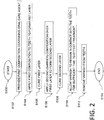
- the method begins at S100.
- the first composition 10 is provided.
- the first composition is applied to the teeth of a person or animal to be treated.
- the composition may be applied by a dental professional, such as a dentist, or by the wearer.
- the first composition 10 may be applied to the teeth using an applicator, such as a pen, brush, piece of foam, cloth applicator, dental tray, or to two-compartment syringe to form the first layer.
- the first composition 10 may be inserted into an applicator, such as into the dental tray, which is positioned adjacent the teeth and then removed, for example, after partial drying/curing of the composition.
- the first composition 10 may be applied to the teeth at a thickness t of for example, from 50-500 ⁇ m, such as from 50-300 ⁇ m, e.g., about 200 ⁇ m.
- the film is greater in thickness than the average diameter of the particle, for example, at least twice or at least three times the average diameter of the particles. This allows the varnish to be smooth to the touch, when cured.
- the composition 10 may be dried and/or cured. Curing the composition 10 may reduce the thickness of the first layer, particularly if a solvent is present in the applied composition 10.
- the curing/hardening may be performed with light, air, moisture, solvent evaporation, or a combination of these.
- the matrix material 12 includes a resin component which is moisture-cured, for example, by saliva naturally present on the teeth.
- the matrix material includes a solvent which evaporates.
- the resin component of the matrix material includes a curing agent and is cured by light, such as blue light, from a suitably positioned light source. Different compositions for these types of matrix material are discussed below.
- the exemplary composition dries/cures rapidly, for example in 10 minutes or less, such as in under three minutes, for example, from a few seconds to a minute.
- soft tissue in the mouth such as the lips and/or gums, may be protected with a coating or held away from the teeth, e.g., with a lip retractor.
- the cured first layer may have a thickness from 20-200 ⁇ m, such as from 50-100 ⁇ m.
- a barrier layer 20 is applied over the first layer 16 of composition 10.
- the second layer 20 may be cured or otherwise hardened to form a barrier film.
- the barrier film serves a protective function for the firm layer.
- the source of light in wavelengths suitable for drying/curing the composition is positioned adjacent the first layer 16 and second layer 20.
- the light of the specified wavelength range may be applied by a light source integral with the applicator 34, if used, or by a separate light source.
- S105 is not performed prior to application of the second layer 20.
- Barrier layer 20 may be cured contemporaneously with the composition 10.
- the two layers remain in position on the teeth for a selected treatment time (S110).
- the first layer of varnish 16 and the second layer 20 are removed.
- the layers are removed from the teeth by peeling them away from the teeth and/or by brushing the teeth.
- the process may be repeated, for example, once a day, week, or month or more or less frequently.
- the method ends at S114.
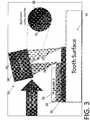
- FIGURE 3 illustrates an exemplary applicator 34 in the form of a double barreled syringe which can be used to apply the composition 10 in one embodiment.
- the applicator includes first and second chambers 35, 36 which hold the first and second compositions separate from each other.
- a first outlet 37 delivers the first composition 10 on to the teeth to form the first layer 16 and a second outlet 38, downstream of the first outlet (in the direction of movement), delivers the second composition 22 on to the teeth for forming the second layer 20.
- One or more teeth can be treated in a single application.
- the applicator may also include a fan (not shown) to reduce curing time.
- two separate applicators may alternatively be used, one for each layer.
- the time can be a sufficient time to effect at least a partial whitening of the teeth, e.g., a change in color of at least 1 ⁇ E.
- the composition 10 is removed from the teeth by peeling it away from the teeth and/or by brushing the teeth.
- the process may be repeated, for example, once a day, week, or month or less frequently, until a desired color change is effected or to maintain whiteness of the teeth.
- the matrix material 12 is formulated to form a film on the teeth which retains the oral care agent in close proximity to the surface of the teeth. Over a period of from about 30 minutes to several days, such as from 2-10 hours, the oral care agent 14 may be activated by moisture.
- Suitable varnish compositions 10 include self-cured and light-cured compositions.
- Example compositions 10 may include (the components totaling 100%):
- the matrix material 12 can be substantially free of water (includes less than 5 wt. % water, or less than 1 wt. % water). In some embodiments, no water is used in forming the composition. Additionally, the components used in forming the composition may be dry, and may be anhydrous. In other embodiments, the oral care agent is in aqueous solution and the first layer incudes water derived at least in part from the aqueous solution.
- the first composition 10 may be at least 0.1 wt. % water, or at least 1 wt. %, or at least 5 wt. % water and may be up to 30 wt. % water, or up to 20 wt. % water.
- a ratio, expressed by weight, of oral care agent to the matrix material in the composition 10 can range from 1:50 to 50:1, such as at least 1:10 (or at least 1:2, or at least 1:1, or at least 5:1, or at least 10:1, or at least 15:1).
- the first polymer matrix component B1 can include one or more polymerizable monomers and a curing agent. In some embodiments, the first polymer matrix component B1 can include a film forming polymer and/or resin.
- a "monomer,” as used herein includes polymerizable monomers, dimers, and oligomers, except as noted.
- the first solvent B2 can be any compatible pharmaceutically-acceptable organic solvent, such as an alcohol, unsaturated hydrocarbon, ketone, or the like, which is liquid and/or volatile at ambient temperatures (20-30°C).
- a compatible pharmaceutically-acceptable organic solvent such as an alcohol, unsaturated hydrocarbon, ketone, or the like, which is liquid and/or volatile at ambient temperatures (20-30°C).
- the viscosity modifier may include one or more of particles 30, waxes, gums, and other thickeners, and.
- Self-cure compositions these include moisture cured varnishes and solvent based varnishes.
- varnishes based on natural resins such as colophonium resin which cures when in contact with saliva.
- Varnishes of this type are disclosed for example, in WO2009/124311 .
- Shellac may also be used in such compositions, alone or in combination with another resin.
- An example moisture-cured matrix material B suited to use in such varnishes 10 may include (totaling 100 %):
- composition 10 containing such a matrix material is applied on damp teeth and the mouth closed to allow saliva to cure the resin.
- a matrix composition 12 can be formed from colophonium resin and/or shellac, a first solvent, and optionally one or more waxes and/or gums.
- Example first solvents include C 1 -C 20 alcohols and ketones, e.g., ethanol, propanol, cetyl alcohol, stearyl alcohol, and C 6 -C 20 hydrocarbons, such as hexane.
- Example hydrocarbon waxes include esters of fatty acids and long chain alcohols that are solid or viscous liquids at room temperature. These include naturally occurring waxes such as beeswax, and C 40 -C 100 alkanes and fatty acid esters. Gums, such as mastic (a resin obtained from Pistacia lentiscus Var. Chia) may be included in the matrix material.
- One example moisture-curable composition 10 includes a matrix material 12 comprising colophonium resin and an organic solvent (e.g., one or more of ethanol, methanol, n-hexane, and cetostearyl alcohol), and the oral care agent 14.
- a matrix material 12 comprising colophonium resin and an organic solvent (e.g., one or more of ethanol, methanol, n-hexane, and cetostearyl alcohol)
- an organic solvent e.g., one or more of ethanol, methanol, n-hexane, and cetostearyl alcohol
- Another example moisture-curable composition 10 includes a matrix material 12 comprising shellac, colophonium resin, a solvent (such as ethanol), beeswax, and mastic, and the oral care agent 14.
- An exemplary matrix material of this type can include a conventional polyacrylic acid based polymer in combination with a solvent, such as C 1 -C 10 mono-alcohol or polyol, e.g., one or more of methanol, ethanol, and glycerol, and optionally a buffer agent.
- the polyacrylic acid-based polymer may include functional groups which increase the permeability of the polymer matrix component to water, such as ammonium groups, e.g., as their salts.
- the matrix material can be formed from acrylic acid polymers such as a Carbomer, optionally a surfactant such as a polysorbate or sorbitan ester (e.g., sorbitan monooleate), glycerol, and EDTA as buffering agent.
- a surfactant such as a polysorbate or sorbitan ester (e.g., sorbitan monooleate), glycerol, and EDTA as buffering agent.
- Other components may be present, such as arginine and potassium nitrate.
- a composition 10 containing such a resin can be applied on dry teeth and the mouth kept open to allow the resin to cure in 30 seconds to 2 minutes.
- An example solvent-based matrix material B may include (totaling 100 %):
- the solvent based varnish may include, in the above amounts:
- the ratio of RL PO to L 100-55 maybe in the range of from 5:1 to 2:1, including 4:1.
- This matrix material is combined with the oral care agent.
- the resin component B1 may comprise one or more polymerizable monomers B1a, B1b and optionally one or more curing agents B1c, B1d.
- Example polymerizable monomers may include one or more functional monomers B1a and optionally a crosslinking monomer B1b.
- the curing agent may include at least one of a photoinitiator B1c and a co-initiator B1d.
- An example light-curable matrix material B may include (totaling 100 %):
- An example light-curable first polymer matrix component B1 may include (totaling 100 %):
- Suitable functional monomers B1a include monofunctional and multifunctional acrylates and methacrylates (referred to jointly herein as (meth)acrylates).
- Suitable (meth)acrylates include those having a viscosity of about 0.1 to about 100 cps at 25°C.
- Use of multifunctional (meth)acrylates can increase cure speed of the resin composition.
- Examples of these monomers include hydroxyalkyl methacrylates, such as 2-hydroxyethyl methacrylate (HEMA) and 2-hydroxypropyl methacrylate; ethylene glycol methacrylates, including ethylene glycol methacrylate, diethylene glycol methacrylate, tri(ethylene glycol) dimethacrylate and tetra(ethylene glycol) dimethacrylate; and diol dimethacrylates such as butanedimethacrylate, dodecanedimethacrylate, and 1,6-hexanedioldimethacrylate (HDDMA), and mixtures of these.
- HEMA 2-hydroxyethyl methacrylate
- HDDMA 1,6-hexanedioldimethacrylate
- Suitable crosslinking monomers B1b include bisphenol glycerolate dimethacrylate (Bis-GMA), which is the condensation product of bisphenol A and glycidyl methacrylate; triethylene glycol dimethacrylate (TEDGMA); aliphatic and aromatic polyurethane dimethacrylate (PUDMA); and urethane dimethacrylate (UDMA), and mixtures of these.
- Bis-GMA bisphenol glycerolate dimethacrylate
- TEDGMA triethylene glycol dimethacrylate
- PODMA aliphatic and aromatic polyurethane dimethacrylate
- UDMA urethane dimethacrylate
- Other viscous resins having a viscosity of greater than about 1000 centipoise (cps) at 60°C can also be used.
- the amount of crosslinking monomer can have an influence on mechanical property and viscosity of the resin.
- suitable (meth)acrylates include higher viscosity (meth)acrylates, such as aliphatic and aromatic diurethane dimethacrylates (DUDMA), polycarbonate dimethacrylate (PCDMA), a condensation products of two parts of a hydroxyalkylmethacrylate and 1 part of a bis(chloroformate), as disclosed in U.S. Pat. Nos. 5,276,068 and 5,444,104 ; and ethoxylated bisphenol A dimethacrylate (EBPDMA), as disclosed in U.S. Pat. No. 6,013,694 .
- DMDMA aliphatic and aromatic diurethane dimethacrylates
- PCDMA polycarbonate dimethacrylate
- EBPDMA ethoxylated bisphenol A dimethacrylate
- a first (meth)acrylate B1a which forms strong bonds with teeth is combined with a second (meth)acrylate B1b, e.g., a dimer, as a crosslinker which forms less strong bonds.
- a second (meth)acrylate B1b e.g., a dimer
- HEMA hydroxyethyl methacrylate
- PEG polyethylene glycol dimethacrylate
- the molecular weight of the PEG can be controlled/chosen to achieve the desired bonding and release properties.
- the PEG dimethacrylate can have a number average molecular weight of 100-2000, such as at least 500. Additionally or alternatively, by modifying the stoichiometry, e.g., by overloading the blend with HEMA, the crosslink density can be controlled.
- Example photoinitiators B1c include camphoroquinone (CQ), phenylpropanedione (PPD), benzoin esters, benzophenone, acylphosphine oxides, and lucirin.
- a co-initiator B1c may be used in combination with the photoinitiator, such as a tertiary aliphatic amine, e.g., dimethylaminoethylmethacrylate (DMAEMA).
- DMAEMA dimethylaminoethylmethacrylate
- Suitable co-initiators B1d include DMAEMA, and aliphatic and aromatic amines (e.g., in the case of CQ as an intiator).
- Suitable inhibitors B1e include butylated hydroxytoluene, butylhydroxytoluene(BHT), monomethyl ether hydroquinone (MEHQ).
- Exemplary solvents B2 for such resins include C 2 -C 20 alcohols e.g., ethanol, propanol, cetyl alcohol, stearyl alcohol, C 3 -C 20 ketones, such as acetone, and C 6 -C 20 hydrocarbons, such as hexane and heptane.
- C 2 -C 20 alcohols e.g., ethanol, propanol, cetyl alcohol, stearyl alcohol, C 3 -C 20 ketones, such as acetone, and C 6 -C 20 hydrocarbons, such as hexane and heptane.
- Such formulations may be cured with blue light, or other wavelengths in the visible range. Suitable light absorption/curing is from 400-490nm, such as from 475-480 nm (depending on the actual formulation).
- CQ is a photo initiator which absorbs with a peak in the blue wavelength range and produces radicals when excited in the 460-490nm range.
- Co-initiators such as DMAEMA, accelerate the light-cure process.
- the composition may cure in 10 seconds to 1 minute under blue light illumination.
- PPD uses a shorter wavelength (420-430nm).
- a mixture of acrylic acid, Bis-GMA, CQ, HEMA and optionally DMAEMA is combined with a solvent, such as acetone and/or ethanol, the exemplary particles and optionally silica particles.
- a solvent such as acetone and/or ethanol
- the composition can cure in 30 seconds under blue light. Such a composition stays intact in excess saliva, and can be completely removed by peeling and brushing.
- a mixture of acrylic acid, itaconic acid, and HEMA is combined with calcium glycerophosphate, Bis-GMA, camphoroquinone, silica beads, and the exemplary particles and applied to the teeth.
- the composition can cure in 10 to 20 seconds under blue light.
- the exemplary composition 10 may include at least 1 wt. % (or at least 2 wt. %, or at least 5 wt. %, or at least 10 wt. %, or at least 15 wt. %) of component B3, such as up to 50 wt. %, or up to 20 wt. %.
- Component B3 of the composition 10 disclosed herein may include from 0-100 wt. %, e.g., at least 5 wt. % (or at least 20 wt. %, or at least 40 wt. %) of particles 30.
- the particles may have a Mohs hardness of at least 2 (or at least 3, or at least 5).
- Particles 30 may serve as viscosity modifiers and/or abrasives.
- An abrasive may be useful, for example, as a polishing agent.
- Suitable particles include silica, for example in the form of silica gel, hydrated silica or precipitated silica, alumina, insoluble phosphates, orthophosphates, polymetaphosphates, and beta calcium pyrophosphate, calcium carbonate, resinous abrasives such as urea-formaldehyde condensation products and mixtures thereof.
- Suitable waxes and gums useful as viscosity modifiers include those mentioned elsewhere herein.
- Suitable thickeners useful as viscosity modifiers may include starches, anionic polymers, and the like.
- composition 10 may include at least 1 wt. % (or at least 2 wt. %, or at least 5 wt. %, or at least 10 wt. %, or at least 15 wt. %) of component B4, such as up to 50 wt. %, or up to 20 wt. %.
- composition 10 may include one or more of the following:
- Suitable varnish compositions for the barrier layer include self-cured and light-cured compositions.
- Example compositions may include (the components totaling 100%):
- the second polymer matrix component A can be substantially free of water (includes less than 5 wt. % water, or less than 1 wt. % water). In some embodiments, no water is used in forming the second composition. Additionally, the components used in forming the second composition may be dry, and may be anhydrous, where possible. The second polymer matrix component is preferably not soluble in the first solvent.
- the second polymer matrix component A can be a copolymer including polystyrene end blocks and polyalkylene and/or polydiene mid-block(s), e.g., including one or more of polyisoprene, polybutadiene, poly(ethylene-butylene), and poly(ethylenepropylene).
- Copolymers including polystyrene end blocks and mid-blocks of polyisoprene or polybutadiene are commercially available under the trade name Kraton® D.
- Copolymers including polystyrene end blocks and poly(ethylene-butylene) or poly(ethylene-propylene) mid-blocks are commercially available under the trade name Kraton® G.
- Exemplary polystyrene-based copolymers include those available under the tradenames Kraton® FG1901 and Kraton® G1652.
- the Kraton® FG1901 material is a clear, linear triblock copolymer based on styrene and ethylene/butadiene with a styrene content of about 30%.
- the Kraton® G1652 material is a clear or translucent linear triblock copolymer based on styrene and ethylene/butylene (SEBS) with a styrene/rubber ratio of 30/70.
- the second solvent B is a safe, non-toxic solvent.
- the second solvent is incompatible with the first solvent.
- the second polymer matrix component is soluble in the second solvent but the first polymer matrix component is not soluble in the second solvent.
- the second solvent B is heptane.
- heptane has been found to be incompatible with the first layer materials.
- the viscosity modified C can be the same or different as the viscosity modifier listed above in the first composition.
- the additives D can include any of the additives listed above as possible components in the first composition.
- oral care agents may also be included in the second layer.
- Other possible additives include thermochromics and color-changing additives. These types of additives may enable a user to visually determine when a treatment is complete.
- the barrier layer contains a mixture of:
- the mixture of A and B may be combined with other components C, in the amounts noted above.
- the barrier layer contains a mixture including:
- the mixture of A and B may be combined with other components C, in the amounts noted above.
- Sample varnishes were obtained by forming mixtures of the two screening varnishes in the proportions described in Table 2.
- Table 2 Compositions of Sample Varnishes Sample 1 Sample 2 Sample 3 Sample 4 Sample 5 Sample 6 Screening Varnish 1 (g) 25 20 15 10 5 - Screening Varnish 2 (g) - 5 10 15 20 25
- Each sample varnish was spread over a defined area and at a controlled thickness (50 ⁇ m, achieved through use of a tape template) onto a clean microscope slide. Varnishes were assessed based on their color (pre-curing), smell, and cure time. The completion of the curing was determined as the point at which the surface of the varnish ceased to be tacky to the touch. Once cured, the microscope slides were immersed in water for 30 minutes. After immersion, the slides were removed and the color of the varnishes was again assessed. Next, the ease of removal of the sample varnishes was determined by brushing the films with a SonicareTM toothbrush while measuring the time required to remove the film.
- Table 3 A summary of the properties of Samples 1-5 is provided in Table 3.
- Table 3 Properties of Samples 1-6 Sample 1 Sample 2 Sample 3 Sample 4 Sample 5 Sample 6 Smell Amine smell (from polymer) Faint polymer smell Very faint polymer smell Slight background smell - mostly ethanol Odorless (only solvent smell) Odorless (only solvent smell) Cure time (applied at 50 ⁇ m) About 50 seconds About 50 seconds About 50 seconds About 50 seconds About 50 seconds About 50 seconds Hardness/ Removability (after immersion) Hard/brittle. Not readily removable. Hard/brittle. Not readily removable. Hard/brittle. Not readily removable. Hard, some removal detected after 1 minute SonicareTM brushing Soft, peeled from microscope slide after 1 minute brushing. Film malleable. Soft, peeled from microscope slide after 1 minute brushing. Film malleable. Very soft. Slides off microscope slide.
- Table 5 Compositions of Samples 10-16 Sample 10 Sample 11 Sample 12 Sample 13 Sample 14 Sample 15 Sample 16 Hydrogen peroxide solution (g/100g) 14.34 14.34 14.34 14.34 14.34 14.34 14.34 14.34 14.34 14.34 14.34 14.34 14.34 14.34 14.34 14.34 14.34 Ethanol (g/100g) 55 55 55 55 55 55 55 55 L100-55 (g/100g) 27.59 23.00 18.40 13.80 9.20 4.60 0 L100-55 (as a wt. % of total polymer composition) 90 75 60 45 30 15 0 RL PO (g/100g) 3.07 7.67 12.26 16.86 21.46 26.06 30.66 RL PO (as a wt. % of total polymer composition) 10 25 40 55 70 85 100
- Solvent (i.e., ethanol) concentration was 55 wt. % for Samples 10-16.
- L100-55 concentrations e.g., 0%, 15%, and 30 wt. %
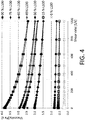
- varnish viscosity is low (maximum 0.8 Pa.s) and independent of increasing shear rate (Newtonian behavior).
- the measured viscosity decreases as a function of increasing shear rate (shear thinning). This property may be advantageous for stirring and/or applying the composition. Viscosity as a function of shear rate and L100-55 percentage is plotted in FIGURE 4 .
- FIGURE 4 illustrates that viscosity generally increases with increasing L100-55 content. However, this trend is not linear and some deviation is observed. It may be desirable to avoid conditions and compositions close to where the viscosity properties change. Accordingly, compositions that do not contain between 30% and 45% L100-55 wt% are particularly suitable.
- Curing times for nine identical compositions were determined using distinct combinations of deposited layer thickness (i.e., thickness prior to curing) and air flow rate.
- the composition was the same as that of Sample 8 in Table 4.
- the three different thicknesses tested were 30 ⁇ m, 50 ⁇ m, and 110 ⁇ m.
- the three air flow rates tested were 0 L/min (i.e., no air flow), 8.75 L/min, and 135 L/min.
- the results for the curing/drying times of Samples 17-25 are provided in Table 6.
- Curing time was measured as the time required for the deposited varnish to cease being tacky.
- the relationship between thickness and curing time is non-linear. For example, doubling applied thickness more than doubles cure time.
- the non-linear relationship suggests that curing rate is determined by more than simply solvent evaporation from the film.
- One potential factor is chemical change to the film. It is believed that curing in these thicker films occurs fastest at the surface, slowing solvent evaporation from lower layers.
- Air flow was directed at the deposited varnish layer via a fan positioned about 2.5 cm above the film.
- Introduction of an 8.75 L/min air flow (delivered by a 3V fan) reduced the curing time by 60-80% when compared to experiments in the absence of introduced air flow.
- Increasing the air flow rate to 135 L/min (delivered via a larger 12V fan) further reduced the curing time by 85-90% when compared to experiments in the absence of air flow.
- significant increase in the power and size requirements of the fan only resulted in a modest (10-20%) curing time reduction in comparison to the smaller, low-powered fan.
- FIGURE 5 illustrates the percentage of hydrogen peroxide released over time for comparative Sample 26 (denoted "Single Layer”) and Sample 27 (denoted "Single layer + Vaseline”).
- Bovine teeth testing was conducted to determine the efficacy of treatments with the single layer system of comparative Sample 26 and the dual layer system of Sample 27.
- the experiments were conducted with the bovine teeth fully immersed in water.
- the petroleum jelly-covered teeth showed an improvement of the times in whitening efficacy when compared to the teeth that were not covered with petroleum jelly (about 0.6 versus 0.2, respectively) following 10 x 30-minute treatments.
- These results corresponded to average ⁇ E values of 7.0 and 2.5, respectively.
- the results are illustrated in FIGURE 6 .
- the uncertainty in the data for the petroleum jelly-covered teeth is greater than that observed for the teeth that were treated with the single layer system.
- this difference reflects differences in the structures of individual teeth and the extent to which they had taken up the stain.
- the variance may be more significant in the petroleum jelly-covered teeth because the peroxide is resident on the teeth for a longer time period and so better resolves the influence of tooth structure on staining/whitening than the shorter-residence time, superficial whitening of the teeth when the single layer system was used.
- This varnish layer (Eudragit RSPO in ethanol - no hydrogen peroxide) was applied on top of a thin (50 ⁇ m) Vaseline layer applied on top of a whitening layer.
- Varnishes made with a mixture of 1-oleoyl-rac-glycerol (ERO) (monoolein) and Eudragit RSPO in ethanol offered the combination of a non-polar/oily component (like Vaseline) delivered in a solvent-cured varnish.
- ERO 1-oleoyl-rac-glycerol
- Eudragit RSPO in ethanol
- a non-polar/oily component like Vaseline
- the varnish was formulated with 51% ethanol and 49% combined polymer plus 1-oleoyl-rac-glycerol. Below, the percentages used refers to the percentage of this latter component.
- EXAMPLE 7 Eudragit polymers in ethanol and ethyl acetate
- Vaseline layer (poly(ethylene-co-vac) in butyl acetate in comparison showed a 14% release in 30-minutes compared to about 5% for the Vaseline-coated varnish.
- the solvent in which the barrier layer polymer is dissolved has a significant effect on the efficacy of the barrier layer composition.
- the barrier layer solvent does not interfere with the first layer (which contains the oral care agent).
- the whitening layer composition was that of Sample 8 in Table 4.
- the barrier layer was formed from Kraton FG1901 in heptane, with 20 ⁇ l applied - theoretically 200 ⁇ m thickness when spread over tooth surface (in practice this is 100 ⁇ m after evaporation loss).
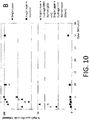
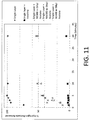
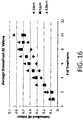
- Applied first layer thicknesses of 30 ⁇ m, 50 ⁇ m, and 100 ⁇ m were tested over 10 treatments and normalized ⁇ E values were calculated. The results are presented in FIGURE 16 . The results indicated that increasing first layer thickness enhances the whitening effect of treatments.
Landscapes
- Health & Medical Sciences (AREA)
- Life Sciences & Earth Sciences (AREA)
- Public Health (AREA)
- Veterinary Medicine (AREA)
- Animal Behavior & Ethology (AREA)
- General Health & Medical Sciences (AREA)
- Epidemiology (AREA)
- Birds (AREA)
- Emergency Medicine (AREA)
- Chemical & Material Sciences (AREA)
- Oral & Maxillofacial Surgery (AREA)
- Inorganic Chemistry (AREA)
- Dispersion Chemistry (AREA)
- Cosmetics (AREA)
- Medicinal Preparation (AREA)
Priority Applications (2)
| Application Number | Priority Date | Filing Date | Title |
|---|---|---|---|
| PL14799400T PL3068367T3 (pl) | 2013-11-14 | 2014-11-14 | Układ i sposób nanoszenia środków do pielęgnacji jamy ustnej |
| EP14799400.8A EP3068367B1 (en) | 2013-11-14 | 2014-11-14 | System and method for applying oral care agents |
Applications Claiming Priority (3)
| Application Number | Priority Date | Filing Date | Title |
|---|---|---|---|
| EP13192958 | 2013-11-14 | ||
| PCT/EP2014/074549 WO2015071386A1 (en) | 2013-11-14 | 2014-11-14 | System and method for applying oral care agents |
| EP14799400.8A EP3068367B1 (en) | 2013-11-14 | 2014-11-14 | System and method for applying oral care agents |
Publications (2)
| Publication Number | Publication Date |
|---|---|
| EP3068367A1 EP3068367A1 (en) | 2016-09-21 |
| EP3068367B1 true EP3068367B1 (en) | 2020-06-17 |
Family
ID=49582642
Family Applications (1)
| Application Number | Title | Priority Date | Filing Date |
|---|---|---|---|
| EP14799400.8A Active EP3068367B1 (en) | 2013-11-14 | 2014-11-14 | System and method for applying oral care agents |
Country Status (7)
| Country | Link |
|---|---|
| US (1) | US11179299B2 (enExample) |
| EP (1) | EP3068367B1 (enExample) |
| JP (1) | JP6629196B2 (enExample) |
| CN (1) | CN105722498B (enExample) |
| PL (1) | PL3068367T3 (enExample) |
| RU (1) | RU2696279C1 (enExample) |
| WO (1) | WO2015071386A1 (enExample) |
Families Citing this family (13)
| Publication number | Priority date | Publication date | Assignee | Title |
|---|---|---|---|---|
| US20150342839A1 (en) | 2010-04-21 | 2015-12-03 | Oraceutica LLC | Compositions and methods for whitening teeth |
| US8888489B2 (en) | 2012-10-23 | 2014-11-18 | Oraceutical Llc | Method of simultaneously cleaning and whitening teeth |
| RU2646501C2 (ru) | 2013-09-11 | 2018-03-05 | 3М Инновейтив Пропертиз Компани | Композиции для полости рта |
| EP3043870B1 (en) | 2013-09-11 | 2020-03-04 | 3M Innovative Properties Company | Oral compositions, dental structures and methods of delivering oral compositions |
| EP3131525A1 (en) * | 2014-04-14 | 2017-02-22 | 3M Innovative Properties Company | Oral compositions |
| JP6751027B2 (ja) * | 2014-07-11 | 2020-09-02 | コーニンクレッカ フィリップス エヌ ヴェKoninklijke Philips N.V. | 非晶質リン酸カルシウムを供給する口腔ケア処方システム |
| WO2016131642A1 (en) | 2015-02-17 | 2016-08-25 | Koninklijke Philips N.V. | Single layer tooth whitening system |
| EP3328501B1 (en) | 2015-08-20 | 2020-10-07 | Colgate-Palmolive Company | Method of tooth whitening |
| EP3547993B1 (en) | 2017-01-12 | 2022-03-09 | Colgate-Palmolive Company | Oral care composition for long-lasting peroxide delivery |
| US11040001B1 (en) * | 2017-09-12 | 2021-06-22 | JK Innovations LLC | Compositions and methods for whitening teeth |
| JP7607357B2 (ja) * | 2022-05-27 | 2024-12-27 | 株式会社 ペー・ジェー・セー・デー・ジャパン | 2剤型薬用歯磨剤セット |
| CN117180165A (zh) * | 2023-08-22 | 2023-12-08 | 江苏一叶兰生物医疗科技有限公司 | 一种牙齿美白剂及其配方 |
| CN116983224B (zh) * | 2023-09-04 | 2026-02-27 | 四川省医学科学院·四川省人民医院 | 一种引导牙釉质样羟基磷灰石生成的组合物及其应用与羟基磷灰石生成的方法 |
Citations (1)
| Publication number | Priority date | Publication date | Assignee | Title |
|---|---|---|---|---|
| GB2190917A (en) * | 1986-05-26 | 1987-12-02 | G C Dental Ind Corp | Coating materials for protecting the surfaces of teeth |
Family Cites Families (38)
| Publication number | Priority date | Publication date | Assignee | Title |
|---|---|---|---|---|
| US5276068A (en) | 1985-03-29 | 1994-01-04 | Jeneric/Pentron, Inc. | Dental resin materials |
| US5288480A (en) | 1987-01-30 | 1994-02-22 | Colgate-Palmolive Co. | Antiplaque antibacterial oral composition |
| JPH0699265B2 (ja) * | 1988-07-29 | 1994-12-07 | 株式会社クラレ | 歯科用光不透過性コーテイング剤および歯科用材料のコーテイング法 |
| US5505831A (en) | 1993-01-26 | 1996-04-09 | Bio-Rad Laboratories, Inc. | Concentration of biological samples on a microliter scale and analysis by capillary electrophoresis |
| US6013694A (en) | 1997-10-16 | 2000-01-11 | Jeneric/Pentron Incorporated | Dental composites comprising ground, densified, embrittled glass fiber filler |
| US6319510B1 (en) * | 1999-04-20 | 2001-11-20 | Alayne Yates | Gum pad for delivery of medication to mucosal tissues |
| EP1132056B1 (en) * | 1999-09-20 | 2007-03-21 | Tokuyama Corporation | Method of producing ceramic crowns and production kit used therefor |
| JP2002003335A (ja) * | 2000-04-21 | 2002-01-09 | Koden Kk | 化粧用コーティング組成物、除去剤、および口内用開唇支持体 |
| US6500408B2 (en) | 2001-01-27 | 2002-12-31 | Jc Technologies, Inc. | Enamel-safe tooth bleach and method for use |
| US8206738B2 (en) * | 2001-05-01 | 2012-06-26 | Corium International, Inc. | Hydrogel compositions with an erodible backing member |
| US8840918B2 (en) | 2001-05-01 | 2014-09-23 | A. V. Topchiev Institute of Petrochemical Synthesis, Russian Academy of Sciences | Hydrogel compositions for tooth whitening |
| US20050113510A1 (en) * | 2001-05-01 | 2005-05-26 | Feldstein Mikhail M. | Method of preparing polymeric adhesive compositions utilizing the mechanism of interaction between the polymer components |
| DE50113412D1 (de) | 2001-05-17 | 2008-02-07 | Kettenbach Gmbh & Co Kg | Chemisch aushärtendes Dental-Bleachingmaterial |
| US6946142B2 (en) | 2001-06-23 | 2005-09-20 | Lg Household & Healthcare Ltd. | Multi-layer patches for teeth whitening |
| KR20040030151A (ko) * | 2001-08-17 | 2004-04-08 | 스미스크라인 비참 피.엘.시. | 구강 보호 물질 전달용 스트립 |
| DE10223157C1 (de) * | 2002-05-24 | 2003-10-23 | Max Planck Gesellschaft | Induzierte Remineralisation von humanem Zahnschmelz |
| JP2004107231A (ja) | 2002-09-17 | 2004-04-08 | Showa Yakuhin Kako Kk | 口腔用組成物 |
| US6916463B2 (en) * | 2002-09-24 | 2005-07-12 | The Procter & Gamble Company | Oral products having an aesthetic layer |
| GB0222090D0 (en) | 2002-09-24 | 2002-10-30 | Boots Co Plc | Dental methods |
| JP2004315460A (ja) * | 2003-04-17 | 2004-11-11 | Sun Medical Co Ltd | 歯科用マニキュアキット |
| US6860736B2 (en) * | 2003-05-23 | 2005-03-01 | Ultradent Products, Inc. | Oral treatment devices that include a thin, flexible barrier layer and an endoskeleton treatment or adhesive composition |
| KR100507675B1 (ko) * | 2003-05-30 | 2005-08-09 | 이상호 | 젤리형 치아미백용 패치 |
| US7264471B2 (en) * | 2004-05-05 | 2007-09-04 | Ultradent Products, Inc. | Methods and kits for bleaching teeth while protecting adjacent gingival tissue |
| US20050281757A1 (en) * | 2004-06-17 | 2005-12-22 | Sayed Ibrahim | Oral care film |
| US20050281858A1 (en) * | 2004-06-18 | 2005-12-22 | Kloke Tim M | Devices, articles, coatings, and methods for controlled active agent release |
| US7625210B2 (en) | 2004-08-09 | 2009-12-01 | Ultradent Products, Inc. | Treatment devices for providing oral treatments and kits and methods that utilize such treatment devices |
| US20060064227A1 (en) | 2004-09-20 | 2006-03-23 | Autotronic Controls Corporation | Electronically managed LPG fumigation method and system |
| AU2005319115B9 (en) * | 2004-12-21 | 2011-02-10 | A.V. Topchiev Institute Of Petrochemical Synthesis | Sustained release tooth whitening formulations and systems |
| US20060171905A1 (en) | 2005-01-31 | 2006-08-03 | Allred Peter M | Dental bleaching compositions having a protective coating applied thereto |
| RU2283081C1 (ru) | 2005-04-04 | 2006-09-10 | Гарник Алексанович Чухаджян | Средство и способ отбеливания зубов |
| DE102008014533A1 (de) * | 2008-03-15 | 2009-09-17 | Lts Lohmann Therapie-Systeme Ag | Gingival-Wafer |
| AR071183A1 (es) | 2008-04-04 | 2010-06-02 | Colgate Palmolive Co | Composicion oral que comprende un componente activo y un componente formador de pelicula adhesiva, metodo |
| MY184495A (en) * | 2010-03-11 | 2021-04-01 | Colgate Palmolive Co | Tooth whitening composition |
| DE102010003881A1 (de) | 2010-04-12 | 2011-10-13 | Voco Gmbh | Dentale Abdeckmasse |
| EP2613278A2 (en) | 2011-12-05 | 2013-07-10 | Koninklijke Philips Electronics N.V. | Retroactive extraction of clinically relevant information from patient sequencing data for clinical decision support |
| WO2013093877A2 (en) | 2011-12-23 | 2013-06-27 | Koninklijke Philips Electronics N.V. | Encapsulation system for controlled release of a bleaching agent |
| WO2013128328A2 (en) | 2012-02-28 | 2013-09-06 | Koninklijke Philips N.V. | System and method for whitening teeth |
| WO2014097053A1 (en) | 2012-12-18 | 2014-06-26 | Koninklijke Philips N.V. | Enhanced tooth whitening method combining sustained release varnish with light activation |
-
2014
- 2014-11-14 WO PCT/EP2014/074549 patent/WO2015071386A1/en not_active Ceased
- 2014-11-14 RU RU2016123083A patent/RU2696279C1/ru active
- 2014-11-14 EP EP14799400.8A patent/EP3068367B1/en active Active
- 2014-11-14 JP JP2016530243A patent/JP6629196B2/ja not_active Expired - Fee Related
- 2014-11-14 CN CN201480062429.1A patent/CN105722498B/zh active Active
- 2014-11-14 PL PL14799400T patent/PL3068367T3/pl unknown
- 2014-11-14 US US15/035,619 patent/US11179299B2/en active Active
Patent Citations (1)
| Publication number | Priority date | Publication date | Assignee | Title |
|---|---|---|---|---|
| GB2190917A (en) * | 1986-05-26 | 1987-12-02 | G C Dental Ind Corp | Coating materials for protecting the surfaces of teeth |
Non-Patent Citations (1)
| Title |
|---|
| ANONYMOUS: "Solvent - Wikipedia", 21 February 2019 (2019-02-21), XP055560309, Retrieved from the Internet <URL:https://en.wikipedia.org/wiki/Solvent#cite_ref-p177_4-0> [retrieved on 20190221] * |
Also Published As
| Publication number | Publication date |
|---|---|
| EP3068367A1 (en) | 2016-09-21 |
| RU2696279C1 (ru) | 2019-08-01 |
| US11179299B2 (en) | 2021-11-23 |
| CN105722498B (zh) | 2022-09-02 |
| JP6629196B2 (ja) | 2020-01-15 |
| US20160296427A1 (en) | 2016-10-13 |
| JP2017501122A (ja) | 2017-01-12 |
| RU2016123083A (ru) | 2017-12-19 |
| CN105722498A (zh) | 2016-06-29 |
| WO2015071386A1 (en) | 2015-05-21 |
| PL3068367T3 (pl) | 2021-01-25 |
Similar Documents
| Publication | Publication Date | Title |
|---|---|---|
| US11179299B2 (en) | System and method for applying oral care agents | |
| US10772821B2 (en) | Oral compositions | |
| RU2433815C2 (ru) | Композиции для доставки веществ для ухода за полостью рта, содержащие силиконовые чувствительные к давлению адгезивы | |
| TWI503127B (zh) | 牙齒美白組成物 | |
| EP3259031B1 (en) | Single layer tooth whitening system | |
| RU2662305C2 (ru) | Композиции для полости рта, стоматологические конструктивные элементы и способы доставки композиций для полости рта | |
| WO2006014775A1 (en) | Oral care compositions with film forming polymers | |
| WO2014097053A1 (en) | Enhanced tooth whitening method combining sustained release varnish with light activation | |
| WO2013128328A2 (en) | System and method for whitening teeth | |
| WO2017112334A1 (en) | Photocurable nail compositions containing dispersion of acrylic polymer particles | |
| CN107428943A (zh) | 口腔护理物质的递送 | |
| LU508579B1 (fr) | Composition de vernis à ongles | |
| US10206866B2 (en) | Nail compositions containing silicone-organic polymer hybrid compound | |
| US10307364B2 (en) | Nail compositions containing silicone-organic polymer hybrid compound and alkyd resin | |
| JP2015155437A (ja) | 歯のホワイトニング組成物 |
Legal Events
| Date | Code | Title | Description |
|---|---|---|---|
| PUAI | Public reference made under article 153(3) epc to a published international application that has entered the european phase |
Free format text: ORIGINAL CODE: 0009012 |
|
| 17P | Request for examination filed |
Effective date: 20160614 |
|
| AK | Designated contracting states |
Kind code of ref document: A1 Designated state(s): AL AT BE BG CH CY CZ DE DK EE ES FI FR GB GR HR HU IE IS IT LI LT LU LV MC MK MT NL NO PL PT RO RS SE SI SK SM TR |
|
| AX | Request for extension of the european patent |
Extension state: BA ME |
|
| DAX | Request for extension of the european patent (deleted) | ||
| STAA | Information on the status of an ep patent application or granted ep patent |
Free format text: STATUS: EXAMINATION IS IN PROGRESS |
|
| 17Q | First examination report despatched |
Effective date: 20180410 |
|
| RIC1 | Information provided on ipc code assigned before grant |
Ipc: A61K 8/81 20060101ALI20191113BHEP Ipc: A61K 8/31 20060101AFI20191113BHEP Ipc: A61Q 11/00 20060101ALI20191113BHEP Ipc: A61K 8/22 20060101ALI20191113BHEP Ipc: A61K 8/34 20060101ALI20191113BHEP Ipc: A61K 8/42 20060101ALI20191113BHEP Ipc: A61K 8/02 20060101ALI20191113BHEP Ipc: A61K 8/37 20060101ALI20191113BHEP |
|
| GRAP | Despatch of communication of intention to grant a patent |
Free format text: ORIGINAL CODE: EPIDOSNIGR1 |
|
| STAA | Information on the status of an ep patent application or granted ep patent |
Free format text: STATUS: GRANT OF PATENT IS INTENDED |
|
| INTG | Intention to grant announced |
Effective date: 20200108 |
|
| RAP1 | Party data changed (applicant data changed or rights of an application transferred) |
Owner name: KONINKLIJKE PHILIPS N.V. |
|
| GRAS | Grant fee paid |
Free format text: ORIGINAL CODE: EPIDOSNIGR3 |
|
| GRAA | (expected) grant |
Free format text: ORIGINAL CODE: 0009210 |
|
| STAA | Information on the status of an ep patent application or granted ep patent |
Free format text: STATUS: THE PATENT HAS BEEN GRANTED |
|
| AK | Designated contracting states |
Kind code of ref document: B1 Designated state(s): AL AT BE BG CH CY CZ DE DK EE ES FI FR GB GR HR HU IE IS IT LI LT LU LV MC MK MT NL NO PL PT RO RS SE SI SK SM TR |
|
| REG | Reference to a national code |
Ref country code: GB Ref legal event code: FG4D |
|
| REG | Reference to a national code |
Ref country code: CH Ref legal event code: EP |
|
| REG | Reference to a national code |
Ref country code: IE Ref legal event code: FG4D |
|
| REG | Reference to a national code |
Ref country code: DE Ref legal event code: R096 Ref document number: 602014066759 Country of ref document: DE |
|
| REG | Reference to a national code |
Ref country code: AT Ref legal event code: REF Ref document number: 1280469 Country of ref document: AT Kind code of ref document: T Effective date: 20200715 |
|
| REG | Reference to a national code |
Ref country code: NL Ref legal event code: FP |
|
| PG25 | Lapsed in a contracting state [announced via postgrant information from national office to epo] |
Ref country code: FI Free format text: LAPSE BECAUSE OF FAILURE TO SUBMIT A TRANSLATION OF THE DESCRIPTION OR TO PAY THE FEE WITHIN THE PRESCRIBED TIME-LIMIT Effective date: 20200617 Ref country code: LT Free format text: LAPSE BECAUSE OF FAILURE TO SUBMIT A TRANSLATION OF THE DESCRIPTION OR TO PAY THE FEE WITHIN THE PRESCRIBED TIME-LIMIT Effective date: 20200617 Ref country code: SE Free format text: LAPSE BECAUSE OF FAILURE TO SUBMIT A TRANSLATION OF THE DESCRIPTION OR TO PAY THE FEE WITHIN THE PRESCRIBED TIME-LIMIT Effective date: 20200617 Ref country code: GR Free format text: LAPSE BECAUSE OF FAILURE TO SUBMIT A TRANSLATION OF THE DESCRIPTION OR TO PAY THE FEE WITHIN THE PRESCRIBED TIME-LIMIT Effective date: 20200918 Ref country code: NO Free format text: LAPSE BECAUSE OF FAILURE TO SUBMIT A TRANSLATION OF THE DESCRIPTION OR TO PAY THE FEE WITHIN THE PRESCRIBED TIME-LIMIT Effective date: 20200917 |
|
| REG | Reference to a national code |
Ref country code: LT Ref legal event code: MG4D |
|
| PG25 | Lapsed in a contracting state [announced via postgrant information from national office to epo] |
Ref country code: BG Free format text: LAPSE BECAUSE OF FAILURE TO SUBMIT A TRANSLATION OF THE DESCRIPTION OR TO PAY THE FEE WITHIN THE PRESCRIBED TIME-LIMIT Effective date: 20200917 Ref country code: RS Free format text: LAPSE BECAUSE OF FAILURE TO SUBMIT A TRANSLATION OF THE DESCRIPTION OR TO PAY THE FEE WITHIN THE PRESCRIBED TIME-LIMIT Effective date: 20200617 Ref country code: HR Free format text: LAPSE BECAUSE OF FAILURE TO SUBMIT A TRANSLATION OF THE DESCRIPTION OR TO PAY THE FEE WITHIN THE PRESCRIBED TIME-LIMIT Effective date: 20200617 Ref country code: LV Free format text: LAPSE BECAUSE OF FAILURE TO SUBMIT A TRANSLATION OF THE DESCRIPTION OR TO PAY THE FEE WITHIN THE PRESCRIBED TIME-LIMIT Effective date: 20200617 |
|
| REG | Reference to a national code |
Ref country code: AT Ref legal event code: MK05 Ref document number: 1280469 Country of ref document: AT Kind code of ref document: T Effective date: 20200617 |
|
| PG25 | Lapsed in a contracting state [announced via postgrant information from national office to epo] |
Ref country code: AL Free format text: LAPSE BECAUSE OF FAILURE TO SUBMIT A TRANSLATION OF THE DESCRIPTION OR TO PAY THE FEE WITHIN THE PRESCRIBED TIME-LIMIT Effective date: 20200617 |
|
| PG25 | Lapsed in a contracting state [announced via postgrant information from national office to epo] |
Ref country code: AT Free format text: LAPSE BECAUSE OF FAILURE TO SUBMIT A TRANSLATION OF THE DESCRIPTION OR TO PAY THE FEE WITHIN THE PRESCRIBED TIME-LIMIT Effective date: 20200617 Ref country code: ES Free format text: LAPSE BECAUSE OF FAILURE TO SUBMIT A TRANSLATION OF THE DESCRIPTION OR TO PAY THE FEE WITHIN THE PRESCRIBED TIME-LIMIT Effective date: 20200617 Ref country code: PT Free format text: LAPSE BECAUSE OF FAILURE TO SUBMIT A TRANSLATION OF THE DESCRIPTION OR TO PAY THE FEE WITHIN THE PRESCRIBED TIME-LIMIT Effective date: 20201019 Ref country code: SM Free format text: LAPSE BECAUSE OF FAILURE TO SUBMIT A TRANSLATION OF THE DESCRIPTION OR TO PAY THE FEE WITHIN THE PRESCRIBED TIME-LIMIT Effective date: 20200617 Ref country code: EE Free format text: LAPSE BECAUSE OF FAILURE TO SUBMIT A TRANSLATION OF THE DESCRIPTION OR TO PAY THE FEE WITHIN THE PRESCRIBED TIME-LIMIT Effective date: 20200617 Ref country code: CZ Free format text: LAPSE BECAUSE OF FAILURE TO SUBMIT A TRANSLATION OF THE DESCRIPTION OR TO PAY THE FEE WITHIN THE PRESCRIBED TIME-LIMIT Effective date: 20200617 Ref country code: RO Free format text: LAPSE BECAUSE OF FAILURE TO SUBMIT A TRANSLATION OF THE DESCRIPTION OR TO PAY THE FEE WITHIN THE PRESCRIBED TIME-LIMIT Effective date: 20200617 Ref country code: IT Free format text: LAPSE BECAUSE OF FAILURE TO SUBMIT A TRANSLATION OF THE DESCRIPTION OR TO PAY THE FEE WITHIN THE PRESCRIBED TIME-LIMIT Effective date: 20200617 |
|
| PG25 | Lapsed in a contracting state [announced via postgrant information from national office to epo] |
Ref country code: SK Free format text: LAPSE BECAUSE OF FAILURE TO SUBMIT A TRANSLATION OF THE DESCRIPTION OR TO PAY THE FEE WITHIN THE PRESCRIBED TIME-LIMIT Effective date: 20200617 Ref country code: IS Free format text: LAPSE BECAUSE OF FAILURE TO SUBMIT A TRANSLATION OF THE DESCRIPTION OR TO PAY THE FEE WITHIN THE PRESCRIBED TIME-LIMIT Effective date: 20201017 |
|
| REG | Reference to a national code |
Ref country code: DE Ref legal event code: R097 Ref document number: 602014066759 Country of ref document: DE |
|
| PLBE | No opposition filed within time limit |
Free format text: ORIGINAL CODE: 0009261 |
|
| STAA | Information on the status of an ep patent application or granted ep patent |
Free format text: STATUS: NO OPPOSITION FILED WITHIN TIME LIMIT |
|
| PG25 | Lapsed in a contracting state [announced via postgrant information from national office to epo] |
Ref country code: DK Free format text: LAPSE BECAUSE OF FAILURE TO SUBMIT A TRANSLATION OF THE DESCRIPTION OR TO PAY THE FEE WITHIN THE PRESCRIBED TIME-LIMIT Effective date: 20200617 |
|
| 26N | No opposition filed |
Effective date: 20210318 |
|
| PG25 | Lapsed in a contracting state [announced via postgrant information from national office to epo] |
Ref country code: SI Free format text: LAPSE BECAUSE OF FAILURE TO SUBMIT A TRANSLATION OF THE DESCRIPTION OR TO PAY THE FEE WITHIN THE PRESCRIBED TIME-LIMIT Effective date: 20200617 |
|
| PG25 | Lapsed in a contracting state [announced via postgrant information from national office to epo] |
Ref country code: MC Free format text: LAPSE BECAUSE OF FAILURE TO SUBMIT A TRANSLATION OF THE DESCRIPTION OR TO PAY THE FEE WITHIN THE PRESCRIBED TIME-LIMIT Effective date: 20200617 |
|
| REG | Reference to a national code |
Ref country code: CH Ref legal event code: PL |
|
| PG25 | Lapsed in a contracting state [announced via postgrant information from national office to epo] |
Ref country code: LU Free format text: LAPSE BECAUSE OF NON-PAYMENT OF DUE FEES Effective date: 20201114 |
|
| REG | Reference to a national code |
Ref country code: BE Ref legal event code: MM Effective date: 20201130 |
|
| PG25 | Lapsed in a contracting state [announced via postgrant information from national office to epo] |
Ref country code: CH Free format text: LAPSE BECAUSE OF NON-PAYMENT OF DUE FEES Effective date: 20201130 Ref country code: LI Free format text: LAPSE BECAUSE OF NON-PAYMENT OF DUE FEES Effective date: 20201130 |
|
| PG25 | Lapsed in a contracting state [announced via postgrant information from national office to epo] |
Ref country code: IE Free format text: LAPSE BECAUSE OF NON-PAYMENT OF DUE FEES Effective date: 20201114 |
|
| PGFP | Annual fee paid to national office [announced via postgrant information from national office to epo] |
Ref country code: NL Payment date: 20211125 Year of fee payment: 8 Ref country code: TR Payment date: 20211102 Year of fee payment: 8 |
|
| PGFP | Annual fee paid to national office [announced via postgrant information from national office to epo] |
Ref country code: PL Payment date: 20211104 Year of fee payment: 8 |
|
| PG25 | Lapsed in a contracting state [announced via postgrant information from national office to epo] |
Ref country code: MT Free format text: LAPSE BECAUSE OF FAILURE TO SUBMIT A TRANSLATION OF THE DESCRIPTION OR TO PAY THE FEE WITHIN THE PRESCRIBED TIME-LIMIT Effective date: 20200617 Ref country code: CY Free format text: LAPSE BECAUSE OF FAILURE TO SUBMIT A TRANSLATION OF THE DESCRIPTION OR TO PAY THE FEE WITHIN THE PRESCRIBED TIME-LIMIT Effective date: 20200617 |
|
| PG25 | Lapsed in a contracting state [announced via postgrant information from national office to epo] |
Ref country code: MK Free format text: LAPSE BECAUSE OF FAILURE TO SUBMIT A TRANSLATION OF THE DESCRIPTION OR TO PAY THE FEE WITHIN THE PRESCRIBED TIME-LIMIT Effective date: 20200617 |
|
| PG25 | Lapsed in a contracting state [announced via postgrant information from national office to epo] |
Ref country code: BE Free format text: LAPSE BECAUSE OF NON-PAYMENT OF DUE FEES Effective date: 20201130 |
|
| REG | Reference to a national code |
Ref country code: NL Ref legal event code: MM Effective date: 20221201 |
|
| PG25 | Lapsed in a contracting state [announced via postgrant information from national office to epo] |
Ref country code: NL Free format text: LAPSE BECAUSE OF NON-PAYMENT OF DUE FEES Effective date: 20221201 |
|
| PGFP | Annual fee paid to national office [announced via postgrant information from national office to epo] |
Ref country code: GB Payment date: 20231121 Year of fee payment: 10 |
|
| PG25 | Lapsed in a contracting state [announced via postgrant information from national office to epo] |
Ref country code: PL Free format text: LAPSE BECAUSE OF NON-PAYMENT OF DUE FEES Effective date: 20221114 |
|
| PG25 | Lapsed in a contracting state [announced via postgrant information from national office to epo] |
Ref country code: TR Free format text: LAPSE BECAUSE OF NON-PAYMENT OF DUE FEES Effective date: 20221114 |
|
| GBPC | Gb: european patent ceased through non-payment of renewal fee |
Effective date: 20241114 |
|
| PG25 | Lapsed in a contracting state [announced via postgrant information from national office to epo] |
Ref country code: GB Free format text: LAPSE BECAUSE OF NON-PAYMENT OF DUE FEES Effective date: 20241114 |
|
| PGFP | Annual fee paid to national office [announced via postgrant information from national office to epo] |
Ref country code: DE Payment date: 20251126 Year of fee payment: 12 |
|
| PGFP | Annual fee paid to national office [announced via postgrant information from national office to epo] |
Ref country code: FR Payment date: 20251125 Year of fee payment: 12 |