EP3067971B1 - Anode for secondary battery comprising additive for improving low-temperature characteristics, and secondary battery having the same - Google Patents
Anode for secondary battery comprising additive for improving low-temperature characteristics, and secondary battery having the same Download PDFInfo
- Publication number
- EP3067971B1 EP3067971B1 EP14904066.9A EP14904066A EP3067971B1 EP 3067971 B1 EP3067971 B1 EP 3067971B1 EP 14904066 A EP14904066 A EP 14904066A EP 3067971 B1 EP3067971 B1 EP 3067971B1
- Authority
- EP
- European Patent Office
- Prior art keywords
- anode
- active material
- carbon
- titanium oxide
- secondary battery
- Prior art date
- Legal status (The legal status is an assumption and is not a legal conclusion. Google has not performed a legal analysis and makes no representation as to the accuracy of the status listed.)
- Active
Links
Images


Classifications
-
- H—ELECTRICITY
- H01—ELECTRIC ELEMENTS
- H01M—PROCESSES OR MEANS, e.g. BATTERIES, FOR THE DIRECT CONVERSION OF CHEMICAL ENERGY INTO ELECTRICAL ENERGY
- H01M4/00—Electrodes
- H01M4/02—Electrodes composed of, or comprising, active material
- H01M4/13—Electrodes for accumulators with non-aqueous electrolyte, e.g. for lithium-accumulators; Processes of manufacture thereof
- H01M4/133—Electrodes based on carbonaceous material, e.g. graphite-intercalation compounds or CFx
-
- H—ELECTRICITY
- H01—ELECTRIC ELEMENTS
- H01M—PROCESSES OR MEANS, e.g. BATTERIES, FOR THE DIRECT CONVERSION OF CHEMICAL ENERGY INTO ELECTRICAL ENERGY
- H01M10/00—Secondary cells; Manufacture thereof
- H01M10/05—Accumulators with non-aqueous electrolyte
- H01M10/052—Li-accumulators
- H01M10/0525—Rocking-chair batteries, i.e. batteries with lithium insertion or intercalation in both electrodes; Lithium-ion batteries
-
- H—ELECTRICITY
- H01—ELECTRIC ELEMENTS
- H01M—PROCESSES OR MEANS, e.g. BATTERIES, FOR THE DIRECT CONVERSION OF CHEMICAL ENERGY INTO ELECTRICAL ENERGY
- H01M4/00—Electrodes
- H01M4/02—Electrodes composed of, or comprising, active material
- H01M4/13—Electrodes for accumulators with non-aqueous electrolyte, e.g. for lithium-accumulators; Processes of manufacture thereof
-
- H—ELECTRICITY
- H01—ELECTRIC ELEMENTS
- H01M—PROCESSES OR MEANS, e.g. BATTERIES, FOR THE DIRECT CONVERSION OF CHEMICAL ENERGY INTO ELECTRICAL ENERGY
- H01M4/00—Electrodes
- H01M4/02—Electrodes composed of, or comprising, active material
- H01M4/13—Electrodes for accumulators with non-aqueous electrolyte, e.g. for lithium-accumulators; Processes of manufacture thereof
- H01M4/134—Electrodes based on metals, Si or alloys
-
- H—ELECTRICITY
- H01—ELECTRIC ELEMENTS
- H01M—PROCESSES OR MEANS, e.g. BATTERIES, FOR THE DIRECT CONVERSION OF CHEMICAL ENERGY INTO ELECTRICAL ENERGY
- H01M4/00—Electrodes
- H01M4/02—Electrodes composed of, or comprising, active material
- H01M4/36—Selection of substances as active materials, active masses, active liquids
- H01M4/362—Composites
- H01M4/364—Composites as mixtures
-
- H—ELECTRICITY
- H01—ELECTRIC ELEMENTS
- H01M—PROCESSES OR MEANS, e.g. BATTERIES, FOR THE DIRECT CONVERSION OF CHEMICAL ENERGY INTO ELECTRICAL ENERGY
- H01M4/00—Electrodes
- H01M4/02—Electrodes composed of, or comprising, active material
- H01M4/36—Selection of substances as active materials, active masses, active liquids
- H01M4/48—Selection of substances as active materials, active masses, active liquids of inorganic oxides or hydroxides
- H01M4/485—Selection of substances as active materials, active masses, active liquids of inorganic oxides or hydroxides of mixed oxides or hydroxides for inserting or intercalating light metals, e.g. LiTi2O4 or LiTi2OxFy
-
- H—ELECTRICITY
- H01—ELECTRIC ELEMENTS
- H01M—PROCESSES OR MEANS, e.g. BATTERIES, FOR THE DIRECT CONVERSION OF CHEMICAL ENERGY INTO ELECTRICAL ENERGY
- H01M4/00—Electrodes
- H01M4/02—Electrodes composed of, or comprising, active material
- H01M4/36—Selection of substances as active materials, active masses, active liquids
- H01M4/58—Selection of substances as active materials, active masses, active liquids of inorganic compounds other than oxides or hydroxides, e.g. sulfides, selenides, tellurides, halogenides or LiCoFy; of polyanionic structures, e.g. phosphates, silicates or borates
- H01M4/583—Carbonaceous material, e.g. graphite-intercalation compounds or CFx
-
- H—ELECTRICITY
- H01—ELECTRIC ELEMENTS
- H01M—PROCESSES OR MEANS, e.g. BATTERIES, FOR THE DIRECT CONVERSION OF CHEMICAL ENERGY INTO ELECTRICAL ENERGY
- H01M4/00—Electrodes
- H01M4/02—Electrodes composed of, or comprising, active material
- H01M4/62—Selection of inactive substances as ingredients for active masses, e.g. binders, fillers
-
- H—ELECTRICITY
- H01—ELECTRIC ELEMENTS
- H01M—PROCESSES OR MEANS, e.g. BATTERIES, FOR THE DIRECT CONVERSION OF CHEMICAL ENERGY INTO ELECTRICAL ENERGY
- H01M4/00—Electrodes
- H01M4/02—Electrodes composed of, or comprising, active material
- H01M4/62—Selection of inactive substances as ingredients for active masses, e.g. binders, fillers
- H01M4/621—Binders
-
- H—ELECTRICITY
- H01—ELECTRIC ELEMENTS
- H01M—PROCESSES OR MEANS, e.g. BATTERIES, FOR THE DIRECT CONVERSION OF CHEMICAL ENERGY INTO ELECTRICAL ENERGY
- H01M4/00—Electrodes
- H01M4/02—Electrodes composed of, or comprising, active material
- H01M4/62—Selection of inactive substances as ingredients for active masses, e.g. binders, fillers
- H01M4/621—Binders
- H01M4/622—Binders being polymers
-
- H—ELECTRICITY
- H01—ELECTRIC ELEMENTS
- H01M—PROCESSES OR MEANS, e.g. BATTERIES, FOR THE DIRECT CONVERSION OF CHEMICAL ENERGY INTO ELECTRICAL ENERGY
- H01M4/00—Electrodes
- H01M4/02—Electrodes composed of, or comprising, active material
- H01M4/62—Selection of inactive substances as ingredients for active masses, e.g. binders, fillers
- H01M4/624—Electric conductive fillers
-
- H—ELECTRICITY
- H01—ELECTRIC ELEMENTS
- H01M—PROCESSES OR MEANS, e.g. BATTERIES, FOR THE DIRECT CONVERSION OF CHEMICAL ENERGY INTO ELECTRICAL ENERGY
- H01M4/00—Electrodes
- H01M4/02—Electrodes composed of, or comprising, active material
- H01M4/62—Selection of inactive substances as ingredients for active masses, e.g. binders, fillers
- H01M4/624—Electric conductive fillers
- H01M4/625—Carbon or graphite
-
- H—ELECTRICITY
- H01—ELECTRIC ELEMENTS
- H01M—PROCESSES OR MEANS, e.g. BATTERIES, FOR THE DIRECT CONVERSION OF CHEMICAL ENERGY INTO ELECTRICAL ENERGY
- H01M4/00—Electrodes
- H01M4/02—Electrodes composed of, or comprising, active material
- H01M4/62—Selection of inactive substances as ingredients for active masses, e.g. binders, fillers
- H01M4/624—Electric conductive fillers
- H01M4/626—Metals
-
- H—ELECTRICITY
- H01—ELECTRIC ELEMENTS
- H01M—PROCESSES OR MEANS, e.g. BATTERIES, FOR THE DIRECT CONVERSION OF CHEMICAL ENERGY INTO ELECTRICAL ENERGY
- H01M4/00—Electrodes
- H01M4/02—Electrodes composed of, or comprising, active material
- H01M4/64—Carriers or collectors
- H01M4/66—Selection of materials
- H01M4/661—Metal or alloys, e.g. alloy coatings
-
- H—ELECTRICITY
- H01—ELECTRIC ELEMENTS
- H01M—PROCESSES OR MEANS, e.g. BATTERIES, FOR THE DIRECT CONVERSION OF CHEMICAL ENERGY INTO ELECTRICAL ENERGY
- H01M4/00—Electrodes
- H01M4/02—Electrodes composed of, or comprising, active material
- H01M2004/021—Physical characteristics, e.g. porosity, surface area
-
- H—ELECTRICITY
- H01—ELECTRIC ELEMENTS
- H01M—PROCESSES OR MEANS, e.g. BATTERIES, FOR THE DIRECT CONVERSION OF CHEMICAL ENERGY INTO ELECTRICAL ENERGY
- H01M4/00—Electrodes
- H01M4/02—Electrodes composed of, or comprising, active material
- H01M2004/026—Electrodes composed of, or comprising, active material characterised by the polarity
- H01M2004/027—Negative electrodes
-
- H—ELECTRICITY
- H01—ELECTRIC ELEMENTS
- H01M—PROCESSES OR MEANS, e.g. BATTERIES, FOR THE DIRECT CONVERSION OF CHEMICAL ENERGY INTO ELECTRICAL ENERGY
- H01M2220/00—Batteries for particular applications
- H01M2220/20—Batteries in motive systems, e.g. vehicle, ship, plane
-
- Y—GENERAL TAGGING OF NEW TECHNOLOGICAL DEVELOPMENTS; GENERAL TAGGING OF CROSS-SECTIONAL TECHNOLOGIES SPANNING OVER SEVERAL SECTIONS OF THE IPC; TECHNICAL SUBJECTS COVERED BY FORMER USPC CROSS-REFERENCE ART COLLECTIONS [XRACs] AND DIGESTS
- Y02—TECHNOLOGIES OR APPLICATIONS FOR MITIGATION OR ADAPTATION AGAINST CLIMATE CHANGE
- Y02E—REDUCTION OF GREENHOUSE GAS [GHG] EMISSIONS, RELATED TO ENERGY GENERATION, TRANSMISSION OR DISTRIBUTION
- Y02E60/00—Enabling technologies; Technologies with a potential or indirect contribution to GHG emissions mitigation
- Y02E60/10—Energy storage using batteries
Definitions
- the present disclosure relates to an anode having good output characteristics at low temperature, more specifically an anode comprising an additive capable of improving low-temperature characteristics including output under low temperature conditions; and a secondary battery having the anode.
- the lithium secondary batteries generally comprises an electrode assembly consisting of a cathode, an anode, and a separator interposed therebetween, and a non-aqueous electrolyte solution comprising a lithium salt and being impregnated in the electrode assembly, each of the cathode and the anode having an active material coated on a current collector.
- the cathode active material lithium-containing cobalt oxides, lithium-containing manganese oxides, lithium-containing nickel oxides, lithium composite oxides have been used.
- the anode active material carbon materials have been largely used.
- lithium secondary battery In order for such a lithium secondary battery to be used as a power source of cellular phones, notebook PC and PDA, and further electric vehicles and hybrid electric vehicles, it should be operated even under severe conditions. For example, mobile devices and electric vehicles being used in the outside should be operated at a very low temperature during winter, and therefore the power source thereof is required to have good output characteristics at a low temperature. If the output is insufficient at a low temperature, a power system may be abnormally operated, and it is difficult to reach the minimum output necessary to starting, so making vehicle driving be impossible.
- the output of the lithium secondary at a low temperature has been improved by largely modifying an electrolyte solution or an anode material.
- an electrolyte solution or an anode material For example, in a lithium secondary battery used in HEV, amorphous carbon has been adopted as an anode active material so as to improve output at a low temperature.
- a modification of an active material may change the applicable region of cell voltage or the appearance of voltage profile, thereby deteriorating high-temperature characteristics and reducing battery capacity.
- US-A-2011/0027646 discloses an anode material for an electrode mix comprising a carbon material and a lithium titanium oxide (LTO), wherein the ratio of the average particle size of LTO relative to that of the carbon material is in the range of 0.1 to 20%, and the LTO is distributed mainly on a surface of the carbon-based anode active material.
- LTO lithium titanium oxide
- the carbon material is at least one selected from the group consisting of a potato-shaped or mesocarbon microbead (MCMB)-shaped artificial graphite, surface-treated natural graphite, non-graphitizable carbon (hard carbon) obtained from pyrolysis of a phenolic resin or furan resin, graphitizable carbon (soft carbon) obtained from carbonization of coke, needle coke or pitch, and any combination thereof.
- MCMB potato-shaped or mesocarbon microbead
- the LTO is Li 1.33 Ti 1.67 O 4 .
- US-A-2014/0087233 discloses a lithium secondary battery comprising a cathode, an anode, and a separator membrane interposed between the cathode and the anode, wherein the separator membrane is a polyolefin porous membrane having an aramid coating layer, and wherein the cathode includes a cathode active material that is a lithium metal oxide having an olivine-type iron phosphate lithium coating layer, or the anode includes an anode active material that is a carbon material having a spinel-type lithium titanium oxide coating layer.
- the core of the anode active material may be any type of carbon material that can be used as an anode active material for a lithium secondary battery in the art.
- available carbon materials may include, but not limited to, low crystallinity carbon and high crystallinity carbon, and representatively, low crystallinity carbon includes soft carbon and hard carbon, and high crystallinity carbon includes high-temperature sintered carbon, such as, for example, natural graphite, Kish graphite, pyrolytic carbon, mesophase pitch based carbon fiber, meso-carbon microbeads, Mesophase pitches, petroleum pitch derived cokes, and coal tar pitch derived cokes.
- EP-A-2 610 956 discloses a cable-type secondary battery comprising:
- the anode active material may include natural graphite, artificial graphite, or carbonaceous materials; lithium-containing titanium composite oxides; metals including Si, Sn, Li, Zn, Mg, Cd, Ce, Ni or Fe; alloys of the metals including oxide thereof; and composites of the metals and carbon.
- an object of the present invention is to provide an anode material for improving output characteristics at a low temperature and minimizing the damage of high-temperature characteristics and capacity. Also, an object of the present invention is to provide an anode according to claim 1 comprising the anode material and an electrochemical device having the anode according to claim 1.
- the present invention provides an anode for a secondary battery comprising an anode current collector and an anode active material layer formed on at least one surface of the current collector, wherein the anode active material layer comprises an anode active material having a reaction potential (vs.
- the anode comprises, as an anode active material, one or more selected from soft carbon, hard carbon, kish graphite, pyrolytic carbon, mesophase pitch based carbon fiber, meso-carbon microbeads, mesophase pitches, and petroleum or coal tar pitch derived cokes
- the lithium titanium oxide is any one selected from Li 0.8 Ti 2.2 O 4 , Li 2.67 Ti 1.33 O 4 , Li 1.33 Ti 1.67 O 4 , Li 1.14 Ti 1.71 O 4 , Li 2 Ti 3 O 7 , LiTi 2 O 4 and a mixture thereof
- the lithium titanium oxide comprises primary particles and optionally secondary particles being aggregates of the primary particles, the unaggregated primary particles being present in an amount of 90-100 wt
- the present invention provides a secondary battery comprising a cathode, an anode in accordance with the above first aspect, a separator interposed between the cathode and the anode, and an electrolyte solution.
- this secondary battery operates at a voltage of 2.5V or higher.
- the additive for improving low-temperature characteristics may be present in an amount of 2 to 10 wt% based on 100 wt% of the anode active material layer.
- the primary particles of the lithium titanium oxide may have a diameter (D 50 ) of 0.01 to 2 ⁇ m.
- the anode active material may comprise at least one selected from the group consisting of: a) low-crystalline carbon and/or high-crystalline carbon materials, b) at least one metal (Me) selected from the group consisting of Si, Sn, Li, Mg, Al, Ca, Ce, Ti, Cr, Mn, Fe, Co, Ni, Cu, Zn, Ga, Ge, Zr, Nb, Pd, Ag, Cd, In, Sb, Pt, Au, Hg, Pb and Bi, and/or an alloy of two or more metals (Me); and c) a composite of a) and b).
- a) low-crystalline carbon and/or high-crystalline carbon materials b) at least one metal (Me) selected from the group consisting of Si, Sn, Li, Mg, Al, Ca, Ce, Ti, Cr, Mn, Fe, Co, Ni, Cu, Zn, Ga, Ge, Zr, Nb, Pd, Ag, Cd, In, Sb, Pt, Au, Hg, P
- the anode active material may further comprise a conductive material and/or a binder resin.
- the conductive material may comprise any one selected from the group consisting of polyacetylene, polyaniline, polypyrrole, polythiophene, polysulfurnitride, copper, silver, palladium, nickel, and a mixture thereof.
- a carbon-based anode material which can improve output characteristics at a low temperature and minimize the damage of high-temperature characteristics and capacity, is used in an anode and an electrochemical device.
- the electrochemical device using such an anode material can be preferably used as a battery with high output and great capacity or a unit battery of a battery pack, and particularly can be used as a power source for vehicles such as electric vehicles and hybrid electric vehicles to provide high output at a low temperature, without a separate internal-combustion engine for heating at a low temperature.
- the present disclosure provides an anode for a secondary battery, comprising an anode current collector and an anode active material layer formed on at least one surface of the current collector, wherein the anode active material layer comprises an additive for improving low-temperature characteristics.
- the additive for improving low-temperature characteristics refers to a material and/or component being effective to raise the low-temperature output of batteries without the damage of battery performances, including a decrease in the capacity of a battery when the battery operates under low-temperature conditions.
- the present invention provides a secondary battery comprising the anode.
- the additive for improving low-temperature characteristics comprises a lithium titanium oxide (LTO) selected from Li 0.8 Ti 2.2 O 4 , Li 2.67 Ti 1.33 O 4 , Li 1.33 Ti 1.67 O 4 , Li 1.14 Ti 1.71 O 4 , Li 2 Ti 3 O 7 , LiTi 2 O 4 and mixtures thereof. More specifically, Li 1.14 Ti 1.71 O 4 or LiTi 2 O 4 is preferred by virtue of their spinel structure and a slight change in crystal structures during charging and discharging processes.
- LTO lithium titanium oxide
- the lithium titanium oxide which is used as one of electrode materials of a lithium battery, can be subjecting to high-rate charging and discharging, undergoes little irreversible reaction (an initial efficiency of 95% or higher), and has very low heat of reaction and good safety. However, it may not be effectively used as an electrode material in a battery for high out, such as a battery for HEVs, because it has a high reaction potential of about 1.5 V (Li + /Li) and a low reversible capacity of about 170 mAh/g.
- the lithium titanium oxide comprises primary particles and optionally secondary particles being aggregates of the primary particles, unaggregated primary particles being present in an amount of 90-100 wt% of the lithium titanium oxide.
- the LTO is added in an electrode as the additive for improving low-temperature characteristics, it is used in a smaller amount relative to the case that it is used as an electrode active material, and can provide the better effect of improving low-temperature characteristics when its particles have a larger non-specific surface area.
- the primary particles of LTO are preferable than the secondary particles thereof.
- the primary particles having a smaller diameter are preferable than the secondary particles.
- the primary particles of LTO have a volume based diameter distribution (D 50 ) of 0.01 to 2 ⁇ m, more preferably 0.5 to 1.5 ⁇ m.
- 'volume based diameter distribution (D 50 )' refers to a diameter of particles whose cumulative volume from smaller particles corresponds to 50% of the total volume.
- the LTO particles may be porous particles having multiple pores in the body and surface thereof.
- the pores may be present in both the primary and/or secondary particles.
- the additive for improving low-temperature characteristics is present in an amount of 2 to 10 wt%, most preferably 2 to 5 wt%, based on 100 wt% of the anode active material layer. If the amount of the additive for improving low-temperature characteristics excessively exceeds such range, the unnecessary irreversible reaction increases, and the loading amount of the anode increases.
- lithium ion batteries for HEVs operate at a voltage of 2.5 to 4.5V
- an anode which uses carbon materials such as graphite as an anode active material is designed to have an applicable voltage (reaction potential) of 1.0V or less at which the lithium titanium oxide (LTO), however, is not subject to charging and discharging. That is, in such a lithium ion battery for HEVs, the LTO does not act as an active material and therefore has no influence on inherent properties including SOC and OCV of the battery.
- FIG. 1 shows plotting of OCV to SOC of batteries prepared in the Example and the Comparative Example. In FIG. 1 , the battery of Example 1 exhibits substantially similar pattern to that of Comparative Example.
- FIG. 2 shows a graph plotting the value of dQ/dV to each voltage, in which batteries of the Example and the Comparative Example exhibit similar patterns.
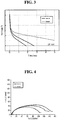
- the LTO when the LTO is added as the additive for improving low-temperature characteristics, a trace amount of the LTO is discharged by the application of overvoltage to the anode during discharging with a high C-rate at a low temperature. From this result, the profile of discharging at a low temperature has a slow grade to provide an effect of improving low-temperature output, as shown in FIGS. 3 and 4 . Also, the LTO has high conductivity and large non-specific area to lower charge transfer resistance at room temperature or a low temperature, thereby improving the output of the battery, as shown in FIGS. 5 and 6 .
- the LTO has high conductivity, good stability and excellent low-temperature characteristics, and also it is metal oxide particles having a 3-dimensional structure, so its volume expansion is very slight to provide excellent cycle life.
- the LTO is mixed with an anode material to increase the conductivity of the anode and lower the charge transfer resistance of the battery, thereby improving output at room temperature and a low temperature.
- the anode active material is a material capable of intercalating and disintercalating lithium ions and has a reaction potential (vs. Li + /Li) lower than that of the LTO.
- the anode active material has a reaction potential (vs. Li + /Li) of 1V or less.
- the anode active material may employ carbon materials, lithium, lithium alloys, silicon, silicon alloys, tin, tin alloys, metal oxides such as SnO 2 , or the like.
- the anode active material comprises a carbon material, including low-crystalline carbon and high-crystalline carbon.
- the low-crystalline carbon is soft carbon or hard carbon
- the high-crystalline carbon is Kish graphite, pyrolytic carbon, mesophase pitch based carbon fiber, meso-carbon microbeads, mesophase pitches, and petroleum or coal tar pitch derived cokes.
- the carbon material preferably has a non-specific area of 10 m 2 /g or less. If the non-specific area of the carbon material exceeds 10 m 2 /g, the initial efficiency of the anode may decrease.
- the lower limit of the non-specific area for the carbon material is not particularly limited. The preferred lower limit may be 2 m 2 /g, but this value is a simple example, not to limit the present disclosure.
- the carbon material has a diameter of 5 to 100 ⁇ m, preferably 5 to 40 ⁇ m. If the diameter of the carbon material is less than 5 ⁇ m, the initial efficiency of the anode may decrease owing to the finest powder of the carbon material. If the diameter of the carbon material is higher than 100 ⁇ m, the processibility becomes poor during the coating of an anode slurry, and scratches on electrodes may increase.
- the anode active material may be at least one metal (Me) selected from the group consisting of Si, Sn, Li, Mg, Al, Ca, Ce, Ti, Cr, Mn, Fe, Co, Ni, Cu, Zn, Ga, Ge, Zr, Nb, Pd, Ag, Cd, In, Sb, Pt, Au, Hg, Pb and Bi, and/or an alloy of two or more metals (Me); and a composite of any one of the metal and/or the alloy and the carbon material.
- Me metal selected from the group consisting of Si, Sn, Li, Mg, Al, Ca, Ce, Ti, Cr, Mn, Fe, Co, Ni, Cu, Zn, Ga, Ge, Zr, Nb, Pd, Ag, Cd, In, Sb, Pt, Au, Hg, Pb and Bi, and/or an alloy of two or more metals (Me); and a composite of any one of the metal and/or the alloy and the carbon material.
- the anode active material may be present in an amount of 50 to 95 wt%, preferably 70 wt% or more, based on 100 wt% of the anode active material layer.
- anode of a secondary battery according to the present disclosure may further comprise a conductive material and/or a binder resin.
- the conductive material may comprise any one selected from the group consisting of carbon black, acetylene black, ketjen black, carbon fiber, polyacetylene, polyaniline, polypyrrole, polythiophene, polysulfurnitride, copper, silver, palladium, nickel, and a mixture thereof, but is not limited thereto. Also, the conductive material may be present in an amount of 0.1 to 10 wt%, preferably 0.5 to 2 wt%, based on 100 wt% of the anode active material layer.
- the binder resin may be various kinds of polymer resins including polyvinylidene fluoride-co-hexafluoro propylene (PVDF-co-HFP), polyvinylidene fluoride, polyacrylonitrile, polyacrylic acid, polymethyl methacrylate, styrene butadiene rubber (SBR).
- the binder resin may be present in an amount of 0.1 to 10 wt% based on 100 wt% of the anode active material layer.
- composition for forming the anode of the present disclosure may further comprise a thickener.
- the thickener may be carboxymethyl cellulose, but is not particularly limited thereto.
- the present disclosure provides a secondary battery that comprises the anode according to the present disclosure.
- the secondary battery operates at a voltage of 2.5 to 4.5 V.
- the secondary battery comprises a cathode, an anode, a separator interposed between the cathode and the anode, and an electrolyte solution.
- the cathode, the separator and the electrolyte solution may be those which have been conventionally used in the preparation of a lithium secondary battery.
- the non-aqueous electrolyte solution comprises an ionizable lithium salt and an organic solvent.
- the lithium salt used as an electrolyte in the non-aqueous electrolyte solution may be any one which is conventionally used in an electrolyte solution for a lithium secondary battery.
- an anion of the lithium salt may be any one selected from the group consisting of F - , Cl - , Br - , I - , NO 3 - , N(CN) 2 - , BF 4 - , ClO 4 - , PF 6 - , (CF 3 ) 2 PF 4 - , (CF 3 ) 3 PF 3 - , (CF 3 ) 4 PF 2 - , (CF 3 ) 5 PF - , (CF 3 ) 6 P - , CF 3 SO 3 - , CF 3 CF 2 SO 3 - , (CF 3 SO 2 ) 2 N - , (FSO 2 ) 2 N - , CF 3 CF 2 (CF 3 ) 2 CO - , (CF 3 SO 2 ) 2 CH - , (SF 5 ) 3 C - , (CF 3 SO 2 ) 3 C - , CF 3 (CF 2 ) 7 SO 3 - ,
- the organic solvent used in the non-aqueous electrolyte solution may be any one which is conventionally used in an electrolyte solution for a lithium secondary battery, for example, ethers, esters, amides, linear carbonates, cyclic carbonates, and a mixture thereof.
- a linear carbonate, a cyclic carbonate, or a mixture thereof is representatively used.
- the cyclic carbonate may be selected from the group consisting of ethylene carbonate (EC), propylene carbonate (PC), 1,2-butylene carbonate, 2,3-butylene carbonate, 1,2-pentylene carbonate, 2,3-pentylene carbonate, vinylene carbonate, a halide thereof and a mixture thereof.
- the linear carbonate may be selected from the group consisting of dimethyl carbonate (DMC), diethyl carbonate (DEC), dipropyl carbonate, ethyl methyl carbonate (EMC), methyl propyl carbonate, ethyl propyl carbonate and a mixture thereof, but is not limited thereto.
- the cyclic carbonates such as ethylene carbonate and propylene carbonate have a high viscosity and a high dielectric constant to more easily dissociate a lithium salt in an electrolyte.
- Such a cyclic carbonate may be mixed with a linear carbonate with low viscosity and low dielectric constant such as dimethyl carbonate and diethyl carbonate in a suitable ratio to provide an electrolyte solution with a high electric conductivity.
- the ether which may be used as the organic solvent is any one selected from the group consisting of dimethyl ether, diethyl ether, dipropyl ether, methyl ethyl ether, methyl propyl ether, ethyl propyl ether and a mixture thereof, but is not limited thereto.
- ester which may be used as the organic solvent is any one selected from the group consisting of methyl acetate, ethyl acetate, propyl acetate, methyl propionate, ethyl propionate, ⁇ -butyrolactone, ⁇ -valerolactone, ⁇ -caprolactone, ⁇ -valerolactone, ⁇ -caprolactone and a mixture thereof, but is not limited thereto.
- the cathode and the separator of the battery may be those which are conventionally used in the preparation of a lithium secondary battery.
- the lithium-containing transition metal oxide may be coated with a metal such as aluminum (Al) and a metal oxide.
- a metal such as aluminum (Al)
- metal oxide such as aluminum (Al)
- lithium-containing transition metal sulfide, selenide, or halide may also be used.
- the binder used in the anode may also be used.
- the separator may be obtained from a porous polymer film which is conventionally used alone or in the form of lamination in conventional separators, for example, porous polymer films made of polyolefin-based polymers such as ethylene homopolymer, propylene homopolymer, ethylene/butene copolymer, ethylene/hexene copolymer and ethylene/methacrylate copolymer.
- porous non-woven fabrics such as a non-woven fabric made of glass fiber having a high melt point or polyethylene terephthalate fiber may be used, but is not limited thereto.
- the lithium secondary battery of the present invention is not limited to its shape, but may be a cylindrical shape using a can, a prismatic shape, a pouch shape or a coin shape.
- the secondary battery may be a lithium ion battery for a hybrid electric vehicle (HEV).
- HEV hybrid electric vehicle
- the battery assists the engine output, and the conventional HEVs used Ni/MH batteries as such a battery, but the use of the Ni/MH batteries have decreased from 2011 and the Ni/MH batteries have been replaced with lithium ion batteries having a relatively high energy density.
- the lithium ion batteries for HEVs should satisfy output at a low temperature.
- the lithium ion battery of the present disclosure comprises an additive for improving low-temperature characteristics, thereby preventing the decrease of output under low temperature conditions.
- a non-aqueous electrolyte solvent being a mixture of ethylene carbonate (EC), dimethyl carbonate (DMC) and ethyl methyl carbonate (EMC) in a volume ratio of 3:4:3, LiPF 6 was added to obtain a 1M solution of LiPF 6 .
- EC ethylene carbonate
- DMC dimethyl carbonate
- EMC ethyl methyl carbonate
- LiPF 6 was added to obtain a 1M solution of LiPF 6 .
- As a cathode 100% NMC 622 (LiNi 0.6 Mn 0.2 Co 0.2 O 2 ) was used, and a polyolefin separator was interposed between the cathode and the anode, and the electrolyte solution was introduced therein, to prepare a pouch-type mono cell.
- anode active material 30g of round natural graphite as an anode active material, 0.6g of carbon black as a conductive material, and 0.7g of water-based SBR as a binder were mixed, and the mixture was added to a water-based solvent (water) to obtain an anode slurry.
- the obtained anode slurry was coated on one surface of a copper current collector, followed by drying at 60 °C for 1 day, to prepare a 13.33 cm 2 -sized anode.
- a non-aqueous electrolyte solvent being a mixture of ethylene carbonate (EC), dimethyl carbonate (DMC) and ethyl methyl carbonate (EMC) in a volume ratio of 3:4:3, LiPF 6 was added to obtain a 1M solution of LiPF 6 .
- EC ethylene carbonate
- DMC dimethyl carbonate
- EMC ethyl methyl carbonate
- LiPF 6 was added to obtain a 1M solution of LiPF 6 .
- As a cathode 100% NMC 622 (LiNi 0.6 Mn 0.2 Co 0.2 O 2 ) was used, and a polyolefin separator was interposed between the cathode and the anode, and the electrolyte solution was introduced therein, to prepare a pouch-type mono cell.
- the batteries of the Example and the Comparative Example were charged with a constant current up to 4 V, and continued with a constant voltage of 4 V until the current reached 0.1 C. Then, discharging was conducted with a constant current up to 2.8 V.
- FIG. 1 shows OCV to SOC of the batteries of the Example and the Comparative Example
- FIG. 2 shows charging peaks of batteries of the Example and the Comparative Example. From FIGS. 1 and 2 , it was confirmed that the battery of the Example using LTO as an additive for improving low-temperature characteristics was fully charged during the formation process of initial battery preparation, similar to the Comparative Example ( FIG. 2 ), did not operate during its charge and discharge. Also, as to OCV and SOC, there is little difference between the Example and the Comparative Example.
- FIG. 3 shows that the battery of the Example exhibited improvement in low-temperature characteristics, as compared that of the Comparative Example.
- FIG. 4 shows that the battery of the Example exhibited improvement in current transfer resistance at a low temperature, as compared that of the Comparative Example.
- a trace amount of the LTO was discharged by the application of overvoltage to the anode during discharging with a high C-rate at a low temperature, and from this result, the profile of discharging at a low temperature exhibited a slow grade to provide an effect of improving low-temperature output.
- FIGS. 5 and 6 show that the battery of the Example exhibited improvement in output at room temperature, as compared with that of the Comparative Example.
- the charge transfer resistance was lowered to greatly enhance output, as compared with that of the Comparative Example.
- the battery of the Example exhibited greatly improvement in output under the condition of a low SOC at room temperature, as compared with that of the Comparative Example.
Landscapes
- Chemical & Material Sciences (AREA)
- Chemical Kinetics & Catalysis (AREA)
- Electrochemistry (AREA)
- General Chemical & Material Sciences (AREA)
- Engineering & Computer Science (AREA)
- Materials Engineering (AREA)
- Composite Materials (AREA)
- Inorganic Chemistry (AREA)
- Manufacturing & Machinery (AREA)
- Battery Electrode And Active Subsutance (AREA)
- Secondary Cells (AREA)
Priority Applications (1)
| Application Number | Priority Date | Filing Date | Title |
|---|---|---|---|
| PL14904066T PL3067971T3 (pl) | 2014-10-16 | 2014-10-16 | Anoda dla akumulatora zawierająca dodatek dla poprawy właściwości w niskiej temperaturze, oraz akumulator ją zawierający |
Applications Claiming Priority (1)
| Application Number | Priority Date | Filing Date | Title |
|---|---|---|---|
| PCT/KR2014/009752 WO2016060300A1 (ko) | 2014-10-16 | 2014-10-16 | 저온 특성 개선용 첨가제를 포함하는 이차 전지용 음극 및 이를 포함하는 이차 전지 |
Publications (3)
| Publication Number | Publication Date |
|---|---|
| EP3067971A1 EP3067971A1 (en) | 2016-09-14 |
| EP3067971A4 EP3067971A4 (en) | 2017-05-17 |
| EP3067971B1 true EP3067971B1 (en) | 2019-12-11 |
Family
ID=55746829
Family Applications (1)
| Application Number | Title | Priority Date | Filing Date |
|---|---|---|---|
| EP14904066.9A Active EP3067971B1 (en) | 2014-10-16 | 2014-10-16 | Anode for secondary battery comprising additive for improving low-temperature characteristics, and secondary battery having the same |
Country Status (6)
| Country | Link |
|---|---|
| US (1) | US9859551B2 (pl) |
| EP (1) | EP3067971B1 (pl) |
| JP (1) | JP6591404B2 (pl) |
| CN (1) | CN105849949B (pl) |
| PL (1) | PL3067971T3 (pl) |
| WO (1) | WO2016060300A1 (pl) |
Families Citing this family (9)
| Publication number | Priority date | Publication date | Assignee | Title |
|---|---|---|---|---|
| EP3471174A4 (en) * | 2016-06-08 | 2019-10-23 | Showa Denko K.K. | NEGATIVE ELECTRODE FOR LITHIUM-ION SECONDARY BATTERY, AND LITHIUM-ION SECONDARY BATTERY |
| US10707531B1 (en) | 2016-09-27 | 2020-07-07 | New Dominion Enterprises Inc. | All-inorganic solvents for electrolytes |
| JP6519571B2 (ja) * | 2016-11-25 | 2019-05-29 | トヨタ自動車株式会社 | リチウムイオン二次電池およびその製造方法 |
| CN106783207B (zh) * | 2016-12-27 | 2019-05-07 | 宁波中车新能源科技有限公司 | (Li4Ti5O12-Li2TiO3)/(AC-Li2MnO4)混合超级电容器 |
| CN106910874B (zh) * | 2017-03-03 | 2019-10-25 | 北京理工大学 | 一种表面包覆Li2TiO3和表层掺杂Ti的高镍材料及制备方法 |
| JP6889404B2 (ja) | 2017-11-01 | 2021-06-18 | トヨタ自動車株式会社 | 負極の製造方法、負極およびリチウムイオン二次電池 |
| CN109935899B (zh) * | 2017-12-19 | 2021-04-27 | 成都英诺科技咨询有限公司 | 固态电解质及其锂电池电芯、锂电池 |
| JP7420469B2 (ja) | 2018-09-25 | 2024-01-23 | トヨタ自動車株式会社 | 負極合材 |
| KR102429591B1 (ko) | 2018-10-12 | 2022-08-05 | 주식회사 엘지에너지솔루션 | 음극 및 이를 포함하는 이차전지 |
Family Cites Families (18)
| Publication number | Priority date | Publication date | Assignee | Title |
|---|---|---|---|---|
| JP4752085B2 (ja) | 2000-02-01 | 2011-08-17 | 株式会社豊田中央研究所 | リチウム二次電池用負極 |
| DE60213696T2 (de) | 2001-03-09 | 2007-08-16 | Asahi Glass Co., Ltd. | Sekundär-Energiequelle |
| JP2002270175A (ja) | 2001-03-09 | 2002-09-20 | Asahi Glass Co Ltd | 二次電源 |
| JP3726958B2 (ja) * | 2002-04-11 | 2005-12-14 | ソニー株式会社 | 電池 |
| JP2006066298A (ja) | 2004-08-27 | 2006-03-09 | Toyota Motor Corp | リチウム二次電池 |
| KR100881637B1 (ko) * | 2006-05-01 | 2009-02-04 | 주식회사 엘지화학 | 저온 출력 특성이 개선된 리튬 이차전지 |
| US20100021815A1 (en) * | 2006-07-28 | 2010-01-28 | Lg Chem, Ltd. | Secondary batteries comprising eutectic mixture and preparation method thereof |
| US7974073B2 (en) * | 2006-11-13 | 2011-07-05 | Mitsubishi Electric Corporation | Electric double-layer capacitor with a negative electrode containing a carbon material and a titanium oxide |
| CN105280881B (zh) * | 2007-06-22 | 2018-10-09 | 株式会社Lg化学 | 具有极佳传导性的阳极材料和使用所述阳极材料的大功率二次电池 |
| KR100888685B1 (ko) * | 2007-11-05 | 2009-03-13 | 주식회사 코캄 | 코어-쉘형 리튬 이차전지용 음극 활물질 및 그 제조방법과이를 포함하는 리튬 이차전지 |
| US8718652B2 (en) | 2008-11-05 | 2014-05-06 | Alcatel Lucent | Method for associating a cluster of premier femtocells with user equipment |
| WO2010082323A1 (ja) * | 2009-01-14 | 2010-07-22 | トヨタ自動車株式会社 | リチウムイオン二次電池及びその製造方法 |
| KR20110039809A (ko) * | 2009-10-12 | 2011-04-20 | 삼성에스디아이 주식회사 | 리튬 이차 전지 음극 활물질용 리튬 티탄 산화물, 이의 제조 방법 및 이를 구비한 리튬 이차 전지 |
| KR101146672B1 (ko) * | 2010-05-04 | 2012-05-22 | 삼성에스디아이 주식회사 | 티탄산 리튬 집합체 및 이의 제조 방법 |
| KR101322695B1 (ko) * | 2010-08-25 | 2013-10-25 | 주식회사 엘지화학 | 케이블형 이차전지 |
| KR101308677B1 (ko) * | 2011-05-31 | 2013-09-13 | 주식회사 코캄 | 리튬 이차전지 |
| JP2013134921A (ja) * | 2011-12-27 | 2013-07-08 | Panasonic Corp | 非水電解質二次電池用電極および非水電解質二次電池 |
| KR101558044B1 (ko) * | 2012-07-13 | 2015-10-07 | 주식회사 엘지화학 | 바이모달 타입의 음극 활물질 및 이를 포함하는 리튬 이차전지 |
-
2014
- 2014-10-16 US US14/765,400 patent/US9859551B2/en active Active
- 2014-10-16 JP JP2016516610A patent/JP6591404B2/ja active Active
- 2014-10-16 PL PL14904066T patent/PL3067971T3/pl unknown
- 2014-10-16 CN CN201480070886.5A patent/CN105849949B/zh active Active
- 2014-10-16 WO PCT/KR2014/009752 patent/WO2016060300A1/ko not_active Ceased
- 2014-10-16 EP EP14904066.9A patent/EP3067971B1/en active Active
Non-Patent Citations (1)
| Title |
|---|
| None * |
Also Published As
| Publication number | Publication date |
|---|---|
| PL3067971T3 (pl) | 2020-05-18 |
| US9859551B2 (en) | 2018-01-02 |
| EP3067971A4 (en) | 2017-05-17 |
| CN105849949B (zh) | 2019-09-13 |
| CN105849949A (zh) | 2016-08-10 |
| EP3067971A1 (en) | 2016-09-14 |
| US20160268589A1 (en) | 2016-09-15 |
| JP2016536737A (ja) | 2016-11-24 |
| WO2016060300A1 (ko) | 2016-04-21 |
| JP6591404B2 (ja) | 2019-10-16 |
Similar Documents
| Publication | Publication Date | Title |
|---|---|---|
| EP3067971B1 (en) | Anode for secondary battery comprising additive for improving low-temperature characteristics, and secondary battery having the same | |
| US9742004B2 (en) | Cathode additives for lithium secondary battery with high capacity | |
| EP3754763B1 (en) | Negative electrode active material for lithium secondary battery, method of preparing the same, and negative electrode for lithium secondary battery and lithium secondary battery including the same | |
| KR102088491B1 (ko) | 리튬 이차전지용 음극활물질 및 이를 포함하는 리튬 이차전지용 음극 | |
| EP3054509B1 (en) | Graphite secondary particle, and lithium secondary battery comprising same | |
| KR102453274B1 (ko) | 리튬이차전지용 양극재, 이를 포함하는 양극 및 리튬이차전지 | |
| KR102519441B1 (ko) | 리튬 이차전지용 음극활물질, 이를 포함한 음극, 및 리튬 이차전지 | |
| KR101414955B1 (ko) | 안전성 및 수명특성이 향상된 양극활물질 및 이를 포함하는 리튬 이차전지 | |
| KR102071589B1 (ko) | 리튬 이차전지의 충방전 방법 | |
| US20230155123A1 (en) | Positive Electrode Optimized for Improving High-Temperature Life Characteristics and Secondary Battery Comprising the Same | |
| KR101697008B1 (ko) | 리튬 이차전지 | |
| EP3279148B1 (en) | Lithium cobalt composite oxide for lithium secondary battery and lithium secondary battery including positive electrode including the same | |
| KR101189501B1 (ko) | 이차전지용 음극 | |
| US10604410B2 (en) | Negative electrode active material for lithium secondary battery and method of preparing the same | |
| KR20150037408A (ko) | 저온 첨가제가 함유된 음극 형성용 조성물, 이를 사용하여 제조된 전기화학소자 | |
| KR101247166B1 (ko) | 이차전지용 음극 |
Legal Events
| Date | Code | Title | Description |
|---|---|---|---|
| PUAI | Public reference made under article 153(3) epc to a published international application that has entered the european phase |
Free format text: ORIGINAL CODE: 0009012 |
|
| 17P | Request for examination filed |
Effective date: 20160608 |
|
| AK | Designated contracting states |
Kind code of ref document: A1 Designated state(s): AL AT BE BG CH CY CZ DE DK EE ES FI FR GB GR HR HU IE IS IT LI LT LU LV MC MK MT NL NO PL PT RO RS SE SI SK SM TR |
|
| AX | Request for extension of the european patent |
Extension state: BA ME |
|
| A4 | Supplementary search report drawn up and despatched |
Effective date: 20170421 |
|
| RIC1 | Information provided on ipc code assigned before grant |
Ipc: H01M 10/0525 20100101ALI20170413BHEP Ipc: H01M 4/583 20100101ALI20170413BHEP Ipc: H01M 4/02 20060101ALI20170413BHEP Ipc: H01M 4/62 20060101ALI20170413BHEP Ipc: H01M 4/485 20100101AFI20170413BHEP Ipc: H01M 4/66 20060101ALI20170413BHEP Ipc: H01M 4/133 20100101ALI20170413BHEP Ipc: H01M 4/13 20100101ALI20170413BHEP |
|
| DAX | Request for extension of the european patent (deleted) | ||
| STAA | Information on the status of an ep patent application or granted ep patent |
Free format text: STATUS: EXAMINATION IS IN PROGRESS |
|
| 17Q | First examination report despatched |
Effective date: 20180206 |
|
| GRAP | Despatch of communication of intention to grant a patent |
Free format text: ORIGINAL CODE: EPIDOSNIGR1 |
|
| STAA | Information on the status of an ep patent application or granted ep patent |
Free format text: STATUS: GRANT OF PATENT IS INTENDED |
|
| RIC1 | Information provided on ipc code assigned before grant |
Ipc: H01M 4/133 20100101ALI20190806BHEP Ipc: H01M 4/485 20100101AFI20190806BHEP Ipc: H01M 4/02 20060101ALI20190806BHEP Ipc: H01M 4/66 20060101ALI20190806BHEP Ipc: H01M 4/62 20060101ALI20190806BHEP Ipc: H01M 10/0525 20100101ALI20190806BHEP Ipc: H01M 4/587 20100101ALI20190806BHEP |
|
| INTG | Intention to grant announced |
Effective date: 20190829 |
|
| GRAS | Grant fee paid |
Free format text: ORIGINAL CODE: EPIDOSNIGR3 |
|
| RAP1 | Party data changed (applicant data changed or rights of an application transferred) |
Owner name: LG CHEM, LTD. |
|
| GRAA | (expected) grant |
Free format text: ORIGINAL CODE: 0009210 |
|
| STAA | Information on the status of an ep patent application or granted ep patent |
Free format text: STATUS: THE PATENT HAS BEEN GRANTED |
|
| AK | Designated contracting states |
Kind code of ref document: B1 Designated state(s): AL AT BE BG CH CY CZ DE DK EE ES FI FR GB GR HR HU IE IS IT LI LT LU LV MC MK MT NL NO PL PT RO RS SE SI SK SM TR |
|
| REG | Reference to a national code |
Ref country code: GB Ref legal event code: FG4D |
|
| REG | Reference to a national code |
Ref country code: CH Ref legal event code: EP |
|
| REG | Reference to a national code |
Ref country code: AT Ref legal event code: REF Ref document number: 1213097 Country of ref document: AT Kind code of ref document: T Effective date: 20191215 |
|
| REG | Reference to a national code |
Ref country code: DE Ref legal event code: R096 Ref document number: 602014058434 Country of ref document: DE |
|
| REG | Reference to a national code |
Ref country code: IE Ref legal event code: FG4D |
|
| REG | Reference to a national code |
Ref country code: NL Ref legal event code: MP Effective date: 20191211 |
|
| REG | Reference to a national code |
Ref country code: LT Ref legal event code: MG4D |
|
| PG25 | Lapsed in a contracting state [announced via postgrant information from national office to epo] |
Ref country code: GR Free format text: LAPSE BECAUSE OF FAILURE TO SUBMIT A TRANSLATION OF THE DESCRIPTION OR TO PAY THE FEE WITHIN THE PRESCRIBED TIME-LIMIT Effective date: 20200312 Ref country code: NO Free format text: LAPSE BECAUSE OF FAILURE TO SUBMIT A TRANSLATION OF THE DESCRIPTION OR TO PAY THE FEE WITHIN THE PRESCRIBED TIME-LIMIT Effective date: 20200311 Ref country code: LT Free format text: LAPSE BECAUSE OF FAILURE TO SUBMIT A TRANSLATION OF THE DESCRIPTION OR TO PAY THE FEE WITHIN THE PRESCRIBED TIME-LIMIT Effective date: 20191211 Ref country code: LV Free format text: LAPSE BECAUSE OF FAILURE TO SUBMIT A TRANSLATION OF THE DESCRIPTION OR TO PAY THE FEE WITHIN THE PRESCRIBED TIME-LIMIT Effective date: 20191211 Ref country code: SE Free format text: LAPSE BECAUSE OF FAILURE TO SUBMIT A TRANSLATION OF THE DESCRIPTION OR TO PAY THE FEE WITHIN THE PRESCRIBED TIME-LIMIT Effective date: 20191211 Ref country code: BG Free format text: LAPSE BECAUSE OF FAILURE TO SUBMIT A TRANSLATION OF THE DESCRIPTION OR TO PAY THE FEE WITHIN THE PRESCRIBED TIME-LIMIT Effective date: 20200311 Ref country code: FI Free format text: LAPSE BECAUSE OF FAILURE TO SUBMIT A TRANSLATION OF THE DESCRIPTION OR TO PAY THE FEE WITHIN THE PRESCRIBED TIME-LIMIT Effective date: 20191211 |
|
| PG25 | Lapsed in a contracting state [announced via postgrant information from national office to epo] |
Ref country code: RS Free format text: LAPSE BECAUSE OF FAILURE TO SUBMIT A TRANSLATION OF THE DESCRIPTION OR TO PAY THE FEE WITHIN THE PRESCRIBED TIME-LIMIT Effective date: 20191211 Ref country code: HR Free format text: LAPSE BECAUSE OF FAILURE TO SUBMIT A TRANSLATION OF THE DESCRIPTION OR TO PAY THE FEE WITHIN THE PRESCRIBED TIME-LIMIT Effective date: 20191211 |
|
| PG25 | Lapsed in a contracting state [announced via postgrant information from national office to epo] |
Ref country code: AL Free format text: LAPSE BECAUSE OF FAILURE TO SUBMIT A TRANSLATION OF THE DESCRIPTION OR TO PAY THE FEE WITHIN THE PRESCRIBED TIME-LIMIT Effective date: 20191211 |
|
| PG25 | Lapsed in a contracting state [announced via postgrant information from national office to epo] |
Ref country code: ES Free format text: LAPSE BECAUSE OF FAILURE TO SUBMIT A TRANSLATION OF THE DESCRIPTION OR TO PAY THE FEE WITHIN THE PRESCRIBED TIME-LIMIT Effective date: 20191211 Ref country code: PT Free format text: LAPSE BECAUSE OF FAILURE TO SUBMIT A TRANSLATION OF THE DESCRIPTION OR TO PAY THE FEE WITHIN THE PRESCRIBED TIME-LIMIT Effective date: 20200506 Ref country code: EE Free format text: LAPSE BECAUSE OF FAILURE TO SUBMIT A TRANSLATION OF THE DESCRIPTION OR TO PAY THE FEE WITHIN THE PRESCRIBED TIME-LIMIT Effective date: 20191211 Ref country code: NL Free format text: LAPSE BECAUSE OF FAILURE TO SUBMIT A TRANSLATION OF THE DESCRIPTION OR TO PAY THE FEE WITHIN THE PRESCRIBED TIME-LIMIT Effective date: 20191211 Ref country code: CZ Free format text: LAPSE BECAUSE OF FAILURE TO SUBMIT A TRANSLATION OF THE DESCRIPTION OR TO PAY THE FEE WITHIN THE PRESCRIBED TIME-LIMIT Effective date: 20191211 Ref country code: RO Free format text: LAPSE BECAUSE OF FAILURE TO SUBMIT A TRANSLATION OF THE DESCRIPTION OR TO PAY THE FEE WITHIN THE PRESCRIBED TIME-LIMIT Effective date: 20191211 |
|
| PG25 | Lapsed in a contracting state [announced via postgrant information from national office to epo] |
Ref country code: SK Free format text: LAPSE BECAUSE OF FAILURE TO SUBMIT A TRANSLATION OF THE DESCRIPTION OR TO PAY THE FEE WITHIN THE PRESCRIBED TIME-LIMIT Effective date: 20191211 Ref country code: IS Free format text: LAPSE BECAUSE OF FAILURE TO SUBMIT A TRANSLATION OF THE DESCRIPTION OR TO PAY THE FEE WITHIN THE PRESCRIBED TIME-LIMIT Effective date: 20200411 Ref country code: SM Free format text: LAPSE BECAUSE OF FAILURE TO SUBMIT A TRANSLATION OF THE DESCRIPTION OR TO PAY THE FEE WITHIN THE PRESCRIBED TIME-LIMIT Effective date: 20191211 |
|
| REG | Reference to a national code |
Ref country code: DE Ref legal event code: R097 Ref document number: 602014058434 Country of ref document: DE |
|
| REG | Reference to a national code |
Ref country code: AT Ref legal event code: MK05 Ref document number: 1213097 Country of ref document: AT Kind code of ref document: T Effective date: 20191211 |
|
| PLBE | No opposition filed within time limit |
Free format text: ORIGINAL CODE: 0009261 |
|
| STAA | Information on the status of an ep patent application or granted ep patent |
Free format text: STATUS: NO OPPOSITION FILED WITHIN TIME LIMIT |
|
| PG25 | Lapsed in a contracting state [announced via postgrant information from national office to epo] |
Ref country code: DK Free format text: LAPSE BECAUSE OF FAILURE TO SUBMIT A TRANSLATION OF THE DESCRIPTION OR TO PAY THE FEE WITHIN THE PRESCRIBED TIME-LIMIT Effective date: 20191211 |
|
| 26N | No opposition filed |
Effective date: 20200914 |
|
| PG25 | Lapsed in a contracting state [announced via postgrant information from national office to epo] |
Ref country code: AT Free format text: LAPSE BECAUSE OF FAILURE TO SUBMIT A TRANSLATION OF THE DESCRIPTION OR TO PAY THE FEE WITHIN THE PRESCRIBED TIME-LIMIT Effective date: 20191211 Ref country code: SI Free format text: LAPSE BECAUSE OF FAILURE TO SUBMIT A TRANSLATION OF THE DESCRIPTION OR TO PAY THE FEE WITHIN THE PRESCRIBED TIME-LIMIT Effective date: 20191211 |
|
| PG25 | Lapsed in a contracting state [announced via postgrant information from national office to epo] |
Ref country code: IT Free format text: LAPSE BECAUSE OF FAILURE TO SUBMIT A TRANSLATION OF THE DESCRIPTION OR TO PAY THE FEE WITHIN THE PRESCRIBED TIME-LIMIT Effective date: 20191211 |
|
| REG | Reference to a national code |
Ref country code: CH Ref legal event code: PL |
|
| PG25 | Lapsed in a contracting state [announced via postgrant information from national office to epo] |
Ref country code: LU Free format text: LAPSE BECAUSE OF NON-PAYMENT OF DUE FEES Effective date: 20201016 Ref country code: MC Free format text: LAPSE BECAUSE OF FAILURE TO SUBMIT A TRANSLATION OF THE DESCRIPTION OR TO PAY THE FEE WITHIN THE PRESCRIBED TIME-LIMIT Effective date: 20191211 |
|
| REG | Reference to a national code |
Ref country code: BE Ref legal event code: MM Effective date: 20201031 |
|
| PG25 | Lapsed in a contracting state [announced via postgrant information from national office to epo] |
Ref country code: LI Free format text: LAPSE BECAUSE OF NON-PAYMENT OF DUE FEES Effective date: 20201031 Ref country code: CH Free format text: LAPSE BECAUSE OF NON-PAYMENT OF DUE FEES Effective date: 20201031 Ref country code: BE Free format text: LAPSE BECAUSE OF NON-PAYMENT OF DUE FEES Effective date: 20201031 |
|
| PG25 | Lapsed in a contracting state [announced via postgrant information from national office to epo] |
Ref country code: IE Free format text: LAPSE BECAUSE OF NON-PAYMENT OF DUE FEES Effective date: 20201016 |
|
| PG25 | Lapsed in a contracting state [announced via postgrant information from national office to epo] |
Ref country code: TR Free format text: LAPSE BECAUSE OF FAILURE TO SUBMIT A TRANSLATION OF THE DESCRIPTION OR TO PAY THE FEE WITHIN THE PRESCRIBED TIME-LIMIT Effective date: 20191211 Ref country code: MT Free format text: LAPSE BECAUSE OF FAILURE TO SUBMIT A TRANSLATION OF THE DESCRIPTION OR TO PAY THE FEE WITHIN THE PRESCRIBED TIME-LIMIT Effective date: 20191211 Ref country code: CY Free format text: LAPSE BECAUSE OF FAILURE TO SUBMIT A TRANSLATION OF THE DESCRIPTION OR TO PAY THE FEE WITHIN THE PRESCRIBED TIME-LIMIT Effective date: 20191211 |
|
| PG25 | Lapsed in a contracting state [announced via postgrant information from national office to epo] |
Ref country code: MK Free format text: LAPSE BECAUSE OF FAILURE TO SUBMIT A TRANSLATION OF THE DESCRIPTION OR TO PAY THE FEE WITHIN THE PRESCRIBED TIME-LIMIT Effective date: 20191211 |
|
| P01 | Opt-out of the competence of the unified patent court (upc) registered |
Effective date: 20230408 |
|
| REG | Reference to a national code |
Ref country code: DE Ref legal event code: R081 Ref document number: 602014058434 Country of ref document: DE Owner name: LG ENERGY SOLUTION, LTD., KR Free format text: FORMER OWNER: LG CHEM, LTD., SEOUL, KR |
|
| REG | Reference to a national code |
Ref country code: GB Ref legal event code: 732E Free format text: REGISTERED BETWEEN 20230824 AND 20230831 |
|
| PGFP | Annual fee paid to national office [announced via postgrant information from national office to epo] |
Ref country code: DE Payment date: 20240920 Year of fee payment: 11 |
|
| PGFP | Annual fee paid to national office [announced via postgrant information from national office to epo] |
Ref country code: PL Payment date: 20250923 Year of fee payment: 12 |
|
| PGFP | Annual fee paid to national office [announced via postgrant information from national office to epo] |
Ref country code: GB Payment date: 20250922 Year of fee payment: 12 |
|
| PGFP | Annual fee paid to national office [announced via postgrant information from national office to epo] |
Ref country code: FR Payment date: 20250925 Year of fee payment: 12 |