EP3058376B1 - Diagnostisches verfahren zum nachweis einer gaba(a)-verwandten autoimmunerkrankung und zugehörige subjektmaterie - Google Patents
Diagnostisches verfahren zum nachweis einer gaba(a)-verwandten autoimmunerkrankung und zugehörige subjektmaterie Download PDFInfo
- Publication number
- EP3058376B1 EP3058376B1 EP14786173.6A EP14786173A EP3058376B1 EP 3058376 B1 EP3058376 B1 EP 3058376B1 EP 14786173 A EP14786173 A EP 14786173A EP 3058376 B1 EP3058376 B1 EP 3058376B1
- Authority
- EP
- European Patent Office
- Prior art keywords
- gaba
- fragment
- homolog
- sequence
- antibodies
- Prior art date
- Legal status (The legal status is an assumption and is not a legal conclusion. Google has not performed a legal analysis and makes no representation as to the accuracy of the status listed.)
- Active
Links
Images




Classifications
-
- C—CHEMISTRY; METALLURGY
- C07—ORGANIC CHEMISTRY
- C07K—PEPTIDES
- C07K14/00—Peptides having more than 20 amino acids; Gastrins; Somatostatins; Melanotropins; Derivatives thereof
- C07K14/435—Peptides having more than 20 amino acids; Gastrins; Somatostatins; Melanotropins; Derivatives thereof from animals; from humans
- C07K14/46—Peptides having more than 20 amino acids; Gastrins; Somatostatins; Melanotropins; Derivatives thereof from animals; from humans from vertebrates
- C07K14/47—Peptides having more than 20 amino acids; Gastrins; Somatostatins; Melanotropins; Derivatives thereof from animals; from humans from vertebrates from mammals
- C07K14/4701—Peptides having more than 20 amino acids; Gastrins; Somatostatins; Melanotropins; Derivatives thereof from animals; from humans from vertebrates from mammals not used
- C07K14/4713—Autoimmune diseases, e.g. Insulin-dependent diabetes mellitus, multiple sclerosis, rheumathoid arthritis, systemic lupus erythematosus; Autoantigens
-
- G—PHYSICS
- G01—MEASURING; TESTING
- G01N—INVESTIGATING OR ANALYSING MATERIALS BY DETERMINING THEIR CHEMICAL OR PHYSICAL PROPERTIES
- G01N33/00—Investigating or analysing materials by specific methods not covered by groups G01N1/00 - G01N31/00
- G01N33/48—Biological material, e.g. blood, urine; Haemocytometers
- G01N33/50—Chemical analysis of biological material, e.g. blood, urine; Testing involving biospecific ligand binding methods; Immunological testing
- G01N33/53—Immunoassay; Biospecific binding assay; Materials therefor
- G01N33/564—Immunoassay; Biospecific binding assay; Materials therefor for pre-existing immune complex or autoimmune disease, i.e. systemic lupus erythematosus, rheumatoid arthritis, multiple sclerosis, rheumatoid factors or complement components C1-C9
-
- G—PHYSICS
- G01—MEASURING; TESTING
- G01N—INVESTIGATING OR ANALYSING MATERIALS BY DETERMINING THEIR CHEMICAL OR PHYSICAL PROPERTIES
- G01N33/00—Investigating or analysing materials by specific methods not covered by groups G01N1/00 - G01N31/00
- G01N33/48—Biological material, e.g. blood, urine; Haemocytometers
- G01N33/50—Chemical analysis of biological material, e.g. blood, urine; Testing involving biospecific ligand binding methods; Immunological testing
- G01N33/94—Chemical analysis of biological material, e.g. blood, urine; Testing involving biospecific ligand binding methods; Immunological testing involving narcotics or drugs or pharmaceuticals, neurotransmitters or associated receptors
- G01N33/9406—Neurotransmitters
- G01N33/9426—GABA, i.e. gamma-amino-butyrate
-
- A—HUMAN NECESSITIES
- A61—MEDICAL OR VETERINARY SCIENCE; HYGIENE
- A61K—PREPARATIONS FOR MEDICAL, DENTAL OR TOILETRY PURPOSES
- A61K38/00—Medicinal preparations containing peptides
-
- G—PHYSICS
- G01—MEASURING; TESTING
- G01N—INVESTIGATING OR ANALYSING MATERIALS BY DETERMINING THEIR CHEMICAL OR PHYSICAL PROPERTIES
- G01N2333/00—Assays involving biological materials from specific organisms or of a specific nature
- G01N2333/435—Assays involving biological materials from specific organisms or of a specific nature from animals; from humans
- G01N2333/705—Assays involving receptors, cell surface antigens or cell surface determinants
- G01N2333/70571—Assays involving receptors, cell surface antigens or cell surface determinants for neuromediators, e.g. serotonin receptor, dopamine receptor
-
- G—PHYSICS
- G01—MEASURING; TESTING
- G01N—INVESTIGATING OR ANALYSING MATERIALS BY DETERMINING THEIR CHEMICAL OR PHYSICAL PROPERTIES
- G01N2800/00—Detection or diagnosis of diseases
- G01N2800/28—Neurological disorders
- G01N2800/2857—Seizure disorders; Epilepsy
Definitions
- the present invention relates to the prognosis, diagnosis and treatment of a newly identified autoimmune disorder, providing a novel cell-surface autoantigen and associated means and methods for detection and treatment of said autoimmune disorder.
- N-methyl-D-aspartate receptor N-methyl-D-aspartate receptor
- AMPAR alpha-amino-3-hydroxy-5-methyl-4-isoxazolepropionic acid receptor
- GABA(B)R gamma-aminobutyric acid-B receptor
- LGI1 leucine-rich glioma inactivated protein 1
- Caspr2 contactin-associated protein-like 2
- DPPX a regulatory subunit of the Kv4.2 potassium channels.
- the problem underlying the present invention resides in providing means for diagnosis and treatment of a previously unidentified autoimmune encephalitis, or encephalitis of unknown etiology, respectively.
- GABA(A)R gamma-aminobutyric acid-A receptor
- a novel autoantigen implicated in autoimmune diseases which is for use in a method of prognosis, diagnosis or treatment of an autoimmune disease in a subject, in particular encephalitis, to a cell expressing such GABA(A)R, GABA(A)R fragment or homolog thereof, an antibody binding to said GABA(A)R, GABA(A)R fragment or homolog thereof, to a method for isolating such antibody, to an in vitro prognostic or diagnostic method and test kit involving such GABA(A)R, GABA(A)R fragment or homolog thereof or such cell or antibody, to a pharmaceutical composition comprising such
- GABA(B)R belongs to the category of metabotropic, G protein-coupled receptors
- the GABA(A)R is a ligand gated ion channel that has not been previously recognized as target of autoimmunity.
- patient's antibodies specifically alter the levels of synaptic GABA(A)R in cultures of rat hippocampal neurons.
- One advantage of the present invention resides in the fact that diagnosis of encephalitis of unknown etiology enables identification of the disease as autoimmune encephalitis, distinction from other (non-autoimmune) forms of encephalitis or other diseases or related symptoms, respectively, and thus provides for specific treatment of the patients with, for example, immunosuppressive agents.
- Another advantage of the present invention lies in opening up therapeutical options alternative or in addition to immunosuppression, e.g. by targeting specific autoantibodies.
- polypeptide is understood to be a polymer of two, three, four, five, six, seven or eight or more or up to thousands of amino acids, which may include standard amino acids as well as non standard amino acids.
- polypeptide, peptide and protein are used interchangeably herein.
- fragment refers to a less than full length sequence of said polypeptide, peptide or protein, encompassing e.g. an amino acid sequence which is truncated at one or both termini by one or more amino acids.
- peptide sequence may comprise internal deletions of one or more amino acids. Thereby the residual length of the fragment equals or exceeds the length of one or more continuous or conformational epitopes.
- fragment refers to a complex with only a subset of its constituents, meaning that the number of the polypeptides, peptides or proteins i.e. the subunits constituting the complex is reduced and/or that one or more of the subunits in the complex is terminally truncated and/or bearing internal deletions as described above. Fragments according to the present invention comprise at least 20 amino acids.
- homolog with regard to the polypeptides, peptides and proteins of the invention, is understood to relate to a polypeptide, peptide and protein, which exhibits one or more deviations in the amino acid sequence compared to the original sequence. Those deviations may be exchanges or insertions of one or more amino acids or protein motifs or protein domains.
- a homolog may have at least 80, 90, 92, 94, 96, 98 or 99% sequence identity to the respective original sequence.
- the stretch of homology may be restricted to 7, 8, 9, 10, 11, 12, 20, 25, 30, 40, 50, 60, 70, 80, 90, 100 or more amino acids of the original sequence. Also in such case, e.g.
- the homolog in case of homology of a single protein domain or motif in the context of a larger non-homologous protein, the homolog may have at least 80, 90, 92, 94, 96, 98 or 99% sequence identity to the respective original sequence.
- the term "homolog" refers to a complex with at least one of its subunits being replaced by a homolog as described herein above.
- autoimmune disease with regard to the present invention relates to diseases in association with antibodies against a GABA(A)R.
- patients exhibiting such autoimmune disease suffer from symptoms including Memory problems, confusion, fatigue, lethargy, social anxiety, behavioral changes, psychosis, depression, mutism, cognitive dysfunction, nausea, vertigo, scintillating scotomas, headache, seizures, epilepsia partialis continua, status epilepticus, opsoclonus, opsoclonus-myoclonus, stiff-person syndrome, dystonic movements of the tongue, chorea affecting the limbs and trunk, progressive hemiparesis, ataxia, chorea affecting the limbs and trunk.
- the autoimmune disease according to the invention may be an autoimmune encephalitis.
- epitope within the scope of the present invention, is understood to be a fragment of one or several proteins which can be specifically recognized (i.e. bound) by an antibody.
- the epitope may be a conformational epitope, composed of discontinuous sections from a single protein's amino acid sequence or discontinuous sections derived from several different proteins, or a linear epitope, composed of a continuous section of certain length from a single protein's amino acid sequence.
- linear MHC class I epitopes are about 8 to 11 amino acids in length.
- epitopes also encompasses epitopes derived from the original sequence of the protein or proteins.
- derived within the scope of the present invention relates to epitopes formed from discontinuous or continuous sections of the primary amino acid sequence of a polypeptide or protein. It is known in the art, that one or more amino acids in epitopes may be replaced e.g. by conservative amino acid replacement (e.g. glutamate to aspartate E ⁇ D, glutamine to asparagines Q ⁇ N, phenylalanine to tyrosine F ⁇ Y, leucine to isoleucine L ⁇ I) substantially without changing antibody-binding strength or specificity. Accordingly, the term “derived” relates also to such epitopes that, while featuring differences in the amino acid sequence, exhibit an unchanged or substantially unchanged or enhanced antibody-binding strength or specificity when compared to epitopes with the original amino acid sequence.
- conservative amino acid replacement e.g. glutamate to aspartate E ⁇ D, glutamine to asparagines Q ⁇ N, phenylalanine to tyrosine F ⁇ Y, leucine to isole
- Nucleic acid relates to a DNA or RNA polymer including also chemical derivatives thereof or synthetic analogs such as Peptide nucleic acids or Morpholino nucleic acids. It is known in the art that, due to the degeneration of the genetic code, certain changes of the nucleic acid code do not result in changes of the peptide sequence encoded therein. Accordingly, the term “nucleic acid” also encompasses nucleic acid sequences differing in sequence from the original nucleic acid sequences as long as coding for the same peptide sequence, e.g. sequences with a codon usage optimized for expression in certain expression systems.
- a “vector” according to the present invention is understood to be a circular or linear nucleic acid sequence including an insert, for example a gene or nucleic acid sequence encoding a desired protein, and other features such as sequences required for vector replication, expression of the insert, positive selection of vector bearing host cells or the expression of marker proteins.
- Such vectors and sequences are extensively known from the prior art.
- a "cell” within the scope of the present invention is any prokaryotic or eukaryotic host cell capable of being transformed with a vector.
- a cell may be a bacterial cell such as an Escherichia coli cell or a eukaryotic cell such as an immortalized human culture cell.
- an immortalized human culture cell is a HEK293 cell.
- a "subject" within the scope of the present invention is a mammal, in particular a human.
- GABA(A) receptor gamma-aminobutyric acid-A receptor
- GABA(A) receptor GABA A R
- GABA(A)R gamma-aminobutyric acid receptor
- the GABA(A)R is a ligand gated ion channel, which responds to the inhibitory neurotransmitter gamma-aminobutyric acid.
- the receptor is comprised of 5 subunits which originate from eight gene families that encode for 19 different known subunit types.
- the GABA(A)R occurs in neural tissue, primarily in the central nervous system and the spinal cord. It can be found also in the peripheral nervous system, for example in motor neurons.
- GABA(A)R alpha- and beta-type subunits, which are mandatory constituents of any GABA(A)R.
- the GABA(A)R is highly conserved so that even GABA(A)R from species only distantly related to human is suitable for eliciting specific binding by human anti-GABA(A)R antibodies. This holds true for subunits of the GABA(A)R.
- linear MHC class I epitopes are about 8 to 11 amino acids in length.
- regions of between 8 to 11 amino acids in length conserved between the respective species and human, are in principle sufficient to elicit specific binding by human anti- GABA(A)R antibodies.
- GABA(A)R GABA A R
- GABA(A)R GABA A R
- GABA(A)R GABA(A)R
- GABA(A)R as target antigen of autoimmune encephalitis. 18 patients with antibodies against GABA(A)R are described and it is demonstrated that patient's antibodies remove GABA(A)R from synaptic sites. These findings are important because high titers of antibodies are usually associated with prominent seizures and refractory status epilepticus that require pharmacologically-induced coma, while low titers may occur with seizures, opsoclonus-myoclonus, or stiff-person syndrome, frequently accompanying antibodies against other gabaergic proteins (GAD), or TPO suggesting propensitiy to autoimmunity.
- GABA(A)R gabaergic proteins
- GABA(A)R The majority of fast inhibitory neurotransmission in the mature brain is mediated by ligand-gated GABA(A)R. 29
- GABA(A)R ligand-gated GABA(A)R. 29
- These receptors are pentamers whose five subunits originate from eight gene families that contain multiple isoforms (alpha 1-6, beta 1-3, gamma 1-3, delta, epsilon, theta, pi and rho 1-3).
- the subunit composition of the receptor governs the intrinsic properties of the channel such as affinity for GABA, receptor conductance, kinetics, and modulation.
- a prospective assessment of patients to better characterize the high versus low titer groups is important, as well as to assess the CSF of all patients, including those with opsoclonus-myoclonus and stiff-person syndrome. In addition, prompt and more aggressive immunotherapy is likely to lead to better outcomes.
- GABA(A)R antibodies should be considered in patients with (1) severe seizures or status epilepticus of unclear etiology, associated with MRI and CSF findings suggesting an inflammatory process, (2) subgroups with patients with opsoclonus-myoclonus or stiff-person syndrome, (3) any of the above with GAD or TPO antibodies, or other features suggesting a propensity to autoimmunity. Future studies should prospectively determine the incidence of GABA(A)R autoimmunity among patients with new onset seizures or status epilepticus of unclear etiology, and opsoclonus-myoclonus.
- the present invention provides a GABA(A)R, GABA(A)R fragment, or homolog thereof for use in a method of prognosis, diagnosis or treatment of an autoimmune disease in a subject according to the appended claims.
- Homologues according to the present invention include homologues of the GABA(A)R as well as homologues of the GABA(A)R fragments or subunits mentioned herein and as defined in the appended claims.
- GABA(A)R, GABA(A)R fragment, or homolog thereof may comprise a mixture of subunits, homo logs or protein fragments originating from different organisms or, more generally, may comprise a mixture of homologs and non-homologs.
- the GABA(A)R, GABA(A)R fragment, or homolog thereof comprises at least one human GABA(A)R subunit, more preferably two or more GABA(A)R subunits.
- two subunits which occur at neighboring positions inside GABA(A)R in human tissues may be bound by autoantibodies more strongly than single subunits because of forming conformational epitopes spanning surfaces from both subunits.
- the present invention provides a cell for use in a method of prognosis, diagnosis or treatment of an autoimmune disease in a subject characterized in that the cell expresses a GABA(A)R, GABA(A)R fragment or homolog thereof according to the appended claims.
- the cell according to the invention may either constitute a cell, which has been isolated from an organism but has not been genetically modified, or a cell which has been genetically modified.
- the cell for use according to the invention is a eukaryotic cell. More preferably, the cell is a cell of neural origin or a cell which has been artificially induced to assuming neural fate, such as a somatic cell or adult stem cell.
- the cell has been genetically altered by transfection, preferably, the cell has been transfected in order to express or overexpress a GABA(A)R, GABA(A)R fragment, or homolog thereof according to the invention.
- Such cell may constitute a diagnostic means for the detection of the binding of an antibody to the GABA(A)R, GABA(A)R fragment, or homolog thereof e.g. by presenting the GABA(A)R, GABA(A)R fragment, or homolog thereof on its surface.
- the present invention is directed to the GABA(A)R, GABA(A)R fragment, or homolog thereof for use or cell for use according to the appended claims and characterized in that said GABA(A)R, GABA(A)R fragment, or homolog thereof comprises a sequence according to SEQ ID NO: 1 and/or SEQ ID NO: 2.
- SEQ ID NO: 1 corresponds to the human GABA(A)R subunit alpha 1 while SEQ ID NO: 2 corresponds to the human GABA(A)R subunit beta 3 and SEQ ID NO: 5 corresponds to the human GABA(A)R subunit gamma 2.
- the GABA(A)R, GABA(A)R fragment or homolog thereof according to the invention comprises one or more alpha 1 subunits and/or one or more beta 3 subunits and/or one or more gamma 2 subunits.
- the GABA(A)R, GABA(A)R fragment or homolog thereof comprises a sequence having at least 80, at least 90, at least 92, at least 94, at least 96, at least 98 or at least 99% sequence identity to the sequences according to SEQ ID NO: 1 and/or SEQ ID NO: 2.
- One or more fragments of the GABA(A)R comprise at least 20, 25, 30, 40, 50, 60, 70, 80, 90, 100, 200 or more successive amino acids of the sequences according to SEQ ID NO: 1 and/or SEQ ID NO: 2 or of the sequences having at least 80, at least 90, at least 92, at least 94, at least 96, at least 98 or at least 99% sequence identity to the sequences according to SEQ ID NO: 1 and/orSEQ ID NO: 2.
- the GABA GABA(A)R, GABA(A)R fragment, or homolog thereof comprises further amino acids, which are N-terminally or C-terminally attached and facilitate purification of the GABAA receptor or fragment thereof.
- the additional amino acids may be added to at least one or up to all of the polypeptides, peptides or proteins constituting the GABA(A)R, GABA(A)R fragment or homolog thereof. If additional amino acids are attached to only one polypeptide, peptide or protein in the GABA(A)R, GABA(A)R fragment or homolog thereof, it is preferred that said polypeptide, peptide or protein be an alpha 1 subunit or a fragment of thereof.
- the additional amino acids are added to a different polypeptide, peptide or protein that is bound to the alpha 1 subunit or fragment of thereof by direct or indirect protein-protein interaction.
- Such additional amino acids may, for example, constitute certain sequences or tags that are specifically recognized by other molecules, preferably proteins, more preferably antibodies.
- tags are extensively known in the art and comprise, for example, flag-tags, myc-tags or strep-tags.
- the GABA(A)R, GABA(A)R fragment, or homolog thereof or cell according to the invention is linked to a reporter-molecule or a solid phase.
- At least one or up to all of the polypeptides, peptides or proteins constituting the GABA(A)R, GABA(A)R fragment, or homolog thereof may be linked to the reporter molecule or solid phase. If only one polypeptide, peptide or protein in the GABA(A)R, GABA(A)R fragment, or homolog thereof is linked to the reporter molecule or solid phase, it is preferred that said polypeptide, peptide or protein be an alpha 1 subunit or a fragment of thereof. However, it is also possible that a different polypeptide, peptide or protein, which is bound to the alpha 1 subunit or fragment thereof by direct or indirect protein-protein interaction is linked to the reporter molecule or solid phase.
- a cell according to the invention may be linked to a reporter molecule or solid phase in a way depending on the GABA(A)R, GABA(A)R fragment or homolog thereof expressed therein, e.g. if the GABA(A)R, GABA(A)R fragment or homolog thereof constitutes a fusion molecule including one of the alterations described herein and/or acting as a target for a specific antibody.
- a cell according to the invention may be linked e.g. to a reporter molecule or solid phase independently from the GABA(A)R, GABA(A)R fragment or homolog thereof expressed therein, e.g. by binding to antibodies or by chemical cross linking.
- a reporter molecule within the scope of the present invention, is understood to be a molecule that allows direct or indirect detection of either the absence or presence of GABA(A)R, GABA(A)R fragment, or homolog thereof it is linked to, or the absence or presence of an antibody bound thereto.
- reporter molecules are known in the art, including for example radioactive labels, fluorescent dyes or proteins (e.g. fluorescine, tetramethylrodamine, green fluorescent protein (GFP)), haptenes (e.g. biotin) or enzymes (e.g. alpha-galactosidase A, luciferase, alkaline phosphatase or horseradish peroxidase, suitable for detection using enzyme convertible dyes).
- fluorescent dyes or proteins e.g. fluorescine, tetramethylrodamine, green fluorescent protein (GFP)
- haptenes e.g. biotin
- enzymes e.g. alpha-galactosidase A, lucifer
- a solid phase in connection to the present invention relates to any solid substrate, to which a polypeptide can be linked for example by direct or indirect covalent binding or by affinity binding via hydrogen bonds and/or lipophilic interaction.
- a polypeptide for example, the GABA(A)R, GABA(A)R fragment, or homolog thereof of the present invention may be linked to the material of a microtiter plate, the surface of magnetic beads, a membrane (e.g. a Nitrocellulose or PVDF membrane) or to the solid phase of a chromatography column or sheet.
- the present invention provides an antibody binding to the GABA(A)R, GABA(A)R fragment or homolog thereof according to the invention, wherein the antibody is an autoantibody and/or is for use in a method of prognosis or diagnosis of an autoimmune disease in a subject.
- the antibody according to the invention is in isolated or immobilized form.
- nucleic acid and a vector encoding a GABA(A)R, GABA(A)R fragment, or homolog thereof according to the invention.
- nucleic acid or vector is characterized in that said such comprises a sequence according to SEQ ID NO: 3, SEQ ID NO: 4 and/or SEQ ID NO: 6 or a complement thereof.
- SEQ ID NO: 3 corresponds to the ORF encoding human GABA(A)R subunit alpha 1 while SEQ ID NO: 4 corresponds to the ORF encoding human GABA(A)R subunit beta 3 and SEQ ID NO: 6 corresponds to the ORF encoding human GABA(A)R subunit gamma 2.
- the nucleic acid or vector comprises a sequence having at least 70%, at least 75, at least 80, at least 90, at least 92, at least 94, at least 96, at least 98 or at least 99% sequence identity to the sequences according to SEQ ID NO: 3, SEQ ID NO: 4 and/or SEQ ID NO: 6 or the complements thereof.
- the nucleic acid or vector comprise a sequence having at least 7, 8, 9, 10, 11, 12, 20, 25, 30, 40, 50, 60, 70, 80, 90, 100, 200 or more successive bases or, respectively, basepairs of the sequences according to SEQ ID NO: 3, SEQ ID NO: 4 and/or SEQ ID NO: 6 or the complements thereof or of the sequences having at least 70%, at least 75, at least 80, at least 90, at least 92, at least 94, at least 96, at least 98 or at least 99% sequence identity to the sequences according to SEQ ID NO: 3, SEQ ID NO: 4 and/or SEQ ID NO: 6 or the complements thereof.
- the vector may be adjusted for expression of the GABA(A)R, GABA(A)R fragment, or homolog thereof according to the invention.
- a homolog thereof a the fragment of the GABA(A)R comprised of several polypeptides or a homolog thereof
- a cell genetically modified to express or overexpress the (A)R, GABA(A)R fragment, or homolog thereof according to the invention may be comprising one or more vectors (e.g. a set of vectors as described above). Such cell may be utilized by methods known in the art to produce copies of the vector or to express the GABA(A)R, GABA(A)R fragment, or homolog thereof according to the invention.
- the cell is a eukaryotic cell, more preferably a mammalian cell, even more preferably a human cell and, most preferably, an immortalized human cell such as a HEK cell.
- the in vitro method according to the appended claims covers a method in which, in a first step, a liquid sample comprising an antibody from a subject is brought into contact with a GABA(A)R, GABA(A)R fragment, or homolog thereof according to the invention, and, in a second step, the binding of an antibody from the liquid sample to the ABA(A)R, GABA(A)R fragment, or homolog thereof or to the cell according to the invention, i.e. a cell expressing or overexpressing the ABA(A)R, GABA(A)R fragment, or homolog thereof, is detected.
- the in vitro method according to the invention covers a method in which, in a first step, a tissue sample from a subject is brought into contact with an antibody of the invention, and, in a second step, the binding of said antibody to said tissue sample is detected.
- a liquid or tissue sample from a subject is provided.
- a liquid sample according to the invention may be any body fluid, as long as it contains antibodies.
- a sample may be cerebrospinal fluid (CSF), blood or blood plasma, lymph, insterstitial fluid.
- CSF cerebrospinal fluid
- blood or blood plasma blood or blood plasma
- lymph insterstitial fluid
- a tissue sample according to the invention may be constituted of single cells or an aggregation of cells either attached to each other directly or through an extracellular matrix.
- the tissue sample is of neural origin, e.g. from the central nervous system, the peripheral nervous system or the autonomic nervous system.
- the tissue sample may be lymph node tissue.
- an antibody to the GABA(A)R may be exploited using a variety of detection methods known to the person skilled in the art, for example immunofluorescence microscopy or spectroscopy, luminescence, NMR spectroscopy, radioactivity, chemical crosslinking, surface plasmon resonance, native gel electrophoresis or enzymatic activity.
- one of the binding partners preferably the antibody or, more preferably, a second antibody binding to the antibody
- one of the binding partners is labeled to the effect that the complex may be detected specifically owing to intrinsic properties of the label, for example fluorescence, radioactivity, enzymatic activity, visibility in NMR or MRI spectra or the like.
- the diagnosis or prognosis is carried out using a method selected from the group comprising western blot, dot blot, protein microarray, ELISA, line blot, indirect immunofluorescence microscopy. Alternatively, more than one of these methods may be used in a complementary manner for more reliable results.
- the prognosis, diagnosis, methods or test kit in line with the appended claims contemplate the use of a line blot.
- the person skilled in the art is familiar with the experimental setup up of line blots, which is described in the state of the art.
- the one or more antigen of interest in the case of the present invention the GABA(A)R, a fragment of homolog thereof comprising at least part of the alpha one subunit, may be attached to a carrier, for example nitrocellulose membrane, and often in combination with further antigens and controls.
- the nitrocellulose carrier is subsequently exposed to a patient sample comprising antibodies such as diluted serum.
- a complex is formed which may be detected, preferably by incubation with a secondary antibody binding to the constant region of the first antibody, which secondary antibody comprises a detectable label, for example a radioactive isotope, a fluorescent dye or, in a preferred embodiment, an active enzyme fused or linked to the secondary antibody, such as alkaline phosphatase which may be readily assayed using chromogenic substrates followed by simple visual examination.
- a detectable label for example a radioactive isotope, a fluorescent dye or, in a preferred embodiment, an active enzyme fused or linked to the secondary antibody, such as alkaline phosphatase which may be readily assayed using chromogenic substrates followed by simple visual examination.
- Suitable reagents, devices and software packages are commercially available, for example from EUROIMMUN, Lübeck, Germany.
- the prognosis, diagnosis, methods or test kit in line with the appended claims contemplate the use of indirect immunofluorescence.
- a carrier such as a cover glass for use in microscopy, is coated with cells or tissue sections comprising the antigen, in the case of the present invention the GABA(A)R, a fragment of homolog thereof comprising at least part of the alpha one subunit.
- the carrier comprising the antigen is exposed to a patient sample comprising antibodies such as diluted serum. If the sample comprises an antibody binding to the antigen, the resulting complex may be detected, preferably by incubation with a secondary antibody comprising a fluorescent dye such as fluorescein, followed by visual examination using fluorescence microscopy.
- Suitable reagents, devices and software packages are commercially available, for example from EUROIMMUN, Lübeck, Germany.
- test kit comprises one or more GABA(A)R, GABA(A)R fragments or homologs thereof according to the appended claims.
- the test kit is for the detection of antibodies and comprises antigens in the form of one or more GABA(A)R, GABA(A)R fragments or homologs thereof according to the appended claims.
- a test kit may comprise e.g. different single subunits of the GABA(A)R or potentially immunogenic fragments or homologs thereof, or combinations of such compounds. It is of course possible to provide a test kit useful for detecting antibodies as well as GABA(A)R, GABA(A)R fragments or homologs thereof.
- the present invention provides a pharmaceutical composition comprising a GABA(A)R, GABA(A)R fragment, or homolog thereof and/or a cell according to the appended claims.
- a pharmaceutical composition according to the invention may comprise one or more pharmaceutically active substances in addition to the polypeptide according to the invention.
- a pharmaceutical composition according to the invention may comprise one or more pharmaceutical excipients.
- the pharmaceutical composition according to the invention is particularly useful for binding/absorbtion of antibodies of different classes (IgA, IgG) from a subject's blood or plasma and in particular for extracorporeal treatment of an autoimmune disorder.
- said pharmaceutical composition may be employed in immunopheresis.
- the present invention also provides a medical device coated with a GABA(A)R, GABA(A)R fragment, or homolog thereof or a pharmaceutical composition according to the appended claims.
- said medical device may be a device employed in conventional plasma exchange or immunopheresis and comprising surfaces coming into contact with blood or plasma of the subject to be treated.
- the present invention provides a medical or diagnostic device coated with a GABA(A)R, GABA(A)R fragment, or homolog thereof, or with a cell, according to the appended claims.
- Such medical or diagnostic device may be a device which can be brought in contact with a liquid or tissue sample from a subject, such as a microscopic slide, a cover glass, magnetic bead or other carrier, a microtiter plate or a device for culturing cells therein, e.g. a petri dish or culture plate.
- a device may be a device used in plasmapheresis or immunopheresis, which device is brought into contact with a patient's plasma to bind and extract autoantibodies.
- Suitable diagnostic devices such as biochips, microplates for ELISA, line blots or coated beads are commercially available, for example from EUROIMMUN, Lübeck, Germany.
- the present invention also provides a method for treating an autoimmune disease in a subject according to the appended claims, the method comprising the steps of
- a suitable pharmaceutical substance may include a substance modulating, in particular suppressing, a subject's immune system or a specific part thereof.
- the suitable pharmaceutical substance may be an immunosuppressant drug such as selected from the group consisting of Rituximab, prednisone, methylprednisolone, cyclophosphamide, mycophenolatemofetil, intravenous immunoglobulin, tacrolimus, cyclosporine, methotrexate and azathioprine.
- step b. referred to above therefore includes also the administration of other compounds such as antiepileptic drugs.
- antiepileptic drugs may be selected from the group consisting of clonazepam, phenytoin, lamotrigine, phenobarbital, valproic acid, levetiracetam, carbamazepine, tiagabine, felbamate, pregabalin, primidone and gabapentin.
- the immunosuppressants and antiepileptic drugs may be administered to the patient in parallel or in succession.
- the present invention provides a method for treating an autoimmune disease in a subject the method comprising the steps of
- disease associated antibodies are removed from the subject's plasma by bringing the blood or plasma into contact with the immobilized GABA(A)R, GABA(A)R fragment, or homolog thereof according to the invention.
- Corresponding methods have been described e.g. for the treatment of a dilative cardiomyopathy based on the sequence of the beta-adrenergic receptor. 39
- immunopheresis may be combined with other modes of treatment, for example the administration of immunosuppressive compounds or compounds for the treatment of symptoms associated with the autoimmune disease described herein.
- the present invention also provides a method for isolating an antibody binding to a GABA(A)R, GABA(A)R fragment or homolog thereof, the method comprising the steps
- step A is preceded by a further step of providing a sample comprising an antibody binding to a GABA(A)R, GABA(A)R fragment or homolog thereof, e.g. the antibody of the invention.
- sample can be, for example, a liquid sample as mentioned herein above, or e.g. a supernatant from a tissue sample or cell culture.
- the autoimmune disease is an autoimmune disease of the nervous system, preferably autoimmune encephalitis.
- the invention relates to diseases in association with antibodies against a GABA(A)R.
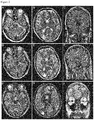
- Figure 1 MRI findings in patient #1
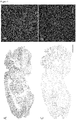
- Figure 3 Generalized periodic discharges in patients with encephalitis and antibodies to GABA(A)R
- the recording in A corresponds to the EEG of patient #1 obtained one month after admission; note the presence of generalized epileptiform discharges.
- the recording in B corresponds to patient #2; this patient initially showed epileptiform activity in the right temporal lobe with tendency to generalization in posterior recordings, as shown in B.
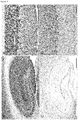
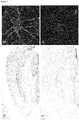
- Figure 4 Reactivity of CSF of a patient with GABA(A)R antibodies with rat brain
- the patient's CSF shows extensive and diffuse immunostaining of the neuropil of cortical and subcortical regions (A). This pattern of neuropil reactivity suggested the presence of antibodies against a neuronal cell surface antigen, which was confirmed in cultures of live rat hippocampal neurons (B).
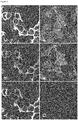
- Figure 5 Reactivity of patient's CSF with rat hippocampus and cerebellum shown at high magnification
- Figure 6 Reactivity of a patient's serum with live HEK cells expressing GABA(A)R
- the merged reactivities are shown in C.
- a similar assay with serum from a normal individual is shown in (D-F).
- the nuclei of the cells are shown with DAPI in C and F.
- Scale bar 20 micrometers.
- Figure 7 GABA(A)R immunoabsorption of serum antibody brain and neuronal reactivity
- Panels A and C show the reactivity of a patient's serum after immunoabsorption with non-transfected HEK cells.
- Panels B and D show that this reactivity is abolished after the serum has been immunoabsorbed with HEK cells expressing the GABA(A)R.
- Scale bar in A and C 500 micrometers
- Scale bar in B and D 20 micrometers.
- Figure 9 Patient's antibodies selectively bind GABA(A)R and alter the localization of GABA(A)R in live neurons
- serum of 30 normal individuals (blood donors) and serum or CSF of 217 patients with diverse disorders were similarly tested, including 65 with antibodies against glutamic acid decarboxylase 65 (GAD65), 25 with NMDAR antibodies, 21 with GABA(B)R antibodies, 23 with opsoclonus-myoclonus, 12 with LGI1 antibodies, 12 with Hu antibodies, 9 with post-herpes simplex virus encephalitis, 30 with multiple sclerosis, and 20 with non-inflammatory degenerative disorders.
- the clinical picture resembled akinetic mutism, with brief periods in which the patient spontaneously uttered a few incoherent sentences.
- the day of admission he was noted to have clonic seizures involving the left side of the face and left arm that resolved with intravenous diazepam and levetiracetam. Over the next 24 hours he developed acute respiratory failure due to pneumonia, requiring intubation and admission to intensive care unit.
- Two days later he developed status epilepticus characterized by clonic movements of the left side of the face and left arm, associated with continuous saccadic eye movements to the left that were refractory to all treatments, including levetiracetam, lacosamide, and phenytoin.
- the patient was maintained in a pharmacological coma, sequentially using midazolam, propofol, and thiopental. The seizures persisted until the patients' death 10 weeks after presentation.
- the initial EEG showed epileptiform activity in the right temporal lobe with a tendency to generalization that in subsequent recordings progressed to a pattern of generalized periodic wave activity ( Figure 3, B ).
- the MRI showed multiple increased FLAIR/T2 signal abnormalities, extensively involving cortex without mass effect or contrast enhancement, blurring the grey-white matter junction ( Figure 2 A-C ).
- the initial CSF study was normal, but a repeat CSF analysis several days later showed IgG and IgM oligoclonal bands without matching serum bands.
- Immunotherapy was used in 5/6 patients: 1 had full recovery, 3 partial recovery and 1 died.
- the patient who did not receive immunotherapy had stiff-person syndrome that was controlled symptomatically with clobazam and baclofen.
- Rat hippocampal neuronal cultures were prepared as reported. 5 Live neurons grown on coverslips were incubated for 1 hour at 37°C with patient or control serum (final dilution 1:200) or CSF (1:10). After removing the media and extensive washing with phosphate-buffered saline (PBS), neurons were fixed with 4% paraformaldehyde, permeabilized with 0.1% Triton X-100, and immunolabeled with Alexa Fluor 488 goat anti-human IgG (dilution 1:1000, Invitrogen, A11013). Results were photographed under a fluorescence microscope using Zeiss Axiovision software (Zeiss, Thornwood, NY).
- HEK293 cells were transfected with plasmids containing the human alpha 1 subunit of the GABA(A)R (accession number: NM_000806.3; Origene catalog number: SC119668; SEQ ID NO.: 1) or the human beta 3 subunit of the receptor (accession number: NM_000814.3; Origene catalog number: SC125324; SEQ ID NO: 2); cells transfected with a plasmid without insert was used as control. Cells were grown for 24 hours after transfection before assessment.
- Transfected cells were fixed in 4% paraformaldehyde, permeabilized with 0.3% Triton X-100 and then incubated with patients' serum (1:20 and higher serial dilutions) or CSF (1:5 and higher serial dilutions) along with a commercial mouse antibody against the alpha 1 subunit of the GABA(A)R (dilution 1:5000, Millipore, MAB339) or beta 3 subunits (dilution 1:5000, Abcam AB4046) for 2 hours at room temperature, and the corresponding fluorescent secondary antibodies (Alexa Fluor 488 goat anti-human IgG, A11013, dilution 1:1000; and Alexa Fluor 594 goat anti-mouse IgG, A11032, dilution 1:1000; both from Invitrogen). Results were photographed under a fluorescence microscope using Zeiss Axiovision software.
- Live HEK cells were incubated with serum (1:20 and higher serial dilutions) or CSF (1:5 and higher serial dilutions) of the patient together with the same commercial antibodies against GABA(A)R indicated above for 1 hour at 37°C, washed, fixed with 4% paraformaldehyde for 5 minutes. After washing cells were then incubated with the corresponding Alexa Fluor secondary antibodies indicated above.
- buffer NaCl 150mM, EDTA 1mM, tris (hydroxymethyl) aminomethane [Tris]-HCl 100mM, deoxycholate acid 0.5%, 1% Triton X-100, pH 7.5
- protease inhibitors P8340; Sigma Labs
- Mass spectrometry was performed at the Proteomics Facility at the Abramson Cancer Center of the University of Pennsylvania. Protein bands were trypsin digested and analyzed with a nano liquid chromatography (nano LC)/nanospray/linear ion trap (LTQ) mass spectrometer (Thermo Electron Corporation, San Jose, CA) as reported. 27 Briefly, 3 ml trypsin digested sample was injected with autosampler from Eksigent (Dublin, CA). The digested samples were separated on a 10 cm C18 column, using nano LC from Eksigent with 200 ml/minute flow rate, 45 minute gradient.
- nano chromatography nano liquid chromatography
- LTQ linear ion trap
- HEK 293 cells expressing GABA(A) were sequentially incubated with patient's serum (1:200), each plate for 1 hour at 37°C. After incubation with the six plates, the immunoabsorbed serum was incubated with sections of rat hippocampus, as above. Patient's serum absorbed with non-transfected HEK 293 cells served as control.
- IgG was isolated from a patient whose serum contained high levels of IgG antibodies against GABA(A)R using protein A and G sepharose beads, and subsequently eluted and labeled with biotin, as reported (ref).
- rat brain was incubated with other patients' or control sera (diluted 1:5) overnight at 4°C, washed in PBS, and subsequently incubated with the indicated human biotinylated IgG containing GABA(A)R antibodies (dilution 1:40) for 1 hour at room temperature, and the reactivity was developed using the avidin-biotin-peroxidase method.
- Two sera were considered to compete for the same GABA(A)R epitopes, when pre-incubation of the tissue with one serum abrogated the reactivity of the other patient's IgG.
- Images were obtained with a laser-scanning confocal microscope (Leica TCS SP5). Laser light levels and detector gain and offset were adjusted in every experiment so that no pixel values were saturated in any treatment conditions. Images were thresholded, and the number of individual clusters along neuronal dendrites was determined using interactive software (ImageJ).
- rat hippocampal neurons were treated with patient's or control CSF (1:20 dilution in Neuro-Basal + B27 medium; GIBCO, Carlsbad, CA) for 2 days. Every day, 20 of the 300 microliters medium in each culture well were removed and replaced with 20 microliters fresh patient or control CSF.
- neurons were fixed in freshly made paraformaldehyde (4% paraformaldehyde, 4% sucrose in phosphate-buffered saline) for 5 minutes, permeabilized in 0.25% Triton X-100 for 10 minutes, and blocked in 5% normal goat serum for 1 hour.
- Neurons were then incubated with the indicated monoclonal antibody against the GABA(A)R beta 2/3 (dilution 1:500), or a mouse monoclonal antibody against Gephyrin (dilution 1:200, Synaptic Systems, 147011), or a guinea pig polyclonal antibody against vesicular-GABA transporter (VGAT, dilution 1:1000; Synaptic Systems, 131004) or a rabbit antibody against GluN1 (anti-NMDARl, dilution 1:100; Millipore, AB9864R) for 2 hours, followed by the appropriate fluorescent-conjugated secondary antibodies (Alexa Fluor 488 goat anti mouse IgG, A-11001, dilution 1:200; Alexa Fluor 594 goat anti-guinea pig IgG, A-11076, dilution 1:200; Cy5 donkey anti-rabbit IgG, dilution 1:200, Jackson ImmunoResearch 711-175-152). Images were obtained and
- Example 11 Patients' antibodies recognize a GABA(A)R subunit expressed on HEK cells (cell based assay)
- beta 3 subunits form complexes with the alpha 1 subunit of the GABA(A)R.
- Example 13 Patient's antibodies selectively bind to neuronal GABA(A)R and remove the receptors from synapses
- Mass spectral data was analyzed using the search engine Sequest. Peptide confidence was determined by the cross-correlation scoring which represent sensitivity, comparing the experimental fragmentation spectrum of the peptides against the theoretical predicted fragmentation spectrum; and by the DeltaCn, which represents specificity for the peptide identification. Xcorr > 2 (+2 H), 2.5 (+3 H) and deltaCn > 0.2) indicate a good spectrum.
- Table 3 Main clinical features of 12 patients with low titer of GABA(A)R antibodies in serum and/or no antibodies in CSF # Sex, age Main Symptoms Other Initial CSF MRI EEG Treatment Outcome Subunit target alpha 1 /beta 3 titers 7 M, 2 year and 9 month (12-218) Subacute onset of partial seizures, 4 month later developed refractory status epilepticus, neurological deterioration and abnormal choreathetotic movements Muscle biopsy and extensive metabolic studies: Normal Normal WBC and protein concentration First MRI normal, repeat studies showed cortical atrophy attributed to steroids Epileptic activity with right parietal predominance, generalized slowing. Burst suppression during pentobarbital induced coma.
- Anticonvulsants Carbamazepine, valproate, midazolam, levetiracetam, phenobarbital, pentobarbital induced coma Partial response with ketogenic diet and corticosteroids, slow progressive impairment of cognitive and motor skills. Partial seizures persisted at 18 month of follow up Serum : beta 3 alpha 1/ beta 3: 1/160) Immunosuppressants: High-dose intravenous corticosteroids and oral taper CSF: negative Other: k etogenic diet, thiamine, riboflavine, clonidine, biperiden 8 M, 41 (08-758) Subacute onset of secondary generalized seizures and fever.
- GAD antibodies 8 WBC/ ⁇ L; protein 34 mg/dL Bilateral frontotemporal, right parietal and left frontal foci of increased T2/FLAIR signal with leptomeningeal enhancement Multifocal epileptiform activity NA NA Serum: alpha 1, beta 3 alpha 1/ beta 3: 1/160) CSF: n/a 10 F, 32 (10-530) Multifocal refractory seizures.
- Type 1 diabetes mellitus, Hashimoto's thyroiditis Normal WBC and protein concentration Initial and subsequent MRI studies normal.
- Anticonvulsants Oxcarbazepine, carbamazepine, lacosamide, levetiracetam, zonisamide, topiramate, clobazam, phenytoin, lamotrigine Seven years after onset still has uncontrolled seizures (treated with phenytoin and lamotrigine), severe gastrointestinal dysmotility. Urticaria resolved.
- Serum negative with alpha 1 and beta 3 expressed alone (alpha 1 / beta 3: 1/40) GAD, TPO and Tg antibodies
- Immunosuppressants IVIG, Omalizumab corticosteroids, cyclosporine, hydroxychloroquine CSF: n/a 11 F, 74 (06-178)
- NA NA Serum negative with alpha 1 and beta 3 expressed alone alpha 1 / beta 3: 1/40)
- CSF n/a 12 F, 16 (12-518)
- Insomnia progressive behavior abnormalities, decreased level of consciousness, orofacial dyskinesia, brief seizures
- NA Normal Not done NA NA Serum: negative with_alpha 1 and beta 3 expressed alone alpha 1 / beta 3: 1/40) CSF n/a 18 M, 65 (94-131) Opsoclonus myoclonus syndrome Heavy smoker, ANA positive, Negative screening for neoplasia Normal WBC and protein concentration Normal Not done Immunosuppressants : Corticosteroids No response, died a few months after onset Serum: beta 3 alpha 1 / beta 3 (1/20) CSF negative ** All 12 patients had low titer ( ⁇ 1/160) of GABA(A)R antibodies in serum; from patients #7, 12, and 18 CSF was available and was found negative for GABA(A)R antibodies; from the other 9 patients CSF was not available.
- CSF cerebrospinal fluid
- EEG electroencephalography
- F female
- FLAIR fluid attenuated inversion recovery
- GABA gamma-aminobutyric acid
- GAD glutamic acid decarboxylase 65
- IVIG intravenous immunoglobulin
- M male
- MRI magnetic resonance imaging
- NA not available
- NMDA N-methyl-D-aspartate
- OB oligoclonal bands
- Tg thyroglobulin
- TPO thyroid peroxidase
- WBC white blood cells count
Landscapes
- Health & Medical Sciences (AREA)
- Life Sciences & Earth Sciences (AREA)
- Chemical & Material Sciences (AREA)
- Immunology (AREA)
- Engineering & Computer Science (AREA)
- Hematology (AREA)
- Molecular Biology (AREA)
- Urology & Nephrology (AREA)
- Biomedical Technology (AREA)
- General Health & Medical Sciences (AREA)
- Medicinal Chemistry (AREA)
- Biochemistry (AREA)
- Physics & Mathematics (AREA)
- Microbiology (AREA)
- Pathology (AREA)
- General Physics & Mathematics (AREA)
- Rheumatology (AREA)
- Analytical Chemistry (AREA)
- Organic Chemistry (AREA)
- Rehabilitation Therapy (AREA)
- Food Science & Technology (AREA)
- Biotechnology (AREA)
- Cell Biology (AREA)
- Biophysics (AREA)
- Diabetes (AREA)
- Gastroenterology & Hepatology (AREA)
- Zoology (AREA)
- Proteomics, Peptides & Aminoacids (AREA)
- Toxicology (AREA)
- Genetics & Genomics (AREA)
- Bioinformatics & Cheminformatics (AREA)
- Pharmacology & Pharmacy (AREA)
- Peptides Or Proteins (AREA)
- Medicines Containing Antibodies Or Antigens For Use As Internal Diagnostic Agents (AREA)
Claims (14)
- In vitro Verwendung eines GABA(A)R, GABA(A)R-Fragments oder Homologs davon oder einer Zelle, die den GABA(A)R, das GABA(A)R-Fragment oder Homolog davon exprimiert, zur Prognose oder Diagnose einer Autoimmunerkrankung bei einem Patienten, dadurch gekennzeichnet, dass
der GABA(A)R, das GABA(A)R-Fragment oder Homolog davonA) eine Sequenz gemäß SEQ ID NO: 1 und/oder SEQ ID NO: 2;B) eine Sequenz mit mindestens 80% Sequenzidentität zu den Sequenzen gemäß A); und/oderC) ein oder mehrere Fragmente, die mindestens 20 aufeinanderfolgende Aminosäuren der Sequenzen gemäß A) oder B) umfassen,umfasst;
und wobei die Autoimmunerkrankung(a) sich auf Erkrankungen im Zusammenhang mit Antikörpern gegen einen GABA(A)R bezieht und(b) eine Autoimmunerkrankung des Nervensystems ist. - In vitro Verfahren zum Vorhersagen oder Diagnostizieren einer Autoimmunerkrankung in einem Patienten, umfassend den Schritt des Nachweisens eines Autoantikörpers, der an GABA(A)R bindet, in einer Probe von dem Patienten und wobei die Autoimmunerkrankung(a) sich auf Erkrankungen im Zusammenhang mit Antikörpern gegen ein GABA(A)R bezieht und(b) eine Autoimmunerkrankung des Nervensystems ist.
- Autoantikörperbindung an einen GABA(A)R, ein GABA(A)R-Fragment oder Homolog davon,
dadurch gekennzeichnet, dass
der GABA(A)R, das GABA (A) R-Fragment oder Homolog davonA) eine Sequenz gemäß SEQ ID NO: 1 und/oder SEQ ID NO: 2;B) eine Sequenz mit mindestens 80% Sequenzidentität zu den Sequenzen gemäß A); und/oderC) ein oder mehrere Fragmente, die mindestens 20 aufeinanderfolgende Aminosäuren der Sequenzen gemäß A) oder B) umfassen,umfasst. - Das in vitro Verfahren gemäß Anspruch 2, umfassend die Schritte:a. In-Kontakt-Bringen einer flüssigen Probe, die einen Autoantikörper von einem Patienten umfasst, mit einem GABA(A)R, GABA(A)R-Fragment oder Homolog davon oder einer Zelle, die den GABA(A)R, das GABA(A)R-Fragment oder Homolog davon exprimiert, oder In-Kontakt-Bringen einer Gewebeprobe des Patienten mit einem Autoantikörper gemäß Anspruch 3 undb. Nachweisen des Bindens des Autoantikörpers an den GABA(A)R, das GABA(A)R-Fragment oder Homolog davon, an die Zelle oder an die Gewebeprobe,dadurch gekennzeichnet, dass
der GABA(A)R, das GABA(A)R-Fragment oder Homolog davonA) eine Sequenz gemäß SEQ ID NO: 1 und/oder SEQ ID NO: 2;B) eine Sequenz mit mindestens 80% Sequenzidentität zu den Sequenzen gemäß A); und/oderC) ein oder mehrere Fragmente, die mindestens 20 aufeinanderfolgende Aminosäuren der Sequenzen gemäß A) oder B) umfassen,umfasst. - Das in vitro Verfahren gemäß Anspruch 4, wobei Schritt b) unter Verwendung von Immunfluoreszenzmikroskopie oder -spektroskopie, NMR-Spektroskopie, Massenspektrometrie, Radioaktivität, chemischer Vernetzung, Oberflächen-Plasmon-Resonanz (SPR), nativer Gelelektrophorese, Chromatographie oder enzymatischer Aktivität durchgeführt wird.
- Test-Kit, dadurch gekennzeichnet, dass es einen GABA(A)R, ein GABA(A)R-Fragment oder Homolog davon umfasst,
dadurch gekennzeichnet, dass
der GABA(A)R, das GABA(A)R-Fragment oder Homolog davon an eine feste Phase oder festes Substrat gebunden ist undA) eine Sequenz gemäß SEQ ID NO: 2;B) eine Sequenz mit mindestens 80% Sequenzidentität zu den Sequenzen gemäß A); und/oderC) ein oder mehrere Fragmente, die mindestens 20 aufeinanderfolgende Aminosäuren der Sequenzen gemäß A) oder B) umfassen,umfasst. - Pharmazeutische Zusammensetzung, dadurch gekennzeichnet, dass sie einen GABA(A)R, ein GABA(A)R-Fragment oder Homolog davon und/oder eine Zelle, die den GABA(A)R, das GABA(A)R-Fragment oder Homolog davon exprimiert, umfasst,
dadurch gekennzeichnet, dass
der GABA(A)R, das GABA(A)R-Fragment oder Homolog davon an eine feste Phase oder festes Substrat gebunden ist undA) eine Sequenz gemäß SEQ ID NO: 2;B) eine Sequenz mit mindestens 80% Sequenzidentität zu den Sequenzen gemäß A); und/oderC) ein oder mehrere Fragmente, die mindestens 20 aufeinanderfolgende Aminosäuren der Sequenzen gemäß A) oder B) umfassen,umfasst. - Medizinische oder diagnostische Vorrichtung beschichtet mit einem GABA(A)R, GABA(A)R-Fragment oder Homolog davon oder einer Zelle, die einen GABA(A)R, ein GABA(A)R-Fragment oder Homolog davon exprimiert,
wobei die Vorrichtung eine diagnostische Vorrichtung ist, die ausgewählt ist aus der Gruppe umfassend einen Biochip, eine Mikrotiterplatte für ELISA, einen Line Blot und einen beschichteten Bead,
dadurch gekennzeichnet, dass
der GABA(A)R, das GABA(A)R-Fragment oder Homolog davonA) eine Sequenz gemäß SEQ ID NO: 1 und/oder SEQ ID NO: 2;B) eine Sequenz mit mindestens 80% Sequenzidentität zu den Sequenzen gemäß A); und/oderC) ein oder mehrere Fragmente, die mindestens 20 aufeinanderfolgende Aminosäuren der Sequenzen gemäß A) oder B) umfassen,umfasst. - Ein GABA(A)R, GABA(A)R-Fragment oder Homolog davon oder eine Zelle, die den GABA(A)R, das GABA(A)R-Fragment oder Homolog davon exprimiert, zur Verwendung in einem Verfahren zum in vivo Diagnostizieren einer Autoimmunerkrankung,
dadurch gekennzeichnet, dass
der GABA(A)R, das GABA(A)R-Fragment oder Homolog davonA) eine Sequenz gemäß SEQ ID NO: 1 und/oder SEQ ID NO: 2;B) eine Sequenz mit mindestens 80% Sequenzidentität zu den Sequenzen gemäß A); und/oderC) ein oder mehrere Fragmente, die mindestens 20 aufeinanderfolgende Aminosäuren der Sequenzen gemäß A) oder B) umfassen,umfasst;
und wobei die Autoimmunerkrankung(a) sich auf Erkrankungen im Zusammenhang mit Antikörpern gegen einen GABA(A)R bezieht und(b) eine Autoimmunerkrankung des Nervensystems ist. - Ein GABA(A)R, GABA(A)R-Fragment oder Homolog davon oder eine Zelle, die den GABA(A)R, GABA(A)R-Fragment oder Homolog davon exprimiert, zur Verwendung in der Behandlung einer Autoimmunerkrankung,
dadurch gekennzeichnet, dass
der GABA(A)R, das GABA(A)R-Fragment oder Homolog davonA) eine Sequenz gemäß SEQ ID NO: 1 und/oder SEQ ID NO: 2;B) eine Sequenz mit mindestens 80% Sequenzidentität zu den Sequenzen gemäß A); und/oderC) ein oder mehrere Fragmente, die mindestens 20 aufeinanderfolgende Aminosäuren der Sequenzen gemäß A) oder B) umfassen,umfasst;
und wobei die Autoimmunerkrankung(a) sich auf Erkrankungen im Zusammenhang mit Antikörpern gegen einen GABA(A)R bezieht und(b) eine Autoimmunerkrankung des Nervensystems ist. - Das Produkt zur Verwendung in der Behandlung gemäß Anspruch 10, wobei die Behandlung die Schritte umfassta. Untersuchen einer flüssigen Probe, die Antikörper von einem Patienten enthält, in einem in vitro Verfahren nach einem der Ansprüche 2, 4 oder 5 undb. Behandeln des Patienten mit mindestens einer geeigneten pharmazeutischen Substanz und/oder einem Plasmaaustausch, wobei vorzugsweise die mindestens eine geeignete pharmazeutische Substanz ausgewählt ist aus der Gruppe bestehend aus Rituximab, Prednison, Methylprednisolon, Cyclophosphamid, Mycophenolatemofetil, intravenösem Immunglobulin, Tacrolimus, Cyclosporin, Methotrexat, Azathioprin, Clonazepam, Phenytoin, Lamotrigin, Phenobarbital, Valproinsäure, Levetiracetam, Carbamazepin, Tiagabin, Felbamat, Pregabalin, Primidon und Gabapentin und der pharmazeutischen Zusammensetzung gemäß Anspruch 7,oder die Schritte umfassta. Entnehmen von Blut oder Plasma aus einem Patienten,b. In-Kontakt-Bringen des Blutes oder Plasmas mit der pharmazeutischen Zusammensetzung gemäß Anspruch 7 oder der medizinischen Vorrichtung gemäß Anspruch 8, um krankheitsassoziierte Antikörper zu entfernen, undc. Zurückführen des Blutes oder Plasmas, das sich aus Schritt b. ergibt, in den Patienten.
- Verfahren zum Isolieren eines Autoantikörpers, der an einen GABA(A)R, ein GABA(A)R-Fragment oder Homolog davon bindet, das Verfahren umfasst die Schrittea. In-Kontakt-Bringen einer Probe, die einen Antikörper umfasst, der an einen GABA(A)R, ein GABA(A)R-Fragment oder Homolog davon bindet, mit dem GABA(A)R, GABA(A)R-Fragment oder Homolog oder mit einer Zelle, die einen GABA(A)R, ein GABA(A)R-Fragment oder Homolog davon exprimiert,b. Isolieren eines Komplexes, der den GABA(A)R, das GABA(A)R-Fragment oder Homolog davon und den Autoantikörper umfasst,c. Dissoziieren des in Schritt b. isolierten Komplexes undd. Separieren des Autoantikörpers von dem GABA(A)R, GABA(A)R-Fragment oder Homolog davon oder der Zelle,und dadurch gekennzeichnet, dass
der GABA(A)R, das GABA(A)R-Fragment oder Homolog davonA) eine Sequenz gemäß SEQ ID NO: 1 und/oder SEQ ID NO: 2;B) eine Sequenz mit mindestens 80% Sequenzidentität zu den Sequenzen gemäß A); und/oderC) ein oder mehrere Fragmente, die mindestens 20 aufeinanderfolgende Aminosäuren der Sequenzen gemäß A) oder B) umfassen,umfasst. - Die Verwendung gemäß Anspruch 1, das Verfahren gemäß einem der Ansprüche 2, 4 oder 5, das Produkt zur Verwendung in der Behandlung gemäß einem der Ansprüche 9 bis 11 oder die medizinische oder diagnostische Vorrichtung gemäß Anspruch 8, wobei der GABA(A)R, das GABA(A)R-Fragment oder Homolog davon an ein Reportermolekül oder eine feste Phase gebunden ist.
- Das Test-Kit gemäß Anspruch 6, wobei der GABA(A)R, das GABA(A)R-Fragment oder Homolog davon an ein Reportermolekül gebunden ist.
Priority Applications (3)
| Application Number | Priority Date | Filing Date | Title |
|---|---|---|---|
| EP14786173.6A EP3058376B1 (de) | 2013-10-17 | 2014-10-16 | Diagnostisches verfahren zum nachweis einer gaba(a)-verwandten autoimmunerkrankung und zugehörige subjektmaterie |
| SI201431445T SI3058376T1 (sl) | 2013-10-17 | 2014-10-16 | Diagnostični postopek za zaznavanje z GABA(A) povezane avtoimunske bolezni in povezane zadeve |
| PL14786173T PL3058376T3 (pl) | 2013-10-17 | 2014-10-16 | Diagnostyczny sposób wykrywania choroby autoimmunologicznej związanej z gaba (a) i związane z tym przedmioty |
Applications Claiming Priority (3)
| Application Number | Priority Date | Filing Date | Title |
|---|---|---|---|
| EP13189172.3A EP2863231A1 (de) | 2013-10-17 | 2013-10-17 | Diagnostisches Verfahren zum Nachweis einer GABA(A)-verwandten Autoimmunerkrankung und zugehörige Subjektmaterie |
| PCT/EP2014/072252 WO2015055776A1 (en) | 2013-10-17 | 2014-10-16 | Diagnostic method for detecting a gaba(a) related autoimmune disease and related subject-matter |
| EP14786173.6A EP3058376B1 (de) | 2013-10-17 | 2014-10-16 | Diagnostisches verfahren zum nachweis einer gaba(a)-verwandten autoimmunerkrankung und zugehörige subjektmaterie |
Publications (2)
| Publication Number | Publication Date |
|---|---|
| EP3058376A1 EP3058376A1 (de) | 2016-08-24 |
| EP3058376B1 true EP3058376B1 (de) | 2019-11-27 |
Family
ID=49447977
Family Applications (2)
| Application Number | Title | Priority Date | Filing Date |
|---|---|---|---|
| EP13189172.3A Withdrawn EP2863231A1 (de) | 2013-10-17 | 2013-10-17 | Diagnostisches Verfahren zum Nachweis einer GABA(A)-verwandten Autoimmunerkrankung und zugehörige Subjektmaterie |
| EP14786173.6A Active EP3058376B1 (de) | 2013-10-17 | 2014-10-16 | Diagnostisches verfahren zum nachweis einer gaba(a)-verwandten autoimmunerkrankung und zugehörige subjektmaterie |
Family Applications Before (1)
| Application Number | Title | Priority Date | Filing Date |
|---|---|---|---|
| EP13189172.3A Withdrawn EP2863231A1 (de) | 2013-10-17 | 2013-10-17 | Diagnostisches Verfahren zum Nachweis einer GABA(A)-verwandten Autoimmunerkrankung und zugehörige Subjektmaterie |
Country Status (8)
| Country | Link |
|---|---|
| US (1) | US11041005B2 (de) |
| EP (2) | EP2863231A1 (de) |
| CN (1) | CN105579853B (de) |
| DK (1) | DK3058376T3 (de) |
| ES (1) | ES2768609T3 (de) |
| PL (1) | PL3058376T3 (de) |
| SI (1) | SI3058376T1 (de) |
| WO (1) | WO2015055776A1 (de) |
Families Citing this family (8)
| Publication number | Priority date | Publication date | Assignee | Title |
|---|---|---|---|---|
| GB201409234D0 (en) | 2014-05-23 | 2014-07-09 | Isis Innovation | Method |
| KR101739703B1 (ko) | 2016-09-13 | 2017-05-24 | (주) 어드밴스드 엔티 | Trail 기반 뇌염 감별진단 방법 및 장치 |
| US10725035B2 (en) | 2017-06-16 | 2020-07-28 | Euroimmun Medizinische Labordiagnostika Ag | Diagnosis of a neuroautoimmune disease |
| DE102018009721A1 (de) | 2017-12-29 | 2019-07-04 | Euroimmun Medizinische Labordiagnostika Ag | Verfahren zur Diagnose einer Bornavirus-Infektion |
| EP3872492A1 (de) | 2020-02-28 | 2021-09-01 | Seramun Diagnostica GmbH | Identifizierung einer infektion mit dem bornavirus (bodv) durch nachweis von antikörpern gegen das bodv-glykoprotein |
| CN114689863A (zh) * | 2020-12-30 | 2022-07-01 | 广州市微米生物科技有限公司 | 脑炎联检试剂 |
| DE202022104518U1 (de) | 2021-08-10 | 2023-06-20 | Fundació Clínic Per A La Recerca Biomèdica (Fcrb) | Autoantikörper und Mittel zum Nachweis eines Autoantikörpers |
| CN116519943A (zh) * | 2022-12-12 | 2023-08-01 | 中国科学技术大学 | GABAA受体β亚基上BACE1酶切位点作为阿尔茨海默病诊断或治疗靶位点的应用 |
Citations (4)
| Publication number | Priority date | Publication date | Assignee | Title |
|---|---|---|---|---|
| WO2002029418A1 (en) * | 2000-10-05 | 2002-04-11 | Hanns Mohler | Selective anxiolytic therapeutic agents |
| US7029870B1 (en) * | 1997-07-03 | 2006-04-18 | Human Genome Sciences, Inc. | Gabaa receptor epsilon subunits |
| WO2009114740A2 (en) * | 2008-03-12 | 2009-09-17 | Emory University | USE OF GABAa RECEPTOR ANTAGONISTS FOR THE TREATMENT OF EXCESSIVE SLEEPINESS AND DISORDERS ASSOCIATED WITH EXCESSIVE SLEEPINESS |
| KR20090099339A (ko) * | 2008-03-17 | 2009-09-22 | (주)지노믹트리 | Gabra1 유전자를 함유하는 유전자전달체를 포함하는 대장암 세포의 증식 억제제 |
Family Cites Families (18)
| Publication number | Priority date | Publication date | Assignee | Title |
|---|---|---|---|---|
| ATE33717T1 (de) | 1983-02-25 | 1988-05-15 | Winfried Dr Med Stoecker | Verfahren und vorrichtungen fuer untersuchungen an unbeweglich gemachtem biologischem material. |
| US5529898A (en) * | 1993-08-19 | 1996-06-25 | Duke University | Methods of detecting disorders of the central nervous system by detecting autoantibodies which specifically bind ionotropic glutamate receptors |
| US5731410A (en) * | 1994-11-28 | 1998-03-24 | University Of Utah Research Foundation | Peptide for blocking autoantibody-evoked activation of glutamate receptor type 3 (GLUR3) |
| US20040219545A1 (en) * | 2001-04-13 | 2004-11-04 | Rando Robert F. | Methods for identifying small molecules that bind specific rna structural motifs |
| ATE465412T1 (de) * | 2003-11-06 | 2010-05-15 | Grace Lab Inc | Immunsorbens-bluttests zur beurteilung von paroxysmalen zerebralentladungen |
| ZA200709956B (en) * | 2005-05-20 | 2009-02-25 | Genentech Inc | Pretreatment of a biological sample from an autoimmune disease subject |
| GB0525541D0 (en) * | 2005-12-15 | 2006-01-25 | Isis Innovation | Detection of antibodies |
| CN102308212A (zh) * | 2008-12-04 | 2012-01-04 | 加利福尼亚大学董事会 | 用于确定前列腺癌诊断和预后的材料和方法 |
| JP5996429B2 (ja) * | 2009-09-03 | 2016-09-21 | ジェネンテック, インコーポレイテッド | 関節リウマチの治療、診断及びモニターするための方法 |
| EP2483417B1 (de) * | 2009-09-29 | 2017-03-29 | The Trustees Of The University Of Pennsylvania | Verfahren zur diagnose und/oder behandlung von enzephalitis oder epilepsie |
| EP2542696B1 (de) * | 2010-03-01 | 2016-09-28 | Caris Life Sciences Switzerland Holdings GmbH | Theranostik-biomarker |
| DE202011106093U1 (de) | 2011-09-24 | 2011-10-19 | Euroimmun Medizinische Labordiagnostika Ag | Kalibrationsstreifen für einen Immunoblot |
| WO2013098420A1 (en) * | 2011-12-28 | 2013-07-04 | Immunoqure Ag | Method of isolating human antibodies |
| FR2986331B1 (fr) * | 2012-02-01 | 2017-11-03 | Centre Nat Rech Scient | Puces a proteines, preparation et utilisations |
| CN103116030A (zh) * | 2013-01-30 | 2013-05-22 | 山东东兴生物科技股份有限公司 | 一种检测i型糖尿病自身免疫抗体试剂盒及其检测方法 |
| GB201409234D0 (en) * | 2014-05-23 | 2014-07-09 | Isis Innovation | Method |
| EP2952898B1 (de) * | 2014-06-06 | 2018-08-08 | Euroimmun Medizinische Labordiagnostika AG | Diagnose einer neurologischen Krankheit |
| ES2748117T3 (es) * | 2015-04-22 | 2020-03-13 | Euroimmun Medizinische Labordiagnostika Ag | Diagnóstico de una nueva enfermedad autoinmune |
-
2013
- 2013-10-17 EP EP13189172.3A patent/EP2863231A1/de not_active Withdrawn
-
2014
- 2014-10-16 CN CN201480052000.4A patent/CN105579853B/zh active Active
- 2014-10-16 WO PCT/EP2014/072252 patent/WO2015055776A1/en not_active Ceased
- 2014-10-16 DK DK14786173.6T patent/DK3058376T3/da active
- 2014-10-16 SI SI201431445T patent/SI3058376T1/sl unknown
- 2014-10-16 EP EP14786173.6A patent/EP3058376B1/de active Active
- 2014-10-16 ES ES14786173T patent/ES2768609T3/es active Active
- 2014-10-16 US US15/023,131 patent/US11041005B2/en active Active
- 2014-10-16 PL PL14786173T patent/PL3058376T3/pl unknown
Patent Citations (4)
| Publication number | Priority date | Publication date | Assignee | Title |
|---|---|---|---|---|
| US7029870B1 (en) * | 1997-07-03 | 2006-04-18 | Human Genome Sciences, Inc. | Gabaa receptor epsilon subunits |
| WO2002029418A1 (en) * | 2000-10-05 | 2002-04-11 | Hanns Mohler | Selective anxiolytic therapeutic agents |
| WO2009114740A2 (en) * | 2008-03-12 | 2009-09-17 | Emory University | USE OF GABAa RECEPTOR ANTAGONISTS FOR THE TREATMENT OF EXCESSIVE SLEEPINESS AND DISORDERS ASSOCIATED WITH EXCESSIVE SLEEPINESS |
| KR20090099339A (ko) * | 2008-03-17 | 2009-09-22 | (주)지노믹트리 | Gabra1 유전자를 함유하는 유전자전달체를 포함하는 대장암 세포의 증식 억제제 |
Non-Patent Citations (1)
| Title |
|---|
| MATHIEU A ET AL: "Defective cerebral gamma-aminobutyric acid-A receptor density in patients with systemic lupus erythematosus and central nervous system involvement. An observational study", LUPUS, SAGE, GB, vol. 19, no. 8, 1 July 2010 (2010-07-01), pages 918 - 926, XP009194697, ISSN: 0961-2033, DOI: 10.1177/0961203310364398 * |
Also Published As
| Publication number | Publication date |
|---|---|
| EP2863231A1 (de) | 2015-04-22 |
| SI3058376T1 (sl) | 2020-02-28 |
| CN105579853B (zh) | 2020-11-06 |
| US20160326227A1 (en) | 2016-11-10 |
| ES2768609T3 (es) | 2020-06-23 |
| DK3058376T3 (da) | 2020-02-24 |
| WO2015055776A1 (en) | 2015-04-23 |
| CN105579853A (zh) | 2016-05-11 |
| PL3058376T3 (pl) | 2020-06-01 |
| EP3058376A1 (de) | 2016-08-24 |
| US11041005B2 (en) | 2021-06-22 |
Similar Documents
| Publication | Publication Date | Title |
|---|---|---|
| EP3058376B1 (de) | Diagnostisches verfahren zum nachweis einer gaba(a)-verwandten autoimmunerkrankung und zugehörige subjektmaterie | |
| Lancaster et al. | Antibodies to the GABAB receptor in limbic encephalitis with seizures: case series and characterisation of the antigen | |
| Ohkawa et al. | Autoantibodies to epilepsy-related LGI1 in limbic encephalitis neutralize LGI1-ADAM22 interaction and reduce synaptic AMPA receptors | |
| EP2483417B1 (de) | Verfahren zur diagnose und/oder behandlung von enzephalitis oder epilepsie | |
| EP2895507B1 (de) | Diagnoseverfahren zum erfassen einer autoimmunerkrankung und zugehörige subjektmaterie | |
| EP2620770B1 (de) | Neues testverfahren für angiitis | |
| EP2569635A1 (de) | Verfahren zur diagnose und/oder behandlung von enzephalitis oder epilepsie | |
| WO2022227617A1 (zh) | Crmp2及抗crmp2抗体的应用 | |
| Iorio et al. | Clinical characteristics and outcome of patients with autoimmune encephalitis: clues for paraneoplastic aetiology | |
| Rouwette et al. | Identification of coronin‐1a as a novel antibody target for clinically isolated syndrome and multiple sclerosis | |
| Li et al. | Autoantibodies detection in anti-N-methyl-D-aspartate receptor encephalitis | |
| EP3011008B1 (de) | Verfahren zum nachweis der an- oder abwesenheit von autoantikörpern | |
| WO2018226098A2 (en) | Methods for typing neurological disorders and cancer, and devices for use therein | |
| US20140377883A1 (en) | Peripherin-specific autoantibodies as a marker for neurological and endocrinological disease | |
| WO2013110121A1 (en) | Assay for a biomarker of a central nervous system disorder | |
| US20230314426A1 (en) | Anti-argonaute protein autoantibodies as biomarkers of autoimmune neurological diseases | |
| Xu et al. | Characterization of A Novel Autoimmune Encephalitis Associated Antibody against CRMP2 | |
| Constantinescu et al. | Antibodies to the GABA (B) receptor in limbic encephalitis with seizures: Case series and characterisation of the... | |
| Guo et al. | Autoantibody to the Rab6A/Rab6B in Autoimmune Cerebellar Ataxia Associated with Sjogren’s Syndrome | |
| Van Sonderen et al. | Autoimmune encephalitis | |
| Watanabe et al. | Autoantibodies to Epilepsy-Related LGI1 in Limbic Encephalitis Neutralize LGI1-ADAM22 Interaction and Reduce Synaptic AMPA Receptors | |
| 大川都史香 et al. | Global profiling of synaptic autoantibodies reveals a mode of action of anti-LGI1 autoantibodies in limbic encephalitis |
Legal Events
| Date | Code | Title | Description |
|---|---|---|---|
| PUAI | Public reference made under article 153(3) epc to a published international application that has entered the european phase |
Free format text: ORIGINAL CODE: 0009012 |
|
| 17P | Request for examination filed |
Effective date: 20160229 |
|
| AK | Designated contracting states |
Kind code of ref document: A1 Designated state(s): AL AT BE BG CH CY CZ DE DK EE ES FI FR GB GR HR HU IE IS IT LI LT LU LV MC MK MT NL NO PL PT RO RS SE SI SK SM TR |
|
| AX | Request for extension of the european patent |
Extension state: BA ME |
|
| DAX | Request for extension of the european patent (deleted) | ||
| STAA | Information on the status of an ep patent application or granted ep patent |
Free format text: STATUS: EXAMINATION IS IN PROGRESS |
|
| 17Q | First examination report despatched |
Effective date: 20170623 |
|
| GRAP | Despatch of communication of intention to grant a patent |
Free format text: ORIGINAL CODE: EPIDOSNIGR1 |
|
| STAA | Information on the status of an ep patent application or granted ep patent |
Free format text: STATUS: GRANT OF PATENT IS INTENDED |
|
| INTG | Intention to grant announced |
Effective date: 20190527 |
|
| GRAS | Grant fee paid |
Free format text: ORIGINAL CODE: EPIDOSNIGR3 |
|
| GRAA | (expected) grant |
Free format text: ORIGINAL CODE: 0009210 |
|
| STAA | Information on the status of an ep patent application or granted ep patent |
Free format text: STATUS: THE PATENT HAS BEEN GRANTED |
|
| AK | Designated contracting states |
Kind code of ref document: B1 Designated state(s): AL AT BE BG CH CY CZ DE DK EE ES FI FR GB GR HR HU IE IS IT LI LT LU LV MC MK MT NL NO PL PT RO RS SE SI SK SM TR |
|
| REG | Reference to a national code |
Ref country code: GB Ref legal event code: FG4D |
|
| REG | Reference to a national code |
Ref country code: CH Ref legal event code: EP |
|
| REG | Reference to a national code |
Ref country code: AT Ref legal event code: REF Ref document number: 1207295 Country of ref document: AT Kind code of ref document: T Effective date: 20191215 |
|
| REG | Reference to a national code |
Ref country code: DE Ref legal event code: R096 Ref document number: 602014057541 Country of ref document: DE |
|
| REG | Reference to a national code |
Ref country code: IE Ref legal event code: FG4D |
|
| REG | Reference to a national code |
Ref country code: FI Ref legal event code: FGE |
|
| REG | Reference to a national code |
Ref country code: DK Ref legal event code: T3 Effective date: 20200217 |
|
| REG | Reference to a national code |
Ref country code: CH Ref legal event code: NV Representative=s name: FREI PATENTANWALTSBUERO AG, CH |
|
| REG | Reference to a national code |
Ref country code: SE Ref legal event code: TRGR |
|
| REG | Reference to a national code |
Ref country code: NO Ref legal event code: T2 Effective date: 20191127 |
|
| REG | Reference to a national code |
Ref country code: LT Ref legal event code: MG4D |
|
| PG25 | Lapsed in a contracting state [announced via postgrant information from national office to epo] |
Ref country code: BG Free format text: LAPSE BECAUSE OF FAILURE TO SUBMIT A TRANSLATION OF THE DESCRIPTION OR TO PAY THE FEE WITHIN THE PRESCRIBED TIME-LIMIT Effective date: 20200227 Ref country code: LT Free format text: LAPSE BECAUSE OF FAILURE TO SUBMIT A TRANSLATION OF THE DESCRIPTION OR TO PAY THE FEE WITHIN THE PRESCRIBED TIME-LIMIT Effective date: 20191127 Ref country code: GR Free format text: LAPSE BECAUSE OF FAILURE TO SUBMIT A TRANSLATION OF THE DESCRIPTION OR TO PAY THE FEE WITHIN THE PRESCRIBED TIME-LIMIT Effective date: 20200228 Ref country code: LV Free format text: LAPSE BECAUSE OF FAILURE TO SUBMIT A TRANSLATION OF THE DESCRIPTION OR TO PAY THE FEE WITHIN THE PRESCRIBED TIME-LIMIT Effective date: 20191127 |
|
| REG | Reference to a national code |
Ref country code: NL Ref legal event code: FP |
|
| PG25 | Lapsed in a contracting state [announced via postgrant information from national office to epo] |
Ref country code: IS Free format text: LAPSE BECAUSE OF FAILURE TO SUBMIT A TRANSLATION OF THE DESCRIPTION OR TO PAY THE FEE WITHIN THE PRESCRIBED TIME-LIMIT Effective date: 20200327 Ref country code: HR Free format text: LAPSE BECAUSE OF FAILURE TO SUBMIT A TRANSLATION OF THE DESCRIPTION OR TO PAY THE FEE WITHIN THE PRESCRIBED TIME-LIMIT Effective date: 20191127 Ref country code: RS Free format text: LAPSE BECAUSE OF FAILURE TO SUBMIT A TRANSLATION OF THE DESCRIPTION OR TO PAY THE FEE WITHIN THE PRESCRIBED TIME-LIMIT Effective date: 20191127 |
|
| REG | Reference to a national code |
Ref country code: ES Ref legal event code: FG2A Ref document number: 2768609 Country of ref document: ES Kind code of ref document: T3 Effective date: 20200623 |
|
| PG25 | Lapsed in a contracting state [announced via postgrant information from national office to epo] |
Ref country code: AL Free format text: LAPSE BECAUSE OF FAILURE TO SUBMIT A TRANSLATION OF THE DESCRIPTION OR TO PAY THE FEE WITHIN THE PRESCRIBED TIME-LIMIT Effective date: 20191127 |
|
| PG25 | Lapsed in a contracting state [announced via postgrant information from national office to epo] |
Ref country code: RO Free format text: LAPSE BECAUSE OF FAILURE TO SUBMIT A TRANSLATION OF THE DESCRIPTION OR TO PAY THE FEE WITHIN THE PRESCRIBED TIME-LIMIT Effective date: 20191127 Ref country code: PT Free format text: LAPSE BECAUSE OF FAILURE TO SUBMIT A TRANSLATION OF THE DESCRIPTION OR TO PAY THE FEE WITHIN THE PRESCRIBED TIME-LIMIT Effective date: 20200419 Ref country code: EE Free format text: LAPSE BECAUSE OF FAILURE TO SUBMIT A TRANSLATION OF THE DESCRIPTION OR TO PAY THE FEE WITHIN THE PRESCRIBED TIME-LIMIT Effective date: 20191127 |
|
| REG | Reference to a national code |
Ref country code: DE Ref legal event code: R097 Ref document number: 602014057541 Country of ref document: DE |
|
| PG25 | Lapsed in a contracting state [announced via postgrant information from national office to epo] |
Ref country code: SM Free format text: LAPSE BECAUSE OF FAILURE TO SUBMIT A TRANSLATION OF THE DESCRIPTION OR TO PAY THE FEE WITHIN THE PRESCRIBED TIME-LIMIT Effective date: 20191127 Ref country code: SK Free format text: LAPSE BECAUSE OF FAILURE TO SUBMIT A TRANSLATION OF THE DESCRIPTION OR TO PAY THE FEE WITHIN THE PRESCRIBED TIME-LIMIT Effective date: 20191127 |
|
| PLBE | No opposition filed within time limit |
Free format text: ORIGINAL CODE: 0009261 |
|
| STAA | Information on the status of an ep patent application or granted ep patent |
Free format text: STATUS: NO OPPOSITION FILED WITHIN TIME LIMIT |
|
| REG | Reference to a national code |
Ref country code: AT Ref legal event code: UEP Ref document number: 1207295 Country of ref document: AT Kind code of ref document: T Effective date: 20191127 |
|
| 26N | No opposition filed |
Effective date: 20200828 |
|
| REG | Reference to a national code |
Ref country code: DE Ref legal event code: R082 Ref document number: 602014057541 Country of ref document: DE Representative=s name: RGTH PATENTANWAELTE PARTGMBB, DE Ref country code: DE Ref legal event code: R082 Ref document number: 602014057541 Country of ref document: DE Representative=s name: RGTH RICHTER GERBAULET THIELEMANN HOFMANN PATE, DE |
|
| PG25 | Lapsed in a contracting state [announced via postgrant information from national office to epo] |
Ref country code: MC Free format text: LAPSE BECAUSE OF FAILURE TO SUBMIT A TRANSLATION OF THE DESCRIPTION OR TO PAY THE FEE WITHIN THE PRESCRIBED TIME-LIMIT Effective date: 20191127 Ref country code: LU Free format text: LAPSE BECAUSE OF NON-PAYMENT OF DUE FEES Effective date: 20201016 |
|
| REG | Reference to a national code |
Ref country code: BE Ref legal event code: MM Effective date: 20201031 |
|
| PG25 | Lapsed in a contracting state [announced via postgrant information from national office to epo] |
Ref country code: BE Free format text: LAPSE BECAUSE OF NON-PAYMENT OF DUE FEES Effective date: 20201031 |
|
| PG25 | Lapsed in a contracting state [announced via postgrant information from national office to epo] |
Ref country code: TR Free format text: LAPSE BECAUSE OF FAILURE TO SUBMIT A TRANSLATION OF THE DESCRIPTION OR TO PAY THE FEE WITHIN THE PRESCRIBED TIME-LIMIT Effective date: 20191127 Ref country code: MT Free format text: LAPSE BECAUSE OF FAILURE TO SUBMIT A TRANSLATION OF THE DESCRIPTION OR TO PAY THE FEE WITHIN THE PRESCRIBED TIME-LIMIT Effective date: 20191127 Ref country code: CY Free format text: LAPSE BECAUSE OF FAILURE TO SUBMIT A TRANSLATION OF THE DESCRIPTION OR TO PAY THE FEE WITHIN THE PRESCRIBED TIME-LIMIT Effective date: 20191127 |
|
| PG25 | Lapsed in a contracting state [announced via postgrant information from national office to epo] |
Ref country code: MK Free format text: LAPSE BECAUSE OF FAILURE TO SUBMIT A TRANSLATION OF THE DESCRIPTION OR TO PAY THE FEE WITHIN THE PRESCRIBED TIME-LIMIT Effective date: 20191127 |
|
| P01 | Opt-out of the competence of the unified patent court (upc) registered |
Effective date: 20230528 |
|
| REG | Reference to a national code |
Ref country code: GB Ref legal event code: 732E Free format text: REGISTERED BETWEEN 20230810 AND 20230816 |
|
| REG | Reference to a national code |
Ref country code: DE Ref legal event code: R081 Ref document number: 602014057541 Country of ref document: DE Owner name: FUNDACIO DE RECERCA CLINIC BARCELONA-INSTITUT , ES Free format text: FORMER OWNERS: INSTITUCIO CATALANA DE RECERCA I ESTUDIS AVANCATS, BARCELONA, ES; INSTITUT D'INVESTIGACIONES BIOMEDIQUES AUGUST PI I SUNYER, BARCELONA, ES Ref country code: DE Ref legal event code: R081 Ref document number: 602014057541 Country of ref document: DE Owner name: INSTITUCIO CATALANA DE RECERCA I ESTUDIS AVANC, ES Free format text: FORMER OWNERS: INSTITUCIO CATALANA DE RECERCA I ESTUDIS AVANCATS, BARCELONA, ES; INSTITUT D'INVESTIGACIONES BIOMEDIQUES AUGUST PI I SUNYER, BARCELONA, ES Ref country code: DE Ref legal event code: R081 Ref document number: 602014057541 Country of ref document: DE Owner name: FUNDACIOE DE RECERCA CLINIC BARCELONA-INSTITUT, ES Free format text: FORMER OWNERS: INSTITUCIO CATALANA DE RECERCA I ESTUDIS AVANCATS, BARCELONA, ES; INSTITUT D'INVESTIGACIONES BIOMEDIQUES AUGUST PI I SUNYER, BARCELONA, ES |
|
| REG | Reference to a national code |
Ref country code: DE Ref legal event code: R081 Ref document number: 602014057541 Country of ref document: DE Owner name: INSTITUCIO CATALANA DE RECERCA I ESTUDIS AVANC, ES Free format text: FORMER OWNERS: FUNDACIOE DE RECERCA CLINIC BARCELONA-INSTITUT D'INVESTIGATIONS BIOMEDIQUES AUGUST PI I SUNYER, BARCELONA, ES; INSTITUCIO CATALANA DE RECERCA I ESTUDIS AVANCATS, BARCELONA, ES Ref country code: DE Ref legal event code: R081 Ref document number: 602014057541 Country of ref document: DE Owner name: FUNDACIO DE RECERCA CLINIC BARCELONA-INSTITUT , ES Free format text: FORMER OWNERS: FUNDACIOE DE RECERCA CLINIC BARCELONA-INSTITUT D'INVESTIGATIONS BIOMEDIQUES AUGUST PI I SUNYER, BARCELONA, ES; INSTITUCIO CATALANA DE RECERCA I ESTUDIS AVANCATS, BARCELONA, ES |
|
| REG | Reference to a national code |
Ref country code: DE Ref legal event code: R081 Ref document number: 602014057541 Country of ref document: DE Owner name: INSTITUCIO CATALANA DE RECERCA I ESTUDIS AVANC, ES Free format text: FORMER OWNERS: FUNDACIO DE RECERCA CLINIC BARCELONA-INSTITUT D'INVESTIGATIONS BIOMEDIQUES AUGUST PI I SUNYER, BARCELONA, ES; INSTITUCIO CATALANA DE RECERCA I ESTUDIS AVANCATS, BARCELONA, ES Ref country code: DE Ref legal event code: R081 Ref document number: 602014057541 Country of ref document: DE Owner name: FUNDACIO DE RECERCA CLINIC BARCELONA-INSTITUT , ES Free format text: FORMER OWNERS: FUNDACIO DE RECERCA CLINIC BARCELONA-INSTITUT D'INVESTIGATIONS BIOMEDIQUES AUGUST PI I SUNYER, BARCELONA, ES; INSTITUCIO CATALANA DE RECERCA I ESTUDIS AVANCATS, BARCELONA, ES |
|
| PGFP | Annual fee paid to national office [announced via postgrant information from national office to epo] |
Ref country code: SI Payment date: 20251009 Year of fee payment: 12 |
|
| REG | Reference to a national code |
Ref country code: CH Ref legal event code: U11 Free format text: ST27 STATUS EVENT CODE: U-0-0-U10-U11 (AS PROVIDED BY THE NATIONAL OFFICE) Effective date: 20251101 |
|
| PGFP | Annual fee paid to national office [announced via postgrant information from national office to epo] |
Ref country code: NL Payment date: 20251023 Year of fee payment: 12 |
|
| PGFP | Annual fee paid to national office [announced via postgrant information from national office to epo] |
Ref country code: DE Payment date: 20251020 Year of fee payment: 12 |
|
| PGFP | Annual fee paid to national office [announced via postgrant information from national office to epo] |
Ref country code: GB Payment date: 20251024 Year of fee payment: 12 |
|
| PGFP | Annual fee paid to national office [announced via postgrant information from national office to epo] |
Ref country code: NO Payment date: 20251022 Year of fee payment: 12 |
|
| PGFP | Annual fee paid to national office [announced via postgrant information from national office to epo] |
Ref country code: AT Payment date: 20251021 Year of fee payment: 12 |
|
| PGFP | Annual fee paid to national office [announced via postgrant information from national office to epo] |
Ref country code: FI Payment date: 20251022 Year of fee payment: 12 Ref country code: DK Payment date: 20251023 Year of fee payment: 12 Ref country code: IT Payment date: 20251031 Year of fee payment: 12 |
|
| PGFP | Annual fee paid to national office [announced via postgrant information from national office to epo] |
Ref country code: FR Payment date: 20251027 Year of fee payment: 12 |
|
| PGFP | Annual fee paid to national office [announced via postgrant information from national office to epo] |
Ref country code: CH Payment date: 20251101 Year of fee payment: 12 Ref country code: SE Payment date: 20251023 Year of fee payment: 12 |
|
| PGFP | Annual fee paid to national office [announced via postgrant information from national office to epo] |
Ref country code: IE Payment date: 20251021 Year of fee payment: 12 Ref country code: CZ Payment date: 20251003 Year of fee payment: 12 |
|
| PGFP | Annual fee paid to national office [announced via postgrant information from national office to epo] |
Ref country code: PL Payment date: 20251008 Year of fee payment: 12 |
|
| PGFP | Annual fee paid to national office [announced via postgrant information from national office to epo] |
Ref country code: ES Payment date: 20251114 Year of fee payment: 12 |