EP3055697B1 - System mit wenigstens zwei laborinstrumenten für instrumentengesteuerte handhabung eines teilproblems in einem behandlungsprozess mit behandlungen von mindestens einer laborprobe, laborinstrument und verfahren - Google Patents
System mit wenigstens zwei laborinstrumenten für instrumentengesteuerte handhabung eines teilproblems in einem behandlungsprozess mit behandlungen von mindestens einer laborprobe, laborinstrument und verfahren Download PDFInfo
- Publication number
- EP3055697B1 EP3055697B1 EP14783544.1A EP14783544A EP3055697B1 EP 3055697 B1 EP3055697 B1 EP 3055697B1 EP 14783544 A EP14783544 A EP 14783544A EP 3055697 B1 EP3055697 B1 EP 3055697B1
- Authority
- EP
- European Patent Office
- Prior art keywords
- laboratory
- treatment
- instrument
- data
- handling
- Prior art date
- Legal status (The legal status is an assumption and is not a legal conclusion. Google has not performed a legal analysis and makes no representation as to the accuracy of the status listed.)
- Active
Links
Images



Classifications
-
- G—PHYSICS
- G01—MEASURING; TESTING
- G01N—INVESTIGATING OR ANALYSING MATERIALS BY DETERMINING THEIR CHEMICAL OR PHYSICAL PROPERTIES
- G01N35/00—Automatic analysis not limited to methods or materials provided for in any single one of groups G01N1/00 - G01N33/00; Handling materials therefor
- G01N35/00584—Control arrangements for automatic analysers
- G01N35/00722—Communications; Identification
- G01N35/00871—Communications between instruments or with remote terminals
-
- G—PHYSICS
- G01—MEASURING; TESTING
- G01N—INVESTIGATING OR ANALYSING MATERIALS BY DETERMINING THEIR CHEMICAL OR PHYSICAL PROPERTIES
- G01N35/00—Automatic analysis not limited to methods or materials provided for in any single one of groups G01N1/00 - G01N33/00; Handling materials therefor
- G01N35/00584—Control arrangements for automatic analysers
- G01N35/0092—Scheduling
-
- G—PHYSICS
- G01—MEASURING; TESTING
- G01N—INVESTIGATING OR ANALYSING MATERIALS BY DETERMINING THEIR CHEMICAL OR PHYSICAL PROPERTIES
- G01N35/00—Automatic analysis not limited to methods or materials provided for in any single one of groups G01N1/00 - G01N33/00; Handling materials therefor
- G01N35/00584—Control arrangements for automatic analysers
- G01N35/00722—Communications; Identification
- G01N35/00871—Communications between instruments or with remote terminals
- G01N2035/00881—Communications between instruments or with remote terminals network configurations
-
- G—PHYSICS
- G01—MEASURING; TESTING
- G01N—INVESTIGATING OR ANALYSING MATERIALS BY DETERMINING THEIR CHEMICAL OR PHYSICAL PROPERTIES
- G01N35/00—Automatic analysis not limited to methods or materials provided for in any single one of groups G01N1/00 - G01N33/00; Handling materials therefor
- G01N35/00584—Control arrangements for automatic analysers
- G01N35/00722—Communications; Identification
- G01N2035/00891—Displaying information to the operator
- G01N2035/0091—GUI [graphical user interfaces]
-
- G—PHYSICS
- G01—MEASURING; TESTING
- G01N—INVESTIGATING OR ANALYSING MATERIALS BY DETERMINING THEIR CHEMICAL OR PHYSICAL PROPERTIES
- G01N35/00—Automatic analysis not limited to methods or materials provided for in any single one of groups G01N1/00 - G01N33/00; Handling materials therefor
- G01N35/00584—Control arrangements for automatic analysers
- G01N35/0092—Scheduling
- G01N2035/0094—Scheduling optimisation; experiment design
-
- Y—GENERAL TAGGING OF NEW TECHNOLOGICAL DEVELOPMENTS; GENERAL TAGGING OF CROSS-SECTIONAL TECHNOLOGIES SPANNING OVER SEVERAL SECTIONS OF THE IPC; TECHNICAL SUBJECTS COVERED BY FORMER USPC CROSS-REFERENCE ART COLLECTIONS [XRACs] AND DIGESTS
- Y10—TECHNICAL SUBJECTS COVERED BY FORMER USPC
- Y10T—TECHNICAL SUBJECTS COVERED BY FORMER US CLASSIFICATION
- Y10T436/00—Chemistry: analytical and immunological testing
- Y10T436/11—Automated chemical analysis
Definitions
- the invention relates to a laboratory instrument for the instrument-controlled handling of a partial problem in a treatment process which contains treatments of at least one laboratory sample.
- the invention moreover relates to a system containing a plurality of such laboratory instrument, wherein the system serves for the instrument-controlled handling of one of these problems containing a plurality of partial problems in the treatment process of at least one laboratory sample.
- the invention relates to a method for the instrument-controlled handling of a partial problem in a treatment process which contains treatments of at least one laboratory sample.
- Laboratory instruments are used in chemical, biological, biochemical, medical or forensic laboratories to handle laboratory samples, in particular liquid laboratory samples, with great efficiency. Laboratory instruments at least partly automate treatment steps which would otherwise have to be performed manually and thus increase the speed, precision and reliability of these treatments.
- a treatment of laboratory samples, which are usually in liquid form, may be directed to modifying or examining or analysing these laboratory samples, in particular the composition thereof, in a physical, chemical, biochemical or other manner.
- Chelex extraction is a DNA isolation process that is conventional in forensics.
- Chelex consists of artificial resin particles, which serve as a carrier for a chelator bound to the surface.
- Chelex binds divalent ions such as Mg 2+ or Ca 2+ and inactivates in the solution enzymes, which are determined thereby and are unwanted in the scope of obtaining DNA, such as e.g. DNases.
- divalent ions such as Mg 2+ or Ca 2+
- DNases binds divalent ions such as Mg 2+ or Ca 2+ and inactivates in the solution enzymes, which are determined thereby and are unwanted in the scope of obtaining DNA, such as e.g. DNases.
- the cytoskeleton of a cell or specific extracellular structural proteins are inactivated, which destabilizes the cell in an undesired manner.
- the problem underlying this treatment process namely obtaining a desired amount of DNA from a blood sample, can be subdivided into the aforementioned partial problems numbered 1 to 10.
- Each partial problem contains a treatment of the laboratory samples in a predetermined manner and in each case requires a specific laboratory instrument.
- the laboratory technician determines the boundary conditions for the treatment of the samples at the respective laboratory instrument when carrying out these steps. These boundary conditions include the question whether a laboratory instrument required for handling the partial problem at a specific time is available. Furthermore, a certain amount of consumable material must be kept available so that a treatment can run in each case without delay. Moreover, the laboratory technician must react flexibly if unexpected events occur during a partial problem, e.g. a loss of a sample or a supply bottleneck in the case of laboratory resources, e.g. laboratory instruments or consumable material. To this end, he requires the corresponding information in order, for example, to be able to undertake suitable adaptations in a subsequent treatment at the next laboratory instrument. The aforementioned steps are complicated and, in practice, lead to delays in laboratory work, as a result of which the efficiency of the workflow is reduced.
- the prior art knows laboratory systems, which are fully automated and have a central control using a central computer.
- the procedure related to a partial problem is executed, respectively, by a working device, which is formed as a part of the laboratory system.
- the known laboratory systems are configured to send data to the central computer via an interface device or receive control data from the same, respectively.
- the parts of said laboratory systems form a network having star-topology, wherein the working devices have a data connection with the central computer, but wherein the working devices are not connected with each other.
- the working devices are no laboratory devices and, in this sense, are not stand-alone devices capable to work independently.
- Said fully automated laboratory systems are expensive and do not offer the most efficient solution for solving problems or partial problems typically encountered in laboratories.
- US2003120633 discloses networked sample treatment devices which are connected to a central database to gather its information on how to treat the sample. Information that is generated during treatment is sent to the central database. During next processing steps, this information is called from the central database to start the treatment in the next treatment device.
- EP 2 450 711 A1 describes instruments, which form the working devices of such a fully automated laboratory system, which each are connected with an instrument manager or a process sample manager for data exchange.
- EP 2 182 365 A2 describes a fully automated laboratory system for the size measurements on blood cells, wherein detectors serve as working devices, whose measurement data are received by a central controller.
- WO 2008/012104 A2 describes a sample processing device for the treatment of biological samples, which after being started continuously and independently and without a user intervention processes a process chain. The working devices are formed by modules, which a controlled by a central control module via a CAN bus for processing a problem-related procedure and which are therefore capable to function in combination.
- EP 1 248 170 A1 describes work cell systems, which are configured for controlling working devices, referred to as resources, which are connected, respectively, with a central automation management system for achieving an automated processing of procedures for solving a problem in medical laboratories.
- the first and/or the second treatment data can respectively contain commodity data.
- the commodity data can contain information about commodities used or required in a specific treatment, e.g. laboratory containers, in particular sample tubules or microtitre plates, or e.g. transport containers, in particular pipette tips or dispenser tips.
- the commodity data can contain information about solvents, nutrient solutions, a cleaning fluid, buffers or other non-solid consumables, which are expected during an individual treatment.
- a control apparatus generally comprises, in particular, a data processing apparatus, in particular a computer unit (CPU) for processing data.
- the computer unit is preferably also configured for controlling the external data processing instrument and/or the treatment process and/or the individual treatments.
- a communication apparatus is preferably configured for the transmission and/or reception of data, in particular the data interchange via a remote data connection provided by the communication apparatus to an instrument at a distance, which is also referred to as a "remote instrument".
- the remote data connection can be established by a restricted network of computers (in particular an intranet) or over a worldwide network of computers (in particular the Internet).
- the remote data connection can also be established over a wireless connection.
- the remote data connection can, in particular, be established over a mobile communications connection.
- the at least one external data processing apparatus comprises at least one storage apparatus, in which first and/or second treatment data, which are used for performing the treatment process, can be stored.
- the at least one external data processing apparatus is configured to process first and/or second treatment data from at least one laboratory instrument of the system during the treatment process, in particular to receive treatment data from the first laboratory instrument and transmit treatment data to the second laboratory instrument.
- a configuration of the system which can, in particular, comprise the first or second configuration, the system comprises at least one user interface apparatus, by means of which treatment data, in particular first and/or second treatment data, can be determined by a user.
- the user interface apparatus is preferably embodied to output the treatment data to at least one laboratory instrument, in particular to at least one external data processing instrument.
- At least one first laboratory instrument is configured to generate at least one first data record during the handling of a partial problem, which data record in particular contains information about the performance of the treatment in accordance with the first partial problem, in particular log data or consumable material-related data, and to output this data record via the at least one interface apparatus, in particular to the at least one second laboratory instrument or an external data processing instrument.
- the system is preferably configured to collect and store the at least one first data record in a database.
- a configuration of the system which can, in particular, comprise the first, second, third or fourth configuration, the system comprises at least one data-processing apparatus belonging to the system, in particular a computer, which is configured to receive and/or transmit and/or store treatment data.
- this computer is embodied to collect log data about a process.
- the computer is a dedicated server which, in particular, is not a laboratory instrument with a treatment apparatus, as defined within the scope of this description.
- a laboratory instrument is configured in such a way that it assumes the functions of the server, wherein such a server is not a dedicated server.
- the log data preferably contain at least first and/or second treatment data, preferably all first and/or second treatment data which are provided and/or generated by at least one, a plurality of or all laboratory instruments of the system during the course of the treatment process.
- an electronic lab book can be generated, by means of which the individual treatments of the treatment process are compiled and stored as a file, in particular depending on user data, in particular on the identity of the user performing the treatments or the treatment process.
- This lab book aids the quality control in a laboratory.
- the generation of a lab book is essential in order to substantiate the performed treatments or the performed treatment process. The efficiency of a laboratory is significantly increased by the electronic lab book.
- the log data contain all treatment data required for being able to unambiguously reproduce the treatment process with the system.
- a certification file for the treatment process can be generated on the basis of such treatment data.
- the treatment process can be repeated and/or verified with the aid of the certification file.
- the system comprises a computer, in particular a server, which comprises a booking database.
- the latter can comprise a calendar in which entries relating to the temporal use of one or more laboratory instruments can be entered with a predetermined temporal accuracy, e.g. occupation down to a minute.
- the system is configured to manage the use of one, a plurality of or all of the laboratory instruments of the system by means of the booking database.
- the computer is configured to set a temporal booking of the laboratory instruments required for the treatment process, taking into account the information contained in the booking database regarding the temporal reservation of one or more laboratory instruments required for a treatment process, and to enter this booking into the booking database in particular.
- the entries in the booking database can be, firstly, brought about by the computer or, secondly, entered by one or more users. As a result, the efficiency in a laboratory is improved further.
- the computer is configured to receive user data which a user transmits to the computer, in particular with the aid of an external data processing instrument, in particular via a communication apparatus of the computer or via an interface apparatus of the computer.
- the computer is configured to define the treatment process from these user data.
- the laboratory instruments required for performing the treatment process desired by the user and how the treatments are performed, in particular dependent on the role, qualification or group membership of the user and in particular taking into account the bookings of the laboratory instruments required for this treatment process are preferably set.
- the treatment process can also already be planned and be available in the form of a generation file, which defines the treatment process in a sufficient, in particular unique manner.
- the computer plans and/or manages and/or controls preferably the whole treatment process or parts thereof.
- the laboratory instrument transmits the provided and/or generated treatment data, in particular the "further” or “second” treatment data, directly to the computer, in particular the server, i.e. transmit the data via a direct wireless or wired data connection to the computer, in particular to the server. It is also preferable for the laboratory instrument to transmit the provided and/or generated treatment data, in particular the "further” or “second” treatment data, indirectly, i.e. non-directly, to the computer, in particular the server, i.e. transmit the data via an indirect wireless or wired data connection to the computer, in particular to the server.
- at least one further data processing instrument which receives and forwards the treatment data, can be interposed.
- This data processing instrument can be a laboratory instrument or the control apparatus thereof, or a different computer.
- the laboratory instrument transfers the treatment data, which have been provided or generated, in particular the "further treatment data” or “second treatment data”, via the interface apparatus directly to a further laboratory instrument, wherein the transfer may use a direct wireless or direct wired data connection. It is also preferred that the laboratory instrument transfers the treatment data, which have been provided or generated, in particular the "further treatment data” or “second treatment data”, indirectly, i.e. using one or more interconnected devices, to a further laboratory instrument, wherein the transfer may use an indirect wireless or indirect wired data connection.
- both configurations allow for a more flexible design of the system according to the invention, wherein the optional central control apparatus of the system, in particular the control apparatus of an optional external data processing apparatus can be unburdened or may even be omitted.
- the control of the treatment process may be conducted by the control apparatus of a laboratory instrument, or may be passed from the laboratory instrument to the further laboratory instrument.
- system not to comprise a computer, in particular not to comprise a server.
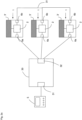
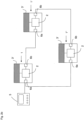
- the laboratory instruments of a system are networked together, i.e. each laboratory instrument is configured to establish a data connection to at least one other laboratory instrument of the system. It can be a wireless or wired connection.
- the network can comprise a serial arrangement of the laboratory instruments, which are logically disposed in succession and which are preferably used in this sequence, or else in a different sequence, during a treatment process.
- the arrangement can be in the form of a chain, but it can also be in the form of a ring or a star or it can be networked differently.
- the access control device preferably enables the access of one or more further users to the laboratory device to be controlled when a first user is already logged on and the session of said first user is still running on the laboratory instrument, i.e. when the access of the further user still is active.
- the laboratory instrument can be used more efficiently and the productivity of the laboratory can be improved.
- the access control preferably provides for at least two, preferably a plurality of, roles. Possible roles are, in particular, administrator ("Admin"),maintenance, normal laboratory user (“LabUser”), inexperienced laboratory user (“Inexperienced”), manager. Such roles enable a secure and efficient access control.
- the use of a laboratory instrument provided with the access control device is safe and efficient. This prevents, in a simple manner, a user, for example due to lack of qualification, from performing certain operations on the laboratory instrument which could possibly lead to damage or inefficient use of the laboratory instrument or to increased costs during operation, e.g. due to excessive use of consumables used for a treatment.
- the control apparatus of the access control device and/or the control apparatus of the laboratory instrument comprises a storage apparatus in which user qualification data are stored, which are assigned each user of the laboratory instrument qualification in the form of at least one qualification value or certificate.
- the access control device in particular the control apparatus of the access control device, is configured in such a way that the authorizations and/or access permissions are granted to a user, in particular, the latter is assigned a role, as a function of his qualifications.
- users may use the laboratory instrument in accordance with their qualification and, in particular, inexperienced users are not overwhelmed. As a result, the productivity and operational safety during use of the laboratory instrument are increased.
- control apparatus of the access control device and/or the control apparatus of the laboratory instrument are embodied to carry out a qualification method for at least one user, in which the at least one user runs through a qualification exam, which is carried out and evaluated by the control apparatus, and wherein the qualification method in particular provides for the data entered by the at least one user as a response to specific questions to be evaluated and in particular provides for the at least one user to be assigned a qualification, in particular in accordance with a comparison table or a computational prescription, as a function of the result of this evaluation.
- a qualification method carried out on the access control device or on the laboratory instrument is particularly practically relevant and therefore efficient.
- control apparatus of the access control device and/or the control apparatus of the laboratory instrument are embodied, by means of the access control device, to grant and/or withdraw certain access permissions to functions of the laboratory machine to or from the user, depending on his qualification.
- control apparatus of the access control device and/or the control apparatus of the laboratory instrument are embodied to display to the user, depending on his qualification, at least one graphical user interface, which corresponds to the qualification, on the display of the user interface apparatus and/or, in particular, to make available or not make available certain assistance programs or auxiliary information.
- control apparatus of the access control device and/or the control apparatus of the laboratory instrument comprises a timer, in particular a clock, and, in particular, a booking apparatus, which comprises a storage apparatus which stores booking data, which, in particular, contain at least one booking data record or a plurality of booking data records, which describe at least one booking schedule, in particular individually for each treatment apparatus.
- a timer in particular a clock
- a booking apparatus which comprises a storage apparatus which stores booking data, which, in particular, contain at least one booking data record or a plurality of booking data records, which describe at least one booking schedule, in particular individually for each treatment apparatus.
- a booking data record contains, in particular, at least one of the items of information, in particular, which user, in particular at what time, carries out, has carried out or will carry out, in particular, which treatment of samples, in particular by means of which the laboratory instrument.
- the booking data preferably contain information about the bookings accepted by the booking apparatus, which bookings were in fact confirmed after comparison with the free capacities present in the booking schedule and were recorded in the booking schedule.
- the booking data may also contain booking requests, which the booking apparatus can recheck, in particular even at a later time after the request was placed, and possibly accept at a later date, for example if an earlier entry in the reservation schedule was subsequently cancelled.
- the reservation data record preferably also contains information about what type of treatment is in each case planned on the laboratory instrument and/or information about the process program used, and preferably contains, in particular, at least one program parameter or control parameter.
- the access control device is configured to transmit to a user upon request at least one item of information about the booking schedule, in particular to transmit the whole or part of the booking schedule or to transmit at least one change in the booking schedule.
- the access control device is configured to transmit a notification automatically to a user, depending on at least one condition. This condition could be the change in the reservation schedule of a laboratory instrument, in particular in relation to the availability of a date for carrying out a treatment, in particular the release or cancelling of a date.
- the "type of treatment" is, in particular, predetermined by the program parameters characterizing treatment.
- program parameters are, in particular, used by the control apparatus to generate a process program.
- a process program is a control code for controlling the treatment by means of control parameters.
- the control parameters are generated by the control apparatus, in particular by a control program running on the control apparatus, e.g. an operating system, while using the program parameters.
- the treatment of a sample is carried out, in particular, by virtue of a process program being executed by the control apparatus.
- a “type of treatment” means a process, namely a type of application (e.g. "MagSep Blood gDNA", “Compose Mastermix” etc.).
- a desired application i.e. a "type of treatment”
- This application which is also referred to as "process”
- at least one program parameter is queried by the user by means of the program module.
- a program module generates, in particular, a process program on the basis of the at least one program parameter selected by the user.
- control apparatus of the access control device and/or the control apparatus of the laboratory instrument is embodied to store booking data in the storage apparatus of the booking apparatus.
- control apparatus of the access control device and/or the control apparatus of the laboratory instrument is configured to record the booking data record entered by the user into the laboratory instrument, in particular by means of the user interface apparatus or a portable or mobile user interface apparatus.
- control apparatus of the access control device and/or the control apparatus of the laboratory instrument is embodied to compare the booking data record entered by the user with booking data already stored in the storage apparatus of the user interface apparatus.
- control apparatus of the access control device and/or the control apparatus of the laboratory instrument is embodied to evaluate some or all booking data records, entered by at least one user and stored in the storage apparatus, in accordance with an evaluation method stored in the storage apparatus and to create the schedule according to at least one criterion by virtue of the booking data records being sorted in accordance with the at least one criterion of a sort method stored in the control apparatus.
- control apparatus of the access control device and/or the control apparatus of the laboratory instrument is embodied to assign the at least one booking data record a priority by means of an evaluation method, which priority is established in accordance with at least one criterion.
- the criteria can, in particular, be represented by a data table stored in the control apparatus, in which data table e.g. the priority is related to at least one other parameter, wherein this other parameter may characterize e.g. the user or a user group, or the classification of a treatment in accordance to a list of relevance (e.g. from important to unimportant, expensive to cost-effective, etc.).
- data table e.g. the priority is related to at least one other parameter, wherein this other parameter may characterize e.g. the user or a user group, or the classification of a treatment in accordance to a list of relevance (e.g. from important to unimportant, expensive to cost-effective, etc.).
- control apparatus of the access control device and/or the control apparatus of the laboratory instrument is embodied in such a way that the sort method sorts at least two booking data records in accordance with at least one criterion in order, in particular, to create a schedule which uses other time data than what is provided for in the booking data records of the users.
- the criterion can be selected in accordance with the definitions in the evaluation method.
- the control apparatus is embodied to sort the booking data records under the aspect of a resource being optimized.
- the resource can be the time; in particular, a minimization of the waiting times can be sought after, a user in each case experiencing said waiting times as the difference between the start time, as desired by said user, and the start time, assigned by the laboratory instrument after evaluation and sort, for the experiment of said user, i.e. the treatment desired by said user.
- the minimization of the passive time, during which a laboratory instrument is not used, may also be sought after.
- the resource may also be the energy which, as a function of the sequence of treatments, is possibly consumed to a different extent over different and successive ones of said treatments .
- the resource may be a consumable, in particular a substance, e.g. a cleaner, or specific transport containers, e.g. pipette tips, or storage containers, e.g. microtiter plates, which, as a function of the sequence of treatments, are consumed to a different extent over various and successively carried out ones of said treatments.
- a consumable in particular a substance, e.g. a cleaner, or specific transport containers, e.g. pipette tips, or storage containers, e.g. microtiter plates, which, as a function of the sequence of treatments, are consumed to a different extent over various and successively carried out ones of said treatments.
- the same processes are possibly used in treatments planned by different users, and so it may be efficient to sort bookings on the basis of the processes.
- a specific substance and/or a specific consumable and/or a specific tool is used in a plurality of processes planned by different (or the same) user(s).
- the resource can also be the plurality of laboratory instruments, on which the bookings occurring during a booking period of time are to be distributed automatically in accordance with the plurality of booking data records from a plurality of users in order to obtain an optimal use of the parks of laboratory instruments available in a laboratory.
- the resource may therefore consist of using a plurality of laboratory instruments optimally in time, in particular taking into account at least one experiment or a plurality of experiments which may each require different laboratory instruments.
- a higher ranked role e.g. an "administrator”
- a higher ranked role e.g. an "administrator”
- an (external) service technician wishes/needs to service the treatment apparatus(es) on said date or because of other aforementioned reasons.
- an action without consultation is not preferred, rather a note to the user(s) of the booked one or more treatment apparatuses to the effect that the use of the treatment apparatus needs to be moved to a later date is preferable.
- proposing a suitable alternative time may also be expedient.
- the control apparatus is preferably embodied to emit such a notification via the user interface apparatus of the relevant user, in particular by using a remote data connection.
- a booking mechanism which is designed as a FIFO list (FIFO - first in, first out) and which in turn is used for informing the top-most user the moment the treatment apparatus becomes unoccupied or when it will be unoccupied during a selected period of time in the future, is particularly suitable.
- This information then preferably also comprises the timeframe for which the treatment apparatus is available. The topmost user would then receive the priority to occupy the treatment apparatus for a defined period of time. If he does not do this, the user is removed from the list and the option for occupation is transferred to the next user on the list, etc.
- instrument-controlled treatment means that the treatment of the at least one laboratory sample is at least partly controlled, in particular performed, by the laboratory instrument. To the extent that the treatment is controlled and/or carried out by the laboratory instrument, said treatment in this respect is, in particular, not controlled and/or performed by the user, in particular not controlled and/or performed manually by the user.
- An instrument-controlled treatment is furthermore preferably understood to mean that the treatment is at least partly controlled, in particular performed, by the laboratory instrument as a function of at least one user input.
- the user input may occur prior to the start of the treatment and/or during the treatment.
- the user input preferably occurs using a user interface apparatus, which is preferably a component of the laboratory instrument or which is provided separately from the laboratory instrument and signal connected to the control apparatus of the laboratory instrument and/or to the control apparatus of the access control device.
- the user input serves, in particular, for entering at least one parameter, the value of which influences and/or controls the treatment.
- This paramter can, in particular, be a program parameter.
- the "instrument-controlled treatment” denotes, in particular, the at least partly automated treatment.
- the treatment in the case of a partly automated treatment, it is possible, in particular, for the treatment to be performed in such a way that, after the treatment has started and before the treatment is complete, there is at least one user input, by means of which the user can influence the current treatment, in particular by virtue of said user e.g. responding to an automatic query brought about by means of a user interface apparatus of the laboratory instrument, in particular by virtue of confirming or denying an input or undertaking other inputs.
- the treatment it is possible, in particular, for the treatment to have a plurality of treatment steps which, in particular, are performed automatically and successively in time and which have at least one treatment step that requires a user input, which, in particular, is brought about via a user interface apparatus.
- An instrument-controlled treatment is preferably a program-controlled treatment, i.e. a treatment controlled by a program.
- a program-controlled treatment of a sample should be understood to mean that the process of treatment substantially takes place by working through a plurality or multiplicity of program steps.
- the program-controlled treatment takes place using at least one program parameter, in particular at least one program parameter selected by the user.
- a parameter selected by a user is also referred to as a user parameter.
- the program-controlled treatment preferably takes place with the aid of a digital data processing apparatus which, in particular, may be a component of the control apparatus of the laboratory instrument.
- the data processing apparatus can comprise at least one processor, i.e. a CPU, and/or at least one microprocessor.
- a program parameter may be a program parameter required on the part of the user.
- a program parameter required on the part of the user is distinguished by the fact that it is required for performing a treatment, in particular for performing a process program.
- Other program parameters, which are not required on the part of the user may be derived from the program parameters required on the part of the user or may be made available in a different manner, in particular they may optionally be set by the user.
- a program parameter is set by a user by displaying a selection of possible predetermined values from a list of predetermined values stored in the laboratory instrument, wherein the user selects, and therefore sets, the desired parameter from this list. It is also possible for this program parameter to be set by virtue of the user entering the value, e.g.
- the program is processed and therefore executed by the processor(s) of the computer as a sequence of machine commands, i.e. processor commands.
- a "computer program” is also understood to mean the source text of the program from which the executable code can be generated in the progress of the control of the laboratory instrument.
- a statement denotes a central element of a programming language. Programs of such languages are primarily composed of one or more statements.
- a statement constitutes a single prescription, formulated within the syntax of a programming language, which prescription is to be executed when working through the program.
- the syntax of a statement is set by the respective programming language or the specification thereof.
- statements are often also referred to as commands.
- Statements are usually assignments, control statements (such as branches, loops and conditional statements) and procedural calls. Assertions, declarations, class definitions and function definitions and also (?) statements are in part dependent on the programming language. Thus, the statements of the control program can be configured in a conventional manner.
- a program module is understood to be a complete functional unit of software, consisting of a sequence of processing steps and data structures.
- the content of a module is often a recurring calculation or handling of data, which needs to be carried out a number of times.
- Modules offer an encapsulation by separating interface and implementation: the interface of a module defines the data elements which, as input and result of the processing, are required by the module.
- the implementation contains the actual program code.
- a module is called as a function or sub-program, executes a number of processing steps and, as a result, provides data back to the calling program.
- a module itself is able to call further modules - thus, a hierarchy of program calls is possible.
- the data structures and processes set in modules can, when necessary, be inherited and inherited by other modules. Therefore, modules are an essential element in structured and object-oriented programming.
- a control program is understood to mean an executable computer program, which preferably controls and/or performs the desired treatment of the at least one sample, in particular as a function of at least one program parameter.
- This program parameter can be a program parameter influenced and/or set by the user.
- the treatment can be controlled by virtue of the control apparatus generating one or more control parameters as a function of the program parameters, by means of which control parameters the at least one treatment apparatus is controlled.
- the laboratory instrument preferably has an operating system, which can be or comprise a control program.
- the control program can denote an operating system of the laboratory instrument or a component of the operating system. The operating system controls the treatment and further operating functions of the laboratory instrument.
- control program can be signal connected to the access control device and/or can control the access control device.
- the control apparatus of the access control device can be integrated into the control apparatus of the laboratory instrument or can be embodied separately from this control apparatus.
- the access control device can be integrated into the control apparatus of the laboratory instrument.
- the control device of the access control device can be integrated into control device of the laboratory instrument, can be controllable by the control program and/or can, in particular, be integrated into the control program.
- the control program can control further preferably provided functions of the laboratory instrument, for example an energy-saving function of the laboratory instrument or a communication function for communication with external data processing apparatuses which, in particular, are provided separately from the laboratory instrument and, in particular, are not a component of the laboratory instrument.
- a process program is understood to mean a program which determines the specific progress of a treatment, in particular in accordance with a predetermined type of treatment and/or in accordance with a manner set on the part of the user.
- the invention furthermore relates to a laboratory instrument for instrument-controlled treatment of at least one laboratory sample, which laboratory instrument comprises at least one treatment apparatus for performing the treatment of the at least one laboratory sample, and an access control device according to the invention.
- the laboratory instrument comprises a communication apparatus for establishing a remote data connection for data interchange with an external instrument, which likewise comprises a suitable communication apparatus for establishing a remote connection for data interchange with the laboratory machine.
- a communication apparatus can be embodied for establishing a radio connection, in particular a mobile communications connection.
- the communication apparatus is preferably configured to enable remote access of the user to the laboratory instrument, in particular for selecting or setting of at least one parameter, in particular a parameter which controls a function of the laboratory instrument, in particular the function of performing a treatment.
- the control apparatus of the access control device or of the laboratory instrument is embodied to provide synchronization data.
- the access control device in particular the control apparatus of the access control device, is configured in such a way that, if at least one condition is satisfied, information about the operating state of the laboratory instrument, measured values or settings and programs of the laboratory instrument which can be influenced by the user are transmitted to the second user interface apparatus via the interface apparatus.
- the laboratory instrument in particular a treatment running thereon, can continue to be observed and/or controlled by means of the second user interface apparatus.
- the use state of the first interface apparatus can be partly or completely copied or cloned in the second user interface apparatus.
- the information transfer can, in particular, be a synchronization process.
- the first and second user interface can be synchronized, in particular in this manner.
- the at least one condition may be that the access of the accessing user is brought about by means of a remote data connection via a (mobile) user interface apparatus and the request of the user is brought about after synchronization.
- the at least one condition can moreover be the condition a) or b), namely the response to the check whether the logging-on user has already previously, via a first user interface apparatus, a) activated one or more currently executed functions of the laboratory instrument or b) logged on.
- the synchronization would only be allowed for a user with an active session and/or with currently activated functions on the laboratory instrument, in particular with running treatments which were initiated by the user.
- a further user it is also possible and preferred for a further user to be allowed to carry out synchronization, e.g. in order to perform remote control for the purpose of providing assistance during the current session or treatment or for the purpose of carrying out servicing works, etc.
- control apparatus of the access control device is configured to transfer these synchronization data to an - in particular mobile - user interface apparatus.
- these synchronization data are suitable for displaying the information displayed in the display of the user interface apparatus at least partly in an identical manner on the display of the - in particular mobile - user interface apparatus.
- laboratory instrument denotes, in particular, an instrument which is embodied for instrument-controlled treatment of at least one laboratory sample and which is embodied for use in a laboratory.
- This laboratory can be, in particular, a chemical, biological, biochemical, medical or forensic laboratory.
- Such laboratories serve for research and/or analysing laboratory samples, but can also serve for the manufacture of products by means of laboratory samples or the manufacture of laboratory samples.
- a laboratory instrument is preferably one of the following laboratory instruments and/or is preferably embodied as at least one of the following laboratory instruments: a laboratory centrifuge, also referred to as “centrifuge”; a thermocycler, also referred to as “cycler”; a laboratory spectral photometer, also referred to as “biospectrometer”; a cell counting instrument, also referred to as “cell counter”, in particular optical counting instruments; a laboratory incubator, also referred to as “incubator”; a laboratory shaker, also referred to as “shaker”; a laboratory mixer, also referred to as “mixing device”; a laboratory freezer, also referred to as “freezer”; a bioreactor, also referred to as fermenter; a safety work bench, in particular biological safety cabinet, also referred to as “biosafety cabinet”; a sample plate reader, also referred to as “plate reader”; in particular "microplate reader”; a laboratory machine for treating fluid samples, in particular a pipetting machine.
- a laboratory centrifuge is an instrument which works using inertia.
- the laboratory centrifuge in particular the treatment apparatus of the laboratory centrifuge, comprises, in particular, at least one rotor, in which the at least one laboratory sample can be disposed.
- the at least one rotor is disposed rotatably in at least one centrifuge vessel.
- the laboratory centrifuge, in particular the treatment apparatus of the laboratory centrifuge comprises at least one drive apparatus, by means of which the rotation is driven and/or braked.
- the samples can be disposed in the at least one rotor, preferably in laboratory containers, e.g. sample tubules, which are disposed in suitable holders in the rotor.
- the laboratory centrifuge in particular the treatment apparatus of the laboratory centrifuge, preferably comprises at least one heater/cooling apparatus, by means of which the temperature of the at least one sample disposed in the rotor can be controlled and/or regulated.
- the laboratory centrifuge, in particular the treatment apparatus of the laboratory centrifuge preferably comprises a timer apparatus, by means of which time parameters of the rotation or temperature settings can be controlled.
- the functionality is based upon the centrifugal force, which occurs due to a uniform circular motion of the samples to be centrifuged. The centrifugal force is used for substance separation of substances with different densities, which are contained in a sample.
- thermocycler is an instrument that is able, successively in time, to set the temperature of at least one sample to a predetermined temperature and to keep said sample at this temperature level for a predetermined duration.
- the progress of this temperature control is cyclical. That is to say, a predetermined temperature cycle, i.e. a sequence of at least two temperature levels, is carried out repeatedly.
- This method serves, in particular, for performing a polymerase chain reaction (PCR).
- PCR polymerase chain reaction
- a thermocycler is sometimes also referred to as a PCR block.
- a thermocycler, in particular the treatment apparatus of the thermocycler preferably has a thermoblock.
- thermoblock is a sample holder made of a heat-conducting material, usually a metal-containing material or a metal, in particular aluminium or silver.
- the sample holder comprises a contacting side which is contacted by at least one heater/cooling apparatus of the thermocycler, in particular by a Peltier element.
- the thermocycler in particular the treatment apparatus of the thermocycler, comprises a regulation apparatus with at least one control loop, to which the at least one heater/cooling apparatus is assigned as an actuator and at least one temperature measurement apparatus is assigned as a measurement member.
- the temperature is regulated to a temperature level by means of the controlling system.
- thermocycler in particular of the treatment apparatus of the thermocycler, serves for cooling sections of the thermocycler, in particular for cooling the Peltier elements.
- the thermocycler in particular the treatment apparatus of the thermocycler, may comprise further heater and/or cooling elements.
- the thermocycler, in particular the treatment apparatus of the thermocycler preferably comprises a timer apparatus, by means of which time parameters for setting the temperature cycle can be controlled.
- the instrument-controlled treatment of the at least one laboratory sample corresponds to a temperature cycle treatment in a thermocycler, with at least one sample being subjected to said rotational treatment.
- Possible parameters, in particular program parameters, in particular user parameters, which are used to influence a temperature cycle treatment define, in particular, the temperature of the temperature level, the duration of a temperature level, the control of further heater and/or cooling elements and/or the number of temperature levels or cycles and/or at least one progress parameter, which influences or defines the progress, in particular the sequence, of a temperature monitoring program consisting of a plurality of steps.
- a laboratory spectrophotometer is an instrument which, by illuminating at least one measurement volume of at least one laboratory sample, usually over the whole spectrum of visible light from infrared to ultraviolet, establishes the values of diffuse reflection. Diffuse reflection refers to the situation in which a measurement volume absorbs part of the light spectrum and transmits part of the spectrum (transparent media) or reflects it (opaque media).
- the laboratory spectrophotometer is used, in particular, to measure the absorptivity of a sample as a function of the light wavelength. Moreover, it is possible, in particular, to extend the field of application of the laboratory spectrophotometer by means of various modules.
- the instrument-controlled treatment of the at least one laboratory sample corresponds to a light and measurement treatment in a laboratory spectrophotometer, with at least one sample being subjected to said treatment.
- Possible parameters, in particular program parameters, in particular user parameters, which are used to influence a light and measurement treatment define, in particular, the optical light spectrum, by means of which the at least one sample is irradiated and/or at least one progress parameter, which influences or defines the progress, in particular the sequence, of a light and measurement treatment program consisting of a plurality of steps.
- a cell counting instrument serves for counting biological cells or particles which are contained in the laboratory sample.
- There are different physical principles which can be used to count cells in particular optical methods, in which the laboratory sample to be measured is disposed in a counting chamber, there is additional illumination, particularly in the case of automatically operating ones, and an image of the cells or particles disposed in the counting chamber is acquired and evaluated.
- a further established method lies in measuring the impedance: a cell counting instrument embodied as a Coulter counter guides the laboratory sample containing the cells through an aperture ("measurement port"). Each passage of a cell through the aperture is detected electrically as a countable event.
- Optical cell counting instruments in particular the treatment apparatus of the cell counting instrument, preferably comprise, depending on the embodiment, at least one light source, at least one image acquisition unit and at least one image evaluation unit, and additionally, inter alia, a positioning apparatus.
- the instrument-controlled treatment of the at least one laboratory sample corresponds e.g. to a light and measurement treatment in the case of an optical cell counting instrument, a pumping and measurement treatment in the case of an instrument operating according to the Coulter principle, to which treatment the at least one sample is subjected.
- Possible parameters, in particular program parameters, in particular user parameters, which are used to influence a light and measurement treatment or the pumping and measurement treatment define, in particular, the light intensity of the light source, by means of which the at least one sample is irradiated and/or at least one progress parameter, which influences or defines the progress, in particular the sequence, of a light and measurement treatment program or the pumping and measurement treatment program consisting of a plurality of steps.
- the algorithms necessary for the image evaluation, the sequence and parameterization thereof are decisive for the significance of the measurement result.
- a laboratory incubator is an instrument by means of which controlled climatic conditions for various biological development and growth processes can be set up and maintained. It serves to set up and maintain a microclimate with regulated gas and/or humidity and/or temperature conditions in an incubator space, wherein this treatment may be dependent on time.
- the laboratory incubator in particular the treatment apparatus of the laboratory incubator, comprises, in particular, a timer, in particular a timer switch, a heater/cooling apparatus and preferably a setting for regulating the substitute gas supplied to the incubator space, in particular fresh air, a setting apparatus for the composition of the gas in the incubator space of the laboratory incubator, in particular for setting the CO 2 and/or O 2 content of the gas and/or a setting apparatus for setting the humidity in the incubator space of the laboratory incubator.
- the laboratory incubator in particular the treatment apparatus of the laboratory incubator, comprises, in particular, the incubator space, furthermore preferably a regulation apparatus with at least one control loop, to which at least one heater/cooling apparatus is assigned as an actuator and at least one temperature measurement apparatus is assigned as a measurement member.
- the temperature can be regulated in the incubator by means of the controlling system.
- CO 2 incubators serve, in particular, for cultivating animal or human cells.
- Incubators may have turning devices for turning the at least one laboratory sample and/or a shaker apparatus for shaking or moving the at least one laboratory sample.
- the instrument-controlled treatment of the at least one laboratory sample corresponds to a climate treatment in a laboratory incubator, with at least one sample being subjected to said treatment.
- Possible parameters, in particular program parameters, in particular user parameters, which are used to influence a climate treatment define, in particular, the temperature of the incubator space, in which the at least one sample is incubated, the O 2 and/or CO 2 partial pressure in the incubator interior, the humidity in the incubator interior and/or at least one progress parameter, which influences or defines the progress, in particular the sequence, of a incubation treatment program consisting of a plurality of steps.
- a laboratory shaker serves for moving a laboratory sample, in particular for mixing a laboratory sample comprising a plurality of constituents.
- laboratory shakers in particular overhead shakers or flatbed shakers.
- Laboratory shakers can comprise a temperature control function for controlling the temperature of at least one laboratory sample and can, in particular, comprise an incubator function for incubating the at least one laboratory sample in controlled climatic conditions.
- Laboratory shakers, in particular the treatment apparatus thereof can, in particular, be configured to perform an oscillating motion.
- Laboratory shakers in particular the treatment apparatus thereof, comprise, in particular, a drive for driving the motion, comprise, in particular, a timer apparatus, by means of which time parameters of the setting of the shaker treatment can be controlled and, in particular, comprise at least one heater/cooling apparatus and at least one control apparatus with at least one control loop, which is assigned the at least one heater/cooling apparatus as actuator and at least one temperature measurement apparatus as measurement member.
- the instrument-controlled treatment of the at least one laboratory sample corresponds to a shaker treatment in a laboratory shaker, with at least one sample being subjected to said treatment.
- Possible parameters, in particular program parameters, in particular user parameters, which are used to influence a shaker treatment define, in particular, the movement intensity, in particular the movement frequency in the case of an oscillating drive, a time period during the shaker treatment and/or at least one progress parameter, which influences or defines the progress, in particular the sequence, of a shaker treatment program consisting of a plurality of steps.
- a laboratory mixer also referred to as "mixing device" serves like the laboratory shaker for moving a laboratory sample, in particular for mixing a laboratory sample comprising a plurality of constituents.
- a laboratory mixer enables movements with higher frequencies, in particular with higher rotational speeds.
- Laboratory mixers, in particular the treatment apparatus thereof, can, in particular, be configured to perform an oscillating motion.
- Laboratory mixers in particular the treatment apparatus thereof, comprise, in particular, a drive for driving the motion, comprise, in particular, a timer apparatus, by means of which time parameters of the setting of the mixer treatment can be controlled and, in particular, comprise at least one heater/cooling apparatus and at least one control apparatus with at least one control loop, which is assigned the at least one heater/cooling apparatus as actuator and at least one temperature measurement apparatus as measurement member.
- the instrument-controlled treatment of the at least one laboratory sample corresponds to a mixer treatment in a laboratory mixer, with at least one sample being subjected to said treatment.
- Possible parameters, in particular program parameters, in particular user parameters, which are used to influence a mixer treatment define, in particular, the movement intensity, in particular the movement frequency in the case of an oscillating drive, a time period during the mixer treatment and/or at least one progress parameter, which influences or defines the progress, in particular the sequence, of a mixer treatment program consisting of a plurality of steps.
- a laboratory freezer serves for storing at least one laboratory sample in a freezer room at regulated temperatures, in particular in the freezer range from -18°C to -50°C or in the ultra-freezer range from -50°C to -90°C.
- a laboratory freezer is not a refrigerator, which can be used for cooling at temperatures in the range from 0°C to 10°C or from -10° to 10 °C in particular.
- the laboratory freezer, in particular the treatment apparatus of the laboratory freezer comprises, in particular, at least one cooling apparatus and at least one regulation apparatus with at least one control loop, to which at least one cooling apparatus is assigned as an actuator and at least one temperature measurement apparatus is assigned as a measurement member.
- a laboratory freezer in particular the treatment apparatus of the laboratory freezer, comprises, in particular, a monitoring measurement instrument for measuring the temperature and/or in particular at least one alarm apparatus, by means of which an alarm signal is emitted if the temperature measured in the freezer space departs from a permitted temperature range.
- a laboratory freezer in particular the treatment apparatus of the laboratory freezer, can, in particular, comprise an information reader for reading information. This information can be contained in an information medium which can be connected to an article. This article can, in particular, be a sample container which can contain at least one laboratory sample.
- the information medium can, in particular, comprise an RFID chip or other identification features, such as e.g. a barcode, a data matrix code, a QR code, which can be read by suitable methods.
- the instrument-controlled treatment of the at least one laboratory sample corresponds to a low-temperature treatment in a laboratory freezer, with at least one sample being subjected to said treatment.
- Possible parameters, in particular program parameters, in particular user parameters, which are used to influence a low-temperature treatment define, in particular, the temperature of the freezer-space space, in which the at least one sample is frozen and/or the information read process, which is preferably carried out when an article provided with an information medium is transferred from a user into the laboratory freezer.
- a bioreactor comprises a container, in which specific micro-organisms, cells or small plants are cultivated (also: fermented) under conditions which are as ideal as possible.
- the operation of a bioreactor therefore is an application of biotechnology, which, in technical apparatuses, uses biological processes, in particular bioconversion or biocatalysis, or makes these available.
- Factors which can be controlled or monitored in most bioreactors, in particular by setting appropriate parameters, are the composition of the nutrient solution, the oxygen supply, temperature, pH, sterility and/or other factors.
- the purpose of cultivation in a bioreactor may be the harvesting of cells or constituents of cells, or the harvesting of metabolic products.
- bioreactors such as e.g. in sewage water treatment in sewage works.
- the production of beer, wine and other such products likewise occurs in bioreactors.
- the most diverse type of organisms are cultivated in bioreactors for various purposes.
- a bioreactor can therefore have different configurations. It can be configured as stirred tank reactor, which can have a volume from a few millilitres to hundreds of litres and can be filled with nutrient solution. It can also be used or embodied as a fixed bed reactor or photobioreactor.
- a bioreactor can be part of a bioreactor system, preferably of a parallel bioreactor system. In such a parallel bioreactor system, a multiplicity of bioreactors are operated in parallel and controlled with high precision.
- a bioreactor, in particular the treatment apparatus thereof comprises, in particular, a stirring apparatus for stirring the sample contained in the reactor container, in particular for stirring the nutrient solution.
- a bioreactor, in particular the treatment apparatus thereof comprises, in particular, a pump apparatus for pumping the laboratory sample, which is preferably configured as nutrient solution.
- a bioreactor, in particular the treatment apparatus thereof comprises, in particular, a setting apparatus for setting a gas content in the reactor container, in particular the content of CO 2 and/or O 2 or of dissolved oxygen (DO).
- DO dissolved oxygen
- a bioreactor in particular the treatment apparatus thereof, comprises, in particular, a setting apparatus for setting, in particular regulating, a pH in the sample in the reactor container.
- the instrument-controlled treatment of the at least one laboratory sample corresponds to, in particular, a nutrient solution treatment in a bioreactor, with at least one sample, preferably embodied as nutrient solution, being subjected to said treatment.
- Possible parameters, in particular program parameters, in particular user parameters, which are used to influence a nutrient solution treatment define, in particular, the temperature of the nutrient solution in the reactor container and/or the speed of the stirrer apparatus, in particular the rotational speed and/or the pump speed or the metering speed and/or a gas content in the nutrient solution, in particular CO 2 and/or O 2 or dissolved oxygen (DO) and/or the pH value of the nutrient solution and/or at least one progress parameter, which influences or defines the progress, in particular the sequence, of a nutrient solution treatment program consisting of a plurality of steps.
- the temperature of the nutrient solution in the reactor container and/or the speed of the stirrer apparatus in particular the rotational speed and/or the pump speed or the metering speed and/or a gas content in the nutrient solution, in particular CO 2 and/or O 2 or dissolved oxygen (DO) and/or the pH value of the nutrient solution and/or at least one progress parameter, which influences or defines the progress
- a biological safety cabinet serves, in particular, for secure storage or stockpiling of hazardous materials, in particular for meeting a biological protection level.
- these levels are standardized in EU Directive 2000/54/EG on the protection of workers from risks related to exposure to biological agents at work and, in Germany, in the German Ordinance on Biological Substances.
- a biological safety cabinet is intended to prevent laboratory samples stored in a biological safety cabinet from endangering the surroundings if danger develops.
- safety is ensured by virtue of the atmosphere contained in the receiving region of the biological safety cabinet being replaced and, in particular, filtered.
- this atmosphere is conveyed through the receiving region by a conveying apparatus and moved through a filter, which filters the atmosphere and, in particular, removes hazardous materials.
- the biological safety cabinet in particular the treatment apparatus thereof, comprises, in particular, a conveying apparatus for conveying atmospheric gas, comprises, in particular, a timer apparatus for measuring a filter operation duration and a ventilator operation duration and/or comprises, in particular, a measurement apparatus for measuring a conveyed amount of atmospheric gas.
- the instrument-controlled treatment of the at least one laboratory sample corresponds, in particular, to an atmospheric gas treatment for treating the atmospheric gas, in which the at least one sample is stored, in a biological safety cabinet.
- Possible parameters, in particular program parameters, in particular user parameters, which are used to influence an atmospheric gas treatment define, in particular, the temperature of the atmospheric gas in the receiving region and/or the flow speed of the atmospheric gas conveyed by the conveying apparatus, the amount of air conveyed, the filter operation duration and/or the ventilator operation duration.
- a sample plate reader also referred to as “plate reader” or “microplate reader” is a laboratory instrument for detecting biological, chemical or physical events of samples in microtitre plates. They are used widely in research: for active ingredient research, bioassay validation, quality control and manufacturing processes in the pharmaceutical and biotech industry and in academic organizations.
- the sample plate reader can, in particular, comprise at least one light source or radiation source, can comprise at least one photodetector, can comprise a temperature control apparatus for the temperature control of the samples or the sample plates and can comprise a timer. Sample reactions can be tested in 6-1536 well microtiter plates.
- sample plates in particular microtiter plates, which are used in academic research laboratories or in clinical-diagnostic laboratories, is a 96 well plate (an 8 by 12 matrix) with a typical individual volume of between 100 and 200 ⁇ l per well.
- microtiter plates with a higher density (384 or 1536 well microtiter plates) are typically used in screening applications if the throughput (number of samples to be processed per day) and assay costs per sample become critical parameters, and these have a typical assay volume of between 5 and 50 ⁇ l per well.
- the treatment is, in particular, an optical measurement of the microtiter plate, in particular the measurement of an absorption, fluorescence intensity, luminescence, time-resolved fluorescence and/or fluorescence polarization.
- Possible parameters, in particular program parameters, in particular user parameters, which are used to influence a measurement define, for example, the intensity of the light source, the sensitivity of the photodetector, a time duration and/or a temperature.
- a laboratory machine for treating fluid samples serves for the program-controlled treatment of these samples.
- a laboratory machine can be a laboratory instrument or comprise at least one laboratory instrument of the aforementioned type and/or can be embodied to carry out at least one, some or all of the treatments that can be executed by this aforementioned laboratory instrument.
- a laboratory machine comprises the treatment apparatus for automatic, program-controlled treatment of the at least one laboratory sample, wherein the treatment is controlled by using a plurality of program parameters, which are at least partly selected by the user.
- the sample can, for example, be moved and/or transported by the laboratory machine or a treatment apparatus of the laboratory machine.
- This treatment apparatus of a laboratory machine usually comprises a worktop with workstations, on which samples can be handled or stored in various ways.
- the treatment apparatus usually comprises an instrument-controlled movement device and an instrument-controlled fluid-transfer apparatus, which can e.g. comprise a pipetting system. Both the transport of the samples and the treatment thereof at the various stations can be carried out in an instrument-controlled manner, in particular in a program-controlled manner. Then the treatment is preferably at least partly or completely automated.
- the user of the laboratory machine can preferably set the type of treatment for the sample.
- a treatment type may, in particular, serve for:
- a laboratory instrument, in particular the laboratory machine is preferably embodied in such a way that the treatment of the at least one laboratory sample can be controlled automatically using the acquired program parameters.
- a laboratory instrument, in particular the laboratory machine, in particular the control program thereof is preferably embodied in such a way that the input undertaken by the user, in particular the at least one value of at least one program parameter, can be used, where necessary, to automatically establish further required program parameters, in particular by calculation or comparison with data in a database of the laboratory machine.
- the control parameters preferably used for performing the treatment in detail are preferably determined automatically.
- control parameters are the parameters required in detail for controlling the technical constituents of the treatment apparatus. Control parameters can be program parameters or can be parameters derived therefrom for the technical implementation, in particular automatically determined parameters.
- a laboratory instrument in particular the laboratory machine, automatically selects the fitting set of program parameters following the treatment type selection by the user, wherein the program parameters thereof required on part of the user are then queried from the user in steps (b) and (c).
- the set of program parameters can contain, firstly, the program parameters required on part of the user and can contain, secondly, further program parameters.
- These further program parameters can be set automatically depending on the selected treatment of type or can be set automatically depending on at least one or all program parameters entered by the user and/or can be stored in the storage apparatus.
- the stored parameter sets are preferably optimized for the type of treatment - or become optimized by the laboratory machine - such as that the user preferably requires no specialist knowledge for optimizing the parameters.
- the control parameters which are necessary for performing the specific treatment by means of the treatment apparatus are derived from the program parameter set.
- a program parameter set of program parameters specific to a treatment type is preferably defined for this treatment type.
- the program parameters of this program parameters set can, in particular, define the accessories to be used for the treatment, e.g. sample container, transport container and/or the further consumables and/or tools to be used.
- the mapping between program parameter set and treatment type is stored in the storage apparatus of the laboratory instrument, in particular of the laboratory machine.
- the laboratory instrument is embodied in such a way that the user can store and/or use more such mappings in the laboratory instrument.
- the operation of the laboratory instrument becomes particularly efficient by these mappings in combination with the clear and well-structured querying of the program parameters.
- This mapping is preferably brought about by using one or more program modules, wherein a program module is respectively tailored to a specific application:
- the laboratory instrument, in particular the laboratory machine comprises at least one program module, with a predetermined program module serving for controlling a predetermined laboratory problem for treating laboratory samples.
- the use of the laboratory instrument, in particular of the laboratory machine becomes even more flexible.
- the laboratory instrument in particular the laboratory machine, can preferably be modified in such a way that it can be used to perform further treatment types. This can be brought about by virtue of the files and/or programs or program constituents required for this, in particular a program module mapped to the treatment type, being subsequently transmitted to the laboratory machine, in particular the storage apparatus thereof.
- a laboratory sample is a sample which can be treated in a laboratory. Instead of the term laboratory sample, the term "sample” is also used in the description of the invention.
- the sample can be a fluid.
- the sample can be liquid, gel-like, powdery or a solid-state body or comprise such phases.
- the sample can be a mixture of such phases, in particular a liquid mixture, a solution, a suspension, e.g. a cell suspension, an emulsion or dispersion.
- a solution is a homogeneous mixture of at least two substances.
- a liquid sample can be of a type which is usually handled in a biological, chemical or medical laboratory.
- a liquid sample can be an analysis sample, a reagent, a medium, a buffer etc.
- a solution has one or more dissolved solid, liquid or gaseous substances (solutes) and furthermore comprises a preferably liquid solvent which, in particular, forms the greater portion or greatest portion of the volume which forms the solution.
- the solvent may itself be
- the treatment of a laboratory sample or samples, particularly in a laboratory machine can contain one or more of the processes specified below, in particular simultaneously or in succession:
- This treatment is, in particular, under program control, using at least one program parameter.
- this treatment is brought about in accordance with at least one control parameter which determines the treatment of the laboratory sample by means of the treatment apparatus.
- a control parameter can set a period of time, a moment in time, a specific sample volume and/or metering volume, a specific sample temperature, etc.
- a control parameter can relate to the automatic use of a specific transport head, a specific type of transport container, a specific type of sample container, one or more individual samples or of specific positions of these components in the workspace.
- a control parameter can relate to the treatment of an individual sample or the treatment of a plurality or multiplicity of samples.
- a control parameter is preferably selected automatically by the laboratory instrument, in particular the laboratory machine, as a function of at least one program parameter; in particular, it is selected automatically as a function of the program parameters selected by the user.
- a control parameter can also correspond to a program parameter.
- the transport of a sample can be transport from a sample container into a transport container and/or from the transport container into a sample container or any other target location.
- This transport is, in particular, under program control, using at least one program parameter.
- the transport container can be e.g. a dispenser container which comprises a movable plunger and an inlet/outlet opening.
- the plunger generates negative pressure or positive pressure in the dispenser container and thus sucks the sample into the container or re-emits it.
- This process follows the displacement principle, i.e. the sample to be moved, which is usually liquid and therefore incompressible, is subjected to forced movement by virtue of the volume previously taken up by the sample being moved by the plunger.
- this plunger is moved, in particular moved under program control, by a movement apparatus which is assigned to the laboratory machine.
- the transport container can furthermore be a pipette tip.
- a pipette tip has an inlet/outlet opening and a second opening.
- the second opening is coupled to a suction apparatus such that a liquid sample can be sucked (pipetted) from a sample container into the transport container by means of negative pressure.
- the sample is emitted by ventilating the suction region, by means of gravity and/or positive pressure which e.g. is generated in the pipette tip by means of the second opening.
- the transport container preferably consists partly or wholly of plastic. It is preferably a consumable article, which is typically only used for one treatment or a small number of treatment steps of the sample. However, the transport container can also consist partly or wholly of a different material.
- the transport of a sample can be a transport of the sample from an initial position to a target position.
- the initial position may be present if the sample is disposed in a first sample container and the target position of this sample can be the position thereof in a second sample container, into which the sample is transferred.
- This type of transport is also referred to presently as sample transfer or transfer.
- a sample transfer is usually carried out in order to transfer a sample from a storage container, in which, for example, the sample was stored and/or which may, for example, contain a relatively large amount of the sample, into a second sample container, in which the sample is subjected to further treatment.
- This transport is, in particular, under program control, using at least one program parameter.
- the transport container preferably is or can be connected to a transport apparatus of the laboratory machine.
- a sample container can be an individual container, in which only a single sample is contained, or it can be a multiple container, in which a plurality of individual containers connected to one another are disposed.
- the single container can be an open container or a sealable container.
- a covering element in particular a sealing cap.
- the covering element can be securely connected to the container, e.g. as a hinged cover or hinged closure cap, or can be used as separate component.
- a multiple container can be embodied as plate element, in which the individual containers are connected in such a way that they form a plate-shaped arrangement.
- the individual containers can be embodied as depressions in a plate or can be interconnected by web elements.
- the plate element can have a frame element, in which the single containers are held.
- These connections between components can be integral connections, i.e. cohesive connections and/or connections generated by a common injection moulding process, or they can be generated in a force-fit and/or form-fit manner.
- the plate element can be a microtiter plate.
- Multiple containers can comprise a plurality (2 to 10) of single containers. They can furthermore comprise a multiplicity (more than 10) thereof, typically 12, 16, 24, 32, 48, 64, 96, 384, 1536 single containers.
- the multiple container can be a microtiter plate.
- a microtiter plate can be embodied in accordance with one or more industrial standards, in particular the industrial standards ANSI/SBS 1-2004, ANSI/SBS 2-2004, ANSI/SBS 3-2004, ANSI/SBS 4-2004.
- the maximum sample volume that can be held by a transport container or sample container typically lies between 0.01 ml and 100 ml, in particular 10 - 100 ⁇ l, 100 - 500 ⁇ l, 0.5 - 5 ml, 5-25 ml, 25-50 ml, 50-100 ml, depending on the type of selected transport container or sample vessel.
- a sample container can comprise an information region, which can contain information about the sample container or the content thereof.
- the information region can contain encoded information, e.g. a barcode or QR code or an RFID chip, or information encoded differently.
- the information can have information for identifying the sample and/or a sample container.
- the laboratory machine can have an information reader for reading this information and preferably providing said information to the control apparatus.
- the sample container preferably consists partly or wholly of plastic. It is preferably a consumable article, which is typically only used for one treatment or a small number of treatment steps of the sample. However, the sample container can also consist partly or wholly of a different material.
- the sample container preferably can be transported by a transport apparatus of the laboratory machine.
- the laboratory instrument in particular the laboratory machine, is preferably embodied to treat a multiplicity of samples in succession and/or in parallel.
- a laboratory instrument in particular the laboratory machine, is preferably embodied to treat, in particular to transport, to empty and/or to fill, a multiplicity of sample vessels, in particular single containers and/or multiple containers, in a program-controlled manner.
- a laboratory instrument in particular the laboratory machine, comprises exactly one workspace.
- a laboratory instrument is compact and can be suitable, in particular, for use on a laboratory table, wherein, in that case, it is also referred to as, in particular, a table-top instrument.
- the table can be the workbench of a chemical, biochemical or biomedical laboratory.
- the laboratory instrument can also be embodied for set up in such laboratory.
- a laboratory instrument with a workspace can furthermore be embodied as an independently operating instrument in such a laboratory or it can be included in an instrument assemblage.
- the laboratory instrument in particular the laboratory machine, can also be embodied as a laboratory line, in which a plurality of workspaces are disposed next one another in such a way that, by means of transport device, a single, a plurality or a multiplicity of samples can be transported successively and/or in parallel between the workspaces.
- a workspace of a laboratory line is preferably embodied in such a way that a specific laboratory object, usually relating to the parallel and/or sequential treatment of a multiplicity of samples, is carried out.
- a high work throughput of the laboratory line is obtained as a result of this specialization of each workspace.
- provision can be made for only one type of treatment of at least one sample or for only a few types of treatment, e.g.
- a treatment apparatus for performing a treatment which is characteristic for a specific laboratory instrument can be disposed at each workstation.
- the transport device can comprise a guide-rail system and/or a robotic apparatus for program-controlled movement of samples or sample containers.
- a laboratory instrument in particular a laboratory machine, can be connected or connectable to an LIMS.
- LIMS is an abbreviation for laboratory information and management system.
- an LIMS is a software system which relates to data processing in an automated or partly automated chemical, physical, biological or medical laboratory. Such data can originate from measurements of the samples and/or relate to the control of the data handling.
- An LIMS preferably serves for measurement value acquisition and measurement value evaluation. LIMS is used to increase the work throughput in a laboratory and/or to optimize the efficiency of the treatment of laboratory samples.
- a workspace can preferably comprise a substantially planar, preferably horizontally disposed worktop.
- the workspace can comprise a plurality of predetermined workstations.
- a workstation can be assigned to a section of the workspace. This assignment can be fixed or can be determined by program control.
- a workstation can be fixedly configured or can be equipped differently.
- the position of the workstations and/or the state of equipment of the workstation can be stored as information in the laboratory machine, in particular in the storage apparatus. This information can be used to enable the program-controlled treatment of samples which are disposed at predetermined positions of the workspace and which are to be treated at one or more of these workstations.
- a workstation can serve for storing substances, e.g. for storing samples, cleaning means, waste.
- a workstation can serve for storing tool elements.
- a tool element can be e.g. a transport head for the fluid transfer, in particular a pipetting head, which can comprise a connection section for connecting one pipette tip (single channel pipetting head) or for connecting a plurality of pipette tips (multiple channel pipetting head). Liquid can be sucked into the at least one pipette tip if the latter is connected to the connection section by means of at least one pressure and gas-tight channel connected to the pipetting head. In the laboratory machine, this pipetting is performed, in particular, in a program-controlled manner; in particular, it is influenced by at least one program parameter.
- the transport head can also be a dispensing head which has at least one movement apparatus for moving a plunger of the dispenser tip.
- the movement apparatus is moved, in particular, in a program-controlled manner; in particular, it is influenced by at least one program parameter.
- the transport head can serve for metering liquid, in particular for metering in different regions; a transport head can be embodied for metering a liquid sample with a volume that can be selected from a volume range specific to this transport head: e.g. 1 - 50 ⁇ L or 20 -300 ⁇ L or 50 -1000 ⁇ L, ("I" and "L” are each an abbreviation for litre).
- a transport head can be embodied as a single-channel head, in which only one sample is transported, or it can be embodied as a multi-channel head, in particular an eight-channel head or a 12-channel head, in which a plurality of samples are handled or transported in parallel.
- a tool element can be e.g. a transport head for transporting objects, for example a carrier and/or gripper tool for carrying and/or gripping an object.
- a carrying tool can comprise a fastening section for detachably fastening the object to the carrying tool, e.g. by a force-fit and/or cohesive and/or magnetic connection between the object and the carrying tool. In this manner, it is possible within the work top or between a plurality of workspaces and/or work tops.
- a tool element can furthermore be a treatment unit, e.g. for performing a thermal, acoustic, optical and/or mechanical treatment of at least one sample.
- the laboratory instrument in particular the laboratory machine, can comprise an information reader in order to read information regarding a sample and/or a sample container and/or a treatment instruction for this sample and/or this sample container and, preferably, make this available to the control apparatus of the laboratory machine.
- the laboratory instrument in particular the laboratory machine, preferably comprises at least one timer apparatus and/or preferably at least one timing apparatus in order to enable the time-dependent treatment of the samples.
- the time-dependent treatment is preferably controlled by a program, and, in particular, controlled by at least one program parameter.
- the former is configured, as a function of the treatment type selected by the user and the program parameters entered by the user, to select automatically one or more the following components for use in the program-controlled treatment:
- the laboratory machine is configured, as a function of the treatment type selected by the user and the program parameters entered by the user, to select automatically one or more the following control parameters for use in the program-controlled treatment:
- an advantage resulting for the user is that he does not need to individually determine the selection of the components and control parameters himself. Rather, the control parameters required for the treatment are selected by means of the program parameters entered by the user. The user needs no knowledge about the programming of the machine. As a result, the use of the laboratory machine is particularly convenient.
- the correct pipetting head is selected automatically on the basis of the user specifications (e.g. dilute 20 samples) or, in more general terms, that the correct tool, e.g. transport head and/or tool head, is used. That is to say, the user then does not need to decide what the ideal tool is, but only needs to decide what the desired treatment is, e.g. nucleic acid purification in a desired manner.
- the user e.g. a biologist, a biological assistant or a medical assistant, then merely needs to make those decisions which he can make easily and quickly due to his training, but does not need to be fluent in an abstract programming language or make relatively complicated calculations.
- the treatment apparatus of the laboratory machine comprises: preferably at least one workspace, preferably at least one transport apparatus and preferably at least one treatment unit.
- the laboratory instrument in particular the laboratory machine, has the property of permanently storing the program parameters entered by the user and to load these again automatically or following a user trigger. The user can then modify individual ones of the parameters in order to completely define a sample treatment type.
- the operating convenience is increased and the susceptibility to faults is decreased. This is advantageous against the backdrop that laboratory instruments are used particularly efficiently for repeating processes.
- the laboratory instrument comprises a user interface apparatus for the manual entry of data by a user and for displaying information, in particular information contained in this data, wherein the user interface apparatus comprises an indication apparatus, in particular a display, in particular a touchscreen display.
- a laboratory instrument according to the invention is capable to work independently, i.e. as a stand-alone instrument, which means it may require some user input but does not require a data connection with a further device, e.g. a central control computer, in order to work in a conventional operating mode.
- the conventional operating mode of the laboratory instrument provides the treatment of the at least one laboratory sample using its treatment apparatus.
- the laboratory instrument according to the invention is configured to handle the partial problem when it is operated as a part of the system according to the invention, in particular by receiving first treatment data and/or sending second treatment data.
- the control apparatus of a laboratory instrument is preferably capable to conduct the handling of the -overall- treatment process , during the processing, i.e. handling, of the partial problem.
- the further laboratory instrument preferably, is capable to take over the control of the -overall- treatment process and continue the same during the subsequent processing, i.e. handling, of the further partial problem.
- the laboratory instrument according to the invention can comprise a plurality of treatment apparatuses.
- the access control device according to the invention can be assigned to a plurality of laboratory instruments according to the invention, in particular connectable or connected thereto by means of a second interface apparatus and, in particular, second data connections.
- one access control device can enable the access of the users to more than one laboratory instrument or to a laboratory instrument with more than one treatment apparatus.
- Figure 1 shows the laboratory instrument 1, which is embodied here as a laboratory machine 1 for treating fluid samples, to be precise as a pipetting machine.
- the laboratory machine 1 serves for the program-controlled treatment of these samples.
- Figure 1 shows the laboratory machine 1 for automated processing of liquid samples, in particular for the program-controlled treatment of liquid samples.
- the laboratory machine 1 is a table-top instrument and disposed on the work table 20 with the four feet 17 thereof. It comprises an electronic control apparatus 2 (not shown here), which is suitable for processing program code for the program-controlled treatment of the liquid samples.
- the control apparatus comprises at least one interface apparatus (not shown here) for establishing at least one data connection to at least one further laboratory instrument.
- the control apparatus is configured to receive first treatment data, which can be used for handling the partial problem, via the at least one interface apparatus, to perform the control of the handling of the partial problem using these first treatment of data, to provide, in particular generate, second treatment data as a function of the handling of the partial problem, which can be used by the further laboratory instrument for handling of a further partial problem of the treatment process, and to output at least these further treatment data for use by the further laboratory instrument via the at least one interface apparatus.
- the laboratory machine 1 can be used in a system according to the invention, e.g. the system shown in Fig. 2a or in Fig. 2b .
- the problem to be solved by the system may comprise to aliquot a defined liquid sample by means of a laboratory machine, to subsequently run a PCR on each partial sample using a thermocycler, and to subsequently store the resulting PCR samples in a freezer, in particular to electronically register the individual PCR samples in the control apparatus of the freezer.
- thermocycler automatically chooses a suitable PCR program containing appropriate temperature levels and/or cycle numbers, and/or automatically predefines and/or indicates suitable positions of the sample vessels in the sample block of the thermocycler, and because the freezer registers the individual PCR samples in the control apparatus of the freezer.
- Said advantages are achieved by the configurations of the laboratory instruments 1, 400 and 500 according to the invention and the configurations of the system of the invention according to Fig. 2a and Fig. 2b .
- the one or more -or all- laboratory instruments determine the number and/or type of consumable used for handling a partial problem, and, respectively, include the respective data in the second treatment data.
- Such an embodiment is advantageous to improve logistics and book keeping in a laboratory, e.g. for possibly allowing for an automated ordering system for refilling consumables.
- the laboratory machine 1 can, for example, extract from the first treatment data the information that a specific composition type of a liquid sample is provided, having predefined sample volumes of e.g. 6 ml, which are e.g. delivered in a defined 10 ml standard sample container at a receiving position defined by the user, wherein the partial problem found in the first treatment data is to distribute the overall sample volume to a number of e.g. ten separate standard-2 ml sample tubes.
- the second treatment data which may be put out by the laboratory machine after finishing the handling of the first partial problem, may contain information on the specific composition type of the liquid samples, and on the finally produced number of standard-2 ml sample tubes and the respective amount of sample liquid in each standard-2 ml sample tube, and may contain information on the amount of consumables, which was used for handling the first partial problem, and may contain information on the overall status of processing the handling of the problem.
- the second treatment data are transferred from the laboratory machine 1 to the further laboratory instrument, which may be the thermocycler 400, via the interface apparatus of the laboratory machine 1 and the interface apparatus of the thermocycler 400.
- the laboratory machine 1 is configured as follows:
- the control apparatus 2 is attached in the control space, which is denoted by the arrow E and separated from the workspace 10 by a vertical wall 14.
- the control space also harbours the voltage supply components which supply the suitable supply voltage for the electrical components of the laboratory machine.
- the control apparatus 103 of the access control device 100 from Figure 1 is integrated into the control apparatus 2.
- the laboratory machine 1 comprises a treatment space 10 for receiving the liquid samples to be treated, a sample handling apparatus 3, controllable in a program-controlled manner, for performing at least one program-controlled treatment step on the at least one sample, which is disposed in the handling space.
- the components 3a, 3b, 3c and 3d of the movement apparatus are assigned to the sample handling apparatus 3.
- the laboratory machine 1 comprises a housing 12 comprising a front side 12a, a rear side 12f (not shown here) disposed opposite to the front side, a top side 12b, a bottom side 12d (not shown here) disposed opposite to the top side and two lateral sides 12c and 12d lying opposite one another.
- the sides 12a, 12b and 12c are substantially made of a material transparent to visible light.
- the front side 12a which is substantially embodied like door 12a, namely a sliding door 12a, can be moved by hand and/or moved in a program-controlled manner and can close downward, substantially along the z-axis of the Cartesian coordinate system.
- Figure 2a shows the closed position of the door 12a.
- the treatment space 10 is delimited by the front side 12a and the two side faces 12c and 12d, as well as the wall 14 and the worktop 8, which forms the upper side of the base plate 9.
- the worktop 8 provides six handling stations.
- the handling stations are substantially planar areas in the handling region 8. Pins serve to align the lab-ware, that is to say e.g. the thermorack 33, microtiter plates 32 and waste container 31, at the respective handling station. The exact positioning enables precise, robot-controlled addressing of the sample containers, in particular of the depressions in the microtitre plates 32.
- a magnetic separation device 16 is disposed in the vicinity of the wall 14, where a thermorack 33, i.e. a temperature-controlled sample vessel holder, is disposed. The magnetic fork (not shown here) of the magnetic separation device 16 enters corresponding receiving channels of the thermorack from the side in order to develop the magnetic effect thereof laterally on the laboratory vessels (sample tubules).
- the laboratory machine 1 comprises two decontamination apparatuses, an electronically controllable air purification device 4a, 4a" for purifying the air in the treatment space, which is controlled electronically and digitally by the control apparatus and which comprises a ventilating device.
- the ventilation device comprises three ventilators (not depicted here), which transport an air flow from outside of the device into the treatment space.
- the control apparatus 2 comprises a control program.
- the laboratory machine 1 comprises a sample handling apparatus 3, which comprises a movement apparatus with three guide-rail elements 3a, 3b, 3c, which correspond to movements along the y, x and z-axis of the Cartesian coordinate system.
- Electronically regulable linear motors are provided for driving the movement along the desired direction.
- the assembly head 21 can be moved into each desired position accessible in the handling space 10.
- the movement apparatus is part of a robotic system of the sample handling apparatus 3.
- the assembly head 21 can be transported thereby in a program-controlled manner.
- a tool instrument e.g. a pipetting head or a gripper, is connectable to the assembly head.
- the components disposed in the treatment space, in particular the sample processing apparatus 3, are components of the treatment apparatus of the laboratory machine.
- the laboratory machine comprises a user interface apparatus 5, by means of which the user can log onto the laboratory machine locally.
- FIG. 4 shows, as a further exemplary embodiment, the laboratory instrument 400, in this case a thermocycler.
- the laboratory instrument 400 is a tabletop instrument and disposed with feet 405 on a worktable (not depicted here). It comprises an electronic control apparatus 406 (not shown here), which is suitable for processing program code for the program-controlled treatment of the generally liquid samples.
- the treatment is usually a time-controlled temperature control.
- the control apparatus comprises at least one interface apparatus (not shown here) for establishing at least one data connection to at least one further laboratory instrument.
- the control apparatus is configured to receive first treatment data, which can be used for handling the partial problem, via the at least one interface apparatus, to perform the control of the handling of the partial problem using these first treatment of data, to provide, in particular generate, second treatment data as a function of the handling of the partial problem, which can be used by the further laboratory instrument for handling of a further partial problem of the treatment process, and to output at least these further treatment data for use by the further laboratory instrument via the at least one interface apparatus.
- the control apparatus 406 is housed in the housing 401.
- the housing also harbours the voltage supply components which supply the suitable supply voltage for the electrical components of the laboratory instrument.
- the control apparatus 103 of the access control device 100 from Figure 1 is integrated into the control apparatus 406.
- the laboratory instrument 400 comprises a treatment space 403 for holding the liquid samples to be treated.
- the treatment space comprises at least one treatment apparatus 407 (not depicted here) for carrying out at least one program-controlled treatment step on the at least one sample which is disposed in the treatment space.
- the control apparatus 406 comprises a control program.
- the laboratory instrument comprises a user interface apparatus 404, by means of which a user can log onto the laboratory instrument locally.
- thermocycler encodes in the third treatment data the information on the number and type of the PCR-sample vessels and the respectively amount of PCR samples in the PCR sample vessels, and may contain information on the number and type of consumables consumed by the laboratory machine 1 during handling of the first partial problem and the consumables consumed by the thermocycler 400 during handling of the second partial problem.
- FIG. 5 shows, as a further exemplary embodiment, the laboratory instrument 500, in this case a laboratory freezer.
- the laboratory instrument is a standing instrument which is positioned on the floor (not depicted here) with the feet 505. It comprises an electronic control apparatus 506 (not shown here), which is suitable for setting, regulating and monitoring the temperature of the laboratory instrument by program code.
- the control apparatus comprises at least one interface apparatus (not shown here) for establishing at least one data connection to at least one further laboratory instrument.
- the control apparatus 506 is housed in the housing 501.
- the housing also harbours the voltage supply components which supply the suitable supply voltage for the electrical components of the laboratory instrument.
- the control apparatus 103 of the access control device 100 from Figure 1 is integrated into the control apparatus 506.
- the laboratory instrument 500 comprises a treatment space 503 for holding the liquid samples to be treated.
- the treatment space comprises at least one treatment apparatus 507 (not depicted here) for carrying out at least one program-controlled treatment step on the at least one sample which is disposed in the treatment space.
- the program-controlled treatment step in this case is the permanent temperature control at a defined temperature.
- the control apparatus 506 comprises a control program.
- the laboratory instrument 500 comprises a user interface apparatus 504, by means of which a user can log onto the laboratory instrument locally.
- the partial problem handled by the freezer may include deriving from the third treatment data one or more information about the individual PCR samples to be registered in the control apparatus of the freezer 500.
- the third partial problem may also include to store the information on the number and type of consumables, which were consumed during handling of the overall problem, and for example also to display said information, or to forward said information to an external server, which may be part of the system, but may also be externally arranged from the system.
- FIG 2a shows a first exemplary embodiment of the system according to the invention, which comprises a server 30.
- the server 30 obtains the settings file from the user interface apparatus 5 via the interface apparatus 31 of the server, by means of which settings file the treatment process 210 (see Figure 3 ) to be performed is defined.
- the settings file contains a number of parameters, by means of which the treatment process 210 to be performed is initially uniquely defined.
- the server is connected to three different laboratory instruments 1, 1' and 1" via its interface apparatus 32.
- the laboratory instrument 1' could be a laboratory centrifuge and the laboratory instrument 1" could be a laboratory shaker with an incubator function.
- Each one of the laboratory instruments assumes a partial problem which is automatically or partly automatically handled by a treatment with the treatment apparatus 3'.
- the treatment process which requires the use of the three laboratory instruments, is handled by the combined use of the three laboratory instruments.
- the laboratory instruments are respectively connected to the interface apparatus 32 of the server via an interface apparatus 6a and are, in the present case, additionally connected to one another via an interface apparatus 6b. Data can be interchanged by these connections, in particular first and/or second treatment data.
- the user 50 transmits the settings file to the external data processing apparatus belonging to the system, i.e. to the server (step 201).
- the server authenticates the user via an access control device (not shown here) of the server.
- the server can then assign the first and second treatment data, which arise during the handling of the treatment process, to the user and perform a log file about the treatment process. As a result, the correctness of the performance of the treatment process can be documented.
- the server 30 controls the progress of the treatment process by virtue of starting the latter and, in the process, transmitting first treatment data to the first laboratory instrument 1 (step 202).
- the laboratory instrument 1 requires these first treatment data in order to set and control the treatment of the first laboratory instrument 1.
- the first treatment data can contain information about the sample number.
- the first laboratory instrument generates second treatment data which it transmits directly to the second laboratory instrument 1' via an interface 6b of the laboratory instrument (step 203). Simultaneously, these are transmitted to the server (step 204), where they are logged.
- the second treatment data can contain the number of laboratory vessels with samples which are to be processed by the second laboratory instrument 1'.
- the second treatment data which the laboratory instrument 1' generates during the second treatment and directly outputs to the third laboratory instrument 1" (step 205), serve as "first treatment data", which are required to perform the treatment in the laboratory instrument 1", for the laboratory instrument 1". Simultaneously, these are transmitted to the server (step 206), where they are logged.
- the third laboratory instrument 1" requires these treatment data for performing the third treatment and, in the process, generates "second treatment data”. These are transmitted to the server (step 207), where they are logged.
- the server generates a log file from the collected treatment data. It is stored or transmitted to the user (step 208).
- essential process data are automatically interchanged, without the user needing to perform entries or calculations in this respect. As a result, the number of errors is reduced and the efficiency is increased. In particular, the consumption of commodities can be reduced to the required minimum by means of such a method.
- Figure 2b shows a second exemplary embodiment of the system according to the invention, which does not comprise a server.
- the user via his user interface 5, the user enters the settings file directly into the first laboratory instrument, which likewise identifies the user via the access control device of the laboratory instrument.
- the data obtained in the settings file in particular, form first treatment data.
- Treatment data can also be forwarded in this system. In particular, these can be merged during each forwarding in order to generate a log file. Similar advantages like in the exemplary embodiment of the system in accordance with Figure 2a emerge.
Landscapes
- Physics & Mathematics (AREA)
- Health & Medical Sciences (AREA)
- Life Sciences & Earth Sciences (AREA)
- Chemical & Material Sciences (AREA)
- Analytical Chemistry (AREA)
- Biochemistry (AREA)
- General Health & Medical Sciences (AREA)
- General Physics & Mathematics (AREA)
- Immunology (AREA)
- Pathology (AREA)
- Automatic Analysis And Handling Materials Therefor (AREA)
Claims (13)
- Laborgerät (1, 1', 1", 400, 500) zur instrumentengesteuerten Behandlung eines Teilproblems in einem Behandlungsverfahren zum Umgang mit mindestens einer Laborprobe, wobei sich das Behandlungsverfahren auf die Behandlung eines Teilprobleme umfassenden Problems beim Umgang mit der mindestens einen Laborprobe unter Verwendung des Laborgeräts und mindestens eines weiteren Laborgeräts (1, 1', 1", 400, 500) bezieht, wobei das Laborgerät aus der Gruppe der Laborgeräte ausgewählt ist, die eine Laborzentrifuge, einen Thermocycler, ein Laborspektralphotometer, ein Zellzählgerät, einen Laborinkubator, einen Laborschüttler, einen Labormischer, einen Laborgefrierschrank, einen Bioreaktor, eine Sicherheitswerkbank, einen Probenplattenleser und eine Pipettiermaschine umfasst,das Laborgerät, bestehend aus:- ein Behandlungsgerät (3') zur instrumentengesteuerten Bearbeitung des Teilproblems,- ein Steuergerät (2) zur Steuerung des Laborgeräts,- ein Benutzerschnittstellengerät (5; 404; 504) für die manuelle Eingabe von Daten durch einen Benutzer und für die Anzeige von Informationen,- mindestens eine Schnittstellenvorrichtung (6b) zur Herstellung mindestens einer Datenverbindung zu dem mindestens einen weiteren Laborgerät (1, 1', 1", 400, 500);wobei sowohl das Laborgerät als auch das weitere Laborgerät so konfiguriert sind, dass sie unabhängig voneinander als eigenständiges Gerät arbeiten, das eine Benutzereingabe von der Benutzerschnittstellenvorrichtung erfordert und keine Datenverbindung mit einem weiteren Gerät benötigt, um in einem herkömmlichen Betriebsmodus zu arbeiten, der die Behandlung der mindestens einen Laborprobe mit seinem Behandlungsgerät (3') vorsieht;wobei das Steuergerät (2) programmiert ist um:- über die mindestens eine Schnittstellenvorrichtung erste Behandlungsdaten zu empfangen, die zur Behandlung des Teilproblems verwendet werden können, und- die Kontrolle der Behandlung des Teilproblems anhand dieser ersten Behandlungsdaten durchzuführen,- in Abhängigkeit von der Behandlung des Teilproblems zweite Behandlungsdaten bereitzustellen, insbesondere zu erzeugen, die von dem weiteren Laborgerät (1, 1', 1", 400, 500) zur Behandlung eines weiteren Teilproblems des Behandlungsprozesses verwendet werden können,- die ersten und zweiten Behandlungsdaten zu bündeln und- mindestens diese gebündelten ersten und zweiten Behandlungsdaten als weitere Behandlungsdaten zur Verwendung durch das weitere Laborgerät über die mindestens eine Schnittstellenvorrichtung (6b) auszugeben.
- Laborgerät (1, 1', 1", 400, 500) nach Anspruch 1, wobei das Laborgerät (1, 1', 1", 400, 500) eingerichtet ist, über die Schnittstellenvorrichtung (6b) des Laborgeräts, insbesondere über eine Schnittstellenvorrichtung des weiteren Laborgeräts, eine Datenverbindung zu dem mindestens einen weiteren Laborgerät (1, 1', 1", 400, 500) herzustellen.
- Laborgerät (1, 1', 1", 400, 500) nach Anspruch 1 oder 2, wobei die von dem Behandlungsgerät (3') durchgeführte Behandlung eine programmgesteuerte Behandlung unter Verwendung mindestens eines Programmparameters ist; und wobei das Laborgerät (1, 1', 1", 400, 500) vorzugsweise mindestens eine Timer-Vorrichtung und/oder mindestens eine Zeitmessvorrichtung umfasst, um die zeitabhängige Behandlung der Proben zu ermöglichen, wobei die zeitabhängige Behandlung durch mindestens einen Programmparameter gesteuert wird.
- System zur instrumentengesteuerten Bearbeitung eines Problems durch ein Behandlungsverfahren zur Bearbeitung mindestens einer Laborprobe, wobei das Problem die Bearbeitung mindestens eines ersten und eines zweiten Teilproblems beinhaltet,
das System umfasst:mindestens ein erstes Laborgerät (1, 1', 1", 400, 500) nach Anspruch 1 zur Bearbeitung des ersten Teilproblems der Fragestellung, undmindestens ein zweites Laborgerät (1, 1', 1", 400, 500) nach Anspruch 1, das das weitere Laborgerät (1, 1', 1", 400, 500) zur Bearbeitung der zweiten Teilaufgabe bildet,wobei das erste Laborgerät (1, 1', 1", 400, 500) konfiguriert ist um:- die Kontrolle der Behandlung des Teilproblems anhand der Daten der Erstbehandlung durchzuführen,wobei das System konfiguriert ist um:- in Abhängigkeit von der Behandlung des ersten Teilproblems zweite Behandlungsdaten bereitzustellen, insbesondere zu erzeugen, die von dem zweiten Laborgerät (1, 1', 1", 400, 500) zur Behandlung des zweiten Teilproblems des Behandlungsprozesses verwendet werden können, und- mindestens dieser zweiten Behandlungsdaten zur Verwendung durch das mindestens eine zweite Laborgerät (1, 1', 1", 400, 500) auszugeben,wobei das zweite Laborgerät (1, 1', 1", 400, 500) konfiguriert ist- zweite Behandlungsdaten, die zur Behandlung des zweiten Teilproblems verwendet werden können, über die mindestens eine Schnittstellenvorrichtung zu empfangen und- die Steuerung der programmgesteuerten Bearbeitung des zweiten Teilproblems anhand der zweiten Behandlungsdaten durchzuführen. - System nach Anspruch 4, umfassend mindestens eine externe Datenverarbeitungsvorrichtung (30), insbesondere einen Computer mit einer Speichervorrichtung, in der erste und/oder zweite Behandlungsdaten, die zur Durchführung des Behandlungsprozesses verwendet werden, gespeichert werden können.
- System nach Anspruch 5, wobei die externe Datenverarbeitungsvorrichtung (30) ausgebildet ist, erste und/oder zweite Behandlungsdaten von mindestens einem Laborgerät (1, 1', 1", 400, 500) des Systems während des Behandlungsprozesses zu verarbeiten, insbesondere Behandlungsdaten von dem ersten Laborgerät zu empfangen und Behandlungsdaten an das zweite Laborgerät zu übertragen.
- System nach einem der Ansprüche 4 bis 6, wobei mindestens ein erstes Laborgerät (1, 1', 1", 400, 500) dazu ausgebildet ist, während der Bearbeitung einer Teilaufgabe mindestens einen ersten Datensatz zu erzeugen, der insbesondere Informationen über die Durchführung der Behandlung gemäß der ersten Teilaufgabe enthält, insbesondere Protokolldaten oder verbrauchsmaterialbezogene Daten, enthält, und diesen Datensatz als erste Behandlungsdaten über die mindestens eine Schnittstellenvorrichtung (6a, 6b), insbesondere an das mindestens eine zweite Laborgerät (1, 1', 1", 400, , 500) oder eine externe Datenverarbeitungsvorrichtung (30), auszugeben, und dass das System zum Erfassen und Speichern des mindestens einen Datensatzes in einer Datenbank ausgebildet ist.
- System nach einem der Ansprüche 4 bis 7, wobei das System dazu eingerichtet ist, erste und/oder zweite Behandlungsdaten während des Behandlungsprozesses zu speichern und daraus eine Protokolldatei, insbesondere eine Zertifizierungsdatei, zu erzeugen und zu speichern.
- Verfahren (200) zur instrumentengesteuerten Behandlung eines Teilproblems in einem Behandlungsverfahren zur Behandlung mindestens einer Laborprobe, das sich auf die Behandlung eines Teilprobleme umfassenden Problems bei der Behandlung der mindestens einen Laborprobe unter Verwendung eines Laborgerätes (1, 1', 1", 400, 500) bezieht, wobei das Laborgerät nach Anspruch 1 ausgestaltet ist und die folgenden Schritte des Verfahrens mittels dem Steuergerät (2) des Laborgerätes durchgeführt werden:- (202) Empfangen von ersten Behandlungsdaten, die zur Behandlung des Teilproblems verwendet werden können, mittels der mindestens einen Schnittstellenvorrichtung, und- Kontrolle der Behandlung des Teilproblems anhand dieser ersten Behandlungsdaten,- Bereitstellen, insbesondere Erzeugen, weiterer Behandlungsdaten in Abhängigkeit von der Behandlung des Teilproblems, wobei die weiteren Behandlungsdaten von einem weiteren Laborgerät zur Behandlung eines weiteren Teilproblems des Behandlungsprozesses verwendet werden können, und- (203, 205) Ausgabe mindestens dieser weiteren Behandlungsdaten über die mindestens eine Schnittstellenvorrichtung zur Verwendung durch das weitere Laborgerät.
- Verfahren (200) nach Anspruch 9, wobei das System nach einem der Ansprüche 3 bis 8 mindestens eine externe Datenverarbeitungsvorrichtung (30), insbesondere einen Computer mit einer Speichervorrichtung, umfasst, in der erste und/oder zweite Behandlungsdaten, die zur Durchführung des Behandlungsprozesses verwendet werden, gespeichert werden können, wobei das Verfahren die folgenden Schritte umfasst:- (204, 206, 207) Empfang, insbesondere Verarbeitung, der zweiten Behandlungsdaten durch das mindestens eine externe Datenverarbeitungsgerät (30);- Speichern der zweiten Behandlungsdaten in diesem Speichergerät;- Ausgabe der zweiten Behandlungsdaten durch das mindestens eine externe Datenverarbeitungsgerät (30) an das zweite Laborgerät (1, 1', 1", 400, 500).
- Verfahren (200) nach Anspruch 9 oder 10, wobei das System nach einem der Ansprüche 3 bis 8 eingerichtet ist, Benutzerdaten zu empfangen, die vom Benutzer über eine Benutzerschnittstelle (5) an das System ausgegeben werden, und das System eingerichtet ist, aus den Benutzerdaten den Behandlungsablauf zu definieren, indem in Abhängigkeit von den Benutzerdaten Behandlungsdaten erzeugt werden, wobei diese Behandlungsdaten die Bearbeitung der Teilprobleme durch das mindestens eine erste und zweite Laborgerät (1, 1', 1", 400, 500) beeinflussen, insbesondere steuern.
- Verwendung des Systems nach einem der Ansprüche 4 bis 8 oder des Laborgerätes (1, 1', 1", 400, 500) nach Anspruch 1 zur Bearbeitung eines Problems durch ein Behandlungsverfahren zur Bearbeitung mindestens einer Laborprobe, wobei das Problem die Bearbeitung mindestens eines ersten und eines zweiten Teilproblems beinhaltet.
- Verwendung nach Anspruch 12 in einem chemischen, biologischen, biochemischen, medizinischen oder forensischen Labor.
Priority Applications (1)
| Application Number | Priority Date | Filing Date | Title |
|---|---|---|---|
| EP14783544.1A EP3055697B1 (de) | 2013-10-07 | 2014-10-07 | System mit wenigstens zwei laborinstrumenten für instrumentengesteuerte handhabung eines teilproblems in einem behandlungsprozess mit behandlungen von mindestens einer laborprobe, laborinstrument und verfahren |
Applications Claiming Priority (3)
| Application Number | Priority Date | Filing Date | Title |
|---|---|---|---|
| EP20130004813 EP2857843A1 (de) | 2013-10-07 | 2013-10-07 | System aufweisend mindestens zwei Laborgeräte zur gerätegesteuerten Bearbeitung einer Teilaufgabe bei einem Behandlungsprozess beinhaltend Behandlungen mindestens einer Laborprobe, Laborgerät und Verfahren |
| PCT/EP2014/002716 WO2015051906A1 (en) | 2013-10-07 | 2014-10-07 | System comprising at least two laboratory instruments for instrument-controlled handling of a partial problem in a treatment process containing treatments of at least one laboratory sample, laboratory instrument and method |
| EP14783544.1A EP3055697B1 (de) | 2013-10-07 | 2014-10-07 | System mit wenigstens zwei laborinstrumenten für instrumentengesteuerte handhabung eines teilproblems in einem behandlungsprozess mit behandlungen von mindestens einer laborprobe, laborinstrument und verfahren |
Publications (2)
| Publication Number | Publication Date |
|---|---|
| EP3055697A1 EP3055697A1 (de) | 2016-08-17 |
| EP3055697B1 true EP3055697B1 (de) | 2025-04-30 |
Family
ID=49328300
Family Applications (2)
| Application Number | Title | Priority Date | Filing Date |
|---|---|---|---|
| EP20130004813 Withdrawn EP2857843A1 (de) | 2013-10-07 | 2013-10-07 | System aufweisend mindestens zwei Laborgeräte zur gerätegesteuerten Bearbeitung einer Teilaufgabe bei einem Behandlungsprozess beinhaltend Behandlungen mindestens einer Laborprobe, Laborgerät und Verfahren |
| EP14783544.1A Active EP3055697B1 (de) | 2013-10-07 | 2014-10-07 | System mit wenigstens zwei laborinstrumenten für instrumentengesteuerte handhabung eines teilproblems in einem behandlungsprozess mit behandlungen von mindestens einer laborprobe, laborinstrument und verfahren |
Family Applications Before (1)
| Application Number | Title | Priority Date | Filing Date |
|---|---|---|---|
| EP20130004813 Withdrawn EP2857843A1 (de) | 2013-10-07 | 2013-10-07 | System aufweisend mindestens zwei Laborgeräte zur gerätegesteuerten Bearbeitung einer Teilaufgabe bei einem Behandlungsprozess beinhaltend Behandlungen mindestens einer Laborprobe, Laborgerät und Verfahren |
Country Status (4)
| Country | Link |
|---|---|
| US (2) | US10551397B2 (de) |
| EP (2) | EP2857843A1 (de) |
| CN (1) | CN105745545B (de) |
| WO (1) | WO2015051906A1 (de) |
Families Citing this family (21)
| Publication number | Priority date | Publication date | Assignee | Title |
|---|---|---|---|---|
| US9664702B2 (en) * | 2011-09-25 | 2017-05-30 | Theranos, Inc. | Fluid handling apparatus and configurations |
| US10012664B2 (en) | 2011-09-25 | 2018-07-03 | Theranos Ip Company, Llc | Systems and methods for fluid and component handling |
| US9810704B2 (en) | 2013-02-18 | 2017-11-07 | Theranos, Inc. | Systems and methods for multi-analysis |
| USD753311S1 (en) | 2011-10-12 | 2016-04-05 | Alere Switzerland Gmbh | Isothermal nucleic acid amplification meter |
| DE102014222508A1 (de) * | 2014-11-04 | 2016-05-04 | Wago Verwaltungsgesellschaft Mbh | Modul für eine prozesstechnische Anlage und Verfahren zur Steuerung einer prozesstechnischen Anlage |
| JP6543532B2 (ja) * | 2015-08-25 | 2019-07-10 | 株式会社日立ハイテクノロジーズ | 自動分析装置 |
| EP3182310B1 (de) * | 2015-12-18 | 2022-10-12 | Roche Diagnostics GmbH | Verfahren zum speichern von temporären daten in einem speicher eines rfid-etiketts, das mit einem verbrauchsmaterial eines laborinstruments assoziiert ist, und system mit einem laborinstrument, einem verbrauchsmaterial und einem rfid-etikett |
| GB201720405D0 (en) | 2017-12-07 | 2018-01-24 | Biosafe Sa | A bioprocessing system |
| CN111433610A (zh) * | 2017-12-19 | 2020-07-17 | 拜克门寇尔特公司 | 实验室仪器的选择和配置 |
| US11869636B2 (en) | 2018-08-09 | 2024-01-09 | Foss Analytical A/S | Analysis instrument |
| US11160353B2 (en) * | 2019-04-05 | 2021-11-02 | L'oreal | Bead assembly for custom formulation systems |
| US10849832B2 (en) * | 2019-04-05 | 2020-12-01 | L'oreal | Custom formulation systems |
| EP4070115A1 (de) | 2019-12-02 | 2022-10-12 | Gen-Probe Incorporated | System und verfahren zur gemeinsamen nutzung von laborautomatisierungsdaten |
| CN112841947A (zh) * | 2021-01-20 | 2021-05-28 | 河南科技大学第一附属医院 | 一种药学用的药理学习系统 |
| CN113487216A (zh) * | 2021-07-22 | 2021-10-08 | 广东真迪科教设备有限公司 | 一种基于人工智能的实验室动态管理方法、系统及设备 |
| CN116298335A (zh) * | 2021-12-21 | 2023-06-23 | 深圳市理邦精密仪器股份有限公司 | 样本分析仪及血细胞分析方法 |
| USD1038430S1 (en) * | 2022-03-16 | 2024-08-06 | Eppendorf Se | Apparatus for medical or laboratory diagnosis |
| CN115404152B (zh) * | 2022-08-18 | 2024-10-18 | 北京华科仪科技股份有限公司 | 一种在线污水中病毒富集检测系统 |
| US20240403759A1 (en) * | 2023-06-01 | 2024-12-05 | Thermo Finnigan Llc | Systems and methods for lab management |
| USD1070910S1 (en) * | 2024-02-01 | 2025-04-15 | Eppendorf Se | Computer display screen or portion thereof with icon |
| EP4675631A1 (de) * | 2024-07-01 | 2026-01-07 | Beckman Coulter, Inc. | Verfahren zur auswahl einer aufbewahrungseinheit zur aufbewahrung eines probenbehälters |
Citations (2)
| Publication number | Priority date | Publication date | Assignee | Title |
|---|---|---|---|---|
| US20030120633A1 (en) * | 2001-11-13 | 2003-06-26 | Torre-Bueno Jose De La | System for tracking biological samples |
| US20130078625A1 (en) * | 2011-09-25 | 2013-03-28 | Theranos, Inc., a Delaware Corporation | Fluid handling apparatus and configurations |
Family Cites Families (33)
| Publication number | Priority date | Publication date | Assignee | Title |
|---|---|---|---|---|
| AU5546594A (en) | 1992-11-06 | 1994-06-08 | Abbott Laboratories | Process control system for biological fluid testing |
| US6396941B1 (en) | 1996-08-23 | 2002-05-28 | Bacus Research Laboratories, Inc. | Method and apparatus for internet, intranet, and local viewing of virtual microscope slides |
| EP0952452B1 (de) | 1998-04-21 | 2005-07-20 | Hitachi, Ltd. | Automatische Analysevorrichtung mit einstellbarer Betriebsfunktionsbeschränkung |
| US6275150B1 (en) | 1998-07-14 | 2001-08-14 | Bayer Corporation | User interface for a biomedical analyzer system |
| WO2001061890A1 (en) | 2000-02-17 | 2001-08-23 | Lumenare Networks | A system and method for remotely configuring testing laboratories |
| DE10039668A1 (de) | 2000-08-14 | 2002-02-28 | Mettler Toledo Gmbh | Messapparatur mit Benutzerprofil |
| US20060242276A1 (en) | 2001-02-16 | 2006-10-26 | Lumenare Networks | System and method for remotely configuring testing laboratories |
| DE60139922D1 (de) * | 2001-04-05 | 2009-10-29 | Inpeco Ip Ltd | Verfahren zur Verwaltung von Arbeitszellensystemen mit einem Automatisierungsverwaltungssystem |
| US7584019B2 (en) | 2003-12-15 | 2009-09-01 | Dako Denmark A/S | Systems and methods for the automated pre-treatment and processing of biological samples |
| EP1452849B1 (de) | 2003-02-27 | 2016-02-24 | Mettler-Toledo GmbH | Vorrichtung und Verfahren zur Herstellung von Lösungen und/oder Verdünnungen im Labor |
| US7860727B2 (en) | 2003-07-17 | 2010-12-28 | Ventana Medical Systems, Inc. | Laboratory instrumentation information management and control network |
| US7029922B2 (en) | 2003-07-18 | 2006-04-18 | Dade Behring Inc. | Method for resupplying reagents in an automatic clinical analyzer |
| US9518899B2 (en) | 2003-08-11 | 2016-12-13 | Sakura Finetek U.S.A., Inc. | Automated reagent dispensing system and method of operation |
| US7435581B2 (en) * | 2003-11-26 | 2008-10-14 | Broadley-James Corporation | Integrated bio-reactor monitor and control system |
| US7754149B2 (en) * | 2003-12-12 | 2010-07-13 | Sysmex Corporation | Clinical laboratory management systems, management apparatuses, and recording media |
| US20050192908A1 (en) | 2004-02-26 | 2005-09-01 | Mettler-Toledo Gmbh | Method of controlling electronic records |
| EP2618159A1 (de) * | 2004-07-22 | 2013-07-24 | Wako Pure Chemical Industries, Ltd. | Analyseunterstützendes Verfahren, Analysegerät, Fernrechner, Datenanalyseverfahren, Programm und Reagenzbehälter |
| US20070143465A1 (en) | 2005-12-06 | 2007-06-21 | Gonzalez Roberta L | Connection Tapping |
| JP4965146B2 (ja) | 2006-03-30 | 2012-07-04 | シスメックス株式会社 | 情報提供システム及び分析装置 |
| EP1882948A2 (de) * | 2006-07-28 | 2008-01-30 | Qiagen GmbH | Vorrichtung zur Probenverarbeitung |
| CA2658533C (en) * | 2006-07-28 | 2016-03-15 | Qiagen Gmbh | Device for processing samples |
| JP2008059063A (ja) | 2006-08-29 | 2008-03-13 | Fujitsu Ltd | 情報管理プログラム |
| CN101051043B (zh) * | 2006-12-28 | 2011-11-16 | 深圳迈瑞生物医疗电子股份有限公司 | 生化分析仪用户个性化操作的实现方法和装置 |
| EP1981245A1 (de) | 2007-04-13 | 2008-10-15 | Liconic Ag | Verfahren und Produkt zur Steuerung von Laborgeräten |
| CN101910842B (zh) | 2007-12-27 | 2014-08-20 | 西门子医疗保健诊断公司 | 用于远程多进程图形监视的方法和装置 |
| JP5203889B2 (ja) * | 2008-10-28 | 2013-06-05 | シスメックス株式会社 | 検体分析装置及び検体分析方法 |
| JP5166208B2 (ja) * | 2008-10-28 | 2013-03-21 | シスメックス株式会社 | 検体分析装置、検体分析装置の校正方法及びコンピュータプログラム |
| EP2299277B1 (de) | 2009-09-17 | 2015-10-21 | F. Hoffmann-La Roche AG | Analysesystem zur Analyse biologischer Proben, Verfahren und Computerprogrammprodukt |
| US10837974B2 (en) | 2010-03-30 | 2020-11-17 | Sysmex Corporation | System, apparatus and method for auto-replenishment and monitoring of a medical instrument |
| DE102010047828A1 (de) * | 2010-10-04 | 2012-04-05 | Eppendorf Ag | Laborgerät zum Behandeln von Flüssigkeiten |
| EP2450711A1 (de) * | 2010-11-03 | 2012-05-09 | F. Hoffmann-La Roche AG | Analysesystem zur Analyse biologischer Proben |
| DE102011109332A1 (de) | 2011-08-03 | 2013-02-07 | Eppendorf Ag | Laborvorrichtung und Verfahren zur Behandlung von Laborproben |
| US10867274B2 (en) | 2011-12-14 | 2020-12-15 | Abbott Laboratories | System and method for automated laboratory inventory management using RFID technology |
-
2013
- 2013-10-07 EP EP20130004813 patent/EP2857843A1/de not_active Withdrawn
-
2014
- 2014-10-07 WO PCT/EP2014/002716 patent/WO2015051906A1/en not_active Ceased
- 2014-10-07 US US14/508,716 patent/US10551397B2/en active Active
- 2014-10-07 CN CN201480063086.0A patent/CN105745545B/zh active Active
- 2014-10-07 EP EP14783544.1A patent/EP3055697B1/de active Active
-
2020
- 2020-02-03 US US16/780,808 patent/US11536738B2/en active Active
Patent Citations (2)
| Publication number | Priority date | Publication date | Assignee | Title |
|---|---|---|---|---|
| US20030120633A1 (en) * | 2001-11-13 | 2003-06-26 | Torre-Bueno Jose De La | System for tracking biological samples |
| US20130078625A1 (en) * | 2011-09-25 | 2013-03-28 | Theranos, Inc., a Delaware Corporation | Fluid handling apparatus and configurations |
Also Published As
| Publication number | Publication date |
|---|---|
| CN105745545A (zh) | 2016-07-06 |
| EP2857843A1 (de) | 2015-04-08 |
| US20200174030A1 (en) | 2020-06-04 |
| EP3055697A1 (de) | 2016-08-17 |
| US10551397B2 (en) | 2020-02-04 |
| US20150104796A1 (en) | 2015-04-16 |
| US11536738B2 (en) | 2022-12-27 |
| WO2015051906A1 (en) | 2015-04-16 |
| CN105745545B (zh) | 2019-06-11 |
Similar Documents
| Publication | Publication Date | Title |
|---|---|---|
| US11536738B2 (en) | System comprising at least two laboratory instruments for instrument-controlled handling of a partial problem in a treatment process containing treatments of at least one laboratory sample, laboratory instrument and method | |
| US12385932B2 (en) | Laboratory instrument, system and method for instrument-controlled treatment of at least one laboratory sample using at least one consumable | |
| US10466262B2 (en) | Laboratory instrument with access control device and method for instrument-controlled treatment of laboratory samples | |
| US10648993B2 (en) | Laboratory apparatus with user input function and method for user input in a laboratory apparatus | |
| US10452035B2 (en) | Laboratory instrument for instrument-controlled treatment of at least one laboratory sample | |
| US9989946B2 (en) | Laboratory machine and method for the automatic treatment of laboratory samples | |
| JP6170511B2 (ja) | 細胞を調製するためのシステム、装置及びデバイス | |
| CA2977889C (en) | Automated sample handling instrumentation, systems, processes, and methods | |
| JP7299843B2 (ja) | 実験機器、実験機器ネットワークおよび実験サンプルを取り扱うための方法 | |
| EP2884285B1 (de) | Versorgungsmodul für einen automatischen Analysator |
Legal Events
| Date | Code | Title | Description |
|---|---|---|---|
| PUAI | Public reference made under article 153(3) epc to a published international application that has entered the european phase |
Free format text: ORIGINAL CODE: 0009012 |
|
| 17P | Request for examination filed |
Effective date: 20160503 |
|
| AK | Designated contracting states |
Kind code of ref document: A1 Designated state(s): AL AT BE BG CH CY CZ DE DK EE ES FI FR GB GR HR HU IE IS IT LI LT LU LV MC MK MT NL NO PL PT RO RS SE SI SK SM TR |
|
| AX | Request for extension of the european patent |
Extension state: BA ME |
|
| DAX | Request for extension of the european patent (deleted) | ||
| STAA | Information on the status of an ep patent application or granted ep patent |
Free format text: STATUS: EXAMINATION IS IN PROGRESS |
|
| 17Q | First examination report despatched |
Effective date: 20210414 |
|
| RAP3 | Party data changed (applicant data changed or rights of an application transferred) |
Owner name: EPPENDORF SE |
|
| GRAP | Despatch of communication of intention to grant a patent |
Free format text: ORIGINAL CODE: EPIDOSNIGR1 |
|
| STAA | Information on the status of an ep patent application or granted ep patent |
Free format text: STATUS: GRANT OF PATENT IS INTENDED |
|
| INTG | Intention to grant announced |
Effective date: 20241129 |
|
| GRAS | Grant fee paid |
Free format text: ORIGINAL CODE: EPIDOSNIGR3 |
|
| GRAA | (expected) grant |
Free format text: ORIGINAL CODE: 0009210 |
|
| STAA | Information on the status of an ep patent application or granted ep patent |
Free format text: STATUS: THE PATENT HAS BEEN GRANTED |
|
| AK | Designated contracting states |
Kind code of ref document: B1 Designated state(s): AL AT BE BG CH CY CZ DE DK EE ES FI FR GB GR HR HU IE IS IT LI LT LU LV MC MK MT NL NO PL PT RO RS SE SI SK SM TR |
|
| REG | Reference to a national code |
Ref country code: CH Ref legal event code: EP Ref country code: GB Ref legal event code: FG4D |
|
| REG | Reference to a national code |
Ref country code: DE Ref legal event code: R096 Ref document number: 602014091860 Country of ref document: DE |
|
| REG | Reference to a national code |
Ref country code: IE Ref legal event code: FG4D |
|
| P01 | Opt-out of the competence of the unified patent court (upc) registered |
Free format text: CASE NUMBER: APP_23148/2025 Effective date: 20250515 |
|
| REG | Reference to a national code |
Ref country code: NL Ref legal event code: MP Effective date: 20250430 |
|
| REG | Reference to a national code |
Ref country code: AT Ref legal event code: MK05 Ref document number: 1790465 Country of ref document: AT Kind code of ref document: T Effective date: 20250430 |
|
| PG25 | Lapsed in a contracting state [announced via postgrant information from national office to epo] |
Ref country code: FI Free format text: LAPSE BECAUSE OF FAILURE TO SUBMIT A TRANSLATION OF THE DESCRIPTION OR TO PAY THE FEE WITHIN THE PRESCRIBED TIME-LIMIT Effective date: 20250430 Ref country code: PT Free format text: LAPSE BECAUSE OF FAILURE TO SUBMIT A TRANSLATION OF THE DESCRIPTION OR TO PAY THE FEE WITHIN THE PRESCRIBED TIME-LIMIT Effective date: 20250901 Ref country code: ES Free format text: LAPSE BECAUSE OF FAILURE TO SUBMIT A TRANSLATION OF THE DESCRIPTION OR TO PAY THE FEE WITHIN THE PRESCRIBED TIME-LIMIT Effective date: 20250430 |
|
| REG | Reference to a national code |
Ref country code: LT Ref legal event code: MG9D |
|
| PG25 | Lapsed in a contracting state [announced via postgrant information from national office to epo] |
Ref country code: NO Free format text: LAPSE BECAUSE OF FAILURE TO SUBMIT A TRANSLATION OF THE DESCRIPTION OR TO PAY THE FEE WITHIN THE PRESCRIBED TIME-LIMIT Effective date: 20250730 Ref country code: GR Free format text: LAPSE BECAUSE OF FAILURE TO SUBMIT A TRANSLATION OF THE DESCRIPTION OR TO PAY THE FEE WITHIN THE PRESCRIBED TIME-LIMIT Effective date: 20250731 |
|
| PG25 | Lapsed in a contracting state [announced via postgrant information from national office to epo] |
Ref country code: NL Free format text: LAPSE BECAUSE OF FAILURE TO SUBMIT A TRANSLATION OF THE DESCRIPTION OR TO PAY THE FEE WITHIN THE PRESCRIBED TIME-LIMIT Effective date: 20250430 Ref country code: PL Free format text: LAPSE BECAUSE OF FAILURE TO SUBMIT A TRANSLATION OF THE DESCRIPTION OR TO PAY THE FEE WITHIN THE PRESCRIBED TIME-LIMIT Effective date: 20250430 |
|
| PG25 | Lapsed in a contracting state [announced via postgrant information from national office to epo] |
Ref country code: BG Free format text: LAPSE BECAUSE OF FAILURE TO SUBMIT A TRANSLATION OF THE DESCRIPTION OR TO PAY THE FEE WITHIN THE PRESCRIBED TIME-LIMIT Effective date: 20250430 |
|
| PG25 | Lapsed in a contracting state [announced via postgrant information from national office to epo] |
Ref country code: HR Free format text: LAPSE BECAUSE OF FAILURE TO SUBMIT A TRANSLATION OF THE DESCRIPTION OR TO PAY THE FEE WITHIN THE PRESCRIBED TIME-LIMIT Effective date: 20250430 |
|
| PG25 | Lapsed in a contracting state [announced via postgrant information from national office to epo] |
Ref country code: AT Free format text: LAPSE BECAUSE OF FAILURE TO SUBMIT A TRANSLATION OF THE DESCRIPTION OR TO PAY THE FEE WITHIN THE PRESCRIBED TIME-LIMIT Effective date: 20250430 |
|
| PG25 | Lapsed in a contracting state [announced via postgrant information from national office to epo] |
Ref country code: RS Free format text: LAPSE BECAUSE OF FAILURE TO SUBMIT A TRANSLATION OF THE DESCRIPTION OR TO PAY THE FEE WITHIN THE PRESCRIBED TIME-LIMIT Effective date: 20250731 |
|
| PG25 | Lapsed in a contracting state [announced via postgrant information from national office to epo] |
Ref country code: IS Free format text: LAPSE BECAUSE OF FAILURE TO SUBMIT A TRANSLATION OF THE DESCRIPTION OR TO PAY THE FEE WITHIN THE PRESCRIBED TIME-LIMIT Effective date: 20250830 |
|
| PG25 | Lapsed in a contracting state [announced via postgrant information from national office to epo] |
Ref country code: LV Free format text: LAPSE BECAUSE OF FAILURE TO SUBMIT A TRANSLATION OF THE DESCRIPTION OR TO PAY THE FEE WITHIN THE PRESCRIBED TIME-LIMIT Effective date: 20250430 |
|
| REG | Reference to a national code |
Ref country code: CH Ref legal event code: U11 Free format text: ST27 STATUS EVENT CODE: U-0-0-U10-U11 (AS PROVIDED BY THE NATIONAL OFFICE) Effective date: 20251101 |
|
| PGFP | Annual fee paid to national office [announced via postgrant information from national office to epo] |
Ref country code: DE Payment date: 20251119 Year of fee payment: 12 |
|
| PGFP | Annual fee paid to national office [announced via postgrant information from national office to epo] |
Ref country code: GB Payment date: 20251219 Year of fee payment: 12 |
|
| PG25 | Lapsed in a contracting state [announced via postgrant information from national office to epo] |
Ref country code: SM Free format text: LAPSE BECAUSE OF FAILURE TO SUBMIT A TRANSLATION OF THE DESCRIPTION OR TO PAY THE FEE WITHIN THE PRESCRIBED TIME-LIMIT Effective date: 20250430 Ref country code: DK Free format text: LAPSE BECAUSE OF FAILURE TO SUBMIT A TRANSLATION OF THE DESCRIPTION OR TO PAY THE FEE WITHIN THE PRESCRIBED TIME-LIMIT Effective date: 20250430 |
|
| PGFP | Annual fee paid to national office [announced via postgrant information from national office to epo] |
Ref country code: FR Payment date: 20251219 Year of fee payment: 12 |
|
| PGFP | Annual fee paid to national office [announced via postgrant information from national office to epo] |
Ref country code: CH Payment date: 20251101 Year of fee payment: 12 |
|
| PG25 | Lapsed in a contracting state [announced via postgrant information from national office to epo] |
Ref country code: CZ Free format text: LAPSE BECAUSE OF FAILURE TO SUBMIT A TRANSLATION OF THE DESCRIPTION OR TO PAY THE FEE WITHIN THE PRESCRIBED TIME-LIMIT Effective date: 20250430 |
|
| PG25 | Lapsed in a contracting state [announced via postgrant information from national office to epo] |
Ref country code: EE Free format text: LAPSE BECAUSE OF FAILURE TO SUBMIT A TRANSLATION OF THE DESCRIPTION OR TO PAY THE FEE WITHIN THE PRESCRIBED TIME-LIMIT Effective date: 20250430 |
|
| PG25 | Lapsed in a contracting state [announced via postgrant information from national office to epo] |
Ref country code: SK Free format text: LAPSE BECAUSE OF FAILURE TO SUBMIT A TRANSLATION OF THE DESCRIPTION OR TO PAY THE FEE WITHIN THE PRESCRIBED TIME-LIMIT Effective date: 20250430 Ref country code: RO Free format text: LAPSE BECAUSE OF FAILURE TO SUBMIT A TRANSLATION OF THE DESCRIPTION OR TO PAY THE FEE WITHIN THE PRESCRIBED TIME-LIMIT Effective date: 20250430 |
|
| PG25 | Lapsed in a contracting state [announced via postgrant information from national office to epo] |
Ref country code: IT Free format text: LAPSE BECAUSE OF FAILURE TO SUBMIT A TRANSLATION OF THE DESCRIPTION OR TO PAY THE FEE WITHIN THE PRESCRIBED TIME-LIMIT Effective date: 20250430 |
|
| REG | Reference to a national code |
Ref country code: DE Ref legal event code: R097 Ref document number: 602014091860 Country of ref document: DE |
|
| PLBE | No opposition filed within time limit |
Free format text: ORIGINAL CODE: 0009261 |
|
| STAA | Information on the status of an ep patent application or granted ep patent |
Free format text: STATUS: NO OPPOSITION FILED WITHIN TIME LIMIT |
|
| REG | Reference to a national code |
Ref country code: CH Ref legal event code: L10 Free format text: ST27 STATUS EVENT CODE: U-0-0-L10-L00 (AS PROVIDED BY THE NATIONAL OFFICE) Effective date: 20260311 |
|
| 26N | No opposition filed |
Effective date: 20260202 |