EP3046989B1 - Method of using surface modifying metallic treatment agents to treat subterranean formations - Google Patents
Method of using surface modifying metallic treatment agents to treat subterranean formations Download PDFInfo
- Publication number
- EP3046989B1 EP3046989B1 EP14781365.3A EP14781365A EP3046989B1 EP 3046989 B1 EP3046989 B1 EP 3046989B1 EP 14781365 A EP14781365 A EP 14781365A EP 3046989 B1 EP3046989 B1 EP 3046989B1
- Authority
- EP
- European Patent Office
- Prior art keywords
- treatment agent
- surface modifying
- formation
- modifying treatment
- well
- Prior art date
- Legal status (The legal status is an assumption and is not a legal conclusion. Google has not performed a legal analysis and makes no representation as to the accuracy of the status listed.)
- Active
Links
Images


Classifications
-
- E—FIXED CONSTRUCTIONS
- E21—EARTH OR ROCK DRILLING; MINING
- E21B—EARTH OR ROCK DRILLING; OBTAINING OIL, GAS, WATER, SOLUBLE OR MELTABLE MATERIALS OR A SLURRY OF MINERALS FROM WELLS
- E21B43/00—Methods or apparatus for obtaining oil, gas, water, soluble or meltable materials or a slurry of minerals from wells
- E21B43/16—Enhanced recovery methods for obtaining hydrocarbons
-
- C—CHEMISTRY; METALLURGY
- C09—DYES; PAINTS; POLISHES; NATURAL RESINS; ADHESIVES; COMPOSITIONS NOT OTHERWISE PROVIDED FOR; APPLICATIONS OF MATERIALS NOT OTHERWISE PROVIDED FOR
- C09K—MATERIALS FOR MISCELLANEOUS APPLICATIONS, NOT PROVIDED FOR ELSEWHERE
- C09K8/00—Compositions for drilling of boreholes or wells; Compositions for treating boreholes or wells, e.g. for completion or for remedial operations
- C09K8/58—Compositions for enhanced recovery methods for obtaining hydrocarbons, i.e. for improving the mobility of the oil, e.g. displacing fluids
-
- C—CHEMISTRY; METALLURGY
- C09—DYES; PAINTS; POLISHES; NATURAL RESINS; ADHESIVES; COMPOSITIONS NOT OTHERWISE PROVIDED FOR; APPLICATIONS OF MATERIALS NOT OTHERWISE PROVIDED FOR
- C09K—MATERIALS FOR MISCELLANEOUS APPLICATIONS, NOT PROVIDED FOR ELSEWHERE
- C09K8/00—Compositions for drilling of boreholes or wells; Compositions for treating boreholes or wells, e.g. for completion or for remedial operations
- C09K8/58—Compositions for enhanced recovery methods for obtaining hydrocarbons, i.e. for improving the mobility of the oil, e.g. displacing fluids
- C09K8/584—Compositions for enhanced recovery methods for obtaining hydrocarbons, i.e. for improving the mobility of the oil, e.g. displacing fluids characterised by the use of specific surfactants
-
- C—CHEMISTRY; METALLURGY
- C09—DYES; PAINTS; POLISHES; NATURAL RESINS; ADHESIVES; COMPOSITIONS NOT OTHERWISE PROVIDED FOR; APPLICATIONS OF MATERIALS NOT OTHERWISE PROVIDED FOR
- C09K—MATERIALS FOR MISCELLANEOUS APPLICATIONS, NOT PROVIDED FOR ELSEWHERE
- C09K8/00—Compositions for drilling of boreholes or wells; Compositions for treating boreholes or wells, e.g. for completion or for remedial operations
- C09K8/60—Compositions for stimulating production by acting on the underground formation
-
- E—FIXED CONSTRUCTIONS
- E21—EARTH OR ROCK DRILLING; MINING
- E21B—EARTH OR ROCK DRILLING; OBTAINING OIL, GAS, WATER, SOLUBLE OR MELTABLE MATERIALS OR A SLURRY OF MINERALS FROM WELLS
- E21B43/00—Methods or apparatus for obtaining oil, gas, water, soluble or meltable materials or a slurry of minerals from wells
- E21B43/25—Methods for stimulating production
- E21B43/26—Methods for stimulating production by forming crevices or fractures
- E21B43/27—Methods for stimulating production by forming crevices or fractures by use of eroding chemicals, e.g. acids
Definitions
- the disclosure relates to a method of treating a subterranean formation with a surface modifying treatment agent having a metallic anchor and a hydrophobic tail.
- friction reduction agents are large polymers with long chains which tend to build non-Newtonian gel structures.
- Drag reducing gels are shear-sensitive and often require specialized injection equipment (such as pressurized delivery systems).
- friction reduction agents are typically highly viscous, usually no more than 10 weight percent of polymeric friction reduction agents are present in the carrier fluid.
- WO 2006/123143 A1 discloses a method of reducing "stress-activated reactions", “stress-activated reactivity” or “diageneous reactivity” of mineral surfaces.
- the mineral surface may be the surface of a subterranean formation or the surface of a particulate
- a method of treating a subterranean formation comprises first pumping into a well, which penetrates the formation, a surface modifying treatment agent having a metal linked to a hydrophobic tail comprising an organo-silicon material, a fluorinated hydrocarbon or both a hydrophobic organo-silicon material and a fluorinated hydrocarbon. The metal of the surface modifying treatment agent is then bound to the formation.
- a method of treating a siliceous or metal oxide containing subterranean formation comprises first pumping into the formation a surface modifying treatment agent comprising a metallic anchor and a hydrophobic group.
- the surface modifying treatment agent is bound to the siliceous formation by attaching the metal of the metallic anchor to the formation.
- a method of treating a siliceous or metal oxide containing subterranean formation comprises first pumping into the formation a well treatment composition comprising a surface modifying treatment agent of the formula Y-Z, wherein Z is a metal containing organic ligand and Y is a hydrophobic tail and then binding the metal containing organic ligand to a silicon-oxo atom or an aluminum-oxo group of the formation.
- the surface modifying treatment agent may then be aligned to the subterranean formation.
- a method of treating a siliceous or metal oxide containing subterranean formation wherein a well treatment composition comprising a surface modifying treatment agent having a metal anchor and a hydrocarbon tail is pumped into the formation.
- the metal of the surface modifying treatment agent is Group 3, 4, 5, or 6 metal.
- the metal of the anchor is bound to the formation through the Si-oxo linkage or an Al-oxo linkage.
- a method of treating a siliceous or metal oxide containing subterranean formation wherein a well treatment composition comprising a surface modifying treatment agent having a metal anchor and a hydrocarbon tail is pumped into the formation.
- the metal of the surface modifying treatment agent is Group 3, 4, 5, or 6 metal.
- the metal of the anchor, but not the hydrophobic tail, of the surface modifying treatment agent is bound to the formation.
- a method is described of treating a siliceous or metal oxide containing subterranean formation wherein a surface modifying treatment agent comprising the product of a metal containing organic ligand and an organo-silicon containing hydrocarbon based material is first pumped into the formation.
- the metal of the metal containing organic ligand may be a Group 3, 4, 5 or 6 metal and the organic ligand may be an alkoxide, halide, keto acid, amine or acrylate.
- the surface modifying treatment agent is then attached to the formation such that the metal of the metal containing organic ligand is bound to the formation.
- a method of treating a siliceous or metal oxide containing subterranean formation wherein a well treatment composition comprising a surface modifying treatment agent having a hydrophobic tail (which may further exhibit oleophobic properties) is pumped into the formation.
- the surface modifying treatment agent is of the formula X-Y, wherein Y is a metal containing organic ligand and X is a hydrophobic organic tail, wherein the metal of Y is a Group 3, 4, 5, or 6 metal.
- a silicon atom or a silicon oxide group (of an siliceous formation) or a metal atom or a metal oxide group (of a metal oxide containing formation) binds with the metal of the metallic anchor of the surface modifying treatment agent.
- a method of enhancing the productivity of a hydrocarbon producing well wherein a surface modifying treatment agent is pumped into the well.
- the surface modifying treatment agent has a metallic anchor and a hydrophobic tail. When bound to a surface of a substrate, the surface modifying treatment agent reduces friction of a fluid within the well.
- a method of enhancing the productivity of hydrocarbons from a well wherein a surface modifying treatment agent is pumped into the well and friction is reduced during hydrocarbon production by the presence of the surface modifying treatment agent.
- the surface modifying treatment agent has a metallic anchor and a hydrophobic tail.
- the surface modifying treatment agent is bound to at least portion of a substrate.
- a method of reducing drag during production of hydrocarbons from a subterranean formation is disclosed.
- a well treatment composition is pumped into the formation.
- the well treatment composition has a surface modifying treatment agent.
- the surface modifying treatment agent has a metallic anchor and a hydrophobic tail.
- the anchor of the surface modifying treatment agent binds onto the surface of the formation substrate.
- a method of reducing drag of a fluid within a well penetrating a subterranean formation is provided.
- a well treatment composition containing a surface modifying treatment agent is pumped into the well.
- the surface modifying treatment agent has a metallic anchor and a hydrophobic tail.
- a method of enhancing the production of hydrocarbons from a well is provided.
- saturated water on the surface of a siliceous subterranean formation or a metal oxide-containing subterranean formation is reduced by pumping into the well which penetrates the formation a non-aqueous fluid.
- a well treatment fluid comprising a surface modifying treatment agent having a metallic anchor and a hydrophobic tail is then pumped into the well.
- the surface modifying treatment agent binds to the surface of the subterranean formation by forming a monolayer or multi-layer assembly by self-alignment of the hydrophobic tail.
- a method of treating a siliceous or metal oxide-containing subterranean formation in which a surface modifying treatment agent is pumped into the well penetrating the formation.
- the surface modifying treatment agent has a metallic anchor and a hydrophobic tail.
- the surface modifying treatment agent binds onto the surface of the formation by forming a monolayer or multi-layer assembly by self-alignment of the hydrophobic tail.
- the surface of the subterranean formation Prior to pumping the surface modifying treatment agent into the well, the surface of the subterranean formation is pre-treated with a non-aqueous fluid. Pre-treatment of the formation with the non-aqueous fluid increases the number of sites to which the surface modifying treatment agent may be bound.
- a method of producing hydrocarbons from a siliceous or metal oxide-containing subterranean formation is provided.
- the formation is pre-treated by pumping into the well a non-aqueous fluid.
- the non-aqueous fluid is capable of reducing saturated water on the surface of the formation. Water is thereby removed from the surface of the formation.
- the surface modifying treatment agent is pumped into the well.
- the surface modifying treatment agent has a metallic anchor and a hydrophobic tail. The surface modifying treatment agent binds onto the surface of the formation through the anchor. The hydrophobic tail is aligned away from the surface of the formation.
- the surface modifying treatment agent alters the surface energy of a subterranean formation.
- the surface modifying treatment agent stabilizes fines in a subterranean formation.
- the surface modifying treatment agent decreases the amount of formation solids flowed back from the surface of a subterranean formation into a production well.
- the surface modifying treatment agent functions as a passive anti-microbial agent to minimize or prevent the retention of water on the surface of a subterranean formation.
- the surface modifying treatment agent is used to passively inhibit or control the deposition of water borne scales onto or within a subterranean formation.
- the surface modifying treatment agent passively prevents deposition of organic particulates onto or within the surface of a subterranean formation.
- the surface modifying treatment agent is used to prevent swelling of clay within a subterranean formation.
- the surface modifying treatment functions as a relative permeability enhancer by increasing relative permeability to oil/gas without increasing the permeability to water.
- the surface modifying treatment agent is used to minimize condensation within a retrograde condensate gas reservoir thereby enhancing condensate production.
- the surface modifying treatment agent is used in the enhancement of the amount of flowback water and produced water from a gas or oil well following completion of a well treatment operation.
- the surface modifying treatment agent is used to control water condensation in the pores of a subterranean formation.
- the surface modifying treatment agent is used to enhance the recovery of hydrocarbons from deposits within a tar sand formation.
- the surface modifying treatment agent is used in a hydraulic fracturing operation and is a component of the fracturing fluid.
- the surface modifying treatment agent is used in the treatment of a subterranean formation during acidizing in order to increase the penetration of acid into the formation.
- the present disclosure relates to a surface modifying treatment agent having a hydrophobic tail and a metallic anchor wherein the surface modifying treatment attaches to a subterranean formation through its anchor.
- the present disclosure further relates to the use of such surface modifying treatment agents in well treatment operations where hydrophobicity at the surface of the subterranean formation is desired.
- the surface modifying treatment agent is characterized by a hydrophobic tail and a metallic anchor.
- hydrophobic tail shall refer to the hydrophobic substituent of the surface modifying treatment agent.
- anchor refers to the non-hydrophobic portion of the surface modifying treatment agent derivative.
- the anchor provides the site of attachment of the surface modifying treatment agent onto the subterranean formation.
- the metal of the metallic anchor may be engaged in covalently connecting the surface modifying treatment agent to a surface of the subterranean formation.
- the tail of the treatment agent exhibits hydrophobic characteristics, it may also exhibit oleophobic properties.
- the treatment agent may therefore be considered to be omniphobic.
- the hydrophobic tail may be directly attached to the anchor.
- the hydrophobic tail may be indirectly attached to the anchor such that an organo-functional group is between the anchor and the hydrophobic tail.
- the hydrophobic tail and the anchor may be separated by a hydrocarbyl group such as a saturated or unsaturated alkylene, alkenyl, alkynyl, etc.
- the hydrophobic tail of the surface modifying treatment agent is not believed to bind to the subterranean substrate.
- the tail of the surface modifying treatment agent is only indirectly attached to the formation substrate, through the anchor.
- the tail of the surface modifying treatment agent may be aligned such that the hydrophobicity character of the treatment agent is imparted away from the surface of the subterranean formation.
- the tail may self-align to the surface of the siliceous or metal oxide containing formation such that the hydrophobic/omniphobic tail is opposite to the surface of the formation.
- Water and aqueous fluids within the well may easily slide across the surface of the substrate carrying hydrocarbons as lateral adhesion of the fluid to the formation surface is reduced.
- the hydrophobic tail lowers water saturation and enhances recovery of water from the formation surface.
- the subterranean formation, onto which the surface modifying treatment agent is bond may be a siliceous formation, such as sandstone, as well as a metal oxide containing formation, including carbonate formations.
- the formation may be enriched in clay and the metal may include alumina.
- the tail of the surface modifying treatment agent self-aligns with the formation substrate to form a monolayer or multi-layer assembly. It is believed that this occurs by chemical binding-induced spontaneous organization of the tail on the substrate surface.
- the surface modifying treatment agents disclosed herein are effective in reducing frictional drag of a fluid within a hydrocarbon producing reservoir.
- the frictional drag may be created during the turbulent flow of fluids within the well.
- the surface modifying treatment agents disclosed herein reduce the sliding angle between the fluid and the substrate within the well.
- the reduction in sliding angle may be between hydrocarbons and a substrate treated with the surface modifying treatment agent.
- the reduction in sliding angle may be between water (aqueous phase) and a substrate treated with the surface modifying treatment agent. Fluid flow improvement has been evident in both hydrocarbon and aqueous phases.
- the reduction in frictional drag within the well is thus attributable to the bonding of the surface modifying treatment agent onto the surface of the substrate.
- the modification of the substrate surface reduces drag and provides improved flow of hydrocarbon (or water phase) from the well.
- Productivity of the hydrocarbon producing well is thus enhanced by use of the surface modifying treatment agents.
- the surface modifying treatment agents disclosed herein are of particular value in the reduction of frictional drag during the pumping of produced hydrocarbons from the hydrocarbon producing reservoir.
- the reduction in sliding angle further is of benefit in enhancing load recovery of water by increasing the recovery of flowback water from the well after a fracturing fluid has been returned to the surface.
- the sliding angle is a measurement of the lateral adhesion of the drop to the substrate surface.
- the sliding angle of a fluid on a substrate having a surface modifying treatment agent bonded thereto is less than the sliding angle of the same fluid on the (same) substrate ("pristine unmodified substrate") which does not have the surface modifying treatment agent bonded thereto.
- the surface modifying treatment agent is bond only to a portion of the substrate, the sliding angle of the drop of fluid on the portion of the substrate having the surface modifying treatment agent bonded thereto is less than the sliding angle of the fluid on the substrate not having the surface modifying treatment agent bonded thereto.
- the reduction in frictional drag during the production of hydrocarbons from the well is thus measured by a reduction in the sliding angle of the fluid with the formation surface.
- the reduction in adhesion bond strength results in reduced drag between the liquid and the solid surface, allowing for easier fluid flow at a given stress.
- the decrease in sliding angle accelerates the flow of fluid from the well by lessening the amount of fluid trapped within the formation.
- the sliding angle of a fluid to a substrate surface treated with the surface modifying treatment agent may be less than or equal to 60°; in some cases less than or equal to 20°; in other cases less than or equal to 10° and in some other cases less than or equal to 5°.
- the sliding angle for hydrocarbons has been observed to be less than 10°.
- the reduction in lateral adhesion of a fluid has been observed by a reduction in the sliding angle from 80° (non-treated substrate) to 40° (treated substrate).
- the reduction in sliding angle is independent of the contact angle.
- the contact angle refers to the angle between a drop of the liquid and the surface of the substrate.
- a high contact angle reduces the normal adhesion of a liquid droplet to the solid surface due to a reduction of the liquid-solid contact area.
- the contact angle is a measure of hydrophobicity.
- a liquid is considered to be “non-wet” or hydrophilic when the contact angle is less than 90° and “non-wetting" or hydrophobic when the contact angle is greater than 90°.
- a surface having a water contact angle greater than 150° is usually termed "ultra-hydrophobic" characterizing a water-repellant surface.
- a superhydrophobic surface may have a contact angle hysteresis less than 10°; in some cases less than 5°.
- the contact angle is indicative of the capillary pressure within the substrate. Whereas the contact angle is representative of static conditions, the sliding angle is representative of fluid movement downhole. No relationship can be drawn between the contact angle and sliding angle. As such, the contact angle provides no indication of the sliding angle. Improvement in frictional drag has been seen with a reduced sliding angle and a contact angle less than or equal to 20°. Further, improvements in frictional drag have been observed with a reduced sliding angle and a contact angle greater than or equal to 120°. For instance, the effectiveness of surface modifying treatment agents on substrate surfaces to reduce frictional drag has been seen with fluids exhibiting a contact angle less than 20° and a sliding angle less than 20° and a contact angle greater than 120° and a sliding angle less than 20°.
- the surface modifying treatment agent contains a metal linked to an organo-silicon containing material or a fluorinated hydrocarbon.
- the surface modifying treatment agent may be represented by the formula J-K, wherein K is the metallic anchor (such as that represented by a metal containing organic ligand) and J is the hydrophobic tail represented by the organo-silicon containing material, the fluorinated hydrocarbon or a combination of organo-silicon containing material and fluorinated hydrocarbon.
- the metal of the surface modifying treatment agent is preferably a metal of Group 3, 4, 5, or 6.
- the metal is a Group 4 metal, such as Ti, Zr or Hf, a Group 5 metal, such as Ta or Nb, a Group 6 metal, such as W, or a metal of the lanthanide series, such as La.
- the formation may be a siliceous formation or a metal oxide containing formation, including carbonate formations.
- the metal oxide containing formation may be alumina.
- the metal may therefore be referred to as the "anchor" of the surface modifying treatment agent, a site that engages in covalently connecting the treatment agent to the surface of the formation. It is believed that the metal of the surface modifying treatment agent binds to the oxygen atom of the silicon-oxo or the metal-oxo linkage of the formation.
- the organo-silicon or fluorinated hydrocarbon portion of the surface modifying agent is attached to the metal forming the anchor and is not believed to bind to the subterranean substrate. It is therefore referred to as the "tail" portion of the surface modifying treatment agent. Thus, the tail of the surface modifying treatment agent is only indirectly attached to the formation substrate, through the metal.
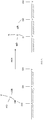
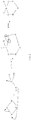
- FIG. 1 and FIG. 2 depict schematic representations of the attachment of the surface modifying treatment agent onto the substrate wherein Z is the metal of the anchor, J is the hydrophobic tail and Y is either -Si (of a siliceous formation) or the metal (M) (of a metal oxide-containing formation).
- the surface of the formation contains a free -OH which may, for example, be attached to an aluminum atom or a silicon atom.
- the metal of the surface modifying treatment agent may bind to the oxygen atom of the silicon-oxo or the aluminum-oxo linkage of the substrate by reaction with the -OH group.
- FIG. 2 the surface of the formation is shown as containing a silicon-oxo group without a free -OH.
- the mechanism of reaction of the surface modifying treatment agent is illustrated as being different from that set forth in FIG. 1 .
- the surface modifying treatment agent may be formed by reacting a metal containing organic ligand with the organo-silicon containing material or fluorinated hydrocarbon group.
- the metal containing organic ligand may be formed by reacting a metal compound, such as a metal halide, like TaCl 5 , with an oxygen containing ligand.
- a metal compound such as a metal halide, like TaCl 5
- an oxygen containing ligand Depending upon the position of the transition metal on the Periodic Chart, the metal containing organic ligand may have from two to six organic ligand groups.
- the ligand of the metal containing organic ligand contains an alkoxide or ester.
- Suitable organometallic derivatives include metal derivatives of C 1 to C 18 alkoxides, preferably alkoxides containing from 2 to 8 carbon atoms such as ethoxide, propoxide, isopropoxide, butoxide, isobutoxide and tertiary butoxide.
- the metal containing organic ligand may be a transition metal tetra-alkoxide, such as zirconium tetra tert-butoxide.
- the alkoxides may be in the form of simple esters and polymeric forms of the alkoxylates and esters as well as various chelates and complexes.
- the simple esters could be Ta(OR) 5 where R is C 1 to C 18 alkyl.
- Polymeric esters may be obtained by condensation of an alkyl ester and can have the structure RO--[Ta(OR) 3 -O-] x --R where R is defined above and x is a positive integer.
- organometallic compound can include, for instance, when the metal is titanium or zirconium:
- Acetyl acetonates, alkanolamines, lactates and halides, such as chloride, can also be used as the ligand of the oxygen containing organic ligand.
- the oxygen containing ligand can contain a mixture of ligands selected alkoxides, acetyl acetonates, alkanolamines, lactates and halides.
- the organo-silicon containing material may be a silane, polysiloxane or a polysilazane.
- organo-silicon containing materials are those having the formula R 1 4-x SiA x or (R 1 3 Si) y B as well as organo(poly)siloxanes and organo(poly)silazanes containing units of the formula: where R 1 may be the same or different and is a hydrocarbon radical containing from 1 to 100, such as 1 to 20 carbon atoms and 1 to 12, preferably 1 to 6 carbon atoms and R 3 may be hydrogen or a hydrocarbon or substituted hydrocarbon having 1 to 12, preferably 1 to 6 carbon atoms. In addition, R 1 may be a substituted, hydrocarbon radical such as halo, particularly a fluoro-substituted hydrocarbon radical.
- the organo(poly)siloxane may further contain additional units of the formula: R 5 2 SiO 2 where R 5 is a halogen such as a chloro or fluoro substituent.
- the organo-silicon containing compound may be an organo(poly)siloxane or organo(poly)silazane of a number average molecular weight of at least 400, usually between 1000 and 5,000,000.
- R 1 4-x SiA x may be hydrogen, a halogen such as chloride, OH, OR 2 or wherein B in the above structural formula may be NR 3 3-y , R 2 a hydrocarbon or substituted hydrocarbon radical containing from 1 to 12, typically 1 to 4 carbon atoms.
- R 3 is hydrogen or has the same meaning as R 1 .
- x is 1, 2 or 3
- y is 1 or 2.
- R 1 is a fluoro-substituted hydrocarbon.
- fluoro-substituted hydrocarbons are those of the structure: where Y is F or C n F 2n+1 ; m is 4 to 20 and n is 1 to 6; R 2 is alkyl containing from 1 to 4 carbon atoms and p is 0 to 18.
- fluoro-substituted hydrocarbons may be of the structure: where A is an oxygen radical or a chemical bond; n is 1 to 6, y is F or C n F 2n ; b is at least 1, such as 2 to 10; m is 0 to 6 and p is 0 to 18.
- Preferred organo-silicon materials include halogenated siloxanes, halogenated alkoxysiloxanes such as perfluoroalkoxysiloxane (PFOSi), alkoxy halogenated alkoxysilanes, such as alkoxy-perfluoroalkoxysilane; alkoxyacetylacetonate halogenated polysiloxanes, such as alkoxyacetylacetonate-perfluoroalkoxysiloxane, alkoxy-alkylsilylhalides; polyalkylsiloxanes, such as polydimethylsiloxanes, and alkoxyacetylacetonate-polyalkylsiloxanes, such as alkoxyacetylacetonate (acac) polydimethylsiloxanes.
- PFOSi perfluoroalkoxysiloxane
- alkoxyacetylacetonate halogenated polysiloxanes such
- Exemplary surface modifying treatment agents include tantalum halide-perfluoroalkoxysiloxane, such as TaCl 5 :PFOSi; tantalum alkoxy-perfluoroalkoxysilane; tantalum alkoxyacetylacetonate-perfluoroalkoxysiloxane, like Ta(EtO) 4 acac:PFOSi; tantalum alkoxy-alkylsilylhalide; tantalum halide-polyalkylsiloxane, like TaCl 5 :PDMS; niobium alkoxide-perfluoroalkoxysiloxane, such as Nb(EtO) 5 :PFOSi and Ta(EtO) 5 :PFOSi; titanium alkoxide-perfluoroalkoxysiloxane, like Ti(n-BuO) 4 :PFOSi; zirconium alkoxide-perfluoroalkoxysiloxane;
- the fluorinated hydrocarbon is R f -(CH 2 ) p -X
- perfluoroalkyl groups are those of the structure F-(CFY-CF 2 ) m where Y is F or C n F 2n+1 ; m is 4 to 20 and n is 1 to 6.
- perfluoroalkylene ether groups are those of the structure: where A is an oxygen radical or a chemical bond; n is 1 to 6, Y is F or C n F 2n ; b is 2 to 20, m is 0 to 6, and p is 0 to 18, preferably 2 to 4 and more preferably 2.
- Preferred fluorinated materials are esters of perfluorinated alcohols such as the alcohols of the structure F-(CFY-CF 2 ) m -CH 2 -CH 2 -OH where Y is F or C n F 2n+1 ; m is 4 to 20 and n is 1 to 6.
- fluorinated hydrocarbons of the structure R f -(CH 2 ) p -X where R f is a perfluoroalkylene ether group or a perfluorinated alkyl group such as those described above, p is an integer of from 0 to 18, preferably 0 to 4, and X is a carboxyl group, preferably a carboxylic ester group containing from 1 to 50, preferably from 2 to 20 carbon atoms in the alkyl group that is associated with the ester linkage.
- fluorinated hydrocarbons are perfluorinated hydrocarbons of the structure R f -(CH 2 ) p -Z where R f and p are as defined above, preferably R f is a perfluoroalkylene ether group such as those described above, and p is from 2 to 4, and Z is a phosphorus acid group.
- Examples of phosphorus acid groups are: where R" is a hydrocarbon or substituted hydrocarbon radical having up to 200, such as 1 to 30 and 6 to 20 carbons, R" can also include the perfluoroalkyl groups mentioned above, and R' is H, a metal such as potassium or sodium or an amine or an aliphatic radical, for example, alkyl including substituted alkyl having 1 to 50 carbons, preferably lower alkyl having 1 to 4 carbons such as methyl or ethyl, or aryl including substituted aryl having 6 to 50 carbons.
- the phosphorus acid is of formula II where R and R' are H.
- the organo portion of the metal containing organic ligand is reactive with the organo-silicon containing material or fluorinated hydrocarbon group are disclosed in U.S. Patent No. 7,879,437 and 8,067,103 .
- the organo portion of the organometallic compound may be selected from those groups that may be reactive with the acids (or their derivatives) of a perfluoroalkylene ether.
- the surface modifying treatment agent could be prepared by mixing the metal containing organic ligand and the silicon-containing material or fluorinated hydrocarbon in a closed system to avoid hydrolysis of the reactants. Reaction can occur neat or in the presence of a non-reactive solvent such as chlorinated or fluorinated solvent, for example, methylene chloride. Heat may be used to initiate and complete the reaction. Solvent may be removed by evaporation and the reaction product can be redissolved in a suitable solvent such as an alcohol, for example, ethanol or propanol, for application to the substrate.
- a suitable solvent such as an alcohol, for example, ethanol or propanol
- the mole ratio of the organosilicon-containing material to the metal containing organic ligand is typically from 100:1 to 1:100, preferably from 1:1 to 10:1 depending on the valence of the metal of the metal containing organic ligand.
- the molar ratio of organosilicon compound to Ta(V) is typically 5 to 1.
- the surface modifying treatment agent may be represented by the formula X a (OR) b M, wherein OR is a C 1 to C 18 alkoxide, X is the hydrophobic tail represented by the organo-silicon material or the fluorinated hydrocarbon, M is metal of the metal containing organic ligand and a + b equals the valency of M and further wherein neither a nor b are zero.
- the surface modifying agent may be formed by reacting an organosilicon compound such as an organosilane or a polysiloxane with a metal containing organic ligand, such as a derivatized alkoxide.
- an organosilicon compound such as an organosilane or a polysiloxane
- a metal containing organic ligand such as a derivatized alkoxide.
- the metal of the metal containing organic ligand is covalently bonded to the organosilicon compound to form the anchor and the hydrophobic tail.
- An exemplary reaction scheme of the surface modifying treatment agent, X a (OR) b M, with a siliceous formation, -(-O-Si-O-Si-) n may be represented as: X a (OR) b M + (-O-Si-O-Si-) n ⁇ X a (OR) b-1 M-(O-Si-O-Si-) n + R-OH.
- the surface modifying treatment agent may be pumped into the formation as a component of a well treatment fluid.
- the well treatment fluid may be pumped into the formation any time during the well treatment operation.
- the well treatment fluid may contain a diluent. Suitable diluents include alcohols such as methanol, ethanol or propanol; aliphatic hydrocarbons such as hexane, isooctane and decane, ethers, for example, tetrahydrofuran and dialkylethers such as diethylether.
- Diluents for fluorinated materials can include perfluorinated compounds such as perfluorinated tetrahydrofuran.
- aqueous alkaline solutions such as sodium and potassium hydroxide can be used as the diluent.
- the concentration of the surface modifying treatment agent in the well treatment fluid is 0.01% to 100% or more typically between 0.1% to 20% (v/v).
- the well treatment fluid may be a fracturing fluid, pad fluid, acidizing fluid, etc.
- the well treatment fluid may be a component of a fracturing fluid, pad fluid, acidizing fluid, etc.
- the surface modifying treatment is preferably dispersed within the fluid.
- the surface modifying treatment agents disclosed herein may alter the surface energy of the formation being treated.
- the attachment of the surface modifying treatment agent onto the surface of the formation reduces the surface energy of the substrate likely by reducing the charge density on the surface.
- the attachment of the metal anchor of the surface modifying treatment agent onto the formation prevents spalling of fines by altering the zeta potential of formation fines.
- By covalently attaching the metal-containing ligand onto the Si or Al surface migration of fines into producing areas of the formation is minimized and in-situ fines generation is minimized or stabilized.
- the hydrophobic nature of the tail further alters the wettability of the formation surface.
- the self-assembled hydrophobic monolayer covalently attached to the formation surface lowers the water saturation and enhances recovery of water from the formation surface.
- Particulates of a weakly consolidated, semi consolidated or unconsolidated formation may further be consolidated by use of the surface modifying treatment agents disclosed herein.
- the bonding of the anchor of the surface modifying treatment agent on the surface formation prevents or minimizes the influx of fluids into the formation. Aggregation of the particulates results from the reduction in charge density.
- the surface modifying treatment agent may enter into the pore spaces of the formation. Multiple interactions of molecules of the surface modifying treatment agent with formation particulates causes aggregation or agglomeration of formation particulates. Further, it is believed, that the reactivity of the surface modifying treatment agent with formation surfaces or portions of formation surfaces creates an aggregation or agglomeration of the hydrophobic tail in near proximity to the formation surface.
- the use of the surface modifying treatment agents as a means to consolidate particulates of the formation is particularly effective in the treatment of shale formations.
- the consolidation further provides stability to the formation since aggregated particulates allow fluid to flow back through the pumped fluids without flowing formation solids back to the surface. This phenomenon is attributable to the anchoring of the metal of the surface modifying treatment agent onto the surface formation and to the alignment of the tail of the treatment agent enabling limited contact-time of the fluid with formation surface.
- the swelling, dispersement, disintegration, migration and otherwise disruption of clay in oil and gas producing formations may be decreased by use of the surface modifying treatment agent and native fluid production may dislodge fines in a pore throat.
- the degree of swelling, as well as migration of clay particles is often increased when formation clays are disturbed by foreign substances, such as aqueous well treatment fluids.
- the swelling and migration of formation clays presents problems during stimulation and well completion, such as by increasing the bulk volume of treatment fluids. For instance, clays, in the presence of well treatment fluids, often expand and may be disrupted by becoming unconsolidated, thereby producing particles which migrate into a borehole.
- the presence of the hydrophobic tail on the surface modifying treatment agent prevents the swelling and migration of formation clay particles.
- swelling and migration of formation clay may be reduced or prevented by the use of the surface modifying treatment agent disclosed herein. Loss of formation permeability is thus minimized to create little, if any, reduction in the flow rate of hydrocarbons.
- the surface modifying treatment agent is used in the treatment of a shale formation or a clay-rich formation in order to coat the surface of the formation to reduce water absorption or imbibement of water in order to reduce swelling.
- the presence of the hydrophobic tail of the surface modifying treatment agent impedes the permeability of water in water saturated zones of a producing formation without reducing relative permeability to oil or gas. Since relative permeability is dependent on the pore structure and size, wettability of the formation surface and capillary pressure of the water within the formation, in some instances, such as where the formation is characterized by larger pores, water and oil permeability may be improved. With small pore surfaces, the hydrophobic tail of the surface modifying treatment agent attached indirectly to the mineral surface of the formation through the anchor is relatively non-damaging to oil permeability. For example, it is particularly effective in oil saturated sandstone formations while exhibiting the ability to decrease water permeability substantially in water saturated zones.
- the surface modifying treatment agents disclosed herein may also be used in the treatment of rich gas or retrograde condensate gas reservoirs and thus presents value to retrograde gas fields by increasing condensate production.
- heavy end fraction of gases may be precipitated in liquid form from solution in the gas as the reservoir pressure within the well is decreased below the dew point of the gas.
- Condensed liquid drains downward by gravity when its saturation exceeds the irreducible condensate saturation.
- retrograde gases liquids cannot be reabsorbed into the gas phase even if pressure is increased by a rate reduction.
- the surface modifying treatment agents disclosed herein may also be used to enhance load recovery of water.
- the presence of the hydrophobic tail on the surface modifying treatment agent provides increased recovery of flowback water from the well after fracturing fluid has been returned to the surface.
- flowback water may be as low as 25%, while in some cases can be as high as 75%, of the volume of fluid that was injected into the well.
- This application is particularly useful in shale fractures having a complex of narrow fractures with limited conductivity where a low range of fluid recovery values (30% or less) are typically experienced. This lack of recovery is often interpreted as causing formation damage (from residual polymer gels residues), resulting in lowered gas/oil production.
- the hydrophobic nature of the surface modifying treatment agent may further serve to control water condensation in the pores of a near wellbore region of a permeable formation.
- the liquid zone formed from the condensation of hydrocarbons within a gas reservoir close to the wellbore hampers gas flow, reducing the productivity of the well the formation of "water block” or "water bank” zones.
- Condensation of water in the pores of a near wellbore region of a permeable formation may be decreased by the presence of the surface modifying treatment agent.
- Fluid transfer and water flux through the pores of the near wellbore region of the formation may be controlled by inhibiting the formation of a water bank by the hydrophobic tail of the surface modifying treatment agent.
- the surface modifying treatment agent may further be used to enhance the productivity of injection wells in a water flood operation.
- Field water or field brine pumped through one or more injection wells drilled into the formation causes displacement of oil within the formation and improvement in hydrocarbon recovery.
- one or more injection wells may be spaced apart from each other and perforated so as to be able to direct the injection fluid containing the surface modifying treatment agent in the direction of one or more producing wells and into the hydrocarbon-bearing formation.
- the presence of the hydrocarbon tail on the surface modifying treatment agent enhances direction of water flow within the matrix of the subterranean formation.
- the surface modifying treatment agent in the well treatment fluid cause the water to be redirected through the formation. In so doing, hydrocarbons are displaced toward the producing well or wells. Thereafter, hydrocarbons will be produced from the producing well to the surface.
- the surface modifying treatment agent disclosed herein may further be used in the treatment of tar sand formations.
- Conventional recovery of hydrocarbons from heavy oil deposits within the tar sand is generally accomplished by steam injection to lower the viscosity of the crude to the point where it can be pushed toward the production wells.
- the heavy oil is immobile at reservoir temperatures and therefore the oil is typically heated to reduce its viscosity and mobilize the oil flow.
- the surface modifying treatment agent enhances oil flow and thus recovery of oil from tar sand by minimizing the flow of water into the deposits.
- the hydrophobicity of the surface modifying treatment agent further minimizes the interference of steam in the removal of oil from tar sand deposits.
- the surface modifying treatment agent is used in an acidizing operation in order to increase the penetration of acid into the formation. Since the hydrocarbon tail of the surface modifying treatment agent is either on or in close proximity to the formation face, reaction of acid with the formation surface is retarded. The reactive acid may therefore etch the formation in more distant areas from the port of entry of the treatment fluid. Deeper acid penetration in the well may therefore result.
- the surface modifying treatment agent may be used to shut-off water into a formation.
- the surface modifying treatment agent finds particular applicability in the treatment of matrix formations having finer grained particles between larger rock particles or finer grained particles in which the larger particles are embedded.
- the hydrophobic tail on the surface modifying treatment agent reduces the influx of water into matrix formations characterized by low permeability.
- matrix formations produce a large amount of water due to an influx of water into the wellbore. Over time, the amount or percentage of produced water may increase resulting in a corresponding decrease in the production of desired hydrocarbons, eventually rendering further production of hydrocarbons from the well uneconomical.
- the hydrocarbon tail indirectly attached to the formation blocks the flow of water into the formation or otherwise abates the influx of water. This results in increased rates in hydrocarbon production and ultimately increases recoverable reserves.
- the surface modifying treatment agent may function as a passive anti-microbial agent in order to counter bacterial growth principally caused by nitrogen and/or phosphorus in formation water or within fluid injected into the formation.
- the hydrocarbon tail of the surface modifying treatment agent repels the fluid from the formation and thus decreases contact time of the fluid in the formation. This prevents the build-up of aerobic bacteria, anaerobic bacteria and other microbials.
- the surface modifying treatment agent may be used to passively inhibit, control, prevent or remove scale deposition onto or within the formation.
- the hydrophobic tail of the surface modifying treatment agent minimizes or decreases the ability of such materials to adhere to the formation. This may be attributable to the hydrophobic nature of such minerals scales as calcium, barium, magnesium salts including barium sulfate, calcium sulfate, and calcium carbonate scales.
- the composites may further have applicability in the treatment of other inorganic scales, such as metal sulfide scales, like zinc sulfide, iron sulfide, etc. Since such scales tend to plug the pore spaces and reduce the porosity and permeability of the formation, the surface modifying treatment agent described herein improves the permeability of the formation.
- the bulky nature of the hydrocarbon tail of the surface modifying treatment agent prevents or controls deposition of organic particulates onto the formation substrate, fines are returned to the surface with the fluid.
- bonding of the metal of the surface modifying treatment agent onto the formation minimizes binding sites for such organic particulates.
- the surface modifying treatment agents may be used to control or prevent the deposition of organic materials (such as paraffins and/or asphaltenes) within or onto the formation.
- organic materials such as paraffins and/or asphaltenes
- Such solids and particulates are known to negatively impact the overall efficiency of completion of wells and, like scale inhibitors, can precipitate from produced water and create blockages in flow paths within the formation. The formation and deposition of such unwanted contaminants decrease permeability of the subterranean formation, reduce well productivity, and, in some cases, may completely block well tubing.
- the surface modifying treatment agent may further be introduced into a non-hydrocarbon producing well in order to dispose of salt water.
- This application may be used in those instances where water flooding operations are not in use.
- the salt water may be disposed of by injecting the water into permeable low pressure strata below the fresh water level in a salt water disposal well.
- the bonding of a surface modifying treatment agent onto a subterranean formation is enhanced by first pre-treating the formation.
- a non-aqueous fluid is first pumped into the well which penetrates the formation.
- the surface modifying treatment agent is then pumped into the well.
- the access to the sites for the surface modifying treatment agent to bind onto the surface of the subterranean formation is facilitated by pre-treatment of the subterranean formation with the non-aqueous fluid.
- non-aqueous solvent capable of lowering water saturation and enhancing the recovery of water from the formation surface may be used.
- the non-aqueous fluid contains no more than 18 carbon atoms and may be composed of more than one solvent.
- the non-aqueous fluid is a mutual solvent (defined as any chemically mutually soluble solvent in hydrocarbons and water) such as glycol ethers and ethylene glycol monobutylether.
- a mutual solvent defined as any chemically mutually soluble solvent in hydrocarbons and water
- glycol ethers and ethylene glycol monobutylether such as glycol ethers and ethylene glycol monobutylether.
- One or more stages of non-aqueous fluids may be pumped into the well prior to pumping of the surface modifying treatment agent. Where more than one stage of non-aqueous fluid is pumped into the well prior to pumping of the surface modifying treatment agent, each stage may be composed of the same non-aqueous fluid or different non-aqueous fluids.
- the first and second stages of non-aqueous fluids pumped into the well may both be a hydrocarbon or the first stage may be an alcohol and the second stage a hydrocarbon.
- all or more than one of the stages may be composed of the same non-aqueous fluid or each stage may be composed of different non-aqueous fluids and so on.
- the surface of the formation Prior to pumping the non-aqueous fluid into the well or in between pumping of different stages of non-aqueous fluids into the well, the surface of the formation may be further treated with an alkaline solution such as sodium hydroxide or potassium hydroxide.
- an alkaline solution such as sodium hydroxide or potassium hydroxide.
- the formation is treated with a salt solution
- the formation is preferably treated with one or more subsequent stages of non-aqueous fluid prior to pumping of the surface modifying treatment agent into the well.
- the pumping of an alkaline solution into the well may be especially desirable in those formations composed of metal oxides in order to regenerate the binding sites for the surface modifying treatment agent onto the formation.
- Preferred embodiments of the present disclosure thus offer advantages over the prior art and are well adapted to carry out one or more of the objects of this disclosure.
- the present disclosure does not require each of the components and acts described above and are in no way limited to the above-described embodiments or methods of operation. Any one or more of the above components, features and processes may be employed in any suitable configuration without inclusion of other such components, features and processes.
- the present disclosure includes additional features, capabilities, functions, methods, uses and applications that have not been specifically addressed herein but are, or will become, apparent from the description herein, the appended drawings and claims.
- Example 1 Berea sandstone cores measuring 2,54 cm (1.0") in diameter and 3,81 cm (1.5") in length and having nitrogen permeability of 1,974 ⁇ 10-13 m 2 (200 md) were evacuated with air and then saturated with either 2% aqueous solution of potassium chloride (KCl) or ISOPARTM paraffinic fluid of ExxonMobil Chemical Company. The core was then installed in a hydrostatic core holder apparatus. Approximately 1378,95 kN/m 2 (200 psi) back pressure was applied at the exit end and approximately 6894,76 kN/m 2 (1,000 psi) confining stress (overburden pressure) was applied around the entire cylinder. The confining stress pressure simulated stress in the downhole formation.
- KCl potassium chloride
- ISOPARTM paraffinic fluid of ExxonMobil Chemical Company
- a five pore volume of neat fluids of H1-F and Aculon E, 2% of treatment agents in an organic solvent, the treatment agents having a transition metal linked to a fluorinated hydrocarbon tail, and AL-A, 2% treatment agent in an organic solvent having a transition metal linked to a hydrophobic tail, all commercially available from Aculon, Inc. were then injected into their respective core and allowed to soak for about one hour.
- oil was flowed first and a comparison of permeability to oil right after treatment versus permeability to oil before treatment was made.
- water was flowed measuring permeability of water at residual oil after treatment and this was compared to the water right before treatment. As such, the oil at irreducible water saturation and the water at residual oil saturation were measured and the percent retention in permeability was then determined.
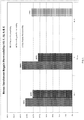
- FIG. 3 illustrates the percent water regain and oil regain of the testing for H1-F and Aculon E.
- FIG. 3 illustrates oil regain permeability to be slightly higher than water regain permeability.
- FIG. 3 also illustrates the percent gas regain for ALA to be in excess of 100%.
- FIG. 3 establishes that treatment of the core with a treatment agent having a metal linked to a hydrophobic tail provides an improved rate of return of fluids from the well. The data further demonstrates that the treatment agent stabilizes fine movement since decreased permeability would be noted if movement of fines existed. Further, FIG. 3 illustrates that use of the treatment agent would reduce solids flowback to the surface in light of the increase in permeability. Further, the lack of reduced permeability evidences minimal clay swelling.
- the ability to readily produce water by use of the treatment agent provides for minimal residence time for microbes, scales as well as organic deposits such as asphaltenes.
- the increase in the capacity of the reservoir to transmit to transmit hydrocarbons illustrates enhancement in recovery of hydrocarbons from deposits within tar sands.
- the hydrophobic coating of the formation with the treatment agent further provides for inhibition in the reactivity of acid such that deeper penetration of acid into the formation is possible.
- Example 2 About 5 g of clay containing 92 weight % silica (or quartz) and 8 weight % montmorillonite (simulating Wyoming drilling clay) was treated with H1-F fluid described in Example 1 and placed into an oven having a temperature of approximately 65,56 °C (150°F) wherein the solvent was evaporated, leaving a coating of the treatment agent onto the clay. Untreated clay was also placed into an oven and heated under the same conditions.
- Capillary suction time tests were performed by placing the clay samples onto filter paper within a funnel and pouring water through the funnel.
- the water contained clay stabilizers - 2 vol. % KCl, 1 gpt ClayCareTM and 1 gpt Claytreat 3CTM (ClayCare and Claytreat are products of Baker Hughes Incorporated).
- clay stabilizers - 2 vol. % KCl, 1 gpt ClayCareTM and 1 gpt Claytreat 3CTM (ClayCare and Claytreat are products of Baker Hughes Incorporated).
- fresh water was poured through the funnel.
- Two electrodes were attached to the filter paper. The amount of time between the water first touching an electrode on the paper and the water reaching a second electrode on the paper was then measured.
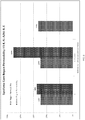
- FIG. 4 illustrates the amount of time for fresh water to reach the second electrode as being almost six times less when the sand was treated with H1-F than not treated with H1-F. This time further decreased when the water contained clay stabilizers - KCl, ClayCare and Claytreat 3C. The data demonstrates that clay treated with H1-F inhibits the swelling of clay.
- Example 3 Permeability testing was performed on synthetic cores composed of 20-40 mesh gravel, 100 mesh sand and 325 mesh silica. The 325 mesh silica mimics fines in formations.
- the synthetic cores were 2,54 cm (1.0") in diameter and 5,08 cm (2.0") in length and having nitrogen permeability of 9,87 ⁇ 10 -14 m 2 (100 md) was saturated with 2% aqueous solution of potassium chloride (KCl).
- KCl potassium chloride
- the cores were then installed in a hydrostatic core holder apparatus. Approximately 1378,95 kN/m 2 (200 psi) back pressure was applied at the exit end and approximately 6894,76 kN/m 2 (1,000 psi) confining stress (overburden pressure) was applied around the entire cylinder.
- the confining stress pressure simulates stress in the downhole formation.
- ISOPARTM paraffinic fluid was then flowed through the cores in order to establish a base line permeability to the cores to the oil.
- a flow of the KCl solution was flowed through the cores. Pressure drop was measured across the entire length of the cores and was used to calculate individual baseline permeability to water and to oil.
- Example 3 The effect of surface modifying treatment agents on water and hydrocarbons was determined for three substrates. Each of the surface modifying treatment agents had a hydrophobic tail and an anchor. The anchor through a covalent bond secures the surface modifying treatment agent onto the surface of the substrate.
- the surface modifying treatment agents were H1-F and Aculon E [comprising 2% of a treatment agent having a transition metal (anchor) linked to a fluorinated hydrocarbon tail in an organic solvent] and AL-B [comprising 2% of an organophosphonate (anchor) having a hydrocarbon polymeric hydrophobic tail in an organic solvent blend]; all commercially available from Aculon, Inc. Aculon-E and AL-B exhibited hydrophobic and oleophobic properties while H1-F exhibited hydrophobic properties only.
- the surface modifying treatment agent was sprayed onto a glass slide (having a more homogeneous surface than natural rock), a core of Ohio sandstone and a core of Berea sandstone to provide a coating approximately 1 to 10 nm thick.
- the cores of Ohio sandstone and Berea sandstone were approximately 2,54 cm (1.0") in diameter and 3,81 cm (1.5") in length.
- the anchor of the surface modifying treatment agent reacted with oxides on the surface of the substrate.
- the surface modifying treatment agent was covalently bonded onto the surface of the substrate.
- the samples were then kept in an oven at 65,56 °C (150 F) until completely dry to remove the solvent. After being modified, all of the substrate surfaces were hydrophobic.
- Contact angle and sliding (or roll-off) angle were then determined and used as the primary measure of performance.
- the contact angle demonstrates wettability characteristics of the surface while the sliding angle and contact angle hysteresis characterized the ease of fluid roll off from the substrate.
- Glass Slide. Table I show the contact angles obtained with both water and ISOPARLTM paraffinic fluid (Isopar-L simulated oil).
- AL-B was the most oleophobic and the amount of hydrophobicity imparted by each of the three surface modifying treatment agents was about the same.
- Glass treated with Aculon E had a sliding angle of 20°, while modified surfaces using H1-F and AL-B exhibited a large contact angle hysteresis with water.
- the drop had to be big enough so that its weight allowed it to be removed from the pipette tip. In this case, a sliding angle of 17-20° was observed. As the sample was left flat, water flowed more easily off the surface of the rock with increase in drop size. No adsorption of the water drop was left on the surface of the rock.
- Oleophobicity of the surface treated with the surface modifying treatment agent was determined with Isopar-L.
- the surface modifying treatment agent was H1-F
- Isopar-L was observed to go through the surface instantaneously.
- the contact angle with AL-B modified sandstone was 60°.
- the adsorption through the sandstone core was slower than in the case of H1-F but the core was observed to be very permeable to Isopar-L.
- the surface properties of modified sandstones are presented in Table II.
- Example 4 Longevity studies were undertaken using glass slides and modified glass slides kept in brine (2% KCl, 1,39 kg/l (11.6 ppg) CaCl 2 2,3 kg/l (19.2 ppg) ZnBr 2 1,5 kg/l (12.5 ppg) NaBr, 1,56 kg/l (13 ppg) CaBr 2 /CaCl 2 ) for five months and sandstone kept in produced water for one month.
- Atomic Force Microscopy was used to determine the smoothness of the surfaces.
- H1-F and Aculon E demonstrated good stability in brine after five months.
- AL-B a decrease in the contact angle through time was observed.
- the sliding angle for the H1-F modified substrate decreased up to 4°.
- Example 5 An effective method for depositing self-assembled monolayers from a surface modifying treatment agent onto an oxide surface was first determined.
- the surface modifying treatment agent had a hydrophobic tail and an anchoring site. The anchoring site through a covalent bond secured the surface modifying treatment agent onto the surface of the substrate.
- the surface modifying treatment agent exhibited hydrophobic properties and was commercially available from Aculon, Inc. as H1-F [comprising 2% of a treatment agent having a transition metal (anchor) linked to a fluorinated hydrocarbon tail in an organic solvent].
- H1-F hydrophobic properties and was commercially available from Aculon, Inc.
- Test A a clean and dry glass slide was directly modified with the monolayer by spraying the surface of the slide with H1-F.
- Test B the surface of a glass slide was wet with a thin film of water. H1-F was then applied onto the coating.
- Test C the surface of the glass slide was wet with a thin film of ISOPAR-LTM paraffinic fluid, a product of ExxonMobil Chemical Company. The ISOPAR-L simulated oil wet reservoirs. H1-F was then applied onto the slide.
- each of the samples was then left for about five minutes for the reaction to occur on the surfaces.
- the surface was then dried. A drop of water was then put onto the surface. If the drop spread on the surface then the quality of the bonding was concluded to be unacceptable. If the sample demonstrated hydrophobicity, then the coating was concluded to be successful.
- Test A demonstrated hydrophobicity while Test B and Text C did not. It was concluded that the glass slides were not modified successfully and did not enhance the ability of the surface modifying treatment agent to adhere onto the surface.
- Test B When Test B was repeated and the slide was kept exposed to air for a period of time in order for complete evaporation of the liquid to occur. HF-1 was then applied to the glass slide. The surface modified glass was then noted to exhibit hydrophobicity. No interaction of the oily surface of Test C was observed. It was concluded that binding efficiency of the monolayer would be very low when the surface of the rock being treated was exposed to oil or a large amount of water. It was further concluded that the surface of the rock being treated would need to be dry and clean from organic material as well as other contaminants in order for the surface modifying treatment agent to have the best access to the binding site of the rock.
- Example 6 Two Berea sandstone cores measuring 2,54 cm (1.0") in diameter and 3,81 cm (1.5") in length were used. The first core had a nitrogen permeability of 7,93 ⁇ 10 -13 m 2 (804 md) and the second core had a nitrogen permeability of 7,63 ⁇ 10 -13 m 2 (773 md). Both of the cores exhibited a porosity of about 20%. Both of the cores were evacuated with air and then saturated with either 2% aqueous solution of potassium chloride (KCl) or ISOPARTM paraffinic fluid. The cores were then installed in a hydrostatic core holder apparatus.
- KCl potassium chloride
- ISOPARTM paraffinic fluid ISOPARTM paraffinic fluid
- the first core was not subjected to a preflush but was saturated in oil.
- Initial permeability to oil and water was determined in the production direction. First the permeability to water at residual oil was determined by flowing water through the core until differential pressure was stabilized. Oil was then flowed through the core and the permeability to oil was determined until there was irreducible water at stable differential pressure.
- the core was then treated with a surface modifying treatment agent exhibiting both hydrophobic and oleophobic properties and commercially available from Aculon, Inc. as Aculon-E [comprising 2% of a treatment agent having a transition metal (anchor) linked to a fluorinated hydrocarbon tail in an organic solvent] in the injection direction. Finally, permeability to oil and water was re-established in the production direction. Both permeability to water and oil cycles were repeated and determined. Then % regain permeability was calculated.
- the second core was preflushed by saturating it in 2% KC1.
- Initial permeability to oil and water was determined in the production direction. Permeability to water at residual oil was first determined by flowing water through the core until differential pressure was stabilized. Oil was then flowed through the core until irreducible water was established at stable differential pressure. Permeability was then determined. This was followed by an injection of 10 pore volume of methanol as the pre- flush flowed through the core. The sample was then treated with the Aculon-E in the injection direction. Permeability to oil and water was then re-established in the production direction. Both permeability to water and oil cycles were repeated and determined. The % regain permeability was then calculated.
- FIG. 6 shows the results obtained for regain permeability. As illustrated, the water regain increased from 106% for the first core (no pre-flush) to 548% for the second core (pre-flush). This demonstrates better efficiency for bonding of the surface modifying treatment agent when the core is pre-flushed. The regain to oil remained essentially similar with or without pre-flush.
Landscapes
- Chemical & Material Sciences (AREA)
- Life Sciences & Earth Sciences (AREA)
- Engineering & Computer Science (AREA)
- General Life Sciences & Earth Sciences (AREA)
- Mining & Mineral Resources (AREA)
- Geology (AREA)
- Materials Engineering (AREA)
- Organic Chemistry (AREA)
- Environmental & Geological Engineering (AREA)
- Fluid Mechanics (AREA)
- Physics & Mathematics (AREA)
- Geochemistry & Mineralogy (AREA)
- Oil, Petroleum & Natural Gas (AREA)
- Chemical Kinetics & Catalysis (AREA)
- General Chemical & Material Sciences (AREA)
- Application Of Or Painting With Fluid Materials (AREA)
- Preventing Corrosion Or Incrustation Of Metals (AREA)
- Materials Applied To Surfaces To Minimize Adherence Of Mist Or Water (AREA)
- Chemical Treatment Of Metals (AREA)
Priority Applications (1)
| Application Number | Priority Date | Filing Date | Title |
|---|---|---|---|
| PL14781365T PL3046989T3 (pl) | 2013-09-20 | 2014-09-19 | Sposób wykorzystania metalicznych środków do obróbki modyfikującej powierzchnię do obróbki formacji podziemnych |
Applications Claiming Priority (5)
| Application Number | Priority Date | Filing Date | Title |
|---|---|---|---|
| US201361880840P | 2013-09-20 | 2013-09-20 | |
| US201461981051P | 2014-04-17 | 2014-04-17 | |
| US201461989267P | 2014-05-06 | 2014-05-06 | |
| US201462007708P | 2014-06-04 | 2014-06-04 | |
| PCT/US2014/056690 WO2015042489A1 (en) | 2013-09-20 | 2014-09-19 | Method of using surface modifying metallic treatment agents to treat subterranean formations |
Publications (2)
| Publication Number | Publication Date |
|---|---|
| EP3046989A1 EP3046989A1 (en) | 2016-07-27 |
| EP3046989B1 true EP3046989B1 (en) | 2019-08-28 |
Family
ID=51662329
Family Applications (1)
| Application Number | Title | Priority Date | Filing Date |
|---|---|---|---|
| EP14781365.3A Active EP3046989B1 (en) | 2013-09-20 | 2014-09-19 | Method of using surface modifying metallic treatment agents to treat subterranean formations |
Country Status (11)
| Country | Link |
|---|---|
| US (1) | US9683431B2 (pl) |
| EP (1) | EP3046989B1 (pl) |
| CN (1) | CN105555908B (pl) |
| AU (1) | AU2014321305B2 (pl) |
| BR (1) | BR112016006052B1 (pl) |
| CA (1) | CA2922692C (pl) |
| MX (1) | MX371130B (pl) |
| PL (1) | PL3046989T3 (pl) |
| RU (1) | RU2670804C9 (pl) |
| SA (1) | SA516370767B1 (pl) |
| WO (1) | WO2015042489A1 (pl) |
Families Citing this family (24)
| Publication number | Priority date | Publication date | Assignee | Title |
|---|---|---|---|---|
| MX394085B (es) | 2013-09-20 | 2025-03-19 | Baker Hughes Inc | Método para inhibir el ensuciamiento sobre una superficie metálica usando un agente de tratamiento de modificación de superficie. |
| US9562188B2 (en) | 2013-09-20 | 2017-02-07 | Baker Hughes Incorporated | Composites for use in stimulation and sand control operations |
| US9701892B2 (en) | 2014-04-17 | 2017-07-11 | Baker Hughes Incorporated | Method of pumping aqueous fluid containing surface modifying treatment agent into a well |
| EP3046987B8 (en) | 2013-09-20 | 2019-06-26 | Baker Hughes, a GE company, LLC | Use of organophosphorus containing composites for use in well treatment operations |
| CA2920687C (en) * | 2013-09-20 | 2018-08-21 | Baker Hughes Incorporated | Method of using surface modifying treatment agents to treat subterranean formations |
| WO2016160873A1 (en) * | 2015-03-30 | 2016-10-06 | Carrier Corporation | Low-oil refrigerants and vapor compression systems |
| US9816026B2 (en) | 2015-05-26 | 2017-11-14 | Baker Hughes, LLC | Methods of extracting hydrocarbons from subterranean formations |
| WO2017059560A1 (en) * | 2015-10-07 | 2017-04-13 | GM Global Technology Operations LLC | Modification of lithium titanate electrode particles to eliminate gas formation in cell operation |
| CA3023343A1 (en) | 2016-07-07 | 2018-01-11 | Halliburton Energy Services, Inc. | Methods of strengthening and consolidating subterranean formations with silicate-aluminum geopolymers |
| WO2018063214A1 (en) * | 2016-09-29 | 2018-04-05 | Halliburton Energy Services, Inc. | Methods and compositions of subterranean formation stabilization |
| US10759884B2 (en) | 2017-03-06 | 2020-09-01 | Aculon Inc. | Film-forming compositions containing zwitterionic functional polymers and their use in methods of reducing adhesion of an organic substance to a substrate |
| CN110945102B (zh) * | 2017-07-20 | 2021-10-01 | 沙特阿拉伯石油公司 | 通过使用表面改性减轻凝析物堆积 |
| US11359130B2 (en) | 2018-04-10 | 2022-06-14 | Baker Hughes Holdings Llc | Methods of altering the wettability of surfaces to enhance hydrocarbon production |
| US11180691B2 (en) | 2019-01-22 | 2021-11-23 | Baker Hughes Holdings Llc | Use of composites having coating of reaction product of silicates and polyacrylic acid |
| US11155751B2 (en) | 2019-01-22 | 2021-10-26 | Baker Hughes Holdings Llc | Method of treating subterranean formations with composites having enhanced strength |
| CN110094175A (zh) * | 2019-05-30 | 2019-08-06 | 中国海洋石油集团有限公司 | 一种煤层气井的控煤粉方法 |
| US11447685B2 (en) * | 2019-08-28 | 2022-09-20 | Halliburton Energy Services, Inc. | Methods of stabilizing carbonate-bearing formations |
| CN114106790B (zh) * | 2020-08-27 | 2023-02-24 | 中国石油化工股份有限公司 | 一种钻井液用封堵剂及其制备方法和应用 |
| US12577450B2 (en) | 2021-03-25 | 2026-03-17 | Schlumberger Technology Corporation | Compositions for single-stage treatment of siliceous subterranean formations |
| CN114645700B (zh) * | 2022-04-20 | 2023-07-18 | 中国矿业大学 | 一种强塑性材料灌装高压水致裂裂隙岩体的方法 |
| US11840666B1 (en) * | 2022-08-02 | 2023-12-12 | Saudi Arabian Oil Company | Method to attenuate acid reactivity of subterranean formations with omniphobic chemicals |
| US12234406B2 (en) * | 2023-05-16 | 2025-02-25 | Baker Hughes Oilfield Operations Llc | Method of altering the wettability of a subterranean surface to enhance production of hydrocarbons |
| US20250137348A1 (en) * | 2023-10-25 | 2025-05-01 | Saudi Arabian Oil Company | Subterranean formation functionalization for permeation selectivity |
| WO2025101825A1 (en) * | 2023-11-09 | 2025-05-15 | Schlumberger Technology Corporation | Method for single-stage treatment of siliceous subterranean formations |
Family Cites Families (199)
| Publication number | Priority date | Publication date | Assignee | Title |
|---|---|---|---|---|
| US3285339A (en) | 1966-01-18 | 1966-11-15 | Continental Oil Co | Method for consolidating incompetent earth formations |
| US3593796A (en) | 1969-06-27 | 1971-07-20 | Shell Oil Co | Method of controlling fine sand particles within a relatively consolidated sand formation |
| US4042032A (en) | 1973-06-07 | 1977-08-16 | Halliburton Company | Methods of consolidating incompetent subterranean formations using aqueous treating solutions |
| US4074536A (en) | 1976-08-02 | 1978-02-21 | Halliburton Company | Oil well consolidation treating |
| US4366073A (en) | 1976-08-13 | 1982-12-28 | Halliburton Company | Oil well treating method and composition |
| US4366071A (en) | 1976-08-13 | 1982-12-28 | Halliburton Company | Oil well treating method and composition |
| US4374739A (en) | 1976-08-13 | 1983-02-22 | Halliburton Company | Oil well treating method and composition |
| US4366072A (en) | 1976-08-13 | 1982-12-28 | Halliburton Company | Oil well treating method and composition |
| CA1103008A (en) | 1976-08-13 | 1981-06-16 | Homer C. Mclaughlin | Treatment of clay formations with organic polycationic polymers |
| US4366074A (en) | 1976-08-13 | 1982-12-28 | Halliburton Company | Oil well treating method and composition |
| US4231428A (en) | 1978-12-04 | 1980-11-04 | Phillips Petroleum Company | Well treatment method |
| US4460483A (en) | 1981-10-09 | 1984-07-17 | Halliburton Company | Methods and hydrocarbon base treating fluids for stabilizing water sensitive clay containing formations |
| US4498538A (en) | 1983-06-21 | 1985-02-12 | Union Oil Company Of California | Method for maintaining the permeability of fines-containing formations |
| US4580633A (en) | 1983-12-21 | 1986-04-08 | Union Oil Company Of California | Increasing the flow of fluids through a permeable formation |
| US4585064A (en) | 1984-07-02 | 1986-04-29 | Graham John W | High strength particulates |
| US4536304A (en) | 1984-09-21 | 1985-08-20 | Halliburton Company | Methods of minimizing fines migration in subterranean formations |
| US4536305A (en) | 1984-09-21 | 1985-08-20 | Halliburton Company | Methods for stabilizing swelling clays or migrating fines in subterranean formations |
| US4646835A (en) | 1985-06-28 | 1987-03-03 | Union Oil Company Of California | Acidizing method |
| US4787453A (en) | 1986-10-30 | 1988-11-29 | Union Oil Company Of California | Permeability stabilization in subterranean formations containing particulate matter |
| US5730922A (en) | 1990-12-10 | 1998-03-24 | The Dow Chemical Company | Resin transfer molding process for composites |
| DE69129145T2 (de) | 1990-12-25 | 1998-07-16 | Matsushita Electric Ind Co Ltd | Transparentes Substrat mit aufgebrachtem monomolekularem Film und Verfahren zu seiner Herstellung |
| US5111886A (en) | 1991-05-07 | 1992-05-12 | Union Oil Company Of California | Crosslinked hydroxyethylcellulose and its uses |
| EP0559119B1 (en) | 1992-03-02 | 2000-10-11 | Matsushita Electric Industrial Co., Ltd. | Chemically adsorbed film and method of manufacturing the same |
| US5406085A (en) | 1993-07-07 | 1995-04-11 | Board Of Regents, The University Of Texas System | Apparatus and method for rapid and nondestructive determination of lattice defects in semiconductor materials |
| US5582249A (en) | 1995-08-02 | 1996-12-10 | Halliburton Company | Control of particulate flowback in subterranean wells |
| US5787986A (en) | 1995-03-29 | 1998-08-04 | Halliburton Energy Services, Inc. | Control of particulate flowback in subterranean wells |
| US5839510A (en) | 1995-03-29 | 1998-11-24 | Halliburton Energy Services, Inc. | Control of particulate flowback in subterranean wells |
| US6209643B1 (en) | 1995-03-29 | 2001-04-03 | Halliburton Energy Services, Inc. | Method of controlling particulate flowback in subterranean wells and introducing treatment chemicals |
| US6047772A (en) | 1995-03-29 | 2000-04-11 | Halliburton Energy Services, Inc. | Control of particulate flowback in subterranean wells |
| US5501274A (en) | 1995-03-29 | 1996-03-26 | Halliburton Company | Control of particulate flowback in subterranean wells |
| US5775425A (en) | 1995-03-29 | 1998-07-07 | Halliburton Energy Services, Inc. | Control of fine particulate flowback in subterranean wells |
| US5883300A (en) | 1996-01-03 | 1999-03-16 | Johnson; Addison | System and method for containing fluid leaks and overflows from appliances |
| US5735349A (en) | 1996-08-16 | 1998-04-07 | Bj Services Company | Compositions and methods for modifying the permeability of subterranean formations |
| US6146767A (en) | 1996-10-17 | 2000-11-14 | The Trustees Of Princeton University | Self-assembled organic monolayers |
| US7815963B2 (en) | 1996-10-17 | 2010-10-19 | The Trustees Of Princeton University | Enhanced bonding layers on titanium materials |
| US5958578A (en) | 1996-11-04 | 1999-09-28 | The Boeing Company | Hybrid laminate having improved metal-to-resin adhesion |
| US6772838B2 (en) | 1996-11-27 | 2004-08-10 | Bj Services Company | Lightweight particulate materials and uses therefor |
| US6059034A (en) | 1996-11-27 | 2000-05-09 | Bj Services Company | Formation treatment method using deformable particles |
| US6749025B1 (en) | 1996-11-27 | 2004-06-15 | Bj Services Company | Lightweight methods and compositions for sand control |
| US6364018B1 (en) | 1996-11-27 | 2002-04-02 | Bj Services Company | Lightweight methods and compositions for well treating |
| US6330916B1 (en) | 1996-11-27 | 2001-12-18 | Bj Services Company | Formation treatment method using deformable particles |
| US7426961B2 (en) | 2002-09-03 | 2008-09-23 | Bj Services Company | Method of treating subterranean formations with porous particulate materials |
| TW460420B (en) | 1997-01-31 | 2001-10-21 | Nalco Chemical Co | Utility of water-soluble polymers having pendant derivatized amide functionalities for scale control |
| US5853049A (en) | 1997-02-26 | 1998-12-29 | Keller; Carl E. | Horizontal drilling method and apparatus |
| US5921317A (en) | 1997-08-14 | 1999-07-13 | Halliburton Energy Services, Inc. | Coating well proppant with hardenable resin-fiber composites |
| US6066403A (en) | 1997-12-15 | 2000-05-23 | Kansas State University Research Foundation | Metals having phosphate protective films |
| US7328744B2 (en) | 2001-02-23 | 2008-02-12 | Halliburton Energy Services, Inc. | Methods and compositions for treating subterranean formations with gelled hydrocarbon fluids |
| WO2002020873A2 (de) | 2000-09-05 | 2002-03-14 | Zeptosens Ag | Verfahren zur abscheidung von mono- und mehrfachschichten von organophosphor- und -phosphonsäuren und deren salzen sowie deren verwendung |
| US7166851B2 (en) | 2000-12-29 | 2007-01-23 | Board Of Regents, The University Of Texas System | Semiconductor chip-based radiation detector |
| EP1360546A4 (en) | 2000-12-29 | 2004-05-12 | Regents Board Of | RADIATION DETECTOR USING A LIQUID CRYSTAL CELL DISPERSED IN A POLYMER |
| US6586483B2 (en) | 2001-01-08 | 2003-07-01 | 3M Innovative Properties Company | Foam including surface-modified nanoparticles |
| US6544934B2 (en) | 2001-02-23 | 2003-04-08 | Halliburton Energy Services, Inc. | Methods and compositions for treating subterranean formations with gelled hydrocarbon fluids |
| US6444318B1 (en) | 2001-07-17 | 2002-09-03 | Surmodics, Inc. | Self assembling monolayer compositions |
| US6689854B2 (en) | 2001-08-23 | 2004-02-10 | 3M Innovative Properties Company | Water and oil repellent masonry treatments |
| US7901939B2 (en) | 2002-05-09 | 2011-03-08 | University Of Chicago | Method for performing crystallization and reactions in pressure-driven fluid plugs |
| US20120097194A1 (en) | 2002-09-09 | 2012-04-26 | Reactive Surfaces, Ltd. | Polymeric Coatings Incorporating Bioactive Enzymes for Catalytic Function |
| US20040177957A1 (en) | 2003-03-10 | 2004-09-16 | Kalfayan Leonard J. | Organosilicon containing compositions for enhancing hydrocarbon production and method of using the same |
| US7040403B2 (en) | 2003-08-27 | 2006-05-09 | Halliburton Energy Services, Inc. | Methods for controlling migration of particulates in a subterranean formation |
| US7204311B2 (en) | 2003-08-27 | 2007-04-17 | Halliburton Energy Services, Inc. | Methods for controlling migration of particulates in a subterranean formation |
| US7198681B2 (en) | 2003-10-23 | 2007-04-03 | Halliburton Energy Services, Inc. | Methods and compositions for removing resin coatings |
| US7063150B2 (en) | 2003-11-25 | 2006-06-20 | Halliburton Energy Services, Inc. | Methods for preparing slurries of coated particulates |
| US7452417B2 (en) | 2004-01-29 | 2008-11-18 | Halliburton Energy Services, Inc. | Downhole servicing compositions having high thermal conductivities and methods of using the same |
| US7063151B2 (en) | 2004-03-05 | 2006-06-20 | Halliburton Energy Services, Inc. | Methods of preparing and using coated particulates |
| US7281150B1 (en) | 2004-03-26 | 2007-10-09 | Emc Corporation | Methods and apparatus for controlling operation of a data storage system |
| EA200601899A1 (ru) | 2004-04-12 | 2007-02-27 | Карбо Керамикс Инк. | Способ разрыва подземной формации и используемый в нем расклинивающий агент |
| US7534745B2 (en) | 2004-05-05 | 2009-05-19 | Halliburton Energy Services, Inc. | Gelled invert emulsion compositions comprising polyvalent metal salts of an organophosphonic acid ester or an organophosphinic acid and methods of use and manufacture |
| US7723272B2 (en) | 2007-02-26 | 2010-05-25 | Baker Hughes Incorporated | Methods and compositions for fracturing subterranean formations |
| US7550413B2 (en) | 2004-05-13 | 2009-06-23 | Baker Hughes Incorporated | Fluid loss control agents for viscoelastic surfactant fluids |
| US7343972B2 (en) | 2004-05-13 | 2008-03-18 | Baker Hughes Incorporated | System stabilizers and performance enhancers for aqueous fluids gelled with viscoelastic surfactants |
| US9556376B2 (en) | 2004-05-13 | 2017-01-31 | Baker Hughes Incorporated | Solids suspension with nanoparticle-associated viscoelastic surfactant micellar fluids |
| US7255920B2 (en) | 2004-07-29 | 2007-08-14 | 3M Innovative Properties Company | (Meth)acrylate block copolymer pressure sensitive adhesives |
| US20060065396A1 (en) | 2004-08-13 | 2006-03-30 | Dawson Jeffrey C | Compositions containing water control treatments and formation damage control additives, and methods for their use |
| US7299869B2 (en) | 2004-09-03 | 2007-11-27 | Halliburton Energy Services, Inc. | Carbon foam particulates and methods of using carbon foam particulates in subterranean applications |
| US7281580B2 (en) | 2004-09-09 | 2007-10-16 | Halliburton Energy Services, Inc. | High porosity fractures and methods of creating high porosity fractures |
| US8227026B2 (en) | 2004-09-20 | 2012-07-24 | Momentive Specialty Chemicals Inc. | Particles for use as proppants or in gravel packs, methods for making and using the same |
| RU2383733C2 (ru) | 2004-10-04 | 2010-03-10 | Хексион Спешелти Кемикалс, Инк. | Способ оценки геометрии трещин, композиции и изделия, используемые для этой цели |
| US7625674B2 (en) | 2004-10-04 | 2009-12-01 | Board Of Regents, The University Of Texas System | Switchable holographic gratings |
| US7163060B2 (en) | 2004-11-09 | 2007-01-16 | Halliburton Energy Services, Inc. | Difunctional phosphorus-based gelling agents and gelled nonaqueous treatment fluids and associated methods |
| GB2421038B (en) | 2004-11-23 | 2006-11-01 | Mi Llc | Emulsifier-free wellbore fluid |
| US7268100B2 (en) | 2004-11-29 | 2007-09-11 | Clearwater International, Llc | Shale inhibition additive for oil/gas down hole fluids and methods for making and using same |
| US7281581B2 (en) | 2004-12-01 | 2007-10-16 | Halliburton Energy Services, Inc. | Methods of hydraulic fracturing and of propping fractures in subterranean formations |
| US7325608B2 (en) | 2004-12-01 | 2008-02-05 | Halliburton Energy Services, Inc. | Methods of hydraulic fracturing and of propping fractures in subterranean formations |
| GB2422839B (en) | 2005-01-11 | 2009-06-24 | Schlumberger Holdings | Degradable polymers for wellbore fluids and processes |
| US7691478B2 (en) | 2005-01-27 | 2010-04-06 | Aculon, Inc. | Thin films |
| AU2006210470B2 (en) | 2005-02-04 | 2011-01-20 | Halliburton Energy Services, Inc | A composition and method for making a proppant |
| GB2439248A (en) | 2005-03-07 | 2007-12-19 | Baker Hughes Inc | Use of coated proppant to minimize abrasive erosion in high rate fracturing operations |
| US20060260808A1 (en) | 2005-05-20 | 2006-11-23 | Weaver Jim D | Methods of treating particulates and use in subterranean formations |
| US20060264332A1 (en) | 2005-05-20 | 2006-11-23 | Halliburton Energy Services, Inc. | Methods of using reactive surfactants in subterranean operations |
| US7500519B2 (en) | 2005-05-20 | 2009-03-10 | Halliburton Energy Services, Inc. | Methods of modifying fracture faces and other surfaces in subterranean formations |
| US20060272816A1 (en) | 2005-06-02 | 2006-12-07 | Willberg Dean M | Proppants Useful for Prevention of Scale Deposition |
| US7258170B2 (en) | 2005-06-16 | 2007-08-21 | Halliburton Energy Services, Inc. | Methods for remediating subterranean formations |
| US7336538B2 (en) * | 2005-07-28 | 2008-02-26 | Stmicroelectronics S.R.L. | Page buffer circuit and method for multi-level NAND programmable memories |
| US20070039732A1 (en) * | 2005-08-18 | 2007-02-22 | Bj Services Company | Methods and compositions for improving hydrocarbon recovery by water flood intervention |
| WO2007030426A2 (en) | 2005-09-07 | 2007-03-15 | Board Of Regents, The University Of Texas System | Methods of using and analyzing biological sequence data |
| US20070079965A1 (en) | 2005-10-06 | 2007-04-12 | Halliburton Energy Services, Inc. | Methods for enhancing aqueous fluid recovery form subterranean formations |
| CA2626990A1 (en) | 2005-10-24 | 2007-05-03 | Aculon, Inc. | Polymeric organometallic films |
| CA2626988A1 (en) | 2005-10-24 | 2007-05-03 | Aculon, Inc. | Chemical wipes for applying organophosphorus acids or derivatives thereof to a substrate surface |
| JP5456318B2 (ja) | 2005-10-24 | 2014-03-26 | シエル・インターナシヨネイル・リサーチ・マーチヤツピイ・ベー・ウイ | 液体流の水素化処理による閉塞性組成物の除去方法 |
| US7461697B2 (en) | 2005-11-21 | 2008-12-09 | Halliburton Energy Services, Inc. | Methods of modifying particulate surfaces to affect acidic sites thereon |
| US7397072B2 (en) | 2005-12-01 | 2008-07-08 | Board Of Regents, The University Of Texas System | Structure for and method of using a four terminal hybrid silicon/organic field effect sensor device |
| US8871694B2 (en) | 2005-12-09 | 2014-10-28 | Sarkis R. Kakadjian | Use of zeta potential modifiers to decrease the residual oil saturation |
| US7350579B2 (en) | 2005-12-09 | 2008-04-01 | Clearwater International Llc | Sand aggregating reagents, modified sands, and methods for making and using same |
| US8946130B2 (en) | 2005-12-09 | 2015-02-03 | Clearwater International Llc | Methods for increase gas production and load recovery |
| US7392847B2 (en) | 2005-12-09 | 2008-07-01 | Clearwater International, Llc | Aggregating reagents, modified particulate metal-oxides, and methods for making and using same |
| US8950493B2 (en) | 2005-12-09 | 2015-02-10 | Weatherford Technology Holding LLC | Method and system using zeta potential altering compositions as aggregating reagents for sand control |
| US7845409B2 (en) | 2005-12-28 | 2010-12-07 | 3M Innovative Properties Company | Low density proppant particles and use thereof |
| US8084401B2 (en) | 2006-01-25 | 2011-12-27 | Clearwater International, Llc | Non-volatile phosphorus hydrocarbon gelling agent |
| US7825269B2 (en) | 2006-03-08 | 2010-11-02 | Board Of Regents, University Of Texas System | Ligands for nematode nuclear receptors and uses thereof |
| US7931087B2 (en) | 2006-03-08 | 2011-04-26 | Baker Hughes Incorporated | Method of fracturing using lightweight polyamide particulates |
| US7772162B2 (en) | 2006-03-27 | 2010-08-10 | Board Of Regents, The University Of Texas System | Use of fluorocarbon surfactants to improve the productivity of gas and gas condensate wells |
| US20090011222A1 (en) | 2006-03-27 | 2009-01-08 | Georgia Tech Research Corporation | Superhydrophobic surface and method for forming same |
| US7691789B2 (en) | 2006-03-31 | 2010-04-06 | Schlumberger Technology Corporation | Self-cleaning well control fluid |
| US8567504B2 (en) | 2006-08-04 | 2013-10-29 | Halliburton Energy Services, Inc. | Composition and method relating to the prevention and remediation of surfactant gel damage |
| US7875260B2 (en) | 2006-08-24 | 2011-01-25 | Baylor College Of Medicine | Imaging agents for functional imaging of lymphatic structures |
| US8067103B2 (en) | 2006-08-24 | 2011-11-29 | Aculon, Inc. | Optical articles with thin hydrophobic layers |
| WO2008060583A2 (en) | 2006-11-15 | 2008-05-22 | Aculon, Inc. | Organometallic films, methods for applying organometallic films to substrates and substrates coated with such films |
| WO2008060582A2 (en) | 2006-11-15 | 2008-05-22 | Aculon, Inc. | Coated substrates, organometallic films and methods for applying organometallic films to substrates |
| US7631697B2 (en) | 2006-11-29 | 2009-12-15 | Schlumberger Technology Corporation | Oilfield apparatus comprising swellable elastomers having nanosensors therein and methods of using same in oilfield application |
| US8763699B2 (en) | 2006-12-08 | 2014-07-01 | Schlumberger Technology Corporation | Heterogeneous proppant placement in a fracture with removable channelant fill |
| US20110275947A1 (en) | 2007-01-04 | 2011-11-10 | Board Of Regents, The University Of Texas System | Cardiovascular power source for automatic implantable cardioverter defibrillators |
| US7918281B2 (en) | 2007-03-06 | 2011-04-05 | Baker Hughes Incorporated | Method of treating flow conduits and vessels with foamed composition |
| US8056630B2 (en) | 2007-03-21 | 2011-11-15 | Baker Hughes Incorporated | Methods of using viscoelastic surfactant gelled fluids to pre-saturate underground formations |
| US7624802B2 (en) | 2007-03-22 | 2009-12-01 | Hexion Specialty Chemicals, Inc. | Low temperature coated particles for use as proppants or in gravel packs, methods for making and using the same |
| CN101827913A (zh) | 2007-03-23 | 2010-09-08 | 德克萨斯州立大学董事会 | 处理压裂的地层的方法 |
| BRPI0721503A8 (pt) | 2007-03-23 | 2019-01-15 | 3M Innovative Properties Co | composições e métodos para tratamento de um poço bloqueado por água |
| MX2009010091A (es) | 2007-03-23 | 2010-02-17 | Univ Texas | Metodo para tratar una formacion de hidrocarburos. |
| MX2009010142A (es) | 2007-03-23 | 2010-03-22 | Univ Texas | Composiciones y metodos para tratar un pozo de agua bloqueado. |
| US20080236842A1 (en) | 2007-03-27 | 2008-10-02 | Schlumberger Technology Corporation | Downhole oilfield apparatus comprising a diamond-like carbon coating and methods of use |
| WO2008123958A2 (en) | 2007-04-04 | 2008-10-16 | Aculon, Inc. | Inorganic substrates with hydrophobic surface layers |
| WO2008131540A1 (en) | 2007-04-26 | 2008-11-06 | Trican Well Service Ltd | Control of particulate entrainment by fluids |
| US9226731B2 (en) | 2007-05-21 | 2016-01-05 | The Board Of Regents Of The University Of Texas System | Optically guided needle biopsy system using multi-modal spectroscopy in combination with a transrectal ultrasound probe |
| US7879437B2 (en) | 2007-07-06 | 2011-02-01 | Aculon, Inc. | Silicon-transition metal reaction products for coating substrates |
| WO2009012455A1 (en) | 2007-07-18 | 2009-01-22 | Oxane Materials, Inc. | Proppants with carbide and/or nitride phases |
| RU2434041C1 (ru) | 2007-07-20 | 2011-11-20 | Родиа Инк. | Способ извлечения сырой нефти из подземной формации |
| US7886822B2 (en) | 2007-07-27 | 2011-02-15 | Schlumberger Technology Corporation | System, method, and apparatus for acid fracturing with scale inhibitor protection |
| US8276664B2 (en) | 2007-08-13 | 2012-10-02 | Baker Hughes Incorporated | Well treatment operations using spherical cellulosic particulates |
| US7781381B2 (en) | 2007-09-18 | 2010-08-24 | Bj Services Company Llc | Method for controlling inorganic fluoride scales |
| US20120325485A1 (en) | 2007-09-18 | 2012-12-27 | Baker Hughes Incorporated | Method of removing inorganic scales |
| MX2010005870A (es) | 2007-11-30 | 2010-08-02 | Univ Texas | Metodos para mejorar la productividad de pozos productores de petroleo. |
| WO2009079233A2 (en) | 2007-12-14 | 2009-06-25 | 3M Innovative Properties Company | Proppants and uses thereof |
| EP2231747A1 (en) | 2007-12-21 | 2010-09-29 | 3M Innovative Properties Company | Fluorinated polymer compositions and methods for treating hydrocarbon-bearing formations using the same |
| BRPI0821314B1 (pt) | 2007-12-21 | 2018-02-06 | 3M Innovative Properties Company | Métodos para tratamento de formações contendo hidrocarboneto com composições de polímero fluorado |
| MX364304B (es) | 2008-02-29 | 2019-04-22 | Texas United Chemical Company Llc | Métodos, sistemas y composiciones para el entrelazamiento controlado de fluidos de servicio de pozos. |
| US8006760B2 (en) | 2008-04-10 | 2011-08-30 | Halliburton Energy Services, Inc. | Clean fluid systems for partial monolayer fracturing |
| EP2297271B1 (en) | 2008-05-05 | 2014-04-02 | 3M Innovative Properties Company | Methods for treating hydrocarbon-bearing formations having brine |
| US8853135B2 (en) | 2008-05-07 | 2014-10-07 | Schlumberger Technology Corporation | Method for treating wellbore in a subterranean formation with high density brines and complexed metal crosslinkers |
| CN101586024A (zh) | 2008-05-21 | 2009-11-25 | 北京仁创科技集团有限公司 | 采油用覆膜颗粒、压裂支撑剂及采油方法 |
| MX2010013164A (es) | 2008-06-02 | 2011-03-02 | Board Of Regents The Univ Of Texas System Star | Metodo para tratamiento de formaciones portadoras de hidrocarburo con epoxidos fluorados. |
| US20110136704A1 (en) | 2008-06-02 | 2011-06-09 | Board Of Regents, The University Of Texas System | Methods of Treating a Hydrocarbon-Bearing Formation, a Well Bore, and Particles |
| EP2315911A4 (en) | 2008-06-18 | 2012-10-31 | Univ Texas | MAINTAINING SLATE STABILITY THROUGH PORENCE CLOSURE |
| US8178004B2 (en) | 2008-06-27 | 2012-05-15 | Aculon, Inc. | Compositions for providing hydrophobic layers to metallic substrates |
| CN102159602B (zh) | 2008-07-18 | 2016-03-23 | 3M创新有限公司 | 阳离子氟化聚合物组合物以及用其处理含烃地层的方法 |
| US20100089578A1 (en) | 2008-10-10 | 2010-04-15 | Nguyen Philip D | Prevention of Water Intrusion Into Particulates |
| AU2009300847B2 (en) | 2008-10-10 | 2013-09-19 | Halliburton Energy Services, Inc. | Additives to suppress silica scale build-up |
| US9022118B2 (en) | 2008-10-13 | 2015-05-05 | Shell Oil Company | Double insulated heaters for treating subsurface formations |
| CN102333841B (zh) | 2008-12-18 | 2014-11-26 | 3M创新有限公司 | 使含烃地层与氟化磷酸酯和膦酸酯组合物接触的方法 |
| WO2010080473A1 (en) | 2008-12-18 | 2010-07-15 | 3M Innovative Properties Company | Method of contacting hydrocarbon-bearing formations with fluorinated ether compositions |
| EP2376553B1 (en) | 2008-12-23 | 2013-09-04 | 3M Innovative Properties Company | Particles comprising blocked isocyanate resin and method of modifying a wellbore using the same |
| US20100167965A1 (en) | 2008-12-26 | 2010-07-01 | Bp Corporation North America Inc. | Amphiphobic Proppant |
| US7921911B2 (en) | 2008-12-30 | 2011-04-12 | Schlumberger Technology Corporation | Surface-modifying agents for wettability modification |
| WO2010085319A1 (en) | 2009-01-22 | 2010-07-29 | Aculon, Inc. | Lead frames with improved adhesion to plastic encapsulant |
| CN102356141A (zh) | 2009-02-13 | 2012-02-15 | 国际壳牌研究有限公司 | 用于强化由石灰石或白云石地层的油采收的含水置换流体注入 |
| US8466094B2 (en) | 2009-05-13 | 2013-06-18 | Clearwater International, Llc | Aggregating compositions, modified particulate metal-oxides, modified formation surfaces, and methods for making and using same |
| CN102388115B (zh) | 2009-05-21 | 2016-04-06 | 北京仁创科技集团有限公司 | 采油用覆膜颗粒及采油方法 |
| US8293687B2 (en) | 2009-07-09 | 2012-10-23 | Titan Global Oil Services Inc. | Compositions and processes for fracturing subterranean formations |
| US8833449B2 (en) | 2009-07-09 | 2014-09-16 | 3M Innovative Properties Company | Methods for treating carbonate hydrocarbon-bearing formations with fluorinated amphoteric compounds |
| US8420576B2 (en) * | 2009-08-10 | 2013-04-16 | Halliburton Energy Services, Inc. | Hydrophobically and cationically modified relative permeability modifiers and associated methods |
| CN104826106B (zh) | 2009-09-30 | 2019-01-11 | 斯隆凯特林防癌纪念中心 | 用于治疗癌症的组合免疫疗法 |
| US8201630B2 (en) | 2009-10-29 | 2012-06-19 | Halliburton Energy Services, Inc. | Methods of using hydrocarbon gelling agents as self-diverting scale inhibitors |
| EA201290543A1 (ru) | 2009-12-22 | 2013-01-30 | Оксан Материалз, Инк. | Расклинивающий агент, содержащий стеклокерамический материал |
| WO2011082102A1 (en) | 2009-12-31 | 2011-07-07 | Oxane Materials, Inc. | Ceramic particles with controlled pore and/or microsphere placement and/or size and method of making same |
| CA2820892C (en) | 2010-02-12 | 2019-12-03 | Rhodia Operations | Compositions with freeze thaw stability |
| US8741658B2 (en) | 2010-03-15 | 2014-06-03 | The Regents Of The University Of California | Rapid method to measure cyanide in biological samples |
| US8584757B2 (en) | 2010-04-21 | 2013-11-19 | Halliburton Energy Services, Inc. | Method and composition for treating fluids before injection into subterranean zones |
| US8448706B2 (en) | 2010-08-25 | 2013-05-28 | Schlumberger Technology Corporation | Delivery of particulate material below ground |
| CA2811598A1 (en) | 2010-09-21 | 2012-03-29 | Oxane Materials, Inc. | Light weight proppant with improved strength and methods of making same |
| US8276663B2 (en) | 2010-09-28 | 2012-10-02 | Halliburton Energy Services Inc. | Methods for reducing biological load in subterranean formations |
| US9102867B2 (en) | 2010-12-08 | 2015-08-11 | Joseph Buford PARSE | Single component neutrally buoyant proppant |
| CA2764306A1 (en) | 2011-01-14 | 2012-07-14 | Gasfrac Energy Services Inc. | Methods of treating a subterranean formation containing hydrocarbons |
| US20120241156A1 (en) | 2011-03-23 | 2012-09-27 | Sumitra Mukhopadhyay | Selective fluid with anchoring agent for water control |
| US8883695B2 (en) | 2011-05-03 | 2014-11-11 | Halliburton Energy Services, Inc. | Particulate materials coated with a relative permeability modifier and methods for treating subterranean formations using treatment fluids containing the same |
| US8757261B2 (en) | 2011-05-12 | 2014-06-24 | Halliburton Energy Services, Inc. | Methods and compositions for clay control |
| US20120285690A1 (en) | 2011-05-12 | 2012-11-15 | Halliburton Energy Services, Inc. | Multi-Stage Methods and Compositions for Desensitizing Subterranean Formations Faces |
| US9102860B2 (en) | 2011-06-16 | 2015-08-11 | Baker Hughes Incorporated | Method of inhibiting or controlling release of well treatment agent |
| US20130037161A1 (en) | 2011-08-11 | 2013-02-14 | Aculon, Inc. | Treating fluidic channels |
| US20130220608A1 (en) * | 2012-02-23 | 2013-08-29 | Halliburton Energy Services, Inc. | Modified particulate weighting agents and methods of using the same |
| US20140014586A1 (en) * | 2012-04-19 | 2014-01-16 | Soane Energy, Llc | Treatment of wastewater |
| US20130284518A1 (en) | 2012-04-27 | 2013-10-31 | 3M Innovative Properties Company | Method of using multi-component fibers as lost-circulation material |
| WO2013169779A1 (en) | 2012-05-07 | 2013-11-14 | Board Of Regents, The University Of Texas System | Synergistic mixtures of ionic liquids with other ionic liquids and/or with ashless thiophosphates for antiwear and/or friction reduction applications |
| US9331352B2 (en) | 2012-07-20 | 2016-05-03 | The Board Of Regents Of The University Of Texas System | Sulfonated perfluorocyclopentenyl polymers and uses thereof |
| WO2014055158A1 (en) | 2012-10-04 | 2014-04-10 | Board Of Regents, The University Of Texas System | Salt-tolerant anionic surfactant compositions for enhanced oil recovery (eor) applications |
| CN103013467B (zh) | 2012-12-22 | 2013-09-25 | 中国石油大学(华东) | 一种无粘土单向封堵钻井液 |
| US10267134B2 (en) | 2013-01-04 | 2019-04-23 | Carbo Ceramics Inc. | Methods and systems for determining subterranean fracture closure |
| US9206345B2 (en) | 2013-02-12 | 2015-12-08 | Halliburton Energy Services, Inc. | Wellbore servicing compositions and methods of making and using same |
| MX394085B (es) | 2013-09-20 | 2025-03-19 | Baker Hughes Inc | Método para inhibir el ensuciamiento sobre una superficie metálica usando un agente de tratamiento de modificación de superficie. |
| EP3046987B8 (en) | 2013-09-20 | 2019-06-26 | Baker Hughes, a GE company, LLC | Use of organophosphorus containing composites for use in well treatment operations |
| US9701892B2 (en) | 2014-04-17 | 2017-07-11 | Baker Hughes Incorporated | Method of pumping aqueous fluid containing surface modifying treatment agent into a well |
| CA2920687C (en) | 2013-09-20 | 2018-08-21 | Baker Hughes Incorporated | Method of using surface modifying treatment agents to treat subterranean formations |
| US9562188B2 (en) | 2013-09-20 | 2017-02-07 | Baker Hughes Incorporated | Composites for use in stimulation and sand control operations |
-
2014
- 2014-09-19 PL PL14781365T patent/PL3046989T3/pl unknown
- 2014-09-19 CA CA2922692A patent/CA2922692C/en not_active Expired - Fee Related
- 2014-09-19 MX MX2016003573A patent/MX371130B/es active IP Right Grant
- 2014-09-19 US US14/491,905 patent/US9683431B2/en active Active
- 2014-09-19 AU AU2014321305A patent/AU2014321305B2/en not_active Ceased
- 2014-09-19 WO PCT/US2014/056690 patent/WO2015042489A1/en not_active Ceased
- 2014-09-19 CN CN201480051440.8A patent/CN105555908B/zh not_active Expired - Fee Related
- 2014-09-19 BR BR112016006052-0A patent/BR112016006052B1/pt active IP Right Grant
- 2014-09-19 RU RU2016115070A patent/RU2670804C9/ru active
- 2014-09-19 EP EP14781365.3A patent/EP3046989B1/en active Active
-
2016
- 2016-03-17 SA SA516370767A patent/SA516370767B1/ar unknown
Non-Patent Citations (1)
| Title |
|---|
| None * |
Also Published As
| Publication number | Publication date |
|---|---|
| CA2922692A1 (en) | 2015-03-26 |
| RU2016115070A (ru) | 2017-10-25 |
| AU2014321305A1 (en) | 2016-03-03 |
| CN105555908A (zh) | 2016-05-04 |
| RU2670804C2 (ru) | 2018-10-25 |
| MX2016003573A (es) | 2017-02-23 |
| MX371130B (es) | 2020-01-17 |
| BR112016006052B1 (pt) | 2022-02-08 |
| AU2014321305B2 (en) | 2017-11-30 |
| PL3046989T3 (pl) | 2020-03-31 |
| CA2922692C (en) | 2018-02-20 |
| SA516370767B1 (ar) | 2017-10-30 |
| US9683431B2 (en) | 2017-06-20 |
| US20150083417A1 (en) | 2015-03-26 |
| BR112016006052A2 (pt) | 2017-08-01 |
| WO2015042489A1 (en) | 2015-03-26 |
| CN105555908B (zh) | 2019-10-08 |
| RU2670804C9 (ru) | 2018-11-28 |
| EP3046989A1 (en) | 2016-07-27 |
Similar Documents
| Publication | Publication Date | Title |
|---|---|---|
| US9683431B2 (en) | Method of using surface modifying metallic treatment agents to treat subterranean formations | |
| US10590334B2 (en) | Method of pumping aqueous fluid containing surface modifying treatment agent into a well | |
| US10648304B2 (en) | Method of using surface modifying treatment agents to treat subterranean formations | |
| EP3046991B1 (en) | Composites for use in stimulation and sand control operations | |
| US12234406B2 (en) | Method of altering the wettability of a subterranean surface to enhance production of hydrocarbons |
Legal Events
| Date | Code | Title | Description |
|---|---|---|---|
| PUAI | Public reference made under article 153(3) epc to a published international application that has entered the european phase |
Free format text: ORIGINAL CODE: 0009012 |
|
| 17P | Request for examination filed |
Effective date: 20160415 |
|
| AK | Designated contracting states |
Kind code of ref document: A1 Designated state(s): AL AT BE BG CH CY CZ DE DK EE ES FI FR GB GR HR HU IE IS IT LI LT LU LV MC MK MT NL NO PL PT RO RS SE SI SK SM TR |
|
| AX | Request for extension of the european patent |
Extension state: BA ME |
|
| RIN1 | Information on inventor provided before grant (corrected) |
Inventor name: LANT, KIMBERLY Inventor name: BESTAOUI-SPURR, NAIMA Inventor name: BHADURI, SUMIT Inventor name: MONROE, TERRY D. Inventor name: LE, HOANG Inventor name: QU, QI Inventor name: CREWS, JAMES B. |
|
| DAX | Request for extension of the european patent (deleted) | ||
| STAA | Information on the status of an ep patent application or granted ep patent |
Free format text: STATUS: EXAMINATION IS IN PROGRESS |
|
| 17Q | First examination report despatched |
Effective date: 20170602 |
|
| GRAP | Despatch of communication of intention to grant a patent |
Free format text: ORIGINAL CODE: EPIDOSNIGR1 |
|
| STAA | Information on the status of an ep patent application or granted ep patent |
Free format text: STATUS: GRANT OF PATENT IS INTENDED |
|
| INTG | Intention to grant announced |
Effective date: 20190308 |
|
| RAP1 | Party data changed (applicant data changed or rights of an application transferred) |
Owner name: BAKER HUGHES, A GE COMPANY, LLC |
|
| GRAS | Grant fee paid |
Free format text: ORIGINAL CODE: EPIDOSNIGR3 |
|
| GRAA | (expected) grant |
Free format text: ORIGINAL CODE: 0009210 |
|
| STAA | Information on the status of an ep patent application or granted ep patent |
Free format text: STATUS: THE PATENT HAS BEEN GRANTED |
|
| AK | Designated contracting states |
Kind code of ref document: B1 Designated state(s): AL AT BE BG CH CY CZ DE DK EE ES FI FR GB GR HR HU IE IS IT LI LT LU LV MC MK MT NL NO PL PT RO RS SE SI SK SM TR |
|
| REG | Reference to a national code |
Ref country code: GB Ref legal event code: FG4D |
|
| REG | Reference to a national code |
Ref country code: CH Ref legal event code: EP |
|
| REG | Reference to a national code |
Ref country code: AT Ref legal event code: REF Ref document number: 1172388 Country of ref document: AT Kind code of ref document: T Effective date: 20190915 |
|
| REG | Reference to a national code |
Ref country code: IE Ref legal event code: FG4D |
|
| REG | Reference to a national code |
Ref country code: DE Ref legal event code: R096 Ref document number: 602014052591 Country of ref document: DE |
|
| REG | Reference to a national code |
Ref country code: NL Ref legal event code: FP |
|
| REG | Reference to a national code |
Ref country code: LT Ref legal event code: MG4D |
|
| PG25 | Lapsed in a contracting state [announced via postgrant information from national office to epo] |
Ref country code: NO Free format text: LAPSE BECAUSE OF FAILURE TO SUBMIT A TRANSLATION OF THE DESCRIPTION OR TO PAY THE FEE WITHIN THE PRESCRIBED TIME-LIMIT Effective date: 20191128 Ref country code: PT Free format text: LAPSE BECAUSE OF FAILURE TO SUBMIT A TRANSLATION OF THE DESCRIPTION OR TO PAY THE FEE WITHIN THE PRESCRIBED TIME-LIMIT Effective date: 20191230 Ref country code: FI Free format text: LAPSE BECAUSE OF FAILURE TO SUBMIT A TRANSLATION OF THE DESCRIPTION OR TO PAY THE FEE WITHIN THE PRESCRIBED TIME-LIMIT Effective date: 20190828 Ref country code: BG Free format text: LAPSE BECAUSE OF FAILURE TO SUBMIT A TRANSLATION OF THE DESCRIPTION OR TO PAY THE FEE WITHIN THE PRESCRIBED TIME-LIMIT Effective date: 20191128 Ref country code: SE Free format text: LAPSE BECAUSE OF FAILURE TO SUBMIT A TRANSLATION OF THE DESCRIPTION OR TO PAY THE FEE WITHIN THE PRESCRIBED TIME-LIMIT Effective date: 20190828 Ref country code: LT Free format text: LAPSE BECAUSE OF FAILURE TO SUBMIT A TRANSLATION OF THE DESCRIPTION OR TO PAY THE FEE WITHIN THE PRESCRIBED TIME-LIMIT Effective date: 20190828 Ref country code: HR Free format text: LAPSE BECAUSE OF FAILURE TO SUBMIT A TRANSLATION OF THE DESCRIPTION OR TO PAY THE FEE WITHIN THE PRESCRIBED TIME-LIMIT Effective date: 20190828 |
|
| PG25 | Lapsed in a contracting state [announced via postgrant information from national office to epo] |
Ref country code: AL Free format text: LAPSE BECAUSE OF FAILURE TO SUBMIT A TRANSLATION OF THE DESCRIPTION OR TO PAY THE FEE WITHIN THE PRESCRIBED TIME-LIMIT Effective date: 20190828 Ref country code: LV Free format text: LAPSE BECAUSE OF FAILURE TO SUBMIT A TRANSLATION OF THE DESCRIPTION OR TO PAY THE FEE WITHIN THE PRESCRIBED TIME-LIMIT Effective date: 20190828 Ref country code: GR Free format text: LAPSE BECAUSE OF FAILURE TO SUBMIT A TRANSLATION OF THE DESCRIPTION OR TO PAY THE FEE WITHIN THE PRESCRIBED TIME-LIMIT Effective date: 20191129 Ref country code: IS Free format text: LAPSE BECAUSE OF FAILURE TO SUBMIT A TRANSLATION OF THE DESCRIPTION OR TO PAY THE FEE WITHIN THE PRESCRIBED TIME-LIMIT Effective date: 20191228 Ref country code: RS Free format text: LAPSE BECAUSE OF FAILURE TO SUBMIT A TRANSLATION OF THE DESCRIPTION OR TO PAY THE FEE WITHIN THE PRESCRIBED TIME-LIMIT Effective date: 20190828 Ref country code: ES Free format text: LAPSE BECAUSE OF FAILURE TO SUBMIT A TRANSLATION OF THE DESCRIPTION OR TO PAY THE FEE WITHIN THE PRESCRIBED TIME-LIMIT Effective date: 20190828 |
|
| REG | Reference to a national code |
Ref country code: AT Ref legal event code: MK05 Ref document number: 1172388 Country of ref document: AT Kind code of ref document: T Effective date: 20190828 |
|
| PG25 | Lapsed in a contracting state [announced via postgrant information from national office to epo] |
Ref country code: TR Free format text: LAPSE BECAUSE OF FAILURE TO SUBMIT A TRANSLATION OF THE DESCRIPTION OR TO PAY THE FEE WITHIN THE PRESCRIBED TIME-LIMIT Effective date: 20190828 |
|
| PG25 | Lapsed in a contracting state [announced via postgrant information from national office to epo] |
Ref country code: AT Free format text: LAPSE BECAUSE OF FAILURE TO SUBMIT A TRANSLATION OF THE DESCRIPTION OR TO PAY THE FEE WITHIN THE PRESCRIBED TIME-LIMIT Effective date: 20190828 Ref country code: DK Free format text: LAPSE BECAUSE OF FAILURE TO SUBMIT A TRANSLATION OF THE DESCRIPTION OR TO PAY THE FEE WITHIN THE PRESCRIBED TIME-LIMIT Effective date: 20190828 Ref country code: RO Free format text: LAPSE BECAUSE OF FAILURE TO SUBMIT A TRANSLATION OF THE DESCRIPTION OR TO PAY THE FEE WITHIN THE PRESCRIBED TIME-LIMIT Effective date: 20190828 Ref country code: EE Free format text: LAPSE BECAUSE OF FAILURE TO SUBMIT A TRANSLATION OF THE DESCRIPTION OR TO PAY THE FEE WITHIN THE PRESCRIBED TIME-LIMIT Effective date: 20190828 |
|
| PG25 | Lapsed in a contracting state [announced via postgrant information from national office to epo] |
Ref country code: CZ Free format text: LAPSE BECAUSE OF FAILURE TO SUBMIT A TRANSLATION OF THE DESCRIPTION OR TO PAY THE FEE WITHIN THE PRESCRIBED TIME-LIMIT Effective date: 20190828 Ref country code: SM Free format text: LAPSE BECAUSE OF FAILURE TO SUBMIT A TRANSLATION OF THE DESCRIPTION OR TO PAY THE FEE WITHIN THE PRESCRIBED TIME-LIMIT Effective date: 20190828 Ref country code: IS Free format text: LAPSE BECAUSE OF FAILURE TO SUBMIT A TRANSLATION OF THE DESCRIPTION OR TO PAY THE FEE WITHIN THE PRESCRIBED TIME-LIMIT Effective date: 20200224 Ref country code: SK Free format text: LAPSE BECAUSE OF FAILURE TO SUBMIT A TRANSLATION OF THE DESCRIPTION OR TO PAY THE FEE WITHIN THE PRESCRIBED TIME-LIMIT Effective date: 20190828 Ref country code: MC Free format text: LAPSE BECAUSE OF FAILURE TO SUBMIT A TRANSLATION OF THE DESCRIPTION OR TO PAY THE FEE WITHIN THE PRESCRIBED TIME-LIMIT Effective date: 20190828 |
|
| REG | Reference to a national code |
Ref country code: CH Ref legal event code: PL |
|
| REG | Reference to a national code |
Ref country code: DE Ref legal event code: R097 Ref document number: 602014052591 Country of ref document: DE |
|
| PLBE | No opposition filed within time limit |
Free format text: ORIGINAL CODE: 0009261 |
|
| STAA | Information on the status of an ep patent application or granted ep patent |
Free format text: STATUS: NO OPPOSITION FILED WITHIN TIME LIMIT |
|
| PG2D | Information on lapse in contracting state deleted |
Ref country code: IS |
|
| PG25 | Lapsed in a contracting state [announced via postgrant information from national office to epo] |
Ref country code: IE Free format text: LAPSE BECAUSE OF NON-PAYMENT OF DUE FEES Effective date: 20190919 Ref country code: CH Free format text: LAPSE BECAUSE OF NON-PAYMENT OF DUE FEES Effective date: 20190930 Ref country code: LU Free format text: LAPSE BECAUSE OF NON-PAYMENT OF DUE FEES Effective date: 20190919 Ref country code: LI Free format text: LAPSE BECAUSE OF NON-PAYMENT OF DUE FEES Effective date: 20190930 |
|
| REG | Reference to a national code |
Ref country code: BE Ref legal event code: MM Effective date: 20190930 |
|
| 26N | No opposition filed |
Effective date: 20200603 |
|
| PG25 | Lapsed in a contracting state [announced via postgrant information from national office to epo] |
Ref country code: SI Free format text: LAPSE BECAUSE OF FAILURE TO SUBMIT A TRANSLATION OF THE DESCRIPTION OR TO PAY THE FEE WITHIN THE PRESCRIBED TIME-LIMIT Effective date: 20190828 Ref country code: BE Free format text: LAPSE BECAUSE OF NON-PAYMENT OF DUE FEES Effective date: 20190930 |
|
| PGFP | Annual fee paid to national office [announced via postgrant information from national office to epo] |
Ref country code: DE Payment date: 20200819 Year of fee payment: 7 |
|
| PGFP | Annual fee paid to national office [announced via postgrant information from national office to epo] |
Ref country code: IT Payment date: 20200824 Year of fee payment: 7 Ref country code: PL Payment date: 20200826 Year of fee payment: 7 |
|
| PG25 | Lapsed in a contracting state [announced via postgrant information from national office to epo] |
Ref country code: CY Free format text: LAPSE BECAUSE OF FAILURE TO SUBMIT A TRANSLATION OF THE DESCRIPTION OR TO PAY THE FEE WITHIN THE PRESCRIBED TIME-LIMIT Effective date: 20190828 |
|
| PG25 | Lapsed in a contracting state [announced via postgrant information from national office to epo] |
Ref country code: HU Free format text: LAPSE BECAUSE OF FAILURE TO SUBMIT A TRANSLATION OF THE DESCRIPTION OR TO PAY THE FEE WITHIN THE PRESCRIBED TIME-LIMIT; INVALID AB INITIO Effective date: 20140919 Ref country code: MT Free format text: LAPSE BECAUSE OF FAILURE TO SUBMIT A TRANSLATION OF THE DESCRIPTION OR TO PAY THE FEE WITHIN THE PRESCRIBED TIME-LIMIT Effective date: 20190828 |
|
| REG | Reference to a national code |
Ref country code: DE Ref legal event code: R119 Ref document number: 602014052591 Country of ref document: DE |
|
| PG25 | Lapsed in a contracting state [announced via postgrant information from national office to epo] |
Ref country code: MK Free format text: LAPSE BECAUSE OF FAILURE TO SUBMIT A TRANSLATION OF THE DESCRIPTION OR TO PAY THE FEE WITHIN THE PRESCRIBED TIME-LIMIT Effective date: 20190828 |
|
| PG25 | Lapsed in a contracting state [announced via postgrant information from national office to epo] |
Ref country code: DE Free format text: LAPSE BECAUSE OF NON-PAYMENT OF DUE FEES Effective date: 20220401 |
|
| PG25 | Lapsed in a contracting state [announced via postgrant information from national office to epo] |
Ref country code: IT Free format text: LAPSE BECAUSE OF NON-PAYMENT OF DUE FEES Effective date: 20210919 |
|
| PG25 | Lapsed in a contracting state [announced via postgrant information from national office to epo] |
Ref country code: PL Free format text: LAPSE BECAUSE OF NON-PAYMENT OF DUE FEES Effective date: 20210919 |
|
| P01 | Opt-out of the competence of the unified patent court (upc) registered |
Effective date: 20230526 |
|
| PGFP | Annual fee paid to national office [announced via postgrant information from national office to epo] |
Ref country code: NL Payment date: 20250820 Year of fee payment: 12 |
|
| PGFP | Annual fee paid to national office [announced via postgrant information from national office to epo] |
Ref country code: GB Payment date: 20250820 Year of fee payment: 12 |
|
| PGFP | Annual fee paid to national office [announced via postgrant information from national office to epo] |
Ref country code: FR Payment date: 20250820 Year of fee payment: 12 |