EP3017640B1 - System und verfahren für kooperative vorcodierung in zweischichtigen heterogenen drahtlosen netzwerken - Google Patents
System und verfahren für kooperative vorcodierung in zweischichtigen heterogenen drahtlosen netzwerken Download PDFInfo
- Publication number
- EP3017640B1 EP3017640B1 EP14834914.5A EP14834914A EP3017640B1 EP 3017640 B1 EP3017640 B1 EP 3017640B1 EP 14834914 A EP14834914 A EP 14834914A EP 3017640 B1 EP3017640 B1 EP 3017640B1
- Authority
- EP
- European Patent Office
- Prior art keywords
- ctp
- network
- tier
- tier network
- cooperative
- Prior art date
- Legal status (The legal status is an assumption and is not a legal conclusion. Google has not performed a legal analysis and makes no representation as to the accuracy of the status listed.)
- Active
Links
Images

Classifications
-
- H—ELECTRICITY
- H04—ELECTRIC COMMUNICATION TECHNIQUE
- H04L—TRANSMISSION OF DIGITAL INFORMATION, e.g. TELEGRAPHIC COMMUNICATION
- H04L25/00—Baseband systems
- H04L25/02—Details ; arrangements for supplying electrical power along data transmission lines
- H04L25/03—Shaping networks in transmitter or receiver, e.g. adaptive shaping networks
- H04L25/03891—Spatial equalizers
- H04L25/03898—Spatial equalizers codebook-based design
- H04L25/03904—Spatial equalizers codebook-based design cooperative design, e.g. exchanging of codebook information between base stations
-
- H—ELECTRICITY
- H04—ELECTRIC COMMUNICATION TECHNIQUE
- H04B—TRANSMISSION
- H04B7/00—Radio transmission systems, i.e. using radiation field
- H04B7/02—Diversity systems; Multi-antenna system, i.e. transmission or reception using multiple antennas
- H04B7/022—Site diversity; Macro-diversity
- H04B7/024—Co-operative use of antennas of several sites, e.g. in co-ordinated multipoint or co-operative multiple-input multiple-output [MIMO] systems
-
- H—ELECTRICITY
- H04—ELECTRIC COMMUNICATION TECHNIQUE
- H04L—TRANSMISSION OF DIGITAL INFORMATION, e.g. TELEGRAPHIC COMMUNICATION
- H04L25/00—Baseband systems
- H04L25/02—Details ; arrangements for supplying electrical power along data transmission lines
- H04L25/0264—Arrangements for coupling to transmission lines
- H04L25/028—Arrangements specific to the transmitter end
-
- H—ELECTRICITY
- H04—ELECTRIC COMMUNICATION TECHNIQUE
- H04J—MULTIPLEX COMMUNICATION
- H04J11/00—Orthogonal multiplex systems, e.g. using WALSH codes
- H04J11/0023—Interference mitigation or co-ordination
-
- H—ELECTRICITY
- H04—ELECTRIC COMMUNICATION TECHNIQUE
- H04J—MULTIPLEX COMMUNICATION
- H04J11/00—Orthogonal multiplex systems, e.g. using WALSH codes
- H04J11/0023—Interference mitigation or co-ordination
- H04J11/005—Interference mitigation or co-ordination of intercell interference
- H04J11/0056—Inter-base station aspects
-
- H—ELECTRICITY
- H04—ELECTRIC COMMUNICATION TECHNIQUE
- H04L—TRANSMISSION OF DIGITAL INFORMATION, e.g. TELEGRAPHIC COMMUNICATION
- H04L25/00—Baseband systems
- H04L25/02—Details ; arrangements for supplying electrical power along data transmission lines
- H04L25/03—Shaping networks in transmitter or receiver, e.g. adaptive shaping networks
- H04L25/03006—Arrangements for removing intersymbol interference
- H04L25/03343—Arrangements at the transmitter end
-
- H—ELECTRICITY
- H04—ELECTRIC COMMUNICATION TECHNIQUE
- H04L—TRANSMISSION OF DIGITAL INFORMATION, e.g. TELEGRAPHIC COMMUNICATION
- H04L25/00—Baseband systems
- H04L25/02—Details ; arrangements for supplying electrical power along data transmission lines
- H04L25/0202—Channel estimation
- H04L25/0204—Channel estimation of multiple channels
Definitions
- the present invention relates to the field of wireless communications, and, in particular embodiments, to a system and method for cooperative precoding in two-tier cellular networks.
- Two-tier networks comprise a conventional cellular network overlaid with shorter range second-tier networks or hotspots, also referred to as small-cells, such as using femto-cells, distributed antennas, or relays.
- second-tier networks have priorities and can allow some level of interference to the primary systems, e.g. conventional cellular networks or macro-cells.
- Other second-tier systems can opportunistically transmit without interfering with existing primary systems.
- Such opportunistic two-tier systems include the so-called Vandermonde frequency Division Multiple Access (VFDM) systems which allow the coexistence of a macro-cell comprising multiple primary users and a small-cell comprising multiple secondary user pairs.
- VFDM Vandermonde frequency Division Multiple Access
- precoding at small-cell transmitters causes no interference to the macro-cell.
- a drawback of such systems is that precoding at the small-cell transmitters is carried out independently, thereby causing a waste of extra transmit dimensions as well as low efficiency linear precoding due to dimension restriction.
- An improved precoding scheme for two-tier cellular networks is needed.
- a method for reducing interference or avoiding signal interference in a first tier network from a second tier network and within the second tier network includes receiving, by the network device from a user device in the first tier network, channel state information (CSI) of signals received by the user device in the first tier network from the transmitter devices in the second tier network, performing cooperative cross-tier precoding (CTP) for transmit signals of transmitter devices in the second tier network, wherein the performing the cooperative CTP includes performing the cooperative CTP in accordance with the CSI, generating CTP matrix information in accordance with the performed cooperative CTP, and performing intra-tier precoding (ITP) for the transmit signals in accordance with the CTP matrix information, wherein the performing the ITP includes performing the ITP in accordance with the CSI.
- the method further includes forwarding information about the cooperative CTP and ITP to the transmitter devices in the second tier network.
- An apparatus for performing this method is also provided.
- a network component adapted to reduce or avoid signal interference in a first tier network from a second tier network and in a second tier network.
- the network component comprises a transmitter, and a processor communicatively connected to the transmitter.
- the processor is configured to perform both cooperative cross-tier precoding (CTP) and intra-tier precoding (ITP) for transmit signals of transmitter devices in the second tier network.
- the processor performs the ITP with consideration of information generated from the cooperative CTP.
- the transmitter is configured to send information about the cooperative CTP and ITP to the transmitter devices in the second tier network.
- the cooperative CTP and ITP are performed in accordance with a channel state information, CSI, of signals received by a user device in the first tier network from the transmitter devices in the second tier network.
- CSI channel state information
- the network component includes a transmitter and a processor communicatively connected to the transmitter.
- the processor is configured to perform both a first precoding and a second precoding for transmitter devices in the second tier network.
- the processor performs the first pre-coding to reduce or cancel interference in the first tier network caused by transmissions of the transmitter devices in the second tier network.
- the processor performs the second pre-coding in accordance with information generated from the first precoding to reduce or cancel intra-signal interference in the second tier network caused by the transmissions from transmitter devices in the second tier network.
- the transmitter is configured to forward information about the first precoding and the second precoding to the transmitter devices in the second tier network.
- Embodiments are provided herein for a cooperative cross-tier and intra-tier precoding scheme for two-tier networks, e.g., using multi-user Vandermonde Frequency Division Multiple Access (MU-VFDM).
- the cooperative precoding scheme allows exploitation of extra transmit dimensions at the second-tier network, thereby increasing the achievable throughput at the second-tier network (or the small-cell).
- the embodiments allow significant increase in throughput of the second-tier network or small-cells due to both cross precoding between the small-cell and the macro-cell, referred to herein as cross-tier precoding (CTP), and efficient intra-precoding between the small-cell transmitters, referred to herein as intra-tier precoding (ITP).
- Cooperative CTP for the small-cell transmitters allows for increase in the transmit dimensions, thus significantly improving the throughput of the second-tier network or small-cell.
- the transmit dimension increase allows for efficient linear inra-tier precoding, which significantly reduces the intra-tier interference.
- Figure 1 shows a two-tier network or system 100 comprising a macro-cell (MC) 110 (e.g., as in conventional cellular networks) and a second-tier network or small-cell (SC) 120.
- the MC 110 comprises a MC bases station (MBS) 112 and M MC user devices (MUs) 114, where M is an integer. Examples of user devices include smartphones, computers (e.g., desktops, laptops, tablets), or any other communication devices.
- the MBS 112 and M MUs 114 may communicate using orthogonal frequency-division multiplexing (OFDM) or OFDM Access (OFDMA) transmissions.
- OFDM orthogonal frequency-division multiplexing
- OFDMA OFDM Access
- the SC 120 comprises K SC access points (SAPs) 122 (e.g., femto-cells, distributed antennas, relays) and K SC user devices (SUs) 124, where K is an integer.
- the SUs 124 may be similar to the MUs 114.
- the K APs 122 and K MUs 114 may communicate using MU-VFDM transmissions.
- the K SAPs 122 may communicate with K respective SUs 124 in pairs (e.g., each SAP 122 communicates with one corresponding SU 124).
- multiple pairs of UEs may communicate with each other (e.g., in UE to UE communications) via device-to-device (D2D) communications.
- D2D device-to-device
- the channels or signals precoded for signal avoidance correspond to the transmissions in the pairs of UEs without SAPs.
- a precoder (not shown) is used in the two-tier network or system 100 to pre-process the transmit signal at the SAPs 122 so that the transmitted signal vector from the SAPs 122, x S , generates no interference to the received signal vector at the considered MU, y M .
- the cross-tier precoder may be located at or away from the SC 120, and is coupled to the SAPs 122, for example any suitable wired or wireless connections.
- the precoder may have knowledge of channel state information (CSI) for channels or transmissions from the SAPs 122 to each considered MU 114, CSI for transmissions from the SAPs 122 to the SUs 124, and CSI for transmissions from the MBS 112 to the SUs 124. This knowledge is used in the cooperative CTP, such as to generate the matrices and vectors for the different calculations below.
- CSI channel state information
- the overall transmit dimension (or the number of overall symbols transmitted by K SAPs 122), J , is equal to KL (the product of the number of SAPs 122 and the CP length).
- KL the product of the number of SAPs 122 and the CP length.
- the overall transmit dimension, J can be greatly increased and the capacity of VFDM transmission is improved accordingly.
- increase of the overall transmit dimension allows to use more efficient ITP to cancel inter-SAP interference, as described below.
- the precoder is further configured for cooperative CTP, where the generated CTP matrix, E, is not necessarily diagonal.
- H SM U ⁇ V H , where U and V are both unitary, and A is diagonal.
- the transmitted signal of the new link uses the null space of the existing link.
- the same precoder or a second precoder implements ITP to cancel inter-SAP interference from the SAPs 122 to the SUs 124.
- the ITP process may also use the knowledge of CSI for channels or transmissions from the SAPs 122 to each considered MU 114, CSI for transmissions from the SAPs 122 to the SUs 124, and CSI for transmissions from the MBS 112 to the SUs 124.
- the ITP is implemented in conjunction with the CTP process above.
- the size of H SS depends on the CTP used. For non-cooperative CTP, the size of H SS is KN ⁇ KL. In this case, the overall transmit dimension is always less than the overall receive dimension since L ⁇ N. As a result, a matched filter (MF) is used as ITP.
- MF matched filter
- H SS becomes a matrix with size KN ⁇ [( K -1) N+KL ] matrix.
- the overall transmit dimension is larger than the overall receive dimension, allowing the use of zero forcing (ZF), which is a more efficient precoding than MF.
- ZF zero forcing
- the ITP may be implemented using a minimum mean square error (MMSE) precoder or any other non-linear precoding type.
- MMSE minimum mean square error
- the inter-SAP interference is canceled using block diagonal (BD)-ZF.
- the interference from other SAPs 122 is canceled at a considered k th SU 124 while the self-interference, e.g., inter-symbol interference, can be handled by the kth SU 124.
- BD-ZF a water-filling algorithm may also be implemented to optimize or improve power allocation of transmit signals at each of the APs.
- the BD-ZF based ITP may use statistical properties of interference and noise.
- a capacity-achieving ITP can be designed using the correlation matrix of interference to whiten the channel. SVD of the equivalent channel can then be implemented to design the ITP.
- the inter-SAP interference is canceled using a complete-diagonal ZF, which can cancel both inter-SAP interference and self-interference at the SU 124. In this case, no additional processing is required at each individual SU 124.
- complete diagonal-ZF can simplify the receiver structure, it may reduce the throughput or requires higher power at the transmitter.
- BD-ZF may not be possible when KN >[( K - 1) N + KL ].
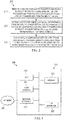
- Figure 2 shows an embodiment of a cooperative cross-tier and intra-tier precoding method 200 for a tow-tier network or system, such as the tow-tier network or system 100.
- the method 200 can be implemented by one or more precoders located at the network/system or at a remote location and coupled to the SAPs in the system (e.g., the SAPs 122) of the small-cell and possibly to a MBS (e.g., MBS 112) of the macro-cell.
- the precoders are coupled to transmitting UEs in communications with corresponding receiver UEs via D2D communications.
- the precoder(s) receive(s) CSI for transmissions from a plurality of SAPs (or transmitting UEs) to a considered MU, CSI for channels or transmissions from the SAPs to a plurality of SUs (or receiver UEs), and CSI for transmissions from the MBS to the SUs (or receiver UEs).
- the precoder(s) perform(s) CTP for cancelling signal interference from the SAPs (or transmitter UEs) to the considered MU.
- the precoder(s) perfom(s) in cooperation with the CTP, ITP for cancelling or reducing signal interference from the SAPs (or transmitter UEs) to the SUs (or receiver UEs).
- the ITP includes using the CTP matrix generated in the cooperative CTP for the SAPs (or transmitter UEs).
- FIG. 3 is a block diagram of an exemplary processing system 300 that can be used to implement various embodiments. Specific devices may utilize all of the components shown, or only a subset of the components and levels of integration may vary from device to device. Furthermore, a device may contain multiple instances of a component, such as multiple processing units, processors, memories, transmitters, receivers, etc.
- the processing system 300 may comprise a processing unit 301 equipped with one or more input/output devices, such as a network interfaces, storage interfaces, and the like.
- the processing unit 301 may include a central processing unit (CPU) 310, a memory 320, a mass storage device 330, and an I/O interface 360 connected to a bus.
- the bus may be one or more of any type of several bus architectures including a memory bus or memory controller, a peripheral bus or the like.
- the CPU 310 may comprise any type of electronic data processor.
- the memory 320 may comprise any type of system memory such as static random access memory (SRAM), dynamic random access memory (DRAM), synchronous DRAM (SDRAM), read-only memory (ROM), a combination thereof, or the like.
- the memory 320 may include ROM for use at boot-up, and DRAM for program and data storage for use while executing programs.
- the memory 320 is non-transitory.
- the mass storage device 330 may comprise any type of storage device configured to store data, programs, and other information and to make the data, programs, and other information accessible via the bus.
- the mass storage device 330 may comprise, for example, one or more of a solid state drive, hard disk drive, a magnetic disk drive, an optical disk drive, or the like.
- the processing unit 301 also includes one or more network interfaces 350, which may comprise wired links, such as an Ethernet cable or the like, or wireless links to access nodes or one or more networks 380.
- the network interface 350 allows the processing unit 301 to communicate with remote units via the networks 380.
- the network interface 350 may provide wireless communication via one or more transmitters/transmit antennas and one or more receivers/receive antennas.
- the processing unit 301 is coupled to a local-area network or a wide-area network for data processing and communications with remote devices, such as other processing units, the Internet, remote storage facilities, or the like.
Landscapes
- Engineering & Computer Science (AREA)
- Computer Networks & Wireless Communication (AREA)
- Signal Processing (AREA)
- Power Engineering (AREA)
- Physics & Mathematics (AREA)
- Mathematical Physics (AREA)
- Mobile Radio Communication Systems (AREA)
Claims (12)
- Verfahren zum Verringern oder Vermeiden einer Signalinterferenz von einem zweiten Stufennetzwerk in einem ersten Stufennetzwerk und in dem zweiten Stufennetzwerk, wobei das Verfahren umfasst:Empfangen durch die Netzwerkvorrichtung von einer Benutzervorrichtung in dem ersten Stufennetzwerk von Kanalzustandsinformationen (Channel State Information, CSI) von Signalen, die von der Benutzervorrichtung in dem ersten Stufennetzwerk von den Sendervorrichtungen in dem zweiten Stufennetzwerk empfangen wurden,Ausführen (210) durch eine Netzwerkvorrichtung einer kooperativen stufenübergreifenden Vorcodierung (Cross-Tier Precoding, CTP) für Sendesignale von Sendervorrichtungen in dem zweiten Stufennetzwerk, wobei das Ausführen der kooperativen CTP ein Ausführen der kooperativen CTP gemäß den CSI umfasst;Erzeugen (220) von CTP-Matrixinformationen durch die Netzwerkvorrichtung gemäß der ausgeführten kooperativen CTP;Ausführen (230) durch die Netzwerkvorrichtung einer stufeninternen Vorcodierung (Intra-Tier Precoding, ITP) für die Sendesignale gemäß den CTP-Matrixinformationen, wobei das Ausführen der ITP ein Ausführen der ITP gemäß den CSI umfasst; undWeiterleiten von Informationen über die kooperative CTP und die ITP an die Sendervorrichtungen in dem zweiten Stufennetzwerk.
- Verfahren nach Anspruch 1, das außerdem aufweist:Empfangen durch die Netzwerkvorrichtung von Benutzervorrichtungen in dem zweiten Stufennetzwerk von Kanalzustandsinformationen, CSI, von Signalen, die von den Benutzervorrichtungen in dem zweiten Stufennetzwerk von einer der Sendervorrichtungen in dem zweiten Stufennetzwerk oder einer Basisstation in dem ersten Stufennetzwerk empfangen wurden,wobei das Ausführen der kooperativen CTP ein Ausführen der kooperativen CTP gemäß den CSI umfasst, undwobei das Ausführen der ITP ein Ausführen der ITP gemäß den CSI umfasst.
- Verfahren nach Anspruch 1, das außerdem aufweist:Erhalten einer Leistungszuteilung von Sendesignalen in dem ersten Stufennetzwerk; undVergrößern einer Anzahl von Sendesymbolen für die Sendesignale in dem zweiten Stufennetzwerk gemäß der Leistungszuteilung von Sendesignalen in dem ersten Stufennetzwerk.
- Verfahren nach Anspruch 1, wobei das Erzeugen der CTP-Matrixinformationen ein Erzeugen einer nichtdiagonalen CTP-Matrix umfasst.
- Verfahren nach Anspruch 4, wobei das Erzeugen der nichtdiagonalen CTP-Matrix ein Erzeugen der nichtdiagonalen CTP-Matrix umfasst, die eine Anzahl von Dimensionen aufweist, die gleich (K - 1) · N + KL ist, wobei K eine Gesamtanzahl von Benutzervorrichtungen in dem zweiten Stufennetzwerk ist, N eine Gesamtanzahl von Teilträgern ist, die in dem ersten Stufennetzwerk verwendet werden, und L eine zyklische Präfixlänge (Cyclic Prefix length, CP-Länge) ist, die in dem ersten Stufennetzwerk verwendet wird.
- Verfahren nach Anspruch 5, wobei das Ausführen des kooperativen CTP ein Zuteilen einer Anzahl von Symbolen, die gleich der oder kleiner als die Anzahl von Dimensionen der nichtdiagonalen CTP-Matrix ist, für die gesendeten Signale umfasst.
- Verfahren nach Anspruch 1, wobei die Sendervorrichtungen Benutzervorrichtungen, Zugangspunkte, verteilte Antennen oder Relais umfassen.
- Verfahren nach Anspruch 1, wobei das zweite Stufennetzwerk Mehrbenutzerkommunikationen mit einem Vandermonde-Frequenzmultiplexverfahren (Multi-User Vandermode Frequency Division Multiple Access communications, MU-VFDM-Kommunikationen) unterstützt, und wobei das erste Stufennetzwerk Kommunikationen mit einem orthogonalen Frequenzmultiplexverfahren (Orthogonal Frequency-Division Multiplexing, OFDM) oder mit einem orthogonalen Frequenzmultiplexmehrfachzugriff (Orthogonal Frequency Division Multiple Access, OFDMA) unterstützt.
- Netzwerkkomponente, die geeignet ist zum Verringern oder Vermeiden einer Signalinterferenz von einem zweiten Stufennetzwerk in einem ersten Stufennetzwerk und in dem zweiten Stufennetzwerk, wobei die Netzwerkkomponente umfasst:einen Sender (350); undeinen Prozessor (310), der für einen Datenaustausch mit dem Sender verbunden ist,wobei der Prozessor konfiguriert ist, um sowohl eine kooperative stufenübergreifende Vorcodierung (Cross-Tier Precoding, CTP) (210) als auch eine stufeninterne Vorcodierung (Intra-Tier Precoding, ITP) (230) der Sendesignale von Sendervorrichtungen in dem zweiten Stufennetzwerk auszuführen, wobei der Prozessor konfiguriert ist, um die ITP unter Berücksichtigung von Informationen auszuführen, die von der kooperativen CTP erzeugt werden, undwobei der Sender konfiguriert ist, um Informationen über die kooperative CTP und die ITP an die Sendervorrichtungen in dem zweiten Stufennetzwerk zu senden,wobei die kooperative CTP und die ITP gemäß Kanalzustandsinformationen (Channel State Information, CSI) von Signalen ausgeführt werden, die in einer Benutzervorrichtung in dem ersten Stufennetzwerk von den Sendervorrichtungen in dem zweiten Stufennetzwerk empfangen wurden.
- Netzwerkkomponente nach Anspruch 9, wobei der Prozessor, der konfiguriert ist, um die kooperative CTP auszuführen, umfasst, dass der Prozessor konfiguriert ist, mindestens einen der folgenden Schritte auszuführen:Zuteilen einer Gesamtanzahl von Symbolen für die Sendesignale, die gleich oder kleiner ist als (K - 1) · N + KL, wobei K eine Gesamtanzahl von Benutzervorrichtungen in dem zweiten Stufennetzwerk ist, N eine Gesamtanzahl von Teilträgern ist, die in dem ersten Stufennetzwerk verwendet werden, und L eine zyklische Präfixlänge (Cyclic Prefix length, CP-Länge) ist, die in dem ersten Stufennetzwerk verwendet wird;Löschen einer symbolübergreifenden Interferenz in den Sendesignalen, mithilfe einer Blockdiagonal-Zero-Forcing-Technik (Block Diagonal Zero Forcing technique, BD-ZF-Technik);Umsetzen eines Wasserfüll-Algorithmus für die Sendesignale;Löschen einer symbolübergreifenden Interferenz in den Sendesignalen, mithilfe einer Ganzdiagonal-Zero-Forcing-Technik (Complete diagonal Zero Forcing technique, Ganzdiagonal-ZF-Technik);Löschen einer symbolübergreifenden Interferenz in den Sendesignalen, mithilfe einer kleinsten mittleren quadratischen Abweichung (Minimum Mean Square Error, MMSE) oder einem nichtlinearen Vorcodierungsverfahren; oderBerechnen einer Korrelationsmatrix einer Interferenz plus Rauschen gemäß den statistischen Eigenschaften der Interferenz und des Rauschens.
- Netzwerkkomponente nach Anspruch 9, wobei der Prozessor, der konfiguriert ist, um sowohl die kooperative CTP als auch die ITP auszuführen, umfasst, dass der Prozessor konfiguriert ist, um eine Einzelwertzerlegung (Single Value Decomposition, SVD) an einer kanalübergreifenden Matrix zum Senden von den Sendervorrichtungen in dem zweiten Stufennetzwerk an eine Benutzervorrichtung in dem ersten Stufennetzwerk auszuführen und um eine nichtdiagonale CTP-Matrix gemäß der ausgeführten SVD zu erzeugen.
- Netzwerkkomponente nach Anspruch 11, wobei der Prozessor, der konfiguriert ist, um sowohl das kooperative CTP als auch das ITP auszuführen, umfasst, dass der Prozessor konfiguriert ist, um eine zweite Kanalmatrix für die Sendesignale in dem zweiten Stufennetzwerk gemäß der nichtdiagonalen CTP-Matrix zu berechnen.
Applications Claiming Priority (2)
| Application Number | Priority Date | Filing Date | Title |
|---|---|---|---|
| US13/963,983 US9036460B2 (en) | 2013-08-09 | 2013-08-09 | System and method for cooperative precoding in heterogenous two-tier wireless networks |
| PCT/CN2014/084025 WO2015018369A1 (en) | 2013-08-09 | 2014-08-08 | System and method for cooperative precoding in heterogenous two-tier wireless networks |
Publications (3)
| Publication Number | Publication Date |
|---|---|
| EP3017640A1 EP3017640A1 (de) | 2016-05-11 |
| EP3017640A4 EP3017640A4 (de) | 2016-07-20 |
| EP3017640B1 true EP3017640B1 (de) | 2018-05-30 |
Family
ID=52448604
Family Applications (1)
| Application Number | Title | Priority Date | Filing Date |
|---|---|---|---|
| EP14834914.5A Active EP3017640B1 (de) | 2013-08-09 | 2014-08-08 | System und verfahren für kooperative vorcodierung in zweischichtigen heterogenen drahtlosen netzwerken |
Country Status (6)
| Country | Link |
|---|---|
| US (1) | US9036460B2 (de) |
| EP (1) | EP3017640B1 (de) |
| CN (1) | CN105409311B (de) |
| BR (1) | BR112016002678A8 (de) |
| RU (1) | RU2627244C1 (de) |
| WO (1) | WO2015018369A1 (de) |
Families Citing this family (3)
| Publication number | Priority date | Publication date | Assignee | Title |
|---|---|---|---|---|
| WO2015014300A2 (en) * | 2013-07-31 | 2015-02-05 | Huawei Technologies Co., Ltd. | System and method for interference alignment in cognitive small cell networks |
| US9450658B1 (en) * | 2015-08-06 | 2016-09-20 | Mediatek Inc. | Method for transmitting extra spatial layers over the wireless channel |
| CN112838999B (zh) * | 2019-11-25 | 2023-03-10 | 上海华为技术有限公司 | 一种信号调制方法以及装置 |
Family Cites Families (12)
| Publication number | Priority date | Publication date | Assignee | Title |
|---|---|---|---|---|
| US8391130B2 (en) * | 2006-11-28 | 2013-03-05 | Samsung Electronics Co., Ltd. | Method and apparatus for estimating and reducing interference in wireless communication systems |
| UA99537C2 (en) * | 2008-07-01 | 2012-08-27 | Квелкомм Инкорпорейтед | Network element configuration scheme |
| US8774014B2 (en) * | 2009-02-12 | 2014-07-08 | Lg Electronics Inc. | Method for avoiding interference |
| KR101931711B1 (ko) * | 2010-06-14 | 2018-12-24 | 엘지전자 주식회사 | 다중 노드 시스템에서 간섭 제거 방법 및 이러한 방법을 이용하는 단말 |
| US9036586B2 (en) * | 2010-08-20 | 2015-05-19 | Lg Electronics Inc. | Method of transmitting information about a pre-coding matrix of a terminal in a multiple node system |
| CN102158310A (zh) * | 2011-02-15 | 2011-08-17 | 中兴通讯股份有限公司 | 一种实现多小区预编码的方法和装置 |
| JP5690201B2 (ja) * | 2011-04-27 | 2015-03-25 | シャープ株式会社 | 通信システム、移動局装置、基地局装置、通信方法および集積回路 |
| JP5790879B2 (ja) * | 2011-06-30 | 2015-10-07 | 富士通株式会社 | 協調マルチポイント送信システムの下りプリコーディング方法、データ交互方法及び装置 |
| US8743785B2 (en) * | 2011-08-15 | 2014-06-03 | Futurewei Technologies, Inc. | System and method for reducing interference |
| EP2764642B1 (de) * | 2011-10-05 | 2018-01-10 | Huawei Technologies Co., Ltd. | System und verfahren für koordinierte übertragung in digitalen kommunikationen |
| US9276709B2 (en) * | 2011-11-08 | 2016-03-01 | Futurewei Technologies, Inc. | System and method for interference management in cellular networks |
| CN103037485B (zh) * | 2012-12-19 | 2015-06-24 | 北京航空航天大学 | 一种异构网中的低能耗协作传输方法 |
-
2013
- 2013-08-09 US US13/963,983 patent/US9036460B2/en active Active
-
2014
- 2014-08-08 EP EP14834914.5A patent/EP3017640B1/de active Active
- 2014-08-08 BR BR112016002678A patent/BR112016002678A8/pt not_active IP Right Cessation
- 2014-08-08 RU RU2016107939A patent/RU2627244C1/ru active
- 2014-08-08 CN CN201480042501.4A patent/CN105409311B/zh active Active
- 2014-08-08 WO PCT/CN2014/084025 patent/WO2015018369A1/en not_active Ceased
Non-Patent Citations (1)
| Title |
|---|
| None * |
Also Published As
| Publication number | Publication date |
|---|---|
| EP3017640A1 (de) | 2016-05-11 |
| BR112016002678A2 (pt) | 2018-05-02 |
| EP3017640A4 (de) | 2016-07-20 |
| US20150043436A1 (en) | 2015-02-12 |
| RU2627244C1 (ru) | 2017-08-04 |
| US9036460B2 (en) | 2015-05-19 |
| WO2015018369A1 (en) | 2015-02-12 |
| BR112016002678A8 (pt) | 2022-04-12 |
| CN105409311B (zh) | 2019-11-29 |
| CN105409311A (zh) | 2016-03-16 |
Similar Documents
| Publication | Publication Date | Title |
|---|---|---|
| CN110212958B (zh) | 一种移动通信系统中的信道信息反馈方法和装置 | |
| US9031612B2 (en) | Spatial alignment for D2D interference mitigation | |
| Ashikhmin et al. | Interference reduction in multi-cell massive MIMO systems I: Large-scale fading precoding and decoding | |
| US9609658B2 (en) | System and method for interference alignment in cognitive small cell networks | |
| CN107370525B (zh) | 用于信道状态信息反馈的方法、基站、终端设备及系统 | |
| US8908802B2 (en) | Transmit diversity method, related device, and system | |
| US20090103486A1 (en) | MIMO Wireless Communication System | |
| KR20180056647A (ko) | 다중 사용자 mimo 시스템에서 유연한 뉴머롤로지를 가능하게 하는 방법 및 장치 | |
| EP3627880B1 (de) | Kommunikationsvorrichtung, basisstation, verfahren und aufzeichnungsmedium | |
| CN110324072A (zh) | 用于传输子空间选择的系统和方法 | |
| US11082275B2 (en) | Electrical apparatus and wireless communication method for communication device with multiple antennas | |
| WO2018157760A1 (en) | System and method for providing explicit feedback in the uplink | |
| EP2639969B1 (de) | Vorrichtung, Verfahren und Computerprogramme zur Übertragungsvorcodierung | |
| US10333592B2 (en) | System and method for interference avoidance based on signal alignment in two-tier MIMO OFDM | |
| EP3017640B1 (de) | System und verfahren für kooperative vorcodierung in zweischichtigen heterogenen drahtlosen netzwerken | |
| EP2484069B1 (de) | Pilotsignalzuweisungsverfahren und vorrichtung für drahtlose systeme mit mehreren benutzern | |
| EP2569874A1 (de) | Mehrfachantennnenverfahren zur interferenzverringerung zwischen zellen in drahtlossystemen mit mehreren benutzern | |
| WO2020142794A2 (en) | Methods and apparatus for channel estimation and precoding with incomplete channel observation and channel state information feedback | |
| EP2299622A2 (de) | Drahtloses Kommunikationssystem, drahtloses Kommunikationsverfahren und Basisstation | |
| CN103580811B (zh) | 一种干扰对齐方法、相关装置及系统 | |
| EP3654543A1 (de) | Drahtloskommunikationsverfahren und drahtloskommunikationsvorrichtung | |
| US20250330356A1 (en) | Wireless communication method and apparatus | |
| EP4607863A1 (de) | Vorcodiererentwurf mit niedriger komplexität für mehrbenutzer-mimo-orthogonale zeit- und frequenzraumnetzwerke | |
| Kiani | Power efficient designs for 5G wireless networks | |
| KR20160133167A (ko) | 이동통신 시스템에서 신호 송수신 방법 및 장치 |
Legal Events
| Date | Code | Title | Description |
|---|---|---|---|
| PUAI | Public reference made under article 153(3) epc to a published international application that has entered the european phase |
Free format text: ORIGINAL CODE: 0009012 |
|
| 17P | Request for examination filed |
Effective date: 20160202 |
|
| AK | Designated contracting states |
Kind code of ref document: A1 Designated state(s): AL AT BE BG CH CY CZ DE DK EE ES FI FR GB GR HR HU IE IS IT LI LT LU LV MC MK MT NL NO PL PT RO RS SE SI SK SM TR |
|
| AX | Request for extension of the european patent |
Extension state: BA ME |
|
| A4 | Supplementary search report drawn up and despatched |
Effective date: 20160621 |
|
| RIC1 | Information provided on ipc code assigned before grant |
Ipc: H04J 11/00 20060101ALI20160615BHEP Ipc: H04B 7/02 20060101ALI20160615BHEP Ipc: H04W 16/14 20090101ALN20160615BHEP Ipc: H04W 72/04 20090101AFI20160615BHEP Ipc: H04L 25/02 20060101ALN20160615BHEP Ipc: H04L 25/03 20060101ALI20160615BHEP |
|
| DAX | Request for extension of the european patent (deleted) | ||
| GRAP | Despatch of communication of intention to grant a patent |
Free format text: ORIGINAL CODE: EPIDOSNIGR1 |
|
| RIC1 | Information provided on ipc code assigned before grant |
Ipc: H04B 7/024 20170101ALI20171128BHEP Ipc: H04L 25/03 20060101ALI20171128BHEP Ipc: H04J 11/00 20060101ALI20171128BHEP Ipc: H04L 25/02 20060101ALN20171128BHEP Ipc: H04W 16/14 20090101ALN20171128BHEP Ipc: H04W 72/04 20090101AFI20171128BHEP |
|
| INTG | Intention to grant announced |
Effective date: 20171218 |
|
| GRAS | Grant fee paid |
Free format text: ORIGINAL CODE: EPIDOSNIGR3 |
|
| GRAA | (expected) grant |
Free format text: ORIGINAL CODE: 0009210 |
|
| AK | Designated contracting states |
Kind code of ref document: B1 Designated state(s): AL AT BE BG CH CY CZ DE DK EE ES FI FR GB GR HR HU IE IS IT LI LT LU LV MC MK MT NL NO PL PT RO RS SE SI SK SM TR |
|
| REG | Reference to a national code |
Ref country code: GB Ref legal event code: FG4D |
|
| REG | Reference to a national code |
Ref country code: CH Ref legal event code: EP |
|
| REG | Reference to a national code |
Ref country code: AT Ref legal event code: REF Ref document number: 1004967 Country of ref document: AT Kind code of ref document: T Effective date: 20180615 |
|
| REG | Reference to a national code |
Ref country code: IE Ref legal event code: FG4D |
|
| REG | Reference to a national code |
Ref country code: DE Ref legal event code: R096 Ref document number: 602014026467 Country of ref document: DE |
|
| REG | Reference to a national code |
Ref country code: NL Ref legal event code: MP Effective date: 20180530 |
|
| REG | Reference to a national code |
Ref country code: LT Ref legal event code: MG4D |
|
| PG25 | Lapsed in a contracting state [announced via postgrant information from national office to epo] |
Ref country code: NO Free format text: LAPSE BECAUSE OF FAILURE TO SUBMIT A TRANSLATION OF THE DESCRIPTION OR TO PAY THE FEE WITHIN THE PRESCRIBED TIME-LIMIT Effective date: 20180830 Ref country code: FI Free format text: LAPSE BECAUSE OF FAILURE TO SUBMIT A TRANSLATION OF THE DESCRIPTION OR TO PAY THE FEE WITHIN THE PRESCRIBED TIME-LIMIT Effective date: 20180530 Ref country code: BG Free format text: LAPSE BECAUSE OF FAILURE TO SUBMIT A TRANSLATION OF THE DESCRIPTION OR TO PAY THE FEE WITHIN THE PRESCRIBED TIME-LIMIT Effective date: 20180830 Ref country code: SE Free format text: LAPSE BECAUSE OF FAILURE TO SUBMIT A TRANSLATION OF THE DESCRIPTION OR TO PAY THE FEE WITHIN THE PRESCRIBED TIME-LIMIT Effective date: 20180530 Ref country code: CY Free format text: LAPSE BECAUSE OF FAILURE TO SUBMIT A TRANSLATION OF THE DESCRIPTION OR TO PAY THE FEE WITHIN THE PRESCRIBED TIME-LIMIT Effective date: 20180530 Ref country code: ES Free format text: LAPSE BECAUSE OF FAILURE TO SUBMIT A TRANSLATION OF THE DESCRIPTION OR TO PAY THE FEE WITHIN THE PRESCRIBED TIME-LIMIT Effective date: 20180530 Ref country code: LT Free format text: LAPSE BECAUSE OF FAILURE TO SUBMIT A TRANSLATION OF THE DESCRIPTION OR TO PAY THE FEE WITHIN THE PRESCRIBED TIME-LIMIT Effective date: 20180530 |
|
| PG25 | Lapsed in a contracting state [announced via postgrant information from national office to epo] |
Ref country code: RS Free format text: LAPSE BECAUSE OF FAILURE TO SUBMIT A TRANSLATION OF THE DESCRIPTION OR TO PAY THE FEE WITHIN THE PRESCRIBED TIME-LIMIT Effective date: 20180530 Ref country code: HR Free format text: LAPSE BECAUSE OF FAILURE TO SUBMIT A TRANSLATION OF THE DESCRIPTION OR TO PAY THE FEE WITHIN THE PRESCRIBED TIME-LIMIT Effective date: 20180530 Ref country code: LV Free format text: LAPSE BECAUSE OF FAILURE TO SUBMIT A TRANSLATION OF THE DESCRIPTION OR TO PAY THE FEE WITHIN THE PRESCRIBED TIME-LIMIT Effective date: 20180530 Ref country code: GR Free format text: LAPSE BECAUSE OF FAILURE TO SUBMIT A TRANSLATION OF THE DESCRIPTION OR TO PAY THE FEE WITHIN THE PRESCRIBED TIME-LIMIT Effective date: 20180831 |
|
| REG | Reference to a national code |
Ref country code: AT Ref legal event code: MK05 Ref document number: 1004967 Country of ref document: AT Kind code of ref document: T Effective date: 20180530 |
|
| PG25 | Lapsed in a contracting state [announced via postgrant information from national office to epo] |
Ref country code: NL Free format text: LAPSE BECAUSE OF FAILURE TO SUBMIT A TRANSLATION OF THE DESCRIPTION OR TO PAY THE FEE WITHIN THE PRESCRIBED TIME-LIMIT Effective date: 20180530 |
|
| PG25 | Lapsed in a contracting state [announced via postgrant information from national office to epo] |
Ref country code: PL Free format text: LAPSE BECAUSE OF FAILURE TO SUBMIT A TRANSLATION OF THE DESCRIPTION OR TO PAY THE FEE WITHIN THE PRESCRIBED TIME-LIMIT Effective date: 20180530 Ref country code: EE Free format text: LAPSE BECAUSE OF FAILURE TO SUBMIT A TRANSLATION OF THE DESCRIPTION OR TO PAY THE FEE WITHIN THE PRESCRIBED TIME-LIMIT Effective date: 20180530 Ref country code: AT Free format text: LAPSE BECAUSE OF FAILURE TO SUBMIT A TRANSLATION OF THE DESCRIPTION OR TO PAY THE FEE WITHIN THE PRESCRIBED TIME-LIMIT Effective date: 20180530 Ref country code: CZ Free format text: LAPSE BECAUSE OF FAILURE TO SUBMIT A TRANSLATION OF THE DESCRIPTION OR TO PAY THE FEE WITHIN THE PRESCRIBED TIME-LIMIT Effective date: 20180530 Ref country code: RO Free format text: LAPSE BECAUSE OF FAILURE TO SUBMIT A TRANSLATION OF THE DESCRIPTION OR TO PAY THE FEE WITHIN THE PRESCRIBED TIME-LIMIT Effective date: 20180530 Ref country code: DK Free format text: LAPSE BECAUSE OF FAILURE TO SUBMIT A TRANSLATION OF THE DESCRIPTION OR TO PAY THE FEE WITHIN THE PRESCRIBED TIME-LIMIT Effective date: 20180530 Ref country code: SK Free format text: LAPSE BECAUSE OF FAILURE TO SUBMIT A TRANSLATION OF THE DESCRIPTION OR TO PAY THE FEE WITHIN THE PRESCRIBED TIME-LIMIT Effective date: 20180530 |
|
| REG | Reference to a national code |
Ref country code: CH Ref legal event code: PK Free format text: BERICHTIGUNGEN |
|
| RIC2 | Information provided on ipc code assigned after grant |
Ipc: H04L 25/02 20060101ALN20171128BHEP Ipc: H04B 7/024 20170101ALI20171128BHEP Ipc: H04W 16/14 20090101ALN20171128BHEP Ipc: H04W 72/04 20090101AFI20171128BHEP Ipc: H04J 11/00 20060101ALI20171128BHEP Ipc: H04L 25/03 20060101ALI20171128BHEP |
|
| PG25 | Lapsed in a contracting state [announced via postgrant information from national office to epo] |
Ref country code: SM Free format text: LAPSE BECAUSE OF FAILURE TO SUBMIT A TRANSLATION OF THE DESCRIPTION OR TO PAY THE FEE WITHIN THE PRESCRIBED TIME-LIMIT Effective date: 20180530 Ref country code: IT Free format text: LAPSE BECAUSE OF FAILURE TO SUBMIT A TRANSLATION OF THE DESCRIPTION OR TO PAY THE FEE WITHIN THE PRESCRIBED TIME-LIMIT Effective date: 20180530 |
|
| REG | Reference to a national code |
Ref country code: DE Ref legal event code: R097 Ref document number: 602014026467 Country of ref document: DE |
|
| PG25 | Lapsed in a contracting state [announced via postgrant information from national office to epo] |
Ref country code: MC Free format text: LAPSE BECAUSE OF FAILURE TO SUBMIT A TRANSLATION OF THE DESCRIPTION OR TO PAY THE FEE WITHIN THE PRESCRIBED TIME-LIMIT Effective date: 20180530 |
|
| REG | Reference to a national code |
Ref country code: CH Ref legal event code: PL |
|
| PLBE | No opposition filed within time limit |
Free format text: ORIGINAL CODE: 0009261 |
|
| STAA | Information on the status of an ep patent application or granted ep patent |
Free format text: STATUS: NO OPPOSITION FILED WITHIN TIME LIMIT |
|
| PG25 | Lapsed in a contracting state [announced via postgrant information from national office to epo] |
Ref country code: CH Free format text: LAPSE BECAUSE OF NON-PAYMENT OF DUE FEES Effective date: 20180831 Ref country code: LU Free format text: LAPSE BECAUSE OF NON-PAYMENT OF DUE FEES Effective date: 20180808 Ref country code: LI Free format text: LAPSE BECAUSE OF NON-PAYMENT OF DUE FEES Effective date: 20180831 |
|
| 26N | No opposition filed |
Effective date: 20190301 |
|
| REG | Reference to a national code |
Ref country code: BE Ref legal event code: MM Effective date: 20180831 |
|
| REG | Reference to a national code |
Ref country code: IE Ref legal event code: MM4A |
|
| PG25 | Lapsed in a contracting state [announced via postgrant information from national office to epo] |
Ref country code: SI Free format text: LAPSE BECAUSE OF FAILURE TO SUBMIT A TRANSLATION OF THE DESCRIPTION OR TO PAY THE FEE WITHIN THE PRESCRIBED TIME-LIMIT Effective date: 20180530 |
|
| PG25 | Lapsed in a contracting state [announced via postgrant information from national office to epo] |
Ref country code: IE Free format text: LAPSE BECAUSE OF NON-PAYMENT OF DUE FEES Effective date: 20180808 |
|
| PG25 | Lapsed in a contracting state [announced via postgrant information from national office to epo] |
Ref country code: BE Free format text: LAPSE BECAUSE OF NON-PAYMENT OF DUE FEES Effective date: 20180831 Ref country code: FR Free format text: LAPSE BECAUSE OF NON-PAYMENT OF DUE FEES Effective date: 20180831 |
|
| PG25 | Lapsed in a contracting state [announced via postgrant information from national office to epo] |
Ref country code: AL Free format text: LAPSE BECAUSE OF FAILURE TO SUBMIT A TRANSLATION OF THE DESCRIPTION OR TO PAY THE FEE WITHIN THE PRESCRIBED TIME-LIMIT Effective date: 20180530 |
|
| PG25 | Lapsed in a contracting state [announced via postgrant information from national office to epo] |
Ref country code: MT Free format text: LAPSE BECAUSE OF NON-PAYMENT OF DUE FEES Effective date: 20180808 |
|
| PG25 | Lapsed in a contracting state [announced via postgrant information from national office to epo] |
Ref country code: TR Free format text: LAPSE BECAUSE OF FAILURE TO SUBMIT A TRANSLATION OF THE DESCRIPTION OR TO PAY THE FEE WITHIN THE PRESCRIBED TIME-LIMIT Effective date: 20180530 |
|
| PG25 | Lapsed in a contracting state [announced via postgrant information from national office to epo] |
Ref country code: PT Free format text: LAPSE BECAUSE OF FAILURE TO SUBMIT A TRANSLATION OF THE DESCRIPTION OR TO PAY THE FEE WITHIN THE PRESCRIBED TIME-LIMIT Effective date: 20180530 |
|
| PG25 | Lapsed in a contracting state [announced via postgrant information from national office to epo] |
Ref country code: MK Free format text: LAPSE BECAUSE OF NON-PAYMENT OF DUE FEES Effective date: 20180530 Ref country code: HU Free format text: LAPSE BECAUSE OF FAILURE TO SUBMIT A TRANSLATION OF THE DESCRIPTION OR TO PAY THE FEE WITHIN THE PRESCRIBED TIME-LIMIT; INVALID AB INITIO Effective date: 20140808 |
|
| PG25 | Lapsed in a contracting state [announced via postgrant information from national office to epo] |
Ref country code: IS Free format text: LAPSE BECAUSE OF FAILURE TO SUBMIT A TRANSLATION OF THE DESCRIPTION OR TO PAY THE FEE WITHIN THE PRESCRIBED TIME-LIMIT Effective date: 20180930 |
|
| PGFP | Annual fee paid to national office [announced via postgrant information from national office to epo] |
Ref country code: GB Payment date: 20200729 Year of fee payment: 7 |
|
| GBPC | Gb: european patent ceased through non-payment of renewal fee |
Effective date: 20210808 |
|
| PG25 | Lapsed in a contracting state [announced via postgrant information from national office to epo] |
Ref country code: GB Free format text: LAPSE BECAUSE OF NON-PAYMENT OF DUE FEES Effective date: 20210808 |
|
| PGFP | Annual fee paid to national office [announced via postgrant information from national office to epo] |
Ref country code: DE Payment date: 20250702 Year of fee payment: 12 |