EP3017396B1 - System and method for providing secure access control to a graphics processing unit - Google Patents
System and method for providing secure access control to a graphics processing unit Download PDFInfo
- Publication number
- EP3017396B1 EP3017396B1 EP14745272.6A EP14745272A EP3017396B1 EP 3017396 B1 EP3017396 B1 EP 3017396B1 EP 14745272 A EP14745272 A EP 14745272A EP 3017396 B1 EP3017396 B1 EP 3017396B1
- Authority
- EP
- European Patent Office
- Prior art keywords
- gpu
- work orders
- programming interfaces
- security
- gpu programming
- Prior art date
- Legal status (The legal status is an assumption and is not a legal conclusion. Google has not performed a legal analysis and makes no representation as to the accuracy of the status listed.)
- Active
Links
Images


Classifications
-
- G—PHYSICS
- G06—COMPUTING OR CALCULATING; COUNTING
- G06F—ELECTRIC DIGITAL DATA PROCESSING
- G06F21/00—Security arrangements for protecting computers, components thereof, programs or data against unauthorised activity
- G06F21/70—Protecting specific internal or peripheral components, in which the protection of a component leads to protection of the entire computer
- G06F21/71—Protecting specific internal or peripheral components, in which the protection of a component leads to protection of the entire computer to assure secure computing or processing of information
-
- G—PHYSICS
- G06—COMPUTING OR CALCULATING; COUNTING
- G06F—ELECTRIC DIGITAL DATA PROCESSING
- G06F21/00—Security arrangements for protecting computers, components thereof, programs or data against unauthorised activity
- G06F21/70—Protecting specific internal or peripheral components, in which the protection of a component leads to protection of the entire computer
- G06F21/71—Protecting specific internal or peripheral components, in which the protection of a component leads to protection of the entire computer to assure secure computing or processing of information
- G06F21/74—Protecting specific internal or peripheral components, in which the protection of a component leads to protection of the entire computer to assure secure computing or processing of information operating in dual or compartmented mode, i.e. at least one secure mode
-
- G—PHYSICS
- G06—COMPUTING OR CALCULATING; COUNTING
- G06T—IMAGE DATA PROCESSING OR GENERATION, IN GENERAL
- G06T1/00—General purpose image data processing
- G06T1/20—Processor architectures; Processor configuration, e.g. pipelining
-
- G—PHYSICS
- G06—COMPUTING OR CALCULATING; COUNTING
- G06F—ELECTRIC DIGITAL DATA PROCESSING
- G06F2221/00—Indexing scheme relating to security arrangements for protecting computers, components thereof, programs or data against unauthorised activity
- G06F2221/21—Indexing scheme relating to G06F21/00 and subgroups addressing additional information or applications relating to security arrangements for protecting computers, components thereof, programs or data against unauthorised activity
- G06F2221/2113—Multi-level security, e.g. mandatory access control
Definitions
- PCDs Portable computing devices
- PCDs Portable computing devices
- CPU central processing unit
- GPU graphics processing unit
- DSP digital signal processors
- a content protection architecture typically separates memory regions into different security zones for controlling access by applications to sensitive content.
- Existing PCDs and content protection architectures are limited, however, to CPU-level access control.
- One method comprises: defining a plurality of security zones for controlling access to a graphics processing unit (GPU); assigning each of the security zones to a corresponding one of a plurality of GPU programming interfaces provided by the GPU, each of the GPU programming interfaces for receiving work orders issued by one or more applications associated with the corresponding security zone, the work orders comprising instructions to be executed by the GPU; and controlling execution of the work orders received by the plurality of GPU programming interfaces using separate secure memory regions, each secure memory region allocated to one of the plurality of security zones.
- Another embodiment is a computer program for providing secure access control to a graphics processing unit.
- the computer program is embodied in a computer-readable medium for execution by a processor.
- the computer program comprises logic configured to: define a plurality of security zones for controlling access to a graphics processing unit (GPU); assign each of the security zones to a corresponding one of a plurality of GPU programming interfaces provided by the GPU, each of the GPU programming interfaces for receiving work orders issued by one or more applications associated with the corresponding security zone, the work orders comprising instructions to be executed by the GPU; and control execution of the work orders received by the plurality of GPU programming interfaces using separate secure memory regions, each secure memory region allocated to one of the plurality of security zones.
- GPU graphics processing unit
- Another embodiment is a system for providing secure access control to a graphics processing unit (GPU).
- the system comprises a GPU having a plurality of GPU programming interfaces and a command processor.
- Each GPU programming interface is dynamically assigned to a different one of a plurality of security zones and configured to receive work orders issued by one or more applications associated with the corresponding security zone.
- the work orders comprise instructions to be executed by the GPU.
- the command processor is in communication with the plurality of GPU programming interfaces and configured to control execution of the work orders received by the plurality of GPU programming interfaces using separate secure memory regions. Each secure memory region allocated to one of the plurality of security zones.
- an “application” may also include files having executable content, such as: object code, scripts, byte code, markup language files, and patches.
- an “application” referred to herein may also include files that are not executable in nature, such as documents that may need to be opened or other data files that need to be accessed.
- content may also include files having executable content, such as: object code, scripts, byte code, markup language files, and patches.
- content referred to herein, may also include files that are not executable in nature, such as documents that may need to be opened or other data files that need to be accessed.
- a component may be, but is not limited to being, a process running on a processor, a processor, an object, an executable, a thread of execution, a program, and/or a computer.
- an application or module running on a computing device and the computing device may be a component.
- One or more components may reside within a process and/or thread of execution, and a component may be localized on one computer and/or distributed between two or more computers.
- these components may execute from various computer readable media having various data structures stored thereon.
- the components may communicate by way of local and/or remote processes such as in accordance with a signal having one or more data packets (e.g., data from one component interacting with another component in a local system, distributed system, and/or across a network such as the Internet with other systems by way of the signal).
- a “portable computing device” may comprise, for example, a cellular telephone, a satellite telephone, a pager, a personal digital assistant, a smart phone, a navigation device, a smart book or electronic reader, a media player, a tablet computer, a laptop computer, or other such devices.
- FIG. 1 is a system 100 that may be incorporated in, for example, a PCD ( FIG. 4 ) for providing secure access control to a graphics processing unit (GPU) 102.
- System 100 comprises one or more central processing units (CPU) 402 and one or more GPUs 102 for executing graphics and/or compute instructions associated with one or more applications 118 and/or one or more operating systems 120.
- the CPU 402 and GPU 102 may be connected by a hardware bus, connection, or other interface.
- the system 100 provides GPU access control with a plurality of security and/or content protection zones ("security zones").
- GPU hardware and/or software provides a plurality of GPU programming interfaces 104 to CPU 402.
- Each of the GPU programming interfaces 104 is associated with a different security zone for receiving work orders issued by the one or more applications 118 and operating systems 120 residing in different security zones.
- the security zones may be defined by a security policy manager 106 based on any desirable security use case.
- Each security zone is assigned to a separate GPU programming interface 104 and allocated to a separate memory region.
- the system 100 comprises four GPU programming interfaces 104a, 104b, 104c, and 104d with corresponding secure memory regions. Context banks 122a, 122b, 122c, and 122d may be allocated as memory resources for executing the work orders in the corresponding security zones.
- the secure memory regions may comprise an isolated address space with hardware-enforced protections using context banks 122a, 122b, 122c, and 122d in a system memory management unit (SMMU) 116.
- SMMU system memory management unit
- Each context bank 122 may comprise hardware resources to enforce a specific secure and isolated address space.
- the work orders comprise graphics instructions to be executed by the GPU 102.
- the applications 118 may comprise any suitable application requesting resources from the GPU 102.
- the operating systems 120 may comprise one or more operating systems, such as, for example, a high-level operating system (HLOS).
- the GPU 102 may receive work orders from specially-configured content protection applications (e.g., a content protection application 117 or a content protection kernel 119 associated with the operating systems 120).
- a GPU programming interface 104 comprises a control resource.
- the control resource may comprise register resources for accepting the work orders from the applications in the corresponding security zone and one or more interrupt resources to indicate the completion or failure status of the execution of a work order.
- the GPU programming interfaces 104 may be configurable by a virtual machine manager (VMM) 110 based on, for instance, the sizing of virtual machines and whether the security policy manager 106 or a trusted zone component 108 (i.e., a "root of trust" in the system 100) needs access to the GPU 402.
- the "root of trust" in the system 100 dynamically assigns the GPU programming interfaces 104 to the designated security zones based on the system security policies of the security policy manager 106, which may occur at a secure use case startup time.
- each GPU programming interface 104 may be memory mapped to a corresponding context bank 122 depending on the particular use scenario, in which case they may comprise a memory mapped input/output (MIMO) register.
- the GPU programming interfaces 104 may be directly assignable to one or more virtual machines or the VMM 110.
- each GPU programming interface 104 may be protected by hardware-enforced access control using a system memory management unit (SMMU) 116. In this manner, each security zone may have complete control over the register and interrupt resources associated with the GPU programming interface 104 after a particular use case has started.
- SMMU system memory management unit
- the GPU 102 may include a command processor 114 in communication with the plurality of GPU programming interfaces 104.
- the command processor 114 may be configured to select work orders from a content queue 204 ( FIG. 2 ) associated with the GPU programming interface 104.
- the command processor 114 may determine which work orders to process based on, for example, GPU scheduling policies, and then control execution of the work orders using the appropriate context bank 122 allocated to the security zone.
- multiple security zones can be managed in parallel by the applications 118 running concurrently on the CPU 402.
- Each application 118 may directly manage an associated command queue.
- One or more of the security zones may also be secure and/or non-secure.
- the security policy under which an application 118 (and its associated memory) is secure and/or non-secure may determined by a processor (e.g., CPU 402) controlling the GPU 102.
- the segmentation performed and/or managed by the CPU 402 may be implemented in various ways, including, for example, the following exemplary ways: (1) isolation with a hypervisor layer (e.g., a software layer to manage multiple guest operating systems 120); and/or (2) a hardware process construct defining a hardware secure domain (e.g., "trustzone" security extensions used in ARM architectures) which may control separation between trusted and untrusted hardware via additional hardware tagging of instructions to track memory access and GPU commands and isolate the source of the request.
- the hypervisor layer may comprise a software abstraction on the hardware, which may be limited to memory access isolation of the control unit.
- the system 100 may support any desirable security use cases related to GPU access control.
- the system 100 may support uses case, such as, digital rights management (DRM) and controlling access to confidential data for applications including banking, medical records, fingerprints, etc., to name a few.
- DRM digital rights management
- the system 100 may provide four exception levels associated with respective security zones, with each level having different or ranked security privileges.
- a first exception level (ELO) may loosely correspond to a user mode.
- a second exception level (EL1) may correspond to a kernel mode.
- a third exception level (EL2) may correspond to hypervisors.
- a fourth exception level (EL3) may correspond to the trusted zone component 108, which comprises the most privileged security zone.
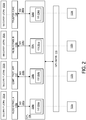
- FIG. 2 illustrates an exemplary use case involving four security zones 202a, 202b, 202c, and 202d.
- the security zone 202a is assigned to a GPU programming interface 104a configured for a first HLOS kernel 119a and having a content queue 204a.
- the content bank 122a is allocated to the security zone 202a.
- the security zone 202b is assigned to a GPU programming interface 104b configured for a content protection application 117 and having a content queue 204b.
- the context bank 122b is allocated to the security zone 202b.
- the security zone 202c is assigned to a GPU programming interface 104c configured for a second HLOS kernel 119b and having a content queue 204c.
- the context bank 122c is allocated to the security zone 202c.
- the security zone 202d is assigned to a GPU programming interface 104d associated with the trusted zone component 108 and having a content queue 204d.
- the trusted zone component 108 owns a trusted context bank 122d, which comprises an isolated address space that is only visible to the trusted zone component 108.
- the security zones 202 may support any desirable use cases with appropriate applications 118.
- the security zone 202a may be associated with a gaming application and an associated virtual memory space.
- Security zone 202b may be associated with a video application and an associated premium video virtual memory space.
- Security zone 202c may be associated with a browser application and an associated virtual memory space.
- Security zone 202d may be associated with a banking application and an associated virtual memory space.
- each GPU programming interface 104a, 104b, 104c, and 104d may be identified by a separate data stream identifier (SID 206a, SID 206b, SID 206c, and SID 206d, respectively).
- the stream identifiers may be used, for example, by the CPU 402 to inject the work orders to the appropriate GPU programming interface.
- the command processor 114 may select work orders according to stream identifiers, and the SMMU 116 may manage memory resources according to the stream identifiers.
- FIG. 3 illustrates an embodiment of a method 300 for providing GPU access control in the system 100.
- a plurality of security zones 202 are defined for instructions to be executed by the GPU 104.
- the security zones 202 may be defined by the security policy manager 106, the trusted zone component 108, or other software and/or hardware associated with system 101. In an embodiment, two or more of the security zones 202 may be managed in parallel. Furthermore, it should be appreciated that, in some embodiments, both secure and non-secure zones may be implemented.
- each security zone 202 is assigned to a separate GPU programming interface 104 and allocated to a separate memory region (e.g., context banks 122a, 122b, 122c, and 122d).
- the GPU programming interfaces 104 may be configurable by VMM 110 based on, for instance, the sizing of virtual machines and whether the security policy manager 106 or the trusted zone component 108 needs access to the GPU 104.
- the "root of trust" in the system 100 dynamically assigns the GPU programming interfaces 104 to the designated security zones based on the system security policies of the security policy manager 106, which may occur at a secure use case startup time.
- the applications 118 residing in one of the security zones 202 may issue work orders to the appropriate GPU programming interface 104.
- the CPU 402 may inject the work orders using stream identifiers 206.
- the work orders may be provided to the appropriate GPU programming interface 105 based on the corresponding security zone 202.
- the command processor 114 and/or the SMMU 116 may control execution of the work orders using separate memory regions (e.g., context banks 122a, 122b, 122c, and 122d) allocated to the corresponding security zone 202 and GPU programming interface 104.
- the trusted zone component 108 may claim ownership of the trusted context bank 122d ( FIG. 2 ).
- a page table associated with a SMMU context bank may be configured. The page table may be populated with buffers owned by the trusted zone (i.e., security zone 202d) and which are not visible to any other components with the exception of buffers shared with another security zone 202a, 202b, or 202c.
- a security policy may specify that the trusted zone component 108 claim the ownership of the GPU programming interface 104d.
- the SID 206d may be configured as a secure SID that maps to the trusted context bank 122d. In operation, the trusted zone component 108 issues GPU work orders by injecting the requests to the command queue 204d.
- the command processor 114 may be prompted (e.g., by a "doorbell" register) to begin processing.
- the command processor 114 scans the GPU programming interface(s) 104d to select which one to work on.
- the work order may be processed while the SID 206d is set according to the GPU programming interface 104d.
- the SID 206d selects the specific context bank which sets up the appropriate memory protection.
- the command processor 114 interrupts the CPU 402 and/or the trusted zone component 108 receives the interrupt. After completion of the work order, the trusted zone component 108 may issue further work orders. If the interrupt indicates an error, the trusted zone component 108 may stop further processing and handle the error according to error handling policies.
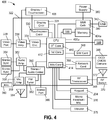
- FIG. 4 illustrates the system 100 described above incorporated in an exemplary portable computing device (PCD) 400. It should be appreciated that some components of system 100 are included on the SoC 322 while others may reside offchip.
- the SoC 322 may comprise any embedded system that may be separately manufactured and incorporated into designs for the portable computing device 400.
- the PCD 400 includes an SoC 322 that includes a multicore CPU 402A.
- the multicore CPU 402A may include a zeroth core 410, a first core 412, and an Nth core 414.
- a display controller 328 and a touch screen controller 330 may be coupled to the GPU 104, which may reside on or connected to the CPU 402.
- the touch screen display 108 external to the SoC 322 may be coupled to the display controller 328 and the touch screen controller 330.
- FIG. 4 further shows that a video encoder 334, e.g., a phase alternating line (PAL) encoder, a sequential color a memoire (SECAM) encoder, or a national television system(s) committee (NTSC) encoder, is coupled to the multicore CPU 402A.
- a video amplifier 336 is coupled to the video encoder 334 and the touch screen display 108.
- a video port 338 is coupled to the video amplifier 336.
- a universal serial bus (USB) controller 340 and other trace sinks 109 and trace dumps 110 may be coupled to the multicore CPU 402A.
- a USB port 342 is coupled to the USB controller 340.
- Memory 404A and a subscriber identity module (SIM) card 346 may also be coupled to the multicore CPU 402A.
- SIM subscriber identity module
- a digital camera 348 may be coupled to the multicore CPU 402A.
- the digital camera 348 is a charge-coupled device (CCD) camera or a complementary metal-oxide semiconductor (CMOS) camera.
- CCD charge-coupled device
- CMOS complementary metal-oxide semiconductor
- a stereo audio coder-decoder (CODEC) 350 may be coupled to the multicore CPU 402A.
- an audio amplifier 352 may coupled to the stereo audio CODEC 350.
- a first stereo speaker 354 and a second stereo speaker 356 are coupled to the audio amplifier 352.
- FIG. 4 shows that a microphone amplifier 358 may be also coupled to the stereo audio CODEC 350. Additionally, a microphone 360 may be coupled to the microphone amplifier 358. In a particular aspect, a frequency modulation (FM) radio tuner 362 may be coupled to the stereo audio CODEC 350. Also, an FM antenna 364 is coupled to the FM radio tuner 362. Further, stereo headphones 366 may be coupled to the stereo audio CODEC 350.
- FM frequency modulation
- FIG. 4 further illustrates that a radio frequency (RF) transceiver 368 may be coupled to the multicore CPU 402A.
- An RF switch 370 may be coupled to the RF transceiver 368 and an RF antenna 372.
- a keypad 204 may be coupled to the multicore CPU 402A.
- a mono headset with a microphone 376 may be coupled to the multicore CPU 402A.
- a vibrator device 378 may be coupled to the multicore CPU 402A.
- FIG. 4 also shows that a power supply 380 may be coupled to the SoC 322.
- the power supply 380 is a direct current (DC) power supply that provides power to the various components of the PCD 400 that require power.
- the power supply is a rechargeable DC battery or a DC power supply that is derived from an alternating current (AC) to DC transformer that is connected to an AC power source.
- DC direct current
- FIG. 4 further indicates that the PCD 400 may also include a network card 388 that may be used to access a data network, e.g., a local area network, a personal area network, or any other network.
- the network card 388 may be a Bluetooth network card, a WiFi network card, a personal area network (PAN) card, a personal area network ultra-low-power technology (PeANUT) network card, or any other network card well known in the art.
- the network card 388 may be incorporated into a chip, i.e., the network card 388 may be a full solution in a chip, and may not be a separate network card 388.
- the touch screen display 108, the video port 338, the USB port 342, the camera 348, the first stereo speaker 354, the second stereo speaker 356, the microphone 360, the FM antenna 364, the stereo headphones 366, the RF switch 370, the RF antenna 372, the keypad 374, the mono headset 376, the vibrator 378, and the power supply 380 may be external to the on-chip system 322.
- one or more of the method steps described herein may be stored in the memory 404A as computer program instructions, such as the modules described above in connection with the system 100 as illustrated in FIG 1 .
- multicore CPU 402A and/or the GPU 102 may be executed by the multicore CPU 402A and/or the GPU 102 to perform the methods described herein. Further, the multicore CPU 402A, the GPU 102, memory 404A of the PCD 400, or a combination thereof may serve as a means for executing one or more of the method steps described herein.
- the functions described may be implemented in hardware, software, firmware, or any combination thereof. If implemented in software, the functions may be stored on or transmitted as one or more instructions or code on a computer-readable medium.
- Computer-readable media include both computer storage media and communication media including any medium that facilitates transfer of a computer program from one place to another.
- a storage media may be any available media that may be accessed by a computer.
- such computer-readable media may comprise RAM, ROM, EEPROM, CD-ROM or other optical disk storage, magnetic disk storage or other magnetic storage devices, or any other medium that may be used to carry or store desired program code in the form of instructions or data structures and that may be accessed by a computer.
- any connection is properly termed a computer-readable medium.
- the software is transmitted from a website, server, or other remote source using a coaxial cable, fiber optic cable, twisted pair, digital subscriber line ("DSL"), or wireless technologies such as infrared, radio, and microwave
- coaxial cable, fiber optic cable, twisted pair, DSL, or wireless technologies such as infrared, radio, and microwave are included in the definition of medium.
- Disk and disc includes compact disc (“CD”), laser disc, optical disc, digital versatile disc (“DVD”), floppy disk and blu-ray disc where disks usually reproduce data magnetically, while discs reproduce data optically with lasers. Combinations of the above should also be included within the scope of computer-readable media.
- a method for providing secure access control to a graphics processing unit comprising defining a plurality of security zones for controlling access to a graphics processing unit, assigning each of the security zones to a corresponding one of a plurality of GPU programming interfaces provided by the GPU, each of the GPU programming interfaces for receiving work orders issued by one or more applications associated with the corresponding security zone, the work orders comprising instructions to be executed by the GPU and controlling execution of the work orders received by the plurality of GPU programming interfaces using separate secure memory regions, each secure memory region allocated to one of the plurality of security zones.
- the GPU programming interfaces may comprise a respective command queue for storing work orders received by the corresponding GPU programming interface.
- the work orders may be injected by a central processing unit (CPU) into the corresponding GPU programming interface according to the security zones. Further, the work orders may be injected using a stream identifier that identifies the corresponding GPU programming interface.
- the separate memory regions may be allocated by a secure memory management unit. Further, one or more of the separate memory regions may comprise an isolated address space with hardware-enforced protections using an associated context bank in the secure memory management unit. Also, the isolated address space may be implemented via one or more of: a hypervisor software layer to manage two or more operating systems; and separation between trusted hardware and untrusted hardware. Two or more of the security zones may be managed in parallel. Further, one or more of the security zones may comprise a non-secure zone or a secure zone. Further, the one or more applications issuing the work orders may comprise one or more of a content protection zone application, a content protection zone kernel associated with an operating system, a high level operating system kernel, and a trusted zone security monitor.
- a system for providing secure access control to a graphics processing unit comprising means for defining a plurality of security zones for controlling access to a graphics processing unit (GPU), means for assigning each of the security zones to a corresponding one of a plurality of GPU programming interfaces provided by the GPU, each of the GPU programming interfaces for receiving work orders issued by one or more applications associated with the corresponding security zone, the work orders comprising instructions to be executed by the GPU and means for controlling execution of the work orders received by the plurality of GPU programming interfaces using separate secure memory regions, each secure memory region allocated to one of the plurality of security zones.
- the GPU programming interfaces may comprise respective means for storing work orders received by the corresponding GPU programming interface.
- the work orders may be injected by a central processing unit (CPU) into the corresponding GPU programming interface according to the security zones.
- the work orders may be injected using a stream identifier that identifies the corresponding GPU programming interface.
- the separate memory regions may be allocated by a secure memory management unit.
- one or more of the separate memory regions may comprise an isolated address space with hardware-enforced protections using an associated context bank in the secure memory management unit.
- the isolated address space may be implemented via one or more of: a hypervisor software layer to manage two or more operating systems; and separation between trusted hardware and untrusted hardware.
- two or more of the security zones may be managed in parallel.
- One or more of the security zones may comprise a non-secure zone or a secure zone.
- the one or more applications issuing the work orders may comprise one or more of a content protection zone application, a content protection zone kernel associated with an operating system, a high level operating system kernel, and a trusted zone security monitor.
- a computer program for providing secure access control to a graphics processing unit comprising logic configured to define a plurality of security zones for controlling access to a graphics processing unit (GPU), assign each of the security zones to a corresponding one of a plurality of GPU programming interfaces provided by the GPU, each of the GPU programming interfaces for receiving work orders issued by one or more applications associated with the corresponding security zone, the work orders comprising instructions to be executed by the GPU and control execution of the work orders received by the plurality of GPU programming interfaces using separate secure memory regions, each secure memory region allocated to one of the plurality of security zones.
- GPU graphics processing unit
- the GPU programming interfaces may comprise a respective command queue for storing work orders received by the corresponding GPU programming interface.
- the work orders may be injected by a central processing unit (CPU) into the corresponding GPU programming interface according to the security zones.
- the work orders may ybe injected using a stream identifier that identifies the corresponding GPU programming interface.
- the separate memory regions may be allocated by a secure memory management unit.
- One or more of the separate memory regions may comprise an isolated address space with hardware-enforced protections using an associated context bank in the secure memory management unit.
- the isolated address space may be implemented via one or more of: a hypervisor software layer to manage two or more operating systems; and separation between trusted hardware and untrusted hardware. Two or more of the security zones may be managed in parallel.
- One or more of the security zones may comprise a non-secure zone or a secure zone.
- the one or more applications issuing the work orders may comprise one or more of a content protection zone application, a content protection zone kernel associated with an operating system, a high level operating system kernel, and a trusted zone security monitor.
- a system for providing secure access control to a graphics processing unit comprising a graphics processing unit (GPU), a plurality GPU programming interfaces provided by the GPU, each GPU programming interface dynamically assigned to a different one of a plurality of security zones and configured to receive work orders issued by one or more applications associated with the corresponding security zone, the work orders comprising instructions to be executed by the GPU and a command processor in communication with the plurality of GPU programming interfaces, the command processor configured control execution of the work orders received by the plurality of GPU programming interfaces using separate secure memory regions, each secure memory region allocated to one of the plurality of security zones.
- the GPU programming interfaces may comprise a respective command queue for storing work orders received by the corresponding GPU programming interface.
- the work orders may be injected by a central processing unit (CPU) into the corresponding GPU programming interface according to the security zones.
- the work orders may be injected using a stream identifier that identifies the corresponding GPU programming interface.
- the separate memory regions may be allocated by a secure memory management unit.
- One or more of the separate memory regions may comprise an isolated address space with hardware-enforced protections using an associated context bank in the secure memory management unit.
- the isolated address space may be implemented via one or more of: a hypervisor software layer to manage two or more operating systems; and separation between trusted hardware and untrusted hardware.
- Two or more of the security zones may be managed in parallel.
- One or more of the security zones may comprise a non-secure zone or a secure zone.
- the one or more applications issuing the work orders may comprise one or more of a content protection zone application, a content protection zone kernel associated with an operating system, a high level operating system kernel, and a trusted zone security monitor.
Landscapes
- Engineering & Computer Science (AREA)
- Physics & Mathematics (AREA)
- Theoretical Computer Science (AREA)
- Computer Hardware Design (AREA)
- General Physics & Mathematics (AREA)
- Mathematical Physics (AREA)
- Computer Security & Cryptography (AREA)
- Software Systems (AREA)
- General Engineering & Computer Science (AREA)
- Storage Device Security (AREA)
- Image Generation (AREA)
Applications Claiming Priority (3)
| Application Number | Priority Date | Filing Date | Title |
|---|---|---|---|
| US201361841881P | 2013-07-01 | 2013-07-01 | |
| US14/014,032 US9507961B2 (en) | 2013-07-01 | 2013-08-29 | System and method for providing secure access control to a graphics processing unit |
| PCT/US2014/044776 WO2015002851A1 (en) | 2013-07-01 | 2014-06-30 | System and method for providing secure access control to a graphics processing unit |
Publications (2)
| Publication Number | Publication Date |
|---|---|
| EP3017396A1 EP3017396A1 (en) | 2016-05-11 |
| EP3017396B1 true EP3017396B1 (en) | 2017-10-11 |
Family
ID=52115146
Family Applications (1)
| Application Number | Title | Priority Date | Filing Date |
|---|---|---|---|
| EP14745272.6A Active EP3017396B1 (en) | 2013-07-01 | 2014-06-30 | System and method for providing secure access control to a graphics processing unit |
Country Status (8)
| Country | Link |
|---|---|
| US (1) | US9507961B2 (enExample) |
| EP (1) | EP3017396B1 (enExample) |
| JP (1) | JP2016524257A (enExample) |
| KR (1) | KR20160025554A (enExample) |
| CN (1) | CN105393258B (enExample) |
| BR (1) | BR112015032790A2 (enExample) |
| CA (1) | CA2912929A1 (enExample) |
| WO (1) | WO2015002851A1 (enExample) |
Families Citing this family (16)
| Publication number | Priority date | Publication date | Assignee | Title |
|---|---|---|---|---|
| CA2886389A1 (en) | 2012-09-28 | 2014-04-03 | Cepheid | Methods for dna and rna extraction from fixed paraffin-embedded tissue samples |
| FR3026207B1 (fr) * | 2014-09-22 | 2018-08-17 | Prove & Run | Terminal a affichage securise |
| US11055806B2 (en) * | 2015-02-27 | 2021-07-06 | Advanced Micro Devices, Inc. | Method and apparatus for directing application requests for rendering |
| US9767320B2 (en) * | 2015-08-07 | 2017-09-19 | Qualcomm Incorporated | Hardware enforced content protection for graphics processing units |
| US10102391B2 (en) | 2015-08-07 | 2018-10-16 | Qualcomm Incorporated | Hardware enforced content protection for graphics processing units |
| US10127627B2 (en) * | 2015-09-23 | 2018-11-13 | Intel Corporation | Mapping graphics resources to linear arrays using a paging system |
| US10769312B2 (en) | 2015-10-06 | 2020-09-08 | Carnegie Mellon University | Method and apparatus for trusted display on untrusted computing platforms to secure applications |
| US10471543B2 (en) * | 2015-12-15 | 2019-11-12 | Lawrence Livermore National Security, Llc | Laser-assisted additive manufacturing |
| US10089272B2 (en) * | 2016-02-22 | 2018-10-02 | Dell Products, Lp | Data-category switch module in the control plane for use with internet of things devices |
| US10628611B2 (en) * | 2016-11-04 | 2020-04-21 | Qualcomm Incorporated | Exclusive execution environment within a system-on-a-chip computing system |
| US10848483B2 (en) * | 2016-12-08 | 2020-11-24 | Ricoh Company, Ltd. | Shared terminal, communication system, and display control method, and recording medium |
| US10387679B2 (en) * | 2017-01-06 | 2019-08-20 | Capitalogix Ip Owner, Llc | Secure intelligent networked architecture with dynamic feedback |
| EP3355188B1 (en) | 2017-01-31 | 2021-08-25 | OpenSynergy GmbH | Instrument display on a car dashboard by checking frames of a gui by a realtime os |
| WO2019012625A1 (ja) * | 2017-07-12 | 2019-01-17 | 日本電気株式会社 | 権限判定システム、セキュアデバイス、判定装置、権限管理方法及び権限判定プログラム |
| US11295008B2 (en) * | 2019-02-13 | 2022-04-05 | Nec Corporation | Graphics processing unit accelerated trusted execution environment |
| TWI759827B (zh) | 2019-08-16 | 2022-04-01 | 邊信聯科技股份有限公司 | 異構處理器透過開放式連接器進行具有遠距認證及資訊獨立的可信運算系統及方法 |
Family Cites Families (21)
| Publication number | Priority date | Publication date | Assignee | Title |
|---|---|---|---|---|
| US7007025B1 (en) | 2001-06-08 | 2006-02-28 | Xsides Corporation | Method and system for maintaining secure data input and output |
| US7203310B2 (en) * | 2001-12-04 | 2007-04-10 | Microsoft Corporation | Methods and systems for cryptographically protecting secure content |
| US7421694B2 (en) | 2003-02-18 | 2008-09-02 | Microsoft Corporation | Systems and methods for enhancing performance of a coprocessor |
| US7673304B2 (en) | 2003-02-18 | 2010-03-02 | Microsoft Corporation | Multithreaded kernel for graphics processing unit |
| US7444523B2 (en) | 2004-08-27 | 2008-10-28 | Microsoft Corporation | System and method for using address bits to signal security attributes of data in the address space |
| US8954751B2 (en) * | 2004-10-08 | 2015-02-10 | International Business Machines Corporation | Secure memory control parameters in table look aside buffer data fields and support memory array |
| JP3965408B2 (ja) * | 2004-12-28 | 2007-08-29 | イーストラテジー株式会社 | デジタルコンテンツデータ提供システム |
| TWI322354B (en) * | 2005-10-18 | 2010-03-21 | Via Tech Inc | Method and system for deferred command issuing in a computer system |
| US8766995B2 (en) * | 2006-04-26 | 2014-07-01 | Qualcomm Incorporated | Graphics system with configurable caches |
| US20100031342A1 (en) * | 2007-04-12 | 2010-02-04 | Honeywell International, Inc | Method and system for providing secure video data transmission and processing |
| US8269780B2 (en) * | 2007-06-07 | 2012-09-18 | Apple Inc. | Batching graphics operations with time stamp tracking |
| US8393008B2 (en) * | 2008-05-21 | 2013-03-05 | Microsoft Corporation | Hardware-based output protection of multiple video streams |
| US9405931B2 (en) * | 2008-11-14 | 2016-08-02 | Dell Products L.P. | Protected information stream allocation using a virtualized platform |
| US8560826B2 (en) * | 2009-12-14 | 2013-10-15 | Citrix Systems, Inc. | Secure virtualization environment bootable from an external media device |
| JP5699755B2 (ja) * | 2011-03-31 | 2015-04-15 | 富士通株式会社 | 割当方法、割当装置、および割当プログラム |
| US8562441B1 (en) | 2011-05-03 | 2013-10-22 | Zynga Inc. | Secure, parallel, and independent script execution |
| US8943330B2 (en) * | 2011-05-10 | 2015-01-27 | Qualcomm Incorporated | Apparatus and method for hardware-based secure data processing using buffer memory address range rules |
| US9727385B2 (en) * | 2011-07-18 | 2017-08-08 | Apple Inc. | Graphical processing unit (GPU) implementing a plurality of virtual GPUs |
| GB2501274B (en) * | 2012-04-17 | 2020-05-13 | Advanced Risc Mach Ltd | Management of data processing security in a secondary processor |
| GB2501470B (en) * | 2012-04-17 | 2020-09-16 | Advanced Risc Mach Ltd | Management of data processing security in a secondary processor |
| US8931108B2 (en) * | 2013-02-18 | 2015-01-06 | Qualcomm Incorporated | Hardware enforced content protection for graphics processing units |
-
2013
- 2013-08-29 US US14/014,032 patent/US9507961B2/en active Active
-
2014
- 2014-06-30 JP JP2016524277A patent/JP2016524257A/ja not_active Ceased
- 2014-06-30 WO PCT/US2014/044776 patent/WO2015002851A1/en not_active Ceased
- 2014-06-30 EP EP14745272.6A patent/EP3017396B1/en active Active
- 2014-06-30 CN CN201480037591.8A patent/CN105393258B/zh active Active
- 2014-06-30 KR KR1020167000555A patent/KR20160025554A/ko not_active Withdrawn
- 2014-06-30 CA CA2912929A patent/CA2912929A1/en not_active Abandoned
- 2014-06-30 BR BR112015032790A patent/BR112015032790A2/pt not_active Application Discontinuation
Non-Patent Citations (1)
| Title |
|---|
| None * |
Also Published As
| Publication number | Publication date |
|---|---|
| EP3017396A1 (en) | 2016-05-11 |
| US9507961B2 (en) | 2016-11-29 |
| CN105393258A (zh) | 2016-03-09 |
| BR112015032790A2 (pt) | 2017-07-25 |
| WO2015002851A1 (en) | 2015-01-08 |
| US20150002523A1 (en) | 2015-01-01 |
| CA2912929A1 (en) | 2015-01-08 |
| JP2016524257A (ja) | 2016-08-12 |
| CN105393258B (zh) | 2018-05-25 |
| KR20160025554A (ko) | 2016-03-08 |
Similar Documents
| Publication | Publication Date | Title |
|---|---|---|
| EP3017396B1 (en) | System and method for providing secure access control to a graphics processing unit | |
| EP3835983B1 (en) | Artificial intelligence (ai) processing method and ai processing device | |
| US10909257B1 (en) | Multi-domain application execution management | |
| US9170957B2 (en) | Distributed dynamic memory management unit (MMU)-based secure inter-processor communication | |
| TWI606364B (zh) | 處理安全內容之系統單晶片及包含其之行動裝置 | |
| RU2667713C2 (ru) | Селективное обеспечение соблюдения целостности кода, обеспечиваемое менеджером виртуальной машины | |
| US10255088B2 (en) | Modification of write-protected memory using code patching | |
| WO2016054049A1 (en) | Allocation of shared system resources in order to mitigate side channel attacks | |
| US12417322B2 (en) | Technologies for filtering memory access transactions received from one or more I/O devices | |
| US20170102957A1 (en) | System and Method for Trusted Operability When Moving Between Network Functions Virtualization States | |
| US9331988B2 (en) | System and method for provisioning secrets to an application (TA) on a device | |
| US20190228159A1 (en) | Technologies for filtering memory access transactions received from one or more accelerators via coherent accelerator link | |
| US10395028B2 (en) | Virtualization based intra-block workload isolation | |
| GB2467408A (en) | Virtualisation logic for managing transactions between a physical device controller and a virtual machine | |
| WO2023123850A1 (zh) | 一种固件可信根的实现方法、装置、设备和可读存储介质 | |
| CN116578530A (zh) | 片上系统、中断隔离方法及计算机设备 | |
| EP3586234B1 (en) | Methods and apparatus for controlling access to secure computing resources | |
| US10121001B1 (en) | System and method for monolithic scheduling in a portable computing device using a hypervisor | |
| KR20140127124A (ko) | 시스템 자원에 대한 접근을 관리하는 전자 장치 | |
| WO2024255577A1 (zh) | 数据处理方法、装置及计算机可读存储介质 |
Legal Events
| Date | Code | Title | Description |
|---|---|---|---|
| PUAI | Public reference made under article 153(3) epc to a published international application that has entered the european phase |
Free format text: ORIGINAL CODE: 0009012 |
|
| 17P | Request for examination filed |
Effective date: 20160114 |
|
| AK | Designated contracting states |
Kind code of ref document: A1 Designated state(s): AL AT BE BG CH CY CZ DE DK EE ES FI FR GB GR HR HU IE IS IT LI LT LU LV MC MK MT NL NO PL PT RO RS SE SI SK SM TR |
|
| AX | Request for extension of the european patent |
Extension state: BA ME |
|
| DAX | Request for extension of the european patent (deleted) | ||
| GRAP | Despatch of communication of intention to grant a patent |
Free format text: ORIGINAL CODE: EPIDOSNIGR1 |
|
| INTG | Intention to grant announced |
Effective date: 20170224 |
|
| RAP1 | Party data changed (applicant data changed or rights of an application transferred) |
Owner name: QUALCOMM INCORPORATED |
|
| GRAS | Grant fee paid |
Free format text: ORIGINAL CODE: EPIDOSNIGR3 |
|
| GRAJ | Information related to disapproval of communication of intention to grant by the applicant or resumption of examination proceedings by the epo deleted |
Free format text: ORIGINAL CODE: EPIDOSDIGR1 |
|
| GRAL | Information related to payment of fee for publishing/printing deleted |
Free format text: ORIGINAL CODE: EPIDOSDIGR3 |
|
| GRAP | Despatch of communication of intention to grant a patent |
Free format text: ORIGINAL CODE: EPIDOSNIGR1 |
|
| INTC | Intention to grant announced (deleted) | ||
| INTG | Intention to grant announced |
Effective date: 20170710 |
|
| GRAA | (expected) grant |
Free format text: ORIGINAL CODE: 0009210 |
|
| AK | Designated contracting states |
Kind code of ref document: B1 Designated state(s): AL AT BE BG CH CY CZ DE DK EE ES FI FR GB GR HR HU IE IS IT LI LT LU LV MC MK MT NL NO PL PT RO RS SE SI SK SM TR |
|
| REG | Reference to a national code |
Ref country code: GB Ref legal event code: FG4D |
|
| REG | Reference to a national code |
Ref country code: CH Ref legal event code: EP |
|
| REG | Reference to a national code |
Ref country code: IE Ref legal event code: FG4D |
|
| REG | Reference to a national code |
Ref country code: AT Ref legal event code: REF Ref document number: 936651 Country of ref document: AT Kind code of ref document: T Effective date: 20171115 |
|
| REG | Reference to a national code |
Ref country code: DE Ref legal event code: R096 Ref document number: 602014015702 Country of ref document: DE |
|
| REG | Reference to a national code |
Ref country code: NL Ref legal event code: MP Effective date: 20171011 |
|
| REG | Reference to a national code |
Ref country code: LT Ref legal event code: MG4D |
|
| REG | Reference to a national code |
Ref country code: AT Ref legal event code: MK05 Ref document number: 936651 Country of ref document: AT Kind code of ref document: T Effective date: 20171011 |
|
| PG25 | Lapsed in a contracting state [announced via postgrant information from national office to epo] |
Ref country code: NL Free format text: LAPSE BECAUSE OF FAILURE TO SUBMIT A TRANSLATION OF THE DESCRIPTION OR TO PAY THE FEE WITHIN THE PRESCRIBED TIME-LIMIT Effective date: 20171011 |
|
| PG25 | Lapsed in a contracting state [announced via postgrant information from national office to epo] |
Ref country code: SE Free format text: LAPSE BECAUSE OF FAILURE TO SUBMIT A TRANSLATION OF THE DESCRIPTION OR TO PAY THE FEE WITHIN THE PRESCRIBED TIME-LIMIT Effective date: 20171011 Ref country code: LT Free format text: LAPSE BECAUSE OF FAILURE TO SUBMIT A TRANSLATION OF THE DESCRIPTION OR TO PAY THE FEE WITHIN THE PRESCRIBED TIME-LIMIT Effective date: 20171011 Ref country code: ES Free format text: LAPSE BECAUSE OF FAILURE TO SUBMIT A TRANSLATION OF THE DESCRIPTION OR TO PAY THE FEE WITHIN THE PRESCRIBED TIME-LIMIT Effective date: 20171011 Ref country code: NO Free format text: LAPSE BECAUSE OF FAILURE TO SUBMIT A TRANSLATION OF THE DESCRIPTION OR TO PAY THE FEE WITHIN THE PRESCRIBED TIME-LIMIT Effective date: 20180111 Ref country code: FI Free format text: LAPSE BECAUSE OF FAILURE TO SUBMIT A TRANSLATION OF THE DESCRIPTION OR TO PAY THE FEE WITHIN THE PRESCRIBED TIME-LIMIT Effective date: 20171011 |
|
| REG | Reference to a national code |
Ref country code: FR Ref legal event code: PLFP Year of fee payment: 5 |
|
| PG25 | Lapsed in a contracting state [announced via postgrant information from national office to epo] |
Ref country code: GR Free format text: LAPSE BECAUSE OF FAILURE TO SUBMIT A TRANSLATION OF THE DESCRIPTION OR TO PAY THE FEE WITHIN THE PRESCRIBED TIME-LIMIT Effective date: 20180112 Ref country code: LV Free format text: LAPSE BECAUSE OF FAILURE TO SUBMIT A TRANSLATION OF THE DESCRIPTION OR TO PAY THE FEE WITHIN THE PRESCRIBED TIME-LIMIT Effective date: 20171011 Ref country code: HR Free format text: LAPSE BECAUSE OF FAILURE TO SUBMIT A TRANSLATION OF THE DESCRIPTION OR TO PAY THE FEE WITHIN THE PRESCRIBED TIME-LIMIT Effective date: 20171011 Ref country code: RS Free format text: LAPSE BECAUSE OF FAILURE TO SUBMIT A TRANSLATION OF THE DESCRIPTION OR TO PAY THE FEE WITHIN THE PRESCRIBED TIME-LIMIT Effective date: 20171011 Ref country code: IS Free format text: LAPSE BECAUSE OF FAILURE TO SUBMIT A TRANSLATION OF THE DESCRIPTION OR TO PAY THE FEE WITHIN THE PRESCRIBED TIME-LIMIT Effective date: 20180211 Ref country code: BG Free format text: LAPSE BECAUSE OF FAILURE TO SUBMIT A TRANSLATION OF THE DESCRIPTION OR TO PAY THE FEE WITHIN THE PRESCRIBED TIME-LIMIT Effective date: 20180111 Ref country code: AT Free format text: LAPSE BECAUSE OF FAILURE TO SUBMIT A TRANSLATION OF THE DESCRIPTION OR TO PAY THE FEE WITHIN THE PRESCRIBED TIME-LIMIT Effective date: 20171011 |
|
| REG | Reference to a national code |
Ref country code: DE Ref legal event code: R097 Ref document number: 602014015702 Country of ref document: DE |
|
| PG25 | Lapsed in a contracting state [announced via postgrant information from national office to epo] |
Ref country code: DK Free format text: LAPSE BECAUSE OF FAILURE TO SUBMIT A TRANSLATION OF THE DESCRIPTION OR TO PAY THE FEE WITHIN THE PRESCRIBED TIME-LIMIT Effective date: 20171011 Ref country code: CZ Free format text: LAPSE BECAUSE OF FAILURE TO SUBMIT A TRANSLATION OF THE DESCRIPTION OR TO PAY THE FEE WITHIN THE PRESCRIBED TIME-LIMIT Effective date: 20171011 Ref country code: EE Free format text: LAPSE BECAUSE OF FAILURE TO SUBMIT A TRANSLATION OF THE DESCRIPTION OR TO PAY THE FEE WITHIN THE PRESCRIBED TIME-LIMIT Effective date: 20171011 Ref country code: SK Free format text: LAPSE BECAUSE OF FAILURE TO SUBMIT A TRANSLATION OF THE DESCRIPTION OR TO PAY THE FEE WITHIN THE PRESCRIBED TIME-LIMIT Effective date: 20171011 |
|
| PLBE | No opposition filed within time limit |
Free format text: ORIGINAL CODE: 0009261 |
|
| STAA | Information on the status of an ep patent application or granted ep patent |
Free format text: STATUS: NO OPPOSITION FILED WITHIN TIME LIMIT |
|
| PG25 | Lapsed in a contracting state [announced via postgrant information from national office to epo] |
Ref country code: PL Free format text: LAPSE BECAUSE OF FAILURE TO SUBMIT A TRANSLATION OF THE DESCRIPTION OR TO PAY THE FEE WITHIN THE PRESCRIBED TIME-LIMIT Effective date: 20171011 Ref country code: SM Free format text: LAPSE BECAUSE OF FAILURE TO SUBMIT A TRANSLATION OF THE DESCRIPTION OR TO PAY THE FEE WITHIN THE PRESCRIBED TIME-LIMIT Effective date: 20171011 Ref country code: RO Free format text: LAPSE BECAUSE OF FAILURE TO SUBMIT A TRANSLATION OF THE DESCRIPTION OR TO PAY THE FEE WITHIN THE PRESCRIBED TIME-LIMIT Effective date: 20171011 Ref country code: IT Free format text: LAPSE BECAUSE OF FAILURE TO SUBMIT A TRANSLATION OF THE DESCRIPTION OR TO PAY THE FEE WITHIN THE PRESCRIBED TIME-LIMIT Effective date: 20171011 |
|
| 26N | No opposition filed |
Effective date: 20180712 |
|
| PG25 | Lapsed in a contracting state [announced via postgrant information from national office to epo] |
Ref country code: SI Free format text: LAPSE BECAUSE OF FAILURE TO SUBMIT A TRANSLATION OF THE DESCRIPTION OR TO PAY THE FEE WITHIN THE PRESCRIBED TIME-LIMIT Effective date: 20171011 |
|
| REG | Reference to a national code |
Ref country code: CH Ref legal event code: PL |
|
| REG | Reference to a national code |
Ref country code: BE Ref legal event code: MM Effective date: 20180630 |
|
| PG25 | Lapsed in a contracting state [announced via postgrant information from national office to epo] |
Ref country code: MC Free format text: LAPSE BECAUSE OF FAILURE TO SUBMIT A TRANSLATION OF THE DESCRIPTION OR TO PAY THE FEE WITHIN THE PRESCRIBED TIME-LIMIT Effective date: 20171011 Ref country code: LU Free format text: LAPSE BECAUSE OF NON-PAYMENT OF DUE FEES Effective date: 20180630 |
|
| REG | Reference to a national code |
Ref country code: IE Ref legal event code: MM4A |
|
| PG25 | Lapsed in a contracting state [announced via postgrant information from national office to epo] |
Ref country code: IE Free format text: LAPSE BECAUSE OF NON-PAYMENT OF DUE FEES Effective date: 20180630 Ref country code: CH Free format text: LAPSE BECAUSE OF NON-PAYMENT OF DUE FEES Effective date: 20180630 Ref country code: LI Free format text: LAPSE BECAUSE OF NON-PAYMENT OF DUE FEES Effective date: 20180630 |
|
| PG25 | Lapsed in a contracting state [announced via postgrant information from national office to epo] |
Ref country code: BE Free format text: LAPSE BECAUSE OF NON-PAYMENT OF DUE FEES Effective date: 20180630 |
|
| PG25 | Lapsed in a contracting state [announced via postgrant information from national office to epo] |
Ref country code: MT Free format text: LAPSE BECAUSE OF NON-PAYMENT OF DUE FEES Effective date: 20180630 |
|
| PG25 | Lapsed in a contracting state [announced via postgrant information from national office to epo] |
Ref country code: TR Free format text: LAPSE BECAUSE OF FAILURE TO SUBMIT A TRANSLATION OF THE DESCRIPTION OR TO PAY THE FEE WITHIN THE PRESCRIBED TIME-LIMIT Effective date: 20171011 |
|
| PG25 | Lapsed in a contracting state [announced via postgrant information from national office to epo] |
Ref country code: PT Free format text: LAPSE BECAUSE OF FAILURE TO SUBMIT A TRANSLATION OF THE DESCRIPTION OR TO PAY THE FEE WITHIN THE PRESCRIBED TIME-LIMIT Effective date: 20171011 |
|
| PG25 | Lapsed in a contracting state [announced via postgrant information from national office to epo] |
Ref country code: MK Free format text: LAPSE BECAUSE OF NON-PAYMENT OF DUE FEES Effective date: 20171011 Ref country code: CY Free format text: LAPSE BECAUSE OF FAILURE TO SUBMIT A TRANSLATION OF THE DESCRIPTION OR TO PAY THE FEE WITHIN THE PRESCRIBED TIME-LIMIT Effective date: 20171011 Ref country code: HU Free format text: LAPSE BECAUSE OF FAILURE TO SUBMIT A TRANSLATION OF THE DESCRIPTION OR TO PAY THE FEE WITHIN THE PRESCRIBED TIME-LIMIT; INVALID AB INITIO Effective date: 20140630 |
|
| PG25 | Lapsed in a contracting state [announced via postgrant information from national office to epo] |
Ref country code: AL Free format text: LAPSE BECAUSE OF FAILURE TO SUBMIT A TRANSLATION OF THE DESCRIPTION OR TO PAY THE FEE WITHIN THE PRESCRIBED TIME-LIMIT Effective date: 20171011 |
|
| PGFP | Annual fee paid to national office [announced via postgrant information from national office to epo] |
Ref country code: GB Payment date: 20200529 Year of fee payment: 7 |
|
| GBPC | Gb: european patent ceased through non-payment of renewal fee |
Effective date: 20210630 |
|
| PG25 | Lapsed in a contracting state [announced via postgrant information from national office to epo] |
Ref country code: GB Free format text: LAPSE BECAUSE OF NON-PAYMENT OF DUE FEES Effective date: 20210630 |
|
| PGFP | Annual fee paid to national office [announced via postgrant information from national office to epo] |
Ref country code: DE Payment date: 20250509 Year of fee payment: 12 |
|
| PGFP | Annual fee paid to national office [announced via postgrant information from national office to epo] |
Ref country code: FR Payment date: 20250512 Year of fee payment: 12 |