EP2996468B1 - Antibacterial micro- and nanoparticles comprising a chlorhexidine salt, method of production and uses thereof - Google Patents
Antibacterial micro- and nanoparticles comprising a chlorhexidine salt, method of production and uses thereof Download PDFInfo
- Publication number
- EP2996468B1 EP2996468B1 EP14725531.9A EP14725531A EP2996468B1 EP 2996468 B1 EP2996468 B1 EP 2996468B1 EP 14725531 A EP14725531 A EP 14725531A EP 2996468 B1 EP2996468 B1 EP 2996468B1
- Authority
- EP
- European Patent Office
- Prior art keywords
- chx
- hmp
- mnps
- antimicrobial
- release
- Prior art date
- Legal status (The legal status is an assumption and is not a legal conclusion. Google has not performed a legal analysis and makes no representation as to the accuracy of the status listed.)
- Active
Links
Images









Classifications
-
- A—HUMAN NECESSITIES
- A01—AGRICULTURE; FORESTRY; ANIMAL HUSBANDRY; HUNTING; TRAPPING; FISHING
- A01N—PRESERVATION OF BODIES OF HUMANS OR ANIMALS OR PLANTS OR PARTS THEREOF; BIOCIDES, e.g. AS DISINFECTANTS, AS PESTICIDES OR AS HERBICIDES; PEST REPELLANTS OR ATTRACTANTS; PLANT GROWTH REGULATORS
- A01N47/00—Biocides, pest repellants or attractants, or plant growth regulators containing organic compounds containing a carbon atom not being member of a ring and having no bond to a carbon or hydrogen atom, e.g. derivatives of carbonic acid
- A01N47/40—Biocides, pest repellants or attractants, or plant growth regulators containing organic compounds containing a carbon atom not being member of a ring and having no bond to a carbon or hydrogen atom, e.g. derivatives of carbonic acid the carbon atom having a double or triple bond to nitrogen, e.g. cyanates, cyanamides
- A01N47/42—Biocides, pest repellants or attractants, or plant growth regulators containing organic compounds containing a carbon atom not being member of a ring and having no bond to a carbon or hydrogen atom, e.g. derivatives of carbonic acid the carbon atom having a double or triple bond to nitrogen, e.g. cyanates, cyanamides containing —N=CX2 groups, e.g. isothiourea
- A01N47/44—Guanidine; Derivatives thereof
-
- A—HUMAN NECESSITIES
- A61—MEDICAL OR VETERINARY SCIENCE; HYGIENE
- A61L—METHODS OR APPARATUS FOR STERILISING MATERIALS OR OBJECTS IN GENERAL; DISINFECTION, STERILISATION OR DEODORISATION OF AIR; CHEMICAL ASPECTS OF BANDAGES, DRESSINGS, ABSORBENT PADS OR SURGICAL ARTICLES; MATERIALS FOR BANDAGES, DRESSINGS, ABSORBENT PADS OR SURGICAL ARTICLES
- A61L2/00—Disinfection or sterilisation of materials or objects, in general; Accessories therefor
- A61L2/16—Disinfection or sterilisation of materials or objects, in general; Accessories therefor using chemical substances
- A61L2/18—Liquid substances
-
- A—HUMAN NECESSITIES
- A01—AGRICULTURE; FORESTRY; ANIMAL HUSBANDRY; HUNTING; TRAPPING; FISHING
- A01N—PRESERVATION OF BODIES OF HUMANS OR ANIMALS OR PLANTS OR PARTS THEREOF; BIOCIDES, e.g. AS DISINFECTANTS, AS PESTICIDES OR AS HERBICIDES; PEST REPELLANTS OR ATTRACTANTS; PLANT GROWTH REGULATORS
- A01N25/00—Biocides, pest repellants or attractants, or plant growth regulators, characterised by their forms, or by their non-active ingredients or by their methods of application, e.g. seed treatment or sequential application; Substances for reducing the noxious effect of the active ingredients to organisms other than pests
- A01N25/12—Powders or granules
-
- A—HUMAN NECESSITIES
- A01—AGRICULTURE; FORESTRY; ANIMAL HUSBANDRY; HUNTING; TRAPPING; FISHING
- A01N—PRESERVATION OF BODIES OF HUMANS OR ANIMALS OR PLANTS OR PARTS THEREOF; BIOCIDES, e.g. AS DISINFECTANTS, AS PESTICIDES OR AS HERBICIDES; PEST REPELLANTS OR ATTRACTANTS; PLANT GROWTH REGULATORS
- A01N25/00—Biocides, pest repellants or attractants, or plant growth regulators, characterised by their forms, or by their non-active ingredients or by their methods of application, e.g. seed treatment or sequential application; Substances for reducing the noxious effect of the active ingredients to organisms other than pests
- A01N25/22—Biocides, pest repellants or attractants, or plant growth regulators, characterised by their forms, or by their non-active ingredients or by their methods of application, e.g. seed treatment or sequential application; Substances for reducing the noxious effect of the active ingredients to organisms other than pests containing ingredients stabilising the active ingredients
-
- A—HUMAN NECESSITIES
- A01—AGRICULTURE; FORESTRY; ANIMAL HUSBANDRY; HUNTING; TRAPPING; FISHING
- A01N—PRESERVATION OF BODIES OF HUMANS OR ANIMALS OR PLANTS OR PARTS THEREOF; BIOCIDES, e.g. AS DISINFECTANTS, AS PESTICIDES OR AS HERBICIDES; PEST REPELLANTS OR ATTRACTANTS; PLANT GROWTH REGULATORS
- A01N25/00—Biocides, pest repellants or attractants, or plant growth regulators, characterised by their forms, or by their non-active ingredients or by their methods of application, e.g. seed treatment or sequential application; Substances for reducing the noxious effect of the active ingredients to organisms other than pests
- A01N25/34—Shaped forms, e.g. sheets, not provided for in any other sub-group of this main group
-
- A—HUMAN NECESSITIES
- A01—AGRICULTURE; FORESTRY; ANIMAL HUSBANDRY; HUNTING; TRAPPING; FISHING
- A01N—PRESERVATION OF BODIES OF HUMANS OR ANIMALS OR PLANTS OR PARTS THEREOF; BIOCIDES, e.g. AS DISINFECTANTS, AS PESTICIDES OR AS HERBICIDES; PEST REPELLANTS OR ATTRACTANTS; PLANT GROWTH REGULATORS
- A01N29/00—Biocides, pest repellants or attractants, or plant growth regulators containing halogenated hydrocarbons
- A01N29/04—Halogen directly attached to a carbocyclic ring system
-
- A—HUMAN NECESSITIES
- A01—AGRICULTURE; FORESTRY; ANIMAL HUSBANDRY; HUNTING; TRAPPING; FISHING
- A01N—PRESERVATION OF BODIES OF HUMANS OR ANIMALS OR PLANTS OR PARTS THEREOF; BIOCIDES, e.g. AS DISINFECTANTS, AS PESTICIDES OR AS HERBICIDES; PEST REPELLANTS OR ATTRACTANTS; PLANT GROWTH REGULATORS
- A01N33/00—Biocides, pest repellants or attractants, or plant growth regulators containing organic nitrogen compounds
- A01N33/02—Amines; Quaternary ammonium compounds
- A01N33/06—Nitrogen directly attached to an aromatic ring system
-
- A—HUMAN NECESSITIES
- A61—MEDICAL OR VETERINARY SCIENCE; HYGIENE
- A61K—PREPARATIONS FOR MEDICAL, DENTAL OR TOILETRY PURPOSES
- A61K31/00—Medicinal preparations containing organic active ingredients
- A61K31/02—Halogenated hydrocarbons
- A61K31/025—Halogenated hydrocarbons carbocyclic
- A61K31/03—Halogenated hydrocarbons carbocyclic aromatic
-
- A—HUMAN NECESSITIES
- A61—MEDICAL OR VETERINARY SCIENCE; HYGIENE
- A61K—PREPARATIONS FOR MEDICAL, DENTAL OR TOILETRY PURPOSES
- A61K31/00—Medicinal preparations containing organic active ingredients
- A61K31/13—Amines
-
- A—HUMAN NECESSITIES
- A61—MEDICAL OR VETERINARY SCIENCE; HYGIENE
- A61K—PREPARATIONS FOR MEDICAL, DENTAL OR TOILETRY PURPOSES
- A61K6/00—Preparations for dentistry
- A61K6/15—Compositions characterised by their physical properties
- A61K6/17—Particle size
-
- A—HUMAN NECESSITIES
- A61—MEDICAL OR VETERINARY SCIENCE; HYGIENE
- A61K—PREPARATIONS FOR MEDICAL, DENTAL OR TOILETRY PURPOSES
- A61K6/00—Preparations for dentistry
- A61K6/60—Preparations for dentistry comprising organic or organo-metallic additives
- A61K6/69—Medicaments
-
- A—HUMAN NECESSITIES
- A61—MEDICAL OR VETERINARY SCIENCE; HYGIENE
- A61K—PREPARATIONS FOR MEDICAL, DENTAL OR TOILETRY PURPOSES
- A61K8/00—Cosmetics or similar toiletry preparations
- A61K8/02—Cosmetics or similar toiletry preparations characterised by special physical form
- A61K8/0241—Containing particulates characterized by their shape and/or structure
- A61K8/0245—Specific shapes or structures not provided for by any of the groups of A61K8/0241
-
- A—HUMAN NECESSITIES
- A61—MEDICAL OR VETERINARY SCIENCE; HYGIENE
- A61K—PREPARATIONS FOR MEDICAL, DENTAL OR TOILETRY PURPOSES
- A61K8/00—Cosmetics or similar toiletry preparations
- A61K8/02—Cosmetics or similar toiletry preparations characterised by special physical form
- A61K8/04—Dispersions; Emulsions
- A61K8/044—Suspensions
-
- A—HUMAN NECESSITIES
- A61—MEDICAL OR VETERINARY SCIENCE; HYGIENE
- A61K—PREPARATIONS FOR MEDICAL, DENTAL OR TOILETRY PURPOSES
- A61K8/00—Cosmetics or similar toiletry preparations
- A61K8/18—Cosmetics or similar toiletry preparations characterised by the composition
- A61K8/30—Cosmetics or similar toiletry preparations characterised by the composition containing organic compounds
- A61K8/40—Cosmetics or similar toiletry preparations characterised by the composition containing organic compounds containing nitrogen
- A61K8/43—Guanidines
-
- A—HUMAN NECESSITIES
- A61—MEDICAL OR VETERINARY SCIENCE; HYGIENE
- A61K—PREPARATIONS FOR MEDICAL, DENTAL OR TOILETRY PURPOSES
- A61K8/00—Cosmetics or similar toiletry preparations
- A61K8/18—Cosmetics or similar toiletry preparations characterised by the composition
- A61K8/30—Cosmetics or similar toiletry preparations characterised by the composition containing organic compounds
- A61K8/55—Phosphorus compounds
-
- A—HUMAN NECESSITIES
- A61—MEDICAL OR VETERINARY SCIENCE; HYGIENE
- A61L—METHODS OR APPARATUS FOR STERILISING MATERIALS OR OBJECTS IN GENERAL; DISINFECTION, STERILISATION OR DEODORISATION OF AIR; CHEMICAL ASPECTS OF BANDAGES, DRESSINGS, ABSORBENT PADS OR SURGICAL ARTICLES; MATERIALS FOR BANDAGES, DRESSINGS, ABSORBENT PADS OR SURGICAL ARTICLES
- A61L15/00—Chemical aspects of, or use of materials for, bandages, dressings or absorbent pads
- A61L15/16—Bandages, dressings or absorbent pads for physiological fluids such as urine or blood, e.g. sanitary towels, tampons
- A61L15/20—Bandages, dressings or absorbent pads for physiological fluids such as urine or blood, e.g. sanitary towels, tampons containing organic materials
-
- A—HUMAN NECESSITIES
- A61—MEDICAL OR VETERINARY SCIENCE; HYGIENE
- A61L—METHODS OR APPARATUS FOR STERILISING MATERIALS OR OBJECTS IN GENERAL; DISINFECTION, STERILISATION OR DEODORISATION OF AIR; CHEMICAL ASPECTS OF BANDAGES, DRESSINGS, ABSORBENT PADS OR SURGICAL ARTICLES; MATERIALS FOR BANDAGES, DRESSINGS, ABSORBENT PADS OR SURGICAL ARTICLES
- A61L15/00—Chemical aspects of, or use of materials for, bandages, dressings or absorbent pads
- A61L15/16—Bandages, dressings or absorbent pads for physiological fluids such as urine or blood, e.g. sanitary towels, tampons
- A61L15/42—Use of materials characterised by their function or physical properties
- A61L15/44—Medicaments
-
- A—HUMAN NECESSITIES
- A61—MEDICAL OR VETERINARY SCIENCE; HYGIENE
- A61L—METHODS OR APPARATUS FOR STERILISING MATERIALS OR OBJECTS IN GENERAL; DISINFECTION, STERILISATION OR DEODORISATION OF AIR; CHEMICAL ASPECTS OF BANDAGES, DRESSINGS, ABSORBENT PADS OR SURGICAL ARTICLES; MATERIALS FOR BANDAGES, DRESSINGS, ABSORBENT PADS OR SURGICAL ARTICLES
- A61L29/00—Materials for catheters, medical tubing, cannulae, or endoscopes or for coating catheters
- A61L29/08—Materials for coatings
-
- A—HUMAN NECESSITIES
- A61—MEDICAL OR VETERINARY SCIENCE; HYGIENE
- A61L—METHODS OR APPARATUS FOR STERILISING MATERIALS OR OBJECTS IN GENERAL; DISINFECTION, STERILISATION OR DEODORISATION OF AIR; CHEMICAL ASPECTS OF BANDAGES, DRESSINGS, ABSORBENT PADS OR SURGICAL ARTICLES; MATERIALS FOR BANDAGES, DRESSINGS, ABSORBENT PADS OR SURGICAL ARTICLES
- A61L29/00—Materials for catheters, medical tubing, cannulae, or endoscopes or for coating catheters
- A61L29/14—Materials characterised by their function or physical properties, e.g. lubricating compositions
- A61L29/16—Biologically active materials, e.g. therapeutic substances
-
- A—HUMAN NECESSITIES
- A61—MEDICAL OR VETERINARY SCIENCE; HYGIENE
- A61Q—SPECIFIC USE OF COSMETICS OR SIMILAR TOILETRY PREPARATIONS
- A61Q11/00—Preparations for care of the teeth, of the oral cavity or of dentures; Dentifrices, e.g. toothpastes; Mouth rinses
-
- C—CHEMISTRY; METALLURGY
- C09—DYES; PAINTS; POLISHES; NATURAL RESINS; ADHESIVES; COMPOSITIONS NOT OTHERWISE PROVIDED FOR; APPLICATIONS OF MATERIALS NOT OTHERWISE PROVIDED FOR
- C09D—COATING COMPOSITIONS, e.g. PAINTS, VARNISHES OR LACQUERS; FILLING PASTES; CHEMICAL PAINT OR INK REMOVERS; INKS; CORRECTING FLUIDS; WOODSTAINS; PASTES OR SOLIDS FOR COLOURING OR PRINTING; USE OF MATERIALS THEREFOR
- C09D5/00—Coating compositions, e.g. paints, varnishes or lacquers, characterised by their physical nature or the effects produced; Filling pastes
- C09D5/14—Paints containing biocides, e.g. fungicides, insecticides or pesticides
-
- C—CHEMISTRY; METALLURGY
- C09—DYES; PAINTS; POLISHES; NATURAL RESINS; ADHESIVES; COMPOSITIONS NOT OTHERWISE PROVIDED FOR; APPLICATIONS OF MATERIALS NOT OTHERWISE PROVIDED FOR
- C09D—COATING COMPOSITIONS, e.g. PAINTS, VARNISHES OR LACQUERS; FILLING PASTES; CHEMICAL PAINT OR INK REMOVERS; INKS; CORRECTING FLUIDS; WOODSTAINS; PASTES OR SOLIDS FOR COLOURING OR PRINTING; USE OF MATERIALS THEREFOR
- C09D7/00—Features of coating compositions, not provided for in group C09D5/00; Processes for incorporating ingredients in coating compositions
- C09D7/40—Additives
- C09D7/60—Additives non-macromolecular
- C09D7/63—Additives non-macromolecular organic
-
- C—CHEMISTRY; METALLURGY
- C09—DYES; PAINTS; POLISHES; NATURAL RESINS; ADHESIVES; COMPOSITIONS NOT OTHERWISE PROVIDED FOR; APPLICATIONS OF MATERIALS NOT OTHERWISE PROVIDED FOR
- C09D—COATING COMPOSITIONS, e.g. PAINTS, VARNISHES OR LACQUERS; FILLING PASTES; CHEMICAL PAINT OR INK REMOVERS; INKS; CORRECTING FLUIDS; WOODSTAINS; PASTES OR SOLIDS FOR COLOURING OR PRINTING; USE OF MATERIALS THEREFOR
- C09D7/00—Features of coating compositions, not provided for in group C09D5/00; Processes for incorporating ingredients in coating compositions
- C09D7/40—Additives
- C09D7/66—Additives characterised by particle size
- C09D7/68—Particle size between 100-1000 nm
-
- A—HUMAN NECESSITIES
- A61—MEDICAL OR VETERINARY SCIENCE; HYGIENE
- A61K—PREPARATIONS FOR MEDICAL, DENTAL OR TOILETRY PURPOSES
- A61K2800/00—Properties of cosmetic compositions or active ingredients thereof or formulation aids used therein and process related aspects
- A61K2800/40—Chemical, physico-chemical or functional or structural properties of particular ingredients
- A61K2800/41—Particular ingredients further characterized by their size
- A61K2800/413—Nanosized, i.e. having sizes below 100 nm
-
- A—HUMAN NECESSITIES
- A61—MEDICAL OR VETERINARY SCIENCE; HYGIENE
- A61K—PREPARATIONS FOR MEDICAL, DENTAL OR TOILETRY PURPOSES
- A61K2800/00—Properties of cosmetic compositions or active ingredients thereof or formulation aids used therein and process related aspects
- A61K2800/74—Biological properties of particular ingredients
-
- A—HUMAN NECESSITIES
- A61—MEDICAL OR VETERINARY SCIENCE; HYGIENE
- A61L—METHODS OR APPARATUS FOR STERILISING MATERIALS OR OBJECTS IN GENERAL; DISINFECTION, STERILISATION OR DEODORISATION OF AIR; CHEMICAL ASPECTS OF BANDAGES, DRESSINGS, ABSORBENT PADS OR SURGICAL ARTICLES; MATERIALS FOR BANDAGES, DRESSINGS, ABSORBENT PADS OR SURGICAL ARTICLES
- A61L2300/00—Biologically active materials used in bandages, wound dressings, absorbent pads or medical devices
- A61L2300/20—Biologically active materials used in bandages, wound dressings, absorbent pads or medical devices containing or releasing organic materials
- A61L2300/204—Biologically active materials used in bandages, wound dressings, absorbent pads or medical devices containing or releasing organic materials with nitrogen-containing functional groups, e.g. aminoxides, nitriles, guanidines
- A61L2300/206—Biguanides, e.g. chlorohexidine
-
- A—HUMAN NECESSITIES
- A61—MEDICAL OR VETERINARY SCIENCE; HYGIENE
- A61L—METHODS OR APPARATUS FOR STERILISING MATERIALS OR OBJECTS IN GENERAL; DISINFECTION, STERILISATION OR DEODORISATION OF AIR; CHEMICAL ASPECTS OF BANDAGES, DRESSINGS, ABSORBENT PADS OR SURGICAL ARTICLES; MATERIALS FOR BANDAGES, DRESSINGS, ABSORBENT PADS OR SURGICAL ARTICLES
- A61L2300/00—Biologically active materials used in bandages, wound dressings, absorbent pads or medical devices
- A61L2300/40—Biologically active materials used in bandages, wound dressings, absorbent pads or medical devices characterised by a specific therapeutic activity or mode of action
- A61L2300/404—Biocides, antimicrobial agents, antiseptic agents
-
- A—HUMAN NECESSITIES
- A61—MEDICAL OR VETERINARY SCIENCE; HYGIENE
- A61L—METHODS OR APPARATUS FOR STERILISING MATERIALS OR OBJECTS IN GENERAL; DISINFECTION, STERILISATION OR DEODORISATION OF AIR; CHEMICAL ASPECTS OF BANDAGES, DRESSINGS, ABSORBENT PADS OR SURGICAL ARTICLES; MATERIALS FOR BANDAGES, DRESSINGS, ABSORBENT PADS OR SURGICAL ARTICLES
- A61L2300/00—Biologically active materials used in bandages, wound dressings, absorbent pads or medical devices
- A61L2300/60—Biologically active materials used in bandages, wound dressings, absorbent pads or medical devices characterised by a special physical form
- A61L2300/602—Type of release, e.g. controlled, sustained, slow
-
- A—HUMAN NECESSITIES
- A61—MEDICAL OR VETERINARY SCIENCE; HYGIENE
- A61L—METHODS OR APPARATUS FOR STERILISING MATERIALS OR OBJECTS IN GENERAL; DISINFECTION, STERILISATION OR DEODORISATION OF AIR; CHEMICAL ASPECTS OF BANDAGES, DRESSINGS, ABSORBENT PADS OR SURGICAL ARTICLES; MATERIALS FOR BANDAGES, DRESSINGS, ABSORBENT PADS OR SURGICAL ARTICLES
- A61L2300/00—Biologically active materials used in bandages, wound dressings, absorbent pads or medical devices
- A61L2300/60—Biologically active materials used in bandages, wound dressings, absorbent pads or medical devices characterised by a special physical form
- A61L2300/606—Coatings
-
- A—HUMAN NECESSITIES
- A61—MEDICAL OR VETERINARY SCIENCE; HYGIENE
- A61L—METHODS OR APPARATUS FOR STERILISING MATERIALS OR OBJECTS IN GENERAL; DISINFECTION, STERILISATION OR DEODORISATION OF AIR; CHEMICAL ASPECTS OF BANDAGES, DRESSINGS, ABSORBENT PADS OR SURGICAL ARTICLES; MATERIALS FOR BANDAGES, DRESSINGS, ABSORBENT PADS OR SURGICAL ARTICLES
- A61L2420/00—Materials or methods for coatings medical devices
Definitions
- the present invention relates to the field of antimicrobial micro- or nanoparticles (MNPs). More specifically, the present invention relates to an antimicrobial micro- or nanoparticle comprising a chlorhexidine salt and methods of making and using the same; medical articles and composite materials comprising such antimicrobial MNPs for controlling the delivery of chlorhexidine.
- MNPs antimicrobial micro- or nanoparticles
- Chlorhexidine is a well-known antimicrobial which finds use in various medical applications. These include skin cleansing preparations, hand disinfectants and mouthrinses. CHX is a useful antimicrobial due to its efficacy against both Gram-positive and Gram-negative bacteria and many species of yeast. A further advantage over other antimicrobials is the desirable antibiotic resistance properties associated with CHX. Although individual microbe populations can become less sensitive to CHX when subjected to increasing environmental concentrations, studies have shown that this resistance is temporary and falls when the CHX stimulus is removed.
- CHX N',N''''-hexane-1,6-diylbis[N-(4-chlorophenyl)(imidodicarbonimidic diamide)] and it has the following chemical formula.
- CHX antimicrobial is an aqueous solution of the readily soluble salt CHX digluconate.
- CHX diacetate CHX diacetate
- CHX digluconate may be delivered to the oral cavity in a mouthrinse, but within minutes the levels of CHX in this aqueous solution are severely depleted. A repeat of the treatment is necessary in order to maintain the delivery of sufficient levels of antimicrobial to the target area.
- a further limitation is that the amount of CHX (e.g. the amount per unit surface area) that can be released from a treated substrate is limited and linked to the concentration of the CHX solution when surface treating with soluble CHX salts in solution, and therefore the antimicrobial efficacy of these solutions is also limited, not easily controllable, and may not be sufficient.
- CHX e.g. the amount per unit surface area
- EP 2462960 A2 discloses a medical indwelling device such as a catheter having an antimicrobial agent.
- the device includes a base material which is a silicone-urethane copolymer and a bioactive agent such as CHX or a suitable pharmacological salt thereof, such as CHA.
- CHX is released from the base material at a rate dependent on the specific copolymer composition. Slow release of CHX is observed over a period of 14 days.
- the applications are limited to coatings on polymeric catheters because the base polymer is required to retain the CHX. Additionally, it would be desirable to provide extended release of CHX to an even greater extent.
- NCHG nanocomposite biocompatible hydrogel
- NPs nanoparticles
- CHX nanoparticles
- the NPs are polymeric, made from copolymerised 2-hydroxyethyl methacrylate (HEMA) and polyethyleneglycol dimethacrylate (PEGDMA). The same monomers are used to produce the crosslinked matrix.
- CHX digluconate is used as the active agent.
- the NPs absorb CHX and extended release over 200 hours is observed. Again, applications are limited by the presence of the matrix gel, and the release profile of the CHX is still unsatisfactory for some applications.
- the NCHG cannot be used to confer antimicrobial properties on existing medical articles or compositions.
- WO 2012/119155 describes antimicrobial compositions for delivering chlorhexidine in combination with calcium, phosphate, fluoride, silver, or carbonate ions.
- WO2011009083 is directed to the preparation of particles comprising chlorhexidine.
- the particles can be used in the coating of goods such as medical devices.
- the goods are then used to kill microorganisms and preventing infections.
- Particles are prepared including an antimicrobial agent as for example chx in fumed silica.
- the present invention addresses the problems discussed above by providing an antimicrobial micro- or nanoparticle (MNP) comprising a CHX salt.
- MNP micro- or nanoparticle
- Some of the particular CHX salts proposed herein provide sparingly soluble MNPs which in some aspects display an excellent release profile for CHX over an extended period of months rather than simply days or weeks.
- the CHX MNPs described herein can release CHX gradually for longer than 80 days.
- Other CHX salts proposed herein have a shorter CHX release period but, over a few hours or days, release a very high dose of soluble CHX.
- the release of CHX from samples treated with MNPs of these CHX salts is faster and in larger amount than is achieved from samples treated only with a CHX solution.
- the MNPs can find use in a wide variety of applications such as coatings on or embedded within medical articles to confer additional antimicrobial properties, or as a component of a composite material which can be used to deliver steady doses of antimicrobial CHX to target areas over a long period of time by means of the gradual leaching of soluble CHX out of the antimicrobial MNPs, or to deliver higher doses of CHX much more quickly than is possible from samples treated with CHX solution.
- the MNPs of the present invention may also exhibit delayed release profiles, or profiles where the release of CHX is triggered by changes in environmental conditions.
- the present invention provides an antimicrobial micro- or nanoparticle comprising a CHX salt.
- the present invention provides antimicrobial micro- or nanoparticles comprising a CHX salt wherein the anion in the salt is selected from oxoanions and partially hydrogenated oxoanions of phosphorus.
- the anion is selected from oxoanions of phosphorus, and more preferably the anion is at least one selected from phosphates. More preferably, the anion is selected from phosphates chosen from the homologous series of polyphosphates which begins with pyrophosphate and the homologous series of cyclic metaphosphates which begins with trimetaphosphate. Most preferably, the anion is selected from the homologous series of cyclic metaphosphates which begins with trimetaphosphate, especially hexametaphosphate.
- the present invention relates to an antimicrobial micro- or nanoparticle comprising a chlorhexidine salt, wherein the anion in the salt is selected from: phosphates chosen from the homologous series of cyclic metaphosphates which begins with trimetaphosphate; and the homologous series of polyphosphates which begins with pyrophosphate.
- the MNPs are nanosized, i.e. the structures have at least one dimension in the range 1 nm - 1 ⁇ m.
- the present invention also provides a colloidal suspension of antimicrobial MNPs as described herein.
- the present invention also contemplates methods of making and using antimicrobial MNPs as described herein.
- 'antimicrobial' is meant a substance which acts to kill microorganisms or at least inhibits their growth.
- the term 'microbe' is used to describe a microscopic organism such as bacteria, archaea and/or fungi for example. Therefore, antimicrobial compounds and compositions herein may kill these microscopic organisms or at least inhibit their growth.
- 'phosphates' refers to any phosphorus and oxygen based anion.
- Phosphates are usually made up of tetrahedrally coordinated orthophosphorus residues. Phosphates may be linear, branched or cyclic.
- Exemplary phosphates include phosphates of the homologous series of linear phosphates and polyphosphates which begins with orthophosphate and pyrophosphate, and the homologous series of cyclic metaphosphates which begins with trimetaphosphate.
- Organophosphates are also included within this definition.
- Exemplary organophosphates include alkyl phosphates, such as C 1-6 alkyl phosphates.
- micro- or nanoparticle' particles sized between around 1 nm and 100 ⁇ m.
- 'micro- or nanoparticle' is also intended to encompass other suitable micro- and nanostructures, such as tubes (both single- and multi-walled), scrolls, rods, cones, "hedgehog” forms, crystals (such as elongate crystals) and amorphous forms.
- Such structures exhibit at least one spatial dimension from around 1 nm to 100pm, preferably from 1 nm to 10 ⁇ m, preferably from 1 nm to less than 1 ⁇ m (i.e. "nanostructures” or “nanoscale” dimensions), more preferably from 5 nm to 500 nm, more preferably from 20 to 200 nm, even more preferably from 20 to 140 nm. All three dimensions of the structure may fall within this size range.
- antimicrobial micro- or nanoparticles comprising a chlorhexidine salt, wherein the anion in the salt is selected from: phosphates chosen from the homologous series of cyclic metaphosphates which begins with trimetaphosphate; and the homologous series of polyphosphates which begins with pyrophosphate.
- the anion in the salt is selected from: phosphates chosen from the homologous series of cyclic metaphosphates which begins with trimetaphosphate; and the homologous series of polyphosphates which begins with pyrophosphate.
- MNPs can be formed which are sparingly soluble.
- This sparing solubility means that the MNPs of the present invention can demonstrate a tailored release profile.
- the profile is an extended release profile, releasing a steady level of CHX into a surrounding liquid environment over an extended period.
- the release of CHX is faster and/or in larger amounts as noted above, e.g. in some cases faster and in larger amount than is achievable from a surface treated
- 'phosphates' includes any phosphorus-based anion composed of tetrahedrally coordinated orthophosphorus residues linked by the sharing of oxygen atoms and derived from the deprotonation of a phosphoric acid.
- the particular phosphate anions which may be used in the present invention are not particularly limited, and may include any anion which comprises phosphorus and oxygen atoms.
- the phosphate anions are monophosphates or polyphosphates.
- the phosphate anions have a linear, branched or cyclic structure.
- the phosphate anions are derived, by removal of one or more hydrogen atoms, from a polyphosphoric acid having the general formula HO(PO 2 OH) n H where n could be any integer but is typically from 1 up to several hundred, preferably 1-10, more preferably 1-6.
- the phosphate is selected from at least one of orthophosphate, pyrophosphate, triphosphate or hexametaphosphate.
- Metaphosphates are particularly preferred, especially hexametaphosphate.
- the antimicrobial MNP of the present invention comprises a sparingly soluble CHX salt.
- the MNPs comprise such a salt which has low solubility, the release of CHX from the MNP into the surrounding liquid environment is prolonged.
- the salt is sparingly soluble in this way, the MNPs tend to form a colloidal suspension in water which is advantageous for deposition of the MNPs onto surfaces by dip-coating because it provides a more uniform distribution of the MNPs throughout the liquid and because the charge on the nanoparticles facilitates their adsorption to material surfaces.
- the antimicrobial MNPs of the present invention demonstrate sustained release of soluble CHX in a liquid environment over a long time period. This may be at least 90 days. In other aspects, the antimicrobial MNPs of the present invention demonstrate release of CHX at higher levels than can be achieved by treatment of surfaces using a simple CHX solution. This may be over only a short period of time (such as periods up to 5 days, up to 1 day, up to 12 hours, up to 6 hours, up to 1 hour, up to 30 mins, up to 10 mins or up to 1 min), or may be sustained release over longer periods (such as periods up to 90 days, up to 60 days, up to 30 days, or up to 10 days).
- the chlorhexidine salt is chlorhexidine hexametaphosphate (CHX-HMP).
- CHX-HMP is sparingly soluble and so forms a colloidal suspension of MNPs. These MNPs may then be used to coat an article, or may be incorporated into a composite material.
- the relative insolubility of CHX-HMP means that CHX is released slowly and steadily into the surrounding environment.
- CHX-HMP shows an extended release profile for the release of CHX.
- the antimicrobial MNP of the present invention shows extended and sustained release in a liquid environment (preferably an aqueous environment) of soluble CHX over a period of at least 7 days, preferably at least 20 days, more preferably at least 30 days, more preferably at least 50 days, more preferably at least 60 days, more preferably at least 100 days, and in some situations at least six months or at least twelve months.
- This extended and sustained release means that CHX is continuously released from the MNPs throughout the time period.
- the release rate is about constant throughout this time period although embodiments are envisaged in which the release rate alters, e.g. declines, with increasing time.
- This sustained release profile allows the antimicrobial properties of the MNPs to be exploited over a long period of time without the need for extra intervention.
- the antimicrobial MNP consists essentially of a CHX salt, wherein the anion in the salt is selected from at least one of the phosphates.
- a CHX salt is present in a particular MNP but that other components may also be present.
- the CHX salt makes up at least 40wt%, more preferably at least 60wt%, more preferably at least 90wt% of the antimicrobial MNP, and particularly preferably at least 99wt%. In some situations the CHX salt may make up 100wt% of the antimicrobial MNP.
- the other components in the MNPs may include one or more of polymers (such as polyethylene glycol), fillers, colourants, and agents (e.g. silanes or polylysine) which can facilitate bonding to surfaces or incorporation within composite materials.
- the higher levels of CHX salt in the MNPs provide enhanced (e.g. stronger and/or longer lasting) antimicrobial efficacy.
- Combinations of the specified anions may also be used to produce the antimicrobial MNPs, for example by coprecipitation of the CHX cation with a mixture of different anions.
- anions which lead to MNPs which exhibit rapid, release of high levels of CHX may be combined with anions which lead to MNPs exhibiting CHX release at lower levels but over a more prolonged period.
- Such particles may be useful, e.g. in medical devices, especially those that are surgically implanted, where the initial high levels of CHX release would counter bacteria present due to the surgery itself and the longer, lower level release of CHX would maintain a clean site over an extended period.
- the antimicrobial MNP comprises a salt of CHX and one anion selected from those listed above.
- the present proposals include a mixture of MNPs comprising CHX hexametaphosphate salt with MNPs comprising a CHX salt in which the anion is selected from orthophosphate, pyrophosphate, and triphosphate.
- the antimicrobial MNP in addition to the CHX cation there may be present one or more additional cations in the antimicrobial MNP, for example one or more metal cations, e.g. Cu or Ag.
- the antimicrobial MNPs of the present invention are delayed release particles, i.e. the release of CHX is delayed for a period of time after applying the MNPs to the surface of a substrate or incorporating them into a composite. During this delay period, preferably no CHX is released from the MNPs or, in some cases, the release of CHX from the MNPs during this delay period is at a low rate, e.g. less than 10%, preferably less than 5%, more preferably less than 1% of the eventual release rate immediately following the delay period.
- the MNPs are sensitive to changes in environmental conditions. In such cases, the MNPs may be said to show "smart" properties.
- the release of CHX from the MNPs is triggered by a change in environmental conditions.
- a change in the pH, concentration of a certain trigger component, or temperature of the surrounding environment Even more preferably, the MNP will exhibit a delayed release of CHX, with release of CHX being triggered by a change in the environment such as a drop in pH (i.e. an increase in acidity).
- a drop in pH may occur upon the formation of a bacterial biofilm so the MNPs release CHX in response to the presence of a bacterial biofilm.
- This may be achieved by, for example, inclusion of a component in the MNPs, or a coating on the MNPs which is responsive to changes in environmental conditions such as those mentioned above.
- the delayed release characteristics may be tailored by selection of an appropriate CHX salt, e.g. by selection of appropriate anion(s), which exhibit a change such as protonation or deprotonation upon the desired change in environmental conditions, e.g. reduction of pH.
- the MNPs show an inherent delayed release of CHX triggered by reduction in pH caused by the presence or formation of a bacterial biofilm.
- the antimicrobial MNPs of the present invention have intrinsic antimicrobial properties.
- the MNPs demonstrate antimicrobial properties in addition to and augmenting the effect associated with release of soluble CHX into the environment.
- the observed antimicrobial efficacy is due not only to the CHX released into solution but is due to the presence of the MNPs themselves.
- CHX hexametaphosphate MNPs appear to display inherent antimicrobial properties.
- the antimicrobial MNPs of the present invention may offer antimicrobial properties over and above those of an aqueous solution of antimicrobial CHX or a composition which simply releases antimicrobial CHX into the environment without the releasing medium showing any antimicrobial efficacy.
- the antimicrobial MNPs of the present invention may have various structural forms. They may be selected from particles, tubes (both single- and multi- walled), scrolls, rods, cones, hedgehog form, crystals and amorphous forms. Preferably the MNPs are particles or crystals.
- the antimicrobial MNPs of the present invention have a size from 1 nm to 100 ⁇ m, preferably from 1 nm to 10 ⁇ m, preferably from 1 nm to 1 ⁇ m (i.e. nanoscale), more preferably from 5 nm to 500 nm, more preferably from 20 to 200 nm, even more preferably from 20 to 140 nm.
- colloidal suspension comprising an antimicrobial micro- or nanoparticle as described herein.
- the colloidal suspension of the present invention is a colloidal suspension in water.
- Water is a simple and safe solvent to work with and its biocompatibility makes the suspension safe to use in sensitive applications.
- the colloidal suspension of the present invention is a colloidal suspension in an aqueous solution.
- This may be an aqueous solution of CHX.
- the solution may also comprise other dissolved ions or additional components (e.g. surfactant, stabiliser, preservative etc.).
- the colloidal suspension of the present invention has an absolute value of zeta ( ⁇ ) potential greater in magnitude than or equal to 15 mV, more preferably greater than or equal to 20 mV, even more preferably greater than or equal to 40 mV and particularly preferably greater than or equal to 50 mV.
- the zeta potential is a measure of the stability of colloidal dispersions and their tendency to form aggregates.
- a high absolute zeta potential value indicates a stable suspension which is less likely to coagulate or flocculate. This is a desirable property making coatings with higher uniformity easier to prepare by dip coating of a substrate.
- the dispersion When the absolute value or modulus of the zeta potential of the colloidal dispersion is at least 30 mV, the dispersion demonstrates acceptable stability with regards to coagulation. When the absolute value of zeta potential is at least 40 mV the stability of the suspension is excellent, and the suspension would not be expected to coagulate and would only show sedimenting behaviour over a long period of time. Additionally, when the absolute value of the zeta potential is at least 20 mV the MNPs exhibit desirable coating properties and may adhere to the surface of an article to provide a surface coating of antimicrobial MNPs.
- a medical article comprising antimicrobial MNPs as described herein.
- the medical article of the present invention is not particularly limited and may be any article which is intended for contact with the body, either externally or internally, or for use in a medical environment such as in hospitals or doctors' surgeries.
- Such articles are well-known to those skilled in the art.
- exemplary articles include various types of catheter; oral articles such as dental implants, dentures and mouthguards, wound dressings or medical packaging.
- the medical article of the present invention is a venous catheter, urinary catheter, dental implant, mouthguard, dentures, wound dressing or medical packaging.
- Such articles may advantageously be provided with additional antimicrobial properties by functionalisation with the antimicrobial MNPs described herein, e.g. by surface treatment to establish a surface coating comprising the MNPs on the article, or by incorporation of the MNPs into the material of the article itself.
- the medical article of the present invention is a catheter.
- the catheter is be functionalised with the antimicrobial MNPs by a surface coating.
- antimicrobial MNPs are incorporated within at least a part of the catheter during production of the materials used to make the catheter.
- the colonisation of catheter surfaces and surrounding tissues by bacteria such as methicillin-resistant Staphylococcus aureus (MRSA) is a major health problem.
- MRSA methicillin-resistant Staphylococcus aureus
- the medical article of the present invention is a dental implant.
- Dental implants are devices used to replace or augment natural bone in the mandible or maxilla (jaw bones).
- An abutment section of the implant protrudes from the gum and prosthetic tooth or teeth are attached to this.
- a problem associated with such implants is their failure in the medium to long term due to colonisation of the implant surface by bacteria and the formation of a pathogenic bacterial biofilm.
- the dental implant comprises antimicrobial MNPs (either as a surface coating or incorporated into the material of the dental implant itself) and this prevents or reduces the likelihood of the formation of a biofilm and makes successful incorporation of the implant without the risk of infection more likely.
- the dental implant comprises the antimicrobial MNPs in the form of a surface coating.
- the surface of the dental implant is sparsely coated with antimicrobial MNPs.
- area coverage of 25% or less is preferred, preferably 15% or less, more preferably 10% or less, even more preferably 5% or less.
- Titanium is often used to make dental implants because of the useful property of titanium to osseointegrate with bone (forming a junction between material and bone which is as strong as the bone itself).
- a sparse coating of MNPs on the titanium surface is advantageous because the osseointegration can still occur to a significant extent, while still providing the antimicrobial properties associated with the MNPs. If too dense a coating is used then osseointegration is less complete and the junction between implant and bone is weaker. If too sparse a coating is used then the antimicrobial properties of the MNPs are less apparent.
- the medical article may also be a wound dressing.
- a wound dressing comprising the antimicrobial MNPs of the present invention offers longer lasting antimicrobial efficacy than ordinary wound dressings and other known antimicrobial dressings. This is important in the dressing of wounds including acute and surgical wounds, and chronic or non-healing wounds.
- the antimicrobial MNPs of the present invention particularly the CHX hexametaphosphate MNPs, are effective against Pseudomonas aeruginosa bacteria, the most common infectious agent in burn injuries and also against MRSA and Streptococcus gordonii.
- Functionalised wound dressings of the present invention helps to reduce the risk of infection when used to dress wounds including burn wounds and other similar wounds.
- the medical article of the present invention may be a denture product including a denture or palatal obturator.
- a denture product or dentures is a device used in the oral cavity to replace missing teeth and/or sections of palate and restore dental function.
- the underside of dentures which abuts the palate is prone to infection, particularly by the yeast Candida albicans.
- the MNPs of the present invention particularly the CHX hexametaphosphate MNPs, are effective against a wide variety of yeasts including C. albicans.
- a denture product which comprises the antimicrobial MNPs of the present invention, there is a greatly reduced risk of infection.
- the medical article of the present invention may be a mouthguard.
- Mouthguards are used in a variety of applications, including use in sports to protect the teeth and as a bruxism, or teeth grinding, prevention. These mouthguards are typically made of a polymer such as ethylene vinyl acetate (EVA) and are prone to the formation of bacterial biofilms on the surfaces.
- EVA ethylene vinyl acetate
- the mouthguards of the present invention comprise the antimicrobial MNPs described herein (either as a surface coating or incorporated into the EVA polymer) which are effective in preventing or slowing the formation of such biofilms, protecting the wearer from infection.
- the medical article of the present invention may be a medical packaging, an operating theatre tray or a medical drape.
- Medical packaging is any kind of packaging used to enclose or protect medical equipment.
- Operating theatre trays are often made of stainless steel and are used to carry sterilised surgical equipment.
- Medical drapes may be any drapes, curtains or other textile used in a medical environment. According to the present invention, any of these may advantageously comprise antimicrobial MNPs as described herein to reduce or prevent colonisation by bacteria.
- the antimicrobial MNPs may be incorporated into the medical article in various ways, which are not particularly limited.
- the medical article includes a surface coating of antimicrobial MNPs.
- a surface coating can be easily applied by means of dip coating or spray coating. Surface coatings are effective in the protection of the external surfaces of articles which are often colonised by bacteria.
- the MNPs are incorporated integrally within the article.
- the medical article comprises antimicrobial MNPs embedded within at least an external surface portion of the article.
- the MNPs may be incorporated into the material used to make the article during manufacture, for example during the processing of a polymer for a catheter or the extrusion of the catheter tubing.
- one or more materials that may make up a medical article may be provided with MNPs; for example, they may be dip-coated with MNPs.
- the material comprises: a polymer of medical and consumer relevance such as medical silicones, EVA, and polyurethane, an implant material such as titanium, glass, or a commercial wound dressing.
- the present invention provides a composite material comprising the antimicrobial MNPs as described herein.
- a composite material which comprises these antimicrobial MNPs can release CHX for an extended period as described above in relation to the MNPs themselves. This confers antimicrobial properties on these materials.
- the composite material of the present invention is not particularly limited and may include any material which incorporates the antimicrobial MNPs in order to confer antimicrobial properties on that material.
- Exemplary materials include but are not limited to paints, pastes, polymers, hydrogels, and dental cements.
- the composite material of the present invention is a glass ionomer cement, a paint or an oral care composition.
- these materials may be advantageously provided with additional antimicrobial properties by including the antimicrobial MNPs within them.
- the following composites containing MNPs have been successfully created: glass ionomer cements, alginate films, carboxymethylcellulose films, paint, and oral care rinse/topical treatment.
- the antimicrobial MNPs are present in the composite material at up to 60wt%, 50wt%, 40wt%, or 30wt%. At levels greater than 60wt% the composite may lose some of its intended functionality or structural properties due to the large content of MNPs.
- the antimicrobial MNPs are present in the composite material at greater than or equal to 1wt%, 5wt%, or 10wt%. At levels below about 1wt% the antimicrobial properties due to the presence of the MNPs is significantly reduced but may still be adequate for some purposes.
- the composite material of the present invention is a glass ionomer cement (GIC).
- GICs are used in dentistry for many purposes including as a tooth-coloured filling material, as a luting and lining agent, in Atraumatic Restorative Treatment (ART), in restorations close to the gingival margin and as a fissure sealant.
- ART Atraumatic Restorative Treatment
- GICs are known to be capable of engaging in ion exchange with the oral environment.
- CHX leaches out of the GIC and the extended release of CHX from the MNPs may help prevent secondary caries in the area surrounding the GIC treatment.
- the CHX release is sustained for considerably longer than other GICs which incorporate soluble CHX salts such as CHX-diacetate or CHX-digluconate.
- the GICs of the present invention may leach CHX into the environment for longer than 30 days, preferably longer than 60 days, more preferably longer than 90 days.
- GICs lack antimicrobial efficacy, and secondary caries (the reoccurrence of tooth decay around or underneath the filling) is a common problem.
- the antimicrobial properties conferred onto the GIC can help to prevent secondary caries.
- the GIC of the present invention is able to absorb CHX from the environment.
- the GIC may be "recharged” with CHX to re-form the original CHX salt MNPs in the GIC when the existing supply is depleted.
- GICs are known to act in this way with respect to the uptake of fluoride from the oral cavity.
- the antimicrobial efficacy of the GIC may continue indefinitely throughout the lifetime of the GIC, replenishing the supply of CHX salt MNPs when required.
- Use of the antimicrobial MNPs of the present invention means that the intervals between these replenishments can be relatively long, e.g. at least 60 or 100 days or even longer, due to the extended release of CHX.
- the antimicrobial MNPs are present in the GIC at from 1wt% to 30wt%, more preferably 1wt% to 20wt%, most preferably 1wt% to 10wt%.
- MNP levels greater than 30wt% the handling properties and tensile strength of the GIC may be detrimentally affected and at levels below about 1wt% the antibacterial action due to the presence of the MNPs is reduced.
- the composite material of the present invention may be a paint.
- Antimicrobial paints may be used in operating theatres, dental and medical clinics, nurseries, care homes and other similar environments. Providing a paint with the long lasting antimicrobial properties demonstrated by the antimicrobial MNPs of the present invention would be highly advantageous.
- the antimicrobial MNPs of the present invention are efficacious against a variety of microorganisms including methicillin-resistant Staphylococcus aureus (MRSA).
- MRSA methicillin-resistant Staphylococcus aureus
- a paint comprising the antimicrobial MNPs of the present invention offers resistance against MRSA among other infectious microbes, which is highly advantageous especially when used in the environments mentioned above.
- the composite material of the present invention may be an oral care composition comprising the antibacterial MNPs as described herein.
- An oral care composition is a material intended for use in the oral cavity for reasons of general hygiene, or treatment of dental caries or a particular periodontal infection.
- the oral care composition is a toothpaste, a protective paste, or a mouthrinse.
- an antimicrobial MNP as described herein comprising reacting an aqueous solution of CHX cations with an anion selected from phosphates chosen from the homologous series of cyclic metaphosphates which begins with trimetaphosphate, and the homologous series of polyphosphates which begins with pyrophosphate; in a ratio of from 1:100 to 100:1 to produce a colloidal suspension of micro- or nanoparticles.
- the two reactants are present at equimolar concentrations, i.e. 50:50. At equimolar reactant concentrations, the resultant colloidal suspension has satisfactory colloid size and zeta potential.
- concentration of the CHX cation in the reaction mixture is about 5 mM.
- concentration of the anion as described above in the reaction mixture is about 5 mM.
- the method comprises reacting an aqueous solution of CHX cations with a phosphate anion selected from phosphates chosen from the homologous series of cyclic metaphosphates which begins with trimetaphosphate, and the homologous series of polyphosphates which begins with pyrophosphate; more preferably selected from orthophosphate, pyrophosphate, triphosphate and hexametaphosphate.
- the method comprises reacting an aqueous solution of CHX cations with hexametaphosphate anions. Using HMP produces a colloidal suspension with good zeta potential and size properties, and good solubility.
- the HMP reactant is freshly prepared HMP, e.g. prepared 60 minutes or less before use, to avoid risk of unwanted hydrolysis of the reagent before use.
- one or more additional anions may be present in the reaction mixture.
- one or more additional cations in addition to CHX may also be present in the reaction mixture.
- Additional components may also be present in the reaction mixture. These may be components which are intended to be incorporated into the MNPs, or components which help to prevent agglomeration of the MNPs, e.g. by coating the MNPs after formation.
- PEG polyethylene glycol
- PEG is present in the reaction mixture as an agglomeration preventative agent. In some cases PEG is coated onto the surface of the MNPs after formation.
- the reaction mixture is rapidly stirred throughout the mixing and MNP formation processes.
- the MNPs are retrieved from the colloidal suspension in a further step. This may be achieved by centrifugation at around 205940m/s 2 (21000g) for 60 mins followed by removal of the supernatant and drying at 40-60°C for a few days. The resultant particles may then be removed and ground to a fine powder to give MNP aggregates.
- KC1 solution at around 1M concentration may be added to the suspension and left for around 15 mins. This creates charge layer compression, causing the MNPs to sediment. Removal of the supernatant followed by centrifugation at around 49033 m/s 2 (5000g) for 10 mins gives a paste after removal of the supernatant. This may optionally be dried to produce the MNPs.
- a method of forming a surface coating of the antimicrobial MNPs as described herein comprising immersing the article in a colloidal suspension of the MNPs, removing the article from the suspension and optionally rinsing the article with deionised water and drying.
- the suspension is rapidly stirred, e.g. at about 150 rpm.
- the article is immersed in the colloidal suspension for a period of from 1s to 30 mins.
- the MNP coverage achieved is related to the immersion time, so if a denser coverage is required the immersion time should be extended accordingly.
- the article is rinsed with deionised water after immersion.
- Rinsing removes excess MNPs from the surface of the article.
- the article is rinsed for a period of from 1s to 30s.
- the MNP coverage achieved is related to the rinsing time, so if a denser coverage is required the rinsing time should be reduced accordingly or the rinsing step can be eliminated.
- the CHX-HMP MNPs and/or materials functionalised with the CHX-HMP MNPs have efficacy against a number of microbes, including MRSA, E. coli, P. aeruginosa, K. pneumonia, A. baumanii, S. gordonii, P. gingivalis, and C. albicans.
- a number of methods and assays have been used to assess the antimicrobial efficacy, such as total viable counts (colony-forming units), time-kill assays, zones of inhibition, live/dead viability testing, and imaging using a range of microscopy techniques.
- Chlorhexidine based salts were prepared by combining, at room temperature and under rapid stirring, 100 mL chlorhexidine (as the digluconate salt in aqueous solution at a concentration of 10 mM) and 100 mL of one of a range of anions in aqueous solution, also at an initial concentration of 10 mM, to effect final total concentrations of 5 mM of each.
- the anions used are shown in Table 1.
- Coverslips (Agar Scientific, Stansted, UK) were cleaned by 10 minutes' ultrasonication in acetone followed by 10 minutes' ultrasonication in industrial methylated spirits and allowed to air dry. They were immersed in the 200 mL suspension described above while it was rapidly stirred using a magnetic stirring plate. Coverslips were immersed for 30 seconds, removed, immersed in deionised water for 10 seconds to rinse, blotted to remove excess liquid and allowed to dry in air.
- the resultant glass surface with CHX-based deposits was investigated using scanning electron microscopy (SEM) and atomic force microscopy (AFM).
- SEM scanning electron microscopy
- AFM atomic force microscopy
- a benchtop SEM Phenom, Eindhoven, Netherlands
- AFM Nanoscope IIIa, Digitial Instruments, CA, USA
- Specimens were coated with a gold-palladium layer using a sputter coater prior to SEM.
- the elution of soluble CHX from the functionalised glass surfaces was examined using ultraviolet spectrophotometry. 8 specimens of each type were placed in individually labelled cuvettes suitable for ultraviolet spectrophotometry. 2.5 mL deionised water was added to the cuvettes and they were sealed tightly using cuvette lids. These were agitated on an orbital shaker rotating at 150 rpm. The cuvettes were kept sealed and were sampled for chlorhexidine concentration at intervals over a 14-day period.
- Control sets were prepared where the specimens had been immersed only in deionised water and where they had been immersed only in a 25 ⁇ M or 5 mM CHX solution; 25 ⁇ M is the concentration of soluble CHX residual in the CHX-HMP suspension and 5 mM is the total concentration of (soluble and bound) CHX in the preparations.
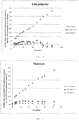
- Table 2 shows the CHX release properties of the various CHX salts tested. Table 2 Coating Medium CHX Release Period Example 1 5/5 CXH-orthophosphate Immediate release only, no sustained release Example 2 5/5 CHX-pyrophosphate Immediate release only, no sustained release Example 3 5/5 CHX-triphosphate Immediate release only, no sustained release Example 4 5/5 CHX-hexametaphosphate >14 days Reference Example 5 5/5 CHX-carbonate 48-72 hrs Reference Example 6 5/5 CHX-nitrate 48-72 hrs Comparative Example 1 Deionised water N/A Comparative Example 2 25 ⁇ M CHX 48-72 hrs Comparative Example 3 5 mM CHX 48-72 hrs
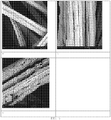
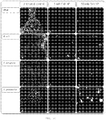
- CHX-orthophosphate (CHX-OP) functionalised specimens displayed some areas with a self-assembled porous matrix deposit, but also the unusual structures seen in Figure 1b and Figure 3a . These were composed of arrangements of elongated crystallites which originate from a central point and extend radially from this point ("hedgehog" forms). These structures were typically 30-50 ⁇ m in diameter and the individual crystallites were approximately 0.50-1 ⁇ m wide. The crystallites were often slightly curved.
- Example 2 CHX-pyrophosphate; Example 3 - CHX-triphosphate; Example 4 - CHX-hexametaphosphate
- CHX-pyrophosphate CHX-pyrophosphate
- CHX-TP CHX-triphosphate
- CHX-HMP CHX-HMP
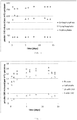
- the orthophosphate, pyrophosphate and triphosphate salts of CHX exhibited the highest CHX release. These were able to effect a very large release of CHX over a short time, which was much greater and faster than the release observed with those specimens exposed simply to a CHX solution. The highest release was seen from pyrophosphate, an intermediate level from triphosphate and the lowest from orthophosphate, although even this was around 4x the magnitude of CHX release seen from other specimens tested. The release in all cases occurred at the initial time with no evidence of sustained release. These particles could be used in materials for which a large dose of antimicrobial is required topically. An example might be a decontamination treatment for a medical device such as a palatal obturator or denture.
- the hexametaphosphate salts of CHX exhibited the lowest total release of any of the anions, but this was sustained for the duration of the experiment (14 days) and was still ongoing at the conclusion of the measurements. In another, longer, experiment the CHX hexametaphosphate salts showed release over at least a 90 day period. These particles might find application in those materials which are required to have antimicrobial efficacy over longer periods, such as indwelling catheters, cannulas and implants.
- the specimens exposed to the CHX-carbonate preparation exhibited spontaneously formed nanotube structures arranged in roughly spherical formations ( Figure 2g ). They were predominantly single-wall tubes but in some areas double-wall nanotubes, or nanotubes-within-nanotubes, could be seen.
- nitrate and carbonate salts of CHX exhibited a lower release of CHX than the orthophosphate, pyrophosphate and triphosphate and the release continued over a few days.
- Nitrate and carbonate specimens released CHX and this release was sustained for around 48 - 72 h; after this time the concentration of CHX stabilised and the release can be considered to have come to completion. These might find application in a product which requires antimicrobial efficacy over this period, such as a wound dressing or suture.
- CHX-HMP nanoparticles were prepared by combining, at room temperature and under rapid stirring, CHX (as the digluconate salt in aqueous solution) and HMP (as the sodium salt in aqueous solution) to effect final total concentrations of 5 and 5 or 0.5 and 0.5 mM of each. These will henceforth be referred to as CHX-HMP-5 and CHX-HMP-0.5.
- 200 mL of the colloidal suspension was prepared using freshly-prepared reagents (to prevent hydrolysis of the HMP).
- the specimen was immersed in the rapidly stirred colloid for 30 s, then removed and immersed in deionised water for 10 s to rinse, and then blotted to remove excess liquid and allowed to dry in air.
- nanoparticle-functionalised surfaces were examined using atomic force microscopy (AFM; Nanoscope IIIa, Digital Instruments, CA, USA) for those with suitable surfaces (glass, titanium) but not for those with very rough or uneven surfaces (alginate dressing, EVA polymer). All specimens were examined using scanning electron microscopy (SEM) (Phenom, Eindhoven, Netherlands) after coating with gold-palladium alloy using a sputter coating unit (SC7620, Emitech, Taiwan).
- AFM atomic force microscopy
- SEM scanning electron microscopy
- NPs may be retrieved from the suspension after the reaction has been carried out. This was not done in the case of the present Examples, however it may be achieved by one of the following options:
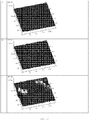
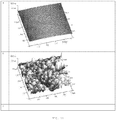
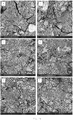
- SEM images of the nanoparticle-functionalised surfaces are shown in Figures 5-8 and AFM of functionalised glass, titanium and mica surfaces are shown in Figures 9-11 .
- the titanium and glass specimens exhibit nanoscale roughness which makes it impossible to distinguish the substrate surface from nanoparticles with diameter less than around 40 nm, but the control mica surface is atomically flat and these images give clear indications of a confluent layer of nanoparticles with diameters of typically 20-100 nm.
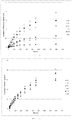
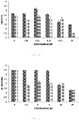
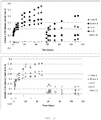
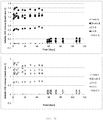
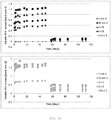
- Table 5 shows the CHX release periods for the different functionalised materials. For CHX release quantities, see Figures 12-15 . Table 5 Material Coating Medium CHX Release Period Example 7 Glass CHX-HMP-5 >90 days Example 8 Glass CHX-HMP-0.5 20-25 days Example 9 Alginate Dressing CHX-HMP-5 >50 days Example 10 Alginate Dressing CHX-HMP-0.5 >50 days Example 11 EVA Polymer CHX-HMP-5 >80 days Example 12 EVA Polymer CHX-HMP-0.5 ⁇ 20 days Example 13 Titanium CHX-HMP-5 >60 days Example 14 Titanium CHX-HMP-0.5 5 days Comparative Example 4 Glass 25 ⁇ M CHX solution No release Comparative Example 5 Alginate Dressing 25 ⁇ M CHX solution >60 days Comparative Example 6 EVA Polymer 25 ⁇ M CHX solution No release Comparative Example 7 Titanium 25 ⁇ M CHX solution Little or no significant release
- Example 7 Glass functionalised with CHX-HMP-5
- Example 8 Glass functionalised with CHX-HMP-0.5
- the release of soluble CHX ceased after approximately 20-25 days, whereas for the CHX-HMP-5 specimens the release was still continuing at the 90 day point.
- control group treated with 25 ⁇ M CHX did not show any CHX release indicating that the soluble CHX was fully removed by the rinsing step and therefore that the CHX release observed with the nanoparticle-functionalised specimens was owing to the presence of these nanoparticles.
- This development may find application in glass-containing and glass-like biomedical and consumer products which would benefit from a prolonged antimicrobial functionality such as glass ionomer cements, a dental filling material which comprises glass particles embedded in a cement matrix.
- Example 9 Alginate wound dressing functionalised with CHX-HMP-5
- Example 10 Alginate wound dressing functionalised with CHX-HMP-0.5
- Example 11 EVA polymer functionalised with CHX-HMP-5
- Example 12 EVA polymer functionalised with CHX-HMP-0.5
- the EVA polymer surfaces coated with CHX-HMP-5 nanoparticles showed the same characteristic nanoparticle aggregates as observed on glass and the alginate wound dressing, although the coverage was typically somewhat less dense than that on the other substrates ( Figure 7 ).
- the EVA CHX-HMP-0.5 specimens showed a very low and short-lived release of soluble CHX.
- the CHX-HMP-5 specimens however showed a prolonged release of CHX up to at least 80 days ( Figure 14 ), and this was comparable but slightly higher than the release seen from the glass specimens when normalised to surface area.
- Example 14 Titanium functionalised with CHX-HMP-0.5
- the titanium surfaces showed clear evidence of aggregations of CHX-HMP nanoparticles, as seen in Figure 8 .
- the CHX-HMP-5 functionalised specimens showed a continuous and sustained release of soluble CHX over the duration of the experiments; numerically this release was about double that seen from glass and polymer surfaces.
- the CHX-HMP-0.5 functionalised surfaces released little CHX and this release ceased after approximately 5 days.
- the CHX-HMP-5 nanoparticles might find application in the development of antimicrobial coatings for dental and orthopaedic implants fabricated from titanium or titanium alloy, and offer the advantage over traditional antimicrobial coatings that the nanoparticles generate a discontinuous coating with plenty of titanium still exposed and available for colonisation by osteoblast cells.
- Microbiology bacterial strains
- Methicillin-resistant Staphylococcus aureus was cultured in Mueller-Hinton (MH) media.
- Pseudomonas aeruginosa NCIMB 8626 was cultured in nutrient broth (NB) or nutrient agar (NA). All cultures were incubated at 37°C aerobically throughout the study.
- the minimum inhibitory concentration (MIC) for the control aqueous 25 ⁇ M chlorhexidine and the CHX-HMP-5 colloid against planktonic bacteria was determined by serial doubling dilution (0 - 25 ⁇ M) in a total volume of 100 ⁇ L appropriate media in a 96 well microtitre plate (according to British Society for Antimicrobial Chemotherapy methodology for determining MIC). Cultures were incubated for 16 h at 37°C in aerobic conditions, optical density (OD) readings were measured at 620 nm (A 620 ) using a standard microtitre plate reader (SpectroStar Nano; BMG Labtech).
- Biofilms were grown in 50 ⁇ L appropriate media at 37°C for 48 h, aerobically then the media was removed and discarded. Loosely adherent bacteria were removed by washing the biofilms twice with 100 ⁇ l PBS. Chlorhexidine or chlorhexidine nanoparticles diluted in PBS were added to the biofilms using a doubling dilution as described above (0 - 25 ⁇ M).
- the plates were incubated for 2 h at 37°C; to estimate biomass, unattached cells were gently aspirated and discarded, and adherent cells were washed twice with PBS and stained with crystal violet (0.25% w/v) for 10 min; following a further two washes with PBS, cell-bound crystal violet was re-solubilized with 7% acetic acid, and absorbance measured at 595 nm ( A 595 ).
- Pre-cultures of MRSA and P. aeruginosa were grown initially for 16 h in appropriate media at 37°C, aerobically. Assays for growth on polymer pieces was determined by placing each cube into the well of a 24-well MTP and adding 1ml of appropriate liquid media (enough to cover the polymer specimen). Polymer specimens were EVA polymer as specified in Table 3 which had been cleaned by 10 min ultrasonication in IMS followed by either no treatment (control), 30 s immersion in stirred CHX-HMP-5 followed by 10 s in deionised water (low NP) and 30 s immersion in stirred CHX-HMP-5 without a rinse (high NP). Each well was inoculated with 10 ⁇ l of either the MRSA or P.
- aeruginosa pre-cultures and then incubated for 24 h at 37°C.
- Polymer specimens were removed from the wells using sterile forceps and transferred to microcentrifuge tubes containing 1ml PBS. The tubes were vortexes for 1 min to remove adherent bacteria, and cell suspension was serially diluted (10 -1 - 10 -6 ) and bacteria were enumerated using the Miles Misra method.
- Table 6 shows the MIC for control and CHX-HMP-5 media.
- Table 6 Medium MIC, total CHX conc (soluble CHX conc)
- Example 15 CHX-HMP-5 suspension MRSA: 0.625 mM (3.12 ⁇ M); P.a.: 0.312 mM (1.56 ⁇ M) (minimum tested) Comparative Example 8 25 ⁇ M CHX MRSA: Not established (not efficacious) P.a.: (25 ⁇ M)
- Table 7 shows the effects of different media on static bacterial biofilms of MRSA and P. aeruginosa. Table 7 Medium Effect on biofilm Example 16 CHX-HMP-5 MRSA: severe disruption P.a.: severe disruption Comparative Example 9 25 ⁇ M CHX MRSA: slight disruption P.a.: slight disruption
- Table 8 shows the antimicrobial effects of nanofunctionalised EVA polymer specimens. Table 8 Specimen Result Example 17 High NP CHX-HMP-5 on EVA MRSA: No bacteria P.a.: No bacteria Example 18 Low NP CHX-HMP-5 on EVA MRSA: No bacteria P.a.: High levels of bacteria, low turbidity liquid medium Comparative Example 10 Untreated EVA MRSA: 5x10 5 cfu ml -1 recovered P.a.: High levels of bacteria recovered, high turbidity liquid medium
- the MIC for MRSA for CHX-HMP-5 colloidal suspension was found to be an 8x dilution of the colloid, which corresponds to a total (soluble and bound) CHX concentration of 0.625 mM and a soluble CHX concentration of 3.12 ⁇ M.
- the MIC for MRSA could not be established for 25 ⁇ M chlorhexidine indicating that this solution was not efficacious against MRSA ( Figure 19 ).
- the MIC for CHX-HMP-5 was found to be a 16x dilution of the colloid, which was the minimum concentration tested; this corresponds to a total CHX concentration of 0.312 mM and a soluble CHX concentration of 1.56 ⁇ M.
- the MIC for the 25 ⁇ M chlorhexidine concentration was the undiluted solution, i.e. 25 ⁇ M, indicating that P. aeruginosa was more susceptible to the nanoparticles than MRSA ( Figure 20 ).
- TVCs confirmed the MIC data, with 1.5x10 12 cfu ml -1 recovered for the MRSA untreated control and no bacteria recovered from samples grown with 8x and 4x dilutions of the CHX-HMP-5 colloid suggesting that the MIC was also bactericidal.
- no bacteria could be recovered from samples grown at 16x and 8x dilution of the CHX-HMP-5 colloid, compared to 1.34x10 9 cfu ml -1 recovered for the untreated control.
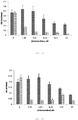
- Biofilms of MRSA were disrupted by the CHX-HMP-5 colloid and to a lesser extent by the aqueous 25 ⁇ M chlorhexidine ( Figure 21 ).
- the CHX-HMP-5 colloid also disrupted biofilms of P. aeruginosa ( Figure 22 ) more effectively than aqueous 25 ⁇ M chlorhexidine at dilutions of between 16x and 4x; at 2x and undiluted levels 25 ⁇ M chlorhexidine and the nanoparticles were equally effective.
- biofilm growth on nanofunctionalised EVA polymer for the control polymer P.
- aeruginosa bacterial cells recovered from the specimens were too numerous to count at all of the dilutions used; MRSA was recovered at 5x10 5 cfu ml -1 .
- MRSA was recovered at 5x10 5 cfu ml -1 .
- the surrounding liquid media was less turbid than the control (indicating less growth) despite high numbers of bacteria being recovered and that for MRSA the surrounding media was clear, indicating no growth.
- the polymer pieces coated with a high concentration of nanoparticles no bacteria were recoverable for either MRSA or P. aeruginosa and the surrounding media was clear in both instances.
- Aqueous stock solutions of chlorhexidine digluconate and sodium hexametaphosphate were mixed in deionised water such that the final concentration was 4 mM CHX and 5 mM.
- the resulting colloidal suspension was mixed thoroughly and then centrifuged at 205940m/s 2 (21000g) for 60 min. The supernatant was removed and discarded and the NP pellet dried for at least 48 h at 40°C. The pellet was then removed from the centrifuge tubes and ground to a fine white powder using a mortar and pestle. This powder was added to the GIC by substitution for the glass powder.
- GIC Diamond Carve (TM), Kemdent, Purton, UK
- TM Diamond Carve
- Purton UK
- Cylindrical GIC specimens with nominal dimensions of 6 mm diameter and 3 mm height were formed by mixing the GIC according to the manufacturers' instructions and packing into Perspex molds coated with a thin layer of petroleum jelly to aid removal. The mixing was carried out by individuals with extensive experience of GIC preparation. The precise dimensions of each specimen were measured using callipers and recorded.
- the NP powder was mixed with aliquots of the GIC glass powder at substitutions of 0, 1, 2, 5, 10, 20 and 30wt%. Ten specimens of each substitution were created giving a total of 70 specimens.
- each specimen was immersed in 1 mL artificial saliva in individually labelled vials at 37°C.
- the artificial saliva was composed of CaCl 2 ⁇ 2H 2 O 0.103gL -1 .
- Specimens were periodically removed and placed in duplicate tubes containing fresh artificial saliva such that the artificial saliva the specimen had been incubated in could be sampled for chlorhexidine and fluoride concentrations.
- a pilot study was conducted to establish the saturation limit of fluoride concentration within the vessels to ensure that the sampling periods were selected appropriately and erroneous readings owing to saturation of the eluent by a fluoride salt were not obtained by leaving too large a gap between readings.
- the sampling occurred at hourly intervals during the first day, followed by intervals of 4 hours, then daily and then weekly. Controls containing only artificial saliva without a GIC specimen were sampled in the same way.
- Chlorhexidine concentration in the artificial saliva was measured using ultraviolet (UV) spectrophotometry.
- UV ultraviolet
- the 1 mL artificial saliva was placed into a semi-micro cuvette transparent under UV wavelengths and absorption was measured at 255 nm using a spectrophotometer.
- the reading was converted to chlorhexidine concentration with reference to calibration standards at 5, 10, 20, 30, 40, 50 ⁇ mol.l -1 chlorhexidine which were measured at the beginning and end of each measurement cycle.
- the concentration was converted to moles of chlorhexidine released per unit surface area of the GIC specimen with reference to the individual dimension measurements for each specimen.
- Fluoride concentration in the artificial saliva was measured using an ion selective electrode by mixing 0.5 mL artificial saliva with 0.5 mL TISAB solution. The data output was converted to mg/L fluoride ion with reference to calibration standards of 0.1, 0.5, 1, 2 and 5 mg/L F - , also diluted with equal quantities of TISAB.
- Indirect tensile strength was measured by applying a compressive diametric force to the cylindrical specimen until fracture occurred, recording the load at fracture and using this to calculate tensile strength.
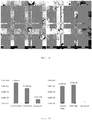
- Specimens which had been tested for tensile strength were coated with a thin layer of gold-palladium (SC7620, Emitech, Taiwan) and examined in a scanning electron microscope (Phenom, Eindhoven, Netherlands). Images were obtained at nominal magnifications of 400, 1000 and 5000x.
- Table 9 shows properties of the substituted and unsubstituted GICs.
- Table 9 NP Content (wt%) Handling Properties CHX Release Period F Release Period Diametral Tensile Strength (MPa) (standard deviation in parentheses)
- Example 19 1 Good >33 days >33 days 14.3 (4.9)
- Example 20 2 Good >33 days >33 days 15.7 (4.3)
- Example 21 5 Good >33 days >33 days 15.5 (1.1)
- Example 23 20 Good >33 days >33 days 9.4 (2.6)
- Example 24 30 Poor (discarded) N/A N/A N/A Comparative Example 11 0 Good >33 days >33 days 14.1 (3.7)
- Table 10 shows cumulative CHX release. Within each timepoint, letters indicate statistically homogeneous groups, so figures with different letters are statistically significantly different to a 95% confidence level at that time. Table 10 Cumulative CHX release [nmol.mm-2] (standard deviation in parentheses) 1h 24h 8 days 15 days 33 days Example 19 0.16 (0.08)a,b 0.20 (0.09)a,b 0.48 (0.15)a,b 0.56 (0.16)a,b 0.65 (0.17)a,b Example 20 0.66 (0.18)b 0.70 (0.19)b 1.04 (0.21)b 1.17 (0.22)b 1.30 (0.24)b Example 21 1.30 (0.24)c 1.39 (0.25)c 2.03 (0.34)c 2.30 (0.36)c 2.51 (0.38)c Example 22 2.52 (0.38)d 2.65 (0.40)d 3.40 (0.43)d 3.73 (0.44)d 4.01 (0.45)d Example 23 4.02 (0.48)e 4.20 (0.50)e 5.09 (0.55)e 5.46 (0.59)e 5.94 (0.67)e Comparative Example 11 0.
- Table 11 shows cumulative fluoride release. Within each timepoint, letters indicate statistically homogeneous groups, so figures with different letters are statistically significantly different to a 95% confidence level at that time. Table 11 Cumulative fluoride release [ng.mm-2] (standard deviation in parentheses) 1h 24h 8 days 15 days 33 days Example 19 2.61 (1.11)b 18.59 (3.12)a,b 70.72 (8.40)a 106.9 (14.1)a 148.1 (16.6)a Example 20 1.68 (0.73)b 17.10 (2.33)b 64.30 (7.68)a 101.1 (12.2)a 147.5 (15.7)a Example 21 1.74 (0.70)b 19.31 (4.32)a,b 82.67 (7.49)a 124.2 (9.2)a 181.4 (14.0)a,b Example 22 1.83 (0.96)b 18.73 (9.50)a,b 81.73 (30.22)a 122.8 (39.3)a 184.4 (49.8)a,b Example 23 2.09 (0.34)b 23.74 (5.89)a,b 81.73
- CHX release over 791 h (33 days) normalised to surface area can be seen in Figure 16 .
- Fluoride release over 791 h (33 days) normalised to surface area can be seen in Figure 17 . All of the GIC specimens released fluoride continually over the duration of the experiment. The initial release rate was the most rapid and this gradually slowed over the experimental period.
- Diametral tensile strength of the 6 specimen groups are shown in Table 3.
- the ANOVA gave a p value of 0.054 indicating that, although there was a numerical trend towards lower tensile strength for 10 and 20wt% substitution cements, there was no statistically significant difference between these values and those of the other GICs.
- CHX-HMP nanoparticles described herein as opposed to other approaches such as using ground up CHX diacetate or an aqueous solution of CHX digluconate, offers the advantage that the CHX release is sustained for considerably longer with the GICs ( Figure 16 ).
- Composite resins supplemented with pulverised CHX diacetate showed CHX release which reached a plateau after around 7 days ( Dent Mater, vol. 28, pp. 573-583, 2012 ), compared to a continued release of at least 33 days seen here.
- Example 25 Microbiology on EVA samples functionalised with CHX nanoparticles
- EVA specimens were functionalised by 30 s immersion in a colloidal suspension of CHX-HMP-5 in water followed by 10 s immersion in deionised water ("low concentration”) or without subsequent immersion in deionised water (“high concentration”). These samples were then exposed to cultures of MRSA bacteria. They were then immersed in 1 mL growth medium and incubated for 18h. According to the release experiments in this time the EVA specimen should release around 6 ⁇ M per m 2 material. Surface area of the specimen was 0.000182 m 2 so the expected total release should be 1.1 nM CHX into 1 mL giving a resultant concentration of 1.1 ⁇ M CHX.
- Example 26 Microbiology on titanium samples functionalised with CHX nanoparticles
- Titanium specimens functionalised with CHX-HMP-5 were also exposed to cultures of Streptococcus gordonii bacteria.
- the samples were immersed in 2 mL growth medium and incubated for a maximum of 48h. According to the release experiments this should result in a release of around 7 ⁇ M per m 2 .
- the surface area of specimen was 0.00024 m 2 so the expected release should be 1.7 nM CHX into 2 mL giving a resultant concentration of 0.8 ⁇ M CHX.
- the nanoparticle-functionalised titanium surface eliminated the bacteria in the sample.
- the MIC for S. mutans (a similar gram positive Streptococcus bacteria to S. gordonii also implicated in dental caries) has been reported as 0.125% CHX digluconate by mass which corresponds to around 1.4 mM, i.e. four orders of magnitude higher than the CHX concentration effected by the present specimens.
- TEM analysis of the MNPs has been carried out ( FIG. 23 ).
- CHX-HMP-5 and CHX-HMP-0.5 NPs were deposited on carbon-coated copper grids (Agar Scientific Ltd., Essex, UK) and subjected to TEM and EDX (Jeol 120 kV 1200 Mk2; Jeol, Tokyo, Japan).
- TEM grids were immersed in NP suspensions for 2 s, rinsed in deionised water for 2 s and allowed to dry in air.
- FIG.23 shows an example of a CHX-HMP-0.5 sample on the left and a CHX-HMP-5 sample on the right.
- the image of the higher concentration sample shows that MNPs can be seen at the periphery of an aggregate (top right of the image), with good visibility of individual nanoparticles.
- Two examples of separate, individual nanoparticles are indicated by arrows.
- TEM suggests that the MNPs are often fused together, and not just held electrostatically (see especially the image for the lower concentration sample). Some very small aggregates were also observed.
- dry alginate Protanal ® LF 10/60 FT, FMC Biopolymers
- CMC carboxymethyl cellulose
- CMC was found to dissolve rapidly on immersion in water, disintegrating and releasing all of the CHX over a period of approximately 10 minutes. CHX release reached completion within minutes and was dose dependent, with the higher wt% MNP-containing films showing a longer time to complete release ( FIG. 26 ).
- the alginate MNP films of example 28 have been tested in antimicrobial assays.
- the test microorganisms are considered to be very relevant to wound infection: MRSA, Escherichia coli, Pseudomonas aeruginosa, Klebsiella pneumoniae and Acenitobacter baumanii.
- Acenitobacter baumanii is the first microbe reported to have a resistance against CHX by means of an ion transport channel in the cell membrane. It is not a widespread pathogen but is found particularly in hospitals of the armed forces.
- Table 12 shows zones of inhibition for experimental CHX-HMP MNP alginate composite dressings for 5 wound-associated pathogens compared with a commercial silver-based dressing, and indicate that for MRSA, E. coli, P. aeruginosa and K. pneumoniae the MNP dressings inhibit bacterial growth to a greater extent than the commercial dressing.
- the silver dressing has a larger zone of inhibition than the MNP dressings for A. baumanii, but it is considered encouraging that the NP films inhibit growth of this microbe at all given that it has a recognised resistance to CHX.
- Table 12 MRSA E. coli P. aeruginosa K. pneumoniae A. baumanii 0 wt% MNP 0 0 0 0 3 wt% MNP 21.0 (0.9) 18.4 (1.5) 13.5 (0.4) 15.6 (0.7) 13.0 (0.7) 6 wt% MNP 22.6 (1.9) 19.9 (1.6) 14.2 (0.4) 16.5 (0.6) 14.9 (1.0) Ag dressing 15.4 (0.5) 12.1 (0.7) 12.1 (0.7) 11.9 (0.7) 16.1 (2.4)
- Example 31 Composite materials: glass ionomer cements
- Example 32 Surface-coated materials: polyurethane catheters Polyurethane substrates and catheters have been coated with CHX-HMP-5 MNPs.
- Coating density has been investigated by changing the reagent concentration (50 mM of CHX and HMP) and the dip-coating regime (1, 5 and 10 dip repeats). It has been found that longer dip-times result in more release, and that 50 mM NP concentration in most cases releases more than a 5 mM concentration. More dips yield a greater coating density ( FIG. 29 ).
- Initial data suggests that in some cases a lower release of CHX has been observed for more densely coated specimens, which may be explained, without wishing to be bound by theory, by noting that it is possible that heavier coated specimens may be less porous thus presenting less surface area of active material to the environment, or it may be related to the coating flaking off, although this has not been directly observed.
- Table 13 shows growth of microorganisms on polyurethane specimens with different surface treatments after 24h incubation in bacteria growth medium. Key: - complete inhibition; + slight growth (growth observed at dilutions between 10 -1 - 10 -3 ); ++ moderate growth (growth observed at dilutions between 10 -4 - 10 -6 ); +++ high growth (growth at dilutions between 10 -7 - 10 -12 ).
- the polyurethane specimens coated with CHX-HMP-50 exhibited no growth of MRSA, E. coli and P. aeruginosa and a reduction in growth of K.
- Live-dead staining has also been carried out using the microorganisms listed in examples 33-36 above.
- Polyurethane sections were first coated with NPs (CHX-HMP-5 and CHX-HMP-50) by dip-coating for 30 s and rinsing for 10 s, and then immersed in the relevant bacterial suspension for 24 h.
- SYTO 9 and propidium iodide live/dead stains were used for the staining.
- FIG. 30 The lighter areas of FIG. 30 indicate areas of microbe growth. So, high levels of microbe growth are seen in the untreated control (comparative examples 23-26, leftmost column of FIG. 30 ). These images show the effect of the MNPs on microbial growth (middle and right columns of FIG. 30 ) and indicate that microbial growth is radically reduced by the presence of the MNPs at either concentration (examples 37-44). Note that the MNPs themselves take up some of the fluorescent dye, which can be seen as bright areas in the CHX-HMP-50 images (examples 41-44).
- Silicones are used as prostheses and other biomaterial devices throughout the body.
- the particular focus of this example is silicones used in the oral cavity, in the construction of palatal obturators (devices used to correct defects in the palate owing to surgery or developmental anomalies) and dentures.
- CHX release from three formulations (CHX-HMP-5, CHX-TMP-5 and CHX-TP-5) has been investigated following dip-coating oral silicones for a range of times from 1 minute to 6 hours.
- Body (B) and sealant (S) represent two different kinds of silicone as supplied.
- the elution medium was refreshed at 8 weeks to account for any saturation.
- specimens of a 'body' and 'sealant' silicone used during denture soft lining and obturator construction were created using silicone molds measuring 5 x 8 x 2.5 mm.
- the molds were greased using petroleum jelly, the silicone was packed into the molds and allowed to cure at room temperature for 15 minutes.
- the specimens were then removed from the molds and ultrasonicated in 70% ethanol for 10 minutes, dried in air for 15 minutes and stored dry in sealed containers.
- CHX release from three formulations was investigated following dip-coating of oral silicones for a range of times from 1 minute to 6 hours.
- Specimens were immersed in stirred NP suspensions (with the exception of TMP, which forms a viscous, sticky substance which cannot be stirred) for the allotted time, rinsed in deionised water for 10s and dried in air.
- CHX-HMP MNP coated specimens exhibited a gradual release of CHX over the experimental period.
- the rate of release decreased with time, but when the artificial saliva was replaced the rate was increased again, suggesting that the degree of saturation of the artificial saliva with respect to the CHX salt was hindering release of CHX before the artificial saliva was refreshed.
- the release of CHX was sustained, in contrast to the other two salts, discussed below. Release of CHX from CHX-HMP coated specimens varied according to the coating time, with an increase in CHX being observed with longer coating time (but the relationship was not linear). More CHX release was observed from body silicone than sealant silicone.
- CHX-TP MNP coated specimens exhibited quite a different CHX release profile from CHX-HMP MNP, with most or all of the CHX release observed in the first 24h period.
- a small additional CHX release was observed following artificial saliva change, but again this small release reached completion within the first 24h after the artificial saliva was introduced.
- this formulation of the MNPs showed a higher release than CHX-HMP with approximately 3x the CHX release, but this release was short-lived.
- Release of CHX from CHX-TP coated specimens varied according to the coating time, with an increase in CHX with longer coating time (but again the relationship was not linear). The release of CHX was similar from body and sealant silicones.
- CHX-TMP MNP coated specimens like those coated with CHX-TP MNP, exhibited most or all of their CHX release within the first 24h of exposure to artificial saliva, both at the outset and after the artificial saliva was refreshed. Coating time effected CHX release but in a different manner from the other salts: the greatest CHX release was observed for those specimens coated for 30 minutes, while 2h and 6h coated specimens showed intermediate CHX release and 1 min coated specimens had the smallest CHX release. More CHX release was observed from sealant silicone than body silicone.
- CHX-HMP MNPs have been used to coat titanium to develop antimicrobial coatings for implants.
- the CHX-HMP-5 MNP-coated titanium substrates (prepared by immersion in CHX-HMP-5 suspension for 30 s, rinsed in deionised water for 10 s, then dried) have been shown to inhibit growth of Streptococcus gordonii and Porphyromonas gingivalis. Furthermore, when the titanium substrates are coated with a salivary pellicle, a proteinaceous film that coats any material placed in the mouth, the antimicrobial effect is not hampered. Representative data of colony-forming units of S. gordonii on titanium surfaces with (example 51) and without (comparative example 33) CHX-HMP MNPs are shown in FIG. 34 .
- CHX in aqueous solution is in already in use in dentistry. It is available in supermarkets and pharmacies as a 2.2 mM oral rinse suitable for controlling plaque and periodontal disease/gum irritation. It is also used as a topical antimicrobial agent in many applications such as more advanced periodontal disease, during oral surgery, during endodontic treatment.
- Three aqueous solutions of CHX digluconate were prepared, 1, 2.2 and 5 mM (comparative examples 34-36, respectively).
- Three CHX-HMP MNP suspensions were prepared with matched total concentrations, so with 1, 2.2, 5 mM of CHX and HMP (examples 52-54, respectively). Hydroxyapatite discs were immersed in the preparation for 15 s, rinsed, and the CHX release observed as a function of time ( FIG. 35 ).
- the NP paste was created by preparing 400 mL CHX-HMP-5 by mixing 200 mL 10 mM CHX digluconate with 200 mL 10 mM sodium HMP at room temperature and pressure during vigorous mixing. Approximately 50 mL 1M KCl was added, and then the stirring was ceased. The resulting mixture was allowed to sediment and the top ⁇ 300 mL clear supernatant discarded. The remaining liquid was centrifuged for 20 minute at 5000 rpm in a benchtop centrifuge, which resulted in separation of supernatant and a viscous white paste with a consistency between paint and toothpaste. The supernatant was again discarded and the paste removed from the tubes and used.
- the experimental paint was viable (example 55, FIG. 36 , right image), drying apparently normally (by eye) and with a similar surface finish to the unmodified paint (comparative example 37, FIG. 36 left image).
- MRSA and E. coli were investigated on the negative control (unmodified emulsion, comparative examples 38-39), experimental (NP doped) and positive control (Sterishield, comparative examples 40-41) paints after 24h incubation in the bacterial cultures. Glass coverslips were coated on both sides with a single coat of the paints and allowed to dry.
- Sterishield effected a 10-fold reduction in growth of MRSA, but the MNP paint effected a 1000-fold reduction in the same ( FIG. 37 ).
- Sterishield had no effect on bacterial growth whereas the MNP paint eliminated E. coli growth with no recoverable bacteria ( FIG. 37 ).
Landscapes
- Life Sciences & Earth Sciences (AREA)
- Health & Medical Sciences (AREA)
- General Health & Medical Sciences (AREA)
- Chemical & Material Sciences (AREA)
- Engineering & Computer Science (AREA)
- Animal Behavior & Ethology (AREA)
- Public Health (AREA)
- Veterinary Medicine (AREA)
- Epidemiology (AREA)
- Wood Science & Technology (AREA)
- Plant Pathology (AREA)
- Dentistry (AREA)
- Agronomy & Crop Science (AREA)
- Pest Control & Pesticides (AREA)
- Zoology (AREA)
- Environmental Sciences (AREA)
- Materials Engineering (AREA)
- Birds (AREA)
- Organic Chemistry (AREA)
- Oral & Maxillofacial Surgery (AREA)
- Toxicology (AREA)
- Medicinal Chemistry (AREA)
- Hematology (AREA)
- Dispersion Chemistry (AREA)
- Nanotechnology (AREA)
- Pharmacology & Pharmacy (AREA)
- Physics & Mathematics (AREA)
- Biomedical Technology (AREA)
- Molecular Biology (AREA)
- Geometry (AREA)
- Chemical Kinetics & Catalysis (AREA)
- General Chemical & Material Sciences (AREA)
- Materials For Medical Uses (AREA)
- Cosmetics (AREA)
- Agricultural Chemicals And Associated Chemicals (AREA)
- Dental Preparations (AREA)
- Polymers & Plastics (AREA)
- Pharmaceuticals Containing Other Organic And Inorganic Compounds (AREA)
- Medicinal Preparation (AREA)
Applications Claiming Priority (2)
| Application Number | Priority Date | Filing Date | Title |
|---|---|---|---|
| GBGB1308926.3A GB201308926D0 (en) | 2013-05-17 | 2013-05-17 | Antibacterial micro-and nanoparticles comprising a chlorhexidine salt, method of production and uses thereof |
| PCT/GB2014/051515 WO2014184582A1 (en) | 2013-05-17 | 2014-05-16 | Antibacterial micro- and nanoparticles comprising a chlorhexidine salt, method of production and uses thereof |
Publications (2)
| Publication Number | Publication Date |
|---|---|
| EP2996468A1 EP2996468A1 (en) | 2016-03-23 |
| EP2996468B1 true EP2996468B1 (en) | 2019-04-10 |
Family
ID=48746926
Family Applications (1)
| Application Number | Title | Priority Date | Filing Date |
|---|---|---|---|
| EP14725531.9A Active EP2996468B1 (en) | 2013-05-17 | 2014-05-16 | Antibacterial micro- and nanoparticles comprising a chlorhexidine salt, method of production and uses thereof |
Country Status (10)
| Country | Link |
|---|---|
| US (1) | US9717248B2 (enExample) |
| EP (1) | EP2996468B1 (enExample) |
| JP (2) | JP6506258B2 (enExample) |
| CN (1) | CN105228447B (enExample) |
| BR (1) | BR112015028752A2 (enExample) |
| CA (1) | CA2947930C (enExample) |
| DK (1) | DK2996468T3 (enExample) |
| ES (1) | ES2732599T3 (enExample) |
| GB (2) | GB201308926D0 (enExample) |
| WO (1) | WO2014184582A1 (enExample) |
Cited By (1)
| Publication number | Priority date | Publication date | Assignee | Title |
|---|---|---|---|---|
| US12741052B2 (en) | 2021-04-20 | 2026-09-22 | Mölnlycke Health Care Ab | Wound care product comprising an antimicrobial coating |
Families Citing this family (5)
| Publication number | Priority date | Publication date | Assignee | Title |
|---|---|---|---|---|
| GB201604639D0 (en) | 2016-03-18 | 2016-05-04 | Univ London Queen Mary | Chlorhexidine crystal forms and uses thereof in medicine |
| US20190117569A1 (en) * | 2017-10-24 | 2019-04-25 | Saint Anthony Biomedical, LLC | Compositions and methods for reducing infection in wounds and surgical sites |
| AU2020283107B2 (en) * | 2019-05-31 | 2026-06-04 | Sumitomo Chemical Company, Limited | Liquid suspension concentrate formulation comprising mefentrifluconazole |
| US20210338888A1 (en) * | 2020-04-30 | 2021-11-04 | Smith & Nephew, Inc. | Antimicrobial implant coating |
| CN118702598A (zh) * | 2024-05-15 | 2024-09-27 | 江南大学 | 一种纳米级透明质酸氯己定抗菌剂的制备方法及其应用 |
Family Cites Families (13)
| Publication number | Priority date | Publication date | Assignee | Title |
|---|---|---|---|---|
| JPS59227824A (ja) * | 1983-06-10 | 1984-12-21 | Unitika Ltd | 抗菌性ラテツクス組成物 |
| US4980150A (en) * | 1989-04-27 | 1990-12-25 | Zetachron, Inc. | Chlorhexidine complex |
| US7820734B2 (en) | 1998-10-07 | 2010-10-26 | Tyco Healthcare Group Lp | Antimicrobial lubricious coating |
| FR2792532B1 (fr) * | 1999-04-26 | 2001-12-21 | Menarini France Lab | Nouvelles compositions antiseptiques et leur procede d'obtention |
| JP2003089606A (ja) * | 2001-07-12 | 2003-03-28 | Kanae Toryo Kk | ヒノキチオール徐放剤 |
| US20070212419A1 (en) * | 2006-02-18 | 2007-09-13 | Jozsef Bako | Synthesis of biocompatible nanocomposite hydrogels as a local drug delivery system |
| WO2008089822A2 (en) * | 2007-01-23 | 2008-07-31 | Merck Patent Gmbh | Antimicrobial composition comprising zinc oxide, barium sulphate and silver ions |
| BRPI0802906A2 (pt) * | 2008-06-27 | 2011-03-22 | Comunidade Evangelica Luterana Sao Paulo Celsp Universidade Luterana Do Brasil Ulbra | dentifrìcio não iÈnico e processo de produção do mesmo |
| CA2765393A1 (en) * | 2009-07-17 | 2011-01-20 | Carefusion 2200, Inc. | Particles incorporating antimicrobial agents |
| US20110293690A1 (en) * | 2010-05-27 | 2011-12-01 | Tyco Healthcare Group Lp | Biodegradable Polymer Encapsulated Microsphere Particulate Film and Method of Making Thereof |
| US20120150131A1 (en) | 2010-12-09 | 2012-06-14 | Teleflex Medical Incorporated | Polymer for Controlling Delivery of Bioactive Agents and Method of Use |
| WO2012119155A1 (en) * | 2011-03-03 | 2012-09-07 | American Dental Association Foundation | Antimicrobial compositions for tooth fluoridation and remineralization |
| JP5745303B2 (ja) * | 2011-03-29 | 2015-07-08 | 株式会社シナネンゼオミック | 抗微生物用水処理剤および水処理方法 |
-
2013
- 2013-05-17 GB GBGB1308926.3A patent/GB201308926D0/en not_active Ceased
-
2014
- 2014-05-16 EP EP14725531.9A patent/EP2996468B1/en active Active
- 2014-05-16 US US14/891,951 patent/US9717248B2/en active Active
- 2014-05-16 CN CN201480028812.5A patent/CN105228447B/zh not_active Expired - Fee Related
- 2014-05-16 CA CA2947930A patent/CA2947930C/en active Active
- 2014-05-16 GB GB1408748.0A patent/GB2516537B/en not_active Expired - Fee Related
- 2014-05-16 WO PCT/GB2014/051515 patent/WO2014184582A1/en not_active Ceased
- 2014-05-16 DK DK14725531.9T patent/DK2996468T3/da active
- 2014-05-16 BR BR112015028752-2A patent/BR112015028752A2/pt not_active Application Discontinuation
- 2014-05-16 ES ES14725531T patent/ES2732599T3/es active Active
- 2014-05-16 JP JP2016513444A patent/JP6506258B2/ja active Active
-
2019
- 2019-01-11 JP JP2019003771A patent/JP2019073536A/ja active Pending
Cited By (1)
| Publication number | Priority date | Publication date | Assignee | Title |
|---|---|---|---|---|
| US12741052B2 (en) | 2021-04-20 | 2026-09-22 | Mölnlycke Health Care Ab | Wound care product comprising an antimicrobial coating |
Also Published As
| Publication number | Publication date |
|---|---|
| ES2732599T3 (es) | 2019-11-25 |
| JP2019073536A (ja) | 2019-05-16 |
| WO2014184582A1 (en) | 2014-11-20 |
| CA2947930A1 (en) | 2014-11-20 |
| US20160128332A1 (en) | 2016-05-12 |
| GB201408748D0 (en) | 2014-07-02 |
| EP2996468A1 (en) | 2016-03-23 |
| GB2516537A (en) | 2015-01-28 |
| GB201308926D0 (en) | 2013-07-03 |
| BR112015028752A2 (pt) | 2018-01-23 |
| CA2947930C (en) | 2021-07-13 |
| JP2016521681A (ja) | 2016-07-25 |
| CN105228447B (zh) | 2018-07-20 |
| US9717248B2 (en) | 2017-08-01 |
| GB2516537B (en) | 2015-11-25 |
| CN105228447A (zh) | 2016-01-06 |
| DK2996468T3 (da) | 2019-07-01 |
| JP6506258B2 (ja) | 2019-04-24 |
Similar Documents
| Publication | Publication Date | Title |
|---|---|---|
| Chen et al. | Antibacterial and mechanical properties of reduced graphene-silver nanoparticle nanocomposite modified glass ionomer cements | |
| JP2019073536A (ja) | クロルヘキシジン塩を含む抗菌性マイクロ粒子及びナノ粒子、その製造方法、並びに使用 | |
| Fan et al. | Ag-loaded mesoporous bioactive glasses against Enterococcus faecalis biofilm in root canal of human teeth | |
| Hwang et al. | Nonleachable imidazolium-incorporated composite for disruption of bacterial clustering, exopolysaccharide-matrix assembly, and enhanced biofilm removal | |
| Magalhaes et al. | Nanosilver application in dental cements | |
| Ma et al. | Biological properties of Cu-bearing and Ag-bearing titanium-based alloys and their surface modifications: A review of antibacterial aspect | |
| Garcia et al. | Zinc-based particle with ionic liquid as a hybrid filler for dental adhesive resin | |
| JP2019518785A (ja) | バイオフィルム形成を阻害および妨害するための組成物および方法 | |
| Senthil | Epoxy resin bioactive dental implant capped with hydroxyapatite and curcumin nanoparticles: a novel approach | |
| Wang et al. | Remineralization of dentin with cerium oxide and its potential use for root canal disinfection | |
| EP4464342A2 (en) | A multi-functional cleaning and/or debridement composition | |
| Sahm et al. | Structure-properties correlation of acrylic resins modified with silver vanadate and graphene | |
| Campos-Ibarra et al. | Silver nanoparticles incorporated dental restorative resin and its antibiofilm effect | |
| Hasan et al. | Antibiofilm and antimicrobial effectiveness of chlorhexidine hexametaphosphate nanoparticles as a coating for orthodontic miniscrews | |
| Kim et al. | Advancing oral health: the antimicrobial power of inorganic nanoparticles | |
| Jerri | The antibacterial activity of an epoxy resin-based dental sealercontaining bioactive glass, hydroxyapatite, and fluorohydroxyapatite nanoparticles against enterococcus faecalis and streptococcus mitis | |
| EP1850837B1 (en) | Use of morpholino compounds for the prevention of bacterial contamination | |
| Campos-Ibarra et al. | Biocompatible antimicrobial irrigants and nanoparticles-sealers for endodontics | |
| US20150366904A1 (en) | Assembly of micelle aggregates of surfactant micelles and silver nanoparticles and use as antibacterial agent | |
| Pasala et al. | Nanoparticle Coating Obtained from Agaricus Bisporus On Elastic Ligatures: An in vitro Study. | |
| Koç et al. | Use of nanoparticles in endodontics | |
| Tahsin et al. | Antimicrobial materials used in coating dental implant surfaces: state of art and future prospectives | |
| Zhong et al. | Construction of a nanobismuth-loaded hydroxyapatite coating on titanium surface and its antibacterial-osteogenic performance study | |
| Makvandi et al. | Polymeric and Nanoscopical antimicrobial fillers in dentistry | |
| Majeed | the Effects of Silver Nanoparticles on Treated Dental Caries: meta-analysis study |
Legal Events
| Date | Code | Title | Description |
|---|---|---|---|
| PUAI | Public reference made under article 153(3) epc to a published international application that has entered the european phase |
Free format text: ORIGINAL CODE: 0009012 |
|
| 17P | Request for examination filed |
Effective date: 20151204 |
|
| AK | Designated contracting states |
Kind code of ref document: A1 Designated state(s): AL AT BE BG CH CY CZ DE DK EE ES FI FR GB GR HR HU IE IS IT LI LT LU LV MC MK MT NL NO PL PT RO RS SE SI SK SM TR |
|
| AX | Request for extension of the european patent |
Extension state: BA ME |
|
| DAX | Request for extension of the european patent (deleted) | ||
| STAA | Information on the status of an ep patent application or granted ep patent |
Free format text: STATUS: EXAMINATION IS IN PROGRESS |
|
| 17Q | First examination report despatched |
Effective date: 20180412 |
|
| REG | Reference to a national code |
Ref country code: DE Ref legal event code: R079 Ref document number: 602014044415 Country of ref document: DE Free format text: PREVIOUS MAIN CLASS: A01N0025040000 Ipc: A61L0015200000 |
|
| RIC1 | Information provided on ipc code assigned before grant |
Ipc: A01N 25/12 20060101ALI20180824BHEP Ipc: A61Q 11/00 20060101ALI20180824BHEP Ipc: A61K 8/55 20060101ALI20180824BHEP Ipc: C09D 5/14 20060101ALI20180824BHEP Ipc: A01N 25/04 20060101AFI20180824BHEP Ipc: C09D 7/63 20180101ALI20180824BHEP Ipc: A01N 25/34 20060101ALI20180824BHEP Ipc: A01N 47/44 20060101ALI20180824BHEP Ipc: A01P 1/00 20060101ALI20180824BHEP Ipc: A01N 57/10 20060101ALI20180824BHEP Ipc: A01N 33/18 20060101ALI20180824BHEP Ipc: A61K 8/43 20060101ALI20180824BHEP Ipc: A01N 59/04 20060101ALI20180824BHEP Ipc: A01N 41/02 20060101ALI20180824BHEP Ipc: A01N 25/22 20060101ALI20180824BHEP |
|
| GRAP | Despatch of communication of intention to grant a patent |
Free format text: ORIGINAL CODE: EPIDOSNIGR1 |
|
| STAA | Information on the status of an ep patent application or granted ep patent |
Free format text: STATUS: GRANT OF PATENT IS INTENDED |
|
| RIC1 | Information provided on ipc code assigned before grant |
Ipc: A61L 15/20 20060101AFI20180925BHEP Ipc: A61L 29/08 20060101ALI20180925BHEP Ipc: A01N 25/12 20060101ALI20180925BHEP Ipc: A01N 47/44 20060101ALI20180925BHEP Ipc: A61L 29/16 20060101ALI20180925BHEP Ipc: A61L 15/44 20060101ALI20180925BHEP Ipc: A01N 25/34 20060101ALI20180925BHEP |
|
| INTG | Intention to grant announced |
Effective date: 20181017 |
|
| RIN1 | Information on inventor provided before grant (corrected) |
Inventor name: REDMOND, MICHELE EMILY |
|
| RAP1 | Party data changed (applicant data changed or rights of an application transferred) |
Owner name: PERTINAX PHARMA LIMITED |
|
| GRAS | Grant fee paid |
Free format text: ORIGINAL CODE: EPIDOSNIGR3 |
|
| GRAA | (expected) grant |
Free format text: ORIGINAL CODE: 0009210 |
|
| STAA | Information on the status of an ep patent application or granted ep patent |
Free format text: STATUS: THE PATENT HAS BEEN GRANTED |
|
| RBV | Designated contracting states (corrected) |
Designated state(s): AL AT BE BG CH CY CZ DE DK EE ES FI FR GR HR HU IE IS IT LI LT LU LV MC MK MT NL NO PL PT RO RS SE SI SK SM TR |
|
| AK | Designated contracting states |
Kind code of ref document: B1 Designated state(s): AL AT BE BG CH CY CZ DE DK EE ES FI FR GR HR HU IE IS IT LI LT LU LV MC MK MT NL NO PL PT RO RS SE SI SK SM TR |
|
| REG | Reference to a national code |
Ref country code: CH Ref legal event code: EP Ref country code: AT Ref legal event code: REF Ref document number: 1117804 Country of ref document: AT Kind code of ref document: T Effective date: 20190415 |
|
| REG | Reference to a national code |
Ref country code: IE Ref legal event code: FG4D |
|
| REG | Reference to a national code |
Ref country code: DE Ref legal event code: R096 Ref document number: 602014044415 Country of ref document: DE |
|
| REG | Reference to a national code |
Ref country code: DK Ref legal event code: T3 Effective date: 20190624 |
|
| REG | Reference to a national code |
Ref country code: SE Ref legal event code: TRGR |
|
| REG | Reference to a national code |
Ref country code: NL Ref legal event code: FP |
|
| REG | Reference to a national code |
Ref country code: LT Ref legal event code: MG4D |
|
| REG | Reference to a national code |
Ref country code: AT Ref legal event code: MK05 Ref document number: 1117804 Country of ref document: AT Kind code of ref document: T Effective date: 20190410 |
|
| REG | Reference to a national code |
Ref country code: NO Ref legal event code: T2 Effective date: 20190410 |
|
| PG25 | Lapsed in a contracting state [announced via postgrant information from national office to epo] |
Ref country code: AL Free format text: LAPSE BECAUSE OF FAILURE TO SUBMIT A TRANSLATION OF THE DESCRIPTION OR TO PAY THE FEE WITHIN THE PRESCRIBED TIME-LIMIT Effective date: 20190410 Ref country code: FI Free format text: LAPSE BECAUSE OF FAILURE TO SUBMIT A TRANSLATION OF THE DESCRIPTION OR TO PAY THE FEE WITHIN THE PRESCRIBED TIME-LIMIT Effective date: 20190410 Ref country code: PT Free format text: LAPSE BECAUSE OF FAILURE TO SUBMIT A TRANSLATION OF THE DESCRIPTION OR TO PAY THE FEE WITHIN THE PRESCRIBED TIME-LIMIT Effective date: 20190910 Ref country code: HR Free format text: LAPSE BECAUSE OF FAILURE TO SUBMIT A TRANSLATION OF THE DESCRIPTION OR TO PAY THE FEE WITHIN THE PRESCRIBED TIME-LIMIT Effective date: 20190410 Ref country code: LT Free format text: LAPSE BECAUSE OF FAILURE TO SUBMIT A TRANSLATION OF THE DESCRIPTION OR TO PAY THE FEE WITHIN THE PRESCRIBED TIME-LIMIT Effective date: 20190410 |
|
| REG | Reference to a national code |
Ref country code: ES Ref legal event code: FG2A Ref document number: 2732599 Country of ref document: ES Kind code of ref document: T3 Effective date: 20191125 |
|
| PG25 | Lapsed in a contracting state [announced via postgrant information from national office to epo] |
Ref country code: RS Free format text: LAPSE BECAUSE OF FAILURE TO SUBMIT A TRANSLATION OF THE DESCRIPTION OR TO PAY THE FEE WITHIN THE PRESCRIBED TIME-LIMIT Effective date: 20190410 Ref country code: PL Free format text: LAPSE BECAUSE OF FAILURE TO SUBMIT A TRANSLATION OF THE DESCRIPTION OR TO PAY THE FEE WITHIN THE PRESCRIBED TIME-LIMIT Effective date: 20190410 Ref country code: BG Free format text: LAPSE BECAUSE OF FAILURE TO SUBMIT A TRANSLATION OF THE DESCRIPTION OR TO PAY THE FEE WITHIN THE PRESCRIBED TIME-LIMIT Effective date: 20190710 Ref country code: GR Free format text: LAPSE BECAUSE OF FAILURE TO SUBMIT A TRANSLATION OF THE DESCRIPTION OR TO PAY THE FEE WITHIN THE PRESCRIBED TIME-LIMIT Effective date: 20190711 Ref country code: LV Free format text: LAPSE BECAUSE OF FAILURE TO SUBMIT A TRANSLATION OF THE DESCRIPTION OR TO PAY THE FEE WITHIN THE PRESCRIBED TIME-LIMIT Effective date: 20190410 |
|
| PG25 | Lapsed in a contracting state [announced via postgrant information from national office to epo] |
Ref country code: IS Free format text: LAPSE BECAUSE OF FAILURE TO SUBMIT A TRANSLATION OF THE DESCRIPTION OR TO PAY THE FEE WITHIN THE PRESCRIBED TIME-LIMIT Effective date: 20190810 Ref country code: AT Free format text: LAPSE BECAUSE OF FAILURE TO SUBMIT A TRANSLATION OF THE DESCRIPTION OR TO PAY THE FEE WITHIN THE PRESCRIBED TIME-LIMIT Effective date: 20190410 |
|
| REG | Reference to a national code |
Ref country code: DE Ref legal event code: R097 Ref document number: 602014044415 Country of ref document: DE |
|
| PG25 | Lapsed in a contracting state [announced via postgrant information from national office to epo] |
Ref country code: MC Free format text: LAPSE BECAUSE OF FAILURE TO SUBMIT A TRANSLATION OF THE DESCRIPTION OR TO PAY THE FEE WITHIN THE PRESCRIBED TIME-LIMIT Effective date: 20190410 Ref country code: CZ Free format text: LAPSE BECAUSE OF FAILURE TO SUBMIT A TRANSLATION OF THE DESCRIPTION OR TO PAY THE FEE WITHIN THE PRESCRIBED TIME-LIMIT Effective date: 20190410 Ref country code: RO Free format text: LAPSE BECAUSE OF FAILURE TO SUBMIT A TRANSLATION OF THE DESCRIPTION OR TO PAY THE FEE WITHIN THE PRESCRIBED TIME-LIMIT Effective date: 20190410 Ref country code: EE Free format text: LAPSE BECAUSE OF FAILURE TO SUBMIT A TRANSLATION OF THE DESCRIPTION OR TO PAY THE FEE WITHIN THE PRESCRIBED TIME-LIMIT Effective date: 20190410 Ref country code: SK Free format text: LAPSE BECAUSE OF FAILURE TO SUBMIT A TRANSLATION OF THE DESCRIPTION OR TO PAY THE FEE WITHIN THE PRESCRIBED TIME-LIMIT Effective date: 20190410 |
|
| PLBE | No opposition filed within time limit |
Free format text: ORIGINAL CODE: 0009261 |
|
| STAA | Information on the status of an ep patent application or granted ep patent |
Free format text: STATUS: NO OPPOSITION FILED WITHIN TIME LIMIT |
|
| PG25 | Lapsed in a contracting state [announced via postgrant information from national office to epo] |
Ref country code: SM Free format text: LAPSE BECAUSE OF FAILURE TO SUBMIT A TRANSLATION OF THE DESCRIPTION OR TO PAY THE FEE WITHIN THE PRESCRIBED TIME-LIMIT Effective date: 20190410 |
|
| 26N | No opposition filed |
Effective date: 20200113 |
|
| PG25 | Lapsed in a contracting state [announced via postgrant information from national office to epo] |
Ref country code: TR Free format text: LAPSE BECAUSE OF FAILURE TO SUBMIT A TRANSLATION OF THE DESCRIPTION OR TO PAY THE FEE WITHIN THE PRESCRIBED TIME-LIMIT Effective date: 20190410 |
|
| PG25 | Lapsed in a contracting state [announced via postgrant information from national office to epo] |
Ref country code: SI Free format text: LAPSE BECAUSE OF FAILURE TO SUBMIT A TRANSLATION OF THE DESCRIPTION OR TO PAY THE FEE WITHIN THE PRESCRIBED TIME-LIMIT Effective date: 20190410 |
|
| PG25 | Lapsed in a contracting state [announced via postgrant information from national office to epo] |
Ref country code: CY Free format text: LAPSE BECAUSE OF FAILURE TO SUBMIT A TRANSLATION OF THE DESCRIPTION OR TO PAY THE FEE WITHIN THE PRESCRIBED TIME-LIMIT Effective date: 20190410 |
|
| PG25 | Lapsed in a contracting state [announced via postgrant information from national office to epo] |
Ref country code: HU Free format text: LAPSE BECAUSE OF FAILURE TO SUBMIT A TRANSLATION OF THE DESCRIPTION OR TO PAY THE FEE WITHIN THE PRESCRIBED TIME-LIMIT; INVALID AB INITIO Effective date: 20140516 |
|
| PG25 | Lapsed in a contracting state [announced via postgrant information from national office to epo] |
Ref country code: MK Free format text: LAPSE BECAUSE OF FAILURE TO SUBMIT A TRANSLATION OF THE DESCRIPTION OR TO PAY THE FEE WITHIN THE PRESCRIBED TIME-LIMIT Effective date: 20190410 |
|
| PGFP | Annual fee paid to national office [announced via postgrant information from national office to epo] |
Ref country code: LU Payment date: 20240424 Year of fee payment: 11 |
|
| PGFP | Annual fee paid to national office [announced via postgrant information from national office to epo] |
Ref country code: NL Payment date: 20240424 Year of fee payment: 11 |
|
| PGFP | Annual fee paid to national office [announced via postgrant information from national office to epo] |
Ref country code: MT Payment date: 20240226 Year of fee payment: 11 |
|
| PGFP | Annual fee paid to national office [announced via postgrant information from national office to epo] |
Ref country code: IE Payment date: 20240425 Year of fee payment: 11 |
|
| PGFP | Annual fee paid to national office [announced via postgrant information from national office to epo] |
Ref country code: DE Payment date: 20240425 Year of fee payment: 11 |
|
| PGFP | Annual fee paid to national office [announced via postgrant information from national office to epo] |
Ref country code: DK Payment date: 20240425 Year of fee payment: 11 |
|
| PGFP | Annual fee paid to national office [announced via postgrant information from national office to epo] |
Ref country code: CH Payment date: 20240602 Year of fee payment: 11 |
|
| PGFP | Annual fee paid to national office [announced via postgrant information from national office to epo] |
Ref country code: ES Payment date: 20240603 Year of fee payment: 11 |
|
| PGFP | Annual fee paid to national office [announced via postgrant information from national office to epo] |
Ref country code: NO Payment date: 20240426 Year of fee payment: 11 Ref country code: FR Payment date: 20240425 Year of fee payment: 11 |
|
| PGFP | Annual fee paid to national office [announced via postgrant information from national office to epo] |
Ref country code: SE Payment date: 20240424 Year of fee payment: 11 Ref country code: BE Payment date: 20240430 Year of fee payment: 11 |
|
| PGFP | Annual fee paid to national office [announced via postgrant information from national office to epo] |
Ref country code: IT Payment date: 20240523 Year of fee payment: 11 |
|
| REG | Reference to a national code |
Ref country code: DE Ref legal event code: R119 Ref document number: 602014044415 Country of ref document: DE |
|
| REG | Reference to a national code |
Ref country code: DK Ref legal event code: EBP Effective date: 20250531 |
|
| REG | Reference to a national code |
Ref country code: CH Ref legal event code: H13 Free format text: ST27 STATUS EVENT CODE: U-0-0-H10-H13 (AS PROVIDED BY THE NATIONAL OFFICE) Effective date: 20251223 |
|
| REG | Reference to a national code |
Ref country code: NL Ref legal event code: MM Effective date: 20250601 |
|
| PG25 | Lapsed in a contracting state [announced via postgrant information from national office to epo] |
Ref country code: NO Free format text: LAPSE BECAUSE OF NON-PAYMENT OF DUE FEES Effective date: 20250531 |
|
| PG25 | Lapsed in a contracting state [announced via postgrant information from national office to epo] |
Ref country code: LU Free format text: LAPSE BECAUSE OF NON-PAYMENT OF DUE FEES Effective date: 20250516 |
|
| PG25 | Lapsed in a contracting state [announced via postgrant information from national office to epo] |
Ref country code: CH Free format text: LAPSE BECAUSE OF NON-PAYMENT OF DUE FEES Effective date: 20250531 |
|
| PG25 | Lapsed in a contracting state [announced via postgrant information from national office to epo] |
Ref country code: SE Free format text: LAPSE BECAUSE OF NON-PAYMENT OF DUE FEES Effective date: 20250517 |
|
| REG | Reference to a national code |
Ref country code: SE Ref legal event code: EUG |
|
| REG | Reference to a national code |
Ref country code: BE Ref legal event code: MM Effective date: 20250531 |
|
| PG25 | Lapsed in a contracting state [announced via postgrant information from national office to epo] |
Ref country code: NL Free format text: LAPSE BECAUSE OF NON-PAYMENT OF DUE FEES Effective date: 20250601 |
|
| PG25 | Lapsed in a contracting state [announced via postgrant information from national office to epo] |
Ref country code: DK Free format text: LAPSE BECAUSE OF NON-PAYMENT OF DUE FEES Effective date: 20250531 Ref country code: IE Free format text: LAPSE BECAUSE OF NON-PAYMENT OF DUE FEES Effective date: 20250516 Ref country code: DE Free format text: LAPSE BECAUSE OF NON-PAYMENT OF DUE FEES Effective date: 20251202 |
|
| PG25 | Lapsed in a contracting state [announced via postgrant information from national office to epo] |
Ref country code: BE Free format text: LAPSE BECAUSE OF NON-PAYMENT OF DUE FEES Effective date: 20250531 Ref country code: IT Free format text: LAPSE BECAUSE OF NON-PAYMENT OF DUE FEES Effective date: 20250516 |
|
| PG25 | Lapsed in a contracting state [announced via postgrant information from national office to epo] |
Ref country code: FR Free format text: LAPSE BECAUSE OF NON-PAYMENT OF DUE FEES Effective date: 20250531 |
|
| REG | Reference to a national code |
Ref country code: ES Ref legal event code: FD2A Effective date: 20260630 |
|
| PG25 | Lapsed in a contracting state [announced via postgrant information from national office to epo] |
Ref country code: ES Free format text: LAPSE BECAUSE OF NON-PAYMENT OF DUE FEES Effective date: 20250517 |