EP2995252B1 - Gleichgewichtsfähigkeitsmessvorrichtung, gleichgewichtsfähigkeitsmessverfahren und nichttransitorisches computerlesbares aufzeichnungsmedium zum aufzeichnen des gleichgewichtsfähigkeitsmessprogramms - Google Patents
Gleichgewichtsfähigkeitsmessvorrichtung, gleichgewichtsfähigkeitsmessverfahren und nichttransitorisches computerlesbares aufzeichnungsmedium zum aufzeichnen des gleichgewichtsfähigkeitsmessprogramms Download PDFInfo
- Publication number
- EP2995252B1 EP2995252B1 EP15181532.1A EP15181532A EP2995252B1 EP 2995252 B1 EP2995252 B1 EP 2995252B1 EP 15181532 A EP15181532 A EP 15181532A EP 2995252 B1 EP2995252 B1 EP 2995252B1
- Authority
- EP
- European Patent Office
- Prior art keywords
- user
- change
- load
- balance ability
- information
- Prior art date
- Legal status (The legal status is an assumption and is not a legal conclusion. Google has not performed a legal analysis and makes no representation as to the accuracy of the status listed.)
- Active
Links
Images

Classifications
-
- G—PHYSICS
- G01—MEASURING; TESTING
- G01G—WEIGHING
- G01G19/00—Weighing apparatus or methods adapted for special purposes not provided for in the preceding groups
- G01G19/44—Weighing apparatus or methods adapted for special purposes not provided for in the preceding groups for weighing persons
-
- A—HUMAN NECESSITIES
- A61—MEDICAL OR VETERINARY SCIENCE; HYGIENE
- A61B—DIAGNOSIS; SURGERY; IDENTIFICATION
- A61B5/00—Measuring for diagnostic purposes; Identification of persons
- A61B5/103—Measuring devices for testing the shape, pattern, colour, size or movement of the body or parts thereof, for diagnostic purposes
- A61B5/1036—Measuring load distribution, e.g. podologic studies
-
- A—HUMAN NECESSITIES
- A61—MEDICAL OR VETERINARY SCIENCE; HYGIENE
- A61B—DIAGNOSIS; SURGERY; IDENTIFICATION
- A61B5/00—Measuring for diagnostic purposes; Identification of persons
- A61B5/40—Detecting, measuring or recording for evaluating the nervous system
- A61B5/4005—Detecting, measuring or recording for evaluating the nervous system for evaluating the sensory system
- A61B5/4023—Evaluating sense of balance
-
- G—PHYSICS
- G01—MEASURING; TESTING
- G01G—WEIGHING
- G01G19/00—Weighing apparatus or methods adapted for special purposes not provided for in the preceding groups
- G01G19/44—Weighing apparatus or methods adapted for special purposes not provided for in the preceding groups for weighing persons
- G01G19/50—Weighing apparatus or methods adapted for special purposes not provided for in the preceding groups for weighing persons having additional measuring devices, e.g. for height
Definitions
- the present invention relates to a balance ability measurement apparatus according to the preamble of independent claim 1, a balance ability measurement method according to the preamble of independent claim 5 and a non-transitory computer readable recording medium for recording a balance ability measurement program according to the preamble of independent claim 6.
- a balance ability measurement apparatus according to the preamble of independent claim 1
- a balance ability measurement method according to the preamble of independent claim 5
- a non-transitory computer readable recording medium for recording a balance ability measurement program according to the preamble of independent claim 6.
- a conventional method for evaluating balance ability uses a stabilometer to measure total trajectory length, trajectory length per unit time and center of gravity sway parameters such as center of gravity sway area, and evaluate the balance ability from the measurement results.
- a stabilometer to measure total trajectory length, trajectory length per unit time and center of gravity sway parameters such as center of gravity sway area, and evaluate the balance ability from the measurement results.
- Japanese Patent Publication No. 4925284 discloses a technology to measure motor function of a subject or user by changing the standing posture of the subject and calculating center of gravity sway parameters.
- Another method for evaluating balance ability uses physical performance tests such as a one-leg standing test with open eyes, a one-leg standing test with closed eyes, an FR (Functional Reach) test, a TUG (Time Up and Go) test and so on.
- Still another method for evaluating balance ability uses Berg Balance Scale (BBS).
- the method for evaluating balance ability of a subject using a stabilometer to make measurements, has problems that measurement time increases, and that differences in measured values are less likely to occur among healthy subjects and subjects in secondary prevention or so, making it difficult to evaluate balance ability with high accuracy.
- the method for evaluating balance ability using physical performance tests has inherent problems that measurement time increases, and that the reliability and objectivity of the evaluation value is not necessarily high.
- the method for evaluating balance ability using Berg Balance Scale has an inherent problem that the method cannot be carried out in the absence of an expert such as a physical therapist, an occupational therapist or the like.
- An object of the present invention is to provide a balance ability measurement apparatus, a balance ability measurement method, and a non-transitory computer readable recording medium for recording a balance ability measurement program which can measure balance ability with high accuracy.
- said object is solved by a balance ability measurement apparatus having the features of independent claim 1. Preferred embodiments are laid down in the dependent claims. Moreover, said object is solved by a balance ability measurement method having the features of independent claim 5 or by non-transitory computer readable recording medium having the features of independent claim 6.
- a balance ability measurement apparatus comprising: acquisition means for acquiring load information on weight of a user as measured during a period of a stand-up movement which is a period of time from when the user starts the stand-up movement to when the user stabilizes standing posture; load change information calculation means for calculating, based on the load information, load change information on change in the weight of the user; left-right displacement information calculation means for calculating, based on the load information, left-right displacement information on displacement of the user in left-right direction; and balance ability evaluation value calculation means for calculating, based on the load change information and the left-right displacement information, a balance ability evaluation value on balance ability of the user.
- a balance ability measurement method comprising the steps of: acquiring load information on weight of a user as measured during a period of a stand-up movement which is a period of time from when the user starts the stand-up movement to when the user stabilizes standing posture; calculating, based on the load information, load change information on change in the weight of the user; calculating, based on the load information, left-right displacement information on displacement of the user in left-right direction; and calculating, based on the load change information and the left-right displacement information, a balance ability evaluation value on balance ability of the user.
- a non-transitory computer readable recording medium for recording a balance ability measurement program to cause a computer to perform a process comprising the steps of: acquiring load information on weight of a user as measured during a period of a stand-up movement which is a period of time from when the user starts the stand-up movement to when the user stabilizes standing posture; calculating, based on the load information, load change information on change in the weight of the user; calculating, based on the load information, left-right displacement information on displacement of the user in left-right direction; and calculating, based on the load change information and the left-right displacement information, a balance ability evaluation value on balance ability of the user.
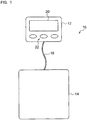
- FIG. 1 is a schematic view showing the appearance of a balance ability measurement apparatus 10 according to an exemplary embodiment of the present invention.
- the balance ability measurement apparatus 10 comprises a display device 12 and a measurement table 14.
- the display device 12 and the measurement table 14 are connected to each other by a communication cable 16.
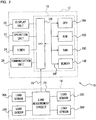
- FIG. 2 is a schematic block diagram of the balance ability measurement apparatus 10.
- the display device 12 comprises a controller 18, a display unit 20, an operation unit 22, a timer 24 and a communication unit 26.
- the controller 18 comprises a CPU (Central Processing Unit) 18A, a ROM (Read Only Memory) 18B, a RAM (Random Access Memory) 18C, a memory 18D and an input/output interface (I/O) 18E which are connected to one another by a buss 18F.
- a balance ability measurement program to cause the CPU 18A of the controller 18 (or computer) to perform a balance ability measurement process as described later is written or recorded, for example, in the memory 18D, and is read in and executed by the CPU 18A.
- the memory 18D is a non-transitory computer readable recording medium for recording the balance ability measurement program to cause the computer to perform the balance ability measurement process.
- the balance ability measurement program can be provided by another recording medium such as a CD-ROM, a memory card or the like, or can be downloaded from a server (not shown).
- the display unit 20, the operation unit 22, the timer 24 and the communication unit 26 are connected to the I/O 18E.
- the display unit 20 comprises, for example, a liquid crystal panel or the like.
- the display unit 20 displays various screens such as various setting screens, a screen showing a measurement result of the balance ability evaluation value of a user (subject) which is measured with the measurement table 14, and the like.
- the operation unit 22 includes multiple operation buttons, and is used by the user to instruct the CPU 18A to perform various operations such as turning on/off power supply, inputting user information, and the like.
- the display unit 20 and the operation unit 22 can be formed as a touch panel with a screen which is directly touched to perform various operations.
- the timer 24 has a function to acquire the current time, and a function to measure time.
- the communication unit 26 sends and receives information to and from an external device via wireless or wired communication. This makes it possible for the balance ability measurement apparatus 10 to communicate with mobile devices such as a cellular phone, a smart phone, a tablet terminal and the like, and with external devices such as a personal computer and the like.
- the measurement table 14 comprises, for example, a load measurement circuit 28 and four load sensors 30A to 30D composed of two load sensors arranged in the left-right direction and two load sensors arranged in the front-back direction as described later.
- the load measurement circuit 28 is connected to the display device 12 by the communication cable 16.
- Each of the load sensors 30A to 30D comprises, for example, a load cell to measure or detect load (weight of the user).
- a data representing a load measured by each of the load sensors 30A to 30D will be referred to as unit load data, while the total load obtained by summing the loads measured or detected by the respective load sensors 30A to 30D, that is, a data representing the weight of the user will be referred to as total load data.
- the load measurement circuit 28 When instructed by the controller 18 to make measurements, the load measurement circuit 28 sends load information (information on the weight of the user) to the controller 18 at a predetermined sampling interval t, in which the load information includes the unit load data measured by the load sensors 30A to 30D, and the total load data obtained by summing the unit load data measured by the load sensors 30A to 30D.
- the sampling interval t is, for example, 12.5 ms or so, but is not limited thereto.
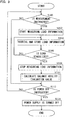
- step S100 the CPU 18A determines whether or not a user 32 (refer to FIGs. 4A to 4C ) has operated the operation unit 22 of the display device 12 to instruct the CPU 18A to measure balance ability of the user 32. If the balance ability measurement has been instructed, the flow goes to step S102, while if the balance ability measurement has not been instructed, the flow goes to step S112.
- step S102 the CPU 18A starts measuring or acquiring load information on the user.
- the CPU 18A measures the zero point which is an output of the load measurement circuit 28 when the user 32 is not on the measurement table 14, that is, an output in a no-load state.
- the CPU 18A causes the display unit 20 to display an indication that the load information measurement can be started. For example, the CPU 18A causes the display unit 20 to display "0.0 kg”.
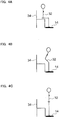
- the user 32 sits on a chair 34 with both feet on the measurement table 14.
- the balance ability measurement apparatus 10 measures load information during a period of a stand-up movement which is a period of time from when the user 32 starts the stand-up movement (from the chair 34 or from sitting posture) to when the user 32 stabilizes standing posture (after fully standing up) as shown in FIGs. 4A to 4C .
- the CPU 18A (with its associated components of the balance ability measurement apparatus 10) functions as acquisition means for measuring or acquiring the load information on the weight of the user as measured during the period of the stand-up movement. Based on the measured load information, the balance ability measurement apparatus 10 calculates the balance ability evaluation value on the balance ability of the user 32.
- the CPU 18A instructs the load measurement circuit 28 to start measuring load information.
- the load measurement circuit 28 sends the load information, which includes the unit load data measured by the load sensors 30A to 30D and the total load data obtained by summing the unit load data measured by the load sensors 30A to 30D, to the controller 18 at a predetermined sampling interval t.
- the controller 18 receives the load information sent from the load measurement circuit 28, and the CPU 18A associates the load information with the current time acquired by the timer 24, and stores the load information associated with the current time in the memory 18D.
- the CPU 18A determines whether or not the load has been stabilized. If the load has been stabilized, the flow goes to step S108, while if the load has not been stabilized, the flow returns to step S104.
- the determination of whether or not the load has been stabilized is made, for example, by determining whether or not a fluctuation in the load falls within a predetermined range.
- the determination of whether or not the load has been stabilized can also be made, for example, by calculating a standard deviation or dispersion indicating change in the total load data measured during a predetermined period of time from a point in the past to the present, and by determining whether or not the standard deviation or dispersion thus calculated is equal to or lower than a predetermined threshold value.
- the CPU 18A instructs the load measurement circuit 38 to stop measuring the load information.
- the load measurement circuit 28 stops measuring the load information, and stops sending the load information to the controller 18.
- step S110 the CPU 18A performs a process to calculate the balance ability evaluation value as shown in FIG. 5 .
- step S112 the CPU 18A determines whether or not the user has instructed the CPU 18A to turn off the power supply (not shown). If the user has instructed to turn off the power supply, the flow goes to step S114, while if the user has not instructed to turn off the power supply, the flow returns to step S100 to perform the same process as described above.
- step S114 the power supply is turned off to end the routine.
- step S200 in FIG. 5 the CPU 18A sets a period of the stand-up movement based on the measured total load data.
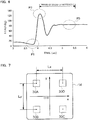
- FIG. 6 is a graph showing an example of total load data measured on a user with a weight of about 80 kg. The load (kg) on the vertical axis is the value of the sum of the unit load data measured by the four load sensors 30A to 30D.
- a point P1 indicated by a dashed circle is a point when the user 32 is about to start the stand-up movement in a state where the user 32 sits on the chair 34 as shown in FIG. 4A , and is a point when the load is momentarily reduced.
- a point P2 indicated by a dashed circle in FIG. 6 is a point when the hips of the user 32 have just lifted off the chair 34 as shown in FIG. 4B , and is a point when a maximum value of the load is applied to the measurement table 14.
- the load measured at the point P3 is the weight of the user 32.
- the period from the point P2 to the point P3, for example, is set as the period of the stand-up movement.
- the period from the point P1 to the point P3 can also be set as the period of the stand-up movement.
- the CPU 18A refers to the total load data stored in the memory 18D to determine the point P2 when the maximum value of the load is applied, and the point P3 when the load is stabilized. More specifically, the point P2 can be determined, for example, by detecting a point corresponding to a maximum value of total load data among the measured total load data. Further, the point P3 can be determined, for example, by calculating a standard deviation or dispersion of the total load data for each predetermined period for the total load data measured after the point P2, and by detecting a point when the calculated standard deviation or dispersion first becomes equal to or lower than a predetermined threshold value. Thus, the period from the point P2 to the point P3 is set as the period of the stand-up movement. In the case of setting the period from the point P1 to the point P3 as the period of the stand-up movement, the point P1 can be determined, for example, by detecting a point corresponding to a minimum value of total load data among the measured total load data.
- the CPU 18A (with its associated components of the balance ability measurement apparatus 10) functions as load change information calculation means for calculating, based on the load information, the load change information on the change in the weight of the user.
- step S204 the CPU 18A calculates an amount of change in displacement of the user per unit time in left-right direction as left-right displacement information (that is, information on displacement of the user in the left-right direction). More specifically, based on unit load data measured by the load sensors 30A to 30D at n sampling points in the period of the stand-up movement, the CPU 18A calculates a displacement of the user in the left-right direction for each of the n sampling points. Even more specifically, the calculation will be made below. Note that the present embodiment describes a case where the load sensors 30A to 30D are equidistantly arranged in each of the X-axis and Y-axis directions on the measurement table 14 as shown in FIG. 7 .
- the X-axis and Y-axis directions are assumed as left-right and front-back directions, respectively.
- the user 32 places both feet on the measurement table 14 such that the line connecting the toe and heel of each foot is oriented in the Y-axis direction, so as to measure the balance ability evaluation value.
- DX i Lx ⁇ ⁇ WA i ⁇ WB i + WC i + WD i / W i
- W i is the total load data indicating the total load obtained by summing the unit load data WA i , WB i , WC i , WD i .
- vDX 1 , vDX 2 , ⁇ vDX n are the amount of change in the displacement of the user (i.e.
- the CPU 18A (with its associated components of the balance ability measurement apparatus 10) functions as left-right displacement information calculation means for calculating, based on the load information, the left-right displacement information on the displacement of the user in left-right direction.
- step S206 the CPU 18A uses the following equation (2) to calculate an average value vWav of the amount of change in the total load data per unit time, which is calculated in step S202, as a representative value of the amount of change in the total load data per unit time.
- vWav vW 1 + vW 2 + ⁇ + vW n ⁇ 1 / n ⁇ 1
- the representative value of the amount of change in the total load data per unit time is not limited to the average value, but can be, for example, a weighted average value, a central value, a standard deviation, dispersion, or the like.
- step S208 the CPU 18A uses the following equation (3) to calculate an average value vDXav of the amount of change in the displacement per unit time in the left-right direction, which is calculated in step S204, as a representative value of the amount of change in the displacement per unit time in the left-right direction.
- vDXav vDX 1 + vDx 2 + ⁇ + DX n ⁇ 1 / n ⁇ 1
- the representative value of the amount of change in the displacement per unit time in the left-right direction is not limited to the average value, but can be, for example, a weighted average value, a central value, a standard deviation, dispersion, or the like.
- step S210 the CPU 18A uses the following equation (4) to calculate a balance ability evaluation value B based on the average value vWav of the amount of change in the total load data per unit time as calculated in step S206 and the average value vDXav of the amount of change in the displacement per unit time in the left-right direction as calculated in step S208.
- B vDXav / vWav
- the CPU 18A (with its associated components of the balance ability measurement apparatus 10) functions as balance ability evaluation value calculation means for calculating, based on the load change information and the left-right displacement information, the balance ability evaluation value on the balance ability of the user.
- the average value vDXav of the amount of change in the displacement per unit time in the left-right direction is high, the user is presumed to be standing up while swaying left and right or leaning to one side. If the average value vDXav of the amount of change in the displacement per unit time in the left-right direction is low, the user is presumed to be moving little left and right and standing up straight. On the other hand, if the average value vWav of the amount of change in the total load data per unit time is high, the user is presumed to be standing up strongly and quickly. If the average value vWav of the amount of change in the total load data per unit time is low, the user is presumed to be standing up slowly. Thus, it can be said that as the balance ability evaluation value B increases, the balance of the user is worse.
- the average value vDXav would be relatively high also when the user stands up quickly. This is because, as shown in the above equation (1), the displacement DX i in the left-right direction is calculated based on the unit load data WA i , WB i , WC i , WD i , and therefore, if the user stands up quickly, the load would fluctuate significantly.
- the balance ability evaluation value B the value obtained by dividing the average value vDXav of the amount of change in the displacement per unit time in the left-right direction by the average value vWav of the amount of change in the total load data per unit time is used as the balance ability evaluation value B. Since it can be said that the average value vWav of the amount of change in the total load data per unit time represents a fluctuation in the load in the vertical direction, the balance ability evaluation value can be calculated by removing the influence of the fluctuation in the load. Thus, the balance ability can be evaluated with high accuracy.
- the average value vDXav of the amount of change in the displacement per unit time in the left-right direction is usually high, while the average value vWav of the amount of change in the total load data per unit time is usually low.
- the balance ability can be evaluated with high accuracy because the balance ability evaluation value B is calculated using both the average value vDXav of the amount of change in the displacement per unit time in the left-right direction, which represents a movement or sway of the user in the left-right direction, and the average value vWav of the amount of change in the total load data per unit time which represents a movement or sway of the user in the vertical direction. Further, the balance ability can be measured if there is a space to place the measurement table 14 and the chair 34, and the measurement can be made with just a daily activity of standing up, making it possible to easily measure the balance ability in a reduced space.
- the likelihood of falling down can be estimated by knowing the balance ability based on the balance ability evaluation value as calculated in the present embodiment. Furthermore, since the balance ability of the user is known based on the balance ability evaluation value as calculated in the present embodiment, the user can be efficiently trained according to the balance ability.
- the equation to calculate the balance ability evaluation value B is not limited to the above equation (4).
- a term for an amount of change in displacement of the user (i.e. the center of the load) per unit time in front-back direction can be added to the equation (4) to calculate the balance ability evaluation value B.
- the following equation (5) can be used to calculate the balance ability evaluation value B.
- B vDXav / vWav ⁇ ⁇ + vDYav ⁇ ⁇
- ⁇ and ⁇ are predetermined coefficients which are determined, for example, based on measurement results of the balance ability evaluation values of many subjects. Note that while multiplication with ⁇ and ⁇ is used in the equation (5), another operation such as addition can be used instead.
- vDYav is an average value of an amount of change in the displacement of the user per unit time in the front-back direction, and is more specifically calculated as follows.
- DY i Ly ⁇ WA i ⁇ WB i ⁇ WC i + WD i / W i
- vDY 1 , DY 2 , ⁇ vDY n mm/sec
- vDY 2 (DY 3 -DY 2 )/t
- ⁇ vDY n-1 (DY n -DY n-1 )/t.
- the CPU 18A uses the following equation (7) to calculate an average value vDYav of the amount of change in the displacement per unit time in the front-back direction as a representative value of the amount of change in the displacement per unit time in the front-back direction.
- vDYav vDY 1 + vDY 2 + ⁇ + DY n ⁇ 1 / n ⁇ 1
- the CPU 18A (with its associated components of the balance ability measurement apparatus 10) functions as a front-back displacement information calculation means for calculating, based on the unit load data, the representative value of the amount of change in the displacement of the user per unit time in the front-back direction during the period of the stand-up movement.
- the representative value of the amount of change in the displacement per unit time in the front-back direction is not limited to the average value, but can be, for example, a weighted average value, a central value, a standard deviation, dispersion, or the like.
- the center of gravity of the user moves forward. If the user has low balance ability, the user stands up while moving in the front-back direction, and therefore, the average value vDYav of the amount of change in the displacement per unit time in the front-back direction is high. On the other hand, if the user has high balance ability, the center of gravity of the user moves smoothly, and therefore, the average value vDYav of the amount of change in the displacement per unit time in the front-back direction is low.
- the user may not be able to stand up with only the force of its legs, and thus may largely move its upper body and stand up using the momentum of this movement, which also causes a large movement in the front-back direction. If the user thus stands up by largely moving its upper body, it can be considered that the user has low muscle strength and difficulty in posture control, and therefore that the user has low balance ability. This means that, in either case, the user has low balance ability if the average value vDYav of the amount of change in the displacement per unit time in the front-back direction is high.
- the balance ability evaluation value can be measured with even higher accuracy if the average value vDYav of the amount of change in the displacement per unit time in the front-back direction is added to the equation (4) to calculate the balance ability evaluation value.
- a term for a period of a stand-up movement of the user can be added to the equation (4) to calculate the balance ability evaluation value B. More specifically, assuming that ST is a period of a stand-up movement, the CPU 18A uses the following equation (8) to calculate the balance ability evaluation value B.
- B vDXav/vWav ⁇ ⁇ + ST ⁇ ⁇
- ⁇ is a predetermined coefficient which is determined, for example, based on measurement results of the balance ability evaluation values of many subjects. Note that while multiplication with ⁇ is used in the equation (8), another operation such as addition can be used instead.
- the period ST of the stand-up movement can be calculated by subtracting the time at the point P2 from the time at the point P3 as shown in FIG. 6 .
- the CPU 18A (with its associated components of the balance ability measurement apparatus 10) functions as a period calculation means for calculating the period of the stand-up movement based on the load information.
- the period ST of the stand-up movement is the time from when the user starts a stand-up movement from the chair 34 (or from its sitting posture) to when the user stabilizes its standing posture. If the period ST of the stand-up movement is long, it means that the user takes a long time from when the user starts the stand-up movement from the chair 34 to when the user stabilizes its standing posture, making it possible to say that the user has low balance ability. On the other hand, if the period ST of the stand-up movement is short, it means that the user quickly stabilizes its standing posture after the user starts the stand-up movement from the chair 34, making it possible to say that the user has high balance ability. Thus, the balance ability can be measured with even higher accuracy if the period ST of the stand-up movement is added to the equation (4) to calculate the balance ability evaluation value B as in the above equation (8).
- both the term for the amount of change in displacement of the user per unit time in front-back direction and the term for the period ST of the stand-up movement of the user can be added to the equation (4) to calculate the balance ability evaluation value B.
- the CPU 18A can use the following equation (9) to calculate the balance ability evaluation value B.
- B vDXav / vWav ⁇ ⁇ + vDYav ⁇ ⁇ + ST ⁇ ⁇
- the balance ability evaluation value can be measured with even higher accuracy if both the amount of change in the displacement of the user per unit time in the front-back direction and the period ST of the stand-up movement of the user are added to the equation (4) to calculate the balance ability evaluation value B.
- user information including at least one of gender, age and body size (including, for example, at least one of height and weight) of the user 32 to weight the coefficients ⁇ , ⁇ and ⁇ in the above equations (5), (8) and (9). This makes it possible to measure the balance ability of the user with even higher accuracy.
- the display device 12 and the measurement table 14 of the balance ability measurement apparatus 10 in the present embodiment described above are separate from each other.
- the display device 12 and the measurement table 14 may be integral with each other.
- the balance ability measurement apparatus 10 in the present embodiment described above comprises four load sensors composed of two load sensors arranged in the left-right direction and two load sensors arranged in the front-back direction, but is not limited thereto. If the balance ability measurement apparatus 10 (the CPU 18A) calculates balance ability evaluation values using only the amount of change in displacement of the user or subject per unit time in the left-right direction, it is sufficient that the balance ability measurement apparatus 10 comprises two load sensors arranged in the left-right direction.
- the balance ability measurement apparatus 10 calculates balance ability evaluation values using the amount of change in the displacement per unit time in front-back direction in addition to the amount of change in displacement per unit time in the left-right direction, it is sufficient that at least one load sensor in the front-back direction is added to provide at least three load sensors in total.
- a personal computer or the like or a mobile terminal such as a cellular phone, a smart phone, a tablet terminal or the like can be used as the display device 12 of the balance ability measurement apparatus 10.
- the measurement table 14 is provided with a communication function to send load information from the measurement table 14 to the mobile terminal, the personal computer or the like.
- the mobile terminal, the personal computer or the like receives and acquires the load information sent from the measurement table 14, and executes the balance ability measurement program as shown in FIG. 3 .
- the mobile terminal, the personal computer or the like can be allowed to function as the balance ability measurement apparatus.
Landscapes
- Health & Medical Sciences (AREA)
- Life Sciences & Earth Sciences (AREA)
- Physics & Mathematics (AREA)
- Medical Informatics (AREA)
- Surgery (AREA)
- Biophysics (AREA)
- Pathology (AREA)
- Engineering & Computer Science (AREA)
- Biomedical Technology (AREA)
- Heart & Thoracic Surgery (AREA)
- Veterinary Medicine (AREA)
- Molecular Biology (AREA)
- Public Health (AREA)
- Animal Behavior & Ethology (AREA)
- General Health & Medical Sciences (AREA)
- General Physics & Mathematics (AREA)
- Oral & Maxillofacial Surgery (AREA)
- Dentistry (AREA)
- Neurology (AREA)
- Neurosurgery (AREA)
- Physiology (AREA)
- Measurement Of The Respiration, Hearing Ability, Form, And Blood Characteristics Of Living Organisms (AREA)
Claims (6)
- Ein Balance-Fähigkeits-Mess-Gerät (10), das umfasst:eine Erfassungseinrichtung (18A), zum Erfassen von Belastungs-Informationen zu einem Gewicht eines Anwenders;eine Belastungs-Informations-Berechnungseinrichtung (18A), zum Berechnen, auf Grundlage der Belastungs-Informationen, Belastungs-Änderungs-Informationen zur Änderung im Gewicht des Anwenders;eine Links-Rechts-Verlagerungs-Informations-Berechnungseinrichtung (18A), zum Berechnen, auf Grundlage der Belastungs-Informationen, Links-Rechts-Verlagerungs-Informationen zur Verlagerung des Anwenders in Links-Rechts-Richtung; undeine Balance-Fähigkeits-Bewertungs-Wert-Berechnungseinrichtung (18A), zum Berechnen, auf Grundlage der Belastungs-Änderungs-Informationen und der Links-Rechts-Verlagerungs-Informationen, eines Balance-Fähigkeits-Bewertungs-Werts zur Balance-Fähigkeit des Anwenders, undBelastungs-Sensoren (30A, 30B, 30C, 30D),wobei die Belastungs-Informationen Einheits-Belastungs-Daten, die durch jeden von den Belastungs-Sensoren (30A, 30B, 30C, 30D) gemessen sind, und Gesamt-Belastungs-Daten, die erhalten sind, durch Aufsummieren der Einheits-Belastungs-Daten, und die das Gewicht des Anwenders repräsentieren, beinhalten,dadurch gekennzeichnet, dassdas Balance-Fähigkeits-Mess-Gerät weiter eine Perioden-Berechnungseinrichtung (18A) umfasst, zum Berechnen, auf Grundlage der Belastungs-Informationen, einer Periode einer Aufsteh-Bewegung, die eine Periode von dem Zeitpunkt ist, wenn der Anwender die Aufsteh-Bewegung von einem Stuhl beginnt, zu, wenn der Anwender eine stehende Haltung stabilisiert;die Belastungs-Informations-Berechnungseinrichtung (18A) berechnet, auf Grundlage der Gesamt-Belastungs-Daten, einen repräsentativen Wert von einem Betrag einer Änderung in den Gesamt-Belastungs-Daten des Anwenders pro Zeit-Einheit während der Periode der Aufsteh-Bewegung, die durch die Perioden-Berechnungseinrichtung (18A) berechnet ist,die Links-Rechts-Verlagerungs-Informations-Berechnungseinheit (18A) berechnet, auf Grundlage der Einheits-Belastungs-Daten, einen repräsentativen Wert von einem Betrag der Änderung der Verlagerung des Anwenders pro Zeit-Einheit in der Links-Rechts-Richtung, während der Periode der Aufsteh-Bewegung, unddie Balance-Fähigkeits-Bewertungs-Wert-Berechnungseinrichtung (18A) berechnet den Balance-Fähigkeits-Bewertungswert auf Grundlage von:dem repräsentativen Wert des Betrags der Änderung in den Gesamt-Belastungs-Daten des Anwenders pro Zeit-Einheit; unddem repräsentativen Wert des Betrags der Änderung in der Verlagerung des Anwenders pro Zeit-Einheit in der Links-Rechts-Richtung.
- Das Balance-Fähigkeits-Mess-Gerät (10) gemäß Anspruch 1, gekennzeichnet durch eine Vorder-Rück-Verlagerungs-Informations-Berechnungseinheit (18A) zum Berechnen, auf Grundlage der Einheits-Belastungs-Daten, eines repräsentativen Wert von einem Betrag einer Änderung in der Verlagerung des Anwenders pro Zeit-Einheit in der Vorder-Rück-Richtung während der Periode der Aufsteh-Bewegung; und
wobei die Balance-Fähigkeits-Bewertungseinrichtung (18A) den Balance-Fähigkeits-Bewertungs-Wert berechnet auf Grundlage von:dem repräsentativen Wert des Betrags der Änderung in den Gesamt-Belastungs-Daten des Anwenders pro Zeit-Einheit;dem repräsentativen Wert des Betrags der Änderung in der Verlagerung des Anwenders pro Zeit-Einheit in der Links-Rechts-Richtung;dem repräsentativen Wert des Betrags der Änderung in der Verlagerung des Anwenders pro Zeit-Einheit in der Vorder-Rück-Richtung; undder Periode der Aufsteh-Bewegung, wie durch die Perioden-Berechnungseinrichtung (18A) berechnet. - Das Balance-Fähigkeits-Mess-Gerät (10) gemäß Anspruch 2, dadurch gekennzeichnet, dass die Balance-Fähigkeits-Bewertungs-Wert-Berechnungseinrichtung (18A) den Balance-Fähigkeits-Bewertungs-Wert berechnet durch Verwenden von Anwender-Informationen, die zumindest eins von Geschlecht, Alter und Körperkörper zu Gewicht beinhalten:den repräsentativen Wert des Betrags der Änderung in den Gesamt-Belastungs-Daten des Anwenders pro Zeit-Einheit;den repräsentativen Wert des Betrags der Änderung in der Verlagerung des Anwenders pro Zeit-Einheit in der Links-Rechts-Richtung;den zumindest einen von den repräsentativen Wert von dem Betrag der Änderung in der Verlagerung des Anwenders pro Zeit-Einheit in der Vorder-Rück-Richtung, und der Periode der Aufsteh-Bewegung, wie durch die Perioden-Berechnungseinrichtung (18A) berechnet.
- Das Balance-Fähigkeits-Mess-Gerät (10) gemäß zu irgendeinem der Ansprüche 1 bis 3, gekennzeichnet durch Belastungs-Sensoren (30A, 30B, 30C, 30D) die in der Links-Rechts-Richtung angeordnet sind, zum Erfassen des Gewichts des Anwenders.
- Ein Balance-Fähigkeits-Mess-Verfahren, das die Schritte umfasst:Erfassen von Belastungs-Informationen zu einem Gewicht eines Anwenders;Berechnen, auf Grundlage der Belastungs-Informationen, Belastungs-Änderungs-Informationen zur Änderung im Gewicht des Anwenders;Berechnen, auf Grundlage der Belastungs-Informationen, Links-Rechts-Verlagerungs-Informationen zur Verlagerung des Anwenders in Links-Rechts-Richtung; undBerechnen, auf Grundlage der Belastungs-Änderungs-Informationen und der Links-Rechts-Verlagerungs-Informationen, eines Balance-Fähigkeits-Bewertungs-Werts zur Balance-Fähigkeit des Anwenders,wobei die Belastungs-Informationen Einheits-Belastungs-Daten, die durch jeden von den Belastungs-Sensoren (30A, 30B, 30C, 30D) gemessen sind, und Gesamt-Belastungs-Daten, die erhalten sind, durch Aufsummieren der Einheits-Belastungs-Daten, und die das Gewicht des Anwenders repräsentieren, beinhalten,dadurch gekennzeichnet, dassdas Balance-Fähigkeits-Mess-Verfahren weiter die Schritte umfasst, Berechnen, auf Grundlage der Belastungs-Informationen, einer Periode einer Aufsteh-Bewegung, die eine Periode von dem Zeitpunkt ist, wenn der Anwender die Aufsteh-Bewegung von einem Stuhl beginnt, zu, wenn der Anwender eine stehende Haltung stabilisiert;wobei die Belastungs-Information ein repräsentativen Wert von einem Betrag einer Änderung in den Gesamt-Belastungs-Daten des Anwenders pro Zeit-Einheit während der Periode der Aufsteh-Bewegung ist, auf Grundlage der Gesamt-Belastungs-Daten, die Links-Rechts-Verlagerungs-Information ein repräsentativen Wert von einem Betrag der Änderung der Verlagerung des Anwenders pro Zeit-Einheit in der Links-Rechts-Richtung, während der Periode der Aufsteh-Bewegung, und der repräsentativen Wert von einem Betrag der Änderung der Verlagerung des Anwenders pro Zeit-Einheit in der Links-Rechts-Richtung auf Grundlage der Einheits-Belastungs-Daten ist, undwobei der Balance-Fähigkeits-Bewertungswert berechnet ist auf Grundlage von:dem repräsentativen Wert des Betrags der Änderung in den Gesamt-Belastungs-Daten des Anwenders pro Zeit-Einheit; unddem repräsentativen Wert des Betrags der Änderung in der Verlagerung des Anwenders pro Zeit-Einheit in der Links-Rechts-Richtung.
- Ein nicht-flüchtiges computer-lesbares Aufzeichnungs-Medium (18D) zum Aufzeichnen eines Balance-Fähigkeits-Mess-Programms, um einen Computer zu veranlassen einen Prozess auszuführen, der die Schritte umfasst:Erfassen von Belastungs-Informationen zu einem Gewicht eines Anwenders;Berechnen, auf Grundlage der Belastungs-Informationen, Belastungs-Änderungs-Informationen zur Änderung im Gewicht des Anwenders;Berechnen, auf Grundlage der Belastungs-Informationen, Links-Rechts-Verlagerungs-Informationen zur Verlagerung des Anwenders in Links-Rechts-Richtung; undBerechnen, auf Grundlage der Belastungs-Änderungs-Informationen und der Links-Rechts-Verlagerungs-Informationen, eines Balance-Fähigkeits-Bewertungs-Werts zur Balance-Fähigkeit des Anwenders,wobei die Belastungs-Informationen Einheits-Belastungs-Daten, die durch jeden von den Belastungs-Sensoren (30A, 30B, 30C, 30D) gemessen sind, und Gesamt-Belastungs-Daten, die erhalten sind, durch Aufsummieren der Einheits-Belastungs-Daten, und die das Gewicht des Anwenders repräsentieren, beinhalten,dadurch gekennzeichnet, dassdas Balance-Fähigkeits-Mess-Verfahren weiter die Schritte umfasst, Berechnen, auf Grundlage der Belastungs-Informationen, einer Periode einer Aufsteh-Bewegung, die eine Periode von dem Zeitpunkt ist, wenn der Anwender die Aufsteh-Bewegung von einem Stuhl beginnt, zu, wenn der Anwender eine stehende Haltung stabilisiert;wobei die Belastungs-Information ein repräsentativen Wert von einem Betrag einer Änderung in den Gesamt-Belastungs-Daten des Anwenders pro Zeit-Einheit während der Periode der Aufsteh-Bewegung ist, auf Grundlage der Gesamt-Belastungs-Daten, die Links-Rechts-Verlagerungs-Information ein repräsentativen Wert von einem Betrag der Änderung der Verlagerung des Anwenders pro Zeit-Einheit in der Links-Rechts-Richtung, während der Periode der Aufsteh-Bewegung, und der repräsentativen Wert von einem Betrag der Änderung der Verlagerung des Anwenders pro Zeit-Einheit in der Links-Rechts-Richtung auf Grundlage der Einheits-Belastungs-Daten ist, undwobei der Balance-Fähigkeits-Bewertungswert berechnet ist auf Grundlage von:dem repräsentativen Wert des Betrags der Änderung in den Gesamt-Belastungs-Daten des Anwenders pro Zeit-Einheit; unddem repräsentativen Wert des Betrags der Änderung in der Verlagerung des Anwenders pro Zeit-Einheit in der Links-Rechts-Richtung.
Applications Claiming Priority (1)
| Application Number | Priority Date | Filing Date | Title |
|---|---|---|---|
| JP2014186600A JP6383930B2 (ja) | 2014-09-12 | 2014-09-12 | バランス能力測定装置、方法、及びプログラム |
Publications (2)
| Publication Number | Publication Date |
|---|---|
| EP2995252A1 EP2995252A1 (de) | 2016-03-16 |
| EP2995252B1 true EP2995252B1 (de) | 2019-07-17 |
Family
ID=53969203
Family Applications (1)
| Application Number | Title | Priority Date | Filing Date |
|---|---|---|---|
| EP15181532.1A Active EP2995252B1 (de) | 2014-09-12 | 2015-08-19 | Gleichgewichtsfähigkeitsmessvorrichtung, gleichgewichtsfähigkeitsmessverfahren und nichttransitorisches computerlesbares aufzeichnungsmedium zum aufzeichnen des gleichgewichtsfähigkeitsmessprogramms |
Country Status (3)
| Country | Link |
|---|---|
| US (1) | US9766115B2 (de) |
| EP (1) | EP2995252B1 (de) |
| JP (1) | JP6383930B2 (de) |
Families Citing this family (8)
| Publication number | Priority date | Publication date | Assignee | Title |
|---|---|---|---|---|
| US20170351825A1 (en) * | 2014-11-12 | 2017-12-07 | Koninklijke Philips N.V. | Method and apparatus for quantifying and monitoring the frailty of a subject |
| EP3648851A4 (de) * | 2017-07-05 | 2021-02-24 | Sparta Software Corporation | Systeme, vorrichtungen und verfahren zur erfassung, validierung und analyse von sportbewegungsdaten |
| KR102093185B1 (ko) * | 2017-12-28 | 2020-03-25 | (주)맨엔텔 | 버그 균형 검사장치 및 방법 |
| CN111297577B (zh) * | 2020-02-19 | 2022-03-01 | 郑州大学体育学院 | 一种跌倒风险预测及抗跌倒训练一体化的智能座椅 |
| AU2021268331A1 (en) * | 2020-05-05 | 2022-12-08 | Sparta Software Corporation | Systems, devices, and methods for determining movement variability, illness and injury prediction and recovery readiness |
| JP7505553B2 (ja) * | 2020-06-12 | 2024-06-25 | 日本電信電話株式会社 | 信頼度判定システム、判定装置、方法およびプログラム |
| US11796381B1 (en) * | 2020-11-07 | 2023-10-24 | Greater Goods, LLC | Weight verification and tare process for scale |
| CN121558164A (zh) * | 2026-01-21 | 2026-02-24 | 费波斯测量技术(常州)有限公司 | 一种称重传感器元件、集成称重模块及其称重方法 |
Family Cites Families (19)
| Publication number | Priority date | Publication date | Assignee | Title |
|---|---|---|---|---|
| US2374105A (en) * | 1942-11-05 | 1945-04-17 | Karl J Kraus | Weight analyzer |
| US2653475A (en) * | 1949-06-06 | 1953-09-29 | Karl J Kraus | Multiple platform weight analyzer |
| US3616690A (en) * | 1970-06-25 | 1971-11-02 | Searle Medidata Inc | Weight measuring apparatus |
| US4014398A (en) * | 1975-07-07 | 1977-03-29 | William Gresko | Weight distribution measuring instruments |
| US5209240A (en) * | 1991-02-20 | 1993-05-11 | Baltimore Therapeutic Co. | Device for inducing and registering imbalance |
| US5476103A (en) * | 1991-10-10 | 1995-12-19 | Neurocom International, Inc. | Apparatus and method for assessment and biofeedback training of leg coordination and strength skills |
| US6402635B1 (en) * | 1995-02-09 | 2002-06-11 | U. S. Golf Association | Apparatus and method for measuring reaction forces and weight shifts |
| US6360597B1 (en) * | 1997-01-08 | 2002-03-26 | The Trustees Of Boston University | In-shoe remote telemetry gait analysis system |
| US20040127337A1 (en) * | 1997-03-12 | 2004-07-01 | Nashner Lewis M. | Reducing errors in screening-test administration |
| JP2002048630A (ja) * | 2000-08-01 | 2002-02-15 | Minoru Yoshida | 体重バランスメータ |
| US7100439B2 (en) * | 2002-12-02 | 2006-09-05 | Conair Corporation | Balance control system for weight scales |
| US7127376B2 (en) * | 2003-09-23 | 2006-10-24 | Neurocom International, Inc. | Method and apparatus for reducing errors in screening-test administration |
| JP2005168590A (ja) * | 2003-12-08 | 2005-06-30 | Matsushita Electric Ind Co Ltd | 運動評価装置 |
| JP4925284B2 (ja) | 2006-10-26 | 2012-04-25 | パナソニック株式会社 | 健康測定装置 |
| US20110251520A1 (en) * | 2010-04-08 | 2011-10-13 | Yuan Ze University | Fall-risk Evaluation and Balance Stability Enhancement System and method |
| JP6097905B2 (ja) * | 2012-07-26 | 2017-03-22 | 公立大学法人 富山県立大学 | 立ち上り動作測定システム |
| US20140180172A1 (en) * | 2012-12-26 | 2014-06-26 | Tanita Corporation | Stabilometer and postural stability evaluating method |
| JP6130674B2 (ja) * | 2013-01-15 | 2017-05-17 | 株式会社東芝 | 支援装置及び支援方法 |
| JP6183827B2 (ja) * | 2013-03-14 | 2017-08-23 | 株式会社タニタ | 運動機能評価装置及び運動機能評価方法 |
-
2014
- 2014-09-12 JP JP2014186600A patent/JP6383930B2/ja active Active
-
2015
- 2015-08-19 EP EP15181532.1A patent/EP2995252B1/de active Active
- 2015-09-10 US US14/849,706 patent/US9766115B2/en active Active
Also Published As
| Publication number | Publication date |
|---|---|
| EP2995252A1 (de) | 2016-03-16 |
| JP2016055132A (ja) | 2016-04-21 |
| US20160076930A1 (en) | 2016-03-17 |
| JP6383930B2 (ja) | 2018-09-05 |
| US9766115B2 (en) | 2017-09-19 |
Similar Documents
| Publication | Publication Date | Title |
|---|---|---|
| EP2995252A1 (de) | Gleichgewichtsfähigkeitsmessvorrichtung, gleichgewichtsfähigkeitsmessverfahren und nichttransitorisches computerlesbares aufzeichnungsmedium zum aufzeichnen des gleichgewichtsfähigkeitsmessprogramms | |
| RU2550934C2 (ru) | Предотвращение падения | |
| KR101463684B1 (ko) | 비정상 보행 여부를 측정하는 방법 | |
| EP3057505B1 (de) | Verfahren und vorrichtung zur beurteilung der leistungen eines sportlers bei einer turnübung | |
| JP5539857B2 (ja) | 転倒検知システム | |
| KR101447652B1 (ko) | 신발 인솔, 이를 구비하는 신발 및 걸음걸이 형태 교정 시스템 | |
| CN103083025B (zh) | 步态分析装置 | |
| EP2777483A2 (de) | Motorfunktionsauswertungsvorrichtung und Motorfunktionsauswertungsverfahren | |
| JP2007526781A (ja) | エクササイズ・タイプを検出するための方法および装置 | |
| KR20180095242A (ko) | 낙상 감지 장치 및 방법 | |
| KR102617480B1 (ko) | 기계학습 기반 낙상 위험도 추정 장치 및 방법 | |
| KR102969607B1 (ko) | 전자 장치의 낙상 이벤트 타입 판단 방법 및 그 전자 장치 | |
| EP3518738A1 (de) | Bestimmung eines masses der physischen fitness einer person | |
| US20180132777A1 (en) | Apparatus for Assessing Human Balance Capability | |
| CN107111670A (zh) | 用于量化并监测对象的虚弱的方法和装置 | |
| JP4805070B2 (ja) | 転倒危険度判定装置 | |
| KR102446989B1 (ko) | 낙상 위험 평가 체중계 및 낙상 위험 평가 방법 | |
| JP7475622B2 (ja) | 運動機能評価装置、運動機能評価方法、及びプログラム | |
| KR102155911B1 (ko) | 신체 불균형에 대한 보정기능을 갖는 체성분 분석장치 | |
| KR20180105779A (ko) | 낙상 위험 평가 시스템 | |
| EP3305198A1 (de) | Indexableitungsvorrichtung, wearable-vorrichtung und tragbare vorrichtung | |
| JP2010233614A (ja) | 椅子における着座姿勢想定装置 | |
| JP4899725B2 (ja) | 歩数計測装置 | |
| JP6578874B2 (ja) | 歩行周期の検出方法及び検出装置 | |
| JP2020081413A (ja) | 動作検出装置、動作検出システム、動作検出方法及びプログラム |
Legal Events
| Date | Code | Title | Description |
|---|---|---|---|
| PUAI | Public reference made under article 153(3) epc to a published international application that has entered the european phase |
Free format text: ORIGINAL CODE: 0009012 |
|
| AK | Designated contracting states |
Kind code of ref document: A1 Designated state(s): AL AT BE BG CH CY CZ DE DK EE ES FI FR GB GR HR HU IE IS IT LI LT LU LV MC MK MT NL NO PL PT RO RS SE SI SK SM TR |
|
| AX | Request for extension of the european patent |
Extension state: BA ME |
|
| 17P | Request for examination filed |
Effective date: 20160915 |
|
| RBV | Designated contracting states (corrected) |
Designated state(s): AL AT BE BG CH CY CZ DE DK EE ES FI FR GB GR HR HU IE IS IT LI LT LU LV MC MK MT NL NO PL PT RO RS SE SI SK SM TR |
|
| GRAP | Despatch of communication of intention to grant a patent |
Free format text: ORIGINAL CODE: EPIDOSNIGR1 |
|
| STAA | Information on the status of an ep patent application or granted ep patent |
Free format text: STATUS: GRANT OF PATENT IS INTENDED |
|
| INTG | Intention to grant announced |
Effective date: 20190211 |
|
| GRAS | Grant fee paid |
Free format text: ORIGINAL CODE: EPIDOSNIGR3 |
|
| GRAA | (expected) grant |
Free format text: ORIGINAL CODE: 0009210 |
|
| STAA | Information on the status of an ep patent application or granted ep patent |
Free format text: STATUS: THE PATENT HAS BEEN GRANTED |
|
| AK | Designated contracting states |
Kind code of ref document: B1 Designated state(s): AL AT BE BG CH CY CZ DE DK EE ES FI FR GB GR HR HU IE IS IT LI LT LU LV MC MK MT NL NO PL PT RO RS SE SI SK SM TR |
|
| REG | Reference to a national code |
Ref country code: GB Ref legal event code: FG4D |
|
| REG | Reference to a national code |
Ref country code: CH Ref legal event code: EP |
|
| REG | Reference to a national code |
Ref country code: DE Ref legal event code: R096 Ref document number: 602015033827 Country of ref document: DE |
|
| REG | Reference to a national code |
Ref country code: IE Ref legal event code: FG4D |
|
| REG | Reference to a national code |
Ref country code: AT Ref legal event code: REF Ref document number: 1155080 Country of ref document: AT Kind code of ref document: T Effective date: 20190815 |
|
| REG | Reference to a national code |
Ref country code: NL Ref legal event code: MP Effective date: 20190717 |
|
| REG | Reference to a national code |
Ref country code: LT Ref legal event code: MG4D |
|
| REG | Reference to a national code |
Ref country code: AT Ref legal event code: MK05 Ref document number: 1155080 Country of ref document: AT Kind code of ref document: T Effective date: 20190717 |
|
| PG25 | Lapsed in a contracting state [announced via postgrant information from national office to epo] |
Ref country code: NL Free format text: LAPSE BECAUSE OF FAILURE TO SUBMIT A TRANSLATION OF THE DESCRIPTION OR TO PAY THE FEE WITHIN THE PRESCRIBED TIME-LIMIT Effective date: 20190717 Ref country code: BG Free format text: LAPSE BECAUSE OF FAILURE TO SUBMIT A TRANSLATION OF THE DESCRIPTION OR TO PAY THE FEE WITHIN THE PRESCRIBED TIME-LIMIT Effective date: 20191017 Ref country code: PT Free format text: LAPSE BECAUSE OF FAILURE TO SUBMIT A TRANSLATION OF THE DESCRIPTION OR TO PAY THE FEE WITHIN THE PRESCRIBED TIME-LIMIT Effective date: 20191118 Ref country code: LT Free format text: LAPSE BECAUSE OF FAILURE TO SUBMIT A TRANSLATION OF THE DESCRIPTION OR TO PAY THE FEE WITHIN THE PRESCRIBED TIME-LIMIT Effective date: 20190717 Ref country code: HR Free format text: LAPSE BECAUSE OF FAILURE TO SUBMIT A TRANSLATION OF THE DESCRIPTION OR TO PAY THE FEE WITHIN THE PRESCRIBED TIME-LIMIT Effective date: 20190717 Ref country code: AT Free format text: LAPSE BECAUSE OF FAILURE TO SUBMIT A TRANSLATION OF THE DESCRIPTION OR TO PAY THE FEE WITHIN THE PRESCRIBED TIME-LIMIT Effective date: 20190717 Ref country code: NO Free format text: LAPSE BECAUSE OF FAILURE TO SUBMIT A TRANSLATION OF THE DESCRIPTION OR TO PAY THE FEE WITHIN THE PRESCRIBED TIME-LIMIT Effective date: 20191017 Ref country code: SE Free format text: LAPSE BECAUSE OF FAILURE TO SUBMIT A TRANSLATION OF THE DESCRIPTION OR TO PAY THE FEE WITHIN THE PRESCRIBED TIME-LIMIT Effective date: 20190717 Ref country code: FI Free format text: LAPSE BECAUSE OF FAILURE TO SUBMIT A TRANSLATION OF THE DESCRIPTION OR TO PAY THE FEE WITHIN THE PRESCRIBED TIME-LIMIT Effective date: 20190717 |
|
| PG25 | Lapsed in a contracting state [announced via postgrant information from national office to epo] |
Ref country code: AL Free format text: LAPSE BECAUSE OF FAILURE TO SUBMIT A TRANSLATION OF THE DESCRIPTION OR TO PAY THE FEE WITHIN THE PRESCRIBED TIME-LIMIT Effective date: 20190717 Ref country code: ES Free format text: LAPSE BECAUSE OF FAILURE TO SUBMIT A TRANSLATION OF THE DESCRIPTION OR TO PAY THE FEE WITHIN THE PRESCRIBED TIME-LIMIT Effective date: 20190717 Ref country code: GR Free format text: LAPSE BECAUSE OF FAILURE TO SUBMIT A TRANSLATION OF THE DESCRIPTION OR TO PAY THE FEE WITHIN THE PRESCRIBED TIME-LIMIT Effective date: 20191018 Ref country code: RS Free format text: LAPSE BECAUSE OF FAILURE TO SUBMIT A TRANSLATION OF THE DESCRIPTION OR TO PAY THE FEE WITHIN THE PRESCRIBED TIME-LIMIT Effective date: 20190717 Ref country code: IS Free format text: LAPSE BECAUSE OF FAILURE TO SUBMIT A TRANSLATION OF THE DESCRIPTION OR TO PAY THE FEE WITHIN THE PRESCRIBED TIME-LIMIT Effective date: 20191117 Ref country code: LV Free format text: LAPSE BECAUSE OF FAILURE TO SUBMIT A TRANSLATION OF THE DESCRIPTION OR TO PAY THE FEE WITHIN THE PRESCRIBED TIME-LIMIT Effective date: 20190717 |
|
| PG25 | Lapsed in a contracting state [announced via postgrant information from national office to epo] |
Ref country code: TR Free format text: LAPSE BECAUSE OF FAILURE TO SUBMIT A TRANSLATION OF THE DESCRIPTION OR TO PAY THE FEE WITHIN THE PRESCRIBED TIME-LIMIT Effective date: 20190717 |
|
| PG25 | Lapsed in a contracting state [announced via postgrant information from national office to epo] |
Ref country code: RO Free format text: LAPSE BECAUSE OF FAILURE TO SUBMIT A TRANSLATION OF THE DESCRIPTION OR TO PAY THE FEE WITHIN THE PRESCRIBED TIME-LIMIT Effective date: 20190717 Ref country code: IT Free format text: LAPSE BECAUSE OF FAILURE TO SUBMIT A TRANSLATION OF THE DESCRIPTION OR TO PAY THE FEE WITHIN THE PRESCRIBED TIME-LIMIT Effective date: 20190717 Ref country code: EE Free format text: LAPSE BECAUSE OF FAILURE TO SUBMIT A TRANSLATION OF THE DESCRIPTION OR TO PAY THE FEE WITHIN THE PRESCRIBED TIME-LIMIT Effective date: 20190717 Ref country code: DK Free format text: LAPSE BECAUSE OF FAILURE TO SUBMIT A TRANSLATION OF THE DESCRIPTION OR TO PAY THE FEE WITHIN THE PRESCRIBED TIME-LIMIT Effective date: 20190717 Ref country code: PL Free format text: LAPSE BECAUSE OF FAILURE TO SUBMIT A TRANSLATION OF THE DESCRIPTION OR TO PAY THE FEE WITHIN THE PRESCRIBED TIME-LIMIT Effective date: 20190717 |
|
| PG25 | Lapsed in a contracting state [announced via postgrant information from national office to epo] |
Ref country code: LU Free format text: LAPSE BECAUSE OF NON-PAYMENT OF DUE FEES Effective date: 20190819 Ref country code: CH Free format text: LAPSE BECAUSE OF NON-PAYMENT OF DUE FEES Effective date: 20190831 Ref country code: SK Free format text: LAPSE BECAUSE OF FAILURE TO SUBMIT A TRANSLATION OF THE DESCRIPTION OR TO PAY THE FEE WITHIN THE PRESCRIBED TIME-LIMIT Effective date: 20190717 Ref country code: MC Free format text: LAPSE BECAUSE OF FAILURE TO SUBMIT A TRANSLATION OF THE DESCRIPTION OR TO PAY THE FEE WITHIN THE PRESCRIBED TIME-LIMIT Effective date: 20190717 Ref country code: LI Free format text: LAPSE BECAUSE OF NON-PAYMENT OF DUE FEES Effective date: 20190831 Ref country code: IS Free format text: LAPSE BECAUSE OF FAILURE TO SUBMIT A TRANSLATION OF THE DESCRIPTION OR TO PAY THE FEE WITHIN THE PRESCRIBED TIME-LIMIT Effective date: 20200224 Ref country code: SM Free format text: LAPSE BECAUSE OF FAILURE TO SUBMIT A TRANSLATION OF THE DESCRIPTION OR TO PAY THE FEE WITHIN THE PRESCRIBED TIME-LIMIT Effective date: 20190717 Ref country code: CZ Free format text: LAPSE BECAUSE OF FAILURE TO SUBMIT A TRANSLATION OF THE DESCRIPTION OR TO PAY THE FEE WITHIN THE PRESCRIBED TIME-LIMIT Effective date: 20190717 |
|
| REG | Reference to a national code |
Ref country code: BE Ref legal event code: MM Effective date: 20190831 |
|
| REG | Reference to a national code |
Ref country code: DE Ref legal event code: R097 Ref document number: 602015033827 Country of ref document: DE |
|
| PLBE | No opposition filed within time limit |
Free format text: ORIGINAL CODE: 0009261 |
|
| STAA | Information on the status of an ep patent application or granted ep patent |
Free format text: STATUS: NO OPPOSITION FILED WITHIN TIME LIMIT |
|
| PG2D | Information on lapse in contracting state deleted |
Ref country code: IS |
|
| PG25 | Lapsed in a contracting state [announced via postgrant information from national office to epo] |
Ref country code: IE Free format text: LAPSE BECAUSE OF NON-PAYMENT OF DUE FEES Effective date: 20190819 |
|
| 26N | No opposition filed |
Effective date: 20200603 |
|
| PG25 | Lapsed in a contracting state [announced via postgrant information from national office to epo] |
Ref country code: BE Free format text: LAPSE BECAUSE OF NON-PAYMENT OF DUE FEES Effective date: 20190831 Ref country code: SI Free format text: LAPSE BECAUSE OF FAILURE TO SUBMIT A TRANSLATION OF THE DESCRIPTION OR TO PAY THE FEE WITHIN THE PRESCRIBED TIME-LIMIT Effective date: 20190717 |
|
| PG25 | Lapsed in a contracting state [announced via postgrant information from national office to epo] |
Ref country code: CY Free format text: LAPSE BECAUSE OF FAILURE TO SUBMIT A TRANSLATION OF THE DESCRIPTION OR TO PAY THE FEE WITHIN THE PRESCRIBED TIME-LIMIT Effective date: 20190717 |
|
| PG25 | Lapsed in a contracting state [announced via postgrant information from national office to epo] |
Ref country code: HU Free format text: LAPSE BECAUSE OF FAILURE TO SUBMIT A TRANSLATION OF THE DESCRIPTION OR TO PAY THE FEE WITHIN THE PRESCRIBED TIME-LIMIT; INVALID AB INITIO Effective date: 20150819 Ref country code: MT Free format text: LAPSE BECAUSE OF FAILURE TO SUBMIT A TRANSLATION OF THE DESCRIPTION OR TO PAY THE FEE WITHIN THE PRESCRIBED TIME-LIMIT Effective date: 20190717 |
|
| PG25 | Lapsed in a contracting state [announced via postgrant information from national office to epo] |
Ref country code: MK Free format text: LAPSE BECAUSE OF FAILURE TO SUBMIT A TRANSLATION OF THE DESCRIPTION OR TO PAY THE FEE WITHIN THE PRESCRIBED TIME-LIMIT Effective date: 20190717 |
|
| P01 | Opt-out of the competence of the unified patent court (upc) registered |
Effective date: 20230509 |
|
| PGFP | Annual fee paid to national office [announced via postgrant information from national office to epo] |
Ref country code: DE Payment date: 20250820 Year of fee payment: 11 |
|
| PGFP | Annual fee paid to national office [announced via postgrant information from national office to epo] |
Ref country code: GB Payment date: 20250821 Year of fee payment: 11 |
|
| PGFP | Annual fee paid to national office [announced via postgrant information from national office to epo] |
Ref country code: FR Payment date: 20250829 Year of fee payment: 11 |