EP2980751B1 - Bildabrufvorrichtung, betriebssteuerungsverfahren dafür und bildabrufserver - Google Patents
Bildabrufvorrichtung, betriebssteuerungsverfahren dafür und bildabrufserver Download PDFInfo
- Publication number
- EP2980751B1 EP2980751B1 EP14775326.3A EP14775326A EP2980751B1 EP 2980751 B1 EP2980751 B1 EP 2980751B1 EP 14775326 A EP14775326 A EP 14775326A EP 2980751 B1 EP2980751 B1 EP 2980751B1
- Authority
- EP
- European Patent Office
- Prior art keywords
- image
- images
- feature quantities
- displayed
- area
- Prior art date
- Legal status (The legal status is an assumption and is not a legal conclusion. Google has not performed a legal analysis and makes no representation as to the accuracy of the status listed.)
- Active
Links
Images






Classifications
-
- G—PHYSICS
- G06—COMPUTING OR CALCULATING; COUNTING
- G06V—IMAGE OR VIDEO RECOGNITION OR UNDERSTANDING
- G06V40/00—Recognition of biometric, human-related or animal-related patterns in image or video data
- G06V40/10—Human or animal bodies, e.g. vehicle occupants or pedestrians; Body parts, e.g. hands
- G06V40/16—Human faces, e.g. facial parts, sketches or expressions
- G06V40/168—Feature extraction; Face representation
-
- G—PHYSICS
- G06—COMPUTING OR CALCULATING; COUNTING
- G06F—ELECTRIC DIGITAL DATA PROCESSING
- G06F16/00—Information retrieval; Database structures therefor; File system structures therefor
- G06F16/50—Information retrieval; Database structures therefor; File system structures therefor of still image data
- G06F16/58—Retrieval characterised by using metadata, e.g. metadata not derived from the content or metadata generated manually
-
- G—PHYSICS
- G06—COMPUTING OR CALCULATING; COUNTING
- G06F—ELECTRIC DIGITAL DATA PROCESSING
- G06F16/00—Information retrieval; Database structures therefor; File system structures therefor
- G06F16/50—Information retrieval; Database structures therefor; File system structures therefor of still image data
- G06F16/58—Retrieval characterised by using metadata, e.g. metadata not derived from the content or metadata generated manually
- G06F16/583—Retrieval characterised by using metadata, e.g. metadata not derived from the content or metadata generated manually using metadata automatically derived from the content
-
- G—PHYSICS
- G06—COMPUTING OR CALCULATING; COUNTING
- G06F—ELECTRIC DIGITAL DATA PROCESSING
- G06F16/00—Information retrieval; Database structures therefor; File system structures therefor
- G06F16/50—Information retrieval; Database structures therefor; File system structures therefor of still image data
- G06F16/58—Retrieval characterised by using metadata, e.g. metadata not derived from the content or metadata generated manually
- G06F16/583—Retrieval characterised by using metadata, e.g. metadata not derived from the content or metadata generated manually using metadata automatically derived from the content
- G06F16/5838—Retrieval characterised by using metadata, e.g. metadata not derived from the content or metadata generated manually using metadata automatically derived from the content using colour
-
- G—PHYSICS
- G06—COMPUTING OR CALCULATING; COUNTING
- G06T—IMAGE DATA PROCESSING OR GENERATION, IN GENERAL
- G06T11/00—2D [Two Dimensional] image generation
- G06T11/60—Editing figures and text; Combining figures or text
Definitions
- This invention relates to an image search apparatus, a method of controlling the operation thereof and a computer-readable program for controlling a computer of an image search apparatus.
- US 2009/287996 A1 shows an image layout device configured to enable users to layout images.
- WO 2006/079991 A2 teaches a photo display system that allows photo collages from any photo collection.
- the prior art includes a system in which, when an electronic album is created, images to be placed in a layout frame provided in a template are selected automatically and the selected images are then placed in the layout frame (Patent Document 1).
- Patent Document 1 Japanese Patent Application Laid-Open No. 2011-103135
- the system is such that when an automatically created album is revised, desired images are re-selected from among a large number of images. This makes it difficult for the user to find images in line with user preference.
- An object of the present invention is to arrange it so that an image in line with user preference is found comparatively simply.
- An image search apparatus is defined by independent apparatus claim 1.
- the first aspect of the present invention provides also an operation control method according to independent method claim 7.
- the first aspect of the present invention provides also a recording medium storing a program for controlling a computer of an image search according to independent computer-readable program claim 8.
- a plurality of images are displayed in a candidate area of a display screen. With regard to each image of a multiplicity of images, the values of feature quantities representing the characteristics of the image are calculated and the image is scored based upon the calculated values of the feature quantities.
- Image placement is decided in such a manner that a predetermined number of images having high scores are displayed in the search result area of the display screen while images other than the predetermined number of images are displayed in the candidate area of the display screen.
- An image that is moved to the search result area is construed to be an image in line with user preference, and images having feature quantities the same as those of this image are displayed in the search result area. As a result, images in line with user preference are displayed in the search result area.
- the display control means in response to application of an image display command to display images in the placement decided by the image placement decision means, controls the display unit so as to display images in the placement decided.
- the display control means may control the display unit so as to display a deletion area, in addition to the candidate area, on the display screen.
- the apparatus further comprise second scoring control means, responsive to application of a second move command which moves an image being displayed in the candidate area or an image being displayed in the search result area to the deletion area, for controlling the scoring means so as to lower the values of feature quantities, which correspond to the feature quantities of the image for which the second move command has been applied, with regard to the multiplicity of images with the exception of the plurality of images, and score the images.
- the first scoring control means in response to application of a third move command which moves an image, which is being displayed in the search result area in accordance with the first move command, to the candidate area, controls the scoring means so as to score the images upon restoring raised values of the feature quantities to their original values.
- the second scoring control means in response to application of a third move command which moves an image, which is being displayed in the search result area in accordance with the second move command, to the candidate area, controls the scoring means so as to score the images upon restoring lowered values of the feature quantities to their original values.
- the apparatus may further comprise electronic album creation means for creating an electronic album using images being displayed in the search result area by the image placement decision means.
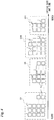
- Fig. 1 which shows an embodiment of the present invention, is a block diagram illustrating the electrical configuration of a photobook (electronic album) creation 1.
- the overall operation of the photobook creation apparatus 1 is controlled by a CPU 2.
- the photobook creation apparatus 1 includes a CD-ROM (Compact-Disc - Read-Only Memory) drive 6. By loading a CD-ROM 7 containing an operation program, described later, in the CD-ROM drive 6, the operation program is read and installed in the photobook creation apparatus 1.
- the photobook creation apparatus 1 is provided with a communication unit 10 as well. The operation program may be received by the communication unit 10 and the received operation program installed in the photobook creation apparatus 1.
- the photobook creation apparatus 1 includes a display device 4 controlled by a display control unit 3.
- a touch panel 5 has been formed on the display screen of the display device 4.
- a signal produced in response to touching of the touch panel 5 is input to the CPU 2.
- the photobook creation apparatus 1 is further provided with a hard disk 12, which is accessed by a hard-disk drive 11, and a memory card reader 8. When a memory card 9 storing image files representing a large number of images is loaded in the memory card reader 8, the image files are read by the memory card reader 8.
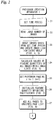
- Figs. 2 and 3 are flowcharts illustrating processing executed by the photobook creation apparatus 1.
- the photobook creation apparatus 1 is so adapted that in a case where the photobook creation apparatus 1 according to this embodiment displays the automatically laid-out page of a photobook on a display screen and a user performs an editing operation for changing an image, the photobook creation apparatus 1 refers to the editing operation and arranges it so that images to be laid out on the page of the photobook will be images in line with user preference.
- the period of image capture of images to be included in the photobook is designated by the user (step 21).
- the memory card 9 (which may be some other medium) is loaded in the memory card reader 8 and image files representing a large number of images stored on the memory card 9 are read (step 22).
- the large number of images represented by the read image files are grouped based upon the date and time of image capture and an image list is formed for every group (step 23).
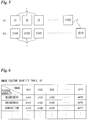
- Fig. 4 illustrates how a large number of read images are grouped.
- the horizontal axis in Fig. 4 indicates date and time of image capture.
- a large number of read images i are arrayed based upon date and time of image capture and are grouped according to image-capture date and times that are close together.
- 11 groups, namely group G1 to group G11, have been created. Although grouping is performed in such a manner that the numbers of images contained in the groups are approximately the same, they need not necessarily be the same. It goes without saying that the date and time of image capture will have been recorded in the header of each image file.
- Fig. 5 is an example of image lists of the groups G1 and G2.
- group G1 100 images from images I1 to I100 form this one group and an image list of these images is created.
- group G2 113 images from images I101 to I213 form this one group and an image list of these images is created.
- Image lists are created in similar fashion for the other groups as well.
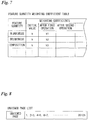
- Fig. 6 is an example of a table of image feature quantities regarding group G2.
- the image feature quantity table contains values of feature quantities of the images, which are included in the image list, in correspondence with feature quantities (blurriness, brightness, composition, etc.) representing the characteristics of the images.
- the values of the feature quantities blurriness, brightness and composition of the image I101 are u101, b101 and a101, respectively.
- the values of the feature quantities blurriness, brightness and composition of the image I102 are u102, b102 and a102, respectively.
- the table similarly contains values of feature quantities regarding the other images 1103 to I212 included in group G1.
- image feature quantity tables of the above kind are created with regard to all of the groups G1 to G21 obtained by grouping of the images.
- a photobook page number n is set (step 25 in Fig. 2 ).
- the photobook page number n indicates a page that will be edited by the user, and the page specified by the page number n is displayed on the display screen (see Fig. 12 ). Further, feature quantity weighting coefficients are initialized (step 26).
- Fig. 7 is an example of a table of feature quantity weighting coefficients.
- the feature quantity weighting coefficient table contains weighting coefficients in correspondence with feature quantities.
- the value of a feature quantity (see Fig. 5 ) is multiplied by the weighting coefficient.
- the sum total of values of feature quantities of an image multiplied by weighting coefficients is the score of the image.
- weighting coefficients are changed in accordance with the editing operation performed by the user. For this reason, a history of weighting coefficients that prevail after the performance of editing operations is stored in the feature quantity weighting coefficient table in addition to the initial values of the weighting coefficients. For example, although k is the initial value for each of the feature quantities blurriness, brightness and composition, the weighting coefficients of the feature quantities blurriness, brightness and composition take on the values k1, k2 and k3, respectively, owing to a first-time editing operation.
- Fig. 8 is an example of a list of unviewed pages.
- the unviewed page list indicates pages of the photobook that have not yet undergone editing by the user. Since even one page will not have been edited by the user in the initial state, all pages of the photobook are entered in the unviewed page list. Further, in this embodiment, a two-page spread of the photobook undergoes editing (although editing need not necessarily be applied to a two-page spread). Accordingly, pairs of pages, excluding the first page, have been added to the unviewed page list.
- the images in all of the image lists are scored utilizing the feature quantity weighting coefficients (step 29 in Fig. 3 ).
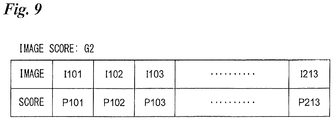
- Fig. 9 is an example of a score table indicating the scores of images belonging to the image list of group G2.
- the score table contains the scores in correspondence with the images.
- the score of an image is the sum total of the values of the image feature quantities obtained by multiplying the feature quantities of the image, which are contained in the image feature quantity table of Fig. 6 , by the weighting coefficients of these feature quantities contained in the feature quantity weighting coefficient table of Fig. 7 .
- the value of the blurriness feature quantity, value of the brightness feature quantity and value of the composition feature quantity of image I101 are u101, b101 and a101, respectively, as shown in Fig. 6
- the weighting coefficient of the blurriness feature quantity, weighting coefficient of the brightness feature quantity and weighting coefficient of the composition feature quantity are all k.
- Such scoring is carried out for every image list (every group) with regard to the images belonging to the image lists of all of the groups G1 to G21. Score tables are created with regard to all groups.
- Fig. 10 illustrates a virtual editing image 40 of page 2 and page 3 included in an unviewed page list.
- the virtual editing image 40 corresponds to an image actually displayed on the display screen of the display device 4 of the photobook creation apparatus 1.
- the virtual editing image 40 is created within the photobook creation apparatus 1 before it is actually displayed on the display screen.
- the virtual editing image 40 is displayed on the display screen as an image for editing purposes and the user performs a layout change or the like while viewing the displayed image.
- the virtual editing image 40 includes a virtual candidate area 41, a virtual layout area 42 and a virtual deletion area 43.
- the virtual layout area 42 is for displaying the layout of pages that constitute the photobook and it includes virtual pages 44 of a two-page spread corresponding to pages of the photobook. Images have been assigned to a left-side virtual page (page 2) 45 and to a right-side virtual page (page 3) 46. These images are those having the top ten high scores from among the images contained in the image list of group G2 corresponding to page 2 and page 3, as mentioned above. Images whose scores rank 11 th and lower from among the images contained in the image list of group G2 corresponding to pages 2 and 3 have been assigned to the virtual candidate area 41.
- the virtual deletion area 43 need not necessarily be utilized.
- the image assigning processing shown in Fig. 10 is executed with regard to all pages contained in the unviewed page list.
- images having the top ten high scores in the two-page spread of the unviewed page list from among the images belonging to the image list that corresponds to this two-page spread are assigned to (laid out in) the virtual layout area 42 (step 30), and images whose scores rank 11 th and lower are assigned to the virtual candidate area 41 (step 31).
- page editing is performed by the user (step 33). If editing of page n has been completed ("YES” at step 32), then a check is made to determine whether the editing of all pages of the photobook has been completed (step 34). If such editing has not been completed ("NO” at step 34), the page number n to be edited next is designated by the user (step 35). Owing to the two-page spread, an even number would be designated. The page number n is set to the designated page number n (step 36) and the processing of the above-described steps 28 to 33 is repeated with regard to the set page number n.
- Fig. 11 is a flowchart illustrating page editing processing (the processing executed at step 33 in Fig. 3 ).
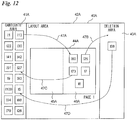
- Fig. 12 is an example of an editing image 40A actually displayed on the display screen of the display device 4 of the photobook creation apparatus 1.
- the editing image of the group corresponding to an nth page is displayed on the display screen (step 51).
- the editing image 40A which corresponds to the above-described virtual editing image 40, includes a candidate area 41A, a layout area 42A and a deletion area 43A.
- the layout area 42A includes an image 44A of a two-page spread. Images having the top ten high scores are displayed in the two-page spread image 44A. However, the left-side page 45A of the two-page spread image 44A that includes the first page of the photobook does not include any images, and the right-side page 46A of the two-page spread image 44A becomes the first page of the photobook.
- the user changes the images and layout. For example, if an image being displayed in the candidate area 41A or deletion area 43A is moved onto the two-page spread image 44A in the layout area 42A by drag- and-drop ("YES" at step 52), as indicated by arrow 47A in Fig. 12 , the characteristics of the moved image are construed to be in line with the preference of the user.
- the weighting coefficients of the feature quantities that correspond to the feature quantities of the moved image are changed (step 53). For example, if the blurriness feature quantity among the feature quantities of the moved image is higher than the average feature quantity, it is understood that blurry images rather than highly sharp images are in line with user preference.
- the blurriness weighting coefficient therefore, is raised.
- the initial value k for the blurriness feature quantity is changed to k1.
- the weighting coefficient thus changed is stored in the feature quantity weighting coefficient table.
- a similar operation is performed with regard to the weighting coefficients of the other feature quantities such as brightness and composition.
- the images in all of the image lists are scored again utilizing the weighting coefficients that have been changed (step 29 in Fig. 3 ).
- the weighting coefficients for an image having feature quantities in line with user preference are changed so as to raise the score of the image, and the weighting coefficients for an image having feature quantities disliked by the user are changed so as to lower the score of the image. Accordingly, since the scores of images in line with user preference are raised, images in line with user preference are laid out in the virtual page 44 of virtual layout area 42.
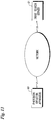
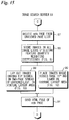
- Figs. 13 to 18 illustrate another embodiment and relate to a photobook creation system constituted by a photobook creation apparatus 60 and an image search server 61 that communicate over a network.
- the photobook creation apparatus 60 and image search server 61 are capable of communicating with each other via a network such as the Internet.
- the photobook creation apparatus 60 and image search server 61 have a configuration the same as that shown in Fig. 1 . Naturally, the image search server 61 would not require such components as the display-related devices and memory card reader 8.
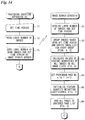
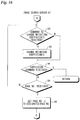
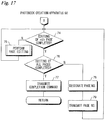
- Figs. 14 to 17 are flowcharts illustrating processing executed by the photobook creation apparatus 60 and image search server 61.
- the period of image capture is set in the photobook creation apparatus 60 (step 71 in Fig. 14 ) and image files are read from the memory card 9 loaded in the photobook creation apparatus 60 (step 72 in Fig. 14 ).
- the read image files and the data representing the set period of time are sent from the photobook creation apparatus 60 to the image search server 61 (step 73 in Fig. 14 ). It may be so arranged that only image files representing images within the set time period are sent from the photobook creation apparatus 60 to the image search server 61.
- image files representing a large number of images and data indicating the set time period are received by the image search server 61 (step 81 in Fig. 14 )
- these images are grouped and an image list is created for each group (step 82 in Fig. 14 ) in a manner similar to that described above.
- the values of the feature quantities of all images in all of the lists are calculated (step 83 in Fig. 14 ) and a photobook page number n is set to 1 (step 84 in Fig. 14 ).
- the feature quantity weighting coefficients are initialized (step 85) and all pages are added to a list of unviewed pages (step 86 in Fig. 14 ).
- nth page (first page) is deleted from the unviewed page list (step 87 in Fig. 15 ) and the images in all image lists are scored utilizing the feature quantity weighting coefficients (step 88).
- images having the top ten high scores in the two-page spread of the unviewed page list are laid out in the virtual layout area 42, and images whose scores rank 11 th and lower are placed in the virtual candidate area 41 (steps 89, 90 in Fig. 15 ).
- An HTML (HyperText Markup Language) file representing the editing image (see Fig. 12 ) of the nth page also is generated and the HTML file is sent from the photobook creation apparatus 1 to the photobook creation apparatus 60 (step 91 in Fig. 15 ).
- HTML HyperText Markup Language
- page editing is carried out (step 75 in Fig. 17 ). The details of page editing will be described later. If page editing has not been completed ("NO" at step 76 in Fig. 17 ), a page number is designated (step 78 in Fig. 17 ) and data representing the designated page number is sent to the image search server 61 (step 79 in Fig. 17 ). When editing of all pages is finished ("YES" at step 76 in Fig. 17 ), a completion command is sent to the image search server 61 (step 77 in Fig. 17 ).
- Fig. 18 is an example of a flowchart illustrating page editing processing (the processing executed at step 75 in Fig. 17 ). Processing steps in Fig. 18 identical with those shown in Fig. 11 are designated by like step numbers.
- the editing image 40A is displayed on the display screen of the photobook creation apparatus 60 (step 51 in Fig. 18 ), as illustrated in Fig. 12 .
- a command that changes the weighting coefficients of the feature quantities that correspond to the feature quantities of this image is sent to the image search server 61 (step 53A).
- a command that lowers the weighting coefficients of the feature quantities that correspond to the feature quantities of this moved image is sent to the image search server 61 (step 55A).
- a command that restores the changed weighting coefficients to the original weighting coefficients is sent to the image search server 61 (step 57A).
- a trash can area
- the result will be a layout in which this person is not included in the photobook.
- the feature quantities indicative of the likenesses of individual persons are detected for every image, and the feature quantities indicative of the likenesses of these individuals (the feature quantities of Mr. A, the feature quantities of Mr. B and the feature quantities of Mr. C and so forth) are stored in the feature quantity table shown in Fig. 6 .
- a person contained in an image that has been moved to the trash can for unwanted persons is specified. By enlarging, in the negative direction, the weighting coefficients applied to the feature quantities of this specified person, the image of the person contained in the image that has been moved to the trash can for unwanted persons will not be laid out.
- a trash can for unwanted persons need not be provided anew. If the feature quantities of every person are entered beforehand in the feature quantity table shown in Fig. 6 , then, by moving an image containing an unwanted person to the above-described deletion area, there will be no rise in the score of the image containing this unwanted person. As a result, the image containing the unwanted person can be prevented from being laid out.
- Figs. 19 to 23 illustrate a further embodiment, which is for the purpose of finding the image of a desired commercial product.
- a client computer is utilized instead of the photobook creation apparatus 60.
- the configuration of the client computer is the same as that shown in Fig. 1 .
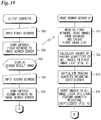
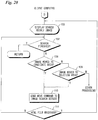
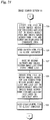
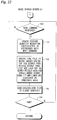
- Figs. 19 to 22 are flowcharts illustrating processing executed by the client computer and image search server 61.
- the client computer is connected to the Internet and accesses a desired shopping site. If a first keyword ("clock", for instance) is input to the client computer (step 101 in Fig. 19 ), data representing the entered first keyword is sent to the image search server 61 (a server for the shopping site) (step 102).
- a first keyword (“clock", for instance) is input to the client computer (step 101 in Fig. 19 )
- data representing the entered first keyword is sent to the image search server 61 (a server for the shopping site) (step 102).
- images corresponding to the first keyword are read from an image database and a first image list is created (step 121 in Fig. 19 ).
- the values of feature quantities of all images in the created first image list are calculated in the manner described above (see Fig. 6 ). Further, the feature quantity weighting coefficients are initialized (step 123 in Fig. 19 ). The images in the image list are scored utilizing the feature quantity weighting coefficients (step 124 in Fig. 19 ).
- An HTML file representing an HTML page in which images having the top ten scores will be laid out in a search result display area and images whose scores rank 11 th and lower will be placed in a candidate area is created (step 125 in Fig. 21 ).
- the HTML file created is sent from the image search server 61 to the client computer (step 126 in Fig. 21 ).
- the search result image represented by this HTML file is displayed on the display screen of the display device of the client computer (step 103 in Fig. 19 ).
- a second keyword (“analog wristwatch", for instance) is input to the client computer and data representing the entered second keyword is sent from the client computer to the image search server 61 (step 105 in Fig. 19 ).
- images that match the second keyword are selected from within the first image list and a second image list is created (step 127 in Fig. 21 ).
- An HTML file in which images having the top ten scores from among the created second image list will be laid out in the search result area and images whose scores rank 11 th and lower will be placed in the candidate area is created (step 128 in Fig. 21 ).
- the HTML file created is sent from the image search server 61 to the client computer (step 129 in Fig. 21 ).
- the search result image represented by this HTML file is displayed on the display screen of the display device of the client computer (step 106 in Fig. 20 ).
- Fig. 23 is an example of a search result image 140.
- the search result image 140 includes a candidate area 141, a search result area 142 and a deletion area 143.
- Commercial product images 152 having the top ten scores are displayed in the search result area 142, as mentioned above.
- Commercial product images 151 whose scores rank 11 th and lower are displayed in the candidate area 141. If the search is not finished ("NO" at step 107 in Fig. 20 ), then it is determined whether an image 150 being displayed in the search result area 142 has been moved to the candidate area 141 (step 108 in Fig. 20 ) and, if not, whether the image 150 being displayed in the search result area 142 has been moved to the deletion area 143 (step 109 in Fig. 20 ).
- a move command representing the content of this movement is sent from the client computer to the image search server 61 (step 110 in Fig. 20 ). If an HTML file representing the search result image sent from the image search server 61 is received by the client computer, the search result image is displayed again; otherwise, control returns to the processing of step 107 (step 111 in Fig. 20 ).
- the weighting coefficients of the feature quantities are updated in response to the move command (step 131 in Fig. 22 ). For example, in a case where the image 150 being displayed in the search result area 142 has been moved to the candidate area 141, it is construed that the moved image 150 closely resembles the desired product. As a consequence, the weighting coefficients corresponding to the feature quantities of the moved image 150 rise in value. In a case where the image 150 being displayed in the search result area 142 has been moved to the deletion area 143, it is construed that the moved image 150 does not resemble the desired product. As a consequence, the weighting coefficients corresponding to the feature quantities of the moved image 150 decline in value.
- step 132 in Fig. 22 An HTML file in which images having the top ten scores will be laid out in the search result area 142 and images whose scores rank 11 th and lower will be displayed in the candidate area 141 is created (step 132 in Fig. 22 ).
- the HTML file created is sent to the client computer (step 133 in Fig. 22 ) and the desired product image can be found at the client computer. If this is not the end of the processing of this flowchart ("NO" at step 134 in Fig. 22 ), processing from step 130 onward is repeated.
Landscapes
- Engineering & Computer Science (AREA)
- Theoretical Computer Science (AREA)
- Library & Information Science (AREA)
- Physics & Mathematics (AREA)
- General Physics & Mathematics (AREA)
- Data Mining & Analysis (AREA)
- Databases & Information Systems (AREA)
- General Engineering & Computer Science (AREA)
- Health & Medical Sciences (AREA)
- Oral & Maxillofacial Surgery (AREA)
- Computer Vision & Pattern Recognition (AREA)
- General Health & Medical Sciences (AREA)
- Human Computer Interaction (AREA)
- Multimedia (AREA)
- Processing Or Creating Images (AREA)
- Information Retrieval, Db Structures And Fs Structures Therefor (AREA)
Claims (8)
- Bildersuchvorrichtung, umfassend:eine Merkmalsgrößen-Berechnungseinrichtung zum Berechnen der Werte von Merkmalsgrößen bezüglich jedes von einer Mehrzahl von Bildern, wobei die Merkmalsgrößen eine Charakteristik des Bilds repräsentieren;eine Bewertungseinrichtung zum Bewerten jedes Bilds der mehreren Bilder basierend auf den Werten der Merkmalsgrößen, die von der Merkmalsgrößen-Berechnungseinrichtung berechnet wurden;eine Anzeigesteuereinrichtung zum Steuern einer Anzeigeeinheit derart, dass diese eine vorbestimmte Anzahl von Bildern mit hohen, von der Bewertungseinrichtung erhaltenen Bewertungen in einer Layoutfläche (42A) des Anzeigebildschirms (40A) anzeigt, ferner Bilder verschieden von der vorbestimmten Anzahl von Bildern in der Kandidatenfläche (41A) des Anzeigebildschirms (40A) anzeigt;
gekennzeichnet durcheine erste Bewertungssteuereinrichtung, die ansprechend auf die Anwendung eines ersten Bewegungsbefehls, der ein in der Kandidatenfläche (41A) angezeigtes Bild zu der Layoutfläche (42A) bewegt, die Bewertungseinrichtung derart steuert, dass diese den Wert von Merkmalsgrößen anhebt, die den Merkmalsgrößen desjenigen Bilds entsprechen, für das der erste Bewegungsbefehl angewendet wurde, um die mehreren Bilder basierend auf den angehobenen Werten der Merkmalsgrößen zu bewerten; undeine Bildplatzierungs-Entscheidungseinrichtung zum Entscheiden einer Bildplatzierung in der Weise, dass eine vorbestimmte Anzahl von Bildern mit hohen Bewertungen, die von der Bewertungseinrichtung erhalten wurden, in der Layoutfläche (42A) des Anzeigebildschirms angezeigt werden, und Bilder verschieden von der vorbestimmten Anzahl von Bildern in der Kandidatenfläche (41A) des Anzeigebildschirms angezeigt werden. - Vorrichtung nach Anspruch 1, bei der die Anzeigesteuereinrichtung ansprechend auf die Anwendung eines Bildanzeigebefehls zum Anzeigen von Bildern mit der von der Bildplatzierungs-Entscheidungseinrichtung entschiedenen Platzierung die Anzeigeeinheit so steuert, dass diese die Bilder in der entschiedenen Platzierung zur Anzeige bringt.
- Vorrichtung nach Anspruch 1, bei der die Anzeigesteuereinrichtung die Anzeigeeinheit derart steuert, dass eine Löschfläche (43A) zusätzlich zu der Kandidatenfläche (41A) auf dem Anzeigebildschirm angezeigt wird, und
die Vorrichtung weiterhin eine zweite Bewertungssteuereinrichtung aufweist, die ansprechend auf die Anwendung eines zweiten Bewegungsbefehls, welcher ein in der Kandidatenfläche (41A) angezeigtes Bild oder ein in der Layoutfläche (42A) angezeigtes Bild zu der Löschfläche (43A) die Bewertungseinrichtung so steuert, dass diese den Wert derjenigen Merkmalsgrößen absenkt, die den Merkmalsgrößen des Bildes entsprechen, für das der zweite Bewegungsbefehl angewendet wurde, und die mehreren Bilder basierend auf den abgesenkten Werten der Merkmalsgrößen bewertet. - Vorrichtung nach Anspruch 1, bei der die erste Bewertungssteuereinrichtung ansprechend auf die Anwendung eines dritten Bewegungsbefehls, welcher ein Bild, das in der Layoutfläche (42A) nach Maßgabe des ersten Bewegungsbefehls angezeigt wird, zu der Kandidatenfläche (41A) bewegt, die Bewertungseinrichtung derart steuert, dass diese die Bilder nach Zurückstellen angehobener Werte der Merkmalsgrößen auf deren ursprüngliche Werte bewertet.
- Vorrichtung nach Anspruch 3, bei der die zweite Bewertungssteuereinrichtung ansprechend auf die Anwendung eines dritten Bewegungsbefehls, welcher ein Bild, welches in der Löschfläche (43A) gemäß dem zweiten Bewegungsbefehl angezeigt wird, zu der Kandidatenfläche (41A) bewegt, die Bewertungseinrichtung derart steuert, dass diese die Bilder nach Zurückstellen abgesenkter Werte auf die Merkmalsgrößen auf deren ursprüngliche Werte bewertet.
- Vorrichtung nach Anspruch 1, weiterhin umfassend eine elektronische Albumerzeugungseinrichtung zum Erzeugen eines elektronischen Albums unter Verwendung von in der Layoutfläche (42A) durch die Bildplatzierungs-Entscheidungseinrichtung angezeigten Bilder.
- Verfahren zum Steuern des Betriebs einer Bildersuchvorrichtung, umfassend die Schritte:bezüglich jedes Bilds einer Mehrzahl von Bildern -, Berechnen der Werte von Merkmalsgrößen, welche eine Charakteristik des Bilds repräsentieren;Bewerten jedes Bilds der mehreren Bilder basierend auf den berechneten Werten der Merkmalsgrößen;Anzeigen einer vorbestimmten Anzahl von Bildern mit hohen Bewertungen, die von der Bewertungseinrichtung erhalten wurden, in einer Layoutfläche (42A) des Anzeigebildschirms (40A), und Anzeigen von Bildern, die verschieden sind von der vorbestimmten Anzahl von Bildern, in der Kandidatenfläche (41A) des Anzeigebildschirms (40A); gekennzeichnet durchansprechend auf einen ersten, von einem Benutzer ausgeführten Bewegungsbefehl, der ein in der Kandidatenfläche (41A) angezeigtes Bild zu der Layoutfläche (42A) bewegt,Anheben des Werts der Merkmalsgrößen, die den Merkmalsgrößen des Bilds entsprechen, für das der erste Bewegungsbefehl angewendet wurde, und Bewerten der mehreren Bilder basierend auf den angehobenen Werten der Merkmalsgrößen; undEntscheiden einer Bildplatzierung derart, dass eine vorbestimmte Anzahl von Bildern mit hohen Bewertungen durch den Bewertungsvorgang in der Layoutfläche (42A) des Anzeigebildschirms angezeigt werden, und Bilder verschieden von der vorbestimmten Anzahl von Bildern in der Kandidatenfläche (41A) des Bildschirms angezeigt werden.
- Computerlesbares Programm zum Steuern eines Computers einer Bildersuchvorrichtung, umbezüglich jedes Bilds eine Mehrzahl von Bildern -, die Werte von Merkmalsgrößen zu berechnen, welche eine Charakteristik des Bilds repräsentieren;Bewerten jedes Bilds der mehreren Bilder basierend auf den Werten der Merkmalsgrößen, die von der Merkmalsgrößen-Berechnungseinrichtung berechnet wurden;Anzeigen einer vorbestimmten Anzahl von Bildern mit hohen Bewertungen durch die Bewertungseinrichtung in einer Layoutfläche (42A) des Anzeigebildschirms (40A), und von Bildern verschieden von der vorbestimmten Anzahl von Bildern in der Kandidatenfläche (41A) des Anzeigebildschirms (40A); gekennzeichnet durchAnsprechend auf die Anwendung eines ersten Bewegungsbefehls, der ein in der Kandidatenfläche (41A) angezeigtes Bild zu der Layoutfläche (42A) bewegt, Anheben des Werts der Merkmalsgrößen, welche den Merkmalsgrößen des Bilds entsprechen, für das der erste Bewegungsbefehl angewendet wurde, und Bewerten der mehreren Bilder basierend auf den angehobenen Werten der Merkmalsgrößen; undEntscheiden einer Bildplatzierung in der Weise, dass eine vorbestimmte Anzahl von Bildern mit hohen Bewertungen durch den Bewertungsvorgang in der Layout-Fläche (42A) des Anzeigebildschirms angezeigt werden und Bilder verschieden von der vorbestimmten Anzahl von Bildern in der Kandidatenfläche (41A) des Anzeigebildschirms angezeigt werden.
Priority Applications (1)
| Application Number | Priority Date | Filing Date | Title |
|---|---|---|---|
| EP18163124.3A EP3367338B1 (de) | 2013-03-28 | 2014-03-07 | Bildsuchvorrichtung, verfahren zur steuerung des betriebs davon und bildsuchserver |
Applications Claiming Priority (2)
| Application Number | Priority Date | Filing Date | Title |
|---|---|---|---|
| JP2013068199A JP5883821B2 (ja) | 2013-03-28 | 2013-03-28 | 画像検索装置およびその動作制御方法ならびに画像検索サーバ |
| PCT/JP2014/055961 WO2014156559A1 (ja) | 2013-03-28 | 2014-03-07 | 画像検索装置およびその動作制御方法ならびに画像検索サーバ |
Related Child Applications (2)
| Application Number | Title | Priority Date | Filing Date |
|---|---|---|---|
| EP18163124.3A Division EP3367338B1 (de) | 2013-03-28 | 2014-03-07 | Bildsuchvorrichtung, verfahren zur steuerung des betriebs davon und bildsuchserver |
| EP18163124.3A Division-Into EP3367338B1 (de) | 2013-03-28 | 2014-03-07 | Bildsuchvorrichtung, verfahren zur steuerung des betriebs davon und bildsuchserver |
Publications (3)
| Publication Number | Publication Date |
|---|---|
| EP2980751A1 EP2980751A1 (de) | 2016-02-03 |
| EP2980751A4 EP2980751A4 (de) | 2016-08-31 |
| EP2980751B1 true EP2980751B1 (de) | 2018-04-25 |
Family
ID=51623545
Family Applications (2)
| Application Number | Title | Priority Date | Filing Date |
|---|---|---|---|
| EP18163124.3A Active EP3367338B1 (de) | 2013-03-28 | 2014-03-07 | Bildsuchvorrichtung, verfahren zur steuerung des betriebs davon und bildsuchserver |
| EP14775326.3A Active EP2980751B1 (de) | 2013-03-28 | 2014-03-07 | Bildabrufvorrichtung, betriebssteuerungsverfahren dafür und bildabrufserver |
Family Applications Before (1)
| Application Number | Title | Priority Date | Filing Date |
|---|---|---|---|
| EP18163124.3A Active EP3367338B1 (de) | 2013-03-28 | 2014-03-07 | Bildsuchvorrichtung, verfahren zur steuerung des betriebs davon und bildsuchserver |
Country Status (5)
| Country | Link |
|---|---|
| US (2) | US9805253B2 (de) |
| EP (2) | EP3367338B1 (de) |
| JP (1) | JP5883821B2 (de) |
| CN (2) | CN108595486B (de) |
| WO (1) | WO2014156559A1 (de) |
Families Citing this family (10)
| Publication number | Priority date | Publication date | Assignee | Title |
|---|---|---|---|---|
| JP6677527B2 (ja) * | 2016-02-23 | 2020-04-08 | 株式会社 ミックウェア | サーバ装置、およびプログラム |
| JP6750094B2 (ja) * | 2017-03-15 | 2020-09-02 | 富士フイルム株式会社 | 画像評価装置,画像評価方法および画像評価プログラム |
| CN107256111A (zh) * | 2017-06-16 | 2017-10-17 | 深圳市金立通信设备有限公司 | 一种删除应用的方法、终端及计算机可读存储介质 |
| CN107424080A (zh) * | 2017-08-07 | 2017-12-01 | 四川长虹电器股份有限公司 | 多终端协同制作、管理照片书的方法 |
| JP7057382B2 (ja) * | 2018-02-08 | 2022-04-19 | 富士フイルム株式会社 | 電子アルバム装置とその作動方法および作動プログラム |
| US11055344B2 (en) * | 2018-03-21 | 2021-07-06 | Walmart Apollo, Llc | Product image evaluation system and method |
| US10852698B2 (en) * | 2018-06-19 | 2020-12-01 | Andy TSENG | Watch storage device with intelligent watch recommendation function |
| WO2020073317A1 (zh) * | 2018-10-12 | 2020-04-16 | 华为技术有限公司 | 文件管理方法及电子设备 |
| JP7335186B2 (ja) | 2020-02-28 | 2023-08-29 | 富士フイルム株式会社 | 画像処理装置、画像処理方法及びプログラム |
| JP7669143B2 (ja) * | 2020-11-30 | 2025-04-28 | キヤノン株式会社 | 画像処理装置、画像処理方法、及びプログラム |
Family Cites Families (21)
| Publication number | Priority date | Publication date | Assignee | Title |
|---|---|---|---|---|
| JPH09101970A (ja) * | 1995-10-06 | 1997-04-15 | Omron Corp | 画像検索方法および画像検索装置 |
| JP4074366B2 (ja) * | 1998-02-24 | 2008-04-09 | コニカミノルタビジネステクノロジーズ株式会社 | 画像検索装置及び方法並びに画像検索プログラムを記録した記録媒体 |
| JP2000132554A (ja) * | 1998-10-21 | 2000-05-12 | Sharp Corp | 画像検索装置および画像検索方法 |
| KR100351400B1 (ko) * | 1999-09-22 | 2002-09-10 | 엘지전자 주식회사 | 사용자 피드백 변화를 반영한 멀티미디어 데이타의 특징소 정보 생성방법 및 멀티미디어 데이타의 특징소 가중치 결정방법 |
| JP2004259061A (ja) * | 2003-02-26 | 2004-09-16 | Intec Web & Genome Informatics Corp | 情報検索装置、情報検索方法、及び情報検索プログラム |
| CN101111841A (zh) * | 2005-01-28 | 2008-01-23 | 皇家飞利浦电子股份有限公司 | 动态照片拼贴 |
| US8732025B2 (en) * | 2005-05-09 | 2014-05-20 | Google Inc. | System and method for enabling image recognition and searching of remote content on display |
| JP2007026386A (ja) * | 2005-07-21 | 2007-02-01 | Fuji Xerox Co Ltd | 画像検索システム及び方法 |
| JP2007072823A (ja) * | 2005-09-08 | 2007-03-22 | Seiko Epson Corp | 画像選択装置および画像選択方法 |
| CN101331522B (zh) | 2005-10-18 | 2012-10-10 | 富士胶片株式会社 | 图册创建设备 |
| US7773811B2 (en) * | 2006-12-06 | 2010-08-10 | D & S Consultants, Inc. | Method and system for searching a database of graphical data |
| US20080270378A1 (en) * | 2007-04-24 | 2008-10-30 | Nokia Corporation | Method, Apparatus and Computer Program Product for Determining Relevance and/or Ambiguity in a Search System |
| JP2009277177A (ja) * | 2008-05-19 | 2009-11-26 | Fujifilm Corp | 画像レイアウト装置、記録媒体および画像レイアウト方法 |
| JP2010068225A (ja) * | 2008-09-10 | 2010-03-25 | Noritsu Koki Co Ltd | 画像処理装置、画像形成装置、画像処理方法及び画像処理プログラム |
| US8515212B1 (en) * | 2009-07-17 | 2013-08-20 | Google Inc. | Image relevance model |
| US8131786B1 (en) * | 2009-11-23 | 2012-03-06 | Google Inc. | Training scoring models optimized for highly-ranked results |
| JP2011221794A (ja) * | 2010-04-09 | 2011-11-04 | Kddi Corp | 画像選定装置 |
| JP2012058940A (ja) * | 2010-09-08 | 2012-03-22 | Seiko Epson Corp | 類似画像検索装置、類似画像検索方法およびコンピュータープログラム |
| CN102222232A (zh) * | 2011-06-24 | 2011-10-19 | 常州锐驰电子科技有限公司 | 人脸多阶层快速过滤匹配装置及方法 |
| US9189128B2 (en) * | 2013-02-07 | 2015-11-17 | Verizon Patent And Licensing Inc. | Graphically managing electronic communications |
| US9361278B2 (en) * | 2013-03-15 | 2016-06-07 | Facebook, Inc. | Overlaying photographs with text on a social networking system |
-
2013
- 2013-03-28 JP JP2013068199A patent/JP5883821B2/ja active Active
-
2014
- 2014-03-07 CN CN201810209583.7A patent/CN108595486B/zh active Active
- 2014-03-07 EP EP18163124.3A patent/EP3367338B1/de active Active
- 2014-03-07 WO PCT/JP2014/055961 patent/WO2014156559A1/ja not_active Ceased
- 2014-03-07 EP EP14775326.3A patent/EP2980751B1/de active Active
- 2014-03-07 CN CN201480017106.0A patent/CN105074771B/zh active Active
-
2015
- 2015-09-28 US US14/867,480 patent/US9805253B2/en active Active
-
2017
- 2017-09-26 US US15/715,223 patent/US9959456B2/en active Active
Non-Patent Citations (1)
| Title |
|---|
| None * |
Also Published As
| Publication number | Publication date |
|---|---|
| EP2980751A4 (de) | 2016-08-31 |
| WO2014156559A1 (ja) | 2014-10-02 |
| US20160019416A1 (en) | 2016-01-21 |
| EP2980751A1 (de) | 2016-02-03 |
| EP3367338A1 (de) | 2018-08-29 |
| US20180018506A1 (en) | 2018-01-18 |
| CN108595486A (zh) | 2018-09-28 |
| CN105074771A (zh) | 2015-11-18 |
| JP5883821B2 (ja) | 2016-03-15 |
| US9805253B2 (en) | 2017-10-31 |
| EP3367338B1 (de) | 2019-07-10 |
| JP2014191701A (ja) | 2014-10-06 |
| CN108595486B (zh) | 2022-01-18 |
| CN105074771B (zh) | 2018-11-27 |
| US9959456B2 (en) | 2018-05-01 |
Similar Documents
| Publication | Publication Date | Title |
|---|---|---|
| EP2980751B1 (de) | Bildabrufvorrichtung, betriebssteuerungsverfahren dafür und bildabrufserver | |
| JP5270063B2 (ja) | 検索結果のためのウェーブレンズのシステムおよび方法 | |
| CN100592245C (zh) | 用于预览文件的方法和系统 | |
| EP4318270A2 (de) | Medien-browsing-benutzerschnittstelle mit intelligent ausgewählten repräsentativen medienelementen | |
| EP3262497B1 (de) | Kontextuelles zoom | |
| US8510669B2 (en) | Method and system for presenting photos on a website | |
| US8612428B2 (en) | Image ranking based on popularity of associated metadata | |
| US9880709B2 (en) | System and method for creating and displaying previews of content items for electronic works | |
| US9325869B2 (en) | Image processing apparatus, image processing method, and image processing program | |
| US12277925B2 (en) | Automatic audio playback of displayed textual content | |
| US11068133B2 (en) | Electronic album apparatus and method of controlling operation of same | |
| WO2015035283A1 (en) | System and method for generating customized advertisement creatives | |
| JP5883843B2 (ja) | 画像評価装置,画像評価方法,画像評価プログラム,およびそのプログラムを格納した記録媒体 | |
| US8549435B1 (en) | Displaying thumbnails for one or more files to be imported | |
| CN103513855B (zh) | 一种显示页面更新方法及装置 | |
| JP7263437B2 (ja) | コンテンツを保存し表面化させるためのシステムおよび方法 | |
| CN115544405A (zh) | 一种页面渲染方法、装置、电子设备及存储介质 | |
| CN120872215A (zh) | 结合ai演算法并以移动轨迹操作软件程序的方法与系统 | |
| Cooper | Content Editing, Site Developing and Web Designing Guide for a Drupal 7 Based, Large Touchscreen Site |
Legal Events
| Date | Code | Title | Description |
|---|---|---|---|
| PUAI | Public reference made under article 153(3) epc to a published international application that has entered the european phase |
Free format text: ORIGINAL CODE: 0009012 |
|
| 17P | Request for examination filed |
Effective date: 20150924 |
|
| AK | Designated contracting states |
Kind code of ref document: A1 Designated state(s): AL AT BE BG CH CY CZ DE DK EE ES FI FR GB GR HR HU IE IS IT LI LT LU LV MC MK MT NL NO PL PT RO RS SE SI SK SM TR |
|
| AX | Request for extension of the european patent |
Extension state: BA ME |
|
| DAX | Request for extension of the european patent (deleted) | ||
| REG | Reference to a national code |
Ref country code: DE Ref legal event code: R079 Ref document number: 602014024553 Country of ref document: DE Free format text: PREVIOUS MAIN CLASS: G06T0001000000 Ipc: G06T0011600000 |
|
| A4 | Supplementary search report drawn up and despatched |
Effective date: 20160803 |
|
| RIC1 | Information provided on ipc code assigned before grant |
Ipc: G06T 11/60 20060101AFI20160728BHEP Ipc: G06F 17/30 20060101ALI20160728BHEP |
|
| STAA | Information on the status of an ep patent application or granted ep patent |
Free format text: STATUS: EXAMINATION IS IN PROGRESS |
|
| 17Q | First examination report despatched |
Effective date: 20170310 |
|
| GRAP | Despatch of communication of intention to grant a patent |
Free format text: ORIGINAL CODE: EPIDOSNIGR1 |
|
| STAA | Information on the status of an ep patent application or granted ep patent |
Free format text: STATUS: GRANT OF PATENT IS INTENDED |
|
| INTG | Intention to grant announced |
Effective date: 20171023 |
|
| GRAS | Grant fee paid |
Free format text: ORIGINAL CODE: EPIDOSNIGR3 |
|
| GRAA | (expected) grant |
Free format text: ORIGINAL CODE: 0009210 |
|
| STAA | Information on the status of an ep patent application or granted ep patent |
Free format text: STATUS: THE PATENT HAS BEEN GRANTED |
|
| AK | Designated contracting states |
Kind code of ref document: B1 Designated state(s): AL AT BE BG CH CY CZ DE DK EE ES FI FR GB GR HR HU IE IS IT LI LT LU LV MC MK MT NL NO PL PT RO RS SE SI SK SM TR |
|
| REG | Reference to a national code |
Ref country code: GB Ref legal event code: FG4D |
|
| REG | Reference to a national code |
Ref country code: CH Ref legal event code: EP |
|
| REG | Reference to a national code |
Ref country code: AT Ref legal event code: REF Ref document number: 993668 Country of ref document: AT Kind code of ref document: T Effective date: 20180515 |
|
| REG | Reference to a national code |
Ref country code: IE Ref legal event code: FG4D |
|
| REG | Reference to a national code |
Ref country code: DE Ref legal event code: R096 Ref document number: 602014024553 Country of ref document: DE |
|
| REG | Reference to a national code |
Ref country code: NL Ref legal event code: MP Effective date: 20180425 |
|
| REG | Reference to a national code |
Ref country code: LT Ref legal event code: MG4D |
|
| PG25 | Lapsed in a contracting state [announced via postgrant information from national office to epo] |
Ref country code: NL Free format text: LAPSE BECAUSE OF FAILURE TO SUBMIT A TRANSLATION OF THE DESCRIPTION OR TO PAY THE FEE WITHIN THE PRESCRIBED TIME-LIMIT Effective date: 20180425 |
|
| PG25 | Lapsed in a contracting state [announced via postgrant information from national office to epo] |
Ref country code: BG Free format text: LAPSE BECAUSE OF FAILURE TO SUBMIT A TRANSLATION OF THE DESCRIPTION OR TO PAY THE FEE WITHIN THE PRESCRIBED TIME-LIMIT Effective date: 20180725 Ref country code: FI Free format text: LAPSE BECAUSE OF FAILURE TO SUBMIT A TRANSLATION OF THE DESCRIPTION OR TO PAY THE FEE WITHIN THE PRESCRIBED TIME-LIMIT Effective date: 20180425 Ref country code: SE Free format text: LAPSE BECAUSE OF FAILURE TO SUBMIT A TRANSLATION OF THE DESCRIPTION OR TO PAY THE FEE WITHIN THE PRESCRIBED TIME-LIMIT Effective date: 20180425 Ref country code: ES Free format text: LAPSE BECAUSE OF FAILURE TO SUBMIT A TRANSLATION OF THE DESCRIPTION OR TO PAY THE FEE WITHIN THE PRESCRIBED TIME-LIMIT Effective date: 20180425 Ref country code: LT Free format text: LAPSE BECAUSE OF FAILURE TO SUBMIT A TRANSLATION OF THE DESCRIPTION OR TO PAY THE FEE WITHIN THE PRESCRIBED TIME-LIMIT Effective date: 20180425 Ref country code: NO Free format text: LAPSE BECAUSE OF FAILURE TO SUBMIT A TRANSLATION OF THE DESCRIPTION OR TO PAY THE FEE WITHIN THE PRESCRIBED TIME-LIMIT Effective date: 20180725 Ref country code: PL Free format text: LAPSE BECAUSE OF FAILURE TO SUBMIT A TRANSLATION OF THE DESCRIPTION OR TO PAY THE FEE WITHIN THE PRESCRIBED TIME-LIMIT Effective date: 20180425 |
|
| PG25 | Lapsed in a contracting state [announced via postgrant information from national office to epo] |
Ref country code: RS Free format text: LAPSE BECAUSE OF FAILURE TO SUBMIT A TRANSLATION OF THE DESCRIPTION OR TO PAY THE FEE WITHIN THE PRESCRIBED TIME-LIMIT Effective date: 20180425 Ref country code: LV Free format text: LAPSE BECAUSE OF FAILURE TO SUBMIT A TRANSLATION OF THE DESCRIPTION OR TO PAY THE FEE WITHIN THE PRESCRIBED TIME-LIMIT Effective date: 20180425 Ref country code: HR Free format text: LAPSE BECAUSE OF FAILURE TO SUBMIT A TRANSLATION OF THE DESCRIPTION OR TO PAY THE FEE WITHIN THE PRESCRIBED TIME-LIMIT Effective date: 20180425 Ref country code: GR Free format text: LAPSE BECAUSE OF FAILURE TO SUBMIT A TRANSLATION OF THE DESCRIPTION OR TO PAY THE FEE WITHIN THE PRESCRIBED TIME-LIMIT Effective date: 20180726 |
|
| REG | Reference to a national code |
Ref country code: AT Ref legal event code: MK05 Ref document number: 993668 Country of ref document: AT Kind code of ref document: T Effective date: 20180425 |
|
| PG25 | Lapsed in a contracting state [announced via postgrant information from national office to epo] |
Ref country code: PT Free format text: LAPSE BECAUSE OF FAILURE TO SUBMIT A TRANSLATION OF THE DESCRIPTION OR TO PAY THE FEE WITHIN THE PRESCRIBED TIME-LIMIT Effective date: 20180827 |
|
| REG | Reference to a national code |
Ref country code: DE Ref legal event code: R097 Ref document number: 602014024553 Country of ref document: DE |
|
| PG25 | Lapsed in a contracting state [announced via postgrant information from national office to epo] |
Ref country code: EE Free format text: LAPSE BECAUSE OF FAILURE TO SUBMIT A TRANSLATION OF THE DESCRIPTION OR TO PAY THE FEE WITHIN THE PRESCRIBED TIME-LIMIT Effective date: 20180425 Ref country code: SK Free format text: LAPSE BECAUSE OF FAILURE TO SUBMIT A TRANSLATION OF THE DESCRIPTION OR TO PAY THE FEE WITHIN THE PRESCRIBED TIME-LIMIT Effective date: 20180425 Ref country code: RO Free format text: LAPSE BECAUSE OF FAILURE TO SUBMIT A TRANSLATION OF THE DESCRIPTION OR TO PAY THE FEE WITHIN THE PRESCRIBED TIME-LIMIT Effective date: 20180425 Ref country code: CZ Free format text: LAPSE BECAUSE OF FAILURE TO SUBMIT A TRANSLATION OF THE DESCRIPTION OR TO PAY THE FEE WITHIN THE PRESCRIBED TIME-LIMIT Effective date: 20180425 Ref country code: AT Free format text: LAPSE BECAUSE OF FAILURE TO SUBMIT A TRANSLATION OF THE DESCRIPTION OR TO PAY THE FEE WITHIN THE PRESCRIBED TIME-LIMIT Effective date: 20180425 Ref country code: DK Free format text: LAPSE BECAUSE OF FAILURE TO SUBMIT A TRANSLATION OF THE DESCRIPTION OR TO PAY THE FEE WITHIN THE PRESCRIBED TIME-LIMIT Effective date: 20180425 |
|
| PG25 | Lapsed in a contracting state [announced via postgrant information from national office to epo] |
Ref country code: SM Free format text: LAPSE BECAUSE OF FAILURE TO SUBMIT A TRANSLATION OF THE DESCRIPTION OR TO PAY THE FEE WITHIN THE PRESCRIBED TIME-LIMIT Effective date: 20180425 Ref country code: IT Free format text: LAPSE BECAUSE OF FAILURE TO SUBMIT A TRANSLATION OF THE DESCRIPTION OR TO PAY THE FEE WITHIN THE PRESCRIBED TIME-LIMIT Effective date: 20180425 |
|
| PLBE | No opposition filed within time limit |
Free format text: ORIGINAL CODE: 0009261 |
|
| STAA | Information on the status of an ep patent application or granted ep patent |
Free format text: STATUS: NO OPPOSITION FILED WITHIN TIME LIMIT |
|
| 26N | No opposition filed |
Effective date: 20190128 |
|
| PG25 | Lapsed in a contracting state [announced via postgrant information from national office to epo] |
Ref country code: SI Free format text: LAPSE BECAUSE OF FAILURE TO SUBMIT A TRANSLATION OF THE DESCRIPTION OR TO PAY THE FEE WITHIN THE PRESCRIBED TIME-LIMIT Effective date: 20180425 |
|
| PG25 | Lapsed in a contracting state [announced via postgrant information from national office to epo] |
Ref country code: MC Free format text: LAPSE BECAUSE OF FAILURE TO SUBMIT A TRANSLATION OF THE DESCRIPTION OR TO PAY THE FEE WITHIN THE PRESCRIBED TIME-LIMIT Effective date: 20180425 |
|
| REG | Reference to a national code |
Ref country code: CH Ref legal event code: PL |
|
| PG25 | Lapsed in a contracting state [announced via postgrant information from national office to epo] |
Ref country code: AL Free format text: LAPSE BECAUSE OF FAILURE TO SUBMIT A TRANSLATION OF THE DESCRIPTION OR TO PAY THE FEE WITHIN THE PRESCRIBED TIME-LIMIT Effective date: 20180425 Ref country code: LU Free format text: LAPSE BECAUSE OF NON-PAYMENT OF DUE FEES Effective date: 20190307 |
|
| REG | Reference to a national code |
Ref country code: BE Ref legal event code: MM Effective date: 20190331 |
|
| PG25 | Lapsed in a contracting state [announced via postgrant information from national office to epo] |
Ref country code: CH Free format text: LAPSE BECAUSE OF NON-PAYMENT OF DUE FEES Effective date: 20190331 Ref country code: IE Free format text: LAPSE BECAUSE OF NON-PAYMENT OF DUE FEES Effective date: 20190307 Ref country code: LI Free format text: LAPSE BECAUSE OF NON-PAYMENT OF DUE FEES Effective date: 20190331 |
|
| PG25 | Lapsed in a contracting state [announced via postgrant information from national office to epo] |
Ref country code: BE Free format text: LAPSE BECAUSE OF NON-PAYMENT OF DUE FEES Effective date: 20190331 |
|
| PG25 | Lapsed in a contracting state [announced via postgrant information from national office to epo] |
Ref country code: TR Free format text: LAPSE BECAUSE OF FAILURE TO SUBMIT A TRANSLATION OF THE DESCRIPTION OR TO PAY THE FEE WITHIN THE PRESCRIBED TIME-LIMIT Effective date: 20180425 |
|
| PG25 | Lapsed in a contracting state [announced via postgrant information from national office to epo] |
Ref country code: MT Free format text: LAPSE BECAUSE OF NON-PAYMENT OF DUE FEES Effective date: 20190307 |
|
| PG25 | Lapsed in a contracting state [announced via postgrant information from national office to epo] |
Ref country code: CY Free format text: LAPSE BECAUSE OF FAILURE TO SUBMIT A TRANSLATION OF THE DESCRIPTION OR TO PAY THE FEE WITHIN THE PRESCRIBED TIME-LIMIT Effective date: 20180425 |
|
| PG25 | Lapsed in a contracting state [announced via postgrant information from national office to epo] |
Ref country code: IS Free format text: LAPSE BECAUSE OF FAILURE TO SUBMIT A TRANSLATION OF THE DESCRIPTION OR TO PAY THE FEE WITHIN THE PRESCRIBED TIME-LIMIT Effective date: 20180825 |
|
| PG25 | Lapsed in a contracting state [announced via postgrant information from national office to epo] |
Ref country code: HU Free format text: LAPSE BECAUSE OF FAILURE TO SUBMIT A TRANSLATION OF THE DESCRIPTION OR TO PAY THE FEE WITHIN THE PRESCRIBED TIME-LIMIT; INVALID AB INITIO Effective date: 20140307 |
|
| PG25 | Lapsed in a contracting state [announced via postgrant information from national office to epo] |
Ref country code: MK Free format text: LAPSE BECAUSE OF FAILURE TO SUBMIT A TRANSLATION OF THE DESCRIPTION OR TO PAY THE FEE WITHIN THE PRESCRIBED TIME-LIMIT Effective date: 20180425 |
|
| P01 | Opt-out of the competence of the unified patent court (upc) registered |
Effective date: 20230515 |
|
| PGFP | Annual fee paid to national office [announced via postgrant information from national office to epo] |
Ref country code: DE Payment date: 20250128 Year of fee payment: 12 |
|
| PGFP | Annual fee paid to national office [announced via postgrant information from national office to epo] |
Ref country code: FR Payment date: 20250210 Year of fee payment: 12 |
|
| PGFP | Annual fee paid to national office [announced via postgrant information from national office to epo] |
Ref country code: GB Payment date: 20250130 Year of fee payment: 12 |