EP2970878B1 - Methods and reagents for maintaining the viability of cancer cells in surgically removed tissue - Google Patents
Methods and reagents for maintaining the viability of cancer cells in surgically removed tissue Download PDFInfo
- Publication number
- EP2970878B1 EP2970878B1 EP14763797.9A EP14763797A EP2970878B1 EP 2970878 B1 EP2970878 B1 EP 2970878B1 EP 14763797 A EP14763797 A EP 14763797A EP 2970878 B1 EP2970878 B1 EP 2970878B1
- Authority
- EP
- European Patent Office
- Prior art keywords
- reagent
- molar
- kosmotrope
- buffer
- chelator
- Prior art date
- Legal status (The legal status is an assumption and is not a legal conclusion. Google has not performed a legal analysis and makes no representation as to the accuracy of the status listed.)
- Active
Links
Images


Classifications
-
- A—HUMAN NECESSITIES
- A01—AGRICULTURE; FORESTRY; ANIMAL HUSBANDRY; HUNTING; TRAPPING; FISHING
- A01N—PRESERVATION OF BODIES OF HUMANS OR ANIMALS OR PLANTS OR PARTS THEREOF; BIOCIDES, e.g. AS DISINFECTANTS, AS PESTICIDES OR AS HERBICIDES; PEST REPELLANTS OR ATTRACTANTS; PLANT GROWTH REGULATORS
- A01N1/00—Preservation of bodies of humans or animals, or parts thereof
- A01N1/10—Preservation of living parts
- A01N1/12—Chemical aspects of preservation
- A01N1/122—Preservation or perfusion media
- A01N1/126—Physiologically active agents, e.g. antioxidants or nutrients
-
- A—HUMAN NECESSITIES
- A01—AGRICULTURE; FORESTRY; ANIMAL HUSBANDRY; HUNTING; TRAPPING; FISHING
- A01N—PRESERVATION OF BODIES OF HUMANS OR ANIMALS OR PLANTS OR PARTS THEREOF; BIOCIDES, e.g. AS DISINFECTANTS, AS PESTICIDES OR AS HERBICIDES; PEST REPELLANTS OR ATTRACTANTS; PLANT GROWTH REGULATORS
- A01N1/00—Preservation of bodies of humans or animals, or parts thereof
- A01N1/10—Preservation of living parts
-
- C—CHEMISTRY; METALLURGY
- C12—BIOCHEMISTRY; BEER; SPIRITS; WINE; VINEGAR; MICROBIOLOGY; ENZYMOLOGY; MUTATION OR GENETIC ENGINEERING
- C12Q—MEASURING OR TESTING PROCESSES INVOLVING ENZYMES, NUCLEIC ACIDS OR MICROORGANISMS; COMPOSITIONS OR TEST PAPERS THEREFOR; PROCESSES OF PREPARING SUCH COMPOSITIONS; CONDITION-RESPONSIVE CONTROL IN MICROBIOLOGICAL OR ENZYMOLOGICAL PROCESSES
- C12Q1/00—Measuring or testing processes involving enzymes, nucleic acids or microorganisms; Compositions therefor; Processes of preparing such compositions
- C12Q1/68—Measuring or testing processes involving enzymes, nucleic acids or microorganisms; Compositions therefor; Processes of preparing such compositions involving nucleic acids
- C12Q1/6806—Preparing nucleic acids for analysis, e.g. for polymerase chain reaction [PCR] assay
-
- C—CHEMISTRY; METALLURGY
- C12—BIOCHEMISTRY; BEER; SPIRITS; WINE; VINEGAR; MICROBIOLOGY; ENZYMOLOGY; MUTATION OR GENETIC ENGINEERING
- C12N—MICROORGANISMS OR ENZYMES; COMPOSITIONS THEREOF; PROPAGATING, PRESERVING, OR MAINTAINING MICROORGANISMS; MUTATION OR GENETIC ENGINEERING; CULTURE MEDIA
- C12N5/00—Undifferentiated human, animal or plant cells, e.g. cell lines; Tissues; Cultivation or maintenance thereof; Culture media therefor
- C12N5/06—Animal cells or tissues; Human cells or tissues
Definitions
- This invention pertains to methods of generating reagents and the composition of reagents for the stabilization, preservation, and viability of cancer tissue which has been surgically excised.
- tissue collection for pathology analysis to detect cancer cells from excised tissue has been the standard practice in cancer diagnosis for decades.
- the current protocols for tissue sample collection call for excised tissue to be collected and placed in a formalin solution, and then transported to the pathology laboratory for staining and analysis.
- formalin fixes cells (e.g. kills the cells) and in the process causes significant changes in the cellular integrity which produces problems with the ability to accurately conduct genomic testing (RNA, mRNA and protein biomarker analysis, and gene expression studies) analyses.
- Molecular technology such as genomic testing with real-time polymerase chain reaction technology (RT-PCR) has evolved to the extent that certain cancers can be matched to specific chemotherapies that have been shown to respond to certain gene expression patterns found in the cancer cells.
- RT-PCR real-time polymerase chain reaction technology
- apoptosis occurs. Cancer cells are unique as they have a metabolic preprogrammed apoptosis, thus accelerated apoptosis occurs in formalin. As the cells in the tissue sample die, a subset of the total cell population lyse and release a broad range of internal regulatory enzymes which further cause accelerated cell death. A number of these enzymes will degrade or destroy target nucleic acids DNA, RNA, mRNA, regulatory proteins, and associated biomarkers used in molecular genomic analysis. During the fixation process, while the formalin kills the cells in the tissue sample, gene expression can become erratic and genomic expression of critical genes can become under expressed or over expressed, giving inaccurate values of the expression of certain cancer genes. This is a major problem when chemo therapy decisions are based on the levels of specific mRNA from selected genes. Thus, accurate genomic testing of cancer cells fixed in formalin is not possible at present.
- the present invention discloses methods for manufacturing reagents and the composition of reagents which allow for the collection of cancer tissue surgically removed from a patient, in which the genetic cellular information of the cancer cells in the tissue sample are maintained in a viable state, making the tissue sample suitable for genetic expression analysis.
- US 2010/003748 A1 discloses compositions and methods for stabilizing a cell, which composition may include a chelator, a chelator enhancing component, a base (e.g., a purine base or a pyrimidine base), and optionally a protease inhibitor and/or a kosmotrope.
- a base e.g., a purine base or a pyrimidine base
- a protease inhibitor and/or a kosmotrope e.g., a kosmotrope.
- US 2010/086924 A1 discloses the use of tetraethylene glycol dimethyl ether for adsorbing nucleic acids to solid phases such as those with silica surfaces.
- US 2011/165611 A1 Li et al.
- dyes and compositions which are useful in the detection and monitoring of protein aggregation, kinetic studies of protein aggregation, neurofibrillary plaques analysis, evaluation of protein formulation stability, protein thermal stability shift assay and analysis of molecular chaperone activity. These dyes and compositions are also useful as probes in nucleic acid and protein detection.
- the present invention relates to a reagent for a surgically excised cancer tissue sample to allow genetic expression analysis, the reagent comprising the components of: at least one chaotrope; at least one kosmotrope; a chelator; a buffer; an apoptosis substrate, and a metabolic modulator; wherein the apoptosis substrate is leptin; and wherein the at least one kosmotrope is ⁇ , ⁇ -trehalose.
- the present invention further relates to a method of producing a reagent for the stabilization, preservation, and viability of cancer tissue which has been surgically excised, the method comprising: providing at least one chaotrope; providing at least one kosmotrope; providing a chelator; providing a buffer; providing a apoptosis substrate; providing a metabolic modulator; and mixing the chaotrope, kosmotrope, chelator, buffer, apoptosis substrate, and the metabolic modulator in a specific order to enable the gene expression analysis of the surgically excised tissue sample placed in the reagent; wherein the apoptosis substrate is leptin; and wherein the at least one kosmotrope is ⁇ , ⁇ -trehalose.
- the present invention discloses novel methods to produce a cell viability reagent for tissue samples such as biopsy samples, which allows for genetic expression analysis of the cells in the sample.
- the apoptosis substrate is a cancer cell apoptosis substrate and the tissue sample is a surgically excised cancer tissue.
- the final concentrations of the chaotrope is from about 0.1 Molar to about 2 Molar
- the kosmotrope is from about 0.1 Molar to about 2 Molar
- the chelator is from about 0.1 Molar to about 2 Molar
- the apoptosis substrate is from about 0.001 Molar to about 0.5 Molar in the reagent for tissue samples.
- the chaotrope is selected from the group consisting of SCN- (sodium thiocyanate), H2PO4, HCO3, I-, CF, NO3-, NH4-, Cs, K+, (NH4)C+ guanidinium, all salts of guanidinium, Br, or Rb.
- the at least one kosmotrope is ⁇ , ⁇ -trehalose.
- Further kosmotropes may be selected from the group consisting of Glycerol, Trimethylamine N-oxide, Ectoine, , 3-Dimethylsulfoniopropionate, Glucose, Dextran, or D-Lactose.
- the chelator is selected from the group consisting of EDTA, EGTA, or BABTA.
- the buffer is selected from the group consisting of BIS-TRIS, BIS-TRIS Propane, HEPES, HEPES Sodium Salt, MES, MES Sodium salt, MOPS,MOPS sodium salt, sodium salt or sodium phosphate buffer (monobasic, tribasic PO4).
- the apoptosis substrate is Leptin.
- Further apoptosis substrates may be selected from the group consisting of DMSO, Glycine beatine, potassium citrate, Trimethylamine, proline, NDSB 195, ML-Arginine, Xylitol, Sodium selenite, NDSB 201, CuCL 2 , or CTAB.
- the metabolic modulator is selected from the group consisting of polar aprotic solvents, DMSO, Acetone, N,N-Dimethylformanide, or Acetonitrile.
- the methods of producing the reagent further comprise adding the various components of the reagent to an aliquot of purified water in the sequential order of adding at least one chaotrope, followed by the addition of the chelator, followed by the addition of the metabolic modulator, followed by the addition of a first kosmotrope, followed by the addition of the buffer, followed by the addition of a second kosmotrope which is different from the first kosmotrope, and finally followed by the addition of the apoptosis substrate.
- the chaotrope is SCN-(sodium thiocyanate), the first kosmotrope is glycerol and the second kosmotrope is ⁇ , ⁇ -trehalose, the chelator is EDTA, the buffer is Sodium Phosphate Buffer (monobasic, tribasic PO 4 ), the cell apoptosis substrate is leptin, and the metabolic modulator is DMSO.
- the method of manufacturing a reagent for analyzing tissue samples comprises providing an aliquot of purified water, adding components of the reagent to the purified water in the following order: adding sodium thiocyanate, EDTA, DMSO, glycerol, potassium phosphate buffer, and ⁇ , ⁇ -trehalose, followed by adding human leptin and mixing the components between each addition of the various components in a manner that allows for accurate genetic expression analysis of the tissue sample or biopsy.
- the method of manufacturing a reagent for analyzing tissue samples comprises providing an aliquot of purified water, adding components of the reagent to the purified water in the following order: adding at least one chaotrope, followed by the addition of a chelator, followed by the addition of a metabolic modulator, then adding a first kosmotrope, then adding a buffer, followed by adding a second and different kosmotrope, followed by adding a apoptosis substrate, and mixing the components between each addition of components in a manner that allows for accurate genetic expression analysis of the tissue sample.
- the reagent for preparing tissue samples which allows for genetic expression analysis comprises at least one chaotrope, at least one kosmotrope, a chelator, a buffer, an apoptosis substrate, and a metabolic modulator; wherein the apoptosis substrate is leptin; and wherein the at least one kosmotrope is ⁇ , ⁇ -trehalose.
- the final concentrations for the chaotrope is from about 0.1 Molar to about 2 Molar
- the at least two kosmotropes are from about 0.1 Molar to about 2 Molar for each kosmotrope
- the chelator is from about 0.1 Molar to about 2 Molar
- the apoptosis substrate is from about 0.001 Molar to about 0.5 Molar.
- the chaotrope is SCN-(sodium thiocyanate)
- the kosmotropes are glycerol and ⁇ , ⁇ -trehalose
- the chelator is EDTA
- the buffer is Sodium Phosphate Buffer (monobasic, tribasic PO 4 )
- the cell apoptosis substrate is leptin
- the metabolic modulator is DMSO.
- the chaotrope is selected from the group consisting of SON - (sodium thiocyanate), H 2 PO4, HCO 3 - , I - , Cl - , NO 3 - , NH 4 - , Cs, K + , (NH 4 )C+ guanidinium, all salts of guanidinium, Br, or Rb.
- the kosmotrope is ⁇ , ⁇ -trehalose.
- Further kosmotropes may be selected from the group consisting of Glycerol, Trimethylamine N-oxide, Ectoine, 3-Dimethylsulfoniopropionate, Glucose, Dextran, or D-Lactose.
- the chelator is selected from the group consisting of EDTA, EGTA, or BABTA.
- the preserving reagent in some embodiments comprises a buffer which is selected from the group consisting of BIS-TRIS, BIS-TRIS Propane, HEPES, HEPES Sodium Salt, MES, MES Sodium salt, MOPS,MOPS Sodium Salt, Sodium salt or Sodium Phosphate Buffer(monobasic, tribasic PO4).
- a buffer which is selected from the group consisting of BIS-TRIS, BIS-TRIS Propane, HEPES, HEPES Sodium Salt, MES, MES Sodium salt, MOPS,MOPS Sodium Salt, Sodium salt or Sodium Phosphate Buffer(monobasic, tribasic PO4).
- the apoptosis substrate is Leptin.
- Further apoptosis substrates may be selected from the group consisting of DMSO, Glycine beatine, potassium citrate, Trimethylamine, proline, NDSB 195, ML-Arginine, Xylitol, Sodium selenite, NDSB 201, CuCL 2 , or CTAB.
- the metabolic modulator is selected from the group consisting of polar aprotic solvents, DMSO, Acetone, N,N-Dimethylformanide, or Acetonitrile.
- chaotrope refers to compounds that interact weakly with water molecules and disrupt the water molecule hydrogen bonded network around protein molecules.
- kosmotrope refers to compounds that interact strongly with water molecules, and organize water molecules in a typically favorable manner around protein molecules.
- a biomaterial stabilizing composition may include a kosmotrope in some embodiments. Without being limited to any specific mechanism(s) of action, a kosmotrope, in some embodiments, may stabilize and/or improve water-water interactions in an aqueous composition.
- the kosmostrope is ⁇ , ⁇ -trehalose.
- kosmotropes may include, without limitation, glycerol, proline (e.g., L-proline), D-(+) trehalose, D-(+) trehalose dihydrate, glycine-betaine, glucose, dextrose, glutamic acid, and/or aspartic acid.
- Examples of a kosmotrope in some embodiments, may include SO 4 , HPO 4 , Ca +2 , Mg +2 , Li + , Na + , OH - , and/or PO 4 -2 .
- buffer refers to compound which gives a mixture a pH from about 4.5 to about 8.5.
- a suitable buffer may be selected from Good buffers (e.g., HEPES), potassium acetate, sodium phosphate, potassium bicarbonate, tris(hydroxyamino)methane (Tris), and combinations thereof.
- a buffer may include potassium acetate, sodium acetate, potassium phosphate (mono, tribasic), sodium phosphate, Tris, N-(2-hydroxyethyl)piperazine-N'-(2-ethanesulfonic acid) (HEPES) buffer, 3-(N-morpholino)propane sulfonic acid (MOPS) buffer, 2-[(2-amino-2-oxoethyl)amino]ethanesulfonic acid (ACES) buffer, N-(2-acetamido)-2-iminodiacetic acid buffer (ADA), 3-[(1,1-dimethy1-2-hydroxyethyl)amino]-2-propanesulfonic acid (AMPSO) buffer, N,N-bis(2-hydroxyethyl)-2-aminoethanesulfonic acid (BES) buffer, Bicine (N,N-bis(2-hydroxyethylglycine) buffer, bis-(2-hydroxyethyl)imin
- chelator refers to a compound that may bind available metals (e.g., Mg 2+ and Ca 2+ ) to such an extent that metals that remain available to the metal-dependent enzymes (e.g., deoxyribonucleases) are insufficient to support catalysis (i.e., nucleic acid degradation).
- metals e.g., Mg 2+ and Ca 2+
- metal-dependent enzymes e.g., deoxyribonucleases
- a metal independent enzyme may include a DNA ligase (e.g., D4 DNA ligase), a DNA polymerase (e.g., T7 DNA polymerase), an exonuclease (e.g., exonuclease 2, lamda-exonuclease), a kinase (e.g., T4 polynucleotide kinase), a phosphotase (e.g., BAP and CIP phosphotase), a nuclease (e.g., BL31 nuclease and XO nuclease), and an RNA-modifying enzyme (e.g., RNA polymerase, SP6, T7, T3 RNA polymerase, and T4 RNA ligase).
- a DNA ligase e.g., D4 DNA ligase
- a DNA polymerase e.g., T7 DNA polymerase
- a chelator may include, for example, ethylenediaminetetraacetic acid (EDTA), [ethylenebis(oxyethylenenitrilo)]tetraacetic acid (EGTA) and 1,2-bis(2-aminophenoxy)ethane-N,N,N',N'-tetraacetic acid (BAPTA), and/or salts thereof.
- EDTA ethylenediaminetetraacetic acid
- EGTA [ethylenebis(oxyethylenenitrilo)]tetraacetic acid
- BAPTA 1,2-bis(2-aminophenoxy)ethane-N,N,N',N'-tetraacetic acid
- a chelator may include EDTA, EGTA, BAPTA, imidazole, iminodiacetate (IDA), bis(5-amidino-2-benzimidazolyl)methane (BABIM), and/or salts thereof.
- IDA iminodiacetate
- BABIM bis(5-amidino-2-benzimidazolyl)methane
- metabolic modulator refers to penetrants/metabolic modulators that act to optimize membrane penetration of chemistries within the reagent formulation, as well as stabilizing gene expression of cells, and in particular, hypoxic cancer cells.
- apoptosis is the process of programmed cell death (PCD) that may occur in multicellular organisms. Biochemical events lead to characteristic cell changes (morphology) and death. These changes include blebbing, cell shrinkage, nuclear fragmentation, chromatin condensation, and chromosomal DNA fragmentation. (See also apoptotic DNA fragmentation.)
- apoptosis substrate is a compound or molecule which is a key component in the reduction of apoptosis.
- An apoptosis substrate works synergistically with other reagent formulation components to prevent apoptosis and foster cell stability and cell growth.
- genetic expression analysis refers to analyses that deal with detecting the over expression, under expression or differentially expressed genes of a cell, particularly in cancer cells.
- overexpress refers to a protein or nucleic acid (RNA) that is translated or transcribed at a detectably greater level, usually in a cancer cell, in comparison to a normal cell.
- the term includes overexpression due to transcription, post transcriptional processing, translation, post-translational processing, cellular localization (e.g., organelle, cytoplasm, nucleus, cell surface), and RNA and protein stability, as compared to a normal cell.
- Overexpression can be detected using conventional techniques for detecting mRNA (i.e., RT-PCR, PCR, hybridization) or proteins (i.e., ELISA, immunohistochemical techniques).
- Overexpression can be 10%, 20%, 30%, 40%, 50%, 60%, 70%, 80%, 90% or more in comparison to a normal cell. In certain instances, overexpression is 1-fold, 2-fold, 3-fold, 4-fold, or higher levels of transcription or translation in comparison to a normal cell.
- underexpress refers to a protein or nucleic acid that is translated or transcribed at a detectably lower level in a cancer cell, in comparison to a normal cell.
- the term includes underexpression due to transcription, post transcriptional processing, translation, post-translational processing, cellular localization (e.g., organelle, cytoplasm, nucleus, cell surface), and RNA and protein stability, as compared to a control.
- Underexpression can be detected using conventional techniques for detecting mRNA (i.e., RT-PCR, PCR, hybridization) or proteins (i.e., ELISA, immunohistochemical techniques).
- Underexpression can be 10%, 20%, 30%, 40%, 50%, 60%, 70%, 80%, 90% or less in comparison to a control. In certain instances, underexpression is 1-fold, 2-fold, 3-fold, 4-fold, or lower levels of transcription or translation in comparison to a control.
- differentiated or “differentially regulated” refers generally to a protein or nucleic acid that is overexpressed (upregulated) or underexpressed (downregulated) in one sample compared to at least one other sample, generally in a cancer patient compared to a sample of non-cancerous tissue in the context of the present invention.
- tumor refers to all neoplastic cell growth and proliferation, whether malignant or benign, and all pre-cancerous and cancerous cells and tissues.
- cancer and “cancerous” refer to or describe the physiological condition in mammals that is typically characterized by unregulated cell growth.
- examples of cancer include, but are not limited to, breast cancer, ovarian cancer, colon cancer, lung cancer, prostate cancer, hepatocellular cancer, gastric cancer, pancreatic cancer, cervical cancer, liver cancer, bladder cancer, cancer of the urinary tract, thyroid cancer, renal cancer, carcinoma, melanoma, and brain cancer.
- Biological or tissue sample includes sections of tissues such as biopsy and autopsy samples.
- a biological sample is typically obtained from a eukaryotic organism, most preferably a mammal such as a primate (e.g., chimpanzee or human), cow, dog, cat, a rodent (e.g., guinea pig, rat, or mouse), rabbit, or a bird, reptile, or fish.
- a primate e.g., chimpanzee or human
- cow e.g., cow, dog, cat
- a rodent e.g., guinea pig, rat, or mouse
- rabbit or a bird, reptile, or fish.
- a biopsy refers to the process of removing a tissue sample for diagnostic or prognostic evaluation, and to the tissue specimen itself. Any biopsy technique known in the art can be applied to the diagnostic and prognostic methods of the present invention. The biopsy technique applied will depend on the tissue type to be evaluated (e.g., lung), the size and type of the tumor, among other factors. Representative biopsy techniques include, but are not limited to, excisional biopsy, incisional biopsy, needle biopsy, surgical biopsy, and bone marrow biopsy. An excisional biopsy refers to the removal of an entire tumor mass with a small margin of normal tissue surrounding it. An incisional biopsy refers to the removal of a wedge of tissue from within the tumor. A diagnosis or prognosis made by endoscopy or radiographic guidance can require a "core-needle biopsy” or a "fine-needle aspiration biopsy” which generally obtains a suspension of cells from within a target tissue.
- Therapeutic treatment and cancer therapies refer to chemotherapy, hormonal therapy, radiotherapy, immunotherapy, and biologic (targeted) therapy.
- PCR refers to polymerase chain reaction. This refers to any technology where a nucleotide is amplified via temperature cycling techniques in the presence of a nucleotide polymerase, preferably a DNA polymerase. This includes but is not limited to real-time PCR technology, reverse transcriptase- PCR, and standard PCR methods.
- the present invention discloses methods for manufacturing a reagent for maintaining cellular viability of tissue samples which enables the analysis of genetic expression of the cells in the tissue sample.
- the present invention also relates to reagent compositions which allow for the testing of accurate gene expression of viable cells in tissue samples, particularly cancer cells.
- the methods for making the cell viability reagent in general, have a sequential addition of compounds/molecules to achieve the optimum formulation of the reagent of the invention.
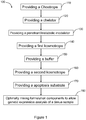
- the method 100 for generating a cell viability reagent comprises providing a chaotrope at event 110.
- the chaotrope is added to an aliquot of purified water.
- the chaotrope is a molecule which has activity against enzymes that degrade nucleic acids such as DNAases and RNAases, proteases, and regulatory enzymes responsible for protein destruction and apoptosis.
- a chaotrope also has significant effects on water distribution in cells and associated metabolic attenuation.
- the chaotrope is at least one of the following compounds; SON- (sodium thiocyanate), H 2 PO 4 - , HCO 3 - , I - , Cl - , NO3, NH 4 - , Cs, K+, (NH 4 )C+ guanidinium, all salts of guanidinium, Br, or Rb. All of these compounds are known to have effects on water distribution around a cell and help in maintaining cell viability.
- the chaotrope has a final concentration in the cell viability reagent of concentrations ranging from about 0.1 Molar to about 2 Molar, more preferably from at least about 1 mM, at least about 10mM, at least 0.05M, at least about 0.1 M at least 0.5M at least about 1 M, at least about 1.75M, at least about 2M, to a maximum of at least about 3M.
- method 100 comprises providing at least one chelator.
- the chelator is added to the cell viability formulation to help in the inactivation of Ca, Mg, driven enzyme systems that degrade nucleic acids.
- the chelator is selected from the following group of compounds: EDTA, EGTA, or BABTA.
- the chelator is found at a final concentration of about 0.1 Molar to about 2 Molar, more preferably from about at least about 0.1 M, at least about 0.005 M, at least about 0.01,at least about 0.05 M, and/or at least about 0.1 M.
- the method 100 further comprises providing a metabolic modulator/penetrants compound.
- the metabolic modulator acts to optimize membrane penetration of chemistries as well as acting as a carrier for large molecules such as glycerol. Additionally, it acts as a profound modulator of cell differentiation and function.
- the metabolic modulator is a key component in stabilizing gene expression of hypoxic cancer cells.
- the metabolic modulator/penetrant is selected from the group consisting of polar aprotic solvents, DMSO, Acetone, N,N-Dimethylformanide, or Acetonitrie.
- the final concentration of the metabolic modulator in the formulations is from at least 0.25 M, at least about 0.5 M, at least about 0.75 M. at least about 1 M, at least about 1.5 M, to a maximum of about 2 M.
- the method 100 further comprises providing at least one kosmotrope for manufacturing the cell viability reagent at event 140.
- the kosmotrope(s) is added to the mixture after the addition of the chaotrope.
- the kosmotrope is ⁇ , ⁇ -trehalose.
- Further kosmotropes maybe one of the following compounds: Glycerol, Trimethylamine N-oxide, Ectoine, 3-Dimethylsulfoniopropionate, Glucose, Dextran, or D-Lactose.
- the kosmotrope(s) has protective effects for nucleic acids, proteins and protein folding, and are a necessary component of the reagent that synergizes with chaotropes for cell and membrane stability and metabolic modulation for stabilization of gene expression when cells are stressed.
- kosmotrope is found in a final concentration of the cell viability reagent in concentrations ranging from about 0.1 Molar to about 2 Molar, or from about 0.1 mM to about 100 mM, from about 1 mM to about 10 mM, from about 0.1 M about 1.0 M to about 2.0 M, from about 0.1 M to about 5.0 M.
- method 100 comprises providing for at least one buffer which is added to the formulation to adjust the pH of the cell viability reagent.
- the buffer in most embodiments is selected from the group consisting of BIS-TRIS, BIS-TRIS Propane, HEPES, HEPES sodium salt, MES, MES sodium salt, MOPS, MOPS Sodium Salt, Sodium salt or Sodium Phosphate Buffer (monobasic, tribasic PO 4 ).
- the final pH of the cell viability reagent is from about 4.5 to about 8, more preferably from about 5.0 to about 5.5 to about 5.5 to 6.0, to about 6.5, to about 7.0 to about 7.5.
- the method 100 further comprises providing a second kosmotrope for manufacturing the cell viability reagent at event 160.
- the kosmotrope(s) is added to the mixture after the addition of the buffer.
- the kosmotrope is ⁇ , ⁇ -trehalose.
- Further kosmotropes maybe one of the following compounds: Glycerol, Trimethylamine N-oxide, Ectoine, , 3-Dimethylsulfoniopropionate, Glucose, Dextran, or D-Lactose.
- the kosmotrope(s) has protective effects for nucleic acids, proteins and protein folding, and are a necessary component of the reagent that synergizes with chaotropes for cell and membrane stability and metabolic modulation for stabilization of gene expression when cells are stressed.
- kosmotrope is found in a final concentration of the cell viability reagent in concentrations ranging from about 0.1 Molar to about 2 Molar, more preferably from about 0.1 mM to about 100mM, from about 1 mM to about 10mM, from about 0.1 M about 1.0 M to about 2.0 M, from about 0.1 M to about 5.0M.
- the method 100 further comprises providing an apoptosis substrate at event 170.
- An apoptosis substrate aids in the prevention of apoptosis of cells, and in particular cancer cells.
- the apoptosis substrate is leptin.
- Further apoptosis substrates may be selected from the group consisting of DMSO, Glycine beatine, potassium citrate, Trimethylamine, proline, NDSB 195, ML-Arginine, Xylitol, Sodium selenite, NDSB 201, CuCL 2 , or CTAB.
- the final concentration of the apoptosis substrate in the cell viability reagent is from about .001 M to about 0.5 M, or from about 0.1 mM, up to about 1 mM, up to about 10 mM, up to about 0.1 M, up to about 0.25 M, up to about 1 M, up to 1.5 M up to a maximum of about 2 M.
- the method of 100 further provides mixing the chaotrope, kosmotrope, chelator, buffer, apoptosis substrate, and the metabolic modulator to enable the gene expression analysis of the tissue sample.
- the mixing of the samples may happen throughout the method of formulating the reagent of the invention.
- Each individual component is treated and mixed to obtain the optimal cell viability reagent.
- the addition of the components of the formulation maybe random; however, in most embodiments the addition of the components is sequential in the order shown in method 100.
- the preparation time for producing the reagent varies due to the batch size, temperature. In general, it takes approximately one hour to complete the formulation of the cell viability reagent.
- the reagent maybe stored at ambient conditions for up to 12 months prior to use on tissue samples. The reagent may also be frozen for longer storage.
- tissue sample Once a tissue sample has been added to the cell viability reagent, the tissue is stabilized and maintains viable gene expression components for up to 72 hours at 30°C temperature. In general, the time the cells are viable is about 30 hours to about 50 hours and more particularly about two days. This time frame is sufficient for detailed genetic expression analysis of tissues from biopsies (tissue samples) that can give significant insight into the types and progression of diseases such as cancer.
- the method 200 comprises providing Sodium thiocyanate at event 210.
- Sodium thiocyanate is a chaotrope and is added to purified water and mixed thoroughly before adding the chelator EDTA at event 220.
- the metabolic modulator/penetrant DMSO Dimethylsulfoxide
- a first kosmotrope, glycerol is added to the formulation of the reagent.
- the formulation is mixed until the solution is clear and then the buffer component of the reagents is added in event 250.
- the buffer of the method showing in Figure 2 is Sodium Phosphate Buffer(monobasic, tribasic PO 4 ). This buffer ensures that the pH of the final cell viability reagent will be around about 7.0 to 7.6 and more likely around 7.2.
- a second kosmotrope different from the first kosmotrope is added to the formulation.
- the second kosmotrope in method 200 is ⁇ , ⁇ -trehalose.
- the method of 200 further comprises the adding leptin, an apoptosis substrate which helps in the prevention of cellular apoptosis of cancerous cells.
- the method 200 further provides mixing of the components of the reagent formulation. After each component addition, mixing is completed to ensure the each component is solubilized within the reagent solution.
- Table I shows the viability of Ishikawa cancer cells after one day of being exposed to one embodiment of the preserving reagent with and without leptin added to the reagent, TAG-1 and TAG-2, respectively.
- TAG-1 and TAG-2, in Table 1 are compared to the viability of the Ishikawa cancer cells when they are place in a 20% buffered formalin solution.
- TAG-1 in Table I comprises Sodium Thiocyanate, EDTA, buffers, Trehalose, DMSO, Glycerol and Leptin.
- TAG-2 solution shown in Table 1 comprises the same components of TAG-1 but without the presence of Leptin.
- Table 1 shows the viability of the cancer cells by measuring the presence of cellular clumps in the solutions, trypan blue results for indication of the presence of dead cells and the viability/proliferation of the cells using MTT.
- the MTT assay is a colorimetric assay for assessing cell viability NAD(P)H-dependent cellular oxidoreductase enzymes under defined conditions which reflects the number of viable cells present. These enzymes are capable of reducing the tetrazolium dye to its insoluble formazan which has a purple color. Dead cells do not cause this color.
- the MTT dye is added to cell suspensions and read at a spectrophometric setting of 570 nm and a background wavelength 630/690nm.
- the density of viable cells and growing cells proliferation are calculated using a ratio of dead cells (yellow color) to live cells (purple color) on a defined grid.
- the results shown in Table I indicate that at 24 hours exposure to the preserving reagents, TAG-1 has 100% viability, TAG-2has 53% viability and the formalin solution has 0% cellular viability.
- TABLE II Cell Viability study 8 days (192 hours) Cellular Clumps Trypan Blue Viability Viability/Proliferation MTT TAG-1 Few Cell Clumps Few Dead Cells 88.94% TAG-2 Diffuse Cell Clumps >95% Dead Cells 5% Formalin Cell Destroyed All Cells Dead 0%
- Table II shows the viability of the Ishikawa cancer cells after being exposed to TAG-1, TAG-2 or the formalin preserving solutions for eight days.
- the preserving reagents of the invention, TAG-1 and TAG-2 are the same as those used in the experiment shown in Table I. After eight days of exposure to the preserving reagents at room temperature, TAG-1 has a viability of 88.94%, TAG-2 has a cell viability of 5%, and in the formalin solution, all the cells were dead.
- the reagent When the reagent is prepared correctly it acts as a cancer tissue preservative, maintaining cell viability in the tissue with a 95% viability for up to 24 hours. Viability from one to about five days can be achieved with an average viability of about three days.
- the reagent also aids in the inhibition or significant suppression of cancer cell apoptosis in tissue, controls cellular factors such as hypoxia, and helps in the rapid inactivation of degrading enzymes to protect tissue and nucleic integrity.
- the reagent of the invention allows for modulation of cellular metabolic stress by biochemical mechanisms utilizing chaotropic, kosmotropic chemistries, buffering systems, and a novel cancer-stimulating hormone leptin which has been shown to increase the growth of cancer in obese patients.
- a cryoprotectant such as glycerol
- the cryoprotectant acts as a kosmotrope for protein preservation also imparts thermo stability to the tissue specimen.
- reagent stabilizes gene expression of target RNA, mRNA, measured by real time PCR, and microarray methods. Also rapid penetration of reagent components into cells and tissue has been observed.
- TABLE III Formulation Chemistry RIN control 0 hours RIN 24 hours RIN 72 hours RIN 120 hours RIN 170 hours TAG-1 8.7 8.2 7.9 7.4 6.0 TAG-2 5.1 2.7 1.5 1.1 0 TAG-3 6.7 3.1 1.6 1.3 0 TAG-4 7.2 2.5 2.4 1.8 0 TAG-5 5.8 4.2 1.3 0 0 0
- Table III show the results of a RNA integrity study comparing five different formulations of the cellular preserving reagent of the invention.
- Ishikawa cancer cells were exposed or aged in the various formulations for up to 170 hours prior to extracting RNA from the cells.
- the TAG-1 formulation comprises leptin and trehalose, Sodium Thiocyanate, EDTA, buffers, DMSO as well as glycerol.
- TAG-2 formulation had no trehalose or leptin present.
- TAG-3 formulation had no glycerol, leptin or trehalose added.
- TAG-4 formulation had no DMSO, buffers or leptin.
- TAG-5 formulation had no Leptin, Trehalose, sodium Thiocyanate or EDTA.
- the Ishikawa cancer cells utilized in the study shown in Table III are endometrial adenocarcinoma cells which were grown in DMEM media, supplemented with 5% bovine serum. The cells were seeded at a density of 1 X 10 6 on a 100 mm tissue culture dish. The cells were harvested using traditional methods and then resuspended in various formulations of the cell preserving reagent of the invention and left at room temperature for various amounts of time. At various time points the cellular RNA was extracted using an RNeasy mini kit and the RNA was analyzed for quality and quantity using the Agilent 2000 Bioanalyzer using the manufacturer's standard protocols. Controls for this study were archived purified cellular RNA.
- RNA Integrity Number measured by the Agilent 2000 RNA analyzer has a scale from 1 to 10. Any number below 6 is considered to show degraded and unreliable RNA which is not useful for gene expression studies.
- TAG-1 is the only formulation that has a RIN number that stays above 6.0, even at the 170 hour time point.
- the final concentrations of the TAG-1 formulation embodiment of the invention was; Sodium Thiocyanate 0.01 M, EDTA 0.01 M, Glycerol 0.25 M, Buffers 0.001 M, Leptin 0.001 M, Trehalose 0.20 M.
- the reagent of the invention is also compatible with standard staining pathology methods.
- Cells were treated in the TAG-1 reagent for 24 hours and stained with Hematoxylin and Eosin stain using standard protocols.
- the stained cells were compared with untreated cells which were also stained with hematoxylin Eosin stain using the same standard protocols.
- the cells were examined microscopically for cytoplasmic, nuclear, and extracellular matrix features. In both cell sets nuclei stained blue, whereas the cytoplasm and extracellular matrix had consistent pink staining. In summary there were no significant differences with staining of TAG-1 treated cells and cells not treated with TAG-1 chemistry.
- the cell viability reagent comprises a chaotrope, at least one kosmotrope, a chelator, a buffer, a metabolic modulator, and an apoptosis substrate; wherein the apoptosis substrate is leptin; and wherein the at least one kosmotrope is ⁇ , ⁇ -trehalose.
- These components of the reagent are found in low molar concentrations compared to other tissue preservatives.
- Low molar concentrations of chaotropes act very differently and demonstrate a very protective effect on the stability and preservation of nucleic acids, as well as having a major impact on cell metabolism by modifying water distribution and metabolism if cells as described herein. Basis for U.S.
- the final concentrations for the chaotrope is from about 0.1 Molar to about 2 Molar
- the at least two kosmotropes are from about 0.1 Molar to about 2 Molar for each kosmotrope
- the chelator is from about 0.1 M to about 2 Molar
- the apoptosis substrate is from about 0.001 Molar to about 0.5 Molar.
- lower concentration of the chaotropes have been shown to be beneficial in preserving tissue samples.
- the chaotrope is SCN-(sodium thiocyanate)
- the kosmotropes are glycerol and ⁇ , ⁇ -trehalose
- the chelator is EDTA
- the buffer is sodium phosphate buffer (monobasic, tribasic PO 4 )
- the cell apoptosis substrate is leptin
- the metabolic modulator is DMSO.
- kits for biopsy samples which comprise a vessel, the vessel configured to hold a cell viability reagent, wherein the cell viability reagent allows for genetic expression analyses of the biopsy sample.
- the vessel in the kit is a cup or tube of ample size to hold a biopsy tissue sample, as well as an aliquot of the reagent of the invention.
- the tube maybe an eppendorf tube or larger depending on the size of the tissue sample to be analyzed.
- the reagent in the kit comprises at least one chaotrope, at least one kosmotrope, a chelator, a buffer, an apoptosis substrate, and a metabolic modulator.
- the cup comprises a lid for sealing the cell viability reagent in the cup.
- FIGS. 3A and 3B are pictures of a formulation sheet listing the components of the reagent and instructions on how to prepare the cellular viability reagent for tissue biopsy samples.
- one liter of reagent is being made.
- the components on the formulation sheet are listed in the order they are to be added except for the purified water which is measured out initially (50m1).
- the chaotrope 8.1 gm of sodium thiocyanate, is added to the water to give a final concentration of sodium thiocyanate of 10%wv.
- the sodium thiocyanate is mixed until the solution is clear.
- the chelator at a stock concentration of 0.1 M is added to the solution. 100m1 of 0.1 M EDTA is added to give a final concentration of .01 M EDTA in the reagent. The EDTA is mixed until the solution is homogeneous. The next component added to the solution is the metabolic modulator, DMSO. 20m1 of DMSO is added to the solution to give the final percentage of 2% DMSO in the reagent. After adding the DMSO, the solution is mixed until it is homogeneous. The first kosmotrope, glycerol (25m1) is then added to the solution giving the final percentage of glycerol in the reagent of 2.5%.
- DMSO metabolic modulator
- the solution is mixed again until homogeneous.
- the buffering components are then added to the solution.
- 3.93 gm of K 1 PO 4 , monobasic potassium phosphate is added first and mixed to homogeneity, followed by the addition of 5.02 gm of K 3 PO 4 , tribasic potassium phosphate.
- the second kosmotrope, ⁇ , ⁇ -trehalose dihydrate is added to the solution.
- 7.56 gms of Trehalose dihydrate is added to the reagent.
- the solution is then mixed until clear.
- the final component added to the solution is the apoptosis substrate, human leptin. 50 microliters or .001 M of leptin is added to the solution which is then mixed until clear.
- Purified water is then added to bring the volume up to one liter. All of the steps above are carried out a room temperature.
- the cellular viability reagent can be stored for up to one year under ambient conditions.
- the formulation sheet of Figures 3A and 3B is an excellent representation of one embodiment of the methods in producing the viable cell tissue reagent as well as a good example of the components which comprise viable cell tissue reagent in accordance of the invention.
- Example II is a study of one embodiment of the tissue cell preserving reagent effectiveness on preserving LNCa-FGC cells and PC-3 cells.
- the results for preserving LNCa-FGC cells in TAG-1 reagent compared to standard cell resuspension solutions are shown in Figure 4 .
- the results for preserving PC-3 cells in TAG-1 reagent compared to standard cell resuspension solutions are shown in Figure 5 .
- the Human Prostate cell lines DU145, PC-3 and LNCaP-FGC were purchased from the American Type Collection (Manassas Virginia, USA). DU145 cells were cultured in DMEM media supplemented with 10% PBS plus Penicillin (100 units/m1) and Streptomycin (100u1/m1). PC-3 and LNCaP-FGC cells were cultured in RPMI 1640 media supplemented with 10% fetal bovine serum (FBS) and Penicillin (100 units/m1) and Streptomycin (100u1/m1). The cells were grown in tissue culture plates to a confluency of about 70%. The cells were then harvested by traditional methods and resuspended in one embodiment of the cell preserving reagent, TAG-1, or a control solution such as K 2 EDTA, 20% Formalin, or Saline with Thimerosal.
- the study using LNCa-FGC cells compared the preservation effectiveness of TAG-1, a saline Thimerosal solution, and K 2 EDTA solution.
- the cells were resuspended in either TAG-1 or the control solutions and allowed to age for up to 100 hours.
- the TAG-1 solution was left at 25°C, while the K 2 EDTA solution was kept at 4°C.
- the RNA was extracted from the aged cells to determine the integrity of the mRNA from each sample.
- Figure 4 is a graph showing the comparison of the cancer cells aged in the TAG-1 reagent or the two control solutions.
- FIG. 4 shows that the TAG-1 solution kept the mRNA/ cells viable better than the control solutions.
- the control solutions showed no copies of G6PDH at the 48 hr time point or even earlier.
- the TAG-1 solution was able to still have viable cells with intact mRNA even at 100 hours.
- the study using PC-3 cells ( Fig. 5 ) compared the preservation effectiveness of TAG-1, a saline/thimerosal solution, and K 2 EDTA solution.
- the cells were resuspended in either TAG-1 or the control solutions and allowed to age for up to 100 hours.
- the TAG-1 solution was left at 25°C, while the K 2 EDTA solution was kept at 4°C.
- the RNA was extracted from the aged cells to determine the integrity of the mRNA from each sample.
- Figure 5 is a graph showing the comparison of the cancer cells aged in the TAG-1 reagent or the two control solutions.
- FIG. 5 shows that the TAG-1 solution kept the mRNA/ cells viable better than the control solutions.
- the control solutions showed almost no copies of PBGD at the 48 hr time point.
- the TAG-1 solution was able to still have viable cells with intact mRNA even at 100 hours.
- the study using renal cancer cells compares one of the embodiments of the preserving reagent of the invention to two other solutions, one being 20% Formalin and the other being a K 2 EDTA with Sodium Thiocyanate solution.
- the renal cancer cells were grown and harvested in a similar manner as the prostate cancer cell lines utilized above. The cells were then aged for up to 100 hours in either TAG-1, 20% Formalin, or the K 2 EDTA with Sodium Thiocyanate solution.
- Figure 6 shows a graph of the copies of G6PDH mRNA in the aged renal cancer cells detected by rtPCR over time (0 hr, 24 hr, 48 hr, 72 hr and 100 hr).
- the cells aged in the Formalin solution have no detectable copies of G6PDH at 48 hours and the cells aged in K 2 EDTA plus sodium thiocyanate have no detectable mRNA G6PDH at 72 hours.
- the cells aged in the TAG-1 formulation still have mRNA detectable at 100 hours.
- the TAG-1 formulation for these experiments comprised Leptin, Trehalose, Sodium Thiocyanate, EDTA, buffers, DMSO and Glycerol. Final concentrations of the formulation were Sodium Thiocyanate 0.01 M, EDTA 0.01 M, Glycerol 0.25 M, Buffers 0.001 M, Leptin 0.001 M, Trehalose 0.20 M.
- Example III is a study showing the cell preservation effectiveness of having Trehalose and Leptin in the one of the embodiments of the tissue cell preserving reagent in accordance with the invention.
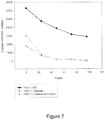
- Renal cancer cells were used to compare the copies of G6PDH mRNA present over time (0 hr, 24 hr, 48 hr, 72 hr, and 100 hr) for three formulations, TAG-1, TAG-1 without Trehalose, and TAG-1 without Trehalose and Leptin. The samples were left at room temperature before extracting the mRNA from the renal cells.
- Figure 7 shows a graph of the comparison of the three formulations of the number of copies of G6PDH mRNA is present after the renal cancer cells have been aged (resuspended in the preserving solution) in one of the three cell preserving reagent solutions.
- Figure 7 clearly shows the effectiveness of having both Trehalose and Leptin in the cell preserving formulation.
- TAG-1 without Trehalose and TAG-1 without Trehalose and Leptin show no copies of G6PDH mRNA at time point 48 hours, while mRNA G6PDH copies are detected in the cells resuspended in the TAG-1 formulation even at the 100 hour time point.
- the TAG-1 formulation for these experiments comprised Leptin, Trehalose, Sodium Thiocyanate, EDTA, buffers, DMSO, and Glycerol. Final concentrations of the formulation were Sodium Thiocyanate 0.01 M, EDTA 0.01 M, Glycerol 0.25 M, Buffers 0.001 M, Leptin 0.001 M, Trehalose 0.20 M.
- Example IV is a microarray study comparing gene expression patterns of liquid nitrogen (LN 2 ) flash frozen tissue to tissue kept in one embodiment of the invention, the TAG-1 cell preserving formulation.
- the mRNA gene expression was completed on a Roche array 4-plex, 19K genes.
- the Array hybridization and scanning was performed through the Roche internal gene expression service using mRNA from Ishikawa cancer cells provided by Truckee Applied Genomics. The results were analyzed by extracting fluorescence from the array after alignment using quartile normalization. Gen calls were generated using the Robust Multichip Average (RMA) algorithm. Pairwise comparisons were visualized on scatter plots, and all treatments were compared by hierarchical clustering, both standard methods for array data visualization. Array quality control was achieved by comparing expression distributions across 10 arrays with no apparent outliers.
- RMA Robust Multichip Average
- Tissue was either aged in TAG-1 or stored for the specified time in LN 2 .
- Freezing tissues in liquid nitrogen is the gold standard for keeping cellular tissue intact.
- the above experiments compare the effectiveness of storing tissue in TAG-1 vs. liquid nitrogen.
- the above results indicate that the gene expression did not over or under express in cells stored in TAG-1 compared to those stored in liquid nitrogen, indicating that TAG-1, over the time period tested was comparable to liquid nitrogen storage in preserving cellular integrity at the gene expression level.
- the TAG-1 formulation for these experiments comprised Leptin, Trehalose, Sodium Thiocyanate, EDTA, buffers, DMSO and Glycerol. Final concentrations of the formulation were Sodium Thiocyanate 0.01 M, EDTA 0.01 M, Glycerol 0.25 M, Buffers 0.001 M, Leptin 0.001 M, Trehalose 0.20 M.
- Example V is a study to evaluate media performance in ex vivo bladder and prostate cancer slice tissue cultures.
- Bladder and prostate tumor tissues are stored for various lengths of time at room temperature in one embodiment of the invention, TAG-1.
- Slice viability over time is evaluated by examination of tissue morphology with standard microscopy, MTT assay for cell viability, TUNEL assay for apoptosis, and Ki67 assessment of proliferation using immunostaining.
- Gene expression array experiments will also be included in the assessment of the viability of the cancer tissues.
- Comparisons will be made of slice cultures using a membrane system in which tissue slices (400-800 microns thick) will be maintained via access to TAG-1 across a membrane covering a well.
- the optimized protocol with TAG-1 will be tested on chemotherapy drugs and clinical samples.
- the general methodology comprises obtaining bladder and prostate cancer tissue samples from NSG-PDX JAX mice or patient cancer biopsy cores.
- Tissue will be processed either as slices or as cut blocks, and cultured on culture plates in a 3D matrix or on a membrane. Normal tissue slices from same patients will serve as controls to determine the differences in behavior of cancer and normal tissue.
- isolated peripheral blood mononuclear cells (PBMC) will be analyzed for their correlation to tumor cell behavior. Tissue samples are assayed at various time intervals for up to eight days in standard saline/thimerosal solutions, K 2 EDTA solution and TAG-1 for comparison of TAG-1 to standard storage protocols.
- the TAG-1 formulation for these experiments comprised Leptin, Trehalose, Sodium Thiocyanate, EDTA, buffers, DMSO, and Glycerol. Final concentrations of the formulation were Sodium Thiocyanate 0.01 M, EDTA 0.01 M, Glycerol 0.25 M, Buffers 0.001 M, Leptin 0.001 M, Trehalose 0.20 M.
Landscapes
- Life Sciences & Earth Sciences (AREA)
- Chemical & Material Sciences (AREA)
- Health & Medical Sciences (AREA)
- Engineering & Computer Science (AREA)
- Wood Science & Technology (AREA)
- Zoology (AREA)
- General Health & Medical Sciences (AREA)
- Organic Chemistry (AREA)
- Dentistry (AREA)
- Environmental Sciences (AREA)
- Analytical Chemistry (AREA)
- Proteomics, Peptides & Aminoacids (AREA)
- Biophysics (AREA)
- Biotechnology (AREA)
- Bioinformatics & Cheminformatics (AREA)
- Immunology (AREA)
- Microbiology (AREA)
- Molecular Biology (AREA)
- Chemical Kinetics & Catalysis (AREA)
- Biochemistry (AREA)
- Physics & Mathematics (AREA)
- General Engineering & Computer Science (AREA)
- Genetics & Genomics (AREA)
- Measuring Or Testing Involving Enzymes Or Micro-Organisms (AREA)
- Physiology (AREA)
- Micro-Organisms Or Cultivation Processes Thereof (AREA)
- Pharmaceuticals Containing Other Organic And Inorganic Compounds (AREA)
- Agricultural Chemicals And Associated Chemicals (AREA)
- Plural Heterocyclic Compounds (AREA)
Priority Applications (6)
| Application Number | Priority Date | Filing Date | Title |
|---|---|---|---|
| SI201430839T SI2970878T1 (sl) | 2013-03-15 | 2014-03-14 | Postopki in reagenti za vzdrževanje preživetja rakavih celic v kirurško odstranjenem tkivu |
| EP18173516.8A EP3581643A1 (en) | 2013-03-15 | 2014-03-14 | Methods and reagents for maintaining the viability of cancer cells in surgically removed tissue |
| PL14763797T PL2970878T3 (pl) | 2013-03-15 | 2014-03-14 | Sposoby i reagenty do utrzymywania żywotności komórek nowotworowych w tkankach usuniętych chirurgicznie |
| RS20180976A RS57900B1 (sr) | 2013-03-15 | 2014-03-14 | Postupci i reagensi za održavanje u životu ćelija kancera u hirurški uklonjenom tkivu |
| SM20180457T SMT201800457T1 (it) | 2013-03-15 | 2014-03-14 | Metodi e reagenti per mantenere la vitalità di cellule cancerose in un tessuto rimosso chirurgicamente |
| HRP20181352TT HRP20181352T1 (hr) | 2013-03-15 | 2014-03-14 | Postupci i reagensi za održavanje vijabilnosti stanica raka u kirurški odstranjenom tkivu |
Applications Claiming Priority (2)
| Application Number | Priority Date | Filing Date | Title |
|---|---|---|---|
| US201361798627P | 2013-03-15 | 2013-03-15 | |
| PCT/US2014/029198 WO2014144682A1 (en) | 2013-03-15 | 2014-03-14 | Methods and reagents for maintaining the viability of cancer cells in surgically removed tissue |
Related Child Applications (1)
| Application Number | Title | Priority Date | Filing Date |
|---|---|---|---|
| EP18173516.8A Division EP3581643A1 (en) | 2013-03-15 | 2014-03-14 | Methods and reagents for maintaining the viability of cancer cells in surgically removed tissue |
Publications (3)
| Publication Number | Publication Date |
|---|---|
| EP2970878A1 EP2970878A1 (en) | 2016-01-20 |
| EP2970878A4 EP2970878A4 (en) | 2016-08-03 |
| EP2970878B1 true EP2970878B1 (en) | 2018-05-23 |
Family
ID=51528685
Family Applications (2)
| Application Number | Title | Priority Date | Filing Date |
|---|---|---|---|
| EP14763797.9A Active EP2970878B1 (en) | 2013-03-15 | 2014-03-14 | Methods and reagents for maintaining the viability of cancer cells in surgically removed tissue |
| EP18173516.8A Withdrawn EP3581643A1 (en) | 2013-03-15 | 2014-03-14 | Methods and reagents for maintaining the viability of cancer cells in surgically removed tissue |
Family Applications After (1)
| Application Number | Title | Priority Date | Filing Date |
|---|---|---|---|
| EP18173516.8A Withdrawn EP3581643A1 (en) | 2013-03-15 | 2014-03-14 | Methods and reagents for maintaining the viability of cancer cells in surgically removed tissue |
Country Status (17)
| Country | Link |
|---|---|
| US (5) | US9113623B2 (enExample) |
| EP (2) | EP2970878B1 (enExample) |
| JP (1) | JP6465857B2 (enExample) |
| CN (2) | CN112806352A (enExample) |
| CA (1) | CA2941929C (enExample) |
| CY (1) | CY1120801T1 (enExample) |
| DK (1) | DK2970878T3 (enExample) |
| ES (1) | ES2684582T3 (enExample) |
| HR (1) | HRP20181352T1 (enExample) |
| HU (1) | HUE039933T2 (enExample) |
| LT (1) | LT2970878T (enExample) |
| PL (1) | PL2970878T3 (enExample) |
| PT (1) | PT2970878T (enExample) |
| RS (1) | RS57900B1 (enExample) |
| SI (1) | SI2970878T1 (enExample) |
| SM (1) | SMT201800457T1 (enExample) |
| WO (1) | WO2014144682A1 (enExample) |
Families Citing this family (6)
| Publication number | Priority date | Publication date | Assignee | Title |
|---|---|---|---|---|
| EP2970878B1 (en) | 2013-03-15 | 2018-05-23 | Truckee Applied Genomics, LLC | Methods and reagents for maintaining the viability of cancer cells in surgically removed tissue |
| EP3224359B1 (en) * | 2014-11-25 | 2023-10-25 | Bio-Rad Laboratories, Inc. | Arginine improves polymerase storage stability |
| CN107333750A (zh) * | 2017-06-11 | 2017-11-10 | 成都吱吖科技有限公司 | 一种长时血液细胞稳定剂 |
| EP4089180B1 (en) | 2019-09-17 | 2025-06-25 | Longhorn Vaccines and Diagnostics, LLC | Multipurpose compositions for collecting and transporting biological material |
| CA3185284A1 (en) * | 2020-07-07 | 2022-01-13 | Tony K. Baker | Cell preservation reagents and methods of use |
| CN117063915B (zh) * | 2023-08-17 | 2026-02-24 | 镜像绮点(上海)细胞技术有限公司 | 原代肿瘤细胞冻存液 |
Family Cites Families (23)
| Publication number | Priority date | Publication date | Assignee | Title |
|---|---|---|---|---|
| US5409826A (en) * | 1993-06-08 | 1995-04-25 | Coulter Corporation | Preserved, non-infectious control cells prepared by the modulation or modification of normal cells |
| JP2000509018A (ja) * | 1996-03-26 | 2000-07-18 | イーライ・リリー・アンド・カンパニー | 肥満タンパク質製剤 |
| US20010007673A1 (en) | 1999-11-12 | 2001-07-12 | Merrill Seymour Goldenberg | Sustained-release delayed gels |
| US7569342B2 (en) | 1997-12-10 | 2009-08-04 | Sierra Molecular Corp. | Removal of molecular assay interferences |
| US20080064108A1 (en) | 1997-12-10 | 2008-03-13 | Tony Baker | Urine Preservation System |
| CA2313654A1 (en) | 1997-12-10 | 1999-06-17 | Sierra Diagnostics, Inc. | Methods and reagents for preservation of dna in bodily fluids |
| AU1848602A (en) * | 2000-12-04 | 2002-06-18 | Lymphotec Inc. | Cell-preservation liquid and method of preserving cells by using the liquid |
| KR20020066778A (ko) | 2001-02-13 | 2002-08-21 | 한국과학기술연구원 | 체내 난흡수 물질의 흡수촉진용 조성물과 제형 및 그의제조방법 |
| WO2008111981A1 (en) | 2007-03-14 | 2008-09-18 | Sierra Molecular Corporation | Compositions, systems, and methods for preservation of macromolecules |
| WO2004052184A2 (en) * | 2002-12-12 | 2004-06-24 | Oncotech, Inc. | Genes related to sensitivity and resistance to chemotherapeutic drug treatment |
| US8793895B2 (en) * | 2006-02-10 | 2014-08-05 | Praxair Technology, Inc. | Lyophilization system and method |
| WO2008033936A2 (en) | 2006-09-12 | 2008-03-20 | Sierra Molecular Corporation | Removal of molecular assay interferences for nucleic acids employing buffered solutions of chaotropes |
| US8080645B2 (en) * | 2007-10-01 | 2011-12-20 | Longhorn Vaccines & Diagnostics Llc | Biological specimen collection/transport compositions and methods |
| US8652782B2 (en) * | 2006-09-12 | 2014-02-18 | Longhorn Vaccines & Diagnostics, Llc | Compositions and methods for detecting, identifying and quantitating mycobacterial-specific nucleic acids |
| KR20090103867A (ko) | 2006-10-27 | 2009-10-01 | 시에라 몰레큘러 코포레이션 | 침투가능한 격막 캡 |
| EP2094846B8 (en) * | 2006-12-13 | 2013-10-16 | Roche Diagnostics GmbH | Use of tde for the isolation of nucleic acids |
| EP2129780A2 (en) | 2007-03-14 | 2009-12-09 | Sierra Molecular Corporation | Compositions, systems, and methods for preservation and/or stabilization of a cell and/or macromolecule |
| CA2705417A1 (en) * | 2007-11-12 | 2009-05-22 | Bipar Sciences, Inc. | Treatment of uterine cancer and ovarian cancer with a parp inhibitor alone or in combination with anti-tumor agents |
| WO2010003037A2 (en) * | 2008-07-03 | 2010-01-07 | Sierra Molecular Corporation | Compositions, systems, and methods for stabilization of a cell and/or macromolecule |
| US20110165611A1 (en) | 2008-09-04 | 2011-07-07 | Chun Li | Dual modality detection of apoptosis |
| US9133343B2 (en) * | 2009-11-30 | 2015-09-15 | Enzo Biochem, Inc. | Dyes and compositions, and processes for using same in analysis of protein aggregation and other applications |
| CN102318597B (zh) * | 2011-08-19 | 2013-04-03 | 张雪云 | 一种液基细胞保存液组合物及其制备方法 |
| EP2970878B1 (en) | 2013-03-15 | 2018-05-23 | Truckee Applied Genomics, LLC | Methods and reagents for maintaining the viability of cancer cells in surgically removed tissue |
-
2014
- 2014-03-14 EP EP14763797.9A patent/EP2970878B1/en active Active
- 2014-03-14 HU HUE14763797A patent/HUE039933T2/hu unknown
- 2014-03-14 US US14/211,578 patent/US9113623B2/en active Active
- 2014-03-14 HR HRP20181352TT patent/HRP20181352T1/hr unknown
- 2014-03-14 CN CN202011428224.4A patent/CN112806352A/zh active Pending
- 2014-03-14 SI SI201430839T patent/SI2970878T1/sl unknown
- 2014-03-14 PT PT14763797T patent/PT2970878T/pt unknown
- 2014-03-14 EP EP18173516.8A patent/EP3581643A1/en not_active Withdrawn
- 2014-03-14 LT LTEP14763797.9T patent/LT2970878T/lt unknown
- 2014-03-14 DK DK14763797.9T patent/DK2970878T3/en active
- 2014-03-14 CN CN201480014875.5A patent/CN105121629B/zh active Active
- 2014-03-14 JP JP2016503010A patent/JP6465857B2/ja active Active
- 2014-03-14 WO PCT/US2014/029198 patent/WO2014144682A1/en not_active Ceased
- 2014-03-14 SM SM20180457T patent/SMT201800457T1/it unknown
- 2014-03-14 RS RS20180976A patent/RS57900B1/sr unknown
- 2014-03-14 CA CA2941929A patent/CA2941929C/en active Active
- 2014-03-14 PL PL14763797T patent/PL2970878T3/pl unknown
- 2014-03-14 ES ES14763797.9T patent/ES2684582T3/es active Active
-
2015
- 2015-05-01 US US14/702,643 patent/US9565852B2/en active Active
- 2015-05-14 US US14/712,750 patent/US9445586B2/en active Active
-
2016
- 2016-02-02 US US15/013,541 patent/US9949474B2/en active Active
-
2017
- 2017-02-13 US US15/431,478 patent/US10772318B2/en active Active
-
2018
- 2018-08-23 CY CY181100877T patent/CY1120801T1/el unknown
Non-Patent Citations (1)
| Title |
|---|
| SILVIO NAVIGLIO ET AL: "Leptin enhances growth inhibition by cAMP elevating agents through apoptosis of MDA-MB-231 breast cancer cells", CANCER BIOLOGY & THERAPY, vol. 8, no. 12, 15 June 2009 (2009-06-15), US, pages 1183 - 1190, XP055415821, ISSN: 1538-4047, DOI: 10.4161/cbt.8.12.8562 * |
Also Published As
Similar Documents
| Publication | Publication Date | Title |
|---|---|---|
| US10772318B2 (en) | Methods and reagents for maintaining the visability of cancer cells in surgically removed tissue | |
| Viertler et al. | A new technology for stabilization of biomolecules in tissues for combined histological and molecular analyses | |
| Wei et al. | Targeted deletion of Dicer from proximal tubules protects against renal ischemia-reperfusion injury | |
| US12270738B2 (en) | Fixatives and methods of use | |
| JP2010515012A (ja) | 組織保存および固定方法 | |
| US20250305918A1 (en) | Method of preparing a frozen biological sample | |
| Patel et al. | Cryopreserved human precision-cut lung slices provide an immune competent pulmonary test system for “on-demand” use and long-term cultures | |
| Dolezalova et al. | Accelerating cryoprotectant diffusion kinetics improves cryopreservation of pancreatic islets | |
| Das et al. | Establishing a standardized method for the effective intraoperative collection and biological preservation of brain tumor tissue samples using a novel tissue preservation system: a pilot study | |
| Vincek et al. | Methodology for preservation of high molecular-weight RNA in paraffin-embedded tissue: application for laser-capture microdissection | |
| HK40018836A (en) | Methods and reagents for maintaining the viability of cancer cells in surgically removed tissue | |
| HK1220481B (en) | Methods and reagents for maintaining the viability of cancer cells in surgically removed tissue | |
| Li et al. | Spatial proteomics reveals multiple mechanisms of mitochondrial damage in renal tubules during sepsis-induced acute kidney injury | |
| Zou et al. | Optimizing RNA quality in cryopreserved tissues without preservatives: impact of preservatives, thawing methods and tissue aliquot sizes | |
| US12111239B2 (en) | Methods and kits for isolating whole cells from frozen tissues for cell fingerprinting | |
| Pendina et al. | Successive Detection of Telomerase by IHC and Assessment of Telomere Length by Q-FISH in Paucicellular Cumulus Samples from Cumulus-Oocyte Complexes Obtained in Assisted Reproduction Programs | |
| Radojevic et al. | The changes in tissue histomorphology and quality of DNA in healthy human autopsied tissues stored at− 20° C and− 150° C | |
| CN121379939A (zh) | 一种牛卵母细胞体外成熟培养液及其制备方法和应用 | |
| JP2021176279A (ja) | 動物組織の解析方法 | |
| EP4317454A1 (en) | Method for detecting microrna in biological sample, composition of hydrochloride of neutral amino acid, and container | |
| dos Santos et al. | Influence of external factors on the preservation of human nervous tissue for histological studies | |
| HK1256184B (en) | Compositions and methods for dna and rna extraction from tissue samples |
Legal Events
| Date | Code | Title | Description |
|---|---|---|---|
| PUAI | Public reference made under article 153(3) epc to a published international application that has entered the european phase |
Free format text: ORIGINAL CODE: 0009012 |
|
| 17P | Request for examination filed |
Effective date: 20150817 |
|
| AK | Designated contracting states |
Kind code of ref document: A1 Designated state(s): AL AT BE BG CH CY CZ DE DK EE ES FI FR GB GR HR HU IE IS IT LI LT LU LV MC MK MT NL NO PL PT RO RS SE SI SK SM TR |
|
| AX | Request for extension of the european patent |
Extension state: BA ME |
|
| DAX | Request for extension of the european patent (deleted) | ||
| A4 | Supplementary search report drawn up and despatched |
Effective date: 20160705 |
|
| RIC1 | Information provided on ipc code assigned before grant |
Ipc: C12N 5/00 20060101AFI20160630BHEP |
|
| 17Q | First examination report despatched |
Effective date: 20160722 |
|
| STAA | Information on the status of an ep patent application or granted ep patent |
Free format text: STATUS: EXAMINATION IS IN PROGRESS |
|
| REG | Reference to a national code |
Ref country code: HK Ref legal event code: DE Ref document number: 1220481 Country of ref document: HK |
|
| GRAJ | Information related to disapproval of communication of intention to grant by the applicant or resumption of examination proceedings by the epo deleted |
Free format text: ORIGINAL CODE: EPIDOSDIGR1 |
|
| STAA | Information on the status of an ep patent application or granted ep patent |
Free format text: STATUS: GRANT OF PATENT IS INTENDED |
|
| GRAP | Despatch of communication of intention to grant a patent |
Free format text: ORIGINAL CODE: EPIDOSNIGR1 |
|
| INTG | Intention to grant announced |
Effective date: 20171129 |
|
| GRAS | Grant fee paid |
Free format text: ORIGINAL CODE: EPIDOSNIGR3 |
|
| GRAA | (expected) grant |
Free format text: ORIGINAL CODE: 0009210 |
|
| STAA | Information on the status of an ep patent application or granted ep patent |
Free format text: STATUS: THE PATENT HAS BEEN GRANTED |
|
| AK | Designated contracting states |
Kind code of ref document: B1 Designated state(s): AL AT BE BG CH CY CZ DE DK EE ES FI FR GB GR HR HU IE IS IT LI LT LU LV MC MK MT NL NO PL PT RO RS SE SI SK SM TR |
|
| REG | Reference to a national code |
Ref country code: GB Ref legal event code: FG4D |
|
| REG | Reference to a national code |
Ref country code: CH Ref legal event code: EP |
|
| REG | Reference to a national code |
Ref country code: IE Ref legal event code: FG4D |
|
| REG | Reference to a national code |
Ref country code: AT Ref legal event code: REF Ref document number: 1001536 Country of ref document: AT Kind code of ref document: T Effective date: 20180615 |
|
| REG | Reference to a national code |
Ref country code: DE Ref legal event code: R096 Ref document number: 602014025888 Country of ref document: DE |
|
| REG | Reference to a national code |
Ref country code: HR Ref legal event code: TUEP Ref document number: P20181352 Country of ref document: HR |
|
| REG | Reference to a national code |
Ref country code: DK Ref legal event code: T3 Effective date: 20180827 |
|
| REG | Reference to a national code |
Ref country code: NL Ref legal event code: FP |
|
| REG | Reference to a national code |
Ref country code: SE Ref legal event code: TRGR |
|
| RAP2 | Party data changed (patent owner data changed or rights of a patent transferred) |
Owner name: TRUCKEE APPLIED GENOMICS, LLC |
|
| REG | Reference to a national code |
Ref country code: RO Ref legal event code: EPE |
|
| REG | Reference to a national code |
Ref country code: ES Ref legal event code: FG2A Ref document number: 2684582 Country of ref document: ES Kind code of ref document: T3 Effective date: 20181003 |
|
| REG | Reference to a national code |
Ref country code: PT Ref legal event code: SC4A Ref document number: 2970878 Country of ref document: PT Date of ref document: 20181009 Kind code of ref document: T Free format text: AVAILABILITY OF NATIONAL TRANSLATION Effective date: 20180822 |
|
| REG | Reference to a national code |
Ref country code: NO Ref legal event code: T2 Effective date: 20180523 |
|
| REG | Reference to a national code |
Ref country code: HR Ref legal event code: T1PR Ref document number: P20181352 Country of ref document: HR |
|
| REG | Reference to a national code |
Ref country code: EE Ref legal event code: FG4A Ref document number: E016295 Country of ref document: EE Effective date: 20180821 |
|
| REG | Reference to a national code |
Ref country code: SK Ref legal event code: T3 Ref document number: E 28383 Country of ref document: SK |
|
| REG | Reference to a national code |
Ref country code: DE Ref legal event code: R097 Ref document number: 602014025888 Country of ref document: DE |
|
| REG | Reference to a national code |
Ref country code: HU Ref legal event code: AG4A Ref document number: E039933 Country of ref document: HU |
|
| REG | Reference to a national code |
Ref country code: GR Ref legal event code: EP Ref document number: 20180402357 Country of ref document: GR Effective date: 20190225 |
|
| PLBE | No opposition filed within time limit |
Free format text: ORIGINAL CODE: 0009261 |
|
| STAA | Information on the status of an ep patent application or granted ep patent |
Free format text: STATUS: NO OPPOSITION FILED WITHIN TIME LIMIT |
|
| 26N | No opposition filed |
Effective date: 20190226 |
|
| REG | Reference to a national code |
Ref country code: HR Ref legal event code: ODRP Ref document number: P20181352 Country of ref document: HR Payment date: 20190801 Year of fee payment: 6 |
|
| REG | Reference to a national code |
Ref country code: HR Ref legal event code: ODRP Ref document number: P20181352 Country of ref document: HR Payment date: 20200311 Year of fee payment: 7 |
|
| REG | Reference to a national code |
Ref country code: AT Ref legal event code: UEP Ref document number: 1001536 Country of ref document: AT Kind code of ref document: T Effective date: 20180523 |
|
| REG | Reference to a national code |
Ref country code: HR Ref legal event code: ODRP Ref document number: P20181352 Country of ref document: HR Payment date: 20210223 Year of fee payment: 8 |
|
| REG | Reference to a national code |
Ref country code: HR Ref legal event code: ODRP Ref document number: P20181352 Country of ref document: HR Payment date: 20220221 Year of fee payment: 9 |
|
| PGFP | Annual fee paid to national office [announced via postgrant information from national office to epo] |
Ref country code: RS Payment date: 20220218 Year of fee payment: 9 Ref country code: LT Payment date: 20220221 Year of fee payment: 9 Ref country code: IE Payment date: 20220328 Year of fee payment: 9 Ref country code: HU Payment date: 20220228 Year of fee payment: 9 Ref country code: FI Payment date: 20220329 Year of fee payment: 9 Ref country code: DK Payment date: 20220329 Year of fee payment: 9 Ref country code: BG Payment date: 20220225 Year of fee payment: 9 Ref country code: AT Payment date: 20220222 Year of fee payment: 9 |
|
| PGFP | Annual fee paid to national office [announced via postgrant information from national office to epo] |
Ref country code: IS Payment date: 20220218 Year of fee payment: 9 Ref country code: TR Payment date: 20220301 Year of fee payment: 9 Ref country code: SM Payment date: 20220222 Year of fee payment: 9 Ref country code: SK Payment date: 20220218 Year of fee payment: 9 Ref country code: SE Payment date: 20220327 Year of fee payment: 9 Ref country code: RO Payment date: 20220224 Year of fee payment: 9 Ref country code: PT Payment date: 20220221 Year of fee payment: 9 Ref country code: PL Payment date: 20220222 Year of fee payment: 9 Ref country code: NO Payment date: 20220329 Year of fee payment: 9 Ref country code: MT Payment date: 20220221 Year of fee payment: 9 Ref country code: MK Payment date: 20220221 Year of fee payment: 9 Ref country code: MC Payment date: 20220224 Year of fee payment: 9 Ref country code: LV Payment date: 20220218 Year of fee payment: 9 Ref country code: LU Payment date: 20220328 Year of fee payment: 9 Ref country code: IT Payment date: 20220322 Year of fee payment: 9 Ref country code: HR Payment date: 20220221 Year of fee payment: 9 Ref country code: GR Payment date: 20220329 Year of fee payment: 9 Ref country code: EE Payment date: 20220221 Year of fee payment: 9 Ref country code: CZ Payment date: 20220225 Year of fee payment: 9 Ref country code: BE Payment date: 20220328 Year of fee payment: 9 |
|
| PG25 | Lapsed in a contracting state [announced via postgrant information from national office to epo] |
Ref country code: AL Free format text: LAPSE BECAUSE OF FAILURE TO SUBMIT A TRANSLATION OF THE DESCRIPTION OR TO PAY THE FEE WITHIN THE PRESCRIBED TIME-LIMIT Effective date: 20180523 |
|
| PGFP | Annual fee paid to national office [announced via postgrant information from national office to epo] |
Ref country code: SI Payment date: 20220222 Year of fee payment: 9 Ref country code: NL Payment date: 20220326 Year of fee payment: 9 |
|
| PGFP | Annual fee paid to national office [announced via postgrant information from national office to epo] |
Ref country code: ES Payment date: 20220401 Year of fee payment: 9 Ref country code: CY Payment date: 20220222 Year of fee payment: 9 |
|
| PGFP | Annual fee paid to national office [announced via postgrant information from national office to epo] |
Ref country code: CH Payment date: 20220404 Year of fee payment: 9 |
|
| PGFP | Annual fee paid to national office [announced via postgrant information from national office to epo] |
Ref country code: AL Payment date: 20220310 Year of fee payment: 9 |
|
| P01 | Opt-out of the competence of the unified patent court (upc) registered |
Effective date: 20230522 |
|
| REG | Reference to a national code |
Ref country code: HR Ref legal event code: PBON Ref document number: P20181352 Country of ref document: HR Effective date: 20230314 |
|
| REG | Reference to a national code |
Ref country code: LT Ref legal event code: MM4D Effective date: 20230314 |
|
| REG | Reference to a national code |
Ref country code: EE Ref legal event code: MM4A Ref document number: E016295 Country of ref document: EE Effective date: 20230331 |
|
| REG | Reference to a national code |
Ref country code: NO Ref legal event code: MMEP |
|
| REG | Reference to a national code |
Ref country code: SK Ref legal event code: MM4A Ref document number: E 28383 Country of ref document: SK Effective date: 20230314 |
|
| PG25 | Lapsed in a contracting state [announced via postgrant information from national office to epo] |
Ref country code: RO Free format text: LAPSE BECAUSE OF NON-PAYMENT OF DUE FEES Effective date: 20230314 Ref country code: PT Free format text: LAPSE BECAUSE OF NON-PAYMENT OF DUE FEES Effective date: 20230914 Ref country code: MC Free format text: LAPSE BECAUSE OF NON-PAYMENT OF DUE FEES Effective date: 20230331 Ref country code: FI Free format text: LAPSE BECAUSE OF NON-PAYMENT OF DUE FEES Effective date: 20230314 Ref country code: CZ Free format text: LAPSE BECAUSE OF NON-PAYMENT OF DUE FEES Effective date: 20230314 Ref country code: CY Free format text: LAPSE BECAUSE OF NON-PAYMENT OF DUE FEES Effective date: 20230314 |
|
| REG | Reference to a national code |
Ref country code: CH Ref legal event code: PL Ref country code: SE Ref legal event code: EUG |
|
| REG | Reference to a national code |
Ref country code: DK Ref legal event code: EBP Effective date: 20230331 |
|
| REG | Reference to a national code |
Ref country code: NL Ref legal event code: MM Effective date: 20230401 |
|
| REG | Reference to a national code |
Ref country code: AT Ref legal event code: MM01 Ref document number: 1001536 Country of ref document: AT Kind code of ref document: T Effective date: 20230314 |
|
| PG25 | Lapsed in a contracting state [announced via postgrant information from national office to epo] |
Ref country code: RS Free format text: LAPSE BECAUSE OF NON-PAYMENT OF DUE FEES Effective date: 20230918 Ref country code: LV Free format text: LAPSE BECAUSE OF NON-PAYMENT OF DUE FEES Effective date: 20230314 |
|
| REG | Reference to a national code |
Ref country code: BE Ref legal event code: MM Effective date: 20230331 |
|
| PG25 | Lapsed in a contracting state [announced via postgrant information from national office to epo] |
Ref country code: NL Free format text: LAPSE BECAUSE OF NON-PAYMENT OF DUE FEES Effective date: 20230401 Ref country code: LU Free format text: LAPSE BECAUSE OF NON-PAYMENT OF DUE FEES Effective date: 20230314 |
|
| REG | Reference to a national code |
Ref country code: SI Ref legal event code: KO00 Effective date: 20231123 |
|
| PG25 | Lapsed in a contracting state [announced via postgrant information from national office to epo] |
Ref country code: SK Free format text: LAPSE BECAUSE OF NON-PAYMENT OF DUE FEES Effective date: 20230314 |
|
| REG | Reference to a national code |
Ref country code: IE Ref legal event code: MM4A |
|
| PG25 | Lapsed in a contracting state [announced via postgrant information from national office to epo] |
Ref country code: GR Free format text: LAPSE BECAUSE OF NON-PAYMENT OF DUE FEES Effective date: 20231009 |
|
| PG25 | Lapsed in a contracting state [announced via postgrant information from national office to epo] |
Ref country code: SM Free format text: LAPSE BECAUSE OF NON-PAYMENT OF DUE FEES Effective date: 20231002 Ref country code: SK Free format text: LAPSE BECAUSE OF NON-PAYMENT OF DUE FEES Effective date: 20230314 Ref country code: SI Free format text: LAPSE BECAUSE OF NON-PAYMENT OF DUE FEES Effective date: 20230315 Ref country code: SE Free format text: LAPSE BECAUSE OF NON-PAYMENT OF DUE FEES Effective date: 20230315 Ref country code: NO Free format text: LAPSE BECAUSE OF NON-PAYMENT OF DUE FEES Effective date: 20230331 Ref country code: LT Free format text: LAPSE BECAUSE OF NON-PAYMENT OF DUE FEES Effective date: 20230314 Ref country code: LI Free format text: LAPSE BECAUSE OF NON-PAYMENT OF DUE FEES Effective date: 20230331 Ref country code: IE Free format text: LAPSE BECAUSE OF NON-PAYMENT OF DUE FEES Effective date: 20230314 Ref country code: HU Free format text: LAPSE BECAUSE OF NON-PAYMENT OF DUE FEES Effective date: 20230315 Ref country code: HR Free format text: LAPSE BECAUSE OF NON-PAYMENT OF DUE FEES Effective date: 20230314 Ref country code: GR Free format text: LAPSE BECAUSE OF NON-PAYMENT OF DUE FEES Effective date: 20231009 Ref country code: EE Free format text: LAPSE BECAUSE OF NON-PAYMENT OF DUE FEES Effective date: 20230331 Ref country code: CH Free format text: LAPSE BECAUSE OF NON-PAYMENT OF DUE FEES Effective date: 20230331 Ref country code: AT Free format text: LAPSE BECAUSE OF NON-PAYMENT OF DUE FEES Effective date: 20230314 |
|
| PG25 | Lapsed in a contracting state [announced via postgrant information from national office to epo] |
Ref country code: BE Free format text: LAPSE BECAUSE OF NON-PAYMENT OF DUE FEES Effective date: 20230331 |
|
| PG25 | Lapsed in a contracting state [announced via postgrant information from national office to epo] |
Ref country code: IT Free format text: LAPSE BECAUSE OF NON-PAYMENT OF DUE FEES Effective date: 20230314 Ref country code: DK Free format text: LAPSE BECAUSE OF NON-PAYMENT OF DUE FEES Effective date: 20230331 |
|
| REG | Reference to a national code |
Ref country code: ES Ref legal event code: FD2A Effective date: 20240508 |
|
| PG25 | Lapsed in a contracting state [announced via postgrant information from national office to epo] |
Ref country code: ES Free format text: LAPSE BECAUSE OF NON-PAYMENT OF DUE FEES Effective date: 20230315 |
|
| PG25 | Lapsed in a contracting state [announced via postgrant information from national office to epo] |
Ref country code: ES Free format text: LAPSE BECAUSE OF NON-PAYMENT OF DUE FEES Effective date: 20230315 |
|
| PG25 | Lapsed in a contracting state [announced via postgrant information from national office to epo] |
Ref country code: PL Free format text: LAPSE BECAUSE OF NON-PAYMENT OF DUE FEES Effective date: 20230314 |
|
| PG25 | Lapsed in a contracting state [announced via postgrant information from national office to epo] |
Ref country code: PL Free format text: LAPSE BECAUSE OF NON-PAYMENT OF DUE FEES Effective date: 20230314 |
|
| PG25 | Lapsed in a contracting state [announced via postgrant information from national office to epo] |
Ref country code: AL Free format text: LAPSE BECAUSE OF FAILURE TO SUBMIT A TRANSLATION OF THE DESCRIPTION OR TO PAY THE FEE WITHIN THE PRESCRIBED TIME-LIMIT Effective date: 20230330 |
|
| PG25 | Lapsed in a contracting state [announced via postgrant information from national office to epo] |
Ref country code: BG Free format text: LAPSE BECAUSE OF NON-PAYMENT OF DUE FEES Effective date: 20230314 |
|
| PG25 | Lapsed in a contracting state [announced via postgrant information from national office to epo] |
Ref country code: BG Free format text: LAPSE BECAUSE OF NON-PAYMENT OF DUE FEES Effective date: 20230314 Ref country code: AL Free format text: LAPSE BECAUSE OF FAILURE TO SUBMIT A TRANSLATION OF THE DESCRIPTION OR TO PAY THE FEE WITHIN THE PRESCRIBED TIME-LIMIT Effective date: 20230314 |
|
| PGFP | Annual fee paid to national office [announced via postgrant information from national office to epo] |
Ref country code: DE Payment date: 20250324 Year of fee payment: 12 |
|
| PG25 | Lapsed in a contracting state [announced via postgrant information from national office to epo] |
Ref country code: IS Free format text: LAPSE BECAUSE OF NON-PAYMENT OF DUE FEES Effective date: 20231002 |
|
| PGFP | Annual fee paid to national office [announced via postgrant information from national office to epo] |
Ref country code: GB Payment date: 20260330 Year of fee payment: 13 |
|
| PGFP | Annual fee paid to national office [announced via postgrant information from national office to epo] |
Ref country code: FR Payment date: 20260331 Year of fee payment: 13 |